EP0873396B1 - Brewing products and their methods for production - Google Patents
Brewing products and their methods for production Download PDFInfo
- Publication number
- EP0873396B1 EP0873396B1 EP95929412A EP95929412A EP0873396B1 EP 0873396 B1 EP0873396 B1 EP 0873396B1 EP 95929412 A EP95929412 A EP 95929412A EP 95929412 A EP95929412 A EP 95929412A EP 0873396 B1 EP0873396 B1 EP 0873396B1
- Authority
- EP
- European Patent Office
- Prior art keywords
- beer
- retentate
- dextrins
- permeate
- alcohol
- Prior art date
- Legal status (The legal status is an assumption and is not a legal conclusion. Google has not performed a legal analysis and makes no representation as to the accuracy of the status listed.)
- Expired - Lifetime
Links
- 238000000034 method Methods 0.000 title claims abstract description 45
- 238000004519 manufacturing process Methods 0.000 title claims description 9
- 235000013405 beer Nutrition 0.000 claims abstract description 226
- 235000021577 malt beverage Nutrition 0.000 claims abstract description 39
- 229920001353 Dextrin Polymers 0.000 claims abstract description 36
- 239000004375 Dextrin Substances 0.000 claims abstract description 36
- 235000019425 dextrin Nutrition 0.000 claims abstract description 36
- 238000000108 ultra-filtration Methods 0.000 claims abstract description 26
- 238000005187 foaming Methods 0.000 claims abstract description 21
- 239000003795 chemical substances by application Substances 0.000 claims abstract description 6
- 239000012465 retentate Substances 0.000 claims description 53
- 239000012466 permeate Substances 0.000 claims description 49
- LFQSCWFLJHTTHZ-UHFFFAOYSA-N Ethanol Chemical compound CCO LFQSCWFLJHTTHZ-UHFFFAOYSA-N 0.000 claims description 33
- 239000012528 membrane Substances 0.000 claims description 30
- GXCLVBGFBYZDAG-UHFFFAOYSA-N N-[2-(1H-indol-3-yl)ethyl]-N-methylprop-2-en-1-amine Chemical compound CN(CCC1=CNC2=C1C=CC=C2)CC=C GXCLVBGFBYZDAG-UHFFFAOYSA-N 0.000 claims description 19
- XLYOFNOQVPJJNP-UHFFFAOYSA-N water Substances O XLYOFNOQVPJJNP-UHFFFAOYSA-N 0.000 claims description 19
- 239000003085 diluting agent Substances 0.000 claims description 12
- WQZGKKKJIJFFOK-GASJEMHNSA-N Glucose Natural products OC[C@H]1OC(O)[C@H](O)[C@@H](O)[C@@H]1O WQZGKKKJIJFFOK-GASJEMHNSA-N 0.000 claims description 8
- 108010073178 Glucan 1,4-alpha-Glucosidase Proteins 0.000 claims description 7
- 102100022624 Glucoamylase Human genes 0.000 claims description 7
- 235000020357 syrup Nutrition 0.000 claims description 6
- 239000006188 syrup Substances 0.000 claims description 6
- 238000004040 coloring Methods 0.000 claims description 5
- 239000002131 composite material Substances 0.000 claims description 4
- 239000004952 Polyamide Substances 0.000 claims description 3
- 235000019636 bitter flavor Nutrition 0.000 claims description 3
- 238000007865 diluting Methods 0.000 claims description 3
- 229920002492 poly(sulfone) Polymers 0.000 claims description 3
- 229920002647 polyamide Polymers 0.000 claims description 3
- QBUKAFSEUHGMMX-MTJSOVHGSA-N (5z)-5-[[3-(1-hydroxyethyl)thiophen-2-yl]methylidene]-10-methoxy-2,2,4-trimethyl-1h-chromeno[3,4-f]quinolin-9-ol Chemical compound C1=CC=2NC(C)(C)C=C(C)C=2C2=C1C=1C(OC)=C(O)C=CC=1O\C2=C/C=1SC=CC=1C(C)O QBUKAFSEUHGMMX-MTJSOVHGSA-N 0.000 claims description 2
- 239000008103 glucose Substances 0.000 claims 2
- 239000006260 foam Substances 0.000 abstract description 12
- 239000003623 enhancer Substances 0.000 abstract 1
- OKTJSMMVPCPJKN-UHFFFAOYSA-N Carbon Chemical compound [C] OKTJSMMVPCPJKN-UHFFFAOYSA-N 0.000 description 39
- 229910052799 carbon Inorganic materials 0.000 description 33
- NOEGNKMFWQHSLB-UHFFFAOYSA-N 5-hydroxymethylfurfural Chemical compound OCC1=CC=C(C=O)O1 NOEGNKMFWQHSLB-UHFFFAOYSA-N 0.000 description 25
- 239000000047 product Substances 0.000 description 21
- 239000000796 flavoring agent Substances 0.000 description 17
- 230000003647 oxidation Effects 0.000 description 17
- 238000007254 oxidation reaction Methods 0.000 description 17
- 235000019634 flavors Nutrition 0.000 description 16
- 238000004128 high performance liquid chromatography Methods 0.000 description 15
- 238000012360 testing method Methods 0.000 description 15
- 238000002360 preparation method Methods 0.000 description 10
- 239000000284 extract Substances 0.000 description 9
- 235000008694 Humulus lupulus Nutrition 0.000 description 8
- 240000004808 Saccharomyces cerevisiae Species 0.000 description 7
- 235000014680 Saccharomyces cerevisiae Nutrition 0.000 description 7
- 239000004615 ingredient Substances 0.000 description 7
- 230000001590 oxidative effect Effects 0.000 description 7
- JIZQRWKUYFNSDM-UHFFFAOYSA-N 3,4-dihydroxy-2-(3-methylbutanoyl)-5-(3-methylbutyl)-4-(4-methylpentanoyl)cyclopent-2-en-1-one Chemical compound CC(C)CCC1C(=O)C(C(=O)CC(C)C)=C(O)C1(O)C(=O)CCC(C)C JIZQRWKUYFNSDM-UHFFFAOYSA-N 0.000 description 6
- 239000008121 dextrose Substances 0.000 description 6
- 238000001914 filtration Methods 0.000 description 6
- 230000008569 process Effects 0.000 description 6
- 229920002472 Starch Polymers 0.000 description 5
- 238000010438 heat treatment Methods 0.000 description 5
- 239000000203 mixture Substances 0.000 description 5
- 239000008107 starch Substances 0.000 description 5
- 235000019698 starch Nutrition 0.000 description 5
- 238000004458 analytical method Methods 0.000 description 4
- 229940041514 candida albicans extract Drugs 0.000 description 4
- 239000003550 marker Substances 0.000 description 4
- 239000000463 material Substances 0.000 description 4
- 235000013824 polyphenols Nutrition 0.000 description 4
- 230000000717 retained effect Effects 0.000 description 4
- 239000006228 supernatant Substances 0.000 description 4
- 239000012138 yeast extract Substances 0.000 description 4
- WEVYAHXRMPXWCK-UHFFFAOYSA-N Acetonitrile Chemical compound CC#N WEVYAHXRMPXWCK-UHFFFAOYSA-N 0.000 description 3
- 241000196324 Embryophyta Species 0.000 description 3
- 235000019658 bitter taste Nutrition 0.000 description 3
- 235000008504 concentrate Nutrition 0.000 description 3
- 239000012141 concentrate Substances 0.000 description 3
- 238000001514 detection method Methods 0.000 description 3
- 238000010790 dilution Methods 0.000 description 3
- 239000012895 dilution Substances 0.000 description 3
- 239000012467 final product Substances 0.000 description 3
- 230000005484 gravity Effects 0.000 description 3
- 150000008442 polyphenolic compounds Chemical class 0.000 description 3
- 230000001953 sensory effect Effects 0.000 description 3
- 235000019640 taste Nutrition 0.000 description 3
- PFTAWBLQPZVEMU-DZGCQCFKSA-N (+)-catechin Chemical compound C1([C@H]2OC3=CC(O)=CC(O)=C3C[C@@H]2O)=CC=C(O)C(O)=C1 PFTAWBLQPZVEMU-DZGCQCFKSA-N 0.000 description 2
- 229930013915 (+)-catechin Natural products 0.000 description 2
- 235000007219 (+)-catechin Nutrition 0.000 description 2
- 240000005979 Hordeum vulgare Species 0.000 description 2
- 235000007340 Hordeum vulgare Nutrition 0.000 description 2
- MHAJPDPJQMAIIY-UHFFFAOYSA-N Hydrogen peroxide Chemical compound OO MHAJPDPJQMAIIY-UHFFFAOYSA-N 0.000 description 2
- QAOWNCQODCNURD-UHFFFAOYSA-N Sulfuric acid Chemical compound OS(O)(=O)=O QAOWNCQODCNURD-UHFFFAOYSA-N 0.000 description 2
- 150000001875 compounds Chemical class 0.000 description 2
- 239000012530 fluid Substances 0.000 description 2
- 238000009472 formulation Methods 0.000 description 2
- HYBBIBNJHNGZAN-UHFFFAOYSA-N furfural Chemical compound O=CC1=CC=CO1 HYBBIBNJHNGZAN-UHFFFAOYSA-N 0.000 description 2
- 235000015095 lager Nutrition 0.000 description 2
- 239000000178 monomer Substances 0.000 description 2
- 238000004806 packaging method and process Methods 0.000 description 2
- 239000002243 precursor Substances 0.000 description 2
- 238000002953 preparative HPLC Methods 0.000 description 2
- 102000004169 proteins and genes Human genes 0.000 description 2
- 108090000623 proteins and genes Proteins 0.000 description 2
- 238000001223 reverse osmosis Methods 0.000 description 2
- 239000000243 solution Substances 0.000 description 2
- 239000002904 solvent Substances 0.000 description 2
- 238000000638 solvent extraction Methods 0.000 description 2
- 238000003860 storage Methods 0.000 description 2
- 239000002699 waste material Substances 0.000 description 2
- RTEDIEITOBJPNI-MDPSILPBSA-N (2r,3s)-2-(3,4,5-trihydroxyphenyl)-8-[(2r,3s,4s)-3,5,7-trihydroxy-2-(3,4,5-trihydroxyphenyl)-3,4-dihydro-2h-chromen-4-yl]-3,4-dihydro-2h-chromene-3,5,7-triol Chemical compound C1([C@@H]2[C@@H](O)[C@@H](C3=C(O)C=C(O)C=C3O2)C=2C(O)=CC(O)=C3C[C@@H]([C@H](OC3=2)C=2C=C(O)C(O)=C(O)C=2)O)=CC(O)=C(O)C(O)=C1 RTEDIEITOBJPNI-MDPSILPBSA-N 0.000 description 1
- MIDXCONKKJTLDX-UHFFFAOYSA-N 3,5-dimethylcyclopentane-1,2-dione Chemical compound CC1CC(C)C(=O)C1=O MIDXCONKKJTLDX-UHFFFAOYSA-N 0.000 description 1
- UXVMQQNJUSDDNG-UHFFFAOYSA-L Calcium chloride Chemical compound [Cl-].[Cl-].[Ca+2] UXVMQQNJUSDDNG-UHFFFAOYSA-L 0.000 description 1
- 241000207199 Citrus Species 0.000 description 1
- 240000007154 Coffea arabica Species 0.000 description 1
- 239000000020 Nitrocellulose Substances 0.000 description 1
- -1 Polyphenol compounds Chemical class 0.000 description 1
- RTEDIEITOBJPNI-MMKMIGCXSA-N Prodelphinidin B3 Natural products C1([C@@H]2[C@@H](O)[C@@H](C3=C(O)C=C(O)C=C3O2)C=2C(O)=CC(O)=C3C[C@H]([C@H](OC3=2)C=2C=C(O)C(O)=C(O)C=2)O)=CC(O)=C(O)C(O)=C1 RTEDIEITOBJPNI-MMKMIGCXSA-N 0.000 description 1
- 229920001330 Prodelphinidin B3 Polymers 0.000 description 1
- 241000582914 Saccharomyces uvarum Species 0.000 description 1
- 238000003677 abuse test Methods 0.000 description 1
- 239000000654 additive Substances 0.000 description 1
- 230000001476 alcoholic effect Effects 0.000 description 1
- 229910052925 anhydrite Inorganic materials 0.000 description 1
- 239000003963 antioxidant agent Substances 0.000 description 1
- 235000006708 antioxidants Nutrition 0.000 description 1
- 239000011324 bead Substances 0.000 description 1
- 230000009286 beneficial effect Effects 0.000 description 1
- 235000013361 beverage Nutrition 0.000 description 1
- 230000015572 biosynthetic process Effects 0.000 description 1
- 235000015895 biscuits Nutrition 0.000 description 1
- 230000005587 bubbling Effects 0.000 description 1
- 239000006227 byproduct Substances 0.000 description 1
- 239000001110 calcium chloride Substances 0.000 description 1
- 229910001628 calcium chloride Inorganic materials 0.000 description 1
- OSGAYBCDTDRGGQ-UHFFFAOYSA-L calcium sulfate Chemical compound [Ca+2].[O-]S([O-])(=O)=O OSGAYBCDTDRGGQ-UHFFFAOYSA-L 0.000 description 1
- 235000013736 caramel Nutrition 0.000 description 1
- 229920002678 cellulose Polymers 0.000 description 1
- 239000001913 cellulose Substances 0.000 description 1
- 238000005119 centrifugation Methods 0.000 description 1
- 235000013339 cereals Nutrition 0.000 description 1
- 230000008859 change Effects 0.000 description 1
- 238000000451 chemical ionisation Methods 0.000 description 1
- 235000020971 citrus fruits Nutrition 0.000 description 1
- 235000016213 coffee Nutrition 0.000 description 1
- 235000013353 coffee beverage Nutrition 0.000 description 1
- 239000003086 colorant Substances 0.000 description 1
- 230000002596 correlated effect Effects 0.000 description 1
- 230000000875 corresponding effect Effects 0.000 description 1
- 230000003247 decreasing effect Effects 0.000 description 1
- 230000007547 defect Effects 0.000 description 1
- 238000011161 development Methods 0.000 description 1
- 238000011026 diafiltration Methods 0.000 description 1
- 239000000539 dimer Substances 0.000 description 1
- 238000001035 drying Methods 0.000 description 1
- 230000000694 effects Effects 0.000 description 1
- 238000000835 electrochemical detection Methods 0.000 description 1
- 238000010828 elution Methods 0.000 description 1
- 238000011156 evaluation Methods 0.000 description 1
- 238000000855 fermentation Methods 0.000 description 1
- 230000004151 fermentation Effects 0.000 description 1
- 239000000706 filtrate Substances 0.000 description 1
- 239000013020 final formulation Substances 0.000 description 1
- 235000013305 food Nutrition 0.000 description 1
- 235000012041 food component Nutrition 0.000 description 1
- 239000005417 food ingredient Substances 0.000 description 1
- 239000011521 glass Substances 0.000 description 1
- 238000013383 initial experiment Methods 0.000 description 1
- 235000021440 light beer Nutrition 0.000 description 1
- 239000007788 liquid Substances 0.000 description 1
- 238000002156 mixing Methods 0.000 description 1
- 238000012986 modification Methods 0.000 description 1
- 230000004048 modification Effects 0.000 description 1
- 229920001220 nitrocellulos Polymers 0.000 description 1
- 238000009928 pasteurization Methods 0.000 description 1
- 239000008188 pellet Substances 0.000 description 1
- 238000011020 pilot scale process Methods 0.000 description 1
- 238000005498 polishing Methods 0.000 description 1
- 239000011148 porous material Substances 0.000 description 1
- 238000012545 processing Methods 0.000 description 1
- 230000009467 reduction Effects 0.000 description 1
- 239000013049 sediment Substances 0.000 description 1
- LXMSZDCAJNLERA-ZHYRCANASA-N spironolactone Chemical compound C([C@@H]1[C@]2(C)CC[C@@H]3[C@@]4(C)CCC(=O)C=C4C[C@H]([C@@H]13)SC(=O)C)C[C@@]21CCC(=O)O1 LXMSZDCAJNLERA-ZHYRCANASA-N 0.000 description 1
- 238000012430 stability testing Methods 0.000 description 1
- 239000007858 starting material Substances 0.000 description 1
- 239000011885 synergistic combination Substances 0.000 description 1
- 235000013616 tea Nutrition 0.000 description 1
- 239000013638 trimer Substances 0.000 description 1
- 238000000825 ultraviolet detection Methods 0.000 description 1
Images

Classifications
-
- C—CHEMISTRY; METALLURGY
- C12—BIOCHEMISTRY; BEER; SPIRITS; WINE; VINEGAR; MICROBIOLOGY; ENZYMOLOGY; MUTATION OR GENETIC ENGINEERING
- C12G—WINE; PREPARATION THEREOF; ALCOHOLIC BEVERAGES; PREPARATION OF ALCOHOLIC BEVERAGES NOT PROVIDED FOR IN SUBCLASSES C12C OR C12H
- C12G3/00—Preparation of other alcoholic beverages
- C12G3/08—Preparation of other alcoholic beverages by methods for altering the composition of fermented solutions or alcoholic beverages not provided for in groups C12G3/02 - C12G3/07
-
- C—CHEMISTRY; METALLURGY
- C12—BIOCHEMISTRY; BEER; SPIRITS; WINE; VINEGAR; MICROBIOLOGY; ENZYMOLOGY; MUTATION OR GENETIC ENGINEERING
- C12G—WINE; PREPARATION THEREOF; ALCOHOLIC BEVERAGES; PREPARATION OF ALCOHOLIC BEVERAGES NOT PROVIDED FOR IN SUBCLASSES C12C OR C12H
- C12G3/00—Preparation of other alcoholic beverages
- C12G3/02—Preparation of other alcoholic beverages by fermentation
- C12G3/021—Preparation of other alcoholic beverages by fermentation of botanical family Poaceae, e.g. wheat, millet, sorghum, barley, rye, or corn
-
- C—CHEMISTRY; METALLURGY
- C12—BIOCHEMISTRY; BEER; SPIRITS; WINE; VINEGAR; MICROBIOLOGY; ENZYMOLOGY; MUTATION OR GENETIC ENGINEERING
- C12H—PASTEURISATION, STERILISATION, PRESERVATION, PURIFICATION, CLARIFICATION OR AGEING OF ALCOHOLIC BEVERAGES; METHODS FOR ALTERING THE ALCOHOL CONTENT OF FERMENTED SOLUTIONS OR ALCOHOLIC BEVERAGES
- C12H1/00—Pasteurisation, sterilisation, preservation, purification, clarification, or ageing of alcoholic beverages
- C12H1/02—Pasteurisation, sterilisation, preservation, purification, clarification, or ageing of alcoholic beverages combined with removal of precipitate or added materials, e.g. adsorption material
-
- C—CHEMISTRY; METALLURGY
- C12—BIOCHEMISTRY; BEER; SPIRITS; WINE; VINEGAR; MICROBIOLOGY; ENZYMOLOGY; MUTATION OR GENETIC ENGINEERING
- C12H—PASTEURISATION, STERILISATION, PRESERVATION, PURIFICATION, CLARIFICATION OR AGEING OF ALCOHOLIC BEVERAGES; METHODS FOR ALTERING THE ALCOHOL CONTENT OF FERMENTED SOLUTIONS OR ALCOHOLIC BEVERAGES
- C12H1/00—Pasteurisation, sterilisation, preservation, purification, clarification, or ageing of alcoholic beverages
- C12H1/02—Pasteurisation, sterilisation, preservation, purification, clarification, or ageing of alcoholic beverages combined with removal of precipitate or added materials, e.g. adsorption material
- C12H1/04—Pasteurisation, sterilisation, preservation, purification, clarification, or ageing of alcoholic beverages combined with removal of precipitate or added materials, e.g. adsorption material with the aid of ion-exchange material or inert clarification material, e.g. adsorption material
- C12H1/0416—Pasteurisation, sterilisation, preservation, purification, clarification, or ageing of alcoholic beverages combined with removal of precipitate or added materials, e.g. adsorption material with the aid of ion-exchange material or inert clarification material, e.g. adsorption material with the aid of organic added material
-
- C—CHEMISTRY; METALLURGY
- C12—BIOCHEMISTRY; BEER; SPIRITS; WINE; VINEGAR; MICROBIOLOGY; ENZYMOLOGY; MUTATION OR GENETIC ENGINEERING
- C12H—PASTEURISATION, STERILISATION, PRESERVATION, PURIFICATION, CLARIFICATION OR AGEING OF ALCOHOLIC BEVERAGES; METHODS FOR ALTERING THE ALCOHOL CONTENT OF FERMENTED SOLUTIONS OR ALCOHOLIC BEVERAGES
- C12H1/00—Pasteurisation, sterilisation, preservation, purification, clarification, or ageing of alcoholic beverages
- C12H1/02—Pasteurisation, sterilisation, preservation, purification, clarification, or ageing of alcoholic beverages combined with removal of precipitate or added materials, e.g. adsorption material
- C12H1/06—Precipitation by physical means, e.g. by irradiation, vibrations
- C12H1/063—Separation by filtration
-
- C—CHEMISTRY; METALLURGY
- C12—BIOCHEMISTRY; BEER; SPIRITS; WINE; VINEGAR; MICROBIOLOGY; ENZYMOLOGY; MUTATION OR GENETIC ENGINEERING
- C12H—PASTEURISATION, STERILISATION, PRESERVATION, PURIFICATION, CLARIFICATION OR AGEING OF ALCOHOLIC BEVERAGES; METHODS FOR ALTERING THE ALCOHOL CONTENT OF FERMENTED SOLUTIONS OR ALCOHOLIC BEVERAGES
- C12H3/00—Methods for reducing the alcohol content of fermented solutions or alcoholic beverage to obtain low alcohol or non-alcoholic beverages
- C12H3/04—Methods for reducing the alcohol content of fermented solutions or alcoholic beverage to obtain low alcohol or non-alcoholic beverages using semi-permeable membranes
Definitions
- the present invention generally relates to brewing. More particularly, it relates to a novel colorless, clear beer and methods of preparing it.
- the Goldstein et al. U.S. Patent No. 4,440,795 discloses a process for the production of a stable, malt beverage which comprises subjecting a beer to reverse osmosis using a membrane having a molecular weight cutoff (MWCO) of about 200 to obtain a permeate, which consists of water, alcohol, and organics having a molecular weight of less than about 200.
- MWCO molecular weight cutoff
- a second Goldstein et al. U.S. Patent No. 4,612,196 discloses a method of preparing a straw-colored beer of low alcoholic content using a reverse osmosis membrane wherein a retentate is used having a molecular weight cutoff (MWCO) of less than about 100 for organics.
- MWCO molecular weight cutoff
- the product, the retentate portion, obtained is not a colorless, clear beer.
- the present invention provides a method of preparing a colorless clear beer which comprises:
- an effective amount of a hop bittering agent may be added to the permeate to obtain the desired bitter flavor in the clear beer.
- Increasing the content of high and intermediate dextrins in the permeate may be used to add body, sweetness, dryness and balance.
- the ultrafiltration membrane is a membrane having the same properties as the OSMOMCS MX07 300 UF polyamide/polysulfone composite membrane and the amount of high dextrins (typically found in a 10 DE syrup) and intermediate dextrins (typically found in a 26 DE syrup) is increased to about 0.5% to about 3% by weight of the final beer.
- a straw-colored nonalcoholic malt beverage may also be obtained from the retentate resulting from the ultrafiltration step used to prepare the clear beer.
- the invention therefore also provides a method of making a nonalcoholic malt beverage which comprises:
- the present invention also relates to a method of improving the body and dryness of a nonalcoholic malt beverage which comprises adding to said nonalcoholic malt beverage an effective amount of intermediate dextrins.
- the body and dryness of a nonalcoholic beer may be increased by adding to nonalcoholic beer about 1% to about 5% w/w of intermediate dextrins found in a typical 26 DE syrup.
- the preferred intermediate dextrins are products similar to Staley 200 or 225 which is available from the E.F. Staley Co. of Decatur, Illinois.
- a still further aspect of the present invention provides a method of making a colored beer which comprises preparing a colorless clear beer of the invention and adding a beer coloring.
- a stable colored beer may be obtained.
- both a clear beer and a nonalcoholic malt beverage (NA) are co-produced.
- NA nonalcoholic malt beverage
- 1000 barrels of a feed beer (4% alcohol) can be converted into 2125 barrels of final product (1000 barrels of the clear beer and 1125 barrels of nonalcoholic beer).
- the preferred method is described starting with 1000 barrels feed beer (4% alcohol, 35 BU). 100 barrels of the feed beer are carbon treated and filtered to remove the carbon and obtain a filtrate for use as a natural beer foaming component. The remaining 900 barrels of the feed beer are concentrated 4 fold via ultrafiltration with the preferred membrane to obtain 675 barrels of a 1st permeate (4% alcohol) for preparing the colorless, water-white, clear beer and 225 barrels of a retentate (4% alcohol).
- the beer components retained by the ultrafiltration membrane have a 4 fold greater concentration in the retentate than they do in the feed beer by virtue of the respective volumes of feed beer to retentate (900 barrels:225 barrels or 4:1).
- the retentate is diluted to two times with diluent water, and the 450 barrels of diluted retentate is subjected to ultrafiltration using the same type of membrane.
- the 225 barrels of the 2nd permeate (2% alcohol) are used as described herein to make the clear beer and the 225 barrels of the retentate (2% alcohol) is used for preparing the NA beer.
- the grand total of the colorless, water-white, clear beer and the nonalcoholic (NA) beer is 2125 barrels.
- the feed beer may be a commercial beer or a specially brewed pale beer.
- Several different commercial beers have been used as the starting material.
- a 80 - 100% pale malt beer having a color of about 4° to about 5° SRM may be used.
- a 100% pale malt beer having a color of about 4° to about 5° or less than 5° SRM is preferred.
- the properties of the ultrafiltration membrane to be used in the process of the present invention are important.
- the membrane must permit ethanol to pass therethrough. If the membrane pore size is too large (e.g., MWCO 500), the permeate, which is used to make the clear beer will be too colored and not acceptable. Also, if the membrane is too tight, the permeation rate will be intolerably slow and important flavor components in the feed beer will be retained, resulting in an unpleasant, unbalanced, and unacceptable permeate.
- the permeation rate is a function of the characteristics of the starting beer and filter membrane.
- a membrane with a nominal 300 molecular weight cut-off range and with the same properties as the OSMONICS MX07 UF300 polyamide/polysulfone composite membrane is preferred.
- the flavor of the permeate and the colorless, clear beer and the retentate and the resulting nonalcoholic malt beverage are influenced by the flavor of the feed beer.
- permeates made from highly hopped feed beers e.g., 35 BU Cascade hops
- permeates with greater malt flavor are obtained when 100% malt was used in place of an adjunct such as syrups.
- the preferred feed beers are 100% pale malt brews which give water-white permeates. It is apparent that important beer flavor molecules permeate the membrane, and their concentration can be increased, decreased, and changed by changing the brewing ingredients and levels of ingredients and regime.
- An excellent, natural beer foam for the colorless, water-white, clear beer can be made using natural beer foaming components made by a variety of processes, including cold contact of water with ground malt followed by carbon treatment to reduce color (5% use level), carbon treatment of the preferred ultrafiltration retentate (4% use level), carbon treatment of Brewer's yeast extract (2-10% use level), or carbon treatment of the feed beer (6-12% use level).
- the natural beer foaming components made by the cold contact with malt process while imparting excellent foam to the beer, requires special equipment and may impart a biscuit off-flavor to the final product, therefore it is less preferred.
- the natural beer foaming components made by carbon treating the retentate also produces excellent foam and adds desirable malty flavor, however the removal of carbon from the viscous retentate can be difficult and requires special equipment.
- the preparation of the Brewer's yeast extract requires special equipment. Therefore they are less preferred.
- the preferred natural beer foaming components are made by the carbon treating of a portion of the feed beer and removing the carbon with filtration to obtain a product which when added to the permeate at 6 - 12% w/w imparts excellent foam and a malty flavor. Furthermore, removal of the carbon from the feed beer can be accomplished using filtration employed in normal brewery operations or any one of a variety of filtration devices and is a relatively easy task.
- the carbon for use in the method of making the natural beer foaming components is preferably a food grade activated carbon.
- An acceptable carbon is DARCO KBB made by American Norit Company, Inc., 1050 Crown Pointe Parkway, Suite 1500, Atlanta, Georgia 30338.
- the carbon is kept in the feed beer for a period long enough to absorb color bodies and to reduce the color to the desired level (e.g. at least about 2 minutes).
- the carbon is then removed using any one of a variety of filtration devices, such as a Millipore membrane filter (38 L scale), which is available from the Millipore Filter Corporation of Bedford, Massachusetts.
- diatomatous earth as a filter aid is to be avoided because it tends to remove proteins beneficial to foam formation. Similar foam losses resulted when cellulosic pads containing DE were used. It also has been found in making the clear beer, that the use of diatomatous earth (DE) as a filter aid in the removal of carbon or as a final polishing filter prior to packaging results in a dramatic reduction in foam, presumably due to protein removal. Therefore, it is not recommended.
- Millipore type membrane filters 38 L scale are preferred at lab scale because they can be used both to remove the carbon from the foaming component and as a final filter for the beer without having any effect on foam amount and quality.
- a more desirable beer-like body and dryness can be produced in either the clear beer or a nonalcoholic malt beverage by increasing the concentration of dextrins.
- a combination of intermediate dextrins (e.g. Staley 200 or 225) to provide body and high molecular weight dextrins (e.g. GPC's M100 Maltrin) to provide body and dryness are used to make the preferred colorless, clear beer at levels of about 1% by weight each.
- the preferred dextrins content for the nonalcoholic malt beverage is obtained by adding about 1 - 5% by weight of the intermediate dextrins (Staley 200 or 225).
- the bitterness of the colorless, water-white, clear beer and the nonalcoholic beer can be important.
- BUs bittering units
- levels of BUs in the permeate are typically below the level of meaningful detection ( ⁇ 2 BU).
- Carbon treatment of the feed beer also removes BUs to a point below detection resulting in a light stable fraction.
- a hopping material is added to obtain the desired BU level prior to the final filtration.
- the preferred hopping material is tetrahydroisohumulone (THISO) disclosed in U.S. Patent No. 4,644,084. When it is used as the source of bittering, the light stability of the colorless, clear beer is not an issue.
- NA nonalcoholic
- the dextrose and intermediate dextrin contents are increased.
- the result is an NA beer which has the desired sweetness, body and dryness and which is balanced without any excess bitterness.
- One method of accomplishing this is to use glucoamylase (GA) at about the same level (e.g. 882 units GA/liter; 1 unit is 1 micromole of dextrose liberated per minute at pH 4.3 using a 10 DE starch) that the GA is used in making a light beer, followed by a residence time of about 4 - 8 days depending on the degree of attenuation desired (4 days, 0.5% dextrose; 8 days, 1% dextrose), and followed by flash pasteurization.
- the resulting nonalcoholic malt beverage has a rich, creamy, well balanced character.
- glucoamylase is added directly to the diluted retentate.
- a second method of improving the body and dryness of a nonalcoholic beer is to increase the dextrose and intermediate dextrin content of the nonalcoholic malt beverage by simply adding low and intermediate sized dextrins to add body, sweetness, and balance. It has been found that the addition of 1-5% intermediate dextrins (Staley 200 or 225) results in a full bodied, nicely balanced nonalcoholic malt beverage.
- the increase in dextrose and intermediate dextrin content by either the use of GA or the addition of intermediate dextrins provides a method for making a wide range of nonalcoholic malt beverages of improved properties.
- a wort (12.5° Plato) was prepared from the following ingredients: Pale Malt, lbs. 21,100 Foundation Water, bbl. 180 Sponge Water, bbl 94 Chase Water, bbl 2 CaSO 4 lbs. 30 CaCl 2 , lbs. 26
- the ingredients were mashed at 46°C (115°F) for 20 minutes, the temperature raised to 69°C (156°F) and held for 30 minutes and raised to 77°C (170°F) and held for 5 minutes.
- the mixture was transferred to a lauter tun and boiled for 60 minutes. It was kettle hopped with 100% Cascade hops 56.6kg (125 lbs.) to 33.5BU.
- the feed beer obtained had a conventional lager beer taste with the exception that it had more hop flavor and aroma and bitterness than many typical lager beers.
- the finished feed beer contained about 3.65% w/w alcohol (4.67% by volume); had a BU level of 33.5, was pale straw-colored (4.5° SRM) and had a specific gravity of 1.0102.
- the feed beer of Example 1 is concentrated by ultrafiltration using an OSMONICS MX07 UF300 membrane at 827kPa (120 psi).
- OSMONICS MX07 UF300 membrane at 827kPa (120 psi).
- the beer can be concentrated up to 10 fold with the resulting permeate being the base.
- the beer components retained by the ultrafiltration membrane have a 10 fold or a 4 fold greater concentration in the retentate than they do in the feed beer by virtue of the respective volumes of feed beer to retentate (10:1 or 4:1, respectively).
- the retentate can be diluted with diluent water in equal parts to the retentate (1:1), subjected to a second ultrafiltration and the second permeate added back to the clear beer. As a result no alcohol is lost to waste.
- Example 2 To a permeate obtained by the ultrafiltration process of Example 2 there is added 1% by weight of intermediate dextrins and 1% by weight of high dextrins.
- the syrups can be mixed by adding them slowly to the front end of a circulation pump in a typical circulation loop.
- a mixture is prepared (10% Staley 200 and 10% GPC's M100) in a portion of the permeate, and dissolved by heating to 49°C (120°F) for 30- 60 minutes to form a concentrate.
- This concentrate is then added to the permeate to a final formulation concentration of 1% Staley 200 and 1% GPC M100.
- the natural beer foaming component prepared by carbon treatment of the feed beer (as described in Example 5) is added at 10% to impart foam.
- the formulation is completed by adding the hopping material tetrahydroisohumulone (THISO) to a final concentration of 10 ppm.
- THISO hopping material tetrahydroisohumulone
- a typical clear beer obtained by the preferred method of the invention has the following composition: Alcohol, % w/w 3.65 Alcohol, % v/v 4.56 Real Extract, % w/w 2.25 Extract/Alcohol 0.63 Orig Gravity, Calc. 9.26 App Extract, % w/w 0.61 Specific Gravity 1.00236 Calories/12 oz 120 pH 4.7 Color, SRM 0.2 BU 8.2 Initial Clarity 40
- Polyphenol compounds were considered as possible marker candidates since they are strong antioxidants and would be expected to change in concentration as beer ages.
- Two important authors that have used HPLC techniques to examine polyphenols are Asaf Qureshi at the USDA Barley and Malt Laboratory, Madison, WI in the early 1980s, and Ian McMurrough at Arthur Guinness Sons & Co., Dublin, Ireland in the 1990s. Qureshi identified about eighteen polyphenols, mostly monomers, in bottled beers. He found the concentrations of the polyphenols to be in the ug/mL (ppm) range and to vary with storage time (Qureshi, A., Journal of the American Society of Brewing Chemists 37:161, 1979).
- McMurrough emphasized the monomer, (+)-catechin; two dimers, prodelphinidin B3 and porcyanidin B3; and four trimers which he also detected in the ppm range (McMurrough, I., Ferment 7(3):175, 1994). Both authors used HPLC with 280 nm detection, and later McMurrough used electrochemical detection.
- HMF 5-(hydroxymethyl)-2-furfural
- HPLC method was developed to analyze HMF found in beer, water extracts of malt, water extracts of hops, malt beverages, teas, and coffees:
- the slow flow rate of 0.2 mL/min permits interfacing the HPLC with a Finnigan TSQ 700 mass spectrometer.
- a Finnigan TSQ 700 mass spectrometer is not needed, considerably faster flow rates ( ⁇ 1 mL/min) are possible with resulting shorter analysis time ( ⁇ 20 min).
- FIGs. 3a and 3b are a comparison of MGD before (Fig. 3a) and after (Fig. 3b) heating.
- a "Severe Staling Test” was developed which consists of heating a predetermined volume of beer (preferably 10 ml) to dryness at 75°C for 6 hours. Water is then added back to the original predetermined volume (preferably 10 ml). Note that other volumes can be used; however, the drying time will be affected accordingly.
- a four-fold increase in staling peak height typically results from this test as seen in Figs. 3a and 3b.
- the severe staling test can be used to predict how well a beer withstands staling or it can be used to indicate the impact of experimental additives.
- the source of the staling peak was found to be malt. Malt is used in beers at much higher levels than hops and heated water extracts of malt produced a large staling peak, whereas heated (or unheated) water extracts of hops did not. Malt beverages, such as QUBE or ZIMA, produced very large staling peaks (Fig. 4) even before heating.
- Fig. 5 plots the Sensory Taste Test Panel scores for oxidation of MGD vs. time at various temperatures.
- the panel oxidation scores were ranked as "fresh, slight, moderate, distinct, and strong”.
- Fig. 6 plots the height of the staling peak for MGD vs. time at various temperatures. A duplication of the panel scores was obtained in Fig. 6 by adjusting the range of the "fresh” to “strong” rankings. Both Figs. 5 and 6 show the importance of keeping beer at cold temperatures to preserve freshness.
- Table 1 is a survey of products displaying the staling peak height obtained by HPLC analysis. Smaller peak height corresponds to fresher product.
- Table 3 shows that the clear beer of the present invention (Example 3) retains its freshness better than most commercial beers. This is confirmed by the low value (8 mm) of the staling peak for 2 year old sample of the beer of Example 3. Even after the severe staling test, the beer of Example 3 has a value of only 8 mm.
- malt beverages have very high staling peak values.
- One major difference between malt beverages and beers is pH. Malt beverages have a pH of about 3.0 compared to about 4.3 for beers. When the pH of MGD was lowered to 3.0 with sulfuric acid the severe staling test gave a value of 168 mm or about four times more than MGD at normal pH. This result agrees with previous studies which have shown that lower pH in beers increases staling.
- the staling marker peak found in beer is very temperature sensitive and can be thought of as an internal recording thermometer for beer. It mimics sensory panel results for oxidation of MGD and it can be analyzed by a simple and fast HPLC method with UV detection.
- a preferred HMF peak height is less than 20 mm when refrigerated 2-5°C (36° - 41°F) for 8 weeks.
- a more preferred peak height is less than 15 mm while a most preferred peak height is less than 8 mm.
- a preferred HMF peak height is less than 40 mm.
- a more preferred peak height is less than 20 mm while a most preferred peak height is less than 8 mm.
- Example 4 the clear beer of the present invention as detailed above is significantly less prone to oxidation than conventionally formulated beers.
- the clear beer is formulated from the permeate stream of an ultrafiltered pellet-hopped beer as illustrated in Example 3.
- the resulting permeate is combined with carbon-treated base beer which served as the foam ingredient (FI) (see Example 8 below), two starch adjuncts, Maltrin M100 and Staley 225, and Hydrohop (the percentages are shown in section C and Table 2 below).
- Maltrin M100 is a product manufactured by Grain Processing Corp., Muscatine, Iowa.
- Staley 225 is a product manufactured by A.E. Staley Manufacturing Co., Decatur, Illinois.
- Hydrohop is a product manufactured by Watertown Hops Co., Watertown, Wisconsin.
- Hydrohop is a light stable bittering agent (tetrahydroisohumulones) prepared by the solvent extraction of hops or hop pellets.
- the objective of the following work was to determine if the resistance to staling (i.e., oxidation) is due to an ingredient adjunct, to a synergistic combination of ingredient adjuncts, or to the ultrafiltration process itself--that is, whether normal beer staling precursors are removed by ultrafiltration.
- a stock beer from the Milwaukee Plant underwent a 4-fold concentration across three 41 inch MX07 Ultrafiltration cartridges from OSMONICS (Minneapolis, MN) plumbed in series and having a nominal cutoff of approximately 300 daltons.
- the permeate stream was evaluated as is and following a 10% (v/v) addition of the FI.
- the two starch adjuncts, Maltrin M100 and Staley 225 were added separately and in combination at 1% (w/v) to the permeate + FI composite.
- a total of nine beers (listed below) were evaluated organoleptically following a protracted abuse test (3 weeks at 100°F) by panelists trained to discern oxidative defects in beer.
- Table 3 shows that beers 4, 1, and 3 and beers, 5, 6, and 7 were not significantly different in oxidation and conversely, that beers 4, 1, and 3 were significantly more oxidized than beers 5, 6, and 7. This indicates the following:
- a beer coloring such as Emkamalt
- Emkamalt is a product manufactured by Williamson Food Ingredients, Louisville, Kentucky.
- HMF 5-(hydroxymethyl)-furfural
- Emkamalt contributes very little HMF to clear beer.
- clear beer plus Emkamalt is a full colored beer which is nearly as stable as clear beer.
- beer colorings can also be used such as Torrax Super 55 manufactured by Rhone-Poulenc, United Kingdom and RG15 manufactured by Pure Malt Products Ltd., United Kingdom.
- Torrax Super 55 manufactured by Rhone-Poulenc, United Kingdom
- RG15 manufactured by Pure Malt Products Ltd., United Kingdom.
- any preparation from roasted barley and roasted malt (derived from solvent extractions with possible further concentration) and/or compatible caramel colors may be used.
- a 20-40% solution of intermediate dextrins (Staley 200) is made up in diluent water by heating at 120°C for 30 - 60 minutes, and then added to the diafiltered retentate (2% alcohol) from Example 2 to a final product concentration of 4%. The retentate is further diluted to 0.4% w/w alcohol, and the product is final filtered and packaged as for a regular nonalcoholic malt beverage.
- a portion of the feed beer of Example 1 is treated with 0.25 - 1.0% Darco KB-B carbon (pre-slurried with 60°C water) at -1 - 5°C for a minimum contact time of 2 minutes (up to a 12 hour contact time has been found to be acceptable).
- the carbon is then removed by filtration for example using a 0.45 micrometer (0.8 ⁇ m, carbon fines bleed through) membrane filter (Millipore type HA nitrocellulose). (With this filter, 100 barrels of 0.35% - 0.5% carbon treated primary beer can be filtered in 8 hours using 34.8 square metres (375 square feet) of membrane.)
- the decolorized natural beer foaming component (color less than 1.0° SRM) is held until required.
- Example 2 To a retentate obtained from the ultrafiltration process of Example 2 there is added 0.5 to 2% Darco KB-B carbon (pre-slurred with 60° C water) at -1 to 85° C for a minimum contact time of 2 minutes up to 1 hour. The carbon is removed in the same manner as set forth in Example 5 to result in a similar decolorized natural beer foaming component which is held until required.
- Darco KB-B carbon pre-slurred with 60° C water
- a carbon treated Brewer's yeast extract To a permeate obtained from the ultrafiltration process of Example 2 there is added a carbon treated Brewer's yeast extract.
- the Brewer's yeast is disrupted by any one of a variety of methods, for example, shaking with glass beads or disruption using a Gallun homogenizer.
- the extract is clarified by centrifugation and the supernatant is treated with Darco KB-B carbon in the same amount and manner as set forth in Example 7 and the carbon removed from the Brewer's yeast extract in the manner set forth in Example 5 to result in the natural beer foaming component.
- the above processes can be used to make stable colorless or colored beers, monalcoholic malt beverages, and natural beer foaming components.
- a process is also provided which can test the stability of malt beverages on an accelerated basis.
Landscapes
- Chemical & Material Sciences (AREA)
- Organic Chemistry (AREA)
- Engineering & Computer Science (AREA)
- Health & Medical Sciences (AREA)
- General Health & Medical Sciences (AREA)
- Biochemistry (AREA)
- Bioinformatics & Cheminformatics (AREA)
- General Engineering & Computer Science (AREA)
- Life Sciences & Earth Sciences (AREA)
- Genetics & Genomics (AREA)
- Wood Science & Technology (AREA)
- Zoology (AREA)
- Food Science & Technology (AREA)
- Toxicology (AREA)
- Distillation Of Fermentation Liquor, Processing Of Alcohols, Vinegar And Beer (AREA)
- Separation Using Semi-Permeable Membranes (AREA)
Abstract
Description
- The present invention generally relates to brewing. More particularly, it relates to a novel colorless, clear beer and methods of preparing it.
- Conventional beers are usually straw-colored or darker colored liquids. Although colorless, clear, products have been made in the past by the brewing industry, those products were not beers and they were used as a base for flavored products.
- The Goldstein et al. U.S. Patent No. 4,440,795 discloses a process for the production of a stable, malt beverage which comprises subjecting a beer to reverse osmosis using a membrane having a molecular weight cutoff (MWCO) of about 200 to obtain a permeate, which consists of water, alcohol, and organics having a molecular weight of less than about 200. The permeate obtained does not possess an acceptable beer flavor but it is useful as a base to which citrus flavoring can be added to obtain a flavored malt beverage.
- A second Goldstein et al. U.S. Patent No. 4,612,196 discloses a method of preparing a straw-colored beer of low alcoholic content using a reverse osmosis membrane wherein a retentate is used having a molecular weight cutoff (MWCO) of less than about 100 for organics. However, the product, the retentate portion, obtained is not a colorless, clear beer.
- The recent introduction and consumer acceptance of colorless, clear, cola drinks suggests that there could be a consumer demand for a colorless, clear beverage having an acceptable beer flavor and other desirable beer characteristics.
- It is an object of the present invention to disclose a novel, colorless, clear beer having an acceptable beer flavor and other desirable beer characteristics.
- It is another object of the present invention to disclose a novel, colorless, clear beer having a desirable staling resistance compared to conventional beers.
- It is a further object to disclose a method of making such a clear, colorless beer.
- It is still further an object to disclose a novel natural brewing product that can be used to enhance the foam characteristics of the clear beer and other malt beverages.
- Still further, it is an object to disclose a method of preparing a superior tasting nonalcoholic malt beverage from a by-product of the method of making the clear beer.
- It also is an object to disclose an efficient brewing method which produces both a colorless, clear beer and a nonalcoholic beer.
- It is still further an object to disclose a method of improving the body and dryness of a colorless clear beer and a nonalcoholic malt beverage.
- The present invention provides a method of preparing a colorless clear beer which comprises:
- (a) subjecting a feed beer having from 3 to 7% w/w alcohol, 20 to 50 bitter units (BU) and a color reading of 4° to 5° SRM to ultrafiltration at a pressure of 206 to 1310 kPa (30 to 190 psi) using a membrane having a molecular weight cutoff (MWCO) of about 300 to obtain a retentate and a permeate;
- (b) isolating the permeate which contains about the same level of alcohol as said feed beer and having less than 2 bitter units and a color of less than 0.1 ° SRM;
- (c) adding to the permeate an effective amount of a bittering agent to obtain the desired bitter flavor;
- (d) adding an effective amount of high and intermediate dextrins in the permeate to add body and dryness; and
- (e) adding an effective amount of a natural beer foaming component to the permeate to produce a colorless, clear beer.
-
- If necessary, an effective amount of a hop bittering agent may be added to the permeate to obtain the desired bitter flavor in the clear beer. Increasing the content of high and intermediate dextrins in the permeate may be used to add body, sweetness, dryness and balance.
- In the preferred method of the present invention, the ultrafiltration membrane is a membrane having the same properties as the OSMOMCS MX07 300 UF polyamide/polysulfone composite membrane and the amount of high dextrins (typically found in a 10 DE syrup) and intermediate dextrins (typically found in a 26 DE syrup) is increased to about 0.5% to about 3% by weight of the final beer.
- A straw-colored nonalcoholic malt beverage may also be obtained from the retentate resulting from the ultrafiltration step used to prepare the clear beer.
- The invention therefore also provides a method of making a nonalcoholic malt beverage which comprises:
- (a) subjecting a feed beer having from 3 to 7% w/w alcohol and a color of 4° to 5° SRM to ultrafiltration using a membrane having a MWCO of about 300 to obtain a retentate containing about 3 to 7% w/w alcohol;
- (b) diluting the retentate with a diluent comprising water;
- (c) increasing the concentration of high and intermediate sized dextrins in the diluted retentate; and
- (d) adjusting the alcohol content, if needed, to less than 0.5% v/v to obtain a nonalcoholic malt beverage. In a particular embodiment the preparation of the nonalcoholic malt beverage comprises isolating the retentate and diafiltering (dilution followed by ultrafiltration) it with an aqueous diluent until an alcohol content of 2% (w/w) is reached. The retentate is then diluted four times with diluent to about 0.4% alcohol (w/w); increasing the diluted retentate's content of intermediate dextrins to about 1 to about 5% by weight to add body and sweetness; and then diluting the alcohol content, if needed, to about 0.5% v/v or 0.4% w/w.
-
- The present invention also relates to a method of improving the body and dryness of a nonalcoholic malt beverage which comprises adding to said nonalcoholic malt beverage an effective amount of intermediate dextrins. Thus the body and dryness of a nonalcoholic beer may be increased by adding to nonalcoholic beer about 1% to about 5% w/w of intermediate dextrins found in a typical 26 DE syrup. The preferred intermediate dextrins are products similar to Staley 200 or 225 which is available from the E.F. Staley Co. of Decatur, Illinois.
- A still further aspect of the present invention provides a method of making a colored beer which comprises preparing a colorless clear beer of the invention and adding a beer coloring. Thus a stable colored beer may be obtained.
- It will be apparent to those skilled in the art from the description which follows that the stated objects and other advantages can be achieved by practice of the present invention.
-
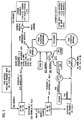
- Fig. 1 depicts a flow chart of the present invention using as a
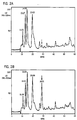
basis 1000 barrels of feed beer; - Figs. 2a and 2b are HPLC analyses of a fresh and an aged beer;
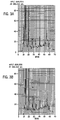
- Figs. 3a and 3b are HPLC analyses of a fresh and a severely staled beer;
- Fig. 4 is an HPLC analysis of a clear malt beverage;
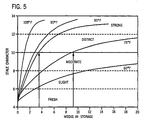
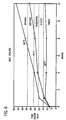
- Fig. 5 is a taste test ranking of staled beers; and
- Fig. 6 is staling peak height ranking of staled beers.
-
- Referring to Fig. 1, in the preferred method of the present invention both a clear beer and a nonalcoholic malt beverage (NA) are co-produced. By using the preferred method, for example, 1000 barrels of a feed beer (4% alcohol) can be converted into 2125 barrels of final product (1000 barrels of the clear beer and 1125 barrels of nonalcoholic beer).
- For purposes of illustration, the preferred method is described starting with 1000 barrels feed beer (4% alcohol, 35 BU). 100 barrels of the feed beer are carbon treated and filtered to remove the carbon and obtain a filtrate for use as a natural beer foaming component. The remaining 900 barrels of the feed beer are concentrated 4 fold via ultrafiltration with the preferred membrane to obtain 675 barrels of a 1st permeate (4% alcohol) for preparing the colorless, water-white, clear beer and 225 barrels of a retentate (4% alcohol). In other words, the beer components retained by the ultrafiltration membrane have a 4 fold greater concentration in the retentate than they do in the feed beer by virtue of the respective volumes of feed beer to retentate (900 barrels:225 barrels or 4:1). The retentate is diluted to two times with diluent water, and the 450 barrels of diluted retentate is subjected to ultrafiltration using the same type of membrane. The 225 barrels of the 2nd permeate (2% alcohol) are used as described herein to make the clear beer and the 225 barrels of the retentate (2% alcohol) is used for preparing the NA beer.
- To formulate the colorless, water-white, clear beer the following are blended:
- 675 barrels of permeate 1 (4% alcohol)
- 225 barrels of permeate 2 (2% alcohol)
- 100 barrels of the carbon treated feed beer (4% alcohol)
- 1% final concentration of intermediate dextrin (Staley 200)
- 1% final concentration of high dextrin (GPC M100)
- 10 ppm final concentration of the light stable hop extract, tetrahydroisohumulone (THISO) One product obtained is 1000 barrels of a colorless, water-white, clear beer (3.5 w/w alcohol, 10 BU). To formulate the nonalcoholic (NA) malt beverage the following are blended:
- 225 barrels retentate (2% alcohol, 40 BU)
- 900 barrels diluent water
- 4% intermediate dextrin (Staley 200)
-
- The grand total of the colorless, water-white, clear beer and the nonalcoholic (NA) beer is 2125 barrels.
- The feed beer may be a commercial beer or a specially brewed pale beer. Several different commercial beers have been used as the starting material. For example, a 80 - 100% pale malt beer having a color of about 4° to about 5° SRM may be used. However, a 100% pale malt beer having a color of about 4° to about 5° or less than 5° SRM is preferred.
- The properties of the ultrafiltration membrane to be used in the process of the present invention are important. The membrane must permit ethanol to pass therethrough. If the membrane pore size is too large (e.g., MWCO 500), the permeate, which is used to make the clear beer will be too colored and not acceptable. Also, if the membrane is too tight, the permeation rate will be intolerably slow and important flavor components in the feed beer will be retained, resulting in an unpleasant, unbalanced, and unacceptable permeate. The permeation rate is a function of the characteristics of the starting beer and filter membrane. A membrane with a nominal 300 molecular weight cut-off range and with the same properties as the OSMONICS MX07 UF300 polyamide/polysulfone composite membrane is preferred.
- It also has been found that the flavor of the permeate and the colorless, clear beer and the retentate and the resulting nonalcoholic malt beverage are influenced by the flavor of the feed beer. The greater the flavor of the feed beer, the more flavorful the permeate and retentate. For example, permeates made from highly hopped feed beers (e.g., 35 BU Cascade hops) have proportionately more hop flavor. Similarly, permeates with greater malt flavor are obtained when 100% malt was used in place of an adjunct such as syrups. The preferred feed beers are 100% pale malt brews which give water-white permeates. It is apparent that important beer flavor molecules permeate the membrane, and their concentration can be increased, decreased, and changed by changing the brewing ingredients and levels of ingredients and regime.
- An excellent, natural beer foam for the colorless, water-white, clear beer can be made using natural beer foaming components made by a variety of processes, including cold contact of water with ground malt followed by carbon treatment to reduce color (5% use level), carbon treatment of the preferred ultrafiltration retentate (4% use level), carbon treatment of Brewer's yeast extract (2-10% use level), or carbon treatment of the feed beer (6-12% use level).
- The natural beer foaming components made by the cold contact with malt process, while imparting excellent foam to the beer, requires special equipment and may impart a biscuit off-flavor to the final product, therefore it is less preferred. The natural beer foaming components made by carbon treating the retentate also produces excellent foam and adds desirable malty flavor, however the removal of carbon from the viscous retentate can be difficult and requires special equipment. The preparation of the Brewer's yeast extract requires special equipment. Therefore they are less preferred.
- The preferred natural beer foaming components are made by the carbon treating of a portion of the feed beer and removing the carbon with filtration to obtain a product which when added to the permeate at 6 - 12% w/w imparts excellent foam and a malty flavor. Furthermore, removal of the carbon from the feed beer can be accomplished using filtration employed in normal brewery operations or any one of a variety of filtration devices and is a relatively easy task.
- The carbon for use in the method of making the natural beer foaming components is preferably a food grade activated carbon. An acceptable carbon is DARCO KBB made by American Norit Company, Inc., 1050 Crown Pointe Parkway, Suite 1500, Atlanta, Georgia 30338. The quantity to be used is preferably about 0.25 to about 1.0% by weight or about 0.30 kg (0.67 lbs) to about 1.21 kg (2.68 lbs) per barrel of feed beer which is calculated as follows: 0.25% is 2.5 g/L x 3.785 L/gallon x 31.5 gallons/barrel x .0022 lb/g = 0.672 lbs./barrel (or 0.30 kg/barrel). The carbon is kept in the feed beer for a period long enough to absorb color bodies and to reduce the color to the desired level (e.g. at least about 2 minutes). The carbon is then removed using any one of a variety of filtration devices, such as a Millipore membrane filter (38 L scale), which is available from the Millipore Filter Corporation of Bedford, Massachusetts.
- The use of diatomatous earth (DE) as a filter aid is to be avoided because it tends to remove proteins beneficial to foam formation. Similar foam losses resulted when cellulosic pads containing DE were used. It also has been found in making the clear beer, that the use of diatomatous earth (DE) as a filter aid in the removal of carbon or as a final polishing filter prior to packaging results in a dramatic reduction in foam, presumably due to protein removal. Therefore, it is not recommended.
- Although a cellulose filter aid is preferred at plant scale to remove carbon, the Millipore type membrane filters (38 L scale) are preferred at lab scale because they can be used both to remove the carbon from the foaming component and as a final filter for the beer without having any effect on foam amount and quality.
- We also have discovered that a more desirable beer-like body and dryness can be produced in either the clear beer or a nonalcoholic malt beverage by increasing the concentration of dextrins. A combination of intermediate dextrins (
e.g. Staley 200 or 225) to provide body and high molecular weight dextrins (e.g. GPC's M100 Maltrin) to provide body and dryness are used to make the preferred colorless, clear beer at levels of about 1% by weight each. The preferred dextrins content for the nonalcoholic malt beverage is obtained by adding about 1 - 5% by weight of the intermediate dextrins (Staley 200 or 225). - The bitterness of the colorless, water-white, clear beer and the nonalcoholic beer can be important. During the ultrafiltration step of the preferred method of the present invention using highly hopped feed beers (20 - 45 BU), a 30 - 50% loss of bittering units (BUs) occurs, resulting in a less bitter retentate than expected. Levels of BUs in the permeate are typically below the level of meaningful detection (<2 BU). Carbon treatment of the feed beer also removes BUs to a point below detection resulting in a light stable fraction.
- In making the clear beer a hopping material is added to obtain the desired BU level prior to the final filtration. The preferred hopping material is tetrahydroisohumulone (THISO) disclosed in U.S. Patent No. 4,644,084. When it is used as the source of bittering, the light stability of the colorless, clear beer is not an issue.
- A variety of nonalcoholic (NA) beers can be made using the retentate from the ultrafiltration of the preferred method. The retentate which would normally be a waste stream produces nonalcoholic malt beverage which are beer-like with little or no wortiness.
- In the preferred method of improving the body and dryness of a nonalcoholic malt beverage the dextrose and intermediate dextrin contents are increased. The result is an NA beer which has the desired sweetness, body and dryness and which is balanced without any excess bitterness. One method of accomplishing this is to use glucoamylase (GA) at about the same level (e.g. 882 units GA/liter; 1 unit is 1 micromole of dextrose liberated per minute at pH 4.3 using a 10 DE starch) that the GA is used in making a light beer, followed by a residence time of about 4 - 8 days depending on the degree of attenuation desired (4 days, 0.5% dextrose; 8 days, 1% dextrose), and followed by flash pasteurization. The resulting nonalcoholic malt beverage has a rich, creamy, well balanced character. Most preferably, glucoamylase is added directly to the diluted retentate.
- A second method of improving the body and dryness of a nonalcoholic beer is to increase the dextrose and intermediate dextrin content of the nonalcoholic malt beverage by simply adding low and intermediate sized dextrins to add body, sweetness, and balance. It has been found that the addition of 1-5% intermediate dextrins (
Staley 200 or 225) results in a full bodied, nicely balanced nonalcoholic malt beverage. The increase in dextrose and intermediate dextrin content by either the use of GA or the addition of intermediate dextrins provides a method for making a wide range of nonalcoholic malt beverages of improved properties. - The practice of the invention is further illustrated by the examples.
- A wort (12.5° Plato) was prepared from the following ingredients:
Pale Malt, lbs. 21,100 Foundation Water, bbl. 180 Sponge Water, bbl 94 Chase Water, bbl 2 CaSO4 lbs. 30 CaCl2, lbs. 26 - The feed beer of Example 1 is concentrated by ultrafiltration using an OSMONICS MX07 UF300 membrane at 827kPa (120 psi). When only a colorless, water-white, clear beer is desired, the beer can be concentrated up to 10 fold with the resulting permeate being the base. When an NA malt beverage is being co-produced, only a 4 fold concentration is preferred so as not to deplete the retentate of important beer flavor compounds. In other words, the beer components retained by the ultrafiltration membrane have a 10 fold or a 4 fold greater concentration in the retentate than they do in the feed beer by virtue of the respective volumes of feed beer to retentate (10:1 or 4:1, respectively). The retentate can be diluted with diluent water in equal parts to the retentate (1:1), subjected to a second ultrafiltration and the second permeate added back to the clear beer. As a result no alcohol is lost to waste.
- To a permeate obtained by the ultrafiltration process of Example 2 there is added 1% by weight of intermediate dextrins and 1% by weight of high dextrins. At plant scale, the syrups can be mixed by adding them slowly to the front end of a circulation pump in a typical circulation loop. At laboratory or pilot scale to facilitate the mixing of the intermediate and high dextrins (
Staley 200 and M100 Maltrin) with the permeate, a mixture is prepared (10% Staley % Staley - A typical clear beer obtained by the preferred method of the invention has the following composition:
Alcohol, % w/w 3.65 Alcohol, % v/v 4.56 Real Extract, % w/w 2.25 Extract/Alcohol 0.63 Orig Gravity, Calc. 9.26 App Extract, % w/w 0.61 Specific Gravity 1.00236 Calories/12 oz 120 pH 4.7 Color, SRM 0.2 BU 8.2 Initial Clarity 40 - Polyphenol compounds were considered as possible marker candidates since they are strong antioxidants and would be expected to change in concentration as beer ages. Two important authors that have used HPLC techniques to examine polyphenols are Asaf Qureshi at the USDA Barley and Malt Laboratory, Madison, WI in the early 1980s, and Ian McMurrough at Arthur Guinness Sons & Co., Dublin, Ireland in the 1990s. Qureshi identified about eighteen polyphenols, mostly monomers, in bottled beers. He found the concentrations of the polyphenols to be in the ug/mL (ppm) range and to vary with storage time (Qureshi, A., Journal of the American Society of Brewing Chemists 37:161, 1979). McMurrough emphasized the monomer, (+)-catechin; two dimers, prodelphinidin B3 and porcyanidin B3; and four trimers which he also detected in the ppm range (McMurrough, I., Ferment 7(3):175, 1994). Both authors used HPLC with 280 nm detection, and later McMurrough used electrochemical detection.
- We have, however, discovered that 5-(hydroxymethyl)-2-furfural (HMF) is a very important staling marker in beer. The peak as detailed in the HPLC method of this example was confirmed by comparison to a known sample of HMF.
- An HPLC method was developed to analyze HMF found in beer, water extracts of malt, water extracts of hops, malt beverages, teas, and coffees:
- HPLC: HP Model 1050 with autosampler
- Solvents:
- A: 5%/95% CH3CN/H2O + 0.1% TFA
- B: 25%/75% CH3CN/H2O + 0.1% TFA
- C: 100% CH3CN + 0.1% TFA
- Detector: Isco Model UA-5 UV 280 to 310 nm
- Solvent Program: 100
% A 0 to 10 minutes, Linear Ramp to 100% B 10 to 40 minutes, 100% B 41 to 60 minutes, 100% C 61 to 86 minutes. - Sample Volume: Typically 20 uL Degassed Beer
- External Standard: (+)-Catechin
- Solvent Flow Rate: 0.2 mL/min
- HPLC Column: Whatman EQS 5 u S 100A C18 4.6 x 150 mm
-
- The slow flow rate of 0.2 mL/min permits interfacing the HPLC with a
Finnigan TSQ 700 mass spectrometer. When the mass spectrometer is not needed, considerably faster flow rates (~ 1 mL/min) are possible with resulting shorter analysis time (~ 20 min). - Preparative HPLC Column: Altex Ultrasphere ODS C18 5u 10 x 2500 mm
- Flow.Rate: 1.6 mL/min
-
- Fresh MILLER GENUINE DRAFT (MGD) was compared to grossly staled MGD to see if any differences could be found in the HPLC HMF elution range. Figs. 2a and 2b compare an 8 week old MGD stored at 2°C (36°F) (Fig. 2a) to a 16 week old MGD stored at 29°C (85°F) (Fig. 2b). A large increase in the peak at 28:51 minutes is readily noticeable and was confirmed to correspond with 5-(hydroxymethyl)-2-furfural (HMF). This peak is hereinafter referred to as the "staling peak". Some other minor differences are also detectable in Figs. 2a and 2b. Note that the HMF may elute at different times depending on the HPLC conditions. Identification of the HMF peak can be accomplished by using an HMF standard.
- Increasing oxidation by bubbling air through a small amount of beer or by addition of hydrogen peroxide to beer did not increase the intensity of the staling peak. HMF staling peak intensity was found to be very temperature sensitive. Figs. 3a and 3b are a comparison of MGD before (Fig. 3a) and after (Fig. 3b) heating. A "Severe Staling Test" was developed which consists of heating a predetermined volume of beer (preferably 10 ml) to dryness at 75°C for 6 hours. Water is then added back to the original predetermined volume (preferably 10 ml). Note that other volumes can be used; however, the drying time will be affected accordingly. A four-fold increase in staling peak height typically results from this test as seen in Figs. 3a and 3b. The severe staling test can be used to predict how well a beer withstands staling or it can be used to indicate the impact of experimental additives.
- The source of the staling peak was found to be malt. Malt is used in beers at much higher levels than hops and heated water extracts of malt produced a large staling peak, whereas heated (or unheated) water extracts of hops did not. Malt beverages, such as QUBE or ZIMA, produced very large staling peaks (Fig. 4) even before heating.
- Fig. 5 plots the Sensory Taste Test Panel scores for oxidation of MGD vs. time at various temperatures. The panel oxidation scores were ranked as "fresh, slight, moderate, distinct, and strong". Fig. 6 plots the height of the staling peak for MGD vs. time at various temperatures. A duplication of the panel scores was obtained in Fig. 6 by adjusting the range of the "fresh" to "strong" rankings. Both Figs. 5 and 6 show the importance of keeping beer at cold temperatures to preserve freshness.
-
Staling Peak Height (mm) Refrigerated at 2 to 5°C (36 to 41°F) Severe Staling Test 10 mL Product HeatedProduct Fresh 4 wks 8 wks 1 yr or > 6 hr at 75° C MGD 8 12 12 40 Miller High Life (MR) 11 18 50 Unhopped MR 14 56 Milwaukee Best 10 29 Lowenbrau 14 30 Miller Lite 16 34 ZIMA 68 490 Example 3 Beer 8 8 (Clear Beer) - Table 1 is a survey of products displaying the staling peak height obtained by HPLC analysis. Smaller peak height corresponds to fresher product. We have discovered that the clear beer of the present invention (Example 3) retains its freshness better than most commercial beers. This is confirmed by the low value (8 mm) of the staling peak for 2 year old sample of the beer of Example 3. Even after the severe staling test, the beer of Example 3 has a value of only 8 mm. At the other extreme, malt beverages have very high staling peak values. One major difference between malt beverages and beers is pH. Malt beverages have a pH of about 3.0 compared to about 4.3 for beers. When the pH of MGD was lowered to 3.0 with sulfuric acid the severe staling test gave a value of 168 mm or about four times more than MGD at normal pH. This result agrees with previous studies which have shown that lower pH in beers increases staling.
- Concentrates of the staling peak were obtained by preparative HPLC and the staling peak was identified as 5-(hydroxymethyl)-2-furfural by electron impact, chemical ionization, and electrospray analysis on a
Finnigan TSQ 700 mass spectrometer.
5-(hydroxymethyl)-2-furfural, or HMF, has been known to be in beer for many years (McDougall, J., et al., "Studies on Furfural and 5-Hydroxymethyl Furural in Beer", JASBC pp. 48-51, 1963) and has been widely used as a marker for beer staling since the mid 1970s (Davis, D., et al., "Application of HPLC to the Solution of Flavor Problems in Beer Caused by Low-Volatile Compounds", JASBC pp. 55-59, 1976). - Approximately 13 mm HMF peak height equals 1 mg/L or 1 ppm HMF. The severe staling test (6 hrs at 75°C) results for the beer of Example 3 and Miller High Life are:
- Example 3 Beer = 0.6 ppm HMF
- Miller High Life = 3.8 ppm HMF
-
- The staling marker peak found in beer is very temperature sensitive and can be thought of as an internal recording thermometer for beer. It mimics sensory panel results for oxidation of MGD and it can be analyzed by a simple and fast HPLC method with UV detection.
- Applications included the ranking of staling potential of various products based on the development of a "Severe Staling Test".
- In general, a preferred HMF peak height is less than 20 mm when refrigerated 2-5°C (36° - 41°F) for 8 weeks. A more preferred peak height is less than 15 mm while a most preferred peak height is less than 8 mm.
- Using the severe staling test (6 hrs. at 75°C) of the present invention a preferred HMF peak height is less than 40 mm. A more preferred peak height is less than 20 mm while a most preferred peak height is less than 8 mm.
- As shown in Example 4, the clear beer of the present invention as detailed above is significantly less prone to oxidation than conventionally formulated beers. The clear beer is formulated from the permeate stream of an ultrafiltered pellet-hopped beer as illustrated in Example 3. The resulting permeate is combined with carbon-treated base beer which served as the foam ingredient (FI) (see Example 8 below), two starch adjuncts, Maltrin M100 and
Staley 225, and Hydrohop (the percentages are shown in section C and Table 2 below). Maltrin M100 is a product manufactured by Grain Processing Corp., Muscatine, Iowa.Staley 225 is a product manufactured by A.E. Staley Manufacturing Co., Decatur, Illinois. Hydrohop is a product manufactured by Watertown Hops Co., Watertown, Wisconsin. Hydrohop is a light stable bittering agent (tetrahydroisohumulones) prepared by the solvent extraction of hops or hop pellets. - The objective of the following work was to determine if the resistance to staling (i.e., oxidation) is due to an ingredient adjunct, to a synergistic combination of ingredient adjuncts, or to the ultrafiltration process itself--that is, whether normal beer staling precursors are removed by ultrafiltration.
- A stock beer from the Milwaukee Plant underwent a 4-fold concentration across three 41 inch MX07 Ultrafiltration cartridges from OSMONICS (Minneapolis, MN) plumbed in series and having a nominal cutoff of approximately 300 daltons. The permeate stream was evaluated as is and following a 10% (v/v) addition of the FI. In addition, the two starch adjuncts, Maltrin M100 and
Staley 225, were added separately and in combination at 1% (w/v) to the permeate + FI composite. A total of nine beers (listed below) were evaluated organoleptically following a protracted abuse test (3 weeks at 100°F) by panelists trained to discern oxidative defects in beer. -
- 1. Starting Beer
- 2. Permeate, 4X Concentration
- 3. 50% Permeate + 50% Retentate (v/v)
- 4. Retentate, 4X Dilution
- 5. Permeate (90%) + FI (10%) (v/v)
- 6.
Beer # 5 + Maltrin M100 (1%) (w/v) - 7.
Beer # 5 + Staley 225 (1%) (w/v) - 8.
Beer # 5 + M100 (1%) + Staley 225 (1%) (w/v) - 9. Permeate + Hops (16 BU's)
-
- Each abused beer was evaluated for oxidative character against an unabused control (the same beer stored cold at 5°C (41°F). Beers were evaluated on a standard 24 point scale by panelists especially trained to discern differences in oxidative character. The oxidative mean, the increase in perceived oxidation, for each beer was then calculated. A Duncan's Multiple Range Test was used to analyze the variance to determine the significant differences between the beers at a 95% confidence level (i.e., alpha = 0.05). See Duncan, D.B., "Multiple Range and Multiple F Tests", 11 Biometrics 1-42 (1955) and Duncan, D.B., "Multiple Range Test for Correlated and Heteroscedastic Means", 13 Biometrics 164-176 (1957).
- The oxidative scores (on a 24 point scale) for the nine sets of beers were evaluated. The calculated oxidative mean for each beer, as well as, the difference between each special and corresponding control are shown in Table 2. Finally, the Duncan grouping of statistically like beers having the same perceived increase in oxidation develop during the three week storage at 38°C (100°F) is shown in Table 3.
- Table 3 shows that
beers beers beers - When the retentate stream was diluted back 4-fold (#4) to the same concentration as the starting beer (#1), it underwent the same amount of oxidation as the starting beer.
- When the permeate stream was combined with either the FI (#5) alone or in combination with the either starch adjunct, Maltrin M100 (#6) or Staley 225 (#7), beers were significantly less prone to oxidation. However, the starch adjuncts themselves did not have an impact on the level of oxidation.
- The common element in
Beers - The results indicate that the oxidative precursors responsible for oxidation are retained in the retentate stream of the ultrafiltration process. Whenever the retentate stream was used in a beer formulation, the beer was more oxidized, and in some cases significantly more oxidized, than in beers where it was omitted.
- A beer coloring, such as Emkamalt, can be added to the colorless, clear beer of the present invention to produce a stable beer with a coloring comparable to conventional beers. Emkamalt is a product manufactured by Williamson Food Ingredients, Louisville, Kentucky.
- Three samples of diluent plus Emkamalt (pH adjusted to 4.2) were analyzed for 5-(hydroxymethyl)-furfural (HMF) content:
HMF (ppm) No Heat 6 hr, 75°C Diluent + Emkamalt (SRM = 2.2) (Low Color) 0 0 Diluent + Emkamalt (SRM = 3.5) (Same as MGD) 0 0 Diluent + Emkamalt (SRM = 23) (Same as Lowenbrau Dark) 0.5 0.5 - Two samples of the clear beer of the present invention were also analyzed for HMF:
HMF (ppm) No Heat 6 hr, 75°C Clear Beer (2 years 4°C (40°F))0.6 0.6 Clear Beer (2 years 4°C (40°F)) + Emkamalt (SRM = 23)0.9 1.0 - These results show that Emkamalt contributes very little HMF to clear beer. Thus, clear beer plus Emkamalt is a full colored beer which is nearly as stable as clear beer.
- Other beer colorings can also be used such as Torrax Super 55 manufactured by Rhone-Poulenc, United Kingdom and RG15 manufactured by Pure Malt Products Ltd., United Kingdom. Generally speaking, any preparation from roasted barley and roasted malt (derived from solvent extractions with possible further concentration) and/or compatible caramel colors may be used.
- A 20-40% solution of intermediate dextrins (Staley 200) is made up in diluent water by heating at 120°C for 30 - 60 minutes, and then added to the diafiltered retentate (2% alcohol) from Example 2 to a final product concentration of 4%. The retentate is further diluted to 0.4% w/w alcohol, and the product is final filtered and packaged as for a regular nonalcoholic malt beverage.
- A portion of the feed beer of Example 1 is treated with 0.25 - 1.0% Darco KB-B carbon (pre-slurried with 60°C water) at -1 - 5°C for a minimum contact time of 2 minutes (up to a 12 hour contact time has been found to be acceptable). The carbon is then removed by filtration for example using a 0.45 micrometer (0.8 µm, carbon fines bleed through) membrane filter (Millipore type HA nitrocellulose). (With this filter, 100 barrels of 0.35% - 0.5% carbon treated primary beer can be filtered in 8 hours using 34.8 square metres (375 square feet) of membrane.) The decolorized natural beer foaming component (color less than 1.0° SRM) is held until required.
- Conventional brewer's malt is ground and mixed with 1 to 5 parts water to 1 part malt at 1° to 15°C. The resulting mash is strained and centrifuged with the sediment being discarded. A clear supernatant is diafiltered four times using an OSMONICS UF 3000 membrane to remove unwanted color and flavor. The permeates are discarded. The retentate is concentrated, pasteurized for 15 minutes at 65° C and centrifuged to obtain a clear supernatant fluid which can be used as a natural beer foaming component. The supernatant fluid can be further treated with carbon to improve its foaming properties.
- To a retentate obtained from the ultrafiltration process of Example 2 there is added 0.5 to 2% Darco KB-B carbon (pre-slurred with 60° C water) at -1 to 85° C for a minimum contact time of 2 minutes up to 1 hour. The carbon is removed in the same manner as set forth in Example 5 to result in a similar decolorized natural beer foaming component which is held until required.
- To a permeate obtained from the ultrafiltration process of Example 2 there is added a carbon treated Brewer's yeast extract. The Brewer's yeast is disrupted by any one of a variety of methods, for example, shaking with glass beads or disruption using a Gallun homogenizer. The extract is clarified by centrifugation and the supernatant is treated with Darco KB-B carbon in the same amount and manner as set forth in Example 7 and the carbon removed from the Brewer's yeast extract in the manner set forth in Example 5 to result in the natural beer foaming component.
- It will be readily apparent to those skilled in the art that a number of modifications and changes may be made without departing from the scope of the present invention. Therefore, it is intended that the invention only be limited by the claims.
- The above processes can be used to make stable colorless or colored beers, monalcoholic malt beverages, and natural beer foaming components. A process is also provided which can test the stability of malt beverages on an accelerated basis.
| Oxidation Mean Values | |||
| Oxidation Mean Values | |||
| # Beer Fraction | Control | Abused | |
| 1. Starting Beer | 3.5 | 17.25 | 13.75 |
| 2. Permeate, 4X Concentration | 4.25 | 14.75 | 10.5 |
| 3. 50% Permeate + 50% Retentate | 3.75 | 17.375 | 13.625 |
| 4. Retentate, 4X Dilution | 3.25 | 17.125 | 13.875 |
| 5. Permeate (90%) + FI (10%) | 4 | 13.625 | 9.625 |
| 6. | 4 | 13.25 | 9.25 |
| 7. | 4.5 | 13.25 | 8.75 |
| 8. | 3.75 | 14.25 | 10.5 |
| 9. Permeate + Hops (16 BU's) | 3.125 | 13.875 | 10.75 |
| Correlation of Beer (Based on Oxidation) | |||||||||
| | 4 | 1 | 3 | 9 | 2 | 8 | 5 | 6 | 7 |
| Duncan Grouping | A | A | A | A | A | A | |||
| B | B | B | B | B | B |
Claims (12)
- A method of preparing a colorless, clear beer which comprises:(a) subjecting a feed beer having from 3 to 7% w/w alcohol, 20 to 50 bitter units and a color reading of 4 ° to 5 ° SRM to ultrafiltration at a pressure of 206 to 1310 kPa (30 to 190 psi) using a membrane having a molecular weight cutoff (MWCO) of about 300 to obtain a retentate and a permeate;(b) isolating the permeate which contains about the same level of alcohol as said feed beer and having less than 2 bitter units and a color of less than 0.1° SRM;(c) adding to the permeate an effective amount of a bittering agent to obtain the desired bitter flavor;(d) adding an effective amount of high and intermediate dextrins in the permeate to add body and dryness; and(e) adding an effective amount of a natural beer foaming component to the permeate to produce a colorless, clear beer.
- A method according to claim 1 in which the membrane is a polyamide/polysulfone composite membrane.
- A method according to claim 1 or 2 in which the amount of bittering agent added is enough to impart a reading of 4 to 40 bitter units to the final beer.
- A method according to claims 1, 2 or 3 which the high and the intermediate dextrins content is increased to 0.5 to 3% by weight of the final beer.
- A method according to any one of the preceding claims in which the feed beer is brewed from 80-100% pale malt and wherein the feed beer has a color of 4° to 5° SRM.
- A method of making a nonalcoholic malt beverage which comprises:(a) subjecting a feed beer having from 3 to 7% w/w alcohol and a color of 4° to 5° SRM to ultrafiltration using a membrane having a MWCO of about 300 to obtain a retentate containing about 3 to 7% w/w alcohol;(b) diluting the retentate with a diluent comprising water;(c) increasing the concentration of high and intermediate sized dextrins in the diluted retentate; and(d) adjusting the alcohol content, if needed, to less than 0.5% v/v to obtain a nonalcoholic malt beverage.
- A method according to claim 6 in which the concentration of glucose, low and intermediate dextrins in the retentate is increased by adding glucoamylase to the retentate.
- A method according to claim 6 in which the concentration of glucose, low and intermediate dextrins is increased in the retentate by adding a 26 DE syrup.
- A method according to any one of claims 6 to 8 wherein the content of intermediate dextrins in the diluted retentate is increased to from 1 to 5% by weight.
- A method of improving the body and dryness of a nonalcoholic malt beverage which comprises adding to said nonalcoholic malt beverage an effective amount of intermediate dextrins.
- A method according to claim 10 which comprises adding 1 to 5% by weight of intermediate dextrins.
- A method of making a colored beer which comprises preparing a colorless clear beer by a method according to any one of claims 1 to 5 and adding a beer coloring.
Applications Claiming Priority (3)
| Application Number | Priority Date | Filing Date | Title |
|---|---|---|---|
| US08/029,740 US5439699A (en) | 1993-03-11 | 1993-03-11 | Method for preparing colorless clear beer |
| CA002228763A CA2228763C (en) | 1993-03-11 | 1995-08-07 | Brewing products and their methods for production |
| PCT/US1995/010019 WO1997006238A1 (en) | 1993-03-11 | 1995-08-07 | Brewing products and their methods for production |
Publications (3)
| Publication Number | Publication Date |
|---|---|
| EP0873396A1 EP0873396A1 (en) | 1998-10-28 |
| EP0873396A4 EP0873396A4 (en) | 2000-01-12 |
| EP0873396B1 true EP0873396B1 (en) | 2003-10-22 |
Family
ID=27170624
Family Applications (1)
| Application Number | Title | Priority Date | Filing Date |
|---|---|---|---|
| EP95929412A Expired - Lifetime EP0873396B1 (en) | 1993-03-11 | 1995-08-07 | Brewing products and their methods for production |
Country Status (4)
| Country | Link |
|---|---|
| US (2) | US5439699A (en) |
| EP (1) | EP0873396B1 (en) |
| CA (1) | CA2228763C (en) |
| WO (1) | WO1997006238A1 (en) |
Families Citing this family (27)
| Publication number | Priority date | Publication date | Assignee | Title |
|---|---|---|---|---|
| US5439699A (en) * | 1993-03-11 | 1995-08-08 | Miller Brewing Company | Method for preparing colorless clear beer |
| US5618572A (en) * | 1993-03-11 | 1997-04-08 | Miller Brewing Company | Flavored malt beverages prepared by using ultrafiltration methods |
| WO2003010277A1 (en) * | 2001-07-26 | 2003-02-06 | Danisco Usa, Inc. | A process for enhancing the body and taste of malt beverages |
| JP3730935B2 (en) * | 2001-09-27 | 2006-01-05 | 麒麟麦酒株式会社 | Method for producing fermented malt beverage |
| US20030134007A1 (en) * | 2002-01-16 | 2003-07-17 | Donhowe Erik Thurman | Product and process of making an alcohol containing sport drink |
| US6660172B2 (en) | 2002-01-31 | 2003-12-09 | Koslow Technologies Corporation | Precoat filtration media and methods of making and using |
| US7008652B2 (en) * | 2002-06-14 | 2006-03-07 | Brown-Forman Corporation | Method for production of a flavorless malt base |
| JP2007524605A (en) * | 2003-04-03 | 2007-08-30 | ピーディーエル バイオファーマ,インコーポレイティド | Inhibitors of integrin α5β1 and their use for control of tissue granulation |
| US20050064066A1 (en) * | 2003-08-07 | 2005-03-24 | Grain Processing Corporation | Alcoholic beverage |
| EP1571200A1 (en) * | 2004-03-04 | 2005-09-07 | Warsteiner Brauerei Haus Cramer KG | Beer having modified extract |
| DE102004028832A1 (en) * | 2004-03-04 | 2005-09-22 | Warsteiner Brauerei Haus Cramer Kg | Process to produce a blended beer by filtration of pre-blended beer into filtrate and retentate and partial recombination |
| TWI253468B (en) * | 2004-05-25 | 2006-04-21 | Taiwan Tobacco & Liquor Corp | Method for producing beer-like and alcohol-free fermented beverage |
| DE102004028728B4 (en) * | 2004-06-14 | 2008-03-27 | Warsteiner Brauerei Haus Cramer Kg | Process for the production of beer with modified beer ingredients |
| ATE539143T1 (en) * | 2004-10-21 | 2012-01-15 | Diageo North America Inc | METHOD FOR PRODUCING PURIFIED BEVERAGE PRODUCTS |
| WO2006046879A2 (en) * | 2004-10-25 | 2006-05-04 | San Miguel Corporation | Method of making colorless and artificially colored clear beer |
| US7455777B2 (en) * | 2004-12-14 | 2008-11-25 | Itt Manufacturing Enterprises, Inc. | Method of adjusting levels of dissolved compounds in beverages |
| ATE523091T1 (en) * | 2008-11-26 | 2011-09-15 | Cooperatie Avebe U A | IMPROVED BEER FOAMING |
| KR101802153B1 (en) * | 2010-03-31 | 2017-11-28 | 마쓰다니가가꾸고오교가부시끼가이샤 | Producing Method of Beer Taste Alcoholic Beverage |
| JP5996182B2 (en) * | 2011-12-01 | 2016-09-21 | サッポロビール株式会社 | Sparkling beverage and method for producing the same |
| JP6328892B2 (en) * | 2013-08-05 | 2018-05-23 | アサヒビール株式会社 | Method for improving foam retention of unfermented non-alcohol beer-taste beverage and method for producing non-alcohol beer-taste beverage |
| WO2019193673A1 (en) * | 2018-04-04 | 2019-10-10 | サントリーホールディングス株式会社 | Beer-taste beverage with suppressed photodegradation, and production method thereof |
| JP7157144B2 (en) * | 2018-04-04 | 2022-10-19 | サントリーホールディングス株式会社 | Beer-taste beverage with reduced photodegradation and method for producing the same |
| JP7134748B2 (en) * | 2018-06-29 | 2022-09-12 | アサヒビール株式会社 | alcoholic beverage |
| AU2020316667B2 (en) * | 2019-07-23 | 2026-05-21 | Heineken Supply Chain B.V. | Sweet tasting starch-derived beverage |
| BE1028322B1 (en) * | 2020-05-20 | 2021-12-20 | Duvel Moortgat Nv | METHOD AND DEVICE FOR SEPARING YEAST FROM FERMENTED BEVERAGE |
| CN117545363A (en) | 2021-07-13 | 2024-02-09 | 利乐拉瓦尔集团及财务有限公司 | Beverage production method |
| US20240229083A9 (en) * | 2022-10-20 | 2024-07-11 | IntegroEnergy Technologies LLC | Preflash system and method |
Family Cites Families (34)
| Publication number | Priority date | Publication date | Assignee | Title |
|---|---|---|---|---|
| GB1045191A (en) * | 1963-12-09 | 1966-10-12 | Millipore Filter Corp | Improvements in process for filtering fermented beverages |
| DE1517900B2 (en) * | 1965-01-13 | 1973-01-25 | Deutsche Gold- und Silber-Scheideanstalt vormals.Roessler, 6000 Frankfurt | PROCESS FOR PROTEIN STABILIZATION OF BEER BY FINE DISTRIBUTED FELLED SILLICIIUM DIOXIDE |
| GB1177126A (en) * | 1967-07-10 | 1970-01-07 | Guinness Son & Co Ltd A | Treatment of Alcoholic Beverages |
| US3615024A (en) * | 1968-08-26 | 1971-10-26 | Amicon Corp | High flow membrane |
| US3798331A (en) * | 1972-09-13 | 1974-03-19 | Hamm T Co | Neutral fermented alcoholic beverage |
| CH566798A5 (en) * | 1973-05-29 | 1975-09-30 | Battelle Memorial Institute | |
| FI71573C (en) * | 1979-06-15 | 1987-01-19 | Akzo Nv | Method and apparatus for reducing fermented beverage alcohol content by dialysis. |
| EP0036175B1 (en) * | 1980-03-14 | 1984-03-14 | Akzo GmbH | Process for the reduction of the alcohol content of fermented beverages by dialysis |
| US4440795A (en) * | 1981-02-06 | 1984-04-03 | Miller Brewing Company | Process for the preparation of a stable citrus flavored malt beverage |
| CH646844A5 (en) * | 1982-01-04 | 1984-12-28 | Feldschloesschen Brauerei | METHOD FOR PRODUCING ALCOHOL-FREE BEVERAGES WITH HEFEAROMA. |
| FR2524000A1 (en) * | 1982-03-24 | 1983-09-30 | Union Brasseries | PROCESS FOR THE MANUFACTURE AND TREATMENT OF ALCOHOLIC BEVERAGES |
| GB8303611D0 (en) * | 1983-02-09 | 1983-03-16 | Ag Patents Ltd | Concentration of alcoholic beverages |
| NZ208134A (en) * | 1984-05-11 | 1987-07-31 | Lion Corp Ltd | Beer production; wort subjected to ultrafiltration prior to fermentation |
| US4666718A (en) * | 1984-08-15 | 1987-05-19 | Miller Brewing Company | Preparation of low calorie beer |
| US4612196A (en) * | 1984-08-23 | 1986-09-16 | Miller Brewing Company | Preparation of low alcohol beverages by reverse osmosis |
| US5141611A (en) * | 1985-05-16 | 1992-08-25 | Memtec Limited | Removing and recovering plant polyphenols |
| US4717482A (en) * | 1985-05-20 | 1988-01-05 | Allied Corporation | Production of low alcoholic content beverages |
| US4617127A (en) * | 1985-05-20 | 1986-10-14 | Allied Corporation | Production of low alcoholic content beverages |
| FR2584416B1 (en) * | 1985-07-05 | 1988-09-09 | Inst Nat Rech Chimique | PROCESS FOR ADJUSTING THE ALCOHOLIC DEGREE OF WINE OR ALCOHOLIC BEVERAGES AND INSTALLATION FOR IMPLEMENTING IT |
| US4816407A (en) * | 1985-10-11 | 1989-03-28 | Sepracor Inc. | Production of low-ethanol beverages by membrane extraction |
| US4778688A (en) * | 1985-10-11 | 1988-10-18 | Sepracor, Inc. | Production of low-ethanol beverages by membrane extraction |
| US4933198A (en) * | 1985-10-11 | 1990-06-12 | Lee Eric K L | Production of low-ethanol beverage by membrane extraction |
| US4767640A (en) * | 1985-10-29 | 1988-08-30 | Miller Brewing Company | Light stable hop extracts and method of preparation |
| FR2592058B1 (en) * | 1985-12-19 | 1990-05-04 | Migros Federation Cooperatives | PROCESS FOR PARTIAL OR TOTAL DESALCOOLIZATION OF WINE AND / OR CIDER AND DEVICE FOR CARRYING OUT THIS PROCESS |
| CH676076A5 (en) * | 1987-06-29 | 1990-12-14 | Bucher Guyer Ag Masch | |
| US4888189A (en) * | 1987-08-17 | 1989-12-19 | Ariel Vineyards, Inc. | Simultaneous double reverse osmosis process for production of low and non-alcoholic beverages |
| US4999209A (en) * | 1987-08-17 | 1991-03-12 | Ariel Vineyards, Inc. | Low and non-alcoholic beverages produced by simultaneous double reverse osmosis |
| US5039346A (en) * | 1988-03-25 | 1991-08-13 | A. E. Staley Manufacturing Company | Fructose syrups and sweetened beverages |
| US4970082A (en) * | 1989-10-27 | 1990-11-13 | Miller Brewing Company | Process for preparing a nonalcoholic (less the 0.5 volume percent alcohol) malt beverage |
| US4990350A (en) * | 1990-01-16 | 1991-02-05 | Joseph E. Seagrams And Sons, Inc. | Process for preparing reduced alcoholic spirits and the product produced therefrom |
| DE4103812A1 (en) * | 1990-09-29 | 1992-04-02 | Khs Processtechnik Gmbh | METHOD FOR DEALCOHOLIZING BEVERAGES |
| US5254474A (en) * | 1991-02-25 | 1993-10-19 | The United States Of America As Represented By The Secretary Of The Army | Method of assessing thermal processing of food using intrinsically-created compounds |
| US5294450A (en) * | 1993-02-09 | 1994-03-15 | Coors Brewing Company | Colorless flavored malt beverage and method for making the same |
| US5439699A (en) * | 1993-03-11 | 1995-08-08 | Miller Brewing Company | Method for preparing colorless clear beer |
-
1993
- 1993-03-11 US US08/029,740 patent/US5439699A/en not_active Expired - Lifetime
-
1995
- 1995-06-07 US US08/477,046 patent/US5639493A/en not_active Expired - Lifetime
- 1995-08-07 EP EP95929412A patent/EP0873396B1/en not_active Expired - Lifetime
- 1995-08-07 CA CA002228763A patent/CA2228763C/en not_active Expired - Lifetime
- 1995-08-07 WO PCT/US1995/010019 patent/WO1997006238A1/en not_active Ceased
Also Published As
| Publication number | Publication date |
|---|---|
| CA2228763A1 (en) | 1997-02-20 |
| EP0873396A4 (en) | 2000-01-12 |
| US5439699A (en) | 1995-08-08 |
| CA2228763C (en) | 2009-11-03 |
| US5639493A (en) | 1997-06-17 |
| EP0873396A1 (en) | 1998-10-28 |
| WO1997006238A1 (en) | 1997-02-20 |
Similar Documents
| Publication | Publication Date | Title |
|---|---|---|
| CA2228763C (en) | Brewing products and their methods for production | |
| EP0784671B1 (en) | Flavored malt beverages | |
| JP7109514B2 (en) | beer-taste beverages | |
| JP6857274B1 (en) | Beer taste beverage | |
| EP1544285A1 (en) | Process for producing low-alcoholic beer-like drink and low-alcoholic beer-like drink | |
| JP2020202878A (en) | Beer taste beverage | |
| JP7057296B2 (en) | Beer taste beverage | |
| TWI907404B (en) | Beer-flavored beverages | |
| US4957766A (en) | Process for making beer containing an unfermented beer product | |
| KR20230114753A (en) | Beer-taste beverage and method for producing beer-taste beverage | |
| JP2021003127A (en) | Beer-taste beverage | |
| JP7736886B1 (en) | Non-alcoholic beer-like beverage and method for producing the same | |
| KR20230160363A (en) | Low-alcohol beer-flavored beverage and method for producing the same | |
| JP7677749B2 (en) | Beer-flavored beverages | |
| JP6857275B1 (en) | Beer taste beverage | |
| CA2675706A1 (en) | Brewing products and their methods for production | |
| DE69532004T2 (en) | Brewery products and their method of preparation | |
| HK40085506A (en) | Beer taste beverage | |
| HK40103283A (en) | Low-alcohol beer-taste beverage and method for producing same | |
| HK40085504A (en) | Beer-flavored beverage | |
| TW202405154A (en) | Beer-flavored beverage | |
| JP7157144B2 (en) | Beer-taste beverage with reduced photodegradation and method for producing the same |
Legal Events
| Date | Code | Title | Description |
|---|---|---|---|
| PUAI | Public reference made under article 153(3) epc to a published international application that has entered the european phase |
Free format text: ORIGINAL CODE: 0009012 |
|
| 17P | Request for examination filed |
Effective date: 19980302 |
|
| AK | Designated contracting states |
Kind code of ref document: A1 Designated state(s): AT BE CH DE DK ES FR GB GR IE IT LI LU MC NL PT SE |
|
| A4 | Supplementary search report drawn up and despatched |
Effective date: 19991129 |
|
| AK | Designated contracting states |
Kind code of ref document: A4 Designated state(s): AT BE CH DE DK ES FR GB GR IE IT LI LU MC NL PT SE |
|
| 17Q | First examination report despatched |
Effective date: 20020527 |
|
| GRAH | Despatch of communication of intention to grant a patent |
Free format text: ORIGINAL CODE: EPIDOS IGRA |
|
| GRAH | Despatch of communication of intention to grant a patent |
Free format text: ORIGINAL CODE: EPIDOS IGRA |
|
| GRAA | (expected) grant |
Free format text: ORIGINAL CODE: 0009210 |
|
| AK | Designated contracting states |
Kind code of ref document: B1 Designated state(s): AT BE CH DE DK ES FR GB GR IE IT LI LU MC NL PT SE |
|
| PG25 | Lapsed in a contracting state [announced via postgrant information from national office to epo] |
Ref country code: LI Free format text: LAPSE BECAUSE OF FAILURE TO SUBMIT A TRANSLATION OF THE DESCRIPTION OR TO PAY THE FEE WITHIN THE PRESCRIBED TIME-LIMIT Effective date: 20031022 Ref country code: IT Free format text: LAPSE BECAUSE OF FAILURE TO SUBMIT A TRANSLATION OF THE DESCRIPTION OR TO PAY THE FEE WITHIN THE PRE;WARNING: LAPSES OF ITALIAN PATENTS WITH EFFECTIVE DATE BEFORE 2007 MAY HAVE OCCURRED AT ANY TIME BEFORE 2007. THE CORRECT EFFECTIVE DATE MAY BE DIFFERENT FROM THE ONE RECORDED.SCRIBED TIME-LIMIT Effective date: 20031022 Ref country code: FR Free format text: LAPSE BECAUSE OF FAILURE TO SUBMIT A TRANSLATION OF THE DESCRIPTION OR TO PAY THE FEE WITHIN THE PRESCRIBED TIME-LIMIT Effective date: 20031022 Ref country code: CH Free format text: LAPSE BECAUSE OF FAILURE TO SUBMIT A TRANSLATION OF THE DESCRIPTION OR TO PAY THE FEE WITHIN THE PRESCRIBED TIME-LIMIT Effective date: 20031022 Ref country code: BE Free format text: LAPSE BECAUSE OF FAILURE TO SUBMIT A TRANSLATION OF THE DESCRIPTION OR TO PAY THE FEE WITHIN THE PRESCRIBED TIME-LIMIT Effective date: 20031022 Ref country code: AT Free format text: LAPSE BECAUSE OF FAILURE TO SUBMIT A TRANSLATION OF THE DESCRIPTION OR TO PAY THE FEE WITHIN THE PRESCRIBED TIME-LIMIT Effective date: 20031022 |
|
| REG | Reference to a national code |
Ref country code: GB Ref legal event code: FG4D |
|
| REG | Reference to a national code |
Ref country code: CH Ref legal event code: EP |
|
| REG | Reference to a national code |
Ref country code: IE Ref legal event code: FG4D |
|
| REF | Corresponds to: |
Ref document number: 69532004 Country of ref document: DE Date of ref document: 20031127 Kind code of ref document: P |
|
| PG25 | Lapsed in a contracting state [announced via postgrant information from national office to epo] |
Ref country code: SE Free format text: LAPSE BECAUSE OF FAILURE TO SUBMIT A TRANSLATION OF THE DESCRIPTION OR TO PAY THE FEE WITHIN THE PRESCRIBED TIME-LIMIT Effective date: 20040122 Ref country code: GR Free format text: LAPSE BECAUSE OF FAILURE TO SUBMIT A TRANSLATION OF THE DESCRIPTION OR TO PAY THE FEE WITHIN THE PRESCRIBED TIME-LIMIT Effective date: 20040122 Ref country code: DK Free format text: LAPSE BECAUSE OF FAILURE TO SUBMIT A TRANSLATION OF THE DESCRIPTION OR TO PAY THE FEE WITHIN THE PRESCRIBED TIME-LIMIT Effective date: 20040122 |
|
| PG25 | Lapsed in a contracting state [announced via postgrant information from national office to epo] |
Ref country code: ES Free format text: LAPSE BECAUSE OF FAILURE TO SUBMIT A TRANSLATION OF THE DESCRIPTION OR TO PAY THE FEE WITHIN THE PRESCRIBED TIME-LIMIT Effective date: 20040202 |
|
| REG | Reference to a national code |
Ref country code: CH Ref legal event code: PL |
|
| PG25 | Lapsed in a contracting state [announced via postgrant information from national office to epo] |
Ref country code: LU Free format text: LAPSE BECAUSE OF NON-PAYMENT OF DUE FEES Effective date: 20040807 |
|
| PG25 | Lapsed in a contracting state [announced via postgrant information from national office to epo] |
Ref country code: IE Free format text: LAPSE BECAUSE OF NON-PAYMENT OF DUE FEES Effective date: 20040809 |
|
| PLBE | No opposition filed within time limit |
Free format text: ORIGINAL CODE: 0009261 |
|
| STAA | Information on the status of an ep patent application or granted ep patent |
Free format text: STATUS: NO OPPOSITION FILED WITHIN TIME LIMIT |
|
| PG25 | Lapsed in a contracting state [announced via postgrant information from national office to epo] |
Ref country code: MC Free format text: LAPSE BECAUSE OF NON-PAYMENT OF DUE FEES Effective date: 20040831 |
|
| 26N | No opposition filed |
Effective date: 20040723 |
|
| EN | Fr: translation not filed | ||
| REG | Reference to a national code |
Ref country code: IE Ref legal event code: MM4A |
|
| PG25 | Lapsed in a contracting state [announced via postgrant information from national office to epo] |
Ref country code: PT Free format text: LAPSE BECAUSE OF NON-PAYMENT OF DUE FEES Effective date: 20040322 |
|
| NLS | Nl: assignments of ep-patents |
Owner name: MILLER PRODUCTS COMPANY Effective date: 20080404 |
|
| REG | Reference to a national code |
Ref country code: GB Ref legal event code: 732E |
|
| REG | Reference to a national code |
Ref country code: GB Ref legal event code: 732E |
|
| NLS | Nl: assignments of ep-patents |
Owner name: MILLER BREWING INTERNATIONAL, INC. Effective date: 20080723 |
|
| PGFP | Annual fee paid to national office [announced via postgrant information from national office to epo] |
Ref country code: NL Payment date: 20140809 Year of fee payment: 20 Ref country code: DE Payment date: 20140730 Year of fee payment: 20 |
|
| PGFP | Annual fee paid to national office [announced via postgrant information from national office to epo] |
Ref country code: GB Payment date: 20140806 Year of fee payment: 20 |
|
| REG | Reference to a national code |
Ref country code: DE Ref legal event code: R071 Ref document number: 69532004 Country of ref document: DE |
|
| REG | Reference to a national code |
Ref country code: NL Ref legal event code: V4 Effective date: 20150807 |
|
| REG | Reference to a national code |
Ref country code: GB Ref legal event code: PE20 Expiry date: 20150806 |
|
| PG25 | Lapsed in a contracting state [announced via postgrant information from national office to epo] |
Ref country code: GB Free format text: LAPSE BECAUSE OF EXPIRATION OF PROTECTION Effective date: 20150806 |