EP0871110B1 - Branch prediction in computer system - Google Patents
Branch prediction in computer system Download PDFInfo
- Publication number
- EP0871110B1 EP0871110B1 EP98302633A EP98302633A EP0871110B1 EP 0871110 B1 EP0871110 B1 EP 0871110B1 EP 98302633 A EP98302633 A EP 98302633A EP 98302633 A EP98302633 A EP 98302633A EP 0871110 B1 EP0871110 B1 EP 0871110B1
- Authority
- EP
- European Patent Office
- Prior art keywords
- branch
- instruction
- prediction
- interrupt
- execution
- Prior art date
- Legal status (The legal status is an assumption and is not a legal conclusion. Google has not performed a legal analysis and makes no representation as to the accuracy of the status listed.)
- Expired - Lifetime
Links
Images

Classifications
-
- G—PHYSICS
- G06—COMPUTING OR CALCULATING; COUNTING
- G06F—ELECTRIC DIGITAL DATA PROCESSING
- G06F9/00—Arrangements for program control, e.g. control units
- G06F9/06—Arrangements for program control, e.g. control units using stored programs, i.e. using an internal store of processing equipment to receive or retain programs
- G06F9/30—Arrangements for executing machine instructions, e.g. instruction decode
- G06F9/38—Concurrent instruction execution, e.g. pipeline or look ahead
- G06F9/3836—Instruction issuing, e.g. dynamic instruction scheduling or out of order instruction execution
- G06F9/3842—Speculative instruction execution
- G06F9/3844—Speculative instruction execution using dynamic branch prediction, e.g. using branch history tables
-
- G—PHYSICS
- G06—COMPUTING OR CALCULATING; COUNTING
- G06F—ELECTRIC DIGITAL DATA PROCESSING
- G06F11/00—Error detection; Error correction; Monitoring
- G06F11/30—Monitoring
- G06F11/34—Recording or statistical evaluation of computer activity, e.g. of down time, of input/output operation ; Recording or statistical evaluation of user activity, e.g. usability assessment
- G06F11/3466—Performance evaluation by tracing or monitoring
Definitions
- the present invention relates to the execution of computer instructions in a computer system. More specifically, the present invention relates to a method and apparatus for generating a branch prediction for a computer branch instruction by interrupting a processor and observing a pending branch instruction.
- Pipelining breaks down the execution of a computer instruction into various steps, and processes multiple instructions simultaneously by overlapping these steps.
- Another type of parallelism is superscaling. Superscaling uses multiple execution units to process separate instructions simultaneously.
- branch prediction The performance gains achieved by branch prediction are, of course, strongly related to the accuracy of the prediction. Accordingly, many techniques have been developed to provide accurate branch predictions. One of the earliest techniques was to simply predict that a branch is always taken. Statistically, most branches are taken, so this technique proved somewhat successful. A similar technique predicts that backward branches are always taken, and forward branches are never taken.
- Another technique uses an address table of addresses to which branch instructions recently branched.
- the table consists of an associative memory having 4 to 8 entries. If an address in a branch instruction also appeared in the table, then that address is used as the predicted execution path.
- a more sophisticated approach was disclosed by James E. Smith in U.S. Patent No. 4,370,711. Smith disclosed a random access memory (RAM) having, for example, 16 entries, each containing a two bit count capable of assuming the values +1, 0, -1, and -2.
- a hash mechanism transforms the branch instruction address into a four bit address that accesses the RAM. If the value stored in an entry associated with a branch instruction is + 1 or 0, then the branch is predicted as taken. Otherwise, the prediction is that the branch is not taken. After the branch instruction is executed, if it is taken, the count memory entry is incremented up to a limit of + 1. If it is not taken, the count memory address is decremented down to a limit of-2.
- the prediction scheme disclosed by Smith incorporates branch history in the formulation of the branch prediction. For example, if the branch has been taken several times, it must be not taken twice in a row to change the prediction. Many computer systems use some variation of this scheme, with a table that stores a prediction and a hash function that associates a branch instruction with a prediction.
- Potash discloses encoding a branch prediction in each branch instruction based on whether it is probable that the branch condition will be evaluated as being true or false.
- Potash discloses encoding branch history and a branch prediction in a branch instruction. In this embodiment, if the prediction proves to be incorrect two times in a row, the prediction is changed, which requires encoding a new prediction into the branch instruction and writing the branch instruction back to memory. Note that the branch instruction must also be written back to memory whenever branch history changes, even if the prediction does not change. This creates a large amount of write data, which lowers I/O throughput. For example, a branch instruction that alternates between two branch paths must be written back to memory every time it is executed.
- Conte T M et al "Hardware-Based Profiling: an effective technique for profile-driven optimization" International Journal of Parallel Programming, vol. 24, no. 2, 1 April 1996, pages 187-206, XP000582805 discloses a prior art compile-run-recompile sequence with a compile-use-recompile sequence, in which a program is executed with instrumentation instructions inserted to monitor branching behavior. The program is executed, and the branching behavior is observed and collected, and is used when the program is recompiled. Conte et al propose an improvement by using branching behavior tracking registers available in many modern CPUs. As a result, the program does not need to be compiled using instrumentation instructions, and the "first" compilation of the program is much faster. Both the prior art and the technique disclosed by Conte et al require that collected information about branching behavior be used as input to a new compilation of the program.
- Computer systems manufactured by Hewlett-Packard Company have used two types of branch prediction; a hardware-based branch prediction scheme that uses a prediction table to store dynamically generated branch predictions close to the CPU, and a software-based branch prediction scheme that encodes static branch predictions into each branch instruction when a computer program is compiled.
- COMP compare and branch
- the branch prediction encoded in the first instruction is the opposite of the branch prediction encoded in the second instruction, even though the instructions are logically identical.
- PBO profile-based optimization
- prediction tables typically store a limited number of branch instructions and often store none or only a portion of the address of a branch instruction. This can cause the prediction scheme to be overwhelmed by aliasing, thereby causing a prediction to he generated that is not based on the actual branch instruction being executed. Aliasing can be a significant problem for programs having many frequently executed branch instructions, such as database programs.
- the present invention seeks to provide an improved computer system.
- the preferred embodiment can provide a method and apparatus for dynamically adjusting the branch prediction associated with a branch instruction by periodically interrupting the central processing unit of a computer and executing a prediction adjustment routine that observes a pending branch instruction. If a branch instruction is not pending, the prediction adjustment routine ends and execution of the interrupted instruction stream resumes. If a branch instruction is pending, the branch instruction is evaluated and compared with a branch prediction associated with the branch instruction. If the prediction is correct, execution of the interrupted instruction stream is resumed. If the prediction is not correct, then the prediction is evaluated to determine whether it should be changed. In one embodiment, prior branch history of the branch instruction is also used to determine whether the branch prediction should be changed. In another example, the branch prediction is toggled if incorrect.
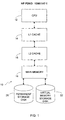
- FIG. 1 is a simplified block diagram of a computer system 10.
- Computer system 10 includes a central processing unit (CPU) 12, level 1 (L1) cache 14, level 2 (L2) cache 16, main memory 18, permanent storage disk 20, and virtual memory storage disk 22.
- CPU central processing unit
- L1 cache level 1
- L2 cache level 2 cache 16
- main memory main memory
- permanent storage disk 20 and virtual memory storage disk 22 are embodied on the same physical hard drive.
- Figure 1 illustrates the various locations at which program code is stored before, during, and after execution.
- the program code is retrieved from permanent storage disk 20 and stored in main memory 18.
- main memory 18 As portions of the program code are executed, those portions are stored in L2 cache 16 and L1 cache 14.
- L1 cache 14 is typically implemented as very fast memory that is close to CPU 12. Often it exists on the same integrated circuit as the CPU.
- L2 cache 16 is somewhat slower and larger.
- main memory 18 is very large, and slower than 1.2 cache memory 16.
- Figure 1 illustrates a typical computer architecture that is common in the field of computing. The preferred embodiment is described below with reference to Figure 1, but those skilled in the art will recognize that it may be implemented on a variety of other computer architectures, such as computer systems that have fewer or additional cache memories, computers with multiple CPUs, etc.
- FIG. 2 is a block diagram of a portion of CPU 12 of Figure 1.
- CPU 12 includes an arithmetic logic unit (ALU) 24, a program counter (PC) 26, a status register (STR) 27, and instruction register (IR) 28, a register stack 30, last-in first-out (LIFO) stack 32, and interrupt unit 34.
- ALU 24 performs various mathematical operations, such as adding, subtracting, multiplying, shifting, comparing, and the like.
- Registers 30 store data that is used by ALU 24.
- PC 26 stores an address that references the memory location of the current instruction being executed, IR 28 stores the current instruction being executed, LIFO stack 32 provides temporary storage to CPU 12, and interrupt unit 34 processes interrupts.
- Status register 27 includes status bits that control and determine various modes of CPU 12.
- Interrupt unit 34 responds to interrupts, and is also capable of generating interrupts.
- IRQ line 36 represents externally generated hardware interrupts, such as a network adaptor asserting a hardware interrupt on a bus.
- Break instruction 38 represents software interrupts, such as BREAK or TRAP instructions that may be placed in the program code.
- Timer 42 represents interrupts that are generated based on a timer value, such as a real time clock that interrupts CPU 12 at a periodic interval.
- instruction counter 40 represents interrupts that are generated after a certain number of instructions. The values used by instruction counter 40 and timer 42 may be altered by the operating system.
- interrupt unit 34 When interrupt unit 34 processes an interrupt, the values stored in registers 30, PC 26, STR 27, and IR 28 are stored on LIFO stack 32. This is depicted in Figure 2 by showing each of these values. along with the label "(Int)", stored in LIFO stack 32. After these values are stored on LIFO stack 32, an interrupt service routine (ISR) associated with the particular interrupt being processed is executed. After the ISR has been processed, the values are removed from LIFO stack 32 and restored to their original locations.
- ISR interrupt service routine
- the ISR While the ISR is executing, it has access to the values stored on LIFO stack 32. Accordingly, the ISR can examine the instruction that was being executed when the interrupt occurred, the address at which that instruction is stored in main memory, and the contents of the registers at the time the interrupt occurred.
- Figures 1 and 2 show a CPU architecture that is much simpler than modern CPU architectures known in the art of computing. Modern CPUs include multiple execution units, pipelines, circuitry to support out-of-order execution, and the like. However, the architecture shown in Figures 1 and 2 is sufficient to illustrate the preferred embodiment. While the present invention will be described below with reference to Figures 1 and 2. those skilled in the art will recognise that he described embodiment may be implemented on a variety of other computer architectures.
- branch instruction generally applies to branch instructions that branch based on a condition.
- branch instruction is an unconditional branch instruction that always branches to the same location, there is no need to predict whether the branch will be taken.
- many computer systems manage certain aspects of execution of unconditional branch instructions (for example, keeping the pipeline full) within a general branch prediction framework. Therefore, predicting branch behaviour of unconditional branch instructions is contemplated herein.
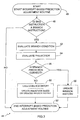
- Figure 3 is a flow chart of a preferred embodiment of interrupt-based prediction adjustment routine 44. While routine 44 may be implemented in software as an ISR, this embodiment may also be implemented partially or completely in hardware.
- Timer 42 may be configured to generate an interrupt at a periodic interval.
- instruction counter 40 may be configured to generate an interrupt after a certain number of instructions. Both the time interval and the instruction count can be varied on a random basis to ensure that the processor is interrupted at different locations in program code.
- the instruction counter may produce a more even distribution of prediction evaluations across all branch instructions.
- an interrupt at a level appropriate for use with the present invention is deferred until the instruction being executed is completed, then the interrupt is serviced.
- a load instruction that often generates a cache miss and takes a relatively large amount of time to complete. If a timer generates the interrupt, a branch instruction immediately following a load instruction will be evaluated more frequently than a branch instruction immediately following an add instruction because the total time required to execute both the branch instruction and the load instruction is dominated by the cache miss. Therefore there is an increased probability that a timer interrupt will occur during a cache miss, and the interrupt will be processed at the next instruction.
- the instruction counter does not suffer from this problem.
- routine 44 Another method of generating the interrupt that launches routine 44 is to replace various condition-based branch instructions with BREAK instructions.
- interrupt unit 34 launches routine 44, which replaces the BREAK instruction with the proper branch instruction, and evaluates the branch instruction as described below.
- the branch instruction can initially be replaced by a BREAK instruction by a separate interrupt service routine, routine 44, or some other program.
- CPU 12 of Figure 2 may be configured to selectively treat branch instructions as BREAK instructions based on a status flag in status register 27.
- a branch instruction whenever the status flag is set, a branch instruction generates a software interrupt that is serviced by routine 44.
- This embodiment may also be used in conjunction with either instruction counter 40 or timer 42 to set the status flag after a certain interval or a certain number of instructions, thereby generating a software interrupt at the first branch instruction encountered after a certain time interval or instruction count, as described above.
- decision block 48 determines whether the instruction pending is a branch instruction. Note that block 48 is not necessary if CPU 12 is configured to generate in interrupt when a branch instruction is pending, as described above. However, when used in a computer system that is not capable of generating an interrupt based on a branch instruction, step 48 is necessary to determine whether a condition-based branch instruction has been "caught" by the interrupt. In a typical mix of computer instructions, condition-based branch instructions comprise approximately 15% of all instructions.
- routine 44 branches to block 50, interrupt-based prediction adjustment routine 44 is ended, and program execution resumes at the point where the original program code was interrupted
- block 52 evaluates the instruction and determines whether the branch will be taken. With reference to Figure 2, this can be done be examining the values stored on LIFO stack 32 as described above. Of course, those skilled in the art will recognize how to evaluate a pending branch instruction in a particular computer system when this embodiment is adapted for use in that computer system.
- decision block 48 first determines whether the pending instruction is a branch instruction. If it is a branch instruction, the "yes" branch is taken to block 52 as described above. If it is not a branch instruction, block 48 then executes instructions by emulating instructions until a branch instruction is reached. In comparing this method to the method described above, there are tradeoffs that must be assessed in determining which method is more efficient. As noted above, approximately 15% of instructions are branch instruction, so on average, an interrupt will catch a branch instruction once every six or seven interrupts. On the other hand, the performance of emulation is between 20 and 100 times worse than direct instruction execution, and in a typical instruction mix a branch instruction is encountered, on average, once every five or six instructions.
- the branch prediction is evaluated at block 54.
- a branch prediction is encoded in a branch instruction based on the order of the operands.
- Decision block 56 determines whether the branch prediction is correct by comparing the branch prediction with the actual branch that must he taken in accordance with the evaluation of the branch prediction performed at block 52. If the prediction is correct, routine 56 branches to block 58, which updates branch history, and then routine 56 ends at block 50. If the branch is incorrect, block 60 updates the branch history and updates the prediction based on branch history.
- Branch history is used to provide a more accurate branch prediction. However, it is not required by this embodiment. For example, the branch prediction may simply be changed when it is incorrect. All that is needed is the prediction from block 54 (which may be encoded in the branch instruction), and the evaluation of the branch condition at block 52.
- branch history algorithm simply changes a prediction when the prediction is wrong after two successive evaluations.
- branch history can increase branch prediction.
- the looping branch instruction must be evaluated at the last iteration of the loop twice in a row to change the prediction. The chances of this happening are 1 in 10,000. Therefore, the accuracy of the prediction associated with the looping branch instruction is increased by branch history.
- While the Hewlett-Packard PA-RISC instruction set defines a method for encoding a branch prediction in an instruction, it does not define a method for encoding branch history within a branch instruction.
- branch predictions are stored in a history table in program memory that is 32 K bits and is addressed by applying a hash function to the address of the branch instruction to determine the location in the table that represents a particular branch instruction.
- history tables In hardware-based branch prediction schemes of the prior art, it is common to have history tables that are approximately 0.5 - 2.0 K in size.
- One of the advantages is that since it may be implemented in software, it is easy to adjust the size of the history table to achieve maximum performance.
- Branch history may be encoded in various ways.
- the referenced bit in the history table may be defined to be a first value if the branch was taken and a second value if the branch was not being taken.
- the referenced bit may be defined to be a first value if the previous prediction proved to be correct and a second value if the previous prediction proved to be incorrect.
- the latter encoding scheme has the advantage of reducing problems associated with aliasing. Consider two branch instructions that are associated with the same entry in a branch history table due to aliasing. Since most branch predictions are correct, there is a high probability that both branch instructions will encode the table entry as "previous prediction correct".
- the latter scheme provides an advantage when first initializing the branch history table, since all entries of the table may be initialized to "previous prediction correct".
- a branch history table may be defined to keep a running average of branch behavior for a particular branch instruction, and update the prediction based on the running average.
- Those skilled in the art will recognize that a variety of algorithms may be used to keep track of branch history and adjust a branch prediction based on the branch history. Since the system may be implemented in software, it is easy for a programmer to try various algorithms to determine which works best in a particular environment. In addition, it is possible to use complex prediction algorithms that would not be practical to implement in hardware.
- block 58 updates the history table when the prediction is correct
- block 60 updates the branch history table and updates the prediction based on the updated branch history table when the prediction is incorrect.
- prediction/history algorithms one would never change a prediction when the prediction proves to be correct, and it is not contemplated that one would wish to do so when implementing the present invention.
- Block 60 updates branch history and also may change the prediction. For example, as described above, if the prediction is incorrect, but was correct the previous time the branch instruction was executed, the prediction may not be changed. Another reason why it is beneficial to use branch history to determine whether a branch prediction should be changed is because it tends to reduce the frequency of branch prediction changes. Using the Hewlett-Packard PA-RISC instruction set, each time a prediction is changed the branch instruction must be written back to memory. Therefore, it is desirable to minimize the frequency of prediction changes to the extend that overall prediction accuracy is not significantly affected.
- block 60 also updates the prediction. While the PA-RISC instruction set includes a prediction within a branch instruction, it is also contemplated to encode predictions using any other methods known in the art, such as a prediction table.
- a branch instruction may be stored in L1 cache 14, L2 cache 16, main memory 18, virtual memory storage disk 22, and permanent storage disk 20. Though a programmer may not wish to write the branch instruction back to each of these storage devices, it is certainly within the scope of the invention to do so.
- branch instructions are written back to L1 cache 14, L2 cache 16, and main memory 18, but not permanent storage disk 20 nor virtual memory storage disk 22.
- Writing date back to permanent storage disk 20 results in a minimal performance increases, and may create a host of problems related to managing executable code. Also, it is common for multiple users to share common program files, so it would not be possible to have each user store branch history in common files. However, it may be advantageous to store updated branch predictions back to disk 20 in certain situation.
- Various computer systems use various techniques to manage memory. For example, it is common to associate a dirty bit with a block of memory in a cache to indicate whether that block may simply be discarded from the cache when no longer needed, or must be written back to main memory to reflect a change in the memory block.
- Those skilled in the art will recognize how to use these techniques to implement the invention as desired. For example, if it is desired to write altered branch instructions only to 1.1 cache 14 and L2 cache 16, but not main memory 18, then the dirty bit of a block containing an altered branch instruction may be left clear on L2 cache 16 to indicate that the block may be discarded and need not be written back to main memory 18.
- the dirty bit is set, the block (and the altered branch instruction with the updated prediction) must be written back to main memory 18 before the memory block containing the branch instruction is displaced, thus preserving the updated branch prediction, but consuming additional computing resources.
- routine 44 branches to block 50 and the routine terminates.
Landscapes
- Engineering & Computer Science (AREA)
- Software Systems (AREA)
- Theoretical Computer Science (AREA)
- Physics & Mathematics (AREA)
- General Engineering & Computer Science (AREA)
- General Physics & Mathematics (AREA)
- Advance Control (AREA)
- Debugging And Monitoring (AREA)
Applications Claiming Priority (2)
| Application Number | Priority Date | Filing Date | Title |
|---|---|---|---|
| US840080 | 1997-04-09 | ||
| US08/840,080 US5838962A (en) | 1997-04-09 | 1997-04-09 | Interrupt driven dynamic adjustment of branch predictions |
Publications (3)
| Publication Number | Publication Date |
|---|---|
| EP0871110A2 EP0871110A2 (en) | 1998-10-14 |
| EP0871110A3 EP0871110A3 (en) | 1999-01-20 |
| EP0871110B1 true EP0871110B1 (en) | 2004-08-04 |
Family
ID=25281399
Family Applications (1)
| Application Number | Title | Priority Date | Filing Date |
|---|---|---|---|
| EP98302633A Expired - Lifetime EP0871110B1 (en) | 1997-04-09 | 1998-04-03 | Branch prediction in computer system |
Country Status (4)
| Country | Link |
|---|---|
| US (1) | US5838962A (enExample) |
| EP (1) | EP0871110B1 (enExample) |
| JP (1) | JP3790039B2 (enExample) |
| DE (1) | DE69825350T2 (enExample) |
Families Citing this family (31)
| Publication number | Priority date | Publication date | Assignee | Title |
|---|---|---|---|---|
| US6105102A (en) * | 1998-10-16 | 2000-08-15 | Advanced Micro Devices, Inc. | Mechanism for minimizing overhead usage of a host system by polling for subsequent interrupts after service of a prior interrupt |
| US6578143B1 (en) * | 1998-12-18 | 2003-06-10 | Qualcomm Incorporated | Method for negotiating weakened keys in encryption systems |
| US6954923B1 (en) | 1999-01-28 | 2005-10-11 | Ati International Srl | Recording classification of instructions executed by a computer |
| US8065504B2 (en) | 1999-01-28 | 2011-11-22 | Ati International Srl | Using on-chip and off-chip look-up tables indexed by instruction address to control instruction execution in a processor |
| US6763452B1 (en) | 1999-01-28 | 2004-07-13 | Ati International Srl | Modifying program execution based on profiling |
| US7275246B1 (en) | 1999-01-28 | 2007-09-25 | Ati International Srl | Executing programs for a first computer architecture on a computer of a second architecture |
| US8074055B1 (en) | 1999-01-28 | 2011-12-06 | Ati Technologies Ulc | Altering data storage conventions of a processor when execution flows from first architecture code to second architecture code |
| US7111290B1 (en) | 1999-01-28 | 2006-09-19 | Ati International Srl | Profiling program execution to identify frequently-executed portions and to assist binary translation |
| US8127121B2 (en) | 1999-01-28 | 2012-02-28 | Ati Technologies Ulc | Apparatus for executing programs for a first computer architechture on a computer of a second architechture |
| US6978462B1 (en) | 1999-01-28 | 2005-12-20 | Ati International Srl | Profiling execution of a sequence of events occuring during a profiled execution interval that matches time-independent selection criteria of events to be profiled |
| US7941647B2 (en) | 1999-01-28 | 2011-05-10 | Ati Technologies Ulc | Computer for executing two instruction sets and adds a macroinstruction end marker for performing iterations after loop termination |
| US7065633B1 (en) | 1999-01-28 | 2006-06-20 | Ati International Srl | System for delivering exception raised in first architecture to operating system coded in second architecture in dual architecture CPU |
| US7013456B1 (en) | 1999-01-28 | 2006-03-14 | Ati International Srl | Profiling execution of computer programs |
| US6314510B1 (en) * | 1999-04-14 | 2001-11-06 | Sun Microsystems, Inc. | Microprocessor with reduced context switching overhead and corresponding method |
| US6622300B1 (en) | 1999-04-21 | 2003-09-16 | Hewlett-Packard Development Company, L.P. | Dynamic optimization of computer programs using code-rewriting kernal module |
| US6779107B1 (en) | 1999-05-28 | 2004-08-17 | Ati International Srl | Computer execution by opportunistic adaptation |
| US6549959B1 (en) | 1999-08-30 | 2003-04-15 | Ati International Srl | Detecting modification to computer memory by a DMA device |
| US6934832B1 (en) | 2000-01-18 | 2005-08-23 | Ati International Srl | Exception mechanism for a computer |
| US8214601B2 (en) * | 2004-07-30 | 2012-07-03 | Hewlett-Packard Development Company, L.P. | Purging without write-back of cache lines containing spent data |
| US8301871B2 (en) * | 2006-06-08 | 2012-10-30 | International Business Machines Corporation | Predicated issue for conditional branch instructions |
| US7487340B2 (en) * | 2006-06-08 | 2009-02-03 | International Business Machines Corporation | Local and global branch prediction information storage |
| JP2008107913A (ja) * | 2006-10-23 | 2008-05-08 | Toshiba Corp | プログラム、ソフトウェア変換装置及びコンピュータ |
| US7984279B2 (en) * | 2006-11-03 | 2011-07-19 | Qualcomm Incorporated | System and method for using a working global history register |
| JP5082716B2 (ja) * | 2007-09-20 | 2012-11-28 | 富士通セミコンダクター株式会社 | プログラム変換装置、プログラム変換方法およびプログラム変換プログラム |
| US8099586B2 (en) * | 2008-12-30 | 2012-01-17 | Oracle America, Inc. | Branch misprediction recovery mechanism for microprocessors |
| US8713562B2 (en) * | 2012-01-06 | 2014-04-29 | International Business Machines Corporation | Intelligent and automated code deployment |
| US9448909B2 (en) * | 2013-10-15 | 2016-09-20 | Advanced Micro Devices, Inc. | Randomly branching using performance counters |
| US9875106B2 (en) * | 2014-11-12 | 2018-01-23 | Mill Computing, Inc. | Computer processor employing instruction block exit prediction |
| GB2574042B (en) * | 2018-05-24 | 2020-09-09 | Advanced Risc Mach Ltd | Branch Prediction Cache |
| US11086629B2 (en) * | 2018-11-09 | 2021-08-10 | Arm Limited | Misprediction of predicted taken branches in a data processing apparatus |
| US11275607B2 (en) * | 2020-03-17 | 2022-03-15 | Arm Limited | Improving the responsiveness of an apparatus to certain interrupts |
Citations (2)
| Publication number | Priority date | Publication date | Assignee | Title |
|---|---|---|---|---|
| US5615327A (en) * | 1992-01-03 | 1997-03-25 | Amdahl Corporation | Apparatus and method for controlling the initiating of a synchronization protocol for synchronizing a plurality of processors in a multi-processor system |
| WO1998036350A1 (en) * | 1997-02-12 | 1998-08-20 | Telefonaktiebolaget Lm Ericsson (Publ) | Method and system for branch prediction |
Family Cites Families (10)
| Publication number | Priority date | Publication date | Assignee | Title |
|---|---|---|---|---|
| US4124893A (en) * | 1976-10-18 | 1978-11-07 | Honeywell Information Systems Inc. | Microword address branching bit arrangement |
| US4176394A (en) * | 1977-06-13 | 1979-11-27 | Sperry Rand Corporation | Apparatus for maintaining a history of the most recently executed instructions in a digital computer |
| US4370711A (en) * | 1980-10-21 | 1983-01-25 | Control Data Corporation | Branch predictor using random access memory |
| US4435756A (en) * | 1981-12-03 | 1984-03-06 | Burroughs Corporation | Branch predicting computer |
| US4679141A (en) * | 1985-04-29 | 1987-07-07 | International Business Machines Corporation | Pageable branch history table |
| US4901233A (en) * | 1987-07-20 | 1990-02-13 | International Business Machines Corporation | Computer system with logic for writing instruction identifying data into array control lists for precise post-branch recoveries |
| JPH0795271B2 (ja) * | 1989-06-20 | 1995-10-11 | 富士通株式会社 | 分岐命令実行装置 |
| US5367703A (en) * | 1993-01-08 | 1994-11-22 | International Business Machines Corporation | Method and system for enhanced branch history prediction accuracy in a superscalar processor system |
| US5717909A (en) * | 1995-05-26 | 1998-02-10 | National Semiconductor Corporation | Code breakpoint decoder |
| US5659752A (en) * | 1995-06-30 | 1997-08-19 | International Business Machines Corporation | System and method for improving branch prediction in compiled program code |
-
1997
- 1997-04-09 US US08/840,080 patent/US5838962A/en not_active Expired - Lifetime
-
1998
- 1998-04-02 JP JP09016398A patent/JP3790039B2/ja not_active Expired - Fee Related
- 1998-04-03 DE DE69825350T patent/DE69825350T2/de not_active Expired - Fee Related
- 1998-04-03 EP EP98302633A patent/EP0871110B1/en not_active Expired - Lifetime
Patent Citations (2)
| Publication number | Priority date | Publication date | Assignee | Title |
|---|---|---|---|---|
| US5615327A (en) * | 1992-01-03 | 1997-03-25 | Amdahl Corporation | Apparatus and method for controlling the initiating of a synchronization protocol for synchronizing a plurality of processors in a multi-processor system |
| WO1998036350A1 (en) * | 1997-02-12 | 1998-08-20 | Telefonaktiebolaget Lm Ericsson (Publ) | Method and system for branch prediction |
Also Published As
| Publication number | Publication date |
|---|---|
| DE69825350T2 (de) | 2005-07-21 |
| JP3790039B2 (ja) | 2006-06-28 |
| EP0871110A3 (en) | 1999-01-20 |
| EP0871110A2 (en) | 1998-10-14 |
| JPH10283183A (ja) | 1998-10-23 |
| US5838962A (en) | 1998-11-17 |
| DE69825350D1 (de) | 2004-09-09 |
Similar Documents
| Publication | Publication Date | Title |
|---|---|---|
| EP0871110B1 (en) | Branch prediction in computer system | |
| Tullsen et al. | Handling long-latency loads in a simultaneous multithreading processor | |
| US7086035B1 (en) | Method and system for counting non-speculative events in a speculative processor | |
| US6134710A (en) | Adaptive method and system to minimize the effect of long cache misses | |
| US6944718B2 (en) | Apparatus and method for speculative prefetching after data cache misses | |
| US5758142A (en) | Trainable apparatus for predicting instruction outcomes in pipelined processors | |
| US5136697A (en) | System for reducing delay for execution subsequent to correctly predicted branch instruction using fetch information stored with each block of instructions in cache | |
| US6209085B1 (en) | Method and apparatus for performing process switching in multiprocessor computer systems | |
| US5949995A (en) | Programmable branch prediction system and method for inserting prediction operation which is independent of execution of program code | |
| US20070234014A1 (en) | Processor apparatus for executing instructions with local slack prediction of instructions and processing method therefor | |
| CN101815984B (zh) | 错误的推测性更新的链接栈修复 | |
| US20050154867A1 (en) | Autonomic method and apparatus for counting branch instructions to improve branch predictions | |
| JP6546584B2 (ja) | 推論的ベクトル演算の実行を制御するためのデータ処理装置及び方法 | |
| US20070239975A1 (en) | Programmable backward jump instruction prediction mechanism | |
| US5615386A (en) | Computer architecture for reducing delays due to branch instructions | |
| IE940855A1 (en) | Data processor with speculative instruction fetching and¹method of operation | |
| US7290255B2 (en) | Autonomic method and apparatus for local program code reorganization using branch count per instruction hardware | |
| JP4220473B2 (ja) | 制御スペキュレーションの性能を向上するメカニズム | |
| US6249906B1 (en) | Adaptive method and system to minimize the effect of long table walks | |
| EP0484033B1 (en) | Method for implementing dismissible instructions on a computer | |
| Stark et al. | Reducing the performance impact of instruction cache misses by writing instructions into the reservation stations out-of-order | |
| JPH08221272A (ja) | 命令キャッシュに命令をロードする方法 | |
| US6308242B1 (en) | Apparatus for adaptively controlling a prefetch queue based on various flush conditions | |
| Oren | A survey of prefetching techniques | |
| Lim et al. | An accurate instruction cache analysis technique for real-time systems |
Legal Events
| Date | Code | Title | Description |
|---|---|---|---|
| PUAI | Public reference made under article 153(3) epc to a published international application that has entered the european phase |
Free format text: ORIGINAL CODE: 0009012 |
|
| AK | Designated contracting states |
Kind code of ref document: A2 Designated state(s): DE FR GB |
|
| AX | Request for extension of the european patent |
Free format text: AL;LT;LV;MK;RO;SI |
|
| PUAL | Search report despatched |
Free format text: ORIGINAL CODE: 0009013 |
|
| AK | Designated contracting states |
Kind code of ref document: A3 Designated state(s): AT BE CH CY DE DK ES FI FR GB GR IE IT LI LU MC NL PT SE |
|
| AX | Request for extension of the european patent |
Free format text: AL;LT;LV;MK;RO;SI |
|
| 17P | Request for examination filed |
Effective date: 19990315 |
|
| AKX | Designation fees paid |
Free format text: DE FR GB |
|
| RAP1 | Party data changed (applicant data changed or rights of an application transferred) |
Owner name: HEWLETT-PACKARD COMPANY, A DELAWARE CORPORATION |
|
| 17Q | First examination report despatched |
Effective date: 20010910 |
|
| GRAP | Despatch of communication of intention to grant a patent |
Free format text: ORIGINAL CODE: EPIDOSNIGR1 |
|
| GRAS | Grant fee paid |
Free format text: ORIGINAL CODE: EPIDOSNIGR3 |
|
| GRAA | (expected) grant |
Free format text: ORIGINAL CODE: 0009210 |
|
| AK | Designated contracting states |
Kind code of ref document: B1 Designated state(s): DE FR GB |
|
| REG | Reference to a national code |
Ref country code: GB Ref legal event code: FG4D |
|
| REF | Corresponds to: |
Ref document number: 69825350 Country of ref document: DE Date of ref document: 20040909 Kind code of ref document: P |
|
| PGFP | Annual fee paid to national office [announced via postgrant information from national office to epo] |
Ref country code: GB Payment date: 20050330 Year of fee payment: 8 |
|
| PGFP | Annual fee paid to national office [announced via postgrant information from national office to epo] |
Ref country code: FR Payment date: 20050418 Year of fee payment: 8 |
|
| ET | Fr: translation filed | ||
| PLBE | No opposition filed within time limit |
Free format text: ORIGINAL CODE: 0009261 |
|
| STAA | Information on the status of an ep patent application or granted ep patent |
Free format text: STATUS: NO OPPOSITION FILED WITHIN TIME LIMIT |
|
| 26N | No opposition filed |
Effective date: 20050506 |
|
| PG25 | Lapsed in a contracting state [announced via postgrant information from national office to epo] |
Ref country code: GB Free format text: LAPSE BECAUSE OF NON-PAYMENT OF DUE FEES Effective date: 20060403 |
|
| GBPC | Gb: european patent ceased through non-payment of renewal fee |
Effective date: 20060403 |
|
| REG | Reference to a national code |
Ref country code: FR Ref legal event code: ST Effective date: 20061230 |
|
| PGFP | Annual fee paid to national office [announced via postgrant information from national office to epo] |
Ref country code: DE Payment date: 20070531 Year of fee payment: 10 |
|
| PG25 | Lapsed in a contracting state [announced via postgrant information from national office to epo] |
Ref country code: FR Free format text: LAPSE BECAUSE OF NON-PAYMENT OF DUE FEES Effective date: 20060502 |
|
| PG25 | Lapsed in a contracting state [announced via postgrant information from national office to epo] |
Ref country code: DE Free format text: LAPSE BECAUSE OF NON-PAYMENT OF DUE FEES Effective date: 20081101 |