EP0870755A1 - Procédé de préparation des dinitroanilines 4-substituées - Google Patents
Procédé de préparation des dinitroanilines 4-substituées Download PDFInfo
- Publication number
- EP0870755A1 EP0870755A1 EP98400818A EP98400818A EP0870755A1 EP 0870755 A1 EP0870755 A1 EP 0870755A1 EP 98400818 A EP98400818 A EP 98400818A EP 98400818 A EP98400818 A EP 98400818A EP 0870755 A1 EP0870755 A1 EP 0870755A1
- Authority
- EP
- European Patent Office
- Prior art keywords
- group
- phenol
- chosen
- substituted
- carbon atoms
- Prior art date
- Legal status (The legal status is an assumption and is not a legal conclusion. Google has not performed a legal analysis and makes no representation as to the accuracy of the status listed.)
- Ceased
Links
- -1 4-substituted nitroanilines Chemical class 0.000 title claims abstract description 42
- 238000002360 preparation method Methods 0.000 title claims abstract description 6
- 238000000034 method Methods 0.000 title claims description 22
- 230000000802 nitrating effect Effects 0.000 claims abstract description 29
- 239000003795 chemical substances by application Substances 0.000 claims abstract description 18
- 125000000217 alkyl group Chemical group 0.000 claims abstract description 14
- 239000003054 catalyst Substances 0.000 claims abstract description 9
- IAYPIBMASNFSPL-UHFFFAOYSA-N Ethylene oxide Chemical class C1CO1 IAYPIBMASNFSPL-UHFFFAOYSA-N 0.000 claims abstract description 7
- 125000004218 chloromethyl group Chemical group [H]C([H])(Cl)* 0.000 claims abstract description 5
- 125000001449 isopropyl group Chemical group [H]C([H])([H])C([H])(*)C([H])([H])[H] 0.000 claims abstract description 5
- 229920006395 saturated elastomer Polymers 0.000 claims abstract description 5
- 150000002500 ions Chemical class 0.000 claims abstract description 4
- 125000000753 cycloalkyl group Chemical group 0.000 claims abstract description 3
- 125000001188 haloalkyl group Chemical group 0.000 claims abstract description 3
- 230000000737 periodic effect Effects 0.000 claims abstract description 3
- 125000002924 primary amino group Chemical group [H]N([H])* 0.000 claims abstract description 3
- 229910052723 transition metal Inorganic materials 0.000 claims abstract description 3
- 150000003624 transition metals Chemical class 0.000 claims abstract description 3
- 125000002023 trifluoromethyl group Chemical group FC(F)(F)* 0.000 claims abstract description 3
- VEXZGXHMUGYJMC-UHFFFAOYSA-N Hydrochloric acid Chemical class Cl VEXZGXHMUGYJMC-UHFFFAOYSA-N 0.000 claims description 16
- 239000002168 alkylating agent Substances 0.000 claims description 13
- 229940100198 alkylating agent Drugs 0.000 claims description 13
- 239000002253 acid Substances 0.000 claims description 12
- GDTBXPJZTBHREO-UHFFFAOYSA-N bromine Chemical group BrBr GDTBXPJZTBHREO-UHFFFAOYSA-N 0.000 claims description 12
- 125000004432 carbon atom Chemical group C* 0.000 claims description 12
- 238000010934 O-alkylation reaction Methods 0.000 claims description 11
- 238000005576 amination reaction Methods 0.000 claims description 10
- ISWSIDIOOBJBQZ-UHFFFAOYSA-N phenol group Chemical group C1(=CC=CC=C1)O ISWSIDIOOBJBQZ-UHFFFAOYSA-N 0.000 claims description 10
- 239000000460 chlorine Chemical group 0.000 claims description 9
- SCYULBFZEHDVBN-UHFFFAOYSA-N 1,1-Dichloroethane Chemical compound CC(Cl)Cl SCYULBFZEHDVBN-UHFFFAOYSA-N 0.000 claims description 8
- 229910052794 bromium Inorganic materials 0.000 claims description 8
- 229910052801 chlorine Inorganic materials 0.000 claims description 8
- 239000012429 reaction media Substances 0.000 claims description 8
- 125000001931 aliphatic group Chemical group 0.000 claims description 7
- ZCYVEMRRCGMTRW-UHFFFAOYSA-N 7553-56-2 Chemical group [I] ZCYVEMRRCGMTRW-UHFFFAOYSA-N 0.000 claims description 6
- 239000001273 butane Substances 0.000 claims description 6
- 229910052740 iodine Chemical group 0.000 claims description 6
- 150000003839 salts Chemical class 0.000 claims description 6
- HQABUPZFAYXKJW-UHFFFAOYSA-N butan-1-amine Chemical compound CCCCN HQABUPZFAYXKJW-UHFFFAOYSA-N 0.000 claims description 4
- 125000001309 chloro group Chemical group Cl* 0.000 claims description 4
- 150000002170 ethers Chemical class 0.000 claims description 4
- 125000004435 hydrogen atom Chemical group [H]* 0.000 claims description 4
- 239000012442 inert solvent Substances 0.000 claims description 4
- WGYKZJWCGVVSQN-UHFFFAOYSA-N propylamine Chemical compound CCCN WGYKZJWCGVVSQN-UHFFFAOYSA-N 0.000 claims description 4
- 238000010992 reflux Methods 0.000 claims description 4
- 125000002914 sec-butyl group Chemical group [H]C([H])([H])C([H])([H])C([H])(*)C([H])([H])[H] 0.000 claims description 4
- 150000003335 secondary amines Chemical class 0.000 claims description 4
- 125000000999 tert-butyl group Chemical group [H]C([H])([H])C(*)(C([H])([H])[H])C([H])([H])[H] 0.000 claims description 4
- APQIUTYORBAGEZ-UHFFFAOYSA-N 1,1-dibromoethane Chemical compound CC(Br)Br APQIUTYORBAGEZ-UHFFFAOYSA-N 0.000 claims description 3
- YHRUOJUYPBUZOS-UHFFFAOYSA-N 1,3-dichloropropane Chemical class ClCCCCl YHRUOJUYPBUZOS-UHFFFAOYSA-N 0.000 claims description 3
- CTKINSOISVBQLD-UHFFFAOYSA-N Glycidol Chemical compound OCC1CO1 CTKINSOISVBQLD-UHFFFAOYSA-N 0.000 claims description 3
- 239000003849 aromatic solvent Substances 0.000 claims description 3
- XQYMIMUDVJCMLU-UHFFFAOYSA-N phenoxyperoxybenzene Chemical compound C=1C=CC=CC=1OOOC1=CC=CC=C1 XQYMIMUDVJCMLU-UHFFFAOYSA-N 0.000 claims description 3
- QQONPFPTGQHPMA-UHFFFAOYSA-N propylene Natural products CC=C QQONPFPTGQHPMA-UHFFFAOYSA-N 0.000 claims description 3
- 125000005420 sulfonamido group Chemical group S(=O)(=O)(N*)* 0.000 claims description 3
- 125000001340 2-chloroethyl group Chemical group [H]C([H])(Cl)C([H])([H])* 0.000 claims description 2
- 125000003903 2-propenyl group Chemical group [H]C([*])([H])C([H])=C([H])[H] 0.000 claims description 2
- KZBUYRJDOAKODT-UHFFFAOYSA-N Chlorine Chemical group ClCl KZBUYRJDOAKODT-UHFFFAOYSA-N 0.000 claims description 2
- VGGSQFUCUMXWEO-UHFFFAOYSA-N Ethene Chemical compound C=C VGGSQFUCUMXWEO-UHFFFAOYSA-N 0.000 claims description 2
- OCBFFGCSTGGPSQ-UHFFFAOYSA-N [CH2]CC Chemical compound [CH2]CC OCBFFGCSTGGPSQ-UHFFFAOYSA-N 0.000 claims description 2
- 150000001298 alcohols Chemical class 0.000 claims description 2
- 125000001797 benzyl group Chemical group [H]C1=C([H])C([H])=C(C([H])=C1[H])C([H])([H])* 0.000 claims description 2
- 150000001735 carboxylic acids Chemical class 0.000 claims description 2
- 125000000113 cyclohexyl group Chemical group [H]C1([H])C([H])([H])C([H])([H])C([H])(*)C([H])([H])C1([H])[H] 0.000 claims description 2
- 125000001559 cyclopropyl group Chemical group [H]C1([H])C([H])([H])C1([H])* 0.000 claims description 2
- HPNMFZURTQLUMO-UHFFFAOYSA-N diethylamine Chemical compound CCNCC HPNMFZURTQLUMO-UHFFFAOYSA-N 0.000 claims description 2
- GYZLOYUZLJXAJU-UHFFFAOYSA-N diglycidyl ether Chemical class C1OC1COCC1CO1 GYZLOYUZLJXAJU-UHFFFAOYSA-N 0.000 claims description 2
- WEHWNAOGRSTTBQ-UHFFFAOYSA-N dipropylamine Chemical compound CCCNCCC WEHWNAOGRSTTBQ-UHFFFAOYSA-N 0.000 claims description 2
- 125000001495 ethyl group Chemical group [H]C([H])([H])C([H])([H])* 0.000 claims description 2
- 125000004051 hexyl group Chemical group [H]C([H])([H])C([H])([H])C([H])([H])C([H])([H])C([H])([H])C([H])([H])* 0.000 claims description 2
- 239000001257 hydrogen Substances 0.000 claims description 2
- 229910052739 hydrogen Inorganic materials 0.000 claims description 2
- 229910052500 inorganic mineral Inorganic materials 0.000 claims description 2
- 125000000959 isobutyl group Chemical group [H]C([H])([H])C([H])(C([H])([H])[H])C([H])([H])* 0.000 claims description 2
- 125000004491 isohexyl group Chemical group C(CCC(C)C)* 0.000 claims description 2
- 125000002496 methyl group Chemical group [H]C([H])([H])* 0.000 claims description 2
- 125000004170 methylsulfonyl group Chemical group [H]C([H])([H])S(*)(=O)=O 0.000 claims description 2
- 239000011707 mineral Substances 0.000 claims description 2
- 125000004108 n-butyl group Chemical group [H]C([H])([H])C([H])([H])C([H])([H])C([H])([H])* 0.000 claims description 2
- VEBLEROFGPOMPB-UHFFFAOYSA-N n-methylcyclopropanamine Chemical compound CNC1CC1 VEBLEROFGPOMPB-UHFFFAOYSA-N 0.000 claims description 2
- 125000000740 n-pentyl group Chemical group [H]C([H])([H])C([H])([H])C([H])([H])C([H])([H])C([H])([H])* 0.000 claims description 2
- 125000004123 n-propyl group Chemical group [H]C([H])([H])C([H])([H])C([H])([H])* 0.000 claims description 2
- 125000001971 neopentyl group Chemical group [H]C([*])([H])C(C([H])([H])[H])(C([H])([H])[H])C([H])([H])[H] 0.000 claims description 2
- 125000004805 propylene group Chemical group [H]C([H])([H])C([H])([*:1])C([H])([H])[*:2] 0.000 claims description 2
- 239000005977 Ethylene Substances 0.000 claims 1
- 235000011054 acetic acid Nutrition 0.000 claims 1
- 150000001243 acetic acids Chemical class 0.000 claims 1
- 150000007513 acids Chemical class 0.000 claims 1
- 150000004820 halides Chemical class 0.000 claims 1
- 235000011167 hydrochloric acid Nutrition 0.000 claims 1
- 150000003141 primary amines Chemical class 0.000 claims 1
- 150000001875 compounds Chemical class 0.000 abstract description 3
- GOOHAUXETOMSMM-UHFFFAOYSA-N Propylene oxide Chemical class CC1CO1 GOOHAUXETOMSMM-UHFFFAOYSA-N 0.000 abstract description 2
- 125000006682 monohaloalkyl group Chemical group 0.000 abstract 2
- 230000002152 alkylating effect Effects 0.000 abstract 1
- 125000004122 cyclic group Chemical group 0.000 abstract 1
- 125000000467 secondary amino group Chemical class [H]N([*:1])[*:2] 0.000 abstract 1
- YXFVVABEGXRONW-UHFFFAOYSA-N Toluene Chemical compound CC1=CC=CC=C1 YXFVVABEGXRONW-UHFFFAOYSA-N 0.000 description 21
- 239000002904 solvent Substances 0.000 description 20
- NJBDTWSOYUZQPM-UHFFFAOYSA-N 4-tert-butyl-2,6-dinitrophenol Chemical compound CC(C)(C)C1=CC([N+]([O-])=O)=C(O)C([N+]([O-])=O)=C1 NJBDTWSOYUZQPM-UHFFFAOYSA-N 0.000 description 19
- 239000002609 medium Substances 0.000 description 17
- YMWUJEATGCHHMB-UHFFFAOYSA-N Dichloromethane Chemical compound ClCCl YMWUJEATGCHHMB-UHFFFAOYSA-N 0.000 description 16
- 239000000047 product Substances 0.000 description 15
- 239000012074 organic phase Substances 0.000 description 14
- 239000007787 solid Substances 0.000 description 14
- XLYOFNOQVPJJNP-UHFFFAOYSA-N water Substances O XLYOFNOQVPJJNP-UHFFFAOYSA-N 0.000 description 14
- WSLDOOZREJYCGB-UHFFFAOYSA-N 1,2-Dichloroethane Chemical compound ClCCCl WSLDOOZREJYCGB-UHFFFAOYSA-N 0.000 description 13
- 238000006243 chemical reaction Methods 0.000 description 13
- 239000012071 phase Substances 0.000 description 13
- GRYLNZFGIOXLOG-UHFFFAOYSA-N Nitric acid Chemical compound O[N+]([O-])=O GRYLNZFGIOXLOG-UHFFFAOYSA-N 0.000 description 12
- 239000008346 aqueous phase Substances 0.000 description 12
- 239000000243 solution Substances 0.000 description 12
- QHPQWRBYOIRBIT-UHFFFAOYSA-N 4-tert-butylphenol Chemical compound CC(C)(C)C1=CC=C(O)C=C1 QHPQWRBYOIRBIT-UHFFFAOYSA-N 0.000 description 10
- 229910017604 nitric acid Inorganic materials 0.000 description 10
- 238000010908 decantation Methods 0.000 description 9
- CTQNGGLPUBDAKN-UHFFFAOYSA-N O-Xylene Chemical group CC1=CC=CC=C1C CTQNGGLPUBDAKN-UHFFFAOYSA-N 0.000 description 8
- UFBJCMHMOXMLKC-UHFFFAOYSA-N 2,4-dinitrophenol Chemical compound OC1=CC=C([N+]([O-])=O)C=C1[N+]([O-])=O UFBJCMHMOXMLKC-UHFFFAOYSA-N 0.000 description 7
- IHGNADPMUSNTJW-UHFFFAOYSA-N 4-tert-butyl-2-nitrophenol Chemical compound CC(C)(C)C1=CC=C(O)C([N+]([O-])=O)=C1 IHGNADPMUSNTJW-UHFFFAOYSA-N 0.000 description 7
- KFZMGEQAYNKOFK-UHFFFAOYSA-N Isopropanol Chemical compound CC(C)O KFZMGEQAYNKOFK-UHFFFAOYSA-N 0.000 description 7
- 238000001704 evaporation Methods 0.000 description 7
- 230000008020 evaporation Effects 0.000 description 7
- 239000011541 reaction mixture Substances 0.000 description 7
- 239000008096 xylene Substances 0.000 description 7
- RTZKZFJDLAIYFH-UHFFFAOYSA-N Diethyl ether Chemical compound CCOCC RTZKZFJDLAIYFH-UHFFFAOYSA-N 0.000 description 6
- IMNFDUFMRHMDMM-UHFFFAOYSA-N N-Heptane Chemical compound CCCCCCC IMNFDUFMRHMDMM-UHFFFAOYSA-N 0.000 description 6
- HEMHJVSKTPXQMS-UHFFFAOYSA-M Sodium hydroxide Chemical compound [OH-].[Na+] HEMHJVSKTPXQMS-UHFFFAOYSA-M 0.000 description 6
- 125000004429 atom Chemical group 0.000 description 6
- SNRUBQQJIBEYMU-UHFFFAOYSA-N dodecane Chemical compound CCCCCCCCCCCC SNRUBQQJIBEYMU-UHFFFAOYSA-N 0.000 description 6
- VLKZOEOYAKHREP-UHFFFAOYSA-N n-Hexane Chemical compound CCCCCC VLKZOEOYAKHREP-UHFFFAOYSA-N 0.000 description 6
- 238000006396 nitration reaction Methods 0.000 description 6
- CSNNHWWHGAXBCP-UHFFFAOYSA-L Magnesium sulfate Chemical compound [Mg+2].[O-][S+2]([O-])([O-])[O-] CSNNHWWHGAXBCP-UHFFFAOYSA-L 0.000 description 5
- 230000015572 biosynthetic process Effects 0.000 description 5
- 239000012153 distilled water Substances 0.000 description 5
- 239000000203 mixture Substances 0.000 description 5
- IJGRMHOSHXDMSA-UHFFFAOYSA-N Atomic nitrogen Chemical compound N#N IJGRMHOSHXDMSA-UHFFFAOYSA-N 0.000 description 4
- SPNQRCTZKIBOAX-UHFFFAOYSA-N Butralin Chemical compound CCC(C)NC1=C([N+]([O-])=O)C=C(C(C)(C)C)C=C1[N+]([O-])=O SPNQRCTZKIBOAX-UHFFFAOYSA-N 0.000 description 4
- ZHNUHDYFZUAESO-UHFFFAOYSA-N Formamide Chemical compound NC=O ZHNUHDYFZUAESO-UHFFFAOYSA-N 0.000 description 4
- JUJWROOIHBZHMG-UHFFFAOYSA-N Pyridine Chemical compound C1=CC=NC=C1 JUJWROOIHBZHMG-UHFFFAOYSA-N 0.000 description 4
- 150000001412 amines Chemical class 0.000 description 4
- 229940044631 ferric chloride hexahydrate Drugs 0.000 description 4
- NQXWGWZJXJUMQB-UHFFFAOYSA-K iron trichloride hexahydrate Chemical compound O.O.O.O.O.O.[Cl-].Cl[Fe+]Cl NQXWGWZJXJUMQB-UHFFFAOYSA-K 0.000 description 4
- XHXFXVLFKHQFAL-UHFFFAOYSA-N phosphoryl trichloride Chemical compound ClP(Cl)(Cl)=O XHXFXVLFKHQFAL-UHFFFAOYSA-N 0.000 description 4
- 239000003507 refrigerant Substances 0.000 description 4
- VWDWKYIASSYTQR-UHFFFAOYSA-N sodium nitrate Chemical compound [Na+].[O-][N+]([O-])=O VWDWKYIASSYTQR-UHFFFAOYSA-N 0.000 description 4
- NHGXDBSUJJNIRV-UHFFFAOYSA-M tetrabutylammonium chloride Chemical compound [Cl-].CCCC[N+](CCCC)(CCCC)CCCC NHGXDBSUJJNIRV-UHFFFAOYSA-M 0.000 description 4
- FYSNRJHAOHDILO-UHFFFAOYSA-N thionyl chloride Chemical compound ClS(Cl)=O FYSNRJHAOHDILO-UHFFFAOYSA-N 0.000 description 4
- JIAARYAFYJHUJI-UHFFFAOYSA-L zinc dichloride Chemical class [Cl-].[Cl-].[Zn+2] JIAARYAFYJHUJI-UHFFFAOYSA-L 0.000 description 4
- ZWEHNKRNPOVVGH-UHFFFAOYSA-N 2-Butanone Chemical compound CCC(C)=O ZWEHNKRNPOVVGH-UHFFFAOYSA-N 0.000 description 3
- ZMXDDKWLCZADIW-UHFFFAOYSA-N N,N-Dimethylformamide Chemical compound CN(C)C=O ZMXDDKWLCZADIW-UHFFFAOYSA-N 0.000 description 3
- 238000005660 chlorination reaction Methods 0.000 description 3
- 230000008034 disappearance Effects 0.000 description 3
- ZCYXXKJEDCHMGH-UHFFFAOYSA-N nonane Chemical compound CCCC[CH]CCCC ZCYXXKJEDCHMGH-UHFFFAOYSA-N 0.000 description 3
- BKIMMITUMNQMOS-UHFFFAOYSA-N normal nonane Natural products CCCCCCCCC BKIMMITUMNQMOS-UHFFFAOYSA-N 0.000 description 3
- TVMXDCGIABBOFY-UHFFFAOYSA-N octane Chemical compound CCCCCCCC TVMXDCGIABBOFY-UHFFFAOYSA-N 0.000 description 3
- 150000003254 radicals Chemical class 0.000 description 3
- BHRZNVHARXXAHW-UHFFFAOYSA-N sec-butylamine Chemical compound CCC(C)N BHRZNVHARXXAHW-UHFFFAOYSA-N 0.000 description 3
- 238000004809 thin layer chromatography Methods 0.000 description 3
- 238000005406 washing Methods 0.000 description 3
- 239000011701 zinc Substances 0.000 description 3
- NUQLWNQPKXJRNN-UHFFFAOYSA-N 1-tert-butyl-3,5-dinitrobenzene Chemical compound CC(C)(C)C1=CC([N+]([O-])=O)=CC([N+]([O-])=O)=C1 NUQLWNQPKXJRNN-UHFFFAOYSA-N 0.000 description 2
- CGNBQYFXGQHUQP-UHFFFAOYSA-N 2,3-dinitroaniline Chemical class NC1=CC=CC([N+]([O-])=O)=C1[N+]([O-])=O CGNBQYFXGQHUQP-UHFFFAOYSA-N 0.000 description 2
- NAMYKGVDVNBCFQ-UHFFFAOYSA-N 2-bromopropane Chemical compound CC(C)Br NAMYKGVDVNBCFQ-UHFFFAOYSA-N 0.000 description 2
- BTJIUGUIPKRLHP-UHFFFAOYSA-N 4-nitrophenol Chemical compound OC1=CC=C([N+]([O-])=O)C=C1 BTJIUGUIPKRLHP-UHFFFAOYSA-N 0.000 description 2
- IEOBDXYBBQNGIS-UHFFFAOYSA-N 5-tert-butyl-1,3-dinitro-2-propan-2-yloxybenzene Chemical compound CC(C)OC1=C([N+]([O-])=O)C=C(C(C)(C)C)C=C1[N+]([O-])=O IEOBDXYBBQNGIS-UHFFFAOYSA-N 0.000 description 2
- FRFMLDNFLXIDSH-UHFFFAOYSA-N 5-tert-butyl-2-chloro-1,3-dinitrobenzene Chemical compound CC(C)(C)C1=CC([N+]([O-])=O)=C(Cl)C([N+]([O-])=O)=C1 FRFMLDNFLXIDSH-UHFFFAOYSA-N 0.000 description 2
- HEDRZPFGACZZDS-UHFFFAOYSA-N Chloroform Chemical compound ClC(Cl)Cl HEDRZPFGACZZDS-UHFFFAOYSA-N 0.000 description 2
- 101100536354 Drosophila melanogaster tant gene Proteins 0.000 description 2
- CWYNVVGOOAEACU-UHFFFAOYSA-N Fe2+ Chemical compound [Fe+2] CWYNVVGOOAEACU-UHFFFAOYSA-N 0.000 description 2
- URLKBWYHVLBVBO-UHFFFAOYSA-N Para-Xylene Chemical group CC1=CC=C(C)C=C1 URLKBWYHVLBVBO-UHFFFAOYSA-N 0.000 description 2
- 239000004721 Polyphenylene oxide Substances 0.000 description 2
- 150000001408 amides Chemical class 0.000 description 2
- UHOVQNZJYSORNB-UHFFFAOYSA-N benzene Substances C1=CC=CC=C1 UHOVQNZJYSORNB-UHFFFAOYSA-N 0.000 description 2
- 238000009833 condensation Methods 0.000 description 2
- 230000005494 condensation Effects 0.000 description 2
- JHIVVAPYMSGYDF-UHFFFAOYSA-N cyclohexanone Chemical compound O=C1CCCCC1 JHIVVAPYMSGYDF-UHFFFAOYSA-N 0.000 description 2
- DIOQZVSQGTUSAI-UHFFFAOYSA-N decane Chemical compound CCCCCCCCCC DIOQZVSQGTUSAI-UHFFFAOYSA-N 0.000 description 2
- 229940082150 encore Drugs 0.000 description 2
- 239000000686 essence Substances 0.000 description 2
- 238000006266 etherification reaction Methods 0.000 description 2
- 238000000605 extraction Methods 0.000 description 2
- IVSZLXZYQVIEFR-UHFFFAOYSA-N m-xylene Chemical group CC1=CC=CC(C)=C1 IVSZLXZYQVIEFR-UHFFFAOYSA-N 0.000 description 2
- 229910052943 magnesium sulfate Inorganic materials 0.000 description 2
- 235000019341 magnesium sulphate Nutrition 0.000 description 2
- 238000003760 magnetic stirring Methods 0.000 description 2
- LZGUHMNOBNWABZ-UHFFFAOYSA-N n-nitro-n-phenylnitramide Chemical compound [O-][N+](=O)N([N+]([O-])=O)C1=CC=CC=C1 LZGUHMNOBNWABZ-UHFFFAOYSA-N 0.000 description 2
- 150000002823 nitrates Chemical class 0.000 description 2
- 229910052757 nitrogen Inorganic materials 0.000 description 2
- 229920000570 polyether Polymers 0.000 description 2
- 238000000746 purification Methods 0.000 description 2
- UMJSCPRVCHMLSP-UHFFFAOYSA-N pyridine Natural products COC1=CC=CN=C1 UMJSCPRVCHMLSP-UHFFFAOYSA-N 0.000 description 2
- 239000002994 raw material Substances 0.000 description 2
- 235000010344 sodium nitrate Nutrition 0.000 description 2
- 239000004317 sodium nitrate Substances 0.000 description 2
- 238000006276 transfer reaction Methods 0.000 description 2
- 235000005074 zinc chloride Nutrition 0.000 description 2
- PAAZPARNPHGIKF-UHFFFAOYSA-N 1,2-dibromoethane Chemical compound BrCCBr PAAZPARNPHGIKF-UHFFFAOYSA-N 0.000 description 1
- XFNJYAKDBJUJAJ-UHFFFAOYSA-N 1,2-dibromopropane Chemical compound CC(Br)CBr XFNJYAKDBJUJAJ-UHFFFAOYSA-N 0.000 description 1
- KNKRKFALVUDBJE-UHFFFAOYSA-N 1,2-dichloropropane Chemical compound CC(Cl)CCl KNKRKFALVUDBJE-UHFFFAOYSA-N 0.000 description 1
- DURPTKYDGMDSBL-UHFFFAOYSA-N 1-butoxybutane Chemical class CCCCOCCCC DURPTKYDGMDSBL-UHFFFAOYSA-N 0.000 description 1
- VFWCMGCRMGJXDK-UHFFFAOYSA-N 1-chlorobutane Chemical class CCCCCl VFWCMGCRMGJXDK-UHFFFAOYSA-N 0.000 description 1
- MHKBMNACOMRIAW-UHFFFAOYSA-N 2,3-dinitrophenol Chemical class OC1=CC=CC([N+]([O-])=O)=C1[N+]([O-])=O MHKBMNACOMRIAW-UHFFFAOYSA-N 0.000 description 1
- ZNQVEEAIQZEUHB-UHFFFAOYSA-N 2-ethoxyethanol Chemical compound CCOCCO ZNQVEEAIQZEUHB-UHFFFAOYSA-N 0.000 description 1
- AHRLGQORGBWTDQ-UHFFFAOYSA-N 3-butan-2-yl-2,6-dinitroaniline Chemical compound CC(CC)C=1C(=C(C(=CC=1)[N+](=O)[O-])N)[N+](=O)[O-] AHRLGQORGBWTDQ-UHFFFAOYSA-N 0.000 description 1
- CSCPPACGZOOCGX-UHFFFAOYSA-N Acetone Natural products CC(C)=O CSCPPACGZOOCGX-UHFFFAOYSA-N 0.000 description 1
- QGZKDVFQNNGYKY-UHFFFAOYSA-O Ammonium Chemical compound [NH4+] QGZKDVFQNNGYKY-UHFFFAOYSA-O 0.000 description 1
- WKBOTKDWSSQWDR-UHFFFAOYSA-N Bromine atom Chemical compound [Br] WKBOTKDWSSQWDR-UHFFFAOYSA-N 0.000 description 1
- ZAMOUSCENKQFHK-UHFFFAOYSA-N Chlorine atom Chemical compound [Cl] ZAMOUSCENKQFHK-UHFFFAOYSA-N 0.000 description 1
- JPVYNHNXODAKFH-UHFFFAOYSA-N Cu2+ Chemical compound [Cu+2] JPVYNHNXODAKFH-UHFFFAOYSA-N 0.000 description 1
- 229910002476 CuII Inorganic materials 0.000 description 1
- XDTMQSROBMDMFD-UHFFFAOYSA-N Cyclohexane Chemical compound C1CCCCC1 XDTMQSROBMDMFD-UHFFFAOYSA-N 0.000 description 1
- LFQSCWFLJHTTHZ-UHFFFAOYSA-N Ethanol Chemical compound CCO LFQSCWFLJHTTHZ-UHFFFAOYSA-N 0.000 description 1
- VTLYFUHAOXGGBS-UHFFFAOYSA-N Fe3+ Chemical compound [Fe+3] VTLYFUHAOXGGBS-UHFFFAOYSA-N 0.000 description 1
- 229910002547 FeII Inorganic materials 0.000 description 1
- 229910002553 FeIII Inorganic materials 0.000 description 1
- CPELXLSAUQHCOX-UHFFFAOYSA-N Hydrogen bromide Chemical class Br CPELXLSAUQHCOX-UHFFFAOYSA-N 0.000 description 1
- DGAQECJNVWCQMB-PUAWFVPOSA-M Ilexoside XXIX Chemical compound C[C@@H]1CC[C@@]2(CC[C@@]3(C(=CC[C@H]4[C@]3(CC[C@@H]5[C@@]4(CC[C@@H](C5(C)C)OS(=O)(=O)[O-])C)C)[C@@H]2[C@]1(C)O)C)C(=O)O[C@H]6[C@@H]([C@H]([C@@H]([C@H](O6)CO)O)O)O.[Na+] DGAQECJNVWCQMB-PUAWFVPOSA-M 0.000 description 1
- FYYHWMGAXLPEAU-UHFFFAOYSA-N Magnesium Chemical compound [Mg] FYYHWMGAXLPEAU-UHFFFAOYSA-N 0.000 description 1
- NTIZESTWPVYFNL-UHFFFAOYSA-N Methyl isobutyl ketone Chemical compound CC(C)CC(C)=O NTIZESTWPVYFNL-UHFFFAOYSA-N 0.000 description 1
- UIHCLUNTQKBZGK-UHFFFAOYSA-N Methyl isobutyl ketone Natural products CCC(C)C(C)=O UIHCLUNTQKBZGK-UHFFFAOYSA-N 0.000 description 1
- CYTYCFOTNPOANT-UHFFFAOYSA-N Perchloroethylene Chemical group ClC(Cl)=C(Cl)Cl CYTYCFOTNPOANT-UHFFFAOYSA-N 0.000 description 1
- OAICVXFJPJFONN-UHFFFAOYSA-N Phosphorus Chemical compound [P] OAICVXFJPJFONN-UHFFFAOYSA-N 0.000 description 1
- ZLMJMSJWJFRBEC-UHFFFAOYSA-N Potassium Chemical compound [K] ZLMJMSJWJFRBEC-UHFFFAOYSA-N 0.000 description 1
- QAOWNCQODCNURD-UHFFFAOYSA-L Sulfate Chemical compound [O-]S([O-])(=O)=O QAOWNCQODCNURD-UHFFFAOYSA-L 0.000 description 1
- XSTXAVWGXDQKEL-UHFFFAOYSA-N Trichloroethylene Chemical group ClC=C(Cl)Cl XSTXAVWGXDQKEL-UHFFFAOYSA-N 0.000 description 1
- HCHKCACWOHOZIP-UHFFFAOYSA-N Zinc Chemical compound [Zn] HCHKCACWOHOZIP-UHFFFAOYSA-N 0.000 description 1
- 230000001476 alcoholic effect Effects 0.000 description 1
- 150000001350 alkyl halides Chemical class 0.000 description 1
- 238000005804 alkylation reaction Methods 0.000 description 1
- 239000012736 aqueous medium Substances 0.000 description 1
- 239000007864 aqueous solution Substances 0.000 description 1
- HTZCNXWZYVXIMZ-UHFFFAOYSA-M benzyl(triethyl)azanium;chloride Chemical compound [Cl-].CC[N+](CC)(CC)CC1=CC=CC=C1 HTZCNXWZYVXIMZ-UHFFFAOYSA-M 0.000 description 1
- YOUGRGFIHBUKRS-UHFFFAOYSA-N benzyl(trimethyl)azanium Chemical compound C[N+](C)(C)CC1=CC=CC=C1 YOUGRGFIHBUKRS-UHFFFAOYSA-N 0.000 description 1
- 230000002051 biphasic effect Effects 0.000 description 1
- 229910052799 carbon Inorganic materials 0.000 description 1
- 230000032823 cell division Effects 0.000 description 1
- 238000004587 chromatography analysis Methods 0.000 description 1
- 230000000052 comparative effect Effects 0.000 description 1
- 238000007796 conventional method Methods 0.000 description 1
- 150000001983 dialkylethers Chemical class 0.000 description 1
- 238000010790 dilution Methods 0.000 description 1
- 239000012895 dilution Substances 0.000 description 1
- POLCUAVZOMRGSN-UHFFFAOYSA-N dipropyl ether Chemical class CCCOCCC POLCUAVZOMRGSN-UHFFFAOYSA-N 0.000 description 1
- 238000001035 drying Methods 0.000 description 1
- GKIPXFAANLTWBM-UHFFFAOYSA-N epibromohydrin Chemical compound BrCC1CO1 GKIPXFAANLTWBM-UHFFFAOYSA-N 0.000 description 1
- 238000001914 filtration Methods 0.000 description 1
- 238000005194 fractionation Methods 0.000 description 1
- 239000004009 herbicide Substances 0.000 description 1
- 239000003112 inhibitor Substances 0.000 description 1
- PNDPGZBMCMUPRI-UHFFFAOYSA-N iodine Chemical compound II PNDPGZBMCMUPRI-UHFFFAOYSA-N 0.000 description 1
- 238000002955 isolation Methods 0.000 description 1
- ULYZAYCEDJDHCC-UHFFFAOYSA-N isopropyl chloride Chemical compound CC(C)Cl ULYZAYCEDJDHCC-UHFFFAOYSA-N 0.000 description 1
- 150000002576 ketones Chemical class 0.000 description 1
- 239000011777 magnesium Substances 0.000 description 1
- 229910052749 magnesium Inorganic materials 0.000 description 1
- 238000004519 manufacturing process Methods 0.000 description 1
- 239000000463 material Substances 0.000 description 1
- 235000010755 mineral Nutrition 0.000 description 1
- SNMVRZFUUCLYTO-UHFFFAOYSA-N n-propyl chloride Chemical compound CCCCl SNMVRZFUUCLYTO-UHFFFAOYSA-N 0.000 description 1
- 230000007935 neutral effect Effects 0.000 description 1
- 150000007524 organic acids Chemical class 0.000 description 1
- 150000004714 phosphonium salts Chemical group 0.000 description 1
- 239000011591 potassium Substances 0.000 description 1
- 229910052700 potassium Inorganic materials 0.000 description 1
- 150000004672 propanoic acids Chemical class 0.000 description 1
- 235000019260 propionic acid Nutrition 0.000 description 1
- 238000004064 recycling Methods 0.000 description 1
- 239000011734 sodium Substances 0.000 description 1
- 229910052708 sodium Inorganic materials 0.000 description 1
- 239000012265 solid product Substances 0.000 description 1
- 230000007928 solubilization Effects 0.000 description 1
- 238000005063 solubilization Methods 0.000 description 1
- 150000003467 sulfuric acid derivatives Chemical class 0.000 description 1
- 229910021653 sulphate ion Inorganic materials 0.000 description 1
- JRMUNVKIHCOMHV-UHFFFAOYSA-M tetrabutylammonium bromide Chemical compound [Br-].CCCC[N+](CCCC)(CCCC)CCCC JRMUNVKIHCOMHV-UHFFFAOYSA-M 0.000 description 1
- RKHXQBLJXBGEKF-UHFFFAOYSA-M tetrabutylphosphanium;bromide Chemical compound [Br-].CCCC[P+](CCCC)(CCCC)CCCC RKHXQBLJXBGEKF-UHFFFAOYSA-M 0.000 description 1
- 229950011008 tetrachloroethylene Drugs 0.000 description 1
- 230000007704 transition Effects 0.000 description 1
- ZSDSQXJSNMTJDA-UHFFFAOYSA-N trifluralin Chemical compound CCCN(CCC)C1=C([N+]([O-])=O)C=C(C(F)(F)F)C=C1[N+]([O-])=O ZSDSQXJSNMTJDA-UHFFFAOYSA-N 0.000 description 1
- 230000036967 uncompetitive effect Effects 0.000 description 1
- 229910052725 zinc Inorganic materials 0.000 description 1
- 239000011592 zinc chloride Substances 0.000 description 1
Classifications
-
- C—CHEMISTRY; METALLURGY
- C07—ORGANIC CHEMISTRY
- C07C—ACYCLIC OR CARBOCYCLIC COMPOUNDS
- C07C209/00—Preparation of compounds containing amino groups bound to a carbon skeleton
- C07C209/04—Preparation of compounds containing amino groups bound to a carbon skeleton by substitution of functional groups by amino groups
- C07C209/14—Preparation of compounds containing amino groups bound to a carbon skeleton by substitution of functional groups by amino groups by substitution of hydroxy groups or of etherified or esterified hydroxy groups
- C07C209/18—Preparation of compounds containing amino groups bound to a carbon skeleton by substitution of functional groups by amino groups by substitution of hydroxy groups or of etherified or esterified hydroxy groups with formation of amino groups bound to carbon atoms of six-membered aromatic rings or from amines having nitrogen atoms bound to carbon atoms of six-membered aromatic rings
-
- C—CHEMISTRY; METALLURGY
- C07—ORGANIC CHEMISTRY
- C07C—ACYCLIC OR CARBOCYCLIC COMPOUNDS
- C07C201/00—Preparation of esters of nitric or nitrous acid or of compounds containing nitro or nitroso groups bound to a carbon skeleton
- C07C201/06—Preparation of nitro compounds
- C07C201/08—Preparation of nitro compounds by substitution of hydrogen atoms by nitro groups
Definitions
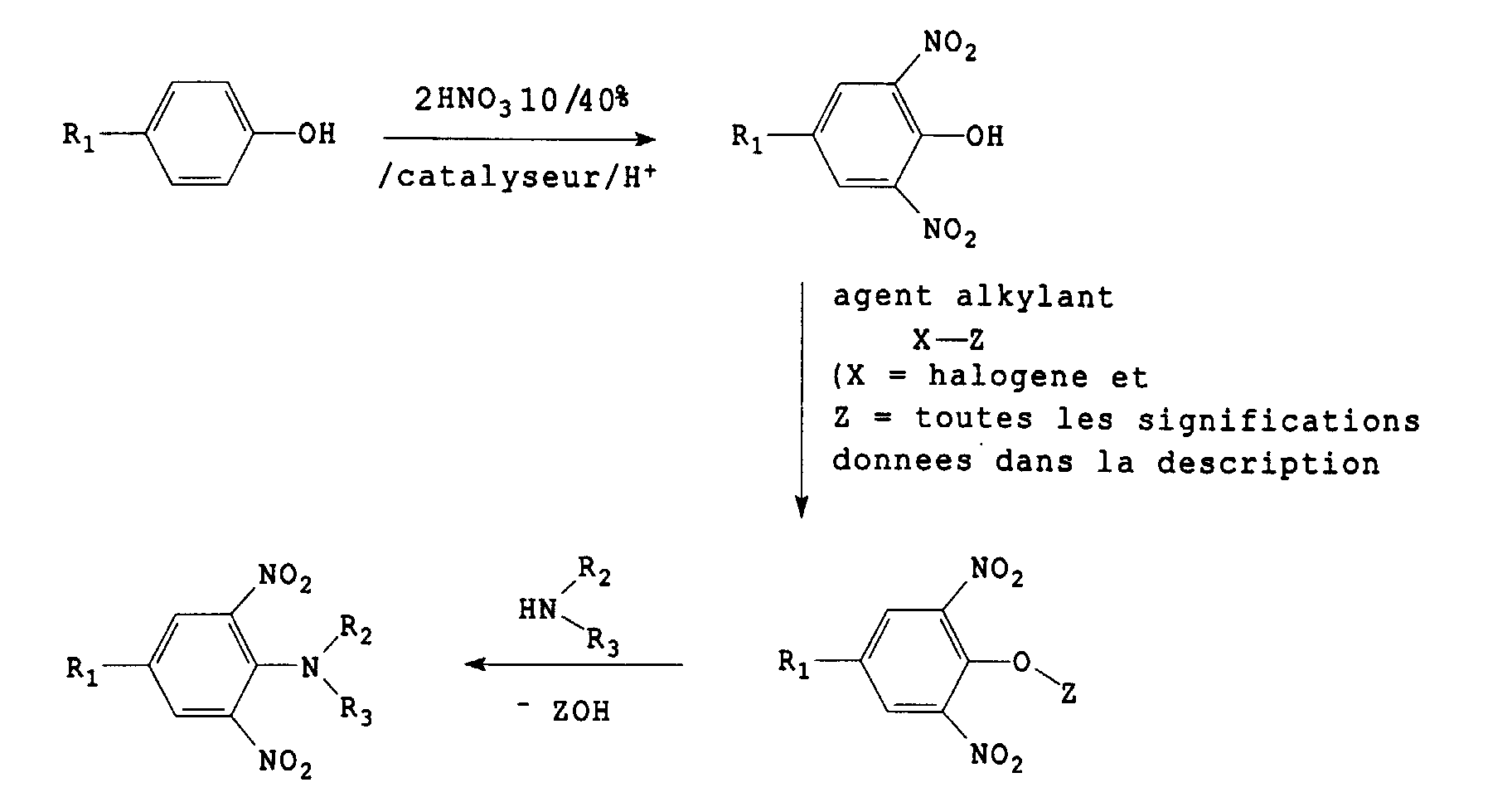
- the subject of the invention is a method of preparation 4-substituted dinitroanilines.
- dinitroanilines in question which are known herbicides, act primarily as inhibitors of cell division.
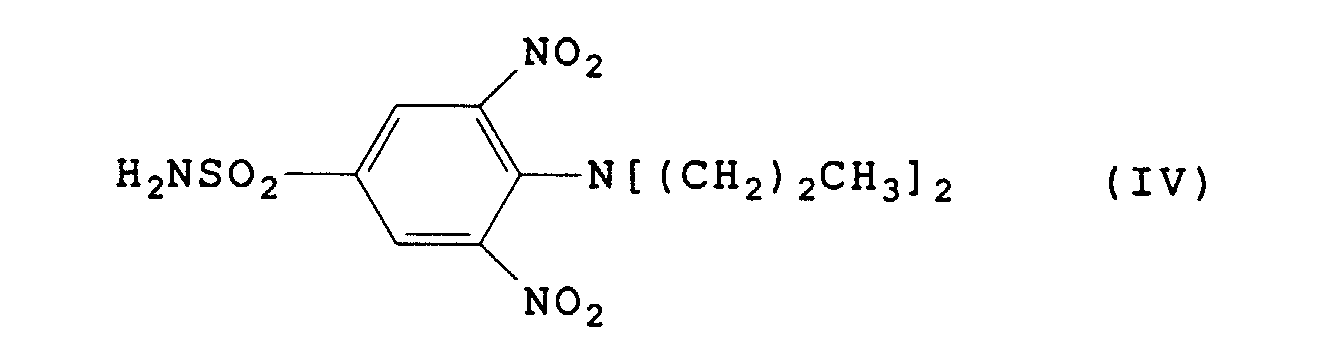
- dinitroanilines are butralin, trifluralin and oryzaline represented respectively by the formulas:
- the dinitroaniline thus obtained must be recrystallized in an alcoholic medium.
- chlorination consumes excess of thionyl chloride and / or phosphorus oxychloride which are expensive products, which makes this process economically uncompetitive.
- the invention therefore aims, above all, to remedy to the disadvantages of the prior art and to provide a process for the preparation of 4-substituted dinitroanilines which responds better than those that already exist to the various practice wishes.
- the catalyst used during the dinitration is chosen from the group comprising ferric and ferrous chlorides, zinc chlorides and cupric, ferric, zincic and cupric nitrates as well as ferrous, zinc and ferric sulfates cupric.
- the proportion of catalyst relative to phenol is 1 to 50 ⁇ , preferably 5 to 30 ⁇ .
- the nitrating agent is chosen from the group comprising nitric acid and alkaline and alkaline earth nitrates soluble in water.
- the excess nitrating agent used for the step advantage is approximately 10% to 30% in weight.
- the amount of protons that must be present in the nitrating medium is from 2 to 7, preferably from 2.4 to 6 and, more preferably still, from 2.6 to 2.9 equivalents per compared to phenol and can be provided by an acid called co-acid and consisting of a mineral acid chosen from the group comprising hydrochloric and hydrobromic acids, sulfuric and phosphoric, or by a chosen organic acid in the group comprising carboxylic acids lower including including acetic, propionic acids and oxalic.
- the nitration step can be carried out in the middle homogeneous nitric or in the presence of an inert solvent.
- the inert solvent is advantageously chosen from the group comprising aliphatic essences including in particular hexane, heptane, octane, nonane and dodecane, chlorinated derivatives including in particular dichloromethane, 1,2-dichloroethane, chloroform, trichlorethylene, tetrachlorethylene, and dialkyl ethers including in particular the diethyl- and dipropyl ethers as well as the dibutyl ethers.
- aliphatic essences including in particular hexane, heptane, octane, nonane and dodecane
- chlorinated derivatives including in particular dichloromethane, 1,2-dichloroethane, chloroform, trichlorethylene, tetrachlorethylene
- dialkyl ethers including in particular the diethyl- and dipropyl ethers as well as the dibutyl ethers.
- the reaction is advantageously carried out under atmospheric pressure and at temperatures from -20 ° C to + 80 ° C.
- the 2,6-dinitré derivative obtained can be separated and purified by conventional techniques well known to the skilled person.
- the dinitrated derivative is precipitated by dilution and icing of the reaction medium, then separated by filtration.
- the dinitrated derivative dissolved in the organic phase is isolated by decantation, the agent nitrant contained in the aqueous phase can then be recycled to the nitration stage after being subjected to prior to a concentration.
- the purity of the 4-substituted 2,6-dinitro-phenol derivative obtained is generally excellent and does not require further purification.
- the solvent When the solvent is carefully chosen, it does not becomes unnecessary to isolate dinitrophenol and the solvent solution can then be directly subjected to the next step; this is the case for example when the solvent belongs to the family of halogenated solvents of the group comprising methylene chlorides, 1,2-dichloroethane, 1,2-dibromoethane, chloropropane, isopropyl chloride, isopropyl bromide, butyl chlorides, 1,2-dichloropropane and 1,2-dibromopropane.
- the solvent belongs to the family of halogenated solvents of the group comprising methylene chlorides, 1,2-dichloroethane, 1,2-dibromoethane, chloropropane, isopropyl chloride, isopropyl bromide, butyl chlorides, 1,2-dichloropropane and 1,2-dibromopropane.
- the yield of the dinitration stage is at least minus 92% and can reach 99%.
- the alkylating agent used during the O-alkylation step is either an alkyl monohalide represented by the formula C n H 2n-1 X in where X is a chlorine, bromine or iodine atom and n is ⁇ 3, or an alkyl polyhalide represented by the formula C n H 2n-m X 2 + m in which X is a chlorine, bromine or iodine atom and n ⁇ 2 with O ⁇ m ⁇ 2n.
- these reactions are performed on the dinitrated phenol or on a corresponding alkaline phenate in aqueous medium or more advantageously in biphasic medium by phase transfer reaction.
- the alkaline phenate can be a dinitrophenate either sodium or potassium, either an organic salt such as ammonium, quaternary tetralkylammoniums and quaternary tetralkylphosphonium.
- the alkylating agent in solution in a solvent immiscible with water, is mixed with an aqueous solution of alkaline phenate in the presence of a transfer catalyst phase which may consist of an ammonium halide or a quaternary phosphonium salt.
- the solvent can be chosen from the group comprising aromatic solvents, aliphatic essences and ketones; preferably, he is chosen from the group including toluene, O-xylene, m-xylene, p-xylene, hexane, heptane, octane, nonane, dodecane, methyl ethyl ketone, methyl isobutyl ketone, cyclohexanone and mixtures of these solvents.
- the preferred catalysts are tetrabutylammonium chloride, tetrabutylammonium bromide, bromide tetrabutylphosphonium, triethylbenzylammonium chloride, trimethyl-benzylammonium.
- the alkylation reaction can be carried out at a temperature from 15 ° C to 150 ° C, at atmospheric pressure or under a pressure of up to 15 bars.
- Phase transfer reactions can be practiced at temperatures varying from -10 ° C to + 50 ° C and atmospheric pressure while the reactions putting work lower alkyl halides can be done under a pressure of several tens of bars.
- the dinitrated phenoxyether obtained at the end of this step can be isolated from the reaction medium by techniques known to those skilled in the art, such as by example the extraction with an appropriate solvent or the concentration followed by phase splitting organic when the process implements a reaction of phase transfer.
- the product is isolated by solubilization of the salts soluble in water, a second alkaline wash allowing solubilize the unreacted dinitrophenate; a counter extraction in an acid medium of the product resulting from this second washing then leads to a dinitrophenol solution which can be easily recycled in a subsequent operation etherification.
- the organic phase isolated after the second washing is subjected to evaporation of the excess alkylating agent which can be advantageously reused in the operation next.
- the solvent is chosen from the group including toluene, xylene and gasolines aliphatics including in particular heptane, octane, nonane, decane and dodecane, fractionation is not necessary and the organic solution obtained at this stage can be submitted directly to the amination stage.
- the amination step is performed by reacting, at atmospheric pressure or under 3 to 5 atmospheres and at a temperature between 30 ° C and the reflux temperature of the medium, the product of the O-alkylation step with an excess of secondary amine or primary selected from the group comprising amino-2-butane, N, N-diethylamine, N, N-dipropylamine, N-ethyl, N-butylamine, N-propyl-, N-methyl-cyclopropylamine, N- (2-chloroethyl), N-propylamine, N-propyl-, N-2-methyl-2-propenylamine, N-ethyl-, N-2-methyl-2-propenylamine within a inert solvent chosen from the group comprising alcohols and aromatic solvents.
- secondary amine or primary selected from the group comprising amino-2-butane, N, N-diethylamine, N, N-dipropylamine, N-ethyl, N-butyl
- the process according to the invention achieves yields very high, more than 96%, without production of more than 1 ppm of N-nitrosamines and without risk of formation of detonating products.
- the alkylating agent is polyfunctional, that is to say constituted for example by a dihaloethane, it is capable of reacting with two molecules of dinitrophenol and there occurs a polyetherification illustrated by the reaction scheme:
- Examples 1 to 15 illustrate the step of dinitration of 4-substituted phenol.
- the medium contains 108 mmol, i.e. 2.4 equivalents of protons with respect to phenol.
- the excess nitrating agent is 25%.
- the organic phase is separated by decantation. aqueous phase.
- the aqueous phase is back-extracted with 12.17 g of methylene chloride.
- the excess nitrating agent is 20%.
- the amount of protons present in the medium is 189 mmol, or 6.3 equivalents based on phenol.
- the excess nitrating agent is 20%.
- the amount of protons present in the medium is 103 mmol, or 3.4 equivalents based on phenol.
- the phases are separated by decantation, counter-extracted the aqueous phase with 40 g of dichloroethane, combines the organic phases and they are washed with 20 g water; they are then dried and the solvent is removed by evaporation.
- the yield of dinitrated product sought is 93.8%.
- the excess nitrating agent is 20%.
- the medium contains a quantity of protons corresponding to 87.2 mmol, or 2.9 equivalents compared phenol.
- the phases are separated by decantation and counter-extracted the aqueous phase with twice 20 g of 1,2-dichloroethane.
- the organic phases are combined and washed with 20 g of distilled water; these phases are then dried by evaporation.
- the yield of dinitrated product sought is 94%.
- the excess nitrating agent is 20%.
- the phases are separated by decantation, then back-extract the aqueous phase with 40 g of dichloroethane.
- the yield of dinitrated product sought is 87.5%.
- the excess nitrating agent is 45%.
- the aqueous phase is separated and extracted with twice 20 g of 1,2-dichloroethane.
- the yield of dinitrated product sought is 92%.
- This example illustrates the possibility of recycling nitric effluents collected at the end of a given dinitration towards a dinitration step subsequent.
- the excess nitrating agent is 20%.
- a new nitrating reaction mixture is established from 20 g of the nitric effluent recovered above; this nitric effluent contains 13.3 mmol of HNO 3 and 49.9 mmol of HCl and it is reconcentrated by the addition of 3.71 g of 99% nitric acid (58.3 mmol) and 0.5 g hydrochloric acid 37% (5.1 mmol).
- the excess nitrating agent is 20%.
- the aqueous phase is separated as it is extracted with 40 g of 1,2-dichloroethane.
- the yield of dinitrated derivative is 95.1%.
- This example illustrates the O-alkylation step of 4-substituted dinitro-phenol.
- the reaction medium is washed twice with 30 g 0.1N HCl.
- the aqueous mother and washing phases are back-extracted at pH 1 with 100 g of 1,2-dichloroethane.
- This example illustrates the amination step.
- This example illustrates the preparations of 3- (2,6-dinitro-4-tertbutyl-phenoxy) -1,2-oxopropane and hydroxy-poly (2-ol-propanoxy) -2,6-dinitro-4-tertbutyl-benzene.
- the excess 2-amino-butane is distilled under vacuum, cooled to 55 ° C, 30 g of xylene and 15 g of water were charged; wash the aqueous phase with 10 g of toluene, the toluene organic phases and they are evaporated to dryness.
- CPG 4-tertbutyl-N (sec-butyl) -2,6-dinitro-benzenamine.
- This example illustrates the step of O-alkylation by a oxirane of a 4-substituted dinitrophenol.
- This example illustrates the step of O-alkylation by a oxirane of a 4-substituted dinitrophenol.
- the mixture is brought to 130 ° C. for 5 hours.
- This example illustrates the step of amination of 1- (2,6-dinitro-4-terbutylphenoxy) 2-propanol.
- the mixture is maintained at reflux (50 ° C) for 8 hours.
- This example illustrates the step of amination of 1- (2,6-dinitro-4-terbutylphenoxy) 2-ethanol.
- the mixture is maintained at reflux (65 ° C) for 2 hours.
Landscapes
- Chemical & Material Sciences (AREA)
- Organic Chemistry (AREA)
- Organic Low-Molecular-Weight Compounds And Preparation Thereof (AREA)
- Low-Molecular Organic Synthesis Reactions Using Catalysts (AREA)
Abstract
Description

- R1 est choisi dans le groupe comprenant les radicaux tertbutyle, sulfonamido, trifluorométhyle, méthylsulfonyle, isopropyle,
- R2 et R3, qui sont identiques ou différents l'un de l'autre, représentent un atome d'hydrogène, un radical alkyle rectiligne ou ramifié, cycloalkyle, halogénoalkyle ou alkényle comprenant moins de 6 atomes de carbone.


- à la dinitration du 4-tertbutyl-phénol en utilisant l'acide nitrique en milieu acétique,
- à la chloration du 2,6-dinitro-4-tertbutyl-phénol obtenu à l'étape précédente en ayant recours au chlorure de thionyle ou à l'oxychlorure de phosphore en présence d'un amide tel que le formamide ou le diméthylformamide (DMF),
- à la condensation du 4-tertbutyl-2,6-dinitro-chlorobenzène formé à l'étape précédente avec deux moles de sec-butylamine.
- la matière première constituée par les alkylchlorobenzènes n'est pas disponible commercialement, ce qui nécessite une étape de chloration supplémentaire et
- lorsque la matière première est une alkylaniline, il y a formation de N-nitrosamines en quantité importante.
- une étape de dinitration du phénol 4-substitué correspondant à la dinitroaniline 4-substituée recherchée, cette étape de dinitration étant effectuée au sein d'un milieu réactionnel comprenant un faible excès d'agent nitrant, une quantité suffisante de protons et un catalyseur choisi dans le groupe comprenant les sels solubles des métaux de transition des colonnes IV à XII de la classification périodique, de préférence les sels solubles des ions FeIII, FeII, ZnII et CuII,
- une étape d'O-alkylation du phénol 4-substitué
dinitré obtenu à l'étape précédente, à l'aide d'un agent
alkylant choisi dans le groupe comprenant, d'une part, les
mono-halogénures d'alkyle linéaires ou ramifiés ayant au
moins 3 atomes de carbone et pouvant comprendre un cycle
saturé ou au moins une insaturation, d'autre part, les
polyhalogénures d'alkyle linéaires ou ramifiés ayant au
moins 2 atomes de carbone et pouvant comprendre un cycle
saturé ou au moins une insaturation, d'autre part encore les
polyalcoxy-haloalkyléthers représentés par la formule
(RO)nR'X dans laquelle X représente un atome d'hydrogène, de
chlore, de brome ou d'iode et R et R', indépendamment l'un
de l'autre, un radical méthyle, éthyle ou propyle, n étant
tel que le nombre d'atomes de carbone de l'agent alkylant
est ≥2, notamment les chlorométhyl polyméthoxy éthers et
les chlorométhyl-polyéthoxy éthers, les oxydes d'éthylène et
de propylène et, d'autre part encore, les composés de
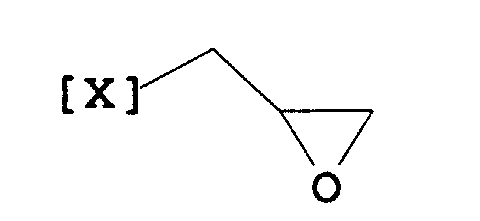
structure répondant à la formule
qui représente des épihalohydrines lorsque X représente Cl ou Br, le glycidol lorsque X représente OH, les éthers de glycidyle lorsque X représente OR, R étant une chaíne aliphatique d'au plus 12 atomes de carbone, ou un oxiranne lorsque X est une chaíne aliphatique R de 1 à 12 atomes de carbone,

- une étape d'amination du phénoxy-éther dinitré 4-substitué obtenu à l'étape précédente par mise en oeuvre d'une amine primaire ou secondaire.
- en tant que monohalogénures d'alkyle, les halogénures de n-propyle, d'isopropyle, de n-butyle, de sec-butyle, d'isobutyle, de tertbutyle, de n-pentyle, de sec-amyle, de 3-pentyle, de neo-pentyle, d'hexyle, d'isohexyle, de cyclohexyle, de cyclopropyle, de benzyle, d'allyle, et de polyalcoxyalkyle avec comme chaíne alcoxylée un radical méthoxy, éthoxy ou propanoxy,
- en tant que polyhalogénures d'alkyle, les dihaloéthanes, notamment le dichloroéthane et le dibromo-éthane, les dihalopropanes, notamment les 1,2- et 1,3-dichloropropanes.

- de 72% de 2,6-dinitro-4-tertbutyl-phénol,
- de 22% de 2-nitro-4-tertbutyl-phénol,
- de 3,5% de 2,4-dinitro-phénol et
- de 2,3% de 4-nitrophénol.
- de 94,1% de 2,6-dinitro-4-tertbutyl-phénol,
- de 0,7% de 2-nitro-4-tertbutyl-phénol et
- de 3% de 2,4-dinitrophénol,
- 93,2% de 2,6-dinitro-4-tertbutyl-phénol et
- 7,1% de 2-nitro-4-tertbutyl-phénol.
- 3,1 g d'acide chlorhydrique et
- 1,44 g d'acide nitrique.
Claims (6)
- Procédé de préparation des dinitroanilines 4-substituées de formuledans laquelle
 R1 est choisi dans le groupe comprenant les radicaux tertbutyle, sulfonamido, trifluorométhyle, méthylsulfonyle, isopropyle,R2 et R3, qui sont identiques ou différents l'un de l'autre, représentent un atome d'hydrogène, un radical alkyle rectiligne ou ramifié, cycloalkyle, halogénoalkyle ou alkényle comprenant moins de 6 atomes de carbone, caractérisé par le fait qu'il comprend successivement:une étape de dinitration du phénol 4-substitué correspondant à la dinitroaniline 4-substituée recherchée, cette étape de dinitration étant effectuée au sein d'un milieu réactionnel comprenant un faible excès d'agent nitrant, une quantité suffisante de protons et un catalyseur choisi dans le groupe comprenant les sels solubles des métaux de transition des colonnes IV à XII de la classification périodique, de préférence les sels solubles des ions FeIII, FeII, ZnII et CuII,une étape d'O-alkylation du phénol 4-substitué dinitré obtenu à l'étape précédente, à l'aide d'un agent alkylant choisi dans le groupe comprenant, d'une part, les mono-halogénures d'alkyle linéaires ou ramifiés ayant au moins 3 atomes de carbone et pouvant comprendre un cycle saturé ou au moins une insaturation, d'autre part, les polyhalogénures d'alkyle linéaires ou ramifiés ayant au moins 2 atomes de carbone et pouvant comprendre un cycle saturé ou au moins une insaturation, d'autre part encore les polyalcoxy-haloalkyléthers représentés par la formule (RO)nR'X dans laquelle X représente un atome d'hydrogène, de chlore, de brome ou d'iode et R et R', indépendamment l'un de l'autre, un radical méthyle, éthyle ou propyle, n étant tel que le nombre d'atomes de carbone de l'agent alkylant est ≥ 2, notamment les chlorométhyl polyméthoxy éthers et les chlorométhyl-poly-éthoxy éthers, les oxydes d'éthylène et de propylène et, d'autre part encore, les composés de structure répondant à la formulequi représente des épihalohydrines lorsque X représente Cl ou Br, le glycidol lorsque X représente OH, les éthers de glycidyle lorsque X représente OR, R étant une chaíne aliphatique d'au plus 12 atomes de carbone, ou un oxiranne lorsque X est une chaíne aliphatique R de 1 à 12 atomes de carbone,
 une étape d'amination du phénoxy-éther dinitré 4-substitué obtenu à l'étape précédente par mise en oeuvre d'une amine primaire ou secondaire.
 - Procédé selon la revendication 1, caractérisé par le fait que la proportion de catalyseur par rapport au phénol est de 1 à 50‰, de préférence de 5 à 30‰.
- Procédé selon l'une des revendications 1 et 2, caractérisé par le fait que la quantité de protons présente dans le milieu nitrant est de 2 à 7, de préférence de 2,4 à 6 et, plus préférentiellement encore, de 2,6 à 2,9 équivalents par rapport au phénol et peut être apportée par un acide appelé co-acide et constitué par un acide minéral choisi dans le groupe comprenant les acides chlorhydrique, bromhydrique, sulfurique et phosphorique, ou par un acide organique choisi dans le groupe comprenant les acides carboxyliques inférieurs dont notamment les acides acétique, propionique et oxalique.
- Procédé selon l'une des revendications 1 à 3, caractérisé par le fait que l'agent alkylant mis en oeuvre pendant l'étape d'O-alkylation est soit un monohalogénure d'alkyle représenté par la formule CnH2n-1X dans laquelle X est un atome de chlore, brome ou iode et n est ≥ 3, soit un polyhalogénure d'alkyle représenté par la formule CnH2n-mX2+m dans laquelle X est un atome de chlore, brome ou iode et n ≥ 2 avec O ≤ m < 2n.
- Procédé selon la revendication 4, caractérisé par le fait que l'agent alkylant est choisi dans le groupe comprenant,en tant que monohalogénures d'alkyle, les halogénures de n-propyle, d'isopropyle, de n-butyle, de sec-butyle, d'isobutyle, de tertbutyle, de n-pentyle, de sec-amyle, de 3-pentyle, de neo-pentyle, d'hexyle, d'isohexyle, de cyclohexyle, de cyclopropyle, de benzyle, d'allyle, et de polyalcoxyalkyle avec comme chaíne alcoxylée un radical méthoxy, éthoxy ou propanoxy,en tant que polyhalogénures d'alkyle, les dihaloéthanes, notamment le dichloroéthane et le dibromo-éthane, les dihalopropanes, notamment les 1,2- et 1,3-dichloropropanes.
- Procédé selon l'une des revendications 1 à 5, caractérisé par le fait que l'étape d'amination est réalisée en faisant réagir, à la pression atmosphérique ou sous 3 à 5 atmosphères et à une température comprise entre 30°C et la température de reflux du milieu, le produit de l'étape d'O-alkylation avec un excès d'amine secondaire ou primaire choisie dans le groupe comprenant l'amino-2-butane, la N,N-diéthylamine, la N,N-dipropylamine, la N-éthyl,N-butylamine, la N-propyl,N-méthyl-cyclopropylamine, la N-(2-chloro-éthyl),N-propylamine, la N-propyl,N-2-méthyl-2-propénylamine, la N-éthyl-,N-2-méthyl-2-propénylamine au sein d'un solvant inerte choisi dans le groupe comprenant les alcools et les solvants aromatiques.
Applications Claiming Priority (4)
| Application Number | Priority Date | Filing Date | Title |
|---|---|---|---|
| FR9704236A FR2761685B1 (fr) | 1997-04-07 | 1997-04-07 | Procede de preparation des dinitroanilines 4-substituees |
| FR9704236 | 1997-04-07 | ||
| FR9708360 | 1997-07-02 | ||
| FR9708360A FR2765576B1 (fr) | 1997-07-02 | 1997-07-02 | Procede de preparation des dinitroanilines 4-substituees |
Publications (1)
| Publication Number | Publication Date |
|---|---|
| EP0870755A1 true EP0870755A1 (fr) | 1998-10-14 |
Family
ID=26233453
Family Applications (1)
| Application Number | Title | Priority Date | Filing Date |
|---|---|---|---|
| EP98400818A Ceased EP0870755A1 (fr) | 1997-04-07 | 1998-04-06 | Procédé de préparation des dinitroanilines 4-substituées |
Country Status (4)
| Country | Link |
|---|---|
| US (1) | US5981800A (fr) |
| EP (1) | EP0870755A1 (fr) |
| CN (1) | CN1200371A (fr) |
| BR (1) | BR9801377A (fr) |
Cited By (1)
| Publication number | Priority date | Publication date | Assignee | Title |
|---|---|---|---|---|
| US5981795A (en) * | 1999-03-03 | 1999-11-09 | Finchimica S.P.A. | Method for the N-denitration of N-nitro-dinitroaniline in a homogeneous phase |
Families Citing this family (2)
| Publication number | Priority date | Publication date | Assignee | Title |
|---|---|---|---|---|
| CN104374857B (zh) * | 2014-11-05 | 2016-06-08 | 中国烟草总公司四川省公司 | 一种烟草中氟节胺、仲丁灵和除芽通残留量的测定方法 |
| US11047426B2 (en) | 2017-12-08 | 2021-06-29 | Neapco Intellectual Property Holdings, Llc | Propeller shaft with crash feature |
Citations (3)
| Publication number | Priority date | Publication date | Assignee | Title |
|---|---|---|---|---|
| FR2069755A5 (fr) * | 1969-11-20 | 1971-09-03 | Amchem Prod | |
| EP0630883A1 (fr) * | 1993-06-24 | 1994-12-28 | Agan Chemical Manufacturers Ltd. | Nouveau procédé pour la préparation 3,4-dialkyle-2,6-dinitroanilines N-alkylées |
| WO1997001527A1 (fr) * | 1995-06-29 | 1997-01-16 | Syntech Ltd. Co. | Production de mono-n-alkyldinitroalkylanilines et derives de n-alkyl-dinitroaniline |
-
1998
- 1998-04-06 EP EP98400818A patent/EP0870755A1/fr not_active Ceased
- 1998-04-07 BR BR9801377A patent/BR9801377A/pt not_active IP Right Cessation
- 1998-04-07 CN CN98108255A patent/CN1200371A/zh active Pending
- 1998-04-07 US US09/056,266 patent/US5981800A/en not_active Expired - Fee Related
Patent Citations (3)
| Publication number | Priority date | Publication date | Assignee | Title |
|---|---|---|---|---|
| FR2069755A5 (fr) * | 1969-11-20 | 1971-09-03 | Amchem Prod | |
| EP0630883A1 (fr) * | 1993-06-24 | 1994-12-28 | Agan Chemical Manufacturers Ltd. | Nouveau procédé pour la préparation 3,4-dialkyle-2,6-dinitroanilines N-alkylées |
| WO1997001527A1 (fr) * | 1995-06-29 | 1997-01-16 | Syntech Ltd. Co. | Production de mono-n-alkyldinitroalkylanilines et derives de n-alkyl-dinitroaniline |
Cited By (1)
| Publication number | Priority date | Publication date | Assignee | Title |
|---|---|---|---|---|
| US5981795A (en) * | 1999-03-03 | 1999-11-09 | Finchimica S.P.A. | Method for the N-denitration of N-nitro-dinitroaniline in a homogeneous phase |
Also Published As
| Publication number | Publication date |
|---|---|
| BR9801377A (pt) | 1999-05-18 |
| CN1200371A (zh) | 1998-12-02 |
| US5981800A (en) | 1999-11-09 |
Similar Documents
| Publication | Publication Date | Title |
|---|---|---|
| EP1713750A1 (fr) | Procédé de preparation d'un compose fluoroaromatique a partir d'un compose aminoaromatique | |
| US6906231B2 (en) | Aromatic nitration reactions | |
| EP0870756B1 (fr) | Procédé de préparation des dinitroanilines 3,4-disubstituées | |
| EP0870755A1 (fr) | Procédé de préparation des dinitroanilines 4-substituées | |
| EP0277894B1 (fr) | Procédé de préparation de trialkoxybenzaldéhyde | |
| AU2019212442B2 (en) | Synthesis of 5-chloro-2-[(3,4,4-trifluoro-3-buten-1-yl)thio]-thiazole | |
| EP1468983B1 (fr) | Procede de production de 2,5-bis(trifluoromethyl)nitrobenzene | |
| EP0211775B1 (fr) | Procédé de nitration de composés phénoliques | |
| FR2765576A1 (fr) | Procede de preparation des dinitroanilines 4-substituees | |
| CN114364655B (zh) | 硝酸α-甲基-[4-(硝基)-2-(三氟甲基)]-苄酯的制备方法 | |
| FR2761685A1 (fr) | Procede de preparation des dinitroanilines 4-substituees | |
| CN1094924C (zh) | 二苯醚化合物的提纯方法 | |
| JP5133270B2 (ja) | 1−ブロモ−3−トリフルオロメトキシベンゼンの製法 | |
| FR2581641A1 (fr) | Procede de preparation d'acides 6-alkoxy(inferieur)-1-naphtoiques et des esters correspondants et utilisation de ce procede pour la preparation d'acides 6-alkoxy(inferieur)-5-halo-1-naphtoiques et des esters correspondants | |
| US4479015A (en) | Process for the manufacture of nitrophenetoles | |
| GB2198728A (en) | Preparation of trifluoromethylbenzonitrile from trifluoromethylbenzaldehyde | |
| CN116535327B (zh) | 一种提高芳香二氟甲基化合物在制备和使用时稳定性的方法 | |
| EP0098783A1 (fr) | Procédé de préparation de halogéno anilines | |
| FR2765575A1 (fr) | Procede de preparation des dinitroanilines 3,4-disubstituees | |
| JP2001072638A (ja) | αーブロモアルキルフェノン類の製造法 | |
| FR2761684A1 (fr) | Procede de preparation des dinitroanilines 3,4-disubstituees | |
| JPS5850211B2 (ja) | ジニトロトルエンの製造方法 | |
| EP0477853A1 (fr) | Procédé et nouvel intermédiaire pour la préparation du 3,4'-diamino-diphénil-ether | |
| EP0035927B1 (fr) | Procédé de préparation de chloroalkoxybenzènes | |
| WO2016056448A1 (fr) | Agent introduisant un groupe protecteur destiné à un groupe hydroxy et/ou à un groupe mercapto |
Legal Events
| Date | Code | Title | Description |
|---|---|---|---|
| PUAI | Public reference made under article 153(3) epc to a published international application that has entered the european phase |
Free format text: ORIGINAL CODE: 0009012 |
|
| AK | Designated contracting states |
Kind code of ref document: A1 Designated state(s): AT BE CH DE DK ES FI GB GR IE IT LI LU MC NL PT SE |
|
| AX | Request for extension of the european patent |
Free format text: AL;LT;LV;MK;RO;SI |
|
| 17P | Request for examination filed |
Effective date: 19990320 |
|
| AKX | Designation fees paid |
Free format text: AT BE CH DE DK ES FI GB GR IE IT LI LU MC NL PT SE |
|
| AXX | Extension fees paid |
Free format text: RO PAYMENT 19990320 |
|
| 17Q | First examination report despatched |
Effective date: 19991202 |
|
| RAP1 | Party data changed (applicant data changed or rights of an application transferred) |
Owner name: CFPI NUFARM |
|
| GRAG | Despatch of communication of intention to grant |
Free format text: ORIGINAL CODE: EPIDOS AGRA |
|
| STAA | Information on the status of an ep patent application or granted ep patent |
Free format text: STATUS: THE APPLICATION HAS BEEN REFUSED |
|
| 18R | Application refused |
Effective date: 20011202 |