EP0868434B1 - Anticorps anti-idiotypiques du facteur de croissance endotheliale vasculaire et leur utilisation comme medicaments - Google Patents
Anticorps anti-idiotypiques du facteur de croissance endotheliale vasculaire et leur utilisation comme medicaments Download PDFInfo
- Publication number
- EP0868434B1 EP0868434B1 EP96943157A EP96943157A EP0868434B1 EP 0868434 B1 EP0868434 B1 EP 0868434B1 EP 96943157 A EP96943157 A EP 96943157A EP 96943157 A EP96943157 A EP 96943157A EP 0868434 B1 EP0868434 B1 EP 0868434B1
- Authority
- EP
- European Patent Office
- Prior art keywords
- vegf
- idiotypic
- angiogenesis
- purified
- growth factor
- Prior art date
- Legal status (The legal status is an assumption and is not a legal conclusion. Google has not performed a legal analysis and makes no representation as to the accuracy of the status listed.)
- Expired - Lifetime
Links
Images




Classifications
-
- C—CHEMISTRY; METALLURGY
- C07—ORGANIC CHEMISTRY
- C07K—PEPTIDES
- C07K16/00—Immunoglobulins [IG], e.g. monoclonal or polyclonal antibodies
- C07K16/42—Immunoglobulins [IG], e.g. monoclonal or polyclonal antibodies against immunoglobulins
- C07K16/4208—Immunoglobulins [IG], e.g. monoclonal or polyclonal antibodies against immunoglobulins against an idiotypic determinant on Ig
- C07K16/4241—Immunoglobulins [IG], e.g. monoclonal or polyclonal antibodies against immunoglobulins against an idiotypic determinant on Ig against anti-human or anti-animal Ig
-
- A—HUMAN NECESSITIES
- A61—MEDICAL OR VETERINARY SCIENCE; HYGIENE
- A61P—SPECIFIC THERAPEUTIC ACTIVITY OF CHEMICAL COMPOUNDS OR MEDICINAL PREPARATIONS
- A61P27/00—Drugs for disorders of the senses
-
- A—HUMAN NECESSITIES
- A61—MEDICAL OR VETERINARY SCIENCE; HYGIENE
- A61P—SPECIFIC THERAPEUTIC ACTIVITY OF CHEMICAL COMPOUNDS OR MEDICINAL PREPARATIONS
- A61P27/00—Drugs for disorders of the senses
- A61P27/02—Ophthalmic agents
-
- A—HUMAN NECESSITIES
- A61—MEDICAL OR VETERINARY SCIENCE; HYGIENE
- A61P—SPECIFIC THERAPEUTIC ACTIVITY OF CHEMICAL COMPOUNDS OR MEDICINAL PREPARATIONS
- A61P35/00—Antineoplastic agents
-
- A—HUMAN NECESSITIES
- A61—MEDICAL OR VETERINARY SCIENCE; HYGIENE
- A61K—PREPARATIONS FOR MEDICAL, DENTAL OR TOILETRY PURPOSES
- A61K38/00—Medicinal preparations containing peptides
Definitions
- the subject of the invention is anti-idiotypic antibodies to the factor of vascular endothelial growth and their use as drugs.
- VEGF vascular endothelial growth factor
- vascular endothelial growth factor i.e. vascular endothelial growth
- Tumor progression Reviewed in Folkman
- diabetic retinopathy Malecaze, 1994
- rheumatoid arthritis Fava, 1994
- It is a 46 kDa glycoprotein heparin binder (Plou ⁇ t Ferrara Connolly).
- At least 3 homodimeric forms of 121, 165 and 189 amino acids are generated by alternative splicing of the pre- messengerger RNA.
- the VEGF of 165 amino acids will be designated by VEGF 165.
- VEGF In addition to its angiogenic role VEGF stimulates capillary permeability (Connolly, 1989). The role of VEGF in tumorigenesis has been suspected by observation that hypoxia accompanying tumor necrosis increased the expression of its mRNAs. Else on the other hand, VEGF is overexpressed in many cases of tumor pathology. Of plus injection of anti-VEGF antibodies inhibits tumor growth (Kim, 1993).
- a growth factor can induce many different effects depending on whether it binds to one or other of its receptors, for example proliferation and survival. So immunoneutralization can have beneficial effects by inhibiting proliferation but also undesirable effects by decreasing survival.
- the analysis of functions mediated in vivo by a growth factor receptor binding to heparin such as VEGF or FGFs (fibroblast growth factor) comes up against two major pitfalls.
- the combination of interactions between ligands and receptors is very complex because a growth factor can bind to several receptors and similarly several growth factors can bind to the same receptor.
- the products of 9 genes coding for FGFs have the products of 5 genes coding for receptors for FGFs.
- glycosaminoglycans have strong affinity for glycosaminoglycans.
- growth factors such as VEGF or FGF are sequestered in the extracellular matrices and are only found in the immediate vicinity (less than 0.5 mm) of their place of synthesis. which makes it difficult to grasp their role in vivo.
- VEGF receptors Two different genes code for transmembrane tyrosine kinases identified as VEGF receptors: KDR in humans (Terman, 1992) or flk-1 in mice (Millauer, 1993) and flt-1 (DeVries, 1992).
- RNAs for the flk-1 receptor have been shown to be present in endothelial cells during embryogenesis and disappeared in adults (Millauer, 1993).
- the only non-endothelial cells where flk-1 has been found are the stromal cells of the umbilical cord (Quinn, 1993).
- other have demonstrated the presence of flk-1 mRNA in endothelial cells adult hepatic sinusoids (Yamane, 1994), adult glomeruli (Millauer, 1994) and the islets ⁇ of Langerhans (Oberg, 1994).
- One of the aims of the invention is to propose the use of anti-idiotype antibodies growth factors with heparin affinity to target specifically on one or other of their receptors a new type of agonist circulating.
- One of the other aspects of the invention is to provide agonists for growth factor receptors with appropriate specificity and long half-life duration.
- One of the other aims of the invention is to provide internal images of the binding domains of VEGF to KDR which due to their structure immunoglobulin are circulating.
- the present invention relates to anti-idiotypic antibodies to factor vascular endothelial growth for the preparation of a medicament for treatment of pathologies involving endothelial cells involved in a angiogenesis process, either to inhibit angiogenesis or to promote angiogenesis, without affecting quiescent endothelial cells, or for preparation of a diagnostic product for pathologies involving cells endothelials engaged in a process of angiogenesis.
- endothelial cells engaged in a process angiogenesis means endothelial cells migrating through the basal lamina and multiplying.
- quiescent endothelial cells means cells endothelial normal, non-angiogenic adult vessels.
- the invention relates to the use of anti-idiotypic factor antibodies of vascular endothelial growth for the preparation of a medicament intended to the treatment of pathologies involving angiogenic endothelial cells, by selective stimulation of the KDR receptor.
- Angiogenic endothelial cells means cells involved in an angiogenesis process.
- the anti-idiotype antibodies of the invention recognize the receptor human KDR (or murine flk-1 receptor), but do not recognize the receptor flt-1.
- KDR resp. flk-1
- the invention relates to the use anti-idiotypic vascular endothelial growth factor antibodies for the preparation of a medicinal product intended for the treatment of pathologies involving endothelial cells engaged in an angiogenesis process, to inhibit angiogenesis, without affecting the quiescent endothelial cells, which antibody anti-idiotypic is coupled to a toxin whose function is to block translation proteins.
- toxin mention may be made of saporin, ricin or else an element radioactive such as iodine 125 or 131.
- the invention relates the use of anti-idiotypic endothelial growth factor antibodies according to for the preparation of a medicament intended for the treatment of pathologies involving endothelial cells involved in a process angiogenesis, to inhibit angiogenesis, without affecting endothelial cells quiescent, which anti-idiotypic antibody is in the form of its Fab fragment.
- the invention relates to the use of anti-idiotypic factor antibodies for vascular endothelial growth, for the preparation of a medicament intended to the treatment of pathologies involving endothelial cells involved in a angiogenesis process to promote angiogenesis, without affecting cells quiescent endothelial.
- the invention relates to the use of anti-idiotypic antibodies to vascular endothelial growth factor for the preparation of a medicament intended to stimulate physiological angiogenesis for increase the speed of blood vessel formation during the scarring, maturation of the ovarian corpus luteum or stimulate angiogenesis during obstructive pathologies of the vessels in order to reperfuse territories ischemic during vascular thrombosis.
- anti-idiotype antibodies of the invention can also be used for the preparation of a diagnostic product for pathologies involving endothelial cells engaged in an angiogenesis process.
- An anti-idiotypic factor factor antibody vascular endothelial growth characterized in that it is a receptor ligand human KDR or murine flk-1 receptor and is not a flt ligand.
- the specificity vis-à-vis KDR can be determined according to the competition test with radioiodinated VEGF vis-à-vis its binding to COS cells transfected with eukaryotic expression vectors containing the sequence of KDR (Terman et al. ., Biochem. Biophys. Res. Commun., 1992, 187 : 1579-1586).
- VEGF is not not specific to KDR since it can bind to the flt receptor.
- the advantage of the specificity of the anti-idiotype antibodies of the invention is target drugs that do not affect angiogenic endothelial cells quiescent endothelial cells.
- circulating means carried freely in the circulating blood and not picked up by the vascular walls.
- VEGF is not flowing.
- the advantage of the anti-idiotype antibodies of the invention being circulating is to target on angiogenic endothelial cells drugs that do not affect quiescent endothelial cells.
- anti-idiotypic antibodies With regard to the half-life of anti-idiotypic antibodies, it is variable from one species to another; for example for the rat, it is 7 days.
- the half-life of the antibodies of the invention can be measured according to the following test: intravenous injection of 1 ⁇ Ci of radioiodinated ligand, then collection at different blood time intervals and counting of radioactivity.
- the duration of half-life corresponds to the time necessary for 50% of the initial radioactivity disappeared from the circulating blood.
- VEGF vascular endothelial growth factor
- the 200 kDa protein on which anti-idiotypic antibodies induce the phosphorylation of a tyrosine is KDR.
- This aspect means that the activation of KDR by anti-idiotypic antibodies may trigger functions requiring phosphorylation of KDR.
- This aspect can be measured by the phosphorylation test described in the examples.
- Antibodies of the invention induce cell proliferation vascular endothelial more strongly than VEGF, i.e. in a report about 2 times.
- the value of this increase in the induction of the proliferation of endothelial cells by the anti-idiotypic antibodies of the invention is that the binding of anti-idiotype antibodies to the KDR receptor followed by phosphorylation on a KDR tyrosine is enough to trigger cell proliferation.
- This aspect can be measured by the test described in the examples.
- VEGF induces the migration of endothelial cells.
- the advantage presented by the antibodies of the invention is to demonstrate their no effect on the flt-1 receptor thanks to migration and permeability tests exploring the function of flt-1.
- Stimulation of angiogenesis means that the binding of anti-idiotypic antibodies to the KDR receptor followed by phosphorylation on a KDR tyrosine and cell proliferation are enough to trigger angiogenesis.
- corneal endothelial cells are seeded (40,000 cells / cm 2 ) on filters (12 mm in diameter) previously incubated for 16 hours at 4 ° C with PBS supplemented with 2 mg / ml gelatin (Millicell-Millipore).
- the wells are arranged in boxes of 24 wells (diameter 16 mm).
- the electrical resistance between the intracellular and extracellular compartment is measured (of the order of 180 ⁇ ).
- Modulators are added and resistance measured every 10 minutes. Under the effect of VEGF (5-50 ng / ml) the resistance drops to 150 m in about 90 minutes. A decrease in resistance therefore translates into an increase in permeability. This function is mediated by the flt-1 receptor and not the KDR receptor.
- VEGF affects the permeability of the vessels.
- the advantage of the invention is therefore to show that anti-idiotype antibodies do not stimulate in vivo the effects mediated by the flt-1 receptor.
- the invention also relates to the Fab fragment of anti-idiotypic antibodies. according to the invention.
- the invention also relates to the complex between an anti-idiotypic antibody according to the invention and a toxin, in particular chosen from saporin, ricin or between an anti-idiotype antibody according to the invention and an element radioactive such as iodine 125 or 131.
- the Fab fragments of the antibodies of the invention are prepared from 200 mg of Ig2 Id dissolved in 42 ml containing 3.5 mg of papain and 0.1 M EDTA (ethylene diamine tetra acetic acid) and 0.1 M cysteine. The mixture is incubated 4 hours at 37 ° C., then the reaction is stopped with 4.6 ml of 0.3 M iodacetamide. mixture is then dialyzed against 2 liters of PBS at 4 ° C for 16 hours, then chromatographed on a column of 10 ml of protein A sepharose. The fragments Fab are recovered in the dead volume.
- EDTA ethylene diamine tetra acetic acid
- the invention also relates to pharmaceutical compositions characterized in that they comprise, as active substance, at least one anti-idiotype according to the invention, or at least one Fab fragment according to the invention or at least one complex according to the invention.
- the invention also relates to pharmaceutical compositions deduced from the sequences of the hypervariable domains of the Fab fragments of anti-idiotype antibodies.
- the invention also relates to pharmaceutical compositions deduced from the three-dimensional structure of Fab fragments of anti-idiotype antibodies determined by crystallography and X-ray diffraction, dichroism circular, nuclear magnetic resonance.
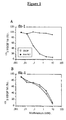
- Figure 1 shows the inhibition of the binding of iodinated VEGF to its receptors by the anti-idiotypic antibody J. It is concluded that the antibody J does not does not displace VEGF binding to the flt-1 receptor.
- VEGF or anti-Id J are incubated with COS cells transfected 48 hours beforehand with 1 ⁇ g / ml of pSV7d vector containing the sequence of flt-1 (part A of the Figure) or flk-1 (part B of the Figure) in the presence of 1 ng / ml (part A of the Figure) or 10 ng / ml (part B of Figure) of iodinated VEGF at 4 ° C. After 3 hours the cells are rinsed, lysed and radioactivity is counted in a gamma counter.
- FIG. 2A represents the inhibition of the binding of VEGF to its receptor high affinity by transfection of FBAE cells with oligonucleotides KDR antisense
- Subconfluent FBAE cells seeded in 12-well plates are transfected with 2 ⁇ M sense oligonucleotides ( ) or antisense ( ⁇ ) from KDR. 24 hours after the cells are incubated for three hours at 4 ° C in the presence of increasing concentrations of iodized VEGF in a final volume of 500 ⁇ l. It is concluded that J does not bind to cells not expressing flk-1.
- Figure 2B shows inhibition of binding of VEGF to its high affinity receptor on FBAE cells by pre-incubation with anti-idiotype J (anti-Id J).
- Subconfluent FBAE cells are seeded in 10 cm 2 wells and incubated for internalization with 5 ⁇ g / ml of anti-Id J or pre-immune IgG at 37 ° C. for 90 min. The plates are then transferred to 4 ° C and incubated with varying concentrations of iodized VEGF. Nonspecific binding is determined in the presence of 1 ⁇ g / ml of cold VEGF (insert). The data are then expressed according to the representation of Scatchard. We conclude that J binds to flk-1 and only to flk-1.
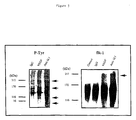
- Figure 3 shows the induction of phosphorylation by the anti-idiotype J on tyrosine residues of KDR / flk-1 in FBAE cells.
- FBAE cells are stimulated for 10 min at 37 ° C. with pre-immune IgG, VEGF or anti-Id J, then they are lysed in RIPA buffer and the lysate is immunoprecipitated with a monoclonal anti-phosphotyrosine antibody (PY22).
- PY22 monoclonal anti-phosphotyrosine antibody
- Complex immune systems are collected on protein A beads sepharose, subjected to polyacrylamide gel electrophoresis, transferred to a nitrocellulose filter and revealed either by a monoclonal anti-phosphotyrosine antibody PY22, either by an anti-flk-1 polyclonal antibody.
- Figure 4 shows the stimulation of FBAE cell proliferation by the anti-idiotype J.
- J phosphorylates the flk-1 receptor like the does VEGF.
- FBAE cells are seeded at 5000 cells per well in 12-well plates in the presence of VEGF, anti-Id J or IgG pre-immune to varying concentrations ranging from 0.01 ng / ml to 1000 ng / ml. After five days, the cells are trypsinized and counted. Data shown are averages of three points and the experiments were performed four times with results Similar. We conclude that J stimulates the proliferation of FBAE cells.
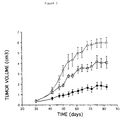
- Figure 5 shows the effects of Ig2 Id injection on the volume tumor.
- Hormone-independent prostatic adenocarcinoma fragments corresponding to a Gleason IX score (3x3x3 mm) were grafted to mice naked / naked females.
- V-IgG VEGF
- PI-IgG Ig1 PI
- J-IgG Ig2 Id
- Figure 6 represents the histological analysis (a-c), the marking of the vascularization (d-i) and proliferation (j-1) of adenocarcinoma xenografts treated with V-IgG, PI-IgG or J-IgG.
- Table 1 shows the biological effects of VEGF and anti-Id J on FBAE cells transfected with sense or antisense oligonucleotides KDR.
- Subconfluent FBAE cells are transfected with sense or antisense oligonucleotides of KDR as described in the description above. Twenty-four hours later, the cells are transferred to medium without serum, they are then incubated in the presence of 50 ⁇ M of VEGF, the anti-Id J or nothing, then they are marked 4 hours with tritiated thymidine after 20 hours stimulation. At the same time, migration experiments are carried out on confluent cells. A Maltese cross incision is made on the cell monolayer. The wells are washed with serum-free medium and the cells are incubated with concentrations of modulators ten times higher.
- the serum is fractionated immediately after collection and 15 ml of serum are chromatographed on a protein A column (0.9 x 18 cm). The column is washed with PBS and the immunoglobulins are eluted with 0.2 M glycine buffered at pH 2.5, immediately neutralized by adding 1/5 of the volume of 1 M K2HPO4, then dialyzed against PBS. Immunoglobulins (Ig1 PI) are stored at 80 ° C until used.
- DMEM medium Dulbecco's Modified Eagle Medium (Gibco, ref. 13016 027) containing 5 ⁇ g / ml of insulin and 10 ⁇ g / ml of transferrin are stimulated by 5 ng / ml of recombinant FGF2 produced in Escherichia coli (gift from Dr. Hervé Prats, U397 INSERM, Toulouse) for 48 hours to increase the production of VEGF
- the conditioned medium (30 liters) was purified as described previously (Plou ⁇ t, 1989). Forty ⁇ g of murine VEGF are separated by polyacrylamide gel electrophoresis in denaturing condition, transferred to a nitrocellulose sheet.
- VEGF vascular endothelial growth factor
- Ig1T Blood collected between 3 and 7 months after the first injection fractionated and the Ig are purified by affinity chromatography for the protein AT; these purified Ig are called Ig1T.
- the injection of adjuvant creates an inflammatory granuloma which allows palpate the lymph node and therefore subsequently perform transcutaneous injections without the need to cut the skin. 3, 6 and 9 weeks after rabbits receive an intra-lymph node injection of 10 ⁇ g Ig1T.
- the blood collected between 4 and 7 months after the first injection is purified as previously described.
- the anti-idiotype Ig (Ig2J) are then purified by a series of 2 affinity chromatographies, as indicated in paragraphs 2 and 3 below.
- VEGF 165 was produced in CHO cells transfected stable by an expression plasmid (prCEN-1, F. Bayard, Unit 397 INSERM) containing VEGF 165 cDNA (gift from Judith Abraham, Scios Nova, Mountain View, CA).
- prCEN-1 F. Bayard, Unit 397 INSERM
- VEGF 165 cDNA gift from Judith Abraham, Scios Nova, Mountain View, CA.
- the cells are cultured at confluence in DMEM medium containing the antibiotics and 10% newborn calf serum, then rinsed 3 times with DMEM medium without serum and incubated for 48 hours in DMEM medium containing 5 ⁇ g / ml of insulin and 10 ⁇ g / ml of transferrin.
- VEGF heparin sepharose
- Tris buffer pH 7.2 containing 0.05 M NaCl
- VEGF is eluted by a gradient of NaCl concentration in Tris buffer.
- the biological activity of VEGF is measured by its mitogenic activity (Plou ⁇ t, 1989).
- the environments are then centrifuged and the amount of VEGF produced quantified by test radio receiver and by measuring competition with iodized VEGF vis-à-vis the binding to its receptors.
- VEGF vascular endothelial growth factor
- Co-isogenic rabbits receive injections of 10 ⁇ g Ig1T according to the protocol described above.
- the affinity matrix is prepared as above by highlighting contact 1 g of CNBr sepharose and 5 mg of Ig1PI.
- Ig1T Fifty mg of Ig1T are chromatographed on the sepharose-VEGF column, eluted with glycine pH 2.5 0.2 M, dialyzed and frozen at -80 ° C until they are used.
- VEGF specific Ig represent 8% of Ig1T.
- Anti-idiotypic Ig purified on protein A sepharose are purified by a sequence of 2 affinity chromatographies: chromatography on 1g1PI-sepharose and chromatography on Ig1 anti-VEGF-sepharose.
- Ig2 Id Fifty mg of Ig2 Id are inoculated on the Ig1PI-sepharose column arranged in an Economo-pack column (0.2x1 cm).
- Anti-id Ig not retained on the Ig1PI column, therefore depleted of any anti-isotype and anti-allotype antibodies are inoculated on the column Ig1 VEGF-sepharose arranged in an Economo-pack column (0.2x1 cm).
- the column is then washed with 10 ml of PBS, then the retained Ig are eluted with 0.2 M glycine pH 2.5, immediately neutralized with a fifth of the volume with 1 M K2HPO4, then dialyzed against PBS.
- This procedure purifies anti-idiotypic immunoglobulins (Ig2J) which represent 2-3% of the total Ig2 Id.
- COS cells seeded at 30,000 cells per 2 cm 2 well are cultured in DMEM medium containing 10% fetal calf serum, 100 IU / ml of penicillin and 50 ⁇ g / ml of streptomycin. Two days later, the cells are transferred to a medium containing neither serum nor antibiotics and incubated with 2 ⁇ g / ml of plasmid pSV7d containing the cDNA of flt-1 or flk-1 (donations from L. Williams, UCSF) and 10 ⁇ g / ml lipofectin for 30 minutes.
- the medium is replaced by DMEM containing 10% of fetal calf serum for 48 hours.
- the binding of radioiodinated VEGF (1-2 10 5 cpm / ng) to the transfected COS cells is measured at 4 ° C.
- the cells are washed twice with binding buffer (DMEM containing 20 mM Hepes and 1 mg / ml of gelatin adjusted to a pH of 7.4.
- the desired concentrations of iodized VEGF (1 ng / ml for COS / flt-1 cells and 10 ng / ml for COS / flk-1 cells) are added with variable concentrations of unlabeled VEGF or of Ig2 Id or Ig2 J under a final volume of 0.5 ml.
- the non-specific binding is determined in the presence of excess -500 ng- of purified VEGF, total and non-specific binding are determined in duplicate.
- FBAE cells bovine fetal aortic endothelial cells seeded with 100,000 cells per 10 cm 2 well are cultured in DMEM medium containing 10% fetal calf serum and 100 IU / ml of penicillin and 50 mg / ml of streptomycin . 2 days after the cells are transferred to a medium containing neither serum nor antibiotics and incubated with 10 mg / ml of sense or antisense oligonucleotides of KDR previously incubated with 10 mg / ml of lipofectin for 30 minutes.
- Non-subconfluent FBAE cells transfected are also incubated for 90 minutes with anti-idiotypic IgG or Ig1 PI.
- the cells are then transferred to 4 ° C. and then incubated for 3 hours with varying concentrations of iodinated VEGF in the presence (non-specific binding) or absence (total binding) of 1 ⁇ g / ml of VEGF.
- the data is then analyzed according to the representation of Scatchard (Scatchard, 1949) by the program of Munson (Munson, 1980).
- FBAE cells are stimulated for 10 min at 37 ° C. with 1 nM of VEGF or Ig2 J then they are lysed in RIPA buffer (Tris 50 mM pH 7.5, Nonidet P 40 Sigma, ref. N6507, 1%, 1 mM EDTA, 5 ⁇ g / ml of each of the following proteases: benzamidine, pepstatin, leupeptin, aprotinin and the lysate is immunoprecipitate with a monoclonal anti-phosphotyrosine antibody (PY22, Amersham).
- RIPA buffer Tris 50 mM pH 7.5, Nonidet P 40 Sigma, ref. N6507, 1%, 1 mM EDTA, 5 ⁇ g / ml of each of the following proteases: benzamidine, pepstatin, leupeptin, aprotinin and the lysate is immunoprecipitate with a monoclonal anti-phosphotyrosine antibody
- the proteins are transferred to a nitrocellulose filter and revealed by either monoclonal anti-phosphotyrosine antibody PY22 (FIG. 3), either by an antibody polyclonal commercial (Santa-Cruz) anti-flk-1 ( Figure 3).
- FBAE cells seeded with 20,000 cells per 4 cm 2 well are cultured in DMEM medium containing 10% fetal calf serum and 100 IU / ml of penicillin and 50 ⁇ g / ml of streptomycin. Two days later the cells are transferred to a medium containing neither serum nor antibiotics and incubated with 10 ⁇ g / ml of sense or antisense oligonucleotides of KDR previously incubated with 10 ⁇ g / ml of lipofectin for 30 minutes.
- the medium is replaced by DMEM containing 10% of fetal calf serum. 24 hours after the cells are transferred to medium without serum then incubated in the presence of 50 pM VEGF, Ig2 J or PBS alone. Between the 68th and 72nd hours 1 microcurie ( ⁇ Ci) of tritiated thymidine is added. The cells are rinsed 3 times with PBS at 4 ° C, 1 time with acid trichloroacetic diluted to 10%, then lysed in 0.2 M NaOH. The lysate is then counted using a scintillation counter. .
- FBAE cells are seeded at 5000 cells per well in 12-well plates in the presence of VEGF, Ig2 J or Ig1 PI at varying concentrations ranging from 0.01 ng / ml to 1000 ng / ml. After five days, the cells are trypsinized and counted. The data shown are the means of three points and the experiments were carried out four times with similar results.
- ACE cells are seeded at 100,000 cells per 4 cm 2 well . Cells are removed from the monolayer in an area representing a Maltese cross using a calibrated surface cone. The cells are rinsed and incubated with concentrations of modulators (VEGF, Ig2 J, PBS) ten times higher than those used for the proliferation experiments. 24 hours later the cells are stained with May-Grumwald-Giemsa and the cells which have migrated are counted on eight fields, each point being performed in triplicate. These experiments were done three times with similar results.
- VEGF vascular endothelial growth factor
- Endothelial cells (10 5 / cm 2 ) of the cornea are deposited on filters (diameter 0.45 m, Transwell *, Costar) previously incubated with 1 mg / ml of type 1 collagen dissolved in PBS.
- the filter is then placed in a well of a multiwell culture dish (Nunc) containing 0.5 ml of DMEM medium and 15% fetal calf serum in the upper chamber and the lower chamber.
- the cells are rinsed and incubated in serum-free medium. The resistance of the cell layer is measured (Millicel * apparatus, Millipore).
- VEGF or placenta growth factor which only binds to the flt-1 receptor
- 200 ng of immunopurified Ig2 J antibody are incubated in the upper chamber and the resistance is measured every 10 minutes. The resistance decreases from 15 minutes, is minimum at 30 minutes and then increases to reach its basic level after 90 minutes only in wells treated with VEGF or placenta growth factor, and not in those treated with Ig2 J.
- Lenticles impregnated with 2 ⁇ l of vehicle (PBS containing 50 mg of bovine serum albumin) or vehicle and 200 ng of VEGF or 600 ng of Ig2 J are inserted into the corneal stroma 2 mm from the limbus in New Zealand rabbits. After 12 days, the neovascularized surface opposite the implant is quantified on a scale of 0 to 4 (Favard, 1992).
- a prostatic adenocarcinoma has been spread seriously in immunocompromised mice (Iffa-Credo).
- a preparation of purified Ig2 Id from serum collected between 4 and 7 months after immunization has been selected (Ig2 J) which completely inhibits the binding of iodinated VEGF to transfected COS cells with flk-1 (the concentration which triggers 50% of the inhibition is approximately 400 ng) but do not interfere with its binding to cells transfected with flt-1 ( Figure 1).
- Ig2 J and VEGF induce phosphorylation on a tyrosine of a 200 kDa protein.
- Ig2 J and VEGF induce the proliferation of ACE cells (half of the maximum proliferation is obtained with 1.2 ng of Ig2J and 0.5 ng of VEGF) at a significantly higher than that obtained in the presence of VEGF corresponding to 1.8 (VEGF) and 3.1 (Ig2J) times the number of cells counted in unstimulated wells (Figure 4).
- Ig2 J does not induce migration of endothelial cells (Table 1).
- implants containing 200 ng of VEGF or 600 ng of Ig2 J or PBS alone were grafted into the corneal stroma of rabbits. 12 days later, no neovascularization was observed with implants containing PBS alone. On the other hand, neovascularization of equivalent intensity was observed with implants containing 5 pmoles of VEGF or Ig2 J (2.78 and 2.45 respectively). Histological analysis of the retina did not show any proliferative reaction, although VEGF is synthesized, at least in vitro , by pigmented endothelial cells, pericytes and epithelials.
- VEGF vascular endothelial growth factor
- VEGF induces angiogenesis and permeability.
- J induces angiogenesis but not the permeability.
- mice are ovariectomized, then an implant is implanted estrogen which will only be active for 3 weeks.
- Cancer cells human breast cancer (MCF7) trigger a tumor that stops growing after 3 weeks when estrogens are no longer active. If we inject anti-idiotype antibodies to VEGF (agonists of the flk-1 receptor), tumors continue to grow, but anti-idiotype antibodies to VEGF stimulate vascularization.
- VEGF agonists of the flk-1 receptor
- Classic cancer chemotherapy aims to slow proliferation cell, therefore to decrease the relative number of cells with high potential for multiplication, especially cancer cells, but also cells normal like those of the digestive walls. Furthermore, a tumor cannot be only develop if it is vascularized.
- a therapeutic alternative would be to reduce tumor vascularization by vectorization of toxins or antimitotics on these new vessels provided that you choose a target that is not present on normal vessels, which is the subject of the invention.
- VEGF endothelial vascular growth factor, i.e. vascular endothelial growth factor
- vascular endothelial growth factor i.e. vascular endothelial growth factor
- a growth factor can induce many different effects depending on whether it binds to one or the other of its receptors, for example proliferation or survival.
- VEGF half-life is 3 minutes. It does not circulate and therefore cannot reach its target after systemic injection.
- VEGF receptor agonists must therefore respond to two requirements of specificity and bioavailability. For this, we took advantage of the idiotypic response to obtain internal images of the binding domains of the VEGF to KDR, which, due to its immunoglobulin structure, is circulating.
- the present invention provides a protocol for manufacturing agonists specific for growth factor receptors usable by pathways systemic. We thus obtained specific agonists of the KDR receptor of the VEGF.
- Ferrara N, Henzel WJ Pituitary follicular cells secrete a nover heparin binding growth factor specific for vascular endothelial cells. Biochem. BioPh. Res. Common. 1989; 161: 851-856.
- Fetal liver kinase 1 is a receptor for vascular endothelial growth factor and is selectively expressed in vascular endothelium. Proc. Natl. Acad. Sci. 1993; 90: 7533-7537.
- Yamane A. seetharam, L., Yamaguchi S., Gotoh, N., Takahashi, T., Neufeld, G., Shibuya, M.
- Flt-1 and KDR / Flk-1 Flt-1 and KDR / Flk-1
Landscapes
- Health & Medical Sciences (AREA)
- Chemical & Material Sciences (AREA)
- Organic Chemistry (AREA)
- Life Sciences & Earth Sciences (AREA)
- Medicinal Chemistry (AREA)
- General Health & Medical Sciences (AREA)
- Immunology (AREA)
- Veterinary Medicine (AREA)
- Chemical Kinetics & Catalysis (AREA)
- Animal Behavior & Ethology (AREA)
- Nuclear Medicine, Radiotherapy & Molecular Imaging (AREA)
- Public Health (AREA)
- General Chemical & Material Sciences (AREA)
- Pharmacology & Pharmacy (AREA)
- Bioinformatics & Cheminformatics (AREA)
- Engineering & Computer Science (AREA)
- Biochemistry (AREA)
- Biophysics (AREA)
- Genetics & Genomics (AREA)
- Molecular Biology (AREA)
- Proteomics, Peptides & Aminoacids (AREA)
- Ophthalmology & Optometry (AREA)
- Peptides Or Proteins (AREA)
- Medicines Containing Antibodies Or Antigens For Use As Internal Diagnostic Agents (AREA)
- Preparation Of Compounds By Using Micro-Organisms (AREA)
- Medicines That Contain Protein Lipid Enzymes And Other Medicines (AREA)
Description
- ils sont spécifiques vis-à-vis de KDR,
- ils sont circulants,
- ils présentent une durée de demi-vie d'environ 23 jours, notamment d'environ 21 jours, et en particulier de 22,5 jours,
- ils induisent la phosphorylation sur une tyrosine d'une protéine de 200 kDa,
- ils induisent la prolifération des cellules endothéliales vasculaires,
- ils n'induisent pas la migration de cellules endothéliales,
- ils stimulent l'angiogénèse,
- ils ne provoquent pas d'hypotension artérielle,
- ils n'affectent pas la perméabilité des vaisseaux.
- on injecte du VEGF purifié chez un animal, notamment un lapin,
- on prélève le sang pour récupérer les Ig purifiées contenant des IgG anti-VEGF spécifiques, par exemple par chromatographie d'affinité pour la protéine A, puis dans une étape éventuelle, on purifie les IgG anti-VEGF spécifiques à partir des Ig purifiées, par exemple par chromatographie d'affinité pour le VEGF,
- on injecte les susdites Ig purifiées ou les susdites IgG anti-VEGF purifiées chez l'animal de la même espèce que celui utilisé lors de l'injection de VEGF, notamment dans les ganglions poplités de lapin de même origine que celui utilisé lors de l'injection de VEGF,
- on prélève le sang pour récupérer les Ig totales, par exemple par la
protéine A, puis pour soumettre les Ig totales à deux immunoadsorbtions :
- une immunoadsorbtion sur une colonne d'affinité préparée avec les Ig pré-immunes du lapin qui a servi à faire les IgG anti-VEGF, pour éliminer les anticorps anti-allotypes ou isotypes,
- une immunoadsorbtion sur une colonne d'affinité préparée avec des IgG anti-VEGF, pour purifier les anti-idiotypes.
- on injecte du VEGF purifié chez un animal, notamment un lapin,
- on prélève le sang pour récupérer les Ig purifiées contenant des IgG anti-VEGF spécifiques, par exemple par chromatographie d'affinité pour la protéine A, puis dans une étape éventuelle, on purifie les IgG anti-VEGF spécifiques à partir des Ig purifiées, par exemple par chromatographie d'affinité pour le VEGF,
- on injecte les susdites Ig purifiées ou les susdites IgG anti-VEGF purifiées chez l'animal de la même espèce que celui utilisé lors de l'injection de VEGF, notamment dans les ganglions poplités de lapin de la même origine que celui utilisé lors de l'injection de VEGF,
- on prélève le sang pour récupérer les Ig totales, par exemple par la
protéine A, puis pour soumettre les Ig totales à deux immunoadsorbtions :
- une immunoadsorbtion sur une colonne d'affinité préparée avec les Ig pré-immunes du lapin qui a servi à faire les IgG anti-VEGF, pour éliminer les anticorps anti-allotypes ou isotypes,
- une immunoadsorbtion sur une colonne d'affinité préparée avec des IgG anti-VEGF, pour purifier les anti-idiotypes.


- Obtention des IgG pré-immunes (Ig1 PI) :
- induit la néovascularisation de tumeurs d'adénocarcinomes de prostate et de sein,
- n'induit pas la prolifération indésirables de l'endothélium sain,
- n'induit pas la perméabilité capillaire à la différence du VEGF,
- n'induit pas d'hypotension à la différence du VEGF.
Oberg, C., Waltenberger, J., Claesson-Welsh, L., Welsh, M., 1994
Expression of protein tyrosine kinases in islet cells : possible role of the flk-1 receptor for b cell maturation from duct cells.
Growth factors, 10, 115-126,
A new communication system between hepatocytes and sinusoidal endothelial cells in liver through vascular endothelial growth factor and Flt tyrosine kinase receptor family (Flt-1 and KDR/Flk-1).
Oncogene, 1994, 9, 2683-2690.
integrin avb3 antagonists promote tumor régression by inducing apoptosis of angiogenic blood vessels.
Cell, 1994, 79, 1157-1164.
Claims (15)
- Utilisation d'anticorps anti-idiotypiques du facteur de croissance endothéliale vasculaire pour la préparation d'un médicament destiné au traitement de pathologies impliquant des cellules endothéliales engagées dans un processus d'angiogénèse, soit pour inhiber l'angiogénèse, soit pour favoriser l'angiogénèse, sans affecter les cellules endothéliales quiescentes.
- Utilisation d'anticorps anti-idiotypiques du facteur de croissance endothéliale vasculaire pour la préparation d'un médicament destiné au traitement de pathologies impliquant les cellules endothéliales angiogéniques, par stimulation sélective du récepteur KDR.
- Utilisation d'anticorps anti-idiotypiques du facteur de croissance endothéliale vasculaire selon l'une des revendications 1 ou 2 pour la préparation d'un médicament destiné au traitement de pathologies impliquant des cellules endothéliales engagées dans un processus d'angiogénèse, pour inhiber l'angiogénèse, sans affecter les cellules endothéliales quiescentes, lequel anticorps anti-idiotypique est couplé à une toxine dont la fonction est de bloquer la traduction des protéines ou lequel anticorps anti idiotypique est sous forme de fragment Fab.
- Utilisation d'anticorps anti-idiotypiques du facteur de croissance endothéliale vasculaire selon l'une des revendications 1 ou 2, pour la préparation d'un médicament destiné au traitement de pathologies impliquant des cellules endothéliales engagées dans un processus d'angiogénèse pour favoriser l'angiogénèse, sans affecter les cellules endothéliales quiescentes.
- Utilisation d'anticorps anti-idiotypiques du facteur de croissance endothéliale vasculaire selon la revendication 3, dans lequel l'anticorps est couplé à une toxine choisie parmi la saporine, la ricine ou bien un élément radioactif tel que l'iode 125 ou 131.
- Utilisation d'anticorps anti-idiotypiques du facteur de croissance endothéliale vasculaire pour la préparation d'un médicament destiné à stimuler l'angiogénèse physiologique pour augmenter la vitesse de la formation des vaisseaux sanguins au cours de la cicatrisation, de la maturation du corps jaune de l'ovaire ou stimuler l'angiogénèse au cours de pathologies obstructives des vaisseaux afin de reperfuser des territoires ischémiés lors de thrombose vasculaire.
- Utilisation d'anticorps anti-idiotypiques du facteur de croissance endothéliale vasculaire associés à une toxine ou de fragment Fab d'anticorps anti-idiotypique pour la préparation d'un médicament destiné au traitement de pathologies nécessitant l'inhibition de l'angiogénèse telles que cancer, rétinopathies diabétiques et le rejet de greffes de cornée.
- Utilisation d'anticorps anti-idiotypiques du facteur de croissance endothéliale vasculaire selon la revendication 1, pour la préparation d'un produit de diagnostic de pathologies impliquant des cellules endothéliales engagées dans un processus d'angiogénèse.
- Anticorps anti-idiotypique du facteur de croissance endothéliale vasculaire caractérisé en ce qu'il est un ligand du récepteur humain KDR ou du récepteur murin Flk-1 et qu'il n'est pas un ligand de flt.
- Anticorps anti-idiotypique du facteur de croissance endothéliale vasculaire caractérisé en ce qu'il présente les propriétés suivantes :il est spécifique vis-à-vis de KDR,il est circulant,il présente une durée de demi-vie d'environ 23 jours, notamment d'environ 21 jours, et en particulier de 22,5 jours,il induit la phosphorylation sur une tyrosine d'une protéine de 200 kDa,il induit la prolifération des cellules endothéliales vasculaires,il n'induit pas la migration de cellules endothéliales,il stimule l'angiogénèse,il ne provoque pas d'hypotension artérielle,il n'affecte pas la perméabilité des vaisseaux.
- Fragment Fab de l'anticorps anti-idiotypique selon la revendication 9.
- Complexe entre un anticorps anti-idiotypique selon la revendication 9 et une toxine, en particulier choisie parmi la saporine, la ricine ou bien entre un anticorps anti-idiotype selon la revendication 9 et un élément radioactif tel que l'iode 125 ou 131.
- Anticorps anti-idiotypique selon la revendication 9, susceptible d'être obtenu selon le procédé suivant :on injecte du VEGF purifié chez un animal, notamment un lapin,on prélève le sang pour récupérer les Ig purifiées contenant des IgG anti-VEGF spécifiques, par exemple par chromatographie d'affinité pour la protéine A, puis dans une étape éventuelle, on purifie les IgG anti-VEGF spécifiques à partir des Ig purifiées, par exemple par chromatographie d'affinité pour le VEGF,on injecte les susdites Ig purifiées ou les susdites IgG anti-VEGF purifiées chez l'animal de la même espèce que celui utilisé lors de l'injection de VEGF, notamment dans les ganglions poplités de lapin de même origine que celui utilisé lors de l'injection de VEGF,on prélève le sang pour récupérer les Ig totales, par exemple par la protéine A, puis pour soumettre les Ig totales à deux immunoadsorbtions :une immunoadsorbtion sur une colonne d'affinité préparée avec les Ig préimmunes du lapin qui a servi à faire les IgG anti-VEGF, pour éliminer les anticorps anti-allotypes ou isotypes,une immunoadsorbtion sur une colonne d'affinité préparée avec des IgG anti-VEGF, pour purifier les anti-idiotypes.
- Procédé de préparation d'un anticorps anti-idiotypique selon la revendication 9, caractérisé en ce que :on injecte du VEGF purifié chez un animal, notamment un lapin,on prélève le sang pour récupérer les Ig purifiées contenant des IgG anti-VEGF spécifiques, par exemple par chromatographie d'affinité pour la protéine A, puis dans une étape éventuelle, on purifie les IgG anti-VEGF spécifiques à partir des Ig purifiées, par exemple par chromatographie d'affinité pour le VEGF,on injecte les susdites Ig purifiées ou les susdites IgG anti-VEGF purifiées chez l'animal de la même espèce que celui utilisé lors de l'injection de VEGF, notamment dans les ganglions poplités de lapin de même origine que celui utilisé lors de l'injection de VEGF,on prélève le sang pour récupérer les Ig totales, par exemple par la protéine A, puis pour soumettre les Ig totales à deux immunoadsorbtions :une immunoadsorbtion sur une colonne d'affinité préparée avec les Ig préimmunes du lapin qui a servi à faire les IgG anti-VEGF, pour éliminer les anticorps anti-allotypes ou isotypes,une immunoadsorbtion sur une colonne d'affinité préparée avec des IgG anti-VEGF, pour purifier les anti-idiotypes.
- Compositions pharmaceutiques caractérisées en ce qu'elles comprennent à titre de substance active un anti-idiotype selon la revendication 9 ou 10, ou le fragment Fab selon la revendication 11 ou le complexe selon la revendication 12.
Applications Claiming Priority (3)
| Application Number | Priority Date | Filing Date | Title |
|---|---|---|---|
| FR9515243A FR2742662B1 (fr) | 1995-12-21 | 1995-12-21 | Anticorps anti-idiotypiques du facteur de croissance endotheliale vasculaire et leur utilisation comme medicaments |
| FR9515243 | 1995-12-21 | ||
| PCT/FR1996/002041 WO1997023510A1 (fr) | 1995-12-21 | 1996-12-20 | Anticorps anti-idiotypiques du facteur de croissance endotheliale vasculaire et leur utilisation comme medicaments |
Publications (2)
| Publication Number | Publication Date |
|---|---|
| EP0868434A1 EP0868434A1 (fr) | 1998-10-07 |
| EP0868434B1 true EP0868434B1 (fr) | 2002-10-09 |
Family
ID=9485786
Family Applications (1)
| Application Number | Title | Priority Date | Filing Date |
|---|---|---|---|
| EP96943157A Expired - Lifetime EP0868434B1 (fr) | 1995-12-21 | 1996-12-20 | Anticorps anti-idiotypiques du facteur de croissance endotheliale vasculaire et leur utilisation comme medicaments |
Country Status (8)
| Country | Link |
|---|---|
| US (2) | US6887469B2 (fr) |
| EP (1) | EP0868434B1 (fr) |
| JP (1) | JP2000506501A (fr) |
| AT (1) | ATE225809T1 (fr) |
| DE (1) | DE69624259T2 (fr) |
| ES (1) | ES2184901T3 (fr) |
| FR (1) | FR2742662B1 (fr) |
| WO (1) | WO1997023510A1 (fr) |
Families Citing this family (14)
| Publication number | Priority date | Publication date | Assignee | Title |
|---|---|---|---|---|
| US20050043234A1 (en) | 1996-10-16 | 2005-02-24 | Deisher Theresa A. | Novel FGF homologs |
| EP1032583A4 (fr) * | 1998-03-06 | 2005-02-02 | Imclone Systems Inc | Immunisation active contre les antigenes associes a l'angiogenese |
| CN1342077A (zh) * | 1998-11-06 | 2002-03-27 | 诺尔股份公司 | 抑制血管渗透性过高的形成 |
| FR2796073B1 (fr) * | 1999-07-07 | 2003-08-29 | Centre Nat Rech Scient | Anticorps anti-idiotypiques des facteurs de croissance des fibroblastes et leur utilisation comme medicaments |
| US7470665B2 (en) | 1999-12-02 | 2008-12-30 | Zymogenetics, Inc. | Methods for targeting cells that express fibroblast growth receptor-3 or -2 |
| EP1234033B1 (fr) * | 1999-12-02 | 2011-12-28 | ZymoGenetics, Inc. | Procédés ciblant les cellules exprimant les récepteurs 2 et 3 de croissance des fibroblastes |
| WO2004022095A1 (fr) * | 2002-09-04 | 2004-03-18 | Abtech | Anticorps anti-idiotypiques utiles en tant qu'agonistes d'un recepteur vegf ou fgf pour la therapie osseuse |
| US20040136970A1 (en) | 2002-10-07 | 2004-07-15 | Ellsworth Jeff L. | Methods for administering FGF18 |
| KR101310578B1 (ko) | 2003-02-20 | 2013-09-23 | 사이토리 테라퓨틱스, 인크. | 심혈관 증상의 치료에 지방조직-유래 세포를 사용하는 방법 |
| BRPI0411621A (pt) | 2003-06-18 | 2006-08-08 | Macropore Biosurgery Inc | métodos de uso de células derivados de tecido adiposo no aumento de transferência de gordura autóloga |
| FR2858326A1 (fr) * | 2003-08-01 | 2005-02-04 | Abtech | Procede de preparation d'anticorps mimetiques d'une substance et les anticorps ainsi obtenus |
| AU2004280149A1 (en) | 2003-09-17 | 2005-04-21 | Macropore Biosurgery Inc. | Methods of using regenerative cells in the treatment of peripheral vascular disease and related disorders |
| DE602004031782D1 (de) | 2004-07-01 | 2011-04-21 | Cytori Therapeutics Inc | Verfahren zur verwendung regenerativer zellen zur förderung der wundheilung |
| KR101400544B1 (ko) | 2005-05-25 | 2014-05-27 | 사이토리 테라퓨틱스, 인크. | 심혈관 증상의 치료에 지방조직-유래의 세포를 사용하는 방법 |
Family Cites Families (5)
| Publication number | Priority date | Publication date | Assignee | Title |
|---|---|---|---|---|
| US4792447A (en) * | 1981-07-23 | 1988-12-20 | Board Of Regents, The University Of Texas System | Anti-immunoglobulin toxin conjugates useful in the treatment of B cell tumors |
| US4737453A (en) * | 1984-12-12 | 1988-04-12 | Immunomedics, Inc. | Sandwich immunoassay utilizing a separation specific binding substance |
| EP0502416B1 (fr) * | 1991-03-04 | 1997-12-03 | American Cyanamid Company | Stimulation de la croissance par des anticorps anti-idiotypiques dirigés contre un anticorps contre somatotropine porcine |
| CN1173991C (zh) * | 1992-11-13 | 2004-11-03 | 马克斯普朗克科学促进协会 | 作为血管内皮生长因子受体的f1k-1 |
| US5942385A (en) * | 1996-03-21 | 1999-08-24 | Sugen, Inc. | Method for molecular diagnosis of tumor angiogenesis and metastasis |
-
1995
- 1995-12-21 FR FR9515243A patent/FR2742662B1/fr not_active Expired - Fee Related
-
1996
- 1996-12-20 ES ES96943157T patent/ES2184901T3/es not_active Expired - Lifetime
- 1996-12-20 WO PCT/FR1996/002041 patent/WO1997023510A1/fr not_active Ceased
- 1996-12-20 JP JP9523366A patent/JP2000506501A/ja not_active Ceased
- 1996-12-20 AT AT96943157T patent/ATE225809T1/de not_active IP Right Cessation
- 1996-12-20 EP EP96943157A patent/EP0868434B1/fr not_active Expired - Lifetime
- 1996-12-20 DE DE69624259T patent/DE69624259T2/de not_active Expired - Fee Related
- 1996-12-20 US US09/091,561 patent/US6887469B2/en not_active Expired - Fee Related
-
2004
- 2004-11-02 US US10/978,445 patent/US20050112062A1/en not_active Abandoned
Also Published As
| Publication number | Publication date |
|---|---|
| US20020131966A1 (en) | 2002-09-19 |
| EP0868434A1 (fr) | 1998-10-07 |
| ATE225809T1 (de) | 2002-10-15 |
| ES2184901T3 (es) | 2003-04-16 |
| US6887469B2 (en) | 2005-05-03 |
| WO1997023510A1 (fr) | 1997-07-03 |
| US20050112062A1 (en) | 2005-05-26 |
| DE69624259D1 (de) | 2002-11-14 |
| JP2000506501A (ja) | 2000-05-30 |
| FR2742662B1 (fr) | 1998-01-23 |
| DE69624259T2 (de) | 2003-09-18 |
| FR2742662A1 (fr) | 1997-06-27 |
Similar Documents
| Publication | Publication Date | Title |
|---|---|---|
| CN101269214B (zh) | Eg-vegf核酸和多肽及使用方法 | |
| Tessler et al. | Basic fibroblast growth factor accumulates in the nuclei of various bFGF‐producing cell types | |
| US8168593B2 (en) | Mutated netrin-4, fragments thereof and their use as medicines | |
| US20050008649A1 (en) | Chimeric molecules and methods of use | |
| Gianni-Barrera et al. | Long-term safety and stability of angiogenesis induced by balanced single-vector co-expression of PDGF-BB and VEGF164 in skeletal muscle | |
| TWI669312B (zh) | 抑制scube2,一新穎vegfr2輔受體,遏止腫瘤血管新生 | |
| EP0868434A1 (fr) | Anticorps anti-idiotypiques du facteur de croissance endotheliale vasculaire et leur utilisation comme medicaments | |
| Ortega et al. | Systemic activation of the vascular endothelial growth factor receptor KDR/flk-1 selectively triggers endothelial cells with an angiogenic phenotype | |
| US8420780B2 (en) | Mutated netrin 4, fragments thereof and uses thereof as drugs | |
| HU230373B1 (hu) | Mitogén aktivitású Bv8-nukleinsavak és polipeptidek | |
| US8808691B2 (en) | Method for treating tumors and their metastases | |
| JP2003504379A (ja) | 線維芽細胞増殖因子の抗イディオタイプ抗体及びそれらの薬剤としての使用 | |
| Kirshner et al. | Cell–cell adhesion molecule CEACAM1 is expressed in normal breast and milk and associates with β1 integrin in a 3D model of morphogenesis | |
| JP2021535078A (ja) | 骨の疾患の治療に用いるためのトランスフェリン受容体2のアンタゴニスト及びアゴニスト | |
| FR2828403A1 (fr) | Utilisation de molecules solubles hla de classe 1 pour la preparation de compositions pharmaceutiques utiles pour inhiber l'angiogenese | |
| Wall | Studies on the role of Hox 2.1 (B5) and DVR-6 (BMP-6) during mouse embryogenesis | |
| WO2000066619A2 (fr) | Moyens et methodes pour modifier les proprietes fonctionnelles de cellules eucaryotes | |
| CN101215332A (zh) | Cripto阻断抗体及其用途 |
Legal Events
| Date | Code | Title | Description |
|---|---|---|---|
| PUAI | Public reference made under article 153(3) epc to a published international application that has entered the european phase |
Free format text: ORIGINAL CODE: 0009012 |
|
| 17P | Request for examination filed |
Effective date: 19980713 |
|
| AK | Designated contracting states |
Kind code of ref document: A1 Designated state(s): AT BE CH DE DK ES FR GB IT LI NL SE |
|
| GRAG | Despatch of communication of intention to grant |
Free format text: ORIGINAL CODE: EPIDOS AGRA |
|
| 17Q | First examination report despatched |
Effective date: 20011024 |
|
| GRAG | Despatch of communication of intention to grant |
Free format text: ORIGINAL CODE: EPIDOS AGRA |
|
| GRAG | Despatch of communication of intention to grant |
Free format text: ORIGINAL CODE: EPIDOS AGRA |
|
| GRAH | Despatch of communication of intention to grant a patent |
Free format text: ORIGINAL CODE: EPIDOS IGRA |
|
| GRAH | Despatch of communication of intention to grant a patent |
Free format text: ORIGINAL CODE: EPIDOS IGRA |
|
| GRAA | (expected) grant |
Free format text: ORIGINAL CODE: 0009210 |
|
| AK | Designated contracting states |
Kind code of ref document: B1 Designated state(s): AT BE CH DE DK ES FR GB IT LI NL SE |
|
| REF | Corresponds to: |
Ref document number: 225809 Country of ref document: AT Date of ref document: 20021015 Kind code of ref document: T |
|
| REG | Reference to a national code |
Ref country code: GB Ref legal event code: FG4D Free format text: NOT ENGLISH |
|
| REG | Reference to a national code |
Ref country code: CH Ref legal event code: EP |
|
| REF | Corresponds to: |
Ref document number: 69624259 Country of ref document: DE Date of ref document: 20021114 |
|
| PG25 | Lapsed in a contracting state [announced via postgrant information from national office to epo] |
Ref country code: SE Free format text: LAPSE BECAUSE OF FAILURE TO SUBMIT A TRANSLATION OF THE DESCRIPTION OR TO PAY THE FEE WITHIN THE PRESCRIBED TIME-LIMIT Effective date: 20030109 Ref country code: DK Free format text: LAPSE BECAUSE OF FAILURE TO SUBMIT A TRANSLATION OF THE DESCRIPTION OR TO PAY THE FEE WITHIN THE PRESCRIBED TIME-LIMIT Effective date: 20030109 |
|
| REG | Reference to a national code |
Ref country code: CH Ref legal event code: NV Representative=s name: ABREMA AGENCE BREVETS ET MARQUES GANGUILLET & HUMP |
|
| GBT | Gb: translation of ep patent filed (gb section 77(6)(a)/1977) |
Effective date: 20030128 |
|
| REG | Reference to a national code |
Ref country code: ES Ref legal event code: FG2A Ref document number: 2184901 Country of ref document: ES Kind code of ref document: T3 |
|
| PLBE | No opposition filed within time limit |
Free format text: ORIGINAL CODE: 0009261 |
|
| STAA | Information on the status of an ep patent application or granted ep patent |
Free format text: STATUS: NO OPPOSITION FILED WITHIN TIME LIMIT |
|
| 26N | No opposition filed |
Effective date: 20030710 |
|
| PGFP | Annual fee paid to national office [announced via postgrant information from national office to epo] |
Ref country code: FR Payment date: 20050831 Year of fee payment: 10 |
|
| PGFP | Annual fee paid to national office [announced via postgrant information from national office to epo] |
Ref country code: AT Payment date: 20051123 Year of fee payment: 10 |
|
| PGFP | Annual fee paid to national office [announced via postgrant information from national office to epo] |
Ref country code: NL Payment date: 20051125 Year of fee payment: 10 Ref country code: GB Payment date: 20051125 Year of fee payment: 10 Ref country code: BE Payment date: 20051125 Year of fee payment: 10 |
|
| PGFP | Annual fee paid to national office [announced via postgrant information from national office to epo] |
Ref country code: CH Payment date: 20051128 Year of fee payment: 10 |
|
| PGFP | Annual fee paid to national office [announced via postgrant information from national office to epo] |
Ref country code: DE Payment date: 20051130 Year of fee payment: 10 |
|
| PGFP | Annual fee paid to national office [announced via postgrant information from national office to epo] |
Ref country code: ES Payment date: 20051207 Year of fee payment: 10 |
|
| PG25 | Lapsed in a contracting state [announced via postgrant information from national office to epo] |
Ref country code: LI Free format text: LAPSE BECAUSE OF NON-PAYMENT OF DUE FEES Effective date: 20061231 Ref country code: CH Free format text: LAPSE BECAUSE OF NON-PAYMENT OF DUE FEES Effective date: 20061231 Ref country code: BE Free format text: LAPSE BECAUSE OF NON-PAYMENT OF DUE FEES Effective date: 20061231 |
|
| PGFP | Annual fee paid to national office [announced via postgrant information from national office to epo] |
Ref country code: IT Payment date: 20061231 Year of fee payment: 11 |
|
| PG25 | Lapsed in a contracting state [announced via postgrant information from national office to epo] |
Ref country code: NL Free format text: LAPSE BECAUSE OF NON-PAYMENT OF DUE FEES Effective date: 20070701 |
|
| PG25 | Lapsed in a contracting state [announced via postgrant information from national office to epo] |
Ref country code: DE Free format text: LAPSE BECAUSE OF NON-PAYMENT OF DUE FEES Effective date: 20070703 |
|
| REG | Reference to a national code |
Ref country code: CH Ref legal event code: PL |
|
| GBPC | Gb: european patent ceased through non-payment of renewal fee |
Effective date: 20061220 |
|
| NLV4 | Nl: lapsed or anulled due to non-payment of the annual fee |
Effective date: 20070701 |
|
| REG | Reference to a national code |
Ref country code: FR Ref legal event code: ST Effective date: 20070831 |
|
| PG25 | Lapsed in a contracting state [announced via postgrant information from national office to epo] |
Ref country code: GB Free format text: LAPSE BECAUSE OF NON-PAYMENT OF DUE FEES Effective date: 20061220 Ref country code: AT Free format text: LAPSE BECAUSE OF NON-PAYMENT OF DUE FEES Effective date: 20061220 |
|
| BERE | Be: lapsed |
Owner name: CENTRE NATIONAL DE LA RECHERCHE SCIENTIFIQUE *CNRS Effective date: 20061231 |
|
| REG | Reference to a national code |
Ref country code: ES Ref legal event code: FD2A Effective date: 20061221 |
|
| PG25 | Lapsed in a contracting state [announced via postgrant information from national office to epo] |
Ref country code: FR Free format text: LAPSE BECAUSE OF NON-PAYMENT OF DUE FEES Effective date: 20070102 Ref country code: ES Free format text: LAPSE BECAUSE OF NON-PAYMENT OF DUE FEES Effective date: 20061221 |
|
| PG25 | Lapsed in a contracting state [announced via postgrant information from national office to epo] |
Ref country code: IT Free format text: LAPSE BECAUSE OF NON-PAYMENT OF DUE FEES Effective date: 20071220 |