EP0867408A1 - Process for producing lithium-cobalt oxide - Google Patents
Process for producing lithium-cobalt oxide Download PDFInfo
- Publication number
- EP0867408A1 EP0867408A1 EP98302155A EP98302155A EP0867408A1 EP 0867408 A1 EP0867408 A1 EP 0867408A1 EP 98302155 A EP98302155 A EP 98302155A EP 98302155 A EP98302155 A EP 98302155A EP 0867408 A1 EP0867408 A1 EP 0867408A1
- Authority
- EP
- European Patent Office
- Prior art keywords
- lithium
- cobalt oxide
- cobalt
- particles
- process according
- Prior art date
- Legal status (The legal status is an assumption and is not a legal conclusion. Google has not performed a legal analysis and makes no representation as to the accuracy of the status listed.)
- Granted
Links
- 229910000625 lithium cobalt oxide Inorganic materials 0.000 title claims abstract description 100
- BFZPBUKRYWOWDV-UHFFFAOYSA-N lithium;oxido(oxo)cobalt Chemical compound [Li+].[O-][Co]=O BFZPBUKRYWOWDV-UHFFFAOYSA-N 0.000 title claims abstract description 100
- 238000000034 method Methods 0.000 title claims abstract description 45
- 239000002245 particle Substances 0.000 claims abstract description 215
- 229910000428 cobalt oxide Inorganic materials 0.000 claims abstract description 93
- IVMYJDGYRUAWML-UHFFFAOYSA-N cobalt(ii) oxide Chemical compound [Co]=O IVMYJDGYRUAWML-UHFFFAOYSA-N 0.000 claims abstract description 82
- 239000000203 mixture Substances 0.000 claims abstract description 51
- 238000001354 calcination Methods 0.000 claims abstract description 37
- 150000002642 lithium compounds Chemical class 0.000 claims abstract description 29
- 238000002156 mixing Methods 0.000 claims abstract description 16
- HBBGRARXTFLTSG-UHFFFAOYSA-N Lithium ion Chemical compound [Li+] HBBGRARXTFLTSG-UHFFFAOYSA-N 0.000 claims abstract description 15
- 229910001416 lithium ion Inorganic materials 0.000 claims abstract description 15
- 239000000725 suspension Substances 0.000 claims description 34
- 229910017052 cobalt Inorganic materials 0.000 claims description 30
- 239000010941 cobalt Substances 0.000 claims description 30
- GUTLYIVDDKVIGB-UHFFFAOYSA-N cobalt atom Chemical compound [Co] GUTLYIVDDKVIGB-UHFFFAOYSA-N 0.000 claims description 30
- WHXSMMKQMYFTQS-UHFFFAOYSA-N Lithium Chemical compound [Li] WHXSMMKQMYFTQS-UHFFFAOYSA-N 0.000 claims description 26
- 229910052744 lithium Inorganic materials 0.000 claims description 26
- 238000010438 heat treatment Methods 0.000 claims description 23
- 239000003513 alkali Substances 0.000 claims description 22
- 229910021503 Cobalt(II) hydroxide Inorganic materials 0.000 claims description 17
- XLYOFNOQVPJJNP-UHFFFAOYSA-N water Substances O XLYOFNOQVPJJNP-UHFFFAOYSA-N 0.000 claims description 16
- 238000000465 moulding Methods 0.000 claims description 14
- XLJKHNWPARRRJB-UHFFFAOYSA-N cobalt(2+) Chemical compound [Co+2] XLJKHNWPARRRJB-UHFFFAOYSA-N 0.000 claims description 13
- DLHSXQSAISCVNN-UHFFFAOYSA-M hydroxy(oxo)cobalt Chemical compound O[Co]=O DLHSXQSAISCVNN-UHFFFAOYSA-M 0.000 claims description 11
- 239000007789 gas Substances 0.000 claims description 10
- 150000001868 cobalt Chemical class 0.000 claims description 9
- ASKVAEGIVYSGNY-UHFFFAOYSA-L cobalt(ii) hydroxide Chemical compound [OH-].[OH-].[Co+2] ASKVAEGIVYSGNY-UHFFFAOYSA-L 0.000 claims description 9
- XGZVUEUWXADBQD-UHFFFAOYSA-L lithium carbonate Chemical compound [Li+].[Li+].[O-]C([O-])=O XGZVUEUWXADBQD-UHFFFAOYSA-L 0.000 claims description 9
- 229910052808 lithium carbonate Inorganic materials 0.000 claims description 9
- 239000012670 alkaline solution Substances 0.000 claims description 8
- WMFOQBRAJBCJND-UHFFFAOYSA-M Lithium hydroxide Chemical compound [Li+].[OH-] WMFOQBRAJBCJND-UHFFFAOYSA-M 0.000 claims description 6
- 230000003472 neutralizing effect Effects 0.000 claims description 5
- 239000012266 salt solution Substances 0.000 claims description 5
- GLXDVVHUTZTUQK-UHFFFAOYSA-M lithium;hydroxide;hydrate Chemical compound [Li+].O.[OH-] GLXDVVHUTZTUQK-UHFFFAOYSA-M 0.000 claims description 4
- FUJCRWPEOMXPAD-UHFFFAOYSA-N lithium oxide Chemical compound [Li+].[Li+].[O-2] FUJCRWPEOMXPAD-UHFFFAOYSA-N 0.000 claims description 2
- 229910001947 lithium oxide Inorganic materials 0.000 claims description 2
- MYMOFIZGZYHOMD-UHFFFAOYSA-N Dioxygen Chemical compound O=O MYMOFIZGZYHOMD-UHFFFAOYSA-N 0.000 claims 1
- 229910001882 dioxygen Inorganic materials 0.000 claims 1
- 239000013543 active substance Substances 0.000 abstract description 14
- 230000000052 comparative effect Effects 0.000 description 38
- 239000000047 product Substances 0.000 description 33
- 238000006243 chemical reaction Methods 0.000 description 19
- 239000013078 crystal Substances 0.000 description 18
- 239000002994 raw material Substances 0.000 description 15
- 239000011435 rock Substances 0.000 description 14
- 230000000694 effects Effects 0.000 description 13
- 239000007795 chemical reaction product Substances 0.000 description 12
- 238000004519 manufacturing process Methods 0.000 description 12
- HEMHJVSKTPXQMS-UHFFFAOYSA-M Sodium hydroxide Chemical compound [OH-].[Na+] HEMHJVSKTPXQMS-UHFFFAOYSA-M 0.000 description 11
- 238000002441 X-ray diffraction Methods 0.000 description 10
- QVGXLLKOCUKJST-UHFFFAOYSA-N atomic oxygen Chemical compound [O] QVGXLLKOCUKJST-UHFFFAOYSA-N 0.000 description 9
- 239000001301 oxygen Substances 0.000 description 9
- 229910052760 oxygen Inorganic materials 0.000 description 9
- 230000009257 reactivity Effects 0.000 description 9
- PKSIZOUDEUREFF-UHFFFAOYSA-N cobalt;dihydrate Chemical compound O.O.[Co] PKSIZOUDEUREFF-UHFFFAOYSA-N 0.000 description 7
- 239000010419 fine particle Substances 0.000 description 7
- 239000004570 mortar (masonry) Substances 0.000 description 7
- 239000011248 coating agent Substances 0.000 description 6
- 238000000576 coating method Methods 0.000 description 6
- -1 e.g. Substances 0.000 description 6
- 229910052751 metal Inorganic materials 0.000 description 6
- 239000002184 metal Substances 0.000 description 6
- 239000012071 phase Substances 0.000 description 6
- 239000007864 aqueous solution Substances 0.000 description 5
- 229910001429 cobalt ion Inorganic materials 0.000 description 5
- 229910018920 CoO(OH) Inorganic materials 0.000 description 4
- MHAJPDPJQMAIIY-UHFFFAOYSA-N Hydrogen peroxide Chemical compound OO MHAJPDPJQMAIIY-UHFFFAOYSA-N 0.000 description 4
- PXHVJJICTQNCMI-UHFFFAOYSA-N Nickel Chemical compound [Ni] PXHVJJICTQNCMI-UHFFFAOYSA-N 0.000 description 4
- 238000000748 compression moulding Methods 0.000 description 4
- 238000002848 electrochemical method Methods 0.000 description 4
- 239000003792 electrolyte Substances 0.000 description 4
- 239000000463 material Substances 0.000 description 4
- 239000007800 oxidant agent Substances 0.000 description 4
- KWYUFKZDYYNOTN-UHFFFAOYSA-M Potassium hydroxide Chemical compound [OH-].[K+] KWYUFKZDYYNOTN-UHFFFAOYSA-M 0.000 description 3
- 239000011230 binding agent Substances 0.000 description 3
- UBEWDCMIDFGDOO-UHFFFAOYSA-N cobalt(2+);cobalt(3+);oxygen(2-) Chemical compound [O-2].[O-2].[O-2].[O-2].[Co+2].[Co+3].[Co+3] UBEWDCMIDFGDOO-UHFFFAOYSA-N 0.000 description 3
- 230000006835 compression Effects 0.000 description 3
- 238000007906 compression Methods 0.000 description 3
- 238000009792 diffusion process Methods 0.000 description 3
- 230000003647 oxidation Effects 0.000 description 3
- 238000007254 oxidation reaction Methods 0.000 description 3
- 238000012856 packing Methods 0.000 description 3
- 238000001556 precipitation Methods 0.000 description 3
- 239000000243 solution Substances 0.000 description 3
- IJGRMHOSHXDMSA-UHFFFAOYSA-N Atomic nitrogen Chemical compound N#N IJGRMHOSHXDMSA-UHFFFAOYSA-N 0.000 description 2
- RYGMFSIKBFXOCR-UHFFFAOYSA-N Copper Chemical compound [Cu] RYGMFSIKBFXOCR-UHFFFAOYSA-N 0.000 description 2
- 229910001091 LixCoO2 Inorganic materials 0.000 description 2
- CDBYLPFSWZWCQE-UHFFFAOYSA-L Sodium Carbonate Chemical compound [Na+].[Na+].[O-]C([O-])=O CDBYLPFSWZWCQE-UHFFFAOYSA-L 0.000 description 2
- 230000005540 biological transmission Effects 0.000 description 2
- 229940044175 cobalt sulfate Drugs 0.000 description 2
- 229910000361 cobalt sulfate Inorganic materials 0.000 description 2
- KTVIXTQDYHMGHF-UHFFFAOYSA-L cobalt(2+) sulfate Chemical compound [Co+2].[O-]S([O-])(=O)=O KTVIXTQDYHMGHF-UHFFFAOYSA-L 0.000 description 2
- 229910052802 copper Inorganic materials 0.000 description 2
- 239000010949 copper Substances 0.000 description 2
- 239000008151 electrolyte solution Substances 0.000 description 2
- MHCFAGZWMAWTNR-UHFFFAOYSA-M lithium perchlorate Chemical compound [Li+].[O-]Cl(=O)(=O)=O MHCFAGZWMAWTNR-UHFFFAOYSA-M 0.000 description 2
- URIIGZKXFBNRAU-UHFFFAOYSA-N lithium;oxonickel Chemical compound [Li].[Ni]=O URIIGZKXFBNRAU-UHFFFAOYSA-N 0.000 description 2
- 229910052759 nickel Inorganic materials 0.000 description 2
- BWHMMNNQKKPAPP-UHFFFAOYSA-L potassium carbonate Chemical compound [K+].[K+].[O-]C([O-])=O BWHMMNNQKKPAPP-UHFFFAOYSA-L 0.000 description 2
- 239000002244 precipitate Substances 0.000 description 2
- 238000010298 pulverizing process Methods 0.000 description 2
- 239000007787 solid Substances 0.000 description 2
- 238000003746 solid phase reaction Methods 0.000 description 2
- 239000000126 substance Substances 0.000 description 2
- XTHFKEDIFFGKHM-UHFFFAOYSA-N Dimethoxyethane Chemical compound COCCOC XTHFKEDIFFGKHM-UHFFFAOYSA-N 0.000 description 1
- 238000010521 absorption reaction Methods 0.000 description 1
- 238000004458 analytical method Methods 0.000 description 1
- 238000007664 blowing Methods 0.000 description 1
- 239000006229 carbon black Substances 0.000 description 1
- 239000003795 chemical substances by application Substances 0.000 description 1
- 239000011247 coating layer Substances 0.000 description 1
- GVPFVAHMJGGAJG-UHFFFAOYSA-L cobalt dichloride Chemical compound [Cl-].[Cl-].[Co+2] GVPFVAHMJGGAJG-UHFFFAOYSA-L 0.000 description 1
- CKFRRHLHAJZIIN-UHFFFAOYSA-N cobalt lithium Chemical compound [Li].[Co] CKFRRHLHAJZIIN-UHFFFAOYSA-N 0.000 description 1
- MEYVLGVRTYSQHI-UHFFFAOYSA-L cobalt(2+) sulfate heptahydrate Chemical compound O.O.O.O.O.O.O.[Co+2].[O-]S([O-])(=O)=O MEYVLGVRTYSQHI-UHFFFAOYSA-L 0.000 description 1
- 150000001875 compounds Chemical class 0.000 description 1
- 238000011161 development Methods 0.000 description 1
- 230000018109 developmental process Effects 0.000 description 1
- 238000001035 drying Methods 0.000 description 1
- 238000011156 evaluation Methods 0.000 description 1
- 238000001704 evaporation Methods 0.000 description 1
- 230000008020 evaporation Effects 0.000 description 1
- 239000011888 foil Substances 0.000 description 1
- 238000000227 grinding Methods 0.000 description 1
- 238000003837 high-temperature calcination Methods 0.000 description 1
- 229910001486 lithium perchlorate Inorganic materials 0.000 description 1
- VROAXDSNYPAOBJ-UHFFFAOYSA-N lithium;oxido(oxo)nickel Chemical compound [Li+].[O-][Ni]=O VROAXDSNYPAOBJ-UHFFFAOYSA-N 0.000 description 1
- 238000002844 melting Methods 0.000 description 1
- 230000008018 melting Effects 0.000 description 1
- 150000002736 metal compounds Chemical class 0.000 description 1
- 239000012046 mixed solvent Substances 0.000 description 1
- 238000012986 modification Methods 0.000 description 1
- 230000004048 modification Effects 0.000 description 1
- 229910052757 nitrogen Inorganic materials 0.000 description 1
- 230000001590 oxidative effect Effects 0.000 description 1
- 229910000027 potassium carbonate Inorganic materials 0.000 description 1
- RUOJZAUFBMNUDX-UHFFFAOYSA-N propylene carbonate Chemical compound CC1COC(=O)O1 RUOJZAUFBMNUDX-UHFFFAOYSA-N 0.000 description 1
- 230000035484 reaction time Effects 0.000 description 1
- 239000011369 resultant mixture Substances 0.000 description 1
- 238000001878 scanning electron micrograph Methods 0.000 description 1
- 229910000029 sodium carbonate Inorganic materials 0.000 description 1
- 229910001220 stainless steel Inorganic materials 0.000 description 1
- 239000010935 stainless steel Substances 0.000 description 1
- 238000003756 stirring Methods 0.000 description 1
Images



Classifications
-
- H—ELECTRICITY
- H01—ELECTRIC ELEMENTS
- H01M—PROCESSES OR MEANS, e.g. BATTERIES, FOR THE DIRECT CONVERSION OF CHEMICAL ENERGY INTO ELECTRICAL ENERGY
- H01M10/00—Secondary cells; Manufacture thereof
- H01M10/05—Accumulators with non-aqueous electrolyte
- H01M10/052—Li-accumulators
- H01M10/0525—Rocking-chair batteries, i.e. batteries with lithium insertion or intercalation in both electrodes; Lithium-ion batteries
-
- B—PERFORMING OPERATIONS; TRANSPORTING
- B82—NANOTECHNOLOGY
- B82Y—SPECIFIC USES OR APPLICATIONS OF NANOSTRUCTURES; MEASUREMENT OR ANALYSIS OF NANOSTRUCTURES; MANUFACTURE OR TREATMENT OF NANOSTRUCTURES
- B82Y30/00—Nanotechnology for materials or surface science, e.g. nanocomposites
-
- C—CHEMISTRY; METALLURGY
- C01—INORGANIC CHEMISTRY
- C01G—COMPOUNDS CONTAINING METALS NOT COVERED BY SUBCLASSES C01D OR C01F
- C01G51/00—Compounds of cobalt
- C01G51/04—Oxides
-
- C—CHEMISTRY; METALLURGY
- C01—INORGANIC CHEMISTRY
- C01G—COMPOUNDS CONTAINING METALS NOT COVERED BY SUBCLASSES C01D OR C01F
- C01G51/00—Compounds of cobalt
- C01G51/40—Complex oxides containing cobalt and at least one other metal element
- C01G51/42—Complex oxides containing cobalt and at least one other metal element containing alkali metals, e.g. LiCoO2
-
- H—ELECTRICITY
- H01—ELECTRIC ELEMENTS
- H01M—PROCESSES OR MEANS, e.g. BATTERIES, FOR THE DIRECT CONVERSION OF CHEMICAL ENERGY INTO ELECTRICAL ENERGY
- H01M4/00—Electrodes
- H01M4/02—Electrodes composed of, or comprising, active material
- H01M4/36—Selection of substances as active materials, active masses, active liquids
- H01M4/48—Selection of substances as active materials, active masses, active liquids of inorganic oxides or hydroxides
- H01M4/52—Selection of substances as active materials, active masses, active liquids of inorganic oxides or hydroxides of nickel, cobalt or iron
- H01M4/525—Selection of substances as active materials, active masses, active liquids of inorganic oxides or hydroxides of nickel, cobalt or iron of mixed oxides or hydroxides containing iron, cobalt or nickel for inserting or intercalating light metals, e.g. LiNiO2, LiCoO2 or LiCoOxFy
-
- C—CHEMISTRY; METALLURGY
- C01—INORGANIC CHEMISTRY
- C01P—INDEXING SCHEME RELATING TO STRUCTURAL AND PHYSICAL ASPECTS OF SOLID INORGANIC COMPOUNDS
- C01P2002/00—Crystal-structural characteristics
- C01P2002/30—Three-dimensional structures
- C01P2002/32—Three-dimensional structures spinel-type (AB2O4)
-
- C—CHEMISTRY; METALLURGY
- C01—INORGANIC CHEMISTRY
- C01P—INDEXING SCHEME RELATING TO STRUCTURAL AND PHYSICAL ASPECTS OF SOLID INORGANIC COMPOUNDS
- C01P2002/00—Crystal-structural characteristics
- C01P2002/70—Crystal-structural characteristics defined by measured X-ray, neutron or electron diffraction data
- C01P2002/72—Crystal-structural characteristics defined by measured X-ray, neutron or electron diffraction data by d-values or two theta-values, e.g. as X-ray diagram
-
- C—CHEMISTRY; METALLURGY
- C01—INORGANIC CHEMISTRY
- C01P—INDEXING SCHEME RELATING TO STRUCTURAL AND PHYSICAL ASPECTS OF SOLID INORGANIC COMPOUNDS
- C01P2004/00—Particle morphology
- C01P2004/01—Particle morphology depicted by an image
- C01P2004/03—Particle morphology depicted by an image obtained by SEM
-
- C—CHEMISTRY; METALLURGY
- C01—INORGANIC CHEMISTRY
- C01P—INDEXING SCHEME RELATING TO STRUCTURAL AND PHYSICAL ASPECTS OF SOLID INORGANIC COMPOUNDS
- C01P2004/00—Particle morphology
- C01P2004/51—Particles with a specific particle size distribution
-
- C—CHEMISTRY; METALLURGY
- C01—INORGANIC CHEMISTRY
- C01P—INDEXING SCHEME RELATING TO STRUCTURAL AND PHYSICAL ASPECTS OF SOLID INORGANIC COMPOUNDS
- C01P2004/00—Particle morphology
- C01P2004/60—Particles characterised by their size
- C01P2004/64—Nanometer sized, i.e. from 1-100 nanometer
-
- C—CHEMISTRY; METALLURGY
- C01—INORGANIC CHEMISTRY
- C01P—INDEXING SCHEME RELATING TO STRUCTURAL AND PHYSICAL ASPECTS OF SOLID INORGANIC COMPOUNDS
- C01P2006/00—Physical properties of inorganic compounds
- C01P2006/10—Solid density
-
- C—CHEMISTRY; METALLURGY
- C01—INORGANIC CHEMISTRY
- C01P—INDEXING SCHEME RELATING TO STRUCTURAL AND PHYSICAL ASPECTS OF SOLID INORGANIC COMPOUNDS
- C01P2006/00—Physical properties of inorganic compounds
- C01P2006/12—Surface area
-
- Y—GENERAL TAGGING OF NEW TECHNOLOGICAL DEVELOPMENTS; GENERAL TAGGING OF CROSS-SECTIONAL TECHNOLOGIES SPANNING OVER SEVERAL SECTIONS OF THE IPC; TECHNICAL SUBJECTS COVERED BY FORMER USPC CROSS-REFERENCE ART COLLECTIONS [XRACs] AND DIGESTS
- Y02—TECHNOLOGIES OR APPLICATIONS FOR MITIGATION OR ADAPTATION AGAINST CLIMATE CHANGE
- Y02E—REDUCTION OF GREENHOUSE GAS [GHG] EMISSIONS, RELATED TO ENERGY GENERATION, TRANSMISSION OR DISTRIBUTION
- Y02E60/00—Enabling technologies; Technologies with a potential or indirect contribution to GHG emissions mitigation
- Y02E60/10—Energy storage using batteries
Definitions
- the present invention relates to a process for producing lithium-cobalt oxide represented by the formula: Li x CoO 2 (0 ⁇ x ⁇ 1), and more particularly, to a process for producing lithium-cobalt oxide particles represented by the formula: Li x CoO 2 (0 ⁇ x ⁇ 1), useful especially as a cathode active substance for lithium ion batteries, which can be produced by calcination in a short time, and has a narrow particle size distribution and a uniform small particle size.
- lithium-cobalt oxide LiCoO 2
- lithium-nickel oxide LiNiO 2
- These compounds such as lithium-cobalt oxide or lithium-nickel oxide have been conventionally produced by mixing cobalt- or nickel-containing oxides as a raw material with a lithium compound and calcining the obtained mixture at a temperature as high as not less than 500°C (USP No. 4,302,518).
- the lithium-cobalt oxide particles or the lithium-nickel oxide particles are used as a cathode active substance for lithium ion batteries, these particles are first dispersed in a binder to prepare a coating material, and then the coating material is applied onto a metal plate such as copper and dried to form a cathode active substance for the lithium ion batteries.
- the particles are calcined at a high temperature for a long period of time, the resultant lithium-cobalt oxide particles are firmly fused together. Because of the production of the coating material for cathode, such fused lithium-cobalt oxide particles must be intensely pulverized into an appropriate particle size. This causes the increase in cost of energy required. Also, there arises a problem that a grinding body used for the pulverization is abraded and disadvantageously mixed in the obtained lithium-cobalt particles.
- the lithium-cobalt oxide particles are dispersed in a binder and the resultant coating material is applied onto a metal plate such as a copper plate and dried to form a cathode for the lithium ion batteries, it is important that the lithium-cobalt oxide particles have a uniform particle shape and a uniform particle size, because the higher the packing density of particles in the coating layer, the higher the capacity of battery obtained becomes.
- the present inventors' earnest studies it has been found that by mixing specific cobalt oxide with a specific lithium compound and calcining the obtained mixture at a specific temperature, the obtained lithium-cobalt oxide particles have a narrow particle size distribution and a uniform particle size.
- the present invention has been attained on the basis of this finding.
- a process for producing lithium-cobalt oxide comprising:
- a process for producing lithium-cobalt oxide comprising:
- a process for producing lithium-cobalt oxide comprising:
- a process for producing lithium-cobalt oxide comprising:
- a process for producing lithium-cobalt oxide comprising:
- a process for producing cobalt oxide having an average particle size of not more than 0.1 ⁇ m comprising:
- cobalt oxide particles used as a raw material in the present invention there may be exemplified:
- the BET specific surface area of the cobalt oxide particles is less than 30 m 2 /g, the reactivity of the cobalt oxide particles with lithium becomes low, so that the cobalt oxide particles remain unreacted and are disadvantageously mixed with lithium-cobalt oxide particles as a product, and it fails to obtain the aimed lithium-cobalt oxide having a uniform particle size.
- the BET specific surface area of the cobalt oxide particles is more than 200 m 2 /g, the cobalt oxide particles are deteriorated in handling property or workability.
- the average particle size of the cobalt oxide particles is more than 0.1 ⁇ m, the reactivity of the cobalt oxide particles with lithium becomes low, so that the cobalt oxide particles remain unreacted and are disadvantageously mixed with lithium-cobalt oxide particles as a product, and it fails to obtain the aimed lithium-cobalt oxide having a uniform particle size.
- the BET specific surface area is a value measured by a nitrogen absorption method
- the average particle size is represented by a value measured by using a scanning electron microscope.
- lithium compounds used in the present invention there may be exemplified lithium carbonate, lithium oxide, lithium hydroxide, lithium hydroxide hydrate or the like. These lithium compounds can be used singly or in the form of a mixture of any two or more thereof.
- the mixing ratio of the lithium compound to the cobalt oxide is usually 0.98:1 to 1.05:1, preferably about 1.00:1 to 1.04:1, more preferably 1.00:1 to 1.03:1 (calculated as a molar ratio of lithium to cobalt).
- the mixing ratio of the lithium compound to the cobalt oxide is usually 0.98:1 to 1.05:1, preferably about 1.00:1 to 1.04:1, more preferably 1.00:1 to 1.03:1 (calculated as a molar ratio of lithium to cobalt).
- lithium-cobalt oxide particles containing the residual cobalt oxide are used to form a cathode, there arises difficulty in obtaining a good battery activity, i.e., a good electrochemical activity in an electrolytic solution having a lithium-ion conductivity.
- the mixture of the cobalt oxide and the lithium compound is heated at a temperature of 500 to 850°C, preferably 650 to 800°C.
- the heating time of the mixture may be usually 2 to 10 hours, preferably 5 to 10 hours.
- the heating temperature is less than 500°C, lithium-cobalt oxide having a good electrochemical activity cannot be obtained.
- the heating temperature is more than 850°C, vigorous evaporation of lithium is caused and the molar ratio of lithium to cobalt is considerably deviated from the above-mentioned range, resulting in deteriorated electrochemical activity of the lithium-cobalt oxide produced.
- the heating time is less than 2 hours, the reaction between lithium and cobalt cannot be sufficiently conducted so that it becomes difficult to obtain a uniform product.
- the heating time is more than 10 hours, substantially no further improvement or effect can be recognized. Consequently, such a long heating time exceeding 10 hours is meaningless from economical and industrial viewpoints.
- the mixture of the cobalt oxide and the lithium compound is pre-treated in the following manner before being subjected to the calcination treatment.
- water may be added to the mixture of the cobalt and the lithium compound in an amount of usually 1 to 30 % by weight, preferably 10 to 25 % by weight based on the weight of the mixture.
- the water-added mixture is compression-molded by using an extruder, a roller compactor, a disk-pelleter or the like to produce a molded product having a molding density of usually not less than 1.5 g/cc, preferably 2 to 5 g/cc.
- the thus-obtained molded product is subjected to the calcination treatment.
- the molded product When the amount of water added is less than 1 % by weight based on the weight of the mixture, the molded product may not have a sufficient mechanical strength, resulting in deteriorated handling property thereof. In addition, in such a case, the molded product has an uneven compression density, so that after the molded product is subjected to the calcination treatment, the lithium-cobalt oxide particles produced shows a wide particle size distribution. On the other hand, when the amount of water added is more than 30 % by weight, the water-soluble lithium compound may be caused to flow out of the molded product, so that the composition of the lithium-cobalt oxide produced is considerably varied, thereby failing to obtain lithium-cobalt oxide having a stable quality.
- the grain growth of lithium-cobalt oxide particles may become insufficient. Therefore, when a coating film is formed by using such lithium-cobalt oxide particles, the packing density of the lithium-cobalt oxide in the coating film may become unsatisfactory.
- the upper limit of the molding density of the molded product is not particularly restricted, but is preferably set to about 5 g/cc, more preferably about 3 g/cc, since it becomes difficult to produce a molded product when the molding density is too high.
- the cobalt oxide fine crystal particles used as a raw material in the present invention can be produced by the following methods.
- cobalt oxide hydroxide particles are conducted in an oxygen-containing gas, e.g., in air at a temperature of usually 300 to 500°C, preferably 300 to 400°C to obtain cobalt oxide fine crystal particles having a BET specific surface area of 30 to 200 m 2 /g.
- the calcining temperature is less than 300°C, a part of the cobalt oxide hydroxide particles may remain undecomposed and may exist together with the cobalt oxide produced, thereby failing to obtain aimed uniform cobalt oxide fine crystal particles having a high reactivity.
- the calcining temperature is more than 500°C, there are produced cobalt oxide particles having a BET specific surface area of less than 30 m 2 /g, i.e., a large particle size, thereby also failing to obtain aimed cobalt oxide fine crystal particles having a high reactivity.
- the calcining time is not particularly restricted, but preferably lies within the range of from 15 minutes to 2 hours, preferably 15 to 30 minutes in order to achieve a uniform temperature distribution in the reaction system.
- aqueous solution of cobalt salt is neutralized by an aqueous alkaline solution containing an excess amount of alkali relative to the cobalt salt to obtain a suspension of cobalt (II) hydroxide.
- the obtained suspension is heated to a temperature of usually not less than 60°C, preferably 70 to 100°C.
- the oxygen-containing gas e.g., air is blown into the suspension to oxidize cobalt ions therein, thereby causing cobalt oxide fine particles to be precipitated.
- cobalt salts used in the present invention there may be exemplified cobalt sulfate, cobalt chloride, cobalt nitride or the like. These cobalt salts can be used singly or in the form of a mixture of any two or more thereof.
- aqueous alkaline solution used in the present invention there may be exemplified aqueous solutions of sodium hydroxide, potassium hydroxide, sodium carbonate, potassium carbonate or the like. These aqueous alkaline solutions can be used singly or in the form of a mixture of any two or more thereof.
- the concentration ratio (R) of alkali to cobalt in the suspension of cobalt (II) hydroxide used in the present invention is expressed by the formula: "[OH - ]/2[Co 2+ ]", and is usually 1.0 to 1.2, preferably 1.01 to 1.10.
- the concentration of the excessive alkali in the suspension is usually not more than 1.0 M, preferably not more than 0.5 M.
- the concentration ratio (R) of alkali to cobalt or the concentration of the excessive alkali in the suspension is out of the above-mentioned range, single-phase cobalt oxide particles may not be obtained, i.e., the obtained product is in the form of a mixture containing different kinds of particles.
- the heating temperature of the suspension containing the cobalt (II) hydroxide is not less than 60°C.
- the heating temperature of the suspension is less than 60°C, single-phase cobalt oxide particles may not be obtained, i.e., the obtained product is in the form of a mixture containing different kinds of particles.
- the upper limit of the heating temperature of the suspension is not particularly restricted, but is preferably about 95°C.
- the heating temperature exceeds 100°C, the use of a high-pressure vessel is required, thereby not only increasing the cost of equipment therefor but also resulting in complicated, uneconomical and unpractical process.
- the method of oxidizing the cobalt hydroxide in the suspension there can be used a method of blowing an oxygen-containing gas, e.g., air into the suspension.
- an oxygen-containing gas e.g., air
- oxidants other than the oxygen-containing gas for example, hydrogen peroxide or the like are used, it is difficult to obtain single-phase cobalt oxide fine particles.
- the end point of the precipitation reaction for the production of cobalt oxide fine particles can be determined by immersing an ORP electrode in the suspension and measuring a potential of the electrode to continuously monitor progress of the precipitation reaction. After the end point of the precipitation reaction is reached, the suspension is filtered to separate a solid component therefrom, followed by drying the solid component.
- the cobalt oxide fine crystal particles having a BET specific surface area of 30 to 200 m 2 /g (such particles can be produced by calcining raw particles, for example, cobalt oxide hydroxide particles in air at a temperature of 300 to 500°C), or (b) the cobalt oxide particles having an average particle size of not more than 0.1 ⁇ m, are used as a cobalt raw material and mixed with the lithium compound. Water is added to the obtained mixture in an amount of 1 to 30 % by weight based on the weight of the mixture.
- the water-added mixture is then compression-molded by using an extrude, a roller compactor or a disk-pelleter to obtain a molded product having a molding density of not less than 1.5 g/cc. Thereafter, by calcining the obtained molded product in an oxygen-containing gas such as air, the reaction between the cobalt oxide and the lithium compound can be completed in a short time, thereby obtaining aimed lithium-cobalt oxide particles having a narrow particle size distribution and a uniform particle size.
- an oxygen-containing gas such as air
- the reaction between cobalt and lithium can proceed rapidly upon the calcination (namely, the reactivity of the cobalt raw material can be enhanced), thereby enabling the reaction to be completed in a short time.
- the aqueous cobalt salt solution is mixed with the aqueous alkaline solution containing an excessive amount of alkali which amount is higher than that capable of neutralizing the cobalt salt, to obtain a suspension containing cobalt (II) hydroxide, and then air is passed through the suspension while heating to oxidize cobalt ions therein and precipitate the oxidized product, so that it is possible to obtain cobalt oxide fine particles having an average particle size of not more than 0.1 ⁇ m and a narrow particle size distribution.
- the process according to the present invention it is possible to provide lithium-cobalt oxide particles having a uniform particle size by calcining raw materials in a short time. Further, the lithium-cobalt oxide produced by the process according to the present invention can used as a cathode active substance for lithium ion batteries, and is suitably used as a cathode active substance for lithium ion batteries having a high electromotive force and a high energy density.
- reaction product particles and the analysis of the crystal structure thereof were conducted by an X-ray diffraction method using an X-ray diffractometer (manufactured by RIGAKU DENKI CO., LTD.; X-ray used: Mn-filtered Fe-K ⁇ ray; voltage: 40 kV; and current: 20 mA). Further, the configuration or shape of particles and particle size distribution thereof were observed and measured by using a transmission electron microscope and a scanning electron microscope.
- the obtained lithium-cobalt oxide particles were mixed with 10 % by weight of polyethylene tetrafluoride as a binder and 10 % by weight of carbon black as a conducting agent.
- 0.5 g of the obtained mixture was weighed and filled into a nickel mesh as a current collector to form a working electrode as a cathode to be tested.
- metal lithium foils were filled into a stainless steel mesh to form an anode.
- An electrode made of metal lithium was used as a reference electrode.
- lithium perchlorate LiClO 4
- a mixed solvent containing propylene carbonate and dimethoxy ethane in a volume ratio of 1:1, such that the molar concentration of the lithium perchlorate in the solution was 1 M.
- the thus-produced working electrode as cathode, anode, reference electrode and electrolyte were used to form a cell for electrochemical measurement.
- the charge/discharge electric characteristic curve thereof was determined under such conditions that the voltage applied was 3.0 to 4.2 V based on the reference metal lithium electrode and the current was 0.5 mA/cm 2 .
- the charge/discharge electric capacity of the cell as an index showing an electrochemical activity of the lithium-cobalt oxide was 135 mAh/g.
- Example 2 The same procedure as defined in Example 1 was conducted except that the particle size, the heating temperature and the heating time of cobalt oxide particles used as a raw material were varied as shown in Table 1, thereby obtaining particles as reaction products. Reaction conditions used for the production of these particles and properties of the obtained reaction product particles are also shown in Table 1.
- Comparative Examples 1 to 2 were a mixture of layered rock salt-type lithium-cobalt oxide and cobalt oxide.
- the charge/discharge electric capacities of cells formed by using the obtained lithium-cobalt oxide particles were measured in the same manner as in Example 1. The results are also shown in Table 1. As recognized from Table 1, the charge/discharge electric capacities of cells formed by using the lithium-cobalt oxide particles obtained in Examples 2 to 5 were larger than those of Comparative Examples 1 and 2. Accordingly, it was confirmed that the lithium-cobalt oxide produced according to the present invention exhibited a higher electrochemical activity.
- Cobalt oxide hydroxide as a raw material was calcined at various temperatures T 1 to produce cobalt oxide fine crystal particles.
- the obtained cobalt oxide fine crystal particles and lithium carbonate particles were mechanically mixed together in a mortar at a mixing ratio of 1.01:1 (calculated as a molar ratio of lithium to cobalt).
- the obtained mixture was reacted with each other at various temperatures T2 for various reaction times as shown in Table 2 to obtain reaction products.
- the obtained reaction product particles were again pulverized in a mortar to obtain black colored particles.
- the properties of the obtained black colored particles were evaluated in the sane manner as in Example 1. Reaction conditions used for the production of these particles and properties of the obtained particles are also shown in Table 2.
- the charge/discharge electric capacities of the obtained lithium-cobalt oxide particles were measured in the same manner as in Example 1. The results are also shown in Table 2. As recognized from Table 2, the charge/discharge electric capacities of cells formed by using the lithium-cobalt oxide particles obtained in Examples 6 to 8 were larger than those obtained in Comparative Examples 3 and 4. Accordingly, it was confirmed that the lithium-cobalt oxide produced according to the present invention exhibited a higher electrochemical activity.
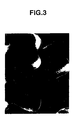
- the obtained black colored particles were identified to be layered rock salt-type lithium-cobalt oxide particles having an average particle size of 3.5 ⁇ m, as shown in Fig. 2. Further, it was confirmed that the lithium-cobalt oxide particles had a uniform particle size, as shown in a scanning electron microphotograph (x 8,000) of Fig. 3.
- Example 2 The same procedure as defined in Example 1 was conducted to form a working electrode as cathode, anode, reference electrode and electrolyte.
- the thus-produced working electrode as cathode, anode, reference electrode and electrolyte were used to form a cell for electrochemical measurement.
- the charge/discharge characteristic curve thereof was determined under such conditions that the voltage applied was 3.0 to 4.2 V based on the reference metal lithium electrode and the current was 0.5 mA/cm 2 .
- the charge/discharge electric capacity of the cell as an index showing an electrochemical activity of the lithium-cobalt oxide was 137 mAh/g.
- Example 10 The same procedure as defined in Example 9 was conducted except that the particle size, the water content, the molding density, the calcination temperature and the calcination time were varied as shown in Table 3, thereby obtaining particles as reaction products.
- the reaction conditions used for the production of these particles and properties of the obtained particles are also shown in Table 3. All of the particles obtained in Examples 10 to 13 were identified to be lithium-cobalt oxide having the same crystal structure as that of layered rock salt-type lithium-cobalt oxide.
- the particles obtained in Comparative Examples 5 to 6 were a mixture of layered rock salt-type lithium-cobalt oxide and cobalt oxide.
- the particles obtained Comparative Examples 7 and 8 showed a non-uniform particle size distribution though these particles had the same crystal structure as that of layered rock salt-type lithium-cobalt oxide.
- the charge/discharge electric capacities of the obtained particles were measured in the same manner as in Example 9. The results are also shown in Table 3. As recognized from Table 3, the charge/discharge electric capacities of cells formed by using the lithium-cobalt oxide particles obtained in Examples 10 to 13 were larger than those of Comparative Examples 5 and 8. Accordingly, it was confirmed that the lithium-cobalt oxide produced according to the present invention exhibited a high electrochemical activity.
- Cobalt oxide hydroxide was calcined at various heating temperatures T1 as shown in Table 4, thereby obtaining raw cobalt oxide particles which were different in BET specific surface area thereof from each other, as shown in Table 4.
- T1 heating temperatures
- Table 4 the same procedure as defined in Example 9 was conducted except that the water content, the molding density, the heating temperature and the heating time of the molded product were varied as shown in Table 4, thereby obtaining particles as reaction products. Reaction conditions used for the production of these particles and properties of the obtained particles are also shown in Table 4.
- the particles obtained in Comparative Examples 9 and 10 were a mixture of layered rock salt-type lithium-cobalt oxide and cobalt oxide.
- the particles obtained Comparative Examples 11 and 12 showed a non-uniform particle size distribution though these particles had the same crystal structure as that of layered rock salt-type lithium-cobalt oxide.
- the charge/discharge electric capacities of cells formed by using the obtained particles were measured in the same manner as in Example 9. The results are also shown in Table 4. As recognized from Table 4, the charge/discharge electric capacities of cells formed by using the lithium-cobalt oxide particles obtained in Examples 14 to 16 were larger than those of Comparative Examples 9 to 12. Accordingly, it was confirmed that the lithium-cobalt oxide produced according to the present invention exhibited a high electrochemical activity.
- Cobalt sulfate heptahydrate was dissolved in 2,000 ml of water to obtain an aqueous solution thereof.
- 2,500 ml of a 0.756M-NaOH aqueous solution was added to the aqueous cobalt sulfate solution to obtain a suspension containing cobalt (II) hydroxide.
- the suspension was heated up to 80°C while mechanically stirring. While keeping the temperature of the suspension constant, air was passed through the suspension to oxidize cobalt (II) hydroxide for 20 hours.
- the obtained precipitate was filtered out of the suspension, washed with water and dried at 60°C to obtain black colored particles.
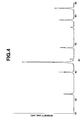
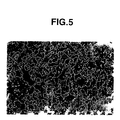
- the obtained black colored particles were identified to be cobalt oxide having a spinel-type crystal structure, as recognized from X-ray diffraction characteristic curve shown in Fig. 4. From the transmission electron microscope photograph shown in Fig. 5, it was further recognized that the cobalt oxide particles were uniform in particle size and had an average particle size of about 0.03 ⁇ m.
- Example 12 the same procedure as defined in Example 17 was conducted except that the reaction conditions were varied as shown in Table 5, and the oxidation of cobalt hydroxide in the suspension was conducted by using oxidants such as hydrogen peroxide or nitride ions instead of passing air through the suspension, thereby obtaining particles as reaction products.
- the reaction conditions used for the production of these particles and properties of the obtained particles are also shown in Table 5.
Landscapes
- Chemical & Material Sciences (AREA)
- Engineering & Computer Science (AREA)
- Organic Chemistry (AREA)
- Inorganic Chemistry (AREA)
- General Chemical & Material Sciences (AREA)
- Chemical Kinetics & Catalysis (AREA)
- Electrochemistry (AREA)
- Materials Engineering (AREA)
- Nanotechnology (AREA)
- Manufacturing & Machinery (AREA)
- Physics & Mathematics (AREA)
- Composite Materials (AREA)
- Condensed Matter Physics & Semiconductors (AREA)
- General Physics & Mathematics (AREA)
- Crystallography & Structural Chemistry (AREA)
- Battery Electrode And Active Subsutance (AREA)
- Inorganic Compounds Of Heavy Metals (AREA)
Abstract
Description


| Concentration ratio R of alkali to cobalt | Concentration of excess NaOH (M) | Heating temperature (°C) | Reaction product | Average particle size (µm) | |
| Example 18 | 1.05 | 0.02 | 60 | Co3O4 | 0.02 |
| Example 19 | 1.05 | 0.02 | 85 | Co3O4 | 0.04 |
| Example 20 | 1.05 | 0.02 | 90 | Co304 | 0.05 |
| Example 21 | 0.02 | 0.008 | 90 | Co3O4 | 0.08 |
| Example 22 | 1.15 | 0.06 | 90 | Co3O4 | 0.04 |
| Comparative Example 9 | 1.05 | 0.02 | 50 | Co3O4+ CoO(OH) | - |
| Comparative Example 10 | 2.00 | 0.4 | 80 | Co3O4 + CoO(OH) | - |
| Comparative Example 11 | 5.00 | 1.6 | 80 | CoO(OH) | - |
| Comparative Example 12 | 1.02 | 0.008 | 90 | CoO(OH) | - |
| Comparative Example 13 | 1.05 | 0.02 | 80 | Co(OH)2 | - |
| Cobalt oxide particles used | Molar ratio Li/Co | Calcining temperature (°C) | Calcining time (hr.) | Reaction product | |
| Example 23 | Particles obtained in Example 18 | 1.01 | 750 | 6.0 | LiCoO2 |
| Example 24 | Particles obtained in Example 19 | 1.01 | 750 | 6.0 | LiCoO2 |
| Example 25 | Particles obtained in Example 20 | 1.01 | 750 | 6.0 | LiCoO2 |
| Example 26 | Particles obtained in Example 21 | 1.01 | 750 | 6.0 | LiCoO2 |
| Example 27 | Particles obtained in Example 22 | 1.01 | 750 | 6.0 | LiCoO2 |
| Comparative Example 14 | Particles obtained in Comparative Example 9 | 1.01 | 750 | 6.0 | LiCoO2 + Co3O4 |
| Comparative Example 15 | Particles obtained in Comparative Example 10 | 1.01 | 750 | 6.0 | LiCoO2 + Co3O4 |
| Comparative Example 16 | Particles obtained in Comparative Example 11 | 1.01 | 750 | 6.0 | LiCoO2 + Co3O4 |
| Comparative Example 17 | Particles obtained in Comparative Example 12 | 1.01 | 750 | 6.0 | LiCoO2 + Co3O4 |
| Comparative Example 18 | Particles obtained in Comparative Example 13 | 1.01 | 750 | 6.0 | LiCoO2 + Co3O4 |
Claims (11)
- A process for producing lithium-cobalt oxide, comprising:(a) mixing cobalt oxide having a BET specific surface area of from 30 to 200 m2/g or an average particle size of not more than 0.1 µm, with a lithium compound; and(b) calcining the obtained mixture at a temperature of from 500 to 850°C.
- A process according to claim 1, wherein water is added to the mixture of step (a) in an amount of from 1 to 30 % by weight based on the weight of said mixture; said water-added mixture is compression-molded to form a molded product having a molding density of not less than 1.5 g/cm3; and said molded product is calcined at a temperature of from 600 to 850°C.
- A process according to claim 1 or 2, wherein the molding density of said molded product is not more than 5 g/cm3.
- A process according to any one of the preceding claims, wherein the cobalt oxide of step (a) is produced by calcining cobalt oxide hydroxide particles at a temperature of from 300 to 500°C.
- A process according to any one of the preceding claims, wherein the calcining time of said cobalt oxide hydroxide particles is from 15 minutes to 2 hours.
- A process according to any one of claims 1 to 3, wherein the cobalt oxide of step (a) is produced by: (I) neutralizing an aqueous cobalt salt solution with an excess of an aqueous alkaline solution to form thereby a cobalt hydroxide suspension having a concentration ratio of alkali to cobalt (R = [OH-]/2[Co2+]) of from 1.0 to 1.2 and an alkali concentration of not more than 1.0 M; and (II) passing a molecular oxygen-containing gas through the cobalt hydroxide suspension while heating said suspension at a temperature of not less than 60°C.
- A process according to claim 6, wherein the heating temperature of said suspension is 70 to 100°C.
- A process according to any one of the preceding claims, wherein the mixing ratio of cobalt oxide to the lithium compound in step (a) is from 0.98 : 1 to 1.05 : 1, calculated as a molar ratio of cobalt to lithium.
- A process according to any one of the preceding claims, wherein the calcining time of step (b) is from 2 to 10 hours.
- A process according to any one of the preceding claims, wherein the lithium compound of step (a) is at least one of lithium carbonate, lithium oxide, lithium hydroxide and lithium hydroxide hydrate.
- A process according to any one of the preceding claims, further comprising using the resulting lithium-cobalt oxide to prepare a cathode for use in a lithium ion battery.
Applications Claiming Priority (9)
| Application Number | Priority Date | Filing Date | Title |
|---|---|---|---|
| JP91503/97 | 1997-03-25 | ||
| JP9150397 | 1997-03-25 | ||
| JP9150297 | 1997-03-25 | ||
| JP9150397 | 1997-03-25 | ||
| JP9150297 | 1997-03-25 | ||
| JP91502/97 | 1997-03-25 | ||
| JP25415797 | 1997-09-02 | ||
| JP254157/97 | 1997-09-02 | ||
| JP25415797 | 1997-09-02 |
Publications (2)
| Publication Number | Publication Date |
|---|---|
| EP0867408A1 true EP0867408A1 (en) | 1998-09-30 |
| EP0867408B1 EP0867408B1 (en) | 2002-06-05 |
Family
ID=27306762
Family Applications (1)
| Application Number | Title | Priority Date | Filing Date |
|---|---|---|---|
| EP98302155A Expired - Lifetime EP0867408B1 (en) | 1997-03-25 | 1998-03-23 | Process for producing lithium-cobalt oxide |
Country Status (3)
| Country | Link |
|---|---|
| US (1) | US6103213A (en) |
| EP (1) | EP0867408B1 (en) |
| DE (1) | DE69805689T2 (en) |
Cited By (5)
| Publication number | Priority date | Publication date | Assignee | Title |
|---|---|---|---|---|
| EP1041041A1 (en) * | 1999-03-31 | 2000-10-04 | Toda Kogyo Corp. | Layered rock salt-type oxide particle powder and process for producing the same |
| EP1211741A3 (en) * | 2000-11-29 | 2004-01-02 | Toda Kogyo Corporation | Cathode active material for non-aqueous electrolyte secondary cell and process for producing the same |
| WO2004099082A1 (en) * | 2003-05-06 | 2004-11-18 | Inco Limited | Low temperature lithiation of cobalt, nickel and manganese containing hydroxides using a wet process |
| US7166391B2 (en) | 2000-11-15 | 2007-01-23 | Matsushita Electric Industrial Co., Ltd. | Cobalt compound for use in alkaline storage battery, method for manufacturing the same, and positive electrode plate of alkaline storage battery employing the same |
| CN106199451A (en) * | 2016-08-24 | 2016-12-07 | 合肥国轩高科动力能源有限公司 | A method for testing the optimal compaction density of lithium iron phosphate cathode sheet for lithium ion battery |
Families Citing this family (15)
| Publication number | Priority date | Publication date | Assignee | Title |
|---|---|---|---|---|
| US6749648B1 (en) * | 2000-06-19 | 2004-06-15 | Nanagram Corporation | Lithium metal oxides |
| JP2896510B1 (en) * | 1998-03-13 | 1999-05-31 | 工業技術院長 | Method for producing layered rock salt type lithium cobalt oxide by hydrothermal oxidation method |
| BR0016078B1 (en) * | 1999-12-01 | 2014-04-01 | Sasol Tech Pty Ltd | PROCESS FOR PREPARING A FISCHER-TROPSCH COBALT CATALYST PRECURSOR. |
| US6737035B1 (en) * | 2000-08-31 | 2004-05-18 | Osram Sylvania Inc. | Heterogenite material for making submicron cobalt powders |
| AU2003266620A1 (en) * | 2002-09-26 | 2004-04-19 | Seimi Chemical Co., Ltd. | Positive electrode active substance for lithium secondary battery and process for producing the same |
| JP4412936B2 (en) * | 2003-07-31 | 2010-02-10 | パナソニック株式会社 | Cobalt oxyhydroxide, method for producing the same, and alkaline storage battery using the same |
| JP3746499B2 (en) * | 2003-08-22 | 2006-02-15 | 三星エスディアイ株式会社 | Negative electrode active material for lithium secondary battery, method for producing the same, and lithium secondary battery |
| US20050074672A1 (en) * | 2003-10-01 | 2005-04-07 | Keiko Matsubara | Negative active material for rechargeable lithium battery, method of preparing same and rechargeable lithium battery using same |
| EP3432392B1 (en) * | 2003-12-31 | 2023-03-29 | LG Energy Solution, Ltd. | Electrode active material powder with size dependent composition and method to prepare the same |
| US10076737B2 (en) * | 2013-05-06 | 2018-09-18 | Liang-Yuh Chen | Method for preparing a material of a battery cell |
| US20160099482A1 (en) * | 2014-10-07 | 2016-04-07 | Intermolecular, Inc. | Solid-State Batteries with Improved Electrode Conductivity and Methods for Forming the Same |
| RU2638316C1 (en) * | 2016-07-25 | 2017-12-13 | Федеральное государственное бюджетное учреждение науки "Институт химии твердого тела Уральского Отделения Российской Академии наук" | Method of producing cathode material for lithium-ion batteries |
| KR102217302B1 (en) * | 2018-11-30 | 2021-02-18 | 주식회사 포스코 | Positive electrode additive material for rechargeable lithium battery, method of preparing the same, positive electrode including the same and rechargeable lithium battery including the same |
| IT202100000704A1 (en) | 2021-01-15 | 2022-07-15 | Milano Politecnico | SURFACE FLUORINATION WITH ELEMENTAL FLUORIN OF LITHIUM METAL USED AS ANODE IN LITHIUM METAL BATTERIES |
| WO2024215357A1 (en) * | 2023-04-13 | 2024-10-17 | Sylvatex, Inc. | Method for the manufacture of lithium metal oxides and phosphates |
Citations (4)
| Publication number | Priority date | Publication date | Assignee | Title |
|---|---|---|---|---|
| US2545424A (en) * | 1946-12-02 | 1951-03-13 | Metalloy Corp | Lithium cobaltite |
| JPH07220723A (en) * | 1994-02-07 | 1995-08-18 | Sumitomo Chem Co Ltd | Method for producing lithium cobalt oxide and lithium secondary battery |
| JPH07262995A (en) * | 1994-03-17 | 1995-10-13 | Nippon Chem Ind Co Ltd | Lithium cobaltate-based positive electrode active material for lithium secondary battery and method for producing the same |
| EP0735004A1 (en) * | 1995-03-28 | 1996-10-02 | MERCK PATENT GmbH | Process for the preparation of lithium intercalation compounds |
Family Cites Families (12)
| Publication number | Priority date | Publication date | Assignee | Title |
|---|---|---|---|---|
| US4049027A (en) * | 1976-08-26 | 1977-09-20 | Yardney Electric Corporation | Active material for pressed nickel electrodes |
| DE3222143A1 (en) * | 1982-06-11 | 1983-12-15 | Basf Ag, 6700 Ludwigshafen | CARBON CATALYSTS CONTAINING COBALT, THEIR PRODUCTION AND USE |
| DE4137860A1 (en) * | 1991-11-16 | 1993-05-19 | Merck Patent Gmbh | INTERFERENCE PIGMENTS |
| CA2096386A1 (en) * | 1992-05-18 | 1993-11-19 | Masahiro Kamauchi | Lithium secondary battery |
| US5523182A (en) * | 1992-11-12 | 1996-06-04 | Ovonic Battery Company, Inc. | Enhanced nickel hydroxide positive electrode materials for alkaline rechargeable electrochemical cells |
| US5378560A (en) * | 1993-01-21 | 1995-01-03 | Fuji Photo Film Co., Ltd. | Nonaqueous secondary battery |
| US5618640A (en) * | 1993-10-22 | 1997-04-08 | Fuji Photo Film Co., Ltd. | Nonaqueous secondary battery |
| US5503930A (en) * | 1994-03-07 | 1996-04-02 | Tdk Corporation | Layer structure oxide |
| JPH07263028A (en) * | 1994-03-25 | 1995-10-13 | Fuji Photo Film Co Ltd | Nonaqueous secondary battery |
| KR0131166B1 (en) * | 1994-05-04 | 1998-04-11 | 최차용 | How to make protein in cell-free system |
| US5707756A (en) * | 1994-11-29 | 1998-01-13 | Fuji Photo Film Co., Ltd. | Non-aqueous secondary battery |
| US5686203A (en) * | 1994-12-01 | 1997-11-11 | Fuji Photo Film Co., Ltd. | Non-aqueous secondary battery |
-
1998
- 1998-03-23 EP EP98302155A patent/EP0867408B1/en not_active Expired - Lifetime
- 1998-03-23 DE DE69805689T patent/DE69805689T2/en not_active Expired - Fee Related
- 1998-03-23 US US09/045,542 patent/US6103213A/en not_active Expired - Lifetime
Patent Citations (4)
| Publication number | Priority date | Publication date | Assignee | Title |
|---|---|---|---|---|
| US2545424A (en) * | 1946-12-02 | 1951-03-13 | Metalloy Corp | Lithium cobaltite |
| JPH07220723A (en) * | 1994-02-07 | 1995-08-18 | Sumitomo Chem Co Ltd | Method for producing lithium cobalt oxide and lithium secondary battery |
| JPH07262995A (en) * | 1994-03-17 | 1995-10-13 | Nippon Chem Ind Co Ltd | Lithium cobaltate-based positive electrode active material for lithium secondary battery and method for producing the same |
| EP0735004A1 (en) * | 1995-03-28 | 1996-10-02 | MERCK PATENT GmbH | Process for the preparation of lithium intercalation compounds |
Non-Patent Citations (2)
| Title |
|---|
| PATENT ABSTRACTS OF JAPAN vol. 095, no. 011 26 December 1995 (1995-12-26) * |
| PATENT ABSTRACTS OF JAPAN vol. 096, no. 002 29 February 1996 (1996-02-29) * |
Cited By (8)
| Publication number | Priority date | Publication date | Assignee | Title |
|---|---|---|---|---|
| EP1041041A1 (en) * | 1999-03-31 | 2000-10-04 | Toda Kogyo Corp. | Layered rock salt-type oxide particle powder and process for producing the same |
| US7166391B2 (en) | 2000-11-15 | 2007-01-23 | Matsushita Electric Industrial Co., Ltd. | Cobalt compound for use in alkaline storage battery, method for manufacturing the same, and positive electrode plate of alkaline storage battery employing the same |
| EP1211741A3 (en) * | 2000-11-29 | 2004-01-02 | Toda Kogyo Corporation | Cathode active material for non-aqueous electrolyte secondary cell and process for producing the same |
| US6756154B2 (en) | 2000-11-29 | 2004-06-29 | Toda Kogyo Corporation | Cathode active material for non-aqueous electrolyte secondary cell and process for producing the same |
| WO2004099082A1 (en) * | 2003-05-06 | 2004-11-18 | Inco Limited | Low temperature lithiation of cobalt, nickel and manganese containing hydroxides using a wet process |
| US7033555B2 (en) | 2003-05-06 | 2006-04-25 | Inco Limited | Low temperature lithiation of mixed hydroxides |
| CN106199451A (en) * | 2016-08-24 | 2016-12-07 | 合肥国轩高科动力能源有限公司 | A method for testing the optimal compaction density of lithium iron phosphate cathode sheet for lithium ion battery |
| CN106199451B (en) * | 2016-08-24 | 2018-09-18 | 合肥国轩高科动力能源有限公司 | A method for testing the optimal compaction density of lithium iron phosphate cathode sheet for lithium ion battery |
Also Published As
| Publication number | Publication date |
|---|---|
| EP0867408B1 (en) | 2002-06-05 |
| US6103213A (en) | 2000-08-15 |
| DE69805689T2 (en) | 2003-01-30 |
| DE69805689D1 (en) | 2002-07-11 |
Similar Documents
| Publication | Publication Date | Title |
|---|---|---|
| EP0867408B1 (en) | Process for producing lithium-cobalt oxide | |
| EP0918041B1 (en) | Lithium/nickel/cobalt composite oxide, process for preparing the same, and cathode active material for rechargeable battery | |
| EP1281673B1 (en) | Cathode active material made of cobalt-oxide particles for non-aqueous electrolyte secondary cell and process for producing the same, and non-aqueous electrolyte secondary cell | |
| Santhanam et al. | High rate cycling performance of Li1. 05Ni1/3Co1/3Mn1/3O2 materials prepared by sol–gel and co-precipitation methods for lithium-ion batteries | |
| CA2173261C (en) | Lithium-manganese oxide electrode for a rechargeable lithium battery | |
| EP3678236B1 (en) | Positive electrode active material for lithium secondary batteries, positive electrode for lithium secondary batteries, and lithium secondary battery | |
| US5700442A (en) | Insertion compounds based on manganese oxide usable as the positive electrode active material in a lithium battery | |
| KR100587580B1 (en) | Active material for positive electrode of lithium secondary battery | |
| JP2003292308A (en) | Lithium iron-phosphorus composite oxide carbon composite, method for producing the same, positive electrode active material for lithium secondary battery, and lithium secondary battery | |
| JPWO2002086993A1 (en) | Positive electrode active material and method for producing the same, positive electrode for non-aqueous electrolyte secondary battery, and non-aqueous electrolyte secondary battery | |
| JP2003292309A (en) | Lithium iron-phosphorus composite oxide carbon composite, method for producing the same, positive electrode active material for lithium secondary battery, and lithium secondary battery | |
| Sun et al. | Synthesis and electrochemical characteristics of spinel phase LiMn2O4-based cathode materials for lithium polymer batteries | |
| US7270797B2 (en) | Process for producing positive electrode active material for lithium secondary battery | |
| EP1207574A1 (en) | Positive active material for non-aqueous electrolyte secondary battery and non-aqueous electrolyte secondary battery comprising same | |
| JPH08306360A (en) | Method for producing positive electrode active material for non-aqueous battery | |
| EP1009056B1 (en) | Non-aqueous electrolyte secondary battery | |
| Shin et al. | Synthesis of Li [Ni0. 475Co0. 05Mn0. 475] O2 cathode materials via a carbonate process | |
| JP3030764B2 (en) | Spinel-type lithium manganese oxide, method for producing the same, and use thereof | |
| KR100639060B1 (en) | Method for preparing spinel type lithium manganate | |
| JP2001332258A (en) | Multiple oxide electrode material, method for producing the same, and battery using the same | |
| EP0986115B1 (en) | Electrode for non-aqueous electrolytic cells | |
| Kim et al. | Nanocomposite manganese oxides for rechargeable lithium batteries | |
| EP1211741A2 (en) | Cathode active material for non-aqueous electrolyte secondary cell and process for producing the same | |
| KR100668051B1 (en) | Manganese Oxide Using Coprecipitation Method, Lithium Secondary Battery Spinel Type Cathode Active Material Using the Same and Manufacturing Method Thereof | |
| JP3908829B2 (en) | Positive electrode active material and non-aqueous secondary battery using the same |
Legal Events
| Date | Code | Title | Description |
|---|---|---|---|
| PUAI | Public reference made under article 153(3) epc to a published international application that has entered the european phase |
Free format text: ORIGINAL CODE: 0009012 |
|
| AK | Designated contracting states |
Kind code of ref document: A1 Designated state(s): DE FR GB NL |
|
| AX | Request for extension of the european patent |
Free format text: AL;LT;LV;MK;RO;SI |
|
| 17P | Request for examination filed |
Effective date: 19980820 |
|
| AKX | Designation fees paid |
Free format text: DE FR GB NL |
|
| 17Q | First examination report despatched |
Effective date: 20000210 |
|
| GRAG | Despatch of communication of intention to grant |
Free format text: ORIGINAL CODE: EPIDOS AGRA |
|
| RAP1 | Party data changed (applicant data changed or rights of an application transferred) |
Owner name: TODA KOGYO CORPORATION |
|
| GRAG | Despatch of communication of intention to grant |
Free format text: ORIGINAL CODE: EPIDOS AGRA |
|
| GRAH | Despatch of communication of intention to grant a patent |
Free format text: ORIGINAL CODE: EPIDOS IGRA |
|
| GRAH | Despatch of communication of intention to grant a patent |
Free format text: ORIGINAL CODE: EPIDOS IGRA |
|
| GRAA | (expected) grant |
Free format text: ORIGINAL CODE: 0009210 |
|
| AK | Designated contracting states |
Kind code of ref document: B1 Designated state(s): DE FR GB NL |
|
| REG | Reference to a national code |
Ref country code: GB Ref legal event code: FG4D |
|
| REF | Corresponds to: |
Ref document number: 69805689 Country of ref document: DE Date of ref document: 20020711 |
|
| ET | Fr: translation filed | ||
| PLBE | No opposition filed within time limit |
Free format text: ORIGINAL CODE: 0009261 |
|
| STAA | Information on the status of an ep patent application or granted ep patent |
Free format text: STATUS: NO OPPOSITION FILED WITHIN TIME LIMIT |
|
| 26N | No opposition filed |
Effective date: 20030306 |
|
| PGFP | Annual fee paid to national office [announced via postgrant information from national office to epo] |
Ref country code: NL Payment date: 20050303 Year of fee payment: 8 |
|
| PGFP | Annual fee paid to national office [announced via postgrant information from national office to epo] |
Ref country code: FR Payment date: 20050308 Year of fee payment: 8 |
|
| PGFP | Annual fee paid to national office [announced via postgrant information from national office to epo] |
Ref country code: DE Payment date: 20050317 Year of fee payment: 8 |
|
| PGFP | Annual fee paid to national office [announced via postgrant information from national office to epo] |
Ref country code: GB Payment date: 20050323 Year of fee payment: 8 |
|
| PG25 | Lapsed in a contracting state [announced via postgrant information from national office to epo] |
Ref country code: GB Free format text: LAPSE BECAUSE OF NON-PAYMENT OF DUE FEES Effective date: 20060323 |
|
| PG25 | Lapsed in a contracting state [announced via postgrant information from national office to epo] |
Ref country code: NL Free format text: LAPSE BECAUSE OF NON-PAYMENT OF DUE FEES Effective date: 20061001 |
|
| PG25 | Lapsed in a contracting state [announced via postgrant information from national office to epo] |
Ref country code: DE Free format text: LAPSE BECAUSE OF NON-PAYMENT OF DUE FEES Effective date: 20061003 |
|
| GBPC | Gb: european patent ceased through non-payment of renewal fee |
Effective date: 20060323 |
|
| NLV4 | Nl: lapsed or anulled due to non-payment of the annual fee |
Effective date: 20061001 |
|
| REG | Reference to a national code |
Ref country code: FR Ref legal event code: ST Effective date: 20061130 |
|
| PG25 | Lapsed in a contracting state [announced via postgrant information from national office to epo] |
Ref country code: FR Free format text: LAPSE BECAUSE OF NON-PAYMENT OF DUE FEES Effective date: 20060331 |