EP0844557A1 - übersetzen von mit Voraussetzungen versehenen Kodes mit direkter Analyse des mit Voraussetzungen versehenen Kodes - Google Patents
übersetzen von mit Voraussetzungen versehenen Kodes mit direkter Analyse des mit Voraussetzungen versehenen Kodes Download PDFInfo
- Publication number
- EP0844557A1 EP0844557A1 EP97120205A EP97120205A EP0844557A1 EP 0844557 A1 EP0844557 A1 EP 0844557A1 EP 97120205 A EP97120205 A EP 97120205A EP 97120205 A EP97120205 A EP 97120205A EP 0844557 A1 EP0844557 A1 EP 0844557A1
- Authority
- EP
- European Patent Office
- Prior art keywords
- predicate
- code
- predicated code
- predicated
- relations
- Prior art date
- Legal status (The legal status is an assumption and is not a legal conclusion. Google has not performed a legal analysis and makes no representation as to the accuracy of the status listed.)
- Granted
Links
Images









Classifications
-
- G—PHYSICS
- G06—COMPUTING OR CALCULATING; COUNTING
- G06F—ELECTRIC DIGITAL DATA PROCESSING
- G06F8/00—Arrangements for software engineering
- G06F8/40—Transformation of program code
- G06F8/41—Compilation
- G06F8/42—Syntactic analysis
- G06F8/425—Lexical analysis
-
- G—PHYSICS
- G06—COMPUTING OR CALCULATING; COUNTING
- G06F—ELECTRIC DIGITAL DATA PROCESSING
- G06F8/00—Arrangements for software engineering
- G06F8/40—Transformation of program code
- G06F8/41—Compilation
- G06F8/43—Checking; Contextual analysis
- G06F8/433—Dependency analysis; Data or control flow analysis
-
- G—PHYSICS
- G06—COMPUTING OR CALCULATING; COUNTING
- G06F—ELECTRIC DIGITAL DATA PROCESSING
- G06F8/00—Arrangements for software engineering
- G06F8/40—Transformation of program code
- G06F8/41—Compilation
- G06F8/43—Checking; Contextual analysis
- G06F8/436—Semantic checking
-
- G—PHYSICS
- G06—COMPUTING OR CALCULATING; COUNTING
- G06F—ELECTRIC DIGITAL DATA PROCESSING
- G06F8/00—Arrangements for software engineering
- G06F8/40—Transformation of program code
- G06F8/41—Compilation
- G06F8/44—Encoding
- G06F8/441—Register allocation; Assignment of physical memory space to logical memory space
Definitions
- the present invention pertains to programming language compilers for computer systems. More particularly, this invention relates to a compiler for compiling a predicated code with direct analysis of the predicated code.
- a computer system typically includes one or more processors that are also known as central processing units (CPUs) or microprocessors.
- the processor typically executes instructions of software programs to perform a variety of tasks in the computer system.
- the instructions of the software programs are in machine language form (i.e., binary form) because the processor can only understand and interpret machine language.
- the machine language instructions are referred to as machine code or object code below.
- source programming languages such as C and Fortran
- C and Fortran high level source programming languages
- Such a source programming language software program is referred to as source code.
- the source code needs to be converted or translated into the machine code by a compiler program before being executed by the processor.
- the earlier prior art processors are typically single instruction single data (SISD) processors.
- a SISD processor typically receives a single instruction stream and a single data stream.
- the SISD processor sequentially executes each instruction, acting on data in a single storage area.
- This SISD processor architecture presents an obstacle to achieving high processing throughput.
- ILP instruction-level parallel
- the basic unit of computation (for which scheduling and synchronization decisions are made) is a processor instruction, such as an individual add, multiply, load, or store operation.
- Non-interdependent instructions are loaded and executed in parallel.
- instruction scheduling or synchronization decisions need not be made during program execution. Some decisions can be made during program compilation. For example, if the compiler can prove that two operations are independent (i.e., neither requires the result of the other as input), the operations can be executed in parallel.
- branch operations typically limit the scheduling scope of the code with respect to the instruction-level parallelism.
- the branch operations are referred to as branches.
- each processor operation is guarded by a boolean-valued source operand.
- the value of the operand determines whether the operation is executed or nullified.
- This architectural model is referred to as predicated execution and the boolean-valued source operand is referred to as predicate.
- the main features of the predicated execution are a predicate guarding each operation and a set of compare-to-predicate operations used to compute predicates.
- the predicated execution typically eliminates many branches completely and generalizes the rules for moving code among basic blocks. It is quite often that an entire acyclic control flow subgraph can be converted into a single, branch-free block of code.
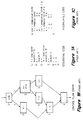
- FIG. 1A shows the conventional code for a program represented in Figure 1B.
- Figure 1C shows the predicated code converted from the conventional code of Figure 1A.
- explicit branches that control execution are replaced with guarding predicates on operations, together with compare-to-predicate operations that compute the appropriate predicate values. All non-branch instructions are predicated with the predicates during if-conversion. The result is a single, branch-free block of predicated code.
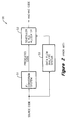
- FIG. 2 shows a conventional compiler 50 for compiling the predicated code.
- the compiler 50 includes an if-conversion system 51, a scheduler and register allocator 52, and a data flow analysis system 53.
- the data flow analysis system 53 only analyzes the data dependency of the original code and does not incorporate information about relations between predicates of the predicated code into its data flow analysis.
- Figure 3 shows a conservative schedule of the code in Figure 1C, generated by the compiler of Figure 2.
- Figure 3 illustrates the drawback of using the conventional approach to compiling the predicated code.
- One of the features of the present invention is to optimize compilation of a predicated code.
- Another feature of the present invention is to improve run-time performance of a predicated code.
- Another feature of the present invention is to provide a compiler which exploits predicate relations of a predicated code when compiling the predicated code.
- a further feature of the present invention is to provide a predicate query system for a predicated code compiler that stores predicate relations of the predicated code such that the compiler can use the predicate relations to perform other data flow analysis on the predicated code such as is required by scheduling, allocation, and optimization.
- the compiler includes a data flow analysis system that manipulates and queries predicate expressions of the predicated code to analyze data flow properties of the predicated code.
- the predicate-sensitive analyzer includes a predicate query system to store local and global predicate relations of the predicated code and to answer queries about the local and global predicate relations.
- Figure 4A illustrates a computer system 100 that includes a processor 102 that supports predicated execution.
- the main features of the predicated execution are an additional boolean operand and a set of compare-to-predicate operations for computing predicates.
- the processor 102 includes a set of predicate registers (not shown in Figure 4A) to store the predicates.
- the predicate register file is connected to the ALU (Arithmetic and Logic Unit) (also not shown in Figure 4A) of the processor 102 as the instruction format extension.
- Each register of the predicate register file stores a predicate input (i.e., predicate) that is used to guard the execution of an operation or instruction.
- Such an operation is referred to as a predicated operation.
- the predicate for an operation has the value of one (i.e., true)
- the operation executes normally.
- the predicate has the value of zero (i.e., false)
- the execution of the operation is nullified. This means that no change in the machine state takes place.
- the instruction set of the processor 102 includes compare-to-predicate operations.
- the compare-to-predicate operations compute the predicates and write the computation result into the predicate registers of the predicate register file.
- Each of the compare-to-predicate operations can write into two predicate registers.
- processor 102 may support other execution forms for the compare-to-predicate operations.
- the predicated execution requires that the conventional code run on the processor 102 be if-converted into the predicated code (e.g., the predicated code of Figure 1C). This means that each instruction of the code is predicated with a predicate and a set of compare-to-predicate instructions are added to compute the predicates. Because the if-conversion process only needs the unconditional and parallel-or actions to compute the predicates, the following description is mainly concerned with those two actions.
- the predicates computed by the unconditional actions are useful for instructions that execute based on a single condition.
- the predicates computed by the parallel-or actions are useful when execution of a block can be enabled by multiple conditions.
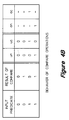
- Figure 4B is a table that shows the execution behavior of the unconditional and parallel-or actions in both normal and complement modes. Each entry describes the result on the destination predicate. It is to be noted that the destination may be assigned a value or may be left unchanged (denoted as - ). As can be seen from the table in Figure 4B, an unconditional compare operation always writes a value into its destination register. Thus, although the input predicate appears as a guarding predicate for the compare operation, it should be viewed as an input operand to the compare operation.
- the computer system 100 can be a personal computer, a notebook computer, a palmtop computer, a workstation, a mainframe computer, or a super computer.
- the computer system 100 can be other type of computer system.
- the computer system 100 can be a network server or a video conferencing system.
- the processor 102 is coupled to a bus 101.
- a memory 104 is also provided in the computer system 100.
- the memory 104 is connected to the bus 101 and typically stores information and instructions to be executed by the processor 102.
- the memory 104 can be implemented by various types of memories.
- the memory 104 can be implemented by a RAM (Random Access Memory) and/or a nonvolatile memory.
- the memory 104 can be implemented by a combination of a RAM, a ROM (Read Only Memory), and/or an electrically erasable and programmable nonvolatile memory.
- the computer system 100 also includes a mass storage device 107 that stores programs, data, and other information.
- the programs are executed by the processor 102 and need to be downloaded to the memory 104 before being executed by the processor 102.
- a display 121 is coupled to the bus 101 for displaying information to a user of the computer system 100.
- a keyboard or keypad input device 122 is connected to the bus 101.
- An additional input device of the computer system 100 is a cursor control device 123, such as a mouse, a trackball, a trackpad, or a cursor direction key.
- Another device which may also be included in the computer system 100 is a hard copy device 124.
- the hard copy device 124 is used in the computer system 100 to print text and/or image information on a medium such as paper, film, or similar types of media.
- the computer system 100 also includes other peripheral devices 126. These other devices 126 may include a floppy disk drive, a digital signal processor, a scanner, a LAN (Local Area Network) or WAN (Wide Area Network) controller, a digital signal processor, a MODEM (modulation/demodulation), and/or a CD-ROM drive. In addition, the computer system 100 may function without some of the above described components. Although Figure 4A shows some of the basic components of the computer system 100, it is neither meant to be limiting nor to exclude other components or combinations of components in the computer system 100.
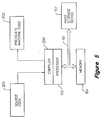
- the computer system 100 also includes a programming language compiler 200 (shown in Figure 5).
- the compiler 200 is run on the processor 102 to compile a source code 201 into a predicated machine code 202.
- the predicated machine code 202 is then stored in the mass storage device 107.
- the predicated machine code 202 is brought into the memory 104 by the processor 102.
- the compiler 200 can be any kind of compiler program.
- the compiler 200 when the source code 201 is written in Fortran programming language, the compiler 200 is a Fortran compiler.
- the compiler 200 is a C programming language compiler.
- the compiler 200 first converts the source code 201 (e.g., the source code of Figure 1A) into the predicated code (e.g., the predicated code of Figure 1C). To generate high quality predicated machine code for the processor 102 that supports predicated execution, the compiler 200 must incorporate information about relations between predicates of the predicated code into its data flow analysis prior to scheduling and allocation of the predicated code.
- the compiler 200 performs a predicate-sensitive data flow analysis to the predicated code being compiled.
- the predicate-sensitive data flow analysis performed by the compiler 200 manipulates and queries predicate expressions of the predicated code to (1) analyze data flow properties of the predicated code and (2) annotate the analyzed data flow properties into the predicated code.
- the predicate-sensitive analysis is performed directly on the predicated code so that no correspondence to the original control flow is required (i.e., the analysis does not rely on the original source code).
- the analysis is performed by an analyzer of the compiler 200 in accordance with one embodiment of the present invention.
- the data flow properties are properties that pertain to the flow of values between operations Operations are executed conditionally according to control flow and predicated execution.
- One example is flow dependency analysis, which determines if a value produced by one operation is consumed by a subsequent operation.
- the predicated code may still include branch instructions between predicated code blocks.
- the predicate-sensitive data flow analysis can accommodate the presence of conditional executions due to branching.
- the compiler 200 analyzes the compare-to-predicate operations or instructions in the predicated code to determine relations between the predicates. As described above, these operations or instructions are used to compute the predicates.
- the relations include such concepts as the disjointness of two predicates or the relation that a predicate p is subset of another predicate q (i.e., q is true whenever p is true). These relations are then captured in a unique data structure (i.e., a partition graph).
- the unique data structure is then used to represent and manipulate predicate expressions (i.e., symbolic boolean expressions) that represent executions for which each data flow property holds.
- the structure of the compiler 200 is shown in more detail in Figures 6 through 19, which will be described in more detail below.
- Figure 6 is a block diagram that shows the compiler 200 of Figure 5 in more detail.
- the compiler 200 includes an if-conversion system 210 coupled to a front end 209 of the compiler 200.
- the compiler 200 also includes a predicated code analysis system 220 coupled to the if-conversion system 210 and a scheduler and register allocator 230 coupled to the predicated code analysis system 220.
- the front end 209 performs known functions and can be implemented by any known front end of a compiler.
- the if-conversion system 210 can also be implemented by any known if-conversion system of a compiler that supports the execution form of the processor 102 of Figure 4A.
- the scheduler and register allocator 230 can be implemented by any known scheduler and register allocator of a compiler that is capable of performing ILP scheduling.
- the front end 209 receives the source code 201 ( Figure 5) and converts the source code 201 to an intermediate code which is then applied to the if-conversion system 210.
- the if-conversion system 210 converts the intermediate code to the predicated intermediate code (i.e., the predicated code) in a known way.
- the intermediate predicated code is then processed by the predicated code analysis system 220.
- the predicated code analysis system 220 processes the predicated intermediate code to extract the predicate relations from the code. This is because the if-conversion system 210 introduces the predicate relations when converting the source code into the predicated code.
- the predicated code analysis system 220 uses the extracted predicate relations to analyze data dependency (i.e., scheduling constraints or precedence constraints) of the code and to annotate the analyzed data dependency into the code.
- data dependency i.e., scheduling constraints or precedence constraints
- the predicated code analysis system 220 exploits relations between predicates to accurately generate precedence edges (i.e., scheduling constraints) which are critical to ILP scheduling.
- the code then becomes an annotated predicated intermediate code with the precedence edges annotated into the code.
- the annotated predicated intermediate code is then applied to the scheduler and register allocator 230 for ILP scheduling and register allocation.
- the scheduler and register allocator 230 performs the ILP scheduling and allocation function in a known way.
- the predicated code analysis system 220 can be directly applied with a predicated machine code via a disassembler (not shown). Such a system can be used, for example, to reschedule predicated machine code for a different computer system having a different processor. This process is known as object code translation.
- the predicated code analysis system 220 is directly connected to the if-conversion system 210 to receive the predicated intermediate code.
- the predicated code analysis system 220 then provides direct analysis to the predicated intermediate code so that no correspondence to the original control flow is required. As described above, this allows (1) the scheduling constraints (i.e., data dependency) of the predicated code to be annotated into the code prior to scheduling and register allocation of the code and (2) the analysis not to rely on the control flow of the original source code. In other words, the analysis does not need to know the original source code and how the predicated code is generated.
- Figure 7 shows in more detail the predicated code analysis system 220 of Figure 6.
- the predicated code analysis system 220 includes a scanner 301, a builder 303, a predicate query system 304, and a data flow analysis subsystem 302.
- the scanner 301 is connected to receive the predicated intermediate code from the if-conversion system 210 ( Figure 6).
- the scanner 301 is then connected to the data flow analysis system 302 which is then connected to the scheduler and register allocator 230.
- the builder 303 is also connected to the scanner 301.
- the predicate query system 304 is connected to the builder 303 and to the data flow analysis subsystem 302.
- each of the elements 301 through 304 of the predicated code analysis system 220 is implemented by software means.
- each or some of the elements 301-304 of the predicated code analysis system 220 can be implemented by hardware or firmware means.
- the scanner 301 is used to extract local relations between predicates in the code.
- the predicate relations of a predicated code include the local relations and global relations.
- the local relations refer to the relations between predicates that are read or written by a single compare-to-predicate operation. In other words, the local relations come from the cmpp operations.
- the global relations refer to all other relations.
- the scanner 301 To extract the local relations, the scanner 301 first translates the predicated code into a sequential static single assignment form, which simplifies subsequent processing. The scanner 301 then processes this form to discover local relations between predicates.
- Figure 8 shows the process of the scanner 301, which will be described in more detail below.
- the process starts at step 330.
- the scanner 301 of Figure 7 receives the predicated intermediate code.
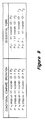
- the scanner 301 converts the code into a single-target sequential form. This translation replaces unconditional and parallel-or operations in the code with a read-modify-write sequential version.
- Figure 9 shows a table that illustrates the single-target sequential form.
- the destination predicate value is a boolean function of the predicate input value and the compare condition. The scanner 301 can perform this translation function using the known technique.
- the scanner 301 converts the code into a static single assignment (SSA) form.
- the scanner 301 renames the variables in the code so that each variable can be individually identified at different phases. For example, if a variable t is defined several times in the code, the scanner 301 renames the variable t for each definition (i.e., t1, t2, t3, etc.). This technique is referred to as value numbering. To perform a simple value numbering, a counter is associated with each variable. The counter is incremented at every definition of the variable and is used as a subscript at subsequent uses of the variable.
- SSA static single assignment
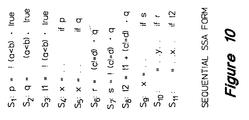
- the scanner 301 normalize the compare conditions of the predicated code in the sequential SSA form, with input operands being lexicographically ordered. For example, the normalized compare condition of (a ⁇ b) is !(a ⁇ b). Here, ! means not. Normalization and value numbering allow other relations, such as complement, equality, and implication to be detected with a single hash function.
- the scanner 301 then sends the normalized predicated code in the sequential static single assignment form to the data flow analysis subsystem 302 ( Figure 7).
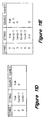
- Figure 10 shows the converted and normalized sequential SSA form of the predicated code of Figure 1C. As can be seen from Figure 10, t1 and p are equivalent predicates. During the initial analysis of the predicated code, such equivalences can be detected and mapped to a single symbolic predicate.
- the scanner 301 Given a sequence of predicated operations of the code in sequential static single assignment form, the scanner 301 then scans the operations in order. As compare operations are processed, partition relations associated with the predicate symbols of the compare operands are emitted. This is done by the scanner 301 at step 335.
- a hash table records the mapping between predicate names in the source and predicate symbols allocated during this phase. Integers numbered from 1 are used as node names. Initially, the hash table contains the true predicate mapped to 1. Compare operations are processed in order, and the hash table is updated to keep track of the mappings from compare expressions to symbolic name and from symbolic names to predicate registers. At each compare operation, the right-hand side is reduced by normalizing the compare condition and replacing predicate operands with their symbolic name.
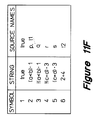
- the scanner 301 scans the code in the SSA form by running a lookup _ AND _ string routine, a scan _ ops routine, and a lookup _ OR _ string routine.
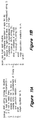
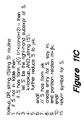
- Figures 11A through 11C show these routines for scanning a predicate block to extract local relations. Alternatively, these routines can be written in other forms.
- the main routine is the scan _ ops , which iterates over compare-to-predicate operations in the predicate block. As each compare operation is visited, the right-hand side compare operation and guarding predicate is normalized into a string that serves as a hash key.
- the lookup _ AND _ string and lookup _ OR _ string routines process keys from unconditional and or-style compare-to-predicate operations, respectively. Both routines return a symbolic name corresponding to the predicate variable computed by the compare operation. In both cases, if a name for the computation does not already exist in the hash table, an entry is created. As a result of adding entries to the hash table, new partition relations may be generated.
- the scanner 301 sends the extracted local relations to the builder 303.
- Q and Q R
- the builder 303 determines the global relations by building a partition graph with the local relations extracted from the code and then completing the partition graph.
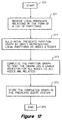
- Figure 12 shows the process of the builder 303 to build and complete the partition graph.
- the process starts at step 370.
- the builder 303 receives the local relations that are in the form of a list of partitions.
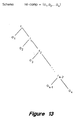
- the builder 303 builds an initial partition graph 400 by simply representing the local relations as nodes and edges.
- Q, Q R
- S, and T2 P+R.
- the initial partition graph 400 is not a complete graph because not all nodes are reachable from the root. In particular, node T2 is not reachable from the root. This is because nodes corresponding to unconstructed control regions, whose partitions come from or-style comparisons, will not initially be reachable.
- the builder 303 completes the initial partition graph. To complete the initial partition graph, additional partitions consistent with existing partitions need to be synthesized so that all nodes are reachable from the root. The builder 303 completes the partition graph by running a routine shown below.
- the builder 303 completes the initial partition graph 400 of Figure 14A into the complete partition graph 410 of Figure 14B.
- the builder 303 can determine by examining the initial partition graph 400 of Figure 14A that although the node T2 is not reachable from the node 1, its successors P and R (through Q) are reachable from the node 1. Also, the builder 303 can determine that the node 1 itself is the lowest common ancestor of P and R.
- the relative complement of T2 with respect to 1 i.e., 1-T2
- (1-R)-P The relative complement of a node N with respect to an ancestor M is found by collecting the union of siblings of nodes along any path from M to N.
- the predicate query system 304 interfaces the data flow analysis subsystem 302.
- the predicate query system 304 stores the completed partition graph received from the builder 303 and uses the partition graph to answer queries from the data flow analysis subsystem 302.
- the data flow analysis subsystem 302 analyzes the predicated code in the SSA form to determine data flow properties of the code. In other words, the data flow analysis subsystem 302 computes (1) data dependencies of the code, (2) up and down exposed definitions and uses, and (3) live range and interference information during register allocation.
- the data flow analysis subsystem 302 When analyzing the data flow of the code, the data flow analysis subsystem 302 generates queries about the predicate relations of the code by sending the corresponding query commands to the predicate query system 304.
- the predicate query system 304 then runs the corresponding query routines to determine if each of the predicate relation queries is true or false.
- Figures 15A through 15J show various query routines for the predicate query system 304. Alternatively, these query routines can be implemented in other forms. After running the query routines, the predicate query system 304 informs the data flow analysis subsystem 302 whether each of the queries is true or false.
- the subsystem 302 needs to know if the predicate p is disjoint from or subset of the predicate q. In this case, the subsystem 302 generates the is _ disjoint (p, q) and is _ subset (p, q) query commands to the predicate query system 304. The predicate query system 304 then runs the corresponding query routines to determine if each of the queries is true or false.
- the query commands from the data flow analysis subsystem 302 includes the following.
- predicate expressions are symbols denoting execution sets for individual predicates, and they are represented explicitly by nodes in the partition graph.
- query routines restrict predicate expressions to disjunctions of individual symbols, known as 1-disjunctive normal form (1-dnf).
- Such expressions can be stored either as a list of symbols or as a bitvector having one bit per symbol (i.e., one bit per node in the partition graph).
- Figure 15A shows the query routine for testing disjointness between a pair of symbols and Figure 15B shows the query routine for testing disjointness between a symbol and a predicate expression (in reduced 1-dnf form).
- the false expression ⁇ false is simply an empty list of predicate symbols.
- the true expression ⁇ true is the list containing 1, the root of the partition graph. The routines attempt to show disjointness between two symbols P and Q by finding a partition such that P and Q are contained in disjoint parts. If no such partition exists, P and Q are assumed to intersect.
- Figures 15C and 15D show the query routines for testing the subset relations.
- Execution set P is a subset of Q if there is a reverse path from node P to node Q in the partition graph.
- the subset relations is analogous to dominance and post-dominance, but is insensitive to temporal ordering of the predicate computations.
- Figures 15E and 15F show the routines for summing a single symbol into a predicate expression.
- the sum _ reduce routine is performed when the new symbol to be added to an expression is a subset of a symbol already being contained in the expression. In this case, the new symbol is added and the resulting expression is recursively reduced.
- Figures 15G through 15J show the routines for subtracting a symbol P from a predicate expression.
- approximation is required.
- Q-P can be computed by replacing Q with the relative complement of P with respect to Q, which can always be represented by a 1-dnf expression. This is done by the approx _ diff routine ( Figure 15H).
- P intersects Q in the expression but is neither a subset or superset then approximation is required to represent the set difference, which is done by the rel _ cmpl routine ( Figure 15I). Any superset of the set difference is a valid approximation.
- the relative complement of P with respect to the lowest-common ancestor of P and Q can be approximated by the find _ lca routine of Figure 15J.
- the data flow analysis subsystem 302 performs a predicate-sensitive bitvector analysis to compute whether a property holds for a set of executions at every point in a control flow graph (i.e., at a point within an execution set). Each variable maps to a particular position within all bitvectors. Each vector position is extended to hold a predicate expression instead of a single bit.
- an operation generates a property under a predicate p, then the property holds for all executions in P at that point, and so set P is added to the execution set at that point. If an operation kills a property under predicate q, then Q is subtracted from the execution set at that point.
- the notion of testing a property at a point of the control flow graph is extended to testing whether the property holds at a point in some subset of executions.
- the predicate-sensitive bitvector analysis includes a flow analysis and a liveness analysis.
- the flow analysis is used for scheduling and the liveness analysis is used for register allocation.
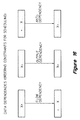
- Figure 16 shows various types of flow dependencies between two instructions.
- a variable x is live at a point of the control flow graph if there is a path containing no definition of x from that point to a use of x.
- the difference between the flow analysis and the liveness analysis is that the flow analysis is forward-propagated throughout the control flow graph while the liveness analysis is backward-propagated throughout the control flow graph.
- predicate-sensitive liveness analysis a vector of predicate expressions having one position for each variable in the code is used.
- Each predicate expression represents the set of executions in which the corresponding variable is live at that point.
- the predicate expressions are updated as each operation is visited in reverse order.
- E - is used to denote an expression just prior to the operation
- E + is used to denote an expression just after the operation.
- y interferes with x if x is live under predicate r, i.e., if E + / x ⁇ R ⁇ 0. Interference is tested using the is _ disjoint routine.
- the !disj represents the complement of the is _ disjoint routine.
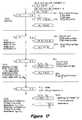
- Figure 17 is an example that shows the process of the predicate-sensitive bitvector analysis performed by the data flow analysis subsystem 302 of Figure 7 on a portion of the code of Figure 10.
- Figure 17 only shows the analysis process for the variable x of the code of Figure 10 for the sake of simplicity and clarity.
- TEST functions that are corresponding to each operation. These functions manipulate the data flow information at that point in the program. These functions represent the affect of the operation on the data flow values. Each operation also has an associated TEST function for sampling the data flow values at that point in the program. In dependence analysis, a data dependence edge is created when the TEST function returns true.
- a data vector and a use vector are provided for variable x.
- the two vectors are initially set to false because the analysis is performed in the forward order.
- the vectors can be initially set to true.
- the GEN, KILL, and TEST processing functions are applied to the operations (i.e., the operations S 4 , S 5 , S 9 , and S 11 ) for ordinary definitions and uses.. Within each operation, the definitions are processed before the uses.
- the GEN, KILL, and TEST functions are applied.
- the KILL processing determines that all definition vector positions in the data vector remain false.
- the GEN processing performed for the S 4 vector position determines that the data vector position for S 4 (i.e., D[S 4 ]) is equal to P.
- the new result is then written into the data vector position for S 4 .
- the GEN, KILL, and TEST rules are applied to the respective vector positions of the data vector only.
- the KILL processing determines that the data vector position for S 4 (i.e., D[S 4 ]) is P and the data vector position for each of S 5 and S 9 remains false.
- the GEN processing determines that the data vector position for S 5 becomes Q.
- the TEST processing determines that there is no dependency between the S 4 and S 5 operations. The data and use vectors are then updated.
- the KILL processing determines D[S 4 ] is P, D[S 5 ] is R, and D[S 9 ] remains false.
- the GEN processing determines that the data vector position for S 9 becomes S.
- the TEST processing determines that there is no dependency between the S 4 and S 9 operations.
- the TEST processing also determines that there exists an output dependency between the S 5 and S 9 operations.
- the data and use vectors are then updated.
- operations S 11 is a use operation for variable x, there will be no KILL processing.
- the GEN processing determines that the use vector position for S 11 is T2.
- the TEST processing determines that there is a flow dependency between the S 4 and S 11 operations and between the S 5 and S 11 operations.
- the TEST processing also determines that there is no dependency between the S 9 and S 11 operations.
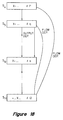
- the data dependencies are then annotated back into the code, thus obtaining an annotated control flow graph for the variable x (see Figure 18).
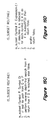
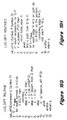
- the annotated code can then be scheduled and register allocated by the scheduler 230 ( Figure 7) and Figure 19 shows the scheduled code of the code of Figure 10.
Landscapes
- Engineering & Computer Science (AREA)
- General Engineering & Computer Science (AREA)
- Theoretical Computer Science (AREA)
- Software Systems (AREA)
- Physics & Mathematics (AREA)
- General Physics & Mathematics (AREA)
- Computational Linguistics (AREA)
- Devices For Executing Special Programs (AREA)
Applications Claiming Priority (2)
| Application Number | Priority Date | Filing Date | Title |
|---|---|---|---|
| US756423 | 1996-11-26 | ||
| US08/756,423 US5920716A (en) | 1996-11-26 | 1996-11-26 | Compiling a predicated code with direct analysis of the predicated code |
Publications (2)
| Publication Number | Publication Date |
|---|---|
| EP0844557A1 true EP0844557A1 (de) | 1998-05-27 |
| EP0844557B1 EP0844557B1 (de) | 2004-02-04 |
Family
ID=25043410
Family Applications (1)
| Application Number | Title | Priority Date | Filing Date |
|---|---|---|---|
| EP97120205A Expired - Lifetime EP0844557B1 (de) | 1996-11-26 | 1997-11-18 | Kompilieren von prädikatiertem Code mit direkter Analyse desselben |
Country Status (4)
| Country | Link |
|---|---|
| US (1) | US5920716A (de) |
| EP (1) | EP0844557B1 (de) |
| JP (1) | JP4105264B2 (de) |
| DE (1) | DE69727453T2 (de) |
Cited By (2)
| Publication number | Priority date | Publication date | Assignee | Title |
|---|---|---|---|---|
| WO2004097633A3 (en) * | 2003-04-25 | 2006-01-05 | Intel Corp | Method and apparatus for recovering data values in dynamic runtime systems |
| US9182955B1 (en) | 2014-06-06 | 2015-11-10 | Microsoft Technology Licensing, Llc | Data-dependent control flow reduction |
Families Citing this family (56)
| Publication number | Priority date | Publication date | Assignee | Title |
|---|---|---|---|---|
| JP3234552B2 (ja) * | 1997-09-30 | 2001-12-04 | 松下電器産業株式会社 | 最適化装置及びコンピュータ読取可能な記録媒体 |
| US6128774A (en) * | 1997-10-28 | 2000-10-03 | Necula; George C. | Safe to execute verification of software |
| US6249910B1 (en) * | 1998-05-04 | 2001-06-19 | Hewlett-Packard Company | Apparatus and method for incrementally update static single assignment form for cloned variable name definitions |
| JP2000222218A (ja) * | 1999-02-01 | 2000-08-11 | Fujitsu Ltd | コンパイル装置および記録媒体 |
| US6505345B1 (en) * | 2000-01-18 | 2003-01-07 | Intel Corporation | Optimization of initialization of parallel compare predicates in a computer system |
| US6637026B1 (en) * | 2000-03-01 | 2003-10-21 | Intel Corporation | Instruction reducing predicate copy |
| JP3651774B2 (ja) * | 2000-09-12 | 2005-05-25 | インターナショナル・ビジネス・マシーンズ・コーポレーション | コンパイラ及びそのレジスタ割付方法 |
| US20030023959A1 (en) * | 2001-02-07 | 2003-01-30 | Park Joseph C.H. | General and efficient method for transforming predicated execution to static speculation |
| JP3612294B2 (ja) * | 2001-08-06 | 2005-01-19 | 松下電器産業株式会社 | デバッグ方法およびデバッグ装置 |
| US6983275B2 (en) * | 2002-04-16 | 2006-01-03 | International Business Machines Corporation | Optimizing database query by generating, determining the type of derived predicate based on monotonicity of the column generating expression for each remaining inequality predicate in the list of unexamined predicates |
| US7089542B2 (en) * | 2002-12-13 | 2006-08-08 | International Business Machines Corporation | Method and apparatus for finding errors in software programs using satisfiability of constraints |
| US7275149B1 (en) * | 2003-03-25 | 2007-09-25 | Verisilicon Holdings (Cayman Islands) Co. Ltd. | System and method for evaluating and efficiently executing conditional instructions |
| US7802076B2 (en) * | 2004-06-24 | 2010-09-21 | Intel Corporation | Method and apparatus to vectorize multiple input instructions |
| US7673296B2 (en) * | 2004-07-28 | 2010-03-02 | Hewlett-Packard Development Company, L.P. | Method and system for optional code scheduling |
| US20060247907A1 (en) * | 2005-04-29 | 2006-11-02 | Microsoft Corporation | Deciding assertions in programs with references |
| US20070025420A1 (en) * | 2005-05-16 | 2007-02-01 | University Of Victoria Innovation And Development Corporation | Transmission and detection in ultrawide band communications |
| US20060277456A1 (en) * | 2005-06-07 | 2006-12-07 | International Business Machines Corporation | Method for handling annotations |
| CN1908895B (zh) * | 2005-08-02 | 2010-05-05 | 国际商业机器公司 | 验证应用程序全球化问题的系统和方法 |
| US8091079B2 (en) * | 2007-08-29 | 2012-01-03 | International Business Machines Corporation | Implementing shadow versioning to improve data dependence analysis for instruction scheduling |
| US20100050132A1 (en) * | 2007-09-11 | 2010-02-25 | Daniel Shia | System and GUI for specifying composite predicates and dynamic systems |
| US8181167B2 (en) * | 2008-01-09 | 2012-05-15 | Kan Zhao | Method and system for presenting and analyzing software source code through intermediate representation |
| US9262140B2 (en) * | 2008-05-19 | 2016-02-16 | International Business Machines Corporation | Predication supporting code generation by indicating path associations of symmetrically placed write instructions |
| US8327339B2 (en) * | 2008-06-30 | 2012-12-04 | Oracle America, Inc. | Method and system for fast static taint analysis |
| US8676841B2 (en) | 2008-08-29 | 2014-03-18 | Oracle International Corporation | Detection of recurring non-occurrences of events using pattern matching |
| US20100153928A1 (en) * | 2008-12-16 | 2010-06-17 | Microsoft Corporation | Developing and Maintaining High Performance Network Services |
| US8935293B2 (en) | 2009-03-02 | 2015-01-13 | Oracle International Corporation | Framework for dynamically generating tuple and page classes |
| CA2675680C (en) * | 2009-08-27 | 2013-05-14 | Ibm Canada Limited - Ibm Canada Limitee | Generating object code that uses calculated contents for a variable determined from a predicate |
| US8959106B2 (en) * | 2009-12-28 | 2015-02-17 | Oracle International Corporation | Class loading using java data cartridges |
| US9305057B2 (en) | 2009-12-28 | 2016-04-05 | Oracle International Corporation | Extensible indexing framework using data cartridges |
| US9430494B2 (en) | 2009-12-28 | 2016-08-30 | Oracle International Corporation | Spatial data cartridge for event processing systems |
| CA2691851A1 (en) * | 2010-02-04 | 2011-08-04 | Ibm Canada Limited - Ibm Canada Limitee | Control flow analysis using deductive reaching definitions |
| US8516229B2 (en) * | 2010-02-05 | 2013-08-20 | International Business Machines Corporation | Two pass test case generation using self-modifying instruction replacement |
| US8713049B2 (en) | 2010-09-17 | 2014-04-29 | Oracle International Corporation | Support for a parameterized query/view in complex event processing |
| US9177017B2 (en) * | 2010-09-27 | 2015-11-03 | Microsoft Technology Licensing, Llc | Query constraint encoding with type-based state machine |
| US20120084537A1 (en) * | 2010-09-30 | 2012-04-05 | International Business Machines Corporation | System and method for execution based filtering of instructions of a processor to manage dynamic code optimization |
| US9189280B2 (en) | 2010-11-18 | 2015-11-17 | Oracle International Corporation | Tracking large numbers of moving objects in an event processing system |
| US8990416B2 (en) | 2011-05-06 | 2015-03-24 | Oracle International Corporation | Support for a new insert stream (ISTREAM) operation in complex event processing (CEP) |
| US9329975B2 (en) | 2011-07-07 | 2016-05-03 | Oracle International Corporation | Continuous query language (CQL) debugger in complex event processing (CEP) |
| US9805095B2 (en) | 2012-09-28 | 2017-10-31 | Oracle International Corporation | State initialization for continuous queries over archived views |
| US9563663B2 (en) | 2012-09-28 | 2017-02-07 | Oracle International Corporation | Fast path evaluation of Boolean predicates |
| US8732674B1 (en) * | 2012-11-14 | 2014-05-20 | Microsoft Corporation | Revertable managed execution image instrumentation |
| US10956422B2 (en) | 2012-12-05 | 2021-03-23 | Oracle International Corporation | Integrating event processing with map-reduce |
| US9098587B2 (en) | 2013-01-15 | 2015-08-04 | Oracle International Corporation | Variable duration non-event pattern matching |
| US10298444B2 (en) | 2013-01-15 | 2019-05-21 | Oracle International Corporation | Variable duration windows on continuous data streams |
| US9390135B2 (en) | 2013-02-19 | 2016-07-12 | Oracle International Corporation | Executing continuous event processing (CEP) queries in parallel |
| US9047249B2 (en) | 2013-02-19 | 2015-06-02 | Oracle International Corporation | Handling faults in a continuous event processing (CEP) system |
| US9418113B2 (en) | 2013-05-30 | 2016-08-16 | Oracle International Corporation | Value based windows on relations in continuous data streams |
| US9507594B2 (en) * | 2013-07-02 | 2016-11-29 | Intel Corporation | Method and system of compiling program code into predicated instructions for execution on a processor without a program counter |
| US9934279B2 (en) | 2013-12-05 | 2018-04-03 | Oracle International Corporation | Pattern matching across multiple input data streams |
| US9244978B2 (en) | 2014-06-11 | 2016-01-26 | Oracle International Corporation | Custom partitioning of a data stream |
| US9712645B2 (en) | 2014-06-26 | 2017-07-18 | Oracle International Corporation | Embedded event processing |
| US9886486B2 (en) | 2014-09-24 | 2018-02-06 | Oracle International Corporation | Enriching events with dynamically typed big data for event processing |
| US10120907B2 (en) | 2014-09-24 | 2018-11-06 | Oracle International Corporation | Scaling event processing using distributed flows and map-reduce operations |
| US10521209B2 (en) * | 2015-05-12 | 2019-12-31 | Phase Change Software Llc | Machine-based normalization of machine instructions |
| US9916164B2 (en) * | 2015-06-11 | 2018-03-13 | Intel Corporation | Methods and apparatus to optimize instructions for execution by a processor |
| WO2017018901A1 (en) | 2015-07-24 | 2017-02-02 | Oracle International Corporation | Visually exploring and analyzing event streams |
Family Cites Families (11)
| Publication number | Priority date | Publication date | Assignee | Title |
|---|---|---|---|---|
| JPH06507990A (ja) * | 1991-05-24 | 1994-09-08 | ブリティッシュ・テクノロジー・グループ・ユーエスエイ・インコーポレーテッド | コンピュータのための最適化コンパイラ |
| US5293631A (en) * | 1991-08-06 | 1994-03-08 | Hewlett-Packard Company | Analysis and optimization of array variables in compiler for instruction level parallel processor |
| EP0582738A1 (de) * | 1992-08-12 | 1994-02-16 | International Business Machines Corporation | Kompiler |
| US5367651A (en) * | 1992-11-30 | 1994-11-22 | Intel Corporation | Integrated register allocation, instruction scheduling, instruction reduction and loop unrolling |
| JPH06324881A (ja) * | 1993-05-18 | 1994-11-25 | Fujitsu Ltd | メモリデータの重なり判定機能を備えたコンパイラ装置 |
| US5627981A (en) * | 1994-07-01 | 1997-05-06 | Digital Equipment Corporation | Software mechanism for accurately handling exceptions generated by instructions scheduled speculatively due to branch elimination |
| US5694539A (en) * | 1994-08-10 | 1997-12-02 | Intrinsa Corporation | Computer process resource modelling method and apparatus |
| US5768592A (en) * | 1994-09-27 | 1998-06-16 | Intel Corporation | Method and apparatus for managing profile data |
| US5664135A (en) * | 1994-09-28 | 1997-09-02 | Hewlett-Packard Company | Apparatus and method for reducing delays due to branches |
| US5802373A (en) * | 1996-01-29 | 1998-09-01 | Digital Equipment Corporation | Method for providing a pipeline interpreter for a variable length instruction set |
| US5748936A (en) * | 1996-05-30 | 1998-05-05 | Hewlett-Packard Company | Method and system for supporting speculative execution using a speculative look-aside table |
-
1996
- 1996-11-26 US US08/756,423 patent/US5920716A/en not_active Expired - Lifetime
-
1997
- 1997-11-18 DE DE1997627453 patent/DE69727453T2/de not_active Expired - Lifetime
- 1997-11-18 EP EP97120205A patent/EP0844557B1/de not_active Expired - Lifetime
- 1997-11-21 JP JP32082397A patent/JP4105264B2/ja not_active Expired - Fee Related
Non-Patent Citations (6)
| Title |
|---|
| A. E. EICHENBERGER ET AL: "Register Allocation for Predicated Code", PROCEEDINGS OF THE 28TH ANNUAL IEEE/ACM INTERNATIONAL SYMPOSIUM ON MICROARCHITECTURE (MICRO-28), 29 November 1995 (1995-11-29) - 1 December 1995 (1995-12-01), ANN ARBOR, MI, US, pages 180 - 191, XP000585359 * |
| D. M. GILLIES ET AL: "Global Predicate Analysis and its Application to Register Allocation", PROCEEDINGS OF THE 29TH ANNUAL IEEE/ACM INTERNATIONAL SYMPOSIUM ON MICROARCHITECTURE (MICRO-29), 2 December 1996 (1996-12-02) - 4 December 1996 (1996-12-04), PARIS, FR, pages 114 - 125, XP002055131 * |
| J. Z. FANG: "Compiler Algorithms on If-Conversion, Speculative Predicates Assignment and Predicated Code Optimizations", LANGUAGES AND COMPILERS FOR PARALLEL COMPUTING - 9TH INTERNATIONL WORKSHOP, LCPC '96 - PROCEEDINGS, August 1996 (1996-08-01), SAN JOSE, CA, US, pages 135 - 153, XP002055133 * |
| M. SCHLANSKER ET AL: "Parallelization of Control Recurrences for ILP Processors", INTERNATIONAL JOURNAL OF PARALLEL PROGRAMMING, vol. 24, no. 1, February 1996 (1996-02-01), NEW YORK, US, pages 65 - 102, XP000582801 * |
| R. JOHNSON ET AL: "Analysis Techniques for Predicated Code", PROCEEDINGS OF THE 29TH ANNUAL IEEE/ACM INTERNATIONAL SYMPOSIUM ON MICROARCHITECTURE (MICRO-29), 2 December 1996 (1996-12-02) - 4 December 1996 (1996-12-04), PARIS, FR, pages 100 - 113, XP002055130 * |
| W.-M. W. HWU ET AL: "Compiler Technology for Future Microprocessors", PROCEEDINGS OF THE IEEE, vol. 83, no. 12, December 1995 (1995-12-01), NEW YORK, US, pages 1625 - 1639, XP000550379 * |
Cited By (6)
| Publication number | Priority date | Publication date | Assignee | Title |
|---|---|---|---|---|
| WO2004097633A3 (en) * | 2003-04-25 | 2006-01-05 | Intel Corp | Method and apparatus for recovering data values in dynamic runtime systems |
| US7308682B2 (en) | 2003-04-25 | 2007-12-11 | Intel Corporation | Method and apparatus for recovering data values in dynamic runtime systems |
| US9182955B1 (en) | 2014-06-06 | 2015-11-10 | Microsoft Technology Licensing, Llc | Data-dependent control flow reduction |
| WO2015188026A1 (en) * | 2014-06-06 | 2015-12-10 | Microsoft Technology Licensing, Llc | Data-dependent control flow reduction |
| CN106462432A (zh) * | 2014-06-06 | 2017-02-22 | 微软技术许可有限责任公司 | 数据相关控制流简化 |
| CN106462432B (zh) * | 2014-06-06 | 2019-07-26 | 微软技术许可有限责任公司 | 用于数据相关控制流简化的方法 |
Also Published As
| Publication number | Publication date |
|---|---|
| US5920716A (en) | 1999-07-06 |
| DE69727453T2 (de) | 2005-01-13 |
| EP0844557B1 (de) | 2004-02-04 |
| JP4105264B2 (ja) | 2008-06-25 |
| JPH10187463A (ja) | 1998-07-21 |
| DE69727453D1 (de) | 2004-03-11 |
Similar Documents
| Publication | Publication Date | Title |
|---|---|---|
| US5920716A (en) | Compiling a predicated code with direct analysis of the predicated code | |
| US5161216A (en) | Interprocedural slicing of computer programs using dependence graphs | |
| US6662354B1 (en) | Determining destinations of a dynamic branch | |
| US6226789B1 (en) | Method and apparatus for data flow analysis | |
| US6199095B1 (en) | System and method for achieving object method transparency in a multi-code execution environment | |
| Johnson et al. | Analysis techniques for predicated code | |
| US6535903B2 (en) | Method and apparatus for maintaining translated routine stack in a binary translation environment | |
| US6014518A (en) | Terminating polymorphic type inference program analysis | |
| US6131189A (en) | System and method to efficiently represent aliases and indirect memory operations in static single assignment form during compilation | |
| US6128775A (en) | Method, system, and computer program product for performing register promotion via load and store placement optimization within an optimizing compiler | |
| US6588009B1 (en) | Method and apparatus for compiling source code using symbolic execution | |
| US6072952A (en) | Method and apparatus for coalescing variables | |
| US20080178149A1 (en) | Inferencing types of variables in a dynamically typed language | |
| US20070226700A1 (en) | Dynamic incremental compiler and method | |
| US20080216061A1 (en) | Inferring Function Calls In An Ambiguous Language Computer Program | |
| US6202202B1 (en) | Pointer analysis by type inference for programs with structured memory objects and potentially inconsistent memory object accesses | |
| KR20000052396A (ko) | 방향성 비사이클 그래프 내의 트리 패턴을 정합함으로써최적화 코드를 리타겟팅하는 프로그래밍 방법 및 장치 | |
| Chambers et al. | Whole-program optimization of object-oriented languages | |
| CN102483700A (zh) | 基于动态二进制重写器架构的轻量级服务 | |
| US6072950A (en) | Pointer analysis by type inference combined with a non-pointer analysis | |
| EP1107115A2 (de) | Verfahren und Gerät zum Kompilierung von Quellkode durch Abflachung von Hierarchien | |
| US7673293B2 (en) | Method and apparatus for generating code for scheduling the execution of binary code | |
| US5884081A (en) | Method and system for synchronizing code with design | |
| Puschner | A tool for high-level language analysis of worst-case execution times | |
| US6820253B1 (en) | Method and system for interprocedural analysis with separate compilation |
Legal Events
| Date | Code | Title | Description |
|---|---|---|---|
| PUAI | Public reference made under article 153(3) epc to a published international application that has entered the european phase |
Free format text: ORIGINAL CODE: 0009012 |
|
| AK | Designated contracting states |
Kind code of ref document: A1 Designated state(s): DE FR GB |
|
| AX | Request for extension of the european patent |
Free format text: AL;LT;LV;MK;RO;SI |
|
| 17P | Request for examination filed |
Effective date: 19980827 |
|
| AKX | Designation fees paid |
Free format text: DE FR GB |
|
| RBV | Designated contracting states (corrected) |
Designated state(s): DE FR GB |
|
| RAP1 | Party data changed (applicant data changed or rights of an application transferred) |
Owner name: HEWLETT-PACKARD COMPANY, A DELAWARE CORPORATION |
|
| 17Q | First examination report despatched |
Effective date: 20020920 |
|
| GRAH | Despatch of communication of intention to grant a patent |
Free format text: ORIGINAL CODE: EPIDOS IGRA |
|
| GRAS | Grant fee paid |
Free format text: ORIGINAL CODE: EPIDOSNIGR3 |
|
| GRAA | (expected) grant |
Free format text: ORIGINAL CODE: 0009210 |
|
| AK | Designated contracting states |
Kind code of ref document: B1 Designated state(s): DE FR GB |
|
| REG | Reference to a national code |
Ref country code: GB Ref legal event code: FG4D |
|
| REF | Corresponds to: |
Ref document number: 69727453 Country of ref document: DE Date of ref document: 20040311 Kind code of ref document: P |
|
| ET | Fr: translation filed | ||
| PLBE | No opposition filed within time limit |
Free format text: ORIGINAL CODE: 0009261 |
|
| STAA | Information on the status of an ep patent application or granted ep patent |
Free format text: STATUS: NO OPPOSITION FILED WITHIN TIME LIMIT |
|
| 26N | No opposition filed |
Effective date: 20041105 |
|
| PGFP | Annual fee paid to national office [announced via postgrant information from national office to epo] |
Ref country code: DE Payment date: 20091127 Year of fee payment: 13 |
|
| PGFP | Annual fee paid to national office [announced via postgrant information from national office to epo] |
Ref country code: GB Payment date: 20091125 Year of fee payment: 13 Ref country code: FR Payment date: 20091201 Year of fee payment: 13 |
|
| GBPC | Gb: european patent ceased through non-payment of renewal fee |
Effective date: 20101118 |
|
| REG | Reference to a national code |
Ref country code: DE Ref legal event code: R119 Ref document number: 69727453 Country of ref document: DE Effective date: 20110601 Ref country code: DE Ref legal event code: R119 Ref document number: 69727453 Country of ref document: DE Effective date: 20110531 |
|
| REG | Reference to a national code |
Ref country code: FR Ref legal event code: ST Effective date: 20110801 |
|
| PG25 | Lapsed in a contracting state [announced via postgrant information from national office to epo] |
Ref country code: DE Free format text: LAPSE BECAUSE OF NON-PAYMENT OF DUE FEES Effective date: 20110531 |
|
| PG25 | Lapsed in a contracting state [announced via postgrant information from national office to epo] |
Ref country code: FR Free format text: LAPSE BECAUSE OF NON-PAYMENT OF DUE FEES Effective date: 20101130 |
|
| PG25 | Lapsed in a contracting state [announced via postgrant information from national office to epo] |
Ref country code: GB Free format text: LAPSE BECAUSE OF NON-PAYMENT OF DUE FEES Effective date: 20101118 |