EP0833645B1 - Antiviral agents - Google Patents
Antiviral agents Download PDFInfo
- Publication number
- EP0833645B1 EP0833645B1 EP96918824A EP96918824A EP0833645B1 EP 0833645 B1 EP0833645 B1 EP 0833645B1 EP 96918824 A EP96918824 A EP 96918824A EP 96918824 A EP96918824 A EP 96918824A EP 0833645 B1 EP0833645 B1 EP 0833645B1
- Authority
- EP
- European Patent Office
- Prior art keywords
- polysaccharide
- antiviral
- spp
- composition according
- red
- Prior art date
- Legal status (The legal status is an assumption and is not a legal conclusion. Google has not performed a legal analysis and makes no representation as to the accuracy of the status listed.)
- Expired - Lifetime
Links
- 239000003443 antiviral agent Substances 0.000 title claims description 13
- 150000004676 glycans Chemical class 0.000 claims description 116
- 229920001282 polysaccharide Polymers 0.000 claims description 116
- 239000005017 polysaccharide Substances 0.000 claims description 116
- 239000000203 mixture Substances 0.000 claims description 43
- 241000700605 Viruses Species 0.000 claims description 41
- 230000000840 anti-viral effect Effects 0.000 claims description 32
- 238000011282 treatment Methods 0.000 claims description 19
- 238000000034 method Methods 0.000 claims description 15
- 241000701085 Human alphaherpesvirus 3 Species 0.000 claims description 11
- 241000700584 Simplexvirus Species 0.000 claims description 11
- 208000036142 Viral infection Diseases 0.000 claims description 10
- 230000010076 replication Effects 0.000 claims description 10
- 230000009385 viral infection Effects 0.000 claims description 10
- 241001302393 Porphyridium sp. Species 0.000 claims description 9
- 239000004480 active ingredient Substances 0.000 claims description 8
- 230000012010 growth Effects 0.000 claims description 8
- 229960004150 aciclovir Drugs 0.000 claims description 6
- MKUXAQIIEYXACX-UHFFFAOYSA-N aciclovir Chemical group N1C(N)=NC(=O)C2=C1N(COCCO)C=N2 MKUXAQIIEYXACX-UHFFFAOYSA-N 0.000 claims description 6
- 230000002401 inhibitory effect Effects 0.000 claims description 6
- 238000004519 manufacturing process Methods 0.000 claims description 6
- 241000206617 Porphyridium aerugineum Species 0.000 claims description 4
- 241000293712 Rhodella reticulata Species 0.000 claims description 4
- 239000000969 carrier Substances 0.000 claims description 4
- 238000002360 preparation method Methods 0.000 claims description 4
- 230000002265 prevention Effects 0.000 claims description 4
- 239000002671 adjuvant Substances 0.000 claims description 3
- 239000003814 drug Substances 0.000 claims description 3
- 239000006071 cream Substances 0.000 claims description 2
- 239000007788 liquid Substances 0.000 claims description 2
- 239000002674 ointment Substances 0.000 claims description 2
- 150000001875 compounds Chemical class 0.000 claims 4
- 229940079593 drug Drugs 0.000 claims 1
- 230000029142 excretion Effects 0.000 claims 1
- 210000004027 cell Anatomy 0.000 description 51
- 241000700588 Human alphaherpesvirus 1 Species 0.000 description 36
- 230000000120 cytopathologic effect Effects 0.000 description 31
- 208000015181 infectious disease Diseases 0.000 description 28
- 230000000694 effects Effects 0.000 description 22
- 210000003501 vero cell Anatomy 0.000 description 22
- 238000011161 development Methods 0.000 description 16
- 238000004113 cell culture Methods 0.000 description 10
- 238000002474 experimental method Methods 0.000 description 10
- 239000000243 solution Substances 0.000 description 10
- 239000013553 cell monolayer Substances 0.000 description 9
- 239000002609 medium Substances 0.000 description 9
- 238000007920 subcutaneous administration Methods 0.000 description 8
- 241000701074 Human alphaherpesvirus 2 Species 0.000 description 7
- 241001465754 Metazoa Species 0.000 description 7
- 238000003556 assay Methods 0.000 description 7
- 239000000679 carrageenan Substances 0.000 description 7
- 229920001525 carrageenan Polymers 0.000 description 7
- 229940113118 carrageenan Drugs 0.000 description 7
- 235000010418 carrageenan Nutrition 0.000 description 7
- LOKCTEFSRHRXRJ-UHFFFAOYSA-I dipotassium trisodium dihydrogen phosphate hydrogen phosphate dichloride Chemical compound P(=O)(O)(O)[O-].[K+].P(=O)(O)([O-])[O-].[Na+].[Na+].[Cl-].[K+].[Cl-].[Na+] LOKCTEFSRHRXRJ-UHFFFAOYSA-I 0.000 description 7
- 239000002953 phosphate buffered saline Substances 0.000 description 7
- 210000002966 serum Anatomy 0.000 description 7
- 208000024891 symptom Diseases 0.000 description 7
- UHVMMEOXYDMDKI-JKYCWFKZSA-L zinc;1-(5-cyanopyridin-2-yl)-3-[(1s,2s)-2-(6-fluoro-2-hydroxy-3-propanoylphenyl)cyclopropyl]urea;diacetate Chemical compound [Zn+2].CC([O-])=O.CC([O-])=O.CCC(=O)C1=CC=C(F)C([C@H]2[C@H](C2)NC(=O)NC=2N=CC(=CC=2)C#N)=C1O UHVMMEOXYDMDKI-JKYCWFKZSA-L 0.000 description 7
- 229920002307 Dextran Polymers 0.000 description 6
- QAOWNCQODCNURD-UHFFFAOYSA-L Sulfate Chemical compound [O-]S([O-])(=O)=O QAOWNCQODCNURD-UHFFFAOYSA-L 0.000 description 6
- 239000012737 fresh medium Substances 0.000 description 6
- 230000005764 inhibitory process Effects 0.000 description 6
- 239000000463 material Substances 0.000 description 6
- 229910021653 sulphate ion Inorganic materials 0.000 description 5
- 241000195493 Cryptophyta Species 0.000 description 4
- SRBFZHDQGSBBOR-IOVATXLUSA-N D-xylopyranose Chemical compound O[C@@H]1COC(O)[C@H](O)[C@H]1O SRBFZHDQGSBBOR-IOVATXLUSA-N 0.000 description 4
- 208000037952 HSV-1 infection Diseases 0.000 description 4
- XEEYBQQBJWHFJM-UHFFFAOYSA-N Iron Chemical compound [Fe] XEEYBQQBJWHFJM-UHFFFAOYSA-N 0.000 description 4
- 230000001413 cellular effect Effects 0.000 description 4
- 231100000433 cytotoxic Toxicity 0.000 description 4
- 230000001472 cytotoxic effect Effects 0.000 description 4
- 239000001963 growth medium Substances 0.000 description 4
- 239000006228 supernatant Substances 0.000 description 4
- 238000012360 testing method Methods 0.000 description 4
- LENZDBCJOHFCAS-UHFFFAOYSA-N tris Chemical compound OCC(N)(CO)CO LENZDBCJOHFCAS-UHFFFAOYSA-N 0.000 description 4
- 241000199914 Dinophyceae Species 0.000 description 3
- WSFSSNUMVMOOMR-UHFFFAOYSA-N Formaldehyde Chemical compound O=C WSFSSNUMVMOOMR-UHFFFAOYSA-N 0.000 description 3
- HTTJABKRGRZYRN-UHFFFAOYSA-N Heparin Chemical compound OC1C(NC(=O)C)C(O)OC(COS(O)(=O)=O)C1OC1C(OS(O)(=O)=O)C(O)C(OC2C(C(OS(O)(=O)=O)C(OC3C(C(O)C(O)C(O3)C(O)=O)OS(O)(=O)=O)C(CO)O2)NS(O)(=O)=O)C(C(O)=O)O1 HTTJABKRGRZYRN-UHFFFAOYSA-N 0.000 description 3
- 241000725303 Human immunodeficiency virus Species 0.000 description 3
- 241000700159 Rattus Species 0.000 description 3
- 244000309466 calf Species 0.000 description 3
- 230000004663 cell proliferation Effects 0.000 description 3
- 239000003795 chemical substances by application Substances 0.000 description 3
- 229920000669 heparin Polymers 0.000 description 3
- 229960002897 heparin Drugs 0.000 description 3
- 238000011534 incubation Methods 0.000 description 3
- 230000002458 infectious effect Effects 0.000 description 3
- 230000003993 interaction Effects 0.000 description 3
- 239000002245 particle Substances 0.000 description 3
- 229920000447 polyanionic polymer Polymers 0.000 description 3
- 238000006748 scratching Methods 0.000 description 3
- 230000002393 scratching effect Effects 0.000 description 3
- 241000894007 species Species 0.000 description 3
- 231100000419 toxicity Toxicity 0.000 description 3
- 230000001988 toxicity Effects 0.000 description 3
- -1 velacyclovir Chemical compound 0.000 description 3
- WQZGKKKJIJFFOK-SVZMEOIVSA-N (+)-Galactose Chemical compound OC[C@H]1OC(O)[C@H](O)[C@@H](O)[C@H]1O WQZGKKKJIJFFOK-SVZMEOIVSA-N 0.000 description 2
- 239000002028 Biomass Substances 0.000 description 2
- 230000005526 G1 to G0 transition Effects 0.000 description 2
- WQZGKKKJIJFFOK-GASJEMHNSA-N Glucose Natural products OC[C@H]1OC(O)[C@H](O)[C@@H](O)[C@@H]1O WQZGKKKJIJFFOK-GASJEMHNSA-N 0.000 description 2
- TWRXJAOTZQYOKJ-UHFFFAOYSA-L Magnesium chloride Chemical compound [Mg+2].[Cl-].[Cl-] TWRXJAOTZQYOKJ-UHFFFAOYSA-L 0.000 description 2
- 241001529936 Murinae Species 0.000 description 2
- 241000283973 Oryctolagus cuniculus Species 0.000 description 2
- 239000012979 RPMI medium Substances 0.000 description 2
- 208000035415 Reinfection Diseases 0.000 description 2
- 206010039491 Sarcoma Diseases 0.000 description 2
- UIIMBOGNXHQVGW-UHFFFAOYSA-M Sodium bicarbonate Chemical compound [Na+].OC([O-])=O UIIMBOGNXHQVGW-UHFFFAOYSA-M 0.000 description 2
- FAPWRFPIFSIZLT-UHFFFAOYSA-M Sodium chloride Chemical compound [Na+].[Cl-] FAPWRFPIFSIZLT-UHFFFAOYSA-M 0.000 description 2
- 229930006000 Sucrose Natural products 0.000 description 2
- CZMRCDWAGMRECN-UGDNZRGBSA-N Sucrose Chemical compound O[C@H]1[C@H](O)[C@@H](CO)O[C@@]1(CO)O[C@@H]1[C@H](O)[C@@H](O)[C@H](O)[C@@H](CO)O1 CZMRCDWAGMRECN-UGDNZRGBSA-N 0.000 description 2
- 239000007983 Tris buffer Substances 0.000 description 2
- PYMYPHUHKUWMLA-UHFFFAOYSA-N arabinose Natural products OCC(O)C(O)C(O)C=O PYMYPHUHKUWMLA-UHFFFAOYSA-N 0.000 description 2
- SRBFZHDQGSBBOR-UHFFFAOYSA-N beta-D-Pyranose-Lyxose Natural products OC1COC(O)C(O)C1O SRBFZHDQGSBBOR-UHFFFAOYSA-N 0.000 description 2
- 238000006065 biodegradation reaction Methods 0.000 description 2
- 230000015572 biosynthetic process Effects 0.000 description 2
- 238000005119 centrifugation Methods 0.000 description 2
- 238000009295 crossflow filtration Methods 0.000 description 2
- 238000010790 dilution Methods 0.000 description 2
- 239000012895 dilution Substances 0.000 description 2
- 239000012154 double-distilled water Substances 0.000 description 2
- 230000002900 effect on cell Effects 0.000 description 2
- 239000000284 extract Substances 0.000 description 2
- 238000000605 extraction Methods 0.000 description 2
- 229960004279 formaldehyde Drugs 0.000 description 2
- 229930182830 galactose Natural products 0.000 description 2
- 239000008103 glucose Substances 0.000 description 2
- XLYOFNOQVPJJNP-ZSJDYOACSA-N heavy water Substances [2H]O[2H] XLYOFNOQVPJJNP-ZSJDYOACSA-N 0.000 description 2
- 239000012535 impurity Substances 0.000 description 2
- 238000000338 in vitro Methods 0.000 description 2
- 238000001727 in vivo Methods 0.000 description 2
- 229910052742 iron Inorganic materials 0.000 description 2
- 239000010410 layer Substances 0.000 description 2
- 208000032839 leukemia Diseases 0.000 description 2
- 238000012986 modification Methods 0.000 description 2
- 230000004048 modification Effects 0.000 description 2
- 239000000546 pharmaceutical excipient Substances 0.000 description 2
- FGIUAXJPYTZDNR-UHFFFAOYSA-N potassium nitrate Chemical compound [K+].[O-][N+]([O-])=O FGIUAXJPYTZDNR-UHFFFAOYSA-N 0.000 description 2
- 230000000241 respiratory effect Effects 0.000 description 2
- 238000013207 serial dilution Methods 0.000 description 2
- 239000011780 sodium chloride Substances 0.000 description 2
- 238000001179 sorption measurement Methods 0.000 description 2
- UCSJYZPVAKXKNQ-HZYVHMACSA-N streptomycin Chemical compound CN[C@H]1[C@H](O)[C@@H](O)[C@H](CO)O[C@H]1O[C@@H]1[C@](C=O)(O)[C@H](C)O[C@H]1O[C@@H]1[C@@H](NC(N)=N)[C@H](O)[C@@H](NC(N)=N)[C@H](O)[C@H]1O UCSJYZPVAKXKNQ-HZYVHMACSA-N 0.000 description 2
- 239000005720 sucrose Substances 0.000 description 2
- 239000000725 suspension Substances 0.000 description 2
- 231100000331 toxic Toxicity 0.000 description 2
- 230000002588 toxic effect Effects 0.000 description 2
- 241001478887 unidentified soil bacteria Species 0.000 description 2
- 230000029812 viral genome replication Effects 0.000 description 2
- 230000003612 virological effect Effects 0.000 description 2
- XJFIPJXYYUYQIC-WNJXEPBRSA-N (2R,3S,4R,5S)-2,3,4,5,6-pentahydroxy-6-methylheptanal Chemical compound CC(C)(O)[C@@H](O)[C@H](O)[C@H](O)[C@@H](O)C=O XJFIPJXYYUYQIC-WNJXEPBRSA-N 0.000 description 1
- 208000030507 AIDS Diseases 0.000 description 1
- 229920001817 Agar Polymers 0.000 description 1
- 241001474374 Blennius Species 0.000 description 1
- UXVMQQNJUSDDNG-UHFFFAOYSA-L Calcium chloride Chemical compound [Cl-].[Cl-].[Ca+2] UXVMQQNJUSDDNG-UHFFFAOYSA-L 0.000 description 1
- 241000867607 Chlorocebus sabaeus Species 0.000 description 1
- 241000206575 Chondrus crispus Species 0.000 description 1
- 229910021580 Cobalt(II) chloride Inorganic materials 0.000 description 1
- 229910021592 Copper(II) chloride Inorganic materials 0.000 description 1
- SHZGCJCMOBCMKK-UHFFFAOYSA-N D-mannomethylose Natural products CC1OC(O)C(O)C(O)C1O SHZGCJCMOBCMKK-UHFFFAOYSA-N 0.000 description 1
- WQZGKKKJIJFFOK-QTVWNMPRSA-N D-mannopyranose Chemical compound OC[C@H]1OC(O)[C@@H](O)[C@@H](O)[C@@H]1O WQZGKKKJIJFFOK-QTVWNMPRSA-N 0.000 description 1
- KCXVZYZYPLLWCC-UHFFFAOYSA-N EDTA Chemical compound OC(=O)CN(CC(O)=O)CCN(CC(O)=O)CC(O)=O KCXVZYZYPLLWCC-UHFFFAOYSA-N 0.000 description 1
- 241000196324 Embryophyta Species 0.000 description 1
- 102000004190 Enzymes Human genes 0.000 description 1
- 108090000790 Enzymes Proteins 0.000 description 1
- 102000018233 Fibroblast Growth Factor Human genes 0.000 description 1
- 108050007372 Fibroblast Growth Factor Proteins 0.000 description 1
- IAJILQKETJEXLJ-UHFFFAOYSA-N Galacturonsaeure Natural products O=CC(O)C(O)C(O)C(O)C(O)=O IAJILQKETJEXLJ-UHFFFAOYSA-N 0.000 description 1
- 241000206672 Gelidium Species 0.000 description 1
- 208000009889 Herpes Simplex Diseases 0.000 description 1
- XQFRJNBWHJMXHO-RRKCRQDMSA-N IDUR Chemical compound C1[C@H](O)[C@@H](CO)O[C@H]1N1C(=O)NC(=O)C(I)=C1 XQFRJNBWHJMXHO-RRKCRQDMSA-N 0.000 description 1
- 241000713196 Influenza B virus Species 0.000 description 1
- 102100034343 Integrase Human genes 0.000 description 1
- 102000014150 Interferons Human genes 0.000 description 1
- 108010050904 Interferons Proteins 0.000 description 1
- 229910021578 Iron(III) chloride Inorganic materials 0.000 description 1
- 239000007836 KH2PO4 Substances 0.000 description 1
- WQZGKKKJIJFFOK-DHVFOXMCSA-N L-galactose Chemical compound OC[C@@H]1OC(O)[C@@H](O)[C@H](O)[C@@H]1O WQZGKKKJIJFFOK-DHVFOXMCSA-N 0.000 description 1
- SHZGCJCMOBCMKK-JFNONXLTSA-N L-rhamnopyranose Chemical compound C[C@@H]1OC(O)[C@H](O)[C@H](O)[C@H]1O SHZGCJCMOBCMKK-JFNONXLTSA-N 0.000 description 1
- PNNNRSAQSRJVSB-UHFFFAOYSA-N L-rhamnose Natural products CC(O)C(O)C(O)C(O)C=O PNNNRSAQSRJVSB-UHFFFAOYSA-N 0.000 description 1
- 241000124008 Mammalia Species 0.000 description 1
- 229910021380 Manganese Chloride Inorganic materials 0.000 description 1
- GLFNIEUTAYBVOC-UHFFFAOYSA-L Manganese chloride Chemical compound Cl[Mn]Cl GLFNIEUTAYBVOC-UHFFFAOYSA-L 0.000 description 1
- 241000711386 Mumps virus Species 0.000 description 1
- 241000699670 Mus sp. Species 0.000 description 1
- 229930193140 Neomycin Natural products 0.000 description 1
- 206010028980 Neoplasm Diseases 0.000 description 1
- 206010067482 No adverse event Diseases 0.000 description 1
- 229930182555 Penicillin Natural products 0.000 description 1
- JGSARLDLIJGVTE-MBNYWOFBSA-N Penicillin G Chemical compound N([C@H]1[C@H]2SC([C@@H](N2C1=O)C(O)=O)(C)C)C(=O)CC1=CC=CC=C1 JGSARLDLIJGVTE-MBNYWOFBSA-N 0.000 description 1
- 239000004698 Polyethylene Substances 0.000 description 1
- 241000206618 Porphyridium Species 0.000 description 1
- 108010092799 RNA-directed DNA polymerase Proteins 0.000 description 1
- 206010038997 Retroviral infections Diseases 0.000 description 1
- OIRDTQYFTABQOQ-UHTZMRCNSA-N Vidarabine Chemical compound C1=NC=2C(N)=NC=NC=2N1[C@@H]1O[C@H](CO)[C@@H](O)[C@@H]1O OIRDTQYFTABQOQ-UHTZMRCNSA-N 0.000 description 1
- 206010052428 Wound Diseases 0.000 description 1
- 208000027418 Wounds and injury Diseases 0.000 description 1
- 238000005903 acid hydrolysis reaction Methods 0.000 description 1
- 239000011149 active material Substances 0.000 description 1
- 239000013543 active substance Substances 0.000 description 1
- 239000000654 additive Substances 0.000 description 1
- 230000002411 adverse Effects 0.000 description 1
- 239000008272 agar Substances 0.000 description 1
- WQZGKKKJIJFFOK-PHYPRBDBSA-N alpha-D-galactose Chemical compound OC[C@H]1O[C@H](O)[C@H](O)[C@@H](O)[C@H]1O WQZGKKKJIJFFOK-PHYPRBDBSA-N 0.000 description 1
- 239000003242 anti bacterial agent Substances 0.000 description 1
- 229940088710 antibiotic agent Drugs 0.000 description 1
- WQZGKKKJIJFFOK-VFUOTHLCSA-N beta-D-glucose Chemical compound OC[C@H]1O[C@@H](O)[C@H](O)[C@@H](O)[C@@H]1O WQZGKKKJIJFFOK-VFUOTHLCSA-N 0.000 description 1
- KGBXLFKZBHKPEV-UHFFFAOYSA-N boric acid Chemical compound OB(O)O KGBXLFKZBHKPEV-UHFFFAOYSA-N 0.000 description 1
- 239000007853 buffer solution Substances 0.000 description 1
- 239000001110 calcium chloride Substances 0.000 description 1
- 229910001628 calcium chloride Inorganic materials 0.000 description 1
- 230000015556 catabolic process Effects 0.000 description 1
- 230000010261 cell growth Effects 0.000 description 1
- 210000000170 cell membrane Anatomy 0.000 description 1
- 210000003855 cell nucleus Anatomy 0.000 description 1
- 210000002421 cell wall Anatomy 0.000 description 1
- 238000004587 chromatography analysis Methods 0.000 description 1
- 238000000658 coextraction Methods 0.000 description 1
- ORTQZVOHEJQUHG-UHFFFAOYSA-L copper(II) chloride Chemical compound Cl[Cu]Cl ORTQZVOHEJQUHG-UHFFFAOYSA-L 0.000 description 1
- 210000004087 cornea Anatomy 0.000 description 1
- 239000013078 crystal Substances 0.000 description 1
- 230000016396 cytokine production Effects 0.000 description 1
- 230000006378 damage Effects 0.000 description 1
- 238000006731 degradation reaction Methods 0.000 description 1
- 230000002939 deleterious effect Effects 0.000 description 1
- 230000008034 disappearance Effects 0.000 description 1
- 230000000531 effect on virus Effects 0.000 description 1
- 235000013601 eggs Nutrition 0.000 description 1
- 230000007515 enzymatic degradation Effects 0.000 description 1
- 229910052564 epsomite Inorganic materials 0.000 description 1
- 229960004396 famciclovir Drugs 0.000 description 1
- GGXKWVWZWMLJEH-UHFFFAOYSA-N famcyclovir Chemical compound N1=C(N)N=C2N(CCC(COC(=O)C)COC(C)=O)C=NC2=C1 GGXKWVWZWMLJEH-UHFFFAOYSA-N 0.000 description 1
- 239000000835 fiber Substances 0.000 description 1
- 229940126864 fibroblast growth factor Drugs 0.000 description 1
- 238000001914 filtration Methods 0.000 description 1
- 235000019256 formaldehyde Nutrition 0.000 description 1
- 238000009472 formulation Methods 0.000 description 1
- 229940097043 glucuronic acid Drugs 0.000 description 1
- 239000012510 hollow fiber Substances 0.000 description 1
- 229960004716 idoxuridine Drugs 0.000 description 1
- 230000002779 inactivation Effects 0.000 description 1
- 208000037798 influenza B Diseases 0.000 description 1
- 239000003112 inhibitor Substances 0.000 description 1
- 238000011221 initial treatment Methods 0.000 description 1
- 230000000977 initiatory effect Effects 0.000 description 1
- 238000002347 injection Methods 0.000 description 1
- 239000007924 injection Substances 0.000 description 1
- 229940047124 interferons Drugs 0.000 description 1
- 230000003834 intracellular effect Effects 0.000 description 1
- RBTARNINKXHZNM-UHFFFAOYSA-K iron trichloride Chemical compound Cl[Fe](Cl)Cl RBTARNINKXHZNM-UHFFFAOYSA-K 0.000 description 1
- 206010023332 keratitis Diseases 0.000 description 1
- 210000003292 kidney cell Anatomy 0.000 description 1
- 229910001629 magnesium chloride Inorganic materials 0.000 description 1
- 210000004962 mammalian cell Anatomy 0.000 description 1
- 239000011565 manganese chloride Substances 0.000 description 1
- 238000001471 micro-filtration Methods 0.000 description 1
- 229910000402 monopotassium phosphate Inorganic materials 0.000 description 1
- 150000002772 monosaccharides Chemical class 0.000 description 1
- 229960004927 neomycin Drugs 0.000 description 1
- 231100000252 nontoxic Toxicity 0.000 description 1
- 235000015097 nutrients Nutrition 0.000 description 1
- 230000036961 partial effect Effects 0.000 description 1
- 239000008188 pellet Substances 0.000 description 1
- 230000035515 penetration Effects 0.000 description 1
- 229940049954 penicillin Drugs 0.000 description 1
- 239000008194 pharmaceutical composition Substances 0.000 description 1
- 230000000704 physical effect Effects 0.000 description 1
- 230000007505 plaque formation Effects 0.000 description 1
- 229920000573 polyethylene Polymers 0.000 description 1
- 239000011148 porous material Substances 0.000 description 1
- 239000013641 positive control Substances 0.000 description 1
- GNSKLFRGEWLPPA-UHFFFAOYSA-M potassium dihydrogen phosphate Chemical compound [K+].OP(O)([O-])=O GNSKLFRGEWLPPA-UHFFFAOYSA-M 0.000 description 1
- 230000001376 precipitating effect Effects 0.000 description 1
- 230000035755 proliferation Effects 0.000 description 1
- 238000000746 purification Methods 0.000 description 1
- 230000002829 reductive effect Effects 0.000 description 1
- 235000019600 saltiness Nutrition 0.000 description 1
- 150000003839 salts Chemical class 0.000 description 1
- 239000013535 sea water Substances 0.000 description 1
- 230000028327 secretion Effects 0.000 description 1
- 206010040882 skin lesion Diseases 0.000 description 1
- 231100000444 skin lesion Toxicity 0.000 description 1
- 229910000030 sodium bicarbonate Inorganic materials 0.000 description 1
- 230000001954 sterilising effect Effects 0.000 description 1
- 238000004659 sterilization and disinfection Methods 0.000 description 1
- 229960005322 streptomycin Drugs 0.000 description 1
- 239000000126 substance Substances 0.000 description 1
- 210000003934 vacuole Anatomy 0.000 description 1
- 229960003636 vidarabine Drugs 0.000 description 1
- 239000011592 zinc chloride Substances 0.000 description 1
- JIAARYAFYJHUJI-UHFFFAOYSA-L zinc dichloride Chemical compound [Cl-].[Cl-].[Zn+2] JIAARYAFYJHUJI-UHFFFAOYSA-L 0.000 description 1
Images




Classifications
-
- C—CHEMISTRY; METALLURGY
- C08—ORGANIC MACROMOLECULAR COMPOUNDS; THEIR PREPARATION OR CHEMICAL WORKING-UP; COMPOSITIONS BASED THEREON
- C08B—POLYSACCHARIDES; DERIVATIVES THEREOF
- C08B37/00—Preparation of polysaccharides not provided for in groups C08B1/00 - C08B35/00; Derivatives thereof
-
- A—HUMAN NECESSITIES
- A61—MEDICAL OR VETERINARY SCIENCE; HYGIENE
- A61K—PREPARATIONS FOR MEDICAL, DENTAL OR TOILETRY PURPOSES
- A61K31/00—Medicinal preparations containing organic active ingredients
- A61K31/70—Carbohydrates; Sugars; Derivatives thereof
- A61K31/715—Polysaccharides, i.e. having more than five saccharide radicals attached to each other by glycosidic linkages; Derivatives thereof, e.g. ethers, esters
- A61K31/738—Cross-linked polysaccharides
-
- A—HUMAN NECESSITIES
- A61—MEDICAL OR VETERINARY SCIENCE; HYGIENE
- A61K—PREPARATIONS FOR MEDICAL, DENTAL OR TOILETRY PURPOSES
- A61K36/00—Medicinal preparations of undetermined constitution containing material from algae, lichens, fungi or plants, or derivatives thereof, e.g. traditional herbal medicines
- A61K36/02—Algae
- A61K36/04—Rhodophycota or rhodophyta (red algae), e.g. Porphyra
-
- A—HUMAN NECESSITIES
- A61—MEDICAL OR VETERINARY SCIENCE; HYGIENE
- A61P—SPECIFIC THERAPEUTIC ACTIVITY OF CHEMICAL COMPOUNDS OR MEDICINAL PREPARATIONS
- A61P31/00—Antiinfectives, i.e. antibiotics, antiseptics, chemotherapeutics
- A61P31/12—Antivirals
-
- A—HUMAN NECESSITIES
- A61—MEDICAL OR VETERINARY SCIENCE; HYGIENE
- A61P—SPECIFIC THERAPEUTIC ACTIVITY OF CHEMICAL COMPOUNDS OR MEDICINAL PREPARATIONS
- A61P31/00—Antiinfectives, i.e. antibiotics, antiseptics, chemotherapeutics
- A61P31/12—Antivirals
- A61P31/20—Antivirals for DNA viruses
- A61P31/22—Antivirals for DNA viruses for herpes viruses
Definitions
- the invention relates to antiviral agents. More particularly, the invention relates to the use of red microalgal polysaccharides as antiviral materials.
- algal polysaccharides have been found to possess antiviral activity against different viruses.
- the potential antiviral activity of algal polysaccharides was first shown by Girber et al., [Proc. Soc. Exp. Biol. Med. 99, 590-593, 1958] who observed that polysaccharides extracted from Gelidium cartilagenium and carrageenan (from Chondrus crispus ) afforded protection for embryonated eggs against influenza B and mumps viruses. These algal polysaccharides possessing antiviral activity were identified as highly sulfated polysaccharides. Addition of a polycation such as DEAE-dextran counteracted the inhibitory action of the negatively charged inhibitor.
- heparin Since these studies, several biological and synthetic sulfated polyanions such as heparin, has been shown to inhibit the replication of different mammalian viruses. It was found that polyanions like heparin were able to prevent viral infection only when added during the early stages of the infection. On the other hand, others found that algal polysaccharides like carrageenan had no effect on virus attachment or penetration into host cells. It was also found that sulfated algal polysaccharides selectively inhibited human immunodeficiency virus (HIV) reverse transcriptase (R.T.) enzyme and replication in vitro. In in vivo studies it was found that heparin was able to promote tumor regression in mice.
- HIV human immunodeficiency virus
- R.T. reverse transcriptase
- EP 295956 deals with non-sulphated antiviral polysaccharides derived from different algae, particularly from seaweed, which are extracted from the cells, and which have a relatively low molecular weight, namely, these described polysaccharides are in the form of cellular extracts and possibly also contain various impurities.
- the exemplified polysaccharides are described in EP 295956 to have a molecular weight only in the range of between 10 3 and 3x10 6 , which are significantly smaller than the new polysaccharides of the present invention. Further, these polysaccharides are said to be used in the treatment of retroviral infections, particularly of AIDS.
- EP 497341 discloses pharmaceutical compositions for the treatment of viral infections, comprising a combination of a fibroblast growth factor and a sulfated polysaccharide, which are used against viruses such as Herpes simplex virus (HSV) and HIV.
- the polysaccharide can be of a variety of types, and can, inter alia , be derived from a red alga, in which case it has a backbone of the agaroidtype, composed of alternating ⁇ (1 ⁇ 4)D-galactose and ⁇ (1 ⁇ 3)L-galactose repeating units.
- red microalgae polysaccharides can be used to inhibit virus replication in host cells.
- the invention is directed to an antiviral composition, comprising as an active ingredient an antivirally-effective amount of a polysaccharide derived from red microalga or a mixture of two or more red microalgae polysaccharides.
- the antiviral composition comprises as an active ingredient an effective infection-inhibiting amount of a polysaccharide derived from red microalgae.
- a polysaccharide derived from red microalgae.
- the polysaccharide can of course be obtained from the cell walls by different procedures, e.g., by extraction, it is preferred to employ polysaccharide excreted by the algae into the growth medium, which is essentially a pure form of the polysaccharide. This, apart from other considerations, such as less danger of co-extraction of undesired materials, which exists when extraction procedures are employed, is of course much more convenient and economic from the industrial point of view.
- compositions are useful to treat already infected cells, such as virally infected wounds in mammals, by inhibiting the replication of the virus within the host cell and preventing viral re-infections.
- inhibition of the replication of the virus and the prevention of viral re-infections lead to the disappearance of the symptoms of the viral infection.
- the antiviral composition comprises as an active ingredient an amount of a polysaccharide derived from red microalgae which is effective to protect against viral infection.
- a polysaccharide derived from red microalgae which is effective to protect against viral infection.
- healthy cells are treated with the polysaccharide, the presence of which prevents their infection by the virus.
- the antiviral composition of the invention can be provided in any suitable vehicle.
- the antivirally-effective polysaccharide derived from red microalgae can be provided together with pharmaceutically-acceptable vehicles and/or carriers and/or adjuvants.
- Suitable administration vehicles include, e.g., creams, ointments and solutions and suspensions (liquid forms).
- the polysaccharide can be used "as is", namely, in its natural form as excreted by the microalgael cells, viz., once it has been isolated from the medium it exists in a slightly viscous form which can conveniently be used without the addition of any carrier or excipient.
- the polysaccharide can be formulated in many different ways, as conventional in pharmaceutical practice, and as apparent to the skilled person.
- the antiviral compositions of the invention may further comprise additional conventional antiviral agents, such as acyclovir, famcyclovir, velacyclovir, idoxuridine, rifluridine, vidarabine, interferons, and the like. It has been found, and this is an object of the invention, that it is convenient to provide antiviral compositions containing both a polysaccharide and a known antiviral agent, e.g., acyclovir. This is because a number of acyclovir-resistant HSV strains exist which, the inventors have found, are effectively treated with the red microalgae polysaccharide.
- the polysaccharides of the present invention may also be used to treat infections by other viruses, especially when strains of such viruses have become resistant to conventional agents used in their treatment, the combination of the polysaccharide of the invention and one or more of such conventional agents then being most effective for the treatment of these other viruses in that such a combination would be effective against viruses whether they are resistant or sensitive to the conventional agents.
- viruses may be treated according to the present invention, such as, for example, Varicella zoster virus (VZV), respiratory syncitial virus (RSV), Murine Leukemia and Sarcoma viruses (MuLV and MuSV).
- VZV Varicella zoster virus
- RSV respiratory syncitial virus
- MLV and MuSV Murine Leukemia and Sarcoma viruses
- Red microalgae are well known in the art, and will be readily recognized by the skilled person.
- the polysaccharides of the invention obtained in the form of polysaccharides excreted from different red microalgae vary in effectiveness, although they are all active.
- a preferred microalga from which the antiviral polysaccharide is derived is selected from among Porphyridium sp., P. aerugineum , and R. reticulata .
- the microalgae can be grown in any conventional way well known to the skilled person, e.g., by the method and apparatus described in EP 576870 of the same applicants herein.
- the invention is directed to the use of a composition comprising as an active ingredient an antivirally-effective amount of a polysaccharide derived from red microalgae, for the treatment or prevention of viral infections.
- the invention is directed to the use of red microalgae for the preparation of an antiviral medicament.
- the monosugar composition and the stoichiometry of various moities of the polysaccharides to be used may be determined by means of acid hydrolysis under a variety of conditions, followed by chromatographic techniques.
- the main monosaccharides to be found in the polysaccharides of the red microalgal species are Xylose, Glucose and Galactose.
- red microalgal polysaccharides may be further characterized by having enzymatic degradation while applying an extract of a dinoflagellate isolated from open culture of Porphyridium cells, as demonstrated in Simon et al., J. Phycol . 28, 460-465 (1992), or a mixture of soil bacteria or a dinoflagellate as was demonstrated by Arad (Malis) et al. in Phytochem ., 32, 2, 287-290 (1993).
- polysaccharides may also be characterized by their physical properties having a typical solubility of 10 to 20 gr./liter, the viscosity of such a solution being 25 to 40 cp. and molecular weight of 5 - 7 x 10 6 . They are also characterized by their stability to wide range of pH, of temperatures, of osmolalities, various saltiness and resistance to biodegradation. No known carbohydrolases cleave the polysaccharides of the invention, and therefore it was necessary to turn to soil bacteria or a dinoflagellate, as discussed above, in order to achieve biodegradation.
- the temperature resistance of the polysaccharide makes it possible to carry out its autoclave sterilization without adversely affecting its antiviral activity. This, as will be understood by the skilled person, is a substantial advantage of the polysaccharides of the invention, from an industrial and practical viewpoint.
- Green monkey kidney cells (Vero cells) were grown in RPMI medium supplemented with 10% newborn calf serum and containing antibiotics (penicillin, streptomycin and neomycin).
- Herpes simplex viruses type 1 and 2 were used and grown on Vero cells. The virus concentration was estimated by plaque assay.
- polysaccharides were prepared from red microalgae (Porphyridium sp ., "P.sp”; Porphyridium aerugineum, “P.a” and Rhodella reticulata, “R.r”) which were grown under conditions optimal for their growth.
- the algae were harvested at the stationary phase of growth, the cells were separated from the growth medium by centrifugation after which the supernatant was submitted repeatedly to cross-flow filtration, first to remove salts and then to increase concentration.
- Porphyridium sp. was grown in artificial seawater (ASW) according to Jones et al. (Jones, R.F., Speer H.L. and Kury, W. (1963), Physiol. Plant 16, 636-643).
- the ASW was prepared from the following component solutions:
- the Porphyridium sp. cultures in the ASW were initiated indoors as previously described (Adda, M., Merchuk, J. G. and Arad (Malis), S. (1986) Biomass 10, 131-140). The culture was then transferred outdoors to polyethylene sleeves and diluted with ASW to 8-10 6 cells/ml. The culture was grown in a batch regime having logarithmic growth for 4-5 days at which stage it reached a stationary phase of growth in which the growth medium was enriched with the polysaccharide of the invention. As the algae were grown in such a batch mode, nutrients were not supplied during the growth period.
- the culture was then centrifuged and the supernatent, enriched with the polysaccharide of the invention (i.e., the polysaccharide having been excreted from the cells), was then separated from the pelleted cells and treated further as noted below. It should be noted that during the growth of the culture, the following parameters were continually monitored: cell number, biomass, amount of polysaccharide in the medium (excreted from the cells) and the viscosity.
- the above-mentioned supernatent enriched with the excreted polysaccharide was exposed to cross-flow filtration using a hollow fiber microfiltration cartridge of filtration area 2.1 m 2 , pore size 0.45 ⁇ , fiber internal diameter of 1 mm and housing identifier of size 55.
- Vero cells were seeded at an average of 5 x 10 5 cells per plate in 9.6 cm 2 plates. They were fed with RPMI medium containing 10% newborn calf serum in the presence of various concentrations of polysaccharides, and incubated at 37°C. The medium was replaced every three days with a fresh medium containing the appropriate concentration of polysaccharide. Each day, cells of three plates from each treatment were trypsinized, counted with a Neubauer hemacytometer and the mean value was calculated.
- CPE cytopathic effects
- Vero cell monolayers were incubated with HSV in 2% serum at 37°C for 2 hours. Then unadsorbed virus particles were removed, a fresh medium containing 2% serum was added and cell monolayers were incubated at 37°C.
- the unadsorbed virus was removed and an overlay of medium containing 0.6% agar and 2% calf serum was added. All monolayers were incubated at 37°C in a humidified atmosphere of 5% CO 2 in air for several days (4 - 7 days) until cytopathic effect was observed. The overlay was then removed, the cell monolayer was fixed with formol/saline (10% formalin in saline), the cells were stained with crystal violet and plaques were counted.
- CPE 50 represents concentration of polysaccharide that offers 50% protection of the cytopathic effect.
- the results indicate a significant inhibition of HSV-1 and HSV-2 infection caused by the use of these polysaccharides (Table II). The best results were obtained while using P.spP, which did not exhibit any cytotoxic effects even at concentrations 100 times greater than required to obtain the CPE 50 protection.
- algal polysaccharide HSV strain CPE 50 ( ⁇ g/ml) P.spP HSV-1 1 HSV-2 5 R.rP HSV-1 10 HSV-2 20 P.aP HSV-1 20 HSV-2 50
- Fig. 2 illustrates vero cells which were seeded at a concentration of 0.9x10 6 cell per 9.6 cm 2 plate. These cells were incubated at 37°C in the absence (curve A) or presence of 25 ⁇ g/ml (curve B), 250 ⁇ g/ml (curve C) or 1,000 ⁇ g/ml (curve D) of P.spP.
- Vero cells monolayers were infected with HSV-1 at 1 moi in the absence (curve E) or presence (curve F) of 1,000 ⁇ g/ml of P.spP. Microscopic observations showed that there was no effect on cell morphology even when 1,000 ⁇ g/ml of P.spP was used.
- Fig. 2 shows that P.spP has no effect on the proliferation of Vero cells even when a concentration of 250 ⁇ g/ml of P.spP was used.
- Cells treated with 1,000 ⁇ g/ml of P.spP grew at control levels during the first 3 days, then stopped their growing.
- HSV-1 infected cells were able to proliferate as uninfected cells when they were treated with P.spP from the beginning of infection.
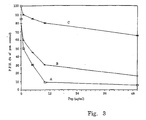
- Fig. 3 shows Vero cells which were infected with 1 moi of HSV-1 in the presence of various concentrations of P.spP. Pfu (plaque forming units) were evaluated by the standard plaque assay. The results (Fig. 3 - curve A) showed that 10 ⁇ g/ml of P.spP caused 90-95% protection of the plaques formation. 50% protection of the plaques formed by HSV-1 corresponds to 1 ⁇ g/ml of P.spP.
- vero cells were incubated with a medium containing different concentrations of P.spP at 37°C for two hours. At the end of incubation, unbound P.spP was removed and cell monolayers were washed three times with PBS. Then these cell cultures were infected with 1 moi of HSV-1 and the number of plaques formed was determined by plaque assay. The results (given in curve C, Fig. 3) show a weak inhibition of viral infection of those P.spP pretreated cell-cultures.
- Vero cell monolayers were infected with 0.1 moi of HSV-1 in the presence of 100 ⁇ g/ml of P.spP. After two hours of infection, unadsorbed virus Particles were removed, and cell monolayers were washed three times with PBS and fresh medium supplemented with (curve A, Fig. 5) or without (curve B, Fig. 5) P.spP was added. Cell cultures were examined for appearance of CPE by inverted microscope observation. The results presented in Fig.
- Vero cell monolayers were infected with 0.1 moi (curves A and B, Fig. 6) or 1 moi of HSV-1 (curve C, Fig. 6) without treatment with P.spP. At the end of the infection, monolayers were washed three times with PBS and fresh medium with (curves B and C, Fig. 6) or without (curve A) 100 ⁇ g/ml of P.spP was added. Monolayers were examined each day for appearance and development of CPE.
- Vero cell monolayers were infected with 1 moi of HSV-1. At the end of the infection, virus excess was removed, cell cultures were washed three times with PBS and supplied with fresh medium containing various concentrations of P.spP. After 24 hours of incubation at 37°C, the medium was removed, cell cultures were washed three times with PBS, cells were collected and disrupted by three freeze-thaw cycles. Cell debris were precipitated and infectious viruses produced were estimated by the standard plaque assay.
- Vero cells were seeded at a concentration of 4 x 10 5 cells per 9.6 cm 2 plate. These cells were incubated at 37°C in the absence (curve A, Fig. 8.) or presence of 100 ⁇ g/ml of P.spP (curve B), 1 ⁇ g/ml(curve C) and 10 ⁇ g/ml (curve E) of dextran sulphate, 1 ⁇ g/ml (curve D) and 10 ⁇ g/ml (curve F) of Carrageenan K. The cells were trypsinized and counted at various intervals of time after the initial treatment with the polysaccharides.
- Example 2 As was clearly demonstrated in Example 2 (Fig. 2), a substantial antiviral effect was obtained while using the P.spP at a concentration of 50 ⁇ g/ml or higher. However, when using Carrageenan K and dextran sulphate such concentrations of 50 ⁇ g/ml or higher could not be used due to their toxic behavior, even at concentrations as low as 10 ⁇ g/ml, as demonstrated in Fig. 8.
- Eyes of 1.5 kg rabbits were infected with HSV-1 by scratching the cornea, with a syringe needle, and applying 0.1 ml of the virus suspension (10 6 Pfu/ml) to the scratched area.
- Appropriate eyes were treated with 1000 ⁇ g/ml of Porphyridium sp. polysaccharide (P.spP), in the form of drops, twice a day up to the end of the experiment (3-4 weeks).
- P.spP Porphyridium sp. polysaccharide
- Newborn rats (three days old) were infected with 0.1 ml of 10 7 Pfu/ml of HSV-1 by subcutaneous (s.c.) injection or by scratching (scr). Thirty minutes after infection, the animals were injected s.c. into the infected (s.c.) area with 0.2 ml of P.spP. In the case of scratching the P.spP was added to the scratched area. The treatment was repeated twice a day up to the end of the experiment (death of the animals). Polysaccharide concentrations of 100-1000 ⁇ g/ml caused a significant delay in the appearance and development of cutaneous symptoms and a delay in the death of the animals (Table IV).
- P.spP concentration 0 100 500 1000 scr. s.c. scr. s.c. scr. s.c. scr. s.c. s.c. Days until the appearance of skin lesions 3 3 5 5 6 7 6 6 Days to death 7 7 10 10 11 12 12 12
- Porphyridum sp. cells were washed with double distilled water and pelleted by centrifugation. The cells pellet was dissolved with double distilled water and heated to 90°C for 4 hours. The mixture was then centrifuged, supernatant was separated and the amount of polysaccharide contained therein was evaluated.
- This supernatant contains the so-called cellular polysaccharides, i.e., those within the microalgal cells and hence these are the extracted polysaccharides which probably also contain various other cellular components (impurities), in contrast to the above-mentioned excreted polysaccharides which are essentially in pure form.
- red microalgae can be employed, such microalgae can be grown under different conditions, and the polysaccharide can be extracted in different ways, or can be recovered as excreted polysaccharide from the growth medium.
- excreted or extracted polysaccharide, or mixtures thereof, or mixtures of two or more polysaccharides derived from different red microalgae can be used as such, or together with known antiviral or other pharmaceutically-active agents, additives, carriers or excipients.
- the polysaccharides can be used according to the invention to treat or prevent infections derived from different viruses in various stages, the said infections affecting different areas and cell types, and different application methods, techniques and vehicles can be used, all without exceeding the scope of the invention.
Landscapes
- Health & Medical Sciences (AREA)
- Life Sciences & Earth Sciences (AREA)
- Engineering & Computer Science (AREA)
- Chemical & Material Sciences (AREA)
- Biotechnology (AREA)
- Natural Medicines & Medicinal Plants (AREA)
- Medicinal Chemistry (AREA)
- General Health & Medical Sciences (AREA)
- Pharmacology & Pharmacy (AREA)
- Veterinary Medicine (AREA)
- Public Health (AREA)
- Animal Behavior & Ethology (AREA)
- Virology (AREA)
- Epidemiology (AREA)
- Organic Chemistry (AREA)
- Chemical Kinetics & Catalysis (AREA)
- Molecular Biology (AREA)
- Botany (AREA)
- Alternative & Traditional Medicine (AREA)
- Nuclear Medicine, Radiotherapy & Molecular Imaging (AREA)
- General Chemical & Material Sciences (AREA)
- Microbiology (AREA)
- Oncology (AREA)
- Mycology (AREA)
- Medical Informatics (AREA)
- Communicable Diseases (AREA)
- Polymers & Plastics (AREA)
- Materials Engineering (AREA)
- Biochemistry (AREA)
- Pharmaceuticals Containing Other Organic And Inorganic Compounds (AREA)
- Medicines Containing Plant Substances (AREA)
- Polysaccharides And Polysaccharide Derivatives (AREA)
Description
- Fig. 1 -
- Effect of Porphyridium sp. polysaccharide (abbreviated hereinafter as P.spP) on the development of HSV-1 cytopathic effect;
- Fig. 2 -
- Effect of P.spP on cell proliferation;
- Fig. 3 -
- Effect of P.spP on vero cell infection with HSV-1;
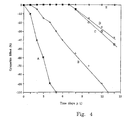
- Fig. 4 -
- Effect of P.spP on the development of Varicella Zoster virus (VSV) cytopathic effect;
- Fig. 5 -
- Development of HSV-1 cytopathic effect after P.spP removal;
- Fig. 6 -
- Addition of P.spP to pre-infected cell cultures;
- Fig. 7 -
- Effect of P.spP on production of infectious virus in a single replication cycle; and
- Fig. 8 -
- Cytotoxic effects of Carrageenan K and dextran sulphate compared with P.spP.
| Chemical composition of the polysaccharides from various red microalgae. | |||
| Sugar (%) | P.spP | R.rP | P.aP |
| MEO-pentose | 1.2 | 0.2 | 1.5 |
| Rhamnose | 0.1 | 0.3 | 17.2 |
| Aarabinose | 0.8 | 2.2 | 5.8 |
| Xylose | 41.2 | 25.2 | 21.06 |
| MeO-galactose | 1.5 | 2.9 | 1.0 |
| Mannose | 1.1 | 0.5 | 5.8 |
| Glucose | 15.4 | 20.9 | 21.8 |
| Galactose | 29.4 | 43 | 15.7 |
| Dimethyl galactose | 3 | - | - |
| Glucuronic Acid | 7.3 | 4.8 | 9.8 |
| Sulfate | 2.8 | 2.04 | ≤ 0.5 |
| Legend:
|
| NaCI | 27 g/l |
| MgSO4·7H2O | 6.6 g/l |
| MgCl2·6H2O | 5.6 g/l |
| CaCl2·2H2O | 1.5 g/l |
| KNO3 | 1.0 g/l |
| KH2PO4 | 0.07 g/l |
| NaHCO3 | 0.04 g/l |
| ZnCl2 | 4.0 mg/100 ml |
| H3BO3 | 60.0 mg/100 ml |
| CoCl2 6H2O | 1.5 mg/100 ml |
| CuCl2·2H2O | 4.0 mg/100 ml |
| MnCl2·4H2O | 40.0 mg/100 ml |
| (NH4)Mo7O24·4H2O | 37.0 mg/100 ml |
240 mg FeCl3 was dissolved in 100 ml Na2 EDTA (0.05 M, pH 7.6).
One molar stock buffer solution of pH 7.6 was prepared with 121.1 g/l Trizma HCl and 27.8 g/l Trizma base.
| algal polysaccharide | HSV strain | CPE50 (µg/ml) |
| P.spP | HSV-1 | 1 |
| HSV-2 | 5 | |
| R.rP | HSV-1 | 10 |
| HSV-2 | 20 | |
| P.aP | HSV-1 | 20 |
| HSV-2 | 50 |
| Inactivation of HSV-1 by P.spP (FFU/ml) | |||||
| Dilution of Virus-P.spP or virus-medium mixture | medium virus mixture | P.spP conc in P.spP-virus mixture (µg/ml) | |||
| 1 | 5 | 50 | 100 | ||
| Undiluted | *** | *** | ** | * | * |
| 0.01 | 600 | 450 | 200 | 150 | 70 |
| 0.001 | 70 | 50 | 30 | 18 | 6 |
| 0.0001 | 12 | 8 | 4 | ||
| *, **, *** represent various degrees of uncountable number of PFU/ml. |
were used, in order to determine the effect of P.spP concentration on the development and progress of CPE in Vero cells infected with 1 moi of Varicella Zoster Virus (VZV). The results obtained are shown in Fig. 4. The cytopathic effect of VZV is measured in the absence (curve A) or presence of 0.1 µg/ml (curve B), 1 µg/ml (curve C), 100 µg/ml (curve D) or 1,000 µg/ml (curve E) of P.spP. It appears that as a result of infecting the cells with VZV in the presence of increasing concentrations of P.spP, there is a delay in the appearance of the CPE similarly to the phenomenon noted with the HSV-1, as explained in Example 2.
| Inhibitory effect of P.spP on the development of HSV-1 infection in newborn rats | ||||||||
| P.spP concentration (µg/ml) | ||||||||
| 0 | 100 | 500 | 1000 | |||||
| scr. | s.c. | scr. | s.c. | scr. | s.c. | scr. | s.c. | |
| Days until the appearance of | 3 | 3 | 5 | 5 | 6 | 7 | 6 | 6 |
| Days to | 7 | 7 | 10 | 10 | 11 | 12 | 12 | 12 |
Claims (23)
- An antiviral composition, comprising as an active ingredient an antivirally-effective amount of a red microalga polysaccharide, or a mixture of two or more red microalga polysaccharides.
- An antiviral composition according to claim 1, comprising as an active ingredient an effective replication-inhibiting amount of a red microalga polysaccharide, or a mixture of two or more red microalgae polysaccharides.
- An antiviral composition according to claim 1, comprising as an active ingredient a red microalga polysaccharide in an amount effective to protect against viral infection.
- An antiviral composition according to any one of claims 1 to 3, wherein the antivirally-effective amount of the red microalga polysaccharide is provided essentially free of pharmaceutically-acceptable vehicles and/or carriers and/or adjuvants.
- An antiviral composition according to any one of claims 1 to 3, wherein the antivirally-effective amount of the red microalga polysaccharide is provided together with pharmaceutically-acceptable vehicles and/or carriers and/or adjuvants.
- An antiviral composition according to any one of claims 1 to 3, wherein the red microalga polysaccharide is a sulphated polysaccharide.
- An antiviral composition according to any one of claims 1 to 3, comprising a polysaccharide characterized by a solubility of 10 to 20 gr/liter, a viscosity of its solution of 25 to 40 c.p., and a molecular weight of 5 - 7 x 10⁶.
- A composition according to claim 5, in cream form.
- A composition according to claim 5, in ointment form.
- A composition according to claim 5, in liquid form.
- A composition according to claim 5, further comprising conventional antiviral agents.
- A composition according to claim 11, wherein the virus is a Herpes simplex virus.
- A composition according to claims 11 and 12, wherein the conventional antiviral agent is acyclovir.
- A composition according to claim 1, wherein the virus is a Varicella Zoster virus.
- A composition according to claim 1, wherein the red microalgae is selected from among Porphyridium sp., P. aerugineum, and R. reticulata.
- An antiviral compound which is a red microalga polysaccharide, or a mixture of two or more red microalga polysaccharides.
- A compound according to claim 16, which is selected from P.spP, P.aP and R.rP.
- Use of a compound according to claim 16 or 17, for the manufacture of a drug for the treatment or prevention of viral infections.
- A compound according to claim 16 or 17, which is a polysaccharide characterized by a solubility of 10 to 20 gr/liter, a viscosity of its solution of 25 to 40 c.p., and a molecular weight of 5 - 7 x 10⁶.
- Use of red microalgae for the preparation of an antiviral medicament.
- A process for the manufacturing of an antiviral agent, comprising
cultivating red microalgae in a suitable medium, under conditions suitable to promote cell polysaccharide growth and excretion into said medium, collecting and concentrating the excreted polysaccharide from said medium, and using same as an active ingredient of said antiviral agent. - An antiviral agent, whenever prepared by the process of claim 21.
- A polysaccharide excreted from a red microalgae, for use as an antiviral agent.
Applications Claiming Priority (3)
| Application Number | Priority Date | Filing Date | Title |
|---|---|---|---|
| IL11426795A IL114267A0 (en) | 1995-06-22 | 1995-06-22 | Antiviral agents |
| IL11426795 | 1995-06-22 | ||
| PCT/IL1996/000019 WO1997000689A1 (en) | 1995-06-22 | 1996-06-20 | Antiviral agents |
Publications (2)
| Publication Number | Publication Date |
|---|---|
| EP0833645A1 EP0833645A1 (en) | 1998-04-08 |
| EP0833645B1 true EP0833645B1 (en) | 2003-09-03 |
Family
ID=11067656
Family Applications (1)
| Application Number | Title | Priority Date | Filing Date |
|---|---|---|---|
| EP96918824A Expired - Lifetime EP0833645B1 (en) | 1995-06-22 | 1996-06-20 | Antiviral agents |
Country Status (10)
| Country | Link |
|---|---|
| EP (1) | EP0833645B1 (en) |
| JP (1) | JPH11507943A (en) |
| KR (1) | KR19990028256A (en) |
| CN (1) | CN1193277A (en) |
| AU (1) | AU6135896A (en) |
| BR (1) | BR9609416A (en) |
| DE (1) | DE69629811T2 (en) |
| IL (1) | IL114267A0 (en) |
| WO (1) | WO1997000689A1 (en) |
| ZA (1) | ZA965293B (en) |
Families Citing this family (11)
| Publication number | Priority date | Publication date | Assignee | Title |
|---|---|---|---|---|
| US6680062B2 (en) | 2001-10-05 | 2004-01-20 | Color Access, Inc. | Anti-irritating rosacea treatment |
| US8298548B2 (en) | 2007-07-18 | 2012-10-30 | Solazyme, Inc. | Compositions for improving the health and appearance of skin |
| PL3398606T3 (en) * | 2006-01-19 | 2022-02-07 | Algenist Holdings, Inc, | Microalgae-derived compositions for improving the health and appearance of skin |
| US8277849B2 (en) | 2006-01-19 | 2012-10-02 | Solazyme, Inc. | Microalgae-derived compositions for improving the health and appearance of skin |
| IL191709A (en) * | 2008-05-26 | 2016-03-31 | Univ Ben Gurion | Compositions comprising red microalgae polysaccharides and metals |
| US8927522B2 (en) | 2008-10-14 | 2015-01-06 | Solazyme, Inc. | Microalgal polysaccharide compositions |
| US8557249B2 (en) | 2008-11-07 | 2013-10-15 | Solazyme, Inc. | Cosmetic compositions comprising microalgal components |
| EP2996672A4 (en) | 2013-05-15 | 2016-11-02 | Terravia Holdings Inc | Cosmetic compositions comprising microalgal oil |
| CN108164614B (en) * | 2018-01-29 | 2020-07-07 | 上海海洋大学 | Preparation method of gelidium amansii polysaccharide with immunoregulation effect, structural part characterization and application thereof |
| JP7261367B2 (en) * | 2018-02-14 | 2023-04-20 | 江南化工株式会社 | Antiviral agent and antiviral composition |
| CN114395538A (en) * | 2022-01-19 | 2022-04-26 | 和元生物技术(上海)股份有限公司 | Method for promoting recombinant virus vector to secrete outside cell |
Family Cites Families (2)
| Publication number | Priority date | Publication date | Assignee | Title |
|---|---|---|---|---|
| US4162308A (en) * | 1978-04-10 | 1979-07-24 | Calvin Natasha I | Water soluble extracts of certain marine red algae and processes for use thereof |
| KR900007498B1 (en) * | 1987-06-18 | 1990-10-11 | 구레하 가가꾸 고교 가부시끼가이샤 | Polysaccharides and antiviral drugs containing them as active ingredients |
-
1995
- 1995-06-22 IL IL11426795A patent/IL114267A0/en unknown
-
1996
- 1996-06-20 AU AU61358/96A patent/AU6135896A/en not_active Abandoned
- 1996-06-20 JP JP9503706A patent/JPH11507943A/en not_active Ceased
- 1996-06-20 CN CN96196348A patent/CN1193277A/en active Pending
- 1996-06-20 EP EP96918824A patent/EP0833645B1/en not_active Expired - Lifetime
- 1996-06-20 DE DE69629811T patent/DE69629811T2/en not_active Expired - Fee Related
- 1996-06-20 BR BR9609416-8A patent/BR9609416A/en unknown
- 1996-06-20 WO PCT/IL1996/000019 patent/WO1997000689A1/en not_active Ceased
- 1996-06-20 KR KR1019970709568A patent/KR19990028256A/en not_active Withdrawn
- 1996-06-21 ZA ZA965293A patent/ZA965293B/en unknown
Also Published As
| Publication number | Publication date |
|---|---|
| BR9609416A (en) | 1999-12-14 |
| DE69629811T2 (en) | 2004-07-15 |
| IL114267A0 (en) | 1995-10-31 |
| KR19990028256A (en) | 1999-04-15 |
| EP0833645A1 (en) | 1998-04-08 |
| ZA965293B (en) | 1997-01-23 |
| WO1997000689A1 (en) | 1997-01-09 |
| JPH11507943A (en) | 1999-07-13 |
| AU6135896A (en) | 1997-01-22 |
| CN1193277A (en) | 1998-09-16 |
| DE69629811D1 (en) | 2003-10-09 |
Similar Documents
| Publication | Publication Date | Title |
|---|---|---|
| Huleihel et al. | Antiviral effect of red microalgal polysaccharides on Herpes simplex and Varicella zoster viruses | |
| CA1057195A (en) | Preparation for the treatment of infectious diseases, method for the manufacture thereof, and its use | |
| US20030078233A1 (en) | Antiviral agents | |
| Hilleman | Prospects for the use of double-stranded ribonucleic acid (poly I: C) inducers in man | |
| AU642023B2 (en) | Anti-virus agent | |
| WO1997000689A1 (en) | Antiviral agents | |
| US20020025919A1 (en) | Antiviral linear polymers | |
| CN105535964A (en) | Double-strand polynucleotide-epsilon-polylysine-sulfuric acid glycan compound with immune regulating function and preparing and using method thereof | |
| US5292505A (en) | Sulphated vinyl polymer in composition for treating retroviral infections | |
| CN106727623A (en) | Application of the Tang oligosaccharide in anti-avian leukosis virus preparation is prepared | |
| RU2233171C2 (en) | POLYFUNCTIONAL PHARMACEUTICAL COMPOSITION BASED ON L-LYSINE-α-OXIDASE FROM FUNGUS OF GENUS TRICHODERMA AND METHOD FOR PREPARING THIS ENZYME | |
| WO2021253643A1 (en) | Application of sulphated polysaccharides against novel coronavirus | |
| JPH09124496A (en) | Infection inihibitor | |
| EP0292000B1 (en) | Treatment of viral infection | |
| HU193217B (en) | Process for producing active agents for immunemodulator compositions | |
| Samorek-Salamonowicz et al. | Effect of acyclovir on the replication of turkey herpesvirus and Marek’s disease virus | |
| EP0351625B1 (en) | Anti-hiv activity of bv-3608 | |
| CN119113089B (en) | Application of biologically active protein in preparing medicine for treating herpes virus infection and medicine composition for treating herpes virus infection | |
| Berencsi et al. | The role of macrophages in adenovirus-induced immunosuppression in mice | |
| JPH01199915A (en) | Treating agent for viral disease | |
| CN109022351B (en) | New application of recombinant human lysozyme | |
| EP0765662B1 (en) | Use of 5,6-o-benzylidene-l-ascorbic acid or salts thereof for the manufacture of a medicament for the treatment of hiv | |
| JP3595966B2 (en) | Method for preparing a new potent non-toxic lipopolysaccharide effective for prevention of endotoxemia or sepsis | |
| HK40083792A (en) | A new process of purification of proteins from hen egg white and the use of the same as antiviral agent against sars-cov-2 | |
| CA2013843A1 (en) | Antiviral composition |
Legal Events
| Date | Code | Title | Description |
|---|---|---|---|
| PUAI | Public reference made under article 153(3) epc to a published international application that has entered the european phase |
Free format text: ORIGINAL CODE: 0009012 |
|
| 17P | Request for examination filed |
Effective date: 19971204 |
|
| AK | Designated contracting states |
Kind code of ref document: A1 Designated state(s): CH DE ES FR GB IT LI NL PT |
|
| 17Q | First examination report despatched |
Effective date: 20020719 |
|
| GRAH | Despatch of communication of intention to grant a patent |
Free format text: ORIGINAL CODE: EPIDOS IGRA |
|
| RIC1 | Information provided on ipc code assigned before grant |
Ipc: 7A 61P 31/22 B Ipc: 7C 08B 37/00 B Ipc: 7A 61K 31/715 B Ipc: 7A 61K 35/80 A |
|
| GRAS | Grant fee paid |
Free format text: ORIGINAL CODE: EPIDOSNIGR3 |
|
| GRAA | (expected) grant |
Free format text: ORIGINAL CODE: 0009210 |
|
| AK | Designated contracting states |
Kind code of ref document: B1 Designated state(s): CH DE ES FR GB IT LI NL PT |
|
| PG25 | Lapsed in a contracting state [announced via postgrant information from national office to epo] |
Ref country code: NL Free format text: LAPSE BECAUSE OF FAILURE TO SUBMIT A TRANSLATION OF THE DESCRIPTION OR TO PAY THE FEE WITHIN THE PRESCRIBED TIME-LIMIT Effective date: 20030903 Ref country code: LI Free format text: LAPSE BECAUSE OF FAILURE TO SUBMIT A TRANSLATION OF THE DESCRIPTION OR TO PAY THE FEE WITHIN THE PRESCRIBED TIME-LIMIT Effective date: 20030903 Ref country code: IT Free format text: LAPSE BECAUSE OF FAILURE TO SUBMIT A TRANSLATION OF THE DESCRIPTION OR TO PAY THE FEE WITHIN THE PRESCRIBED TIME-LIMIT;WARNING: LAPSES OF ITALIAN PATENTS WITH EFFECTIVE DATE BEFORE 2007 MAY HAVE OCCURRED AT ANY TIME BEFORE 2007. THE CORRECT EFFECTIVE DATE MAY BE DIFFERENT FROM THE ONE RECORDED. Effective date: 20030903 Ref country code: CH Free format text: LAPSE BECAUSE OF FAILURE TO SUBMIT A TRANSLATION OF THE DESCRIPTION OR TO PAY THE FEE WITHIN THE PRESCRIBED TIME-LIMIT Effective date: 20030903 |
|
| REG | Reference to a national code |
Ref country code: GB Ref legal event code: FG4D |
|
| REG | Reference to a national code |
Ref country code: CH Ref legal event code: EP |
|
| REF | Corresponds to: |
Ref document number: 69629811 Country of ref document: DE Date of ref document: 20031009 Kind code of ref document: P |
|
| PG25 | Lapsed in a contracting state [announced via postgrant information from national office to epo] |
Ref country code: ES Free format text: LAPSE BECAUSE OF FAILURE TO SUBMIT A TRANSLATION OF THE DESCRIPTION OR TO PAY THE FEE WITHIN THE PRESCRIBED TIME-LIMIT Effective date: 20031214 |
|
| NLV1 | Nl: lapsed or annulled due to failure to fulfill the requirements of art. 29p and 29m of the patents act | ||
| PG25 | Lapsed in a contracting state [announced via postgrant information from national office to epo] |
Ref country code: PT Free format text: LAPSE BECAUSE OF FAILURE TO SUBMIT A TRANSLATION OF THE DESCRIPTION OR TO PAY THE FEE WITHIN THE PRESCRIBED TIME-LIMIT Effective date: 20040203 |
|
| REG | Reference to a national code |
Ref country code: CH Ref legal event code: PL |
|
| ET | Fr: translation filed | ||
| PLBE | No opposition filed within time limit |
Free format text: ORIGINAL CODE: 0009261 |
|
| STAA | Information on the status of an ep patent application or granted ep patent |
Free format text: STATUS: NO OPPOSITION FILED WITHIN TIME LIMIT |
|
| 26N | No opposition filed |
Effective date: 20040604 |
|
| PGFP | Annual fee paid to national office [announced via postgrant information from national office to epo] |
Ref country code: DE Payment date: 20080626 Year of fee payment: 13 |
|
| PGFP | Annual fee paid to national office [announced via postgrant information from national office to epo] |
Ref country code: FR Payment date: 20080617 Year of fee payment: 13 |
|
| PGFP | Annual fee paid to national office [announced via postgrant information from national office to epo] |
Ref country code: GB Payment date: 20080625 Year of fee payment: 13 |
|
| GBPC | Gb: european patent ceased through non-payment of renewal fee |
Effective date: 20090620 |
|
| REG | Reference to a national code |
Ref country code: FR Ref legal event code: ST Effective date: 20100226 |
|
| PG25 | Lapsed in a contracting state [announced via postgrant information from national office to epo] |
Ref country code: FR Free format text: LAPSE BECAUSE OF NON-PAYMENT OF DUE FEES Effective date: 20090630 |
|
| PG25 | Lapsed in a contracting state [announced via postgrant information from national office to epo] |
Ref country code: GB Free format text: LAPSE BECAUSE OF NON-PAYMENT OF DUE FEES Effective date: 20090620 |
|
| PG25 | Lapsed in a contracting state [announced via postgrant information from national office to epo] |
Ref country code: DE Free format text: LAPSE BECAUSE OF NON-PAYMENT OF DUE FEES Effective date: 20100101 |