EP0829261B1 - Composition comprising isoflavone for promoting fat-degradation in fat-cells - Google Patents
Composition comprising isoflavone for promoting fat-degradation in fat-cells Download PDFInfo
- Publication number
- EP0829261B1 EP0829261B1 EP96120991A EP96120991A EP0829261B1 EP 0829261 B1 EP0829261 B1 EP 0829261B1 EP 96120991 A EP96120991 A EP 96120991A EP 96120991 A EP96120991 A EP 96120991A EP 0829261 B1 EP0829261 B1 EP 0829261B1
- Authority
- EP
- European Patent Office
- Prior art keywords
- fat
- isoflavone
- degradation
- composition
- daidzein
- Prior art date
- Legal status (The legal status is an assumption and is not a legal conclusion. Google has not performed a legal analysis and makes no representation as to the accuracy of the status listed.)
- Expired - Lifetime
Links
Images


Classifications
-
- A—HUMAN NECESSITIES
- A61—MEDICAL OR VETERINARY SCIENCE; HYGIENE
- A61K—PREPARATIONS FOR MEDICAL, DENTAL OR TOILETRY PURPOSES
- A61K31/00—Medicinal preparations containing organic active ingredients
- A61K31/33—Heterocyclic compounds
- A61K31/335—Heterocyclic compounds having oxygen as the only ring hetero atom, e.g. fungichromin
- A61K31/35—Heterocyclic compounds having oxygen as the only ring hetero atom, e.g. fungichromin having six-membered rings with one oxygen as the only ring hetero atom
- A61K31/352—Heterocyclic compounds having oxygen as the only ring hetero atom, e.g. fungichromin having six-membered rings with one oxygen as the only ring hetero atom condensed with carbocyclic rings, e.g. methantheline
-
- A—HUMAN NECESSITIES
- A61—MEDICAL OR VETERINARY SCIENCE; HYGIENE
- A61K—PREPARATIONS FOR MEDICAL, DENTAL OR TOILETRY PURPOSES
- A61K8/00—Cosmetics or similar toiletry preparations
- A61K8/18—Cosmetics or similar toiletry preparations characterised by the composition
- A61K8/30—Cosmetics or similar toiletry preparations characterised by the composition containing organic compounds
- A61K8/49—Cosmetics or similar toiletry preparations characterised by the composition containing organic compounds containing heterocyclic compounds
- A61K8/4973—Cosmetics or similar toiletry preparations characterised by the composition containing organic compounds containing heterocyclic compounds with oxygen as the only hetero atom
- A61K8/498—Cosmetics or similar toiletry preparations characterised by the composition containing organic compounds containing heterocyclic compounds with oxygen as the only hetero atom having 6-membered rings or their condensed derivatives, e.g. coumarin
-
- A—HUMAN NECESSITIES
- A61—MEDICAL OR VETERINARY SCIENCE; HYGIENE
- A61K—PREPARATIONS FOR MEDICAL, DENTAL OR TOILETRY PURPOSES
- A61K8/00—Cosmetics or similar toiletry preparations
- A61K8/18—Cosmetics or similar toiletry preparations characterised by the composition
- A61K8/30—Cosmetics or similar toiletry preparations characterised by the composition containing organic compounds
- A61K8/60—Sugars; Derivatives thereof
- A61K8/602—Glycosides, e.g. rutin
-
- A—HUMAN NECESSITIES
- A61—MEDICAL OR VETERINARY SCIENCE; HYGIENE
- A61P—SPECIFIC THERAPEUTIC ACTIVITY OF CHEMICAL COMPOUNDS OR MEDICINAL PREPARATIONS
- A61P3/00—Drugs for disorders of the metabolism
-
- A—HUMAN NECESSITIES
- A61—MEDICAL OR VETERINARY SCIENCE; HYGIENE
- A61P—SPECIFIC THERAPEUTIC ACTIVITY OF CHEMICAL COMPOUNDS OR MEDICINAL PREPARATIONS
- A61P3/00—Drugs for disorders of the metabolism
- A61P3/04—Anorexiants; Antiobesity agents
-
- A—HUMAN NECESSITIES
- A61—MEDICAL OR VETERINARY SCIENCE; HYGIENE
- A61P—SPECIFIC THERAPEUTIC ACTIVITY OF CHEMICAL COMPOUNDS OR MEDICINAL PREPARATIONS
- A61P3/00—Drugs for disorders of the metabolism
- A61P3/06—Antihyperlipidemics
-
- A—HUMAN NECESSITIES
- A61—MEDICAL OR VETERINARY SCIENCE; HYGIENE
- A61P—SPECIFIC THERAPEUTIC ACTIVITY OF CHEMICAL COMPOUNDS OR MEDICINAL PREPARATIONS
- A61P43/00—Drugs for specific purposes, not provided for in groups A61P1/00-A61P41/00
-
- A—HUMAN NECESSITIES
- A61—MEDICAL OR VETERINARY SCIENCE; HYGIENE
- A61Q—SPECIFIC USE OF COSMETICS OR SIMILAR TOILETRY PREPARATIONS
- A61Q19/00—Preparations for care of the skin
- A61Q19/06—Preparations for care of the skin for countering cellulitis
Definitions
- the present invention relates to the use of at least one isoflavone for promoting fat-degradation (lipolysis) in fat cells, more specifically for promoting degradation of accumulated fat in fat cells.
- Vital hormones such as noradrenaline, adrenaline and glucagon are known to have promoting fat-degradation effect.
- Caffeine and theophylline were also reported to have promoting fat-degradation effects.
- so-called weight-reducing composition which serves to degrade a somatic fat to make a fat cell smaller, whereby providing a slim body have been studied, and that containing kola seed extract (Japanese Patent Application Kokai Hyo 3-504241) and that containing a fat-degrading substance (lipolytic substance) such as caffeine in combination with a growth factor (Japanese Patent Application Kokai Hyo 6-506668) were reported to be effective.
- hormones and caffeine involves problems when used for a prolonged period for the purpose of weight-reducing since they may cause adverse effects.
- the present invention provides the use of at least one isoflavone for promoting fat-degradation in a fat cell which comprises the use of an isoflavone in an amount effective to promote the degradation of fat in the fat cell.
- Figure 1 is a graph indicating the promoting fat-degradation effect of daidzein.
- Figure 2 is a graph indicating the promoting fat-degradation effect of daidzin.
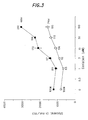
- Figure 3 is a graph indicating the promoting fat-degradation effect of genistein.
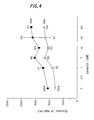
- Figure 4 is a graph indicating the promoting fat-degradation effect of genistin.
- An isoflavone employed in the present invention is a component contained in bean plants such as soybean, and daidzein, daidzin, genistein, genistin and derivatives thereof are included in the isoflavone. These compounds may be employed independently or in combination.
- the content of an isoflavone in a composition according to the present invention is an amount effective to promote degradation of fat in a fat cell, and may be determined in view of the intended use of the composition.
- an isoflavone is contained in an amount of 0.05 to 1,000,000 ⁇ g/ml (g) when the composition is intended to be used as a pharmaceutical for injection or infusion, while it is contained in an amount of 5 to 1,000 mg/ml (g) when the composition is intended to be used as a food or pharmaceutical in forms of solid, liquid, powder, granule, paste and the like for oral or percutaneous administration.
- An isoflavone is contained in an amount of 5 to 1,000 mg/ml (g) when the composition is intended to be used as a feed for domestic animals in forms of solid, liquid, powder, granule, paste and the like.
- a content of an isoflavone in a composition less than a lowest effective amount results in no satisfactory fat-degradation effect in a fat cell.
- isoflavones those obtained from a soybean by extraction may also be employed.
- the extraction may be conducted by an ordinary method using an organic solvent such as methanol, ethanol, butanol and diethylether, for example, as described below.
- the butanol layer is concentrated to dryness, and the residue is taken into an organic solvent such as diethylether and stirred. Subsequently, the mixture is centrifuged to obtain a sediment which is then admixed with ether to remove soluble substances. The ether-insoluble substance thus obtained (sediment) is recovered as an isoflavone-containing fraction. Then, using an ordinary procedure such as chromatography if necessary, each component is fractionated.
- the isoflavones can be identified by any methods such as thin layer chromatography.
- a commercial pure product of an isoflavone may be employed as it is in a composition according to the invention, while a crude product extracted from a bean plant or a preparation purified therefrom may also be employed. If necessary, customary additives such as a bulking agent, stabilizer, excipient etc., may be incorporated to prepare a composition.
- the composition may be in forms of solid, liquid, powder, granule, paste etc., depending on intended uses.
- composition promoting fat-degradation has an ability of degrading a fat to exhibit a weight-reducing effect, it may be useful in the fields of pharmaceuticals, cosmetics, functional foods and the like, and may be utilized as various formulations for percutaneous administration (application onto skins), oral administration and intravenous injection, or may be added to a food.
- the composition may be added to a feed for domestic animals since it degrades fats whereby contributing to the production of a low fat meat.
- a composition promoting fat-degradation according to the present invention exhibits an excellent fat-degradation effect at a relatively low concentration. Using this effect, the use can be in the form of a cosmetic, pharmaceutical or functional food product having a weight-reducing effect.
- the active ingredient in the composition is highly safe since it is an edible naturally-occurring component contained in a soybean and other plants, and has been ingested for a long period.
- a fat cell precursor (preadipocyte) 3T3-L1 derived from a mouse was incubated in DME medium (Dulbecco's modified Eagle medium) supplemented with 10 % fetal bovine serum in 6-well multiplate at 37°C. The culture medium was replaced every 2 or 3 days. After the cell growth was confluenced, dexamethasone, methylisobutylxanthine and insulin were added to the culture medium to induce differentiation into a fat cell. Differentiation induction treatment was performed for 2 days, and thereafter the incubation was continued in the initial medium.
- DME medium Dulbecco's modified Eagle medium
- dexamethasone, methylisobutylxanthine and insulin were added to the culture medium to induce differentiation into a fat cell. Differentiation induction treatment was performed for 2 days, and thereafter the incubation was continued in the initial medium.
- ⁇ and ⁇ indicate fat-degradation effect of 24 and 48 hours after addition of daidzein, respectively, and the values in the figure are the amount of glycerol derived from various concentrations of daidzein which were calculated based on the amount of glycerol derived from 0 ⁇ M of daidzein (100 %).
- Example 2 was conducted similarly to Example 1 except for using daidzin instead of daidzein. The results are shown in Figure 2. Legends are similar as in Example 1. As evident from the figure, daidzin caused the fat-degradation dose-dependently. Since daidzin showed such results at a relatively low concentration, it is expected to exhibit similar in vivo effectiveness.
- Example 2 was conducted similarly to Example 1 except for using genistein instead of daidzein. The results are shown in Figure 3. Legends are similar as in Example 1. As evident from the figure, genistein caused the fat-degaration dose-dependently. Since genistein showed such results at a relatively low concentration, it is expected to exhibit similar in vivo effectiveness.
- Example 4 was conducted similarly to Example 1 except for using genistin instead of daidzein. The results are shown in Figure 4. Legends are similar as in Example 1. As evident from the figure, genistin caused the fat-degradation dose-dependently. Since genistin showed such results at a relatively low concentration, it is expected to exhibit similar in vivo effectiveness.
- Daidzein (67 mg/kg body weight) was administered intraperitoneally to a mouse, and serum glycerol was measured after 24 hours, during which the animal was allowed to take water freely, but was fasted. Daidzein was administered as a suspension in lecithin solution (5 mg/ml).
Landscapes
- Health & Medical Sciences (AREA)
- Life Sciences & Earth Sciences (AREA)
- Veterinary Medicine (AREA)
- Public Health (AREA)
- General Health & Medical Sciences (AREA)
- Animal Behavior & Ethology (AREA)
- Chemical & Material Sciences (AREA)
- Medicinal Chemistry (AREA)
- Epidemiology (AREA)
- Pharmacology & Pharmacy (AREA)
- Engineering & Computer Science (AREA)
- Birds (AREA)
- Organic Chemistry (AREA)
- General Chemical & Material Sciences (AREA)
- Chemical Kinetics & Catalysis (AREA)
- Nuclear Medicine, Radiotherapy & Molecular Imaging (AREA)
- Bioinformatics & Cheminformatics (AREA)
- Diabetes (AREA)
- Obesity (AREA)
- Hematology (AREA)
- Dermatology (AREA)
- Child & Adolescent Psychology (AREA)
- Pharmaceuticals Containing Other Organic And Inorganic Compounds (AREA)
- Fodder In General (AREA)
- Saccharide Compounds (AREA)
- Pyrane Compounds (AREA)
- Medicinal Preparation (AREA)
- Medicines Containing Plant Substances (AREA)
Description
- The present invention relates to the use of at least one isoflavone for promoting fat-degradation (lipolysis) in fat cells, more specifically for promoting degradation of accumulated fat in fat cells.
- Vital hormones such as noradrenaline, adrenaline and glucagon are known to have promoting fat-degradation effect. Caffeine and theophylline were also reported to have promoting fat-degradation effects.
- In addition, so-called weight-reducing composition which serves to degrade a somatic fat to make a fat cell smaller, whereby providing a slim body have been studied, and that containing kola seed extract (Japanese Patent Application Kokai Hyo 3-504241) and that containing a fat-degrading substance (lipolytic substance) such as caffeine in combination with a growth factor (Japanese Patent Application Kokai Hyo 6-506668) were reported to be effective.
- However, hormones and caffeine involves problems when used for a prolonged period for the purpose of weight-reducing since they may cause adverse effects.
- As a result of conducting the studies in order to develop a substance having an ability of promoting degradation of fat from a naturally-occurring material which has no problems with regard to safety, we finally found that a soybean extract has such activity and that the active ingredient is an isoflavone. Based on such findings, this invention is established.
- Accordingly, the present invention provides the use of at least one isoflavone for promoting fat-degradation in a fat cell which comprises the use of an isoflavone in an amount effective to promote the degradation of fat in the fat cell.
- Figure 1 is a graph indicating the promoting fat-degradation effect of daidzein.
- Figure 2 is a graph indicating the promoting fat-degradation effect of daidzin.
- Figure 3 is a graph indicating the promoting fat-degradation effect of genistein.
- Figure 4 is a graph indicating the promoting fat-degradation effect of genistin.
- An isoflavone employed in the present invention is a component contained in bean plants such as soybean, and daidzein, daidzin, genistein, genistin and derivatives thereof are included in the isoflavone. These compounds may be employed independently or in combination. The content of an isoflavone in a composition according to the present invention is an amount effective to promote degradation of fat in a fat cell, and may be determined in view of the intended use of the composition. For example, an isoflavone is contained in an amount of 0.05 to 1,000,000 µg/ml (g) when the composition is intended to be used as a pharmaceutical for injection or infusion, while it is contained in an amount of 5 to 1,000 mg/ml (g) when the composition is intended to be used as a food or pharmaceutical in forms of solid, liquid, powder, granule, paste and the like for oral or percutaneous administration. An isoflavone is contained in an amount of 5 to 1,000 mg/ml (g) when the composition is intended to be used as a feed for domestic animals in forms of solid, liquid, powder, granule, paste and the like.
- In any intended use described above, a content of an isoflavone in a composition less than a lowest effective amount results in no satisfactory fat-degradation effect in a fat cell.
- Although any commercially available isoflavones may be used, those obtained from a soybean by extraction may also be employed. The extraction may be conducted by an ordinary method using an organic solvent such as methanol, ethanol, butanol and diethylether, for example, as described below.
- To 1 kg of soybean flake, 1 to 3 liters of an organic solvent such as methanol is added and the mixture is extracted while heating under reflux to obtain an extract. The extract is concentrated to dryness and the residue is admixed with each 100 to 1,000 ml of water and an organic solvent such as n-butanol, and stirred. Subsequently, the mixture is allowed to stand to separate into a water layer and a butanol layer.
- Then the butanol layer is concentrated to dryness, and the residue is taken into an organic solvent such as diethylether and stirred. Subsequently, the mixture is centrifuged to obtain a sediment which is then admixed with ether to remove soluble substances. The ether-insoluble substance thus obtained (sediment) is recovered as an isoflavone-containing fraction. Then, using an ordinary procedure such as chromatography if necessary, each component is fractionated. The isoflavones can be identified by any methods such as thin layer chromatography.
- As described above, a commercial pure product of an isoflavone may be employed as it is in a composition according to the invention, while a crude product extracted from a bean plant or a preparation purified therefrom may also be employed. If necessary, customary additives such as a bulking agent, stabilizer, excipient etc., may be incorporated to prepare a composition. The composition may be in forms of solid, liquid, powder, granule, paste etc., depending on intended uses.
- Since a composition promoting fat-degradation according to the present invention has an ability of degrading a fat to exhibit a weight-reducing effect, it may be useful in the fields of pharmaceuticals, cosmetics, functional foods and the like, and may be utilized as various formulations for percutaneous administration (application onto skins), oral administration and intravenous injection, or may be added to a food. In addition, the composition may be added to a feed for domestic animals since it degrades fats whereby contributing to the production of a low fat meat.
- A composition promoting fat-degradation according to the present invention exhibits an excellent fat-degradation effect at a relatively low concentration. Using this effect, the use can be in the form of a cosmetic, pharmaceutical or functional food product having a weight-reducing effect.
- In addition, the active ingredient in the composition is highly safe since it is an edible naturally-occurring component contained in a soybean and other plants, and has been ingested for a long period.
- The present invention is further illustrated in the following examples.
- To 1 kg of soybean flake, 3 liters of methanol were added and the mixture was extracted while heating under reflux to obtain an extract which was then concentrated to dryness in a rotary evaporator. The residue thus obtained was admixed with each 500 ml of water and n-butanol and shaked and stirred, and then allowed to stand to separate into water layer and butanol layer. The butanol layer was dried under reduced pressure and then admixed with diethylether and shaked and stirred. Subsequently, centrifugation was conducted (3,000 rpm, 10 minutes) and supernatant ether-soluble substances were removed to obtain a sediment, which the procedure of adding ether and removing the soluble substances was conducted repeatedly for several times. The ether-insoluble substances thus obtained were recovered as an isoflavone-containing fraction.
- From the fraction obtained in Production example 1, daidzein, daidzin, genistein and genistin were isolated by reverse HPLC (using an ODS column, eluted with a gradient from 0 to 50 % acetonitrile in 0.1 % aqueous solution of trifluoroacetic acid, absorbance detection at 262 nm).
- A fat cell precursor (preadipocyte) 3T3-L1 derived from a mouse was incubated in DME medium (Dulbecco's modified Eagle medium) supplemented with 10 % fetal bovine serum in 6-well multiplate at 37°C. The culture medium was replaced every 2 or 3 days. After the cell growth was confluenced, dexamethasone, methylisobutylxanthine and insulin were added to the culture medium to induce differentiation into a fat cell. Differentiation induction treatment was performed for 2 days, and thereafter the incubation was continued in the initial medium.
- After about 1 week, to 3T3-L1 cellswhich had been differentiated into fat cells, a certain amount of daidzein obtained in Production Example 2 was added, followed by incubation. Then, after 1 day (24 hours) and 2 days (48 hours), the amount of glycerol in the culture medium was determined as an index of the fat-degradation. Glycerol was released by the fat-degradation, and determined by colorimetry using glycerol oxidase and the like.
- The results are shown in Figure 1. As evident from the figure, daidzein induced the fat-degradation dose-dependently. Since daidzein was effective at the concentration relatively as low as 0.3 µM, i.e., 0.0763 µg/ml (or g), it is expected to exhibit similar in vivo effectiveness. In the figure, the abscissa represents daidzein concentration (µM), while the ordinate represents the amount of glycerol released as a result of the fat-degradation. □ and ▪ indicate fat-degradation effect of 24 and 48 hours after addition of daidzein, respectively, and the values in the figure are the amount of glycerol derived from various concentrations of daidzein which were calculated based on the amount of glycerol derived from 0 µM of daidzein (100 %).
- This Example was conducted similarly to Example 1 except for using daidzin instead of daidzein. The results are shown in Figure 2. Legends are similar as in Example 1. As evident from the figure, daidzin caused the fat-degradation dose-dependently. Since daidzin showed such results at a relatively low concentration, it is expected to exhibit similar in vivo effectiveness.
- This Example was conducted similarly to Example 1 except for using genistein instead of daidzein. The results are shown in Figure 3. Legends are similar as in Example 1. As evident from the figure, genistein caused the fat-degaration dose-dependently. Since genistein showed such results at a relatively low concentration, it is expected to exhibit similar in vivo effectiveness.
- Example 4 was conducted similarly to Example 1 except for using genistin instead of daidzein. The results are shown in Figure 4. Legends are similar as in Example 1. As evident from the figure, genistin caused the fat-degradation dose-dependently. Since genistin showed such results at a relatively low concentration, it is expected to exhibit similar in vivo effectiveness.
- Daidzein (67 mg/kg body weight) was administered intraperitoneally to a mouse, and serum glycerol was measured after 24 hours, during which the animal was allowed to take water freely, but was fasted. Daidzein was administered as a suspension in lecithin solution (5 mg/ml).
- The results are shown in Table 1. As evident from the table, the glycerol level was increased significantly in the daidzein treatment group when compared with the control group. Based on such findings, daidzein was demonstrated to promote the degradation of fat in vivo similarly as in the cell culture.
Fat-degradation promoting effect of daidzein in mice Treatment group Serum glycerol after 24 hours (n mol/ml) Control group (vehicle i.p.) 12.9 ± 1.1 Daidzein group (i.p., 67 mg/kg) 20.4 ± 4.3
Claims (9)
- A use of at least one isoflavone for the preparation of a pharmaceutical composition for promoting fat-degradation in a fat cell thereby having a weight-reducing effect.
- The use according to claim 1 wherein said isoflavone is selected from daidzein, daidzin, genistein and genistin.
- The use according to claim 1 or 2 wherein said composition is a formulation for injection or infusion and contains 0,05 to 1,000,000 µg/ml (g) of said isoflavone.
- The use according to claim 1 or 2, wherein said composition is a formulation for oral or percutaneous administration and contains 5 to 1000 mg/ml (g) of said isoflavone.
- A use of at least one isoflavone in a cosmetic composition for promoting fat-degradation in a fat cell thereby having a weight-reducing effect.
- The use of claim 5 whereby the isoflavone or composition is defined as in any one of claims 2 to 4.
- A use of at least one isoflavone as a feed for domestic animals for promoting fat-degradation in a fat cell thereby having a weight-reducing effect.
- The use of claim 7 wherein said isoflavone is selected from daidzein, daidzin, genistein and genistin.
- The use of claim 7 or 8 wherein the feed contains 5 to 1000 mg/ml (g) of said isoflavone.
Applications Claiming Priority (3)
| Application Number | Priority Date | Filing Date | Title |
|---|---|---|---|
| JP26377396 | 1996-09-13 | ||
| JP263773/96 | 1996-09-13 | ||
| JP8263773A JP2829387B2 (en) | 1996-09-13 | 1996-09-13 | Composition for promoting lipolysis in fat cells |
Publications (3)
| Publication Number | Publication Date |
|---|---|
| EP0829261A2 EP0829261A2 (en) | 1998-03-18 |
| EP0829261A3 EP0829261A3 (en) | 1998-04-01 |
| EP0829261B1 true EP0829261B1 (en) | 2002-06-12 |
Family
ID=17394090
Family Applications (1)
| Application Number | Title | Priority Date | Filing Date |
|---|---|---|---|
| EP96120991A Expired - Lifetime EP0829261B1 (en) | 1996-09-13 | 1996-12-30 | Composition comprising isoflavone for promoting fat-degradation in fat-cells |
Country Status (4)
| Country | Link |
|---|---|
| US (1) | US5776906A (en) |
| EP (1) | EP0829261B1 (en) |
| JP (1) | JP2829387B2 (en) |
| DE (1) | DE69621801T2 (en) |
Cited By (2)
| Publication number | Priority date | Publication date | Assignee | Title |
|---|---|---|---|---|
| US6359017B1 (en) | 1999-02-24 | 2002-03-19 | Geza Bruckner | Dietary compositions and methods |
| WO2004045604A1 (en) * | 2002-11-18 | 2004-06-03 | General Nutrition Investment Company | Combination of flavonoid and procyanidin for the reduction of the mammalian appetite |
Families Citing this family (21)
| Publication number | Priority date | Publication date | Assignee | Title |
|---|---|---|---|---|
| FR2774905B1 (en) * | 1998-02-17 | 2000-06-09 | Codif International Sa | USE OF A COSMETIC COMPOSITION COMPRISING AT LEAST ONE SUBSTANCE WHICH INCLUDES A PYRONE GROUPING |
| CN1293565A (en) * | 1998-03-16 | 2001-05-02 | 宝洁公司 | Compositions for Regulating Skin Appearance |
| FR2781154B1 (en) * | 1998-07-15 | 2001-09-07 | Lafon Labor | THERAPEUTIC COMPOSITION BASED ON ISOFLAVONOIDS FOR USE IN THE TREATMENT OF TUMORS WITH CYTOTOXIC AGENTS |
| ATE264093T1 (en) | 1998-07-16 | 2004-04-15 | Aaron Tabor | SOY PREPARATIONS AND THEIR USE FOR HEALTH PROMOTION |
| JP2000262244A (en) * | 1999-03-18 | 2000-09-26 | Ajinomoto Co Inc | Soy isoflavone-containing composition and method for producing the same |
| WO2001074345A2 (en) * | 2000-03-31 | 2001-10-11 | Jonathan Ingram | Isoflavones for treatment of obesity |
| KR20020060577A (en) * | 2000-07-07 | 2002-07-18 | 아키라 이가키 | Corpulence inhibitor |
| US6869766B2 (en) * | 2000-12-22 | 2005-03-22 | The Regents Of The University Of California | Gene associated with regulation of adiposity and insulin response |
| JP4584479B2 (en) * | 2001-03-19 | 2010-11-24 | 花王株式会社 | Fat synthesis inhibitor and slimming skin cosmetics |
| US6787151B2 (en) | 2001-08-10 | 2004-09-07 | Lipton, Division Of Conopco, Inc. | Composition for lowering blood cholesterol |
| JP2005524638A (en) * | 2002-02-15 | 2005-08-18 | エヌ・ヴイ・ヌートリシア | Use of genistein in the manufacture of a medicament for the treatment of osteoporosis and obesity and compositions containing genistein in combination with vitamins D and K |
| WO2003092614A2 (en) * | 2002-05-02 | 2003-11-13 | Hickle Randall S | Lipid removal from the body |
| FR2841470B1 (en) * | 2002-06-27 | 2006-01-13 | Pharmascience Lab | USE OF ISOFLAVONES FOR THE PREPARATION OF TOPICAL COMPOSITIONS USEFUL FOR PROMOTING SLIMMING AND ASSOCIATED COSMETIC TREATMENT METHOD |
| US20060252706A1 (en) * | 2003-04-24 | 2006-11-09 | Ji-Hyun Kim | Composition for slimming |
| EP1675473A4 (en) * | 2003-10-09 | 2007-10-24 | Cargill Inc | Animal feed compositions |
| EP2208422B1 (en) * | 2004-03-17 | 2015-11-25 | Nestec S.A. | Compositions and methods for reducing or preventing obesity |
| AU2005264782B2 (en) * | 2004-07-19 | 2010-12-16 | Thia Medica As | Composition comprising protein material and non-oxidizable fatty acid entities |
| US20070275152A1 (en) * | 2004-10-05 | 2007-11-29 | Cargill Incorporated Of Delaware | Animal Feed Compositions |
| US20060153926A1 (en) * | 2005-01-10 | 2006-07-13 | Bascom Charles C | Compositions, products and methods for controlling weight in a mammal |
| US8226973B2 (en) * | 2005-11-02 | 2012-07-24 | Nestec, S. A. | Isoflavone compositions for reducing accumulation of body fat in male mammals, and methods for their use |
| FR2946529B1 (en) * | 2009-06-10 | 2011-09-09 | Lvmh Rech | USE OF A CEREAL EXTRACT AS A SLIMMING ACTIVE AGENT IN A SLIMMING COSMETIC COMPOSITION |
Family Cites Families (5)
| Publication number | Priority date | Publication date | Assignee | Title |
|---|---|---|---|---|
| JPS6019885B2 (en) * | 1982-06-23 | 1985-05-18 | 一丸フアルコス株式会社 | Whitening cosmetics containing isoflavone compounds |
| US5204369A (en) * | 1991-07-01 | 1993-04-20 | The Endowment For Research In Human Biology | Method for the inhibition of aldh-i useful in the treatment of alcohol dependence or alcohol abuse |
| USRE40792E1 (en) * | 1992-05-19 | 2009-06-23 | Novogen Research Pty Ltd | Health supplements containing phyto-oestrogens, analogues or metabolites thereof |
| US5506211A (en) * | 1994-05-09 | 1996-04-09 | The Uab Research Foundation | Genistein for use in inhibiting osteroclasts |
| DE4432947C2 (en) * | 1994-09-16 | 1998-04-09 | New Standard Gmbh | Agent for the treatment of the skin and its use |
-
1996
- 1996-09-13 JP JP8263773A patent/JP2829387B2/en not_active Expired - Lifetime
- 1996-11-22 US US08/755,257 patent/US5776906A/en not_active Expired - Lifetime
- 1996-12-30 EP EP96120991A patent/EP0829261B1/en not_active Expired - Lifetime
- 1996-12-30 DE DE69621801T patent/DE69621801T2/en not_active Expired - Fee Related
Cited By (3)
| Publication number | Priority date | Publication date | Assignee | Title |
|---|---|---|---|---|
| US6359017B1 (en) | 1999-02-24 | 2002-03-19 | Geza Bruckner | Dietary compositions and methods |
| AU770075B2 (en) * | 1999-02-24 | 2004-02-12 | Mars, Incorporated | Dietary compositions and methods |
| WO2004045604A1 (en) * | 2002-11-18 | 2004-06-03 | General Nutrition Investment Company | Combination of flavonoid and procyanidin for the reduction of the mammalian appetite |
Also Published As
| Publication number | Publication date |
|---|---|
| DE69621801D1 (en) | 2002-07-18 |
| EP0829261A3 (en) | 1998-04-01 |
| DE69621801T2 (en) | 2003-01-23 |
| US5776906A (en) | 1998-07-07 |
| JPH1087486A (en) | 1998-04-07 |
| JP2829387B2 (en) | 1998-11-25 |
| EP0829261A2 (en) | 1998-03-18 |
Similar Documents
| Publication | Publication Date | Title |
|---|---|---|
| US5776906A (en) | Method for promoting fat-degradation in fat cells | |
| KR0150426B1 (en) | Compositions for treating fat deposits in humans | |
| US20080057117A1 (en) | Pharmaceutical composition made up of cannibus extracts | |
| ZA200105786B (en) | Composition for treating obesity and esthetic treatment process. | |
| CA2440070A1 (en) | Pharmaceutical composition made of cannabis extracts | |
| AU2007227384A1 (en) | Extracts and methods comprising green tea species | |
| JP5528025B2 (en) | TG synthesis inhibitor | |
| EP0920870B1 (en) | Flavanone-containing composition | |
| EP0622068A2 (en) | Hair restorer | |
| EP0573682A1 (en) | Tea polyphenols as anti-hyperglycemic agents | |
| WO2000000212A1 (en) | Promoting nitric oxide and cyclic gmp activity | |
| JPWO2018151334A1 (en) | Xanthine oxidase inhibitor and method for producing the same | |
| JPH10101561A (en) | Composition for promoting cell differentiation into fat cells | |
| EP1416927B1 (en) | Sesquiterpenoid derivatives having adipocyte differentiation inhibitory effect | |
| US7101913B2 (en) | Hepatic disorder suppressant | |
| WO2025009748A1 (en) | Antioxidative and anti-inflammatory composition comprising extract of carrot leaf lava seawater as active ingredient | |
| KR100307437B1 (en) | Method for extracting and purifying anticancer component from green tea | |
| JPH11246426A (en) | Hyperlipidemia therapeutic agent and food composition containing the same | |
| KR102167530B1 (en) | Composition comprising plant extract effective for skin health | |
| JPS6230711A (en) | Drug for alleviating hypercholesterolemia | |
| KR20100116919A (en) | Compositions comprising extract from codonopsis lanceolata for preventing or treating obesity, hyperlipidemia or fatty liver | |
| KR100637264B1 (en) | Pharmaceutical composition for the prevention and treatment of cerebrovascular diseases containing Kwonbaek extract | |
| JP4406503B2 (en) | New liver disorder inhibitor | |
| JP2001114687A (en) | Anticancer drug | |
| EP1688140A1 (en) | Lipometabolism improver containing pine bark extract |
Legal Events
| Date | Code | Title | Description |
|---|---|---|---|
| PUAI | Public reference made under article 153(3) epc to a published international application that has entered the european phase |
Free format text: ORIGINAL CODE: 0009012 |
|
| PUAL | Search report despatched |
Free format text: ORIGINAL CODE: 0009013 |
|
| AK | Designated contracting states |
Kind code of ref document: A2 Designated state(s): DE FR GB IT NL |
|
| AK | Designated contracting states |
Kind code of ref document: A3 Designated state(s): DE FR GB IT NL |
|
| 17P | Request for examination filed |
Effective date: 19980925 |
|
| AKX | Designation fees paid |
Free format text: DE FR GB IT NL |
|
| RBV | Designated contracting states (corrected) |
Designated state(s): DE FR GB IT NL |
|
| 17Q | First examination report despatched |
Effective date: 20000324 |
|
| GRAG | Despatch of communication of intention to grant |
Free format text: ORIGINAL CODE: EPIDOS AGRA |
|
| RIC1 | Information provided on ipc code assigned before grant |
Free format text: 7A 61K 31/35 A, 7A 61K 31/70 B, 7A 61K 7/00 B, 7A 61P 3/00 B |
|
| RTI1 | Title (correction) |
Free format text: COMPOSITION COMPRISING ISOFLAVONE FOR PROMOTING FAT-DEGRADATION IN FAT-CELLS |
|
| GRAG | Despatch of communication of intention to grant |
Free format text: ORIGINAL CODE: EPIDOS AGRA |
|
| RAP1 | Party data changed (applicant data changed or rights of an application transferred) |
Owner name: NATIONAL AGRICULTURAL RESEARCH ORGANIZATION |
|
| GRAG | Despatch of communication of intention to grant |
Free format text: ORIGINAL CODE: EPIDOS AGRA |
|
| GRAH | Despatch of communication of intention to grant a patent |
Free format text: ORIGINAL CODE: EPIDOS IGRA |
|
| GRAH | Despatch of communication of intention to grant a patent |
Free format text: ORIGINAL CODE: EPIDOS IGRA |
|
| GRAA | (expected) grant |
Free format text: ORIGINAL CODE: 0009210 |
|
| AK | Designated contracting states |
Kind code of ref document: B1 Designated state(s): DE FR GB IT NL |
|
| REG | Reference to a national code |
Ref country code: GB Ref legal event code: FG4D |
|
| REF | Corresponds to: |
Ref document number: 69621801 Country of ref document: DE Date of ref document: 20020718 |
|
| ET | Fr: translation filed | ||
| PLBE | No opposition filed within time limit |
Free format text: ORIGINAL CODE: 0009261 |
|
| STAA | Information on the status of an ep patent application or granted ep patent |
Free format text: STATUS: NO OPPOSITION FILED WITHIN TIME LIMIT |
|
| 26N | No opposition filed |
Effective date: 20030313 |
|
| NLT1 | Nl: modifications of names registered in virtue of documents presented to the patent office pursuant to art. 16 a, paragraph 1 |
Owner name: INCORPORATED ADMINISTRATIVE AGENCY NATIONAL AGRICU |
|
| REG | Reference to a national code |
Ref country code: FR Ref legal event code: CD |
|
| PGFP | Annual fee paid to national office [announced via postgrant information from national office to epo] |
Ref country code: GB Payment date: 20061204 Year of fee payment: 11 |
|
| PGFP | Annual fee paid to national office [announced via postgrant information from national office to epo] |
Ref country code: FR Payment date: 20061212 Year of fee payment: 11 |
|
| PGFP | Annual fee paid to national office [announced via postgrant information from national office to epo] |
Ref country code: NL Payment date: 20061218 Year of fee payment: 11 |
|
| PGFP | Annual fee paid to national office [announced via postgrant information from national office to epo] |
Ref country code: DE Payment date: 20061229 Year of fee payment: 11 |
|
| PGFP | Annual fee paid to national office [announced via postgrant information from national office to epo] |
Ref country code: IT Payment date: 20061231 Year of fee payment: 11 |
|
| GBPC | Gb: european patent ceased through non-payment of renewal fee |
Effective date: 20071230 |
|
| NLV4 | Nl: lapsed or anulled due to non-payment of the annual fee |
Effective date: 20080701 |
|
| PG25 | Lapsed in a contracting state [announced via postgrant information from national office to epo] |
Ref country code: DE Free format text: LAPSE BECAUSE OF NON-PAYMENT OF DUE FEES Effective date: 20080701 |
|
| REG | Reference to a national code |
Ref country code: FR Ref legal event code: ST Effective date: 20081020 |
|
| PG25 | Lapsed in a contracting state [announced via postgrant information from national office to epo] |
Ref country code: NL Free format text: LAPSE BECAUSE OF NON-PAYMENT OF DUE FEES Effective date: 20080701 |
|
| PG25 | Lapsed in a contracting state [announced via postgrant information from national office to epo] |
Ref country code: GB Free format text: LAPSE BECAUSE OF NON-PAYMENT OF DUE FEES Effective date: 20071230 |
|
| PG25 | Lapsed in a contracting state [announced via postgrant information from national office to epo] |
Ref country code: FR Free format text: LAPSE BECAUSE OF NON-PAYMENT OF DUE FEES Effective date: 20071231 |
|
| PG25 | Lapsed in a contracting state [announced via postgrant information from national office to epo] |
Ref country code: IT Free format text: LAPSE BECAUSE OF NON-PAYMENT OF DUE FEES Effective date: 20071230 |