EP0817045A2 - Mischung und Trennung mehrerer unabhängiger Audiodatenströme in einem Betriebssystemkern - Google Patents
Mischung und Trennung mehrerer unabhängiger Audiodatenströme in einem Betriebssystemkern Download PDFInfo
- Publication number
- EP0817045A2 EP0817045A2 EP97304702A EP97304702A EP0817045A2 EP 0817045 A2 EP0817045 A2 EP 0817045A2 EP 97304702 A EP97304702 A EP 97304702A EP 97304702 A EP97304702 A EP 97304702A EP 0817045 A2 EP0817045 A2 EP 0817045A2
- Authority
- EP
- European Patent Office
- Prior art keywords
- audio
- data
- application
- server
- audio server
- Prior art date
- Legal status (The legal status is an assumption and is not a legal conclusion. Google has not performed a legal analysis and makes no representation as to the accuracy of the status listed.)
- Withdrawn
Links
Images




Classifications
-
- H—ELECTRICITY
- H04—ELECTRIC COMMUNICATION TECHNIQUE
- H04H—BROADCAST COMMUNICATION
- H04H60/00—Arrangements for broadcast applications with a direct linking to broadcast information or broadcast space-time; Broadcast-related systems
- H04H60/02—Arrangements for generating broadcast information; Arrangements for generating broadcast-related information with a direct linking to broadcast information or to broadcast space-time; Arrangements for simultaneous generation of broadcast information and broadcast-related information
- H04H60/04—Studio equipment; Interconnection of studios
-
- G—PHYSICS
- G06—COMPUTING OR CALCULATING; COUNTING
- G06F—ELECTRIC DIGITAL DATA PROCESSING
- G06F9/00—Arrangements for program control, e.g. control units
- G06F9/06—Arrangements for program control, e.g. control units using stored programs, i.e. using an internal store of processing equipment to receive or retain programs
- G06F9/46—Multiprogramming arrangements
- G06F9/54—Interprogram communication
- G06F9/544—Buffers; Shared memory; Pipes
-
- G—PHYSICS
- G11—INFORMATION STORAGE
- G11B—INFORMATION STORAGE BASED ON RELATIVE MOVEMENT BETWEEN RECORD CARRIER AND TRANSDUCER
- G11B27/00—Editing; Indexing; Addressing; Timing or synchronising; Monitoring; Measuring tape travel
- G11B27/02—Editing, e.g. varying the order of information signals recorded on, or reproduced from, record carriers
- G11B27/031—Electronic editing of digitised analogue information signals, e.g. audio or video signals
- G11B27/034—Electronic editing of digitised analogue information signals, e.g. audio or video signals on discs
Definitions
- the present invention relates to the field of providing operating system services for use by audio and video applications. More specifically, the present invention is a method and apparatus for mixing and splitting multiple independent audio data streams in kemel space, i.e. part of an operating system that performs basic functions such as allocating hardware resources.
- Audio and video applications running on a computer often require mixing and splitting of data (e.g., audio and/or video) as the data is being input or output to some type of network device such as an Integrated Services Digital Network (ISDN) device.
- ISDN Integrated Services Digital Network
- An ISDN device is a digital phone network defining B-channels carrying up to 64 Kbps.
- mixers and splitter devices are implemented in firmware or hardware on a card for a PC.
- a mixer may mix outputs from two specific audio peripheral devices and mix inputs on a microphone or some other set of peripheral devices.
- software based mixers and splitters which are available in Apple Macintosh computers, IBM PC's and IBM PC compatibles, Sun Microsystem, Inc.'s workstations and in other UNIX based machines. More particularly, there is the Audio File (AF) system from Digital Equipment Corporation (DEC) of Maynard, Massachusetts, and Network Audio System (NAS) from Network Computing Devices (NCD), Inc. of Mountain View, California, which are both audio servers that have mixing capabilities.
- AF Audio File
- DEC Digital Equipment Corporation
- NAS Network Audio System
- NCD Network Computing Devices
- Figure 1 illustrates an exemplary embodiment of computer employing a conventional mixer/splitter device.
- Computer 101 includes a storage device 103, processor (CPU) 105 and audio device 110 coupled through bus 107.
- Audio applications 100, 102 and 104 are coupled to a software-based mixer and splitter, audio server 106.
- Audio server 106 is contained in user space 108 which the area in the storage device used for execution of user programs, and is coupled to audio device 110. Audio server 106 takes incoming audio data streams from one or more audio applications 100, 102 and 104, mixes them together and transmits them to audio device 110. Audio server 106 also takes an audio data stream coming from the audio device 110, clones the data and transmits the data to one or more audio applications 100, 102 and 104 requesting the data.
- an audio application has to provide its own mixing and splitting functions or depend on audio servers such as NAS and AF to provide that functionality via a proprietary API (Application Programming Interface).
- an audio server retains exclusive use of the audio device, forcing audio applications to use a given audio server or not have access to the audio device at all. This is a poor programming practice since it cannot be assumed that a given audio server will be available on another machine.
- the present invention provides for processing of multiple simultaneous audio streams. Additionally, the present invention provides for the mixing and splitting capabilities in kemel space rather than in user space of a system's software environment. This allows for some backward compatibility with old applications running audio and allows for writing to an existing interface. The ability to write to an existing interface allows the splitting and mixing operations to be transparent regardless of the audio applications from which audio data is being received and transmitted for the splitting and mixing operations.
- a computer has a central processing unit (CPU) coupled to a storage device.
- the storage device has several audio applications contained in user space.
- An audio server (mixer and/or splitter) and an audio device driver are in kernel space.
- the present invention also has a data flow checker and adjuster for checking the flow of data into data queues and a setup application for connecting the audio server and the audio device driver.
- the data flow checker and adjuster adjusts the flow of data by sending a message upstream or downstream instructing the upstream or downstream processes/devices to send more data or stop sending data depending on how full the data queues are.
- Figure 1 illustrates an exemplary embodiment of a conventional mixer/splitter employed in a conventional computer.
- Figure 2 illustrates a computer system with an exemplary implementation of the present invention.
- Figure 3 is a flow diagram illustrating the general steps followed in the setup application of the present invention.
- FIGS 4a, 4b and 4c illustrate the mixing function of the audio device driver through the audio server of the present invention.
- FIGS 5a, 5b and 5c illustrate the splitting function of the audio server of the present invention.
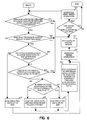
- Figure 6 is a flow diagram illustrating how the present invention deals with scheduling and when the mixer reads additional data.
- Figure 7 is a flow diagram illustrating the general steps followed to turn on the present invention's optional secure mode to add audio applications.
- Figure 8 illustrates an exemplary embodiment of the present invention with telephony applications transmitting and reading data to and from an ISDN device driver.
- Figure 9 illustrates an exemplary embodiment of the present invention for a general desktop use.
- a method and an apparatus for allowing multiple audio-video applications and/or audio-video devices to access and utilize an audio server are disclosed.
- Figure 2 illustrates a computer 200 with an exemplary implementation of the present invention.
- Computer 200 has CPU 202 coupled to memory device 204 through bus 203.
- Memory device 204 has a plurality of audio applications 215 1 , 215 2 ,..., 215 N contained in user space 208.
- Audio server (e.g. mixer and/or splitter) 212 and audio device driver 214 are contained in kernel space 210.
- the audio server 212 includes a data flow checker and adjuster 213 which monitors the flow of data to and from data queues 217, a setup application 219 for adding audio applications 215 1 , 215 2 ,..., 215 N to the mixer/splitter operations of audio server 212, and security application 221 for providing an optional secure mode preventing unauthorized audio applications from being added to the mixer/splitter operations of audio server 212.
- Data flow checker and adjuster 213 adjusts the flow of data by sending a message upstream or downstream instructing the upstream or downstream processes/devices to send more data or stop sending data depending on the current capacity of the data queues 217.
- the use of data streams in processing of audio data is well known in the art.
- Audio applications 215 1 , 215 2 ,..., 215 N transmit audio data to audio server 212 which in turn mixes the audio data and transmits the audio data to audio device 216 coupled to memory 204 via bus 218 through audio device driver 214.
- Audio device driver 214 is a software program which enables computer 200 to communicate with the audio device 216 which typically is a microphone, a speaker or any other device capable of accepting/outputting audio data. Audio server 212 may also be utilized when audio device 216 transmits information to audio applications 215 1 , 215 2 ,...215 N through audio device driver 214.
- audio applications 215 1 , 215 2 ,...215 N include, but are not limited to, Sun Microsystems, Inc.'s AUDIOTOOLTM, AUDIOPLAYTM and AUDIORECORDTM.
- An example of audio device driver 214 includes, but are not limited to, Sun Microsystems, Inc.'s a combination audio/dual basic rate interface (DBRI) device driver allowing applications to access audio and integrated services digital network (ISDN) functionality on SBUS equipped machines.
- DBRI combination audio/dual basic rate interface
- CPU 202 includes circuits that control the interpretation and the execution of instructions which carry out the mixing and splitting operations performed by audio server 212 and the transmission of data between audio applications 215 1 , 215 2 ,...215 N and audio device 216 through audio device driver 214.
- computer 200 may also include a number of peripheral devices including a display device.
- FIG. 3 is a flow diagram illustrating the general steps followed by the setup application of the present invention.
- setup application opens audio device driver and acquires a file descriptor associated with the audio device driver.
- application opens audio server 212 and acquires another file descriptor to identify the audio server.
- setup application 219 has two open file descriptors and the audio server is not yet involved with the audio device driver.
- setup application executes an input/output control command to add audio applications to the operations performed by the audio server.
- Audio servers support multiple I/O ports.
- the audio server is opened as was done in step 301.
- a separate unique file descriptor is obtained by the setup application from an operating system which controls execution of the audio applications for the second application.
- the second audio server port which has been opened is added to the mix of the audio server providing for two ports. This process can be repeated to support N audio server ports.
- a security application provides for an optional secure mode when adding additional audio applications to an audio mix. More specifically, when the secure mode is turned on, the security application turns away unauthorized audio applications requesting to be added to the audio mix. A more detailed description of the secure mode is illustrated in Figure 7 and the accompanying text.
- Figures 4a - 4c illustrate how packets of information are transmitted from the plurality of audio applications 215 1, 215 2 215 N to audio server 212 which, in turn, are mixed and transmitted to audio device driver 214.
- Figure 4a illustrates the process at time 0.
- Audio data is typically transmitted in packets 500 from the plurality of audio applications 215 1 , 215 2 ,...215 N to an audio device driver 214.
- audio packets are illustrated as boxes labeled P 1 ,..., P n .
- An arbitrary number of packets are transmitted down data streams on data queues 217.
- the packets may be of arbitrary size.
- Audio server 212 schedules a timer which activates audio server 212 to begin processing data and monitor data queues 217 to determine if there are any data packets in data queues 217. If there are data packets in data queues 217, then audio server 212 takes a certain portion of the data packets and sends that portion "downstream" to audio device driver 214 after the data has been mixed.
- audio server 212 If audio server 212 is activated too often (e.g. to begin processing data), then the queues may not fill fast enough with data packets 500, resulting in inefficient use of central processing unit (CPU) resources. If audio server 212 is not activated often enough, the data packets pile up in the data queues and the packets are not transmitted "downstream" at a fast enough rate to produce smooth audio output, introducing latency and possible breakup in the transmitted audio.
- the present invention utilizes a unique method of determining when to read data off the queues, mix it and send it "downstream" to audio device driver 214. The present invention's method assures that data is transmitted in a continuous stream. This method is described further in Figure 6.
- audio server 212 strips the packets of information off data queues 217.
- the packets retrieved are mixed to produce mixed packet M 1 .
- M 1 represents the sound that would be obtained if the three packets of data P 1 , P 2 and P 3 are mixed together.
- audio server 212 transmits packet M 1 down to audio device driver 214.
- audio server 212 has already read the next set of packets P 4 , P 5 and P 6 off of data queues Q1, Q2 and Q3 217 and the process is repeated.
- Figures 5a, 5b and 5c illustrate the splitting (e.g. cloning) function of audio server 212 of the present invention.
- speech recognition process 502 and Dual Tone Multi Frequency (DTMF, e.g. touch tone) detection process application 504 read data transmitted from ISDN (Integrated Services Digital Network) device driver 506. Packets P 1 , P 2 and P 3 are transmitted upstream from ISDN device driver 506 at time 0.
- DTMF Dual Tone Multi Frequency
- audio server 212 reads packet 1 as sent upstream by ISDN device driver 506 and duplicates or clones the packet into packets S 1 and S 2 .
- packets S1 and S2 are transmitted "upstream" to speech recognition process application 502 and DTMF detection process application 504 respectively.
- Audio server 212 continues to read packets being sent upstream from ISDN device driver 506 and continues cloning the packets for delivery to the telephony applications.
- data must not be read too fast or too slowly. For example, if audio server 212 is not reading packets coming upstream from ISDN device driver 506 fast enough, then ISDN device driver 506 may shut itself down and stop I/O due to flow control. In a worst case scenario, if ISDN device driver 506 does not shut itself down, then it will continue to output packets upstream. Consequently, telephony applications 502 and 504 will not be able to read all the packets in a timely fashion causing additional latency, e.g. delay, from when the packets were sent by ISDN device driver 506 and received by telephony applications 502 and 504. On the other hand, if audio server 212 attempts to read packets too quickly, then the packets will not arrive in time to be read causing inefficient use of CPU resources.
- audio server 212 will have no idea that telephony applications 502 and 504 have stopped and will continue to send data upstream. Eventually, data queues 217 upstream will fill up and audio server 212 recognizes that data queues 217 are filled. At this point, the present invention causes a message to be sent downstream to the audio device driver or ISDN device driver 506 asking them to stop sending any more additional packets. In an alternate embodiment, any additional data which are transmitted from the audio or ISDN device driver 506 are discarded.
- the present invention also converts "A-law”, “ ⁇ -law” and “linear Pulse Code Modulation” (PCM) audio data as it is transmitted back and forth between the audio applications and the audio device driver.
- A-law, ⁇ -law and linear PCM are digital representation of an analog audio signal, typically sampled at approximately 8 KHz. For every sample, the amplitude of the audio signal is assigned (quantized) a digital value. For these three encodings, the values used to represent the amplitude is a number between zero and +/ - 127. More detail may be found in the ITU (International Telecommunication Union) standard G.711, published 1988.
- the present invention in order to minimize the time necessary to convert between the digitized value and its amplitude, uses a pre-computed table of amplitude values for each encoding which can be indexed with the digitized value. Since audio applications identify what encoding they will use when they invoke audio server 212, audio server 212 can transparently convert the A-law, ⁇ -law and linear PCM data at the time the mix function is called within audio server 212.
- Figure 6 is a flow diagram illustrating the general steps followed by an embodiment of the data flow checker and adjuster of the present invention in scheduling the data flow for the mixing operation of the audio server. Since the transmission of audio data between the applications in user space and the audio device driver in kernel space are asynchronous, a mechanism must be put into place which determines when audio server 212 is to check the lower queues for upstream data coming from the audio device and the upper queues for downstream data coming from the audio applications and how often it must do so. As mentioned earlier, if audio server 212 checks the queues for data packets too quickly, then less than maximum amount of data packets will be processed by audio server 212 leading to inefficient use of CPU resources.
- audio server 212 checks for data packets in queues too slowly, then data packets are not processed fast enough and the queues may fill up. Once the queues are full, some data packets may be discarded from lack of being read. In the alternative, the audio device may shut itself down if none of the data packets are being read.
- step 601 if it is time for the data flow checker to check the data flow between the audio applications and the audio devices, then go to step 602.
- step 602 if the size of audio data in the output queue is less than the maximum size of data to be mixed in each round of mixing operations, then go to step 603.
- step 603 if upper channels do not have enough data in the queue for the audio server operation and in step 604, if the size of data in the audio device's output queue is greater than or equal to a predetermined minimum audio data size to be inserted in the audio device output queue (low water mark) 610, then in step 605, the audio server operation is performed.
- step 611 data is sent to the output queue.
- step 606 there is enough audio data in the upper channels to fill the output queue up to a predetermined minimum
- step 607 audio data is acquired from the upper channels to fill the output queues to the minimum audio data size. If there is not enough audio data in the upper channels to fill the output queues to a predetermined minimum audio data size, then in step 608, the present invention fills up the queue with a silent audio signal and sends out a message to the appropriate applications to notify them of the underflow condition in step 609 (allowing the process to start sending more data downstream).
- step 603 if the size of audio data in the output queue is less than the maximum and the channel has enough audio data in the queue for the audio server operation, then in step 610, audio server 212 inserts additional audio data in the output queue such that the output queue contains the maximum size of audio data to be mixed in each round of a mixing/splitting operation of audio server 212.
- step 602 if the size of data in the audio device's output queue is greater than or equal to the maximum size of audio data (in terms of micro seconds) to be mixed in each round of mixing operation (high water mark), then go to step 612.
- step 612 it is determined whether there are audio applications in the mixing operation. If there are none, then the process is completed. Otherwise, in step 613, the next mixer operation is scheduled and the process repeats itself.
- the asynchronisity of data flow is handled similarly for the splitting operation of the present invention.
- FIG. 7 is a flow diagram illustrating the general steps followed to turn on the optional secure mode of the present invention and to add audio applications.
- a security application defined as an application written by the user which runs in user space and implements some form of security policy, opens the audio server and acquires a corresponding file descriptor.
- the security application issues an input/output command to turn on the secure mode in audio server 212.
- the security application waits for other audio applications, defined as audio applications written by the user which runs in user space and is capable of communicating with the security application, to request permission to be added to the mix, defined as the current mixer/splitter session allowing for audio data sent to and from the audio device to be mixed and distributed to the audio applications.
- other audio applications defined as audio applications written by the user which runs in user space and is capable of communicating with the security application
- a requesting audio application makes a request to join the mix to the security application. If the request is not allowed, then the request is ignored and the security application returns to step 703. If the request is allowed, then the security application continues to step 705.
- step 705 security application issues an input/output command via the file descriptor to allow the requesting audio application to be added to the mix.
- the security application then returns to step 703 to await future requests.
- the present invention may be implemented for various applications.
- multiple telephony applications including telephone record process 800, telephone speech recognition process 502 and telephone DTMF (Dual Tone Multi Frequency, such as "touch tone") detection process 504 transmit data to ISDN device driver 506 through audio server 212 and read data from ISDN device driver 506 through audio server 212.
- DTMF Double Tone Multi Frequency, such as "touch tone”
- Telephone record process application 800 may be utilized to record a phone call on the computer.
- Telephone speech recognition process 502 may be used to recognize vocal commands by a user of a computer and to respond in accordance to that vocal command, for example, through an Interactive Voice Response (IVR) system.
- Telephone DTMF detection process application 504 may be utilized to scan for DTMF tone by determining if a "0" has been pressed or if a "1" has been selected.
- One or more of these telephony applications may have access to the same telephony data through ISDN 506 and audio server 212.
- desktop 900 may include software applications including, but not limited to ShowMeTM TV software program 902 and Contool 904 by Sun Microsystems, Inc. of Mountain View, California.
- ShowMeTM TV 902 is a computer program which displays television (TV) programs on a desktop. ShowMeTM TV 902 receives broadcast audio and video data over a network displayed on desktop 900 and sends audio data to audio device driver 214 through audio server 212.
- Contool 904 from Sun Microsystems, Inc. of Mountain View, California, is a software application which is designed to monitor various system events on a given computer. For example, Contool 904 may alert a user upon the occurrence of a certain predetermined event on a computer. To alert the user of an event, Contool 904 may enable a flashing message on the display screen of the computer or may display some other type of prompt to the user. For example, if a user in a network is attempting to communicate with another user in the network, Contool 904 may enable a prompt to be displayed to the latter user through his/her computer display device stating that another user wants to access the user. Instead of a visual prompt, Contool 904 may also enable an audio prompt to alert the user that another user in the network would like to access the user.
- Contool 904 may then alert the user of the security breach through, for example, some type of an audio prompt.
- exemplary general desktop applications such as ShowMeTM TV 902 may run a continuous loop of audio stream without the desktop being able to stop the audio stream. In such a case, if there is some type of a security breach or if a user desired to contact the user of desktop 900 through Contool 904, that information would be put on hold until ShowMeTM TV 902 has terminated its program.
- the present invention allows processing of multiple audio data streams.
- audio server 212 accepts audio data from audio device driver 212 for both ShowMeTM TV 902 and Contool 904.
Landscapes
- Engineering & Computer Science (AREA)
- Software Systems (AREA)
- Theoretical Computer Science (AREA)
- Physics & Mathematics (AREA)
- General Engineering & Computer Science (AREA)
- General Physics & Mathematics (AREA)
- Multimedia (AREA)
- Signal Processing (AREA)
- Data Exchanges In Wide-Area Networks (AREA)
- Computer And Data Communications (AREA)
- Telephonic Communication Services (AREA)
- Signal Processing For Digital Recording And Reproducing (AREA)
Applications Claiming Priority (2)
| Application Number | Priority Date | Filing Date | Title |
|---|---|---|---|
| US674353 | 1996-07-01 | ||
| US08/674,353 US6405255B1 (en) | 1996-07-01 | 1996-07-01 | Mixing and splitting multiple independent audio data streams in kernel space |
Publications (2)
| Publication Number | Publication Date |
|---|---|
| EP0817045A2 true EP0817045A2 (de) | 1998-01-07 |
| EP0817045A3 EP0817045A3 (de) | 2002-11-06 |
Family
ID=24706259
Family Applications (1)
| Application Number | Title | Priority Date | Filing Date |
|---|---|---|---|
| EP97304702A Withdrawn EP0817045A3 (de) | 1996-07-01 | 1997-06-30 | Mischung und Trennung mehrerer unabhängiger Audiodatenströme in einem Betriebssystemkern |
Country Status (4)
| Country | Link |
|---|---|
| US (1) | US6405255B1 (de) |
| EP (1) | EP0817045A3 (de) |
| JP (1) | JPH113302A (de) |
| DE (1) | DE817045T1 (de) |
Cited By (5)
| Publication number | Priority date | Publication date | Assignee | Title |
|---|---|---|---|---|
| US6311161B1 (en) * | 1999-03-22 | 2001-10-30 | International Business Machines Corporation | System and method for merging multiple audio streams |
| WO2001050598A3 (en) * | 2000-01-05 | 2002-01-31 | True Dimensional Sound Inc | Audio device driver |
| WO2001050243A3 (de) * | 2000-01-05 | 2002-04-18 | Siemens Ag | Flusskontrolle bei i/o empfangsüberlast |
| US6714826B1 (en) | 2000-03-13 | 2004-03-30 | International Business Machines Corporation | Facility for simultaneously outputting both a mixed digital audio signal and an unmixed digital audio signal multiple concurrently received streams of digital audio data |
| US8781612B2 (en) | 2008-07-09 | 2014-07-15 | Nxp, B.V. | Method and device for digitally processing an audio signal and computer program product |
Families Citing this family (26)
| Publication number | Priority date | Publication date | Assignee | Title |
|---|---|---|---|---|
| US6961631B1 (en) * | 2000-04-12 | 2005-11-01 | Microsoft Corporation | Extensible kernel-mode audio processing architecture |
| US6646195B1 (en) * | 2000-04-12 | 2003-11-11 | Microsoft Corporation | Kernel-mode audio processing modules |
| US7584291B2 (en) * | 2000-05-12 | 2009-09-01 | Mosi Media, Llc | System and method for limiting dead air time in internet streaming media delivery |
| US20020120747A1 (en) * | 2001-02-23 | 2002-08-29 | Frerichs David J. | System and method for maintaining constant buffering time in internet streaming media delivery |
| US7631088B2 (en) * | 2001-02-27 | 2009-12-08 | Jonathan Logan | System and method for minimizing perceived dead air time in internet streaming media delivery |
| JP4254071B2 (ja) * | 2001-03-22 | 2009-04-15 | コニカミノルタビジネステクノロジーズ株式会社 | プリンタ,サーバ,監視装置,プリントシステムおよび監視プログラム |
| TW580812B (en) * | 2002-06-24 | 2004-03-21 | Culture Com Technology Macao L | File-downloading system and method |
| US20050027838A1 (en) * | 2003-07-29 | 2005-02-03 | Magid Robert Mark | System and method for intercepting user exit interfaces in IMS programs |
| JP2006033356A (ja) * | 2004-07-15 | 2006-02-02 | Renesas Technology Corp | 音声データ処理装置 |
| US7711952B2 (en) * | 2004-09-13 | 2010-05-04 | Coretrace Corporation | Method and system for license management |
| US20060285701A1 (en) * | 2005-06-16 | 2006-12-21 | Chumbley Robert B | System and method for OS control of application access to audio hardware |
| US7813823B2 (en) * | 2006-01-17 | 2010-10-12 | Sigmatel, Inc. | Computer audio system and method |
| US7706903B2 (en) * | 2006-04-13 | 2010-04-27 | International Business Machines Corporation | Selective muting of applications |
| US8272048B2 (en) * | 2006-08-04 | 2012-09-18 | Apple Inc. | Restriction of program process capabilities |
| US8561199B2 (en) * | 2007-01-11 | 2013-10-15 | International Business Machines Corporation | Method and system for secure lightweight stream processing |
| US8954178B2 (en) * | 2007-09-30 | 2015-02-10 | Optical Fusion, Inc. | Synchronization and mixing of audio and video streams in network-based video conferencing call systems |
| US8243119B2 (en) * | 2007-09-30 | 2012-08-14 | Optical Fusion Inc. | Recording and videomail for video conferencing call systems |
| US8732236B2 (en) * | 2008-12-05 | 2014-05-20 | Social Communications Company | Managing network communications between network nodes and stream transport protocol |
| KR101490548B1 (ko) * | 2008-12-05 | 2015-02-05 | 소우셜 커뮤니케이션즈 컴퍼니 | 실시간 커널 |
| US20110119102A1 (en) * | 2009-11-17 | 2011-05-19 | Sunstein Kann Murphy & Timbers LLP | Paperless Docketing Workflow System |
| WO2012118917A2 (en) | 2011-03-03 | 2012-09-07 | Social Communications Company | Realtime communications and network browsing client |
| US8781613B1 (en) | 2013-06-26 | 2014-07-15 | Applifier Oy | Audio apparatus for portable devices |
| US9152374B2 (en) * | 2013-06-17 | 2015-10-06 | Nvidia Corporation | Control and capture of audio data intended for an audio endpoint device of an application executing on a data processing device |
| FR3034220B1 (fr) * | 2015-03-27 | 2017-03-10 | Damien Plisson | Amelioration d'emission de flux multimedia |
| US10776072B2 (en) | 2016-03-29 | 2020-09-15 | Intel Corporation | Technologies for framework-level audio device virtualization |
| CN112423076B (zh) * | 2020-11-18 | 2023-05-05 | 湖南嘉加智能科技有限公司 | 一种音频投屏同步控制方法、设备及计算机可读存储介质 |
Citations (1)
| Publication number | Priority date | Publication date | Assignee | Title |
|---|---|---|---|---|
| EP0550196A2 (de) * | 1991-12-31 | 1993-07-07 | International Business Machines Corporation | Personalcomputer mit verallgemeinerter Datenstrom-Anordnung für Multimedia-Einrichtungen |
Family Cites Families (33)
| Publication number | Priority date | Publication date | Assignee | Title |
|---|---|---|---|---|
| US5485409A (en) * | 1992-04-30 | 1996-01-16 | International Business Machines Corporation | Automated penetration analysis system and method |
| US5519833A (en) * | 1992-08-13 | 1996-05-21 | Computervision Corporation | Distributed data processing system providing a distributed stream software environment to enable application on a first system to use driver on a second system |
| JP3255308B2 (ja) * | 1992-12-18 | 2002-02-12 | ソニー株式会社 | データ再生装置 |
| EP0640909B1 (de) * | 1993-07-30 | 2001-05-16 | Texas Instruments Incorporated | Modulare Audiodaten-Verarbeitungsarchitektur |
| US5847765A (en) * | 1993-11-12 | 1998-12-08 | Nec Corporation | Moving picture decoding control system |
| JPH07220452A (ja) * | 1993-12-17 | 1995-08-18 | Imix Inc | ビデオ編集及び実時間処理のための方法及び装置 |
| JPH07219970A (ja) * | 1993-12-20 | 1995-08-18 | Xerox Corp | 加速フォーマットでの再生方法及び再生装置 |
| US5584023A (en) * | 1993-12-27 | 1996-12-10 | Hsu; Mike S. C. | Computer system including a transparent and secure file transform mechanism |
| KR960008470B1 (en) * | 1994-01-18 | 1996-06-26 | Daewoo Electronics Co Ltd | Apparatus for transferring bit stream data adaptively in the moving picture |
| JP3488500B2 (ja) * | 1994-02-07 | 2004-01-19 | 富士通株式会社 | 分散ファイルシステム |
| JP3762430B2 (ja) * | 1994-02-25 | 2006-04-05 | コーニンクレッカ フィリップス エレクトロニクス エヌ ヴィ | データパケットを伝送する方法および装置 |
| US5583652A (en) * | 1994-04-28 | 1996-12-10 | International Business Machines Corporation | Synchronized, variable-speed playback of digitally recorded audio and video |
| US5481719A (en) * | 1994-09-09 | 1996-01-02 | International Business Machines Corporation | Exception handling method and apparatus for a microkernel data processing system |
| US5815634A (en) * | 1994-09-30 | 1998-09-29 | Cirrus Logic, Inc. | Stream synchronization method and apparatus for MPEG playback system |
| US5734731A (en) * | 1994-11-29 | 1998-03-31 | Marx; Elliot S. | Real time audio mixer |
| US5768126A (en) * | 1995-05-19 | 1998-06-16 | Xerox Corporation | Kernel-based digital audio mixer |
| US5703794A (en) * | 1995-06-20 | 1997-12-30 | Microsoft Corporation | Method and system for mixing audio streams in a computing system |
| US5920572A (en) * | 1995-06-30 | 1999-07-06 | Divicom Inc. | Transport stream decoder/demultiplexer for hierarchically organized audio-video streams |
| US5899987A (en) * | 1995-10-03 | 1999-05-04 | Memco Software Ltd. | Apparatus for and method of providing user exits on an operating system platform |
| US5815707A (en) * | 1995-10-19 | 1998-09-29 | Hewlett-Packard Company | Dynamic function replacement for streams framework |
| US6070198A (en) * | 1995-10-19 | 2000-05-30 | Hewlett-Packard Company | Encryption with a streams-based protocol stack |
| US6098112A (en) * | 1995-10-19 | 2000-08-01 | Hewlett-Packard Company | Streams function registering |
| US6047323A (en) * | 1995-10-19 | 2000-04-04 | Hewlett-Packard Company | Creation and migration of distributed streams in clusters of networked computers |
| US6122668A (en) * | 1995-11-02 | 2000-09-19 | Starlight Networks | Synchronization of audio and video signals in a live multicast in a LAN |
| US5726989A (en) * | 1995-11-06 | 1998-03-10 | Stellar One Corporation | Method for ensuring synchronization of MPEG-1 data carried in an MPEG-2 transport stream |
| US5956088A (en) * | 1995-11-21 | 1999-09-21 | Imedia Corporation | Method and apparatus for modifying encoded digital video for improved channel utilization |
| US5892506A (en) * | 1996-03-18 | 1999-04-06 | Discreet Logic, Inc. | Multitrack architecture for computer-based editing of multimedia sequences |
| US5894557A (en) * | 1996-03-29 | 1999-04-13 | International Business Machines Corporation | Flexible point-to-point protocol framework |
| US5801685A (en) * | 1996-04-08 | 1998-09-01 | Tektronix, Inc. | Automatic editing of recorded video elements sychronized with a script text read or displayed |
| US5768527A (en) * | 1996-04-23 | 1998-06-16 | Motorola, Inc. | Device, system and method of real-time multimedia streaming |
| US6137834A (en) * | 1996-05-29 | 2000-10-24 | Sarnoff Corporation | Method and apparatus for splicing compressed information streams |
| US5946487A (en) * | 1996-06-10 | 1999-08-31 | Lsi Logic Corporation | Object-oriented multi-media architecture |
| US5918228A (en) * | 1997-01-28 | 1999-06-29 | International Business Machines Corporation | Method and apparatus for enabling a web server to impersonate a user of a distributed file system to obtain secure access to supported web documents |
-
1996
- 1996-07-01 US US08/674,353 patent/US6405255B1/en not_active Expired - Lifetime
-
1997
- 1997-06-27 JP JP9186074A patent/JPH113302A/ja active Pending
- 1997-06-30 DE DE0817045T patent/DE817045T1/de active Pending
- 1997-06-30 EP EP97304702A patent/EP0817045A3/de not_active Withdrawn
Patent Citations (1)
| Publication number | Priority date | Publication date | Assignee | Title |
|---|---|---|---|---|
| EP0550196A2 (de) * | 1991-12-31 | 1993-07-07 | International Business Machines Corporation | Personalcomputer mit verallgemeinerter Datenstrom-Anordnung für Multimedia-Einrichtungen |
Cited By (5)
| Publication number | Priority date | Publication date | Assignee | Title |
|---|---|---|---|---|
| US6311161B1 (en) * | 1999-03-22 | 2001-10-30 | International Business Machines Corporation | System and method for merging multiple audio streams |
| WO2001050598A3 (en) * | 2000-01-05 | 2002-01-31 | True Dimensional Sound Inc | Audio device driver |
| WO2001050243A3 (de) * | 2000-01-05 | 2002-04-18 | Siemens Ag | Flusskontrolle bei i/o empfangsüberlast |
| US6714826B1 (en) | 2000-03-13 | 2004-03-30 | International Business Machines Corporation | Facility for simultaneously outputting both a mixed digital audio signal and an unmixed digital audio signal multiple concurrently received streams of digital audio data |
| US8781612B2 (en) | 2008-07-09 | 2014-07-15 | Nxp, B.V. | Method and device for digitally processing an audio signal and computer program product |
Also Published As
| Publication number | Publication date |
|---|---|
| DE817045T1 (de) | 1998-07-16 |
| US6405255B1 (en) | 2002-06-11 |
| JPH113302A (ja) | 1999-01-06 |
| EP0817045A3 (de) | 2002-11-06 |
| US20020032753A1 (en) | 2002-03-14 |
Similar Documents
| Publication | Publication Date | Title |
|---|---|---|
| US6405255B1 (en) | Mixing and splitting multiple independent audio data streams in kernel space | |
| US5913062A (en) | Conference system having an audio manager using local and remote audio stream state machines for providing audio control functions during a conference session | |
| EP0620935B1 (de) | Anrufverarbeitung in einem netz für kollaborative verarbeitung. | |
| US6209021B1 (en) | System for computer supported collaboration | |
| US8149261B2 (en) | Integration of audio conference bridge with video multipoint control unit | |
| US7356409B2 (en) | Manipulating a telephony media stream | |
| US6084911A (en) | Transmission of coded and compressed voice and image data in fixed bit length data packets | |
| GB2289186A (en) | Collaborative working method and system | |
| US6282715B1 (en) | System and method for user-server telecommunication in accordance with performance capabilities of a controller | |
| JP5604617B2 (ja) | マルチポイントビデオ会議ユニット機能を提供するデバイス、方法及び媒体 | |
| EP1872362A1 (de) | Verfahren und vorrichtung für multimodale voice-und web-dienste | |
| WO2010096815A1 (en) | Video voicemail and menu system | |
| US5740384A (en) | Interactive multimedia system using active backplane having programmable interface to reconfigure the media stream produced by each component | |
| WO1998009213A1 (en) | Virtualized multimedia connection system | |
| Arons | Tools for building asynchronous servers to support speech and audio applications | |
| US6298119B1 (en) | System and method for digital telephone trouble reporting | |
| CN114172879A (zh) | 基于安卓系统远程桌面的音频播放重定向系统和方法 | |
| CN116136751B (zh) | 一种用于主屏以及次屏跨操作系统的镜像方法 | |
| US12531918B2 (en) | Mixing and transmitting multiplex audiovisual information | |
| US20100217873A1 (en) | Method and system for sip access to media and conferences | |
| CN116962582A (zh) | 一种交互方法、装置、网络设备及可读存储介质 | |
| Baurens | Groupware | |
| Bennett et al. | Planning Considerations for the Deployment of LAN-based Videoconferencing and Related Applications | |
| Krishnaswamy et al. | Multimedia bridging: A structured view | |
| Dittrich et al. | The Berkom Multimedia Collaboration Teleservice |
Legal Events
| Date | Code | Title | Description |
|---|---|---|---|
| PUAI | Public reference made under article 153(3) epc to a published international application that has entered the european phase |
Free format text: ORIGINAL CODE: 0009012 |
|
| AK | Designated contracting states |
Kind code of ref document: A2 Designated state(s): AT BE CH DE DK ES FI FR GB GR IE IT LI LU MC NL PT SE |
|
| AX | Request for extension of the european patent |
Free format text: AL;LT;LV;SI |
|
| ITCL | It: translation for ep claims filed |
Representative=s name: BARZANO' E ZANARDO MILANO S.P.A. |
|
| TCNL | Nl: translation of patent claims filed | ||
| EL | Fr: translation of claims filed | ||
| DET | De: translation of patent claims | ||
| PUAL | Search report despatched |
Free format text: ORIGINAL CODE: 0009013 |
|
| AK | Designated contracting states |
Kind code of ref document: A3 Designated state(s): AT BE CH DE DK ES FI FR GB GR IE IT LI LU MC NL PT SE |
|
| AX | Request for extension of the european patent |
Free format text: AL;LT;LV;SI |
|
| 17P | Request for examination filed |
Effective date: 20030409 |
|
| AKX | Designation fees paid |
Designated state(s): DE FR GB IT NL SE |
|
| RBV | Designated contracting states (corrected) |
Designated state(s): DE FR GB IT NL |
|
| 17Q | First examination report despatched |
Effective date: 20040716 |
|
| 17Q | First examination report despatched |
Effective date: 20040716 |
|
| STAA | Information on the status of an ep patent application or granted ep patent |
Free format text: STATUS: THE APPLICATION IS DEEMED TO BE WITHDRAWN |
|
| 18D | Application deemed to be withdrawn |
Effective date: 20070920 |