EP0817024A2 - Verfahren und Vorrichtung zur Leistungsverbesserung von Objektanrufen - Google Patents
Verfahren und Vorrichtung zur Leistungsverbesserung von Objektanrufen Download PDFInfo
- Publication number
- EP0817024A2 EP0817024A2 EP97303232A EP97303232A EP0817024A2 EP 0817024 A2 EP0817024 A2 EP 0817024A2 EP 97303232 A EP97303232 A EP 97303232A EP 97303232 A EP97303232 A EP 97303232A EP 0817024 A2 EP0817024 A2 EP 0817024A2
- Authority
- EP
- European Patent Office
- Prior art keywords
- client
- local
- servant
- representation
- dispatch
- Prior art date
- Legal status (The legal status is an assumption and is not a legal conclusion. Google has not performed a legal analysis and makes no representation as to the accuracy of the status listed.)
- Withdrawn
Links
Images




Classifications
-
- G—PHYSICS
- G06—COMPUTING OR CALCULATING; COUNTING
- G06F—ELECTRIC DIGITAL DATA PROCESSING
- G06F9/00—Arrangements for program control, e.g. control units
- G06F9/06—Arrangements for program control, e.g. control units using stored programs, i.e. using an internal store of processing equipment to receive or retain programs
- G06F9/46—Multiprogramming arrangements
- G06F9/54—Interprogram communication
- G06F9/547—Remote procedure calls [RPC]; Web services
- G06F9/548—Object oriented; Remote method invocation [RMI]
Definitions
- the present invention relates generally to the distributed object oriented computing systems. More particularly, methods, data structures and devices are disclosed that are arranged to improve the performance of object invocation in distributed object systems.
- a computing environment in which objects are located on different computers linked by a network is typically referred to as a client-server computing environment.
- Some of the computers act as providers of services or functionality to other computers.
- the providers of service or functionality are known as “servers”, and the consumers of the service or functionality are called “clients”.
- the client-server model may also be generalized to the case where distinct programs running on the same computer are communicating with one another through some protected mechanism and are acting as providers and consumers of service or functionality.
- Attempts to provide such a distributed system have been made using object-oriented methodologies that are based upon a client-server model in which server objects provide interfaces to client objects that make requests of the server objects.
- the servers are objects consisting of data and associated methods.
- the client objects obtain access to the functionalities of the server objects by executing calls on them, which calls are mediated by the distributed system.
- the server object executes the appropriate method and transmits the result back to the client object.
- the client object and server object communicate through an Object Request Broker (ORB) which is used to locate the various distributed objects and to establish communications between objects.
- Distributed objects may exist anywhere in a network, as for example in the address space of the client, in multiple address spaces on the client machine, and in multiple machines across the network.
- OMG Object Management Group
- ORB Object Request Broker
- Object Services Object Services
- Common Facilities Object Services
- Application Objects The Object Request Broker provides basic object communications and management services, thereby forming the basis of a distributed object system.
- CORBA Common Object Request Broker Architecture
- the architecture is arranged such that regardless of the relative locations of a client and a server, a predetermined invocation path is used to route a request from a client to a server. That is, a request is routed through substantially the same layers of the system, regardless of whether the client and the server are in the same or different processes.
- This use of the same path for both local calls, i.e. the calls to servers located in the same process, and remote calls, i.e. calls to servers located in different processes is inefficient.
- a distributed client/server computing system which includes a plurality of client representations, a remote method table and a local method table.
- the distributed client/server based computing system is arranged to utilize object references which uniquely identify associated objects. Each object reference has an associated client representation, whereas selected client representations may be associated with a plurality of distinct object references.
- the remote method table is arranged to identify remote dispatch methods associated with a first set of the client representations. The remote dispatch methods are arranged to cause invocation requests to be routed through a transport layer.
- the local method table is arranged to identify local dispatch methods associated with a second set of the client representations.
- FIG. 1a diagrammatically illustrates the overall architecture of a representative distributed object system suitable for implementing the present invention.
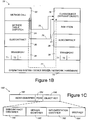
- FIG. 1b diagrammatically illustrates some possible flow paths that a request from a client to a servant object may follow within such an architecture that includes a three level dispatch mechanism.
- FIG. 1c shows one object reference data structure that may be used by a client to refer to a servant object.
- a distributed object system 10 typically includes an Object Request Broker (ORB) 11 as is symbolically illustrated in FIG. 1a.
- ORB 12 provides all of the location and transport mechanisms and facilities necessary to deliver a call from a client to a servant (target object) and to return a response to the client, as will be discussed below with reference to FIG. 1b.
- the client and servant may be located in the same process, in different processes on the same machine, or on completely different machines.
- client 20 may be any code that invokes a operation on a distributed object and thus may or may not take the form of distributed object or a process.
- Normal object implementation 14 is a representation of an object type defined in a traditional object programming language, such as C++. A wide variety of representations are possible.
- an object implementation 14 may be a simple C++ object type that has been provided by an application developer.
- an implementation for an object type may be developed within a visual application builder 15. This visual application builder allows a developer to visually select existing object types from a catalog and graphically connect the services provided by one object to the services needed by another (attributes, arguments, etc.) in order to create a new implementation for an object type.
- An object development facility 16 may be used to simplify the creation and the installation of distributed objects. It is used to "wrap" or encapsulate developer objects in distributed object code. As such, object development facility 16 may be used to transform a developer object into an ORB object implementation 14.
- ORB object implementation 14 is presented as a server as shown by its location in the diagram.
- a developer uses an interface definition language to define an interface for an ORB object, provides a developer object implementation that implements that object's behavior, and then uses the object development facility in order to produce an ORB object implementation 14. At run time, an instance of this ORB object (a servant object) is created that will utilize this ORB object implementation 14. It should be appreciated that the object development facility may also be used to create objects that take the role of clients at some point.
- Client 20 communicates with a servant by way of a stub 21, a method table dispatch 24, a subcontract layer 36, possibly a filter 40, and a transport layer 38.
- Stub 21 includes a surrogate 22, a method table 24, and a stub function 25.
- Client 20 communicates initially with surrogate 22 which appears to the client as the server object.
- client 20 may communicate directly with the server object through a dynamic invocation interface (DII) 26 instead of through surrogate 22, method table 24, and stub function 25.
- Dynamic invocation interface 26 is used to enable clients, as for example client 20, to construct dynamic requests.
- DII dynamic invocation interface
- Subcontract layer 36 provides the functionality required by an object in order to utilize subcontracts to implement various services (or features or object mechanisms) named by a particular subcontract, as described in greater detail in above-referenced U.S. Patent Application Serial No. 08/554,794, filed 11/07/95.
- a subcontract identifies a quality of service provided by the distributed object system that may be utilized by an individual object. For example, a subcontract may identify that the feature of security is to be used for a particular object.
- Filter 40 if being used, may perform a variety of tasks, such as compression, encryption, tracing, or debugging, which are to be applied to communications to and from an object.
- Transport layer 38 operates to marshal, unmarshal and physically transport information to and from a servant that typically does not share the same process as a client.
- a standard implementation suite 28 represents a set of subcontracts that interact with ORB objects 14 in identical ways, as for example object key management. It should be duly noted that a subcontract may belong to multiple implementation suites. Hence, other implementation suites that utilize different subcontracts are possible.
- a skeleton which may take the form of either static skeleton 32 or dynamic skeleton 30 is used to transform requests into a format required by a servant object 14. Thus, skeletons 32, 30 call an appropriate servant object 14.
- Static skeleton 32 is used to call interface-specific object implementations 14, while dynamic skeleton 30 is used generically when interface-specific objects are not available.
- An ORB interface 34 is the interface that goes directly to the ORB that is the same for all ORBs and does not depend upon an object's interface or object adapter.
- An ORB Daemon 46 is responsible for ensuring that object servers are active when invoked by clients. A technique for starting object servers is disclosed in U.S. Patent Application Serial No. 08/408,645.
- Secure Protocol 42 is a secure interoperability protocol that secures the internet inter-ORB protocol and helps to transmit information through transport layer 38 in a secure fashion. This may mean integrity protection, confidentiality, etc.
- the internet inter-ORB protocol is a protocol that typically communicates between processes on different machines. However, in some cases, the internet inter-ORB protocol may communicate between process on the same machine.
- the security server 54 is a security administration server that secures the services that are used between processes on different computers.
- Typecode/Any module 44 implements typecode and "Any" objects.
- Typecode describes an Interface Definition Language (IDL) data type, allowing type descriptions to be transmitted between clients and servers.
- IDL Interface Definition Language
- An instance of an IDL data type may be encapsulated by an "Any" object.
- An Any object refers to typecode of the encapsulated data, and a generic encoding of the data.
- An implementation repository 50 is used to store information relating to object servers. Specifically, implementation repository 50 stores the information needed to start a server process. For example, implementation repository 50 stores information such as the location of the server program, any arguments to the program, and any environment variables to pass to the program, etc.
- Simple persistence 56 uses an Interface Definition Language (IDL)-defined type and the output from running that IDL type through the IDL compiler, together with a portion of additional code so that an IDL-defined type can be read from, and written to, disk.
- a name server 52 is used to name ORB objects.
- a client as for example client 20, may use name server 52 to find a desired object by name.
- Name server 52 returns an object reference, which in turn may be used to send requests to that object.
- An Interface Repository 48 (IFR) knows about all interfaces for all objects within the distributed object system.
- a request made by a client using a method table (“m-table") dispatch will pass through a variety of the aforementioned layers of the architecture on its way to the servant as diagrammatically illustrated in FIG. 1b.
- the request is initiated by a client and may take any suitable form.
- the form of the request will depend to a large extent upon the nature of the programming language used to create the client.
- the request may take the form of a C++ method call 62.
- the call is made to a designated object reference taking the form of a surrogate.
- the surrogate includes methods that comply with the object's interface.
- the object reference used at different locations within a distributed object system may vary significantly in appearance.
- the client side object reference is a dual pointer (referred to herein as a "fat pointer").
- a fat pointer contains two distinct pointers.
- a first pointer, or location indicator points to a client representation ("client rep") associated with the referenced object.
- a second pointer, or location indicator points to a method table of the method table dispatch 24 that is associated with the referenced object.
- client rep client representation
- a client representation is an object that has methods which support invocation as well as CORBA defined "pseudo" object reference operations. These operations include, but are not limited to, a duplicate method, a release method, a narrow method, a hash method, and an is_equivalent method.
- the method table dispatch mechanism 24 uses a method table that contains a list of pointers, or location indicators, to stub functions 25, one of which is associated with the method to be invoked.
- Stub functions 25 receive a function or procedure call in the "native" language of the client process, then use either a subcontract layer 36 or a native call to eventually call the corresponding servant object.
- the native language may be any suitable language, as for example a language such as C++.
- Method table dispatch 24 determines the appropriate stub function 25 to process the method call, and then pairs the method call with the appropriate stub function 25.
- a local stub function is called.
- the local stub function sends the method call directly to servant object 78.
- a remote stub function is called.
- the remote stub function invokes the client representation, which delivers the invocation to servant object 78.
- Subcontracts implemented by subcontract layer 36 are logic modules which provide control of the basic mechanisms of object invocation and argument passing that are important in distributed object systems.
- a subcontract implemented by subcontract layer 36 determines a specific quality of service for use by an object.
- a subcontract is uniquely identified by a subcontract identifier, which is typically embedded in an object reference.
- a quality of service is a set of service properties. Among possible service properties which are selectable are qualities relating to server activation, security, transactions, filterability, and clean shut-down.
- Subcontracts are configured such that certain qualities of service are available. With predetermined qualities of service, the overhead associated with processing individual service properties is reduced. Realistically, only "reasonable" or commonly used combinations of service properties are supported with subcontracts. However, subcontracts may be created to meet the specific requirements of a given distributed object system.
- the identification of an appropriate subcontract in subcontract layer 36 may be thought of as the identification of a desired function that is unique to that subcontract. For example, a marshal function or an unmarshal function is defined for each subcontract.
- a subcontract marshal function is used by a stub to marshal an object reference so that it may be transmitted to another address space, or domain.
- the object reference is typically processed by a transport mechanism in transport layer 38.
- a transport mechanism such as T1, T2, etc., which is a part of the transport layer 38, is used to marshal and physically transport information to and from servant objects.
- Information i.e. the object reference or the request, is converted into protocols appropriate to a given domain.
- protocols may include, but are not limited to, Ethernet protocols and internet interoperable protocols (IIOPs). In some uncommon cases, protocols may even entail the use of electronic mail to transmit instructions to be implemented on a server.
- the transport mechanism then transports information through any combination of an operating system, a device driver, or a network, that are all a part of hardware 70 used by the client side of a distributed object system.
- One transport mechanism which does not require a conversion of information into a protocol appropriate to a domain other than the one on which information originates is termed a "door.”
- Doors are essentially gateways between two different processes on the same host. The use of doors eliminates the need for a conversion of information into a canonical implementation in transport layer 38, as there is no need to encode information into a protocol which may be used by a different machine by virtue of the fact that information is remaining on the same host and therefore does not require a change of domain. Hence, information may simply be "flattened out,” or marshaled into a stream which is not encoded for use by a different machine, and passed between the two processes on the host.
- transport layer 38 provides the functionality needed for the end point to be created by subcontract layer 36.
- a door end point is typically created by subcontract layer 36
- other end points including network and TCP/IP end points, are typically created by transport layer 38.
- End points are a part of, transport layer 38.
- End points are essentially ports which receive information from a different domain. After an end point in transport layer 38 receives information transported from a different domain, the end point then dispatches the information from transport layer 38 to subcontract layer 36. Subcontract layer 36, or more specifically the subcontract in subcontract layer 36 which receives the information, then dispatches the information to the skeleton and the servant.
- Subcontract layer 36 provides the functionality to unmarshal at least some of the information it has received. That is, subcontract layer 36 unmarshals at least part of the request. Then, the request is dispatched to a skeleton 31 which transforms the request into an implementation specific format required by servant object 78.
- the skeleton may either be a static skeleton or a dynamic skeleton as described above.
- a remote request must be routed through the client side and the server side as described above.
- the method call 62 is received, method table dispatch layer 24 is used to identify an appropriate subcontract prior to the selection of a transport mechanism in transport layer 38 which marshals the request and prepares it for transport to another domain.
- the marshaled request is transported to the server side where it is received on an end point which is a part of transport layer 38.
- An appropriate end point receives information transported across a wire, and information is dispatched from transport layer 38 to subcontract layer 36, which provides the functionality to at least partially unmarshal the information it has received.
- the subcontract then dispatches the request to skeleton 31 which transforms the request into a specific format required by servant object 78. This path is shown by arrow 77, and is the path which may be taken by both remote and local requests.
- a client and a server are in a local process, i.e. both the client and the server are in the same process, the use of the path shown by arrow 77 as described above is unnecessarily complex. If it is known that the client and the server are in the same process, it is possible to shorten the invocation, or flow, path of a request for service. If a local process may be identified when an object reference is created, shortened flow paths, i.e. the paths represented by arrows 75 and 76, may be taken to send a request from what is a client to a server which are on the same host. The path represented by arrow 76 is more likely to be taken, as it uses subcontract layer 36 to identify an appropriate subcontract. However, in situations in which an appropriate subcontract does not need to be explicitly identified, the path represented by arrow 75 may be taken.
- FIG. 1c will now be used to describe an embodiment of an object reference.
- object references may take a variety of forms depending upon the location within the process that they are being held at any given time.
- object reference 150 includes a host identifier 152, a port designation 154, and an object key 156.
- Object key 156 includes a subcontract identifier 158, a server identifier 160, an implementation identifier 162, and a user key 164.
- Host identifier 152 denotes a particular computer in a network, while port designation 154 identifies the port of the selected computer which is to be used for communication.
- Object key 156 provides further identifying information used in order to locate a desired servant object on its host machine.
- Server identifier 160 names a particular process or program in which the servant object resides, while user key 164 is a unique number or string used to locate the servant within the process named by server identifier 160.
- Subcontract identifier 158 is used to attach the protocol of a particular subcontract and its associated services with a servant, and implementation identifier 162 names an implementation of an interface that is to be used with that servant object.
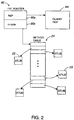
- the object reference used by a client to identify a servant to be invoked may be thought of as a "dual" pointer or "fat pointer” 90. That is, a pointer structure which contains two "normal” pointers.
- the fat pointer 90 may also be considered to be a CORBA object reference.
- the size of each of the pointers will be dictated by the requirements of the system.
- the first pointer in fat pointer 90 is a client representation pointer 90a that points to a client representation (“client rep") 94.
- client rep client representation pointer 90
- the second pointer in fat pointer 90 is an m-table pointer 90b that points to an m-table 24 associated with client representation 94.
- a client representation 94 is an object which has methods to support object invocation and CORBA defined "pseudo" object reference operations which include duplicate and narrow methods.
- Client representation 94 may be thought of as a representation of the servant object on the client.
- client representation 94 is associated with a servant.
- Each object reference has a single associated client representation 94, whereas each client representation 94 may be associated with more than one distinct object reference.
- the subcontract of client representation 94 determines whether client representation 94 is associated with more than one object reference.
- Each client representation 94 generally has an associated m-table.
- the associated m-table may be either a local m-table or a remote m-table. In some embodiments, multiple local or remote m-tables may be available. Some client representations may have more than one associated m-table. Whether client representation 94 stores and maintains both a local m-table and a remote m-table depends upon the implementation of the subcontract with which client representation 94 is associated.
- m-table 24 contains an array of pointers to methods used to determine the dispatch. The dispatch is independent of client representation 94, as client representation 94 is an argument which is passed to stubs, or stub functions, 25.
- the m-table used to determine the dispatch may point to stub functions 25 for the operation desired. Alternately, rather than pointing directly to stub functions 25, the m-table may point to other m-tables which, in turn, contain arrays of pointers to stub functions 25 used to determine the dispatch.
- Each interface in a distributed object system may be associated with at least one m-table. However, it should be appreciated that some interfaces may not have any associated m-tables. M-tables are typically used with compiled, or static, stubs. Hence, for embodiments in which there are no compiled stubs, an interface may not have an associated m-table. Typically, each interface is associated with a single local m-table and a single remote m-table, although in some cases, an interface may be associated with more than one local m-table.
- m-tables may take on many different representations.
- m-tables may be "flat," or such that m-tables point directly to stub-functions.
- m-tables may be tree-structured, i.e. m-tables may point to data structures which may point to stub functions 25 which are not pointed to directly by m-tables. It should be appreciated that a pointer for each method of a given interface is accessible from an m-table associated with the interface. Hence, if an m-table is tree-structured, it may be necessary to traverse the tree-structure of the m-table in order to find a pointer associated with the method.
- one advantage of the proposed architecture is that by enabling a distinction to be made between local and remote procedures, it becomes possible to determine the best flow path or invocation path for a request received by the client.
- a received request is routed through at least the transport layer of both the client and the server, and when the server process is on a different host, a hardware layer as well.
- a client and a server are local relative to one another, i.e. share the same process, it is not necessary to route a received request through transport layers and hardware layers.
- a modified, shorter flow path may be utilized if a client and a server are in the same process, and a received request may be routed to an appropriate servant object from either the subcontract layer on the client side or from the m-table dispatch layer. Routing a received request through transport layers and hardware layers (which requires marshaling and unmarshaling of the request and reply) when it is unnecessary compromises the efficiency, and therefore the performance, of object invocation.
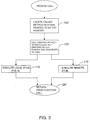
- a call is made using a fat pointer.
- the call is in the form of a C++ call although, of course, the nature of the call will typically be a function of the programming language that the client is written in.
- the called method is located in the m-table pointed to by the fat pointer. If the called object is local, then the m-table pointed to by the fat pointer will be a local m-table. Similarly, if the called object is remote, then the m-table pointed to by the fat pointer will be a remote m-table.
- step 105 a call is made to the stub function pointed to in step 100.
- the call a C++ call in the described embodiment, is made with the client representation identified by the fat pointer and other arguments passed as call parameters. In some embodiments, additional arguments may be passed.
- Alter the stub function pointed to is called, process control branches off to different functions depending upon whether the stub function pointed to is in a local stub function or a remote stub function. If the function pointed to is in a local stub function, process control proceeds to a step 110 where a local stub function is executed. This local invocation will be discussed in more detail below with reference to FIG. 4. After the local stub has been executed in step 110, the process returns from the function call in step 120.
- step 105 If the function pointed to by the fat pointer is in a remote stub function, process control advances from step 105 to step 115, where a remote stub is executed. After the remote stub has been executed in step 115, process control proceeds to step 120, the return from the function call.
- the process of "executing" a local stub may be understood to be the process of invoking a servant through paths 75 or 76.
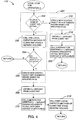
- the process of executing a local stub for an operation begins at step 200 with a determination of whether the local hook of the client representation passed by the local stub is active. Any suitable indication of whether a hook is active may be used.
- the local hook may be a boolean flag that identifies whether the client representation, of which it is a part, is active.
- the local hook provides a mechanism by which additional code (such as code customized by an object developer) can be executed within the client-server system. That is, a local hook may be set to indicate whether or not a client-server system should execute additional code. In most embodiments, this decision would be made at compile time as opposed to run time so that when local hooks are not used, there would be no performance degradation due to providing the hook facility.
- a new context object with elements whose names are specified in an interface definition language is created from the original context passed in from the original call and the call to the stub function.
- IDL interface definition language
- step 216 After the context object has been created in step 216, process control advances to step 218 where a servant is directly obtained from the client representation. Since a local stub is being used, it is known that the client and servant share the same process. Therefore, the servant can be readily obtained using standard techniques as will be understood by those skilled in the art.
- the described context object creating step 216 is an optional step, and may be eliminated if desired. Typically, context creating step 216 is eliminated when the associated method is not specified with a context clause in IDL. If the associated method is not specified with a context clause, no context arguments will be passed as a part of the original call or the call to the stub function. If the context object creating step 216 is omitted, process control proceeds directly from step 200, where a determination was made that the local hook of the client representation was not active, to step 218, in which a servant is directly obtained from the client representation.
- step 220 the method corresponding to operation X for the servant identified in step 218 is called in step 220.
- the arguments to the servant call in step 220 are typically the same arguments that are passed to the local stub in the stab calling step 105, with the exception of the client representation.
- the new context is also passed with the call instead of the original context.
- step 220 the results are returned. It should be appreciated that when the results are returned, the new context, if the new context was created, is automatically deleted or destructed.
- step 200 determines whether the local hook of the client representation is active, the indication is that additional code needs to be executed, and process control moves to step 202, in which a call is made to the pre-local dispatch method of the client representation.
- the pre-local dispatch method is called before a local dispatch occurs in order to gather any information, required by the local dispatch, in particular the pointer to the servant object, that is specific to the client representation.
- the pre-local dispatch is used to make certain that a servant pointer may be successfully obtained.
- the pre-local dispatch method may perform additional subcontract processing to prepare the servant to receive calls (activation), to ensure that the caller has permission to invoke the servant (security), to store a transaction, or to acquire locks.
- a generic holder may be passed.
- the generic holder may be used to pass any desired information which pertains to the execution of a local stub from the pre-local dispatch method to a post-local dispatch method.
- the generic holder is provided to avoid the use of global or thread-specific storage to hold a per-invocation state pertinent to a subcontract.
- the generic holder is passed to the pre-local dispatch method which assigns a value to the generic holder.
- the assigned value may be a pointer to a structure which may contain transaction identifiers and pointers to storage allocated in the pre-local dispatch that is typically freed in a subsequent post-local dispatch for the servant call..
- step 204 it is determined whether the pre-local dispatch call was successful. If the call was unsuccessful, an exception, a C++ exception in this embodiment, occurs, and no further processing is done. If the call was successful, process control proceeds to step 206 where a new context object with elements whose names are specified in an IDL are created. Thereafter, process control advances to step 208, in which a servant is obtained from the client representation. After the servant has been obtained, the method corresponding to operation X is called for the identified servant in step 210. That is, in step 210, the local dispatch occurs. It should be appreciated that steps 206-210 mirror steps 216-220 as discussed above. Therefore, like context object creating step 216, context creating step 206 is an optional step.
- step 212 the post-local dispatch method of the client representation is called with the generic holder passed from the pre-local dispatch method.
- the post-local dispatch method recovers the value, which usually contains a pointer to a structure containing data pertinent to the local call, assigned to the generic holder.
- the post-local dispatch method is effectively the closure for the pre-local dispatch and is called to allow housekeeping operations corresponding to the pre-local dispatch operation to be performed.
- the post-local dispatch method may deactivate the servant object, commit transactions, or release locks.
- the pre-local dispatch and the post-local dispatch enable a subcontract to participate or intervene in local invocations.
- steps 202 through 212 i.e. the call to a method which utilizes pre-local and post-local dispatch methods
- steps 216-220 i.e. the call to a method which does not utilize pre-local and post-local dispatch methods
- object references in an intelligent manner makes it possible to utilize shorter flow paths if a client and a server are in the same process.
- the construction of object references in an intelligent manner entails determining whether the object reference which is referred to, that is, the object reference from which a new object reference is to be created, is local relative to the server. If the object reference from which a new object reference is to be created is local to the server, a fat pointer, or a CORBA object reference, with an m-table pointer which points to a local m-table is created. If the object reference from which a new object reference is to be created is not local to the server, then a fat pointer with an m-table pointer which points to a remote m-table is created.
- Standard CORBA functions which are used to create object references include create methods, duplicate methods, narrow methods, unmarshal methods, and destringify methods. That is, the duplicate methods, narrow methods, unmarshal methods, and destringify methods may all be used to construct new object references.
- the process begins at step 250, with a call to the duplicate method of a client representation with which an object reference, or object "ref", is associated.
- the pointer to an m-table in the object reference to be duplicated is passed as an argument in the call to the duplicate method of the client representation.
- each client representation has a duplicate method that takes an m-table as an argument.
- the duplicate method which is called is typically identified by the client representation of the object reference.
- process control may either proceed to step 252 where a reference count in the client representation is incremented, or to a step 256 where a copy of the client representation is created. Whether a reference count is incremented in step 252 or a copy of the client representation is created in step 256 is dependent upon how the subcontract of the client representation manages the accountability of referenced objects. As will be appreciated by those skilled in the art, different mechanisms may be used to account for the number of outstanding object references that exist for a particular client representation. By way of example, a reference counter may be used to track the number of object references which refer to the same client representation.
- a reference count may be incremented each tine a duplicated object reference is created for the client representation in order to track the number of object references associated with the client representation.
- a new copy of the client representation may be made each time an object reference is created, etc.
- step 250 If the accountability mechanism for a duplicate method involves incrementing a reference count, process control moves from the call to the duplicate method in step 250 to the incrementation of a reference count in step 252.
- the incrementation of a reference count results in the ORB being informed that a new, i.e. duplicated, object reference is about to be created.
- step 254 the new object reference, which contains both a pointer to the client representation and the m-table pointer received as an argument to the call to the duplicate method, is created.
- the subcontract is aware that a new object reference has been created by virtue of the fact that a reference count was incremented in step 252.
- process control proceeds to return the newly created object reference. It should be appreciated that the steps of incrementing a reference count and creating the object reference which contains the original client representation are particular to some methods of duplicating object references.
- process control moves from the call to the duplicate method of the client representation in step 250 to the creation of a copy of the client representation in step 256.
- process control then proceeds to step 258 in which a new object reference, which contains a pointer to the copy of the client representation and the m-table pointer received from the call to the duplicate method, is created. Alter a new object reference is created in step 258, process control proceeds to return the newly created object reference. It should be appreciated that the steps of creating a copy of the client representation and creating the object reference which contains a pointer to the copy of the client representation are particular to some methods used in duplicating object references.
- each subcontract associates different duplicate methods with client representations with which the subcontract is associated.
- the steps of incrementing a reference count and creating an object reference which contains the original client representation are part of one such method, whereas the steps of creating a copy of the client representation and creating an object reference which contains a copy of the client representation are part of another such method.
- These methods may include additional processing relating to the subcontract which may contact the servant object whenever a new object reference is created.
- the duplicate method is typically called by other operations, or methods, associated with a client representation.
- the duplicate method may be called by a narrow method, an unmarshal method, and a destringify method, etc., which are all methods that belong to a client representation.
- determining whether a servant is in a local process with respect to the client when these methods are called it becomes possible to associate created object references with either a local or a remote m-table. It follows that it may then be possible to identify a local process, and therefore utilize a shorter flow path to process a request, thereby improving the performance of object invocation.
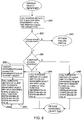
- the process of narrowing an object reference begins at step 280 in which the narrow method of the client representation is called using the associated local or remote m-table as an argument for the target type. At step 282, a determination is made regarding whether or not a narrow may be accomplished.
- step 282 If it is determined that a narrow cannot be accomplished, process control returns the failure status at step 283. However, if it is determined in step 282 that a narrow can be accomplished, process control proceeds to step 286 which is a determination of whether the servant is in a local process.
- the determination of whether the servant is in a local process is made by calling a function specifically written for the purpose of determining whether the servant is in a local process, as for example the is_local method of the client representation in the NEO distributed object system as described above.
- the is_local method of a client representation is specific to each subcontract and client representation. It should be appreciated that a local process does not simply refer to a process run on a local machine.
- the determination of whether the servant is in a local process is the determination of whether the servant is in the same process. If the result of step 286 is affirmative, i.e. the servant is in a local process, the duplicate method of the client representation is called using the local m-table as an argument in order to create a narrowed object reference with a local m-table pointer in step 288. It should be appreciated that the m-tables passed to the narrow method are m-tables which related to the target interface, or the interface to which the narrowed object reference is to conform. The duplicate method of the client representation creates an object reference which contains the specified m-table pointer and will return the created object reference as was previously described above with respect to FIG. 5. The new object reference is then returned as the result of the narrow operation.
- step 286 determines whether the servant is in a local process. If the determination is made in step 286 that the servant is not in a local process, process control proceeds to step 290 in which a call is made to the duplicate method of the client representation using the remote m-table as an argument. This creates a narrowed object reference with a remote m-table pointer. Once again, the duplicate method will create an object reference as was previously described above with respect to FIG. 5. The new object reference is then returned as the result of the narrow operation.
- step 286 determines whether a client representation is associated with one remote m-table and multiple local m-tables. If a client representation is associated with one remote m-table and multiple local m-tables, once the determination is made in step 286 that the servant is in a local process, process control proceeds to step 288a, which serves the same general purpose as step 288, the step of creating a narrowed object reference with a local m-table. Step 288a, however, includes the identification of the appropriate local m-table to use in creating a narrowed object reference, when there is more than one local m-table with which the client representation is associated. Overall step 288a includes step 292 which is the step of identifying an appropriate m-table for the implementation of the servant object. The identification of an appropriate m-table is a subcontract, i.e. client representation, specific step.
- an implementation repository associated with the subcontract may be used to locate a local m-table appropriate for the implementation of the servant object represented by the client representation.
- the local m-table which is passed as an argument to the narrow method is generally not used, unless the local m-table is found to be the appropriate local m-table for the implementation of the servant object.
- the duplicate method of the client representation is called using the local m-table as an argument in order to create a narrowed object reference with a local m-table pointer in step 294. Then, the narrowed object reference is returned to the caller.
- the request or reply In a distributed object oriented environment, most communications between clients and servers will begin with an object reference that is intended to identify the object that is the target of the request or reply.
- the request or reply also typically includes additional information, which may take the form of interface parameters, exception parameters, data, etc. that is intended for delivery to the target object.
- the data and/or parameters that accompany a request or a reply will include additional object references that are expected to be delivered to the target object, as opposed to being used for routing the request or reply.
- the unmarshaling mechanism must be arranged to properly route the request based at least in part on the target object reference, and convert (as necessary) the additional information into a form that is useable by the target object.
- a method of unmarshaling a data object reference referred to in a request or reply in accordance with one embodiment of the present invention will be described.
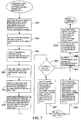
- a call may be made to an ORB-provided generic unmarshaling routine for data object references of the appropriate type in step 300.
- the interface associated with the data object reference will be referred to as "interface Y.”
- the unmarshal method calls the ORB provided generic unmarshaling routine with both a pointer to the remote m-table for interface Y or a pointer to a local m-table for interface Y, as well as the marshal buffer for interface Y.
- the subcontract identifier i.e. subcontract ID
- the subcontract identifier associated with the data object reference at step 303 is obtained.
- a "peek" method may be used to obtain the subcontract identifier from within the data object reference.
- the peek method reads, but does not extract, the subcontract identifier from the known location in the marshal buffer.
- an unmarshal function corresponding to the object reference is looked up in a subcontract registry using the subcontract ID as a key.
- step 306 The unmarshal function found in step 306 is called in step 309, with arguments associated with interface Y, namely the remote and local m-tables, as well as the marshal buffer.
- process control proceeds to step 312, where a client representation is created from information in the marshal buffer.
- the marshal buffer pointer is then "added,” or moved, to the next item in the marshal buffer.
- step 315 it is determined whether the host identifier and server identifier, i.e. host ID and server ID, in the created client representation are the same as the host ID and the server ID of the current process.
- the local flag of the client representation is then set accordingly in step 315.
- step 320 it is determined whether the servant is in a local process. As was described previously with respect to FIG. 6, the determination of whether the servant is in a local process is made by calling a client representation specific function specifically written for the purpose of determining whether the servant is in a local process. In this case, the function checks the local flag of the client representation.
- process control advances to step 323, and a call to the duplicate method of the client representation is made using a local m-table as an argument in order to create an unmarshaled object reference with a local m-table.
- the newly created unmarshaled object reference is then returned.
- step 323a which serves the same general purpose as step 323, the step of creating an unmarshaled object reference with a local m-table.
- Step 323a includes the identification of the appropriate local m-table to use in creating a narrowed object reference, when there is more than one local m-table with which the client representation is associated.
- Overall step 323a includes step 324 which is the step of identifying an appropriate m-table for the implementation of the servant object.
- the identification of a appropriate m-table is a subcontract, i.e. client representation, specific step.
- the local m-table which is passed as an argument to the unmarshal method is generally not used, unless the local m-table is found to be the appropriate local m-table for the implementation of the servant object.
- the duplicate method of the client representation is called using the local m-table as an argument in order to create an unmarshaled object reference with a local m-table pointer in step 325. Then, the unmarshaled object reference is returned to the caller.
- step 320 If it is determined in step 320 that the servant is not in a local process, process control proceeds from step 320 to step 326 where the duplicate method of the client representation is called using a remote m-table as an argument in order to create an unmarshaled object reference with a remote m-table. After step 326 is completed, the unmarshaled object reference is returned.
- the calls to the duplicate method of the client representation are described above with respect to FIG. 5.
- FIG. 8 an alternative method for creating a client representation from information in a marshal buffer will be described in the context of unmarshaling an object reference for an interface of a known type.
- the process of unmarshaling an object reference is the same as the process described in FIG. 7 up until the step of creating a client representation.
- the creation of a client representation begins at step 330, where information pertaining to the object reference is extracted from the marshal buffer.
- Step 330 is a part of box 312a, and follows directly from step 306, the step of looking up an appropriate marshal function, of FIG. 7.
- step 332 After information pertaining to the object reference is extracted from the marshal buffer in step 330, a determination is made in step 332 as to whether a client representation already exists for the servant object referenced. If the result of the determination is negative, process control proceeds to step 334 in which a client representation is created using the information pertaining to the object reference which was previously extracted in step 330. Then, in step 315a, a determination is made regarding whether the host ID and the server ID in the newly created client representation are the same as the host ID and the server ID of the current process. Once the determination is made, a local flag of the client representation is set accordingly. It should be appreciated that the mechanisms used to determine whether a servant is in the same process may differ.
- step 320 the step of determining whether the appropriate servant is in a local process, as described above with respect to FIG. 7. If it is determined in step 332 that a client representation does already exist for the object reference, then process control proceeds directly from step 332 to step 320, and the determination of whether the appropriate servant is in a local process. Once process control reaches the step of determining whether the appropriate servant is in a local process, i.e. step 320, the remainder of the steps for unmarshaling an object reference for an interface having a known type are the same steps as described previously with respect to FIG. 7.
- destringifying an object reference entails converting an ASCII string into an object reference that is understandable by the receiving process.
- destringifying an object reference involves “dehexifying” an ASCII string.
- the process of destringifying results in the creation of a new object reference, and in the described embodiment, begins at step 350 where an ASCII string, which is a stringified object reference, is converted into a string which is suitable for decoding by a marshal buffer.
- the string is a binary string, or stream, of octets which is suitable for decoding by a marshal buffer.
- an ASCII string typically includes headers at the beginning of the string. The headers are ignored, i.e. the headers are masked out, when the ASCII string is converted into a binary stream of octets. Alter the binary stream of octets is formed, process control advances to step 352 where a marshal buffer is created for the binary stream of octets.
- step 354 the CORBA object version of the unmarshal method is called. That is, the unmarshal method as described above with reference to FIG.
- interface 7 is called to unmarshal an object reference for interface Y.
- Y CORBA :: Object.
- an object reference may be created from a servant if an implementation definition specific to the ORB, an interface definition, and reference data provided by a user are known, or given.
- the implementation definition includes the host ID and the server ID of the current process. If the implementation definition, the interface definition, and reference data are known, no explicit object adapter is needed to create an object reference. However, if reference data needs to be explicitly specified, an object adapter is necessary in order to create an object reference.
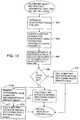
- a method of creating an object reference that determines whether the servant is local or remote in accordance with one embodiment of the present invention will be described in association with using an object adapter (OA) interface to create an object reference.
- the OA uses as arguments an implementation definition, as for example IMPL_DEF in the NEO distributed object system, an interface definition, as for example INTF_DEF, and reference data, as for example REF_DATA, to create an object reference interface in a local process.
- the use of INTF_DEF is optional.
- the process begins at step 402 where the argument IMPL_DEF is used to determine the subcontract associated with the object reference to be created. IMPL_DEF identifies which subcontract to use by determining which particular subcontracts are relevant.
- a client representation suitable for the subcontract identified by IMPL_DEF is created using information provided in "create" arguments, i.e. arguments which specify information required for creating a client representation.
- process flow proceeds to step 406 where a determination is made as to whether the host ID and the server ID in the created client representation are the same as the host ID and the server ID of the current process. Once the determination is made, a local flag of the client representation may be set accordingly.
- step 408 is the determination of whether the local flag is set to indicate whether or not the created client representation is local to the current process. That is, step 408 is the determination of whether the local flag is set to true. If the determination is affirmative, i.e. if it is determined that the local flag is set to true, a call to the duplicate method of the client representation is made with a pointer to the CORBA object local m-table in a step 410. Then, the results are returned.
- step 410a which includes the identification of the appropriate local m-table to use in creating a narrowed object reference, when there is more than one local m-table with which the client representation is associated.
- step 410a includes step 411 which is the step of identifying an appropriate m-table for the implementation of the servant object.
- the identification of an appropriate m-table is a subcontract, i.e. client representation, specific step.
- the local m-table which is passed as an argument to the narrow method is generally not used, unless the local m-table is found to be the appropriate local m-table for the implementation of the servant object.
- the appropriate local m-table is identified, the a call is made to the duplicate method of the client representation with a pointer to the identified CORBA object local m-table in step 413. After the call to the duplicate method, the results of the call are returned.
- step 408 determines whether a local flag has been set, or the local flag is set to false. If the determination in step 408 is that a local flag has not been set, or the local flag is set to false, process control proceeds to a step 412 in which a call to the client representation duplicate method is made with a pointer to the remote m-table of the CORBA object. At the completion of the call to the duplicate method of the client representation with the CORBA object remote m-table, the results of the call are returned.
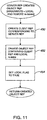
- a servant-based creation of an object reference is typically possible if an implementation definition, an interface definition, and reference data are provided. If the reference data is not provided and needs to be specified, an object adapter is required to create an object reference, as described above with respect to FIG. 10. If reference data is provided, however, an alternative to using narrow, unmarshal, or destringify methods to create object references is the use of a server representation to create an object reference.
- a server representation which is in the same process as the servant, may be used to create an object reference. Since the server representation creates the object reference, the created object reference is in the same process as the servant.
- server representation or server “rep”, and servant representation, or servant “rep”, may be used interchangeably.
- server representation or server “rep”
- servant representation or servant “rep”
- the server representation which is attached to the servant, may create an object reference.
- a client representation corresponding to the server representation is created. Arguments necessary to create the client representation, which is suitable for the subcontract with which it is associated, may be found in the server representation.
- process control proceeds to a step 452 in which an object, or object reference, containing the client representation and the pointer to a local m-table are created.
- a local flag may be set to true to indicate that a client representation in the same process as the servant has been created, prior to the newly created object reference being returned. Setting the local flag to true is indicative of the fact that the client representation, i.e. object reference, is in the same process as the servant.
- the present invention as described above employs various process steps involving data stored in computer systems. These steps are those requiring physical manipulation of physical quantities. Usually, though not necessarily, these quantities take the form of electrical or magnetic signals capable of being stored, transferred, combined, compared, and otherwise manipulated. It is sometimes convenient, principally for reasons of common usage, to refer to these signals as bits, values, elements, variables, characters, data structures, or the like. It should be remembered, however, that all of these and similar terms are to be associated with the appropriate physical quantities and are merely convenient labels applied to these quantities.
- the present invention also relates to an apparatus for performing these operations.
- This apparatus may be specially constructed for the required purposes, or it may be a general purpose computer selectively activated or reconfigured by a computer program stored in the computer.
- the processes presented herein are not inherently related to any particular computer or other apparatus.
- various general purpose machines may be used with programs written in accordance with the teachings herein, or it may be more convenient to construct a more specialized apparatus to perform the required method steps. The required structure for a variety of these machines will appear from the description given above.
- the present invention further relates to computer readable media that include program instructions for performing various computer-implemented operations.
- the media and program instructions may be those specially designed and constructed for the purposes of the present invention, or they may be of the kind well known and available to those having skill in the computer software arts.
- Examples of computer readable media include, but are not limited to, magnetic media such as hard disks, floppy disks, and magnetic tape; optical media such as CD-ROM disks; magnet-optical media such as optical disks; and hardware devices that are specially configured to store and perform program instructions, such as read-only memory devices (ROM) and random access memory (RAM).
- Examples of program instructions include both machine code, such as produced by a compiler, and files containing higher level code that may be executed by the computer using an interpreter.
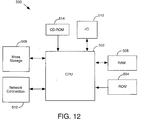
- FIG. 12 illustrates a typical computer system in accordance with the present invention.
- the computer system 500 includes any number of processors 502 (also referred to as central processing units, or CPUs) that is coupled to memory devices including primary storage device 504 (typically a read only memory, or ROM) and primary storage device 506 (typically a random access memory, or RAM).
- primary storage device 504 typically a read only memory, or ROM
- primary storage device 506 typically a random access memory, or RAM
- Both primary storage devices 504, 506 may include any suitable computer-readable media as described above.
- a mass memory device 508 is also coupled bi-directionally to CPU 502 and provides additional data storage capacity.
- the mass memory device 508 may be used to store programs, data and the like and is typically a secondary storage medium such as a hard disk that is slower than primary storage devices 504, 506.
- Mass memory storage device 508 may take the form of a magnetic or paper tape reader or some other well-known device. It will be appreciated that the information retained within the mass memory device 508, may, in appropriate cases, be incorporated in standard fashion as part of RAM 506 as virtual memory.
- a specific mass storage device such as a CD-ROM 514 may also pass data uni-directionally to the CPU.
- CPU 502 is also coupled to one or more input/output devices 510 that may include, but are not limited to, devices such as video monitors, track balls, mice, keyboards, microphones, touch-sensitive displays, transducer card readers, magnetic or paper tape readers, tablets, styluses, voice or handwriting recognizers, or other well-known input devices such as, of course, other computers.
- CPU 502 optionally may be coupled to a computer or telecommunications network using a network connection as shown generally at 512. With such a network connection, it is contemplated that the CPU might receive information from the network, or might output information to the network in the course of performing the above-described method steps.
- the above-described devices and materials will be familiar to those of skill in the computer hardware and software arts.
- the present invention may be embodied in many other specific forms without departing from the spirit or the scope of the present invention.
- the m-table as described with respect to the present invention may take many different forms.
- these forms may include, but are not limited to, flat m-tables, which have a structure that is similar to conventional C++ v-tables, and tree-structured m-tables. Therefore the described embodiments should be taken as illustrative and not restrictive, and the invention should be defined by the following claims and their full scope of equivalents.
Landscapes
- Engineering & Computer Science (AREA)
- Software Systems (AREA)
- Theoretical Computer Science (AREA)
- Physics & Mathematics (AREA)
- General Engineering & Computer Science (AREA)
- General Physics & Mathematics (AREA)
- Computer And Data Communications (AREA)
- Multi Processors (AREA)
Applications Claiming Priority (2)
| Application Number | Priority Date | Filing Date | Title |
|---|---|---|---|
| US670684 | 1996-06-26 | ||
| US08/670,684 US6718550B1 (en) | 1996-06-26 | 1996-06-26 | Method and apparatus for improving the performance of object invocation |
Publications (2)
| Publication Number | Publication Date |
|---|---|
| EP0817024A2 true EP0817024A2 (de) | 1998-01-07 |
| EP0817024A3 EP0817024A3 (de) | 2003-09-17 |
Family
ID=24691429
Family Applications (1)
| Application Number | Title | Priority Date | Filing Date |
|---|---|---|---|
| EP97303232A Withdrawn EP0817024A3 (de) | 1996-06-26 | 1997-05-12 | Verfahren und Vorrichtung zur Leistungsverbesserung von Objektanrufen |
Country Status (3)
| Country | Link |
|---|---|
| US (1) | US6718550B1 (de) |
| EP (1) | EP0817024A3 (de) |
| JP (1) | JPH1078881A (de) |
Cited By (7)
| Publication number | Priority date | Publication date | Assignee | Title |
|---|---|---|---|---|
| EP0973094A1 (de) * | 1998-05-29 | 2000-01-19 | Sun Microsystems, Inc. | Schnelle Aufrufe von lokalen hochverfügbaren Objekten |
| US6185695B1 (en) | 1998-04-09 | 2001-02-06 | Sun Microsystems, Inc. | Method and apparatus for transparent server failover for highly available objects |
| WO2001040939A1 (en) * | 1999-11-30 | 2001-06-07 | Sun Microsystems, Inc. | Apparatus and methods for communicating between resource domains |
| WO2001016727A3 (en) * | 1999-08-31 | 2002-01-10 | Accenture Llp | A system, method and article of manufacture for a locally addressable interface in a communication services patterns environment |
| US6782538B1 (en) * | 1995-12-14 | 2004-08-24 | International Business Machines Corporation | Object oriented information handling system including an extensible instance manager |
| US7451193B1 (en) * | 1997-07-31 | 2008-11-11 | Cisco Technology, Inc. | Method and apparatus for reducing overhead on a proxied connection |
| CN102012805A (zh) * | 2009-09-04 | 2011-04-13 | 腾讯科技(深圳)有限公司 | 一种自定义光标的实现方法及装置 |
Families Citing this family (21)
| Publication number | Priority date | Publication date | Assignee | Title |
|---|---|---|---|---|
| US6438616B1 (en) * | 1997-12-18 | 2002-08-20 | Sun Microsystems, Inc. | Method and apparatus for fast, local corba object references |
| US7058727B2 (en) * | 1998-09-28 | 2006-06-06 | International Business Machines Corporation | Method and apparatus load balancing server daemons within a server |
| US8095632B2 (en) * | 2000-09-15 | 2012-01-10 | Invensys Systems, Inc | Method and system for performing remote diagnostics on a process data access |
| US7543304B2 (en) * | 2000-12-14 | 2009-06-02 | Borland Software Corporation | Method for efficient location of corba objects based on an unmarshaled object key in a request |
| US7263701B2 (en) | 2001-09-04 | 2007-08-28 | Samsung Electronics Co., Ltd. | Interprocess communication method and apparatus |
| US20030115358A1 (en) * | 2001-09-04 | 2003-06-19 | Yeong-Hyun Yun | Unified interprocess communication |
| US20030192038A1 (en) * | 2002-04-09 | 2003-10-09 | Thomas Hagmann | Linking data objects to a project development system |
| US7707594B1 (en) | 2002-08-20 | 2010-04-27 | At&T Intellectual Property I, L.P. | System and method for providing a routing service in distributed computing environment |
| US7673053B1 (en) * | 2002-08-30 | 2010-03-02 | At&T Intellectual Property I, L.P. | System and method for providing a communications service in distributed computing environment |
| US7424723B2 (en) * | 2003-10-30 | 2008-09-09 | Microsoft Corporation | System and method for executing an arbitrary function from an external process |
| JP4681968B2 (ja) * | 2004-08-06 | 2011-05-11 | 株式会社リコー | サービス要求装置、サービス要求方法、サービス要求プログラム、及び記録媒体 |
| US20060059246A1 (en) * | 2004-09-10 | 2006-03-16 | Grove Adam J | System and method for connection optimization |
| US7554682B2 (en) * | 2004-12-28 | 2009-06-30 | Microsoft Corporation | Printer filter configuration |
| US7568056B2 (en) * | 2005-03-28 | 2009-07-28 | Nvidia Corporation | Host bus adapter that interfaces with host computer bus to multiple types of storage devices |
| US20070027877A1 (en) * | 2005-07-29 | 2007-02-01 | Droshev Mladen I | System and method for improving the efficiency of remote method invocations within a multi-tiered enterprise network |
| US9606846B2 (en) * | 2005-07-29 | 2017-03-28 | Sap Se | System and method for dynamic proxy generation |
| US7954108B2 (en) * | 2005-11-21 | 2011-05-31 | Prismtech Corporation | Method and apparatus for accelerating generic inter-ORB protocol for a CORBA ORB |
| US20070168509A1 (en) * | 2005-12-30 | 2007-07-19 | Droshev Mladen I | System and method for remote loading of classes |
| US7860900B2 (en) * | 2008-02-25 | 2010-12-28 | Microsoft Corporation | Consistently signaling state changes |
| US8438220B2 (en) | 2010-06-30 | 2013-05-07 | International Business Machines Corporation | Method for optimizing remote object implementations |
| US9619247B2 (en) * | 2011-07-15 | 2017-04-11 | Microsoft Technology Licensing, Llc | Enabling fast string acquisition in an operating system for efficient interoperations with various language projections |
Family Cites Families (31)
| Publication number | Priority date | Publication date | Assignee | Title |
|---|---|---|---|---|
| US4823310A (en) | 1987-08-10 | 1989-04-18 | Wang Laboratories, Inc. | Device for enabling concurrent access of indexed sequential data files |
| US5218699A (en) * | 1989-08-24 | 1993-06-08 | International Business Machines Corporation | Remote procedure calls in heterogeneous systems |
| AU639802B2 (en) * | 1990-08-14 | 1993-08-05 | Oracle International Corporation | Methods and apparatus for providing dynamic invocation of applications in a distributed heterogeneous environment |
| US5263160A (en) | 1991-01-31 | 1993-11-16 | Digital Equipment Corporation | Augmented doubly-linked list search and management method for a system having data stored in a list of data elements in memory |
| JPH06103075A (ja) * | 1992-07-06 | 1994-04-15 | Internatl Business Mach Corp <Ibm> | オブジェクト指向適用業務 |
| DE69327448T2 (de) | 1992-12-21 | 2004-03-04 | Sun Microsystems, Inc., Mountain View | Verfahren und Vorrichtung für Teilaufgaben in verteiltem Verarbeitungssystem |
| US5566302A (en) | 1992-12-21 | 1996-10-15 | Sun Microsystems, Inc. | Method for executing operation call from client application using shared memory region and establishing shared memory region when the shared memory region does not exist |
| US5455951A (en) | 1993-07-19 | 1995-10-03 | Taligent, Inc. | Method and apparatus for running an object-oriented program on a host computer with a procedural operating system |
| US5379432A (en) | 1993-07-19 | 1995-01-03 | Taligent, Inc. | Object-oriented interface for a procedural operating system |
| US5734903A (en) | 1994-05-13 | 1998-03-31 | Apple Computer, Inc. | System and method for object oriented message filtering |
| US5758342A (en) | 1995-01-23 | 1998-05-26 | International Business Machines Corporation | Client server based multi-processor file system wherein client files written to by a client processor are invisible to the server |
| US5790848A (en) | 1995-02-03 | 1998-08-04 | Dex Information Systems, Inc. | Method and apparatus for data access and update in a shared file environment |
| US5819093A (en) | 1995-03-03 | 1998-10-06 | Sun Microsystems, Inc. | System and method for a distributed debugger for debugging distributed application programs |
| US5787447A (en) | 1995-05-08 | 1998-07-28 | Sun Microsystems, Inc. | Memory allocation maintaining ordering across multiple heaps |
| US5748963A (en) | 1995-05-12 | 1998-05-05 | Design Intelligence, Inc. | Adaptive binding |
| US5881315A (en) | 1995-08-18 | 1999-03-09 | International Business Machines Corporation | Queue management for distributed computing environment to deliver events to interested consumers even when events are generated faster than consumers can receive |
| US5682534A (en) * | 1995-09-12 | 1997-10-28 | International Business Machines Corporation | Transparent local RPC optimization |
| JP3426428B2 (ja) | 1995-10-27 | 2003-07-14 | 富士通株式会社 | トランザクションのトレース装置 |
| JP3097525B2 (ja) | 1995-11-10 | 2000-10-10 | 株式会社日立製作所 | 情報フィルタリング処理を行うデータ伝送方法 |
| US5761670A (en) | 1995-12-08 | 1998-06-02 | Sun Microsystems, Inc. | System and method for space efficient object locking using global and local locks |
| US5848236A (en) | 1996-03-22 | 1998-12-08 | Sun Microsystems, Inc. | Object-oriented development framework for distributed hardware simulation |
| US5928323A (en) | 1996-05-30 | 1999-07-27 | Sun Microsystems, Inc. | Apparatus and method for dynamically generating information with server-side software objects |
| US5815703A (en) | 1996-06-28 | 1998-09-29 | Microsoft Corporation | Computer-based uniform data interface (UDI) method and system using an application programming interface (API) |
| US5809507A (en) | 1996-07-01 | 1998-09-15 | Sun Microsystems, Inc. | Method and apparatus for storing persistent objects on a distributed object network using a marshaling framework |
| US5835906A (en) | 1996-07-01 | 1998-11-10 | Sun Microsystems, Inc. | Methods and apparatus for sharing stored data objects in a computer system |
| US5915252A (en) | 1996-09-30 | 1999-06-22 | International Business Machines Corporation | Object oriented framework mechanism for data transfer between a data source and a data target |
| US5873116A (en) | 1996-11-22 | 1999-02-16 | International Business Machines Corp. | Method and apparatus for controlling access to data structures without the use of locks |
| US5913038A (en) | 1996-12-13 | 1999-06-15 | Microsoft Corporation | System and method for processing multimedia data streams using filter graphs |
| US5864866A (en) | 1997-03-26 | 1999-01-26 | International Business Machines Corporation | Apparatus and method for providing externalization in an object-oriented environment |
| US5978940A (en) | 1997-08-20 | 1999-11-02 | Mci Communications Corporation | System method and article of manufacture for test operations |
| US5926775A (en) | 1997-10-08 | 1999-07-20 | National Instruments Corporation | Mini driver software architecture for a data acquisition system |
-
1996
- 1996-06-26 US US08/670,684 patent/US6718550B1/en not_active Expired - Lifetime
-
1997
- 1997-05-12 EP EP97303232A patent/EP0817024A3/de not_active Withdrawn
- 1997-06-26 JP JP9170755A patent/JPH1078881A/ja active Pending
Cited By (8)
| Publication number | Priority date | Publication date | Assignee | Title |
|---|---|---|---|---|
| US6782538B1 (en) * | 1995-12-14 | 2004-08-24 | International Business Machines Corporation | Object oriented information handling system including an extensible instance manager |
| US7451193B1 (en) * | 1997-07-31 | 2008-11-11 | Cisco Technology, Inc. | Method and apparatus for reducing overhead on a proxied connection |
| US6185695B1 (en) | 1998-04-09 | 2001-02-06 | Sun Microsystems, Inc. | Method and apparatus for transparent server failover for highly available objects |
| EP0973094A1 (de) * | 1998-05-29 | 2000-01-19 | Sun Microsystems, Inc. | Schnelle Aufrufe von lokalen hochverfügbaren Objekten |
| WO2001016727A3 (en) * | 1999-08-31 | 2002-01-10 | Accenture Llp | A system, method and article of manufacture for a locally addressable interface in a communication services patterns environment |
| WO2001040939A1 (en) * | 1999-11-30 | 2001-06-07 | Sun Microsystems, Inc. | Apparatus and methods for communicating between resource domains |
| CN102012805A (zh) * | 2009-09-04 | 2011-04-13 | 腾讯科技(深圳)有限公司 | 一种自定义光标的实现方法及装置 |
| CN102012805B (zh) * | 2009-09-04 | 2013-10-23 | 腾讯科技(深圳)有限公司 | 一种自定义光标的实现方法及装置 |
Also Published As
| Publication number | Publication date |
|---|---|
| JPH1078881A (ja) | 1998-03-24 |
| US6718550B1 (en) | 2004-04-06 |
| EP0817024A3 (de) | 2003-09-17 |
Similar Documents
| Publication | Publication Date | Title |
|---|---|---|
| US6718550B1 (en) | Method and apparatus for improving the performance of object invocation | |
| US6272557B1 (en) | Framework for marshaling and unmarshaling argument object references | |
| US6438616B1 (en) | Method and apparatus for fast, local corba object references | |
| US5991823A (en) | Low overhead object adaptor | |
| US6044224A (en) | Mechanism for dynamically associating a service dependent representation with objects at run time | |
| US6389484B1 (en) | Transport independent invocation and servant interfaces that permit both typecode interpreted and compiled marshaling | |
| US5787251A (en) | Method and apparatus for subcontracts in distributed processing systems | |
| US5727145A (en) | Mechanism for locating objects in a secure fashion | |
| US6189046B1 (en) | Mechanism and method for merging cached location information in a distributed object environment | |
| US6282581B1 (en) | Mechanism for resource allocation and for dispatching incoming calls in a distributed object environment | |
| EP0501610B1 (de) | Objektorientiertes verteiltes Rechnersystem | |
| US6349342B1 (en) | Methods and apparatus for managing computer processes | |
| EP0735472A2 (de) | Verfahren und Gerät für Verschwörung zwischen Objekten | |
| EP0911732A2 (de) | Verfahren, Gerät und Programmprodukt zum Verbinden einer Mehrdrahtanwendungsprogrammierschnittstelle und einer Einzeldrahtanwendungsprogrammierschnittstelle | |
| JPH0926890A (ja) | オブジェクトを管理するための方法、装置、および、データ構造 | |
| US6205491B1 (en) | Method and apparatus for deferred throwing of exceptions in C++ | |
| US6189048B1 (en) | Mechanism for dispatching requests in a distributed object system | |
| US6769125B2 (en) | Methods and apparatus for managing computer processes | |
| US6260074B1 (en) | Method and apparatus for passing generic objects in a distributed system | |
| Ott | Simple shared object | |
| Serain | CORBA: Standard Object-based Middleware |
Legal Events
| Date | Code | Title | Description |
|---|---|---|---|
| PUAI | Public reference made under article 153(3) epc to a published international application that has entered the european phase |
Free format text: ORIGINAL CODE: 0009012 |
|
| AK | Designated contracting states |
Kind code of ref document: A2 Designated state(s): DE FR GB NL SE |
|
| PUAL | Search report despatched |
Free format text: ORIGINAL CODE: 0009013 |
|
| AK | Designated contracting states |
Kind code of ref document: A3 Designated state(s): DE FR GB NL SE |
|
| RIC1 | Information provided on ipc code assigned before grant |
Ipc: 7G 06F 9/44 B Ipc: 7G 06F 9/46 A |
|
| 17P | Request for examination filed |
Effective date: 20040224 |
|
| 17Q | First examination report despatched |
Effective date: 20040429 |
|
| STAA | Information on the status of an ep patent application or granted ep patent |
Free format text: STATUS: THE APPLICATION IS DEEMED TO BE WITHDRAWN |
|
| 18D | Application deemed to be withdrawn |
Effective date: 20090114 |