EP0808906A1 - Use of an osmolyte for reducing non-covalent interactions of biological molecules to inert surfaces - Google Patents
Use of an osmolyte for reducing non-covalent interactions of biological molecules to inert surfaces Download PDFInfo
- Publication number
- EP0808906A1 EP0808906A1 EP96108278A EP96108278A EP0808906A1 EP 0808906 A1 EP0808906 A1 EP 0808906A1 EP 96108278 A EP96108278 A EP 96108278A EP 96108278 A EP96108278 A EP 96108278A EP 0808906 A1 EP0808906 A1 EP 0808906A1
- Authority
- EP
- European Patent Office
- Prior art keywords
- osmolyte
- use according
- betaine
- zwitterionic
- pcr
- Prior art date
- Legal status (The legal status is an assumption and is not a legal conclusion. Google has not performed a legal analysis and makes no representation as to the accuracy of the status listed.)
- Granted
Links
Images


Classifications
-
- G—PHYSICS
- G01—MEASURING; TESTING
- G01N—INVESTIGATING OR ANALYSING MATERIALS BY DETERMINING THEIR CHEMICAL OR PHYSICAL PROPERTIES
- G01N33/00—Investigating or analysing materials by specific methods not covered by groups G01N1/00 - G01N31/00
- G01N33/48—Biological material, e.g. blood, urine; Haemocytometers
- G01N33/50—Chemical analysis of biological material, e.g. blood, urine; Testing involving biospecific ligand binding methods; Immunological testing
- G01N33/53—Immunoassay; Biospecific binding assay; Materials therefor
- G01N33/543—Immunoassay; Biospecific binding assay; Materials therefor with an insoluble carrier for immobilising immunochemicals
- G01N33/54393—Improving reaction conditions or stability, e.g. by coating or irradiation of surface, by reduction of non-specific binding, by promotion of specific binding
-
- C—CHEMISTRY; METALLURGY
- C12—BIOCHEMISTRY; BEER; SPIRITS; WINE; VINEGAR; MICROBIOLOGY; ENZYMOLOGY; MUTATION OR GENETIC ENGINEERING
- C12Q—MEASURING OR TESTING PROCESSES INVOLVING ENZYMES, NUCLEIC ACIDS OR MICROORGANISMS; COMPOSITIONS OR TEST PAPERS THEREFOR; PROCESSES OF PREPARING SUCH COMPOSITIONS; CONDITION-RESPONSIVE CONTROL IN MICROBIOLOGICAL OR ENZYMOLOGICAL PROCESSES
- C12Q1/00—Measuring or testing processes involving enzymes, nucleic acids or microorganisms; Compositions therefor; Processes of preparing such compositions
- C12Q1/68—Measuring or testing processes involving enzymes, nucleic acids or microorganisms; Compositions therefor; Processes of preparing such compositions involving nucleic acids
- C12Q1/6813—Hybridisation assays
-
- C—CHEMISTRY; METALLURGY
- C12—BIOCHEMISTRY; BEER; SPIRITS; WINE; VINEGAR; MICROBIOLOGY; ENZYMOLOGY; MUTATION OR GENETIC ENGINEERING
- C12Q—MEASURING OR TESTING PROCESSES INVOLVING ENZYMES, NUCLEIC ACIDS OR MICROORGANISMS; COMPOSITIONS OR TEST PAPERS THEREFOR; PROCESSES OF PREPARING SUCH COMPOSITIONS; CONDITION-RESPONSIVE CONTROL IN MICROBIOLOGICAL OR ENZYMOLOGICAL PROCESSES
- C12Q1/00—Measuring or testing processes involving enzymes, nucleic acids or microorganisms; Compositions therefor; Processes of preparing such compositions
- C12Q1/68—Measuring or testing processes involving enzymes, nucleic acids or microorganisms; Compositions therefor; Processes of preparing such compositions involving nucleic acids
- C12Q1/6813—Hybridisation assays
- C12Q1/6834—Enzymatic or biochemical coupling of nucleic acids to a solid phase
Definitions
- the present invention relates to the use of an osmolyte for reducing or abolishing non-covalent interactions of biological molecules to inert surfaces. Furthermore, the present invention relates to kits that may be employed for uses in accordance with the present invention.
- PCR technology A technology that has in the most recent past revolutionized molecular biology is the PCR technology.
- major efforts have been and are presently undertaken to further improve facettes of this technology.
- One of these efforts is directed to the creation of microreaction volumes of PCR chips, i.e. microfabricated silicon chips bonded to a piece of flat glass to form a PCR reaction chamber; see, e.g., Shoffner et al., "Chip PCR. I. Surface passivation of microfabricated silicon-glass chips for PCR", Nucl. Acids Res. 24 (1996), 375-379.
- the technical problem underlying the present invention was to overcome the prior art problems detailed hereinabove and develop a system that reduces or eliminates undesired interactions of biological molecules with inert surfaces.
- the present invention relates to the use of an osmolyte for reducing or abolishing non-covalent interactions of biological molecules to inert surfaces.
- an osmolyte for reducing or abolishing non-covalent interactions of biological molecules to inert surfaces.
- Osmolytes or osmotic solutes are found in a wide variety of water-stressed prokaryotic and eukaryotic organisms.
- osmolyte systems found in all such organisms except for the halobacteria are polyhydric alcohols (such as glycerol and saccharose), free amino acids and their derivatives (such as taurine and ⁇ -alanine), and methylamines (e.g. trimethylamine-N-oxide (TMAO), betaine and sarcosine) or combinations of methylamines and urea (see, for a review, Yancey et al., "Living with water stress: evolution of osmolyte systems" Science 217 (1982), 1214-1222).
- polyhydric alcohols such as glycerol and saccharose
- free amino acids and their derivatives such as taurine and ⁇ -alanine
- methylamines e.g. trimethylamine-N-oxide (TMAO), betaine and sarcosine
- One of the major advantages of the present invention is that the simple addition of an osmolyte to such a solution conveniently reduces or abolishes the interaction of said molecules with a wide variety of inert surfaces.
- the special design or selection of an adequate surface for a specific experimental set-up or purpose is therefore no longer necessary.
- a further advantage of the present invention is that it allows for the simple design of a variety of previously crucial experiments and therefore saves time and costs for the interested investigator.
- biological molecule refers to organic molecules which are part of an organism or a living cell or derivatives of such molecules. These molecules may be of natural, synthetic or semisynthetic origin.
- inert has the meaning of “having little or no ability to chemically react”. It therefore bears the same meaning as inertness in connection with nitrogens which occurs uncombined in the atmosphere.
- said osmolyte is a zwitterionic osmolyte.
- said zwitterionic osmolyte has the structural formula wherein R 1 , R 2 and R 3 are H, CH 3 , C 2 H 5 or any other alkyl, and R' is any amino acid residue.
- said zwitterionic osmolyte is an amino acid or its methylation product.
- said zwitterionic osmolyte is betaine and preferably glycine-betaine.
- said osmolyte is present at a final concentration of 1 to 2.5 M.
- the advantageous properties of said osmolyte also emerge, if it is included in the reaction mixture at a lower concentration than 1M. However, particularly advantageous results are obtained, if the osmolyte is present in a final concentration of 1 to 2.5 M.
- said biological molecule is a macromolecule.
- micromolecule in connection with the term “biological molecule” is perfectly clear to the person skilled in the art and need not be described here any further.
- said macromolecule is a carbohydrate, a polynucleic acid or a polypeptide, or combinations or modifications thereof. Said combinations or modifications need not necessarily have a biological function. In the alternative, their biological function may not be known in the art (yet); see, for example, the discussion about peptide nucleic acids (Nielsen et al., Science 254 (1991), 1497-1500) . Yet, said modified biological macromolecules may have essentially the same physico-chemical properties as the biological macromolecules they are derived from and may find the same or similar applications e.g. in molecular biology.
- said biological molecule is a peptide or an oligonucleotide or combinations or modifications thereof.
- said polynucleic acid or oligonucleotide is DNA.
- DNA as used herein includes any type of DNA, in particular cDNA and genomic DNA.
- RNA is intended to mean any type of RNA and in particular mRNA.
- said inert surface is a silicon surface, a silicium wafer, a glass surface or combinations or chemical modifications thereof.
- said substance is a manufactured silicon.
- Said silicon may be obtained e.g., by standard manufacturing or processing techniques such as photolithography.
- the present invention additionally relates to a kit comprising at least
- the various components of the kit of the present invention are preferably formulated in standard reaction vials and independently of one another.
- concentrations used in the stock solutions comprised in the kit of the invention are suitable to allow an appropriate dilution of the osmolyte to be useful in the teachings of the present invention.
- the osmolyte is preferably contained therein in its final concentration. The ranges and limits of said final concentrations have been provided herein before in the specification.
- Example 1 PCR in the presence of silicon particles and zwitterionic osmolytes
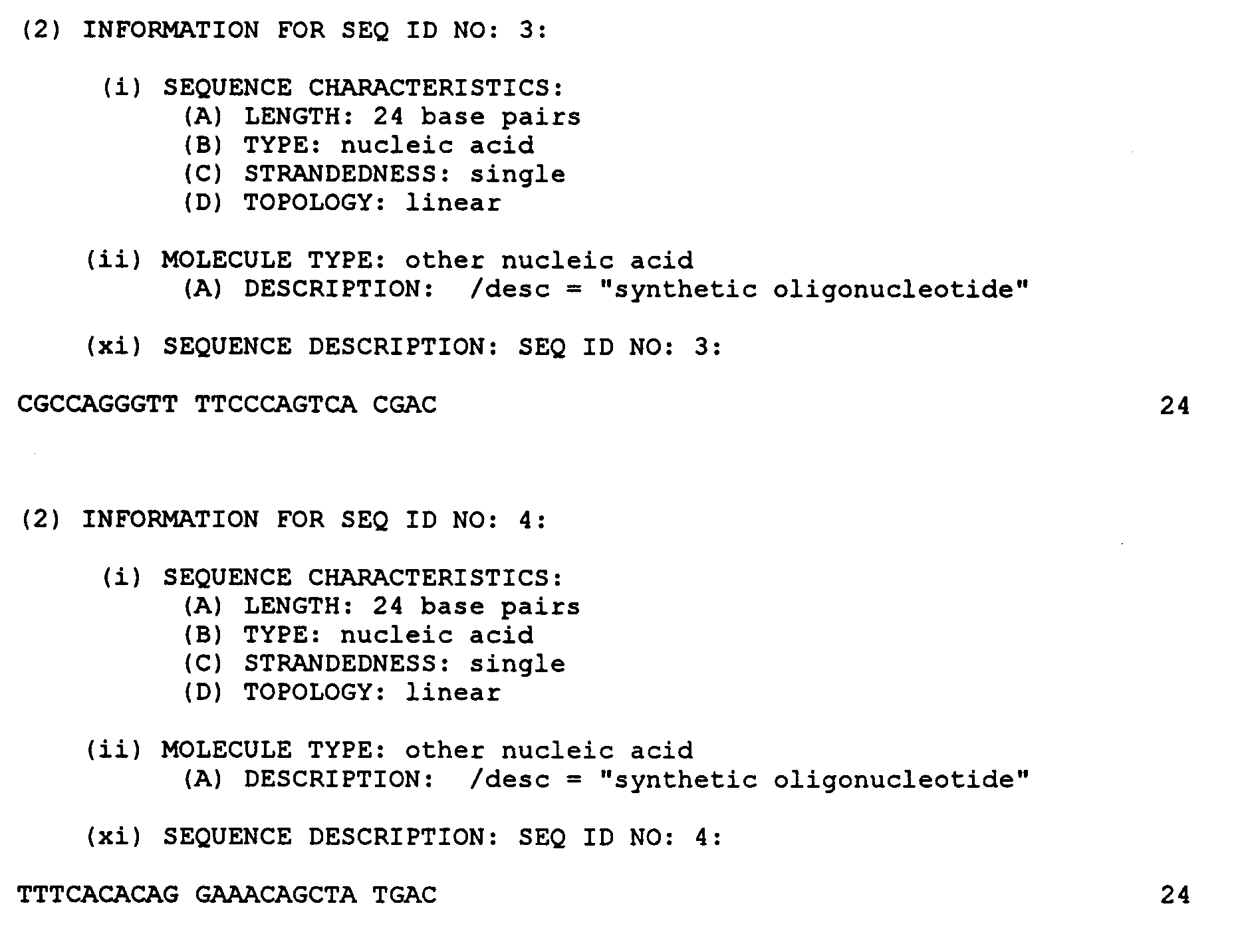
- each primer M13-40 (24-mer): 5'-CGCCAGGGTTTTCCCAGTCACGAC-3'; M13-Rev (24-mer): 5'-TTTCACACAGGAAACAGCTATGAC-3'), 100 ⁇ M of each dNTP, 1.5 mM MgCl 2 and 2.5 Units of Taq DNA polymerase in a total volume of 50 ⁇ l.
- Reaction mixtures containing betaine were prepared by adding the required mixture of water and a 5 M stock solution of betaine to the final reaction volume of 50 ⁇ l. The mixtures were cycled 30 times at 94°C for 20 sec, 55°C for 30 sec and at 73°C for 2 min 30 sec.
- Example 2 PCR in the presence of silicon powder and zwitterionic osmolytes
- PCRs were carried out in 1x buffer (10 mM Tris-HCl, pH 8.8 and 50 mM KCl) in water only (Fig. 2, lane 2) and 4.6 mg of silicon powder (Fig. 2, lanes 3-8) in water (Fig. 2, lanes 3), 0.5 M betaine (Fig. 2, lane 4), 1 M betaine (Fig. 2, lane 5), 2 M betaine (Fig.
Landscapes
- Chemical & Material Sciences (AREA)
- Health & Medical Sciences (AREA)
- Life Sciences & Earth Sciences (AREA)
- Engineering & Computer Science (AREA)
- Immunology (AREA)
- Organic Chemistry (AREA)
- Molecular Biology (AREA)
- Zoology (AREA)
- Wood Science & Technology (AREA)
- Proteomics, Peptides & Aminoacids (AREA)
- Analytical Chemistry (AREA)
- Biochemistry (AREA)
- Biotechnology (AREA)
- Microbiology (AREA)
- General Health & Medical Sciences (AREA)
- Physics & Mathematics (AREA)
- Biophysics (AREA)
- Urology & Nephrology (AREA)
- Genetics & Genomics (AREA)
- General Engineering & Computer Science (AREA)
- Bioinformatics & Cheminformatics (AREA)
- Hematology (AREA)
- Biomedical Technology (AREA)
- Chemical Kinetics & Catalysis (AREA)
- Cell Biology (AREA)
- Food Science & Technology (AREA)
- Pathology (AREA)
- General Physics & Mathematics (AREA)
- Medicinal Chemistry (AREA)
- Measuring Or Testing Involving Enzymes Or Micro-Organisms (AREA)
- Organic Low-Molecular-Weight Compounds And Preparation Thereof (AREA)
- Saccharide Compounds (AREA)
- Immobilizing And Processing Of Enzymes And Microorganisms (AREA)
- Peptides Or Proteins (AREA)
Abstract
Description
- The present invention relates to the use of an osmolyte for reducing or abolishing non-covalent interactions of biological molecules to inert surfaces. Furthermore, the present invention relates to kits that may be employed for uses in accordance with the present invention.
- The development of new materials has had a significant impact on a wide variety of modern technologies. For example, the introduction of e.g. silicon, gallium arsenite or polycrystal materials has in the past strongly propagated the semiconductor technology. In modern biology, similar developments have been observed. Thus, over the past two decades, materials have been established in immunometric methods such as ELISAs that allow for a standardization of experimental protocols and a minimization of material-based error-rates in experimental results. A different but equally important development is concerned with the promotion of novel carrier materials to be used in (column) chromatography for the purification and isolation of biological compounds of interest.
- One of the major troubles that scientists have faced in a large number of biological analytical and isolation techniques is that experimental accuracies and production yields may be impaired by background or undesired and possibly unspecific interaction problems. Such problems can arise, for example, by non-covalent binding interactions of proteins or other biological compounds to carrier surfaces. In order to overcome such problems in ELISA techniques, free binding sites on carrier materials such as polystyrrol are "blocked" with unrelated biological materials such as heterologous proteins prior to testing for the compound of interest.
- A technology that has in the most recent past revolutionized molecular biology is the PCR technology. Naturally, in view of the wide applicability of PCR, major efforts have been and are presently undertaken to further improve facettes of this technology. One of these efforts is directed to the creation of microreaction volumes of PCR chips, i.e. microfabricated silicon chips bonded to a piece of flat glass to form a PCR reaction chamber; see, e.g., Shoffner et al., "Chip PCR. I. Surface passivation of microfabricated silicon-glass chips for PCR", Nucl. Acids Res. 24 (1996), 375-379. Since native silicon which so far has been used in the production of PCR chips has turned out to be an inhibitor of the PCR, these investigators searched for materials and methods to obtain reliable PCR results unimpaired by such inhibition or background problems. They propose to use an oxidized silicon (SiO2) surface to achieve their goal.
- In spite of these achievements, it would be highly desirous and advantageous to find a way of reducing or eliminating non-specific or non-covalent interactions between inert surfaces and biological molecules without having to modify commonly commercially available surfaces or being limited to the use of only a small selection of suitable inert surfaces. A successful development of such a means would, of course, have a wide applicability in modern biology and not be restricted to the use in the PCR technology. For example, Volkmuth and Austin have designed a method for the micro-elelectrophesis of DNA molecules (Volkmuth and Austin, "DNA electrophoresis in microlithographic arrays", Nature 358 (1992), 600-602). Such techniques could also benefit from the inclusion of osmolytes such as betaine into the buffer systems.
- Thus, the technical problem underlying the present invention was to overcome the prior art problems detailed hereinabove and develop a system that reduces or eliminates undesired interactions of biological molecules with inert surfaces.
- The solution to said technical problem is achieved by providing the embodiments characterized in the claims.
- Accordingly, the present invention relates to the use of an osmolyte for reducing or abolishing non-covalent interactions of biological molecules to inert surfaces.
In accordance with the present invention, it has surprisingly been found that the addition of an osmolyte in a suitable concentration to a solution comprising a biological molecule will reduce, if not abolish the non-covalent interaction of said molecule with said surface.
Osmolytes (or osmotic solutes) are found in a wide variety of water-stressed prokaryotic and eukaryotic organisms. The three types of osmolyte systems found in all such organisms except for the halobacteria are polyhydric alcohols (such as glycerol and saccharose), free amino acids and their derivatives (such as taurine and β-alanine), and methylamines (e.g. trimethylamine-N-oxide (TMAO), betaine and sarcosine) or combinations of methylamines and urea (see, for a review, Yancey et al., "Living with water stress: evolution of osmolyte systems" Science 217 (1982), 1214-1222).
One of the major advantages of the present invention is that the simple addition of an osmolyte to such a solution conveniently reduces or abolishes the interaction of said molecules with a wide variety of inert surfaces. The special design or selection of an adequate surface for a specific experimental set-up or purpose is therefore no longer necessary,
A further advantage of the present invention is that it allows for the simple design of a variety of previously crucial experiments and therefore saves time and costs for the interested investigator. - The term "biological molecule" as used herein refers to organic molecules which are part of an organism or a living cell or derivatives of such molecules. These molecules may be of natural, synthetic or semisynthetic origin.
- As used herein, the term "inert" has the meaning of "having little or no ability to chemically react". It therefore bears the same meaning as inertness in connection with nitrogens which occurs uncombined in the atmosphere.
- In a preferred embodiment of the use of the present invention said osmolyte is a zwitterionic osmolyte.
- In a most preferred embodiment of the use of the present invention said zwitterionic osmolyte has the structural formula

- In a further most preferred embodiment of the use of the present invention said zwitterionic osmolyte is an amino acid or its methylation product.
- In an additional most preferred embodiment of the use of the present invention said zwitterionic osmolyte is betaine and preferably glycine-betaine.
- In a further preferred embodiment of the present invention said osmolyte is present at a final concentration of 1 to 2.5 M.
The advantageous properties of said osmolyte also emerge, if it is included in the reaction mixture at a lower concentration than 1M. However, particularly advantageous results are obtained, if the osmolyte is present in a final concentration of 1 to 2.5 M. - In an additional preferred embodiment of the present invention said biological molecule is a macromolecule.
- The term "macromolecule" in connection with the term "biological molecule" is perfectly clear to the person skilled in the art and need not be described here any further.
- In a most preferred embodiment of the use of the present invention, said macromolecule is a carbohydrate, a polynucleic acid or a polypeptide, or combinations or modifications thereof. Said combinations or modifications need not necessarily have a biological function. In the alternative, their biological function may not be known in the art (yet); see, for example, the discussion about peptide nucleic acids (Nielsen et al., Science 254 (1991), 1497-1500) . Yet, said modified biological macromolecules may have essentially the same physico-chemical properties as the biological macromolecules they are derived from and may find the same or similar applications e.g. in molecular biology.
- In a further preferred embodiment of the present invention said biological molecule is a peptide or an oligonucleotide or combinations or modifications thereof.
- In a most preferred embodiment of the present invention said polynucleic acid or oligonucleotide is DNA.
The term "DNA" as used herein includes any type of DNA, in particular cDNA and genomic DNA. - In a further most preferred embodiment of the present invention said polynucleic acid or oligonucleotide is RNA.
The term "RNA", as used in the context of the present invention, is intended to mean any type of RNA and in particular mRNA. - In a further preferred embodiment of the present invention said inert surface is a silicon surface, a silicium wafer, a glass surface or combinations or chemical modifications thereof.
- Most conveniently, said substance is a manufactured silicon. Said silicon may be obtained e.g., by standard manufacturing or processing techniques such as photolithography.
- The present invention additionally relates to a kit comprising at least
- (a) a concentrated stock solution of an osmolyte as specified herein before;
- (b) a reaction buffer formulation containing an osmolyte as specified herein before; and/or
- (c) an enzyme formulation containing an osmolyte as specified herein before.
- The various components of the kit of the present invention are preferably formulated in standard reaction vials and independently of one another. The concentrations used in the stock solutions comprised in the kit of the invention are suitable to allow an appropriate dilution of the osmolyte to be useful in the teachings of the present invention. In the embodiments b) and c) of the buffer of the invention, the osmolyte is preferably contained therein in its final concentration. The ranges and limits of said final concentrations have been provided herein before in the specification.
- The figures show:
- Figure 1: PCR in the presence of silicon particles and zwitterionic osmolytes
PCRs were carried out on a 1.2 kb fragment of human genomic DNA in the presence of silicon particles (approx: 0.5 mm x 0.5 mm x 0.3 mm) and 1 M betaine.
Lane 1: λ-BstEII marker; lanes 2-5: PCR (50 µl) carried out in buffer with water and different amounts of silicon particles: lane 2: 10 particles; lane 3: 50 particles; lane 4: 75 particles; lane 5: no particles as a control; lanes 6-9: PCRs (50 µl) carried out in buffer with 1 M betaine and different amounts of silicon particles: lane 6: 10 particles; lane 7: 50 particles; lane 8: 75 particles; lane 9: no particles as a control. - Figure 2: PCR in the presence of silicon powder and zwitterionic osmolytes
PCRs were carried out on a 1.5 kb fragment of human genomic DNA in the presence of silicon powder and molar concentrations of betaine. Note that the PCRs in molar concentrations of betaine allow efficient and specific PCR amplification and reduce the inhibiting effect of silicon surfaces.
Lane 1: λ-BstEII marker; lane 2: PCR carried out in a standard PCR buffer without any silicon powder; lanes 3-6: PCR reaction carried out with 4.6 mg of silicon powder in 100 µl PCR volume; lane 3: water based buffer; lane 4: 0.5 M betaine; lane 5: 1 M betaine; lane 6: 2 M betaine. - The examples illustrate the invention.
- In this example it is shown that the inhibiting effect of inert surfaces such as pure silicon surfaces in a PCR as a nucleic acid template dependent reaction can be reduced with the presence of osmolytes such as betaine (in the examples glycine-betaine from Sigma was used).
Silicon is a very interesting material not only for the semiconductor technology but also for the biological field, since it is a material which can be easily handled and three dimensional micro-structures can be manufactured very rapidly. Therefore, experiments such as PCR in the presence of pure silicon are very important with a view of miniaturising biological processes on e.g. silicon wafers in the future. Pure silicon is generally known to inhibit biological processes such as PCRs for many reasons. One of these reasons is that the molecules interact with relatively large surfaces compared to the small volumes used in e.g. microreaction chambers. To test the inhibiting effects of pure silicon surfaces in a PCR, PCR experiments on a 1.2 kb fragment of human genomic DNA cloned in a M13 vector in the presence of crushed silicon particles (approx: 0.5 mm x 0.5 mm x 0.3 mm) as a model system were carried out.
The reactions were prepared with 1 ng of M13 DNA in 1x buffer (10 mM Tris-HCl, pH 8.8 and 50 mM KCl) with increasing amounts (10, 50, 75) of silicon particles in water (Fig. 1, lanes 2-5) and 1 M betaine (Fig. 1, lanes 6-9)), 0.2 µM of each primer (M13-40 (24-mer): 5'-CGCCAGGGTTTTCCCAGTCACGAC-3'; M13-Rev (24-mer): 5'-TTTCACACAGGAAACAGCTATGAC-3'), 100 µM of each dNTP, 1.5 mM MgCl2 and 2.5 Units of Taq DNA polymerase in a total volume of 50 µl.
Reaction mixtures containing betaine were prepared by adding the required mixture of water and a 5 M stock solution of betaine to the final reaction volume of 50 µl.
The mixtures were cycled 30 times at 94°C for 20 sec, 55°C for 30 sec and at 73°C for 2 min 30 sec. 1 µg of λ-BstEII digest was loaded on the gel as a marker. Further, 5 µl of the PCR products together with 2 µl gel loading solution (70% glycerol, 0.02 mg/ml bromphenol blue) were loaded on the agarose gels. - The results (see Fig. 1) show that the inhibiting effect of increasing amounts of silicon particles can be overcome by adding betaine in molar concentrations to the PCR buffer.
- In this example it is shown that the inhibiting effect of silicon powder in a PCR that was shown recently (Shoffner et al., loc. cit.) can be efficiently reduced by the presence of osmolytes such as the zwitterionic osmolyte betaine in the reaction buffer.
PCR experiments were carried out using a 1.5 kb fragment of human genomic DNA cloned in a M13 vector as a model system. The PCR with silicon were prepared with 4.6 mg of silicon powder (Sigma, 325 mesh, 99%, no. 21,561-9) in a final volume of 100 µl. This concentration of pure silicon powder was recently shown to inhibit PCRs (Shoffner et al., loc. cit).
PCRs were carried out in 1x buffer (10 mM Tris-HCl, pH 8.8 and 50 mM KCl) in water only (Fig. 2, lane 2) and 4.6 mg of silicon powder (Fig. 2, lanes 3-8) in water (Fig. 2, lanes 3), 0.5 M betaine (Fig. 2, lane 4), 1 M betaine (Fig. 2, lane 5), 2 M betaine (Fig. 2, lane 6), 1 ng M13 DNA, 0.3 µM of each primer (M13-40 (24-mer): 5'-CGCCAGGGTTTTCCCAGTCACGAC-3'; M13-Rev (24-mer): 5'-TTTCACACAGGAAACAGCTATGAC-3'), 200 µM of each dNTP, 1.5 mM MgCl2 and 10 Units of Taq DNA polymerase in a total volume of 100 µl. Reaction mixtures containing betaine were prepared by adding the required mixture of water and a 5 M stock solution of betaine to the final reaction volume of 100 µl.
The mixtures were cycled 30 times at 94°C for 20 sec, 55°C for 30 sec and at 73°C for 2 min 30 sec. 1 µg of λ-BstEII digest was loaded on the gel as a marker. Further, 5 µl of the PCR products together with 2 µl gel loading solution (70% glycerol, 0.02 mg/ml bromphenol blue) were loaded on the agarose gels.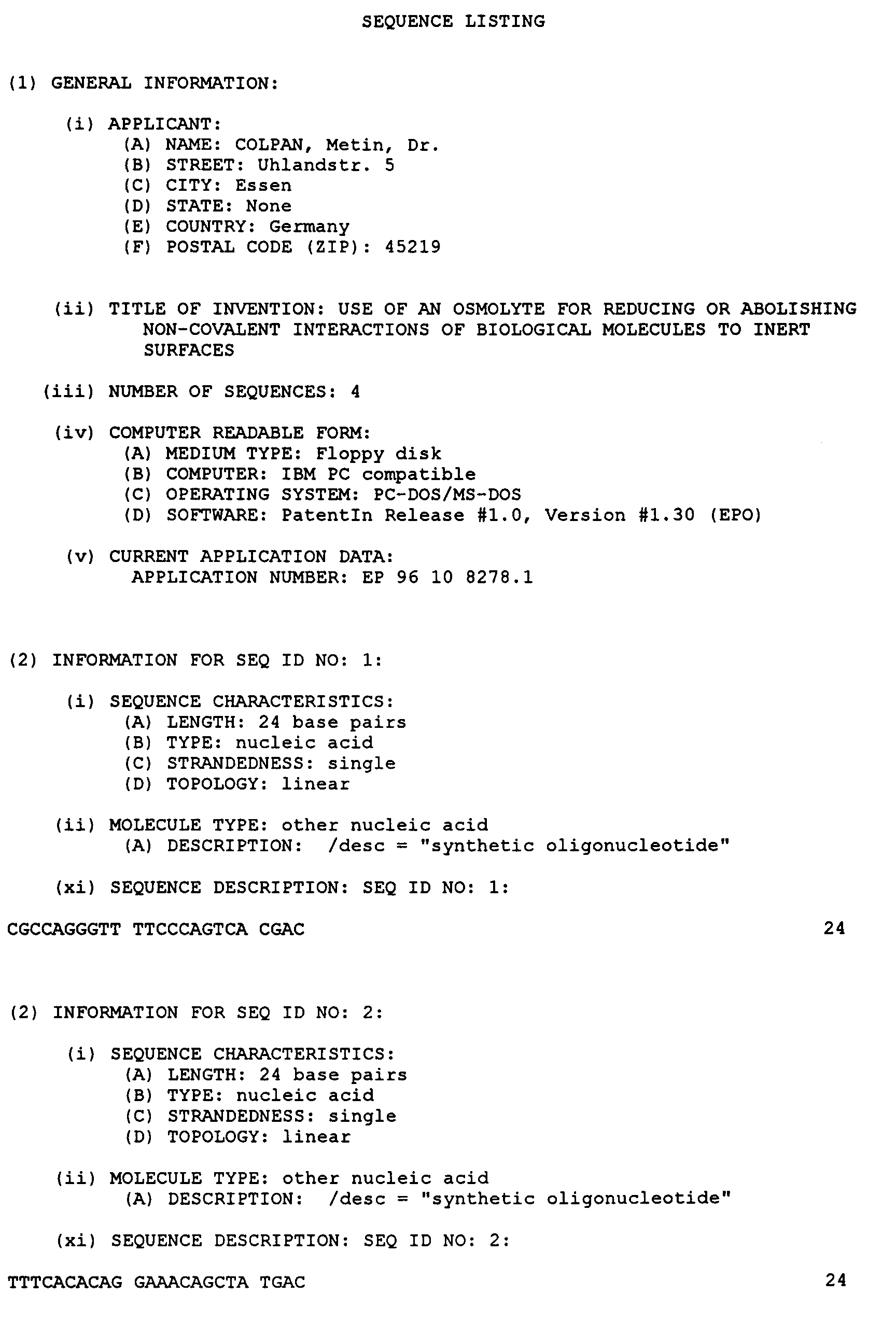
Claims (13)
- Use of an osmolyte for reducing or abolishing non-covalent interactions of biological molecules to inert surfaces.
- The use according to claim 1 wherein said osmolyte is a zwitterionic osmolyte.
- The use according to claim 2 wherein said zwitterionic osmolyte has the structural formula

- The use according to claim 3 wherein said zwitterionic osmolyte is an amino acid or its methylation product.
- The use according to claim 3 wherein said zwitterionic osmolyte is betaine and preferably glycine-betaine.
- The use according to any one of claims 1 to 5 wherein said osmolyte is present at a final concentration of 1 to 2.5 M.
- The use according to any one of claims 1 to 6 wherein said biological molecule is a macromolecule.
- The use according to claim 7 wherein said macromolecule is a carbohydrate, a polynucleic acid, a polypeptide or combinations or modifications thereof.
- The use according to any one of claims 1 to 6 wherein said biological molecule is a peptide, an oligonucleotide or combinations or modifications thereof.
- The use according to claim 8 or 9 wherein said polynucleic acid or oligonucleotide is DNA.
- The use according to claim 8 or 9 wherein said polynucleic acid or oligonucleotide is RNA.
- The use according to any one of claims 1 to 11 wherein said inert surface is a silicon surface, a silicium wafer, a glass surface or combinations or chemical modifications thereof.
- Kit comprising at least(a) a concentrated stock solution of an osmolyte as specified in any of the preceeding claims;(b) a reaction buffer formulation containing an osmolyte as specified in any of the preceeding claims; and/or(c) an enzyme formulation containing an osmolyte as specified in any of the preceeding claims.
Priority Applications (4)
| Application Number | Priority Date | Filing Date | Title |
|---|---|---|---|
| AT96108278T ATE196510T1 (en) | 1996-05-23 | 1996-05-23 | USE OF AN OSMOLYTE TO REDUCE OR REMOVE NON-COVALENT BONDING OF BIOLOGICAL MOLECULES TO INERT SURFACES |
| EP96108278A EP0808906B1 (en) | 1996-05-23 | 1996-05-23 | Use of an osmolyte for reducing or abolishing non-covalent interactions of biological molecules to inert surfaces |
| DE69610410T DE69610410T2 (en) | 1996-05-23 | 1996-05-23 | Use of an osmolyte to reduce or break noncovalent bonds of biological molecules to inert surfaces |
| JP13337097A JP4113603B2 (en) | 1996-05-23 | 1997-05-23 | Use of penetrants |
Applications Claiming Priority (1)
| Application Number | Priority Date | Filing Date | Title |
|---|---|---|---|
| EP96108278A EP0808906B1 (en) | 1996-05-23 | 1996-05-23 | Use of an osmolyte for reducing or abolishing non-covalent interactions of biological molecules to inert surfaces |
Publications (2)
| Publication Number | Publication Date |
|---|---|
| EP0808906A1 true EP0808906A1 (en) | 1997-11-26 |
| EP0808906B1 EP0808906B1 (en) | 2000-09-20 |
Family
ID=8222814
Family Applications (1)
| Application Number | Title | Priority Date | Filing Date |
|---|---|---|---|
| EP96108278A Expired - Lifetime EP0808906B1 (en) | 1996-05-23 | 1996-05-23 | Use of an osmolyte for reducing or abolishing non-covalent interactions of biological molecules to inert surfaces |
Country Status (4)
| Country | Link |
|---|---|
| EP (1) | EP0808906B1 (en) |
| JP (1) | JP4113603B2 (en) |
| AT (1) | ATE196510T1 (en) |
| DE (1) | DE69610410T2 (en) |
Cited By (1)
| Publication number | Priority date | Publication date | Assignee | Title |
|---|---|---|---|---|
| JP2019101011A (en) * | 2017-12-05 | 2019-06-24 | 藤倉化成株式会社 | Deterioration prevention means of immunoassay reagent containing sensitized insoluble carrier particle |
Families Citing this family (2)
| Publication number | Priority date | Publication date | Assignee | Title |
|---|---|---|---|---|
| EP1004676B1 (en) * | 1997-08-14 | 2006-03-15 | Takara Bio Inc. | Methods for dna amplification and kits therefor |
| ES2381279T3 (en) | 2005-05-06 | 2012-05-24 | Gen-Probe Incorporated | Methods and products for capturing target nucleic acid |
Citations (7)
| Publication number | Priority date | Publication date | Assignee | Title |
|---|---|---|---|---|
| EP0153875A2 (en) * | 1984-03-01 | 1985-09-04 | The State Of Victoria | Enzyme-linked immunosorbent assay method and test kit |
| EP0292809A2 (en) * | 1987-05-23 | 1988-11-30 | BEHRINGWERKE Aktiengesellschaft | Method and composition for the determination of proteins |
| EP0363091A2 (en) * | 1988-10-07 | 1990-04-11 | Johnson & Johnson Clinical Diagnostics, Inc. | Immunological reagent composition and its use in the determination of chlamydial or gonococcal antigens |
| WO1993022058A1 (en) * | 1992-05-01 | 1993-11-11 | Trustees Of The University Of Pennsylvania | Polynucleotide amplification analysis using a microfabricated device |
| WO1995020682A1 (en) * | 1994-01-31 | 1995-08-03 | The Regents Of The University Of California | Methods for the elimination of dna sequencing artifacts |
| EP0669401A2 (en) * | 1994-02-25 | 1995-08-30 | F. Hoffmann-La Roche Ag | Amplification of long nucleic acid sequences by PCR |
| DE4411588C1 (en) * | 1994-03-30 | 1995-09-28 | Deutsches Rheuma Forschungszen | Buffer, contg. betaine, for RNA- and DNA-polymerase reactions |
-
1996
- 1996-05-23 AT AT96108278T patent/ATE196510T1/en active
- 1996-05-23 EP EP96108278A patent/EP0808906B1/en not_active Expired - Lifetime
- 1996-05-23 DE DE69610410T patent/DE69610410T2/en not_active Expired - Lifetime
-
1997
- 1997-05-23 JP JP13337097A patent/JP4113603B2/en not_active Expired - Fee Related
Patent Citations (7)
| Publication number | Priority date | Publication date | Assignee | Title |
|---|---|---|---|---|
| EP0153875A2 (en) * | 1984-03-01 | 1985-09-04 | The State Of Victoria | Enzyme-linked immunosorbent assay method and test kit |
| EP0292809A2 (en) * | 1987-05-23 | 1988-11-30 | BEHRINGWERKE Aktiengesellschaft | Method and composition for the determination of proteins |
| EP0363091A2 (en) * | 1988-10-07 | 1990-04-11 | Johnson & Johnson Clinical Diagnostics, Inc. | Immunological reagent composition and its use in the determination of chlamydial or gonococcal antigens |
| WO1993022058A1 (en) * | 1992-05-01 | 1993-11-11 | Trustees Of The University Of Pennsylvania | Polynucleotide amplification analysis using a microfabricated device |
| WO1995020682A1 (en) * | 1994-01-31 | 1995-08-03 | The Regents Of The University Of California | Methods for the elimination of dna sequencing artifacts |
| EP0669401A2 (en) * | 1994-02-25 | 1995-08-30 | F. Hoffmann-La Roche Ag | Amplification of long nucleic acid sequences by PCR |
| DE4411588C1 (en) * | 1994-03-30 | 1995-09-28 | Deutsches Rheuma Forschungszen | Buffer, contg. betaine, for RNA- and DNA-polymerase reactions |
Non-Patent Citations (1)
| Title |
|---|
| THAKAR M ET AL: "OSMOLYTE MEDIATION OF T7 DNA POLYMERASE AND PLASMID DNA STABILITY", BIOCHEMISTRY, vol. 33, no. 40, 11 October 1994 (1994-10-11), EASTON, PA US, pages 12255 - 12259, XP002007763 * |
Cited By (1)
| Publication number | Priority date | Publication date | Assignee | Title |
|---|---|---|---|---|
| JP2019101011A (en) * | 2017-12-05 | 2019-06-24 | 藤倉化成株式会社 | Deterioration prevention means of immunoassay reagent containing sensitized insoluble carrier particle |
Also Published As
| Publication number | Publication date |
|---|---|
| DE69610410D1 (en) | 2000-10-26 |
| JPH1066596A (en) | 1998-03-10 |
| EP0808906B1 (en) | 2000-09-20 |
| ATE196510T1 (en) | 2000-10-15 |
| JP4113603B2 (en) | 2008-07-09 |
| DE69610410T2 (en) | 2001-05-10 |
Similar Documents
| Publication | Publication Date | Title |
|---|---|---|
| US6150094A (en) | Use of an osmolyte for reducing or abolishing no-covalent interactions of biological molecules to inert surfaces | |
| Erdmann et al. | The involvement of 5S RNA in the binding of tRNA to ribosomes | |
| AU2001240834B2 (en) | Mass labels | |
| Wickner et al. | DnaJ, DnaK, and GrpE heat shock proteins are required in oriP1 DNA replication solely at the RepA monomerization step. | |
| US8192958B2 (en) | Nucleic acid isolation using polidocanol and derivatives | |
| Arand et al. | Colorimetric quantitation of trace amounts of sodium lauryl sulfate in the presence of nucleic acids and proteins | |
| WO2006103094A3 (en) | Method for treating a sample that contains biomolecules | |
| EP1873238B1 (en) | Enhancing reactivation of thermostable reversibly inactivated enzymes | |
| EP1932913B1 (en) | Nucleic acid isolation using polidocanol and derivatives | |
| AU2001240834A1 (en) | Mass labels | |
| EP3597776B1 (en) | Method for detecting target molecule in which rolling circle amplification is used | |
| EP3264091A1 (en) | Method of detection of analyte active forms | |
| EP2951300B1 (en) | Robust, easy to use immobilized enzyme reactors | |
| Wang et al. | Determinants for Escherichia coli RNA polymerase assembly within the β subunit | |
| EP0808906B1 (en) | Use of an osmolyte for reducing or abolishing non-covalent interactions of biological molecules to inert surfaces | |
| Burke et al. | On the mode of alkali light chain association to the heavy chain of myosin subfragment 1. Evidence for the involvement of the carboxyl-terminal region of the heavy chain | |
| Oen et al. | T7 deoxyribonucleic acid directed, rapid-turnover, single-step addition reactions catalyzed by Escherichia coli ribonucleic acid polymerase | |
| EP4413153A1 (en) | Sample preparation for lc-ms based sequence mapping of nucleic acids | |
| EP1921453A1 (en) | Method of stabilizing peptide contained in biosample | |
| Sando et al. | Enzymatic N-methylaminoacylation of tRNA using chemically misacylated AMP as a substrate | |
| Ono et al. | Inhibitory effects of various 5-halogenated derivatives of 1-. beta.-D-arabinofuranosyluracil 5'-triphosphate on DNA polymerases from murine cells and oncornavirus: substituent effects on inhibitory action | |
| WO2007051605A2 (en) | Methods for determining the cleavability of substrates | |
| Hempel et al. | A new reporter gene system suited for cell-free protein synthesis and high-throughput screening in small reaction volumes | |
| Davidson et al. | Immobilization of the restriction enzymes HaeIII and HindIII on porous silica particles via a glutaraldehyde linkage for the micro‐digestion of dsDNA with analysis by capillary electrophoresis | |
| US20210180042A1 (en) | Methods and kits for nucleic acid purification and other procedures |
Legal Events
| Date | Code | Title | Description |
|---|---|---|---|
| PUAI | Public reference made under article 153(3) epc to a published international application that has entered the european phase |
Free format text: ORIGINAL CODE: 0009012 |
|
| 17P | Request for examination filed |
Effective date: 19960523 |
|
| AK | Designated contracting states |
Kind code of ref document: A1 Designated state(s): AT BE CH DE DK ES FR GB IE IT LI NL SE |
|
| RBV | Designated contracting states (corrected) |
Designated state(s): AT BE CH DE DK ES FR GB IE IT LI NL SE |
|
| 17Q | First examination report despatched |
Effective date: 19980812 |
|
| GRAG | Despatch of communication of intention to grant |
Free format text: ORIGINAL CODE: EPIDOS AGRA |
|
| RAP1 | Party data changed (applicant data changed or rights of an application transferred) |
Owner name: QIAGEN GMBH |
|
| GRAG | Despatch of communication of intention to grant |
Free format text: ORIGINAL CODE: EPIDOS AGRA |
|
| GRAG | Despatch of communication of intention to grant |
Free format text: ORIGINAL CODE: EPIDOS AGRA |
|
| GRAH | Despatch of communication of intention to grant a patent |
Free format text: ORIGINAL CODE: EPIDOS IGRA |
|
| RTI1 | Title (correction) |
Free format text: USE OF AN OSMOLYTE FOR REDUCING OR ABOLISHING NON-COVALENT INTERACTIONS OF BIOLOGICAL MOLECULES TO INERT SURFACES |
|
| GRAH | Despatch of communication of intention to grant a patent |
Free format text: ORIGINAL CODE: EPIDOS IGRA |
|
| GRAA | (expected) grant |
Free format text: ORIGINAL CODE: 0009210 |
|
| AK | Designated contracting states |
Kind code of ref document: B1 Designated state(s): AT BE CH DE DK ES FR GB IE IT LI NL SE |
|
| PG25 | Lapsed in a contracting state [announced via postgrant information from national office to epo] |
Ref country code: ES Free format text: THE PATENT HAS BEEN ANNULLED BY A DECISION OF A NATIONAL AUTHORITY Effective date: 20000920 |
|
| REF | Corresponds to: |
Ref document number: 196510 Country of ref document: AT Date of ref document: 20001015 Kind code of ref document: T |
|
| REG | Reference to a national code |
Ref country code: CH Ref legal event code: EP |
|
| REF | Corresponds to: |
Ref document number: 69610410 Country of ref document: DE Date of ref document: 20001026 |
|
| REG | Reference to a national code |
Ref country code: IE Ref legal event code: FG4D |
|
| ITF | It: translation for a ep patent filed | ||
| PG25 | Lapsed in a contracting state [announced via postgrant information from national office to epo] |
Ref country code: DK Free format text: LAPSE BECAUSE OF FAILURE TO SUBMIT A TRANSLATION OF THE DESCRIPTION OR TO PAY THE FEE WITHIN THE PRESCRIBED TIME-LIMIT Effective date: 20001220 |
|
| REG | Reference to a national code |
Ref country code: CH Ref legal event code: NV Representative=s name: SCHMAUDER & PARTNER AG PATENTANWALTSBUERO |
|
| ET | Fr: translation filed | ||
| PG25 | Lapsed in a contracting state [announced via postgrant information from national office to epo] |
Ref country code: IE Free format text: LAPSE BECAUSE OF NON-PAYMENT OF DUE FEES Effective date: 20010523 |
|
| PLBE | No opposition filed within time limit |
Free format text: ORIGINAL CODE: 0009261 |
|
| STAA | Information on the status of an ep patent application or granted ep patent |
Free format text: STATUS: NO OPPOSITION FILED WITHIN TIME LIMIT |
|
| 26N | No opposition filed | ||
| REG | Reference to a national code |
Ref country code: GB Ref legal event code: IF02 |
|
| REG | Reference to a national code |
Ref country code: IE Ref legal event code: MM4A |
|
| REG | Reference to a national code |
Ref country code: CH Ref legal event code: PCAR Free format text: SCHMAUDER & PARTNER AG PATENT- UND MARKENANWAELTE VSP;ZWAENGIWEG 7;8038 ZUERICH (CH) |
|
| REG | Reference to a national code |
Ref country code: FR Ref legal event code: PLFP Year of fee payment: 20 |
|
| PGFP | Annual fee paid to national office [announced via postgrant information from national office to epo] |
Ref country code: SE Payment date: 20150520 Year of fee payment: 20 Ref country code: DE Payment date: 20150521 Year of fee payment: 20 Ref country code: GB Payment date: 20150521 Year of fee payment: 20 Ref country code: CH Payment date: 20150521 Year of fee payment: 20 |
|
| PGFP | Annual fee paid to national office [announced via postgrant information from national office to epo] |
Ref country code: NL Payment date: 20150520 Year of fee payment: 20 Ref country code: AT Payment date: 20150521 Year of fee payment: 20 Ref country code: BE Payment date: 20150520 Year of fee payment: 20 Ref country code: FR Payment date: 20150521 Year of fee payment: 20 Ref country code: IT Payment date: 20150515 Year of fee payment: 20 |
|
| REG | Reference to a national code |
Ref country code: DE Ref legal event code: R071 Ref document number: 69610410 Country of ref document: DE |
|
| REG | Reference to a national code |
Ref country code: NL Ref legal event code: MK Effective date: 20160522 |
|
| REG | Reference to a national code |
Ref country code: CH Ref legal event code: PL |
|
| REG | Reference to a national code |
Ref country code: GB Ref legal event code: PE20 Expiry date: 20160522 |
|
| REG | Reference to a national code |
Ref country code: AT Ref legal event code: MK07 Ref document number: 196510 Country of ref document: AT Kind code of ref document: T Effective date: 20160523 |
|
| PG25 | Lapsed in a contracting state [announced via postgrant information from national office to epo] |
Ref country code: GB Free format text: LAPSE BECAUSE OF EXPIRATION OF PROTECTION Effective date: 20160522 |