EP0807818A2 - Method for measuring nitrogen oxide - Google Patents
Method for measuring nitrogen oxide Download PDFInfo
- Publication number
- EP0807818A2 EP0807818A2 EP97303268A EP97303268A EP0807818A2 EP 0807818 A2 EP0807818 A2 EP 0807818A2 EP 97303268 A EP97303268 A EP 97303268A EP 97303268 A EP97303268 A EP 97303268A EP 0807818 A2 EP0807818 A2 EP 0807818A2
- Authority
- EP
- European Patent Office
- Prior art keywords
- inner space
- oxygen
- gas
- measuring
- main pump
- Prior art date
- Legal status (The legal status is an assumption and is not a legal conclusion. Google has not performed a legal analysis and makes no representation as to the accuracy of the status listed.)
- Granted
Links
- MWUXSHHQAYIFBG-UHFFFAOYSA-N Nitric oxide Chemical compound O=[N] MWUXSHHQAYIFBG-UHFFFAOYSA-N 0.000 title claims abstract description 200
- 238000000034 method Methods 0.000 title claims abstract description 40
- 239000001301 oxygen Substances 0.000 claims abstract description 118
- 229910052760 oxygen Inorganic materials 0.000 claims abstract description 118
- QVGXLLKOCUKJST-UHFFFAOYSA-N atomic oxygen Chemical compound [O] QVGXLLKOCUKJST-UHFFFAOYSA-N 0.000 claims abstract description 108
- 239000007789 gas Substances 0.000 claims abstract description 99
- 238000009792 diffusion process Methods 0.000 claims abstract description 42
- 238000000354 decomposition reaction Methods 0.000 claims abstract description 18
- 238000004320 controlled atmosphere Methods 0.000 claims abstract description 6
- 238000006243 chemical reaction Methods 0.000 claims description 36
- 238000001514 detection method Methods 0.000 claims description 22
- 238000005086 pumping Methods 0.000 claims description 15
- -1 oxygen ion Chemical class 0.000 claims description 11
- 239000007784 solid electrolyte Substances 0.000 claims description 11
- 239000000758 substrate Substances 0.000 claims description 10
- MCMNRKCIXSYSNV-UHFFFAOYSA-N Zirconium dioxide Chemical compound O=[Zr]=O MCMNRKCIXSYSNV-UHFFFAOYSA-N 0.000 description 12
- 230000003197 catalytic effect Effects 0.000 description 7
- 238000007796 conventional method Methods 0.000 description 5
- 239000001257 hydrogen Substances 0.000 description 5
- 229910052739 hydrogen Inorganic materials 0.000 description 5
- UFHFLCQGNIYNRP-UHFFFAOYSA-N Hydrogen Chemical compound [H][H] UFHFLCQGNIYNRP-UHFFFAOYSA-N 0.000 description 4
- 230000002452 interceptive effect Effects 0.000 description 4
- 239000011148 porous material Substances 0.000 description 4
- 239000000919 ceramic Substances 0.000 description 3
- 230000003247 decreasing effect Effects 0.000 description 3
- 230000002093 peripheral effect Effects 0.000 description 3
- 230000001603 reducing effect Effects 0.000 description 3
- CURLTUGMZLYLDI-UHFFFAOYSA-N Carbon dioxide Chemical compound O=C=O CURLTUGMZLYLDI-UHFFFAOYSA-N 0.000 description 2
- 238000002485 combustion reaction Methods 0.000 description 2
- 239000000463 material Substances 0.000 description 2
- 239000000203 mixture Substances 0.000 description 2
- 229910052573 porcelain Inorganic materials 0.000 description 2
- XLYOFNOQVPJJNP-UHFFFAOYSA-N water Substances O XLYOFNOQVPJJNP-UHFFFAOYSA-N 0.000 description 2
- MYMOFIZGZYHOMD-UHFFFAOYSA-N Dioxygen Chemical compound O=O MYMOFIZGZYHOMD-UHFFFAOYSA-N 0.000 description 1
- 229910001260 Pt alloy Inorganic materials 0.000 description 1
- 235000011089 carbon dioxide Nutrition 0.000 description 1
- 229910001882 dioxygen Inorganic materials 0.000 description 1
- 238000010494 dissociation reaction Methods 0.000 description 1
- 230000005593 dissociations Effects 0.000 description 1
- 230000000694 effects Effects 0.000 description 1
- 239000003792 electrolyte Substances 0.000 description 1
- 150000002431 hydrogen Chemical class 0.000 description 1
- 238000005259 measurement Methods 0.000 description 1
- 230000010355 oscillation Effects 0.000 description 1
- 239000011241 protective layer Substances 0.000 description 1
- 230000010349 pulsation Effects 0.000 description 1
Images


Classifications
-
- G—PHYSICS
- G01—MEASURING; TESTING
- G01N—INVESTIGATING OR ANALYSING MATERIALS BY DETERMINING THEIR CHEMICAL OR PHYSICAL PROPERTIES
- G01N27/00—Investigating or analysing materials by the use of electric, electrochemical, or magnetic means
- G01N27/26—Investigating or analysing materials by the use of electric, electrochemical, or magnetic means by investigating electrochemical variables; by using electrolysis or electrophoresis
- G01N27/416—Systems
- G01N27/417—Systems using cells, i.e. more than one cell and probes with solid electrolytes
- G01N27/419—Measuring voltages or currents with a combination of oxygen pumping cells and oxygen concentration cells
-
- G—PHYSICS
- G01—MEASURING; TESTING
- G01N—INVESTIGATING OR ANALYSING MATERIALS BY DETERMINING THEIR CHEMICAL OR PHYSICAL PROPERTIES
- G01N27/00—Investigating or analysing materials by the use of electric, electrochemical, or magnetic means
- G01N27/26—Investigating or analysing materials by the use of electric, electrochemical, or magnetic means by investigating electrochemical variables; by using electrolysis or electrophoresis
- G01N27/403—Cells and electrode assemblies
- G01N27/406—Cells and probes with solid electrolytes
- G01N27/407—Cells and probes with solid electrolytes for investigating or analysing gases
- G01N27/4073—Composition or fabrication of the solid electrolyte
- G01N27/4074—Composition or fabrication of the solid electrolyte for detection of gases other than oxygen
Definitions
- the present invention relates to a method for measuring nitrogen oxide.
- the present invention provides a method for measuring a very small amount of nitrogen oxide in a gas containing a great amount of interfering gas with a high preciseness.
- 80 is a NOx sensor having a main pump means 60 and an electric signal conversion means 70.
- the main pump means 60 includes an electrochemical pump cell 6 comprising a substrate 3 comprising an oxygen ion conductive solid electrolyte and an inner pump electrode 5 and an outer pump electrode 4 formed on the inner surface and outer surface of the substrate, respectively.
- the main pump means 60 treats oxygen contained in the measuring gas introduced from an external space by pumping processing on the basis of a control voltage applied between the inner pump electrode 5 and the outer pump electrode 4 by a power source 7.
- the electric signal conversion means 70 includes a pair of detection electrodes 11 and 14 formed on the side where the measuring gas that was treated by pumping processing by the main pump means is introduced.
- the electric signal conversion means 70 generates an electric signal corresponding to the quantity of oxygen generated by decomposition or reduction of NOx contained in the measuring gas after treated by the pumping processing by the main pump means 60.
- the NOx sensor 80 for measuring an amount of nitrogen oxide in a gas by introducing the gas to a first inner space 2 connected with the external space by means of a first diffusion resistance 1, controlling an oxygen partial pressure in an atmosphere in the first inner space 2 to be a predetermined low value at which NO is not decomposed substantially by the main pump means 60, introducing a controlled atmosphere of the first inner space 2 into a second inner space 9 connected with the first inner space 2 by means of a second diffusion resistance 8, and converting the atmosphere into an electric signal corresponding to the quantity of oxygen generated by decomposition or reduction of NOx contained in the atmosphere by the electric signal conversion means 70.
- a potential difference detection means 40 measures an electromotive force V1 corresponding to a difference in oxygen partial pressure between an electrode 10 exposed in the first inner space 2 and an electrode 11 exposed in a space 15 where a standard gas is present.
- a voltage applied to the main pump means 60 is adjusted so that the electromotive force V1 is controlled to have a predetermined value.
- an oxygen partial pressure of a gas introduced into the second inner space 9 is changed to be higher.
- a base line of an electric signal (a pump current value Ip in Fig. 13) by an electric signal conversion means 70 corresponding to NOx amount is also changed. Particularly, it causes a large error when a very small amount of NOx is measured.
- a steam amount of a gas to be measured increases, a hydrogen amount in the first inner space 2 in an equilibrium condition, a balance between hydrogen and oxygen in the second inner space 9 is lost by the difference in diffusion coefficients, a part of oxygen generated by decomposition of NOx is consumed by combining with hydrogen, thereby causing an error in measuring NOx.
- the present invention solves the problems of a conventional measuring method and aims to provide a highly precise method for measuring an nitrogen oxide in a gas, the method has little influence of a concentration of oxygen or steam in the gas and little fluctuation by a temperature change.
- a method for measuring nitrogen oxide (NOx) in a gas by decomposing NOx in the gas and measuring an amount of oxygen generated by the decomposition, using a sensor comprising:
- the method for measuring nitrogen oxide (NOx) comprising the steps of:
- a method for measuring nitrogen oxide (NOx) in a gas by decomposing NOx in the gas and measuring an amount of oxygen generated by the decomposition comprising:
- a change of a composition of a gas to be measured is roughly dealt with by controlling a voltage by the main pump means or a feedback control (a proportional control and/or a differential control) by an oxygen concentration detecting -means arranged in the first inner space.
- a voltage by the main pump means or a feedback control a proportional control and/or a differential control
- an oxygen concentration detecting -means arranged in the first inner space.
- the voltage applied to the main pump means is controlled with using an output by a means for detecting an atmosphere in the peripheral portion of an entrance of the second inner space.
- An oxygen partial pressure of the second inner space relates to a substantially integrated value of an atmosphere of the first space for a predetermined period of time by a diffusion resistance of the entrance of the second inner space and a capacity of the second inner space.
- an integrated value taken for the longer period of time it is desirable to integrate an output of an oxygen concentration detecting means by an electric circuit.
- an electric signal conversion means is an electrochemical pump cell or an electrochemical sensor cell in the present invention.
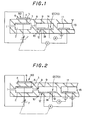
- Fig. 1 is an explanatory view showing an embodiment of a basic constitution of a sensor used for a method of the present invention.
- Fig. 2 is an explanatory view showing another embodiment of a basic constitution of a sensor used for a method of the present invention.
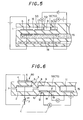
- Fig. 3 is an explanatory view showing still another embodiment of a basic constitution of a sensor used for a method of the present invention.
- Fig. 4 is an explanatory view showing yet another embodiment of a basic constitution of a sensor used for a method of the present invention.
- Fig. 5 is an explanatory view of a principal part of the embodiment of a constitution shown in Fig. 4.
- Fig. 6 is an explanatory view showing yet another embodiment of a basic constitution of a sensor used for a method of the present invention.
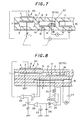
- Fig. 7 is an explanatory view showing yet another embodiment of a basic constitution of a sensor used for a method of the present invention.
- Fig. 8 is a cross-sectional view and a circuit showing an embodiment of a sensor to be used in the present invention.
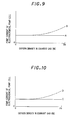
- Fig. 9 is a graph showing a comparison of a change of pump current values of an electrochemical pump cell corresponding to an oxygen partial pressure in an exhaust gas by a method of the present invention and a conventional method.
- Fig. 10 is a graph showing a comparison of a change of pump current values of an electrochemical pump cell corresponding to an oxygen partial pressure in an exhaust gas by a method of the present invention and a conventional method.
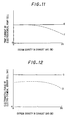
- Fig. 11 is a graph showing a comparison of a change of pump current values of an electrochemical pump cell corresponding to a steam concentration in an exhaust gas by a method of the present invention and a conventional method.
- Fig. 12 is a graph showing a comparison of a change of electromotive force of an electrochemical sensor cell corresponding to an oxygen partial pressure in an exhaust gas by a method of the present invention and a conventional method.
- Fig. 13 is an explanatory view showing an embodiment of a constitution of a conventional sensor.
- Figs. 1, 2, and 3 are explanatory views each showing a basic constitution of a sensor used for a method of the present invention.
- a main pump means 60 includes an electrochemical cell 6 having a first oxygen ion conductive solid electrolyte 3 such as zirconia and a pair of inner and outer pump electrodes 5 and 4, respectively.
- the inner electrode 5 of the electrochemical cell 6 is exposed in the first inner space 2.
- a control voltage is applied to the electrochemical cell 6 from a power source 7, thereby controlling an atmosphere in the first inner space 2 so as to contain little oxide.
- the first inner space 2 may be provided with a pair of electrochemical cells (not shown) so as to control the atmosphere since a voltage applied to the electrochemical pump cell 6 is controlled by an output of the electrochemical cells.
- An electrochemical cell 12 is an oxygen concentration detecting means having a second oxygen ion conductive solid electrolyte 19 such as zirconia and a pair of electrodes 10 and 11.
- the electrode 10 is exposed in the second inner space 9.
- the output of the electrochemical cell 12 is fed back to a power source 7 which applies the output of the electrochemical cell 12 to the electrochemical pump cell 6 so that a value of an electromotive force V1 of the electrochemical cell 12 coincides with a predetermined value. Accordingly, an oxygen partial pressure in the second inner space 9 is less influenced by a composition of a gas to be measured in comparison with the case in which the output is controlled only by signals in the first inner space 2.
- gas to be measured in the second inner space 9 for example, nitrogen monoxide
- a detection electrode 14 of the electrochemical pump cell 13 which is an electric signal conversion means 70
- the detection electrode 14 being exposed in the second inner space 9.
- a generated oxygen is sent to a space 15 where a standard gas is present through the detection electrode 14 and a reference electrode 11.
- An amount of NOx is obtained by a value of a current generated by the transference of the oxygen.
- Fig. 2 shows an embodiment in which an oxygen concentration detecting means formed in the second inner space 9 is an oxygen pump by an electrochemical cell 12. The others are the same as in Fig. 1.
- an oxygen partial pressure in the second inner space 9 is detected as a limited diffusion current by a predetermined voltage applied to the portion between the electrode 10 and the electrode 11.
- the output is fed back to the power source 7 which applies the output to the first electrochemical cell 6 so that a value of the limited diffusion current coincides with a predetermined value.
- Fig. 3 shows a constitution in which an oxygen concentration detecting means is set up in the third inner space which is different from the second inner space.
- a gas to be measured is introduced into the first inner space 2 through the first diffusion resistance 1.
- an inner pump electrode 5 of a main pump means 60 having an electrochemical pump cell 6 is exposed in the first inner space 2.
- the electrochemical pump cell 6 has a first oxygen ion conductive solid electrolyte 3 such as zirconia and a pair of inner and outer pump electrodes 5 and 4, respectively.
- a control voltage is applied to the electrochemical pump cell 6 from a power source 7, thereby controlling an atmosphere in the first inner space 2 so as to contain little oxide.
- the gas is introduced to the third inner space 17 through the third diffusion resistance 16.
- the diffusion resistance 16 and the third inner space 17 desirably have structures almost same as those of the second diffusion resistance 8 and the second inner space 9, respectively, so as to make both atmospheres close to each other.
- an electrochemical cell 42 is an oxygen concentration detecting means having an oxygen ion introducing solid electrolyte 39 such as zirconia and a pair of electrodes 40 and 41.
- the electrode 40 is exposed in the third inner space 17.
- the output of the electrochemical cell 42 is fed back to a power source 7 which applies the output of the electrochemical cell 42 to the electrochemical pump cell 6 so that a value of a limited diffusion current generated by a predetermined voltage applied to the electrodes 40 and 41 of the cell 42 coincides with a predetermined value.
- the gas is introduced to the second inner space 9 through the second diffusion resistance 8.
- oxygen is generated by a catalytic action or a reducing action by electrification on a detection electrode 14 of the electrochemical pump cell 13 which is an electric signal conversion means 70, the detection electrode 14 being exposed in the second inner space 9.
- the oxygen is sent to a space 15 where a standard gas is present through the detection electrode 14 and a reference electrode 11.
- An amount of NOx is obtained by a value of a current generated by the transference of the oxygen.
- Fig. 4 shows a constitution in which the second inner space is connected to the first inner space by means of the third inner space.
- a gas to be measured is introduced in the third inner space 17 through the third diffusion resistance 16. Almost all oxygen in the gas is removed from the gas here.
- the gas is introduced into the third inner space 17 through the third diffusion resistance 16.
- An atmosphere in the third inner space 17 is controlled to be close to a predetermined atmosphere by an electrochemical cell 52 which is an oxygen concentration detecting means. Simultaneously, the output is fed back to a power source 7 which applies a control voltage to the electrochemical pump cell 6 so that an oxygen content in the third inner space 17 is controlled more precisely.
- an oxygen partial pressure of the gas to be measured is precisely controlled.
- the gas enters the second inner space 9 through the second diffusion resistance 8.
- Oxygen is generated by a catalytic action or a reducing action by electrification on a detection electrode 14 of the electrochemical pump cell 13 which is an electric signal conversion means 70, the detection electrode 14 being exposed in the second inner space 9.
- the oxygen is sent to a space 15 where a standard gas is present through the detection electrode 14 and a reference electrode 11.
- An amount of NOx is obtained by a value of a current generated by transference of the oxygen.
- Fig. 5 is an embodiment of the constitution shown in Fig. 4.
- the first diffusion resistance 1, the first inner space 2, the third diffusion resistance 16, the third inner space 17, the second diffusion resistance 8, and the second inner space 9 are arranged in a line as a flat and narrow opening. Since the constitution enables the inner spaces formed in a sensor to have a small capacity, the constitution can give a high response speed.
- a space 15 where a standard gas is present is filled with a porous ceramics, and a strength of a sensor element is improved there.
- a heater 18 is embedded in the sensor element, and the sensor element is heated at a predetermined temperature.
- Fig. 6 shows an embodiment in which the electrochemical pump cell 13 of a constitution shown in Fig. 2 is substituted by an electrochemical sensor cell 55 as an electric signal conversion means 70.
- the others are the same as in Fig. 2. Accordingly, when a sensor having a structure shown in Fig. 6 is used, a gas to be measured in a second inner space 9 is generated by a catalytic action on a detection electrode 14 of the electrochemical sensor cell 55 which is an electric signal conversion means 70, the detection electrode 14 being exposed in the second inner space 9. As a result, an amount of NOx is obtained from an electromotive force generated between a detection electrode 14 and a reference electrode 11.
- Fig. 7 shows an embodiment in which a porous protective layer 57 was disposed on a detection electrode 14 in a constitution shown in Fig. 2.
- a second inner space 9 and a second diffusion resistance 8 are formed with using a porous body.
- the other constitutions are the same as in Fig. 2.
- the second inner space 9 and the second diffusion resistance 8 may be unitarily formed with using a porous ceramic and disposed in a third inner space 17.
- the second inner space 9 and the second diffusion resistance 8 may be substituted by adjustment of porosity (rate of pores, diameter of pores, etc.) of an electrode 14 of signal conversion means 70 which is exposed in a gas to be measured.
- Fig. 7 it is possible to unitarily form the second inner space 9 and the second diffusion resistance 8 with using a porous ceramic and dispose them in a first inner space 2.
- the second inner space 9 and the second diffusion resistance 8 may be substituted by adjustment of porosity (rate of pores, diameter of pores, etc.) of an electrode 14 of signal conversion means 70 which is exposed in a gas to be measured.
- Fig. 8 shows an embodiment of a measuring circuit of the present invention.
- a gas to be measured is introduced into a first inner space 2 through a first diffusion resistance 1. There, almost all oxygen in the gas is removed by an electrochemical pump cell 6 (main pump means 60).
- an output compared with a predetermined voltage of a power source 23 by a comparator 22 is used with an electromotive force between the inner pump electrode 5 and a reference electrode 11 being subjected to an impedance conversion by an amplifier 21.
- the gas to be measured obtains an oxygen partial pressure almost same as a predetermined one by this.
- the gas enters a second inner space 9 through a second diffusion resistance 8.
- a predetermined voltage is applied to a electrochemical cell 12 which is an oxygen concentration detection means disposed in the second inner space 9 from a power source 24.
- a pump current flowing at that time is detected by a resistance 25 and an amplifier 26, made to pass an integrated circuit of a resistance 27 and a condenser 28, and compared with a predetermined volume of a power source 29 by a comparator 30.
- a voltage to be applied to the electrochemical pump cell 6 is adjusted by the output.
- An atmosphere in the second inner space 9 is stabilized by this. NOx is decomposed by an electrode 14 having a catalytic activity, and an amount of generated oxygen is detected as a pump current of an electrochemical pump cell 13.
- the inner pump electrode 5 in the first inner space 2 and the electrode 10 in the second inner space 9 are preferably made of a material having a low catalytic activity to NOx, for example, Au or Au-Pt alloy.
- the electrode 14 which detects NOx is preferably made of a material having a high catalytic activity to NOx such as Rh.
- a voltage V1 between the inner pump electrode 5 and the reference electrode 11, a terminal voltage V2 at the electrochemical cell 12, and a terminal voltage V3 at the electrochemical pump cell 13 were adjusted as in Table 1. The results are shown in Figs. 9 - 11.
- Fig. 13 shows a sensor in which an oxygen partial pressure in the first inner space 2 is controlled only by a potential difference detection means 40.
- One of the electrodes of the potential difference detection means 40 is exposed in the first inner space 2.
- Example 1 (Fig. 9)
- Example 2 (Fig. 10)
- Example 3 (Fig. 11)
- V1 300 mV 300 mV 300 mV V2 400 mV 400 mV 400 mV V3 450 mV 430 mV 430 mV
- Fig. 9 shows, when an oxygen partial pressure in a gas to be measured ascended, a pump current flowing in the electric signal conversion means (electrochemical pump cell) 70 was increased as a curved line B in a measuring method having a conventional constitution shown in Fig. 13, thereby increasing an error.
- a pump current flowing in the electric signal conversion means 70 (electrochemical pump cell 13) is not changed even if an oxygen partial pressure in a gas to be measured changes.
- a measuring preciseness (a change of an offset current) is sharply improved.
- an offset value of the pump current is not zero.
- Fig. 11 shows, when a steam concentration in a gas to be measured ascended in a conventional constitution shown in Fig. 13, a pump current flowing in the electric signal conversion means (electrochemical pump cell) 70 was decreased as a curved line F, thereby increasing an error.
- the reason seems that because a diffusion coefficient of hydrogen generated by dissociation of water in the first inner space 2 is larger than that of oxygen, hydrogen enters the second inner space 9 more than the oxygen. Accordingly, an equilibrium oxygen partial pressure in the second inner space is lowered, and a pump current required for maintaining a predetermined oxygen partial pressure in the second inner space 9 is decreased.
- V1 and V2 were set to be 300 mV and 400 mV, respectively.
- V1 was set to be 300 mV. The results are shown in Fig. 12.
- Fig. 12 shows, when an oxygen partial pressure in a gas to be measured in the conventional constitution shown in Fig. 13 ascended, an electromotive force in the electric signal conversion means (electrochemical sensor cell) 70 was decreased as shown by a curved line H, thereby increasing an error.
- an electromotive force in the electric signal conversion means 70 is not changed as shown by a straight line G even if an oxygen partial pressure in a gas to be measured changes. Accordingly, NOx can be measured very precisely.
- the present invention gives a very precise method for measuring NOx, having little influence of oxygen or steam concentration in a gas to be measured and little fluctuation by a temperature change, and is very useful as a means for improving an air environment, or the like.
Landscapes
- Chemical & Material Sciences (AREA)
- Life Sciences & Earth Sciences (AREA)
- Health & Medical Sciences (AREA)
- Physics & Mathematics (AREA)
- Chemical Kinetics & Catalysis (AREA)
- Electrochemistry (AREA)
- Molecular Biology (AREA)
- Analytical Chemistry (AREA)
- Biochemistry (AREA)
- General Health & Medical Sciences (AREA)
- General Physics & Mathematics (AREA)
- Immunology (AREA)
- Pathology (AREA)
- Measuring Oxygen Concentration In Cells (AREA)
- Investigating Or Analyzing Non-Biological Materials By The Use Of Chemical Means (AREA)
Abstract
Description
- The present invention relates to a method for measuring nitrogen oxide. Particularly, the present invention provides a method for measuring a very small amount of nitrogen oxide in a gas containing a great amount of interfering gas with a high preciseness.
- With regard to a method for obtaining NOx amount in a gas to be measured by measuring an amount of oxygen generated by decomposing NOx in the gas to be measured, there has been, for example, a method disclosed in European Patent Laid Open No. 0678740A1 as shown in Fig. 13.
- In Fig. 13, 80 is a NOx sensor having a main pump means 60 and an electric signal conversion means 70. The main pump means 60 includes an
electrochemical pump cell 6 comprising asubstrate 3 comprising an oxygen ion conductive solid electrolyte and aninner pump electrode 5 and anouter pump electrode 4 formed on the inner surface and outer surface of the substrate, respectively. The main pump means 60 treats oxygen contained in the measuring gas introduced from an external space by pumping processing on the basis of a control voltage applied between theinner pump electrode 5 and theouter pump electrode 4 by apower source 7. The electric signal conversion means 70 includes a pair ofdetection electrodes - There has been used the
NOx sensor 80 for measuring an amount of nitrogen oxide in a gas by introducing the gas to a firstinner space 2 connected with the external space by means of afirst diffusion resistance 1, controlling an oxygen partial pressure in an atmosphere in the firstinner space 2 to be a predetermined low value at which NO is not decomposed substantially by the main pump means 60, introducing a controlled atmosphere of the firstinner space 2 into a secondinner space 9 connected with the firstinner space 2 by means of asecond diffusion resistance 8, and converting the atmosphere into an electric signal corresponding to the quantity of oxygen generated by decomposition or reduction of NOx contained in the atmosphere by the electric signal conversion means 70. - Incidentally, in Fig. 13, a potential difference detection means 40 measures an electromotive force V1 corresponding to a difference in oxygen partial pressure between an
electrode 10 exposed in the firstinner space 2 and anelectrode 11 exposed in aspace 15 where a standard gas is present. A voltage applied to the main pump means 60 is adjusted so that the electromotive force V1 is controlled to have a predetermined value. - However, it is difficult by this method to completely remove an influence of an interfering gas, for example, oxygen gas, carbonic acid gas (CO2), steam, or the like, in an exhaust gas of an internal engine. Because of a difference between a gas concentration in the side facing the first
inner space 2 of aninner pump electrode 5 of theelectrochemical pump cell 6 and that in the side of theouter pump electrode 4 , a disorder of an atmosphere in the firstinner space 2 by pulsation of a gas to be measured, an error caused by decomposition of water, a change of electrode activity or diffusivity of each gas component with a change of a temperature of a sensor element, a change of standing of electrodes and electrolyte, a discordance between an average value of an electrode potential of theelectrochemical pump cell 6 and an average of a gas concentration, etc., it was difficult to maintain an oxygen partial pressure of a gas introduced into the secondinner space 9 to be a certain value. When NOx in a gas having a high oxygen partial pressure is measured, an oxygen partial pressure of a gas introduced into the secondinner space 9 is changed to be higher. According to the change, a base line of an electric signal (a pump current value Ip in Fig. 13) by an electric signal conversion means 70 corresponding to NOx amount is also changed. Particularly, it causes a large error when a very small amount of NOx is measured. On the contrary, when a steam amount of a gas to be measured increases, a hydrogen amount in the firstinner space 2 in an equilibrium condition, a balance between hydrogen and oxygen in the secondinner space 9 is lost by the difference in diffusion coefficients, a part of oxygen generated by decomposition of NOx is consumed by combining with hydrogen, thereby causing an error in measuring NOx. - The present invention solves the problems of a conventional measuring method and aims to provide a highly precise method for measuring an nitrogen oxide in a gas, the method has little influence of a concentration of oxygen or steam in the gas and little fluctuation by a temperature change.
- According to the present invention, there is provided a method for measuring nitrogen oxide (NOx) in a gas by decomposing NOx in the gas and measuring an amount of oxygen generated by the decomposition, using a sensor comprising:
- a main pump means including an electrochemical pump cell comprising a substrate comprising an oxygen ion conductive solid electrolyte and an inner pump electrode and an outer pump electrode formed on the inner surface and outer surface of the substrate, respectively, and the main pump means treating oxygen contained in the measuring gas introduced from an external space by pumping processing on the basis of a control voltage applied between the inner pump electrode and the outer pump electrode, and
- an electric signal conversion means for generating an electric signal corresponding to the quantity of oxygen generated by decomposition or reduction of NOx contained in the measuring gas after treated by the pumping processing by the main pump means in which one side thereof has a pair of detection electrodes formed on the side where the measuring gas that was treated by pumping processing by the main pump means is introduced;
- the method for measuring nitrogen oxide (NOx) comprising the steps of:
- introducing the gas to a first inner space under a first diffusion resistance and connected with the external space,
- controlling an oxygen partial pressure in an atmosphere in the first inner space to be a predetermined low value at which NO is not decomposed substantially by the main pump means,
- introducing a controlled atmosphere of the first inner space into a second inner space which is connected with the first inner space and which is under a second diffusion resistance, and
- converting the atmosphere into an electric signal corresponding to the quantity of oxygen generated by decomposition or reduction of NOx contained in the atmosphere by the electric signal conversion means;
- According to the present invention, there is further provided a method for measuring nitrogen oxide (NOx) in a gas by decomposing NOx in the gas and measuring an amount of oxygen generated by the decomposition, using a sensor comprising:
- a main pump means including an electrochemical pump cell comprising a substrate comprising an oxygen ion conductive solid electrolyte and an inner pump electrode and an outer pump electrode formed on the inner surface and outer surface of the substrate, respectively, and the main pump means treating oxygen contained in the measuring gas introduced from an external space by pumping processing on the basis of a control voltage applied between the inner pump electrode and the outer pump electrode, and
- an electric signal conversion means for generating an electric signal corresponding to the quantity of oxygen generated by decomposition or reduction of NOx contained in the measuring gas after treated by the pumping processing by the main pump means in which one side thereof has a pair of detection electrodes formed on the side where the measuring gas that was treated by pumping processing by the main pump means is introduced;
- introducing the gas to a first inner space under a first diffusion resistance and connected with the external space,
- controlling an oxygen partial pressure in an atmosphere in the first inner space to be a predetermined low value at which NO is not decomposed substantially by the main pump means,
- introducing a controlled atmosphere of the first inner space into a second inner space which is connected with the first inner space and which is under a second diffusion resistance, and
- converting the atmosphere into an electric signal corresponding to the quantity of oxygen generated by decomposition or reduction of NOx contained in the atmosphere by the electric signal conversion means;
- In a sensor having the aforementioned structure, it is not necessary to keep an atmosphere of the first inner space constant. The atmosphere of the first inner space is controlled only to keep constant an atmosphere of a peripheral portion of an entrance of the second inner space. Accordingly, a change of a composition of a gas to be measured is roughly dealt with by controlling a voltage by the main pump means or a feedback control (a proportional control and/or a differential control) by an oxygen concentration detecting -means arranged in the first inner space. To a small declination for a relatively long period of time, the voltage applied to the main pump means is controlled with using an output by a means for detecting an atmosphere in the peripheral portion of an entrance of the second inner space. An oxygen partial pressure of the second inner space relates to a substantially integrated value of an atmosphere of the first space for a predetermined period of time by a diffusion resistance of the entrance of the second inner space and a capacity of the second inner space. When an integrated value taken for the longer period of time is required, it is desirable to integrate an output of an oxygen concentration detecting means by an electric circuit.
- All influences of factors of various changes can be compensated by controlling an atmosphere in the peripheral portion of the entrance of the second inner space, which makes a very stable measurement with a high precision possible.
- Incidentally, an electric signal conversion means is an electrochemical pump cell or an electrochemical sensor cell in the present invention.
- Fig. 1 is an explanatory view showing an embodiment of a basic constitution of a sensor used for a method of the present invention.
- Fig. 2 is an explanatory view showing another embodiment of a basic constitution of a sensor used for a method of the present invention.
- Fig. 3 is an explanatory view showing still another embodiment of a basic constitution of a sensor used for a method of the present invention.
- Fig. 4 is an explanatory view showing yet another embodiment of a basic constitution of a sensor used for a method of the present invention.
- Fig. 5 is an explanatory view of a principal part of the embodiment of a constitution shown in Fig. 4.
- Fig. 6 is an explanatory view showing yet another embodiment of a basic constitution of a sensor used for a method of the present invention.
- Fig. 7 is an explanatory view showing yet another embodiment of a basic constitution of a sensor used for a method of the present invention.
- Fig. 8 is a cross-sectional view and a circuit showing an embodiment of a sensor to be used in the present invention.
- Fig. 9 is a graph showing a comparison of a change of pump current values of an electrochemical pump cell corresponding to an oxygen partial pressure in an exhaust gas by a method of the present invention and a conventional method.
- Fig. 10 is a graph showing a comparison of a change of pump current values of an electrochemical pump cell corresponding to an oxygen partial pressure in an exhaust gas by a method of the present invention and a conventional method.
- Fig. 11 is a graph showing a comparison of a change of pump current values of an electrochemical pump cell corresponding to a steam concentration in an exhaust gas by a method of the present invention and a conventional method.
- Fig. 12 is a graph showing a comparison of a change of electromotive force of an electrochemical sensor cell corresponding to an oxygen partial pressure in an exhaust gas by a method of the present invention and a conventional method.
- Fig. 13 is an explanatory view showing an embodiment of a constitution of a conventional sensor.
- Figs. 1, 2, and 3 are explanatory views each showing a basic constitution of a sensor used for a method of the present invention.
- In Fig. 1, a gas containing a nitrogen oxide and oxygen which interferes the nitrogen oxide is introduced into a first
inner space 2 through afirst diffusion resistance 1. A main pump means 60 includes anelectrochemical cell 6 having a first oxygen ion conductivesolid electrolyte 3 such as zirconia and a pair of inner andouter pump electrodes inner electrode 5 of theelectrochemical cell 6 is exposed in the firstinner space 2. A control voltage is applied to theelectrochemical cell 6 from apower source 7, thereby controlling an atmosphere in the firstinner space 2 so as to contain little oxide. At this time, the firstinner space 2 may be provided with a pair of electrochemical cells (not shown) so as to control the atmosphere since a voltage applied to theelectrochemical pump cell 6 is controlled by an output of the electrochemical cells. - Almost all oxygen (interfering component) is removed from a gas to be measured in such a manner. The gas is introduced into a second
inner space 9 through asecond diffusion resistance 8. Anelectrochemical cell 12 is an oxygen concentration detecting means having a second oxygen ion conductivesolid electrolyte 19 such as zirconia and a pair ofelectrodes electrode 10 is exposed in the secondinner space 9. The output of theelectrochemical cell 12 is fed back to apower source 7 which applies the output of theelectrochemical cell 12 to theelectrochemical pump cell 6 so that a value of an electromotive force V1 of theelectrochemical cell 12 coincides with a predetermined value. Accordingly, an oxygen partial pressure in the secondinner space 9 is less influenced by a composition of a gas to be measured in comparison with the case in which the output is controlled only by signals in the firstinner space 2. - Thus obtained gas to be measured in the second
inner space 9, for example, nitrogen monoxide, is decomposed as shown by the following formula by a catalytic action or a reducing action by electrification on adetection electrode 14 of theelectrochemical pump cell 13 which is an electric signal conversion means 70, thedetection electrode 14 being exposed in the secondinner space 9. As a result, a generated oxygen is sent to aspace 15 where a standard gas is present through thedetection electrode 14 and areference electrode 11. An amount of NOx is obtained by a value of a current generated by the transference of the oxygen.
- Fig. 2 shows an embodiment in which an oxygen concentration detecting means formed in the second
inner space 9 is an oxygen pump by anelectrochemical cell 12. The others are the same as in Fig. 1. In Fig. 2, an oxygen partial pressure in the secondinner space 9 is detected as a limited diffusion current by a predetermined voltage applied to the portion between theelectrode 10 and theelectrode 11. The output is fed back to thepower source 7 which applies the output to the firstelectrochemical cell 6 so that a value of the limited diffusion current coincides with a predetermined value. - Fig. 3 shows a constitution in which an oxygen concentration detecting means is set up in the third inner space which is different from the second inner space.
- A gas to be measured is introduced into the first
inner space 2 through thefirst diffusion resistance 1. - As in the embodiment shown in Fig. 1, an
inner pump electrode 5 of a main pump means 60 having anelectrochemical pump cell 6 is exposed in the firstinner space 2. Theelectrochemical pump cell 6 has a first oxygen ion conductivesolid electrolyte 3 such as zirconia and a pair of inner andouter pump electrodes electrochemical pump cell 6 from apower source 7, thereby controlling an atmosphere in the firstinner space 2 so as to contain little oxide. After almost all oxygen in the gas is removed from the gas in the firstinner space 2, the gas is introduced to the thirdinner space 17 through thethird diffusion resistance 16. Thediffusion resistance 16 and the thirdinner space 17 desirably have structures almost same as those of thesecond diffusion resistance 8 and the secondinner space 9, respectively, so as to make both atmospheres close to each other. - As in Figs. 1 and 2, an
electrochemical cell 42 is an oxygen concentration detecting means having an oxygen ion introducingsolid electrolyte 39 such as zirconia and a pair ofelectrodes electrode 40 is exposed in the thirdinner space 17. The output of theelectrochemical cell 42 is fed back to apower source 7 which applies the output of theelectrochemical cell 42 to theelectrochemical pump cell 6 so that a value of a limited diffusion current generated by a predetermined voltage applied to theelectrodes cell 42 coincides with a predetermined value. - On the other hand, after almost all oxygen was removed from the gas to be measured in the first
inner space 2, the gas is introduced to the secondinner space 9 through thesecond diffusion resistance 8. In the gas introduced in the secondinner space 9, oxygen is generated by a catalytic action or a reducing action by electrification on adetection electrode 14 of theelectrochemical pump cell 13 which is an electric signal conversion means 70, thedetection electrode 14 being exposed in the secondinner space 9. As a result, the oxygen is sent to aspace 15 where a standard gas is present through thedetection electrode 14 and areference electrode 11. An amount of NOx is obtained by a value of a current generated by the transference of the oxygen. - Fig. 4 shows a constitution in which the second inner space is connected to the first inner space by means of the third inner space.
- A gas to be measured is introduced in the third
inner space 17 through thethird diffusion resistance 16. Almost all oxygen in the gas is removed from the gas here. The gas is introduced into the thirdinner space 17 through thethird diffusion resistance 16. An atmosphere in the thirdinner space 17 is controlled to be close to a predetermined atmosphere by anelectrochemical cell 52 which is an oxygen concentration detecting means. Simultaneously, the output is fed back to apower source 7 which applies a control voltage to theelectrochemical pump cell 6 so that an oxygen content in the thirdinner space 17 is controlled more precisely. Thus, an oxygen partial pressure of the gas to be measured is precisely controlled. The gas enters the secondinner space 9 through thesecond diffusion resistance 8. Oxygen is generated by a catalytic action or a reducing action by electrification on adetection electrode 14 of theelectrochemical pump cell 13 which is an electric signal conversion means 70, thedetection electrode 14 being exposed in the secondinner space 9. As a result, the oxygen is sent to aspace 15 where a standard gas is present through thedetection electrode 14 and areference electrode 11. An amount of NOx is obtained by a value of a current generated by transference of the oxygen. - Fig. 5 is an embodiment of the constitution shown in Fig. 4. The
first diffusion resistance 1, the firstinner space 2, thethird diffusion resistance 16, the thirdinner space 17, thesecond diffusion resistance 8, and the secondinner space 9 are arranged in a line as a flat and narrow opening. Since the constitution enables the inner spaces formed in a sensor to have a small capacity, the constitution can give a high response speed. Incidentally, aspace 15 where a standard gas is present is filled with a porous ceramics, and a strength of a sensor element is improved there. Aheater 18 is embedded in the sensor element, and the sensor element is heated at a predetermined temperature. - Fig. 6 shows an embodiment in which the
electrochemical pump cell 13 of a constitution shown in Fig. 2 is substituted by anelectrochemical sensor cell 55 as an electric signal conversion means 70. The others are the same as in Fig. 2. Accordingly, when a sensor having a structure shown in Fig. 6 is used, a gas to be measured in a secondinner space 9 is generated by a catalytic action on adetection electrode 14 of theelectrochemical sensor cell 55 which is an electric signal conversion means 70, thedetection electrode 14 being exposed in the secondinner space 9. As a result, an amount of NOx is obtained from an electromotive force generated between adetection electrode 14 and areference electrode 11. - Fig. 7 shows an embodiment in which a porous
protective layer 57 was disposed on adetection electrode 14 in a constitution shown in Fig. 2. In this embodiment, a secondinner space 9 and asecond diffusion resistance 8 are formed with using a porous body. The other constitutions are the same as in Fig. 2. - In such a constitution of a sensor element, the second
inner space 9 and thesecond diffusion resistance 8 may be unitarily formed with using a porous ceramic and disposed in a thirdinner space 17. - Further, the second
inner space 9 and thesecond diffusion resistance 8 may be substituted by adjustment of porosity (rate of pores, diameter of pores, etc.) of anelectrode 14 of signal conversion means 70 which is exposed in a gas to be measured. - In Fig. 7, it is possible to unitarily form the second
inner space 9 and thesecond diffusion resistance 8 with using a porous ceramic and dispose them in a firstinner space 2. Alternatively, the secondinner space 9 and thesecond diffusion resistance 8 may be substituted by adjustment of porosity (rate of pores, diameter of pores, etc.) of anelectrode 14 of signal conversion means 70 which is exposed in a gas to be measured. - Fig. 8 shows an embodiment of a measuring circuit of the present invention. A gas to be measured is introduced into a first
inner space 2 through afirst diffusion resistance 1. There, almost all oxygen in the gas is removed by an electrochemical pump cell 6 (main pump means 60). As a control voltage applied between anouter pump electrode 4 and aninner pump electrode 5 of theelectrochemical pump cell 6, an output compared with a predetermined voltage of apower source 23 by acomparator 22 is used with an electromotive force between theinner pump electrode 5 and areference electrode 11 being subjected to an impedance conversion by anamplifier 21. The gas to be measured obtains an oxygen partial pressure almost same as a predetermined one by this. The gas enters a secondinner space 9 through asecond diffusion resistance 8. - A predetermined voltage is applied to a
electrochemical cell 12 which is an oxygen concentration detection means disposed in the secondinner space 9 from apower source 24. A pump current flowing at that time is detected by aresistance 25 and anamplifier 26, made to pass an integrated circuit of aresistance 27 and acondenser 28, and compared with a predetermined volume of apower source 29 by acomparator 30. A voltage to be applied to theelectrochemical pump cell 6 is adjusted by the output. An atmosphere in the secondinner space 9 is stabilized by this. NOx is decomposed by anelectrode 14 having a catalytic activity, and an amount of generated oxygen is detected as a pump current of anelectrochemical pump cell 13. - Incidentally, an oscillation of the aforementioned integrated circuit can be avoided by setting a time constant for an adequate value. The
inner pump electrode 5 in the firstinner space 2 and theelectrode 10 in the secondinner space 9 are preferably made of a material having a low catalytic activity to NOx, for example, Au or Au-Pt alloy. Theelectrode 14 which detects NOx is preferably made of a material having a high catalytic activity to NOx such as Rh. - In each of the case of the sensor and circuit shown in Fig. 8, in which a zirconia porcelain was used as a solid electrolyte, and the case of the conventional sensor and circuit shown in Fig. 13, an exhaust gas of a gasoline-combustion engine was measured for NOx amount therein. A change of pump current values of the electric signal conversion means 70 (electrochemical pump cell 13) according to a concentration of an interfering gas component in the exhaust gas was compared to each other.
- A voltage V1 between the
inner pump electrode 5 and thereference electrode 11, a terminal voltage V2 at theelectrochemical cell 12, and a terminal voltage V3 at theelectrochemical pump cell 13 were adjusted as in Table 1. The results are shown in Figs. 9 - 11. - Incidentally, Fig. 13 shows a sensor in which an oxygen partial pressure in the first
inner space 2 is controlled only by a potential difference detection means 40. One of the electrodes of the potential difference detection means 40 is exposed in the firstinner space 2.[Table 1] Example 1 (Fig. 9) Example 2 (Fig. 10) Example 3 (Fig. 11) V1 300 mV 300 mV 300 mV V2 400 mV 400 mV 400 mV V3 450 mV 430 mV 430 mV - As Fig. 9 shows, when an oxygen partial pressure in a gas to be measured ascended, a pump current flowing in the electric signal conversion means (electrochemical pump cell) 70 was increased as a curved line B in a measuring method having a conventional constitution shown in Fig. 13, thereby increasing an error. On the other hand, in a straight line A based on a method of the present invention shown in Fig. 8, an oxygen partial pressure dispersed in the second
inner space 9 is detected and negatively fed back to theelectrochemical pump cell 6. Accordingly, a pump current flowing in the electric signal conversion means 70 (electrochemical pump cell 13) is not changed even if an oxygen partial pressure in a gas to be measured changes. Thus, a measuring preciseness (a change of an offset current) is sharply improved. However, since there is a large difference between an electromotive force and an applied voltage V3 of the electric signal conversion means in this embodiment, an offset value of the pump current is not zero. - In Fig. 10, when an oxygen partial pressure in a gas to be measured in the conventional constitution shown in Fig. 13 ascended, a pump current flowing in the electric signal conversion means (electrochemical pump cell) 70 was increased as shown by a curved line D, thereby increasing an error. On the other hand, in the method of the present invention shown in Fig. 8, a pump current flowing in the electric signal conversion means 70 (electrochemical pump cell 13) is not changed as shown by a straight line C even if an oxygen partial pressure in a gas to be measured changes. Further, an electromotive force of the electric signal conversion means was equalized with an applied voltage V3 when an oxygen partial pressure in the gas to be measured was zero. As a result, an offset value of a pump current of the electric signal conversion means was zero at that time.
- As Fig. 11 shows, when a steam concentration in a gas to be measured ascended in a conventional constitution shown in Fig. 13, a pump current flowing in the electric signal conversion means (electrochemical pump cell) 70 was decreased as a curved line F, thereby increasing an error. The reason seems that because a diffusion coefficient of hydrogen generated by dissociation of water in the first
inner space 2 is larger than that of oxygen, hydrogen enters the secondinner space 9 more than the oxygen. Accordingly, an equilibrium oxygen partial pressure in the second inner space is lowered, and a pump current required for maintaining a predetermined oxygen partial pressure in the secondinner space 9 is decreased. - On the other hand, in a method of the present invention shown in Fig. 8, since the
electrochemical cell 12 plays a part of adjustment including a difference in diffusion coefficients based on a difference in kinds of gases or a temperature change in thesecond diffusion resistance 8, a pump current flowing in the electric signal conversion means 70 (electrochemical pump cell 13) is not changed as a straight line E even if an oxygen partial pressure in a gas to be measured changes. - Then, in each of the case of the sensor and circuit shown in Fig. 6 (present invention), in which a zirconia porcelain was used as a solid electrolyte, and the case of the conventional sensor and circuit shown in Fig. 13, an exhaust gas of a gasoline-combustion engine was measured for NOx amount therein in the same manner as described above. A change of electromotive force of the electric signal conversion means 70 (electrochemical sensor cell 55) according to a oxygen partial pressure in the exhaust gas was compared to each other. Incidentally, in a sensor shown in Fig. 13, the electrochemical pump cell was substituted by an electrochemical sensor cell as the electric signal conversion means 70.
- Incidentally, in Fig. 6 (present invention), V1 and V2 were set to be 300 mV and 400 mV, respectively. In Fig. 13 (conventional method) V1 was set to be 300 mV. The results are shown in Fig. 12.
- As Fig. 12 shows, when an oxygen partial pressure in a gas to be measured in the conventional constitution shown in Fig. 13 ascended, an electromotive force in the electric signal conversion means (electrochemical sensor cell) 70 was decreased as shown by a curved line H, thereby increasing an error. On the other hand, in the method of the present invention shown in Fig. 6, an electromotive force in the electric signal conversion means 70 (electrochemical sensor cell 55) is not changed as shown by a straight line G even if an oxygen partial pressure in a gas to be measured changes. Accordingly, NOx can be measured very precisely.
- As obvious from the above description, the present invention gives a very precise method for measuring NOx, having little influence of oxygen or steam concentration in a gas to be measured and little fluctuation by a temperature change, and is very useful as a means for improving an air environment, or the like.
Claims (7)
- A method for measuring nitrogen oxide (NOx) in a gas by decomposing NOx in the gas and measuring an amount of oxygen generated by the decomposition, using a sensor comprising:a main pump means including an electrochemical pump cell comprising a substrate comprising an oxygen ion conductive solid electrolyte and an inner pump electrode and an outer pump electrode formed on the inner surface and outer surface of the substrate, respectively, and said main pump means treating oxygen contained in the measuring gas introduced from an external space by pumping processing on the basis of a control voltage applied between said inner pump electrode and said outer pump electrode, andan electric signal conversion means for generating an electric signal corresponding to the quantity of oxygen generated by decomposition or reduction of NOx contained in the measuring gas after treated by the pumping processing by said main pump means in which one side thereof has a pair of detection electrodes formed on the side where the measuring gas that was treated by pumping processing by said main pump means is introduced;said method for measuring nitrogen oxide (NOx) comprising the steps of:introducing the gas to a first inner space under a first diffusion resistance and connected with said external space,controlling an oxygen partial pressure in an atmosphere in the first inner space to be a predetermined low value at which NO is not decomposed substantially by said main pump means,introducing a controlled atmosphere of the first inner space into a second inner space which is connected with the first inner space and which is under a second diffusion resistance, andconverting said atmosphere into an electric signal corresponding to the quantity of oxygen generated by decomposition or reduction of NOx contained in said atmosphere by said electric signal conversion means;wherein a first oxygen concentration detecting means is disposed for detecting an oxygen partial pressure in the second inner space, and a control voltage to be applied to said main pump means is adjusted on the basis of an output of the first oxygen concentration detecting means.
- A method for measuring nitrogen oxide according to claim 1, wherein said control voltage applied to the main pump means is adjusted on the basis of an integral value of an oxygen partial pressure of the second inner space for a predetermined period of time.
- A method for measuring nitrogen oxide according to claim 1, wherein the first oxygen concentration detecting means comprises an electrochemical cell for detecting an oxygen partial pressure in the second inner space or controlling the oxygen partial pressure to be a predetermined value, one of a pair of electrodes of the first oxygen concentration detecting means being exposed in the second inner space.
- A method for measuring nitrogen oxide (NOx) in a gas by decomposing NOx in the gas and measuring an amount of oxygen generated by the decomposition, using a sensor comprising:a main pump means including an electrochemical pump cell comprising a substrate comprising an oxygen ion conductive solid electrolyte and an inner pump electrode and an outer pump electrode formed on the inner surface and outer surface of the substrate, respectively, and said main pump means treating oxygen contained in the measuring gas introduced from an external space by pumping processing on the basis of a control voltage applied between said inner pump electrode and said outer pump electrode, andan electric signal conversion means for generating an electric signal corresponding to the quantity of oxygen generated by decomposition or reduction of NOx contained in the measuring gas after treated by the pumping processing by said main pump means in which one side thereof has a pair of detection electrodes formed on the side where the measuring gas that was treated by pumping processing by said main pump means is introduced;said method for measuring nitrogen oxide (NOx) comprising the steps of:introducing the gas to a first inner space under a first diffusion resistance and connected with said external space,controlling an oxygen partial pressure in an atmosphere in the first inner space to be a predetermined low value at which NO is not decomposed substantially by said main pump means,introducing a controlled atmosphere of the first inner space into a second inner space which is connected with the first inner space and which is under a second diffusion resistance, andconverting said atmosphere into an electric signal corresponding to the quantity of oxygen generated by decomposition or reduction of NOx contained in said atmosphere by said electric signal conversion means;wherein a second oxygen concentration detecting means is positioned in a third inner space connected with the first inner space by means of a third diffusion resistance, and a control voltage to be applied to said main pump means is adjusted on the basis of an integral value of an output of the second oxygen concentration detecting means.
- A method for measuring nitrogen oxide according to claim 4, wherein said control voltage applied to the main pump means is adjusted on the basis of an integral value of an oxygen partial pressure of the third inner space for a predetermined period of time.
- A method for measuring nitrogen oxide according to claim 4, wherein the second oxygen concentration detecting means comprises an electrochemical cell for detecting an oxygen partial pressure in the third inner space or controlling the oxygen partial pressure to be a predetermined value, one of a pair of electrodes of the second oxygen concentration detecting means being exposed in the third inner space.
- A method for measuring oxygen nitride according to any one of claims 4 to 6, wherein the second inner space is connected to the first inner space by means of the third inner space.
Priority Applications (1)
| Application Number | Priority Date | Filing Date | Title |
|---|---|---|---|
| EP00104586A EP1014084B1 (en) | 1996-05-16 | 1997-05-14 | Method for measuring nitrogen oxide |
Applications Claiming Priority (6)
| Application Number | Priority Date | Filing Date | Title |
|---|---|---|---|
| JP12125396 | 1996-05-16 | ||
| JP121253/96 | 1996-05-16 | ||
| JP12125396 | 1996-05-16 | ||
| JP11108397 | 1997-04-28 | ||
| JP11108397A JP3537628B2 (en) | 1996-05-16 | 1997-04-28 | Method for measuring nitrogen oxides |
| JP111083/97 | 1997-04-28 |
Related Child Applications (1)
| Application Number | Title | Priority Date | Filing Date |
|---|---|---|---|
| EP00104586A Division EP1014084B1 (en) | 1996-05-16 | 1997-05-14 | Method for measuring nitrogen oxide |
Publications (3)
| Publication Number | Publication Date |
|---|---|
| EP0807818A2 true EP0807818A2 (en) | 1997-11-19 |
| EP0807818A3 EP0807818A3 (en) | 1997-12-10 |
| EP0807818B1 EP0807818B1 (en) | 2001-08-29 |
Family
ID=26450566
Family Applications (2)
| Application Number | Title | Priority Date | Filing Date |
|---|---|---|---|
| EP00104586A Expired - Lifetime EP1014084B1 (en) | 1996-05-16 | 1997-05-14 | Method for measuring nitrogen oxide |
| EP97303268A Expired - Lifetime EP0807818B1 (en) | 1996-05-16 | 1997-05-14 | Method for measuring nitrogen oxide |
Family Applications Before (1)
| Application Number | Title | Priority Date | Filing Date |
|---|---|---|---|
| EP00104586A Expired - Lifetime EP1014084B1 (en) | 1996-05-16 | 1997-05-14 | Method for measuring nitrogen oxide |
Country Status (4)
| Country | Link |
|---|---|
| US (2) | US6036841A (en) |
| EP (2) | EP1014084B1 (en) |
| JP (1) | JP3537628B2 (en) |
| DE (2) | DE69730054T2 (en) |
Cited By (7)
| Publication number | Priority date | Publication date | Assignee | Title |
|---|---|---|---|---|
| EP0981046A1 (en) * | 1998-08-10 | 2000-02-23 | Ngk Spark Plug Co., Ltd | Method for measuring concentration of a component in a gas |
| EP1006354A2 (en) * | 1998-12-04 | 2000-06-07 | Ngk Spark Plug Co., Ltd | Gas sensor and apparatus for measuring combustible gas component concentration using the same |
| US6623618B1 (en) | 1997-12-22 | 2003-09-23 | Ngk Insulators, Ltd. | Gas sensor and method for controlling the same |
| WO2003036282A3 (en) * | 2001-10-23 | 2003-10-09 | Bosch Gmbh Robert | Sensor element and method for determining nitrogen oxides |
| EP0987547A3 (en) * | 1998-09-18 | 2006-04-05 | Ngk Spark Plug Co., Ltd | Gas sensor |
| EP1110079B1 (en) * | 1999-07-02 | 2009-08-19 | Robert Bosch Gmbh | Electrochemical gas sensor and method for determining gas components |
| CN106568822B (en) * | 2015-10-08 | 2019-04-09 | 丰田自动车株式会社 | Multi-gas detection device and multi-gas detection method |
Families Citing this family (47)
| Publication number | Priority date | Publication date | Assignee | Title |
|---|---|---|---|---|
| JP3537628B2 (en) * | 1996-05-16 | 2004-06-14 | 日本碍子株式会社 | Method for measuring nitrogen oxides |
| JP3563399B2 (en) * | 1996-05-30 | 2004-09-08 | 日本碍子株式会社 | Gas analyzer |
| JP3876506B2 (en) * | 1997-06-20 | 2007-01-31 | 株式会社デンソー | Gas concentration measuring method and composite gas sensor |
| DE19815700B4 (en) * | 1998-04-08 | 2004-01-29 | Robert Bosch Gmbh | Electrochemical sensor element with porous reference gas storage |
| JP3534612B2 (en) | 1998-05-18 | 2004-06-07 | 日本特殊陶業株式会社 | Flat limit current sensor |
| JP3701124B2 (en) | 1998-07-08 | 2005-09-28 | 日本碍子株式会社 | Gas sensor and nitrogen oxide sensor |
| JP4005273B2 (en) * | 1998-09-16 | 2007-11-07 | 株式会社デンソー | Gas concentration detector |
| JP3587290B2 (en) * | 1998-09-17 | 2004-11-10 | 日本特殊陶業株式会社 | NOx gas sensor |
| JP3560316B2 (en) * | 1998-11-25 | 2004-09-02 | 日本特殊陶業株式会社 | Gas sensor, method of manufacturing the same, and gas sensor system |
| DE19982982T1 (en) * | 1998-12-21 | 2002-06-20 | Riken Tokio Tokyo Kk | Combined gas sensor |
| DE19941051C2 (en) * | 1999-08-28 | 2003-10-23 | Bosch Gmbh Robert | Sensor element for determining the oxygen concentration in gas mixtures and method for producing the same |
| US6723217B1 (en) * | 1999-10-20 | 2004-04-20 | Delphi Technologies, Inc. | Method and device for pumping oxygen into a gas sensor |
| US7083710B2 (en) * | 1999-12-29 | 2006-08-01 | Robert Bosch Gmbh | Gas sensor, in particular a lambda sensor |
| DE10112786A1 (en) | 2000-03-17 | 2002-10-10 | Denso Corp | Gas measuring element that can be used in an exhaust system of an internal combustion engine |
| JP4821928B2 (en) * | 2000-10-31 | 2011-11-24 | 株式会社デンソー | Gas concentration detector |
| JP4682465B2 (en) * | 2000-10-31 | 2011-05-11 | 株式会社デンソー | Gas concentration detector |
| JP2002174620A (en) * | 2000-12-07 | 2002-06-21 | Denso Corp | Gas sensor element and gas sensor |
| WO2003008957A1 (en) * | 2000-12-07 | 2003-01-30 | Aep Emtech, Llc | COMBINED OXYGEN AND NOx SENSOR |
| US6579435B2 (en) * | 2000-12-18 | 2003-06-17 | Delphi Technologies, Inc. | Gas sensor |
| US6579436B2 (en) * | 2000-12-18 | 2003-06-17 | Delphi Technologies, Inc. | Gas sensor and method of producing the same |
| DE10115872A1 (en) * | 2001-03-30 | 2002-10-17 | Bosch Gmbh Robert | Gas sensor for determining physical quantity of gas component, e.g., IC engine exhaust gas, comprises sensor element including electrochemical cell(s) having first, second, and third electrodes |
| JP2003083936A (en) * | 2001-06-25 | 2003-03-19 | Denso Corp | Gas sensor element |
| DE10149739A1 (en) * | 2001-10-09 | 2003-04-10 | Bosch Gmbh Robert | Sensor element used for determining concentration of oxygen and/or nitrogen oxides in Internal Combustion engine exhaust gases has first electrode arranged in inner gas chamber in same layer surface of sensor element |
| DE10156248C1 (en) * | 2001-11-15 | 2003-06-18 | Bosch Gmbh Robert | Gas sensor for measuring concentration of component in gas mixture e.g. oxygen in exhaust gas of internal combustion engine, comprises solid electrolyte, diffusion barrier and electrodes |
| US7153401B2 (en) * | 2002-05-13 | 2006-12-26 | The Regents Of The University Of California | Current-biased potentiometric NOx sensor for vehicle emissions |
| DE10311816B4 (en) * | 2003-03-18 | 2005-12-29 | Siemens Ag | Apparatus and method for measuring the NOx concentration in a sample gas |
| JP4511160B2 (en) * | 2003-11-27 | 2010-07-28 | 日本碍子株式会社 | Gas sensor |
| US20080017510A1 (en) * | 2004-05-26 | 2008-01-24 | Nair Balakrishnan G | NOx Gas Sensor Method and Device |
| US7114325B2 (en) * | 2004-07-23 | 2006-10-03 | Ford Global Technologies, Llc | Control system with a sensor |
| US7611612B2 (en) * | 2005-07-14 | 2009-11-03 | Ceramatec, Inc. | Multilayer ceramic NOx gas sensor device |
| DE102006062060A1 (en) * | 2006-12-29 | 2008-07-03 | Robert Bosch Gmbh | Sensor e.g. lambda sensor, unit for determining oxygen concentration of exhaust gas of e.g. diesel engine vehicle, has electrodes arranged within unit, where one electrode is connected with reference gas chamber over exhaust channel |
| WO2008103311A2 (en) * | 2007-02-16 | 2008-08-28 | Ceramatec, Inc. | Nox sensor with improved selectivity and sensitivity |
| JP4913659B2 (en) * | 2007-04-19 | 2012-04-11 | 日本特殊陶業株式会社 | Gas sensor control device |
| JP4980974B2 (en) | 2008-03-31 | 2012-07-18 | 日本碍子株式会社 | GAS SENSOR, ITS CONTROL DEVICE, AND NOx CONCENTRATION MEASURING METHOD |
| JP2012504236A (en) * | 2008-09-30 | 2012-02-16 | イルジン カッパー ホイル カンパニー リミテッド | Nitrogen oxide gas sensor |
| JP5075937B2 (en) * | 2010-03-31 | 2012-11-21 | 日本碍子株式会社 | Gas sensor element and manufacturing method thereof |
| US9164080B2 (en) | 2012-06-11 | 2015-10-20 | Ohio State Innovation Foundation | System and method for sensing NO |
| JP6498985B2 (en) | 2014-03-31 | 2019-04-10 | 日本碍子株式会社 | Sensor element and gas sensor |
| DE102016206991A1 (en) * | 2016-04-25 | 2017-10-26 | Continental Automotive Gmbh | Method for diagnosing a nitrogen oxide sensor in an internal combustion engine |
| JP6447568B2 (en) | 2016-05-02 | 2019-01-09 | トヨタ自動車株式会社 | Nitrogen oxide sensor |
| JP6447569B2 (en) * | 2016-05-02 | 2019-01-09 | トヨタ自動車株式会社 | Control device for nitrogen oxide sensor |
| JP7011923B2 (en) * | 2017-11-01 | 2022-01-27 | 株式会社Soken | Gas sensor |
| CN107764885B (en) * | 2017-12-04 | 2024-06-07 | 深圳市森世泰科技有限公司 | Apparatus and method for measuring gas concentration |
| CN111492236B (en) * | 2017-12-26 | 2022-11-18 | 日本碍子株式会社 | Gas sensor |
| JP7407008B2 (en) | 2020-02-10 | 2023-12-28 | ローム株式会社 | Gas concentration measurement system and gas concentration measurement method |
| DE102021212821A1 (en) * | 2021-11-15 | 2023-05-17 | Vitesco Technologies GmbH | Method for operating an exhaust gas sensor for an internal combustion engine and exhaust gas sensor |
| DE112023003932T5 (en) * | 2022-11-28 | 2025-08-07 | Ngk Insulators, Ltd. | Gas sensor, method for determining a setting voltage target value for controlling a sensor element, method for manufacturing a sensor element and method for manufacturing a gas sensor |
Family Cites Families (14)
| Publication number | Priority date | Publication date | Assignee | Title |
|---|---|---|---|---|
| DE3017947A1 (en) * | 1980-05-10 | 1981-11-12 | Bosch Gmbh Robert | ELECTROCHEMICAL SENSOR FOR DETERMINING THE OXYGEN CONTENT IN GAS AND METHOD FOR PRODUCING SENSOR ELEMENTS FOR SUCH SENSOR |
| JPS59208452A (en) * | 1983-05-11 | 1984-11-26 | Mitsubishi Electric Corp | Air-fuel ratio sensor for engine |
| JP2636883B2 (en) * | 1988-04-30 | 1997-07-30 | 日本碍子株式会社 | NOx concentration measuring device |
| US5034112A (en) * | 1988-05-19 | 1991-07-23 | Nissan Motor Company, Ltd. | Device for measuring concentration of nitrogen oxide in combustion gas |
| US4909072A (en) * | 1988-07-22 | 1990-03-20 | Ford Motor Company | Measurement and control of exhaust gas recirculation with an oxygen pumping device |
| US5145566A (en) * | 1988-09-30 | 1992-09-08 | Ford Motor Company | Method for determining relative amount of oxygen containing gas in a gas mixture |
| JPH04348268A (en) * | 1991-05-24 | 1992-12-03 | Japan Electron Control Syst Co Ltd | Exhaust gas sensor |
| DE69209562T2 (en) * | 1991-06-07 | 1996-09-19 | Ford Werke Ag | Method and device for the determination of nitrogen oxides |
| US5217588A (en) * | 1992-02-27 | 1993-06-08 | Gte Laboratories Incorporated | Method and apparatus for sensing NOx |
| US5397442A (en) * | 1994-03-09 | 1995-03-14 | Gas Research Institute | Sensor and method for accurately measuring concentrations of oxide compounds in gas mixtures |
| US5672811A (en) * | 1994-04-21 | 1997-09-30 | Ngk Insulators, Ltd. | Method of measuring a gas component and sensing device for measuring the gas component |
| JP2885336B2 (en) * | 1994-04-21 | 1999-04-19 | 日本碍子株式会社 | Method and apparatus for measuring NOx concentration in gas to be measured |
| GB2288873A (en) * | 1994-04-28 | 1995-11-01 | Univ Middlesex Serv Ltd | Multi-component gas analysis apparatus |
| JP3537628B2 (en) * | 1996-05-16 | 2004-06-14 | 日本碍子株式会社 | Method for measuring nitrogen oxides |
-
1997
- 1997-04-28 JP JP11108397A patent/JP3537628B2/en not_active Expired - Lifetime
- 1997-05-12 US US08/854,746 patent/US6036841A/en not_active Expired - Lifetime
- 1997-05-14 EP EP00104586A patent/EP1014084B1/en not_active Expired - Lifetime
- 1997-05-14 EP EP97303268A patent/EP0807818B1/en not_active Expired - Lifetime
- 1997-05-14 DE DE69730054T patent/DE69730054T2/en not_active Expired - Lifetime
- 1997-05-14 DE DE69706359T patent/DE69706359T2/en not_active Expired - Lifetime
-
2000
- 2000-01-24 US US09/490,046 patent/US6306271B1/en not_active Expired - Lifetime
Cited By (10)
| Publication number | Priority date | Publication date | Assignee | Title |
|---|---|---|---|---|
| US6623618B1 (en) | 1997-12-22 | 2003-09-23 | Ngk Insulators, Ltd. | Gas sensor and method for controlling the same |
| US7160435B2 (en) | 1997-12-22 | 2007-01-09 | Ngk Insulators, Ltd. | Gas sensor and method for controlling the same |
| US7655131B2 (en) | 1997-12-22 | 2010-02-02 | Ngk Insulators, Ltd. | Gas sensor and method for controlling the same |
| EP0981046A1 (en) * | 1998-08-10 | 2000-02-23 | Ngk Spark Plug Co., Ltd | Method for measuring concentration of a component in a gas |
| US6623617B2 (en) | 1998-08-10 | 2003-09-23 | Ngk Spark Plug Co., Ltd. | Method and apparatus for measuring concentration of a component in a gas |
| EP0987547A3 (en) * | 1998-09-18 | 2006-04-05 | Ngk Spark Plug Co., Ltd | Gas sensor |
| EP1006354A2 (en) * | 1998-12-04 | 2000-06-07 | Ngk Spark Plug Co., Ltd | Gas sensor and apparatus for measuring combustible gas component concentration using the same |
| EP1110079B1 (en) * | 1999-07-02 | 2009-08-19 | Robert Bosch Gmbh | Electrochemical gas sensor and method for determining gas components |
| WO2003036282A3 (en) * | 2001-10-23 | 2003-10-09 | Bosch Gmbh Robert | Sensor element and method for determining nitrogen oxides |
| CN106568822B (en) * | 2015-10-08 | 2019-04-09 | 丰田自动车株式会社 | Multi-gas detection device and multi-gas detection method |
Also Published As
| Publication number | Publication date |
|---|---|
| EP1014084A2 (en) | 2000-06-28 |
| JPH1038845A (en) | 1998-02-13 |
| EP0807818B1 (en) | 2001-08-29 |
| EP0807818A3 (en) | 1997-12-10 |
| DE69730054D1 (en) | 2004-09-02 |
| DE69730054T2 (en) | 2005-07-21 |
| US6306271B1 (en) | 2001-10-23 |
| US6036841A (en) | 2000-03-14 |
| EP1014084B1 (en) | 2004-07-28 |
| DE69706359T2 (en) | 2002-06-13 |
| EP1014084A3 (en) | 2000-09-20 |
| DE69706359D1 (en) | 2001-10-04 |
| JP3537628B2 (en) | 2004-06-14 |
Similar Documents
| Publication | Publication Date | Title |
|---|---|---|
| US6306271B1 (en) | Sensor for measuring nitrogen oxide | |
| US6287439B1 (en) | Gas sensor | |
| US6551497B1 (en) | Measuring NOx concentration | |
| EP0867715B1 (en) | Gas sensor | |
| EP1494024B1 (en) | Gas analyzer | |
| JP3272215B2 (en) | NOx sensor and NOx measuring method | |
| US6214208B1 (en) | Method and apparatus for measuring NOx gas concentration | |
| JP3701114B2 (en) | NOx decomposition electrode oxidation prevention method | |
| US20030136674A1 (en) | Gas sensor and nitrogen oxide sensor | |
| US6280588B1 (en) | NOx-decomposing electrode and NOx concentration-measuring apparatus | |
| EP0791828A1 (en) | Method for measuring nitrogen oxides | |
| US7655131B2 (en) | Gas sensor and method for controlling the same | |
| EP0859233B1 (en) | Gas sensor | |
| JPH1090222A (en) | Gas sensor | |
| US6695964B1 (en) | Method and apparatus for measuring NOx gas concentration | |
| JP3860590B2 (en) | Gas sensor and nitrogen oxide sensor | |
| EP0863399B1 (en) | Gas sensor and method for controlling gas sensor | |
| JPH09318594A (en) | Gas sensor and method for measuring quantity of specific component in gas to be measured | |
| EP0993607B1 (en) | Apparatus and method for measuring the composition of gases using ionically conducting electrolytes | |
| US6290840B1 (en) | Gas sensor and method for controlling gas sensor | |
| EP1221610A3 (en) | CO sensor and method of measuring CO concentration | |
| JP2004536307A (en) | Oxygen / nitrogen oxide composite sensor | |
| JP3563399B2 (en) | Gas analyzer | |
| JP3520217B2 (en) | Gas sensor | |
| JP2000028577A (en) | Water vapor partial pressure measurement method and water vapor partial pressure measurement sensor |
Legal Events
| Date | Code | Title | Description |
|---|---|---|---|
| PUAI | Public reference made under article 153(3) epc to a published international application that has entered the european phase |
Free format text: ORIGINAL CODE: 0009012 |
|
| PUAL | Search report despatched |
Free format text: ORIGINAL CODE: 0009013 |
|
| AK | Designated contracting states |
Kind code of ref document: A2 Designated state(s): DE FR GB IT SE |
|
| AK | Designated contracting states |
Kind code of ref document: A3 Designated state(s): DE FR GB IT SE |
|
| 17P | Request for examination filed |
Effective date: 19980511 |
|
| 17Q | First examination report despatched |
Effective date: 19980720 |
|
| GRAG | Despatch of communication of intention to grant |
Free format text: ORIGINAL CODE: EPIDOS AGRA |
|
| GRAG | Despatch of communication of intention to grant |
Free format text: ORIGINAL CODE: EPIDOS AGRA |
|
| GRAG | Despatch of communication of intention to grant |
Free format text: ORIGINAL CODE: EPIDOS AGRA |
|
| GRAH | Despatch of communication of intention to grant a patent |
Free format text: ORIGINAL CODE: EPIDOS IGRA |
|
| GRAH | Despatch of communication of intention to grant a patent |
Free format text: ORIGINAL CODE: EPIDOS IGRA |
|
| GRAA | (expected) grant |
Free format text: ORIGINAL CODE: 0009210 |
|
| AK | Designated contracting states |
Kind code of ref document: B1 Designated state(s): DE FR GB IT SE |
|
| REF | Corresponds to: |
Ref document number: 69706359 Country of ref document: DE Date of ref document: 20011004 |
|
| REG | Reference to a national code |
Ref country code: GB Ref legal event code: IF02 |
|
| ET | Fr: translation filed | ||
| PLBE | No opposition filed within time limit |
Free format text: ORIGINAL CODE: 0009261 |
|
| STAA | Information on the status of an ep patent application or granted ep patent |
Free format text: STATUS: NO OPPOSITION FILED WITHIN TIME LIMIT |
|
| 26N | No opposition filed | ||
| PGFP | Annual fee paid to national office [announced via postgrant information from national office to epo] |
Ref country code: GB Payment date: 20140514 Year of fee payment: 18 |
|
| PGFP | Annual fee paid to national office [announced via postgrant information from national office to epo] |
Ref country code: SE Payment date: 20140513 Year of fee payment: 18 Ref country code: FR Payment date: 20140509 Year of fee payment: 18 Ref country code: IT Payment date: 20140408 Year of fee payment: 18 |
|
| GBPC | Gb: european patent ceased through non-payment of renewal fee |
Effective date: 20150514 |
|
| PG25 | Lapsed in a contracting state [announced via postgrant information from national office to epo] |
Ref country code: IT Free format text: LAPSE BECAUSE OF NON-PAYMENT OF DUE FEES Effective date: 20150514 |
|
| REG | Reference to a national code |
Ref country code: FR Ref legal event code: ST Effective date: 20160129 |
|
| PG25 | Lapsed in a contracting state [announced via postgrant information from national office to epo] |
Ref country code: SE Free format text: LAPSE BECAUSE OF NON-PAYMENT OF DUE FEES Effective date: 20150515 |
|
| PG25 | Lapsed in a contracting state [announced via postgrant information from national office to epo] |
Ref country code: GB Free format text: LAPSE BECAUSE OF NON-PAYMENT OF DUE FEES Effective date: 20150514 |
|
| PG25 | Lapsed in a contracting state [announced via postgrant information from national office to epo] |
Ref country code: FR Free format text: LAPSE BECAUSE OF NON-PAYMENT OF DUE FEES Effective date: 20150601 |
|
| PGFP | Annual fee paid to national office [announced via postgrant information from national office to epo] |
Ref country code: DE Payment date: 20160510 Year of fee payment: 20 |
|
| REG | Reference to a national code |
Ref country code: DE Ref legal event code: R071 Ref document number: 69706359 Country of ref document: DE |