EP0804855B1 - Modem mit automatischer rückrufmöglichkeit - Google Patents
Modem mit automatischer rückrufmöglichkeit Download PDFInfo
- Publication number
- EP0804855B1 EP0804855B1 EP95943369A EP95943369A EP0804855B1 EP 0804855 B1 EP0804855 B1 EP 0804855B1 EP 95943369 A EP95943369 A EP 95943369A EP 95943369 A EP95943369 A EP 95943369A EP 0804855 B1 EP0804855 B1 EP 0804855B1
- Authority
- EP
- European Patent Office
- Prior art keywords
- modem
- callback
- telephone network
- detection
- causing
- Prior art date
- Legal status (The legal status is an assumption and is not a legal conclusion. Google has not performed a legal analysis and makes no representation as to the accuracy of the status listed.)
- Expired - Lifetime
Links
- 238000001514 detection method Methods 0.000 claims abstract description 37
- 230000004044 response Effects 0.000 claims description 24
- 238000012546 transfer Methods 0.000 claims description 17
- 238000004891 communication Methods 0.000 claims description 11
- 238000000034 method Methods 0.000 claims description 11
- 230000005540 biological transmission Effects 0.000 claims description 6
- 230000008859 change Effects 0.000 claims description 6
- 230000002452 interceptive effect Effects 0.000 abstract 1
- 230000000737 periodic effect Effects 0.000 abstract 1
- 238000012360 testing method Methods 0.000 description 20
- 238000012545 processing Methods 0.000 description 7
- 230000006870 function Effects 0.000 description 5
- 230000005236 sound signal Effects 0.000 description 5
- 230000004048 modification Effects 0.000 description 3
- 238000012986 modification Methods 0.000 description 3
- 230000000977 initiatory effect Effects 0.000 description 2
- 230000001629 suppression Effects 0.000 description 2
- 238000010200 validation analysis Methods 0.000 description 2
- XUIMIQQOPSSXEZ-UHFFFAOYSA-N Silicon Chemical compound [Si] XUIMIQQOPSSXEZ-UHFFFAOYSA-N 0.000 description 1
- 230000003466 anti-cipated effect Effects 0.000 description 1
- 230000008878 coupling Effects 0.000 description 1
- 238000010168 coupling process Methods 0.000 description 1
- 238000005859 coupling reaction Methods 0.000 description 1
- 238000010586 diagram Methods 0.000 description 1
- 230000009977 dual effect Effects 0.000 description 1
- 230000003993 interaction Effects 0.000 description 1
- 238000012544 monitoring process Methods 0.000 description 1
- 230000008569 process Effects 0.000 description 1
- 229910052710 silicon Inorganic materials 0.000 description 1
- 239000010703 silicon Substances 0.000 description 1
Images


Classifications
-
- H—ELECTRICITY
- H04—ELECTRIC COMMUNICATION TECHNIQUE
- H04N—PICTORIAL COMMUNICATION, e.g. TELEVISION
- H04N21/00—Selective content distribution, e.g. interactive television or video on demand [VOD]
- H04N21/40—Client devices specifically adapted for the reception of or interaction with content, e.g. set-top-box [STB]; Operations thereof
- H04N21/43—Processing of content or additional data, e.g. demultiplexing additional data from a digital video stream; Elementary client operations, e.g. monitoring of home network or synchronising decoder's clock; Client middleware
- H04N21/442—Monitoring of processes or resources, e.g. detecting the failure of a recording device, monitoring the downstream bandwidth, the number of times a movie has been viewed, the storage space available from the internal hard disk
- H04N21/44245—Monitoring the upstream path of the transmission network, e.g. its availability, bandwidth
-
- H—ELECTRICITY
- H04—ELECTRIC COMMUNICATION TECHNIQUE
- H04N—PICTORIAL COMMUNICATION, e.g. TELEVISION
- H04N21/00—Selective content distribution, e.g. interactive television or video on demand [VOD]
- H04N21/20—Servers specifically adapted for the distribution of content, e.g. VOD servers; Operations thereof
- H04N21/25—Management operations performed by the server for facilitating the content distribution or administrating data related to end-users or client devices, e.g. end-user or client device authentication, learning user preferences for recommending movies
- H04N21/254—Management at additional data server, e.g. shopping server, rights management server
- H04N21/2543—Billing, e.g. for subscription services
-
- H—ELECTRICITY
- H04—ELECTRIC COMMUNICATION TECHNIQUE
- H04N—PICTORIAL COMMUNICATION, e.g. TELEVISION
- H04N21/00—Selective content distribution, e.g. interactive television or video on demand [VOD]
- H04N21/40—Client devices specifically adapted for the reception of or interaction with content, e.g. set-top-box [STB]; Operations thereof
- H04N21/47—End-user applications
- H04N21/472—End-user interface for requesting content, additional data or services; End-user interface for interacting with content, e.g. for content reservation or setting reminders, for requesting event notification, for manipulating displayed content
- H04N21/47211—End-user interface for requesting content, additional data or services; End-user interface for interacting with content, e.g. for content reservation or setting reminders, for requesting event notification, for manipulating displayed content for requesting pay-per-view content
-
- H—ELECTRICITY
- H04—ELECTRIC COMMUNICATION TECHNIQUE
- H04N—PICTORIAL COMMUNICATION, e.g. TELEVISION
- H04N21/00—Selective content distribution, e.g. interactive television or video on demand [VOD]
- H04N21/60—Network structure or processes for video distribution between server and client or between remote clients; Control signalling between clients, server and network components; Transmission of management data between server and client, e.g. sending from server to client commands for recording incoming content stream; Communication details between server and client
- H04N21/61—Network physical structure; Signal processing
- H04N21/6156—Network physical structure; Signal processing specially adapted to the upstream path of the transmission network
- H04N21/6187—Network physical structure; Signal processing specially adapted to the upstream path of the transmission network involving transmission via a telephone network, e.g. POTS
-
- H—ELECTRICITY
- H04—ELECTRIC COMMUNICATION TECHNIQUE
- H04N—PICTORIAL COMMUNICATION, e.g. TELEVISION
- H04N7/00—Television systems
- H04N7/16—Analogue secrecy systems; Analogue subscription systems
- H04N7/162—Authorising the user terminal, e.g. by paying; Registering the use of a subscription channel, e.g. billing
- H04N7/165—Centralised control of user terminal ; Registering at central
-
- H—ELECTRICITY
- H04—ELECTRIC COMMUNICATION TECHNIQUE
- H04N—PICTORIAL COMMUNICATION, e.g. TELEVISION
- H04N7/00—Television systems
- H04N7/16—Analogue secrecy systems; Analogue subscription systems
- H04N7/173—Analogue secrecy systems; Analogue subscription systems with two-way working, e.g. subscriber sending a programme selection signal
- H04N7/17309—Transmission or handling of upstream communications
- H04N7/17327—Transmission or handling of upstream communications with deferred transmission or handling of upstream communications
Definitions
- the invention concerns the field of modems and more particularly to modems which are required to automatically call back to a control station to communicate billing and other information.
- a modem connected to the telephone system for automatically communicating data, such as billing information, back to a control station.
- data such as billing information
- users of television receivers capable of receiving and processing television signals provided via a cable distribution network or a satellite in earth orbit are often required to pay fees.
- "Pay for view” fee billing information is accumulated and stored in the television receiver on a per use basis and is automatically transmitted (“downloaded") to a billing center via a modem.
- the modem initiates a "callback" to the billing center at regular, for example, monthly intervals. Usually the callbacks are paid for by the television signal provider.
- a successful callback involves the initiation of a telephone call from the modem of the television receiver to a modem at the billing center, acknowledgment by the modem at the billing center (answering the telephone call and establishing a proper "handshaking" protocol) and a successful transfer of the billing information.
- a callback may be unsuccessful for a variety of reasons. As a result, the television signal provider will not have an accurate basis for calculating the fee owed by the user.
- old billing information for previously viewed programs will not have been transferred to the billing center from the television receiver, it will not be "cleared". Therefor, at some point, the user will be unable to select new programs for viewing. Accordingly, it is desirable to minimize billing problems due to unsuccessful modem callbacks.
- One technique for avoiding billing problems due to unsuccessful callbacks is to cause the modem, after an unsuccessful callback, to initiate callbacks at relatively frequent intervals compared to the normal intervals until there is a successful callback.
- the modem may be caused, after an unsuccessful callback, to callback at intervals between ten minutes and two hours until there is a successful callback.
- the modem may be caused to callback at intervals which alternate between a very short interval, such as ten minutes, and a somewhat longer interval, such as an hour.
- the technique of utilizing more frequent callbacks may not result in a successful callback, and under some circumstances may cause the television signal provider (who is paying for the call backs) to incur unnecessary and unreasonably high expenses due to the numerous frequent callback attempts.
- the present invention aims at avoiding the drawbacks of the prior art.
- the object of the present invention is an apparatus comprising:
- the present invention is in part based on a recognition that there may be various telephone network conditions which may cause a callback to be incorrectly aborted by the modem.
- one condition may be the presence of high frequency energy due to noise on the telephone line which may be incorrectly interpreted by the modem to indicate someone speaking.
- Another condition is a drop in the loop current of the telephone line which may be incorrectly interpreted by the modem to be caused by someone having picked up a telephone hand unit.
- the present invention is also based in part on the recognition that if a callback has to aborted by the modem a predetermined number of times, statistically it will be caused by one of the conditions described above, or the like, and not by the occurrence of an actual telephone call. Therefore, according to an aspect of the invention, the modem ignores an indication of a telephone call due to, for example, the presence of high frequency energy or a drop in loop current, and initiates or continues a callback despite the indication after a predetermined number of unsuccessful callbacks.
- the object of the present invention is also a method for controlling a modem, comprising the steps of:
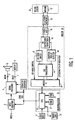
- the television receiver shown in Figure 1 includes an input 1 for receiving a plurality of television signals, for example, from a satellite in earth orbit or a cable distribution network, an input selection unit 3 for selecting one of the plurality of received television signals and deriving video and audio signals from the selected television signal, a signal processing section 5 for processing the video and audio signals, and video and audio outputs 7 and 9 at which the processed video and audio signals are provided.
- the processed video and audio signals provided at respective ones of outputs 7 and 9 are coupled to respective ones of a display unit 11 and a sound reproducing unit 13.
- the television receiver shown in Figure 1 may be a "television set" in which display unit 11 and sound reproducing unit 13 are integrally included within the "set".
- display unit 11 and sound reproducing unit 13 may be included in an associated external "television set".
- the video and audio signals may be coupled to the external "television set" directly in the form of baseband signals or may be modulated on to an RF carrier which is coupled to the RF input of the external television set.
- Microprocessor 15 includes a central processing unit (CPU) 19, read only memory (ROM) 21 and random access memory (RAM) 23.
- ROM 21 stores the control program and other data for controlling the television receiver. Data stored in ROM 21 is coupled to CPU where it is processed.
- RAM 23 temporarily stores data processed by CPU 19. While ROM 21 and RAM 23 are indicated as being integrally included within the same integrated circuit as CPU 21 by a surrounding dashed line, either one or both of ROM 21 and RAM 23 may be separate units.
- Microprocessor 15 communicates with various portion of the television receiver via a data bus.
- the television receiver has a very large number of relatively complex control functions and features which are controllable by a user.
- the television receiver includes a character generator 25 for generating character representative signals for causing display unit 11 to display text instructions, status and other information to guide the user.
- the character signals are coupled to signal processing section 5 where they are inserted into the video signal which is coupled display unit 11.
- the character signals are generated in response to display data stored in ROM 21 of microprocessor 15.
- a so-called “smart card” unit 27 receives a smart card containing its own microprocessor and associated ROM and RAM (not shown) for processing decryption and other access control information necessary for allowing a the television receiver to select and process the received television signals.
- the smart card is purchased by the user from the provider of the television signals, such as the cable network or satellite system operator.
- the pay for view programs are selected by the user by means of keys of user control unit 17 in response to program choice information displayed on the screen of display 11. Each time a pay for view program is selected, corresponding billing information is stored in the smart card under the control of microprocessor 15. There are a limited number of memory "slots" available for pay for view programs.
- Microprocessor 15 periodically attempts to transfer the billing information to a billing or control station 30 operated by the provider of the television signals via a modem 33 connected to the telephone network 35. It is necessary to periodically transfer the billing information to the billing station so that the television signal provider will have an up-to-date basis for calculating the pay for view fee owed by the user. It is also necessary to periodically transfer the billing information to the billing station to ensure that old billing information for previously viewed programs will be "cleared", thereby making "slots" available for the selection of new pay for view programs.
- the transfer of billing information requires modem 33 of the television receiver to call a modem 37 at billing station 30, billing station modem 37 to acknowledge the receipt of the call from television receiver modem 33 by answering the telephone call and establishing a proper "handshaking" protocol and the successful transfer of billing information.
- This operation is called a "callback”.
- a typical callback operation lasts between 30 and 60 seconds, and upon completion modem 33 will automatically "hang-up".
- a callback may be unsuccessful due to a variety of telephone network problems.
- Modem 33 includes an integrated circuit (IC) 39 which controls various functions of modem 33.
- Modem IC 39 may, for example, comprise a type 73K222U IC available from Silicon Systems Incorporated of Tustin, California.
- Modem IC 39 communicates with microprocessor 15 via the data bus and is connected to telephone network 35 via a line transformer 41, a RFI (radio frequency interference) suppression and protection unit 43 and a connector 45 commonly referred to as a "phone jack”.
- An "off-hook" switching unit 47 and an "extension pick-up" detector 49 are interposed between line transformer 41 and RFI suppression and protection unit 43.
- modem IC 39 will initiate a telephone call by causing switching unit 47 to put modem 33 in an "off-hook" condition corresponding to a user picking-up the hand-unit of a conventional telephone. Thereafter, modem IC 39 determines whether or not there is a dial tone present by checking for energy in the dial tone frequency band, for example, between 350 and 650 Hz. If a dial tone is present, a further determination is made to ensure that another telephone call previously placed via an extension telephone is not already in progress by checking for energy in the voice frequency band, for example, between 1650 and 1850 Hz. Most modems applications do not require the ability to distinguish dial tone from voice.
- the ability to distinguish voice from dial tone is needed to prevent the modem 33 from interrupting a user's telephone conversation with a series of tones or pulses representing the telephone number of billing station 30.
- Checking for energy in the dial tone frequency band (350-640 Hz) is not sufficient because voice signals may contain energy in the dial tone frequency band.
- the check for the presence of high frequency energy in the 1650-1850 Hz band virtually eliminates the possibility of incorrectly detecting voice signals as a dial tone. If a dial tone is present and the presence of i high frequency energy is not detected, modem IC 39 causes the telephone number to be dialed.
- extension pick-up detector 49 detects the occurrence and modem IC 33 causes the callback to be terminated by causing switching unit 47 to place modem 33 in the "on-hook" condition, that is, "hang-up".
- Extension pick-up detector 49 operates by detecting a drop in loop current which occurs whenever the hand unit of a telephone is picked-up placing the telephone in an "off-hook” condition. This feature is desirable because the callback operation is performed automatically without any user interaction or control and it permits the user to interrupt the callback operation to place an emergency telephone call.
- a poor quality dial may have an amplitude exceeding the maximum specified amplitude, contain harmonics in relatively high frequency bands, or contain excessive noise components (i.e., have a poor signal to noise ratio). All three of these conditions cause modem IC 39 to detect the presence of high frequency energy thereby incorrectly indicating the presence of a voice signal instead of a dial tone. This causes each callback attempt to be aborted.
- the interval between callbacks attempts is desirably shortened compared the normal interval (e.g., about once per month) so that a successful callback will be achieved within a relatively short time.
- the interval may be shortened to an interval between ten minutes and two hours.
- the two or more relatively short intervals may be interleaved. For example, a ten minute interval may be alternated with a one hour interval.
- Step 001 which determines whether or not there is energy in the dial tone frequency band
- step 002 which determines whether or not there is energy in a relatively high frequency band
- step 004 determines whether or not a connection between television receiver modem 33 and billing station 37 has been achieved .
- a connection is verified if modem 37 answers modem 33 and establishes a handshaking protocol.
- step 005 determines whether or not the transfer of billing information has been completed, signifying a successful callback, or whether an error has occurred during the transfer of information, in which case the callback is aborted.
- Modem IC 39 of television receiver modem 33 determines whether or not the transfer of information has been completed by determining whether or not a carrier is still being received (i.e., whether or not billing station modem 37 has "hung-up"). Alternatively, the completion of information transfer may be determined by the receipt of a information transfer acknowledgment transmitted by billing station modem 37.
- a negative result in any one of the dial tone test (step 001), the connection test (step 004) or the callback status (or completion) test (step 005) will cause the callback to be terminated.
- HFE override flag is cleared and a "HFE failure” counter is reset in step 006. Thereafter, the callback is terminated.
- the label HFE in the flow chart stands for "high frequency energy”. The HFE override flag and the HFE failure counter are used to ignore the results of the high frequency energy test (step 002) and to initiate a callback if a predetermined number of callback attempts have failed, as will now be described.
- step 001 If a dial tone is present (step 001) and high frequency energy is also present (step 002), the status of the HFE override flag is checked in step 007. If the HFE override flag has not been set, the count of the HFE failure counter is increased by one in step 008. The count of the HFE failure counter is checked in step 009. If it is less than the predetermined number N, the callback attempt is terminated. However if the count is equal to or greater than the predetermined number N, the HFE override flag is set in step 010, and thereafter, the callback is terminated.
- HFE override flag will cause the telephone number of billing station modem 37 to be dialed (steps 007 and 003) during the next callback attempt independent of the results of the high frequency energy test (step 002). After a successful callback, the results of high frequency energy test (step 002) will again be caused to be utilized because the HFE override flag is cleared and the HFE failure counter is reset in step 006.
- predetermined number may be used.
- the predetermined number may be changed in response to control information transmitted with the television signal or via telephone network 35. Further, the predetermined number may be adaptively change depending on the history of callback failures and successes.
- the above described procedure allows callbacks to be complete when telephone network 35 provides a dial tone which is not according to specifications. However, it may cause television receiver modem 33 to dial (using tone or pulse) during a user's telephone conversation. After television receiver modem 33 finishes dialing the number, it will wait for billing station modem 37 to answer and then will eventually hang-up when a predetermined time interval, for example, 60 seconds, has elapsed. However, television receiver modem 33 will not cause the user to be disconnected and will not emit any sounds during the waiting period.
- a predetermined time interval for example, 60 seconds
- Another telephone network condition which may result in an unsuccessful callback is due to a drop in loop current.
- some telephone switching equipment cause drops in loop current, especially when DTMF (dual tone multi-frequency tone decoders are switched out after a telephone number has been dialed using touch-tones (DTMF).
- DTMF dual tone multi-frequency tone decoders are switched out after a telephone number has been dialed using touch-tones (DTMF).
- modem 33 is caused to hang up thereby interrupting the callback. This prevents the billing information from being updated. However, it may also cause the television signal provider (who typically pays for the callbacks) to incur unnecessary expenses due to the number of callbacks which are interrupted after the billing modem has answered the call. In the latter regard, as was noted above, modem callback systems may automatically increase the callback frequency once a callback has failed in order to attempt to produce a successful callback.
- the interval between callbacks attempts is desirably shortened compared the normal interval (e.g., about once per month) so that a successful callback will be achieved within a relatively short time.
- the interval may be shortened to an interval between ten minutes and two hours.
- the two or more relatively short intervals may be interleaved. For example, a ten minute interval may be alternated with a one hour interval.
- the drop in loop current test is intended to allow a user to interrupt a callback under normal conditions, it is associated with the callback status test (step 005). Assuming that there is no drop in the loop current, and that a callback has been successfully completed, an "AD override" flag is cleared and an "AD failure” counter is reset in step 011. Thereafter, the callback is terminated.
- the label AD in the flow chart stands for "automatic disconnect”. The AD override flag and the AD failure counter are used to ignore the results of the drop in loop current test (step 005) if a predetermined number of unsuccessful callbacks have failed, as will now be described.
- the status of the AD override flag is checked in step 012. If the AD override flag has not been set, the count of the AD failure counter is increased by one in step 013. The count of the AD failure counter is checked in step 014. If it is less than the predetermined number N, the callback attempt is terminated. However if the count is equal to or greater than the predetermined number N, the AD override flag is set in step 015, and thereafter, the callback is terminated. Setting the AD override flag will cause the results of the drop in loop current test (step 005) to be ignored (note the "YES" path back to step 005 from step 012) during the next callback attempt. After a successful callback, the results of drop in loop current test (005) will again be caused to be utilized because the AD override flag is cleared and the AD failure counter is reset in step 011.
- the predetermined number may be change in response to control information transmitted with the television signal or via telephone network 35, and the predetermined number may be adaptively changed.
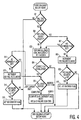
- modem callback control programs indicated by the flow charts shown in Figures 2 and 3 may be utilized individually (i.e., one without the other), it is desirable that both be used together because the conditions to which they are directed are both frequently encountered.
- the manner in which the two control programs may be combined is indicated by the flow chart shown in Figure 4.
- steps which correspond to steps of the flow charts shown in Figures 2 and 3 are identified by the same reference numbers and therefor will not be described in again.
Landscapes
- Engineering & Computer Science (AREA)
- Multimedia (AREA)
- Signal Processing (AREA)
- Databases & Information Systems (AREA)
- Human Computer Interaction (AREA)
- Computer Security & Cryptography (AREA)
- Computer Networks & Wireless Communication (AREA)
- Telephonic Communication Services (AREA)
- Closed-Circuit Television Systems (AREA)
- Two-Way Televisions, Distribution Of Moving Picture Or The Like (AREA)
Claims (11)
- Gerät umfassend:dadurch gekennzeichnet,ein Modem (33);Mittel (45) zum Verbinden des Modems (33) mit einem Telefon-Netzwerk (35);Feststellungsmittel (47) zur Feststellung eines gegebenen betriebszustandes des Telefon-Netzwerks (35); undeinen mit Steuermitteln (39) in dem Modem (33) verbundenen Mikroprozessor (15), der ein gespeichertes Programm aufweist, um das Modem (33) zu dem Versuch zu veranlassen, eine Verbindung zu einem zweiten Modem (37) zu errichten und Daten zu diesem über das Telefon-Netzwerk (35) während Rückruf-Operationen zu übertragen, die in Intervallen auftreten, um aber das Modem (33) zu veranlassen, eine Rückruf-Operation in Abhängigkeit von einer Feststellung des gegebenen Betriebszustandes des Telefon-Netzwerks (35) zu beenden;daß der gegebene Betriebszustand eine Übertragungs-Eigenschaft des Telefon-Netzwerks anzeigt, die dem Vorhandensein von Energie in einem Frequenzband entspricht, das höher als das Frequenzband von Wähltonsignalen ist, oder die einer Änderung in dem Netzwerk-Schleifenstrom entspricht, die nicht von einem aktuellen Telefongespräch verursacht worden sind;daß das gespeicherte Programm in den Steuermitteln (39) bewirkt, daß eine Feststellung des gegebenen Betriebszustandes ignoriert wird, wodurch das Modem (33) nicht veranlaßt wird, eine Rückruf-Operation zu beenden, nachdem eine vorgegebene Anzahl von Rückruf-Operationen zuvor in Abhängigkeit von einer Feststellung des gegebenen Betriebszustandes des Telefon-Netzwerks (35) beendet worden ist.
- Gerät nach Anspruch 1, dadurch gekennzeichnet, daß die Steuermittel (39) das Modem (33) zu dem Versuch veranlassen, eine Verbindung zu dem zweiten Modem (37) zu errichten und zu diesem Daten während Rückruf-Operationen zu übertragen, die in kürzeren Intervallen als die zuerst erwähnten Intervalle auftreten, nachdem eine Rückruf-Operation in Abhängigkeit von einer Feststellung des Betriebszustandes des Telefon-Netzwerks (35) beendet worden ist.
- Gerät nach Anspruch 1, dadurch gekennzeichnet, daß Mittel (39) zur Feststellung einer erfolgreichen Vollendung einer Rückruf-Operation vorgesehen sind, und daß die Steuermittel (39) auf eine Feststellung ansprechen, daß eine Rückruf-Operation erfolgreich vollendet worden ist, nachdem die vorgegebene Zahl von Rückruf-Operationen beendet worden ist, um zu bewirken, daß eine Feststellung des Betriebszustandes nicht mehr ignoriert wird, nachdem die vorgegebene Anzahl von Rückruf-Operationen erneut beendet worden ist.
- Gerät nach Anspruch 3, dadurch gekennzeichnet, daß die den Betriebszustand feststellenden Mittel (39) einen Abfall des Schleifenstroms feststellen, der von dem Telefon-Netzwerk (35) erzeugt wird.
- Gerät nach Anspruch 1, dadurch gekennzeichnet, daß Mittel (39) zur Feststellung des Vorhandenseins von Energie in einem Frequenzband, das höher als das Frequenzband der Wahltonsignale in dem Telefon-Netzwerk (35) ist, vorgesehen sind; daß Mittel (49) zur Feststellung eines Abfalls in dem Schleifenstrom, der von dem Telefon-Netzwerk (35) erzeugt wird, vorgesehen sind, daß die Steuermittel (39) bewirken, daß das Modem (33) eine Rückruf-Operation beendet, indem es dem Modem nicht den Versuch erlaubt, eine Verbindung mit dem zweiten Modem (37) in Abhängigkeit von der Feststellung des Vorhandenseins von Hochfrequenz-Energie in dem Telefon-Netzwerk (35) zu errichten, und daß sie bewirken, daß das Modem (33) eine Rückruf-Operation beendet, indem eine bereits errichtete Verbindung mit dem zweiten Modem (37) in Abhängigkeit von einer Feststellung eines Abfalls in dem Schleifenstrom, der von dem Telefon-Netzwerk (35) erzeugt wird, beendet wird, daß die Steuermittel (39) bewirken, daß eine Feststellung des Vorhandenseins von Hochfrequenz-Energie in dem Telefon-Netzwerk (35) ignoriert wird, nachdem eine erste vorgegebene Zahl von Rückruf-Operationen zuvor in Abhängigkeit von einer Feststellung des Vorhandenseins der Hochfrequenz-Energie in dem Telefon-Netzwerk (35) beendet worden ist, und
daß die Steuermittel (39) bewirken, daß eine Feststellung eines Abfalls des Schleifenstroms, der von dem Telefon-Netzwerk (35) erzeugt wird, ignoriert wird, nachdem eine zweite vorgegebene Zahl von Rückruf-Operationen zuvor in Abhängigkeit von einer Feststellung des Betriebszustandes des Telefon-Netzwerks (35) beendet worden ist. - Gerät nach Anspruch 5, dadurch gekennzeichnet, daß die erste und die zweite Anzahl gleich ist.
- Gerät nach Anspruch 5, dadurch gekennzeichnet, daß die erste und die zweite Anzahl unterschiedlich ist.
- Verfahren zur Steuerung eines Modems (33) umfassend die Schritte:gekennzeichnet durch:Feststellen eines gegebenen Betriebszustandes des Telefon-Netzwerks (35);Veranlassen des Modems (33) periodisch zu versuchen, eine Verbindung mit einem zweiten Modem (37) zu errichten und Daten zu diesem über ein Telefon-Netzwerk (35) während Rückruf-Operationen zu übertragen, die in Intervallen auftreten, aber das Modems (33) zu veranlassen, eine Rückruf-Operation in Abhängigkeit von einer Bestimmung eines Betriebszustandes des Telefon-Netzwerks zu beenden,Auswählen des gegebenen Betriebszustands, um eine Übertragungs-Eigenschaft des Telefon-Netzwerks (35) anzuzeigen, die dem Vorhandensein von Energie in einem Frequenzband entspricht, das höher als das Frequenzband von Wähltonsignalen ist, oder die einer Änderung des Netzwerk-Schleifenstroms entspricht, die nicht durch ein aktives Telefongespräch bewirkt wird;Veranlassen, daß eine Feststellung des Betriebszustandes ignoriert wird, wodurch das Modem (33) nicht veranlaßt wird, eine Rückruf-Operation zu beenden, nachdem eine vorgegebene Zahl von Rückruf-Operationen zuvor in Abhängigkeit von einer Feststellung des Betriebszustandes des Telefon-Netzwerks (35) beendet worden ist.
- Verfahren nach Anspruch 8, gekennzeichnet durch den Schritt:
Veranlassen des Versuchs des Modems (33), eine Verbindung mit dem zweiten Modem (37) zu errichten und Daten zu diesem während Rückruf-Operationen zu übertragen, die in kürzeren Intervallen auftreten als die zuvor erwähnten Intervalle, nachdem eine Rückruf-Operation in Abhängigkeit von der Feststellung des Betriebszustandes des Telefon-Netzwerks (35) beendet worden ist. - Verfahren nach Anspruch 8, gekennzeichnet durch die Schritte:Feststellen einer erfolgreichen Vollendung einer Rückruf-Operation; undBewirken, daß eine Feststellung des Betriebszustandes nicht mehr in Abhängigkeit von einer Feststellung ignoriert wird, daß eine Rückruf-Operation erfolgreich vollendet worden ist, nachdem die vorgegebene Zahl von Rückruf-Operationen beendet worden ist, bis die vorgegebene Anzahl von Rückruf-Operationen erneut beendet worden ist.
- Verfahren nach Anspruch 8, gekennzeichnet durch die Schritte:Feststellen des Vorhandenseins von Energie in einem Frequenzband, das höher ist als das Frequenzband von Wahltonsignalen in dem Telefon-Netzwerk (35);Feststellen eines Abfalls in dem Schleifenstrom, der von dem Telefon-Netzwerk (35) erzeugt wird;Bewirken, daß das Modem (33) eine Rückruf-Operation dadurch beendet, daß es nicht erlaubt, eine Verbindung mit dem zweiten Modem (37) in Abhängigkeit von der Feststellung des Vorhandenseins der Hochfrequenz-Energie in dem Telefon-Netzwerk (35) zu errichten; und Bewirken, daß das Modem (33) eine Rückruf-Operation beendet, indem eine bereits errichtete Verbindung mit dem zweiten Modem (37) in Abhängigkeit von einer Feststellung eines Abfalls in dem Schleifenstrom, der von dem Telefon-Netzwerk (35) erzeugt wird, beendet wird;Bewirken, daß eine Feststellung des Vorhandenseins der Hochfrequenz-Energie in dem Telefon-Netzwerk (35) ignoriert wird, nachdem eine erste vorgegebene Zahl von Rückruf-Operationen zuvor in Abhängigkeit von einer Feststellung des Vorhandenseins der Hochfrequenz-Energie in dem Telefon-Netzwerk (35) beendet worden ist; undBewirken, daß eine Feststellung eines Abfalls in dem Schleifenstrom, der von dem Telefon-Netzwerk (35) erzeugt wird, ignoriert wird, nachdem eine zweite vorgegebene Zahl von Rückruf-Operationen zuvor in Abhängigkeit von einer Feststellung des Betriebszustandes des Telefon-Netzwerks (35) beendet worden ist.
Applications Claiming Priority (3)
| Application Number | Priority Date | Filing Date | Title |
|---|---|---|---|
| US36750494A | 1994-12-30 | 1994-12-30 | |
| US367504 | 1994-12-30 | ||
| PCT/US1995/015756 WO1996021320A1 (en) | 1994-12-30 | 1995-12-05 | Modem with automatic callback provisions |
Publications (2)
| Publication Number | Publication Date |
|---|---|
| EP0804855A1 EP0804855A1 (de) | 1997-11-05 |
| EP0804855B1 true EP0804855B1 (de) | 2001-10-10 |
Family
ID=23447447
Family Applications (1)
| Application Number | Title | Priority Date | Filing Date |
|---|---|---|---|
| EP95943369A Expired - Lifetime EP0804855B1 (de) | 1994-12-30 | 1995-12-05 | Modem mit automatischer rückrufmöglichkeit |
Country Status (11)
| Country | Link |
|---|---|
| US (1) | US6064724A (de) |
| EP (1) | EP0804855B1 (de) |
| JP (1) | JPH10513315A (de) |
| KR (1) | KR100392861B1 (de) |
| CN (1) | CN1096186C (de) |
| AU (1) | AU706687B2 (de) |
| BR (1) | BR9510128A (de) |
| DE (1) | DE69523178T2 (de) |
| MX (1) | MX9704961A (de) |
| MY (1) | MY113416A (de) |
| WO (1) | WO1996021320A1 (de) |
Families Citing this family (25)
| Publication number | Priority date | Publication date | Assignee | Title |
|---|---|---|---|---|
| US7224798B2 (en) | 1995-04-03 | 2007-05-29 | Scientific-Atlanta, Inc. | Methods and apparatus for providing a partial dual-encrypted stream in a conditional access overlay system |
| US8548166B2 (en) | 1995-04-03 | 2013-10-01 | Anthony J. Wasilewski | Method for partially encrypting program data |
| US6937729B2 (en) | 1995-04-03 | 2005-08-30 | Scientific-Atlanta, Inc. | Representing entitlements to service in a conditional access system |
| US6442255B1 (en) * | 1995-12-22 | 2002-08-27 | Thomson Licensing S.A. | Automatic subscriber callback system |
| DE69802288T2 (de) * | 1997-08-01 | 2002-06-27 | Scientific-Atlanta, Inc. | Autorisierung von diensten in einem system mit bedingtem zugriff |
| US7515712B2 (en) | 1997-08-01 | 2009-04-07 | Cisco Technology, Inc. | Mechanism and apparatus for encapsulation of entitlement authorization in conditional access system |
| US7587044B2 (en) | 1998-01-02 | 2009-09-08 | Cryptography Research, Inc. | Differential power analysis method and apparatus |
| AU2557399A (en) * | 1998-01-02 | 1999-07-26 | Cryptography Research, Inc. | Leak-resistant cryptographic method and apparatus |
| CA2333095C (en) * | 1998-06-03 | 2005-05-10 | Cryptography Research, Inc. | Improved des and other cryptographic processes with leak minimization for smartcards and other cryptosystems |
| AU5458199A (en) * | 1998-07-02 | 2000-01-24 | Cryptography Research, Inc. | Leak-resistant cryptographic indexed key update |
| US7203311B1 (en) | 2000-07-21 | 2007-04-10 | The Directv Group, Inc. | Super encrypted storage and retrieval of media programs in a hard-paired receiver and storage device |
| US20020112241A1 (en) * | 2001-02-14 | 2002-08-15 | Cocchi Ronald P. | Internet service provider callback for satellite systems |
| US7145998B1 (en) * | 2002-07-29 | 2006-12-05 | Bellsouth Intellectual Property Corporation | Systems, methods, and devices for a callback/callback reminder feature |
| US8396216B2 (en) | 2003-11-21 | 2013-03-12 | Howard G. Pinder | Partial dual-encryption using program map tables |
| US9325944B2 (en) | 2005-08-11 | 2016-04-26 | The Directv Group, Inc. | Secure delivery of program content via a removable storage medium |
| US8763059B1 (en) | 2005-08-16 | 2014-06-24 | The Directv Group, Inc. | Method and apparatus for connecting satellite receiver telephone modems over coaxial cable |
| US8001565B2 (en) | 2006-05-15 | 2011-08-16 | The Directv Group, Inc. | Methods and apparatus to conditionally authorize content delivery at receivers in pay delivery systems |
| US8095466B2 (en) | 2006-05-15 | 2012-01-10 | The Directv Group, Inc. | Methods and apparatus to conditionally authorize content delivery at content servers in pay delivery systems |
| US7992175B2 (en) | 2006-05-15 | 2011-08-02 | The Directv Group, Inc. | Methods and apparatus to provide content on demand in content broadcast systems |
| US8775319B2 (en) | 2006-05-15 | 2014-07-08 | The Directv Group, Inc. | Secure content transfer systems and methods to operate the same |
| US8996421B2 (en) | 2006-05-15 | 2015-03-31 | The Directv Group, Inc. | Methods and apparatus to conditionally authorize content delivery at broadcast headends in pay delivery systems |
| US9225761B2 (en) | 2006-08-04 | 2015-12-29 | The Directv Group, Inc. | Distributed media-aggregation systems and methods to operate the same |
| US9178693B2 (en) | 2006-08-04 | 2015-11-03 | The Directv Group, Inc. | Distributed media-protection systems and methods to operate the same |
| US9277249B2 (en) * | 2012-07-24 | 2016-03-01 | The Directv Group, Inc. | Method and system for providing on-demand and pay-per-view content through a hospitality system |
| US9363566B2 (en) | 2014-09-16 | 2016-06-07 | The Directv Group, Inc. | Method and system for prepositioning content and distributing content in a local distribution system |
Family Cites Families (11)
| Publication number | Priority date | Publication date | Assignee | Title |
|---|---|---|---|---|
| US4361851A (en) * | 1980-01-04 | 1982-11-30 | Asip William F | System for remote monitoring and data transmission over non-dedicated telephone lines |
| US4833618A (en) * | 1986-02-20 | 1989-05-23 | Net Laboratories, Inc. | System for automatically reading utility meters from a remote location |
| US5081680A (en) * | 1987-11-20 | 1992-01-14 | General Instrument Corporation | Initial reporting of remotely generated data |
| ATE62779T1 (de) * | 1987-11-20 | 1991-05-15 | Gen Instrument Corp | Spontane meldung von fernerzeugten daten. |
| US5012510A (en) * | 1988-04-27 | 1991-04-30 | Scientific Atlantic Inc. | Dynamic callback technique |
| US5157716A (en) * | 1988-04-27 | 1992-10-20 | Scientific-Atlanta, Inc. | Dynamic callback technique |
| US5300980A (en) * | 1990-04-10 | 1994-04-05 | Minolta Camera Kabushiki Kaisha | Control apparatus of copying machine with improved communication function for centralized control unit |
| CA2036205C (en) * | 1990-06-01 | 1996-11-19 | Russell J. Welsh | Program monitoring unit |
| US5270809A (en) * | 1991-03-29 | 1993-12-14 | Scientific-Atlanta | Data return for a television transmission system |
| US5239575A (en) * | 1991-07-09 | 1993-08-24 | Schlumberger Industries, Inc. | Telephone dial-inbound data acquisition system with demand reading capability |
| FR2693061A1 (fr) * | 1992-06-30 | 1993-12-31 | Swatch Ag | Appareil de télécommunication tel qu'un télécopieur. |
-
1995
- 1995-12-05 AU AU44649/96A patent/AU706687B2/en not_active Ceased
- 1995-12-05 JP JP8520994A patent/JPH10513315A/ja not_active Ceased
- 1995-12-05 WO PCT/US1995/015756 patent/WO1996021320A1/en not_active Ceased
- 1995-12-05 DE DE69523178T patent/DE69523178T2/de not_active Expired - Lifetime
- 1995-12-05 CN CN95197679A patent/CN1096186C/zh not_active Expired - Fee Related
- 1995-12-05 BR BR9510128A patent/BR9510128A/pt not_active IP Right Cessation
- 1995-12-05 EP EP95943369A patent/EP0804855B1/de not_active Expired - Lifetime
- 1995-12-05 KR KR1019970704596A patent/KR100392861B1/ko not_active Expired - Fee Related
- 1995-12-05 MX MX9704961A patent/MX9704961A/es not_active IP Right Cessation
- 1995-12-29 MY MYPI95004166A patent/MY113416A/en unknown
-
1996
- 1996-11-22 US US08/754,845 patent/US6064724A/en not_active Expired - Lifetime
Also Published As
| Publication number | Publication date |
|---|---|
| US6064724A (en) | 2000-05-16 |
| DE69523178T2 (de) | 2002-01-31 |
| BR9510128A (pt) | 1997-12-30 |
| HK1007664A1 (en) | 1999-04-23 |
| CN1096186C (zh) | 2002-12-11 |
| KR100392861B1 (ko) | 2003-10-22 |
| EP0804855A1 (de) | 1997-11-05 |
| JPH10513315A (ja) | 1998-12-15 |
| DE69523178D1 (de) | 2001-11-15 |
| MY113416A (en) | 2002-02-28 |
| CN1175338A (zh) | 1998-03-04 |
| WO1996021320A1 (en) | 1996-07-11 |
| MX9704961A (es) | 1997-10-31 |
| AU706687B2 (en) | 1999-06-24 |
| KR987001183A (ko) | 1998-04-30 |
| AU4464996A (en) | 1996-07-24 |
Similar Documents
| Publication | Publication Date | Title |
|---|---|---|
| EP0804855B1 (de) | Modem mit automatischer rückrufmöglichkeit | |
| US4710955A (en) | Cable television system with two-way telephone communication path | |
| KR100408983B1 (ko) | 자동가입자콜백시스템 | |
| EP0254743B1 (de) | Bezahltkabelfernsehsystem | |
| US4890322A (en) | Method and apparatus for subscription broadcast | |
| WO1985003830A1 (en) | Method and apparatus for subscription broadcast | |
| US5535264A (en) | Prompt issuing protocol for an intercept voice messaging system | |
| CA1288152C (en) | Fraud prevention in a public telephone station | |
| EP1108321B1 (de) | Automatische erkennung der einstellungen eines fernsprechsystems für die wählverbindungen eines modems | |
| GB2340340A (en) | Call back procedure giving the effect of reverse-charge call | |
| EP0900504B1 (de) | Anschliessen von telefonen, faxgeräten und rechnern in einem intelligenten netzwerk | |
| HK1007664B (en) | Modem with automatic callback provisions | |
| US5818916A (en) | Method and apparatus for preventing return dial tone fraud in a cellular paystation | |
| JP3844163B2 (ja) | 通信システムの選択的自動着信方法 | |
| JPH01264357A (ja) | 統合サービス・ディジタル網用データ端末システム | |
| JP2024134630A (ja) | 公衆電話機及び不正利用防止方法 | |
| JP2980314B2 (ja) | 電話交換システムの不正呼防止装置および不正呼防止方法 | |
| CA2187007A1 (en) | Payphone initiated voice message capture | |
| IE42719B1 (en) | Signalling system for manually established calls from coinbox stations | |
| JPH077552A (ja) | 電話の自動着信発信装置 | |
| JPH08149228A (ja) | 通信における料金課金装置 |
Legal Events
| Date | Code | Title | Description |
|---|---|---|---|
| PUAI | Public reference made under article 153(3) epc to a published international application that has entered the european phase |
Free format text: ORIGINAL CODE: 0009012 |
|
| 17P | Request for examination filed |
Effective date: 19970627 |
|
| AK | Designated contracting states |
Kind code of ref document: A1 Designated state(s): DE GB IE |
|
| 17Q | First examination report despatched |
Effective date: 19981030 |
|
| GRAG | Despatch of communication of intention to grant |
Free format text: ORIGINAL CODE: EPIDOS AGRA |
|
| GRAG | Despatch of communication of intention to grant |
Free format text: ORIGINAL CODE: EPIDOS AGRA |
|
| GRAH | Despatch of communication of intention to grant a patent |
Free format text: ORIGINAL CODE: EPIDOS IGRA |
|
| GRAH | Despatch of communication of intention to grant a patent |
Free format text: ORIGINAL CODE: EPIDOS IGRA |
|
| GRAA | (expected) grant |
Free format text: ORIGINAL CODE: 0009210 |
|
| AK | Designated contracting states |
Kind code of ref document: B1 Designated state(s): DE GB IE |
|
| REG | Reference to a national code |
Ref country code: IE Ref legal event code: FG4D |
|
| REF | Corresponds to: |
Ref document number: 69523178 Country of ref document: DE Date of ref document: 20011115 |
|
| REG | Reference to a national code |
Ref country code: GB Ref legal event code: IF02 |
|
| PLBE | No opposition filed within time limit |
Free format text: ORIGINAL CODE: 0009261 |
|
| STAA | Information on the status of an ep patent application or granted ep patent |
Free format text: STATUS: NO OPPOSITION FILED WITHIN TIME LIMIT |
|
| 26N | No opposition filed | ||
| REG | Reference to a national code |
Ref country code: GB Ref legal event code: 746 Effective date: 20030103 |
|
| PGFP | Annual fee paid to national office [announced via postgrant information from national office to epo] |
Ref country code: IE Payment date: 20071212 Year of fee payment: 13 |
|
| REG | Reference to a national code |
Ref country code: IE Ref legal event code: MM4A |
|
| PG25 | Lapsed in a contracting state [announced via postgrant information from national office to epo] |
Ref country code: IE Free format text: LAPSE BECAUSE OF NON-PAYMENT OF DUE FEES Effective date: 20081205 |
|
| REG | Reference to a national code |
Ref country code: DE Ref legal event code: R082 Ref document number: 69523178 Country of ref document: DE Representative=s name: MANFRED ROSSMANITH, DE |
|
| REG | Reference to a national code |
Ref country code: DE Ref legal event code: R082 Ref document number: 69523178 Country of ref document: DE Representative=s name: ROSSMANITH, MANFRED, DIPL.-PHYS. DR.RER.NAT., DE Effective date: 20120724 Ref country code: DE Ref legal event code: R081 Ref document number: 69523178 Country of ref document: DE Owner name: THOMSON LICENSING, FR Free format text: FORMER OWNER: THOMSON CONSUMER ELECTRONICS, INC., INDIANAPOLIS, IND., US Effective date: 20120724 |
|
| PGFP | Annual fee paid to national office [announced via postgrant information from national office to epo] |
Ref country code: GB Payment date: 20121219 Year of fee payment: 18 |
|
| PGFP | Annual fee paid to national office [announced via postgrant information from national office to epo] |
Ref country code: DE Payment date: 20121217 Year of fee payment: 18 |
|
| REG | Reference to a national code |
Ref country code: DE Ref legal event code: R119 Ref document number: 69523178 Country of ref document: DE |
|
| GBPC | Gb: european patent ceased through non-payment of renewal fee |
Effective date: 20131205 |
|
| REG | Reference to a national code |
Ref country code: DE Ref legal event code: R119 Ref document number: 69523178 Country of ref document: DE Effective date: 20140701 |
|
| PG25 | Lapsed in a contracting state [announced via postgrant information from national office to epo] |
Ref country code: DE Free format text: LAPSE BECAUSE OF NON-PAYMENT OF DUE FEES Effective date: 20140701 |
|
| PG25 | Lapsed in a contracting state [announced via postgrant information from national office to epo] |
Ref country code: GB Free format text: LAPSE BECAUSE OF NON-PAYMENT OF DUE FEES Effective date: 20131205 |