EP0804615B1 - Apoliporotein e polymorphismen und behandlung der alzheimerkrankheit - Google Patents
Apoliporotein e polymorphismen und behandlung der alzheimerkrankheit Download PDFInfo
- Publication number
- EP0804615B1 EP0804615B1 EP95916530A EP95916530A EP0804615B1 EP 0804615 B1 EP0804615 B1 EP 0804615B1 EP 95916530 A EP95916530 A EP 95916530A EP 95916530 A EP95916530 A EP 95916530A EP 0804615 B1 EP0804615 B1 EP 0804615B1
- Authority
- EP
- European Patent Office
- Prior art keywords
- allele
- apoe4
- absence
- apoe3
- alzheimer
- Prior art date
- Legal status (The legal status is an assumption and is not a legal conclusion. Google has not performed a legal analysis and makes no representation as to the accuracy of the status listed.)
- Expired - Lifetime
Links
Images


Classifications
-
- A—HUMAN NECESSITIES
- A61—MEDICAL OR VETERINARY SCIENCE; HYGIENE
- A61K—PREPARATIONS FOR MEDICAL, DENTAL OR TOILETRY PURPOSES
- A61K31/00—Medicinal preparations containing organic active ingredients
-
- A—HUMAN NECESSITIES
- A61—MEDICAL OR VETERINARY SCIENCE; HYGIENE
- A61P—SPECIFIC THERAPEUTIC ACTIVITY OF CHEMICAL COMPOUNDS OR MEDICINAL PREPARATIONS
- A61P25/00—Drugs for disorders of the nervous system
- A61P25/28—Drugs for disorders of the nervous system for treating neurodegenerative disorders of the central nervous system, e.g. nootropic agents, cognition enhancers, drugs for treating Alzheimer's disease or other forms of dementia
-
- C—CHEMISTRY; METALLURGY
- C12—BIOCHEMISTRY; BEER; SPIRITS; WINE; VINEGAR; MICROBIOLOGY; ENZYMOLOGY; MUTATION OR GENETIC ENGINEERING
- C12Q—MEASURING OR TESTING PROCESSES INVOLVING ENZYMES, NUCLEIC ACIDS OR MICROORGANISMS; COMPOSITIONS OR TEST PAPERS THEREFOR; PROCESSES OF PREPARING SUCH COMPOSITIONS; CONDITION-RESPONSIVE CONTROL IN MICROBIOLOGICAL OR ENZYMOLOGICAL PROCESSES
- C12Q1/00—Measuring or testing processes involving enzymes, nucleic acids or microorganisms; Compositions therefor; Processes of preparing such compositions
- C12Q1/68—Measuring or testing processes involving enzymes, nucleic acids or microorganisms; Compositions therefor; Processes of preparing such compositions involving nucleic acids
- C12Q1/6876—Nucleic acid products used in the analysis of nucleic acids, e.g. primers or probes
- C12Q1/6883—Nucleic acid products used in the analysis of nucleic acids, e.g. primers or probes for diseases caused by alterations of genetic material
-
- C—CHEMISTRY; METALLURGY
- C12—BIOCHEMISTRY; BEER; SPIRITS; WINE; VINEGAR; MICROBIOLOGY; ENZYMOLOGY; MUTATION OR GENETIC ENGINEERING
- C12Q—MEASURING OR TESTING PROCESSES INVOLVING ENZYMES, NUCLEIC ACIDS OR MICROORGANISMS; COMPOSITIONS OR TEST PAPERS THEREFOR; PROCESSES OF PREPARING SUCH COMPOSITIONS; CONDITION-RESPONSIVE CONTROL IN MICROBIOLOGICAL OR ENZYMOLOGICAL PROCESSES
- C12Q2600/00—Oligonucleotides characterized by their use
- C12Q2600/106—Pharmacogenomics, i.e. genetic variability in individual responses to drugs and drug metabolism
-
- C—CHEMISTRY; METALLURGY
- C12—BIOCHEMISTRY; BEER; SPIRITS; WINE; VINEGAR; MICROBIOLOGY; ENZYMOLOGY; MUTATION OR GENETIC ENGINEERING
- C12Q—MEASURING OR TESTING PROCESSES INVOLVING ENZYMES, NUCLEIC ACIDS OR MICROORGANISMS; COMPOSITIONS OR TEST PAPERS THEREFOR; PROCESSES OF PREPARING SUCH COMPOSITIONS; CONDITION-RESPONSIVE CONTROL IN MICROBIOLOGICAL OR ENZYMOLOGICAL PROCESSES
- C12Q2600/00—Oligonucleotides characterized by their use
- C12Q2600/156—Polymorphic or mutational markers
-
- C—CHEMISTRY; METALLURGY
- C12—BIOCHEMISTRY; BEER; SPIRITS; WINE; VINEGAR; MICROBIOLOGY; ENZYMOLOGY; MUTATION OR GENETIC ENGINEERING
- C12Q—MEASURING OR TESTING PROCESSES INVOLVING ENZYMES, NUCLEIC ACIDS OR MICROORGANISMS; COMPOSITIONS OR TEST PAPERS THEREFOR; PROCESSES OF PREPARING SUCH COMPOSITIONS; CONDITION-RESPONSIVE CONTROL IN MICROBIOLOGICAL OR ENZYMOLOGICAL PROCESSES
- C12Q2600/00—Oligonucleotides characterized by their use
- C12Q2600/172—Haplotypes
Definitions
- cholinomimetic agent in the manufacture of a medicament for the treatment of human subjects with cognitive impairments due to age.
- the invention relates to the field of treatment of Alzheimer's disease and related conditions.
- Apolipoprotein E functions as a ligand in the process of receptor mediated internalization of lipid-rich lipoproteins, and it is probably also involved in reverse lipid transport (Mahley R.W. et al., 1983, Biochem. Biophys. Acta . 737:197-222).
- apoE plays a central role in the mobilization and redistribution of cholesterol and phospholipid during membrane remodeling associated with synaptic plasticity (Poirier J. et al., 1991, Mol. Brain. Res., 9:191-195; Poirier J. et al., 1991, Mol. Brain. Res ., 11 :97-106; Poirier J.
- the apoE gene on chromosome 19 has three common alleles (E2, E3, E4), which encode three major apoE isoforms. Recently, the frequency of the apoE4 allele was shown to be markedly increased in sporadic (Poirier J. et al., 1993, Apolipoprotein E phenotype and Alzheimer's Disease, Lancet, 342: 697-699; Noguchi S. et al., 1993, Lancet (letter) , 342: 737) and late onset familial Alzheimer's disease (AD) (Corder E.H. et al., 1993, Science, 261: 921-923; Payami H. et al., 1993, Lancet (letter) , 342: 738).
- a cholinomimetic agent in the manufacture of a medicament for use in the treatment of genetically characterized Alzheimer's patients by a method involving:
- the cholinomimetic agents may be selected from inhibitors of acetylcholine degradation, inducers of acetylcholine synthesis, acetylcholine agonists or mimics, and muscarinic M2-receptor antagonists.
- a method for providing data useful to a clinician to give an indication as to predisposition of a human subject with cognitive impairments due to age, Alzheimer's disease or other neurodegenerative diseases, to respond to cholinomimetics-based therapies comprising determining the number of copies of the apoE2 and apoE3 gene alleles or the absence of apoE4 gene allele in a biological sample of said patient, the presence of apoE2 and/or apoE3 gene alleles and the absence of apoE4 indicating a pre-disposition to respond to cholinomimetics-based therapies.
- a method for providing data useful to a clinician to give an indication as to Alzheimer's patients who may be responsive to cognitive enhancers and cholinomimetic therapies comprising determining the number of copies of the apoE2 and apoE3 gene alleles in a biological sample of a said patient, presence of apoE2 and/or apoE3 gene alleles and absence of apoE4 indicating a predisposition to respond to cholinomimetics-based therapies.
- the invention provides, in a fourth and further alternative aspect thereof the use of a cholinomimetic agent in the manufacture of a medicament for use in the treatment of human subjects with cognitive impairments due to age, Alzheimer's disease or other neurodegenerative diseases, involving: (a) determining the presence of apolipoproteins E2 and E3 allele or the absence of apolipoprotein E4 allele in a biological sample of a said subject, wherein said presence of apolipoproteins E2 and E3 allele or said absence of agolipoprotein E4 allele is indicative of a predisposition of said subject to respond to therapy with said cholinomimetic agent; and (b) administering said medicament.
- cognitive enhancers is intended to mean that these drugs enhance a) memory performance, whether it is verbal memory, spatial memory or factual memory and b) learning capacity.
- cholinomimetic therapies is intended to mean drugs that mimic the function of acetylcholine or enhance the activity of remaining acetylcholine synthesizing cells.
- drugs include, but are not limited to, inhibitors of acetylcholine degradation (acetylcholine esterase inhibitors like tacrine), drugs that mimic acetylcholine structure and function (agonist: muscarinic M1-receptor agonist is a typical example), drugs that block acetylcholine uptake by neurons and drugs that interact pre-synaptic receptors to induce acetylcholine release from cholinergic neurons.
- apoE2 and apoE3 probes refers to nucleic acid primer sequences that selectively recognize the apoE3 or apoE2 allele on chromosome 19 and that can be used to selectively amplify (by PCR) these different mutations of the apoE gene.
- Apolipoprotein E is important in modulating cholesterol and phospholipid transport from one cell to another.
- ApoE binds with great affinity to the apoE/apoB LDL receptor to mediate the internalization and catabolism of cholesterol- and phospholipid-containing lipoproteins. It is a polymorphic protein with three common alleles coding from apoE2, apoE3 and apoE4.
- the apoE4 allele was shown to be associated with sporadic and late-onset familial Alzheimer's disease (AD). The present study demonstrates that the apoE4 allele has little or no effect on apoE mRNA levels and protein content in the hippocampus of AD.
- ChAT choline acetyltransferase
- ChAT activity is apparently caused by a selective loss of neurons synthesizing acetylcholine in the nucleus basalis of Maynert and in the diagonal band of Broca.
- apoE expression is markedly increased in the hippocampus of entorhinal cortex lesioned rats (Poirier J. et al., 1991, Mol. Brain. Res., 9: 191-195; Poirier J. et al., 1991, Mol. Brain. Res., 11: 97-106; Poirier J. et al., 1993, Neuroscience, 55: 81-90) and in humans with multiple sclerosis, we examined apoE mRNA and protein levels in the hippocampus of AD patients whose genotypes has previously been established.
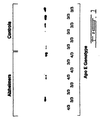
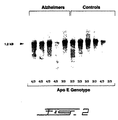
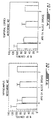
- Figures 1 and 2 illustrate Northern and Western blot analyses of apoE levels in the hippocampus of control and AD patients as a function of their respective genotype.
- Frozen hippocampi from post-mortem control and AD patients were obtained from the Douglas Hospital Brain Bank in Quebec. Age and sex were matched and post-mortem delays were similar from the two groups ( ⁇ 14 hrs). Post-mortem delays up until 24 hours have little impact on apoE stability (Lehtimaki T., 1991, Clin. Chim. Acta , 203: 177-182) and it can be stored at -80°C for several months without noticeable trace of degradation. Hippocampal total RNA was extracted and quantified by oligo(dT) hybridization as described previously (Poirier J. et al., 1991, Mol. Brain. Res., 11:97-106).
- Hybridization protocol of the full length apoE cRNA probe used in these experiment was described before (Poirier J. et al., 1991, Mol. Brain. Res ., 9: 191-195). High molecular weight DNA was isolated from frozen cerebellum or temporal cortex as adapted from Goelz et al. (Goelz S.E. et al., 1986, Biochem. Biophys. Res. Comm., 130: 118-126).
- ApoE genotype was determined by allele-specific extension of purified brain DNA using a modification of the method of Main et al. (Main R.F. et al., 1991, J. Lipid. Res., 32: 183-187).
- the primers labeled D, E, F, G, and H were synthesized for us by Genosys Biotech (The Woodland, TX); the primer sequences are given in Main et al. (Main R.F. et al., 1991, J. Lipid. Red ., 32: 183-187).
- Reactions were carried out in a volume of 50 ⁇ L containing 1 ⁇ g of DNA; x deoxyadenosine triphosphate, deoxycytidine triphosphate, deoxythymidine triphosphate and deoxyguanosine triphosphate, each 0.2 mmol/L; 10% dimethyl sulfoxide; 12.5 pmol of either primer D, E, F, G,; 25 pmol of primer H; and 10 ⁇ L of 10 PCR reaction buffer (Vector Biosystem, Toronto, ONT.). The DNA in the reaction mixture was first denatured for 10 min. at 96°C and then cooled to 4°C. One unit of Taq polymerase (Vector Biosystem, Toronto, ONT.) was then added to each sample.
- Each sample was reheated for 2 min. at 96°C and subjected to 30 cycles in a thermal cycler with each cycle consisting of a 10 sec denaturation at 96°C, 30 sec annealing at 58°C and 1 min. extension at 65°C.
- the reaction products were visualized by electrophoresis of 10 ⁇ L of the reaction mixture in a 1% agarose gel containing TPE buffer (0.08 mol/L Tris-phosphate, 0.002 mol/L EDTA) and ethidium bromide (0.15 ⁇ g/mL) for 1 hr at 67v. The gel was then photographed and the banding profile was compared to known standards.
- the in vivo metabolism of apoE4 in the circulation has been shown to be kinetically different from apoE3 in humans (Gregg R.E. et al., 1986, J. Clin. Invest., 87: 815-821).
- the E4 allele is associated with abnormally high levels of circulating lipoproteins, increased plasma and LDL cholesterol amounts, altered lipoprotein distribution, decreased plasma apoE in patients homozygous for E4, and rapid catabolism of apoE4 compared to apoE3 (Gregg R.E. et al., 1986, J. Clin. Invest., 87: 815-821).
- apoE4 is metabolically different from apoE3 and could thus explain disturbances in lipid homeostasis reported in the AD brain.
- phosphatidylcholine (PC), phosphatidylethanolamine (PE) and cholesterol levels are all significantly reduced in AD brains (Pettegrew J.W., 1989, Ann. NY Acad. Sci ., 56 8:5-28).
- the levels of phosphatidylcholine, phosphatidylethanolamine and cholesterol have been inversely correlated with the number of senile plaques between cortical layer II and IV (Pettegrew J.W., 1989, Ann. NY Acad. Sci ., 568: 5-28). Accordingly, we examined the effect of apoE4 allele copy number on the incidence of senile plaques and neurofibrillary tangles in the hippocampus of 59 AD patients.
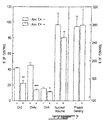
- Fig. 3 illustrates the correlations between apoE4 allele copy number and senile plaques and neurofibrillary tangles in three different areas of the hippocampus, namely the CA 1 sub-field, subiculum and the parasubiculum in individuals with different apoE4 allele copy number.
- Genotype was determined as described for Fig. 1. Senile plaque and tangle density measures were performed as described before (Aubert I. et al., 1992, J. Neurochem ., 58: 529-541). Paraffin embedded hippocampal tissue from 59 autopsied AD patients was obtained from the Douglas Hospital Brain Bank and stained with hematoxylin and eosin, modified Bielchowsky, and alkaline Congo red. Quantitative morphometric evaluations of neurofibrillary tangles and senile plaques were done as follows. A micrometric scale was used for calibration. Readings were done with a 10 X objective for plaques and 25X objective for tangles. Diffuse plaques were excluded from these measurements.
- IPD Idiopathic Parkinson's disease
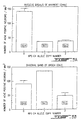
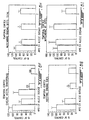
- Figs. 4 and 6 illustrate the effect of the presence of apoE4 isoform on hippocampal and temporal cortex ChAT activity.
- the apoE4 allele copy number-related reduction in ChAT activity could be caused by at least two distinct phenomena.
- phospholipids such as PC and PE which can serve as precursors to choline in the synthesis of Ach could be transported into neurons via the classical apoE-LDL receptor pathway.
- An isoform-dependent impaired regulation of the transport of phospholipids in the brain of apoE4 carriers could explain the reduced levels of PC, PE and choline reported in AD; this then leading to decreased Ach synthetic capacities.
- the reduction in neuronal ChAT activities and choline levels could be secondary to losses of cholinergic neurons in the basal forebrain, including the nucleus basalis of Meynert (NBM), diagonal band of Broca (DBB) and the septal area.
- NBM nucleus basalis of Meynert
- DBB diagonal band of Broca
- apoE4 was shown to be closely associated with three hallmarks of the pathophysiology of AD, namely senile plaques, tangles and ChAT activity.
- the relationships between apoE and these three established markers of AD pathology is highly dependent upon the number of copies of the E4 allele.
- cholinomimetic drugs may be used to enhance cognitive performances in non-Alzheimer's disease subjects (young and old), the results of the present invention indicate that cognitive performances could be restored, and even enhanced by the administration of cholinomimetics such as acetylcholine agonists (M1-agonist: xanomeline from Eli Lilly), M2receptor-antagonist (BIBN-99 from Boehringer Ingelheim), inhibitors of acetylcholine degradation such as tacrine (Parke-Davis) or E-2020 (Pfizer) in subjects carrying apoE2 or apoE3 but not apoE4.
- M1-agonist xanomeline from Eli Lilly
- M2receptor-antagonist BIBN-99 from Boehringer Ingelheim
- inhibitors of acetylcholine degradation such as tacrine (Parke-Davis) or E-2020 (Pfizer) in subjects carrying apoE2 or apoE3 but not apoE4.
- High molecular weight DNA for genotype analysis was isolated from frozen cerebellum or temporal cortex as adapted from (Nalbantoglu J. et al., 1994, Predictive value of apolipoprotein E4 mutation in Alzheimer's Disease, Ann. Neurol . 36: 889-895).
- ApoE genotype was determined by allele-specific extension of purified brain DNA using (Nalbantoglu J. et al., 1994, Predictive value of apolipoprotein E4 mutation in Alzheimer's Disease, Ann. Neurol . 36: 889-895).
- the primers labeled D, E, F, G, and H were synthesized for us by Genosys Biotech (The Woodland, TX); primer sequences are given in Main et al.
- reactions were carried out in a volume of 50 ⁇ L containing 1 ⁇ g of DNA; deoxyadenosine triphosphate, deoxycytidine triphosphate, deoxythymidine triphosphate and deoxyguanosine triphosphate (Pharmacia, Montreal, CANADA.), each 0.2 mmol/L; 10% dimethyl sulfoxide; 12.5 pmol of either primer D, E, F, G,; 25 pmol of primer H; and 10 ⁇ L of 10 PCR reaction buffer (Vector Biosystem, Toronto, CANADA). The DNA in the reaction mixture was first denatured for 10 min.
- reaction products were visualized by electrophoresis of 10 ⁇ L of the reaction mixture in a 1% agarose gel containing TPE buffer (0.08 mol/L Tris-phosphate, 0.002 mol/L EDTA, Sigma, St-Louis, USA) and ethidium bromide (0.15 ug/mL) for 1 hr at 67v. The gels were then photographed and the banding profile was compared to known standards.
- Neuropathological Analyses Neurofibrillary tangle and senile plaque indices were determined as described in detail elsewhere (Aubert I. et al., 1992, J. Neurochem ., 58: 529-541; Etienne P. et al, 1986, Neuroscience, 19: 1279-1291). Fifteen micron paraffin embedded hippocampal sections were stained with either hematoxylin and eosin, modified Bielchowsky stain, and alkaline Congo red to visualize neurofibrillary tangles and senile plaques.
- Quantitative morphometric evaluation of neurofibrillary tangles and senile plaques were determined: using a micrometric scale for calibration readings were done with a 10X objective for senile plaques and a 25X objective for neurofibrillary tangles. Diffuse plaques were excluded from all measurements. Screening of alkaline Congo red stains under polarized light was used to control for the reliability of tangle staining and, to a lesser extent, of the senile plaques' affinity for the modified Bielchowsky preparation. These criteria are consistent with those used in the classification of Khachaturian (Aubert I. et al., 1992, J. Neurochem ., 58: 529-541).
- Unlabelled acetyl-CoA are purchased from Boehringer Mannheim (Mannheim, F.R.G.). Tetraphenylboron (sodium salt) and 3-heptanone are purchased from Aldrich Chemical Co. (Milwaukee, WI, U.S.A.). Ethyl acetate was bought from American Chemicals Co. (Montreal, Quebec, Canada). Bovine serum albumin (98% fatty acid free) and Ecolite scintillation cocktail are purchased from ICN Biochemicals (Irvine, CA, U.S.A.). TritonTM X-100 (100%) scintillation grade was from Amersham (Arlington, IL, U.S.A.). All other chemicals were from Fisher Scientific (Montreal, Quebec, Canada).
- Human brain tissues are obtained at autopsy from individuals clinically diagnosed as having AD, PD, or PD/AD and from neurological normal age-matched controls. Tissues are provided by the Brain Bank of the Douglas Hospital Research Center (Y. Robitaille, neuropathologist). Histopathological criteria have been described earlier. Hemispheres to be used for biochemical assays are sectioned into thick (10 mm) coronal slices quickly and deeply frozen in 2-methylbutane at -40°C before storage at -80°C.
- brain slices are slowly thawed on a cold plate, and the following structures are dissected as follows: frontal (Brodmann areas 9 and 10) and temporal (Brodmann areas 20, 21, 22, and 38) cortices, hippocampus and cerebellum (use as a low pathology brain area).
- Binding parameters were derived from the saturation experiments analyzed by the computerized method LIGANDTM (Aubert I. et al., 1992, J. Neurochem ., 58: 529-541). Statistical significance of differences between control and AD (0, 1, 2 copies of E4 alleles) brain was evaluated using Student's unpaired t test, with values of p ⁇ 0.05 being considered significant.
- Tissues from various brain regions were homogenized and incubated for 15 min. in buffer containing [ 14 C]acetyl-CoA as previously described in detail (Aubert I. et al., 1992, J. Neurochem ., 58: 529-541) to determine ChAT activity.
- cholinergic marker enzymes such as ChAT
- the apoE4 allele copy number is inversely correlated with ChAT activity in the hippocampus and temporal cortex of age-matched control and AD subjects.
- each bar refers to mean value ⁇ S.E.M..
- Significant differences between groups are indicated by the number of stars: *: p ⁇ 0.05. **: p ⁇ 0.01, *** ⁇ 0.001. Striking reductions in ChAT activity were seen in apoE4 carriers.
- CHAT values are represented in Fig. 4 in the hippocampus (23 ADs and 30 controls) and temporal cortex (30 ADs and 12 controls) of AD subjects with different doses of apoE4 allele.
- Acetylcholinesterase positive neuron density in the sub-cortical areas projecting to the temporal cortex and hippocampal structures are represented in Fig. 7.
- Neuronal cell density in the Ch2, Ch4a and Ch4i are expressed as percent of control values.
- Nucleolar volume is expressed in ⁇ m 2 .
- Plaque density is expressed as number per mm 3 in the hippocampus of the same patients. Portion of these results were published by Etienne and colleagues (1986, Neuroscience , 19: 1279-1291). The genotype of the original patients was unknown and could not be done then. Since then, we reanalysed the data in subjects for which genotype could be determined.
- Three AD subjects are apoE4 negative whereas four AD subjects are apoE4-positive.
- Bound [ 3 H]QNB is separated from free ligand by rapid filtration under reduced pressure through Schleicher & Schuell No. 32 glass filters, presoaked in 0.1% polyethylenimine solution, using a Brandel Cell Harvester apparatus (Brandel, Gaithersburg, MD, U.S.A.). Filters are then rapidly washed with ice-cold buffer, three times with 4.5 ml each, before being dried. The radioactivity of the filters is determined by liquid scintillation counting using a Beckman model LS7000 scintillation counter at 48% efficiency. Nonspecific binding, defined in the presence of 1 ⁇ M atropine sulfate, represents usually ⁇ 15% of total binding.
- Brain tissues are processed as described above for [ 3 H]QNB. Aliquots of final homogenates are incubated in Krebs buffer with various concentrations of [ 3 H]AF-DX 116 (0.1-20 nM) for 60 min. at 4°C. Assays are terminated and radioactivity is determined as described above for [ 3 H]QNB binding. Nonspecific binding, defined in the presence of 1 ⁇ M atropine sulfate, represents usually ⁇ 40% of total binding at ligand concentrations approximating K d values.
- Muscarinic binding sites are not altered in the hippocampus of AD versus control subjects.
- the apoE genotype has no significant impact on the activity of these receptors. Muscarinic M1 and M2 receptor sites are not alters in AD versus control subjects in the temporal cortex whereas the so-called total (QNB) muscarinic binding sites are slightly reduced in AD versus control subjects (no genotype effect on this receptor group).
- QNB total muscarinic binding sites
- Brain tissues are processed as described above for [ 3 H]QNB with the exception that samples were homogenized in 50 mM Tris-HCl buffer. Aliquots of final homogenates were incubated in 50 mM Tris-HCl buffer with various concentrations of [ 3 H]MCC (0.1-20 nM) for 60 min. at 4°C. Assays are terminated and radioactivity is determined as described above for [ 3 H]QNB binding. Nonspecific binding, defined in the presence of 10 ⁇ M nicotine, represents usually ⁇ 50% of total binding at ligand concentrations approximating K d values.
- Nicotinic receptor binding sites are significantly reduced in apoE4 AD subjects whereas AD subjects not carrying apoE4 are not different from controls subjects. This is valid for both the hippocampal and the temporal areas in AD.
- apoE protein levels remain unchanged or, decreased in apoE4 carrier subjects; this is consistent with our previous report using non-phenotyped AD subjects.
- the E4 allele is associated in periphery with abnormally low levels of apoE and high concentrations of circulating lipoproteins, increased amounts of plasma and LDL cholesterol, altered lipoprotein distribution and most importantly rapid catabolism of apoE4 compared to apoE3 (Gregg R.E. et al., 1986, J. Clin. Invest., 87: 815-821).
- apoE4 is metabolically different from apoE3 and could thus explain disturbances in lipid homeostasis reported in the AD brain.
- phosphatidylcholine (PC), phosphatidylethanolamine (PE) and cholesterol levels are all significantly reduced in AD brains (Pettegrew J.W., 1989, Ann. NY Acad. Sci ., 568: 5-28; Nitch RM et al., 1992, Proc. Natl. Acad. Sci., 89: 1671-1675) and have been shown to be inversely correlated with the number of senile plaques in cortical layers II and IV (Pettegrew J.W., 1989, Ann. NY Acad. Sci ., 568: 5-28).
- ACh acetylcholine
- the release from PC of free choline precursor for ACh synthesis is accomplished in a one step process through a phospholipase-D type enzyme in cholinergic neurons (Lee H.E. et al, 1993, Proc. Natl. Acad. Aci. USA, 90: 10086-10090).
- M1-muscarinic receptor was unaltered in AD versus control subjects, whether apoE4 is present or not.
- the M2-muscarinic receptor which represent a composite pre- and post-synaptic marker is also unaffected by the apoE4 allele gene dosage.
- phospholipids such as PC and PE that can serve as precursors to choline in the synthesis of ACh, could be transported into neurons via the classical apoE-LDL receptor pathway (Goldstein J.L. et al, 1977, Ann. Rev. Biochem ., 46: 897-930).
- An iso-form-dependent impaired regulation of the transport of phospholipids in the brain of apoE4 carriers could explain the reduced levels of PC, PE and choline reported in AD (Pettegrew J.W., 1989, Ann. NY Acad.
- the reduction in neuronal ChAT activities and choline levels could parallel the loss of cholinergic neurons in the basal forebrain, including the nucleus basalis of Meynert (NBM), diagonal band of Broca (DBB) and the septal area.
- NBM nucleus basalis of Meynert
- DBB diagonal band of Broca
- the tacrine study results described here were originally published by Knapp, Gracon et al. (1994, Journal American Medical Association, 271: 985-991), however, apoE genotypes were unknown in those days.
- the study was a 30-week study in which patients were randomized to one of four treatment groups: placebo or escalating doses of tacrine. In the tacrine treated group, all patients began treatment at 40 mg/day. One group had tacrine increased to 80 mg/day, on which they remained until the end of the study. The other two groups received tacrine in dosages escalated beyond 80 mg/days to 120 and 160 mg/day. Only the latter group of patients was considered in the present genotype analysis.
- ADAS Alzheimer's Disease Assessment Scale
- ADAS-cog is an objective test that evaluates memory, attention, reasoning, orientation and praxis: a decrease score over time (or a positive difference) indicates improvement (Rosen W.G. et al, 1984, Am. J. Psychiatr., 141: 1356-1364).
- the ADAS total includes the cognitive and non-cognitive portion of the ADAS.
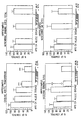
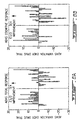
- Fig. 8 illustrates the drug responsiveness (ADAD-cog and ADAS total) of AD subjects as a function of apoE4 allele. Each bar represents an individual subjects. Positive delta values (difference in ADAS score at the end minus ADAS score prior to drug treatment) indicate improvement in cognitive performance (ADAS cog) and in global performances (ADAS-total). Negative values represent patients who deteriorated over time and drug treatment. All the subjects are AD subjects, all were treated with the same drug, at the same level, for the same duration. The only critical factor that differentiates them is the presence or absence of the apoE4 allele.
- Results clearly indicates that more than 85% of the apoE4 negative subjects show improvement with tacrine administration (ADAS total) whereas 60% of the apoE4 positive subjects are worse following drug treatment. In other words, 4 out 5 subjects that do not response to tacrine are apoE4 positive.
- the ADAS-cog scale shows similar response profiles in apoE4 carriers and non-carriers.
Landscapes
- Health & Medical Sciences (AREA)
- Chemical & Material Sciences (AREA)
- Life Sciences & Earth Sciences (AREA)
- Organic Chemistry (AREA)
- Engineering & Computer Science (AREA)
- Proteomics, Peptides & Aminoacids (AREA)
- General Health & Medical Sciences (AREA)
- Wood Science & Technology (AREA)
- Analytical Chemistry (AREA)
- Genetics & Genomics (AREA)
- Zoology (AREA)
- Bioinformatics & Cheminformatics (AREA)
- Veterinary Medicine (AREA)
- Medicinal Chemistry (AREA)
- Public Health (AREA)
- Pharmacology & Pharmacy (AREA)
- Animal Behavior & Ethology (AREA)
- Molecular Biology (AREA)
- Neurology (AREA)
- General Engineering & Computer Science (AREA)
- Epidemiology (AREA)
- Biochemistry (AREA)
- Pathology (AREA)
- Biomedical Technology (AREA)
- Neurosurgery (AREA)
- Physics & Mathematics (AREA)
- Biophysics (AREA)
- Biotechnology (AREA)
- Immunology (AREA)
- Microbiology (AREA)
- Nuclear Medicine, Radiotherapy & Molecular Imaging (AREA)
- Hospice & Palliative Care (AREA)
- Psychiatry (AREA)
- Chemical Kinetics & Catalysis (AREA)
- General Chemical & Material Sciences (AREA)
- Medicines That Contain Protein Lipid Enzymes And Other Medicines (AREA)
- Measuring Or Testing Involving Enzymes Or Micro-Organisms (AREA)
- Pharmaceuticals Containing Other Organic And Inorganic Compounds (AREA)
- Investigating Or Analysing Biological Materials (AREA)
- Steroid Compounds (AREA)
Claims (8)
- Verwendung eines cholinomimetischen Agens zur Herstellung eines Medikaments zur Verwendung bei der Behandlung genetisch charakterisierter Alzheimer-Patienten durch ein Verfahren, umfassend:a) Bestimmung der Anwesenheit des Allels für die Apolipoproteine E2 und E3 oder der Abwesenheit des Allels für Apolipoprotein E4 in peripheren Geweben des Patienten, die das Ausmaß der Beeinträchtigung der Acetylcholinsynthese und der Aktivität des Nikotinrezeptors im Gehirn anzeigt; undb) Verabreichung des Medikaments gemäß dem Ausmaß der Beeinträchtigung, das in Schritt a) bestimmt wurde.
- Verwendung gemäß Anspruch 1, wobei das cholinomimetische Agens ausgewählt ist aus Inhibitoren des Acetylcholinabbaus, Induktoren der Acetylcholinsynthese, Acetylcholin-Agonisten oder -Mimetika, und muskarinischen M2-Rezeptor-Antagonisten.
- Verwendung gemäß Anspruch 2, wobei die Anwesenheit des Allels für die Apolipoproteine E2 und E3 oder die Abwesenheit des Allels für Apolipoprotein E4 direkt durch Genotypisierung oder indirekt durch Phänotypisierung bestimmt wird.
- Verfahren zur Bereitstellung von Daten, die für einen Krankenhausarzt nützlich sind, um eine Angabe bezüglich der Prädisposition eines menschlichen Patienten zu machen, auf Choiinomimetika-basierte Therapien anzusprechen, wobei der Patient kognitive Beeinträchtigungen aufgrund von Alter, Alzheimer-Erkrankung oder anderen neurodegenerativen Erkrankungen aufweist, umfassend die Bestimmung der Kopienzahl der apoE2 und apoE3 Gen-Allele oder der Abwesenheit des apoE4 Gen-Allels in einer biologischen Probe dieses Patienten und die Analyse dieser Daten, wobei die Anwesenheit der Gen-Allele für apoE2 und/oder apoE3 oder die Abwesenheit von apoE4 auf eine Prädisposition hinweist, auf Therapien anzusprechen, die auf Cholinomimetika basieren.
- Verfahren gemäß Anspruch 4, wobei die Anwesenheit des Allels für die Apolipoproteine E2 und E3 oder die Abwesenheit des Allels für das Apolipoprotein E4 direkt durch Genotypisierung mit geeigneten apoE2- und apoE3-Sonden oder indirekt durch Phänotypisierung bestimmt wird.
- Verfahren zur Bereitstellung von Daten, die für einen Krankenhausarzt nützlich sind, um eine Angabe bezüglich Alzheimer-Patienten zu machen, die auf kognitive Verstärker und cholinomimetische Therapien ansprechen können, umfassend die Bestimmung der Kopienzahl der apoE2 und apoE3 Gen-Allele oder der Abwesenheit des apoE4 Gen-Allels in einer biologischen Probe dieses Patienten und die Analyse dieser Daten, wobei die Anwesenheit der Gen-Allele für apoE2 und/oder apoE3 oder die Abwesenheit von apoE4 auf eine Prädisposition hinweist, auf Therapien, die auf Cholinomimetika basieren, anzusprechen.
- Verfahren gemäß Anspruch 6, wobei die Anwesenheit des Alleis für die Apolipoproteine E2 und E3 oder die Abwesenheit des Allels für das Apolipoprotein E4 direkt durch Genotypisierung mit geeigneten apoE2 und apoE3-Sonden oder indirekt durch Phänotypisierung bestimmt wird.
- Verwendung eines cholinomimetischen Agens zur Herstellung eines Medikaments zur Verwendung bei der Behandlung menschlicher Patienten mit kognitiven Beeinträchtigungen aufgrund von Alter, Alzheimer-Erkrankung oder anderen neurodegenerativen Erkrankungen, umfassend:a) Bestimmung der Anwesenheit des Allels für die Apolipoproteine E2 und E3 oder der Abwesenheit des Allels für Apolipoprotein E4 in einer biologischen Probe des Patienten, wobei die Anwesenheit des Allels für Apolipoprotein E2 und E3 oder die Abwesenheit des Allels für Apolipoprotein E4 auf eine Prädisposition des Patienten hinweist, auf eine Therapie mit dem cholinomimetischen Agens anzusprechen;b) Verabreichung des Medikaments.
Applications Claiming Priority (3)
| Application Number | Priority Date | Filing Date | Title |
|---|---|---|---|
| GB9408465A GB9408465D0 (en) | 1994-04-27 | 1994-04-27 | Apolipoprotein e polymorphism & treatment of alzheimer's disease |
| GB9408465 | 1994-04-27 | ||
| PCT/CA1995/000240 WO1995029257A2 (en) | 1994-04-27 | 1995-04-26 | Apolipoprotein e polymorphism and treatment of alzheimer's disease |
Publications (2)
| Publication Number | Publication Date |
|---|---|
| EP0804615A1 EP0804615A1 (de) | 1997-11-05 |
| EP0804615B1 true EP0804615B1 (de) | 2003-08-20 |
Family
ID=10754293
Family Applications (1)
| Application Number | Title | Priority Date | Filing Date |
|---|---|---|---|
| EP95916530A Expired - Lifetime EP0804615B1 (de) | 1994-04-27 | 1995-04-26 | Apoliporotein e polymorphismen und behandlung der alzheimerkrankheit |
Country Status (13)
| Country | Link |
|---|---|
| US (1) | US5935781A (de) |
| EP (1) | EP0804615B1 (de) |
| JP (1) | JP3285585B2 (de) |
| AT (1) | ATE247717T1 (de) |
| AU (1) | AU693193B2 (de) |
| CA (1) | CA2188933C (de) |
| DE (1) | DE69531557T2 (de) |
| FI (1) | FI964284A7 (de) |
| GB (1) | GB9408465D0 (de) |
| MX (1) | MX9605176A (de) |
| NO (1) | NO964543L (de) |
| NZ (1) | NZ284412A (de) |
| WO (1) | WO1995029257A2 (de) |
Families Citing this family (35)
| Publication number | Priority date | Publication date | Assignee | Title |
|---|---|---|---|---|
| US7049078B2 (en) * | 1994-04-27 | 2006-05-23 | Judés Poirier | Apolipoprotein E polymorphism and treatment of alzheimer's disease |
| GB9408465D0 (en) * | 1994-04-27 | 1994-06-22 | Univ Mcgill | Apolipoprotein e polymorphism & treatment of alzheimer's disease |
| US6022683A (en) * | 1996-12-16 | 2000-02-08 | Nova Molecular Inc. | Methods for assessing the prognosis of a patient with a neurodegenerative disease |
| US5767337A (en) * | 1995-07-31 | 1998-06-16 | Duke University | Creation of human apolipoprotein E isoform specific transgenic mice in apolipoprotein deficient "knockout" mice |
| GB9525481D0 (en) * | 1995-12-13 | 1996-02-14 | Royston M C | Novel method |
| ES2115553B1 (es) * | 1996-10-23 | 1999-02-16 | Boehringer Ingelheim Espana | Metodo para detectar la presencia de polimorfismos de dna, estuche de ensayo y acidos nucleicos recombinantes correspondientes. |
| FR2765591B1 (fr) * | 1997-07-01 | 2002-08-09 | Pasteur Institut | Procede de diagnostic de la maladie d'alzheimer |
| EP1017375A2 (de) * | 1997-09-24 | 2000-07-12 | Nova Molecular, Inc. | Methoden zum erhöhen des apoe-spiegels zur behandlung von neurodegenerativen krankheiten |
| ES2142248B1 (es) * | 1997-11-20 | 2000-11-16 | Univ Madrid Autonoma | Polimorfismos en el promotor del gen humano de la apolipoproteina e, y sus usos para aplicaciones diagnosticas y terapeuticas. |
| US6251587B1 (en) | 1997-12-16 | 2001-06-26 | Nova Molecular, Inc. | Method for determining the prognosis of a patient with a neurological disease |
| WO1999058640A2 (en) | 1998-05-11 | 1999-11-18 | Philadelphia Health And Education Corporation | Mct-1, a human oncogene |
| WO2000020634A1 (en) | 1998-10-01 | 2000-04-13 | Nova Molecular, Inc. | Methods for treating or identifying a subject at risk for a neurological disease by determining the presence of a variant gpiiia and/or variant gpiib allele |
| US20040209849A1 (en) * | 1998-11-27 | 2004-10-21 | Sanochemia Pharmazeutika Aktiengesellschaft | Use of effectors of the central cholinergic nervous system for treatment of delirium |
| US6573049B1 (en) | 1999-07-26 | 2003-06-03 | Nuvelo, Inc. | Genotyping of the paraoxonase 1 gene for prognosing, diagnosing, and treating a disease |
| US6432643B1 (en) * | 1999-10-22 | 2002-08-13 | Duke University | Method of determining Alzheimer's disease risk using apolipoprotein E4 genotype analysis in combination with decreased estrogen levels |
| EP1113081A1 (de) * | 1999-12-28 | 2001-07-04 | Institut Pasteur De Lille | Zusammenhang des bekannten Gens CP2/LSF/LBP-1 mit Alzheimer |
| US6453244B1 (en) * | 2000-02-10 | 2002-09-17 | Stanford University | Detection of polymorphisms by denaturing high-performance liquid chromatography |
| US20020133495A1 (en) * | 2000-03-16 | 2002-09-19 | Rienhoff Hugh Y. | Database system and method |
| US6835750B1 (en) | 2000-05-01 | 2004-12-28 | Accera, Inc. | Use of medium chain triglycerides for the treatment and prevention of alzheimer's disease and other diseases resulting from reduced neuronal metabolism II |
| PT1292294E (pt) * | 2000-05-01 | 2009-06-01 | Accera Inc | Utilização de triglicéridos de cadeia média para tratamento e prevenção da doença de alzheimer |
| US20020010552A1 (en) * | 2000-05-26 | 2002-01-24 | Hugh Rienhoff | System for genetically characterizing an individual for evaluation using genetic and phenotypic variation over a wide area network |
| WO2002064735A2 (en) * | 2001-02-12 | 2002-08-22 | Akzo Nobel N.V. | Methods for improving the treatment of major depression by genotyping for the gene for apolipoproteine e4 |
| US6399310B1 (en) | 2001-02-12 | 2002-06-04 | Akzo Nobel N.V. | Methods for improving the therapeutic response of humans having major depression and carrying the gene for apolipoprotein E4 |
| US20030105082A1 (en) * | 2001-12-03 | 2003-06-05 | Murphy Greer Marechal | Methods for improving the therapeutic response of humans having major depression and carrying the gene for apolipoprotein E4 |
| US20040005566A1 (en) * | 2002-07-02 | 2004-01-08 | Genelink, Inc. | Kits and methods for assessing cardiovascular health |
| WO2006008119A1 (en) | 2004-07-16 | 2006-01-26 | Proteosys Ag | Muscarinic antagonists with parp and sir modulatng activity as agents for inflammatory diseases |
| PT2500017T (pt) | 2006-04-03 | 2017-11-14 | Accera Inc | Utilização de compostos cetogénicos para tratamento de comprometimento da memória associado à idade |
| WO2008060400A2 (en) * | 2006-11-15 | 2008-05-22 | Sirtris Pharmaceuticals, Inc. | Sirtuin polymorphisms and methods of use thereof |
| CA3078084C (en) | 2007-07-31 | 2023-08-15 | Cerecin Inc. | Use of genomic testing and ketogenic compounds for treatment of reduced cognitive function |
| WO2010003114A1 (en) * | 2008-07-03 | 2010-01-07 | Neuera Pharmaceuticals, Inc. | Monoglyceride of acetoacetate and derivatives for the treatment of neurological disorders |
| US8105809B2 (en) * | 2008-07-03 | 2012-01-31 | Accera, Inc. | Enzymatic synthesis of acetoacetate esters and derivatives |
| EP2387405A2 (de) | 2009-01-13 | 2011-11-23 | ProteoSys AG | Pirenzepin als mittel für die krebstherapie |
| US20110177061A1 (en) | 2009-07-10 | 2011-07-21 | Martek Biosciences Corporation | Methods of treating and preventing neurological disorders using docosahexaenoic acid |
| CN110268269A (zh) * | 2016-12-18 | 2019-09-20 | 赛隆特拉有限公司 | 使用apoe4基序介导的基因以用于诊断和治疗阿尔茨海默氏病 |
| EP3628315A1 (de) | 2018-09-28 | 2020-04-01 | Université de Caen Normandie | Kombination aus acetylcholinesterase-inhibitor und 5-ht4-rezeptoragonist als neuroprotektives mittel zur behandlung von neurodegenerativen krankheiten |
Family Cites Families (7)
| Publication number | Priority date | Publication date | Assignee | Title |
|---|---|---|---|---|
| WO1994009155A1 (en) * | 1992-10-13 | 1994-04-28 | Duke University | Methods of detecting alzheimer's disease |
| CA2161538A1 (en) * | 1993-07-22 | 1995-02-02 | S. Shirley Yang | Controlled release tacrine drug delivery systems and methods for preparing same |
| US5643960A (en) * | 1994-04-15 | 1997-07-01 | Duke University | Method of delaying onset of alzheimer's disease symptoms |
| GB9408465D0 (en) * | 1994-04-27 | 1994-06-22 | Univ Mcgill | Apolipoprotein e polymorphism & treatment of alzheimer's disease |
| GB9415073D0 (en) * | 1994-06-27 | 1994-09-14 | Smithkline Beecham Plc | Novel method |
| US5698224A (en) * | 1994-06-27 | 1997-12-16 | Alza Corporation | Tacrine therapy |
| GB9414624D0 (en) * | 1994-07-20 | 1994-09-07 | Smithkline Beecham Plc | Novel method |
-
1994
- 1994-04-27 GB GB9408465A patent/GB9408465D0/en active Pending
-
1995
- 1995-04-26 US US08/727,637 patent/US5935781A/en not_active Expired - Lifetime
- 1995-04-26 AT AT95916530T patent/ATE247717T1/de not_active IP Right Cessation
- 1995-04-26 DE DE69531557T patent/DE69531557T2/de not_active Expired - Lifetime
- 1995-04-26 JP JP52724895A patent/JP3285585B2/ja not_active Expired - Fee Related
- 1995-04-26 FI FI964284A patent/FI964284A7/fi not_active IP Right Cessation
- 1995-04-26 AU AU23006/95A patent/AU693193B2/en not_active Ceased
- 1995-04-26 WO PCT/CA1995/000240 patent/WO1995029257A2/en not_active Ceased
- 1995-04-26 EP EP95916530A patent/EP0804615B1/de not_active Expired - Lifetime
- 1995-04-26 NZ NZ284412A patent/NZ284412A/xx not_active IP Right Cessation
- 1995-04-26 CA CA002188933A patent/CA2188933C/en not_active Expired - Fee Related
-
1996
- 1996-10-25 NO NO964543A patent/NO964543L/no not_active Application Discontinuation
- 1996-10-28 MX MX9605176A patent/MX9605176A/es not_active IP Right Cessation
Also Published As
| Publication number | Publication date |
|---|---|
| JPH10500288A (ja) | 1998-01-13 |
| AU2300695A (en) | 1995-11-16 |
| FI964284A0 (fi) | 1996-10-24 |
| DE69531557D1 (de) | 2003-09-25 |
| FI964284L (fi) | 1996-12-23 |
| JP3285585B2 (ja) | 2002-05-27 |
| ATE247717T1 (de) | 2003-09-15 |
| NO964543D0 (no) | 1996-10-25 |
| WO1995029257A2 (en) | 1995-11-02 |
| US5935781A (en) | 1999-08-10 |
| GB9408465D0 (en) | 1994-06-22 |
| CA2188933A1 (en) | 1995-11-02 |
| DE69531557T2 (de) | 2004-06-17 |
| FI964284A7 (fi) | 1996-12-23 |
| NZ284412A (en) | 2000-01-28 |
| CA2188933C (en) | 2000-11-14 |
| MX9605176A (es) | 1998-06-30 |
| NO964543L (no) | 1996-12-20 |
| AU693193B2 (en) | 1998-06-25 |
| WO1995029257A3 (en) | 1995-11-23 |
| EP0804615A1 (de) | 1997-11-05 |
Similar Documents
| Publication | Publication Date | Title |
|---|---|---|
| US5935781A (en) | Apolipoprotein E polymorphism and treatment of Alzheimer's disease | |
| AU745073B2 (en) | Pharmacogenetic methods for use in the treatment of nervous system diseases | |
| Mancama et al. | Investigation of promoter variants of the histamine 1 and 2 receptors in schizophrenia and clozapine response | |
| US6251587B1 (en) | Method for determining the prognosis of a patient with a neurological disease | |
| Ruano et al. | Association of the gene encoding neurogranin with schizophrenia in males | |
| US7049078B2 (en) | Apolipoprotein E polymorphism and treatment of alzheimer's disease | |
| EP1074634A1 (de) | Verfahren zur Diagnose oder zur Prognose von Alzheimer Krankheit: therepeutische Zusammenzetung zur Verhinderung oder zur Behandlung von Alzheimer Krankheit | |
| AU733237B2 (en) | Use of Apolipoprotein polymorphism E in the treatment of Alzheimer's disease | |
| US20050177881A1 (en) | Methods of identifying genetic risk for and evaluating treatment of alzheimer's disease by determining single nucleotide polymorphisms | |
| US20090291444A1 (en) | Methods and materials for detecting and treating dementia | |
| NZ500375A (en) | A genotyping survey for characterising the presence of E2 and E3 allele or the absence of apolipoprotein E4 allele for determining the level of treatment medication for Alzheimer's patients | |
| US7960108B2 (en) | DNA polymorphisms in sterol-regulator-element binding proteins | |
| Shibata et al. | No genetic association between polymorphisms of heme oxygenase 1 and 2 and Alzheimer’s disease in a Japanese population | |
| US20050289657A1 (en) | Diagnostic and therapeutic use of an atp-binding cassette gene and protein for neurodegenerative diseases | |
| Mariani¹ et al. | frontiers in ORIGINAL RESEARCH ARTICLE AGING NEUROSCIENCE published: 05 August 2013 | |
| Lorena et al. | Molecular Evidence for Mitochondrial Dysfunction in Bipolar Disorder | |
| AU2006225995A1 (en) | Human autism susceptibility gene encoding a transmembrane protein and uses thereof | |
| WO2003107008A2 (en) | DIAGNOSTIC POLYMORPHISM OF 11ß-HYDROXYSTEROID DEHYDROGENASE USEFUL FOR IDENTIFYING RISK OF DEVELOPING ALZHEIMER'S DISEASE |
Legal Events
| Date | Code | Title | Description |
|---|---|---|---|
| PUAI | Public reference made under article 153(3) epc to a published international application that has entered the european phase |
Free format text: ORIGINAL CODE: 0009012 |
|
| AK | Designated contracting states |
Kind code of ref document: A1 Designated state(s): AT BE CH DE DK ES FR GB GR IE IT LI LU MC NL PT SE |
|
| 17P | Request for examination filed |
Effective date: 19961128 |
|
| 17Q | First examination report despatched |
Effective date: 19991214 |
|
| GRAH | Despatch of communication of intention to grant a patent |
Free format text: ORIGINAL CODE: EPIDOS IGRA |
|
| GRAH | Despatch of communication of intention to grant a patent |
Free format text: ORIGINAL CODE: EPIDOS IGRA |
|
| GRAA | (expected) grant |
Free format text: ORIGINAL CODE: 0009210 |
|
| AK | Designated contracting states |
Designated state(s): AT BE CH DE DK ES FR GB GR IE IT LI LU MC NL PT SE |
|
| PG25 | Lapsed in a contracting state [announced via postgrant information from national office to epo] |
Ref country code: NL Free format text: LAPSE BECAUSE OF FAILURE TO SUBMIT A TRANSLATION OF THE DESCRIPTION OR TO PAY THE FEE WITHIN THE PRESCRIBED TIME-LIMIT Effective date: 20030820 Ref country code: LI Free format text: LAPSE BECAUSE OF FAILURE TO SUBMIT A TRANSLATION OF THE DESCRIPTION OR TO PAY THE FEE WITHIN THE PRESCRIBED TIME-LIMIT Effective date: 20030820 Ref country code: IT Free format text: LAPSE BECAUSE OF FAILURE TO SUBMIT A TRANSLATION OF THE DESCRIPTION OR TO PAY THE FEE WITHIN THE PRE;WARNING: LAPSES OF ITALIAN PATENTS WITH EFFECTIVE DATE BEFORE 2007 MAY HAVE OCCURRED AT ANY TIME BEFORE 2007. THE CORRECT EFFECTIVE DATE MAY BE DIFFERENT FROM THE ONE RECORDED.SCRIBED TIME-LIMIT Effective date: 20030820 Ref country code: CH Free format text: LAPSE BECAUSE OF FAILURE TO SUBMIT A TRANSLATION OF THE DESCRIPTION OR TO PAY THE FEE WITHIN THE PRESCRIBED TIME-LIMIT Effective date: 20030820 Ref country code: BE Free format text: LAPSE BECAUSE OF FAILURE TO SUBMIT A TRANSLATION OF THE DESCRIPTION OR TO PAY THE FEE WITHIN THE PRESCRIBED TIME-LIMIT Effective date: 20030820 Ref country code: AT Free format text: LAPSE BECAUSE OF FAILURE TO SUBMIT A TRANSLATION OF THE DESCRIPTION OR TO PAY THE FEE WITHIN THE PRESCRIBED TIME-LIMIT Effective date: 20030820 |
|
| REG | Reference to a national code |
Ref country code: GB Ref legal event code: FG4D |
|
| RIC1 | Information provided on ipc code assigned before grant |
Ipc: 7C 12Q 1/68 A |
|
| RIC2 | Information provided on ipc code assigned after grant |
Ipc: 7A 61K 31/00 A |
|
| REG | Reference to a national code |
Ref country code: CH Ref legal event code: EP |
|
| REG | Reference to a national code |
Ref country code: IE Ref legal event code: FG4D |
|
| REF | Corresponds to: |
Ref document number: 69531557 Country of ref document: DE Date of ref document: 20030925 Kind code of ref document: P |
|
| PG25 | Lapsed in a contracting state [announced via postgrant information from national office to epo] |
Ref country code: SE Free format text: LAPSE BECAUSE OF FAILURE TO SUBMIT A TRANSLATION OF THE DESCRIPTION OR TO PAY THE FEE WITHIN THE PRESCRIBED TIME-LIMIT Effective date: 20031120 Ref country code: GR Free format text: LAPSE BECAUSE OF FAILURE TO SUBMIT A TRANSLATION OF THE DESCRIPTION OR TO PAY THE FEE WITHIN THE PRESCRIBED TIME-LIMIT Effective date: 20031120 Ref country code: DK Free format text: LAPSE BECAUSE OF FAILURE TO SUBMIT A TRANSLATION OF THE DESCRIPTION OR TO PAY THE FEE WITHIN THE PRESCRIBED TIME-LIMIT Effective date: 20031120 |
|
| PG25 | Lapsed in a contracting state [announced via postgrant information from national office to epo] |
Ref country code: ES Free format text: LAPSE BECAUSE OF FAILURE TO SUBMIT A TRANSLATION OF THE DESCRIPTION OR TO PAY THE FEE WITHIN THE PRESCRIBED TIME-LIMIT Effective date: 20031201 |
|
| PG25 | Lapsed in a contracting state [announced via postgrant information from national office to epo] |
Ref country code: PT Free format text: LAPSE BECAUSE OF FAILURE TO SUBMIT A TRANSLATION OF THE DESCRIPTION OR TO PAY THE FEE WITHIN THE PRESCRIBED TIME-LIMIT Effective date: 20040120 |
|
| NLV1 | Nl: lapsed or annulled due to failure to fulfill the requirements of art. 29p and 29m of the patents act | ||
| REG | Reference to a national code |
Ref country code: CH Ref legal event code: PL |
|
| PG25 | Lapsed in a contracting state [announced via postgrant information from national office to epo] |
Ref country code: LU Free format text: LAPSE BECAUSE OF NON-PAYMENT OF DUE FEES Effective date: 20040426 Ref country code: IE Free format text: LAPSE BECAUSE OF NON-PAYMENT OF DUE FEES Effective date: 20040426 |
|
| PG25 | Lapsed in a contracting state [announced via postgrant information from national office to epo] |
Ref country code: MC Free format text: LAPSE BECAUSE OF NON-PAYMENT OF DUE FEES Effective date: 20040430 |
|
| ET | Fr: translation filed | ||
| PLBE | No opposition filed within time limit |
Free format text: ORIGINAL CODE: 0009261 |
|
| STAA | Information on the status of an ep patent application or granted ep patent |
Free format text: STATUS: NO OPPOSITION FILED WITHIN TIME LIMIT |
|
| 26N | No opposition filed |
Effective date: 20040524 |
|
| REG | Reference to a national code |
Ref country code: IE Ref legal event code: MM4A |
|
| PGFP | Annual fee paid to national office [announced via postgrant information from national office to epo] |
Ref country code: DE Payment date: 20130508 Year of fee payment: 19 Ref country code: GB Payment date: 20130424 Year of fee payment: 19 |
|
| PGFP | Annual fee paid to national office [announced via postgrant information from national office to epo] |
Ref country code: FR Payment date: 20130625 Year of fee payment: 19 |
|
| REG | Reference to a national code |
Ref country code: DE Ref legal event code: R119 Ref document number: 69531557 Country of ref document: DE |
|
| GBPC | Gb: european patent ceased through non-payment of renewal fee |
Effective date: 20140426 |
|
| REG | Reference to a national code |
Ref country code: FR Ref legal event code: ST Effective date: 20141231 |
|
| REG | Reference to a national code |
Ref country code: DE Ref legal event code: R119 Ref document number: 69531557 Country of ref document: DE Effective date: 20141101 |
|
| PG25 | Lapsed in a contracting state [announced via postgrant information from national office to epo] |
Ref country code: GB Free format text: LAPSE BECAUSE OF NON-PAYMENT OF DUE FEES Effective date: 20140426 Ref country code: DE Free format text: LAPSE BECAUSE OF NON-PAYMENT OF DUE FEES Effective date: 20141101 |
|
| PG25 | Lapsed in a contracting state [announced via postgrant information from national office to epo] |
Ref country code: FR Free format text: LAPSE BECAUSE OF NON-PAYMENT OF DUE FEES Effective date: 20140430 |