EP0804440B1 - Tricyclic benzazepine vasopressin antagonists - Google Patents
Tricyclic benzazepine vasopressin antagonists Download PDFInfo
- Publication number
- EP0804440B1 EP0804440B1 EP96903777A EP96903777A EP0804440B1 EP 0804440 B1 EP0804440 B1 EP 0804440B1 EP 96903777 A EP96903777 A EP 96903777A EP 96903777 A EP96903777 A EP 96903777A EP 0804440 B1 EP0804440 B1 EP 0804440B1
- Authority
- EP
- European Patent Office
- Prior art keywords
- reference example
- mixture
- amino
- carbonyl
- give
- Prior art date
- Legal status (The legal status is an assumption and is not a legal conclusion. Google has not performed a legal analysis and makes no representation as to the accuracy of the status listed.)
- Expired - Lifetime
Links
- 229940116211 Vasopressin antagonist Drugs 0.000 title abstract description 13
- 239000003038 vasopressin antagonist Substances 0.000 title abstract description 13
- DQFQCHIDRBIESA-UHFFFAOYSA-N 1-benzazepine Chemical compound N1C=CC=CC2=CC=CC=C12 DQFQCHIDRBIESA-UHFFFAOYSA-N 0.000 title 1
- XLYOFNOQVPJJNP-UHFFFAOYSA-N water Substances O XLYOFNOQVPJJNP-UHFFFAOYSA-N 0.000 claims abstract description 155
- 229910001868 water Inorganic materials 0.000 claims abstract description 132
- 150000001875 compounds Chemical class 0.000 claims abstract description 77
- 201000010099 disease Diseases 0.000 claims abstract description 6
- 208000037265 diseases, disorders, signs and symptoms Diseases 0.000 claims abstract description 6
- 230000008060 renal absorption Effects 0.000 claims abstract description 4
- 238000004519 manufacturing process Methods 0.000 claims abstract description 3
- 125000002496 methyl group Chemical group [H]C([H])([H])* 0.000 claims description 116
- 125000002023 trifluoromethyl group Chemical group FC(F)(F)* 0.000 claims description 52
- -1 -OH Chemical group 0.000 claims description 44
- 125000006273 (C1-C3) alkyl group Chemical group 0.000 claims description 38
- 238000006243 chemical reaction Methods 0.000 claims description 26
- 125000002915 carbonyl group Chemical group [*:2]C([*:1])=O 0.000 claims description 18
- 229910052739 hydrogen Inorganic materials 0.000 claims description 14
- 239000001257 hydrogen Substances 0.000 claims description 14
- 206010019280 Heart failures Diseases 0.000 claims description 12
- 229910052736 halogen Inorganic materials 0.000 claims description 12
- 150000002367 halogens Chemical class 0.000 claims description 12
- 125000000876 trifluoromethoxy group Chemical group FC(F)(F)O* 0.000 claims description 11
- 206010007559 Cardiac failure congestive Diseases 0.000 claims description 10
- 125000001495 ethyl group Chemical group [H]C([H])([H])C([H])([H])* 0.000 claims description 10
- 238000002360 preparation method Methods 0.000 claims description 10
- 150000003839 salts Chemical class 0.000 claims description 9
- 125000004435 hydrogen atom Chemical group [H]* 0.000 claims description 7
- 229910052760 oxygen Inorganic materials 0.000 claims description 7
- 229910052717 sulfur Inorganic materials 0.000 claims description 7
- 230000003213 activating effect Effects 0.000 claims description 6
- 150000008064 anhydrides Chemical class 0.000 claims description 6
- 125000000449 nitro group Chemical group [O-][N+](*)=O 0.000 claims description 6
- 208000019425 cirrhosis of liver Diseases 0.000 claims description 5
- 239000003814 drug Substances 0.000 claims description 5
- 125000006274 (C1-C3)alkoxy group Chemical group 0.000 claims description 4
- 206010021036 Hyponatraemia Diseases 0.000 claims description 4
- 125000000217 alkyl group Chemical group 0.000 claims description 4
- 239000008194 pharmaceutical composition Substances 0.000 claims description 4
- 208000019693 Lung disease Diseases 0.000 claims description 3
- 208000001738 Nervous System Trauma Diseases 0.000 claims description 3
- 210000003169 central nervous system Anatomy 0.000 claims description 3
- 239000003937 drug carrier Substances 0.000 claims description 3
- 125000005913 (C3-C6) cycloalkyl group Chemical group 0.000 claims description 2
- UFHFLCQGNIYNRP-UHFFFAOYSA-N Hydrogen Chemical compound [H][H] UFHFLCQGNIYNRP-UHFFFAOYSA-N 0.000 claims description 2
- 241000124008 Mammalia Species 0.000 claims description 2
- 229910003844 NSO2 Inorganic materials 0.000 claims description 2
- 230000004913 activation Effects 0.000 claims description 2
- 125000003342 alkenyl group Chemical group 0.000 claims description 2
- 125000006367 bivalent amino carbonyl group Chemical group [H]N([*:1])C([*:2])=O 0.000 claims description 2
- 125000000753 cycloalkyl group Chemical group 0.000 claims description 2
- AYVDKTHMYIIUDD-UHFFFAOYSA-N l015176 Chemical compound CC1=CC=C(F)C=C1C(=O)NC1=CC=C(C(=O)N2C=3C=CSC=3C=3NN=CC=3CC2)C=C1 AYVDKTHMYIIUDD-UHFFFAOYSA-N 0.000 claims description 2
- YVQPZPDRAWIKJZ-UHFFFAOYSA-N l015177 Chemical compound ClC1=CC(F)=CC=C1C(=O)NC1=CC=C(C(=O)N2C=3C=CSC=3C=3NN=CC=3CC2)C=C1 YVQPZPDRAWIKJZ-UHFFFAOYSA-N 0.000 claims description 2
- WOQKQTWOLGQMPS-UHFFFAOYSA-N l015178 Chemical compound CC1=CC=C(F)C=C1C(=O)NC(C=C1Cl)=CC=C1C(=O)N1C(C=CS2)=C2C(NN=C2)=C2CC1 WOQKQTWOLGQMPS-UHFFFAOYSA-N 0.000 claims description 2
- HAUDSCFTEURAFA-UHFFFAOYSA-N l015179 Chemical compound FC1=CC=C(Cl)C=C1C(=O)NC(C=C1Cl)=CC=C1C(=O)N1C(C=CS2)=C2C(NN=C2)=C2CC1 HAUDSCFTEURAFA-UHFFFAOYSA-N 0.000 claims description 2
- UCGNLSJHPBWDOH-UHFFFAOYSA-N l015184 Chemical compound CC1=CC=C(F)C=C1C(=O)NC1=CC=C(C(=O)N2C=3C=CSC=3C=3NN=CC=3CC2)C=N1 UCGNLSJHPBWDOH-UHFFFAOYSA-N 0.000 claims description 2
- 150000002431 hydrogen Chemical class 0.000 claims 5
- 206010029164 Nephrotic syndrome Diseases 0.000 claims 2
- KJSBVYVDVNSHSV-UHFFFAOYSA-N l015189 Chemical compound CN(C)C1=NC=CC=C1C(=O)NC1=CC=C(C(=O)N2C=3C=CSC=3C=3NN=CC=3CC2)C=C1 KJSBVYVDVNSHSV-UHFFFAOYSA-N 0.000 claims 1
- 239000012026 peptide coupling reagents Substances 0.000 claims 1
- 239000005557 antagonist Substances 0.000 abstract description 17
- 238000000034 method Methods 0.000 abstract description 15
- 230000000694 effects Effects 0.000 abstract description 12
- 102000004136 Vasopressin Receptors Human genes 0.000 abstract description 3
- 108090000643 Vasopressin Receptors Proteins 0.000 abstract description 3
- 238000001727 in vivo Methods 0.000 abstract description 3
- YMWUJEATGCHHMB-UHFFFAOYSA-N Dichloromethane Chemical compound ClCCl YMWUJEATGCHHMB-UHFFFAOYSA-N 0.000 description 329
- 239000000203 mixture Substances 0.000 description 206
- 239000007787 solid Substances 0.000 description 182
- XEKOWRVHYACXOJ-UHFFFAOYSA-N Ethyl acetate Chemical compound CCOC(C)=O XEKOWRVHYACXOJ-UHFFFAOYSA-N 0.000 description 169
- 239000000047 product Substances 0.000 description 108
- 239000000243 solution Substances 0.000 description 107
- HEMHJVSKTPXQMS-UHFFFAOYSA-M Sodium hydroxide Chemical compound [OH-].[Na+] HEMHJVSKTPXQMS-UHFFFAOYSA-M 0.000 description 102
- OKKJLVBELUTLKV-UHFFFAOYSA-N Methanol Chemical compound OC OKKJLVBELUTLKV-UHFFFAOYSA-N 0.000 description 93
- VLKZOEOYAKHREP-UHFFFAOYSA-N n-Hexane Chemical compound CCCCCC VLKZOEOYAKHREP-UHFFFAOYSA-N 0.000 description 90
- XKRFYHLGVUSROY-UHFFFAOYSA-N Argon Chemical compound [Ar] XKRFYHLGVUSROY-UHFFFAOYSA-N 0.000 description 88
- ZMANZCXQSJIPKH-UHFFFAOYSA-N Triethylamine Chemical compound CCN(CC)CC ZMANZCXQSJIPKH-UHFFFAOYSA-N 0.000 description 84
- UIIMBOGNXHQVGW-UHFFFAOYSA-M Sodium bicarbonate Chemical compound [Na+].OC([O-])=O UIIMBOGNXHQVGW-UHFFFAOYSA-M 0.000 description 75
- LFQSCWFLJHTTHZ-UHFFFAOYSA-N Ethanol Chemical compound CCO LFQSCWFLJHTTHZ-UHFFFAOYSA-N 0.000 description 73
- YXFVVABEGXRONW-UHFFFAOYSA-N Toluene Chemical compound CC1=CC=CC=C1 YXFVVABEGXRONW-UHFFFAOYSA-N 0.000 description 63
- QTBSBXVTEAMEQO-UHFFFAOYSA-N acetic acid Substances CC(O)=O QTBSBXVTEAMEQO-UHFFFAOYSA-N 0.000 description 61
- 239000002904 solvent Substances 0.000 description 60
- 239000012044 organic layer Substances 0.000 description 57
- 229940093499 ethyl acetate Drugs 0.000 description 56
- 235000019439 ethyl acetate Nutrition 0.000 description 56
- 239000000706 filtrate Substances 0.000 description 54
- 239000011541 reaction mixture Substances 0.000 description 54
- FYSNRJHAOHDILO-UHFFFAOYSA-N thionyl chloride Chemical compound ClS(Cl)=O FYSNRJHAOHDILO-UHFFFAOYSA-N 0.000 description 50
- 125000002924 primary amino group Chemical group [H]N([H])* 0.000 description 46
- 239000007832 Na2SO4 Substances 0.000 description 45
- PMZURENOXWZQFD-UHFFFAOYSA-L Sodium Sulfate Chemical compound [Na+].[Na+].[O-]S([O-])(=O)=O PMZURENOXWZQFD-UHFFFAOYSA-L 0.000 description 45
- 239000013078 crystal Substances 0.000 description 45
- 229910052938 sodium sulfate Inorganic materials 0.000 description 45
- 229910052786 argon Inorganic materials 0.000 description 44
- WYURNTSHIVDZCO-UHFFFAOYSA-N Tetrahydrofuran Chemical compound C1CCOC1 WYURNTSHIVDZCO-UHFFFAOYSA-N 0.000 description 42
- CSNNHWWHGAXBCP-UHFFFAOYSA-L Magnesium sulfate Chemical compound [Mg+2].[O-][S+2]([O-])([O-])[O-] CSNNHWWHGAXBCP-UHFFFAOYSA-L 0.000 description 35
- 125000000956 methoxy group Chemical group [H]C([H])([H])O* 0.000 description 35
- 229910000030 sodium bicarbonate Inorganic materials 0.000 description 35
- HCWCAKKEBCNQJP-UHFFFAOYSA-N magnesium orthosilicate Chemical compound [Mg+2].[Mg+2].[O-][Si]([O-])([O-])[O-] HCWCAKKEBCNQJP-UHFFFAOYSA-N 0.000 description 34
- 239000000391 magnesium silicate Substances 0.000 description 34
- 229910052919 magnesium silicate Inorganic materials 0.000 description 34
- 235000019792 magnesium silicate Nutrition 0.000 description 34
- VEXZGXHMUGYJMC-UHFFFAOYSA-N Hydrochloric acid Chemical compound Cl VEXZGXHMUGYJMC-UHFFFAOYSA-N 0.000 description 33
- VYPSYNLAJGMNEJ-UHFFFAOYSA-N Silicium dioxide Chemical compound O=[Si]=O VYPSYNLAJGMNEJ-UHFFFAOYSA-N 0.000 description 33
- KBZOIRJILGZLEJ-LGYYRGKSSA-N argipressin Chemical compound C([C@H]1C(=O)N[C@@H](CCC(N)=O)C(=O)N[C@@H](CC(N)=O)C(=O)N[C@@H](CSSC[C@@H](C(N[C@@H](CC=2C=CC(O)=CC=2)C(=O)N1)=O)N)C(=O)N1[C@@H](CCC1)C(=O)N[C@@H](CCCN=C(N)N)C(=O)NCC(N)=O)C1=CC=CC=C1 KBZOIRJILGZLEJ-LGYYRGKSSA-N 0.000 description 31
- 239000012267 brine Substances 0.000 description 31
- HPALAKNZSZLMCH-UHFFFAOYSA-M sodium;chloride;hydrate Chemical compound O.[Na+].[Cl-] HPALAKNZSZLMCH-UHFFFAOYSA-M 0.000 description 31
- KRKNYBCHXYNGOX-UHFFFAOYSA-N citric acid Chemical compound OC(=O)CC(O)(C(O)=O)CC(O)=O KRKNYBCHXYNGOX-UHFFFAOYSA-N 0.000 description 30
- IXCSERBJSXMMFS-UHFFFAOYSA-N hydrogen chloride Substances Cl.Cl IXCSERBJSXMMFS-UHFFFAOYSA-N 0.000 description 29
- JGFZNNIVVJXRND-UHFFFAOYSA-N N,N-Diisopropylethylamine (DIPEA) Chemical compound CCN(C(C)C)C(C)C JGFZNNIVVJXRND-UHFFFAOYSA-N 0.000 description 28
- 108010004977 Vasopressins Proteins 0.000 description 24
- 229960003726 vasopressin Drugs 0.000 description 24
- 239000000741 silica gel Substances 0.000 description 23
- 229910002027 silica gel Inorganic materials 0.000 description 23
- RTZKZFJDLAIYFH-UHFFFAOYSA-N Diethyl ether Chemical compound CCOCC RTZKZFJDLAIYFH-UHFFFAOYSA-N 0.000 description 22
- 229960000583 acetic acid Drugs 0.000 description 22
- 235000019441 ethanol Nutrition 0.000 description 22
- GXBMIBRIOWHPDT-UHFFFAOYSA-N Vasopressin Natural products N1C(=O)C(CC=2C=C(O)C=CC=2)NC(=O)C(N)CSSCC(C(=O)N2C(CCC2)C(=O)NC(CCCN=C(N)N)C(=O)NCC(N)=O)NC(=O)C(CC(N)=O)NC(=O)C(CCC(N)=O)NC(=O)C1CC1=CC=CC=C1 GXBMIBRIOWHPDT-UHFFFAOYSA-N 0.000 description 21
- 102000002852 Vasopressins Human genes 0.000 description 21
- 238000009739 binding Methods 0.000 description 21
- 239000003921 oil Substances 0.000 description 21
- 235000019198 oils Nutrition 0.000 description 21
- 108020003175 receptors Proteins 0.000 description 21
- 102000005962 receptors Human genes 0.000 description 21
- YLQBMQCUIZJEEH-UHFFFAOYSA-N tetrahydrofuran Natural products C=1C=COC=1 YLQBMQCUIZJEEH-UHFFFAOYSA-N 0.000 description 21
- HEDRZPFGACZZDS-UHFFFAOYSA-N Chloroform Chemical compound ClC(Cl)Cl HEDRZPFGACZZDS-UHFFFAOYSA-N 0.000 description 20
- 230000027455 binding Effects 0.000 description 20
- YBYRMVIVWMBXKQ-UHFFFAOYSA-N phenylmethanesulfonyl fluoride Chemical compound FS(=O)(=O)CC1=CC=CC=C1 YBYRMVIVWMBXKQ-UHFFFAOYSA-N 0.000 description 20
- CSCPPACGZOOCGX-UHFFFAOYSA-N Acetone Chemical compound CC(C)=O CSCPPACGZOOCGX-UHFFFAOYSA-N 0.000 description 18
- ZUOUZKKEUPVFJK-UHFFFAOYSA-N diphenyl Chemical group C1=CC=CC=C1C1=CC=CC=C1 ZUOUZKKEUPVFJK-UHFFFAOYSA-N 0.000 description 18
- 239000000284 extract Substances 0.000 description 18
- 229910052943 magnesium sulfate Inorganic materials 0.000 description 18
- 241000700159 Rattus Species 0.000 description 17
- 239000000543 intermediate Substances 0.000 description 17
- 239000003039 volatile agent Substances 0.000 description 17
- 239000005711 Benzoic acid Substances 0.000 description 16
- IAZDPXIOMUYVGZ-UHFFFAOYSA-N Dimethylsulphoxide Chemical compound CS(C)=O IAZDPXIOMUYVGZ-UHFFFAOYSA-N 0.000 description 16
- WPYMKLBDIGXBTP-UHFFFAOYSA-N Benzoic acid Natural products OC(=O)C1=CC=CC=C1 WPYMKLBDIGXBTP-UHFFFAOYSA-N 0.000 description 15
- ZMXDDKWLCZADIW-UHFFFAOYSA-N N,N-Dimethylformamide Chemical compound CN(C)C=O ZMXDDKWLCZADIW-UHFFFAOYSA-N 0.000 description 15
- 239000002253 acid Substances 0.000 description 15
- 150000001538 azepines Chemical class 0.000 description 15
- 235000010233 benzoic acid Nutrition 0.000 description 15
- WXBLLCUINBKULX-UHFFFAOYSA-N benzoic acid Chemical compound OC(=O)C1=CC=CC=C1.OC(=O)C1=CC=CC=C1 WXBLLCUINBKULX-UHFFFAOYSA-N 0.000 description 15
- JUJWROOIHBZHMG-UHFFFAOYSA-N Pyridine Chemical compound C1=CC=NC=C1 JUJWROOIHBZHMG-UHFFFAOYSA-N 0.000 description 14
- 238000003756 stirring Methods 0.000 description 13
- WFDIJRYMOXRFFG-UHFFFAOYSA-N Acetic anhydride Chemical compound CC(=O)OC(C)=O WFDIJRYMOXRFFG-UHFFFAOYSA-N 0.000 description 12
- 239000007983 Tris buffer Substances 0.000 description 12
- 239000000872 buffer Substances 0.000 description 12
- 239000000725 suspension Substances 0.000 description 12
- LENZDBCJOHFCAS-UHFFFAOYSA-N tris Chemical compound OCC(N)(CO)CO LENZDBCJOHFCAS-UHFFFAOYSA-N 0.000 description 12
- HBAQRSDZSVESSF-UHFFFAOYSA-N 5-fluoro-2-methylbenzoyl chloride Chemical compound CC1=CC=C(F)C=C1C(Cl)=O HBAQRSDZSVESSF-UHFFFAOYSA-N 0.000 description 11
- 239000012528 membrane Substances 0.000 description 11
- 150000002923 oximes Chemical class 0.000 description 11
- 229920006395 saturated elastomer Polymers 0.000 description 11
- TWRXJAOTZQYOKJ-UHFFFAOYSA-L Magnesium chloride Chemical compound [Mg+2].[Cl-].[Cl-] TWRXJAOTZQYOKJ-UHFFFAOYSA-L 0.000 description 10
- PVNIIMVLHYAWGP-UHFFFAOYSA-N Niacin Chemical compound OC(=O)C1=CC=CN=C1 PVNIIMVLHYAWGP-UHFFFAOYSA-N 0.000 description 10
- 125000002816 methylsulfanyl group Chemical group [H]C([H])([H])S[*] 0.000 description 10
- 108091003079 Bovine Serum Albumin Proteins 0.000 description 9
- 235000010290 biphenyl Nutrition 0.000 description 9
- 229940098773 bovine serum albumin Drugs 0.000 description 9
- 210000004027 cell Anatomy 0.000 description 9
- 239000012286 potassium permanganate Substances 0.000 description 9
- YYROPELSRYBVMQ-UHFFFAOYSA-N 4-toluenesulfonyl chloride Chemical compound CC1=CC=C(S(Cl)(=O)=O)C=C1 YYROPELSRYBVMQ-UHFFFAOYSA-N 0.000 description 8
- OKTJSMMVPCPJKN-UHFFFAOYSA-N Carbon Chemical compound [C] OKTJSMMVPCPJKN-UHFFFAOYSA-N 0.000 description 8
- VEXZGXHMUGYJMC-UHFFFAOYSA-M Chloride anion Chemical compound [Cl-] VEXZGXHMUGYJMC-UHFFFAOYSA-M 0.000 description 8
- 239000005909 Kieselgur Substances 0.000 description 8
- 239000008346 aqueous phase Substances 0.000 description 8
- WPYMKLBDIGXBTP-UHFFFAOYSA-M benzoate Chemical compound [O-]C(=O)C1=CC=CC=C1 WPYMKLBDIGXBTP-UHFFFAOYSA-M 0.000 description 8
- 125000003236 benzoyl group Chemical group [H]C1=C([H])C([H])=C(C([H])=C1[H])C(*)=O 0.000 description 8
- 239000006260 foam Substances 0.000 description 8
- 239000010410 layer Substances 0.000 description 8
- 239000007788 liquid Substances 0.000 description 8
- 238000001819 mass spectrum Methods 0.000 description 8
- CTSLXHKWHWQRSH-UHFFFAOYSA-N oxalyl chloride Chemical compound ClC(=O)C(Cl)=O CTSLXHKWHWQRSH-UHFFFAOYSA-N 0.000 description 8
- 239000008188 pellet Substances 0.000 description 8
- SCVFZCLFOSHCOH-UHFFFAOYSA-M potassium acetate Chemical compound [K+].CC([O-])=O SCVFZCLFOSHCOH-UHFFFAOYSA-M 0.000 description 8
- RYHBNJHYFVUHQT-UHFFFAOYSA-N 1,4-Dioxane Chemical compound C1COCCO1 RYHBNJHYFVUHQT-UHFFFAOYSA-N 0.000 description 7
- 101800000989 Oxytocin Proteins 0.000 description 7
- 102400000050 Oxytocin Human genes 0.000 description 7
- XNOPRXBHLZRZKH-UHFFFAOYSA-N Oxytocin Natural products N1C(=O)C(N)CSSCC(C(=O)N2C(CCC2)C(=O)NC(CC(C)C)C(=O)NCC(N)=O)NC(=O)C(CC(N)=O)NC(=O)C(CCC(N)=O)NC(=O)C(C(C)CC)NC(=O)C1CC1=CC=C(O)C=C1 XNOPRXBHLZRZKH-UHFFFAOYSA-N 0.000 description 7
- FAPWRFPIFSIZLT-UHFFFAOYSA-M Sodium chloride Chemical compound [Na+].[Cl-] FAPWRFPIFSIZLT-UHFFFAOYSA-M 0.000 description 7
- 102100026383 Vasopressin-neurophysin 2-copeptin Human genes 0.000 description 7
- 239000002585 base Substances 0.000 description 7
- 150000001805 chlorine compounds Chemical class 0.000 description 7
- 238000004587 chromatography analysis Methods 0.000 description 7
- 125000002147 dimethylamino group Chemical group [H]C([H])([H])N(*)C([H])([H])[H] 0.000 description 7
- OAYLNYINCPYISS-UHFFFAOYSA-N ethyl acetate;hexane Chemical compound CCCCCC.CCOC(C)=O OAYLNYINCPYISS-UHFFFAOYSA-N 0.000 description 7
- 238000002474 experimental method Methods 0.000 description 7
- 238000010438 heat treatment Methods 0.000 description 7
- HXRAMSFGUAOAJR-UHFFFAOYSA-N n,n,n',n'-tetramethyl-1-[(2-methylpropan-2-yl)oxy]methanediamine Chemical compound CN(C)C(N(C)C)OC(C)(C)C HXRAMSFGUAOAJR-UHFFFAOYSA-N 0.000 description 7
- XNOPRXBHLZRZKH-DSZYJQQASA-N oxytocin Chemical compound C([C@H]1C(=O)N[C@H](C(N[C@@H](CCC(N)=O)C(=O)N[C@@H](CC(N)=O)C(=O)N[C@@H](CSSC[C@H](N)C(=O)N1)C(=O)N1[C@@H](CCC1)C(=O)N[C@@H](CC(C)C)C(=O)NCC(N)=O)=O)[C@@H](C)CC)C1=CC=C(O)C=C1 XNOPRXBHLZRZKH-DSZYJQQASA-N 0.000 description 7
- 108090000765 processed proteins & peptides Proteins 0.000 description 7
- 102000004169 proteins and genes Human genes 0.000 description 7
- 108090000623 proteins and genes Proteins 0.000 description 7
- UMJSCPRVCHMLSP-UHFFFAOYSA-N pyridine Natural products COC1=CC=CN=C1 UMJSCPRVCHMLSP-UHFFFAOYSA-N 0.000 description 7
- 210000001519 tissue Anatomy 0.000 description 7
- FSDCEEXQNKUMDF-UHFFFAOYSA-N (2-chloro-4-nitrophenyl)-(6,7,8,9-tetrahydropyrido[3,2-b]azepin-5-yl)methanone Chemical compound ClC1=CC([N+](=O)[O-])=CC=C1C(=O)N1C2=CC=CN=C2CCCC1 FSDCEEXQNKUMDF-UHFFFAOYSA-N 0.000 description 6
- YHHBKPWMEXGLKE-UHFFFAOYSA-N 7,8-dihydro-6h-quinolin-5-one Chemical compound C1=CC=C2C(=O)CCCC2=N1 YHHBKPWMEXGLKE-UHFFFAOYSA-N 0.000 description 6
- KCXVZYZYPLLWCC-UHFFFAOYSA-N EDTA Chemical compound OC(=O)CN(CC(O)=O)CCN(CC(O)=O)CC(O)=O KCXVZYZYPLLWCC-UHFFFAOYSA-N 0.000 description 6
- PEDCQBHIVMGVHV-UHFFFAOYSA-N Glycerine Chemical compound OCC(O)CO PEDCQBHIVMGVHV-UHFFFAOYSA-N 0.000 description 6
- WTDHULULXKLSOZ-UHFFFAOYSA-N Hydroxylamine hydrochloride Chemical compound Cl.ON WTDHULULXKLSOZ-UHFFFAOYSA-N 0.000 description 6
- QAOWNCQODCNURD-UHFFFAOYSA-N Sulfuric acid Chemical compound OS(O)(=O)=O QAOWNCQODCNURD-UHFFFAOYSA-N 0.000 description 6
- 150000007513 acids Chemical class 0.000 description 6
- BLFLLBZGZJTVJG-UHFFFAOYSA-N benzocaine Chemical compound CCOC(=O)C1=CC=C(N)C=C1 BLFLLBZGZJTVJG-UHFFFAOYSA-N 0.000 description 6
- 239000003153 chemical reaction reagent Substances 0.000 description 6
- 238000005859 coupling reaction Methods 0.000 description 6
- WBKFWQBXFREOFH-UHFFFAOYSA-N dichloromethane;ethyl acetate Chemical compound ClCCl.CCOC(C)=O WBKFWQBXFREOFH-UHFFFAOYSA-N 0.000 description 6
- 239000005457 ice water Substances 0.000 description 6
- 235000019341 magnesium sulphate Nutrition 0.000 description 6
- 229960001723 oxytocin Drugs 0.000 description 6
- 239000000376 reactant Substances 0.000 description 6
- 230000002829 reductive effect Effects 0.000 description 6
- 238000010992 reflux Methods 0.000 description 6
- 125000002088 tosyl group Chemical group [H]C1=C([H])C(=C([H])C([H])=C1C([H])([H])[H])S(*)(=O)=O 0.000 description 6
- QKNYBSVHEMOAJP-UHFFFAOYSA-N 2-amino-2-(hydroxymethyl)propane-1,3-diol;hydron;chloride Chemical compound Cl.OCC(N)(CO)CO QKNYBSVHEMOAJP-UHFFFAOYSA-N 0.000 description 5
- VHYFNPMBLIVWCW-UHFFFAOYSA-N 4-Dimethylaminopyridine Chemical compound CN(C)C1=CC=NC=C1 VHYFNPMBLIVWCW-UHFFFAOYSA-N 0.000 description 5
- VYQVAOHIXQAGCH-UHFFFAOYSA-N 6-(4-aminobenzoyl)-1,4,5,6-tetrahydropyrazolo[3,4-d]thieno[3,2-b]azepine Chemical compound C1=CC(N)=CC=C1C(=O)N1C(C=CS2)=C2C(NN=C2)=C2CC1 VYQVAOHIXQAGCH-UHFFFAOYSA-N 0.000 description 5
- 108010039627 Aprotinin Proteins 0.000 description 5
- 229960004405 aprotinin Drugs 0.000 description 5
- 230000015572 biosynthetic process Effects 0.000 description 5
- 210000004369 blood Anatomy 0.000 description 5
- 239000008280 blood Substances 0.000 description 5
- 230000008878 coupling Effects 0.000 description 5
- 238000010168 coupling process Methods 0.000 description 5
- 230000003247 decreasing effect Effects 0.000 description 5
- 229940042399 direct acting antivirals protease inhibitors Drugs 0.000 description 5
- ZPNFWUPYTFPOJU-LPYSRVMUSA-N iniprol Chemical compound C([C@H]1C(=O)NCC(=O)NCC(=O)N[C@H]2CSSC[C@H]3C(=O)N[C@@H](CCCCN)C(=O)N[C@@H](C)C(=O)N[C@@H](CCCNC(N)=N)C(=O)N[C@H](C(N[C@H](C(=O)N[C@@H](CCCNC(N)=N)C(=O)N[C@@H](CC=4C=CC(O)=CC=4)C(=O)N[C@@H](CC=4C=CC=CC=4)C(=O)N[C@@H](CC=4C=CC(O)=CC=4)C(=O)N[C@@H](CC(N)=O)C(=O)N[C@@H](C)C(=O)N[C@@H](CCCCN)C(=O)N[C@@H](C)C(=O)NCC(=O)N[C@@H](CC(C)C)C(=O)N[C@@H](CSSC[C@H](NC(=O)[C@H](CC(O)=O)NC(=O)[C@H](CCC(O)=O)NC(=O)[C@H](C)NC(=O)[C@H](CO)NC(=O)[C@H](CCCCN)NC(=O)[C@H](CC=4C=CC=CC=4)NC(=O)[C@H](CC(N)=O)NC(=O)[C@H](CC(N)=O)NC(=O)[C@H](CCCNC(N)=N)NC(=O)[C@H](CCCCN)NC(=O)[C@H](C)NC(=O)[C@H](CCCNC(N)=N)NC2=O)C(=O)N[C@@H](CCSC)C(=O)N[C@@H](CCCNC(N)=N)C(=O)N[C@@H]([C@@H](C)O)C(=O)N[C@@H](CSSC[C@H](NC(=O)[C@H](CC=2C=CC=CC=2)NC(=O)[C@H](CC(O)=O)NC(=O)[C@H]2N(CCC2)C(=O)[C@@H](N)CCCNC(N)=N)C(=O)N[C@@H](CC(C)C)C(=O)N[C@@H](CCC(O)=O)C(=O)N2[C@@H](CCC2)C(=O)N2[C@@H](CCC2)C(=O)N[C@@H](CC=2C=CC(O)=CC=2)C(=O)N[C@@H]([C@@H](C)O)C(=O)NCC(=O)N2[C@@H](CCC2)C(=O)N3)C(=O)NCC(=O)NCC(=O)N[C@@H](C)C(O)=O)C(=O)N[C@@H](CCC(N)=O)C(=O)N[C@H](C(=O)N[C@@H](CC=2C=CC=CC=2)C(=O)N[C@H](C(=O)N1)C(C)C)[C@@H](C)O)[C@@H](C)CC)=O)[C@@H](C)CC)C1=CC=C(O)C=C1 ZPNFWUPYTFPOJU-LPYSRVMUSA-N 0.000 description 5
- 229910001629 magnesium chloride Inorganic materials 0.000 description 5
- JACPDLJUQLKABC-UHFFFAOYSA-N methyl 6-aminopyridine-3-carboxylate Chemical compound COC(=O)C1=CC=C(N)N=C1 JACPDLJUQLKABC-UHFFFAOYSA-N 0.000 description 5
- 125000000325 methylidene group Chemical group [H]C([H])=* 0.000 description 5
- 235000001968 nicotinic acid Nutrition 0.000 description 5
- 239000011664 nicotinic acid Substances 0.000 description 5
- 239000000137 peptide hydrolase inhibitor Substances 0.000 description 5
- KWYUFKZDYYNOTN-UHFFFAOYSA-M potassium hydroxide Inorganic materials [OH-].[K+] KWYUFKZDYYNOTN-UHFFFAOYSA-M 0.000 description 5
- 238000000159 protein binding assay Methods 0.000 description 5
- 238000006722 reduction reaction Methods 0.000 description 5
- 239000011734 sodium Substances 0.000 description 5
- LNTKJUJWLVQIIT-UHFFFAOYSA-N (9-hydroxy-6,7,8,9-tetrahydropyrido[3,2-b]azepin-5-yl)-(4-nitrophenyl)methanone Chemical compound C12=CC=CN=C2C(O)CCCN1C(=O)C1=CC=C([N+]([O-])=O)C=C1 LNTKJUJWLVQIIT-UHFFFAOYSA-N 0.000 description 4
- KTHNITVDTYAHFF-UHFFFAOYSA-N 2-chloro-4-nitrobenzoyl chloride Chemical compound [O-][N+](=O)C1=CC=C(C(Cl)=O)C(Cl)=C1 KTHNITVDTYAHFF-UHFFFAOYSA-N 0.000 description 4
- MPJOJCZVGBOVOV-UHFFFAOYSA-N 2-phenylbenzoyl chloride Chemical compound ClC(=O)C1=CC=CC=C1C1=CC=CC=C1 MPJOJCZVGBOVOV-UHFFFAOYSA-N 0.000 description 4
- SKDHHIUENRGTHK-UHFFFAOYSA-N 4-nitrobenzoyl chloride Chemical class [O-][N+](=O)C1=CC=C(C(Cl)=O)C=C1 SKDHHIUENRGTHK-UHFFFAOYSA-N 0.000 description 4
- BXQBADSCRTXJPX-UHFFFAOYSA-N 5,6,7,8-tetrahydro-4h-thieno[3,2-b]azepine Chemical compound N1CCCCC2=C1C=CS2 BXQBADSCRTXJPX-UHFFFAOYSA-N 0.000 description 4
- GJEKNELSXNSYAQ-UHFFFAOYSA-N 6,7-dihydro-5h-1-benzothiophen-4-one Chemical compound O=C1CCCC2=C1C=CS2 GJEKNELSXNSYAQ-UHFFFAOYSA-N 0.000 description 4
- OAKJQQAXSVQMHS-UHFFFAOYSA-N Hydrazine Chemical compound NN OAKJQQAXSVQMHS-UHFFFAOYSA-N 0.000 description 4
- GDBQQVLCIARPGH-UHFFFAOYSA-N Leupeptin Natural products CC(C)CC(NC(C)=O)C(=O)NC(CC(C)C)C(=O)NC(C=O)CCCN=C(N)N GDBQQVLCIARPGH-UHFFFAOYSA-N 0.000 description 4
- KEAYESYHFKHZAL-UHFFFAOYSA-N Sodium Chemical compound [Na] KEAYESYHFKHZAL-UHFFFAOYSA-N 0.000 description 4
- 229930006000 Sucrose Natural products 0.000 description 4
- CZMRCDWAGMRECN-UGDNZRGBSA-N Sucrose Chemical compound O[C@H]1[C@H](O)[C@@H](CO)O[C@@]1(CO)O[C@@H]1[C@H](O)[C@@H](O)[C@H](O)[C@@H](CO)O1 CZMRCDWAGMRECN-UGDNZRGBSA-N 0.000 description 4
- DGEZNRSVGBDHLK-UHFFFAOYSA-N [1,10]phenanthroline Chemical compound C1=CN=C2C3=NC=CC=C3C=CC2=C1 DGEZNRSVGBDHLK-UHFFFAOYSA-N 0.000 description 4
- 230000009471 action Effects 0.000 description 4
- 150000001412 amines Chemical class 0.000 description 4
- PASDCCFISLVPSO-UHFFFAOYSA-N benzoyl chloride Chemical compound ClC(=O)C1=CC=CC=C1 PASDCCFISLVPSO-UHFFFAOYSA-N 0.000 description 4
- 230000036772 blood pressure Effects 0.000 description 4
- 229960004132 diethyl ether Drugs 0.000 description 4
- 239000003480 eluent Substances 0.000 description 4
- 238000010828 elution Methods 0.000 description 4
- UREBWPXBXRYXRJ-UHFFFAOYSA-N ethyl acetate;methanol Chemical compound OC.CCOC(C)=O UREBWPXBXRYXRJ-UHFFFAOYSA-N 0.000 description 4
- 238000001914 filtration Methods 0.000 description 4
- 239000012530 fluid Substances 0.000 description 4
- 239000011521 glass Substances 0.000 description 4
- GDBQQVLCIARPGH-ULQDDVLXSA-N leupeptin Chemical compound CC(C)C[C@H](NC(C)=O)C(=O)N[C@@H](CC(C)C)C(=O)N[C@H](C=O)CCCN=C(N)N GDBQQVLCIARPGH-ULQDDVLXSA-N 0.000 description 4
- 108010052968 leupeptin Proteins 0.000 description 4
- 239000003446 ligand Substances 0.000 description 4
- 239000012280 lithium aluminium hydride Substances 0.000 description 4
- 150000004702 methyl esters Chemical class 0.000 description 4
- 230000009871 nonspecific binding Effects 0.000 description 4
- 239000003336 oxytocin antagonist Substances 0.000 description 4
- 229940121361 oxytocin antagonists Drugs 0.000 description 4
- 235000011056 potassium acetate Nutrition 0.000 description 4
- 230000002265 prevention Effects 0.000 description 4
- 230000009467 reduction Effects 0.000 description 4
- 239000012312 sodium hydride Substances 0.000 description 4
- 229910000104 sodium hydride Inorganic materials 0.000 description 4
- 239000005720 sucrose Substances 0.000 description 4
- 239000006228 supernatant Substances 0.000 description 4
- 238000003786 synthesis reaction Methods 0.000 description 4
- 238000012360 testing method Methods 0.000 description 4
- 210000002700 urine Anatomy 0.000 description 4
- NGFUTNPZFNRAQC-UHFFFAOYSA-N (4-nitrophenyl)-(5,6,7,8-tetrahydrothieno[3,2-b]azepin-4-yl)methanone Chemical compound C1=CC([N+](=O)[O-])=CC=C1C(=O)N1C(C=CS2)=C2CCCC1 NGFUTNPZFNRAQC-UHFFFAOYSA-N 0.000 description 3
- XCTMUUDCUOEMJL-UHFFFAOYSA-N (4-nitrophenyl)-(6,7,8,9-tetrahydropyrido[3,2-b]azepin-5-yl)methanone Chemical compound C1=CC([N+](=O)[O-])=CC=C1C(=O)N1C2=CC=CN=C2CCCC1 XCTMUUDCUOEMJL-UHFFFAOYSA-N 0.000 description 3
- VFDVBQMLLPCXNP-UHFFFAOYSA-N 2-[4-(trifluoromethyl)phenyl]benzoyl chloride Chemical compound C1=CC(C(F)(F)F)=CC=C1C1=CC=CC=C1C(Cl)=O VFDVBQMLLPCXNP-UHFFFAOYSA-N 0.000 description 3
- OQNFKSRKRLLBCG-UHFFFAOYSA-N 2-benzylbenzoyl chloride Chemical compound ClC(=O)C1=CC=CC=C1CC1=CC=CC=C1 OQNFKSRKRLLBCG-UHFFFAOYSA-N 0.000 description 3
- NHQDETIJWKXCTC-UHFFFAOYSA-N 3-chloroperbenzoic acid Chemical compound OOC(=O)C1=CC=CC(Cl)=C1 NHQDETIJWKXCTC-UHFFFAOYSA-N 0.000 description 3
- JCPGPXIPUOJEBQ-UHFFFAOYSA-N 4,6,7,8-tetrahydrothieno[3,2-b]azepin-5-one Chemical compound N1C(=O)CCCC2=C1C=CS2 JCPGPXIPUOJEBQ-UHFFFAOYSA-N 0.000 description 3
- SSGAUMPJBTYPGT-UHFFFAOYSA-N 4-(4-nitrobenzoyl)-6,7-dihydro-5h-thieno[3,2-b]azepin-8-one Chemical compound C1=CC([N+](=O)[O-])=CC=C1C(=O)N1C(C=CS2)=C2C(=O)CCC1 SSGAUMPJBTYPGT-UHFFFAOYSA-N 0.000 description 3
- RLKZDNBDPANXSA-UHFFFAOYSA-N 5-(4-nitrobenzoyl)-7,8-dihydro-6h-pyrido[3,2-b]azepin-9-one Chemical compound C1=CC([N+](=O)[O-])=CC=C1C(=O)N1C2=CC=CN=C2C(=O)CCC1 RLKZDNBDPANXSA-UHFFFAOYSA-N 0.000 description 3
- JNFOMGAETMTQDP-UHFFFAOYSA-N 6(2-chloro-4-aminobenzoyl)-1,4,5,6-tetrahydropyrazolo[3,4-d]thieno[3,2-b]azepine Chemical compound ClC1=CC(N)=CC=C1C(=O)N1C(C=CS2)=C2C(NN=C2)=C2CC1 JNFOMGAETMTQDP-UHFFFAOYSA-N 0.000 description 3
- ILVDDECKGYUWPI-UHFFFAOYSA-N 6,7,8,9-tetrahydro-5h-pyrido[3,2-b]azepine Chemical compound N1CCCCC2=NC=CC=C21 ILVDDECKGYUWPI-UHFFFAOYSA-N 0.000 description 3
- XNOSUHBVNYHFEG-UHFFFAOYSA-N 6-[(5-fluoro-2-methylbenzoyl)amino]pyridine-3-carbonyl chloride Chemical compound CC1=CC=C(F)C=C1C(=O)NC1=CC=C(C(Cl)=O)C=N1 XNOSUHBVNYHFEG-UHFFFAOYSA-N 0.000 description 3
- 101800001144 Arg-vasopressin Proteins 0.000 description 3
- 206010020772 Hypertension Diseases 0.000 description 3
- 206010065673 Nephritic syndrome Diseases 0.000 description 3
- MUBZPKHOEPUJKR-UHFFFAOYSA-N Oxalic acid Chemical compound OC(=O)C(O)=O MUBZPKHOEPUJKR-UHFFFAOYSA-N 0.000 description 3
- 102000004279 Oxytocin receptors Human genes 0.000 description 3
- 108090000876 Oxytocin receptors Proteins 0.000 description 3
- KDLHZDBZIXYQEI-UHFFFAOYSA-N Palladium on carbon Substances [Pd] KDLHZDBZIXYQEI-UHFFFAOYSA-N 0.000 description 3
- 235000019483 Peanut oil Nutrition 0.000 description 3
- ZLMJMSJWJFRBEC-UHFFFAOYSA-N Potassium Chemical compound [K] ZLMJMSJWJFRBEC-UHFFFAOYSA-N 0.000 description 3
- 208000005107 Premature Birth Diseases 0.000 description 3
- 206010036590 Premature baby Diseases 0.000 description 3
- DNIAPMSPPWPWGF-UHFFFAOYSA-N Propylene glycol Chemical compound CC(O)CO DNIAPMSPPWPWGF-UHFFFAOYSA-N 0.000 description 3
- VMHLLURERBWHNL-UHFFFAOYSA-M Sodium acetate Chemical compound [Na+].CC([O-])=O VMHLLURERBWHNL-UHFFFAOYSA-M 0.000 description 3
- YZCKVEUIGOORGS-NJFSPNSNSA-N Tritium Chemical compound [3H] YZCKVEUIGOORGS-NJFSPNSNSA-N 0.000 description 3
- 229940122618 Trypsin inhibitor Drugs 0.000 description 3
- 101710162629 Trypsin inhibitor Proteins 0.000 description 3
- 206010047139 Vasoconstriction Diseases 0.000 description 3
- 239000004480 active ingredient Substances 0.000 description 3
- 125000003118 aryl group Chemical group 0.000 description 3
- 125000001797 benzyl group Chemical group [H]C1=C([H])C([H])=C(C([H])=C1[H])C([H])([H])* 0.000 description 3
- WORJEOGGNQDSOE-UHFFFAOYSA-N chloroform;methanol Chemical compound OC.ClC(Cl)Cl WORJEOGGNQDSOE-UHFFFAOYSA-N 0.000 description 3
- 239000006185 dispersion Substances 0.000 description 3
- 229940079593 drug Drugs 0.000 description 3
- 239000012065 filter cake Substances 0.000 description 3
- 125000001153 fluoro group Chemical group F* 0.000 description 3
- 239000012362 glacial acetic acid Substances 0.000 description 3
- 229940088597 hormone Drugs 0.000 description 3
- 239000005556 hormone Substances 0.000 description 3
- 238000011534 incubation Methods 0.000 description 3
- 210000003734 kidney Anatomy 0.000 description 3
- 150000003951 lactams Chemical class 0.000 description 3
- 238000005567 liquid scintillation counting Methods 0.000 description 3
- DSHBGNPOIBSIOQ-UHFFFAOYSA-N methyl 4-amino-2-chlorobenzoate Chemical compound COC(=O)C1=CC=C(N)C=C1Cl DSHBGNPOIBSIOQ-UHFFFAOYSA-N 0.000 description 3
- DJLFOMMCQBAMAA-UHFFFAOYSA-N methyl 4-amino-3-methoxybenzoate Chemical compound COC(=O)C1=CC=C(N)C(OC)=C1 DJLFOMMCQBAMAA-UHFFFAOYSA-N 0.000 description 3
- 230000000269 nucleophilic effect Effects 0.000 description 3
- 239000000312 peanut oil Substances 0.000 description 3
- 230000036581 peripheral resistance Effects 0.000 description 3
- 125000001997 phenyl group Chemical group [H]C1=C([H])C([H])=C(*)C([H])=C1[H] 0.000 description 3
- 210000004623 platelet-rich plasma Anatomy 0.000 description 3
- 229920001223 polyethylene glycol Polymers 0.000 description 3
- BWHMMNNQKKPAPP-UHFFFAOYSA-L potassium carbonate Chemical class [K+].[K+].[O-]C([O-])=O BWHMMNNQKKPAPP-UHFFFAOYSA-L 0.000 description 3
- 230000008569 process Effects 0.000 description 3
- ATBIAJXSKNPHEI-UHFFFAOYSA-N pyridine-3-carbonyl chloride Chemical compound ClC(=O)C1=CC=CN=C1 ATBIAJXSKNPHEI-UHFFFAOYSA-N 0.000 description 3
- 230000004044 response Effects 0.000 description 3
- 238000006798 ring closing metathesis reaction Methods 0.000 description 3
- 239000002002 slurry Substances 0.000 description 3
- 239000001632 sodium acetate Substances 0.000 description 3
- 235000017281 sodium acetate Nutrition 0.000 description 3
- 239000011780 sodium chloride Substances 0.000 description 3
- FWPIDFUJEMBDLS-UHFFFAOYSA-L tin(II) chloride dihydrate Chemical compound O.O.Cl[Sn]Cl FWPIDFUJEMBDLS-UHFFFAOYSA-L 0.000 description 3
- 229910052722 tritium Inorganic materials 0.000 description 3
- 239000002753 trypsin inhibitor Substances 0.000 description 3
- 230000002792 vascular Effects 0.000 description 3
- 230000025033 vasoconstriction Effects 0.000 description 3
- UGJOFNWAHGIVIH-UHFFFAOYSA-N (2-chloro-4-nitrophenyl)-(9-hydroxy-6,7,8,9-tetrahydropyrido[3,2-b]azepin-5-yl)methanone Chemical compound C12=CC=CN=C2C(O)CCCN1C(=O)C1=CC=C([N+]([O-])=O)C=C1Cl UGJOFNWAHGIVIH-UHFFFAOYSA-N 0.000 description 2
- NWZSZGALRFJKBT-KNIFDHDWSA-N (2s)-2,6-diaminohexanoic acid;(2s)-2-hydroxybutanedioic acid Chemical compound OC(=O)[C@@H](O)CC(O)=O.NCCCC[C@H](N)C(O)=O NWZSZGALRFJKBT-KNIFDHDWSA-N 0.000 description 2
- LUHSSXGCCGNUFU-POHAHGRESA-N (4z)-4-hydroxyimino-6,7-dihydro-5h-1-benzofuran-3-carboxylic acid Chemical compound O\N=C1\CCCC2=C1C(C(O)=O)=CO2 LUHSSXGCCGNUFU-POHAHGRESA-N 0.000 description 2
- GVJHHUAWPYXKBD-UHFFFAOYSA-N (±)-α-Tocopherol Chemical compound OC1=C(C)C(C)=C2OC(CCCC(C)CCCC(C)CCCC(C)C)(C)CCC2=C1C GVJHHUAWPYXKBD-UHFFFAOYSA-N 0.000 description 2
- WUBZXTOVTFEKTO-UHFFFAOYSA-N 1,4,5,6-tetrahydro-6-(4-nitrobenzoyl)pyrazolo[3,4-d]pyrido[2,3-b]azepine Chemical compound C1=CC([N+](=O)[O-])=CC=C1C(=O)N1C2=NC=CC=C2C(NN=C2)=C2CC1 WUBZXTOVTFEKTO-UHFFFAOYSA-N 0.000 description 2
- VOAZSPIPJUYXQO-UHFFFAOYSA-N 13-thia-3,4,9-triazatricyclo[8.3.0.02,6]trideca-1(10),2(6),4,11-tetraene Chemical compound C1=2SC=CC=2NCCC2=C1NN=C2 VOAZSPIPJUYXQO-UHFFFAOYSA-N 0.000 description 2
- NBIZSYQDNKFFFU-UHFFFAOYSA-N 2,4,5,6-tetrahydro-2-methyl -6-(4-aminobenzoyl)pyrazolo[3,4-d]thieno[3,2-b]azepine Chemical compound C1=2C=CSC=2C2=NN(C)C=C2CCN1C(=O)C1=CC=C(N)C=C1 NBIZSYQDNKFFFU-UHFFFAOYSA-N 0.000 description 2
- NGNBDVOYPDDBFK-UHFFFAOYSA-N 2-[2,4-di(pentan-2-yl)phenoxy]acetyl chloride Chemical compound CCCC(C)C1=CC=C(OCC(Cl)=O)C(C(C)CCC)=C1 NGNBDVOYPDDBFK-UHFFFAOYSA-N 0.000 description 2
- FESDHLLVLYZNFY-UHFFFAOYSA-N 2-benzylbenzoic acid Chemical compound OC(=O)C1=CC=CC=C1CC1=CC=CC=C1 FESDHLLVLYZNFY-UHFFFAOYSA-N 0.000 description 2
- BDIJYHOPPGYHFH-UHFFFAOYSA-N 2-chloro-4-(4-nitrobenzoyl)-6,7-dihydro-5h-thieno[3,2-b]azepin-8-one Chemical compound C1=CC([N+](=O)[O-])=CC=C1C(=O)N1C(C=C(Cl)S2)=C2C(=O)CCC1 BDIJYHOPPGYHFH-UHFFFAOYSA-N 0.000 description 2
- GPZXFICWCMCQPF-UHFFFAOYSA-N 2-methylbenzoyl chloride Chemical compound CC1=CC=CC=C1C(Cl)=O GPZXFICWCMCQPF-UHFFFAOYSA-N 0.000 description 2
- ILYSAKHOYBPSPC-UHFFFAOYSA-N 2-phenylbenzoic acid Chemical compound OC(=O)C1=CC=CC=C1C1=CC=CC=C1 ILYSAKHOYBPSPC-UHFFFAOYSA-N 0.000 description 2
- CJWWDTJDPQUNTI-UHFFFAOYSA-N 4,5-dihydropyrazolo[3,4-d]pyrido[2,3-b]azepine Chemical compound C1CC2=CN=NC2=C2C=CC=NC2=N1 CJWWDTJDPQUNTI-UHFFFAOYSA-N 0.000 description 2
- FXIKQKQHMVCPAV-UHFFFAOYSA-N 4-(2-chloro-4-nitrobenzoyl)-6,7-dihydro-5h-thieno[3,2-b]azepin-8-one Chemical compound ClC1=CC([N+](=O)[O-])=CC=C1C(=O)N1C(C=CS2)=C2C(=O)CCC1 FXIKQKQHMVCPAV-UHFFFAOYSA-N 0.000 description 2
- XJIDNSGOOBSIBJ-UHFFFAOYSA-N 4-[(2-benzylbenzoyl)amino]benzoic acid Chemical compound C1=CC(C(=O)O)=CC=C1NC(=O)C1=CC=CC=C1CC1=CC=CC=C1 XJIDNSGOOBSIBJ-UHFFFAOYSA-N 0.000 description 2
- BSPKKSHJCXDTIA-UHFFFAOYSA-N 4-[(2-methylbenzoyl)amino]benzoic acid Chemical compound CC1=CC=CC=C1C(=O)NC1=CC=C(C(O)=O)C=C1 BSPKKSHJCXDTIA-UHFFFAOYSA-N 0.000 description 2
- VIWLAZSPFNNYTJ-UHFFFAOYSA-N 4-[(2-phenylbenzoyl)amino]benzoic acid Chemical compound C1=CC(C(=O)O)=CC=C1NC(=O)C1=CC=CC=C1C1=CC=CC=C1 VIWLAZSPFNNYTJ-UHFFFAOYSA-N 0.000 description 2
- VJPPLCNBDLZIFG-ZDUSSCGKSA-N 4-[(3S)-3-(but-2-ynoylamino)piperidin-1-yl]-5-fluoro-2,3-dimethyl-1H-indole-7-carboxamide Chemical compound C(C#CC)(=O)N[C@@H]1CN(CCC1)C1=C2C(=C(NC2=C(C=C1F)C(=O)N)C)C VJPPLCNBDLZIFG-ZDUSSCGKSA-N 0.000 description 2
- CNKXSEMZZZZFPM-UHFFFAOYSA-N 4-[methyl-(2-methylbenzoyl)amino]benzoic acid Chemical compound C=1C=C(C(O)=O)C=CC=1N(C)C(=O)C1=CC=CC=C1C CNKXSEMZZZZFPM-UHFFFAOYSA-N 0.000 description 2
- FABBWECRHZNMDQ-UHFFFAOYSA-N 4-oxo-4,5,6,7-tetrahydrobenzo[b]furan-3-carboxylic acid Chemical compound C1CCC(=O)C2=C1OC=C2C(=O)O FABBWECRHZNMDQ-UHFFFAOYSA-N 0.000 description 2
- NFIHTMOCSHXHKP-UHFFFAOYSA-N 5,6-dihydro-6-(4-aminobenzoyl)-4h-isoxazolo [5,4-d]thieno[3,2-b]azepine Chemical compound C1=CC(N)=CC=C1C(=O)N1C(C=CS2)=C2C(ON=C2)=C2CC1 NFIHTMOCSHXHKP-UHFFFAOYSA-N 0.000 description 2
- FNDNCBMOHMAWRH-UHFFFAOYSA-N 5,7,8,9-tetrahydropyrido[3,2-b]azepin-6-one Chemical compound N1C(=O)CCCC2=NC=CC=C21 FNDNCBMOHMAWRH-UHFFFAOYSA-N 0.000 description 2
- GJXLYJDYXVTEQE-UHFFFAOYSA-N 5-(2-chloro-4-aminobenzoyl)-4,10-dihydro-5h-pyrido[3,2-b]thieno[2,3-e]azepine Chemical compound ClC1=CC(N)=CC=C1C(=O)N1C2=CC=CN=C2CC(SC=C2)=C2C1 GJXLYJDYXVTEQE-UHFFFAOYSA-N 0.000 description 2
- ATUYXMMUIXNFKO-UHFFFAOYSA-N 5-(2-chloro-4-aminobenzoyl)-6,10-dihydro-5h-pyrido[3,2-b]thieno[3,2-e]azepine Chemical compound ClC1=CC(N)=CC=C1C(=O)N1C2=CC=CN=C2CC(C=CS2)=C2C1 ATUYXMMUIXNFKO-UHFFFAOYSA-N 0.000 description 2
- XQXWGFVQCQZVQE-UHFFFAOYSA-N 6,7,8,9-tetrahydropyrido[2,3-b]azepin-5-one Chemical compound O=C1CCCNC2=NC=CC=C12 XQXWGFVQCQZVQE-UHFFFAOYSA-N 0.000 description 2
- DUELWWIWQCFOQL-UHFFFAOYSA-N 6-[[2-(2-methylphenyl)acetyl]amino]pyridine-3-carbonyl chloride Chemical compound CC1=CC=CC=C1CC(=O)NC1=CC=C(C(Cl)=O)C=N1 DUELWWIWQCFOQL-UHFFFAOYSA-N 0.000 description 2
- BPCHAXIFUZRQFC-UHFFFAOYSA-N 6-[[2-(2-methylphenyl)acetyl]amino]pyridine-3-carboxylic acid Chemical compound CC1=CC=CC=C1CC(=O)NC1=CC=C(C(O)=O)C=N1 BPCHAXIFUZRQFC-UHFFFAOYSA-N 0.000 description 2
- UOUDHTBHPQJUPS-UHFFFAOYSA-N 6-amino-5-bromopyridine-3-carboxylic acid Chemical compound NC1=NC=C(C(O)=O)C=C1Br UOUDHTBHPQJUPS-UHFFFAOYSA-N 0.000 description 2
- ZCIFWRHIEBXBOY-UHFFFAOYSA-N 6-aminonicotinic acid Chemical compound NC1=CC=C(C(O)=O)C=N1 ZCIFWRHIEBXBOY-UHFFFAOYSA-N 0.000 description 2
- NAIWBKAXASJKTG-UHFFFAOYSA-N 8-(dimethylaminomethylidene)-5-(4-nitrobenzoyl)-6,7-dihydropyrido[3,2-b]azepin-9-one Chemical compound C12=CC=CN=C2C(=O)C(=CN(C)C)CCN1C(=O)C1=CC=C([N+]([O-])=O)C=C1 NAIWBKAXASJKTG-UHFFFAOYSA-N 0.000 description 2
- HLGDHHUDCQOOTC-UHFFFAOYSA-N 9-(4-methylphenyl)sulfonyl-7,8-dihydro-6h-pyrido[2,3-b]azepin-5-one Chemical compound C1=CC(C)=CC=C1S(=O)(=O)N1C2=NC=CC=C2C(=O)CCC1 HLGDHHUDCQOOTC-UHFFFAOYSA-N 0.000 description 2
- PZDSWPJAGPBHGO-UHFFFAOYSA-N 9-(4-nitrobenzoyl)-7,8-dihydro-6h-pyrido[2,3-b]azepin-5-one Chemical compound C1=CC([N+](=O)[O-])=CC=C1C(=O)N1C2=NC=CC=C2C(=O)CCC1 PZDSWPJAGPBHGO-UHFFFAOYSA-N 0.000 description 2
- VHUUQVKOLVNVRT-UHFFFAOYSA-N Ammonium hydroxide Chemical compound [NH4+].[OH-] VHUUQVKOLVNVRT-UHFFFAOYSA-N 0.000 description 2
- 239000004475 Arginine Substances 0.000 description 2
- 206010003225 Arteriospasm coronary Diseases 0.000 description 2
- CIWBSHSKHKDKBQ-JLAZNSOCSA-N Ascorbic acid Chemical compound OC[C@H](O)[C@H]1OC(=O)C(O)=C1O CIWBSHSKHKDKBQ-JLAZNSOCSA-N 0.000 description 2
- 201000006474 Brain Ischemia Diseases 0.000 description 2
- 206010048962 Brain oedema Diseases 0.000 description 2
- 206010008111 Cerebral haemorrhage Diseases 0.000 description 2
- 206010008120 Cerebral ischaemia Diseases 0.000 description 2
- 208000003890 Coronary Vasospasm Diseases 0.000 description 2
- 208000032843 Hemorrhage Diseases 0.000 description 2
- AVXURJPOCDRRFD-UHFFFAOYSA-N Hydroxylamine Chemical compound ON AVXURJPOCDRRFD-UHFFFAOYSA-N 0.000 description 2
- DGAQECJNVWCQMB-PUAWFVPOSA-M Ilexoside XXIX Chemical compound C[C@@H]1CC[C@@]2(CC[C@@]3(C(=CC[C@H]4[C@]3(CC[C@@H]5[C@@]4(CC[C@@H](C5(C)C)OS(=O)(=O)[O-])C)C)[C@@H]2[C@]1(C)O)C)C(=O)O[C@H]6[C@@H]([C@H]([C@@H]([C@H](O6)CO)O)O)O.[Na+] DGAQECJNVWCQMB-PUAWFVPOSA-M 0.000 description 2
- XEEYBQQBJWHFJM-UHFFFAOYSA-N Iron Chemical compound [Fe] XEEYBQQBJWHFJM-UHFFFAOYSA-N 0.000 description 2
- 241001465754 Metazoa Species 0.000 description 2
- JRNVZBWKYDBUCA-UHFFFAOYSA-N N-chlorosuccinimide Chemical compound ClN1C(=O)CCC1=O JRNVZBWKYDBUCA-UHFFFAOYSA-N 0.000 description 2
- CTQNGGLPUBDAKN-UHFFFAOYSA-N O-Xylene Chemical compound CC1=CC=CC=C1C CTQNGGLPUBDAKN-UHFFFAOYSA-N 0.000 description 2
- 206010030302 Oliguria Diseases 0.000 description 2
- NBIIXXVUZAFLBC-UHFFFAOYSA-N Phosphoric acid Chemical compound OP(O)(O)=O NBIIXXVUZAFLBC-UHFFFAOYSA-N 0.000 description 2
- 208000006399 Premature Obstetric Labor Diseases 0.000 description 2
- CDBYLPFSWZWCQE-UHFFFAOYSA-L Sodium Carbonate Chemical compound [Na+].[Na+].[O-]C([O-])=O CDBYLPFSWZWCQE-UHFFFAOYSA-L 0.000 description 2
- PXIPVTKHYLBLMZ-UHFFFAOYSA-N Sodium azide Chemical compound [Na+].[N-]=[N+]=[N-] PXIPVTKHYLBLMZ-UHFFFAOYSA-N 0.000 description 2
- 208000006011 Stroke Diseases 0.000 description 2
- 208000007536 Thrombosis Diseases 0.000 description 2
- 206010047163 Vasospasm Diseases 0.000 description 2
- 230000002159 abnormal effect Effects 0.000 description 2
- 125000002777 acetyl group Chemical group [H]C([H])([H])C(*)=O 0.000 description 2
- 125000002015 acyclic group Chemical group 0.000 description 2
- 125000003277 amino group Chemical group 0.000 description 2
- 239000007864 aqueous solution Substances 0.000 description 2
- ODKSFYDXXFIFQN-UHFFFAOYSA-N arginine Natural products OC(=O)C(N)CCCNC(N)=N ODKSFYDXXFIFQN-UHFFFAOYSA-N 0.000 description 2
- XYOVOXDWRFGKEX-UHFFFAOYSA-N azepine Chemical compound N1C=CC=CC=C1 XYOVOXDWRFGKEX-UHFFFAOYSA-N 0.000 description 2
- 239000004305 biphenyl Substances 0.000 description 2
- 230000037396 body weight Effects 0.000 description 2
- UORVGPXVDQYIDP-UHFFFAOYSA-N borane Chemical compound B UORVGPXVDQYIDP-UHFFFAOYSA-N 0.000 description 2
- 208000006752 brain edema Diseases 0.000 description 2
- 125000001246 bromo group Chemical group Br* 0.000 description 2
- 239000002775 capsule Substances 0.000 description 2
- 239000000969 carrier Substances 0.000 description 2
- 206010008118 cerebral infarction Diseases 0.000 description 2
- 150000001793 charged compounds Chemical class 0.000 description 2
- 239000003795 chemical substances by application Substances 0.000 description 2
- 239000012230 colorless oil Substances 0.000 description 2
- 239000002299 complementary DNA Substances 0.000 description 2
- 239000012141 concentrate Substances 0.000 description 2
- 235000008504 concentrate Nutrition 0.000 description 2
- 201000011634 coronary artery vasospasm Diseases 0.000 description 2
- 238000002425 crystallisation Methods 0.000 description 2
- 230000008025 crystallization Effects 0.000 description 2
- 238000010511 deprotection reaction Methods 0.000 description 2
- 238000007865 diluting Methods 0.000 description 2
- LOKCTEFSRHRXRJ-UHFFFAOYSA-I dipotassium trisodium dihydrogen phosphate hydrogen phosphate dichloride Chemical compound P(=O)(O)(O)[O-].[K+].P(=O)(O)([O-])[O-].[Na+].[Na+].[Cl-].[K+].[Cl-].[Na+] LOKCTEFSRHRXRJ-UHFFFAOYSA-I 0.000 description 2
- 150000002148 esters Chemical class 0.000 description 2
- IDGUHHHQCWSQLU-UHFFFAOYSA-N ethanol;hydrate Chemical compound O.CCO IDGUHHHQCWSQLU-UHFFFAOYSA-N 0.000 description 2
- RECWKGFLXTXYQR-UHFFFAOYSA-N ethyl 4-[(2-methylbenzoyl)amino]benzoate Chemical compound C1=CC(C(=O)OCC)=CC=C1NC(=O)C1=CC=CC=C1C RECWKGFLXTXYQR-UHFFFAOYSA-N 0.000 description 2
- 238000002143 fast-atom bombardment mass spectrum Methods 0.000 description 2
- 210000002950 fibroblast Anatomy 0.000 description 2
- 230000005802 health problem Effects 0.000 description 2
- 230000002440 hepatic effect Effects 0.000 description 2
- IKDUDTNKRLTJSI-UHFFFAOYSA-N hydrazine monohydrate Substances O.NN IKDUDTNKRLTJSI-UHFFFAOYSA-N 0.000 description 2
- 238000002347 injection Methods 0.000 description 2
- 239000007924 injection Substances 0.000 description 2
- 238000001990 intravenous administration Methods 0.000 description 2
- 230000001404 mediated effect Effects 0.000 description 2
- LTRFFFRMMRVEKG-UHFFFAOYSA-N methyl 2-chloro-4-[(2-phenylbenzoyl)amino]benzoate Chemical compound C1=C(Cl)C(C(=O)OC)=CC=C1NC(=O)C1=CC=CC=C1C1=CC=CC=C1 LTRFFFRMMRVEKG-UHFFFAOYSA-N 0.000 description 2
- USFZIKAHVFMSPH-UHFFFAOYSA-N methyl 4-[(2-benzylbenzoyl)amino]benzoate Chemical compound C1=CC(C(=O)OC)=CC=C1NC(=O)C1=CC=CC=C1CC1=CC=CC=C1 USFZIKAHVFMSPH-UHFFFAOYSA-N 0.000 description 2
- QTKZKJYQOQRSHI-UHFFFAOYSA-N methyl 4-[(2-phenylbenzoyl)amino]benzoate Chemical compound C1=CC(C(=O)OC)=CC=C1NC(=O)C1=CC=CC=C1C1=CC=CC=C1 QTKZKJYQOQRSHI-UHFFFAOYSA-N 0.000 description 2
- LZXXNPOYQCLXRS-UHFFFAOYSA-N methyl 4-aminobenzoate Chemical compound COC(=O)C1=CC=C(N)C=C1 LZXXNPOYQCLXRS-UHFFFAOYSA-N 0.000 description 2
- ZUJPFGJZTCKZGG-UHFFFAOYSA-N methyl 4-oxo-6,7-dihydro-5h-1-benzofuran-3-carboxylate Chemical compound C1CCC(=O)C2=C1OC=C2C(=O)OC ZUJPFGJZTCKZGG-UHFFFAOYSA-N 0.000 description 2
- GYUOYFDPGFXURU-UHFFFAOYSA-N methyl 6-[(2-phenylbenzoyl)amino]pyridine-3-carboxylate Chemical compound N1=CC(C(=O)OC)=CC=C1NC(=O)C1=CC=CC=C1C1=CC=CC=C1 GYUOYFDPGFXURU-UHFFFAOYSA-N 0.000 description 2
- VJJBXPFIJPDPNW-UHFFFAOYSA-N methyl 6-[bis(5-fluoro-2-methylbenzoyl)amino]pyridine-3-carboxylate Chemical compound N1=CC(C(=O)OC)=CC=C1N(C(=O)C=1C(=CC=C(F)C=1)C)C(=O)C1=CC(F)=CC=C1C VJJBXPFIJPDPNW-UHFFFAOYSA-N 0.000 description 2
- 244000005700 microbiome Species 0.000 description 2
- 208000031225 myocardial ischemia Diseases 0.000 description 2
- 230000011224 negative regulation of urine volume Effects 0.000 description 2
- PVNIIMVLHYAWGP-UHFFFAOYSA-M nicotinate Chemical compound [O-]C(=O)C1=CC=CN=C1 PVNIIMVLHYAWGP-UHFFFAOYSA-M 0.000 description 2
- 229910052757 nitrogen Inorganic materials 0.000 description 2
- 125000004433 nitrogen atom Chemical group N* 0.000 description 2
- NFHFRUOZVGFOOS-UHFFFAOYSA-N palladium;triphenylphosphane Chemical compound [Pd].C1=CC=CC=C1P(C=1C=CC=CC=1)C1=CC=CC=C1.C1=CC=CC=C1P(C=1C=CC=CC=1)C1=CC=CC=C1.C1=CC=CC=C1P(C=1C=CC=CC=1)C1=CC=CC=C1.C1=CC=CC=C1P(C=1C=CC=CC=1)C1=CC=CC=C1 NFHFRUOZVGFOOS-UHFFFAOYSA-N 0.000 description 2
- 230000036961 partial effect Effects 0.000 description 2
- WEXRUCMBJFQVBZ-UHFFFAOYSA-N pentobarbital Chemical compound CCCC(C)C1(CC)C(=O)NC(=O)NC1=O WEXRUCMBJFQVBZ-UHFFFAOYSA-N 0.000 description 2
- 239000000813 peptide hormone Substances 0.000 description 2
- 230000000144 pharmacologic effect Effects 0.000 description 2
- 239000002953 phosphate buffered saline Substances 0.000 description 2
- 210000002381 plasma Anatomy 0.000 description 2
- 229910052700 potassium Inorganic materials 0.000 description 2
- 239000011591 potassium Substances 0.000 description 2
- 239000000843 powder Substances 0.000 description 2
- 239000003755 preservative agent Substances 0.000 description 2
- MFDFERRIHVXMIY-UHFFFAOYSA-N procaine Chemical compound CCN(CC)CCOC(=O)C1=CC=C(N)C=C1 MFDFERRIHVXMIY-UHFFFAOYSA-N 0.000 description 2
- 229960004919 procaine Drugs 0.000 description 2
- 239000002287 radioligand Substances 0.000 description 2
- 238000001953 recrystallisation Methods 0.000 description 2
- 230000033987 renal water absorption Effects 0.000 description 2
- 229910052708 sodium Inorganic materials 0.000 description 2
- 235000017557 sodium bicarbonate Nutrition 0.000 description 2
- JCHVBQGZMCAEEY-UHFFFAOYSA-M sodium;4-[(2-benzylbenzoyl)amino]benzoate Chemical compound [Na+].C1=CC(C(=O)[O-])=CC=C1NC(=O)C1=CC=CC=C1CC1=CC=CC=C1 JCHVBQGZMCAEEY-UHFFFAOYSA-M 0.000 description 2
- 238000003860 storage Methods 0.000 description 2
- 238000007920 subcutaneous administration Methods 0.000 description 2
- 125000001424 substituent group Chemical group 0.000 description 2
- 239000000375 suspending agent Substances 0.000 description 2
- 238000001665 trituration Methods 0.000 description 2
- 239000003981 vehicle Substances 0.000 description 2
- 239000008096 xylene Substances 0.000 description 2
- VCGRFBXVSFAGGA-UHFFFAOYSA-N (1,1-dioxo-1,4-thiazinan-4-yl)-[6-[[3-(4-fluorophenyl)-5-methyl-1,2-oxazol-4-yl]methoxy]pyridin-3-yl]methanone Chemical compound CC=1ON=C(C=2C=CC(F)=CC=2)C=1COC(N=C1)=CC=C1C(=O)N1CCS(=O)(=O)CC1 VCGRFBXVSFAGGA-UHFFFAOYSA-N 0.000 description 1
- YSNVSXIAJYQJLR-UHFFFAOYSA-N (2,3-dichloro-5,6,7,8-tetrahydrothieno[3,2-b]azepin-4-yl)-(4-nitrophenyl)methanone Chemical compound C1=CC([N+](=O)[O-])=CC=C1C(=O)N1C(C(Cl)=C(Cl)S2)=C2CCCC1 YSNVSXIAJYQJLR-UHFFFAOYSA-N 0.000 description 1
- PPVJYUXHPIYRJB-UHFFFAOYSA-N (2-chloro-4-nitrophenyl)-(5,6,7,8-tetrahydrothieno[3,2-b]azepin-4-yl)methanone Chemical compound ClC1=CC([N+](=O)[O-])=CC=C1C(=O)N1C(C=CS2)=C2CCCC1 PPVJYUXHPIYRJB-UHFFFAOYSA-N 0.000 description 1
- YDMVPXVKIUHAJZ-UHFFFAOYSA-N (2-chloro-4-nitrophenyl)-[7-(dimethylaminomethylidene)-6,8-dihydro-5h-thieno[3,2-b]azepin-4-yl]methanone Chemical compound C1=2C=CSC=2CC(=CN(C)C)CCN1C(=O)C1=CC=C([N+]([O-])=O)C=C1Cl YDMVPXVKIUHAJZ-UHFFFAOYSA-N 0.000 description 1
- MAYZWDRUFKUGGP-VIFPVBQESA-N (3s)-1-[5-tert-butyl-3-[(1-methyltetrazol-5-yl)methyl]triazolo[4,5-d]pyrimidin-7-yl]pyrrolidin-3-ol Chemical compound CN1N=NN=C1CN1C2=NC(C(C)(C)C)=NC(N3C[C@@H](O)CC3)=C2N=N1 MAYZWDRUFKUGGP-VIFPVBQESA-N 0.000 description 1
- ZIFTYFJQUBDLRF-UHFFFAOYSA-N (4-amino-2-chlorophenyl)-(3,4,9,11-tetrazatricyclo[8.4.0.02,6]tetradeca-1,3,5,9,11,13-hexaen-7-yl)methanone Chemical compound ClC1=CC(N)=CC=C1C(=O)C1C2=CN=NC2=C2C=CC=NC2=NC1 ZIFTYFJQUBDLRF-UHFFFAOYSA-N 0.000 description 1
- AXEMMNGBFGSDBE-UHFFFAOYSA-N (4-amino-2-chlorophenyl)-(6,7,8,9-tetrahydropyrido[3,2-b]azepin-5-yl)methanone Chemical compound ClC1=CC(N)=CC=C1C(=O)N1C2=CC=CN=C2CCCC1 AXEMMNGBFGSDBE-UHFFFAOYSA-N 0.000 description 1
- GURTXEKAQBTKFX-UHFFFAOYSA-N (4-nitrophenyl)-(3,4,9,14-tetrazatricyclo[8.4.0.02,6]tetradeca-1(10),2(6),4,11,13-pentaen-8-yl)methanone Chemical compound [N+](=O)([O-])C1=CC=C(C(=O)C2CC3=C(C4=C(N2)C=CC=N4)NN=C3)C=C1 GURTXEKAQBTKFX-UHFFFAOYSA-N 0.000 description 1
- DEHVPSKSHFDHJC-GHRIWEEISA-N (4e)-4-(4-methylphenyl)sulfonyloxyimino-6,7-dihydro-5h-1-benzofuran-3-carboxylic acid Chemical compound C1=CC(C)=CC=C1S(=O)(=O)O\N=C/1C(C(C(O)=O)=CO2)=C2CCC\1 DEHVPSKSHFDHJC-GHRIWEEISA-N 0.000 description 1
- LUHSSXGCCGNUFU-UXBLZVDNSA-N (4e)-4-hydroxyimino-6,7-dihydro-5h-1-benzofuran-3-carboxylic acid Chemical compound O\N=C1/CCCC2=C1C(C(O)=O)=CO2 LUHSSXGCCGNUFU-UXBLZVDNSA-N 0.000 description 1
- UKGJZDSUJSPAJL-YPUOHESYSA-N (e)-n-[(1r)-1-[3,5-difluoro-4-(methanesulfonamido)phenyl]ethyl]-3-[2-propyl-6-(trifluoromethyl)pyridin-3-yl]prop-2-enamide Chemical compound CCCC1=NC(C(F)(F)F)=CC=C1\C=C\C(=O)N[C@H](C)C1=CC(F)=C(NS(C)(=O)=O)C(F)=C1 UKGJZDSUJSPAJL-YPUOHESYSA-N 0.000 description 1
- ZGYIXVSQHOKQRZ-COIATFDQSA-N (e)-n-[4-[3-chloro-4-(pyridin-2-ylmethoxy)anilino]-3-cyano-7-[(3s)-oxolan-3-yl]oxyquinolin-6-yl]-4-(dimethylamino)but-2-enamide Chemical compound N#CC1=CN=C2C=C(O[C@@H]3COCC3)C(NC(=O)/C=C/CN(C)C)=CC2=C1NC(C=C1Cl)=CC=C1OCC1=CC=CC=N1 ZGYIXVSQHOKQRZ-COIATFDQSA-N 0.000 description 1
- XLJSELFTFQSTNL-CLFYSBASSA-N (nz)-n-(6,7-dihydro-5h-1-benzofuran-4-ylidene)hydroxylamine Chemical compound O\N=C1\CCCC2=C1C=CO2 XLJSELFTFQSTNL-CLFYSBASSA-N 0.000 description 1
- MOWXJLUYGFNTAL-DEOSSOPVSA-N (s)-[2-chloro-4-fluoro-5-(7-morpholin-4-ylquinazolin-4-yl)phenyl]-(6-methoxypyridazin-3-yl)methanol Chemical compound N1=NC(OC)=CC=C1[C@@H](O)C1=CC(C=2C3=CC=C(C=C3N=CN=2)N2CCOCC2)=C(F)C=C1Cl MOWXJLUYGFNTAL-DEOSSOPVSA-N 0.000 description 1
- HHDWZTZDTIBBRA-UHFFFAOYSA-N 1,4,5,6-tetrahydro-6-(4-aminobenzoyl)pyrazolo[3,4-d]pyrido[2,3-b]azepine Chemical compound C1=CC(N)=CC=C1C(=O)N1C2=NC=CC=C2C(NN=C2)=C2CC1 HHDWZTZDTIBBRA-UHFFFAOYSA-N 0.000 description 1
- APWRZPQBPCAXFP-UHFFFAOYSA-N 1-(1-oxo-2H-isoquinolin-5-yl)-5-(trifluoromethyl)-N-[2-(trifluoromethyl)pyridin-4-yl]pyrazole-4-carboxamide Chemical compound O=C1NC=CC2=C(C=CC=C12)N1N=CC(=C1C(F)(F)F)C(=O)NC1=CC(=NC=C1)C(F)(F)F APWRZPQBPCAXFP-UHFFFAOYSA-N 0.000 description 1
- ABDDQTDRAHXHOC-QMMMGPOBSA-N 1-[(7s)-5,7-dihydro-4h-thieno[2,3-c]pyran-7-yl]-n-methylmethanamine Chemical compound CNC[C@@H]1OCCC2=C1SC=C2 ABDDQTDRAHXHOC-QMMMGPOBSA-N 0.000 description 1
- NFKAWBGFIMBUMB-UHFFFAOYSA-N 1-phenylpentan-2-one Chemical compound CCCC(=O)CC1=CC=CC=C1 NFKAWBGFIMBUMB-UHFFFAOYSA-N 0.000 description 1
- RIZUCYSQUWMQLX-UHFFFAOYSA-N 2,3-dimethylbenzoic acid Chemical compound CC1=CC=CC(C(O)=O)=C1C RIZUCYSQUWMQLX-UHFFFAOYSA-N 0.000 description 1
- CEOCVKWBUWKBKA-UHFFFAOYSA-N 2,4-dichlorobenzoyl chloride Chemical compound ClC(=O)C1=CC=C(Cl)C=C1Cl CEOCVKWBUWKBKA-UHFFFAOYSA-N 0.000 description 1
- NDXRPDJVAUCBOH-UHFFFAOYSA-N 2,6-dimethoxybenzoyl chloride Chemical compound COC1=CC=CC(OC)=C1C(Cl)=O NDXRPDJVAUCBOH-UHFFFAOYSA-N 0.000 description 1
- WCGTVEDYSDLRPA-UHFFFAOYSA-N 2-(2-chlorophenyl)-2-morpholin-4-ylacetonitrile Chemical compound ClC1=CC=CC=C1C(C#N)N1CCOCC1 WCGTVEDYSDLRPA-UHFFFAOYSA-N 0.000 description 1
- FKMIBYMTHOJWCY-UHFFFAOYSA-N 2-(2-methylphenyl)acetyl chloride Chemical compound CC1=CC=CC=C1CC(Cl)=O FKMIBYMTHOJWCY-UHFFFAOYSA-N 0.000 description 1
- IQOMYCGTGFGDFN-UHFFFAOYSA-N 2-[4-(trifluoromethyl)phenyl]benzoic acid Chemical compound OC(=O)C1=CC=CC=C1C1=CC=C(C(F)(F)F)C=C1 IQOMYCGTGFGDFN-UHFFFAOYSA-N 0.000 description 1
- YYQFQYSMAXBVOY-UHFFFAOYSA-N 2-chloro-4-[(2-phenylbenzoyl)amino]benzoic acid Chemical compound C1=C(Cl)C(C(=O)O)=CC=C1NC(=O)C1=CC=CC=C1C1=CC=CC=C1 YYQFQYSMAXBVOY-UHFFFAOYSA-N 0.000 description 1
- POIAZJJVWRVLBO-UHFFFAOYSA-N 2-chloro-4-fluorobenzoyl chloride Chemical compound FC1=CC=C(C(Cl)=O)C(Cl)=C1 POIAZJJVWRVLBO-UHFFFAOYSA-N 0.000 description 1
- HJDZJDJRUVAYTR-UHFFFAOYSA-N 2-chloro-5-methylsulfanylbenzoic acid Chemical compound CSC1=CC=C(Cl)C(C(O)=O)=C1 HJDZJDJRUVAYTR-UHFFFAOYSA-N 0.000 description 1
- SLKCFDMANLBROD-UHFFFAOYSA-N 2-chloro-5-methylsulfanylbenzoyl chloride Chemical compound CSC1=CC=C(Cl)C(C(Cl)=O)=C1 SLKCFDMANLBROD-UHFFFAOYSA-N 0.000 description 1
- OGLKKYALUKXVPQ-UHFFFAOYSA-N 2-chloro-5-nitrobenzoyl chloride Chemical compound [O-][N+](=O)C1=CC=C(Cl)C(C(Cl)=O)=C1 OGLKKYALUKXVPQ-UHFFFAOYSA-N 0.000 description 1
- UWXUITOWLOOGJG-UHFFFAOYSA-N 2-chloro-7-(dimethylaminomethylidene)-4-(4-nitrobenzoyl)-5,6-dihydrothieno[3,2-b]azepin-8-one Chemical compound C1=2C=C(Cl)SC=2C(=O)C(=CN(C)C)CCN1C(=O)C1=CC=C([N+]([O-])=O)C=C1 UWXUITOWLOOGJG-UHFFFAOYSA-N 0.000 description 1
- BNPBYSAZXUKYMY-UHFFFAOYSA-N 2-chloro-N-[4-(3,4,9,14-tetrazatricyclo[8.4.0.02,6]tetradeca-1(10),2(6),4,11,13-pentaene-9-carbonyl)phenyl]pyridine-3-carboxamide Chemical compound ClC1=NC=CC=C1C(=O)NC1=CC=C(C(=O)N2C3=CC=CN=C3C=3NN=CC=3CC2)C=C1 BNPBYSAZXUKYMY-UHFFFAOYSA-N 0.000 description 1
- IKCLCGXPQILATA-UHFFFAOYSA-N 2-chlorobenzoic acid Chemical compound OC(=O)C1=CC=CC=C1Cl IKCLCGXPQILATA-UHFFFAOYSA-N 0.000 description 1
- ONIKNECPXCLUHT-UHFFFAOYSA-N 2-chlorobenzoyl chloride Chemical compound ClC(=O)C1=CC=CC=C1Cl ONIKNECPXCLUHT-UHFFFAOYSA-N 0.000 description 1
- AFFZVBHMMXZNKE-UHFFFAOYSA-N 2-methylfuran-3-carbonyl chloride Chemical compound CC=1OC=CC=1C(Cl)=O AFFZVBHMMXZNKE-UHFFFAOYSA-N 0.000 description 1
- CFGQZVOVFIZRMN-UHFFFAOYSA-N 2-methylfuran-3-carboxylic acid Chemical compound CC=1OC=CC=1C(O)=O CFGQZVOVFIZRMN-UHFFFAOYSA-N 0.000 description 1
- UYBSZBKNIIWFMV-UHFFFAOYSA-N 2-methylpyridine-3-carbonyl chloride Chemical compound CC1=NC=CC=C1C(Cl)=O UYBSZBKNIIWFMV-UHFFFAOYSA-N 0.000 description 1
- VMZCDNSFRSVYKQ-UHFFFAOYSA-N 2-phenylacetyl chloride Chemical class ClC(=O)CC1=CC=CC=C1 VMZCDNSFRSVYKQ-UHFFFAOYSA-N 0.000 description 1
- GTKIGDZXPDCIKR-UHFFFAOYSA-N 2-phenylbenzamide Chemical compound NC(=O)C1=CC=CC=C1C1=CC=CC=C1 GTKIGDZXPDCIKR-UHFFFAOYSA-N 0.000 description 1
- KTSUSQZZJTZSFA-UHFFFAOYSA-N 2-pyridin-2-ylbenzoic acid Chemical compound OC(=O)C1=CC=CC=C1C1=CC=CC=N1 KTSUSQZZJTZSFA-UHFFFAOYSA-N 0.000 description 1
- QUEKGYQTRJVEQC-UHFFFAOYSA-N 2516-96-3 Chemical compound OC(=O)C1=CC([N+]([O-])=O)=CC=C1Cl QUEKGYQTRJVEQC-UHFFFAOYSA-N 0.000 description 1
- JGVQPJDNGLNBCN-UHFFFAOYSA-N 3,4,9,14-tetrazatricyclo[8.4.0.02,6]tetradeca-1(10),2(6),4,11,13-pentaene Chemical compound C12=NC=CC=C2NCCC2=C1NN=C2 JGVQPJDNGLNBCN-UHFFFAOYSA-N 0.000 description 1
- HCDMJFOHIXMBOV-UHFFFAOYSA-N 3-(2,6-difluoro-3,5-dimethoxyphenyl)-1-ethyl-8-(morpholin-4-ylmethyl)-4,7-dihydropyrrolo[4,5]pyrido[1,2-d]pyrimidin-2-one Chemical compound C=1C2=C3N(CC)C(=O)N(C=4C(=C(OC)C=C(OC)C=4F)F)CC3=CN=C2NC=1CN1CCOCC1 HCDMJFOHIXMBOV-UHFFFAOYSA-N 0.000 description 1
- BYHQTRFJOGIQAO-GOSISDBHSA-N 3-(4-bromophenyl)-8-[(2R)-2-hydroxypropyl]-1-[(3-methoxyphenyl)methyl]-1,3,8-triazaspiro[4.5]decan-2-one Chemical compound C[C@H](CN1CCC2(CC1)CN(C(=O)N2CC3=CC(=CC=C3)OC)C4=CC=C(C=C4)Br)O BYHQTRFJOGIQAO-GOSISDBHSA-N 0.000 description 1
- AKFPMLBVLWZSQX-CSKARUKUSA-N 3-(6-aminopyridin-3-yl)-n-methyl-n-[(1-methyl-1h-indol-2-yl)methyl]acrylamide Chemical compound C=1C2=CC=CC=C2N(C)C=1CN(C)C(=O)\C=C\C1=CC=C(N)N=C1 AKFPMLBVLWZSQX-CSKARUKUSA-N 0.000 description 1
- YGYGASJNJTYNOL-CQSZACIVSA-N 3-[(4r)-2,2-dimethyl-1,1-dioxothian-4-yl]-5-(4-fluorophenyl)-1h-indole-7-carboxamide Chemical compound C1CS(=O)(=O)C(C)(C)C[C@@H]1C1=CNC2=C(C(N)=O)C=C(C=3C=CC(F)=CC=3)C=C12 YGYGASJNJTYNOL-CQSZACIVSA-N 0.000 description 1
- WNEODWDFDXWOLU-QHCPKHFHSA-N 3-[3-(hydroxymethyl)-4-[1-methyl-5-[[5-[(2s)-2-methyl-4-(oxetan-3-yl)piperazin-1-yl]pyridin-2-yl]amino]-6-oxopyridin-3-yl]pyridin-2-yl]-7,7-dimethyl-1,2,6,8-tetrahydrocyclopenta[3,4]pyrrolo[3,5-b]pyrazin-4-one Chemical compound C([C@@H](N(CC1)C=2C=NC(NC=3C(N(C)C=C(C=3)C=3C(=C(N4C(C5=CC=6CC(C)(C)CC=6N5CC4)=O)N=CC=3)CO)=O)=CC=2)C)N1C1COC1 WNEODWDFDXWOLU-QHCPKHFHSA-N 0.000 description 1
- ZZMRPOAHZITKBV-UHFFFAOYSA-N 3-aminocyclohex-2-en-1-one Chemical compound NC1=CC(=O)CCC1 ZZMRPOAHZITKBV-UHFFFAOYSA-N 0.000 description 1
- PCMDNDVFQUBXQR-UHFFFAOYSA-N 3-methoxy-4-[(2-phenylbenzoyl)amino]benzoyl chloride Chemical compound COC1=CC(C(Cl)=O)=CC=C1NC(=O)C1=CC=CC=C1C1=CC=CC=C1 PCMDNDVFQUBXQR-UHFFFAOYSA-N 0.000 description 1
- IGHSIJPZJIZWJL-UHFFFAOYSA-N 3-methoxy-4-[(3-phenylbenzoyl)amino]benzoic acid Chemical compound COC1=CC(C(O)=O)=CC=C1NC(=O)C1=CC=CC(C=2C=CC=CC=2)=C1 IGHSIJPZJIZWJL-UHFFFAOYSA-N 0.000 description 1
- IKKOFSGWTIWWRK-UHFFFAOYSA-N 4-(2-chloro-4-nitrobenzoyl)-7-(dimethylaminomethylidene)-5,6-dihydrothieno[3,2-b]azepin-8-one Chemical compound C1=2C=CSC=2C(=O)C(=CN(C)C)CCN1C(=O)C1=CC=C([N+]([O-])=O)C=C1Cl IKKOFSGWTIWWRK-UHFFFAOYSA-N 0.000 description 1
- HABJOYVXFUIVJX-UHFFFAOYSA-N 4-(4-aminobenzoyl)-4,5-dihydropyrazolo[3,4-d]pyrido[2,3-b]azepine Chemical compound C1=CC(N)=CC=C1C(=O)C1C2=CN=NC2=C2C=CC=NC2=NC1 HABJOYVXFUIVJX-UHFFFAOYSA-N 0.000 description 1
- TXCDKBUAJYAQRT-UHFFFAOYSA-N 4-(4-aminobenzoyl)-6,7-dihydro-5h-thieno[3,2-b]azepin-8-one Chemical compound C1=CC(N)=CC=C1C(=O)N1C(C=CS2)=C2C(=O)CCC1 TXCDKBUAJYAQRT-UHFFFAOYSA-N 0.000 description 1
- SPFVILPHZTXWPK-UHFFFAOYSA-N 4-[(2,3-dimethylbenzoyl)-methylamino]benzoic acid Chemical compound C=1C=C(C(O)=O)C=CC=1N(C)C(=O)C1=CC=CC(C)=C1C SPFVILPHZTXWPK-UHFFFAOYSA-N 0.000 description 1
- VHTPCAKTNNLLTM-UHFFFAOYSA-N 4-[(2,4-dimethoxybenzoyl)-methylamino]benzoic acid Chemical compound COC1=CC(OC)=CC=C1C(=O)N(C)C1=CC=C(C(O)=O)C=C1 VHTPCAKTNNLLTM-UHFFFAOYSA-N 0.000 description 1
- DEEOWAKBIYQXOC-UHFFFAOYSA-N 4-[(2,6-dimethoxybenzoyl)amino]benzoic acid Chemical compound COC1=CC=CC(OC)=C1C(=O)NC1=CC=C(C(O)=O)C=C1 DEEOWAKBIYQXOC-UHFFFAOYSA-N 0.000 description 1
- SKXOKYLJKFPLGR-UHFFFAOYSA-N 4-[(2-benzylbenzoyl)amino]benzoyl chloride Chemical compound C1=CC(C(=O)Cl)=CC=C1NC(=O)C1=CC=CC=C1CC1=CC=CC=C1 SKXOKYLJKFPLGR-UHFFFAOYSA-N 0.000 description 1
- BYPPQEMPXLOINC-UHFFFAOYSA-N 4-[(2-chloro-4-methylbenzoyl)-methylamino]benzoic acid Chemical compound C=1C=C(C(O)=O)C=CC=1N(C)C(=O)C1=CC=C(C)C=C1Cl BYPPQEMPXLOINC-UHFFFAOYSA-N 0.000 description 1
- TZHGTOLFPZVXMZ-UHFFFAOYSA-N 4-[(2-chlorobenzoyl)-methylamino]benzoic acid Chemical compound C=1C=C(C(O)=O)C=CC=1N(C)C(=O)C1=CC=CC=C1Cl TZHGTOLFPZVXMZ-UHFFFAOYSA-N 0.000 description 1
- XGRRNXGJZPWONY-UHFFFAOYSA-N 4-[(2-cyclohexylacetyl)-methylamino]benzoic acid Chemical compound C=1C=C(C(O)=O)C=CC=1N(C)C(=O)CC1CCCCC1 XGRRNXGJZPWONY-UHFFFAOYSA-N 0.000 description 1
- RPQCNCIFKALLIW-UHFFFAOYSA-N 4-[(2-methylbenzoyl)amino]benzoyl chloride Chemical compound CC1=CC=CC=C1C(=O)NC1=CC=C(C(Cl)=O)C=C1 RPQCNCIFKALLIW-UHFFFAOYSA-N 0.000 description 1
- PAKGPZHOIVVKMH-UHFFFAOYSA-N 4-[(2-phenylbenzoyl)amino]benzoyl chloride Chemical compound C1=CC(C(=O)Cl)=CC=C1NC(=O)C1=CC=CC=C1C1=CC=CC=C1 PAKGPZHOIVVKMH-UHFFFAOYSA-N 0.000 description 1
- MPXNLGXOYZMBLP-UHFFFAOYSA-N 4-[(4-chloro-2-methoxybenzoyl)-methylamino]benzoic acid Chemical compound COC1=CC(Cl)=CC=C1C(=O)N(C)C1=CC=C(C(O)=O)C=C1 MPXNLGXOYZMBLP-UHFFFAOYSA-N 0.000 description 1
- HCVAJFCKNPWDRH-UHFFFAOYSA-N 4-[(4-chloro-2-methylbenzoyl)-methylamino]benzoic acid Chemical compound C=1C=C(C(O)=O)C=CC=1N(C)C(=O)C1=CC=C(Cl)C=C1C HCVAJFCKNPWDRH-UHFFFAOYSA-N 0.000 description 1
- FOJFEXPUIRIXTD-UHFFFAOYSA-N 4-[2-(2-chlorophenyl)-2-oxoethyl]benzoic acid Chemical compound C1=CC(C(=O)O)=CC=C1CC(=O)C1=CC=CC=C1Cl FOJFEXPUIRIXTD-UHFFFAOYSA-N 0.000 description 1
- XYWIPYBIIRTJMM-IBGZPJMESA-N 4-[[(2S)-2-[4-[5-chloro-2-[4-(trifluoromethyl)triazol-1-yl]phenyl]-5-methoxy-2-oxopyridin-1-yl]butanoyl]amino]-2-fluorobenzamide Chemical compound CC[C@H](N1C=C(OC)C(=CC1=O)C1=C(C=CC(Cl)=C1)N1C=C(N=N1)C(F)(F)F)C(=O)NC1=CC(F)=C(C=C1)C(N)=O XYWIPYBIIRTJMM-IBGZPJMESA-N 0.000 description 1
- DIUZTUWGVFFCTJ-UHFFFAOYSA-N 4-[[2-(2-methoxyphenyl)acetyl]-methylamino]benzoic acid Chemical compound COC1=CC=CC=C1CC(=O)N(C)C1=CC=C(C(O)=O)C=C1 DIUZTUWGVFFCTJ-UHFFFAOYSA-N 0.000 description 1
- MLKNZFSIQWIIKB-UHFFFAOYSA-N 4-[cyclohex-3-ene-1-carbonyl(methyl)amino]benzoic acid Chemical compound C=1C=C(C(O)=O)C=CC=1N(C)C(=O)C1CCC=CC1 MLKNZFSIQWIIKB-UHFFFAOYSA-N 0.000 description 1
- FWWJLANFPWBREQ-UHFFFAOYSA-N 4-[methyl-(2-methylbenzenecarbothioyl)amino]benzoic acid Chemical compound C=1C=C(C(O)=O)C=CC=1N(C)C(=S)C1=CC=CC=C1C FWWJLANFPWBREQ-UHFFFAOYSA-N 0.000 description 1
- YMUHXFMMXHUMKF-UHFFFAOYSA-N 4-[methyl-(2-methylfuran-3-carbonyl)amino]benzoic acid Chemical compound C=1C=C(C(O)=O)C=CC=1N(C)C(=O)C=1C=COC=1C YMUHXFMMXHUMKF-UHFFFAOYSA-N 0.000 description 1
- GJUBKCOXTATZHX-UHFFFAOYSA-N 4-[methyl-(2-methylthiophene-3-carbonyl)amino]benzoic acid Chemical compound C=1C=C(C(O)=O)C=CC=1N(C)C(=O)C=1C=CSC=1C GJUBKCOXTATZHX-UHFFFAOYSA-N 0.000 description 1
- PTXRMSUJDXLBQC-UHFFFAOYSA-N 4-[methyl-(2-phenylacetyl)amino]benzoic acid Chemical compound C=1C=C(C(O)=O)C=CC=1N(C)C(=O)CC1=CC=CC=C1 PTXRMSUJDXLBQC-UHFFFAOYSA-N 0.000 description 1
- YOEDZRKGICOGHS-UHFFFAOYSA-N 4-[methyl-[2-(trifluoromethoxy)benzoyl]amino]benzoic acid Chemical compound C=1C=C(C(O)=O)C=CC=1N(C)C(=O)C1=CC=CC=C1OC(F)(F)F YOEDZRKGICOGHS-UHFFFAOYSA-N 0.000 description 1
- KVCQTKNUUQOELD-UHFFFAOYSA-N 4-amino-n-[1-(3-chloro-2-fluoroanilino)-6-methylisoquinolin-5-yl]thieno[3,2-d]pyrimidine-7-carboxamide Chemical compound N=1C=CC2=C(NC(=O)C=3C4=NC=NC(N)=C4SC=3)C(C)=CC=C2C=1NC1=CC=CC(Cl)=C1F KVCQTKNUUQOELD-UHFFFAOYSA-N 0.000 description 1
- ALYNCZNDIQEVRV-UHFFFAOYSA-N 4-aminobenzoic acid Chemical compound NC1=CC=C(C(O)=O)C=C1 ALYNCZNDIQEVRV-UHFFFAOYSA-N 0.000 description 1
- REIDAMBAPLIATC-UHFFFAOYSA-M 4-methoxycarbonylbenzoate Chemical compound COC(=O)C1=CC=C(C([O-])=O)C=C1 REIDAMBAPLIATC-UHFFFAOYSA-M 0.000 description 1
- 125000006418 4-methylphenylsulfonyl group Chemical group 0.000 description 1
- FYTITUZRPXUZLM-UHFFFAOYSA-N 5-(2-chloro-4-nitrobenzoyl)-4,10-dihydro-5h-pyrido[3,2-b]-thieno[2,3-e]azepine Chemical compound ClC1=CC([N+](=O)[O-])=CC=C1C(=O)N1C2=CC=CN=C2CC(SC=C2)=C2C1 FYTITUZRPXUZLM-UHFFFAOYSA-N 0.000 description 1
- WELBJCOJBKEOCM-UHFFFAOYSA-N 5-(2-chloro-4-nitrobenzoyl)-6,10-dihydro-5h-pyrido[3,2-b]-thieno[3,2-e]azepine Chemical compound ClC1=CC([N+](=O)[O-])=CC=C1C(=O)N1C2=CC=CN=C2CC(C=CS2)=C2C1 WELBJCOJBKEOCM-UHFFFAOYSA-N 0.000 description 1
- DJKDKFJJTYKZQU-UHFFFAOYSA-N 5-(2-chloro-4-nitrobenzoyl)-7,8-dihydro-6h-pyrido[3,2-b]azepin-9-one Chemical compound ClC1=CC([N+](=O)[O-])=CC=C1C(=O)N1C2=CC=CN=C2C(=O)CCC1 DJKDKFJJTYKZQU-UHFFFAOYSA-N 0.000 description 1
- IRPVABHDSJVBNZ-RTHVDDQRSA-N 5-[1-(cyclopropylmethyl)-5-[(1R,5S)-3-(oxetan-3-yl)-3-azabicyclo[3.1.0]hexan-6-yl]pyrazol-3-yl]-3-(trifluoromethyl)pyridin-2-amine Chemical compound C1=C(C(F)(F)F)C(N)=NC=C1C1=NN(CC2CC2)C(C2[C@@H]3CN(C[C@@H]32)C2COC2)=C1 IRPVABHDSJVBNZ-RTHVDDQRSA-N 0.000 description 1
- WPWPDOCEEJMZGG-UHFFFAOYSA-N 5-chloro-2-fluoro-N-[4-(3,4,9,14-tetrazatricyclo[8.4.0.02,6]tetradeca-1(10),2(6),4,11,13-pentaene-9-carbonyl)phenyl]benzamide Chemical compound FC1=CC=C(Cl)C=C1C(=O)NC1=CC=C(C(=O)N2C3=CC=CN=C3C=3NN=CC=3CC2)C=C1 WPWPDOCEEJMZGG-UHFFFAOYSA-N 0.000 description 1
- VWGAATKTEAKOCO-UHFFFAOYSA-N 5-chloro-2-fluorobenzoyl chloride Chemical compound FC1=CC=C(Cl)C=C1C(Cl)=O VWGAATKTEAKOCO-UHFFFAOYSA-N 0.000 description 1
- GKYUNSMEJLMZSC-UHFFFAOYSA-N 5-fluoro-2-methyl-N-[4-(3,4,9,11-tetrazatricyclo[8.4.0.02,6]tetradeca-1(10),2(6),4,11,13-pentaene-9-carbonyl)phenyl]benzamide Chemical compound CC1=CC=C(F)C=C1C(=O)NC1=CC=C(C(=O)N2C3=NC=CC=C3C=3NN=CC=3CC2)C=C1 GKYUNSMEJLMZSC-UHFFFAOYSA-N 0.000 description 1
- JVBLXLBINTYFPR-UHFFFAOYSA-N 5-fluoro-2-methylbenzoic acid Chemical compound CC1=CC=C(F)C=C1C(O)=O JVBLXLBINTYFPR-UHFFFAOYSA-N 0.000 description 1
- FJXIXGUIQHTUSS-UHFFFAOYSA-N 5-oxo-4,6,7,8-tetrahydrofuro[3,2-b]azepine-3-carboxylic acid Chemical compound C1CCC(=O)NC2=C1OC=C2C(=O)O FJXIXGUIQHTUSS-UHFFFAOYSA-N 0.000 description 1
- ZGZPNEWXPBHBFZ-UHFFFAOYSA-N 6,7,8,9-tetrahydropyrido[2,3-d]azepin-5-one Chemical compound O=C1CNCCC2=NC=CC=C12 ZGZPNEWXPBHBFZ-UHFFFAOYSA-N 0.000 description 1
- AEWUBLQGTKHJJY-UHFFFAOYSA-N 6-(2-chloro-4-nitro-benzoyl)-1,4,5,6-tetrahydropyrazolo[3,4-d]thieno[3,2-b]-azepine Chemical compound ClC1=CC([N+](=O)[O-])=CC=C1C(=O)N1C(C=CS2)=C2C(NN=C2)=C2CC1 AEWUBLQGTKHJJY-UHFFFAOYSA-N 0.000 description 1
- RZUUFDUWXANKFR-UHFFFAOYSA-N 6-(2-chloro-4-nitrobenzoyl)-1,4,5,6-tetrahydropyrazolo-[3,4-d]pyrido[3,2-b]azepine Chemical compound ClC1=CC([N+](=O)[O-])=CC=C1C(=O)N1C2=CC=CN=C2C(NN=C2)=C2CC1 RZUUFDUWXANKFR-UHFFFAOYSA-N 0.000 description 1
- KCBWAFJCKVKYHO-UHFFFAOYSA-N 6-(4-cyclopropyl-6-methoxypyrimidin-5-yl)-1-[[4-[1-propan-2-yl-4-(trifluoromethyl)imidazol-2-yl]phenyl]methyl]pyrazolo[3,4-d]pyrimidine Chemical compound C1(CC1)C1=NC=NC(=C1C1=NC=C2C(=N1)N(N=C2)CC1=CC=C(C=C1)C=1N(C=C(N=1)C(F)(F)F)C(C)C)OC KCBWAFJCKVKYHO-UHFFFAOYSA-N 0.000 description 1
- ZIQBFTLYCDFKFS-UHFFFAOYSA-N 6-(4-nitrobenzoyl)-1,4,5,6-tetrahydropyrazolo[3,4-d]thieno[3,2-b]azepine Chemical compound C1=CC([N+](=O)[O-])=CC=C1C(=O)N1C(C=CS2)=C2C(NN=C2)=C2CC1 ZIQBFTLYCDFKFS-UHFFFAOYSA-N 0.000 description 1
- JPMMYTOJXKLUFV-UHFFFAOYSA-N 6-(cyclohex-3-ene-1-carbonylamino)pyridine-3-carbonyl chloride Chemical compound N1=CC(C(=O)Cl)=CC=C1NC(=O)C1CC=CCC1 JPMMYTOJXKLUFV-UHFFFAOYSA-N 0.000 description 1
- JRVDUWFRCNPQGR-UHFFFAOYSA-N 6-(cyclohexanecarbonylamino)pyridine-3-carbonyl chloride Chemical compound N1=CC(C(=O)Cl)=CC=C1NC(=O)C1CCCCC1 JRVDUWFRCNPQGR-UHFFFAOYSA-N 0.000 description 1
- NGZPZTLZAWLXHB-UHFFFAOYSA-N 6-(cyclohexanecarbonylamino)pyridine-3-carboxylic acid Chemical compound N1=CC(C(=O)O)=CC=C1NC(=O)C1CCCCC1 NGZPZTLZAWLXHB-UHFFFAOYSA-N 0.000 description 1
- USWZMMOUEBJFMH-UHFFFAOYSA-N 6-(cyclopentanecarbonylamino)pyridine-3-carbonyl chloride Chemical compound N1=CC(C(=O)Cl)=CC=C1NC(=O)C1CCCC1 USWZMMOUEBJFMH-UHFFFAOYSA-N 0.000 description 1
- FUNZGTVJIJNADW-UHFFFAOYSA-N 6-(cyclopentanecarbonylamino)pyridine-3-carboxylic acid Chemical compound N1=CC(C(=O)O)=CC=C1NC(=O)C1CCCC1 FUNZGTVJIJNADW-UHFFFAOYSA-N 0.000 description 1
- GLGONFMRQZLGDD-UHFFFAOYSA-N 6-(dimethylaminomethylidene)-9-(4-nitrobenzoyl)-7,8-dihydropyrido[2,3-b]azepin-5-one Chemical compound C12=NC=CC=C2C(=O)C(=CN(C)C)CCN1C(=O)C1=CC=C([N+]([O-])=O)C=C1 GLGONFMRQZLGDD-UHFFFAOYSA-N 0.000 description 1
- DMVYRJJGHFCLLW-UHFFFAOYSA-N 6-[(2,3,5-trichlorobenzoyl)amino]pyridine-3-carbonyl chloride Chemical compound N1=CC(C(=O)Cl)=CC=C1NC(=O)C1=CC(Cl)=CC(Cl)=C1Cl DMVYRJJGHFCLLW-UHFFFAOYSA-N 0.000 description 1
- XBTTZWCYELCAEB-UHFFFAOYSA-N 6-[(2,3,5-trichlorobenzoyl)amino]pyridine-3-carboxylic acid Chemical compound N1=CC(C(=O)O)=CC=C1NC(=O)C1=CC(Cl)=CC(Cl)=C1Cl XBTTZWCYELCAEB-UHFFFAOYSA-N 0.000 description 1
- KSJJPDBOOZVEAM-UHFFFAOYSA-N 6-[(2,3-dichlorobenzoyl)amino]pyridine-3-carbonyl chloride Chemical compound N1=CC(C(=O)Cl)=CC=C1NC(=O)C1=CC=CC(Cl)=C1Cl KSJJPDBOOZVEAM-UHFFFAOYSA-N 0.000 description 1
- BWPHZZKICBSXFR-UHFFFAOYSA-N 6-[(2,3-dichlorobenzoyl)amino]pyridine-3-carboxylic acid Chemical compound N1=CC(C(=O)O)=CC=C1NC(=O)C1=CC=CC(Cl)=C1Cl BWPHZZKICBSXFR-UHFFFAOYSA-N 0.000 description 1
- RDERDWBJQUGOKV-UHFFFAOYSA-N 6-[(2,3-dimethylbenzoyl)amino]pyridine-3-carbonyl chloride Chemical compound CC1=CC=CC(C(=O)NC=2N=CC(=CC=2)C(Cl)=O)=C1C RDERDWBJQUGOKV-UHFFFAOYSA-N 0.000 description 1
- OSXJBGGYSHSICE-UHFFFAOYSA-N 6-[(2,3-dimethylbenzoyl)amino]pyridine-3-carboxylic acid Chemical compound CC1=CC=CC(C(=O)NC=2N=CC(=CC=2)C(O)=O)=C1C OSXJBGGYSHSICE-UHFFFAOYSA-N 0.000 description 1
- WRUXYGRHDCIZOM-UHFFFAOYSA-N 6-[(2,4-dichlorobenzoyl)amino]pyridine-3-carbonyl chloride Chemical compound N1=CC(C(=O)Cl)=CC=C1NC(=O)C1=CC=C(Cl)C=C1Cl WRUXYGRHDCIZOM-UHFFFAOYSA-N 0.000 description 1
- DSXGWEVLWVWNQC-UHFFFAOYSA-N 6-[(2,4-dichlorobenzoyl)amino]pyridine-3-carboxylic acid Chemical compound N1=CC(C(=O)O)=CC=C1NC(=O)C1=CC=C(Cl)C=C1Cl DSXGWEVLWVWNQC-UHFFFAOYSA-N 0.000 description 1
- RXGOBLGENBXHDL-UHFFFAOYSA-N 6-[(2,4-difluorobenzoyl)amino]pyridine-3-carbonyl chloride Chemical compound FC1=CC(F)=CC=C1C(=O)NC1=CC=C(C(Cl)=O)C=N1 RXGOBLGENBXHDL-UHFFFAOYSA-N 0.000 description 1
- UERDVTPPOMKKAP-UHFFFAOYSA-N 6-[(2,4-difluorobenzoyl)amino]pyridine-3-carboxylic acid Chemical compound N1=CC(C(=O)O)=CC=C1NC(=O)C1=CC=C(F)C=C1F UERDVTPPOMKKAP-UHFFFAOYSA-N 0.000 description 1
- MPOAXGXRHMYLPN-UHFFFAOYSA-N 6-[(2,5-dichlorobenzoyl)amino]pyridine-3-carbonyl chloride Chemical compound N1=CC(C(=O)Cl)=CC=C1NC(=O)C1=CC(Cl)=CC=C1Cl MPOAXGXRHMYLPN-UHFFFAOYSA-N 0.000 description 1
- NJRWJGPAVPWBKC-UHFFFAOYSA-N 6-[(2,5-dichlorobenzoyl)amino]pyridine-3-carboxylic acid Chemical compound N1=CC(C(=O)O)=CC=C1NC(=O)C1=CC(Cl)=CC=C1Cl NJRWJGPAVPWBKC-UHFFFAOYSA-N 0.000 description 1
- AHNJSSODRWNGNE-UHFFFAOYSA-N 6-[(2,6-dichlorobenzoyl)amino]pyridine-3-carbonyl chloride Chemical compound N1=CC(C(=O)Cl)=CC=C1NC(=O)C1=C(Cl)C=CC=C1Cl AHNJSSODRWNGNE-UHFFFAOYSA-N 0.000 description 1
- XAESPTZPZJWBNG-UHFFFAOYSA-N 6-[(2,6-dichlorobenzoyl)amino]pyridine-3-carboxylic acid Chemical compound N1=CC(C(=O)O)=CC=C1NC(=O)C1=C(Cl)C=CC=C1Cl XAESPTZPZJWBNG-UHFFFAOYSA-N 0.000 description 1
- MFVAAJIKMSRXJS-UHFFFAOYSA-N 6-[(2,6-dimethylbenzoyl)amino]pyridine-3-carbonyl chloride Chemical compound CC1=CC=CC(C)=C1C(=O)NC1=CC=C(C(Cl)=O)C=N1 MFVAAJIKMSRXJS-UHFFFAOYSA-N 0.000 description 1
- RGQGHCXKGJGMTE-UHFFFAOYSA-N 6-[(2,6-dimethylbenzoyl)amino]pyridine-3-carboxylic acid Chemical compound CC1=CC=CC(C)=C1C(=O)NC1=CC=C(C(O)=O)C=N1 RGQGHCXKGJGMTE-UHFFFAOYSA-N 0.000 description 1
- JZEYZEVKLXLKHK-UHFFFAOYSA-N 6-[(2-bromobenzoyl)amino]pyridine-3-carbonyl chloride Chemical compound N1=CC(C(=O)Cl)=CC=C1NC(=O)C1=CC=CC=C1Br JZEYZEVKLXLKHK-UHFFFAOYSA-N 0.000 description 1
- LWSXSYJNXCANFA-UHFFFAOYSA-N 6-[(2-bromobenzoyl)amino]pyridine-3-carboxylic acid Chemical compound N1=CC(C(=O)O)=CC=C1NC(=O)C1=CC=CC=C1Br LWSXSYJNXCANFA-UHFFFAOYSA-N 0.000 description 1
- VMDQIXPDGRFUHN-UHFFFAOYSA-N 6-[(2-chloro-4-fluorobenzoyl)amino]pyridine-3-carbonyl chloride Chemical compound ClC1=CC(F)=CC=C1C(=O)NC1=CC=C(C(Cl)=O)C=N1 VMDQIXPDGRFUHN-UHFFFAOYSA-N 0.000 description 1
- VEDFNTRAURWYNF-UHFFFAOYSA-N 6-[(2-chloro-4-fluorobenzoyl)amino]pyridine-3-carboxylic acid Chemical compound N1=CC(C(=O)O)=CC=C1NC(=O)C1=CC=C(F)C=C1Cl VEDFNTRAURWYNF-UHFFFAOYSA-N 0.000 description 1
- CJBPWZDPDBUEOB-UHFFFAOYSA-N 6-[(2-chloro-4-nitrobenzoyl)amino]pyridine-3-carbonyl chloride Chemical compound ClC1=CC([N+](=O)[O-])=CC=C1C(=O)NC1=CC=C(C(Cl)=O)C=N1 CJBPWZDPDBUEOB-UHFFFAOYSA-N 0.000 description 1
- OWCWGRAVMBKHGH-UHFFFAOYSA-N 6-[(2-chloro-4-nitrobenzoyl)amino]pyridine-3-carboxylic acid Chemical compound N1=CC(C(=O)O)=CC=C1NC(=O)C1=CC=C([N+]([O-])=O)C=C1Cl OWCWGRAVMBKHGH-UHFFFAOYSA-N 0.000 description 1
- ONSMQRQCTIRDHO-UHFFFAOYSA-N 6-[(2-chloro-5-fluorobenzoyl)amino]pyridine-3-carbonyl chloride Chemical compound FC1=CC=C(Cl)C(C(=O)NC=2N=CC(=CC=2)C(Cl)=O)=C1 ONSMQRQCTIRDHO-UHFFFAOYSA-N 0.000 description 1
- RYZFEQRBRMEMMY-UHFFFAOYSA-N 6-[(2-chlorobenzoyl)amino]pyridine-3-carbonyl chloride Chemical compound N1=CC(C(=O)Cl)=CC=C1NC(=O)C1=CC=CC=C1Cl RYZFEQRBRMEMMY-UHFFFAOYSA-N 0.000 description 1
- IGBJCABOAWIOFD-UHFFFAOYSA-N 6-[(2-chlorobenzoyl)amino]pyridine-3-carboxylic acid Chemical compound N1=CC(C(=O)O)=CC=C1NC(=O)C1=CC=CC=C1Cl IGBJCABOAWIOFD-UHFFFAOYSA-N 0.000 description 1
- VRZMGANZIGBDEA-UHFFFAOYSA-N 6-[(2-cyclohexylacetyl)amino]pyridine-3-carbonyl chloride Chemical compound N1=CC(C(=O)Cl)=CC=C1NC(=O)CC1CCCCC1 VRZMGANZIGBDEA-UHFFFAOYSA-N 0.000 description 1
- YDLFAXIRJRKDDM-UHFFFAOYSA-N 6-[(2-cyclohexylacetyl)amino]pyridine-3-carboxylic acid Chemical compound N1=CC(C(=O)O)=CC=C1NC(=O)CC1CCCCC1 YDLFAXIRJRKDDM-UHFFFAOYSA-N 0.000 description 1
- QMMATEJAJQLBLB-UHFFFAOYSA-N 6-[(2-fluorobenzoyl)amino]pyridine-3-carbonyl chloride Chemical compound FC1=CC=CC=C1C(=O)NC1=CC=C(C(Cl)=O)C=N1 QMMATEJAJQLBLB-UHFFFAOYSA-N 0.000 description 1
- DLXGYORXMGVFTA-UHFFFAOYSA-N 6-[(2-fluorobenzoyl)amino]pyridine-3-carboxylic acid Chemical compound N1=CC(C(=O)O)=CC=C1NC(=O)C1=CC=CC=C1F DLXGYORXMGVFTA-UHFFFAOYSA-N 0.000 description 1
- NGTRKCYSLIRMFV-UHFFFAOYSA-N 6-[(2-methoxybenzoyl)amino]pyridine-3-carbonyl chloride Chemical compound COC1=CC=CC=C1C(=O)NC1=CC=C(C(Cl)=O)C=N1 NGTRKCYSLIRMFV-UHFFFAOYSA-N 0.000 description 1
- OMJRHLCHNMZGBH-UHFFFAOYSA-N 6-[(2-methylbenzenecarbothioyl)amino]pyridine-3-carbonyl chloride Chemical compound CC1=CC=CC=C1C(=S)NC1=CC=C(C(Cl)=O)C=N1 OMJRHLCHNMZGBH-UHFFFAOYSA-N 0.000 description 1
- IYJXDUSBHBQQAW-UHFFFAOYSA-N 6-[(2-methylbenzenecarbothioyl)amino]pyridine-3-carboxylic acid Chemical compound CC1=CC=CC=C1C(=S)NC1=CC=C(C(O)=O)C=N1 IYJXDUSBHBQQAW-UHFFFAOYSA-N 0.000 description 1
- JNKHXSMEEUEKCZ-UHFFFAOYSA-N 6-[(2-methylbenzoyl)amino]pyridine-3-carbonyl chloride Chemical compound CC1=CC=CC=C1C(=O)NC1=CC=C(C(Cl)=O)C=N1 JNKHXSMEEUEKCZ-UHFFFAOYSA-N 0.000 description 1
- SMFXOBNMUQLWCZ-UHFFFAOYSA-N 6-[(2-methylbenzoyl)amino]pyridine-3-carboxylic acid Chemical compound CC1=CC=CC=C1C(=O)NC1=CC=C(C(O)=O)C=N1 SMFXOBNMUQLWCZ-UHFFFAOYSA-N 0.000 description 1
- PJUCYXUNGFRJAW-UHFFFAOYSA-N 6-[(2-methylfuran-3-carbonyl)amino]pyridine-3-carbonyl chloride Chemical compound O1C=CC(C(=O)NC=2N=CC(=CC=2)C(Cl)=O)=C1C PJUCYXUNGFRJAW-UHFFFAOYSA-N 0.000 description 1
- VAAYOKQGZPFPJK-UHFFFAOYSA-N 6-[(2-methylfuran-3-carbonyl)amino]pyridine-3-carboxylic acid Chemical compound O1C=CC(C(=O)NC=2N=CC(=CC=2)C(O)=O)=C1C VAAYOKQGZPFPJK-UHFFFAOYSA-N 0.000 description 1
- LFRQWXYRNZPOPH-UHFFFAOYSA-N 6-[(2-methylthiophene-3-carbonyl)amino]pyridine-3-carbonyl chloride Chemical compound S1C=CC(C(=O)NC=2N=CC(=CC=2)C(Cl)=O)=C1C LFRQWXYRNZPOPH-UHFFFAOYSA-N 0.000 description 1
- RZPHSHLNPDNXBX-UHFFFAOYSA-N 6-[(2-methylthiophene-3-carbonyl)amino]pyridine-3-carboxylic acid Chemical compound S1C=CC(C(=O)NC=2N=CC(=CC=2)C(O)=O)=C1C RZPHSHLNPDNXBX-UHFFFAOYSA-N 0.000 description 1
- OEKONNOBMDKFBZ-UHFFFAOYSA-N 6-[(2-phenylbenzoyl)amino]pyridine-3-carboxylic acid Chemical compound N1=CC(C(=O)O)=CC=C1NC(=O)C1=CC=CC=C1C1=CC=CC=C1 OEKONNOBMDKFBZ-UHFFFAOYSA-N 0.000 description 1
- BLTBGNXEWLGLIR-UHFFFAOYSA-N 6-[(3,4,5-trimethoxybenzoyl)amino]pyridine-3-carbonyl chloride Chemical compound COC1=C(OC)C(OC)=CC(C(=O)NC=2N=CC(=CC=2)C(Cl)=O)=C1 BLTBGNXEWLGLIR-UHFFFAOYSA-N 0.000 description 1
- VMXWDJRQPCIYDZ-UHFFFAOYSA-N 6-[(3,4,5-trimethoxybenzoyl)amino]pyridine-3-carboxylic acid Chemical compound COC1=C(OC)C(OC)=CC(C(=O)NC=2N=CC(=CC=2)C(O)=O)=C1 VMXWDJRQPCIYDZ-UHFFFAOYSA-N 0.000 description 1
- PZQBFXPFOMCHLT-UHFFFAOYSA-N 6-[(3,5-dichlorobenzoyl)amino]pyridine-3-carbonyl chloride Chemical compound N1=CC(C(=O)Cl)=CC=C1NC(=O)C1=CC(Cl)=CC(Cl)=C1 PZQBFXPFOMCHLT-UHFFFAOYSA-N 0.000 description 1
- OYBCQUHZUVXHRF-UHFFFAOYSA-N 6-[(3,5-dichlorobenzoyl)amino]pyridine-3-carboxylic acid Chemical compound N1=CC(C(=O)O)=CC=C1NC(=O)C1=CC(Cl)=CC(Cl)=C1 OYBCQUHZUVXHRF-UHFFFAOYSA-N 0.000 description 1
- CUNZFIDCYAYEPQ-UHFFFAOYSA-N 6-[(3-fluoro-2-methylbenzoyl)amino]pyridine-3-carbonyl chloride Chemical compound CC1=C(F)C=CC=C1C(=O)NC1=CC=C(C(Cl)=O)C=N1 CUNZFIDCYAYEPQ-UHFFFAOYSA-N 0.000 description 1
- MPJBFMQFIPTUJN-UHFFFAOYSA-N 6-[(3-fluoro-2-methylbenzoyl)amino]pyridine-3-carboxylic acid Chemical compound CC1=C(F)C=CC=C1C(=O)NC1=CC=C(C(O)=O)C=N1 MPJBFMQFIPTUJN-UHFFFAOYSA-N 0.000 description 1
- NCLFBLVYDQBUNZ-UHFFFAOYSA-N 6-[(3-methylfuran-2-carbonyl)amino]pyridine-3-carbonyl chloride Chemical compound C1=COC(C(=O)NC=2N=CC(=CC=2)C(Cl)=O)=C1C NCLFBLVYDQBUNZ-UHFFFAOYSA-N 0.000 description 1
- FOXWOVORMKTPTA-UHFFFAOYSA-N 6-[(3-methylfuran-2-carbonyl)amino]pyridine-3-carboxylic acid Chemical compound C1=COC(C(=O)NC=2N=CC(=CC=2)C(O)=O)=C1C FOXWOVORMKTPTA-UHFFFAOYSA-N 0.000 description 1
- PSRYUUOVCYGBJI-UHFFFAOYSA-N 6-[(3-methylthiophene-2-carbonyl)amino]pyridine-3-carbonyl chloride Chemical compound C1=CSC(C(=O)NC=2N=CC(=CC=2)C(Cl)=O)=C1C PSRYUUOVCYGBJI-UHFFFAOYSA-N 0.000 description 1
- VIUHRDAVPHJJEJ-UHFFFAOYSA-N 6-[(3-methylthiophene-2-carbonyl)amino]pyridine-3-carboxylic acid Chemical compound C1=CSC(C(=O)NC=2N=CC(=CC=2)C(O)=O)=C1C VIUHRDAVPHJJEJ-UHFFFAOYSA-N 0.000 description 1
- YLZRILBTRSZBJE-UHFFFAOYSA-N 6-[(4-chloro-2-fluorobenzoyl)amino]pyridine-3-carbonyl chloride Chemical compound FC1=CC(Cl)=CC=C1C(=O)NC1=CC=C(C(Cl)=O)C=N1 YLZRILBTRSZBJE-UHFFFAOYSA-N 0.000 description 1
- RRUPFJLNBPHOMQ-UHFFFAOYSA-N 6-[(4-chloro-2-fluorobenzoyl)amino]pyridine-3-carboxylic acid Chemical compound N1=CC(C(=O)O)=CC=C1NC(=O)C1=CC=C(Cl)C=C1F RRUPFJLNBPHOMQ-UHFFFAOYSA-N 0.000 description 1
- BEKGTEDINWBZLC-UHFFFAOYSA-N 6-[(4-chloro-2-methoxybenzoyl)amino]pyridine-3-carbonyl chloride Chemical compound COC1=CC(Cl)=CC=C1C(=O)NC1=CC=C(C(Cl)=O)C=N1 BEKGTEDINWBZLC-UHFFFAOYSA-N 0.000 description 1
- OJKPMCPPVHJYFZ-UHFFFAOYSA-N 6-[(4-chloro-2-methoxybenzoyl)amino]pyridine-3-carboxylic acid Chemical compound COC1=CC(Cl)=CC=C1C(=O)NC1=CC=C(C(O)=O)C=N1 OJKPMCPPVHJYFZ-UHFFFAOYSA-N 0.000 description 1
- FGOBNMWCTOJONJ-UHFFFAOYSA-N 6-[(4-chloro-2-methylbenzoyl)amino]pyridine-3-carbonyl chloride Chemical compound CC1=CC(Cl)=CC=C1C(=O)NC1=CC=C(C(Cl)=O)C=N1 FGOBNMWCTOJONJ-UHFFFAOYSA-N 0.000 description 1
- INDMDMYUFWBTDA-UHFFFAOYSA-N 6-[(4-chloro-2-methylbenzoyl)amino]pyridine-3-carboxylic acid Chemical compound CC1=CC(Cl)=CC=C1C(=O)NC1=CC=C(C(O)=O)C=N1 INDMDMYUFWBTDA-UHFFFAOYSA-N 0.000 description 1
- BSGFDYVKLWWUIZ-UHFFFAOYSA-N 6-[(4-fluoro-2-methylbenzoyl)amino]pyridine-3-carbonyl chloride Chemical compound CC1=CC(F)=CC=C1C(=O)NC1=CC=C(C(Cl)=O)C=N1 BSGFDYVKLWWUIZ-UHFFFAOYSA-N 0.000 description 1
- KYZPLBTZEQGGBI-UHFFFAOYSA-N 6-[(4-fluoro-2-methylbenzoyl)amino]pyridine-3-carboxylic acid Chemical compound CC1=CC(F)=CC=C1C(=O)NC1=CC=C(C(O)=O)C=N1 KYZPLBTZEQGGBI-UHFFFAOYSA-N 0.000 description 1
- PQPNUPQMXRCSQJ-UHFFFAOYSA-N 6-[(5-fluoro-2-methylbenzoyl)amino]pyridine-3-carboxylic acid Chemical compound CC1=CC=C(F)C=C1C(=O)NC1=CC=C(C(O)=O)C=N1 PQPNUPQMXRCSQJ-UHFFFAOYSA-N 0.000 description 1
- DVDPBPKAHVDFFP-UHFFFAOYSA-N 6-[[2-(2-chlorophenyl)acetyl]amino]pyridine-3-carboxylic acid Chemical compound N1=CC(C(=O)O)=CC=C1NC(=O)CC1=CC=CC=C1Cl DVDPBPKAHVDFFP-UHFFFAOYSA-N 0.000 description 1
- HBBHBUJOROPQAR-UHFFFAOYSA-N 6-[[2-(2-methylfuran-3-yl)acetyl]amino]pyridine-3-carbonyl chloride Chemical compound O1C=CC(CC(=O)NC=2N=CC(=CC=2)C(Cl)=O)=C1C HBBHBUJOROPQAR-UHFFFAOYSA-N 0.000 description 1
- OIHVZGZLUFNFEJ-UHFFFAOYSA-N 6-[[2-(2-methylfuran-3-yl)acetyl]amino]pyridine-3-carboxylic acid Chemical compound O1C=CC(CC(=O)NC=2N=CC(=CC=2)C(O)=O)=C1C OIHVZGZLUFNFEJ-UHFFFAOYSA-N 0.000 description 1
- KXDMQDBMJNHFRL-UHFFFAOYSA-N 6-[[2-(2-methylthiolan-3-yl)acetyl]amino]pyridine-3-carbonyl chloride Chemical compound CC1SCCC1CC(=O)NC1=CC=C(C(Cl)=O)C=N1 KXDMQDBMJNHFRL-UHFFFAOYSA-N 0.000 description 1
- ZUGXNCJTPCQDRV-UHFFFAOYSA-N 6-[[2-(2-methylthiolan-3-yl)acetyl]amino]pyridine-3-carboxylic acid Chemical compound CC1SCCC1CC(=O)NC1=CC=C(C(O)=O)C=N1 ZUGXNCJTPCQDRV-UHFFFAOYSA-N 0.000 description 1
- NJEUEPBXVVRUBT-UHFFFAOYSA-N 6-[[2-(2-methylthiophen-3-yl)acetyl]amino]pyridine-3-carbonyl chloride Chemical compound S1C=CC(CC(=O)NC=2N=CC(=CC=2)C(Cl)=O)=C1C NJEUEPBXVVRUBT-UHFFFAOYSA-N 0.000 description 1
- WJFRQFOBGBJYJY-UHFFFAOYSA-N 6-[[2-(2-methylthiophen-3-yl)acetyl]amino]pyridine-3-carboxylic acid Chemical compound S1C=CC(CC(=O)NC=2N=CC(=CC=2)C(O)=O)=C1C WJFRQFOBGBJYJY-UHFFFAOYSA-N 0.000 description 1
- QEFSSAZUXORJIE-UHFFFAOYSA-N 6-[[2-(3-methylfuran-2-yl)acetyl]amino]pyridine-3-carbonyl chloride Chemical compound C1=COC(CC(=O)NC=2N=CC(=CC=2)C(Cl)=O)=C1C QEFSSAZUXORJIE-UHFFFAOYSA-N 0.000 description 1
- QLSJOVGCFNLTDA-UHFFFAOYSA-N 6-[[2-(3-methylfuran-2-yl)acetyl]amino]pyridine-3-carboxylic acid Chemical compound C1=COC(CC(=O)NC=2N=CC(=CC=2)C(O)=O)=C1C QLSJOVGCFNLTDA-UHFFFAOYSA-N 0.000 description 1
- MQBWQVVMBGANAA-UHFFFAOYSA-N 6-[[2-(3-methylthiolan-2-yl)acetyl]amino]pyridine-3-carbonyl chloride Chemical compound CC1CCSC1CC(=O)NC1=CC=C(C(Cl)=O)C=N1 MQBWQVVMBGANAA-UHFFFAOYSA-N 0.000 description 1
- CNDQGIVWZDECEA-UHFFFAOYSA-N 6-[[2-(3-methylthiolan-2-yl)acetyl]amino]pyridine-3-carboxylic acid Chemical compound CC1CCSC1CC(=O)NC1=CC=C(C(O)=O)C=N1 CNDQGIVWZDECEA-UHFFFAOYSA-N 0.000 description 1
- MNBOXXGCZSCZIK-UHFFFAOYSA-N 6-[[2-(3-methylthiophen-2-yl)acetyl]amino]pyridine-3-carbonyl chloride Chemical compound C1=CSC(CC(=O)NC=2N=CC(=CC=2)C(Cl)=O)=C1C MNBOXXGCZSCZIK-UHFFFAOYSA-N 0.000 description 1
- OBVSHFYRRJQNFT-UHFFFAOYSA-N 6-[[2-(5-fluoro-2-methylphenyl)acetyl]amino]pyridine-3-carbonyl chloride Chemical compound CC1=CC=C(F)C=C1CC(=O)NC1=CC=C(C(Cl)=O)C=N1 OBVSHFYRRJQNFT-UHFFFAOYSA-N 0.000 description 1
- HFPGKSAIELWFDB-UHFFFAOYSA-N 6-[[2-(5-fluoro-2-methylphenyl)acetyl]amino]pyridine-3-carboxylic acid Chemical compound CC1=CC=C(F)C=C1CC(=O)NC1=CC=C(C(O)=O)C=N1 HFPGKSAIELWFDB-UHFFFAOYSA-N 0.000 description 1
- WXAZWPRJNHMDDR-UHFFFAOYSA-N 6-[[2-(trifluoromethoxy)benzoyl]amino]pyridine-3-carbonyl chloride Chemical compound FC(F)(F)OC1=CC=CC=C1C(=O)NC1=CC=C(C(Cl)=O)C=N1 WXAZWPRJNHMDDR-UHFFFAOYSA-N 0.000 description 1
- WQWCQPQVBGVOLB-UHFFFAOYSA-N 6-[[2-(trifluoromethoxy)benzoyl]amino]pyridine-3-carboxylic acid Chemical compound N1=CC(C(=O)O)=CC=C1NC(=O)C1=CC=CC=C1OC(F)(F)F WQWCQPQVBGVOLB-UHFFFAOYSA-N 0.000 description 1
- GHIYRWHLRFLAGE-UHFFFAOYSA-N 6-[[2-(trifluoromethyl)benzoyl]amino]pyridine-3-carbonyl chloride Chemical compound FC(F)(F)C1=CC=CC=C1C(=O)NC1=CC=C(C(Cl)=O)C=N1 GHIYRWHLRFLAGE-UHFFFAOYSA-N 0.000 description 1
- IHGUTZVANKMYJB-UHFFFAOYSA-N 6-[[2-(trifluoromethyl)benzoyl]amino]pyridine-3-carboxylic acid Chemical compound N1=CC(C(=O)O)=CC=C1NC(=O)C1=CC=CC=C1C(F)(F)F IHGUTZVANKMYJB-UHFFFAOYSA-N 0.000 description 1
- BFAIIDVNGUKSNO-UHFFFAOYSA-N 6-[[2-fluoro-5-(trifluoromethyl)benzoyl]amino]pyridine-3-carbonyl chloride Chemical compound FC1=CC=C(C(F)(F)F)C=C1C(=O)NC1=CC=C(C(Cl)=O)C=N1 BFAIIDVNGUKSNO-UHFFFAOYSA-N 0.000 description 1
- DBZKGRMFQZVQRO-UHFFFAOYSA-N 6-[[2-fluoro-5-(trifluoromethyl)benzoyl]amino]pyridine-3-carboxylic acid Chemical compound N1=CC(C(=O)O)=CC=C1NC(=O)C1=CC(C(F)(F)F)=CC=C1F DBZKGRMFQZVQRO-UHFFFAOYSA-N 0.000 description 1
- DWWQAWLKWZKGGE-UHFFFAOYSA-N 6-[[4-fluoro-2-(trifluoromethyl)benzoyl]amino]pyridine-3-carbonyl chloride Chemical compound FC(F)(F)C1=CC(F)=CC=C1C(=O)NC1=CC=C(C(Cl)=O)C=N1 DWWQAWLKWZKGGE-UHFFFAOYSA-N 0.000 description 1
- HBBYLFZQPBBPFY-UHFFFAOYSA-N 6-[[4-fluoro-2-(trifluoromethyl)benzoyl]amino]pyridine-3-carboxylic acid Chemical compound N1=CC(C(=O)O)=CC=C1NC(=O)C1=CC=C(F)C=C1C(F)(F)F HBBYLFZQPBBPFY-UHFFFAOYSA-N 0.000 description 1
- SDFVTCWKZARTND-UHFFFAOYSA-N 6-aminopyridine-3-carbonyl chloride Chemical class NC1=CC=C(C(Cl)=O)C=N1 SDFVTCWKZARTND-UHFFFAOYSA-N 0.000 description 1
- PBJYEFPFQDFJBZ-UHFFFAOYSA-N 7-(dimethylaminomethylidene)-4-(4-nitrobenzoyl)-5,6-dihydrothieno[3,2-b]azepin-8-one Chemical compound C1=2C=CSC=2C(=O)C(=CN(C)C)CCN1C(=O)C1=CC=C([N+]([O-])=O)C=C1 PBJYEFPFQDFJBZ-UHFFFAOYSA-N 0.000 description 1
- CYJRNFFLTBEQSQ-UHFFFAOYSA-N 8-(3-methyl-1-benzothiophen-5-yl)-N-(4-methylsulfonylpyridin-3-yl)quinoxalin-6-amine Chemical compound CS(=O)(=O)C1=C(C=NC=C1)NC=1C=C2N=CC=NC2=C(C=1)C=1C=CC2=C(C(=CS2)C)C=1 CYJRNFFLTBEQSQ-UHFFFAOYSA-N 0.000 description 1
- CSFPNJMCGGREAE-UHFFFAOYSA-N 8-chloro-2,4,5,6-tetrahydro-2-methyl-6-(4-nitrobenzoyl)pyrazolo[3,4-d]thieno[3,2-b]azepine Chemical compound C1=2C=C(Cl)SC=2C2=NN(C)C=C2CCN1C(=O)C1=CC=C([N+]([O-])=O)C=C1 CSFPNJMCGGREAE-UHFFFAOYSA-N 0.000 description 1
- HNQWNYMMGOCEJP-UHFFFAOYSA-N 9-(2-chloro-4-nitrobenzoyl)-7,8-dihydro-6h-pyrido[2,3-b]azepin-5-one Chemical compound ClC1=CC([N+](=O)[O-])=CC=C1C(=O)N1C2=NC=CC=C2C(=O)CCC1 HNQWNYMMGOCEJP-UHFFFAOYSA-N 0.000 description 1
- QAYNSPOKTRVZRC-UHFFFAOYSA-N 99-60-5 Chemical compound OC(=O)C1=CC=C([N+]([O-])=O)C=C1Cl QAYNSPOKTRVZRC-UHFFFAOYSA-N 0.000 description 1
- ZRPZPNYZFSJUPA-UHFFFAOYSA-N ARS-1620 Chemical compound Oc1cccc(F)c1-c1c(Cl)cc2c(ncnc2c1F)N1CCN(CC1)C(=O)C=C ZRPZPNYZFSJUPA-UHFFFAOYSA-N 0.000 description 1
- GUBGYTABKSRVRQ-XLOQQCSPSA-N Alpha-Lactose Chemical compound O[C@@H]1[C@@H](O)[C@@H](O)[C@@H](CO)O[C@H]1O[C@@H]1[C@@H](CO)O[C@H](O)[C@H](O)[C@H]1O GUBGYTABKSRVRQ-XLOQQCSPSA-N 0.000 description 1
- 239000005995 Aluminium silicate Substances 0.000 description 1
- 206010002091 Anaesthesia Diseases 0.000 description 1
- 244000105624 Arachis hypogaea Species 0.000 description 1
- CPELXLSAUQHCOX-UHFFFAOYSA-M Bromide Chemical compound [Br-] CPELXLSAUQHCOX-UHFFFAOYSA-M 0.000 description 1
- WKBOTKDWSSQWDR-UHFFFAOYSA-N Bromine atom Chemical compound [Br] WKBOTKDWSSQWDR-UHFFFAOYSA-N 0.000 description 1
- 239000004255 Butylated hydroxyanisole Substances 0.000 description 1
- 239000004322 Butylated hydroxytoluene Substances 0.000 description 1
- NLZUEZXRPGMBCV-UHFFFAOYSA-N Butylhydroxytoluene Chemical compound CC1=CC(C(C)(C)C)=C(O)C(C(C)(C)C)=C1 NLZUEZXRPGMBCV-UHFFFAOYSA-N 0.000 description 1
- GDFRCYWUDFKDKZ-UHFFFAOYSA-N CC(CC1)=C(C)C=C1F Chemical compound CC(CC1)=C(C)C=C1F GDFRCYWUDFKDKZ-UHFFFAOYSA-N 0.000 description 1
- ROICIFDBGHBWEI-UHFFFAOYSA-N CCCCCC(C)C1CCCC1 Chemical compound CCCCCC(C)C1CCCC1 ROICIFDBGHBWEI-UHFFFAOYSA-N 0.000 description 1
- AVFZOVWCLRSYKC-UHFFFAOYSA-N CN1CCCC1 Chemical compound CN1CCCC1 AVFZOVWCLRSYKC-UHFFFAOYSA-N 0.000 description 1
- OYPRJOBELJOOCE-UHFFFAOYSA-N Calcium Chemical compound [Ca] OYPRJOBELJOOCE-UHFFFAOYSA-N 0.000 description 1
- 206010007558 Cardiac failure chronic Diseases 0.000 description 1
- 229920004937 Dexon® Polymers 0.000 description 1
- 235000019739 Dicalciumphosphate Nutrition 0.000 description 1
- 102000004190 Enzymes Human genes 0.000 description 1
- 108090000790 Enzymes Proteins 0.000 description 1
- 244000166102 Eucalyptus leucoxylon Species 0.000 description 1
- 235000004694 Eucalyptus leucoxylon Nutrition 0.000 description 1
- 241000233866 Fungi Species 0.000 description 1
- 229920002153 Hydroxypropyl cellulose Polymers 0.000 description 1
- GUBGYTABKSRVRQ-QKKXKWKRSA-N Lactose Natural products OC[C@H]1O[C@@H](O[C@H]2[C@H](O)[C@@H](O)C(O)O[C@@H]2CO)[C@H](O)[C@@H](O)[C@H]1O GUBGYTABKSRVRQ-QKKXKWKRSA-N 0.000 description 1
- NNJVILVZKWQKPM-UHFFFAOYSA-N Lidocaine Chemical compound CCN(CC)CC(=O)NC1=C(C)C=CC=C1C NNJVILVZKWQKPM-UHFFFAOYSA-N 0.000 description 1
- FYYHWMGAXLPEAU-UHFFFAOYSA-N Magnesium Chemical compound [Mg] FYYHWMGAXLPEAU-UHFFFAOYSA-N 0.000 description 1
- 229920000168 Microcrystalline cellulose Polymers 0.000 description 1
- AYCPARAPKDAOEN-LJQANCHMSA-N N-[(1S)-2-(dimethylamino)-1-phenylethyl]-6,6-dimethyl-3-[(2-methyl-4-thieno[3,2-d]pyrimidinyl)amino]-1,4-dihydropyrrolo[3,4-c]pyrazole-5-carboxamide Chemical compound C1([C@H](NC(=O)N2C(C=3NN=C(NC=4C=5SC=CC=5N=C(C)N=4)C=3C2)(C)C)CN(C)C)=CC=CC=C1 AYCPARAPKDAOEN-LJQANCHMSA-N 0.000 description 1
- DRRQLWRHBIDHTM-UHFFFAOYSA-N N-[3-chloro-4-(3,4,9,14-tetrazatricyclo[8.4.0.02,6]tetradeca-1(10),2(6),4,11,13-pentaene-9-carbonyl)phenyl]-5-fluoro-2-methylbenzamide Chemical compound CC1=CC=C(F)C=C1C(=O)NC(C=C1Cl)=CC=C1C(=O)N1C2=CC=CN=C2C(NN=C2)=C2CC1 DRRQLWRHBIDHTM-UHFFFAOYSA-N 0.000 description 1
- 229910017711 NHRa Inorganic materials 0.000 description 1
- GRYLNZFGIOXLOG-UHFFFAOYSA-N Nitric acid Chemical compound O[N+]([O-])=O GRYLNZFGIOXLOG-UHFFFAOYSA-N 0.000 description 1
- IDRGFNPZDVBSSE-UHFFFAOYSA-N OCCN1CCN(CC1)c1ccc(Nc2ncc3cccc(-c4cccc(NC(=O)C=C)c4)c3n2)c(F)c1F Chemical compound OCCN1CCN(CC1)c1ccc(Nc2ncc3cccc(-c4cccc(NC(=O)C=C)c4)c3n2)c(F)c1F IDRGFNPZDVBSSE-UHFFFAOYSA-N 0.000 description 1
- 239000004698 Polyethylene Substances 0.000 description 1
- 239000002202 Polyethylene glycol Substances 0.000 description 1
- OFOBLEOULBTSOW-UHFFFAOYSA-N Propanedioic acid Natural products OC(=O)CC(O)=O OFOBLEOULBTSOW-UHFFFAOYSA-N 0.000 description 1
- 229920002472 Starch Polymers 0.000 description 1
- KDYFGRWQOYBRFD-UHFFFAOYSA-N Succinic acid Natural products OC(=O)CCC(O)=O KDYFGRWQOYBRFD-UHFFFAOYSA-N 0.000 description 1
- 239000004809 Teflon Substances 0.000 description 1
- 229920006362 Teflon® Polymers 0.000 description 1
- 229910010062 TiCl3 Inorganic materials 0.000 description 1
- 229910021626 Tin(II) chloride Inorganic materials 0.000 description 1
- 102000004142 Trypsin Human genes 0.000 description 1
- 108090000631 Trypsin Proteins 0.000 description 1
- 229930003427 Vitamin E Natural products 0.000 description 1
- 240000008042 Zea mays Species 0.000 description 1
- LXRZVMYMQHNYJB-UNXOBOICSA-N [(1R,2S,4R)-4-[[5-[4-[(1R)-7-chloro-1,2,3,4-tetrahydroisoquinolin-1-yl]-5-methylthiophene-2-carbonyl]pyrimidin-4-yl]amino]-2-hydroxycyclopentyl]methyl sulfamate Chemical compound CC1=C(C=C(S1)C(=O)C1=C(N[C@H]2C[C@H](O)[C@@H](COS(N)(=O)=O)C2)N=CN=C1)[C@@H]1NCCC2=C1C=C(Cl)C=C2 LXRZVMYMQHNYJB-UNXOBOICSA-N 0.000 description 1
- PQFZWNNSXMOCAL-UHFFFAOYSA-N acetyl acetate;methylsulfinylmethane Chemical compound CS(C)=O.CC(=O)OC(C)=O PQFZWNNSXMOCAL-UHFFFAOYSA-N 0.000 description 1
- 239000003929 acidic solution Substances 0.000 description 1
- 102000030621 adenylate cyclase Human genes 0.000 description 1
- 108060000200 adenylate cyclase Proteins 0.000 description 1
- 239000002671 adjuvant Substances 0.000 description 1
- 229910052783 alkali metal Inorganic materials 0.000 description 1
- 150000001340 alkali metals Chemical class 0.000 description 1
- 229910052784 alkaline earth metal Inorganic materials 0.000 description 1
- 150000001342 alkaline earth metals Chemical class 0.000 description 1
- 150000003973 alkyl amines Chemical class 0.000 description 1
- 230000029936 alkylation Effects 0.000 description 1
- 238000005804 alkylation reaction Methods 0.000 description 1
- 229910000147 aluminium phosphate Inorganic materials 0.000 description 1
- 235000012211 aluminium silicate Nutrition 0.000 description 1
- 150000001408 amides Chemical group 0.000 description 1
- KZJNQHQUTPTPCN-UHFFFAOYSA-N amino 3-methoxybenzoate Chemical compound COC1=CC=CC(C(=O)ON)=C1 KZJNQHQUTPTPCN-UHFFFAOYSA-N 0.000 description 1
- 125000005001 aminoaryl group Chemical group 0.000 description 1
- 229940064734 aminobenzoate Drugs 0.000 description 1
- 230000037005 anaesthesia Effects 0.000 description 1
- 150000001450 anions Chemical class 0.000 description 1
- 230000003042 antagnostic effect Effects 0.000 description 1
- 230000008485 antagonism Effects 0.000 description 1
- 229940124572 antihypotensive agent Drugs 0.000 description 1
- 239000003963 antioxidant agent Substances 0.000 description 1
- 235000006708 antioxidants Nutrition 0.000 description 1
- 210000000702 aorta abdominal Anatomy 0.000 description 1
- 125000005239 aroylamino group Chemical group 0.000 description 1
- 210000001367 artery Anatomy 0.000 description 1
- 235000010323 ascorbic acid Nutrition 0.000 description 1
- 229960005070 ascorbic acid Drugs 0.000 description 1
- 239000011668 ascorbic acid Substances 0.000 description 1
- 238000003556 assay Methods 0.000 description 1
- 239000012131 assay buffer Substances 0.000 description 1
- DXZDEAJXVCLRLE-UHFFFAOYSA-N azepin-2-one Chemical class O=C1C=CC=CC=N1 DXZDEAJXVCLRLE-UHFFFAOYSA-N 0.000 description 1
- 230000001580 bacterial effect Effects 0.000 description 1
- 108091008698 baroreceptors Proteins 0.000 description 1
- 239000003637 basic solution Substances 0.000 description 1
- 230000009286 beneficial effect Effects 0.000 description 1
- 150000008038 benzoazepines Chemical class 0.000 description 1
- 230000004071 biological effect Effects 0.000 description 1
- 238000009835 boiling Methods 0.000 description 1
- 229910000085 borane Inorganic materials 0.000 description 1
- MCQRPQCQMGVWIQ-UHFFFAOYSA-N boron;methylsulfanylmethane Chemical compound [B].CSC MCQRPQCQMGVWIQ-UHFFFAOYSA-N 0.000 description 1
- 210000004556 brain Anatomy 0.000 description 1
- GDTBXPJZTBHREO-UHFFFAOYSA-N bromine Substances BrBr GDTBXPJZTBHREO-UHFFFAOYSA-N 0.000 description 1
- 229910052794 bromium Inorganic materials 0.000 description 1
- 239000007853 buffer solution Substances 0.000 description 1
- KTUQUZJOVNIKNZ-UHFFFAOYSA-N butan-1-ol;hydrate Chemical compound O.CCCCO KTUQUZJOVNIKNZ-UHFFFAOYSA-N 0.000 description 1
- KDYFGRWQOYBRFD-NUQCWPJISA-N butanedioic acid Chemical compound O[14C](=O)CC[14C](O)=O KDYFGRWQOYBRFD-NUQCWPJISA-N 0.000 description 1
- 235000019282 butylated hydroxyanisole Nutrition 0.000 description 1
- 235000010354 butylated hydroxytoluene Nutrition 0.000 description 1
- 125000006251 butylcarbonyl group Chemical group 0.000 description 1
- 229910052791 calcium Inorganic materials 0.000 description 1
- 239000011575 calcium Substances 0.000 description 1
- 239000001506 calcium phosphate Substances 0.000 description 1
- 150000004657 carbamic acid derivatives Chemical class 0.000 description 1
- 125000003917 carbamoyl group Chemical group [H]N([H])C(*)=O 0.000 description 1
- 229910052799 carbon Inorganic materials 0.000 description 1
- PFKFTWBEEFSNDU-UHFFFAOYSA-N carbonyldiimidazole Chemical compound C1=CN=CN1C(=O)N1C=CN=C1 PFKFTWBEEFSNDU-UHFFFAOYSA-N 0.000 description 1
- 150000001732 carboxylic acid derivatives Chemical class 0.000 description 1
- 230000000747 cardiac effect Effects 0.000 description 1
- 238000010531 catalytic reduction reaction Methods 0.000 description 1
- 210000000170 cell membrane Anatomy 0.000 description 1
- 235000013351 cheese Nutrition 0.000 description 1
- DGLFSNZWRYADFC-UHFFFAOYSA-N chembl2334586 Chemical compound C1CCC2=CN=C(N)N=C2C2=C1NC1=CC=C(C#CC(C)(O)C)C=C12 DGLFSNZWRYADFC-UHFFFAOYSA-N 0.000 description 1
- 239000003638 chemical reducing agent Substances 0.000 description 1
- 238000003776 cleavage reaction Methods 0.000 description 1
- 239000003086 colorant Substances 0.000 description 1
- 238000004440 column chromatography Methods 0.000 description 1
- 210000002808 connective tissue Anatomy 0.000 description 1
- 238000001816 cooling Methods 0.000 description 1
- 239000002285 corn oil Substances 0.000 description 1
- 235000005687 corn oil Nutrition 0.000 description 1
- 239000012043 crude product Substances 0.000 description 1
- MGNCLNQXLYJVJD-UHFFFAOYSA-N cyanuric chloride Chemical compound ClC1=NC(Cl)=NC(Cl)=N1 MGNCLNQXLYJVJD-UHFFFAOYSA-N 0.000 description 1
- RVOJTCZRIKWHDX-UHFFFAOYSA-N cyclohexanecarbonyl chloride Chemical compound ClC(=O)C1CCCCC1 RVOJTCZRIKWHDX-UHFFFAOYSA-N 0.000 description 1
- 238000006114 decarboxylation reaction Methods 0.000 description 1
- 239000008367 deionised water Substances 0.000 description 1
- 229910021641 deionized water Inorganic materials 0.000 description 1
- 125000005265 dialkylamine group Chemical group 0.000 description 1
- NEFBYIFKOOEVPA-UHFFFAOYSA-K dicalcium phosphate Chemical compound [Ca+2].[Ca+2].[O-]P([O-])([O-])=O NEFBYIFKOOEVPA-UHFFFAOYSA-K 0.000 description 1
- 229940038472 dicalcium phosphate Drugs 0.000 description 1
- 229910000390 dicalcium phosphate Inorganic materials 0.000 description 1
- SPWVRYZQLGQKGK-UHFFFAOYSA-N dichloromethane;hexane Chemical compound ClCCl.CCCCCC SPWVRYZQLGQKGK-UHFFFAOYSA-N 0.000 description 1
- ZWWWLCMDTZFSOO-UHFFFAOYSA-N diethoxyphosphorylformonitrile Chemical compound CCOP(=O)(C#N)OCC ZWWWLCMDTZFSOO-UHFFFAOYSA-N 0.000 description 1
- RGLYKWWBQGJZGM-ISLYRVAYSA-N diethylstilbestrol Chemical compound C=1C=C(O)C=CC=1C(/CC)=C(\CC)C1=CC=C(O)C=C1 RGLYKWWBQGJZGM-ISLYRVAYSA-N 0.000 description 1
- NSNHWTBQMQIDCF-UHFFFAOYSA-N dihydrate;hydrochloride Chemical compound O.O.Cl NSNHWTBQMQIDCF-UHFFFAOYSA-N 0.000 description 1
- 239000003085 diluting agent Substances 0.000 description 1
- 239000002612 dispersion medium Substances 0.000 description 1
- 238000006073 displacement reaction Methods 0.000 description 1
- 238000010494 dissociation reaction Methods 0.000 description 1
- 230000005593 dissociations Effects 0.000 description 1
- VHJLVAABSRFDPM-QWWZWVQMSA-N dithiothreitol Chemical compound SC[C@@H](O)[C@H](O)CS VHJLVAABSRFDPM-QWWZWVQMSA-N 0.000 description 1
- 239000002552 dosage form Substances 0.000 description 1
- 238000001647 drug administration Methods 0.000 description 1
- 239000008157 edible vegetable oil Substances 0.000 description 1
- 239000003792 electrolyte Substances 0.000 description 1
- 125000002587 enol group Chemical group 0.000 description 1
- XLACCXWZUNVYGV-UHFFFAOYSA-N ethyl 2-[(4-methylphenyl)sulfonylamino]pyridine-3-carboxylate Chemical compound CCOC(=O)C1=CC=CN=C1NS(=O)(=O)C1=CC=C(C)C=C1 XLACCXWZUNVYGV-UHFFFAOYSA-N 0.000 description 1
- NROLZAFQHFBZQS-UHFFFAOYSA-N ethyl 4-(pyridine-4-carbonylamino)benzoate Chemical compound C1=CC(C(=O)OCC)=CC=C1NC(=O)C1=CC=NC=C1 NROLZAFQHFBZQS-UHFFFAOYSA-N 0.000 description 1
- MUOGXUUFSNUKSD-UHFFFAOYSA-N ethyl 4-[(2,6-dimethoxybenzoyl)amino]benzoate Chemical compound C1=CC(C(=O)OCC)=CC=C1NC(=O)C1=C(OC)C=CC=C1OC MUOGXUUFSNUKSD-UHFFFAOYSA-N 0.000 description 1
- IXSZTVLKNMVNIX-UHFFFAOYSA-N ethyl 4-[methyl-(2-methylbenzoyl)amino]benzoate Chemical compound C1=CC(C(=O)OCC)=CC=C1N(C)C(=O)C1=CC=CC=C1C IXSZTVLKNMVNIX-UHFFFAOYSA-N 0.000 description 1
- CTVCPHLFHPQRNF-UHFFFAOYSA-N ethyl 4-bromopentanoate Chemical compound CCOC(=O)CCC(C)Br CTVCPHLFHPQRNF-UHFFFAOYSA-N 0.000 description 1
- 230000029142 excretion Effects 0.000 description 1
- 239000004744 fabric Substances 0.000 description 1
- 239000000796 flavoring agent Substances 0.000 description 1
- 235000013355 food flavoring agent Nutrition 0.000 description 1
- 239000012458 free base Substances 0.000 description 1
- 125000000524 functional group Chemical group 0.000 description 1
- WIGCFUFOHFEKBI-UHFFFAOYSA-N gamma-tocopherol Natural products CC(C)CCCC(C)CCCC(C)CCCC1CCC2C(C)C(O)C(C)C(C)C2O1 WIGCFUFOHFEKBI-UHFFFAOYSA-N 0.000 description 1
- 239000007789 gas Substances 0.000 description 1
- 238000003304 gavage Methods 0.000 description 1
- 239000003365 glass fiber Substances 0.000 description 1
- 239000008187 granular material Substances 0.000 description 1
- 239000001963 growth medium Substances 0.000 description 1
- 229940093915 gynecological organic acid Drugs 0.000 description 1
- 150000008282 halocarbons Chemical class 0.000 description 1
- 125000005843 halogen group Chemical group 0.000 description 1
- XLYOFNOQVPJJNP-ZSJDYOACSA-N heavy water Substances [2H]O[2H] XLYOFNOQVPJJNP-ZSJDYOACSA-N 0.000 description 1
- 125000000623 heterocyclic group Chemical group 0.000 description 1
- 239000002035 hexane extract Substances 0.000 description 1
- 238000004128 high performance liquid chromatography Methods 0.000 description 1
- XLYOFNOQVPJJNP-UHFFFAOYSA-M hydroxide Chemical compound [OH-] XLYOFNOQVPJJNP-UHFFFAOYSA-M 0.000 description 1
- 125000004356 hydroxy functional group Chemical group O* 0.000 description 1
- 239000001863 hydroxypropyl cellulose Substances 0.000 description 1
- 235000010977 hydroxypropyl cellulose Nutrition 0.000 description 1
- 230000001077 hypotensive effect Effects 0.000 description 1
- 230000002267 hypothalamic effect Effects 0.000 description 1
- 238000010348 incorporation Methods 0.000 description 1
- 230000008595 infiltration Effects 0.000 description 1
- 238000001764 infiltration Methods 0.000 description 1
- 230000005764 inhibitory process Effects 0.000 description 1
- 238000007918 intramuscular administration Methods 0.000 description 1
- INQOMBQAUSQDDS-UHFFFAOYSA-N iodomethane Chemical compound IC INQOMBQAUSQDDS-UHFFFAOYSA-N 0.000 description 1
- 150000002500 ions Chemical class 0.000 description 1
- 239000012948 isocyanate Substances 0.000 description 1
- 150000002513 isocyanates Chemical class 0.000 description 1
- NLYAJNPCOHFWQQ-UHFFFAOYSA-N kaolin Chemical compound O.O.O=[Al]O[Si](=O)O[Si](=O)O[Al]=O NLYAJNPCOHFWQQ-UHFFFAOYSA-N 0.000 description 1
- 150000002576 ketones Chemical class 0.000 description 1
- XXRAFEGBKSUIRZ-UHFFFAOYSA-N l015180 Chemical compound C1=2C=CSC=2C2=NN(C)C=C2CCN1C(=O)C(C=C1)=CC=C1NC(=O)C1=CC=C(Cl)C=C1Cl XXRAFEGBKSUIRZ-UHFFFAOYSA-N 0.000 description 1
- MATNAGUVHYFKBR-UHFFFAOYSA-N l015181 Chemical compound C1=2C=CSC=2C2=NN(C)C=C2CCN1C(=O)C(C=C1)=CC=C1NC(=O)C1CCCCC1 MATNAGUVHYFKBR-UHFFFAOYSA-N 0.000 description 1
- 239000008101 lactose Substances 0.000 description 1
- 229960004194 lidocaine Drugs 0.000 description 1
- 239000007791 liquid phase Substances 0.000 description 1
- 210000004185 liver Anatomy 0.000 description 1
- 238000011068 loading method Methods 0.000 description 1
- 238000002690 local anesthesia Methods 0.000 description 1
- 230000008338 local blood flow Effects 0.000 description 1
- 229910052749 magnesium Inorganic materials 0.000 description 1
- 239000011777 magnesium Substances 0.000 description 1
- VZCYOOQTPOCHFL-UPHRSURJSA-N maleic acid Chemical compound OC(=O)\C=C/C(O)=O VZCYOOQTPOCHFL-UPHRSURJSA-N 0.000 description 1
- 239000011976 maleic acid Substances 0.000 description 1
- 230000007246 mechanism Effects 0.000 description 1
- 239000002609 medium Substances 0.000 description 1
- 230000002503 metabolic effect Effects 0.000 description 1
- GBMDVOWEEQVZKZ-UHFFFAOYSA-N methanol;hydrate Chemical compound O.OC GBMDVOWEEQVZKZ-UHFFFAOYSA-N 0.000 description 1
- GRWIABMEEKERFV-UHFFFAOYSA-N methanol;oxolane Chemical compound OC.C1CCOC1 GRWIABMEEKERFV-UHFFFAOYSA-N 0.000 description 1
- BXXLTVBTDZXPTN-UHFFFAOYSA-N methyl 2-iodobenzoate Chemical compound COC(=O)C1=CC=CC=C1I BXXLTVBTDZXPTN-UHFFFAOYSA-N 0.000 description 1
- UVRRIABXNIGUJZ-UHFFFAOYSA-N methyl 2-methylfuran-3-carboxylate Chemical compound COC(=O)C=1C=COC=1C UVRRIABXNIGUJZ-UHFFFAOYSA-N 0.000 description 1
- SNOZBZMXYFRAHX-UHFFFAOYSA-N methyl 2-pyridin-2-ylbenzoate Chemical compound COC(=O)C1=CC=CC=C1C1=CC=CC=N1 SNOZBZMXYFRAHX-UHFFFAOYSA-N 0.000 description 1
- NLWBJPPMPLPZIE-UHFFFAOYSA-N methyl 4-(bromomethyl)benzoate Chemical compound COC(=O)C1=CC=C(CBr)C=C1 NLWBJPPMPLPZIE-UHFFFAOYSA-N 0.000 description 1
- IDYKKXKTJIAMPH-UHFFFAOYSA-N methyl 4-[2-(2-chlorophenyl)-2-cyano-2-morpholin-4-ylethyl]benzoate Chemical compound C1=CC(C(=O)OC)=CC=C1CC(C#N)(C=1C(=CC=CC=1)Cl)N1CCOCC1 IDYKKXKTJIAMPH-UHFFFAOYSA-N 0.000 description 1
- YOSMBKCKYMYISK-UHFFFAOYSA-N methyl 4-[2-(2-chlorophenyl)-2-oxoethyl]benzoate Chemical compound C1=CC(C(=O)OC)=CC=C1CC(=O)C1=CC=CC=C1Cl YOSMBKCKYMYISK-UHFFFAOYSA-N 0.000 description 1
- MPVXNDOJMBNNMX-UHFFFAOYSA-N methyl 5-oxo-4,6,7,8-tetrahydrofuro[3,2-b]azepine-3-carboxylate Chemical compound C1CCC(=O)NC2=C1OC=C2C(=O)OC MPVXNDOJMBNNMX-UHFFFAOYSA-N 0.000 description 1
- RAKLJOZJRWWUNY-UHFFFAOYSA-N methyl 6-[bis[2-(2-methylphenyl)acetyl]amino]pyridine-3-carboxylate Chemical compound N1=CC(C(=O)OC)=CC=C1N(C(=O)CC=1C(=CC=CC=1)C)C(=O)CC1=CC=CC=C1C RAKLJOZJRWWUNY-UHFFFAOYSA-N 0.000 description 1
- LNTAAMVZKGYIIA-UHFFFAOYSA-N methyl 6-amino-5-bromopyridine-3-carboxylate Chemical compound COC(=O)C1=CN=C(N)C(Br)=C1 LNTAAMVZKGYIIA-UHFFFAOYSA-N 0.000 description 1
- 239000008108 microcrystalline cellulose Substances 0.000 description 1
- 235000019813 microcrystalline cellulose Nutrition 0.000 description 1
- 229940016286 microcrystalline cellulose Drugs 0.000 description 1
- 239000002480 mineral oil Substances 0.000 description 1
- 235000010446 mineral oil Nutrition 0.000 description 1
- 150000007522 mineralic acids Chemical class 0.000 description 1
- HDZGCSFEDULWCS-UHFFFAOYSA-N monomethylhydrazine Chemical compound CNN HDZGCSFEDULWCS-UHFFFAOYSA-N 0.000 description 1
- FMASTMURQSHELY-UHFFFAOYSA-N n-(4-fluoro-2-methylphenyl)-3-methyl-n-[(2-methyl-1h-indol-4-yl)methyl]pyridine-4-carboxamide Chemical compound C1=CC=C2NC(C)=CC2=C1CN(C=1C(=CC(F)=CC=1)C)C(=O)C1=CC=NC=C1C FMASTMURQSHELY-UHFFFAOYSA-N 0.000 description 1
- SYSQUGFVNFXIIT-UHFFFAOYSA-N n-[4-(1,3-benzoxazol-2-yl)phenyl]-4-nitrobenzenesulfonamide Chemical class C1=CC([N+](=O)[O-])=CC=C1S(=O)(=O)NC1=CC=C(C=2OC3=CC=CC=C3N=2)C=C1 SYSQUGFVNFXIIT-UHFFFAOYSA-N 0.000 description 1
- RJPWHQJJVUOTQT-UHFFFAOYSA-N n-[4-[(4,5-dihydro-2-methylpyrazolo[3,4-d]thieno[3,2-b]azepin-6 (2h)-yl)carbonyl]phenyl]-2-methylbenzamide Chemical compound CC1=CC=CC=C1C(=O)NC1=CC=C(C(=O)N2C=3C=CSC=3C3=NN(C)C=C3CC2)C=C1 RJPWHQJJVUOTQT-UHFFFAOYSA-N 0.000 description 1
- PQPWWWIRAHNSLN-UHFFFAOYSA-N n-[4-[(4,5-dihydro-6h-isoxazolo[5,4-d]thieno[3,2-b]-azepin-6-yl)carbonyl]phenyl]-5-fluoro-2-methylbenzamide Chemical compound CC1=CC=C(F)C=C1C(=O)NC1=CC=C(C(=O)N2C=3C=CSC=3C=3ON=CC=3CC2)C=C1 PQPWWWIRAHNSLN-UHFFFAOYSA-N 0.000 description 1
- FUKFIGJHVHRWKG-UHFFFAOYSA-N n-[4-[(4,5-dihydropyrazolo[3,4-d]pyrido[2,3-b]azepin-6(1h)-yl)carbonyl]phenyl][1,1'-biphenyl]-2-carboxamide Chemical compound C=1C=C(C(=O)N2C3=NC=CC=C3C=3NN=CC=3CC2)C=CC=1NC(=O)C1=CC=CC=C1C1=CC=CC=C1 FUKFIGJHVHRWKG-UHFFFAOYSA-N 0.000 description 1
- BHXPKOMQKXYZCQ-UHFFFAOYSA-N n-[4-[(4,5-dihydropyrazolo[3,4-d]pyrido[3,2-b]azepin-6(1h)-yl)carbonyl]phenyl]-5-fluoro-2-methylbenzamide Chemical compound CC1=CC=C(F)C=C1C(=O)NC1=CC=C(C(=O)N2C3=CC=CN=C3C=3NN=CC=3CC2)C=C1 BHXPKOMQKXYZCQ-UHFFFAOYSA-N 0.000 description 1
- SHEKJNFWHPNWME-UHFFFAOYSA-N n-[5-[(4,5-dihydropyrazolo[3,4-d]pyrido[2,3-b]azepin-6(1h)-yl)carbonyl]-2-pyridinyl]-5-fluoro-2-methylbenzamide Chemical compound CC1=CC=C(F)C=C1C(=O)NC1=CC=C(C(=O)N2C3=NC=CC=C3C=3NN=CC=3CC2)C=N1 SHEKJNFWHPNWME-UHFFFAOYSA-N 0.000 description 1
- PZDHRAHEWUGZFS-UHFFFAOYSA-N n-[5-[(4,5-dihydropyrazolo[3,4-d]pyrido[3,2-b]azepin-6(1h)-yl)carbonyl]-2-pyridinyl]-5-fluoro-2-methylbenzamide Chemical compound CC1=CC=C(F)C=C1C(=O)NC1=CC=C(C(=O)N2C3=CC=CN=C3C=3NN=CC=3CC2)C=N1 PZDHRAHEWUGZFS-UHFFFAOYSA-N 0.000 description 1
- 238000006386 neutralization reaction Methods 0.000 description 1
- 229910017604 nitric acid Inorganic materials 0.000 description 1
- 239000002736 nonionic surfactant Substances 0.000 description 1
- 150000007524 organic acids Chemical class 0.000 description 1
- 235000005985 organic acids Nutrition 0.000 description 1
- 150000007530 organic bases Chemical class 0.000 description 1
- 108091008707 osmoreceptors Proteins 0.000 description 1
- 235000006408 oxalic acid Nutrition 0.000 description 1
- KJIFKLIQANRMOU-UHFFFAOYSA-N oxidanium;4-methylbenzenesulfonate Chemical compound O.CC1=CC=C(S(O)(=O)=O)C=C1 KJIFKLIQANRMOU-UHFFFAOYSA-N 0.000 description 1
- 125000001037 p-tolyl group Chemical group [H]C1=C([H])C(=C([H])C([H])=C1*)C([H])([H])[H] 0.000 description 1
- 230000020477 pH reduction Effects 0.000 description 1
- 239000004031 partial agonist Substances 0.000 description 1
- 229960001412 pentobarbital Drugs 0.000 description 1
- 238000005897 peptide coupling reaction Methods 0.000 description 1
- 239000000825 pharmaceutical preparation Substances 0.000 description 1
- 230000001817 pituitary effect Effects 0.000 description 1
- 239000004033 plastic Substances 0.000 description 1
- 229920003023 plastic Polymers 0.000 description 1
- 239000011148 porous material Substances 0.000 description 1
- LZMJNVRJMFMYQS-UHFFFAOYSA-N poseltinib Chemical compound C1CN(C)CCN1C(C=C1)=CC=C1NC1=NC(OC=2C=C(NC(=O)C=C)C=CC=2)=C(OC=C2)C2=N1 LZMJNVRJMFMYQS-UHFFFAOYSA-N 0.000 description 1
- 239000011736 potassium bicarbonate Substances 0.000 description 1
- 229910000028 potassium bicarbonate Inorganic materials 0.000 description 1
- 229910000027 potassium carbonate Inorganic materials 0.000 description 1
- TYJJADVDDVDEDZ-UHFFFAOYSA-M potassium hydrogencarbonate Chemical compound [K+].OC([O-])=O TYJJADVDDVDEDZ-UHFFFAOYSA-M 0.000 description 1
- LPNYRYFBWFDTMA-UHFFFAOYSA-N potassium tert-butoxide Chemical compound [K+].CC(C)(C)[O-] LPNYRYFBWFDTMA-UHFFFAOYSA-N 0.000 description 1
- 230000003389 potentiating effect Effects 0.000 description 1
- 238000004321 preservation Methods 0.000 description 1
- 230000002335 preservative effect Effects 0.000 description 1
- 210000001774 pressoreceptor Anatomy 0.000 description 1
- 102000004196 processed proteins & peptides Human genes 0.000 description 1
- 239000000651 prodrug Substances 0.000 description 1
- 229940002612 prodrug Drugs 0.000 description 1
- 230000001737 promoting effect Effects 0.000 description 1
- OVARTBFNCCXQKS-UHFFFAOYSA-N propan-2-one;hydrate Chemical compound O.CC(C)=O OVARTBFNCCXQKS-UHFFFAOYSA-N 0.000 description 1
- 230000000541 pulsatile effect Effects 0.000 description 1
- PSAYJRPASWETSH-UHFFFAOYSA-N pyridine-2-carbonyl chloride Chemical compound ClC(=O)C1=CC=CC=N1 PSAYJRPASWETSH-UHFFFAOYSA-N 0.000 description 1
- LISFMEBWQUVKPJ-UHFFFAOYSA-N quinolin-2-ol Chemical class C1=CC=C2NC(=O)C=CC2=C1 LISFMEBWQUVKPJ-UHFFFAOYSA-N 0.000 description 1
- 230000001105 regulatory effect Effects 0.000 description 1
- 238000012827 research and development Methods 0.000 description 1
- 230000000452 restraining effect Effects 0.000 description 1
- 230000007017 scission Effects 0.000 description 1
- XIIOFHFUYBLOLW-UHFFFAOYSA-N selpercatinib Chemical compound OC(COC=1C=C(C=2N(C=1)N=CC=2C#N)C=1C=NC(=CC=1)N1CC2N(C(C1)C2)CC=1C=NC(=CC=1)OC)(C)C XIIOFHFUYBLOLW-UHFFFAOYSA-N 0.000 description 1
- 239000008159 sesame oil Substances 0.000 description 1
- 235000011803 sesame oil Nutrition 0.000 description 1
- 238000010898 silica gel chromatography Methods 0.000 description 1
- 239000000377 silicon dioxide Substances 0.000 description 1
- XGVXKJKTISMIOW-ZDUSSCGKSA-N simurosertib Chemical compound N1N=CC(C=2SC=3C(=O)NC(=NC=3C=2)[C@H]2N3CCC(CC3)C2)=C1C XGVXKJKTISMIOW-ZDUSSCGKSA-N 0.000 description 1
- 229910000029 sodium carbonate Inorganic materials 0.000 description 1
- 239000008247 solid mixture Substances 0.000 description 1
- 238000013223 sprague-dawley female rat Methods 0.000 description 1
- 238000010561 standard procedure Methods 0.000 description 1
- 235000011150 stannous chloride Nutrition 0.000 description 1
- 239000008107 starch Substances 0.000 description 1
- 235000019698 starch Nutrition 0.000 description 1
- 239000008223 sterile water Substances 0.000 description 1
- 239000012258 stirred mixture Substances 0.000 description 1
- 229940124530 sulfonamide Drugs 0.000 description 1
- 150000003456 sulfonamides Chemical class 0.000 description 1
- 125000000472 sulfonyl group Chemical group *S(*)(=O)=O 0.000 description 1
- 239000004094 surface-active agent Substances 0.000 description 1
- 238000001356 surgical procedure Methods 0.000 description 1
- 239000012730 sustained-release form Substances 0.000 description 1
- 235000020357 syrup Nutrition 0.000 description 1
- 239000006188 syrup Substances 0.000 description 1
- 230000035488 systolic blood pressure Effects 0.000 description 1
- RUPAXCPQAAOIPB-UHFFFAOYSA-N tert-butyl formate Chemical group CC(C)(C)OC=O RUPAXCPQAAOIPB-UHFFFAOYSA-N 0.000 description 1
- BSYVTEYKTMYBMK-UHFFFAOYSA-N tetrahydrofurfuryl alcohol Chemical compound OCC1CCCO1 BSYVTEYKTMYBMK-UHFFFAOYSA-N 0.000 description 1
- 229940124597 therapeutic agent Drugs 0.000 description 1
- 230000001225 therapeutic effect Effects 0.000 description 1
- 230000004797 therapeutic response Effects 0.000 description 1
- DWOXHLFIKZXBJN-UHFFFAOYSA-N thieno[3,2-b]azepine Chemical compound [N]1C=CC=CC2=C1C=CS2 DWOXHLFIKZXBJN-UHFFFAOYSA-N 0.000 description 1
- AXZWODMDQAVCJE-UHFFFAOYSA-L tin(II) chloride (anhydrous) Chemical compound [Cl-].[Cl-].[Sn+2] AXZWODMDQAVCJE-UHFFFAOYSA-L 0.000 description 1
- YONPGGFAJWQGJC-UHFFFAOYSA-K titanium(iii) chloride Chemical compound Cl[Ti](Cl)Cl YONPGGFAJWQGJC-UHFFFAOYSA-K 0.000 description 1
- VZCYOOQTPOCHFL-UHFFFAOYSA-N trans-butenedioic acid Natural products OC(=O)C=CC(O)=O VZCYOOQTPOCHFL-UHFFFAOYSA-N 0.000 description 1
- 239000012588 trypsin Substances 0.000 description 1
- 210000005233 tubule cell Anatomy 0.000 description 1
- 230000002485 urinary effect Effects 0.000 description 1
- 210000004291 uterus Anatomy 0.000 description 1
- 239000005526 vasoconstrictor agent Substances 0.000 description 1
- 235000015112 vegetable and seed oil Nutrition 0.000 description 1
- 239000008158 vegetable oil Substances 0.000 description 1
- 210000003462 vein Anatomy 0.000 description 1
- 235000019165 vitamin E Nutrition 0.000 description 1
- 229940046009 vitamin E Drugs 0.000 description 1
- 239000011709 vitamin E Substances 0.000 description 1
- 238000005406 washing Methods 0.000 description 1
- 239000003643 water by type Substances 0.000 description 1
- 238000005303 weighing Methods 0.000 description 1
- 238000010626 work up procedure Methods 0.000 description 1
Classifications
-
- C—CHEMISTRY; METALLURGY
- C07—ORGANIC CHEMISTRY
- C07D—HETEROCYCLIC COMPOUNDS
- C07D471/00—Heterocyclic compounds containing nitrogen atoms as the only ring hetero atoms in the condensed system, at least one ring being a six-membered ring with one nitrogen atom, not provided for by groups C07D451/00 - C07D463/00
- C07D471/12—Heterocyclic compounds containing nitrogen atoms as the only ring hetero atoms in the condensed system, at least one ring being a six-membered ring with one nitrogen atom, not provided for by groups C07D451/00 - C07D463/00 in which the condensed system contains three hetero rings
- C07D471/14—Ortho-condensed systems
-
- A—HUMAN NECESSITIES
- A61—MEDICAL OR VETERINARY SCIENCE; HYGIENE
- A61P—SPECIFIC THERAPEUTIC ACTIVITY OF CHEMICAL COMPOUNDS OR MEDICINAL PREPARATIONS
- A61P1/00—Drugs for disorders of the alimentary tract or the digestive system
-
- A—HUMAN NECESSITIES
- A61—MEDICAL OR VETERINARY SCIENCE; HYGIENE
- A61P—SPECIFIC THERAPEUTIC ACTIVITY OF CHEMICAL COMPOUNDS OR MEDICINAL PREPARATIONS
- A61P1/00—Drugs for disorders of the alimentary tract or the digestive system
- A61P1/16—Drugs for disorders of the alimentary tract or the digestive system for liver or gallbladder disorders, e.g. hepatoprotective agents, cholagogues, litholytics
-
- A—HUMAN NECESSITIES
- A61—MEDICAL OR VETERINARY SCIENCE; HYGIENE
- A61P—SPECIFIC THERAPEUTIC ACTIVITY OF CHEMICAL COMPOUNDS OR MEDICINAL PREPARATIONS
- A61P11/00—Drugs for disorders of the respiratory system
-
- A—HUMAN NECESSITIES
- A61—MEDICAL OR VETERINARY SCIENCE; HYGIENE
- A61P—SPECIFIC THERAPEUTIC ACTIVITY OF CHEMICAL COMPOUNDS OR MEDICINAL PREPARATIONS
- A61P13/00—Drugs for disorders of the urinary system
-
- A—HUMAN NECESSITIES
- A61—MEDICAL OR VETERINARY SCIENCE; HYGIENE
- A61P—SPECIFIC THERAPEUTIC ACTIVITY OF CHEMICAL COMPOUNDS OR MEDICINAL PREPARATIONS
- A61P13/00—Drugs for disorders of the urinary system
- A61P13/02—Drugs for disorders of the urinary system of urine or of the urinary tract, e.g. urine acidifiers
-
- A—HUMAN NECESSITIES
- A61—MEDICAL OR VETERINARY SCIENCE; HYGIENE
- A61P—SPECIFIC THERAPEUTIC ACTIVITY OF CHEMICAL COMPOUNDS OR MEDICINAL PREPARATIONS
- A61P15/00—Drugs for genital or sexual disorders; Contraceptives
-
- A—HUMAN NECESSITIES
- A61—MEDICAL OR VETERINARY SCIENCE; HYGIENE
- A61P—SPECIFIC THERAPEUTIC ACTIVITY OF CHEMICAL COMPOUNDS OR MEDICINAL PREPARATIONS
- A61P25/00—Drugs for disorders of the nervous system
-
- A—HUMAN NECESSITIES
- A61—MEDICAL OR VETERINARY SCIENCE; HYGIENE
- A61P—SPECIFIC THERAPEUTIC ACTIVITY OF CHEMICAL COMPOUNDS OR MEDICINAL PREPARATIONS
- A61P7/00—Drugs for disorders of the blood or the extracellular fluid
- A61P7/10—Antioedematous agents; Diuretics
-
- A—HUMAN NECESSITIES
- A61—MEDICAL OR VETERINARY SCIENCE; HYGIENE
- A61P—SPECIFIC THERAPEUTIC ACTIVITY OF CHEMICAL COMPOUNDS OR MEDICINAL PREPARATIONS
- A61P9/00—Drugs for disorders of the cardiovascular system
-
- A—HUMAN NECESSITIES
- A61—MEDICAL OR VETERINARY SCIENCE; HYGIENE
- A61P—SPECIFIC THERAPEUTIC ACTIVITY OF CHEMICAL COMPOUNDS OR MEDICINAL PREPARATIONS
- A61P9/00—Drugs for disorders of the cardiovascular system
- A61P9/04—Inotropic agents, i.e. stimulants of cardiac contraction; Drugs for heart failure
-
- A—HUMAN NECESSITIES
- A61—MEDICAL OR VETERINARY SCIENCE; HYGIENE
- A61P—SPECIFIC THERAPEUTIC ACTIVITY OF CHEMICAL COMPOUNDS OR MEDICINAL PREPARATIONS
- A61P9/00—Drugs for disorders of the cardiovascular system
- A61P9/08—Vasodilators for multiple indications
-
- A—HUMAN NECESSITIES
- A61—MEDICAL OR VETERINARY SCIENCE; HYGIENE
- A61P—SPECIFIC THERAPEUTIC ACTIVITY OF CHEMICAL COMPOUNDS OR MEDICINAL PREPARATIONS
- A61P9/00—Drugs for disorders of the cardiovascular system
- A61P9/12—Antihypertensives
-
- C—CHEMISTRY; METALLURGY
- C07—ORGANIC CHEMISTRY
- C07D—HETEROCYCLIC COMPOUNDS
- C07D495/00—Heterocyclic compounds containing in the condensed system at least one hetero ring having sulfur atoms as the only ring hetero atoms
- C07D495/12—Heterocyclic compounds containing in the condensed system at least one hetero ring having sulfur atoms as the only ring hetero atoms in which the condensed system contains three hetero rings
- C07D495/14—Ortho-condensed systems
Definitions
- This invention relates to new tricyclic non-peptide vasopressin antagonists which are useful in treating conditions where decreased vasopressin levels are desired, such as in congestive heart failure, in disease conditions with excess renal water reabsorption and in conditions with increased vascular resistance and coronary vasoconstriction.
- Vasopressin is released from the posterior pituitary either in response to increased plasma osmolarity detected by brain osmoreceptors or decreased blood volume and blood pressure sensed by low-pressure volume receptors and arterial baroreceptors.
- the hormone exerts its action through two well defined receptor subtypes: vascular V 1 and renal epithelial V 2 receptors.
- Vasopressin-induced antidiuresis mediated by renal epithelial V 2 receptors, helps to maintain normal plasma osmolarity, blood volume and blood pressure.
- Vasopressin is involved in some cases of congestive heart failure where peripheral resistance is increased.
- V 1 antagonists may decrease systemic vascular resistance, increase cardiac output and prevent vasopressin induced coronary vasoconstriction.
- V 1 -antagonists may be therapeutic agents.
- V 1 antagonists may decrease blood pressure, induced hypotensive effects and thus be therapeutically useful in treatment of some types of hypertension.
- V 2 receptors The blockage of V 2 receptors is useful in treating diseases characterized by excess renal reabsorption of free water.
- Antidiuresis is regulated by the hypothalamic release of vasopressin (antidiuretic hormone) which binds to specific receptors on renal collecting tubule cells. This binding stimulates adenylyl cyclase and promotes the cAMP-mediated incorporation of water pores into the luminal surface of these cells.
- V 2 antagonists may correct the fluid retention in congestive heart failure, liver cirrhosis, nephritic syndrome, central nervous system injuries, lung disease and hyponatremia.
- vasopressin levels occur in congestive heart failure which is more common in older patients with chronic heart failure.
- a V 2 antagonist may be beneficial in promoting free water excretion by antagonizing the action of antidiuretic hormone.
- antagonists of vasopressin are expected to be therapeutically useful in the treatment and/or prevention of hypertension, cardiac insufficiency, coronary vasospasm, cardiac ischemia, renal vasospasm, liver cirrhosis, congestive heart failure, nephritic syndrome, brain edema, cerebral ischemia, cerebral hemorrhage-stroke, thrombosis-bleeding and abnormal states of water retention.
- Non-peptide vasopressin antagonists have recently been disclosed, Y. Yamamura et al., Science. 252, 579(1991 ); Y. Yamamura et al., Br. J. Pharmacol, 105, 787(1992 ); Ogawa et al., (Otsuka Pharm Co., LTD.) EP 0514667-A1 ; EPO 382185-A2 ; W09105549 and U.S.5,258,510 ; WO 9404525 Yamanouchi Pharm.Co.,Ltd., WO 9420473 ; WO 9412476 ; WO 9414796 ; Fujisawa Co.
- EP 620216-A1 Ogawa et al (Otsuka Pharm. Co.)
- EP 470514A disclose carbostyril derivatives and pharmaceutical compositions containing the same.
- Non-peptide oxytocin and vasopressin antagonist have been disclosed by Merck and Co.; M.G. Bock and P.D. Williams, EP 0533242A ; M.G. Bock et al., EP 0533244A ; J.M. Erb, D.F. Verber, P.D. Williams, EP 0533240A ; K. Gilbert et al., EP 0533243A .
- Premature birth can cause infant health problems and mortality and a key mediator in the mechanism of labor is the peptide hormone oxytocin.
- antagonists of this hormone are useful in the prevention of preterm labor, B.E. Evans et al., J. Med. Chem. 35, 3919(1992 ), J. Med. Chem., 36, 3993(1993 ) and references therein.
- the compounds of this invention are antagonists of the peptide hormone oxytocin and are useful in the control of premature birth.
- the present invention relates to novel tricyclic derivatives which exhibit antagonist activity at V 1 and/or V 2 receptors and exhibit in vivo pressin antagonist activity.
- the compounds also exhibit antagonists activity of oxytocin receptors.
- This invention relates to new compounds of the formula:
- the reduction of the nitro group in intermediate 5 may be carried out under catalytic reduction conditions (hydrogen-Pd/C; Pd/C-hydrazine-ethanol) or under chemical reduction conditions (SnCl 2 -ethanol; Zn-acetic acid TiCl 3 ) and related reduction conditions known in the art for converting a nitro group to an amino group.
- the conditions for conversion of the nitro group to the amino group are chosen on the basis of compatability with the preservation of other func-tional groups in the molecule.
- the compounds of Formula I wherein R 1 , R 2 , R 3 and R 4 are as defined and the Ar' moiety is: and R 10 is -NH lower alkyl(C 1 -C 3 ) and -N-[lower alkyl(C 1 -C 3 )] 2 may be prepared, as shown in Scheme 4, by reacting the tricyclic derivatives 6a and 6b with a pyridinecarbonyl chloride 14 to give the derivatives 15. The derivatives 15 are reacted with the appropriate mono alkylamines or dialkylamines to give vasopressin antagonists of formulae 16.
- R 1 , R 2 , R 3 , R 5 , and R 7 are as defined and the R 3 (-COAr) aryl group is wherein R 6 is -M-R d wherein M is O, S, NH, N-CH 3 and R d is as previously defined
- R 6 is -M-R d wherein M is O, S, NH, N-CH 3 and R d is as previously defined
- Scheme 5 by first converting the azepine derivatives 3 into the intermediate 17 and then reacting these nicotinolyl intermediates with derivatives of the formulae: HM-R d in the presence of a non-nucleophilic base such as N,N-diisopropylethylamine to give products 18 .
- a non-nucleophilic base such as N,N-diisopropylethylamine
- the products 18 may be prepared by first forming derivatives of the Formula 19 and then coupling these derivatives with the azepine compounds 3 (Scheme 6).
- the carboxylic acid intermediates are activated for coupling to the azepine compounds 3 by reaction with peptide coupling reagents, or preferably by conversion to the acid chlorides, anhydrides or mixed anhydrides.
- the aryl carboxylic acids are activated for coupling by conversion to an acid chloride, bromide or anhydride or by first reacting with an activating reagent such as N , N -dicyclocarbodiimide, diethyl cyanophosphonate and related "peptide type" activating reagents.
- an activating reagent such as N , N -dicyclocarbodiimide, diethyl cyanophosphonate and related "peptide type" activating reagents.
- the method of activating the acids 20 for coupling to the azepine derivative 3 is chosen on the basis of compatibility with other substituent groups in the molecule.
- the method of choice is the conversion of the aryl carboxylic acid 20 to the corresponding aroyl chloride.
- the aryl acid chlorides 21 may be prepared by standard procedures known in the art, such as reaction with thionyl chloride, oxalyl chloride and the like.
- the coupling reaction is carried out in solvents such as halogenated hydrocarbons, toluene, xylene, tetrahydrofuran, dioxane in the presence of pyridine or tertiary bases such as triethylamine and the like (Scheme 7).
- solvents such as halogenated hydrocarbons, toluene, xylene, tetrahydrofuran, dioxane
- pyridine or tertiary bases such as triethylamine and the like
- the aroyl chlorides, prepared from the aryl carboxylic acids 20 may be reacted with derivatives 3 in pyridine with or without 4-(dimethylamino)pyridine to give derivatives 22.
- aryl carboxylic acids are activated with N , N -carbonyldiimidazole and other "peptide type" activating reagents
- higher temperatures are required than when the aroyl chlorides are used.
- the reaction may be carried out in a higher boiling solvent xylene or without a solvent (100°C to 150°C).
- tricyclic azepines as exemplified by compounds 35 are prepared through an initial ring closure of inter-mediate acyclic derivatives 30 followed by formation of the third ring through the use of literature procedures (Scheme 9).
- Ring closure of acyclic derivatives of structural type 30 wherein the nitrogen atom is pro-tected with a p-toluensulfonyl group may be ring closed to give the ⁇ -keto esters 31 which exist in the enol form as shown (structure 31 ).
- Decarboxylation gives intermediates 32 which by literature procedures are converted to the tosyl protected tricyclic azepines 35 .
- the tosyl protecting group in the derivatives can be removed as described in the literature ( P.P. Carpenter and M. Lennon, J. Chem. Soc. Chem. Comm; 665, 1979 ) for sulfonamide cleavage of benzazepine derivatives.
- Certain intermediate azepines with a fused heterocyclic ring as exemplified by structure 44 , which are useful in preparing the intermediate tricyclic azepines necessary for the synthesis of the vasopressin-oxytocin antagonists of this invention may be prepared as illustrated in Scheme 10. Standard chemical reactions and conditions are used to convert the azepinones of structural type 44 into the tricyclic azepines of formulae 47-50 (via intermediates 45 and 46 ).
- expansion of a six-membered ring into a seven-membered lactam is carried out by reaction of the ketone derivative 36 with hydroxyl amine to give the oxime derivative which in most cases exists as a mixture of syn and anti forms (structures 37 and 38 ).
- the mixture of oximes on reaction with 4-methylbenzenesulfonyl chloride gives either a mixture of oxime O -tosylates or in some cases a single O -tosylate 39 .
- Heating the oxime O -tosylates with potassium acetate in a alcohol-water mixture (such as ethanol-water or n-butanol-water) gives the 7-membered lactam derivatives 41 .
- heterocyclic azepines 42 may be converted to intermediates 43 and 44 , which are useful in the preparation of the novel compound of this invention.
- the heterocyclic azepines of structural types illustrated by formulae 45-47 and 50 - 55 may be prepared by the methods exemplified in Scheme 10 or literature methods for ring closures to azepines. wherein represents the ring Certain of the compounds of this invention wherein R a is as previously defined are prepared by introduction of the R a group either in a final step or in the penultimate step as shown in Scheme 11.
- R a substituent may be carried out in the final step by first forming the anion of the amide function of derivative 51 followed by the appropriate alkylation of the nitrogen atom to give products 52 .
- the derivatives 51 are converted to the protected intermediates 52a and 52b which on deprotection afford compounds 52 .
- the R 27 group may be a tertiary butoxy carbonyl group, an acetyl group or other known amine protecting moieties.
- the R 28 group may be a tertiary butylcarbonyl group, an acetyl group or other known hydroxy protecting moieties.
- Compounds of this invention represented by the formula 59 may be prepared from the compounds represented by those of formula 58 as shown in Scheme 12.
- the 6-chloro, bromo or fluoro intermediate 17 is reacted with an amino derivative of the formula R a NH 2 wherein R a is as hereinbefore defined to give compounds of the formula 58 .
- Reaction of the 6-aminonicotinoyl derivative 58 with an R 26 -chloride wherein R 26 is defined as shown in Scheme 12 affords compounds of this invention as exemplified by formula 59.
- the extract is washed with 100 ml each of water, brine and then dried (Na 2 SO 4 ).
- the solvent is removed and the solid dried at 65°C under vacuum to give 32 g of crystals, m.p. 106-109°C (mainly one isomer syn or anti).
- reaction mixture is filtered through diatomaceous earth and the cake washed with acetone and 500 ml of methylene chloride.
- the combined filtrates are evaporated in vacuo to a residue which is washed with water and air dried to give 5.7 g of a solid.
- the solid is crystallized from ethyl acetate to give 5.1 g of off white solid, m.p. 184-186°C.
- the combined extract is washed with 100 ml each of H 2 O and brine and dried (Na 2 SO 4 ).
- the extract is filtered through a thin pad of hydrous magnesium silicate and the filtrate concentrated to give a solid which is crystallized from ethyl acetate-hexane to give 1.24 g of crystals, m.p. 216-218°C.
- the filtrate is concentrated and the residue chromatographed by HPLC on silica gel (2-columns) with a Waters-Prep-500 instrument and the solvent system ethyl acetate-dichloromethane (1:1) containing 2% diethylether.
- the middle cuts are combined and concentrated to give 0.135 g of 2,3-dichloro-4-(4-nitrobenzoyl)-5,6,7,8-tetrahydro-4H-thieno-[3,2-b]azepine, m.p. 140°-142°C.
- the latter cuts are combined, concentrated and the residue crystallized from ethyl acetate-hexane to give 2.8 g of crystals, 119°-120°C.
- the eluted band is washed with 1% acetic acid in ethyl acetate.
- the organic layer is dried with Na 2 SO 4 and concentrated in vacuo to give 200 mg of off-white solid which is crystallized from ethyl acetate-hexane to give 165 mg of the desired product as a white solid.
- a mixture of 4.0 g of methyl-2-methylfurane-3-carboxylate, 30 ml of 2 N NaOH and 15 ml methanol is refluxed for 1.5 hours.
- the solvent is removed under vacuum to give a solid.
- the solid is extracted with dichloromethane (discarded).
- the solid is dissolved in water and the solution acidified with 2 N citric acid to give a solid.
- the solid is washed with water and dried to give crystals 1.05 g of crystals of 2-methylfuran-3-carboxylic acid.
- the preceding compound (0.95 g) and 3 ml of thionyl chloride is refluxed for 1 hour.
- the solvent is removed, toluene added (20 ml, three times) and the solvent removed to give the product as an oil.
- the extract is dried (Na 2 SO 4 ), concentrated to reduce the volume and the solution filtered through a thin pad of hydrous magnesium silicate.
- the filtrate is concentrated in vacuo to give 11 g of an oil (1:1 mixture of product and N,N-dimethylformamide).
- the preceding product, ethyl 4-[N-methyl-N-(2-methylbenzoyl)amino]-benzoate, (11 g) is dissolved in 30 ml of methanol and 25 ml of 2 N NaOH added. The mixture is refluxed for 2 hours and the solvent removed. The residue is extracted with ether (discard) and the remaining residue dissolved in 50 ml of water.
- the basic solution is acidified with 2 N citric acid and the solid filtered off and washed with water.
- the product is air dried to give 6.72 g of crystals, m.p. 187-190°C.
- the CH 2 Cl 2 layer is passed through a thin pad of hydrous magnesium silicate and the filtrate concentrated to dryness.
- the residual black oil is extracted with hot hexane and the hexane decanted. This process is repeated until no more product extracted into the hexane.
- the hexane extracts are combined and the solvent removed to give 17.3 g of product as an oil.
- the extract is dried (Na 2 SO 4 ) and filtered through a thin pad of hydrous magnesium silicate (pad washed with) diethyl ether. The filtrate is concentrated under vacuum to give 1.01 g of crystals, m.p. 70-71°C.
- 6-Amino-5-bromopyridine-3-carboxylic acid (10 g, 50 mmol) is dissolved in saturated methanolic HCl (100 ml) and refluxed for 24 hours.
- the solvent, methanol, is re-moved under reduced pressure and the residue is dissolved in ice cold water.
- the aqueous solution is neutralized with 0.1 N NaOH and the solid which separates is filtered; washed well with water and air dried to yield 10 g of product as a solid: mass spectrum 231 (M + ).
- the column is eluted with 1900 ml of CH 2 Cl 2 , then 1300 ml of CH 2 Cl 2 and finally with 4 L of 5% ethyl acetate in CH 2 Cl 2 .
- the 5% ethyl acetate in CH 2 Cl 2 fractions are combined and the combined fraction dried (MgSO 4 ) and the solvent removed to give 16.9 g of white crystals.
- a 0.5 g sample is recrystallized from toluene to give white crystals (washed with hexane) (0.39 g) m.p. 129.5-130°C.
- the mixture is chromatographed on silica with a waters Prep-500 instrument with ethyl acetate-hexane (1:1) as solvent to give 2.4 g of off-white crystals, m.p. 162-164°C (identified as O -2-chloro-4-nitrobenzoyl derivative (2-chloro-4-nitrobenzoyl enolate of product) and 0.80 g of product as crystals, m.p. slowly decomposes 160-220°C.
- the pad is washed with ethyl acetate and then with ethyl acetate-methanol (9:1).
- the ethyl acetate-methanol wash is collected separately and the solvent removed under vacuum to give the product as a glass, m.p. 110-125°C.
- a mixture of 0.50 g of 7-[(dimethylamino)-methylene]-4,5,6,7-tetrahydro-4-(4-nitrobenzoyl)-8H-thieno[3,2-b]azepin-8-one, 0.234 g of hydroxylamine, hydrochloride and 16 ml of methanol is refluxed for 4 hours.
- the mixture is chilled and filtered and the solid washed with a small amount of cold methanol and cold ethyl acetate to give 0.41 g of tan crystals, m.p. 218-222°C.
- the preceding compound in ethanol is refluxed with SnCl 2 •H 2 O for one hour, cooled and diluted with ice-water.
- the mixture is made basic with 10% NaHCO 3 and is stirred for 3.5 hours at room temperature.
- the mixture is extracted with ethyl acetate and the extract washed with brine.
- the extract is dried (Na 2 SO 4 ) and the solvent removed.
- the residue is chromatographed on silica gel with ethyl acetate-hexane as solvent to give the product as a solid.
- the reaction mixture is stirred at room temperature for 18 hours and washed with water, and saturated aqueous NaHCO 3 and the organic layer dried(Na 2 SO 4 ).
- the organic layer is passed through hydrous magnesium silicate and hexane added to the filtrate at the boil to give 8.38 g of the desired product as a crystalline solid, m.p. 163-165°C.
- a mixture of 5.0 g of 2-(phenylmethyl)benzoic acid in 5.0 ml of thionyl chloride is heated on a steam bath for 1 hour. The volatiles are evaporated in vacuo to give 5.70 g of an oil.
- a 2.85 g portion of the above oil in 25 ml of methylene chloride is added to a solution of 50 ml of methylene chloride containing 1.85 g of methyl 4-amino-2-chlorobenzoate and 1.65 g of N,N-diisopropylethylamine by stirring at room temperature for 18 hours.
- the reaction mixture is washed with water, saturated aqueous NaHCO 3 and the organic layer dried (Na 2 SO 4 ).
- the filtrate is washed with 30 ml each of water, brine and dried (NaSO 4 ).
- the organic layer is passed through a pad of hydrous magnesium silicate.
- the filtrate is evaporated in vacuo to a residue which is stirred with ethyl acetate:hexane to give 255 mg of white crystalline solid, m.p. 258-266°C.
- the organic layer is passed through a pad of hydrous magnesium silicate.
- the filtrte is evaporated in vacuo to a residue which is crystallized from ethyl acetate containing ethyl alcohol.
- the collected solid is dried to give 215 mg of the desired product as an off white solid, m.p. 282-288°C.
- reaction mixture is evaporated in vacuo to a residue which is dissolved in 50 ml of methylene chloride and washed with 20 ml each of water, 1N NaHCO 3 , 2N citric acid and brine.
- the organic layer is dried (Na 2 SO 4 ) and filtered.
- the filtrate is concentrated in vacuo to give a foam residue which is crystallized from ethyl acetate to give 330 mg of the desired product as a white crystalline solid, m.p. 265-267°C.
- reaction mixture is evaporated in vacuo to a residue which is dissolved in 60 ml of methylene chloride and washed with 20 ml each of water, 1N NaHCO 3 , 2N citric acid and brine.
- the organic layer is dried (Na 2 SO 4 ) and filtered.
- the filtrate is passed through a pad of hydrous magnesium silicate and the filtrate concentrated in vacuo to give a residue which is crystallized from ethyl acetate to give 185 mg of the desired product as a white crystalline solid, m.p. 240-242°C.
- Example 2 As described for Example 1, a solution of 2 mmol of 4-(4-aminobenzoyl)-4,5-dihydropyrazolo [3,4- d ]-pyrido[2,3- b ]azpeine and 10 mmol of triethylamine is stirred with 4.2 mmol of 5-fluoro-2-methylbenzoyl chloride in dichloromethane to give a solid. The solid is stirred with 1N NaOH in methanol and the mixture worked-up as for Example 1 to give the product as a solid.
- Example 1 As described for Example 1, a solution of 2 mmol of 4-(4-aminobenzoyl)-4,5-dihydropyrazolo[3,4- d ]-pyrido[2,3- b ]azepine and 10 mmol of triethylamine is stirred with [1,1'-biphenyl]-2-carbonyl chloride in dichloromethane for 16 hours at room temperature. The initial solid is stirred with 1N NaOH in methanol as described in Example 1 to give the product as a solid.
- Example 13 As described for Example 13, a solution of 2.0 mmol of 4,5-dihydropyrazolo[3,4-d]pyrido[2,3- b ]azepine and 10 mmol of triethylamine is stirred with 4.2 mmol of 6-[(5-fluoro-2-methylhenzoyl)amino]pyridine-3-carconyl chloride in dichloromethane at room temperature for 16 hours to give the product as a solid.
- Example 2 As described for Example 2, a solution of 2 mmol of 4-(2-chloro-4-aminobenzoyl)-4,5-dihydropyrazolo-[3,4- d ]pyrido[2,3- b ]azepine and 10 mmol of triethylamine is stirred with 4.2 mmol of 5-fluoro-2-methylbenzoyl chloride in dichloromethane at room temperature to give a solid. The solid is stirred with 1N NaOH in methanol as described for Example 2 to give the product as a solid.
- Example 2 As described for Example 1, a solution of 2 mmol of 5,6-dihydro-6-(4-aminobenzoyl)-4 H -isoxazolo [5,4- d ]thieno[3,2- b ]azepine and 5 mmol of triethylamine is reacted with 2.2 mmol of 5-fluoro-2-methylbenzoyl chloride in 10 ml of dichloromethane under argon for 16 hours to give the product as a solid.
- the subject compounds of the present invention are tested for biological activity.
- Rat liver plasma membranes expressing the vasopressin V 1 receptor subtypes are isolated by sucrose density gradient according to the method described by Lesko et al., (1973). These membranes are quickly suspended in 50.0 mM Tris ⁇ HCl buffer, pH 7.4, containing 0.2% bovine serum albumin (BSA) and 0.1 mM phenylmethylsulfonylfluoride (PMSF) and kept frozen at -70°C until used in subsequent binding experiments.
- BSA bovine serum albumin
- PMSF phenylmethylsulfonylfluoride
- the radioactivity trapped on the filter disk by the ligand-receptor complex is assessed by liquid scintillation counting in a Packard LS Counter, with an efficiency of 65% for tritium.
- the data are analyzed for IC 50 values by the LUNDON-2 program for competition (LUNDON SOFTWARE, OH).
- Medullary tissues from rat kidneys are dissected out, cut into small pieces and let soak in a 0.154 mM sodium chloride solution containing 1.0 mM EDTA with many changes of the liquid phase, until the solution is clear of blood.
- the tissue is homogenized in a 0.25 M sucrose solution containing 1.0 mM EDTA and 0.1 mM PMSF using a Potter-Elvehjem homogenizer with a teflon pestle.
- the homogenate is filtered through several layers (4 layers) of cheese cloth.
- the filtrate is rehomogenized using a dounce homogenizer, with a tight fitting pestle.
- the final homogenate is contrifuged at 1500 x g for 15 min.
- the nuclear pellet is discarded and the supernatant fluid recentrifuged at 40,000 x g for 30 min.
- the resulting pellet formed contains a dark inner part with the exterior, slightly pink.
- the pink outer part is suspended in a small amount of 50.0 mM Tris ⁇ HCl buffer, pH 7.4.
- the protein content is determined by the Lowry's method ( Lowry et al, J. Biol. Chem., 1953 ).
- the membrane suspension is stored at -70°C, in 50.0 mM Tris•HCl, containing 0.2% inactivated BSA and 0.1 mM PMSF in aliquots of 1.0 ml containing 10.0 mg protein per ml of suspension until use in subsequent binding experiments.
- the radioactivity trapped on the filter disk by the ligand-receptor complex is assessed by liquid scintillation counting in a Packard LS Counter, with an efficiency of 65% for tritium.
- the data are analyzed for IC 50 values by the LUNDON-2 program for competition (LUNDON SOFTWARE, OH).
- Platelet Source Hudson Valley Blood Services, Westchester Medical Center, Valhalla, NY.
- Frozen platelet rich plasma received from the Hudson Valley Blood Services are thawed to room temperature.
- the tubes containing the PRP are centrifuged at 16,000 x g for 10 min. at 4°C and the supernatant fluid discarded.
- the platelets resuspended in an equal volume of 50.0 mM Tris ⁇ HCl, pH 7.5 containing 120 mM NaCl and 20.0 mM EDTA.
- the suspension is recentrifuged at 16,000 x g for 10 min. This washing step is repeated one more time. The wash is discarded and the lysed pellets homogenized in low ionic strength buffer of Tris ⁇ HCl, 5.0 mM, pH 7.5 containing 5.0 mM EDTA.
- the homogenate is centrifuged at 39,000 x g for 10 min.
- the resulting pellet is resuspended in Tris•HCl buffer, 70.0 mM, pH 7.5 and recentrifuged at 39,000 x g for 10 min.
- the final pellet is resuspended in 50.0 mM Tris-HCl buffer pH 7.4 containing 120 mM NaCl and 5.0 mM HCl to give 1.0-2.0 mg protein per ml of suspension.
- Flasks of 175 ml capacity, containing attached cells grown to confluence are cleared of culture medium by aspiration.
- the flasks containing the attached cells are rinsed with 2 x 5 ml of phosphate buffered saline (PBS) and the liquid aspirated off each time.
- PBS phosphate buffered saline
- 5 ml of an enzyme free dissociation Hank's based solution (Specialty Media, Inc., Lafayette, NJ) is added and the flasks are left undisturbed for 2 min.
- the content of all flasks is poured into a centrifuge tube and the cells pelleted at 300 x g for 15 min.
- the Hank's based solution is aspirated off and the cells homogenized with a polytron at setting #6 for 10 sec in 10.0 mM Tris • Hcl buffer, pH 7.4 containing 0.25 M sucrose and 1.0 mM EDTA.
- the homogenate is centrifuged at 1500 x g for 10 min to remove ghost membranes.
- the supernatant fluid is centrifuged at 100,000 x g for 60 min to pellet the receptor protein.. Upon completion, the pellet is resuspended in a small volume of 50.0 mM Tris ⁇ HCl buffer, pH 7.4.
- the protein content is determined by the Lowry method and the receptor membranes are suspended in 50.0 mM Tris•HCl buffer containing 0.1 mM phenylmethylsulfonylfluoride (PMSF) and 0.2% bovine serum albumin (BSA) to give 2.5 mg receptor protein per ml of suspension.
- PMSF phenylmethylsulfonylfluoride
- BSA bovine serum albumin
- the radioactivity trapped on the filter disk by the ligand-receptor complex is assessed by liquid scintillation counting in a Packard LS Counter, with an efficiency of 65% for tritium.
- the data are analyzed for IC 50 values by the LUNDON-2 program for competition (LUNDON SOFTWARE, OH).
- Conscious hydrated rats are treated with compounds under study from 0.1 to 100 mg/kg orally or vehicle. Two to four rats are used for each compound. One hour later, arginine vasopressin (AVP, antidiuretic hormone, ADH) dissolved in peanut oil is administered at 0.4 ⁇ g/kg intraperitoneally. Two rats in each test would not receive arginine vasopressin but only the vehicle (peanut oil) to serve as water-loading control. Twenty minutes later each rat is given 30 mL/kg cf deionized water orally by gavage and is placed individually in a metabolic cage equipped with a funnel and a graduated glass cylinder to collect urine for four hours.
- AVP antidiuretic hormone
- Urine volume is measured and osmolality analyzed by use of a Fiske One-Ten osmometer (Fiske Assoc., Norwood, MA USA). Urinary sodium, potassium, and chloride are analyzed by use of ion-specific electrodes in a Beckman E3 (Electrolyte 3) Analyzer.
- Conscious rats are restrained in a supine position with elastic tape.
- the area at the base of the tail is locally anesthetized by subcutaneous infiltration with 2% procaine (0.2 ml).
- procaine 0.2 ml
- the ventral caudal tail artery is isolated and a cannula made of PE 10 and 20 (heat-fused) tubing is passed into the lower abdominal aorta.
- the cannula is secured, heparinized (1000 i.u./cc), sealed and the would closed with one or two stitches of Dexon 4-0.
- the caudal vein is also cannulated in the same manner for intravenous drug administration.
- the duration of the surgery is approximately 5 minutes. Additional local anesthesia (2% procaine or lidocaine) is provided as needed.
- the animals are placed in plastic restraining cages in an upright position.
- the cannula is attached to a Statham P23Db pressure transducer and pulsatile blood pressure is recorded.
- the vasopressin injections are repeated 30,60,90,120,180,240 and 300 min. later.
- Percentage of antagonism by the compound is calculated using the pre-drug vasopressin vasopressor response as 100%.
- Table 1 Binding Assay to Rat Hepatic V 1 Receptors and Rat Kidney Medullary V 2 Receptors or *Binding to V 1 Receptor Subtype in Human Platelet and **Binding to Membranes of Mouse Fibroblast Cell Line (LV-2) Transfected with the cDNA Expressing the Human V 2 Receptor Ex. No.
- V 1 IC 50 ( ⁇ M) V 2 361 CH 3 H CH 2.01 0.024 *1.74 **0.22 5 CH 3 H CH 2.1 0.038 *4.1 **0.15 6 CH 3 H CH 4.7 0.23 7 H H CH 2.1 0.12 *0.24 **0.13 1 H H CH 2.0 0.34 2 H H CH 1.7 0.069 **0.071 3 H Cl CH 24% at 1 ⁇ M 0.0061 4 H Cl CH 8% at 1 ⁇ M 0.036
- mice Female Sprague-Dawley rats weighing approximately 200-250 g are injected intramuscularly (i.m.) with 0.3 mg/kg of body weight of diethylstilbestrol (DES). The rats are sacrificed 18 hours later under pentobarbital anesthesia. The uteri are dissected out, cleaned of fat and connective tissues and rinsed in 50 ml of normal saline. The tissue pooled from six rats is homogenized in 50 ml of 0.01 mM Tris.HCl, containing 0.5 mM dithiothreitol and 1.0 mM EDTA, adjusted to pH 7.4, using a polytron at setting 6 with three passes of 10 sec each.
- DES diethylstilbestrol
- the homogenate is passed through two (2) layers of cheesecloth and the filtrate contrifuged at 1000 x g for 10 min. The clear supernatant is removed and recentrifuged at 165,000 x g for 30 min. The resulting pellet containing the oxytocin receptors is resuspended in 50.0 mM Tris.HCl containing 5.0 mM MgCl 2 at pH 7.4, to give a protein concentration of 2.5 mg/ml of tissue suspension. This preparation is used in subsequent binding assays with [ 3 H]Oxytocin.
- Binding of 3,5-[ 3 H]Oxytocin ([ 3 H]OT) to its receptors is done in microtiter plates using [ 3 H]OT, at various concentrations, in an assay buffer of 50.0 mM Tris.HCl, pH 7.4 and containing 5.0 mM MgCl 2 , and a mixture of protease inhibitors: BSA, 0.1 mg; aprotinin, 1.0 mg; 1,10-phenanthroline, 2.0 mg; trypsin, 10.0 mg; and PMSF, 0.3 mg per 100 ml of buffer solution. Non-specific binding is determined in the presence of 1.0 uM unlabeled OT.
- the binding reaction is terminated after 60 min., at 22°C, by rapid filtration through glass fiber filters using a Brandel® cell harvester (Biomedical Research and Development Laboratories, Inc., Gaithersburg, MD). Competition experiments are conducted at equilibrium using 1.0 nM [ 3 H]OT and varying the concentration of the displacing agents. The concentrations of agent displacing 50% of [ 3 H]OT at its sites (IC 50 ) are calculated by a computer assisted LUNDON-2 program (LUNDON SOFTWARE INC., Ohio, USA).
- the compounds of the present invention can be used in the form of salts derived from pharmaceutically or physiologically acceptable acids or bases.
- These salts include, but are not limited tc, the following: salts with inorganic acids such as hydrochloric acid, sulfuric acid, nitric acid, phosphoric acid and, as the case may be, such organic acids as acetic acid, oxalic acid, succinic acid, and maleic acid.
- Other salts include salts with alkali metals or alkaline earth metals, such as sodium, potassium, calcium or magnesium or with organic bases.
- the compounds can also be used in the form of esters, carbamates and other conventional "pro-drug" forms, which, when administered in such form, convert to the active moiety in vivo.
- the compounds When the compounds are employed for the above utilities, they may be combined with one or more pharmaceutically acceptable carriers, for example, solvents, diluents and the like, and may be administered orally in such forms as tablets, capsules, dispersible powders, granules, or suspensions containing, for example, from about 0.05 to 5% of suspending agent, syrups containing, for example, from about 10 to 50% of sugar, and elixirs containing, for example, from about 20 to 50% ethanol, and the like, or parenterally in the form of sterile injectable solutions or suspensions containing from about 0.05 to 5% suspending agent in an isotonic medium.
- Such pharmaceutical preparations may contain, for example, from about 25 to about 90% of the active ingredient in combination with the carrier, more usually between about 5% and 60% by weight.
- the effective dosage of active ingredient employed may vary depending on the particular compound employed, the mode of administration and the severity of the condition being treated. However, in general, satisfactory results are obtained when the compounds of the invention are administered at a daily dosage of from about 0.5 to about 500 mg/kg of animal body weight, preferably given in divided doses two to four times a day, or in a sustained release form. For most large mammals the total daily dosage is from about 1 to 100 mg, preferably from about 2 to 80 mg.
- Dosage forms suitable for internal use comprise from about 0.5 to 500 mg of the active compound in intimate admixture with a solid or liquid pharmaceutically acceptable carrier. This dosage regimen may be adjusted to provide the optimal therapeutic response. For example, several divided doses may be administered daily or the dose may be proportionally reduced as indicated by the exigencies of the therapeutic situation.
- active compounds may be administered orally as well as by intravenous, intramuscular, or subcutaneous routes.
- Solid carriers include starch, lactose, dicalcium phosphate, microcrystalline cellulose, sucrose and kaolin, while liquid carriers include sterile water, polyethylene glycols, non-ionic surfactants and edible oils such as corn, peanut and sesame oils, as are appropriate to the nature of the active ingredient and the particular form of administration desired.
- Adjuvants customarily employed in the preparation of pharmaceutical compositions may be advantageously included, such as flavoring agents, coloring agents, preserving agents, and antioxidants, for example, vitamin E, ascorbic acid, BHT and BHA.
- compositions from the standpoint of ease of preparation and administration are solid compositions, particularly tablets and hard-filled or liquid-filled capsules. Oral administration of the compounds is preferred.
- active compounds may also be administered parenterally or intraperitoneally.
- Solutions or suspensions of these active compounds as a free base or pharmacologically acceptable salt can be prepared in water suitably mixed with a surfactant such as hydroxypropylcellulose.
- Dispersions can also be prepared in glycerol, liquid, polyethylene glycols and mixtures thereof in oils. Under ordinary conditions of storage and use, these preparations contain a preservative to prevent the growth of microorganisms.
- the pharmaceutical forms suitable for injectable use include sterile aqueous solutions or dispersions and sterile powders for the extemporaneous preparation of sterile injectable solutions or dispersions.
- the form must be sterile and must be fluid to the extent that easy syringability exits. It must be stable under conditions of manufacture and storage and must be preserved against the contaminating action of microorganisms such as bacterial and fungi.
- the carrier can be a solvent or dispersion medium containing, for example, water, ethanol (e.g., glycerol, propylene glycol and liquid polyethylene glycol), suitable mixtures thereof, and vegetable oil.
- the new tricyclic non-peptide vasopressin antagonists of this invention are useful in treating conditions where decreased vasopressin levels are desired, such as in congestive heart failure, in disease conditions with excess renal water reabsorption and in conditions with increased vascular resistance and coronary vasoconstriction.
- vasopressin antagonists of this invention are therapeutically useful in the treatment and/or prevention of hypertension, cardiac insufficiency, coronary vasospasm, cardiac ischemia, renal vasospasm, liver cirrhosis, congestive heart failure, nephritic syndrome, brain edema, cerebral ischemia, cerebral hemorrhage-stroke, thrombosis-bleeding and abnormal states of water retention.
- the oxytocin antagonists of this invention are useful in the prevention of preterm labor and premature birth which is a significant cause of infant health problems and infant mortality.
Landscapes
- Health & Medical Sciences (AREA)
- Chemical & Material Sciences (AREA)
- Organic Chemistry (AREA)
- Engineering & Computer Science (AREA)
- Bioinformatics & Cheminformatics (AREA)
- Nuclear Medicine, Radiotherapy & Molecular Imaging (AREA)
- General Chemical & Material Sciences (AREA)
- Medicinal Chemistry (AREA)
- Pharmacology & Pharmacy (AREA)
- Life Sciences & Earth Sciences (AREA)
- Animal Behavior & Ethology (AREA)
- General Health & Medical Sciences (AREA)
- Public Health (AREA)
- Veterinary Medicine (AREA)
- Chemical Kinetics & Catalysis (AREA)
- Cardiology (AREA)
- Heart & Thoracic Surgery (AREA)
- Urology & Nephrology (AREA)
- Pulmonology (AREA)
- Endocrinology (AREA)
- Biomedical Technology (AREA)
- Neurology (AREA)
- Neurosurgery (AREA)
- Diabetes (AREA)
- Hematology (AREA)
- Reproductive Health (AREA)
- Gastroenterology & Hepatology (AREA)
- Hospice & Palliative Care (AREA)
- Pharmaceuticals Containing Other Organic And Inorganic Compounds (AREA)
- Nitrogen Condensed Heterocyclic Rings (AREA)
- Heterocyclic Carbon Compounds Containing A Hetero Ring Having Oxygen Or Sulfur (AREA)
- Nitrogen And Oxygen Or Sulfur-Condensed Heterocyclic Ring Systems (AREA)
Abstract
Description
- This invention relates to new tricyclic non-peptide vasopressin antagonists which are useful in treating conditions where decreased vasopressin levels are desired, such as in congestive heart failure, in disease conditions with excess renal water reabsorption and in conditions with increased vascular resistance and coronary vasoconstriction.
- Vasopressin is released from the posterior pituitary either in response to increased plasma osmolarity detected by brain osmoreceptors or decreased blood volume and blood pressure sensed by low-pressure volume receptors and arterial baroreceptors. The hormone exerts its action through two well defined receptor subtypes: vascular V1 and renal epithelial V2 receptors. Vasopressin-induced antidiuresis, mediated by renal epithelial V2 receptors, helps to maintain normal plasma osmolarity, blood volume and blood pressure.
- Vasopressin is involved in some cases of congestive heart failure where peripheral resistance is increased. V1 antagonists may decrease systemic vascular resistance, increase cardiac output and prevent vasopressin induced coronary vasoconstriction. Thus, in conditions with vasopressin induce increases in total peripheral resistance and altered local blood flow, V1-antagonists may be therapeutic agents. V1 antagonists may decrease blood pressure, induced hypotensive effects and thus be therapeutically useful in treatment of some types of hypertension.
- The blockage of V2 receptors is useful in treating diseases characterized by excess renal reabsorption of free water. Antidiuresis is regulated by the hypothalamic release of vasopressin (antidiuretic hormone) which binds to specific receptors on renal collecting tubule cells. This binding stimulates adenylyl cyclase and promotes the cAMP-mediated incorporation of water pores into the luminal surface of these cells. V2 antagonists may correct the fluid retention in congestive heart failure, liver cirrhosis, nephritic syndrome, central nervous system injuries, lung disease and hyponatremia.
- Elevated vasopressin levels occur in congestive heart failure which is more common in older patients with chronic heart failure. In patients with hyponatremic congestive heart failure and elevated vasopressin levels, a V2 antagonist may be beneficial in promoting free water excretion by antagonizing the action of antidiuretic hormone, On the basis of biochemical and pharmacological effects of the hormone, antagonists of vasopressin are expected to be therapeutically useful in the treatment and/or prevention of hypertension, cardiac insufficiency, coronary vasospasm, cardiac ischemia, renal vasospasm, liver cirrhosis, congestive heart failure, nephritic syndrome, brain edema, cerebral ischemia, cerebral hemorrhage-stroke, thrombosis-bleeding and abnormal states of water retention.
- The following prior art references describe peptide vasopressin antagonists: M. Manning et al., J. Med. Chem., 35, 382 (1992); M. Manning et al., J. Med. Chem., 35, 3895 (1992);
H. Gavras and B. Lammek, U.S. Patent 5,070,187 (1991 );M. Manning and W.H. Sawyer, U.S. Patent 5,055,448(1991 )F.E. Ali, U.S. Patent 4,766,108(1988 ); R.R. Ruffolo et al., Drug News and Perspective, 4(4), 217, (May) (1991). P.D. Williams et al., have reported on potent hexapeptide oxytocin antagonists [J. Med. Chem., 35, 3905 (1992)] which also exhibit weak vasopressin antagonist activity in binding to V1 and V2 receptors. Peptide vasopressin antagonists suffer from a lack of oral activity and many of these peptides are not selective antagonists since they also exhibit partial agonist activity. - Non-peptide vasopressin antagonists have recently been disclosed, Y. Yamamura et al., Science. 252, 579(1991); Y. Yamamura et al., Br. J. Pharmacol, 105, 787(1992); Ogawa et al., (Otsuka Pharm Co., LTD.)
EP 0514667-A1 ;EPO 382185-A2 W09105549 U.S.5,258,510 ;WO 9404525 WO 9420473 WO 9412476 WO 9414796 EP 620216-A1 Ogawa et al EP 470514A EP 0533242A ; M.G. Bock et al.,EP 0533244A ; J.M. Erb, D.F. Verber, P.D. Williams,EP 0533240A ; K. Gilbert et al.,EP 0533243A . - Premature birth can cause infant health problems and mortality and a key mediator in the mechanism of labor is the peptide hormone oxytocin. On the basis of the pharmacological action of oxytocin, antagonists of this hormone are useful in the prevention of preterm labor, B.E. Evans et al., J. Med. Chem. 35, 3919(1992), J. Med. Chem., 36, 3993(1993) and references therein. The compounds of this invention are antagonists of the peptide hormone oxytocin and are useful in the control of premature birth.
- The present invention relates to novel tricyclic derivatives which exhibit antagonist activity at V1 and/or V2 receptors and exhibit in vivo pressin antagonist activity. The compounds also exhibit antagonists activity of oxytocin receptors.
- This invention relates to new compounds of the formula:

- wherein D is CH or N;
- R3 is the moiety:

- wherein Ar is selected from the moieties:

- R6 is

-CH2COAr' -M-Rd
- and Ar' is selected from the moieties:

- Ra is independently selected from hydrogen, -CH3 or -C2H5,


- Rb is independently selected from hydrogen, -CH3 or -C2H5;
- R1 and R2 are selected from hydrogen, lower C1-C3 alkyl, lower C1-C3 alkoxy and halogen;
- R5 is selected from hydrogen, lower C1-C3 alkyl, lower C1-C3 alkoxy and halogen;
- R7 is selected from hydrogen, lower C1-C3 alkyl, halogen, O-lower C1-C3 alkyl and CF3;
- R8 and R9 are independently selected from hydrogen, lower C1-C3 alkyl, -S-lower C1-C3 alkyl, halogen, -NH-lower C1-C3 alkyl, -N-[lower C1-C3 alkyl]2, -OCF3, -OH, -CN, -S-CF3, -NO2, -NH2, O-lower C1-C3 alkyl, NHCO lower C1-C3 alkyl, -O-CO-lower C1-C3 alkyl and CF3;
- R10 is selected from hydrogen, halogen, lower C1-C3 alkyl, -NH-lower C1-C3 alkyl, -N-[lower C1-C3 alkyl]2, -O-lower C1-C3 alkyl, -N(Rb)(CH2)q-N(Rb)2
- W' is selected from O, S, NH, N-lower C1-C3 alkyl NHCO-lower C1-C3 alkyl, and NSO2 lower C1-C3 alkyl and
- Cycloalkyl is C3-C6 cycloalkyl,
- wherein Rd is lower alkyl(C3-C8), lower alkenyl(C3-C8), -(CH2)p-cycloalkyl(C3-C6), when M is O, S, NH, NCH3 or the moiety wherein Rd is selected from the moieties:


- wherein p is zero to four and M is a bond or M is selected from O, S, NH, NCH3; wherein R1, R2 and Ra are as hereinbefore defined;
- Within the group of the compounds defined by Formula I, certain subgroups of compounds are broadly preferred. Broadly preferred are those compounds
- wherein R3 is the moiety:

- and Ar is selected from the moiety:

- wherein Ra, Rb, R1, R2, R5, R6 and R7 are as hereinbefore defined.
- Especially preferred are compounds wherein R3 is the moiety:

- Ar is selected from the moiety:

- R6 is

-CH2COAr'
- Ra, Rb, R1, R2, R5, R6, R7 as hereinbefore defined; and Ar' is selected from the moieties:

- wherein R8, R9, R10 and W' are as hereinbefore defined.
- Compounds of this invention may be prepared as shown in Scheme I by reaction of azepine derivatives of Formula 3 with a substituted or unsubstituted 4-nitrobenzoyl chloride 4a or a substituted or unsubstituted 6-aminopyridine-3-carbonyl chloride 4b to give the intermediate 5a and 5b. Reduction of the nitro group in intermediate 5 gives the 4-aminobenzoyl derivative 6a and the 6-aminonicotinoyl derivative 6b. The reduction of the nitro group in intermediate 5 may be carried out under catalytic reduction conditions (hydrogen-Pd/C; Pd/C-hydrazine-ethanol) or under chemical reduction conditions (SnCl2-ethanol; Zn-acetic acid TiCl3) and related reduction conditions known in the art for converting a nitro group to an amino group. The conditions for conversion of the nitro group to the amino group are chosen on the basis of compatability with the preservation of other func-tional groups in the molecule.
- Reaction of compounds of Formula 6 with aroyl chloride or related activated aryl carboxylic acids in solvents such as chloroform, dichloromethane, dioxane, tetrahydrofuran, toluene and the like in the presence of a tertiary base such as triethylamine and diisopropylethylamine or pyridine and the like, affords the compounds 8 which are vasopressin antagonists.


- Reaction of tricyclic derivatives of Formula 6 with either a carbamoyl derivative 9 or a isocyanate derivative 10 gives compounds (Scheme 2) of Formula 11 which are vasopressin antagonists of Formula I wherein R6 is


- Reaction of tricyclic derivatives of Formula 6 with arylacetic acids, activated as the acid chlorides 12, anhydrides, mixed anhydrides or activated with known activating reagents, gives compounds 13 (Scheme 3).

- The compounds of Formula I wherein R1, R2, R3 and R4 are as defined and the Ar' moiety is:


- The compounds of Formula I wherein R1, R2, R3, R5, and R7 are as defined and the R3 (-COAr) aryl group is


- Alternatively, the products 18 may be prepared by first forming derivatives of the Formula 19 and then coupling these derivatives with the azepine compounds 3 (Scheme 6). The carboxylic acid intermediates are activated for coupling to the azepine compounds 3 by reaction with peptide coupling reagents, or preferably by conversion to the acid chlorides, anhydrides or mixed anhydrides.
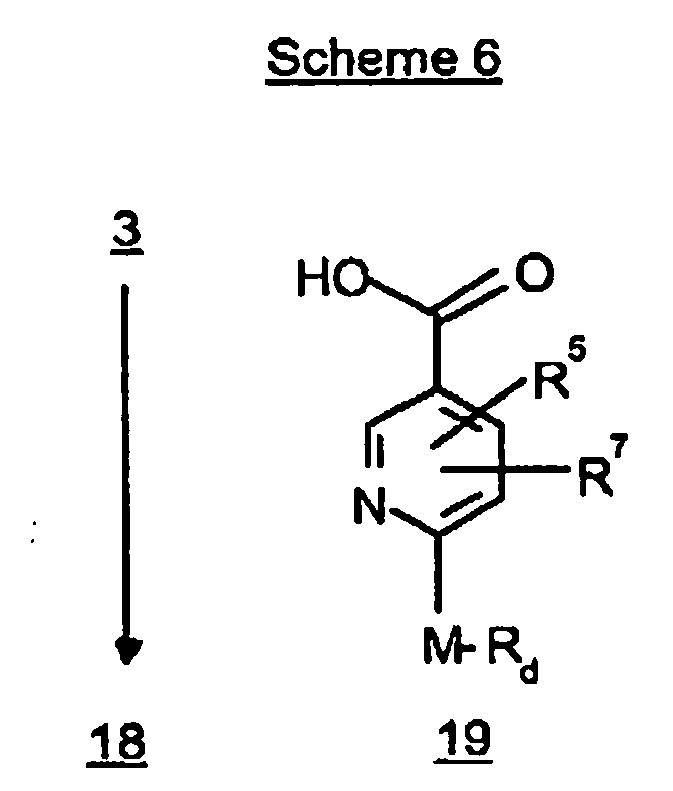
- As an alternative method for synthesis of compounds of this invention as depicted in Formula I wherein Ra, Rb, R1, R2, R5, R7 and A are as previously defined and R3 is

- The aryl carboxylic acids are activated for coupling by conversion to an acid chloride, bromide or anhydride or by first reacting with an activating reagent such as N,N-dicyclocarbodiimide, diethyl cyanophosphonate and related "peptide type" activating reagents. The method of activating the acids 20 for coupling to the azepine derivative 3 is chosen on the basis of compatibility with other substituent groups in the molecule. The method of choice is the conversion of the aryl carboxylic acid 20 to the corresponding aroyl chloride. The aryl acid chlorides 21 may be prepared by standard procedures known in the art, such as reaction with thionyl chloride, oxalyl chloride and the like. The coupling reaction is carried out in solvents such as halogenated hydrocarbons, toluene, xylene, tetrahydrofuran, dioxane in the presence of pyridine or tertiary bases such as triethylamine and the like (Scheme 7). Alternatively, the aroyl chlorides, prepared from the aryl carboxylic acids 20 may be reacted with derivatives 3 in pyridine with or without 4-(dimethylamino)pyridine to give derivatives 22.
- In general, when the aryl carboxylic acids are activated with N,N-carbonyldiimidazole and other "peptide type" activating reagents, higher temperatures are required than when the aroyl chlorides are used. The reaction may be carried out in a higher boiling solvent xylene or without a solvent (100°C to 150°C).
- The activation of aryl carboxylic by conversion to the acid chlorides with thionyl chloride or oxalyl chloride is preferred since the more reactive aroyl chlorides give better yields of product. The synthesis of selected examples is illustrated in Scheme 7.

- The synthesis of compounds of Formula I
- wherein R3 is

- the Ar group is

- R6 is

- and where Ar' is as previously defined is carried out according to Scheme 8. The azepine compounds are reacted with mono-methyl terephythalyl chloride 23 (prepared from mono-methyl terephthalate and thionyl chloride) in the presence of a tertiary base such as triethylamine in solvents such as dichloromethane, tetrahydrofuran, dioxane, toluene and the like to give derivatives 24. These ester intermediates 24 are hydrolyzed with two to ten equivalents of an alkaline hydroxide such as potassium or sodium hydroxide in aqueous methanol or ethanol to give the corresponding acids after acidification and workup. The free acids are converted to the acid chlorides with thionyl chloride and these acid chloride intermediates 25, reacted with aminoaryl derivatives of formula:
Ar'-NHRa 26
- wherein Ar' and Ra are as previously defined to give compounds 27.

- Certain of the tricyclic azepines as exemplified by compounds 35 are prepared through an initial ring closure of inter-mediate acyclic derivatives 30 followed by formation of the third ring through the use of literature procedures (Scheme 9). Ring closure of acyclic derivatives of structural type 30 wherein the nitrogen atom is pro-tected with a p-toluensulfonyl group may be ring closed to give the β-keto esters 31 which exist in the enol form as shown (structure 31). Decarboxylation gives intermediates 32 which by literature procedures are converted to the tosyl protected tricyclic azepines 35. The tosyl protecting group in the derivatives, as exemplified by tricyclic azepines 35, can be removed as described in the literature (P.P. Carpenter and M. Lennon, J. Chem. Soc. Chem. Comm; 665, 1979) for sulfonamide cleavage of benzazepine derivatives.


- Certain intermediate azepines with a fused heterocyclic ring, as exemplified by structure 44, which are useful in preparing the intermediate tricyclic azepines necessary for the synthesis of the vasopressin-oxytocin antagonists of this invention may be prepared as illustrated in Scheme 10. Standard chemical reactions and conditions are used to convert the azepinones of structural type 44 into the tricyclic azepines of formulae 47-50 (via intermediates 45 and 46).
- As shown in Scheme 10, expansion of a six-membered ring into a seven-membered lactam is carried out by reaction of the ketone derivative 36 with hydroxyl amine to give the oxime derivative which in most cases exists as a mixture of syn and anti forms (structures 37 and 38). The mixture of oximes on reaction with 4-methylbenzenesulfonyl chloride gives either a mixture of oxime O-tosylates or in some cases a single O-tosylate 39. Heating the oxime O-tosylates with potassium acetate in a alcohol-water mixture (such as ethanol-water or n-butanol-water) gives the 7-membered lactam derivatives 41. Reduction of the lactam with borane, or lithium aluminium hydride (LAH) affords the fused heterocyclic azepines 42. The azepines 42 may be converted to intermediates 43 and 44, which are useful in the preparation of the novel compound of this invention. As hereinbefore stated, the heterocyclic azepines of structural types illustrated by formulae 45-47 and 50 - 55 may be prepared by the methods exemplified in Scheme 10 or literature methods for ring closures to azepines.


- Compounds of this invention represented by the formula 59 may be prepared from the compounds represented by those of formula 58 as shown in Scheme 12. The 6-chloro, bromo or fluoro intermediate 17 is reacted with an amino derivative of the formula RaNH2 wherein Ra is as hereinbefore defined to give compounds of the formula 58. Reaction of the 6-aminonicotinoyl derivative 58 with an R26-chloride wherein R26 is defined as shown in Scheme 12 affords compounds of this invention as exemplified by formula 59.

- To a solution of 4-keto-4,5,6,7-tetrahydro-thionaphthene in 260 ml of ethanol is added 27.4 g of hydroxylamine hydrochloride. To the mixture is added 16.5 g of sodium acetate and 66 ml of water and then the mixture is refluxed for 3.5 hours; chilled in an ice bath and filtered. The solid is washed with water and ethanol to give 13 g of solid which is dried at 65°C under vacuum to give 11.7 g of crystals, m.p. 124-126°C (mainly one isomer syn or anti). The filtrate is concentrated under vacuum and extracted with 250 ml of dichloromethane. The extract is washed with 100 ml each of water, brine and then dried (Na2SO4). The solvent is removed and the solid dried at 65°C under vacuum to give 32 g of crystals, m.p. 106-109°C (mainly one isomer syn or anti).
- To a stirred solution of 12.2 g of 6,7-dihydrobenzo[b]thiophen-4(5H)-one, oxime (mixture of isomers) in 26 ml of dry pyridine is cooled to 0°C is added 15.3 g of p-toluenesulfonyl chloride (all at once). After 5 minutes, a solid separates and the mixture is stirred at 0°C for 1 hour. To the cold mixture is added 195 ml or 2N HCl and the mixture filtered to give a solid which is washed with water and dried (under vacuum) to give 21.5 g of product as crystals, m.p. 117°-120°C.
- A mixture of 21.45 g of 6,7-dihydrobenzo-[b]thiophen-4(5H)-one, oxime-O-tosylate, 136.1 g of potassium acetate, 528 ml of ethanol and 904 ml of water is refluxed for 22 hours. The mixture is concentrated under vacuum (to remove ethanol), chilled and filtered to give a solid. The solid is washed with water, dried (in air) and recrystallized by dissolving in hot ethyl acetate and diluting the solution with hexane. Chilling and filtering gives 7.1 g of crystals, m.p. 128°-132°C.
-
- (1) To a mixture of 4.54 g of lithium aluminum hydride in 400 ml of dry tetrahydrofuran under argon is added dropwise a solution of 10.0 g of 5,6,7,8-tetrahydro-4H-thieno[3,2-b]azepin-5-one in 200 ml of tetrahydrofuran. After the addition, the mixture is heated at 45°-50°C (exothermic reaction), and cooled to room temperature. The mixture is chilled in an ice bath (0°C) and 4.5 ml of water added dropwise over 1 hour, followed by the dropwise addition of 4.5 ml of 2N sodium hydroxide and the dropwise addition of 14 ml of water. The mixture is filtered through diatomaceous earth and the filter cake washed with tetrahydrofuran. The filtrate is concentrated to give a solid. The solid is crystallized from hexane to give 5.5 g of off-white crystals, m.p. 66-68°C.
- (2) To a mixture of 21.2 g of 5,6,7,8-tetrahydro-4H-thieno[3,2-b]azepin-5-one in 100 ml of tetrahydrofuran under argon, chilled to 0°C is added 25.2 ml of a 10.0 molar solution of borane-dimethylsulfide in tetrahydrofuran. The solution is stirred at room temperature for 16 hours and is refluxed for 5 hours. The mixture is cooled to room temperature and 85 ml of methanol added dropwise (exotherm). The solvent is removed and 100 ml of methanol is added (2 times) and after each addition the solvent is removed. To the residual solid (dried under vacuum) is added 126 ml of 2N NaOH and the mixture refluxed 3 hours. The mixture is chilled (2 hours) and extracted with dichloromethane. The extract is dried (Na2SO4) and the solvent removed to give 15.4 g of brown solid, m.p. 55°-57°C. A sample (3 g) is sublimed to give 2.6 g of crystals, m.p. 64°-65°C.
- To a solution of 10.71 g of 5,6,7,8-tetrahydro-4H-thieno[3,2-b]azepine and 19.4 ml of triethylamine in 150 ml of dichloromethane under argon is added in small portions 4-nitrobenzoyl chloride (exothermic). The mixture is stirred for 3 hours at 25°C and then washed with water, sodium bicarbonate solution, brine and dried (Na2SO4). The solvent is removed, the residue dried under vacuum and recrystallized by dissolving in hot ethyl acetate and diluting with hexane. Chilling overnight and filtering gives 16 g of light brown crystals, m.p. 141°-142°C.
- To a solution of 9.0 g of 4-(4-nitrobenzoyl)-5,6,7.8-tetrahydro-4H-thieno[3,2-b]azepine in 713 ml cf acetone is added 6.74 g of MgSO4 and 351 ml of water followed by 8.2 g of KMnO4 and heating at 70°C for 18 hours. Another 6.24 g of MgSO4 and 8.2 g of KMnO4 is added and heating continued at 70°C for 8 hours. An additional 6.24 g of MgSO4 and 8.2 g of KMnO4 is added and heating continued at 70°C for 18 hours. The reaction mixture is filtered through diatomaceous earth and the cake washed with acetone and 500 ml of methylene chloride. The combined filtrates are evaporated in vacuo to a residue which is washed with water and air dried to give 5.7 g of a solid. The solid is crystallized from ethyl acetate to give 5.1 g of off white solid, m.p. 184-186°C.
- To a mixture of 2.0 g of 4-(4-nitrobenzoyl)-4,5,6,7-tetrahydro-8H-thieno[3,2-b]azepin-8-one in 40 ml of glacial acetic acid is added 20 ml of 6N-hydrochloric acid. The mixture is cooled and 3.53 g of iron powder added in portions. The mixture is allowed to warm to room temperature and is heated at 70-80°C for 1 hour and then cooled to 0°C. To mixture is basified with 10N NaOH (pH 14) and extracted with 200 ml of ethyl acetate. The aqueous layer is again extracted with 200 ml of ethyl acetate and the extracts combined. The combined extract is washed with 100 ml each of H2O and brine and dried (Na2SO4). The extract is filtered through a thin pad of hydrous magnesium silicate and the filtrate concentrated to give a solid which is crystallized from ethyl acetate-hexane to give 1.24 g of crystals, m.p. 216-218°C.
- A solution of 6.04 g of 4-(4-nitrobenzoyl)-5,6,7,8-tetrahydro-4H-thieno[3,2-b]azepine in 40 ml of tetrahydrofuran is cooled to 0°C and 5.34 g of N-chlorosuccinimide added in portions. After the addition, the mixture is heated at 70°C overnight. The mixture is concentrated, diluted with 300 ml of dichloromethane and the mixture washed with 100 ml each of saturated K2CO3 solution, H2O, 1N HCl and brine. The organic layer is dried (Na2SO4) and filtered through a thin pad of hydrous magnesium silicate. The filtrate is concentrated and the residue chromatographed by HPLC on silica gel (2-columns) with a Waters-Prep-500 instrument and the solvent system ethyl acetate-dichloromethane (1:1) containing 2% diethylether. The middle cuts are combined and concentrated to give 0.135 g of 2,3-dichloro-4-(4-nitrobenzoyl)-5,6,7,8-tetrahydro-4H-thieno-[3,2-b]azepine, m.p. 140°-142°C. The latter cuts are combined, concentrated and the residue crystallized from ethyl acetate-hexane to give 2.8 g of crystals, 119°-120°C.
- To a stirred solution of 0.336 g of 2-chloro-4-(4-nitrobenzoyl)-4,5,6,7-tetrahydro-4H-thieno[3,2-blazepine in 36 ml of acetone-water (2:1) is added 0.21 g of anhydrous magnesium sulfate and 0.275 g of potassium permanganate. The mixture is heated at 70°C overnight. An additional 0.275 g of potassium permanganate and 0.21 g of magnesium sulfate is added and the mixture heated at 70°C for 6 hours. An additional 0.275 g of potassium permanganate and 0.21 g of magnesium sulfate is added and the mixture stirred and heated at 70°C for 24 hours. The hot mixture is filtered and the filtrate evaporated. The residue is heated in a few ml of ethyl acetate, cooled and filtered to give 0.20 g of product as a solid. The reaction is repeated on 10 times the scale to give 1.3 g of off-white crystals, m.p. 165°-168°C.
- A 0.876 g sample of 60% sodium hydride in oil is washed with hexane followed by the addition of 60.ml of dry N,N-dimethylformamide. The reaction mixture is stirred for 1 hour under argon at room temperature after the addition of 4.73 g of α-(2-chlorophenyl)-4-morpholineacetonitrile. To the reaction mixture is added 4.58 g of methyl 4-(bromomethyl)benzoate and stirring continued for 3 hours. Several drops of acetic acid is added to ice water and the reaction quenched. The pH is 3-4 and saturated NaHCO3 added to adjust the pH to 6-7. Upon cooling a solid forms which is filtered, washed with water and dried to give 5.92 g of yellow solid. Crystallization from methylene chloride-hexane gives 2.10 g of the desired product as a crystalline solid, m.p. 116-118°C.
- A mixture of 1.0 g of methyl [4-(2-chlorophenyl)-2-cyano-2-(4-morpholinyl)ethyl]benzoate and 14 ml of acetic acid and 6 ml of water is heated at reflux for 20 minutes then poured over crushed ice. After stirring for 15 minutes, the resulting solid is collected, washed with water and air dried to give 0.63 c of tan solid, m.p. 40-42°C.
- A mixture of 18.78 g of methyl 4-[2-(2-chlorophenyl)-2-oxoethyl]benzoate in 288.8 ml of CH3OH, 72.2 ml of water and 5.2 g of NaOH is refluxed for 3 hours then acidified with 2 N citric acid. The reaction mixture is evaporated in vacuo to remove the CH3OH. The aqueous phase is extracted with CH2Cl2 and acidified with 1 N HCl. The resulting solid is collected and dried under vacuum to give 17.27 g of the desired product, m.p. 168-172°C.
- To a solution of 2.11 g of 4-oxo-4,5,6,7-tetrahydrobenzo[b]furan-3-carboxylic acid in 100 ml of methanol is added 202 mg of p-toluenesulfonic acid hydrate and the mixture heated at reflux for 24 hours. The reaction mixture is cooled to room temperature and the methanol concentrated in vacuo to a residue. The residue is dissolved in 100 ml of ethyl acetate and washed with 30 ml of saturated sodium bicarbonate and 30 ml of brine. The organic layer is dried with Na2SO4, filtered and the filtrate concentrated in vacuo to a residue which is crystallized from ethyl acetate-hexane to give 1.75 g of the desired product as a white crystalline solid, m.p. 100-102°c.
- To a mixture of 1.0 g of methyl 4,5,6,7-tetrahydro-4-oxo-3-benzofurancarboxylate and 502 mg of sodium azide in 5 ml of chloroform is added dropwise at 32-36°C under argon 1.4 ml of sulfuric acid. The reaction mixture is stirred at room temperature for 24 hours. The reaction mixture is diluted with 14 ml of water and rendered alkaline with NH4OH and extracted with chloroform. The separated organic layer is washed with water, brine and dried with Na2SO4 and concentrated in vacuo to give 1.0 g of the desired product as a white solid.
- To a partial solution of 2.8 g of (E)-4,5,6,7-tetrahydro-4-(hydroxyimino)-3-benzofurancarboxylic acid in 7 ml of pyridine is added portionwise at 0°C, 3.01 g of p-toluene sulfonyl chloride under argon. The mixture is stirred for 1 hour then diluted with 40 ml of cold 1 N HCl, filtered, washed with water and dried with Na2SO4. The filtrate is concentrated in vacuo to give 4.78 g of the desired product as an off-white solid, m.p. 155-165°C.
- A mixture of 1.0 g of (E)-4,5,6,7-tetrahydro-4-[[[(4-methylphenyl)sulfonyl]oxy]imino]-3-benzofuran-carboxylic acid, 5.9 g of potassium acetate, 23 ml of ethanol and 39 ml of water is heated at reflux for 48 hours. The reaction mixture is concentrated in vacuo, 80 ml of methylene chloride added and the separated organic layer washed with water, brine and dried with Na2SO4. The organic layer is concentrated in vacuo to a solid which is purified by chromatography on a preparative silica gel plate by elution with 0.5% acetic acid in ethyl acetate. The eluted band is washed with 1% acetic acid in ethyl acetate. The organic layer is dried with Na2SO4 and concentrated in vacuo to give 200 mg of off-white solid which is crystallized from ethyl acetate-hexane to give 165 mg of the desired product as a white solid.
- To a solution of 30.0 g of 4,5,6,7-tetrahydro-4-oxo-3-benzofurancarboxylic acid in 225 ml of ethanol is added 22.97 g of hydroxylamine hydrochloride, followed by 18.10 g of sodium acetate and 55 ml of water. The reaction mixture is heated at reflux for 2.5 hours and concentrated in vacuo to a residue which is diluted with 600 ml of ethyl acetate, washed with 2 x 200 ml of water, brine and dried over Na2SO4. The organic layer is concentrated in vacuo to a residue which is dried under vacuum to give 31.0 g of the desired product as a solid.
- To a partial solution of 28.0 g of (E) and (Z)-4,5,6,7-tetrahydro-4-(hydroxyimino)benzofuran in 54 ml of pyridine is added portionwise at 0°C, 38.8 g of p-toluene sulfonyl chloride under argon. The mixture is stirred for 1 hour then diluted with 600 ml of ethyl acetate and 400 ml of cold 2 N HCl. The organic layer is washed with 200 ml of water and 200 ml of brine, and dried with Na2SO4. The filtrate is concentrated in vacuo to give 50 g of the desired product as a solid. Crystallization from ethyl alcohol by allowing to stand at room temperature gives 19.9 g of off-white needles, m.p. 123-125°C. The filtrate is allowed to stand and the crystals collected and dried to give 10.0 g of the desired product as an off-white solid, 83-85°C.
- To a solution of 15.0 g of 5,6,7,8-tetrahydro-4H-thieno[3,2-b]azepine in 150 ml of dichloromethane cooled to 0°C is added 27.2 ml of triethylamine. After stirring 5 minutes, a solution of 28.0 g of 2-chloro-4-nitrobenzoyl chloride in 140 ml of dichloromethane is added slowly. The solution is stirred at room temperature overnight, diluted with 450 ml of dichloromethane and the solution washed with 200 ml each of water, 2N citric acid, 1 M sodium bicarbonate and brine. The organic layer is dried over Na2SO4, filtered through a thin pad of hydrated magnesium silicate and the filtrate concentrated under vacuum. The residue is crystallized from ethyl acetate to give 24.3 g of off-white crystals, m.p. 131-134°C.
- To a solution of 2.02 g of 4-(2-chloro-4-nitrobenzoyl)-4,5,6,7,8-tetrahydro-4H-thieno[3,2-b]-azepine in 144 ml of acetone is added 1.56 g of magnesium sulfate, 72 ml of water and 1.89 g of potassium permanganate. The mixture is stirred and heated at 70-75°C for 4 hours. An additional amount of magnesium sulfate (1.56 g) and potassium permanganate (1.89 g) is added and the mixture stirred and heated at 75°C for 16 hours. Magnesium sulfate (1.56 g) and potassium permanganate (1.89 g) are added and the mixture stirred and heated at 75°C for 5 hours. The mixture is filtered through diatomaceous earth and the filter cake washed with acetone and dichloromethane The filtrate is concentrated and the residue (1.4 g) is heated with ethyl acetate, the mixture (with insoluble solid) cooled and filtered to give 1.0 g of product as a solid. The solid is washed with water and dried to give crystals, m.p. 180°-185°C.
- A mixture of 8.0 g of 5-fluoro-2-methylbenzoic acid and 52 ml of thionyl chloride is heated on a steam bath for 1 hour. The volatiles are removed under vacuum and two times 50 ml of toluene is added and the solvent removed under vacuum to give 8.5 g of product as a gum.
- A mixture of 2.03 g of 2-chloro-5-(methylthio)benzoic acid and 10 ml of thionyl chloride is heated on a steam bath for 1 hour. The volatiles are removed under vacuum and 20 ml of toluene added and removed under vacuum (2 times) to give 2.2 g of brown needles.
- As described for Reference Example 21, 25 g of 2-chloro-4-nitrobenzoic acid is reacted with thionyl chloride (124 ml) to give the product (27.0 g) as a brown oil.
- As described for Reference Example 21, 5.0 g of 2-chloro-5-nitrobenzoic acid is reacted with 50 ml of thionyl chloride to give 5.6 g of the product as an off-white solid.
- As described for Reference Example 21, 3.0 g of 2,3-dimethylbenzoic acid is reacted with 40 ml of thionyl chloride to give 3.2 g of the product as a colorless oil.
- As described for Reference Example 21, 3.13 g of 2-chlorobenzoic acid is reacted with 40 ml of thionyl chloride to give 3.32 of product as an off-white semi solid.
- A mixture of 43.42 g (0.26 mol) of ethyl 4-aminobenzoate and 40.8 g (0.26 mol) of 2-methylbenzoyl chloride in 150 ml of dichloromethane is cooled in an ice bath and 26.56 g (0.26 mol) of triethylamine is added dropwise. After the addition, the solution is stirred at room temperature overnight. The mixture is poured into water and the organic layer separated. The organic layer is washed with water, 1 N HCl, 1 M NaHCO3 and dried (Na2SO4). The solvent is removed and the solid slurried with ethyl acetate and filtered to give 57 g of ethyl 4-[(2-methylbenzoyl)amino]benzoate as crystals, m.p. 110-115°C.
- A mixture of 50.7 g (0.20 mol) of the preceding compound, 280 ml of ethanol and 55 ml of 10 N NaOH is refluxed for 5 minutes. The mixture is cooled to room temperature, diluted with 200 ml of water and acidified with concentrated hydrochloric acid (pH 1-2). The mixture is filtered and the solid washed with water and dried to give 51 g of product as white crystals, m.p. 270-275°C.
- A mixture of 10.3 g of 4-[(2-methylbenzoyl)-amino]benzoic acid and 32 ml of thionyl chloride is refluxed for 1.5 hours. The solution is concentrated under vacuum. Toluene is added and the solvent removed under vacuum. Toluene is added and the mixture chilled and filtered to give a yellow solid, m.p. 135-141°C.
- A mixture of 2 g (10 mmol) of 2,6-dimethoxybenzoyl chloride, 1.65 g (10 mmol) of ethyl 4-aminobenzoate, 1.11 g of triethylamine and 61 mg of 4-dimethylaminopyridine in 10 ml of dichloromethane is refluxed for 20 hours. The mixture is diluted with water and the organic layer separated. The organic layer is washed with water, 1 N HCl, 1 N Na2CO3, brine and dried (Na2SO4). The solvent is removed to give a solid which is crystallized from ethyl acetate to give 1.22 g of ethyl 4-[(2,6-dimethoxybenzoyl)amino]benzoate as crystals, m.p. 183-185°C.
- A mixture of 3.88 g (11.79 mmol) of the preceding compound, 17.3 ml of 2 N NaOH and 20 ml of methanol is stirred at room temperature overnight. Methanol (30 ml) and water (10 ml) are added and the solution refluxed for 1/2 hour. The solvents are removed under vacuum and the residual solid triturated with ether and the ether decanted. The solid is dissolved in 30 ml of water and acidified with 2 N HCl (pH 3). The mixture is filtered, the solid washed with water and dried at 60°C under vacuum to give 3.0 g of solid, m.p. 236-240°C.
- To a cooled mixture of 1.78 g (0.01 mol) of isoniconinoyl chloride hydrochloride in 5 ml of dichloromethane is added 2.52 g (0.025 mol) of triethylamine. To the solution is added a solution of 1.65 g of ethyl 4-aminobenzoate in 5 ml of dichloromethane. After stirring at room temperature overnight, 50 mg of 4-dimethylaminopyridine is added and the mixture is refluxed for 24 hours. The mixture is poured into water and filtered to give 3.4 g of brown solid. A 0.50 g sample is triturated with ethyl acetate to give 0.37 g of ethyl 4-[(4-pyridinylcarbonyl)amino]benzoate as yellow crystals, m.p. 143-145°C.
- A mixture of 4.0 g of methyl-2-methylfurane-3-carboxylate, 30 ml of 2 N NaOH and 15 ml methanol is refluxed for 1.5 hours. The solvent is removed under vacuum to give a solid. The solid is extracted with dichloromethane (discarded). The solid is dissolved in water and the solution acidified with 2 N citric acid to give a solid. The solid is washed with water and dried to give crystals 1.05 g of crystals of 2-methylfuran-3-carboxylic acid. The preceding compound (0.95 g) and 3 ml of thionyl chloride is refluxed for 1 hour. The solvent is removed, toluene added (20 ml, three times) and the solvent removed to give the product as an oil.
- A sample of 1.51 g of sodium hydride (60% in oil) is washed with hexane under argon to remove the oil. To the washed sodium hydride is added 5 ml of N,N-dimethylformamide. To this mixture is added dropwise a solution of 8.69 g of ethyl 4-[(2-methylbenzoyl)amino]-benzoate in 20 ml of dimethylformamide. The mixture is stirred at room temperature for 0.5 hour and then 5.23 g of methyl iodide is added. The mixture is stirred at room temperature for 16 hours. The mixture is diluted with water and extracted with dichloromethane. The extract is dried (Na2SO4), concentrated to reduce the volume and the solution filtered through a thin pad of hydrous magnesium silicate. The filtrate is concentrated in vacuo to give 11 g of an oil (1:1 mixture of product and N,N-dimethylformamide). The preceding product, ethyl 4-[N-methyl-N-(2-methylbenzoyl)amino]-benzoate, (11 g) is dissolved in 30 ml of methanol and 25 ml of 2 N NaOH added. The mixture is refluxed for 2 hours and the solvent removed. The residue is extracted with ether (discard) and the remaining residue dissolved in 50 ml of water. The basic solution is acidified with 2 N citric acid and the solid filtered off and washed with water. The product is air dried to give 6.72 g of crystals, m.p. 187-190°C.
- A solution of 6.72 g of 4-[N-methyl-N-(2-methylbenzoyl)amino]benzoic acid in 20 ml of thionyl chloride is refluxed for one hour. The volatiles are removed in vacuo. Toluene is added to the residue and then the toluene removed in vacuo (repeated several times) to give the 7.3 g of product as a brown oil.
- As described for Reference Example 32, but substituting the appropriate ethyl 4-[(N-aroyl)amino]-benzoate, the following compounds are prepared.
- A mixture of 57.93 g of 3-amino-2-cyclohexene-1-one, 76.8 g of 3-(dimethylamino)acrotein, 62.5 ml of glacial acetic acid and 270 ml of toluene is refluxed under argon for 16 hours and concentrated under vacuum to dryness. Toluene (200 ml) is added and the solvent removed under vacuum. To the residue is added one liter of dichloromethane and then 200 ml of saturated NaHCO3 slowly added and solid NaHCO3 added to bring the pH to 8. The mixture is filtered and the CH2Cl2 layer separated. The CH2Cl2 layer is passed through a thin pad of hydrous magnesium silicate and the filtrate concentrated to dryness. The residual black oil is extracted with hot hexane and the hexane decanted. This process is repeated until no more product extracted into the hexane. The hexane extracts are combined and the solvent removed to give 17.3 g of product as an oil.
- To a solution of 3.78 g of 7,8-dihydro-5(6H)quinolone in 20 ml of ethanol is added 2.68 g of hydroxylamine, hydrochloride, 3.23 g of sodium acetate and 5 ml of water. The mixture is refluxed under argon for 4.5 hours, cooled and filtered. The solid is washed with 30 ml of ethanol-water (1:1) and dried under vacuum to give 3.58 g of solid, m.p. 232-236°C. Recrystallization from ethanol gives crystals, m.p. 234-236°C.
- To a mixture of 2.30 g of 7,8-dihydro-5(6H)-quinolinone, oxime, 3.59 g of 4-methylphenylsulfonyl chloride in 32 ml of acetone is added a solution of 0.84 g of potassium hydroxide in 10 ml of water. The mixture is refluxed for 0.5 hour under argon and the volatiles removed under vacuum. Water is added to the residue and the mixture is filtered and the solid washed with water and 1 N NaHCO3. The solid is dissolved in dichloromethane, dried and the solvent removed to give 3.83 g of solid. Recrystallization from diethyl ether gives crystals, m.p. 102-104°C.
- A mixture of 8.26 g of 7,8-dihydro-5(6H)-quinolinone, O-[(4-methylphenyl)sulfonyl]oxime, 54.63 g of potassium acetate, 193 ml of ethanol and 354 ml of water is refluxed for 20 hours. The mixture is concentrated under vacuum to remove volatiles and the aqueous residue (contains solid) is added chloroform. The mixture is filtered through diatomaceous earth, the filter pad washed with chloroform and the filtrate concentrated to dryness. The residual solid is recrystallized from acetone to give 2.81 g of crystals, m.p. 156-159°C.
- A mixture of 1.56 g of 5,7,8,9-tetrahydro-6H-pyrido[3,2-b]azepine-6-one, 3.31 g of lithium aluminum hydride in 40 ml of tetrahydrofuran is refluxed for 4 hours. The mixture is cooled (0°C) and 25 ml of methanol is added dropwise. The mixture is filtered through diatomaceous earth, the filter cake washed with tetrahydrofuran and the filtrate concentrated to dryness under vacuum. Water (50 ml) is added to the residue and the mixture extracted with diethyl ether. The extract is dried (Na2SO4) and filtered through a thin pad of hydrous magnesium silicate (pad washed with) diethyl ether. The filtrate is concentrated under vacuum to give 1.01 g of crystals, m.p. 70-71°C.
- To a mixture of 2.90 g of 6,7,8,9-tetrahydro-5H-pyrido[3,2-b]azepine, 2.37 g of triethylamine in 40. ml of dichloromethane is added 5.16 g of 2-chloro-4-nitrobenzoyl chloride in 50 ml of dichloromethane. The mixture is stirred at room temperature under argon for 3 hours and then poured into water. The organic layer is separated and washed with 1 N NaHCO3, H2O, brine and dried (Na2SO4). The solution is filtered through a thin pad of hydrous magnesium silicate, the pad washed with CH2Cl2 and ethyl acetate and the filtrate concentrated to dryness. The residual solid (7.13 g) is triturated with ethyl acetate to give 4.41 g of off-white crystals, m.p. 143-145°C.
- A mixture of 3.31 g of 6,7,8,9-tetrahydro-5-(2-chloro-4-nitrobenzoyl)-5H-pyrido[3,2-b]azepine and 6.78 g of stannus chloride dihydrate (SnCl2.2H2O) in 200 ml of methanol is refluxed for 2 hours under argon. The solvent is removed under vacuum and 5 ml of saturated NaHCO3 solution and solid NaHCO3 added to bring the pH to 7. The mixture is extracted with ethyl acetate, the extract filtered through diatomaceous earth and the filtrate washed with saturated NaHCO3, H2O, brine and dried (Na2SO4). The filtrate is passed through a thin pad of hydrous magnesium silicate and the filtrate concentrated to dryness to give 2.58 g of an amorphous solid. Anal. Calc'd for C16H16ClN3O; C, 59.9; H,5.7;
N,13.1; Cl, 11.1 Found:
C, 60.5; H, 5.0; N,12.9;
Cl, 11.6. - Dry methanol (400 ml) is cooled in an ice bath and HC1 gas is bubbled into the mixture for 25 minutes. To the MeOH-HC1 is added 30 g of 6-aminopyridine-3-carboxylic acid and then the mixture is stirred and heated at 90°C for 2 hours (all the solid dissolved). The solvent is removed under vacuum and the residual solid dissolved in 100 ml of water. The acidic solution is neutralized with saturated sodium bicarbonate (solid separated) and the mixture chilled and filtered to give 30 g of white crystals, m.p. 150°-154°C.
- To a mixture of 4.5 g of methyl 6-aminopyridine-3-carboxylate and 5.53 ml of triethylamine in 40 ml of dichloromethane (cooled in an ice bath) is added 6.38 g of 5-fluoro-2-methylbenzoyl chloride in 10 ml of dichloromethane. The mixture is stirred at room temperature under argon for 18 hours and an additional 3.4 g of 5-fluoro-2-methylbenzoyl chloride added. After stirring at room temperature for 3 hours, the mixture is filtered to give 3.0 g of methyl 6-[[bis(5-fluoro-2-methylbenzoyl)]amino]pyridine-3-carboxylate. The filtrate is concentrated to dryness and the residue triturated with hexane and ethyl acette to give an additional 9.0 g of bis acylated compound.
- A mixture of 12.0 g of methyl 6-[[bis(5-fluoro-2-methylbenzoyl)]amino]pyridine-3-carboxylate, 60 ml of methanol-tetrahydrofuran (1:1) and 23 ml of 5 N NaOH is stirred at room temperature for 16 hours. The mixture is concentrated under vacuum, diluted with 25 ml of water, cooled and acidified with 1 N HCl. The mixture is filtered and the solid washed with water to give 6.3 g of the product as a white solid.
- As described for Reference Example 71, but substituting the appropriate aroyl chloride, heteroaroyl chloride, cycloalkanoyl chlorides, phenylacetylchlorides and related appropriate acid chlorides, the following 6-[(aroylamino]pyridine-3-carboxylic acids, 6-[(heteroaroyl)amino]pyridine-3-carboxylic acids and related 6-[(acylated)amino]pyridine-3-carboxylic acids are prepared.
- A mixture of 6.2 g of 6-[(5-fluoro-2-methylbenzoyl)amino]pyridine-3-carboxylic acid and 23 ml of thionyl chloride is refluxed for 1 hour. An additional 12 ml of thionyl chloride is added and the mixture refluxed for 0.5 hour. The mixture is concentrated to dryness under vacuum and 30 ml of toluene added to the residue. The toluene is removed under vacuum and the process (add toluene and remove) is repeated to give 7.7 g of crude product as a solid.
- As described for Reference Example 118, the following 6-(acyl)amino)pyridine-3-carbonyl chlorides are prepared.
- As described for Reference Example 71, the following bis acylated products (Table A) are prepared and purified by silica gel chromatography. These compounds are then hydrolysed to the acids as described in Example 71 (Table B).
Table A 
Ref. Ex No. R1 R2 R3 R4 X M+ 166 CH3 H H H H 388 167 CH3 H H F H 424 168 CH3 F H H H 426 169 H OCH3 OCH3 OCH3 H 540 170 Cl H H H H 430 171 F H F H H 396 172 Br H H H H 520 173 Cl H F H H 412 174 Ph H Ph H H 512 175 Cl H H Br H 474 176 CH3 H H F Br 177 CH3 H H H Br 468 M+ is molecular ion found from FAB mass spectrum Table B 
Ref. Ex No. R1 R2 R3 R4 X M+ 178 CH3 H H H H 256 179 CH3 H H F H 274 180 CH3 F H H H 274 181 H OCH3 OCH3 OCH3 H 332 182 Cl H H H H 276 183 F H F H H 278 184 Br H H H H 322 185 Cl H F H H 294 186 Ph H H H H 318 187 Cl H H Br H 356 188 CH3 H H F Cl 189 CH3 H H H Br 336 M+ is molecular ion found from FAB mass spectrum. - To a stirred solution of 6-aminonicotinic acid (13.8 g, 0.1 mole) in glacial acetic acid (100 ml), bromine (16 g, 5 ml, 0.1 mole) in acetic acid (20 ml) is added slowly. The reaction mixture is stirred for 8 hours at room temperature and the acetic acid is removed under reduced pressure. The yellow solid residue is dissolved in water and carefully neutralized with 30% NH4OH. The separated solid is filtered and washed with water to give 18 g of solid; mass spectrum: 218 (M+).
- 6-Amino-5-bromopyridine-3-carboxylic acid (10 g, 50 mmol) is dissolved in saturated methanolic HCl (100 ml) and refluxed for 24 hours. The solvent, methanol, is re-moved under reduced pressure and the residue is dissolved in ice cold water. The aqueous solution is neutralized with 0.1 N NaOH and the solid which separates is filtered; washed well with water and air dried to yield 10 g of product as a solid: mass spectrum 231 (M+).
- To a cooled (0°C) mixture of 5.0 g methyl 6-aminopyridine-3-carboxylate, 12.6 ml of N,N-diisopropylethylamine in 40 ml of dichloromethane is added a solution of 12.2 g of 2-methylbenzeneacetyl chloride in 10 ml of dichloromethane. The mixture is stirred under argon at room temperature overnight. The mixture is diluted with 200 ml of dichloromethane and 50 ml of water and the organic layer separated. The organic layer is washed with 50 ml each of 1 M NaHCO3, brine and dried (Na2SO4). The solution is filtered through a thin pad of hydrous magnesium silicate and the filtrate concentrated to dryness. The residue (9.0 g) is chromatographed on a silica gel column with hexane-ethyl acetate (3:1) as eluent to give 8.6 g of solid. This solid, mainly methyl 6-[[bis(2-methylbenzeneacetyl)]-amino]pyridine-3-carboxylate, is dissolved in 60 ml of tetrahydrofuran-methanol (1:1) and 23 ml of 5 N NaOH added to the solution. The mixture is stirred at room temperature overnight and the mixture concentrated under vacuum. Water (25 ml) is added and the mixture is stirred and acidified with cold 1 N HCl. The mixture is chilled and the solid filtered and washed with water to give 5.9 g of off-white solid.
- A mixture of 4.5 g of 6-[(2-methylbenzeneacetyl)amino]pyridine-3-carboxylic acid and 25 ml of thionyl chloride is refluxed for 1 hour and then concentrated to dryness under vacuum. To the residue is added 20 ml of toluene and the solvent removed under vacuum. The addition and removal of toluene is repeated and the residual solid dried at room temperature under vacuum to give 5.3 g of dark brown solid.
- A mixture of methyl 2-iodobenzoate (12 g, 47 mmol), 2-pyridinyl-tri-n-butyl stannane (20 g, 55 mmol) and tetrakis (triphenyl phosphine) palladium (0) (2 g), is refluxed in toluene (degassed) for 48 hours. The reaction mixture is concentrated under vacuum and the residue is chromatographed on a column of silica gel with 50% ethylacetate:hexane as eluent. The initial fractions (2 lits) are discarded and finally the product methyl 2-(2-pyridinyl)benzoate, is eluted and isolated as an oil. (Yield: 5.5 g): mass spectrum, 213 (M+)
- A mixture of the preceding compound (3.0 g, 14 mmol) and NaOH (600 mg, 15 mmol) is refluxed in MeOH:water (9:1) (50 ml) for 4 hours. When the reaction is complete, it is concentrated under vacuum and the residue dissolved in 50 ml of cold water. Neutralization with glacial.acetic acid affords a solid which is filtered off and washed with water to give 2.5 g of brown solid; slightly soluble in water; mass spectrum (CI) 200 (M+1).
- A mixture of 13.4 g of ethyl 2-[(4-methylphenylsulfonyl)amino]pyridine-3-carboxylate, 23.1 g of anhydrous potassium carbonate and 20.4 g of ethyl 3-bromobutane-1-carboxylate in 300 ml of N,N-dimethylformamide is heated at 110°C under argon for 6 hours. The mixture is concentrated to dryness under high vacuum and to the residue is added CH2Cl2 and H2O. The organic layer is separated and washed with water (3 times), treated with activated carbon and dried (MgSO4). The solvent is removed and the residue chromatographed on a short column of silica gel. The column is eluted with 1900 ml of CH2Cl2, then 1300 ml of CH2Cl2 and finally with 4 L of 5% ethyl acetate in CH2Cl2. The 5% ethyl acetate in CH2Cl2 fractions are combined and the combined fraction dried (MgSO4) and the solvent removed to give 16.9 g of white crystals. A 0.5 g sample is recrystallized from toluene to give white crystals (washed with hexane) (0.39 g) m.p. 129.5-130°C.
- To a solution of 7.85 g (70.0 mmol) of potassium tert-butoxide in 150 ml of tetrahydrofuran, chilled in an ice bath, is added 15.2 g (35.0.mmol) of ethyl 3-[N-(3-carbethoxy-2-pyridinyl)-N-(4-methylphenylsulfonyl)]aminobutane-1-carboxylate in 150 ml of dry tetrahydrofuran dropwise over 50 min. The mixture is stirred in an ice bath for 5 hours and poured in 500 ml of ice water. The mixture is brought to pH 5 with 10% HCl and extracted with ethyl acetate (4 times). The extract is dried (MgS04) and the solvent removed under vacuum. The residue is chromatographed on silica gel with 10% ethyl acetate in CH2Cl2 as eluent. Fractions containing product are combined and the solvent removed to give 12.8 g of a pale yellow gum; Mass Spectrum (FAB) 389 (M+H); 411 (M+Na).
- A mixture of 13.2 g of ethyl 8,9-dihydro-5-hydroxy-9-[(4-methylphenylsulfonyl]-7H-pyrido[2,3-b]-azepine-6-carboxylate, 265 ml of dimethylsulfoxide and 1.52 ml of water under argon is heated at 150°C 16.5 hours. The mixture is poured into 2700 ml of ice water and the mixture chilled 16 hours. The mixture is filtered and the solid washed with water and dried. The tan solid is dissolved in ethyl acetate and the solution washed with 50 ml (4 times) of water. Activated carbon is added to the solution and the mixture filtered through magnesium sulfate. The filtrate is concentrated to dryness under vacuum to give 10.4 g of solid. The solid (9.24 g) is filtered through silica gel with 5% ethyl acetate in dichloromethane as solvent. The filtrate is concentrated under vacuum to give 6.7 g of off-white solid; Mass Spectrum (CI) (M++H) 317.
- To a solution of 0.497 g of 6,7,8,9-tetrahydro-5-(2-chloro-4-nitrobenzoyl)-5H-pyrido[3,2-b]azepine in 7 ml of chloroform is added 1.04 g of 3-chloroperbenzoic acid. The mixture is refluxed overnight and the solvent removed under vacuum. To the residue is added 100 ml of water and the mixture extracted with dichloromethane. The extract is washed with H2O, 1 N NaHC03, H2O and dried (Na2SO4). The solution is filtered through a thin pad of hydrous magnesium silicate. The filter pad is washed with 10% methanol in ethyl acetate to give 0.49 g of product as a glass (foam), m.p. 110-125°C.
- A solution of 5.00 g of 6,7,8,9-tetrahydro-9-[(4-methylphenyl)sulfonyl]-5H-pyrido[2,3-b]azepin-5-one in 60 ml of 40% (v/v) sulfuric acid in acetic acid is heated at 60°C for 11 hours. The mixture is chilled and poured into 350 ml of ice water (cooled in an ice bath) with thorough stirring. To the cold mixture is added solid NaOH until the pH is 8 while keeping the temperature below 30°C. The mixture is filtered and the solid washed with ethyl acetate. The organic layer of the filtrate is separated and the aqueous layer extracted with ethyl acetate. The organic layer and extracts are combined and treated with activated carbon. The mixture is filtered through MgSO4 and the solvent removed under vacuum to give 2.0 g of yellow crystals.
- To a solution of 6,7,8,9-tetrahydro-5H-pyrido[2,3-b]azepin-5-one and 0.234 g of triethylamine in 6 ml of dichloromethane is added 0.506 g of 2-chloro-4-nitrobenzoyl chloride in 2 ml of dichloromethane. The mixture is stirred at room temperature overnight under argon. The solution is washed with H2O, 10% NaHCO3 and dried (MgSO4). The solvent is removed to give a brown oil which crystallizes. The mixture is chromatographed on silica with a waters Prep-500 instrument with ethyl acetate-hexane (1:1) as solvent to give 2.4 g of off-white crystals, m.p. 162-164°C (identified as O-2-chloro-4-nitrobenzoyl derivative (2-chloro-4-nitrobenzoyl enolate of product) and 0.80 g of product as crystals, m.p. slowly decomposes 160-220°C.
- A mixture of 2.0 g of 6-(4-nitrobenzoyl)-1,4,5,6-tetrahydropyrazolo[3,4-d]thieno[3,2-b]azepine in 40 ml of absolute ethanol is stirred under argon while 1.6 ml of hydrazine is added. The reaction mixture is heated at 60°C for 1.5 hours. The reaction mixture is cooled to room temperature and 400 mg of 10% Pd/C added and the reaction mixture heated at 100°C for 1.5 hours. The reaction mixture is filtered through diatomaceous earth and the cake washed with methylene chloride. The filtrate is concentrated in vacuo to a residue which is crystallized from ethyl acetate:hexane to give 1.4 g of the desired product as yellow crystals, 242-260°C.
- A mixture of 3.0 g of 4,5,6,7-tetrahydro-4-(2-chloro-4-nitrobenzoyl)-8H-thieno[3,2-b]azepin-8-one and 20 ml of tert-butoxy-bis(dimethylamino)methane is heated on a steam bath 2 hours followed by the addition of 10 ml of methylene chloride. The reaction mixture is refluxed for 1 hour. The reaction mixture is evaporated in vacuo to a residue which is diluted with 100 ml of methylene chloride and filtered through a pad of hydrous magnesium silicate. The filtrate is filtered through a short column of silica gel to give 2.45 g of the desired product as a yellow foam.
- To a mixture of 2.2 g of 7-[(dimethylamino)methylene]-4,5,6,7-tetrahydro-4-(2-chloro-4-nitrobenzoyl)-8H-thieno[3,2-b]azepine in 40 ml of ethanol is added 341 µl of hydrazine followed by heating at 60°C for 1.5 hours. The volatiles are evaporated in vacuo to a residue which is dissolved in 100 ml of ethyl acetate and filtered through a pad of hydrous magnesium silicate. The filtrate is evaporated in vacuo to give 1.85 g of the desired product as a yellow-orange solid.
- A mixture of 1.8 g of 6-(2-chloro-4-nitrobenzoyl)-1,4,5,6-tetrahydropyrazolo[3,4-d]thieno[3,2-b]-azepine in 35 ml of absolute ethanol is added 5.42 g cf tin (II) chloride followed by heating at reflux for 1 hour at 80°C. The volatiles are evaporated in vacuo to a residue which is partitioned between 150 ml of ethyl acetate and saturated aqueous NaHCO3 the reactants are stirred at room temperature for 1 hour and filtered. The organic layer is separated and washed with 30 ml of brine, dried (Na2SO4) and filtered through a pad of hydrous magnesium silicate. The filtrate is evaporated in vacuo to give 1.55 g of a yellow-orange foam.
- A mixture of 3.2 g of 4,5,6,7-tetrahydro-4-(4-nitrobenzoyl)-8H-thieno[3,2-b]azepin-8-one and 32 ml of tert-butoxybis(dimethylamino)methane is heated on a steam bath for 3.5 hours. The reaction mixture is allowed to stand for 48 hours. The reaction mixture is evaporated in vacuo and the concentrate is dissolved in 150 ml of methylene chloride and filtered through hydrous magnesium silicate two times. The volatiles are evaporated in vacuo to a residue which is dissolved in 25 ml of ethyl acetate and filtered. The filtrate is cooled to give 3.2 g of the desired product as a light orange solid, m.p. 214-216°C.
- A mixture of 100 mg of N-[4-1(5,6,7,8-tetrahydro-8-oxo-4H-thieno[3,2-b]azepin-4-yl)carbonyl]-phenyl]-2-methylbenzamide and 1 ml of tert-butoxybis-(dimethylamino)methane is heated at 50°C for 1 hour. To the reaction mixture is added 3 ml of methylene chloride and heating continued for an additional 2 hours at 60-70°C. The volatiles are evaporated to a residue which is dissolved in 25 ml of methylene chloride and filtered through a pad of hydrous magnesium silicate. The filtrate is evaporated in vacuo to a residue which is purified by chromatography on preparative thick layer silica gel plates by elution with ethyl acetate to afford 20 mg of the desired product as a light yellow solid.
- A mixture of 1.1 g of 2-chloro-4,5,6,7-tetrahydro-4-(4-nitrobenzoyl)-8H-thieno[3,2-b]azepin-8-one and 11 ml of tertbutoxy-bis(dimethylamino)methane is heated at reflux for 3.5 hours. The reaction mixture is allowed to stand for 24 hours. The reaction mixture is evaporated in vacuo and the concentrate is purified by column chromatography on silica gel to give 520 mg of the desired product as a non-crystalline solid.
- A mixture of 500 mg of 2-chloro-7-[(dimethylamino)methylene]-4,5,6,7-tetrahydro-4-(4-nitrobenzoyl)-8H-thieno[3,2-b]azepin-8-one in 15 ml of absolute methanol is stirred under argon while 131 µl of N-methylhydrazine is added. The reaction mixture is heated at 80°C for 18 hours. The reaction mixture is cooled to room temperature and concentrated in vacuo to give 420 mg of the desired product as a solid.
- As described for Reference Example 204, 6-(2-chloro-4-nitrobenzoyl)-1,4,5,6-tetrahydropyrazolo-[3,4-d]pyrido[3,2-b]azepine is reduced with stannus chloride (SnCl2) in ethanol to give the product as a solid.
- As described for Reference Example 204 5-(2-chloro-4-nitrobenzoyl)-4,10-dihydro-5H-pyrido[3,2-b]-thieno[2,3-e]azepine is reduced with stannus chloride (SnCl2) in ethanol to give the product as a solid.
- As described for Reference Example 204 5-(2-chloro-4-nitrobenzoyl)-6,10-dihydro-5H-pyrido[3,2-b]-thieno[3,2-e]azepine is reduced with stannus chloride (SnCl2) in ethanol to give the product as a solid.
- A solution of 2.96 g of 6,7,8,9-tetrahydro-5H-pyrido[3,2-b]azepine. 3.03 g of triethylamine and 4.45 g of 4-nitrobenzoyl chloride in 30 ml of dichloromethane is stirred under argon at room temperature for 4 hours. The mixture is poured into water and the organic layer separated and washed with saturated NaHCO3, H2O and brine. The organic layer is dried (Na2SO4) and filtered through a thin pad of hydrous magnesium silicate. The filtrate is concentrated to dryness to give 6.35 g of solid. Trituration with 25 ml of dichloromethane gives 5.50 g of light yellow solid. A sample from a prior run in trituration gives white crystals, m.p. 231-233°C.
- A mixture of 1.18 g of 5-(4-nitrobenzoyl)-6,7,8,9-tetrahydro-5H-pyrido[3,2-b]azepine and 1.37 g of 3-chloroperoxybenzoic acid in 10 ml of dichloromethane is stirred at room temperature overnight under argon. The mixture is diluted with 15 ml of dichloromethane and the solution washed with 1 N NaHCO3, H2O, brine and dried (Na2SO4). The solution is filtered through a thin pad of hydrous magnesium silicate. The filter pad is washed with 50 ml of ethyl acetate. Then the filter pad is washed with ethyl acetate-methanol (5:1) and the ethyl acetate-methanol wash collected and the solvent removed to give 0.86 g of crystals, m.p. 231-233°C.
- A mixture of 0.497 g of 5-(2-chloro-4-nitrobenzoyl)-6,7,8,9-tetrahydro-5H-pyrido[3,2-b]azepine and 0.38 g of 3-chloroperoxybenzoic acid in 7 ml of dichloromethane is refluxed under argon for 16 hours. The solvent is removed under argon and to the residue is added water. The mixture is extracted with dichloromethane and the extract washed with 1 N NaHCO3, H2O and dried (Na2SO4). The solution is filtered through a thin pad of hydrous magnesium silicate. The pad is washed with ethyl acetate and then with ethyl acetate-methanol (9:1). The ethyl acetate-methanol wash is collected separately and the solvent removed under vacuum to give the product as a glass, m.p. 110-125°C.
- A mixture of 0.49 g of 5-(2-chloro-4-nitrobenzoyl)-6,7,8,9-tetrahydro-5H-pyrido[3,2-b]azepine, 1-oxide in 5 ml of acetic anhydride is heated in an oil bath at 90° for 36 hours. Toluene (25 ml) is added and the mixture concentrated under high vacuum. The process is repeated and the residue chromatographed on silica gel preparative plates with ethyl acetate as solvent to give 0.24 g of crystals, m.p. 162-165°C. Anal. Calc'd for C18H15ClN3O5. C,55.5; H,4.1; N,10.8. Found: C,55.5; H,4.0; N,10.6.
- A mixture of 0.58 g of 5-(4-nitrobenzoyl)-6,7,8,9-tetrahydro-5H-pyrido[3,2-b]azepine, 1-oxide and 5 ml of acetic anhydride in 10 ml of dichloromethane is refluxed for 2 days. An additional 2 ml of acetic anhydride is added and the mixture refluxed 2 days. To the mixture is added toluene (30 ml-twice) and the solvent removed under high vacuum. The residue is chromatographed on silica gel preparative plates with ethyl acetate as solvent to give 0.37 g of crystals, m.p. 135-137°C.
- To a mixture of 0.5 g of 5-(4-nitrobenzoyl)-9-hydroxy-6,7,8,9-tetrahydro-5H-pyrido[3,2-b]azepine, Q-acetate in 10 ml of methanol-water (8:2) is added KHCO3 and the mixture stirred at room temperature overnight. The mixture is concentrated under vacuum, diluted with 10 ml of water and extracted with ethyl acetate. The extract is dried (Na2SO4) and the solvent removed to give the product as a solid. Chromatography on silica gel with ethyl acetate as solvent gives crystals, m.p. 182-185°C.
- A mixture of 0.5 g of 5-(4-nitrobenzoyl)-9-hydroxy-6,7,8,9-tetrahydro-5H-pyrido[3,2-b]azepine in 5 ml of dimethyl sulfoxide and 1 ml of acetic anhydride is stirred at room temperature 16 hours. To the mixture is added 10 ml of water and 1 N NaHCO3. The mixture is extracted with ethyl acetate and the extract washed with water, 1 N NaHCO3, brine and dried. The solvent is removed to give a solid. chromatography on silica gel with ethyl acetate as solvent gives the product as a solid, m.p. 188-190°C.
- As described for Reference Example 218, 5-(2-chloro-4-nitrobenzoyl)-9-hydroxy-6,7,8,9-tetrahydro-5H-pyrido[3,2-b]azepine is reacted with dimethylsulfoxideacetic anhydride to give the product as a solid.
- To a solution of 2.11 g of 6,7,8,9-tetrahydro-5H-pyrido[2,3-d]azepin-5-one in 40 ml of dichloromethane is added 3.28 g of solid NaHCO3. To the stirred mixture under argon is added dropwise 3.14 g of 4-nitrobenzoyl chloride in 30 ml of dichloromethane containing 2 ml of tetrahydrofuran and the mixture is stirred overnight. To the mixture is added tetrahydrofuran and water and the mixture filtered. The solid is washed with chloroform (solid dissolved) and the organic layer of the filtrate separated. The organic layer is filtered through MgSO4 and the filtrate concentrated to dryness to give a white solid. The solid from two runs is dissolved in ethyl acetate-CH2Cl2 (2:8) and filtered through short silica gel column and the product fraction collected. The solvent is removed and the solid dissolved in hot chloroform-methanol and the solution treated with activated carbon. The mixture is filtered through diatomaceous earth and the filtrate concentrated to dryness under vacuum to give 7.73 g of white crystals; Mass Spectrum (CI) (CH4): 312 (MH+).
- To a slurry of 0.50 g of 6,7,8,9-tetrahydro-9-(4-nitrobenzoyl)-5H-pyrido[2,3-b]azepin-5-one in 10 ml of tetrahydrofuran under argon is added 0.70 g of tert-butoxy-bis(dimethylamino)methane and the mixture is stirred at room temperature overnight. The volatiles are removed under vacuum and the residue in ethyl acetate-CH2Cl2 (2:8) filtered through a short column of silica gel. The silica gel is washed with ethyl acetate (discard) and then with chloroform containing 3% methanol to give 0.51 g of the product as a yellow solid.
- To a solution of 0.20 g of 6,7,8,9-tetrahydro-9-(2-chloro-4-nitrobenzoyl)-5H-pyrido[2,3-b]azepin-5-one in 2 ml of dioxane is added 0.504 g of tert-butoxybis-(dimethylamino)methane and the mixture is stirred at room temperature. The volatiles are removed under high vacuum. The residue is dissolved in ethyl acetate -CH2Cl2 (3:7) and the solution passed through a short column of silica gel (ethyl acetate -CH2Cl2) eluate is discarded). Elution with ethyl acetate -CH2Cl2 (8:2) gives the product as a yellow glass (0.19 g); Mass Spectrum (CI) (CH4); 401 (MH+).
- To a slurry of 0.51 g of 6-[(dimethylamino)-methylene]-6,7,8,9-tetrahydro-9-(4-nitrobenzoyl)-5H-pyrido[2,3-b]azepin-5-one in 17 ml of methanol under argon is added 0.14 g of hydrazine hydrate. The mixture is stirred overnight and the solvent removed under vacuum. The residue is dissolved in hot chloroform-methanol (95:5) and filtered through silica gel and washed filter pad with chloroform-methanol (95:5). The filtrate is concentrated to dryness to give 0.48 g of yellow solid.
- To a slurry of 0.170 g of 1,4,5,6-tetrahydro-6-(4-nitrobenzoyl)pyrazolo[3,4-d]pyrido[2,3-b]azepine in 8 ml of ethanol under argon is added 0.573 g of stannous chloride dihydrate (SnCl2•2H2O). The mixture is refluxed for 1 hour, diluted with ice-water and made basic with 10% NaHCO3 solution. The mixture is stirred 3.5 hours and extracted with chloroform (3 times). The extract is dried (MgSO4) and the solvent removed under vacuum. Chromatography on silica gel with ethyl acetate as eluent gives 0.10 g of off-white crystals.
- As described for Reference Example 221, 5,6,7,8-tetrahydro-5-(4-nitrobenzoyl)-9H-pyrido[3,2-b]-azepin-9-one is reacted with tert-butoxybis(dimethylamino)methane to give the product as a solid.
- As described for Reference Example 223, 8-[(dimethylamino)methylene]-5,6,7,8-tetrahydro-5-(4-nitrobenzoyl)-9H-pyrido[3,2-b]azepin-9-one is reacted with hydrazine hydrate to give the product as a solid, m.p. 255-256°C .
- A mixture of 0.50 g of 7-[(dimethylamino)-methylene]-4,5,6,7-tetrahydro-4-(4-nitrobenzoyl)-8H-thieno[3,2-b]azepin-8-one, 0.234 g of hydroxylamine, hydrochloride and 16 ml of methanol is refluxed for 4 hours. The mixture is chilled and filtered and the solid washed with a small amount of cold methanol and cold ethyl acetate to give 0.41 g of tan crystals, m.p. 218-222°C. The preceding compound in ethanol is refluxed with SnCl2•H2O for one hour, cooled and diluted with ice-water. The mixture is made basic with 10% NaHCO3 and is stirred for 3.5 hours at room temperature. The mixture is extracted with ethyl acetate and the extract washed with brine. The extract is dried (Na2SO4) and the solvent removed. The residue is chromatographed on silica gel with ethyl acetate-hexane as solvent to give the product as a solid.
- A mixture of 0.313 g of 5-(4-nitrobenzoyl)-9-hydroxy-6,7,8,9-tetrahydro-5H-pyrido[3,2-b]lazepine, 4 ml of CH2Cl2 and 0.75 ml of dimethylsulfoxide is chilled to -25°C and 0.405 g of cyanuric chloride is added. The mixture is allowed to stand at -25°C for 6.5 hours and 0.41 g of triethylamine is added. The mixture is stirred 10 minutes and poured into water. The mixture is extracted with dichloromethane and the extract washed with water, brine and dried (Na2SO4). The solvent is removed to give 0.39 g of solid. Chromatography on silica gel with ethyl acetate as solvent gives 0.17 g of crystals, m.p. 188-190°C.
- A mixture of 10.0 g of [1,1'-biphenyl]-2-carboxylic acid in 75 ml of methylene chloride and 12.52 g of oxalyl chloride is stirred at room temperature for 15 hours. The volatiles are evaporated in vacuo to give 11.06 g of an oil. A 2.16 g portion of the above oil in 25 ml of methylene chloride is reacted with 1.81 g of methyl 4-amino-3-methoxybenzoate and 1.30 g of N,N-diisopropylethylamine by stirring at room temperature for 18 hours. The reaction mixture is washed with water, saturated aqueous NaHCO3 and the organic layer dried (Na2SO4). The organic layer is passed through hydrous magnesium silicate and hexane added to the filtrate at the boil to give 3.20 g of the desired product as a crystalline solid, m.p. 115-117°C.
- A solution of 2.37 g of [1,1'-biphenyl]-2-carbonyl chloride in 10 ml of methylene chloride is added dropwise to an ice cold solution of 1.84 g of methyl 4-amino-2-chlorobenzoate and 1.49 g of N,N-diisopropylethylamine in 50 ml of methylene chloride. The reaction mixture is stirred at room temperature for 18 hours and washed with water, saturated aqueous NaHCO3 and the organic layer dried(Na2SO4). The organic layer is passed through a pad of hydrous magnesium silicate and hexane added at the boil to give 1.1 g of the desired product as a crystalline solid, m.p. 132-134°C. M+H=365
- A mixture of 3.0 g of methyl 4-[([1,1'-biphenyl]-2-carbonyl)amino]-2-chlorobenzoate in 75 ml of absolute ethanol and 2.0 ml of 10 N sodium hydroxide is heated on a steam bath for 3 hours. Water is added to obtain a solution which is extracted with methylene chloride. The aqueous phase is acidified with acetic acid and the resulting solid collected and dried in vacuo at 80°C to give 0.1 g of the desired product as a crystalline solid, m.p. 217-219°C
- A solution of 2.69 g of 4-[([1,1'-biphenyl]-3-carbonyl)amino]-3-methoxy benzoic acid in 5 ml of thionyl chloride is heated on a steam bath for 1 hour under Argon. The volatiles are removed in vacuo to give a residue which is stirred with hexane to give 2.58 g of crystalline solid, m.p. 121-123°C. M+=361.
- A mixture of 10.0 g of [1,1'-biphenyl]-2-carboxylic acid in 75 ml of methylene chloride and 12.52 g of oxalyl chloride is stirred at room temperature for 18 hours. The volatiles are evaporated in vacuo to give 11.66 g of an oil. A 7.5 g portion of the above oil in 25 ml of methylene chloride is added dropwise to a solution of 4.53 g of methyl-4-aminobenzoate and 4.3 g of N,N-diisopropylethylamine in 100 ml of methylene chloride at 0°C. The reaction mixture is stirred at room temperature for 18 hours and washed with water, and saturated aqueous NaHCO3 and the organic layer dried(Na2SO4). The organic layer is passed through hydrous magnesium silicate and hexane added to the filtrate at the boil to give 8.38 g of the desired product as a crystalline solid, m.p. 163-165°C.
- A 3.15 g sample of methyl 4-[([1,1'-biphenyl]-2-carbonyl)amino]benzoate is refluxed for 8 hours in 100 ml of ethyl alcohol and 2.5 ml of 10N sodium hydroxide. The cooled reaction mixture is acidified with [[? acid]] and the desired product collected and dried to give 2.9 g of the desired product as a solid m.p. 246-249°C. M+H=318.
- A mixture of 1.39 g of 4-[([1,1'-biphenyl]-2-carbonyl)amino]benzoic acid in 2.0 ml of thionyl chloride is heated on a steam bath for 1 hour. Cold hexane is added and the crystalline solid collected and dried to give 1.34 g of the desired product, m.p. 118-120°C.
- A mixture of 5.0 g of 2-(phenylmethyl)benzoic acid in 5.0 ml of thionyl chloride is heated on a steam bath for 1 hour. The volatiles are evaporated in vacuo to give 5.74 g of the desired product as an oil. M+=227 as methyl ester.
- To 3.03 g of methyl 4-aminobenzoate and 3.12 g of N,N-diisopropylethylamine in 75 ml of methylene chloride is added 5.54 g of 2-(phenylmethyl)benzoyl chloride and the reactants stirred at room temperature for 18 hours. The reaction mixture is washed with water, saturated aqueous NaHCO3 and the organic layer dried(Na2SO4). The organic layer is passed through hydrous magnesium silicate two times and hexane added to the filtrate at the boil to give 5.04 g of the desired product as a crystalline solid, m.p. 138-139°C.
- A mixture of 4.90 g of methyl 4-[[2-(phenylmethyl)benzoyl]amino]benzoate in 100 ml of absolute ethanol and 3.50 ml of 10 N sodium hydroxide is heated on a steam bath for 3 hours. The aqueous phase is filtered and the resulting solid collected and dried to give 4.25 g of the desired product m.p. 340-346°C.
- A mixture of 4.0 g sodium 4-[[2-(phenylmethyl)benzoyl]amino]benzoate is suspended in water and the pH adjusted to 5 with acetic acid. The solid is collected by filtration and dried at 80°C in vacuo to give 3.75 g of the desired product, 246-247°C. M+=332.
- A mixture of 2.0 g of 4-[[2-(phenylmethyl)-benzoyl]amino]benzoic acid in 2.0 ml of thionyl chloride is heated on a steam bath for 1 hour. The volatiles are evaporated in vacuo to give 1.53 g of the desired product as an oil. M+=346 as methyl ester.
- A mixture of 5.0 g of 2-(phenylmethyl)benzoic acid in 5.0 ml of thionyl chloride is heated on a steam bath for 1 hour. The volatiles are evaporated in vacuo to give 5.70 g of an oil. A 2.85 g portion of the above oil in 25 ml of methylene chloride is added to a solution of 50 ml of methylene chloride containing 1.85 g of methyl 4-amino-2-chlorobenzoate and 1.65 g of N,N-diisopropylethylamine by stirring at room temperature for 18 hours. The reaction mixture is washed with water, saturated aqueous NaHCO3 and the organic layer dried (Na2SO4). The organic layer is passed through hydrous magnesium silicate two times and hexane added to the filtrate at the boil to give 2.96 g of the desired product as a crystalline solid, m.p. 133-135°C. M+=380.
- A solution of 2.85 g of 2-(phenylmethyl)-benzoyl chloride in 25 ml of methylene chloride is added dropwise to an ice cold solution of 1.84 g of methyl 4-amino-3-methoxybenzoate and 1.61 g of N,N-diisopropylethylamine in 50 ml of methylene chloride. The reaction mixture is stirred at room temperature for 13 hours and washed with water, saturated aqueous NaHCO3 and the organic layer dried(Na2SO4). The organic layer is passed through a pad of hydrous magnesium silicate and hexane added at the boil to give 2.2 g of the desired product as a crystalline solid, m.p. 129-131°C. M+=376.
- A mixture of 2.8 g of methyl 2-chloro-4-[[(2-phenylmethyl)benzoyl]aminobenzoate in 75 ml cf absolute ethanol and 1.84 ml of 10 N sodium hydroxide is heated on a steam bath for 3 hours. Water is added to obtain a solution which is extracted with methylene chloride. The aqueous phase is acidified with acetic acid and the resulting solid collected and dried in vacuo at 80°C to give 2.6 g of the desired product as a crystalline solid, m.p. 184-187°C. M+H=366.
- A mixture of 2.05 g of methyl 4-[[(2-phenylmethyl)benzoyl]amino]-3-methoxybenzoate in 75 ml of absolute ethanol and 1.4 ml of 10 N sodium hydroxide is heated on a steam bath for 3 hours. Water is added to obtain a solution which is extracted with methylene chloride. The aqueous phase is acidified with acetic acid and the resulting solid collected and dried in vacuo at 80°C to give 1.87 g of the desired product as a crystalline solid, m.p. 176-178°C. M+H=362.
- A mixture of 1.71 g of 3-methoxy-4-[[(2-phenylmethyl)benzoyl]amino]benzoic acid in 2.0 ml of thionyl chloride is heated on a steam bath under Argon for 1 hour and hexane added. The resulting solid is collected and dried to give 1.71 g cf the desired product as a crystalline solid, m.p. 130-135°C. M+=376 as the methyl ester.
- A mixture of 5.0 g of 4'-(trifluoromethyl)-[1,1'-biphenyl]-2-carboxylic acid in 5.0 ml of thionyl chloride is heated on a steam bath under Argon for 1 hour and hexane added. The resulting solid is collected and dried to give 5.36 g of the desired product as a colorless oil. M+=280 as methyl ester.
- A solution of 3.13 g of [4'-(trifluoromethyl)-[1,1'-biphenyl]-2-carbonyl chloride in 25 ml of methylene chloride is added dropwise to an ice cold solution of 1.84 g of methyl 4-aminobenzoace and 1.43 g of N,N-diisopropylethylamine in 50 ml of methylene chloride. The reaction mixture is stirred at room temperature for 18 hours and washed with water, saturated aqueous NaHCO3 and the organic layer dried(Na2S04). The organic layer is passed through a pad of hydrous magnesium silicate and hexane added at the boil to give 3.36 g of the desired product as a crystalline solid, m.p. 164-165°C. M+=396.
- A mixture of 2.0 g of 3-methoxy-4-[([4'-(trifluoromethyl)[1,1'-biphenyl]-2-carbonyl)amino]benzoic acid in 20 ml of thionyl chloride is heated on a steam bath under Argon for 1 hour and hexane added. The resulting solid is collected and dried to give 1.92 g of the desired product as a crystalline solid, m.p. 136-138°C.
- A mixture of 3.78 g of methyl 3-methoxy-4-[([4'-trifluoromethyl)[1,1'-biphenyl]-2-carbonyl)amino]-benzoate in 75 ml of absolute ethanol and 2.20 ml of 10 N sodium hydroxide is heated on a steam bath for 3 hours. Water is added to obtain a solution which is extracted with methylene chloride. The aqueous phase is acidified with acetic acid and the resulting solid collected and dried in vacuo at 80°C to give 3.49 g of the desired product as a crystalline solid, m.p. 213-215°C.
- A solution of 3.56 g of [4'-(trifluoromethyl)[1,1'-biphenyl]-2-carbonyl chloride in 25 ml of methylene chloride is added dropwise to an ice cold solution of 1.81 g of methyl 4-amino-3-methoxybenzoate and 1.62 g of N,N-diisopropylethylamine in 50 ml of methylene chloride. The reaction mixture is stirred at room temperature for 18 hours and washed with water, saturated aqueous NaHCO3 and the organic layer dried(Na2S04). The organic layer is passed through a pad of hydrous magnesium silicate and hexane added at the boil to give 3.9 g of the desired product as a crystalline solid, m.p. 112-113°C.
- A mixture of 1.39 g of 2-chloro-4-[([4'-(trifluoromethyl)[1,1'-biphenyl]-2-carbonyl)amino]-benzoic acid in 2.0 ml of thionyl chloride is heated or a steam bath for 1 hour. The reaction mixture is concentrated to a residue in vacuo to a residue. Cold hexane is added to the residue and the solid collected and dried to give 1.39 g of the desired product..
- A mixture of 3.83 g of methyl 2-chloro-4-[([4'-(trifluoromethyl)[1,1'-biphenyl]-2-carbonyl)-amino]benzoate in 75 ml of absolute ethanol and 2.20 ml of 10 N sodium hydroxide is heated on a steam bath for 3 hours. Water is added to obtain a solution which is extracted with methylene chloride. The aqueous phase is acidified with acetic acid and the resulting solid collected and dried in vacuo at 80°C to give 3.42 g of the desired product as a crystalline solid, m.p. 187-189°C.
- A solution of 3.56 g of [4'-(trifluoromethyl)-[1,1'-biphenyl]-2-carbonyl chloride in 10 ml of methylene chloride is added dropwise to an ice cold solution of 1.86 g of methyl 2-chloro-4-aminobenzoate and 1.6 g of N,N-diisopropylethylamine in 50 ml of methylene chloride. The reaction mixture is stirred at room temperature for 18 hours and washed with water, saturated aqueous NaHCO3 and the organic layer dried (Na2SO4). The organic layer is passed through a pad of hydrous magnesium silicate(3X) and hexane added to the filtrate at the boil to give 4.0 g of the desired product as a crystalline solid, m.p. 130-132°C.
- A mixture of 3.0 g of methyl 4-[([4'-(trifluoromethyl)[1,1'-biphenyl]-2-carbonyl)amino]benzoate in 75 ml of absolute ethanol and 2.0 ml of 10 N sodium hydroxide is heated on a steam bath for 3 hours. Water is added to obtain a solution which is extracted with methylene chloride. The aqueous phase is acidified with acetic acid and the resulting solid collected and dried in vacuo at 80°C to give 2.93 g of the desired product as a crystalline solid, m.p. 243-245°C. M+=385.
- To a stirred solution of 3 g of methyl 6-aminopyridine-3-carboxylate and 4 ml of N,N-diisopropylethylamine in 100 ml of methylene chloride is added dropwise a solution of 6.4 g of 2-methylpyridine-3-carbonyl chloride in 25 ml of methylene chloride. The reaction mixture is stirred at room temperature for 2 hours and quenched with water. The organic layer is washed with water, dried(MgSO4), filtered and evaporated in vacuo to a residue which is stirred with ether and the resulting solid collected and air dried to give 6.8 g of the desired product. M+=390.
- To a solution of 6.5 g of methyl 6-[[3-(2-methylpyridinyl)carbonyl]amino]pyridine-3-carboxylate in 100 ml of 1:1 tetrahydrofuran:methyl alcohol is added 20 ml of 5N NaOH. The reaction mixture is stirred overnight and evaporated in vacuo to a residue. The residue is dissolved in water and neutralized with acetic acid. The separated solid is filtered and air-dried to give 3.0 g of the desired product. M+=257.
- To a solution of 1.5 g of methyl 6-aminopyridine-3-carboxylate in 100 ml of methylene chloride is added 3 ml of N,N-diisopropylethylamine at room temperature. To the stirred reaction mixture is slowly added a solution of 2.5 g of [1,1'-biphenyl]-2-carbonyl chloride. The reaction mixture is stirred at room temperature for 4 hours and then quenched with water. The organic layer is washed well with water and dried over anhydrous MgSO4, filtered and evaporated in vacuo to a solid residue. The residue is stirred with ether, filtered and dried to give 3.0 g of the desired product:M+=332.
- To a stirred solution of 2.5 g of methyl 6-[([1,1'-Biphenyl]-2-carbonyl)amino]-pyridine-3-carboxylate in 50 ml of 1:1 tetrahydrofuran:methanol is added 10 ml of 5N sodium hydroxide and the mixture stirred at room temperature for 16 hours. The reaction mixture is concentrated in vacuo to a residue which is dissolved in water and neutralized with acetic acid. The separated colorless solid is filtered and air dried to give 2.0 g of the desired product:M+=318.
- To an ice bath cooled mixture of 296 mg of 6-(4-aminobenzoyl)-1,4,5,6-tetrahydropyrazolo[3,4-d]-thieno[3,2-b]azepine in 3.5 ml of methylene chloride is added 417 µl of triethylamine followed by a solution of 483 mg of 2-chloro-4-fluorobenzoyl chloride in 1.5 ml of methylene chloride. The reaction mixture is stirred at room temperature for 18 hours under argon. An additional 40 ml of methylene chloride is added followed by 20 ml of water. The organic layer is washed with 20 mi each of 2N citric acid, 1M NaHCO3 and brine. The organic layer is dried (Na2SO4), filtered through hydrous magnesium silicate and the filtrate evaporated in vacuo to give a residue which is crystallized from ethyl acetate:hexane to give 520 mg of a white solid. To a suspension of 340 mg of the preceding compound in 5 ml methanol is added 1.2 ml of 1N NaOH. The reactants are stirred at room temperature for 1 hour. The reaction mixture is evaporated in vacuo to a residue which is diluted with 100 ml of ethyl acetate and filtered. The filtrate is washed with 30 ml each of water, brine and dried (NaSO4). The organic layer is passed through a pad of hydrous magnesium silicate. The filtrate is evaporated in vacuo to a residue which is stirred with ethyl acetate:hexane to give 255 mg of white crystalline solid, m.p. 258-266°C.
- To an ice bath cooled mixture of 297 mg of 6-(4-aminobenzoyl)-1,4,5,6-tetrahydropyrazolo[3,4-d]-thieno[3,2-b]azepine in 3.5 ml of methylene chloride is added 417 µl of triethylamine followed by a solution of 432 mg of 2-methyl-5-fluorobenzoyl chloride in 1.5 ml of methylene chloride. The reaction mixture is stirred at room temperature for 18 hours under argon. An additional 50 ml of methylene chloride is added followed by 20 ml of water. The organic layer is washed with 20 ml each of 2N citric acid, 1M NaHCO3 and brine. The organic layer is dried (Na2SO4), filtered through hydrous magnesium silicate and the filtrate evaporated in vacuo to give 570 mg of a foam residue. To a suspension of 564 mg of the preceding compound in 4 ml of methanol and 4 ml of tetrahydrofuran is added 2.0 ml of 1N NaOH. The reactants are stirred at room temperature for 2 hours. The reaction mixture is diluted with 2 ml of 1N HCl and evaporated in vacuo to a residue which is partitioned between 50 ml of ethyl acetate and 20 ml of water. The resulting solid is collected, washed with ethyl acetate and dried to give 305 mg of the desired product as white crystals, m.p. 310-312°C.
- To an ice bath cooled mixture of 345 mg of 6-(2-chloro-4-aminobenzoyl)-1,4,5,6-tetrahydropyrazolo-[3,4-d]thieno[3,2-b]azepine in 3.5 ml of methylene chloride is added 417 µl of triethylamine is added a solution of 432 mg of 2-methyl-5-fluorobenzoyl chloride in 1.5 ml of methylene chloride. The reaction mixture is stirred at room temperature for 18 hours under argon. An additional 40 ml of methylene chloride is added followed by 20 ml of water. The organic layer is washed with 20 ml each of 2N citric acid, 1M NaHCO3 and brine. The organic layer is dried (Na2SO4), filtered through hydrous magnesium silicate and the filtrate evaporated in vacuo to give a foam residue. To a solution of 800 mg of the preceding compound in 4 ml methanol and 4 ml of tetrahydrofuran is added 2.7 ml of 1N NaOH. The reactants are stirred at room temperature for 1.5 hours. The reaction mixture is neutralized with 1N HCl and evaporated in vacuo to a residue which is diluted with 50 ml of methylene chloride and water and then filtered. The collected solid is dried at 60°C to give 275 mg of the desired product as an off-white solid, m.p. 310-312°C.
- To an ice bath cooled mixture of 345 mg of 6-(2-chloro-4-aminobenzoyl)-1,4,5,6-tetrahydropyrazolo-[3,4-d]thieno[3,2-b]azepine in 3.5 ml of methylene chloride under argon is added 417 µl of triethylamine followed by a solution of 482 mg of 2-fluoro-5-chlorobenzoyl chloride in 1.5 ml of methylene chloride. The reaction mixture is stirred at room temperature for 18 hours under argon. An additional 40 ml of methylene chloride is added followed by 20 ml of water. The organic layer is washed with 20 ml each of 2N citric acid, 1M NaHCO3 and brine. The organic layer is dried (Na2SO4), filtered through hydrous magnesium silicate and the filtrate evaporated in vacuo to give 650 mg of the desired product as a solid residue. To a solution of 500 mg of the preceding compound in 4 ml methanol and 4 ml of tetrahydrofuran is added 1.51 ml of 1N NaOH. The reactants are stirred at room temperature for 18 hours. The reaction mixture is neutralized with 1N HCl and evaporated in vacuo to a residue which is diluted with 50 ml of chloroform and washed with water, brine and dried (Na2SO4). The organic layer is passed through a pad of hydrous magnesium silicate. The filtrte is evaporated in vacuo to a residue which is crystallized from ethyl acetate containing ethyl alcohol. The collected solid is dried to give 215 mg of the desired product as an off white solid, m.p. 282-288°C.
- To an ice bath cooled mixture of 290 mg of 2,4,5,6-tetrahydro-2-methyl-6-(4-aminobenzoyl)pyrazolo-[3,4-d]thieno[3,2-b]azepine in 4.0 ml of methylene chloride and 2.0 ml of dioxane under argon is added 186 µl of triethylamine followed by 156 µl of 2,4-dichlorobenzoyl chloride. The reaction mixture is stirred at room temperature for 18 hours under argon. The reaction mixture is evaporated in vacuo to a residue which is dissolved in 50 ml of methylene chloride and washed with 20 ml each of water, 1N NaHCO3, 2N citric acid and brine. The organic layer is dried (Na2SO4) and filtered. The filtrate is concentrated in vacuo to give a foam residue which is crystallized from ethyl acetate to give 330 mg of the desired product as a white crystalline solid, m.p. 265-267°C.
- To an ice bath cooled mixture of 260 mg of 2,4,6-tetrahydro-2-methyl-6-(4-aminobenzoyl)pyrazolo-[3,4-d]thieno[3,2-b]azepine in 4.0 ml of methylene chloride and 2.0 ml of dioxane under argon is added 168 µl of triethylamine followed by 134 µl of cyclohexanecarbonyl chloride. The reaction mixture is stirred at room temperature for 18 hours under argon. The reaction mixture is evaporated in vacuo to a residue which is dissolved in 60 ml of methylene chloride and washed with 20 ml each of water, 1N NaHCO3, 2N citric acid and brine. The organic layer is dried (Na2SO4) and filtered. The filtrate is passed through a pad of hydrous magnesium silicate and the filtrate concentrated in vacuo to give a residue which is crystallized from ethyl acetate to give 185 mg of the desired product as a white crystalline solid, m.p. 240-242°C.
- To a solution of 400 mg cf 6-(4-aminobenzoyl)-1,4,5,6-tetrahydropyrazolo[3,4-d]thieno[3,2-b]azepine in 12.0 ml of dioxane under argon is added 65 mg of sodium hydride (60% in mineral oil). After stirring for 15 minutes, 176 µl of o-toluoyl chloride is added. The reaction mixture is stirred at room temperature for 18 hours under argon. The reaction mixture is evaporated in vacuo to a residue which is dissolved in 40 ml of methylene chloride and washed with 20 ml each of water and brine. The organic layer is dried (Na2SO4) and filtered. The filtrate is concentrated in vacuo to give a residue which is purified by chromatography on silica gel plates by elution with 1:1 ethyl acetate:hexane 100 mg of N-[4-[[4,5-dihydro-2-(2-methylbenzoyl)pyrazolo-[4.3-d]thieno[3,2-b]azepin-6(2H)-yl]carbonyl]phenyl-2-methylbenzamide as a white foam and 200 mg of the product as a white foam.
- As described for Example 2, 2 mmol of 6-(4-aminobenzoyl)-1,4,5,6-tetrahydropyrazolo[3,4-g]pyrido-[3,2-b]azepine is reacted with 2.2 mmol of 5-fluoro-2-methylbenzoyl chloride to give the product as a solid.
- As described for Example 8, the following compounds are prepared.
- To a solution of 2 mmol 1,4,5,6-tetrahydropyrazolo[3,4-d]pyrido[3,2-b]azepine and 10 mmol of triethylamine in 25 ml of dichloromethane is added 4.2 mmol of 6-[(5-fluoro-2-methylbenzcyl)amino]pyridine-3-carbonyl chloride. After stirring over the mixture is worked-up as described for Example 1 and the initial solid treated with 1N NaOH in methanol as described for Example 1 to give the product as a solid.
- To a solution of 2 mmol of 1,4.5,6-tetrahydropyrazolo[3,4-d]thieno[3,2-b]azepine and 10 mmol of triethylamine in 25 ml of dichloromethane is added 4.2 mmol of 6-[(5-fluoro-2-methylbenzoyl)amino]pyridine-3-carbonyl chloride. After stirring overnight, the mixture is worked-up as described for Example 1, and the initial solid treated with 1N NaOH as described for Example 1 to give the product as a solid.
- To a solution of 2 mmol of 5-(2-chloro-4-aminobenzoyl)-4,10-dihydro-5H-pyrido[3,2-b]thieno-[2,3-e]azepine and 10 mmol of triethylamine in 25 ml of dichloromethane is added 2.1 mmol of 5-fluoro-2-methylbenzoyl chloride. After stirring at room temperature overnight, the mixture is washed with H2O, 1M NaHCO3 and brine. The solution is dried (Na2SO4) and the solvent removed to give the product as a solid.
- To a solution of 2 mmol of 5-(2-chloro-4-aminobenzoyl)-6,10-dihydro-5H-pyrido[3,2-b]thieno-[3,2-e]azepine and 10 mmol of triethylamine in 25 ml of dichloromethane is added 2.1 mmol of 5-fluoro-2-methylbenzoyl chloride. After stirring at room temperature for 16 hours, the solution is washed with H2O, 1M NaHCO3 and brine. The solution is dried (Na2SO4) and the solvent removed to give the product as a solid.
- As described for Example 1, a solution of 2 mmol of 4-(4-aminobenzoyl)-4,5-dihydropyrazolo [3,4-d]-pyrido[2,3-b]azpeine and 10 mmol of triethylamine is stirred with 4.2 mmol of 5-fluoro-2-methylbenzoyl chloride in dichloromethane to give a solid. The solid is stirred with 1N NaOH in methanol and the mixture worked-up as for Example 1 to give the product as a solid.
- As described for Example 13, 4,5-dihydropyrazolo[3,4-d]pyrido[2,3-b]azepine is reacted with 6-[(5-fluoro-2-methylbenzoyl)amino]pyridine-3-carbonyl chloride to give the product as a solid.
- As described for Example 1, a solution of 2 mmol of 4-(4-aminobenzoyl)-4,5-dihydropyrazolo[3,4-d]-pyrido[2,3-b]azepine and 10 mmol of triethylamine is stirred with [1,1'-biphenyl]-2-carbonyl chloride in dichloromethane for 16 hours at room temperature. The initial solid is stirred with 1N NaOH in methanol as described in Example 1 to give the product as a solid.
- As described for Example 13, a solution of 2.0 mmol of 4,5-dihydropyrazolo[3,4-d]pyrido[2,3-b]azepine and 10 mmol of triethylamine is stirred with 4.2 mmol of 6-[(5-fluoro-2-methylhenzoyl)amino]pyridine-3-carconyl chloride in dichloromethane at room temperature for 16 hours to give the product as a solid.
- As described for Example 2, a solution of 2 mmol of 4-(2-chloro-4-aminobenzoyl)-4,5-dihydropyrazolo-[3,4-d]pyrido[2,3-b]azepine and 10 mmol of triethylamine is stirred with 4.2 mmol of 5-fluoro-2-methylbenzoyl chloride in dichloromethane at room temperature to give a solid. The solid is stirred with 1N NaOH in methanol as described for Example 2 to give the product as a solid.
- The following compounds are prepared as described for Example 1 (Table A).
Table A 
Ex.No. R1 R2 R3 R4 R5 X 21 Cl H H H H H 22 Cl H H H H Cl 23 Cl H Cl H H H 24 Cl H Cl H H Cl 25 Cl H H Cl H H 26 Cl H H Cl H Cl 27 F H H Cl H H 28 F H H Cl H Cl 29 CH3 H H H H H 30 CH3 H H H H Cl 31 CH3 CH3 H H H H 32 CH3 CH3 H H H Cl 33 OCH3 H H H H H 34 OCH3 H H H H Cl 35 OCF3 H H H H H 36 OCF3 H H H H Cl 37 Cl H H H Cl H 38 Cl H H H Cl Cl 39 CH3 H H H CH3 H 40 CH3 H H H CH3 Cl 41 S-CH3 H H H H H 42 S-CH3 H H H H Cl 43 CF3 H H H H H 44 CF3 H H H H Cl 45 CF3 H F H H H 46 CF3 H F H H Cl 47 Cl H H F H H 48 Cl H H F H Cl 49 NO2 H H H H H 50 NO2 H H H H Cl 51 NH2 H H H H H 52 NH2 H H H H Cl 53 N(CH3)2 H H H H H 54 N(CH3)2 H H H H Cl 55 OCH3 H H Cl H H 56 OCH3 H H H H Cl 57 Cl Cl H H H H 58 Cl Cl H H H Cl 59 CF3 H H H F H 60 Cl Cl H Cl H H 61 NHCH3 H H H H H 62 NHCH3 H H H H Cl 63 H CF3 H H H H 64 H CF3 H H H Cl - As described for Example 1, the following compounds are prepared (Table B).
Table B 
Ex.No R1 R2 R3 R4 R5 X 65 CH3 H H H H H 66 CH3 H H F H H 67 CH3 F H H H H 68 H OCH3 OCH3 OCH3 H H 69 Cl H H H H H 70 F H F H H H 71 Br H H H H H 72 Cl H F H H H 73 Ph H H H H H 74 Cl H H Br H H 75 CH3 H H H H Br 76 CH3 H H F H Cl 77 Cl H H Cl H H 78 CH3 CH3 H H H H 79 Cl H H F H H 80 Cl H H CF3 H H 81 Cl H H H F H 82 Cl H H H Cl H 83 Cl H H F H H 84 
H H H H H 85 
H H H H H 86 CH3 H H H CH3 H 87 Cl H H F H Cl 88 Cl H F H H Cl 89 Cl Cl H H H H 90 Cl H H Cl H H 91 -OCH3 H H H H H 92 OCF3 H H H H H 93 -CF3 H H H H H 94 Cl Cl H Cl H H 95 -SCH3 H H H H H 96 Cl H NO2 H H H 97 CH3 H H CH3 H H 98 F H H Cl H H 99 Cl H H NH2 H H 100 F CF3 H H H H 101 -OCH3 H H Cl H H 102 Cl H H -SCH3 H H 103 F H H H CF3 H 104 F H CF3 H H H 105 CF3 H F H H H 106 NO2 H H H H H 107 F H H H H H 108 Cl H NH2 H H H - The following compounds are prepared as described in Example 2 (Table C).
Table C 
Ex.No R1 R2 R3 R4 R5 X 109 Cl H H H H H 110 Cl H H H H Cl 111 Cl H Cl H H H 112 Cl H Cl H H Cl 113 Cl H H Cl H H 114 Cl H H Cl H Cl 115 F H H Cl H H 116 F H H Cl H Cl 117 CH3 H H H H H 118 CH3 H H H H Cl 119 CH3 CH3 H H H H 120 CH3 CH3 H H H Cl 121 OCH3 H H H H H 122 OCH3 H H H H Cl 123 OCF3 H H H H H 124 OCF3 H H H H Cl 125 Cl H H H Cl H 126 Cl H H H Cl Cl 127 CH3 H H H CH3 H 128 CH3 H H H CH3 Cl 129 S-CH3 H H H H H 130 S-CH3 H H H H Cl 131 CF3 H H H H H 132 CF3 H H H H Cl 133 CF3 H F H H H 134 CF3 H F H H Cl 135 Cl H H F H H 136 Cl H H F H Cl 137 NO2 H H H H H 138 NO2 H H H H Cl 139 NH2 H H H H H 140 NH2 H H H H Cl 141 N(CH3)2 H H H H H 142 N(CH3)2 H H H H Cl 143 OCH3 H H Cl H H 144 OCH3 H H H H Cl 145 Cl Cl H H H H 146 Cl Cl H H H Cl 147 CF3 H H H F H 148 Cl Cl H Cl H H 149 NHCH3 H H H H H 150 NHCH3 H H H H Cl 151 H CF3 H H H H 152 H CF3 H H H Cl - As described for Example 2, the following compounds are prepared.
Table D 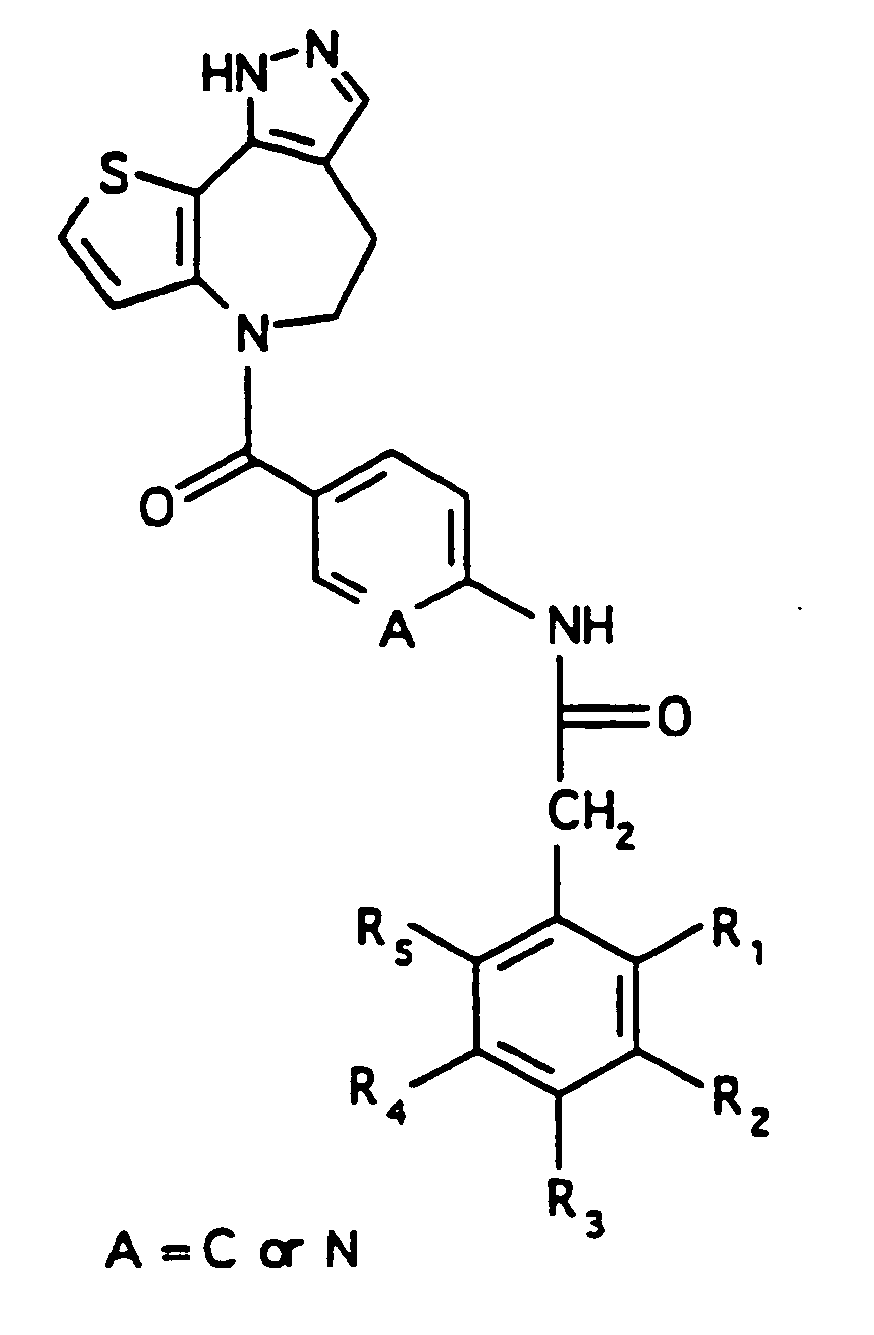
Ex No. R1 R2 R3 R4 R5 A 153 CH3 H H H H C 154 CH3 H H H H N 155 CH3 H H CH3 H C 156 Cl H H H H C 157 Cl H H H Cl C 158 Cl H H H H N 159 Cl H Cl H H C 160 Cl H Cl H H N 161 Cl H H F H C 162 -OCH3 H H H H C 163 -OCH3 H H H H N 164 -OCH3 H H Cl H C 165 -OCH3 H H -OCH3 H C 166 -OCH3 H H -OCH3 H N 167 -OCH3 H H Cl H N 168 CH3 F H H H C 169 H F H H H N 170 CH3 -CH3 H H H C 171 Cl Cl H H H C 172 Cl Cl H H H N 173 F Cl H H H C 174 F H Cl H H N 175 -SCH3 H H H H C 176 -SCH3 H H H H N 177 F H H Cl H C 178 F H H Cl H N 179 F H H H Cl C 180 H -CF3 H H H C 181 H -CF3 H H H N 182 CF3 H H H H C 183 -OCF3 H F H H C 184 CH3 H H F H C - As described for Example 5, the following compounds are prepared (Table E).
Table E 
Ex. No R1 R2 R3 R4 R5 X 185 CH3 H H H H H 186 CH3 H H F H H 187 CH3 F H H H H 188 CH2Ph H H H H Cl 189 Cl H H H H H 190 F H F H H H 191 Br H H H H H 192 Cl H F H H H 193 Ph H H H H H 194 Cl H H Br H H 195 CH3 H H H H Br 196 CH3 H H F H Cl 197 Cl H H Cl H H 198 CH3 CH3 H H H H 199 Cl H H F H H 200 Cl H H CF3 H H 201 Cl H H H F H 202 Cl H H H Cl H 203 Cl H H F H H 204 
H H H H H 205 
H H H H H 206 CH3 H H H CH3 H 207 Cl H H F H Cl 208 Cl H F H H Cl 209 Cl Cl H H H H 210 Cl H H Cl H H 211 -OCH3 H H H H H 212 OCF3 H H H H H 213 -CF3 H H H H H 214 Cl Cl H Cl H H 215 -SCH3 H H H H H 216 Cl H NO2 H H H 217 CH3 H H CH3 H H 218 F H H Cl H H 219 Cl H H NH2 H H 220 F CF3 H H H H 221 -OCH3 H H Cl H H 222 Cl H H -SCH3 H H 223 F H H H CF3 H 224 F H CF3 H H H 225 CF3 H F H H H 226 NO2 H H H H H 227 F H H H H H 228 Cl H NH2 H H H - As described for Example 5, the following compounds are prepared (Table F).
Table F 
Ex. No R1 R2 R3 R4 R5 X 229 CH3 H H H H H 230 CH3 H H F H H 231 CH3 F H H H H 232 CH2Ph H H H H Cl 233 Cl H H H H H 234 F H F H H H 235 Br H H H H H 236 Cl H F H H H 237 Ph H H H H H 238 Cl H H Br H H 239 CH3 H H H H Br 240 CH3 H H F H Cl 241 Cl H H Cl H H 242 CH3 CH3 H H H H 243 Cl H H F H H 244 Cl H H CF3 H H 245 Cl H H H F H 246 Cl H H H Cl H 247 Cl H H F H H 248 
H H H H H 249 
H H H H H 250 CH3 H H H CH3 H 251 Cl H H F H Cl 252 Cl H F H H Cl 253 Cl Cl H H H H 254 Cl H H Cl H H 255 -OCH3 H H H H H 256 OCF3 H H H H H 257 -CF3 H H H H H 258 Cl Cl H Cl H H 259 -SCH3 H H H H H 260 Cl H NO2 H H H 261 CH3 H H CH3 H H 262 F H H Cl H H 263 Cl H H NH2 H H 264 F CF3 H H H H 265 -OCH3 H H Cl H H 266 Cl H H -SCH3 H H 267 F H H H CF3 H 268 F H CF3 H H H 269 CF3 H F H H H 270 NO2 H H H H H 271 F H H H H H 272 Cl H NH2 H H H - As described for Example 2, the following compounds are prepared (Table G).
Table G 
Ex. No R1 R2 R3 R4 R5 X 273 CH3 H H H H H 274 CH3 H H F H H 275 CH3 F H H H H 276 CH2Ph H H H H Cl 277 Cl H H H H H 278 F H F H H H 279 Br H H H H H 280 Cl H F H H H 281 Ph H H H H H 282 Cl H H Br H H 283 CH3 H H H H Br 284 CH3 H H F H Cl 285 Cl H H Cl H H 286 CH3 CH3 H H H H 287 Cl H H F H H 288 Cl H H CF3 H H 289 Cl H H H F H 290 Cl H H H Cl H 291 Cl H H F H H 292 
H H H H H 293 
H H H H H 294 CH3 H H H CH3 H 295 Cl H H F H Cl 296 Cl H F H H Cl 297 Cl Cl H H H H 298 Cl H H Cl H H 299 -OCH3 H H H H H 300 OCF3 H H H H H 301 -CF3 H H H H H 302 Cl Cl H Cl H H 303 -SCH3 H H H H H 304 Cl H NO H H H 305 CH3 H H CH3 H H 306 F H H Cl H H 307 Cl H H NH2 H H 308 F CF3 H H H H 309 -OCH3 H H Cl H H 310 Cl H H -SCH3 H H 311 F H H H CF3 H 312 F H CF3 H H H 313 CF3 H F H H H 314 NO2 H H H H H 315 F H H H H H 316 Cl H NH2 H H H - As described for Example 2, the following compounds are prepared (Table H).
Table H 
Ex.No R1 R2 R3 R4 R5 X 317 CH3 H H H H H 318 CH3 H H F H H 319 CH3 F H H H H 320 CH2Ph H H H H Cl 321 Cl H H H H H 322 F H F H H H 323 Br H H H H H 324 Cl H F H H H 325 Ph H H H H H 326 Cl H H Br H H 327 CH3 H H H H Br 328 CH3 H H F H Cl 329 Cl H H Cl H H 330 CH3 CH3 H H H H 331 Cl H H F H H 332 Cl H H CF3 H H 333 Cl H H H F H 334 Cl H H H Cl H 335 Cl H H F H H 336 
H H H H H 337 
H H H H H 338 CH3 H H H CH3 H 339 Cl H H F H Cl 340 Cl H F H H Cl 341 Cl Cl H H H H 342 Cl H H Cl H H 343 -OCH3 H H H H H 344 OCF3 H H H H H 345 -CF3 H H H H H 346 Cl Cl H Cl H H 347 -SCH3 H H H H H 348 Cl H NO2 H H H 349 CH3 H H CH3 H H 350 F H H Cl H H 351 Cl H H NH2 H H 352 F CF3 H H H H 353 -OCH3 H H Cl H H 354 Cl H H -SCH3 H H 355 F H H H CF3 H 356 F H CF3 H H H 357 CF3 H F H H H 358 NO2 H H H H H 359 F H H H H H 360 Cl H NH2 H H H - As described for Example 5, 2,4,5,6-tetrahydro-2-methyl-6-(4-aminobenzoyl)pyrazolo[3,4-d]-thieno[3,2-b]azepine is reacted with 2-methylbenzoyl chloride to give the product as crystals (from ethyl acetate), m.p. 257-260°C.
- As described for Example 2, 6-(4-aminobenzoyl)-1,4,5,6-tetrahydropyrazolo[3,4-d]thieno[3,2-b]-azepine (297 mg) is reacted with 0.542 g of [1,1'-biphenyl]-2-carbonyl chloride to give 0.70 g of bis acylated product. A mixture of this product in 13 ml of tecrahydrofuran-methanol (9:4) and 2.3 ml of 1 N NaOH is stirred for 18 hours at room temperature. To the mixture is added 2.3 ml of 1 N HCl and the solvent removed. The mixture is triturated with 50 ml of CH2Cl2, filtered and the solid washed with CH2Cl2 and water to give 0.27 g of off-white crystals, m.p. 280-284°C.
- As described for Example 1, a solution of 2 mmol of 5,6-dihydro-6-(4-aminobenzoyl)-4H-isoxazolo [5,4-d]thieno[3,2-b]azepine and 5 mmol of triethylamine is reacted with 2.2 mmol of 5-fluoro-2-methylbenzoyl chloride in 10 ml of dichloromethane under argon for 16 hours to give the product as a solid.
- The subject compounds of the present invention are tested for biological activity.
- Rat liver plasma membranes expressing the vasopressin V1 receptor subtypes are isolated by sucrose density gradient according to the method described by Lesko et al., (1973). These membranes are quickly suspended in 50.0 mM Tris·HCl buffer, pH 7.4, containing 0.2% bovine serum albumin (BSA) and 0.1 mM phenylmethylsulfonylfluoride (PMSF) and kept frozen at -70°C until used in subsequent binding experiments. For binding experiments, the following is added to the wells of a ninety-six well format microtiter plate: 100 µl of 100.0 mM Tris•HCl buffer containing 10.0 mM MgCl2, 0.2% heat inactivated BSA and a mixture of protease inhibitors: leupeptin, 1.0 mg %; aprotinin, 1.0 mg %, 1,10-phenanthroline, 2.0 mg %; trypsin inhibitor, 10.0 mg % and 0.1 mM PMSF, 20.0 µl of [phenylalanyl-3,4,5-3H] vasopressin (S.A. 45.1 Ci/mmole) at 0.8 nM, and the reaction initiated by the addition of 80 µl of tissue membranes containing 20 µg of tissue protein. The plates are kept undisturbed on the bench top at room temperature for 120 min. to reach equilibrium. Non-specific samples are assayed in the presence of 0.1 µM of the unlabeled antagonist phenylalanylvasopressin, added in 20.0 µl volume to a final incubation volume of 200 µl. Upon completion of binding, the content of each well is filtered off, using a Brandel® cell Harvester (Gaithersburg, MD). The radioactivity trapped on the filter disk by the ligand-receptor complex is assessed by liquid scintillation counting in a Packard LS Counter, with an efficiency of 65% for tritium. The data are analyzed for IC50 values by the LUNDON-2 program for competition (LUNDON SOFTWARE, OH).
- Medullary tissues from rat kidneys are dissected out, cut into small pieces and let soak in a 0.154 mM sodium chloride solution containing 1.0 mM EDTA with many changes of the liquid phase, until the solution is clear of blood. The tissue is homogenized in a 0.25 M sucrose solution containing 1.0 mM EDTA and 0.1 mM PMSF using a Potter-Elvehjem homogenizer with a teflon pestle. The homogenate is filtered through several layers (4 layers) of cheese cloth. The filtrate is rehomogenized using a dounce homogenizer, with a tight fitting pestle. The final homogenate is contrifuged at 1500 x g for 15 min. The nuclear pellet is discarded and the supernatant fluid recentrifuged at 40,000 x g for 30 min. The resulting pellet formed contains a dark inner part with the exterior, slightly pink. The pink outer part is suspended in a small amount of 50.0 mM Tris·HCl buffer, pH 7.4. The protein content is determined by the Lowry's method (Lowry et al, J. Biol. Chem., 1953). The membrane suspension is stored at -70°C, in 50.0 mM Tris•HCl, containing 0.2% inactivated BSA and 0.1 mM PMSF in aliquots of 1.0 ml containing 10.0 mg protein per ml of suspension until use in subsequent binding experiments.
- For binding experiments, the following is added in µl volume to wells of a 96 well format of a microtiter plate: 100 . 0 µl of 100. 0 mM Tris•HCl buffer containing 0.2% heat inactivated BSA, 10.0 mM MgCl2 and a mixture of protease inhibitors: leupeptin, 1.0 mg %; aprotinin, 1.0 mg %; 1,10-phenanthroline, 2.0 mg %; trypsin inhibitor, 10.0 mg % and 0.1 mM PMSF, 20.0 µl of [3H] Arginine8, vasopressin (S.A. 75.0 Ci/mmole) at 0.8 nM and the reaction initiated by the addition of 80.0 µl of tissue membranes (200.0 µg tissue protein). The plates are left undisturbed on the bench top for 120 min. to reach equilibrium. Non-specific binding is assessed in the presence of 1.0 µM of unlabeled ligand, added in 20 µl volume. For test compounds, these are solubilized in 50% dimethylsulfoxide (DMSO) and added in 20.0 µl volume to a final incubation volume of 200 µl. Upon completion of binding, the content of each well is filtered off, using a Brandel® cell Harvester (Gaithersburg, MD). The radioactivity trapped on the filter disk by the ligand-receptor complex is assessed by liquid scintillation counting in a Packard LS Counter, with an efficiency of 65% for tritium. The data are analyzed for IC50 values by the LUNDON-2 program for competition (LUNDON SOFTWARE, OH).
- Platelet Source: Hudson Valley Blood Services, Westchester Medical Center, Valhalla, NY.
- Frozen platelet rich plasma (PRP), received from the Hudson Valley Blood Services are thawed to room temperature. The tubes containing the PRP are centrifuged at 16,000 x g for 10 min. at 4°C and the supernatant fluid discarded. The platelets resuspended in an equal volume of 50.0 mM Tris·HCl, pH 7.5 containing 120 mM NaCl and 20.0 mM EDTA. The suspension is recentrifuged at 16,000 x g for 10 min. This washing step is repeated one more time. The wash is discarded and the lysed pellets homogenized in low ionic strength buffer of Tris·HCl, 5.0 mM, pH 7.5 containing 5.0 mM EDTA. The homogenate is centrifuged at 39,000 x g for 10 min. The resulting pellet is resuspended in Tris•HCl buffer, 70.0 mM, pH 7.5 and recentrifuged at 39,000 x g for 10 min. The final pellet is resuspended in 50.0 mM Tris-HCl buffer pH 7.4 containing 120 mM NaCl and 5.0 mM HCl to give 1.0-2.0 mg protein per ml of suspension.
- In wells of a 96 well format microtiter plate, add 100 µl of 50.0 mM Tris-HCl buffer containing 0.2% BSA and a mixture of protease inhibitors (aprotinin, leupeptin etc.). Then add 20 µl of [3H]Ligand: (Manning or Arg8Vasopressin), to give final concentrations ranging from 0.01 to 10.0 nM. Initiate the binding by adding 80.0 µl of platelet suspension (approx. 100 µg protein). Mix all reagents by pipetting the mixture up and down a few times. Non-specific binding is measured in the presence of 1.0 µM of unlabeled ligand (Manning or Arg8Vasopressin). Let the mixture stand undisturbed at room temperature for ninety (90) min. Upon this time, rapidly filter off the incubate under vacuum suction over GF/B filters, using a Brandel® Harvester. Determine the radioactivity caught on the filter disks by the addition of liquid scintillant and counting in a liquid scintillator
- Flasks of 175 ml capacity, containing attached cells grown to confluence are cleared of culture medium by aspiration. The flasks containing the attached cells are rinsed with 2 x 5 ml of phosphate buffered saline (PBS) and the liquid aspirated off each time. Finally, 5 ml of an enzyme free dissociation Hank's based solution (Specialty Media, Inc., Lafayette, NJ) is added and the flasks are left undisturbed for 2 min. The content of all flasks is poured into a centrifuge tube and the cells pelleted at 300 x g for 15 min. The Hank's based solution is aspirated off and the cells homogenized with a polytron at setting #6 for 10 sec in 10.0 mM Tris•Hcl buffer, pH 7.4 containing 0.25 M sucrose and 1.0 mM EDTA. The homogenate is centrifuged at 1500 x g for 10 min to remove ghost membranes. The supernatant fluid is centrifuged at 100,000 x g for 60 min to pellet the receptor protein.. Upon completion, the pellet is resuspended in a small volume of 50.0 mM Tris·HCl buffer, pH 7.4. The protein content is determined by the Lowry method and the receptor membranes are suspended in 50.0 mM Tris•HCl buffer containing 0.1 mM phenylmethylsulfonylfluoride (PMSF) and 0.2% bovine serum albumin (BSA) to give 2.5 mg receptor protein per ml of suspension.
- For binding experiments, the following is added in µl volume to wells of a 96 well format of a microtiter plate: 100.0 µl of 100.0 mM Tris·HCl buffer containing 0.2% heat inactivated ESA, 10.0 mM MgCl2 and a mixture of protease inhibitors: leupeptin, 1.0 mg %; aprotinin, 1.0 mg %; 1,10-phenanthroline, 2.0 mg %; trypsin inhibitor, 10.0 mg % and 0.1 mM PMSF, 20.0 µl of [3H] Arginine8, vasopressin (S.A. 75.0 Ci/mmole) at 0.8 nM and the reaction initiated by the addition of 80.0 µl of tissue membranes (200.0 µg tissue protein). The plates are left undisturbed on the bench top for 120 min to reach equilbrium. Non-specific binding is assessed in the presence of 1.0 µM of unlabeled ligand, added in 20 µl volume. For test compounds, these are solubilized in 50% dimethylsulfoxide (DMSO) and added in 20.0 µl volume to a final incubation volume of 200 µl. Upon completion of binding, the content of each well is filtered off, using a Brandel® cell Harvester (Gaithersburg, MD). The radioactivity trapped on the filter disk by the ligand-receptor complex is assessed by liquid scintillation counting in a Packard LS Counter, with an efficiency of 65% for tritium. The data are analyzed for IC50 values by the LUNDON-2 program for competition (LUNDON SOFTWARE, OH).
- Conscious hydrated rats are treated with compounds under study from 0.1 to 100 mg/kg orally or vehicle. Two to four rats are used for each compound. One hour later, arginine vasopressin (AVP, antidiuretic hormone, ADH) dissolved in peanut oil is administered at 0.4 µg/kg intraperitoneally. Two rats in each test would not receive arginine vasopressin but only the vehicle (peanut oil) to serve as water-loading control. Twenty minutes later each rat is given 30 mL/kg cf deionized water orally by gavage and is placed individually in a metabolic cage equipped with a funnel and a graduated glass cylinder to collect urine for four hours. Urine volume is measured and osmolality analyzed by use of a Fiske One-Ten osmometer (Fiske Assoc., Norwood, MA USA). Urinary sodium, potassium, and chloride are analyzed by use of ion-specific electrodes in a Beckman E3 (Electrolyte 3) Analyzer.
- In the following results, decreased urine volume and decreased osmolality relative to AVP-control indicates activity. The results of this test on representative compounds of this invention are shown in Table 2.
- Conscious rats are restrained in a supine position with elastic tape. The area at the base of the tail is locally anesthetized by subcutaneous infiltration with 2% procaine (0.2 ml). Using aseptic technique the ventral caudal tail artery is isolated and a cannula made of PE 10 and 20 (heat-fused) tubing is passed into the lower abdominal aorta. The cannula is secured, heparinized (1000 i.u./cc), sealed and the would closed with one or two stitches of Dexon 4-0. The caudal vein is also cannulated in the same manner for intravenous drug administration. The duration of the surgery is approximately 5 minutes. Additional local anesthesia (2% procaine or lidocaine) is provided as needed.
- The animals are placed in plastic restraining cages in an upright position. The cannula is attached to a Statham P23Db pressure transducer and pulsatile blood pressure is recorded. Increase of systolic blood pressure responses to arginine vasopressin 0.01 and 0.2 international unit (I.U.) (350 I.U.=1 mg) injections are recorded prior to any drug (compound) administration, after which each rat is dosed orally with compounds under study 0.1-100 mg/kg (10 cc/kg) or intravenously 0.1-30 mg/kg (1 cc/kg). The vasopressin injections are repeated 30,60,90,120,180,240 and 300 min. later. Percentage of antagonism by the compound is calculated using the pre-drug vasopressin vasopressor response as 100%.
Table 1 Binding Assay to Rat Hepatic V 1 Receptors and Rat Kidney Medullary V 2 Receptors or *Binding to V 1 Receptor Subtype in Human Platelet and **Binding to Membranes of Mouse Fibroblast Cell Line (LV-2) Transfected with the cDNA Expressing the Human V 2 Receptor 
Ex. No. R R1 Ar A V1 IC50 (µM) V2 361 CH3 H 
CH 2.01 0.024 *1.74 **0.22 5 CH3 H 
CH 2.1 0.038 *4.1 **0.15 6 CH3 H 
CH 4.7 0.23 7 H H 
CH 2.1 0.12 *0.24 **0.13 1 H H 
CH 2.0 0.34 2 H H 
CH 1.7 0.069 **0.071 3 H Cl 
CH 24% at 1 µM 0.0061 4 H Cl 
CH 8% at 1 µM 0.036 Table 2 Vasopressin V 2 Antagonist Activity In Conscious Hydrated Rats Ex. No. Dose (mg/kg) N Urine Vol. (ml/4hrs.) Osmolality (mOsm/kg) * 78 13.3±0.3 229±6 ** 6 12.1±1 497±53 4 12.4±.0.8 361±30 *** 76 2±0.2 1226±58 1 10 2 15.3 535 2 10 2 17.8 429 7 10 2 20.8 322 * Water-load control
** Water-load
Control+DMSO (10%)
(20%)
*** AVP-control - Female Sprague-Dawley rats weighing approximately 200-250 g are injected intramuscularly (i.m.) with 0.3 mg/kg of body weight of diethylstilbestrol (DES). The rats are sacrificed 18 hours later under pentobarbital anesthesia. The uteri are dissected out, cleaned of fat and connective tissues and rinsed in 50 ml of normal saline. The tissue pooled from six rats is homogenized in 50 ml of 0.01 mM Tris.HCl, containing 0.5 mM dithiothreitol and 1.0 mM EDTA, adjusted to pH 7.4, using a polytron at setting 6 with three passes of 10 sec each. The homogenate is passed through two (2) layers of cheesecloth and the filtrate contrifuged at 1000 x g for 10 min. The clear supernatant is removed and recentrifuged at 165,000 x g for 30 min. The resulting pellet containing the oxytocin receptors is resuspended in 50.0 mM Tris.HCl containing 5.0 mM MgCl2 at pH 7.4, to give a protein concentration of 2.5 mg/ml of tissue suspension. This preparation is used in subsequent binding assays with [3H]Oxytocin.
- Binding of 3,5-[3H]Oxytocin ([3H]OT) to its receptors is done in microtiter plates using [3H]OT, at various concentrations, in an assay buffer of 50.0 mM Tris.HCl, pH 7.4 and containing 5.0 mM MgCl2, and a mixture of protease inhibitors: BSA, 0.1 mg; aprotinin, 1.0 mg; 1,10-phenanthroline, 2.0 mg; trypsin, 10.0 mg; and PMSF, 0.3 mg per 100 ml of buffer solution. Non-specific binding is determined in the presence of 1.0 uM unlabeled OT. The binding reaction is terminated after 60 min., at 22°C, by rapid filtration through glass fiber filters using a Brandel® cell harvester (Biomedical Research and Development Laboratories, Inc., Gaithersburg, MD). Competition experiments are conducted at equilibrium using 1.0 nM [3H]OT and varying the concentration of the displacing agents. The concentrations of agent displacing 50% of [3H]OT at its sites (IC50) are calculated by a computer assisted LUNDON-2 program (LUNDON SOFTWARE INC., Ohio, USA).
- The results of this assay on representative examples are shown in Table 3.
Table 3 Oxytocin Binding Assay Ex. No. Dose (µM) % Inhibition at 10 µM IC50 (µM) 361 10 57 6.4 5 10 47 6 10 94 1.7 7 10 65 1 10 93 2.5 2 10 91 1.3 3 1 21 4 1 0 - The compounds of the present invention can be used in the form of salts derived from pharmaceutically or physiologically acceptable acids or bases. These salts include, but are not limited tc, the following: salts with inorganic acids such as hydrochloric acid, sulfuric acid, nitric acid, phosphoric acid and, as the case may be, such organic acids as acetic acid, oxalic acid, succinic acid, and maleic acid. Other salts include salts with alkali metals or alkaline earth metals, such as sodium, potassium, calcium or magnesium or with organic bases. The compounds can also be used in the form of esters, carbamates and other conventional "pro-drug" forms, which, when administered in such form, convert to the active moiety in vivo.
- When the compounds are employed for the above utilities, they may be combined with one or more pharmaceutically acceptable carriers, for example, solvents, diluents and the like, and may be administered orally in such forms as tablets, capsules, dispersible powders, granules, or suspensions containing, for example, from about 0.05 to 5% of suspending agent, syrups containing, for example, from about 10 to 50% of sugar, and elixirs containing, for example, from about 20 to 50% ethanol, and the like, or parenterally in the form of sterile injectable solutions or suspensions containing from about 0.05 to 5% suspending agent in an isotonic medium. Such pharmaceutical preparations may contain, for example, from about 25 to about 90% of the active ingredient in combination with the carrier, more usually between about 5% and 60% by weight.
- The effective dosage of active ingredient employed may vary depending on the particular compound employed, the mode of administration and the severity of the condition being treated. However, in general, satisfactory results are obtained when the compounds of the invention are administered at a daily dosage of from about 0.5 to about 500 mg/kg of animal body weight, preferably given in divided doses two to four times a day, or in a sustained release form. For most large mammals the total daily dosage is from about 1 to 100 mg, preferably from about 2 to 80 mg. Dosage forms suitable for internal use comprise from about 0.5 to 500 mg of the active compound in intimate admixture with a solid or liquid pharmaceutically acceptable carrier. This dosage regimen may be adjusted to provide the optimal therapeutic response. For example, several divided doses may be administered daily or the dose may be proportionally reduced as indicated by the exigencies of the therapeutic situation.
- These active compounds may be administered orally as well as by intravenous, intramuscular, or subcutaneous routes. Solid carriers include starch, lactose, dicalcium phosphate, microcrystalline cellulose, sucrose and kaolin, while liquid carriers include sterile water, polyethylene glycols, non-ionic surfactants and edible oils such as corn, peanut and sesame oils, as are appropriate to the nature of the active ingredient and the particular form of administration desired. Adjuvants customarily employed in the preparation of pharmaceutical compositions may be advantageously included, such as flavoring agents, coloring agents, preserving agents, and antioxidants, for example, vitamin E, ascorbic acid, BHT and BHA.
- The preferred pharmaceutical compositions from the standpoint of ease of preparation and administration are solid compositions, particularly tablets and hard-filled or liquid-filled capsules. Oral administration of the compounds is preferred.
- These active compounds may also be administered parenterally or intraperitoneally. Solutions or suspensions of these active compounds as a free base or pharmacologically acceptable salt can be prepared in water suitably mixed with a surfactant such as hydroxypropylcellulose. Dispersions can also be prepared in glycerol, liquid, polyethylene glycols and mixtures thereof in oils. Under ordinary conditions of storage and use, these preparations contain a preservative to prevent the growth of microorganisms.
- The pharmaceutical forms suitable for injectable use include sterile aqueous solutions or dispersions and sterile powders for the extemporaneous preparation of sterile injectable solutions or dispersions. In all cases, the form must be sterile and must be fluid to the extent that easy syringability exits. It must be stable under conditions of manufacture and storage and must be preserved against the contaminating action of microorganisms such as bacterial and fungi. The carrier can be a solvent or dispersion medium containing, for example, water, ethanol (e.g., glycerol, propylene glycol and liquid polyethylene glycol), suitable mixtures thereof, and vegetable oil.
- The new tricyclic non-peptide vasopressin antagonists of this invention are useful in treating conditions where decreased vasopressin levels are desired, such as in congestive heart failure, in disease conditions with excess renal water reabsorption and in conditions with increased vascular resistance and coronary vasoconstriction.
- In particular, the vasopressin antagonists of this invention are therapeutically useful in the treatment and/or prevention of hypertension, cardiac insufficiency, coronary vasospasm, cardiac ischemia, renal vasospasm, liver cirrhosis, congestive heart failure, nephritic syndrome, brain edema, cerebral ischemia, cerebral hemorrhage-stroke, thrombosis-bleeding and abnormal states of water retention.
- In particular, the oxytocin antagonists of this invention are useful in the prevention of preterm labor and premature birth which is a significant cause of infant health problems and infant mortality.
Claims (5)
- A compound of the formula:
 wherein D is CH or N;R3 is the moiety:
 wherein Ar is selected from the moieties:
 R6 is
R6 is
-CH2COAr' or -M-Rd
and Ar' is selected from the moieties: Ra is independently selected from hydrogen, -CH3 C2H5,
 Rb is independently selected from hydrogen, -CH3 and -C2H5;R1 and R2 are selected from hydrogen, lower C1-C3 alkyl, lower C1-C3 alkoxy and halogen;R5 is selected from hydrogen, lower C1-C3 alkyl, lower C1-C3 alkoxy and halogen;R7 is selected from hydrogen, lower C1-C3 alkyl, halogen, O-lower C1-C3 alkyl and CF3;R8 and R9 are independently selected from hydrogen, lower C1-C3 alkyl, -S-lower C1-C3 alkyl, halogen, -NH-lower C1-C3 alkyl, -N-[lower C1-C3 alkyl]2, -OCF3, -OH, -CN, -S-CF3, -NO2, -NH2, O-lower C1-C3 alkyl, NHCO lower C1-C3 alkyl, -O-CO-lower C1-C3 alkyl and CF3;R10 is selected from hydrogen, halogen, lower C1-C3 alkyl, -NH-lower C1-C3 alkyl, -N-[lower C1-C3 alkyl]2, -O-lower C1-C3 alkyl and -N(Rb)(CH2)q-N(Rb)2W' is selected from O, S, NH, N-lower C1-C3 alkyl NHCO-lower C1-C3 alkyl, and NSO2lower C1-C3 alkyl andCycloalkyl is C3-C6 cycloalkyl,
wherein a) M is O, S, NH and NCH3,and Rd is lower alkyl(C3-C8), lower alkenyl (C3-C8), -(CH2)p-cycloalkyl(C3-C6), or b) M is a bond or M is selected from O, S, NH and NCH3and Rd is selected from the moieties: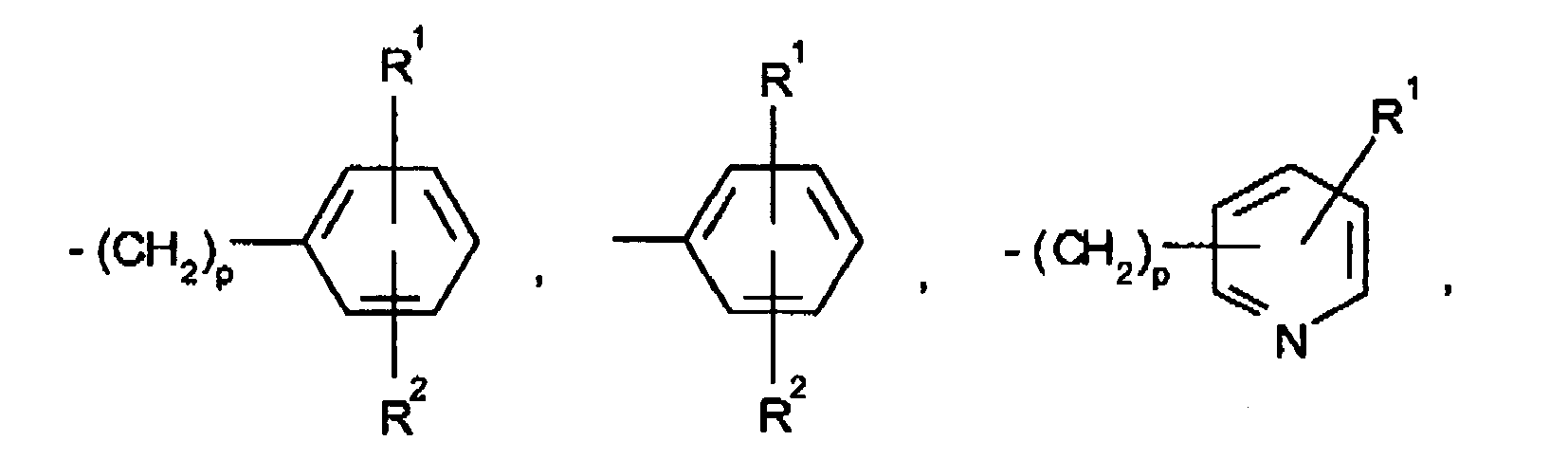
 wherein p is zero to four ;wherein R1, R2 and Ra are as hereinbefore defined:and the pharmaceutically acceptable salts thereof.
 - A compound according to Claim 1 selected fromN-[4-[(4,5-Dihydropyrazolo[3.4-d]thieno[3,2-b]azepin-6(1H)-yl)carbonyl]phenyl]-2-chloro-4-fluorobenzamide,N-[4-[(4,5-Dihydropyrazolo[3,4-d]thieno[3,2-b]azepin-6(1H)-yl)carbonyl]phenyl]-5-fluoro-2-methylbenzamide,N-[4-[(4,5-Dihydropyrazolo[3,4-d]thieno[3,2-b]azepin-6(1H)-yl)carbonyl]-3-chlorophenyl]-5-fluoro-2-methyl benzamide,N-[4-[(4,5-Dihydropyrazolo[3,4-d]thieno[3,2-b]azepin-6(1H)-yl)carbonyl]-3-chlorophenyl]-5-chloro-2-fluoro benzamide,N-[5-[(4,5-Dihydropyrazolo[3,4-d]thieno[3,2-b]azepin-6(1H)-yl)carbonyl]-2-pyridinyl]-2-chloro-4-fluoro benzamide,N-[5-[(4,5-Dihydropyrazolo[3,4-d]thieno[3,2-b]azepin-6(1H)-yl)carbonyl]-2-pyridinyl]-5-fluoro-2-methyl benzamide,N-[5-[(4,5-Dihydropyrazolo[3,4-d]thieno[3,2-b]azepin-6(1H)-yl)carbonyl]-2-pyridinyl]-5-chloro-2-fluoro benzamide,N-[5-[(4,5-Dihydropyrazolo[3,4-d]thieno[3,2-b]azepin-6(1H)-yl)carbonyl]-2-pyridinyl]-3-fluoro-2-methyl benzamide,N-[5-[(4,5-Dihydropyrazalo[3,4-d]thieno[3,2-b]azepin-6(1H)-yl)carbonyl]-3-chloro-2-pyridinyl]-5-fluoro-2-methylbenzamide,N-[5-[(4,5-Dihydropyrazolo[3,4-d]thieno[3,2-b]azepin-6(1H)-yl)carbonyl]-2-pyridinyl]-2-chloro-6-fluoro benzamide,N-[4-[(4,5-Dihydropyrazolo[3,4-d]thieno[3,2-b]azepin-6(1H)-yl)carbonyl]phenyl]-2-(dimethylamino)pyridine-3-carboxamide, andN-[5-[(4,5-Dihydropyrazolo[3,4-d]thieno[3,2-b]azepin-6(1H)-yl)carbonyl)-2-pyridinyl]-2-(methylamino)pyridine-3-carboxamide,or a pharmaceutically acceptable salt thereof.
- A pharmaceutical composition useful for treating diseases characterized by excess renal reabsorption of water as well as congestive heart failure, liver cirrhosis, nephrotic syndrome, central nervous system injuries, lung disease and hyponatremia in a mammal comprising a suitable pharmaceutical carrier and an effective amount of a compound of Claims 1 or 2.
- Use of a compound accordning to Claims 1 or 2 in the preparation of a medicament for the treatmeny of diseases characterized by excess renal reabsorption of water, congestive heart failure, liver cirrhosis, nephrotic syndrome, central nervous system injuries, lung disease and hyponatremia.
- A process for preparing a compound according to Claims 1 or 2 which comprises reacting a compound of the formula
 wherein D, R1 and R2 are as defined in Claim 1 with a compound of the formulawith a compound of the formula:
 wherein Q is a halogen or an activating group, which results from conversion of an aryl carboxylic acid to a mixed anhydride or from activation with a peptide coupling reagent, to give the desired compound according to Claim 1 or 2.
Applications Claiming Priority (3)
| Application Number | Priority Date | Filing Date | Title |
|---|---|---|---|
| US373139 | 1995-01-17 | ||
| US08/373,139 US5532235A (en) | 1995-01-17 | 1995-01-17 | Tricyclic benzazepine vasopressin antagonists |
| PCT/US1996/001472 WO1996022295A1 (en) | 1995-01-17 | 1996-01-16 | Tricyclic benzazepine vasopressin antagonists |
Publications (2)
| Publication Number | Publication Date |
|---|---|
| EP0804440A1 EP0804440A1 (en) | 1997-11-05 |
| EP0804440B1 true EP0804440B1 (en) | 2007-12-19 |
Family
ID=23471147
Family Applications (1)
| Application Number | Title | Priority Date | Filing Date |
|---|---|---|---|
| EP96903777A Expired - Lifetime EP0804440B1 (en) | 1995-01-17 | 1996-01-16 | Tricyclic benzazepine vasopressin antagonists |
Country Status (21)
| Country | Link |
|---|---|
| US (2) | US5532235A (en) |
| EP (1) | EP0804440B1 (en) |
| JP (1) | JP4219978B2 (en) |
| CN (1) | CN1061658C (en) |
| AR (1) | AR002268A1 (en) |
| AT (1) | ATE381570T1 (en) |
| AU (1) | AU4775596A (en) |
| BR (1) | BR9607186B1 (en) |
| CA (1) | CA2210632A1 (en) |
| CZ (1) | CZ224897A3 (en) |
| DE (1) | DE69637369T2 (en) |
| DK (1) | DK0804440T3 (en) |
| EA (1) | EA000607B1 (en) |
| ES (1) | ES2297835T3 (en) |
| HU (1) | HUP9702219A3 (en) |
| IL (1) | IL116773A (en) |
| MX (1) | MX9705415A (en) |
| NZ (1) | NZ302159A (en) |
| TW (1) | TW426684B (en) |
| WO (1) | WO1996022295A1 (en) |
| ZA (1) | ZA96299B (en) |
Families Citing this family (29)
| Publication number | Priority date | Publication date | Assignee | Title |
|---|---|---|---|---|
| US5532235A (en) * | 1995-01-17 | 1996-07-02 | American Cyanamid Company | Tricyclic benzazepine vasopressin antagonists |
| WO1997017349A1 (en) * | 1995-11-09 | 1997-05-15 | Japan Tobacco Inc. | Five-membered fused heterocyclic azepine derivatives and pharmaceutical use thereof |
| JP2791430B2 (en) | 1995-11-09 | 1998-08-27 | 日本たばこ産業株式会社 | Fused hetero 5-membered azepine derivative and pharmaceutical use thereof |
| US5880122A (en) * | 1996-11-01 | 1999-03-09 | American Home Products Corporation | 3-Carboxamide derivatives of 5H-pyrrolo 2,1-c! 1,4!-benzodiazepines |
| US6297234B1 (en) | 1999-02-04 | 2001-10-02 | American Home Products Corporation | Arylthiophene vasopressin agonists |
| US6235900B1 (en) | 1999-02-04 | 2001-05-22 | American Home Products Corporation | Tricyclic pyridine N-oxides vasopressin agonists |
| US6437006B1 (en) | 1999-09-27 | 2002-08-20 | American Cyanamid Company | Pharmaceutical carrier formulation |
| US7202239B2 (en) * | 2001-04-12 | 2007-04-10 | Wyeth | Cyclohexylphenyl carboxamides tocolytic oxytocin receptor antagonists |
| DE60222879T2 (en) * | 2001-04-12 | 2008-07-24 | Wyeth | CYCLOHEXYLPHENYL VASOPRESSINE AGONISTS |
| US7022699B2 (en) | 2001-04-12 | 2006-04-04 | Wyeth | Cyclohexenyl phenyl diazepines vasopressin and oxytocin receptor modulators |
| US7064120B2 (en) * | 2001-04-12 | 2006-06-20 | Wyeth | Tricyclic pyridyl carboxamides and derivatives thereof tocolytic oxytocin receptor antagonists |
| US7326700B2 (en) * | 2001-04-12 | 2008-02-05 | Wyeth | Cyclohexenyl phenyl carboxamides tocolytic oxytocin receptor antagonists |
| US6977254B2 (en) * | 2001-04-12 | 2005-12-20 | Wyeth | Hydroxy cyclohexenyl phenyl carboxamides tocolytic oxytocin receptor antagonists |
| US7109193B2 (en) | 2001-04-12 | 2006-09-19 | Wyeth | Tricyclic diazepines tocolytic oxytocin receptor antagonists |
| BR0208823A (en) | 2001-04-12 | 2004-03-09 | Wyeth Corp | Compound, method of treating disorders that are remedied or alleviated by vasopressin agonist activity in a mammal in need thereof, and pharmaceutical composition |
| US6900200B2 (en) | 2001-04-12 | 2005-05-31 | Wyeth | Tricyclic hydroxy carboxamides and derivatives thereof tocolytic oxytocin receptor antagonists |
| SE0102299D0 (en) | 2001-06-26 | 2001-06-26 | Astrazeneca Ab | Compounds |
| SE0102764D0 (en) | 2001-08-17 | 2001-08-17 | Astrazeneca Ab | Compounds |
| US7057046B2 (en) * | 2002-05-20 | 2006-06-06 | Bristol-Myers Squibb Company | Lactam glycogen phosphorylase inhibitors and method of use |
| US7098235B2 (en) | 2002-11-14 | 2006-08-29 | Bristol-Myers Squibb Co. | Triglyceride and triglyceride-like prodrugs of glycogen phosphorylase inhibiting compounds |
| CA2580612C (en) * | 2004-09-17 | 2013-09-10 | Cordis Neurovascular, Inc. | Thin film devices for temporary or permanent occlusion of a vessel |
| NZ564608A (en) | 2005-07-09 | 2009-09-25 | Astrazeneca Ab | Heteroaryl benzamide derivatives for use as GLK activators in the treatment of diabetes |
| EP2557082A4 (en) | 2010-04-05 | 2013-08-28 | Shionogi & Co | Cephem compound having catechol group |
| BR112018074231A2 (en) * | 2016-05-25 | 2019-03-06 | Akarna Therapeutics, Ltd. | fused bicyclic compounds for the treatment of disease |
| CA3069720A1 (en) | 2017-07-11 | 2019-01-17 | Vertex Pharmaceuticals Incorporated | Carboxamides as modulators of sodium channels |
| WO2020146682A1 (en) | 2019-01-10 | 2020-07-16 | Vertex Pharmaceuticals Incorporated | Carboxamides as modulators of sodium channels |
| WO2020146612A1 (en) | 2019-01-10 | 2020-07-16 | Vertex Pharmaceuticals Incorporated | Esters and carbamates as modulators of sodium channels |
| CN115427048A (en) * | 2021-03-05 | 2022-12-02 | 上海济煜医药科技有限公司 | Novel benzazepino-ring derivatives |
| TWI866438B (en) * | 2022-09-05 | 2024-12-11 | 大陸商上海濟煜醫藥科技有限公司 | Salt form, crystal form and application thereof of benzazepine compound |
Family Cites Families (19)
| Publication number | Priority date | Publication date | Assignee | Title |
|---|---|---|---|---|
| US4766108A (en) * | 1986-12-04 | 1988-08-23 | Smith Kline Beckman Corporation | Tyr-Arg-vasopressin antagonists |
| US5055448A (en) * | 1987-06-25 | 1991-10-08 | Medical College Of Ohio | Linear derivatives of arginine vasopressin antagonists |
| EP0382185B1 (en) * | 1989-02-10 | 1994-06-15 | Otsuka Pharmaceutical Co., Ltd. | Carbostyril derivatives |
| WO1991005549A1 (en) * | 1989-10-20 | 1991-05-02 | Otsuka Pharmaceutical Co., Ltd. | Benzoheterocyclic compounds |
| US5258510A (en) * | 1989-10-20 | 1993-11-02 | Otsuka Pharma Co Ltd | Benzoheterocyclic compounds |
| US5070187A (en) * | 1989-11-03 | 1991-12-03 | Trustees Of Boston University | Pharmacologically effective antagonists of arginine-vasopressin |
| TW199153B (en) * | 1990-08-07 | 1993-02-01 | Dtsuka Seiyaku Kk | |
| TW198715B (en) * | 1991-04-19 | 1993-01-21 | Dtsuka Seiyaku Kk | |
| EP0533240A3 (en) * | 1991-09-16 | 1993-09-29 | Merck & Co. Inc. | Substituted amine derivatives of piperazinylcamphorsulfonyl oxytocin antagonists |
| US5204349A (en) * | 1991-09-16 | 1993-04-20 | Merck & Co., Inc. | Amide-substituted derivatives of spiroindanylcamphorsulfonyl oxytocin antagonists |
| DE69223573D1 (en) * | 1991-09-16 | 1998-01-29 | Merck & Co Inc | Hydantoin and succinimide substituted spiroindanylcamphorsulfonyl as oxytocin antagonists |
| EP0533242A3 (en) * | 1991-09-16 | 1993-09-15 | Merck & Co. Inc. | Substituted derivatives of piperazinylcamphorsulfonyl oxytocin antagonists |
| EP0612319A1 (en) * | 1992-08-20 | 1994-08-31 | Otsuka Pharmaceutical Co., Ltd. | Benzoheterocyclic compounds as oxytocin and vasopressin antagonists |
| AU5533894A (en) * | 1992-11-25 | 1994-06-22 | Yamanouchi Pharmaceutical Co., Ltd. | Benzanilide derivative |
| WO1994014796A1 (en) * | 1992-12-21 | 1994-07-07 | Yamanouchi Pharmaceutical Co., Ltd. | Novel n-(pyridylcarbonyl)benzazepine derivative and intermediate therefor |
| AU6219994A (en) * | 1993-03-11 | 1994-09-26 | Yamanouchi Pharmaceutical Co., Ltd. | Compound with vasopressin antagonism |
| GB9307527D0 (en) * | 1993-04-13 | 1993-06-02 | Fujisawa Pharmaceutical Co | New venzamide derivatives,processes for the preparation thereof and pharmaceutical composition comprising the same |
| US5512563A (en) * | 1993-07-29 | 1996-04-30 | American Cyanamid Company | Tricyclic benzazepine vasopressin antagonists |
| US5532235A (en) * | 1995-01-17 | 1996-07-02 | American Cyanamid Company | Tricyclic benzazepine vasopressin antagonists |
-
1995
- 1995-01-17 US US08/373,139 patent/US5532235A/en not_active Expired - Lifetime
-
1996
- 1996-01-15 ZA ZA96299A patent/ZA96299B/en unknown
- 1996-01-15 AR ARP960101026A patent/AR002268A1/en unknown
- 1996-01-16 ES ES96903777T patent/ES2297835T3/en not_active Expired - Lifetime
- 1996-01-16 CN CN96192597A patent/CN1061658C/en not_active Expired - Fee Related
- 1996-01-16 JP JP52246296A patent/JP4219978B2/en not_active Expired - Fee Related
- 1996-01-16 AU AU47755/96A patent/AU4775596A/en not_active Abandoned
- 1996-01-16 DK DK96903777T patent/DK0804440T3/en active
- 1996-01-16 BR BRPI9607186-9A patent/BR9607186B1/en not_active IP Right Cessation
- 1996-01-16 WO PCT/US1996/001472 patent/WO1996022295A1/en not_active Ceased
- 1996-01-16 AT AT96903777T patent/ATE381570T1/en not_active IP Right Cessation
- 1996-01-16 CZ CZ972248A patent/CZ224897A3/en unknown
- 1996-01-16 NZ NZ302159A patent/NZ302159A/en unknown
- 1996-01-16 TW TW085100459A patent/TW426684B/en not_active IP Right Cessation
- 1996-01-16 EA EA199700111A patent/EA000607B1/en not_active IP Right Cessation
- 1996-01-16 DE DE69637369T patent/DE69637369T2/en not_active Expired - Lifetime
- 1996-01-16 CA CA002210632A patent/CA2210632A1/en not_active Abandoned
- 1996-01-16 HU HU9702219A patent/HUP9702219A3/en unknown
- 1996-01-16 MX MX9705415A patent/MX9705415A/en unknown
- 1996-01-16 EP EP96903777A patent/EP0804440B1/en not_active Expired - Lifetime
- 1996-01-16 IL IL11677396A patent/IL116773A/en not_active IP Right Cessation
- 1996-05-31 US US08/657,830 patent/US5719278A/en not_active Expired - Lifetime
Also Published As
| Publication number | Publication date |
|---|---|
| DK0804440T3 (en) | 2008-03-31 |
| DE69637369D1 (en) | 2008-01-31 |
| HUP9702219A2 (en) | 1998-07-28 |
| HUP9702219A3 (en) | 1999-05-28 |
| US5532235A (en) | 1996-07-02 |
| JP4219978B2 (en) | 2009-02-04 |
| EP0804440A1 (en) | 1997-11-05 |
| NZ302159A (en) | 2000-01-28 |
| BR9607186B1 (en) | 2009-01-13 |
| CN1061658C (en) | 2001-02-07 |
| TW426684B (en) | 2001-03-21 |
| CZ224897A3 (en) | 1998-04-15 |
| IL116773A (en) | 2000-12-06 |
| CA2210632A1 (en) | 1996-07-25 |
| ATE381570T1 (en) | 2008-01-15 |
| DE69637369T2 (en) | 2009-01-22 |
| ES2297835T3 (en) | 2008-05-01 |
| AU4775596A (en) | 1996-08-07 |
| AR002268A1 (en) | 1998-03-11 |
| EA199700111A1 (en) | 1997-12-30 |
| CN1181084A (en) | 1998-05-06 |
| WO1996022295A1 (en) | 1996-07-25 |
| US5719278A (en) | 1998-02-17 |
| IL116773A0 (en) | 1996-05-14 |
| BR9607186A (en) | 1997-11-11 |
| JPH10512867A (en) | 1998-12-08 |
| MX9705415A (en) | 1997-11-29 |
| EA000607B1 (en) | 1999-12-29 |
| ZA96299B (en) | 1997-07-15 |
Similar Documents
| Publication | Publication Date | Title |
|---|---|---|
| US5532235A (en) | Tricyclic benzazepine vasopressin antagonists | |
| EP0804438B1 (en) | Tricyclic benzazepine vasopressin antagonists | |
| WO1996022295A9 (en) | Tricyclic benzazepine vasopressin antagonists | |
| EP0640592B1 (en) | N-acylated tricyclic azaheterorings useful as vasopressin antagonists | |
| US5780471A (en) | Tricyclic benzazepine vasopressin antagonists | |
| EP0811008B1 (en) | Bicyclic benzazepine derivatives as vasopressin antagonists | |
| BG106026A (en) | 1-amino-triazolo[4,3-a] quinazoline-5-ones and or -5-thions inhibiting phosphodiesterase iv | |
| EP1021444B1 (en) | 3-CARBOXAMIDE DERIVATIVES OF 5H-PYRROLO[2,1-c][1,4]-BENZODIAZEPINES | |
| WO1997049708A9 (en) | Tricyclic benzazepine vasopressin antagonists | |
| WO1997047625A1 (en) | Tricyclic benzazepine vasopressin antagonists | |
| WO1997047624A1 (en) | Tricyclic benzazepine vasopressin antagonists | |
| HK1004132B (en) | Tricyclic benzazepine vasopressin antagonists | |
| AU1941300A (en) | Tricyclic benzazepine vasopressin antagonists | |
| HK1003891B (en) | Tricyclic vasopressin antagonists | |
| HK1011362B (en) | N-acylated tricyclic azaheterorings useful as vasopressin antagonists | |
| HK1011363B (en) | Tricyclic diazepines vasopressin and oxytocin antagonists | |
| HK1011363A1 (en) | Tricyclic diazepines vasopressin and oxytocin antagonists |
Legal Events
| Date | Code | Title | Description |
|---|---|---|---|
| PUAI | Public reference made under article 153(3) epc to a published international application that has entered the european phase |
Free format text: ORIGINAL CODE: 0009012 |
|
| 17P | Request for examination filed |
Effective date: 19970708 |
|
| AK | Designated contracting states |
Kind code of ref document: A1 Designated state(s): AT BE CH DE DK ES FR GB GR IE IT LI LU NL PT SE |
|
| AX | Request for extension of the european patent |
Free format text: LT PAYMENT 970708;LV PAYMENT 970708;SI PAYMENT 970708 |
|
| RAP1 | Party data changed (applicant data changed or rights of an application transferred) |
Owner name: WYETH HOLDINGS CORPORATION |
|
| 17Q | First examination report despatched |
Effective date: 20030602 |
|
| REG | Reference to a national code |
Ref country code: HK Ref legal event code: WD Ref document number: 1002959 Country of ref document: HK |
|
| GRAP | Despatch of communication of intention to grant a patent |
Free format text: ORIGINAL CODE: EPIDOSNIGR1 |
|
| GRAS | Grant fee paid |
Free format text: ORIGINAL CODE: EPIDOSNIGR3 |
|
| GRAA | (expected) grant |
Free format text: ORIGINAL CODE: 0009210 |
|
| AK | Designated contracting states |
Kind code of ref document: B1 Designated state(s): AT BE CH DE DK ES FR GB GR IE IT LI LU NL PT SE |
|
| AX | Request for extension of the european patent |
Extension state: LT LV SI |
|
| REG | Reference to a national code |
Ref country code: GB Ref legal event code: FG4D |
|
| REG | Reference to a national code |
Ref country code: IE Ref legal event code: FG4D |
|
| REG | Reference to a national code |
Ref country code: CH Ref legal event code: EP |
|
| REF | Corresponds to: |
Ref document number: 69637369 Country of ref document: DE Date of ref document: 20080131 Kind code of ref document: P |
|
| REG | Reference to a national code |
Ref country code: CH Ref legal event code: NV Representative=s name: E. BLUM & CO. AG PATENT- UND MARKENANWAELTE VSP |
|
| REG | Reference to a national code |
Ref country code: SE Ref legal event code: TRGR |
|
| REG | Reference to a national code |
Ref country code: DK Ref legal event code: T3 |
|
| REG | Reference to a national code |
Ref country code: ES Ref legal event code: FG2A Ref document number: 2297835 Country of ref document: ES Kind code of ref document: T3 |
|
| LTIE | Lt: invalidation of european patent or patent extension |
Effective date: 20071219 |
|
| PG25 | Lapsed in a contracting state [announced via postgrant information from national office to epo] |
Ref country code: AT Free format text: LAPSE BECAUSE OF FAILURE TO SUBMIT A TRANSLATION OF THE DESCRIPTION OR TO PAY THE FEE WITHIN THE PRESCRIBED TIME-LIMIT Effective date: 20071219 |
|
| ET | Fr: translation filed | ||
| PG25 | Lapsed in a contracting state [announced via postgrant information from national office to epo] |
Ref country code: BE Free format text: LAPSE BECAUSE OF FAILURE TO SUBMIT A TRANSLATION OF THE DESCRIPTION OR TO PAY THE FEE WITHIN THE PRESCRIBED TIME-LIMIT Effective date: 20071219 |
|
| PG25 | Lapsed in a contracting state [announced via postgrant information from national office to epo] |
Ref country code: PT Free format text: LAPSE BECAUSE OF FAILURE TO SUBMIT A TRANSLATION OF THE DESCRIPTION OR TO PAY THE FEE WITHIN THE PRESCRIBED TIME-LIMIT Effective date: 20080519 |
|
| PLBE | No opposition filed within time limit |
Free format text: ORIGINAL CODE: 0009261 |
|
| STAA | Information on the status of an ep patent application or granted ep patent |
Free format text: STATUS: NO OPPOSITION FILED WITHIN TIME LIMIT |
|
| 26N | No opposition filed |
Effective date: 20080922 |
|
| PG25 | Lapsed in a contracting state [announced via postgrant information from national office to epo] |
Ref country code: GR Free format text: LAPSE BECAUSE OF FAILURE TO SUBMIT A TRANSLATION OF THE DESCRIPTION OR TO PAY THE FEE WITHIN THE PRESCRIBED TIME-LIMIT Effective date: 20080320 |
|
| PGFP | Annual fee paid to national office [announced via postgrant information from national office to epo] |
Ref country code: DK Payment date: 20081215 Year of fee payment: 14 |
|
| PGFP | Annual fee paid to national office [announced via postgrant information from national office to epo] |
Ref country code: LU Payment date: 20090121 Year of fee payment: 14 Ref country code: IE Payment date: 20090128 Year of fee payment: 14 |
|
| PGFP | Annual fee paid to national office [announced via postgrant information from national office to epo] |
Ref country code: NL Payment date: 20090113 Year of fee payment: 14 |
|
| PGFP | Annual fee paid to national office [announced via postgrant information from national office to epo] |
Ref country code: CH Payment date: 20090122 Year of fee payment: 14 |
|
| PGFP | Annual fee paid to national office [announced via postgrant information from national office to epo] |
Ref country code: SE Payment date: 20090108 Year of fee payment: 14 |
|
| PGFP | Annual fee paid to national office [announced via postgrant information from national office to epo] |
Ref country code: GB Payment date: 20091211 Year of fee payment: 15 Ref country code: ES Payment date: 20100126 Year of fee payment: 15 |
|
| PGFP | Annual fee paid to national office [announced via postgrant information from national office to epo] |
Ref country code: IT Payment date: 20100122 Year of fee payment: 15 Ref country code: FR Payment date: 20100125 Year of fee payment: 15 |
|
| PGFP | Annual fee paid to national office [announced via postgrant information from national office to epo] |
Ref country code: DE Payment date: 20100129 Year of fee payment: 15 |
|
| REG | Reference to a national code |
Ref country code: NL Ref legal event code: V1 Effective date: 20100801 |
|
| REG | Reference to a national code |
Ref country code: CH Ref legal event code: PL |
|
| REG | Reference to a national code |
Ref country code: DK Ref legal event code: EBP |
|
| EUG | Se: european patent has lapsed | ||
| PG25 | Lapsed in a contracting state [announced via postgrant information from national office to epo] |
Ref country code: NL Free format text: LAPSE BECAUSE OF NON-PAYMENT OF DUE FEES Effective date: 20100801 Ref country code: LI Free format text: LAPSE BECAUSE OF NON-PAYMENT OF DUE FEES Effective date: 20100131 Ref country code: CH Free format text: LAPSE BECAUSE OF NON-PAYMENT OF DUE FEES Effective date: 20100131 |
|
| PG25 | Lapsed in a contracting state [announced via postgrant information from national office to epo] |
Ref country code: IE Free format text: LAPSE BECAUSE OF NON-PAYMENT OF DUE FEES Effective date: 20100118 Ref country code: DK Free format text: LAPSE BECAUSE OF NON-PAYMENT OF DUE FEES Effective date: 20100131 |
|
| GBPC | Gb: european patent ceased through non-payment of renewal fee |
Effective date: 20110116 |
|
| REG | Reference to a national code |
Ref country code: FR Ref legal event code: ST Effective date: 20110930 |
|
| PG25 | Lapsed in a contracting state [announced via postgrant information from national office to epo] |
Ref country code: FR Free format text: LAPSE BECAUSE OF NON-PAYMENT OF DUE FEES Effective date: 20110131 |
|
| PG25 | Lapsed in a contracting state [announced via postgrant information from national office to epo] |
Ref country code: GB Free format text: LAPSE BECAUSE OF NON-PAYMENT OF DUE FEES Effective date: 20110116 |
|
| REG | Reference to a national code |
Ref country code: DE Ref legal event code: R119 Ref document number: 69637369 Country of ref document: DE Effective date: 20110802 |
|
| PG25 | Lapsed in a contracting state [announced via postgrant information from national office to epo] |
Ref country code: IT Free format text: LAPSE BECAUSE OF NON-PAYMENT OF DUE FEES Effective date: 20110116 |
|
| REG | Reference to a national code |
Ref country code: ES Ref legal event code: FD2A Effective date: 20120220 |
|
| PG25 | Lapsed in a contracting state [announced via postgrant information from national office to epo] |
Ref country code: ES Free format text: LAPSE BECAUSE OF NON-PAYMENT OF DUE FEES Effective date: 20110117 |
|
| PG25 | Lapsed in a contracting state [announced via postgrant information from national office to epo] |
Ref country code: LU Free format text: LAPSE BECAUSE OF NON-PAYMENT OF DUE FEES Effective date: 20100116 Ref country code: SE Free format text: LAPSE BECAUSE OF NON-PAYMENT OF DUE FEES Effective date: 20100117 |
|
| PG25 | Lapsed in a contracting state [announced via postgrant information from national office to epo] |
Ref country code: DE Free format text: LAPSE BECAUSE OF NON-PAYMENT OF DUE FEES Effective date: 20110802 |