EP0804438B1 - Tricyclic benzazepine vasopressin antagonists - Google Patents
Tricyclic benzazepine vasopressin antagonists Download PDFInfo
- Publication number
- EP0804438B1 EP0804438B1 EP96903698A EP96903698A EP0804438B1 EP 0804438 B1 EP0804438 B1 EP 0804438B1 EP 96903698 A EP96903698 A EP 96903698A EP 96903698 A EP96903698 A EP 96903698A EP 0804438 B1 EP0804438 B1 EP 0804438B1
- Authority
- EP
- European Patent Office
- Prior art keywords
- lower alkyl
- pyrrolo
- benzodiazepin
- pyridine
- amino
- Prior art date
- Legal status (The legal status is an assumption and is not a legal conclusion. Google has not performed a legal analysis and makes no representation as to the accuracy of the status listed.)
- Expired - Lifetime
Links
- 229940116211 Vasopressin antagonist Drugs 0.000 title abstract description 17
- 239000003038 vasopressin antagonist Substances 0.000 title abstract description 17
- DQFQCHIDRBIESA-UHFFFAOYSA-N 1-benzazepine Chemical compound N1C=CC=CC2=CC=CC=C12 DQFQCHIDRBIESA-UHFFFAOYSA-N 0.000 title 1
- XLYOFNOQVPJJNP-UHFFFAOYSA-N water Substances O XLYOFNOQVPJJNP-UHFFFAOYSA-N 0.000 claims abstract description 136
- 150000001875 compounds Chemical class 0.000 claims abstract description 95
- 201000010099 disease Diseases 0.000 claims abstract description 7
- 208000037265 diseases, disorders, signs and symptoms Diseases 0.000 claims abstract description 7
- 230000008060 renal absorption Effects 0.000 claims abstract description 5
- 238000004519 manufacturing process Methods 0.000 claims abstract description 4
- 125000000217 alkyl group Chemical group 0.000 claims description 89
- WYURNTSHIVDZCO-UHFFFAOYSA-N Tetrahydrofuran Chemical compound C1CCOC1 WYURNTSHIVDZCO-UHFFFAOYSA-N 0.000 claims description 64
- 125000002924 primary amino group Chemical group [H]N([H])* 0.000 claims description 53
- 229910052739 hydrogen Inorganic materials 0.000 claims description 45
- 239000001257 hydrogen Substances 0.000 claims description 45
- YLQBMQCUIZJEEH-UHFFFAOYSA-N tetrahydrofuran Natural products C=1C=COC=1 YLQBMQCUIZJEEH-UHFFFAOYSA-N 0.000 claims description 44
- -1 -OH Chemical group 0.000 claims description 39
- 229910052736 halogen Inorganic materials 0.000 claims description 39
- 150000002367 halogens Chemical class 0.000 claims description 39
- 125000003545 alkoxy group Chemical group 0.000 claims description 32
- 125000002915 carbonyl group Chemical group [*:2]C([*:1])=O 0.000 claims description 24
- 125000002496 methyl group Chemical group [H]C([H])([H])* 0.000 claims description 24
- 238000006243 chemical reaction Methods 0.000 claims description 22
- VEXZGXHMUGYJMC-UHFFFAOYSA-N Hydrochloric acid Chemical compound Cl VEXZGXHMUGYJMC-UHFFFAOYSA-N 0.000 claims description 21
- JUJWROOIHBZHMG-UHFFFAOYSA-N Pyridine Chemical group C1=CC=NC=C1 JUJWROOIHBZHMG-UHFFFAOYSA-N 0.000 claims description 20
- 150000003839 salts Chemical class 0.000 claims description 18
- 125000004435 hydrogen atom Chemical group [H]* 0.000 claims description 17
- 125000001997 phenyl group Chemical group [H]C1=C([H])C([H])=C(*)C([H])=C1[H] 0.000 claims description 16
- UFHFLCQGNIYNRP-UHFFFAOYSA-N Hydrogen Chemical compound [H][H] UFHFLCQGNIYNRP-UHFFFAOYSA-N 0.000 claims description 15
- 125000000623 heterocyclic group Chemical group 0.000 claims description 15
- IJGRMHOSHXDMSA-UHFFFAOYSA-N Atomic nitrogen Chemical compound N#N IJGRMHOSHXDMSA-UHFFFAOYSA-N 0.000 claims description 14
- 239000002253 acid Substances 0.000 claims description 14
- 229910052757 nitrogen Inorganic materials 0.000 claims description 14
- 206010019280 Heart failures Diseases 0.000 claims description 13
- 150000002431 hydrogen Chemical group 0.000 claims description 13
- KAESVJOAVNADME-UHFFFAOYSA-N Pyrrole Chemical compound C=1C=CNC=1 KAESVJOAVNADME-UHFFFAOYSA-N 0.000 claims description 12
- YTPLMLYBLZKORZ-UHFFFAOYSA-N Thiophene Chemical compound C=1C=CSC=1 YTPLMLYBLZKORZ-UHFFFAOYSA-N 0.000 claims description 12
- 125000000753 cycloalkyl group Chemical group 0.000 claims description 12
- 206010007559 Cardiac failure congestive Diseases 0.000 claims description 11
- 125000001495 ethyl group Chemical group [H]C([H])([H])C([H])([H])* 0.000 claims description 11
- DXASQZJWWGZNSF-UHFFFAOYSA-N n,n-dimethylmethanamine;sulfur trioxide Chemical group CN(C)C.O=S(=O)=O DXASQZJWWGZNSF-UHFFFAOYSA-N 0.000 claims description 11
- 125000003118 aryl group Chemical group 0.000 claims description 10
- OKTJSMMVPCPJKN-UHFFFAOYSA-N Carbon Chemical compound [C] OKTJSMMVPCPJKN-UHFFFAOYSA-N 0.000 claims description 9
- 125000000449 nitro group Chemical group [O-][N+](*)=O 0.000 claims description 9
- 229910052717 sulfur Inorganic materials 0.000 claims description 9
- SWAXKMOZRAKECE-UHFFFAOYSA-N 2-chloro-n-[4-(6,11-dihydropyrrolo[2,1-c][1,4]benzodiazepine-5-carbonyl)phenyl]pyridine-3-carboxamide Chemical compound ClC1=NC=CC=C1C(=O)NC1=CC=C(C(=O)N2C3=CC=CC=C3CN3C=CC=C3C2)C=C1 SWAXKMOZRAKECE-UHFFFAOYSA-N 0.000 claims description 8
- 125000003342 alkenyl group Chemical group 0.000 claims description 8
- 230000003213 activating effect Effects 0.000 claims description 7
- 125000003282 alkyl amino group Chemical group 0.000 claims description 7
- 125000001424 substituent group Chemical group 0.000 claims description 7
- KXDAEFPNCMNJSK-UHFFFAOYSA-N Benzamide Chemical compound NC(=O)C1=CC=CC=C1 KXDAEFPNCMNJSK-UHFFFAOYSA-N 0.000 claims description 6
- 150000008064 anhydrides Chemical class 0.000 claims description 6
- 229910052799 carbon Inorganic materials 0.000 claims description 6
- 208000019425 cirrhosis of liver Diseases 0.000 claims description 6
- 125000000596 cyclohexenyl group Chemical group C1(=CCCCC1)* 0.000 claims description 6
- 125000002433 cyclopentenyl group Chemical group C1(=CCCC1)* 0.000 claims description 6
- 125000004433 nitrogen atom Chemical group N* 0.000 claims description 6
- 229910052760 oxygen Inorganic materials 0.000 claims description 6
- 229930192474 thiophene Natural products 0.000 claims description 6
- NGNBDVOYPDDBFK-UHFFFAOYSA-N 2-[2,4-di(pentan-2-yl)phenoxy]acetyl chloride Chemical compound CCCC(C)C1=CC=C(OCC(Cl)=O)C(C(C)CCC)=C1 NGNBDVOYPDDBFK-UHFFFAOYSA-N 0.000 claims description 5
- 206010021036 Hyponatraemia Diseases 0.000 claims description 5
- 229910052705 radium Inorganic materials 0.000 claims description 5
- 229910052701 rubidium Inorganic materials 0.000 claims description 5
- 208000019693 Lung disease Diseases 0.000 claims description 4
- 208000001738 Nervous System Trauma Diseases 0.000 claims description 4
- 125000004432 carbon atom Chemical group C* 0.000 claims description 4
- 210000003169 central nervous system Anatomy 0.000 claims description 4
- 239000008194 pharmaceutical composition Substances 0.000 claims description 4
- RAOIDOHSFRTOEL-UHFFFAOYSA-N tetrahydrothiophene Chemical compound C1CCSC1 RAOIDOHSFRTOEL-UHFFFAOYSA-N 0.000 claims description 4
- 125000002023 trifluoromethyl group Chemical group FC(F)(F)* 0.000 claims description 4
- 239000003814 drug Substances 0.000 claims description 3
- 239000003937 drug carrier Substances 0.000 claims description 3
- UDTQXQQDSVRMBF-UHFFFAOYSA-N n-[4-(6,11-dihydropyrrolo[2,1-c][1,4]benzodiazepine-5-carbonyl)phenyl]-2-(dimethylamino)pyridine-3-carboxamide Chemical compound CN(C)C1=NC=CC=C1C(=O)NC1=CC=C(C(=O)N2C3=CC=CC=C3CN3C=CC=C3C2)C=C1 UDTQXQQDSVRMBF-UHFFFAOYSA-N 0.000 claims description 3
- IZPOEMYMGJJZQK-UHFFFAOYSA-N n-[5-(6,11-dihydropyrrolo[2,1-c][1,4]benzodiazepine-5-carbonyl)pyridin-2-yl]-2-methylpyridine-3-carboxamide Chemical compound CC1=NC=CC=C1C(=O)NC1=CC=C(C(=O)N2C3=CC=CC=C3CN3C=CC=C3C2)C=N1 IZPOEMYMGJJZQK-UHFFFAOYSA-N 0.000 claims description 3
- QJGQUHMNIGDVPM-UHFFFAOYSA-N nitrogen group Chemical group [N] QJGQUHMNIGDVPM-UHFFFAOYSA-N 0.000 claims description 3
- MNRHORMZCVLPFW-UHFFFAOYSA-N 2-benzyl-n-[3-chloro-4-(6,11-dihydropyrrolo[2,1-c][1,4]benzodiazepine-5-carbonyl)phenyl]benzamide Chemical compound C=1C=C(C(=O)N2C3=CC=CC=C3CN3C=CC=C3C2)C(Cl)=CC=1NC(=O)C1=CC=CC=C1CC1=CC=CC=C1 MNRHORMZCVLPFW-UHFFFAOYSA-N 0.000 claims description 2
- 125000002373 5 membered heterocyclic group Chemical group 0.000 claims description 2
- 125000004070 6 membered heterocyclic group Chemical group 0.000 claims description 2
- CPELXLSAUQHCOX-UHFFFAOYSA-M Bromide Chemical compound [Br-] CPELXLSAUQHCOX-UHFFFAOYSA-M 0.000 claims description 2
- 241000124008 Mammalia Species 0.000 claims description 2
- KWPCVQHLVOPTIG-UHFFFAOYSA-N [6-(benzylamino)pyridin-3-yl]-(6,11-dihydropyrrolo[2,1-c][1,4]benzodiazepin-5-yl)methanone Chemical compound C1C2=CC=CN2CC2=CC=CC=C2N1C(=O)C(C=N1)=CC=C1NCC1=CC=CC=C1 KWPCVQHLVOPTIG-UHFFFAOYSA-N 0.000 claims description 2
- 230000004913 activation Effects 0.000 claims description 2
- QVGXLLKOCUKJST-UHFFFAOYSA-N atomic oxygen Chemical compound [O] QVGXLLKOCUKJST-UHFFFAOYSA-N 0.000 claims description 2
- 125000005842 heteroatom Chemical group 0.000 claims description 2
- IYAPJHLXVZJCGK-UHFFFAOYSA-N n-[3-chloro-4-(6,11-dihydropyrrolo[2,1-c][1,4]benzodiazepine-5-carbonyl)phenyl]-2-methylpyridine-3-carboxamide Chemical compound CC1=NC=CC=C1C(=O)NC(C=C1Cl)=CC=C1C(=O)N1C2=CC=CC=C2CN2C=CC=C2C1 IYAPJHLXVZJCGK-UHFFFAOYSA-N 0.000 claims description 2
- NBCJMCYBNVOOFP-UHFFFAOYSA-N n-[3-chloro-4-(6,11-dihydropyrrolo[2,1-c][1,4]benzodiazepine-5-carbonyl)phenyl]-2-phenylbenzamide Chemical compound C=1C=C(C(=O)N2C3=CC=CC=C3CN3C=CC=C3C2)C(Cl)=CC=1NC(=O)C1=CC=CC=C1C1=CC=CC=C1 NBCJMCYBNVOOFP-UHFFFAOYSA-N 0.000 claims description 2
- CQYHUXYGXRWWAU-UHFFFAOYSA-N n-[4-(6,11-dihydropyrrolo[2,1-c][1,4]benzodiazepine-5-carbonyl)-2-methoxyphenyl]-2-phenylbenzamide Chemical compound COC1=CC(C(=O)N2C3=CC=CC=C3CN3C=CC=C3C2)=CC=C1NC(=O)C1=CC=CC=C1C1=CC=CC=C1 CQYHUXYGXRWWAU-UHFFFAOYSA-N 0.000 claims description 2
- SSRUELGFVMAEBM-UHFFFAOYSA-N n-[4-(6,11-dihydropyrrolo[2,1-c][1,4]benzodiazepine-5-carbonyl)phenyl]-2-(methylamino)pyridine-3-carboxamide Chemical compound CNC1=NC=CC=C1C(=O)NC1=CC=C(C(=O)N2C3=CC=CC=C3CN3C=CC=C3C2)C=C1 SSRUELGFVMAEBM-UHFFFAOYSA-N 0.000 claims description 2
- HEKNEPIVMDDSOI-UHFFFAOYSA-N n-[4-(6,11-dihydropyrrolo[2,1-c][1,4]benzodiazepine-5-carbonyl)phenyl]-2-methylpyridine-3-carboxamide Chemical compound CC1=NC=CC=C1C(=O)NC1=CC=C(C(=O)N2C3=CC=CC=C3CN3C=CC=C3C2)C=C1 HEKNEPIVMDDSOI-UHFFFAOYSA-N 0.000 claims description 2
- CEOHTHFVBVOUHF-UHFFFAOYSA-N n-[4-(6,11-dihydropyrrolo[2,1-c][1,4]benzodiazepine-5-carbonyl)phenyl]-2-phenylbenzamide Chemical compound C=1C=C(C(=O)N2C3=CC=CC=C3CN3C=CC=C3C2)C=CC=1NC(=O)C1=CC=CC=C1C1=CC=CC=C1 CEOHTHFVBVOUHF-UHFFFAOYSA-N 0.000 claims description 2
- QPXBCUCIJINCQP-UHFFFAOYSA-N n-[4-(6,11-dihydropyrrolo[2,1-c][1,4]benzodiazepine-5-carbonyl)phenyl]-2-piperidin-1-ylpyridine-3-carboxamide Chemical compound C=1C=C(C(=O)N2C3=CC=CC=C3CN3C=CC=C3C2)C=CC=1NC(=O)C1=CC=CN=C1N1CCCCC1 QPXBCUCIJINCQP-UHFFFAOYSA-N 0.000 claims description 2
- FGMDRDMGXTWIDQ-UHFFFAOYSA-N n-[5-(4,10-dihydropyrazolo[5,1-c][1,4]benzodiazepine-5-carbonyl)pyridin-2-yl]-2-phenylbenzamide Chemical compound C=1C=C(C(=O)N2C3=CC=CC=C3CN3N=CC=C3C2)C=NC=1NC(=O)C1=CC=CC=C1C1=CC=CC=C1 FGMDRDMGXTWIDQ-UHFFFAOYSA-N 0.000 claims description 2
- LVEBVMPIWHPRQY-UHFFFAOYSA-N n-[5-(4,10-dihydropyrazolo[5,1-c][1,4]benzodiazepine-5-carbonyl)pyridin-2-yl]-5-fluoro-2-methylbenzamide Chemical compound CC1=CC=C(F)C=C1C(=O)NC1=CC=C(C(=O)N2C3=CC=CC=C3CN3N=CC=C3C2)C=N1 LVEBVMPIWHPRQY-UHFFFAOYSA-N 0.000 claims description 2
- NCQQBBAXLMVSOY-UHFFFAOYSA-N n-[5-(6,11-dihydropyrrolo[2,1-c][1,4]benzodiazepine-5-carbonyl)pyridin-2-yl]-2-phenylbenzamide Chemical compound C=1C=C(C(=O)N2C3=CC=CC=C3CN3C=CC=C3C2)C=NC=1NC(=O)C1=CC=CC=C1C1=CC=CC=C1 NCQQBBAXLMVSOY-UHFFFAOYSA-N 0.000 claims description 2
- DDMNMPFAHQMOKQ-UHFFFAOYSA-N n-[5-(6,11-dihydropyrrolo[2,1-c][1,4]benzodiazepine-5-carbonyl)pyridin-2-yl]-2-pyridin-2-ylbenzamide Chemical compound C=1C=C(C(=O)N2C3=CC=CC=C3CN3C=CC=C3C2)C=NC=1NC(=O)C1=CC=CC=C1C1=CC=CC=N1 DDMNMPFAHQMOKQ-UHFFFAOYSA-N 0.000 claims description 2
- 239000001301 oxygen Substances 0.000 claims description 2
- 125000004434 sulfur atom Chemical group 0.000 claims description 2
- 125000000876 trifluoromethoxy group Chemical group FC(F)(F)O* 0.000 claims description 2
- 229910052727 yttrium Inorganic materials 0.000 claims description 2
- 206010029164 Nephrotic syndrome Diseases 0.000 claims 3
- 125000002887 hydroxy group Chemical group [H]O* 0.000 claims 3
- FEWYUBVDQFLKKK-UHFFFAOYSA-N 2-benzyl-n-[4-(6,11-dihydropyrrolo[2,1-c][1,4]benzodiazepine-5-carbonyl)phenyl]benzamide Chemical compound C=1C=C(C(=O)N2C3=CC=CC=C3CN3C=CC=C3C2)C=CC=1NC(=O)C1=CC=CC=C1CC1=CC=CC=C1 FEWYUBVDQFLKKK-UHFFFAOYSA-N 0.000 claims 1
- GHAIWZNCJLJWCY-UHFFFAOYSA-N 2-chloro-4-fluoro-n-[5-[9-(pyrrolidin-1-ylmethyl)-6,11-dihydropyrrolo[2,1-c][1,4]benzodiazepine-5-carbonyl]pyridin-2-yl]benzamide Chemical compound ClC1=CC(F)=CC=C1C(=O)NC1=CC=C(C(=O)N2C3=CC=CC=C3CN3C(CN4CCCC4)=CC=C3C2)C=N1 GHAIWZNCJLJWCY-UHFFFAOYSA-N 0.000 claims 1
- WNHLXDSZHRZHII-UHFFFAOYSA-N 6,11-dihydropyrrolo[2,1-c][1,4]benzodiazepin-5-yl-[6-(2-methylpropylamino)pyridin-3-yl]methanone Chemical compound C1=NC(NCC(C)C)=CC=C1C(=O)N1C2=CC=CC=C2CN2C=CC=C2C1 WNHLXDSZHRZHII-UHFFFAOYSA-N 0.000 claims 1
- WEZBAVBWSXCHMP-UHFFFAOYSA-N n-[3-chloro-4-(4,10-dihydropyrazolo[5,1-c][1,4]benzodiazepine-5-carbonyl)phenyl]-2-(dimethylamino)pyridine-3-carboxamide Chemical compound CN(C)C1=NC=CC=C1C(=O)NC(C=C1Cl)=CC=C1C(=O)N1C2=CC=CC=C2CN2N=CC=C2C1 WEZBAVBWSXCHMP-UHFFFAOYSA-N 0.000 claims 1
- DMWHTTWJFIKCTI-UHFFFAOYSA-N n-[3-chloro-4-(4,10-dihydropyrazolo[5,1-c][1,4]benzodiazepine-5-carbonyl)phenyl]-2-phenylbenzamide Chemical compound C=1C=C(C(=O)N2C3=CC=CC=C3CN3N=CC=C3C2)C(Cl)=CC=1NC(=O)C1=CC=CC=C1C1=CC=CC=C1 DMWHTTWJFIKCTI-UHFFFAOYSA-N 0.000 claims 1
- UIGKFLIOEGEBMI-UHFFFAOYSA-N n-[4-(4,10-dihydropyrazolo[5,1-c][1,4]benzodiazepine-5-carbonyl)phenyl]-2-phenylbenzamide Chemical compound C=1C=C(C(=O)N2C3=CC=CC=C3CN3N=CC=C3C2)C=CC=1NC(=O)C1=CC=CC=C1C1=CC=CC=C1 UIGKFLIOEGEBMI-UHFFFAOYSA-N 0.000 claims 1
- YIVVEYNZRUGEEK-UHFFFAOYSA-N n-[4-(6,11-dihydropyrrolo[2,1-c][1,4]benzodiazepine-5-carbonyl)phenyl]-2-pyridin-2-ylbenzamide Chemical compound C=1C=C(C(=O)N2C3=CC=CC=C3CN3C=CC=C3C2)C=CC=1NC(=O)C1=CC=CC=C1C1=CC=CC=N1 YIVVEYNZRUGEEK-UHFFFAOYSA-N 0.000 claims 1
- AMMAPYLGVHQJOH-UHFFFAOYSA-N n-[5-(4,10-dihydropyrazolo[5,1-c][1,4]benzodiazepine-5-carbonyl)pyridin-2-yl]-2-(dimethylamino)pyridine-3-carboxamide Chemical compound CN(C)C1=NC=CC=C1C(=O)NC1=CC=C(C(=O)N2C3=CC=CC=C3CN3N=CC=C3C2)C=N1 AMMAPYLGVHQJOH-UHFFFAOYSA-N 0.000 claims 1
- 239000011570 nicotinamide Substances 0.000 claims 1
- 239000012026 peptide coupling reagents Substances 0.000 claims 1
- 238000000034 method Methods 0.000 abstract description 14
- 239000005557 antagonist Substances 0.000 abstract description 13
- 230000000694 effects Effects 0.000 abstract description 8
- 102000004136 Vasopressin Receptors Human genes 0.000 abstract description 3
- 108090000643 Vasopressin Receptors Proteins 0.000 abstract description 3
- 238000001727 in vivo Methods 0.000 abstract description 3
- YMWUJEATGCHHMB-UHFFFAOYSA-N Dichloromethane Chemical compound ClCCl YMWUJEATGCHHMB-UHFFFAOYSA-N 0.000 description 328
- 239000000203 mixture Substances 0.000 description 178
- 239000007787 solid Substances 0.000 description 171
- 239000000243 solution Substances 0.000 description 115
- 239000000047 product Substances 0.000 description 114
- VLKZOEOYAKHREP-UHFFFAOYSA-N n-Hexane Chemical class CCCCCC VLKZOEOYAKHREP-UHFFFAOYSA-N 0.000 description 113
- HEMHJVSKTPXQMS-UHFFFAOYSA-M Sodium hydroxide Chemical compound [OH-].[Na+] HEMHJVSKTPXQMS-UHFFFAOYSA-M 0.000 description 105
- XEKOWRVHYACXOJ-UHFFFAOYSA-N Ethyl acetate Chemical compound CCOC(C)=O XEKOWRVHYACXOJ-UHFFFAOYSA-N 0.000 description 90
- JGFZNNIVVJXRND-UHFFFAOYSA-N N,N-Diisopropylethylamine (DIPEA) Chemical compound CCN(C(C)C)C(C)C JGFZNNIVVJXRND-UHFFFAOYSA-N 0.000 description 68
- 239000012044 organic layer Substances 0.000 description 62
- 239000011541 reaction mixture Substances 0.000 description 61
- YXFVVABEGXRONW-UHFFFAOYSA-N Toluene Chemical compound CC1=CC=CC=C1 YXFVVABEGXRONW-UHFFFAOYSA-N 0.000 description 60
- FYSNRJHAOHDILO-UHFFFAOYSA-N thionyl chloride Chemical compound ClS(Cl)=O FYSNRJHAOHDILO-UHFFFAOYSA-N 0.000 description 58
- UIIMBOGNXHQVGW-UHFFFAOYSA-M Sodium bicarbonate Chemical compound [Na+].OC([O-])=O UIIMBOGNXHQVGW-UHFFFAOYSA-M 0.000 description 55
- OKKJLVBELUTLKV-UHFFFAOYSA-N Methanol Chemical compound OC OKKJLVBELUTLKV-UHFFFAOYSA-N 0.000 description 54
- QTBSBXVTEAMEQO-UHFFFAOYSA-N acetic acid Substances CC(O)=O QTBSBXVTEAMEQO-UHFFFAOYSA-N 0.000 description 54
- 239000002904 solvent Substances 0.000 description 53
- PMZURENOXWZQFD-UHFFFAOYSA-L Sodium Sulfate Chemical compound [Na+].[Na+].[O-]S([O-])(=O)=O PMZURENOXWZQFD-UHFFFAOYSA-L 0.000 description 46
- 239000007832 Na2SO4 Substances 0.000 description 45
- 229910052938 sodium sulfate Inorganic materials 0.000 description 45
- LFQSCWFLJHTTHZ-UHFFFAOYSA-N Ethanol Chemical compound CCO LFQSCWFLJHTTHZ-UHFFFAOYSA-N 0.000 description 42
- ZMANZCXQSJIPKH-UHFFFAOYSA-N Triethylamine Chemical compound CCN(CC)CC ZMANZCXQSJIPKH-UHFFFAOYSA-N 0.000 description 42
- VYPSYNLAJGMNEJ-UHFFFAOYSA-N Silicium dioxide Chemical compound O=[Si]=O VYPSYNLAJGMNEJ-UHFFFAOYSA-N 0.000 description 41
- 239000000706 filtrate Substances 0.000 description 41
- XKRFYHLGVUSROY-UHFFFAOYSA-N Argon Chemical compound [Ar] XKRFYHLGVUSROY-UHFFFAOYSA-N 0.000 description 40
- HCWCAKKEBCNQJP-UHFFFAOYSA-N magnesium orthosilicate Chemical compound [Mg+2].[Mg+2].[O-][Si]([O-])([O-])[O-] HCWCAKKEBCNQJP-UHFFFAOYSA-N 0.000 description 36
- 239000000391 magnesium silicate Substances 0.000 description 35
- 229910052919 magnesium silicate Inorganic materials 0.000 description 35
- 235000019792 magnesium silicate Nutrition 0.000 description 35
- RTZKZFJDLAIYFH-UHFFFAOYSA-N Diethyl ether Chemical compound CCOCC RTZKZFJDLAIYFH-UHFFFAOYSA-N 0.000 description 31
- 239000000741 silica gel Substances 0.000 description 29
- 229910002027 silica gel Inorganic materials 0.000 description 29
- PVNIIMVLHYAWGP-UHFFFAOYSA-N Niacin Chemical compound OC(=O)C1=CC=CN=C1 PVNIIMVLHYAWGP-UHFFFAOYSA-N 0.000 description 28
- 229910000030 sodium bicarbonate Inorganic materials 0.000 description 27
- HEDRZPFGACZZDS-UHFFFAOYSA-N Chloroform Chemical compound ClC(Cl)Cl HEDRZPFGACZZDS-UHFFFAOYSA-N 0.000 description 24
- ZMXDDKWLCZADIW-UHFFFAOYSA-N N,N-Dimethylformamide Chemical compound CN(C)C=O ZMXDDKWLCZADIW-UHFFFAOYSA-N 0.000 description 24
- CSNNHWWHGAXBCP-UHFFFAOYSA-L Magnesium sulfate Chemical compound [Mg+2].[O-][S+2]([O-])([O-])[O-] CSNNHWWHGAXBCP-UHFFFAOYSA-L 0.000 description 22
- 238000001819 mass spectrum Methods 0.000 description 22
- 229960000583 acetic acid Drugs 0.000 description 21
- 239000003921 oil Substances 0.000 description 21
- 235000019198 oils Nutrition 0.000 description 21
- KBZOIRJILGZLEJ-LGYYRGKSSA-N argipressin Chemical compound C([C@H]1C(=O)N[C@@H](CCC(N)=O)C(=O)N[C@@H](CC(N)=O)C(=O)N[C@@H](CSSC[C@@H](C(N[C@@H](CC=2C=CC(O)=CC=2)C(=O)N1)=O)N)C(=O)N1[C@@H](CCC1)C(=O)N[C@@H](CCCN=C(N)N)C(=O)NCC(N)=O)C1=CC=CC=C1 KBZOIRJILGZLEJ-LGYYRGKSSA-N 0.000 description 20
- 229910052786 argon Inorganic materials 0.000 description 20
- YBYRMVIVWMBXKQ-UHFFFAOYSA-N phenylmethanesulfonyl fluoride Chemical compound FS(=O)(=O)CC1=CC=CC=C1 YBYRMVIVWMBXKQ-UHFFFAOYSA-N 0.000 description 20
- 238000009739 binding Methods 0.000 description 19
- 239000012267 brine Substances 0.000 description 19
- OAYLNYINCPYISS-UHFFFAOYSA-N ethyl acetate;hexane Chemical compound CCCCCC.CCOC(C)=O OAYLNYINCPYISS-UHFFFAOYSA-N 0.000 description 19
- 229920006395 saturated elastomer Polymers 0.000 description 19
- HPALAKNZSZLMCH-UHFFFAOYSA-M sodium;chloride;hydrate Chemical compound O.[Na+].[Cl-] HPALAKNZSZLMCH-UHFFFAOYSA-M 0.000 description 19
- 239000003039 volatile agent Substances 0.000 description 19
- IAZDPXIOMUYVGZ-UHFFFAOYSA-N Dimethylsulphoxide Chemical compound CS(C)=O IAZDPXIOMUYVGZ-UHFFFAOYSA-N 0.000 description 18
- 108010004977 Vasopressins Proteins 0.000 description 18
- 102000002852 Vasopressins Human genes 0.000 description 18
- 230000027455 binding Effects 0.000 description 18
- ZUOUZKKEUPVFJK-UHFFFAOYSA-N diphenyl Chemical group C1=CC=CC=C1C1=CC=CC=C1 ZUOUZKKEUPVFJK-UHFFFAOYSA-N 0.000 description 18
- 239000000725 suspension Substances 0.000 description 18
- 229960003726 vasopressin Drugs 0.000 description 18
- QKNYBSVHEMOAJP-UHFFFAOYSA-N 2-amino-2-(hydroxymethyl)propane-1,3-diol;hydron;chloride Chemical compound Cl.OCC(N)(CO)CO QKNYBSVHEMOAJP-UHFFFAOYSA-N 0.000 description 17
- KDLHZDBZIXYQEI-UHFFFAOYSA-N Palladium on carbon Substances [Pd] KDLHZDBZIXYQEI-UHFFFAOYSA-N 0.000 description 17
- 239000013078 crystal Substances 0.000 description 17
- 108020003175 receptors Proteins 0.000 description 17
- 102000005962 receptors Human genes 0.000 description 17
- 238000003756 stirring Methods 0.000 description 17
- 0 CCCSC=C[C@@](C)(*)C=NC Chemical compound CCCSC=C[C@@](C)(*)C=NC 0.000 description 16
- GXBMIBRIOWHPDT-UHFFFAOYSA-N Vasopressin Natural products N1C(=O)C(CC=2C=C(O)C=CC=2)NC(=O)C(N)CSSCC(C(=O)N2C(CCC2)C(=O)NC(CCCN=C(N)N)C(=O)NCC(N)=O)NC(=O)C(CC(N)=O)NC(=O)C(CCC(N)=O)NC(=O)C1CC1=CC=CC=C1 GXBMIBRIOWHPDT-UHFFFAOYSA-N 0.000 description 16
- 239000000284 extract Substances 0.000 description 16
- 239000000543 intermediate Substances 0.000 description 16
- WSFSSNUMVMOOMR-UHFFFAOYSA-N Formaldehyde Chemical compound O=C WSFSSNUMVMOOMR-UHFFFAOYSA-N 0.000 description 15
- 235000001968 nicotinic acid Nutrition 0.000 description 14
- 229940086542 triethylamine Drugs 0.000 description 14
- POAQFKSUTQWHMZ-UHFFFAOYSA-N 6,11-dihydro-5h-pyrrolo[2,1-c][1,4]benzodiazepine Chemical compound C1NC2=CC=CC=C2CN2C=CC=C12 POAQFKSUTQWHMZ-UHFFFAOYSA-N 0.000 description 13
- 238000004440 column chromatography Methods 0.000 description 13
- 235000019441 ethanol Nutrition 0.000 description 13
- CSCPPACGZOOCGX-UHFFFAOYSA-N Acetone Chemical compound CC(C)=O CSCPPACGZOOCGX-UHFFFAOYSA-N 0.000 description 12
- 239000005909 Kieselgur Substances 0.000 description 12
- 239000000872 buffer Substances 0.000 description 12
- KRKNYBCHXYNGOX-UHFFFAOYSA-N citric acid Chemical compound OC(=O)CC(O)(C(O)=O)CC(O)=O KRKNYBCHXYNGOX-UHFFFAOYSA-N 0.000 description 12
- 239000011664 nicotinic acid Substances 0.000 description 12
- 238000006722 reduction reaction Methods 0.000 description 12
- 125000003236 benzoyl group Chemical group [H]C1=C([H])C([H])=C(C([H])=C1[H])C(*)=O 0.000 description 11
- 229910052943 magnesium sulfate Inorganic materials 0.000 description 11
- 238000002360 preparation method Methods 0.000 description 11
- 229910000104 sodium hydride Inorganic materials 0.000 description 11
- 108091003079 Bovine Serum Albumin Proteins 0.000 description 10
- TWRXJAOTZQYOKJ-UHFFFAOYSA-L Magnesium chloride Chemical compound [Mg+2].[Cl-].[Cl-] TWRXJAOTZQYOKJ-UHFFFAOYSA-L 0.000 description 10
- KEAYESYHFKHZAL-UHFFFAOYSA-N Sodium Chemical compound [Na] KEAYESYHFKHZAL-UHFFFAOYSA-N 0.000 description 10
- 229940098773 bovine serum albumin Drugs 0.000 description 10
- 239000003153 chemical reaction reagent Substances 0.000 description 10
- 238000010828 elution Methods 0.000 description 10
- IXCSERBJSXMMFS-UHFFFAOYSA-N hydrogen chloride Substances Cl.Cl IXCSERBJSXMMFS-UHFFFAOYSA-N 0.000 description 10
- 229910000041 hydrogen chloride Inorganic materials 0.000 description 10
- 239000005457 ice water Substances 0.000 description 10
- 239000012528 membrane Substances 0.000 description 10
- ATBIAJXSKNPHEI-UHFFFAOYSA-N pyridine-3-carbonyl chloride Chemical class ClC(=O)C1=CC=CN=C1 ATBIAJXSKNPHEI-UHFFFAOYSA-N 0.000 description 10
- ZSKGQVFRTSEPJT-UHFFFAOYSA-N pyrrole-2-carboxaldehyde Chemical compound O=CC1=CC=CN1 ZSKGQVFRTSEPJT-UHFFFAOYSA-N 0.000 description 10
- 239000012312 sodium hydride Substances 0.000 description 10
- 235000010290 biphenyl Nutrition 0.000 description 9
- 210000004027 cell Anatomy 0.000 description 9
- 239000003480 eluent Substances 0.000 description 9
- 230000009467 reduction Effects 0.000 description 9
- 239000008346 aqueous phase Substances 0.000 description 8
- 239000007788 liquid Substances 0.000 description 8
- JACPDLJUQLKABC-UHFFFAOYSA-N methyl 6-aminopyridine-3-carboxylate Chemical compound COC(=O)C1=CC=C(N)N=C1 JACPDLJUQLKABC-UHFFFAOYSA-N 0.000 description 8
- CTSLXHKWHWQRSH-UHFFFAOYSA-N oxalyl chloride Chemical compound ClC(=O)C(Cl)=O CTSLXHKWHWQRSH-UHFFFAOYSA-N 0.000 description 8
- 239000008188 pellet Substances 0.000 description 8
- 239000005711 Benzoic acid Substances 0.000 description 7
- 102400000050 Oxytocin Human genes 0.000 description 7
- 101800000989 Oxytocin Proteins 0.000 description 7
- XNOPRXBHLZRZKH-UHFFFAOYSA-N Oxytocin Natural products N1C(=O)C(N)CSSCC(C(=O)N2C(CCC2)C(=O)NC(CC(C)C)C(=O)NCC(N)=O)NC(=O)C(CC(N)=O)NC(=O)C(CCC(N)=O)NC(=O)C(C(C)CC)NC(=O)C1CC1=CC=C(O)C=C1 XNOPRXBHLZRZKH-UHFFFAOYSA-N 0.000 description 7
- FAPWRFPIFSIZLT-UHFFFAOYSA-M Sodium chloride Chemical compound [Na+].[Cl-] FAPWRFPIFSIZLT-UHFFFAOYSA-M 0.000 description 7
- 238000004587 chromatography analysis Methods 0.000 description 7
- 125000002576 diazepinyl group Chemical class N1N=C(C=CC=C1)* 0.000 description 7
- 238000002474 experimental method Methods 0.000 description 7
- XNOPRXBHLZRZKH-DSZYJQQASA-N oxytocin Chemical compound C([C@H]1C(=O)N[C@H](C(N[C@@H](CCC(N)=O)C(=O)N[C@@H](CC(N)=O)C(=O)N[C@@H](CSSC[C@H](N)C(=O)N1)C(=O)N1[C@@H](CCC1)C(=O)N[C@@H](CC(C)C)C(=O)NCC(N)=O)=O)[C@@H](C)CC)C1=CC=C(O)C=C1 XNOPRXBHLZRZKH-DSZYJQQASA-N 0.000 description 7
- 108090000765 processed proteins & peptides Proteins 0.000 description 7
- 102000004169 proteins and genes Human genes 0.000 description 7
- 108090000623 proteins and genes Proteins 0.000 description 7
- UMJSCPRVCHMLSP-UHFFFAOYSA-N pyridine Natural products COC1=CC=CN=C1 UMJSCPRVCHMLSP-UHFFFAOYSA-N 0.000 description 7
- 210000001519 tissue Anatomy 0.000 description 7
- VJGOEGKDMVEMAR-UHFFFAOYSA-N (6-chloropyridin-3-yl)-(6,11-dihydropyrrolo[2,1-c][1,4]benzodiazepin-5-yl)methanone Chemical compound C1=NC(Cl)=CC=C1C(=O)N1C2=CC=CC=C2CN2C=CC=C2C1 VJGOEGKDMVEMAR-UHFFFAOYSA-N 0.000 description 6
- VFDVBQMLLPCXNP-UHFFFAOYSA-N 2-[4-(trifluoromethyl)phenyl]benzoyl chloride Chemical compound C1=CC(C(F)(F)F)=CC=C1C1=CC=CC=C1C(Cl)=O VFDVBQMLLPCXNP-UHFFFAOYSA-N 0.000 description 6
- XNOSUHBVNYHFEG-UHFFFAOYSA-N 6-[(5-fluoro-2-methylbenzoyl)amino]pyridine-3-carbonyl chloride Chemical compound CC1=CC=C(F)C=C1C(=O)NC1=CC=C(C(Cl)=O)C=N1 XNOSUHBVNYHFEG-UHFFFAOYSA-N 0.000 description 6
- ROSDSFDQCJNGOL-UHFFFAOYSA-N Dimethylamine Chemical compound CNC ROSDSFDQCJNGOL-UHFFFAOYSA-N 0.000 description 6
- KCXVZYZYPLLWCC-UHFFFAOYSA-N EDTA Chemical compound OC(=O)CN(CC(O)=O)CCN(CC(O)=O)CC(O)=O KCXVZYZYPLLWCC-UHFFFAOYSA-N 0.000 description 6
- PEDCQBHIVMGVHV-UHFFFAOYSA-N Glycerine Chemical compound OCC(O)CO PEDCQBHIVMGVHV-UHFFFAOYSA-N 0.000 description 6
- LRHPLDYGYMQRHN-UHFFFAOYSA-N N-Butanol Chemical compound CCCCO LRHPLDYGYMQRHN-UHFFFAOYSA-N 0.000 description 6
- 241000700159 Rattus Species 0.000 description 6
- WPYMKLBDIGXBTP-UHFFFAOYSA-M benzoate Chemical compound [O-]C(=O)C1=CC=CC=C1 WPYMKLBDIGXBTP-UHFFFAOYSA-M 0.000 description 6
- PASDCCFISLVPSO-UHFFFAOYSA-N benzoyl chloride Chemical class ClC(=O)C1=CC=CC=C1 PASDCCFISLVPSO-UHFFFAOYSA-N 0.000 description 6
- 230000015572 biosynthetic process Effects 0.000 description 6
- 239000010410 layer Substances 0.000 description 6
- 229960001723 oxytocin Drugs 0.000 description 6
- BWHMMNNQKKPAPP-UHFFFAOYSA-L potassium carbonate Chemical compound [K+].[K+].[O-]C([O-])=O BWHMMNNQKKPAPP-UHFFFAOYSA-L 0.000 description 6
- 238000010992 reflux Methods 0.000 description 6
- 239000011734 sodium Substances 0.000 description 6
- 238000003786 synthesis reaction Methods 0.000 description 6
- 125000005913 (C3-C6) cycloalkyl group Chemical group 0.000 description 5
- NVVSEZNTWWXLEJ-UHFFFAOYSA-N 5,10-dihydro-4h-pyrazolo[5,1-c][1,4]benzodiazepine Chemical group C1NC2=CC=CC=C2CN2N=CC=C12 NVVSEZNTWWXLEJ-UHFFFAOYSA-N 0.000 description 5
- HBAQRSDZSVESSF-UHFFFAOYSA-N 5-fluoro-2-methylbenzoyl chloride Chemical compound CC1=CC=C(F)C=C1C(Cl)=O HBAQRSDZSVESSF-UHFFFAOYSA-N 0.000 description 5
- 108010039627 Aprotinin Proteins 0.000 description 5
- WPYMKLBDIGXBTP-UHFFFAOYSA-N Benzoic acid Natural products OC(=O)C1=CC=CC=C1 WPYMKLBDIGXBTP-UHFFFAOYSA-N 0.000 description 5
- 229960004405 aprotinin Drugs 0.000 description 5
- 239000002585 base Substances 0.000 description 5
- 235000010233 benzoic acid Nutrition 0.000 description 5
- WXBLLCUINBKULX-UHFFFAOYSA-N benzoic acid Chemical compound OC(=O)C1=CC=CC=C1.OC(=O)C1=CC=CC=C1 WXBLLCUINBKULX-UHFFFAOYSA-N 0.000 description 5
- 210000004369 blood Anatomy 0.000 description 5
- 239000008280 blood Substances 0.000 description 5
- 150000001805 chlorine compounds Chemical class 0.000 description 5
- 238000001816 cooling Methods 0.000 description 5
- 229940042399 direct acting antivirals protease inhibitors Drugs 0.000 description 5
- 238000001914 filtration Methods 0.000 description 5
- 239000012362 glacial acetic acid Substances 0.000 description 5
- ZPNFWUPYTFPOJU-LPYSRVMUSA-N iniprol Chemical compound C([C@H]1C(=O)NCC(=O)NCC(=O)N[C@H]2CSSC[C@H]3C(=O)N[C@@H](CCCCN)C(=O)N[C@@H](C)C(=O)N[C@@H](CCCNC(N)=N)C(=O)N[C@H](C(N[C@H](C(=O)N[C@@H](CCCNC(N)=N)C(=O)N[C@@H](CC=4C=CC(O)=CC=4)C(=O)N[C@@H](CC=4C=CC=CC=4)C(=O)N[C@@H](CC=4C=CC(O)=CC=4)C(=O)N[C@@H](CC(N)=O)C(=O)N[C@@H](C)C(=O)N[C@@H](CCCCN)C(=O)N[C@@H](C)C(=O)NCC(=O)N[C@@H](CC(C)C)C(=O)N[C@@H](CSSC[C@H](NC(=O)[C@H](CC(O)=O)NC(=O)[C@H](CCC(O)=O)NC(=O)[C@H](C)NC(=O)[C@H](CO)NC(=O)[C@H](CCCCN)NC(=O)[C@H](CC=4C=CC=CC=4)NC(=O)[C@H](CC(N)=O)NC(=O)[C@H](CC(N)=O)NC(=O)[C@H](CCCNC(N)=N)NC(=O)[C@H](CCCCN)NC(=O)[C@H](C)NC(=O)[C@H](CCCNC(N)=N)NC2=O)C(=O)N[C@@H](CCSC)C(=O)N[C@@H](CCCNC(N)=N)C(=O)N[C@@H]([C@@H](C)O)C(=O)N[C@@H](CSSC[C@H](NC(=O)[C@H](CC=2C=CC=CC=2)NC(=O)[C@H](CC(O)=O)NC(=O)[C@H]2N(CCC2)C(=O)[C@@H](N)CCCNC(N)=N)C(=O)N[C@@H](CC(C)C)C(=O)N[C@@H](CCC(O)=O)C(=O)N2[C@@H](CCC2)C(=O)N2[C@@H](CCC2)C(=O)N[C@@H](CC=2C=CC(O)=CC=2)C(=O)N[C@@H]([C@@H](C)O)C(=O)NCC(=O)N2[C@@H](CCC2)C(=O)N3)C(=O)NCC(=O)NCC(=O)N[C@@H](C)C(O)=O)C(=O)N[C@@H](CCC(N)=O)C(=O)N[C@H](C(=O)N[C@@H](CC=2C=CC=CC=2)C(=O)N[C@H](C(=O)N1)C(C)C)[C@@H](C)O)[C@@H](C)CC)=O)[C@@H](C)CC)C1=CC=C(O)C=C1 ZPNFWUPYTFPOJU-LPYSRVMUSA-N 0.000 description 5
- 229910001629 magnesium chloride Inorganic materials 0.000 description 5
- 239000000137 peptide hydrolase inhibitor Substances 0.000 description 5
- BSYVTEYKTMYBMK-UHFFFAOYSA-N tetrahydrofurfuryl alcohol Chemical compound OCC1CCCO1 BSYVTEYKTMYBMK-UHFFFAOYSA-N 0.000 description 5
- MSWOGZZRHMRJAK-UHFFFAOYSA-N (4-aminophenyl)-(6,11-dihydropyrrolo[2,1-c][1,4]benzodiazepin-5-yl)methanone Chemical compound C1=CC(N)=CC=C1C(=O)N1C2=CC=CC=C2CN2C=CC=C2C1 MSWOGZZRHMRJAK-UHFFFAOYSA-N 0.000 description 4
- FKMIBYMTHOJWCY-UHFFFAOYSA-N 2-(2-methylphenyl)acetyl chloride Chemical compound CC1=CC=CC=C1CC(Cl)=O FKMIBYMTHOJWCY-UHFFFAOYSA-N 0.000 description 4
- MPJOJCZVGBOVOV-UHFFFAOYSA-N 2-phenylbenzoyl chloride Chemical compound ClC(=O)C1=CC=CC=C1C1=CC=CC=C1 MPJOJCZVGBOVOV-UHFFFAOYSA-N 0.000 description 4
- OEKONNOBMDKFBZ-UHFFFAOYSA-N 6-[(2-phenylbenzoyl)amino]pyridine-3-carboxylic acid Chemical compound N1=CC(C(=O)O)=CC=C1NC(=O)C1=CC=CC=C1C1=CC=CC=C1 OEKONNOBMDKFBZ-UHFFFAOYSA-N 0.000 description 4
- MHAJPDPJQMAIIY-UHFFFAOYSA-N Hydrogen peroxide Chemical compound OO MHAJPDPJQMAIIY-UHFFFAOYSA-N 0.000 description 4
- AVXURJPOCDRRFD-UHFFFAOYSA-N Hydroxylamine Chemical compound ON AVXURJPOCDRRFD-UHFFFAOYSA-N 0.000 description 4
- GDBQQVLCIARPGH-UHFFFAOYSA-N Leupeptin Natural products CC(C)CC(NC(C)=O)C(=O)NC(CC(C)C)C(=O)NC(C=O)CCCN=C(N)N GDBQQVLCIARPGH-UHFFFAOYSA-N 0.000 description 4
- MZRVEZGGRBJDDB-UHFFFAOYSA-N N-Butyllithium Chemical compound [Li]CCCC MZRVEZGGRBJDDB-UHFFFAOYSA-N 0.000 description 4
- 229930006000 Sucrose Natural products 0.000 description 4
- CZMRCDWAGMRECN-UGDNZRGBSA-N Sucrose Chemical compound O[C@H]1[C@H](O)[C@@H](CO)O[C@@]1(CO)O[C@@H]1[C@H](O)[C@@H](O)[C@H](O)[C@@H](CO)O1 CZMRCDWAGMRECN-UGDNZRGBSA-N 0.000 description 4
- DGEZNRSVGBDHLK-UHFFFAOYSA-N [1,10]phenanthroline Chemical compound C1=CN=C2C3=NC=CC=C3C=CC2=C1 DGEZNRSVGBDHLK-UHFFFAOYSA-N 0.000 description 4
- 150000007513 acids Chemical class 0.000 description 4
- 230000009471 action Effects 0.000 description 4
- 150000001412 amines Chemical class 0.000 description 4
- 125000003277 amino group Chemical group 0.000 description 4
- 239000007864 aqueous solution Substances 0.000 description 4
- MCQRPQCQMGVWIQ-UHFFFAOYSA-N boron;methylsulfanylmethane Chemical compound [B].CSC MCQRPQCQMGVWIQ-UHFFFAOYSA-N 0.000 description 4
- 238000005859 coupling reaction Methods 0.000 description 4
- 238000002425 crystallisation Methods 0.000 description 4
- 230000008025 crystallization Effects 0.000 description 4
- 239000012530 fluid Substances 0.000 description 4
- 125000004356 hydroxy functional group Chemical group O* 0.000 description 4
- 108010052968 leupeptin Proteins 0.000 description 4
- GDBQQVLCIARPGH-ULQDDVLXSA-N leupeptin Chemical compound CC(C)C[C@H](NC(C)=O)C(=O)N[C@@H](CC(C)C)C(=O)N[C@H](C=O)CCCN=C(N)N GDBQQVLCIARPGH-ULQDDVLXSA-N 0.000 description 4
- 239000003446 ligand Substances 0.000 description 4
- 150000004702 methyl esters Chemical class 0.000 description 4
- 230000009871 nonspecific binding Effects 0.000 description 4
- 230000002265 prevention Effects 0.000 description 4
- 238000000159 protein binding assay Methods 0.000 description 4
- 238000006798 ring closing metathesis reaction Methods 0.000 description 4
- 239000005720 sucrose Substances 0.000 description 4
- 239000006228 supernatant Substances 0.000 description 4
- 238000012360 testing method Methods 0.000 description 4
- RYHBNJHYFVUHQT-UHFFFAOYSA-N 1,4-Dioxane Chemical compound C1COCCO1 RYHBNJHYFVUHQT-UHFFFAOYSA-N 0.000 description 3
- IPDRRTURNBKLIH-UHFFFAOYSA-N 2-[4-(trifluoromethyl)phenyl]benzamide Chemical compound NC(=O)C1=CC=CC=C1C1=CC=C(C(F)(F)F)C=C1 IPDRRTURNBKLIH-UHFFFAOYSA-N 0.000 description 3
- OQNFKSRKRLLBCG-UHFFFAOYSA-N 2-benzylbenzoyl chloride Chemical compound ClC(=O)C1=CC=CC=C1CC1=CC=CC=C1 OQNFKSRKRLLBCG-UHFFFAOYSA-N 0.000 description 3
- UYBSZBKNIIWFMV-UHFFFAOYSA-N 2-methylpyridine-3-carbonyl chloride Chemical compound CC1=NC=CC=C1C(Cl)=O UYBSZBKNIIWFMV-UHFFFAOYSA-N 0.000 description 3
- WNEODWDFDXWOLU-QHCPKHFHSA-N 3-[3-(hydroxymethyl)-4-[1-methyl-5-[[5-[(2s)-2-methyl-4-(oxetan-3-yl)piperazin-1-yl]pyridin-2-yl]amino]-6-oxopyridin-3-yl]pyridin-2-yl]-7,7-dimethyl-1,2,6,8-tetrahydrocyclopenta[3,4]pyrrolo[3,5-b]pyrazin-4-one Chemical compound C([C@@H](N(CC1)C=2C=NC(NC=3C(N(C)C=C(C=3)C=3C(=C(N4C(C5=CC=6CC(C)(C)CC=6N5CC4)=O)N=CC=3)CO)=O)=CC=2)C)N1C1COC1 WNEODWDFDXWOLU-QHCPKHFHSA-N 0.000 description 3
- QQCJVZLRLFITOJ-UHFFFAOYSA-N 4,10-dihydro-5h-pyrrolo[1,2-a]thieno[3,2-e][1,4]diazepine Chemical compound C1N2C=CC=C2CNC2=C1SC=C2 QQCJVZLRLFITOJ-UHFFFAOYSA-N 0.000 description 3
- HGTGZFQXRMBAAS-UHFFFAOYSA-N 4,6-dihydro-[1,2,4]triazolo[4,3-a][1,5]benzodiazepin-5-one Chemical class N1C(=O)CC2=NN=CN2C2=CC=CC=C21 HGTGZFQXRMBAAS-UHFFFAOYSA-N 0.000 description 3
- GWSCOZZXRQEHTO-UHFFFAOYSA-N 5,10-dihydro-4h-imidazo[2,1-c][1,4]benzodiazepine Chemical compound C1NC2=CC=CC=C2CN2C=CN=C12 GWSCOZZXRQEHTO-UHFFFAOYSA-N 0.000 description 3
- PQPNUPQMXRCSQJ-UHFFFAOYSA-N 6-[(5-fluoro-2-methylbenzoyl)amino]pyridine-3-carboxylic acid Chemical compound CC1=CC=C(F)C=C1C(=O)NC1=CC=C(C(O)=O)C=N1 PQPNUPQMXRCSQJ-UHFFFAOYSA-N 0.000 description 3
- BPCHAXIFUZRQFC-UHFFFAOYSA-N 6-[[2-(2-methylphenyl)acetyl]amino]pyridine-3-carboxylic acid Chemical compound CC1=CC=CC=C1CC(=O)NC1=CC=C(C(O)=O)C=N1 BPCHAXIFUZRQFC-UHFFFAOYSA-N 0.000 description 3
- 206010020772 Hypertension Diseases 0.000 description 3
- DGAQECJNVWCQMB-PUAWFVPOSA-M Ilexoside XXIX Chemical compound C[C@@H]1CC[C@@]2(CC[C@@]3(C(=CC[C@H]4[C@]3(CC[C@@H]5[C@@]4(CC[C@@H](C5(C)C)OS(=O)(=O)[O-])C)C)[C@@H]2[C@]1(C)O)C)C(=O)O[C@H]6[C@@H]([C@H]([C@@H]([C@H](O6)CO)O)O)O.[Na+] DGAQECJNVWCQMB-PUAWFVPOSA-M 0.000 description 3
- 206010065673 Nephritic syndrome Diseases 0.000 description 3
- MUBZPKHOEPUJKR-UHFFFAOYSA-N Oxalic acid Chemical compound OC(=O)C(O)=O MUBZPKHOEPUJKR-UHFFFAOYSA-N 0.000 description 3
- 102000004279 Oxytocin receptors Human genes 0.000 description 3
- 108090000876 Oxytocin receptors Proteins 0.000 description 3
- 208000005107 Premature Birth Diseases 0.000 description 3
- 206010036590 Premature baby Diseases 0.000 description 3
- DNIAPMSPPWPWGF-UHFFFAOYSA-N Propylene glycol Chemical compound CC(O)CO DNIAPMSPPWPWGF-UHFFFAOYSA-N 0.000 description 3
- YZCKVEUIGOORGS-NJFSPNSNSA-N Tritium Chemical compound [3H] YZCKVEUIGOORGS-NJFSPNSNSA-N 0.000 description 3
- 229940122618 Trypsin inhibitor Drugs 0.000 description 3
- 101710162629 Trypsin inhibitor Proteins 0.000 description 3
- 206010047139 Vasoconstriction Diseases 0.000 description 3
- 239000004480 active ingredient Substances 0.000 description 3
- 230000036772 blood pressure Effects 0.000 description 3
- 239000003638 chemical reducing agent Substances 0.000 description 3
- 230000008878 coupling Effects 0.000 description 3
- 238000010168 coupling process Methods 0.000 description 3
- 230000003247 decreasing effect Effects 0.000 description 3
- 239000006185 dispersion Substances 0.000 description 3
- 150000002148 esters Chemical class 0.000 description 3
- 230000022244 formylation Effects 0.000 description 3
- 238000006170 formylation reaction Methods 0.000 description 3
- 238000010438 heat treatment Methods 0.000 description 3
- 229940088597 hormone Drugs 0.000 description 3
- 239000005556 hormone Substances 0.000 description 3
- 238000005984 hydrogenation reaction Methods 0.000 description 3
- 238000011534 incubation Methods 0.000 description 3
- 238000005567 liquid scintillation counting Methods 0.000 description 3
- 239000012280 lithium aluminium hydride Substances 0.000 description 3
- DSHBGNPOIBSIOQ-UHFFFAOYSA-N methyl 4-amino-2-chlorobenzoate Chemical compound COC(=O)C1=CC=C(N)C=C1Cl DSHBGNPOIBSIOQ-UHFFFAOYSA-N 0.000 description 3
- DJLFOMMCQBAMAA-UHFFFAOYSA-N methyl 4-amino-3-methoxybenzoate Chemical compound COC(=O)C1=CC=C(N)C(OC)=C1 DJLFOMMCQBAMAA-UHFFFAOYSA-N 0.000 description 3
- LZXXNPOYQCLXRS-UHFFFAOYSA-N methyl 4-aminobenzoate Chemical compound COC(=O)C1=CC=C(N)C=C1 LZXXNPOYQCLXRS-UHFFFAOYSA-N 0.000 description 3
- 239000003336 oxytocin antagonist Substances 0.000 description 3
- 229940121361 oxytocin antagonists Drugs 0.000 description 3
- NFHFRUOZVGFOOS-UHFFFAOYSA-N palladium;triphenylphosphane Chemical compound [Pd].C1=CC=CC=C1P(C=1C=CC=CC=1)C1=CC=CC=C1.C1=CC=CC=C1P(C=1C=CC=CC=1)C1=CC=CC=C1.C1=CC=CC=C1P(C=1C=CC=CC=1)C1=CC=CC=C1.C1=CC=CC=C1P(C=1C=CC=CC=1)C1=CC=CC=C1 NFHFRUOZVGFOOS-UHFFFAOYSA-N 0.000 description 3
- 230000036581 peripheral resistance Effects 0.000 description 3
- 210000004623 platelet-rich plasma Anatomy 0.000 description 3
- 229920001223 polyethylene glycol Polymers 0.000 description 3
- 229910000027 potassium carbonate Inorganic materials 0.000 description 3
- 239000002244 precipitate Substances 0.000 description 3
- 239000011780 sodium chloride Substances 0.000 description 3
- KDYFGRWQOYBRFD-UHFFFAOYSA-N succinic acid Chemical compound OC(=O)CCC(O)=O KDYFGRWQOYBRFD-UHFFFAOYSA-N 0.000 description 3
- 235000020357 syrup Nutrition 0.000 description 3
- 239000006188 syrup Substances 0.000 description 3
- 229910052722 tritium Inorganic materials 0.000 description 3
- 239000002753 trypsin inhibitor Substances 0.000 description 3
- 230000002792 vascular Effects 0.000 description 3
- 230000025033 vasoconstriction Effects 0.000 description 3
- HXGFXWOZQCNJAY-UHFFFAOYSA-N (6-aminopyridin-3-yl)-(6,11-dihydropyrrolo[2,1-c][1,4]benzodiazepin-5-yl)methanone Chemical compound C1=NC(N)=CC=C1C(=O)N1C2=CC=CC=C2CN2C=CC=C2C1 HXGFXWOZQCNJAY-UHFFFAOYSA-N 0.000 description 2
- GVJHHUAWPYXKBD-UHFFFAOYSA-N (±)-α-Tocopherol Chemical compound OC1=C(C)C(C)=C2OC(CCCC(C)CCCC(C)CCCC(C)C)(C)CCC2=C1C GVJHHUAWPYXKBD-UHFFFAOYSA-N 0.000 description 2
- YKXXOQJFNJYQGD-UHFFFAOYSA-N 1,2,3,5-tetrahydro-1,5-benzodiazepine-4-thione Chemical compound N1C(=S)CCNC2=CC=CC=C21 YKXXOQJFNJYQGD-UHFFFAOYSA-N 0.000 description 2
- RDIXKKWXMOZKRZ-UHFFFAOYSA-N 1-(2-nitrobenzoyl)pyrrole-2-carbaldehyde Chemical compound [O-][N+](=O)C1=CC=CC=C1C(=O)N1C(C=O)=CC=C1 RDIXKKWXMOZKRZ-UHFFFAOYSA-N 0.000 description 2
- UQNRTIQURQZGKL-UHFFFAOYSA-N 1-(2-nitrophenyl)pyrrole Chemical compound [O-][N+](=O)C1=CC=CC=C1N1C=CC=C1 UQNRTIQURQZGKL-UHFFFAOYSA-N 0.000 description 2
- LMLICLRBZPFXMK-UHFFFAOYSA-N 1-(2-nitrophenyl)pyrrole-2-carbaldehyde Chemical compound [O-][N+](=O)C1=CC=CC=C1N1C(C=O)=CC=C1 LMLICLRBZPFXMK-UHFFFAOYSA-N 0.000 description 2
- FPQHUZCYQLTCTJ-UHFFFAOYSA-N 1-(3-nitropyridin-2-yl)pyrrole-2-carbaldehyde Chemical compound [O-][N+](=O)C1=CC=CN=C1N1C(C=O)=CC=C1 FPQHUZCYQLTCTJ-UHFFFAOYSA-N 0.000 description 2
- HXBMIQJOSHZCFX-UHFFFAOYSA-N 1-(bromomethyl)-2-nitrobenzene Chemical compound [O-][N+](=O)C1=CC=CC=C1CBr HXBMIQJOSHZCFX-UHFFFAOYSA-N 0.000 description 2
- WHFKDRFUKGSXHG-UHFFFAOYSA-N 1-[(2-nitrophenyl)methyl]imidazole-2-carbaldehyde Chemical compound [O-][N+](=O)C1=CC=CC=C1CN1C(C=O)=NC=C1 WHFKDRFUKGSXHG-UHFFFAOYSA-N 0.000 description 2
- AKFAPUIPEQSHJL-UHFFFAOYSA-N 1-[(2-nitrophenyl)methyl]pyrrole-2-carbaldehyde Chemical compound [O-][N+](=O)C1=CC=CC=C1CN1C(C=O)=CC=C1 AKFAPUIPEQSHJL-UHFFFAOYSA-N 0.000 description 2
- ABDDQTDRAHXHOC-QMMMGPOBSA-N 1-[(7s)-5,7-dihydro-4h-thieno[2,3-c]pyran-7-yl]-n-methylmethanamine Chemical compound CNC[C@@H]1OCCC2=C1SC=C2 ABDDQTDRAHXHOC-QMMMGPOBSA-N 0.000 description 2
- POXWDTQUDZUOGP-UHFFFAOYSA-N 1h-1,4-diazepine Chemical compound N1C=CC=NC=C1 POXWDTQUDZUOGP-UHFFFAOYSA-N 0.000 description 2
- ZVAPWJGRRUHKGP-UHFFFAOYSA-N 1h-1,5-benzodiazepine Chemical group N1C=CC=NC2=CC=CC=C12 ZVAPWJGRRUHKGP-UHFFFAOYSA-N 0.000 description 2
- FESDHLLVLYZNFY-UHFFFAOYSA-N 2-benzylbenzoic acid Chemical compound OC(=O)C1=CC=CC=C1CC1=CC=CC=C1 FESDHLLVLYZNFY-UHFFFAOYSA-N 0.000 description 2
- KDSNLYIMUZNERS-UHFFFAOYSA-N 2-methylpropanamine Chemical compound CC(C)CN KDSNLYIMUZNERS-UHFFFAOYSA-N 0.000 description 2
- ILYSAKHOYBPSPC-UHFFFAOYSA-N 2-phenylbenzoic acid Chemical compound OC(=O)C1=CC=CC=C1C1=CC=CC=C1 ILYSAKHOYBPSPC-UHFFFAOYSA-N 0.000 description 2
- HCDMJFOHIXMBOV-UHFFFAOYSA-N 3-(2,6-difluoro-3,5-dimethoxyphenyl)-1-ethyl-8-(morpholin-4-ylmethyl)-4,7-dihydropyrrolo[4,5]pyrido[1,2-d]pyrimidin-2-one Chemical compound C=1C2=C3N(CC)C(=O)N(C=4C(=C(OC)C=C(OC)C=4F)F)CC3=CN=C2NC=1CN1CCOCC1 HCDMJFOHIXMBOV-UHFFFAOYSA-N 0.000 description 2
- PCMDNDVFQUBXQR-UHFFFAOYSA-N 3-methoxy-4-[(2-phenylbenzoyl)amino]benzoyl chloride Chemical compound COC1=CC(C(Cl)=O)=CC=C1NC(=O)C1=CC=CC=C1C1=CC=CC=C1 PCMDNDVFQUBXQR-UHFFFAOYSA-N 0.000 description 2
- JEWUKQJPONYAKF-UHFFFAOYSA-N 4,10-dihydro-9h-furo[2,3-e]pyrrolo[1,2-a][1,4]diazepin-9-one Chemical compound C1N2C=CC=C2C(=O)NC2=C1C=CO2 JEWUKQJPONYAKF-UHFFFAOYSA-N 0.000 description 2
- SVJWZRQLGHYOGG-UHFFFAOYSA-N 4,5-dihydropyrrolo[1,2-a]quinoxaline Chemical class C1NC2=CC=CC=C2N2C1=CC=C2 SVJWZRQLGHYOGG-UHFFFAOYSA-N 0.000 description 2
- VHYFNPMBLIVWCW-UHFFFAOYSA-N 4-Dimethylaminopyridine Chemical compound CN(C)C1=CC=NC=C1 VHYFNPMBLIVWCW-UHFFFAOYSA-N 0.000 description 2
- XJIDNSGOOBSIBJ-UHFFFAOYSA-N 4-[(2-benzylbenzoyl)amino]benzoic acid Chemical compound C1=CC(C(=O)O)=CC=C1NC(=O)C1=CC=CC=C1CC1=CC=CC=C1 XJIDNSGOOBSIBJ-UHFFFAOYSA-N 0.000 description 2
- SKXOKYLJKFPLGR-UHFFFAOYSA-N 4-[(2-benzylbenzoyl)amino]benzoyl chloride Chemical compound C1=CC(C(=O)Cl)=CC=C1NC(=O)C1=CC=CC=C1CC1=CC=CC=C1 SKXOKYLJKFPLGR-UHFFFAOYSA-N 0.000 description 2
- VIWLAZSPFNNYTJ-UHFFFAOYSA-N 4-[(2-phenylbenzoyl)amino]benzoic acid Chemical compound C1=CC(C(=O)O)=CC=C1NC(=O)C1=CC=CC=C1C1=CC=CC=C1 VIWLAZSPFNNYTJ-UHFFFAOYSA-N 0.000 description 2
- PAKGPZHOIVVKMH-UHFFFAOYSA-N 4-[(2-phenylbenzoyl)amino]benzoyl chloride Chemical compound C1=CC(C(=O)Cl)=CC=C1NC(=O)C1=CC=CC=C1C1=CC=CC=C1 PAKGPZHOIVVKMH-UHFFFAOYSA-N 0.000 description 2
- KMGCTFHTBKBITO-UHFFFAOYSA-N 4-butoxybenzoyl chloride Chemical compound CCCCOC1=CC=C(C(Cl)=O)C=C1 KMGCTFHTBKBITO-UHFFFAOYSA-N 0.000 description 2
- OZAJVLDZVMQVTF-UHFFFAOYSA-N 5,6-dihydro-4h-[1,2,4]triazolo[4,3-a][1,5]benzodiazepine Chemical compound N1CCC2=NN=CN2C2=CC=CC=C21 OZAJVLDZVMQVTF-UHFFFAOYSA-N 0.000 description 2
- QDPUOGCYNFMKFS-UHFFFAOYSA-N 5,7-dihydropyrrolo[1,2-a][1,5]benzodiazepin-6-one Chemical compound N1C(=O)CC2=CC=CN2C2=CC=CC=C21 QDPUOGCYNFMKFS-UHFFFAOYSA-N 0.000 description 2
- QJOVDCSUVJCAEC-UHFFFAOYSA-N 5-oxo-4,5-dihydropyrrolo[1,2-a]thieno[3,2-e][1,4]diazepine Chemical group O=C1NC2=CCSC2=CN2C=CC=C12 QJOVDCSUVJCAEC-UHFFFAOYSA-N 0.000 description 2
- JIMIPLAVJOVLLK-UHFFFAOYSA-N 6,11-dihydropyrrolo[2,1-c][1,4]benzodiazepin-5-yl-[6-[2-(dimethylamino)ethylamino]pyridin-3-yl]methanone Chemical compound C1=NC(NCCN(C)C)=CC=C1C(=O)N1C2=CC=CC=C2CN2C=CC=C2C1 JIMIPLAVJOVLLK-UHFFFAOYSA-N 0.000 description 2
- NGZPZTLZAWLXHB-UHFFFAOYSA-N 6-(cyclohexanecarbonylamino)pyridine-3-carboxylic acid Chemical compound N1=CC(C(=O)O)=CC=C1NC(=O)C1CCCCC1 NGZPZTLZAWLXHB-UHFFFAOYSA-N 0.000 description 2
- ZCIFWRHIEBXBOY-UHFFFAOYSA-N 6-aminonicotinic acid Chemical compound NC1=CC=C(C(O)=O)C=N1 ZCIFWRHIEBXBOY-UHFFFAOYSA-N 0.000 description 2
- XGDAWVFFTNPNOM-UHFFFAOYSA-N 6-nitropyridine-3-carbonyl chloride Chemical class [O-][N+](=O)C1=CC=C(C(Cl)=O)C=N1 XGDAWVFFTNPNOM-UHFFFAOYSA-N 0.000 description 2
- QSLLFYVBWXWUQT-UHFFFAOYSA-N 7-Azaindolizine Chemical compound C1=NC=CN2C=CC=C21 QSLLFYVBWXWUQT-UHFFFAOYSA-N 0.000 description 2
- LEMYTIOJRJYGRA-UHFFFAOYSA-N 9,10-dihydro-4h-furo[2,3-e]pyrrolo[1,2-a][1,4 ]diazepine Chemical compound C1N2C=CC=C2CNC2=C1C=CO2 LEMYTIOJRJYGRA-UHFFFAOYSA-N 0.000 description 2
- MDVYGZYIPAJDKW-UHFFFAOYSA-N 9,10-dihydro-4h-pyrrolo[1,2-a]thieno[2,3-e][1,4]diazepine Chemical compound C1N2C=CC=C2CNC2=C1C=CS2 MDVYGZYIPAJDKW-UHFFFAOYSA-N 0.000 description 2
- BBOWZLYUGCVYLV-UHFFFAOYSA-N 9-oxo-9,10-dihydro-4h-pyrrolo[1,2-a]thieno[2,3-e][1,4]diazepin Chemical compound C1N2C=CC=C2C(=O)NC2=C1C=CS2 BBOWZLYUGCVYLV-UHFFFAOYSA-N 0.000 description 2
- NLXLAEXVIDQMFP-UHFFFAOYSA-N Ammonia chloride Chemical compound [NH4+].[Cl-] NLXLAEXVIDQMFP-UHFFFAOYSA-N 0.000 description 2
- VHUUQVKOLVNVRT-UHFFFAOYSA-N Ammonium hydroxide Chemical compound [NH4+].[OH-] VHUUQVKOLVNVRT-UHFFFAOYSA-N 0.000 description 2
- 239000004475 Arginine Substances 0.000 description 2
- 206010003225 Arteriospasm coronary Diseases 0.000 description 2
- CIWBSHSKHKDKBQ-JLAZNSOCSA-N Ascorbic acid Chemical compound OC[C@H](O)[C@H]1OC(=O)C(O)=C1O CIWBSHSKHKDKBQ-JLAZNSOCSA-N 0.000 description 2
- 201000006474 Brain Ischemia Diseases 0.000 description 2
- 206010048962 Brain oedema Diseases 0.000 description 2
- WKBOTKDWSSQWDR-UHFFFAOYSA-N Bromine atom Chemical compound [Br] WKBOTKDWSSQWDR-UHFFFAOYSA-N 0.000 description 2
- QWVGKYWNOKOFNN-UHFFFAOYSA-N Cc(cccc1)c1O Chemical compound Cc(cccc1)c1O QWVGKYWNOKOFNN-UHFFFAOYSA-N 0.000 description 2
- 206010008111 Cerebral haemorrhage Diseases 0.000 description 2
- 206010008120 Cerebral ischaemia Diseases 0.000 description 2
- VEXZGXHMUGYJMC-UHFFFAOYSA-M Chloride anion Chemical compound [Cl-] VEXZGXHMUGYJMC-UHFFFAOYSA-M 0.000 description 2
- 208000003890 Coronary Vasospasm Diseases 0.000 description 2
- 208000032843 Hemorrhage Diseases 0.000 description 2
- BAVYZALUXZFZLV-UHFFFAOYSA-N Methylamine Chemical compound NC BAVYZALUXZFZLV-UHFFFAOYSA-N 0.000 description 2
- YNAVUWVOSKDBBP-UHFFFAOYSA-N Morpholine Chemical compound C1COCCN1 YNAVUWVOSKDBBP-UHFFFAOYSA-N 0.000 description 2
- PCLIMKBDDGJMGD-UHFFFAOYSA-N N-bromosuccinimide Chemical compound BrN1C(=O)CCC1=O PCLIMKBDDGJMGD-UHFFFAOYSA-N 0.000 description 2
- JRNVZBWKYDBUCA-UHFFFAOYSA-N N-chlorosuccinimide Chemical compound ClN1C(=O)CCC1=O JRNVZBWKYDBUCA-UHFFFAOYSA-N 0.000 description 2
- CTQNGGLPUBDAKN-UHFFFAOYSA-N O-Xylene Chemical compound CC1=CC=CC=C1C CTQNGGLPUBDAKN-UHFFFAOYSA-N 0.000 description 2
- 206010030302 Oliguria Diseases 0.000 description 2
- OFBQJSOFQDEBGM-UHFFFAOYSA-N Pentane Chemical compound CCCCC OFBQJSOFQDEBGM-UHFFFAOYSA-N 0.000 description 2
- NBIIXXVUZAFLBC-UHFFFAOYSA-N Phosphoric acid Chemical compound OP(O)(O)=O NBIIXXVUZAFLBC-UHFFFAOYSA-N 0.000 description 2
- NQRYJNQNLNOLGT-UHFFFAOYSA-N Piperidine Chemical compound C1CCNCC1 NQRYJNQNLNOLGT-UHFFFAOYSA-N 0.000 description 2
- ZLMJMSJWJFRBEC-UHFFFAOYSA-N Potassium Chemical compound [K] ZLMJMSJWJFRBEC-UHFFFAOYSA-N 0.000 description 2
- 208000006399 Premature Obstetric Labor Diseases 0.000 description 2
- WQDUMFSSJAZKTM-UHFFFAOYSA-N Sodium methoxide Chemical compound [Na+].[O-]C WQDUMFSSJAZKTM-UHFFFAOYSA-N 0.000 description 2
- 208000006011 Stroke Diseases 0.000 description 2
- QAOWNCQODCNURD-UHFFFAOYSA-N Sulfuric acid Chemical compound OS(O)(=O)=O QAOWNCQODCNURD-UHFFFAOYSA-N 0.000 description 2
- 208000007536 Thrombosis Diseases 0.000 description 2
- 229910010062 TiCl3 Inorganic materials 0.000 description 2
- 206010047163 Vasospasm Diseases 0.000 description 2
- 230000002159 abnormal effect Effects 0.000 description 2
- 125000006295 amino methylene group Chemical group [H]N(*)C([H])([H])* 0.000 description 2
- ODKSFYDXXFIFQN-UHFFFAOYSA-N arginine Natural products OC(=O)C(N)CCCNC(N)=N ODKSFYDXXFIFQN-UHFFFAOYSA-N 0.000 description 2
- WGQKYBSKWIADBV-UHFFFAOYSA-N benzylamine Chemical compound NCC1=CC=CC=C1 WGQKYBSKWIADBV-UHFFFAOYSA-N 0.000 description 2
- 230000037396 body weight Effects 0.000 description 2
- 208000006752 brain edema Diseases 0.000 description 2
- GDTBXPJZTBHREO-UHFFFAOYSA-N bromine Substances BrBr GDTBXPJZTBHREO-UHFFFAOYSA-N 0.000 description 2
- 229910052794 bromium Inorganic materials 0.000 description 2
- 239000002775 capsule Substances 0.000 description 2
- 150000001735 carboxylic acids Chemical class 0.000 description 2
- 239000000969 carrier Substances 0.000 description 2
- 238000010531 catalytic reduction reaction Methods 0.000 description 2
- 206010008118 cerebral infarction Diseases 0.000 description 2
- 239000003795 chemical substances by application Substances 0.000 description 2
- 239000012230 colorless oil Substances 0.000 description 2
- 201000011634 coronary artery vasospasm Diseases 0.000 description 2
- GHCATZPIRFXKIS-UHFFFAOYSA-N ctk4d7606 Chemical compound C1NC2=CC=CN=C2N2C1=CC=C2 GHCATZPIRFXKIS-UHFFFAOYSA-N 0.000 description 2
- ZWWWLCMDTZFSOO-UHFFFAOYSA-N diethoxyphosphorylformonitrile Chemical compound CCOP(=O)(C#N)OCC ZWWWLCMDTZFSOO-UHFFFAOYSA-N 0.000 description 2
- LOKCTEFSRHRXRJ-UHFFFAOYSA-I dipotassium trisodium dihydrogen phosphate hydrogen phosphate dichloride Chemical compound P(=O)(O)(O)[O-].[K+].P(=O)(O)([O-])[O-].[Na+].[Na+].[Cl-].[K+].[Cl-].[Na+] LOKCTEFSRHRXRJ-UHFFFAOYSA-I 0.000 description 2
- GUVUOGQBMYCBQP-UHFFFAOYSA-N dmpu Chemical compound CN1CCCN(C)C1=O GUVUOGQBMYCBQP-UHFFFAOYSA-N 0.000 description 2
- BVTJXYZHNCCODL-UHFFFAOYSA-N ethyl 2-[1-(2-nitrophenyl)pyrrol-2-yl]acetate Chemical compound CCOC(=O)CC1=CC=CN1C1=CC=CC=C1[N+]([O-])=O BVTJXYZHNCCODL-UHFFFAOYSA-N 0.000 description 2
- SFDPUCNVBPEHAY-UHFFFAOYSA-N ethyl 3-[(2-formylpyrrol-1-yl)methyl]-4-nitrobenzoate Chemical compound CCOC(=O)C1=CC=C([N+]([O-])=O)C(CN2C(=CC=C2)C=O)=C1 SFDPUCNVBPEHAY-UHFFFAOYSA-N 0.000 description 2
- LLHDAEXRRFQUCF-UHFFFAOYSA-N ethyl 4-[(2-formylpyrrol-1-yl)methyl]-3-nitrobenzoate Chemical compound [O-][N+](=O)C1=CC(C(=O)OCC)=CC=C1CN1C(C=O)=CC=C1 LLHDAEXRRFQUCF-UHFFFAOYSA-N 0.000 description 2
- XDCATKJAXTXPFG-UHFFFAOYSA-N ethyl 6,11-dihydro-5h-pyrrolo[2,1-c][1,4]benzodiazepine-2-carboxylate Chemical compound N1CC2=CC=CN2CC2=CC(C(=O)OCC)=CC=C21 XDCATKJAXTXPFG-UHFFFAOYSA-N 0.000 description 2
- MFFXVVHUKRKXCI-UHFFFAOYSA-N ethyl iodoacetate Chemical compound CCOC(=O)CI MFFXVVHUKRKXCI-UHFFFAOYSA-N 0.000 description 2
- XZBIXDPGRMLSTC-UHFFFAOYSA-N formohydrazide Chemical compound NNC=O XZBIXDPGRMLSTC-UHFFFAOYSA-N 0.000 description 2
- 125000000524 functional group Chemical group 0.000 description 2
- 239000007789 gas Substances 0.000 description 2
- 239000011521 glass Substances 0.000 description 2
- 230000005802 health problem Effects 0.000 description 2
- 239000012442 inert solvent Substances 0.000 description 2
- SURQXAFEQWPFPV-UHFFFAOYSA-L iron(2+) sulfate heptahydrate Chemical compound O.O.O.O.O.O.O.[Fe+2].[O-]S([O-])(=O)=O SURQXAFEQWPFPV-UHFFFAOYSA-L 0.000 description 2
- 210000003734 kidney Anatomy 0.000 description 2
- KWGKDLIKAYFUFQ-UHFFFAOYSA-M lithium chloride Chemical compound [Li+].[Cl-] KWGKDLIKAYFUFQ-UHFFFAOYSA-M 0.000 description 2
- ZCSHNCUQKCANBX-UHFFFAOYSA-N lithium diisopropylamide Chemical compound [Li+].CC(C)[N-]C(C)C ZCSHNCUQKCANBX-UHFFFAOYSA-N 0.000 description 2
- 230000001404 mediated effect Effects 0.000 description 2
- SNOZBZMXYFRAHX-UHFFFAOYSA-N methyl 2-pyridin-2-ylbenzoate Chemical compound COC(=O)C1=CC=CC=C1C1=CC=CC=N1 SNOZBZMXYFRAHX-UHFFFAOYSA-N 0.000 description 2
- USFZIKAHVFMSPH-UHFFFAOYSA-N methyl 4-[(2-benzylbenzoyl)amino]benzoate Chemical compound C1=CC(C(=O)OC)=CC=C1NC(=O)C1=CC=CC=C1CC1=CC=CC=C1 USFZIKAHVFMSPH-UHFFFAOYSA-N 0.000 description 2
- QTKZKJYQOQRSHI-UHFFFAOYSA-N methyl 4-[(2-phenylbenzoyl)amino]benzoate Chemical compound C1=CC(C(=O)OC)=CC=C1NC(=O)C1=CC=CC=C1C1=CC=CC=C1 QTKZKJYQOQRSHI-UHFFFAOYSA-N 0.000 description 2
- GYUOYFDPGFXURU-UHFFFAOYSA-N methyl 6-[(2-phenylbenzoyl)amino]pyridine-3-carboxylate Chemical compound N1=CC(C(=O)OC)=CC=C1NC(=O)C1=CC=CC=C1C1=CC=CC=C1 GYUOYFDPGFXURU-UHFFFAOYSA-N 0.000 description 2
- SFYNHVVOQFNXFB-UHFFFAOYSA-N methyl 6-[bis(2-phenylbenzoyl)amino]pyridine-3-carboxylate Chemical compound N1=CC(C(=O)OC)=CC=C1N(C(=O)C=1C(=CC=CC=1)C=1C=CC=CC=1)C(=O)C1=CC=CC=C1C1=CC=CC=C1 SFYNHVVOQFNXFB-UHFFFAOYSA-N 0.000 description 2
- VJJBXPFIJPDPNW-UHFFFAOYSA-N methyl 6-[bis(5-fluoro-2-methylbenzoyl)amino]pyridine-3-carboxylate Chemical compound N1=CC(C(=O)OC)=CC=C1N(C(=O)C=1C(=CC=C(F)C=1)C)C(=O)C1=CC(F)=CC=C1C VJJBXPFIJPDPNW-UHFFFAOYSA-N 0.000 description 2
- RAKLJOZJRWWUNY-UHFFFAOYSA-N methyl 6-[bis[2-(2-methylphenyl)acetyl]amino]pyridine-3-carboxylate Chemical compound N1=CC(C(=O)OC)=CC=C1N(C(=O)CC=1C(=CC=CC=1)C)C(=O)CC1=CC=CC=C1C RAKLJOZJRWWUNY-UHFFFAOYSA-N 0.000 description 2
- 244000005700 microbiome Species 0.000 description 2
- 239000002480 mineral oil Substances 0.000 description 2
- 235000010446 mineral oil Nutrition 0.000 description 2
- 208000031225 myocardial ischemia Diseases 0.000 description 2
- XJZRYHGTQLKUDO-UHFFFAOYSA-N n-[5-(6,11-dihydropyrrolo[2,1-c][1,4]benzodiazepine-5-carbonyl)pyridin-2-yl]-5-fluoro-2-methylbenzamide Chemical compound CC1=CC=C(F)C=C1C(=O)NC1=CC=C(C(=O)N2C3=CC=CC=C3CN3C=CC=C3C2)C=N1 XJZRYHGTQLKUDO-UHFFFAOYSA-N 0.000 description 2
- 230000011224 negative regulation of urine volume Effects 0.000 description 2
- PVNIIMVLHYAWGP-UHFFFAOYSA-M nicotinate Chemical compound [O-]C(=O)C1=CC=CN=C1 PVNIIMVLHYAWGP-UHFFFAOYSA-M 0.000 description 2
- RNVCVTLRINQCPJ-UHFFFAOYSA-N o-toluidine Chemical compound CC1=CC=CC=C1N RNVCVTLRINQCPJ-UHFFFAOYSA-N 0.000 description 2
- WEXRUCMBJFQVBZ-UHFFFAOYSA-N pentobarbital Chemical compound CCCC(C)C1(CC)C(=O)NC(=O)NC1=O WEXRUCMBJFQVBZ-UHFFFAOYSA-N 0.000 description 2
- 239000000813 peptide hormone Substances 0.000 description 2
- 230000000144 pharmacologic effect Effects 0.000 description 2
- 239000002953 phosphate buffered saline Substances 0.000 description 2
- CYQAYERJWZKYML-UHFFFAOYSA-N phosphorus pentasulfide Chemical compound S1P(S2)(=S)SP3(=S)SP1(=S)SP2(=S)S3 CYQAYERJWZKYML-UHFFFAOYSA-N 0.000 description 2
- XHXFXVLFKHQFAL-UHFFFAOYSA-N phosphoryl trichloride Chemical compound ClP(Cl)(Cl)=O XHXFXVLFKHQFAL-UHFFFAOYSA-N 0.000 description 2
- SIOXPEMLGUPBBT-UHFFFAOYSA-N picolinic acid Chemical class OC(=O)C1=CC=CC=N1 SIOXPEMLGUPBBT-UHFFFAOYSA-N 0.000 description 2
- 210000002381 plasma Anatomy 0.000 description 2
- 239000011591 potassium Substances 0.000 description 2
- 229910052700 potassium Inorganic materials 0.000 description 2
- 239000000843 powder Substances 0.000 description 2
- 238000004321 preservation Methods 0.000 description 2
- 239000003755 preservative agent Substances 0.000 description 2
- WRHZVMBBRYBTKZ-UHFFFAOYSA-N pyrrole-2-carboxylic acid Chemical compound OC(=O)C1=CC=CN1 WRHZVMBBRYBTKZ-UHFFFAOYSA-N 0.000 description 2
- 239000002287 radioligand Substances 0.000 description 2
- 230000033987 renal water absorption Effects 0.000 description 2
- 238000010898 silica gel chromatography Methods 0.000 description 2
- 229910052708 sodium Inorganic materials 0.000 description 2
- JCHVBQGZMCAEEY-UHFFFAOYSA-M sodium;4-[(2-benzylbenzoyl)amino]benzoate Chemical compound [Na+].C1=CC(C(=O)[O-])=CC=C1NC(=O)C1=CC=CC=C1CC1=CC=CC=C1 JCHVBQGZMCAEEY-UHFFFAOYSA-M 0.000 description 2
- 239000007858 starting material Substances 0.000 description 2
- 238000003860 storage Methods 0.000 description 2
- 239000000375 suspending agent Substances 0.000 description 2
- VZGDMQKNWNREIO-UHFFFAOYSA-N tetrachloromethane Chemical compound ClC(Cl)(Cl)Cl VZGDMQKNWNREIO-UHFFFAOYSA-N 0.000 description 2
- 238000004809 thin layer chromatography Methods 0.000 description 2
- YONPGGFAJWQGJC-UHFFFAOYSA-K titanium(iii) chloride Chemical compound Cl[Ti](Cl)Cl YONPGGFAJWQGJC-UHFFFAOYSA-K 0.000 description 2
- 125000000169 tricyclic heterocycle group Chemical group 0.000 description 2
- 238000001665 trituration Methods 0.000 description 2
- VCGRFBXVSFAGGA-UHFFFAOYSA-N (1,1-dioxo-1,4-thiazinan-4-yl)-[6-[[3-(4-fluorophenyl)-5-methyl-1,2-oxazol-4-yl]methoxy]pyridin-3-yl]methanone Chemical compound CC=1ON=C(C=2C=CC(F)=CC=2)C=1COC(N=C1)=CC=C1C(=O)N1CCS(=O)(=O)CC1 VCGRFBXVSFAGGA-UHFFFAOYSA-N 0.000 description 1
- QOWBXWFYRXSBAS-UHFFFAOYSA-N (2,4-dimethoxyphenyl)methanamine Chemical compound COC1=CC=C(CN)C(OC)=C1 QOWBXWFYRXSBAS-UHFFFAOYSA-N 0.000 description 1
- NOYASZMZIBFFNZ-UHFFFAOYSA-N (2-bromophenyl)methanamine Chemical compound NCC1=CC=CC=C1Br NOYASZMZIBFFNZ-UHFFFAOYSA-N 0.000 description 1
- CMMKGAWBFUYUEY-UHFFFAOYSA-N (4-amino-2-chlorophenyl)-(6,11-dihydropyrrolo[2,1-c][1,4]benzodiazepin-5-yl)methanone Chemical compound ClC1=CC(N)=CC=C1C(=O)N1C2=CC=CC=C2CN2C=CC=C2C1 CMMKGAWBFUYUEY-UHFFFAOYSA-N 0.000 description 1
- ZKTMLSXYMOFGHD-UHFFFAOYSA-N (4-butoxyphenyl)-(6,11-dihydropyrrolo[2,1-c][1,4]benzodiazepin-5-yl)methanone Chemical compound C1=CC(OCCCC)=CC=C1C(=O)N1C2=CC=CC=C2CN2C=CC=C2C1 ZKTMLSXYMOFGHD-UHFFFAOYSA-N 0.000 description 1
- OBSOKGQFWILSCG-UHFFFAOYSA-N (4-butoxyphenyl)-[2-(hydroxymethyl)-4,10-dihydropyrazolo[5,1-c][1,4]benzodiazepin-5-yl]methanone Chemical compound C1=CC(OCCCC)=CC=C1C(=O)N1C2=CC=CC=C2CN2N=C(CO)C=C2C1 OBSOKGQFWILSCG-UHFFFAOYSA-N 0.000 description 1
- YGKJYVGMGSJYDV-UHFFFAOYSA-N (6-chloropyridin-3-yl)-(4,10-dihydropyrazolo[5,1-c][1,4]benzodiazepin-5-yl)methanone Chemical compound C1=NC(Cl)=CC=C1C(=O)N1C2=CC=CC=C2CN2N=CC=C2C1 YGKJYVGMGSJYDV-UHFFFAOYSA-N 0.000 description 1
- XFJNHNDJSJPBQY-UHFFFAOYSA-N (6-cyclohexylsulfanylpyridin-3-yl)-(6,11-dihydropyrrolo[2,1-c][1,4]benzodiazepin-5-yl)methanone Chemical compound C1C2=CC=CN2CC2=CC=CC=C2N1C(=O)C(C=N1)=CC=C1SC1CCCCC1 XFJNHNDJSJPBQY-UHFFFAOYSA-N 0.000 description 1
- ZGYIXVSQHOKQRZ-COIATFDQSA-N (e)-n-[4-[3-chloro-4-(pyridin-2-ylmethoxy)anilino]-3-cyano-7-[(3s)-oxolan-3-yl]oxyquinolin-6-yl]-4-(dimethylamino)but-2-enamide Chemical compound N#CC1=CN=C2C=C(O[C@@H]3COCC3)C(NC(=O)/C=C/CN(C)C)=CC2=C1NC(C=C1Cl)=CC=C1OCC1=CC=CC=N1 ZGYIXVSQHOKQRZ-COIATFDQSA-N 0.000 description 1
- XTDMZEZDXXJVMK-UHFFFAOYSA-N 1,2,3,5-tetrahydro-1,5-benzodiazepin-4-one Chemical compound N1C(=O)CCNC2=CC=CC=C21 XTDMZEZDXXJVMK-UHFFFAOYSA-N 0.000 description 1
- YDCUQJVYYWANPZ-UHFFFAOYSA-N 1,2,4,5-tetrahydro-1,4-benzodiazepin-3-one Chemical compound C1NC(=O)CNC2=CC=CC=C21 YDCUQJVYYWANPZ-UHFFFAOYSA-N 0.000 description 1
- SIJXAVBLMNBULL-UHFFFAOYSA-N 1,2,4,5-tetrahydro-1,4-benzodiazepine-3-thione Chemical compound C1NC(=S)CNC2=CC=CC=C21 SIJXAVBLMNBULL-UHFFFAOYSA-N 0.000 description 1
- GEYOCULIXLDCMW-UHFFFAOYSA-N 1,2-phenylenediamine Chemical compound NC1=CC=CC=C1N GEYOCULIXLDCMW-UHFFFAOYSA-N 0.000 description 1
- GUJAGMICFDYKNR-UHFFFAOYSA-N 1,4-benzodiazepine Chemical compound N1C=CN=CC2=CC=CC=C12 GUJAGMICFDYKNR-UHFFFAOYSA-N 0.000 description 1
- APWRZPQBPCAXFP-UHFFFAOYSA-N 1-(1-oxo-2H-isoquinolin-5-yl)-5-(trifluoromethyl)-N-[2-(trifluoromethyl)pyridin-4-yl]pyrazole-4-carboxamide Chemical compound O=C1NC=CC2=C(C=CC=C12)N1N=CC(=C1C(F)(F)F)C(=O)NC1=CC(=NC=C1)C(F)(F)F APWRZPQBPCAXFP-UHFFFAOYSA-N 0.000 description 1
- PVOAHINGSUIXLS-UHFFFAOYSA-N 1-Methylpiperazine Chemical compound CN1CCNCC1 PVOAHINGSUIXLS-UHFFFAOYSA-N 0.000 description 1
- PWKNBLFSJAVFAB-UHFFFAOYSA-N 1-fluoro-2-nitrobenzene Chemical compound [O-][N+](=O)C1=CC=CC=C1F PWKNBLFSJAVFAB-UHFFFAOYSA-N 0.000 description 1
- SVUOLADPCWQTTE-UHFFFAOYSA-N 1h-1,2-benzodiazepine Chemical compound N1N=CC=CC2=CC=CC=C12 SVUOLADPCWQTTE-UHFFFAOYSA-N 0.000 description 1
- XYHKNCXZYYTLRG-UHFFFAOYSA-N 1h-imidazole-2-carbaldehyde Chemical compound O=CC1=NC=CN1 XYHKNCXZYYTLRG-UHFFFAOYSA-N 0.000 description 1
- QKWWDTYDYOFRJL-UHFFFAOYSA-N 2,2-dimethoxyethanamine Chemical compound COC(CN)OC QKWWDTYDYOFRJL-UHFFFAOYSA-N 0.000 description 1
- XJEVHMGJSYVQBQ-UHFFFAOYSA-N 2,3-dihydro-1h-inden-1-amine Chemical compound C1=CC=C2C(N)CCC2=C1 XJEVHMGJSYVQBQ-UHFFFAOYSA-N 0.000 description 1
- MZVKNFPDQWHQKT-UHFFFAOYSA-N 2,4-difluoro-6-nitrophenol Chemical compound OC1=C(F)C=C(F)C=C1[N+]([O-])=O MZVKNFPDQWHQKT-UHFFFAOYSA-N 0.000 description 1
- SMZOUWXMTYCWNB-UHFFFAOYSA-N 2-(2-methoxy-5-methylphenyl)ethanamine Chemical compound COC1=CC=C(C)C=C1CCN SMZOUWXMTYCWNB-UHFFFAOYSA-N 0.000 description 1
- RZWGTXHSYZGXKF-UHFFFAOYSA-N 2-(2-methylphenyl)acetic acid Chemical compound CC1=CC=CC=C1CC(O)=O RZWGTXHSYZGXKF-UHFFFAOYSA-N 0.000 description 1
- LNRIGMQHJIWHEA-UHFFFAOYSA-N 2-(2-nitrophenyl)-1,3-dihydropyrrole-2-carbaldehyde Chemical compound [O-][N+](=O)C1=CC=CC=C1C1(C=O)NC=CC1 LNRIGMQHJIWHEA-UHFFFAOYSA-N 0.000 description 1
- MFVMWBIORCNCNB-UHFFFAOYSA-N 2-(3-methyl-1-benzothiophen-2-yl)acetic acid Chemical compound C1=CC=C2C(C)=C(CC(O)=O)SC2=C1 MFVMWBIORCNCNB-UHFFFAOYSA-N 0.000 description 1
- WZZJEUXMXSHWOQ-UHFFFAOYSA-N 2-(3-methyl-1-benzothiophen-2-yl)acetyl chloride Chemical compound C1=CC=C2C(C)=C(CC(Cl)=O)SC2=C1 WZZJEUXMXSHWOQ-UHFFFAOYSA-N 0.000 description 1
- OODRWLGKUBMFLZ-UHFFFAOYSA-N 2-(4-chlorophenoxy)-2-methylpropanoyl chloride Chemical compound ClC(=O)C(C)(C)OC1=CC=C(Cl)C=C1 OODRWLGKUBMFLZ-UHFFFAOYSA-N 0.000 description 1
- SANZXCHDYMIDTO-UHFFFAOYSA-N 2-(4-chlorophenoxy)-n-[4-(6,11-dihydropyrrolo[2,1-c][1,4]benzodiazepine-5-carbonyl)phenyl]-2-methylpropanamide Chemical compound C=1C=C(C(=O)N2C3=CC=CC=C3CN3C=CC=C3C2)C=CC=1NC(=O)C(C)(C)OC1=CC=C(Cl)C=C1 SANZXCHDYMIDTO-UHFFFAOYSA-N 0.000 description 1
- MAYGGHDSHBWFEG-UHFFFAOYSA-N 2-(4-chlorophenoxy)-n-[4-(6,11-dihydropyrrolo[2,1-c][1,4]benzodiazepine-5-carbonyl)phenyl]pyridine-3-carboxamide Chemical compound C1=CC(Cl)=CC=C1OC1=NC=CC=C1C(=O)NC1=CC=C(C(=O)N2C3=CC=CC=C3CN3C=CC=C3C2)C=C1 MAYGGHDSHBWFEG-UHFFFAOYSA-N 0.000 description 1
- CAEKTJMKOZHNPM-UHFFFAOYSA-N 2-(4-chlorophenoxy)pyridine-3-carbonyl chloride Chemical compound ClC(=O)C1=CC=CN=C1OC1=CC=C(Cl)C=C1 CAEKTJMKOZHNPM-UHFFFAOYSA-N 0.000 description 1
- FBRJYBGLCHWYOE-UHFFFAOYSA-N 2-(trifluoromethyl)benzoic acid Chemical compound OC(=O)C1=CC=CC=C1C(F)(F)F FBRJYBGLCHWYOE-UHFFFAOYSA-N 0.000 description 1
- MXIUWSYTQJLIKE-UHFFFAOYSA-N 2-(trifluoromethyl)benzoyl chloride Chemical compound FC(F)(F)C1=CC=CC=C1C(Cl)=O MXIUWSYTQJLIKE-UHFFFAOYSA-N 0.000 description 1
- NIXOWILDQLNWCW-UHFFFAOYSA-N 2-Propenoic acid Natural products OC(=O)C=C NIXOWILDQLNWCW-UHFFFAOYSA-N 0.000 description 1
- IQOMYCGTGFGDFN-UHFFFAOYSA-N 2-[4-(trifluoromethyl)phenyl]benzoic acid Chemical compound OC(=O)C1=CC=CC=C1C1=CC=C(C(F)(F)F)C=C1 IQOMYCGTGFGDFN-UHFFFAOYSA-N 0.000 description 1
- HEYUXQMTFZWCKO-UHFFFAOYSA-N 2-amino-n-[5-(6,11-dihydropyrrolo[2,1-c][1,4]benzodiazepine-5-carbonyl)pyridin-2-yl]benzamide Chemical compound NC1=CC=CC=C1C(=O)NC1=CC=C(C(=O)N2C3=CC=CC=C3CN3C=CC=C3C2)C=N1 HEYUXQMTFZWCKO-UHFFFAOYSA-N 0.000 description 1
- HLCPWBZNUKCSBN-UHFFFAOYSA-N 2-aminobenzonitrile Chemical compound NC1=CC=CC=C1C#N HLCPWBZNUKCSBN-UHFFFAOYSA-N 0.000 description 1
- ICSNLGPSRYBMBD-UHFFFAOYSA-N 2-aminopyridine Chemical class NC1=CC=CC=N1 ICSNLGPSRYBMBD-UHFFFAOYSA-N 0.000 description 1
- GDZIUPSVNFJQPJ-UHFFFAOYSA-N 2-bromo-n-[4-(6,11-dihydropyrrolo[2,1-c][1,4]benzodiazepine-5-carbonyl)phenyl]benzamide Chemical compound BrC1=CC=CC=C1C(=O)NC1=CC=C(C(=O)N2C3=CC=CC=C3CN3C=CC=C3C2)C=C1 GDZIUPSVNFJQPJ-UHFFFAOYSA-N 0.000 description 1
- FVUQSOHHXAGXSN-UHFFFAOYSA-N 2-bromo-n-[5-(6,11-dihydropyrrolo[2,1-c][1,4]benzodiazepine-5-carbonyl)pyridin-2-yl]benzamide Chemical compound BrC1=CC=CC=C1C(=O)NC1=CC=C(C(=O)N2C3=CC=CC=C3CN3C=CC=C3C2)C=N1 FVUQSOHHXAGXSN-UHFFFAOYSA-N 0.000 description 1
- UUOLETYDNTVQDY-UHFFFAOYSA-N 2-chloro-3-nitropyridine Chemical compound [O-][N+](=O)C1=CC=CN=C1Cl UUOLETYDNTVQDY-UHFFFAOYSA-N 0.000 description 1
- YYQFQYSMAXBVOY-UHFFFAOYSA-N 2-chloro-4-[(2-phenylbenzoyl)amino]benzoic acid Chemical compound C1=C(Cl)C(C(=O)O)=CC=C1NC(=O)C1=CC=CC=C1C1=CC=CC=C1 YYQFQYSMAXBVOY-UHFFFAOYSA-N 0.000 description 1
- CQQJHIZVDUWHOJ-UHFFFAOYSA-N 2-chloro-4-[(2-phenylbenzoyl)amino]benzoyl chloride Chemical compound C1=C(Cl)C(C(=O)Cl)=CC=C1NC(=O)C1=CC=CC=C1C1=CC=CC=C1 CQQJHIZVDUWHOJ-UHFFFAOYSA-N 0.000 description 1
- RXTRRIFWCJEMEL-UHFFFAOYSA-N 2-chloropyridine-3-carbonyl chloride Chemical compound ClC(=O)C1=CC=CN=C1Cl RXTRRIFWCJEMEL-UHFFFAOYSA-N 0.000 description 1
- AFFZVBHMMXZNKE-UHFFFAOYSA-N 2-methylfuran-3-carbonyl chloride Chemical compound CC=1OC=CC=1C(Cl)=O AFFZVBHMMXZNKE-UHFFFAOYSA-N 0.000 description 1
- CFGQZVOVFIZRMN-UHFFFAOYSA-N 2-methylfuran-3-carboxylic acid Chemical compound CC=1OC=CC=1C(O)=O CFGQZVOVFIZRMN-UHFFFAOYSA-N 0.000 description 1
- BWWHTIHDQBHTHP-UHFFFAOYSA-N 2-nitrobenzoyl chloride Chemical compound [O-][N+](=O)C1=CC=CC=C1C(Cl)=O BWWHTIHDQBHTHP-UHFFFAOYSA-N 0.000 description 1
- VMZCDNSFRSVYKQ-UHFFFAOYSA-N 2-phenylacetyl chloride Chemical class ClC(=O)CC1=CC=CC=C1 VMZCDNSFRSVYKQ-UHFFFAOYSA-N 0.000 description 1
- KTSUSQZZJTZSFA-UHFFFAOYSA-N 2-pyridin-2-ylbenzoic acid Chemical compound OC(=O)C1=CC=CC=C1C1=CC=CC=N1 KTSUSQZZJTZSFA-UHFFFAOYSA-N 0.000 description 1
- VOJKCZSSUHBMKS-UHFFFAOYSA-N 2-thiophen-3-yl-1,3-dioxolane Chemical compound O1CCOC1C1=CSC=C1 VOJKCZSSUHBMKS-UHFFFAOYSA-N 0.000 description 1
- VAYMIYBJLRRIFR-UHFFFAOYSA-N 2-tolyl isocyanate Chemical compound CC1=CC=CC=C1N=C=O VAYMIYBJLRRIFR-UHFFFAOYSA-N 0.000 description 1
- AKFPMLBVLWZSQX-CSKARUKUSA-N 3-(6-aminopyridin-3-yl)-n-methyl-n-[(1-methyl-1h-indol-2-yl)methyl]acrylamide Chemical compound C=1C2=CC=CC=C2N(C)C=1CN(C)C(=O)\C=C\C1=CC=C(N)N=C1 AKFPMLBVLWZSQX-CSKARUKUSA-N 0.000 description 1
- SRVXSISGYBMIHR-UHFFFAOYSA-N 3-[3-[3-(2-amino-2-oxoethyl)phenyl]-5-chlorophenyl]-3-(5-methyl-1,3-thiazol-2-yl)propanoic acid Chemical compound S1C(C)=CN=C1C(CC(O)=O)C1=CC(Cl)=CC(C=2C=C(CC(N)=O)C=CC=2)=C1 SRVXSISGYBMIHR-UHFFFAOYSA-N 0.000 description 1
- NTIYTJHGHHXJEK-UHFFFAOYSA-N 3-methoxy-4-[(2-phenylbenzoyl)amino]benzoic acid Chemical compound COC1=CC(C(O)=O)=CC=C1NC(=O)C1=CC=CC=C1C1=CC=CC=C1 NTIYTJHGHHXJEK-UHFFFAOYSA-N 0.000 description 1
- XDTTUTIFWDAMIX-UHFFFAOYSA-N 3-methyl-4-nitrobenzoic acid Chemical compound CC1=CC(C(O)=O)=CC=C1[N+]([O-])=O XDTTUTIFWDAMIX-UHFFFAOYSA-N 0.000 description 1
- DUEGOHNPUBPUIV-UHFFFAOYSA-N 3-methyl-4-nitrobenzoyl chloride Chemical compound CC1=CC(C(Cl)=O)=CC=C1[N+]([O-])=O DUEGOHNPUBPUIV-UHFFFAOYSA-N 0.000 description 1
- YFCIFWOJYYFDQP-PTWZRHHISA-N 4-[3-amino-6-[(1S,3S,4S)-3-fluoro-4-hydroxycyclohexyl]pyrazin-2-yl]-N-[(1S)-1-(3-bromo-5-fluorophenyl)-2-(methylamino)ethyl]-2-fluorobenzamide Chemical compound CNC[C@@H](NC(=O)c1ccc(cc1F)-c1nc(cnc1N)[C@H]1CC[C@H](O)[C@@H](F)C1)c1cc(F)cc(Br)c1 YFCIFWOJYYFDQP-PTWZRHHISA-N 0.000 description 1
- KVCQTKNUUQOELD-UHFFFAOYSA-N 4-amino-n-[1-(3-chloro-2-fluoroanilino)-6-methylisoquinolin-5-yl]thieno[3,2-d]pyrimidine-7-carboxamide Chemical compound N=1C=CC2=C(NC(=O)C=3C4=NC=NC(N)=C4SC=3)C(C)=CC=C2C=1NC1=CC=CC(Cl)=C1F KVCQTKNUUQOELD-UHFFFAOYSA-N 0.000 description 1
- ALYNCZNDIQEVRV-UHFFFAOYSA-N 4-aminobenzoic acid Chemical compound NC1=CC=C(C(O)=O)C=C1 ALYNCZNDIQEVRV-UHFFFAOYSA-N 0.000 description 1
- UFEYMXHWIHFRBX-UHFFFAOYSA-N 4-chloro-2-methoxybenzoic acid Chemical compound COC1=CC(Cl)=CC=C1C(O)=O UFEYMXHWIHFRBX-UHFFFAOYSA-N 0.000 description 1
- OKEFBVALFLRAFV-UHFFFAOYSA-N 4-chloro-2-methoxybenzoyl chloride Chemical compound COC1=CC(Cl)=CC=C1C(Cl)=O OKEFBVALFLRAFV-UHFFFAOYSA-N 0.000 description 1
- IBQDPNHVFRFCFK-UHFFFAOYSA-N 4-pentoxybenzoyl chloride Chemical compound CCCCCOC1=CC=C(C(Cl)=O)C=C1 IBQDPNHVFRFCFK-UHFFFAOYSA-N 0.000 description 1
- WAPOMBTZWRBCPU-UHFFFAOYSA-N 4-thia-1,8-diazatricyclo[8.3.0.03,7]trideca-2,5,7,10,12-pentaene Chemical compound C1N=C2C=CSC2=CN2C=CC=C12 WAPOMBTZWRBCPU-UHFFFAOYSA-N 0.000 description 1
- PCBMMYXQKJIYAP-UHFFFAOYSA-N 4h-furo[2,3-e]-pyrrolo[1,2-a][1,4]diazepine Chemical compound N1=CC2=CC=CN2CC2=C1OC=C2 PCBMMYXQKJIYAP-UHFFFAOYSA-N 0.000 description 1
- ZUWRCVKGUGCDFR-UHFFFAOYSA-N 4h-pyrrolo[1,2-a]thieno[2,3-e][1,4]diazepine Chemical compound N1=CC2=CC=CN2CC2=C1SC=C2 ZUWRCVKGUGCDFR-UHFFFAOYSA-N 0.000 description 1
- DWQJGTMSANDTDT-UHFFFAOYSA-N 5,10-dihydro-4h-[1,2,4]triazolo[3,4-c][1,4]benzodiazepine Chemical compound C1NC2=CC=CC=C2CN2C=NN=C12 DWQJGTMSANDTDT-UHFFFAOYSA-N 0.000 description 1
- WGPAXZJDNHGVQX-UHFFFAOYSA-N 5,10-dihydroimidazo[2,1-c][1,4]benzodiazepin-4-one Chemical compound O=C1NC2=CC=CC=C2CN2C=CN=C12 WGPAXZJDNHGVQX-UHFFFAOYSA-N 0.000 description 1
- LXNLHZWRXKXYOF-UHFFFAOYSA-N 5,6-dihydro-4h-imidazo[1,2-a][1,5]benzodiazepine Chemical compound N1CCC2=NC=CN2C2=CC=CC=C21 LXNLHZWRXKXYOF-UHFFFAOYSA-N 0.000 description 1
- PKLZUJUMSSXOBN-UHFFFAOYSA-N 5-thia-1,8-diazatricyclo[8.3.0.03,7]trideca-3,6,8,10,12-pentaene Chemical compound N1=CC2=CC=CN2CC2=CSC=C21 PKLZUJUMSSXOBN-UHFFFAOYSA-N 0.000 description 1
- ZLFLBXPUMZMXEG-UHFFFAOYSA-N 6,11-dihydropyrrolo[2,1-c][1,4]benzodiazepin-5-yl-(4-pentoxyphenyl)methanone Chemical compound C1=CC(OCCCCC)=CC=C1C(=O)N1C2=CC=CC=C2CN2C=CC=C2C1 ZLFLBXPUMZMXEG-UHFFFAOYSA-N 0.000 description 1
- GNJSFHCPOSQJTN-UHFFFAOYSA-N 6,11-dihydropyrrolo[2,1-c][1,4]benzodiazepin-5-yl-[6-(2-methylanilino)pyridin-3-yl]methanone Chemical compound CC1=CC=CC=C1NC1=CC=C(C(=O)N2C3=CC=CC=C3CN3C=CC=C3C2)C=N1 GNJSFHCPOSQJTN-UHFFFAOYSA-N 0.000 description 1
- BQNIKBHGBLXTIH-UHFFFAOYSA-N 6,11-dihydropyrrolo[2,1-c][1,4]benzodiazepin-5-yl-[6-[3-(dimethylamino)propylamino]pyridin-3-yl]methanone Chemical compound C1=NC(NCCCN(C)C)=CC=C1C(=O)N1C2=CC=CC=C2CN2C=CC=C2C1 BQNIKBHGBLXTIH-UHFFFAOYSA-N 0.000 description 1
- JYWICBLYDVJZER-UHFFFAOYSA-N 6,7-dihydro-5h-pyrrolo[1,2-a][1,5]benzodiazepine Chemical compound N1CCC2=CC=CN2C2=CC=CC=C21 JYWICBLYDVJZER-UHFFFAOYSA-N 0.000 description 1
- JPMMYTOJXKLUFV-UHFFFAOYSA-N 6-(cyclohex-3-ene-1-carbonylamino)pyridine-3-carbonyl chloride Chemical compound N1=CC(C(=O)Cl)=CC=C1NC(=O)C1CC=CCC1 JPMMYTOJXKLUFV-UHFFFAOYSA-N 0.000 description 1
- ADANATXROGLHHD-UHFFFAOYSA-N 6-(cyclohex-3-ene-1-carbonylamino)pyridine-3-carboxylic acid Chemical compound N1=CC(C(=O)O)=CC=C1NC(=O)C1CC=CCC1 ADANATXROGLHHD-UHFFFAOYSA-N 0.000 description 1
- JRVDUWFRCNPQGR-UHFFFAOYSA-N 6-(cyclohexanecarbonylamino)pyridine-3-carbonyl chloride Chemical compound N1=CC(C(=O)Cl)=CC=C1NC(=O)C1CCCCC1 JRVDUWFRCNPQGR-UHFFFAOYSA-N 0.000 description 1
- USWZMMOUEBJFMH-UHFFFAOYSA-N 6-(cyclopentanecarbonylamino)pyridine-3-carbonyl chloride Chemical compound N1=CC(C(=O)Cl)=CC=C1NC(=O)C1CCCC1 USWZMMOUEBJFMH-UHFFFAOYSA-N 0.000 description 1
- FUNZGTVJIJNADW-UHFFFAOYSA-N 6-(cyclopentanecarbonylamino)pyridine-3-carboxylic acid Chemical compound N1=CC(C(=O)O)=CC=C1NC(=O)C1CCCC1 FUNZGTVJIJNADW-UHFFFAOYSA-N 0.000 description 1
- DMVYRJJGHFCLLW-UHFFFAOYSA-N 6-[(2,3,5-trichlorobenzoyl)amino]pyridine-3-carbonyl chloride Chemical compound N1=CC(C(=O)Cl)=CC=C1NC(=O)C1=CC(Cl)=CC(Cl)=C1Cl DMVYRJJGHFCLLW-UHFFFAOYSA-N 0.000 description 1
- XBTTZWCYELCAEB-UHFFFAOYSA-N 6-[(2,3,5-trichlorobenzoyl)amino]pyridine-3-carboxylic acid Chemical compound N1=CC(C(=O)O)=CC=C1NC(=O)C1=CC(Cl)=CC(Cl)=C1Cl XBTTZWCYELCAEB-UHFFFAOYSA-N 0.000 description 1
- KSJJPDBOOZVEAM-UHFFFAOYSA-N 6-[(2,3-dichlorobenzoyl)amino]pyridine-3-carbonyl chloride Chemical compound N1=CC(C(=O)Cl)=CC=C1NC(=O)C1=CC=CC(Cl)=C1Cl KSJJPDBOOZVEAM-UHFFFAOYSA-N 0.000 description 1
- BWPHZZKICBSXFR-UHFFFAOYSA-N 6-[(2,3-dichlorobenzoyl)amino]pyridine-3-carboxylic acid Chemical compound N1=CC(C(=O)O)=CC=C1NC(=O)C1=CC=CC(Cl)=C1Cl BWPHZZKICBSXFR-UHFFFAOYSA-N 0.000 description 1
- RDERDWBJQUGOKV-UHFFFAOYSA-N 6-[(2,3-dimethylbenzoyl)amino]pyridine-3-carbonyl chloride Chemical compound CC1=CC=CC(C(=O)NC=2N=CC(=CC=2)C(Cl)=O)=C1C RDERDWBJQUGOKV-UHFFFAOYSA-N 0.000 description 1
- OSXJBGGYSHSICE-UHFFFAOYSA-N 6-[(2,3-dimethylbenzoyl)amino]pyridine-3-carboxylic acid Chemical compound CC1=CC=CC(C(=O)NC=2N=CC(=CC=2)C(O)=O)=C1C OSXJBGGYSHSICE-UHFFFAOYSA-N 0.000 description 1
- WRUXYGRHDCIZOM-UHFFFAOYSA-N 6-[(2,4-dichlorobenzoyl)amino]pyridine-3-carbonyl chloride Chemical compound N1=CC(C(=O)Cl)=CC=C1NC(=O)C1=CC=C(Cl)C=C1Cl WRUXYGRHDCIZOM-UHFFFAOYSA-N 0.000 description 1
- DSXGWEVLWVWNQC-UHFFFAOYSA-N 6-[(2,4-dichlorobenzoyl)amino]pyridine-3-carboxylic acid Chemical compound N1=CC(C(=O)O)=CC=C1NC(=O)C1=CC=C(Cl)C=C1Cl DSXGWEVLWVWNQC-UHFFFAOYSA-N 0.000 description 1
- RXGOBLGENBXHDL-UHFFFAOYSA-N 6-[(2,4-difluorobenzoyl)amino]pyridine-3-carbonyl chloride Chemical compound FC1=CC(F)=CC=C1C(=O)NC1=CC=C(C(Cl)=O)C=N1 RXGOBLGENBXHDL-UHFFFAOYSA-N 0.000 description 1
- UERDVTPPOMKKAP-UHFFFAOYSA-N 6-[(2,4-difluorobenzoyl)amino]pyridine-3-carboxylic acid Chemical compound N1=CC(C(=O)O)=CC=C1NC(=O)C1=CC=C(F)C=C1F UERDVTPPOMKKAP-UHFFFAOYSA-N 0.000 description 1
- MPOAXGXRHMYLPN-UHFFFAOYSA-N 6-[(2,5-dichlorobenzoyl)amino]pyridine-3-carbonyl chloride Chemical compound N1=CC(C(=O)Cl)=CC=C1NC(=O)C1=CC(Cl)=CC=C1Cl MPOAXGXRHMYLPN-UHFFFAOYSA-N 0.000 description 1
- NJRWJGPAVPWBKC-UHFFFAOYSA-N 6-[(2,5-dichlorobenzoyl)amino]pyridine-3-carboxylic acid Chemical compound N1=CC(C(=O)O)=CC=C1NC(=O)C1=CC(Cl)=CC=C1Cl NJRWJGPAVPWBKC-UHFFFAOYSA-N 0.000 description 1
- AHNJSSODRWNGNE-UHFFFAOYSA-N 6-[(2,6-dichlorobenzoyl)amino]pyridine-3-carbonyl chloride Chemical compound N1=CC(C(=O)Cl)=CC=C1NC(=O)C1=C(Cl)C=CC=C1Cl AHNJSSODRWNGNE-UHFFFAOYSA-N 0.000 description 1
- XAESPTZPZJWBNG-UHFFFAOYSA-N 6-[(2,6-dichlorobenzoyl)amino]pyridine-3-carboxylic acid Chemical compound N1=CC(C(=O)O)=CC=C1NC(=O)C1=C(Cl)C=CC=C1Cl XAESPTZPZJWBNG-UHFFFAOYSA-N 0.000 description 1
- MFVAAJIKMSRXJS-UHFFFAOYSA-N 6-[(2,6-dimethylbenzoyl)amino]pyridine-3-carbonyl chloride Chemical compound CC1=CC=CC(C)=C1C(=O)NC1=CC=C(C(Cl)=O)C=N1 MFVAAJIKMSRXJS-UHFFFAOYSA-N 0.000 description 1
- JZEYZEVKLXLKHK-UHFFFAOYSA-N 6-[(2-bromobenzoyl)amino]pyridine-3-carbonyl chloride Chemical compound N1=CC(C(=O)Cl)=CC=C1NC(=O)C1=CC=CC=C1Br JZEYZEVKLXLKHK-UHFFFAOYSA-N 0.000 description 1
- VMDQIXPDGRFUHN-UHFFFAOYSA-N 6-[(2-chloro-4-fluorobenzoyl)amino]pyridine-3-carbonyl chloride Chemical compound ClC1=CC(F)=CC=C1C(=O)NC1=CC=C(C(Cl)=O)C=N1 VMDQIXPDGRFUHN-UHFFFAOYSA-N 0.000 description 1
- CJBPWZDPDBUEOB-UHFFFAOYSA-N 6-[(2-chloro-4-nitrobenzoyl)amino]pyridine-3-carbonyl chloride Chemical compound ClC1=CC([N+](=O)[O-])=CC=C1C(=O)NC1=CC=C(C(Cl)=O)C=N1 CJBPWZDPDBUEOB-UHFFFAOYSA-N 0.000 description 1
- OWCWGRAVMBKHGH-UHFFFAOYSA-N 6-[(2-chloro-4-nitrobenzoyl)amino]pyridine-3-carboxylic acid Chemical compound N1=CC(C(=O)O)=CC=C1NC(=O)C1=CC=C([N+]([O-])=O)C=C1Cl OWCWGRAVMBKHGH-UHFFFAOYSA-N 0.000 description 1
- ONSMQRQCTIRDHO-UHFFFAOYSA-N 6-[(2-chloro-5-fluorobenzoyl)amino]pyridine-3-carbonyl chloride Chemical compound FC1=CC=C(Cl)C(C(=O)NC=2N=CC(=CC=2)C(Cl)=O)=C1 ONSMQRQCTIRDHO-UHFFFAOYSA-N 0.000 description 1
- DUPHYYOHYDOLLX-UHFFFAOYSA-N 6-[(2-chloro-5-fluorobenzoyl)amino]pyridine-3-carboxylic acid Chemical compound N1=CC(C(=O)O)=CC=C1NC(=O)C1=CC(F)=CC=C1Cl DUPHYYOHYDOLLX-UHFFFAOYSA-N 0.000 description 1
- RYZFEQRBRMEMMY-UHFFFAOYSA-N 6-[(2-chlorobenzoyl)amino]pyridine-3-carbonyl chloride Chemical compound N1=CC(C(=O)Cl)=CC=C1NC(=O)C1=CC=CC=C1Cl RYZFEQRBRMEMMY-UHFFFAOYSA-N 0.000 description 1
- IGBJCABOAWIOFD-UHFFFAOYSA-N 6-[(2-chlorobenzoyl)amino]pyridine-3-carboxylic acid Chemical compound N1=CC(C(=O)O)=CC=C1NC(=O)C1=CC=CC=C1Cl IGBJCABOAWIOFD-UHFFFAOYSA-N 0.000 description 1
- VRZMGANZIGBDEA-UHFFFAOYSA-N 6-[(2-cyclohexylacetyl)amino]pyridine-3-carbonyl chloride Chemical compound N1=CC(C(=O)Cl)=CC=C1NC(=O)CC1CCCCC1 VRZMGANZIGBDEA-UHFFFAOYSA-N 0.000 description 1
- YDLFAXIRJRKDDM-UHFFFAOYSA-N 6-[(2-cyclohexylacetyl)amino]pyridine-3-carboxylic acid Chemical compound N1=CC(C(=O)O)=CC=C1NC(=O)CC1CCCCC1 YDLFAXIRJRKDDM-UHFFFAOYSA-N 0.000 description 1
- DLXGYORXMGVFTA-UHFFFAOYSA-N 6-[(2-fluorobenzoyl)amino]pyridine-3-carboxylic acid Chemical compound N1=CC(C(=O)O)=CC=C1NC(=O)C1=CC=CC=C1F DLXGYORXMGVFTA-UHFFFAOYSA-N 0.000 description 1
- NGTRKCYSLIRMFV-UHFFFAOYSA-N 6-[(2-methoxybenzoyl)amino]pyridine-3-carbonyl chloride Chemical compound COC1=CC=CC=C1C(=O)NC1=CC=C(C(Cl)=O)C=N1 NGTRKCYSLIRMFV-UHFFFAOYSA-N 0.000 description 1
- QPYOIKRDLNROPF-UHFFFAOYSA-N 6-[(2-methoxybenzoyl)amino]pyridine-3-carboxylic acid Chemical compound COC1=CC=CC=C1C(=O)NC1=CC=C(C(O)=O)C=N1 QPYOIKRDLNROPF-UHFFFAOYSA-N 0.000 description 1
- OMJRHLCHNMZGBH-UHFFFAOYSA-N 6-[(2-methylbenzenecarbothioyl)amino]pyridine-3-carbonyl chloride Chemical compound CC1=CC=CC=C1C(=S)NC1=CC=C(C(Cl)=O)C=N1 OMJRHLCHNMZGBH-UHFFFAOYSA-N 0.000 description 1
- IYJXDUSBHBQQAW-UHFFFAOYSA-N 6-[(2-methylbenzenecarbothioyl)amino]pyridine-3-carboxylic acid Chemical compound CC1=CC=CC=C1C(=S)NC1=CC=C(C(O)=O)C=N1 IYJXDUSBHBQQAW-UHFFFAOYSA-N 0.000 description 1
- JNKHXSMEEUEKCZ-UHFFFAOYSA-N 6-[(2-methylbenzoyl)amino]pyridine-3-carbonyl chloride Chemical compound CC1=CC=CC=C1C(=O)NC1=CC=C(C(Cl)=O)C=N1 JNKHXSMEEUEKCZ-UHFFFAOYSA-N 0.000 description 1
- SMFXOBNMUQLWCZ-UHFFFAOYSA-N 6-[(2-methylbenzoyl)amino]pyridine-3-carboxylic acid Chemical compound CC1=CC=CC=C1C(=O)NC1=CC=C(C(O)=O)C=N1 SMFXOBNMUQLWCZ-UHFFFAOYSA-N 0.000 description 1
- PJUCYXUNGFRJAW-UHFFFAOYSA-N 6-[(2-methylfuran-3-carbonyl)amino]pyridine-3-carbonyl chloride Chemical compound O1C=CC(C(=O)NC=2N=CC(=CC=2)C(Cl)=O)=C1C PJUCYXUNGFRJAW-UHFFFAOYSA-N 0.000 description 1
- VAAYOKQGZPFPJK-UHFFFAOYSA-N 6-[(2-methylfuran-3-carbonyl)amino]pyridine-3-carboxylic acid Chemical compound O1C=CC(C(=O)NC=2N=CC(=CC=2)C(O)=O)=C1C VAAYOKQGZPFPJK-UHFFFAOYSA-N 0.000 description 1
- RZPHSHLNPDNXBX-UHFFFAOYSA-N 6-[(2-methylthiophene-3-carbonyl)amino]pyridine-3-carboxylic acid Chemical compound S1C=CC(C(=O)NC=2N=CC(=CC=2)C(O)=O)=C1C RZPHSHLNPDNXBX-UHFFFAOYSA-N 0.000 description 1
- UPNQKJAVVUHCCX-UHFFFAOYSA-N 6-[(2-phenylbenzoyl)amino]pyridine-3-carbonyl chloride Chemical compound N1=CC(C(=O)Cl)=CC=C1NC(=O)C1=CC=CC=C1C1=CC=CC=C1 UPNQKJAVVUHCCX-UHFFFAOYSA-N 0.000 description 1
- BLTBGNXEWLGLIR-UHFFFAOYSA-N 6-[(3,4,5-trimethoxybenzoyl)amino]pyridine-3-carbonyl chloride Chemical compound COC1=C(OC)C(OC)=CC(C(=O)NC=2N=CC(=CC=2)C(Cl)=O)=C1 BLTBGNXEWLGLIR-UHFFFAOYSA-N 0.000 description 1
- VMXWDJRQPCIYDZ-UHFFFAOYSA-N 6-[(3,4,5-trimethoxybenzoyl)amino]pyridine-3-carboxylic acid Chemical compound COC1=C(OC)C(OC)=CC(C(=O)NC=2N=CC(=CC=2)C(O)=O)=C1 VMXWDJRQPCIYDZ-UHFFFAOYSA-N 0.000 description 1
- PZQBFXPFOMCHLT-UHFFFAOYSA-N 6-[(3,5-dichlorobenzoyl)amino]pyridine-3-carbonyl chloride Chemical compound N1=CC(C(=O)Cl)=CC=C1NC(=O)C1=CC(Cl)=CC(Cl)=C1 PZQBFXPFOMCHLT-UHFFFAOYSA-N 0.000 description 1
- CUNZFIDCYAYEPQ-UHFFFAOYSA-N 6-[(3-fluoro-2-methylbenzoyl)amino]pyridine-3-carbonyl chloride Chemical compound CC1=C(F)C=CC=C1C(=O)NC1=CC=C(C(Cl)=O)C=N1 CUNZFIDCYAYEPQ-UHFFFAOYSA-N 0.000 description 1
- MPJBFMQFIPTUJN-UHFFFAOYSA-N 6-[(3-fluoro-2-methylbenzoyl)amino]pyridine-3-carboxylic acid Chemical compound CC1=C(F)C=CC=C1C(=O)NC1=CC=C(C(O)=O)C=N1 MPJBFMQFIPTUJN-UHFFFAOYSA-N 0.000 description 1
- FOXWOVORMKTPTA-UHFFFAOYSA-N 6-[(3-methylfuran-2-carbonyl)amino]pyridine-3-carboxylic acid Chemical compound C1=COC(C(=O)NC=2N=CC(=CC=2)C(O)=O)=C1C FOXWOVORMKTPTA-UHFFFAOYSA-N 0.000 description 1
- PSRYUUOVCYGBJI-UHFFFAOYSA-N 6-[(3-methylthiophene-2-carbonyl)amino]pyridine-3-carbonyl chloride Chemical compound C1=CSC(C(=O)NC=2N=CC(=CC=2)C(Cl)=O)=C1C PSRYUUOVCYGBJI-UHFFFAOYSA-N 0.000 description 1
- VIUHRDAVPHJJEJ-UHFFFAOYSA-N 6-[(3-methylthiophene-2-carbonyl)amino]pyridine-3-carboxylic acid Chemical compound C1=CSC(C(=O)NC=2N=CC(=CC=2)C(O)=O)=C1C VIUHRDAVPHJJEJ-UHFFFAOYSA-N 0.000 description 1
- YLZRILBTRSZBJE-UHFFFAOYSA-N 6-[(4-chloro-2-fluorobenzoyl)amino]pyridine-3-carbonyl chloride Chemical compound FC1=CC(Cl)=CC=C1C(=O)NC1=CC=C(C(Cl)=O)C=N1 YLZRILBTRSZBJE-UHFFFAOYSA-N 0.000 description 1
- BEKGTEDINWBZLC-UHFFFAOYSA-N 6-[(4-chloro-2-methoxybenzoyl)amino]pyridine-3-carbonyl chloride Chemical compound COC1=CC(Cl)=CC=C1C(=O)NC1=CC=C(C(Cl)=O)C=N1 BEKGTEDINWBZLC-UHFFFAOYSA-N 0.000 description 1
- FGOBNMWCTOJONJ-UHFFFAOYSA-N 6-[(4-chloro-2-methylbenzoyl)amino]pyridine-3-carbonyl chloride Chemical compound CC1=CC(Cl)=CC=C1C(=O)NC1=CC=C(C(Cl)=O)C=N1 FGOBNMWCTOJONJ-UHFFFAOYSA-N 0.000 description 1
- INDMDMYUFWBTDA-UHFFFAOYSA-N 6-[(4-chloro-2-methylbenzoyl)amino]pyridine-3-carboxylic acid Chemical compound CC1=CC(Cl)=CC=C1C(=O)NC1=CC=C(C(O)=O)C=N1 INDMDMYUFWBTDA-UHFFFAOYSA-N 0.000 description 1
- KYZPLBTZEQGGBI-UHFFFAOYSA-N 6-[(4-fluoro-2-methylbenzoyl)amino]pyridine-3-carboxylic acid Chemical compound CC1=CC(F)=CC=C1C(=O)NC1=CC=C(C(O)=O)C=N1 KYZPLBTZEQGGBI-UHFFFAOYSA-N 0.000 description 1
- VVVKCYGXHBXTMC-UHFFFAOYSA-N 6-[[2-(2-chlorophenyl)acetyl]amino]pyridine-3-carbonyl chloride Chemical compound N1=CC(C(=O)Cl)=CC=C1NC(=O)CC1=CC=CC=C1Cl VVVKCYGXHBXTMC-UHFFFAOYSA-N 0.000 description 1
- DVDPBPKAHVDFFP-UHFFFAOYSA-N 6-[[2-(2-chlorophenyl)acetyl]amino]pyridine-3-carboxylic acid Chemical compound N1=CC(C(=O)O)=CC=C1NC(=O)CC1=CC=CC=C1Cl DVDPBPKAHVDFFP-UHFFFAOYSA-N 0.000 description 1
- HBBHBUJOROPQAR-UHFFFAOYSA-N 6-[[2-(2-methylfuran-3-yl)acetyl]amino]pyridine-3-carbonyl chloride Chemical compound O1C=CC(CC(=O)NC=2N=CC(=CC=2)C(Cl)=O)=C1C HBBHBUJOROPQAR-UHFFFAOYSA-N 0.000 description 1
- OIHVZGZLUFNFEJ-UHFFFAOYSA-N 6-[[2-(2-methylfuran-3-yl)acetyl]amino]pyridine-3-carboxylic acid Chemical compound O1C=CC(CC(=O)NC=2N=CC(=CC=2)C(O)=O)=C1C OIHVZGZLUFNFEJ-UHFFFAOYSA-N 0.000 description 1
- DUELWWIWQCFOQL-UHFFFAOYSA-N 6-[[2-(2-methylphenyl)acetyl]amino]pyridine-3-carbonyl chloride Chemical compound CC1=CC=CC=C1CC(=O)NC1=CC=C(C(Cl)=O)C=N1 DUELWWIWQCFOQL-UHFFFAOYSA-N 0.000 description 1
- KXDMQDBMJNHFRL-UHFFFAOYSA-N 6-[[2-(2-methylthiolan-3-yl)acetyl]amino]pyridine-3-carbonyl chloride Chemical compound CC1SCCC1CC(=O)NC1=CC=C(C(Cl)=O)C=N1 KXDMQDBMJNHFRL-UHFFFAOYSA-N 0.000 description 1
- ZUGXNCJTPCQDRV-UHFFFAOYSA-N 6-[[2-(2-methylthiolan-3-yl)acetyl]amino]pyridine-3-carboxylic acid Chemical compound CC1SCCC1CC(=O)NC1=CC=C(C(O)=O)C=N1 ZUGXNCJTPCQDRV-UHFFFAOYSA-N 0.000 description 1
- WJFRQFOBGBJYJY-UHFFFAOYSA-N 6-[[2-(2-methylthiophen-3-yl)acetyl]amino]pyridine-3-carboxylic acid Chemical compound S1C=CC(CC(=O)NC=2N=CC(=CC=2)C(O)=O)=C1C WJFRQFOBGBJYJY-UHFFFAOYSA-N 0.000 description 1
- XOXDDWLLQXIGRW-UHFFFAOYSA-N 6-[[2-(3-methyl-2h-thiophen-3-yl)acetyl]amino]pyridine-3-carbonyl chloride Chemical compound C=1C=C(C(Cl)=O)C=NC=1NC(=O)CC1(C)CSC=C1 XOXDDWLLQXIGRW-UHFFFAOYSA-N 0.000 description 1
- QEFSSAZUXORJIE-UHFFFAOYSA-N 6-[[2-(3-methylfuran-2-yl)acetyl]amino]pyridine-3-carbonyl chloride Chemical compound C1=COC(CC(=O)NC=2N=CC(=CC=2)C(Cl)=O)=C1C QEFSSAZUXORJIE-UHFFFAOYSA-N 0.000 description 1
- QLSJOVGCFNLTDA-UHFFFAOYSA-N 6-[[2-(3-methylfuran-2-yl)acetyl]amino]pyridine-3-carboxylic acid Chemical compound C1=COC(CC(=O)NC=2N=CC(=CC=2)C(O)=O)=C1C QLSJOVGCFNLTDA-UHFFFAOYSA-N 0.000 description 1
- MQBWQVVMBGANAA-UHFFFAOYSA-N 6-[[2-(3-methylthiolan-2-yl)acetyl]amino]pyridine-3-carbonyl chloride Chemical compound CC1CCSC1CC(=O)NC1=CC=C(C(Cl)=O)C=N1 MQBWQVVMBGANAA-UHFFFAOYSA-N 0.000 description 1
- CNDQGIVWZDECEA-UHFFFAOYSA-N 6-[[2-(3-methylthiolan-2-yl)acetyl]amino]pyridine-3-carboxylic acid Chemical compound CC1CCSC1CC(=O)NC1=CC=C(C(O)=O)C=N1 CNDQGIVWZDECEA-UHFFFAOYSA-N 0.000 description 1
- MNBOXXGCZSCZIK-UHFFFAOYSA-N 6-[[2-(3-methylthiophen-2-yl)acetyl]amino]pyridine-3-carbonyl chloride Chemical compound C1=CSC(CC(=O)NC=2N=CC(=CC=2)C(Cl)=O)=C1C MNBOXXGCZSCZIK-UHFFFAOYSA-N 0.000 description 1
- PDVMGGYGZFMVNZ-UHFFFAOYSA-N 6-[[2-(3-methylthiophen-2-yl)acetyl]amino]pyridine-3-carboxylic acid Chemical compound C1=CSC(CC(=O)NC=2N=CC(=CC=2)C(O)=O)=C1C PDVMGGYGZFMVNZ-UHFFFAOYSA-N 0.000 description 1
- OBVSHFYRRJQNFT-UHFFFAOYSA-N 6-[[2-(5-fluoro-2-methylphenyl)acetyl]amino]pyridine-3-carbonyl chloride Chemical compound CC1=CC=C(F)C=C1CC(=O)NC1=CC=C(C(Cl)=O)C=N1 OBVSHFYRRJQNFT-UHFFFAOYSA-N 0.000 description 1
- WXAZWPRJNHMDDR-UHFFFAOYSA-N 6-[[2-(trifluoromethoxy)benzoyl]amino]pyridine-3-carbonyl chloride Chemical compound FC(F)(F)OC1=CC=CC=C1C(=O)NC1=CC=C(C(Cl)=O)C=N1 WXAZWPRJNHMDDR-UHFFFAOYSA-N 0.000 description 1
- WQWCQPQVBGVOLB-UHFFFAOYSA-N 6-[[2-(trifluoromethoxy)benzoyl]amino]pyridine-3-carboxylic acid Chemical compound N1=CC(C(=O)O)=CC=C1NC(=O)C1=CC=CC=C1OC(F)(F)F WQWCQPQVBGVOLB-UHFFFAOYSA-N 0.000 description 1
- GHIYRWHLRFLAGE-UHFFFAOYSA-N 6-[[2-(trifluoromethyl)benzoyl]amino]pyridine-3-carbonyl chloride Chemical compound FC(F)(F)C1=CC=CC=C1C(=O)NC1=CC=C(C(Cl)=O)C=N1 GHIYRWHLRFLAGE-UHFFFAOYSA-N 0.000 description 1
- IHGUTZVANKMYJB-UHFFFAOYSA-N 6-[[2-(trifluoromethyl)benzoyl]amino]pyridine-3-carboxylic acid Chemical compound N1=CC(C(=O)O)=CC=C1NC(=O)C1=CC=CC=C1C(F)(F)F IHGUTZVANKMYJB-UHFFFAOYSA-N 0.000 description 1
- DBZKGRMFQZVQRO-UHFFFAOYSA-N 6-[[2-fluoro-5-(trifluoromethyl)benzoyl]amino]pyridine-3-carboxylic acid Chemical compound N1=CC(C(=O)O)=CC=C1NC(=O)C1=CC(C(F)(F)F)=CC=C1F DBZKGRMFQZVQRO-UHFFFAOYSA-N 0.000 description 1
- HBBYLFZQPBBPFY-UHFFFAOYSA-N 6-[[4-fluoro-2-(trifluoromethyl)benzoyl]amino]pyridine-3-carboxylic acid Chemical compound N1=CC(C(=O)O)=CC=C1NC(=O)C1=CC=C(F)C=C1C(F)(F)F HBBYLFZQPBBPFY-UHFFFAOYSA-N 0.000 description 1
- SVLGLPNMGLFYNB-UHFFFAOYSA-N 6-amino-5-bromo-2h-pyridine-1-carboxylic acid Chemical compound NC1=C(Br)C=CCN1C(O)=O SVLGLPNMGLFYNB-UHFFFAOYSA-N 0.000 description 1
- UOUDHTBHPQJUPS-UHFFFAOYSA-N 6-amino-5-bromopyridine-3-carboxylic acid Chemical compound NC1=NC=C(C(O)=O)C=C1Br UOUDHTBHPQJUPS-UHFFFAOYSA-N 0.000 description 1
- FMEBIWNKYZUWFV-UHFFFAOYSA-N 6-chloropyridine-3-carbonyl chloride Chemical compound ClC(=O)C1=CC=C(Cl)N=C1 FMEBIWNKYZUWFV-UHFFFAOYSA-N 0.000 description 1
- UNQYAAAWKOOBFQ-UHFFFAOYSA-N 7-[(4-chlorophenyl)methyl]-8-[4-chloro-3-(trifluoromethoxy)phenoxy]-1-(3-hydroxypropyl)-3-methylpurine-2,6-dione Chemical compound C=1C=C(Cl)C=CC=1CN1C=2C(=O)N(CCCO)C(=O)N(C)C=2N=C1OC1=CC=C(Cl)C(OC(F)(F)F)=C1 UNQYAAAWKOOBFQ-UHFFFAOYSA-N 0.000 description 1
- CYJRNFFLTBEQSQ-UHFFFAOYSA-N 8-(3-methyl-1-benzothiophen-5-yl)-N-(4-methylsulfonylpyridin-3-yl)quinoxalin-6-amine Chemical compound CS(=O)(=O)C1=C(C=NC=C1)NC=1C=C2N=CC=NC2=C(C=1)C=1C=CC2=C(C(=CS2)C)C=1 CYJRNFFLTBEQSQ-UHFFFAOYSA-N 0.000 description 1
- GUBGYTABKSRVRQ-XLOQQCSPSA-N Alpha-Lactose Chemical compound O[C@@H]1[C@@H](O)[C@@H](O)[C@@H](CO)O[C@H]1O[C@@H]1[C@@H](CO)O[C@H](O)[C@H](O)[C@H]1O GUBGYTABKSRVRQ-XLOQQCSPSA-N 0.000 description 1
- 239000005995 Aluminium silicate Substances 0.000 description 1
- 206010002091 Anaesthesia Diseases 0.000 description 1
- 244000105624 Arachis hypogaea Species 0.000 description 1
- 239000004255 Butylated hydroxyanisole Substances 0.000 description 1
- 239000004322 Butylated hydroxytoluene Substances 0.000 description 1
- NLZUEZXRPGMBCV-UHFFFAOYSA-N Butylhydroxytoluene Chemical compound CC1=CC(C(C)(C)C)=C(O)C(C(C)(C)C)=C1 NLZUEZXRPGMBCV-UHFFFAOYSA-N 0.000 description 1
- UQFQONCQIQEYPJ-UHFFFAOYSA-N C[n]1nccc1 Chemical compound C[n]1nccc1 UQFQONCQIQEYPJ-UHFFFAOYSA-N 0.000 description 1
- OYPRJOBELJOOCE-UHFFFAOYSA-N Calcium Chemical compound [Ca] OYPRJOBELJOOCE-UHFFFAOYSA-N 0.000 description 1
- 206010007558 Cardiac failure chronic Diseases 0.000 description 1
- ZAMOUSCENKQFHK-UHFFFAOYSA-N Chlorine atom Chemical compound [Cl] ZAMOUSCENKQFHK-UHFFFAOYSA-N 0.000 description 1
- 235000019739 Dicalciumphosphate Nutrition 0.000 description 1
- QOSSAOTZNIDXMA-UHFFFAOYSA-N Dicylcohexylcarbodiimide Chemical compound C1CCCCC1N=C=NC1CCCCC1 QOSSAOTZNIDXMA-UHFFFAOYSA-N 0.000 description 1
- 102000004190 Enzymes Human genes 0.000 description 1
- 108090000790 Enzymes Proteins 0.000 description 1
- 241000400611 Eucalyptus deanei Species 0.000 description 1
- GISRWBROCYNDME-PELMWDNLSA-N F[C@H]1[C@H]([C@H](NC1=O)COC1=NC=CC2=CC(=C(C=C12)OC)C(=O)N)C Chemical compound F[C@H]1[C@H]([C@H](NC1=O)COC1=NC=CC2=CC(=C(C=C12)OC)C(=O)N)C GISRWBROCYNDME-PELMWDNLSA-N 0.000 description 1
- KRHYYFGTRYWZRS-UHFFFAOYSA-M Fluoride anion Chemical compound [F-] KRHYYFGTRYWZRS-UHFFFAOYSA-M 0.000 description 1
- 241000233866 Fungi Species 0.000 description 1
- 229920002153 Hydroxypropyl cellulose Polymers 0.000 description 1
- GUBGYTABKSRVRQ-QKKXKWKRSA-N Lactose Natural products OC[C@H]1O[C@@H](O[C@H]2[C@H](O)[C@@H](O)C(O)O[C@@H]2CO)[C@H](O)[C@@H](O)[C@H]1O GUBGYTABKSRVRQ-QKKXKWKRSA-N 0.000 description 1
- WHXSMMKQMYFTQS-UHFFFAOYSA-N Lithium Chemical compound [Li] WHXSMMKQMYFTQS-UHFFFAOYSA-N 0.000 description 1
- FYYHWMGAXLPEAU-UHFFFAOYSA-N Magnesium Chemical compound [Mg] FYYHWMGAXLPEAU-UHFFFAOYSA-N 0.000 description 1
- 241001465754 Metazoa Species 0.000 description 1
- 229920000168 Microcrystalline cellulose Polymers 0.000 description 1
- AYCPARAPKDAOEN-LJQANCHMSA-N N-[(1S)-2-(dimethylamino)-1-phenylethyl]-6,6-dimethyl-3-[(2-methyl-4-thieno[3,2-d]pyrimidinyl)amino]-1,4-dihydropyrrolo[3,4-c]pyrazole-5-carboxamide Chemical compound C1([C@H](NC(=O)N2C(C=3NN=C(NC=4C=5SC=CC=5N=C(C)N=4)C=3C2)(C)C)CN(C)C)=CC=CC=C1 AYCPARAPKDAOEN-LJQANCHMSA-N 0.000 description 1
- 229910003844 NSO2 Inorganic materials 0.000 description 1
- GRYLNZFGIOXLOG-UHFFFAOYSA-N Nitric acid Chemical compound O[N+]([O-])=O GRYLNZFGIOXLOG-UHFFFAOYSA-N 0.000 description 1
- 235000019483 Peanut oil Nutrition 0.000 description 1
- 239000002202 Polyethylene glycol Substances 0.000 description 1
- OFOBLEOULBTSOW-UHFFFAOYSA-N Propanedioic acid Natural products OC(=O)CC(O)=O OFOBLEOULBTSOW-UHFFFAOYSA-N 0.000 description 1
- NPXOKRUENSOPAO-UHFFFAOYSA-N Raney nickel Chemical compound [Al].[Ni] NPXOKRUENSOPAO-UHFFFAOYSA-N 0.000 description 1
- CDBYLPFSWZWCQE-UHFFFAOYSA-L Sodium Carbonate Chemical class [Na+].[Na+].[O-]C([O-])=O CDBYLPFSWZWCQE-UHFFFAOYSA-L 0.000 description 1
- 229920002472 Starch Polymers 0.000 description 1
- 239000004809 Teflon Substances 0.000 description 1
- 229920006362 Teflon® Polymers 0.000 description 1
- GCTFWCDSFPMHHS-UHFFFAOYSA-M Tributyltin chloride Chemical compound CCCC[Sn](Cl)(CCCC)CCCC GCTFWCDSFPMHHS-UHFFFAOYSA-M 0.000 description 1
- 102000004142 Trypsin Human genes 0.000 description 1
- 108090000631 Trypsin Proteins 0.000 description 1
- 229930003427 Vitamin E Natural products 0.000 description 1
- 240000008042 Zea mays Species 0.000 description 1
- LXRZVMYMQHNYJB-UNXOBOICSA-N [(1R,2S,4R)-4-[[5-[4-[(1R)-7-chloro-1,2,3,4-tetrahydroisoquinolin-1-yl]-5-methylthiophene-2-carbonyl]pyrimidin-4-yl]amino]-2-hydroxycyclopentyl]methyl sulfamate Chemical compound CC1=C(C=C(S1)C(=O)C1=C(N[C@H]2C[C@H](O)[C@@H](COS(N)(=O)=O)C2)N=CN=C1)[C@@H]1NCCC2=C1C=C(Cl)C=C2 LXRZVMYMQHNYJB-UNXOBOICSA-N 0.000 description 1
- WMVMCKZPBBRGLX-UHFFFAOYSA-N [6-(2-bromoanilino)pyridin-3-yl]-(6,11-dihydropyrrolo[2,1-c][1,4]benzodiazepin-5-yl)methanone Chemical compound BrC1=CC=CC=C1NC1=CC=C(C(=O)N2C3=CC=CC=C3CN3C=CC=C3C2)C=N1 WMVMCKZPBBRGLX-UHFFFAOYSA-N 0.000 description 1
- 230000021736 acetylation Effects 0.000 description 1
- 238000006640 acetylation reaction Methods 0.000 description 1
- 239000003929 acidic solution Substances 0.000 description 1
- 102000030621 adenylate cyclase Human genes 0.000 description 1
- 108060000200 adenylate cyclase Proteins 0.000 description 1
- 239000002671 adjuvant Substances 0.000 description 1
- 229910052783 alkali metal Inorganic materials 0.000 description 1
- 150000001340 alkali metals Chemical class 0.000 description 1
- 229910052784 alkaline earth metal Inorganic materials 0.000 description 1
- 150000001342 alkaline earth metals Chemical class 0.000 description 1
- 230000002152 alkylating effect Effects 0.000 description 1
- 230000029936 alkylation Effects 0.000 description 1
- 238000005804 alkylation reaction Methods 0.000 description 1
- 229910000147 aluminium phosphate Inorganic materials 0.000 description 1
- 235000012211 aluminium silicate Nutrition 0.000 description 1
- 150000003862 amino acid derivatives Chemical class 0.000 description 1
- 229940064734 aminobenzoate Drugs 0.000 description 1
- 235000019270 ammonium chloride Nutrition 0.000 description 1
- 239000000908 ammonium hydroxide Substances 0.000 description 1
- 230000037005 anaesthesia Effects 0.000 description 1
- 150000001450 anions Chemical class 0.000 description 1
- 230000003042 antagnostic effect Effects 0.000 description 1
- 239000003963 antioxidant agent Substances 0.000 description 1
- 235000006708 antioxidants Nutrition 0.000 description 1
- 239000007900 aqueous suspension Substances 0.000 description 1
- 125000005239 aroylamino group Chemical group 0.000 description 1
- 235000010323 ascorbic acid Nutrition 0.000 description 1
- 229960005070 ascorbic acid Drugs 0.000 description 1
- 239000011668 ascorbic acid Substances 0.000 description 1
- 238000003556 assay Methods 0.000 description 1
- 239000012131 assay buffer Substances 0.000 description 1
- 239000012298 atmosphere Substances 0.000 description 1
- 230000001580 bacterial effect Effects 0.000 description 1
- 108091008698 baroreceptors Proteins 0.000 description 1
- 230000009286 beneficial effect Effects 0.000 description 1
- 229940049706 benzodiazepine Drugs 0.000 description 1
- HSDAJNMJOMSNEV-UHFFFAOYSA-N benzyl chloroformate Chemical compound ClC(=O)OCC1=CC=CC=C1 HSDAJNMJOMSNEV-UHFFFAOYSA-N 0.000 description 1
- 239000004305 biphenyl Substances 0.000 description 1
- 210000004556 brain Anatomy 0.000 description 1
- 239000007853 buffer solution Substances 0.000 description 1
- 244000309464 bull Species 0.000 description 1
- KDYFGRWQOYBRFD-NUQCWPJISA-N butanedioic acid Chemical compound O[14C](=O)CC[14C](O)=O KDYFGRWQOYBRFD-NUQCWPJISA-N 0.000 description 1
- UQMRAFJOBWOFNS-UHFFFAOYSA-N butyl 2-(2,4-dichlorophenoxy)acetate Chemical compound CCCCOC(=O)COC1=CC=C(Cl)C=C1Cl UQMRAFJOBWOFNS-UHFFFAOYSA-N 0.000 description 1
- 235000019282 butylated hydroxyanisole Nutrition 0.000 description 1
- 235000010354 butylated hydroxytoluene Nutrition 0.000 description 1
- 239000011575 calcium Substances 0.000 description 1
- 229910052791 calcium Inorganic materials 0.000 description 1
- 239000001506 calcium phosphate Substances 0.000 description 1
- 150000004657 carbamic acid derivatives Chemical class 0.000 description 1
- 125000003917 carbamoyl group Chemical group [H]N([H])C(*)=O 0.000 description 1
- PFKFTWBEEFSNDU-UHFFFAOYSA-N carbonyldiimidazole Chemical compound C1=CN=CN1C(=O)N1C=CN=C1 PFKFTWBEEFSNDU-UHFFFAOYSA-N 0.000 description 1
- 230000000747 cardiac effect Effects 0.000 description 1
- 239000003054 catalyst Substances 0.000 description 1
- 150000001768 cations Chemical class 0.000 description 1
- 210000000170 cell membrane Anatomy 0.000 description 1
- 235000013351 cheese Nutrition 0.000 description 1
- 239000000460 chlorine Substances 0.000 description 1
- 229910052801 chlorine Inorganic materials 0.000 description 1
- 239000003086 colorant Substances 0.000 description 1
- 239000002299 complementary DNA Substances 0.000 description 1
- 235000008504 concentrate Nutrition 0.000 description 1
- 239000012141 concentrate Substances 0.000 description 1
- 210000002808 connective tissue Anatomy 0.000 description 1
- 239000002285 corn oil Substances 0.000 description 1
- 235000005687 corn oil Nutrition 0.000 description 1
- 239000012043 crude product Substances 0.000 description 1
- 125000004122 cyclic group Chemical group 0.000 description 1
- RVOJTCZRIKWHDX-UHFFFAOYSA-N cyclohexanecarbonyl chloride Chemical compound ClC(=O)C1CCCCC1 RVOJTCZRIKWHDX-UHFFFAOYSA-N 0.000 description 1
- CMKBCTPCXZNQKX-UHFFFAOYSA-N cyclohexanethiol Chemical compound SC1CCCCC1 CMKBCTPCXZNQKX-UHFFFAOYSA-N 0.000 description 1
- NEFBYIFKOOEVPA-UHFFFAOYSA-K dicalcium phosphate Chemical compound [Ca+2].[Ca+2].[O-]P([O-])([O-])=O NEFBYIFKOOEVPA-UHFFFAOYSA-K 0.000 description 1
- 229940038472 dicalcium phosphate Drugs 0.000 description 1
- 229910000390 dicalcium phosphate Inorganic materials 0.000 description 1
- SPWVRYZQLGQKGK-UHFFFAOYSA-N dichloromethane;hexane Chemical compound ClCCl.CCCCCC SPWVRYZQLGQKGK-UHFFFAOYSA-N 0.000 description 1
- RGLYKWWBQGJZGM-ISLYRVAYSA-N diethylstilbestrol Chemical compound C=1C=C(O)C=CC=1C(/CC)=C(\CC)C1=CC=C(O)C=C1 RGLYKWWBQGJZGM-ISLYRVAYSA-N 0.000 description 1
- NSNHWTBQMQIDCF-UHFFFAOYSA-N dihydrate;hydrochloride Chemical compound O.O.Cl NSNHWTBQMQIDCF-UHFFFAOYSA-N 0.000 description 1
- 239000003085 diluting agent Substances 0.000 description 1
- IUNMPGNGSSIWFP-UHFFFAOYSA-N dimethylaminopropylamine Chemical compound CN(C)CCCN IUNMPGNGSSIWFP-UHFFFAOYSA-N 0.000 description 1
- QMMFVYPAHWMCMS-UHFFFAOYSA-N dimethylsulfide Substances CSC QMMFVYPAHWMCMS-UHFFFAOYSA-N 0.000 description 1
- 239000002612 dispersion medium Substances 0.000 description 1
- 238000010494 dissociation reaction Methods 0.000 description 1
- 230000005593 dissociations Effects 0.000 description 1
- VHJLVAABSRFDPM-QWWZWVQMSA-N dithiothreitol Chemical compound SC[C@@H](O)[C@H](O)CS VHJLVAABSRFDPM-QWWZWVQMSA-N 0.000 description 1
- 239000002552 dosage form Substances 0.000 description 1
- 229940079593 drug Drugs 0.000 description 1
- 238000001035 drying Methods 0.000 description 1
- 239000008157 edible vegetable oil Substances 0.000 description 1
- ZKQFHRVKCYFVCN-UHFFFAOYSA-N ethoxyethane;hexane Chemical compound CCOCC.CCCCCC ZKQFHRVKCYFVCN-UHFFFAOYSA-N 0.000 description 1
- BFFPOZXXOFIIQV-UHFFFAOYSA-N ethyl 3-(bromomethyl)-4-nitrobenzoate Chemical compound CCOC(=O)C1=CC=C([N+]([O-])=O)C(CBr)=C1 BFFPOZXXOFIIQV-UHFFFAOYSA-N 0.000 description 1
- PIMARRUOUZIQAS-UHFFFAOYSA-N ethyl 4-(bromomethyl)-3-nitrobenzoate Chemical compound CCOC(=O)C1=CC=C(CBr)C([N+]([O-])=O)=C1 PIMARRUOUZIQAS-UHFFFAOYSA-N 0.000 description 1
- CTWISIWZEJOBPA-UHFFFAOYSA-N ethyl 6,11-dihydro-5h-pyrrolo[2,1-c][1,4]benzodiazepine-3-carboxylate Chemical compound C1NC2=CC(C(=O)OCC)=CC=C2CN2C=CC=C21 CTWISIWZEJOBPA-UHFFFAOYSA-N 0.000 description 1
- 239000002024 ethyl acetate extract Substances 0.000 description 1
- 230000029142 excretion Effects 0.000 description 1
- 239000004744 fabric Substances 0.000 description 1
- 210000002950 fibroblast Anatomy 0.000 description 1
- 239000012065 filter cake Substances 0.000 description 1
- 239000000796 flavoring agent Substances 0.000 description 1
- 150000002222 fluorine compounds Chemical class 0.000 description 1
- 239000006260 foam Substances 0.000 description 1
- 235000013355 food flavoring agent Nutrition 0.000 description 1
- 239000012458 free base Substances 0.000 description 1
- WIGCFUFOHFEKBI-UHFFFAOYSA-N gamma-tocopherol Natural products CC(C)CCCC(C)CCCC(C)CCCC1CCC2C(C)C(O)C(C)C(C)C2O1 WIGCFUFOHFEKBI-UHFFFAOYSA-N 0.000 description 1
- 239000003365 glass fiber Substances 0.000 description 1
- 239000008187 granular material Substances 0.000 description 1
- 239000001963 growth medium Substances 0.000 description 1
- 229940093915 gynecological organic acid Drugs 0.000 description 1
- 150000008282 halocarbons Chemical class 0.000 description 1
- 125000005843 halogen group Chemical group 0.000 description 1
- 230000002140 halogenating effect Effects 0.000 description 1
- 230000026030 halogenation Effects 0.000 description 1
- 238000005658 halogenation reaction Methods 0.000 description 1
- 230000002440 hepatic effect Effects 0.000 description 1
- MOTRZVVGCFFABN-UHFFFAOYSA-N hexane;2-propan-2-yloxypropane Chemical compound CCCCCC.CC(C)OC(C)C MOTRZVVGCFFABN-UHFFFAOYSA-N 0.000 description 1
- 150000003840 hydrochlorides Chemical class 0.000 description 1
- FUKUFMFMCZIRNT-UHFFFAOYSA-N hydron;methanol;chloride Chemical compound Cl.OC FUKUFMFMCZIRNT-UHFFFAOYSA-N 0.000 description 1
- 239000001863 hydroxypropyl cellulose Substances 0.000 description 1
- 235000010977 hydroxypropyl cellulose Nutrition 0.000 description 1
- 230000001077 hypotensive effect Effects 0.000 description 1
- 230000002267 hypothalamic effect Effects 0.000 description 1
- 238000010348 incorporation Methods 0.000 description 1
- 230000005764 inhibitory process Effects 0.000 description 1
- 238000007918 intramuscular administration Methods 0.000 description 1
- 238000001990 intravenous administration Methods 0.000 description 1
- 239000012948 isocyanate Substances 0.000 description 1
- 150000002513 isocyanates Chemical class 0.000 description 1
- JJWLVOIRVHMVIS-UHFFFAOYSA-N isopropylamine Chemical compound CC(C)N JJWLVOIRVHMVIS-UHFFFAOYSA-N 0.000 description 1
- NLYAJNPCOHFWQQ-UHFFFAOYSA-N kaolin Chemical compound O.O.O=[Al]O[Si](=O)O[Si](=O)O[Al]=O NLYAJNPCOHFWQQ-UHFFFAOYSA-N 0.000 description 1
- 239000008101 lactose Substances 0.000 description 1
- 239000007791 liquid phase Substances 0.000 description 1
- 229910052744 lithium Inorganic materials 0.000 description 1
- YNESATAKKCNGOF-UHFFFAOYSA-N lithium bis(trimethylsilyl)amide Chemical compound [Li+].C[Si](C)(C)[N-][Si](C)(C)C YNESATAKKCNGOF-UHFFFAOYSA-N 0.000 description 1
- 229910000103 lithium hydride Inorganic materials 0.000 description 1
- 210000004185 liver Anatomy 0.000 description 1
- 230000008338 local blood flow Effects 0.000 description 1
- IVSZLXZYQVIEFR-UHFFFAOYSA-N m-xylene Chemical compound CC1=CC=CC(C)=C1 IVSZLXZYQVIEFR-UHFFFAOYSA-N 0.000 description 1
- 239000011777 magnesium Substances 0.000 description 1
- 229910052749 magnesium Inorganic materials 0.000 description 1
- VZCYOOQTPOCHFL-UPHRSURJSA-N maleic acid Chemical compound OC(=O)\C=C/C(O)=O VZCYOOQTPOCHFL-UPHRSURJSA-N 0.000 description 1
- 239000011976 maleic acid Substances 0.000 description 1
- 150000002689 maleic acids Chemical class 0.000 description 1
- 230000007246 mechanism Effects 0.000 description 1
- 239000002609 medium Substances 0.000 description 1
- 229910052751 metal Inorganic materials 0.000 description 1
- 239000002184 metal Substances 0.000 description 1
- 229910052987 metal hydride Inorganic materials 0.000 description 1
- 150000004681 metal hydrides Chemical class 0.000 description 1
- GRWIABMEEKERFV-UHFFFAOYSA-N methanol;oxolane Chemical compound OC.C1CCOC1 GRWIABMEEKERFV-UHFFFAOYSA-N 0.000 description 1
- ZDZCHTCPTMJVDE-UHFFFAOYSA-N methyl 2-(2-cyanoanilino)acetate Chemical compound COC(=O)CNC1=CC=CC=C1C#N ZDZCHTCPTMJVDE-UHFFFAOYSA-N 0.000 description 1
- DENYZYWKPPHKRY-UHFFFAOYSA-N methyl 2-(iodomethyl)benzoate Chemical compound COC(=O)C1=CC=CC=C1CI DENYZYWKPPHKRY-UHFFFAOYSA-N 0.000 description 1
- YDCHPLOFQATIDS-UHFFFAOYSA-N methyl 2-bromoacetate Chemical compound COC(=O)CBr YDCHPLOFQATIDS-UHFFFAOYSA-N 0.000 description 1
- LTRFFFRMMRVEKG-UHFFFAOYSA-N methyl 2-chloro-4-[(2-phenylbenzoyl)amino]benzoate Chemical compound C1=C(Cl)C(C(=O)OC)=CC=C1NC(=O)C1=CC=CC=C1C1=CC=CC=C1 LTRFFFRMMRVEKG-UHFFFAOYSA-N 0.000 description 1
- UVRRIABXNIGUJZ-UHFFFAOYSA-N methyl 2-methylfuran-3-carboxylate Chemical compound COC(=O)C=1C=COC=1C UVRRIABXNIGUJZ-UHFFFAOYSA-N 0.000 description 1
- TWEQNZZOOFKOER-UHFFFAOYSA-N methyl 3-aminothiophene-2-carboxylate Chemical compound COC(=O)C=1SC=CC=1N TWEQNZZOOFKOER-UHFFFAOYSA-N 0.000 description 1
- LWDSFDGJRCSSLM-UHFFFAOYSA-N methyl 6-[[2-(2-methylphenyl)acetyl]amino]pyridine-3-carboxylate Chemical compound N1=CC(C(=O)OC)=CC=C1NC(=O)CC1=CC=CC=C1C LWDSFDGJRCSSLM-UHFFFAOYSA-N 0.000 description 1
- LNTAAMVZKGYIIA-UHFFFAOYSA-N methyl 6-amino-5-bromopyridine-3-carboxylate Chemical compound COC(=O)C1=CN=C(N)C(Br)=C1 LNTAAMVZKGYIIA-UHFFFAOYSA-N 0.000 description 1
- 125000000250 methylamino group Chemical group [H]N(*)C([H])([H])[H] 0.000 description 1
- 239000008108 microcrystalline cellulose Substances 0.000 description 1
- 235000019813 microcrystalline cellulose Nutrition 0.000 description 1
- 229940016286 microcrystalline cellulose Drugs 0.000 description 1
- 150000007522 mineralic acids Chemical class 0.000 description 1
- DILRJUIACXKSQE-UHFFFAOYSA-N n',n'-dimethylethane-1,2-diamine Chemical compound CN(C)CCN DILRJUIACXKSQE-UHFFFAOYSA-N 0.000 description 1
- VGGNVBNNVSIGKG-UHFFFAOYSA-N n,n,2-trimethylaziridine-1-carboxamide Chemical compound CC1CN1C(=O)N(C)C VGGNVBNNVSIGKG-UHFFFAOYSA-N 0.000 description 1
- NHDALCCOWBTMOB-UHFFFAOYSA-N n-[4-(6,11-dihydropyrrolo[2,1-c][1,4]benzodiazepine-5-carbonyl)phenyl]-2-(1-methylpiperazin-2-yl)pyridine-3-carboxamide;hydrochloride Chemical compound Cl.CN1CCNCC1C1=NC=CC=C1C(=O)NC1=CC=C(C(=O)N2C3=CC=CC=C3CN3C=CC=C3C2)C=C1 NHDALCCOWBTMOB-UHFFFAOYSA-N 0.000 description 1
- YPXGREZXHHJWDP-UHFFFAOYSA-N n-[4-(6,11-dihydropyrrolo[2,1-c][1,4]benzodiazepine-5-carbonyl)phenyl]-2-(4-methylpiperazin-1-yl)pyridine-3-carboxamide Chemical compound C1CN(C)CCN1C1=NC=CC=C1C(=O)NC1=CC=C(C(=O)N2C3=CC=CC=C3CN3C=CC=C3C2)C=C1 YPXGREZXHHJWDP-UHFFFAOYSA-N 0.000 description 1
- ZCALSANLPAOGEX-UHFFFAOYSA-N n-[4-(6,11-dihydropyrrolo[2,1-c][1,4]benzodiazepine-5-carbonyl)phenyl]-2-(dimethylamino)pyridine-3-carboxamide;hydrochloride Chemical compound Cl.CN(C)C1=NC=CC=C1C(=O)NC1=CC=C(C(=O)N2C3=CC=CC=C3CN3C=CC=C3C2)C=C1 ZCALSANLPAOGEX-UHFFFAOYSA-N 0.000 description 1
- JMLMQXUIJHIGTH-UHFFFAOYSA-N n-[4-(6,11-dihydropyrrolo[2,1-c][1,4]benzodiazepine-5-carbonyl)phenyl]-2-[3-(dimethylamino)propylamino]pyridine-3-carboxamide Chemical compound CN(C)CCCNC1=NC=CC=C1C(=O)NC1=CC=C(C(=O)N2C3=CC=CC=C3CN3C=CC=C3C2)C=C1 JMLMQXUIJHIGTH-UHFFFAOYSA-N 0.000 description 1
- VIMIPCMJDOXTKY-UHFFFAOYSA-N n-[4-(6,11-dihydropyrrolo[2,1-c][1,4]benzodiazepine-5-carbonyl)phenyl]-2-morpholin-4-ylpyridine-3-carboxamide Chemical compound C=1C=C(C(=O)N2C3=CC=CC=C3CN3C=CC=C3C2)C=CC=1NC(=O)C1=CC=CN=C1N1CCOCC1 VIMIPCMJDOXTKY-UHFFFAOYSA-N 0.000 description 1
- KHCZNZNEFDCOCR-UHFFFAOYSA-N n-[5-(6,11-dihydropyrrolo[2,1-c][1,4]benzodiazepine-5-carbonyl)pyridin-2-yl]-2-methylfuran-3-carboxamide Chemical compound O1C=CC(C(=O)NC=2N=CC(=CC=2)C(=O)N2C3=CC=CC=C3CN3C=CC=C3C2)=C1C KHCZNZNEFDCOCR-UHFFFAOYSA-N 0.000 description 1
- HSLDNWXWECCTSZ-UHFFFAOYSA-N n-[5-(6,11-dihydropyrrolo[2,1-c][1,4]benzodiazepine-5-carbonyl)pyridin-2-yl]-2-nitrobenzamide Chemical compound [O-][N+](=O)C1=CC=CC=C1C(=O)NC1=CC=C(C(=O)N2C3=CC=CC=C3CN3C=CC=C3C2)C=N1 HSLDNWXWECCTSZ-UHFFFAOYSA-N 0.000 description 1
- FANVPLDNXWLTSP-UHFFFAOYSA-N n-[5-(6,11-dihydropyrrolo[2,1-c][1,4]benzodiazepine-5-carbonyl)pyridin-2-yl]-3,4,5-trimethoxybenzamide Chemical compound COC1=C(OC)C(OC)=CC(C(=O)NC=2N=CC(=CC=2)C(=O)N2C3=CC=CC=C3CN3C=CC=C3C2)=C1 FANVPLDNXWLTSP-UHFFFAOYSA-N 0.000 description 1
- KDNNREHHTKEGEX-UHFFFAOYSA-N n-[5-(6,11-dihydropyrrolo[2,1-c][1,4]benzodiazepine-5-carbonyl)pyridin-2-yl]-n-[2-(dimethylamino)ethyl]-5-fluoro-2-methylbenzamide Chemical compound C=1C=C(C(=O)N2C3=CC=CC=C3CN3C=CC=C3C2)C=NC=1N(CCN(C)C)C(=O)C1=CC(F)=CC=C1C KDNNREHHTKEGEX-UHFFFAOYSA-N 0.000 description 1
- MYQIPKJQALHWKD-UHFFFAOYSA-N n-[5-(6,11-dihydropyrrolo[2,1-c][1,4]benzodiazepine-5-carbonyl)pyridin-2-yl]-n-[3-(dimethylamino)propyl]-5-fluoro-2-methylbenzamide Chemical compound C=1C=C(C(=O)N2C3=CC=CC=C3CN3C=CC=C3C2)C=NC=1N(CCCN(C)C)C(=O)C1=CC(F)=CC=C1C MYQIPKJQALHWKD-UHFFFAOYSA-N 0.000 description 1
- XGYWWMLPKVNWDQ-UHFFFAOYSA-N n-[5-(pyrido[3, 2-e]pyrrolo[1, 2-a]pyrazin-5(6h) -ylcarbonyl)-2-pyridinyl]-5-fluoro-2-methylbenzamide Chemical compound CC1=CC=C(F)C=C1C(=O)NC1=CC=C(C(=O)N2C3=CC=CN=C3N3C=CC=C3C2)C=N1 XGYWWMLPKVNWDQ-UHFFFAOYSA-N 0.000 description 1
- VFBILHPIHUPBPZ-UHFFFAOYSA-N n-[[2-[4-(difluoromethoxy)-3-propan-2-yloxyphenyl]-1,3-oxazol-4-yl]methyl]-2-ethoxybenzamide Chemical compound CCOC1=CC=CC=C1C(=O)NCC1=COC(C=2C=C(OC(C)C)C(OC(F)F)=CC=2)=N1 VFBILHPIHUPBPZ-UHFFFAOYSA-N 0.000 description 1
- 125000004108 n-butyl group Chemical group [H]C([H])([H])C([H])([H])C([H])([H])C([H])([H])* 0.000 description 1
- 229910017604 nitric acid Inorganic materials 0.000 description 1
- 239000002736 nonionic surfactant Substances 0.000 description 1
- 125000003261 o-tolyl group Chemical group [H]C1=C([H])C(*)=C(C([H])=C1[H])C([H])([H])[H] 0.000 description 1
- 150000007524 organic acids Chemical class 0.000 description 1
- 235000005985 organic acids Nutrition 0.000 description 1
- 150000007530 organic bases Chemical class 0.000 description 1
- 108091008707 osmoreceptors Proteins 0.000 description 1
- 235000006408 oxalic acid Nutrition 0.000 description 1
- KJIFKLIQANRMOU-UHFFFAOYSA-N oxidanium;4-methylbenzenesulfonate Chemical compound O.CC1=CC=C(S(O)(=O)=O)C=C1 KJIFKLIQANRMOU-UHFFFAOYSA-N 0.000 description 1
- 239000004031 partial agonist Substances 0.000 description 1
- 239000000312 peanut oil Substances 0.000 description 1
- 229960001412 pentobarbital Drugs 0.000 description 1
- 238000005897 peptide coupling reaction Methods 0.000 description 1
- 239000003208 petroleum Substances 0.000 description 1
- 239000000825 pharmaceutical preparation Substances 0.000 description 1
- 239000012071 phase Substances 0.000 description 1
- 230000001817 pituitary effect Effects 0.000 description 1
- 239000011148 porous material Substances 0.000 description 1
- NTTOTNSKUYCDAV-UHFFFAOYSA-N potassium hydride Chemical compound [KH] NTTOTNSKUYCDAV-UHFFFAOYSA-N 0.000 description 1
- 229910000105 potassium hydride Inorganic materials 0.000 description 1
- 230000003389 potentiating effect Effects 0.000 description 1
- 230000002335 preservative effect Effects 0.000 description 1
- 210000001774 pressoreceptor Anatomy 0.000 description 1
- 230000008569 process Effects 0.000 description 1
- 102000004196 processed proteins & peptides Human genes 0.000 description 1
- 239000000651 prodrug Substances 0.000 description 1
- 229940002612 prodrug Drugs 0.000 description 1
- 230000001737 promoting effect Effects 0.000 description 1
- 238000000746 purification Methods 0.000 description 1
- 125000004076 pyridyl group Chemical group 0.000 description 1
- DOYOPBSXEIZLRE-UHFFFAOYSA-N pyrrole-3-carboxylic acid Natural products OC(=O)C=1C=CNC=1 DOYOPBSXEIZLRE-UHFFFAOYSA-N 0.000 description 1
- ZDJJKOOESFJHGL-UHFFFAOYSA-N pyrrolo[3,2-c]diazepine Chemical class N1=CC=CC2=NC=CC2=N1 ZDJJKOOESFJHGL-UHFFFAOYSA-N 0.000 description 1
- LISFMEBWQUVKPJ-UHFFFAOYSA-N quinolin-2-ol Chemical class C1=CC=C2NC(=O)C=CC2=C1 LISFMEBWQUVKPJ-UHFFFAOYSA-N 0.000 description 1
- 239000000376 reactant Substances 0.000 description 1
- 230000009257 reactivity Effects 0.000 description 1
- 238000001953 recrystallisation Methods 0.000 description 1
- 230000001105 regulatory effect Effects 0.000 description 1
- 238000012827 research and development Methods 0.000 description 1
- 230000004044 response Effects 0.000 description 1
- XIIOFHFUYBLOLW-UHFFFAOYSA-N selpercatinib Chemical compound OC(COC=1C=C(C=2N(C=1)N=CC=2C#N)C=1C=NC(=CC=1)N1CC2N(C(C1)C2)CC=1C=NC(=CC=1)OC)(C)C XIIOFHFUYBLOLW-UHFFFAOYSA-N 0.000 description 1
- 239000008159 sesame oil Substances 0.000 description 1
- 235000011803 sesame oil Nutrition 0.000 description 1
- XGVXKJKTISMIOW-ZDUSSCGKSA-N simurosertib Chemical compound N1N=CC(C=2SC=3C(=O)NC(=NC=3C=2)[C@H]2N3CCC(CC3)C2)=C1C XGVXKJKTISMIOW-ZDUSSCGKSA-N 0.000 description 1
- 239000002002 slurry Substances 0.000 description 1
- BEOOHQFXGBMRKU-UHFFFAOYSA-N sodium cyanoborohydride Chemical compound [Na+].[B-]C#N BEOOHQFXGBMRKU-UHFFFAOYSA-N 0.000 description 1
- 239000008247 solid mixture Substances 0.000 description 1
- 238000013223 sprague-dawley female rat Methods 0.000 description 1
- 238000010561 standard procedure Methods 0.000 description 1
- 229910000080 stannane Inorganic materials 0.000 description 1
- 239000008107 starch Substances 0.000 description 1
- 235000019698 starch Nutrition 0.000 description 1
- 239000008223 sterile water Substances 0.000 description 1
- 239000012258 stirred mixture Substances 0.000 description 1
- 238000007920 subcutaneous administration Methods 0.000 description 1
- 239000001384 succinic acid Substances 0.000 description 1
- 239000004094 surface-active agent Substances 0.000 description 1
- 239000012730 sustained-release form Substances 0.000 description 1
- YBRBMKDOPFTVDT-UHFFFAOYSA-N tert-butylamine Chemical compound CC(C)(C)N YBRBMKDOPFTVDT-UHFFFAOYSA-N 0.000 description 1
- 150000003512 tertiary amines Chemical class 0.000 description 1
- 229940124597 therapeutic agent Drugs 0.000 description 1
- 230000001225 therapeutic effect Effects 0.000 description 1
- 230000004797 therapeutic response Effects 0.000 description 1
- FWPIDFUJEMBDLS-UHFFFAOYSA-L tin(II) chloride dihydrate Chemical compound O.O.Cl[Sn]Cl FWPIDFUJEMBDLS-UHFFFAOYSA-L 0.000 description 1
- VZCYOOQTPOCHFL-UHFFFAOYSA-N trans-butenedioic acid Natural products OC(=O)C=CC(O)=O VZCYOOQTPOCHFL-UHFFFAOYSA-N 0.000 description 1
- GYUURHMITDQTRU-UHFFFAOYSA-N tributyl(pyridin-2-yl)stannane Chemical compound CCCC[Sn](CCCC)(CCCC)C1=CC=CC=N1 GYUURHMITDQTRU-UHFFFAOYSA-N 0.000 description 1
- KHHYWGNHUVRENR-UHFFFAOYSA-N tributyl-[3-(1,3-dioxolan-2-yl)thiophen-2-yl]stannane Chemical compound S1C=CC(C2OCCO2)=C1[Sn](CCCC)(CCCC)CCCC KHHYWGNHUVRENR-UHFFFAOYSA-N 0.000 description 1
- 239000012588 trypsin Substances 0.000 description 1
- 210000005233 tubule cell Anatomy 0.000 description 1
- 210000004291 uterus Anatomy 0.000 description 1
- 235000015112 vegetable and seed oil Nutrition 0.000 description 1
- 239000008158 vegetable oil Substances 0.000 description 1
- 235000019165 vitamin E Nutrition 0.000 description 1
- 229940046009 vitamin E Drugs 0.000 description 1
- 239000011709 vitamin E Substances 0.000 description 1
- 238000005406 washing Methods 0.000 description 1
- 238000005303 weighing Methods 0.000 description 1
- 239000008096 xylene Substances 0.000 description 1
Classifications
-
- C—CHEMISTRY; METALLURGY
- C07—ORGANIC CHEMISTRY
- C07D—HETEROCYCLIC COMPOUNDS
- C07D471/00—Heterocyclic compounds containing nitrogen atoms as the only ring hetero atoms in the condensed system, at least one ring being a six-membered ring with one nitrogen atom, not provided for by groups C07D451/00 - C07D463/00
- C07D471/12—Heterocyclic compounds containing nitrogen atoms as the only ring hetero atoms in the condensed system, at least one ring being a six-membered ring with one nitrogen atom, not provided for by groups C07D451/00 - C07D463/00 in which the condensed system contains three hetero rings
- C07D471/14—Ortho-condensed systems
-
- A—HUMAN NECESSITIES
- A61—MEDICAL OR VETERINARY SCIENCE; HYGIENE
- A61P—SPECIFIC THERAPEUTIC ACTIVITY OF CHEMICAL COMPOUNDS OR MEDICINAL PREPARATIONS
- A61P1/00—Drugs for disorders of the alimentary tract or the digestive system
- A61P1/16—Drugs for disorders of the alimentary tract or the digestive system for liver or gallbladder disorders, e.g. hepatoprotective agents, cholagogues, litholytics
-
- A—HUMAN NECESSITIES
- A61—MEDICAL OR VETERINARY SCIENCE; HYGIENE
- A61P—SPECIFIC THERAPEUTIC ACTIVITY OF CHEMICAL COMPOUNDS OR MEDICINAL PREPARATIONS
- A61P11/00—Drugs for disorders of the respiratory system
-
- A—HUMAN NECESSITIES
- A61—MEDICAL OR VETERINARY SCIENCE; HYGIENE
- A61P—SPECIFIC THERAPEUTIC ACTIVITY OF CHEMICAL COMPOUNDS OR MEDICINAL PREPARATIONS
- A61P13/00—Drugs for disorders of the urinary system
- A61P13/12—Drugs for disorders of the urinary system of the kidneys
-
- A—HUMAN NECESSITIES
- A61—MEDICAL OR VETERINARY SCIENCE; HYGIENE
- A61P—SPECIFIC THERAPEUTIC ACTIVITY OF CHEMICAL COMPOUNDS OR MEDICINAL PREPARATIONS
- A61P25/00—Drugs for disorders of the nervous system
- A61P25/28—Drugs for disorders of the nervous system for treating neurodegenerative disorders of the central nervous system, e.g. nootropic agents, cognition enhancers, drugs for treating Alzheimer's disease or other forms of dementia
-
- A—HUMAN NECESSITIES
- A61—MEDICAL OR VETERINARY SCIENCE; HYGIENE
- A61P—SPECIFIC THERAPEUTIC ACTIVITY OF CHEMICAL COMPOUNDS OR MEDICINAL PREPARATIONS
- A61P3/00—Drugs for disorders of the metabolism
- A61P3/12—Drugs for disorders of the metabolism for electrolyte homeostasis
-
- A—HUMAN NECESSITIES
- A61—MEDICAL OR VETERINARY SCIENCE; HYGIENE
- A61P—SPECIFIC THERAPEUTIC ACTIVITY OF CHEMICAL COMPOUNDS OR MEDICINAL PREPARATIONS
- A61P43/00—Drugs for specific purposes, not provided for in groups A61P1/00-A61P41/00
-
- A—HUMAN NECESSITIES
- A61—MEDICAL OR VETERINARY SCIENCE; HYGIENE
- A61P—SPECIFIC THERAPEUTIC ACTIVITY OF CHEMICAL COMPOUNDS OR MEDICINAL PREPARATIONS
- A61P7/00—Drugs for disorders of the blood or the extracellular fluid
-
- A—HUMAN NECESSITIES
- A61—MEDICAL OR VETERINARY SCIENCE; HYGIENE
- A61P—SPECIFIC THERAPEUTIC ACTIVITY OF CHEMICAL COMPOUNDS OR MEDICINAL PREPARATIONS
- A61P7/00—Drugs for disorders of the blood or the extracellular fluid
- A61P7/08—Plasma substitutes; Perfusion solutions; Dialytics or haemodialytics; Drugs for electrolytic or acid-base disorders, e.g. hypovolemic shock
-
- A—HUMAN NECESSITIES
- A61—MEDICAL OR VETERINARY SCIENCE; HYGIENE
- A61P—SPECIFIC THERAPEUTIC ACTIVITY OF CHEMICAL COMPOUNDS OR MEDICINAL PREPARATIONS
- A61P9/00—Drugs for disorders of the cardiovascular system
-
- A—HUMAN NECESSITIES
- A61—MEDICAL OR VETERINARY SCIENCE; HYGIENE
- A61P—SPECIFIC THERAPEUTIC ACTIVITY OF CHEMICAL COMPOUNDS OR MEDICINAL PREPARATIONS
- A61P9/00—Drugs for disorders of the cardiovascular system
- A61P9/02—Non-specific cardiovascular stimulants, e.g. drugs for syncope, antihypotensives
-
- A—HUMAN NECESSITIES
- A61—MEDICAL OR VETERINARY SCIENCE; HYGIENE
- A61P—SPECIFIC THERAPEUTIC ACTIVITY OF CHEMICAL COMPOUNDS OR MEDICINAL PREPARATIONS
- A61P9/00—Drugs for disorders of the cardiovascular system
- A61P9/04—Inotropic agents, i.e. stimulants of cardiac contraction; Drugs for heart failure
-
- A—HUMAN NECESSITIES
- A61—MEDICAL OR VETERINARY SCIENCE; HYGIENE
- A61P—SPECIFIC THERAPEUTIC ACTIVITY OF CHEMICAL COMPOUNDS OR MEDICINAL PREPARATIONS
- A61P9/00—Drugs for disorders of the cardiovascular system
- A61P9/08—Vasodilators for multiple indications
-
- A—HUMAN NECESSITIES
- A61—MEDICAL OR VETERINARY SCIENCE; HYGIENE
- A61P—SPECIFIC THERAPEUTIC ACTIVITY OF CHEMICAL COMPOUNDS OR MEDICINAL PREPARATIONS
- A61P9/00—Drugs for disorders of the cardiovascular system
- A61P9/10—Drugs for disorders of the cardiovascular system for treating ischaemic or atherosclerotic diseases, e.g. antianginal drugs, coronary vasodilators, drugs for myocardial infarction, retinopathy, cerebrovascula insufficiency, renal arteriosclerosis
-
- A—HUMAN NECESSITIES
- A61—MEDICAL OR VETERINARY SCIENCE; HYGIENE
- A61P—SPECIFIC THERAPEUTIC ACTIVITY OF CHEMICAL COMPOUNDS OR MEDICINAL PREPARATIONS
- A61P9/00—Drugs for disorders of the cardiovascular system
- A61P9/12—Antihypertensives
-
- C—CHEMISTRY; METALLURGY
- C07—ORGANIC CHEMISTRY
- C07D—HETEROCYCLIC COMPOUNDS
- C07D487/00—Heterocyclic compounds containing nitrogen atoms as the only ring hetero atoms in the condensed system, not provided for by groups C07D451/00 - C07D477/00
- C07D487/02—Heterocyclic compounds containing nitrogen atoms as the only ring hetero atoms in the condensed system, not provided for by groups C07D451/00 - C07D477/00 in which the condensed system contains two hetero rings
- C07D487/04—Ortho-condensed systems
-
- C—CHEMISTRY; METALLURGY
- C07—ORGANIC CHEMISTRY
- C07D—HETEROCYCLIC COMPOUNDS
- C07D487/00—Heterocyclic compounds containing nitrogen atoms as the only ring hetero atoms in the condensed system, not provided for by groups C07D451/00 - C07D477/00
- C07D487/12—Heterocyclic compounds containing nitrogen atoms as the only ring hetero atoms in the condensed system, not provided for by groups C07D451/00 - C07D477/00 in which the condensed system contains three hetero rings
- C07D487/14—Ortho-condensed systems
Definitions
- This invention relates to new tricyclic non-peptide vasopressin antagonists which are useful in treating conditions where decreased vasopressin levels are desired, such as in congestive heart failure, in disease conditions with excess renal water reabsorption and in conditions with increased vascular resistance and coronary vasoconstriction.
- Vasopressin is released from the posterior pituitary either in response to increased plasma osmolarity detected by brain osmoreceptors or decreased blood volume and blood pressure sensed by low-pressure volume receptors and arterial baroreceptors.
- the hormone exerts its action through two well defined receptor subtypes: vascular V 1 and renal epithelial V 2 receptors.
- Vasopressin-induced antidiuresis mediated by renal epithelial V 2 receptors, helps to maintain normal plasma osmolarity, blood volume and blood pressure.
- Vasopressin is involved in some cases of congestive heart failure where peripheral resistance is increased.
- V 1 antagonists may decrease systemic vascular resistance, increase cardiac output and prevent vasopressin induced coronary vasoconstriction.
- V 1- antagonists may be therapeutic agents.
- V 1 antagonists may decrease blood pressure, induced hypotensive effects and thus be therapeutically useful in treatment of some types of hypertension.
- V 2 receptors The blockage of V 2 receptors is useful in treating diseases characterized by excess renal reabsorption of free water.
- Antidiuresis is regulated by the hypothalamic release of vasopressin (antidiuretic hormone) which binds to specific receptors on renal collecting tubule cells. This binding stimulates adenylyl cyclase and promotes the cAMP-mediated incorporation of water pores into the luminal surface of these cells.
- V 2 antagonists may correct the fluid retention in congestive heart failure, liver cirrhosis, nephritic syndrome, central nervous system injuries, lung disease and hyponatremia.
- vasopressin levels occur in congestive heart failure which is more common in older patients with chronic heart failure.
- a V 2 antagonist may be beneficial in promoting free water excretion by antagonizing the action of antidiuretic hormone.
- antagonists of vasopressin are expected to be therapeutically useful in the treatment and/or prevention of hypertension, cardiac insufficiency, coronary vasospasm, cardiac ischemia, renal vasospasm, liver cirrhosis, congestive heart failure, nephritic syndrome, brain edema, cerebral ischemia, cerebral hemorrhage-stroke, thrombosis-bleeding and abnormal states of water retention.
- Non-peptide vasopressin antagonists have recently been disclosed, Y. Yamamura et al., Science, 252, 579(1991); Y. Yamamura et al., Br. J . Pharmacol, 105, 787(1992); Ogawa et al., (Otsuka Pharm Co., LTD.) EP 0514667-A1; EPO 382185-A2; WO9105549 and U.S.5,258,510; WO 9404525 Yamanouchi Pharm.Co.,Ltd., WO 9420473; WO 9412476; WO 9414796; Fujisawa Co.
- EP 620216-A1 Ogawa et al, (Otsuka Pharm. Co.) EP 470514A disclose carbostyril derivatives and pharmaceutical compositions containing the same.
- Non-peptide oxytocin and vasopressin antagonist have been disclosed by Merck and Co.; M.G. Bock and P.D. Williams, EP 0533242A; M.G. Bock et al., EP 0533244A; J.M. Erb, D.F. Verber, P.D. Williams, EP 0533240A; K. Gilbert et al., EP 0533243A.
- EP 0636625A discloses tricyclic vasopressin antagonists.
- Premature birth can cause infant health problems and mortality and a key mediator in the mechanism of labor is the peptide hormone oxytocin.
- antagonists of this hormone are useful in the prevention of preterm labor, B.E. Evans et al., J. Med. Chem. 35, 3919(1992), J . Med . Chem ., 36, 3993 (1993) and references therein.
- the compounds of this invention are antagonists of the peptide hormone oxytocin and are useful in the control of premature birth.
- the present invention relates to novel tricyclic derivatives which exhibit antagonist activity at V 1 and/or V 2 receptors and exhibit in vivo vasopressin antagonist activity.
- the compounds also exhibit antagonist activity at oxytocin receptors.
- This invention relates to new compounds selected from those of the general formula I: wherein Y is a moiety selected from; -(CH 2 ) n - wherein n is an integer from 0 to 2, A-B is a moiety selected from wherein m is an integer from 1 to 2 provided that when Y is -(CH 2 ) n - and n is 2, m may also be zero and when n is zero, m may also be three, provided also that when Y is -(CH 2 ) n - and n is 2, m may not be two; and the moiety: represents: (1) phenyl or substituted phenyl optionally substituted by one or two substituents selected from (C 1 -C 3 ) lower alkyl, halogen, amino, (C 1 -C 3 )lower alkoxy or (C 1 -C 3 )lower alkylamino; (2) a 5-membered aromatic (unsaturated) heterocyclic ring having one heteroatom selected from 0,
- R 3 is the moiety: and Ar is selected from the moieties: Y is (CH 2 ) n and n is one or zero; wherein R 1 , R 2 , R 4 , R 5 , R 6 and R 14 are as hereinbefore defined.
- R 3 is the moiety: and Ar is selected from the moieties: Y is - (CH 2 ) n and n is one and m is one; wherein R 1 , R 2 , R 4 , R 6 and R 14 are as hereinbefore defined.
- R 3 is the moiety: and Ar is selected from the moieties: Y is -(CH 2 ) n and n is one or zero; R 6 is wherein cycloalkyl is defined as C 3 -C 6 cycloalkyl, cyclohexenyl or cyclopentenyl; and wherein X, R a , R b and R 14 are as hereinbefore defined; and Ar' is selected from the moieties: wherein R 8 , R 9 and W' are as hereinbefore defined.
- Y in Formula I is -(CH 2 ) n - and n is zero or one;
- A-B is and R 1 , R 2 , R 4 , R 5 , R 6 , R 7 , R 8 , R 9 , R 10 and R 14 are as hereinbefore defined; and m is an integer from 1-2.
- R 3 is the moiety: Ar is selected from the moieties: R 6 is (CH 2 ) n -cycloalkyl wherein cycloalkyl is defined as C 3 -C 6 cycloalkyl, cyclohexenyl or cyclopentenyl; wherein X, R a , R b and R 14 are as hereinbefore defined; and Ar' is: wherein R 5 , R 8 and R 9 are as previously defined.
- Y is -(CH 2 ) n - and n is zero or one; wherein the moiety: is a phenyl, substituted phenyl, thiophene, furan, pyrrole or pyridine ring; A-B is: m is one when n is one and m is two when n is zero; D, E, F, R 1 , R 2 , R 4 , R 5 , R 7 , R 8 , R 9 , R 10 are as previously defined; R 3 is the moiety: wherein Ar is selected from the moieties: and R 6 is selected from the group: where Ar' is selected from the group: and R 14 , X, W', R a , R b and cycloalkyl are as previously described.
- R 3 is the moiety: wherein Ar is selected from the moieties: R 6 is and Ar' is selected from the moieties: wherein X, R a , R b , R 5 , R 7 , R 8 , R 9 , R 14 , cycloalkyl and W' are as hereinbefore described;
- R 11 is selected from hydrogen, halogen, (C 1 -C 3 ) lower alkyl, hydroxy, -CHO, and (C 1 -C 3 )lower alkoxy; and
- R 12 is selected from hydrogen, (C 1 -C 3 ) lower alkyl, halogen and (C 1 -C 3 ) lower alkoxy.
- R 3 is the moiety: wherein Ar is selected from the moieties: R 6 is R 14 is wherein n is 0 or 1; R a is hydrogen, -CH 3 or -C 2 H 5 ; R' is hydrogen, (C 1 -C 3 )lower alkyl, (C 1 -C 3 )lower alkoxy and halogen; R 20 is hydrogen, halogen, (C 1 -C 3 )lower alkyl, (C 1 -C 3 )lower alkoxy, NH 2 , -NH(C 1 -C 3 )lower alkyl, -N-[(C 1 -C 3 )lower alkyl] 2 , wherein cycloalkyl is defined as C 3 -C 6 cycloalkyl, cyclohexenyl or cyclopentenyl; R b is hydrogen; R a is independently selected from hydrogen, -CH 3 , -C 2 H 5 or
- R 3 is the moiety: wherein Ar is selected from the moieties: R 6 is wherein cycloalkyl is defined as C 3 -C 6 cycloalkyl, cyclohexenyl or cyclopentenyl; R b is hydrogen; R a is independently selected from hydrogen, -CH 3 , -C 2 H 5 or -(CH 2 ) q N(CH 3 ) 2 : and Ar' is selected from the moieties: wherein q, X, R a , R b , R 5 , R 7 , R 8 , R 9 , R 11 , R 14 and W' are as hereinbefore defined; R 12 and R 13 are independently selected from hydrogen, (C 1 -C 3 ) lower alkyl, halogen, amino, (C 1 -C 3 ) lower alkoxy or (C 1 -C 3 ) lower alkylamino.
- Compounds of this invention may be prepared as shown in Scheme I by reaction of tricyclic derivatives of Formula 3a and 3b with a substituted or unsubstituted 6-nitropyridine-3-carbonyl chloride 4 to give the intermediates 5a and 5b .
- Reduction of the nitro group in intermediates 5a and 5b gives the 6-aminopyridine derivatives 6a and 6b .
- the reduction of the nitro group in intermediates 5a and 5b may be carried out under catalytic reduction conditions (hydrogen-Pd/C; Pd/C-hydrazine-ethanol) or under chemical reduction conditions (SnCl 2 -ethanol; Zn-acetic acid TiCl 3 ) and related reduction conditions known in the art for converting a nitro group to an amino group.
- the conditions for conversion of the nitro group to the amino group are chosen on the basis of compatability with the preservation of other functional groups in the molecule.
- the compounds of Formula I wherein Y, A-B, Z, R 1 , R 2 and R 3 are as defined and the Ar moiety of R 3 (-COAr) is may be prepared, as shown in Scheme 4, by reacting an activated ester of the pyridine-3-carboxylic acid 14 with tricyclic derivatives 3a and 3b .
- the pyridine-3-carboxylic acids 14 may be activated by preparing the anhydride, a mixed anhydride or reacting with diethyl cyanophosphonate, N , N -carbonyldiimidazole or related peptide coupling reagents.
- the acid chloride derivatives 15 may be prepared from the acid derivatives 14 and oxalyl chloride or thionyl chloride in an inert solvent. The solvent is removed and the derivative reacted with 3a or 3b at 0°C to 25°C in dichloromethane as solvent and a tertiary amine such as triethylamine as a base.
- the activating reagent for the pyridine-3-carboxylic acids 14 is chosen on the basis of its compatibility with other substituent groups and the reactivity of the activated derivative toward the tricyclic-derivatives 3a and 3b to give the vasopressin antagonists 16a and 16b .
- the compounds of Formula I wherein Y, A-B, Z, R 1 , R 2 and R 3 are as defined and the Ar moiety of R 3 (-COAr) is wherein R 6 is the moiety -X-R 7 and X is S, NH, NCH 3 may be prepared as shown in Scheme 5 by first converting tricyclic derivatives 3a and 3b into the intermediates 17a and 17b and then reacting these intermediates with potassium, sodium, or lithium anions (R 7 -X - ) to give the products 16a and 16b .
- M + is a metal cation derived from reacting a compound HXR 7 with a metal hydride (sodium or potassium hydride, for example) or LDA, n-butyl lithium, lithium bis(trimethylsilyl)amide and the like.
- a metal hydride sodium or potassium hydride, for example
- LDA lithium bis(trimethylsilyl)amide
- intermediates 17a and 17b with the moieties R 7 -NH 2 and R 7 -NHCH 3 may also be carried without first forming the corresponding anions.
- heating intermediates 17a and 17b with excess R 7 -NH 2 or R 7 -NHCH 3 in an inert solvent or without solvent gives the products 16a and 16b wherein X is NH or NCH 3 .
- the intermediates 17a and 17b may be converted to the more reactive fluoride derivatives 18a and 18b as shown in Scheme 6 .
- Reaction of the fluoride intermediates 18a and 18b with amines NH 2 R 7 and CH 3 NHR 7 gives the 6-aminonicotinoyl derivatives 19a and 19b .
- the pyridine carboxylic acids are activated for coupling by conversion to an acid chloride, bromide or anhydride or by first reacting with an activating reagent such as N , N -dicyclocarbodiimide, diethyl cyanophosphonate and related "peptide type" activating reagents.
- an activating reagent such as N , N -dicyclocarbodiimide, diethyl cyanophosphonate and related "peptide type" activating reagents.
- the method of activating the acids 20 for coupling to the tricyclic derivatives 3a and 3b is chosen on the basis of compatibility with other substituent groups in the molecule.
- the method of choice is the conversion of the 3-pyridinyl carboxylic acids 20 to the corresponding 3-pyridinylcarbonyl chlorides.
- the 3-pyridinylcarbonyl chlorides 22 may be prepared by standard procedures known in the art, such as reaction with thionyl chloride, oxalyl chloride and the like.
- the coupling reaction is carried out in solvents such as halogenated hydrocarbons, toluene, xylene, tetrahydrofuran, or dioxane in the presence of pyridine or tertiary bases such as triethylamine and the like (Scheme 7).
- the 3-pyridinylcarbonyl chlorides 22 prepared from the carboxylic acids 20 , may be reacted with derivatives 3a and 3b in pyridine with or without 4-(dimethylamino)pyridine.
- the intermediate amino acid derivative 27 is first isolated and then ring closed.
- the cyclic lactams 28 are conveniently reduced with diborane or lithium aluminum hydride to give intermediates 29 .
- Tricyclic derivatives of structural type 36 may be prepared as shown in Scheme 9. Formylation of 32 under known conditions in the literature, such as Vilsmeier formylation, gives intermediates 35 which on reduction and ring closure affords tricyclics 37 .
- ring containing the symbol Z is a substituted or unsubstituted phenyl group
- the procedure gives 4,5-dihydropyrrolo[1,2-a]-quinoxalines 36 .
- These derivatives 36 and 37 may be reacted with aroyl chlorides (ArCOCl) wherein Ar is as previously defined or with a substituted or unsubstituted 6-nitropyridine-3-carbonyl chloride or with a nitrogen protecting group, such as benzyloxycarbonyl chloride to give compounds 38 and 39 .
- ArCOCl aroyl chlorides
- the compounds 38 and 39 may be reacted with chlorine, bromine or halogenating reagents such as N-chlorosuccinimide, N-bromosuccinimide and the like to give compounds 40 and 41 wherein R 17 is a halogen atom.
- the derivatives 38 and 39 may be formylated and acetylated to give products 40 and 41 wherein R 17 is a CHO or a -COCH 3 group.
- Halogenation, formylation and acetylation of derivatives 36 gives 1-substituted 4,5-dihydropyrrolo[1,2-a]quinoxalines.
- R 3 is the moiety: and the Ar group is the moiety: and R 6 , R a , R b , Y, R 1 , R 2 , Z and Ar' are as previously defined and wherein R 11 is selected from the moieties: and may be synthesized as shown in Scheme 10.
- the tricyclic pyrrolodiazepines 46 and 47 are reacted with appropriate amines in the presence of formaldehyde to give the aminomethylene derivatives 48 and 49 .
- the reaction may be carried out with aqueous formaldehyde or its equivalent in the presence of the appropriate amine in a lower alkanol at room temperature or preferably at temperatures of 50°C-100°C.
- the aminomethylene derivatives 48 and 49 may be converted to hydrochloride salts or succinic acid and maleic acid salts as well as other pharmaceutically acceptable acid salts.
- reaction of tricyclic derivatives of Formula 3a and 3b with substituted and unsubstituted arylcarbonyl chlorides 50, wherein R 1 , R 2 and R 14 are hereinbefore defined gives compounds 51 and 52 which are vasopressin antagonists.
- Reaction of tricyclic derivatives of Formula 3a and 3b with a substituted or unsubstituted phenyl carbonyl chloride 53 gives intermediates 54a and 54b .
- the reduction of the nitro group in intermediates 54a and 54b may be carried out under catalytic reduction conditions (hydrogen-Pd/C; Pd/C-hydrazine-ethanol) or under chemical reduction conditions (SnCl 2 -ethanol; Zn-acetic acid TiCl 3 ) and related reduction conditions known in the art for converting a nitro group to an amino group.
- the conditions for conversion of the nitro group to the amino group are chosen on the basis of compatability with the preservation of other functional groups in the molecule.
- the acid chlorides R 25 COCl are those wherein R 25 is selected from the group
- n is 0 or 1;
- R a is hydrogen, -CH 3 or -C 2 H 5 ;
- R' is hydrogen, (C 1 -C 3 )lower alkyl, (C 1 -C 3 )lower alkoxy and halogen;
- R 20 is hydrogen, halogen, (C 1 -C 3 )-lower alkyl, C 1 -C 3 )lower alkoxy, NH 2 , -NH(C 1 -C 3 )-lower alkyl, -N-((C 1 -C 3 )lower alkyl] 2 ,
- Decroix is 5-oxo-4,5-dihydropyrrolo [1,2-a] thieno [3,2-e] [1,4] diazepine which is also reduced to give 4,10-dihydro-5H-pyrrolo-[1,2-a] thieno [3,2-e] [1,4] diazepine Reported by B. Decroix and J. Morel, J. Het. Chem ., 28 , 81(1991) are 5 H -pyrrolo[1,2-a]thieno[3,2-e][1,4]diazepine; and 4H-pyrrolo[1,2-a]thieno[2,3-e][1,4]diazepine.
- a mixture of 30.6 g of 1-(2-nitrobenzyl)-2-pyrrolecarboxaldehyde and 3.06 g of 10% Pd/C in 400 ml of ethyl acetate and 400 ml of ethyl alcohol is hydrogenated over 18 hours.
- the reaction mixture is filtered through diatomaceous earth and the filtrate is treated with activated carbon and filtered through diatomaceous earth.
- the filtrate is concentrated in vacuo to give a residue which is dissolved in methylene chloride containing ethyl alcohol.
- a 5.0 g sample of 1-(o-nitrobenzyl)-imidazole-2-carboxaldehyde is dissolved in 150 ml of hot ethyl alcohol, cooled to room temperature and filtered. To the filtrate is added 0.5 g of 10% Pd/C and the mixture hydrogenated at 48 psi for 4 hours. An additional 0.5 g of 10% Pd/C is added and hydrogenation continued for 25 hours at 65 psi. The mixture is filtered through diatomaceous earth and the cake washed with ethyl acetate.
- the filtrate is evaporated in vacuo to a residue which is dissolved in methylene chloride, treated with activated carbon, filtered through diatomaceous earth and hexanes added to the filtrate at the boil to give 1.86 g of the desired product as a crystalline solid, m.p. 164-170°C.
- the preceding compound (0.362 g) is added to an ice-water cooled solution of 1 M diborane in tetrahydrofuran. The mixture is stirred at room temperature for 65 hours. The solution is concentrated to dryness and ice-water added to the residue. The mixture is acidified with dilute HCl, stirred and then basified with solid NaHCO 3 . The mixture is filtered to give 0.223 g of a solid (foam) m.p. 80-85°C.
- a mixture of 2.2 g of 2-cyanoaniline, 2.0 g of methyl bromoacetate and 1.3 g of potassium carbonate in 12 ml of dry N,N-dimethylformamide is heated at 150-155°C for 40 minutes.
- the cooled mixture is poured into ice-water and the mixture filtered to give 2 g of methyl [N- (2-cyanophenyl) amino] acetate as a yellow solid, m.p. 70-78°C.
- the preceding compound (2.0 g) is added to a solution of 0.5 g of sodium methoxide in 50 ml of methanol.
- the mixture is shaken under an atmosphere of hydrogen with the catalyst Raney-Ni for 19 hours.
- a mixture of 30 g of acrylic acid, 33 g of o- phenylenediamine is heated on a steam bath for 1.5 hours and the cooled black mixture triturated with ice-water.
- the aqueous phase is decanted and ice and aqueous ammonium hydroxide added to the residue.
- the mixture is extracted with dichloromethane and the extract concentrated to dryness.
- the residue is triturated with carbon tetrachloride and filtered.
- the oily solid is triturated with a small amount of ethanol to give 9.7 g of a solid. Trituration of the solid with ethyl acetate gives 2,3,4,5-tetrahydro-1 H -1,5-benzodiazepin-2-one as an impure solid, m.p. 75-107°C.
- Example 28 The conditions of Example 28 are used with ethyl 3-nitro-4-bromomethylbenzoate to give 13.0 g of the desired product as a solid; mass spectrum (M + H)349.
- a mixture of 4.0 g of methyl-2-methylfurane-3-carboxylate, 30 ml of 2 N NaOH and 15 ml methanol is refluxed for 1.5 hours.
- the solvent is removed under vacuum to give a solid.
- the solid is extracted with dichloromethane (discarded).
- the solid is dissolved in water and the solution acidified with 2 N citric acid to give a solid.
- the solid is washed with water and dried to give crystals 1.05 g of crystals of 2-methylfuran-3-carboxylic acid.
- the preceding compound (0.95 g) and 3 ml of thionyl chloride is refluxed for 1 hour.
- the solvent is removed, toluene added (20 ml, three times) and the solvent removed to give the product as an oil.
- the mixture is filtered through diatomaceous earth and then filtered through a thin pad of hydrous magnesium silicate.
- the filtrate is diluted with water, the organic layer separated, washed 2 times with 100 ml of water and once with 100 ml of brine and then dried (Na 2 SO 4 ).
- the solvent is removed under vacuum to give 16 g of solid.
- the solid is chromatographed on a silica gel column with hexane-ethyl acetate (2:1) as solvent to give crystals which are recrystalizzed from ethyl acetate-hexane (97:3) to give 8.5 g of product as crystals, m.p. 122°-125°C.
- 6-Amino-5-bromopyridine-3-carboxylic acid (10 g, 50 mmol) is dissolved in saturated methanolic HCl (100 ml) and refluxed for 24 hours. The solvent, methanol, is removed under reduced pressure and the residue is dissolved in ice cold water. The aqueous solution is neutralized with 0.1 N NaOH and the solid which separates is filtered; washed well with water and air dried to yield 10 g of product as a solid: mass spectrum 231 (M + ).
- the residue (9.0 g) is purified by chromatography on silica gel with hexane-ethyl acetate (3:1) as eluent to give 0.70 g of methyl 6-[[bis(2-methylbenzeneacetyl)]amino]pyridine-3-carboxylate and 8.6 g of a mixture of methyl 6-[(2-methylbenzeneacetyl)amino]pyridine-3-carboxylate and the bis acylated product.
- the above mixture (8.6 g) of mono and bis acylated product is dissolved in 60 ml of tetrahydrofuran-methanol (1:1) and 23 ml of 5 N NaOH is added. The solution is stirred at room temperature for 16 hours, concentrated under vacuum, diluted with 25 ml of H 2 O and acidified with cold 1 N HCl. The precipitated solid is filtered off and dried to give 5.9 g of white solid.
- reaction mixture is stirred at room temperature for 18 hours and washed with water, and saturated aqueous NaHCO 3 and the organic layer dried (Na 2 SO 4 ).
- the organic layer is passed through hydrous magnesium silicate and hexane added to the filtrate at the boil to give 8.38 g of the desired product as a crystalline solid, m.p. 163-165°C.
- a mixture of 5.0 g of 2-(phenylmethyl)benzoic acid in 5.0 ml of thionyl chloride is heated on a steam bath for 1 hour. The volatiles are evaporated in vacuo to give 5.70 g of an oil.
- a 2.85 g portion of the above oil in 25 ml of methylene chloride is added to a solution of 50 ml of methylene chloride containing 1.85 g of methyl 4-amino-2-chlorobenzoate and 1.65 g of N,N-diisopropylethylamine by stirring at room temperature for 18 hours.
- the reaction mixture is washed with water, saturated aqueous NaHCO 3 and the organic layer dried(Na 2 SO 4 ).
- a mixture of thionyl chloride (100 ml) and 6-[(5-fluoro-2-methylbenzoyl)amino]pyridine-3-carboxylic acid (2.7 g, 10 mmol) is heated to reflux for 5 hours. At the end, excess thionyl chloride is removed and the acid chloride is dissolved in CH 2 Cl 2 (100 ml). At room temperature, the methylene chloride solution of the 6-[(5-fluoro-2-methylbenzoyl)amino]pyridine-3-carbonyl chloride is added slowly. The reaction mixture is stirred at room temperature for 2 hours and quenched with ice cold water. The reaction mixture is washed with 0.1 N NaOH and subsequently washed with water.
- the CH 2 Cl 2 layer is separated; dried (MgSO 4 ), filtered and concentrated.
- the product is purified by silica gel column chromatography by eluting first with 10% ethyl acetate-hexane (1 L) and then with 30% ethyl acetate-hexane. The product is crystallized from ethyl acetate-hexane. Yield 1.0 g, 46 ; mass spectrum (FAB), M + 1 441; M + Na: 462.
- Example 120 The following Examples are prepared as described for Example 120 with formaldehyde and the appropriate amine.
- Example 130 As described for Example 130, a solution of 2 mmol of 10-[[6-[2-(dimethylamino)methylamino]-3-pyridinyl]carbonyl]-10,11-dihydro-5 H -pyrrolo[2,1- c ][1,4]-benzodiazepine, 8 ml of diisopropylethylamine, and 2.2 mmol of 5-fluoro-2-methylbenzoyl chloride in 100 ml of dichloromethane is stirred at room temperature for 16 hours. The solvent is removed and the product purified by chromatography on silica gel to give a solid.
- the organic layer is dried (Na 2 SO 4 ) and passed through a thin pad of hydrous magnesium silicate and the pad washed with dichloromethane.
- the filtrate is concentrated and the residue chromatographed on silica gel prep-plates with ethyl acetate-hexane (1:1) as eluent.
- the product is crystallized from ethyl acetate to give 0.38 g of white crystals, m.p. 226-234°C.
- Example 134 As described for Example 134 the following compounds are prepared (Table F).
- the solution is filtered through a thin pad of hydrous magnesium silicate and the pad washed with dichloromethane.
- the filtrate is concentrated and the residue purified on silica gel prep-plates with ethyl acetate-hexane (1:1) as solvent to give a solid.
- the solid is crystallized from ethyl acetate to give 0.38 g of crystals, m.p. 190-196°C.
- the mixture is diluted with 60 ml of dichloromethane and washed with 25 ml each of H 2 O, 1 M NaHCO 3 , brine and dried (Na 2 SO 4 ).
- the solution is filtered (twice) through a thin pad of hydrous magnesium silicate and the pad washed with dichloromethane.
- the filtrate is concentrated to give a yellow glass (0.68 g) which is crystallized from ethyl acetate to give 0.38 g of white crystals, m.p. 250-260°C; mass spectrum (FABL) 442.4 (M+H).
- the solution is filtered through a thin pad of hydrous magnesium silicate.
- the filtrate is concentrated to dryness under vacuum to give 0.4 g of solid.
- the solid is purified on silica gel prep-plates with ethyl acetate-hexane (3:1) as eluent to give 170 mg of a brown glass, m.p. 110-150°C.
- a mixture of 0.16 g of 10-[(6-chloro-3-pyridinyl)carbonyl]-10,11-dihydro-5 H -pyrrolo[2,1- c ]-[1,4]benzodiazepine, 40 mg of pyridine and 2 ml of 2-methylpropylamine is stirred and heated at 100°C in a sealed vessel for 1 hour.
- To the mixture is added 0.2 ml of N,N-dimethylpropyleneurea and the mixture is heated at 110°C for 7 hours.
- the volatiles are removed under vacuum and 10 ml of 0.5 N NaOH is added to the residue.
- the mixture is filtered and the solid washed with water and then hexane.
- the organic layer is passed through hydrous magnesium silicate and the filtrate concentrated in vacuo to give a residue which is dissolved in methylene chloride and passed through hydrous magnesium silicate two additional times to give upon concentration in vacuo 2.87 g of the desired product as an amorphous compound.
- a mixture of 2.5 g of 6-1[3-(2-methylpyridinyl)carbonyl]amino]pyridine-3-carboxylic acid and 25 ml of thionyl chloride is refluxed for 3 hours and the mixture evaporated to dryness in vacuo to give a solid.
- a solution of the solid in 50 ml of methylene chloride is added to 2 g of 10,11-dihydro-5 H -pyrrolo-[2,1- c ][1,4]benzodiazepine dissolved in 50 ml of dichloromethane containing 3 ml of N,N-diisopropylethylamine at room temperature.
- reaction mixture is stirred at room temperature for 2 hours and quenched with water; washed with water; dried(MgSO 4 ), filtered and evaporated in vacuo to a residue.
- Example 343 4-(n-pentyloxy)benzoyl chloride is reacted with 10,11-dihydro-5 H- pyrrolo[2,1- c ] [1,4]benzodiazepine to the desired product as a solid:mass spectrum(CI), 375(MH + ).
- Example 325 The conditions of Example 325 are used with 2-(4-chlorophenoxy)-2-methylpropionyl chloride to give the desired product as a solid. M+499.
- Example 86 Using the conditions of Example 1 with Reference Example 39 to give Reference Example 86 and stirring overnight gives the desired product as white crystals after column chromatography on silica gel by elution with 1:1 ethyl acetate:hexane and crystallization from ethyl acetate, m.p. 210-212°C.
- a room temperature solution of 1.0 g of N-[5-(5 H -pyrrolo[2,1- c ] [1,4]benzodiazepin-10(11H)-ylcarbonyl)-2-pyridinyl]-2-nitrobenzamide in 100 ml of ethyl alcohol is hydrogenated over 200 mg of 10% Pd/C in a Parr apparatus under 40 psi of hydrogen for 2 hours.
- the reaction mixture is filtered through diatomaceous earth and the cake washed with additional ethyl alcohol.
- the combined filtrates are concentrated in vacuo and the residue purified by crystallization from 2:1 ethyl acetate:hexane to give the desired product as pale yellow crystals: M+Na 445:M + 423.
- Rat liver plasma membranes expressing the vasopressin V 1 receptor subtypes are isolated by sucrose density gradient according to the method described by Lesko et al, (1973). These membranes are quickly suspended in 50.0 mM Tris.HCl buffer, pH 7.4, containing 0.2% bovine serum albumin (BSA) and 0.1 mM phenylmethylsulfonylfluoride (PMSF) and kept frozen at -70°C until used in subsequent binding experiments.
- BSA bovine serum albumin
- PMSF phenylmethylsulfonylfluoride
- the radioactivity trapped on the filter disk by the ligand-receptor complex is assessed by liquid scintillation counting in a Packard LS Counter, with an efficiency of 65% for tritium.
- the data are analyzed for IC 50 values by the LUNDON-2 program for competition (LUNDON SOFTWARE, OH).
- Medullary tissues from rat kidneys are dissected out, cut into small pieces and soaked in a 0.154 mM sodium chloride solution containing 1.0 mM EDTA with many changes of the liquid phase, until the solution is clear of blood.
- the tissue is homogenized in a 0.25 M sucrose solution containing 1.0 mM EDTA and 0.1 mM PMSF using a Potter-Elvehjem homogenizer with a teflon pestle.
- the homogenate is filtered through several layers (4 layers) of cheese cloth.
- the filtrate is rehomogenized using a dounce homogenizer, with a tight fitting pestle.
- the final homogenate is centrifuged at 1500 x g for 15 min.
- the nuclear pellet is discarded and the supernatant fluid recentrifuged at 40,000 x g for 30 min.
- the resulting pellet formed contains a dark inner part with the exterior, slightly pink.
- the pink outer part is suspended in a small amount of 50.0 mM Tris.HCl buffer, pH 7.4.
- the protein content is determined by the Lowry's method (Lowry et al, J. Biol. Chem., 1953).
- the membrane suspension is stored at -70°C, in 50.0 mM Tris.HCl, containing 0.2% inactivated BSA and 0.1 mM PMSF in aliquots of 1.0 ml containing 10.0 mg protein per ml of suspension until use in subsequent binding experiments.
- the radioactivity trapped on the filter disk by the ligand-receptor complex is assessed by liquid scintillation counting in a Packard LS Counter, with an efficiency of 65% for tritium.
- the data are analyzed for IC 50 values by the LUNDON-2 program for competition (LUNDON SOFTWARE, OH). The results of this test on representative compounds of this invention are shown in Tables 1, 2 and 3.
- Platelet Source Hudson Valley Blood Services, Westchester Medical Center, Valhalla, NY.
- Frozen platelet rich plasma received from the Hudson Valley Blood Services, are thawed to room temperature.
- the tubes containing the PRP are centrifuged at 16,000 x g for 10 min. at 4°C and the supernatant fluid discarded.
- the platelets resuspended in an equal volume of 50.0 mM Tris.HCl, pH 7.5 containing 120 mM NaCl and 20.0 mM EDTA.
- the suspension is recentrifuged at 16,000 x g for 10 min. This washing step is repeated one more time.
- the homogenate is centrifuged at 39,000 x g for 10 min.
- the resulting pellet is resuspended in Tris.HCl buffer, 70.0 mM, pH 7.5 and recentrifuged at 39,000 x g for 10 min.
- the final pellet is resuspended in 50.0 mM Tris.HCl buffer pH 7.4 containing 120 mM NaCl and 5.0 mM KCl to give 1.0-2.0 mg protein per ml of suspension.
- Flasks of 175 ml capacity, containing attached cells grown to confluence, are cleared of culture medium by aspiration.
- the flasks containing the attached cells are rinsed with 2x5 ml of phosphate buffered saline (PBS) and the liquid aspirated off each time.
- PBS phosphate buffered saline
- 5 ml of an enzyme free dissociation Hank's based solution (Specialty Media, Inc., Lafayette, NJ) is added and the flasks are left undisturbed for 2 min.
- the content of all flasks is poured into a centrifuge tube and the cells pelleted at 300 x g for 15 min.
- the Hank's based solution is aspirated off and the cells homogenized with a polytron at setting #6 for 10 sec in 10.0 mM Tris.HCl buffer, pH 7.4 containing 0.25 M sucrose and 1.0 mM EDTA.
- the homogenate is centrifuged at 1500 x g for 10 min to remove ghost membranes.
- the supernatant fluid is centrifuged at 100,000 x g for 60 min to pellet the receptor protein. Upon completion, the pellet is resuspended in a small volume of 50.0 mM Tris.HCl buffer, pH 7.4.
- the protein content is determined by the Lowry method and the receptor membranes are suspended in 50.0 mM Tris.HCl buffer containing 0.1 mM phenylmethylsulfonylfluoride (PMSF) and 0.2% bovine serum albumin (BSA) to give 2.5 mg receptor protein per ml of suspension.
- PMSF phenylmethylsulfonylfluoride
- BSA bovine serum albumin
- the radioactivity trapped on the filter disk by the ligand-receptor complex is assessed by liquid scintillation counting in a Packard LS Counter, with an efficiency of 65% for tritium.
- the data are analyzed for IC 50 values by the LUNDON-2 program for competition (LUNDON SOFTWARE, OH).
- mice Female Sprague-Dawley rats weighing approximately 200-250 g are injected intramuscularly (i.m.) with 0.3 mg/kg of body weight of diethylstilbestrol (DES). The rats are sacrificed 18 hours later under pentobarbital anesthesia. The uteri are dissected out, cleaned of fat and connective tissues and rinsed in 50 ml of normal saline. The tissue pooled from six rats is homogenized in 50 ml of 0.01 mM Tris.HCl, containing 0.5 mM dithiothreitol and 1.0 mM EDTA, adjusted to pH 7.4, using a polytron at setting 6 with three passes of 10 sec each.
- DES diethylstilbestrol
- the homogenate is passed through two (2) layers of cheesecloth and the filtrate centrifuged at 1000 x g for 10 min. The clear supernatant is removed and recentrifuged at 165,000 x g for 30 min. The resulting pellet containing the oxytocin receptors is resuspended in 50.0 mM Tris.HCl containing 5.0 mM MgCl 2 at pH 7.4, to give a protein concentration of 2.5 mg/ml of tissue suspension. This preparation is used in subsequent binding assays with [ 3 H] Oxytocin.
- Binding of 3,5-[ 3 H]Oxytocin ([ 3 H]OT) to its receptors is done in microtiter plates using [ 3 H]OT, at various concentrations, in an assay buffer of 50.0 mM Tris.HCl, pH 7.4 and containing 5.0 mM MgCl 2 , and a mixture of protease inhibitors: BSA, 0.1 mg; aprotinin, 1.0 mg; 1,10-phenanthroline, 2.0 mg; trypsin, 10.0 mg; and PMSF, 0.3 mg per 100 ml of buffer solution. Non-specific binding is determined in the presence of 1.0 uM unlabeled OT.
- the binding reaction is terminated after 60 min., at 22°C, by rapid filtration through glass fiber filters using a Brandel® cell harvester (Biomedical Research and Development Laboratories, Inc., Gaithersburg, MD). Competition experiments are conducted at equilibrium using 1.0 nM [ 3 H]OT and varying the concentration of the displacing agents. The concentrations of agent displacing 50% of [ 3 H]OT at its sites (IC 50 ) are calculated by a computer assisted LUNDON-2 program (LUNDON SOFTWARE INC., Ohio, USA).
- the compounds of the present invention can be used in the form of salts derived from pharmaceutically or physiologically acceptable acids or bases.
- These salts include, but are not limited to, the following: salts with inorganic acids such as hydrochloric acid, sulfuric acid, nitric acid, phosphoric acid and, as the case may be, such organic acids as acetic acid, oxalic acid, succinic acid, and maleic acid.
- Other salts include salts with alkali metals or alkaline earth metals, such as sodium, potassium, calcium or magnesium or with organic bases.
- the compounds can also be used in the form of esters, carbamates and other conventional "pro-drug" forms, which, when administered in such form, convert to the active moiety in vivo.
- the compounds When the compounds are employed for the above utilities, they may be combined with one or more pharmaceutically acceptable carriers, for example, solvents, diluents and the like, and may be administered orally in such forms as tablets, capsules, dispersible powders, granules, or suspensions containing, for example, from about 0.05 to 5% of suspending agent, syrups containing, for example, from about 10 to 50% of sugar, and elixirs containing, for example, from about 20 to 50% ethanol, and the like, or parenterally in the form of sterile injectable solutions or suspensions containing from about 0.05 to 5% suspending agent in an isotonic medium.
- Such pharmaceutical preparations may contain, for example, from about 25 to about 90% of the active ingredient in combination with the carrier, more usually between about 5% and 60% by weight.
- the effective dosage of active ingredient employed may vary depending on the particular compound employed, the mode of administration and the severity of the condition being treated. However, in general, satisfactory results are obtained when the compounds of the invention are administered at a daily dosage of from about 0.5 to about 500 mg/kg of animal body weight, preferably given in divided doses two to four times a day, or in a sustained release form. For most large mammals the total daily dosage is from about 1 to 100 mg, preferably from about 2 to 80 mg.
- Dosage forms suitable for internal use comprise from about 0.5 to 500 mg of the active compound in intimate admixture with a solid or liquid pharmaceutically acceptable carrier. This dosage regimen may be adjusted to provide the optimal therapeutic response. For example, several divided doses may be administered daily or the dose may be proportionally reduced as indicated by the exigencies of the therapeutic situation.
- active compounds may be administered orally as well as by intravenous, intramuscular, or subcutaneous routes.
- Solid carriers include starch, lactose, dicalcium phosphate, microcrystalline cellulose, sucrose and kaolin, while liquid carriers include sterile water, polyethylene glycols, non-ionic surfactants and edible oils such as corn, peanut and sesame oils, as are appropriate to the nature of the active ingredient and the particular form of administration desired.
- Adjuvants customarily employed in the preparation of pharmaceutical compositions may be advantageously included, such as flavoring agents, coloring agents, preserving agents, and antioxidants, for example, vitamin E, ascorbic acid, BHT and BHA.
- compositions from the standpoint of ease of preparation and administration are solid compositions, particularly tablets and hard-filled or liquid-filled capsules. Oral administration of the compounds is preferred.
- active compounds may also be administered parenterally or intraperitoneally.
- Solutions or suspensions of these active compounds as a free base or pharmacologically acceptable salt can be prepared in water suitably mixed with a surfactant such as hydroxypropylcellulose.
- Dispersions can also be prepared in glycerol, liquid, polyethylene glycols and mixtures thereof in oils. Under ordinary conditions of storage and use, these preparations contain a preservative to prevent the growth of microorganisms.
- the pharmaceutical forms suitable for injectable use include sterile aqueous solutions or dispersions and sterile powders for the extemporaneous preparation of sterile injectable solutions or dispersions.
- the form must be sterile and must be fluid to the extent that easy syringability exits. It must be stable under conditions of manufacture and storage and must be preserved against the contaminating action of microorganisms such as bacterial and fungi.
- the carrier can be a solvent or dispersion medium containing, for example, water, ethanol (e.g., glycerol, propylene glycol and liquid polyethylene glycol), suitable mixtures thereof, and vegetable oil.
- the new tricyclic non-peptide vasopressin antagonists of this invention are useful in treating conditions where decreased vasopressin levels are desired, such as in congestive heart failure, in disease conditions with excess renal water reabsorption and in conditions with increased vascular resistance and coronary vasoconstriction.
- vasopressin antagonists of this invention are therapeutically useful in the treatment and/or prevention of hypertension, cardiac insufficiency, coronary vasospasm, cardiac ischemia, renal vasospasm, liver cirrhosis, congestive heart failure, nephritic syndrome, brain edema, cerebral ischemia, cerebral hemorrhage-stroke, thrombosis-bleeding and abnormal states of water retention.
- the oxytocin antagonists of this invention are useful in the prevention of preterm labor and premature birth which is a significant cause of infant health problems and infant mortality.
Landscapes
- Health & Medical Sciences (AREA)
- Chemical & Material Sciences (AREA)
- Organic Chemistry (AREA)
- Engineering & Computer Science (AREA)
- Bioinformatics & Cheminformatics (AREA)
- Veterinary Medicine (AREA)
- Life Sciences & Earth Sciences (AREA)
- General Chemical & Material Sciences (AREA)
- Medicinal Chemistry (AREA)
- Nuclear Medicine, Radiotherapy & Molecular Imaging (AREA)
- Public Health (AREA)
- Pharmacology & Pharmacy (AREA)
- Chemical Kinetics & Catalysis (AREA)
- Animal Behavior & Ethology (AREA)
- General Health & Medical Sciences (AREA)
- Cardiology (AREA)
- Heart & Thoracic Surgery (AREA)
- Hematology (AREA)
- Diabetes (AREA)
- Urology & Nephrology (AREA)
- Neurology (AREA)
- Hospice & Palliative Care (AREA)
- Neurosurgery (AREA)
- Biomedical Technology (AREA)
- Psychiatry (AREA)
- Obesity (AREA)
- Vascular Medicine (AREA)
- Pulmonology (AREA)
- Gastroenterology & Hepatology (AREA)
- Pharmaceuticals Containing Other Organic And Inorganic Compounds (AREA)
- Nitrogen Condensed Heterocyclic Rings (AREA)
- Plural Heterocyclic Compounds (AREA)
- Heterocyclic Carbon Compounds Containing A Hetero Ring Having Nitrogen And Oxygen As The Only Ring Hetero Atoms (AREA)
- Nitrogen And Oxygen Or Sulfur-Condensed Heterocyclic Ring Systems (AREA)
Abstract
Description
- This invention relates to new tricyclic non-peptide vasopressin antagonists which are useful in treating conditions where decreased vasopressin levels are desired, such as in congestive heart failure, in disease conditions with excess renal water reabsorption and in conditions with increased vascular resistance and coronary vasoconstriction.
- Vasopressin is released from the posterior pituitary either in response to increased plasma osmolarity detected by brain osmoreceptors or decreased blood volume and blood pressure sensed by low-pressure volume receptors and arterial baroreceptors. The hormone exerts its action through two well defined receptor subtypes: vascular V1 and renal epithelial V2 receptors. Vasopressin-induced antidiuresis, mediated by renal epithelial V2 receptors, helps to maintain normal plasma osmolarity, blood volume and blood pressure.
- Vasopressin is involved in some cases of congestive heart failure where peripheral resistance is increased. V1 antagonists may decrease systemic vascular resistance, increase cardiac output and prevent vasopressin induced coronary vasoconstriction. Thus, in conditions with vasopressin induce increases in total peripheral resistance and altered local blood flow, V1-antagonists may be therapeutic agents. V1 antagonists may decrease blood pressure, induced hypotensive effects and thus be therapeutically useful in treatment of some types of hypertension.
- The blockage of V2 receptors is useful in treating diseases characterized by excess renal reabsorption of free water. Antidiuresis is regulated by the hypothalamic release of vasopressin (antidiuretic hormone) which binds to specific receptors on renal collecting tubule cells. This binding stimulates adenylyl cyclase and promotes the cAMP-mediated incorporation of water pores into the luminal surface of these cells. V2 antagonists may correct the fluid retention in congestive heart failure, liver cirrhosis, nephritic syndrome, central nervous system injuries, lung disease and hyponatremia.
- Elevated vasopressin levels occur in congestive heart failure which is more common in older patients with chronic heart failure. In patients with hyponatremic congestive heart failure and elevated vasopressin levels, a V2 antagonist may be beneficial in promoting free water excretion by antagonizing the action of antidiuretic hormone, On the basis of biochemical and pharmacological effects of the hormone, antagonists of vasopressin are expected to be therapeutically useful in the treatment and/or prevention of hypertension, cardiac insufficiency, coronary vasospasm, cardiac ischemia, renal vasospasm, liver cirrhosis, congestive heart failure, nephritic syndrome, brain edema, cerebral ischemia, cerebral hemorrhage-stroke, thrombosis-bleeding and abnormal states of water retention. The following prior art references describe peptide vasopressin antagonists: M. Manning et al., J. Med. Chem., 35, 382(1992); M. Manning et al., J. Med. Chem., 35, 3895(1992); H. Gavras and B. Lammek, U.S. Patent 5,070,187 (1991); M. Manning and W.H. Sawyer, U.S. Patent 5,055,448(1991) F.E. Ali, U.S. Patent 4,766,108(1988); R.R. Ruffolo et al., Drug News and Perspective, 4(4), 217, (May)(1991). P.D. Williams et al., have reported on potent hexapeptide oxytocin antagonists [J. Med. Chem., 35, 3905(1992)] which also exhibit weak vasopressin antagonist activity in binding to V1 and V2 receptors. Peptide vasopressin antagonists suffer from a lack of oral activity and many of these peptides are not selective antagonists since they also exhibit partial agonist activity.
- Non-peptide vasopressin antagonists have recently been disclosed, Y. Yamamura et al., Science, 252, 579(1991); Y. Yamamura et al., Br. J. Pharmacol, 105, 787(1992); Ogawa et al., (Otsuka Pharm Co., LTD.) EP 0514667-A1; EPO 382185-A2; WO9105549 and U.S.5,258,510; WO 9404525 Yamanouchi Pharm.Co.,Ltd., WO 9420473; WO 9412476; WO 9414796; Fujisawa Co. Ltd., EP 620216-A1 Ogawa et al, (Otsuka Pharm. Co.) EP 470514A disclose carbostyril derivatives and pharmaceutical compositions containing the same. Non-peptide oxytocin and vasopressin antagonist have been disclosed by Merck and Co.; M.G. Bock and P.D. Williams, EP 0533242A; M.G. Bock et al., EP 0533244A; J.M. Erb, D.F. Verber, P.D. Williams, EP 0533240A; K. Gilbert et al., EP 0533243A.
- EP 0636625A discloses tricyclic vasopressin antagonists.
- Premature birth can cause infant health problems and mortality and a key mediator in the mechanism of labor is the peptide hormone oxytocin. On the basis of the pharmacological action of oxytocin, antagonists of this hormone are useful in the prevention of preterm labor, B.E. Evans et al., J. Med. Chem. 35, 3919(1992), J. Med. Chem., 36, 3993 (1993) and references therein. The compounds of this invention are antagonists of the peptide hormone oxytocin and are useful in the control of premature birth.
- The present invention relates to novel tricyclic derivatives which exhibit antagonist activity at V1 and/or V2 receptors and exhibit in vivo vasopressin antagonist activity. The compounds also exhibit antagonist activity at oxytocin receptors.
- This invention relates to new compounds selected from those of the general formula I:

wherein Y is a moiety selected from; -(CH2)n- wherein n is an integer from 0 to 2,

wherein m is an integer from 1 to 2 provided that when Y is -(CH2)n- and n is 2, m may also be zero and when n is zero, m may also be three, provided also that when Y is -(CH2)n- and n is 2, m may not be two;
and the moiety: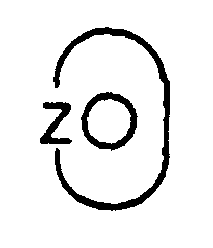


R3 is a moiety of the formula:
wherein Ar is a moiety selected from the group consisting of
wherein R4 is selected from hydrogen, lower alkyl(C1-C3), -CO lower alkyl(C1-C3):
R1 and R2 are selected from hydrogen, (C1-C3)lower alkyl, (C1-C3)lower alkoxy and halogen; R5 is selected from hydrogen, (C1-C3) lower alkyl, (C1-C3) lower alkoxy and halogen; R6 is selected from (a) moieties of the formulae:
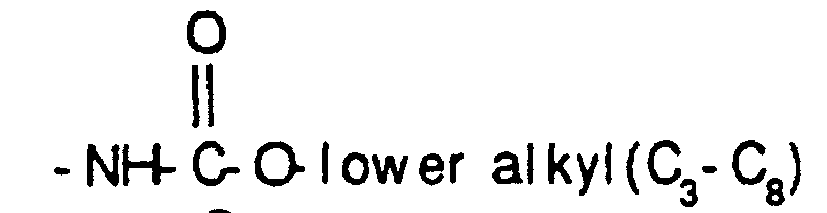
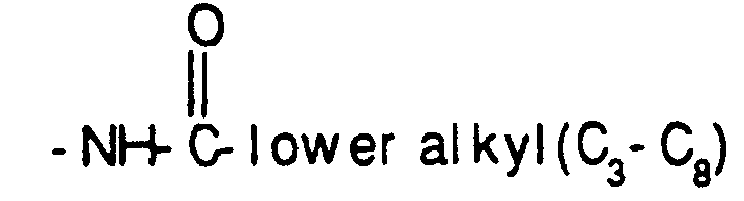
- NHSO2- lower alkyl (C3- C8) straight or branched,

- NHSO2- lower alkenyl (C3- C8) straight or branched,
wherein cycloalkyl is defined as C3-C6 cycloalkyl, cyclohexenyl or cyclopentenyl; Ra is independently selected from hydrogen, -CH3, -C2H5,

(b) moieties of the formula:
wherein R7 is lower alkyl(C3-C8), lower alkenyl(C3-C8),
- (CH2)p-cycloalkyl (C3-C6) ,

wherein p is one to five and X is selected from O, S, NH, NCH3; wherein R1 and R2 are as hereinbefore defined; (c) a moiety of the formula:
wherein J is Ra, lower alkyl(C3-C8) branched or unbranched, lower alkenyl(C3-C8) branched or unbranched, O-lower alkyl (C3-C8) branched or unbranched, -O-lower alkenyl(C3-C8) branched or unbranched, tetrahydrofuran, tetrahydrothiophene, the moieties: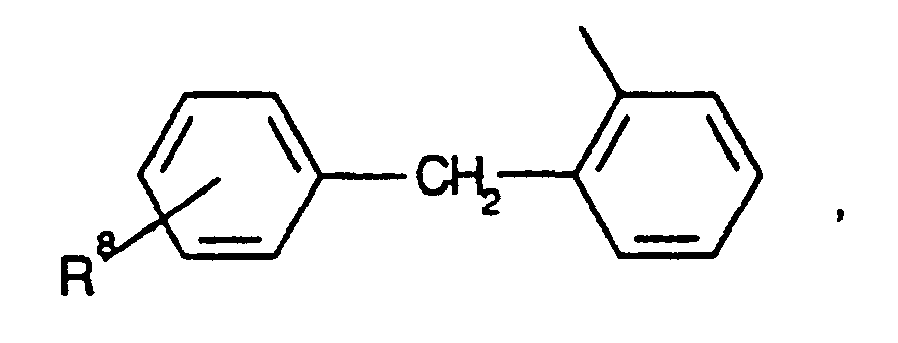
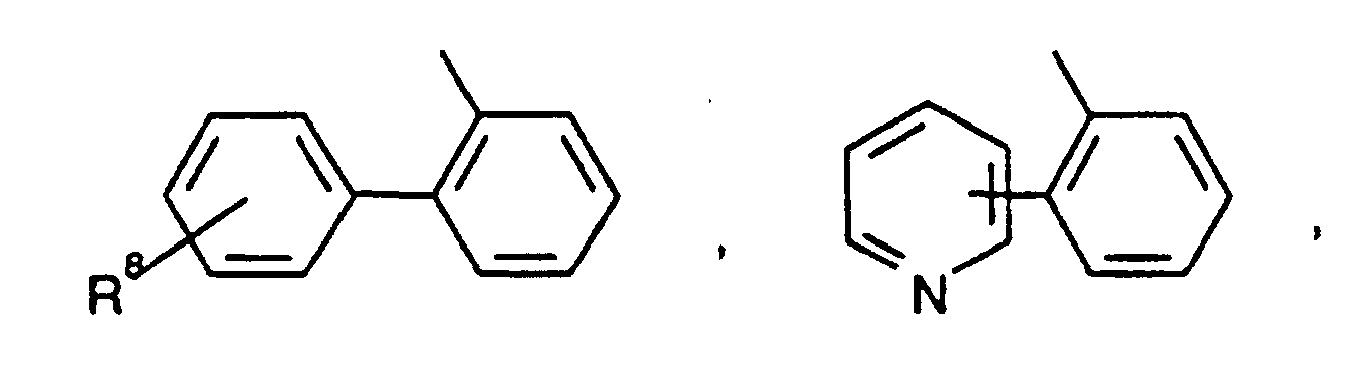

or -CH2-K' wherein K' is (C1-C3) lower alkoxy, halogen, tetrahydrofuran, tetrahydrothiophene or the heterocyclic ring moiety:
wherein D, E, F and G are selected from carbon or nitrogen and wherein the carbon atoms may be optionally substituted with halogen, (C1-C3)lower alkyl, hydroxy, -CO-lower alkyl(C1-C3), CHO, (C1-C3)lower alkoxy, -CO2-lower alkyl(C1-C3), and Ra and Rb are as hereinbefore defined;
(d) a moiety of the formula:

-S-lower alkyl(C1-C3),


wherein Ra and Rb are as hereinbefore defined and Ar' is selected from moieties of the formula:
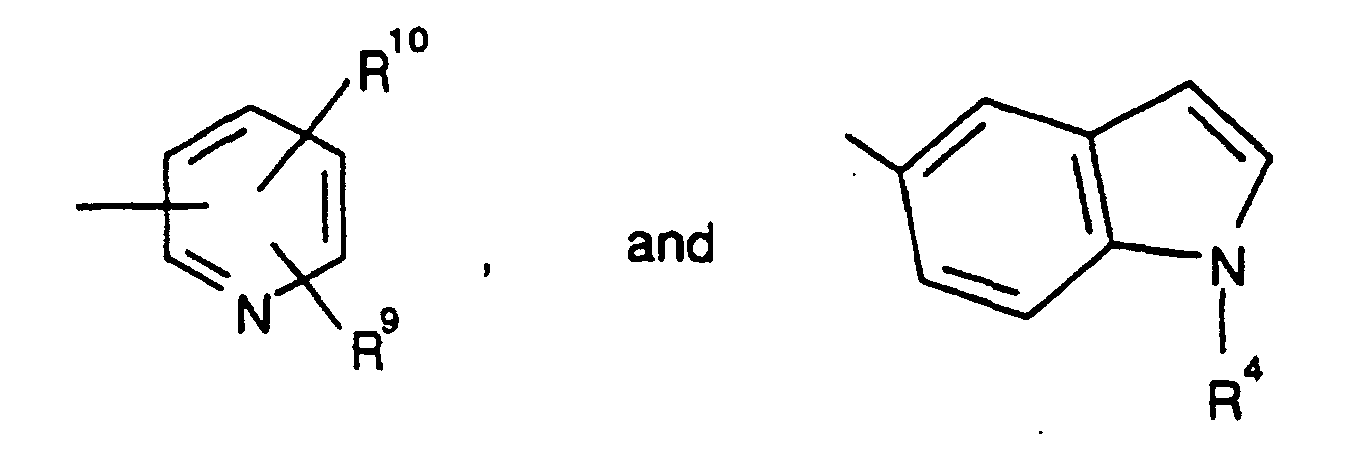
wherein W' is selected from O, S, NH, N-lower alkyl(C1-C3), NHCO-lower alkyl(C1-C3), and NSO2lower alkyl(C1-C3);
R8 and R9 are independently selected from hydrogen, lower alkyl(C1-C3), -S-lower alkyl(C1-C3), halogen, -NH-lower alkyl (C1-C3), -N-[lower alkyl (C1-C3)2, -OCF3, -OH, -CN, -S-CF3, -NO2, -NH2, O-lower alkyl(C1-C3),
-N(Rb)(CH2)vN(Rb)2, and CF3 wherein v is one to three and;
R10 is selected from hydrogen, halogen and lower alkyl(C1-C3); R14 is
-O- lower alkyl (C3- C8) branched or unbranched,
- NH lower alkyl(C3-C8) branched or unbranched ,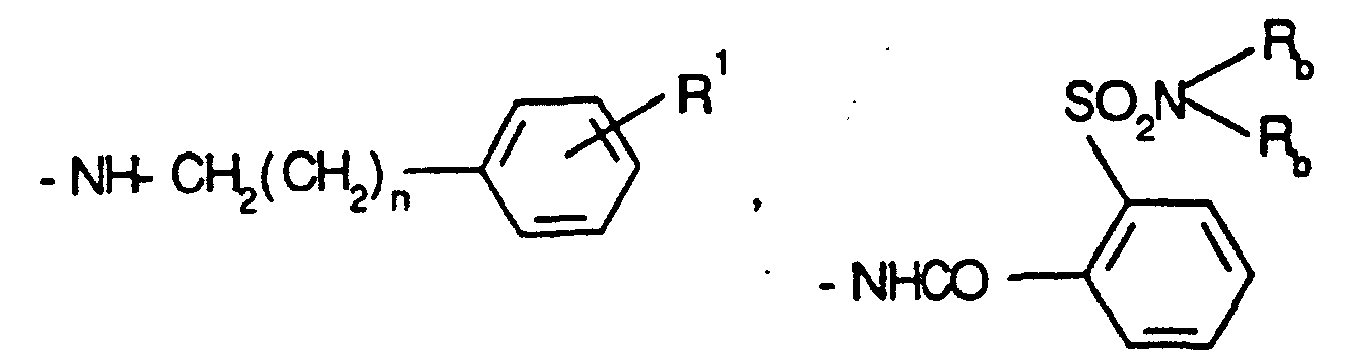

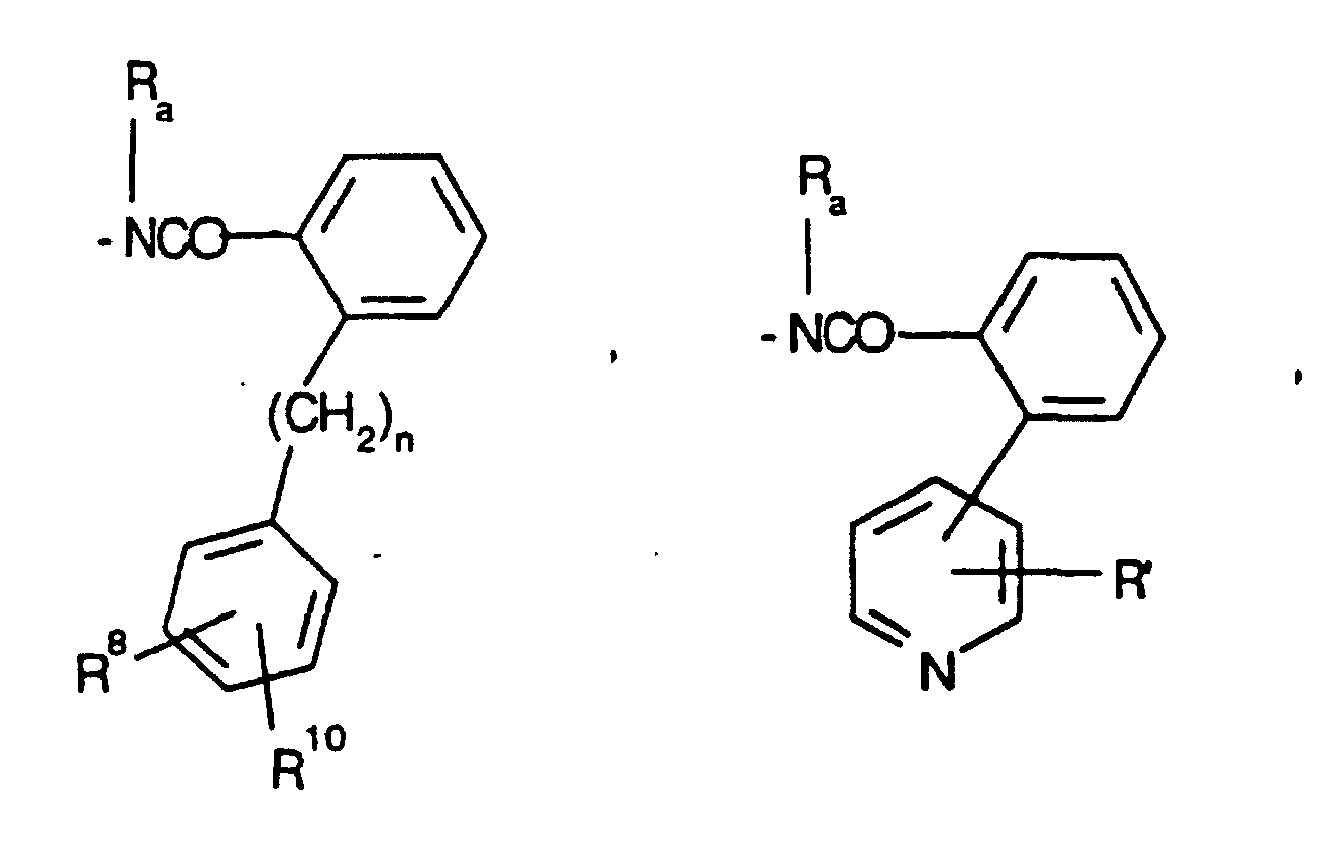


wherein n is 0 or 1 ; Ra is hydrogen, -CH3 or -C2H5; R' is hydrogen, (C1-C3)lower alkyl, (C1-C3)lower alkoxy and halogen; R20 is hydrogen, halogen, (C1-C3)lower alkyl, (C1-C3)lower alkoxy, NH2, -NH(C1-C3)lower alkyl, -N-[(C1-C3)lower alkyl]2,
- Within the group of the compounds defined by Formula I, certain subgroups of compounds are broadly preferred. Broadly preferred are those compounds wherein R3 is the moiety:


wherein R1, R2, R4, R5, R6 and R14 are as hereinbefore defined. - Especially preferred are compunds wherein R3 is the moiety:
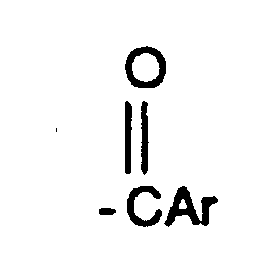
Ar is selected from the moieties: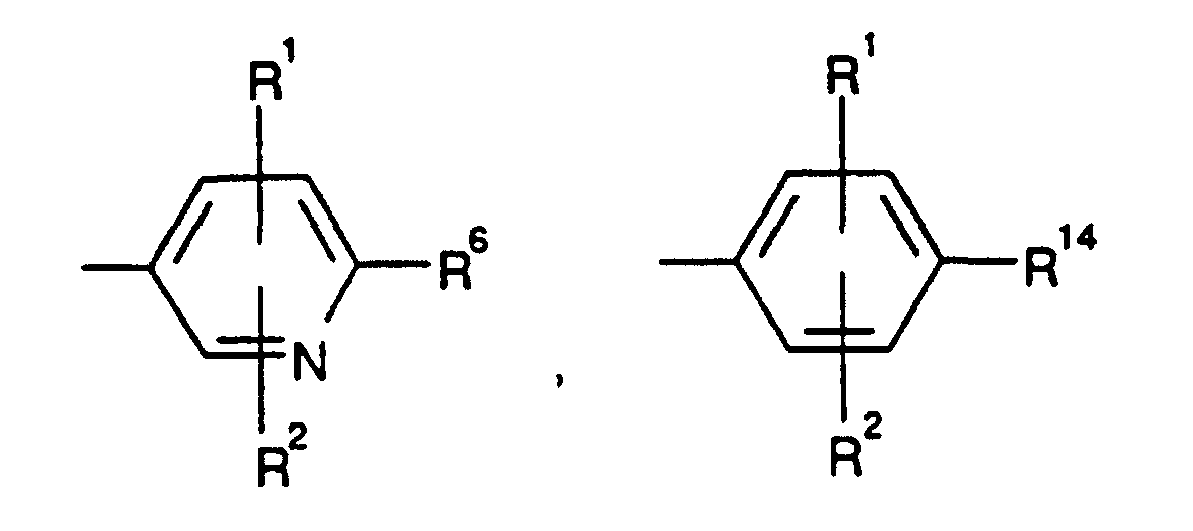
wherein R1, R2, R4, R6 and R14 are as hereinbefore defined. - Especially preferred are compounds wherein R3 is the moiety:

Ar is selected from the moieties:
Y is -(CH2)n and n is one or zero;
R6 is

wherein cycloalkyl is defined as C3-C6 cycloalkyl, cyclohexenyl or cyclopentenyl; and wherein X, Ra, Rb and R14 are as hereinbefore defined; and Ar' is selected from the moieties: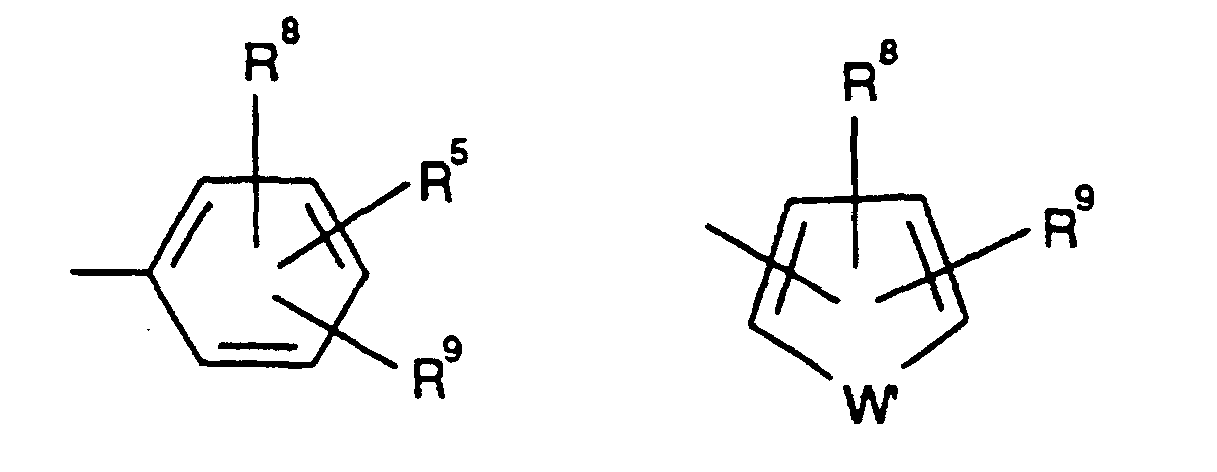
wherein R8, R9 and W' are as hereinbefore defined. - Also especially preferred are compounds wherein Y in Formula I is -(CH2)n- and n is zero or one; A-B is

- The most preferred of the compounds of Formula I are those wherein Y is -(CH2)n- and n is one; A-B is:

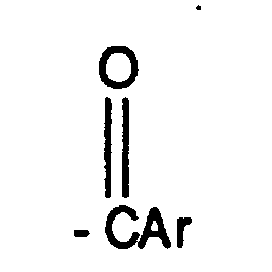


wherein R5, R8 and R9 are as previously defined. - The most highly broadly preferred of the compounds of Formula I are those wherein Y is -(CH2)n- and n is zero or one; wherein the moiety:

A-B is:
R3 is the moiety: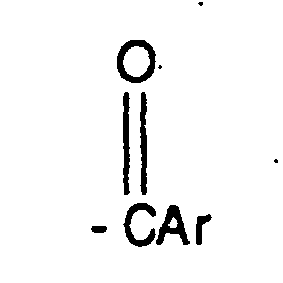
wherein Ar is selected from the moieties:


- More particularly preferred are compounds of the formulae:

wherein the moiety:
R3 is the moiety:
wherein Ar is selected from the moieties:


wherein X, Ra, Rb, R5, R7, R8, R9, R14, cycloalkyl and W' are as hereinbefore described;
R11 is selected from hydrogen, halogen, (C1-C3) lower alkyl, hydroxy,

- Also particularly preferred are compounds of the formulae:-

wherein m is one or two;
the moiety:
R3 is the moiety:

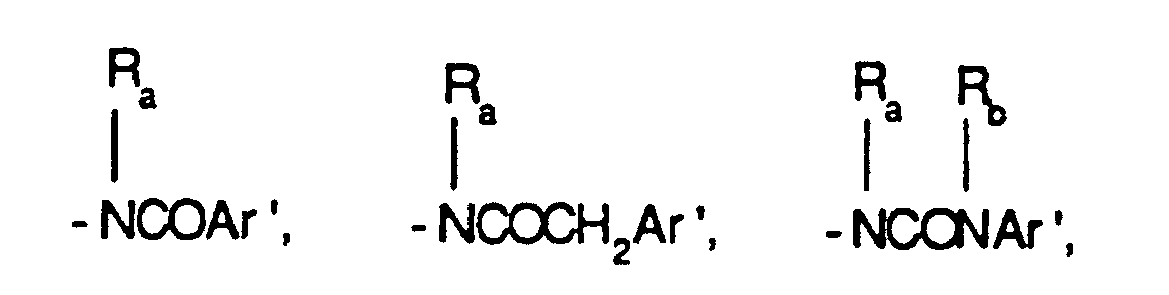
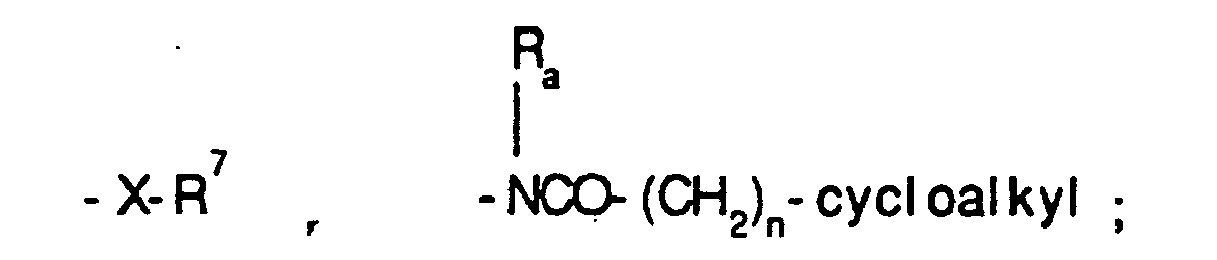

wherein X, Ra, Rb, R5, R6, R8, R9, R14, cycloalkyl and W' are as hereinbefore defined;
R11 is selected from hydrogen, halogen, (C1-C3) lower alkyl, hydroxy,

R12 is selected from hydrogen, (C1-C3)lower alkyl, halogen and (C1-C3)lower alkoxy. - More particularly preferred are compounds of the formulae:


wherein Ar is selected from the moieties:


wherein n is 0 or 1; Ra is hydrogen, -CH3 or -C2H5; R' is hydrogen, (C1-C3)lower alkyl, (C1-C3)lower alkoxy and halogen; R20 is hydrogen, halogen, (C1-C3)lower alkyl, (C1-C3)lower alkoxy, NH2, -NH(C1-C3)lower alkyl, -N-[(C1-C3)lower alkyl]2,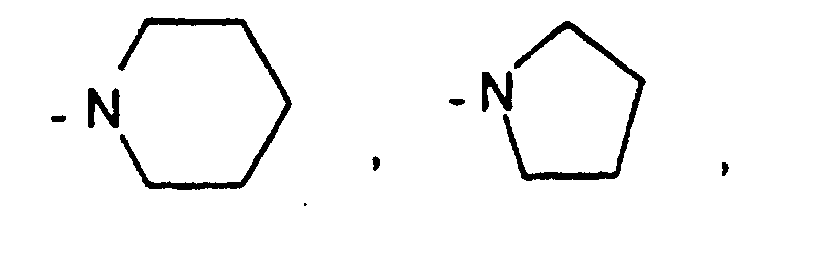
wherein cycloalkyl is defined as C3-C6 cycloalkyl, cyclohexenyl or cyclopentenyl; Rb is hydrogen; Ra is independently selected from hydrogen, -CH3, -C2H5 or -(CH2)qNCCH3)2; Ar' is selected from the moieties:
wherein q, X, Ra, Rb, R5, R7, R8, R9, R10, R11 and W' are as hereinbefore described;
R12 and R13 are independently selected from hydrogen, (C1-C3) lower alkyl, halogen, amino, (C1-C3) lower alkoxy or (C1-C3) lower alkylamino. - Also particularly preferred are compounds of the formulae:

wherein m is one or two;
R3 is the moiety:
wherein Ar is selected from the moieties:
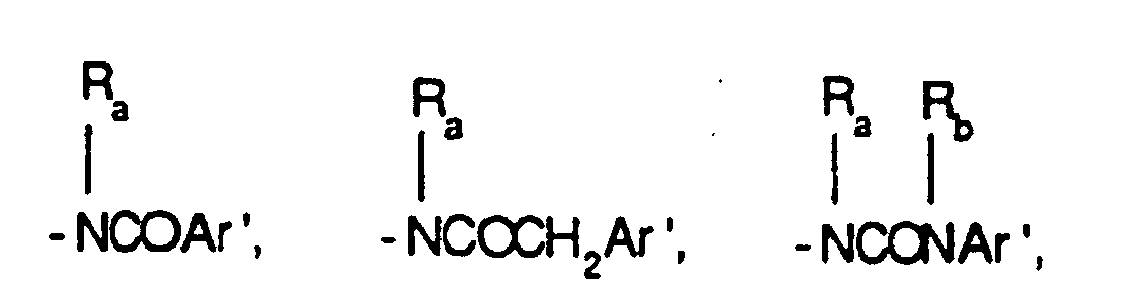

wherein cycloalkyl is defined as C3-C6 cycloalkyl, cyclohexenyl or cyclopentenyl; Rb is hydrogen; Ra is independently selected from hydrogen, -CH3, -C2H5 or -(CH2)qN(CH3)2: and Ar' is selected from the moieties:
wherein q, X, Ra, Rb, R5, R7, R8, R9, R11, R14 and W' are as hereinbefore defined;
R12 and R13 are independently selected from hydrogen, (C1-C3) lower alkyl, halogen, amino, (C1-C3) lower alkoxy or (C1-C3) lower alkylamino. - Compounds of this invention may be prepared as shown in Scheme I by reaction of tricyclic derivatives of Formula 3a and 3b with a substituted or unsubstituted 6-nitropyridine-3-carbonyl chloride 4 to give the intermediates 5a and 5b. Reduction of the nitro group in intermediates 5a and 5b gives the 6-aminopyridine derivatives 6a and 6b. The reduction of the nitro group in intermediates 5a and 5b may be carried out under catalytic reduction conditions (hydrogen-Pd/C; Pd/C-hydrazine-ethanol) or under chemical reduction conditions (SnCl2-ethanol; Zn-acetic acid TiCl3) and related reduction conditions known in the art for converting a nitro group to an amino group. The conditions for conversion of the nitro group to the amino group are chosen on the basis of compatability with the preservation of other functional groups in the molecule.
- Reaction of compounds of Formula 6a and 6b with aroyl chloride or related activated aryl carboxylic acids in solvents such as chloroform, dichloromethane, dioxane, tetrahydrofuran, toluene and the like in the presence of a tertiary base such as triethylamine and diisopropylethylamine or pyridine and the like, affords the compunds 8a and 8b which are vasopressin antagonists.
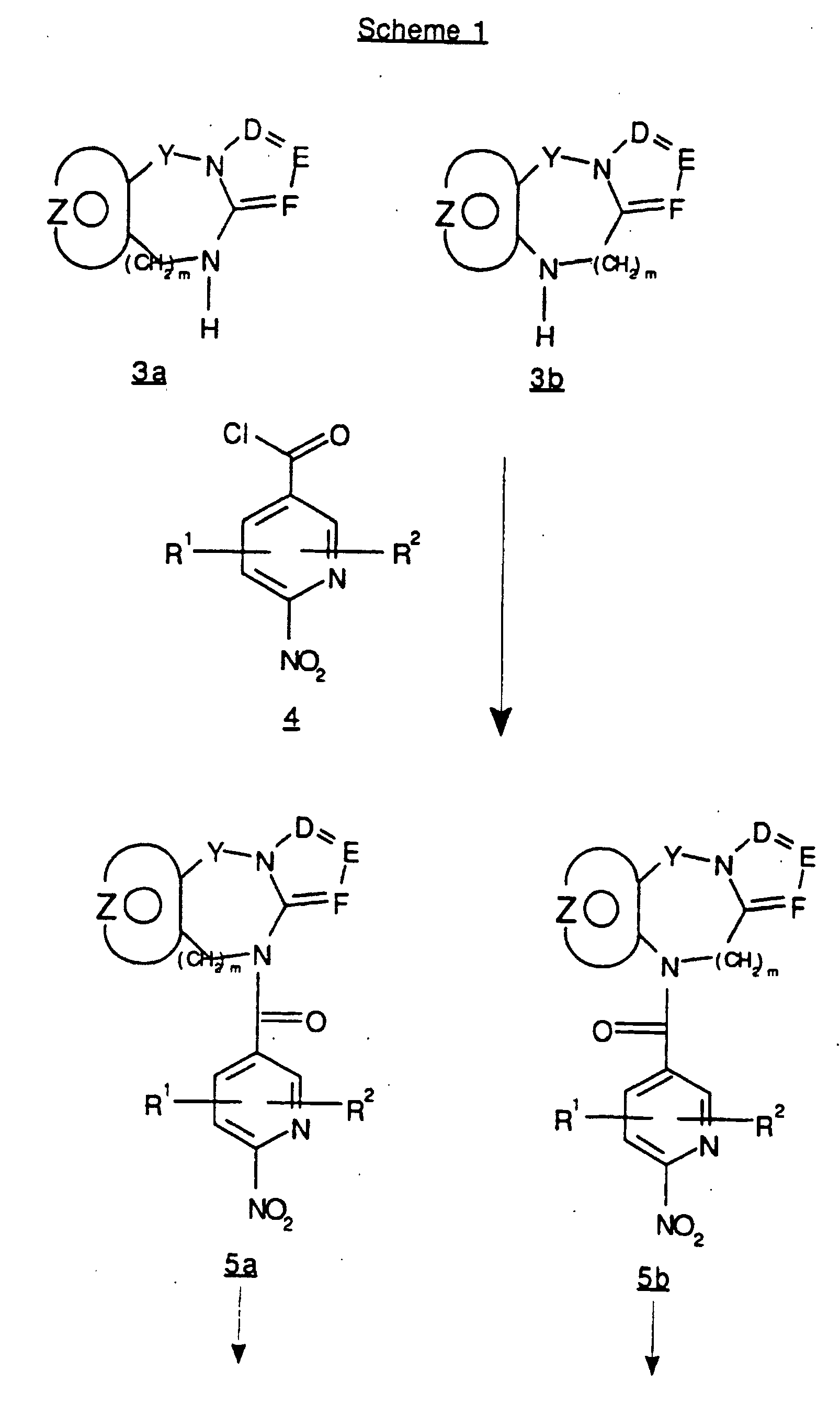


- Reaction of tricyclic derivatives of Formula 6a and 6b with either a carbamoyl derivative 9 or a isocyanate derivative 10 gives compounds (Scheme 2) of formula 11a and 11b which are vasopressin antagonists of Formula I wherein R6 is


- Reaction of tricyclic derivatives of Formula 6a and 6b with arylacetic acids, activated as the acid chlorides 12, anhydrides, mixed anhydrides or activated with known activating reagents, gives compounds 13a and 13b (Scheme 3).

- The compounds of Formula I wherein Y, A-B, Z, R1, R2 and R3 are as defined and the Ar moiety of R3 (-COAr) is


- Alternatively, the compounds of Formula I wherein Y, A-B, Z, R1, R2 and R3 are as defined and the Ar moiety of R3 (-COAr) is

wherein R6 is the moiety
-X-R7 and X is S, NH, NCH3
may be prepared as shown in Scheme 5 by first converting tricyclic derivatives 3a and 3b into the intermediates 17a and 17b and then reacting these intermediates with potassium, sodium, or lithium anions (R7-X-) to give the products 16a and 16b. The symbol M+ is a metal cation derived from reacting a compound HXR7 with a metal hydride (sodium or potassium hydride, for example) or LDA, n-butyl lithium, lithium bis(trimethylsilyl)amide and the like. - The reaction of intermediates 17a and 17b with the moieties R7-NH2 and R7-NHCH3 may also be carried without first forming the corresponding anions. Thus, heating intermediates 17a and 17b with excess R7-NH2 or R7-NHCH3 in an inert solvent or without solvent gives the products 16a and 16b wherein X is NH or NCH3.

- Alternatively, the intermediates 17a and 17b may be converted to the more reactive fluoride derivatives 18a and 18b as shown in Scheme 6. Reaction of the fluoride intermediates 18a and 18b with amines NH2R7 and CH3NHR7 gives the 6-aminonicotinoyl derivatives 19a and 19b.
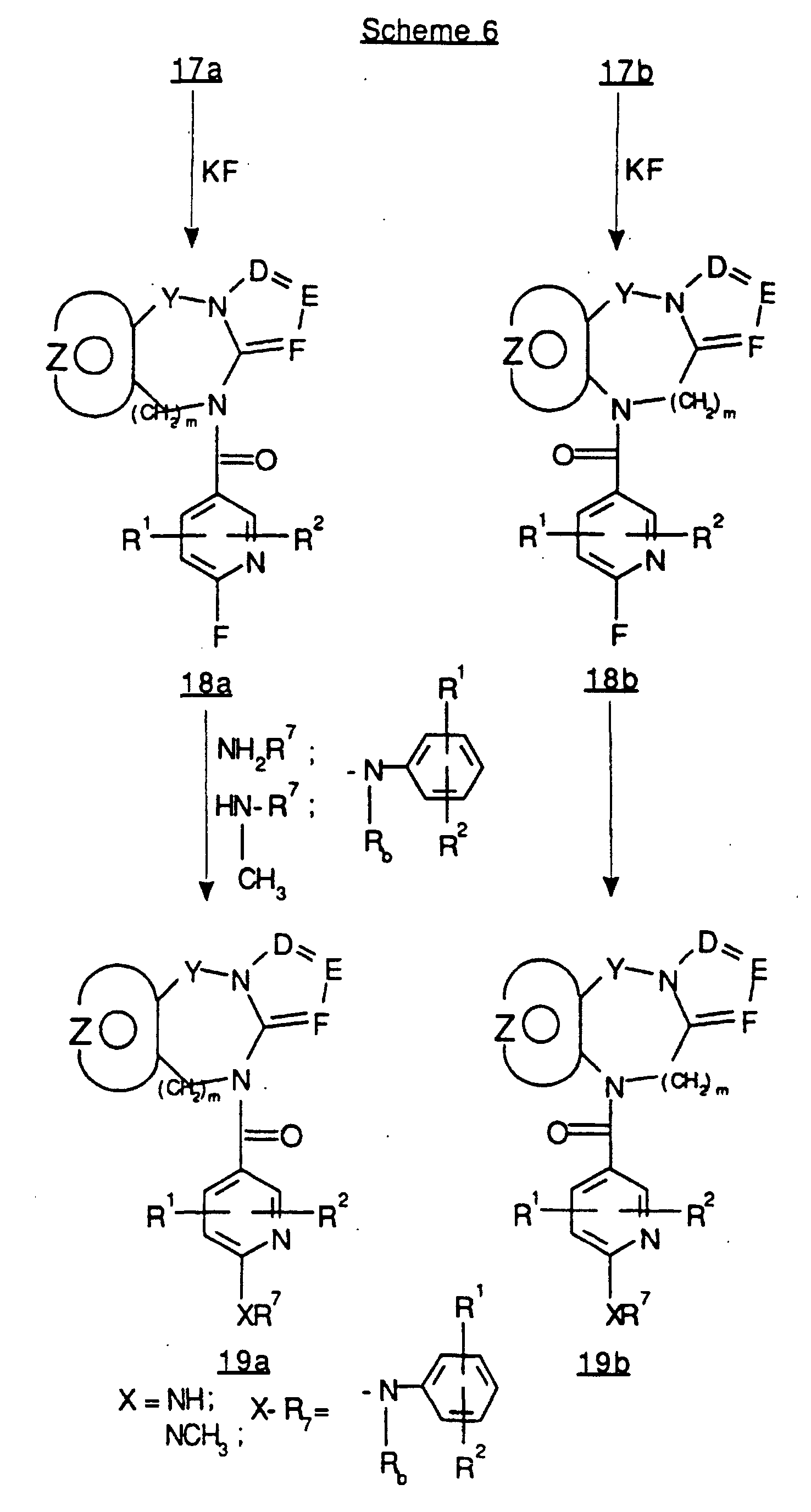
- As an alternative method for synthesis of compounds of this invention as depicted in Formula I wherein Y, A-B, D, E, F and Z are as previously described and R3 is

- The pyridine carboxylic acids are activated for coupling by conversion to an acid chloride, bromide or anhydride or by first reacting with an activating reagent such as N,N-dicyclocarbodiimide, diethyl cyanophosphonate and related "peptide type" activating reagents. The method of activating the acids 20 for coupling to the tricyclic derivatives 3a and 3b is chosen on the basis of compatibility with other substituent groups in the molecule. The method of choice is the conversion of the 3-pyridinyl carboxylic acids 20 to the corresponding 3-pyridinylcarbonyl chlorides. The 3-pyridinylcarbonyl chlorides 22 may be prepared by standard procedures known in the art, such as reaction with thionyl chloride, oxalyl chloride and the like. The coupling reaction is carried out in solvents such as halogenated hydrocarbons, toluene, xylene, tetrahydrofuran, or dioxane in the presence of pyridine or tertiary bases such as triethylamine and the like (Scheme 7). Alternatively, the 3-pyridinylcarbonyl chlorides 22, prepared from the carboxylic acids 20, may be reacted with derivatives 3a and 3b in pyridine with or without 4-(dimethylamino)pyridine.
- In general, when the 3-pyridinyl carboxylic acids 20 are activated with "peptide type" activating reagents, higher temperatures are required than when the 3-pyridinylcarbonyl chlorides are used.


- In derivatives 25 where R15 is an α-carboxylic and/or an α-carboxylic ester function, the intermediate amino acid derivative 27 is first isolated and then ring closed. The ring closure of derivatives 27 may be carried out by heating or by activation of the acid function (27:R15=H) for ring closure. The cyclic lactams 28 are conveniently reduced with diborane or lithium aluminum hydride to give intermediates 29. Reaction of tricyclic derivatives 29 with aroyl chlorides (ArCOCl), where Ar is as hereinbefore defined, gives diazepines 26.
- Tricyclic derivatives of structural type 36 may be prepared as shown in Scheme 9. Formylation of 32 under known conditions in the literature, such as Vilsmeier formylation, gives intermediates 35 which on reduction and ring closure affords tricyclics 37.
- Where the ring containing the symbol Z is a substituted or unsubstituted phenyl group, the procedure gives 4,5-dihydropyrrolo[1,2-a]-quinoxalines 36. These derivatives 36 and 37 may be reacted with aroyl chlorides (ArCOCl) wherein Ar is as previously defined or with a substituted or unsubstituted 6-nitropyridine-3-carbonyl chloride or with a nitrogen protecting group, such as benzyloxycarbonyl chloride to give compounds 38 and 39. The compounds 38 and 39 may be reacted with chlorine, bromine or halogenating reagents such as N-chlorosuccinimide, N-bromosuccinimide and the like to give compounds 40 and 41 wherein R17 is a halogen atom. The derivatives 38 and 39 may be formylated and acetylated to give products 40 and 41 wherein R17 is a CHO or a -COCH3 group. Halogenation, formylation and acetylation of derivatives 36 gives 1-substituted 4,5-dihydropyrrolo[1,2-a]quinoxalines. The derivatives 38, 39, 40 and 41 wherein R16 is a substituted or unsubstituted 6-nitro-3-pyridinylcarbonyl group are reduced to give the 6-amino-3-pyridinylcarbonyl derivatives 42d and 43d which are reacted with reagents Ar'COCl, Ar'CH2COCl or

wherein Ar' and Rb are as previously hereinbefore defined, to give tricyclic diazepines 44 and 45.


- The compounds of this invention wherein R3 is the moiety:


and R6, Ra, Rb, Y, R1, R2, Z and Ar' are as previously defined and wherein R11 is selected from the moieties:


- The tricyclic pyrrolodiazepines 46 and 47 are reacted with appropriate amines in the presence of formaldehyde to give the aminomethylene derivatives 48 and 49. The reaction may be carried out with aqueous formaldehyde or its equivalent in the presence of the appropriate amine in a lower alkanol at room temperature or preferably at temperatures of 50°C-100°C. The aminomethylene derivatives 48 and 49 may be converted to hydrochloride salts or succinic acid and maleic acid salts as well as other pharmaceutically acceptable acid salts.


- As shown in Scheme 11, reaction of tricyclic derivatives of Formula 3a and 3b with substituted and unsubstituted arylcarbonyl chlorides 50, wherein R1, R2 and R14 are hereinbefore defined gives compounds 51 and 52 which are vasopressin antagonists.


- Reaction of tricyclic derivatives of Formula 3a and 3b with a substituted or unsubstituted phenyl carbonyl chloride 53 gives intermediates 54a and 54b. The reduction of the nitro group in intermediates 54a and 54b may be carried out under catalytic reduction conditions (hydrogen-Pd/C; Pd/C-hydrazine-ethanol) or under chemical reduction conditions (SnCl2-ethanol; Zn-acetic acid TiCl3) and related reduction conditions known in the art for converting a nitro group to an amino group. The conditions for conversion of the nitro group to the amino group are chosen on the basis of compatability with the preservation of other functional groups in the molecule.
- Reaction of compounds of Formula 55a and 55b with acid chlorides, R25 COCl or related activated acid carboxylic acids in solvents such as chloroform, dichloromethane, dioxane, tetrahydrofuran, toluene and the like in the presence of a tertiary base such as triethylamine and diisopropylethylamine or pyridine and the like, affords the compounds 56a and 56b which are vasopressin antagonists.
- The acid chlorides R25COCl are those wherein R25 is selected from the group
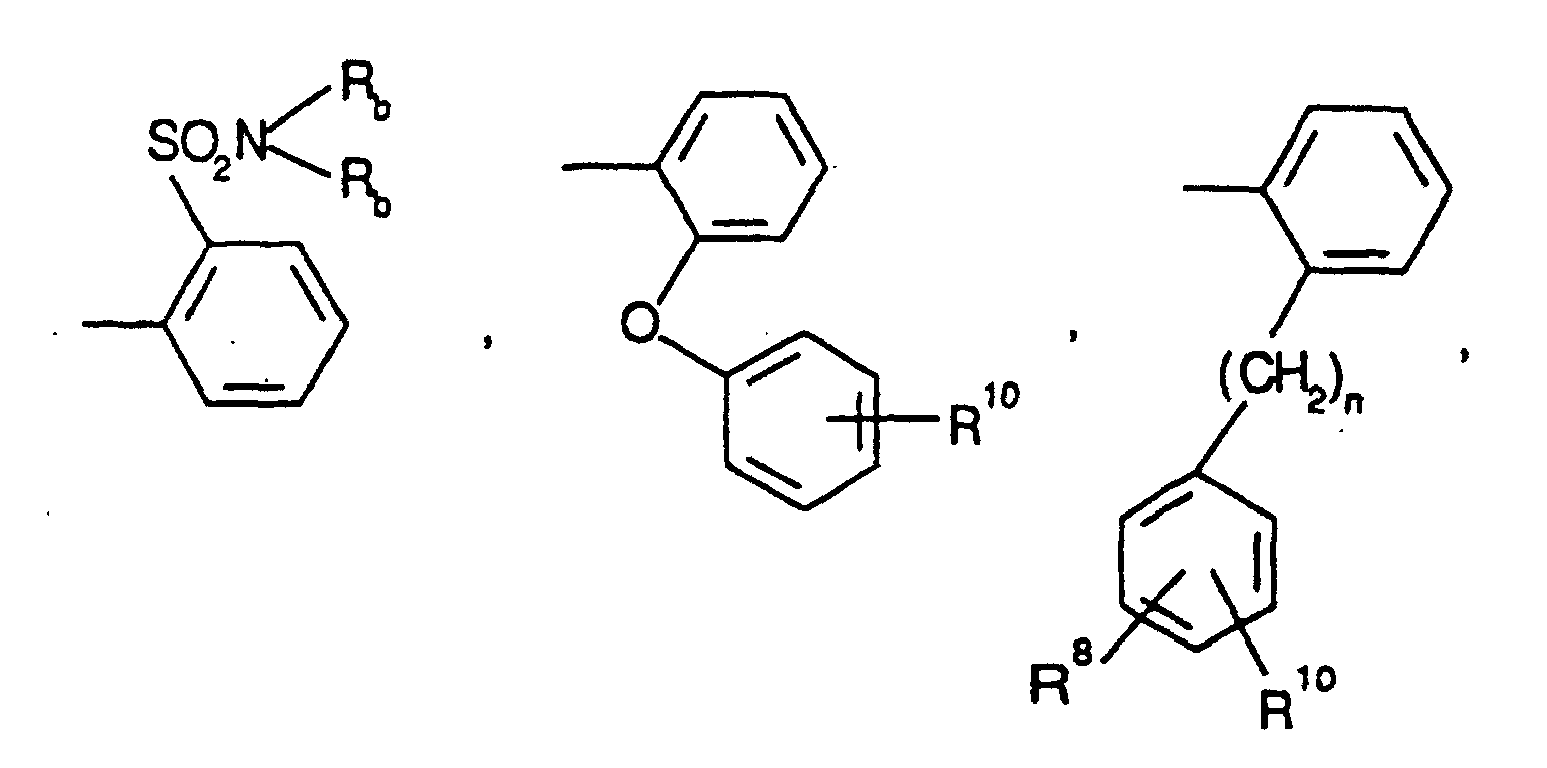

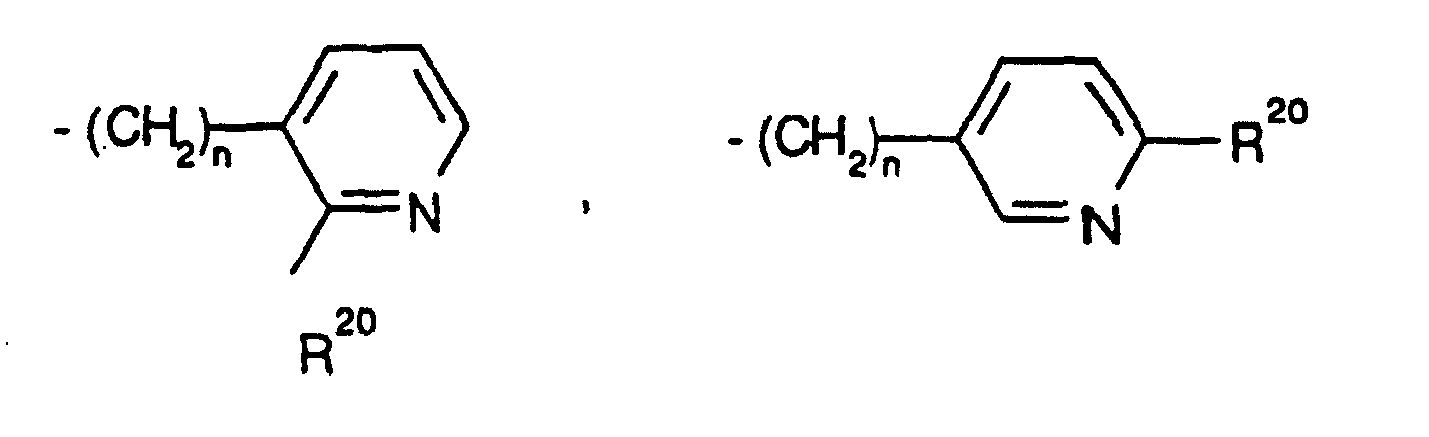
- Wherein n is 0 or 1; Ra is hydrogen, -CH3 or -C2H5; R' is hydrogen, (C1-C3)lower alkyl, (C1-C3)lower alkoxy and halogen; R20 is hydrogen, halogen, (C1-C3)-lower alkyl, C1-C3)lower alkoxy, NH2, -NH(C1-C3)-lower alkyl, -N-((C1-C3)lower alkyl]2,
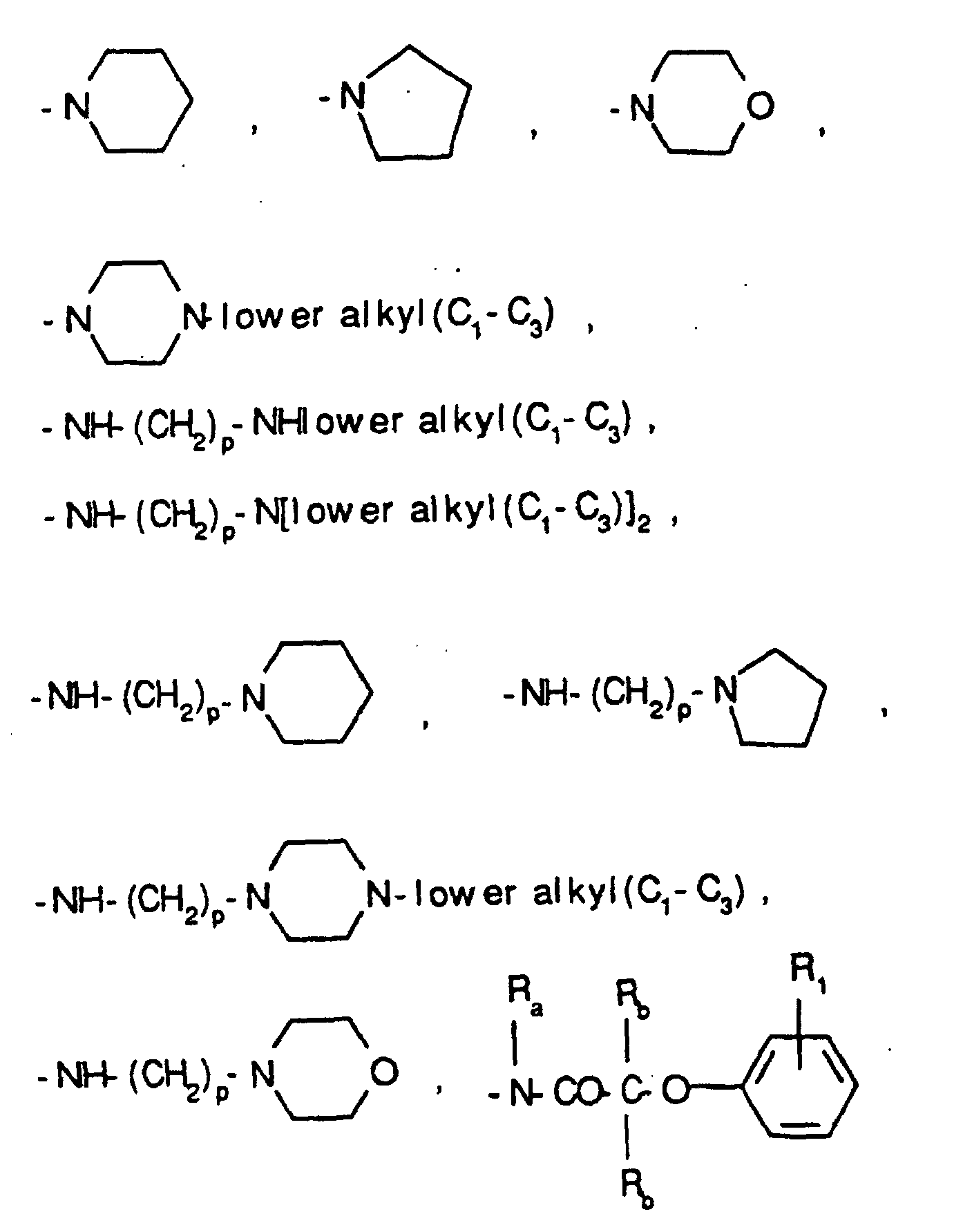
- Preparation of some tricyclic diazepines useful for starting materials for the synthesis of compounds of this invention are shown in Schemes 8 and 9. Other tricyclic diazepines are prepared by literature procedures or by methods known in the art or by procedures reported for the synthesis of specific known tricyclic diazepines. These diazepine ring systems discussed below when subjected to reaction conditions shown in Schemes 1, 2, 3, 4, 5, 6, 7, 9 and 10 give the compounds of this invention.
- The tricyclic diazepine ring system, 10,11-dihydro-5H-imidazo [2,1-c][1,4]benzodiazepine,

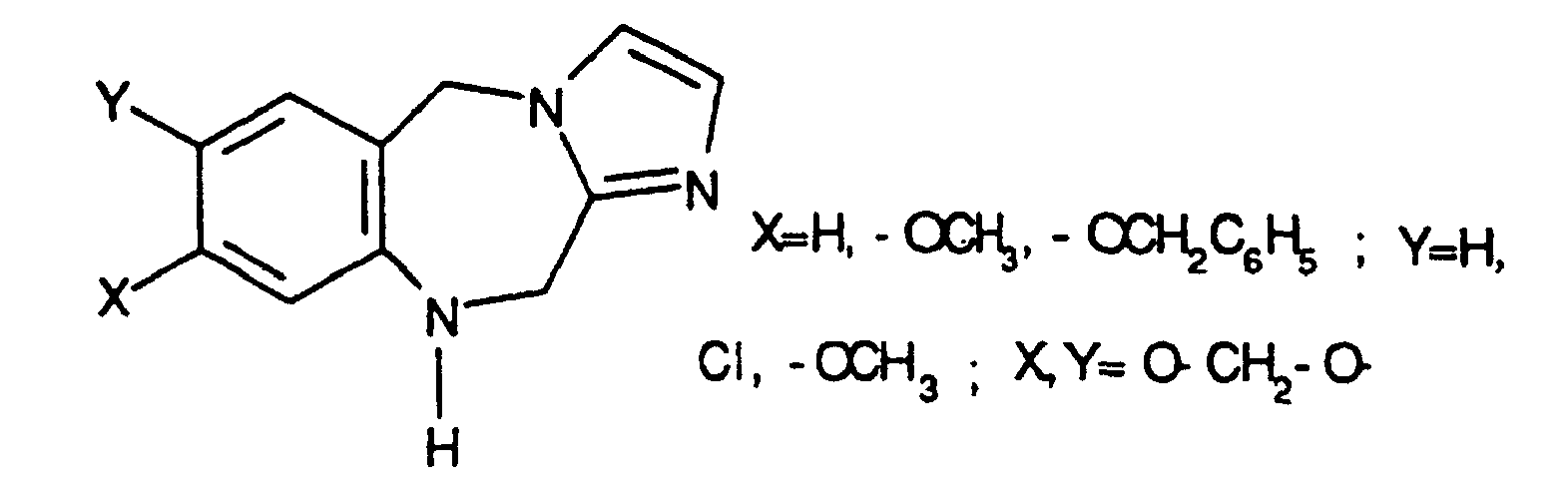
- The synthesis of 9, 10-dihydro-4H-furo [2,3-e]-pyrrolo[1,2-a] [1,4]diazepin-9-one

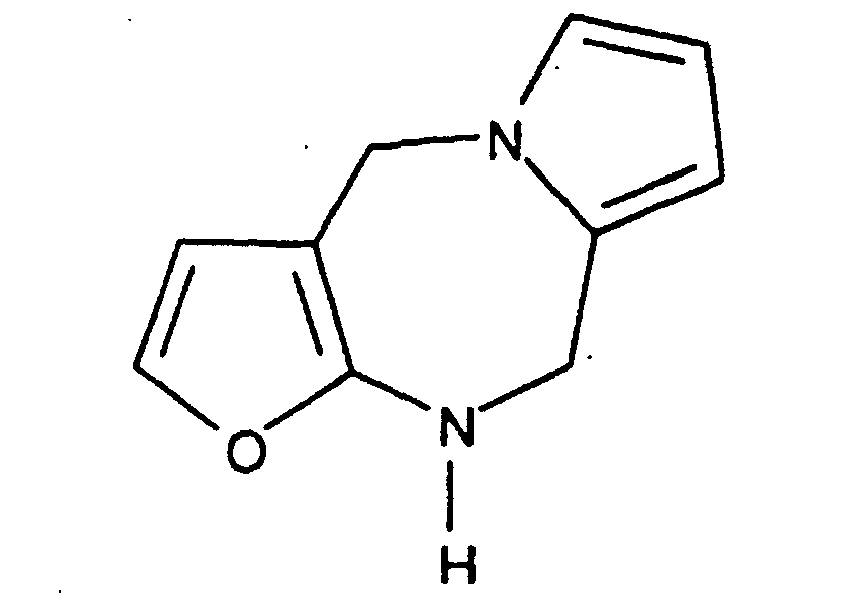


- The preparation of 5,6-dihydro-4H-[1,2,4]-triazolo[4,3-a] [1,5]benzodiazepin-5-ones from 1,2-dihydro-3H-4-dimethylamino-1,5-benzodiazepin-2-ones has been described by M. DiBroccio, G. Roma, G. Grossi, M. Ghia, and F. Mattioli Eur. J. Med. Chem; 26, 489(1991). Reduction of 5,6-dihydro-4H-[1,2,4]triazolo[4,3-a]-[1,5]benzodiazepin-5-ones with diborane or lithium hydride gives the tricyclic 5,6-dihydro derivatives.

- The compounds of this invention and their preparation can be understood further by the following examples, but should not constitute a limitation thereof.
- To a solution of 3.76 g of 1-(2-nitrophenyl)pyrrole in 20 ml of N,N-dimethylformamide at 0°C is added dropwise with stirring 3 ml of phosphorus oxychloride. Stirring is continued for 30 minutes and the reaction mixture is heated at 90°C for 1 hour. After cooling to room temperature the mixture is treated with crushed ice and the pH adjusted to 12 with 2 N sodium hydroxide. The resulting suspension is filtered, washed with water and dried to give 5.81 g of the desired product as a light yellow solid, m.p. 119°-122°C.
- To a solution of 1.0 g of 1-(2-nitrophenyl)-1H-pyrrole-2-carboxaldehyde in 40 ml of ethyl alcohol and 40 ml of ethyl acetate, under argon, is added 40 mg of 10% Pd/C. The mixture is hydrogenated at 40 psi for 2 hours and filtered through diatomaceous earth. The filtrate is concentrated in vacuo to a residue which is dissolved in ether and treated with hexanes to give 0.35 g of the desired product as a beige solid, m.p. 108°-110°C.
- To an ice bath cooled solution of 5.6 g of 2-pyrrolecarboxaldehyde in 40 ml of tetrahydrofuran is added 2.4 g of 60% sodium hydride in mineral oil. The temperature elevates to 40°C. After stirring for 20 minutes a solution of 11.0 g of 2-nitrobenzoyl chloride in 20 ml of tetrahydrofuran is added dropwise over 20 minutes. After stirring in the cold for 45 minutes, the reaction mixture is poured into ice water and ether then filtered. The cake is washed with additional ether. The two phase filtrate is separated and the ether layer dried and concentrated in vacuo to give 10 g of a residue as a dark syrup which is scratched with ethanol to give crystals which are collected by filtration, washed with ether and then dried to afford 3.2 g of solid, m.p. 95-99°C.
- A mixture of 1.5 g of N-(2-nitrobenzoyl)-pyrrole-2-carboxaldehyde in 50 ml of ethyl acetate, 2 drops of concentrated HCl and 0.3 g of 10% Pd/C is shaken in a Parr apparatus under hydrogen pressure for 1.75 hours. The mixture is filtered, 0.4 g of 10% Pd/C added and the mixture shaken in a Parr apparatus under hydrogen pressure for 2 hours. The reaction mixture is filtered through diatomaceous earth and the filtrate concentrated in vacuo to give 1.0 g of a yellow oil. The residue is purified on thick layer chromatography plates by elution with 4:1 ethyl acetate:hexane to give 107 mg of the desired product as an oily solid.
- To 5.56 g of 60% sodium hydride in mineral oil, washed three times with hexane, is added 300 ml of N,N-dimethylformamide under argon. The reaction mixture is cooled in an ice-bath and 13.2 g of pyrrole-2-carboxaldehyde is added slowly. The reaction mixture becomes a complete solution and is stirred for an additional 10 minutes. While stirring, 30.0 g of 2-nitrobenzyl bromide is added slowly. After complete addition, the reaction mixture is stirred for 30 minutes, the ice bath is removed and the reaction mixture stirred at room temperature for 24 hours. The N,N-dimethylformamide is concentrated in vacuo to give a residue which is stirred with ice water for 1 hour. The resulting solid is collected, air dried, then vacuum dried to give 30.64 g of the desired product as a tan solid, m.p. 128-132°C.
- A mixture of 30.6 g of 1-(2-nitrobenzyl)-2-pyrrolecarboxaldehyde and 3.06 g of 10% Pd/C in 400 ml of ethyl acetate and 400 ml of ethyl alcohol is hydrogenated over 18 hours. The reaction mixture is filtered through diatomaceous earth and the filtrate is treated with activated carbon and filtered through diatomaceous earth. The filtrate is concentrated in vacuo to give a residue which is dissolved in methylene chloride containing ethyl alcohol. The solution is passed through a pad of silica gel and the pad washed with a 7:1 hexane-ethyl acetate solution to give 16.31 g of the desired product as solid, m.p. 145-148°C.
- A mixture of 2.0 g of 3-methylbenzo[b]-thiophene-2-acetic acid and 19.4 ml of thionyl chloride is heated at reflux for 1 hour. The volatiles are evaporated in vacuo to give a residue which is concentrated from toluene three times and dried under vacuum to give 2.25 g of the desired product as a residue.
- A solution of 2.0 g of 4-chloro-O-anisic acid in 22 ml of thionyl chloride is heated at reflux for 1 hour. The volatiles are evaporated in vacuo to give a residue which is concentrated from toluene three times and dried under vacuum to give 2.0 g of the desired product as a residue.
- A solution of 2.0 g of o-trifluoromethylbenzoic acid in 21 ml of thionyl chloride is heated at reflux for 1 hour. The volatiles are evaporated in vacuo to give a residue which is concentrated from toluene three times and dried under vacuum to give 2.1 g of the desired product as a residue.
- A solution of 2.0 g of o-tolylacetic acid in 27 ml of thionyl chloride is heated at reflux for 1 hour. The volatiles are evaporated in vacuo to give a residue which is concentrated from toluene three times and dried under vacuum to give 2.1 g of the desired product as a light brown oil.
- A mixture of 1.81 g of 3-methyl-4-nitrobenzoic acid and 1.25 g of thionyl chloride in 75 ml of chloroform is heated at reflux under argon for 48 hours. The volatiles are removed in vacuo to a residue which is evaporated with toluene several times in vacuo. The residue is partially dissolved in methylene chloride and filtered free of solids and the filtrate evaporated in vacuo to give 1.47 g of the desired acid chloride.
- A 2.0 g portion of sodium hydride (60% in oil) is washed with pentane two times. To the residue is added 110 ml of N,N-dimethylformamide under argon. With stirring and external cooling, 4.80 g of 2-imidazole-carboxaldehyde is added and the cooling bath removed. Slight external heating results in a yellow solution. The reaction mixture is chilled in ice and 10.8 g of 2-nitrobenzyl bromide is added. The reaction mixture is stirred at 0°C for 18 hours. The volatiles are removed in vacuo to a residue which is stirred with ice water, filtered and the cake washed well with water and suction dried to give 10.9 g of the desired product as a solid, m.p. 141-144°C. MH+ 232.
- A 5.0 g sample of 1-(o-nitrobenzyl)-imidazole-2-carboxaldehyde is dissolved in 150 ml of hot ethyl alcohol, cooled to room temperature and filtered. To the filtrate is added 0.5 g of 10% Pd/C and the mixture hydrogenated at 48 psi for 4 hours. An additional 0.5 g of 10% Pd/C is added and hydrogenation continued for 25 hours at 65 psi. The mixture is filtered through diatomaceous earth and the cake washed with ethyl acetate. The filtrate is evaporated in vacuo to a residue which is dissolved in methylene chloride, treated with activated carbon, filtered through diatomaceous earth and hexanes added to the filtrate at the boil to give 1.86 g of the desired product as a crystalline solid, m.p. 164-170°C.
- To a suspension of 4 mmol of lithium aluminum hydride in 20 ml of anhydrous tetrahydrofuran is added a 1 mmol solution of 10,11-dihydro-11-oxo-5H-imidazo-[2,1-c] [1,4]benzodiazepine and the mixture is refluxed for 24 hours and cooled at 0°C. To the mixture is added dropwise 0.12 ml of water and 6 ml of 1 N sodium hydroxide. The mixture is extracted with ethyl acetate and the solvent removed to give the desired product as a solid. Recrystallization from methylene chloride-hexane gives crystals, m.p. 164-170°C.
- To a suspension of 4 mmol of lithium aluminum hydride in 25 ml of anhydrous tetrahydrofuran is added 1 mmol of 9,10-dihydro-4H-furo[2,3-e]pyrrolo[1,2-a][1,4]-diazepin-9-one. The mixture is refluxed for 12 hours and allowed to stand overnight. To the mixture is added dropwise 0.12 ml of water and then 6 ml of 1 N sodium hydroxide. The mixture is extracted with ethyl acetate and the extract dried (Na2SO4). The volatiles are removed in vacuo to give the desired product as a solid.
- A solution of 1 mmol of 4H-furo[2,3-e]pyrrolo-[1,2-a][1,4]diazepine and 0.2 g of 10% Pd/C in 10 ml of ethanol is hydrogenated for 18 hours. The reaction mixture is filtered through diatomaceous earth and the filtrate is evaporated in vacuo to give the desired product as a solid.
- To a mixture of 7.0 g of 9-oxo-9,10-dihydro-4H-pyrrolo[1,2-a]thieno[2,3-e][1,4]diazepin in 25 ml of anhydrous tetrahydrofuran is added 9 ml of 10 molar boron-dimethylsulfide in tetrahydrofuran. The mixture is refluxed for 6 hours. The solution is cooled to room temperature and 25 ml of methanol added dropwise. The volatiles are removed under vacuum. To the residue is added 100 ml of 2 N NaOH. The mixture is refluxed 5 hours and filtered. The solid is extracted with dichloromethane and the extract is washed with 2 N citric acid, water and dried (Na2SO4). The solvent is removed in vacuo to give the desired product as a solid.
- To a suspension of 7.0 g of 5-oxo-4,5-dihydro-pyrrolo[1,2-a]thieno[3,2-e][1,4]diazepine in 25 ml of anhydrous tetrahydrofuran is added 9 ml of 10 M borane-dimethylsulfide in tetrahydrofuran. The mixture is refluxed for 6 hours. The solution is cooled to room temperature and 25 ml of methanol added dropwise. The volatiles are removed under vacuum. To the residue is added 100 ml of 2 N NaOH. The mixture is refluxed 5 hours and filtered. The solid is extracted with dichloromethane and the extract is washed with 2 N citric acid, water and dried (Na2SO4). The solvent is removed to give a solid.
- A mixture of 7.0 g of 5,6-dihydro-4H-[1,2,4]-triazolo-[4,3-a][1,5]benzodiazepin-5-one in 25 ml of tetrahydrofuran is added 9 ml of 10 M borane-dimethylsulfide in tetrahydrofuran. The mixture is refluxed for 6 hours, cooled to room temperature and 25 ml of methanol added dropwise. The volatiles are removed under vacuum and to the residue is added 100 ml of 2 N sodium hydroxide. The mixture is refluxed for 5 hours, chilled and extracted with dichloromethane. The extract is washed with 2 N citric acid, water and dried (Na2SO4). The solvent is removed under vacuum to give a solid. The solid is purified by chromatography on silica gel to give the desired product.
- A sample of 4.7 g of sodium hydride (60% in oil) is washed with hexane (under argon). To the sodium hydride is added 200 ml of dry N,N-dimethylformamide and the mixture is chilled to 0°C . To the mixture is added 10.11 g of pyrrole-2-carboxaldehyde in small portions. The mixture is stirred 10 minutes and 15.0 g of 1-fluoro-2-nitrobenzene added dropwise. After the addition, the mixture is stirred at room temperature 16 hours and the mixture concentrated (65°C) under high vacuum. To the residue is added 400 ml of dichloromethane and the mixture washed with 150 ml each of H2O, brine and dried (Na2SO4). The solvent is removed in vacuo to give a yellow solid. Crystallization from ethyl acetate-hexane (9:1) gives 17.0 g of light yellow crystals, m.p. 119°-122°C.
- To an ice cooled mixture of 2.1 g of pyrrole-2-carboxylic acid and 2.3 g of methyl 3-aminothiophene-2-carboxylate in 40 ml of dry dichloromethane is added 4 g of N,N-dicyclohexylcarbodiimide. The mixture is stirred at room temperature for 3 hours and filtered. The filter cake is washed with dichloromethane and then extracted twice with 60 ml of acetone. The acetone extract is concentrated to dryness to give 0.8 g of solid, m.p. 214-218°C. To a suspension of the preceding compound (1.19 g) in 20 ml of dry tetrahydrofuran is added 0.2 g of sodium hydride (60% in oil). After the hydrogen evolution, the mixture is stirred and refluxed for 4.5 hours, cooled and poured into ice-water. The precipitated solid is filtered and the solid triturated with petroleum ether (bp 30-60°C) to give 0.75 g of 4,10-dihydro-4,10-dioxo-5H-pyrrolo-[1,2-a]thieno[3,2-e][1,4]diazepine as a solid, m.p. 280-290°C. The preceding compound (0.362 g) is added to an ice-water cooled solution of 1 M diborane in tetrahydrofuran. The mixture is stirred at room temperature for 65 hours. The solution is concentrated to dryness and ice-water added to the residue. The mixture is acidified with dilute HCl, stirred and then basified with solid NaHCO3. The mixture is filtered to give 0.223 g of a solid (foam) m.p. 80-85°C.
- A mixture of 2.2 g of 2-cyanoaniline, 2.0 g of methyl bromoacetate and 1.3 g of potassium carbonate in 12 ml of dry N,N-dimethylformamide is heated at 150-155°C for 40 minutes. The cooled mixture is poured into ice-water and the mixture filtered to give 2 g of methyl [N- (2-cyanophenyl) amino] acetate as a yellow solid, m.p. 70-78°C. The preceding compound (2.0 g) is added to a solution of 0.5 g of sodium methoxide in 50 ml of methanol. The mixture is shaken under an atmosphere of hydrogen with the catalyst Raney-Ni for 19 hours. The mixture is filtered through diatomaceous earth and the filtrate evaporated. Water is added to the residue and the mixture filtered to give 2,3,4,5-tetrahydro-1H-1,4-benzodiazepin-3-one as a yellow solid, m.p. 167-170°C.
- A mixture of the preceding compound (1.6 g) and 0.84 g of phosphorus pentasulfide in 10 ml of dry (dried over KOH) pyridine is stirred and heated at 80-85°C for 15 minutes. The mixture is poured into water and stirred for 30 minutes. Filtration gives 1.0 g of 1,2,4,5-tetrahydro-3H-1,4-benzodiazepin-3-thione as yellow solid, m.p. 150-153°C.
- The preceding compound (0.5 g) and 0.5 g of N-formylhydrazine in 6 ml of dry n-butanol is refluxed for 16 hours and the solvent removed. The gummy residue is triturated with cold water and the mixture filtered. The solid is triturated with acetone to give 0.19 g of yellow solid, m.p. 232-237°C.
- A mixture of 2,3,4,5-tetrahydro-1H-1,5-benzodiazepin-2-thione (0.8 g) and 0.80 g of N-formyl-hydrazine in 8 ml of n-butanol is stirred and refluxed for 18 hours and the solvent removed under vacuum. Ice water is added to the residual solid and the mixture filtered to give 0.312 g of a gray solid, m.p. 162-165°C .
- A mixture of 30 g of acrylic acid, 33 g of o-phenylenediamine is heated on a steam bath for 1.5 hours and the cooled black mixture triturated with ice-water. The aqueous phase is decanted and ice and aqueous ammonium hydroxide added to the residue. The mixture is extracted with dichloromethane and the extract concentrated to dryness. The residue is triturated with carbon tetrachloride and filtered. The oily solid is triturated with a small amount of ethanol to give 9.7 g of a solid. Trituration of the solid with ethyl acetate gives 2,3,4,5-tetrahydro-1H-1,5-benzodiazepin-2-one as an impure solid, m.p. 75-107°C.
- A mixture of the preceding compound (11.3 g) and 5.9 g of phosphorus pentasulfide in 70 ml of dry pyridine is stirred and heated at approximately 80°C for 20 minutes. The mixture is poured into water and the mixture stirred for 30 minutes. Filtration gives 8.6 g of 2,3,4,5-tetrahydro-1H-1,5-benzodiazepin-2-thione as a solid, m.p. 154-157°C.
- A mixture of the preceding compound (0.70 g), 1.0 g of aminoacetaldehyde dimethyl acetal and 15 mg of 4-methylbenzenesulfonic acid monohydrate in 6 ml of dry n-butanol is refluxed for 4 hours and the solvent removed under vacuum. The residue is heated (refluxed) with 10 ml of 3 N hydrochloric acid for 55 minutes. Ice is added to the cooled mixture and the mixture made basic with solid NaHCO3. The mixture is extracted with dichloromethane and the extract dried (Na2SO4). The solvent is removed to give an orange syrup which solidified on standing. The oily solid is triturated with acetone to give a light yellow solid (0.185 g) m.p. 119-122°C.
- To a stirred mixture of 1.88 g of 1-(2-nitrophenyl)pyrrole, 4.80 g of ethyl iodoacetate and 2.22 g of FeSO4.7H2O in 40 ml of dimethyl sulfoxide is added dropwise 10 ml of 30% hydrogen peroxide while keeping the reaction mixture at room temperature with a cold water bath. The mixture is stirred at room temperature for one day. An additional 2.4 g of ethyl iodoacetate, 1.1 g of FeSO4.7H2O and 5 ml of 30% hydrogen peroxide is added and the mixture stirred at room temperature for 1 day. The mixture is diluted with water and extracted with diethyl ether. The organic extract is washed with water, brine and dried (Na2SO4). The solvent is removed and the residue (2.12 g) chromatographed on silica gel with ethyl acetate-hexane (1:4) as solvent to give 0.30 g of product as a brown gum.
- To a solution of 0.8 mmol of 1-(2-nitrophenyl)-2-pyrroleacetic acid, ethyl ester in 3 ml of ethanol is added stannus chloride dihydrate (SnCl2.2H2O) in 2 ml of concentrated hydrochloric acid (with cooling in water bath). The mixture is stirred at room temperature for 5 hours and chilled in an ice bath. To the mixture is added slowly saturated sodium carbonate solution. The solid which precipitates is filtered and the solid washed with water and then extracted with ethyl acetate. The ethyl acetate extract is dried (Na2SO4) and the solvent removed to give 0.16 g of solid which is triturated with ether to give 0.11 g of product as an off-white solid.
- To a solution of 0.070 g of 6,7-dihydro-5H-pyrrolo[1,2-a][1,5]benzodiazepin-6-one in 2 ml of tetrahydrofuran is added 0.45 ml of a 2.0 M solution of diborane-dimethylsulfide in tetrahydrofuran. The mixture is refluxed for 3 hours, poured into water and made basic with 2 N NaOH. The tetrahydrofuran is removed under vacuum and the residual aqueous mixture extracted with diethyl ether. The extract is washed with brine, dried (Na2SO4) and the solvent removed to give 0.065 g of a colorless oil; one spot by thin layer chromatography (silica gel) with ethyl acetate-hexane (1:2) as solvent (Rf 0.81).
- To a stirred slurry of 2.2 g of sodium hydride (60% in oil, washed with hexane) in tetrahydrofuran is added at 0°C a solution of 4.5 g of pyrrole-2-carboxaldehyde in 25 ml of tetrahydrofuran. After the addition is complete, a solution of 15 g of ethyl 4-nitro-3-bromomethylbenzoate in 30 ml of dry tetrahydrofuran is slowly added under nitrogen. The reaction mixture is stirred at 20°C for 8 hours and carefully quenched with water. The reaction mixture is extracted with chloroform which is washed with water, dried with Na2SO4 and concentrated in vacuo to give 12 g of the desired product as a solid; mass spectrum (M+H)349.
- The conditions of Example 28 are used with ethyl 3-nitro-4-bromomethylbenzoate to give 13.0 g of the desired product as a solid; mass spectrum (M+H)349.
- A solution of 10.0 g of 1-[2-nitro-5-(ethoxy-carbonyl)benzyl]-pyrrole-2-carboxaldehyde in 150 ml of absolute ethanol containing 1.0 g of 10% Pd/C is hydrogenated in a Parr apparatus for 16 hours under 40 psi of hydrogen. The reaction mixture is filtered through a pad of diatomaceous earth and the filtrate concentrated in vacuo to a residue of 5.5 g of the desired product as a solid; mass spectrum (M+H)255.
- The hydrogenation conditions of ethyl 10,11-dihydro-5H-pyrrolo[2,1-c][1,4]-benzodiazepine-7-carboxylate are used with 1-[2-nitro-4-(ethoxycarbonyl)-benzyl]-pyrrole-2-carboxaldehyde to give 5.0 g of the desired product as a solid; mass spectrum (M+H)255.
- A mixture of 4.0 g of methyl-2-methylfurane-3-carboxylate, 30 ml of 2 N NaOH and 15 ml methanol is refluxed for 1.5 hours. The solvent is removed under vacuum to give a solid. The solid is extracted with dichloromethane (discarded). The solid is dissolved in water and the solution acidified with 2 N citric acid to give a solid. The solid is washed with water and dried to give crystals 1.05 g of crystals of 2-methylfuran-3-carboxylic acid. The preceding compound (0.95 g) and 3 ml of thionyl chloride is refluxed for 1 hour. The solvent is removed, toluene added (20 ml, three times) and the solvent removed to give the product as an oil.
- To a stirred solution of 15.6 g (0.10 mol) of 2-(3-thienyl)-1,3-dioxolane in 100 ml of anhydrous ether, n-butyl-lithium (1.48 N, in hexane, 74.3 ml) is added dropwise under nitrogen at room temperature. After being refluxed for 15 minutes, the reaction mixture is cooled to -78°C and tri-n-butyltin chloride (34.18 g, 0.105 mol) in 100 ml of dry tetrahydrofuran is added dropwise. After the addition is complete, the mixture is warmed to room temperature and the solvent evaporated. To the oily residue 100 ml of hexane is added, and the resulting precipitate (LiCl) is filtered off. The filtrate is evaporated and the residue distilled at reduced pressure, giving 34.16 g (77%) of the desired product.
- Dry methanol (400 ml) is cooled in an ice bath and HCl gas is bubbled into the mixture for 25 minutes. To the MeOH-HCl is added 30 g of 6-aminopyridine-3-carboxylic acid and then the mixture is stirred and heated at 90°C for 2 hours (all the solid dissolved). The solvent is removed under vacuum and the residual solid dissolved in 100 ml of water. The acidic solution is neutralized with saturated sodium bicarbonate (solid separated) and the mixture chilled and filtered to give 30 g of white crystals, m.p. 150°-154°C.
- To a mixture of 4.5 g of methyl 6-aminopyridine-3-carboxylate and 5.53 ml of triethylamine in 40 ml of dichloromethane (cooled in an ice bath) is added 6.38 g of 5-fluoro-2-methylbenzoyl chloride in 10 ml of dichloromethane. The mixture is stirred at room temperature under argon for 18 hours and an additional 3.4 g of 5-fluoro-2-methylbenzoyl chloride added. After stirring at room temperature for 3 hours, the mixture is filtered to give 3.0 g of methyl 6-[[bis(5-fluoro-2-methylbenzoyl)]amino]pyridine-3-carboxylate. The filtrate is concentrated to dryness and the residue triturated with hexane and ethyl acette to give an additional 9.0 g of bis acylated compound.
- A mixture of 12.0 g of methyl 6-[[bis(5-fluoro-2-methylbenzoyl)]amino]pyridine-3-carboxylate, 60 ml of methanol-tetrahydrofuran (1:1) and 23 ml of 5 N NaOH is stirred at room temperature for 16 hours. The mixture is concentrated under vacuum, diluted with 25 ml of water, cooled and acidified with 1 N HCl. The mixture is filtered and the solid washed with water to give 6.3 g of the product as a white solid.
- As described for Reference Example 35, but substituting the appropriate aroyl chloride, heteroaroyl chloride, cycloalkanoyl chlorides, phenylacetylchlorides and related appropriate acid chlorides, the following 6-[(aroylamino]pyridine-3-carboxylic acids, 6-[(heteroaroyl)amino]pyridine-3-carboxylic acids and related 6-[(acylated)amino]pyridine-3-carboxylic acids are prepared.
- A mixture of 6.2 g of 6-[(5-fluoro-2-methylbenzoyl)amino]pyridine-3-carboxylic acid and 23 ml of thionyl chloride is refluxed for 1 hour. An additional 12 ml of thionyl chloride is added and the mixture refluxed for 0.5 hour. The mixture is concentrated to dryness under vacuum and 30 ml of toluene added to the residue. The toluene is removed under vacuum and the process (add toluene and remove) is repeated to give 7.7 g of crude product as a solid.
- As described for Reference Example 82, the following 6-(acyl)amino)pyridine-3-carbonyl chlorides are prepared.
- A sample (3.6 g) of sodium hydride (60% in oil) is washed with hexane under argon. To the sodium hydride is added 100 ml of dry N,N-dimethylformamide. The mixture is cooled in an ice bath and 7.8 g of 1H-pyrrole-2-carboxaldehyde is added in small portions. After the addition the cooled mixture is stirred for 15 minutes and 13.0 g of 2-chloro-3-nitropyridine is added. The mixture is heated at 120°C for 16 hours. The solvent is removed under vacuum at 80°C and to the dark residue is added 200 ml of ethyl acetate. The mixture is filtered and to the filtrate is added 100 ml of water. The mixture is filtered through diatomaceous earth and then filtered through a thin pad of hydrous magnesium silicate. The filtrate is diluted with water, the organic layer separated, washed 2 times with 100 ml of water and once with 100 ml of brine and then dried (Na2SO4). The solvent is removed under vacuum to give 16 g of solid. The solid is chromatographed on a silica gel column with hexane-ethyl acetate (2:1) as solvent to give crystals which are recrystalizzed from ethyl acetate-hexane (97:3) to give 8.5 g of product as crystals, m.p. 122°-125°C.
- To a suspension of 8.0 g of 1-(3-nitro-2-pyridinyl)-1H-pyrrole-2-carboxaldehyde in 150 ml of ethyl acetate is added 800 mg of 10% Pd/C. The mixture is shaken in a Parr hydrogenator for 3 hours and then filtered through diatomaceous earth. The filtrate is concentrated under vacuum to give 8.5 g of solid. The solid is purified by chromatography over silica gel with solvent hexane-ethyl acetate (2:1) as solvent to give 2.6 g of product as white crystals, m.p. 92°-94°C and 1.6 g of pyrido[3,2-a]pyrrolo[1,2-a]pyrazine as tan needles, m.p. 88°C to 90°C.
- As described for Reference Example 35, the following bis acylated products (Table A) are prepared and purified by silica gel chromatography. These compounds are then hydrolysed to the acids as described in Example 35 (Table B).


- To a stirred solution of 6-aminonicotinic acid (13.8 g, 0.1 mole) in glacial acetic acid (100 ml), bromine (16 g, 5 ml, 0.1 mole) in acetic acid (20 ml) is added slowly. The reaction mixture is stirred for 8 hours at room temperature and the acetic acid is removed under reduced pressure. The yellow solid residue is dissolved in water and carefully neutralized with 30% NH4OH. The separated solid is filtered and washed with water to give 18 g of solid; mass spectrum: 218 (M+).
- 6-Amino-5-bromopyridine-3-carboxylic acid (10 g, 50 mmol) is dissolved in saturated methanolic HCl (100 ml) and refluxed for 24 hours. The solvent, methanol, is removed under reduced pressure and the residue is dissolved in ice cold water. The aqueous solution is neutralized with 0.1 N NaOH and the solid which separates is filtered; washed well with water and air dried to yield 10 g of product as a solid: mass spectrum 231 (M+).
- To a mixture of 1.84 g of 10,11-dihydro-5H-pyrrolo[2,1-c] [1,4]benzodiazepine and 1.52 g of triethylamine in 20 ml of dichloromethane is added a solution of 2.11 g of 6-chloronicotinyl chloride in 5 ml of dichloromethane. The mixture is stirred at room temperature for 2 hours and quenched with 30 ml of 1 N sodium hydroxide. The mixture is diluted with 20 ml of dichloromethane and the organic layer separated. The organic layer is washed twice with 20 ml of 1 N sodium hydroxide, washed with brine and dried (Na2SO4). The solvent is removed under vacuum and the residue triturated with ether to give 3.22 g of white solid; mass spectrum (CI) 324 (M+H).
- A mixture of 10-[[6-chloro-3-pyridinyl]-carbonyl] -10,11-dihydro-5H-pyrrolo[2,1-c][1,4] benzodiazepine (3.2 g), K2CO3 (5 g) and the 2-dimethylaminoethylamine (5 ml) is heated in dimethylsulfoxide (80 ml) for 6 hours at 100°C (with stirring). The reaction mixture is quenched with water and the solid which separates, is filtered off and washed well with water. Examination of the TLC (CHCl3:MeOH; 3:1) showed the products to be sufficiently pure to be used for further reactions without purification. Yield 3.2 g, 85%, mass spectrum (CI) 376 (M+1).
- To a cooled (0°C) mixture of 5.0 g methyl 6-aminopyridine-3-carboxylate, 12.6 ml of N,N-diisopropylethylamine in 40 ml of dichloromethane is added a solution of 12.2 g of 2-methylbenzeneacetyl chloride in 10 ml of dichloromethane. The mixture is stirred under argon at room temperature overnight. The mixture is diluted with 200 ml of dichloromethane and 50 ml of water and the organic layer separated. The organic layer is washed with 50 ml each of 1 M NaHCO3, brine and dried (Na2SO4). The solution is filtered through a thin pad of hydrous magnesium silicate and the filtrate concentrated to dryness. The residue (9.0 g) is chromatographed on a silica gel column with hexane-ethyl acetate (3:1) as eluent to give 8.6 g of solid. This solid, mainly methyl 6-[[bis(2-methylbenzeneacetyl)]-amino]pyridine-3-carboxylate, is dissolved in 60 ml of tetrahydrofuran-methanol (1:1) and 23 ml of 5 N NaOH added to the solution. The mixture is stirred at room temperature overnight and the mixture concentrated under vacuum. Water (25 ml) is added and the mixture is stirred and acidified with cold 1 N HCl. The mixture is chilled and the solid filtered and washed with water to give 5.9 g of off-white solid.
- A mixture of 4.5 g of 6-[(2-methylbenzeneacetyl)amino]pyridine-3-carboxylic acid and 25 ml of thionyl chloride is refluxed for 1 hour and then concentrated to dryness under vacuum. To the residue is added 20 ml of toluene and the solvent removed under vacuum. The addition and removal of toluene is repeated and the residual solid dried at room temperature under vacuum to give 5.3 g of dark brown solid.
- To a chilled solution (0°C) of 5.0 g of methyl 6-aminopyridine-3-carboxylate and 12.6 ml of diisopropylethylamine in 40 ml of dichloromethane under argon is added 12.2 g of 2-methylbenzeneacetyl chloride in 10 ml of dichloromethane. The mixture is stirred at room temperature 16 hours and diluted with 200 ml of dichloromethane and 50 ml of water. The organic layer is separated and washed with 50 ml each of 1 M NaHCO3, brine and dried (Na2SO4). The solution is filtered through a thin pad of hydrous magnesium silicate and the filtrate concentrated to dryness. The residue (9.0 g) is purified by chromatography on silica gel with hexane-ethyl acetate (3:1) as eluent to give 0.70 g of methyl 6-[[bis(2-methylbenzeneacetyl)]amino]pyridine-3-carboxylate and 8.6 g of a mixture of methyl 6-[(2-methylbenzeneacetyl)amino]pyridine-3-carboxylate and the bis acylated product. The above mixture (8.6 g) of mono and bis acylated product is dissolved in 60 ml of tetrahydrofuran-methanol (1:1) and 23 ml of 5 N NaOH is added. The solution is stirred at room temperature for 16 hours, concentrated under vacuum, diluted with 25 ml of H2O and acidified with cold 1 N HCl. The precipitated solid is filtered off and dried to give 5.9 g of white solid.
- A mixture of 4.5 g of 6-[(2-methylbenzene-acetyl)amino]pyridine-3-carboxylic acid and 17 ml of thionyl chloride is heated on a steam bath for 1/2 hour. An additional 815 ml of thionyl chloride is added and the mixture refluxed for 0.5 hour. The volatiles are removed under vacuum and toluene (20 ml) added (twice) and the solvent removed under vacuum to give 5.3 g of a dark colored solid.
- A mixture of 5.6 g of 2-biphenylcarboxylic acid and 29 ml of thionyl chloride is heated on a steam bath for 0.5 hour and the volatiles removed under vacuum. Toluene (40 ml) is added (twice) and the solvent removed under vacuum to give 6.8 g of a yellow oil.
- To a chilled (0°C) solution of 2.64 g of methyl 6-aminopyridine-3-carboxylate and 5.5 ml of diisopropylethylamine in 30 ml of dichloromethane under argon is added 6.8 g of 2-biphenylcarbonyl chloride in 10 ml of dichloromethane. The mixture is stirred at room temperature 2 days and then diluted with 120 ml of dichloromethane and 50 ml of water. The organic layer is separated, washed with 50 ml each of 1 M NaHCO3 and brine and dried (Na2SO4). The solution is filtered through a thin pad of hydrous magnesium silicate and the filtrate concentrated under vacuum to give a solid. Crystallization from ethyl acetate gives 6.2 g of white crystals, m.p. 180-188°C.
- To a chilled (0°C) mixture of 6.0 g of methyl 6-[[bis(2-biphenylcarbonyl)]amino]pyridine-3-carboxylate in 40 ml of methanol and 30 ml of tetrahydrofuran is added slowly 18 ml of 2 N NaOH. The mixture is stirred at room temperature overnight and brought to pH 5 with glacial acetic acid. The mixture is concentrated, acidified to pH 2-3 with 1 N HCl and extracted with 250 ml of ethyl acetate. The extract is washed with 50 ml of brine, dried (Na2SO4) and the solvent removed under vacuum. The residual white solid is triturated with 15 ml of ethyl acetate to give 3.35 g of white crystals, m.p. 215-217°C .
- A mixture of 1.9 g of 6-[(2-biphenylcarbonyl)amino]pyridine-3-carboxylic acid and 9 ml of thionyl chloride is refluxed for 1 hour and then concentrated to dryness under vacuum. Toluene (15 ml) is added (twice) to the residue and the solvent removed under vacuum to give 2.1 g of a light brown oil.
- To a chilled (0°C) solution of 5.0 g of methyl 6-aminopyridine-3-carboxylate and 12.6.ml of diisopropylethylamine in 50 ml of dichloromethane under argon is added a solution of 9.7 ml of cyclohexylcarbonyl chloride in 10 ml of dichloromethane. The mixture is stirred at room temperature overnight and diluted with 200 ml of dichloromethane and 60 ml of water. The organic layer is separated, washed with 60 ml of brine and dried (Na2SO4). The solution is filtered through a thin pad of hydrous magnesium silicate and the filtrate concentrated under vacuum to give 12.8 g of a solid.
- The above solid (12.0 g) in a mixture of 150 ml of tetrahydrofuran-methanol (1:1) is chilled (0°C) and 62 ml of 2 N sodium hydroxide added. The mixture is stirred at room temperature for 3 hours, neutralized with 10 ml of glacial acetic acid and concentrated under vacuum. The mixture (containing solid) is acidified to pH 1 with 1 N HCl and extracted with 250 ml of ethyl acetate and twice with 100 ml of ethyl acetate. The combined extract is washed with 100 ml of brine, dried (Na2SO4) and concentrated to a white solid. Trituration with hexane gives 6.5 g of product as a white solid.
- To a solution of 10 mmol of 5,10-dihydro-4H-pyrazolo[5,1-c] [1,4] benzodiazepine and 1.5 g of triethylamine in 20 ml of dichloromethane is added a solution of 2.11 g of 6-chloropyridine-3-carbonyl chloride in 5 ml of dichloromethane. The mixture is stirred for 3 hours at room temperature diluted with 20 ml of dichloromethane and washed with 30 ml of 1 N NaOH. The organic layer is washed twice with 20 ml of 1 N NaOH, dried (Na2SO4) and the solvent removed. The residue is triturated with ether to give 3 g of solid.
- A mixture of 10.0 g of [1,1'-biphenyl]-2-carboxylic acid in 75 ml of methylene chloride and 12.52 g of oxalyl chloride is stirred at room temperature for 15 hours. The volatiles are evaporated in vacuo to give 11.06 g of an oil. A 2.16 g portion of the above oil in 25 ml of methylene chloride is reacted with 1.81 g of methyl 4-amino-3-methoxybenzoate and 1.30 g of N,N-diisopropylethylamine by stirring at room temperature for 18 hours. The reaction mixture is washed with water, saturated aqueous NaHCO3 and the organic layer dried (Na2SO4). The organic layer is passed through hydrous magnesium silicate and hexane added to the filtrate at the boil to give 3.20 g of the desired product as a crystalline solid, m.p. 115-117°C.
- A solution of 2.37 g of [1,1'-biphenyl]-2-carbonyl chloride in 10 ml of methylene chloride is added dropwise to an ice cold solution of 1.84 g of methyl 4-amino-2-chlorobenzoate and 1.49 g of N,N-diisopropylethylamine in 50 ml of methylene chloride. The reaction mixture is stirred at room temperature for 18 hours and washed with water, saturated aqueous NaHCO3 and the organic layer dried(Na2SO4). The organic layer is passed through a pad of hydrous magnesium silicate and hexane added at the boil to give 1.1 g of the desired product as a crystalline solid, m.p. 132-134°C. M+H=365
- A mixture of 3.0 g of methyl 4-[([1,1'-biphenyl]-2-carbonyl)amino]-2-chlorobenzoate in 75 ml of absolute ethanol and 2.0 ml of 10 N sodium hydroxide is heated on a steam bath for 3 hours. Water is added to obtain a solution which is extracted with methylene chloride. The aqueous phase is acidified with acetic acid and the resulting solid collected and dried in vacuo at 80°C to give 0.1 g of the desired product as a crystalline solid, m.p. 217-219°C
- A solution of 2.69 g of 4-[([1,1'-biphenyl]-2-carbonyl]amino]-3-methoxy benzoic acid in 5 ml of thionyl chloride is heated on a steam bath for 1 hour under Argon. The volatiles are removed in vacuo to give a residue which is stirred with hexane to give 2.58 g of crystalline solid, m.p. 121-123°C. M+=361.
- A mixture of 10.0 g of [1,11-biphenyl]-2-carboxylic acid in 75 ml of methylene chloride and 12.52 g of oxalyl chloride is stirred at room temperature for 18 hours. The volatiles are evaporated in vacuo to give 11.66 g of an oil. A 7.5 g portion of the above oil in 25 ml of methylene chloride is added dropwise to a solution of 4.53 g of methyl 4-aminobenzoate and 4.3 g of N,N-diisopropylethylamine in 100 ml of methylene chloride at 0°C. The reaction mixture is stirred at room temperature for 18 hours and washed with water, and saturated aqueous NaHCO3 and the organic layer dried (Na2SO4). The organic layer is passed through hydrous magnesium silicate and hexane added to the filtrate at the boil to give 8.38 g of the desired product as a crystalline solid, m.p. 163-165°C.
- A 3.15 g sample of methyl 4-[([1,1'-biphenyl]-2-carbonyl)amino]benzoate is refluxed for 8 hours in 100 ml of ethyl alcohol and 2.5 ml of 10N sodium hydroxide. The cooled reaction mixture is acidified with hydrochloric acid and the desired product collected and dried to give 2.9 g of the desired product as a solid m.p. 246-249°C. M+H=318.
- A mixture of 1.39 g of 4-[([1,1'-biphenyl]-2-carbonyl)amino]benzoic acid in 2.0 ml of thionyl chloride is heated on a steam bath for 1 hour. Cold hexane is added and the crystalline solid collected and dried to give 1.34 g of the desired product, m.p. 118-120°C.
- A mixture of 5.0 g of 2-(phenylmethyl)benzoic acid in 5.0 ml of thionyl chloride is heated on a steam bath for 1 hour. The volatiles are evaporated in vacuo to give 5.74 g of the desired product as an oil. M+=227 as methyl ester.
- To 3.03 g of methyl 4-aminobenzoate and 3.12 g of N,N-diisopropylethylamine in 75 ml of methylene chloride is added 5.54 g of 2-(phenylmethyl)benzoyl chloride and the reactants stirred at room temperature for 18 hours. The reaction mixture is washed with water, saturated aqueous NaHCO3 and the organic layer dried (Na2SO4). The organic layer is passed through hydrous magnesium silicate two times and hexane added to the filtrate at the boil to give 5.04 g of the desired product as a crystalline solid, m.p. 138-139°C.
- A mixture of 4.90 g of methyl 4-[[2-(phenylmethyl)benzoyl]amino]benzoate in 100 ml of absolute ethanol and 3.50 ml of 10 N sodium hydroxide is heated on a steam bath for 3 hours. The aqueous phase is filtered and the resulting solid collected and dried to give 4.25 g of the desired product m.p. 340-346°C.
- A mixture of 4.0 g sodium 4-[[2-(phenylmethyl)benzoyl]amino]benzoate is suspended in water and the pH adjusted to 5 with acetic acid. The solid is collected by filtration and dried at 80°C in vacuo to give 3.75 g of the desired product, 246-247°C. M+=332.
- A mixture of 2.0 g of 4-[[2-(phenylmethyl)-benzoyl]amino]benzoic acid in 2.0 ml of thionyl chloride is heated on a steam bath for 1 hour. The volatiles are evaporated in vacuo to give 1.53 g of the desired product as an oil. M+=346 as methyl ester.
- A mixture of 5.0 g of 2-(phenylmethyl)benzoic acid in 5.0 ml of thionyl chloride is heated on a steam bath for 1 hour. The volatiles are evaporated in vacuo to give 5.70 g of an oil. A 2.85 g portion of the above oil in 25 ml of methylene chloride is added to a solution of 50 ml of methylene chloride containing 1.85 g of methyl 4-amino-2-chlorobenzoate and 1.65 g of N,N-diisopropylethylamine by stirring at room temperature for 18 hours. The reaction mixture is washed with water, saturated aqueous NaHCO3 and the organic layer dried(Na2SO4). The organic layer is passed through hydrous magnesium silicate two times and hexane added to the filtrate at the boil to give 2.96 g of the desired product as a crystalline solid, m.p. 133-135°C. M+=380.
- A solution of 2.85 g of 2-(phenylmethyl)-benzoyl chloride in 25 ml of methylene chloride is added dropwise to an ice cold solution of 1.84 g of methyl 4-amino-3-methoxybenzoate and 1.61 g of N,N-diisopropylethylamine in 50 ml of methylene chloride. The reaction mixture is stirred at room temperature for 18 hours and washed with water, saturated aqueous NaHCO3 and the organic layer dried(Na2SO4). The organic layer is passed through a pad of hydrous magnesium silicate and hexane added at the boil to give 2.2 g of the desired product as a crystalline solid, m.p. 129-131°C. M+=376.
- A mixture of 2.8 g of methyl 2-chloro-4-[[(2-phenylmethyl)benzoyl]aminobenzoate in 75 ml of absolute ethanol and 1.84 ml of 10 N sodium hydroxide is heated on a steam bath for 3 hours. Water is added to obtain a solution which is extracted with methylene chloride. The aqueous phase is acidified with acetic acid and the resulting solid collected and dried in vacuo at 80°C to give 2.6 g of the desired product as a crystalline solid, m.p. 184-187°C. M+H=366.
- A mixture of 2.05 g of methyl 4-[[(2-phenylmethyl)benzoyl]amino]-3-methoxybenzoate in 75 ml of absolute ethanol and 1.4 ml of 10 N sodium hydroxide is heated on a steam bath for 3 hours. Water is added to obtain a solution which is extracted with methylene chloride. The aqueous phase is acidified with acetic acid and the resulting solid collected and dried in vacuo at 80°C to give 1.87 g of the desired product as a crystalline solid, m.p. 176-178°C. M+H=362.
- A mixture of 1.71 g of 3-methoxy-4-[[(2-phenylmethyl)benzoyl]amino]benzoic acid in 2.0 ml of thionyl chloride is heated on a steam bath under Argon for 1 hour and hexane added. The resulting solid is collected and dried to give 1.71 g of the desired product as a crystalline solid, m.p. 130-135°C. M+=376 as the methyl ester.
- A mixture of 5.0 g of 4'-(trifluoromethyl)-[1,1'-biphenyl]-2-carboxylic acid in 5.0 ml of thionyl chloride is heated on a steam bath under Argon for 1 hour and hexane added. The resulting solid is collected and dried to give 5.36 g of the desired product as a colorless oil. M+=280 as methyl ester.
- A solution of 3.13 g of [4'-(trifluoromethyl)-[1,1'-biphenyl]-2-carbonyl chloride in 25 ml of methylene chloride is added dropwise to an ice cold solution of 1.84 g of methyl 4-aminobenzoate and 1.43 g of N,N-diisopropylethylamine in 50 ml of methylene chloride. The reaction mixture is stirred at room temperature for 18 hours and washed with water, saturated aqueous NaHCO3 and the organic layer dried(Na2SO4). The organic layer is passed through a pad of hydrous magnesium silicate and hexane added at the boil to give 3.36 g of the desired product as a crystalline solid, m.p. 164-165°C. M+=396.
- A mixture of 2.0 g of 3-methoxy-4-[([4'-(trifluoromethyl)[1,1'-biphenyl]-2-carbonyl)amino]-benzoic acid in 20 ml of thionyl chloride is heated on a steam bath under Argon for 1 hour and hexane added. The resulting solid is collected and dried to give 1.92 g of the desired product as a crystalline solid, m.p. 136-138°C.
- A mixture of 3.78 g of methyl 3-methoxy-4-[([4'-trifluoromethyl)[1,1'-biphenyl]-2-carbonyl)-amino]benzoate in 75 ml of absolute ethanol and 2.20 ml of 10 N sodium hydroxide is heated on a steam bath for 3 hours. Water is added to obtain a solution which is extracted with methylene chloride. The aqueous phase is acidified with acetic acid and the resulting solid collected and dried in vacuo at 80°C to give 3.49 g of the desired product as a crystalline solid, m.p. 213-215°C.
- A solution of 3.56 g of [4'-(trifluoromethyl)[1,1'-biphenyl]-2-carbonyl chloride in 25 ml of methylene chloride is added dropwise to an ice cold solution of 1.81 g of methyl 4-amino-3-methoxybenzoate and 1.62 g of N,N-diisopropylethylamine in 50 ml of methylene chloride. The reaction mixture is stirred at room temperature for 18 hours and washed with water, saturated aqueous NaHCO3 and the organic layer dried (Na2SO4). The organic layer is passed through a pad of hydrous magnesium silicate and hexane added at the boil to give 3.9 g of the desired product as a crystalline solid, m.p. 112-113°C.
- A mixture of 1.39 g of 2-chloro-4-[([4'-(trifluoromethyl) [1,1'-biphenyl]-2-carbonyl)amino]-benzoic acid in 2.0 ml of thionyl chloride is heated on a steam bath for 1 hour. The reaction mixture is concentrated to a residue in vacuo to a residue. Cold hexane is added to the residue and the solid collected and dried to give 1.39 g of the desired product.
- A mixture of 3.83 g of methyl 2-chloro-4-[([4'-(trifluoromethyl)[1,1'-biphenyl]-2-carbonyl)-amino]benzoate in 75 ml of absolute ethanol and 2.20 ml of 10 N sodium hydroxide is heated on a steam bath for 3 hours. Water is added to obtain a solution which is extracted with methylene chloride. The aqueous phase is acidified with acetic acid and the resulting solid collected and dried in vacuo at 80°C to give 3.42 g of the desired product as a crystalline solid, m.p. 187-189°C.
- A solution of 3.56 g of [4'-(trifluoromethyl)[1,1'-biphenyl]-2-carbonyl chloride in 10 ml of methylene chloride is added dropwise to an ice cold solution of 1.86 g of methyl 2-chloro-4-aminobenzoate and 1.6 g of N,N-diisopropylethylamine in 50 ml of methylene chloride. The reaction mixture is stirred at room temperature for 18 hours and washed with water, saturated aqueous NaHCO3 and the organic layer dried(Na2SO4). The organic layer is passed through a pad of hydrous magnesium silicate (3X) and hexane added to the filtrate at the boil to give 4.0 g of the desired product as a crystalline solid, m.p. 130-132°C.
- A mixture of 3.0 g of methyl 4-[([4'-(trifluoromethyl) (-1,1'-biphenyl]-2-carbonyl)amino]-benzoate in 75 ml of absolute ethanol and 2.0 ml of 10 N sodium hydroxide is heated on a steam bath for 3 hours. Water is added to obtain a solution which is extracted with methylene chloride. The aqueous phase is acidified with acetic acid and the resulting solid collected and dried in vacuo at 80°C to give 2.93 g of the desired product as a crystalline solid, m.p. 243-245°C. M+=385.
- To a stirred solution of 3 g of methyl 6-aminopyridine-3-carboxylate and 4 ml of N,N-diisopropylethylamine in 100 ml of methylene chloride is added dropwise a solution of 6.4 g of 2-methylpyridine-3-carbonyl chloride in 25 ml of methylene chloride. The reaction mixture is stirred at room temperature for 2 hours and quenched with water. The organic layer is washed with water, dried (MgSO4), filtered and evaporated in vacuo to a residue which is stirred with ether and the resulting solid collected and air dried to give 6.8 g of the desired product. M+=390.
- To a solution of 6.5 g of methyl 6-[[3-(2-methylpyridinyl)carbonyl]amino]pyridine-3-carboxylate in 100 ml of 1:1 tetrahydrofuran:methyl alcohol is added 20 ml of 5N NaOH. The reaction mixture is stirred overnight and evaporated in vacuo to a residue. The residue is dissolved in water and neutralized with acetic acid. The separated solid is filtered and air-dried to give 3.0 g of the desired product. M+=257.
- To a solution of 1.5 g of methyl 6-amino-pyridine-3-carboxylate in 100 ml of methylene chloride is added 3 ml of N,N-diisopropylethylamine at room temperature. To the stirred reaction mixture is slowly added a solution of 2.5 g of [1,1'-biphenyl]-2-carbonyl chloride. The reaction mixture is stirred at room temperature for 4 hours and then quenched with water. The organic layer is washed well with water and dried over anhydrous MgSO4, filtered and evaporated in vacuo to a solid residue. The residue is stirred with ether, filtered and dried to give 3.0 g of the desired product:M+=332.
- To a stirred solution of 2.5 g of methyl 6-[([1,1'-biphenyl]-2-carbonyl)amino]-pyridine-3-carboxylate in 50 ml of 1:1 tetrahydrofuran:methanol is added 10 ml of 5N sodium hydroxide and the mixture stirred at room temperature for 16 hours. The reaction mixture is concentrated in vacuo to a residue which is dissolved in water and neutralized with acetic acid. The separated colorless solid is filtered and air dried to give 2.0 g of the desired product:M+=318.
- A mixture of 12 g of methyl 2-(iodomethyl)-benzoate, 20 g of n-butyl stannane and 2 g of tetrakis-(triphenylphosphine)palladium (O) are refluxed in degassed toluene for 48 hours. The reaction mixture is concentrated in vacuo to a residue which is purified by column chromatography on silica gel by elution with 1:1 ethyl acetate:hexane to give 5.5 g of the desired product as an oil. M+=213.
- A mixture of 3.0 g of methyl 2-(2-pyridinyl)-benzoate and 600 mg of sodium hydroxide in 50 ml of 9:1 methanol:water is refluxed for 4 hours. The reaction mixture is concentrated in vacuo and the residue dissolved in 50 ml of cold water. The solution is neutralized with glacial acetic acid and the resulting product filtered, washed with water, and dried to give 2.5 g of the desired product:M+1=200.
- A mixture of thionyl chloride (100 ml) and 6-[(5-fluoro-2-methylbenzoyl)amino]pyridine-3-carboxylic acid (2.7 g, 10 mmol) is heated to reflux for 5 hours. At the end, excess thionyl chloride is removed and the acid chloride is dissolved in CH2Cl2 (100 ml). At room temperature, the methylene chloride solution of the 6-[(5-fluoro-2-methylbenzoyl)amino]pyridine-3-carbonyl chloride is added slowly. The reaction mixture is stirred at room temperature for 2 hours and quenched with ice cold water. The reaction mixture is washed with 0.1 N NaOH and subsequently washed with water. The CH2Cl2 layer is separated; dried (MgSO4), filtered and concentrated. The product is purified by silica gel column chromatography by eluting first with 10% ethyl acetate-hexane (1 L) and then with 30% ethyl acetate-hexane. The product is crystallized from ethyl acetate-hexane. Yield 1.0 g, 46 ; mass spectrum (FAB), M+1 441; M+Na: 462.
- As described for Example 1, the following compounds are prepared (Table C).


- A mixture of 2.0 mmol of 10,11-dihydro-10-(6-amino-3-pyridinylcarbonyl)-5H-pyrrolo[2,1-c][1,4]benzodiazepine, 2.1 mmol of 2-methylbenzeneacetyl chloride and 5 mmol of triethylamine in 10 ml of dichloromethane is stirred under argon at room temperature for 16 hours. The solvent is removed under vacuum and the residue partitioned between 50 ml of ethyl acetate and 25 ml of water. The organic layer is separated, washed with H2O, 1 N NaHCO3, brine and dried (Na2SO4). The solvent is removed and the residue chromatographed on silica gel with ethyl acetate-hexane as solvent to give the product as a solid.
- As described for Example 46, the following compounds are prepared (Table D).
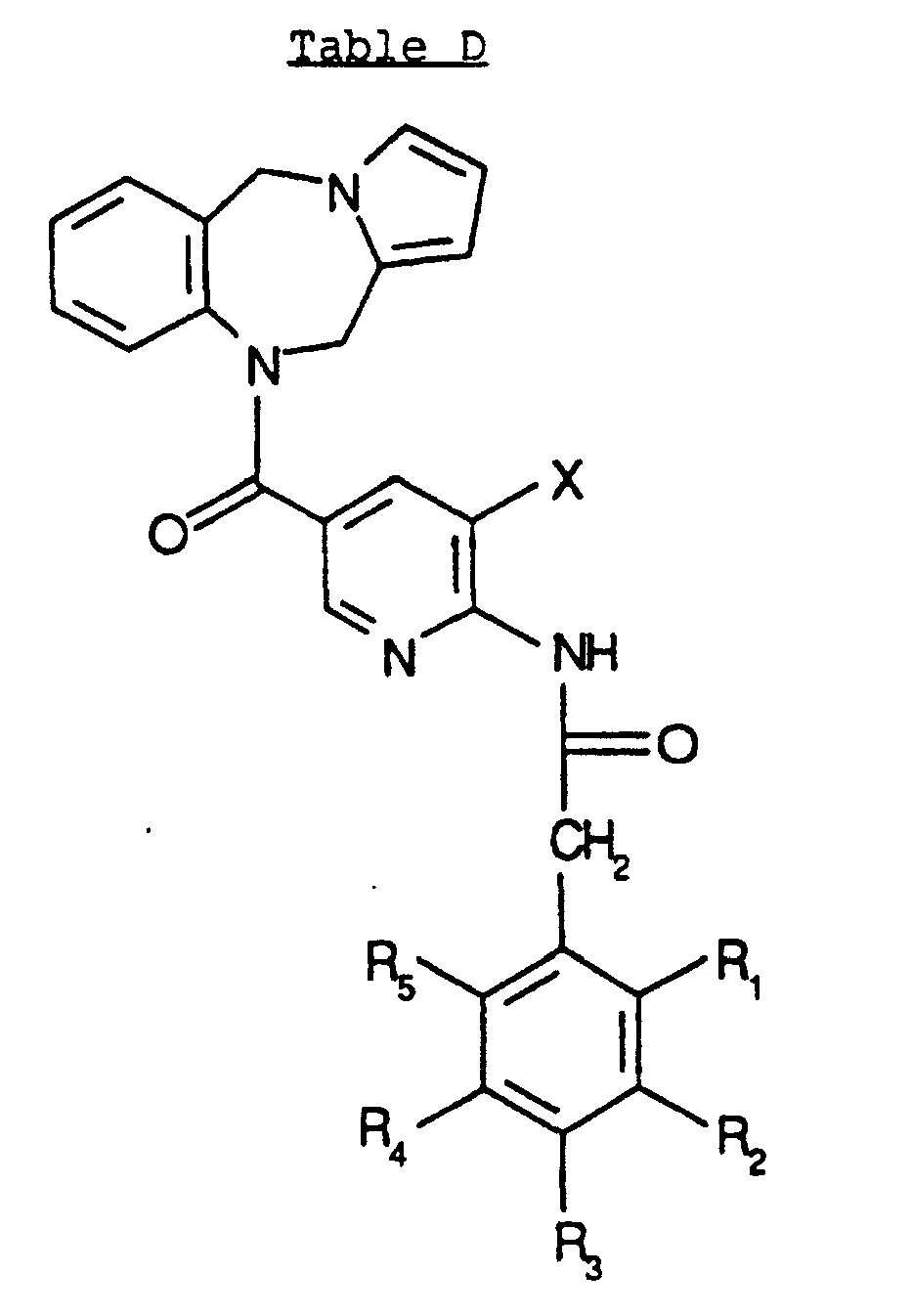

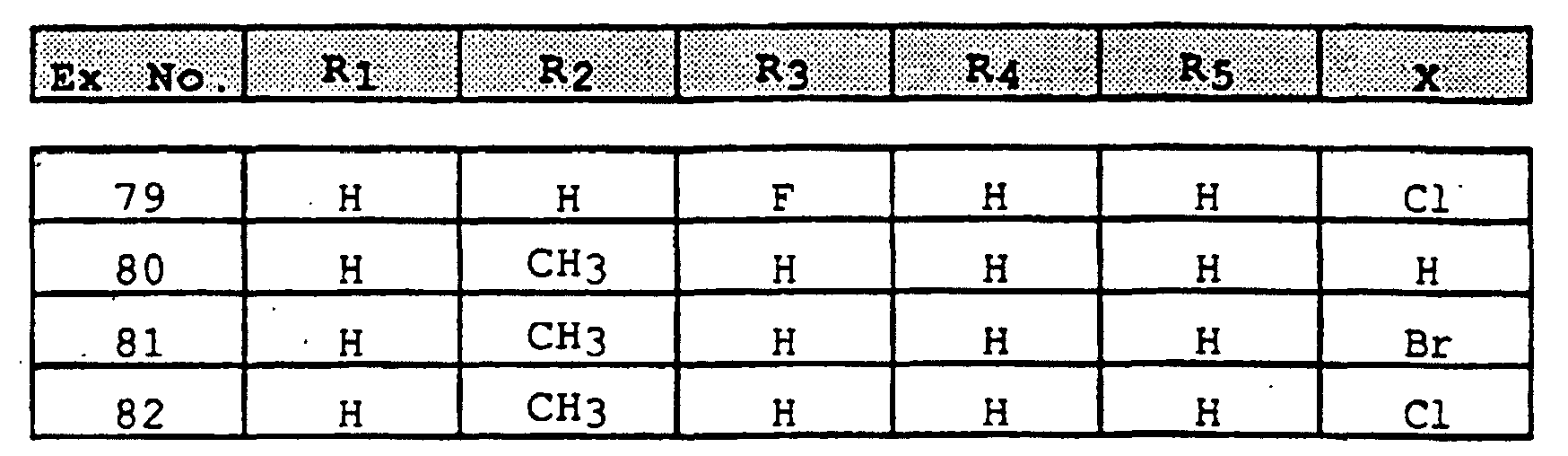
- A mixture of 2.0 mmol of 10,11-dihydro-10-(6-amino-3-pyridinylcarbonyl) -5H-pyrrolo[2,1-c] [1,4]benzodiazepine and 4.0 mmol of (2-methylphenyl)isocyanate in 12 ml of tetrahydrofuran is refluxed for 16 hours. The solvent is removed and the residue chromatographed on silica gel with ethyl acetate-hexane as solvent to give the product as a solid.
- As described for Example 83, the following compounds are prepared (Table E).

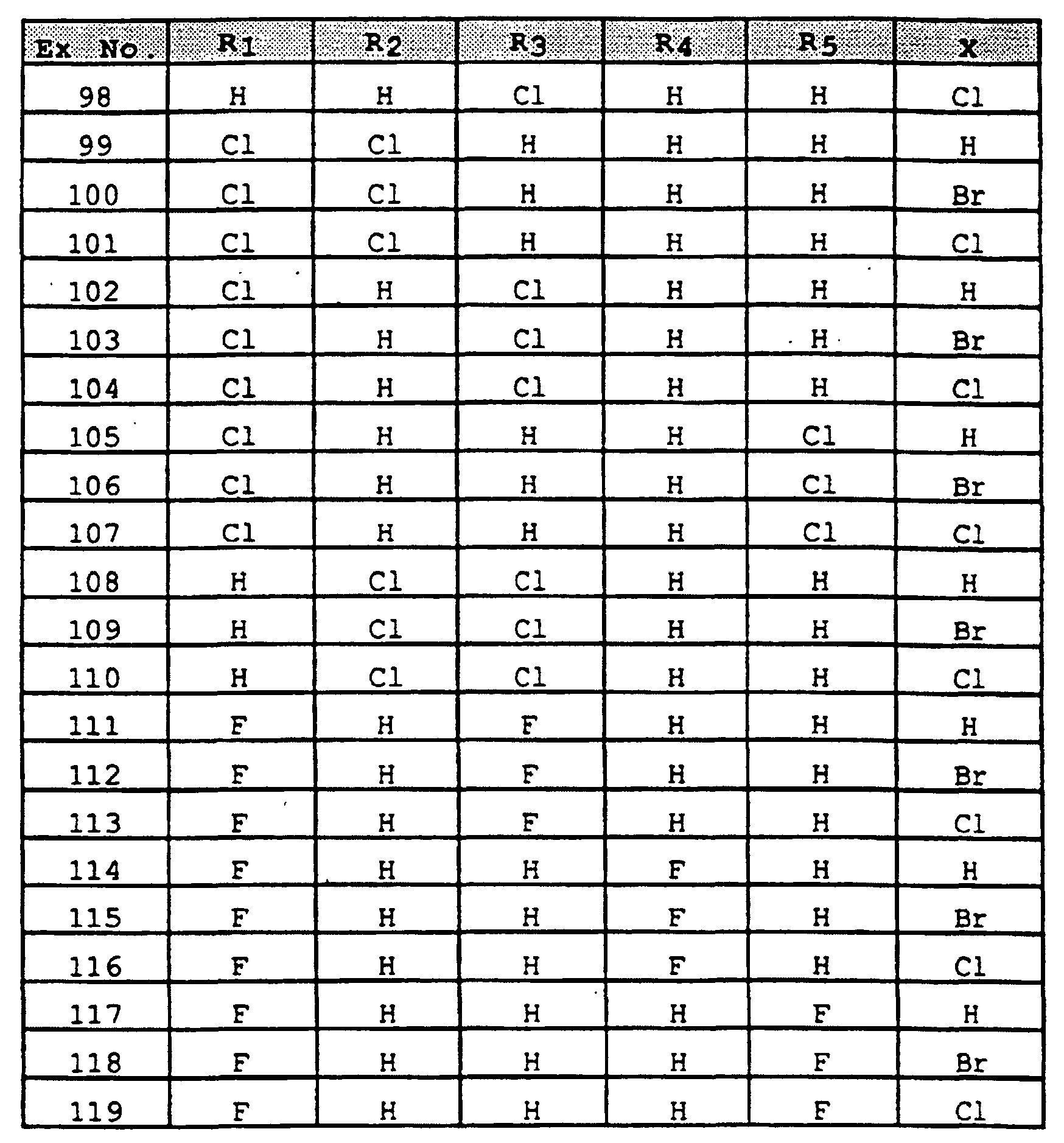
- A mixture of 0.44 g of N-[5-(5H-pyrrolo-[2,1-c] [1, 4]benzodiazepin-10 (11H)-ylcarbonyl)-2-pyridinyl]-5-fluoro-2-methylbenzamide, 5 ml of a 40% aqueous solution of dimethylamine and 5 ml of an aqueous solution of formaldehyde in 50 ml of tetrahydrofuran-methanol (1:1) is refluxed for 16 hours in the presence of a drop of glacial acetic acid. The mixture is concentrated under vacuum and the residue extracted with chloroform. The extract is washed with water, dried (MgSO4) and the solvent removed. The residue is purified by column chromatography on silica gel with 5% methanol in chloroform as eluent to give 0.45 g of solid: mass spectrum (CI) 499 (M+1).
- The following Examples are prepared as described for Example 120 with formaldehyde and the appropriate amine.
- To a solution of 0.75 g of 10-[[6-[2-(dimethylamino)ethylamino]-3-pyridinyl]carbonyl]-10,11-dihydro-5H-pyrrolo[2,1-c] [1,4]benzodiazepine and 5 ml of diisopropylethylamine in 75 ml of dichloromethane is added (slowly) 0.35 g of 5-fluoro-2-methylbenzoyl chloride in 10 ml of dichloromethane. The mixture is stirred at room temperature for 16 hours and the solution washed well with water. The organic layer is dried (MgSO4) and the solvent removed under vacuum. The residue is purified by column chromatography on silica gel with 30% methanol in chloroform as eluent to give 0.80 g of yellow solid; mass spectrum (CI), 511 (M+1).
- A solution of 6.35 g of 5-fluoro-2-methylbenzoyl chloride in 10 ml of dichloromethane is added to a solution of 2 mmol of 10-[[6-[3-(dimethylamino)-propylamino]-3-pyridinyl]carbonyl]-10,11-dihydro-5H-pyrrolo [2,1-c] [1,4] benzodiazepine and 5 ml of diisopropylethylamine in 75 ml of dichloromethane. The solution is stirred 16 hours at room temperature, washed with water, dried (MgSO4) and the solvent removed. The residue is purified by column chromatography over silica gel with 30% methanol in chloroform as eluent to give 0.75 g of solid; mass spectrum (CI) 525 (M+1).
- As described for Example 130, a solution of 2 mmol of 10-[[6-[2-(dimethylamino)methylamino]-3-pyridinyl]carbonyl]-10,11-dihydro-5H-pyrrolo[2,1-c][1,4]-benzodiazepine, 8 ml of diisopropylethylamine, and 2.2 mmol of 5-fluoro-2-methylbenzoyl chloride in 100 ml of dichloromethane is stirred at room temperature for 16 hours. The solvent is removed and the product purified by chromatography on silica gel to give a solid.
- A mixture of 1.0 g of N-[5-(5H-pyrrolo[2,1-c] [1,4]benzodiazepin-10(11H)-ylcarbonyl)-2-pyridinyl]-3,4,5-trimethoxybenzamide, 10 ml of 40% aqueous dimethylamine, 10 ml of 35% aqueous formaldehyde in 50 ml of tetrahydrofuran-methanol (1:1) plus 1 drop of acetic acid is refluxed for 16 hours. The mixture is concentrated and the residue extracted with chloroform. The extract is washed with water, dried (MgSO4), concentrated and the residue purified by column chromatography (silica gel) with 5% methanol in chloroform as eluent. The fractions containing product are combined to give 0.80 g of solid; mass spectrum (CI) 556 (M+1) .
- To a chilled (0°C) solution of 0.343 g of 5,6-dihydropyrido[3,2-e]pyrrolo[1,2-a]pyrazine and 1.1 ml of triethylamine in 5 ml of dichloromethane is added 1.17 g of 6-(5-fluoro-2-methylbenzoyl)aminopyridine-3-carbonyl chloride. The mixture is stirred at room temperature for 16 hours. To the mixture is added 50 ml of dichloromethane and 20 ml of water. The organic layer is separated and washed with 20 ml each of 1 M NaHCO3 and brine. The organic layer is dried (Na2SO4) and passed through a thin pad of hydrous magnesium silicate and the pad washed with dichloromethane. The filtrate is concentrated and the residue chromatographed on silica gel prep-plates with ethyl acetate-hexane (1:1) as eluent. The product is crystallized from ethyl acetate to give 0.38 g of white crystals, m.p. 226-234°C.
- As described for Example 134 the following compounds are prepared (Table F).


- To a chilled (0°C) solution of 0.341 g of 4,5-dihydropyrrolo[1,2-a]quinoxaline and 1.11 ml of tri-ethylamine in 5 ml of dichloromethane is added 1.17 g of 6-[(5-fluoro-2-methylbenzoyl)amino]pyridine-3-carbonyl chloride. The mixture is stirred under argon at room temperature for 16 hours. The mixture is diluted with 50 ml of dichloromethane and 20 ml of water and the organic layer is separated. The organic layer is washed with 20 ml each of 1 M NaHCO3 and brine and dried (Na2SO4). The solution is filtered through a thin pad of hydrous magnesium silicate and the pad washed with dichloromethane. The filtrate is concentrated and the residue purified on silica gel prep-plates with ethyl acetate-hexane (1:1) as solvent to give a solid. The solid is crystallized from ethyl acetate to give 0.38 g of crystals, m.p. 190-196°C.
- As described for Example 171 the following compounds are prepared (Table G).
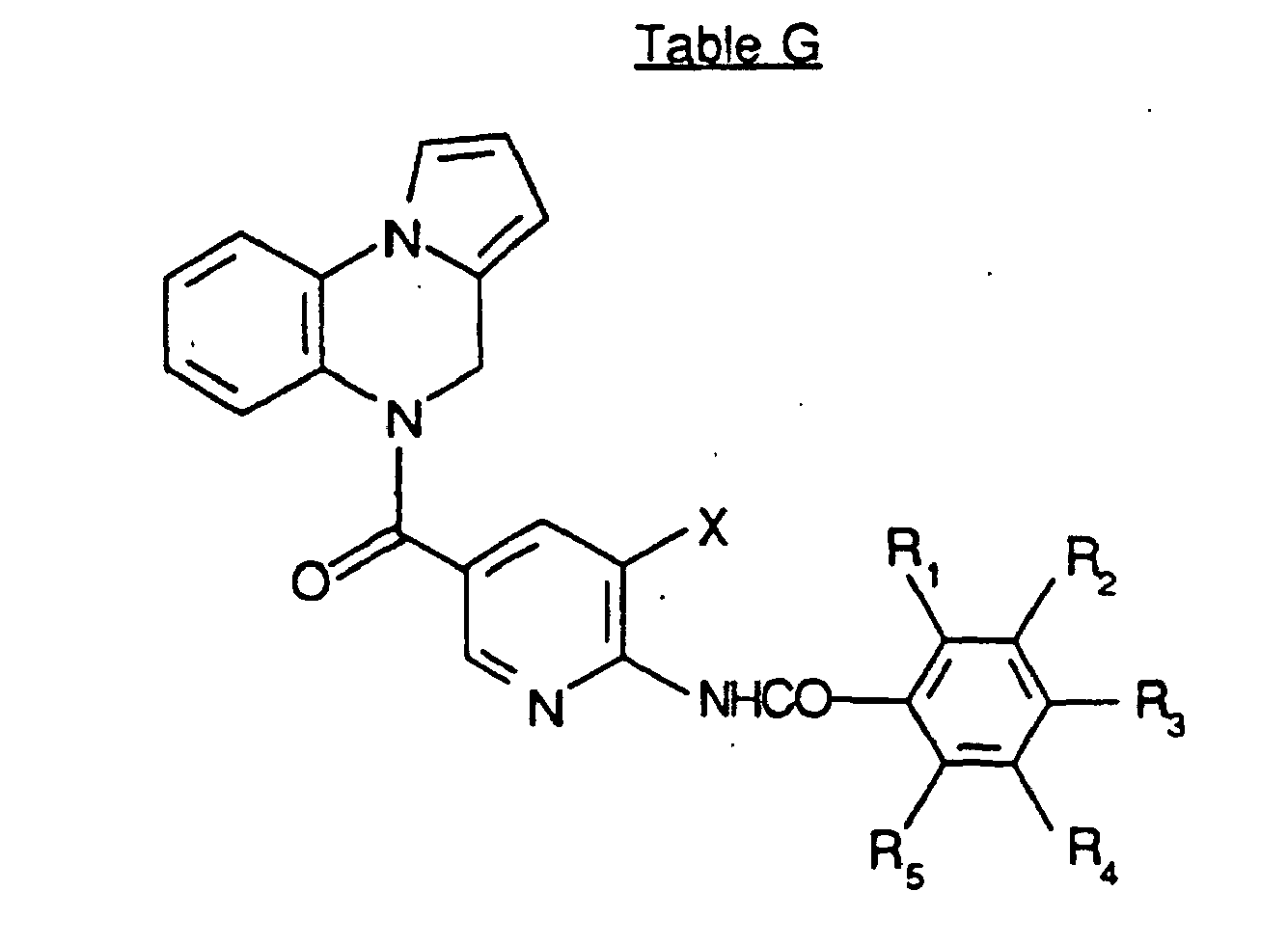

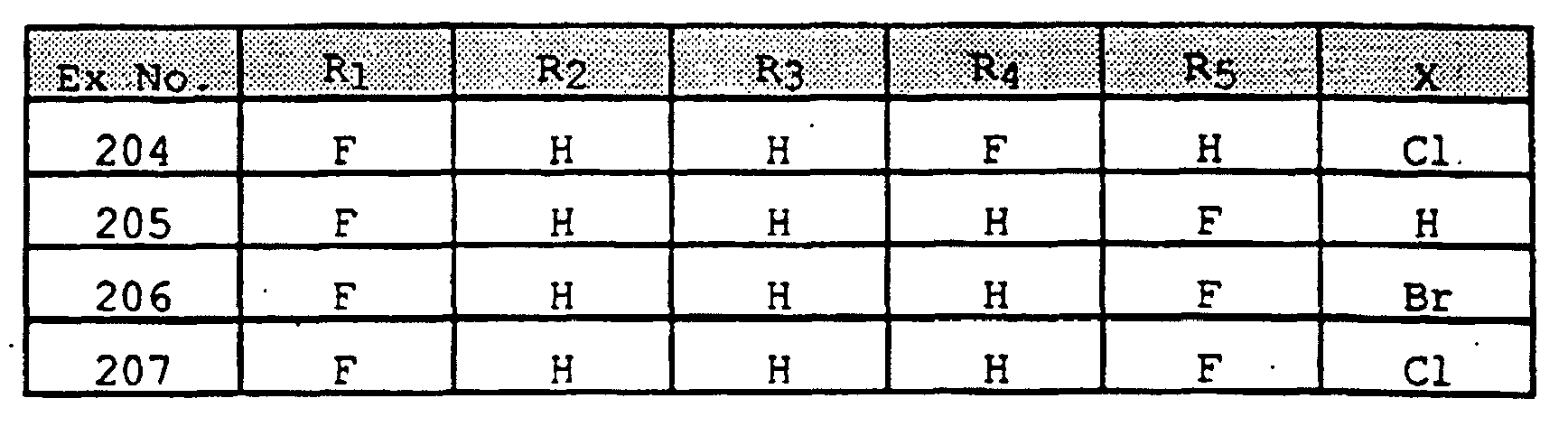
- To a chilled (0°C) solution of 0.37 g of 5,10-dihydro-4H-pyrazolo[5,1-c] [1,4]benzodiazepine and 836 microliters of triethylamine in 5 ml of dichloromethane is added 0.761 g of 6-[(5-fluoro-2-methylbenzoyl)-amino]pyridine-3-carbonyl chloride. The mixture is stirred at room temperature under argon for 5 hours. An additional 420 microliters of triethylamine and 0.38 g of 6-[(5-fluoro-2-methylbenzoyl)amino]pyridine-3-carbonyl chloride is added and the mixture stirred 16 hours. The mixture is diluted with 60 ml of dichloromethane and washed with 25 ml each of H2O, 1 M NaHCO3, brine and dried (Na2SO4). The solution is filtered (twice) through a thin pad of hydrous magnesium silicate and the pad washed with dichloromethane. The filtrate is concentrated to give a yellow glass (0.68 g) which is crystallized from ethyl acetate to give 0.38 g of white crystals, m.p. 250-260°C; mass spectrum (FABL) 442.4 (M+H).


- To a chilled (0°C) solution of 0.185 g of 5,10-dihydro-4H-pyrazolo[5,1-c][1,4]benzodiazepine and 417 µl of triethylamine in 3.5 ml of dichloromethane is added 0.35 g of 6-(2-biphenylcarbonyl)aminopyridine-3-carbonyl chloride in 1.5 ml of dichloromethane. The mixture is stirred at room temperature under argon for 16 hours, diluted with 40 ml of dichloromethane and 20 ml of water. The organic layer is separated, washed with 20 ml of brine and dried (Na2SO4). The solution is filtered through a thin pad of hydrous magnesium silicate. The filtrate is concentrated to dryness under vacuum to give 0.4 g of solid. The solid is purified on silica gel prep-plates with ethyl acetate-hexane (3:1) as eluent to give 170 mg of a brown glass, m.p. 110-150°C.
- As described for Example 245, the following derivatives are prepared (Table H).
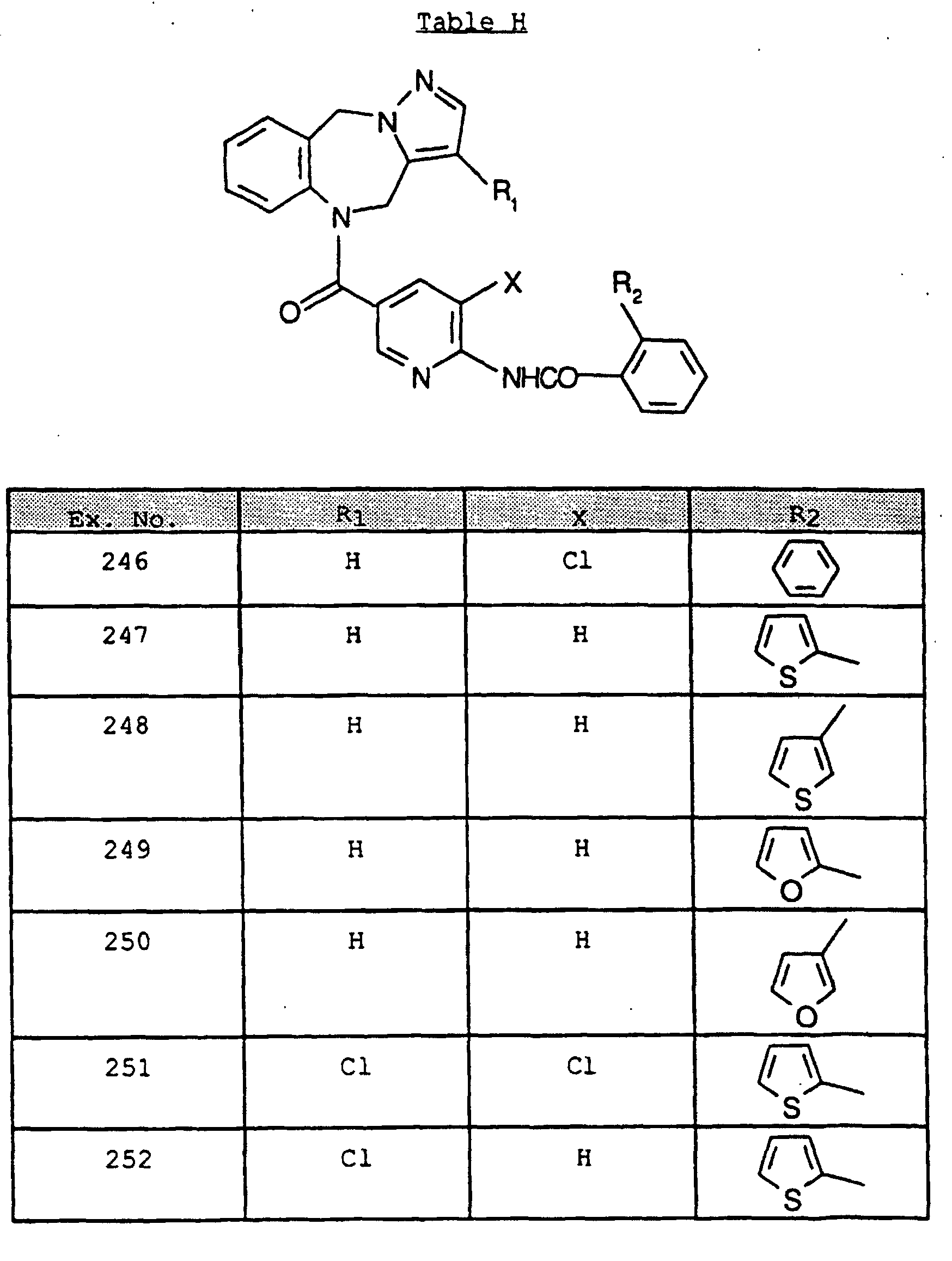

- A mixture of 0.16 g of 10-[(6-chloro-3-pyridinyl)carbonyl]-10,11-dihydro-5H-pyrrolo[2,1-c]-[1,4]benzodiazepine, 40 mg of pyridine and 2 ml of 2-methylpropylamine is stirred and heated at 100°C in a sealed vessel for 1 hour. To the mixture is added 0.2 ml of N,N-dimethylpropyleneurea and the mixture is heated at 110°C for 7 hours. The volatiles are removed under vacuum and 10 ml of 0.5 N NaOH is added to the residue. The mixture is filtered and the solid washed with water and then hexane. The solid is dissolved in ethyl acetate and the solution washed with 0.5 N NaOH, brine and dried (Na2SO4). The solution is filtered through a thin pad of hydrous magnesium silicate and the filtrate concentrated to dryness. The residue is triturated with diisopropylether-hexane to give 0.18 g of white solid; mass spectrum (CI) 361 (M+H).
- As described for Example 261, the following derivatives are prepared (Table I).


- A mixture of 0.16 g of 10-[(6-chloro-3-pyridinyl) carbonyl]-10,11-dihydro-5H-pyrrolo[2, 1-c] [1,4] benzodiazepine, 0.5 ml of benzylamine and 0.2 ml of N,N'-dimethylpropyleneurea is stirred and heated at 110°C for 7 hours. After cooling to room temperature, the mixture is washed with hexane (3 times 10 ml). The residue is dissolved in water and made alkaline with 1 N NaOH. The suspension is washed with H2O and extracted with ethyl acetate. The organic extract is washed with brine, dried (Na2SO4) and filtered through a thin pad of hydrous magnesium silicate. The filtrate is evaporated and the residue triturated with diethyl ether-hexane to give 0.20 g of white solid; mass spectrum (CI) 395 (M+H) .
- As described for Example 273, the following derivatives are prepared (Table J).

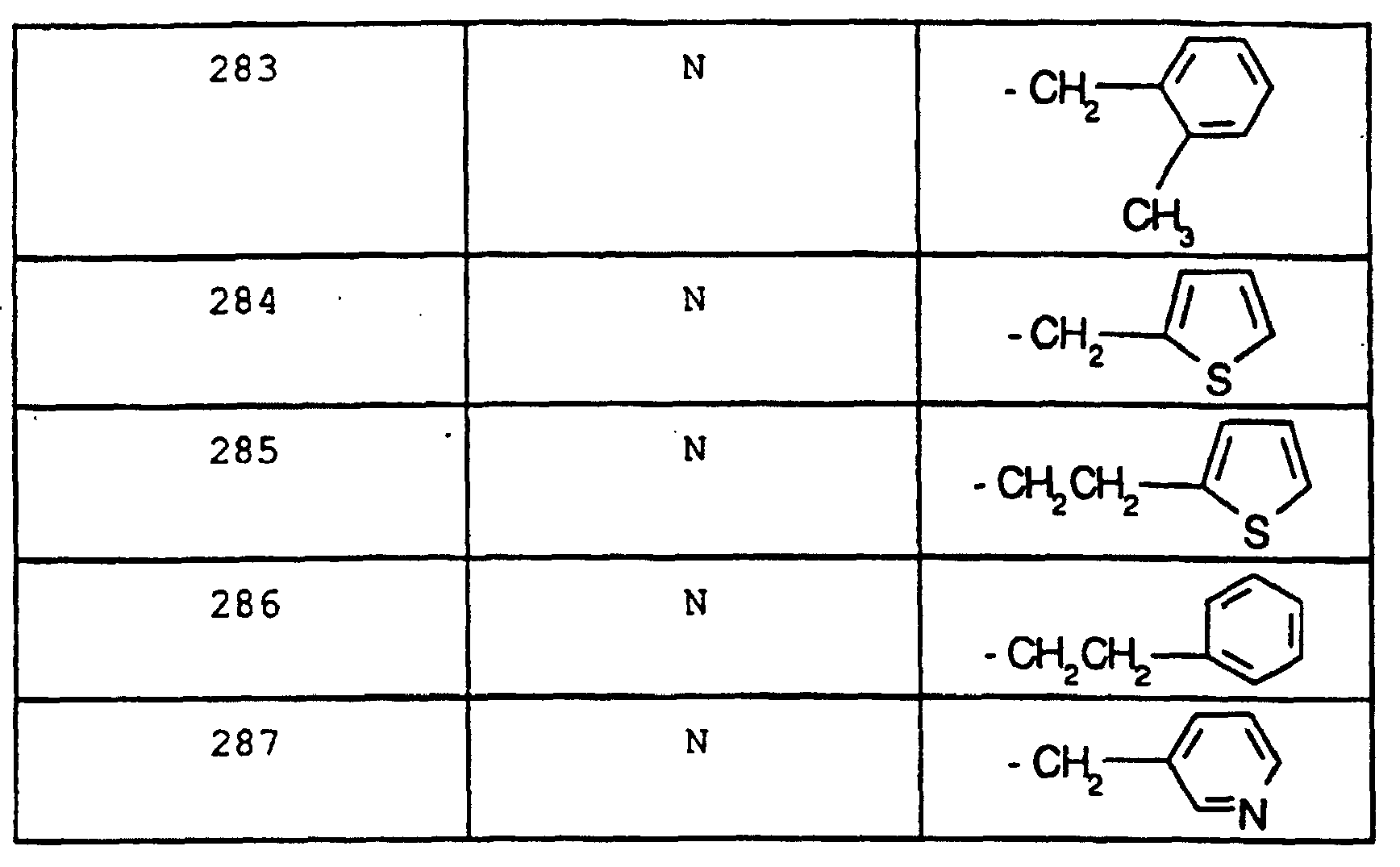
- To a suspension of 35 mg of sodium hydride (60% in oil) in 3 ml of tetrahydrofuran is added under argon 0.10 g of cyclohexylmercaptan. A white precipitate forms and after 0.5 hour at room temperature, 1 ml of N,N'-dimethylpropyleneurea is added. To the mixture is added 0.13 g of 10-[(6-chloro-3-pyridinyl)-carbonyl]-10,11-dihydro-5H-pyrrolo[2,1-c][1,4]benzodiazepine in 2 ml of tetrahydrofuran. The mixture is stirred at room temperature for 18 hours, quenched with water and ammonium chloride and concentrated under vacuum. The aqueous suspension is filtered and the solid washed with water and hexane. The solid is purified by chromatography on silica gel prep-plates with ethyl acetate-hexane (1:4) as eluent to give 0.13 g of white solid; mass spectrum (CI): 404 (M+H).
- As described for Example 288, the following derivatives are prepared (Table K).
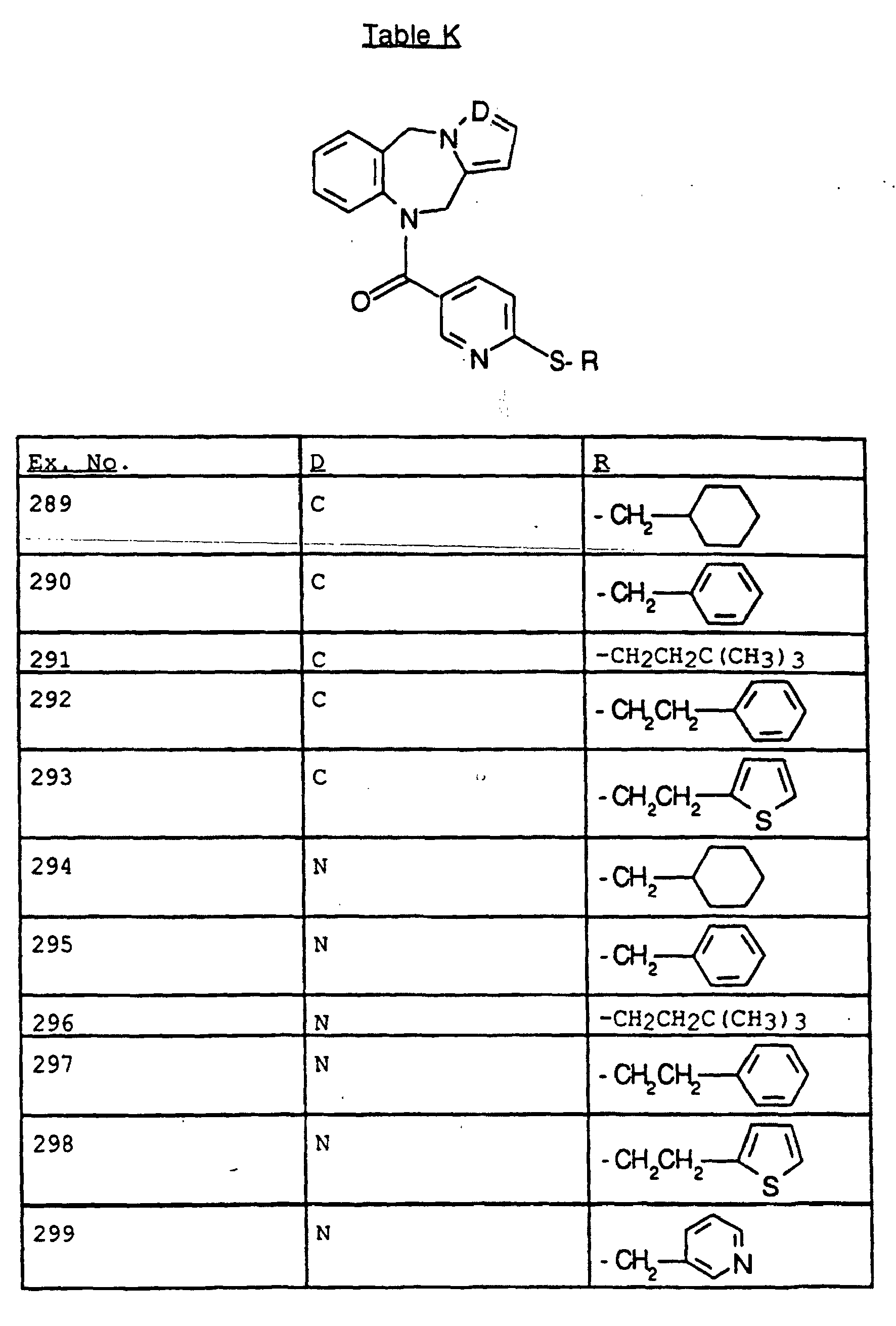

- A mixture of 0.5 g of 10-[(6-chloro-3-pyridinyl)carbonyl]-10,11-dihydro-5H-pyrrolo[2,1-c] [1,4]-benzodiazepine and 0.36 g of o-toluidine in 60 ml of N,N-dimethylformamide is refluxed for 16 hours. The mixture is poured into 200 ml of ice-water and extracted with three 100 ml portions of chloroform. The extract is washed with water, dried (Na2SO4) and the solvent removed, The residue is purified by chromatography on silica gel prep-plates with hexane-ethyl acetate (5:1) as solvent to give 0.56 g of yellow solid: mass spectrum (CI) 395.2 (M+H).
- As described for Example 301, the following derivatives are prepared (Table L).

- To a solution of 0.70 g of 10,11-dihydro-5H-pyrrolo [2,1-c] [1,4] benzodiazepine and 0.56 g of N,N-diisopropylethylamine in 50 ml of methylene chloride is added 1.35 g of 4-[([1,1'-biphenyl]-2-carbonyl)amino]-3-methoxybenzoyl chloride followed by stirring at room temperature for 18 hours. The reaction mixture is washed with water and saturated aqueous NaHCO3 and the organic layer dried(Na2SO4). The organic layer is passed through hydrous magnesium silicate and the filtrate concentrated in vacuo to give a residue which is dissolved in methylene chloride and passed through a pad of hydrous magnesium silicate two additional times to give upon concentration in vacuo to give 1.5 g of amorphous solid. M+=512.
- To a solution of 0.52 g of 10,11-dihydro-5H-pyrrolo [2,1-c] [1,4]benzodiazepine and 0.39 g of N,N-diisopropylethylamine in 25 ml of methylene chloride is added 1.1 g of 4-[([1,1'-biphenyl]-2-carbonyl)amino]-2-chlorobenzoyl chloride followed by stirring at room temperature for 18 hours. The reaction mixture is washed with water and saturated aqueous NaHCO3 and the organic layer dried (Na2SO4). The organic layer is passed through hydrous magnesium silicate and the filtrate concentrated in vacuo to give a residue which is dissolved in methylene chloride and passed through hydrous magnesium silicate two additional times to give upon concentration in vacuo 1.10 g of the desired product as a residue. M+=516,518,520.
- To a solution of 0.65 g of 10,11-dihydro-5H-pyrrolo[2,1-c][1,4]benzodiazepine and 0.52 g of N,N-diisopropylethylamine in 25 ml of methylene chloride is added 1.34 g of 4-[([1,1'-biphenyl]-2-carbonyl)amino]-benzoyl chloride followed by stirring at room temperature for 18 hours. The reaction mixture is washed with water and saturated aqueous NaHCO3 and the organic layer dried(Na2SO4). The organic layer is passed through hydrous magnesium silicate and the filtrate concentrated in vacuo to give a residue which is dissolved in methylene chloride and passed through hydrous magnesium silicate two additional times to give upon concentration in vacuo to give 1.02 g of the desired product as a residue. M+= 482.
- To a solution of 0.75 g of 10,11-dihydro-5H-pyrrolo[2,1-c][1,4]benzodiazepine and 0.57 g of N,N-diisopropylethylamine in 50 ml of methylene chloride is added 1.53 g of 4-[[2-(phenylmethyl)benzoyl]amino]-benzoyl chloride followed by stirring at room temperature for 18 hours. The reaction mixture is washed with water and saturated aqueous NaHCO3 and the organic layer dried (Na2SO4). The organic layer is passed through hydrous magnesium silicate and the filtrate concentrated in vacuo to give a residue which is dissolved in methylene chloride and passed through hydrous magnesium silicate two additional times to give upon concentration in vacuo to give 1.97 g of the desired product as an amorphous solid.
- To a solution of 0.92 g of 10,11-dihydro-5H-pyrrolo[2,1-c][1,4]benzodiazepine and 0.72 g of N,N-diisopropylethylamine in 50 ml of methylene chloride is added 2.4 g of 2-chloro-4-[[(2-phenylmethyl)benzoyl]-amino]benzoyl chloride followed by stirring at room temperature for 18 hours. The reaction mixture is washed with water and saturated aqueous NaHCO3 and the organic layer dried (Na2SO4). The organic layer is passed through hydrous magnesium silicate and the filtrate concentrated in vacuo to give a residue which is dissolved in methylene chloride and passed through hydrous magnesium silicate two additional times to give upon concentration in vacuo 2.87 g of the desired product as an amorphous compound.
- To a solution of 0.75 g of 10,11-dihydro-5H-pyrrolo[2,1-c][1,4]benzodiazepine and 0.58 g of N,N-diisopropylethylamine in 50 ml of methylene chloride is added 1.69 g of 3-methoxy-4-[[(2-phenylmethyl)benzoyl]-amino]benzoyl chloride followed by stirring at room temperature for 18 hours. The reaction mixture is washed with water and saturated aqueous NaHCO3 and the organic layer dried(Na2SO4). The organic layer is passed through hydrous magnesium silicate to give upon concentration in vacuo 1.92 g of the desired product as an amorphous solid.
- A solution of 1.14 g of [4'-(trifluoromethyl)-[1,1'-biphenyl]-2-carbonyl chloride in 10 ml of methylene chloride is added dropwise to an ice cold solution of 1.0 g of 10,11-dihydro-10-(4-aminobenzoyl)-5H-pyrrolo[2,1-c][1,4]benzodiazepine and 0.52 g of N,N-diisopropylethylamine in 25 ml of methylene chloride. The reaction mixture is stirred at room temperature for 18 hours and washed with water, saturated aqueous NaHCO3 and the organic layer dried(Na2SO4). The organic layer is passed through a pad of hydrous magnesium silicate two times to give 1.70 g of the desired product as an amphorous compound.
- A solution of 1.87 g of [4'-(trifluoromethyl)-[1,1'-biphenyl]-2-carbonyl chloride in 10 ml of methylene chloride is added dropwise to an ice cold solution of 0.74 g of 10,11-dihydro-10-(4-aminobenzoyl)-5H-pyrrolo [2,1-c] [1,4]benzodiazepine and 0.56 g of N,N-diisopropylethylamine in 50 ml of methylene chloride. The reaction mixture is stirred at room temperature for 18 hours and washed with water, saturated aqueous NaHCO3 and the organic layer dried (Na2SO4). The organic layer is passed through a pad of hydrous magnesium silicate two times to give the desired product as a residue which is crystallized from ethyl acetate to give 2.33 g of the desired product, 211-212°C.
- A solution of 1.35 g of 2-chloro-4-[([4'-(trifluoromethyl) [1,1'-biphenyl]-2-carbonyl)amino]-benzoyl chloride in 10 ml of methylene chloride is added dropwise to an ice cold solution of 0.63 g of 10,11-dihydro-5H-pyrrolo[2,1-c] [1,4]benzodiazepine and 0.48 g of N,N-diisopropylethylamine in 50 ml of methylene chloride. The reaction mixture is stirred at room temperature for 18 hours and washed with water, saturated aqueous NaHCO3 and the organic layer dried (Na2SO4). The organic layer is passed through a pad of hydrous magnesium silicate two times to give 1.63 g of the desired product as a non-crystalline solid..
- To a stirred solution of 1.0 g of 10,11-dihydro-10-(4-aminobenzoyl)-5H-pyrrolo[2,1-c][1,4]benzodiazepine and 3 ml of N,N-diisopropylethylamine in 100 ml of methylene chloride is slowly added 600 mg of 2-methylpyridine-3-carbonyl chloride dissolved in 15 ml of methylene chloride. The reaction mixture is stirred at room temperature for 2 hours. The reaction mixture is quenched with water and the organic layer washed well with water. The organic layer is dried(MgSO4), filtered and evaporated in vacuo to a residue which is purified by column chromatography on silica gel by elution with 1:1 ethyl acetate:hexane to give 800 mg of the desired product as a pale yellow residue. M+=422.
- A mixture of 1.1 g of 10,11-dihydro-10-(4-amino-2-chlorobenzoyl)-5H-pyrrolo[2,1-c][1,4]benzodiazepine and 3 ml of N,N-diisopropylethylamine in 100 ml of methylene chloride is stirred while a solution of 600 mg of 2-methylpyridine-3-carbonyl chloride in 15 ml of methylene chloride is added slowly. The reaction mixture is stirred at room temperature for 2 hours. The reaction mixture is quenched with water and the organic layer washed with water, dried(MgSO4), filtered and evaporated in vacuo to a residue. The product is purified by column chromatography on silica gel by elution with 1:1 ethyl acetate:hexane to give the desired product as a pale yellow residue. M+=456.
- A mixture of 2.5 g of 6-1[3-(2-methylpyridinyl)carbonyl]amino]pyridine-3-carboxylic acid and 25 ml of thionyl chloride is refluxed for 3 hours and the mixture evaporated to dryness in vacuo to give a solid. A solution of the solid in 50 ml of methylene chloride is added to 2 g of 10,11-dihydro-5H-pyrrolo-[2,1-c][1,4]benzodiazepine dissolved in 50 ml of dichloromethane containing 3 ml of N,N-diisopropylethylamine at room temperature. The reaction mixture is stirred at room temperature for 2 hours and quenched with water; washed with water; dried(MgSO4), filtered and evaporated in vacuo to a residue. The residue is purified by column chromatography on silica gel by elution with 1:1 ethyl acetate:hexane to give 2.0g of the desired product as a solid. M+=423.
- To a solution of 1.0 g of N-[5-(5H-pyrrrolo-[2,1-c] [1,4]benzodiazepin-10(11H)-ylcarbonyl)-2-pyridinyl]-2-methylpyridine-3-carboxamide in 50 ml of methanol is added hydrogen chloride gas. The mixture is stirred at room temperature for 30 minutes and the solvent removed under vacuum. The residue is triturated with ether to give 1.0 g of the desired product as a solid: mass spectrum (CCl) ; 459 (M+).
- The method of Example 330 is used to prepare the desired product as a solid: M+=543.
- The method of Example 330 is used to prepare the desired product as a solid: M+=487.
- To a stirred solution of 6.06 g of 10,11-dihydro-10-(4-aminobenzoyl)-5H-pyrrolo[2,1-c][1,4]benzodiazepine and 10 ml of N,N-diisopropylethylamine is added a solution of 4.0 g of 2-chloropyridine-3-carbonyl chloride in 25·ml of methylene chloride. The reaction mixture is stirred at room temperature for 1 hour. The reaction mixture is quenched with water and the organic layer washed well with water. The organic layer is dried, filtered and evaporated in vacuo to a pale yellow product which is crystallized from 1:1 ethyl acetate:hexane to give 7.0 g of the desired product; M+=442.
- A mixture of 1 g of N-[4-(5H-pyrrolo[2,1-c]-[1,4]benzodiazepin-10(11H)-ylcarbonyl)phenyl]-2-chloropyridine-3-carboxamide, 1 g of K2CO3 and 10 ml of a 40% solution of monomethylamine is heated in 25 ml of dimethylsulfoxide for 8 hours at 100°C. The reaction mixture is poured over water and the pale yellow solid separated. The reaction mixture is filtered and the collected solid washed well with water. After drying the solid is purified by column chromatography on silica gel by elution with 9:1 ethyl acetate:methanol to give 850 mg of the desired product as a pale yellow solid:M+=437.
- Using the conditions of Example 334 and N-[4-(5H-pyrrolo [2,1-c] [1,4]benzodiazepin-10(11H)-ylcarbonyl)-phenyl]-2-chloropyridine-3-carboxamide and 3-(dimethylamino)propylamine gives 900 mg of the desired product:M+=508.
- Using the conditions of Example 334 and 1 g of N-[4-(5H-pyrrolo[2,1-c] [1,4]benzodiazepin-10(11H)-ylcarbonyl)phenyl]-2-chloropyridine-3-carboxamide and 5 ml of piperidine gives 700 mg of the desired product:M+=491.
- Using the conditions of Example 334 and 1 g of N-[4-(5H-pyrrolo[2,1-c][1,4]benzodiazepin-10(11H)-ylcarbonyl)phenyl]-2-chloropyridine-3-carboxamide and 5 ml of N-methylpiperazine gives 1 g of the desired product:M+=500.
- Using the conditions of Example 334 and 1 g of N-[4-(5H-pyrrolo[2,1-c][1,4]benzodiazepin-10(11H)-ylcarbonyl)-phenyl]-2-chloropyridine-3-carboxamide and 10 ml of 40% N,N-dimethylamine gives 700 mg of the desired product:M+=451.
- Using the conditions of Example 334 and 1 g of N-[4-(5H-pyrrolo[2,1-c][1,4]benzodiazepin-10(11H)-ylcarbonyl)-phenyl]-2-chloropyridine-3-carboxamide and 5 ml of morpholine gives 800 mg of the desired product : M+=493.
- A mixture of 2.0 g of 6-[([1,1'-biphenyl]-2-carbonyl)amino]pyridine-3-carboxylic acid and 20 ml of thionyl chloride is refluxed for 3 hours. The excess thionyl chloride is removed in vacuo to a residue which is dissolved in 50 ml of methylene chloride. This solution is added added dropwise to a stirred solution of 2.0 g of 10,11-dihydro-5H-pyrrolo[2,1-c][1,4]benzodiazepine in 50 ml of methylene chloride and 5 ml of N,N-diisopropylethylamine. The reaction mixture is stirred at room temperature for 2 hours and quenched with water. The organic layer is washed well with water and dried over anhydrous MgSO4. The organic layer is concentrated in vacuo to a residue which is purified by column chromatography on silica gel by elution with 40% ethyl acetate:hexane to give 1.2 g of a colorless solid:M+=484.
- A mixture of 1.94 g of N-[4-(5H-pyrrolo-[2,1-c][1,4]benzodiazepin-10(11H)-ylcarbonyl)phenyl]-2-bromobenzamide, 2.95 g of 2-pyridyl tri-n-butyl tin and 400 mg of tetrakis(triphenylphosphine)palladium(O) is refluxed for 24 hours in degassed toluene for 24 hours. The reaction mixture is concentrated in vacuo to a residue which is purified by column chromatography on silica gel by elution with 70% ethyl acetate:hexane to give 900 mg of the desired product as a pale yellow solid:M+1=485.
- A mixture of 484 mg of N-[5-(5H-pyrrolo-[2,1-c] [1,4]benzodiazepin-10(11H)-ylcarbonyl)-2-pyridinyl]-2-bromobenzamide, 814 mg of 4-(N,N-dimethyl)anilino-tri-n-butyl stannane and 100 mg of tetrakis(triphenylphosphine)palladium (O) is refluxed in degassed toluene for 24 hours. The reaction mixture is concentrated in vacuo to a residue which is purified by column chromatography on silica gel by elution with ethyl acetate to give 200 mg of the desired product: M+1=528.
- To a solution of 92 mg of 10,11-dihydro-5H-pyrrolo[2,1-c][1,4]benzodiazepine in 2 ml of methylene chloride is added 100 mg of triethylamine followed by 130 mg of 4-(n-butyloxy)benzoyl chloride. The reaction mixture is stirred at room temperature for 24 hours and then treated with 4 ml of 1N sodium hydroxide. The mixture is extracted with 10 ml of ethyl acetate and the extract washed with 1N sodium hydroxide and 5 ml of brine. The organic layer is dried over anhydrous sodium sulfate and filtered through hydrous magnesium silicate. The filtrate is concentrate in vacuo to a residue which is stirred with ether-hexanes to give 160 mg of the desired product as a white solid:mass spectrum (CI), 361 (MH+) .
- As described for Example 343 4-(n-butyloxy)benzoyl chloride is reacted with 5,10-dihydro-4H-pyrazolo[5,-1-c] [1,4]benzodiazepine to give the desired product as a solid;mass spectrum(CI),392(MH+).
- As described for Example 343 4-(n-pentyloxy)benzoyl chloride is reacted with 10,11-dihydro-5H-pyrrolo[2,1-c] [1,4]benzodiazepine to the desired product as a solid:mass spectrum(CI), 375(MH+).
- The conditions of Example 325 are used with 2-(4-chlorophenyloxy)pyridine-3-carbonyl chloride to give the desired product as a crystalline solid, m.p. 211-212°C (M+Na) = 557.3.
- The conditions of Example 325 are used with 2-(4-chlorophenoxy)-2-methylpropionyl chloride to give the desired product as a solid. M+499.
- Using the conditions of Example 273 and t-butylamine gives the desired product as a beige solid. MS (CI) : 361 (M+H).
- Using the conditions of Example 273 and isopropylamine gives the desired product as a white solid. MS(CI): 347 (M+H).
- Using the conditions of Example 273 and 1-aminoindan gives the desired product as a beige solid. MS (CI) : 421 (M+H) .
- Using the conditions of Example 273 with 2,4-dimethoxybenzylamine gives the desired product as a light yellow solid. MS(CI): 455(M+H).
- Using the conditions of Example 273 and 2-bromobenzylamine gives the desired product as an off-white solid. MS (CI) : 474 (M+H) .
- Using the conditions of Example 1 with Reference Example 39 to give Reference Example 86 and stirring overnight gives the desired product as white crystals after column chromatography on silica gel by elution with 1:1 ethyl acetate:hexane and crystallization from ethyl acetate, m.p. 210-212°C.
- A room temperature solution of 1.0 g of N-[5-(5H-pyrrolo[2,1-c] [1,4]benzodiazepin-10(11H)-ylcarbonyl)-2-pyridinyl]-2-nitrobenzamide in 100 ml of ethyl alcohol is hydrogenated over 200 mg of 10% Pd/C in a Parr apparatus under 40 psi of hydrogen for 2 hours. The reaction mixture is filtered through diatomaceous earth and the cake washed with additional ethyl alcohol. The combined filtrates are concentrated in vacuo and the residue purified by crystallization from 2:1 ethyl acetate:hexane to give the desired product as pale yellow crystals: M+Na 445:M+423.
- Rat liver plasma membranes expressing the vasopressin V1 receptor subtypes are isolated by sucrose density gradient according to the method described by Lesko et al, (1973). These membranes are quickly suspended in 50.0 mM Tris.HCl buffer, pH 7.4, containing 0.2% bovine serum albumin (BSA) and 0.1 mM phenylmethylsulfonylfluoride (PMSF) and kept frozen at -70°C until used in subsequent binding experiments. For binding experiments, the following is added to the wells of a ninety-six well format microtiter plate: 100 µl of 100.0 mM Tris.HCl buffer containing 10.0 mM MgCl2, 0.2% heat inactivated BSA and a mixture of protease inhibitors: leupeptin, 1.0 mg %; aprotinin, 1.0 mg %; 1,10-phenanthroline, 2.0 mg %; trypsin inhibitor, 10.0 mg % and 0.1 mM PMSF, 20.0 µl of [phenylalanyl-3,4,5,-3H] vasopressin (S.A. 45.1 Ci/mmole) at 0.8 nM, and the reaction initiated by the addition of 80 µl of tissue membranes containing 20 µg of tissue protein. The plates are kept undisturbed on the bench top at room temperature for 120 min. to reach equilibrium. Non-specific samples are assayed in the presence of 0.1 µM of the unlabeled antagonist phenylalanylvasopressin, added in 20.0 µl volume. For test compounds, these are solubilized in 50% dimethylsulfoxide (DMSO) and added in 20.0 µl volume to a final incubation volume of 200 µl. Upon completion of binding, the content of each well is filtered off, using a Brandel® cell Harvester (Gaithersburg, MD). The radioactivity trapped on the filter disk by the ligand-receptor complex is assessed by liquid scintillation counting in a Packard LS Counter, with an efficiency of 65% for tritium. The data are analyzed for IC50 values by the LUNDON-2 program for competition (LUNDON SOFTWARE, OH).
- Medullary tissues from rat kidneys are dissected out, cut into small pieces and soaked in a 0.154 mM sodium chloride solution containing 1.0 mM EDTA with many changes of the liquid phase, until the solution is clear of blood. The tissue is homogenized in a 0.25 M sucrose solution containing 1.0 mM EDTA and 0.1 mM PMSF using a Potter-Elvehjem homogenizer with a teflon pestle. The homogenate is filtered through several layers (4 layers) of cheese cloth. The filtrate is rehomogenized using a dounce homogenizer, with a tight fitting pestle. The final homogenate is centrifuged at 1500 x g for 15 min. The nuclear pellet is discarded and the supernatant fluid recentrifuged at 40,000 x g for 30 min. The resulting pellet formed contains a dark inner part with the exterior, slightly pink. The pink outer part is suspended in a small amount of 50.0 mM Tris.HCl buffer, pH 7.4. The protein content is determined by the Lowry's method (Lowry et al, J. Biol. Chem., 1953). The membrane suspension is stored at -70°C, in 50.0 mM Tris.HCl, containing 0.2% inactivated BSA and 0.1 mM PMSF in aliquots of 1.0 ml containing 10.0 mg protein per ml of suspension until use in subsequent binding experiments.
- For binding experiments, the following is added in µl volume to wells of a 96 well format of a microtiter plate: 100.0 µl of 100.0 mM Tris.HCl buffer containing 0.2% heat inactivated BSA, 10.0 mM MgCl2 and a mixture of protease inhibitors: leupeptin, 1.0 mg %; aprotinin, 1.0 mg %; 1,10-phenanthroline, 2.0 mg %; trypsin inhibitor, 10.0 mg % and 0.1 mM PMSF, 20.0 µl of [3H] Arginine8, vasopressin (S.A. 75.0 Ci/mmole) at 0.8 nM and the reaction initiated by the addition of 80.0 µl of tissue membranes (200.0 µg tissue protein). The plates are left undisturbed on the bench top for 120 min. to reach equilibrium. Non-specific binding is assessed in the presence of 1.0 µM of unlabeled ligand, added in 20 µl volume. For test compounds, these are solubilized in 50% dimethylsulfoxide (DMSO) and added in 20.0 µl volume to a final incubation volume of 200 µl. Upon completion of binding, the content of each well is filtered off, using a Brandel® cell Harvester (Gaithersburg, MD). The radioactivity trapped on the filter disk by the ligand-receptor complex is assessed by liquid scintillation counting in a Packard LS Counter, with an efficiency of 65% for tritium. The data are analyzed for IC50 values by the LUNDON-2 program for competition (LUNDON SOFTWARE, OH). The results of this test on representative compounds of this invention are shown in Tables 1, 2 and 3.
- Platelet Source: Hudson Valley Blood Services, Westchester Medical Center, Valhalla, NY.
- Frozen platelet rich plasma (PRP), received from the Hudson Valley Blood Services, are thawed to room temperature. The tubes containing the PRP are centrifuged at 16,000 x g for 10 min. at 4°C and the supernatant fluid discarded. The platelets resuspended in an equal volume of 50.0 mM Tris.HCl, pH 7.5 containing 120 mM NaCl and 20.0 mM EDTA. The suspension is recentrifuged at 16,000 x g for 10 min. This washing step is repeated one more time. The wash discarded and the lysed pellets homogenized in low ionic strength buffer of Tris.HCl, 5.0 mM; pH 7.5 containing 5.0. mM EDTA. The homogenate is centrifuged at 39,000 x g for 10 min. The resulting pellet is resuspended in Tris.HCl buffer, 70.0 mM, pH 7.5 and recentrifuged at 39,000 x g for 10 min. The final pellet is resuspended in 50.0 mM Tris.HCl buffer pH 7.4 containing 120 mM NaCl and 5.0 mM KCl to give 1.0-2.0 mg protein per ml of suspension.
- In wells of 96 well format microtiter plate, add 100 µl of 50.0 mM Tris.HCl buffer containing 0.2% BSA and a mixture of protease inhibitors (aprotinin, leupeptin etc.). Then add 20 µl of [3H] Ligand (Manning or Arg8Vasopressin), to give final concentrations ranging from 0.01 to 10.0 nM. Initiate the binding by adding 80.0 µl of platelet suspension (approx. 100 µg protein). Mix all reagents by pipetting the mixture up and down a few times. Non specific binding is measured in the presence of 1.0 µM of unlabeled ligand (Manning or Arg8Vasopressin). Let the mixture stand undisturbed at room temperature for ninety (90) min. Upon this time, rapidly filter off the incubate under vacuum suction over GF/B filters, using a Brandel® Harvester. Determine the radioactivity caught on the filter disks by the addition of liquid scintillant and counting in a liquid scintillator.
- Flasks of 175 ml capacity, containing attached cells grown to confluence, are cleared of culture medium by aspiration. The flasks containing the attached cells are rinsed with 2x5 ml of phosphate buffered saline (PBS) and the liquid aspirated off each time. Finally, 5 ml of an enzyme free dissociation Hank's based solution (Specialty Media, Inc., Lafayette, NJ) is added and the flasks are left undisturbed for 2 min. The content of all flasks is poured into a centrifuge tube and the cells pelleted at 300 x g for 15 min. The Hank's based solution is aspirated off and the cells homogenized with a polytron at setting #6 for 10 sec in 10.0 mM Tris.HCl buffer, pH 7.4 containing 0.25 M sucrose and 1.0 mM EDTA. The homogenate is centrifuged at 1500 x g for 10 min to remove ghost membranes. The supernatant fluid is centrifuged at 100,000 x g for 60 min to pellet the receptor protein. Upon completion, the pellet is resuspended in a small volume of 50.0 mM Tris.HCl buffer, pH 7.4. The protein content is determined by the Lowry method and the receptor membranes are suspended in 50.0 mM Tris.HCl buffer containing 0.1 mM phenylmethylsulfonylfluoride (PMSF) and 0.2% bovine serum albumin (BSA) to give 2.5 mg receptor protein per ml of suspension.
- For binding experiments, the following is added in µl volume to wells of a 96 well format of a microtiter plate: 100.0 µl of 100.0 mM Tris.HCl buffer containing 0.2% heat inactivated BSA, 10.0 mM MgCl2 and a mixture of protease inhibitors: leupeptin, 1.0 mg %; aprotinin, 1.0 mg %; 1,10-phenanthroline, 2.0 mg %; trypsin inhibitor, 10.0 mg % and 0.1 mM PMSF, 20.0 µl of [3H] Arginine8, vasopressin (S.A. 75.0 Ci/mmole) at 0.8 nM and the reaction initiated by the addition of 80.0 µl of tissue membranes (200.0 µg tissue protein). The plates are left undisturbed on the bench top for 120 min to reach equilibrium. Non specific binding is assessed in the presence of 1.0 µM of unlabeled ligand, added in 20 µl volume. For test compounds, these are solubilized in 50% dimethylsulfoxide (DMSO) and added in 20.0 µl volume to a final incubation volume of 200 µl. Upon completion of binding, the content of each well is filtered off, using a Brandel® cell Harvester (Gaithersburg, MD). The radioactivity trapped on the filter disk by the ligand-receptor complex is assessed by liquid scintillation counting in a Packard LS Counter, with an efficiency of 65% for tritium. The data are analyzed for IC50 values by the LUNDON-2 program for competition (LUNDON SOFTWARE, OH).
- Female Sprague-Dawley rats weighing approximately 200-250 g are injected intramuscularly (i.m.) with 0.3 mg/kg of body weight of diethylstilbestrol (DES). The rats are sacrificed 18 hours later under pentobarbital anesthesia. The uteri are dissected out, cleaned of fat and connective tissues and rinsed in 50 ml of normal saline. The tissue pooled from six rats is homogenized in 50 ml of 0.01 mM Tris.HCl, containing 0.5 mM dithiothreitol and 1.0 mM EDTA, adjusted to pH 7.4, using a polytron at setting 6 with three passes of 10 sec each. The homogenate is passed through two (2) layers of cheesecloth and the filtrate centrifuged at 1000 x g for 10 min. The clear supernatant is removed and recentrifuged at 165,000 x g for 30 min. The resulting pellet containing the oxytocin receptors is resuspended in 50.0 mM Tris.HCl containing 5.0 mM MgCl2 at pH 7.4, to give a protein concentration of 2.5 mg/ml of tissue suspension. This preparation is used in subsequent binding assays with [3H] Oxytocin.
- Binding of 3,5-[3H]Oxytocin ([3H]OT) to its receptors is done in microtiter plates using [3H]OT, at various concentrations, in an assay buffer of 50.0 mM Tris.HCl, pH 7.4 and containing 5.0 mM MgCl2, and a mixture of protease inhibitors: BSA, 0.1 mg; aprotinin, 1.0 mg; 1,10-phenanthroline, 2.0 mg; trypsin, 10.0 mg; and PMSF, 0.3 mg per 100 ml of buffer solution. Non-specific binding is determined in the presence of 1.0 uM unlabeled OT. The binding reaction is terminated after 60 min., at 22°C, by rapid filtration through glass fiber filters using a Brandel® cell harvester (Biomedical Research and Development Laboratories, Inc., Gaithersburg, MD). Competition experiments are conducted at equilibrium using 1.0 nM [3H]OT and varying the concentration of the displacing agents. The concentrations of agent displacing 50% of [3H]OT at its sites (IC50) are calculated by a computer assisted LUNDON-2 program (LUNDON SOFTWARE INC., Ohio, USA).
- The results of this assay on representative examples are shown in Table 4.


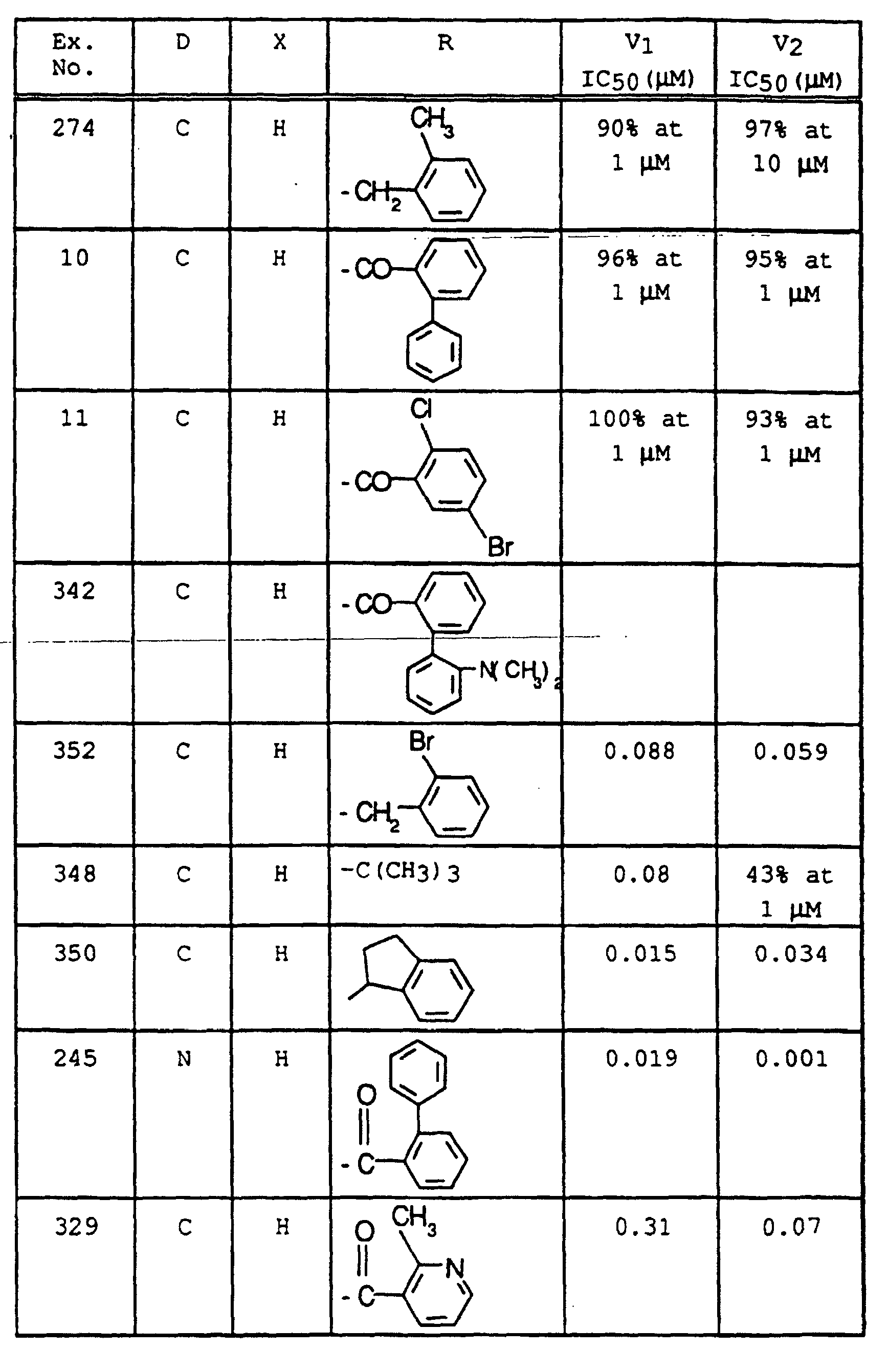


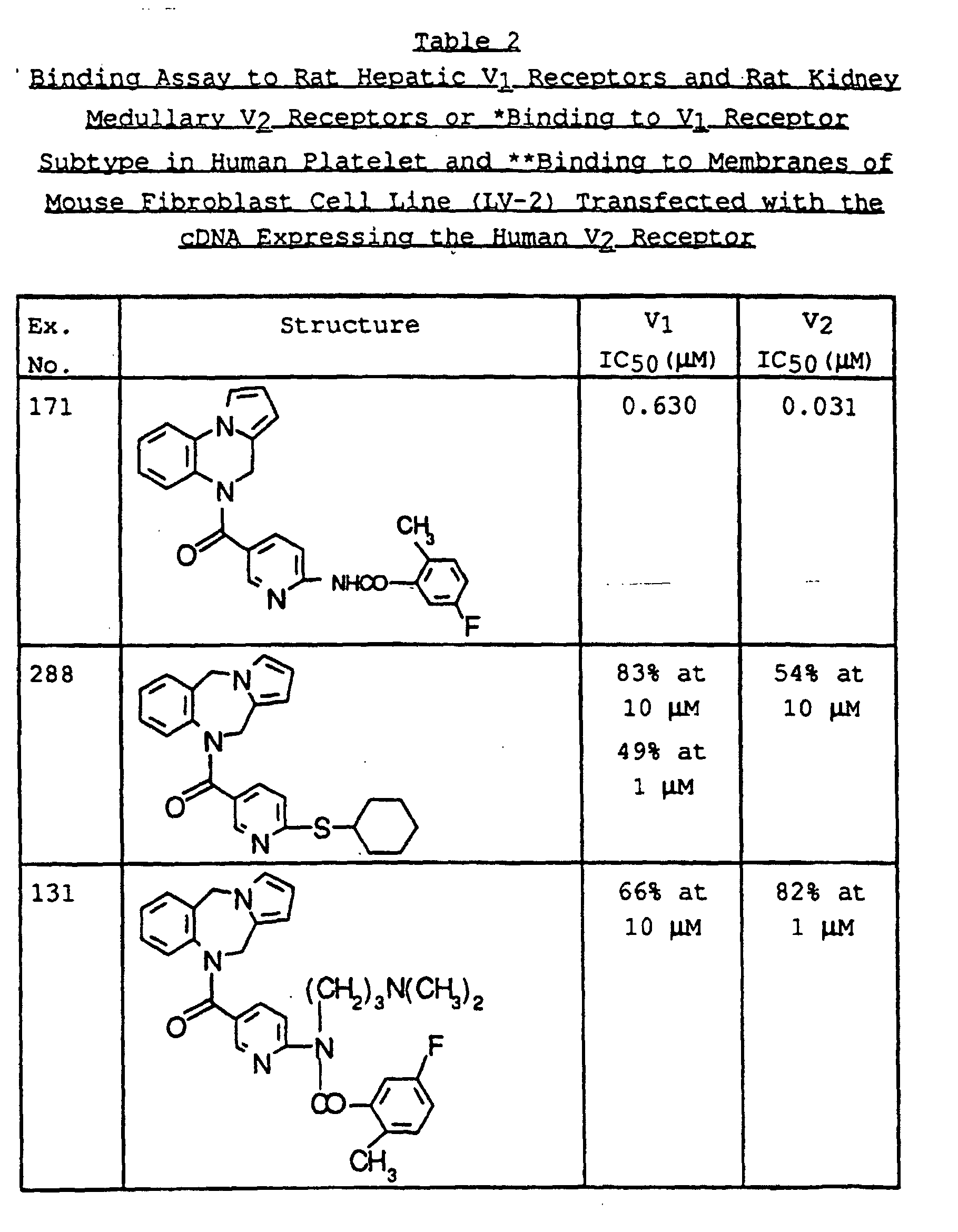


Table 4 Oxytocin Binding Assay Ex. No. Dose (µM) % Inhibition IC50 (µM) 1 10 92 0.20 5 10 93 344 1 58 3.8 4 10 100 0.67 133 10 59 261 0.15 120 1 8 208 10 95 0.73 273 2.5 95 0.056 262 10 76 1.6 263 10 98 0.38 171 10 73 1.1 12 10 98 0.8 7 10 66 6 1 90 0.14 8 1 89 0.15 301 10 89 0.86 288 10 94 1.36 33 10 95 0.51 9 2.5 96 0.17 131 10 60 130 10 57 134 1 63 341 1 74 327 1 56 347 10 86 328 10 85 0.57 324 1 45 333 10 98 0.88 338 10 98 0.72 332 10 98 0.83 337 1 16 331 1 13 336 10 94 1.63 334 1 5 339 10 48 8.56 346 1 0 326 1 0 352 1.25 96 0.105 348 10 95 0.71 350 10 95 0.205 240 10 98 0.61 329 10 91 0.19 330 10 93 0.99 353 10 83 2.05 43 10 99 0.92 351 1 0 354 1 7 14 10 96 0.58 18 5 97 0.31 - The compounds of the present invention can be used in the form of salts derived from pharmaceutically or physiologically acceptable acids or bases. These salts include, but are not limited to, the following: salts with inorganic acids such as hydrochloric acid, sulfuric acid, nitric acid, phosphoric acid and, as the case may be, such organic acids as acetic acid, oxalic acid, succinic acid, and maleic acid. Other salts include salts with alkali metals or alkaline earth metals, such as sodium, potassium, calcium or magnesium or with organic bases. The compounds can also be used in the form of esters, carbamates and other conventional "pro-drug" forms, which, when administered in such form, convert to the active moiety in vivo.
- When the compounds are employed for the above utilities, they may be combined with one or more pharmaceutically acceptable carriers, for example, solvents, diluents and the like, and may be administered orally in such forms as tablets, capsules, dispersible powders, granules, or suspensions containing, for example, from about 0.05 to 5% of suspending agent, syrups containing, for example, from about 10 to 50% of sugar, and elixirs containing, for example, from about 20 to 50% ethanol, and the like, or parenterally in the form of sterile injectable solutions or suspensions containing from about 0.05 to 5% suspending agent in an isotonic medium. Such pharmaceutical preparations may contain, for example, from about 25 to about 90% of the active ingredient in combination with the carrier, more usually between about 5% and 60% by weight.
- The effective dosage of active ingredient employed may vary depending on the particular compound employed, the mode of administration and the severity of the condition being treated. However, in general, satisfactory results are obtained when the compounds of the invention are administered at a daily dosage of from about 0.5 to about 500 mg/kg of animal body weight, preferably given in divided doses two to four times a day, or in a sustained release form. For most large mammals the total daily dosage is from about 1 to 100 mg, preferably from about 2 to 80 mg. Dosage forms suitable for internal use comprise from about 0.5 to 500 mg of the active compound in intimate admixture with a solid or liquid pharmaceutically acceptable carrier. This dosage regimen may be adjusted to provide the optimal therapeutic response. For example, several divided doses may be administered daily or the dose may be proportionally reduced as indicated by the exigencies of the therapeutic situation.
- These active compounds may be administered orally as well as by intravenous, intramuscular, or subcutaneous routes. Solid carriers include starch, lactose, dicalcium phosphate, microcrystalline cellulose, sucrose and kaolin, while liquid carriers include sterile water, polyethylene glycols, non-ionic surfactants and edible oils such as corn, peanut and sesame oils, as are appropriate to the nature of the active ingredient and the particular form of administration desired. Adjuvants customarily employed in the preparation of pharmaceutical compositions may be advantageously included, such as flavoring agents, coloring agents, preserving agents, and antioxidants, for example, vitamin E, ascorbic acid, BHT and BHA.
- The preferred pharmaceutical compositions from the standpoint of ease of preparation and administration are solid compositions, particularly tablets and hard-filled or liquid-filled capsules. Oral administration of the compounds is preferred.
- These active compounds may also be administered parenterally or intraperitoneally. Solutions or suspensions of these active compounds as a free base or pharmacologically acceptable salt can be prepared in water suitably mixed with a surfactant such as hydroxypropylcellulose. Dispersions can also be prepared in glycerol, liquid, polyethylene glycols and mixtures thereof in oils. Under ordinary conditions of storage and use, these preparations contain a preservative to prevent the growth of microorganisms.
- The pharmaceutical forms suitable for injectable use include sterile aqueous solutions or dispersions and sterile powders for the extemporaneous preparation of sterile injectable solutions or dispersions. In all cases, the form must be sterile and must be fluid to the extent that easy syringability exits. It must be stable under conditions of manufacture and storage and must be preserved against the contaminating action of microorganisms such as bacterial and fungi. The carrier can be a solvent or dispersion medium containing, for example, water, ethanol (e.g., glycerol, propylene glycol and liquid polyethylene glycol), suitable mixtures thereof, and vegetable oil.
- The new tricyclic non-peptide vasopressin antagonists of this invention are useful in treating conditions where decreased vasopressin levels are desired, such as in congestive heart failure, in disease conditions with excess renal water reabsorption and in conditions with increased vascular resistance and coronary vasoconstriction.
- In particular, the vasopressin antagonists of this invention are therapeutically useful in the treatment and/or prevention of hypertension, cardiac insufficiency, coronary vasospasm, cardiac ischemia, renal vasospasm, liver cirrhosis, congestive heart failure, nephritic syndrome, brain edema, cerebral ischemia, cerebral hemorrhage-stroke, thrombosis-bleeding and abnormal states of water retention.
- In particular, the oxytocin antagonists of this invention are useful in the prevention of preterm labor and premature birth which is a significant cause of infant health problems and infant mortality.
Claims (19)
- A compound selected from those of the formula:

wherein Y is a moiety selected from -(CH2)n- wherein n is an integer from 0 to 2,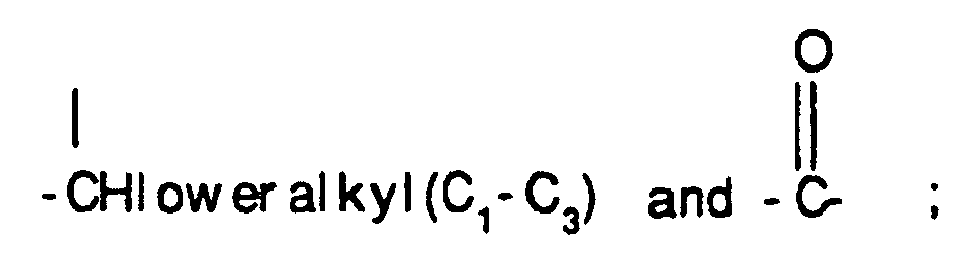

wherein m is an integer from 1 to 2 provided that when Y is -(CH2)n- and n is 2, m may also be zero and when n is zero, m may also be three, provided also that when Y is -(CH2)n- and n is 2, m may not be two;
and the moiety:


R3 is a moiety of the formula:
wherein Ar is a moiety selected from the group consisting of
R6 is selected from (a) moieties of the formula:


- NHSO2-lower alkyl (C3-C8) straight or branched,

- NHSO2-lower alkenyl (C3- C8) straight or branched,
wherein cycloalkyl is defined as C3 to C6 cycloalkyl, cyclohexenyl or cyclopentenyl; Ra is independently selected from hydrogen, -CH3, -C2H5,

(b) moieties of the formula: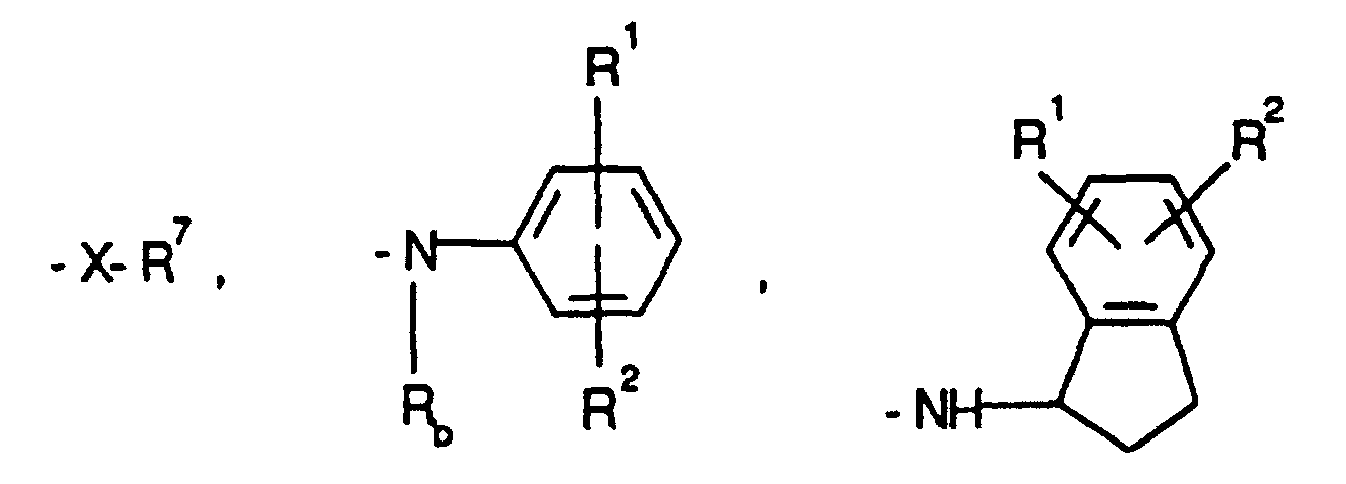
wherein R7 is lower alkyl (C3-C8), lower alkenyl(C3-C8), - (CH2) p-cycloalkyl (C3-C6),

wherein p is one to five and X is selected from O S, NH, NCH3; wherein R1 and R2 are as hereinbefore defined; (c) a moiety of the formula:
wherein J is Ra, lower alkyl(C3-C8) branched or unbranched, lower alkenyl(C3-C8) branched or unbranched, O-lower alkyl (C3-C8) branched or unbranched, -O-lower alkenyl(C3-C8) branched or unbranched, tetrahydrofuran, tetrahydrothiophene, the moieties:

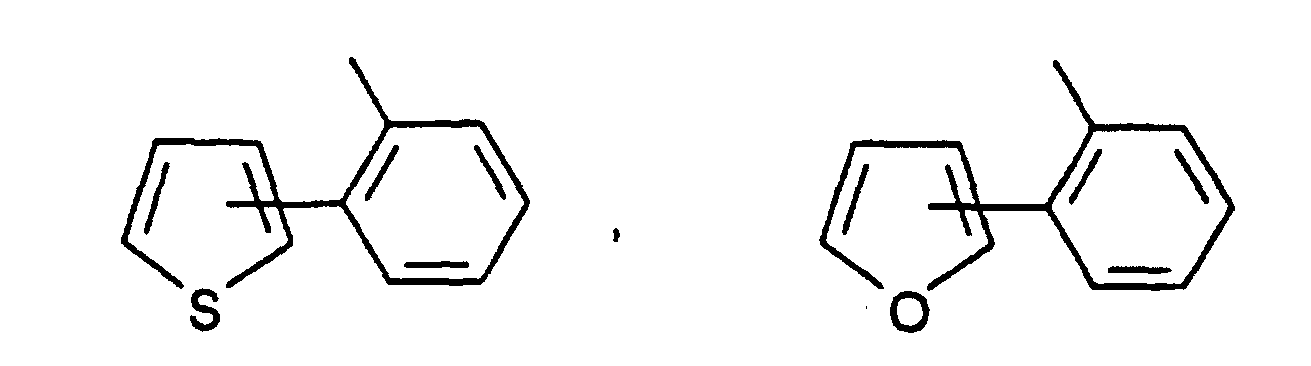

wherein D, E, F and G are selected from carbon or nitrogen and wherein the carbon atoms may be optionally substituted with halogen, (C1-C3)lower alkyl, hydroxy, -CO-lower alkyl(C1-C3), CHO, (C1-C3)lower alkoxy, -CO2-lower alkyl(C1-C3), and Ra and Rb are as hereinbefore defined;
(d) a moiety of the formula: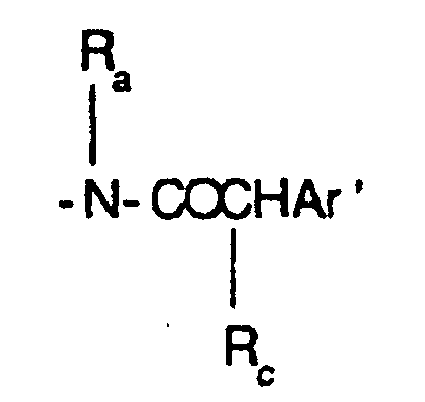
lower alkyl, -O-lower alkyl (C1-C3), OH,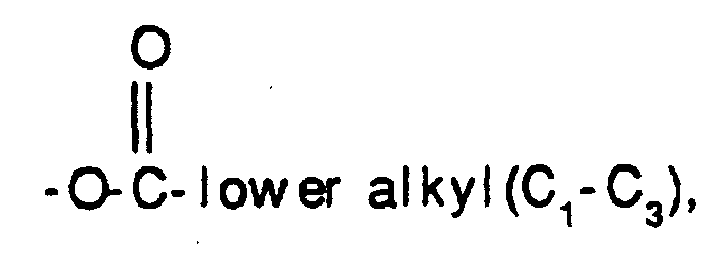


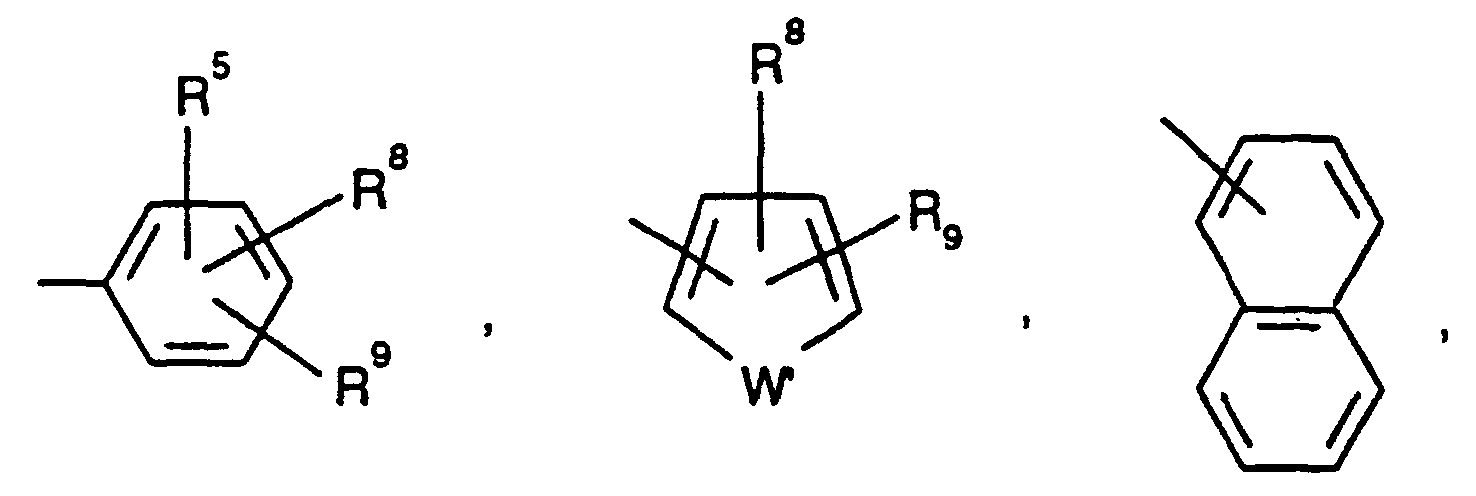

wherein W' is selected from O, S, NH, N-lower alkyl(C1-C3), NHCO-lower alkyl(C1-C3), and NS02lower alkyl(C1-C3) ;
R8 and R9 are independently selected from hydrogen, lower alkyl(C1-C3), -S-lower alkyl(C1-C3), halogen, -NH-lower alkyl(C1-C3), -N-[lower alkyl(C1-C3)]2, -OCF3, -OH, -CN, -S-CF3, -NO2, -NH2, O-lower alkyl(C1-C3),
R10 is selected from hydrogen, halogen and lower alkyl(C1-C3); R14 is -O-lower alkyl (C3-C8) branched or unbranched,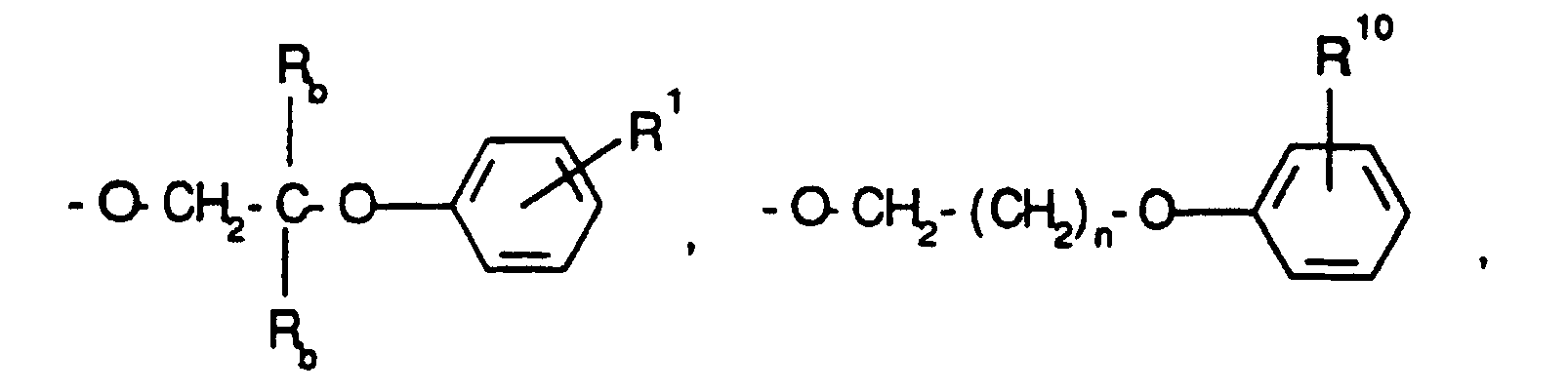


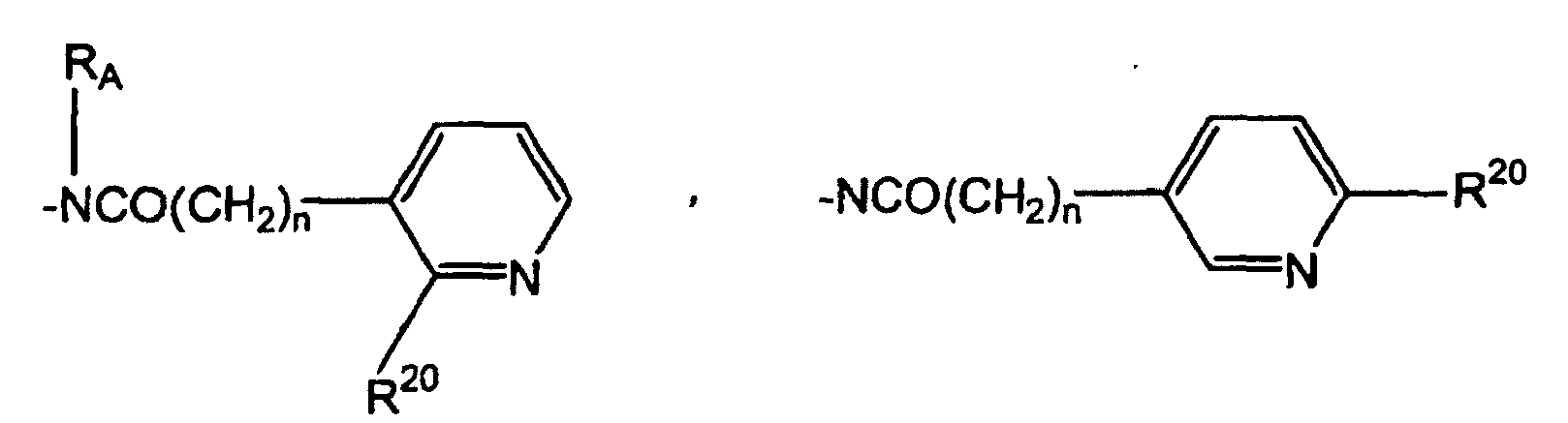
wherein n is 0 or 1; RA is hydrogen, -CH3 or -C2H5; R' is hydrogen, (C1-C3)lower alkyl, (C1-C3)lower alkoxy and halogen; R20 is hydrogen, halogen, (C1-C3)lower alkyl, (C1-C3)lower alkoxy, NH2, -NH(C1-C3)lower alkyl, -N-[(C1-C3)lower alkyl]2,
- A compound according to Claim 1 wherein R3 is the moiety:

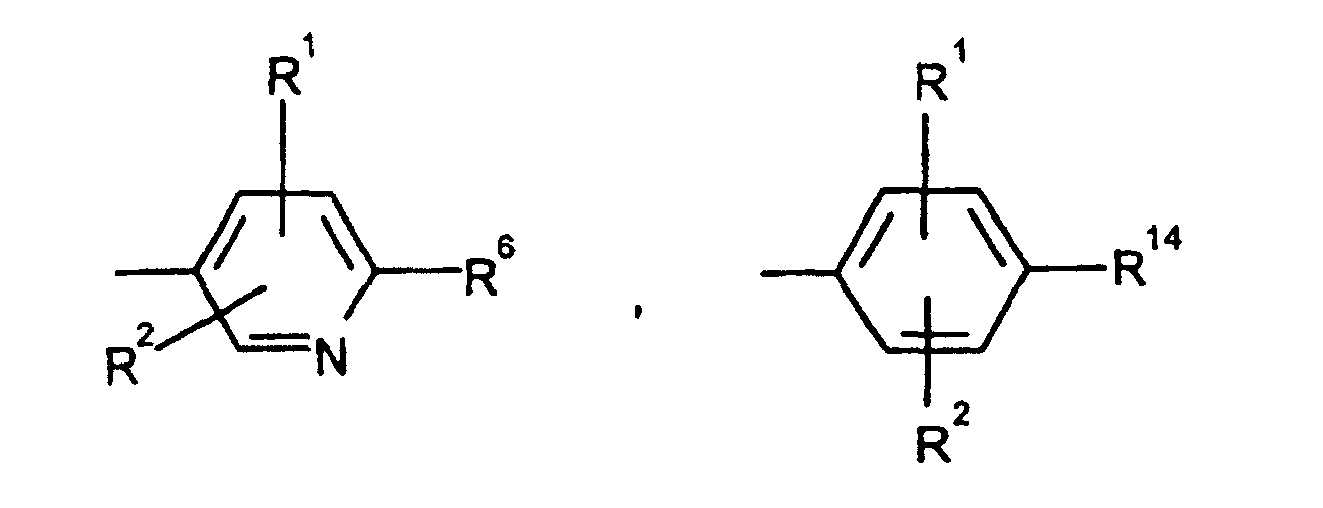
wherein R6 is selected from the moieties of the formulae:

wherein R1, R2, R7, R14, Ra, Rb, n, X cycloalkyl and Ar' are as defined in Claim 1. - A compound according to Claim 2 wherein R1, R2, Ra and Rb, R7, R14, X, and cycloalkyl are as defined in Claim 1 and Ar' is selected from the moieties:

wherein R5, R8, R9 and W' are as defined in Claim 1. - A compound according to Claim 1 wherein Y is -(CH2)n- and n is zero or one; A-B is
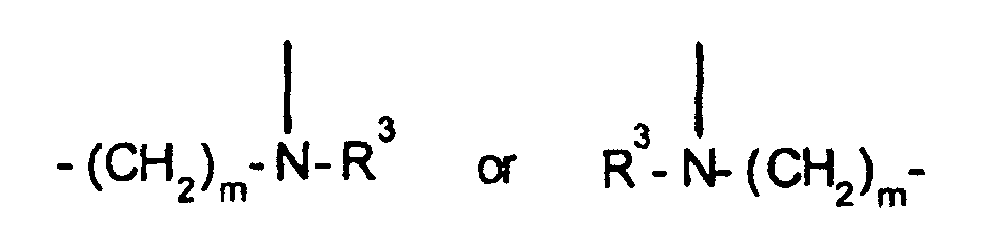
wherein R3 is as defined in Claim 1 and m is an integer from 1-2. - A compound according to Claim 1 wherein Y is -(CH2)n- and n is one; A-B is


where R1 and R2 are as defined in Claim 1 and to the proviso that Ar' (if present) is
wherein R5, R8, R9 and R10 are as previously defined in Claim 1. - A compound according to Claim 1 wherein Y is -(CH2)n- and n is zero or one; the moiety:


R3 is as defined in Claim 1 subject to the proviso that R6 (if present) is other than
where R1 and R2 are as defined in Claim 1 and to the proviso that Ar' (if present) is
wherein R5, R8, R9, R10 and W' are as defined in Claim 1. - A compound according to Claim 1, the compound being selected from those of the formulae:

wherein the moiety:
R3 is as defined in Claim 6;
R11 is selected from hydrogen, halogen, (C1-C3)lower alkyl, hydroxy, COCl3, COCF3,
- A compound according to Claim 1, the compound being selected from those of the formulae:

wherein m is one or two; and the moiety:
R3 is as defined in Claim 6 and R11 and R12 are as defined in Claim 7 and the pharmaceutically acceptable salts thereof. - A compound according to Claim 1, the compound being selected from those of the formulae:

wherein R3 is as defined in Claim 6, R11 and R12 are as defined in Claim 7 and R13 is selected from hydrogen, (C1-C3)lower alkyl, halogen and (C1-C3)lower alkoxy and the pharmaceutically acceptable salts thereof. - A compound selected from those of the formulae:

wherein m is one or two;
R3 is as defined in Claim 6, R11 and R12
are as defined in Claim 7 and R13 is as defined in Claim 9 and the pharmaceutically acceptable salts thereof. - A compound as claimed in Claim 1, the compound being selected from those of the formula:

wherein Y is -(CH2)n-;
n is one when m is one; and m is one or two when n is zero;
R3 is as defined in Claim 6 and R11 and R12 are as defined in Claim 7 and their pharmaceutically acceptable salts. - A compound according to Claim 1, the compound being selected from those of the formula:

wherein Y is -(CH2)n; n is one when m is one and m is two when n is zero; D is carbon or nitrogen;
R3 is as defined in Claim 6 and R11 and R12 are as defined in Claim 7 and the pharmaceutically salts thereof. - A compound according to Claim 1, the compound being selected from those of the formulae:

R3 is as defined in Claim 6 and R11 and R12 are as defined in Claim 7 and the pharmaceutically acceptable salts thereof. - A compound according to Claim 1, the compound being selected from those of the formulae:

wherein R3 is as defined in Claim 6; R11 and R12 are
as defined in Claim 7 and R13 is as defined in Claim 8 and the pharmaceutically acceptable salts thereof. - A compound according to Claim 1 selected from:N-[5-[[3-[(dimethylamino)methyl]-[5H-pyrrolo[2,1-c]-[1,4]benzodiazepin-10(11H)]-yl]carbonyl]-2-pyridinyl]-5-fluoro-2-methylbenzamide;N-[5-[[3-(1-pyrrolidinylmethyl)-5H-pyrrolo[2,1-c]-[1,4]benzodiazepin-10(11H)-yl]carbonyl]-2-pyridinyl]-2-chloro-4-fluorobenzamide;N-[5-(4H-pyrazolo[5,1-c][1,4]benzodiazepin-5(10H)-ylcarbonyl)-2-pyridinyl]-5-fluoro-2-methylbenzamide;N-[5-(4H-pyrazolo[5,1-c] [1,4]benzodiazepin-5(10H)-ylcarbonyl)-2-pyridinyl]-[1,1'-biphenyl]-2-carboxamide;10-[[6-[(2-methylpropyl)amino]-3-pyridinyl]carbonyl]-10,11-dihydro-5H-pyrrolo[2,1-c][1,4]benzodiazepine;10-[[6-[(phenylmethyl)amino]-3-pyridinyl]carbonyl]-10,11-dihydro-5H-pyrrolo[2,1-c][1,4]benzodiazepine;N-[4-(5H-pyrrolo[2,1-c] [1,4]benzodiazepin-10 (11H)-ylcarbonyl)-2-methoxyphenyl][1,1'-biphenyl]-2-carboxamide;N-[4-(5H-Pyrrolo[2,1-c][1,4]benzodiazepin-10 (11H)-ylcarbonyl)-3-chlorophenyl][1,1'-biphenyl]-2-carboxamide;N-[4-(5H-pyrrolo[2,1-c][1,4]benzodiazepin-10(11H)-ylcarbonyl) phenyl] [1,1'-biphenyl]-2-carboxamide;N-[4-(5H-pyrrolo[2,1-c][1,4]benzodiazepine-10(11H)-ylcarbonyl)phenyl]-2-(phenylmethyl)benzamide;N-[4-(5H-pyrrolo[2,1-c][1,4]benzodiazepin-10(11H)-ylcarbonyl)-3-chlorophenyl]-2-(phenylmethyl)benzamide;N-(4-(5H-pyrrolo[2,1-c] [1,4]benzodiazepin-10(11)-ylcarbonyl)-2-methoxyphenyl]-2-(phenylmethyl)benzamide;N-[4-(5H-pyrrolo[2,1-c] [1,4]benzodiazepin-10(11H)-ylcarbonyl)phenyl]-2-methylpyridine-3-carboxamide;N-[4-(5H-Pyrrolo[2,1-c][1,4]benzodiazepin-10(11H)-yl-carbonyl)-3-chlorophenyl]-2-methyl-pyridine-3-carboxamide;N-[5-(5H-Pyrrolo[2,1-c][1,4]benzodiazepin-10(11H)-ylcarbonyl]-2-pyridinyl]-2-methylpyridine-3-carboxamide;N-[5-(5H-pyrrolo[2,1-c][1,4]benzodiazepin-10(11H)-ylcarbonyl]-2-pyridinyl]-2-methylpyridine-3-carboxamide hydrochloride;N-[4-(5H-pyrrolo[2,1-c][1,4]benzodiazepin-10(11H)-ylcarbonyl)phenyl]-2-(dimethylamino)-pyridine-3-carboxamide, hydrochloride;N-[4-(5H-pyrrolo[2,1-c][1,4]benzodiazepin-10(11H)-ylcarbonyl)phenyl]-2-chloropyridine-3-carboxamide;N-[4-(5H-pyrrolo[2,1-c][1,4]benzodiazepin-10(11H)-ylcarbonyl)phenyl)-2-(methylamino)pyridine-3-carboxamide;N-[4-(5H-pyrrolo[2,1-c] [1,4]benzodiazepin-10(11H)-ylcarbonyl)phenyl]-2-[3-(dimethylaminopropyl)amino]-pyridine-3-carboxamide;N-[4-(5H-pyrrolo [2,1-c] [1,4]benzodiazepin-10 (11H)-ylcarbonyl)phenyl]-2-(1-piperidinyl)-pyridine-3-carboxamide;N-[4-(5H-pyrrolo[2,1-c][1,4]benzodiazepin-10(11H)-ylcarbonyl)phenyl]-2-(dimethylamino)-pyridine-3-carboxamide;N-[5-(5H-pyrrolo[2,1-c][1,4]-benzodiazepin-10(11H)-ylcarbonyl)-2-pyridinyl][1,1'-biphenyl]-2-carboxamide;N-[4-(5H-pyrrolo[2,1-c][1,4]benzodiazepin-10(11H)-ylcarbonyl)phenyl]-2-(2-pyridinyl)benzamide;N-[5-(5H-Pyrrolo [2,1-c][1,4]benzodiazepin-10(11H)-ylcarbonyl)-2-pyridinyl]-2-(2-pyridinyl)benzamide;N-[4-(4H-pyrazolo[5,1-c][1,4]benzodiazepin-5(10H)yl-carbonyl)-3-chlorophenyl][1,1'-biphenyl]-2-carboxamide;N-[4-(4H-pyrazolo[5,1-c] [1, 4]benzodiazepin-5(10H) yl-carbonyl)phenyl][1,1'-biphenyl]-2-carboxamide;N- [4-(4H-pyrazolo[5,1-c] [1,4]benzodiazepin-5(10H)yl-carbonyl)-3-chlorophenyl]-2-(dimethylamino)pyridine-3-carboxamide; andN-[5-(4H-pyrazolo[5,1-c][1,4]benzodiazepin-5(10H)yl-carbonyl)-2-pyridinyl]-2-(dimethylamino)pyridine-3-carboxamide;
or a pharmaceutically acceptable salt thereof. - A pharmaceutical composition useful for treating diseases characterized by excess renal reabsorption of water as well as congestive heart failure, liver cirrhosis, nephrotic syndrome, central nervous system injuries, lung disease and hyponatremia in a mammal comprising a suitable pharmaceutical carrier and an effective amount of a compound as claimed in any one of claims 1 to 15.
- A compound as claimed in any one of claims 1 to 15 for use in treating diseases characterized by excess renal reabsorption of water as well as congestive heart failure, liver cirrhosis, nephrotic syndrome, central nervous system injuries, lung disease and hyponatremia.
- The use of a compound as claimed in any one of claims 1 to 15 in the manufacture of a medicament for the treatment of a disease characterized by excess renal reabsorption of water as well as congestive heart failure, liver cirrhosis, nephrotic syndrome, central nervous system injuries, lung disease and hyponatremia.
- A process for preparing a compound as claimed in claim 1,
which comprises reacting a compound of the formulae:
wherein D, E, F, Y, z amd m are as defined in claim 1with a compound of the formula:
wherein R1, R2, R6 and R14 are as defined in claim 1 and Q is a halogen or an activating group, which results from conversion of a 6-substituted-pyridine-3-carboxylic acid or 4-substituted-benzoic acid to an acid chloride, or acid bromide, mixed anhydride or from activation with a peptide coupling reagent, to give compounds of the Formula I.
Priority Applications (1)
| Application Number | Priority Date | Filing Date | Title |
|---|---|---|---|
| SI9630735T SI0804438T1 (en) | 1995-01-17 | 1996-01-16 | Tricyclic benzazepine vasopressin antagonists |
Applications Claiming Priority (3)
| Application Number | Priority Date | Filing Date | Title |
|---|---|---|---|
| US08/373,132 US5536718A (en) | 1995-01-17 | 1995-01-17 | Tricyclic benzazepine vasopressin antagonists |
| US373132 | 1995-01-17 | ||
| PCT/US1996/001076 WO1996022293A1 (en) | 1995-01-17 | 1996-01-16 | Tricyclic benzazepine vasopressin antagonists |
Publications (2)
| Publication Number | Publication Date |
|---|---|
| EP0804438A1 EP0804438A1 (en) | 1997-11-05 |
| EP0804438B1 true EP0804438B1 (en) | 2006-03-15 |
Family
ID=23471110
Family Applications (1)
| Application Number | Title | Priority Date | Filing Date |
|---|---|---|---|
| EP96903698A Expired - Lifetime EP0804438B1 (en) | 1995-01-17 | 1996-01-16 | Tricyclic benzazepine vasopressin antagonists |
Country Status (23)
| Country | Link |
|---|---|
| US (3) | US5536718A (en) |
| EP (1) | EP0804438B1 (en) |
| JP (2) | JP4163252B2 (en) |
| KR (1) | KR100443438B1 (en) |
| CN (1) | CN1065244C (en) |
| AR (1) | AR002022A1 (en) |
| AT (1) | ATE320429T1 (en) |
| AU (1) | AU707982B2 (en) |
| BR (1) | BR9607182A (en) |
| CZ (1) | CZ297797B6 (en) |
| DE (1) | DE69635922T2 (en) |
| DK (1) | DK0804438T3 (en) |
| EA (1) | EA001143B1 (en) |
| ES (1) | ES2258267T3 (en) |
| HU (1) | HUP9800646A3 (en) |
| IL (1) | IL116775A (en) |
| MX (1) | MX9705313A (en) |
| NZ (1) | NZ302111A (en) |
| PT (1) | PT804438E (en) |
| TW (1) | TW403752B (en) |
| UA (1) | UA54383C2 (en) |
| WO (1) | WO1996022293A1 (en) |
| ZA (1) | ZA96297B (en) |
Families Citing this family (61)
| Publication number | Priority date | Publication date | Assignee | Title |
|---|---|---|---|---|
| US5736540A (en) * | 1993-07-29 | 1998-04-07 | American Cyanamid Company | Tricyclic diazepine vasopressin antagonists and oxytocin antagonists |
| US7071133B2 (en) * | 1993-11-16 | 2006-07-04 | Ppg Industries Ohio, Inc. | Colored glass compositions and-automotive vision panels with-reduced transmitted-color shift |
| AU701060B2 (en) * | 1994-06-10 | 1999-01-21 | Smithkline Beecham Plc | Benzopyrans and their use as therapeutic agents |
| SI9520108A (en) * | 1994-09-30 | 1997-10-31 | Basf Ag | New heterocyclic substituted imidazoloquinoxalinones, their preparation and their use |
| US5700796A (en) * | 1995-01-17 | 1997-12-23 | American Cyanamid Company | Tricyclic benzazepine vasopressin antagonists |
| US5753648A (en) * | 1995-01-17 | 1998-05-19 | American Cyanamid Company | Tricyclic benzazepine vasopressin antagonists |
| US5880122A (en) * | 1996-11-01 | 1999-03-09 | American Home Products Corporation | 3-Carboxamide derivatives of 5H-pyrrolo 2,1-c! 1,4!-benzodiazepines |
| US20020155299A1 (en) | 1997-03-14 | 2002-10-24 | Harris Caroline S. | Photo-induced hydrophilic article and method of making same |
| US20030039843A1 (en) * | 1997-03-14 | 2003-02-27 | Christopher Johnson | Photoactive coating, coated article, and method of making same |
| US7096692B2 (en) * | 1997-03-14 | 2006-08-29 | Ppg Industries Ohio, Inc. | Visible-light-responsive photoactive coating, coated article, and method of making same |
| AU732214C (en) * | 1997-03-31 | 2001-10-25 | Wakamoto Pharmaceutical Co., Ltd. | Biphenyl derivatives and drug composition |
| WO1998046596A1 (en) * | 1997-04-15 | 1998-10-22 | Eli Lilly And Company | Method for providing neuro-protective effects |
| US20030022889A1 (en) * | 1997-04-15 | 2003-01-30 | Bymaster Franklin P. | Method for providing neuro-protective effects |
| US6511974B1 (en) | 1997-07-30 | 2003-01-28 | Wyeth | Tricyclic vasopressin agonists |
| US6194407B1 (en) | 1997-07-30 | 2001-02-27 | American Home Products Corporation | Tricyclic pyrido vasopressin agonists |
| US6090803A (en) * | 1998-07-24 | 2000-07-18 | American Home Products Corporation | Tricyclic vasopressin agonists |
| US7138393B2 (en) * | 1998-07-24 | 2006-11-21 | Wyeth | Biologically active vasopressin agonist metabolites |
| US6235900B1 (en) | 1999-02-04 | 2001-05-22 | American Home Products Corporation | Tricyclic pyridine N-oxides vasopressin agonists |
| US6297234B1 (en) | 1999-02-04 | 2001-10-02 | American Home Products Corporation | Arylthiophene vasopressin agonists |
| AU7615200A (en) * | 1999-09-27 | 2001-04-30 | American Cyanamid Company | Vasopressin agonist formulation and process |
| MXPA03001227A (en) * | 2000-08-08 | 2004-09-10 | Johnson & Johnson | 2-pyridinamine compositions and related methods. |
| US20050203092A1 (en) * | 2000-08-08 | 2005-09-15 | Benjamin Elfrida R. | 4-Pyrimidinamine derivatives, pharmaceutical compositions and related methods |
| US6677063B2 (en) | 2000-08-31 | 2004-01-13 | Ppg Industries Ohio, Inc. | Methods of obtaining photoactive coatings and/or anatase crystalline phase of titanium oxides and articles made thereby |
| US7323249B2 (en) * | 2000-08-31 | 2008-01-29 | Ppg Industries Ohio, Inc. | Methods of obtaining photoactive coatings and/or anatase crystalline phase of titanium oxides and articles made thereby |
| US6900200B2 (en) | 2001-04-12 | 2005-05-31 | Wyeth | Tricyclic hydroxy carboxamides and derivatives thereof tocolytic oxytocin receptor antagonists |
| US7053083B2 (en) * | 2001-04-12 | 2006-05-30 | Wyeth | Cyclohexylphenyl vasopressin agonists |
| BR0208823A (en) * | 2001-04-12 | 2004-03-09 | Wyeth Corp | Compound, method of treating disorders that are remedied or alleviated by vasopressin agonist activity in a mammal in need thereof, and pharmaceutical composition |
| US7326700B2 (en) * | 2001-04-12 | 2008-02-05 | Wyeth | Cyclohexenyl phenyl carboxamides tocolytic oxytocin receptor antagonists |
| US6977254B2 (en) * | 2001-04-12 | 2005-12-20 | Wyeth | Hydroxy cyclohexenyl phenyl carboxamides tocolytic oxytocin receptor antagonists |
| US7064120B2 (en) * | 2001-04-12 | 2006-06-20 | Wyeth | Tricyclic pyridyl carboxamides and derivatives thereof tocolytic oxytocin receptor antagonists |
| US7109193B2 (en) | 2001-04-12 | 2006-09-19 | Wyeth | Tricyclic diazepines tocolytic oxytocin receptor antagonists |
| US7202239B2 (en) * | 2001-04-12 | 2007-04-10 | Wyeth | Cyclohexylphenyl carboxamides tocolytic oxytocin receptor antagonists |
| US7022699B2 (en) | 2001-04-12 | 2006-04-04 | Wyeth | Cyclohexenyl phenyl diazepines vasopressin and oxytocin receptor modulators |
| SE0102299D0 (en) | 2001-06-26 | 2001-06-26 | Astrazeneca Ab | Compounds |
| SE0102764D0 (en) | 2001-08-17 | 2001-08-17 | Astrazeneca Ab | Compounds |
| US7232615B2 (en) * | 2001-10-22 | 2007-06-19 | Ppg Industries Ohio, Inc. | Coating stack comprising a layer of barrier coating |
| US20040010010A1 (en) * | 2002-04-30 | 2004-01-15 | Ebetino Frank Hallock | Melanocortin receptor ligands |
| US7741352B2 (en) * | 2003-03-11 | 2010-06-22 | Neurosearch A/S | KCNQ channel modulating compounds and their pharmaceutical use |
| US20060029754A1 (en) * | 2004-08-05 | 2006-02-09 | Medwick Paul A | Coated substrate with improved solar control properties |
| EP1632494A1 (en) * | 2004-08-24 | 2006-03-08 | Ferring B.V. | Vasopressin v1a antagonists |
| US20060046089A1 (en) * | 2004-09-01 | 2006-03-02 | O'shaughnessy Dennis J | Metal based coating composition and related coated substrates |
| US7947373B2 (en) * | 2004-10-14 | 2011-05-24 | Pittsburgh Glass Works, Llc | High luminance coated glass |
| WO2006068928A1 (en) * | 2004-12-20 | 2006-06-29 | Wyeth | Pyrrolo[1,2-a]quinoxalin-5-(4h)-yl)sulfonyls and carbonyls and their use as estrogenic agents |
| US7473471B2 (en) * | 2005-03-21 | 2009-01-06 | Ppg Industries Ohio, Inc. | Coating composition with solar properties |
| US7642259B2 (en) | 2005-07-09 | 2010-01-05 | Astrazeneca Ab | Heteroaryl benzamide derivatives for use as GLK activators in the treatment of diabetes |
| UY30117A1 (en) * | 2006-01-31 | 2007-06-29 | Tanabe Seiyaku Co | AMIS TRISUSTITUDED COMPOUND |
| CN102239221B (en) | 2008-11-19 | 2013-12-25 | Ppg工业俄亥俄公司 | Basecoats that provide improved topcoat functionality |
| US7998586B2 (en) | 2008-11-19 | 2011-08-16 | Ppg Industries Ohio, Inc. | Undercoating layers providing improved topcoat functionality |
| US20100124642A1 (en) * | 2008-11-19 | 2010-05-20 | Ppg Industries Ohio, Inc. | Undercoating layers providing improved conductive topcoat functionality |
| US8133599B2 (en) * | 2008-11-19 | 2012-03-13 | Ppg Industries Ohio, Inc | Undercoating layers providing improved photoactive topcoat functionality |
| AR076221A1 (en) | 2009-04-09 | 2011-05-26 | Astrazeneca Ab | DERIVED FROM PIRAZOL [4,5-E] PYRIMIDINE AND ITS USE TO TREAT DIABETES AND OBESITY |
| US20110146768A1 (en) | 2009-12-21 | 2011-06-23 | Ppg Industries Ohio, Inc. | Silicon thin film solar cell having improved underlayer coating |
| US9224892B2 (en) | 2009-12-21 | 2015-12-29 | Ppg Industries Ohio, Inc. | Silicon thin film solar cell having improved haze and methods of making the same |
| RU2518102C1 (en) * | 2012-11-01 | 2014-06-10 | Федеральное государственное бюджетное образовательное учреждение высшего профессионального образования "Кубанский государственный технологический университет" (ФГБОУ ВПО "КубГТУ") | Method of obtaining derivatives of 2-dialkylaminopyrrolo[1,2-alpha][1,4]benzodiazepine |
| FI3551631T3 (en) * | 2016-12-12 | 2025-01-16 | Kinoxis Therapeutics Pty Ltd | Non-peptide oxytocin receptor agonists |
| KR101798840B1 (en) | 2017-05-17 | 2017-11-17 | 주식회사 레고켐 바이오사이언스 | Novel Compounds as Autotaxin Inhibitors and Pharmaceutical Compositions Comprising the Same |
| US10961242B2 (en) | 2017-05-17 | 2021-03-30 | Legochem Biosciences, Inc. | Compounds as autotaxin inhibitors and pharmaceutical compositions comprising the same |
| CA3069720A1 (en) | 2017-07-11 | 2019-01-17 | Vertex Pharmaceuticals Incorporated | Carboxamides as modulators of sodium channels |
| US12441703B2 (en) | 2019-01-10 | 2025-10-14 | Vertex Pharmaceuticals Incorporated | Carboxamides as modulators of sodium channels |
| WO2020146612A1 (en) | 2019-01-10 | 2020-07-16 | Vertex Pharmaceuticals Incorporated | Esters and carbamates as modulators of sodium channels |
| CA3191811A1 (en) * | 2020-09-07 | 2022-03-10 | Hugh ALSOP | Salts and crystals |
Family Cites Families (20)
| Publication number | Priority date | Publication date | Assignee | Title |
|---|---|---|---|---|
| US4766108A (en) * | 1986-12-04 | 1988-08-23 | Smith Kline Beckman Corporation | Tyr-Arg-vasopressin antagonists |
| US5055448A (en) * | 1987-06-25 | 1991-10-08 | Medical College Of Ohio | Linear derivatives of arginine vasopressin antagonists |
| EP0382185B1 (en) * | 1989-02-10 | 1994-06-15 | Otsuka Pharmaceutical Co., Ltd. | Carbostyril derivatives |
| US5258510A (en) * | 1989-10-20 | 1993-11-02 | Otsuka Pharma Co Ltd | Benzoheterocyclic compounds |
| KR0167349B1 (en) * | 1989-10-20 | 1999-02-18 | 오스카 아끼히꼬 | Benzoheterocyclic composition |
| US5070187A (en) * | 1989-11-03 | 1991-12-03 | Trustees Of Boston University | Pharmacologically effective antagonists of arginine-vasopressin |
| TW199153B (en) * | 1990-08-07 | 1993-02-01 | Dtsuka Seiyaku Kk | |
| JPH04163252A (en) * | 1990-10-25 | 1992-06-08 | Teijin Ltd | Air bag |
| CA2066104C (en) * | 1991-04-19 | 2003-05-27 | Hidenori Ogawa | Benzazepine derivatives as vasopressin antagonists |
| CA2110942A1 (en) * | 1991-06-14 | 1992-12-23 | Pharmacia & Upjohn Company Llc | Imidazo¬1,5-a|quinoxalines |
| EP0533242A3 (en) * | 1991-09-16 | 1993-09-15 | Merck & Co. Inc. | Substituted derivatives of piperazinylcamphorsulfonyl oxytocin antagonists |
| EP0533243B1 (en) * | 1991-09-16 | 1997-12-17 | Merck & Co. Inc. | Hydantoin and succinimide-substituted spiroindanylcamphorsulfonyl derivatives |
| US5204349A (en) * | 1991-09-16 | 1993-04-20 | Merck & Co., Inc. | Amide-substituted derivatives of spiroindanylcamphorsulfonyl oxytocin antagonists |
| EP0533240A3 (en) * | 1991-09-16 | 1993-09-29 | Merck & Co. Inc. | Substituted amine derivatives of piperazinylcamphorsulfonyl oxytocin antagonists |
| WO1994004525A1 (en) * | 1992-08-20 | 1994-03-03 | Otsuka Pharmaceutical Company, Limited | Benzoheterocyclic compounds as oxytocin and vasopressin antagonists |
| WO1994012476A1 (en) * | 1992-11-25 | 1994-06-09 | Yamanouchi Pharmaceutical Co., Ltd. | Benzanilide derivative |
| AU5692094A (en) * | 1992-12-21 | 1994-07-19 | Yamanouchi Pharmaceutical Co., Ltd. | Novel n-(pyridylcarbonyl)benzazepine derivative and intermediate therefor |
| WO1994020473A1 (en) * | 1993-03-11 | 1994-09-15 | Yamanouchi Pharmaceutical Co., Ltd. | Compound with vasopressin antagonism |
| GB9307527D0 (en) * | 1993-04-13 | 1993-06-02 | Fujisawa Pharmaceutical Co | New venzamide derivatives,processes for the preparation thereof and pharmaceutical composition comprising the same |
| US5516774A (en) * | 1993-07-29 | 1996-05-14 | American Cyanamid Company | Tricyclic diazepine vasopressin antagonists and oxytocin antagonists |
-
1995
- 1995-01-17 US US08/373,132 patent/US5536718A/en not_active Expired - Lifetime
- 1995-06-02 US US08/458,210 patent/US5610156A/en not_active Expired - Lifetime
- 1995-06-02 US US08/460,346 patent/US5612334A/en not_active Expired - Lifetime
-
1996
- 1996-01-15 ZA ZA96297A patent/ZA96297B/en unknown
- 1996-01-15 AR ARP960101025A patent/AR002022A1/en active IP Right Grant
- 1996-01-16 JP JP52245296A patent/JP4163252B2/en not_active Expired - Fee Related
- 1996-01-16 PT PT96903698T patent/PT804438E/en unknown
- 1996-01-16 HU HU9800646A patent/HUP9800646A3/en unknown
- 1996-01-16 CZ CZ0224997A patent/CZ297797B6/en not_active IP Right Cessation
- 1996-01-16 EP EP96903698A patent/EP0804438B1/en not_active Expired - Lifetime
- 1996-01-16 BR BR9607182A patent/BR9607182A/en not_active IP Right Cessation
- 1996-01-16 AU AU47698/96A patent/AU707982B2/en not_active Ceased
- 1996-01-16 NZ NZ302111A patent/NZ302111A/en unknown
- 1996-01-16 DK DK96903698T patent/DK0804438T3/en active
- 1996-01-16 KR KR1019970704833A patent/KR100443438B1/en not_active Expired - Fee Related
- 1996-01-16 TW TW085100461A patent/TW403752B/en not_active IP Right Cessation
- 1996-01-16 CN CN96192641A patent/CN1065244C/en not_active Expired - Fee Related
- 1996-01-16 UA UA97084258A patent/UA54383C2/en unknown
- 1996-01-16 AT AT96903698T patent/ATE320429T1/en not_active IP Right Cessation
- 1996-01-16 EA EA199700117A patent/EA001143B1/en not_active IP Right Cessation
- 1996-01-16 WO PCT/US1996/001076 patent/WO1996022293A1/en not_active Ceased
- 1996-01-16 IL IL11677596A patent/IL116775A/en not_active IP Right Cessation
- 1996-01-16 ES ES96903698T patent/ES2258267T3/en not_active Expired - Lifetime
- 1996-01-16 DE DE69635922T patent/DE69635922T2/en not_active Expired - Lifetime
-
1997
- 1997-07-14 MX MX9705313A patent/MX9705313A/en unknown
-
2007
- 2007-11-21 JP JP2007301830A patent/JP2008101012A/en active Pending
Also Published As
Similar Documents
| Publication | Publication Date | Title |
|---|---|---|
| EP0804438B1 (en) | Tricyclic benzazepine vasopressin antagonists | |
| EP0636625B1 (en) | Tricyclic diazepines vasopressin and oxytocin antagonists | |
| EP0804440B1 (en) | Tricyclic benzazepine vasopressin antagonists | |
| AU731925B2 (en) | Tricyclic benzazepine vasopressin antagonists | |
| EA000056B1 (en) | Tricyclic vasopressin antagonists | |
| US5700796A (en) | Tricyclic benzazepine vasopressin antagonists | |
| EP1021444B1 (en) | 3-CARBOXAMIDE DERIVATIVES OF 5H-PYRROLO[2,1-c][1,4]-BENZODIAZEPINES | |
| WO1997049708A9 (en) | Tricyclic benzazepine vasopressin antagonists | |
| HK1004132B (en) | Tricyclic benzazepine vasopressin antagonists | |
| CA2210631C (en) | Tricyclic benzazepine vasopressin antagonists | |
| GB2174695A (en) | Heteroanalogs of imidazobenzodiazepines | |
| HK1011363B (en) | Tricyclic diazepines vasopressin and oxytocin antagonists | |
| HK1003891B (en) | Tricyclic vasopressin antagonists |
Legal Events
| Date | Code | Title | Description |
|---|---|---|---|
| PUAI | Public reference made under article 153(3) epc to a published international application that has entered the european phase |
Free format text: ORIGINAL CODE: 0009012 |
|
| 17P | Request for examination filed |
Effective date: 19970711 |
|
| AK | Designated contracting states |
Kind code of ref document: A1 Designated state(s): AT BE CH DE DK ES FR GB GR IE IT LI LU NL PT SE |
|
| AX | Request for extension of the european patent |
Free format text: LT PAYMENT 970711;LV PAYMENT 970711;SI PAYMENT 970711 |
|
| 17Q | First examination report despatched |
Effective date: 20021115 |
|
| RAP1 | Party data changed (applicant data changed or rights of an application transferred) |
Owner name: WYETH HOLDINGS CORPORATION |
|
| GRAP | Despatch of communication of intention to grant a patent |
Free format text: ORIGINAL CODE: EPIDOSNIGR1 |
|
| GRAP | Despatch of communication of intention to grant a patent |
Free format text: ORIGINAL CODE: EPIDOSNIGR1 |
|
| GRAS | Grant fee paid |
Free format text: ORIGINAL CODE: EPIDOSNIGR3 |
|
| GRAA | (expected) grant |
Free format text: ORIGINAL CODE: 0009210 |
|
| AK | Designated contracting states |
Kind code of ref document: B1 Designated state(s): AT BE CH DE DK ES FR GB GR IE IT LI LU NL PT SE |
|
| AX | Request for extension of the european patent |
Extension state: LT LV SI |
|
| PG25 | Lapsed in a contracting state [announced via postgrant information from national office to epo] |
Ref country code: IT Free format text: LAPSE BECAUSE OF FAILURE TO SUBMIT A TRANSLATION OF THE DESCRIPTION OR TO PAY THE FEE WITHIN THE PRESCRIBED TIME-LIMIT;WARNING: LAPSES OF ITALIAN PATENTS WITH EFFECTIVE DATE BEFORE 2007 MAY HAVE OCCURRED AT ANY TIME BEFORE 2007. THE CORRECT EFFECTIVE DATE MAY BE DIFFERENT FROM THE ONE RECORDED. Effective date: 20060315 |
|
| REG | Reference to a national code |
Ref country code: GB Ref legal event code: FG4D Ref country code: CH Ref legal event code: EP |
|
| REG | Reference to a national code |
Ref country code: IE Ref legal event code: FG4D |
|
| REF | Corresponds to: |
Ref document number: 69635922 Country of ref document: DE Date of ref document: 20060511 Kind code of ref document: P |
|
| REG | Reference to a national code |
Ref country code: HK Ref legal event code: GR Ref document number: 1004132 Country of ref document: HK |
|
| REG | Reference to a national code |
Ref country code: SE Ref legal event code: TRGR |
|
| REG | Reference to a national code |
Ref country code: DK Ref legal event code: T3 |
|
| REG | Reference to a national code |
Ref country code: GR Ref legal event code: EP Ref document number: 20060401780 Country of ref document: GR |
|
| REG | Reference to a national code |
Ref country code: PT Ref legal event code: SC4A Effective date: 20060523 |
|
| REG | Reference to a national code |
Ref country code: ES Ref legal event code: FG2A Ref document number: 2258267 Country of ref document: ES Kind code of ref document: T3 |
|
| ET | Fr: translation filed | ||
| PLBE | No opposition filed within time limit |
Free format text: ORIGINAL CODE: 0009261 |
|
| STAA | Information on the status of an ep patent application or granted ep patent |
Free format text: STATUS: NO OPPOSITION FILED WITHIN TIME LIMIT |
|
| 26N | No opposition filed |
Effective date: 20061218 |
|
| REG | Reference to a national code |
Ref country code: CH Ref legal event code: PFA Owner name: WYETH HOLDINGS CORPORATION Free format text: WYETH HOLDINGS CORPORATION#FIVE GIRALDA FARMS#MADISON, NJ 07940 (US) -TRANSFER TO- WYETH HOLDINGS CORPORATION#FIVE GIRALDA FARMS#MADISON, NJ 07940 (US) |
|
| PGFP | Annual fee paid to national office [announced via postgrant information from national office to epo] |
Ref country code: PT Payment date: 20080103 Year of fee payment: 13 |
|
| PGFP | Annual fee paid to national office [announced via postgrant information from national office to epo] |
Ref country code: AT Payment date: 20071212 Year of fee payment: 13 |
|
| PGFP | Annual fee paid to national office [announced via postgrant information from national office to epo] |
Ref country code: BE Payment date: 20080201 Year of fee payment: 13 |
|
| PGFP | Annual fee paid to national office [announced via postgrant information from national office to epo] |
Ref country code: DK Payment date: 20081215 Year of fee payment: 14 |
|
| PGFP | Annual fee paid to national office [announced via postgrant information from national office to epo] |
Ref country code: GR Payment date: 20080116 Year of fee payment: 13 |
|
| PGFP | Annual fee paid to national office [announced via postgrant information from national office to epo] |
Ref country code: LU Payment date: 20090121 Year of fee payment: 14 Ref country code: IE Payment date: 20090128 Year of fee payment: 14 |
|
| PGFP | Annual fee paid to national office [announced via postgrant information from national office to epo] |
Ref country code: NL Payment date: 20090113 Year of fee payment: 14 |
|
| PGFP | Annual fee paid to national office [announced via postgrant information from national office to epo] |
Ref country code: CH Payment date: 20090122 Year of fee payment: 14 |
|
| REG | Reference to a national code |
Ref country code: PT Ref legal event code: MM4A Free format text: LAPSE DUE TO NON-PAYMENT OF FEES Effective date: 20090716 |
|
| LTLA | Lt: lapse of european patent or patent extension |
Effective date: 20090116 |
|
| PGFP | Annual fee paid to national office [announced via postgrant information from national office to epo] |
Ref country code: SE Payment date: 20090108 Year of fee payment: 14 |
|
| PG25 | Lapsed in a contracting state [announced via postgrant information from national office to epo] |
Ref country code: PT Free format text: LAPSE BECAUSE OF NON-PAYMENT OF DUE FEES Effective date: 20090716 Ref country code: AT Free format text: LAPSE BECAUSE OF NON-PAYMENT OF DUE FEES Effective date: 20090116 |
|
| REG | Reference to a national code |
Ref country code: SI Ref legal event code: KO00 Effective date: 20090827 |
|
| PG25 | Lapsed in a contracting state [announced via postgrant information from national office to epo] |
Ref country code: BE Free format text: LAPSE BECAUSE OF NON-PAYMENT OF DUE FEES Effective date: 20090131 Ref country code: GR Free format text: LAPSE BECAUSE OF NON-PAYMENT OF DUE FEES Effective date: 20090804 |
|
| PGFP | Annual fee paid to national office [announced via postgrant information from national office to epo] |
Ref country code: GB Payment date: 20091211 Year of fee payment: 15 Ref country code: ES Payment date: 20100126 Year of fee payment: 15 |
|
| PGFP | Annual fee paid to national office [announced via postgrant information from national office to epo] |
Ref country code: IT Payment date: 20100122 Year of fee payment: 15 Ref country code: FR Payment date: 20100125 Year of fee payment: 15 |
|
| PGFP | Annual fee paid to national office [announced via postgrant information from national office to epo] |
Ref country code: DE Payment date: 20100129 Year of fee payment: 15 |
|
| REG | Reference to a national code |
Ref country code: NL Ref legal event code: V1 Effective date: 20100801 |
|
| REG | Reference to a national code |
Ref country code: CH Ref legal event code: PL |
|
| REG | Reference to a national code |
Ref country code: DK Ref legal event code: EBP |
|
| EUG | Se: european patent has lapsed | ||
| PG25 | Lapsed in a contracting state [announced via postgrant information from national office to epo] |
Ref country code: NL Free format text: LAPSE BECAUSE OF NON-PAYMENT OF DUE FEES Effective date: 20100801 Ref country code: LI Free format text: LAPSE BECAUSE OF NON-PAYMENT OF DUE FEES Effective date: 20100131 Ref country code: CH Free format text: LAPSE BECAUSE OF NON-PAYMENT OF DUE FEES Effective date: 20100131 |
|
| PG25 | Lapsed in a contracting state [announced via postgrant information from national office to epo] |
Ref country code: IE Free format text: LAPSE BECAUSE OF NON-PAYMENT OF DUE FEES Effective date: 20100118 Ref country code: DK Free format text: LAPSE BECAUSE OF NON-PAYMENT OF DUE FEES Effective date: 20100131 |
|
| GBPC | Gb: european patent ceased through non-payment of renewal fee |
Effective date: 20110116 |
|
| REG | Reference to a national code |
Ref country code: FR Ref legal event code: ST Effective date: 20110930 |
|
| PG25 | Lapsed in a contracting state [announced via postgrant information from national office to epo] |
Ref country code: FR Free format text: LAPSE BECAUSE OF NON-PAYMENT OF DUE FEES Effective date: 20110131 |
|
| PG25 | Lapsed in a contracting state [announced via postgrant information from national office to epo] |
Ref country code: GB Free format text: LAPSE BECAUSE OF NON-PAYMENT OF DUE FEES Effective date: 20110116 |
|
| REG | Reference to a national code |
Ref country code: DE Ref legal event code: R119 Ref document number: 69635922 Country of ref document: DE Effective date: 20110802 |
|
| PG25 | Lapsed in a contracting state [announced via postgrant information from national office to epo] |
Ref country code: IT Free format text: LAPSE BECAUSE OF NON-PAYMENT OF DUE FEES Effective date: 20110116 |
|
| REG | Reference to a national code |
Ref country code: ES Ref legal event code: FD2A Effective date: 20120220 |
|
| PG25 | Lapsed in a contracting state [announced via postgrant information from national office to epo] |
Ref country code: ES Free format text: LAPSE BECAUSE OF NON-PAYMENT OF DUE FEES Effective date: 20110117 |
|
| PG25 | Lapsed in a contracting state [announced via postgrant information from national office to epo] |
Ref country code: LU Free format text: LAPSE BECAUSE OF NON-PAYMENT OF DUE FEES Effective date: 20100116 Ref country code: SE Free format text: LAPSE BECAUSE OF NON-PAYMENT OF DUE FEES Effective date: 20100117 |
|
| PG25 | Lapsed in a contracting state [announced via postgrant information from national office to epo] |
Ref country code: DE Free format text: LAPSE BECAUSE OF NON-PAYMENT OF DUE FEES Effective date: 20110802 |