EP0796466B1 - Verfahren und vorrichtung zur einbettung eines echtzeit-multitaskkerns in einem nicht-echtzeit-betriebssystem - Google Patents
Verfahren und vorrichtung zur einbettung eines echtzeit-multitaskkerns in einem nicht-echtzeit-betriebssystem Download PDFInfo
- Publication number
- EP0796466B1 EP0796466B1 EP95942903A EP95942903A EP0796466B1 EP 0796466 B1 EP0796466 B1 EP 0796466B1 EP 95942903 A EP95942903 A EP 95942903A EP 95942903 A EP95942903 A EP 95942903A EP 0796466 B1 EP0796466 B1 EP 0796466B1
- Authority
- EP
- European Patent Office
- Prior art keywords
- real
- device driver
- time
- virtual device
- interrupt
- Prior art date
- Legal status (The legal status is an assumption and is not a legal conclusion. Google has not performed a legal analysis and makes no representation as to the accuracy of the status listed.)
- Expired - Lifetime
Links
Images


Classifications
-
- G—PHYSICS
- G06—COMPUTING OR CALCULATING; COUNTING
- G06F—ELECTRIC DIGITAL DATA PROCESSING
- G06F9/00—Arrangements for program control, e.g. control units
- G06F9/06—Arrangements for program control, e.g. control units using stored programs, i.e. using an internal store of processing equipment to receive or retain programs
- G06F9/44—Arrangements for executing specific programs
- G06F9/455—Emulation; Interpretation; Software simulation, e.g. virtualisation or emulation of application or operating system execution engines
- G06F9/45533—Hypervisors; Virtual machine monitors
- G06F9/45537—Provision of facilities of other operating environments, e.g. WINE
Definitions
- the present invention relates to the field of real-time multi-tasking. More particularly, the present invention relates to an improved method and apparatus for embedding a real-time multi-tasking kernel in a non-real-time operating system.
- Video conferencing and personal computer (PC) applications which deal with communications and natural data types, i.e., audio and video data, require real-time interrupt handling and task scheduling.
- the user will hear clicks and pops from audio data output and see modulating or jerky video output, if there is a delay in the capture or playback of audio or video data.
- playback of audio and video data must be synchronized with each other to appear natural.
- Figure 1 illustrates the real-time processing of natural data types. Natural data types require real-time response for presentation and capture. The audio and video data must be transmitted to and from external output devices in a timely manner.
- step 10 data from an audio/video file on disk is read to a memory buffer. The memory buffer is then transferred to a playback device by an interrupt service routine in step 12, in response to hardware interrupts by the playback device.
- step 14 the interrupt service routine signals the task to refill the memory buffer, as data in the memory are transferred to the playback device.
- the task reads more data from the audio/video file on disk. If there is excessive delay in the data transfer from the memory buffer to the playback device or from disk to the memory buffer, a noticeable click or a pop in the playback of the audio/video data is produced. Such delay is called interrupt and/or a task latency.
- Interrupt latency is the delay between a hardware interrupt signal and the execution of the first instruction of an interrupt handler.
- Task latency is the delay between a highest priority task becoming ready for execution and actually beginning execution.
- the above referenced patent application describes a method and apparatus for embedding a real-time multi-tasking kernel into a non-real-time operating system.
- all tasks under the real-time kernel run at virtual machine manager (VMM) event time.
- VMM virtual machine manager
- the embodiment described in the above-referenced patent application may experience unnecessary delays in the execution of real-time tasks in some circumstances. Because real-time tasks are always delayed until VMM event time, a certain level of real-time response is comprised. It may not always be necessary to delay real-time tasks in this manner.
- a method for using events in a non-real time operating system to support real-time programming comprising the steps of:
- a system for using events in a non-real time operating system to support real-time programming comprising:
- An improved method and apparatus for embedding a real-time multi-tasking kernel in a non-real-time operating system is disclosed.
- the present invention utilizes the VxD environment in Windows® to provide real-time interrupt handling and task scheduling for personal computer applications dealing with communications and natural data types.
- FIG. 2 illustrates a Windows® V x D programming environment as a preferred embodiment of the present invention.
- CPU 19 of computer 18 controls the operations of: system virtual machine 20, a set of DOS virtual machines 24, virtual machine manager (VMM) 26, and a set of virtual device drivers (VxDs) 28.
- Windows® applications 22, including dynamic link libraries execute in system virtual machine 20.
- applications are scheduled in a cooperative multi-tasking manner. Because of the cooperative nature of the scheduling mechanism, real-time response cannot be guaranteed for any given application.
- DOS virtual machines 24, and system virtual machine 20 in it's entirety are scheduled preemptively by enhanced mode VMM 26.
- VMM 26 emphasizes user responsiveness, rather than the real-time response requirements of particular virtual machines.
- the DOS virtual machine environment 24 does not provide satisfactory real-time response for natural data type processing, although it does provide better response than the cooperative environment in which Windows® applications are scheduled.
- VxD virtual device driver
- VMM 26 The virtual device driver (VxD) environment of Windows®, supported by VMM 26, provides sufficient interrupt response for communications and natural data type processing.
- VxDs are thirty-two bit dynamic link libraries running at the most privileged level (ring 0) of CPU 19.
- the VxD environment is totally interrupt-driven. There is no notion of tasks or task scheduling in this environment. Because of this, the standard VxD environment is very difficult to use for communications or natural data type processing.
- the present invention presents a method for embedding a real-time scheduler into a VxD, in order to provide real-time multi-tasking for communication and natural data type applications.
- the method of the present invention for supporting real-time multi-tasking consists of VxD 28, containing real-time scheduler (RT scheduler) 30, application specific interrupt handlers 32, real-time tasks (RT Tasks) 34, event 36, and VxD initialization code 38.
- RT scheduler real-time scheduler
- RT Tasks real-time tasks
- event 36 event 36
- VxD initialization code 38 One of the real-time tasks, referred to as an idle task, is dedicated to context switching between Windows® and real-time VxD, and has the lowest priority of any task scheduled by real-time scheduler 30.
- a real-time scheduler 30 for use in the present invention has three capabilities. First, it is capable of scheduling tasks preemptively by priority. Secondly, the real-time scheduler 30 allows interrupt handlers 32 to make real-time tasks 34 ready for execution without preemption occurring (i.e., it supports a scheduling lock). Thirdly, the real-time scheduler 30 allows the scheduling lock to be released causing any high priority, ready real-time tasks to prempt the current process.
- VxD initialization code 38 is invoked by VMM 26 during system initialization. This initialization code 38 invokes the initialization entry point of RT scheduler 30. In response, RT scheduler 30 creates an idle task and associates the context of the calling thread with the idle task. RT scheduler 30 then returns to VxD initialization code 38. At this point there is a single task, the idle task, within the real-time environment.
- Initialization code 38 may then create other, application-specific tasks. For example, initialization code 38 may create a task to perform capture or playback of audio/video. Because such application-specific tasks are higher priority than the idle task, scheduler 30 will prempt the idle task in order to execute another task as soon as it is created.
- Each application-specific task performs initialization of its application when it starts.
- the example task might initialize its audio/video device, including installing RT interrupt handler 32, to service the device.
- the example task might also install another RT interrupt handler to service software interrupts, generated by Windows® applications wishing to communicate with the application-specific task. Eventually, each application specific task will complete initialization, and block.
- the example application would block waiting for the audio/video device to complete an operation or for a Windows® application to communicate with the task.
- the idle task will again be executed.
- the idle task executes VxD initialization code 38, which then returns to VMM 26.
- VMM 26 may now complete initialization of the rest of the system, allowing the computer to begin normal operation.
- FIG. 3 illustrates the sequence of events for the present invention during normal system operation. References will be made to elements described in Figure 2 .
- Virtual Machine (VM) mode 40 represents the phase of system operation when virtual machines are executing. VM mode 40 includes the execution of both DOS virtual machines 24 and system virtual machine 22, in which Windows® applications execute.
- VxD event mode 50 represents the phase of system operation when the VMM 26 executes events. In particular, VxD event mode 50 represents the time when RT event 36 is executing.
- VxD interrupt mode 60 represents the phase of system operation when VMM 26 or VxD interrupt handlers are executing. In particular, interrupt mode 60 represents the time when RT interrupt handlers 32 are executing.
- VMM 26 schedules virtual machines, and the Windows® kernel schedules Windows® applications within the system VM, all without any knowledge of RT scheduler 30.
- RT scheduler 30 remains inactive, with its state indicating that the idle task is running and all other RT tasks 34 and 35 are asleep.
- an interrupt occurs which causes the processor to switch to VxD interrupt mode 60 and execute RT interrupt handler 32.
- the hardware interrupt handler servicing the audio/video device is invoked. (Operation is identical for the case of a software interrupt from a Windows® application.)
- RT interrupt handler 32 may need to wake up its associated real-time task. For example, the audio/video device may have completed filling a buffer with data which the task needs to process.
- RT interrupt handler 32 once activated by a hardware interrupt, stops RT scheduler 30 to prevent RT scheduler 30 from switching tasks while the real-time interrupt is being handled. RT interrupt handler 32 wakes up the RT task associated with the hardware interrupt. RT interrupt handler 32 then starts RT scheduler 30. As a result, the previously awakened RT task starts execution.
- FIG 3 illustrates two basic types of RT tasks supported by the present invention.
- the first type of RT task 34 represents an RT task which does not require calls to VM services as part of the RT task execution. Because these types of RT tasks do not employ VM services, there is no danger in executing these types of tasks solely in interrupt mode 60 as shown in Figure 3 .
- RT interrupt handler 32 starts RT scheduler 30
- RT task 34 immediately begins execution and continues execution to completion in interrupt mode 60.
- RT task 34 returns, RT interrupt handler 32 returns, and servicing for the hardware interrupt is complete.
- RT task portion 35 and RT task portion 37 together represent an RT task 2 which requires the use of VM services as part of RT task execution.
- VM calls may fail if recursively called from interrupt mode 60. For this reason, it is necessary to be in event mode 50 when the VM service call is executed.
- the RT task 2 is split into an interrupt mode processing portion 35 and an event mode processing portion 37 as illustrated in Figure 3 .
- RT task portion 35 When RT interrupt handler 32 starts RT scheduler 30, RT task portion 35 immediately begins execution in interrupt mode 60. Any portion of RT task 2 not requiring VM service calls may be executed in RT task portion 35 in interrupt mode. When it is necessary to execute a VM call, RT task portion 35 schedules execution of RT event 36 with the virtual machine manager. RT task portion 35 then blocks on a semaphore and waits for the execution of RT event 36. After a small delay, RT event 36 begins execution in event mode 50. RT event 36 signals the semaphore and returns thereby enabling RT task portion 37 to continue execution in event mode 50.
- RT task portion 37 may now execute a VM service call in event mode 50.
- RT task portion 37 may execute one or more VM calls.
- Other event mode processing for RT task 2 may be performed by RT task portion 37.
- RT task portion 37 Upon completion, RT task portion 37 returns thereby completing processing for the hardware interrupt.
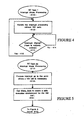
- RT task 1 begins a bubble 410. This processing logic corresponds to RT task 34 illustrated in Figure 3 . Because RT task 1 does not perform VM calls, the hardware interrupt is handled completely in interrupt mode in processing block 412. Once the interrupt is handled, the RT 1 interrupt mode task goes to sleep at decision block 413 waiting for the next interrupt signal to occur.
- FIGs 5 - 8 illustrate the processing logic for an RT task that requires VM calls during RT task execution.
- Such an RT task is represented in Figure 3 as RT task 2 comprising RT task portion 35 and RT task portion 37.
- RT task portion 35 processing logic is illustrated in Figure 5 .
- RT task portion 35 processing logic in interrupt mode is shown starting at bubble 510.
- RT task interrupt mode processing continues until a VM call is necessary as part of RT task execution (processing block 512). Because it is not safe to execute the VM call from interrupt mode, separate processing is required to perform the VM call from the event mode execution environment.
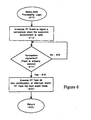
- a procedure called Make_Safe is called to create a safe execution environment for the VM call (processing block 514). The processing logic for the Make_Safe procedure is illustrated in Figure 6 .
- the Make_Safe procedure first schedules RT event 36 to signal a semaphore when the execution environment is safe (processing block 612).
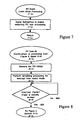
- the processing logic for the RT event is illustrated in Figure 7 .
- RT event processing is shown starting at bubble 710. Because the RT event 36 is scheduled with the virtual machine manager, the RT event executes in event mode 50. Once VMM 26 activates RT event 36, no recursive call problems exist and the execution environment for the RT task is safe. Thus, RT event 36 simply signals a semaphore in processing block 712 to enable the remaining portion 37 of RT task 2. RT event mode processing then returns through bubble 714 illustrated in Figure 7 .
- Make_Safe processing waits for the completion of RT event 36 by waiting for the semaphore to be signaled in decision block 614. Once this occurs, processing path 618 is taken to processing block 620. In this case, the RT task portion 37 is executed from event mode. Until the semaphore is signalled (decision block 614), the RT task is actually asleep in a dormant mode. No polling of the semaphore is necessary.
- processing logic for the RT task portion 37 is illustrated starting at bubble 810. This processing logic is a continuation from block 514 illustrated in Figure 5 .
- the RT task portion 37 executes from event mode. Because it has been previously determined that the execution environment is safe, a VM call (or calls) is executed in processing block 812. Other portions of the processing for the RT task are performed in event mode in processing block 814. Once the event mode processing for the interrupt is complete, the RT task goes to sleep in decision block 818 waiting for the next interrupt. When the interrupt occurs (processing path 822), the process starts over again at bubble 510 shown in Figure 5 and described below.
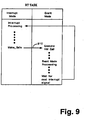
- the RT task For an RT task requiring use of VM service calls, the RT task comprises an interrupt mode environment and an event mode environment.
- the interrupt mode environment is initially entered through RT interrupt handler 32.
- an RT event is scheduled by Make_Safe through the virtual machine manager.
- the event mode environment of the RT task is entered by means of the semaphore signalled by Make_Safe as shown by arrow 910 illustrated in Figure 9 .
- the VM call is executed along with any additional event mode processing required by the RT task.
- the RT task then blocks waiting for another interrupt signal.
- RT tasks will perform whatever processing is appropriate for a particular interrupt.
- RT task 34, 35, or 37 would process the audio/video data captured by the audio/video device.
- RT tasks may awaken other RT tasks causing them to execute in turn.
- all RT tasks complete their processing, and block waiting for another signal to trigger their execution.
- the idle task regains control.
- the idle task returns the system to VM mode 40 to resume normal system operation.
- RT tasks execute with less delays in primarily the interrupt mode. In some circumstances (i.e. when VM services are not required), the RT task executes very quickly from purely the interrupt mode. In other circumstances when VM services are required, the RT task can execute partially in interrupt mode and partially in VxD event mode. Because event mode has precedence over all Windows® applications and DOS virtual machines, RT tasks are free of the scheduling problems caused by them. On the other hand, RT tasks executing in event mode are free to take advantage of all services provided by the VMM. Thus, RT tasks in this invention execute with less delay in the interrupt mode; yet, they are not subject to the substantial restrictions placed on VxD interrupt mode.
- the present invention improves real-time response by delaying the scheduling of events until necessary.
- the invention always scheduled an event before a real-time task executed.
- the present invention schedules an event only when it is needed to safely use a VxD service. It should be noted, however, that the preferred embodiment does not support time slicing schedulers or functions which dynamically re-arrange task priorities.
- the present invention supports real time scheduling of real-time tasks involving the processing of communications and natural data types.
Landscapes
- Engineering & Computer Science (AREA)
- Software Systems (AREA)
- Theoretical Computer Science (AREA)
- Physics & Mathematics (AREA)
- General Engineering & Computer Science (AREA)
- General Physics & Mathematics (AREA)
- Debugging And Monitoring (AREA)
Claims (13)
- Ein Verfahren zum Nutzen von Events in einem Nicht-Echtzeit-Betriebssystem zum Unterstützen von Echtzeitprogrammierung, wobei das Verfahren die Schritte aufweist:Betreiben von Echtzeit-Tasks in einem virtuellen Gerätetreiber (28),Verwenden von Events des virtuellen Gerätetreibers (28), um Dienste des virtuellen Gerätetreibers (28) für eine Verwendung durch die Echtzeit-Tasks verfügbar zu machen,Bereitstellen von Multi-Tasking unter Verwendung eines Echtzeit-Steuerprogramms (scheduler) (30) in dem virtuellen Gerätetreiber (28), undAusführen von Echtzeit-Tasks, wobei das Ausführen teilweise in einem Interrupt-Modus und teilweise in einem Event-Modus erfolgt.
- Das Verfahren nach Anspruch 1, ferner aufweisend die Schritte:Erzeugen von Echtzeit-Tasks zum Behandeln einer Kommunikation oder natürlicher Datentypen, die für ein Playback erfasst oder bearbeitet sind, undPlanen der Echtzeit-Tasks, wobei das Planen von dem Echtzeit-Steuerprogramm in dem virtuellen Gerätetreiber (28) ausgeführt wird.
- Das Verfahren nach Anspruch 1, ferner aufweisend den Schritt, einen Prozessor zu veranlassen, von einer Ausführung in einer virtuellen Maschine zu einem Interrupt-Modus eines virtuellen Gerätetreibers (28) zu wechseln, wobei der Schritt von einem Virtuelle-Maschine-Manager (26) ausgeführt wird.
- Das Verfahren nach Anspruch 3, ferner aufweisend den Schritt des Ausführens eines Hardware-Interrupts zum Hinweisen auf eine Audio/Video-Aufnahme.
- Das Verfahren nach Anspruch 3, ferner aufweisend den Schritt des Ausführens eines Aufrufens einer Anwendung zum Hinweisen auf eine Audio/Video-Wiedergabe.
- Das Verfahren nach Anspruch 3, ferner aufweisend die Schritte:Zugreifen auf den virtuellen Gerätetreiber (28),Ausführen eines Echtzeit-Interrupt-Handlers in dem virtuellen Gerätetreiber (28) in einem Interrupt-Modus des virtuellen Gerätetreibers (28),Eintreten in den Event-Modus des virtuellen Gerätetreibers (28) und Ausführen des Events des virtuellen Gerätetreibers (28), und Zurückkehren zu dem Virtuelle-Maschine-Manager (26) und Fortsetzen des normalen Betriebs der virtuellen Maschine.
- Ein System zum Nutzen von Events in einem Nicht-Echtzeit-Betriebssystem zum Unterstützen von Echtzeit-Programmierung, wobei das System aufweist:einen Echtzeit-Tasks in einem virtuellen Gerätetreiber (28) ausführenden Prozessor,ein Echtzeit-Steuerprogramm (30) in einem virtuellen Gerätetreiber (28) für Multi-Tasking und für die Nutzung von Events des virtuellen Gerätetreibers (28), um Dienste des virtuellen Gerätetreibers (28) für die Nutzung durch die Echtzeit-Tasks verfügbar zu machen, undMittel zum Ausführen der Echtzeit-Tasks, wobei das Ausführen teilweise in einem Interrupt-Modus und teilweise in einem Event-Modus erfolgt.
- Das System nach Anspruch 7, ferner aufweisend:Echtzeit-Tasks zum Behandeln einer Kommunikation oder natürlicher Datentypen, die für eine Wiedergabe erfasst oder bearbeitet sind, wobei das Echtzeit-Steuerprogramm die Echtzeit-Tasks in dem virtuellen Gerätetreiber (28) plant.
- Das System nach Anspruch 7, ferner aufweisend einen Virtuelle-Maschine-Manager (26) zum Bewirken, dass ein Prozessor von der Ausführung in einer virtuellen Maschine zu einem Interrupt-Modus des virtuellen Gerätetreibers (28) wechselt.
- Das System nach Anspruch 9, ferner aufweisend einen Hardware-Interrupt zum Hinweisen auf eine Audio/Video-Aufnahme.
- Das System nach Anspruch 9, ferner aufweisend Mittel zum Ausführen eines Aufrufs einer Anwendung zum Hinweisen auf eine Audio/Video-Wiedergabe.
- Das System nach Anspruch 9, ferner aufweisend:Mittel zum Zugreifen auf den virtuellen Gerätetreiber (28),einen in dem virtuellen Gerätetreiber (28) in einem Interrupt-Modus des virtuellen Gerätetreibers (28) ausgeführten Echtzeit-Interrupt-Handler,Mittel zum Eintreten in den Event-Modus des virtuellen Gerätetreibers (28) und zum Ausführen des virtuellen Gerätetreibers (28),Mittel zum Zurückkehren zu dem Virtuelle-Maschine-Manager (26) und Fortsetzen des normalen Betriebes der virtuellen Maschine.
- Ein Computerprogramm, aufweisend Codemittel angepaßt zum Ausführen sämtlicher Schritte der Ansprüche 1 bis 6, wenn das Programm auf einem Datenbearbeitungssystem ausgeführt wird.
Applications Claiming Priority (3)
| Application Number | Priority Date | Filing Date | Title |
|---|---|---|---|
| US35041594A | 1994-12-06 | 1994-12-06 | |
| US350415 | 1994-12-06 | ||
| PCT/US1995/015337 WO1996018152A1 (en) | 1994-12-06 | 1995-11-29 | An improved method and apparatus for embedding a real-time multi-tasking kernel in a non-real-time operating system |
Publications (3)
| Publication Number | Publication Date |
|---|---|
| EP0796466A1 EP0796466A1 (de) | 1997-09-24 |
| EP0796466A4 EP0796466A4 (de) | 2007-08-01 |
| EP0796466B1 true EP0796466B1 (de) | 2010-01-20 |
Family
ID=23376613
Family Applications (1)
| Application Number | Title | Priority Date | Filing Date |
|---|---|---|---|
| EP95942903A Expired - Lifetime EP0796466B1 (de) | 1994-12-06 | 1995-11-29 | Verfahren und vorrichtung zur einbettung eines echtzeit-multitaskkerns in einem nicht-echtzeit-betriebssystem |
Country Status (4)
| Country | Link |
|---|---|
| EP (1) | EP0796466B1 (de) |
| AU (1) | AU4409396A (de) |
| DE (1) | DE69536042D1 (de) |
| WO (1) | WO1996018152A1 (de) |
Families Citing this family (4)
| Publication number | Priority date | Publication date | Assignee | Title |
|---|---|---|---|---|
| EP0715241B1 (de) | 1994-10-27 | 2004-01-14 | Mitsubishi Corporation | Gerät für Dateiurheberrechte-Verwaltungssystem |
| JP4053628B2 (ja) * | 1997-06-13 | 2008-02-27 | インターシア ソフトウェア エルエルシー | 電子透かしを利用するデジタルコンテンツ管理システム |
| WO2012019627A1 (de) * | 2010-08-11 | 2012-02-16 | Siemens Aktiengesellschaft | Vorrichtung und verfahren zur ausführung von anwendungen unter echtzeitbedingungen in einem eingebetteten system |
| CN114339353B (zh) * | 2021-12-31 | 2023-09-29 | 晶晨半导体科技(北京)有限公司 | 音视频同步方法和装置及电子设备和计算机可读存储介质 |
Family Cites Families (1)
| Publication number | Priority date | Publication date | Assignee | Title |
|---|---|---|---|---|
| US5265251A (en) * | 1990-02-01 | 1993-11-23 | International Business Machines Corporation | Mechanism for allowing a single operation to shift the focus between user applications having direct hardware level access to multiple displays in a virtual terminal environment |
-
1995
- 1995-11-29 EP EP95942903A patent/EP0796466B1/de not_active Expired - Lifetime
- 1995-11-29 AU AU44093/96A patent/AU4409396A/en not_active Abandoned
- 1995-11-29 WO PCT/US1995/015337 patent/WO1996018152A1/en not_active Ceased
- 1995-11-29 DE DE69536042T patent/DE69536042D1/de not_active Expired - Lifetime
Also Published As
| Publication number | Publication date |
|---|---|
| EP0796466A1 (de) | 1997-09-24 |
| DE69536042D1 (de) | 2010-03-11 |
| EP0796466A4 (de) | 2007-08-01 |
| AU4409396A (en) | 1996-06-26 |
| WO1996018152A1 (en) | 1996-06-13 |
Similar Documents
| Publication | Publication Date | Title |
|---|---|---|
| US5903752A (en) | Method and apparatus for embedding a real-time multi-tasking kernel in a non-real-time operating system | |
| US5721922A (en) | Embedding a real-time multi-tasking kernel in a non-real-time operating system | |
| US5799188A (en) | System and method for managing variable weight thread contexts in a multithreaded computer system | |
| US5889988A (en) | Debugger for debugging tasks in an operating system virtual device driver | |
| US5390329A (en) | Responding to service requests using minimal system-side context in a multiprocessor environment | |
| US4972368A (en) | Intelligent serial I/O subsystem | |
| US6223207B1 (en) | Input/output completion port queue data structures and methods for using same | |
| US8132191B2 (en) | Method and apparatus for adapting and hosting legacy user interface controls | |
| CN103984598B (zh) | 用于线程调度的方法以及系统 | |
| JP7310924B2 (ja) | サーバ内遅延制御装置、サーバ、サーバ内遅延制御方法およびプログラム | |
| US20010034751A1 (en) | Real-time OS simulator | |
| JP2000029737A (ja) | デバッグ機能のためのリアルタイム外部命令挿入を有するプロセッサ | |
| Wang et al. | Enhancing the real-time capability of the Linux kernel | |
| JP3938343B2 (ja) | タスク管理システム、プログラム、及び制御方法 | |
| US20030023655A1 (en) | Method and apparatus to facilitate suspending threads in a platform-independent virtual machine | |
| Poledna et al. | ERCOS: an operating system for automotive applications | |
| EP0796466B1 (de) | Verfahren und vorrichtung zur einbettung eines echtzeit-multitaskkerns in einem nicht-echtzeit-betriebssystem | |
| JP7485101B2 (ja) | サーバ内遅延制御装置、サーバ内遅延制御方法およびプログラム | |
| WO2022195826A1 (ja) | サーバ内遅延制御装置、サーバ内遅延制御方法およびプログラム | |
| US7434223B2 (en) | System and method for allowing a current context to change an event sensitivity of a future context | |
| WO2023144878A1 (ja) | サーバ内遅延制御装置、サーバ内遅延制御方法およびプログラム | |
| WO2023218596A1 (ja) | サーバ内遅延制御装置、サーバ内遅延制御方法およびプログラム | |
| KR20000062377A (ko) | 구 버젼과 호환가능한 운영 체계에서의 실시간 서비스 | |
| Lee | PC-Choices object-oriented operating system | |
| SODIYA | A LECTURE NOTE ON |
Legal Events
| Date | Code | Title | Description |
|---|---|---|---|
| PUAI | Public reference made under article 153(3) epc to a published international application that has entered the european phase |
Free format text: ORIGINAL CODE: 0009012 |
|
| 17P | Request for examination filed |
Effective date: 19970704 |
|
| AK | Designated contracting states |
Kind code of ref document: A1 Designated state(s): DE FR GB IT |
|
| A4 | Supplementary search report drawn up and despatched |
Effective date: 20070704 |
|
| RIC1 | Information provided on ipc code assigned before grant |
Ipc: G06F 9/46 20060101AFI20070626BHEP |
|
| 17Q | First examination report despatched |
Effective date: 20070919 |
|
| GRAP | Despatch of communication of intention to grant a patent |
Free format text: ORIGINAL CODE: EPIDOSNIGR1 |
|
| GRAS | Grant fee paid |
Free format text: ORIGINAL CODE: EPIDOSNIGR3 |
|
| GRAA | (expected) grant |
Free format text: ORIGINAL CODE: 0009210 |
|
| AK | Designated contracting states |
Kind code of ref document: B1 Designated state(s): DE FR GB IT |
|
| REG | Reference to a national code |
Ref country code: GB Ref legal event code: FG4D |
|
| REF | Corresponds to: |
Ref document number: 69536042 Country of ref document: DE Date of ref document: 20100311 Kind code of ref document: P |
|
| REG | Reference to a national code |
Ref country code: HK Ref legal event code: WD Ref document number: 1003277 Country of ref document: HK |
|
| PLBE | No opposition filed within time limit |
Free format text: ORIGINAL CODE: 0009261 |
|
| STAA | Information on the status of an ep patent application or granted ep patent |
Free format text: STATUS: NO OPPOSITION FILED WITHIN TIME LIMIT |
|
| 26N | No opposition filed |
Effective date: 20101021 |
|
| PGFP | Annual fee paid to national office [announced via postgrant information from national office to epo] |
Ref country code: DE Payment date: 20101126 Year of fee payment: 16 |
|
| PG25 | Lapsed in a contracting state [announced via postgrant information from national office to epo] |
Ref country code: IT Free format text: LAPSE BECAUSE OF FAILURE TO SUBMIT A TRANSLATION OF THE DESCRIPTION OR TO PAY THE FEE WITHIN THE PRESCRIBED TIME-LIMIT Effective date: 20100120 |
|
| REG | Reference to a national code |
Ref country code: FR Ref legal event code: ST Effective date: 20110801 |
|
| PG25 | Lapsed in a contracting state [announced via postgrant information from national office to epo] |
Ref country code: FR Free format text: LAPSE BECAUSE OF NON-PAYMENT OF DUE FEES Effective date: 20101130 |
|
| REG | Reference to a national code |
Ref country code: DE Ref legal event code: R119 Ref document number: 69536042 Country of ref document: DE Effective date: 20130601 |
|
| PG25 | Lapsed in a contracting state [announced via postgrant information from national office to epo] |
Ref country code: DE Free format text: LAPSE BECAUSE OF NON-PAYMENT OF DUE FEES Effective date: 20130601 |
|
| PGFP | Annual fee paid to national office [announced via postgrant information from national office to epo] |
Ref country code: GB Payment date: 20131127 Year of fee payment: 19 |
|
| GBPC | Gb: european patent ceased through non-payment of renewal fee |
Effective date: 20141129 |
|
| PG25 | Lapsed in a contracting state [announced via postgrant information from national office to epo] |
Ref country code: GB Free format text: LAPSE BECAUSE OF NON-PAYMENT OF DUE FEES Effective date: 20141129 |