EP0795162B1 - System zur aktien-komponenten-anteils-wahl - Google Patents
System zur aktien-komponenten-anteils-wahl Download PDFInfo
- Publication number
- EP0795162B1 EP0795162B1 EP95905857A EP95905857A EP0795162B1 EP 0795162 B1 EP0795162 B1 EP 0795162B1 EP 95905857 A EP95905857 A EP 95905857A EP 95905857 A EP95905857 A EP 95905857A EP 0795162 B1 EP0795162 B1 EP 0795162B1
- Authority
- EP
- European Patent Office
- Prior art keywords
- computer
- component
- broker
- equity
- stock
- Prior art date
- Legal status (The legal status is an assumption and is not a legal conclusion. Google has not performed a legal analysis and makes no representation as to the accuracy of the status listed.)
- Expired - Lifetime
Links
Images














Classifications
-
- G—PHYSICS
- G06—COMPUTING OR CALCULATING; COUNTING
- G06Q—INFORMATION AND COMMUNICATION TECHNOLOGY [ICT] SPECIALLY ADAPTED FOR ADMINISTRATIVE, COMMERCIAL, FINANCIAL, MANAGERIAL OR SUPERVISORY PURPOSES; SYSTEMS OR METHODS SPECIALLY ADAPTED FOR ADMINISTRATIVE, COMMERCIAL, FINANCIAL, MANAGERIAL OR SUPERVISORY PURPOSES, NOT OTHERWISE PROVIDED FOR
- G06Q40/00—Finance; Insurance; Tax strategies; Processing of corporate or income taxes
- G06Q40/04—Trading; Exchange, e.g. stocks, commodities, derivatives or currency exchange
Definitions
- This invention relates to a system for voting in accordance with component interests of a share of stock in two or three separately tradeable components.
- DIVS SM In the three component case they may be called DIVS SM , SPECS SM , and ZIPS SM ; in the two component case they may be called ZIPS SM and SPECS SM .
- these components will be created relating to the common stock of large "Blue Chip” corporations in arrangements having a series term of approximately five years. However, any time period could be designated.
- Components can be created by a holder of a long position in the underlying common stock associated with the component sold. The characteristics of these components are as follows:
- DIVS SM and ZIPS SM are completely new investment securities which should have wide appeal to investors, most of whom are risk averse. This will enhance the value of the underlying common stock. All three components will trade in the marketplace and their actual prices will be determined as any publicly traded vehicle.
- the non-trading component will be the residual value of the share of stock minus the value of the traded components. All formulas can be adjusted to accommodate this method of creation and trading.
- the Corporate Creation and Exchange Mode could allow the holder of all three components to exchange them for the underlying common stock at anytime during the term of the arrangement.
- the combined components in the Corporate Exchange and Creation Mode are less likely to sell at a discount to the underlying common stock, than in the other three modes, because of the availability of the redemption feature.
- investors should see either meaningful premiums for the components in the Corporate Exchange and Creation Mode or continued creations in the other three modes.
- Termination Date TD SM
- Termination Claim TC SM
- Equity Forwards SM - These would be clearing agency issued, exchange or OTC traded derivative securities that would be issued and margined by the clearing agency in accordance with its normal procedures and rules (i.e. , cash, treasuries, letters of credit or cover).
- the clearing member would require that DIVSTM, ZIPSTM and SPECSTM be handled as standardized forward contracts for derivative equity securities. Doing them as standardized forward contracts for derivative equity securities against a long position assures that stock is available to meet the obligation undertaken to give proxies for the portion of the vote allocable to the component parts and to fund the dividend obligations in respect of sold DIVSTM.
- Equity Forwards SM , Forwards, or Standardized Forward Contracts for Derivative Equity Securities are used interchangeably herein.
- Termination Claim (TC SM ) - The value that determines how the common stock underlying a series will be distributed between the ZIPS SM and SPECS SM component holders. ZIPS SM holders will receive common stock equal to the lesser of the Termination Claim (TC SM ), or the stock's price, with holders of the SPECS SM component receiving the remaining stock, if any, equal in value to the excess of the stock's price above the Termination Claim (TC SM ).
- Termination Date (TD SM ) - The last day of trading of the components which will determine the basis for distribution of the underlying common stock.
- Net long and Net short - a detailed report showing all accounts with long and short components, and the net total position.
- a system for voting options each of which represents an interest in a share of stock of an entity comprises computer input and memory means for allocating to a customer's account options that are any of: (a) a component interest indicative of the right to receive a partial share of stock equal in value to a stipulated price or a full share of stock of the entity on a predetermined future date, whichever is the lesser value; (b) a component interest indicative of the right to receive a partial share of stock equal in value to the appreciation, if any, of the share of stock above the stipulated price on the predetermined date; (c) a component interest indicative of the right to receive actual dividends or substitute payments equal in amount to dividends declared with respect to given dates which are prior to the predetermined future date and which goes to zero value at the predetermined future date; and computer data processing means for allocating the right to vote the options among the three component interests.
- a system for voting stock interests each of which represents an interest in a share of stock of an entity, comprises computer input and memory means for allocating to a customer's account stock interests that are any of:
- Fig. 1 OTION MODE CREATION TRADE
- Fig. 1a DATA FLOW DIAGRAM FOR OPTION MODE CREATION TRADE
- Fig. 2 is a schematic diagram of the overall system outlining the relationships and flows of data among units involved in this invention
- Fig. 3 is a schematic diagram of the system which shows the interaction of the several related computer systems
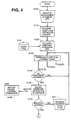
- Fig. 4 is a flow chart comprising a representation of a portion of a computer which operates according to a computer program produced according to the flow chart for CUSIP CORRELATION at, for example, a primary computer;
- Fig. 5 is a flow chart comprising a representation of a portion of a computer which operates according to a computer program produced according to the flow chart for VOTE CALCULATION at, for example, the primary computer;
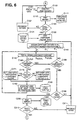
- Fig. 6 is a flow chart comprising a representation of a portion of a computer which operates according to a computer program produced according to the flow chart for VOTE APPORTIONING at, for example, the primary computer;
- Fig. 7 is a flow chart comprising a representation of a portion of a computer which operates according to a computer program produced according to the flow chart for OCC PARTICIPANT MEMBER FIRM AND COMPANY NOTIFICATION at, for example, the primary computer; and
- Fig. 8 is a flow chart comprising a representation of a portion of a computer which operates according to a computer program produced according to the flow chart for OCC PARTICIPANT MEMBER COMPUTER.
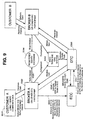
- Fig. 9 EQUITY MODE CREATION TRADE
- Fig. 9a DATA FLOW DIAGRAM FOR EQUITY MODE CREATION TRADE
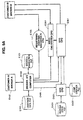
- Fig. 10 is a schematic diagram of the overall system outlining the relationships and flows of data among units involved in this invention.
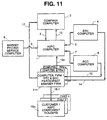
- Fig. 11 is a schematic diagram of the system which shows the interaction of the several related computer systems
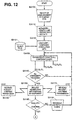
- Fig. 12 is a flow chart comprising a representation of a portion of a computer which operates according to a computer program produced according to the flow chart for CUSIP CORRELATION at, for example, a primary computer;
- Fig. 13 is a flow chart comprising a representation of a portion of a computer which operates according to a computer program produced according to the flow chart for VOTE CALCULATION at, for example, the primary computer;
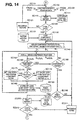
- Fig. 14 is a flow chart comprising a representation of a portion of a computer which operates according to a computer program produced according to the flow chart for VOTE APPORTIONING at, for example, the primary computer;
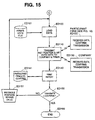
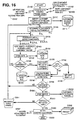
- Fig. 15 is a flow chart comprising a representation of a portion of a computer which operates according to a computer program produced according to the flow chart for DTC PARTICIPANT MEMBER FIRM AND COMPANY NOTIFICATION at, for example, the primary computer; and
- Fig. 16 is a flow chart comprising a representation of a portion of a computer which operates according to a computer program produced according to the flow chart for DTC PARTICIPANT MEMBER COMPUTER.
- Fig. 17 EQUITY FORWARDS SM MODE CREATION TRADE
- Fig. 17a DATA FLOW DIAGRAM FOR EQUITY FORWARDS SM MODE CREATION TRADE
- Fig. 18 is a schematic diagram of the overall system outlining the relationships and flows of data among units involved in this invention.
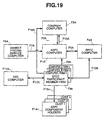
- Fig. 19 is a schematic diagram of the system which shows the interaction of the several related computer systems
- Fig. 20 is a flow chart comprising a representation of a portion of a computer which operates according to a computer program produced according to the flow chart for CUSIP CORRELATION at, for example, a primary computer;
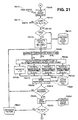
- Fig. 21 is a flow chart comprising a representation of a portion of a computer which operates according to a computer program produced according to the flow chart for VOTE CALCULATION at, for example, the primary computer;
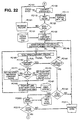
- Fig. 22 is a flow chart comprising a representation of a portion of a computer which operates according to a computer program produced according to the flow chart for VOTE APPORTIONING at, for example, the primary computer;
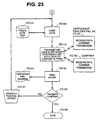
- Fig. 23 is a flow chart comprising a representation of a portion of a computer which operates according to a computer program produced according to the flow chart for EFCC PARTICIPANT MEMBER FIRM AND COMPANY NOTIFICATION at, for example, the primary computer; and
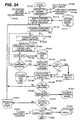
- Fig. 24 is a flow chart comprising a representation of a portion of a computer which operates according to a computer program produced according to the flow chart for EFCC PARTICIPANT MEMBER COMPUTER.
- Fig. 25 CORPORATE EXCHANGE AND CREATION MODE
- Fig. 25a DATA FLOW DIAGRAM FOR CORPORATE EXCHANGE AND CREATION MODE
- Fig. 26 is a schematic diagram of the overall system outlining the relationships and flows of data among units involved in this invention.
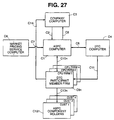
- Fig. 27 is a schematic diagram of the system which shows the interaction of the several related computer systems
- Fig. 28 is a flow chart comprising a representation of a portion of a computer which operates according to a computer program produced according to the flow chart for CUSIP CORRELATION at, for example, a primary computer;
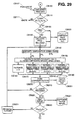
- Fig. 29 is a flow chart comprising a representation of a portion of a computer which operates according to a computer program produced according to the flow chart for VOTE CALCULATION at, for example, the primary computer;
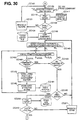
- Fig. 30 is a flow chart comprising a representation of a portion of a computer which operates according to a computer program produced according to the flow chart for VOTE APPORTIONING at, for example, the primary computer;
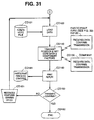
- Fig. 31 is a flow chart comprising a representation of a portion of a computer which operates according to a computer program produced according to the flow chart for DTC PARTICIPANT MEMBER FIRM AND COMPANY NOTIFICATION at, for example, the primary computer; and
- Fig. 32 is a flow chart comprising a representation of a portion of a computer which operates according to a computer program produced according to the flow chart for DTC PARTICIPANT MEMBER COMPUTER.
- each computer apparatus represented in block diagrams, for example, in Figs. 2 and 3 utilize, for example, a digital computer processor which includes such hardware as a central processing unit, program and random access memories, timing and control circuitry, input-output interface devices and other conventional digital subsystems necessary to the operation of the central processing unit as is well understood by those skilled in the art. Magnetic memory storage disks (hard drive) are also utilized.
- the processors operate according to the computer programs produced according to the flow charts represented in the drawings.
- FIG. 1 of the drawings there is represented diagrammatically a transaction involved in the creation and trading in the option mode of one or more DIVS SM , SPECS SM or ZIPS SM .
- the system also includes computer memory means for recording the sale from the customer's account of options that are any of components (a), (b), (c), as described more fully with reference to Fig. 1a.
- the sale by Customer A, through Broker A, is done on a registered option exchange, represented by Box 0600.
- This exchange preferably has standardized contract specifications arranged in conjunction with the owner of the primary computer (ASPC).
- B establishes and maintains margin (at OCC) for any option component sold by Customer A.
- OCC creates and issues an option to Broker B's account, represented by Box O400 for credit to Customer B's account, represented by Box O500.
- Broker B receives the option and as represented by arrow 4, Customer B receives the option.
- Customer B delivers cash to Broker B, who as represented by arrow 6, delivers cash to OCC.
- Broker A receives cash from OCC and as represented by arrow 8, Customer A O100 receives cash for the option he has sold.
- customer A establishes an account with Broker A 0200 and deposits shares of a company's common stock in his account with Broker A.
- Broker A 0200 then stores information about Customer A and his stock positions in a magnetic memory disk file O203 in his computer system O201.
- Broker A's computer O201 queries his account information memory disk file O203 for Customer A to ascertain that Customer A has the underlying common stock in his account for the component being sold and created.
- Broker A enters into his computer transaction file O202 an order to sell the component as an opening transaction.
- the floor traders for each customer upon completion of the trade enter the trade in each of their computer systems O201 and O401, and the specialist enters information about the trade into the exchange's computer exchange transaction file O601 which may be stored in a memory storage disk.
- Customer A's account on the broker's computer system is updated to show that he is short the component sold when confirmation of the sale is received from the registered options exchange.
- Each broker's computer systems then generate reports for Broker A O200 and Broker B O400 indicating the results of the trade. Then the brokers report the trade to their respective customers.
- OCC option clearing corporation
- OCC's computer system O301 For each opening sale of a component OCC's computer system O301 causes a component option to be created in the computer record of the buying broker's account O401 to complete the trade. After the close of trading OCC's computers transmit a report showing the net change in position for each component that each broker traded that day. The broker's computer systems reconcile this net change with the trades the broker made that day. When this is finished the individual customer's account information, stored in the broker's computer system, such as Broker A's transaction file O202, which may be stored in a memory storage disk O202, is updated to reflect the trades the customer's made that day. Each day OCC and the participant member firms adjust maintenance margins to reflect the change in value of the net position they have in component options at OCC.
- a Company 20 utilizes computer means 20A for announcing its intent to solicit votes from its stockholders.
- the computer means 20A communicates with computer means 21A for notifying participant members of Depository Trust Corporation (DTC) 21 which, on behalf of its participant members may serve as the repository for the company's equity.
- DTC Depository Trust Corporation
- the computer means 21A disseminates this information to its participants. For example, the DTC computer means 21A notifies OCC 23 and the DTC/OCC participant firm 25.
- the OCC participant firm 25 has computer means 25A for identifying customer holdings, computer means 25B for reconciling component holdings (long and short) to ASPC and computer means 25C for notifying customers and the company.
- OCC 23 maintains records that identify all holders (long and short option contracts) of ZIPS SM , SPECS SM and DIVS SM . OCC 23 utilizes computer means 23A for identifying participant member holdings.
- ASPC 24 owner of the primary computer, utilizes computer means for CUSIP correlation which is necessary to properly apportion component-holder voting rights.
- ASPC 24 the owner of the primary computer has computer means for performing four basic tasks in order to establish the voting rights for eligible component-holders:
- the OCC participant firm 25 upon receipt of the voting information utilizes a similar computer system to that of ASPC to further apportion the net long and net short vote among its customers as previously described. Ultimately proxies are forwarded to all eligible holders identifying the customer's 26 detailed, as well as net, voting rights.
- the customer 26 votes and returns a proxy 26A to the company 27.
- the company 27 utilizes computer means 27A for tallying and reconciling all votes submitted and, as indicated by Box 27B, takes corresponding action at its shareholder meeting.
- a company computer 3a or public channels 2a enters relevant information concerning a stockholder vote into the ASPC computer 1a. This information indicates that company 3a wishes to solicit votes from its stockholders.
- the ASPC computer 1a initiates a request for data from the OCC computer 4a in order to identify member firms holding positions of all components. This communication occurs over a communication link 5a. This will be explained more fully in connection with Fig. 4.
- the ASPC computer 1a then calculates the pro rata voting right applicable to each of the components (as more fully explained in connection with Fig. 5).
- the ASPC computer receives market pricing data from an external market pricing service computer 6a by means of an electronic medium communicated through a communication link 7a.
- the ASPC computer next apportions the net long and net short votes among the holders of record identified by OCC (as will be described in more detail in connection with Fig. 6) and notifies all such OCC participants 8n of their net applicable long and/or short votes via a communication link 9n. While only one OCC participant 8n and one communication link 9n are represented in Fig. 3, it will be understood that a plurality of firms are in data communication with the ASPC computer 1. The total number of partial interests and corresponding votes apportioned among the OCC participants is then communicated over a link 10a to the company computer 3a, as will be explained more fully in connection with Fig. 7.
- the OCC participant member's computer 8n additionally receives data directly from DTC's computer 11a via communication link 12a as well as the OCC computer 4a via communication link 13a to account properly for all its customers' holdings, including the ASPC-created components, and to apportion voting rights correctly among its customers for the specific vote solicitation, as will be explained more fully in connection with Fig. 8.
- Individual customers 14n are sent proxies by established means 15n and the total number of proxies (votes) distributed is reported to the company computer 3a as required over link 16a. From this point the standard vote solicitation procedures continue to be made by the company.
- the ASPC computer includes a computer portion A100 for receiving an announcement of a shareholder vote to be taken by a company.
- the ASPC computer includes means for manually entering pertinent data concerning the vote to initiate operation of the system.
- This data includes the equity CUSIP number, the record date and the due date.
- a CUSIP file or memory storage means, for example a computer disk, A121 is loaded into a computer portion A120 for loading CUSIP component correlation data. This is done in order to match the equity with its multiple ZIPS SM , SPECS SM and DIVS SM for each of the Annual and/or Termination Claim (TC SM ) Series (there being at least one series anticipated per year of maturity).
- the CUSIP correlation file contains a unique CUSIP number for every series component created by ASPC.
- the ASPC computer comprises a portion A130 for expanding the equity CUSIP to all component CUSIPs.
- the computer portion matches the equity CUSIP with the component CUSIP numbers. These have been denoted Z 1 , S 1 and D 1 , respectively, for the ZIPS SM , SPECS SM and DIVS SM of year 1 , respectively, and continuing through year n .
- the ASPC computer includes a portion A140 for inquiring "are all components processed?"
- the portion A140 has a "no" output which is connected back to the input of portion A130 for repeating the matching of the equity CUSIP with the component CUSIP numbers until all the related component CUSIP numbers have been found for the requested equity CUSIP.
- the "yes" output of the computer portion A140 is coupled to a "request member firm net positions by component” computer portion A150 which requests from OCC the identification of all OCC participant members holding any positions of any of the above mentioned component CUSIP numbers.
- the OCC computer portion A160 receives the request and returns confirmation of the requested identification to ASPC computer portion A150.
- a "requests confirms?"
- computer portion A170 insures that the data requested is consistent with the data confirmed. If not, computer portion A171 is means for manually reconciling any discrepancy and the OCC computer portions repeat their operation until the data requested is consistent with that which has been confirmed.
- the "yes" output of the computer portion A170 is connected to the ASPC vote calculation computer portion represented in Fig. 5.
- the vote calculation computer portion includes a "load market price data" computer portion B100 for loading the market price data supplied from a service B101 into the system to begin the vote calculation.
- the pricing preferably is the closing market price as of the close on the stock of record date on any exchange where traded, or as determined by specific contract agreements.
- Computer portion B110 determines that only CUSIP numbers with any claim to a voting right are considered (denoted as EQ, Z n , S n and D n for the equity, ZIPS SM , SPECS SM and DIVS SM for all series, respectively). All other CUSIP numbers are ignored, as indicated by the "no" output to B111 "ignore” computer portion from portion B110.
- a "is price greater than 0?" computer portion B120 determines if a market price exists for a CUSIP (that is, its price is greater than zero dollars).
- the "yes" output of computer portion B120 is coupled for storage to the component price history file computer portion B121 which may be, for example, a computer storage disk.
- the output of computer portion B130 is coupled to a "separate components by series (years)" computer portion B140.
- computer portion B140 groups all components by series (that is, by Termination Date (TD SM ) and/or Termination Claim (TC SM ) in which they mature).
- the outputs of computer portions B140 are coupled by year, that is, YR 1 , YR 2 ... YR n to computer portion B150 "calculate, factors for equity (EQ) & all series components: SPECS SM (S), ZIPS SM (Z), DIVS SM (D)," computer portion B150.
- the computer portion B150 segregates the individual components so that unique component factors can be calculated for each.
- a “factor D n market price D n ⁇ market prices (S n + Z n + D n ) " determines the component factor for the DIVS SM for the year n by dividing the market price of the DIVS SM n by the sum of the market prices for each of the ZIPS SM , SPECS SM and DIVS SM for the same year n .
- a "store component factors" computer portion B200 then stores the component factors in a factor history file B201, which may be a computer disk.
- the computer portion B200 is also coupled to an "all CUSIPS processed?" computer portion B210, having a "no" output coupled to the input of the B140 computer portion for continuing the operation of the computer until all CUSIPS eligible for voting rights have been calculated and stored.
- the "yes" output of the computer portion B210 is coupled to a print report computer portion B220 for printing a component factor report B221, to allow inspection of the data.
- a computer portion " ⁇ (s n + z n + d n ) 1.0?"
- computer portion B230 has a "no" output coupled to a "reconcile factors” computer portion B231, which is coupled to the input of computer portion B140.
- the factors are manually reconciled in computer portion B231, adjustments are made and the computer operation is repeated until the sum equals 1.0.
- the computer cannot continue its operation until this condition is met.
- the "yes" output of the computer portion B230 is coupled to the vote apportioning computer portion of ASPC, represented in Fig. 6.
- a "load OCC position data" computer portion C100 is coupled to the OCC computer C101 for loading the net OCC member firm positions into the system.
- a "print report” computer portion C110 prints a report which may be entitled “OCC participant position detail report” (C111) to allow for inspection of the data.
- the factor history file C131 is the same factor history file as factor history file B201 for storing the component factors.
- the factor history file C131 is coupled to a "load component factor data" computer portion C130 to which the "yes" output of computer portion C120 is applied.
- An "assign component factors to all participant member firm positions (F n )" computer portion C140 is coupled to the output of the computer portion C130 for assigning component factors to all participant positions beginning by reading the data for the first OCC participant member firm (F 1 ).
- a computer portion "for all series component positions" computer portion C150 matches each participant member firm's position against the corresponding component factors for that participant's position (denoted as Z n , S n and D n for the ZIPS SM , SPECS SM and DIVS SM for all series, respectively).
- the "no" output of the computer portion C160 is coupled to a "is position long?" computer portion C170.
- the "yes” output of the computer portion C170 is applied to a "net long votes firm position times component factor” computer portion C171 for multiplying the long position by the ASPC component factor.
- the "yes" output of C160 is applied to an "All Components Tested?" computer portion C190.
- the “no” output goes to C150 until all series and components of a particular underlying stock have been processed.
- the "yes” output of C190 goes to the "All Firms Tested?" computer portion C195.
- the “no” output of C195 goes to C140 to assign component factors for the next participant member firm.
- the "yes” output of C195 is applied to a "print report” computer portion C200 which prints a report entitled “participant firm net vote report” as indicated by block C201.
- the OCC participant member firm's vote file D101 which may be a storage disk, is reloaded into the ASPC computer system at a "load data" computer portion D100.
- a "transmit net long and net short positions and net vote data to company and firms" computer portion D110 transmits by telecommunications the net long and net short positions and net vote data and component factor to the company as well as to each member firm maintaining any component position, as indicated by blocks D120 and D130.
- the participant member firm's (D120) computer receives the data and returns confirmation of such to ASPC. This data should be in complete agreement with daily positions as reported by OCC and confirmed with the participant. As indicated by block D130, the company computer similarly receives the position and vote data and confirms such to the ASPC computer.
- a "print report” computer portion D140 prints a report entitled “the participant firm confirmation report” D141 to allow for inspection of the data.
- a "transmits equal confirms?" computer portion D150 has a "no" output coupled to a "reconcile positions with firm” computer portion D151 for reconciling the discrepancy if the data transmitted does not agree with the confirmation for the participant firm. The computer repeats this operation until the two positions agree.
- the "yes" output of computer portion D150 completes the ASPC computer data processing. At this point the standard proxy solicitation process becomes operative.
- the OCC participant member firm computer comprises a "receive data, confirm transmission" computer portion V100 which responds to the component factors and net long and net short vote position transmitted by ASPC and sends the confirmation of such to ASPC V101.
- the participant member firm also receives and reconciles position data from OCC V103 and DTC V102.
- An "identify customer holdings as of record date by component" computer portion V110 accesses the customer account master file V111, which may be a computer storage disk, in order to identify customers holding any of the relevant components (as identified by their CUSIP numbers) as of the assigned record date.
- a "determine voting rights for all customers (C)" computer portion V120 searches each customer file (denoted C 1 through C n ) to identify component holders.
- a "store data" computer portion V150 stores each such position in the participant member firm's customer vote file (V151), which may be a computer disk.
- Computer portion V155 has a "no" output connected to the input of computer portion V130 to repeat the computer operations until all components have been processed for a customer.
- the "yes" output of computer portion V155 is coupled to a "calculate net votes for each customer" computer portion V170 which tabulates the net number of votes assignable to each customer.
- the computer portion V190 calculates and stores the total eligible votes for each customer and accumulates a total firm vote. This output is applied to a customer vote file V191, which may be a computer disk.
- the "no" output of computer portion V195 "All Customers processed" is coupled back to computer portion V120 to get the next customer's position.
- the "yes" output of V195 is coupled to a "print report” computer portion V200 prints the customer vote rights report V201, to allow for inspection of the data.
- the "yes" output of the computer portion V210 is applied to a "notify company and customers" computer portion V220, for advising the company of each participant's component holders and their component voting rights, as indicated by block V221. Proxies are then sent to individual customers, as indicated by V222.
- a system for creating stock interests comprises computer input and memory means for allocating to a customer's account stock interests that are any of:
- the sale by Customer A, through Broker A, is done on a Registered Equities Exchange E050, authorized by ASPC to trade component interests.
- This exchange preferably has standardized contract specifications arranged in conjunction with the owner of the primary computer (ASPC).
- Broker A instructs DTC to deliver Customer A's stock to ECC against creation of a sold component.
- Broker A instructs ECC to receive Customer A's pledged stock from DTC and to deliver to DTC the created component that Customer A has sold.
- DTC delivers stock to ECC in accordance with Broker A's instructions.
- ECC upon delivery of stock from DTC to ECC, ECC delivers components to DTC in accordance with instructions from Broker A.
- the remaining steps in the creation mode are normal equity settlement steps, as indicated in the schematic flow diagram of Fig. 9.
- Customer B through Broker B buys the component interest at the Registered Equity Exchange E050.
- Broker B delivers cash to DTC and receives the component interest from DTC and
- Customer B receives the interest and delivers cash to Broker B.
- Comparisons are made by Broker A and Broker B at NSCC through the continuous net settlement (CNS) system.
- CCS continuous net settlement
- Customer A instructs Broker A (Box E100) to sell and create a component interest in common stock on a Registered Equities Exchange, authorized to trade component interests.
- Customer A establishes an account with Broker A and deposits shares of a company's common stock in his account with Broker A.
- Broker A's computer E104 then stores information about Customer A and his stock position in a magnetic memory disk customer data file E102 in his computer system E104.
- Customer A instructs Broker A to sell and create a component interest in common stock on a Registered Equities Exchange.
- Broker A's computer E104 communicates with the Registered Equity Exchange's CPU E105.
- Broker A's computer E104 queries his account information disk file E102 to ascertain that Customer A has the underlying common stock in his account for the component being sold and created.
- Broker A enters into his computer transaction file E101 an order to sell the component.
- the floor traders for each customer, upon completion of the trade enter the trade in each of their computer systems and the specialist enters information about the trade into the exchange's computer exchange transaction file, which may be stored in a memory storage disk.
- Customer A's account on the Broker's computer system is updated when, upon completion of the trade, Broker A enters the trade into the Broker A transaction file E101 and updates the Customer Data File E102 (both of which may be magnetic memory storage disks) to reflect the sale of a component interest against a long position in Customer A's account.
- Broker A's account on the Broker's computer system is updated to show that he is short the component sold when confirmation of the sale is received from the registered equity exchange.
- Each broker's computer system then generates reports for Broker A and Broker B, indicating the results of the trade. Then the brokers report the trade to their respective customers.
- Broker A's computer and Broker B's computer transmit data about the trade to NSCC's continuous net settlement (CNS) system CPU (Box E201). This information is transmitted to DTC's CPU computer system E301.
- CNS continuous net settlement
- Broker A's computer E104 instructs DTC's CPU (Box E301) to transfer shares of common stock from Broker A's participant account to ECC against delivery of the sold component interest. ECC then holds the stock in a pledged account it creates for the benefit of Broker A, as collateral for the sold component.
- Broker A's computer instructs ECC's CPU E500 to receive from DTC's CPU common equity stock and create and deliver a component interest to DTC.
- ECC's CPU creates an entry in a pledged stock file (E401) which may be a magnetic memory storage disk and creates an entry in the component creation file E402 in anticipation of delivery of stock from DTC.
- E401 pledged stock file
- E402 creates an entry in the component creation file E402 in anticipation of delivery of stock from DTC.
- DTC's CPU E301 delivers the common stock to ECC's CPU E500 and receives back the sold and created component interest. This stock stays in ECC's account at DTC as collateral against the sold and created components.
- ECC's pledged stock file E401 and component creation file E402, which may be a magnetic memory storage disk, are updated to reflect the receipt of stock and delivery of the sold and created component. Specifically, the ECC component creation file E402 registers the component which Broker A has sold and created.
- ECC's computer system For each creation sale of a component, ECC's computer system causes a component interest to be created in the computer record of the buying broker's account to complete the trade. After the close of trading, ECC's computers transmit a report showing the net change in position for each component that each broker traded that day. The broker's computer system reconciles this net change with the trades the broker made that day. When this is finished, the individual customer's account information, stored in the broker's computer system, such as Broker A's transaction file E101, which may be stored in a magnetic memory storage disk, is updated to reflect the trades the customers made that day. Each day DTC and the participant member firms reflect the change in value of the net positions they have in component interests at ECC and DTC.
- a company E20 utilizes computer means E20A for announcing its intent to solicit votes from its stockholders.
- the computer means E20A communicates with computer means E21A for notifying participant members of Depository Trust Corporation (DTC) E21 which, on behalf of its participant members may serve as the repository for the company's equity.
- DTC Depository Trust Corporation
- the computer means E21A disseminates this information to its participants. For example, the DTC computer means E21A notifies ECC E23 and the DTC/ECC participant firm E25.
- the DTC participant firm E25 has computer means E25A for identifying customer holdings, computer means E25B for reconciling customer holdings (long and short) and including component interest holdings to ASPC and computer means E25C for notifying customers and the company.
- DTC E21 maintains records that identify all participant holders with long component holdings of ZIPS SM , SPECS SM and DIVS SM .
- DTC E21 utilizes computer means E21A for identifying participants with long component holdings.
- ECC Equities Clearing Corporation
- ECC maintains records that identify all participants with pledged stock and short component holdings.
- ECC utilizes computer means E23A for identifying participant members with pledged stock and short component holdings.
- ASPC E24 owner of the primary computer, utilizes computer means E24A for CUSIP correlation which is necessary to properly apportion component-holder voting rights.
- ASPC requests from ECC via computer means E23A information that identifies participant holders of record of pledged stock and short positions for specified components pertinent to a shareholder vote.
- ASPC also requests from DTC via computer means E21A information that identifies participant holders of record of long positions for specified components pertinent to a shareholder vote.
- ASPC E24 the owner of the primary computer, has computer means for performing four basic tasks in order to establish the voting rights for eligible component-holders:
- the DTC/ECC participant firm E25 upon receipt of the voting information utilizes a similar computer system to that of ASPC to further apportion the net long and net short vote among its customers as previously described. Ultimately proxies are forwarded to all eligible holders E26 identifying the customer's detailed, as well as net, voting rights.
- the customer E26 votes and returns a proxy E26A to the company E27.
- the company E27 utilizes computer means E27A for tallying and reconciling all votes submitted, and as indicated by box E27B, takes the appropriate corresponding action at its shareholder meeting.
- a company computer (designated in Fig. 11 by its central processing unit CPU) 3 or public channels 2 enters relevant information concerning a stockholder vote into the ASPC computer 1. This information indicates that company 3 wishes to solicit votes from its stockholders.
- the ASPC computer 1 On the stock of record date the ASPC computer 1 initiates a request for data from the DTC computer 4 in order to identify member firms holding positions of any components. On the stock of record date the ASPC computer 1 also initiates a request for data from the ECC computer 6 over a communication link 7. This is done in order to identify member firms holding positions of pertinent components. This will be more fully explained in connection with Fig. 12.
- the ASPC computer 1 then calculates the pro rata voting right applicable to each of the components (as more fully explained in connection with Fig. 13).
- the ASPC computer receives market pricing data from an external market pricing service computer 8 by means of an electronic medium communicated through a communication link 9.
- the ASPC computer next apportions the long and short votes among the holders of record identified by DTC and ECC (as will be described in more detail in connection with Fig. 14) and notifies all such DTC and ECC participants 11n of their net applicable long and/or short votes via communication links 12n, 13, and 14. While only one DTC and ECC participant 11n and one communication link from the DTC and from the ECC computers are represented in Fig. 11, it will be understood that a plurality of firms are in data communication with the ASPC computer 1. The total number of partial interests and corresponding votes among the DTC and ECC participants is then communicated over a link 10 to the company computer 3 as will be more fully explained in connection with Fig. 15.
- the DTC and ECC participant members' computer 11n additionally receives data directly from DTC's computer 4 via communication link 14, as well as the ECC computer 6, via communication link 13 to account properly for all its customers' holdings, including the ASPC-created components, and to apportion voting rights correctly among its customers for the specific vote solicitation, as will be explained more fully in connection with Fig. 16.
- Individual customers 15n are sent proxies by established means 16n and the total number of proxies (votes) distributed is reported to the company computer 3 as required over link 17. From this point the standard vote solicitation is made by the company.
- the ASPC computer includes a computer portion EA100 for receiving an announcement of a shareholder vote to be taken by a company.
- the ASPC computer includes means for manually entering pertinent data concerning the vote to initiate operation of the system.
- This data includes the equity CUSIP number, the record date and the due date.
- a CUSIP file or memory storage means, for example a computer disk, EA121 is loaded into a computer portion EA120 for loading CUSIP component correlation data. This is done in order to match the equity with its multiple ZIPS SM , SPECS SM and DIVS SM for each of the Annual and/or Termination Claim (TC SM ) Series (there being at least one series anticipated per year of maturity).
- the CUSIP correlation file contains a unique CUSIP number for every series component created by ASPC.
- the ASPC computer comprises a portion EA130 for expanding the equity CUSIP to all component CUSIPs.
- the computer portion matches the equity CUSIP with the component CUSIP numbers. These have been denoted Z 1 , S 1 and D 1 , respectively, for the ZIPS SM , SPECS SM and DIVS SM of year 1 , respectively, and continuing through year n .
- the ASPC computer includes a portion EA140 for inquiring "are all components processed?"
- the portion EA140 has a "no" output which is connected back to the input of portion A130 for repeating the matching of the equity CUSIP with the component CUSIP numbers until all the related component CUSIP numbers have been found for the requested equity CUSIP.
- the "yes" output of the computer portion EA140 is coupled to a "request member firm net positions by component” computer portion EA150 which requests from OCC the identification of all OCC participant members holding any positions of any of the above mentioned component CUSIP numbers.
- the ECC computer portion EA160 and the DTC computer portion EA170 receive the request and return confirmation of the requested identification to ASPC computer portion EA150.
- a "requests confirms?" computer portion EA180 insures that the data requested is consistent with the data confirmed. If not, computer portion EA181 is means for manually reconciling any discrepancy and the ECC and DTC computer portions repeat their operation until the data requested is consistent with that which has been confirmed.
- the "yes" output of the computer portion EA180 is connected to the ASPC vote calculation computer portion represented in Fig. 13.
- the vote calculation computer portion includes a "load market price data" computer portion EB100 for loading the market price data supplied from a service EB101 into the system to begin the vote calculation.
- the pricing preferably is the closing market price as of the close on the stock of record date on any exchange where traded, or as determined by specific contract agreements.
- Computer portion EB110 determines that only CUSIP numbers with any claim to a voting right are considered (denoted as EQ, Z n , S n and D n for the equity, ZIPS SM , SPECS SM and DIVS SM for all series, respectively). All other CUSIP numbers are ignored, as indicated by the "no" output to EB111 "ignore” computer portion from portion EB110.
- a "is price greater than 0?" computer portion EB120 determines if a market price exists for a CUSIP (that is, its price is greater than zero dollars).
- the "yes" output of computer portion EB120 is coupled for storage to the component price history file computer portion EB121 which may be, for example, a computer storage disk.
- the output of computer portion EB130 is coupled to a "separate components by series (years)" computer portion EB140.
- computer portion EB140 groups all components by series (that is, by Termination Date (TD SM ) and/or Termination Claim (TC SM ) in which they mature).
- the outputs of computer portions EB140 are coupled by year, that is, YR 1 , YR 2 ... YR n to computer portion EB150 "calculate factors for equity (EQ) & all series components: SPECS SM (S), ZIPS SM (Z), DIVS SM (D),” computer portion EB150.
- the computer portion EB150 segregates the individual components so that unique component factors can be calculated for each.
- a "factor S n market price S n ⁇ market prices (S n + Z n + D n ) " computer portion EB170 determines the component factor for the SPECS SM , for the year n by dividing the market price of the SPEC SM n by the sum of the market prices for each of the ZIPS SM , SPECS SM and DIVS SM for the same year n .
- a "factor D n market price D n ⁇ market prices (S n + Z n + D n )
- computer portion EB190 determines the component factor for the DIVS SM for the year n by dividing the market price of the DIVS SM n by the sum of the market prices for each of the ZIPS SM , SPECS SM and DIVS SM for the same year n .
- a "store component factors" computer portion EB200 then stores the component factors in a factor history file EB201, which may be a computer disk.
- the computer portion EB200 is also coupled to an "all CUSIPS processed?" computer portion EB210, having a "no" output coupled to the input of the EB140 computer portion for continuing the operation of the computer until all CUSIPS eligible for voting rights have been calculated and stored.
- the "yes" output of the computer portion EB210 is coupled to a print report computer portion EB220 for printing a component factor report EB221, to allow inspection of the data.
- the "yes" output of the computer portion B230 is coupled to the vote apportioning computer portion of ASPC, represented in Fig. 14.
- a "load participants position data" computer portion EC100 is coupled to the ECC and DTC computers for loading the net ECC and DTC member firm positions into the system.
- a "print report” computer portion EC110 prints a report which may be entitled “DTC/ECC participant position detail report” (EC111) to allow for inspection of the data.
- the factor history file EC131 is the same factor history file as factor history file EB201 for storing the component factors.
- the factor history file EC131 is coupled to a "load component factor data" computer portion EC130 to which the "yes" output of computer portion EC120 is applied.
- An "assign component factors to all participant member firm positions (F n )" computer portion EC140 is coupled to the output of the computer portion EC130 for assigning component factors to all participant positions beginning by reading the data for the first DTC participant member firm (F 1 ).
- a computer portion "for all series component positions" computer portion EC150 matches each participant member firm's position against the corresponding component factors for that participant's position (denoted as EQ, Z n , S n and D n for the equity, ZIPS SM , SPECS SM and DIVS SM for all series, respectively).
- the "no" output of the computer portion EC160 is coupled to a "is position long?" computer portion EC170.
- the "yes” output of EC160 is applied to an "All Components Tested?" computer portion EC190.
- the “No” output goes to EC150 until all series and components of a particular underlying stock have been processed.
- the “yes” output of EC190 goes to the "All Firms Tested?" computer portion EC195.
- the “no” output of EC195 goes to EC140 to assign component factors for the next participant member firm.
- the "yes” output of EC195 is applied to a "print report” computer portion EC200 which prints a report entitled “participant firm net vote report” as indicated by block EC201.
- the DTC participant member firm's vote file ED101 which may be a storage disk, is reloaded into the ASPC computer system at a "load data" computer portion ED100.
- a "transmit net position and net vote data to company and firms" computer portion ED110 transmits by telecommunications the net position and net vote data and component factor to the company as well as to each member firm maintaining any component position, as indicated by blocks ED120 and ED130.
- the participant member firm's (ED120) computer receives the data and returns confirmation of such to ASPC. This data should be in complete agreement with daily positions as reported by DTC and confirmed with the participant. As indicated by block ED130, the company computer similarly receives the position and vote data and confirms such to the ASPC computer.
- a "print report” computer portion ED140 prints a report entitled “the participant firm confirmation report” ED141 to allow for inspection of the data.
- a "transmits equal confirms?" computer portion ED150 has a "no" output coupled to a "reconcile positions with firm” computer portion ED151 for reconciling the discrepancy if the data transmitted does not agree with the confirmation for the participant firm. The computer repeats this operation until the two positions agree.
- the "yes" output of computer portion ED150 completes the ASPC computer data processing. At this point the standard proxy solicitation process becomes operative.
- the DTC participant member firm computer comprises a "receive data, confirm transmission" computer portion EV100 which responds to the component factors and net long and net short vote position transmitted by ASPC and sends the confirmation of such to ASPC.
- the participant member firm also receives and reconciles long position data from DTC EV102 and short position data from ECC EV103.
- An "identify customer holdings as of record date by component" computer portion EV110 accesses the customer account master file EV111, which may be a computer storage disk, in order to identify customers holding any of the relevant components (as identified by their CUSIP numbers) as of the assigned record date.
- a "determine voting rights for all customers (C)" computer portion EV120 searches each customer file (denoted C 1 through C n ) to identify component holders.
- a "store data" computer portion EV150 stores each such position in the participant member firm's customer vote file (EV151), which may be a computer disk.
- Computer portion EV155 has a "no" output connected to the input of computer portion EV130 to repeat the computer operations until all components have been processed for a customer.
- the "yes" output of computer portion EV155 is coupled to a "calculate net votes for each customer" computer portion EV170 which tabulates the net number of votes assignable to each customer.
- the computer portion EV190 calculates and stores the total eligible votes for each customer and accumulates a total firm vote. This output is applied to a customer vote file EV191, which may be a computer disk.
- the "no" output of computer portion EV195 "All Customers Processed" is coupled back to computer portion EV120 to get the next customer's position.
- the "yes" output of EV195 is coupled to a "print report” computer portion EV200 which prints the customer vote rights report EV201, to allow for inspection of the data.
- the "yes" output of the computer portion EV210 is applied to a "notify company and customers" computer portion EV220, for advising the company of each participant's component holders and their component voting rights, as indicated by EV221. Proxies are then sent to individual customers, as indicated by EV222.
- FIG. 17 of the drawings there is represented diagrammatically a transaction involved in the creation and trading in the Equity Forwards SM mode of one or more DIVS SM , SPECS SM or ZIPS SM .
- the system also includes computer memory means for recording the sale from the customer's account of Equity Forwards SM that are any of components (a), (b), (c), as described more fully with reference to Fig. 17a.
- the sale by Customer A, through Broker A, is done on a registered Equity Forwards SM exchange, represented by Box F600.
- This exchange preferably has standardized contract specifications arranged in conjunction with the owner of the primary computer (ASPC).
- B establishes and maintains margin (at EFCC) for any Equity Forwards SM component sold by Customer A.
- EFCC creates and issues an Equity Forwards SM to Broker B's account, represented by Box F400 for credit to Customer B's account, represented by Box F500.
- Broker B receives the Equity Forwards SM and as represented by arrow F4, Customer B receives the Equity Forwards SM .
- customer A establishes an account with Broker A F200, deposits and pledges shares of a company's common stock in his account with Broker A.
- Broker A F200 then stores information about Customer A and his stock positions in a magnetic memory disk file F203 in his computer system F201.
- Broker A's computer F201 queries its account information memory disk file F203 for Customer A to ascertain that Customer A has the underlying common stock in his account for the component being sold and created.
- Broker A enters into his computer transaction file F202 an order to sell the component as an opening transaction.
- the floor traders for each customer upon completion of the trade enter the trade in each of their computer systems F201 and F401, and the specialist enters information about the trade into the exchange's computer transaction file F602 which may be stored in a memory storage disk.
- Customer A's account on the broker's computer system is updated to show that he is short the component sold when confirmation of the sale is received from the registered Equity Forwards SM exchange.
- Each broker's computer systems then generate reports for Broker A F200 and Broker B F400 indicating the results of the trade. Then the brokers report the trade to their respective customers.
- the exchange's computer system F601 transmits data about the trade to the computer system at an Equity Forwards SM Clearing Corporation (EFCC) F301.
- EFCC Equity Forwards SM Clearing Corporation
- This computer system accumulates all opening and closing trades for each component by broker.
- the EFCC component creation file F302 which may be stored in a memory storage disk, registers the component which EFCC has created.
- a Company F20 utilizes computer means F20A for announcing its intent to solicit votes from its stockholders.
- the computer means F20A communicates with computer means F21A for notifying participant members of Depository Trust Corporation (DTC) F21 which, on behalf of its participant members may serve as the repository for the company's equity.
- DTC Depository Trust Corporation
- the computer means P21A disseminates this information to its participants. For example, the DTC computer means F21A notifies EFCC F23 and the DTC/EFCC participant firm F25.
- the EFCC participant firm F25 has computer means F25A for identifying customer holdings, computer means F25B for reconciling component holdings (long and short) to ASPC and computer means F25C for notifying customers and the company.
- An Equity Forwards SM Clearing Corporation (EFCC) F23 maintains records that identify all holders (long and short Equity Forwards SM contracts) of ZIPS SM , SPECS SM and DIVS SM .
- EFCC F23 utilizes computer means F23A for identifying participant member holdings.
- ASPC F24 owner of the primary computer, utilizes computer means F24A for CUSIP correlation which is necessary to properly apportion component-holder voting rights.
- ASPC F24 the owner of the primary computer has computer means for performing four basic tasks in order to establish the voting rights for eligible component-holders:
- the EFCC participant firm F25 upon receipt of the voting information utilizes a similar computer system to that of ASPC to further apportion the net long and net short vote among its customers as previously described. Ultimately proxies are forwarded to all eligible holders identifying the customer's F26 detailed, as well as net, voting rights.
- the customer F26 votes and returns a proxy F26A to the company F27.
- the company F27 utilizes computer means F27A for tallying and reconciling all votes submitted and, as indicated by Box F27B, takes appropriate corresponding action at its shareholder meeting.
- a company computer F3a or public channels F2a enters relevant information concerning a stockholder vote into the ASPC computer F1a. This information indicates that company F3a wishes to solicit votes from its stockholders.
- the ASPC computer F1a initiates a request for data from the EFCC computer F4a in order to identify member firms holding positions of all components. This communication occurs over a communication link F5a. This will be explained more fully in connection with Fig. 20.
- the ASPC computer F1a then calculates the pro rata voting right applicable to each of the components (as more fully explained in connection with Fig. 21).
- the ASPC computer receives market pricing data from an external market pricing service computer F6a by means of an electronic medium communicated through a communication link F7a.
- the ASPC computer next apportions the net long and net short votes among the holders of record identified by EFCC (as will be described in more detail in connection with Fig. 22) and notifies all such EFCC participants F8n of their net applicable long and/or short votes via a communication link F9n. While only one EFCC participant F8n and one communication link F9n are represented in Fig. 19, it will be understood that a plurality of firms are in data communication with the ASPC computer 1. The total number of partial interests and corresponding votes apportioned among the EFCC participants is then communicated over a link F10a to the company computer F3a, as will be explained more fully in connection with Fig. 23.
- the EFCC participant member's computer F8n additionally receives data directly from DTC's computer F11a via communication link F12a as well as the EFCC computer F4a via communication link F13a to account properly for all its customers' holdings, including the ASPC-created components, and to apportion voting rights correctly among its customers for the specific vote solicitation, as will be explained more fully in connection with Fig. 24.
- Individual customers F14n are sent proxies by established means F15n and the total number of proxies (votes) distributed is reported to the company computer F3a as required over link F16a. From this point the standard vote solicitation is made by the company.
- the ASPC computer includes a computer portion FA100 for receiving an announcement of a shareholder vote to be taken by a company.
- the ASPC computer includes computer means FA110 for manually entering pertinent data concerning the vote to initiate operation of the system.
- This data includes the equity CUSIP number, the record date and the due date.
- a CUSIP file or memory storage means, for example a computer disk, FA121 is loaded into a computer portion FA120 for loading CUSIP component correlation data. This is done in order to match the equity with its multiple ZIPS SM , SPECS SM and DIVS SM for each of the Annual and/or Termination Claim (TC SM ) Series (there being at least one series anticipated per year of maturity).
- the CUSIP correlation file contains a unique CUSIP number for every series component created by ASPC.
- the ASPC computer comprises a portion FA130 for expanding the equity CUSIP to all component CUSIPs.
- the computer portion matches the equity CUSIP with the component CUSIP numbers. These have been denoted Z 1 , S 1 and D 1 , respectively, for the ZIPS SM , SPECS SM and DIVS SM of Year 1 , respectively, and continuing through Year n .
- the ASPC computer includes a portion FA140 for inquiring "are all components processed?"
- the portion FA140 has a "no" output which is connected back to the input of portion FA130 for repeating the matching of the equity CUSIP with the component CUSIP numbers until all the related component CUSIP numbers have been found for the requested equity CUSIP.
- the "yes" output of the computer portion FA140 is coupled to a "request member firm net positions by component” computer portion FA150 which requests from EFCC the identification of all EFCC participant members holding any positions of any of the above mentioned component CUSIP numbers.
- the EFCC computer portion FA160 receives the request and returns confirmation of the requested identification to ASPC computer portion FA150.
- a "requests confirms?"
- computer portion FA170 insures that the data requested is consistent with the data confirmed. If not, computer portion FA171 is means for manually reconciling any discrepancy and the EFCC computer portions repeat their operation until the data requested is consistent with that which has been confirmed.
- the "yes" output of the computer portion FA170 is connected to the ASPC vote calculation computer portion represented in Fig. 21.
- the vote calculation computer portion includes a "load market price data" computer portion FB100 for loading the market price data supplied from a service FB101 into the system to begin the vote calculation.
- the pricing preferably is the closing market price as of the close on the stock of record date on any exchange where traded, or as determined by specific contract agreements.
- Computer portion FB110 determines that only CUSIP numbers with any claim to a voting right are considered (denoted as EQ, Z n , S n and D n for the Equity, ZIPS SM , SPECS SM and DIVS SM for all series, respectively). All other CUSIP numbers are ignored, as indicated by the "no" output to FB111 "ignore” computer portion from portion FB110.
- a "is price greater than 0?" computer portion FB120 determines if a market price exists for a CUSIP (that is, its price is greater than zero dollars).
- the "yes" output of computer portion FB120 is coupled for storage to the component price history file computer portion FB121 which may be, for example, a computer storage disk.
- the output of computer portion FB130 is coupled to a "separate components by series (years)" computer portion FB140.
- computer portion FB140 groups all components by series (that is, by Termination Date (TD SM ) and/or Termination Claim (TC SM ) in which they mature).
- the outputs of computer portions FB140 are coupled by year, that is, YR 1 , YR 2 ... YR n to computer portion FB150 "calculate factors for equity (EQ) & all series components: SPECS SM (S), ZIPS SM (Z), DIVS SM (D)," computer portion B150.
- the computer portion FB150 segregates the individual components so that unique component factors can be calculated for each.
- a “factor S n market price S n ⁇ market prices (S n + Z n + D n )
- computer portion FB170 determines the component factor for the SPECS SM , for the year n by dividing the market price of the SPEC SM n by the sum of the market prices for each of the ZIPS SM , SPECS SM and DIVS SM for the same year n .
- a "factor Z n market price Z n ⁇ market prices (S n + Z n + D n )
- computer portion FB180 determines the component factor for the ZIPS SM for the year n by dividing the market price of the ZIPS SM n by the sum of the market prices for each of the ZIPS SM , SPECS SM and DIVS SM for the same year n .
- a "factor D n market price D n ⁇ market prices (S n + Z n + D n )" determines the component factor for the DIVS SM for the year n by dividing the market price of the DIVS SM n by the sum of the market prices for each of the ZIPS SM , SPECS SM and DIVS SM for the same year n .
- a "store component factors" computer portion FB200 then stores the component factors in a factor history file FB201, which may be a computer disk.
- the computer portion FB200 is also coupled to an "all CUSIPS processed?" computer portion FB210, having a "no" output coupled to the input of the FB140 computer portion for continuing the operation of the computer until all CUSIPS eligible for voting rights have been calculated and stored.
- the "yes" output of the computer portion FB210 is coupled to a print report computer portion FB220 for printing a component factor report FB221, to allow inspection of the data.
- the "yes" output of the computer portion FB230 is coupled to the vote apportioning computer portion of ASPC, represented in Fig. 22.
- a "load EFCC position data" computer portion FC100 is coupled to the EFCC (FC 101) computer for loading the net EFCC member firm positions into the system.
- a "print report” computer portion FC110 prints a report which may be entitled “EFCC participant position detail report” (FC111) to allow for inspection of the data.
- the factor history file FC131 is the same factor history file as factor history file FB201 for storing the component factors.
- the factor history file FC131 is coupled to a "load component factor data" computer portion FC130 to which the "yes" output of computer portion FC120 is applied.
- An "assign component factors to all participant member firm positions (F n )" computer portion FC140 is coupled to the output of the computer portion FC130 for assigning component factors to all participant positions beginning by reading the data for the first EFCC participant member firm (F 1 ).
- a computer portion "for all series component positions" computer portion FC150 matches each participant member firm's position against the corresponding component factors for that participant's position (denoted as Z n , S n and D n for the ZIPS SM , SPECS SM and DIVS SM for all series, respectively).
- the "no" output of the computer portion FC160 is coupled to a "is position long?" computer portion FC170.
- FC160 The "yes" output of FC160 is applied to an "All Components Tested?" computer portion FC190. The “no” output goes to FC150 until all series and components of a particular underlying stock have been processed. The “yes” output of FC190 goes to the "All Firms Tested?" computer portion FC195. The “no” output of FC195 goes to FC140 to assign component factors for the next participant member firm. The “yes” output of FC195 is applied to a "print report” computer portion FC200 which prints a report entitled “participant firm net vote report” as indicated by block FC201.
- the EFCC participant member firm's vote file FD101 which may be a storage disk, is reloaded into the ASPC computer system at a "load data" computer portion FD100.
- a "transmit net long and net short positions and net vote data to company and firms" computer portion FD110 transmits by telecommunications the net long and net short positions and net vote data and component factor to the company as well as to each member firm maintaining any component position, as indicated by blocks FD120 and FD130.
- the participant member firm's (FD120) computer receives the data and returns confirmation of such to ASPC. This data should be in complete agreement with daily positions as reported by EFCC and confirmed with the participant. As indicated by block FD130, the company computer similarly receives the position and vote data and confirms such to the ASPC computer.
- a "print report" computer portion FD140 prints a report entitled “the participant firm confirmation report” FD141 to allow for inspection of the data.
- a "transmits equal confirms?" computer portion FD150 has a "no" output coupled to a "reconcile positions with firm” computer portion FD151 for reconciling the discrepancy if the data transmitted does not agree with the confirmation for the participant firm. The computer repeats this operation until the two positions agree.
- the "yes" output of computer portion FD150 completes the ASPC computer data processing. At this point the standard proxy solicitation process becomes operative.
- the EFCC participant member firm computer comprises a "receive data, confirm transmission" computer portion FV100 which responds to the component factors and net long and net short vote position transmitted by ASPC and sends the confirmation of such to ASPC.
- the participant member firm also receives and reconciles position data from EFCC and DTC.
- An "identify customer holdings as of record date by component" computer portion FV110 accesses the customer account master file FV111, which may be a computer storage disk, in order to identify customers holding any of the relevant components (as identified by their CUSIP numbers) as of the assigned record date.
- a "determine voting rights for all customers (C)" computer portion FV120 searches each customer file (denoted C 1 through C n ) to identify component holders.
- a "store data" computer portion FV150 stores each such position in the participant member firm's customer vote file (FV151), which may be a computer disk.
- Computer portion FV155 has a "no" output connected to the input of computer portion FV130 to repeat the computer operations until all components have been processed for a customer.
- the "yes" output of computer portion FV155 is coupled to a "calculate net votes for each customer" computer portion FV170 which tabulates the net number of votes assignable to each customer.
- the computer portion FV190 calculates and stores the total eligible votes for each customer and accumulates a total firm vote. This output is applied to a customer vote file FV191, which may be a computer disk.
- the "no" output of computer portion FB195 "All Customers Processed" is coupled back to computer portion FV120 to get the next customer's position.
- the "yes" output of FV195 is coupled to a "print report” computer portion FV200 which prints the customer vote rights report FV201, to allow for inspection of the data.
- the "yes" output of the computer portion FV210 is applied to a "notify company and customers" computer portion FV220, for advising the company of each participant's component holders and their component voting rights, as indicated by block FV221. Proxies are then sent to individual customers, as indicated by FV222.
- FIG. 25 of the drawings there is represented diagrammatically the creation system in the Corporate Creation and Exchange mode of one or more DIVS SM , SPECS SM or ZIPS SM .
- a system for creating stock interests each of which represents an interest in a share of stock of an entity, comprises computer input and memory means for allocating to a customer's account stock interests that are any of:
- the system also includes computer memory means for recording the sale from the customer's account of stock interests that are any of components (a), (b), (c), as described more fully with reference to Fig. 25a.
- DTC The instruction CF100 and exchange by Customer A, through Broker A, is done through DTC (Box CF030).
- DTC preferably has standardized contract specifications for the DIVS SM , ZIPS SM and SPECS SM created in conjunction with the owner of the primary computer (ASPC) and the corporation.
- Broker A instructs DTC to deliver Customer A's stock to the company against creation and exchange of components.
- DTC delivers stock to the company (Box CF040) in accordance with Broker A's instructions.
- arrow CF400 upon delivery of stock from DTC to the company, the company delivers components to DTC.
- DTC credits the Broker's account for DIVS SM , SPECS SM and ZIPS SM received from the company.
- the Broker then credits the customer's account for the DIVS SM , SPECS SM and ZIPS SM , as indicated by arrow CF600.
- Customer A CE100 establishes an account with Broker A and deposits shares of a company's common stock in his account CE010 with Broker A.
- Broker A's computer CE104 then stores information CE020 about Customer A and his stock position in a magnetic memory disk customer data file CE102 in his computer system CE104.
- Customer A instructs Broker A to tender common stock to the soliciting company in exchange for component interests.
- Broker A's computer CE104 communicates CE030 with DTC's computer CE105 to initiate the transfer of the stock to the company's account at DTC.
- DTC's computer sends commands to the company's computer to cause the company to issue DIVS SM , SPECS SM and ZIPS SM in exchange for the customer's stock.
- the company's computer CE106 creates an entry in the Component Creation File CE107 indicating the exchange of DIVS SM , SPECS SM and ZIPS SM for the stock and sends commands to DTC's computer CE105 as represented by arrow CE060 indicating that the components can be credited to the broker's account.
- DTC's computer CE105 sends a confirmation of the component creation to the broker's computer and debits the stock from the broker's account and credits the broker with the DIVS SM , SPECS SM and ZIPS SM created.
- the broker's computer CE104 debits the stock from the customer's account which may be a hard disk file CE102 and credits the account for the DIVS SM , SPECS SM and ZIPS SM created.
- a company C20 utilizes computer means C20A for announcing its intent to solicit votes from its stockholders.
- the computer means C20A communicates with computer means C21A for notifying participant members of Depository Trust Corporation (DTC) C21 which, on behalf of its participant members may serve as the repository for the company's equity.
- DTC Depository Trust Corporation
- the computer means C21A disseminates this information to its participants. For example, the DTC computer means C21A notifies participant firm C25.
- the DTC participant firm C25 has computer means C25A for identifying customer holdings, computer means C25B for reconciling customer holdings (long and short) and computer means C25C for notifying customers and the company.
- DTC C21 maintains records that identify all participant holders with long component holdings of ZIPS SM , SPECS SM and DIVS SM .
- DTC C21 utilizes computer means C21A for identifying participants with long component holdings.
- ASPC C24 owner of the primary computer, utilizes computer means C24A for CUSIP correlation which is necessary to properly apportion component-holder voting rights.
- ASPC C24 the owner of the primary computer, has computer means for performing four basic tasks in order to establish the voting rights for eligible component-holders:
- the DTC participant firm C25 upon receipt of the voting information utilizes a similar computer system to that of ASPC to further apportion the net long and net short vote among its customers as previously described. Ultimately proxies are forwarded to all eligible holders C26 identifying the customer's voting rights.
- the customer C26 votes and returns a proxy C26A to the company C27.
- the company C27 utilizes computer means C27A for tallying and reconciling all votes submitted, and as indicated by box C27B, takes the appropriate action directed in the proxy at its shareholder meeting.
- a company computer (designated in Fig. 27 by its central processing unit CPU) C3 or public channels C2 enters relevant information concerning a stockholder vote into the ASPC computer C1. This information indicates that company C3 wishes to solicit votes from its stockholders.
- the ASPC computer C1 On the stock of record date the ASPC computer C1 initiates a request for data from the DTC computer C4 in order to identify member firms holding positions of any components. On the stock of record date the ASPC computer C1 also initiates a request for data from the market pricing service computer C6 over a communication link C7. This will be more fully explained in connection with Fig. 28.
- the ASPC computer C1 then calculates the pro rata voting right applicable to each of the components (as more fully explained in connection with Fig. 29).
- the ASPC computer receives market pricing data from an external market pricing service computer C6 by means of an electronic medium communicated through a communication link C7.
- the ASPC computer next apportions votes among the holders of record identified by DTC (as will be described in more detail in connection with Fig. 30) and notifies all such DTC participants C9 n of their votes via communication links C10 n . While only one DTC participant C9 n and one communication link from the DTC computer is represented in Fig. 27, it will be understood that a plurality of firms are in data communication with the ASPC computer C1. The total number of partial interests and corresponding votes among the DTC participants is then communicated over a link C14 to the company computer C3 as will be more fully explained in connection with Fig. 31.
- the DTC participant members' computer C9 n additionally receives data directly from DTC's computer C4 via communication link C11, to account properly for all its customers' holdings, including the ASPC-created components, and to apportion voting rights correctly among its customers for the specific vote solicitation, as will be explained more fully in connection with Fig. 32.
- Individual customers C12 n are sent proxies by established means C13 n and the totall number of proxies (votes) distributed is reported to the company computer C3 as required over link C14.
- the ASPC computer includes a computer portion CA100 for receiving an announcement of a shareholder vote to be taken by a company.
- the ASPC computer includes means for manually entering pertinent data CA110 concerning the vote to initiate operation of the system.
- This data includes the equity CUSIP number, the record date and the due date.
- a CUSIP file or memory storage means, for example a computer disk, CA121 is loaded into a computer portion CA120 for loading CUSIP component correlation data. This is done in order to match the equity with its multiple ZIPS SM , SPECS SM and DIVS SM for each of the Annual and/or Termination Claim (TC SM ) Series (there being at least one series anticipated per year of maturity).
- the CUSIP correlation file contains a unique CUSIP number for every series component created by ASPC.
- the ASPC computer comprises a portion CA130 for expanding the equity CUSIP to all component CUSIPs.
- the computer portion matches the equity CUSIP with the component CUSIP numbers. These have been denoted Z 1 , S 1 and D 1 , respectively, for the ZIPS SM , SPECS SM and DIVS SM of year 1 , respectively, and continuing through year n .
- the ASPC computer includes a portion CA140 for inquiring "are all components processed?"
- the portion CA140 has a "no" output which is connected back to the input of portion CA130 for repeating the matching of the equity CUSIP with the component CUSIP numbers until all the related component CUSIP numbers have been found for the requested equity CUSIP.
- the "yes" output of the computer portion CA140 is coupled to a "request member firm net positions by component” computer portion CA150 which requests from DTC the identification of all DTC participant members holding any positions of any of the above mentioned component CUSIP numbers.
- ASPC notifies the company of the number of votes due to components from each DTC participant firm. The company confirms receipt of same. Much of this information may already be available to the company from DTC.
- the DTC computer portion CA170 receives the request and returns confirmation of the requested identification to ASPC computer portion CA150.
- a "requests confirms?" computer portion CA180 insures that the data requested is consistent with the data confirmed. If not, computer portion CA181 is means for manually reconciling any discrepancy and the DTC computer portions repeat their operation until the data requested is consistent with that which has been confirmed.
- the "yes" output of the computer portion CA180 is connected to the ASPC vote calculation computer portion represented in Fig. 29.
- the vote calculation computer portion includes a "load market price data" computer portion CB100 for loading the market price data supplied from a service CB101 into the system to begin the vote calculation.
- the pricing preferably is the closing market price as of the close on the stock of record date on any exchange where traded, or as determined by specific contract agreements.
- Computer portion CB110 determines that only CUSIP numbers with any claim to a voting right are considered (denoted as EQ, Z n , S n and D n for the equity, ZIPS SM , SPECS SM and DIVS SM for all series, respectively). All other CUSIP numbers are ignored, as indicated by the "no" output to CB111 "ignore" computer portion from portion CB110.
- a "is price greater than 0?" computer portion CB120 determines if a market price exists for a CUSIP (that is, its price is greater than zero dollars).
- the "yes" output of computer portion CB120 is coupled for storage to the component price history file computer portion CB121 which may be, for example, a computer storage disk.
- the output of computer portion CB130 is coupled to a "separate components by series (years)" computer portion CB140.
- computer portion CB140 groups all components by series (that is, by Termination Date (TD SM ) and/or Termination Claim (TC SM ) in which they mature).
- the outputs of computer portions CB140 are coupled by year, that is, YR 1 , YR 2 ... YR n to computer portion CB150 "calculate factors for equity (EQ) & all series components: SPECS SM (S), ZIPS SM (Z), DIVS SM (D)".
- the computer portion CB150 segregates the individual components so that unique component factors can be calculated for each.
- a "factor S n market price S n ⁇ market prices (S n + Z n + D n )" computer portion CB170 determines the component factor for the SPECS", for the year n by dividing the market price of the SPEC SM n by the sum of the market prices for each of the ZIPS SM , SPECS SM and DIVS SM for the same year n .
- a "factor D n market price D n ⁇ market prices (S n + Z n + D n )" computer portion CB190 determines the component factor for the DIVS SM for the year n by dividing the market price of the DIVS SM n by the sum of the market prices for each of the ZIPS SM , SPECS SM and DIVS SM for the same year n .
- a "store component factors" computer portion CE200 then stores the component factors in a factor history file CB201, which may be a computer disk.
- the computer portion CB200 is also coupled to an "all CUSIPS processed?" computer portion CB210, having a "no" output coupled to the input of the CB140 computer portion for continuing the operation of the computer until all CUSIPS eligible for voting rights have been calculated and stored.
- the "yes" output of the computer portion CB210 is coupled to a print report computer portion CB220 for printing a component factor report CB221, to allow inspection of the data.
- the "yes" output of the computer portion C230 is coupled to the vote apportioning computer portion of ASPC, represented in Fig. 30.
- a "load participants position data" computer portion CC100 is coupled to the DTC computer CC101 for loading the net DTC member firm positions into the system.
- ASPC receives position data by component via communication means from the company CC102.
- a "print report” computer portion CC110 prints a report which may be entitled “DTC participant position report” (CC111) to allow for inspection of the data.
- the factor history file CC131 is the same factor history file as factor history file CB201 for storing the component factors.
- the factor history file CC131 is coupled to a "load component factor data" computer portion CC130 to which the "yes" output of computer portion CC120 is applied.
- An "assign component factors to all participant member firm positions (F n )" computer portion CC140 is coupled to the output of the computer portion CC130 for assigning component factors to all participant positions beginning by reading the data for the first DTC participant member firm (F 1 ).
- a computer portion "for all series component positions" computer portion CC150 matches each participant member firm's position against the corresponding component factors for that participant's position (denoted as Z n , S n and D n for the ZIPS SM , SPECS SM and DIVS SM for all series, respectively).
- the "Store votes by position by firm” computer portion CC180 stores the votes due to each component position in the "firms vote file" CC181 which may be a computer disk. The processing continues with the next series component in CC150.
- the "yes" output of CC160 is coupled to an "All Components Tested?" computer portion CC190.
- the “no” output is coupled to CC150 to continue with the next series component.
- the “yes” output is coupled to an "All Firms Tested?” computer portion CC195.
- the “no" output from computer portion CC195 is coupled to the input of computer portion CC140 to continue the previously described operations until the computer has operated for all remaining DTC participant member firms (F 2 through F n ).
- the "yes" output of computer portion CC195 is coupled to a "print report” computer portion CC200 which prints a report entitled “participant firm vote report” as indicated by block CC201.
- the DTC participant member firm's vote file CD101 which may be a storage disk, is reloaded into the ASPC computer system at a "load data" computer portion CD100.
- a "transmit position and vote data to company and firms" computer portion CD110 transmits by telecommunications the position and vote data and component factor to the company as well as to each member firm maintaining any component position, as indicated by blocks CD120 and CD130.
- the participant member firm's (CD120) computer receives the data and returns confirmation of such to ASPC. This data should be in complete agreement with daily positions as reported by DTC and confirmed with the participant. As indicated by block CD130, the company computer similarly receives the position and vote data and confirms such to the ASPC computer.
- a "print report” computer portion CD140 prints a report entitled “the participant firm confirmation report” CD141 to allow for inspection of the data.
- a "transmits equal confirms?" computer portion CD150 has a "no" output coupled to a "reconcile positions with firm” computer portion CD151 for reconciling the discrepancy if the data transmitted does not agree with the confirmation for the participant firm. The computer repeats this operation until the two positions agree.
- the "yes" output of computer portion CD150 completes the ASPC computer data processing. At this point the standard proxy solicitation process becomes operative at the participant member firms.
- the DTC participant member firm computer comprises a "receive data, confirm transmission" computer portion CV100 which responds to the component factors and vote position transmitted by ASPC and sends the confirmation of such to ASPC.
- the participant member firm also receives and reconciles position data from DTC CV102.
- An "identify customer holdings as of record date by component” computer portion CV110 accesses the customer account master file CV111, which may be a computer storage disk, in order to identify customers holding any of the relevant components (as identified by their CUSIP numbers) as of the assigned record date.
- a "determine voting rights for all customers (C)" computer portion CV120 searches each customer file (denoted C 1 through C n ) to identify component holders.
- a "store data" computer portion CV150 stores each such position in the participant member firm's customer vote file (CV151), which may be a computer disk.
- An "all components processed?" computer portion CV155 has a "no" output connected to the input of computer portion CV130 to repeat the computer operations until all components have been processed for a customer.
- the "yes" output of computer portion CV155 is coupled to a "calculate net votes for each customer" computer portion CV170 which tabulates the net number of votes assignable to each customer.
- the output from CV170 is coupled to a "calculate and store firm total” computer portion CV190.
- the computer portion CV190 calculates and stores the total eligible votes for each customer and the firm total. This output is applied to a customer vote file CV191, which may be a computer disk.
- a "print report" computer portion CV200 prints a customer vote rights report CV201, to allow for inspection of the data.
- the "yes" output of the computer portion CV210 is applied to a "notify company and customers" computer portion CV220, for advising the company of each participant's component holders and their component voting rights, as indicated by CV221. Proxies are then sent to individual customers, as indicated by CV222.
Landscapes
- Business, Economics & Management (AREA)
- Accounting & Taxation (AREA)
- Finance (AREA)
- Engineering & Computer Science (AREA)
- Technology Law (AREA)
- Economics (AREA)
- Marketing (AREA)
- Strategic Management (AREA)
- Development Economics (AREA)
- Physics & Mathematics (AREA)
- General Business, Economics & Management (AREA)
- General Physics & Mathematics (AREA)
- Theoretical Computer Science (AREA)
- Financial Or Insurance-Related Operations Such As Payment And Settlement (AREA)
- Management, Administration, Business Operations System, And Electronic Commerce (AREA)
- Hardware Redundancy (AREA)
- Small-Scale Networks (AREA)
Claims (16)
- Datenverarbeitungssystem zur Verarbeitung der Stimmabgabe bei über Aktien und Optionen vorhandenen partiellen Aktienanteilen, das umfasst:einen Steuercomputer (24) zur Berechnung und Speicherung eines Komponentenfaktors für Aktien sowie zur Berechnung und Speicherung von Komponentenfaktoren für Optionen, die Komponentenanteile sind, sowie von Abstimmungs-Komponentenfaktoren, die jedem Komponentenfaktor für Optionen entsprechen, wobei jeder Abstimmungs-Komponentenfaktor den Anspruch anzeigt, ein partielles Stimmrecht zu erhalten, das zu jedem Komponentenfaktor für Optionen gehört;den Steuercomputer (24), der imstande ist, Daten für einen Computer (25) des Brokers zu erzeugen, die einen Komponentenfaktor für jeden Komponentenanteil darstellen, sowie eine Anzahl von Stimmen, die der Position des Brokers in jedem Komponentenanteil zugeordnet sind;den Computer (25) des Brokers, der auf den Steuercomputer (24) reagiert, um die Kundenbestände an Aktien- und Komponenten-Anteilen zu identifizieren;eine erste Kommunikationsverbindung (9n) zwischen dem Steuercomputer (24) und dem Computer (25) des Brokers, um die Daten, die vom Steuercomputer (24) erzeugt wurden, zum Computer (25) des Brokers zu übertragen;einen Computer (27) der Gesellschaft, der auf den Steuercomputer (24) reagiert, um Komponentenanteile und Stimmabgaben je Broker zu identifizieren, sowie auf den Computer (25) des Brokers, um Kundenstimmabgaben zu empfangen und zu identifizieren;eine zweite Kommunikationsverbindung (10A) zwischen dem Steuercomputer (24) und dem Computer (27) der Gesellschaft, um Daten zum Computer (27) der Gesellschaft zu übertragen, die vom Steuercomputer (24) erzeugt wurden;eine dritte Kommunikationsverbindung (16a) zwischen dem Computer (25) des Brokers und dem Computer (27) der Gesellschaft, um Daten zum Computer (27) der Gesellschaft zu übertragen, die vom Computer (25) des Brokers erzeugt wurden; undden Computer (25) des Brokers, der imstande ist, für jeden Kunden einen Proxy-Server einzurichten.
- System nach Anspruch 1, das weiterhin umfasst:einen optionslöschenden Computer (23) der Gesellschaft zur Erzeugung von Daten, die die Position eines Brokers in jedem Komponentenanteil für den Steuercomputer (24) darstellen, und der eine Vorrichtung zur Übertragung von Daten enthält, die die Position des Brokers in jedem Komponentenanteil anzeigen; undeine vierte Kommunikationsverbindung (5A) zwischen dem Steuercomputer (24) und dem optionslöschenden Computer (23) der Gesellschaft, um die Daten, die die Position des Brokers anzeigen, zum Steuercomputer (24) zu übertragen.
- System nach Anspruch 2, wobei der Computer (25) des Brokers den Kunden Stimmanteile auf der Grundlage der Komponentenfaktoren für Aktien und Optionen zuordnet und dem Computer (27) der Gesellschaft die Aktien und die Anzahl der Komponentenanteile pro Kunde und die Anzahl der Nettostimmabgaben, die von jedem Kunden herrühren, mitteilt.
- System nach Anspruch 3, wobei der Steuercomputer (24) eine Vorrichtung (24A) zur Anforderung von Daten enthält, die die Komponentenpositionen eines Brokers für jeden Komponentenanteil anzeigen.
- System nach Anspruch 3, wobei der Computer (25) des Brokers einen Proxy-Server für jeden Kunden einrichtet, der die Anzahl und die Art der Aktien- und Komponentenanteile, die Aktien- und Komponentenfaktoren,' die Stimmabgaben, die von diesen Aktien- und Komponentenanteilen herrühren, sowie die Nettoanzahl von Stimmabgaben, die von dem Kunden herrühren, anzeigt.
- System nach Anspruch 2, wobei die Komponentenfaktoren für Optionen wenigstens zwei der folgenden sind:(i) ein Komponentenanteil, der die Rechte anzeigt, einen anteiligen Aktienanteil, der wertmäßig einem festgelegten Preis entspricht, oder einen vollen Aktienanteil der Gesellschaft zu einem vorher festgelegten zukünftigen Zeitpunkt zu erhalten, je nachdem, welcher den niedrigeren Wert besitzt;(ii) ein Komponentenanteil, der das Recht anzeigt, einen anteiligen Aktienanteil zu erhalten, der wertmäßig gleich der eventuellen Wertsteigerung des Aktienanteils über den vertraglich festgelegten Preis zum vorher festgelegten Zeitpunkt ist, und(iii) ein Komponentenanteil, der das Recht anzeigt, Ersatzzahlungen zu erhalten, die betragsmäßig gleich den Dividenden sind, die bezüglich eines vorgegebenen Datums festgelegt wurden, das vor dem vorher festgelegten zukünftigen Datum liegt, und der zu dem vorher festgelegten zukünftigen Datum den Wert null annimmt.
- System nach Anspruch 6, wobei der Steuercomputer (24) eine Vorrichtung (24B) zur Berechnung und Speicherung der Komponentenfaktoren für Optionen bzgl. eines Aufzeichnungsdatums für jeden Komponentenanteil (i), (ii) und (iii) umfasst.
- System nach Anspruch 3, wobei der Steuercomputer (24) Daten anfordert, die die Komponentenpositionen eines Brokers in jedem Komponentenanteil anzeigen; wobei die vierte Kommunikationsverbindung (5A) den Empfang der Broker-Positionsdaten vom Optionscomputer (23) der Gesellschaft bestätigt; wobei die erste Kommunikationsverbindung (9n) den Empfang der Broker-Positionsdaten vom Steuercomputer (24) bestätigt; wobei die zweite Kommunikationsverbindung (10A) den Empfang der Daten vom Steuercomputer (24) bestätigt, die die Komponenten- und Stimmanteile pro Broker anzeigen und wobei die dritte Kommunikationsverbindung (16A) den Empfang der Stimmenzuordnungsdaten für Kunden vom Computer (25) des Brokers bestätigt.
- System nach Anspruch 8, wobei die erste, zweite, dritte und vierte Kommunikationsverbindung (9n, 10A, 16A, 5A) Telekommunikationsverbindungen sind.
- Datenverarbeitungssystem zur Verarbeitung der Stimmabgabe von teilweisen Aktienanteilen, das umfasst:einen Steuercomputer (E24) zur Berechnung und Speicherung von Komponentenfaktoren für Aktienkomponentenanteile und Stimmanteil-Komponentenfaktoren, die jedem Komponentenfaktor entsprechen, wobei jeder Stimmanteil-Komponentenfaktor die Rechte anzeigt, eine teilweise Stimmabgabe zu erhalten, die zu jedem Aktien-Komponentenanteil gehört;den Steuercomputer (E24), der imstande ist, Daten für einen Computer (E25) des Brokers zu erzeugen, die einen Komponentenfaktor für jeden Aktien-Komponentenanteil darstellen, sowie eine Anzahl von Stimmen, die der Position des Brokers in jedem Komponentenanteil zugeordnet sind;den Computer (E25) des Brokers, der auf den Steuercomputer (E24) reagiert, um die Kundenbestände an Aktien-Komponentenanteilen zu identifizieren;eine erste Kommunikationsverbindung (12n) zwischen dem Steuercomputer (E24) und dem Computer (E25) des Brokers, um die Daten, die von dem Steuercomputer (E24) erzeugt wurden, zum Computer (E25) des Brokers zu übertragen;einen Computer (E27) der Gesellschaft, der auf den Steuercomputer (E24) reagiert, um Aktien-Komponentenanteile und Stimmabgaben des Brokers zu identifizieren, sowie auf den Computer (E25) des Brokers, um Kundenstimmabgaben zu empfangen und zu identifizieren;eine zweite Kommunikationsverbindung (10) zwischen dem Steuercomputer (E24) und dem Computer (E27) der Gesellschaft, um Daten zum Computer (E27) der Gesellschaft zu übertragen, die vom Steuercomputer (E24) erzeugt wurden;den Computer (E25) des Brokers, der imstande ist, den Kunden Stimmabgaben zuzuordnen, die auf den Komponentenfaktoren für Aktien-Komponentenanteile beruhen; undden;Computer (E25) des Brokers, der imstande ist, für jeden Kunden einen Proxy-Server einzurichten, der Indizes einschließlich von Stimmabgaben besitzt, die von Aktien herrühren, einschließlich der Aktienkomponenten jedes Kunden.
- System nach Anspruch 10, das weiterhin enthält:einen aktienlöschenden Computer (E23) der Gesellschaft, der auf den Steuercomputer (E24) reagiert, zur Erzeugung von Daten, die die Position eines Brokers in jedem Aktien-Komponentenanteil für den Steuercomputer (E24) anzeigen;eine dritte Kommunikationsverbindung (7) zwischen dem Steuercomputer (E24) und dem aktienlöschenden Computer (E23) der Gesellschaft zur Übertragung von Daten, die dem Steuercomputer (E24) die Komponentenposition des Brokers anzeigen.
- System nach Anspruch 11, wobei der Steuercomputer (E24) eine Vorrichtung (E24A) zur Anforderung von Daten enthält, die die Komponentenposition eines Brokers anzeigen.
- System nach Anspruch 11, wobei die Komponentenfaktoren für Optionen wenigstens zwei der folgenden sind:(i) ein Komponentenanteil, der das Recht anzeigt, einen anteiligen Aktienanteil zu erhalten, der wertmäßig gleich einem geforderten Preis ist, oder einen vollen Aktienanteil der Gesellschaft zu einem vorher festgelegten zukünftigen Zeitpunkt, je nachdem, welcher den niedrigeren Wert besitzt;(ii) ein Komponentenanteil, der das Recht anzeigt, einen anteiligen Aktienanteil zu erhalten, der wertmäßig gleich der eventuellen Wertsteigerung des Aktienanteils über den vertraglich festgelegten Preis zum vorher festgelegten Zeitpunkt ist, und(iii) ein Komponentenanteil, der das Recht anzeigt, Ersatzzahlungen zu erhalten, die betragsmäßig gleich den Dividenden sind, die bezüglich eines vorgegebenen Datums festgelegt wurden, das vor dem vorher festgelegten zukünftigen Datum liegt, und der zu dem Vorher festgelegten zukünftigen Datum den Wert null annimmt.
- System nach Anspruch 13, wobei der Steuercomputer (E24) eine Vorrichtung (E24B) zum Berechnen und Speichern der Komponentenfaktoren für Aktienkomponenten mit einem Aufzeichnungsdatum für jeden Komponentenanteil (i), (ii) und (iii) umfasst.
- System nach Anspruch 12, wobei die dritte Kommunikationsverbindung (7) den Empfang der Brokerpositionsdaten von dem aktienlöschenden Computer (E23) der Gesellschaft bestätigt, wobei die erste Kommunikationsverbindung (12n) den Empfang der Broker-Positionsdaten vom Steuercomputer (E24) bestätigt, und wobei die zweite Kommunikationsverbindung (10) den Empfang der Daten bestätigt, die die Komponentenanteile und Stimmabgaben pro Broker vom Steuercomputer (E24) bestätigen.
- System nach Anspruch 14, in dem die erste, zweite und dritte Kommunikationsverbindung (12n, 10, 7) Telefon-Kommunikationsverbindungen sind.
Applications Claiming Priority (1)
| Application Number | Priority Date | Filing Date | Title |
|---|---|---|---|
| PCT/US1994/013949 WO1996017317A1 (en) | 1994-12-01 | 1994-12-01 | System for voting stock component interests |
Publications (3)
| Publication Number | Publication Date |
|---|---|
| EP0795162A1 EP0795162A1 (de) | 1997-09-17 |
| EP0795162A4 EP0795162A4 (de) | 2000-03-22 |
| EP0795162B1 true EP0795162B1 (de) | 2002-09-18 |
Family
ID=22243356
Family Applications (1)
| Application Number | Title | Priority Date | Filing Date |
|---|---|---|---|
| EP95905857A Expired - Lifetime EP0795162B1 (de) | 1994-12-01 | 1994-12-01 | System zur aktien-komponenten-anteils-wahl |
Country Status (7)
| Country | Link |
|---|---|
| EP (1) | EP0795162B1 (de) |
| JP (1) | JPH10511787A (de) |
| AT (1) | ATE224562T1 (de) |
| AU (1) | AU706637B2 (de) |
| CA (1) | CA2205119A1 (de) |
| DE (1) | DE69431410D1 (de) |
| WO (1) | WO1996017317A1 (de) |
Cited By (2)
| Publication number | Priority date | Publication date | Assignee | Title |
|---|---|---|---|---|
| US10339603B1 (en) | 2014-08-15 | 2019-07-02 | Metaurus Llc | Separately traded registered discount income and equity securities and systems and methods for trading thereof |
| US12321990B1 (en) | 2014-08-15 | 2025-06-03 | Metaurus, LLC | Component-dependent variable combination of separately traded registered discount income and equity securities and systems and methods for trading thereof |
Families Citing this family (1)
| Publication number | Priority date | Publication date | Assignee | Title |
|---|---|---|---|---|
| US6393409B2 (en) | 1997-10-31 | 2002-05-21 | Morgan Stanley Dean Witter & Co. | Computer method and apparatus for optimizing portfolios of multiple participants |
Family Cites Families (7)
| Publication number | Priority date | Publication date | Assignee | Title |
|---|---|---|---|---|
| US4412287A (en) * | 1975-05-29 | 1983-10-25 | Braddock Iii Walter D | Automated stock exchange |
| US4093276A (en) * | 1977-04-20 | 1978-06-06 | Debe A Joseph | Bipartite stock certificate |
| US4674044A (en) * | 1985-01-30 | 1987-06-16 | Merrill Lynch, Pierce, Fenner & Smith, Inc. | Automated securities trading system |
| US4823265A (en) * | 1987-05-11 | 1989-04-18 | Nelson George E | Renewable option accounting and marketing system |
| US5101353A (en) * | 1989-05-31 | 1992-03-31 | Lattice Investments, Inc. | Automated system for providing liquidity to securities markets |
| EP0411748A3 (en) * | 1989-06-02 | 1991-11-21 | Reuters Limited | System for matching of buyers and sellers with risk minimization |
| CA2038244A1 (en) * | 1990-04-19 | 1991-10-20 | Arthur D. Markowitz | Hand held computer terminal |
-
1994
- 1994-12-01 AT AT95905857T patent/ATE224562T1/de not_active IP Right Cessation
- 1994-12-01 AU AU14311/95A patent/AU706637B2/en not_active Ceased
- 1994-12-01 EP EP95905857A patent/EP0795162B1/de not_active Expired - Lifetime
- 1994-12-01 CA CA002205119A patent/CA2205119A1/en not_active Abandoned
- 1994-12-01 DE DE69431410T patent/DE69431410D1/de not_active Expired - Lifetime
- 1994-12-01 JP JP8518706A patent/JPH10511787A/ja active Pending
- 1994-12-01 WO PCT/US1994/013949 patent/WO1996017317A1/en not_active Ceased
Cited By (3)
| Publication number | Priority date | Publication date | Assignee | Title |
|---|---|---|---|---|
| US10339603B1 (en) | 2014-08-15 | 2019-07-02 | Metaurus Llc | Separately traded registered discount income and equity securities and systems and methods for trading thereof |
| US11100585B1 (en) | 2014-08-15 | 2021-08-24 | Metaurus, LLC | Separately traded registered discount income and equity securities and systems and methods for trading thereof |
| US12321990B1 (en) | 2014-08-15 | 2025-06-03 | Metaurus, LLC | Component-dependent variable combination of separately traded registered discount income and equity securities and systems and methods for trading thereof |
Also Published As
| Publication number | Publication date |
|---|---|
| CA2205119A1 (en) | 1996-06-06 |
| WO1996017317A1 (en) | 1996-06-06 |
| JPH10511787A (ja) | 1998-11-10 |
| EP0795162A4 (de) | 2000-03-22 |
| DE69431410D1 (de) | 2002-10-24 |
| AU1431195A (en) | 1996-06-19 |
| EP0795162A1 (de) | 1997-09-17 |
| AU706637B2 (en) | 1999-06-17 |
| ATE224562T1 (de) | 2002-10-15 |
Similar Documents
| Publication | Publication Date | Title |
|---|---|---|
| US5758097A (en) | System for voting stock component interests | |
| US7212993B1 (en) | Security receipts management system | |
| US8156034B2 (en) | Method and system for enhanced distribution of financial instruments | |
| US8175944B2 (en) | Method of recording and paying declared dividends in an investment company that invests in fixed income securities and has conventional and ETF share classes with different dividend payment frequencies | |
| US7117175B2 (en) | Method and apparatus for managing a virtual mutual fund | |
| US12131383B2 (en) | Systems and methods for the trading of registered equities on an immutable blockchain with settlement into the broker dealer ecosystem | |
| US5671358A (en) | System for voting stock component interests | |
| US20040030624A1 (en) | Storage medium storing a disintermediated financial transaction program, disintermediated financial transaction system and disintermediated financial transaction method | |
| KR20120083016A (ko) | 금융자산 매수/매도 운영시스템 | |
| US20140129403A1 (en) | System and method to create an investment exchange by reallocation of yields of financial securities | |
| US7590584B1 (en) | Computer system for virtual share dealing | |
| US20040107154A1 (en) | Storage medium storing a disintermediated financial transaction program, disintermediated financial transaction system and disintermediated financial transaction method | |
| EP0795162B1 (de) | System zur aktien-komponenten-anteils-wahl | |
| US20080052215A1 (en) | Online omnibus trading system | |
| KR20050112191A (ko) | 채권형 펀드의 가상 종목을 통한 거래 방법 및 시스템 | |
| WO2006138162A2 (en) | Online omnibus trading system |
Legal Events
| Date | Code | Title | Description |
|---|---|---|---|
| PUAI | Public reference made under article 153(3) epc to a published international application that has entered the european phase |
Free format text: ORIGINAL CODE: 0009012 |
|
| 17P | Request for examination filed |
Effective date: 19970701 |
|
| AK | Designated contracting states |
Kind code of ref document: A1 Designated state(s): AT BE CH DE DK ES FR GB GR IE IT LI LU MC NL PT SE |
|
| A4 | Supplementary search report drawn up and despatched |
Effective date: 20000204 |
|
| AK | Designated contracting states |
Kind code of ref document: A4 Designated state(s): AT BE CH DE DK ES FR GB GR IE IT LI LU MC NL PT SE |
|
| 17Q | First examination report despatched |
Effective date: 20001127 |
|
| GRAG | Despatch of communication of intention to grant |
Free format text: ORIGINAL CODE: EPIDOS AGRA |
|
| GRAG | Despatch of communication of intention to grant |
Free format text: ORIGINAL CODE: EPIDOS AGRA |
|
| GRAH | Despatch of communication of intention to grant a patent |
Free format text: ORIGINAL CODE: EPIDOS IGRA |
|
| GRAH | Despatch of communication of intention to grant a patent |
Free format text: ORIGINAL CODE: EPIDOS IGRA |
|
| GRAA | (expected) grant |
Free format text: ORIGINAL CODE: 0009210 |
|
| AK | Designated contracting states |
Kind code of ref document: B1 Designated state(s): AT BE CH DE DK ES FR GB GR IE IT LI LU MC NL PT SE |
|
| PG25 | Lapsed in a contracting state [announced via postgrant information from national office to epo] |
Ref country code: NL Free format text: LAPSE BECAUSE OF FAILURE TO SUBMIT A TRANSLATION OF THE DESCRIPTION OR TO PAY THE FEE WITHIN THE PRESCRIBED TIME-LIMIT Effective date: 20020918 Ref country code: LI Free format text: LAPSE BECAUSE OF FAILURE TO SUBMIT A TRANSLATION OF THE DESCRIPTION OR TO PAY THE FEE WITHIN THE PRESCRIBED TIME-LIMIT Effective date: 20020918 Ref country code: IT Free format text: LAPSE BECAUSE OF FAILURE TO SUBMIT A TRANSLATION OF THE DESCRIPTION OR TO PAY THE FEE WITHIN THE PRE;WARNING: LAPSES OF ITALIAN PATENTS WITH EFFECTIVE DATE BEFORE 2007 MAY HAVE OCCURRED AT ANY TIME BEFORE 2007. THE CORRECT EFFECTIVE DATE MAY BE DIFFERENT FROM THE ONE RECORDED.SCRIBED TIME-LIMIT Effective date: 20020918 Ref country code: GR Free format text: LAPSE BECAUSE OF FAILURE TO SUBMIT A TRANSLATION OF THE DESCRIPTION OR TO PAY THE FEE WITHIN THE PRESCRIBED TIME-LIMIT Effective date: 20020918 Ref country code: FR Free format text: LAPSE BECAUSE OF FAILURE TO SUBMIT A TRANSLATION OF THE DESCRIPTION OR TO PAY THE FEE WITHIN THE PRESCRIBED TIME-LIMIT Effective date: 20020918 Ref country code: CH Free format text: LAPSE BECAUSE OF FAILURE TO SUBMIT A TRANSLATION OF THE DESCRIPTION OR TO PAY THE FEE WITHIN THE PRESCRIBED TIME-LIMIT Effective date: 20020918 Ref country code: BE Free format text: LAPSE BECAUSE OF FAILURE TO SUBMIT A TRANSLATION OF THE DESCRIPTION OR TO PAY THE FEE WITHIN THE PRESCRIBED TIME-LIMIT Effective date: 20020918 Ref country code: AT Free format text: LAPSE BECAUSE OF FAILURE TO SUBMIT A TRANSLATION OF THE DESCRIPTION OR TO PAY THE FEE WITHIN THE PRESCRIBED TIME-LIMIT Effective date: 20020918 |
|
| REF | Corresponds to: |
Ref document number: 224562 Country of ref document: AT Date of ref document: 20021015 Kind code of ref document: T |
|
| REG | Reference to a national code |
Ref country code: GB Ref legal event code: FG4D |
|
| REG | Reference to a national code |
Ref country code: CH Ref legal event code: EP |
|
| REG | Reference to a national code |
Ref country code: IE Ref legal event code: FG4D |
|
| REF | Corresponds to: |
Ref document number: 69431410 Country of ref document: DE Date of ref document: 20021024 |
|
| PG25 | Lapsed in a contracting state [announced via postgrant information from national office to epo] |
Ref country code: LU Free format text: LAPSE BECAUSE OF NON-PAYMENT OF DUE FEES Effective date: 20021201 |
|
| PG25 | Lapsed in a contracting state [announced via postgrant information from national office to epo] |
Ref country code: IE Free format text: LAPSE BECAUSE OF NON-PAYMENT OF DUE FEES Effective date: 20021202 |
|
| PG25 | Lapsed in a contracting state [announced via postgrant information from national office to epo] |
Ref country code: SE Free format text: LAPSE BECAUSE OF FAILURE TO SUBMIT A TRANSLATION OF THE DESCRIPTION OR TO PAY THE FEE WITHIN THE PRESCRIBED TIME-LIMIT Effective date: 20021218 Ref country code: DK Free format text: LAPSE BECAUSE OF FAILURE TO SUBMIT A TRANSLATION OF THE DESCRIPTION OR TO PAY THE FEE WITHIN THE PRESCRIBED TIME-LIMIT Effective date: 20021218 |
|
| PG25 | Lapsed in a contracting state [announced via postgrant information from national office to epo] |
Ref country code: PT Free format text: LAPSE BECAUSE OF FAILURE TO SUBMIT A TRANSLATION OF THE DESCRIPTION OR TO PAY THE FEE WITHIN THE PRESCRIBED TIME-LIMIT Effective date: 20021219 Ref country code: DE Free format text: LAPSE BECAUSE OF FAILURE TO SUBMIT A TRANSLATION OF THE DESCRIPTION OR TO PAY THE FEE WITHIN THE PRESCRIBED TIME-LIMIT Effective date: 20021219 |
|
| NLV1 | Nl: lapsed or annulled due to failure to fulfill the requirements of art. 29p and 29m of the patents act | ||
| PG25 | Lapsed in a contracting state [announced via postgrant information from national office to epo] |
Ref country code: ES Free format text: LAPSE BECAUSE OF FAILURE TO SUBMIT A TRANSLATION OF THE DESCRIPTION OR TO PAY THE FEE WITHIN THE PRESCRIBED TIME-LIMIT Effective date: 20030328 |
|
| REG | Reference to a national code |
Ref country code: CH Ref legal event code: PL |
|
| EN | Fr: translation not filed | ||
| PG25 | Lapsed in a contracting state [announced via postgrant information from national office to epo] |
Ref country code: MC Free format text: LAPSE BECAUSE OF NON-PAYMENT OF DUE FEES Effective date: 20030701 |
|
| PLBE | No opposition filed within time limit |
Free format text: ORIGINAL CODE: 0009261 |
|
| STAA | Information on the status of an ep patent application or granted ep patent |
Free format text: STATUS: NO OPPOSITION FILED WITHIN TIME LIMIT |
|
| 26N | No opposition filed |
Effective date: 20030619 |
|
| REG | Reference to a national code |
Ref country code: IE Ref legal event code: MM4A |
|
| PGFP | Annual fee paid to national office [announced via postgrant information from national office to epo] |
Ref country code: GB Payment date: 20041222 Year of fee payment: 11 |
|
| PG25 | Lapsed in a contracting state [announced via postgrant information from national office to epo] |
Ref country code: GB Free format text: LAPSE BECAUSE OF NON-PAYMENT OF DUE FEES Effective date: 20051201 |
|
| GBPC | Gb: european patent ceased through non-payment of renewal fee |
Effective date: 20051201 |