EP0794441A2 - Auslaugbare absorbierte Antikörper enthaltende Kontaktlinse - Google Patents
Auslaugbare absorbierte Antikörper enthaltende Kontaktlinse Download PDFInfo
- Publication number
- EP0794441A2 EP0794441A2 EP97301424A EP97301424A EP0794441A2 EP 0794441 A2 EP0794441 A2 EP 0794441A2 EP 97301424 A EP97301424 A EP 97301424A EP 97301424 A EP97301424 A EP 97301424A EP 0794441 A2 EP0794441 A2 EP 0794441A2
- Authority
- EP
- European Patent Office
- Prior art keywords
- antibody
- lens
- contact lens
- polymeric
- polymeric composition
- Prior art date
- Legal status (The legal status is an assumption and is not a legal conclusion. Google has not performed a legal analysis and makes no representation as to the accuracy of the status listed.)
- Withdrawn
Links
Images
Classifications
-
- G—PHYSICS
- G02—OPTICS
- G02B—OPTICAL ELEMENTS, SYSTEMS OR APPARATUS
- G02B1/00—Optical elements characterised by the material of which they are made; Optical coatings for optical elements
- G02B1/04—Optical elements characterised by the material of which they are made; Optical coatings for optical elements made of organic materials, e.g. plastics
- G02B1/041—Lenses
- G02B1/043—Contact lenses
-
- A—HUMAN NECESSITIES
- A61—MEDICAL OR VETERINARY SCIENCE; HYGIENE
- A61L—METHODS OR APPARATUS FOR STERILISING MATERIALS OR OBJECTS IN GENERAL; DISINFECTION, STERILISATION OR DEODORISATION OF AIR; CHEMICAL ASPECTS OF BANDAGES, DRESSINGS, ABSORBENT PADS OR SURGICAL ARTICLES; MATERIALS FOR BANDAGES, DRESSINGS, ABSORBENT PADS OR SURGICAL ARTICLES
- A61L27/00—Materials for grafts or prostheses or for coating grafts or prostheses
- A61L27/50—Materials characterised by their function or physical properties, e.g. injectable or lubricating compositions, shape-memory materials, surface modified materials
- A61L27/54—Biologically active materials, e.g. therapeutic substances
-
- A—HUMAN NECESSITIES
- A61—MEDICAL OR VETERINARY SCIENCE; HYGIENE
- A61L—METHODS OR APPARATUS FOR STERILISING MATERIALS OR OBJECTS IN GENERAL; DISINFECTION, STERILISATION OR DEODORISATION OF AIR; CHEMICAL ASPECTS OF BANDAGES, DRESSINGS, ABSORBENT PADS OR SURGICAL ARTICLES; MATERIALS FOR BANDAGES, DRESSINGS, ABSORBENT PADS OR SURGICAL ARTICLES
- A61L2300/00—Biologically active materials used in bandages, wound dressings, absorbent pads or medical devices
- A61L2300/20—Biologically active materials used in bandages, wound dressings, absorbent pads or medical devices containing or releasing organic materials
- A61L2300/252—Polypeptides, proteins, e.g. glycoproteins, lipoproteins, cytokines
- A61L2300/256—Antibodies, e.g. immunoglobulins, vaccines
Definitions
- This invention relates to polymeric compositions employed to make contact lenses, the composition containing a polymeric hydrogel material and an antibody as a leachable material absorbed in the polymeric material.
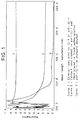
- Figure 1 shows a chromatogram of released anti-IL-1, as described herein, from a contact lens.
- This invention relates to a polymeric composition
- a polymeric composition comprising a polymeric hydrogel material containing an antibody as an additive absorbed in the polymeric composition and leachable therefrom.
- the polymeric composition is especially useful as the material of a contact lens.
- a particularly advantageous embodiment of the invention is a contact lens of polymeric hydrogel material having an antibody, such as anti-interleukin-1, absorbed therein in an amount up to 400 mg/lens.
- the lenses which function best in this use are those that are hydrogels containing 52-60% water. At an ocular pH of about 7.0-7.4 about 40% of the absorbed antibody is releasable to the ocular liquid.
- Antigens may be introduced into the body from a variety of sources outside the body. Typical antigens are toxins or enzymes. They might be introduced into the body through any orifice, such as the mouth, nose, eye, etc. Once the antigen is inside the body, the body naturally produces a counteracting substance to reduce or dispose of the antigen. Generally this naturally occurring counteraction results in the production of an antibody that opposes and/or neutralizes the antigen.
- An antibody is a soluble product produced by stimulated immune cells.
- the action of an antibody is specific in that only one type of antibody will bind to and deactivate or kill one particular bacteria or virus.
- An antibody which is produced against Pseudomonas aeruginosa will have no effect against Serratia marcescens even though both bacteria are Gram negative organisms.
- an antibody may be produced against any other immune product. This is done by injecting a purified protein such as IL-1 into a rabbit or some other animal. This animal's immune system will respond to the injected IL-1 as a foreign protein and develop an antibody response to the IL-1.
- the antibody which is specific for the IL-1 protein may be purified from the animal's serum, and thus one has an antibody capable of binding to and deactivating the IL-1 protein. As noted above, anti-IL-1 will have no direct effect on IL-6 or any other cytokine.
- IL-1 Once the IL-1 is stimulated, regardless of the stimulus, IL-1 will cause the side effects mentioned above.
- a particularly important antibody for use in this invention is anti-IL-1 which is the antibody for IL-1.
- Interleukin-1 IL-1 is a cytokine, or inflammatory mediator produced by living cells in response to a chemical stimulus such as a detergent, a pathogen, or a purified virulence factor such as lipopolysaccharide.
- Cytokines are proteins with variable molecular weights depending on the type of cytokine. Most molecular weights are between 17 and 20 kd.
- a virulence factor is a protein which may be purified and retain its pathogenic activity.
- cytokines is one which allows cells to communicate with one another. Different cytokines send different signals to different cells.
- This signaling system is turned on by a chemical stimulus and is cascading in effect. That is, a given cytokine, such as IL-1, will stimulate other cytokines, such as IL-2, IL-6, and IL-8.
- the cascading effect is mutually exclusive to IL-1, that is IL-6 is not known to stimulate IL-8. For this reason, if one wished to interrupt this system, the optimal place would be at the early stage of the cascade. In this way, no other mediators would be stimulated.
- a cytokine may have an end process effect. It has been shown that topical inoculation of at least 100 pg in 50 microliters of IL-1 onto a rabbit cornea will cause ulceration within two hours. So, the action of cytokines is non-specific in nature (unlike a specific antibody/pathogen response) and a variety of different molecules may stimulate the cytokine response.
- Anti-interleukin-1 is an antibody molecule which will selectively bind to IL-1 and prevent it from further function. The procedure of the experiment was as follows:
- Figure 1 shows a chromatogram of released anti-IL-1 from a lens.
- results show a significant reduction in detected IL-1 when IL-1 producing cells are placed in direct contact with lenses treated with anti-IL-1. This means that should IL-1 be stimulated, an antibody released from the lens will prevent an end pathology such as a corneal ulcer. It has been shown that topical administration of IL-1 will cause corneal ulcers in rabbits. In addition, no toxicity was observed with either control lenses or experimental lenses (with antibody) in culture.
- mice Fourteen animals were used in this study, split into two groups; a control group and an experimental group of seven animals each. All animals received corneal and limbal abrasions in one eye. The other eye was not used. Results were measured at one, two, and three hours post-application of the IL-1.
- the results of this in vivo experiment show that an anti-inflammatory agent delivered from a hydrogel contact lens material can prevent corneal ulcers from developing.
- the concentration of IL-1 used to cause corneal ulcers to form was 50 micrograms higher than the minimum concentration required.
- the foregoing examples relate to the antigen/antibody system of Interleukin-1/anti-Interleukin-1, but there are other antigen/antibody systems which are operable within this invention.
- the amount of anti-IL-1 which is absorbed into a contact lens is about 100 mg. In general, this is accomplished by soaking the lens in IL-1 for about 24 hours, followed by washing the lens in saline solution at a pH of 7.2.
- the release of anti-IL-1 from a lens previously treated with anti-IL-1 is at least about 150 pg.
Landscapes
- Health & Medical Sciences (AREA)
- Chemical & Material Sciences (AREA)
- Physics & Mathematics (AREA)
- Medicinal Chemistry (AREA)
- Life Sciences & Earth Sciences (AREA)
- Dermatology (AREA)
- Animal Behavior & Ethology (AREA)
- Biomedical Technology (AREA)
- Optics & Photonics (AREA)
- Molecular Biology (AREA)
- General Physics & Mathematics (AREA)
- Oral & Maxillofacial Surgery (AREA)
- Transplantation (AREA)
- Epidemiology (AREA)
- Engineering & Computer Science (AREA)
- General Health & Medical Sciences (AREA)
- Public Health (AREA)
- Veterinary Medicine (AREA)
- Compositions Of Macromolecular Compounds (AREA)
- Peptides Or Proteins (AREA)
- Eyeglasses (AREA)
- Medicines Containing Antibodies Or Antigens For Use As Internal Diagnostic Agents (AREA)
- Medicinal Preparation (AREA)
Applications Claiming Priority (2)
| Application Number | Priority Date | Filing Date | Title |
|---|---|---|---|
| US61104696A | 1996-03-05 | 1996-03-05 | |
| US611046 | 1996-03-05 |
Publications (2)
| Publication Number | Publication Date |
|---|---|
| EP0794441A2 true EP0794441A2 (de) | 1997-09-10 |
| EP0794441A3 EP0794441A3 (de) | 1998-03-11 |
Family
ID=24447403
Family Applications (1)
| Application Number | Title | Priority Date | Filing Date |
|---|---|---|---|
| EP97301424A Withdrawn EP0794441A3 (de) | 1996-03-05 | 1997-03-04 | Auslaugbare absorbierte Antikörper enthaltende Kontaktlinse |
Country Status (5)
| Country | Link |
|---|---|
| EP (1) | EP0794441A3 (de) |
| JP (1) | JPH1024058A (de) |
| AU (1) | AU1510097A (de) |
| CA (1) | CA2198972A1 (de) |
| SG (1) | SG80568A1 (de) |
Cited By (5)
| Publication number | Priority date | Publication date | Assignee | Title |
|---|---|---|---|---|
| WO1999053955A1 (en) * | 1998-04-22 | 1999-10-28 | Desmos, Inc. | Creation of bioactive surfaces through selective adsorption |
| WO2001030386A1 (en) * | 1999-10-22 | 2001-05-03 | Biogen, Inc. | Use of a cd40:cd154 binding interruptor to treat immunological complications of the eye |
| EP1252895A4 (de) * | 2000-01-31 | 2003-04-16 | Santen Pharmaceutical Co Ltd | Heilmittel für ophthalmologische zustände |
| WO2016178151A1 (en) | 2015-05-04 | 2016-11-10 | Ecole Polytechnique Federale De Lausanne (Epfl) | Ophthalmic contact lens with a compressible affinity matrix |
| WO2017120479A1 (en) | 2016-01-07 | 2017-07-13 | The Schepens Eye Research Institute, Inc. | Therapeutics for ocular immunoinflammatory diseases |
Family Cites Families (8)
| Publication number | Priority date | Publication date | Assignee | Title |
|---|---|---|---|---|
| FR2548673B1 (fr) * | 1983-07-05 | 1985-10-04 | Essilor Int | Polymeres supports de produits actifs relargables et leur procede de preparation |
| EP0164889A3 (de) * | 1984-05-07 | 1986-12-17 | HSC Research Development Corporation | Oberfächenbehandelte polymere Träger |
| CA1295941C (en) * | 1985-08-16 | 1992-02-18 | Rajan Bawa | Sustained-release formulation comprising a hydrophobic polymer system |
| DE3778446D1 (de) * | 1986-08-18 | 1992-05-27 | Mueller Lierheim Wolfgang G K | Kontaktlinse. |
| US5171264A (en) * | 1990-02-28 | 1992-12-15 | Massachusetts Institute Of Technology | Immobilized polyethylene oxide star molecules for bioapplications |
| WO1995003783A1 (en) * | 1990-03-06 | 1995-02-09 | Houston Biotechnology Incorporated | Polymeric device for the delivery of immunotoxins for the prevention of secondary cataract |
| US5472703A (en) * | 1993-03-02 | 1995-12-05 | Johnson & Johnson Vision Products, Inc. | Ophthalmic lens with anti-toxin agent |
| WO1996002276A2 (en) * | 1994-07-18 | 1996-02-01 | Gel Sciences, Inc. | Novel polymer gel networks and methods of use |
-
1997
- 1997-03-03 SG SG9700632A patent/SG80568A1/en unknown
- 1997-03-03 CA CA 2198972 patent/CA2198972A1/en not_active Abandoned
- 1997-03-04 JP JP9067260A patent/JPH1024058A/ja active Pending
- 1997-03-04 EP EP97301424A patent/EP0794441A3/de not_active Withdrawn
- 1997-03-05 AU AU15100/97A patent/AU1510097A/en not_active Abandoned
Cited By (8)
| Publication number | Priority date | Publication date | Assignee | Title |
|---|---|---|---|---|
| WO1999053955A1 (en) * | 1998-04-22 | 1999-10-28 | Desmos, Inc. | Creation of bioactive surfaces through selective adsorption |
| WO2001030386A1 (en) * | 1999-10-22 | 2001-05-03 | Biogen, Inc. | Use of a cd40:cd154 binding interruptor to treat immunological complications of the eye |
| EP1252895A4 (de) * | 2000-01-31 | 2003-04-16 | Santen Pharmaceutical Co Ltd | Heilmittel für ophthalmologische zustände |
| WO2016178151A1 (en) | 2015-05-04 | 2016-11-10 | Ecole Polytechnique Federale De Lausanne (Epfl) | Ophthalmic contact lens with a compressible affinity matrix |
| US10816823B2 (en) | 2015-05-04 | 2020-10-27 | École Polytechnique Fédérale de Lausanne | Ophthalmic contact lens with compressible affinity matrix |
| WO2017120479A1 (en) | 2016-01-07 | 2017-07-13 | The Schepens Eye Research Institute, Inc. | Therapeutics for ocular immunoinflammatory diseases |
| EP3399999A4 (de) * | 2016-01-07 | 2020-03-11 | The Schepens Eye Research Institute, Inc. | Therapeutika für immuninflammatorische erkrankungen des auges |
| US11306140B2 (en) | 2016-01-07 | 2022-04-19 | The Schepens Eye Research Institute, Inc. | Therapeutics for ocular immunoinflammatory diseases |
Also Published As
| Publication number | Publication date |
|---|---|
| CA2198972A1 (en) | 1997-09-05 |
| SG80568A1 (en) | 2001-05-22 |
| JPH1024058A (ja) | 1998-01-27 |
| AU1510097A (en) | 1997-09-11 |
| EP0794441A3 (de) | 1998-03-11 |
| MX9701655A (es) | 1998-07-31 |
Similar Documents
| Publication | Publication Date | Title |
|---|---|---|
| Boyden | The chemotactic effect of mixtures of antibody and antigen on polymorphonuclear leucocytes | |
| US4006059A (en) | Hydrophobic noncovalent binding of proteins to support materials | |
| Jani et al. | Ion exchange resins for ophthalmic delivery | |
| Buchan et al. | Clinical and laboratory investigation of the composition and properties of human skin wound exudate under semi-permeable dressings | |
| JPS6145608B2 (de) | ||
| DE69722491T2 (de) | Adsorbens und Verfahren zur Entfernung von Chemokinen des CC-Subtyps aus Körperflüssigkeiten | |
| Jancso | Inflammation and the inflammatory mechanisms | |
| US5356874A (en) | Angiogenic factor isolated from live yeast cell derivatives and its use in treating wounds or burns in mammals | |
| JPH09315963A (ja) | コンタクトレンズおよびその製造方法、組成物 | |
| JP2015017098A (ja) | タンパク質からエンドトキシンを除去するための方法 | |
| EP1597271B1 (de) | Peptide gegen kälteunverträglichkeit hervorrufende autoantikörper und ihre verwendung | |
| US5532216A (en) | Neutralization of non-lipopolysaccharide compounds by bactericidal/permeability-increasing protein | |
| Ozawa et al. | Ocular inserts for controlled release of antibiotics | |
| CA2198972A1 (en) | Contact lens containing a leachable absorbed antibody | |
| FR2701263B1 (fr) | Procédé d'obtention d'une composition aqueuse protéinique, composition correspondante, glycoprotéine contenue et son utilisation pour la stabilisation de l'albumine et la détection ou le dosage d'anticorps. | |
| EP0222146B1 (de) | Selektives Adsorbens zur Bindung von Immunkomplexen | |
| Bodenstab et al. | Inactivation of antiadherence effect of bladder surface glycosaminoglycan by a complete urinary carcinogen (N-methyl-N-nitrosourea) | |
| Josephson et al. | Enhancement of lysozyme activity by anodal tear protein | |
| MXPA97001655A (en) | Contact lenses containing an absorbed lixivia antibody | |
| US5403914A (en) | Biological mediators of immune functions | |
| EP0653214B1 (de) | Topische antibakterielle Zusammensetzung | |
| ES8702463A1 (es) | Un procedimiento para preparar un material polimero hidrofilo basado en polisacaridos polipeptidos y -o proteinas y derivados acrilicos hidrofilos. | |
| DE4029227A1 (de) | Arzneimittel enthaltend cd14 | |
| Comfort et al. | The influence of bond chemistry on immobilized enzyme systems for ex vivo use | |
| Sharma et al. | Formulation and in vitro evaluation of moxifloxacin ocular inserts |
Legal Events
| Date | Code | Title | Description |
|---|---|---|---|
| PUAI | Public reference made under article 153(3) epc to a published international application that has entered the european phase |
Free format text: ORIGINAL CODE: 0009012 |
|
| AK | Designated contracting states |
Kind code of ref document: A2 Designated state(s): AT BE CH DE DK ES FR GB GR IE IT LI NL PT SE |
|
| PUAL | Search report despatched |
Free format text: ORIGINAL CODE: 0009013 |
|
| AK | Designated contracting states |
Kind code of ref document: A3 Designated state(s): AT BE CH DE DK ES FR GB GR IE IT LI NL PT SE |
|
| 17P | Request for examination filed |
Effective date: 19980821 |
|
| 17Q | First examination report despatched |
Effective date: 20011030 |
|
| STAA | Information on the status of an ep patent application or granted ep patent |
Free format text: STATUS: THE APPLICATION IS DEEMED TO BE WITHDRAWN |
|
| 18D | Application deemed to be withdrawn |
Effective date: 20020312 |