EP0780315A1 - Mit Elastomen beschichtete Flasche aus Glas oder dgl und Verfahren zur ihrer Beschichtung - Google Patents
Mit Elastomen beschichtete Flasche aus Glas oder dgl und Verfahren zur ihrer Beschichtung Download PDFInfo
- Publication number
- EP0780315A1 EP0780315A1 EP96420360A EP96420360A EP0780315A1 EP 0780315 A1 EP0780315 A1 EP 0780315A1 EP 96420360 A EP96420360 A EP 96420360A EP 96420360 A EP96420360 A EP 96420360A EP 0780315 A1 EP0780315 A1 EP 0780315A1
- Authority
- EP
- European Patent Office
- Prior art keywords
- container
- coating
- bottle
- layer
- agent
- Prior art date
- Legal status (The legal status is an assumption and is not a legal conclusion. Google has not performed a legal analysis and makes no representation as to the accuracy of the status listed.)
- Withdrawn
Links
Images


Classifications
-
- B—PERFORMING OPERATIONS; TRANSPORTING
- B65—CONVEYING; PACKING; STORING; HANDLING THIN OR FILAMENTARY MATERIAL
- B65D—CONTAINERS FOR STORAGE OR TRANSPORT OF ARTICLES OR MATERIALS, e.g. BAGS, BARRELS, BOTTLES, BOXES, CANS, CARTONS, CRATES, DRUMS, JARS, TANKS, HOPPERS, FORWARDING CONTAINERS; ACCESSORIES, CLOSURES, OR FITTINGS THEREFOR; PACKAGING ELEMENTS; PACKAGES
- B65D23/00—Details of bottles or jars not otherwise provided for
- B65D23/08—Coverings or external coatings
- B65D23/0807—Coatings
- B65D23/0814—Coatings characterised by the composition of the material
- B65D23/0821—Coatings characterised by the composition of the material consisting mainly of polymeric materials
-
- B—PERFORMING OPERATIONS; TRANSPORTING
- B65—CONVEYING; PACKING; STORING; HANDLING THIN OR FILAMENTARY MATERIAL
- B65D—CONTAINERS FOR STORAGE OR TRANSPORT OF ARTICLES OR MATERIALS, e.g. BAGS, BARRELS, BOTTLES, BOXES, CANS, CARTONS, CRATES, DRUMS, JARS, TANKS, HOPPERS, FORWARDING CONTAINERS; ACCESSORIES, CLOSURES, OR FITTINGS THEREFOR; PACKAGING ELEMENTS; PACKAGES
- B65D85/00—Containers, packaging elements or packages, specially adapted for particular articles or materials
- B65D85/30—Containers, packaging elements or packages, specially adapted for particular articles or materials for articles particularly sensitive to damage by shock or pressure
- B65D85/307—Local shock-absorbing elements, e.g. elastic rings
Definitions
- the field of the invention is that of glass or similar articles, such as for example containers and in particular bottles, to which one or more layers of polymeric materials (elastomer) are applied, for the purpose of protecting said article or container (impact and scratch resistance, mechanical resistance and resistance to chemical attack ).
- polymeric materials elastomer
- the present invention relates to the articles thus coated, as such, as well as the methods of surface treatment or coating making it possible.
- thermoplastic polymer materials have been widely used to the detriment of glass. But given the growing importance of environmental protection and ecology issues, the glass packaging material or the like, is experiencing a new boom. The latter is expressed, in particular at the level of the returnable glass system.
- glass inherently has many advantages which are not found in modern synthetic materials.
- the glass is perfectly inert with respect to the products that it is likely to contain. It does not induce any unpleasant taste or odor.
- glass containers have the disadvantage of being fragile and of being relatively heavy.
- the bare surface of the glass is particularly sensitive to abrasion, which affects both the appearance of the container and its mechanical strength.
- Such defects are all the more acute since in modern bottling chains, which operate at very high rates, the bottles are subjected to harsh mechanical stresses, such as for example those generated by encapsulation or capping, as well than significant friction with each other.
- This is, in particular, the case for automatic devices for closing the opening of the bottles after they have been filled.
- such devices comprise a mandrel provided with jaws provided for enclosing a closure member, such as a stopper or a capsule and for bringing it to the level of the neck of a bottle circulating on a conveyor belt and temporarily stationed in look of the jaws.
- This plugging device then ensures the coupling of the closure (cap or stopper) with the neck of the bottle, so as to close the opening thereof.
- this type of corking device operates in a back and forth movement in extremely rapid translation. It follows that, in the event of a slight offset of a bottle relative to the direction of translation, the jaws of the corking device can sometimes violently strike the neck in the region of its upper lip delimiting the opening and thus the to break. Such an incident can cause the liquid contained in it to spill and the glass shards to disperse. A stop in the bottling line, whose disastrous economic repercussions can easily be imagined, is therefore necessary to clean up and eliminate the unopened bottles near the scene of the incident, possibly contaminated by shards of glass. In short, these bottlenecks are extremely penalizing for the manufacturers considered.
- transparent coatings for glass mention may be made of that described in the certificate of utility FR No. 2 252 307 , which coating is designed to oppose the dispersion of the fragments in the event of breakage and comprises a primary layer formed by an amino or epoxy-functional silane or an epoxy resin, a layer of ethylene / methacrylic acid or ethylene / methacrylic acid / isobutyl acrylate type copolymer, and a possible protective layer against a caustic agent made, for example, from polyethylene.
- the silane of the primary layer can be ⁇ -aminopropyltriethoxysilane or ⁇ -glycidoxypropyltrimethoxysilane.
- Such a coating has been found to be unsatisfactory from an economic point of view, as well as from that of improving mechanical properties and abrasion resistance.
- French Patent No. 2,353,500 describes a two-layer coating for a glass container, in which the base layer is constituted by a polyurethane elastomer capable of absorbing shocks, of preventing the dispersion of shards in the event of breakage and to offer UV protection.
- This base layer is associated with an upper polymer layer intended to improve the mechanical resistance and the abrasion resistance of the coating.
- the cost and the complexity of the surface treatment process making it possible to obtain this coating are already at least two crippling factors on the industrial level.
- styrene-butadiene elastomer ESB
- PU polyurethane
- the ESB is supposed to absorb shock
- the PU is intended to provide abrasion resistance and external protection. Since the BSE is failing with regard to adhesion to the glass support, it is recommended, according to this prior art, to apply a primary layer of metal oxide.
- PU appears to be particularly unsuitable as an outer protective layer due to its high coefficient of friction. This lack of slippage is particularly troublesome in bottling lines.
- the outer PU layer is sensitive to the usual washing treatment using caustic agents.
- German glassmaker has developed a lightened glass bottle, characterized by a special external surface coating: Geracote®.
- This coating comprises a single layer based on one-component polyurethane which is free of solvent.
- the weak points of this coating are in particular its high cost, which is substantially equivalent to that of synthetic polymer containers.
- this coating is imperfect in that it does not provide for the protection of a particularly sensitive area, in a glass bottle, namely: the neck, which is greatly stressed during capping or encapsulation in the industrial lines.
- Silicone elastomers have also been envisaged as protective coatings for glass bottles.
- the article in MBAA TECHNICAL QUATERLY, Vol. 28, pp 78-83, 1991 HAYASHI et al (USSN 515,306) relates to such coatings.
- one of the essential objectives of the present invention is to provide a container made of glass or the like and comprising a protective coating; said container having to be economical, to have a resistance to improved physico-chemical aggressions, a mechanical resistance, as well as a resistance to abrasion and to shocks, and this more particularly, as regards the neck.
- Another essential objective of the invention is to provide a glass container protected by a coating and having improved mechanical resistance, in particular with respect to frontal impacts as well as directional impacts substantially parallel to the axis of the container, which are more likely to intervene, for example during capping operations, in bottling lines.
- Another object of the invention is to provide a container provided with a protective coating which gives it an ability to retain fragments in the event of breakage.
- Another object of the invention is to provide a container, preferably a bottle, of which the body and the neck are reinforced, and which is in conformity with the directives governing the standards of alimentarity of the packaging of food beverages.
- Another object of the present invention is to provide a container having a protective envelope which is resistant to scratches, which promotes the sliding of the containers between them, which is non-toxic and non-flammable, which is not not causing an unpleasant odor and / or taste and which is easy to apply to containers.
- Another object of the invention is to provide a method of surface treatment (internal and / or external) of containers, preferably of bottles which are made of glass or the like and which moreover meet the specifications referred to above, said method should be simple, quick and inexpensive to implement.
- the applicant has found that it is particularly advantageous that the PU coating preferably be located at the level of eu at least one of the zones contact of a glass container or the like, with respect to one (or more) other (s) to which it is likely to be bonded.
- these contact zones correspond to particularly sensitive and fragile regions with respect to mechanical stresses and particularly exposed to the problems of friction and scratches.
- the container is a bottle which has, on its outer surface at least one annular contact zone.
- the annular contact zones are two in number, and are located in two regions proximal to the neck and the base of the bottle, respectively.
- each of these annular zones is at least partially coated with the PU elastomer layer according to the invention.
- the coatings of said contact zones are annular bands B 1 , B 2 .
- the container is provided with a neck, that is to say that it is preferably made up by a bottle, said neck is at least partially coated with the shock absorbing elastomer made of PU as defined above, the latter being preferably applied to the upper lip of the neck and more preferably still, at least on the surface of this lip substantially perpendicular to the axis of the bottle.
- Such a characteristic provides a significant reinforcement of the strength of the neck, during the extreme stresses which the capping and encapsulation operations entail on an industrial line. There is thus a significant reduction in neck breakage under real industrial conditions.
- the particular coating of the container according to the invention also has the subsidiary advantage of being resistant to abrasion, to scratches and to withstanding the washing treatments at high temperature (30 min at 80 ° C.).
- the coating according to the invention is not subject to yellowing.
- this coating is extremely well fixed to the glass support.
- This damping peak or tangent to corresponds to the ratio of a viscous plastic component E "to an elastic component E 'determined by a measure of visco-elasticity, comparable to a tensile test and carried out on an apparatus of the type of that sold. by the company RHEOMETRICS under the name RSA II ®.
- the sample is subjected to a sinusoidal deformation and the force which it transmits for a given deformation is a function of its module and the geometry of the device used.
- the angle made by this force with the imposed strain is the angle of loss tg ⁇ .
- the PU coating according to the invention has all the expected properties, in particular in terms of damping, elongation and lowering of the friction coefficient.
- the essential constituent material of the coating namely polyurethane
- the essential constituent material of the coating is of the one-component polyurethane type and / or of the two-component polyurethane type.
- 2y 2x + z + 3u.
- ⁇ 2 ⁇ 4.4 dicyclohexylmetathane diisocyanate 38%
- ⁇ a ⁇ 3 aminopropyltriethoxysilane 1%
- ⁇ 3 ⁇ polycaprolactone triol (polymer of 1,1,1 trimethylol propane) 44% weight
- ⁇ 4 ⁇ catalyst 1% weight
- the system used comprises a polyurethane prepolymer comprising monomers and / or oligomers and / or polymers with free isocyanate functions, in aqueous solution.
- the single-component polyurethane systems selected are those constituted by an anionic dispersion of an aliphatic polyurethane.
- These dispersions comprise, for example, solid PU resin in water, for example up to around 30% by weight, as well as a polymer cosolvent consisting, for example, of n-methyl-2-pyrolidone up to 'about 9%.
- HALWEDROL® PT34 / 30W sold by the company SAFIC-ALCAN and manufactured by HUTTENUS ALBERTUS.
- bicomponent polyurethanes have a better behavior in the pasteurization heat treatment, than water-soluble monocomponent polyurethanes.
- the optimum thickness of the coating is greater than 5 ⁇ , preferably between 10 and 30 ⁇ and more preferably still equal to 20 ⁇ ⁇ 5.
- the coating of the container comprises, in addition to the PU layer (s), at least one base layer of metal oxide, preferably TiO 2 and / or SnO 2 .
- a hot surface treatment prior to the application of the elastomeric PU layer described above, only reinforces the advantageous properties of the latter, exploited in the context of the application specific to the invention.
- Fig. 1 shows a front view of a glass bottle to which the protective coating according to the invention has been partially applied.
- Fig. 2 shows a partial sectional view along a longitudinal plane passing through the axis of the bottle and showing the neck of this bottle in FIG. 1 .
- the bottle of FIG. 1 is designated by the reference 1. It is coated with a protective film of PU, at three locations: the upper lip 2 of the neck 3 of the bottle, as well as the two annular bands B 1 and B 2 , respectively upper and lower.
- the annular strip B 1 of coating is located in a region proximal to the neck or the neck 3 of the bottle 1 .
- the annular contact zone 4 which the covering strip B 1 covers is shown in dotted lines.
- Fig. 2 shows more clearly the coating 7 present at the end of the neck 3 and more precisely at the level of the upper lip 2 of the latter.
- the polyurethane coating 7 projects slightly inside and outside the cylindrical wall forming the neck 3 .
- This damping coating 7 attenuates the effect of shocks, which the neck 3 is liable to undergo. This is clearly demonstrated by a case test developed by the applicant. The following examples explain this test as well as the advantageous results obtained.
- the application of the precursor liquid compositions of the polyurethanes constituting the coating according to the invention is carried out by any suitable and appropriate means such as, for example, the soaking or bringing into contact with rollers of the cylinders soaked in liquid composition (flexography , tempography).
- the crosslinking operation can be carried out by infrared cooking.
- the present invention also relates to the polyurethane compositions used to obtain the coating applied to the glass container or the like.
- Fast conveyor manufactured by the company DUINAT. Speed ranging from 0 to 135 m / min, with adjustment by electronic variator.
- the conveyor comprises a rigid stop, which can be equipped with a force sensor provided with impact plates of sizes adapted to those of the articles tested. It is important to know that the measured values are not intrinsically valid, i.e. they cannot be used as absolute values, but only as relative values for comparison with articles tested with the same equipment.
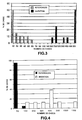
- Measurement of the break rate curve as a function of speed The test will focus on 10 throws per speed step.
- the first speed level will be set at 30 m / min, then we will move to the next level by increasing by 10 m / min, trying to get as close as possible to 100% breakage.
Landscapes
- Engineering & Computer Science (AREA)
- Mechanical Engineering (AREA)
- Details Of Rigid Or Semi-Rigid Containers (AREA)
Applications Claiming Priority (2)
| Application Number | Priority Date | Filing Date | Title |
|---|---|---|---|
| FR9515779A FR2742746B1 (fr) | 1995-12-22 | 1995-12-22 | Conteneur en verre ou analogue d'une couche d'elastomere et procede de revetement correspondant |
| FR9515779 | 1995-12-22 |
Publications (1)
| Publication Number | Publication Date |
|---|---|
| EP0780315A1 true EP0780315A1 (de) | 1997-06-25 |
Family
ID=9486182
Family Applications (1)
| Application Number | Title | Priority Date | Filing Date |
|---|---|---|---|
| EP96420360A Withdrawn EP0780315A1 (de) | 1995-12-22 | 1996-12-20 | Mit Elastomen beschichtete Flasche aus Glas oder dgl und Verfahren zur ihrer Beschichtung |
Country Status (2)
| Country | Link |
|---|---|
| EP (1) | EP0780315A1 (de) |
| FR (1) | FR2742746B1 (de) |
Cited By (7)
| Publication number | Priority date | Publication date | Assignee | Title |
|---|---|---|---|---|
| WO2001015984A1 (de) * | 1999-08-27 | 2001-03-08 | Schott Glas | Verschliessbarer glasbehälter mit einem gespritzten kunststoffüberzug und verfahren zu seiner herstellung |
| CN103640762A (zh) * | 2013-11-28 | 2014-03-19 | 林淑琴 | 一种可标示的饮料包装瓶 |
| CN103848056A (zh) * | 2014-03-26 | 2014-06-11 | 王东武 | 一种提高玻璃瓶耐碎性的方法 |
| CN104401569A (zh) * | 2014-10-09 | 2015-03-11 | 安徽轩扬包装科技有限公司 | 一种单体饮料外包装易识别标记 |
| CN113135337A (zh) * | 2020-01-16 | 2021-07-20 | 肖特股份有限公司 | 用于药物、医疗或化妆品应用的玻璃容器 |
| US12286270B2 (en) | 2021-05-18 | 2025-04-29 | Gerresheimer Glas Gmbh | Transporting packaging units |
| US12466629B2 (en) | 2021-05-18 | 2025-11-11 | Gerresheimer Glas Gmbh | Container for packaging units |
Citations (6)
| Publication number | Priority date | Publication date | Assignee | Title |
|---|---|---|---|---|
| FR1111773A (fr) * | 1954-09-28 | 1956-03-05 | Bague de protection pour bouteilles | |
| FR1469340A (fr) * | 1966-02-11 | 1967-02-10 | Perfectionnements apportés aux bouteilles en verre et récipients analogues | |
| FR2221413A1 (de) | 1973-03-14 | 1974-10-11 | United Glass Ltd | |
| FR2252307A1 (en) | 1973-11-28 | 1975-06-20 | Du Pont | Splinter-resistant coating for glass with silane priming layer - and powdered ionised olefin-acid copolymer layer |
| FR2353500A1 (fr) | 1976-06-03 | 1977-12-30 | Dexter Corp | Bouteilles en verre revetues |
| WO1995010487A1 (en) | 1993-10-12 | 1995-04-20 | Plm Ab | Method of producing an article with a body of glass having protective coatings of polymeric material |
-
1995
- 1995-12-22 FR FR9515779A patent/FR2742746B1/fr not_active Expired - Lifetime
-
1996
- 1996-12-20 EP EP96420360A patent/EP0780315A1/de not_active Withdrawn
Patent Citations (6)
| Publication number | Priority date | Publication date | Assignee | Title |
|---|---|---|---|---|
| FR1111773A (fr) * | 1954-09-28 | 1956-03-05 | Bague de protection pour bouteilles | |
| FR1469340A (fr) * | 1966-02-11 | 1967-02-10 | Perfectionnements apportés aux bouteilles en verre et récipients analogues | |
| FR2221413A1 (de) | 1973-03-14 | 1974-10-11 | United Glass Ltd | |
| FR2252307A1 (en) | 1973-11-28 | 1975-06-20 | Du Pont | Splinter-resistant coating for glass with silane priming layer - and powdered ionised olefin-acid copolymer layer |
| FR2353500A1 (fr) | 1976-06-03 | 1977-12-30 | Dexter Corp | Bouteilles en verre revetues |
| WO1995010487A1 (en) | 1993-10-12 | 1995-04-20 | Plm Ab | Method of producing an article with a body of glass having protective coatings of polymeric material |
Non-Patent Citations (1)
| Title |
|---|
| MBAA TECHNICAL QUARTERLY., vol. 28, 1991, pages 78 - 83 |
Cited By (8)
| Publication number | Priority date | Publication date | Assignee | Title |
|---|---|---|---|---|
| WO2001015984A1 (de) * | 1999-08-27 | 2001-03-08 | Schott Glas | Verschliessbarer glasbehälter mit einem gespritzten kunststoffüberzug und verfahren zu seiner herstellung |
| US6866158B1 (en) | 1999-08-27 | 2005-03-15 | Schott Glas | Closeable glass container comprising a plastic coating applied by injection molding and method for the production thereof |
| CN103640762A (zh) * | 2013-11-28 | 2014-03-19 | 林淑琴 | 一种可标示的饮料包装瓶 |
| CN103848056A (zh) * | 2014-03-26 | 2014-06-11 | 王东武 | 一种提高玻璃瓶耐碎性的方法 |
| CN104401569A (zh) * | 2014-10-09 | 2015-03-11 | 安徽轩扬包装科技有限公司 | 一种单体饮料外包装易识别标记 |
| CN113135337A (zh) * | 2020-01-16 | 2021-07-20 | 肖特股份有限公司 | 用于药物、医疗或化妆品应用的玻璃容器 |
| US12286270B2 (en) | 2021-05-18 | 2025-04-29 | Gerresheimer Glas Gmbh | Transporting packaging units |
| US12466629B2 (en) | 2021-05-18 | 2025-11-11 | Gerresheimer Glas Gmbh | Container for packaging units |
Also Published As
| Publication number | Publication date |
|---|---|
| FR2742746B1 (fr) | 1998-03-13 |
| FR2742746A1 (fr) | 1997-06-27 |
Similar Documents
| Publication | Publication Date | Title |
|---|---|---|
| CA1275875C (fr) | Procede et dispositif pour la pulverisation d'un melange reactionnel apte a former une couche de protection transparente de haute qualite optique | |
| EP0344045B1 (de) | Durchsichtige, kratz- und abriebfeste Dunstbeständigkeit und energieabsorbierende Eigenschaften aufweisende Polyurethanschicht, Verfahren zu deren Herstellung sowie diese benutzendes laminiertes Glas | |
| CA1297624C (fr) | Couche de revetement transparente en polyurethanne elastique souple pour substrats transparents en verre ou en resine synthetique | |
| EP0275755A1 (de) | Durchsichtige kratz- und abriebfeste Kunststoffolie hoher optischer Qualität, Verfahren zu deren Herstellung und Verglasung unter deren Verwendung | |
| FR2496089A1 (fr) | Vitrage feuillete de securite | |
| CA1253425A (fr) | Vitrage feuillete de securite | |
| US4268554A (en) | Process for the coating of glass surfaces | |
| CH625745A5 (de) | ||
| FR2810043A1 (fr) | Procede de protection d'un pneumatique vis-a-vis de l'ozone | |
| CH623017A5 (de) | ||
| FR2742746A1 (fr) | Conteneur en verre ou analogue d'une couche d'elastomere et procede de revetement correspondant | |
| FR2665905A1 (fr) | Vernis durcissable aux rayons uv, utilisation de ce vernis, procede de revetement d'elements moules et elements ainsi revetus. | |
| EP3727857B1 (de) | Gegenstand mit einer funktionellen beschichtung und einer temporären schutzschicht aus einem polyfuranharz | |
| EP0402212B1 (de) | Verfahren zur Herstellung einer selbstheilenden Polyurethan- Beschichtung und erhaltenes Produkt | |
| WO1995010487A1 (en) | Method of producing an article with a body of glass having protective coatings of polymeric material | |
| CA1299934C (fr) | Procede et dispositif pour la fabrication d'un vitrage de securite | |
| EP0187568A2 (de) | Kratzerartige Eindrücke selbstausheilende und dunstbeständige durchscheinende Beschichtung geeignet für Sicherheitsglasscheiben | |
| FR2576012A1 (fr) | Procede et dispositif pour la fabrication d'un vitrage de securite | |
| EP0133090B1 (de) | Transparente Plastikfolie von hoher optischer Qualität | |
| CA1261241A (fr) | Vitrage feuillete de securite | |
| CA2572488A1 (fr) | Composition de traitement d'un verre pour en ameliorer la resistance mecanique par guerison des defauts de surface, procedes de traitement correspondants et verres traites obtenus. | |
| EP2254959B1 (de) | Beschichtungszusammensetzung zum stärken von glas | |
| FR2872507A1 (fr) | Composition de traitement d'une vitroceramique pour en ameliorer la resistance mecanique par guerison des defauts de surface, procedes de traitement correspondants et vitroceramiques traitees obtenues | |
| EP0253699A1 (de) | Verfahren zum Herstellen einer durchsichtigen Kunststoff-Folie hoher optischer Qualität | |
| AU587091B2 (en) | Process for forming structural coating on vitreous ceramic or porcelain substrate |
Legal Events
| Date | Code | Title | Description |
|---|---|---|---|
| PUAI | Public reference made under article 153(3) epc to a published international application that has entered the european phase |
Free format text: ORIGINAL CODE: 0009012 |
|
| AK | Designated contracting states |
Kind code of ref document: A1 Designated state(s): DE ES IT NL |
|
| STAA | Information on the status of an ep patent application or granted ep patent |
Free format text: STATUS: THE APPLICATION IS DEEMED TO BE WITHDRAWN |
|
| 18D | Application deemed to be withdrawn |
Effective date: 19971230 |