EP0775979B1 - Accumulation buffer method and apparatus for graphical image processing - Google Patents
Accumulation buffer method and apparatus for graphical image processing Download PDFInfo
- Publication number
- EP0775979B1 EP0775979B1 EP96307837A EP96307837A EP0775979B1 EP 0775979 B1 EP0775979 B1 EP 0775979B1 EP 96307837 A EP96307837 A EP 96307837A EP 96307837 A EP96307837 A EP 96307837A EP 0775979 B1 EP0775979 B1 EP 0775979B1
- Authority
- EP
- European Patent Office
- Prior art keywords
- buffer
- pixel
- processor
- partitioned
- component
- Prior art date
- Legal status (The legal status is an assumption and is not a legal conclusion. Google has not performed a legal analysis and makes no representation as to the accuracy of the status listed.)
- Expired - Lifetime
Links
Images




Classifications
-
- G—PHYSICS
- G06—COMPUTING OR CALCULATING; COUNTING
- G06T—IMAGE DATA PROCESSING OR GENERATION, IN GENERAL
- G06T1/00—General purpose image data processing
- G06T1/20—Processor architectures; Processor configuration, e.g. pipelining
-
- G—PHYSICS
- G06—COMPUTING OR CALCULATING; COUNTING
- G06T—IMAGE DATA PROCESSING OR GENERATION, IN GENERAL
- G06T1/00—General purpose image data processing
- G06T1/60—Memory management
-
- G—PHYSICS
- G06—COMPUTING OR CALCULATING; COUNTING
- G06T—IMAGE DATA PROCESSING OR GENERATION, IN GENERAL
- G06T2200/00—Indexing scheme for image data processing or generation, in general
- G06T2200/28—Indexing scheme for image data processing or generation, in general involving image processing hardware
Definitions
- the present invention relates to graphical image processing in a computer system and, in particular, to a particularly efficient accumulation mechanism implemented in a computer having a processor capable of performing multiple arithmetic operations simultaneously and in parallel.
- Accumulation buffers are used in graphical image processing to accomplish a number of effects, including anti-aliasing, motion blur, enhanced depth perception, and soft shading.
- an accumulation buffer is used to combine multiple frames to produce a composite frame.
- Each of the multiple frames is typically combined with the accumulation buffer by calculating, for each pixel of the frame, a weighted average of the pixel with a corresponding pixel of the accumulation buffer.
- Each of the above-listed effects are achieved by altering a single graphical image slightly to produce a number of slightly different frames and accumulating the frames in the accumulation buffer.
- Aliasing refers to jagged edges on graphical objects represented in a rasterized image. For example, a line which is slanted, i.e., neither fully horizontal nor fully vertical, appears to be jagged when displayed in a rectangular grid of pixels of a computer display device. The jagged quality is a result of rounding floating point values to integer pixel addresses.
- Anti-aliasing generally refers to graphical alteration of a graphical object or image to remove the appearance of jagged edges.
- An accumulation buffer is used to produced an anti-aliased image by "jittering" the image. In other words, the graphical image is rendered into the accumulation buffer.
- the graphical image is translated, i.e., moved, by a fraction of a pixel and is rendered again to produce a slightly translated frame. Rendering the graphical image as translated causes the jags in the various edges of the various graphical objects rendered to appear in slightly different places.
- the slightly translated frame is then accumulated with the previously rendered frame in the accumulation buffer and the resulting frame is stored in the accumulation buffer.
- the translation, rendering and accumulation of frames of the graphical image is repeated a number of times, e.g., 60 times. The result is an averaging of a number of frames in which jags in the edges of graphical objects in a graphical image are smoothed, providing the appearance of smooth edges.
- An accumulation buffer is used in a similar fashion to blur graphical objects in motion.
- objects in motion often have no blur, i.e., appear to have very sharp edges.
- an object with sharp edges moves quickly across a television or movie screen or across a computer display device in a motion video display, the appearance is very unnatural and disturbing to the viewer.
- a graphical image in which an object is in motion is repeated rendered with the object in different position along the path of motion of the object and the resulting frames are accumulated in the accumulation buffer.
- the resulting accumulated frame includes an image of the moving graphical object which is blurred along the path of motion of the graphical object and a considerably more natural and pleasing animated video display.
- An accumulation buffer is also used to enhance depth perception in a three-dimensional graphical image. Depth perception is enhanced by blurring graphical objects distant from the viewer while preserving sharpness in graphical objects nearer the viewer. This result is achieved by repeatedly rendering the three-dimensional image from slightly varying perspectives. Altering the perspective of a three-dimensional graphical image results in greater movement of graphical object further from the viewer relative to movement of objects nearer the viewer. Accumulation of frames corresponding to slightly varied perspectives therefore results in blurring of graphical objects substantially proportional to the distance of the graphical objects from the viewer. Thus, depth perception in the rendered and accumulated graphical image is enhanced substantially.
- An accumulation buffer is further used to soften shadows in a rendered graphical image. Because of the precision of computers in rendering three-dimensional graphical images, shadows portrayed in such rendered graphical images are particularly sharp, resulting in an unnatural, surreal appearance of the graphical image. Shadows in such a graphical image are softened by repeated rendering the graphical image with the respective positions of various virtual light sources, which define the lighting characteristics of the graphical image, varied slightly and the resulting frames are accumulated in the accumulation buffer. Since each frame corresponds to a slightly different light source position, shadows in each frame are in a slightly different position. The accumulated frame in the accumulation buffer therefore has softer shadows, as if from a more diffused light source. The resulting displayed graphical image is more natural and realistic.
- a graphical image It is common for a graphical image to be as large as a rectangular grid of one thousand rows by one thousand columns of pixels. Such a graphical image has one million pixels. If the graphical image is in color, each pixel has four components, namely, red, green, blue, and alpha. To accumulate each component of a single pixel of a graphical image with a pixel stored in the accumulation buffer typically requires two memory read operations, two multiplication operations, one addition operation, and one memory store operation. Reading the four components of a color pixel typically requires a single read of a 32-bit word from memory and execution of approximately eleven computer instructions to parse each eight-bit component from the 32-bit word. To accumulate a single graphical image having four components per pixel and one million pixels therefore requires two million read operations, execution of twenty-two million parsing computer instructions, eight million multiplication operations, four million addition operations, and four million store operations.
- EP0680013 describes a central processing unit with a graphics execution unit of the prior art.
- efficiency in accumulating pixel data in an accumulation buffer is significantly improved by processing various components of a color pixel stored in an accumulation buffer and respective components of a color pixel in a frame buffer substantially simultaneously in partitioned multiplication operations and partitioned addition operations.
- An accumulation buffer weight is substantially multiplied by each component of the buffer pixel substantially simultaneously in a partitioned multiplication operation.
- the partitioned multiplication operation includes a first partitioned multiplication operation in which most significant portion of the accumulation buffer weight is multiplied by each component of the buffer pixel to form a first partially weighted buffer pixel, (ii) a second partitioned multiplication operation in which a least significant portion is multiplied by each component of the buffer pixel to form a second partially weighted buffer pixel, and (iii) a partitioned addition operation in which the first and second partially weighted buffer pixels are summed to produce a weighted buffer pixel.
- the weighted buffer pixel is adjusted in some embodiments to effectively increase the range of accumulation buffer weights which can be effectively processed by the processor.
- the processor can process accumulation buffer weights in the range of approximately -0.5 to 0.5 and the weighted buffer pixel is doubled to extend the effective range of the accumulation buffer weight to at least the range of approximately 0.0 to approximately 1.0.
- a separate load and store unit of the processor retrieves from the frame buffer and from the accumulation buffer a next frame pixel and a next accumulation buffer pixel, respectively, for subsequent processing in an arithmetic processing unit of the processor while the arithmetic processing unit substantially simultaneously processes a previously retrieved frame pixel and accumulation buffer pixel.
- the number of instruction cycles required to accumulation a single frame pixel with a single accumulation buffer pixel is reduced from approximately 24 to approximately four instruction cycles.
- the present invention therefore represents a significant improvement over conventional accumulation techniques and mechanisms.
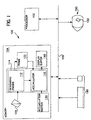
- multiple pipelines through a processor are used in a novel manner to more efficiently accumulate rendered images of one or more source objects 120 (Figure 1) into an accumulation buffer 130.
- a computer system 100 within which such images are accumulated is generally of the structure shown.
- Computer system 100 includes a processor 102 which is coupled to a memory 104 through a bus 106.
- Processor 102 is described in greater detail below and fetches from memory 104 and executes computer instructions and reads data from and writes data to memory 104 in accordance with the fetched and executed instructions.
- Memory 104 can include generally any type of memory, including without limitation randomly accessible memory (RAM), read-only memory (ROM), and secondary storage including storage media such as magnetic and optical storage devices.
- Stored within memory - 104 are (i) source objects 120, (ii) accumulation buffer 130, and (iii) a display buffer 140.
- an image processor 114 is a computer process which executes within processor 102 from memory 104.
- Image processor 114 includes a rendering engine 112 which reads source objects 120 and renders one or more frames of pixel data representing a graphical representation within a computer display device 150 of source objects 120.
- Image processor 114 also includes an accumulator 110.
- Rendering engine 112 passes to accumulator 110 frames such as frame 122 for accumulation, in a manner described more completely below, in accumulation buffer 130 and in display buffer 140. The contents of display buffer 140 are displayed in computer display device 150.
- processor 102 receives from one or more input devices 160 command signals generated by a user and sends to computer display device 150 display data and control signals.
- input devices 160 can be any computer input device, including without limitation a keyboard, a keypad, or a pointing device such as a trackball, an electronic mouse, thumbwheels, a lightpen, or a digitizing tablet.
- Computer display device 150 can include any type of computer display device, including without limitation a cathode ray tube (CRT), a light-emitting diode (LED) display, or a liquid crystal display (LCD).
- CTR cathode ray tube
- LED light-emitting diode
- LCD liquid crystal display
- Image processor 114 sometimes prompts a user, by displaying prompting data in computer display device 150, to select particular operational characteristics of rendering engine 112 and establishes specific operational characteristics of rendering engine 112 in response to control signals which are received through processor 102 from input devices 160 and which specify particular operational characteristics of rendering engine 112.
- Computer display device 150 continually displays the contents of display buffer 140.
- Image processor 114 after accumulating a number of frames of rendered source objects 120 into accumulation buffer 130, either accumulates the last frame into display buffer 140 or copies the contents of accumulation buffer 130 to display buffer 140 to thereby cause the display of the contents of display buffer 140 in computer display device 150 to display to the user accumulated graphical image 152.
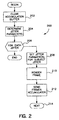
- rendering engine 112 determines rendering parameters corresponding to the jitter parameters of the subject jitter.
- rendering engine 112 renders source objects 120 in accordance with the rendering parameters determined in step 208.
- the rendering of source objects 120 is conventional and is not described further herein.
- rendering engine 112 produces a frame 122 which includes pixel data defining a graphical image in which source objects 120 are represented.
- processing transfers from step 210 to step 212 in which rendering engine 112 sends to accumulator 110 selected jitter parameters of the subject jitter and frame 122 to thereby cause accumulator 110 to accumulate frame 122 into either accumulation buffer 130 or display buffer 140 according to the jitter parameters.
- processing transfers through next step 214 to loop step 206 and the next jitter is processed according to the loop defined by loop step 206 and next step 214.
- Accumulation of frame 122 (Figure 1) into accumulation buffer 130 by accumulator 110 is illustrated by logic flow diagram 300 ( Figure 3) in which processing begins with step 302.
- step 302 accumulator 110 clips frame 122 to the size of the destination buffer as defined by the jitter parameters received from rendering engine 112.
- accumulation buffer 130 and display buffer 140 are equal in size and frame 122 is clipped to the size of accumulation buffer 130 and display buffer 140.
- step 304 frame and buffer weights are constructed from the jitter parameters received from rendering engine 112.
- the frame weight is the weight attributed to frame 122 during accumulation
- the buffer weight is the weight attributed to accumulation buffer 130 during accumulation. The frame and buffer weights and their use during accumulation are described more completely below.
- loop step 306 which, in conjunction with next step 316, defines a loop in which each row of frame 122 as clipped is processed. During each iteration of the loop of loop step 306 and next step 316, the row processed is called the subject row. For each row of frame 122, processing transfers from loop step 306 to loop step 308 and, thereafter, processing according to logic flow diagram 300 terminates from loop step 306.
- Loop step 308 and next step 314 define a loop in which each pixel of the subject row of frame 122 as clipped is processed. During each iteration of the loop of loop step 308 and next step 314, the pixel processed is called the subject pixel. For each pixel of the subject row, processing transfers from loop step 308 to step 310 and, thereafter, through next step 316 to loop step 306 in which the next row of frame 122 is processed.
- processor 102 performs partitioned arithmetic operations in which multiple partitioned numbers of a single data word are processed simultaneously and in parallel.
- a pixel of frame 122 is a 32-bit word which is partitioned into four eight-bit unsigned integer numbers
- a pixel in accumulation buffer 130 is a 64-bit word which is partitioned into four sixteen-bit signed fixed point numbers.
- Processing according to logic flow diagram 312 begins with steps 402, 404, and 406, in which accumulator 110 ( Figure 1) issues computer instructions to processor 102 to multiply each of partitioned components 502R, 502G, 502B, and 502A by the buffer weight specified by rendering engine 112 as described above.
- Processor 102 further performs a partitioned addition operation, which is sometimes referred to herein as the FPADD 16 operation, in which respective partitioned sixteen-bit fixed point numbers of two 64-bit words are summed and the resulting partitioned sums are each stored in a respective partitioned sixteen-bit fixed point number of a third 64-bit word.
- a partitioned addition operation which is sometimes referred to herein as the FPADD 16 operation, in which respective partitioned sixteen-bit fixed point numbers of two 64-bit words are summed and the resulting partitioned sums are each stored in a respective partitioned sixteen-bit fixed point number of a third 64-bit word.
- the result of the FPADD16 operation is the partitioned product of the first and second 64-bit words, in which each of the four partitioned sixteen-bit fixed point number of the partitioned product is the product of respective partitioned sixteen-bit fixed point numbers of the first and second 64-bit words.
- step 304 which is briefly described above, accumulator 110 ( Figure 1) builds a 64-bit partitioned buffer weight word 602 ( Figure 6) by (i) formatting the buffer weight as a sixteen-bit fixed point number and packing the sixteen-bit fixed point number into each of the four partitioned sixteen-bit numbers of 64-bit buffer weight data word 602.
- processor 102 multiplies all four components of buffer pixel word 502 by a respective partitioned sixteen-bit fixed point buffer weight of 64-bit buffer weight word 602 in three instruction cycles.
- Figures 7 and 9 show specific implementations of the MUL8SUX16 and MUL8ULX16 operations, respectively, by processor 102.
- Figure 7 illustrates the processing of a single partitioned component 502A of buffer pixel data word 502( Figure 5) and a single partitioned buffer weight 602A of partitioned buffer weight word 602 ( Figure 6) in the MUL8SUX16 operation.
- Each of partitioned components 502R, 502G, and 502B, in conjunction with each of partitioned buffer weights 602R, 602G, and 602B, respectively, is processed simultaneously by duplicate logic within processor 102 which is directly analogous to the logic represented in Figure 7.
- partitioned component 502A and corresponding partitioned buffer weight 602A is equally applicable to the simultaneous processing of partitioned components 502R, 502G, and 502B and respective partitioned buffer weights 602R, 602G, and 602B.
- Processing 102 includes multiplication logic 702A which performs an integer multiplication operation in which the most significant eight bits of partitioned buffer weight 602A, which are treated by multiplication logic 702A as a signed, eight-bit integer, are multiplied by the sixteen bits of partitioned component 502A.
- the result of the multiplication is a 24-bit data word 704A.
- Processor 102A includes a filter 708A in which the most significant sixteen bits of data word 704A are parsed from data word 704A and are rounded accordingly to the least significant eight bits of data word 704A.
- the resulting of the parsing and rounding by filter 708A is stored in partitioned sixteen-bit fixed point number 706A of a 64-bit word 706 ( Figure 8).
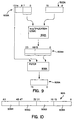
- Figure 9 illustrates the processing of a single partitioned component 502A of buffer pixel data word 502 ( Figure 5) and a single partitioned buffer weight 602A of partitioned buffer weight word 602 ( Figure 6) in the MUL8ULX16 operation.
- Each of partitioned components 502R, 502G, and 502B, in conjunction with each of partitioned buffer weights 602R, 602G, and 602B, respectively, is processed simultaneously by duplicate logic within processor 102 which is directly analogous to the logic represented in Figure 9.
- partitioned sixteen-bit fixed point number 502A and corresponding partitioned buffer weight 602A is equally applicable to the simultaneous processing of partitioned components 502R, 502G, and 502B and respective partitioned buffer weights 602R, 602G, and 602B.
- Processing 102 includes multiplication logic 902A which performs an integer multiplication operation in which the least significant eight bits of partitioned buffer weight 602A, which are treated by multiplication logic 902A as an unsigned, eight-bit integer, are multiplied by the sixteen bits of partitioned component 502A.
- the result of the multiplication is a 24-bit data word 904A.
- Processor 102A includes a filter 908A in which the most significant eight bits of data word 904A (i) are parsed from data word 904A, (ii) are rounded accordingly to the least significant sixteen bits of data word 904A, and (iii) sign extended to sixteen bits according to the sign of partitioned buffer weight 602A.
- filter 908A produces (i) a sixteen-bit two's complement of the rounded most significant eight bits of data word 904A if partitioned buffer weight 602A is negative or (ii) a sixteen-bit number equal to the rounded most significant eight bits of data word 904A if partitioned buffer weight 602A is non-negative.
- the sixteen-bit number produced by filter 908A is stored in a partitioned sixteen-bit fixed point number 906A of a partitioned 64-bit word 906 ( Figure 10).
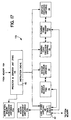
- FIG. 11 illustrates the processing of single partitioned sixteen-bit fixed point numbers 706A and 906A of 64-bit word 706 ( Figure S) and 64-bit word 906 ( Figure 9) in the FPADD16 operation.
- Each of partitioned numbers 706R, 706G, and 706B, in conjunction with each of partitioned numbers 906R, 906G, and 906B, respectively, is processed simultaneously by duplicate logic within processor 102 which is directly analogous to the logic represented in Figure 11.
- partitioned number 706A and corresponding partitioned number 906A is equally applicable to the simultaneous processing of partitioned numbers 706R, 706G, and 706B and respective partitioned numbers 906R, 906G, and 906B.
- Processor 102 includes addition logic 1102A which sums sixteen-bit fixed point numbers 706A and 906A and stores the result in partitioned sixteen-bit fixed point number 1106A of weighted buffer pixel data word 1106 ( Figure 12).
- partitioned data word 1106 includes four partitioned sixteen-bit fixed point numbers 1106R, 1106G, 1106B, and 1106A which are each a respective product of partitioned buffer weights 602R, 602G, 602B, and 602A and partitioned components 502R, 502G, 502B, and 502A, respectively.
- weights by which buffer pixels and pixels of frame 122 range from approximately 0.0 to approximately 1.0.
- the MUL8SUX16 and MUL8ULX16 operations require that partitioned buffer weights 602R, 602G, 602B, and 602A ( Figure 7) be signed, i.e., that the most significant bit of partitioned buffer weights 602R, 602G, 602B, and 602A is reserved as a sign bit.
- the product of the signed upper eight bits of each of partitioned buffer weights 602R, 602G, 602B, and 602A is right-shifted by eight bits as described above.
- each of partitioned buffer weights 602R, 602G, 602B, and 602A can effectively have a value in the range of approximately -0.5 to approximately 0.5.
- each partitioned buffer weight of buffer weight data word 602 is scaled such that a buffer weight of 0.0 is represented by partitioned buffer weights 602R, 602G, 602B, and 602A having values of 0.0 and a buffer weight of 1.0 is represented by partitioned buffer weights 602R, 602G, 602B, and 602A having values of approximately 0.5.
- the sixteen-bit product selected from 24-bit word 704A by filter 708A has a value of one-half the desired value assuming that the sixteen-bit product selected by filter 708A has an implicit decimal point at the same position as the implicit decimal point in partitioned component 502A.
- the desired value is the product of buffer weight represent partitioned buffer weight 602A, as defined prior to scaling as described above, and partitioned component 502A.
- accumulator 110 doubles each partitioned product of data word 1106 in step 408 ( Figure 4).
- accumulator 110 invokes the FPADD16 operation within processor 102 and supplies as the two operands to be summed data word 1106 and data. word 1106 again. The resulting sum is then stored in data word 1106 to thereby effectively double data word 1106.
- the effective range of each partitioned buffer weight of buffer weight data word 602 is adjusted from between approximately -0.5 and approximately 0.5 to between approximately -1.0 to 1.0.
- buffer weights in the range of approximately 0.0 to approximately 1.0 are accomodated.
- step 410 accumulator 110 ( Figure 1) weights the pixel data of frame 122 according to the frame weight supplied by rendering engine 112 as described above.
- step 410 accumulator 110 issues to processor 102 a computer instruction which causes processor 102 to perform a MUL8X16AL operation in which each partitioned eight-bit number of the subject pixel data 1402 ( Figure 14) is multiplied by a sixteen-bit fixed point number representing the frame weight.
- subject pixel data 1402 is a 32-bit word which includes four partitioned eight-bit numbers, i.e., partitioned components 1402R, 1402G, 1402B, and 1402A which represent red, green, blue, and alpha components, respectively, of the subject pixel.
- the frame weight is represented by frame weight 1500U ( Figure IS), which is the lower sixteen-bits of a 32-bit word 1500.
- Figure 15 illustrates the processing of a single partitioned component 1402A of subject pixel word 1402 ( Figure 12) and frame weight 1500U in the MUL8X16AL operation.
- Each of partitioned components 1402R, 1402G, and 1402B, in conjunction with frame weight 1500U, is processed simultaneously by duplicate logic within processor 102 which is directly analogous to the logic represented in Figure 15. Therefore, the following description of the processing of partitioned component 1402A and frame weight 1500U is equally applicable to the simultaneous processing of partitioned components 1402R, 1402G, and 1402B and frame weight 1500U.
- Processing 102 includes multiplication logic 1502A which performs an integer multiplication operation in which frame weight 1500U is multiplied by the eight bits of partitioned component 1402A.
- the result of the multiplication is a 24-bit data word 1504A.
- Processor 102A includes a filter 1508A in which the most significant sixteen bits of data word 1504A are parsed from data word 1504A and are rounded accordingly to the least significant eight bits of data word 1504A.
- the resulting of the parsing and rounding by filter 1508A is stored in partitioned sixteen-bit fixed point number 1506A of a 64-bit word 1506 ( Figure 16). Therefore, by using the MUL8X16AL operation, all four components of the subject pixel are weighted according to the frame weight in a single instruction cycle.
- the resulting destination pixel is stored in the buffer specified by the particular jitter parameters received from rendering engine 110 as described above, i.e., either accumulation buffer 130 or display buffer 140.
- PDU 46, IEU 30, FPU 26, integer and floating point register files 36 and 38, MMUs 44a-44b, and LSU 48 can be coupled to one another in any of a number of configurations as described more completely in the '572 application.
- GRU 28 is an arithmetic processing unit and performs partitioned multiplication operations and partitioned addition operations. Specifically, GRU 28 performs the MULSUX16, MUL8ULX16, MUL8X16AL, and FPADD16 operations described above.
Landscapes
- Physics & Mathematics (AREA)
- General Physics & Mathematics (AREA)
- Engineering & Computer Science (AREA)
- Theoretical Computer Science (AREA)
- Image Processing (AREA)
- Image Generation (AREA)
Applications Claiming Priority (2)
| Application Number | Priority Date | Filing Date | Title |
|---|---|---|---|
| US08/563,158 US5872729A (en) | 1995-11-27 | 1995-11-27 | Accumulation buffer method and apparatus for graphical image processing |
| US563158 | 1995-11-27 |
Publications (3)
| Publication Number | Publication Date |
|---|---|
| EP0775979A2 EP0775979A2 (en) | 1997-05-28 |
| EP0775979A3 EP0775979A3 (en) | 1998-04-22 |
| EP0775979B1 true EP0775979B1 (en) | 2004-05-06 |
Family
ID=24249338
Family Applications (1)
| Application Number | Title | Priority Date | Filing Date |
|---|---|---|---|
| EP96307837A Expired - Lifetime EP0775979B1 (en) | 1995-11-27 | 1996-10-30 | Accumulation buffer method and apparatus for graphical image processing |
Country Status (5)
| Country | Link |
|---|---|
| US (1) | US5872729A (enExample) |
| EP (1) | EP0775979B1 (enExample) |
| JP (1) | JPH09231380A (enExample) |
| KR (1) | KR970029182A (enExample) |
| DE (1) | DE69632379D1 (enExample) |
Families Citing this family (19)
| Publication number | Priority date | Publication date | Assignee | Title |
|---|---|---|---|---|
| US5912673A (en) * | 1995-11-27 | 1999-06-15 | Sun Microsystems, Inc. | Graphical image convolution using multiple pipelines |
| US6396502B1 (en) | 1999-10-15 | 2002-05-28 | Hewlett-Packard Company | System and method for implementing accumulation buffer operations in texture mapping hardware |
| US6457034B1 (en) * | 1999-11-02 | 2002-09-24 | Ati International Srl | Method and apparatus for accumulation buffering in the video graphics system |
| GB2392072B (en) * | 2002-08-14 | 2005-10-19 | Autodesk Canada Inc | Generating Image Data |
| US8223157B1 (en) * | 2003-12-31 | 2012-07-17 | Ziilabs Inc., Ltd. | Stochastic super sampling or automatic accumulation buffering |
| US7847800B2 (en) * | 2004-04-16 | 2010-12-07 | Apple Inc. | System for emulating graphics operations |
| US7231632B2 (en) * | 2004-04-16 | 2007-06-12 | Apple Computer, Inc. | System for reducing the number of programs necessary to render an image |
| US7248265B2 (en) * | 2004-04-16 | 2007-07-24 | Apple Inc. | System and method for processing graphics operations with graphics processing unit |
| US8134561B2 (en) | 2004-04-16 | 2012-03-13 | Apple Inc. | System for optimizing graphics operations |
| US8704837B2 (en) | 2004-04-16 | 2014-04-22 | Apple Inc. | High-level program interface for graphics operations |
| US7652678B2 (en) * | 2004-06-25 | 2010-01-26 | Apple Inc. | Partial display updates in a windowing system using a programmable graphics processing unit |
| US20050285866A1 (en) * | 2004-06-25 | 2005-12-29 | Apple Computer, Inc. | Display-wide visual effects for a windowing system using a programmable graphics processing unit |
| US8766995B2 (en) | 2006-04-26 | 2014-07-01 | Qualcomm Incorporated | Graphics system with configurable caches |
| US20070268289A1 (en) * | 2006-05-16 | 2007-11-22 | Chun Yu | Graphics system with dynamic reposition of depth engine |
| US8884972B2 (en) * | 2006-05-25 | 2014-11-11 | Qualcomm Incorporated | Graphics processor with arithmetic and elementary function units |
| US8869147B2 (en) * | 2006-05-31 | 2014-10-21 | Qualcomm Incorporated | Multi-threaded processor with deferred thread output control |
| US8644643B2 (en) * | 2006-06-14 | 2014-02-04 | Qualcomm Incorporated | Convolution filtering in a graphics processor |
| US8766996B2 (en) * | 2006-06-21 | 2014-07-01 | Qualcomm Incorporated | Unified virtual addressed register file |
| US8063914B1 (en) | 2007-08-02 | 2011-11-22 | Adobe Systems Incorporated | Rendering antialiased geometry to an image buffer using jittering |
Family Cites Families (8)
| Publication number | Priority date | Publication date | Assignee | Title |
|---|---|---|---|---|
| JPS61150059A (ja) * | 1984-12-24 | 1986-07-08 | Sony Corp | デ−タ処理装置 |
| US4809212A (en) * | 1985-06-19 | 1989-02-28 | Advanced Micro Devices, Inc. | High throughput extended-precision multiplier |
| JPH04290155A (ja) * | 1991-03-19 | 1992-10-14 | Fujitsu Ltd | 並列データ処理方式 |
| JP3209632B2 (ja) * | 1993-03-16 | 2001-09-17 | 松下電器産業株式会社 | 荷重平均回路 |
| US5625764A (en) * | 1993-03-16 | 1997-04-29 | Matsushita Electric Industrial Co., Ltd. | Weighted average circuit using digit shifting |
| US5444835A (en) * | 1993-09-02 | 1995-08-22 | Apple Computer, Inc. | Apparatus and method for forming a composite image pixel through pixel blending |
| JPH0773163A (ja) * | 1993-09-06 | 1995-03-17 | Matsushita Electric Ind Co Ltd | 演算回路 |
| US5734874A (en) * | 1994-04-29 | 1998-03-31 | Sun Microsystems, Inc. | Central processing unit with integrated graphics functions |
-
1995
- 1995-11-27 US US08/563,158 patent/US5872729A/en not_active Expired - Lifetime
-
1996
- 1996-10-30 EP EP96307837A patent/EP0775979B1/en not_active Expired - Lifetime
- 1996-10-30 DE DE69632379T patent/DE69632379D1/de not_active Expired - Lifetime
- 1996-11-06 KR KR1019960052343A patent/KR970029182A/ko not_active Ceased
- 1996-11-27 JP JP8330227A patent/JPH09231380A/ja active Pending
Also Published As
| Publication number | Publication date |
|---|---|
| JPH09231380A (ja) | 1997-09-05 |
| EP0775979A2 (en) | 1997-05-28 |
| US5872729A (en) | 1999-02-16 |
| EP0775979A3 (en) | 1998-04-22 |
| DE69632379D1 (de) | 2004-06-09 |
| KR970029182A (ko) | 1997-06-26 |
Similar Documents
| Publication | Publication Date | Title |
|---|---|---|
| US5872729A (en) | Accumulation buffer method and apparatus for graphical image processing | |
| Van Waveren | The asynchronous time warp for virtual reality on consumer hardware | |
| EP1789927B1 (en) | Increased scalability in the fragment shading pipeline | |
| US5268995A (en) | Method for executing graphics Z-compare and pixel merge instructions in a data processor | |
| AU2011200479B2 (en) | A Graphics Processing Architecture Employing A Unified Shader | |
| US5867145A (en) | Graphical image recasting | |
| US11120609B2 (en) | Reconstruction for temporally dense ray trace rendering | |
| TWI272537B (en) | Method and apparatus for compressing and decompressing instructions in a computer system | |
| US12730671B2 (en) | Complex rendering using tile buffers | |
| US7400325B1 (en) | Culling before setup in viewport and culling unit | |
| US11089320B2 (en) | Adaptive pixel sampling order for temporally dense rendering | |
| US10733793B2 (en) | Indexed value blending for use in image rendering | |
| JP4154336B2 (ja) | ラスター画像のフレームを描画する方法及び装置 | |
| US6831658B2 (en) | Anti-aliasing interlaced video formats for large kernel convolution | |
| US7292239B1 (en) | Cull before attribute read | |
| US20180315216A1 (en) | Digital Content Rendering that Supports Alpha Is Shape (AIS) as part of Knockout Groups | |
| US6778188B2 (en) | Reconfigurable hardware filter for texture mapping and image processing | |
| US20060062489A1 (en) | Apparatus and method for hardware-based video/image post-processing | |
| US6982719B2 (en) | Switching sample buffer context in response to sample requests for real-time sample filtering and video generation | |
| US20080024510A1 (en) | Texture engine, graphics processing unit and video processing method thereof | |
| US6816162B2 (en) | Data management to enable video rate anti-aliasing convolution | |
| US6847378B2 (en) | System and method for performing scale and bias operations by preclamping input image data | |
| US5912673A (en) | Graphical image convolution using multiple pipelines | |
| EP0485833A2 (en) | A method for executing graphics color saturating arithmetic instructions in a data processor | |
| Randall | Talisman: Multimedia for the PC |
Legal Events
| Date | Code | Title | Description |
|---|---|---|---|
| PUAI | Public reference made under article 153(3) epc to a published international application that has entered the european phase |
Free format text: ORIGINAL CODE: 0009012 |
|
| AK | Designated contracting states |
Kind code of ref document: A2 Designated state(s): DE GB NL |
|
| PUAL | Search report despatched |
Free format text: ORIGINAL CODE: 0009013 |
|
| AK | Designated contracting states |
Kind code of ref document: A3 Designated state(s): DE GB NL |
|
| 17P | Request for examination filed |
Effective date: 19981016 |
|
| 17Q | First examination report despatched |
Effective date: 20020821 |
|
| GRAP | Despatch of communication of intention to grant a patent |
Free format text: ORIGINAL CODE: EPIDOSNIGR1 |
|
| GRAS | Grant fee paid |
Free format text: ORIGINAL CODE: EPIDOSNIGR3 |
|
| GRAA | (expected) grant |
Free format text: ORIGINAL CODE: 0009210 |
|
| AK | Designated contracting states |
Kind code of ref document: B1 Designated state(s): DE GB NL |
|
| PG25 | Lapsed in a contracting state [announced via postgrant information from national office to epo] |
Ref country code: NL Free format text: LAPSE BECAUSE OF FAILURE TO SUBMIT A TRANSLATION OF THE DESCRIPTION OR TO PAY THE FEE WITHIN THE PRESCRIBED TIME-LIMIT Effective date: 20040506 |
|
| REG | Reference to a national code |
Ref country code: GB Ref legal event code: FG4D |
|
| REF | Corresponds to: |
Ref document number: 69632379 Country of ref document: DE Date of ref document: 20040609 Kind code of ref document: P |
|
| PG25 | Lapsed in a contracting state [announced via postgrant information from national office to epo] |
Ref country code: DE Free format text: LAPSE BECAUSE OF FAILURE TO SUBMIT A TRANSLATION OF THE DESCRIPTION OR TO PAY THE FEE WITHIN THE PRESCRIBED TIME-LIMIT Effective date: 20040807 |
|
| PGFP | Annual fee paid to national office [announced via postgrant information from national office to epo] |
Ref country code: GB Payment date: 20041027 Year of fee payment: 9 |
|
| NLV1 | Nl: lapsed or annulled due to failure to fulfill the requirements of art. 29p and 29m of the patents act | ||
| PLBE | No opposition filed within time limit |
Free format text: ORIGINAL CODE: 0009261 |
|
| STAA | Information on the status of an ep patent application or granted ep patent |
Free format text: STATUS: NO OPPOSITION FILED WITHIN TIME LIMIT |
|
| 26N | No opposition filed |
Effective date: 20050208 |
|
| PG25 | Lapsed in a contracting state [announced via postgrant information from national office to epo] |
Ref country code: GB Free format text: LAPSE BECAUSE OF NON-PAYMENT OF DUE FEES Effective date: 20051030 |
|
| GBPC | Gb: european patent ceased through non-payment of renewal fee |
Effective date: 20051030 |