EP0763814B1 - System and method for determining pitch contours - Google Patents
System and method for determining pitch contours Download PDFInfo
- Publication number
- EP0763814B1 EP0763814B1 EP96306360A EP96306360A EP0763814B1 EP 0763814 B1 EP0763814 B1 EP 0763814B1 EP 96306360 A EP96306360 A EP 96306360A EP 96306360 A EP96306360 A EP 96306360A EP 0763814 B1 EP0763814 B1 EP 0763814B1
- Authority
- EP
- European Patent Office
- Prior art keywords
- contour
- determining
- anchor
- acoustical
- curve
- Prior art date
- Legal status (The legal status is an assumption and is not a legal conclusion. Google has not performed a legal analysis and makes no representation as to the accuracy of the status listed.)
- Expired - Lifetime
Links
Images
Classifications
-
- G—PHYSICS
- G10—MUSICAL INSTRUMENTS; ACOUSTICS
- G10L—SPEECH ANALYSIS TECHNIQUES OR SPEECH SYNTHESIS; SPEECH RECOGNITION; SPEECH OR VOICE PROCESSING TECHNIQUES; SPEECH OR AUDIO CODING OR DECODING
- G10L13/00—Speech synthesis; Text to speech systems
- G10L13/08—Text analysis or generation of parameters for speech synthesis out of text, e.g. grapheme to phoneme translation, prosody generation or stress or intonation determination
-
- G—PHYSICS
- G10—MUSICAL INSTRUMENTS; ACOUSTICS
- G10L—SPEECH ANALYSIS TECHNIQUES OR SPEECH SYNTHESIS; SPEECH RECOGNITION; SPEECH OR VOICE PROCESSING TECHNIQUES; SPEECH OR AUDIO CODING OR DECODING
- G10L13/00—Speech synthesis; Text to speech systems
- G10L13/02—Methods for producing synthetic speech; Speech synthesisers
- G10L13/04—Details of speech synthesis systems, e.g. synthesiser structure or memory management
Definitions
- This invention relates to the art of speech synthesis and more particularly to the determination of pitch contours for text to be synthesized into speech.
- the synthesized speech In the art of speech synthesis, a fundamental goal is that the synthesized speech be as human-like as possible. Thus, the synthesized speech must include appropriate pauses, inflections, accentuation and syllabic stress. In other words, speech synthesis systems which can provide a human-like delivery quality for non-trivial input textual speech must be able to correctly pronounce the "words" read, to appropriately emphasize some words and de-emphasize others, to "chunk" a sentence into meaningful phrases, to pick an appropriate pitch contour and to establish the duration of each phonetic segment, or phoneme.
- such a system will operate to convert input text into some form of linguistic representation that includes information on the phonemes to be produced, their duration, the location of any phrase boundaries and the pitch contour to be used. This linguistic representation of the underlying text can then be converted into a speech waveform.
- pitch contour parameter it is well known that good intonation, or pitch, is essential for speech synthesis to sound natural.
- Prior art speech synthesis systems have been able to approximate the pitch contour, but have not in general been able to achieve the natural sounding quality of the speech style sought to be emulated.
- a system and method are provided for automatically computing pitch contours from textual input to produce pitch contours that closely mimic those found in natural speech.
- the methodology of the invention incorporates parameterized equations whose parameters can be estimated directly from natural speech recordings. That methodology incorporates a model based on the premise that pitch contours instantiating a particular pitch contour class (e.g., final rise in a yes/no question) can be described as distortions in the temporal and frequency domains of a single, underlying contour.
- a pitch contour can be predicted that closely models a natural speech contour for a synthetic speech utterance by adding the individual contours of the different intonational classes.
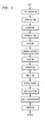
- FIG. 1 depicts in functional form the elements of a text-to-speech synthesis system.
- FIG. 2 shows in block diagram form a generalized TTS system structured to emphasize contribution of invention.
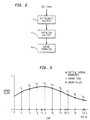
- FIG. 3 provides a graphical illustration of the contour generation process of the invention.
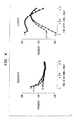
- FIG. 4 shows illustrative deaccented and accented perturbation curves.
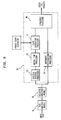
- FIG. 5 depicts in block diagram form and implementation of the invention in the context of a TTS system.
- an algorithm may be seen as a self-contained sequence of steps leading to a desired result. These steps generally involve manipulations of physical quantities. Usually, though not necessarily, these quantities take the form of electrical or magnetic signals capable of being stored, transferred, combined, compared and otherwise manipulated. For convenience of reference, as well as to comport with common usage, these signals will be described from time to time in terms of bits, values, elements, symbols, characters, terms, numbers, or the like. However, it should be emphasized that these and similar terms are to be associated with the appropriate physical quantities -- such terms being merely convenient labels applied to those quantities.
- the present invention relates to methods for operating a computer in processing electrical or other (e.g., mechanical, chemical) physical signals to generate other desired physical signals.
- processors For clarity of explanation, the illustrative embodiment of the present invention is presented as comprising individual functional blocks (including functional blocks labeled as "processors"). The functions these blocks represent may be provided through the use of either shared or dedicated hardware, including, but not limited to, hardware capable of executing software. For example the functions of processors presented in Figure 5 may be provided by a single shared processor. (Use of the term "processor” should not be construed to refer exclusively to hardware capable of executing software.)
- Illustrative embodiments may comprise microprocessor and/or digital signal processor (DSP) hardware, such as the AT&T DSP16 or DSP32C, read-only memory (ROM) for storing software performing the operations discussed below, and random access memory (RAM) for storing results.
- DSP digital signal processor
- ROM read-only memory
- RAM random access memory
- VLSI Very large scale integration
- a primary objective is the conversion of text into a form of linguistic representation, where that linguistic representation usually includes information on the phonetic segments (or phonemes) to be produced, the durations of such segments, the locations of any phrase boundaries, and the pitch contour to be used.
- the synthesizer operates to convert that information to a speech waveform.
- the invention is focused on the pitch contour portion of the linguistic representation of converted text, and particularly a novel approach to a determination of that pitch contour. Prior to describing this methodology, however, it is believed that a brief discussion of the operation of a TTS synthesis system will assist a more complete understanding of the invention.
- TTS system As an illustrative embodiment of a TTS system, reference is made herein to the TTS system developed by AT&T Bell Laboratories and described in Sproat, Richard W. and Olive, Joseph P. 1995. "Text-to-Speech Synthesis", AT&T Technical Journal , 74 (2), 35-44. That AT&T TTS system, which is believed to represent the state of the art in speech synthesis systems, is a modular system.
- the modular architecture of the AT&T TTS system is illustrated in Figure 1.
- Each of the modules is responsible for one piece of the problem of converting text into speech. In operation, each module reads in the structures one textual increment at a time, performs some processing on the input and then writes out the structure for the next module.
- FIG. 2 provides a somewhat more generalized depiction of a TTS system, such as the system of Figure 1.
- a Text/Acoustic Analysis function 1. That function essentially comprises the conversion of the input text into a linguistic representation of that text.
- An initial step in such text analysis will be the division of the input text into reasonable chunks for further processing, such chunks usually corresponding to sentences. Then these chunks will be further broken down into tokens, which normally correspond to words in a sentence constituting a particular chunk.
- Further text processing includes the identification of phonemes for the tokens being synthesized, determination of the stress to be placed on various syllables and words comprising the text, and determining the location of phrase boundaries for the text and the duration of each phoneme in the synthesized speech.
- Other, generally less important functions may also be included in this text/acoustic analysis function, but they need not be further discussed herein.
- the system of Figure 2 performs the function depicted as Intonation Analysis 5.
- This function which is performed by the methodology of the invention determines the pitch to be associated with the synthesized speech.
- the end product of this function, a pitch contour -- also denoted an F 0 contour -- is produced for association with other speech parameters previously computed for the speech segment under consideration.
- Speech Generation 10
- intonation As is well known, proper application of intonation is very important in speech synthesis to achieve a human-like speech waveform. Intonation serves to emphasize certain words and to de-emphasize others. It is reflected in the F 0 curve for a particular word or phrase being spoken, which curve will typically have a relative high point for an emphasized word or portion thereof, as well as a relative low point for de-emphasized portions.
- the challenge for a speech synthesizer is to compute that F 0 curve based only on input of the text of the word or phrase to be synthesized into speech.
- Fujisaki's accent curves are not tied to syllables, stress groups, etc., so that computation from linguistic representations is difficult to specify. To some extent, these limitations are addressed by the work of Mobius [Mobius, B., Patzold, M. and Hess, W., "Analysis and synthesis of German F0 contours by means of Fujisaki's model", Speech Communication , 13 , 1993] who showed that accent curves could be tied to accent groups -- where an accent group begins with a syllable which is both lexically stressed and is part of a word which is itself accented (i.e., emphasized) and continues to the next syllable which satisfies both of those conditions.
- each accent curve will be temporally aligned, in some sense, with the accent group.
- the accent curves of Mobius are not aligned in any principled manner with the internal temporal structure of the accent group.
- the Mobius model continues the Fujisaki limitation that the equations for the phrase and accent curves are very restrictive.
- the methodology of the invention overcomes the limitations of these prior art models and enables the computation of a pitch contour which closely models a natural speech contour for a synthetic speech utterance.
- an essential goal is the generation of the appropriate accent curve.
- the primary input to this process will be the phonemes within the accent group under consideration (the text comprising each such accent group being determined in accordance with the rule of Mobius defined above, or variants of such a rule), and the duration of each of those phonemes, each of which parameters having been generated by known methods in preceding modules of the TTS.
- the accent curve computed by the method of the invention may be added to the phrase curve for that interval to produce an F 0 curve. Accordingly, a preliminary step would involve the generation of that phrase curve.
- the phrase curve is typically computed by interpolation between a very small number of points -- for example, the three points corresponding to the start of the phrase, the start of the last accent group, and the end of the last accent group.
- the F 0 values of these points may vary for different phrase types (e.g., yes-no vs. declarative phrase).
- critical interval durations are computed, based on the phoneme durations within each such interval.
- three critical intervals are computed, although it will be apparent to those skilled in the art that more, less or entirely different intervals could be used.
- the critical intervals for the preferred embodiment are defined as:
- the next step in the process of the invention for generating the accent curve is in the computation of a series of values designated as anchor times.
- the phonetic class of an accent group is defined in terms of the phonetic classification of certain phonemes within the accent group -- specifically, the phonemes at the beginning and at the end of the accent group.
- the phonetic class c represents a dependency relationship between the alignment parameters, ⁇ , ⁇ & ⁇ , and the phonemes in the accent group.
- the alignment parameters ⁇ , ⁇ & ⁇ will have been determined (from actual speech data) for a multiplicity of phonetic classes, and within each such class, for each anchor time interval that characterizes the current model -- e.g., at 5, 20, 50, 80 and 90 percent of the peak height of the F 0 curve (after subtracting the phrase curve) on both sides of the peak.
- F 0 is computed and critical time intervals are indicated.
- the targeted accent group roughly coincides with a single-peaked local curve.
- a curve (the Locally Estimated Phrase Curve) is drawn between the points [t 0 ,F 0 (t 0 )] and [t 1 ,F 0 (t 1 )]; typically, this curve is a straight line, either in the linear or the logarithmic frequency domain.
- Anchor times correspond to time points where the Estimated Accent Curve is a given percentage of the peak height.
- N the number of time intervals i defining the number of anchor times across an accent group.
- the third step in the method of the invention is best explained by reference to Figure 3 which represents an x-y axis upon which a curve is constructed in accordance with the discussion following.
- the x axis represents time and the durations of all of the phonemes in the accent group are plotted along this time scale, where the y intercept is 0 time and corresponds to the beginning of the accent group and the last point plotted, illustratively shown here as 250 ms, represents the end point of the accent group, i.e., the end of the last phoneme in the accent group. Also plotted on this time axis are the anchor times computed in the prior step.
- the number of anchor times computed is assumed to be 9, so that those anchor times indicated in Figure 3 are designated T 1 , T 2 , ... T 9 .
- an anchor value, V i corresponding to such anchor point will be obtained from a look-up table and plotted on the graph of Figure 3 at the x coordinate corresponding to the associated anchor time and at the y coordinate corresponding to that anchor value -- such anchor values, for the purposes of illustration, having a range of 0 to 1 units on the y axis.
- a curve is then fitted to, or drawn through the plotted V i points in Figure 3 using a known interpolation methodology.
- the anchor values in that look-up table are computed from natural speech in the following manner.
- a large number of accent curves from the natural speech -- which are obtained by subtracting the Locally Estimated Phrase Curves from the F 0 curves -- are averaged and the averaged accent curve is then normalized so that the y-axis values are between 0 and 1.
- the anchor values are read from the normalized accent curve and placed in the look-up table.
- the interpolated and smoothed anchor value (v i ) curve determined in the previous step is multiplied (where multiplication is to be understood as generalized multiplication (Krantz et al .), and includes many mathematical operations other than standard multiplication) by numerical constants whose values reflect linguistic factors such as degree of prominence of an accent group, or location of the accent group in the sentence.
- this product curve will have the same general shape as that of the V i curve, but all of the y values will be scaled up by the multiplication constant(s).
- the product curve so obtained when added back to the phrase curve, may be used as the F 0 curve for the accent group under consideration, and (once all other product curves have been added similarly) will provide a much closer match to natural speech than prior art methods for computing the F 0 contour. However, a still further improvement in the achieved F 0 contour will be described hereafter.
- the F 0 contour computed in the prior step can, however, be still further improved by the addition of the appropriate obstruent perturbation curve(s) to the product curve computed in that prior step.
- a perturbation to the natural pitch curve where a consonant preceding a vowel is an obstruent.
- the perturbation parameter for each obstruent consonant is determined from natural speech data and that set of parameters stored in a look-up table. Then when an obstruent is encountered in an accent group, the perturbation parameter for that obstruent is obtained from the table, multiplied with a stored prototypical perturbation curve and added to the curve computed in the prior step.
- the prototypical perturbation curves can be obtained by comparison of F 0 curves for various types of consonants preceding a vowel in deaccented sylables, as shown in the left panel of Figure 4.
- the F 0 curve computed in accordance with the foregoing methodology is incorporated with previously computed duration and other factors, with the TTS going on to ultimately convert all of this collected linguistic information into a speech waveform.
- Figure 5 provides an illustrative application of the invention in the context of a TTS system.
- input text is initially operated on by Text Analysis Module 10 and thence by Acoustic Analysis Module 20 .
- These two modules which may be of any known implementation, generally operate to convert the input text into a linguistic representation of that text, corresponding to the Text/Acoustic Analysis function previously described in connection with Figure 2.
- the output of Acoustic Analysis Module 20 is then provided to Intonation Module 30 which operates according to the invention.
- Critical Interval Processor 31 operates to establish accent groups for preprocessed text received from a prior module and divide each accent group into a number of critical intervals.
- Anchor Time Processor 32 uses these critical intervals, and the durations thereof, Anchor Time Processor 32 then determines a set of alignment parameters and computes a series of anchor times using a relationship between the critical interval durations and those alignment parameters.
- Curve Generation Processor 33 takes the anchor times so computed and makes a determination of a corresponding set of anchor values from a previously generated look-up table, which anchor values are then plotted as a y axis value corresponding to each anchor time value displaced along the x axis. A curve is then developed from those plotted anchor values. Curve Generation Processor 33 then operates to multiply the curve so developed by one or more numerical constants representing various linguistic factors.
- the product curve so obtained which will represent an accent curve for a speech segment under analysis, may then be added, by Curve Generation Processor 33, to a previously computed phrase curve to produce the F 0 curve for that speech segment.
- Curve Generation Processor 33 an optional parallel process may be carried out by Obstruent Perturbation Processor 34 . That processor operates to determine and store perturbation parameters for obstruent consonants and to generate an obstruent perturbation curve from such stored parameters for each obstruent consonant appearing in a speech segment being operated on by Intonation Module 30.
- Such generated obstruent perturbation curves are provided as an input to Summation Processor 40, which operates to add those obstruent perturbation curves, at temporally appropriate points, to the curve generated by Curve Generation Processor 33 .
- the intonation contour so developed by Intonation Module 30 is then combined with other linguistic representations of the input text developed by preceding modules for further processing by other TTS modules.
- a novel system and method have been described herein for automatically computing local pitch contours from textual input, which computed pitch contours closely mimic those found in natural speech.
- the invention represents a major improvement in speech synthesis systems by providing a much more natural sounding pitch for synthesized speech than has been achievable by prior art methods.
Landscapes
- Engineering & Computer Science (AREA)
- Computational Linguistics (AREA)
- Health & Medical Sciences (AREA)
- Audiology, Speech & Language Pathology (AREA)
- Human Computer Interaction (AREA)
- Physics & Mathematics (AREA)
- Acoustics & Sound (AREA)
- Multimedia (AREA)
- Machine Translation (AREA)
- Measurement Of Mechanical Vibrations Or Ultrasonic Waves (AREA)
Applications Claiming Priority (2)
| Application Number | Priority Date | Filing Date | Title |
|---|---|---|---|
| US528576 | 1995-09-15 | ||
| US08/528,576 US5790978A (en) | 1995-09-15 | 1995-09-15 | System and method for determining pitch contours |
Publications (3)
| Publication Number | Publication Date |
|---|---|
| EP0763814A2 EP0763814A2 (en) | 1997-03-19 |
| EP0763814A3 EP0763814A3 (en) | 1998-06-03 |
| EP0763814B1 true EP0763814B1 (en) | 2001-12-05 |
Family
ID=24106259
Family Applications (1)
| Application Number | Title | Priority Date | Filing Date |
|---|---|---|---|
| EP96306360A Expired - Lifetime EP0763814B1 (en) | 1995-09-15 | 1996-09-03 | System and method for determining pitch contours |
Country Status (5)
| Country | Link |
|---|---|
| US (1) | US5790978A (enExample) |
| EP (1) | EP0763814B1 (enExample) |
| JP (1) | JP3720136B2 (enExample) |
| CA (1) | CA2181000C (enExample) |
| DE (1) | DE69617581T2 (enExample) |
Families Citing this family (168)
| Publication number | Priority date | Publication date | Assignee | Title |
|---|---|---|---|---|
| US7251314B2 (en) * | 1994-10-18 | 2007-07-31 | Lucent Technologies | Voice message transfer between a sender and a receiver |
| US6064960A (en) * | 1997-12-18 | 2000-05-16 | Apple Computer, Inc. | Method and apparatus for improved duration modeling of phonemes |
| US7149690B2 (en) | 1999-09-09 | 2006-12-12 | Lucent Technologies Inc. | Method and apparatus for interactive language instruction |
| US6418405B1 (en) * | 1999-09-30 | 2002-07-09 | Motorola, Inc. | Method and apparatus for dynamic segmentation of a low bit rate digital voice message |
| US8645137B2 (en) | 2000-03-16 | 2014-02-04 | Apple Inc. | Fast, language-independent method for user authentication by voice |
| US6856958B2 (en) * | 2000-09-05 | 2005-02-15 | Lucent Technologies Inc. | Methods and apparatus for text to speech processing using language independent prosody markup |
| AU2002232928A1 (en) * | 2000-11-03 | 2002-05-15 | Zoesis, Inc. | Interactive character system |
| US7400712B2 (en) * | 2001-01-18 | 2008-07-15 | Lucent Technologies Inc. | Network provided information using text-to-speech and speech recognition and text or speech activated network control sequences for complimentary feature access |
| US6625576B2 (en) | 2001-01-29 | 2003-09-23 | Lucent Technologies Inc. | Method and apparatus for performing text-to-speech conversion in a client/server environment |
| WO2002073595A1 (en) * | 2001-03-08 | 2002-09-19 | Matsushita Electric Industrial Co., Ltd. | Prosody generating device, prosody generarging method, and program |
| ITFI20010199A1 (it) | 2001-10-22 | 2003-04-22 | Riccardo Vieri | Sistema e metodo per trasformare in voce comunicazioni testuali ed inviarle con una connessione internet a qualsiasi apparato telefonico |
| US20060069567A1 (en) * | 2001-12-10 | 2006-03-30 | Tischer Steven N | Methods, systems, and products for translating text to speech |
| US7483832B2 (en) * | 2001-12-10 | 2009-01-27 | At&T Intellectual Property I, L.P. | Method and system for customizing voice translation of text to speech |
| US7010488B2 (en) * | 2002-05-09 | 2006-03-07 | Oregon Health & Science University | System and method for compressing concatenative acoustic inventories for speech synthesis |
| GB2392358A (en) * | 2002-08-02 | 2004-02-25 | Rhetorical Systems Ltd | Method and apparatus for smoothing fundamental frequency discontinuities across synthesized speech segments |
| US20040030555A1 (en) * | 2002-08-12 | 2004-02-12 | Oregon Health & Science University | System and method for concatenating acoustic contours for speech synthesis |
| US7542903B2 (en) * | 2004-02-18 | 2009-06-02 | Fuji Xerox Co., Ltd. | Systems and methods for determining predictive models of discourse functions |
| US20050187772A1 (en) * | 2004-02-25 | 2005-08-25 | Fuji Xerox Co., Ltd. | Systems and methods for synthesizing speech using discourse function level prosodic features |
| US8677377B2 (en) | 2005-09-08 | 2014-03-18 | Apple Inc. | Method and apparatus for building an intelligent automated assistant |
| US7633076B2 (en) | 2005-09-30 | 2009-12-15 | Apple Inc. | Automated response to and sensing of user activity in portable devices |
| US9318108B2 (en) | 2010-01-18 | 2016-04-19 | Apple Inc. | Intelligent automated assistant |
| US8977255B2 (en) | 2007-04-03 | 2015-03-10 | Apple Inc. | Method and system for operating a multi-function portable electronic device using voice-activation |
| US9053089B2 (en) | 2007-10-02 | 2015-06-09 | Apple Inc. | Part-of-speech tagging using latent analogy |
| US8620662B2 (en) | 2007-11-20 | 2013-12-31 | Apple Inc. | Context-aware unit selection |
| US10002189B2 (en) | 2007-12-20 | 2018-06-19 | Apple Inc. | Method and apparatus for searching using an active ontology |
| US9330720B2 (en) | 2008-01-03 | 2016-05-03 | Apple Inc. | Methods and apparatus for altering audio output signals |
| US8065143B2 (en) | 2008-02-22 | 2011-11-22 | Apple Inc. | Providing text input using speech data and non-speech data |
| US8996376B2 (en) | 2008-04-05 | 2015-03-31 | Apple Inc. | Intelligent text-to-speech conversion |
| US10496753B2 (en) | 2010-01-18 | 2019-12-03 | Apple Inc. | Automatically adapting user interfaces for hands-free interaction |
| US8464150B2 (en) | 2008-06-07 | 2013-06-11 | Apple Inc. | Automatic language identification for dynamic text processing |
| US20100030549A1 (en) | 2008-07-31 | 2010-02-04 | Lee Michael M | Mobile device having human language translation capability with positional feedback |
| US8768702B2 (en) | 2008-09-05 | 2014-07-01 | Apple Inc. | Multi-tiered voice feedback in an electronic device |
| US8898568B2 (en) | 2008-09-09 | 2014-11-25 | Apple Inc. | Audio user interface |
| US8583418B2 (en) | 2008-09-29 | 2013-11-12 | Apple Inc. | Systems and methods of detecting language and natural language strings for text to speech synthesis |
| US8712776B2 (en) | 2008-09-29 | 2014-04-29 | Apple Inc. | Systems and methods for selective text to speech synthesis |
| US8676904B2 (en) | 2008-10-02 | 2014-03-18 | Apple Inc. | Electronic devices with voice command and contextual data processing capabilities |
| WO2010067118A1 (en) | 2008-12-11 | 2010-06-17 | Novauris Technologies Limited | Speech recognition involving a mobile device |
| US8862252B2 (en) | 2009-01-30 | 2014-10-14 | Apple Inc. | Audio user interface for displayless electronic device |
| US8380507B2 (en) | 2009-03-09 | 2013-02-19 | Apple Inc. | Systems and methods for determining the language to use for speech generated by a text to speech engine |
| US9858925B2 (en) | 2009-06-05 | 2018-01-02 | Apple Inc. | Using context information to facilitate processing of commands in a virtual assistant |
| US10241644B2 (en) | 2011-06-03 | 2019-03-26 | Apple Inc. | Actionable reminder entries |
| US10540976B2 (en) | 2009-06-05 | 2020-01-21 | Apple Inc. | Contextual voice commands |
| US20120311585A1 (en) | 2011-06-03 | 2012-12-06 | Apple Inc. | Organizing task items that represent tasks to perform |
| US10241752B2 (en) | 2011-09-30 | 2019-03-26 | Apple Inc. | Interface for a virtual digital assistant |
| US9431006B2 (en) | 2009-07-02 | 2016-08-30 | Apple Inc. | Methods and apparatuses for automatic speech recognition |
| US8682649B2 (en) | 2009-11-12 | 2014-03-25 | Apple Inc. | Sentiment prediction from textual data |
| US8600743B2 (en) | 2010-01-06 | 2013-12-03 | Apple Inc. | Noise profile determination for voice-related feature |
| US8381107B2 (en) | 2010-01-13 | 2013-02-19 | Apple Inc. | Adaptive audio feedback system and method |
| US8311838B2 (en) | 2010-01-13 | 2012-11-13 | Apple Inc. | Devices and methods for identifying a prompt corresponding to a voice input in a sequence of prompts |
| US10705794B2 (en) | 2010-01-18 | 2020-07-07 | Apple Inc. | Automatically adapting user interfaces for hands-free interaction |
| US10553209B2 (en) | 2010-01-18 | 2020-02-04 | Apple Inc. | Systems and methods for hands-free notification summaries |
| US10679605B2 (en) | 2010-01-18 | 2020-06-09 | Apple Inc. | Hands-free list-reading by intelligent automated assistant |
| US10276170B2 (en) | 2010-01-18 | 2019-04-30 | Apple Inc. | Intelligent automated assistant |
| US8977584B2 (en) | 2010-01-25 | 2015-03-10 | Newvaluexchange Global Ai Llp | Apparatuses, methods and systems for a digital conversation management platform |
| US8682667B2 (en) | 2010-02-25 | 2014-03-25 | Apple Inc. | User profiling for selecting user specific voice input processing information |
| US8713021B2 (en) | 2010-07-07 | 2014-04-29 | Apple Inc. | Unsupervised document clustering using latent semantic density analysis |
| US8719006B2 (en) | 2010-08-27 | 2014-05-06 | Apple Inc. | Combined statistical and rule-based part-of-speech tagging for text-to-speech synthesis |
| US8719014B2 (en) | 2010-09-27 | 2014-05-06 | Apple Inc. | Electronic device with text error correction based on voice recognition data |
| US10762293B2 (en) | 2010-12-22 | 2020-09-01 | Apple Inc. | Using parts-of-speech tagging and named entity recognition for spelling correction |
| US10515147B2 (en) | 2010-12-22 | 2019-12-24 | Apple Inc. | Using statistical language models for contextual lookup |
| US20120197643A1 (en) * | 2011-01-27 | 2012-08-02 | General Motors Llc | Mapping obstruent speech energy to lower frequencies |
| US8781836B2 (en) | 2011-02-22 | 2014-07-15 | Apple Inc. | Hearing assistance system for providing consistent human speech |
| US10019995B1 (en) | 2011-03-01 | 2018-07-10 | Alice J. Stiebel | Methods and systems for language learning based on a series of pitch patterns |
| US9262612B2 (en) | 2011-03-21 | 2016-02-16 | Apple Inc. | Device access using voice authentication |
| US10057736B2 (en) | 2011-06-03 | 2018-08-21 | Apple Inc. | Active transport based notifications |
| US20120310642A1 (en) | 2011-06-03 | 2012-12-06 | Apple Inc. | Automatically creating a mapping between text data and audio data |
| US8812294B2 (en) | 2011-06-21 | 2014-08-19 | Apple Inc. | Translating phrases from one language into another using an order-based set of declarative rules |
| US8706472B2 (en) | 2011-08-11 | 2014-04-22 | Apple Inc. | Method for disambiguating multiple readings in language conversion |
| US8994660B2 (en) | 2011-08-29 | 2015-03-31 | Apple Inc. | Text correction processing |
| US8762156B2 (en) | 2011-09-28 | 2014-06-24 | Apple Inc. | Speech recognition repair using contextual information |
| US10134385B2 (en) | 2012-03-02 | 2018-11-20 | Apple Inc. | Systems and methods for name pronunciation |
| US9483461B2 (en) | 2012-03-06 | 2016-11-01 | Apple Inc. | Handling speech synthesis of content for multiple languages |
| US9280610B2 (en) | 2012-05-14 | 2016-03-08 | Apple Inc. | Crowd sourcing information to fulfill user requests |
| US8775442B2 (en) | 2012-05-15 | 2014-07-08 | Apple Inc. | Semantic search using a single-source semantic model |
| US10417037B2 (en) | 2012-05-15 | 2019-09-17 | Apple Inc. | Systems and methods for integrating third party services with a digital assistant |
| US10019994B2 (en) | 2012-06-08 | 2018-07-10 | Apple Inc. | Systems and methods for recognizing textual identifiers within a plurality of words |
| US9721563B2 (en) | 2012-06-08 | 2017-08-01 | Apple Inc. | Name recognition system |
| US9495129B2 (en) | 2012-06-29 | 2016-11-15 | Apple Inc. | Device, method, and user interface for voice-activated navigation and browsing of a document |
| US9576574B2 (en) | 2012-09-10 | 2017-02-21 | Apple Inc. | Context-sensitive handling of interruptions by intelligent digital assistant |
| US9547647B2 (en) | 2012-09-19 | 2017-01-17 | Apple Inc. | Voice-based media searching |
| US8935167B2 (en) | 2012-09-25 | 2015-01-13 | Apple Inc. | Exemplar-based latent perceptual modeling for automatic speech recognition |
| EP3809407A1 (en) | 2013-02-07 | 2021-04-21 | Apple Inc. | Voice trigger for a digital assistant |
| US9977779B2 (en) | 2013-03-14 | 2018-05-22 | Apple Inc. | Automatic supplementation of word correction dictionaries |
| US10572476B2 (en) | 2013-03-14 | 2020-02-25 | Apple Inc. | Refining a search based on schedule items |
| US10652394B2 (en) | 2013-03-14 | 2020-05-12 | Apple Inc. | System and method for processing voicemail |
| US10642574B2 (en) | 2013-03-14 | 2020-05-05 | Apple Inc. | Device, method, and graphical user interface for outputting captions |
| US9733821B2 (en) | 2013-03-14 | 2017-08-15 | Apple Inc. | Voice control to diagnose inadvertent activation of accessibility features |
| US9368114B2 (en) | 2013-03-14 | 2016-06-14 | Apple Inc. | Context-sensitive handling of interruptions |
| CN105027197B (zh) | 2013-03-15 | 2018-12-14 | 苹果公司 | 训练至少部分语音命令系统 |
| US10748529B1 (en) | 2013-03-15 | 2020-08-18 | Apple Inc. | Voice activated device for use with a voice-based digital assistant |
| KR102057795B1 (ko) | 2013-03-15 | 2019-12-19 | 애플 인크. | 콘텍스트-민감성 방해 처리 |
| WO2014144579A1 (en) | 2013-03-15 | 2014-09-18 | Apple Inc. | System and method for updating an adaptive speech recognition model |
| KR101857648B1 (ko) | 2013-03-15 | 2018-05-15 | 애플 인크. | 지능형 디지털 어시스턴트에 의한 사용자 트레이닝 |
| WO2014197334A2 (en) | 2013-06-07 | 2014-12-11 | Apple Inc. | System and method for user-specified pronunciation of words for speech synthesis and recognition |
| US9582608B2 (en) | 2013-06-07 | 2017-02-28 | Apple Inc. | Unified ranking with entropy-weighted information for phrase-based semantic auto-completion |
| WO2014197336A1 (en) | 2013-06-07 | 2014-12-11 | Apple Inc. | System and method for detecting errors in interactions with a voice-based digital assistant |
| WO2014197335A1 (en) | 2013-06-08 | 2014-12-11 | Apple Inc. | Interpreting and acting upon commands that involve sharing information with remote devices |
| US10176167B2 (en) | 2013-06-09 | 2019-01-08 | Apple Inc. | System and method for inferring user intent from speech inputs |
| WO2014200728A1 (en) | 2013-06-09 | 2014-12-18 | Apple Inc. | Device, method, and graphical user interface for enabling conversation persistence across two or more instances of a digital assistant |
| JP2016521948A (ja) | 2013-06-13 | 2016-07-25 | アップル インコーポレイテッド | 音声コマンドによって開始される緊急電話のためのシステム及び方法 |
| CN104282300A (zh) * | 2013-07-05 | 2015-01-14 | 中国移动通信集团公司 | 一种非周期成分音节模型建立、及语音合成的方法和设备 |
| CN105453026A (zh) | 2013-08-06 | 2016-03-30 | 苹果公司 | 基于来自远程设备的活动自动激活智能响应 |
| US10296160B2 (en) | 2013-12-06 | 2019-05-21 | Apple Inc. | Method for extracting salient dialog usage from live data |
| US9620105B2 (en) | 2014-05-15 | 2017-04-11 | Apple Inc. | Analyzing audio input for efficient speech and music recognition |
| US10592095B2 (en) | 2014-05-23 | 2020-03-17 | Apple Inc. | Instantaneous speaking of content on touch devices |
| US9502031B2 (en) | 2014-05-27 | 2016-11-22 | Apple Inc. | Method for supporting dynamic grammars in WFST-based ASR |
| US9715875B2 (en) | 2014-05-30 | 2017-07-25 | Apple Inc. | Reducing the need for manual start/end-pointing and trigger phrases |
| US10078631B2 (en) | 2014-05-30 | 2018-09-18 | Apple Inc. | Entropy-guided text prediction using combined word and character n-gram language models |
| US9760559B2 (en) | 2014-05-30 | 2017-09-12 | Apple Inc. | Predictive text input |
| CN110797019B (zh) | 2014-05-30 | 2023-08-29 | 苹果公司 | 多命令单一话语输入方法 |
| US9633004B2 (en) | 2014-05-30 | 2017-04-25 | Apple Inc. | Better resolution when referencing to concepts |
| US10289433B2 (en) | 2014-05-30 | 2019-05-14 | Apple Inc. | Domain specific language for encoding assistant dialog |
| US9734193B2 (en) | 2014-05-30 | 2017-08-15 | Apple Inc. | Determining domain salience ranking from ambiguous words in natural speech |
| US9785630B2 (en) | 2014-05-30 | 2017-10-10 | Apple Inc. | Text prediction using combined word N-gram and unigram language models |
| US10170123B2 (en) | 2014-05-30 | 2019-01-01 | Apple Inc. | Intelligent assistant for home automation |
| US9842101B2 (en) | 2014-05-30 | 2017-12-12 | Apple Inc. | Predictive conversion of language input |
| US9430463B2 (en) | 2014-05-30 | 2016-08-30 | Apple Inc. | Exemplar-based natural language processing |
| US10659851B2 (en) | 2014-06-30 | 2020-05-19 | Apple Inc. | Real-time digital assistant knowledge updates |
| US9338493B2 (en) | 2014-06-30 | 2016-05-10 | Apple Inc. | Intelligent automated assistant for TV user interactions |
| US10446141B2 (en) | 2014-08-28 | 2019-10-15 | Apple Inc. | Automatic speech recognition based on user feedback |
| US9818400B2 (en) | 2014-09-11 | 2017-11-14 | Apple Inc. | Method and apparatus for discovering trending terms in speech requests |
| US10789041B2 (en) | 2014-09-12 | 2020-09-29 | Apple Inc. | Dynamic thresholds for always listening speech trigger |
| US10074360B2 (en) | 2014-09-30 | 2018-09-11 | Apple Inc. | Providing an indication of the suitability of speech recognition |
| US10127911B2 (en) | 2014-09-30 | 2018-11-13 | Apple Inc. | Speaker identification and unsupervised speaker adaptation techniques |
| US9668121B2 (en) | 2014-09-30 | 2017-05-30 | Apple Inc. | Social reminders |
| US9886432B2 (en) | 2014-09-30 | 2018-02-06 | Apple Inc. | Parsimonious handling of word inflection via categorical stem + suffix N-gram language models |
| US9646609B2 (en) | 2014-09-30 | 2017-05-09 | Apple Inc. | Caching apparatus for serving phonetic pronunciations |
| US10552013B2 (en) | 2014-12-02 | 2020-02-04 | Apple Inc. | Data detection |
| US9711141B2 (en) | 2014-12-09 | 2017-07-18 | Apple Inc. | Disambiguating heteronyms in speech synthesis |
| US9865280B2 (en) | 2015-03-06 | 2018-01-09 | Apple Inc. | Structured dictation using intelligent automated assistants |
| US10567477B2 (en) | 2015-03-08 | 2020-02-18 | Apple Inc. | Virtual assistant continuity |
| US9721566B2 (en) | 2015-03-08 | 2017-08-01 | Apple Inc. | Competing devices responding to voice triggers |
| US9886953B2 (en) | 2015-03-08 | 2018-02-06 | Apple Inc. | Virtual assistant activation |
| US9899019B2 (en) | 2015-03-18 | 2018-02-20 | Apple Inc. | Systems and methods for structured stem and suffix language models |
| US9842105B2 (en) | 2015-04-16 | 2017-12-12 | Apple Inc. | Parsimonious continuous-space phrase representations for natural language processing |
| US10083688B2 (en) | 2015-05-27 | 2018-09-25 | Apple Inc. | Device voice control for selecting a displayed affordance |
| US10127220B2 (en) | 2015-06-04 | 2018-11-13 | Apple Inc. | Language identification from short strings |
| US10101822B2 (en) | 2015-06-05 | 2018-10-16 | Apple Inc. | Language input correction |
| US10255907B2 (en) | 2015-06-07 | 2019-04-09 | Apple Inc. | Automatic accent detection using acoustic models |
| US10186254B2 (en) | 2015-06-07 | 2019-01-22 | Apple Inc. | Context-based endpoint detection |
| US11025565B2 (en) | 2015-06-07 | 2021-06-01 | Apple Inc. | Personalized prediction of responses for instant messaging |
| US10671428B2 (en) | 2015-09-08 | 2020-06-02 | Apple Inc. | Distributed personal assistant |
| US10747498B2 (en) | 2015-09-08 | 2020-08-18 | Apple Inc. | Zero latency digital assistant |
| US9697820B2 (en) | 2015-09-24 | 2017-07-04 | Apple Inc. | Unit-selection text-to-speech synthesis using concatenation-sensitive neural networks |
| US10366158B2 (en) | 2015-09-29 | 2019-07-30 | Apple Inc. | Efficient word encoding for recurrent neural network language models |
| US11010550B2 (en) | 2015-09-29 | 2021-05-18 | Apple Inc. | Unified language modeling framework for word prediction, auto-completion and auto-correction |
| US11587559B2 (en) | 2015-09-30 | 2023-02-21 | Apple Inc. | Intelligent device identification |
| US10691473B2 (en) | 2015-11-06 | 2020-06-23 | Apple Inc. | Intelligent automated assistant in a messaging environment |
| US10049668B2 (en) | 2015-12-02 | 2018-08-14 | Apple Inc. | Applying neural network language models to weighted finite state transducers for automatic speech recognition |
| US10223066B2 (en) | 2015-12-23 | 2019-03-05 | Apple Inc. | Proactive assistance based on dialog communication between devices |
| US10446143B2 (en) | 2016-03-14 | 2019-10-15 | Apple Inc. | Identification of voice inputs providing credentials |
| US9934775B2 (en) | 2016-05-26 | 2018-04-03 | Apple Inc. | Unit-selection text-to-speech synthesis based on predicted concatenation parameters |
| US9972304B2 (en) | 2016-06-03 | 2018-05-15 | Apple Inc. | Privacy preserving distributed evaluation framework for embedded personalized systems |
| US10249300B2 (en) | 2016-06-06 | 2019-04-02 | Apple Inc. | Intelligent list reading |
| US10049663B2 (en) | 2016-06-08 | 2018-08-14 | Apple, Inc. | Intelligent automated assistant for media exploration |
| DK179309B1 (en) | 2016-06-09 | 2018-04-23 | Apple Inc | Intelligent automated assistant in a home environment |
| US10067938B2 (en) | 2016-06-10 | 2018-09-04 | Apple Inc. | Multilingual word prediction |
| US10586535B2 (en) | 2016-06-10 | 2020-03-10 | Apple Inc. | Intelligent digital assistant in a multi-tasking environment |
| US10490187B2 (en) | 2016-06-10 | 2019-11-26 | Apple Inc. | Digital assistant providing automated status report |
| US10509862B2 (en) | 2016-06-10 | 2019-12-17 | Apple Inc. | Dynamic phrase expansion of language input |
| US10192552B2 (en) | 2016-06-10 | 2019-01-29 | Apple Inc. | Digital assistant providing whispered speech |
| DK179049B1 (en) | 2016-06-11 | 2017-09-18 | Apple Inc | Data driven natural language event detection and classification |
| DK179343B1 (en) | 2016-06-11 | 2018-05-14 | Apple Inc | Intelligent task discovery |
| DK179415B1 (en) | 2016-06-11 | 2018-06-14 | Apple Inc | Intelligent device arbitration and control |
| DK201670540A1 (en) | 2016-06-11 | 2018-01-08 | Apple Inc | Application integration with a digital assistant |
| US10593346B2 (en) | 2016-12-22 | 2020-03-17 | Apple Inc. | Rank-reduced token representation for automatic speech recognition |
| DK179745B1 (en) | 2017-05-12 | 2019-05-01 | Apple Inc. | SYNCHRONIZATION AND TASK DELEGATION OF A DIGITAL ASSISTANT |
| DK201770431A1 (en) | 2017-05-15 | 2018-12-20 | Apple Inc. | Optimizing dialogue policy decisions for digital assistants using implicit feedback |
Family Cites Families (6)
| Publication number | Priority date | Publication date | Assignee | Title |
|---|---|---|---|---|
| US4695962A (en) * | 1983-11-03 | 1987-09-22 | Texas Instruments Incorporated | Speaking apparatus having differing speech modes for word and phrase synthesis |
| US4797930A (en) * | 1983-11-03 | 1989-01-10 | Texas Instruments Incorporated | constructed syllable pitch patterns from phonological linguistic unit string data |
| US4908867A (en) * | 1987-11-19 | 1990-03-13 | British Telecommunications Public Limited Company | Speech synthesis |
| US5212731A (en) * | 1990-09-17 | 1993-05-18 | Matsushita Electric Industrial Co. Ltd. | Apparatus for providing sentence-final accents in synthesized american english speech |
| JP3070127B2 (ja) * | 1991-05-07 | 2000-07-24 | 株式会社明電舎 | 音声合成装置のアクセント成分制御方式 |
| US5475796A (en) * | 1991-12-20 | 1995-12-12 | Nec Corporation | Pitch pattern generation apparatus |
-
1995
- 1995-09-15 US US08/528,576 patent/US5790978A/en not_active Expired - Lifetime
-
1996
- 1996-07-11 CA CA002181000A patent/CA2181000C/en not_active Expired - Fee Related
- 1996-09-03 EP EP96306360A patent/EP0763814B1/en not_active Expired - Lifetime
- 1996-09-03 DE DE69617581T patent/DE69617581T2/de not_active Expired - Lifetime
- 1996-09-13 JP JP24243596A patent/JP3720136B2/ja not_active Expired - Lifetime
Also Published As
| Publication number | Publication date |
|---|---|
| JPH09114495A (ja) | 1997-05-02 |
| US5790978A (en) | 1998-08-04 |
| EP0763814A2 (en) | 1997-03-19 |
| JP3720136B2 (ja) | 2005-11-24 |
| DE69617581T2 (de) | 2002-08-01 |
| DE69617581D1 (de) | 2002-01-17 |
| CA2181000A1 (en) | 1997-03-16 |
| CA2181000C (en) | 2001-10-30 |
| EP0763814A3 (en) | 1998-06-03 |
Similar Documents
| Publication | Publication Date | Title |
|---|---|---|
| US5790978A (en) | System and method for determining pitch contours | |
| US6785652B2 (en) | Method and apparatus for improved duration modeling of phonemes | |
| US7460997B1 (en) | Method and system for preselection of suitable units for concatenative speech | |
| US6499014B1 (en) | Speech synthesis apparatus | |
| US6826531B2 (en) | Speech information processing method and apparatus and storage medium using a segment pitch pattern model | |
| EP0688011A1 (en) | Audio output unit and method thereof | |
| Sproat et al. | Text‐to‐Speech Synthesis | |
| EP0876660B1 (en) | Method, device and system for generating segment durations in a text-to-speech system | |
| EP0239394A1 (en) | Speech synthesis system | |
| Hoffmann et al. | Analysis of verbal and nonverbal acoustic signals with the Dresden UASR system | |
| Dutoit et al. | Text-to-speech synthesis | |
| Olive | A scheme for concatenating units for speech synthesis | |
| JPH01284898A (ja) | 音声合成方法 | |
| US20130117026A1 (en) | Speech synthesizer, speech synthesis method, and speech synthesis program | |
| Chen et al. | A Mandarin text-to-speech system | |
| JP2910035B2 (ja) | 音声合成装置 | |
| JPH05134691A (ja) | 音声合成方法および装置 | |
| EP1589524B1 (en) | Method and device for speech synthesis | |
| JP2001100777A (ja) | 音声合成方法及び装置 | |
| JP7162579B2 (ja) | 音声合成装置、方法及びプログラム | |
| EP1640968A1 (en) | Method and device for speech synthesis | |
| Eady et al. | Pitch assignment rules for speech synthesis by word concatenation | |
| Gamal et al. | Emotion conversion for expressive Arabic text to speech | |
| IMRAN | ADMAS UNIVERSITY SCHOOL OF POST GRADUATE STUDIES DEPARTMENT OF COMPUTER SCIENCE | |
| JPH09146576A (ja) | 原文対音声の人工的神経回路網にもとづく韻律の合成装置 |
Legal Events
| Date | Code | Title | Description |
|---|---|---|---|
| PUAI | Public reference made under article 153(3) epc to a published international application that has entered the european phase |
Free format text: ORIGINAL CODE: 0009012 |
|
| AK | Designated contracting states |
Kind code of ref document: A2 Designated state(s): DE FR GB IT |
|
| PUAL | Search report despatched |
Free format text: ORIGINAL CODE: 0009013 |
|
| AK | Designated contracting states |
Kind code of ref document: A3 Designated state(s): DE FR GB IT |
|
| 17P | Request for examination filed |
Effective date: 19981126 |
|
| RIC1 | Information provided on ipc code assigned before grant |
Free format text: 7G 10L 13/08 A |
|
| GRAG | Despatch of communication of intention to grant |
Free format text: ORIGINAL CODE: EPIDOS AGRA |
|
| 17Q | First examination report despatched |
Effective date: 20010212 |
|
| GRAG | Despatch of communication of intention to grant |
Free format text: ORIGINAL CODE: EPIDOS AGRA |
|
| GRAH | Despatch of communication of intention to grant a patent |
Free format text: ORIGINAL CODE: EPIDOS IGRA |
|
| GRAH | Despatch of communication of intention to grant a patent |
Free format text: ORIGINAL CODE: EPIDOS IGRA |
|
| GRAA | (expected) grant |
Free format text: ORIGINAL CODE: 0009210 |
|
| AK | Designated contracting states |
Kind code of ref document: B1 Designated state(s): DE FR GB IT |
|
| REG | Reference to a national code |
Ref country code: GB Ref legal event code: IF02 |
|
| REF | Corresponds to: |
Ref document number: 69617581 Country of ref document: DE Date of ref document: 20020117 |
|
| ET | Fr: translation filed | ||
| PLBE | No opposition filed within time limit |
Free format text: ORIGINAL CODE: 0009261 |
|
| STAA | Information on the status of an ep patent application or granted ep patent |
Free format text: STATUS: NO OPPOSITION FILED WITHIN TIME LIMIT |
|
| 26N | No opposition filed | ||
| REG | Reference to a national code |
Ref country code: FR Ref legal event code: TP Owner name: ALCATEL-LUCENT USA INC., US Effective date: 20130823 Ref country code: FR Ref legal event code: CD Owner name: ALCATEL-LUCENT USA INC., US Effective date: 20130823 |
|
| REG | Reference to a national code |
Ref country code: GB Ref legal event code: 732E Free format text: REGISTERED BETWEEN 20140102 AND 20140108 |
|
| REG | Reference to a national code |
Ref country code: GB Ref legal event code: 732E Free format text: REGISTERED BETWEEN 20140109 AND 20140115 |
|
| REG | Reference to a national code |
Ref country code: FR Ref legal event code: GC Effective date: 20140410 |
|
| REG | Reference to a national code |
Ref country code: FR Ref legal event code: RG Effective date: 20141015 |
|
| REG | Reference to a national code |
Ref country code: FR Ref legal event code: PLFP Year of fee payment: 20 |
|
| PGFP | Annual fee paid to national office [announced via postgrant information from national office to epo] |
Ref country code: GB Payment date: 20150917 Year of fee payment: 20 Ref country code: DE Payment date: 20150922 Year of fee payment: 20 |
|
| PGFP | Annual fee paid to national office [announced via postgrant information from national office to epo] |
Ref country code: FR Payment date: 20150922 Year of fee payment: 20 |
|
| PGFP | Annual fee paid to national office [announced via postgrant information from national office to epo] |
Ref country code: IT Payment date: 20150924 Year of fee payment: 20 |
|
| REG | Reference to a national code |
Ref country code: DE Ref legal event code: R071 Ref document number: 69617581 Country of ref document: DE |
|
| REG | Reference to a national code |
Ref country code: GB Ref legal event code: PE20 Expiry date: 20160902 |
|
| PG25 | Lapsed in a contracting state [announced via postgrant information from national office to epo] |
Ref country code: GB Free format text: LAPSE BECAUSE OF EXPIRATION OF PROTECTION Effective date: 20160902 |