EP0750678B1 - Novel method for the conditioning of liquid samples - Google Patents
Novel method for the conditioning of liquid samples Download PDFInfo
- Publication number
- EP0750678B1 EP0750678B1 EP95912149A EP95912149A EP0750678B1 EP 0750678 B1 EP0750678 B1 EP 0750678B1 EP 95912149 A EP95912149 A EP 95912149A EP 95912149 A EP95912149 A EP 95912149A EP 0750678 B1 EP0750678 B1 EP 0750678B1
- Authority
- EP
- European Patent Office
- Prior art keywords
- sample
- detergent
- fluorochrome
- concentration
- enzyme
- Prior art date
- Legal status (The legal status is an assumption and is not a legal conclusion. Google has not performed a legal analysis and makes no representation as to the accuracy of the status listed.)
- Expired - Lifetime
Links
- 238000000034 method Methods 0.000 title claims abstract description 87
- 230000003750 conditioning effect Effects 0.000 title claims abstract description 10
- 239000007788 liquid Substances 0.000 title claims description 13
- 239000002245 particle Substances 0.000 claims abstract description 57
- BFMYDTVEBKDAKJ-UHFFFAOYSA-L disodium;(2',7'-dibromo-3',6'-dioxido-3-oxospiro[2-benzofuran-1,9'-xanthene]-4'-yl)mercury;hydrate Chemical compound O.[Na+].[Na+].O1C(=O)C2=CC=CC=C2C21C1=CC(Br)=C([O-])C([Hg])=C1OC1=C2C=C(Br)C([O-])=C1 BFMYDTVEBKDAKJ-UHFFFAOYSA-L 0.000 claims abstract description 48
- 239000003599 detergent Substances 0.000 claims abstract description 43
- 239000002738 chelating agent Substances 0.000 claims abstract description 33
- 210000001082 somatic cell Anatomy 0.000 claims abstract description 24
- 235000013336 milk Nutrition 0.000 claims abstract description 23
- 239000008267 milk Substances 0.000 claims abstract description 23
- 210000004080 milk Anatomy 0.000 claims abstract description 23
- 230000001143 conditioned effect Effects 0.000 claims abstract description 21
- 108091005804 Peptidases Proteins 0.000 claims abstract description 20
- 102000035195 Peptidases Human genes 0.000 claims abstract description 20
- 102000004169 proteins and genes Human genes 0.000 claims abstract description 17
- 108090000623 proteins and genes Proteins 0.000 claims abstract description 17
- 230000001580 bacterial effect Effects 0.000 claims abstract description 16
- ZMMJGEGLRURXTF-UHFFFAOYSA-N ethidium bromide Chemical compound [Br-].C12=CC(N)=CC=C2C2=CC=C(N)C=C2[N+](CC)=C1C1=CC=CC=C1 ZMMJGEGLRURXTF-UHFFFAOYSA-N 0.000 claims abstract description 14
- 229960005542 ethidium bromide Drugs 0.000 claims abstract description 14
- 238000004090 dissolution Methods 0.000 claims abstract description 10
- 238000011282 treatment Methods 0.000 claims abstract description 8
- 241000894006 Bacteria Species 0.000 claims description 56
- 102000004190 Enzymes Human genes 0.000 claims description 33
- 108090000790 Enzymes Proteins 0.000 claims description 33
- 229940088598 enzyme Drugs 0.000 claims description 33
- HEMHJVSKTPXQMS-UHFFFAOYSA-M Sodium hydroxide Chemical compound [OH-].[Na+] HEMHJVSKTPXQMS-UHFFFAOYSA-M 0.000 claims description 18
- 238000010186 staining Methods 0.000 claims description 13
- 210000004027 cell Anatomy 0.000 claims description 12
- 239000000203 mixture Substances 0.000 claims description 11
- 238000011534 incubation Methods 0.000 claims description 10
- 239000000872 buffer Substances 0.000 claims description 9
- KCXVZYZYPLLWCC-UHFFFAOYSA-N EDTA Chemical compound OC(=O)CN(CC(O)=O)CCN(CC(O)=O)CC(O)=O KCXVZYZYPLLWCC-UHFFFAOYSA-N 0.000 claims description 6
- FTEDXVNDVHYDQW-UHFFFAOYSA-N BAPTA Chemical compound OC(=O)CN(CC(O)=O)C1=CC=CC=C1OCCOC1=CC=CC=C1N(CC(O)=O)CC(O)=O FTEDXVNDVHYDQW-UHFFFAOYSA-N 0.000 claims description 4
- DHMQDGOQFOQNFH-UHFFFAOYSA-N Glycine Chemical compound NCC(O)=O DHMQDGOQFOQNFH-UHFFFAOYSA-N 0.000 claims description 4
- QPCDCPDFJACHGM-UHFFFAOYSA-N N,N-bis{2-[bis(carboxymethyl)amino]ethyl}glycine Chemical compound OC(=O)CN(CC(O)=O)CCN(CC(=O)O)CCN(CC(O)=O)CC(O)=O QPCDCPDFJACHGM-UHFFFAOYSA-N 0.000 claims description 4
- GLUUGHFHXGJENI-UHFFFAOYSA-N Piperazine Chemical compound C1CNCCN1 GLUUGHFHXGJENI-UHFFFAOYSA-N 0.000 claims description 4
- 108090000787 Subtilisin Proteins 0.000 claims description 4
- 239000002253 acid Substances 0.000 claims description 4
- 229910021538 borax Inorganic materials 0.000 claims description 4
- 230000000694 effects Effects 0.000 claims description 4
- QSHDDOUJBYECFT-UHFFFAOYSA-N mercury Chemical compound [Hg] QSHDDOUJBYECFT-UHFFFAOYSA-N 0.000 claims description 4
- 229910052753 mercury Inorganic materials 0.000 claims description 4
- 239000008363 phosphate buffer Substances 0.000 claims description 4
- 235000019833 protease Nutrition 0.000 claims description 4
- 235000010339 sodium tetraborate Nutrition 0.000 claims description 4
- BSVBQGMMJUBVOD-UHFFFAOYSA-N trisodium borate Chemical compound [Na+].[Na+].[Na+].[O-]B([O-])[O-] BSVBQGMMJUBVOD-UHFFFAOYSA-N 0.000 claims description 4
- 239000003715 calcium chelating agent Substances 0.000 claims description 3
- 210000002421 cell wall Anatomy 0.000 claims description 3
- 230000001678 irradiating effect Effects 0.000 claims description 3
- 230000005855 radiation Effects 0.000 claims description 3
- 150000003839 salts Chemical class 0.000 claims description 3
- 239000002904 solvent Substances 0.000 claims description 3
- 229910052724 xenon Inorganic materials 0.000 claims description 3
- FHNFHKCVQCLJFQ-UHFFFAOYSA-N xenon atom Chemical compound [Xe] FHNFHKCVQCLJFQ-UHFFFAOYSA-N 0.000 claims description 3
- FFJCNSLCJOQHKM-CLFAGFIQSA-N (z)-1-[(z)-octadec-9-enoxy]octadec-9-ene Chemical compound CCCCCCCC\C=C/CCCCCCCCOCCCCCCCC\C=C/CCCCCCCC FFJCNSLCJOQHKM-CLFAGFIQSA-N 0.000 claims description 2
- CSHOPPGMNYULAD-UHFFFAOYSA-N 1-tridecoxytridecane Chemical compound CCCCCCCCCCCCCOCCCCCCCCCCCCC CSHOPPGMNYULAD-UHFFFAOYSA-N 0.000 claims description 2
- GXVUZYLYWKWJIM-UHFFFAOYSA-N 2-(2-aminoethoxy)ethanamine Chemical compound NCCOCCN GXVUZYLYWKWJIM-UHFFFAOYSA-N 0.000 claims description 2
- KMHCLWPIGXXIJP-QMMMGPOBSA-N 2-[[(2S)-2-(2,2-dimethylhydrazinyl)-4-methylpentanoyl]amino]acetic acid Chemical compound CC(C)C[C@H](NN(C)C)C(=O)NCC(O)=O KMHCLWPIGXXIJP-QMMMGPOBSA-N 0.000 claims description 2
- UXFQFBNBSPQBJW-UHFFFAOYSA-N 2-amino-2-methylpropane-1,3-diol Chemical compound OCC(N)(C)CO UXFQFBNBSPQBJW-UHFFFAOYSA-N 0.000 claims description 2
- BVKZGUZCCUSVTD-UHFFFAOYSA-L Carbonate Chemical compound [O-]C([O-])=O BVKZGUZCCUSVTD-UHFFFAOYSA-L 0.000 claims description 2
- 230000004568 DNA-binding Effects 0.000 claims description 2
- QRLVDLBMBULFAL-UHFFFAOYSA-N Digitonin Natural products CC1CCC2(OC1)OC3C(O)C4C5CCC6CC(OC7OC(CO)C(OC8OC(CO)C(O)C(OC9OCC(O)C(O)C9OC%10OC(CO)C(O)C(OC%11OC(CO)C(O)C(O)C%11O)C%10O)C8O)C(O)C7O)C(O)CC6(C)C5CCC4(C)C3C2C QRLVDLBMBULFAL-UHFFFAOYSA-N 0.000 claims description 2
- VGGSQFUCUMXWEO-UHFFFAOYSA-N Ethene Chemical compound C=C VGGSQFUCUMXWEO-UHFFFAOYSA-N 0.000 claims description 2
- 239000005977 Ethylene Substances 0.000 claims description 2
- 239000004471 Glycine Substances 0.000 claims description 2
- 102000005741 Metalloproteases Human genes 0.000 claims description 2
- 108010006035 Metalloproteases Proteins 0.000 claims description 2
- KWYHDKDOAIKMQN-UHFFFAOYSA-N N,N,N',N'-tetramethylethylenediamine Chemical compound CN(C)CCN(C)C KWYHDKDOAIKMQN-UHFFFAOYSA-N 0.000 claims description 2
- 229910019142 PO4 Inorganic materials 0.000 claims description 2
- 241000589540 Pseudomonas fluorescens Species 0.000 claims description 2
- 230000004570 RNA-binding Effects 0.000 claims description 2
- 108010022999 Serine Proteases Proteins 0.000 claims description 2
- 102000012479 Serine Proteases Human genes 0.000 claims description 2
- GSEJCLTVZPLZKY-UHFFFAOYSA-N Triethanolamine Chemical compound OCCN(CCO)CCO GSEJCLTVZPLZKY-UHFFFAOYSA-N 0.000 claims description 2
- 239000007983 Tris buffer Substances 0.000 claims description 2
- 230000027455 binding Effects 0.000 claims description 2
- 230000003197 catalytic effect Effects 0.000 claims description 2
- DTPCFIHYWYONMD-UHFFFAOYSA-N decaethylene glycol Polymers OCCOCCOCCOCCOCCOCCOCCOCCOCCOCCO DTPCFIHYWYONMD-UHFFFAOYSA-N 0.000 claims description 2
- UVYVLBIGDKGWPX-KUAJCENISA-N digitonin Chemical compound O([C@@H]1[C@@H]([C@]2(CC[C@@H]3[C@@]4(C)C[C@@H](O)[C@H](O[C@H]5[C@@H]([C@@H](O)[C@@H](O[C@H]6[C@@H]([C@@H](O[C@H]7[C@@H]([C@@H](O)[C@H](O)CO7)O)[C@H](O)[C@@H](CO)O6)O[C@H]6[C@@H]([C@@H](O[C@H]7[C@@H]([C@@H](O)[C@H](O)[C@@H](CO)O7)O)[C@@H](O)[C@@H](CO)O6)O)[C@@H](CO)O5)O)C[C@@H]4CC[C@H]3[C@@H]2[C@@H]1O)C)[C@@H]1C)[C@]11CC[C@@H](C)CO1 UVYVLBIGDKGWPX-KUAJCENISA-N 0.000 claims description 2
- UVYVLBIGDKGWPX-UHFFFAOYSA-N digitonine Natural products CC1C(C2(CCC3C4(C)CC(O)C(OC5C(C(O)C(OC6C(C(OC7C(C(O)C(O)CO7)O)C(O)C(CO)O6)OC6C(C(OC7C(C(O)C(O)C(CO)O7)O)C(O)C(CO)O6)O)C(CO)O5)O)CC4CCC3C2C2O)C)C2OC11CCC(C)CO1 UVYVLBIGDKGWPX-UHFFFAOYSA-N 0.000 claims description 2
- 125000003438 dodecyl group Chemical group [H]C([H])([H])C([H])([H])C([H])([H])C([H])([H])C([H])([H])C([H])([H])C([H])([H])C([H])([H])C([H])([H])C([H])([H])C([H])([H])C([H])([H])* 0.000 claims description 2
- 238000001317 epifluorescence microscopy Methods 0.000 claims description 2
- 210000003495 flagella Anatomy 0.000 claims description 2
- 238000000799 fluorescence microscopy Methods 0.000 claims description 2
- 235000013305 food Nutrition 0.000 claims description 2
- 239000011521 glass Substances 0.000 claims description 2
- 235000021243 milk fat Nutrition 0.000 claims description 2
- DILRJUIACXKSQE-UHFFFAOYSA-N n',n'-dimethylethane-1,2-diamine Chemical compound CN(C)CCN DILRJUIACXKSQE-UHFFFAOYSA-N 0.000 claims description 2
- DIHKMUNUGQVFES-UHFFFAOYSA-N n,n,n',n'-tetraethylethane-1,2-diamine Chemical compound CCN(CC)CCN(CC)CC DIHKMUNUGQVFES-UHFFFAOYSA-N 0.000 claims description 2
- 125000001117 oleyl group Chemical group [H]C([*])([H])C([H])([H])C([H])([H])C([H])([H])C([H])([H])C([H])([H])C([H])([H])C([H])([H])/C([H])=C([H])\C([H])([H])C([H])([H])C([H])([H])C([H])([H])C([H])([H])C([H])([H])C([H])([H])C([H])([H])[H] 0.000 claims description 2
- 229940066734 peptide hydrolases Drugs 0.000 claims description 2
- NBIIXXVUZAFLBC-UHFFFAOYSA-K phosphate Chemical compound [O-]P([O-])([O-])=O NBIIXXVUZAFLBC-UHFFFAOYSA-K 0.000 claims description 2
- 239000010452 phosphate Substances 0.000 claims description 2
- 229940051841 polyoxyethylene ether Drugs 0.000 claims description 2
- 229920000056 polyoxyethylene ether Polymers 0.000 claims description 2
- 229920000136 polysorbate Polymers 0.000 claims description 2
- 238000002360 preparation method Methods 0.000 claims description 2
- XJMOSONTPMZWPB-UHFFFAOYSA-M propidium iodide Chemical compound [I-].[I-].C12=CC(N)=CC=C2C2=CC=C(N)C=C2[N+](CCC[N+](C)(CC)CC)=C1C1=CC=CC=C1 XJMOSONTPMZWPB-UHFFFAOYSA-M 0.000 claims description 2
- RGHFKWPGWBFQLN-UHFFFAOYSA-M sodium;5,5-diethylpyrimidin-3-ide-2,4,6-trione Chemical compound [Na+].CCC1(CC)C([O-])=NC(=O)NC1=O RGHFKWPGWBFQLN-UHFFFAOYSA-M 0.000 claims description 2
- 125000004079 stearyl group Chemical group [H]C([*])([H])C([H])([H])C([H])([H])C([H])([H])C([H])([H])C([H])([H])C([H])([H])C([H])([H])C([H])([H])C([H])([H])C([H])([H])C([H])([H])C([H])([H])C([H])([H])C([H])([H])C([H])([H])C([H])([H])C([H])([H])[H] 0.000 claims description 2
- 150000003573 thiols Chemical class 0.000 claims description 2
- POSZUTFLHGNLHX-KSBRXOFISA-N tris maleate Chemical compound OCC(N)(CO)CO.OCC(N)(CO)CO.OC(=O)\C=C/C(O)=O POSZUTFLHGNLHX-KSBRXOFISA-N 0.000 claims description 2
- 230000035899 viability Effects 0.000 claims description 2
- 235000008939 whole milk Nutrition 0.000 claims description 2
- VEXZGXHMUGYJMC-UHFFFAOYSA-N Hydrochloric acid Chemical compound Cl VEXZGXHMUGYJMC-UHFFFAOYSA-N 0.000 claims 2
- 238000005259 measurement Methods 0.000 abstract description 8
- 238000010561 standard procedure Methods 0.000 abstract description 3
- 235000013372 meat Nutrition 0.000 abstract description 2
- 238000000926 separation method Methods 0.000 abstract description 2
- 239000000523 sample Substances 0.000 description 70
- 238000004458 analytical method Methods 0.000 description 16
- 230000003287 optical effect Effects 0.000 description 13
- 239000003153 chemical reaction reagent Substances 0.000 description 11
- 235000018102 proteins Nutrition 0.000 description 11
- 239000011550 stock solution Substances 0.000 description 6
- XLYOFNOQVPJJNP-UHFFFAOYSA-N water Chemical compound O XLYOFNOQVPJJNP-UHFFFAOYSA-N 0.000 description 6
- 238000000684 flow cytometry Methods 0.000 description 5
- 239000012528 membrane Substances 0.000 description 5
- 238000007430 reference method Methods 0.000 description 5
- 239000005018 casein Substances 0.000 description 4
- BECPQYXYKAMYBN-UHFFFAOYSA-N casein, tech. Chemical compound NCCCCC(C(O)=O)N=C(O)C(CC(O)=O)N=C(O)C(CCC(O)=N)N=C(O)C(CC(C)C)N=C(O)C(CCC(O)=O)N=C(O)C(CC(O)=O)N=C(O)C(CCC(O)=O)N=C(O)C(C(C)O)N=C(O)C(CCC(O)=N)N=C(O)C(CCC(O)=N)N=C(O)C(CCC(O)=N)N=C(O)C(CCC(O)=O)N=C(O)C(CCC(O)=O)N=C(O)C(COP(O)(O)=O)N=C(O)C(CCC(O)=N)N=C(O)C(N)CC1=CC=CC=C1 BECPQYXYKAMYBN-UHFFFAOYSA-N 0.000 description 4
- 235000021240 caseins Nutrition 0.000 description 4
- 238000005119 centrifugation Methods 0.000 description 4
- 235000020185 raw untreated milk Nutrition 0.000 description 4
- 239000000725 suspension Substances 0.000 description 4
- QYOVMAREBTZLBT-KTKRTIGZSA-N CCCCCCCC\C=C/CCCCCCCCOCCOCCOCCOCCOCCOCCOCCOCCOCCOCCO Chemical compound CCCCCCCC\C=C/CCCCCCCCOCCOCCOCCOCCOCCOCCOCCOCCOCCOCCO QYOVMAREBTZLBT-KTKRTIGZSA-N 0.000 description 3
- OYPRJOBELJOOCE-UHFFFAOYSA-N Calcium Chemical compound [Ca] OYPRJOBELJOOCE-UHFFFAOYSA-N 0.000 description 3
- DPKHZNPWBDQZCN-UHFFFAOYSA-N acridine orange free base Chemical compound C1=CC(N(C)C)=CC2=NC3=CC(N(C)C)=CC=C3C=C21 DPKHZNPWBDQZCN-UHFFFAOYSA-N 0.000 description 3
- DZBUGLKDJFMEHC-UHFFFAOYSA-N benzoquinolinylidene Natural products C1=CC=CC2=CC3=CC=CC=C3N=C21 DZBUGLKDJFMEHC-UHFFFAOYSA-N 0.000 description 3
- 239000011575 calcium Substances 0.000 description 3
- 229910052791 calcium Inorganic materials 0.000 description 3
- 230000015556 catabolic process Effects 0.000 description 3
- 238000005352 clarification Methods 0.000 description 3
- 230000001332 colony forming effect Effects 0.000 description 3
- 238000006731 degradation reaction Methods 0.000 description 3
- 238000010586 diagram Methods 0.000 description 3
- 239000010408 film Substances 0.000 description 3
- 239000004615 ingredient Substances 0.000 description 3
- 239000000693 micelle Substances 0.000 description 3
- 235000010482 polyoxyethylene sorbitan monooleate Nutrition 0.000 description 3
- 229920000053 polysorbate 80 Polymers 0.000 description 3
- 239000008213 purified water Substances 0.000 description 3
- 229920001213 Polysorbate 20 Polymers 0.000 description 2
- CDBYLPFSWZWCQE-UHFFFAOYSA-L Sodium Carbonate Chemical compound [Na+].[Na+].[O-]C([O-])=O CDBYLPFSWZWCQE-UHFFFAOYSA-L 0.000 description 2
- UIIMBOGNXHQVGW-UHFFFAOYSA-M Sodium bicarbonate Chemical compound [Na+].OC([O-])=O UIIMBOGNXHQVGW-UHFFFAOYSA-M 0.000 description 2
- 229920004890 Triton X-100 Polymers 0.000 description 2
- 230000009286 beneficial effect Effects 0.000 description 2
- 230000015572 biosynthetic process Effects 0.000 description 2
- 235000013365 dairy product Nutrition 0.000 description 2
- 230000029087 digestion Effects 0.000 description 2
- 230000005284 excitation Effects 0.000 description 2
- 239000012530 fluid Substances 0.000 description 2
- 239000007850 fluorescent dye Substances 0.000 description 2
- 238000007689 inspection Methods 0.000 description 2
- 235000010486 polyoxyethylene sorbitan monolaurate Nutrition 0.000 description 2
- 239000000256 polyoxyethylene sorbitan monolaurate Substances 0.000 description 2
- -1 proteolytic enzymes Chemical compound 0.000 description 2
- 229940024999 proteolytic enzymes for treatment of wounds and ulcers Drugs 0.000 description 2
- 238000011160 research Methods 0.000 description 2
- 238000012552 review Methods 0.000 description 2
- 239000000243 solution Substances 0.000 description 2
- 239000000126 substance Substances 0.000 description 2
- 238000012360 testing method Methods 0.000 description 2
- 238000011179 visual inspection Methods 0.000 description 2
- HKJKONMZMPUGHJ-UHFFFAOYSA-N 4-amino-5-hydroxy-3-[(4-nitrophenyl)diazenyl]-6-phenyldiazenylnaphthalene-2,7-disulfonic acid Chemical compound OS(=O)(=O)C1=CC2=CC(S(O)(=O)=O)=C(N=NC=3C=CC=CC=3)C(O)=C2C(N)=C1N=NC1=CC=C([N+]([O-])=O)C=C1 HKJKONMZMPUGHJ-UHFFFAOYSA-N 0.000 description 1
- ZGTMUACCHSMWAC-UHFFFAOYSA-L EDTA disodium salt (anhydrous) Chemical compound [Na+].[Na+].OC(=O)CN(CC([O-])=O)CCN(CC(O)=O)CC([O-])=O ZGTMUACCHSMWAC-UHFFFAOYSA-L 0.000 description 1
- LFQSCWFLJHTTHZ-UHFFFAOYSA-N Ethanol Chemical compound CCO LFQSCWFLJHTTHZ-UHFFFAOYSA-N 0.000 description 1
- 240000008415 Lactuca sativa Species 0.000 description 1
- 241000872198 Serjania polyphylla Species 0.000 description 1
- 108010056079 Subtilisins Proteins 0.000 description 1
- 102000005158 Subtilisins Human genes 0.000 description 1
- 239000013504 Triton X-100 Substances 0.000 description 1
- 229920004893 Triton X-165 Polymers 0.000 description 1
- 102000004142 Trypsin Human genes 0.000 description 1
- 108090000631 Trypsin Proteins 0.000 description 1
- 230000002411 adverse Effects 0.000 description 1
- 238000013459 approach Methods 0.000 description 1
- 238000013528 artificial neural network Methods 0.000 description 1
- 230000000721 bacterilogical effect Effects 0.000 description 1
- 239000007853 buffer solution Substances 0.000 description 1
- 244000309464 bull Species 0.000 description 1
- 230000001413 cellular effect Effects 0.000 description 1
- 238000012512 characterization method Methods 0.000 description 1
- 235000013351 cheese Nutrition 0.000 description 1
- 238000000576 coating method Methods 0.000 description 1
- 239000013068 control sample Substances 0.000 description 1
- 230000009089 cytolysis Effects 0.000 description 1
- 238000000354 decomposition reaction Methods 0.000 description 1
- 230000003247 decreasing effect Effects 0.000 description 1
- 230000000593 degrading effect Effects 0.000 description 1
- 238000009792 diffusion process Methods 0.000 description 1
- 238000010494 dissociation reaction Methods 0.000 description 1
- 230000005593 dissociations Effects 0.000 description 1
- 239000012153 distilled water Substances 0.000 description 1
- 238000005516 engineering process Methods 0.000 description 1
- 230000007613 environmental effect Effects 0.000 description 1
- 230000006862 enzymatic digestion Effects 0.000 description 1
- DEFVIWRASFVYLL-UHFFFAOYSA-N ethylene glycol bis(2-aminoethyl)tetraacetic acid Chemical compound OC(=O)CN(CC(O)=O)CCOCCOCCN(CC(O)=O)CC(O)=O DEFVIWRASFVYLL-UHFFFAOYSA-N 0.000 description 1
- 230000007717 exclusion Effects 0.000 description 1
- 235000021107 fermented food Nutrition 0.000 description 1
- DLDIDQIZPBIVNQ-UHFFFAOYSA-N hydron;2-methylpropan-2-amine;chloride Chemical compound Cl.CC(C)(C)N DLDIDQIZPBIVNQ-UHFFFAOYSA-N 0.000 description 1
- 238000010191 image analysis Methods 0.000 description 1
- 239000012442 inert solvent Substances 0.000 description 1
- 238000011221 initial treatment Methods 0.000 description 1
- 230000000813 microbial effect Effects 0.000 description 1
- 238000000386 microscopy Methods 0.000 description 1
- 238000002156 mixing Methods 0.000 description 1
- 150000002894 organic compounds Chemical class 0.000 description 1
- 244000144977 poultry Species 0.000 description 1
- 235000013594 poultry meat Nutrition 0.000 description 1
- 235000020991 processed meat Nutrition 0.000 description 1
- 230000007065 protein hydrolysis Effects 0.000 description 1
- 230000006920 protein precipitation Effects 0.000 description 1
- 238000012207 quantitative assay Methods 0.000 description 1
- 235000012045 salad Nutrition 0.000 description 1
- 235000014102 seafood Nutrition 0.000 description 1
- 235000017557 sodium bicarbonate Nutrition 0.000 description 1
- 229910000030 sodium bicarbonate Inorganic materials 0.000 description 1
- 235000017550 sodium carbonate Nutrition 0.000 description 1
- 229910000029 sodium carbonate Inorganic materials 0.000 description 1
- 239000007921 spray Substances 0.000 description 1
- 238000003786 synthesis reaction Methods 0.000 description 1
- UEUXEKPTXMALOB-UHFFFAOYSA-J tetrasodium;2-[2-[bis(carboxylatomethyl)amino]ethyl-(carboxylatomethyl)amino]acetate Chemical compound [Na+].[Na+].[Na+].[Na+].[O-]C(=O)CN(CC([O-])=O)CCN(CC([O-])=O)CC([O-])=O UEUXEKPTXMALOB-UHFFFAOYSA-J 0.000 description 1
- 239000010409 thin film Substances 0.000 description 1
- LENZDBCJOHFCAS-UHFFFAOYSA-N tris Chemical compound OCC(N)(CO)CO LENZDBCJOHFCAS-UHFFFAOYSA-N 0.000 description 1
- 239000012588 trypsin Substances 0.000 description 1
- 235000013618 yogurt Nutrition 0.000 description 1
Images


Classifications
-
- C—CHEMISTRY; METALLURGY
- C12—BIOCHEMISTRY; BEER; SPIRITS; WINE; VINEGAR; MICROBIOLOGY; ENZYMOLOGY; MUTATION OR GENETIC ENGINEERING
- C12Q—MEASURING OR TESTING PROCESSES INVOLVING ENZYMES, NUCLEIC ACIDS OR MICROORGANISMS; COMPOSITIONS OR TEST PAPERS THEREFOR; PROCESSES OF PREPARING SUCH COMPOSITIONS; CONDITION-RESPONSIVE CONTROL IN MICROBIOLOGICAL OR ENZYMOLOGICAL PROCESSES
- C12Q1/00—Measuring or testing processes involving enzymes, nucleic acids or microorganisms; Compositions therefor; Processes of preparing such compositions
- C12Q1/02—Measuring or testing processes involving enzymes, nucleic acids or microorganisms; Compositions therefor; Processes of preparing such compositions involving viable microorganisms
- C12Q1/04—Determining presence or kind of microorganism; Use of selective media for testing antibiotics or bacteriocides; Compositions containing a chemical indicator therefor
-
- C—CHEMISTRY; METALLURGY
- C12—BIOCHEMISTRY; BEER; SPIRITS; WINE; VINEGAR; MICROBIOLOGY; ENZYMOLOGY; MUTATION OR GENETIC ENGINEERING
- C12Q—MEASURING OR TESTING PROCESSES INVOLVING ENZYMES, NUCLEIC ACIDS OR MICROORGANISMS; COMPOSITIONS OR TEST PAPERS THEREFOR; PROCESSES OF PREPARING SUCH COMPOSITIONS; CONDITION-RESPONSIVE CONTROL IN MICROBIOLOGICAL OR ENZYMOLOGICAL PROCESSES
- C12Q2304/00—Chemical means of detecting microorganisms
- C12Q2304/10—DNA staining
- C12Q2304/12—Ethidium
-
- G—PHYSICS
- G01—MEASURING; TESTING
- G01N—INVESTIGATING OR ANALYSING MATERIALS BY DETERMINING THEIR CHEMICAL OR PHYSICAL PROPERTIES
- G01N2333/00—Assays involving biological materials from specific organisms or of a specific nature
- G01N2333/195—Assays involving biological materials from specific organisms or of a specific nature from bacteria
- G01N2333/21—Assays involving biological materials from specific organisms or of a specific nature from bacteria from Pseudomonadaceae (F)
-
- Y—GENERAL TAGGING OF NEW TECHNOLOGICAL DEVELOPMENTS; GENERAL TAGGING OF CROSS-SECTIONAL TECHNOLOGIES SPANNING OVER SEVERAL SECTIONS OF THE IPC; TECHNICAL SUBJECTS COVERED BY FORMER USPC CROSS-REFERENCE ART COLLECTIONS [XRACs] AND DIGESTS
- Y10—TECHNICAL SUBJECTS COVERED BY FORMER USPC
- Y10S—TECHNICAL SUBJECTS COVERED BY FORMER USPC CROSS-REFERENCE ART COLLECTIONS [XRACs] AND DIGESTS
- Y10S435/00—Chemistry: molecular biology and microbiology
- Y10S435/8215—Microorganisms
- Y10S435/822—Microorganisms using bacteria or actinomycetales
- Y10S435/874—Pseudomonas
- Y10S435/876—Pseudomonas fluorescens
-
- Y—GENERAL TAGGING OF NEW TECHNOLOGICAL DEVELOPMENTS; GENERAL TAGGING OF CROSS-SECTIONAL TECHNOLOGIES SPANNING OVER SEVERAL SECTIONS OF THE IPC; TECHNICAL SUBJECTS COVERED BY FORMER USPC CROSS-REFERENCE ART COLLECTIONS [XRACs] AND DIGESTS
- Y10—TECHNICAL SUBJECTS COVERED BY FORMER USPC
- Y10S—TECHNICAL SUBJECTS COVERED BY FORMER USPC CROSS-REFERENCE ART COLLECTIONS [XRACs] AND DIGESTS
- Y10S435/00—Chemistry: molecular biology and microbiology
- Y10S435/968—High energy substrates, e.g. fluorescent, chemiluminescent, radioactive
-
- Y—GENERAL TAGGING OF NEW TECHNOLOGICAL DEVELOPMENTS; GENERAL TAGGING OF CROSS-SECTIONAL TECHNOLOGIES SPANNING OVER SEVERAL SECTIONS OF THE IPC; TECHNICAL SUBJECTS COVERED BY FORMER USPC CROSS-REFERENCE ART COLLECTIONS [XRACs] AND DIGESTS
- Y10—TECHNICAL SUBJECTS COVERED BY FORMER USPC
- Y10S—TECHNICAL SUBJECTS COVERED BY FORMER USPC CROSS-REFERENCE ART COLLECTIONS [XRACs] AND DIGESTS
- Y10S436/00—Chemistry: analytical and immunological testing
- Y10S436/80—Fluorescent dyes, e.g. rhodamine
-
- Y—GENERAL TAGGING OF NEW TECHNOLOGICAL DEVELOPMENTS; GENERAL TAGGING OF CROSS-SECTIONAL TECHNOLOGIES SPANNING OVER SEVERAL SECTIONS OF THE IPC; TECHNICAL SUBJECTS COVERED BY FORMER USPC CROSS-REFERENCE ART COLLECTIONS [XRACs] AND DIGESTS
- Y10—TECHNICAL SUBJECTS COVERED BY FORMER USPC
- Y10T—TECHNICAL SUBJECTS COVERED BY FORMER US CLASSIFICATION
- Y10T436/00—Chemistry: analytical and immunological testing
- Y10T436/10—Composition for standardization, calibration, simulation, stabilization, preparation or preservation; processes of use in preparation for chemical testing
- Y10T436/104165—Lipid, cholesterol, or triglyceride standard or control
Definitions
- the present invention relates to a novel method for conditioning a liquid sample, such as a milk sample, for determining the amount of bacteria therein by fluorescence determination, in particular by flow cytometry, as well as a method for performing the determination.
- EP-A 8826 published on 19 March 1980, discloses a method for counting bacteria in a bacteria-containing liquid sample, such as milk.
- a bacteria-containing liquid sample such as milk.
- the milk Prior to the counting procedure, the milk is subjected to lysis of somatic cells by means of EDTA and centrifugation to isolate the bacteria from the other components of the sample (that is, fat globules and somatic cell walls), and the suspension of bacteria so isolated is treated with a proteolytic enzyme such as subtilisin, and stained with a combination of a fluorochrome, in particular acridine orange, EDTA, and a detergent.
- a proteolytic enzyme such as subtilisin
- the bacterial suspension is applied as a thin film on the outer rim of a rotating disc, the film is subjected to irradiation, and the light signals emitted from the stained bacteria are used as the basis for determining the number of bacteria in the sample.
- FI published patent specification No. 68654 published on 9 September 1984, discloses a method in which the amount of somatic cells and bacteria in natural suspensions such as milk is measured by homogenizing at 45-55°C, adding a phosphate buffer, pH 7.4, containing 20-100 ⁇ g of ethidium bromide per ml buffer, and subjecting the resulting suspension to fluorescence determination in a flow cytometer.
- a more recent strategy comprises treating the milk with a clarification reagent essentially consisting of a non-ionic detergent, a C 1-8 alcohol and a buffer of pH more than 10, and a colour reagent such as ethidium bromide, and excitation and fluorescence determination in a flow cytometer.
- the clarification will selectively break down the non-cellular particles contained in the milk without affecting any microbial or somatic cells which may be present.
- the strategies suggested in the art comprise measurement of both somatic cells and bacteria, the most recent strategy involving removal of fat globules prior to such measurement.
- the present invention is based on these recognitions and relates to a method for preparing a conditioned sample from an initial liquid sample containing
- conditioning means making the sample ready for the determination of the concentration or number of bacteria in a sample by a fluorescence technique.
- a fluorescence technique designates any technique in which the sample is irradiated with light in a waveband in which the fluorochrome absorbs, and the resulting emitted fluorescence is determined, either visually, by means of computerized image analysis, or by means of a suitable transducer such as a photo multiplier or a photo diode.
- lyse as used in connection with somatic cells, indicates rupturing the cell walls of the somatic cells, leaving cell debris.
- the term "degrade and solubilize”, as used in connection with protein particles and cell debris, indicates decomposition of the protein particles and the cell debris, e.g., by hydrolysis of proteins, to result in particles or molecules which are so small that the fluorescence generated by the fluorochrome bound to the particles or molecules does not to any substantial extent generate fluorescence peaks not distinguishable from the fluorescence peaks generated by the fluorochrome-stained bacteria and thus does not disturb the assessment in the above-mentioned fluorescence techniques.
- the fluorescence emitted from a particle or molecule normally depends more on the amount of fluorophore bound thereto than on the size of the particle or molecule in question. This is related to the fact that the fluorochrome preferably used stains DNA or RNA, which is present in varying amounts in the particles or molecules present in the sample subsequent to degradation and solubilisation.
- the beneficial effect of the detergent is obtained only when the detergent is used in an amount below a certain critical limit: when this critical limit is exceeded, the efficiency of the staining of the bacteria is dramatically reduced, thus seriously decreasing the signal/noise ratio in the later fluorescence measurement. While this critical amount will, of course, vary to some extent depending on the type and identity of the detergent, a practical upper limit, substantially independent of the type and identity of the detergent, has been found to be the maximum concentration of the detergent at which substantially no dissolution of the fat globules will take place.
- the phrase "substantially no dissolution of fat globules" indicates that only an insignificant clarification of the initial sample (of e.g. milk) is performed.
- a quantitative assay for the dissolution of fat globules is the following: An initial sample is divided into two aliquots of which the first is conditioned according to the invention whereas the second (the control) is diluted equivalently in an inert solvent, e.g. distilled water. Both samples are irradiated with light which is scattered by the fat globules (e.g. light at a wavelength of 488 nm), and the intensity of scattered light at an angle of 90° to the irradiating light is assessed.
- a conditioned sample wherein substantially no dissolution of fat globules have taken place is herein defined as one which results in an intensity of scattered light which is at least 50% of the intensity measured from the control. It is preferred that the intensity of scattered light from a conditioned sample is at least 60%, more preferably 70%, and most preferably at least 80% of a control sample as defined above.
- the initial sample may be treated sequentially with the detergent, the chelating agent, the enzyme, and the fluorochrome in any sequence.
- the following strategies are of particular interest:
- a certain minimum incubation time is preferably used, such as an incubation time of at least 0.5 minutes.
- the incubation time is in the range of 0.5-20 minutes.
- the selection of the incubation time for the treatment with the enzyme will be made on the basis of the total enzyme activity; normally, the necessary incubation time is reversely proportional to the enzyme concentration.
- the incubation time will normally be selected as the shortest possible incubation time which is found to ensure results conforming with standard methods. Similar considerations apply to the incubation (staining) with the fluorochrome.
- the temperature of the sample being treated with the enzyme or with the bacteriologically specific fluorochrome is preferably in the range of 15-80°C and, within this range, is suitably adapted to the temperature optimum of the enzyme or bacteriologically specific fluorochrome used and to the practical liquid/mechanical handling of the sample.
- the pH of the sample being treated is preferably kept in the range of 6-11, as most of the enzymes optimally suited for the purpose (see further below) have their pH optima in this range, and as an alkaline pH will tend to solubilize casein.
- the pH is suitably kept in the range in question by means of a buffer, in particular a buffer selected from the group consisting of:
- the preferred chelating agent is a calcium-chelating agent, such as a chelating agent selected from the group consisting of the following chelating agents, or a salt thereof:
- the ion-chelating agent improves the stainability of the bacteria, but, on the other hand, that there is a maximum concentration of the ion-chelating agent at which it will start to have an adverse effect on the stainability.
- the ion-chelating agent is preferably used in a concentration of about at or below the concentration at which an increase of the concentration will result in a decrease of the stainability of an overnight culture of Pseudomonas fluorescens adjusted to optical density 0.5 at 620 nm, in phosphate buffer, pH 7.4, with ethidium bromide in a concentration of 2 ⁇ g per ml in the presence of 0.05 vol/vol% Polyoxyethylene (10) oleyl ether (Brij 96®), as measured by flow cytometric fluorescence assessment.
- the ion-chelating agent will normally be used in a concentration of about 1-10 g per litre, preferably about 2-5 g per litre.
- proteolytic enzymes may be mentioned enzymes classified class 3.4 (peptide hydrolases) in the international enzyme nomenclature system of 1972, in particular in the subclasses 3.4.22 (thiol proteinases), 3.4.24 (metalloproteinases), and 3.4.99 (proteinases of unknown catalytic mechanism), and in the subclass to which subtilisin pertains, that is, subclass 3.4.21 (serine proteinases), the enzymes of interest in this class being the ones with broad specificity.
- enzymes classified class 3.4 peptide hydrolases
- 3.4.22 thiol proteinases
- 3.4.24 metalloproteinases
- 3.4.99 proteinases of unknown catalytic mechanism
- proteolytic enzyme has its maximum activity in the pH range of 6 to 11.
- An enzyme which has been found particularly suitable in praxis is subtilisin.
- the proteolytic enzyme is normally used in a concentration of at least 0.02 Anson unit, in particular a concentration of at least 0.05 Anson unit, such as a concentration of about 0.05-0.5 Anson unit, at present preferably a concentration of about 0.08-0.15 Anson unit.
- the detergent is suitably a so-called biological detergent, that is, a detergent of a type known to be effective for solubilisation of proteins and membrane components, see, e.g., Sigma product catalogue of Biochemicals and Organic Compounds for Research and Diagnostic Reagents, Sigma Chemical Company, St. Louis, MO, U.S.A., 1992.
- suitable detergents may be mentioned nonionic biological detergents such as a polyoxyethylene ether (e.g., a lauryl, oleyl, stearyl or tridecyl ether), e.g.
- Brij 96®, Triton X100®, or Triton X165® a polyoxyethylenesorbitan ester, such as monolaurate (Tween 20®), monooleate (Tween 80®), monopalmitate, monostearate, or trioleate, preferably Tween 80® or Tween 20®; or digitonin.
- a polyoxyethylenesorbitan ester such as monolaurate (Tween 20®), monooleate (Tween 80®), monopalmitate, monostearate, or trioleate, preferably Tween 80® or Tween 20®; or digitonin.
- Brij-96® and Tween 80® are presently preferred.
- the detergent is normally used in an amount of between 0.01 and 2 per cent by volume, with the proviso that the concentration used will, of course, be at or below the maximum concentration at which substantially no dissolution of the fat globules will take place, in accordance with what is stated above.
- the detergent is presently preferably used in an amount of 0.03-0.1 per cent by volume, with the above proviso.
- a practical guideline for selecting the concentration and combination of the chelating agent and the detergent is to use such chelating agent and such detergent in such concentrations that they are effective to solubilize somatic cells in milk to an extent resulting in at least a 95% decrease in cell count by the AOAC-approved Fossomatic 360 from Foss Electric A/S.
- the fluorochrome is selected from DNA/RNA-binding fluorochromes, fluorochromes specifically binding to bacterial cell walls or bacterial flagella, and bacterial viability stains.
- the fluorochrome is one which, when added in a concentration of 10 ⁇ g per ml at room temperature to unhomogenized whole milk having a fat content of 3.5% by weight, the resulting mixture being tumbled gently for 5 minutes, does not give rise to any staining of fat globules which is detectable by fluorescence microscopy on glass slides, using a 50 watt mercury lamp as the radiation source.
- the above test will, inter alia, exclude the use of acridine orange, a fact which is in good agreement with results obtained in the course of investigating the present invention.
- fluorochromes are those which belong to the group of phenanthridium derived intercalators, such as propidium iodide or ethidium bromide, both of which will, in addition to the thus assessed property of not staining the fat globules, result in a satisfactory staining of the bacteria.
- the fluorochrome is ethidium bromide, which is preferably used in a concentration of at least 0.1 ⁇ g per ml of the liquid sample, in particular in a concentration of at least 0.5 ⁇ g per ml of the liquid sample, such as a concentration of about 1.5-10 ⁇ g per ml of the sample.
- sample to be subjected to the method of the present invention is a sample of or derived from a food or a feed product, in particular a sample in which the fat globules are milk fat globules, and the presently most important kind of sample is a milk sample. It is however, also possible to employ the methods of the invention in the determination of bacterial counts in other types of samples, i.a. samples of homogenized meat as well as samples of dairy products such as cheese and yoghurt, fresh or processed meat, poultry, seafood, bakery, fermented foods, and salads etc.
- the conditioned sample or a part thereof can be subjected to light in a wavelength range exciting the fluorochrome, and the fluorescence emitted can be assessed, and the number of bacteria in the sample can be determined on the basis of the fluorescence.
- a determination of bacteria in an initial sample constititutes another important part of the invention.
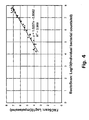
- the determination of the number of bacteria can be performed in a number of ways. As described herein, it is possible to separately measure the fluorescent emission from each bacterium in a conditioned sample (by using the methods described herein, e.g. flow cytometry). Thereafter, it is possible to interpolate in standard curves over the relationship between known numbers of bacteria in standard samples and the number of discretely emitted fluorescence impulses from the conditioned samples. In a similar manner, it is also possible to correlate the fluorescence measurements to bacterial numbers determined from the use of a standard protocol from samples of unknown bacterial content. As shown in the example disclosed herein, one method of the invention for determining the number of bacteria in a sample exhibits excellent correlation with two widely accepted standard protocols, and it is thus possible to interpolate from the fluorescence measurement to the bacterial counts and thereby obtain reliable results.
- the light exciting the fluorochrome is suitably light from a broad band light source such as a xenon or mercury lamp, but it is also within the scope of the invention to use laser light.
- a preferred embodiment of the method of the invention for determining bacterial numbers in a sample is where the fluorescence is measured while the sample or part of the sample is flowing as a liquid string in a flow cytometer.
- the heart of a flow cytometer is a flow chamber which receives the sample and forces it at high speed through a beam of exciting light as a thin, linear stream. If the sample contains particles, these will be forced into the stream and each particle will be illuminated for a very short time. When illuminated, the particle will cause an optical event such as scatter of the exciting light at certain angels to the exciting light, absorbtion of the exciting light, or emission of fluorescence.
- the optical events can be detected, processed and recorded.
- the events characterize the particle and hence a specific group of particles in a complex mixture of particles can be identified on the basis of the optical events. If the volume of sample passing the exciting light in the spray is known or can be calculated, then a specific group of particles in a complex mixture can be identified and quantified.
- the selectivity of the optical events caused by a particle can be improved by manipulating the chemical composition or properties of the particle. This can e.g. be accomplished by introducing a fluorescent stain with specific affinity towards a particle relevant to the analysis, causing the particle to emit fluorescent radiation when passing the beam of exciting light in the flow chamber.
- the stain is often specific towards a property of the particle (such as DNA content) also present in particles not relevant to the analysis.
- the selectivity of the optical events in the flow chamber can be further improved by removing, degrading or digesting particles with properties similar to those of the particle relevant to the analysis. This can be achieved by means of conventional separation technologies (centrifugation) or by enzymatic digestion. As will be clear from the present specification and claims, it is within the scope of the present invention to improve the selectivity of the optical events (improving the signal to noise ratio) by such measures.
- the amount of bacteria in a sample can be assessed by use of a microscope (by epifluorescence microscopy).
- the microscope magnifies the image of the particles in the sample and by use of a suitable magnification allows a visual inspection of particles in the sample by the viewer. If the inspected volume is known, the concentration of particles relevant to the analysis can be calculated.
- a visual inspection allows a selection on particles based on both dimension and shape, the selection of particles relevant to the analysis in a complex mixture is often very difficult or impossible to achieve.
- Some selectivity can be achieved by employing an absorbing stain having affinity towards the particles relevant to the analysis, as applied e.g. in traditional histochemistry. For instance, protein particles can be coloured black with the stain Amido Black. Nevertheless, the particles which are irrelevant to the analysis often remain visible to the viewer.
- the selectivity of the particles inspected by the viewer can be further improved by equipping the microscope with an exciting light source and optical filters similar to those used in the flow cytometer and rotating disc described above and by selecting a fluorescent stain specific to the particles relevant to the analysis. Only particles emitting fluorescence will remain visible to the viewer, and the selectivity of optical events discussed above will apply.
- Analytical applications of inspection by microscope is often limited by the very small volume inspected at large magnification. To compensate, several inspections are made on a number of random selected volumes of the sample compromising the cadence of the analysis. Further, the selectivity of identifying the particles relevant to the analysis as based on size and shape is often biased by the viewer. Therefore, it is preferred to increase cadence and minimise the bias imposed by the viewer by equipping the microscope with a computer controlled digital image analyzer. In this way, the computer can be instructed to count particles based on a pre-set size and shape criteria by the use of software designed to this purpose, or the computer can use a neural network which has been trained in the recognition of the particles relevant to the analysis. The previously discussed selectivity of the optical events will therefore also apply to an analysis using a microscope equipped with a computer controlled digital analyzer.
- a specimen to be assayed and which has been conditioned as described herein, e.g. in the Example below, is discharged from a nozzle 22.
- a sheath fluid flows in a laminar flow around the specimen so as to form a sheath flow.
- Bacteria 21 contained in the sample flow line flow in the centre of a flow cell 20.
- This light beam 12 comprises light in a waveband in which the fluorochrome attached to the bacteria absorbs.
- the fluorescence from the light-emitting bacteria is collected by a lens 24, transmitted through a filter 25, transmitting the fluorescence from the bacteria, but removing any remaining light in the waveband in which the fluorochrome absorbs, and through a filter 26 transmitting the fluorescence from the bacteria, but removing any IR light emitted by the light source 10, and is focused on to a photo multiplier 27 measuring the fluorescence.
- the photo multiplier 27 preferably will be positioned at another position relative to the light beam 12 than depicted in Fig. 1, as the direct light from the excitation source thus can be avoided. In preferred embodiments the photo multiplier 27 will be positioned at 90° relative to the light beam 12 or 180° relative to the light beam 12.
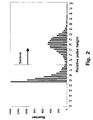
- the bacteria will be detected as peaks of fluorescence which may be separated from the background noise by a pulse height analyzer (not shown) which removes detected pulses having a height lower than a certain threshold, whereby the number of detected bacteria will be the total number of pulses exceeding the threshold.
- a pulse height analyzer not shown
- the concentration of bacteria in the sample can be determined on the basis of the number of determined fluorescence peaks and the time period in which these peaks have been detected.
- a milk sample is treated with a combination of chelating agent, the enzyme, the detergent and the fluorochrome.
- the milk is preferably homogenised. This improves the reference method with accordance to estimating the number of colony forming bacteria in the sample as opposed to the number of colony forming units.
- the milk has been homogenised on a Polytron, from Kinematica, at step 6 for 10 seconds.
- the reagent contains: 1) Na2CO3 7.60 g/l 2) NaHCO3 8.84 g/l 3) Na2H2EDTA ⁇ H2O 2.43 g/l 4) Na4EDTA ⁇ 4H2O 2.71 g/l 5) Subtilisin A (Novo) 91.2 mUnit/l 6) Ethidium Bromide 5.0 mg/l
- the ingredients 1) through 6) are added to purified water and filtered through a 0.22 ⁇ m filter.
- the pH is controlled to be in the range 9.3 to 9.5.
- ingredient 1 through 4 may be prepared in purified water as a stock buffer solution at 2 times the concentrations stated above.
- Reagent 6 may be prepared in a fluorochrome stock solution containing 1 g/l.
- Reagent 5 is supplied as an enzyme-stock-solution containing 2.4 Unit/l.
- the reagent is prepared from the stock-solutions by mixing: 500 ml buffer-stock-solution, 5 ml fluorochrome stock solution, 38 ml enzyme stock solution, and adding water to 1000 ml.
- the reference method is performed on the milk samples in accordance with International Dairy Federation standard 100b.
- the BactoScan 8000 method is performed on the milk samples according to the manufactures procedure (Foss Electric, Denmark). The method is e.g. in Germany approved as a routine method for determination of the concentration of bacteria in milk.
- the conditioned sample is fed into a FACScan® flow cytometer.
- the fluorescence is detected and a pulse height analysis diagram is generated (Fig. 2). From this pulse height diagram, in which the stained bacteria forms peaks which are easily distinguishable from the background noise, the individual bacteria may be detected and counted.
- the concentration of bacteria in the sample may be determined.
Landscapes
- Chemical & Material Sciences (AREA)
- Life Sciences & Earth Sciences (AREA)
- Organic Chemistry (AREA)
- Health & Medical Sciences (AREA)
- Engineering & Computer Science (AREA)
- Zoology (AREA)
- Wood Science & Technology (AREA)
- Proteomics, Peptides & Aminoacids (AREA)
- Molecular Biology (AREA)
- Toxicology (AREA)
- Immunology (AREA)
- Microbiology (AREA)
- Biophysics (AREA)
- Analytical Chemistry (AREA)
- Physics & Mathematics (AREA)
- Biotechnology (AREA)
- Biochemistry (AREA)
- Bioinformatics & Cheminformatics (AREA)
- General Engineering & Computer Science (AREA)
- General Health & Medical Sciences (AREA)
- Genetics & Genomics (AREA)
- Measuring Or Testing Involving Enzymes Or Micro-Organisms (AREA)
- Sampling And Sample Adjustment (AREA)
- Investigating Or Analysing Biological Materials (AREA)
Applications Claiming Priority (4)
| Application Number | Priority Date | Filing Date | Title |
|---|---|---|---|
| DK31294 | 1994-03-16 | ||
| DK31294 | 1994-03-16 | ||
| DK312/94 | 1994-03-16 | ||
| PCT/DK1995/000119 WO1995025174A1 (en) | 1994-03-16 | 1995-03-16 | Novel method for the conditioning of liquid samples |
Publications (2)
| Publication Number | Publication Date |
|---|---|
| EP0750678A1 EP0750678A1 (en) | 1997-01-02 |
| EP0750678B1 true EP0750678B1 (en) | 1999-09-08 |
Family
ID=8092141
Family Applications (1)
| Application Number | Title | Priority Date | Filing Date |
|---|---|---|---|
| EP95912149A Expired - Lifetime EP0750678B1 (en) | 1994-03-16 | 1995-03-16 | Novel method for the conditioning of liquid samples |
Country Status (10)
| Country | Link |
|---|---|
| US (1) | US5798221A (enExample) |
| EP (1) | EP0750678B1 (enExample) |
| JP (1) | JP3406608B2 (enExample) |
| AT (1) | ATE184319T1 (enExample) |
| AU (1) | AU1946095A (enExample) |
| DE (1) | DE69512037T2 (enExample) |
| DK (1) | DK0750678T3 (enExample) |
| ES (1) | ES2135713T3 (enExample) |
| NZ (1) | NZ282381A (enExample) |
| WO (1) | WO1995025174A1 (enExample) |
Cited By (1)
| Publication number | Priority date | Publication date | Assignee | Title |
|---|---|---|---|---|
| WO2017158431A1 (en) | 2016-03-17 | 2017-09-21 | Delta Instruments B.V. | Detection of cells in a liquid sample |
Families Citing this family (20)
| Publication number | Priority date | Publication date | Assignee | Title |
|---|---|---|---|---|
| JP3837006B2 (ja) * | 2000-03-22 | 2006-10-25 | シスメックス株式会社 | 細菌の染色方法及び検出方法 |
| US6692702B1 (en) * | 2000-07-07 | 2004-02-17 | Coulter International Corp. | Apparatus for biological sample preparation and analysis |
| US6479159B1 (en) * | 2001-04-19 | 2002-11-12 | Ibc Advanced Technologies, Inc. | Polymeric membranes functionalized with EGTA ligands |
| US6803208B2 (en) * | 2001-07-30 | 2004-10-12 | The United States Of America As Represented By The Secretary Of The Navy | Automated epifluorescence microscopy for detection of bacterial contamination in platelets |
| FR2829500B1 (fr) | 2001-09-13 | 2003-12-12 | Hemosystem | Procede de concentration et de detection de germes pathogenes a partir de produits sanguins et/ou de leurs derives et dispositif pour le mettre en oeuvre |
| FR2847589B1 (fr) * | 2002-11-25 | 2006-02-17 | Hemosystem | Procede de detection universelle de microorganismes et milieu reactionnel permettant la mise en oeuvre du procede |
| PL1918385T3 (pl) | 2005-07-21 | 2011-11-30 | Morinaga Milk Industry Co Ltd | Sposób wykrywania mikroorganizmu oraz zestaw do wykrywania mikroorganizmu |
| FR2901281B1 (fr) * | 2006-05-19 | 2008-08-15 | Hemosystem Sa | Procede d'extraction des acides desoxyribonucleiques (adn)de microorganismes eventuellement presents dans un echantillon sanguin |
| WO2009038607A1 (en) * | 2007-06-19 | 2009-03-26 | University Of Wyoming | Method for selectiveley staining microorganisms |
| US8647835B2 (en) * | 2008-10-31 | 2014-02-11 | BIO MéRIEUX, INC. | Methods for separation, characterization and/or identification of microorganisms using spectroscopy |
| MX2011003982A (es) * | 2008-10-31 | 2011-09-21 | Bio Merieux Inc | Métodos para la separación, caracterización y/o identificación de microorganismos usando espectroscopia. |
| CN102272602B (zh) * | 2008-10-31 | 2014-03-12 | 生物梅里埃公司 | 微生物的分离和鉴定方法 |
| RU2541775C2 (ru) * | 2008-10-31 | 2015-02-20 | Биомерьё, Инк. | Способ идентификации микроорганизмов из тестируемого образца гемокультуры |
| CA2741019C (en) * | 2008-10-31 | 2018-08-28 | Biomerieux, Inc. | Methods for separation, characterization and/or identification of microorganisms using mass spectrometry |
| DE102009025542A1 (de) * | 2009-06-19 | 2011-01-05 | Philipp Bauer | Neue Methode zur Isolation von Trichinella oder anderen Parasiten aus organischem Gewebe |
| EP2443455B1 (de) | 2009-06-19 | 2013-10-02 | Philipp Bauer | Neues verfahren zur isolation von trichinella oder anderen parasiten aus organischem gewebe |
| US9983184B2 (en) | 2013-09-20 | 2018-05-29 | Reflectonics, Inc. | Using fluorescence measurements for characterizing protein gel-firming processes |
| CN103760371B (zh) * | 2013-12-23 | 2015-08-05 | 苏州科雷芯电子科技有限公司 | 一种原奶细菌快速检测方法及装置 |
| JP6460811B2 (ja) * | 2015-01-27 | 2019-01-30 | 公益財団法人東洋食品研究所 | 芽胞形成細菌の検出剤および検出方法 |
| KR101879752B1 (ko) * | 2016-11-25 | 2018-07-18 | (주) 테크로스 | 처리수 내 생존생물 분석 방법 |
Family Cites Families (6)
| Publication number | Priority date | Publication date | Assignee | Title |
|---|---|---|---|---|
| DK366778A (da) * | 1978-08-18 | 1980-02-19 | Foss Electric As | Fremgangsmaade til taelling af bakterier |
| GB8513001D0 (en) * | 1985-05-22 | 1985-06-26 | Wales University Of College Of | Bacterial cell extractant |
| US5256532A (en) * | 1988-05-02 | 1993-10-26 | Zynaxis Technologies, Inc. | Methods, reagents and test kits for determination of subpopulations of biological entities |
| DE3817089A1 (de) * | 1988-05-19 | 1989-11-30 | Merck Patent Gmbh | Verfahren und mittel zur bestimmung von bakterien und somatischen zellen in milch |
| FR2646914A1 (fr) * | 1989-05-12 | 1990-11-16 | Leca | Procede et dispositif d'identification et de numerisation de cellules dans du lait |
| US5375606A (en) * | 1990-02-28 | 1994-12-27 | Zynaxis, Inc. | Bio-analytical separation method |
-
1995
- 1995-03-16 AT AT95912149T patent/ATE184319T1/de not_active IP Right Cessation
- 1995-03-16 DE DE69512037T patent/DE69512037T2/de not_active Expired - Fee Related
- 1995-03-16 US US08/714,140 patent/US5798221A/en not_active Expired - Fee Related
- 1995-03-16 JP JP52378995A patent/JP3406608B2/ja not_active Expired - Fee Related
- 1995-03-16 DK DK95912149T patent/DK0750678T3/da active
- 1995-03-16 AU AU19460/95A patent/AU1946095A/en not_active Abandoned
- 1995-03-16 WO PCT/DK1995/000119 patent/WO1995025174A1/en not_active Ceased
- 1995-03-16 NZ NZ282381A patent/NZ282381A/en not_active IP Right Cessation
- 1995-03-16 ES ES95912149T patent/ES2135713T3/es not_active Expired - Lifetime
- 1995-03-16 EP EP95912149A patent/EP0750678B1/en not_active Expired - Lifetime
Cited By (1)
| Publication number | Priority date | Publication date | Assignee | Title |
|---|---|---|---|---|
| WO2017158431A1 (en) | 2016-03-17 | 2017-09-21 | Delta Instruments B.V. | Detection of cells in a liquid sample |
Also Published As
| Publication number | Publication date |
|---|---|
| WO1995025174A1 (en) | 1995-09-21 |
| DE69512037D1 (de) | 1999-10-14 |
| DK0750678T3 (da) | 1999-12-20 |
| US5798221A (en) | 1998-08-25 |
| EP0750678A1 (en) | 1997-01-02 |
| JP3406608B2 (ja) | 2003-05-12 |
| NZ282381A (en) | 1997-06-24 |
| ES2135713T3 (es) | 1999-11-01 |
| ATE184319T1 (de) | 1999-09-15 |
| DE69512037T2 (de) | 2000-01-27 |
| JPH09510105A (ja) | 1997-10-14 |
| AU1946095A (en) | 1995-10-03 |
Similar Documents
| Publication | Publication Date | Title |
|---|---|---|
| US5798221A (en) | Method for the conditioning of liquid samples | |
| JP2867181B2 (ja) | 細胞の分離、濃縮および分析方法およびキット | |
| Manafi et al. | Fluorogenic and chromogenic substrates used in bacterial diagnostics | |
| Griffin | A simple procedure for identification of Cytophaga columnaris | |
| FI83539B (fi) | Foerfarande foer detektering av mikroorganismer i ett kroppsvaetskeprov. | |
| Caron et al. | Assessment of bacterial viability status by flow cytometry and single cell sorting | |
| EP0940472A1 (en) | Method and apparatus for detecting bacteria | |
| Cid et al. | Toxic action of copper on the membrane system of a marine diatom measured by flow cytometry | |
| Lemarchand et al. | Comparative assessment of epifluorescence microscopy, flow cytometry and solid-phase cytometry used in the enumeration of specific bacteria in water | |
| EP1136563A2 (en) | Method of staining, and detecting and counting bacteria | |
| US9194868B2 (en) | Flow cytometry-based systems and methods for detecting microbes | |
| Vesey et al. | Detection of specific microorganisms in environmental samples using flow cytometry | |
| AU2005217026B2 (en) | Measuring contamination | |
| Vesey et al. | Evaluation of fluorochromes and excitation sources for immunofluorescence in water samples | |
| JP2008530993A (ja) | 液体試料中の微生物株の検出 | |
| JP2009058233A (ja) | 入浴設備の汚染度の判定方法、浴槽水における殺微生物剤の殺微生物効果の判定方法及び浴槽水の水質管理方法 | |
| EP0292708A2 (en) | Detection of Bacteroides gingivalis | |
| WO2002057482A2 (en) | Method for differential analysis of bacteria in a sample | |
| FR2816955A1 (fr) | Substrat, substrat combines, milieu de culture et procede d'identification de l'espece listeria monocytogenes | |
| EP0122023A1 (en) | Microorganisms detection methods and the separation of agglutinated microorganisms, and a kit for use therein | |
| Durodie et al. | Characterization of bacterial cell size and ploidy using flow cytometry and image analysis | |
| Caruso et al. | Fluorescent Antibody‐Viability Staining and β‐Glucuronidase Assay as Rapid Methods for Monitoring Escherichia coli Viability in Coastal Marine Waters | |
| Bascomb et al. | Automated methods for identification of bacteria from clinical specimens. | |
| Ransom et al. | Assessment of three nucleic acid hybridization systems for detection of Campylobacter spp. in poultry products | |
| JP2007014239A (ja) | 微生物検出方法および検出装置 |
Legal Events
| Date | Code | Title | Description |
|---|---|---|---|
| PUAI | Public reference made under article 153(3) epc to a published international application that has entered the european phase |
Free format text: ORIGINAL CODE: 0009012 |
|
| 17P | Request for examination filed |
Effective date: 19960830 |
|
| AK | Designated contracting states |
Kind code of ref document: A1 Designated state(s): AT BE DE DK ES FR GB IE IT NL SE |
|
| 17Q | First examination report despatched |
Effective date: 19970206 |
|
| GRAG | Despatch of communication of intention to grant |
Free format text: ORIGINAL CODE: EPIDOS AGRA |
|
| GRAG | Despatch of communication of intention to grant |
Free format text: ORIGINAL CODE: EPIDOS AGRA |
|
| GRAH | Despatch of communication of intention to grant a patent |
Free format text: ORIGINAL CODE: EPIDOS IGRA |
|
| GRAH | Despatch of communication of intention to grant a patent |
Free format text: ORIGINAL CODE: EPIDOS IGRA |
|
| GRAA | (expected) grant |
Free format text: ORIGINAL CODE: 0009210 |
|
| AK | Designated contracting states |
Kind code of ref document: B1 Designated state(s): AT BE DE DK ES FR GB IE IT NL SE |
|
| PG25 | Lapsed in a contracting state [announced via postgrant information from national office to epo] |
Ref country code: SE Free format text: THE PATENT HAS BEEN ANNULLED BY A DECISION OF A NATIONAL AUTHORITY Effective date: 19990908 |
|
| REF | Corresponds to: |
Ref document number: 184319 Country of ref document: AT Date of ref document: 19990915 Kind code of ref document: T |
|
| ITF | It: translation for a ep patent filed | ||
| REF | Corresponds to: |
Ref document number: 69512037 Country of ref document: DE Date of ref document: 19991014 |
|
| REG | Reference to a national code |
Ref country code: ES Ref legal event code: FG2A Ref document number: 2135713 Country of ref document: ES Kind code of ref document: T3 |
|
| ET | Fr: translation filed | ||
| REG | Reference to a national code |
Ref country code: IE Ref legal event code: FG4D |
|
| REG | Reference to a national code |
Ref country code: DK Ref legal event code: T3 |
|
| PLBE | No opposition filed within time limit |
Free format text: ORIGINAL CODE: 0009261 |
|
| STAA | Information on the status of an ep patent application or granted ep patent |
Free format text: STATUS: NO OPPOSITION FILED WITHIN TIME LIMIT |
|
| 26N | No opposition filed | ||
| REG | Reference to a national code |
Ref country code: GB Ref legal event code: IF02 |
|
| PGFP | Annual fee paid to national office [announced via postgrant information from national office to epo] |
Ref country code: DK Payment date: 20080314 Year of fee payment: 14 |
|
| PGFP | Annual fee paid to national office [announced via postgrant information from national office to epo] |
Ref country code: NL Payment date: 20080303 Year of fee payment: 14 Ref country code: IT Payment date: 20080326 Year of fee payment: 14 Ref country code: IE Payment date: 20080313 Year of fee payment: 14 Ref country code: GB Payment date: 20080312 Year of fee payment: 14 |
|
| PGFP | Annual fee paid to national office [announced via postgrant information from national office to epo] |
Ref country code: AT Payment date: 20080313 Year of fee payment: 14 |
|
| PGFP | Annual fee paid to national office [announced via postgrant information from national office to epo] |
Ref country code: FR Payment date: 20080311 Year of fee payment: 14 Ref country code: ES Payment date: 20080418 Year of fee payment: 14 Ref country code: DE Payment date: 20080313 Year of fee payment: 14 |
|
| PGFP | Annual fee paid to national office [announced via postgrant information from national office to epo] |
Ref country code: BE Payment date: 20080916 Year of fee payment: 14 |
|
| REG | Reference to a national code |
Ref country code: DK Ref legal event code: EAP |
|
| BERE | Be: lapsed |
Owner name: *FOSS ELECTRIC A/S Effective date: 20090331 |
|
| PG25 | Lapsed in a contracting state [announced via postgrant information from national office to epo] |
Ref country code: DK Free format text: LAPSE BECAUSE OF THE APPLICANT RENOUNCES Effective date: 20090424 Ref country code: AT Free format text: LAPSE BECAUSE OF NON-PAYMENT OF DUE FEES Effective date: 20090316 |
|
| GBPC | Gb: european patent ceased through non-payment of renewal fee |
Effective date: 20090316 |
|
| NLV4 | Nl: lapsed or anulled due to non-payment of the annual fee |
Effective date: 20091001 |
|
| REG | Reference to a national code |
Ref country code: FR Ref legal event code: ST Effective date: 20091130 |
|
| REG | Reference to a national code |
Ref country code: IE Ref legal event code: MM4A |
|
| PG25 | Lapsed in a contracting state [announced via postgrant information from national office to epo] |
Ref country code: IE Free format text: LAPSE BECAUSE OF NON-PAYMENT OF DUE FEES Effective date: 20090316 Ref country code: DE Free format text: LAPSE BECAUSE OF NON-PAYMENT OF DUE FEES Effective date: 20091001 |
|
| PG25 | Lapsed in a contracting state [announced via postgrant information from national office to epo] |
Ref country code: NL Free format text: LAPSE BECAUSE OF NON-PAYMENT OF DUE FEES Effective date: 20091001 Ref country code: BE Free format text: LAPSE BECAUSE OF NON-PAYMENT OF DUE FEES Effective date: 20090331 |
|
| PG25 | Lapsed in a contracting state [announced via postgrant information from national office to epo] |
Ref country code: GB Free format text: LAPSE BECAUSE OF NON-PAYMENT OF DUE FEES Effective date: 20090316 Ref country code: FR Free format text: LAPSE BECAUSE OF NON-PAYMENT OF DUE FEES Effective date: 20091123 |
|
| REG | Reference to a national code |
Ref country code: ES Ref legal event code: FD2A Effective date: 20090317 |
|
| PG25 | Lapsed in a contracting state [announced via postgrant information from national office to epo] |
Ref country code: ES Free format text: LAPSE BECAUSE OF NON-PAYMENT OF DUE FEES Effective date: 20090317 |
|
| PG25 | Lapsed in a contracting state [announced via postgrant information from national office to epo] |
Ref country code: IT Free format text: LAPSE BECAUSE OF NON-PAYMENT OF DUE FEES Effective date: 20090316 |