EP0735070B1 - Härtungsmittel für elastische Epoxidharz-Systeme - Google Patents
Härtungsmittel für elastische Epoxidharz-Systeme Download PDFInfo
- Publication number
- EP0735070B1 EP0735070B1 EP96104783A EP96104783A EP0735070B1 EP 0735070 B1 EP0735070 B1 EP 0735070B1 EP 96104783 A EP96104783 A EP 96104783A EP 96104783 A EP96104783 A EP 96104783A EP 0735070 B1 EP0735070 B1 EP 0735070B1
- Authority
- EP
- European Patent Office
- Prior art keywords
- compounds
- amines
- opt
- composition
- epoxide
- Prior art date
- Legal status (The legal status is an assumption and is not a legal conclusion. Google has not performed a legal analysis and makes no representation as to the accuracy of the status listed.)
- Expired - Lifetime
Links
Classifications
-
- C—CHEMISTRY; METALLURGY
- C08—ORGANIC MACROMOLECULAR COMPOUNDS; THEIR PREPARATION OR CHEMICAL WORKING-UP; COMPOSITIONS BASED THEREON
- C08G—MACROMOLECULAR COMPOUNDS OBTAINED OTHERWISE THAN BY REACTIONS ONLY INVOLVING UNSATURATED CARBON-TO-CARBON BONDS
- C08G59/00—Polycondensates containing more than one epoxy group per molecule; Macromolecules obtained by polymerising compounds containing more than one epoxy group per molecule using curing agents or catalysts which react with the epoxy groups
- C08G59/18—Macromolecules obtained by polymerising compounds containing more than one epoxy group per molecule using curing agents or catalysts which react with the epoxy groups ; e.g. general methods of curing
- C08G59/40—Macromolecules obtained by polymerising compounds containing more than one epoxy group per molecule using curing agents or catalysts which react with the epoxy groups ; e.g. general methods of curing characterised by the curing agents used
- C08G59/4007—Curing agents not provided for by the groups C08G59/42 - C08G59/66
- C08G59/4014—Nitrogen containing compounds
- C08G59/4057—Carbamates
-
- C—CHEMISTRY; METALLURGY
- C08—ORGANIC MACROMOLECULAR COMPOUNDS; THEIR PREPARATION OR CHEMICAL WORKING-UP; COMPOSITIONS BASED THEREON
- C08G—MACROMOLECULAR COMPOUNDS OBTAINED OTHERWISE THAN BY REACTIONS ONLY INVOLVING UNSATURATED CARBON-TO-CARBON BONDS
- C08G59/00—Polycondensates containing more than one epoxy group per molecule; Macromolecules obtained by polymerising compounds containing more than one epoxy group per molecule using curing agents or catalysts which react with the epoxy groups
- C08G59/18—Macromolecules obtained by polymerising compounds containing more than one epoxy group per molecule using curing agents or catalysts which react with the epoxy groups ; e.g. general methods of curing
- C08G59/182—Macromolecules obtained by polymerising compounds containing more than one epoxy group per molecule using curing agents or catalysts which react with the epoxy groups ; e.g. general methods of curing using pre-adducts of epoxy compounds with curing agents
- C08G59/184—Macromolecules obtained by polymerising compounds containing more than one epoxy group per molecule using curing agents or catalysts which react with the epoxy groups ; e.g. general methods of curing using pre-adducts of epoxy compounds with curing agents with amines
-
- C—CHEMISTRY; METALLURGY
- C08—ORGANIC MACROMOLECULAR COMPOUNDS; THEIR PREPARATION OR CHEMICAL WORKING-UP; COMPOSITIONS BASED THEREON
- C08G—MACROMOLECULAR COMPOUNDS OBTAINED OTHERWISE THAN BY REACTIONS ONLY INVOLVING UNSATURATED CARBON-TO-CARBON BONDS
- C08G59/00—Polycondensates containing more than one epoxy group per molecule; Macromolecules obtained by polymerising compounds containing more than one epoxy group per molecule using curing agents or catalysts which react with the epoxy groups
- C08G59/18—Macromolecules obtained by polymerising compounds containing more than one epoxy group per molecule using curing agents or catalysts which react with the epoxy groups ; e.g. general methods of curing
- C08G59/40—Macromolecules obtained by polymerising compounds containing more than one epoxy group per molecule using curing agents or catalysts which react with the epoxy groups ; e.g. general methods of curing characterised by the curing agents used
- C08G59/4007—Curing agents not provided for by the groups C08G59/42 - C08G59/66
Definitions
- the elasticizing effect is achieved by Installation of long-chain aliphatic or highly branched additives, e.g. into the hardening component.
- the elasticity can be so of epoxy resin systems to some extent through the use of certain Control hardening agents.
- the common polyamines such as e.g. Ethylene diamine, diethylene triamine, triethylene tetramine by reaction with longer chain polybasic acids can be converted into polyamidoamines.
- epoxy resin hardening systems should have the lowest possible viscosity to allow easy processing. Because solvents for environmental reasons are often undiluted or if necessary water-dilutable systems.
- No. 4,316,003 discloses epoxy-amine adducts which are suitable as curing agents for epoxy resins, in particular in water-dilutable systems, by reacting epoxy resins, preferably saturated epoxy resins, with primary monoamines to give an intermediate and subsequent further reaction of this precursor with polyfunctional amines.
- the monoamines used are those of the formula R - NH 2 in which R is an alkyl, aryl, alkaryl or alkanol radical.
- Alkylamines with up to 20 carbon atoms, preferably from 4 to 18 carbon atoms, are suitable. In the description and the examples given, no branched alkylamines are given or corresponding information can be found. Only the cyclic amines cyclohexylamine, benzylamine and aromatic amines are mentioned.
- Preferred are the aliphatic amines with chains of 8 to 18 carbon atoms, which are available under the trade name "armies”.
- the hardeners are made in two steps with at least two different ones Amines made.
- the first step the excess polyepoxide with the primary monoamine in the presence of solvent at 20 to 150 ° C implemented until the epoxy groups decrease to a standstill comes.
- the reaction time is generally between 20 minutes and 1.5 hours. A time of 15 to 45 minutes at 90 to 110 ° C is typical.
- the amount of solvent is 10 to 50% based on the total mixture.
- the second step the mixture is then cooled to 25 to 75 ° C. and that polyfunctional amine added.
- the epoxy reacts with the Excess amine exothermic.
- EP 0 387 418 describes curing agents for epoxy resins which by reacting polyalkylene polyamines with di- and / or polyepoxide compounds to a preliminary product and implementation of this preliminary product primary or secondary amines can be obtained.
- These hardeners find especially for the production of aqueous epoxy resin hardener emulsions or dispersions use.
- polyether groups especially polyethylene oxide groups in the Hardening agents are present, but on the other hand their proportion becomes so low kept as possible so that the hardened epoxy system is satisfactory paint properties and chemical resistance achieved.
- the polyetheramine content is below 25% (less than 12% on total system), in Examples 22 I and II less than 20% (on the entire system), each based on the solids content.
- US 4,484,994 discloses self-crosslinking polymers, the hydroxyalkyl carbamate and contain tertiary amine groups in the molecule.
- the polymers are Reaction products from epoxy resin and amines with secondary amino groups and hydroxyalkyl carbamate groups obtained from polyamines and cyclic Carbonates.
- epoxy resins are mixed with a mixture of diprimaries Amines and carbamates hardened.
- the carbamates are reaction products diprimeric amines with cyclic carbonates.
- the object of the invention was therefore to provide hardeners and curable compositions containing them To provide mixtures based on epoxy resins, which have the disadvantages of the known systems not, or at least only to a limited extent exhibit.
- Curing agents for epoxy resins surprisingly have these disadvantages do not show. Curable compositions made from these hardeners and those containing epoxy groups Rather, compounds (epoxy resins) provide coatings which adhere well Adhesives, fabrics, sealants, moldings and the like with high elasticity and good crack-bridging properties even at temperatures below 0 ° C.
- the curing agents of the invention can be produce solvent-free in a simple manner.
- hydroxyalkyl urethane is modified Hardener via a direct carbon dioxide accumulation at tert.
- basic Nitrogen-bearing epoxies and their further reaction with polyamines receive. Leave the hardening agents obtained in this way produce coatings that dry out in a short period of time Mark non-tackiness.
- components (A1, C11 and D) come a large number of those known for this Compounds considered that have an average of more than one epoxy group, preferably two epoxy groups per molecule.
- mixtures of Polyepoxides with monoepoxides (A2, C12, D) can be used.
- These epoxy compounds (Epoxy resins) can be both saturated and unsaturated as well be aliphatic, cycloaliphatic, aromatic or heterocyclic and also hydroxyl groups exhibit. They can also contain such substituents that no interfering side reactions under the mixing or reaction conditions cause, for example alkyl or aryl substituents, ether groups and similar.
- glycidyl ethers which differ from derived polyhydric phenols, especially bisphenols and novolaks and their "epoxy equivalent weights" (molar mass divided by the Number of epoxy compounds per molecule) between 100 and 500, in particular however, are between 150 and 250 g / mol.
- polyhydric phenols examples include resorcinol, hydroquinone, 2,2-bis (4-hydroxyphenyl) propane (bisphenol A), isomer mixtures of Dihydroxydiphenylmethane (bisphenol F), 4,4'-dihydroxydiphenylcyclohexane, 4,4'-dihydroxy-3,3'-dimethyldiphenylpropane, 4,4'-dihydroxydiphenyl, 4,4'-dihydroxybenzophenone, Bis (4-hydroxyphenyl) -1,1-ethane, bis (4-hydroxyphenyl) -1,1-isobutane, Bis- (4-hydroxy-tert-butylphenyl) -2,2-propane, bis- (2-hydroxynaphthyl) methane, 1,5-dihydroxynaphthalene, tris (4-hydroxyphenyl) methane, Bis (4-hydroxyphenyl) ether, bis (4-hydroxyphenyl) sulfone and the like.
- Polyglycidyl ethers of polyalcohols can also be used, such as z. B. ⁇ thandiol-1,2-diglycidyl ether, propanediol 1,2-diglycidyl ether, propanediol 1,3-diglycidyl ether, Butanediol diglycidyl ether, pentanediol diglycidyl ether (also Neopentyl glycol diglycidyl ether), hexanediol diglycidyl ether, diethylene glycol diglycidyl ether, Dipropylene glycol diglycidyl ether, higher polyoxyalkylene glycol diglycidyl ether, such as B.
- small amounts (components A2, C12 and D) of reactive diluents (monoepoxides) can be used in amounts of up to 30%, preferably 10 to 20%, based on the mass of the polyglycidyl ethers.
- Suitable compounds are methyl glycidyl ether, butyl glycidyl ether, allyl glycidyl ether, ⁇ thylhexylglycidyläther, long-chain aliphatic glycidyl ethers such as cetyl glycidyl ether and stearyl, monoglycidyl ethers of a higher isomeric alcohol mixture, glycidyl ethers of a mixture of C 12 - to C 13 -alcohols, phenyl glycidyl ether, cresyl glycidyl, pt-Butylphenylglycidyläther, p -Oc-tylphenylglycidyl ether, p-phenyl-phenylglycidyl ether, glycidyl ether of an alkoxylated lauryl alcohol and monoepoxides such as epoxidized monoun
- Al, C11 and D poly (N-glycidyl) compounds which are obtainable by dehydrohalogenation of the reaction products of epichlorohydrin and amines such as aniline, n-butylamine, bis- (4-aminophenyl) methane, m-xylylenediamine or bis (4-methylaminophenyl) methane.
- the poly (N-glycidyl) compounds also include triglycidyl isocyanurate, Triglycidylurazole and their oligomers, N, N'-diglycidyl derivatives of cycloalkyleneureas and diglycidyl derivatives of hydantoins u. a.
- Polyglycidyl esters of polycarboxylic acids can also be used be made by the implementation of epichlorohydrin or the like Epoxy compounds with an aliphatic, cycloaliphatic or aromatic Polycarboxylic acid, such as oxalic acid, succinic acid, adipic acid, glutaric acid, Phthalic acid, terephthalic acid, tetrahydrophthalic acid, hexahydrophthalic acid, 2,6-naphthalenedicarboxylic acid and higher dicarboxylic acid diglycidyl esters, such as. B. dimerized or trimerized linolenic acid.
- an aliphatic, cycloaliphatic or aromatic Polycarboxylic acid such as oxalic acid, succinic acid, adipic acid, glutaric acid, Phthalic acid, terephthalic acid, tetrahydrophthalic acid, hexahydrophthalic acid, 2,6-naphthalenedicarbox
- Examples are diglycidyl adipate, Diglycidyl phthalate and diglycidyl hexahydrophthalate.
- Glycidyl esters of unsaturated carboxylic acids and epoxidized may also be mentioned Esters of unsaturated alcohols or unsaturated carboxylic acids.
- Suitable amines (A31) for the preparation of the 1,2-epoxy compounds according to the invention are t-alkylamines having 4 to 22 carbon atoms and preferably those of the formula (IV) in which R 1 and R 2 have the meaning of R 1 in claim 1.
- t-butylamine (2-methyl-2-aminopropane), 2-methyl-2-butylamine, t-alkyl amines of the Rohm and Haas Company as Primene ® TOA (t-octylamine 1,1,3,3 Tetramethylbutylamine), Primene ® 81 R (t-alkylamine C 12 - C 14), Primene ® JM-T (t-alkylamine C 16 - C 22), 2-amino-2-methyl-1-propanol, 2-amino- 2-ethyl-1,3-propanediol, tris (hydroxymethyl) aminomethane, isopropylamine (2-propanamine), sec.
- Primene ® 81 R t-alkylamine C 12 - C 14
- Primene ® JM-T t-alkylamine C 16
- Secondary polyether diamines are preferably used as secondary amines (A32), the di secondary amines being particularly preferred.
- Corresponding products are sold by Condea Chemie GmbH under the name ® Novamin. Suitable are, among others, the secondary polyether amines ® Novamin N 10 (average molar mass in g / mol 390), N 20 (560), N 40 (2150) and N 50 (4150), the secondary poly ether diamines ® Novamin N 20 and ® are particularly preferred Novamin N 40.
- Suitable amines (A33) are compounds of the formula (III), for example N, N'-diisopropylethylenediamine, N, N'-di-tert-butylethylenediamine, N, N'-diisopropyl-1,3-propanediamine, 1, 3-bis (tris (hydroxymethyl) methylamino) propane, piperazine, 2-methylpiperazine, 2,5-dimethylpiperazine, 2,6-dimethylpiperazine, homopiperazine, 4,4'-trimethylene dipiperidine.
- monoepoxides such as the monoglycidyl ethers described (A2, C2, D) are also suitable. , 1 mol of monoepoxide is used per primary amino group.
- the radicals R 15 and R 16 in formula (III) are where R 17 is an alkyl, cycloalkyl, aralkyl or aryl radical which is optionally substituted by hydroxyl, ether or halogen groups.
- diamines examples include neopentanediamine (2,2-dimethyl-1,3-propanediamine), 1,2-diamino-2-methylpropane, diaminocyclohexanes such as 1,2-diaminocyclohexane and 1,4-diaminocyclohexane, xylylenediamines such as m-xylylenediamine , 1,3-bis (aminomethyl) cyclohexane, 1-amino-2-aminomethyl-3,3,5 (3,5,5) -trimethyl-cyclopentane, triacetone diamine (4-amino-2,2,6,6- tetramethylpiperidine), 1,8-diamino-p-menthan, isophoronediamine (3-aminomethyl3,5,5-trimethylcyclohexylamine), 4,4'-diaminodicyclohexylmethane, 3,3'-dimethyl-4,4'-dia
- the epoxy compounds (A) according to the invention are prepared in such a way that the epoxides (A1) and optionally (A2) with the amines (A3) are reacted with stirring and generally with heating, until the theoretically calculated epoxy equivalent weight is reached, d. H. to all active hydrogen atoms of the amine with those present in excess Epoxy groups have reacted.
- the reaction temperatures are generally at 25 to 200 ° C, preferably at 50 to 150 ° C, in particular kept at 60 to 130 ° C. Depending on the temperature and the epoxides used and amines, the reaction times are generally between a few Minutes and several hours.
- reaction is carried out so that the epoxy groups are practical React completely with carbon dioxide. But the reaction can also be broken off at any desired point so that connections arise, which in addition to carbonate groups still have intact epoxy groups.
- the latter has the advantage that the urethane group content over the subsequent Reaction with the polyamines (E) depending on the desired application technology Properties can be controlled.
- Suitable polyoxyalkylene amines are, for example, polyoxyalkylene diamines and polyoxyalkylene monoamines.
- the polyalkylene monoamines which have been found to be particularly useful for the formation of the epoxides (C1) are compounds of the formula where X is hydrogen, a methyl or ethyl radical, Z is a hydrocarbon radical having 1 to 5 carbon atoms and n is an average value which is between 2 and 50.
- Polyoxyalkylene monoamines of the formula are preferred Z - (O - CH 2 - CH 2 ) y - [O - CH 2 - CH (CH 3 )] x - NH 2 used, in which Z is a hydrocarbon radical having 1 to 5 carbon atoms, in particular a methyl radical and, independently of one another, y is 0 to 10 and x is 1 to 41 and in a further embodiment y is 1 to 41 and x is 1 to 12.
- Some selected monoamine block polymers described above with oxyethylene and oxypropylene groups such. B. from the Huntsman company Corporation sold under the trade name ®Jeffamine M series. ®Jeffamine types M 600, M 1000, M 2005 and M 2070.
- the epoxy compounds (C1) are prepared in such a way that the epoxides (C11) and optionally (C12) with the polyalkylene amines (C13) under Stir and are generally reacted with heating until the theoretically calculated epoxy equivalent weight has been reached, d. H. see you all active hydrogen atoms of polyoxyalkylene amine with those in excess existing epoxy groups have reacted.
- the reaction temperatures are generally kept at 25 to 200 ° C, preferably at 50 to 150 ° C, especially at 80 to 130 ° C. Depending on the temperature and The reaction times are general for the epoxides and amines used between a few minutes and several hours. In most cases no additional catalysts for the quantitative implementation of the amines epoxides necessary.
- Polyoxyalkylene monoamines are preferred as amine component (C13) used, e.g. Polyoxyethylene and polyoxypropylene monoamines.
- amine component (C13) used e.g. Polyoxyethylene and polyoxypropylene monoamines.
- Examples are Jeffamine M series amines and low molecular weight amines such as Methoxyethylamine, methoxyethoxyethylamine, higher oligomers and their Homologues (oxypropylene derivatives).
- the compounds (C) are preferably prepared by reacting Compounds (C11) selected from the group of diglycidyl ethers of Bisphenol-A and Bisphenol-F, with polyoxyalkylene monoamines (C13) with Molar masses from 130 to 5000 g / mol and carbon dioxide (C2).
- the epoxy compounds (D) are like the compounds according to (A1, C11) selected from the group of polyepoxides with at least two epoxy groups per molecule. If necessary, they can also be mixed with the mono-epoxides (A2, C12) can be used. They are generally different of the compounds used as (Al, C11). Among the connections (D) also count unreacted residues of the epoxy compounds (Al, C11) and optionally (A2, C12) from the preparation of the epoxy resins (A) and (C1).
- polyamines (E) aliphatic amines, such as the polyalkylene polyamines, diethylene triamine and triethylene tetramine, tetraethylene pentamine, pentaethylene hexamine, 2,2,4- and / or 2,4,4-trimethylhexamethylene diamine, bis- (3-aminopropyl) methylamine, 1,4-bis (3-aminopropyl) piperazine, N, N-bis (3-aminopropyl) ethylenediamine, 2-methylpentanediamine ( ® Dytek A), oxyalkylene polyamines such as polyoxypropylenedi- and triamine and 1,13-diamino-4 , 7,10-trioxatridecane, cycloaliphatic amines, such as isophoronediamine (3,5,5-trimethyl-3-aminomethylcyclohexylamine), 4,4'-diaminodicyclohexylmethane, 3,
- the polyamines (E) optionally in the presence of a solvent (cf. for this (F)) at 20 to 200 ° C, preferably at 40 to 120 ° C in portions or by addition within 0.3 to 10 hours, preferably within from 0.3 to 3 hours with the epoxy compounds (A) and optionally (D) and / or the cyclocarbonates (B) and / or (C) are added.
- the epoxy compounds and the cyclocarbonates can be individually in any order or added as mixtures.
- the polyamines (E) can in any excess to the epoxy and / or carbonate groups are present.
- the polyamines (E) used are preferably used in such amounts used that the epoxy groups capable of reaction to those on nitrogen hydrogen atoms in a ratio of 1: 2 to 1:10 and / or the carbonate groups capable of reaction to those on nitrogen hydrogen atoms in a ratio of 1: 3 to 1:10 stand.
- the curing agents according to the invention are suitable for curing polyfunctional ones Epoxy compounds, in a certain embodiment also for hardening of aqueous epoxy resins and aqueous epoxy resin dispersions.
- the epoxy resins are cured with those of the invention Hardening agents in the presence of further additives (F), if necessary can also be added to the curing agents beforehand.
- diluents generally in amounts of 1 to 40%, preferably 5 to 20%, based on the curing agent.
- examples include: Organic solvents such as ethylene glycol mono- or diether, propylene glycol monobenz.
- aliphatic alcohols with optionally branched alkyl radicals of 1 to 12 carbon atoms such as methanol, ethanol, propanol, butanol, araliphatic or cycl
- the boiling point of these solvents is preferably not above 210 ° C. Also Mixtures of the different diluents are possible.
- Solvents containing hydroxyl groups such as benzyl alcohol, 2-methylbenzyl alcohol, 1-phenylethanol, 2-phenoxyethanol, furfuryl alcohol, pine oil and alcohols with 2 to 18 carbon atoms, such as n-butanol, ethylhexyl alcohol, Ethylglycol, methylglycol, methoxypropanol, ethoxypropanol act in the generally accelerating the hardening reaction.
- the hardeners according to the invention can also contain other conventional additives such as accelerators or curing catalysts, others Hardener and additional hardenable resins or extender resins and the usual Paint additives such as pigments, pigment pastes, antioxidants, flow or Thickeners (thixotropic agents), defoamers and / or wetting agents, Reactive thinners, fillers, flame retardants and the like.
- Paint additives such as pigments, pigment pastes, antioxidants, flow or Thickeners (thixotropic agents), defoamers and / or wetting agents, Reactive thinners, fillers, flame retardants and the like.
- This Additives can only be added directly to the curable mixtures be added before processing.
- Solvents for example, also phenols and Alkylphenols with 1 - 12 carbon atoms in the alkyl group such as cresol, the different Xylenols, nonylphenol, polyphenols such as bisphenol A and F, containing OH groups aromatic carboxylic acids such as salicylic acid, m-hydroxybenzoic acid, p-hydroxybenzoic acid and tert.
- Amines such as dimethylaminobenzylamine, 1,3,5-tris (dimethylamino) phenol and the like can be used.
- the usual epoxy hardeners such as basic ones, can be used as additional hardeners
- Hardeners amine hardeners
- polyamines for example polyamines, Mannich bases and adducts of polyamines (in excess) on polymers such as polyepoxides; Farther phenol-modified amine hardeners and conventional polyamidoamines or polyimidazolines, by condensation of monobasic fatty acids and / or polymers
- Fatty acids obtained by catalytic polymerization of one or polyunsaturated fatty acids or by copolymerization of polymerizable Connections such as B. styrene.
- EP-OS 272 595 In terms of Further customary hardeners are referred to, for example, EP-OS 272 595.
- Additional curable resins are, for example, hydrocarbon resins, phenoxy resins, Phenolic resins, polyurethane resins, polysulfides (thiocols), reactive, liquid polymers of butadiene or corresponding acrylonitrile / butadiene copolymers (Hycar types) while below as common extender resins other non-reactive epoxy resin modifier, pine oil, tars, Phthalic acid esters and coumarone oils may be mentioned.
- leveling agents for example, acetals, such as polyvinyl formal, polyvinyl acetal, Polyvinyl butyral, polyvinyl acetobutyral and the like. a. Polyethylene and polypropylene glycols, Silicone resins, mixtures of zinc soaps, fatty acids and aromatic Carboxylic acids, especially commercial products based on Polyacrylates are used.
- the leveling agent can also the component (A) in amounts of 0.1-4%, preferably 0.2-2.0%, based be added to the total mass.
- Silanes can be used as adhesion promoters and water repellents. These can react both with the inorganic substrate and with the organic polymer (adhesive, coating compound or the like) to form solid bonds.
- the improvement in adhesion can improve the mechanical values, particularly after exposure to moisture.
- Corresponding products are e.g. B. offered under the name ® Dynasylan by Hüls Aktiengesellschaft, Marl or as @Silan by Degussa AG.
- the dyes and pigments can be both inorganic and organic in nature.
- titanium dioxide, zinc oxide, carbon black, conductive carbon black such as. B. ® Printex XE 2 from Degussa AG.
- the organic dyes and pigments should be selected so that they are stable at the curing temperatures and do not lead to any intolerable color shifts.
- Suitable fillers are, for example, quartz powder, silicates, chalk, gypsum, kaolin, mica, heavy spar, organic fillers such as. B. polyamide powder, organic and inorganic fibers and the like.
- thixotropic and thickening agents for example @Aerosil (highly disperse silicon dioxide, e.g. types 150, 200, R 202, R 805 from Degussa), bentonite types (e.g. ® Sylodex 24 from Grace, ® Bentone, NL Chemicals ) be used.
- the incorporation of the additives (F) to the fully reacted curing agent from the Components (A) to (E) are generally carried out using compulsory mixers such as z. B. dissolvers and kneaders, double-Z mixers and extruders.
- the curing agents are preferably only applied immediately before use with the epoxy compounds, the aqueous epoxy resins or aqueous epoxy resin dispersions mixed.
- the curing agents according to the invention in combination with suitable Epoxy resins and additives for the production of coatings, intermediate coatings, Coating materials (e.g. as components of paints), molding compounds and curable compounds for a wide range of applications.
- organic and inorganic substrates such as for example wood, rubber, leather, textiles, plastics (e.g. polyethylene, Polypropylene, etc.), mineral substrates (e.g. concrete and stone), fiber cement, Ceramic, glass, composite materials and pretreated or not pretreated metals.
- plastics e.g. polyethylene, Polypropylene, etc.
- mineral substrates e.g. concrete and stone
- fiber cement e.g. ceramic, glass, composite materials and pretreated or not pretreated metals.
- the mixtures according to the invention are particularly suitable for coatings, Adhesives, putties, sealing compounds and molded parts in a wide range of applications, where good adhesion, high impact and shock resistance and improved Flexibility and elasticity are required, such as. B. in the construction sector too crack-bridging coatings and joint fillings as well as an additive to plastic cements.
- the application of the mixtures can be done according to the usual Methods are carried out, such as brushing, spraying, knife coating, dipping, pouring, rolling on, Deposit as a bead of adhesive from suitable units and. a.
- the covers are then usually at room temperature or optionally at hardened at elevated temperatures.
- Example 2 30 g of ethylenediamine (2.13 mol of amine-H) and 391 g of the cyclocarbonate Example 2 are implemented analogously to Example 10.
- the viscosity at 25 ° C is 31980 mPa.s, the amine number 102 mg / g and the HAV 421 g / mol.
- Example 9 129 g aminoethylpiperazine (3 mol amine-H) and 738 g (1 mol EP groups) of the epoxy resin from Example 1 are implemented analogously to Example 9.
- the Viscosity at 25 ° C is 16000 mPa.s, the amine number 225 mg / g and HAV 434 g / mol.
- Example 2 129 g aminoethylpiperazine (3 mol amine-H) and 782 g of the cyclocarbonate from Example 2 are implemented analogously to Example 10.
- the reaction product has an HAV of 456 g / mol.
- Example 3 118 g m-xylylenediamine (3.47 mol amine-H) and 670 g (0.86 mol EP groups) of the epoxy resin from Example 3 are implemented analogously to Example 9.
- the Viscosity at 25 ° C is 12920 mPa.s, the amine number 159 mg / g and HAV 302 g / mol.
- Example 4 49 g of m-xylylenediamine (1.44 mol of amine-H) and 290 g of the cyclocarbonate Example 4 are implemented analogously to Example 10.
- the reaction product has an HAV of 469 g / mol.
- Example 5 136 g of m-xylylenediamine (4 mol of amine-H) and 463 g of the cyclocarbonate Example 5 are implemented analogously to Example 10, but at 90 ° C.
- the reaction product has a HAV of 300 g / mol.
- Example 6 136 g of m-xylylenediamine (4 mol of amine-H) and 483 g of the cyclocarbonate Example 6 are implemented analogously to Example 10, but at 90 ° C.
- the reaction product has a HAV of 310 g / mol.
- the hardener examples 19 to 28 are formulated (see table 1).
- the respective epoxy-amine and carbonate-amine adducts are on approximately the same HAV and as far as possible on approximately the same viscosity range set.
- the hardeners (Examples 19 to 28) are obtained by homogeneously stirring the individual components receive.
- aqueous hardener has a viscosity of 18440 mPa.s, an amine number of 155 mg / g and one HAV of 200 g / mol (measured on 80% solution).
- a (70 ⁇ 10) ⁇ m dry film on glass is made from the hardener according to Example 29 and the 56% strength aqueous epoxy solid resin dispersion ® Beckopox VEP 2385 w (Hoechst AG) with an epoxy equivalent weight of approx. 500 g / mol based on solid resin made and checked. Result: VEP 2385 w (56%) GT 100 Hardener according to example 29 GT 22 E-Water GT 22 processing time H 2.75 Drying dust dry in (according to DIN 53 150) H 0.50 Surface adhesive after 24 h (assessment according to DIN 53 230) 0 Pendulum hardness DIN 53 157 to 24 hours s 80 48 h s 90 7 days s 153
Landscapes
- Chemical & Material Sciences (AREA)
- Health & Medical Sciences (AREA)
- Chemical Kinetics & Catalysis (AREA)
- Medicinal Chemistry (AREA)
- Polymers & Plastics (AREA)
- Organic Chemistry (AREA)
- Epoxy Resins (AREA)
- Paints Or Removers (AREA)
- Adhesives Or Adhesive Processes (AREA)
Description

- R1
- verzweigter oder unverzweigter aliphatischer, cycloaliphatischer, araliphatischer oder aromatischer, gegebenenfalls durch Hydroxy-, Alkoxyoder Halogen-Gruppen substituierter Kohlenwasserstoffrest mit 1 bis 30 Kohlenstoffatomen,
- R2 und R3
- jeweils unabhängig voneinander Wasserstoff oder R1
und für den Fall, daß R2 und R3 Wasserstoff sind, der verbleibende Rest
R1 einer der folgenden Substituenten ist


- R4 bis R9
- jeweils unabhängig voneinander die Bedeutung verzweigter oder unverzweigter aliphatischer, cycloaliphatischer, araliphatischer oder aromatischer, gegebenenfalls durch Hydroxy-, Alkoxy- oder Halogen-Gruppen substituierter Kohlenwasserstoffrest mit 1 bis 30 Kohlenstoffatomen haben, und

- R10
-


 bedeutet,
- R11 und R12
- jeweils unabhängig voneinander Wasserstoff, ein gesättigtes oder ungesättigtes geradkettiges, verzweigtes oder cyclisches (gegebenenfalls mit Heteroatomen im Ring) Alkyl mit bis zu 15 Kohlenstoffatomen, oder zusammen einen cyclischen Alkylenrest mit bis zu 8 Kohlenstoffatomen, der gegebenenfalls mit Alkylgruppen mit 1 bis 3 Kohlenstoffatomen ein-, zwei- oder dreifach substituiert ist,
- R13
- Wasserstoff oder Methyl,
- x
- eine ganze Zahl von 1 bis 100, und
- f
- 2 oder 3 bedeuten,

- R14
- ein Alkylen-, Cycloalkylen- oder Aralkylenrest, der gegebenenfalls durch Hydroxy-, Äther- oder Halogengruppen substituiert ist,
- R15 und R16
- Alkyl-, unabhängig voneinander ein Cycloalkyl- oder Aralkylrest, der gegebenenfalls durch Hydroxy-, Äther- oder Halogen-Gruppen substituiert ist, wobei beide Reste, gegebenenfalls auch durch Heteroatome, verbunden sein können, mit der Maßgabe, daß mindestens einer der Substituenten R14, R15 oder R16 in α- und/oder β-Stellung zu jedem N-Atom eine Verzweigung aufweist, d. h. mindestens eine Methylgruppe trägt und/oder daß der Stickstoff als Ringatom gebunden ist, und/oder
und
und


| Begriff | Erklärung | Maßeinheit | |
| molare Masse, Molmasse, veraltet "Molekulargewicht" | Masse m pro Stoffmenge n | M = m / n | g/mol |
| Epoxidfunktionalität | mittlere Anzahl der Epoxidgruppen pro Molekül | v E | |
| Aminwasserstoff-Funktionalität | mittlere Anzahl der Amin-Wasserstoffatome pro Molekül | v NH | |
| Epoxidäquivalent, EV-Wert, EV | mittlere molare Masse, dividiert durch mittlere Anzahl der Epoxidgruppen pro Molekül | M E = M / v E | g/mol |
| Epoxidzahl Aminwasserstoff-Äquivalent, HAV-Wert, HAV | Massengehalt an Epoxid-Sauerstoffatomen mittlere molare Masse, dividiert durch mittlere Anzahl der Aminwasserstoffatome pro Molekül | m(O)/mM / v NH | g/100 g g/mol |
| Aminzahl, AZ | Masse an KOH m KOH, die zur Neutralisation derjenigen Säuremenge erforderlich wäre, die zur Neutralisation des Amins erforderlich ist, dividiert durch die Masse der betreffenden Substanz | AZ = v NH · M(KOH) / M | mg/g |
| Epoxidäquivalent | 419 g/mol |
| Aminzahl | 23,2 mg/g |
| Viskosität 25 °C | 7794 mPa.s |
| Epoxidäquivalent | 439 g/mol |
| Aminzahl | 26,3 mg/g |
| Viskosität 25 °C | 17350 mPa.s |
| Ergebnis: | |||
| VEP 2385 w (56%ig) | GT | 100 | |
| Härter nach Beispiel 29 | GT | 22 | |
| E-Wasser | GT | 22 | |
| Verarbeitungszeit | h | 2,75 | |
| Trocknung staubtrocken in (nach DIN 53 150) | h | 0,50 | |
| Oberflächenkleber nach 24 h (Beurteilung nach DIN 53 230) | 0 | ||
| Pendelhärte DIN 53 157 | |||
| nach | 24 h | s | 80 |
| 48 h | s | 90 | |
| 7 Tagen | s | 153 |


Claims (18)
- Härtungsmittel für Epoxidharze bestehend aus Umsetzungsprodukten von(A) Verbindungen, die mindestens zwei 1,2-Epoxidgruppen enthalten, die Umsetzungsprodukte sind aus(A1) Verbindungen mit mindestens zwei 1,2-Epoxidgruppen pro Molekül(A2) gegebenenfalls in Abmischung mit Mono-Epoxiden und(A3) einem oder mehreren Aminen ausgewählt aus (A 31) Aminen der Formel Iin der bedeuten
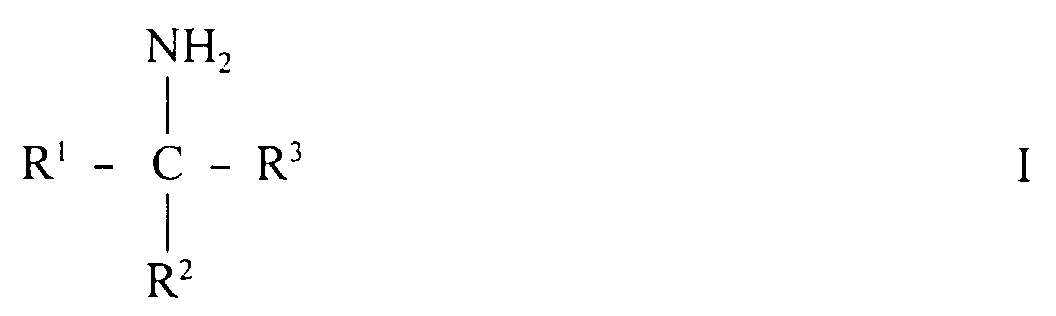
- R1
- verzweigter oder unverzweigter aliphatischer, cycloaliphatischer, araliphatischer oder aromatischer, gegebenenfalls durch Hydroxy-, Alkoxy- oder Halogen-Gruppen substituierter Kohlenwasserstoffrest mit 1 bis 30 Kohlenstoffatomen,
- R2 und R3
- jeweils unabhängig voneinander Wasserstoff oder R1
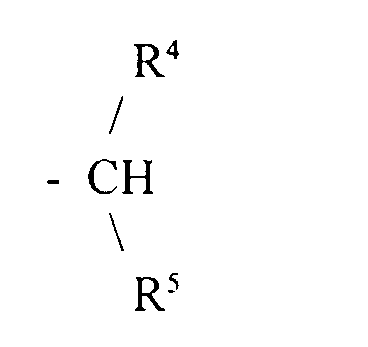
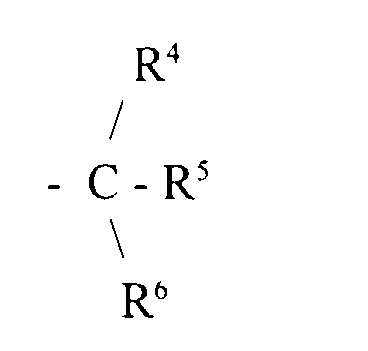
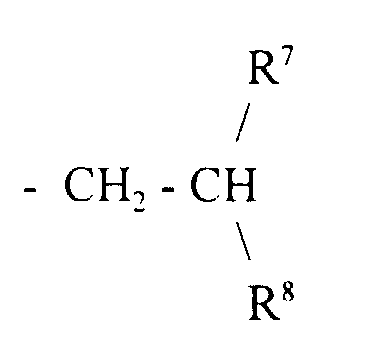 wo die Reste
- R4 bis R9
- jeweils unabhängig voneinander die Bedeutung verzweigter oder unverzweigter aliphatischer, cycloaliphatischer, araliphatischer oder aromatischer, gegebenenfalls durch Hydroxy-, Alkoxy- oder Halogen-Gruppen substituierter Kohlenwasserstoffrest mit 1 bis 30 Kohlenstoffatomen haben, und
(A32) Aminen der Formel IIworin
- R10
-
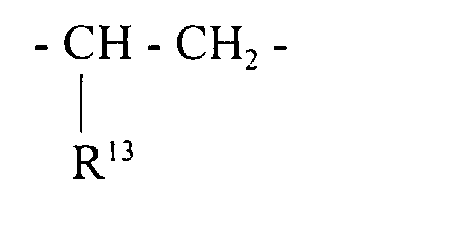
 oder
oder bedeutet,
- R11 und R12
- jeweils unabhängig voneinander Wasserstoff, ein gesättigtes oder ungesättigtes geradkettiges, verzweigtes oder cyclisches (gegebenenfalls mit Heteroatomen im Ring) Alkyl mit bis zu 15 Kohlenstoffatomen, oder zusammen einen cyclischen Alkylenrest mit bis zu 8 Kohlenstoffatomen, der gegebenenfalls mit Alkylgruppen mit 1 bis 3 Kohlenstoffatomen ein-, zwei- oder dreifach substituiert ist,
- R13
- Wasserstoff oder Methyl,
- x
- eine ganze Zahl von 1 bis 100, und
- f
- 2 oder 3 bedeuten.
(A 33) Aminen der Formel IIIin der bedeuten
- R14
- ein Alkylen-, Cycloalkylen oder Aralkylenrest, der gegebenenfalls durch Hydroxy-, Äther- oder Halogengruppen substituiert ist,
- R15 und R16
- Alkyl-, unabhängig voneinander ein Cycloalkyl oder Aralkylrest, der gegebenenfalls durch Hydroxy-, Äther- oder Halogen-Gruppen substituiert ist, wobei beide Reste, gegebenenfalls auch durch Heteroatome, verbunden sein können, mit der Maßgabe, daß mindestens einer der Substituenten R14, R15 oder R16 in α- und/oder β-Stellung zu jedem N-Atom eine Verzweigung aufweist, d. h. mindestens eine Methylgruppe trägt und/oder daß der Stickstoff als Ringatom gebunden ist, und/oder
(B) Cyclocarbonaten, die Umsetzungsprodukte sind aus den Verbindungen (A) und (B1) Kohlendioxid und/oder(C) Cyclocarbonaten, die Umsetzungsprodukte sind ausund(C1) Verbindungen mit mindestens zwei 1,2-Epoxidgruppen pro Molekül, erhalten aus(C11) Verbindungen mit mindestens zwei 1,2-Epoxidgruppen pro Molekül(C12) gegebenenfalls Monoepoxide und(C13) Polyoxyalkylenaminen und(C2) Kohlendioxid(D) gegebenenfalls 1 ,2-Epoxidverbindungen, die nicht gleich (A 1), (A2), (C11), (C12) sind und/oder nicht umgesetzte Anteile der Verbindungen (A1), (A2), (C11) und (C12) aus der Herstellung der Verbindungen (A) und (C1)
und(E) Polyaminen ausgewählt aus Polyalkylenpolyaminen, Diäthylentriamin und Triäthylentetramin, Tetraäthylenpentamin, Pentaäthylenhexamin, 2,2,4- und 2,4,4-Trimethylhexamethylendiamin, Bis-(3-aminopropyl)-methylamin, 1,4-Bis(3-aminopropyl)-piperazin, N,N-bis(3-aminopropyl)äthylendiamin, 2-Methyl-pentandiamin, Polyoxypropylendiund triaminen und 1,13-Diamino-4,7,10-trioxatridecan, Isophorondiamin (3,5,5-Trimethyl-3-aminomethylcyclohexylamin), 4,4'-Diaminodicyclohexylmethan, 3,3'-Dimethyl-4,4'-diaminodicyclohexylmethan, N-Cyclohexyl-1,3-propandiamin, 1,2-Diaminocyclohexan, 1,4-Diamino-3,6-diäthylcyclohexan, 1,2-Diamino-4-äthylcyclohexan, 1-Cyclohexyl-3,4-diaminocyclohexan, 2,2-Bis-(4-aminocyclohexyl)-propan, 1,3- und 1,4-Bis(aminomethyl)-cyclohexan, Piperazin, N-Aminoäthylpiperazin, TCD-Diamin (3(4), 8(9)-Bis(aminomethyl)-tricyclo[5.2.1.02,6]decan), mund p-Xylylendiamin, Phenylendiamine, 4,4'-Oxydianilin und 4,4'-Diaminodiphenylmethan, und(F) gegebenenfalls weiteren Zusätzen. - Zusammensetzung nach Anspruch 1, dadurch gekennzeichnet, daß die Verbindungen (A1), (C11) und gegebenenfalls (D) Epoxidäquivalentgewichte von 100 bis 500 g/mol aufweisen.
- Zusammensetzung nach Anspruch 2, dadurch gekennzeichnet, daß die Verbindungen (A1), (C11) und gegebenenfalls (D) ausgewählt sind aus der Gruppe der Diglycidyläther von Bisphenol-A und Bisphenol-F.
- Zusammensetzung nach Anspruch 1, dadurch gekennzeichnet, daß die Verbindungen (A1) ausgewählt sind aus der Gruppe der Polyoxyalkylenglykoldiglycidyläther sind.
- Zusammensetzung nach Anspruch 4, dadurch gekennzeichnet, daß die Verbindungen (A1) Polypropylenglykoldiglycidyläther sind.
- Zusammensetzung nach Anspruch 1, dadurch gekennzeichnet, daß die Amine (A31) t-Alkylamine mit 4 bis 22 Kohlenstoffatomen sind.
- Zusammensetzung nach Anspruch 1, dadurch gekennzeichnet, daß die Amine (A31) die Formel (IV)aufweisen, in der R1 und R2 die Bedeutung von R1 in Anspruch 1 haben.

- Zusammensetzung nach Anspruch 7, dadurch gekennzeichnet, daß als Amin (A31) 2-Aminobutan eingesetzt wird.
- Härtungsmittel nach Anspruch 7, dadurch gekennzeichnet, daß als Amin (A31) 2-Äthylhexylamin eingesetzt wird.
- Härtungsmittel nach Anspruch 1, dadurch gekennzeichnet, daß als Amin (A33) Amine der Formel III eingesetzt werden, in der bedeuten die Reste R15 und R16wobei R17 ein gegebenenfalls durch Hydroxy-, Äther- oder Halogengruppen substituierter Alkyl-, Cycloalkyl-, Aralkyl- oder Arylrest ist.

- Härtungsmittel nach Anspruch 1, dadurch gekennzeichnet, daß die Verbindungen (A) Umsetzungsprodukte aus Polyoxypropylenglycoldiglycidyläthern (A1) und 2-Aminobutan oder 2-Äthylhexylamin (A3) sind.
- Härtungsmittel nach Anspruch 1, dadurch gekennzeichnet, daß die Verbindungen (B) Umsetzungsprodukte aus Polyoxypropylenglycoldiglycidyläthern (A1) und 2-Aminobutan oder 2-Äthylhexylamin (A3) und Kohlendioxid (B1) sind.
- Härtungsmittel nach Anspruch 1, dadurch gekennzeichnet, daß als Polyoxyalkylenamine (C13) Polyoxyalkylenmonoamine eingesetzt werden.
- Härtungsmittel nach Anspruch 1, dadurch gekennzeichnet, daß die Verbindungen (C) Umsetzungsprodukte aus Verbindungen (C11), ausgewählt aus der Gruppe der Diglycidyläther von Bisphenol-A und Bisphenol-F, Polyoxyalkylenmonoaminen (C13) mit Molmassen von 130 bis 5000 g/mol und Kohlendioxid (C2) sind.
- Härtungsmittel nach den Ansprüchen 12 und 14, dadurch gekennzeichnet, daß 10 bis 95 % der Epoxidgruppen in Cyclocarbonatgruppen überführt sind.
- Härtungsmittel nach Anspruch 1, dadurch gekennzeichnet, daß als Amine (E) Äthylendiamin, 2-Methylpentandiamin, Trimethylhexamethylendiamin, 2-Aminoäthylpiperazin oder m-Xylylendiamin eingesetzt werden.
- Verwendung des Härtungsmittels in Kombination mit Epoxidverbindungen als Klebstoff und Beschichtungsmasse, insbesondere für rißüberbrückende Beschichtungen.
- Wäßrige Epoxidharze oder Epoxidharz-Dispersionen enthaltend ein Härtungsmittel nach Anspruch 1.
Applications Claiming Priority (2)
| Application Number | Priority Date | Filing Date | Title |
|---|---|---|---|
| DE19512316A DE19512316A1 (de) | 1995-04-01 | 1995-04-01 | Härtungsmittel für elastische Epoxidharz-Systeme |
| DE19512316 | 1995-04-01 |
Publications (2)
| Publication Number | Publication Date |
|---|---|
| EP0735070A1 EP0735070A1 (de) | 1996-10-02 |
| EP0735070B1 true EP0735070B1 (de) | 2000-01-12 |
Family
ID=7758579
Family Applications (1)
| Application Number | Title | Priority Date | Filing Date |
|---|---|---|---|
| EP96104783A Expired - Lifetime EP0735070B1 (de) | 1995-04-01 | 1996-03-26 | Härtungsmittel für elastische Epoxidharz-Systeme |
Country Status (10)
| Country | Link |
|---|---|
| US (1) | US5847027A (de) |
| EP (1) | EP0735070B1 (de) |
| JP (1) | JPH08283384A (de) |
| AT (1) | ATE188716T1 (de) |
| CA (1) | CA2173182A1 (de) |
| CZ (1) | CZ94796A3 (de) |
| DE (2) | DE19512316A1 (de) |
| HU (1) | HUP9600836A3 (de) |
| NO (1) | NO961281L (de) |
| PL (1) | PL313577A1 (de) |
Families Citing this family (19)
| Publication number | Priority date | Publication date | Assignee | Title |
|---|---|---|---|---|
| ATE262006T1 (de) * | 1995-07-12 | 2004-04-15 | Valtion Teknillinen | Thermoplastifizierte stärke und verfahren zur herstellung |
| US6090891A (en) * | 1997-05-30 | 2000-07-18 | Ciba Specialty Chemicals Corp. | Carboxyl-containing polymer(s) with (2-oxo-1,3-dioxolan-4-yl)methyl groups-containing compound(s) |
| DE19843835A1 (de) * | 1998-09-24 | 2000-03-30 | Herberts Gmbh | Wäßrige Beschichtungsmittel auf Epoxid/Amin-Basis und ihre Verwendung bei Mehrschichtlackierungen |
| DE10014655A1 (de) | 2000-03-24 | 2001-10-04 | Ciba Spezialitaetenchemie Berg | Mannichbasen und weitere Verbindungen basierend auf Alkyldipropylentriaminen |
| DE10326147A1 (de) * | 2003-06-06 | 2005-03-03 | Byk-Chemie Gmbh | Epoxid-Addukte und deren Salze als Dispergiermittel |
| EP1506975A1 (de) * | 2003-08-13 | 2005-02-16 | Vantico GmbH | Nanoverbundwerkstoffe enthaltend polyurethan oder polyurethan-epoxy Hybridharze hergestellt ohne Verwendung von Isocyanaten |
| JP4726437B2 (ja) * | 2004-06-04 | 2011-07-20 | 旭化成ホームズ株式会社 | 基礎コンクリートの改善方法 |
| JP2006045560A (ja) * | 2004-07-08 | 2006-02-16 | Kansai Paint Co Ltd | 重付加体及び該重付加体を含有するカチオン電着塗料 |
| EP1621565A1 (de) | 2004-07-28 | 2006-02-01 | Cytec Surface Specialties Austria GmbH | Epoxidharz mit verbesserten elastischen Eigenschaften |
| US20060222596A1 (en) * | 2005-04-01 | 2006-10-05 | Trivascular, Inc. | Non-degradable, low swelling, water soluble radiopaque hydrogel polymer |
| DE102005029792B4 (de) * | 2005-06-27 | 2007-06-06 | Uppc Ag | Härtungsmittel für wässrige Epoxidharz-Dispersionen |
| US10626290B2 (en) * | 2013-12-16 | 2020-04-21 | Ppg Industries Ohio, Inc. | Method of extending pot life of coating compositions |
| CN105295644B (zh) * | 2015-10-14 | 2016-08-24 | 慧融高科(武汉)新型材料有限公司 | 一种高渗透性环氧防水涂料 |
| US11359048B2 (en) | 2018-05-17 | 2022-06-14 | Evonik Operations Gmbh | Fast-curing epoxy systems |
| EP3569629B1 (de) | 2018-05-17 | 2022-07-06 | Evonik Operations GmbH | Schnell härtende epoxysysteme |
| EP3569630B1 (de) | 2018-05-17 | 2022-08-03 | Evonik Operations GmbH | Schnell härtende epoxysysteme |
| US11286335B2 (en) | 2018-05-17 | 2022-03-29 | Evonik Operations Gmbh | Fast-curing epoxy systems |
| JP7331142B2 (ja) * | 2019-05-23 | 2023-08-22 | ビーエーエスエフ コーティングス ゲゼルシャフト ミット ベシュレンクテル ハフツング | 水性樹脂分散体及びこの樹脂分散体を含む水性コーティング組成物 |
| KR102620581B1 (ko) * | 2021-09-27 | 2024-01-03 | 주식회사 부일건화 | 다층 복합방수의 구조 및 그 시공방법 |
Family Cites Families (14)
| Publication number | Priority date | Publication date | Assignee | Title |
|---|---|---|---|---|
| CH481963A (de) * | 1967-06-08 | 1969-11-30 | Ciba Geigy | Neue härtbare Mischungen aus Diepoxydverbindungen, disekundären Aminen sowie mindestens 3 Aminwasserstoffatome enthaltenden Polyaminen |
| US4122069A (en) * | 1977-04-11 | 1978-10-24 | Texaco Development Corporation | Polyether dihydroxyalkyl carbamate epoxy additive for epoxy resins |
| US4316003A (en) * | 1980-10-23 | 1982-02-16 | Shell Oil Company | Epoxy resin curing agents |
| US4484994A (en) * | 1984-02-17 | 1984-11-27 | American Cyanamid Company | Hydroxyalkyl carbamate-containing resins for cathodic electrodeposition and method of making the same |
| DE3529263A1 (de) * | 1985-08-16 | 1987-02-19 | Hoechst Ag | Verfahren zur herstellung von 2-oxo-1,3-dioxolanen |
| DE3600602A1 (de) * | 1986-01-11 | 1987-07-16 | Hoechst Ag | Verfahren zur herstellung von 2-oxo-1,3-dioxolanen |
| DE3643751A1 (de) * | 1986-12-20 | 1988-06-23 | Hoechst Ag | Stabile waessrige epoxidharz-dispersionen, verfahren zu deren herstellung und deren verwendung |
| DE3908085A1 (de) * | 1989-03-13 | 1990-09-20 | Ruetgerswerke Ag | Haertungsmittel fuer epoxidverbindungen, ihre herstellung und verwendung |
| DE4026859A1 (de) * | 1990-08-24 | 1992-02-27 | Vianova Kunstharz Ag | Verfahren zur herstellung von bindemitteln fuer kathodisch abscheidbare lacke und deren verwendung |
| US5235007A (en) * | 1991-10-03 | 1993-08-10 | Texaco Chemical Company | Epoxy curing agents |
| DE4206392A1 (de) * | 1992-02-29 | 1993-09-02 | Hoechst Ag | Haertungsmittel fuer epoxidharze |
| DE4342154A1 (de) * | 1993-12-10 | 1995-06-14 | Behringwerke Ag | Amidinophenylalaninderivate, Verfahren zu deren Herstellung, deren Verwendung und diese enthaltende Mittel als Antikoagulantien |
| DE4344487A1 (de) * | 1993-12-24 | 1995-06-29 | Hoechst Ag | Neue Epoxid-Amin-Addukte als Härter für wäßrige Epoxidsysteme |
| DE4410785A1 (de) * | 1994-03-28 | 1995-10-05 | Hoechst Ag | Amin-modifizierte Epoxidharz-Zusammensetzung |
-
1995
- 1995-04-01 DE DE19512316A patent/DE19512316A1/de not_active Withdrawn
-
1996
- 1996-03-26 AT AT96104783T patent/ATE188716T1/de not_active IP Right Cessation
- 1996-03-26 DE DE59604150T patent/DE59604150D1/de not_active Expired - Fee Related
- 1996-03-26 EP EP96104783A patent/EP0735070B1/de not_active Expired - Lifetime
- 1996-03-29 HU HU9600836A patent/HUP9600836A3/hu unknown
- 1996-03-29 JP JP8077608A patent/JPH08283384A/ja not_active Withdrawn
- 1996-03-29 NO NO961281A patent/NO961281L/no unknown
- 1996-04-01 PL PL96313577A patent/PL313577A1/xx unknown
- 1996-04-01 CZ CZ96947A patent/CZ94796A3/cs unknown
- 1996-04-01 US US08/625,193 patent/US5847027A/en not_active Expired - Fee Related
- 1996-04-01 CA CA002173182A patent/CA2173182A1/en not_active Abandoned
Also Published As
| Publication number | Publication date |
|---|---|
| US5847027A (en) | 1998-12-08 |
| PL313577A1 (en) | 1996-10-14 |
| DE59604150D1 (de) | 2000-02-17 |
| NO961281L (no) | 1996-10-02 |
| EP0735070A1 (de) | 1996-10-02 |
| HU9600836D0 (en) | 1996-05-28 |
| CZ94796A3 (en) | 1996-10-16 |
| CA2173182A1 (en) | 1996-10-02 |
| HUP9600836A3 (en) | 1997-08-28 |
| NO961281D0 (no) | 1996-03-29 |
| HUP9600836A2 (en) | 1997-04-28 |
| JPH08283384A (ja) | 1996-10-29 |
| DE19512316A1 (de) | 1996-10-02 |
| ATE188716T1 (de) | 2000-01-15 |
Similar Documents
| Publication | Publication Date | Title |
|---|---|---|
| EP0675143B1 (de) | Amin-modifizierte Epoxidharz-Zusammensetzung | |
| EP0610787B1 (de) | Härtungsmittel für wässrige Epoxidharz-Dispersionen | |
| EP0735070A1 (de) | Härtungsmittel für elastische Epoxidharz-Systeme | |
| EP1136509B1 (de) | Härter für Epoxidverbindungen, Verfahren zu ihrer Herstellung und Verwendung | |
| EP0000605B1 (de) | Härtungsmittel für wässerige Epoxydharzdispersionen, deren Herstellung und Verwendung | |
| EP1518875B1 (de) | Härter für Überzugsmassen | |
| DE3901279A1 (de) | Verwendung von polyamidoaminen als haerter fuer epoxidharze und diese enthaltende haertbare mischungen | |
| EP2931821B1 (de) | Verwendung von substituierten benzylalkoholen in reaktiven epoxy-systemen | |
| EP0559033A1 (de) | Härtungsmittel für Epoxidharze | |
| EP0819733A2 (de) | Amin-modifizierte Epoxidharz-Zusammensetzung | |
| DE69723966T2 (de) | Härtbare epoxidharzzusammensetzungen, die in wasser verarbeitbare polyaminhärter enthalten | |
| DE69729464T2 (de) | Epoxidharzhärtungsmittel | |
| DE1570488B2 (de) | Verfahren zur herstellung von epoxid polyaddukten | |
| EP4370578B1 (de) | Beschleuniger für epoxidharze | |
| EP0253339B1 (de) | Herstellung von Beschichtungen mit erhöhter Zwischenschichthaftung unter Verwendung von Epoxidharz/Härter-Mischungen | |
| DE69214620T2 (de) | Aminocrotonate als Härtungsmittel für Epoxyhärze | |
| EP1736493B1 (de) | Härter für Überzugmassen (II) | |
| DE69309002T2 (de) | Epoxydharzzusammensetzung | |
| EP1736496B1 (de) | Härter für Überzugmassen (III) | |
| EP3252091B1 (de) | Tetrahydrofuran-diamin | |
| DE102005029143A1 (de) | Härter für Überzugmassen (I) | |
| EP1095089B1 (de) | Härter für epoxidharze | |
| DE1570366A1 (de) | Haertbare Mischungen aus Epoxydharzen und ditertiaeren Aminen | |
| EP1736495B1 (de) | Härter für Überzugmassen (IV) | |
| EP1095088A1 (de) | Selbstdispergierbare härtbare epoxidharze |
Legal Events
| Date | Code | Title | Description |
|---|---|---|---|
| PUAI | Public reference made under article 153(3) epc to a published international application that has entered the european phase |
Free format text: ORIGINAL CODE: 0009012 |
|
| AK | Designated contracting states |
Kind code of ref document: A1 Designated state(s): AT CH DE FR GB LI NL |
|
| 17P | Request for examination filed |
Effective date: 19970402 |
|
| RBV | Designated contracting states (corrected) |
Designated state(s): AT CH DE FR GB LI NL |
|
| 17Q | First examination report despatched |
Effective date: 19980622 |
|
| GRAG | Despatch of communication of intention to grant |
Free format text: ORIGINAL CODE: EPIDOS AGRA |
|
| GRAG | Despatch of communication of intention to grant |
Free format text: ORIGINAL CODE: EPIDOS AGRA |
|
| GRAH | Despatch of communication of intention to grant a patent |
Free format text: ORIGINAL CODE: EPIDOS IGRA |
|
| GRAH | Despatch of communication of intention to grant a patent |
Free format text: ORIGINAL CODE: EPIDOS IGRA |
|
| GRAA | (expected) grant |
Free format text: ORIGINAL CODE: 0009210 |
|
| AK | Designated contracting states |
Kind code of ref document: B1 Designated state(s): AT CH DE FR GB LI NL |
|
| REF | Corresponds to: |
Ref document number: 188716 Country of ref document: AT Date of ref document: 20000115 Kind code of ref document: T |
|
| PGFP | Annual fee paid to national office [announced via postgrant information from national office to epo] |
Ref country code: NL Payment date: 20000114 Year of fee payment: 5 Ref country code: FR Payment date: 20000114 Year of fee payment: 5 |
|
| REG | Reference to a national code |
Ref country code: CH Ref legal event code: EP |
|
| PGFP | Annual fee paid to national office [announced via postgrant information from national office to epo] |
Ref country code: GB Payment date: 20000117 Year of fee payment: 5 Ref country code: AT Payment date: 20000117 Year of fee payment: 5 |
|
| PGFP | Annual fee paid to national office [announced via postgrant information from national office to epo] |
Ref country code: CH Payment date: 20000119 Year of fee payment: 5 |
|
| REF | Corresponds to: |
Ref document number: 59604150 Country of ref document: DE Date of ref document: 20000217 |
|
| GBT | Gb: translation of ep patent filed (gb section 77(6)(a)/1977) |
Effective date: 20000316 |
|
| ET | Fr: translation filed | ||
| PLBE | No opposition filed within time limit |
Free format text: ORIGINAL CODE: 0009261 |
|
| STAA | Information on the status of an ep patent application or granted ep patent |
Free format text: STATUS: NO OPPOSITION FILED WITHIN TIME LIMIT |
|
| 26N | No opposition filed | ||
| PG25 | Lapsed in a contracting state [announced via postgrant information from national office to epo] |
Ref country code: GB Free format text: LAPSE BECAUSE OF NON-PAYMENT OF DUE FEES Effective date: 20010326 Ref country code: AT Free format text: LAPSE BECAUSE OF NON-PAYMENT OF DUE FEES Effective date: 20010326 |
|
| PG25 | Lapsed in a contracting state [announced via postgrant information from national office to epo] |
Ref country code: LI Free format text: LAPSE BECAUSE OF NON-PAYMENT OF DUE FEES Effective date: 20010331 Ref country code: CH Free format text: LAPSE BECAUSE OF NON-PAYMENT OF DUE FEES Effective date: 20010331 |
|
| PG25 | Lapsed in a contracting state [announced via postgrant information from national office to epo] |
Ref country code: NL Free format text: LAPSE BECAUSE OF NON-PAYMENT OF DUE FEES Effective date: 20011001 |
|
| GBPC | Gb: european patent ceased through non-payment of renewal fee |
Effective date: 20010326 |
|
| REG | Reference to a national code |
Ref country code: CH Ref legal event code: PL |
|
| PG25 | Lapsed in a contracting state [announced via postgrant information from national office to epo] |
Ref country code: FR Free format text: LAPSE BECAUSE OF NON-PAYMENT OF DUE FEES Effective date: 20011130 |
|
| NLV4 | Nl: lapsed or anulled due to non-payment of the annual fee |
Effective date: 20011001 |
|
| REG | Reference to a national code |
Ref country code: FR Ref legal event code: ST |
|
| PGFP | Annual fee paid to national office [announced via postgrant information from national office to epo] |
Ref country code: DE Payment date: 20040408 Year of fee payment: 9 |
|
| PG25 | Lapsed in a contracting state [announced via postgrant information from national office to epo] |
Ref country code: DE Free format text: LAPSE BECAUSE OF NON-PAYMENT OF DUE FEES Effective date: 20051001 |