EP0733647B1 - Polysaccharides and preparation thereof - Google Patents
Polysaccharides and preparation thereof Download PDFInfo
- Publication number
- EP0733647B1 EP0733647B1 EP95307113A EP95307113A EP0733647B1 EP 0733647 B1 EP0733647 B1 EP 0733647B1 EP 95307113 A EP95307113 A EP 95307113A EP 95307113 A EP95307113 A EP 95307113A EP 0733647 B1 EP0733647 B1 EP 0733647B1
- Authority
- EP
- European Patent Office
- Prior art keywords
- polysaccharide
- reaction
- raw material
- group
- plant tissue
- Prior art date
- Legal status (The legal status is an assumption and is not a legal conclusion. Google has not performed a legal analysis and makes no representation as to the accuracy of the status listed.)
- Expired - Lifetime
Links
- 150000004676 glycans Chemical class 0.000 title claims description 26
- 229920001282 polysaccharide Polymers 0.000 title claims description 26
- 239000005017 polysaccharide Substances 0.000 title claims description 26
- 238000002360 preparation method Methods 0.000 title description 2
- 238000006243 chemical reaction Methods 0.000 claims description 27
- XLYOFNOQVPJJNP-UHFFFAOYSA-N water Substances O XLYOFNOQVPJJNP-UHFFFAOYSA-N 0.000 claims description 21
- XEKOWRVHYACXOJ-UHFFFAOYSA-N Ethyl acetate Chemical compound CCOC(C)=O XEKOWRVHYACXOJ-UHFFFAOYSA-N 0.000 claims description 15
- 241000196324 Embryophyta Species 0.000 claims description 14
- 241000221198 Basidiomycota Species 0.000 claims description 12
- LFQSCWFLJHTTHZ-UHFFFAOYSA-N Ethanol Chemical compound CCO LFQSCWFLJHTTHZ-UHFFFAOYSA-N 0.000 claims description 12
- 239000001963 growth medium Substances 0.000 claims description 12
- 244000005700 microbiome Species 0.000 claims description 12
- VLKZOEOYAKHREP-UHFFFAOYSA-N n-Hexane Chemical compound CCCCCC VLKZOEOYAKHREP-UHFFFAOYSA-N 0.000 claims description 12
- 125000002777 acetyl group Chemical group [H]C([H])([H])C(*)=O 0.000 claims description 10
- 239000002994 raw material Substances 0.000 claims description 10
- CSCPPACGZOOCGX-UHFFFAOYSA-N Acetone Chemical compound CC(C)=O CSCPPACGZOOCGX-UHFFFAOYSA-N 0.000 claims description 9
- UHOVQNZJYSORNB-UHFFFAOYSA-N Benzene Chemical compound C1=CC=CC=C1 UHOVQNZJYSORNB-UHFFFAOYSA-N 0.000 claims description 9
- HEDRZPFGACZZDS-UHFFFAOYSA-N Chloroform Chemical compound ClC(Cl)Cl HEDRZPFGACZZDS-UHFFFAOYSA-N 0.000 claims description 8
- RTZKZFJDLAIYFH-UHFFFAOYSA-N Diethyl ether Chemical compound CCOCC RTZKZFJDLAIYFH-UHFFFAOYSA-N 0.000 claims description 8
- WQZGKKKJIJFFOK-GASJEMHNSA-N Glucose Natural products OC[C@H]1OC(O)[C@H](O)[C@@H](O)[C@@H]1O WQZGKKKJIJFFOK-GASJEMHNSA-N 0.000 claims description 7
- 240000007594 Oryza sativa Species 0.000 claims description 7
- 235000007164 Oryza sativa Nutrition 0.000 claims description 7
- 238000000034 method Methods 0.000 claims description 7
- 235000009566 rice Nutrition 0.000 claims description 7
- IAZDPXIOMUYVGZ-UHFFFAOYSA-N Dimethylsulphoxide Chemical compound CS(C)=O IAZDPXIOMUYVGZ-UHFFFAOYSA-N 0.000 claims description 6
- ZHNUHDYFZUAESO-UHFFFAOYSA-N Formamide Chemical compound NC=O ZHNUHDYFZUAESO-UHFFFAOYSA-N 0.000 claims description 6
- 239000008103 glucose Substances 0.000 claims description 6
- 238000002844 melting Methods 0.000 claims description 6
- 230000008018 melting Effects 0.000 claims description 6
- QAOWNCQODCNURD-UHFFFAOYSA-N sulfuric acid Substances OS(O)(=O)=O QAOWNCQODCNURD-UHFFFAOYSA-N 0.000 claims description 6
- WQZGKKKJIJFFOK-DVKNGEFBSA-N alpha-D-glucose Chemical group OC[C@H]1O[C@H](O)[C@H](O)[C@@H](O)[C@@H]1O WQZGKKKJIJFFOK-DVKNGEFBSA-N 0.000 claims description 5
- 239000000284 extract Substances 0.000 claims description 5
- 239000000835 fiber Substances 0.000 claims description 5
- 235000000346 sugar Nutrition 0.000 claims description 5
- 229920001503 Glucan Polymers 0.000 claims description 4
- 244000068988 Glycine max Species 0.000 claims description 4
- 235000010469 Glycine max Nutrition 0.000 claims description 4
- 240000000599 Lentinula edodes Species 0.000 claims description 4
- 235000001715 Lentinula edodes Nutrition 0.000 claims description 4
- 239000007864 aqueous solution Substances 0.000 claims description 4
- 238000009630 liquid culture Methods 0.000 claims description 4
- 230000007935 neutral effect Effects 0.000 claims description 4
- 239000000843 powder Substances 0.000 claims description 4
- 239000010902 straw Substances 0.000 claims description 4
- MYKOKMFESWKQRX-UHFFFAOYSA-N 10h-anthracen-9-one;sulfuric acid Chemical compound OS(O)(=O)=O.C1=CC=C2C(=O)C3=CC=CC=C3CC2=C1 MYKOKMFESWKQRX-UHFFFAOYSA-N 0.000 claims description 3
- 241000609240 Ambelania acida Species 0.000 claims description 3
- 238000010521 absorption reaction Methods 0.000 claims description 3
- 239000010905 bagasse Substances 0.000 claims description 3
- OHJMTUPIZMNBFR-UHFFFAOYSA-N biuret Chemical compound NC(=O)NC(N)=O OHJMTUPIZMNBFR-UHFFFAOYSA-N 0.000 claims description 3
- 229950005499 carbon tetrachloride Drugs 0.000 claims description 3
- 238000001460 carbon-13 nuclear magnetic resonance spectrum Methods 0.000 claims description 3
- 239000000428 dust Substances 0.000 claims description 3
- 239000010200 folin Substances 0.000 claims description 3
- 125000004435 hydrogen atom Chemical group [H]* 0.000 claims description 3
- 238000002329 infrared spectrum Methods 0.000 claims description 3
- 125000002346 iodo group Chemical group I* 0.000 claims description 3
- 230000003287 optical effect Effects 0.000 claims description 3
- OQUKIQWCVTZJAF-UHFFFAOYSA-N phenol;sulfuric acid Chemical compound OS(O)(=O)=O.OC1=CC=CC=C1 OQUKIQWCVTZJAF-UHFFFAOYSA-N 0.000 claims description 3
- VZGDMQKNWNREIO-UHFFFAOYSA-N tetrachloromethane Chemical compound ClC(Cl)(Cl)Cl VZGDMQKNWNREIO-UHFFFAOYSA-N 0.000 claims description 3
- 244000251953 Agaricus brunnescens Species 0.000 claims description 2
- 235000001674 Agaricus brunnescens Nutrition 0.000 claims description 2
- 244000028550 Auricularia auricula Species 0.000 claims description 2
- 235000000023 Auricularia auricula Nutrition 0.000 claims description 2
- 240000006499 Flammulina velutipes Species 0.000 claims description 2
- 235000016640 Flammulina velutipes Nutrition 0.000 claims description 2
- 241001149422 Ganoderma applanatum Species 0.000 claims description 2
- 240000008397 Ganoderma lucidum Species 0.000 claims description 2
- 235000001637 Ganoderma lucidum Nutrition 0.000 claims description 2
- 244000097863 Grifola umbellata Species 0.000 claims description 2
- 235000002897 Grifola umbellata Nutrition 0.000 claims description 2
- 244000168667 Pholiota nameko Species 0.000 claims description 2
- 235000014528 Pholiota nameko Nutrition 0.000 claims description 2
- 235000007685 Pleurotus columbinus Nutrition 0.000 claims description 2
- 240000001462 Pleurotus ostreatus Species 0.000 claims description 2
- 235000001603 Pleurotus ostreatus Nutrition 0.000 claims description 2
- 235000004837 Polyporus umbellatus Nutrition 0.000 claims description 2
- 241000222355 Trametes versicolor Species 0.000 claims description 2
- 241001507667 Volvariella Species 0.000 claims description 2
- 230000001747 exhibiting effect Effects 0.000 claims description 2
- 241000222481 Schizophyllum commune Species 0.000 claims 1
- 239000000126 substance Substances 0.000 description 15
- 150000001875 compounds Chemical class 0.000 description 10
- 239000000367 immunologic factor Substances 0.000 description 10
- 239000000203 mixture Substances 0.000 description 9
- 229920001491 Lentinan Polymers 0.000 description 7
- 229940115286 lentinan Drugs 0.000 description 7
- QTBSBXVTEAMEQO-UHFFFAOYSA-N Acetic acid Chemical compound CC(O)=O QTBSBXVTEAMEQO-UHFFFAOYSA-N 0.000 description 6
- 210000004493 neutrocyte Anatomy 0.000 description 6
- 210000001539 phagocyte Anatomy 0.000 description 6
- 239000003795 chemical substances by application Substances 0.000 description 5
- 238000004440 column chromatography Methods 0.000 description 5
- 230000002766 immunoenhancing effect Effects 0.000 description 5
- 239000002609 medium Substances 0.000 description 5
- 239000002244 precipitate Substances 0.000 description 5
- 239000006228 supernatant Substances 0.000 description 5
- LRHPLDYGYMQRHN-UHFFFAOYSA-N N-Butanol Chemical compound CCCCO LRHPLDYGYMQRHN-UHFFFAOYSA-N 0.000 description 4
- 229920005654 Sephadex Polymers 0.000 description 4
- 239000012507 Sephadex™ Substances 0.000 description 4
- 230000008260 defense mechanism Effects 0.000 description 4
- 239000008367 deionised water Substances 0.000 description 4
- 229910021641 deionized water Inorganic materials 0.000 description 4
- 235000002639 sodium chloride Nutrition 0.000 description 4
- WDQLRUYAYXDIFW-RWKIJVEZSA-N (2r,3r,4s,5r,6r)-4-[(2s,3r,4s,5r,6r)-3,5-dihydroxy-4-[(2r,3r,4s,5s,6r)-3,4,5-trihydroxy-6-(hydroxymethyl)oxan-2-yl]oxy-6-[[(2r,3r,4s,5s,6r)-3,4,5-trihydroxy-6-(hydroxymethyl)oxan-2-yl]oxymethyl]oxan-2-yl]oxy-6-(hydroxymethyl)oxane-2,3,5-triol Chemical compound O[C@@H]1[C@@H](CO)O[C@@H](O)[C@H](O)[C@H]1O[C@H]1[C@H](O)[C@@H](O[C@H]2[C@@H]([C@@H](O)[C@H](O)[C@@H](CO)O2)O)[C@H](O)[C@@H](CO[C@H]2[C@@H]([C@@H](O)[C@H](O)[C@@H](CO)O2)O)O1 WDQLRUYAYXDIFW-RWKIJVEZSA-N 0.000 description 3
- OWEGMIWEEQEYGQ-UHFFFAOYSA-N 100676-05-9 Natural products OC1C(O)C(O)C(CO)OC1OCC1C(O)C(O)C(O)C(OC2C(OC(O)C(O)C2O)CO)O1 OWEGMIWEEQEYGQ-UHFFFAOYSA-N 0.000 description 3
- QGZKDVFQNNGYKY-UHFFFAOYSA-O Ammonium Chemical compound [NH4+] QGZKDVFQNNGYKY-UHFFFAOYSA-O 0.000 description 3
- FEWJPZIEWOKRBE-JCYAYHJZSA-N Dextrotartaric acid Chemical compound OC(=O)[C@H](O)[C@@H](O)C(O)=O FEWJPZIEWOKRBE-JCYAYHJZSA-N 0.000 description 3
- 108090000790 Enzymes Proteins 0.000 description 3
- 102000004190 Enzymes Human genes 0.000 description 3
- GUBGYTABKSRVRQ-PICCSMPSSA-N Maltose Natural products O[C@@H]1[C@@H](O)[C@H](O)[C@@H](CO)O[C@@H]1O[C@@H]1[C@@H](CO)OC(O)[C@H](O)[C@H]1O GUBGYTABKSRVRQ-PICCSMPSSA-N 0.000 description 3
- OKKJLVBELUTLKV-UHFFFAOYSA-N Methanol Chemical compound OC OKKJLVBELUTLKV-UHFFFAOYSA-N 0.000 description 3
- 239000001888 Peptone Substances 0.000 description 3
- 108010080698 Peptones Proteins 0.000 description 3
- 229920002305 Schizophyllan Polymers 0.000 description 3
- FAPWRFPIFSIZLT-UHFFFAOYSA-M Sodium chloride Chemical compound [Na+].[Cl-] FAPWRFPIFSIZLT-UHFFFAOYSA-M 0.000 description 3
- CZMRCDWAGMRECN-UGDNZRGBSA-N Sucrose Chemical compound O[C@H]1[C@H](O)[C@@H](CO)O[C@@]1(CO)O[C@@H]1[C@H](O)[C@@H](O)[C@H](O)[C@@H](CO)O1 CZMRCDWAGMRECN-UGDNZRGBSA-N 0.000 description 3
- 229930006000 Sucrose Natural products 0.000 description 3
- 238000009825 accumulation Methods 0.000 description 3
- 238000005273 aeration Methods 0.000 description 3
- -1 bran Substances 0.000 description 3
- 210000004027 cell Anatomy 0.000 description 3
- 229940088598 enzyme Drugs 0.000 description 3
- 239000000499 gel Substances 0.000 description 3
- 239000007788 liquid Substances 0.000 description 3
- 235000019319 peptone Nutrition 0.000 description 3
- 239000011541 reaction mixture Substances 0.000 description 3
- 239000011347 resin Substances 0.000 description 3
- 229920005989 resin Polymers 0.000 description 3
- YBJHBAHKTGYVGT-ZKWXMUAHSA-N (+)-Biotin Chemical compound N1C(=O)N[C@@H]2[C@H](CCCCC(=O)O)SC[C@@H]21 YBJHBAHKTGYVGT-ZKWXMUAHSA-N 0.000 description 2
- NWUYHJFMYQTDRP-UHFFFAOYSA-N 1,2-bis(ethenyl)benzene;1-ethenyl-2-ethylbenzene;styrene Chemical compound C=CC1=CC=CC=C1.CCC1=CC=CC=C1C=C.C=CC1=CC=CC=C1C=C NWUYHJFMYQTDRP-UHFFFAOYSA-N 0.000 description 2
- 239000004382 Amylase Substances 0.000 description 2
- 102000013142 Amylases Human genes 0.000 description 2
- 108010065511 Amylases Proteins 0.000 description 2
- IJGRMHOSHXDMSA-UHFFFAOYSA-N Atomic nitrogen Chemical compound N#N IJGRMHOSHXDMSA-UHFFFAOYSA-N 0.000 description 2
- 241000894006 Bacteria Species 0.000 description 2
- 108010059892 Cellulase Proteins 0.000 description 2
- 229920002307 Dextran Polymers 0.000 description 2
- 241000233866 Fungi Species 0.000 description 2
- KFZMGEQAYNKOFK-UHFFFAOYSA-N Isopropanol Chemical compound CC(C)O KFZMGEQAYNKOFK-UHFFFAOYSA-N 0.000 description 2
- DCXYFEDJOCDNAF-REOHCLBHSA-N L-asparagine Chemical compound OC(=O)[C@@H](N)CC(N)=O DCXYFEDJOCDNAF-REOHCLBHSA-N 0.000 description 2
- 241001467552 Mycobacterium bovis BCG Species 0.000 description 2
- 206010028980 Neoplasm Diseases 0.000 description 2
- 108091005804 Peptidases Proteins 0.000 description 2
- 239000004365 Protease Substances 0.000 description 2
- JUJWROOIHBZHMG-UHFFFAOYSA-N Pyridine Chemical compound C1=CC=NC=C1 JUJWROOIHBZHMG-UHFFFAOYSA-N 0.000 description 2
- 102100037486 Reverse transcriptase/ribonuclease H Human genes 0.000 description 2
- XSQUKJJJFZCRTK-UHFFFAOYSA-N Urea Chemical compound NC(N)=O XSQUKJJJFZCRTK-UHFFFAOYSA-N 0.000 description 2
- 230000003187 abdominal effect Effects 0.000 description 2
- 235000019418 amylase Nutrition 0.000 description 2
- 230000000259 anti-tumor effect Effects 0.000 description 2
- 229960000190 bacillus calmette–guérin vaccine Drugs 0.000 description 2
- AYJRCSIUFZENHW-UHFFFAOYSA-L barium carbonate Chemical compound [Ba+2].[O-]C([O-])=O AYJRCSIUFZENHW-UHFFFAOYSA-L 0.000 description 2
- 150000001720 carbohydrates Chemical class 0.000 description 2
- 229940106157 cellulase Drugs 0.000 description 2
- 238000005119 centrifugation Methods 0.000 description 2
- 201000010099 disease Diseases 0.000 description 2
- 208000037265 diseases, disorders, signs and symptoms Diseases 0.000 description 2
- 238000002523 gelfiltration Methods 0.000 description 2
- 230000001900 immune effect Effects 0.000 description 2
- 230000001766 physiological effect Effects 0.000 description 2
- 239000002504 physiological saline solution Substances 0.000 description 2
- 239000000047 product Substances 0.000 description 2
- 150000003839 salts Chemical class 0.000 description 2
- 238000000926 separation method Methods 0.000 description 2
- 239000011780 sodium chloride Substances 0.000 description 2
- 239000000243 solution Substances 0.000 description 2
- 238000003756 stirring Methods 0.000 description 2
- 229960004793 sucrose Drugs 0.000 description 2
- 229920001817 Agar Polymers 0.000 description 1
- 229920002498 Beta-glucan Polymers 0.000 description 1
- OKTJSMMVPCPJKN-UHFFFAOYSA-N Carbon Chemical compound [C] OKTJSMMVPCPJKN-UHFFFAOYSA-N 0.000 description 1
- 108010022172 Chitinases Proteins 0.000 description 1
- 102000012286 Chitinases Human genes 0.000 description 1
- 125000002353 D-glucosyl group Chemical group C1([C@H](O)[C@@H](O)[C@H](O)[C@H](O1)CO)* 0.000 description 1
- 101150096839 Fcmr gene Proteins 0.000 description 1
- 108010068370 Glutens Proteins 0.000 description 1
- 240000001080 Grifola frondosa Species 0.000 description 1
- 235000007710 Grifola frondosa Nutrition 0.000 description 1
- 229920002488 Hemicellulose Polymers 0.000 description 1
- SQUHHTBVTRBESD-UHFFFAOYSA-N Hexa-Ac-myo-Inositol Natural products CC(=O)OC1C(OC(C)=O)C(OC(C)=O)C(OC(C)=O)C(OC(C)=O)C1OC(C)=O SQUHHTBVTRBESD-UHFFFAOYSA-N 0.000 description 1
- 206010061218 Inflammation Diseases 0.000 description 1
- HLFSDGLLUJUHTE-SNVBAGLBSA-N Levamisole Chemical compound C1([C@H]2CN3CCSC3=N2)=CC=CC=C1 HLFSDGLLUJUHTE-SNVBAGLBSA-N 0.000 description 1
- GXCLVBGFBYZDAG-UHFFFAOYSA-N N-[2-(1H-indol-3-yl)ethyl]-N-methylprop-2-en-1-amine Chemical compound CN(CCC1=CNC2=C1C=CC=C2)CC=C GXCLVBGFBYZDAG-UHFFFAOYSA-N 0.000 description 1
- 229910019142 PO4 Inorganic materials 0.000 description 1
- 206010057249 Phagocytosis Diseases 0.000 description 1
- 108010059820 Polygalacturonase Proteins 0.000 description 1
- 239000004793 Polystyrene Substances 0.000 description 1
- 240000004808 Saccharomyces cerevisiae Species 0.000 description 1
- 210000001015 abdomen Anatomy 0.000 description 1
- 230000021736 acetylation Effects 0.000 description 1
- 238000006640 acetylation reaction Methods 0.000 description 1
- 239000000654 additive Substances 0.000 description 1
- 239000008272 agar Substances 0.000 description 1
- BFNBIHQBYMNNAN-UHFFFAOYSA-N ammonium sulfate Chemical compound N.N.OS(O)(=O)=O BFNBIHQBYMNNAN-UHFFFAOYSA-N 0.000 description 1
- 229910052921 ammonium sulfate Inorganic materials 0.000 description 1
- 235000011130 ammonium sulphate Nutrition 0.000 description 1
- 230000001093 anti-cancer Effects 0.000 description 1
- 230000000845 anti-microbial effect Effects 0.000 description 1
- WQZGKKKJIJFFOK-VFUOTHLCSA-N beta-D-glucose Chemical compound OC[C@H]1O[C@@H](O)[C@H](O)[C@@H](O)[C@@H]1O WQZGKKKJIJFFOK-VFUOTHLCSA-N 0.000 description 1
- 125000000188 beta-D-glucosyl group Chemical group C1([C@H](O)[C@@H](O)[C@H](O)[C@H](O1)CO)* 0.000 description 1
- GUBGYTABKSRVRQ-QUYVBRFLSA-N beta-maltose Chemical compound OC[C@H]1O[C@H](O[C@H]2[C@H](O)[C@@H](O)[C@H](O)O[C@@H]2CO)[C@H](O)[C@@H](O)[C@@H]1O GUBGYTABKSRVRQ-QUYVBRFLSA-N 0.000 description 1
- 230000004071 biological effect Effects 0.000 description 1
- 230000008512 biological response Effects 0.000 description 1
- 229960002685 biotin Drugs 0.000 description 1
- 235000020958 biotin Nutrition 0.000 description 1
- 239000011616 biotin Substances 0.000 description 1
- 159000000007 calcium salts Chemical class 0.000 description 1
- 239000004202 carbamide Substances 0.000 description 1
- 229910052799 carbon Inorganic materials 0.000 description 1
- 239000003729 cation exchange resin Substances 0.000 description 1
- 239000001913 cellulose Substances 0.000 description 1
- 229920002678 cellulose Polymers 0.000 description 1
- 239000012141 concentrate Substances 0.000 description 1
- 238000007796 conventional method Methods 0.000 description 1
- 229920001577 copolymer Polymers 0.000 description 1
- 238000012258 culturing Methods 0.000 description 1
- 238000010908 decantation Methods 0.000 description 1
- 230000007123 defense Effects 0.000 description 1
- 235000013681 dietary sucrose Nutrition 0.000 description 1
- 230000004069 differentiation Effects 0.000 description 1
- 235000013399 edible fruits Nutrition 0.000 description 1
- 230000000694 effects Effects 0.000 description 1
- 238000010828 elution Methods 0.000 description 1
- 230000002708 enhancing effect Effects 0.000 description 1
- 108010093305 exopolygalacturonase Proteins 0.000 description 1
- 238000000605 extraction Methods 0.000 description 1
- 238000001641 gel filtration chromatography Methods 0.000 description 1
- 239000011521 glass Substances 0.000 description 1
- 229960001031 glucose Drugs 0.000 description 1
- 235000021312 gluten Nutrition 0.000 description 1
- 238000010438 heat treatment Methods 0.000 description 1
- 230000013632 homeostatic process Effects 0.000 description 1
- 230000007062 hydrolysis Effects 0.000 description 1
- 238000006460 hydrolysis reaction Methods 0.000 description 1
- 230000036039 immunity Effects 0.000 description 1
- 230000016784 immunoglobulin production Effects 0.000 description 1
- 208000015181 infectious disease Diseases 0.000 description 1
- 230000004054 inflammatory process Effects 0.000 description 1
- CDAISMWEOUEBRE-GPIVLXJGSA-N inositol Chemical compound O[C@H]1[C@H](O)[C@@H](O)[C@H](O)[C@H](O)[C@@H]1O CDAISMWEOUEBRE-GPIVLXJGSA-N 0.000 description 1
- 229960000367 inositol Drugs 0.000 description 1
- 238000011835 investigation Methods 0.000 description 1
- 239000003456 ion exchange resin Substances 0.000 description 1
- 229920003303 ion-exchange polymer Polymers 0.000 description 1
- 159000000014 iron salts Chemical class 0.000 description 1
- 229960001614 levamisole Drugs 0.000 description 1
- 150000002632 lipids Chemical class 0.000 description 1
- 210000002540 macrophage Anatomy 0.000 description 1
- 159000000003 magnesium salts Chemical class 0.000 description 1
- 230000014759 maintenance of location Effects 0.000 description 1
- 229960002160 maltose Drugs 0.000 description 1
- 150000002696 manganese Chemical class 0.000 description 1
- 239000011159 matrix material Substances 0.000 description 1
- 235000012054 meals Nutrition 0.000 description 1
- 235000013372 meat Nutrition 0.000 description 1
- 230000007246 mechanism Effects 0.000 description 1
- 239000012528 membrane Substances 0.000 description 1
- XELZGAJCZANUQH-UHFFFAOYSA-N methyl 1-acetylthieno[3,2-c]pyrazole-5-carboxylate Chemical compound CC(=O)N1N=CC2=C1C=C(C(=O)OC)S2 XELZGAJCZANUQH-UHFFFAOYSA-N 0.000 description 1
- 239000003607 modifier Substances 0.000 description 1
- 210000000440 neutrophil Anatomy 0.000 description 1
- 229910052757 nitrogen Inorganic materials 0.000 description 1
- YTJSFYQNRXLOIC-UHFFFAOYSA-N octadecylsilane Chemical compound CCCCCCCCCCCCCCCCCC[SiH3] YTJSFYQNRXLOIC-UHFFFAOYSA-N 0.000 description 1
- 238000005192 partition Methods 0.000 description 1
- 230000008782 phagocytosis Effects 0.000 description 1
- 230000000144 pharmacologic effect Effects 0.000 description 1
- 235000021317 phosphate Nutrition 0.000 description 1
- 150000003013 phosphoric acid derivatives Chemical class 0.000 description 1
- 229920001467 poly(styrenesulfonates) Polymers 0.000 description 1
- 229920002401 polyacrylamide Polymers 0.000 description 1
- 229920000642 polymer Polymers 0.000 description 1
- 229920002223 polystyrene Polymers 0.000 description 1
- 230000003389 potentiating effect Effects 0.000 description 1
- 235000018102 proteins Nutrition 0.000 description 1
- 102000004169 proteins and genes Human genes 0.000 description 1
- 108090000623 proteins and genes Proteins 0.000 description 1
- 238000000746 purification Methods 0.000 description 1
- UMJSCPRVCHMLSP-UHFFFAOYSA-N pyridine Natural products COC1=CC=CN=C1 UMJSCPRVCHMLSP-UHFFFAOYSA-N 0.000 description 1
- CDAISMWEOUEBRE-UHFFFAOYSA-N scyllo-inosotol Natural products OC1C(O)C(O)C(O)C(O)C1O CDAISMWEOUEBRE-UHFFFAOYSA-N 0.000 description 1
- 239000007787 solid Substances 0.000 description 1
- 239000002904 solvent Substances 0.000 description 1
- 241000894007 species Species 0.000 description 1
- 239000005720 sucrose Substances 0.000 description 1
- 239000001117 sulphuric acid Substances 0.000 description 1
- 235000011149 sulphuric acid Nutrition 0.000 description 1
- 230000001225 therapeutic effect Effects 0.000 description 1
- 238000002560 therapeutic procedure Methods 0.000 description 1
- DPJRMOMPQZCRJU-UHFFFAOYSA-M thiamine hydrochloride Chemical compound Cl.[Cl-].CC1=C(CCO)SC=[N+]1CC1=CN=C(C)N=C1N DPJRMOMPQZCRJU-UHFFFAOYSA-M 0.000 description 1
- 238000004809 thin layer chromatography Methods 0.000 description 1
- 238000000108 ultra-filtration Methods 0.000 description 1
- 229940088594 vitamin Drugs 0.000 description 1
- 239000011782 vitamin Substances 0.000 description 1
- 229930003231 vitamin Natural products 0.000 description 1
- 235000013343 vitamin Nutrition 0.000 description 1
- 239000011800 void material Substances 0.000 description 1
- 239000002699 waste material Substances 0.000 description 1
- 239000012138 yeast extract Substances 0.000 description 1
Classifications
-
- C—CHEMISTRY; METALLURGY
- C08—ORGANIC MACROMOLECULAR COMPOUNDS; THEIR PREPARATION OR CHEMICAL WORKING-UP; COMPOSITIONS BASED THEREON
- C08B—POLYSACCHARIDES; DERIVATIVES THEREOF
- C08B37/00—Preparation of polysaccharides not provided for in groups C08B1/00 - C08B35/00; Derivatives thereof
- C08B37/0006—Homoglycans, i.e. polysaccharides having a main chain consisting of one single sugar, e.g. colominic acid
-
- A—HUMAN NECESSITIES
- A61—MEDICAL OR VETERINARY SCIENCE; HYGIENE
- A61P—SPECIFIC THERAPEUTIC ACTIVITY OF CHEMICAL COMPOUNDS OR MEDICINAL PREPARATIONS
- A61P37/00—Drugs for immunological or allergic disorders
- A61P37/02—Immunomodulators
- A61P37/04—Immunostimulants
-
- C—CHEMISTRY; METALLURGY
- C12—BIOCHEMISTRY; BEER; SPIRITS; WINE; VINEGAR; MICROBIOLOGY; ENZYMOLOGY; MUTATION OR GENETIC ENGINEERING
- C12P—FERMENTATION OR ENZYME-USING PROCESSES TO SYNTHESISE A DESIRED CHEMICAL COMPOUND OR COMPOSITION OR TO SEPARATE OPTICAL ISOMERS FROM A RACEMIC MIXTURE
- C12P19/00—Preparation of compounds containing saccharide radicals
- C12P19/04—Polysaccharides, i.e. compounds containing more than five saccharide radicals attached to each other by glycosidic bonds
Definitions
- the present invention relates to novel polysaccharides originated from culture broth of liquid culture including a mixture of a culture medium containing plant tissues and the mycelia of microorganisms belonging to the genus Basidiomycetes and isolated and purified therefrom.
- the polysaccharides have a molecular weight from 500 to 10,000 that are comprised by lineally (1->4) linked ⁇ -D-glucose units whose 2,3-hydroxyl groups are partially acetylated in an amount of about 30%.
- BRM biological response modifiers
- bacteria derived substances such as BCG (Bacillus Calmette-Guerin)
- Picibanil e.g., Picibanil OK-432
- fungi-derived substances such as lentinan and schizophyllan
- synthetic substances such as pyran copolymers and levamisole.
- BCG Bacillus Calmette-Guerin
- Picibanil OK-432 fungi-derived substances
- lentinan and schizophyllan e.g., Picibanil OK-432
- fungi-derived substances such as lentinan and schizophyllan
- synthetic substances such as pyran copolymers and levamisole.
- Representative examples of the BRM include lentinan that is isolated physicochemically highly purified and characterized.
- Lentinan is a substance isolated from the fruit bodies of Lentinus edodes.
- This compound is a glucan having a molecular weight of 400,000 to 800,000, consisting basically of a chain of ⁇ -D-glucose units which are mutually connected at the 3- and 6-positions in a ratio of 5:2, respectively.
- this compound is known to stimulate the maturing, differentiation, and propagation of cells which are important to innate defense mechanisms. More particularly, they give the power of resistance against cancers, infections, and the like, so that they are effective against such diseases.
- US 4,614,733 discloses polysaccharides which have antitumour and other useful pharmacological activities.
- the polysaccharides have a molecular weight of from 5,000 to 300,000, give colour reactions characteristic of saccharides in various sulphuric acid reactions, the saccharide units are principally of D-glucose bonded together entirely by ⁇ -bonding.
- the object of the present invention is to extract and isolate novel polysaccharides having more potent immuno-enhancing abilities from the cultures of Basidiomycetes microorganisms grown by liquid culturing.
- the present invention provides:
- the APS unlike conventional lentinan and schizophyllan, consists of (1->4) bonded ⁇ -D-glucose units exclusively, with about 30% of acetyl groups at the 2,3-hydroxyls.
- the polysaccharide has a molecular weight of 500 to 10,000, preferably 1,000 to 7,000, as measured by gel filtration column chromatography.
- the polysaccharide can be extracted and isolated from a broth or a mixture of culture medium and mycelia of a microorganism belonging to the genus Basidiomycetes in a liquid culture in the presence of plant tissues as a raw material for culture medium.
- the microorganisms or species of Basidiomycetes which can be used in the present invention include, for example, Lentinus edodes , Agaricus bisporus , Grifola frondosa , Pholiota nameko , Pleurotus ostreatus , Flammulina velutipes , Ganoderma lucidum , Auricularia auricula , Ganoderma applanatum , Coriolus versicolor , Grifola umbellata , Shcizophyllum commune , Volvariella volvaceae , and the like. These can be used singly or as combined forms.
- the Basidiomycetes microorganism can be cultivated principally by a conventional method for cultivating microorganisms. However, it is advantageous to use liquid culture media and cultivate under mild conditions with stirring and aeration since the Basidiomycetes species are aerobic.
- Raw material for culture media includes plant fibers such as bran, straw for example rice straw, rice bran, bagasse, saw dust, and soybean lees. More specifically, the extract of one or more plant fibers with hot water can be used advantageously.
- carbon sources there can be used any of glucose, sucrose, maltose, saccharose, white sugar, black sugar, steep liquor, waste steep liquor, malt extracts, and the like.
- meat extracts peptone, gluten meal, soybean powder, dry yeast, yeast extracts, ammonium sulfate, ammonium tartarate, urea, and the like can be used.
- various additives such as inorganic salts, e.g., phosphates, table salt (NaCl), magnesium salts, manganese salts, calcium salts, iron salts, etc. and vitamins, e.g., inositol, vitamin B1 hydrochloride, L-asparagin, biotin, etc.
- the conditions for cultivating the above-mentioned Basidiomycetes microorganisms may be similar to those for medium temperature-requiring bacteria. For example, they can be cultivated at a temperature of 10°C to 45°C, preferably 15°C to 30°C, for 4 to 20 days, preferably 6 to 12 days, at pH 2 to 6.
- an enzyme such as cellulase, amylase, protease, pectinase, chitinase, etc.
- the mixture is allowed to react for 2 to 20 hours under the condition of an optimum temperature to macerate mycelia, followed by heating to inactivate the enzyme.
- the mycelia residue is removed from the culture thus treated by centrifugation or a similar separation technique. Then, the supernatant is extracted with hexane, ether or chloroform, or eluted with water by column chromatography using a reversed-phase partition carrier such as octadecylsilane (ODS (C18), etc.), polystyrene-based polymer (MCI gel CHP-20P (Mitsubishi Chemical), etc.), hydroxypropyldextran resin (Sephadex LH-20 (Pharmacia), etc.), or the like to remove lipids.
- a reversed-phase partition carrier such as octadecylsilane (ODS (C18), etc.), polystyrene-based polymer (MCI gel CHP-20P (Mitsubishi Chemical), etc.), hydroxypropyldextran resin (Sephadex LH-20 (Pharmacia), etc.
- the fraction eluted with water is concentrated, and the concentrate is dissolved in an appropriate amount of water, and addition of ethanol in an amount of 3- to 5-times the amount of water in the solution gives rise to white precipitates.
- the precipitates collected by, for example, centrifugation are treated with an ion exchange resin or the like to remove salts, proteins, etc. therefrom to obtain a neutral polysaccharide fraction.
- the polysaccharide fraction is purified by gel filtration chromatography with polyacrylamide resin (Bio-gel P-2 (BIO RAD), etc.), dextran resin (Sephadex G-15 (Pharmacia), etc.), cellulose matrix (Cellulofine (Seikagaku Kogyo)), Toyopearl (HW-40F (Toso), etc.) or using an ultrafiltration membrane.
- polyacrylamide resin Bio-gel P-2 (BIO RAD), etc.
- dextran resin Sephadex G-15 (Pharmacia), etc.
- cellulose matrix Cellulofine (Seikagaku Kogyo)
- Toyopearl HW-40F (Toso), etc.
- the polysaccharides of the present invention exhibit the properties suitable as biological response modifiers (BRM) and can be used as an immuno-enhancing agent or an immunoactivator.
- Phagocytes such as neutrophil leucocytes and macrophages play an important role in homeostasis retention of living body. They cover a wide variety of functions including anti-cancer or anti-microbial effects, inflammation, and antibody production as well as phagocytosis.
- the phagocytes tend to migrate toward and accumulate at the locations where foreign substances are present. In other words, substances which are foreign in nature to the living body cause phagocytes to accumulate.
- An immuno-enhancing agent biological response modifier (BRM)
- BRM biological response modifier
- BRM biological response modifier
- a test sample was inoculated in the abdomen of a mouse, and accumulation of neutrophil leucocytes after 6 hours was examined.
- abdominal cells in a control mouse incubated with physiological saline contained only a small amount, e.g., several % or less of neutrophil leucocytes.
- lentinan which is a kind of BRM and used clinically as a cancerocidal agent, caused strong permeation such that proportion of neutrophil leucocytes occupied 63% of the abdominal cells.
- the APS substance obtained in the example had strong neutrophil leucocyte accumulation activity of 75% higher than the known BRM.
Landscapes
- Chemical & Material Sciences (AREA)
- Health & Medical Sciences (AREA)
- Life Sciences & Earth Sciences (AREA)
- Organic Chemistry (AREA)
- Engineering & Computer Science (AREA)
- General Health & Medical Sciences (AREA)
- Chemical Kinetics & Catalysis (AREA)
- Wood Science & Technology (AREA)
- Biochemistry (AREA)
- Zoology (AREA)
- Bioinformatics & Cheminformatics (AREA)
- Medicinal Chemistry (AREA)
- General Chemical & Material Sciences (AREA)
- Microbiology (AREA)
- Biotechnology (AREA)
- Polymers & Plastics (AREA)
- Materials Engineering (AREA)
- Molecular Biology (AREA)
- General Engineering & Computer Science (AREA)
- Genetics & Genomics (AREA)
- Immunology (AREA)
- Pharmacology & Pharmacy (AREA)
- Nuclear Medicine, Radiotherapy & Molecular Imaging (AREA)
- Animal Behavior & Ethology (AREA)
- Public Health (AREA)
- Veterinary Medicine (AREA)
- Polysaccharides And Polysaccharide Derivatives (AREA)
- Preparation Of Compounds By Using Micro-Organisms (AREA)
- Pharmaceuticals Containing Other Organic And Inorganic Compounds (AREA)
- Medicines Containing Plant Substances (AREA)
Description
- The present invention relates to novel polysaccharides originated from culture broth of liquid culture including a mixture of a culture medium containing plant tissues and the mycelia of microorganisms belonging to the genus Basidiomycetes and isolated and purified therefrom. The polysaccharides have a molecular weight from 500 to 10,000 that are comprised by lineally (1->4) linked α-D-glucose units whose 2,3-hydroxyl groups are partially acetylated in an amount of about 30%.
- Recently, in the immunological therapy of cancers, there has been used the concept of biological response modifiers (BRM) which generally refers to substances that are expected to control the innate defense mechanisms of patients bodies, i.e., immunity, and exhibit therapeutic effects on various diseases. Important examples thereof include bacteria derived substances such as BCG (Bacillus Calmette-Guerin), and Picibanil, e.g., Picibanil OK-432, fungi-derived substances such as lentinan and schizophyllan, and synthetic substances such as pyran copolymers and levamisole. Representative examples of the BRM include lentinan that is isolated physicochemically highly purified and characterized. Lentinan is a substance isolated from the fruit bodies of Lentinus edodes. This compound is a glucan having a molecular weight of 400,000 to 800,000, consisting basically of a chain of β-D-glucose units which are mutually connected at the 3- and 6-positions in a ratio of 5:2, respectively. As from the biological activity, this compound is known to stimulate the maturing, differentiation, and propagation of cells which are important to innate defense mechanisms. More particularly, they give the power of resistance against cancers, infections, and the like, so that they are effective against such diseases.
- Except for the above-mentioned lentinan, many antitumour, immuno-enhancing compounds, such as schizophyllan and grifolan, most of which are higher-molecular-weight β-1,3-glucans, have been isolated from microorganisms belonging to the genus Basidiomycetes.
- US 4,614,733 discloses polysaccharides which have antitumour and other useful pharmacological activities. The polysaccharides have a molecular weight of from 5,000 to 300,000, give colour reactions characteristic of saccharides in various sulphuric acid reactions, the saccharide units are principally of D-glucose bonded together entirely by ∝-bonding.
- From the viewpoint of examining the quality of raw materials and increasing the yield, the object of the present invention is to extract and isolate novel polysaccharides having more potent immuno-enhancing abilities from the cultures of Basidiomycetes microorganisms grown by liquid culturing.
- The present inventors have already filed a patent application on the method of preparing a biologically active hemicellulose in which a plant tissue raw material is assimilated in a culture medium for a filamentous fungus (Japanese Patent Application Laying-open No. 1-153701). Their further investigation has been continued in order to isolate active compounds involved in the essential mechanism of physiological activity. As a result, it has now been successful to isolate and purify a novel polysaccharide having a physiological activity (active polysaccharide, hereafter sometimes abbreviated as "APS") from the culture medium in which microorganisms belonging to the genus Basidiomycetes are cultured in the presence of plant tissues as a raw material, thus completing the present invention.
- Therefore, the present invention provides:
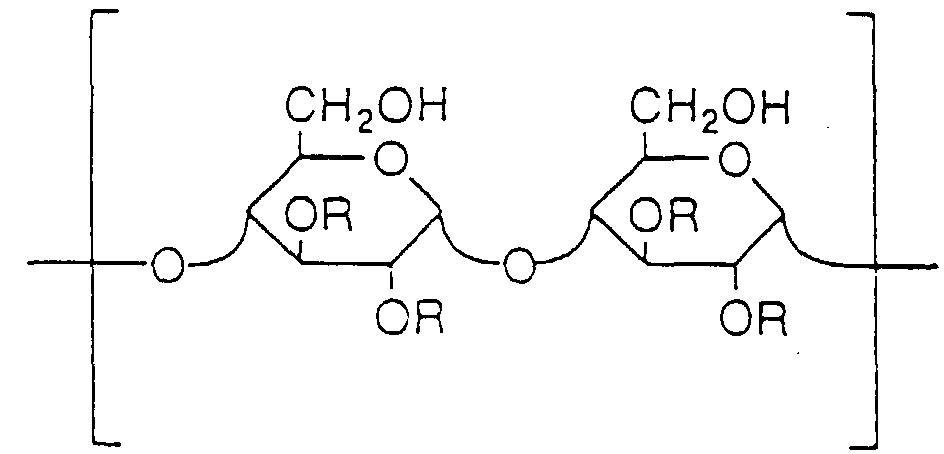
- 1) A novel polysaccharide (APS), comprising (1->4) bonded
α-D-glucose units represented by the following formula
wherein R is a hydrogen atom or an acetyl group in the ratio of ca. 7:3. The following are physicochemical properties:

- (1) Nature: a white amorphous powder, without taste and odor;
- (2) Solubility: insoluble in alcohol, acetone, hexane, benzene, ethyl acetate, tetrachloromethane, chloroform and ether, and soluble in water, formamide, and dimethylsulfoxide;
- (3) pH of aqueous solution: neutral;
- (4) Component sugar: glucose only;
- (5) Molecular weight: 500 to 10,000;
- (6) Specific optical rotation: [α]D(24°C)=+112° to +116°(in water);
- (7) Color reaction: positive to anthrone-sulfuric acid reaction, phenol-sulfuric acid reaction, and chromotropic acid-sulfuric acid reaction, and negative to biuret reaction, Lowry-Folin reaction, Elson-Morgan reaction, and iodo reaction;
- (8) Melting point: showing no clear melting point;
- (9) IR spectrum: absorption specific to acetyl groups;
- (10) 13C-NMR spectrum: exhibiting signals specific to α-1,4-glucan and acetyl groups; and
- 2) A method of preparing APS described above.
-
- The APS, unlike conventional lentinan and schizophyllan, consists of (1->4) bonded α-D-glucose units exclusively, with about 30% of acetyl groups at the 2,3-hydroxyls. The polysaccharide has a molecular weight of 500 to 10,000, preferably 1,000 to 7,000, as measured by gel filtration column chromatography. The polysaccharide can be extracted and isolated from a broth or a mixture of culture medium and mycelia of a microorganism belonging to the genus Basidiomycetes in a liquid culture in the presence of plant tissues as a raw material for culture medium.
- Hereinafter, the present invention is described in more detail.
- The microorganisms or species of Basidiomycetes which can be used in the present invention include, for example, Lentinus edodes, Agaricus bisporus, Grifola frondosa, Pholiota nameko, Pleurotus ostreatus, Flammulina velutipes, Ganoderma lucidum, Auricularia auricula, Ganoderma applanatum, Coriolus versicolor, Grifola umbellata, Shcizophyllum commune, Volvariella volvaceae, and the like. These can be used singly or as combined forms.
- The Basidiomycetes microorganism can be cultivated principally by a conventional method for cultivating microorganisms. However, it is advantageous to use liquid culture media and cultivate under mild conditions with stirring and aeration since the Basidiomycetes species are aerobic.
- Raw material for culture media includes plant fibers such as bran, straw for example rice straw, rice bran, bagasse, saw dust, and soybean lees. More specifically, the extract of one or more plant fibers with hot water can be used advantageously.
- As carbon sources, there can be used any of glucose, sucrose, maltose, saccharose, white sugar, black sugar, steep liquor, waste steep liquor, malt extracts, and the like.
- As nitrogen sources, meat extracts, peptone, gluten meal, soybean powder, dry yeast, yeast extracts, ammonium sulfate, ammonium tartarate, urea, and the like can be used. If desired, it is also possible to add to the medium various additives such as inorganic salts, e.g., phosphates, table salt (NaCl), magnesium salts, manganese salts, calcium salts, iron salts, etc. and vitamins, e.g., inositol, vitamin B1 hydrochloride, L-asparagin, biotin, etc.
- The conditions for cultivating the above-mentioned Basidiomycetes microorganisms may be similar to those for medium temperature-requiring bacteria. For example, they can be cultivated at a temperature of 10°C to 45°C, preferably 15°C to 30°C, for 4 to 20 days, preferably 6 to 12 days, at pH 2 to 6.
- To the mixture of the culture media and mycelia thus obtained may be added an enzyme such as cellulase, amylase, protease, pectinase, chitinase, etc. The mixture is allowed to react for 2 to 20 hours under the condition of an optimum temperature to macerate mycelia, followed by heating to inactivate the enzyme.
- The mycelia residue is removed from the culture thus treated by centrifugation or a similar separation technique. Then, the supernatant is extracted with hexane, ether or chloroform, or eluted with water by column chromatography using a reversed-phase partition carrier such as octadecylsilane (ODS (C18), etc.), polystyrene-based polymer (MCI gel CHP-20P (Mitsubishi Chemical), etc.), hydroxypropyldextran resin (Sephadex LH-20 (Pharmacia), etc.), or the like to remove lipids. The fraction eluted with water is concentrated, and the concentrate is dissolved in an appropriate amount of water, and addition of ethanol in an amount of 3- to 5-times the amount of water in the solution gives rise to white precipitates. The precipitates collected by, for example, centrifugation are treated with an ion exchange resin or the like to remove salts, proteins, etc. therefrom to obtain a neutral polysaccharide fraction. Then, the polysaccharide fraction is purified by gel filtration chromatography with polyacrylamide resin (Bio-gel P-2 (BIO RAD), etc.), dextran resin (Sephadex G-15 (Pharmacia), etc.), cellulose matrix (Cellulofine (Seikagaku Kogyo)), Toyopearl (HW-40F (Toso), etc.) or using an ultrafiltration membrane.
- The polysaccharides of the present invention exhibit the properties suitable as biological response modifiers (BRM) and can be used as an immuno-enhancing agent or an immunoactivator.
- Hereinafter, the present invention is described by way of examples. However, the present invention is not limited thereto.
-
- 1) Cultivation: Lentinus edodes subcultured in a solid medium (1% maltose, 0.2% peptone, 0.2% ammonium tartarate, and 1.5% agar) in a glass petri dish of 90 mm in diameter was inoculated in a 10-liter culture bottle containing 8 liters of a liquid medium (150 g of rice bran together with 800 ml of water was heated at 120°C for 15 minutes and filtered, and 10 g of maltose, 2.5 g of peptone, and 2.0 g of ammonium tartarate were added together with an appropriate amount of water, pH 4.0). The contents were incubated at 20°C for 7 days with aeration. Next, 8 liters of the culture broth were inoculated in a culture tank containing 300 liters of a liquid medium having the same composition as above. Cultivation was continued at 23°C for 9 days with aeration and mild stirring.
- 2) Extraction, Separation and Purification: The resulting mixture of the culture medium and mycelia was warmed to 90°C. After addition of 8 g of amylase and continued reaction for 3 hours, the reaction mixture was cooled down to 60°C. After addition of 15 g of cellulase and 15 g of protease, the mixture was allowed to stand at 55°C for 10 hours. The reaction mixture was further heated at 120°C for 20 minutes to inactivate the enzymes.The thus treated culture medium was centrifuged to remove residual mycelia, and the supernatant was concentrated under reduced pressure to obtain 7.5 kg of the extract, which was subjected to column chromatography using MCI gel CHP-20P (Mitsubishi Chemical) as a carrier and deionized water as eluant. The fraction eluted with deionized water was concentrated. The residue was redissolved in 1.5 liters of deionized water. Then, 6 liters of ethanol was added thereto to give white precipitates. The mixture was then centrifuged and the supernatant was removed. Similarly, the precipitates were dissolved in deionized water and 4-fold volume of ethanol was added. Then, the mixture was centrifuged and the supernatant was removed by decantation. This procedure was repeated twice. The precipitates thus obtained were treated with cation exchange resin Dowex 50w x-8 (H form) (The Dow Chemical Company), the portion which was not adsorbed and was eluted out with water was concentrated. This fraction was subjected to column chromatography using Sephadex G-15 (Pharmacia). The portion eluted in the void volume was evaporated to dryness under reduced pressure to obtain 600g of the objective polysaccharide.
-
- The physical and chemical properties of the product are as follows:
- (1) Nature: a white amorphous powder, without taste and odor;
- (2) Solubility: insoluble in alcohol, acetone, hexane, benzene, ethyl acetate, tetrachloromethane, chloroform and ether, and soluble in water, formamide, and dimethylsulfoxide;
- (3) pH of aqueous solution: neutral;
- (4) Component sugar: To a 1% aqueous solution of the
compound was added sulfuric acid to a concentration of 1N
and the resulting solution was heated at 100°C for 3 hours.
The reaction mixture was neutralized with barium carbonate
and centrifuged. Thin layer chromatography of the
supernatant was carried out with the following four
developing solvents. In each case, no sugar spot except for
glucose was detected, showing that this compound is a
polysaccharide consisting exclusively of glucose.
- (i) Ethyl acetate : methanol : acetic acid : water = 65:15:10:10
- (ii) Ethyl acetate : isopropanol : water = 65:23:12
- (iii) n-Butanol : acetic acid : water = 2:1:1
- (iv) n-Butanol : pyridine : water = 6:4:3;
- (5) Molecular weight: The molecular weight of the compound was presumed to be 500 to 10,000 from an elution curve obtained by subjecting samples to gel filtration column chromatography (Sephadex G-25 and Sephadex G-50, Pharmacia) using dextran having a known molecular weight as a standard substance;
- (6) Specific optical rotation: [α]D(24°C)=+112° to +116°;
- (7) Color reaction: the complete hydrolysis product of the compound was positive to anthrone-sulfuric acid reaction, phenol-sulfuric acid reaction, and chromotropic acid-sulfuric acid reaction, but negative for biuret reaction, Lowry-Folin reaction, Elson-Morgan reaction, and iodo reaction;
- (8) Melting point: showing no clear melting point;
- (9) IR spectrum: absorption due to acetyl groups at ca. 1740 cm-1; and
- (10) 13C-NMR spectrum: 172, 100-104, 76-78, 72-74, 70, 68, 61, 18 ppm;
-
- As major peaks, those characteristic to α-1,4-glucan and acetyl groups are observed. Furthermore, a part (ca. 30%) of signals due to glucose C-1, C-3, and C-4 are shifted owing to the acetylation, thus confirming that this compound consists of (1->4) bonded α-D-glucose units and is represented by the following formula:wherein R represents a hydrogen atom or an acetyl group in the ratio of 7:3 and that the compound is a novel polysaccharide which has a molecular weight of 500 to 10,000.
- The following tests were intended to examine whether the novel polysaccharides of the present invention have properties of an immuno-enhancing agent (Biological Response Modifiers (BRM)) or not.
- Phagocytes such as neutrophil leucocytes and macrophages play an important role in homeostasis retention of living body. They cover a wide variety of functions including anti-cancer or anti-microbial effects, inflammation, and antibody production as well as phagocytosis. The phagocytes tend to migrate toward and accumulate at the locations where foreign substances are present. In other words, substances which are foreign in nature to the living body cause phagocytes to accumulate. An immuno-enhancing agent (biological response modifier (BRM)) is a typical example thereof; it guides phagocytes that support innate defense mechanism to local positions where it has been taken or administered so that they accumulate. The increment in the number of the phagocytes induces enhancement of the innate defense. That is, it can be understood that substances which guide phagocytes toward local positions have properties similar to immunological enhancing agents (BRM-like). Utilizing this phenomenon, tests were performed in order to examine whether the novel polysaccharides (APS) enhance innate defense mechanism.
- More particularly, a test sample was inoculated in the abdomen of a mouse, and accumulation of neutrophil leucocytes after 6 hours was examined. As shown in Table 1, abdominal cells in a control mouse incubated with physiological saline contained only a small amount, e.g., several % or less of neutrophil leucocytes. On the other hand, lentinan, which is a kind of BRM and used clinically as a cancerocidal agent, caused strong permeation such that proportion of neutrophil leucocytes occupied 63% of the abdominal cells. The APS substance obtained in the example had strong neutrophil leucocyte accumulation activity of 75% higher than the known BRM.
Sample Dose Ratio of Accumulated Neutrophils Physiological saline 1 ml/mouse 2% Lentinan 1 mg/mouse 63% APS substance 1 mg/mouse 75%
Claims (7)
- A novel polysaccharide comprising (1->4) bonded α-D-glucose units represented by the following formulawherein R is a hydrogen atom or an acetyl group in the ratio of substantially 7:3, said polysaccharide having the following properties:
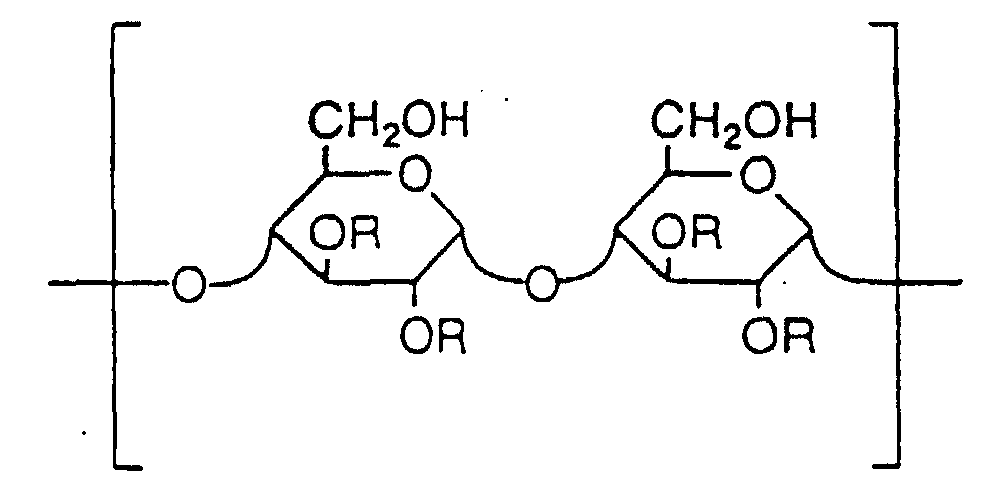 (1) Nature: a white amorphous powder, without taste and odor;(2) Solubility: insoluble in alcohol, acetone, hexane, benzene, ethyl acetate, tetrachloromethane, chloroform and ether, and soluble in water, formamide, and dimethylsulfoxide;(3) pH of aqueous solution: neutral;(4) Component sugar: glucose only;(5) Molecular weight: 500 to 10,000;(6) Specific optical rotation: [α]D(24°C)=+112° to +116°;(7) Color reaction: positive to anthrone-sulfuric acid reaction, phenol-sulfuric acid reaction, and chromotropic acid-sulfuric acid reaction and negative to biuret reaction, Lowry-Folin reaction, Elson-Morgan reaction, and iodo reaction;(8) Melting point: showing no clear melting point;(9) IR spectrum: absorption specific to acetyl groups; and(10) 13C-NMR spectrum: exhibiting signals characteristic to α-1,4-glucan and acetyl groups.
 - The polysaccharide as claimed in claim 1, wherein said polysaccharide is extracted and isolated from a culture medium in which a microorganism belonging to the genus Basidiomycetes is cultured in the presence of a plant tissue raw material.
- The polysaccharide as claimed in claim 2, wherein said plant tissue raw material is one or more plant fibers selected from the group consisting of bran, rice straw, rice bran, bagasse, saw dust, and soybean lees.
- A method of preparing a polysaccharide comprising the steps of:cultivating a microorganism belonging to the genus Basidiomycetes in a liquid culture medium in the presence of a plant tissue raw material; andextracting and isolating the polysaccharide of claim 1.
- The method as claimed in claim 4, wherein said microorganism belonging to the genus Basidiomycetes is selected from the group consisting of Lentinus edodes, Agaricus bisporus, Crifola frondosa, Pholiota nameko, Pleurotus ostreatus, Flammulina velutipes, Ganoderma lucidum, Auricularia auricula, Ganoderma applanatum, Coriolus versicolor, Grifola umbellata, Schizophyllum commune, and Volvariella volvaceae.
- The method as claimed in claim 4, wherein said plant tissue raw material is selected from the group consisting of one or more plant fibers selected from the group consisting of bran, rice straw, rice bran, bagasse, saw dust, and soybean lees.
- The method as claimed in claim 6, wherein as said plant tissue raw material is used hot water extract of one or more of said plant fibers.
Applications Claiming Priority (3)
| Application Number | Priority Date | Filing Date | Title |
|---|---|---|---|
| JP9004295 | 1995-03-24 | ||
| JP90042/95 | 1995-03-24 | ||
| JP09004295A JP3651697B2 (en) | 1995-03-24 | 1995-03-24 | New polysaccharide substances |
Publications (3)
| Publication Number | Publication Date |
|---|---|
| EP0733647A2 EP0733647A2 (en) | 1996-09-25 |
| EP0733647A3 EP0733647A3 (en) | 1997-05-02 |
| EP0733647B1 true EP0733647B1 (en) | 2000-01-12 |
Family
ID=13987595
Family Applications (1)
| Application Number | Title | Priority Date | Filing Date |
|---|---|---|---|
| EP95307113A Expired - Lifetime EP0733647B1 (en) | 1995-03-24 | 1995-10-06 | Polysaccharides and preparation thereof |
Country Status (7)
| Country | Link |
|---|---|
| US (1) | US5756318A (en) |
| EP (1) | EP0733647B1 (en) |
| JP (1) | JP3651697B2 (en) |
| KR (1) | KR100290044B1 (en) |
| DE (1) | DE69514498T2 (en) |
| FI (1) | FI110324B (en) |
| MY (1) | MY118869A (en) |
Cited By (4)
| Publication number | Priority date | Publication date | Assignee | Title |
|---|---|---|---|---|
| US6958039B2 (en) | 2003-05-02 | 2005-10-25 | Oculir, Inc. | Method and instruments for non-invasive analyte measurement |
| US6968222B2 (en) | 2003-05-02 | 2005-11-22 | Oculir, Inc. | Methods and device for non-invasive analyte measurement |
| US6975892B2 (en) | 2003-10-21 | 2005-12-13 | Oculir, Inc. | Methods for non-invasive analyte measurement from the conjunctiva |
| AU2001277737B2 (en) * | 2001-02-08 | 2007-12-06 | Amino Up Co., Ltd. | Novel substance having physiological activity, process for producing the same, and use |
Families Citing this family (30)
| Publication number | Priority date | Publication date | Assignee | Title |
|---|---|---|---|---|
| TW358121B (en) * | 1995-12-25 | 1999-05-11 | Hitoshi Nagaoka | Method for extracting useful substance from culture medium containing mycelium |
| DE19729273C2 (en) * | 1997-07-09 | 2000-08-17 | Aventis Res & Tech Gmbh & Co | Thermoplastic mixture based on 1,4-alpha-D-polyglucan, process for its production and use |
| AU732306B2 (en) * | 1997-10-14 | 2001-04-12 | Chugai Seiyaku Kabushiki Kaisha | Potentiator for antibody against lymphoid tumor |
| US5997875A (en) * | 1998-03-27 | 1999-12-07 | Zhou; James H. | Herbal composition and treatment methods |
| ATE404216T1 (en) * | 1999-08-23 | 2008-08-15 | Chugai Pharmaceutical Co Ltd | AMPLIFIER OF HM1.24 ANTIGEN EXPRESSION |
| EP1203822A1 (en) * | 2000-11-02 | 2002-05-08 | Societe Des Produits Nestle S.A. | Extracellular polysaccharide from Gluconacetobacter spp |
| JP3986439B2 (en) * | 2001-02-07 | 2007-10-03 | 中外製薬株式会社 | Hematopoietic tumor therapeutic agent |
| KR100442149B1 (en) * | 2001-03-20 | 2004-07-27 | 학교법인 동서학원 | Barley medium and method of preparing beta-glucan in schizophyllum commune using same |
| US6838096B2 (en) * | 2001-06-20 | 2005-01-04 | Taipei Veterans General Hospital | Black soybean polysaccharides |
| NO20014256D0 (en) | 2001-09-03 | 2001-09-03 | Bjoern Kristiansen | Preparation of immunostimulatory compound |
| US7048932B2 (en) * | 2002-05-22 | 2006-05-23 | The Chinese University Of Hong Kong | Preparation and standardization of immunomodulatory peptide-linked glucans with verifiable oral absorbability from coriolus versicolor |
| DE602004013762D1 (en) * | 2003-05-01 | 2008-06-26 | Mycology Techno Corp | BASIDIOMYZETEN, BASIDIOMYZETENEXTRACTIC COMPOSITION, REFORMKOST AND IMMUNOPOTENTIATORS |
| US20060224057A1 (en) * | 2003-10-21 | 2006-10-05 | Oculir, Inc. | Methods for non-invasive analyte measurement |
| US20060258919A1 (en) * | 2004-04-14 | 2006-11-16 | Oculir, Inc. | Non-Invasive Analyte Measurement Device for Measuring Tears and Other Ocular Elements Using Electromagnetic Radiation and Method of Using the Same |
| US20080009688A1 (en) * | 2004-04-14 | 2008-01-10 | Oculir, Inc. | Methods for non-invasive analyte measurement |
| CA2574060C (en) * | 2004-07-16 | 2019-06-25 | Medimush A/S | Immune modulating compounds from fungi |
| US7514085B2 (en) * | 2004-07-16 | 2009-04-07 | Medimush A/S | Immune modulating compounds from fungi |
| EP1885866A1 (en) * | 2005-05-13 | 2008-02-13 | Medimush A/S | Feed or food products comprising fungal material |
| US20090005340A1 (en) * | 2005-06-15 | 2009-01-01 | Medimush A/S | Bioactive Agents Produced By Submerged Cultivation of a Basidiomycete Cell |
| WO2006133707A2 (en) * | 2005-06-15 | 2006-12-21 | Medimush A/S | Anti-cancer combination treatment and kit-of-part |
| KR100673051B1 (en) * | 2005-07-29 | 2007-01-22 | 양병근 | Intracellular Biopolymers Isolated from Taste Mushroom Mycelium Liquid Cultures with Immune Enhancing Activity |
| ES2341163B1 (en) | 2008-09-26 | 2011-05-11 | Bioiberica, S.A. | IMMUNO STIMULATING COMPOSITIONS. |
| EP2921504B1 (en) * | 2012-11-14 | 2017-07-12 | National Institute of Advanced Industrial Science and Technology | Beta-1,3-glucan derivative and method for producing beta-1,3-glucan derivative |
| KR101802142B1 (en) * | 2015-11-30 | 2017-11-29 | (주)에스티알바이오텍 | Compositions with bioconversion Glycine max for improvement of immunity, diabetes, hyperlipemia or protection against liver damage |
| KR101886038B1 (en) * | 2017-06-20 | 2018-08-07 | (주)에스티알바이오텍 | Compositions with bioconversion Glycine max for improvement of immunity, diabetes, hyperlipemia or protection against liver damage |
| CN107698695B (en) * | 2017-09-12 | 2021-06-01 | 广州中医药大学第二附属医院 | Homogeneous polysaccharide with immunomodulatory activity and preparation method thereof |
| JP6989914B2 (en) * | 2018-03-23 | 2022-01-12 | 地方独立行政法人北海道立総合研究機構 | Mushroom cultivation medium additive, mushroom cultivation medium, and mushroom cultivation method using the same medium |
| CN109609525A (en) * | 2019-01-10 | 2019-04-12 | 江苏大学 | Grifola frondosa glucan synthase, its encoding gene and application |
| CN112094878A (en) * | 2020-08-18 | 2020-12-18 | 周银根 | Method for extracting lentinan by two-step enzyme, lentinan extract and application thereof |
| CN120441728B (en) * | 2025-07-11 | 2025-10-14 | 安徽中医药大学 | Polygonatum oligosaccharide, preparation method thereof and application of Polygonatum oligosaccharide in preparation of medicines for treating depression |
Family Cites Families (6)
| Publication number | Priority date | Publication date | Assignee | Title |
|---|---|---|---|---|
| US4051314A (en) * | 1970-10-14 | 1977-09-27 | Kureha Kagaku Kogyo Kabushiki Kaisha | Polysaccharides and method for producing same |
| JPS5329987A (en) * | 1976-08-30 | 1978-03-20 | Kureha Chem Ind Co Ltd | Cultivation of basidiomycetes belonging to coriolus genus |
| CA1103181A (en) * | 1977-03-29 | 1981-06-16 | Koji Yokobayashi | Processes for producing glucan |
| US4614733A (en) * | 1981-12-31 | 1986-09-30 | Kureha Kagaku Kogyo Kabushiki Kaisha | Polysaccharides pharmaceutical compositions and the use thereof |
| US4501888A (en) * | 1984-01-24 | 1985-02-26 | A. E. Staley Manufacturing Company | Process for producing esters of carbohydrate materials |
| US4959466A (en) * | 1988-01-25 | 1990-09-25 | Arco Chemical Technology, Inc. | Partially esterified polysaccharide (PEP) fat substitutes |
-
1995
- 1995-03-24 JP JP09004295A patent/JP3651697B2/en not_active Expired - Fee Related
- 1995-09-29 US US08/536,038 patent/US5756318A/en not_active Expired - Lifetime
- 1995-09-29 MY MYPI95002915A patent/MY118869A/en unknown
- 1995-10-06 DE DE69514498T patent/DE69514498T2/en not_active Expired - Lifetime
- 1995-10-06 EP EP95307113A patent/EP0733647B1/en not_active Expired - Lifetime
- 1995-10-16 FI FI954926A patent/FI110324B/en not_active IP Right Cessation
- 1995-10-27 KR KR1019950037472A patent/KR100290044B1/en not_active Expired - Lifetime
Cited By (4)
| Publication number | Priority date | Publication date | Assignee | Title |
|---|---|---|---|---|
| AU2001277737B2 (en) * | 2001-02-08 | 2007-12-06 | Amino Up Co., Ltd. | Novel substance having physiological activity, process for producing the same, and use |
| US6958039B2 (en) | 2003-05-02 | 2005-10-25 | Oculir, Inc. | Method and instruments for non-invasive analyte measurement |
| US6968222B2 (en) | 2003-05-02 | 2005-11-22 | Oculir, Inc. | Methods and device for non-invasive analyte measurement |
| US6975892B2 (en) | 2003-10-21 | 2005-12-13 | Oculir, Inc. | Methods for non-invasive analyte measurement from the conjunctiva |
Also Published As
| Publication number | Publication date |
|---|---|
| KR100290044B1 (en) | 2001-05-15 |
| FI954926A0 (en) | 1995-10-16 |
| KR960034221A (en) | 1996-10-22 |
| MY118869A (en) | 2005-02-28 |
| US5756318A (en) | 1998-05-26 |
| FI110324B (en) | 2002-12-31 |
| DE69514498T2 (en) | 2000-08-03 |
| FI954926A7 (en) | 1996-09-25 |
| JPH08259602A (en) | 1996-10-08 |
| JP3651697B2 (en) | 2005-05-25 |
| EP0733647A2 (en) | 1996-09-25 |
| DE69514498D1 (en) | 2000-02-17 |
| EP0733647A3 (en) | 1997-05-02 |
Similar Documents
| Publication | Publication Date | Title |
|---|---|---|
| US5756318A (en) | Polysaccharides and preparation thereof | |
| Yan et al. | Analyses of active antioxidant polysaccharides from four edible mushrooms | |
| KOMATSU et al. | Host-mediated antitumor action of schizophyllan, a glucan produced by Schizophyllum commune | |
| Ohno et al. | Antitumor activity and structural characterization of glucans extracted from cultured fruit bodies of Grifola frondosa | |
| CN104672339B (en) | Cordyceps cicadae rhzomorph as well as preparation method and application thereof | |
| US4289688A (en) | Protein-bound polysaccharides | |
| CN108546306A (en) | A kind of Chinese caterpillar fungus culture medium polysaccharide and its isolation and purification method and purposes | |
| da Silva et al. | Purification and structural characterisation of (1→ 3; 1→ 6)-β-D-glucans (botryosphaerans) from Botryosphaeria rhodina grown on sucrose and fructose as carbon sources: a comparative study | |
| EP0654047A1 (en) | Glucans with immunostimulant activity | |
| EP0459367B1 (en) | Method for preparing an antitumor dextran | |
| US4614733A (en) | Polysaccharides pharmaceutical compositions and the use thereof | |
| HASHIMOTO et al. | ANTITUMOR ACTIVITY OF ACIDIC MANNAN FRACTION FROM BAKERS'YEAST | |
| WO2009017463A2 (en) | NOVEL β-GLUCANS ISOLATED FROM HIGHER BASIDIOMYCETES MUSHROOM GANODERMA TSUGAE VAR. JANNIEAE | |
| GB2061306A (en) | 1,3-glucanpolyol its preparation and composition comprising it | |
| US7060470B2 (en) | Isoflavone-β-D-glucan produced by Agaricus blazei in the submerged liquid culture and method of producing same | |
| JPH0248161B2 (en) | ||
| Kogan et al. | Glucomannan from Candida utilis: structural investigation | |
| EP0067000A2 (en) | Production of a nitrogen-containing polysaccharide having antitumour activity | |
| JPH0372084B2 (en) | ||
| CA1086720A (en) | Polysaccharides and process for the preparation thereof | |
| Blaschek et al. | In vitro production of specific polysaccharides: isolation and structure of an antitumor active β-glucan from Phytophthora parasitica | |
| Sulkowska-Ziaja et al. | Chemical composition and cytotoxic activity of the polysaccharide fraction in Sarcodon imbricatus (Basidiomycota) | |
| KR910004367B1 (en) | Method for preparation of novel glucan | |
| Górska et al. | Selenium-Containing Exopolysaccharides Isolated from the Culture Medium of Lentinula edodes: Structure and Biological Activity | |
| TW379230B (en) | Novel polysaccharides and preparation thereof |
Legal Events
| Date | Code | Title | Description |
|---|---|---|---|
| PUAI | Public reference made under article 153(3) epc to a published international application that has entered the european phase |
Free format text: ORIGINAL CODE: 0009012 |
|
| AK | Designated contracting states |
Kind code of ref document: A2 Designated state(s): CH DE FR GB LI |
|
| PUAL | Search report despatched |
Free format text: ORIGINAL CODE: 0009013 |
|
| AK | Designated contracting states |
Kind code of ref document: A3 Designated state(s): CH DE FR GB LI |
|
| RAP3 | Party data changed (applicant data changed or rights of an application transferred) |
Owner name: AMINO UP CHEMICAL CO. LTD. |
|
| 17P | Request for examination filed |
Effective date: 19970820 |
|
| 17Q | First examination report despatched |
Effective date: 19971202 |
|
| GRAG | Despatch of communication of intention to grant |
Free format text: ORIGINAL CODE: EPIDOS AGRA |
|
| GRAG | Despatch of communication of intention to grant |
Free format text: ORIGINAL CODE: EPIDOS AGRA |
|
| GRAH | Despatch of communication of intention to grant a patent |
Free format text: ORIGINAL CODE: EPIDOS IGRA |
|
| GRAH | Despatch of communication of intention to grant a patent |
Free format text: ORIGINAL CODE: EPIDOS IGRA |
|
| GRAA | (expected) grant |
Free format text: ORIGINAL CODE: 0009210 |
|
| AK | Designated contracting states |
Kind code of ref document: B1 Designated state(s): CH DE FR GB LI |
|
| REG | Reference to a national code |
Ref country code: CH Ref legal event code: EP |
|
| REF | Corresponds to: |
Ref document number: 69514498 Country of ref document: DE Date of ref document: 20000217 |
|
| REG | Reference to a national code |
Ref country code: CH Ref legal event code: NV Representative=s name: DIPL.-ING. ETH H. R. WERFFELI PATENTANWALT |
|
| ET | Fr: translation filed | ||
| PLBE | No opposition filed within time limit |
Free format text: ORIGINAL CODE: 0009261 |
|
| STAA | Information on the status of an ep patent application or granted ep patent |
Free format text: STATUS: NO OPPOSITION FILED WITHIN TIME LIMIT |
|
| 26N | No opposition filed | ||
| REG | Reference to a national code |
Ref country code: GB Ref legal event code: IF02 |
|
| PGFP | Annual fee paid to national office [announced via postgrant information from national office to epo] |
Ref country code: DE Payment date: 20140930 Year of fee payment: 20 Ref country code: GB Payment date: 20141001 Year of fee payment: 20 Ref country code: CH Payment date: 20141014 Year of fee payment: 20 Ref country code: FR Payment date: 20141008 Year of fee payment: 20 |
|
| REG | Reference to a national code |
Ref country code: DE Ref legal event code: R071 Ref document number: 69514498 Country of ref document: DE |
|
| REG | Reference to a national code |
Ref country code: CH Ref legal event code: PL |
|
| REG | Reference to a national code |
Ref country code: GB Ref legal event code: PE20 Expiry date: 20151005 |
|
| PG25 | Lapsed in a contracting state [announced via postgrant information from national office to epo] |
Ref country code: GB Free format text: LAPSE BECAUSE OF EXPIRATION OF PROTECTION Effective date: 20151005 |