EP0731140B1 - Flameproof thermoplastic resin compositions - Google Patents
Flameproof thermoplastic resin compositions Download PDFInfo
- Publication number
- EP0731140B1 EP0731140B1 EP95107212A EP95107212A EP0731140B1 EP 0731140 B1 EP0731140 B1 EP 0731140B1 EP 95107212 A EP95107212 A EP 95107212A EP 95107212 A EP95107212 A EP 95107212A EP 0731140 B1 EP0731140 B1 EP 0731140B1
- Authority
- EP
- European Patent Office
- Prior art keywords
- styrene
- weight
- substituted
- resin composition
- copolymer
- Prior art date
- Legal status (The legal status is an assumption and is not a legal conclusion. Google has not performed a legal analysis and makes no representation as to the accuracy of the status listed.)
- Expired - Lifetime
Links
- 239000011342 resin composition Substances 0.000 title claims description 44
- 229920005992 thermoplastic resin Polymers 0.000 title claims description 24
- PPBRXRYQALVLMV-UHFFFAOYSA-N Styrene Chemical compound C=CC1=CC=CC=C1 PPBRXRYQALVLMV-UHFFFAOYSA-N 0.000 claims description 79
- 229910019142 PO4 Inorganic materials 0.000 claims description 25
- 235000021317 phosphate Nutrition 0.000 claims description 25
- 229920000642 polymer Polymers 0.000 claims description 25
- 229920005989 resin Polymers 0.000 claims description 25
- 239000011347 resin Substances 0.000 claims description 25
- 229920000578 graft copolymer Polymers 0.000 claims description 24
- 239000004417 polycarbonate Substances 0.000 claims description 23
- 229920000515 polycarbonate Polymers 0.000 claims description 21
- 150000003018 phosphorus compounds Chemical class 0.000 claims description 20
- 150000003013 phosphoric acid derivatives Chemical class 0.000 claims description 12
- -1 α-substituted styrene Chemical class 0.000 claims description 11
- NLHHRLWOUZZQLW-UHFFFAOYSA-N Acrylonitrile Chemical compound C=CC#N NLHHRLWOUZZQLW-UHFFFAOYSA-N 0.000 claims description 8
- 229920001577 copolymer Polymers 0.000 claims description 8
- 239000011368 organic material Substances 0.000 claims description 8
- 229920001971 elastomer Polymers 0.000 claims description 6
- 239000005060 rubber Substances 0.000 claims description 6
- BFKJFAAPBSQJPD-UHFFFAOYSA-N tetrafluoroethene Chemical group FC(F)=C(F)F BFKJFAAPBSQJPD-UHFFFAOYSA-N 0.000 claims description 6
- VVQNEPGJFQJSBK-UHFFFAOYSA-N Methyl methacrylate Chemical compound COC(=O)C(C)=C VVQNEPGJFQJSBK-UHFFFAOYSA-N 0.000 claims description 5
- 150000003440 styrenes Chemical class 0.000 claims description 5
- 125000006736 (C6-C20) aryl group Chemical group 0.000 claims description 4
- 125000006835 (C6-C20) arylene group Chemical group 0.000 claims description 4
- 239000011256 inorganic filler Substances 0.000 claims description 4
- 229910003475 inorganic filler Inorganic materials 0.000 claims description 4
- 229920001343 polytetrafluoroethylene Polymers 0.000 claims description 4
- 239000004810 polytetrafluoroethylene Substances 0.000 claims description 4
- 229920001169 thermoplastic Polymers 0.000 claims description 4
- 239000004416 thermosoftening plastic Substances 0.000 claims description 4
- 239000002033 PVDF binder Substances 0.000 claims description 3
- 239000000975 dye Substances 0.000 claims description 3
- 239000012760 heat stabilizer Substances 0.000 claims description 3
- 239000000049 pigment Substances 0.000 claims description 3
- 229920002981 polyvinylidene fluoride Polymers 0.000 claims description 3
- 230000009477 glass transition Effects 0.000 claims description 2
- HCDGVLDPFQMKDK-UHFFFAOYSA-N hexafluoropropylene Chemical group FC(F)=C(F)C(F)(F)F HCDGVLDPFQMKDK-UHFFFAOYSA-N 0.000 claims description 2
- 239000003112 inhibitor Substances 0.000 claims description 2
- 239000004611 light stabiliser Substances 0.000 claims description 2
- 230000003647 oxidation Effects 0.000 claims description 2
- 238000007254 oxidation reaction Methods 0.000 claims description 2
- BQCIDUSAKPWEOX-UHFFFAOYSA-N 1,1-Difluoroethene Chemical compound FC(F)=C BQCIDUSAKPWEOX-UHFFFAOYSA-N 0.000 claims 1
- 239000000203 mixture Substances 0.000 description 20
- 230000000052 comparative effect Effects 0.000 description 13
- NBIIXXVUZAFLBC-UHFFFAOYSA-K phosphate Chemical compound [O-]P([O-])([O-])=O NBIIXXVUZAFLBC-UHFFFAOYSA-K 0.000 description 13
- 239000010452 phosphate Substances 0.000 description 13
- 238000000465 moulding Methods 0.000 description 12
- 238000000034 method Methods 0.000 description 9
- 230000005540 biological transmission Effects 0.000 description 8
- UHOVQNZJYSORNB-UHFFFAOYSA-N Benzene Chemical compound C1=CC=CC=C1 UHOVQNZJYSORNB-UHFFFAOYSA-N 0.000 description 6
- 238000005054 agglomeration Methods 0.000 description 6
- 230000002776 aggregation Effects 0.000 description 6
- 125000003118 aryl group Chemical group 0.000 description 6
- 239000000654 additive Substances 0.000 description 5
- BHEPBYXIRTUNPN-UHFFFAOYSA-N hydridophosphorus(.) (triplet) Chemical compound [PH] BHEPBYXIRTUNPN-UHFFFAOYSA-N 0.000 description 5
- 239000002245 particle Substances 0.000 description 5
- 230000000704 physical effect Effects 0.000 description 5
- 239000005062 Polybutadiene Substances 0.000 description 4
- 238000002485 combustion reaction Methods 0.000 description 4
- 239000003063 flame retardant Substances 0.000 description 4
- 229920002857 polybutadiene Polymers 0.000 description 4
- 229920005668 polycarbonate resin Polymers 0.000 description 4
- RNFJDJUURJAICM-UHFFFAOYSA-N 2,2,4,4,6,6-hexaphenoxy-1,3,5-triaza-2$l^{5},4$l^{5},6$l^{5}-triphosphacyclohexa-1,3,5-triene Chemical compound N=1P(OC=2C=CC=CC=2)(OC=2C=CC=CC=2)=NP(OC=2C=CC=CC=2)(OC=2C=CC=CC=2)=NP=1(OC=1C=CC=CC=1)OC1=CC=CC=C1 RNFJDJUURJAICM-UHFFFAOYSA-N 0.000 description 3
- ISWSIDIOOBJBQZ-UHFFFAOYSA-N Phenol Chemical compound OC1=CC=CC=C1 ISWSIDIOOBJBQZ-UHFFFAOYSA-N 0.000 description 3
- 229920000122 acrylonitrile butadiene styrene Polymers 0.000 description 3
- 150000001875 compounds Chemical class 0.000 description 3
- 229910052736 halogen Inorganic materials 0.000 description 3
- 150000002367 halogens Chemical class 0.000 description 3
- 238000002844 melting Methods 0.000 description 3
- 230000008018 melting Effects 0.000 description 3
- 150000004712 monophosphates Chemical class 0.000 description 3
- 239000008188 pellet Substances 0.000 description 3
- XHXFXVLFKHQFAL-UHFFFAOYSA-N phosphoryl trichloride Chemical compound ClP(Cl)(Cl)=O XHXFXVLFKHQFAL-UHFFFAOYSA-N 0.000 description 3
- 239000000843 powder Substances 0.000 description 3
- XZZNDPSIHUTMOC-UHFFFAOYSA-N triphenyl phosphate Chemical compound C=1C=CC=CC=1OP(OC=1C=CC=CC=1)(=O)OC1=CC=CC=C1 XZZNDPSIHUTMOC-UHFFFAOYSA-N 0.000 description 3
- KAKZBPTYRLMSJV-UHFFFAOYSA-N Butadiene Chemical compound C=CC=C KAKZBPTYRLMSJV-UHFFFAOYSA-N 0.000 description 2
- TWRXJAOTZQYOKJ-UHFFFAOYSA-L Magnesium chloride Chemical compound [Mg+2].[Cl-].[Cl-] TWRXJAOTZQYOKJ-UHFFFAOYSA-L 0.000 description 2
- ATUOYWHBWRKTHZ-UHFFFAOYSA-N Propane Chemical compound CCC ATUOYWHBWRKTHZ-UHFFFAOYSA-N 0.000 description 2
- 125000001931 aliphatic group Chemical group 0.000 description 2
- IISBACLAFKSPIT-UHFFFAOYSA-N bisphenol A Chemical compound C=1C=C(O)C=CC=1C(C)(C)C1=CC=C(O)C=C1 IISBACLAFKSPIT-UHFFFAOYSA-N 0.000 description 2
- 239000007789 gas Substances 0.000 description 2
- 238000002156 mixing Methods 0.000 description 2
- 239000004431 polycarbonate resin Substances 0.000 description 2
- 238000009757 thermoplastic moulding Methods 0.000 description 2
- 239000002341 toxic gas Substances 0.000 description 2
- XMNDMAQKWSQVOV-UHFFFAOYSA-N (2-methylphenyl) diphenyl phosphate Chemical compound CC1=CC=CC=C1OP(=O)(OC=1C=CC=CC=1)OC1=CC=CC=C1 XMNDMAQKWSQVOV-UHFFFAOYSA-N 0.000 description 1
- VEXZGXHMUGYJMC-UHFFFAOYSA-N Hydrochloric acid Chemical compound Cl VEXZGXHMUGYJMC-UHFFFAOYSA-N 0.000 description 1
- 229920000459 Nitrile rubber Polymers 0.000 description 1
- 229920001890 Novodur Polymers 0.000 description 1
- QAOWNCQODCNURD-UHFFFAOYSA-N Sulfuric acid Chemical compound OS(O)(=O)=O QAOWNCQODCNURD-UHFFFAOYSA-N 0.000 description 1
- YSMRWXYRXBRSND-UHFFFAOYSA-N TOTP Chemical compound CC1=CC=CC=C1OP(=O)(OC=1C(=CC=CC=1)C)OC1=CC=CC=C1C YSMRWXYRXBRSND-UHFFFAOYSA-N 0.000 description 1
- 229920006362 Teflon® Polymers 0.000 description 1
- 230000000996 additive effect Effects 0.000 description 1
- 229910052787 antimony Inorganic materials 0.000 description 1
- WATWJIUSRGPENY-UHFFFAOYSA-N antimony atom Chemical compound [Sb] WATWJIUSRGPENY-UHFFFAOYSA-N 0.000 description 1
- 239000010425 asbestos Substances 0.000 description 1
- 235000010290 biphenyl Nutrition 0.000 description 1
- 239000004305 biphenyl Substances 0.000 description 1
- 125000006267 biphenyl group Chemical group 0.000 description 1
- MTAZNLWOLGHBHU-UHFFFAOYSA-N butadiene-styrene rubber Chemical compound C=CC=C.C=CC1=CC=CC=C1 MTAZNLWOLGHBHU-UHFFFAOYSA-N 0.000 description 1
- 239000000919 ceramic Substances 0.000 description 1
- 239000003153 chemical reaction reagent Substances 0.000 description 1
- 238000007334 copolymerization reaction Methods 0.000 description 1
- 238000005260 corrosion Methods 0.000 description 1
- 230000007797 corrosion Effects 0.000 description 1
- 230000007423 decrease Effects 0.000 description 1
- 230000000593 degrading effect Effects 0.000 description 1
- 239000008367 deionised water Substances 0.000 description 1
- 229910021641 deionized water Inorganic materials 0.000 description 1
- 230000000694 effects Effects 0.000 description 1
- HQQADJVZYDDRJT-UHFFFAOYSA-N ethene;prop-1-ene Chemical group C=C.CC=C HQQADJVZYDDRJT-UHFFFAOYSA-N 0.000 description 1
- 230000002349 favourable effect Effects 0.000 description 1
- 239000003365 glass fiber Substances 0.000 description 1
- 238000010438 heat treatment Methods 0.000 description 1
- IXCSERBJSXMMFS-UHFFFAOYSA-N hydrogen chloride Substances Cl.Cl IXCSERBJSXMMFS-UHFFFAOYSA-N 0.000 description 1
- 229910000041 hydrogen chloride Inorganic materials 0.000 description 1
- 239000012433 hydrogen halide Substances 0.000 description 1
- 229910000039 hydrogen halide Inorganic materials 0.000 description 1
- 239000012535 impurity Substances 0.000 description 1
- 239000004816 latex Substances 0.000 description 1
- 229920000126 latex Polymers 0.000 description 1
- 239000007788 liquid Substances 0.000 description 1
- 239000000463 material Substances 0.000 description 1
- ZUOUZKKEUPVFJK-UHFFFAOYSA-N phenylbenzene Natural products C1=CC=CC=C1C1=CC=CC=C1 ZUOUZKKEUPVFJK-UHFFFAOYSA-N 0.000 description 1
- 229920002959 polymer blend Polymers 0.000 description 1
- 229940096992 potassium oleate Drugs 0.000 description 1
- MLICVSDCCDDWMD-KVVVOXFISA-M potassium;(z)-octadec-9-enoate Chemical compound [K+].CCCCCCCC\C=C/CCCCCCCC([O-])=O MLICVSDCCDDWMD-KVVVOXFISA-M 0.000 description 1
- 238000002360 preparation method Methods 0.000 description 1
- 230000002265 prevention Effects 0.000 description 1
- 239000001294 propane Substances 0.000 description 1
- 229910052895 riebeckite Inorganic materials 0.000 description 1
- 239000002904 solvent Substances 0.000 description 1
- 238000003887 surface segregation Methods 0.000 description 1
- 239000000454 talc Substances 0.000 description 1
- 229910052623 talc Inorganic materials 0.000 description 1
- KOWVWXQNQNCRRS-UHFFFAOYSA-N tris(2,4-dimethylphenyl) phosphate Chemical compound CC1=CC(C)=CC=C1OP(=O)(OC=1C(=CC(C)=CC=1)C)OC1=CC=C(C)C=C1C KOWVWXQNQNCRRS-UHFFFAOYSA-N 0.000 description 1
- QLORRTLBSJTMSN-UHFFFAOYSA-N tris(2,6-dimethylphenyl) phosphate Chemical compound CC1=CC=CC(C)=C1OP(=O)(OC=1C(=CC=CC=1C)C)OC1=C(C)C=CC=C1C QLORRTLBSJTMSN-UHFFFAOYSA-N 0.000 description 1
- LIPMRGQQBZJCTM-UHFFFAOYSA-N tris(2-propan-2-ylphenyl) phosphate Chemical compound CC(C)C1=CC=CC=C1OP(=O)(OC=1C(=CC=CC=1)C(C)C)OC1=CC=CC=C1C(C)C LIPMRGQQBZJCTM-UHFFFAOYSA-N 0.000 description 1
- BOSMZFBHAYFUBJ-UHFFFAOYSA-N tris(4-methylphenyl) phosphate Chemical compound C1=CC(C)=CC=C1OP(=O)(OC=1C=CC(C)=CC=1)OC1=CC=C(C)C=C1 BOSMZFBHAYFUBJ-UHFFFAOYSA-N 0.000 description 1
- XLYOFNOQVPJJNP-UHFFFAOYSA-N water Chemical compound O XLYOFNOQVPJJNP-UHFFFAOYSA-N 0.000 description 1
Images


Classifications
-
- C—CHEMISTRY; METALLURGY
- C08—ORGANIC MACROMOLECULAR COMPOUNDS; THEIR PREPARATION OR CHEMICAL WORKING-UP; COMPOSITIONS BASED THEREON
- C08K—Use of inorganic or non-macromolecular organic substances as compounding ingredients
- C08K5/00—Use of organic ingredients
- C08K5/49—Phosphorus-containing compounds
- C08K5/51—Phosphorus bound to oxygen
- C08K5/52—Phosphorus bound to oxygen only
- C08K5/521—Esters of phosphoric acids, e.g. of H3PO4
-
- C—CHEMISTRY; METALLURGY
- C08—ORGANIC MACROMOLECULAR COMPOUNDS; THEIR PREPARATION OR CHEMICAL WORKING-UP; COMPOSITIONS BASED THEREON
- C08L—COMPOSITIONS OF MACROMOLECULAR COMPOUNDS
- C08L69/00—Compositions of polycarbonates; Compositions of derivatives of polycarbonates
-
- C—CHEMISTRY; METALLURGY
- C08—ORGANIC MACROMOLECULAR COMPOUNDS; THEIR PREPARATION OR CHEMICAL WORKING-UP; COMPOSITIONS BASED THEREON
- C08L—COMPOSITIONS OF MACROMOLECULAR COMPOUNDS
- C08L27/00—Compositions of homopolymers or copolymers of compounds having one or more unsaturated aliphatic radicals, each having only one carbon-to-carbon double bond, and at least one being terminated by a halogen; Compositions of derivatives of such polymers
- C08L27/02—Compositions of homopolymers or copolymers of compounds having one or more unsaturated aliphatic radicals, each having only one carbon-to-carbon double bond, and at least one being terminated by a halogen; Compositions of derivatives of such polymers not modified by chemical after-treatment
- C08L27/12—Compositions of homopolymers or copolymers of compounds having one or more unsaturated aliphatic radicals, each having only one carbon-to-carbon double bond, and at least one being terminated by a halogen; Compositions of derivatives of such polymers not modified by chemical after-treatment containing fluorine atoms
-
- C—CHEMISTRY; METALLURGY
- C08—ORGANIC MACROMOLECULAR COMPOUNDS; THEIR PREPARATION OR CHEMICAL WORKING-UP; COMPOSITIONS BASED THEREON
- C08L—COMPOSITIONS OF MACROMOLECULAR COMPOUNDS
- C08L51/00—Compositions of graft polymers in which the grafted component is obtained by reactions only involving carbon-to-carbon unsaturated bonds; Compositions of derivatives of such polymers
- C08L51/04—Compositions of graft polymers in which the grafted component is obtained by reactions only involving carbon-to-carbon unsaturated bonds; Compositions of derivatives of such polymers grafted on to rubbers
-
- C—CHEMISTRY; METALLURGY
- C08—ORGANIC MACROMOLECULAR COMPOUNDS; THEIR PREPARATION OR CHEMICAL WORKING-UP; COMPOSITIONS BASED THEREON
- C08L—COMPOSITIONS OF MACROMOLECULAR COMPOUNDS
- C08L85/00—Compositions of macromolecular compounds obtained by reactions forming a linkage in the main chain of the macromolecule containing atoms other than silicon, sulfur, nitrogen, oxygen and carbon; Compositions of derivatives of such polymers
- C08L85/02—Compositions of macromolecular compounds obtained by reactions forming a linkage in the main chain of the macromolecule containing atoms other than silicon, sulfur, nitrogen, oxygen and carbon; Compositions of derivatives of such polymers containing phosphorus
Definitions
- the present invention relates to flameproof thermoplastic resin compositions, and specifically to those for molding, comprising a base resin consisting of a polycarbonate and a styrene-containing graft copolymer, a phosphorous compound and a perfluoroalkane polymer.
- the phosphorous compound used as flame-retardant is a blend of triarylphosphates and oligomeric phosphates, or an oligomeric phosphate.
- the thermoplastic resin compositions of the present invention may further contain such additives as inorganic fillers, heat stabilizers, dyes, or pigments in fractions as needed.
- a polycarbonate molding composition is widely used for parts of automobiles and electrical appliances, which has a good combination of transparency, high impact strength and heat resistance.
- the polycarbonate molding composition does not have a good processability during a molding process.
- other resins are used with a polycarbonate resin.
- a molding composition comprising a polycarbonate resin and a styrenic resin has a good processability as well as a high notched impact strength.
- the polycarbonate molding composition used for housing materials of home appliances and computers should be flame resistant for the sake of prevention of fire.
- halogen and/or antimony containing compound has been used to render flame retardency to a thermoplastic molding composition.
- a halogen-containing compound is used as flame-retardant.
- the halogen containing compound results in the corrosion of the mold itself by the hydrogen halide gases released during a molding process and is fatally harmful due to the toxic gases liberated in the case of fire.
- U.S. Patent No. 4,692,488 discloses a thermoplastic molding composition comprising a halogen-free aromatic polycarbonate, a halogen-free thermoplastic copolymer of styrene and acrylonitrile, a halogen-free phosphorous compound, a tetrafluoroethylene polymer and graft polymers of ABS.
- a phosphorous compound and a perfluoroalkane polymer to render flame retardency to a polycarbonate/ABS resin composition, as disclosed in U.S. Patent No. 4,692,488, prevents the dripping of flaming particles during combustion.
- an oligomeric phosphate is used in the preparation of a polycarbonate/ABS resin composition, as disclosed in U.S. Patent No. 5,204,394.
- U.S. Patent No. 5,204,394 discloses a polymer mixture comprising an aromatic polycarbonate, a styrene-containing copolymer and/or styrene-containing graft copolymer and an oligomeric phosphate or a blend of oligomeric phosphates as flame retardant.
- representative examples of the phosphorous compound are triarylphosphates and oligomeric phosphates.
- triarylphosphates a juicing phenomenon occurs during a molding process because the triarylphosphates form laminae on the surface to which a strong stress is applied, the heat resistance of the resin composition deteriorates, and inferior processability occurs due to difficulties in blending and feeding.
- oligomeric phosphates a juicing phenomenon does not occur, but the appearance of molded articles is not good with color stripes.
- the present inventors have found that the particles of the styrene-containing polymer agglomerate with the particles of the styrene-containing graft copolymer. It is believed that the styrene-containing polymer has a good compatibility with the styrene-containing graft copolymer.
- the particles of the styrene-containing graft copolymer are not evenly distributed, thereby causing an agglomeration. This phenomenon cannot provide a resin composition with favorable physical properties. Especially the physical properties of the resin composition will be deteriorated during a molding process.
- thermoplastic resin composition with a good combination of heat resistance, no juicing phenomenon, processability, appearance and flame retardency, by comprising a base resin consisting of a polycarbonate and a styrene-containing graft copolymer, a phosphorous compound and a perfluoroalkane polymer.
- An object of the present invention is to provide a flameproof thermoplastic resin composition which comprises a base resin consisting of a polycarbonate and a styrene-containing graft copolymer, a phosphorous blend of triarylphosphates and oligomeric phosphates, and a perfluoroalkane polymer.
- Another object of the invention is to provide a flameproof thermoplastic resin composition which comprises a base resin consisting of a polycarbonate and a styrene-containing graft copolymer, an oligomeric phosphate and a perfluoroalkane polymer.
- a further object of the invention is to provide a flameproof thermoplastic resin composition with a good combination of heat resistance, no juicing phenomenon, processability and appearance, which comprises a base resin, a phosphorous blend of triarylphosphates and oligomeric phosphates, and a perfluoroalkane polymer.
- a further object of the invention is to provide a flameproof thermoplastic resin composition with a good combination of heat resistance, no juicing phenomenon, processability and appearance, which comprises a base resin, an oligomeric phosphate, and a perfluoroalkane polymer.
- thermoplastic resin composition as set out in claim 1.
- the flameproof thermoplastic resin compositions according to the invention comprise a base resin(A), a phosphorous compound(B) and a perfluoroalkane polymer ⁇ C).
- base resin(A) a phosphorous compound(B) and a perfluoroalkane polymer ⁇ C).
- the base resin used in this invention is a blend of a thermoplastic, halogen-free polycarbonate and a styrene-containing graft copolymer. More particularly, the base resin consists of 80 to 96 % by weight of a thermoplastic, halogen-free polycarbonate and 20 to 4 % by weight of a styrene-containing graft copolymer, excluding a SAN copolymer which is polymerized with at least one organic material selected from the group consisting of styrene, ⁇ -substituted styrene and nucleus-substituted styrene and at least one organic material selected from the group consisting of methylmethacrylate, N-substituted meleimide and acrylonitrile.
- aromatic polycarbonates there are aromatic polycarbonates, aliphatic polycarbonates, and aromatic/aliphatic polycarbonates, and a polycarbonate or a blend of the polycarbonates may be used in this invention.
- Aromatic polycarbonates are preferable, and aromatic polycarbonates synthesized from 2,2'-bis(4-hydroxylphenyl)propane, called "Bisphenol A", are more preferable.
- the styrene-containing graft copolymer is prepared by copolymerization of 30 to 70 % by weight of rubber with a glass transition temperature less than 10 °C, 20 to 55 % by weight of at least one organic material selected from the group consisting of styrene, ⁇ -substituted styrene and nucleus-substituted styrene, 5 to 25 % by weight of acrylonitrile and 0 to 20 % by weight of methylmethacrylate.
- the styrene-containing graft copolymer should have a graft index of 40 to 90 % and a gel content of 40 % or above,
- the rubbers used to prepare a styrene-containing graft copolymer are acryl rubber, butadiene rubber, ethylene/propylene rubber, styrene/butadiene rubber and acrylonitrile/butadiene rubber, of which acryl rubber and butadiene rubber are more preferable.
- the base resin of this invention does not include a styrene-containing copolymer(so called, "SAN"), which is polymerized with at least one organic material selected from the group consisting of styrene, ⁇ -substituted styrene and nucleus-substituted styrene and at least one organic material selected from the group consisting of methylmethacrylate, N-substituted maleimide and acrylonitrile.
- SAN styrene-containing copolymer
- the phosphorous compound used in this invention is a phosphorous blend of triarylphosphates and oligomeric phosphates, or a oligomeric phosphate.
- the triarylphosphates and oligomeric phosphates are represented as the general formula(I) wherein R 1 , R 2 , R 4 and R 5 independently of one another are C 6 -C 20 aryl or alkyl-substituted C 6 -C 20 aryl R 3 is C 6 -C 20 arylene or alkyl-substituted C 6 -C 20 arylene and the average n is 0.3 to 0.8.
- n of the phosphorous compound should be in the range of 0.3 to 0.8.
- the phosphorous compound is a blend of the phosphates represented by the general formula(I), wherein n is 0, 1, 2, 3, 4 or 5. Where n is 0, the phosphorous compound is monophosphates, and where n is 1, 2, 3, 4 or 5, the phosphorous compound is oligomeric phosphates.
- the triarylphosphates are phosphorous compounds where n is 0 in the general formula(I).
- the examples of the triarylphosphates are triphenylphosphate, tri(2.6-dimethylphenyl) phosphate, tri(4-methyl-phenyl)phosphate, tricresylphosphate, diphenyl 2-ethylcresylphosphate, diphenylcresylphosphate, tri(isopropylphenyl)phosphate, trixylenylphosphate, xylenyldiphenylphosphate, etc.
- a juicing problem appears during a molding process, because the monophosphates are volatile at about 200°C or above. If a blend of phosphorous compounds with the average n of 1.2 or above is used in a resin composition, a juicing problem can be improved, but the flame retardency and physical properties deteriorate.
- the phosphorous compound with the average n from 0.3 to 0.8 is used in this invention so as to improve the physical properties as well as flame retardency.
- the phosphorous compound In order for the phosphorous compound to have the average n from 0.3 to 0.8, the phosphorous compound consists of 30 to 60 % weight of triarylphosphates and 70 to 40 % by weight of oligomeric phosphates.
- a oligomeric phosphate which is used in this invention can be prepared, in which the average n of the oligomeric phosphate is 0.3 to 0.8.
- the oligomeric phosphate is prepared by adding phenol, resocinol and dichloromagnesium to benzene, heating the solution, and dropping trichlorophosphinoxide in the solution.
- the oligomeric phosphate with the average n of 0.3 to 0.8 is extracted from the resultant solution.
- the phosphorous compound is used in an amount of 5 to 20 parts by weight per 100 parts by weight of the base resin.
- the flameproof thermoplastic resin compositions according to the present invention include a perfluoroalkane polymer.
- the examples of the perfluoroalkane polymer are polytetrafluoroethylene, polyvinylidene fluoride, copolymer of polytetrafluoroethylene and polyvinylidenefluoride, copolymer of tetrafluoroethylene and fluoroalkylvinylether, and copolymer of tetrafluoroethylene and hexafluoropropylene. At least one of the perfluoroalkane polymers may be used in the flameproof thermoplastic resin compositions.
- the perfluoroalkane polymer decreases the melting flow of the flameproof thermoplastic resin during combustion by forming a fibrillar network in the resin and increase the shrinkage of the resin, thereby preventing the dripping of the melting resin during combustion.
- the perfluoroalkane polymer may be preferably used in a form of powder so as to disperse and blend evenly in a flameproof thermoplastic resin composition.
- Polytetrafluoroethylene with a particle size of 20 to 500 ⁇ is conventionally available for this invention.
- 0.1 to: 2.0 parts by weight of a perfluoroalkane polymer per 100 parts by weight of the base resin is blended.
- the flameproof thermoplastic resin compositions may further include additives such as inorganic fillers, heat stabilizers, oxidation inhibitors, light stabilisers, pigments and/or dyes depending on specific applications.
- additives such as inorganic fillers, heat stabilizers, oxidation inhibitors, light stabilisers, pigments and/or dyes depending on specific applications.
- the examples of the inorganic fillers are asbestos, glass fiber, talc or ceramic.
- the other additives are conventionally available to a skilled person in this technical field.
- the additives may be blended in a resin composition with an amount up to 30 parts by weight per 100 parts by weight of the base resin.
- the flameproof thermoplastic resin compositions are prepared by blending a base resin, a phosphorous compound and a perfluoroalkane polymer with a conventional mixer. An additive may be included in the blend.
- the flameproof thermoplastic resin compositions are prepared in a form of pellet by extruding the blend with a conventional extruder.
- the flameproof thermoplastic resin compositions have effects that the compositions prevent toxic gases during combustion, and have a good combination of heat resistance, no juicing phenomenon, processability, appearance and flame retardency.
- Oligomeric phosphate 114.7 g of phenol, 220 g of resocinol and 0.2 g of dichloromagnesium were added to 100 ml of benzene. The solution was heated to 70°C. 82.8 g of trichlorophosphinoxide was dropped in the solution over 2 hours at the temperature of 70°C. The resultant solution was stirred at 120°C over 3 hours not to release hydrogen chloride gas any more. The solvent and impurities were extracted from the solution so as to prepare oligomeric phosphate in liquid at room temperature with a melting point of -25°C and with n of 0.3 to 0.8 in the general formula (I).
- compositions of each component used in Examples 1-3 and Comparative Examples 1-4 are shown in Table 1.
- a styrene-containing polymer was not used in Examples 1-3, but used in Comparative Examples 1-4.
- the flameproof thermoplastic resin compositions were extruded in a form of pellet. And the resin pellets were molded into test specimens.
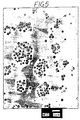
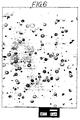
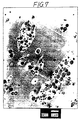
- Fig.1-7 represent transmission electron photomicrographs of resin compositions of Examples 1-3 and Comparative Examples 1-4. Examples 1-3 do not show agglomeration of the styrene-containing graft copolymer. Comparative Examples 1, 2 and 4 show agglomeration of the styrene-containing graft copolymer with the styrene-containing polymer, but Comparative Example 3 does not show agglomeration. It is believed that the agglomeration depends on the conditions of a molding process.
Landscapes
- Chemical & Material Sciences (AREA)
- Health & Medical Sciences (AREA)
- Chemical Kinetics & Catalysis (AREA)
- Medicinal Chemistry (AREA)
- Polymers & Plastics (AREA)
- Organic Chemistry (AREA)
- Compositions Of Macromolecular Compounds (AREA)
Description
- The present invention relates to flameproof thermoplastic resin compositions, and specifically to those for molding, comprising a base resin consisting of a polycarbonate and a styrene-containing graft copolymer, a phosphorous compound and a perfluoroalkane polymer. The phosphorous compound used as flame-retardant is a blend of triarylphosphates and oligomeric phosphates, or an oligomeric phosphate. The thermoplastic resin compositions of the present invention may further contain such additives as inorganic fillers, heat stabilizers, dyes, or pigments in fractions as needed.
- A polycarbonate molding composition is widely used for parts of automobiles and electrical appliances, which has a good combination of transparency, high impact strength and heat resistance. However the polycarbonate molding composition does not have a good processability during a molding process. Accordingly other resins are used with a polycarbonate resin. For example, a molding composition comprising a polycarbonate resin and a styrenic resin has a good processability as well as a high notched impact strength.
- Furthermore, the polycarbonate molding composition used for housing materials of home appliances and computers should be flame resistant for the sake of prevention of fire. For this purpose, halogen and/or antimony containing compound has been used to render flame retardency to a thermoplastic molding composition. In U.S. Patent Nos. 4,983,658 and 4,883,835, a halogen-containing compound is used as flame-retardant. The halogen containing compound, however, results in the corrosion of the mold itself by the hydrogen halide gases released during a molding process and is fatally harmful due to the toxic gases liberated in the case of fire.
- U.S. Patent No. 4,692,488 discloses a thermoplastic molding composition comprising a halogen-free aromatic polycarbonate, a halogen-free thermoplastic copolymer of styrene and acrylonitrile, a halogen-free phosphorous compound, a tetrafluoroethylene polymer and graft polymers of ABS. The use of a phosphorous compound and a perfluoroalkane polymer to render flame retardency to a polycarbonate/ABS resin composition, as disclosed in U.S. Patent No. 4,692,488, prevents the dripping of flaming particles during combustion. However the resin composition results in satisfactory flame retardency, but unsatisfactory surface segregation of the flame retardants during a molding process, called "juicing", degrading the physical properties of the resin composition. In order to improve the juicing phenomenon, an oligomeric phosphate is used in the preparation of a polycarbonate/ABS resin composition, as disclosed in U.S. Patent No. 5,204,394. U.S. Patent No. 5,204,394 discloses a polymer mixture comprising an aromatic polycarbonate, a styrene-containing copolymer and/or styrene-containing graft copolymer and an oligomeric phosphate or a blend of oligomeric phosphates as flame retardant.
- In the U.S. Patents mentioned above, representative examples of the phosphorous compound are triarylphosphates and oligomeric phosphates. In the process of using triarylphosphates, a juicing phenomenon occurs during a molding process because the triarylphosphates form laminae on the surface to which a strong stress is applied, the heat resistance of the resin composition deteriorates, and inferior processability occurs due to difficulties in blending and feeding. On the other hand, in the process of using oligomeric phosphates, a juicing phenomenon does not occur, but the appearance of molded articles is not good with color stripes.
- In case of using a base resin comprising a polycarbonate, a styrene-containing polymer and a styrene-containing graft copolymer in the resin composition, the present inventors have found that the particles of the styrene-containing polymer agglomerate with the particles of the styrene-containing graft copolymer. It is believed that the styrene-containing polymer has a good compatibility with the styrene-containing graft copolymer. In the resin composition, the particles of the styrene-containing graft copolymer are not evenly distributed, thereby causing an agglomeration. This phenomenon cannot provide a resin composition with favorable physical properties. Especially the physical properties of the resin composition will be deteriorated during a molding process.
- Accordingly the present inventors developed a new thermoplastic resin composition with a good combination of heat resistance, no juicing phenomenon, processability, appearance and flame retardency, by comprising a base resin consisting of a polycarbonate and a styrene-containing graft copolymer, a phosphorous compound and a perfluoroalkane polymer.
- An object of the present invention is to provide a flameproof thermoplastic resin composition which comprises a base resin consisting of a polycarbonate and a styrene-containing graft copolymer, a phosphorous blend of triarylphosphates and oligomeric phosphates, and a perfluoroalkane polymer.
- Another object of the invention is to provide a flameproof thermoplastic resin composition which comprises a base resin consisting of a polycarbonate and a styrene-containing graft copolymer, an oligomeric phosphate and a perfluoroalkane polymer.
- A further object of the invention is to provide a flameproof thermoplastic resin composition with a good combination of heat resistance, no juicing phenomenon, processability and appearance, which comprises a base resin, a phosphorous blend of triarylphosphates and oligomeric phosphates, and a perfluoroalkane polymer.
- A further object of the invention is to provide a flameproof thermoplastic resin composition with a good combination of heat resistance, no juicing phenomenon, processability and appearance, which comprises a base resin, an oligomeric phosphate, and a perfluoroalkane polymer.
- According to the present invention there is provided flameproof thermoplastic resin composition as set out in claim 1.
- Preferred embodiments of the present invention are subject matters of the subclaims 2 to 4.
-
- Fig.1 represents a transmission electron photomicrograph of a resin composition of Example 1 according to this invention;
- Fig.2 represents a transmission electron photomicrograph of a resin composition of Example 2 according to this invention;
- Fig.3 represents a transmission electron photomicrograph of a resin composition of Example 3 according to this invention;
- Fig.4 represents a transmission electron photomicrograph of a resin composition of Comparative Example 1 according to this invention;
- Fig.5 represents a transmission electron photomicrograph of a resin composition of Comparative Example 2 according to this invention;
- Fig.6 represents a transmission electron photomicrograph of a resin composition of Comparative Example 3 according to this invention; and
- Fig.7 represents a transmission electron photomicrograph of a resin composition of Comparative Example 4 according to this invention.
-
- The flameproof thermoplastic resin compositions according to the invention comprise a base resin(A), a phosphorous compound(B) and a perfluoroalkane polymer<C). The detailed descriptions of each component are as follows:
- The base resin used in this invention is a blend of a thermoplastic, halogen-free polycarbonate and a styrene-containing graft copolymer. More particularly, the base resin consists of 80 to 96 % by weight of a thermoplastic, halogen-free polycarbonate and 20 to 4 % by weight of a styrene-containing graft copolymer, excluding a SAN copolymer which is polymerized with at least one organic material selected from the group consisting of styrene, α-substituted styrene and nucleus-substituted styrene and at least one organic material selected from the group consisting of methylmethacrylate, N-substituted meleimide and acrylonitrile.
- According to substituted groups, there are aromatic polycarbonates, aliphatic polycarbonates, and aromatic/aliphatic polycarbonates, and a polycarbonate or a blend of the polycarbonates may be used in this invention. Aromatic polycarbonates are preferable, and aromatic polycarbonates synthesized from 2,2'-bis(4-hydroxylphenyl)propane, called "Bisphenol A", are more preferable.
- The styrene-containing graft copolymer is prepared by copolymerization of 30 to 70 % by weight of rubber with a glass transition temperature less than 10 °C, 20 to 55 % by weight of at least one organic material selected from the group consisting of styrene, α-substituted styrene and nucleus-substituted styrene, 5 to 25 % by weight of acrylonitrile and 0 to 20 % by weight of methylmethacrylate. The styrene-containing graft copolymer should have a graft index of 40 to 90 % and a gel content of 40 % or above,
- The rubbers used to prepare a styrene-containing graft copolymer are acryl rubber, butadiene rubber, ethylene/propylene rubber, styrene/butadiene rubber and acrylonitrile/butadiene rubber, of which acryl rubber and butadiene rubber are more preferable.
- The base resin of this invention does not include a styrene-containing copolymer(so called, "SAN"), which is polymerized with at least one organic material selected from the group consisting of styrene, α-substituted styrene and nucleus-substituted styrene and at least one organic material selected from the group consisting of methylmethacrylate, N-substituted maleimide and acrylonitrile.
- The phosphorous compound used in this invention is a phosphorous blend of triarylphosphates and oligomeric phosphates, or a oligomeric phosphate.
- The triarylphosphates and oligomeric phosphates are represented as the general formula(I)wherein R1, R2, R4 and R5 independently of one another are C6-C20 aryl or alkyl-substituted C6-C20 aryl R3 is C6-C20 arylene or alkyl-substituted C6-C20 arylene and the average n is 0.3 to 0.8.

- The average n of the phosphorous compound should be in the range of 0.3 to 0.8. Thus, the phosphorous compound is a blend of the phosphates represented by the general formula(I), wherein n is 0, 1, 2, 3, 4 or 5. Where n is 0, the phosphorous compound is monophosphates, and where n is 1, 2, 3, 4 or 5, the phosphorous compound is oligomeric phosphates.
- The triarylphosphates are phosphorous compounds where n is 0 in the general formula(I). The examples of the triarylphosphates are triphenylphosphate, tri(2.6-dimethylphenyl) phosphate, tri(4-methyl-phenyl)phosphate, tricresylphosphate, diphenyl 2-ethylcresylphosphate, diphenylcresylphosphate, tri(isopropylphenyl)phosphate, trixylenylphosphate, xylenyldiphenylphosphate, etc.
- When the monophosphates with n=0 are only used in a resin composition, a juicing problem appears during a molding process, because the monophosphates are volatile at about 200°C or above. If a blend of phosphorous compounds with the average n of 1.2 or above is used in a resin composition, a juicing problem can be improved, but the flame retardency and physical properties deteriorate. The phosphorous compound with the average n from 0.3 to 0.8 is used in this invention so as to improve the physical properties as well as flame retardency.
- In order for the phosphorous compound to have the average n from 0.3 to 0.8, the phosphorous compound consists of 30 to 60 % weight of triarylphosphates and 70 to 40 % by weight of oligomeric phosphates.
- Also a oligomeric phosphate which is used in this invention can be prepared, in which the average n of the oligomeric phosphate is 0.3 to 0.8. The oligomeric phosphate is prepared by adding phenol, resocinol and dichloromagnesium to benzene, heating the solution, and dropping trichlorophosphinoxide in the solution. The oligomeric phosphate with the average n of 0.3 to 0.8 is extracted from the resultant solution. The phosphorous compound is used in an amount of 5 to 20 parts by weight per 100 parts by weight of the base resin.
- The flameproof thermoplastic resin compositions according to the present invention include a perfluoroalkane polymer. The examples of the perfluoroalkane polymer are polytetrafluoroethylene, polyvinylidene fluoride, copolymer of polytetrafluoroethylene and polyvinylidenefluoride, copolymer of tetrafluoroethylene and fluoroalkylvinylether, and copolymer of tetrafluoroethylene and hexafluoropropylene. At least one of the perfluoroalkane polymers may be used in the flameproof thermoplastic resin compositions. The perfluoroalkane polymer decreases the melting flow of the flameproof thermoplastic resin during combustion by forming a fibrillar network in the resin and increase the shrinkage of the resin, thereby preventing the dripping of the melting resin during combustion. The perfluoroalkane polymer may be preferably used in a form of powder so as to disperse and blend evenly in a flameproof thermoplastic resin composition. Polytetrafluoroethylene with a particle size of 20 to 500 µ is conventionally available for this invention. 0.1 to: 2.0 parts by weight of a perfluoroalkane polymer per 100 parts by weight of the base resin is blended.
- The flameproof thermoplastic resin compositions may further include additives such as inorganic fillers, heat stabilizers, oxidation inhibitors, light stabilisers, pigments and/or dyes depending on specific applications. The examples of the inorganic fillers are asbestos, glass fiber, talc or ceramic. The other additives are conventionally available to a skilled person in this technical field. The additives may be blended in a resin composition with an amount up to 30 parts by weight per 100 parts by weight of the base resin.
- The flameproof thermoplastic resin compositions are prepared by blending a base resin, a phosphorous compound and a perfluoroalkane polymer with a conventional mixer. An additive may be included in the blend. The flameproof thermoplastic resin compositions are prepared in a form of pellet by extruding the blend with a conventional extruder.
- The flameproof thermoplastic resin compositions have effects that the compositions prevent toxic gases during combustion, and have a good combination of heat resistance, no juicing phenomenon, processability, appearance and flame retardency.
- The invention may be better understood by reference to the following examples.
- The components to prepare flameproof thermoplastic resin compositions in Examples 1-3 and Comparative Examples 1-4 are as follow:
-
- (a1) Polycarbonate: L-1250W Grade of Teijin, Inc. of Japan was used.
- (a2) Styrene-containing Graft Polymer
-
- 50 g of butadiene latex in powder, 36 g of styrene, 14 g of acrylonitrile, and 150 g of deionized water were blended, and 1.0 g of potassium oleate, 0.4 g of cumenhydroperoxide and 0.3 g of a grafting reagent were added to the blended solution. The resultant solution was kept at 75 °C for 5 hours to prepare styrene- containing graft copolymer. To the styrene-containing graft copolymer 0.3 g of H2SO4 was added to prepare styrene-containing graft copolymer in powder.
- Triphenylphosphate (n=0): triphenylphosphate was prepared by reacting trichlorophosphinoxide with phenol.
- Oligomeric phosphate(n=1.4): CR-733S of Daihachi Co., of Japan was used.
- Oligomeric phosphate: 114.7 g of phenol, 220 g of resocinol and 0.2 g of dichloromagnesium were added to 100 mℓ of benzene. The solution was heated to 70°C. 82.8 g of trichlorophosphinoxide was dropped in the solution over 2 hours at the temperature of 70°C. The resultant solution was stirred at 120°C over 3 hours not to release hydrogen chloride gas any more. The solvent and impurities were extracted from the solution so as to prepare oligomeric phosphate in liquid at room temperature with a melting point of -25°C and with n of 0.3 to 0.8 in the general formula (I).
- Teflon(trademark) 7AJ of Dupont, Inc. of U.S.A. was used.
- The compositions of each component used in Examples 1-3 and Comparative Examples 1-4 are shown in Table 1. A styrene-containing polymer was not used in Examples 1-3, but used in Comparative Examples 1-4.
- In the Examples and Comparative Examples, the flameproof thermoplastic resin compositions were extruded in a form of pellet. And the resin pellets were molded into test specimens.

- For the test specimens according to the Examples and Comparative Examples, flame retardency, impact strength, and heat resistance were measured, and juicing phenomenon and agglomeration were observed. The test results are shown in Table 2. Fig.1-7 represent transmission electron photomicrographs of resin compositions of Examples 1-3 and Comparative Examples 1-4. Examples 1-3 do not show agglomeration of the styrene-containing graft copolymer. Comparative Examples 1, 2 and 4 show agglomeration of the styrene-containing graft copolymer with the styrene-containing polymer, but Comparative Example 3 does not show agglomeration. It is believed that the agglomeration depends on the conditions of a molding process.

Claims (4)
- A flameproof thermoplastic resin composition consisting essentially of:(A) a base resin consisting of (a1) 80 to 96 % by weight of a thermoplastic, halogen-free polycarbonate, and (a2) 4 to 20 % by weight of a styrene-containing graft copolymer having a graft index of 40 to 90 % and a gel content of 40 % or above; excluding a SAN copolymer which is polymerized with at least one organic material selected from the group consisting of styrene, α-substituted. styrene and nucleus-substituted styrene and at least one organic material selected from the group consisting of methylmethacrylate, N-substituted meleimide and acrylonitrile;(B) 5 to 20 parts by weight, per 100 parts by weight of the base resin (A), of a phosphorous compound consisting of 30 to 60 % by weight of triarylphosphates and 70 to 40 % by weight of oligomeric phosphates of the general formulawherein R1, R2, R3, and R5 independently of one another are C6-C20 aryl or alkyl-substituted C6-C20 aryl, R3 is C6-C20 arylene or alkyl-substituted C6-C20 arylene and the average n is 0.3 to 0.8; and
 (C) 0.1 to 2.0 parts by weight, per 100 parts by weight of the base resin (A), of a perfluoroalkane polymer.
 - The thermoplastic resin composition defined in claim 1 wherein said styrene-containing graft copolymer has a graft index from 40 to 90 % and a gel content of 40 % or above, wherein the styrene-containing graft copolymer is made from 30 to 70 % by weight of rubber having a glass transition temperature less than 10 °C, 20 to 55 % by weight of at least one organic material selected from the group consisting of styrene, α-substituted styrene and nucleus-substituted styrene, 5 to 25 % by weight of acrylonitrile, and 0 to 20 % by weight of methylmethacrylate.
- The thermoplastic resin composition defined in claim 1 wherein said perfluoroalkane polymer is selected from the group consisting of polytetrafluoroethylene, polyvinylidenefluoride, copolymer of tetrafluoroethylene and vinylidene fluoride, copolymer of tetrafluoroethylene and fluoroalkylvinylether, and copolymer of tetrafluoroethylene and hexafluoropropylene.
- The thermoplastic resin composition defined in claim 1 wherein said resin composition further comprises inorganic fillers, heat stabilizers, oxidation inhibitors, light stabilizers, pigments and/or dyes.
Applications Claiming Priority (2)
| Application Number | Priority Date | Filing Date | Title |
|---|---|---|---|
| KR1019950004542A KR0150763B1 (en) | 1995-03-07 | 1995-03-07 | Thermoplastic resin composition having flame retardancy |
| KR9504542 | 1995-03-07 |
Publications (3)
| Publication Number | Publication Date |
|---|---|
| EP0731140A2 EP0731140A2 (en) | 1996-09-11 |
| EP0731140A3 EP0731140A3 (en) | 1998-01-07 |
| EP0731140B1 true EP0731140B1 (en) | 2003-09-03 |
Family
ID=19409285
Family Applications (1)
| Application Number | Title | Priority Date | Filing Date |
|---|---|---|---|
| EP95107212A Expired - Lifetime EP0731140B1 (en) | 1995-03-07 | 1995-05-10 | Flameproof thermoplastic resin compositions |
Country Status (4)
| Country | Link |
|---|---|
| EP (1) | EP0731140B1 (en) |
| JP (1) | JP2756426B2 (en) |
| KR (1) | KR0150763B1 (en) |
| DE (1) | DE69531662T2 (en) |
Families Citing this family (7)
| Publication number | Priority date | Publication date | Assignee | Title |
|---|---|---|---|---|
| DE19721628A1 (en) | 1997-05-23 | 1998-11-26 | Bayer Ag | Flame-retardant, highly heat-resistant polycarbonate molding compounds with high flow seam strength |
| DE19734663A1 (en) * | 1997-08-11 | 1999-02-18 | Bayer Ag | Flame-retardant, heat-resistant polycarbonate ABS molding compounds |
| GB2329639B (en) * | 1997-09-25 | 2002-02-20 | Samyang Corp | Flame retardant resin composition |
| KR100360714B1 (en) * | 1997-10-23 | 2003-04-03 | 제일모직주식회사 | Flame retardant thermoplastic resin composition based on polycarbonate |
| JP2002220528A (en) * | 2001-01-26 | 2002-08-09 | Mitsubishi Engineering Plastics Corp | Flame retardant polycarbonate resin composition and molded article thereof |
| WO2004029143A1 (en) * | 2002-09-25 | 2004-04-08 | Cheil Industries Inc. | Flameproof styrenic resin composition |
| KR100778006B1 (en) | 2006-12-27 | 2007-11-28 | 제일모직주식회사 | Flame retardant thermoplastic resin composition excellent in weatherability |
Family Cites Families (7)
| Publication number | Priority date | Publication date | Assignee | Title |
|---|---|---|---|---|
| DE3523314A1 (en) * | 1985-06-29 | 1987-01-02 | Bayer Ag | THERMOPLASTIC POLYCARBONATE MOLDINGS |
| US5204394A (en) * | 1988-09-22 | 1993-04-20 | General Electric Company | Polymer mixture having aromatic polycarbonate, styrene I containing copolymer and/or graft polymer and a flame-retardant, articles formed therefrom |
| DE4235642A1 (en) * | 1992-10-22 | 1994-04-28 | Bayer Ag | Flame retardant molding compounds |
| EP0635547A3 (en) * | 1993-07-23 | 1995-05-10 | Gen Electric | Reduced gloss, flame retarded, high impact thermoplastic composition. |
| DE4328656A1 (en) * | 1993-08-26 | 1995-03-02 | Bayer Ag | Flame retardant, stress crack resistant polycarbonate ABS molding compounds |
| TW287181B (en) * | 1994-05-10 | 1996-10-01 | Taishl Kagaku Kogyo Kk | |
| KR0148398B1 (en) * | 1994-12-01 | 1999-02-01 | 유현식 | Flameproof thermoplastic resin composition |
-
1995
- 1995-03-07 KR KR1019950004542A patent/KR0150763B1/en not_active Expired - Fee Related
- 1995-05-10 DE DE69531662T patent/DE69531662T2/en not_active Expired - Lifetime
- 1995-05-10 EP EP95107212A patent/EP0731140B1/en not_active Expired - Lifetime
- 1995-05-26 JP JP7128373A patent/JP2756426B2/en not_active Expired - Fee Related
Also Published As
| Publication number | Publication date |
|---|---|
| DE69531662T2 (en) | 2004-03-25 |
| JPH08253666A (en) | 1996-10-01 |
| EP0731140A3 (en) | 1998-01-07 |
| EP0731140A2 (en) | 1996-09-11 |
| KR0150763B1 (en) | 1998-10-15 |
| JP2756426B2 (en) | 1998-05-25 |
| DE69531662D1 (en) | 2003-10-09 |
| KR960034311A (en) | 1996-10-22 |
Similar Documents
| Publication | Publication Date | Title |
|---|---|---|
| EP1444297B1 (en) | Flame retardant thermoplastic resin composition | |
| EP1201714B1 (en) | Flame retardant thermoplastic resin composition | |
| US5674924A (en) | Flameproof thermoplastic resin compositions | |
| EP1425347B1 (en) | Flame retardant thermoplastic resin composition | |
| US5952408A (en) | Flameproof thermoplastic resin compositions | |
| GB2339431A (en) | Flame retardant thermoplastic resin composition | |
| KR100360710B1 (en) | Polycarbonate-based thermoplastic resin composition having flame retardancy | |
| KR100425984B1 (en) | flameproof thermoplastic polycarbonate resin composition with high impact strength | |
| EP0731140A2 (en) | Flameproof thermoplastic resin compositions | |
| KR100360714B1 (en) | Flame retardant thermoplastic resin composition based on polycarbonate | |
| EP0700969A1 (en) | Flameproof thermoplastic resin compositions | |
| KR0148398B1 (en) | Flameproof thermoplastic resin composition | |
| EP0523790B1 (en) | Flame-retardant thermoplastic composition | |
| JP3432069B2 (en) | Polycarbonate flame retardant resin composition | |
| KR100204553B1 (en) | A flame retardant and heat resistant abs/pc resin composition | |
| KR0144382B1 (en) | Inflammable thermoplastic resin composition | |
| KR100211180B1 (en) | The resin composition of thermoplastic polycarbonate having flame retarding property | |
| KR0149248B1 (en) | Thermoplastic resin composition having flame retardancy | |
| KR0147731B1 (en) | Thermoplastic resin composition having flame retardancy | |
| KR0171250B1 (en) | Thermoplastic polycarbonate resin composition having fire retardancy | |
| KR0144386B1 (en) | Thermoplastic resin composition having flame retardancy | |
| KR100407855B1 (en) | Thermoplastic composition with flame retardancy | |
| KR0178458B1 (en) | Thermoplastic resin compositions having anti-flammability | |
| KR0150764B1 (en) | Thermoplastic resin composition having flame retardancy | |
| MXPA97004450A (en) | Compositions of flammable thermoplastic resin |
Legal Events
| Date | Code | Title | Description |
|---|---|---|---|
| PUAI | Public reference made under article 153(3) epc to a published international application that has entered the european phase |
Free format text: ORIGINAL CODE: 0009012 |
|
| AK | Designated contracting states |
Kind code of ref document: A2 Designated state(s): DE FR GB NL |
|
| PUAL | Search report despatched |
Free format text: ORIGINAL CODE: 0009013 |
|
| AK | Designated contracting states |
Kind code of ref document: A3 Designated state(s): DE FR GB NL |
|
| 17P | Request for examination filed |
Effective date: 19980622 |
|
| 17Q | First examination report despatched |
Effective date: 20001229 |
|
| GRAH | Despatch of communication of intention to grant a patent |
Free format text: ORIGINAL CODE: EPIDOS IGRA |
|
| GRAS | Grant fee paid |
Free format text: ORIGINAL CODE: EPIDOSNIGR3 |
|
| GRAA | (expected) grant |
Free format text: ORIGINAL CODE: 0009210 |
|
| AK | Designated contracting states |
Kind code of ref document: B1 Designated state(s): DE FR GB NL |
|
| REG | Reference to a national code |
Ref country code: GB Ref legal event code: FG4D |
|
| REF | Corresponds to: |
Ref document number: 69531662 Country of ref document: DE Date of ref document: 20031009 Kind code of ref document: P |
|
| ET | Fr: translation filed | ||
| PLBE | No opposition filed within time limit |
Free format text: ORIGINAL CODE: 0009261 |
|
| STAA | Information on the status of an ep patent application or granted ep patent |
Free format text: STATUS: NO OPPOSITION FILED WITHIN TIME LIMIT |
|
| 26N | No opposition filed |
Effective date: 20040604 |
|
| PGFP | Annual fee paid to national office [announced via postgrant information from national office to epo] |
Ref country code: DE Payment date: 20130515 Year of fee payment: 19 Ref country code: GB Payment date: 20130508 Year of fee payment: 19 |
|
| PGFP | Annual fee paid to national office [announced via postgrant information from national office to epo] |
Ref country code: FR Payment date: 20130531 Year of fee payment: 19 Ref country code: NL Payment date: 20130510 Year of fee payment: 19 |
|
| REG | Reference to a national code |
Ref country code: DE Ref legal event code: R119 Ref document number: 69531662 Country of ref document: DE |
|
| REG | Reference to a national code |
Ref country code: NL Ref legal event code: V1 Effective date: 20141201 |
|
| GBPC | Gb: european patent ceased through non-payment of renewal fee |
Effective date: 20140510 |
|
| PG25 | Lapsed in a contracting state [announced via postgrant information from national office to epo] |
Ref country code: NL Free format text: LAPSE BECAUSE OF NON-PAYMENT OF DUE FEES Effective date: 20141201 |
|
| REG | Reference to a national code |
Ref country code: FR Ref legal event code: ST Effective date: 20150130 |
|
| REG | Reference to a national code |
Ref country code: DE Ref legal event code: R119 Ref document number: 69531662 Country of ref document: DE Effective date: 20141202 |
|
| PG25 | Lapsed in a contracting state [announced via postgrant information from national office to epo] |
Ref country code: DE Free format text: LAPSE BECAUSE OF NON-PAYMENT OF DUE FEES Effective date: 20141202 |
|
| PG25 | Lapsed in a contracting state [announced via postgrant information from national office to epo] |
Ref country code: FR Free format text: LAPSE BECAUSE OF NON-PAYMENT OF DUE FEES Effective date: 20140602 Ref country code: GB Free format text: LAPSE BECAUSE OF NON-PAYMENT OF DUE FEES Effective date: 20140510 |