EP0729103A2 - Verfahren und Gerät zur Verwendung eines Ladebefehls der keinen Fehler verursacht - Google Patents
Verfahren und Gerät zur Verwendung eines Ladebefehls der keinen Fehler verursacht Download PDFInfo
- Publication number
- EP0729103A2 EP0729103A2 EP96630012A EP96630012A EP0729103A2 EP 0729103 A2 EP0729103 A2 EP 0729103A2 EP 96630012 A EP96630012 A EP 96630012A EP 96630012 A EP96630012 A EP 96630012A EP 0729103 A2 EP0729103 A2 EP 0729103A2
- Authority
- EP
- European Patent Office
- Prior art keywords
- faulting
- fault
- load instruction
- translation table
- bit
- Prior art date
- Legal status (The legal status is an assumption and is not a legal conclusion. Google has not performed a legal analysis and makes no representation as to the accuracy of the status listed.)
- Granted
Links
Images


Classifications
-
- G—PHYSICS
- G06—COMPUTING OR CALCULATING; COUNTING
- G06F—ELECTRIC DIGITAL DATA PROCESSING
- G06F9/00—Arrangements for program control, e.g. control units
- G06F9/06—Arrangements for program control, e.g. control units using stored programs, i.e. using an internal store of processing equipment to receive or retain programs
- G06F9/30—Arrangements for executing machine instructions, e.g. instruction decode
-
- G—PHYSICS
- G06—COMPUTING OR CALCULATING; COUNTING
- G06F—ELECTRIC DIGITAL DATA PROCESSING
- G06F9/00—Arrangements for program control, e.g. control units
- G06F9/06—Arrangements for program control, e.g. control units using stored programs, i.e. using an internal store of processing equipment to receive or retain programs
- G06F9/30—Arrangements for executing machine instructions, e.g. instruction decode
- G06F9/30003—Arrangements for executing specific machine instructions
- G06F9/3004—Arrangements for executing specific machine instructions to perform operations on memory
- G06F9/30043—LOAD or STORE instructions; Clear instruction
-
- G—PHYSICS
- G06—COMPUTING OR CALCULATING; COUNTING
- G06F—ELECTRIC DIGITAL DATA PROCESSING
- G06F12/00—Accessing, addressing or allocating within memory systems or architectures
- G06F12/02—Addressing or allocation; Relocation
- G06F12/08—Addressing or allocation; Relocation in hierarchically structured memory systems, e.g. virtual memory systems
- G06F12/10—Address translation
- G06F12/1027—Address translation using associative or pseudo-associative address translation means, e.g. translation look-aside buffer [TLB]
-
- G—PHYSICS
- G06—COMPUTING OR CALCULATING; COUNTING
- G06F—ELECTRIC DIGITAL DATA PROCESSING
- G06F12/00—Accessing, addressing or allocating within memory systems or architectures
- G06F12/14—Protection against unauthorised use of memory or access to memory
- G06F12/1416—Protection against unauthorised use of memory or access to memory by checking the object accessibility, e.g. type of access defined by the memory independently of subject rights
- G06F12/145—Protection against unauthorised use of memory or access to memory by checking the object accessibility, e.g. type of access defined by the memory independently of subject rights the protection being virtual, e.g. for virtual blocks or segments before a translation mechanism
-
- G—PHYSICS
- G06—COMPUTING OR CALCULATING; COUNTING
- G06F—ELECTRIC DIGITAL DATA PROCESSING
- G06F12/00—Accessing, addressing or allocating within memory systems or architectures
- G06F12/14—Protection against unauthorised use of memory or access to memory
- G06F12/1458—Protection against unauthorised use of memory or access to memory by checking the subject access rights
-
- G—PHYSICS
- G06—COMPUTING OR CALCULATING; COUNTING
- G06F—ELECTRIC DIGITAL DATA PROCESSING
- G06F2212/00—Indexing scheme relating to accessing, addressing or allocation within memory systems or architectures
- G06F2212/68—Details of translation look-aside buffer [TLB]
- G06F2212/684—TLB miss handling
Definitions
- the present invention relates to pipelined processors which speculatively execute instructions, and, specifically, to support for non-faulting and normal (faulting) load instructions.
- a typical early microprocessor included a central processing unit (CPU) which implemented a machine capable of interfacing with memory and serially executing a sequence of instructions.
- Figure 1 is a simplified block diagram of a modern processor. The instruction execution was typically broken into at least four major stages: instruction and operand fetch 1, instruction decode 2, execution 3, and write back 4 of results. The maximum clock frequency was determined by the longest possible propagation delay through all four stages.
- the concept of pipelining increased the maximum clock frequency by reducing the amount of logic performed in each clock cycle.
- the pipelining concept can be extended such that each of the four stages is performed in a separate clock cycle, thus increasing the throughput accordingly.
- Superpipelined designs break up the logic in some or all of the four stages so as to reduce the maximum propagation delay through any one stage, and thus increase the operating frequency and throughput as the instruction execution is broken into more than four pipeline stages. Theoretically, by breaking up the processor logic into N stages having equal latency, the throughput may be increased by a factor of N.
- a superscalar microprocessor has more than one execution unit.
- Superscalar processor designs executing two or three instructions at a time are becoming commonplace. Designs which execute four instructions currently exist, and it is expected that computer architects will design chips that can execute eight to sixteen instructions simultaneously in the future.
- Most superscalar implementations provide specialized parallel execution branches 5; meaning that each parallel execution branch is not capable of supporting the entire instruction set. Instead, each branch is designed to handle a subset of the instruction set.
- a fundamental difficulty involved in both pipelined and superscalar processors involves the handling of conditional branches in the execution sequence.
- Most programs include frequent conditional branches.
- When executing such a program in a pipeline there is no way to tell with certainty which branch will eventually be executed.
- Before the execution of the branch instruction there is no way to tell with certainty which instruction should follow directly after the branch instruction because the results upon which the branch decision is made are not available until that instruction has been executed.
- the fetch stage 1 has fetched the next instruction following the branch instruction into the pipeline already, the series of instructions following the branch may have to be aborted. This problem is worsened when the number of stages preceding the branch execution stage is increased. Thus, as pipelines become longer to speed up the processors, the branching problem becomes more complicated.
- the above instructions might be scheduled so that the assignment to the temp_register and the test as to p being not NULL are performed simultaneously by separate execution units.
- the problem that can still occur with the above sequence is that if p is NULL, an attempt to read the contents of the location pointed to by p is non-sensical, since p does not point to anything. A normal access to the contents of p on many processors would cause the program to be aborted.
- Non-faulting loads allow optimizations that move loads ahead of conditional control structures which guard their use; thus, they can minimize the effects of load latency by improving instruction scheduling.
- the semantics of non-faulting load are the same as for any other load, except when non-recoverable catastrophic faults occur (for example, address-out-of-range errors). When such a fault occurs, it is ignored and the hardware and system software cooperate to make the load appear to complete normally, returning a zero result.
- the compiler's optimizer generates load-alternate instructions for those loads it determines should be non-faulting. It also allows for improved performance in certain algorithms by removing address checking from the critical code path. "Dereferencing" a pointer is attempting to access the contents of the location pointed to by the pointer.
- non-faulting loads allow the null pointer indicating the end of the list to be dereferenced safely in a speculative, read-ahead fashion; the page at virtual address 0x0 can safely be accessed with no penalty.
- Modern processors support virtual address space, which is distinct from physical address space.
- a virtual address is a label that the processor uses to specify a memory location. The processor is not concerned with where that memory location actually resides in the physical memory, so long as the processor is able to access the location with the virtual address.
- a processor architecture specification defines a certain virtual address space which must be supported. The operating system which manages the computer system has flexibility as to how that virtual address space is mapped to physical memory. Thus, there is a translation that must occur from virtual to physical address.
- the operating system maintains translation information in an arbitrary data structure, called the "software translation table.”
- One or more translation lookaside buffers act as independent caches of the software translation table, providing one-cycle translation for the more frequently accessed virtual pages.
- TLB hit means that the desired translation is present in the on-chip TLB.
- TLB miss means that the desired translation is not present in the on-chip TLB.
- the TLBs are small and fast.
- the software translation table is likely to be large and complex.
- a translation storage buffer (TSB), which acts like a direct-mapped cache, is the interface between the TLBs and the software translation table.
- TLB miss handler has the option of filling the TLB by any means available. After the TLB has been filled with the translation for the address desired, the instruction which initially caused the TLB miss is re-executed.
- the typical TLB miss software will first load certain pointers necessary to access the TSB. Using those pointers, the handler will check the appropriate location of the TSB to see if the desired translation exists there. If the desired translation is in the TSB, the translation is loaded into the TLB entry chosen by the replacement algorithm. If the translation does not exist in the TSB, the TLB miss handler jumps to the more sophisticated, and slower, TSB miss handler. The TSB miss handler searches the large and complex software translation table for the desired translation. If the translation is not located in the software translation table, the desired memory location is not mapped in main memory. In this case, the address may be illegal.
- the data referred to by the specified virtual address is legal but is on some other memory device, such as a disk. If the address is legal, but is not in main memory, then the requested data must be mapped into main memory, and its translation entered into the TLB before the instruction which caused the TLB miss can execute.
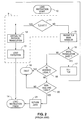
- FIG. 2 is a flowchart illustrating the prior art methods of processing load instructions. All the steps shown enclosed by the dotted line 9 are typically implemented in hardware.
- the load instruction is first dispatched in step 10.
- a compare operation is simultaneously performed by associative hardware to all the translation table entries.
- the TLB is searched for the virtual page number that the current load is requesting. If there is a TLB hit, the TLB supplies the appropriate physical page at step 12, the load instruction executes at step 13, and the load instruction is finished at step 14.
- the TLB miss handler is invoked at step 15.
- the software looks in the translation table for the translation at test 16. If the translation exists, the software fills the TLB with the appropriate translation, and the load is executed. If the translation does not exist at any level of the translation table data structure, the software determines in test 18 whether the address is legal. If the address is legal, a recoverable page fault occurs at step 19. When a page fault occurs, the requested page may be on disk or another external memory device, and must be mapped and transferred into main memory in order to recover from the page fault. If the address is illegal, test 20 determines if the current instruction is a non-faulting load. If the current instruction is a normal (faulting) load, the illegal address causes a non-recoverable fault 19. However, if the current instruction is a non-faulting load, the software returns zero at step 21, and the load instruction finishes 14 smoothly.
- normal faulting loads In a processor which supports non-faulting load instructions, normal faulting loads must also be supported. However, if a page of all zeros is mapped, then in the absence of any other mechanism, normal loads will also be able to access the page. Technically, this is incorrect behavior. The problem with this approach is that normal loads will also be able to access the illegal page. Normal (faulting) loads should cause a fault when they attempt to access an illegal page, rather than returning zero. Using this scheme, the programmer must choose on a page by page basis between quick returning from non-faulting loads from the illegal page, or having normal (faulting) loads behave correctly by faulting rather than returning zero when accessing the illegal page.
- the programmer When the program is completely debugged, the programmer will tell the compiler that it may use non-faulting loads in the machine code that it produces in order to speed up execution by moving loads beyond their conditional branches. The use of non-faulting loads will prevent catastrophic non-recoverable faults from occurring in the debugged program. However, unless a page is mapped to memory location 0x0, the non-faulting loads will nonetheless cause a software trap to occur when accessing address 0x0 (or any other illegal address). These repeated traps can consume an inordinate amount of time. To minimize unnecessary processing if a fault does occur, it is desirable to map low addresses (especially address zero) to a page of all zeros, so that references through a null pointer do not cause unnecessary traps. Thus, the software traps can be avoided by mapping a page of zeros to memory location 0x0.
- a non-fault-only bit is included in the translation table entry for each page. If the non-fault-only bit is set, non-faulting loads accessing the page will cause translations to occur. Any other access to the non-fault-only page is an error, and will cause the processor to fault through an operating system software trap.
- a non-faulting load behaves like a normal load except that it never produces a fault even when applied to a page with the non-fault-only bit set.
- the non-fault-only bit in a translation table entry marks a page that is mapped for safe access by non-faulting loads, but can still cause a fault by other, normal accesses.
- the non-fault-only bit indicates which pages are illegal.
- Upon a translation lookaside buffer hit since every possible outcome has hardware support, all normal and non-faulting loads are processed quickly in hardware and are executed strictly correctly. Selected pages, such as the virtual page 0x0, can be mapped in the translation table. If accessed once, the translation table entry for virtual page 0x0 will be present in the translation lookaside buffer. Thus, whenever a null-pointer is dereferenced by a non-faulting load, a TLB hit will occur and zero will be returned immediately without trapping to software to find the requested page.
- the operating system software routine invoked by the TLB miss discovers that a non-faulting load has attempted to access an illegal virtual page that was not previously translated in the translation table
- the operating system creates a translation table entry for that virtual page mapping it to a physical page of all zeros and asserting the non-fault-only bit for that virtual page. Any subsequent non-faulting load from that virtual page will either hit the TLB and avert the TLB miss handler, or at least avoid an expensive, exhaustive, and unsuccessful software search through the software translation table for the illegal virtual page's translation table entry.
- Figure 1 is a simplified block diagram of a modern pipelined, superscalar processor according to the prior art.
- FIG. 2 is a flowchart illustrating prior art methods of processing load instructions.
- Figure 3 depicts a translation table entry according to the present invention.
- Figure 4 depicts a translation lookahead buffer according to the present invention.
- Figure 5 shows four load instructions and the results that are produced by those four instructions when the translation lookahead buffer has entries as shown in Figure 4.
- Figure 6 illustrates logic that implements control signals for directing the processing when a translation table entry exists for the accessed page according to the present invention.
- Figure 7 is a flowchart illustrating the methods of processing load instructions according to the first and second embodiments of the present invention. Step 113 is not included in the first embodiment, but is included in the second embodiment.
- a non-fault-only bit is included in the translation table entry for each page. If the non-fault-only bit is set, non-faulting loads accessing the page will cause translations to occur. Any other access to the non-fault-only page is an error, and will cause the processor to fault through an operating system software trap.
- a non-faulting load behaves like a normal load except that it never produces a fault even when applied to a page with the non-fault-only bit set.
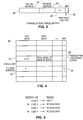
- FIG. 3 shows a translation table entry 22 according to the present invention.
- Each entry has a virtual address portion 23.
- Entries in the translation table are organized according to the virtual addresses for which they hold physical address mappings. Since memory is typically separated into pages, only the most significant bits of the virtual address and the corresponding physical address 24 are stored in the translation table entry. The omitted least significant bits of both the virtual address and the physical address provide an index or offset within the memory page.
- the non-fault-only bit 25 exists for each entry. Additional information 26 may also exist in the translation table entry.
- the non-fault-only bit indicates which pages are illegal. Thus, if a physical page (at physical address OxF, for example) of all zeros is mapped to virtual memory location 0x0, the non-fault-only bit in the translation table entry for virtual page 0x0 is asserted. If a non-faulting load dereferences a null pointer, the virtual address 0x0 will be translated to the appropriate physical page (0xF), and the contents of location referred to on that page, zero, will be returned.
- OxF physical address
- Figure 4 illustrates a small translation lookaside buffer 30 with an entry 31 mapping a null pointer to a page of all zeros; the non-fault-only bit 32 for that entry 31 is asserted.
- Figure 4 also shows an entry 33 for a legal virtual address which has a deasserted non-fault-only bit 34.
- Figure 5 illustrates the results corresponding to a normal (faulting) load, shown as "LOAD,” and a non-faulting load, shown as "NF_LOAD,” when each type of load is applied to a legal address, shown as "Y,” and a dereferencing of a null pointer, shown as "X.”
- LOAD normal (faulting) load
- NF_LOAD non-faulting load
- the non-fault-only bit essentially indicates whether or not the virtual page is legal. If the non-fault-only bit is asserted, the virtual page is illegal. If a normal load attempts to access a virtual page with an asserted non-fault-only bit, the processor will trap to the software and fault.
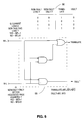
- Figure 6 shows the truth table for the logic applied to determine whether to execute or fault when a translation table entry exists for the accessed page according to the present invention.
- Figure 6 also shows a simple logic circuit 55 which performs the logic.
- FIG. 7 illustrates the sequence of events when a load instruction is executed in a processor according to the present invention.
- the load instruction processing begins at step 100 with regard to the present invention.
- Test step 101 checks to see if the translation table entry which contains the non-fault-only (NFO) bit of the virtual to physical page translation for the memory location to be loaded exists in the translation lockaside buffer (TLB). If the entry is not in the translation lookaside buffer, the processor traps to a TLB miss handler 102, which is an operating system software routine.
- the TLB miss handler searches the necessary additional levels of the software translation table to locate the translation table entry for the virtual page requested by the load instruction. If no translation is located anywhere in the software translation table, test 103 invokes test 114 which determines whether or not the address is truly illegal.
- a recoverable fault 104 occurs. For example, this would occur if the memory location were on disk rather than in main memory, so that a page fault should occur. If a page fault occurs, the appropriate page is read in from the disk and is mapped to physical memory, and a translation table entry for that virtual address is created and put in the translation lookaside buffer. After the load instruction is reexecuted, the processor has recovered from the fault. If the requested virtual address is truly illegal, test 111 determines whether or not current load is a non-faulting load. If the current load is a non-faulting load, the software will return zero 112, and execution will continue without faulting. If the software returns zerc, the load instruction is finished 110. If test 111 determines that the current load is a normal (faulting) load, the illegal address causes a non-recoverable fault 104.
- the fault bubble 104 represents a trap to a software routine. Some faults are recoverable, such as page faults. Other faults are non-recoverable, such as a normal load access to an illegal address.
- test 103 invokes the filling of the translation lookaside buffer with the requested table entry in step 105.
- test 106 checks the current machine state to see if the load is a non-faulting load. If the current load is a normal (faulting) load, test 107 checks to see if the non-fault-only (NFO) bit of the page being requested by the load is asserted. If the non-fault-only bit of the requested page is not asserted, the requested page is a normal page and is safe for access by both non-faulting and normal loads.
- NFO non-fault-only
- step 108 the virtual to physical address translation occurs.
- the load is then executed in step 109 and the load instruction finish 110 is reached. Once the finish 110 is reached, the load instruction start 100 may begin for the next load instruction.
- Every possible outcome has hardware support. All normal and non-faulting loads are processed quickly in hardware and are executed strictly correctly. Selected pages, such as the virtual page 0x0, can be mapped in the translation table. If accessed once, the translation table entry for virtual page 0x0 will be present in the translation lookaside buffer. Thus, whenever a null-pointer is dereferenced by a non-faulting load, a TLB hit will occur, and zero will be returned immediately without trapping to software to find the requested page.
- the operating system when the operating system software routine invoked by the TLB miss discovers that a non-faulting load has attempted to access an illegal virtual page that was not previously translated in the translation table, the operating system (in step 113 of Figure 7) creates a translation table entry for that virtual page mapping it to a physical page of all zeros and asserting the non-fault-only bit for that virtual page, so that any subsequent non-faulting load from that virtual page will either hit the TLB and avert the TLB miss handler, or at least avoid an expensive, exhaustive, and unsuccessful software search through the software translation table for the illegal virtual page's translation table entry.
- This second embodiment eliminates the need for the programmer or the compiler to anticipate before execution which illegal virtual addresses will be accessed by non-faulting loads. Whenever an illegal page is referenced by a non-faulting load, the operating system creates the appropriate translation table entry. Subsequent non-faulting loads from that page may hit the translation lookaside buffer and thus avoid the software trap.
- load instructions are the only instructions which retrieve data from main memory.
- this is not meant to imply that the present invention does not apply to other instructions which reference main memory that may exist for a given processor.
- a given processor might support an "add" instruction which allows one or more of its operands to come from main memory rather than from internal registers. In that case, the retrieval of an operand from main memory for the add instruction is equivalent to a load instruction as described in this specification.
- a CISC (Complex Instruction Set Computing) processor could have non-faulting add instructions as well as normal (faulting) add instructions.
- the present invention applies to any instruction which causes the retrieval of data from main memory. In the case of a simple RISC processor, this might only be load instructions, but generally includes all instructions which retrieve data from main memory.
Landscapes
- Engineering & Computer Science (AREA)
- Theoretical Computer Science (AREA)
- Software Systems (AREA)
- Physics & Mathematics (AREA)
- General Engineering & Computer Science (AREA)
- General Physics & Mathematics (AREA)
- Memory System Of A Hierarchy Structure (AREA)
- Executing Machine-Instructions (AREA)
- Advance Control (AREA)
- Storage Device Security (AREA)
Applications Claiming Priority (2)
| Application Number | Priority Date | Filing Date | Title |
|---|---|---|---|
| US395579 | 1995-02-27 | ||
| US08/395,579 US5842225A (en) | 1995-02-27 | 1995-02-27 | Method and apparatus for implementing non-faulting load instruction |
Publications (3)
| Publication Number | Publication Date |
|---|---|
| EP0729103A2 true EP0729103A2 (de) | 1996-08-28 |
| EP0729103A3 EP0729103A3 (de) | 1998-12-23 |
| EP0729103B1 EP0729103B1 (de) | 2005-02-09 |
Family
ID=23563628
Family Applications (1)
| Application Number | Title | Priority Date | Filing Date |
|---|---|---|---|
| EP96630012A Expired - Lifetime EP0729103B1 (de) | 1995-02-27 | 1996-02-22 | Verfahren und Gerät zur Verwendung eines Ladebefehls der keinen Fehler verursacht |
Country Status (5)
| Country | Link |
|---|---|
| US (1) | US5842225A (de) |
| EP (1) | EP0729103B1 (de) |
| JP (1) | JP3745819B2 (de) |
| KR (1) | KR100421749B1 (de) |
| DE (1) | DE69634315T2 (de) |
Cited By (1)
| Publication number | Priority date | Publication date | Assignee | Title |
|---|---|---|---|---|
| WO2002010923A3 (en) * | 2000-08-01 | 2002-08-29 | Sun Microsystems Inc | Method and apparatus for software prefetching using non-faulting loads |
Families Citing this family (23)
| Publication number | Priority date | Publication date | Assignee | Title |
|---|---|---|---|---|
| US6405285B1 (en) | 1999-06-25 | 2002-06-11 | International Business Machines Corporation | Layered local cache mechanism with split register load bus and cache load bus |
| US6418513B1 (en) | 1999-06-25 | 2002-07-09 | International Business Machines Corporation | Queue-less and state-less layered local data cache mechanism |
| US6385694B1 (en) | 1999-06-25 | 2002-05-07 | International Business Machines Corporation | High performance load instruction management via system bus with explicit register load and/or cache reload protocols |
| US6463507B1 (en) | 1999-06-25 | 2002-10-08 | International Business Machines Corporation | Layered local cache with lower level cache updating upper and lower level cache directories |
| US6397300B1 (en) | 1999-06-25 | 2002-05-28 | International Business Machines Corporation | High performance store instruction management via imprecise local cache update mechanism |
| US6446166B1 (en) | 1999-06-25 | 2002-09-03 | International Business Machines Corporation | Method for upper level cache victim selection management by a lower level cache |
| US6434667B1 (en) | 1999-06-25 | 2002-08-13 | International Business Machines Corporation | Layered local cache with imprecise reload mechanism |
| US6684254B1 (en) | 2000-05-31 | 2004-01-27 | International Business Machines Corporation | Hyperlink filter for “pirated” and “disputed” copyright material on the internet in a method, system and program |
| US8108628B2 (en) * | 2003-08-04 | 2012-01-31 | Azul Systems, Inc. | Processor instruction used to perform a matrix test to generate a memory-related trap |
| US7689782B1 (en) * | 2003-08-04 | 2010-03-30 | Azul Systems, Inc. | Processor instruction used to determine whether to perform a memory-related trap |
| US7206916B2 (en) * | 2004-03-08 | 2007-04-17 | Sun Microsystems, Inc. | Partial address compares stored in translation lookaside buffer |
| US7418582B1 (en) | 2004-05-13 | 2008-08-26 | Sun Microsystems, Inc. | Versatile register file design for a multi-threaded processor utilizing different modes and register windows |
| US7290116B1 (en) | 2004-06-30 | 2007-10-30 | Sun Microsystems, Inc. | Level 2 cache index hashing to avoid hot spots |
| US7543132B1 (en) | 2004-06-30 | 2009-06-02 | Sun Microsystems, Inc. | Optimizing hardware TLB reload performance in a highly-threaded processor with multiple page sizes |
| US7366829B1 (en) | 2004-06-30 | 2008-04-29 | Sun Microsystems, Inc. | TLB tag parity checking without CAM read |
| US7571284B1 (en) | 2004-06-30 | 2009-08-04 | Sun Microsystems, Inc. | Out-of-order memory transactions in a fine-grain multithreaded/multi-core processor |
| US7509484B1 (en) | 2004-06-30 | 2009-03-24 | Sun Microsystems, Inc. | Handling cache misses by selectively flushing the pipeline |
| US7681188B1 (en) * | 2005-04-29 | 2010-03-16 | Sun Microsystems, Inc. | Locked prefetch scheduling in general cyclic regions |
| US7734842B2 (en) * | 2006-03-28 | 2010-06-08 | International Business Machines Corporation | Computer-implemented method, apparatus, and computer program product for managing DMA write page faults using a pool of substitute pages |
| US8438547B2 (en) * | 2009-05-05 | 2013-05-07 | Freescale Semiconductor, Inc. | Address translation trace message generation for debug |
| US8589738B2 (en) * | 2009-05-05 | 2013-11-19 | Freescale Semiconductor, Inc. | Program trace message generation for page crossing events for debug |
| GB2479780B (en) * | 2010-04-22 | 2018-04-04 | Advanced Risc Mach Ltd | Preload instruction control |
| US9223663B2 (en) * | 2012-06-22 | 2015-12-29 | International Business Machines Corporation | Resolving memory faults with reduced processing impact |
Family Cites Families (6)
| Publication number | Priority date | Publication date | Assignee | Title |
|---|---|---|---|---|
| US4410941A (en) * | 1980-12-29 | 1983-10-18 | Wang Laboratories, Inc. | Computer having an indexed local ram to store previously translated virtual addresses |
| US5237668A (en) * | 1989-10-20 | 1993-08-17 | International Business Machines Corporation | Process using virtual addressing in a non-privileged instruction to control the copying of a page of data in or between multiple media |
| CA2029628A1 (en) * | 1989-11-13 | 1991-05-14 | Anantakotirajv Vagesna | Translation look aside buffer with parallel exception checking and update bypass |
| US5530839A (en) * | 1991-09-05 | 1996-06-25 | Nec Corporation | Apparatus for checking access rights |
| US5479628A (en) * | 1993-10-12 | 1995-12-26 | Wang Laboratories, Inc. | Virtual address translation hardware assist circuit and method |
| US5623636A (en) * | 1993-11-09 | 1997-04-22 | Motorola Inc. | Data processing system and method for providing memory access protection using transparent translation registers and default attribute bits |
-
1995
- 1995-02-27 US US08/395,579 patent/US5842225A/en not_active Expired - Lifetime
-
1996
- 1996-02-21 JP JP03366996A patent/JP3745819B2/ja not_active Expired - Lifetime
- 1996-02-22 DE DE69634315T patent/DE69634315T2/de not_active Expired - Fee Related
- 1996-02-22 EP EP96630012A patent/EP0729103B1/de not_active Expired - Lifetime
- 1996-02-27 KR KR1019960005517A patent/KR100421749B1/ko not_active Expired - Lifetime
Cited By (2)
| Publication number | Priority date | Publication date | Assignee | Title |
|---|---|---|---|---|
| WO2002010923A3 (en) * | 2000-08-01 | 2002-08-29 | Sun Microsystems Inc | Method and apparatus for software prefetching using non-faulting loads |
| US6785796B1 (en) | 2000-08-01 | 2004-08-31 | Sun Microsystems, Inc. | Method and apparatus for software prefetching using non-faulting loads |
Also Published As
| Publication number | Publication date |
|---|---|
| DE69634315T2 (de) | 2006-01-19 |
| JP3745819B2 (ja) | 2006-02-15 |
| US5842225A (en) | 1998-11-24 |
| DE69634315D1 (de) | 2005-03-17 |
| EP0729103A3 (de) | 1998-12-23 |
| JPH08292886A (ja) | 1996-11-05 |
| KR960032184A (ko) | 1996-09-17 |
| KR100421749B1 (ko) | 2004-05-17 |
| EP0729103B1 (de) | 2005-02-09 |
Similar Documents
| Publication | Publication Date | Title |
|---|---|---|
| US5842225A (en) | Method and apparatus for implementing non-faulting load instruction | |
| US7406581B2 (en) | Speculative instruction load control | |
| US6549985B1 (en) | Method and apparatus for resolving additional load misses and page table walks under orthogonal stalls in a single pipeline processor | |
| JP4699666B2 (ja) | インデックスおよび任意選択的ウェイ一致に基づいてデータをフォワードするストアバッファ | |
| KR0185988B1 (ko) | 멀티프로세서 또는 파이프 라인식 프로세서 시스템에서 데이타의 보존을 확실히 하는 방법 | |
| US5915117A (en) | Computer architecture for the deferral of exceptions on speculative instructions | |
| US10169039B2 (en) | Computer processor that implements pre-translation of virtual addresses | |
| US6408383B1 (en) | Array access boundary check by executing BNDCHK instruction with comparison specifiers | |
| US5428807A (en) | Method and apparatus for propagating exception conditions of a computer system | |
| US6175898B1 (en) | Method for prefetching data using a micro-TLB | |
| US5940858A (en) | Cache circuit with programmable sizing and method of operation | |
| JP2001507151A (ja) | 先進のマイクロプロセッサのためのゲート格納バッファ | |
| JPH10198563A (ja) | マイクロプロセッサ内の動的にロード可能なパターン履歴表 | |
| US20110320789A1 (en) | Method and Apparatus for High Performance Cache Translation Look-Aside Buffer TLB Lookups Using Multiple Page Size Prediction | |
| JP2001504957A (ja) | 先進のプロセッサにおけるメモリ・データ・エリアシング方法および装置 | |
| US7840845B2 (en) | Method and system for setting a breakpoint | |
| US6382846B1 (en) | Intermediate instruction execution processor which resolves symbolic references without modifying intermediate instruction code | |
| US5946718A (en) | Shadow translation look-aside buffer and method of operation | |
| US6820254B2 (en) | Method and system for optimizing code using an optimizing coprocessor | |
| JP4137735B2 (ja) | 動的遅延演算情報を使用して制御投機ロードの即時遅延を制御する方法およびシステム | |
| Ghose et al. | Architectural support for low overhead detection of memory violations | |
| JPH08161169A (ja) | Vliw方式の計算機システム及びvliwの解釈・実行方法 | |
| KR20020087389A (ko) | 어레이 바운더리 체킹 방법 및 시스템 |
Legal Events
| Date | Code | Title | Description |
|---|---|---|---|
| PUAI | Public reference made under article 153(3) epc to a published international application that has entered the european phase |
Free format text: ORIGINAL CODE: 0009012 |
|
| AK | Designated contracting states |
Kind code of ref document: A2 Designated state(s): DE FR GB NL |
|
| PUAL | Search report despatched |
Free format text: ORIGINAL CODE: 0009013 |
|
| AK | Designated contracting states |
Kind code of ref document: A3 Designated state(s): DE FR GB NL |
|
| 17P | Request for examination filed |
Effective date: 19990621 |
|
| 17Q | First examination report despatched |
Effective date: 20020527 |
|
| GRAP | Despatch of communication of intention to grant a patent |
Free format text: ORIGINAL CODE: EPIDOSNIGR1 |
|
| GRAS | Grant fee paid |
Free format text: ORIGINAL CODE: EPIDOSNIGR3 |
|
| GRAA | (expected) grant |
Free format text: ORIGINAL CODE: 0009210 |
|
| AK | Designated contracting states |
Kind code of ref document: B1 Designated state(s): DE FR GB NL |
|
| PG25 | Lapsed in a contracting state [announced via postgrant information from national office to epo] |
Ref country code: NL Free format text: LAPSE BECAUSE OF FAILURE TO SUBMIT A TRANSLATION OF THE DESCRIPTION OR TO PAY THE FEE WITHIN THE PRESCRIBED TIME-LIMIT Effective date: 20050209 Ref country code: FR Free format text: LAPSE BECAUSE OF NON-PAYMENT OF DUE FEES Effective date: 20050209 |
|
| REG | Reference to a national code |
Ref country code: GB Ref legal event code: FG4D |
|
| REF | Corresponds to: |
Ref document number: 69634315 Country of ref document: DE Date of ref document: 20050317 Kind code of ref document: P |
|
| NLV1 | Nl: lapsed or annulled due to failure to fulfill the requirements of art. 29p and 29m of the patents act | ||
| PLBE | No opposition filed within time limit |
Free format text: ORIGINAL CODE: 0009261 |
|
| STAA | Information on the status of an ep patent application or granted ep patent |
Free format text: STATUS: NO OPPOSITION FILED WITHIN TIME LIMIT |
|
| 26N | No opposition filed |
Effective date: 20051110 |
|
| EN | Fr: translation not filed | ||
| PGFP | Annual fee paid to national office [announced via postgrant information from national office to epo] |
Ref country code: DE Payment date: 20070215 Year of fee payment: 12 |
|
| PG25 | Lapsed in a contracting state [announced via postgrant information from national office to epo] |
Ref country code: DE Free format text: LAPSE BECAUSE OF NON-PAYMENT OF DUE FEES Effective date: 20080902 |
|
| PGFP | Annual fee paid to national office [announced via postgrant information from national office to epo] |
Ref country code: GB Payment date: 20150218 Year of fee payment: 20 |
|
| REG | Reference to a national code |
Ref country code: GB Ref legal event code: PE20 Expiry date: 20160221 |
|
| PG25 | Lapsed in a contracting state [announced via postgrant information from national office to epo] |
Ref country code: GB Free format text: LAPSE BECAUSE OF EXPIRATION OF PROTECTION Effective date: 20160221 |