EP0713178A1 - Object oriented event notification system - Google Patents
Object oriented event notification system Download PDFInfo
- Publication number
- EP0713178A1 EP0713178A1 EP95308247A EP95308247A EP0713178A1 EP 0713178 A1 EP0713178 A1 EP 0713178A1 EP 95308247 A EP95308247 A EP 95308247A EP 95308247 A EP95308247 A EP 95308247A EP 0713178 A1 EP0713178 A1 EP 0713178A1
- Authority
- EP
- European Patent Office
- Prior art keywords
- application program
- news
- program object
- event
- interest
- Prior art date
- Legal status (The legal status is an assumption and is not a legal conclusion. Google has not performed a legal analysis and makes no representation as to the accuracy of the status listed.)
- Ceased
Links
Images




Classifications
-
- G—PHYSICS
- G06—COMPUTING OR CALCULATING; COUNTING
- G06F—ELECTRIC DIGITAL DATA PROCESSING
- G06F9/00—Arrangements for program control, e.g. control units
- G06F9/06—Arrangements for program control, e.g. control units using stored programs, i.e. using an internal store of processing equipment to receive or retain programs
- G06F9/46—Multiprogramming arrangements
- G06F9/54—Interprogram communication
- G06F9/542—Event management; Broadcasting; Multicasting; Notifications
Definitions
- the present invention relates to computers, and more particularly to a method and system for providing event notification between software application program objects associated with a computer.
- Most computer implemented software systems include a plurality of applications, each programmed to perform a specific function.
- An application is composed of several programs which in tum are composed of several modules or objects.
- each of the program objects must, at one time or another, communicate information to another program object regarding events which occur within or under control of the object.
- an object model of a system describes the object types which comprise the system and also shows the relationships between the object types.
- a functional model of the system shows the processes and data structures of the system and the flow of data there between but does not indicate the sequence of processing.
- the dynamic model of the system does show the sequence of processing of the system. That sequencing is shown primarily as transitions of the object types from one state to another.
- the object types used to describe the system using the methodology set forth in the book OOMD include associated data structures and behaviors (or operations).
- Instantiations of an object type are referred to as objects or object instances.
- Instantiations of the data structures and behaviors associated with an object type are referred to as attributes and methods, respectively.
- Execution of the methods associated with a behavior or generation of an event can transition the associated object instances from one state to another.
- Instantiations of object types, data structures and behaviors occur, in general, when an application requests services from the system.
- the present invention is a method and system which provide event notification between a first software application program object and a second software application program object which includes two or more states where the event is associated with a transition of the second application program object from one state to another state.
- the present invention provides a computer implemented method for providing event notification between a first application program object and a second application program object, comprising, providing a set of news types, each of said news types associated with one of a plurality of event types, each of said plurality of event types describing an event associated with transitions of said second application program object, generating a set of interests, each interest in said set of said interests operable to associate said first application program object with one of said news types, generating, in response to at least one of said transitions of said second application program object, a news object, said news object operable to describe said at least one of said transitions of said second application program object; and dispatching said news object to said first application program object in accordance with said interest of said first application program object in said news type thereby providing notification of said event to said first application program object.
- the present invention further provides a computer implemented system for providing event notification between a first application program object and a second application program object, comprising, first means for providing a set of news types, each of said news types associated with one ofa plurality of event types, each of said plurality of event types describing an event associated with transitions of said second application program object, second means coupled to said first means for generating a set of interests, each interest in said set of said interests operable to associate said first application program object with one of said news types, said first means further including means for generating, in response to at least one of said transitions of said second application program object, a news object, said news object operable to describe said event associated with said at least one of said transitions of said second application program object; and third means coupled to said second means for dispatching said news object to said first application program object in accordance with said interest of said first application program object in said news type thereby providing notification of said event to said first application program object.
- the invention includes a first means for providing a set of news types associated with one or more event types, each of which describes an event which occurs within or under control of the second application program object during the transition of the second application program object from one state to another state.
- the present invention also includes a second means for generating a set of interests, each of which associates the first application program object with one of the news types included in the set of news types.
- the first means is also operable to generate, in response to the transition of the second application program object from one state to another, a news object describing the event of one of the event types associated with the transition of the second application program object from one state to another.
- the present invention further includes a third means for associating the first application program object with a dispatcher and for dispatching the news object to the first application program object using the dispatcher in accordance with the interest of the first application program object in the news type associated with the event described by the news object thus providing notification of the event to the first application program object.
- the present invention is a method and system for providing event notification between a first software application program object and as second software application program object.
- the method and system are implemented using an object oriented language, such as C++, on a digital computer.
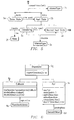
- Fig. 1 is a block diagram of the present invention.
- the present invention includes an event notification framework (ENF) 1b which notifies a first application program object 1a of events of one or more predefined event types which occur within or under control of a second application program object 1c.
- the ENF 1b notifies the first application program object 1a in accordance with an interest generated by the first application program object 1a in one or more of those event types.
- a third application program which has not generated an interest in that event type to which the occurring event belongs would not receive notification of the occurrence of the event.
- the occurrence of an event like, for example, the execution of a method, can transition the application program from one state to another.
- event types include categories of events which can occur during the operation of a system. Examples of event types include printing events, searching events, storing events, etc.
- the event types to which the first application program object 1a can express an interest and the representation of those event types vary and are dependent upon the implementation of the second application program object 1b which generates the events.
- Each event type on which the second application program object 1b will generate external notifications is represented by a corresponding news type stored in the data structure set of news types Id.
- the first application program object 1a expresses an interest in an event type on which the second application program object 1b generates external notification by storing an associated interest in the data structure set of interests 1e.
- a set includes not only information content but also behaviors and attributes associated with the information for manipulating and describing, respectively, the information included within the set.
- the interests generated by the first application program object la are stored in the data structure set of interests 1e.
- the data structure set of interests le may be implemented dynamically, for example, as a doubly linked list of pointers to files containing the data defining each interest.
- Each interest stored in the data structure set of interests 1e includes a news type identifier, a stateful object identifier and a dispatcher identifier which identify the event type that the first application program object 1a is interested in, the application program object which generates events of the event type in which the first application program object 1a is interested in, and how the first application program object 1a receives notification ofthose events, respectively.
- Each event which occurs within or under the control of the second application program object 1c is described by an event type which is associated with a news type stored within the data structure set of news types 1d.
- the event types are defined by the particular implementation and function of the second application program object 1c.
- the data structure set of news types 1d may be implemented dynamically, for example, as a doubly linked list of pointers to memory locations which contain the news type information, or, statically, for example, as a header included in source program files.
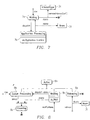
- Fig. 2 shows an object model for the event notification framework (ENF) 1b of the present invention.
- the ENF 1b of the present invention includes a stateful object 2a, a news type object 2e, a news object 2f, an interest type object 2c, an interest object 2d and a dispatcher object 2g.
- the stateful object 2a represents any application object which wants to notify some other application object, which may or may not be within the same application, of some event asynchronously to when the event happens.
- a first application program object which sends data to a printer, would need to know when a second application program object, which generates the data, has completed processing.
- the second application program object is the stateful object 2a.
- the second application program object which generates the data to be printed, would need to be notified by the first application program object that the print is done or that some error has occurred which prevents the printing operation to continue, i.e., the print is powered off, off line or out of paper.
- the first application program object is the stateful object 2a.
- the ENF 1b of the present invention provides the mechanisms for the second application program object 1c to be identified as an application program object having at least two possible states by defining it as an instance of the stateful object 2a, defining each of the possible state transitions as instances of the news type object 2e and to generate instances of the news object 2f in response to the transitions of the stateful object 2a from one of its possible states to another.
- the corresponding instance of the news object 2f includes event attributes, defined by the application object, and is dispatched by an instance of the dispatcher object 2g to the first application program object 1a which has generated an interest, stored in the data structure set of interests 1e, in the news type object 1b associated with the event.
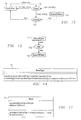
- An object model of the news object 2e is illustrated in Fig. 15.
- the ENF 1b of the present invention also provides the mechanisms for the first application program object 1a to receive notification of events of the event types associated with the second application program object 1c by generating an interest object 2d and associating that interest object 2d with an instance of the news type object 2e.
- An object model of the interest object 2d is shown in Fig. 18.
- the first application program object 1a uses an add interest function 3b to add an interest to the data structure set of interests 1e as an instance of the interest object 2d.
- a remove interest function 3c is used to terminate notification to the first application program object 1a of the associated event by removing the interest object 2d from the data structure set of interests 1e.
- Both the add interest 3b and the remove interest 3c functions are behaviors included in the news type object 2e are shown in the object model of the news type object illustrated in Figs. 14 & 15.
- the add interest function 3b and the remove interest function 3c in turn initialize correspondingly named behaviors in the interest type object 2c.
- An object model and dynamic model of the interest type object 2c are illustrated in Figs. 17 and 19, respectively.
- a news object 2f is generated using a new news function 3f.
- a circulate function 3e finds all interest in the data structure set of interests 1e which are associated with the news type 2e of the generated news object 2f by exhaustively searching the data structure set of interests 1e for the stateful object identifier and news type identifier associated with the news object 2f.
- the stateful object identifier included in the news object 2f references the instance of the stateful object 2a which generated the news object 2f.
- the circulate function 3e then provides news object 2f which includes the event information to an instance of the dispatcher object 2g in accordance with the dispatcher identifier included in the interest found in the data structure set of interests 1e.
- An object and dynamic model of the stateful object 2a are illustrated in Figs. 4 and 5, respectively.
- a dispatch function 3a Upon receipt of the news object 2f, a dispatch function 3a dispatches the news object 2f to the first application program object 1a. After the news object 2f is dispatched or if the no interest in the news object 2f was found in the data structure set of interests 1e, the news objects 2f is deleted using the delete news function 3d.
- An object model of the dispatcher object 2g is shown in Fig. 6. As shown in Fig. 6, the dispatcher object 2g includes a callback object 2a and a poll object 6c representing two types of dispatches available in one embodiment of the present invention.
- the callback object 6a is used when the first application program object la is to receive news objects 2f as arguments in a function call to a procedure included in the first application program object la. When the procedure completes its processing, the news object 2 is deleted.
- the operation of the callback object 6a is illustrated in more detail in the dynamic model shown in Fig. 7.
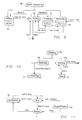
- the poll object 6c is used to queue news objects 2f so that the first application program object 1a can receive the news objects 2f at a later time.
- the news objects 2f are queued to the data structure Queue of News 6d.
- the operation of the poll object 6a is illustrated in more detail in the dynamic models shown in Figs. 8-10 and in the functional models shown in Figs. 11-13.
- the first application program object la is itself a dispatcher and thus the first application program object la inherits the behaviors associated with the dispatcher object 2g.
- an application can generate an instance of the interest object 2d for a particular news type 2e defined by an instance of the stateful object 2a, which will be dispatched through an instance of the dispatcher object 2g. While this instance of the interest object 2d exists, when the corresponding event occurs within the associated instance of the stateful object 2a, an instance of the news object 2f is created and transmitted to the instance of the dispatcher object 2g referenced by the instance of the interest object 2d. Then, in accordance with the dispatcher object 2g, the instance of the news object 2f is dispatched to the interested first application program object 1a.
- FIG 20 A functional model of the add interest function of the interest type object is shown in Fig 20, in which the desired interest is added to the set of interests le at stage 20a.
- FIG 21 A functional model of the remove interest function of the interest type object is shown in Fig 21.
- the desired interest is found by the Find Interest function 21a, and then removed from the set of interests le by the remove interest function 21b.
Landscapes
- Engineering & Computer Science (AREA)
- Software Systems (AREA)
- Theoretical Computer Science (AREA)
- Multimedia (AREA)
- Physics & Mathematics (AREA)
- General Engineering & Computer Science (AREA)
- General Physics & Mathematics (AREA)
- Stored Programmes (AREA)
Applications Claiming Priority (2)
| Application Number | Priority Date | Filing Date | Title |
|---|---|---|---|
| US34124794A | 1994-11-17 | 1994-11-17 | |
| US341247 | 1994-11-17 |
Publications (1)
| Publication Number | Publication Date |
|---|---|
| EP0713178A1 true EP0713178A1 (en) | 1996-05-22 |
Family
ID=23336817
Family Applications (1)
| Application Number | Title | Priority Date | Filing Date |
|---|---|---|---|
| EP95308247A Ceased EP0713178A1 (en) | 1994-11-17 | 1995-11-17 | Object oriented event notification system |
Country Status (3)
| Country | Link |
|---|---|
| US (1) | US6532498B1 (enExample) |
| EP (1) | EP0713178A1 (enExample) |
| JP (1) | JPH08263309A (enExample) |
Cited By (4)
| Publication number | Priority date | Publication date | Assignee | Title |
|---|---|---|---|---|
| FR2752469A1 (fr) * | 1996-08-19 | 1998-02-20 | Schlumberger Services Petrol | Structure repartie pour communication intertache entre applications de postes de travail |
| US6401138B1 (en) * | 1996-10-28 | 2002-06-04 | Koninklijke Philips Electronics N.V. | Interface for patient context sharing and application switching |
| US6499062B1 (en) * | 1998-12-17 | 2002-12-24 | Koninklijke Philips Electronics N.V. | Synchronizing property changes to enable multiple control options |
| US6918123B1 (en) * | 1998-10-02 | 2005-07-12 | Koninklijke Philips Electronics N.V. | Calls identify scenario for control of software objects via property routes |
Families Citing this family (16)
| Publication number | Priority date | Publication date | Assignee | Title |
|---|---|---|---|---|
| US7685605B1 (en) * | 1996-08-19 | 2010-03-23 | Schlumberger Technology Corporation | Distributed framework for intertask communication between workstation applications |
| US6971109B1 (en) * | 1998-07-24 | 2005-11-29 | Micron Technology, Inc. | Integrated application management system |
| US6880126B1 (en) | 1999-08-03 | 2005-04-12 | International Business Machines Corporation | Controlling presentation of a GUI, using view controllers created by an application mediator, by identifying a destination to access a target to retrieve data |
| US7181686B1 (en) | 1999-10-29 | 2007-02-20 | International Business Machines Corporation | Selecting screens in a GUI using events generated by a set of view controllers |
| US6862686B1 (en) | 1999-10-29 | 2005-03-01 | International Business Machines Corporation | Method and apparatus in a data processing system for the separation of role-based permissions specification from its corresponding implementation of its semantic behavior |
| US7349946B2 (en) * | 2000-10-02 | 2008-03-25 | Canon Kabushiki Kaisha | Information processing system |
| US8291434B1 (en) * | 2001-06-13 | 2012-10-16 | Digi International Inc. | Computer system and method to dispatch and receive a message responsive to the occurrence of an event |
| US6976244B2 (en) * | 2002-01-09 | 2005-12-13 | International Business Machines Corporation | Method, system, and product for storage of attribute data in an object oriented environment |
| EP1547351B1 (en) * | 2002-09-23 | 2007-05-09 | Telefonaktiebolaget LM Ericsson (publ) | Method and mechanism for transmitting messages |
| US7478395B2 (en) * | 2002-09-23 | 2009-01-13 | Telefonaktiebolaget L M Ericsson (Publ) | Middleware application message/event model |
| US7954110B1 (en) * | 2004-06-22 | 2011-05-31 | Apple Inc. | Observing properties associated with an object in an object-oriented programming platform |
| US20100070982A1 (en) * | 2005-09-09 | 2010-03-18 | Pitts William M | Distributed File System Consistency Mechanism Extension For Accelerating Communications Between Distributed Applications |
| US20090089805A1 (en) * | 2007-09-28 | 2009-04-02 | Microsoft Corporation | Profiling techniques and systems for computer programs |
| US9218629B2 (en) * | 2012-01-20 | 2015-12-22 | Blackberry Limited | Prioritizing and providing information about user contacts |
| US9567457B2 (en) | 2013-09-11 | 2017-02-14 | Bridgestone Corporation | Processes for the removal of rubber from TKS plant matter |
| US12405861B2 (en) * | 2024-05-06 | 2025-09-02 | Hewlett Packard Enterprise Development Lp | Adaptive scaling of topics in a stateful event-driven platform |
Family Cites Families (6)
| Publication number | Priority date | Publication date | Assignee | Title |
|---|---|---|---|---|
| US5133075A (en) * | 1988-12-19 | 1992-07-21 | Hewlett-Packard Company | Method of monitoring changes in attribute values of object in an object-oriented database |
| US5237684A (en) * | 1991-08-12 | 1993-08-17 | International Business Machines Corporation | Customized and versatile event monitor within event management services of a computer system |
| US5432940A (en) * | 1992-11-02 | 1995-07-11 | Borland International, Inc. | System and methods for improved computer-based training |
| US5742848A (en) * | 1993-11-16 | 1998-04-21 | Microsoft Corp. | System for passing messages between source object and target object utilizing generic code in source object to invoke any member function of target object by executing the same instructions |
| US5504896A (en) * | 1993-12-29 | 1996-04-02 | At&T Corp. | Method and apparatus for controlling program sources in an interactive television system using hierarchies of finite state machines |
| US5870605A (en) * | 1996-01-18 | 1999-02-09 | Sun Microsystems, Inc. | Middleware for enterprise information distribution |
-
1995
- 1995-11-17 JP JP7335604A patent/JPH08263309A/ja active Pending
- 1995-11-17 EP EP95308247A patent/EP0713178A1/en not_active Ceased
-
1997
- 1997-11-13 US US08/970,236 patent/US6532498B1/en not_active Expired - Lifetime
Non-Patent Citations (4)
| Title |
|---|
| "Event Notification Mechanism", IBM TECHNICAL DISCLOSURE BULLETIN, vol. 36, no. 4, NEW YORK, US, pages 523 - 526, XP000364604 * |
| "Portable Object-Oriented Event Manager", IBM TECHNICAL DISCLOSURE BULLETIN, vol. 37, no. 6B, NEW YORK, US, pages 553 - 555, XP000456095 * |
| IBM:: "SOMObjects Base Toolkit Users Guide, Version 2.0 (2nd Edition)", IBM, US * |
| S. MENON ET AL.:: "Asynchronous Event Handling in Distributed Object-Based Systems", PROCEEDINGS OF THE 13TH INTERNATIONAL CONFERENCE ON DISTRIBUTED COMPUTING SYSTEMS, 25 May 1993 (1993-05-25) - 28 May 1993 (1993-05-28), PITTSBURGH, PENNSYLVANIA, USA, pages 386 - 390, XP000399409 * |
Cited By (4)
| Publication number | Priority date | Publication date | Assignee | Title |
|---|---|---|---|---|
| FR2752469A1 (fr) * | 1996-08-19 | 1998-02-20 | Schlumberger Services Petrol | Structure repartie pour communication intertache entre applications de postes de travail |
| US6401138B1 (en) * | 1996-10-28 | 2002-06-04 | Koninklijke Philips Electronics N.V. | Interface for patient context sharing and application switching |
| US6918123B1 (en) * | 1998-10-02 | 2005-07-12 | Koninklijke Philips Electronics N.V. | Calls identify scenario for control of software objects via property routes |
| US6499062B1 (en) * | 1998-12-17 | 2002-12-24 | Koninklijke Philips Electronics N.V. | Synchronizing property changes to enable multiple control options |
Also Published As
| Publication number | Publication date |
|---|---|
| JPH08263309A (ja) | 1996-10-11 |
| US6532498B1 (en) | 2003-03-11 |
Similar Documents
| Publication | Publication Date | Title |
|---|---|---|
| US6532498B1 (en) | Method and system for event notification between software application program objects | |
| US5838969A (en) | System and method for collecting and dispatching selected events in a computer application program | |
| US6434603B1 (en) | System for task tracking and controlling electronic mail | |
| US5535322A (en) | Data processing system with improved work flow system and method | |
| US8700413B2 (en) | Web services registration for dynamic composition of web services | |
| US5802253A (en) | Event-driven rule-based messaging system | |
| US5555346A (en) | Event-driven rule-based messaging system | |
| JP3554007B2 (ja) | ノードネットワークを用いた通信方法及び通信システム | |
| US6014673A (en) | Simultaneous use of database and durable store in work flow and process flow systems | |
| US5956486A (en) | Method and apparatus for monitoring multiple electronic mail systems | |
| US20030204644A1 (en) | System and method for developing, deploying, and debugging software agents | |
| CN113157409A (zh) | 基于ai的rpa任务调度方法、装置、电子设备及存储介质 | |
| US7565662B2 (en) | Program agent initiated processing of enqueued event actions | |
| US8789058B2 (en) | System and method for supporting batch job management in a distributed transaction system | |
| JPH05197573A (ja) | タスク指向パラダイムによるタスク管理システム | |
| WO1997010544A1 (en) | Support for application programs in a distributed environment | |
| US20120215581A1 (en) | Ad-Hoc and Priority-Based Business Process Execution | |
| JP2000512042A (ja) | 統合化アプリケーション・インタフェース・マネージャ | |
| JPH10260825A (ja) | モジュール型アプリケーションの共同 | |
| US20070157155A1 (en) | System and method for software generation and execution | |
| US20050044173A1 (en) | System and method for implementing business processes in a portal | |
| EP1508097A1 (en) | Method and implementation for message-driven job processing | |
| US6185730B1 (en) | Method and apparatus for creating dippable beans in a java environment | |
| US7950011B2 (en) | Leveraging advanced queues to implement event based job scheduling | |
| CN113141387B (zh) | 业务订阅方法、装置及系统 |
Legal Events
| Date | Code | Title | Description |
|---|---|---|---|
| PUAI | Public reference made under article 153(3) epc to a published international application that has entered the european phase |
Free format text: ORIGINAL CODE: 0009012 |
|
| AK | Designated contracting states |
Kind code of ref document: A1 Designated state(s): DE FR GB IT NL |
|
| 17P | Request for examination filed |
Effective date: 19961118 |
|
| RAP1 | Party data changed (applicant data changed or rights of an application transferred) |
Owner name: STERLING SOFTWARE, INC. |
|
| RAP1 | Party data changed (applicant data changed or rights of an application transferred) |
Owner name: COMPUTER ASSOCIATES THINK, INC. |
|
| 17Q | First examination report despatched |
Effective date: 20040802 |
|
| 17Q | First examination report despatched |
Effective date: 20040802 |
|
| STAA | Information on the status of an ep patent application or granted ep patent |
Free format text: STATUS: THE APPLICATION HAS BEEN REFUSED |
|
| 18R | Application refused |
Effective date: 20130927 |