EP0704484B1 - Ethylene-alpha-olefin-non-conjugated diene copolymer rubber composition - Google Patents

Ethylene-alpha-olefin-non-conjugated diene copolymer rubber composition Download PDF

Info

Publication number
EP0704484B1
EP0704484B1 EP95306856A EP95306856A EP0704484B1 EP 0704484 B1 EP0704484 B1 EP 0704484B1 EP 95306856 A EP95306856 A EP 95306856A EP 95306856 A EP95306856 A EP 95306856A EP 0704484 B1 EP0704484 B1 EP 0704484B1
Authority
EP
European Patent Office
Prior art keywords
copolymer rubber
ethylene
olefin
composition according
copolymer
Prior art date
Legal status (The legal status is an assumption and is not a legal conclusion. Google has not performed a legal analysis and makes no representation as to the accuracy of the status listed.)
Expired - Lifetime
Application number
EP95306856A
Other languages
German (de)
French (fr)
Other versions
EP0704484A1 (en
Inventor
Akihiko Morikawa
Masayuki Motonari
Masashi Shimakage
Katsumi Oka
Current Assignee (The listed assignees may be inaccurate. Google has not performed a legal analysis and makes no representation or warranty as to the accuracy of the list.)
JSR Corp
Original Assignee
Japan Synthetic Rubber Co Ltd
Priority date (The priority date is an assumption and is not a legal conclusion. Google has not performed a legal analysis and makes no representation as to the accuracy of the date listed.)
Filing date
Publication date
Application filed by Japan Synthetic Rubber Co Ltd filed Critical Japan Synthetic Rubber Co Ltd
Publication of EP0704484A1 publication Critical patent/EP0704484A1/en
Application granted granted Critical
Publication of EP0704484B1 publication Critical patent/EP0704484B1/en
Anticipated expiration legal-status Critical
Expired - Lifetime legal-status Critical Current

Links

Images

Classifications

    • C—CHEMISTRY; METALLURGY
    • C08—ORGANIC MACROMOLECULAR COMPOUNDS; THEIR PREPARATION OR CHEMICAL WORKING-UP; COMPOSITIONS BASED THEREON
    • C08L—COMPOSITIONS OF MACROMOLECULAR COMPOUNDS
    • C08L23/00—Compositions of homopolymers or copolymers of unsaturated aliphatic hydrocarbons having only one carbon-to-carbon double bond; Compositions of derivatives of such polymers
    • C08L23/02—Compositions of homopolymers or copolymers of unsaturated aliphatic hydrocarbons having only one carbon-to-carbon double bond; Compositions of derivatives of such polymers not modified by chemical after-treatment
    • C08L23/16—Ethylene-propylene or ethylene-propylene-diene copolymers
    • C—CHEMISTRY; METALLURGY
    • C08—ORGANIC MACROMOLECULAR COMPOUNDS; THEIR PREPARATION OR CHEMICAL WORKING-UP; COMPOSITIONS BASED THEREON
    • C08K—Use of inorganic or non-macromolecular organic substances as compounding ingredients
    • C08K3/00—Use of inorganic substances as compounding ingredients
    • C08K3/01—Use of inorganic substances as compounding ingredients characterized by their specific function
    • C08K3/011—Crosslinking or vulcanising agents, e.g. accelerators
    • C—CHEMISTRY; METALLURGY
    • C08—ORGANIC MACROMOLECULAR COMPOUNDS; THEIR PREPARATION OR CHEMICAL WORKING-UP; COMPOSITIONS BASED THEREON
    • C08K—Use of inorganic or non-macromolecular organic substances as compounding ingredients
    • C08K3/00—Use of inorganic substances as compounding ingredients
    • C08K3/02—Elements
    • C08K3/04—Carbon
    • C—CHEMISTRY; METALLURGY
    • C08—ORGANIC MACROMOLECULAR COMPOUNDS; THEIR PREPARATION OR CHEMICAL WORKING-UP; COMPOSITIONS BASED THEREON
    • C08K—Use of inorganic or non-macromolecular organic substances as compounding ingredients
    • C08K3/00—Use of inorganic substances as compounding ingredients
    • C08K3/02—Elements
    • C08K3/06—Sulfur
    • C—CHEMISTRY; METALLURGY
    • C08—ORGANIC MACROMOLECULAR COMPOUNDS; THEIR PREPARATION OR CHEMICAL WORKING-UP; COMPOSITIONS BASED THEREON
    • C08K—Use of inorganic or non-macromolecular organic substances as compounding ingredients
    • C08K3/00—Use of inorganic substances as compounding ingredients
    • C08K3/18—Oxygen-containing compounds, e.g. metal carbonyls
    • C08K3/20—Oxides; Hydroxides
    • C08K3/22—Oxides; Hydroxides of metals
    • C—CHEMISTRY; METALLURGY
    • C08—ORGANIC MACROMOLECULAR COMPOUNDS; THEIR PREPARATION OR CHEMICAL WORKING-UP; COMPOSITIONS BASED THEREON
    • C08K—Use of inorganic or non-macromolecular organic substances as compounding ingredients
    • C08K5/00—Use of organic ingredients
    • C08K5/04—Oxygen-containing compounds
    • C08K5/09—Carboxylic acids; Metal salts thereof; Anhydrides thereof
    • C—CHEMISTRY; METALLURGY
    • C08—ORGANIC MACROMOLECULAR COMPOUNDS; THEIR PREPARATION OR CHEMICAL WORKING-UP; COMPOSITIONS BASED THEREON
    • C08L—COMPOSITIONS OF MACROMOLECULAR COMPOUNDS
    • C08L91/00—Compositions of oils, fats or waxes; Compositions of derivatives thereof
    • C—CHEMISTRY; METALLURGY
    • C08—ORGANIC MACROMOLECULAR COMPOUNDS; THEIR PREPARATION OR CHEMICAL WORKING-UP; COMPOSITIONS BASED THEREON
    • C08L—COMPOSITIONS OF MACROMOLECULAR COMPOUNDS
    • C08L2312/00—Crosslinking
    • C—CHEMISTRY; METALLURGY
    • C08—ORGANIC MACROMOLECULAR COMPOUNDS; THEIR PREPARATION OR CHEMICAL WORKING-UP; COMPOSITIONS BASED THEREON
    • C08L—COMPOSITIONS OF MACROMOLECULAR COMPOUNDS
    • C08L2314/00—Polymer mixtures characterised by way of preparation
    • C08L2314/02—Ziegler natta catalyst
    • C—CHEMISTRY; METALLURGY
    • C08—ORGANIC MACROMOLECULAR COMPOUNDS; THEIR PREPARATION OR CHEMICAL WORKING-UP; COMPOSITIONS BASED THEREON
    • C08L—COMPOSITIONS OF MACROMOLECULAR COMPOUNDS
    • C08L2666/00—Composition of polymers characterized by a further compound in the blend, being organic macromolecular compounds, natural resins, waxes or and bituminous materials, non-macromolecular organic substances, inorganic substances or characterized by their function in the composition
    • C08L2666/02—Organic macromolecular compounds, natural resins, waxes or and bituminous materials
    • C08L2666/04—Macromolecular compounds according to groups C08L7/00 - C08L49/00, or C08L55/00 - C08L57/00; Derivatives thereof

Definitions

  • the ethylene/ ⁇ -olefin weight ratio in the copolymer rubber (A) used in this invention is 40/60 to 70/30, preferably 45/55 to 65/35.
  • the ethylene/ ⁇ -olefin weight ratio is less than 40/60, the dispersion of the filler becomes insufficient, the surface skin is deteriorated and the strength of the sponge rubber is lowered.
  • the ethylene/ ⁇ -olefin weight ratio is more than 70/30, the compression set at a low temperature of the sponge rubber becomes large.
  • the melting point of the ethylene crystal component in the copolymer rubber (B) as measured by DSC is at least 40°C, preferably 40°C to 120°C. In this case, when the melting point is less than 40°C, the stiffness of the sponge rubber is deteriorated.
  • copolymer rubbers (A) and (B) of this invention can be produced by a conventional polymerization method.
  • organoaluminum compounds are ethylaluminum sesquichloride, butylaluminum sesquichloride, a mixture of ethylaluminum sesquichloride and triisobutylaluminum and a mixture of butylaluminum sesquichloride and triisobutylaluminum.
  • the above-mentioned cross-linking agent includes, for example, sulfur such as powdery sulfur, precipitated sulfur, colloidal sulfur, insoluble sulfur or the like; inorganic vulcanizing agents such as sulfur chloride, selenium, tellurium and the like; sulfur-containing organic compounds such as morpholine disulfide, alkylphenol disulfides, thiuram disulfides, dithiocarbamic acid salts and the like; and organic peroxides such as 1,1-di-t-butylperoxy-3,3,5-trimethylcyclohexane, di-t-butyl peroxide, dicumyl peroxide, t-butylcumyl peroxide, 2,5-dimethyl-2,5-di(t-butylperoxy)hexane, 1,3-bis(t-butylperoxyisopropyl)-benzene and the like.
  • These cross-linking agents may be used alone or in admixture of two or more.
  • Said vulcanization accelerator includes, for example, aldehyde ammonias such as hexamethylenetetramine and the like; guanidines such as diphenylguanidine, di(o-tolyl)guanidine, o-tolylbiguanide and the like; thioureas such as thiocarbanilide, di(o-tolyl)thiourea, N,N'-diethylthiourea, tetramethylthiourea, trimethylthiourea, dilaurylthiourea and the like; thiazoles such as mercaptobenzothiazole, dibenzylthiazole disulfide, 2-(4-morpholinothio)benzothiazole, 2-(2,4-dinitrophenyl)mercaptobenzothiazole, N,N'-diethylthiocarbamoylthio-benzothiazole and the like; sulfenamides such as N
  • the foaming agent includes inorganic foaming agents such as ammonium carbonate, sodium bicarbonate, anhydrous sodium nitrate and the like; organic foaming agents such as dinitrosopentamethylenetetramine, N,N'-dimethyl-N,N'-dinitrosoterephthalamide, benzenesulfonyl hydrazide, p,p'-oxybis(benzenesulfonyl hydrazide), 3,3'-disulfonhydrazidephenylsulfone, azoisobutyronitrile, azobisformamide and the like.
  • inorganic foaming agents such as ammonium carbonate, sodium bicarbonate, anhydrous sodium nitrate and the like
  • organic foaming agents such as dinitrosopentamethylenetetramine, N,N'-dimethyl-N,N'-dinitrosoterephthalamide, benzenesulfonyl hydrazide, p,p'-
  • the amount of the above-mentioned foaming agent compounded is preferably 0.5 to 20 parts by weight, more preferably 1 to 15 parts by weight, per 100 parts by weight of the copolymer rubber composition and the amount of the above-mentioned foaming adjuvant compounded is preferably 1 to 20 parts by weight per 100 parts by weight of the copolymer rubber composition.
  • the copolymer rubber composition of this invention may have compounded therewith additives which are used in a conventional rubber such as a reinforcing agent, a moisture absorbent, a plasticizer, an antioxidant, a heat-stabilizer, ultraviolet absorbent, a lubricant, a release agent, a flame retardant, an antistatic agent, a pigment and the like; and conventional rubbery or non-rubbery polymers.
  • a conventional rubber such as a reinforcing agent, a moisture absorbent, a plasticizer, an antioxidant, a heat-stabilizer, ultraviolet absorbent, a lubricant, a release agent, a flame retardant, an antistatic agent, a pigment and the like; and conventional rubbery or non-rubbery polymers.
  • the above-mentioned other polymers include, for example, butyl rubber, natural rubber, polyisoprene rubber, polybutadiene rubber, styrene-butadiene rubber, acrylonitrile-butadiene rubber, other ethylene- ⁇ -olefin-non-conjugated diene copolymers than the copolymer rubbers (A) and (B), ethylene- ⁇ -olefin copolymers, polyethylene, polypropylene and the like.
  • the method and order of compounding the above-mentioned additives with the copolymer rubbers of this invention are not critical, and known mixing machines and known extruders may be used. However, it is preferable to mix the copolymer rubber composition, the filler, the softening agent and the like using a Banbury mixer or the like and thereafter mix the vulcanizing agent, the foaming agent, the foaming adjuvant and the like with the mixture using a twin roll mill or the like.
  • a sponge rubber can be produced from the rubber compound using a known cross-linkingfoaming apparatus according to the procedure used in the production of a conventional sponge rubber.
  • a sponge rubber can be produced by a method in which the rubber compound is placed in a mold and the temperature of the mold is elevated to foam and cross-link the rubber compound, a method in which the rubber compound is formed into any desired shape using an extruder and thereafter the thus shaped rubber compound is continuously heated in a cross-linking apparatus to undergo foaming and cross-linking, or other like methods.
  • the copolymer rubber composition of this invention can be very suitably used, in the form of a sponge rubber, particularly in sealing members such as door seal, body side seal, roof side rail, trunk seal and the like of automobile; and are also useful in a wide use including seal members for civil engineering and construction industry and seal members for machine and apparatus, electric wire coatings and the like.
  • the copolymer rubber compositions of this invention produce sponge rubbers each of which has been highly foamed, has a small sponge density, does not show deterioration of stiffness, has an excellent extruder-processibility, a good shape-retention and a small compression set and shows a long gelation time.
  • the blend weight ratio of the high molecular weight polymer in the copolymer rubber composition is large, so that the composition is not highly foamed and the extruder-processibility is inferior.

Landscapes

  • Chemical & Material Sciences (AREA)
  • Health & Medical Sciences (AREA)
  • Chemical Kinetics & Catalysis (AREA)
  • Medicinal Chemistry (AREA)
  • Polymers & Plastics (AREA)
  • Organic Chemistry (AREA)
  • Oil, Petroleum & Natural Gas (AREA)
  • Compositions Of Macromolecular Compounds (AREA)
  • Manufacture Of Porous Articles, And Recovery And Treatment Of Waste Products (AREA)

Description

BACKGROUND OF THE INVENTION
This invention relates to an ethylene-α-olefin-non-conjugated diene copolymer rubber composition which contains two specific ethylene-α-olefin-non-conjugated diene copolymers, can be highly foamed and has a good processibility, has a high stiffness even when highly foamed, is excellent in compression set, kneader-processibility (processibility in internal mixer) and extruder-processibility, and also excellent in shape-retention during vulcanization and foaming and is applicable to a wide use including a sealing material for automobile.
Ethylene-α-olefin-non-conjugated diene copolymer rubbers are excellent in characteristics such as heat resistance, ozone resistance, weather resistand the like, and are widely used in sponge articles, particularly sealing members for automobile such as door seal, roof side rail, trunk seal and the like. Recently, however, as the performance of automobile has been heightened, such sponge articles have been required to have high level performance.
For example, invasion of outdoor noises such as engine noise and noises around door into the interior of an automobile room at high speed driving; leaking of rain; and the like depend greatly upon the sealing performance of a spongy rubber around the door (proportional to the stiffness of the sponge rubber), and such sponges are required to be excellent in sealing performance. Also, after the door has been shut, the sponge is used in the compression state for a long period of time, and hence, it is required that the compression set is small. Accordingly, the requirement for sealing performance and low permanent set in fatigue of the sponge has now become severer.
Moreover, since the cross-sectional shape of a sealing sponge has recently been complicated, such a distortion that the sealing sponge, when produced by a conventional continuous vulcanization method, is deformed owing to its own weight before the completion of vulcanization and foaming is generated, and such a problem that the desired shape cannot be retained is caused. Therefore, a sponge rubber which is excellent in shape-retention which is an index of the distortion has been required.
Moreover, in order to meet the request for reducing the cost of sponge rubber, an additional request has been raised for a sponge rubber which has been highly foamed, namely has a low sponge density and which is nevertheless excellent in sealing performance, namely low in permanent set in fatigue or excellent in shape-retention.
In addition to the above-mentioned characteristics, the sponge rubber is required to have excellent processibility in internal mixer, mill-processibility and extruder-processibility together with performance as a sponge rubber. In particular, in order to make the appearance of sponge rubber good and enhance the commercial value, it is severely required that gel or poorly dispersed spot of ingredients be little formed and that the skin of extrudate be good.
Under such circumstances, the prior art includes, for example, a method for improving the compression set by making higher the molecular weight of a copolymer rubber having an ethylene/α-olefin weight ratio of 73/27 to 40/60, a Mooney viscosity (ML1+4121°C) of 135 to 200 and a diolefin content of 10 to 36 in terms of iodine value as described in Japanese Patent Application Kokai No. 3-20,339. However, according to such a method, the molecular weight is relatively high, so that when carbon black and oil are compounded in usual amounts, the viscosity of the resulting compound becomes high and hence it is difficult to highly foam the compound. Also, when it is intended to highly foam the compound, it is necessary to add the oil in a large amount. Therefore, the shape-retention is deteriorated and the stiffness of the sponge rubber becomes small.
EP-A-0 332 404 relates to a rubber composition for producing sponge rubber products which can be employed for water-proofing, sound insulation, heat insulation, cushioning and like uses for automobiles and the like, which comprises 1 to 20 parts by weight of a blowing agent and 0.1 to 0.8 part by weight of sulfur relative to 100 parts by weight of an ethylene-α-olefin- non-conjugated dienes tetrapolymer containing as non- conjugated dienes the ethylidene-norbornene component amounting to 15 to 30 in terms of iodine value and the dicyclopentadiene component amounting to 1 to 10 in terms of iodine value and having a branching index of at least 2.
Japanese Patent Application Kokai No. 4-80,245 describes a method using a copolymer rubber consisting of a low molecular weight copolymer and a high molecular weight copolymer, having an ethylene/α-olefin weight ratio of 73/27 to 40/60, a Mooney viscosity (ML1+4121°C) of 50 to 100, a diolefin content of 10 to 36 in terms of iodine value and a ratio of the iodine value of the low molecular weight copolymer to the iodine value of the high molecular weight of 1.1/1 to 4/1. According to such a method, the compression set is small and the extruder-processibility and the shape-retention are good; however, when the compound is highly foamed, the stiffness of the resulting sponge rubber becomes small.
Japanese Patent Application Kokoku No. 2-62,582 describes a method using a copolymer rubber consisting of an ethylene-α-olefin copolymer, 5-ethylidene-2-norbornene (ENB) and 5-vinyl-2-norbornene (VNB) in which the mole ratio of ENB/VNB copolymerized is 1/1 to 20/1, the total content of ENB and VNB is such that the iodine value of copolymer becomes 2 to 40 and has a specific molecular weight and a specific molecular weight distribution. However, according to such a method, the mill-processibility and extruder-processibility are good and in particular, such a sponge rubber that the surface skin of the extrudate is smooth is obtained; however, a highly foamed sponge rubber is disadvantageous in that the compression set is large and the stiffness is small.
The present inventors have made extensive research for solving the above-mentioned problems and have consequently found that an ethylene-α-olefin-non-conjugated diene copolymer rubber composition comprising a specific low molecular weight copolymer and a specific high molecular weight copolymer having a specific crystallinity, and when it is highly foamed, particularly, the stiffness is not deteriorated, the compression set is excellent, the shape-retention during the vulcanization and foaming is excellent, the extruded article has good edge rating, the surface skin of an extruded article is smooth and the amount of gel and poorly dispersed spot of ingredients formed during the kneading and extrusion is small.
SUMMARY OF THE INVENTION
It is an object of this invention is to provide an ethylene-α-olefin-non-conjugated diene copolymer rubber composition having a high foamability, an excellent processibility in internal mixer and an excellent extruder-processibility, and can produce, when it is highly foamed, such a sponge rubber that particularly the stiffness is not deteriorated, the compression set is small and the physical properties including shape-retention during the vulcanization and foaming are well-balanced.
Other objects and advantages of this invention will become apparent from the following description.
According to this invention, there is provided an ethylene-α-olefin-non-conjugated diene copolymer rubber composition which comprises:
  • (A) an ethylene-α-olefin-non-conjugated diene copolymer in which the ethylene/α-olefin weight ratio is 40/60 to 70/30; which contains as the non-conjugated dienes (a) ethylidenenorbornene and (b) either dicyclopentadiene or α,ω-diene having 8 to 20 carbon atoms in the main chain; and in which the amount of the ethylidenenorbornene is 35 to 50 in terms of the iodine value of the ethylene-α-olefin-non-conjugated diene copolymer, the amount of the dicyclopentadiene is 3 to 20 in terms of the iodine value of the ethylene-α-olefin-non-conjugated diene copolymer, the content of the α,ω-diene having 8 to 20 carbon atoms in the main chain is 0.05 to 5% by weight based on the total weight of the monomer components, and the Mooney viscosity (ML1+8120°C) is 20 to 65, and
  • (B) an ethylene-α-olefin-non-conjugated diene copolymer in which the ethylene/α-olefin weight ratio is 70/30 to 90/10; which contains as the non-conjugated dienes (c) ethylidenenorbornene; and in which the ethylidenenorbornene content is 3 to 25 in terms of the iodine value of the ethylene-α-olefin-non-conjugated diene copolymer, the Mooney viscosity (ML1+8120°C) is 65 to 300, and the melting point of the crystal portion consisting of ethylene chain as measured by DSC is at least 40°C,
  • the weight ratio of the component (A) to the component
    • (B) being 30/70 to 70/30.
    BRIEF DESCRIPTION OF THE DRAWING
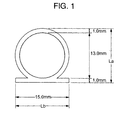
    Fig. 1 is a cross-sectional view of a die of an extruder used in Examples and Comparative Examples for evaluating shape-retention and compression set.
    DETAILED DESCRIPTION OF THE INVENTION
    The ethylene-α-olefin-non-conjugated diene copolymer rubber composition of this invention (referred to hereinafter as the copolymer rubber composition) is characterized by comprising the above-mentioned specific ethylene-α-olefin-non-conjugated diene copolymer (A) [referred to hereinafter as the copolymer rubber (A)] and the above-mentioned specific ethylene-α-olefin-non-conjugated diene copolymer (B) [referred to hereinafter as the copolymer rubber (B)].
    The copolymer rubber (A) is a relatively low molecular weight copolymer rubber, and is basically a component which makes the total molecular weight of the copolymer rubber composition low, makes the highly foaming easy and contributes to the improvement of processibility in internal mixer, mill-processibility and extruder-processibility. Also, the copolymer rubber (A) has a low ethylene content for inhibiting the deterioration of the compression set at a low temperature as much as possible, contains the ethylidenenorbornene which is the component contributing to the increase of vulcanization rate in a relatively large amount as compared with the conventional copolymer rubber composition and also contains either dicyclopentadiene or α,ω-diene having 8 to 20 carbon atoms in the main chain which are components contributing to the formation of branches in order to make as small as possible the deterioration of shape-retention due to the lowered molecular weight.
    Making the ethylidenenorbornene content large in the copolymer rubber (A) as mentioned above is the necessary requirement for increasing the vulcanization rate as a whole of the copolymer rubber composition because the copolymer rubber (B) which will be described hereinafter is crystalline and the ethylidenenorbornene content is relatively small, and is also the essential requirement for increasing the total content of the non-conjugated diene components, thereby preventing the compression set of the sponge from being deteriorated because the low molecular weight rubber component has a large compression set.
    The copolymer rubber (B) is a copolymer rubber having a relatively high molecular weight and is the component which contains a relatively large amount of ethylene for forming a basically crystalline chain component consisting of ethylene, has a small content of the ethylidenenorbornene which is the non-conjugated diene component and contributes to the improvement of the stiffnes and shape-retention of the sponge.
    As described above, in this invention, the objective copolymer rubber composition which is particularly suitable for a sponge rubber is obtained only when the copolymer rubbers (A) and (B) which are different in characteristics are blended in the specific amounts.
    In addition, the copolymer rubber composition of this invention has such a feature that a compound containing the copolymer rubber composition becomes relatively hard owing to the crystallinity of the copolymer rubber (B) and hence the pelletization of the compound becomes easy.
    The α-olefin used in this invention includes, for example, α-olefins having 3 to 12 carbon atoms, and specific examples thereof are propylene, 1-butene, 4-methyl-1-pentene, 1-hexene, 1-octene and the like. Among them, propylene is particularly preferable. These α-olefins may be used alone or in admixture of two or more.
    The α,ω-diene having 8 to 20 carbon atoms in the main chain used in this invention (referred to hereinafter as the α,ω-diene) is represented by the formula (1):
    Figure 00100001
    wherein R's may be the same as or different from one another and each represents a hydrogen atom, a saturated aliphatic hydrocarbon group having 1 to 10 carbon atoms or an unsaturated alicyclic hydrocarbon group having up to 10 carbon atoms and n represents an integer of 4 to 16.
    Specific examples of such α,ω-dienes are 1,7-octadiene, 1,8-nonadiene, 1,9-decadiene, 1,11-dodecadiene, 1,13-tetradecadiene, 1,15-hexadecadiene, 1,17-octadecadiene, 1,19-eicosadiene, 3,6-dimethyl-1,7-octadiene, 4,5-dimethyl-1,7-octadiene, 5-methyl-1,8-nonadiene and the like. In view of cost, 1,7-octadiene and 1,9-decadiene are particularly preferable. The above α,ω-dienes may be used alone or in admixture of two or more.
    Copolymer rubber (A)
    The ethylene/α-olefin weight ratio in the copolymer rubber (A) used in this invention is 40/60 to 70/30, preferably 45/55 to 65/35. In this case, when the ethylene/α-olefin weight ratio is less than 40/60, the dispersion of the filler becomes insufficient, the surface skin is deteriorated and the strength of the sponge rubber is lowered. On the other hand, when the ethylene/α-olefin weight ratio is more than 70/30, the compression set at a low temperature of the sponge rubber becomes large.
    The ethylidenenorbornene content of the copolymer rubber (A) is 35 to 50, preferably 38 to 48 in terms of iodine value of the copolymer. In this case, when the iodine value is less than 35, the compression set of the sponge rubber becomes large, and the vulcanization rate becomes low, so that outgassing results in a deterioration of surface skin and a deterioration of shape-retention. On the other hand, when the iodine value is more than 50, gel and poorly dispersed spot of ingredients tend to be formed during kneader-processing and extruder-processing and vulcanization rate and foaming rate become unbalanced, and hence, it becomes difficult to highly foam the copolymer rubber composition.
    The dicyclopentadiene content of the copolymer rubber (A) is 3 to 20, preferably 4 to 15 in terms of the iodine value of the copolymer. In this case, when the dicyclopentadiene content is smaller than that which the said iodine value becomes 3, the shape-retention of the sponge is deteriorated. On the other hand, when the dicyclopentadiene content is larger than that which the said iodine value becomes 20, the extruder-processibility becomes low.
    The α,ω-diene content of the copolymer rubber (A) is 0.05 to 5% by weight, preferably 0.05 to 2% by weight, based on the total weight of the monomer components. In this case, when the α,ω-diene content is less than 0.05% by weight, the shape-retention of the sponge rubber is deteriorated, while when it is more than 5% by weight, the extruder-processibility is deteriorated.
    The copolymer rubber (A) may contain any one of the dicyclopentadiene and α,ω-diene, and the use of dicyclopentadiene is preferred in view of availability.
    The Mooney viscosity (ML1+8120°C) of the copolymer rubber (A) is 20 to 65, preferably 25 to 60. In this case, when the Mooney viscosity (ML1+8120°C) is less than 20, the shape-retention of the sponge rubber is deteriorated and the surface skin is deteriorated by the outgassing during the vulcanization and foaming. On the other hand, when it is more than 65, it becomes difficult to highly foam the copolymer rubber composition and the processibility in internal mixer and extruder-processibility are deteriorated.
    Mw/Mn of the copolymer rubber (A), which is a ratio of weight average molecular weight of the rubber (A) (Mw) to number average molecular weight of the rubber (A) (Mn), is preferably 4 to 10, more preferably 4 to 8. In this case, when Mw/Mn is more than 10, the compression set of the copolymer rubber (A) sometimes becomes large. On the other hand, when Mw/Mn is less than 4, extruder-processibility and mill-processibility may be deteriorated.
    Copolymer rubber (B)
    The ethylene/α-olefin weight ratio of the copolymer rubber (B) used in this invention is 70/30 to 90/10, preferably 73/27 to 85/15. In this case, when the ethylene/α-olefin weight ratio is less than 70/30, the crystal portion consisting of ethylene chain becomes a little and the stiffness of the sponge rubber is deteriorated. On the other hand, when it is more than 90/10, the viscosity becomes high in the production of the copolymer (B) and the reactor tends to be contaminated.
    The ethylidenenorbornene content of the copolymer rubber (B) is 3 to 25, preferably 5 to 20, more preferably 5 to 10 in terms of the iodine value of the copolymer. In this case, when the ethylidenenorbornene content is smaller than that which the said iodine value becomes 3, the compression set of the sponge rubber becomes large, and the vulcanization rate becomes low, so that the surface skin is deteriorated by outgassing. On the other hand, when the ethylidenenorbornene content is larger than that which the said iodine value is 25, the production of the crystal portion consisting of ethylene chain in the copolymer rubber (B) is inhibited, the stiffness of the sponge rubber is deteriorated, and gel and poorly dispersed spot of ingredients tend to be formed during kneader-processing and extruder-processing.
    The Mooney viscosity (ML1+8120°C) of the copolymer rubber (B) is 65 to 300, preferably 80 to 300. In this case, when the Mooney viscosity is less than 65, the shape-retention of the sponge rubber is deteriorated; the compression set of the sponge rubber becomes large; the surface skin is deteriorated by the outgassing during the vulcanization and foaming; the molecular weight is decreased; the ethylene chain becomes short as a result thereof; and the crystallinity is lowered. On the other hand, when the Mooney viscosity is more than 300, it becomes difficult to highly foam the copolymer rubber composition and the processibility in internal mixer and extruder-processibility are deteriorated.
    The melting point of the ethylene crystal component in the copolymer rubber (B) as measured by DSC is at least 40°C, preferably 40°C to 120°C. In this case, when the melting point is less than 40°C, the stiffness of the sponge rubber is deteriorated.
    Mn/Mn of the copolymer (B) is preferably 2 to 4, more preferably 2-3.5. In this case, when Mw/Mn is more than 4, the crystallinity is lowered and the stiffness is deteriorated. On the other hand, when Mw/Mn is less than 2, extruder-processibility and mill-processibility may be deteriorated.
    Process for producing copolymer rubbers (A) and (B)
    The copolymer rubbers (A) and (B) of this invention can be produced by a conventional polymerization method.
    As the polymerization method, there can be mentioned, for example, a method which comprises polymerizing ethylene, an α-olefin and the above-mentioned non-conjugated dienes while feeding hydrogen as a molecular regulator in the presence of a Ziegler-Natta catalyst consisting of a transition metal compound and an organometallic compound, for example, a combination of a hydrocarbon solvent-soluble vanadium compound and an organoaluminum compound in a suitable solvent.
    As the above-mentioned hydrocarbon solvent-soluble vanadium compound, there can be preferably used VOCl3, VCl4, and reaction products of VOCl3 and/or VCl4 with an alcohol. In this case, the alcohol includes methanol, ethanol, n-propanol, isopropanol, n-butanol, sec-butanol, t-butanol, n-hexanol, n-octanol, 2-ethylhexanol, n-decanol, n-dodecanol and the like, and preferable alcohols are alcohols having 3 to 8 carbon atoms.
    The above organoaluminum compound includes, for example, triethylaluminum, triisobutylaluminum, tri-n-hexylaluminum, diethylaluminum monochloride, diisobutylaluminum monochloride, ethylaluminum sesquichloride, butylaluminum sesquichloride, ethylaluminum dichloride, butylaluminum dichloride and the like. These organoaluminum compounds may be used alone or in admixture of two or more. However, preferable organoaluminum compounds are ethylaluminum sesquichloride, butylaluminum sesquichloride, a mixture of ethylaluminum sesquichloride and triisobutylaluminum and a mixture of butylaluminum sesquichloride and triisobutylaluminum.
    As the above solvent, a hydrocarbon solvent is preferably used, and more preferably used is, for example, n-pentane, n-hexane, n-heptane, n-octane, isooctane, cyclohexane and the like.
    Copolymer rubber composition
    The weight ratio of the copolymer rubber (A) to the copolymer rubber (B) in the copolymer rubber composition of this invention is 30/70 to 70/30, preferably 50/50 to 70/30. In this case, when the weight ratio of the copolymer rubber (A) to the copolymer rubber (B) is less than 30/70, the high foamability, mill-processibility, Banbury-processibility and extruder-processibility of the composition of this invention are deteriorated. On the other hand, when the weight ratio is more than 70/30, the shape-retention and stiffness of the sponge rubber are deteriorated.
    The copolymer rubber composition of this invention can be produced by various production methods.
    The processes for producing the copolymer rubber composition include, for example:
  • (1) a process which comprises mixing a solution of the copolymer rubber (A) and a solution of the copolymer rubber (B) and then removing the solvent to obtain a solid rubber composition,
  • (2) a process which comprises producing any one of the copolymer rubber (A) and the copolymer rubber (B) by polymerization in the first reactor of two reactors which are connected in series, feeding the copolymer rubber produced to the second reactor, producing the other copolymer rubber by polymerization in the second reactor and thereafter removing the solvent to obtain a solid rubber composition,
  • (3) a process which comprises mixing the solid copolymer rubber (A) and the solid copolymer rubber (B) in a conventional kneading machine such as a Banbury mixer, a twin roll mill, an extruder or the like to obtain a solid rubber composition, and the like.
  • The copolymer rubber composition of this invention may be compounded, if necessary, with a filler, a softening agent, a foaming agent, a cross-linking agent, and the like to form a rubber compound and this rubber compound may be subjected to foaming and cross-linking according to a generally used method, thereby producing a sponge rubber.
    As the above-mentioned filler, preferable are inorganic fillers, for example, carbon black such as SRF, FEF, HAF, ISAF, SAF, FT, MT or the like; silica; calcium carbonate; magnesium carbonate; clay; talc; and the like.
    The amount of the filler compounded is preferably 50 to 200 parts by weight per 100 parts by weight of the copolymer rubber composition.
    The above-mentioned softening agent includes process oils such as aromatic oil, naphthenic oil, paraffinic oil and the like which are usually used in rubbers; vegetable oils such as coconut oil and the like; etc. In this case, process oils are preferable, among which paraffinic oil is particularly preferably used.
    The amount of the softening agent compounded is preferably 30 parts by weight or more per 100 parts by weight of the copolymer rubber composition.
    The above-mentioned cross-linking agent includes, for example, sulfur such as powdery sulfur, precipitated sulfur, colloidal sulfur, insoluble sulfur or the like; inorganic vulcanizing agents such as sulfur chloride, selenium, tellurium and the like; sulfur-containing organic compounds such as morpholine disulfide, alkylphenol disulfides, thiuram disulfides, dithiocarbamic acid salts and the like; and organic peroxides such as 1,1-di-t-butylperoxy-3,3,5-trimethylcyclohexane, di-t-butyl peroxide, dicumyl peroxide, t-butylcumyl peroxide, 2,5-dimethyl-2,5-di(t-butylperoxy)hexane, 1,3-bis(t-butylperoxyisopropyl)-benzene and the like. These cross-linking agents may be used alone or in admixture of two or more.
    The amount of the above-mentioned cross-linking agent compounded may be varied depending upon the kind of the cross-linking agent, and in the case of, for example, sulfur, the amount is preferably 0.1 to 10 parts by weight, more preferably 0.5 to 5 parts by weight, per 100 parts by weight of the copolymer rubber composition.
    When sulfur is used as the cross-linking agent, there may be further compounded a vulcanization accelerator and accelerator activator as required.
    Said vulcanization accelerator includes, for example, aldehyde ammonias such as hexamethylenetetramine and the like; guanidines such as diphenylguanidine, di(o-tolyl)guanidine, o-tolylbiguanide and the like; thioureas such as thiocarbanilide, di(o-tolyl)thiourea, N,N'-diethylthiourea, tetramethylthiourea, trimethylthiourea, dilaurylthiourea and the like; thiazoles such as mercaptobenzothiazole, dibenzylthiazole disulfide, 2-(4-morpholinothio)benzothiazole, 2-(2,4-dinitrophenyl)mercaptobenzothiazole, N,N'-diethylthiocarbamoylthio-benzothiazole and the like; sulfenamides such as N-t-butyl-2-benzothiazyl sulfenamide, N,N'-dicyclohexyl-2-benzothiazyl sulfenamide, N,N'-diisopropyl-2-benzothiazyl sulfenamide, N-cyclohexyl-2-benzothiazyl sulfenamide and the like; thiurams such as tetramethylthiuram disulfide, tetraethylthiuram disulfide, tetrabutylthiuram disulfide, tetramethylthiuram monosulfide, dipentamethylenethiuram tetrasulfide and the like; carbamic acid salts such as zinc dimethyldithiocarbamate, zinc diethyldithiocarbamate, zinc di-n-butyldithiocarbamate, zinc ethylphenyldithiocarbamate, sodium dimethyldithiocarbamate, copper dimethyldithiocarbamate, tellurium dimethyldithiocarbamate, iron dimethyldithiocarbamate and the like; xanthogenic acid salts such as zinc butylthioxanthogenate and the like; etc. These vulcanization accelerators may be used alone or in admixture of two or more.
    The amount of the above-mentioned vulcanization accelerator compounded is preferably 0.1 to 20 parts by weight, more preferably 0.2 to 10 parts by weight, per 100 parts by weight of the copolymer rubber composition.
    The accelerator activator mentioned above includes metal oxides such as magnesium oxide, zinc flower, litharge, red lead, white lead and the like; organic acids such as stearic acid, oleic acid, and the like; etc. In particular, zinc flower and stearic acid are preferable.
    The amount of the above-mentioned accelerator activator compounded is preferably 3 to 20 parts by weight per 100 parts by weight of the copolymer rubber composition.
    When an organic peroxide is used as the cross-linking agent, a cross-linking coagent may be further added as required.
    Said cross-linking coagent includes, for example, sulfur; sulfur compounds such as dipentamethylenethiuram tetrasulfide and the like; polyfunctional monomers such as polyethylene dimethacrylate, divinylbenzene, diallyl phthalate, triallyl cyanurate, metaphenylene bismaleimide, toluylene bismaleimide and the like; oxime compounds such as p-quinoneoxime, p,p-benzoylquinoneoxime and the like; etc. These cross-linking coagents may be used alone or in admixture of two or more.
    Moreover, the foaming agent includes inorganic foaming agents such as ammonium carbonate, sodium bicarbonate, anhydrous sodium nitrate and the like; organic foaming agents such as dinitrosopentamethylenetetramine, N,N'-dimethyl-N,N'-dinitrosoterephthalamide, benzenesulfonyl hydrazide, p,p'-oxybis(benzenesulfonyl hydrazide), 3,3'-disulfonhydrazidephenylsulfone, azoisobutyronitrile, azobisformamide and the like.
    These foaming agents may be used alone or in admixture of two or more. Also, a urea type, organic acid type or metal salt type foaming adjuvant may be used together with the above foaming agents.
    The amount of the above-mentioned foaming agent compounded is preferably 0.5 to 20 parts by weight, more preferably 1 to 15 parts by weight, per 100 parts by weight of the copolymer rubber composition and the amount of the above-mentioned foaming adjuvant compounded is preferably 1 to 20 parts by weight per 100 parts by weight of the copolymer rubber composition.
    Moreover, the copolymer rubber composition of this invention may have compounded therewith additives which are used in a conventional rubber such as a reinforcing agent, a moisture absorbent, a plasticizer, an antioxidant, a heat-stabilizer, ultraviolet absorbent, a lubricant, a release agent, a flame retardant, an antistatic agent, a pigment and the like; and conventional rubbery or non-rubbery polymers.
    The above-mentioned other polymers include, for example, butyl rubber, natural rubber, polyisoprene rubber, polybutadiene rubber, styrene-butadiene rubber, acrylonitrile-butadiene rubber, other ethylene-α-olefin-non-conjugated diene copolymers than the copolymer rubbers (A) and (B), ethylene-α-olefin copolymers, polyethylene, polypropylene and the like.
    The method and order of compounding the above-mentioned additives with the copolymer rubbers of this invention are not critical, and known mixing machines and known extruders may be used. However, it is preferable to mix the copolymer rubber composition, the filler, the softening agent and the like using a Banbury mixer or the like and thereafter mix the vulcanizing agent, the foaming agent, the foaming adjuvant and the like with the mixture using a twin roll mill or the like.
    Subsequently, a sponge rubber can be produced from the rubber compound using a known cross-linkingfoaming apparatus according to the procedure used in the production of a conventional sponge rubber.
    For example, a sponge rubber can be produced by a method in which the rubber compound is placed in a mold and the temperature of the mold is elevated to foam and cross-link the rubber compound, a method in which the rubber compound is formed into any desired shape using an extruder and thereafter the thus shaped rubber compound is continuously heated in a cross-linking apparatus to undergo foaming and cross-linking, or other like methods.
    The copolymer rubber composition of this invention has a high foamability and is excellent in processibility in internal mixer, mill-processibility and extruder-processibility, and when foamed, gives a sponge rubber in which the stiffness is not deteriorated, is excellent in compression set and surface skin, also excellent in the shape-retention during cross-linking and foaming, and has good edge rating caused during the extruder-processing and little gel and poorly dispersed spot of ingredients produced during the kneader-processing and extruder-processing. Also, the copolymer rubber composition of this invention has such a feature that when it is used, the pelletization of a compound is easy.
    Accordingly, the copolymer rubber composition of this invention can be very suitably used, in the form of a sponge rubber, particularly in sealing members such as door seal, body side seal, roof side rail, trunk seal and the like of automobile; and are also useful in a wide use including seal members for civil engineering and construction industry and seal members for machine and apparatus, electric wire coatings and the like.
    DESCRIPTION OF THE PREFERRED EMBODIMENTS
    Examples and Comparative Examples are shown below to explain this invention in more detail. However, this invention should not be construed to be limited thereto.
    In the Examples and the Comparative Examples, the measurements and evaluations were effected according to the following methods.
  • (1) Propylene content (% by weight) Measured by an infrared absorption spectrum method.
  • (2) Iodine value Measured according to an infrared absorption spectrum method.
  • (3) Mooney viscosity (ML1+8120°C) Measured under such conditions that the measurement temperature was 120°C, the preheating time was one minute and the time taken until the viscosity was read was eight minutes.
  • (4) Melting point of ethylene crystal A sample was heated at 20°C/minute from room temperature to 160°C using a DSC220C manufactured by Seiko Denshi Kabushiki Kaisha, retained at 160°C for ten minutes, then cooled at 10°C/minute to -110°C, kept at -110°C for ten minutes, and then heated again at 20°C/minute to 160°C; and the melting point was determined from the thus obtained heat-absorption peak at this second heat elevation time according to JIS K7121.
  • (5) Extruder-processibility (Garvey die evaluation) Measured according to the ASTM-D2230A method.
  • (6) Shape-retention A molded article obtained by extruding an unvulcanized rubber through a die having the sectional shape shown in Fig. 1 was allowed to stand in the horizontal state for seven minutes in an atmosphere kept at 220°C, and thereafter, the shape-retention was evaluated on the basis of (La/Lb) x 100 in which La represents the height size of the molded article and Lb represents the transverse size of the molded article as shown in Fig. 1.
  • (7) Sponge characteristics
  • (i) Sponge density Measured according to the expanded rubber physical test method in the Society of Rubber Industrial Japan Standards.
  • (ii) Compression set According to JIS K6301, a molded article obtained by extrusion through a die having the sectional shape shown in Fig. 1 was vulcanized and foamed and then subjected to 50% compressive strain in the height direction in Fig. 1, and the compressive strains after 22 hours at 70°C and after 200 hours at 70°C were measured.
  • (iii) Stiffness (tensile stress in small strain) A sponge rubber was punched to obtain a test piece of 100 mm x 5 mm x about 2 mm in size, and the test piece was subjected to measurement of 25% tensile stress according to JIS K6301.
  • (iv) Sponge surface skin The skin was evaluated visually on the smoothness of surface of sponge rubber, gloss and adhesiveness based on three ratings of excellent, fair and bad.
  • (8) Gelation time A sample obtained by kneading a rubber compound shown in the compounding [I] in Table 1 was subjected to measurement of the starting time of torque rise at 130°C at a rate of shearing strain of 20/second by means of a stress relaxation measuring apparatus [JSR Elastograph manufactured by Japan Synthetic Rubber Co., Ltd. (see Japanese Patent Application Kokoku No. 5-25,059)].
  • (9) Measurement of Mw/Mn Mw/Mn was measured according to a gel permeation chromatography (GPC) method as follows:
  • (1) Using polystyrenes (monodisperse polystyrenes manufactured by Tosoh Corp.) whose molecular weights were known, their molecular weights (M) and GPC counts were measured. Using these data, a calibration curve regarding the correlation between molecular weight (M) and elution volume (EV) was prepared. A concentration of 0.02% by weight was used.
  • (2) The GPC pattern of a sample was measured according to the GPC method and applied to the above calibration curve, whereby a polystyrene-reduced number-average molecular weight (Mn) and weight-average molecular weight (Mw) were obtained, and then Mw/Mn was obtained by calibration. In this case, the sample preparation was made as follows and the GPC measurement conditions were as follows:
  • [Sample preparation]
  • (a) A sample and o-dichlorobenzene were placed in an Erlenmeyer flask so that the sample concentration became 0.15% by weight.
  • (b) To the flask containing the resulting sample polymer solution was added 2,6-di-tert-butyl-p-cresol (anioxidant) in an amount of 0.08% by weight based on the sample polymer solution.
  • (c) The flask was heated to 135°C and stirred for about 30 minutes for dissolution.
  • (d) The solution was filtered and the resulting filtrate was subjected to gel permeation chromatography.
  • [GPC measurement conditions]
    GPC measurement was carried out at the following conditions:
  • (a) Apparatus: Model 150C, manufactured by Waters
  • (b) Column: H type, manufactured by Tosoh Corp.
  • (c) Sample amount: 500 µl
  • (d) Temperature: 135°C
  • (e) Flow rate: 1 ml/min
    Compounding Component Parts by weight
    [I] Copolymer rubber mixture 100
    Carbon black 100
    Paraffinic oil 70
    Zinc flower 8
    Stearic acid 2
    Moisture absorbent 5
    [II] Sulfur 1
    Vulcanization accelerator M 0.5
       "    PZ 1
       "    BZ 0.4
       "    TRA 0.8
       "    TET 0.5
    Vulnoc R 0.5
    Foaming agent 4.5
  • Examples 1 to 3 and Comparative Examples 1 to 8
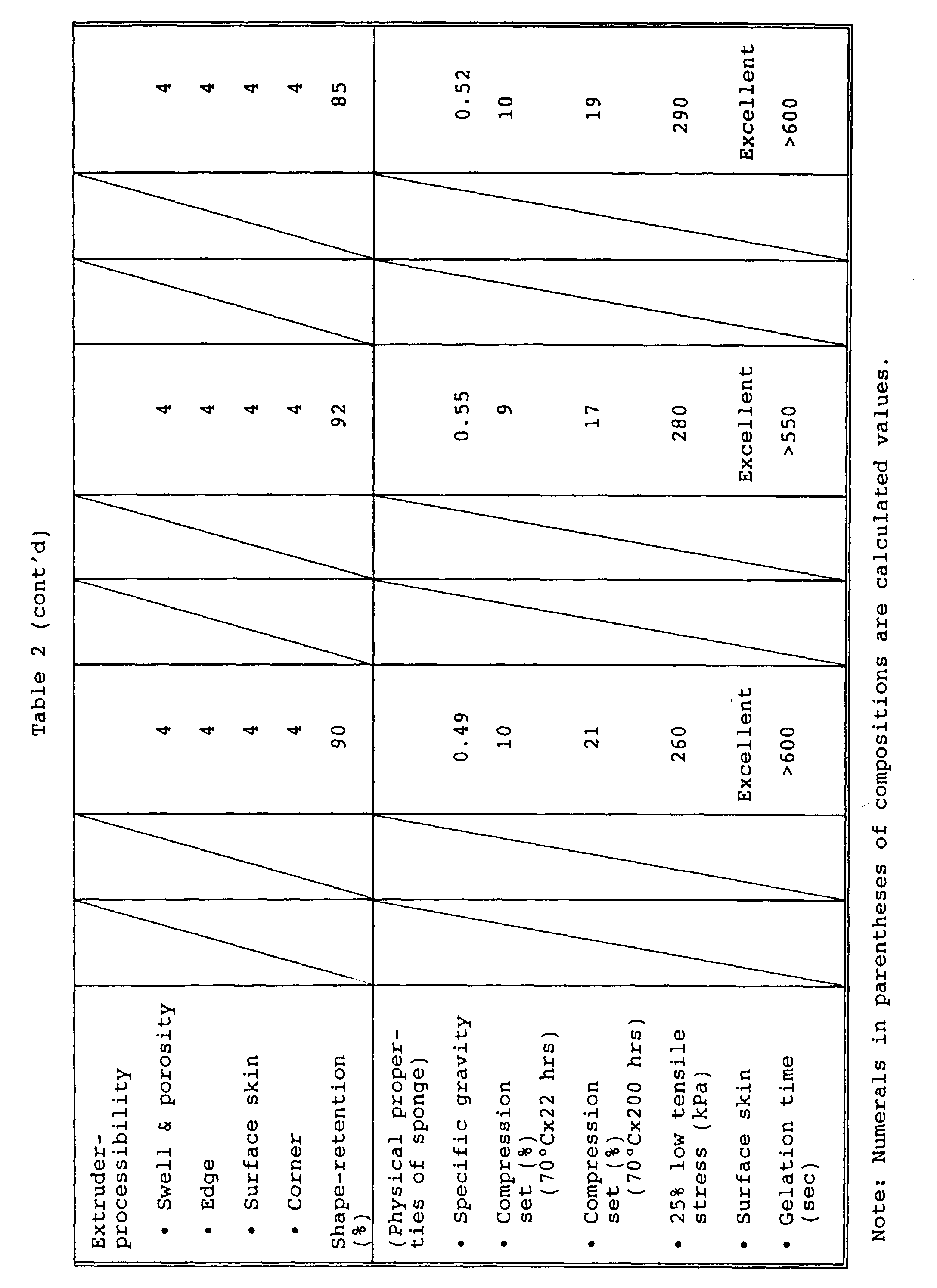
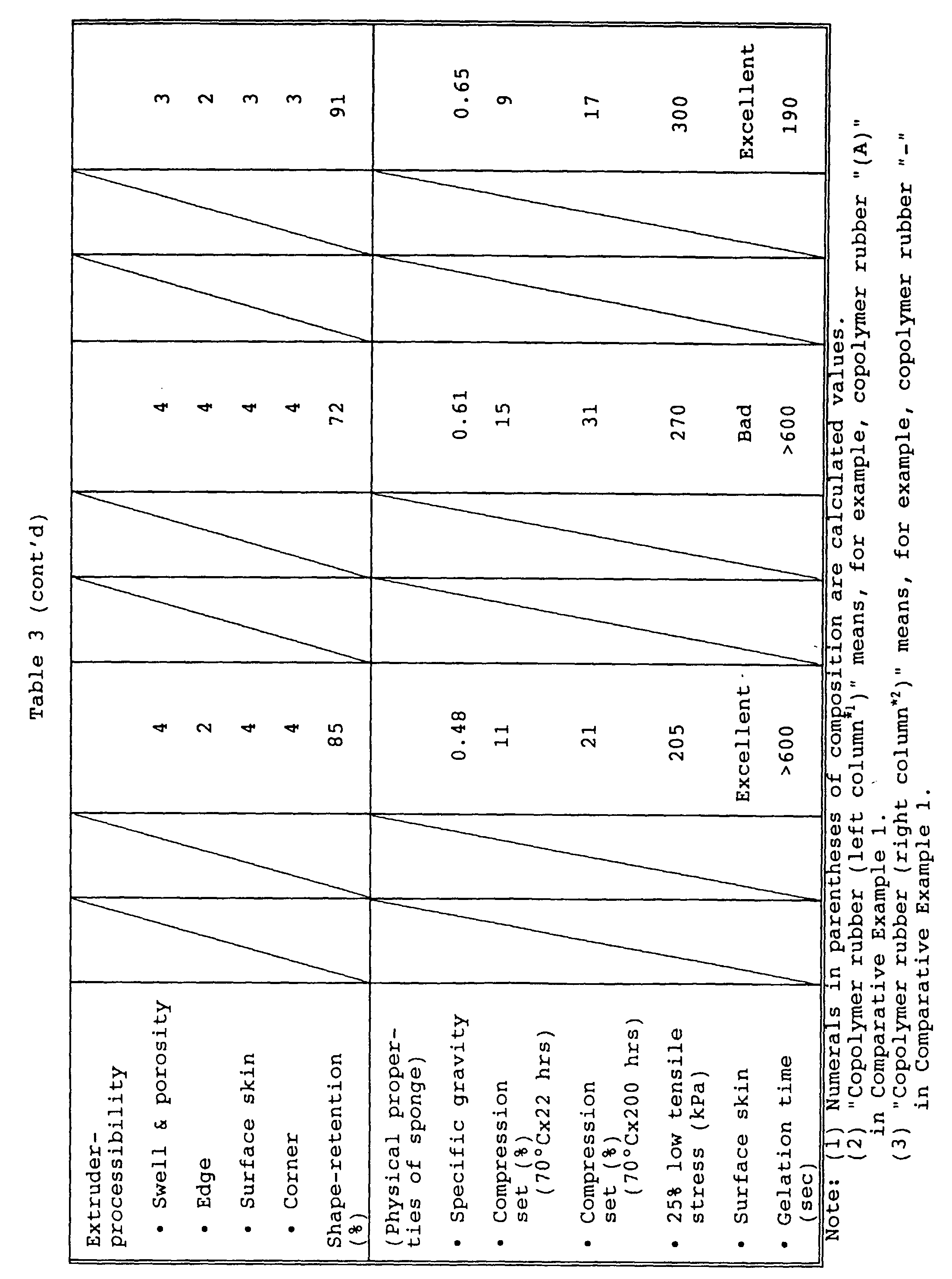
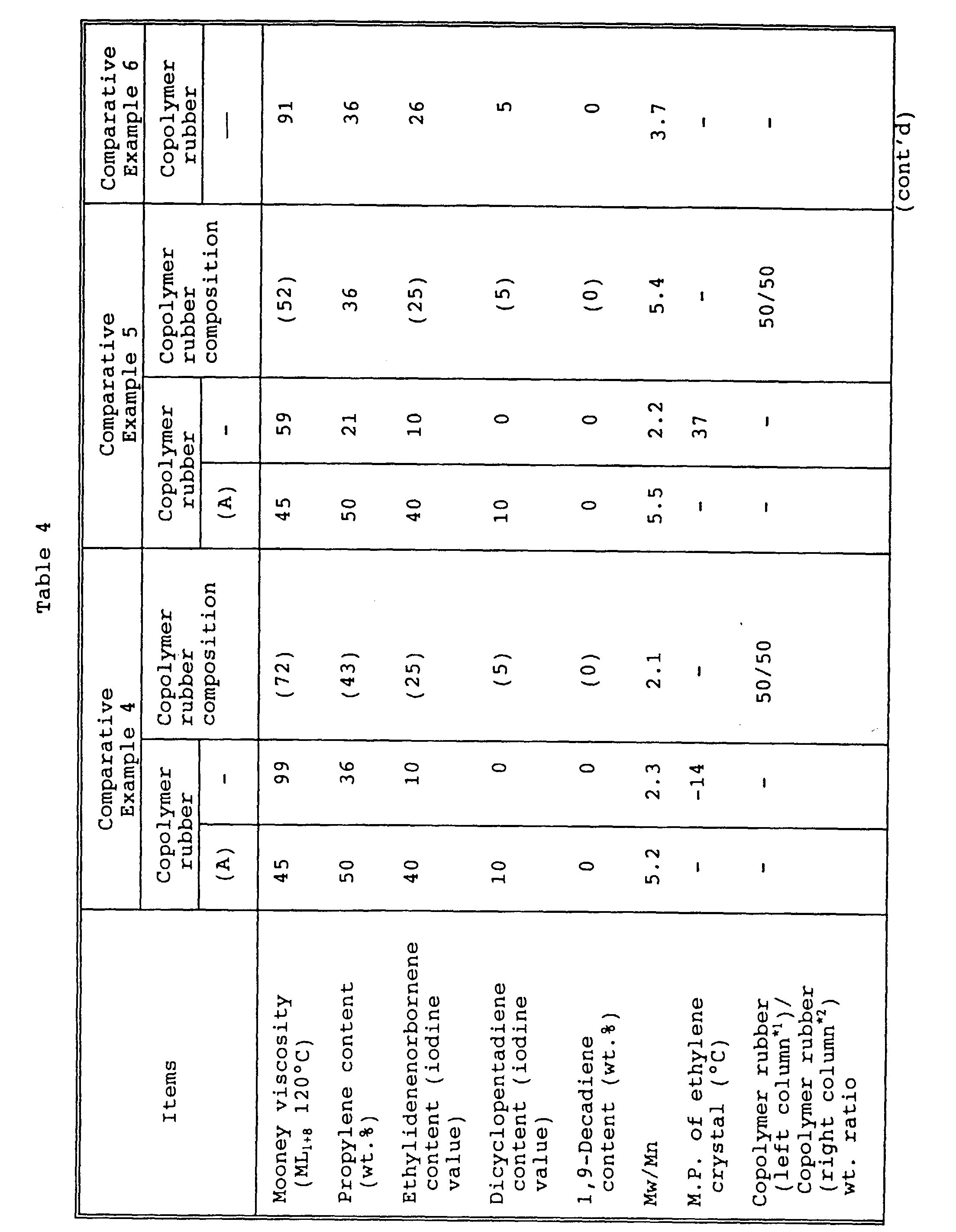
    Using the copolymer rubbers shown in Tables 2 to 5, the components shown in the compounding [I] in Table 1 were kneaded for five minutes at 60 rpm in a BR type Banbury mixer (internal content: 1.7 liters) kept at a temperature of 50°C to obtain a compound [referred to hereinafter as Compound (1)]. The additives shown in the compounding [II] in Table 1 were added to Compound (1), and the resulting mixture was kneaded on a 10-inch twin roll mill kept at 50°C to obtain a compound [referred to hereinafter as Compound (2)].
    Subsequently, a Garvey die (as defined in ASTM-D2330) was mounted on a 50 mm-extruder, in which the cylinder temperature and the die temperature were set at 60°C and 80°C, respectively, and Compound (2) was extruded through the die to evaluate the extruder-processibility. Moreover, a die having the sectional shape shown in Fig. 1 was mounted on the 50-mm extruder in which the cylinder temperature, the die temperature and the number of revolutions were set at 60°C, 80°C and 30 rpm, respectively, and Compound (2) was extruded through the die and then heated for ten minutes in a hot air oven kept at 200°C to be cross-linked and foamed, thereby obtaining a sponge rubber.
    The evaluation results of the resulting sponge rubbers are shown in Tables 2 to 5.
    Figure 00330001
    Figure 00340001
    Figure 00350001
    Figure 00360001
    Figure 00370001
    Figure 00380001
    Figure 00390001
    Figure 00400001
    From the results shown in Tables 2 to 5, it can be seen that the copolymer rubber compositions of this invention produce sponge rubbers each of which has been highly foamed, has a small sponge density, does not show deterioration of stiffness, has an excellent extruder-processibility, a good shape-retention and a small compression set and shows a long gelation time.
    On the other hand, in the case of the copolymer rubber composition of Comparative Example 1, the melting point of the high molecular weight polymer is low, and hence, the crystallinity is insufficient, the stiffness is small, and the extruder-processibility is inferior.
    In the case of the copolymer rubber composition of Comparative Example 2, the ethylidenenorbornene content of the low molecular weight polymer is small, so that the sponge density of sponge is large, the shape-retention is inferior, the compression set is large and the surface skin is bad owing to outgassing.
    In the case of the copolymer rubber composition of Comparative Example 3, the Mooney viscosity (ML1+8120°C) of the low molecular weight polymer is high, so that the sponge density of sponge is high, the extruder-processibility is inferior and the gelation time is short.
    In the case of the copolymer rubber composition of Comparative Example 4, the propylene content of the high molecular weight polymer is high, so that the crystallinity is insufficient and the stiffness is small.
    In the case of the copolymer rubber composition of Comparative Example 5, the Mooney viscosity of the high molecular weight polymer is small, so that the shape-retention is inferior, the compression set is large, and the surface skin is bad owing to outgassing.
    In the case of the copolymer rubber composition of Comparative Example 6, though the average composition is substantially the same as that of the copolymer rubber composition of Example 2, the composition consists of a single copolymer unlike the copolymer rubber composition of this invention, so that the sponge density of sponge is high, the extruder-processibility and shape-retention are inferior, and the gelation time is short.
    In the case of the copolymer rubber composition of Comparative Example 7, the blend weight ratio of the low molecular weight polymer in the copolymer rubber composition is large, so that the stiffness is small, the shape-retention is inferior and the surface skin of the sponge is bad.
    In the case of the copolymer rubber composition of Comparative Example 8, the blend weight ratio of the high molecular weight polymer in the copolymer rubber composition is large, so that the composition is not highly foamed and the extruder-processibility is inferior.

    Claims (16)

    1. An ethylene-α-olefin-non-conjugated diene copolymer rubber composition which comprises:
      (A) an ethylene-α-olefin-non-conjugated diene copolymer in which the ethylene/α-olefin weight ratio is 40/60 to 70/30; which contains as the non-conjugated dienes (a) ethylidenenorbornene and (b) either dicyclopentadiene or α,ω-diene having 8 to 20 carbon atoms in the main chain; and in which the content of the ethylidenenorbornene is 35 to 50 in terms of the iodine value of the ethylene-α-olefin-non-conjugated diene copolymer, the content of the dicyclopentadiene is 3 to 20 in terms of the iodine value of the ethylene-α-olefin-non-conjugated diene copolymer, the content of the α,ω-diene having 8 to 20 carbon atoms in the main chain is 0.05 to 5% by weight based on the total weight of the monomer components, and the Mooney viscosity (ML1+8120°C) is 20 to 65, and
      (B) an ethylene-α-olefin-non-conjugated diene copolymer in which the ethylene/α-olefin weight ratio is 70/30 to 90/10; which contains as the non-conjugated dienes (c) ethylidenenorbornene; and in which the content of the ethylidenenorbornene is 3 to 25 in terms of the iodine value of the ethylene-α-olefin-non-conjugated diene copolymer, the Mooney viscosity (ML1+8120°C) is 65 to 300, and the melting point of the crystal portion consisting of ethylene chain as measured by DSC is at least 40°C,
      the weight ratio of the component (A) to the component (B) being 30/70 to 70/30.
    2. The composition according to Claim 1, wherein the α-olefin is an α-olefin having 3 to 12 carbon atoms.
    3. The composition according to Claim 1, wherein the α-olefin is propylene.
    4. The composition according to Claim 1, wherein the α,ω-diene having 8 to 20 carbon atoms in the main chain is a diene represented by the formula (1):
      Figure 00440001
      wherein R's may be the same as or different from one another and each represents a hydrogen atom, a saturated aliphatic hydrocarbon group having 1 to 10 carbon atoms or an unsaturated alicyclic hydrocarbon group having up to 10 carbon atoms and n represents an integer of 4 to 16.
    5. The composition according to Claim 1, wherein the ethylene/α-olefin weight ratio of the copolymer rubber (A) is 45/55 to 65/35.
    6. The composition according to Claim 1, wherein the ethylidenenorbornene content of the copolymer rubber (A) is 38 to 48 in terms of the iodine value of the ethylene-α-olefin-non-conjugated diene copolymer.
    7. The composition according to Claim 1, wherein the dicyclopentadiene content of the copolymer rubber (A) is 4 to 15 in terms of the iodine value of the ethylene-α-olefin-non-conjugated diene copolymer rubber.
    8. The composition according to Claim 1, wherein the component (b) in the copolymer rubber (A) is dicyclopentadiene.
    9. The composition according to Claim 1, wherein the Mooney viscosity (ML1+8120°C) of the copolymer rubber (A) is 25 to 60.
    10. The composition according to Claim 1, wherein the ethylene/α-olefin weight ratio of the copolymer rubber (A) is 73/27 to 85/15.
    11. The composition according to Claim 1, wherein the ethylidenenorbornene content of the copolymer rubber (B) is 5 to 10 in terms of the iodine value of the ethylene-α-olefin-non-conjugated diene copolymer.
    12. The composition according to Claim 1, wherein the Mooney viscosity (ML1+8120°C) of the copolymer rubber (B) is 80 to 300.
    13. The composition according to Claim 1, wherein the melting point of the ethylene crystal portion in the copolymer rubber (B) is 40 to 120 as measured by DSC.
    14. The composition according to Claim 1, wherein the weight ratio of the copolymer rubber (A) to the copolymer rubber (B) is 50/50 to 70/30.
    15. The composition according to Claim 1, wherein the copolymer rubber (A) has a Mw/Mn of 4 to 10, and the copolymer rubber (B) has a Mw/Mn of 2 to 4.
    16. The composition according to Claim 1, which further comprises at least one foaming agent selected from the group consisting of inorganic foaming agents and organic foaming agents, in an amount of 0.5 to 20 parts by weight per 100 parts by weight of the copolymer rubber composition.
    EP95306856A 1994-09-29 1995-09-28 Ethylene-alpha-olefin-non-conjugated diene copolymer rubber composition Expired - Lifetime EP0704484B1 (en)

    Applications Claiming Priority (2)

    Application Number Priority Date Filing Date Title
    JP25906094 1994-09-29
    JP259060/94 1994-09-29

    Publications (2)

    Publication Number Publication Date
    EP0704484A1 EP0704484A1 (en) 1996-04-03
    EP0704484B1 true EP0704484B1 (en) 1999-01-13

    Family

    ID=17328772

    Family Applications (1)

    Application Number Title Priority Date Filing Date
    EP95306856A Expired - Lifetime EP0704484B1 (en) 1994-09-29 1995-09-28 Ethylene-alpha-olefin-non-conjugated diene copolymer rubber composition

    Country Status (4)

    Country Link
    US (1) US5691413A (en)
    EP (1) EP0704484B1 (en)
    CA (1) CA2159417C (en)
    DE (1) DE69507233T2 (en)

    Families Citing this family (17)

    * Cited by examiner, † Cited by third party
    Publication number Priority date Publication date Assignee Title
    JP3362301B2 (en) * 1997-06-06 2003-01-07 豊田合成株式会社 Foamed rubber composition and foamed rubber molded product
    TWI230723B (en) * 1999-06-30 2005-04-11 Sumitomo Chemical Co Oil-extended copolymers for sponge
    CN1246378C (en) * 2000-04-21 2006-03-22 Jsr株式会社 Thermoplastic elastomer composition
    US6455638B2 (en) 2000-05-11 2002-09-24 Dupont Dow Elastomers L.L.C. Ethylene/α-olefin polymer blends comprising components with differing ethylene contents
    US6716931B2 (en) * 2001-05-30 2004-04-06 Sumitomo Chemical Company, Limited Vulcanized solid rubber
    CA2460950A1 (en) * 2001-09-18 2003-03-27 Jsr Corporation Thermoplastic elastomer composition and process for producing the same
    AU2003216210A1 (en) 2002-02-08 2003-09-02 Exxonmobil Chemical Patents Inc. Multimodal ethylene, alpha-olefin and diene polymers, processes for making and devices comprising such compositions
    JP4186988B2 (en) * 2003-11-11 2008-11-26 Nok株式会社 EPDM composition
    US8178625B2 (en) * 2006-08-01 2012-05-15 Exxonmobil Chemical Patents Inc. Thermoplastic vulcanizate composition
    ATE543869T1 (en) * 2006-08-01 2012-02-15 Exxonmobil Chem Patents Inc MULTIMODAL ETHYLENE-ALPHA-OLEFIN ELASTOMERS AND PRODUCTION PROCESS THEREOF
    CN106117819A (en) 2009-02-27 2016-11-16 住友化学株式会社 Copolymer rubber composition, mechanograph and automotive sealant
    JP6408481B2 (en) 2012-11-30 2018-10-17 ダウ グローバル テクノロジーズ エルエルシー Ethylene / α-olefin / non-conjugated polyene composition and foam formed therefrom
    WO2017206009A1 (en) 2016-05-30 2017-12-07 Dow Global Technologies Llc Ethylene/alpha-olefin/diene interpolymers compositions
    EP3478762A1 (en) 2016-06-30 2019-05-08 Dow Global Technologies, LLC Ethylene/alpha-olefin/polyene based compositions
    JP6884865B2 (en) 2016-12-26 2021-06-09 ダウ グローバル テクノロジーズ エルエルシー Ethylene / α-olefin / non-conjugated polyene interpolymer compositions and articles made from them
    EP3963005A4 (en) 2019-04-30 2022-11-23 Dow Global Technologies LLC ETHYLENE/PROPYLENE/NON-CONJUGATED DIENE INTERPOLYMER COMPOSITION
    EP4229129B1 (en) * 2020-10-14 2025-01-01 Arlanxeo Netherlands B.V. Heat stable ethylene copolymer rubber blends

    Family Cites Families (8)

    * Cited by examiner, † Cited by third party
    Publication number Priority date Publication date Assignee Title
    JPH0246360B2 (en) * 1982-07-12 1990-10-15 Yamato Chemical Ind CHOJAKUSHIITOYOSETSUDANSOCHI
    US4722971A (en) * 1985-08-02 1988-02-02 Exxon Chemical Patents Inc. Easy processing ethylene propylene elastomers
    US4866100A (en) * 1986-10-23 1989-09-12 Permian Research Corporation Composition for plastic article with unitarily molded foam layer
    US4833194A (en) * 1987-11-13 1989-05-23 R.J.F. International Corporation Elastomeric thermoplastic compositions
    JPH0742361B2 (en) * 1988-03-08 1995-05-10 豊田合成株式会社 Method of manufacturing sponge rubber products
    CA2011543A1 (en) * 1989-03-09 1990-09-09 Keisaku Yamamoto Rubber for sponge and rubber composition for sponge
    JPH0480245A (en) * 1990-07-20 1992-03-13 Sumitomo Chem Co Ltd Rubber composition for sponge
    JPH0692498A (en) * 1992-09-11 1994-04-05 Fuji Photo Film Co Ltd Printer paper feeding device and paper feeding container

    Also Published As

    Publication number Publication date
    CA2159417C (en) 2006-04-25
    EP0704484A1 (en) 1996-04-03
    DE69507233T2 (en) 1999-07-08
    DE69507233D1 (en) 1999-02-25
    US5691413A (en) 1997-11-25
    CA2159417A1 (en) 1996-03-30

    Similar Documents

    Publication Publication Date Title
    EP0718362B1 (en) Ethylene-alpha-olefin-non-conjungated diene copolymer rubber composition
    US5691413A (en) Ethylene-α-olefin-non-conjugated diene copolymer rubber composition
    US5646224A (en) Rubber composition
    JP3582184B2 (en) Ethylene-α-olefin-non-conjugated diene copolymer rubber composition
    JP3209068B2 (en) Ethylene-α-olefin-non-conjugated diene copolymer rubber composition
    EP0389144B1 (en) Ethylene-olefin rubbery copolymers and composition thereof for use as sponge rubber
    JP3582176B2 (en) Ethylene-α-olefin-non-conjugated diene copolymer rubber composition
    JP3579942B2 (en) Ethylene-α-olefin-non-conjugated diene copolymer rubber composition
    JP3191592B2 (en) Ethylene-α-olefin-non-conjugated diene copolymer rubber composition
    JPH09169878A (en) Ethylene copolymer rubber composition
    JPH10195259A (en) Ethylene-α-olefin-non-conjugated diene copolymer composition
    JPH03146531A (en) Rubber composition for sponge and its production
    JP3903825B2 (en) Ethylene copolymer rubber composition, sponge rubber composition and sponge product
    JP3191589B2 (en) Ethylene-α-olefin-non-conjugated diene copolymer rubber composition
    JP3191593B2 (en) Ethylene-α-olefin-non-conjugated diene copolymer rubber composition
    JP3633060B2 (en) Low crystalline ethylene random copolymer and composition thereof
    JP4041934B2 (en) Rubber composition for sponge and sponge rubber
    EP0748825A2 (en) Ethylene-alpha-olefin-non-conjugated diene copolymer rubber
    JP2929640B2 (en) Rubber for sponge and rubber composition for sponge
    JP3941570B2 (en) Rubber composition for foam, method for producing the same, and molded article
    JPH0480245A (en) Rubber composition for sponge
    JP3711621B2 (en) Ethylene-α-olefin copolymer rubber composition for rubber roll
    JP2001270957A (en) Rubber composition for sponge and sponge
    JPS6151038A (en) Sponge rubber composition
    US20060106123A1 (en) Composition comprising an elastomeric polymer and an olefinic polymer

    Legal Events

    Date Code Title Description
    PUAI Public reference made under article 153(3) epc to a published international application that has entered the european phase

    Free format text: ORIGINAL CODE: 0009012

    AK Designated contracting states

    Kind code of ref document: A1

    Designated state(s): DE FR GB IT NL

    17P Request for examination filed

    Effective date: 19960916

    GRAG Despatch of communication of intention to grant

    Free format text: ORIGINAL CODE: EPIDOS AGRA

    17Q First examination report despatched

    Effective date: 19980330

    GRAG Despatch of communication of intention to grant

    Free format text: ORIGINAL CODE: EPIDOS AGRA

    GRAH Despatch of communication of intention to grant a patent

    Free format text: ORIGINAL CODE: EPIDOS IGRA

    GRAH Despatch of communication of intention to grant a patent

    Free format text: ORIGINAL CODE: EPIDOS IGRA

    GRAA (expected) grant

    Free format text: ORIGINAL CODE: 0009210

    AK Designated contracting states

    Kind code of ref document: B1

    Designated state(s): DE FR GB IT NL

    REF Corresponds to:

    Ref document number: 69507233

    Country of ref document: DE

    Date of ref document: 19990225

    ET Fr: translation filed
    ITF It: translation for a ep patent filed
    PLBE No opposition filed within time limit

    Free format text: ORIGINAL CODE: 0009261

    STAA Information on the status of an ep patent application or granted ep patent

    Free format text: STATUS: NO OPPOSITION FILED WITHIN TIME LIMIT

    26N No opposition filed
    REG Reference to a national code

    Ref country code: GB

    Ref legal event code: IF02

    PGFP Annual fee paid to national office [announced via postgrant information from national office to epo]

    Ref country code: IT

    Payment date: 20100922

    Year of fee payment: 16

    PGFP Annual fee paid to national office [announced via postgrant information from national office to epo]

    Ref country code: DE

    Payment date: 20110923

    Year of fee payment: 17

    Ref country code: FR

    Payment date: 20110928

    Year of fee payment: 17

    Ref country code: GB

    Payment date: 20110920

    Year of fee payment: 17

    PGFP Annual fee paid to national office [announced via postgrant information from national office to epo]

    Ref country code: NL

    Payment date: 20110929

    Year of fee payment: 17

    REG Reference to a national code

    Ref country code: NL

    Ref legal event code: V1

    Effective date: 20130401

    GBPC Gb: european patent ceased through non-payment of renewal fee

    Effective date: 20120928

    REG Reference to a national code

    Ref country code: FR

    Ref legal event code: ST

    Effective date: 20130531

    REG Reference to a national code

    Ref country code: DE

    Ref legal event code: R119

    Ref document number: 69507233

    Country of ref document: DE

    Effective date: 20130403

    PG25 Lapsed in a contracting state [announced via postgrant information from national office to epo]

    Ref country code: DE

    Free format text: LAPSE BECAUSE OF NON-PAYMENT OF DUE FEES

    Effective date: 20130403

    Ref country code: GB

    Free format text: LAPSE BECAUSE OF NON-PAYMENT OF DUE FEES

    Effective date: 20120928

    PG25 Lapsed in a contracting state [announced via postgrant information from national office to epo]

    Ref country code: NL

    Free format text: LAPSE BECAUSE OF NON-PAYMENT OF DUE FEES

    Effective date: 20130401

    Ref country code: FR

    Free format text: LAPSE BECAUSE OF NON-PAYMENT OF DUE FEES

    Effective date: 20121001

    Ref country code: IT

    Free format text: LAPSE BECAUSE OF NON-PAYMENT OF DUE FEES

    Effective date: 20120928