EP0701430B1 - Kosmetische mittel enthaltend mindestens ein anionisches tensid vom typ alkylgalaktosid-uronat und mindestens einen amphotoren polymer - Google Patents
Kosmetische mittel enthaltend mindestens ein anionisches tensid vom typ alkylgalaktosid-uronat und mindestens einen amphotoren polymer Download PDFInfo
- Publication number
- EP0701430B1 EP0701430B1 EP94917692A EP94917692A EP0701430B1 EP 0701430 B1 EP0701430 B1 EP 0701430B1 EP 94917692 A EP94917692 A EP 94917692A EP 94917692 A EP94917692 A EP 94917692A EP 0701430 B1 EP0701430 B1 EP 0701430B1
- Authority
- EP
- European Patent Office
- Prior art keywords
- radical
- polymers
- denotes
- alkyl
- chosen
- Prior art date
- Legal status (The legal status is an assumption and is not a legal conclusion. Google has not performed a legal analysis and makes no representation as to the accuracy of the status listed.)
- Expired - Lifetime
Links
- ZCWYBJVJAQUBOU-BIAWLWSLSA-N CCCCCCCCCCO[C@H](C1O)OC[C@H](C(C(ONC)=O)O)C1O Chemical compound CCCCCCCCCCO[C@H](C1O)OC[C@H](C(C(ONC)=O)O)C1O ZCWYBJVJAQUBOU-BIAWLWSLSA-N 0.000 description 1
Classifications
-
- A—HUMAN NECESSITIES
- A61—MEDICAL OR VETERINARY SCIENCE; HYGIENE
- A61Q—SPECIFIC USE OF COSMETICS OR SIMILAR TOILETRY PREPARATIONS
- A61Q5/00—Preparations for care of the hair
- A61Q5/02—Preparations for cleaning the hair
-
- A—HUMAN NECESSITIES
- A61—MEDICAL OR VETERINARY SCIENCE; HYGIENE
- A61K—PREPARATIONS FOR MEDICAL, DENTAL OR TOILETRY PURPOSES
- A61K8/00—Cosmetics or similar toiletry preparations
- A61K8/18—Cosmetics or similar toiletry preparations characterised by the composition
- A61K8/30—Cosmetics or similar toiletry preparations characterised by the composition containing organic compounds
- A61K8/60—Sugars; Derivatives thereof
- A61K8/602—Glycosides, e.g. rutin
-
- A—HUMAN NECESSITIES
- A61—MEDICAL OR VETERINARY SCIENCE; HYGIENE
- A61K—PREPARATIONS FOR MEDICAL, DENTAL OR TOILETRY PURPOSES
- A61K8/00—Cosmetics or similar toiletry preparations
- A61K8/18—Cosmetics or similar toiletry preparations characterised by the composition
- A61K8/30—Cosmetics or similar toiletry preparations characterised by the composition containing organic compounds
- A61K8/60—Sugars; Derivatives thereof
- A61K8/604—Alkylpolyglycosides; Derivatives thereof, e.g. esters
-
- A—HUMAN NECESSITIES
- A61—MEDICAL OR VETERINARY SCIENCE; HYGIENE
- A61K—PREPARATIONS FOR MEDICAL, DENTAL OR TOILETRY PURPOSES
- A61K8/00—Cosmetics or similar toiletry preparations
- A61K8/18—Cosmetics or similar toiletry preparations characterised by the composition
- A61K8/72—Cosmetics or similar toiletry preparations characterised by the composition containing organic macromolecular compounds
- A61K8/73—Polysaccharides
- A61K8/736—Chitin; Chitosan; Derivatives thereof
-
- A—HUMAN NECESSITIES
- A61—MEDICAL OR VETERINARY SCIENCE; HYGIENE
- A61K—PREPARATIONS FOR MEDICAL, DENTAL OR TOILETRY PURPOSES
- A61K8/00—Cosmetics or similar toiletry preparations
- A61K8/18—Cosmetics or similar toiletry preparations characterised by the composition
- A61K8/72—Cosmetics or similar toiletry preparations characterised by the composition containing organic macromolecular compounds
- A61K8/81—Cosmetics or similar toiletry preparations characterised by the composition containing organic macromolecular compounds obtained by reactions involving only carbon-to-carbon unsaturated bonds
- A61K8/8141—Compositions of homopolymers or copolymers of compounds having one or more unsaturated aliphatic radicals, each having only one carbon-to-carbon double bond, and at least one being terminated by only one carboxyl radical, or of salts, anhydrides, esters, amides, imides or nitriles thereof; Compositions of derivatives of such polymers
- A61K8/8152—Homopolymers or copolymers of esters, e.g. (meth)acrylic acid esters; Compositions of derivatives of such polymers
-
- A—HUMAN NECESSITIES
- A61—MEDICAL OR VETERINARY SCIENCE; HYGIENE
- A61K—PREPARATIONS FOR MEDICAL, DENTAL OR TOILETRY PURPOSES
- A61K8/00—Cosmetics or similar toiletry preparations
- A61K8/18—Cosmetics or similar toiletry preparations characterised by the composition
- A61K8/72—Cosmetics or similar toiletry preparations characterised by the composition containing organic macromolecular compounds
- A61K8/81—Cosmetics or similar toiletry preparations characterised by the composition containing organic macromolecular compounds obtained by reactions involving only carbon-to-carbon unsaturated bonds
- A61K8/8141—Compositions of homopolymers or copolymers of compounds having one or more unsaturated aliphatic radicals, each having only one carbon-to-carbon double bond, and at least one being terminated by only one carboxyl radical, or of salts, anhydrides, esters, amides, imides or nitriles thereof; Compositions of derivatives of such polymers
- A61K8/8158—Homopolymers or copolymers of amides or imides, e.g. (meth) acrylamide; Compositions of derivatives of such polymers
-
- A—HUMAN NECESSITIES
- A61—MEDICAL OR VETERINARY SCIENCE; HYGIENE
- A61K—PREPARATIONS FOR MEDICAL, DENTAL OR TOILETRY PURPOSES
- A61K8/00—Cosmetics or similar toiletry preparations
- A61K8/18—Cosmetics or similar toiletry preparations characterised by the composition
- A61K8/72—Cosmetics or similar toiletry preparations characterised by the composition containing organic macromolecular compounds
- A61K8/81—Cosmetics or similar toiletry preparations characterised by the composition containing organic macromolecular compounds obtained by reactions involving only carbon-to-carbon unsaturated bonds
- A61K8/817—Compositions of homopolymers or copolymers of compounds having one or more unsaturated aliphatic radicals, each having only one carbon-to-carbon double bond, and at least one being terminated by a single or double bond to nitrogen or by a heterocyclic ring containing nitrogen; Compositions or derivatives of such polymers, e.g. vinylimidazol, vinylcaprolactame, allylamines (Polyquaternium 6)
-
- A—HUMAN NECESSITIES
- A61—MEDICAL OR VETERINARY SCIENCE; HYGIENE
- A61K—PREPARATIONS FOR MEDICAL, DENTAL OR TOILETRY PURPOSES
- A61K2800/00—Properties of cosmetic compositions or active ingredients thereof or formulation aids used therein and process related aspects
- A61K2800/40—Chemical, physico-chemical or functional or structural properties of particular ingredients
- A61K2800/54—Polymers characterized by specific structures/properties
- A61K2800/542—Polymers characterized by specific structures/properties characterized by the charge
- A61K2800/5428—Polymers characterized by specific structures/properties characterized by the charge amphoteric or zwitterionic
Definitions
- the invention relates to cosmetic compositions containing at least one anionic surfactant of the alkylgalactoside uronate type and at least one amphoteric polymer, as well as to methods of cosmetic treatment of keratin materials using such compositions.
- the hair or skin washing compositions are generally formulated from anionic or nonionic surfactants or their mixtures, optionally in the presence of amphoteric surfactants.
- Hair washing compositions using these anionic or non-ionic surfactants alone do not lead to good cosmetic properties, in particular the disentangling of wet hair is difficult, and the shaping and keeping of the hairstyle over time does not are not satisfactory.
- Anionic surfactants of the alkylgalactoside uronate type have already been recommended in washing compositions for the hair. They have been described in patent application EP 0 532.370.
- compositions for keratin materials of an anionic surfactant of the alkylgalactoside uronate type and of an amphoteric polymer gives these compositions properties of improved detangling, especially of wet hair.
- the present invention therefore relates to compositions cosmetics containing at least one anionic surfactant of the alkylgalactoside uronate type and at least one amphoteric polymer.
- Another subject of the invention consists of the use of these compositions for the treatment and / or washing of keratin materials such as the hair or the skin.
- Another subject relates to methods of cosmetic treatment of the hair or of the skin using the compositions of the invention; the methods of washing and treating the hair being preferred.
- the cosmetic compositions according to the invention contain, in a cosmetically acceptable aqueous medium, at least one anionic surfactant of the alkylgalactoside uronate type and at least one amphoteric polymer.
- the alkali metal is in particular sodium, potassium and the alkaline earth metal is preferably magnesium.
- salts quaternary ammonium there may be mentioned the ammonia, triethanolamine, monoethanolamine, 2-amino 2-methyl 1,3 propanediol, 2-amino 2-methyl 1-propanol salts; the amino acid is in particular histidine, arginine or lysine.
- the compounds of formula (I) are preferably used for which the radical R 1 denotes a C 8 -C 14 alkyl and more particularly the decyl radical.
- amphoteric polymers which can be used in accordance with the invention are chosen from polymers comprising units A and B distributed statistically in the polymer chain where A denotes a unit deriving from a monomer comprising at least one basic nitrogen atom and B denotes a unit derived from an acidic monomer comprising one or more carboxylic or sulphonic groups or alternatively A and B can denote groups deriving from zwitterionic monomers of carboxybetaines or sulphobetaines;
- a and B can also denote a cationic polymer chain comprising primary, secondary, tertiary or quaternary amine groups, in which at least one of the amine groups carries a carboxylic or sulphonic group linked via a hydrocarbon radical or else A and B are part of a chain of a polymer with an ethylene unit ⁇ , ⁇ -dicarboxylic acid, one of whose carboxylic groups has been reacted with a polyamine comprising one or more primary or secondary amine groups.
- alkylgalactoside uronates of formula (I) are present in the compositions in accordance with the invention, in proportions preferably of between 1 and 50% by weight relative to the total weight of the composition.
- amphoteric polymers defined above are present in proportions of between 0.01 and 10% by weight relative to the total weight of the composition.
- compositions according to the invention are not used for washing keratin materials, the total concentration of anionic surfactants of formula (I) is between 1 and 10% and more particularly between 1 and 5% by weight relative to the weight total of the composition.
- These compositions are used in particular as compositions to be rinsed or not, applied before or after shampooing, coloring, bleaching, perming, straightening, in a coloring, bleaching, perming or straightening composition for the hair.
- compositions according to the invention are washing compositions, they contain the surfactants of formula (I) in a total concentration of between 4 and 50% by weight and preferably between 8 and 40% by weight relative to the weight total of the composition.
- compositions may contain, in addition to the alkylgalactoside uronate, other co-surfactants of anionic, nonionic, amphoteric, zwitterionic or cationic nature.
- the alkyl or acyl radical of these various compounds generally consists of a carbon chain comprising from 10 to 20 carbon atoms.
- Weakly anionic surfactants can also be used, such as polyoxyalkylenated alkylamide or alkyl ether carboxylic acids, such as those comprising 2 to 50 ethylene oxide groups.
- the nonionic surfactants are more particularly chosen from alcohols or ⁇ -diols or alkylphenols or fatty chain polyethoxylated or polypropoxylated fatty acids containing 8 to 18 carbon atoms, the number of ethylene oxide groups or propylene oxide being between 2 and 50 and the number of glycerol groups being between 2 and 30.
- the preferred amphoteric or zwitterionic surfactants are derivatives of aliphatic secondary or tertiary amines, in which the aliphatic radical is a straight or branched chain containing 8 to 18 carbon atoms and which contains at least one water-soluble anionic group carboxylate, sulfonate, sulfate, phosphate or phosphonate; (C 8 -C 20 ) alkyl betaines, sulfobetaines, (C 8 -C 20 ) alkyl amidoalkyl (C 1 -C 6 ) betaines or (C 8 -C 20 ) alkyl amidoalkyl (C 1 -C 6 ) sulfobetaines.
- the cationic surfactants are chosen from quaternary ammonium salts such as alkyl halides (C 8 -C 22 ) trimethyl ammonium, dialkyl halides (C 8 -C 22 ) dimethyl ammonium, halides of (C 8 -C 22 ) alkyl dimethyl hydroxyethyl ammonium.
- the additional co-surfactants can represent up to 50% of the total weight of the surfactants present in the composition.
- the pH of the compositions in accordance with the invention is generally between 2 and 10.5, more particularly between 3 and 8.
- the cosmetically acceptable medium of the composition according to the invention is an aqueous medium, it may consist solely of water or of a mixture of water and a cosmetically acceptable solvent, such as lower alcohols C 1 -C 4 , such as ethanol, isopropanol, n-butanol; alkylene glycols such as propylene glycol, glycol ethers.
- a cosmetically acceptable solvent such as lower alcohols C 1 -C 4 , such as ethanol, isopropanol, n-butanol; alkylene glycols such as propylene glycol, glycol ethers.
- compositions in accordance with the invention can be in various forms such as more or less thickened liquid, gel, solid bread, emulsion (milk or cream), hydroalcoholic lotion, dispersion and optionally be packaged as an aerosol. and be dispersed as a foam.
- compositions are, for example, lotions, milks or emollient creams, lotions, milks or creams for care.
- keratin materials cleansing creams or milks, foundation bases, lotions, sunscreen milks or creams, lotions, artificial tanning milks or creams, shaving creams or foams, lotions after shave, face masks, eye makeup products, face shadows and foundations, shampoos, bath or shower products, compositions to be rinsed or not, to be applied before or after shampooing, coloring, bleaching, perming or straightening, hair coloring, bleaching, perming or straightening compositions.
- compositions according to the invention may also additionally contain various additives such as thickening agents such as polyacrylic acids, cellulose derivatives, fatty acid and polyethylene glycol esters, sequestrants, foam enhancers, preservatives , perfumes, electrolytes, fatty substances such as fatty alcohols, ceramides, mineral or vegetable, animal or synthetic oils or waxes, UV filters, anti-free radical agents, pearlescent agents, biocides, antibacterials, anti-dandruff agents, anti-seborrheic agents, anti-parasitics, repellents, dyes, pigments, oxidants, reducers, moisturizers, polymers, anionic, nonionic or cationic, vitamins, ⁇ -hydroxy acids.
- thickening agents such as polyacrylic acids, cellulose derivatives, fatty acid and polyethylene glycol esters, sequestrants, foam enhancers, preservatives , perfumes, electrolytes, fatty substances such as fatty alcohols, ceramides, mineral or vegetable
- the treatment of keratin materials is done by applying to these materials a cosmetically acceptable amount of a composition as defined above.
- the process for washing and / or conditioning keratin materials and in particular the hair according to the invention consists in applying to these materials at least one composition as defined above, this application being optionally followed by a rinsing step. at the water.
- the washing compositions can be used as shampoos but also as shower gels for washing the hair and the skin, in which case they are applied to the skin and damp hair which is rinsed off after application.
- compositions When the compositions are used for conditioning the hair, they are applied to damp hair, after which the hair is either dried or after an exposure time of 1 to 10 minutes, it is rinsed with water. We see that wet hair detangles well, that the shaping of the hairstyle is facilitated and that it holds well over time.
- the examples which follow are intended to illustrate the invention without however being limiting in nature.
Landscapes
- Life Sciences & Earth Sciences (AREA)
- Health & Medical Sciences (AREA)
- Animal Behavior & Ethology (AREA)
- General Health & Medical Sciences (AREA)
- Public Health (AREA)
- Veterinary Medicine (AREA)
- Birds (AREA)
- Epidemiology (AREA)
- Cosmetics (AREA)
- Detergent Compositions (AREA)
Claims (20)
- Kosmetische Zusammensetzung,
dadurch gekennzeichnet, daß
sie in einem wässrigen kosmetisch geeigneten Milieu enthält:(A) mindestens ein anionisches oberflächenaktives Mittel vom Alxylgalactosiduronat-Typ der Formel:
R1 bedeutet einen linearen oder verzweigten Alkylrest mit 8 bis 22 Kohlenstoffatomen;
R bedeutet ein Gruppe:(i) 〉CH -CH(OH) - CO2R2 oder(ii) (B) mindestens ein amphoteres Polymer.
 - Zusammensetzung gemäß Anspruch 1,
dadurch gekennzeichnet, daß
in der Formel (I) der Rest R2 Natrium oder Kalium, Magnesium oder eine quaternäre Ammoniumgruppe bedeutet, die von Ammoniak, Triethanolamin, Monoethanolamin, 2-Amino-2-methylpropan-1,3-diol, 2-Methyl-2-aminopropan-1-ol, Histidin, Arginin oder Lysin abgeleitet ist. - Zusammensetzung gemäß Anspruch 1 oder 2,
dadurch gekennzeichnet, daß
die Verbindungen der Formel (I) aus denjenigen ausgewählt sind, für die R1 einen C8-14-Alkylrest bedeutet. - Zusammensetzung gemäß einem der Ansprüche 1 bis 3,
dadurch gekennzeichnet, daß
die Verbindungen der Formel (I) aus derjenigen ausgewählt ist, für die R1 den Decylrest bedeutet. - Zusammensetzung gemäß Anspruch 4,
dadurch gekennzeichnet, daß
die Verbindung der Formel (I) ausgewählt ist aus:Natrium-Decyl-α-D-galactopyranosiduronat,Natrium-Decyl-β-D-galactopyranosiduronat,Natrium-Decyl-α-D-galactofuranosiduronat und ausNatrium-Decyl-β-D-galactofuranosiduronat. - Zusammensetzung gemäß einem der Ansprüche 1 bis 4,
dadurch gekennzeichnet, daß
das amphotere Polymer aus Polymeren ausgewählt ist, die Einheiten A und B aufweisen, die statistisch in der Polymerkette verteilt sind, worin
A eine Einheit, die aus einem Monomer abgeleitet ist, das mindestens ein basisches Stickstoffatom aufweist, und B eine Einheit bedeuten, die aus einem Säure-Monomer abgeleitet ist, das eine oder mehrere Carboxyl- oder Sulfonylgruppen aufweist,
oder worin A und B auch Gruppierungen bedeuten können, die aus zwitterionischen Carboxybetain- oder Sulfobetain-Monomeren abgeleitet sind,
wobei A und B auch eine kationische Polymerkette bedeuten können, die primäre, sekundäre, tertiäre oder quaternäre Amingruppen aufweist, worin mindestens eine der Amingruppen eine Carboxyl- oder Sulfonylgruppe aufweist, die über das Zwischenglied eins Kohlenwasserstoffrestes gebunden ist,
oder worin A und B auch Teil einer Polymerkette mit einer α,β-dicarboxylischen Ethylen-Einheit sind, wovon eine der Carboxylgruppen mit einem Polyamin umgesetzt worden ist, das eine oder mehrere primäre oder sekundäre Amingruppen aufweist. - Zusammensetzung gemäß Anspruch 6,
dadurch gekennzeichnet, daß
die amphoteren Polymeren aus den folgenden Polymeren ausgewählt sind:(1) aus Polymeren, die sich aus der Copolymerisation eines Monomer, das von einer eine Carboxylgruppe aufweisenden Vinylverbindung abgeleitet ist, wie insbesondere von Acryl-, Methacryl-, Malein- und von α-Chloracrylsäure, und eines basischen Monomer ergeben, das von einer substituierten Vinylverbindung abgeleitet ist, die mindestens ein basisches Stickstoffatom enthält, wie insbesondere Polymere aus Dialkylaminoalkylmethacrylat und Acrylat sowie aus Diaminoalkylmethacrylamid und Acrylamid;(2) aus Polymeren, die aus einer Diallyldialkylammonium-Verbindung und mindestens einem anionischen Monomer abgeleitet sind, wie Polymere, die ca. 60 bis ca. 99 Gew.% Einheiten, die von einem quaternären Diallyldialkylammonium-Monomer abgeleitet sind, worin die Alkylgruppen, unabhängig voneinander, aus Alkylgruppen mit 1 bis 18 Kohlenstoffatomen ausgewählt und das Anion von einer Säure mit einer Ionisationskonstante von mehr als 10-13 abgeleitet sind, sowie 1 bis 40 Gew.%, bezogen auf dieses Polymer, eines anionischen Monomer umfassen, das aus Acryl- oder Methacrylsäure ausgewählt ist, wobei das Molekulargewicht dieses Polymer ca. 50 000 bis 10 000 000 beträgt, bestimmt durch Gelpermeationschromatographie;(3) aus Polymeren, die Einheiten aufweisen, die abgeleitet sind aus:a) mindestens einem Monomer, ausgewählt aus Acryl- oder Methacrylamiden, welche am Stickstoff mit einem Alkylrest substituiert sind,b) mindestens einem Säure-Comonomer, das eine oder mehrere reaktive Carboxylgruppen enthält, undc) mindestens einem basischen Comonomer wie aus Estern mit primären, sekundären, tertiären oder quaternären Aminsubstituenten von Acryl- und Methacrylsäuren sowie aus dem Quaternierungsprodukt von Dimethylaminoethylmethacrylat mit Dimethyl- oder Diethylsulfat;(4) aus vernetzten und teilweise oder vollständig alkoylierten Polyaminoamiden, abgeleitet aus Polyaminoamiden der allgemeinen Formel:
⁅OC―R7―CO―Z⁆ (II)
worin R7 einen zweiwertigen Rest, der von einer gesättigten Dicarboxylsäure, einer aliphatischen Mono- oder Dicarboxylsäure mit ethylenischer Doppelbindung, einem Ester eines 1 bis 6 Kohlenstoffatome aufweisenden Niedrigalkanols dieser Säuren oder einem Rest abgeleitet ist, der wiederum aus der Addition einer der genannten Säuren an ein bisprimäres oder bissekundäres Amin stammt, und Z einen Rest eines bisprimären, mono- oder bissekundären Polyalkylenpolyamins bedeuten, und welcher vorzugsweise darstellt:a) in Mengenanteilen von 60 bis 100 Mol% den Rest:
― NH⁅(CH2)x ― NH⁆n (III)
worin x = 2 und n = 2 oder 3 oder auch x = 3 und n = 2, wobei dieser Rest aus Diethylentriamin, Triethylentetraamin oder Dipropylentriamin stammt;b) in Mengenanteilen von 0 bis 40 Mol% den obigen Rest (III), worin x = 2 und n = 1, welcher aus Ethylendiamin stammt, oder den aus Piperazin abgeleiteten Rest: c) in Mengenanteilen von 0 bis 20 Mol% den Rest -NH-(CH2)6-NH-, der aus Hexamethylendiamin stammt, wobei diese Polyaminoamide durch Addition eines bifunktionellen Vernetzungsmitttels, das aus Epihalohydrinen, Diepoxiden, Dianhydriden und aus ungesättigten Derivaten ausgewählt ist, mit 0,025 bis 0,35 Mol Vernetzungsmittel pro Amingruppe des Polyaminoamids vernetzt und durch Einwirkung von Acrylsäure, Chloressigsäure oder eines Alkansultons oder von deren Salzen alkoyliert sind;(5) aus Polymeren, die zwitterionische Einheiten der Formel aufweisen:
die Polymeren, die derartige Einheiten enthalten, können auch Einheiten aufweisen, die aus nicht-zwitterionischen Monomeren wie aus Vinylpyrrolidon, Dimethyl- oder Diethylaminoethylacrylat oder -methacrylat oder aus Alkylacrylaten oder -methacrylaten, Acrylamiden oder Methacrylamiden oder aus Vinylacetat abgeleitet sind;(6) aus Polymeren, die aus Chitosan abgeleitet sind, welche monomere Einheiten der folgenden Formeln aufweisen:
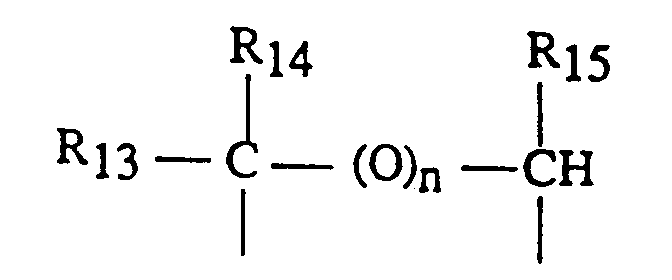 (7) aus Polymeren, die aus einer N-Carboxyalkylierung von Chitosan abgeleitet sind;(8) aus Polymeren der allgemeinen Formel (V:

wobei auch höhere Homologe dieser Reste eingeschlossen sind, die bis zu 6 Kohlenstoffatome enthalten;(9) aus amphoteren Polymeren des Typs -A-Z-A-Z, ausgewählt aus:a) Polymeren, erhältlich durch Einwirkung von Chloressigsäure oder Natriumchloracetat auf Verbindungen mit mindestens einer Einheit der Formel:
-A-Z-A-Z-A- (VI)
worin A einen Rest: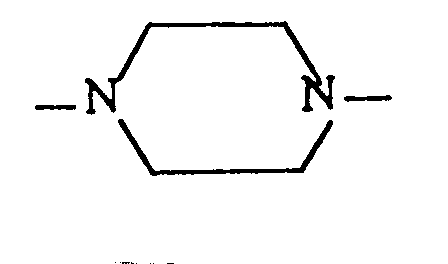 b) Polymeren der Formel -A-Z-A-Z- (VI'), worin A einen Rest:
- Zusammensetzung gemäß einem der Ansprüche 1 bis 7,
dadurch gekennzeichnet, daß
die anionischen oberflächenaktiven Mittel der Formel (I) in Mengenanteilen von 1 bis 50 Gew.% und die amphoteren Polieren in Mengenanteilen von 0,1 bis 10 Gew.% vorhanden sind, wobei die Gew.%-Angaben auf das Gesamtgewicht der Zusammensetzung bezogen sind. - Zusammensetzung gemäß einem der Ansprüche 1 bis 8 zum Konditionieren keratinischer Materien,
dadurch gekennzeichnet, daß
die Konzentration an anionischen oberflächenaktiven Mitteln der Formel (I) 1 bis 10 Gew.% beträgt, bezogen auf das Gesamtgewicht der Zusammensetzung. - Zusammensetzung gemäß einem der Ansprüche 1 bis 8 zum Waschen keratinischer Materien,
dadurch gekennzeichnet, daß
die Konzentration an anionischen oberflächenaktiven Mitteln in der Formel (I) 4 bis 50 Gew.% beträgt, bezogen auf das Gesamtgewicht der Zusammensetzung. - Zusammensetzung gemäß einem der Ansprüche 1 bis 10,
dadurch gekennzeichnet, daß
sie zusätzlich ein weiteres oberflächenaktives Co-Mittel vom anionischen, nicht-ionischen, amphoteren, zwitterionischen oder kationischen Typ in einem Mengenanteil bis zu 50% des Gesamtgewichts der in der Zusammensetzung vorhandenen oberflächenaktiven Mittel enthält. - Zusammensetzung gemäß Anspruch 11,
dadurch gekennzeichnet, daß
das anionische zusätzliche oberflächenaktive Co-Mittel ausgewählt ist aus Alkali-, Ammonium-, Amin-, Aminoalkohol- oder Magnesiumsalzen der folgenden Verbindungen: von Fettsäuren, Alkylsulfaten, Alkylethersulfaten, Alkylamidosulfaten, Alkylarylpolyethersulfaten, Monoglyceridsulfaten, Alkylamidsulfaten, Alkylsulfonaten, Alkylarylsulfonaten, Olefinsulfonaten, Paraffinsulfonaten, Alkylethersulfonaten, Alkylsulfosuccinaten, Alkylethersulfosuccinaten, Alkylamidsulfosuccinaten, Alkylsulfosuccinamaten, Alkylsulfoacetaten, Alkyletherphosphaten, Acylsarcosinaten, N-Acyltauraten, Isethionaten, wobei der Alkyl- oder Acylrest aus einer Kohlenstoffkette mit 10 bis 20 Kohlenstoffatomen oder auch aus polyoxalkylierten Alkylamid- oder Alkylethercarboxylsäuren zusammengesetzt ist. - Zusammensetzung gemäß Anspruch 11,
dadurch gekennzeichnet, daß
das nicht-ionische oberflächenaktive Co-Mittel aus Alkoholen, α-Diolen oder Alkylphenolen, polyethoxylierten oder polypropoxylierten Fettsäuren mit einer Fettkette mit 8 bis 18 Kohlenstoffatomen, wobei die Anzahl an Ethylen- oder Propylenoxidgruppen 2 bis 50 und die Anzahl an Glycerylgruppen 2 bis 30 betragen, aus Copolymeren aus Ethylen- und Propylenoxiden, Kondensaten von Ethylen- und Propylenoxiden mit Fettalkoholen, polyethoxylierten Fettamiden, polyethoxylierten Fettaminen, oxethylierten Sorbitanfettsäureestern, Zuckerfettsäureestern, Polyethylenglycolfettsäureestern, Fettsäureestern von Glycolen und aus Aminoxiden ausgewählt ist. - Zusammensetzung gemäß Anspruch 11,
dadurch gekennzeichnet, daß
das zusätzliche amphotere oder zwitterionische oberflächenaktive Co-Mittel aus sekundären oder tertiären aliphatischen Aminderivaten, in denen der aliphatische Rest eine lineare oder verzweigte Kette mit 8 bis 18 Kohlenstoffatomen ist und mindestens eine anionische, Wasserlöslichkeit vermittelnde Carboxylat-, Sulfonat-, Sulfat-, Phosphat- oder Phosphonatgruppe enthält, aus C8-20-Alkylbetainen, Sulfobetainen, C8-20-Alkylamido-C1-6-alkylbetainen oder C8-20-Alkylamido-C1-6-alkylsulfobetainen, Alkylpeptiden und aus Alkylimidazoliumbetainen ausgewählt ist. - Zusammensetzung gemäß Anspruch 11,
dadurch gekennzeichnet, daß
das zusätzliche kationische oberflächenaktive Co-Mittel aus quaternären Ammoniumsalzen ausgewählt ist. - Zusammensetzung gemäß einem der Ansprüche 1 bis 15,
dadurch gekennzeichnet, daß
das kosmetisch geeignete Milieu aus Wasser oder aus einer Mischung aus Wasser und einem kosmetisch geeigneten Lösungsmitel zusammengesetzt ist. - Zusammensetzung gemäß einem der Ansprüche 1 bis 16,
dadurch gekennzeichnet, daß
sie in Form einer mehr oder weniger verdickten Flüssigkeit, eines Gels, einer Emulsion, einer hydroalkoholischen Lotion, einer Dispersion oder eines Aerosol-Schaums vorliegt. - Zusammensetzung gemäß einem der Ansprüche 1 bis 17,
dadurch gekennzeichnet, daß
sie zusätzlich Additive enthält, ausgewählt aus Schaumverstärkungsmitteln, Verdickungsmitteln, Sequestriermitteln, Elektrolyten, Parfüm-Produkten, Konservierungsmitteln, Fettalkoholen, mineralischen, pflanzlichen oder tierischen Ölen, mineralischen, pflanzlichen, tierischen oder synthetischen Wachsen, Ceramiden, UV-Filterstoffen, Perlmuttglanzmitteln, Abfangmitteln für freie Radikale, Biociden, antibakteriellen Mitteln, Mitteln gegen Haarausfall, antiseborrheischen Mitteln, Mitteln gegen Parasiten, Abschreckmitteln, Farbstoffen, Pigmenten, Oxidations-, Reduktionsmitteln, Hydratisiermitteln, anionischen, nicht-ionischen oder kationischen Polymeren, Vitaminen oder aus α-Hydroxysäuren. - Verwendung der in einem der Ansprüche 1 bis 18 definierten Zusammensetzungen zum Behandeln und/oder Waschen keratinischer Materien aus Haaren oder der Haut.
- Verfahren zum Waschen und/oder kosmetischen Konditionieren der Haare oder der Haut,
dadurch gekennzeichnet, daß
man auf die Haut oder die Haare eine ausreichende Menge einer Zusammensetzung gemäß einem der Ansprüche 1 bis 18 aufbringt, worauf auf diese Aufbringung gegebenenfalls eine Spülung mit Wasser erfolgt.
Applications Claiming Priority (3)
| Application Number | Priority Date | Filing Date | Title |
|---|---|---|---|
| FR9306530A FR2705889B1 (fr) | 1993-06-01 | 1993-06-01 | Compositions cosmétiques contenant au moins un tensio-actif anionique du type alkylgalactoside uronate et au moins un polymère amphotère et leurs utilisations pour le traitement des matières kératiniques. |
| FR9306530 | 1993-06-01 | ||
| PCT/FR1994/000631 WO1994027573A1 (fr) | 1993-06-01 | 1994-05-31 | Compositions cosmetiques contenant au moins un tensioactif anionique du type alkylgalactoside uronate et au moins un polymere amphotere |
Publications (2)
| Publication Number | Publication Date |
|---|---|
| EP0701430A1 EP0701430A1 (de) | 1996-03-20 |
| EP0701430B1 true EP0701430B1 (de) | 1997-04-23 |
Family
ID=9447623
Family Applications (1)
| Application Number | Title | Priority Date | Filing Date |
|---|---|---|---|
| EP94917692A Expired - Lifetime EP0701430B1 (de) | 1993-06-01 | 1994-05-31 | Kosmetische mittel enthaltend mindestens ein anionisches tensid vom typ alkylgalaktosid-uronat und mindestens einen amphotoren polymer |
Country Status (7)
| Country | Link |
|---|---|
| EP (1) | EP0701430B1 (de) |
| JP (1) | JPH08511250A (de) |
| AU (1) | AU6931494A (de) |
| DE (1) | DE69402854T2 (de) |
| ES (1) | ES2100719T3 (de) |
| FR (1) | FR2705889B1 (de) |
| WO (1) | WO1994027573A1 (de) |
Families Citing this family (3)
| Publication number | Priority date | Publication date | Assignee | Title |
|---|---|---|---|---|
| FR2769223B1 (fr) | 1997-10-03 | 2003-08-22 | Oreal | Composition oxydante et utilisations pour la teinture, pour la deformation permanente ou pour la decoloration des fibres keratiniques |
| FR2773476B1 (fr) | 1998-01-13 | 2001-02-23 | Oreal | Composition tinctoriale et procedes de teinture des fibres keratiniques la mettant en oeuvre |
| FR2782450B1 (fr) | 1998-08-19 | 2004-08-27 | Oreal | Composition de teinture pour fibres keratiniques avec un colorant direct cationique et un agent tensio-actif anionique |
Family Cites Families (1)
| Publication number | Priority date | Publication date | Assignee | Title |
|---|---|---|---|---|
| FR2679563B1 (fr) * | 1991-07-22 | 1995-06-09 | Agro Ind Recherc Dev | Alkylgalactosides uronates d'alkyle, leur procede de preparation et leurs applications, notamment comme agents tensio-actifs non ioniques. |
-
1993
- 1993-06-01 FR FR9306530A patent/FR2705889B1/fr not_active Expired - Fee Related
-
1994
- 1994-05-31 JP JP7500320A patent/JPH08511250A/ja not_active Ceased
- 1994-05-31 WO PCT/FR1994/000631 patent/WO1994027573A1/fr not_active Ceased
- 1994-05-31 EP EP94917692A patent/EP0701430B1/de not_active Expired - Lifetime
- 1994-05-31 ES ES94917692T patent/ES2100719T3/es not_active Expired - Lifetime
- 1994-05-31 DE DE69402854T patent/DE69402854T2/de not_active Expired - Fee Related
- 1994-05-31 AU AU69314/94A patent/AU6931494A/en not_active Abandoned
Also Published As
| Publication number | Publication date |
|---|---|
| ES2100719T3 (es) | 1997-06-16 |
| EP0701430A1 (de) | 1996-03-20 |
| FR2705889B1 (fr) | 1995-08-18 |
| FR2705889A1 (fr) | 1994-12-09 |
| DE69402854D1 (de) | 1997-05-28 |
| DE69402854T2 (de) | 1997-08-07 |
| WO1994027573A1 (fr) | 1994-12-08 |
| JPH08511250A (ja) | 1996-11-26 |
| AU6931494A (en) | 1994-12-20 |
Similar Documents
| Publication | Publication Date | Title |
|---|---|---|
| EP1291001B1 (de) | Ein Copolymer aus Methacrylsäure und ein Öl enthaltende kosmetische Zusammensetzungen und deren Verwendungen | |
| CA2332474C (fr) | Composition de lavage des matieres keratiniques a base d'ester de sorbitan faiblement ethoxyle | |
| EP1347736B1 (de) | Oxidative zusammensetzung zur behandlung keratinischer materialien auf der basis von amphiphilen polymeren, die mindestens ein ethylenisch ungesättigtes sulfonsäuregruppen tragendes monomer und einen hydrphoben teil enthalten | |
| CA1117017A (fr) | Compositions cosmetiques pour les cheveux et la peau a base de copolymeres porteurs de fonctions amines tertiaires et/ou ammonium quaternaires | |
| CA1112180A (fr) | Compositions cosmetiques de traitement des cheveux | |
| EP0526279B1 (de) | Mittel zur Haarpflege enthaltend eine, mit Hydroxyacylaminomotieven modifizierte Silicon und substantive Polymeren | |
| LU83949A1 (fr) | Composition destinee au traitement des matieres keratiniques contenant au moins un polymere cationique et au moins un latex anionique | |
| FR2687570A1 (fr) | Composition cosmetique a base d'agents tensio-actifs non-ioniques et de polymeres substantifs cationiques ou amphoteres et son utilisation comme support de teinture ou de decoloration. | |
| FR2798847A1 (fr) | Composition de traitement antipelliculaire des cheveux et du cuir chevelu, a base d'un agent antipelliculaire et d'un terpolymere acrylique | |
| FR2798851A1 (fr) | Composition de lavage des matieres keratiniques, a base d'un agent tensio-actif detergent, d'un agent nacrant et ou opacifiant et d'un terpolymere acrylique | |
| EP1092419B1 (de) | Zusammensetzung zur Reinigung von Keratinsubstanzen auf der Basis eines reinigenden grenzflächenaktiven Stoffes, eines Polyorganosiloxans und eines Acrylterpolymers | |
| CA1175609A (fr) | Compositions contenant des derives bis-ammonium quaternaire destinees au traitement de matieres keratiniques et de matieres textiles naturelles non- keratiniques ou synthetiques, procede de traitement utilisant lesdites compositions et composes utilises | |
| EP1090632A1 (de) | Haarshampoo auf Basis von ein Tensid, ein Polyorganosiloxan und ein Acryl-Terpolymer | |
| EP0852489B1 (de) | Zusammensetzung für das haar, die mindestens ein mit anionischen, amphoteren oder nichtionischen monomeren gepfropftes siliconpolymer und mindestens ein amphoteres polymer enthält | |
| EP0617954A1 (de) | Alkylpolyglycosid- und/oder Polyglycerol als nichtionisches Tensid und vernetztes Maleinsäureanhydrid/Alkyl(C1-C5)-vinylether-Copolymer enthaltende kosmetische Zusammensetzung | |
| CA1171859A (fr) | Composition cosmetique contenant des derives d'ammonium bis-quaternaires a deux chaines lipophiles destinee au traitement de matieres keratiniques et composes nouveaux utilises | |
| EP0701431B1 (de) | Anionische alkylgalaktosiduronate-tenside und kationische polymere enthaltende kosmetische zusammensetzungen und ihre verwendung zur behandlung von keratinösen substanzen | |
| EP0659405A1 (de) | Kosmetische Zusammensetzung enthaltend eine Mischung aus Konditionnierungspolymere | |
| US5747014A (en) | Cosmetics compositions containing at least one anionic suracant of alkylgalactoside uronate type and at least one amphoteric polymer | |
| EP0702549B1 (de) | Kosmetische mittel enthaltende mindestens einen anionischen tenside vom typ alkyllgalaktoside-uronat und mindestens ein synthetisches kohlenwasserstofföl | |
| EP1348420B1 (de) | Kosmetische Zusammensetzung, enthaltend mindestens ein anionisches Tensid, mindestens ein kationisches Polymer und mindestens ein verzweigtes, amphiphiles Acrylblockcopolymer und Haarbehandlungsverfahren unter Verwendung dieser Zusammensetzung | |
| WO1994027573A1 (fr) | Compositions cosmetiques contenant au moins un tensioactif anionique du type alkylgalactoside uronate et au moins un polymere amphotere | |
| EP1064917A1 (de) | Kosmetische Zubereitungen enthaltend ein amphoteres Polymer mit Fettketten und ein Ester und deren Verwendung | |
| EP1430886A1 (de) | Eine Zusammensetzung zum Reinigen von keratinhaltigen Materialien mit amphotere Tenside und PEG modifiziert mit einer hydrophoben Gruppe | |
| EP1430869A1 (de) | Haarshampoo auf der Basis von Alkylethersulfat und amphoteren Tensid |
Legal Events
| Date | Code | Title | Description |
|---|---|---|---|
| PUAI | Public reference made under article 153(3) epc to a published international application that has entered the european phase |
Free format text: ORIGINAL CODE: 0009012 |
|
| 17P | Request for examination filed |
Effective date: 19951016 |
|
| AK | Designated contracting states |
Kind code of ref document: A1 Designated state(s): DE ES FR GB IT |
|
| GRAG | Despatch of communication of intention to grant |
Free format text: ORIGINAL CODE: EPIDOS AGRA |
|
| 17Q | First examination report despatched |
Effective date: 19960619 |
|
| GRAH | Despatch of communication of intention to grant a patent |
Free format text: ORIGINAL CODE: EPIDOS IGRA |
|
| GRAH | Despatch of communication of intention to grant a patent |
Free format text: ORIGINAL CODE: EPIDOS IGRA |
|
| GRAA | (expected) grant |
Free format text: ORIGINAL CODE: 0009210 |
|
| AK | Designated contracting states |
Kind code of ref document: B1 Designated state(s): DE ES FR GB IT |
|
| ITF | It: translation for a ep patent filed | ||
| GBT | Gb: translation of ep patent filed (gb section 77(6)(a)/1977) |
Effective date: 19970424 |
|
| REF | Corresponds to: |
Ref document number: 69402854 Country of ref document: DE Date of ref document: 19970528 |
|
| REG | Reference to a national code |
Ref country code: ES Ref legal event code: FG2A Ref document number: 2100719 Country of ref document: ES Kind code of ref document: T3 |
|
| PLBE | No opposition filed within time limit |
Free format text: ORIGINAL CODE: 0009261 |
|
| STAA | Information on the status of an ep patent application or granted ep patent |
Free format text: STATUS: NO OPPOSITION FILED WITHIN TIME LIMIT |
|
| 26N | No opposition filed | ||
| PGFP | Annual fee paid to national office [announced via postgrant information from national office to epo] |
Ref country code: ES Payment date: 20010530 Year of fee payment: 8 |
|
| REG | Reference to a national code |
Ref country code: GB Ref legal event code: IF02 |
|
| PG25 | Lapsed in a contracting state [announced via postgrant information from national office to epo] |
Ref country code: ES Free format text: LAPSE BECAUSE OF NON-PAYMENT OF DUE FEES Effective date: 20020601 |
|
| PGFP | Annual fee paid to national office [announced via postgrant information from national office to epo] |
Ref country code: FR Payment date: 20030508 Year of fee payment: 10 |
|
| PGFP | Annual fee paid to national office [announced via postgrant information from national office to epo] |
Ref country code: GB Payment date: 20030528 Year of fee payment: 10 |
|
| PGFP | Annual fee paid to national office [announced via postgrant information from national office to epo] |
Ref country code: DE Payment date: 20030612 Year of fee payment: 10 |
|
| REG | Reference to a national code |
Ref country code: ES Ref legal event code: FD2A Effective date: 20030611 |
|
| PG25 | Lapsed in a contracting state [announced via postgrant information from national office to epo] |
Ref country code: GB Free format text: LAPSE BECAUSE OF NON-PAYMENT OF DUE FEES Effective date: 20040531 |
|
| PG25 | Lapsed in a contracting state [announced via postgrant information from national office to epo] |
Ref country code: DE Free format text: LAPSE BECAUSE OF NON-PAYMENT OF DUE FEES Effective date: 20041201 |
|
| GBPC | Gb: european patent ceased through non-payment of renewal fee | ||
| PG25 | Lapsed in a contracting state [announced via postgrant information from national office to epo] |
Ref country code: FR Free format text: LAPSE BECAUSE OF NON-PAYMENT OF DUE FEES Effective date: 20050131 |
|
| REG | Reference to a national code |
Ref country code: FR Ref legal event code: ST |
|
| PG25 | Lapsed in a contracting state [announced via postgrant information from national office to epo] |
Ref country code: IT Free format text: LAPSE BECAUSE OF NON-PAYMENT OF DUE FEES;WARNING: LAPSES OF ITALIAN PATENTS WITH EFFECTIVE DATE BEFORE 2007 MAY HAVE OCCURRED AT ANY TIME BEFORE 2007. THE CORRECT EFFECTIVE DATE MAY BE DIFFERENT FROM THE ONE RECORDED. Effective date: 20050531 |