EP0701127B1 - Verfahren zum testen der neurotoxizität eines poliovirusimpfstoffes - Google Patents
Verfahren zum testen der neurotoxizität eines poliovirusimpfstoffes Download PDFInfo
- Publication number
- EP0701127B1 EP0701127B1 EP94910052A EP94910052A EP0701127B1 EP 0701127 B1 EP0701127 B1 EP 0701127B1 EP 94910052 A EP94910052 A EP 94910052A EP 94910052 A EP94910052 A EP 94910052A EP 0701127 B1 EP0701127 B1 EP 0701127B1
- Authority
- EP
- European Patent Office
- Prior art keywords
- virus
- neurovirulence
- poliovirus
- tgpvr
- polio
- Prior art date
- Legal status (The legal status is an assumption and is not a legal conclusion. Google has not performed a legal analysis and makes no representation as to the accuracy of the status listed.)
- Expired - Lifetime
Links
- 238000010998 test method Methods 0.000 title abstract description 3
- 206010029350 Neurotoxicity Diseases 0.000 title abstract 2
- 229940124867 Poliovirus vaccine Drugs 0.000 title abstract 2
- 206010044221 Toxic encephalopathy Diseases 0.000 title abstract 2
- 230000007135 neurotoxicity Effects 0.000 title abstract 2
- 231100000228 neurotoxicity Toxicity 0.000 title abstract 2
- 210000000278 spinal cord Anatomy 0.000 claims abstract description 31
- 108010048507 poliovirus receptor Proteins 0.000 claims abstract description 6
- 241000991587 Enterovirus C Species 0.000 claims description 33
- 238000000034 method Methods 0.000 claims description 24
- 238000011830 transgenic mouse model Methods 0.000 claims description 19
- 210000003169 central nervous system Anatomy 0.000 claims description 17
- 230000002238 attenuated effect Effects 0.000 claims description 15
- 230000036285 pathological change Effects 0.000 claims description 7
- 231100000915 pathological change Toxicity 0.000 claims description 7
- 208000024891 symptom Diseases 0.000 claims description 3
- 108700019146 Transgenes Proteins 0.000 claims description 2
- 208000025223 poliovirus infection Diseases 0.000 claims description 2
- 102000005962 receptors Human genes 0.000 claims description 2
- 108020003175 receptors Proteins 0.000 claims description 2
- 230000009261 transgenic effect Effects 0.000 abstract description 5
- 229960005486 vaccine Drugs 0.000 abstract description 5
- 241000251539 Vertebrata <Metazoa> Species 0.000 abstract 1
- 241000700605 Viruses Species 0.000 description 53
- 238000011081 inoculation Methods 0.000 description 33
- 241000282693 Cercopithecidae Species 0.000 description 32
- 206010033799 Paralysis Diseases 0.000 description 28
- 238000012360 testing method Methods 0.000 description 26
- 241000699666 Mus <mouse, genus> Species 0.000 description 22
- 210000004556 brain Anatomy 0.000 description 20
- 241001465754 Metazoa Species 0.000 description 19
- 230000003902 lesion Effects 0.000 description 16
- 210000004027 cell Anatomy 0.000 description 14
- 229960001539 poliomyelitis vaccine Drugs 0.000 description 14
- 230000001575 pathological effect Effects 0.000 description 13
- 241000699670 Mus sp. Species 0.000 description 12
- 210000001767 medulla oblongata Anatomy 0.000 description 8
- 230000003612 virological effect Effects 0.000 description 8
- 208000000474 Poliomyelitis Diseases 0.000 description 7
- 102100029740 Poliovirus receptor Human genes 0.000 description 7
- 210000004369 blood Anatomy 0.000 description 7
- 239000008280 blood Substances 0.000 description 7
- 210000002569 neuron Anatomy 0.000 description 7
- 241000274177 Juniperus sabina Species 0.000 description 6
- 101100180956 Pseudomonas putida (strain ATCC 47054 / DSM 6125 / CFBP 8728 / NCIMB 11950 / KT2440) gmk gene Proteins 0.000 description 6
- 230000036425 denaturation Effects 0.000 description 6
- 238000004925 denaturation Methods 0.000 description 6
- 208000015181 infectious disease Diseases 0.000 description 6
- 210000002975 pon Anatomy 0.000 description 6
- 230000035945 sensitivity Effects 0.000 description 6
- 241000699660 Mus musculus Species 0.000 description 5
- 230000008595 infiltration Effects 0.000 description 5
- 238000001764 infiltration Methods 0.000 description 5
- 108090000623 proteins and genes Proteins 0.000 description 5
- RTZKZFJDLAIYFH-UHFFFAOYSA-N Diethyl ether Chemical compound CCOCC RTZKZFJDLAIYFH-UHFFFAOYSA-N 0.000 description 4
- LFQSCWFLJHTTHZ-UHFFFAOYSA-N Ethanol Chemical compound CCO LFQSCWFLJHTTHZ-UHFFFAOYSA-N 0.000 description 4
- WSFSSNUMVMOOMR-UHFFFAOYSA-N Formaldehyde Chemical compound O=C WSFSSNUMVMOOMR-UHFFFAOYSA-N 0.000 description 4
- 238000002474 experimental method Methods 0.000 description 4
- 210000003141 lower extremity Anatomy 0.000 description 4
- 210000001259 mesencephalon Anatomy 0.000 description 4
- WEXRUCMBJFQVBZ-UHFFFAOYSA-N pentobarbital Chemical compound CCCC(C)C1(CC)C(=O)NC(=O)NC1=O WEXRUCMBJFQVBZ-UHFFFAOYSA-N 0.000 description 4
- 210000000115 thoracic cavity Anatomy 0.000 description 4
- 241000288906 Primates Species 0.000 description 3
- 210000001015 abdomen Anatomy 0.000 description 3
- 238000010171 animal model Methods 0.000 description 3
- 210000001638 cerebellum Anatomy 0.000 description 3
- 230000036461 convulsion Effects 0.000 description 3
- 230000002596 correlated effect Effects 0.000 description 3
- 238000010790 dilution Methods 0.000 description 3
- 239000012895 dilution Substances 0.000 description 3
- 230000008034 disappearance Effects 0.000 description 3
- 230000001524 infective effect Effects 0.000 description 3
- 210000004698 lymphocyte Anatomy 0.000 description 3
- 210000005087 mononuclear cell Anatomy 0.000 description 3
- 210000000056 organ Anatomy 0.000 description 3
- 210000001103 thalamus Anatomy 0.000 description 3
- 241000867607 Chlorocebus sabaeus Species 0.000 description 2
- 241000282567 Macaca fascicularis Species 0.000 description 2
- 231100000645 Reed–Muench method Toxicity 0.000 description 2
- UIIMBOGNXHQVGW-UHFFFAOYSA-M Sodium bicarbonate Chemical compound [Na+].OC([O-])=O UIIMBOGNXHQVGW-UHFFFAOYSA-M 0.000 description 2
- 238000003556 assay Methods 0.000 description 2
- 210000004748 cultured cell Anatomy 0.000 description 2
- 201000010099 disease Diseases 0.000 description 2
- 208000037265 diseases, disorders, signs and symptoms Diseases 0.000 description 2
- 238000001035 drying Methods 0.000 description 2
- ADAUKUOAOMLVSN-UHFFFAOYSA-N gallocyanin Chemical compound [Cl-].OC(=O)C1=CC(O)=C(O)C2=[O+]C3=CC(N(C)C)=CC=C3N=C21 ADAUKUOAOMLVSN-UHFFFAOYSA-N 0.000 description 2
- 239000003292 glue Substances 0.000 description 2
- 238000003780 insertion Methods 0.000 description 2
- 230000037431 insertion Effects 0.000 description 2
- 210000000274 microglia Anatomy 0.000 description 2
- 239000012188 paraffin wax Substances 0.000 description 2
- 230000007918 pathogenicity Effects 0.000 description 2
- 229960001412 pentobarbital Drugs 0.000 description 2
- 238000011160 research Methods 0.000 description 2
- 238000013207 serial dilution Methods 0.000 description 2
- 206010002091 Anaesthesia Diseases 0.000 description 1
- 208000035473 Communicable disease Diseases 0.000 description 1
- HTTJABKRGRZYRN-UHFFFAOYSA-N Heparin Chemical compound OC1C(NC(=O)C)C(O)OC(COS(O)(=O)=O)C1OC1C(OS(O)(=O)=O)C(O)C(OC2C(C(OS(O)(=O)=O)C(OC3C(C(O)C(O)C(O3)C(O)=O)OS(O)(=O)=O)C(CO)O2)NS(O)(=O)=O)C(C(O)=O)O1 HTTJABKRGRZYRN-UHFFFAOYSA-N 0.000 description 1
- 241000282412 Homo Species 0.000 description 1
- 206010061218 Inflammation Diseases 0.000 description 1
- 208000033952 Paralysis flaccid Diseases 0.000 description 1
- 206010037742 Rabies Diseases 0.000 description 1
- 241000700159 Rattus Species 0.000 description 1
- 230000002159 abnormal effect Effects 0.000 description 1
- 230000037005 anaesthesia Effects 0.000 description 1
- 210000004960 anterior grey column Anatomy 0.000 description 1
- 229940031567 attenuated vaccine Drugs 0.000 description 1
- 210000004720 cerebrum Anatomy 0.000 description 1
- 238000010367 cloning Methods 0.000 description 1
- 230000000052 comparative effect Effects 0.000 description 1
- 238000007796 conventional method Methods 0.000 description 1
- 238000001816 cooling Methods 0.000 description 1
- 230000000120 cytopathologic effect Effects 0.000 description 1
- 231100000673 dose–response relationship Toxicity 0.000 description 1
- 230000008029 eradication Effects 0.000 description 1
- 238000011156 evaluation Methods 0.000 description 1
- 210000003414 extremity Anatomy 0.000 description 1
- 230000002349 favourable effect Effects 0.000 description 1
- 239000000706 filtrate Substances 0.000 description 1
- 208000028331 flaccid paralysis Diseases 0.000 description 1
- 230000002068 genetic effect Effects 0.000 description 1
- 210000004884 grey matter Anatomy 0.000 description 1
- 229960002897 heparin Drugs 0.000 description 1
- 229920000669 heparin Polymers 0.000 description 1
- 230000002990 hypoglossal effect Effects 0.000 description 1
- 230000002458 infectious effect Effects 0.000 description 1
- 230000004054 inflammatory process Effects 0.000 description 1
- 238000007917 intracranial administration Methods 0.000 description 1
- 239000000463 material Substances 0.000 description 1
- 108020004999 messenger RNA Proteins 0.000 description 1
- 239000000203 mixture Substances 0.000 description 1
- 230000001095 motoneuron effect Effects 0.000 description 1
- 230000003287 optical effect Effects 0.000 description 1
- 229940127241 oral polio vaccine Drugs 0.000 description 1
- 230000008520 organization Effects 0.000 description 1
- 230000001717 pathogenic effect Effects 0.000 description 1
- 239000011148 porous material Substances 0.000 description 1
- 238000002360 preparation method Methods 0.000 description 1
- 238000011002 quantification Methods 0.000 description 1
- 229910000030 sodium bicarbonate Inorganic materials 0.000 description 1
- 235000017557 sodium bicarbonate Nutrition 0.000 description 1
- 239000000126 substance Substances 0.000 description 1
- 239000006228 supernatant Substances 0.000 description 1
- 238000012546 transfer Methods 0.000 description 1
- 210000001364 upper extremity Anatomy 0.000 description 1
- 230000001018 virulence Effects 0.000 description 1
- XLYOFNOQVPJJNP-UHFFFAOYSA-N water Substances O XLYOFNOQVPJJNP-UHFFFAOYSA-N 0.000 description 1
- 206010048282 zoonosis Diseases 0.000 description 1
Images





Classifications
-
- C—CHEMISTRY; METALLURGY
- C12—BIOCHEMISTRY; BEER; SPIRITS; WINE; VINEGAR; MICROBIOLOGY; ENZYMOLOGY; MUTATION OR GENETIC ENGINEERING
- C12N—MICROORGANISMS OR ENZYMES; COMPOSITIONS THEREOF; PROPAGATING, PRESERVING, OR MAINTAINING MICROORGANISMS; MUTATION OR GENETIC ENGINEERING; CULTURE MEDIA
- C12N15/00—Mutation or genetic engineering; DNA or RNA concerning genetic engineering, vectors, e.g. plasmids, or their isolation, preparation or purification; Use of hosts therefor
- C12N15/09—Recombinant DNA-technology
- C12N15/63—Introduction of foreign genetic material using vectors; Vectors; Use of hosts therefor; Regulation of expression
- C12N15/79—Vectors or expression systems specially adapted for eukaryotic hosts
- C12N15/85—Vectors or expression systems specially adapted for eukaryotic hosts for animal cells
- C12N15/8509—Vectors or expression systems specially adapted for eukaryotic hosts for animal cells for producing genetically modified animals, e.g. transgenic
-
- A—HUMAN NECESSITIES
- A01—AGRICULTURE; FORESTRY; ANIMAL HUSBANDRY; HUNTING; TRAPPING; FISHING
- A01K—ANIMAL HUSBANDRY; AVICULTURE; APICULTURE; PISCICULTURE; FISHING; REARING OR BREEDING ANIMALS, NOT OTHERWISE PROVIDED FOR; NEW BREEDS OF ANIMALS
- A01K67/00—Rearing or breeding animals, not otherwise provided for; New or modified breeds of animals
- A01K67/027—New or modified breeds of vertebrates
- A01K67/0275—Genetically modified vertebrates, e.g. transgenic
-
- C—CHEMISTRY; METALLURGY
- C07—ORGANIC CHEMISTRY
- C07K—PEPTIDES
- C07K14/00—Peptides having more than 20 amino acids; Gastrins; Somatostatins; Melanotropins; Derivatives thereof
- C07K14/435—Peptides having more than 20 amino acids; Gastrins; Somatostatins; Melanotropins; Derivatives thereof from animals; from humans
- C07K14/705—Receptors; Cell surface antigens; Cell surface determinants
- C07K14/70596—Molecules with a "CD"-designation not provided for elsewhere
-
- A—HUMAN NECESSITIES
- A01—AGRICULTURE; FORESTRY; ANIMAL HUSBANDRY; HUNTING; TRAPPING; FISHING
- A01K—ANIMAL HUSBANDRY; AVICULTURE; APICULTURE; PISCICULTURE; FISHING; REARING OR BREEDING ANIMALS, NOT OTHERWISE PROVIDED FOR; NEW BREEDS OF ANIMALS
- A01K2217/00—Genetically modified animals
- A01K2217/05—Animals comprising random inserted nucleic acids (transgenic)
-
- A—HUMAN NECESSITIES
- A01—AGRICULTURE; FORESTRY; ANIMAL HUSBANDRY; HUNTING; TRAPPING; FISHING
- A01K—ANIMAL HUSBANDRY; AVICULTURE; APICULTURE; PISCICULTURE; FISHING; REARING OR BREEDING ANIMALS, NOT OTHERWISE PROVIDED FOR; NEW BREEDS OF ANIMALS
- A01K2227/00—Animals characterised by species
- A01K2227/10—Mammal
- A01K2227/105—Murine
-
- A—HUMAN NECESSITIES
- A01—AGRICULTURE; FORESTRY; ANIMAL HUSBANDRY; HUNTING; TRAPPING; FISHING
- A01K—ANIMAL HUSBANDRY; AVICULTURE; APICULTURE; PISCICULTURE; FISHING; REARING OR BREEDING ANIMALS, NOT OTHERWISE PROVIDED FOR; NEW BREEDS OF ANIMALS
- A01K2267/00—Animals characterised by purpose
- A01K2267/03—Animal model, e.g. for test or diseases
- A01K2267/0337—Animal models for infectious diseases
Definitions
- the present invention relates to a method of examining the neurovirulence of a polio virus by inoculating a polio virus into the spinal cord of a transgenic, mouse with a gene for a polio virus receptor introduced therein.
- Poliomyelitis is a disease in the human central nervous system caused by a polio virus.
- the polio virus is divided into 3 serotypes i.e. types 1, 2 and 3, and it is considered that there are a variety of naturally occurring strains having weak (attenuated virus strains) to strong (virulent virus strains) levels of neurovirulence to which the primates only are sensitive.
- Attenuated polio virus Although an attenuated polio virus has been produced and used as attenuated oral polio vaccine, the attenuated polio viruses may be dangerous for the possible reversion of pathogenicity (paralysis-based neurovirulence) in persons administered or in contact with it. Hence, there is a need for a safe and effective polio vaccine which is free of such pathogenicity.
- consistency tests particularly tests for neurovirulence of vaccine virus in monkeys, have been indispensable test.
- Neurovirulence tests using monkeys involve inoculating a predetermined amount of polio virus into the spinal cord of a monkey where the frequency of occurrence of paralysis and the histopathological changes in the central nervous system are clinically observed observed and numerically expressed in terms of "lesion score".
- a large number of monkeys such as cynomolgus monkeys are used.
- mice and rats cannot be used because such animals other than primates are not sensitive to the polio virus as described above.
- WO90/10699 also discloses the inoculation of a trangenic mouse with an attenuated poliovirus in order to assess the neurovirulence of a poliovirus.
- this method refers to intra-cranial inoculation of a transgenic mouse and can only differentiate between virulent and attenuated polioviruses.
- the object of the present invention is to provide a method of examining neurovirulence, which comprises using transgenic mice sensitive to polio virus in simple procedures, thus giving results correlated well with those of the conventional neurovirulence test using monkeys.
- the present inventors successfully developed a polio-sensitive test method which gives results correlated well with those of the conventional monkey neurovirulence test by inoculating a polio virus into the spinal cord of a transgenic non-primate vertebrate animal with a gene for a polio virus receptor introduced therein.
- the present invention provides a method of examining the neurovirulence of a polio vaccine, the method comprising
- the invention provides a method of examining the neurovirulence of a polio vaccine wherein the polio virus is an attenuated strain of type 1, 2 or 3 of polio virus.
- the transgenic mouse is described below.
- mice developed by Ruibao Ren et al. (Ren. R., et al., Cell., 63 , 353-362, 1990) and Koike et al. (Koike, S., et al., Proc. Nat'l. Acad. Sci. USA., 88 , 951-955, 1991), are transgenic, polio virus-sensitive mice (referred to hereinafter as "TgPVR”) carrying a gene for a polio virus receptor (referred to hereinafter as "PVR”) on human HeLa cells introduced into the mouse gene.
- TgPVR transgenic, polio virus-sensitive mice carrying a gene for a polio virus receptor (referred to hereinafter as "PVR”) on human HeLa cells introduced into the mouse gene.
- the TgPVR used in the present invention may be any strain of mouse including ICR strain, C57BL/10 strain, IQI strain, etc., which are preferably 4- to 6- week-old.
- the ICR strain may be a 4- to 6- week-old transgenic mouse that it a homozygote or heterozygote named ICR-TgPVR21 or a transgenic mouse that is a heterozygote named ICR-TgPVR1 [available from "Jikken Doubutsu Chuo Kenkyusho" (Central Institute for Experimental Animals, Foundation)].
- the mice can be used regardless of sex.
- the virus used in the present invention is any of types 1, 2 and 3 of polio virus.
- Preferable examples are 7 kinds of virus (F113, S1A, S1B, S1C, S1D, S1D-38/2 and S1D-38/4) having different levels of neurovirulence and derived from type 1 of Sabin (type 1 of polio virus) as attenuated vaccines (Sabin, A.B., J.A.M.A., 194, 130-134, 1965), and their properties will be described below.
- F113 a reference virus of type 1 of attenuated poliovirus available from National Institute of Health, Japan, is a standard virus in Japan for examining the neurovirulence of type 1 of live polio vaccine.
- S1A, S1C and S1D are viruses with suitable neurovirulence as vaccines.
- S1B is a virus with extreme attenuation selected by plaque cloning method from type 1 of Sabin strain.
- S1D-38/2 and S1D-38/4 are viruses obtained by subculturing S1D for 2- and 4-passages respectively at 38°C in renal cells from green monkeys for the neurovirulence has increased to an intolerable level as vaccine.
- TCID 5 0 tissue culture infective dose
- 1 TCID 5 0 means the amount of virus which upon inoculation causes infection (cytopathogenic effect, referred to hereinafter as "CPE") of 50 % of cultured GMK2 cells, i.e. a renal cell line derived from green monkeys and established by National Institute of Health, Japan.
- CPE cytopathogenic effect
- 10 4 TCID 5 0 means 10 4 times that amount of virus which causes CPE in 50 % of GMK2 cells or similar cultured cells in culture tubes.
- This infective dose expressed in "TCID 5 0” can be determined in a roller tube method using GMK2 cells as illustrated below in the examples.
- the inoculation of the virus into the transgenic mouse is carried out in the following manner.
- the mouse is anesthetized with pentobarbital, ether, or the like.
- the anesthetized transgenic mouse is disinfected on the back with ethanol and then cut along the midline to expose the spine.
- a needle can be easily inserted intervertebrally into the transgenic mouse by cutting skin with the abdomen being placed on a stand as shown in FIG. 1.
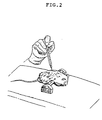
- the needle is inserted into the lumbar cord, aiming at its enlargement, as shown in FIG. 2. Whether or not the needle has been inserted correctly into the lumbar cord can be confirmed by observing the occurrence of jerk in the hind limb.
- the lumbar cord is an organ (which in the monkey is the most sensitive to polio virus) containing the highest level of mRNA of PVR and a high level of PVR, this organ is expected highly sensitive and desirable for measuring the neurovirulence of the polio virus including virulent or attenuated strains.
- the inoculation volume is preferably in the range of 5 to 20 ⁇ l to ensure inoculation with less mechanical damage to the spinal cord of the transgenic mouse.
- the inoculation volume is usually 5 ⁇ l.
- the needle is preferably a 2-step needle as shown in FIG.3.
- the part of the needle to be inserted is 33-gauge piercing tip (0.2 mm diameter) and 7 mm long to prevent it from passing through the lumbar cord upon insertion.
- the present invention provides a method for examining the neurovirulence of a poliovirus wherein the two step needle comprises:
- the syringe may be of any type, but a 25- ⁇ l microsyringe is preferable to inject the above range of volume.
- the skin of the back is closed with a commercial quick-drying glue.
- mice thus inoculated are then clinically observed for a predetermined period of time usually over a period of 14 days, and mice with paralysis within 24 hours after inoculation are excluded as those mechanically damaged by inoculation from the subject to be evaluated.
- Neurovirulence is determined by quantification of clinical phenomena in terms of PD 50 or LD 50 or latent period of clinical symptoms or by pathological examination of the central nervous system including the spinal cord and brain.
- PD 50 means that amount of virus which causes paralysis of 50% of transgenic mice upon inoculation
- LD 50 means that amount of virus which causes death of 50% of transgenic mice. Both of them are clinically used to indicate viral neurovirulence. Both can be calculated according to the Reed-Muench method (Reed, L.J., et al., Am. J. Hyg. 27 , 493-497, 1938) or the Spearman-Kärber method (Lab. Tech. in Rabies, 3rd Ed., Kaplan. M. M. and Koprowski. H., WHO 1973).
- Clinical observation is made of the occurrence, degree and progress of paralysis in the four limbs as well as the change of mouse weight.
- the mouse body itself or the brain and spinal cord are fixed in 10 % formalin, then embedded in paraffin, cut into thin sections of 6 to 9 ⁇ m in thickness and stained with gallocyanine.
- the sections are examined under an optical microscope on infiltration of lymphocyte, mononuclear cell, etc., denaturation and disappearance of nerve cell, for evaluation of neurovirulence.
- the pathological changes in the tissues can be determined according to WHO (World Health Organization) using a method for evaluating the neurovirulence of polio vaccine in monkeys (WHO Tech. Rep. Ser., 800, 30-86, 1990).
- the average score in each mouse of the pathological changes in the central nervous system including the spinal cord (lumbar cord, cervical cord) and the brain (midbrain, pons, medulla oblongata, cerebrum and others) is determined, and then the average score of those changes in a group of mice is determined as lesion score (referred to hereinafter as "LS").
- FIG. 1 shows incision of the back of a mouse (1: a stand).
- FIG. 2 shows inoculation into the spinal cord of a mouse.
- FIG. 3 shows a micro syringe and a needle.
- FIG. 4 shows the result of clinical examination of mice inoculated with virus.
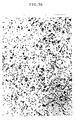
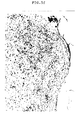
- FIG. 5a shows the result of pathological examination of tissues (slightly magnified) from the lumbar cord of No. 39 mouse (Tg21) shown in FIG. 4.
- FIG. 5b is high magnification of FIG. 5a.
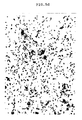
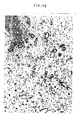
- FIG. 5c shows the result of pathological examination of tissues (slightly magnified) from the cervical cord of No. 24 mouse (Tg21) shown in FIG. 4.
- FIG. 5d is high magnification of FIG. 5c.
- FIG. 5e shows the result of pathological examination of tissues from the brain particularly hypoglossal nuclei of the medulla oblongata of No. 24 mouse (Tg21) shown in FIG. 4.
- FIG. 5f shows the result of pathological examination of tissues from the brain particularly olivary nuclei of the medulla oblongata of No. 24 mouse (Tg21) shown in FIG. 4.
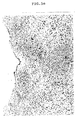
- FIG. 5g shows the result of pathological examination of tissues (slightly magnified) from the lumbar cord of a monkey.
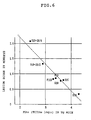
- FIG. 6 shows a correlation between neurovirulence test results using monkeys and those using TgPVR.
- FIG. 7 shows the quantity of virus in the brain and the spinal cord in TgPVR after inoculation intraspinally.
- TgPVR animals used were ICR-TgPVR21 (homozygote or heterozygote, referred to hereinafter as "Tg21”) and ICR-TgPVR1 (heterozygote, referred to hereinafter as "Tgl”) which both are supplied by "Jikken Doubutsu Chuo Kenkyusho” (Central Institute for Experimental Animals, Foundation). Both are 6-week-old mice derived from polio virus-sensitive ICR mice carrying a human gene for HeLa cell PVR. For each of viral dilutions, 5 to 20 TgPVR animals were used.
- each viral sample was examined for infective titer (TCID 5 0 ) using GMK 2 cells in the following roller tube method.
- TgPVR was anesthetized by injecting 0.3 ml of 5 mg/ml pentobarbital into the abdomen. Ether inhalation was additionally carried out where further anesthesia was required.
- Hair on the back of anesthetized TgPVR was sterilized with ethanol and then cut about 2 cm along the midline to expose the spine.
- the needle used was a 2-step needle as shown in FIG. 3 where the part of the needle to be inserted is 33 G in thickness (0.2 mm diameter and 7 mm length) and the syringe is a 25- ⁇ l microsyringe.
- TgPVR with abnormal phenomena e.g. paralysis in the hind limb
- abnormal phenomena e.g. paralysis in the hind limb
- TgPVR inoculated as described in (3) above was maintained in a individual cage and observed clinically for 14 days.
- TgPVR After inoculation into the spinal cord with enough amount of virus to make paralysis, TgPVR showed flaccid paralysis on one or both sides in the hind limbs, which paralysis proceeded rarely to the fore limbs. In most cases, a paralysis occurred on 2nd to 7th days after inoculation. After the onset of paralysis, some survived over 14 days while some died, and this depend on the dose of inoculated virus and virulence. Care was taken of the position of the feeder because the mouse with a paralysis could not drink water from the feeder in a high position.
- PD 5 0 and LD 5 0 were calculated respectively according to the Reed-Muench method (Reed, L. J., et al., Am. J. Hyg. 27, 493-497, 1938).
- the results were 10 3.3 TCID 5 0 (PD 5 0 ) and 10 3.6 TCID 5 0 (LD 5 0 ) with respect to Tg21, and 10 1.6 TCID 5 0 (PD 5 0 ) and 10 2.2 TCID 5 0 (LD 5 0 ) with respect to Tg1.
- Tg21 and Tg1 are clearly dose-dependent and that both Tg21 and Tg1 can be used in an assay system.
- the Tg1 animals were found to be too highly sensitive because 50 % or more of them showed a paralysis in a viral dose of 10 2 TCID 5 0 .
- Tg21 possessed more appropriate range of sensitivity.
- Tg21 was clinically examined 3 times, and the reproducibility of the test was confirmed.
- 4 to 5 TgPVR animals were used for each predetermined viral concentration.
- the PD 5 0 values obtained in the respective experiments were very close to one another ranging from 10 3.25 to 10 3.33 TCID 5 0 , indicating that this experiment system was highly reproducible.
- a good correlation between paralysis occurrence and pathological change was indicated in this experiment system using TgPVR as described below.
- clinical phenomena in both PD 5 0 and LD 5 0 can be satisfactory indicators of neurovirulence.
- Samples of the brain such as cortex, midbrain, thalamus, pons, cerebellum and medulla oblongata and samples of the spinal cord, such as 3 to 6 sections of cervical cord, thoracic cord and lumbar cord were embedded in paraffin in a usual manner and cut into thin sections in 6 to 9 ⁇ m thickness as samples for histopathological examination. Each section was stained with gallocyanine and examined under a microscope. The lesion score of each tissue was determined according to the WHO method of evaluating the neurovirulence of polio vaccine using monkeys.
- each number corresponds to the mouse number of Tg21 in FIG. 4 as described in (i) above.
- the symbol “P(-)” means that no paralysis was observed for 14 days, while “P(+)” means that a paralysis was observed.
- P(+) 4-9(S) means that the animal showed a paralysis on 4th day and died on 9th day after inoculation.
- the symbols mean as follows: 1, the cortex; 2, the thalamus; 3, the midbrain; 4, the cerebellum; 5, the pons; 6, the medulla oblongata; CC, the cervical cord; TC, the thoracic cord; and LC, the lumbar cord.
- the symbol "-" means that no observation was made of that organ.
- the lumbar cord showed the highest lesion score. Further, the lesion scores in the lumbar cord agreed well with the occurrence of paralysis. These lesion scores in the lumbar cord are based on the denaturation and disappearance of motoric nerve cells in the gray matter of ventral horn. A less degree of infiltration of mononuclear cells including microglia, lymphocyte, etc., was further observed as inflammation reaction (FIGS. 5a and 5b). In the TgPVR animals with lesions in the lumbar cord, light but prevailing similar lesions were observed in the cervical cord as well as in the thoracic cord (FIGS. 5c and 5d). Further lesions were also observed in the brain, particularly in the medulla oblongata and pons (FIGS. 5e and 5f).
- F113 a reference virus as type 1 of Sabin strain in the neurovirulence test in Japan
- Tg1 out of 4 TgPVR strains Tg1, Tg5, Tg8 and Tg21
- a dosage of 10 6 TCID 5 0 did not cause any paralysis in Tg1, while 10 6.5 TCID 5 0 caused a paralysis. Because this dosage is too high, it appears that the inoculation of F113 virus into the brain of Tgl is not suitable for the conventional method of examining the neurovirulence of vaccine.
- ICR mice i.e non-transgenic mice
- F113 F113 in a dosage of 10 6 TCID 5 0 .
- the PD 5 0 of the F113 strain in Tg1 was calculated on the basis of the results in FIG. 4.
- the PD 5 0 indicated that a paralysis occurred even in a low dosage of 10 1 ⁇ 6 TCID 50 , and significantly high sensitivity was thus found.
- the neurovirulence test using monkeys was conducted in the WHO method.
- the above 7 viruses used in the TgPVR test were also used in this test. 12 cynomolgus monkeys were used for each virus by inoculating 0.1 ml sample (10 6 TCID 5 0 ) into the spinal cord except that 5 monkeys were used for S1D-38/2 and S1D-38/4, respectively. Pathological examination was made of tissues from the central nervous system on the 19th day after inoculation.
- grade 1 was given where mononuclear cells have grown and are infiltrated, and grade 2 or more was given where further denaturation has occurred in nerve cells.
- grade 2 was given where cell infiltration involves minimal denaturation of nerve cells
- grade 3 was given where cell infiltration involves extensive denaturation of nerve cells
- grade 4 was given where nerve cells have been massive denatured and have disappeared.
- Lesions in 7 sites in the brain cortex, midbrain, thalamus, pons, cerebellum, upper and lower medulla oblongata), 12 sites in the cervical cord, and 18 sites in the lumbar cord were examined respectively on the left and right sides, and the results were recorded.
- the average of the pathological changes in the brain, the cervical cord and the lumbar cord was determined for each monkey, and then the average in a group of animals was determined as lesion score (LS).
- Table 2 shows a comparison between the results of the neurovirulence test using monkeys (in terms of LS) and those of the neurovirulence test using Tg21 as TgPVR (in terms of PD 5 0 ) with respect to 7 viruses including F113 derived from type 1 of Sabin strain.
- neurovirulence test virus strain F113 S1A S1B S1C S1D S1D-38/2 S1D 38/2 monkey LS 0.83 0.85 0.33 0.79 0.77 1.32 2.07 TgPVR21 PD 50 (TCID 50 ) 10 3.3 10 3.4 10 4.3 10 3.7 10 3.6 10 2.9 10 2.4
- the LS values range from 0.77 to 0.85 where 4 viruses (F113, S1A, S1C and S1D) were examined in monkeys.
- the PD 5 0 values range from 10 3.7 to 10 3.3 TCID 5 0 where the same viruses were examined in TgPVR.
- the LS value was 0.33 and the PD 5 0 value was 10 4.3 TCID 5 0 , indicating that this virus is extremely attenuated as compared with other viruses.
- the LS values were 1.32 and 2.07, respectively, and the PD 5 0 values were 10 2 ⁇ 9 TCID 50 and 10 2 ⁇ 4 TCID 5 0 , respectively.
- FIG. 6 shows a correlation between the above LS in monkeys and PD 5 0 in TgPVR21 values. There is a very good correlation therebetween with a coefficient of correlation ( ⁇ ) of -0.96.
- TgPVR animals attained the same level of sensitivity as that of monkeys, even for type 1 of Sabin strain as a group of viruses with different levels of neurovirulence, and they can be used in an assay system of neurovirulence for polio vaccine.
- Reference Example 1 Distribution of the virus in the central nervous system after inoculation intraspinally
- F113 was inoculated into the spinal cord of Tg21 in a dosage of 10 4 TCID 5 0 , and then the virus was recovered from the brain, spinal cord and blood in order to determine where the virus was multiplied and distributed in the central nervous system and blood.
- the distribution of the virus in the central nervous system was examined for 3 days after inoculation in the following manner.
- F113 was inoculated into the spinal cord of Tg21 (9 animals per group) in a dosage of 10 4 TCID 5 0 , i.e. an amount causing paralysis in nearly 100 % of Tg21 animals.
- the brain, spiral cord and blood were collected respectively from 2 animals from group.
- the amount of virus was measured therefrom in the following manner. 9 parts of medium (Medium 199) was added to 1 part of the above brain or spinal cord. The mixture was homogenized under cooling in a homogenizer and centrifuged at 2000 r.p.m. for 20 minutes. The supernatant was filtered through a filter with 0.45 ⁇ m pores.
- the virus content in the filtrates were measured by roller tube method in GMK2 described above.
- the virus in blood was determined after addition of heparin to the blood collected above.
- F113 started to multiply in the spinal cord soon after inoculation, and the number of viruses reached the maximum 2 days later. In the brain, the virus was observed to multiply 2 or 3 days after inoculation. No virus could be recovered from the blood.
- the present invention there can be provided a very sensitive method for examining in simple procedures the neurovirulence of an attenuated polio vaccine which is typically a poliovirus.
- the results of the present method using TgPVR correlate well with those of the conventional neurovirulence test using monkeys.
- the present invention further provides the following advantages: a large number of almost homogenous and zoonosis-free animals can be handled relatively easily; results on neurovirulence test of polio vaccine are stable and reliable; and the polio virus including virulent to attenuated strains can be subjected to examination of neurovirulence.
Landscapes
- Life Sciences & Earth Sciences (AREA)
- Health & Medical Sciences (AREA)
- Genetics & Genomics (AREA)
- Chemical & Material Sciences (AREA)
- Engineering & Computer Science (AREA)
- Organic Chemistry (AREA)
- Zoology (AREA)
- General Health & Medical Sciences (AREA)
- Biotechnology (AREA)
- Biochemistry (AREA)
- Veterinary Medicine (AREA)
- Wood Science & Technology (AREA)
- Bioinformatics & Cheminformatics (AREA)
- Molecular Biology (AREA)
- General Engineering & Computer Science (AREA)
- Biophysics (AREA)
- Biomedical Technology (AREA)
- Environmental Sciences (AREA)
- Toxicology (AREA)
- Proteomics, Peptides & Aminoacids (AREA)
- Animal Husbandry (AREA)
- Biodiversity & Conservation Biology (AREA)
- Cell Biology (AREA)
- Physics & Mathematics (AREA)
- Immunology (AREA)
- Animal Behavior & Ethology (AREA)
- Plant Pathology (AREA)
- Medicinal Chemistry (AREA)
- Microbiology (AREA)
- Gastroenterology & Hepatology (AREA)
- Medicines Containing Antibodies Or Antigens For Use As Internal Diagnostic Agents (AREA)
- Micro-Organisms Or Cultivation Processes Thereof (AREA)
Claims (3)
- Verfahren zum Überprüfen der Neurovirulenz eines Poliovirus, wobei das Verfahren umfaßt:(a) Einimpfen des Poliovirus in das Rückenmark einer transgenen Maus, deren Genom ein Transgen umfaßt, das einen menschlichen Poliovirus-Rezeptor codiert, so daß der Rezeptor in den Zellen der Maus exprimiert wird; und(b) Beobachten der transgenen Maus auf klinische Symptome für eine Poliovirus-Infektion und/oder Überprüfen der transgenen Maus auf pathologische Änderungen in ihrem Zentralnervensystem.
- Verfahren nach Anspruch 1, wobei das Poliovirus ein attenuierter Stamm vom Poliovirus-Typ 1, 2 oder 3 ist.
- Verfahren nach Anspruch 1 oder 2, wobei das Poliovirus unter Verwendung einer zweistufigen Nadel eingeimpft wird, umfassend:(a) einen distalen 33 Gauge-Zylinderabschnitt, der einen Durchmesser von 0,2 mm aufweist und eine 7 mm lange Einstechspitze besitzt; und(b) einen proximalen 25 Gauge-Zylinderabschnitt, der einen Durchmesser von 0,5 mm aufweist und einen 8 mm langen Trägerteil besitzt.
Applications Claiming Priority (1)
| Application Number | Priority Date | Filing Date | Title |
|---|---|---|---|
| PCT/JP1994/000451 WO1995025954A1 (en) | 1994-03-18 | 1994-03-18 | Method of testing neurotoxicity of poliovirus vaccine |
Publications (3)
| Publication Number | Publication Date |
|---|---|
| EP0701127A1 EP0701127A1 (de) | 1996-03-13 |
| EP0701127A4 EP0701127A4 (de) | 1998-06-03 |
| EP0701127B1 true EP0701127B1 (de) | 2001-05-23 |
Family
ID=14098260
Family Applications (1)
| Application Number | Title | Priority Date | Filing Date |
|---|---|---|---|
| EP94910052A Expired - Lifetime EP0701127B1 (de) | 1994-03-18 | 1994-03-18 | Verfahren zum testen der neurotoxizität eines poliovirusimpfstoffes |
Country Status (4)
| Country | Link |
|---|---|
| US (1) | US5986171A (de) |
| EP (1) | EP0701127B1 (de) |
| CA (1) | CA2163229C (de) |
| WO (1) | WO1995025954A1 (de) |
Families Citing this family (7)
| Publication number | Priority date | Publication date | Assignee | Title |
|---|---|---|---|---|
| WO2001078789A2 (en) | 2000-04-14 | 2001-10-25 | The Uab Research Foundation | Poliovirus replicons encoding therapeutic agents and uses thereof |
| US20030040498A1 (en) * | 2001-03-14 | 2003-02-27 | Ansardi David Calvert | Oncolytic RNA replicons |
| US20030013081A1 (en) | 2001-06-26 | 2003-01-16 | Olson William C. | Uses of DC-SIGN and DC-SIGNR for inhibiting hepatitis C virus infection |
| US20030237104A1 (en) * | 2002-06-24 | 2003-12-25 | Tatsuji Nomura | Methods for developing animal models |
| EP2274447B1 (de) * | 2008-03-20 | 2014-12-24 | Blood Systems, Inc. | Neues divergentes picornavirus:cosavirus |
| WO2019157522A1 (en) | 2018-02-12 | 2019-08-15 | Curators Of The University Of Missouri | Small auxin upregulated (saur) gene for the improvement of plant root system architecture, waterlogging tolerance, drought resistance and yield |
| CN110736654B (zh) * | 2019-11-04 | 2021-11-19 | 上海青赛生物科技有限公司 | 一种腮腺炎病毒大鼠神经毒力评价模型 |
Family Cites Families (6)
| Publication number | Priority date | Publication date | Assignee | Title |
|---|---|---|---|---|
| CN1030255A (zh) * | 1987-04-14 | 1989-01-11 | 路明尼斯有限公司 | 转移基因的动物 |
| DE68905578T2 (de) * | 1988-12-09 | 1993-07-01 | Kyowa Hakko Kogyo Kk | Verbindung ks-505 und verfahren zur herstellung davon. |
| EP0462215B1 (de) * | 1989-03-10 | 2002-06-19 | The Trustees Of Columbia University In The City Of New York | Molekulares klonieren von genomischen und cdna-sequenzen, die für zelluläre rezeptoren für poliovirus kodieren |
| US5116325A (en) * | 1990-06-06 | 1992-05-26 | Paterson Donald W | Needle assembly |
| JPH05508554A (ja) * | 1990-11-06 | 1993-12-02 | アメリカ合衆国 | 弱毒化生ワクチン中の病毒性復帰変異体の試験法 |
| US5449351A (en) * | 1993-09-09 | 1995-09-12 | Zohmann; Walter A. | Atraumatic needle for lumbar puncture |
-
1994
- 1994-03-18 EP EP94910052A patent/EP0701127B1/de not_active Expired - Lifetime
- 1994-03-18 WO PCT/JP1994/000451 patent/WO1995025954A1/ja not_active Ceased
- 1994-03-18 US US08/549,701 patent/US5986171A/en not_active Expired - Lifetime
- 1994-03-18 CA CA002163229A patent/CA2163229C/en not_active Expired - Lifetime
Also Published As
| Publication number | Publication date |
|---|---|
| CA2163229C (en) | 2000-03-14 |
| EP0701127A1 (de) | 1996-03-13 |
| US5986171A (en) | 1999-11-16 |
| EP0701127A4 (de) | 1998-06-03 |
| WO1995025954A1 (en) | 1995-09-28 |
Similar Documents
| Publication | Publication Date | Title |
|---|---|---|
| KR101732240B1 (ko) | Ib qx-유사 균주로부터 유래된 감염성 기관지염 백신 | |
| Abe et al. | Neurovirulence test for oral live poliovaccines using poliovirus-sensitive transgenic mice | |
| EP0701127B1 (de) | Verfahren zum testen der neurotoxizität eines poliovirusimpfstoffes | |
| CN113862230A (zh) | 一种猪伪狂犬病病毒基因缺失株、疫苗组合物及其制备方法和应用 | |
| CN114015660A (zh) | 缺失十个基因的减毒非洲猪瘟病毒株的构建及其作为疫苗的应用 | |
| CN111593027B (zh) | 一种草鱼呼肠孤病毒ⅱ型弱毒株及其应用 | |
| JPWO1995025954A1 (ja) | ポリオワクチンの神経毒力試験方法 | |
| JP2813066B2 (ja) | ポリオワクチンの神経毒力試験方法 | |
| AU6156298A (en) | New spumavirus isolated from humans | |
| CN118497142B (zh) | 一种柯萨奇病毒b组5型毒株及应用 | |
| Cook et al. | Investigations into resistance of chicken lines to infection with infectious bronchitis virus | |
| Dick et al. | Interbreeding and gene flow in the genus Trichinella | |
| CN119193507A (zh) | 一种新型鹅细小病毒的弱毒株及其构建方法和应用 | |
| CN117898252A (zh) | 绵羊支原体肺炎发病模型建立方法及其应用 | |
| CN118185883A (zh) | 大口黑鲈弹状病毒弱毒病毒株及其应用 | |
| DE60024259T2 (de) | Trennung eines humanen retrovirus | |
| Evans et al. | Growth of Neurotropic Viruses in Extraneural Tissues: VI. Absence of In Vivo Multiplication of Poliomyelitis Virus, Types I and II, After Intratesticular Inoculation of Monkeys and Other Laboratory Animals | |
| CN116218793B (zh) | 一株高滴度、多组织嗜性的鸡传染性支气管炎病毒毒株 | |
| CN114657151B (zh) | 猪伪狂犬病病毒gE/gI/TK基因缺失疫苗株及其构建方法和应用 | |
| CN118460612A (zh) | ORF7b基因缺失的猫传染性腹膜炎减毒病毒及构建方法和应用 | |
| CN116790510A (zh) | 犬副流感病毒HeN20株及其产品和应用 | |
| CN107418973B (zh) | 一种基因vii型新城疫病毒弱毒株的构建方法 | |
| CN120137916A (zh) | 一株ev-c96毒株、ev-c96小鼠模型其构建方法及应用 | |
| CN121488904A (zh) | 一种肾综合征出血热小鼠模型的构建方法及应用 | |
| Kurniaji et al. | 2107 Gonad Development and Blood Profile of Anti-KHV DNA Vaccinated Common Carp |
Legal Events
| Date | Code | Title | Description |
|---|---|---|---|
| PUAI | Public reference made under article 153(3) epc to a published international application that has entered the european phase |
Free format text: ORIGINAL CODE: 0009012 |
|
| 17P | Request for examination filed |
Effective date: 19951121 |
|
| AK | Designated contracting states |
Kind code of ref document: A1 Designated state(s): BE FR GB IT |
|
| A4 | Supplementary search report drawn up and despatched | ||
| AK | Designated contracting states |
Kind code of ref document: A4 Designated state(s): BE FR GB IT |
|
| 17Q | First examination report despatched |
Effective date: 19990803 |
|
| GRAG | Despatch of communication of intention to grant |
Free format text: ORIGINAL CODE: EPIDOS AGRA |
|
| 17Q | First examination report despatched |
Effective date: 19990803 |
|
| GRAG | Despatch of communication of intention to grant |
Free format text: ORIGINAL CODE: EPIDOS AGRA |
|
| GRAG | Despatch of communication of intention to grant |
Free format text: ORIGINAL CODE: EPIDOS AGRA |
|
| GRAH | Despatch of communication of intention to grant a patent |
Free format text: ORIGINAL CODE: EPIDOS IGRA |
|
| GRAH | Despatch of communication of intention to grant a patent |
Free format text: ORIGINAL CODE: EPIDOS IGRA |
|
| GRAA | (expected) grant |
Free format text: ORIGINAL CODE: 0009210 |
|
| AK | Designated contracting states |
Kind code of ref document: B1 Designated state(s): BE FR GB IT |
|
| ITF | It: translation for a ep patent filed | ||
| ET | Fr: translation filed | ||
| REG | Reference to a national code |
Ref country code: GB Ref legal event code: IF02 |
|
| PLBE | No opposition filed within time limit |
Free format text: ORIGINAL CODE: 0009261 |
|
| STAA | Information on the status of an ep patent application or granted ep patent |
Free format text: STATUS: NO OPPOSITION FILED WITHIN TIME LIMIT |
|
| 26N | No opposition filed | ||
| PG25 | Lapsed in a contracting state [announced via postgrant information from national office to epo] |
Ref country code: IT Free format text: LAPSE BECAUSE OF NON-PAYMENT OF DUE FEES Effective date: 20050318 |
|
| PGRI | Patent reinstated in contracting state [announced from national office to epo] |
Ref country code: IT Effective date: 20110616 |
|
| PGFP | Annual fee paid to national office [announced via postgrant information from national office to epo] |
Ref country code: IT Payment date: 20120329 Year of fee payment: 19 |
|
| PGFP | Annual fee paid to national office [announced via postgrant information from national office to epo] |
Ref country code: FR Payment date: 20130408 Year of fee payment: 20 Ref country code: GB Payment date: 20130321 Year of fee payment: 20 |
|
| PGFP | Annual fee paid to national office [announced via postgrant information from national office to epo] |
Ref country code: BE Payment date: 20130320 Year of fee payment: 20 |
|
| BE20 | Be: patent expired |
Owner name: JAPAN *POLIOMYELITIS RESEARCH INSTITUTE Effective date: 20140318 Owner name: *CENTRAL INSTITUTE FOR EXPERIMENTAL ANIMALS Effective date: 20140318 |
|
| REG | Reference to a national code |
Ref country code: GB Ref legal event code: PE20 Expiry date: 20140317 |
|
| PG25 | Lapsed in a contracting state [announced via postgrant information from national office to epo] |
Ref country code: GB Free format text: LAPSE BECAUSE OF EXPIRATION OF PROTECTION Effective date: 20140317 |