EP0699759A1 - Variant aspartokinase gene - Google Patents
Variant aspartokinase gene Download PDFInfo
- Publication number
- EP0699759A1 EP0699759A1 EP94902116A EP94902116A EP0699759A1 EP 0699759 A1 EP0699759 A1 EP 0699759A1 EP 94902116 A EP94902116 A EP 94902116A EP 94902116 A EP94902116 A EP 94902116A EP 0699759 A1 EP0699759 A1 EP 0699759A1
- Authority
- EP
- European Patent Office
- Prior art keywords
- lysine
- amino acid
- seq
- dna
- threonine
- Prior art date
- Legal status (The legal status is an assumption and is not a legal conclusion. Google has not performed a legal analysis and makes no representation as to the accuracy of the status listed.)
- Granted
Links
Images




Classifications
-
- C—CHEMISTRY; METALLURGY
- C12—BIOCHEMISTRY; BEER; SPIRITS; WINE; VINEGAR; MICROBIOLOGY; ENZYMOLOGY; MUTATION OR GENETIC ENGINEERING
- C12N—MICROORGANISMS OR ENZYMES; COMPOSITIONS THEREOF; PROPAGATING, PRESERVING, OR MAINTAINING MICROORGANISMS; MUTATION OR GENETIC ENGINEERING; CULTURE MEDIA
- C12N9/00—Enzymes; Proenzymes; Compositions thereof; Processes for preparing, activating, inhibiting, separating or purifying enzymes
- C12N9/10—Transferases (2.)
- C12N9/12—Transferases (2.) transferring phosphorus containing groups, e.g. kinases (2.7)
- C12N9/1217—Phosphotransferases with a carboxyl group as acceptor (2.7.2)
-
- C—CHEMISTRY; METALLURGY
- C12—BIOCHEMISTRY; BEER; SPIRITS; WINE; VINEGAR; MICROBIOLOGY; ENZYMOLOGY; MUTATION OR GENETIC ENGINEERING
- C12N—MICROORGANISMS OR ENZYMES; COMPOSITIONS THEREOF; PROPAGATING, PRESERVING, OR MAINTAINING MICROORGANISMS; MUTATION OR GENETIC ENGINEERING; CULTURE MEDIA
- C12N9/00—Enzymes; Proenzymes; Compositions thereof; Processes for preparing, activating, inhibiting, separating or purifying enzymes
- C12N9/10—Transferases (2.)
- C12N9/12—Transferases (2.) transferring phosphorus containing groups, e.g. kinases (2.7)
-
- C—CHEMISTRY; METALLURGY
- C12—BIOCHEMISTRY; BEER; SPIRITS; WINE; VINEGAR; MICROBIOLOGY; ENZYMOLOGY; MUTATION OR GENETIC ENGINEERING
- C12P—FERMENTATION OR ENZYME-USING PROCESSES TO SYNTHESISE A DESIRED CHEMICAL COMPOUND OR COMPOSITION OR TO SEPARATE OPTICAL ISOMERS FROM A RACEMIC MIXTURE
- C12P13/00—Preparation of nitrogen-containing organic compounds
- C12P13/04—Alpha- or beta- amino acids
- C12P13/08—Lysine; Diaminopimelic acid; Threonine; Valine
Definitions
- the present invention relates to a novel aspartokinase and a DNA fragment coding for the enzyme originating from a bacterium belonging to the genus Corynebacterium used for fermentative production of amino acid and so on, and relates to recombinant DNA containing the DNA fragment.
- the present invention also relates to a bacterium belonging to the genus Corynebacterium harboring the recombinant DNA, and relates to a method of producing L-lysine comprising cultivating the microorganism.
- L-Lysine which is used as a feed additive, is usually produced by fermentation by using an L-lysine-producing mutant strain belonging to coryneform bacteria.
- L-lysine-producing bacteria A variety of L-lysine-producing bacteria are known at present, which are those created by artificial mutation of coryneform bacteria.
- Such artificial mutant strains includes the followings: S-(2-aminoethyl)-cysteine (hereinafter abbreviated as "AEC") resistant mutant strains; mutant strains which require amino acid such as L-homoserine for their growth (Japanese Patent Publication Nos.
- mutant strains which exhibit resistance to AEC and require amino acids such as L-leucine, L-homoserine, L-proline, L-serine, L-arginine, L-alanine, and L-valine (United States Patent Nos.
- L-lysine-producing mutant strains which exhibit resistance to DL- ⁇ -amino- ⁇ -caprolactam, ⁇ -amino-lauryllactam, aspartic acid-analog, sulfa drug, quinoid, and N-lauroylleucine; L-lysine-producing mutant strains which exhibit resistance to inhibitors of oxyaloacetate decarboxylase or respiratory system enzymes (Japanese Patent Laid-open Nos. 50-53588, 50-31093, 52-102498, 53-9394, 53-86089, 55-9783, 55-9759, 56-32995 and 56-39778, and Japanese Patent Publication Nos.
- L-lysine-producing mutant strains which require inositol or acetic acid (Japanese Patent Laid-open Nos. 55-9784 and 56-8692); L-lysine-producing mutant strains which exhibit sensitivity to fluoropyruvic acid or temperature not less than 34 °C (Japanese Patent Laid-open Nos. 55-9783 and 53-86090); and mutant strains belonging to the genus Brevibacterium or Corynebacterium which exhibit resistance to ethylene glycol and produce L-lysine (United States Patent Application Serial No. 333,455).
- Escherichia coli transformed by using a recombinant vector is disclosed in the prior art. In this strain, amino acid production is enhanced (see United States Patent No. 4,278,765).
- mutant AK gene Although a mutant AK gene is described in a few cases, the mutant AK gene could not be harbored as a stable plasmid (see Cremer, J. et al.; Applied and Environmental Microbiology , June 1991, pp. 1746-1752).
- An object of the present invention is to make improvement to provide increased production and secretion speeds of L-lysine by modifying AK as an important enzyme for lysine biosynthesis in microorganisms of bacteria belonging to the genus Corynebacterium into those having a property of desensitization of feedback inhibition by L-lysine and L-threonine and feedback inhibition by L-lysine alone, and increasing their activities.
- the present invention lies in an aspartokinase ⁇ -subunit protein and a DNA fragment coding for the protein originating from a bacterium belonging to the genus Corynebacterium , in which synergistic feedback inhibition by L-lysine and L-threonine is substantially desensitized, the protein having an amino acid sequence defined in SEQ ID NO: 4 in Sequence Listing, or a sequence in which a 279th Thr residue in the amino acid sequence defined in SEQ ID NO: 4 is changed to an amino acid residue other than Ala and other than acidic amino acids.
- the present invention lies in an aspartokinase ⁇ -subunit protein and a DNA fragment coding for the protein originating from a bacterium belonging to the genus Corynebacterium , in which synergistic feedback inhibition by L-lysine and L-threonine is substantially desensitized, the protein having an amino acid sequence defined in SEQ ID NO: 6 in Sequence Listing, or a sequence in which a 30th Thr residue in the amino acid sequence defined in SEQ ID NO: 6 is changed to an amino acid residue other than Ala and other than acidic amino acids.
- the present invention lies in recombinant DNA containing the aforementioned DNA fragment and being replicable in microorganisms belonging to the genus Corynebacterium , and a transformant obtained by introducing the recombinant DNA into a microorganism belonging to the genus Corynebacterium , wherein the specific activity of aspartokinase is increased 2-20 times as compared with a parent strain, and synergistic feedback inhibition by L-lysine and L-threonine or feedback inhibition by L-lysine alone exerted on the activity of aspartokinase is substantially desensitized.
- the present invention lies in a method of producing L-lysine comprising the steps of cultivating the aforementioned transformant in an appropriate medium, and separating produced L-lysine.
- the microorganisms belonging to the genus Corynebacterium referred to in the present invention are a group of microorganisms as defined in Bergey's Manual of Determinative Bacteriology , 8th ed., p. 599 (1974), which are aerobic Gram-positive rods having no acid resistance and no spore-forming ability.
- the microorganisms belonging to the genus Corynebacterium referred to in the present invention include bacteria belonging to the genus Brevibacterium having been hitherto classified into the genus Brevibacterium but united as bacteria belonging to the genus Corynebacterium at present, and include bacteria belonging to the genus Brevibacterium closely relative to bacteria belonging to the genus Corynebacterium .
- the microorganisms belonging to the genus Corynebacterium ( Brevibacterium ) as described above especially glutamic acid-producing bacteria belonging to the genus Corynebacterium ( Brevibacterium ) as mentioned below are most preferable in the present invention. Further, some bacteria belonging to the genus Microbacterium are known to accumulate glutamic acid, which can be also used in the present invention.
- Examples of wild type strains of glutamic acid-producing bacteria belonging to the genus Corynebacterium include the followings.
- Corynebacterium acetoacidophilum ATCC 13870 Corynebacterium acetoglutamicum ATCC 15806
- Corynebacterium callunae ATCC 15991 Corynebacterium glutamicum ATCC 13032 ATCC 13060 ( Brevibacterium divaricatum ) ATCC 14020 ( Brevibacterium lactofermentum ) ATCC 13869
- Brevibacterium saccharolyticum ATCC 14066 Brevibacterium immariophilum ATCC 14068
- Brevibacterium roseum ATCC 13825 Brevibacterium flavum ATCC 13826
- Brevibacterium thiogenitalis ATCC 19240 Microbacterium ammoniaphilum ATCC 15354
- the glutamic acid-producing bacteria belonging to the genus Corynebacterium ( Brevibacterium ) of the present invention also include mutant strains having glutamic acid productivity or having lost glutamic acid productivity, in addition to the wild type strains having glutamic acid productivity as described above.
- a DNA fragment containing a wild type AK gene can be obtained.
- the DNA fragment containing the gene for AK in which synergistic feedback inhibition by L-lysine and L-threonine is substantially desensitized can be obtained by using a mutant strain in which synergistic feedback inhibition on the AK activity by L-lysine and L-threonine is substantially desensitized .
- the mutant strain can be obtained, for example, from a group of cells subjected to an ordinary mutation treatment, ultraviolet light irradiation, or a treatment with a mutating agent such as N-methyl-N'-nitro-N-nitrosoguanidine (NTG).
- NTG N-methyl-N'-nitro-N-nitrosoguanidine
- the AK activity can be measured by using a method described in Miyajima, R. et al., The Journal of Biochemistry (1968), 63 (2), 139-148.
- Corynebacterium glutamicum Brevibacterium lactofermentum
- an L-lysine-producing bacterium AJ3463 derived by a mutation treatment from the ATCC 13869 strain are most preferable donors.
- mutant AK gene The wild type AK gene, and the gene coding for aspartokinase in which synergistic feedback inhibition by L-lysine and L-threonine is substantially desensitized (hereinafter referred to as "mutant AK gene") are separated from chromosomal DNA of these bacteria, ligated with a vector autonomously replicable in bacteria belonging to the genus Corynebacterium ( Brevibacterium ), and introduced into cells of bacteria belonging to the genus Corynebacterium ( Brevibacterium ).
- a method for isolating the AK gene is as follows. At first, a chromosomal gene is extracted from a strain having the AK gene of a bacterium belonging to the genus Corynebacterium (for example, a method of H. Saito and K. Miura, Biochem. Biophys. Acta , 72 , 619 (1963) can be used), and it is digested with a suitable restriction enzyme. Subsequently, it is ligated with a vector replicable in cells of bacteria belonging to the genus Corynebacterium . An obtained recombinant vector is used to transform an AK-deficient mutant strain of a microorganism belonging to the genus Corynebacterium .
- a bacterial stain consequently harboring the AK-producing activity is isolated, from which the AK gene can be separated.
- a method for deriving the AK-deficient mutant strain is similar for practice to a method for deriving the mutant strain which provides substantially desensitized synergistic feedback inhibition on the AK activity by L-lysine and L-threonine described above.
- the degree of digestion can be controlled by controlling the digestion reaction time and so on.
- restriction enzymes can be used.
- any vector replicable in cells of bacteria belonging to the genus Corynebacterium can be used as the vector for the present invention. Specifically, it is exemplified by the followings.
- the vector is digested with a restriction enzyme used to digest the chromosomal gene, or ligated with oligonucleotides having nucleotide sequences complementary to both ends of the digested fragment of chromosomal DNA and the digested vector respectively. Subsequently, it is subjected to a ligation reaction of the vector and the chromosomal DNA fragment.
- Recombinant DNA constructed by ligating the chromosomal DNA with the vector thus obtained can be introduced into a recipient of bacteria belonging to the genus Corynebacterium by using a method in which permeability of DNA is increased by treating recipient cells with calcium chloride as reported for Escherichia coli K-12 (Mandel, M. and Higa, A., J. Mol. Biol. , 53 , 159 (1970)), or by using a method in which introduction is performed in a proliferating stage (so-called competent cells) so that cells can incorporate DNA as reported for Bacillus subtilis (Duncan, C. H., Wilson, G. A. and Young, F. E., Gene , 1 , 153 (1977)).
- recombinant DNA can be introduced into a DNA recipient after converting DNA recipient cells into protoplasts or spheroplasts which easily incorporate recombinant DNA as known for Bacillus subtilis , actinomycetes, and yeasts (Chang, S. and Choen, S. N., Molec. Gen. Genet. , 168 , 111 (1979); Bibb, M. J., Ward, J. M. and Hopwood, O. A., Nature , 274 , 398 (1978); Hinnen, A., Hicks, J. B. and Fink, G. R., Proc. Natl. Acad. Sci. USA , 75 , 1929 (1978)).
- a sufficiently high frequency can be obtained even by using the method used for Bacillus subtilis described above. It is of course possible to utilize a method in which DNA is incorporated into protoplasts of a bacterium belonging to the genus Corynebacterium in the presence of polyethylene glycol or polyvinyl alcohol and divalent metal ion as described in Japanese Patent Laid-open No. 57-183799. An equivalent result is obtained even by using a method in which incorporation of DNA is facilitated by addition of carboxymethyl cellulose, dextran, Ficoll, Bruronik F68 (Serva) instead of polyethylene glycol or polyvinyl alcohol.
- Serva Bruronik F68
- the AK gene can be obtained by amplifying the AK gene by using PCR (polymerase chain reaction; see White, T. J. et al., Trends Genet. , 5 , 185 (1989)) from chromosomal DNA obtained as described above.
- DNA primers to be used for the amplification are those complementary to both 3' ends of DNA double strands containing an entire or partial region of the AK gene.
- PCR polymerase chain reaction
- DNA primers to be used for the amplification are those complementary to both 3' ends of DNA double strands containing an entire or partial region of the AK gene.
- it is necessary to perform screening from a gene library by using DNA fragments of the region as primers to amplify a DNA fragment containing an entire region.
- a DNA fragment containing the AK gene can be recovered by excising an objective band after subjecting the DNA fragment to agarose gel electrophoresis.
- single strand DNA's of 23 mer and 21 mer having sequences of 5'-TCGCGAAGTAGCACCTGTCACTT-3' and 5'-ACGGAATTCAATCTTACGGCC-3' are most suitable to amplify a region of about 1,643 bp coding for the AK gene based on, for example, a sequence known for Corynebacterium glutamicum (see Molecular Microbiology (1991), 5 (5), 1197-1204; Mol. Gen. Genet. (1990), 224 , 317-324).
- the DNA can be synthesized in accordance with an ordinary method using a phosphoramidite method (see Tetrahedron Letters (1981), 22 , 1859) by using a DNA synthesizer Model 380B produced by Applied Biosystems.
- the PCR can be performed by using DNA Thermal Cycler Model PJ2000 produced by Takara Shuzo Co., Ltd., using Taq DNA polymerase in accordance with a method designated by the supplier.
- the amplified AK gene is ligated with the vector proliferative in cells of bacteria belonging to the genus Corynebacterium as described above, and introduced into cells of bacteria belonging to the genus Corynebacterium by using the method as described above.
- Hosts in which the obtained AK gene is introduced and amplified to produce lysine include the wild type strains of glutamic acid-producing bacteria belonging to the genus Corynebacterium described above. All bacteria other than the above can be utilized as a host provided that a replication origin for the recombinant DNA constructed herein and the mutant AK gene make their function, the recombinant DNA can be replicated, and the mutant AK activity can be enhanced.
- the most preferable host is AJ12036 strain (FERM P-7559) which is a wild type strain of Corynebacterium glutamicum ( Brevibacterium lactofermentum ).
- the transformant harboring the recombinant DNA containing the gene coding for aspartokinase in which synergistic feedback inhibition by L-lysine and L-threonine is substantially desensitized obtained by the method described above is cultivated, and objective L-lysine is produced and accumulated in a culture liquid to collect it.
- the medium to be used for L-lysine production is an ordinary medium containing a carbon source, a nitrogen source, inorganic ions and optionally other organic components.
- sugars such as glucose, lactose, galactose, fructose, and starch hydrolysate; alcohols such as glycerol and sorbitol; or organic acids such as fumaric acid, citric acid and succinic acid.
- the nitrogen source it is possible to use inorganic ammonium salts such as ammonium sulfate, ammonium chloride and ammonium phosphate; organic nitrogen such as soybean hydrolysate; ammonia gas; and aqueous ammonia.
- inorganic ammonium salts such as ammonium sulfate, ammonium chloride and ammonium phosphate
- organic nitrogen such as soybean hydrolysate
- ammonia gas such as soybean hydrolysate
- aqueous ammonia aqueous ammonia.
- vitamin B1 and L-homoserine or yeast extract It is desirable to allow required substances such as vitamin B1 and L-homoserine or yeast extract to be contained in appropriate amounts as organic trace nutrient sources.
- potassium phosphate, magnesium sulfate, iron ion, manganese ion and so on are added in small amounts, if necessary.
- Cultivation is preferably carried out under an aerobic condition for 16-72 hours.
- the cultivation temperature is controlled at 30 °C to 45 °C, and pH is controlled at 5-7 during cultivation.
- Inorganic or organic, acidic or alkaline substances as well as ammonia gas or the like can be used for pH adjustment.
- Collection of aromatic amino acids from a cultivated liquor can be carried out by combining an ordinary ion exchange resin method, a precipitation method, and other known methods.
- Fig. 1 shows steps of constructing p399AKY and p399AKY from AK gene fragments amplified from chromosome by PCR, and constructing p399AKYB and p399AK9B by introducing a DNA fragment (Coryne.-ori) having an ability to allow plasmids to be autonomously proliferative in bacteria belonging to the genus Corynebacterium .
- p399AK9B is constructed through exactly the same steps as those for p399AKYB except that the former is different from the latter in one base. Thus the both are shown together with or without ( ).
- Fig. 2 shows results of investigation on inhibition by lysine, threonine, and lysine + threonine of wild type and mutant (Thr) AK's.
- the activity obtained without addition of lysine and threonine was regarded as 100 % to indicate the activity with addition thereof as activity-holding ratios (desensitization degrees of inhibition).
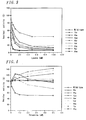
- Fig. 3 shows results of investigation on desensitization degrees of inhibition by lysine for 8 kinds of AK's of the wild type and mutants.
- Fig. 4 shows results of investigation on desensitization degrees of inhibition by threonine for 8 kinds of AK's of the wild type and mutants.
- Fig. 5 shows results of investigation on desensitization degrees of concerted inhibition by lysine + threonine for 8 kinds of AK's of the wild type and mutants.
- Fig. 6 shows results of investigation on thermal stability for 8 kinds of AK's of the wild type and mutants.
- the activity-holding ratio after a treatment at 55 °C for 90 minutes is indicated by %.
- Example 1 Preparation of Wild Type and Mutant AK Genes, and Preparation of Plasmids for Corynebacterium
- Chromosomal DNA was prepared in accordance with an ordinary method from Corynebacterium glutamicum ( Brevibacterium lactofermentum ) wild type strain ATCC 13869, and L-lysine-producing mutant strain AJ3463 (FERM P-1987) obtained therefrom by a mutation treatment.
- AK genes were amplified from the chromosomal DNA by PCR (polymerase chain reaction; see White, T. J. et al., Trends Genet. , 5 , 185 (1989)).
- DNA primers used for the amplification single strand DNA's of 23 mer and 21 mer having sequences of 5'-TCGCGAAGTAGCACCTGTCACTT-3' (SEQ ID NO: 15) and 5'-ACGGAATTCAATCTTACGGCC-3' (SEQ ID NO: 16) were synthesized to amplify a region of about 1,643 bp coding for the AK genes based on a sequence known for Corynebacterium glutamicum (see Molecular Microbiology (1991), 5 (5), 1197-1204; Mol. Gen. Genet. (1990), 224 , 317-324).
- the DNA was synthesized in accordance with an ordinary method using a phosphoramidite method (see Tetrahedron Letters (1981), 22 , 1859) by using a DNA synthesizer Model 380B produced by Applied Biosystems.
- the gene was amplified by using DNA Thermal Cycler Model PJ2000 produced by Takara Shuzo Co., Ltd., using Taq DNA polymerase in accordance with a method designated by the supplier.
- the amplified gene fragment of 1,643 kb was confirmed by agarose gel electrophoresis.
- the fragment excised from the gel was purified in accordance with an ordinary method, and digested with restriction enzymes Nru I (produced by Takara Shuzo) and Eco RI (produced by Takara Shuzo).
- pHSG399 (see Takeshita, S. et al., Gene (1987), 61 , 63-74) was used as a vector for cloning the gene fragment.
- pHSG399 was digested with restriction enzymes Sma I (produced by Takara Shuzo) and Eco RI, and ligated with the amplified AK gene fragment. Ligation of DNA was performed by using DNA ligation kit (produced by Takara Shuzo) in accordance with a designated method.
- plasmids were prepared in which the AK gene fragments amplified from chromosome of Brevibacterium were ligated with pHSG399.
- a plasmid having the AK gene originating from ATCC 13869 as a wild type strain was designated as p399AKY
- a plasmid having the AK gene originating from AJ3463 as an L-lysine-producing bacterium was designated as p399AK9.
- a DNA fragment having an ability to allow plasmids to be autonomously proliferative in bacteria belonging to the genus Corynebacterium (hereinafter referred to as "Coryne.-ori") was introduced into p399AKY and p399AK9 respectively to prepare plasmids carrying the AK genes autonomously replicable in bacteria belonging to the genus Corynebacterium .
- Coryne.-ori a plasmid vector pHK4 autonomously proliferative in bacterial cells of both Escherichia coli and bacteria belonging to the genus Corynebacterium was prepared.
- plasmid vectors autonomously proliferative in bacterial cells of both Escherichia coli and bacteria belonging to the genus Corynebacterium had been reported.
- a novel shuttle vector pHK4 was constructed from pAJ1844 (see Japanese Patent Laid-open No. 58-216199) and pHSG298 (see S. Takeshita et al., Gene , 61 , 63-74 (1987)).
- pAJ1844 was partially digested with a restriction enzyme Sau 3AI, and ligated with pHSG298 having been completely digested with a restriction enzyme Bam HI.
- Corynebacterium glutamicum ( Brevibacterium lactofermentum ) AJ12036 (FERM P-7559) was transformed with DNA after the ligation.
- An electric pulse method (see Japanese Patent Laid-open No. 2-207791) was used for transformation.
- Transformants were selected on M-CM2G plates containing 25 ⁇ g/ml of kanamycin (containing glucose 5 g, polypeptone 10 g, yeast extract 10 g, NaCl 5 g, DL-methionine 0.2 g, and agar 15 g in 1 l of pure water, pH 7.2). Plasmids were prepared from the transformants. One having the smallest size was selected, and designated as pHK4. This plasmid is capable of autonomous proliferation in Escherichia coli and bacteria belonging to the genus Corynebacterium , and gives kanamycin resistance to the host.
- pHK4 was digested with a restriction enzyme Kpn I (produced by Takara Shuzo), and digested ends were blunt-ended. Blunt ends were formed by using DNA Blunting kit (produced by Takara Shuzo) in accordance with a designated method. After the blunt end formation, a phosphorylated Bam HI linker (produced by Takara Shuzo) was ligated to make modification so that a DNA fragment of the Coryne.-ori portion could be excised from pHK4 by digestion only with Bam HI. This plasmid was digested with Bam HI.
- a generated Coryne.-ori DNA fragment was ligated with p399AKY and p399AK9 having been also digested with Bam HI to prepare plasmids being autonomously proliferative in bacteria belonging to the genus Corynebacterium and containing the AK genes.
- the plasmid containing the wild type AK gene originating from p399AKY was designated as p399AKYB
- the plasmid p399AKY containing the wild type AK gene, and the plasmid p299AK9 containing the mutant AK gene were prepared to determine nucleotide sequences of the wild type and mutant AK genes. Nucleotide sequences were determined in accordance with a method of Sanger (F. Sanger et al., Proc. Natl. Acad. Sci. , 74 , 5463 (1977), etc.). The nucleotide sequence of the wild type AK gene encoded by p399AKY is shown in SEQ ID NO: 1 in Sequence Listing. The nucleotide sequence of the mutant AK gene encoded by p399AK9 is shown in SEQ ID NO: 2 in Sequence Listing.
- the mutant AK gene has mutation of only one base such that 1051th G is changed to A, as compared with the wild type AK. It is known for the AK gene that two subunits of ⁇ and ⁇ are encoded on an identical DNA strand in an identical reading frame (see Kalinowski, J. et al., Molecular Microbiology (1991) 5 (5), 1197-1204). Judging from homology, it is also assumed for the genes of the present invention that two subunits of ⁇ and ⁇ are encoded on an identical DNA strand in an identical reading frame.
- amino acid sequence of the ⁇ -subunit of the wild type AK protein deduced from the nucleotide sequence of DNA is shown in SEQ ID NO: 3 in Sequence Listing.
- An amino acid sequence of the ⁇ -subunit is shown in SEQ ID NO: 5 in Sequence Listing.
- the ⁇ -subunit is shown in SEQ ID NO: 7 in Sequence Listing, and the ⁇ -subunit is shown in SEQ ID NO: 9 in Sequence Listing.
- Nucleotide sequences corresponding to open reading frame portions of each of the ⁇ - and ⁇ -subunits are shown in SEQ ID NOS: 11 and 13 in Sequence Listing, respectively.
- amino acid sequence of the ⁇ -subunit of the mutant AK protein deduced from the nucleotide sequence of DNA is shown in SEQ ID NO: 4 in Sequence Listing.
- An amino acid sequence of the ⁇ -subunit is shown in SEQ ID NO: 6 in Sequence Listing.
- the ⁇ -subunit is shown in SEQ ID NO: 8 in Sequence Listing, and the ⁇ -subunit is shown in SEQ ID NO: 10 in Sequence Listing.
- Nucleotide sequences corresponding to open reading frame portions of each of the ⁇ - and ⁇ -subunits are shown in SEQ ID NOS: 12 and 14 in Sequence Listing, respectively.
- GTG is used as a start codon, and a corresponding amino acid is depicted as methionine.
- methionine is depicted as methionine.
- valine is intended to represent methionine, valine, or formylmethionine.
- the mutation point of the mutant AK gene implies that the mutant AK protein undergoes amino acid substitution such that 279th alanine is changed to threonine in the ⁇ -subunit, and 30th alanine is changed to threonine in the ⁇ -subunit.
- AJ12036 strain (FERM P-7559) as a wild type strain of Corynebacterium glutamicum ( Brevibacterium lactofermentum ).
- the genes were introduced into Corynebacterium by means of an electric pulse method.
- the aspartokinase activity was measured for Corynebacterium glutamicum ( Brevibacterium lactofermentum ) AJ12036 strain as a host, AJ12690 strain harboring the wild type AK plasmid, and AJ1269l (FERM P-12918) strain harboring the mutant AK plasmid.
- the activity was measured in accordance with an ordinary method (see Miyajima, R. et al., The Journal of Biochemistry (1968) 63 (2), 139-148). As shown in Table 1, it was confirmed that the introduction of the AK plasmid increased the specific activity of AK about 10-15 times, and that the synergistic inhibition by L-lysine and L-threonine was desensitized only in the strain introduced with the mutant AK plasmid.
- Table 1 shows specific activities of aspartokinases of cell-disrupted solutions prepared from wild type AJ12036 strain of Corynebacterium glutamicum ( Brevibacterium lactofermentum ), AJ12690 strain additionally harboring the wild type AK plasmid, and AJ12691 strain additionally harboring the mutant AK plasmid, and degrees of synergistic inhibition thereof by L-lysine and L-threonine. L-Lysine and L-threonine as inhibitors were added to give a final concentration of 1 mM, respectively.
- the lysine productivity was evaluated by cultivation for the wild type strain AJ12036, the wild type AK plasmid-harboring strain AJ12690, and the mutant AK plasmid-harboring strain AJ12691 (FERM P-12918).
- the evaluation by cultivation was performed by inoculating the strains to a production medium (containing glucose 100 g, (NH4)2SO4 55 g, KH2PO4 1 g, MgSO4 ⁇ 7H2O 1 g, soybean protein acid hydrolysate "Mamenou” (product of Ajinomoto Co., Ltd., trade name) 50 ml, FeSO4 ⁇ 7H2O 10 mg, MnSO4 ⁇ 4H2O 10 mg, nicotinic acid amide 5 mg, and CaCO3 50 g in 1 l of pure water, pH 8.0), and cultivating them with reciprocatory shaking at 31.5 °C for 72 hours. Amounts of produced lysine in culture liquids after the cultivation were as shown in Table 2.
- the L-lysine productivity is remarkably improved in the strain introduced with the mutant AK plasmid.
- the plasmid-holding ratio upon completion of the cultivation was measured by using an index of chloramphenicol resistance as a drug resistance marker of the plasmid. It was about 100 %, exhibiting extremely high stability of the plasmid (Table 2).
- Table 2 shows results of measurement of the L-lysine productivity by fermentation and the plasmid-holding ratio upon completion of the cultivation for wild type AJ12036 strain of Corynebacterium glutamicum ( Brevibacterium lactofermentum ), AJ12690 strain additionally harboring the wild type AK plasmid, and AJ12691 strain additionally harboring the mutant AK plasmid.
- Table 2 Bacterial strain Amount of accumulated Lys (g/l) Plasmid-holding ratio (%) AJ12036 0 - AJ12690 2 100 AJ12691 25 98 -: no available data
- an AK-completely deficient strain of Escherichia coli Gif106M1 was used as a host (Boy, E. and Patte, J. C., J. Bacteriol. 112 , 84-92 (1972), Theze, J. et al., J. Bacteriol. 117 , 133-143 (1974)), otherwise AK of a host and AK from a plasmid might exist in a mixed manner, resulting in impossibility to perform correct measurement, because no AK-deficient strain was present in bacteria belonging to the genus Corynebacterium .
- Gif106M1 was transformed with p399AKY and p399AK9 prepared in Example 1 to confirm growth complementation in a minimum medium M9 shown below. Thus it was confirmed that AK from the bacteria belonging to the genus Corynebacterium was expressed and operated in cells of Escherichia coli .
- A: 20 x M9 Na2HPO4 ⁇ 12H2O 303 (g/L) KH2PO4 60 NaCl 10 NH4Cl 20 B: 1 M MgSO4 C: 50 % Glucose D: 1 g/L Thiamine A, B, C, and D were sterilized separately, and mixed in a ratio of A:B:C:D 5:0.1:1:0.1:95.
- Example 4 It was revealed from Example 4 that the mutant AK was insufficient in desensitization of inhibition by lysine alone. Thus it was intended to improve this property by introducing mutation.
- Site-directed mutagenesis was used as a method for preparing inhibition-desensitized type AK genes. It was intended to substitute the mutation point specified in Example 2 (279Ala ⁇ Thr) with other amino acid residues.
- the site-directed mutagenesis method for causing objective mutation at an objective site includes, for example, a method using PCR (Higuchi, R., 61, in PCR Technology (Erlich, H. A. Eds., Stockton press (1989)), and a method using phage (Kramer, W. and Frits, H. J., Meth. in Enzymol. , 154 350 (1987); Kunkel, T. A. et al., Meth. in Enzymol. , 154 367 (1987)).
- Types of amino acid residues to be introduced by mutation were as follows. Twenty kinds of amino acids were classified according to several properties such as polarity and molecular structure, and 8 kinds of representatives (Arg, Asp, Cys, Phe, Pro, Ser, Tyr, Val) were selected. Amino acid mutation and nucleotide substitution at the mutation point of each of them are shown in able 3.
- a method for introducing mutation was as follows. Eight species of synthetic DNA of 23 mer were designed, in which the codon of the 279th Ala residue for introducing mutation was substituted with the codons of the objective amino acid residues.
- Synthetic DNA for introducing Arg was 5'-GCCAGGCGAG CGT GCCAAGGTTT-3' (SEQ ID NO: 17)
- synthetic DNA for introducing Asp was 5'-GCCAGGCGAG GAT GCCAAGGTTT-3' (SEQ ID NO: 18)
- synthetic DNA for introducing Cys was 5'-GCCAGGCGAG TGT GCCAAGGTTT-3' (SEQ ID NO: 19)
- synthetic DNA for introducing Phe was 5'-GCCAGGCGAG TTT GCCAAGGTTT-3' (SEQ ID NO: 20)
- synthetic DNA for introducing Pro was 5'-GCCAGGCGAG CCT GCCAAGGTTT-3' (SEQ ID NO: 21)
- synthetic DNA for introducing Ser was 5'-GCCAGGCGAG TCT
- Gif106M1 was transformed with 8 kinds of the plasmids containing each of the mutant AK genes obtained in Example 5 in accordance with a method similar to that in Example 4.
- Cell-free extracts were prepared, and enzymes were analyzed.
- the degree of desensitization of inhibition, and the specific activity upon addition of lysine 5 mM, threonine 5 mM, or lysine 5 mM + threonine 5 mM are shown in Table 4.
- the degree of desensitization of inhibition upon addition of each concentration of lysine and/or threonine is graphically shown in Figs. 3, 4 and 5.
- AK was inactivated in the case of change to acidic amino acid such as Asp.
- the inhibition by threonine was desensitized in the case of change to any other amino acid.
- the mutation could be generally classified into 4 groups for other properties. Mutation similar to the mutant (Thr) in Example 2 includes the Val residue-introduced mutant strain, and the Arg residue-introduced mutant strain.
- the inhibition by lysine alone was equivalent to that in the wild type, however, the inhibition was consequently enhanced in the case of the concerted inhibition.
- the concerted inhibition has been enhanced probably because the behavior to threonine has a characteristic property to give a crest-shaped graph such that activation occurs at low concentrations but inhibition occurs at high concentrations.
- the inhibition by lysine alone was enhanced in the Phe residue-introduced mutant strain and the Tyr residue-introduced mutant strain concerning aromatic amino acids, as compared with the wild type.
- the Pro residue-introduced mutant strain had a low specific activity (about 1/5 of that of the wild type) probably because Pro might greatly affect the stereochemical structure.
- the inhibition by lysine alone was mitigated, and the degree of activation by threonine became large (not less than 120 %).
- the concerted inhibition was also desensitized.
- Thermal stability was investigated as an index of stability of the enzyme structure constructed by the introduction of mutation.
- the treatment condition was set at 55 °C for 1.5 hour in which the activity of the wild type AK was about 80 %.
- the Cys residue-introduced mutant strain, the Thr residue-introduced mutant strain, the Phe residue-introduced mutant strain, the Tyr residue-introduced mutant strain, and the Val residue-introduced mutant strain had higher stability than that of the wild type, among which the Val residue-introduced mutant strain had the highest stability (Fig. 6).
- the Pro residue-introduced mutant AK had the highest degree of desensitization of inhibition, in which the degree of desensitization of inhibition was greater than that of the Thr reside-introduced mutant AK, with respect to any of the inhibition by lysine alone, the inhibition by threonine alone, and the concerted inhibition by the both.
- the lysine productivity was further evaluated by cultivation for the 9 kinds of these strains by using a method similar to that in Example 3.
- the amount of produced lysine in each cultivation is as shown in Table 6. It is understood that the L-lysine productivity is remarkably improved by introducing the mutant AK plasmids. Especially, high accumulation of about 25 g/l was exhibited in the mutant strains other than the Cys residue-introduced mutant strain and the Ser residue-introduced mutant strain.
- the plasmid-holding ratio upon completion of the cultivation was approximately 100 %, exhibiting high stability of the plasmids.
- AK In the AK gene of Brevibacterium lactofermentum , Ala located at the position 279 in accordance with the amino acid numbers in SEQ ID NO: 3 or at the position 30 in accordance with the amino acid numbers in SEQ ID NO: 5 was changed to amino acids other than acidic amino acids.
- AK was obtained in which inhibition by threonine was completely desensitized, and consequently concerted inhibition by lysine + threonine was desensitized.
- AK was obtained, in which inhibition by lysine alone was partially desensitized, by changing the amino acid residue at the aforementioned position to Pro.
- AK having improved thermal stability was obtained by changing the aforementioned site to Val, Tyr, or Phe. The productivity of L-lysine could be remarkably increased by increasing the activity of such mutant AK in cells of coryneform bacteria.
Landscapes
- Chemical & Material Sciences (AREA)
- Life Sciences & Earth Sciences (AREA)
- Health & Medical Sciences (AREA)
- Organic Chemistry (AREA)
- Zoology (AREA)
- Engineering & Computer Science (AREA)
- Wood Science & Technology (AREA)
- Genetics & Genomics (AREA)
- Bioinformatics & Cheminformatics (AREA)
- Microbiology (AREA)
- General Health & Medical Sciences (AREA)
- Biochemistry (AREA)
- Biotechnology (AREA)
- General Engineering & Computer Science (AREA)
- Medicinal Chemistry (AREA)
- Molecular Biology (AREA)
- Biomedical Technology (AREA)
- Chemical Kinetics & Catalysis (AREA)
- General Chemical & Material Sciences (AREA)
- Preparation Of Compounds By Using Micro-Organisms (AREA)
- Micro-Organisms Or Cultivation Processes Thereof (AREA)
- Enzymes And Modification Thereof (AREA)
- Distillation Of Fermentation Liquor, Processing Of Alcohols, Vinegar And Beer (AREA)
- Ceramic Products (AREA)
- Polysaccharides And Polysaccharide Derivatives (AREA)
Abstract
Description
- The present invention relates to a novel aspartokinase and a DNA fragment coding for the enzyme originating from a bacterium belonging to the genus Corynebacterium used for fermentative production of amino acid and so on, and relates to recombinant DNA containing the DNA fragment. The present invention also relates to a bacterium belonging to the genus Corynebacterium harboring the recombinant DNA, and relates to a method of producing L-lysine comprising cultivating the microorganism.
- L-Lysine, which is used as a feed additive, is usually produced by fermentation by using an L-lysine-producing mutant strain belonging to coryneform bacteria. A variety of L-lysine-producing bacteria are known at present, which are those created by artificial mutation of coryneform bacteria. Such artificial mutant strains includes the followings: S-(2-aminoethyl)-cysteine (hereinafter abbreviated as "AEC") resistant mutant strains; mutant strains which require amino acid such as L-homoserine for their growth (Japanese Patent Publication Nos. 48-28078 and 56-6499); mutant strains which exhibit resistance to AEC and require amino acids such as L-leucine, L-homoserine, L-proline, L-serine, L-arginine, L-alanine, and L-valine (United States Patent Nos. 3,708,395 and 3,825,472); L-lysine-producing mutant strains which exhibit resistance to DL-α-amino-ε-caprolactam, α-amino-lauryllactam, aspartic acid-analog, sulfa drug, quinoid, and N-lauroylleucine; L-lysine-producing mutant strains which exhibit resistance to inhibitors of oxyaloacetate decarboxylase or respiratory system enzymes (Japanese Patent Laid-open Nos. 50-53588, 50-31093, 52-102498, 53-9394, 53-86089, 55-9783, 55-9759, 56-32995 and 56-39778, and Japanese Patent Publication Nos. 53-43591 and 53-1833); L-lysine-producing mutant strains which require inositol or acetic acid (Japanese Patent Laid-open Nos. 55-9784 and 56-8692); L-lysine-producing mutant strains which exhibit sensitivity to fluoropyruvic acid or temperature not less than 34 °C (Japanese Patent Laid-open Nos. 55-9783 and 53-86090); and mutant strains belonging to the genus Brevibacterium or Corynebacterium which exhibit resistance to ethylene glycol and produce L-lysine (United States Patent Application Serial No. 333,455).
- Escherichia coli transformed by using a recombinant vector is disclosed in the prior art. In this strain, amino acid production is enhanced (see United States Patent No. 4,278,765).
- In relation to the genera Brevibacterium and Corynebacterium, there are disclosed a vector plasmid which is autonomously replicable in bacterial cells and has a drug resistance marker gene (see United States Patent Application Serial No. 386,980), and a method for introducing genes into bacterial cells (Japanese Patent Laid-open No. 2-207791). There is disclosed a possibility to breed L-threonine- or L-isoleucine-producing bacteria by using the techniques described above (see United States Patent Application Serial Nos. 376,396 and 392,145). In relation to breeding of L-lysine-producing bacteria, a technique is known in which a gene relevant to L-lysine biosynthesis is integrated into a vector plasmid to amplify it in bacterial cells (for example, Japanese Patent Laid-open No. 56-160997). However, no prior art is known in which a gene is specified for aspartokinase (hereinafter referred to as "AK"), a mutation point on the AK gene is elucidated so that feedback inhibition by L-lysine and L-threonine is substantially desensitized, and it is elucidated that the mutation directly relates to productivity of L-lysine. Although a mutant AK gene is described in a few cases, the mutant AK gene could not be harbored as a stable plasmid (see Cremer, J. et al.; Applied and Environmental Microbiology, June 1991, pp. 1746-1752).
- An object of the present invention is to make improvement to provide increased production and secretion speeds of L-lysine by modifying AK as an important enzyme for lysine biosynthesis in microorganisms of bacteria belonging to the genus Corynebacterium into those having a property of desensitization of feedback inhibition by L-lysine and L-threonine and feedback inhibition by L-lysine alone, and increasing their activities.
- As a result of diligent studies, the present inventors have succeeded in obtaining mutant AK genes from a bacterium belonging to the genus Corynebacterium, and completed the present invention. Namely, the present invention lies in an aspartokinase α-subunit protein and a DNA fragment coding for the protein originating from a bacterium belonging to the genus Corynebacterium, in which synergistic feedback inhibition by L-lysine and L-threonine is substantially desensitized, the protein having an amino acid sequence defined in SEQ ID NO: 4 in Sequence Listing, or a sequence in which a 279th Thr residue in the amino acid sequence defined in SEQ ID NO: 4 is changed to an amino acid residue other than Ala and other than acidic amino acids. Further, the present invention lies in an aspartokinase β-subunit protein and a DNA fragment coding for the protein originating from a bacterium belonging to the genus Corynebacterium, in which synergistic feedback inhibition by L-lysine and L-threonine is substantially desensitized, the protein having an amino acid sequence defined in SEQ ID NO: 6 in Sequence Listing, or a sequence in which a 30th Thr residue in the amino acid sequence defined in SEQ ID NO: 6 is changed to an amino acid residue other than Ala and other than acidic amino acids.
- In another aspect, the present invention lies in recombinant DNA containing the aforementioned DNA fragment and being replicable in microorganisms belonging to the genus Corynebacterium, and a transformant obtained by introducing the recombinant DNA into a microorganism belonging to the genus Corynebacterium, wherein the specific activity of aspartokinase is increased 2-20 times as compared with a parent strain, and synergistic feedback inhibition by L-lysine and L-threonine or feedback inhibition by L-lysine alone exerted on the activity of aspartokinase is substantially desensitized.
- In another aspect, the present invention lies in a method of producing L-lysine comprising the steps of cultivating the aforementioned transformant in an appropriate medium, and separating produced L-lysine.
- The microorganisms belonging to the genus Corynebacterium referred to in the present invention are a group of microorganisms as defined in Bergey's Manual of Determinative Bacteriology, 8th ed., p. 599 (1974), which are aerobic Gram-positive rods having no acid resistance and no spore-forming ability. The microorganisms belonging to the genus Corynebacterium referred to in the present invention include bacteria belonging to the genus Brevibacterium having been hitherto classified into the genus Brevibacterium but united as bacteria belonging to the genus Corynebacterium at present, and include bacteria belonging to the genus Brevibacterium closely relative to bacteria belonging to the genus Corynebacterium. Among the microorganisms belonging to the genus Corynebacterium (Brevibacterium) as described above, especially glutamic acid-producing bacteria belonging to the genus Corynebacterium (Brevibacterium) as mentioned below are most preferable in the present invention. Further, some bacteria belonging to the genus Microbacterium are known to accumulate glutamic acid, which can be also used in the present invention.
- Examples of wild type strains of glutamic acid-producing bacteria belonging to the genus Corynebacterium (Brevibacterium) include the followings.
Corynebacterium acetoacidophilum ATCC 13870 Corynebacterium acetoglutamicum ATCC 15806 Corynebacterium callunae ATCC 15991 Corynebacterium glutamicum ATCC 13032 ATCC 13060 (Brevibacterium divaricatum) ATCC 14020 (Brevibacterium lactofermentum) ATCC 13869 Corynebacterium lilium ATCC 15990 Corynebacterium melassecola ATCC 17965 Brevibacterium saccharolyticum ATCC 14066 Brevibacterium immariophilum ATCC 14068 Brevibacterium roseum ATCC 13825 Brevibacterium flavum ATCC 13826 Brevibacterium thiogenitalis ATCC 19240 Microbacterium ammoniaphilum ATCC 15354 - The glutamic acid-producing bacteria belonging to the genus Corynebacterium (Brevibacterium) of the present invention also include mutant strains having glutamic acid productivity or having lost glutamic acid productivity, in addition to the wild type strains having glutamic acid productivity as described above.
- When a wild type strain is used as a donor for the DNA fragment containing the AK gene, a DNA fragment containing a wild type AK gene can be obtained. The DNA fragment containing the gene for AK in which synergistic feedback inhibition by L-lysine and L-threonine is substantially desensitized can be obtained by using a mutant strain in which synergistic feedback inhibition on the AK activity by L-lysine and L-threonine is substantially desensitized . The mutant strain can be obtained, for example, from a group of cells subjected to an ordinary mutation treatment, ultraviolet light irradiation, or a treatment with a mutating agent such as N-methyl-N'-nitro-N-nitrosoguanidine (NTG). The AK activity can be measured by using a method described in Miyajima, R. et al., The Journal of Biochemistry (1968), 63(2), 139-148.
- As for the donor for the DNA fragment containing the AK gene, Corynebacterium glutamicum (Brevibacterium lactofermentum) wild type strain ATCC 13869, and an L-lysine-producing bacterium AJ3463 (FERM P-1987) derived by a mutation treatment from the ATCC 13869 strain are most preferable donors. The wild type AK gene, and the gene coding for aspartokinase in which synergistic feedback inhibition by L-lysine and L-threonine is substantially desensitized (hereinafter referred to as "mutant AK gene") are separated from chromosomal DNA of these bacteria, ligated with a vector autonomously replicable in bacteria belonging to the genus Corynebacterium (Brevibacterium), and introduced into cells of bacteria belonging to the genus Corynebacterium (Brevibacterium).
- A method for isolating the AK gene is as follows. At first, a chromosomal gene is extracted from a strain having the AK gene of a bacterium belonging to the genus Corynebacterium (for example, a method of H. Saito and K. Miura, Biochem. Biophys. Acta, 72, 619 (1963) can be used), and it is digested with a suitable restriction enzyme. Subsequently, it is ligated with a vector replicable in cells of bacteria belonging to the genus Corynebacterium. An obtained recombinant vector is used to transform an AK-deficient mutant strain of a microorganism belonging to the genus Corynebacterium. A bacterial stain consequently harboring the AK-producing activity is isolated, from which the AK gene can be separated. A method for deriving the AK-deficient mutant strain is similar for practice to a method for deriving the mutant strain which provides substantially desensitized synergistic feedback inhibition on the AK activity by L-lysine and L-threonine described above.
- Upon digestion of the chromosomal gene, the degree of digestion can be controlled by controlling the digestion reaction time and so on. Thus a wide variety of restriction enzymes can be used.
- Any vector replicable in cells of bacteria belonging to the genus Corynebacterium can be used as the vector for the present invention. Specifically, it is exemplified by the followings.
- (1) pAM330: see Japanese Patent Laid-open No. 58-67699
- (2) pHM1519: see Japanese Patent Laid-open No. 58-77895
- (3) pAJ655: see Japanese Patent Laid-open No. 58-192900
- (4) pAJ611: see the same
- (5) pAJ1844: see the same
- (6) pCG1: see Japanese Patent Laid-open No. 57-134500
- (7) pCG2: see Japanese Patent Laid-open No. 58-35197
- (8) pCG4: see Japanese Patent Laid-open No. 57-183799
- (9) pCG11: see the same
- The vector is digested with a restriction enzyme used to digest the chromosomal gene, or ligated with oligonucleotides having nucleotide sequences complementary to both ends of the digested fragment of chromosomal DNA and the digested vector respectively. Subsequently, it is subjected to a ligation reaction of the vector and the chromosomal DNA fragment.
- Recombinant DNA constructed by ligating the chromosomal DNA with the vector thus obtained can be introduced into a recipient of bacteria belonging to the genus Corynebacterium by using a method in which permeability of DNA is increased by treating recipient cells with calcium chloride as reported for Escherichia coli K-12 (Mandel, M. and Higa, A., J. Mol. Biol., 53, 159 (1970)), or by using a method in which introduction is performed in a proliferating stage (so-called competent cells) so that cells can incorporate DNA as reported for Bacillus subtilis (Duncan, C. H., Wilson, G. A. and Young, F. E., Gene, 1, 153 (1977)). Alternatively, recombinant DNA can be introduced into a DNA recipient after converting DNA recipient cells into protoplasts or spheroplasts which easily incorporate recombinant DNA as known for Bacillus subtilis, actinomycetes, and yeasts (Chang, S. and Choen, S. N., Molec. Gen. Genet., 168, 111 (1979); Bibb, M. J., Ward, J. M. and Hopwood, O. A., Nature, 274, 398 (1978); Hinnen, A., Hicks, J. B. and Fink, G. R., Proc. Natl. Acad. Sci. USA, 75, 1929 (1978)).
- In the protoplast method, a sufficiently high frequency can be obtained even by using the method used for Bacillus subtilis described above. It is of course possible to utilize a method in which DNA is incorporated into protoplasts of a bacterium belonging to the genus Corynebacterium in the presence of polyethylene glycol or polyvinyl alcohol and divalent metal ion as described in Japanese Patent Laid-open No. 57-183799. An equivalent result is obtained even by using a method in which incorporation of DNA is facilitated by addition of carboxymethyl cellulose, dextran, Ficoll, Bruronik F68 (Serva) instead of polyethylene glycol or polyvinyl alcohol.
- Alternatively, the AK gene can be obtained by amplifying the AK gene by using PCR (polymerase chain reaction; see White, T. J. et al., Trends Genet., 5, 185 (1989)) from chromosomal DNA obtained as described above. DNA primers to be used for the amplification are those complementary to both 3' ends of DNA double strands containing an entire or partial region of the AK gene. When only a partial region of the AK gene is amplified, it is necessary to perform screening from a gene library by using DNA fragments of the region as primers to amplify a DNA fragment containing an entire region. When an entire region is amplified, a DNA fragment containing the AK gene can be recovered by excising an objective band after subjecting the DNA fragment to agarose gel electrophoresis.
- For DNA primers, single strand DNA's of 23 mer and 21 mer having sequences of 5'-TCGCGAAGTAGCACCTGTCACTT-3' and 5'-ACGGAATTCAATCTTACGGCC-3' are most suitable to amplify a region of about 1,643 bp coding for the AK gene based on, for example, a sequence known for Corynebacterium glutamicum (see Molecular Microbiology (1991), 5(5), 1197-1204; Mol. Gen. Genet. (1990), 224, 317-324). The DNA can be synthesized in accordance with an ordinary method using a phosphoramidite method (see Tetrahedron Letters (1981), 22, 1859) by using a DNA synthesizer Model 380B produced by Applied Biosystems. The PCR can be performed by using DNA Thermal Cycler Model PJ2000 produced by Takara Shuzo Co., Ltd., using Taq DNA polymerase in accordance with a method designated by the supplier.
- The amplified AK gene is ligated with the vector proliferative in cells of bacteria belonging to the genus Corynebacterium as described above, and introduced into cells of bacteria belonging to the genus Corynebacterium by using the method as described above.
- Hosts in which the obtained AK gene is introduced and amplified to produce lysine include the wild type strains of glutamic acid-producing bacteria belonging to the genus Corynebacterium described above. All bacteria other than the above can be utilized as a host provided that a replication origin for the recombinant DNA constructed herein and the mutant AK gene make their function, the recombinant DNA can be replicated, and the mutant AK activity can be enhanced. The most preferable host is AJ12036 strain (FERM P-7559) which is a wild type strain of Corynebacterium glutamicum (Brevibacterium lactofermentum).
- The transformant harboring the recombinant DNA containing the gene coding for aspartokinase in which synergistic feedback inhibition by L-lysine and L-threonine is substantially desensitized obtained by the method described above is cultivated, and objective L-lysine is produced and accumulated in a culture liquid to collect it.
- The medium to be used for L-lysine production is an ordinary medium containing a carbon source, a nitrogen source, inorganic ions and optionally other organic components.
- As the carbon source, it is possible to use sugars such as glucose, lactose, galactose, fructose, and starch hydrolysate; alcohols such as glycerol and sorbitol; or organic acids such as fumaric acid, citric acid and succinic acid.
- As the nitrogen source, it is possible to use inorganic ammonium salts such as ammonium sulfate, ammonium chloride and ammonium phosphate; organic nitrogen such as soybean hydrolysate; ammonia gas; and aqueous ammonia.
- It is desirable to allow required substances such as vitamin B₁ and L-homoserine or yeast extract to be contained in appropriate amounts as organic trace nutrient sources. Other than the above, potassium phosphate, magnesium sulfate, iron ion, manganese ion and so on are added in small amounts, if necessary.
- Cultivation is preferably carried out under an aerobic condition for 16-72 hours. The cultivation temperature is controlled at 30 °C to 45 °C, and pH is controlled at 5-7 during cultivation. Inorganic or organic, acidic or alkaline substances as well as ammonia gas or the like can be used for pH adjustment. Collection of aromatic amino acids from a cultivated liquor can be carried out by combining an ordinary ion exchange resin method, a precipitation method, and other known methods.
- Fig. 1 shows steps of constructing p399AKY and p399AKY from AK gene fragments amplified from chromosome by PCR, and constructing p399AKYB and p399AK9B by introducing a DNA fragment (Coryne.-ori) having an ability to allow plasmids to be autonomously proliferative in bacteria belonging to the genus Corynebacterium. p399AK9B is constructed through exactly the same steps as those for p399AKYB except that the former is different from the latter in one base. Thus the both are shown together with or without ( ).
- Fig. 2 shows results of investigation on inhibition by lysine, threonine, and lysine + threonine of wild type and mutant (Thr) AK's. The activity obtained without addition of lysine and threonine was regarded as 100 % to indicate the activity with addition thereof as activity-holding ratios (desensitization degrees of inhibition).
- Fig. 3 shows results of investigation on desensitization degrees of inhibition by lysine for 8 kinds of AK's of the wild type and mutants.
- Fig. 4 shows results of investigation on desensitization degrees of inhibition by threonine for 8 kinds of AK's of the wild type and mutants.
- Fig. 5 shows results of investigation on desensitization degrees of concerted inhibition by lysine + threonine for 8 kinds of AK's of the wild type and mutants.
- Fig. 6 shows results of investigation on thermal stability for 8 kinds of AK's of the wild type and mutants. The activity-holding ratio after a treatment at 55 °C for 90 minutes is indicated by %.
- The present invention will be concretely explained below with reference to Examples.
- Chromosomal DNA was prepared in accordance with an ordinary method from Corynebacterium glutamicum (Brevibacterium lactofermentum) wild type strain ATCC 13869, and L-lysine-producing mutant strain AJ3463 (FERM P-1987) obtained therefrom by a mutation treatment. AK genes were amplified from the chromosomal DNA by PCR (polymerase chain reaction; see White, T. J. et al., Trends Genet., 5, 185 (1989)). For DNA primers used for the amplification, single strand DNA's of 23 mer and 21 mer having sequences of 5'-TCGCGAAGTAGCACCTGTCACTT-3' (SEQ ID NO: 15) and 5'-ACGGAATTCAATCTTACGGCC-3' (SEQ ID NO: 16) were synthesized to amplify a region of about 1,643 bp coding for the AK genes based on a sequence known for Corynebacterium glutamicum (see Molecular Microbiology (1991), 5(5), 1197-1204; Mol. Gen. Genet. (1990), 224, 317-324). The DNA was synthesized in accordance with an ordinary method using a phosphoramidite method (see Tetrahedron Letters (1981), 22, 1859) by using a DNA synthesizer Model 380B produced by Applied Biosystems. In the PCR, the gene was amplified by using DNA Thermal Cycler Model PJ2000 produced by Takara Shuzo Co., Ltd., using Taq DNA polymerase in accordance with a method designated by the supplier. The amplified gene fragment of 1,643 kb was confirmed by agarose gel electrophoresis. Subsequently, the fragment excised from the gel was purified in accordance with an ordinary method, and digested with restriction enzymes NruI (produced by Takara Shuzo) and EcoRI (produced by Takara Shuzo). pHSG399 (see Takeshita, S. et al., Gene (1987), 61, 63-74) was used as a vector for cloning the gene fragment. pHSG399 was digested with restriction enzymes SmaI (produced by Takara Shuzo) and EcoRI, and ligated with the amplified AK gene fragment. Ligation of DNA was performed by using DNA ligation kit (produced by Takara Shuzo) in accordance with a designated method. Thus plasmids were prepared in which the AK gene fragments amplified from chromosome of Brevibacterium were ligated with pHSG399. A plasmid having the AK gene originating from ATCC 13869 as a wild type strain was designated as p399AKY, and a plasmid having the AK gene originating from AJ3463 as an L-lysine-producing bacterium was designated as p399AK9.
- A DNA fragment having an ability to allow plasmids to be autonomously proliferative in bacteria belonging to the genus Corynebacterium (hereinafter referred to as "Coryne.-ori") was introduced into p399AKY and p399AK9 respectively to prepare plasmids carrying the AK genes autonomously replicable in bacteria belonging to the genus Corynebacterium. In order to obtain Coryne.-ori, a plasmid vector pHK4 autonomously proliferative in bacterial cells of both Escherichia coli and bacteria belonging to the genus Corynebacterium was prepared. Some plasmid vectors autonomously proliferative in bacterial cells of both Escherichia coli and bacteria belonging to the genus Corynebacterium had been reported. Herein a novel shuttle vector pHK4 was constructed from pAJ1844 (see Japanese Patent Laid-open No. 58-216199) and pHSG298 (see S. Takeshita et al., Gene, 61, 63-74 (1987)). pAJ1844 was partially digested with a restriction enzyme Sau3AI, and ligated with pHSG298 having been completely digested with a restriction enzyme BamHI. Corynebacterium glutamicum (Brevibacterium lactofermentum) AJ12036 (FERM P-7559) was transformed with DNA after the ligation. An electric pulse method (see Japanese Patent Laid-open No. 2-207791) was used for transformation. Transformants were selected on M-CM2G plates containing 25 µg/ml of kanamycin (containing glucose 5 g, polypeptone 10 g, yeast extract 10 g, NaCl 5 g, DL-methionine 0.2 g, and agar 15 g in 1 l of pure water, pH 7.2). Plasmids were prepared from the transformants. One having the smallest size was selected, and designated as pHK4. This plasmid is capable of autonomous proliferation in Escherichia coli and bacteria belonging to the genus Corynebacterium, and gives kanamycin resistance to the host.
- pHK4 was digested with a restriction enzyme KpnI (produced by Takara Shuzo), and digested ends were blunt-ended. Blunt ends were formed by using DNA Blunting kit (produced by Takara Shuzo) in accordance with a designated method. After the blunt end formation, a phosphorylated BamHI linker (produced by Takara Shuzo) was ligated to make modification so that a DNA fragment of the Coryne.-ori portion could be excised from pHK4 by digestion only with BamHI. This plasmid was digested with BamHI. A generated Coryne.-ori DNA fragment was ligated with p399AKY and p399AK9 having been also digested with BamHI to prepare plasmids being autonomously proliferative in bacteria belonging to the genus Corynebacterium and containing the AK genes. The plasmid containing the wild type AK gene originating from p399AKY was designated as p399AKYB, and the plasmid containing the mutant AK gene originating from p399AK9 was designated as p399AK9B. Steps of constructing p399AK9B and p399AKYB are shown in Fig. 1. A strain AJ12691 obtained by introducing the mutant AK plasmid p399AK9B into AJ12086 strain (FERM P-7559) as a wild type strain of Corynebacterium glutamicum (Brevibacterium divaricatum) has been awarded a deposition number (FERM P-12918), and deposited in National Institute of Bioscience and Human Technology of Agency of Industrial Science and Technology.
- The plasmid p399AKY containing the wild type AK gene, and the plasmid p299AK9 containing the mutant AK gene were prepared to determine nucleotide sequences of the wild type and mutant AK genes. Nucleotide sequences were determined in accordance with a method of Sanger (F. Sanger et al., Proc. Natl. Acad. Sci., 74, 5463 (1977), etc.). The nucleotide sequence of the wild type AK gene encoded by p399AKY is shown in SEQ ID NO: 1 in Sequence Listing. The nucleotide sequence of the mutant AK gene encoded by p399AK9 is shown in SEQ ID NO: 2 in Sequence Listing. The mutant AK gene has mutation of only one base such that 1051th G is changed to A, as compared with the wild type AK. It is known for the AK gene that two subunits of α and β are encoded on an identical DNA strand in an identical reading frame (see Kalinowski, J. et al., Molecular Microbiology (1991) 5(5), 1197-1204). Judging from homology, it is also assumed for the genes of the present invention that two subunits of α and β are encoded on an identical DNA strand in an identical reading frame.
- An amino acid sequence of the α-subunit of the wild type AK protein deduced from the nucleotide sequence of DNA is shown in SEQ ID NO: 3 in Sequence Listing. An amino acid sequence of the β-subunit is shown in SEQ ID NO: 5 in Sequence Listing. As those simultaneously showing the DNA sequence and the amino acid sequence, the α-subunit is shown in SEQ ID NO: 7 in Sequence Listing, and the β-subunit is shown in SEQ ID NO: 9 in Sequence Listing. Nucleotide sequences corresponding to open reading frame portions of each of the α- and β-subunits are shown in SEQ ID NOS: 11 and 13 in Sequence Listing, respectively.
- Similarly, an amino acid sequence of the α-subunit of the mutant AK protein deduced from the nucleotide sequence of DNA is shown in SEQ ID NO: 4 in Sequence Listing. An amino acid sequence of the β-subunit is shown in SEQ ID NO: 6 in Sequence Listing. As those simultaneously showing the DNA sequence and the amino acid sequence, the α-subunit is shown in SEQ ID NO: 8 in Sequence Listing, and the β-subunit is shown in SEQ ID NO: 10 in Sequence Listing. Nucleotide sequences corresponding to open reading frame portions of each of the α- and β-subunits are shown in SEQ ID NOS: 12 and 14 in Sequence Listing, respectively.
- In each of the subunits, GTG is used as a start codon, and a corresponding amino acid is depicted as methionine. However, it is intended to represent methionine, valine, or formylmethionine. The mutation point of the mutant AK gene implies that the mutant AK protein undergoes amino acid substitution such that 279th alanine is changed to threonine in the α-subunit, and 30th alanine is changed to threonine in the β-subunit.
- Strains were prepared by introducing the wild type AK plasmid p399AKYB and the mutant AK plasmid p399AK9B respectively into AJ12036 strain (FERM P-7559) as a wild type strain of Corynebacterium glutamicum (Brevibacterium lactofermentum). The genes were introduced into Corynebacterium by means of an electric pulse method. The aspartokinase activity was measured for Corynebacterium glutamicum (Brevibacterium lactofermentum) AJ12036 strain as a host, AJ12690 strain harboring the wild type AK plasmid, and AJ1269l (FERM P-12918) strain harboring the mutant AK plasmid. The activity was measured in accordance with an ordinary method (see Miyajima, R. et al., The Journal of Biochemistry (1968) 63(2), 139-148). As shown in Table 1, it was confirmed that the introduction of the AK plasmid increased the specific activity of AK about 10-15 times, and that the synergistic inhibition by L-lysine and L-threonine was desensitized only in the strain introduced with the mutant AK plasmid. Table 1 shows specific activities of aspartokinases of cell-disrupted solutions prepared from wild type AJ12036 strain of Corynebacterium glutamicum (Brevibacterium lactofermentum), AJ12690 strain additionally harboring the wild type AK plasmid, and AJ12691 strain additionally harboring the mutant AK plasmid, and degrees of synergistic inhibition thereof by L-lysine and L-threonine. L-Lysine and L-threonine as inhibitors were added to give a final concentration of 1 mM, respectively.
Table 1 Bacterial strain AK specific activity (mU/mg protein) No addition +1 mM L-Lys, +1 mM L-Thr AJ12036 19.0 2.6 AJ12690 235.3 34.5 AJ12691 210.5 145.3 - The lysine productivity was evaluated by cultivation for the wild type strain AJ12036, the wild type AK plasmid-harboring strain AJ12690, and the mutant AK plasmid-harboring strain AJ12691 (FERM P-12918). The evaluation by cultivation was performed by inoculating the strains to a production medium (containing glucose 100 g, (NH₄)₂SO₄ 55 g, KH₂PO₄ 1 g, MgSO₄·7H₂O 1 g, soybean protein acid hydrolysate "Mamenou" (product of Ajinomoto Co., Ltd., trade name) 50 ml, FeSO₄·
7H₂O 10 mg, MnSO₄·4H₂O 10 mg, nicotinic acid amide 5 mg, and CaCO₃ 50 g in 1 l of pure water, pH 8.0), and cultivating them with reciprocatory shaking at 31.5 °C for 72 hours. Amounts of produced lysine in culture liquids after the cultivation were as shown in Table 2. It is understood that the L-lysine productivity is remarkably improved in the strain introduced with the mutant AK plasmid. The plasmid-holding ratio upon completion of the cultivation was measured by using an index of chloramphenicol resistance as a drug resistance marker of the plasmid. It was about 100 %, exhibiting extremely high stability of the plasmid (Table 2). Table 2 shows results of measurement of the L-lysine productivity by fermentation and the plasmid-holding ratio upon completion of the cultivation for wild type AJ12036 strain of Corynebacterium glutamicum (Brevibacterium lactofermentum), AJ12690 strain additionally harboring the wild type AK plasmid, and AJ12691 strain additionally harboring the mutant AK plasmid.Table 2 Bacterial strain Amount of accumulated Lys (g/l) Plasmid-holding ratio (%) AJ12036 0 - AJ12690 2 100 AJ12691 25 98 -: no available data - For measurement and evaluation of the enzyme activity of AK, an AK-completely deficient strain of Escherichia coli Gif106M1 was used as a host (Boy, E. and Patte, J. C., J. Bacteriol. 112, 84-92 (1972), Theze, J. et al., J. Bacteriol. 117, 133-143 (1974)), otherwise AK of a host and AK from a plasmid might exist in a mixed manner, resulting in impossibility to perform correct measurement, because no AK-deficient strain was present in bacteria belonging to the genus Corynebacterium. It is known that most of genes of bacteria belonging to the genus Corynebacterium are expressed in Escherichia coli. In addition, the AK gene was ligated at a position downstream from lac promoter on pHSG399. Thus it was postulated that the gene could be expressed in Escherichia coli.
- At first, Gif106M1 was transformed with p399AKY and p399AK9 prepared in Example 1 to confirm growth complementation in a minimum medium M9 shown below. Thus it was confirmed that AK from the bacteria belonging to the genus Corynebacterium was expressed and operated in cells of Escherichia coli.
-
A: 20 x M9Na₂HPO₄·12H₂O 303 (g/L) KH₂PO₄ 60 NaCl 10 NH₄Cl 20
B: 1 M MgSO₄
C: 50 % Glucose
D: 1 g/L Thiamine A, B, C, and D were sterilized separately, and mixed in a ratio of A:B:C:D=5:0.1:1:0.1:95. - Subsequently, cell-free extracts were prepared from bacterial cells, and the enzyme activity of AK was measured.
- Upon measurement of the enzyme activity of AK, various concentrations of lysine and threonine were added to enzyme reaction solutions to investigate the degree of inhibition (Fig. 2). As a result, it was found that the mutant AK exhibited little improvement in inhibition by lysine alone as compared with the wild type, however, inhibition by threonine was desensitized by 100 % even with activation a little, and that the desensitization of inhibition by threonine resulted in mitigation of concerted inhibition by lysine + threonine (Ki value: 0.4 mM → 5.0 mM).
- It was revealed from Example 4 that the mutant AK was insufficient in desensitization of inhibition by lysine alone. Thus it was intended to improve this property by introducing mutation.
- Site-directed mutagenesis was used as a method for preparing inhibition-desensitized type AK genes. It was intended to substitute the mutation point specified in Example 2 (²⁷⁹Ala → Thr) with other amino acid residues. The site-directed mutagenesis method for causing objective mutation at an objective site includes, for example, a method using PCR (Higuchi, R., 61, in PCR Technology (Erlich, H. A. Eds., Stockton press (1989)), and a method using phage (Kramer, W. and Frits, H. J., Meth. in Enzymol., 154 350 (1987); Kunkel, T. A. et al., Meth. in Enzymol., 154 367 (1987)).
- Types of amino acid residues to be introduced by mutation were as follows. Twenty kinds of amino acids were classified according to several properties such as polarity and molecular structure, and 8 kinds of representatives (Arg, Asp, Cys, Phe, Pro, Ser, Tyr, Val) were selected. Amino acid mutation and nucleotide substitution at the mutation point of each of them are shown in able 3.

- A method for introducing mutation was as follows. Eight species of synthetic DNA of 23 mer were designed, in which the codon of the 279th Ala residue for introducing mutation was substituted with the codons of the objective amino acid residues. Synthetic DNA for introducing Arg was 5'-GCCAGGCGAG CGT GCCAAGGTTT-3' (SEQ ID NO: 17), synthetic DNA for introducing Asp was 5'-GCCAGGCGAG GAT GCCAAGGTTT-3' (SEQ ID NO: 18), synthetic DNA for introducing Cys was 5'-GCCAGGCGAG TGT GCCAAGGTTT-3' (SEQ ID NO: 19), synthetic DNA for introducing Phe was 5'-GCCAGGCGAG TTT GCCAAGGTTT-3' (SEQ ID NO: 20), synthetic DNA for introducing Pro was 5'-GCCAGGCGAG CCT GCCAAGGTTT-3' (SEQ ID NO: 21), synthetic DNA for introducing Ser was 5'-GCCAGGCGAG TCT GCCAAGGTTT-3' (SEQ ID NO: 22), synthetic DNA for introducing Tyr was 5'-GCCAGGCGAG TAT GCCAAGGTTT-3' (SEQ ID NO: 23), and synthetic DNA for introducing Val was 5'-GCCAGGCGAG GTT GCCAAGGTTT-3' (SEQ ID NO: 24). Sixteen species of 23 mer single strand DNA's were synthesized together with complementary sequences thereof. For example, when the Arg residue was introduced, the single strand DNA having the sequence of 5'-GCCAGGCGAG CGT GCCAAGGTTT-3', the single strand DNA complementary thereto, the single strand DNA having the sequence of SEQ ID NO: 15, and the single strand DNA having the sequence of SEQ ID NO: 16 were used as primers to conduct the PCR method by using p399AKY as a template. In order to exclude introduction of non-specific mutation, about 280 base pairs containing the mutation point were excised from prepared DNA by using restriction enzymes (NaeI-AvaII) to make substitution with a corresponding portion of p399AKY. The nucleotide sequence was confirmed for the substituted region.
- Gif106M1 was transformed with 8 kinds of the plasmids containing each of the mutant AK genes obtained in Example 5 in accordance with a method similar to that in Example 4. Cell-free extracts were prepared, and enzymes were analyzed. The degree of desensitization of inhibition, and the specific activity upon addition of lysine 5 mM, threonine 5 mM, or lysine 5 mM + threonine 5 mM are shown in Table 4. The degree of desensitization of inhibition upon addition of each concentration of lysine and/or threonine is graphically shown in Figs. 3, 4 and 5.
Table 4 Specific activity (mU/mg protein) 5 mM Lys (%) 5 mM Thr (%) 5 mM Lys + Thr (%) Wild type 15.3 42.3 62.3 9.2 Thr 12.9 47.0 103.5 50.4 Pro 2.8 76.9 126.9 103.8 Cys 15.4 56.3 108.1 17.0 Ser 8.2 52.6 131.6 18.4 Val 21.8 51.1 98.3 52.3 Arg 7.6 40.6 107.2 47.8 Tyr 14.4 14.4 103.6 19.4 Phe 18.7 12.1 103.0 18.2 Asp 1.5 - - - - AK was inactivated in the case of change to acidic amino acid such as Asp. However, the inhibition by threonine was desensitized in the case of change to any other amino acid. The mutation could be generally classified into 4 groups for other properties. Mutation similar to the mutant (Thr) in Example 2 includes the Val residue-introduced mutant strain, and the Arg residue-introduced mutant strain. As for the Cys residue-introduced mutant strain and the Ser residue-introduced mutant strain, the inhibition by lysine alone was equivalent to that in the wild type, however, the inhibition was consequently enhanced in the case of the concerted inhibition. The concerted inhibition has been enhanced probably because the behavior to threonine has a characteristic property to give a crest-shaped graph such that activation occurs at low concentrations but inhibition occurs at high concentrations. The inhibition by lysine alone was enhanced in the Phe residue-introduced mutant strain and the Tyr residue-introduced mutant strain concerning aromatic amino acids, as compared with the wild type. The Pro residue-introduced mutant strain had a low specific activity (about 1/5 of that of the wild type) probably because Pro might greatly affect the stereochemical structure. However, the inhibition by lysine alone was mitigated, and the degree of activation by threonine became large (not less than 120 %). Thus the concerted inhibition was also desensitized.
- Thermal stability was investigated as an index of stability of the enzyme structure constructed by the introduction of mutation. The treatment condition was set at 55 °C for 1.5 hour in which the activity of the wild type AK was about 80 %. The Cys residue-introduced mutant strain, the Thr residue-introduced mutant strain, the Phe residue-introduced mutant strain, the Tyr residue-introduced mutant strain, and the Val residue-introduced mutant strain had higher stability than that of the wild type, among which the Val residue-introduced mutant strain had the highest stability (Fig. 6).
- Strains were prepared by introducing 8 kinds of the plasmids shown in Table 3 into AJ12036 strain (FERM P-7559) as a wild type strain of Corynebacterium glutamicum (Brevibacterium lactofermentum) in the same manner as Example 3. The AK activity was measured for each of the strains. As shown in Table 5, the AK specific activities of the strains introduced with each of the plasmids were increased about 20-80 times as compared with the AK specific activity of the host. The desensitization degree of inhibition by lysine and/or threonine was similar to those in Example 6. The Pro residue-introduced mutant AK had the highest degree of desensitization of inhibition, in which the degree of desensitization of inhibition was greater than that of the Thr reside-introduced mutant AK, with respect to any of the inhibition by lysine alone, the inhibition by threonine alone, and the concerted inhibition by the both.
Table 5 Specific activity (mU/mg protein) 5 mM Lys (%) 5 mM Thr (%) 2 mM Lys + Thr (%) AJ12036 5.6 52.0 82.0 7.0 Wild type 316.4 52.7 86.8 6.2 Thr 374.4 58.7 109.1 78.3 Arg 197.4 41.4 106.8 58.6 Cys 267.0 66.5 135.7 60.6 Phe 447.7 14.6 105.0 32.4 Pro 125.0 77.5 123.2 85.2 Ser 406.8 55.0 114.4 37.0 Tyr 425.6 16.1 104.8 32.2 Val 448.9 60.5 103.5 75.5 - The lysine productivity was further evaluated by cultivation for the 9 kinds of these strains by using a method similar to that in Example 3. The amount of produced lysine in each cultivation is as shown in Table 6. It is understood that the L-lysine productivity is remarkably improved by introducing the mutant AK plasmids. Especially, high accumulation of about 25 g/l was exhibited in the mutant strains other than the Cys residue-introduced mutant strain and the Ser residue-introduced mutant strain. The plasmid-holding ratio upon completion of the cultivation was approximately 100 %, exhibiting high stability of the plasmids.
Table 6 Lys-HCl (g/l) Plasmid holding ratio (%) Wild type 0.00 100 Thr 24.25 100 Arg 24.56 100 Cys 13.41 100 Phe 25.14 100 Pro 25.11 100 Ser 5.72 100 Tyr 25.12 100 Val 25.02 100 - In the AK gene of Brevibacterium lactofermentum, Ala located at the position 279 in accordance with the amino acid numbers in SEQ ID NO: 3 or at the
position 30 in accordance with the amino acid numbers in SEQ ID NO: 5 was changed to amino acids other than acidic amino acids. Thus AK was obtained in which inhibition by threonine was completely desensitized, and consequently concerted inhibition by lysine + threonine was desensitized. Especially, AK was obtained, in which inhibition by lysine alone was partially desensitized, by changing the amino acid residue at the aforementioned position to Pro. AK having improved thermal stability was obtained by changing the aforementioned site to Val, Tyr, or Phe. The productivity of L-lysine could be remarkably increased by increasing the activity of such mutant AK in cells of coryneform bacteria.


Claims (9)
- A DNA fragment coding for an aspartokinase α-subunit protein originating from a bacterium belonging to the genus Corynebacterium, in which synergistic feedback inhibition by L-lysine and L-threonine is substantially desensitized, said protein having an amino acid sequence defined in SEQ ID NO: 4 in Sequence Listing, or a sequence in which a 279th Thr residue in said amino acid sequence defined in SEQ ID NO: 4 is changed to an amino acid residue other than Ala and other than acidic amino acids.
- A DNA fragment coding for an aspartokinase β-subunit protein originating from a bacterium belonging to the genus Corynebacterium, in which synergistic feedback inhibition by L-lysine and L-threonine is substantially desensitized, said protein having an amino acid sequence defined in SEQ ID NO: 6 in Sequence Listing, or a sequence in which a 30th Thr residue in said amino acid sequence defined in SEQ ID NO: 6 is changed to an amino acid residue other than Ala and other than acidic amino acids.
- The DNA fragment according to claim 1, having a nucleotide sequence defined in SEQ ID NO: 12 in Sequence Listing.
- The DNA fragment according to claim 2, having a nucleotide sequence defined in SEQ ID NO: 14 in Sequence Listing.
- Recombinant DNA containing the DNA fragment as defined in any one of claims 1-4 and being replicable in microorganisms belonging to the genus Corynebacterium.
- A transformant obtained by introducing the recombinant DNA as defined in claim 5 into a microorganism belonging to the genus Corynebacterium, wherein the specific activity of aspartokinase is increased 2-20 times as compared with a parent strain, and synergistic feedback inhibition by L-lysine and L-threonine or feedback inhibition by L-lysine alone exerted on the activity of aspartokinase is substantially desensitized.
- A method of producing L-lysine, comprising the steps of:
cultivating the transformant as defined in claim 6 in an appropriate medium; and
separating produced L-lysine. - An aspartokinase α-subunit protein originating from a bacterium belonging to the genus Corynebacterium, in which synergistic feedback inhibition by L-lysine and L-threonine is substantially desensitized, said protein having an amino acid sequence defined in SEQ ID NO: 4 in Sequence Listing, or a sequence in which a 279th Thr residue in said amino acid sequence defined in SEQ ID NO: 4 is changed to an amino acid residue other than Ala and other than acidic amino acids.
- An aspartokinase β-subunit protein originating from a bacterium belonging to the genus Corynebacterium, in which synergistic feedback inhibition by L-lysine and L-threonine is substantially desensitized, said protein having an amino acid sequence defined in SEQ ID NO: 6 in Sequence Listing, or a sequence in which a 30th Thr residue in said amino acid sequence defined in SEQ ID NO: 6 is changed to an amino acid residue other than Ala and other than acidic amino acids.
Applications Claiming Priority (4)
| Application Number | Priority Date | Filing Date | Title |
|---|---|---|---|
| JP10145093A JP3473042B2 (en) | 1992-04-28 | 1993-04-27 | Mutant aspartokinase gene |
| JP101450/93 | 1993-04-27 | ||
| JP10145093 | 1993-04-27 | ||
| PCT/JP1993/001809 WO1994025605A1 (en) | 1993-04-27 | 1993-12-14 | Variant aspartokinase gene |
Publications (3)
| Publication Number | Publication Date |
|---|---|
| EP0699759A1 true EP0699759A1 (en) | 1996-03-06 |
| EP0699759A4 EP0699759A4 (en) | 1999-09-22 |
| EP0699759B1 EP0699759B1 (en) | 2003-03-26 |
Family
ID=14301034
Family Applications (1)
| Application Number | Title | Priority Date | Filing Date |
|---|---|---|---|
| EP94902116A Expired - Lifetime EP0699759B1 (en) | 1993-04-27 | 1993-12-14 | Variant aspartokinase gene |
Country Status (8)
| Country | Link |
|---|---|
| US (1) | US5688671A (en) |
| EP (1) | EP0699759B1 (en) |
| JP (1) | JP3473042B2 (en) |
| AT (1) | ATE235555T1 (en) |
| DE (1) | DE69332805T2 (en) |
| DK (1) | DK0699759T3 (en) |
| ES (1) | ES2191680T3 (en) |
| WO (1) | WO1994025605A1 (en) |
Cited By (8)
| Publication number | Priority date | Publication date | Assignee | Title |
|---|---|---|---|---|
| EP0811682A2 (en) | 1996-06-05 | 1997-12-10 | Ajinomoto Co., Inc. | Method of producing L-lysine |
| EP1172437A4 (en) * | 1999-04-19 | 2002-08-14 | Kyowa Hakko Kogyo Kk | NEW DESENSITIZED ASPARTOKINASE |
| EP0857784A3 (en) * | 1996-12-05 | 2002-10-16 | Ajinomoto Co., Inc. | Method for producing L-lysine |
| EP0854189A3 (en) * | 1996-12-05 | 2002-11-06 | Ajinomoto Co., Inc. | Method for producing L-lysine |
| US7083942B2 (en) | 2002-03-09 | 2006-08-01 | Degussa Ag | Alleles of the aceA gene from coryneform bacteria |
| US7846698B2 (en) | 1995-06-07 | 2010-12-07 | Ajinomoto Co., Inc. | Method of producing L-lysine |
| US7901913B2 (en) | 1999-07-09 | 2011-03-08 | Evonik Degussa Gmbh | Process for the preparation of L-amino acids by overexpressing the tal gene encoding transaldolase |
| EP3467114A1 (en) * | 2017-10-05 | 2019-04-10 | Evonik Degussa GmbH | Method for the fermentative production of l-amino acids |
Families Citing this family (54)
| Publication number | Priority date | Publication date | Assignee | Title |
|---|---|---|---|---|
| US6696561B1 (en) | 1909-07-09 | 2004-02-24 | Basf Aktiengesellschaft | Corynebacterium glutamicum genes encoding proteins involved in membrane synthesis and membrane transport |
| JP3473042B2 (en) * | 1992-04-28 | 2003-12-02 | 味の素株式会社 | Mutant aspartokinase gene |
| US5877179A (en) * | 1992-09-29 | 1999-03-02 | The United States Of America As Represented By The Department Of Health And Human Services | Xanthines for identifying CFTR--binding compounds useful for activating chloride conductance in animal cells |
| CA2336967C (en) | 1998-07-10 | 2010-06-29 | The United States Of America, Represented By The Secretary, Department Of Health And Human Services | A3 adenosine receptor antagonists |
| US7270984B1 (en) | 1999-06-25 | 2007-09-18 | Basf Aktiengesellschaft | Polynucleotides encoding a 6-phosphogluconolactonase polypeptide from corynebacterium glutamicum |
| MXPA01013123A (en) | 1999-06-25 | 2002-06-21 | Basf Ag | Corynebacterium glutamicum. |
| US6884614B1 (en) | 1999-07-01 | 2005-04-26 | Basf Aktiengesellschaft | Corynebacterium glutamicum genes encoding phosphoenolpyruvate: sugar phosphotransferase system proteins |
| EP1702980A1 (en) | 1999-07-01 | 2006-09-20 | Basf Aktiengesellschaft | Corynebacterium glutamicum gene encoding Hpr of phosphoenolpyruvate:sugar phosphotransferase system |
| EP1197555B1 (en) | 1999-07-02 | 2006-04-05 | Ajinomoto Co., Inc. | Dna encoding sucrose pts enzyme ii |
| RU2002107798A (en) | 1999-09-15 | 2004-03-10 | Басф Плант Сайнс Гмбх (De) | Plants with altered amino acids and method for their preparation |
| JP2001120269A (en) * | 1999-10-22 | 2001-05-08 | Ajinomoto Co Inc | Method for producing l-lysine by method for fermentation |
| ATE417094T1 (en) * | 1999-12-24 | 2008-12-15 | Ajinomoto Kk | METHOD FOR PRODUCING L-AMINO ACID |
| US6927046B1 (en) | 1999-12-30 | 2005-08-09 | Archer-Daniels-Midland Company | Increased lysine production by gene amplification using coryneform bacteria |
| EP1252160B1 (en) | 2000-01-14 | 2006-08-16 | The Government of the United States of America, as represented by the Secretary of the Department of Health and Human Services | Methanocarba cycloalkyl nucleoside analogues |
| EP1976994A1 (en) * | 2006-01-26 | 2008-10-08 | Ajinomoto Co., Inc. | A method for producing an l-amino acid using a bacterium of enterobacteriaceae family with attenuated expression of the aldh gene |
| WO2007119574A2 (en) * | 2006-03-23 | 2007-10-25 | Ajinomoto Co., Inc. | A method for producing an l-amino acid using bacterium of the enterobacteriaceae family with attenuated expression of a gene coding for small rna |
| EP2386650B1 (en) * | 2006-04-07 | 2013-07-03 | Evonik Degussa GmbH | Method for producing L-amino acids using the gap promoter |
| EP2007873B1 (en) * | 2006-04-18 | 2015-11-18 | Ajinomoto Co., Inc. | A METHOD FOR PRODUCING AN L-AMINO ACID USING A BACTERIUM OF THE ENTEROBACTERIACEAE FAMILY WITH ATTENUATED EXPRESSION OF THE sfmACDFH-fimZ CLUSTER OR THE fimZ GENE |
| JP2009165355A (en) * | 2006-04-28 | 2009-07-30 | Ajinomoto Co Inc | L-amino acid-producing microorganism and method for producing l-amino acid |
| WO2007139219A1 (en) * | 2006-06-01 | 2007-12-06 | Ajinomoto Co., Inc. | A method for producing an l-amino acid using a bacterium of the enterobacteriaceae family with attenuated expression of the rcsa gene |
| RU2337961C2 (en) * | 2006-07-04 | 2008-11-10 | Закрытое акционерное общество "Научно-исследовательский институт Аджиномото-Генетика" (ЗАО АГРИ) | METHOD OF OBTAINING L-THREONINE USING BACTERIUM, BELONGING TO GENUS Escherichia, IN WHICH OPERON rspAB IS INACTIVATED |
| EP1881076A1 (en) * | 2006-07-17 | 2008-01-23 | Evonik Degussa GmbH | Method for producing L-amino acids |
| WO2008010565A2 (en) * | 2006-07-19 | 2008-01-24 | Ajinomoto Co., Inc. | A method for producing an l-amino acid using a bacterium of the enterobacteriaceae family |
| JP2010017081A (en) | 2006-10-10 | 2010-01-28 | Ajinomoto Co Inc | Method for producing l-amino acid |
| WO2008072761A2 (en) * | 2006-12-11 | 2008-06-19 | Ajinomoto Co., Inc. | Method for producing an l-amino acid |
| RU2006143864A (en) * | 2006-12-12 | 2008-06-20 | Закрытое акционерное общество "Научно-исследовательский институт Аджиномото-Генетика" (ЗАО АГРИ) (RU) | METHOD FOR PRODUCING L-AMINO ACIDS USING THE BACTERIA OF THE ENTEROBACTERIACEAE FAMILY IN WHICH THE EXPRESSION OF GENES cynT, cynS, cynX, OR cynR, OR THEIR COMBINATION IS DECREASED |
| RU2006145712A (en) * | 2006-12-22 | 2008-06-27 | Закрытое акционерное общество "Научно-исследовательский институт Аджиномото-Генетика" (ЗАО АГРИ) (RU) | METHOD FOR PRODUCING L-AMINO ACIDS BY THE FERMENTATION METHOD USING BACTERIA HAVING AN INCREASED ABILITY FOR GYLICERINE DISPOSAL |
| JP2010110217A (en) * | 2007-02-22 | 2010-05-20 | Ajinomoto Co Inc | L-amino acid-producing microorganism and method for producing l-amino acid |
| JP5217780B2 (en) * | 2008-02-08 | 2013-06-19 | 味の素株式会社 | Microorganism producing L-amino acid and method for producing L-amino acid |
| WO2010005099A1 (en) | 2008-07-09 | 2010-01-14 | 味の素株式会社 | Method for producing aminohydroxybenzoic acid |
| JP2012029565A (en) | 2008-11-27 | 2012-02-16 | Ajinomoto Co Inc | Method for producing l-amino acid |
| EP2507241A1 (en) | 2009-12-02 | 2012-10-10 | The U.S.A. As Represented By The Secretary, Department Of Health And Human Services | Methanocarba adenosine derivatives and dendrimer conjugates thereof |
| EP2374873A1 (en) | 2010-04-08 | 2011-10-12 | Technische Universität Hamburg-Harburg | Modified aspartate kinase from corynebacterium and its application for amino acid production |
| JP6183358B2 (en) | 2012-05-29 | 2017-08-23 | 味の素株式会社 | Method for producing 3-acetylamino-4-hydroxybenzoic acid |
| DE102012016716A1 (en) | 2012-08-22 | 2014-02-27 | Forschungszentrum Jülich GmbH | A process for the preparation of vectors comprising a gene coding for an enzyme which has been reduced or eliminated in its feedback inhibition and the use thereof for the production of amino acids and nucleotides |
| EP2940143B1 (en) | 2014-04-30 | 2020-02-05 | Evonik Operations GmbH | Method for the production of l-amino acids using an alkaliphilic bacterium |
| DE102014208199A1 (en) | 2014-04-30 | 2015-11-05 | Evonik Degussa Gmbh | Process for the production of L-amino acids using an alkaliphilic bacterium |
| EP2940039A1 (en) | 2014-04-30 | 2015-11-04 | Evonik Degussa GmbH | Method for the production of l-amino acids in coryne bacteria using a glycine splitting system |
| EP2940144A1 (en) | 2014-04-30 | 2015-11-04 | Evonik Degussa GmbH | Method for the production of l-lysine using an alkaliphilic bacterium |
| JP6415845B2 (en) * | 2014-04-30 | 2018-10-31 | 日本テクニカ株式会社 | Exhibit display and storage case structure |
| KR102011994B1 (en) * | 2017-06-30 | 2019-08-20 | 씨제이제일제당 주식회사 | Novel aspartokinase variant and method of producing L-amino acid using thereof |
| EP3456833A1 (en) | 2017-09-18 | 2019-03-20 | Evonik Degussa GmbH | Method for the fermentative production of l-amino acids |
| EP3498853A1 (en) | 2017-12-14 | 2019-06-19 | Evonik Degussa GmbH | Method for the fermentative production of l-lysine |
| EP3594355A1 (en) | 2018-07-12 | 2020-01-15 | Evonik Operations GmbH | Method for the fermentative production of l-lysine |
| EP3599282B1 (en) | 2018-07-24 | 2021-03-17 | Evonik Operations GmbH | Method for the fermentative production of l-lysine |
| RU2019128538A (en) | 2018-09-26 | 2021-03-11 | Эвоник Оперейшенс ГмбХ | METHOD FOR ENZYMATIC PRODUCTION OF L-LYSINE |
| EP3660158A1 (en) | 2018-11-29 | 2020-06-03 | Evonik Operations GmbH | Method for the fermentative production of l-lysine |
| EP3670525A1 (en) | 2018-12-18 | 2020-06-24 | Evonik Operations GmbH | Method for the fermentative production of l-lysine using c. glutamicum strains with a mutated kup transporter |
| US10829746B2 (en) | 2019-01-23 | 2020-11-10 | Evonik Operations Gmbh | Method for the fermentative production of L-lysine |
| WO2021048353A1 (en) | 2019-09-11 | 2021-03-18 | Evonik Operations Gmbh | Coryneform bacteria with a heterologous threonine transporter and their use in the production of l-threonine |
| US12258600B2 (en) | 2021-09-20 | 2025-03-25 | Evonik Operations Gmbh | Method for the fermentative production of L-lysine using C. glutamicum strains expressing modified gluconate repressor proteins GntR1 and GntR2 |
| EP4497818A1 (en) | 2023-07-25 | 2025-01-29 | Evonik Operations GmbH | Method for the fermentative production of l-lysine using c. glutamicum strains expressing heterologous nicotinamide nucleotide transhydrogenase pntab |
| CN117327677B (en) * | 2023-09-26 | 2024-09-20 | 江南大学 | Aspartokinase mutant and application thereof |
| EP4613854A1 (en) | 2024-03-05 | 2025-09-10 | Evonik Operations GmbH | Method for the fermentative production of l-lysine using c. glutamicum strains expressing a heterologous nicotinamide nucleotide transhydrogenase pntab and having an increased activity of a myo-inositol permease |
Family Cites Families (4)
| Publication number | Priority date | Publication date | Assignee | Title |
|---|---|---|---|---|
| JPS5763095A (en) * | 1980-09-30 | 1982-04-16 | Ajinomoto Co Inc | Production of l-lysine through fermentation process |
| DE3908201A1 (en) * | 1989-03-14 | 1990-09-27 | Degussa | METHOD FOR THE FERMENTATIVE MANUFACTURE OF L-LYSINE |
| JP3473042B2 (en) * | 1992-04-28 | 2003-12-02 | 味の素株式会社 | Mutant aspartokinase gene |
| JPH06261766A (en) * | 1993-03-16 | 1994-09-20 | Mitsubishi Petrochem Co Ltd | Gene DNA encoding aspartokinase with feedback inhibition removed and use thereof |
-
1993
- 1993-04-27 JP JP10145093A patent/JP3473042B2/en not_active Expired - Fee Related
- 1993-12-14 AT AT94902116T patent/ATE235555T1/en not_active IP Right Cessation
- 1993-12-14 EP EP94902116A patent/EP0699759B1/en not_active Expired - Lifetime
- 1993-12-14 WO PCT/JP1993/001809 patent/WO1994025605A1/en not_active Ceased
- 1993-12-14 DK DK94902116T patent/DK0699759T3/en active
- 1993-12-14 DE DE69332805T patent/DE69332805T2/en not_active Expired - Lifetime
- 1993-12-14 ES ES94902116T patent/ES2191680T3/en not_active Expired - Lifetime
- 1993-12-14 US US08/532,828 patent/US5688671A/en not_active Expired - Lifetime
Cited By (12)
| Publication number | Priority date | Publication date | Assignee | Title |
|---|---|---|---|---|
| US7846698B2 (en) | 1995-06-07 | 2010-12-07 | Ajinomoto Co., Inc. | Method of producing L-lysine |
| EP0841395B1 (en) * | 1995-06-07 | 2011-11-02 | Ajinomoto Co., Inc. | Method of producing l-lysine |
| US8183017B2 (en) | 1995-06-07 | 2012-05-22 | Ajinomoto Co., Inc. | Method of producing L-lysine |
| EP0811682A2 (en) | 1996-06-05 | 1997-12-10 | Ajinomoto Co., Inc. | Method of producing L-lysine |
| EP0857784A3 (en) * | 1996-12-05 | 2002-10-16 | Ajinomoto Co., Inc. | Method for producing L-lysine |
| EP0854189A3 (en) * | 1996-12-05 | 2002-11-06 | Ajinomoto Co., Inc. | Method for producing L-lysine |
| EP1172437A4 (en) * | 1999-04-19 | 2002-08-14 | Kyowa Hakko Kogyo Kk | NEW DESENSITIZED ASPARTOKINASE |
| US6893848B1 (en) | 1999-04-19 | 2005-05-17 | Kyowa Hakko Kogyo Co., Ltd. | Desensitized aspartokinase |
| US7901913B2 (en) | 1999-07-09 | 2011-03-08 | Evonik Degussa Gmbh | Process for the preparation of L-amino acids by overexpressing the tal gene encoding transaldolase |
| US7083942B2 (en) | 2002-03-09 | 2006-08-01 | Degussa Ag | Alleles of the aceA gene from coryneform bacteria |
| EP3467114A1 (en) * | 2017-10-05 | 2019-04-10 | Evonik Degussa GmbH | Method for the fermentative production of l-amino acids |
| CN109628515A (en) * | 2017-10-05 | 2019-04-16 | 赢创德固赛有限公司 | The method of fermentation producing L-amino-acid |
Also Published As
| Publication number | Publication date |
|---|---|
| US5688671A (en) | 1997-11-18 |
| EP0699759B1 (en) | 2003-03-26 |
| ES2191680T3 (en) | 2003-09-16 |
| EP0699759A4 (en) | 1999-09-22 |
| WO1994025605A1 (en) | 1994-11-10 |
| DE69332805T2 (en) | 2004-02-19 |
| JPH0662866A (en) | 1994-03-08 |
| ATE235555T1 (en) | 2003-04-15 |
| DK0699759T3 (en) | 2003-09-15 |
| JP3473042B2 (en) | 2003-12-02 |
| DE69332805D1 (en) | 2003-04-30 |
Similar Documents
| Publication | Publication Date | Title |
|---|---|---|
| US5688671A (en) | Mutant aspartokinase gene | |
| US5766925A (en) | Method of producing L-lysine | |
| US7846698B2 (en) | Method of producing L-lysine | |
| EP0811682B1 (en) | Method of producing L-lysine | |
| EP0857784B1 (en) | Method for producing L-lysine | |
| EP0854189B1 (en) | Method for producing L-lysine | |
| EP1010755B1 (en) | Method for producing L-Glutamic acid by fermentation | |
| US7160705B2 (en) | Arginine repressor deficient strain of coryneform bacterium and method for producing L-arginine | |
| JPWO1995023864A1 (en) | Method for producing L-lysine | |
| PL196781B1 (en) | L-glutamic acid producing micro-organism and method of obtaining l-glutamic acid | |
| EP0752472A1 (en) | Novel gene originating in corynebacterium and use thereof | |
| AU742609B2 (en) | Process for producing L-glutamic acid by fermentation method | |
| KR100930842B1 (en) | L-glutamic acid producing microorganism and method for producing L-glutamic acid | |
| US8110381B2 (en) | L-glutamic acid-producing bacterium and method for production of L-glutamic acid | |
| EP1038970B1 (en) | Method for producing L-glutamic acid | |
| EP1158043B1 (en) | Process for producing l-lysine | |
| JP4239334B2 (en) | Method for producing L-glutamic acid by fermentation | |
| JP2001120270A (en) | Thermostable lysine biosynthetic system enzyme gene of high-temperature resistant coryneform bacterium | |
| JPWO2000056858A1 (en) | Method for producing L-lysine |
Legal Events
| Date | Code | Title | Description |
|---|---|---|---|
| PUAI | Public reference made under article 153(3) epc to a published international application that has entered the european phase |
Free format text: ORIGINAL CODE: 0009012 |
|
| 17P | Request for examination filed |
Effective date: 19951113 |
|
| AK | Designated contracting states |
Kind code of ref document: A1 Designated state(s): AT BE CH DE DK ES FR GB GR IE IT LI LU MC NL PT SE |
|
| A4 | Supplementary search report drawn up and despatched |
Effective date: 19990811 |
|
| AK | Designated contracting states |
Kind code of ref document: A4 Designated state(s): AT BE CH DE DK ES FR GB GR IE IT LI LU MC NL PT SE |
|
| 17Q | First examination report despatched |
Effective date: 20010914 |
|
| GRAG | Despatch of communication of intention to grant |
Free format text: ORIGINAL CODE: EPIDOS AGRA |
|
| GRAG | Despatch of communication of intention to grant |
Free format text: ORIGINAL CODE: EPIDOS AGRA |
|
| GRAH | Despatch of communication of intention to grant a patent |
Free format text: ORIGINAL CODE: EPIDOS IGRA |
|
| GRAH | Despatch of communication of intention to grant a patent |
Free format text: ORIGINAL CODE: EPIDOS IGRA |
|
| GRAA | (expected) grant |
Free format text: ORIGINAL CODE: 0009210 |
|
| AK | Designated contracting states |
Designated state(s): AT BE CH DE DK ES FR GB GR IE IT LI LU MC NL PT SE |
|
| PG25 | Lapsed in a contracting state [announced via postgrant information from national office to epo] |
Ref country code: LI Free format text: LAPSE BECAUSE OF FAILURE TO SUBMIT A TRANSLATION OF THE DESCRIPTION OR TO PAY THE FEE WITHIN THE PRESCRIBED TIME-LIMIT Effective date: 20030326 Ref country code: GR Free format text: LAPSE BECAUSE OF FAILURE TO SUBMIT A TRANSLATION OF THE DESCRIPTION OR TO PAY THE FEE WITHIN THE PRESCRIBED TIME-LIMIT Effective date: 20030326 Ref country code: CH Free format text: LAPSE BECAUSE OF FAILURE TO SUBMIT A TRANSLATION OF THE DESCRIPTION OR TO PAY THE FEE WITHIN THE PRESCRIBED TIME-LIMIT Effective date: 20030326 Ref country code: BE Free format text: LAPSE BECAUSE OF FAILURE TO SUBMIT A TRANSLATION OF THE DESCRIPTION OR TO PAY THE FEE WITHIN THE PRESCRIBED TIME-LIMIT Effective date: 20030326 Ref country code: AT Free format text: LAPSE BECAUSE OF FAILURE TO SUBMIT A TRANSLATION OF THE DESCRIPTION OR TO PAY THE FEE WITHIN THE PRESCRIBED TIME-LIMIT Effective date: 20030326 |
|
| REG | Reference to a national code |
Ref country code: GB Ref legal event code: FG4D |
|
| REG | Reference to a national code |
Ref country code: CH Ref legal event code: EP |
|
| REF | Corresponds to: |
Ref document number: 69332805 Country of ref document: DE Date of ref document: 20030430 Kind code of ref document: P |
|
| REG | Reference to a national code |
Ref country code: IE Ref legal event code: FG4D |
|
| PG25 | Lapsed in a contracting state [announced via postgrant information from national office to epo] |
Ref country code: SE Free format text: LAPSE BECAUSE OF FAILURE TO SUBMIT A TRANSLATION OF THE DESCRIPTION OR TO PAY THE FEE WITHIN THE PRESCRIBED TIME-LIMIT Effective date: 20030626 Ref country code: PT Free format text: LAPSE BECAUSE OF FAILURE TO SUBMIT A TRANSLATION OF THE DESCRIPTION OR TO PAY THE FEE WITHIN THE PRESCRIBED TIME-LIMIT Effective date: 20030626 |
|
| REG | Reference to a national code |
Ref country code: DK Ref legal event code: T3 |
|
| REG | Reference to a national code |
Ref country code: ES Ref legal event code: FG2A Ref document number: 2191680 Country of ref document: ES Kind code of ref document: T3 |
|
| REG | Reference to a national code |
Ref country code: CH Ref legal event code: PL |
|
| PG25 | Lapsed in a contracting state [announced via postgrant information from national office to epo] |
Ref country code: LU Free format text: LAPSE BECAUSE OF NON-PAYMENT OF DUE FEES Effective date: 20031214 |
|
| PG25 | Lapsed in a contracting state [announced via postgrant information from national office to epo] |
Ref country code: IE Free format text: LAPSE BECAUSE OF NON-PAYMENT OF DUE FEES Effective date: 20031215 |
|
| PG25 | Lapsed in a contracting state [announced via postgrant information from national office to epo] |
Ref country code: MC Free format text: LAPSE BECAUSE OF NON-PAYMENT OF DUE FEES Effective date: 20031231 |
|
| ET | Fr: translation filed | ||
| PLBE | No opposition filed within time limit |
Free format text: ORIGINAL CODE: 0009261 |
|
| STAA | Information on the status of an ep patent application or granted ep patent |
Free format text: STATUS: NO OPPOSITION FILED WITHIN TIME LIMIT |
|
| 26N | No opposition filed |
Effective date: 20031230 |
|
| REG | Reference to a national code |
Ref country code: IE Ref legal event code: MM4A |
|
| PGFP | Annual fee paid to national office [announced via postgrant information from national office to epo] |
Ref country code: FR Payment date: 20101224 Year of fee payment: 18 Ref country code: DK Payment date: 20101210 Year of fee payment: 18 |
|
| PGFP | Annual fee paid to national office [announced via postgrant information from national office to epo] |
Ref country code: GB Payment date: 20101208 Year of fee payment: 18 Ref country code: NL Payment date: 20101220 Year of fee payment: 18 Ref country code: IT Payment date: 20101218 Year of fee payment: 18 |
|
| PGFP | Annual fee paid to national office [announced via postgrant information from national office to epo] |
Ref country code: DE Payment date: 20101208 Year of fee payment: 18 |
|
| PGFP | Annual fee paid to national office [announced via postgrant information from national office to epo] |
Ref country code: ES Payment date: 20110112 Year of fee payment: 18 |
|
| REG | Reference to a national code |
Ref country code: NL Ref legal event code: V1 Effective date: 20120701 |
|
| REG | Reference to a national code |
Ref country code: DK Ref legal event code: EBP |
|
| GBPC | Gb: european patent ceased through non-payment of renewal fee |
Effective date: 20111214 |
|
| REG | Reference to a national code |
Ref country code: FR Ref legal event code: ST Effective date: 20120831 |
|
| REG | Reference to a national code |
Ref country code: DE Ref legal event code: R119 Ref document number: 69332805 Country of ref document: DE Effective date: 20120703 |
|
| PG25 | Lapsed in a contracting state [announced via postgrant information from national office to epo] |
Ref country code: DE Free format text: LAPSE BECAUSE OF NON-PAYMENT OF DUE FEES Effective date: 20120703 Ref country code: GB Free format text: LAPSE BECAUSE OF NON-PAYMENT OF DUE FEES Effective date: 20111214 |
|
| PG25 | Lapsed in a contracting state [announced via postgrant information from national office to epo] |
Ref country code: IT Free format text: LAPSE BECAUSE OF NON-PAYMENT OF DUE FEES Effective date: 20111214 |
|
| PG25 | Lapsed in a contracting state [announced via postgrant information from national office to epo] |
Ref country code: NL Free format text: LAPSE BECAUSE OF NON-PAYMENT OF DUE FEES Effective date: 20120701 Ref country code: DK Free format text: LAPSE BECAUSE OF NON-PAYMENT OF DUE FEES Effective date: 20120102 |
|
| PG25 | Lapsed in a contracting state [announced via postgrant information from national office to epo] |
Ref country code: FR Free format text: LAPSE BECAUSE OF NON-PAYMENT OF DUE FEES Effective date: 20120102 |
|
| REG | Reference to a national code |
Ref country code: ES Ref legal event code: FD2A Effective date: 20130703 |
|
| PG25 | Lapsed in a contracting state [announced via postgrant information from national office to epo] |
Ref country code: ES Free format text: LAPSE BECAUSE OF NON-PAYMENT OF DUE FEES Effective date: 20111215 |