EP0687302B1 - Bi-functional expression system - Google Patents
Bi-functional expression system Download PDFInfo
- Publication number
- EP0687302B1 EP0687302B1 EP94906977A EP94906977A EP0687302B1 EP 0687302 B1 EP0687302 B1 EP 0687302B1 EP 94906977 A EP94906977 A EP 94906977A EP 94906977 A EP94906977 A EP 94906977A EP 0687302 B1 EP0687302 B1 EP 0687302B1
- Authority
- EP
- European Patent Office
- Prior art keywords
- gene
- heterologous gene
- promoter
- recombinant dna
- yeast
- Prior art date
- Legal status (The legal status is an assumption and is not a legal conclusion. Google has not performed a legal analysis and makes no representation as to the accuracy of the status listed.)
- Expired - Lifetime
Links
- XDTMQSROBMDMFD-UHFFFAOYSA-N C1CCCCC1 Chemical compound C1CCCCC1 XDTMQSROBMDMFD-UHFFFAOYSA-N 0.000 description 1
Images





Classifications
-
- C—CHEMISTRY; METALLURGY
- C12—BIOCHEMISTRY; BEER; SPIRITS; WINE; VINEGAR; MICROBIOLOGY; ENZYMOLOGY; MUTATION OR GENETIC ENGINEERING
- C12N—MICROORGANISMS OR ENZYMES; COMPOSITIONS THEREOF; PROPAGATING, PRESERVING, OR MAINTAINING MICROORGANISMS; MUTATION OR GENETIC ENGINEERING; CULTURE MEDIA
- C12N15/00—Mutation or genetic engineering; DNA or RNA concerning genetic engineering, vectors, e.g. plasmids, or their isolation, preparation or purification; Use of hosts therefor
- C12N15/09—Recombinant DNA-technology
- C12N15/63—Introduction of foreign genetic material using vectors; Vectors; Use of hosts therefor; Regulation of expression
- C12N15/70—Vectors or expression systems specially adapted for E. coli
-
- C—CHEMISTRY; METALLURGY
- C12—BIOCHEMISTRY; BEER; SPIRITS; WINE; VINEGAR; MICROBIOLOGY; ENZYMOLOGY; MUTATION OR GENETIC ENGINEERING
- C12N—MICROORGANISMS OR ENZYMES; COMPOSITIONS THEREOF; PROPAGATING, PRESERVING, OR MAINTAINING MICROORGANISMS; MUTATION OR GENETIC ENGINEERING; CULTURE MEDIA
- C12N15/00—Mutation or genetic engineering; DNA or RNA concerning genetic engineering, vectors, e.g. plasmids, or their isolation, preparation or purification; Use of hosts therefor
- C12N15/09—Recombinant DNA-technology
- C12N15/63—Introduction of foreign genetic material using vectors; Vectors; Use of hosts therefor; Regulation of expression
- C12N15/66—General methods for inserting a gene into a vector to form a recombinant vector using cleavage and ligation; Use of non-functional linkers or adaptors, e.g. linkers containing the sequence for a restriction endonuclease
-
- C—CHEMISTRY; METALLURGY
- C12—BIOCHEMISTRY; BEER; SPIRITS; WINE; VINEGAR; MICROBIOLOGY; ENZYMOLOGY; MUTATION OR GENETIC ENGINEERING
- C12N—MICROORGANISMS OR ENZYMES; COMPOSITIONS THEREOF; PROPAGATING, PRESERVING, OR MAINTAINING MICROORGANISMS; MUTATION OR GENETIC ENGINEERING; CULTURE MEDIA
- C12N15/00—Mutation or genetic engineering; DNA or RNA concerning genetic engineering, vectors, e.g. plasmids, or their isolation, preparation or purification; Use of hosts therefor
- C12N15/09—Recombinant DNA-technology
- C12N15/63—Introduction of foreign genetic material using vectors; Vectors; Use of hosts therefor; Regulation of expression
- C12N15/79—Vectors or expression systems specially adapted for eukaryotic hosts
- C12N15/80—Vectors or expression systems specially adapted for eukaryotic hosts for fungi
- C12N15/81—Vectors or expression systems specially adapted for eukaryotic hosts for fungi for yeasts
-
- C—CHEMISTRY; METALLURGY
- C12—BIOCHEMISTRY; BEER; SPIRITS; WINE; VINEGAR; MICROBIOLOGY; ENZYMOLOGY; MUTATION OR GENETIC ENGINEERING
- C12N—MICROORGANISMS OR ENZYMES; COMPOSITIONS THEREOF; PROPAGATING, PRESERVING, OR MAINTAINING MICROORGANISMS; MUTATION OR GENETIC ENGINEERING; CULTURE MEDIA
- C12N9/00—Enzymes; Proenzymes; Compositions thereof; Processes for preparing, activating, inhibiting, separating or purifying enzymes
- C12N9/88—Lyases (4.)
Definitions
- the present invention relates to novel promoter DNA, particularly a novel expression system comprising DNA having a sequence containing transcriptional and translational signals that promote the over production of recombinant proteins both in bacterial hosts (eg., Escherichia coli ) and yeasts (eg., Saccharomyces cerevisiae ); and to a novel cloning method that allows the insertion of a heterologous gene into a vector or expression cassette directly at the authentic translational start point of a promoter, with no deleterious changes being made to either the native 5'-UTR of a vector promoter or to the codons of the inserted gene; allowing production of that promoter DNA.
- the design of the expression system lends itself to this unique strategy which allows heterologous genes to be directly cloned at a optimal position relative to the transcription /translation signals.
- expression cassettes comprising a sequence of the invention combined with a purpose built series of plasmids wherein the utility and efficiency of the resultant expression vectors can be demonstrated to over produce protein, particularly that of phenylalanine ammonia lyase (herein abbreviated to PAL), in E. coli and S. cerevisiae to levels hitherto unattainable.
- PAL phenylalanine ammonia lyase
- Yeast expression vectors are usually of the "sandwich” variety, whereby cloning sites are “sandwiched” between a homologous yeast promoter and transcriptional termination signals.
- the precise positioning of the cloning sites with respect to the authentic initiating codon (AUG) of the homologous yeast promoter represents something of a dilemma. If one chooses to place the cloning sites upstream to the AUG. then one inevitably disrupts the native 5'-untranslated region (5'-UTR) of the yeast promoter.
- HBsAg Hepatitis B surface antigen
- GPD yeast glyceraldehyde-3-phosphate
- cloning is directly from the authentic AUG initiation codon.
- a native yeast promoter with a usable restriction site encompassing its translational start point and the artificial creation of one would inevitably disrupt the start codon or its nucleotide context.
- the alternative is the lengthy and expensive procedure of chemically synthesizing an oligonucleotide "bridge" fragment that reaches from a convenient restriction site in the promoter 5' to the translational start to a site 3' to the ATG in the coding region to be expressed. Such a procedure is not applicable to a routine, versatile cloning strategy.
- yeast expression vectors employ homologous yeast promoters containing powerful transcriptional activating sequences and they do not direct the efficient transcription or translation in bacterial hosts, such as E. coli (Ratzkin and Carbon, 1977; Struhl, 1986). Similarly, bacterial derived transcriptional/translational signals are inefficiently utilised in S. cerevisiae , if at all. Comparative expression studies of heterologous genes in E.coli and S.cerevisiae therefore require the use of two separate vector systems.
- the invention provides, in a first aspect a recombinant DNA comprising a promoter which is a hybrid of sequences suitable for expression in bacterial and yeast cells, wherein the DNA is obtained by replacing the leader sequence of a yeast promoter by the leader sequence of the replication protein 2 (REP2) gene (ORF C) of the yeast 2 ⁇ m plasmid, wherein a leader sequence is defined as a sequence starting at and extending 5' from the translational start codon and up to and including a transcriptional start point; the resultant recombinant DNA construct comprising yeast upstream activating sequence (UAS), a yeast TATA-box and a REP2 leader sequence, and being suitable for directing expression of a gene in bacterial and yeast cells.
- both specificity and efficiency of a yeast promoter element can be changed to direct the high expression of heterologous genes in bacteria and yeast.
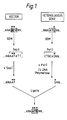
- a second aspect of the invention provides a novel cloning strategy ie. method, that allows the insertion of a heterologous gene into the expression cassette directly at the authentic translational start point of the promoter, with no deleterious changes being made to either the native 5'-UTR of the vector promoter or to the codons of the inserted gene; thus providing the promoter DNA of the first aspect.
- a third aspect of the invention provides recombinant DNA comprising a S. cerevisiae promoter, characterized in that the leader sequence is replaced with that of the replication protein 2 (REP2) gene (ORF C) of the yeast 2 ⁇ m plasmid (Hartley and Donelson, 1980).
- a preferred yeast promoter derived portion is that of the phosphoglycerate kinase (PGK) promoter and encompasses powerful upstream activating sequences (UAS) (Ogden et al., 1986), responsible for efficient transcription in S.cerevisiae .
- the sequences necessary for efficient transcription in E.coli reside in the REP2 derived portion of the hybrid promoter. Sequences necessary for efficient translation, both in S.cerevisiae and E.coli , also reside in the REP2-derived portion of the promoter.
- a fourth aspect of the invention provides the promoter hybrid of the invention incorporated into an expression "cassette", in which a copy of the lacZ' gene, containing the multiple cloning sites of pMTL23, is preceded by the promoter, and followed by tandemly arranged, yeast gene-derived, transcriptional terminators.
- promoter DNA incorporating a structural gene starting position eg. within an expression cassette is modified using SDM by creating a unique SspI restriction site at a structural gene start position.
- the position of this created site is such that the triplet sequence, ATG, corresponding to the translational start codon of the structural gene becomes ATA within the SspI recognition site AATATT.
- the heterologous gene to be inserted is similarly modified.
- the nucleotide triplet corresponding to the translational start codon eg., AUG, GUG, or UUG
- CAG the triplet immediately 5' is changed to CTG.
- PstI restriction site CTGCAG.
- the creation of the PstI, or equivalent site can be conveniently performed simultaneously to isolation of the gene by utilising a mutagenic primer in a polymerase chain reaction (PCR) catalysed gene amplification procedure (Higuchi et al., 1988).
- PCR polymerase chain reaction
- the modified heterologous gene can be then digested with PstI restriction endonuclease and the 3' overhanging ends removed eg. by the 3' to 5' exo-nucleolytic activity of T4 DNA polymerase.
- the heterologous gene can then be excised using any of the restriction enzymes whose sites are present within the polylinker of the vector.
- the net result of the actions of these DNA modifying enzymes is that the first base of the blunt-ended DNA fragment is the third nucleotide, "G", of its first codon. It is then ligated into the vector which has been digested previously with SspI and a restriction enzyme compatible with that used to excise the heterologous gene. Fusion of the vector promoter region (which ends in "AT”) and heterologous gene (which begins in a "G") results in the recreation of the translational start, ATG.
- the fourth aspect of the invention provides an expression system obtainable using the method of the invention such that overexpression of proteins is possible.
- a particular example of this is provided in the over expression of phenylalanine ammonia-lyase (PAL) gene from Rhodosporidium toruloides in both E. coli and S. cerevisiae .
- PAL phenylalanine ammonia-lyase
- This is made possible by incorporating an expression cassette provided by the method into a purpose built, unique series of S.cerevisiae / E. coli shuttle plasmids.
- every component of these shuttle plasmids is extensively modified to reduce the presence of superfluous DNA in the final vectors and to eliminate nucleotide sequence motifs corresponding to the restriction enzyme recognition sites of use in the operation of the expression cassette.
- the levels of recombinant PAL attained in S. cerevisiae are significantly higher than that obtained using the PGK promoter alone. Whereas the PGK promoter alone fails to elicit the expression of PAL in E.coli , the levels of recombinant PAL obtained using the hybrid promoters are far in excess of those previously obtained using expression vectors designed for high expression in E. coli .
- Restriction endonuclease sites are provided in regions of DNA as follows:
- Fusible ends were produced from the source DNA by ClaI and AccI for the fusion between base 546 and 547; by HpaI and BglII at for the fusion between base 1035 and 1036 and by HindIII and HincII for the fusion between base 1412 and 1413.
- Restriction endonuclease sites are provided in regions of DNA as follows:
- Fusible ends were produced from the source DNA using HpaI and BglII for the fusion between 1167 and 1168; and using HindIII::HincII for the fusion between 1543 and 1544.
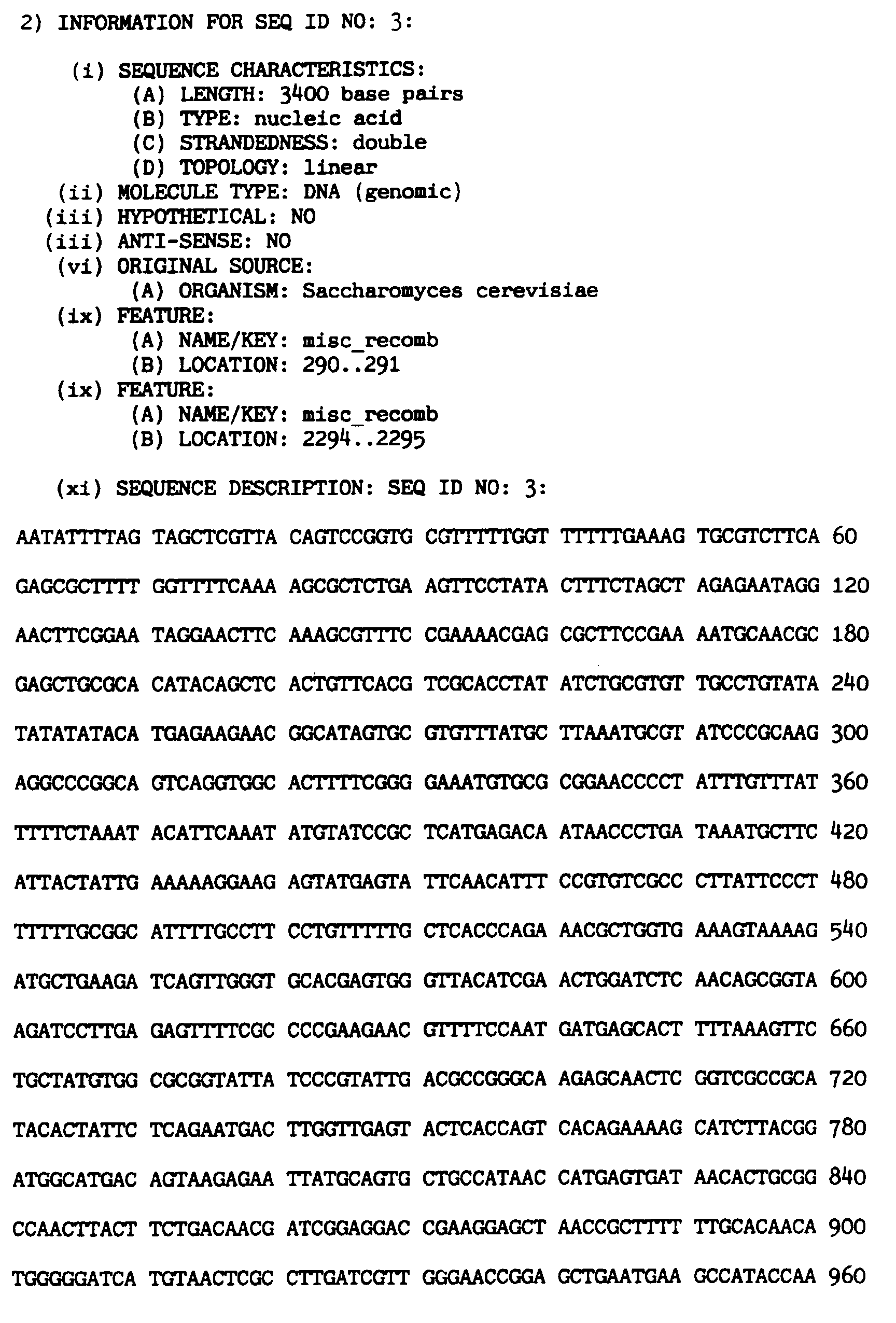
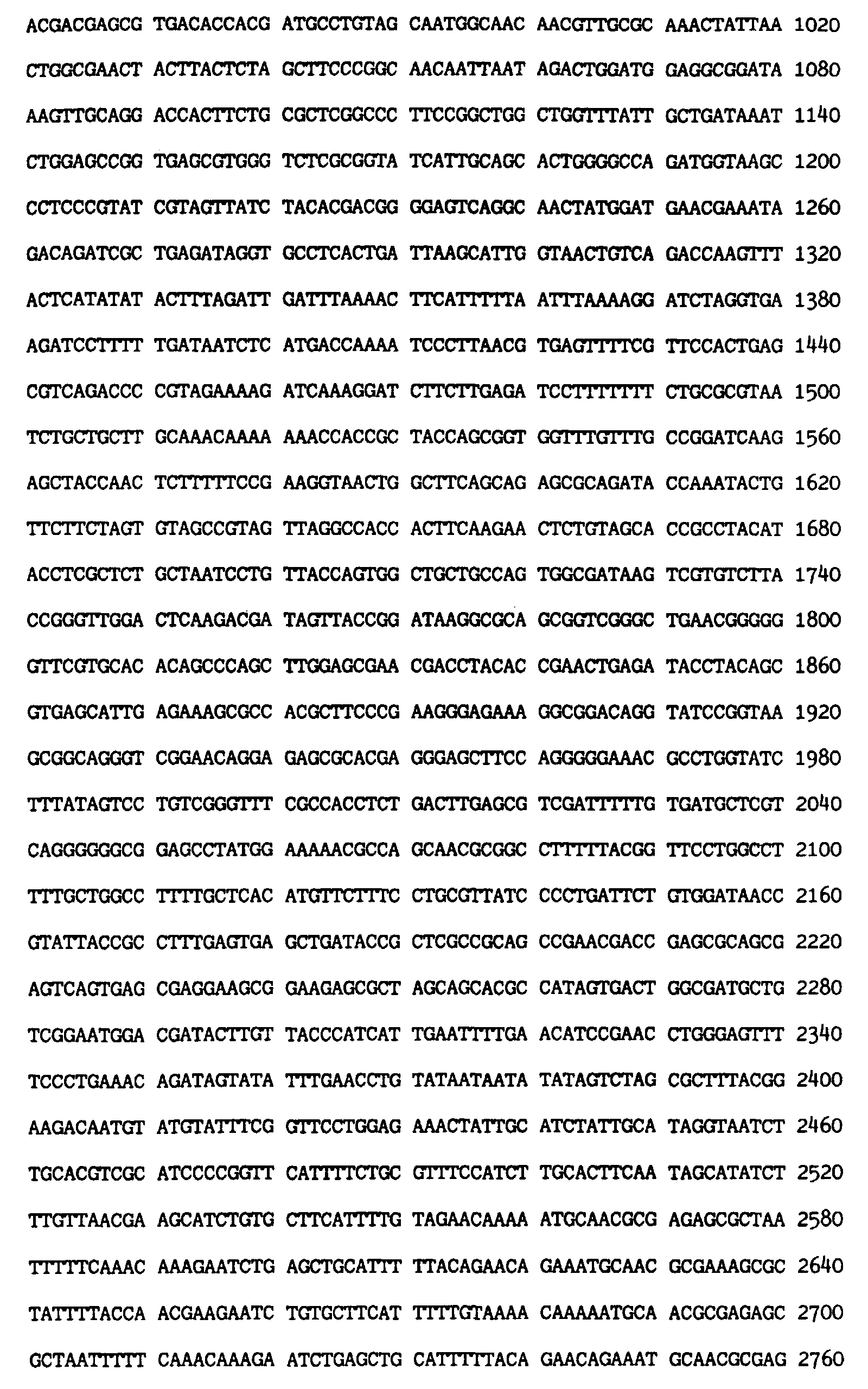
- Restriction endonuclease sites are provided in regions of DNA as follows: Base 1-10 SspI Base 1360-1370 DraI Base 2520-2530 HpaI
- Fusable ends were produced from the source DNA using RsaI::EcoRV for the fusion between bases 290 and 291 and using EcoRV::RsaI for the fusion between bases 2294 and 2294.
- Restriction endonuclease sites are provided in regions of DNA as follows: Base 1-10 SspI Base 2370-2380 HpaI
- Fusible ends were produced from the using RsaI::EcoRV for the fusion between bases 290 and 291, SspI::BamHI for the fusion between bases 426 and 427, BamHI::DraI for the fusion between bases 1213 and 1214 and EcoRV::RsaI for the fusion between bases 2143 and 2144.
- Restriction endonuclease sites are provided in regions of DNA as follows: Base 380-390 KpnI
- Example 1 Expression Cassettes.
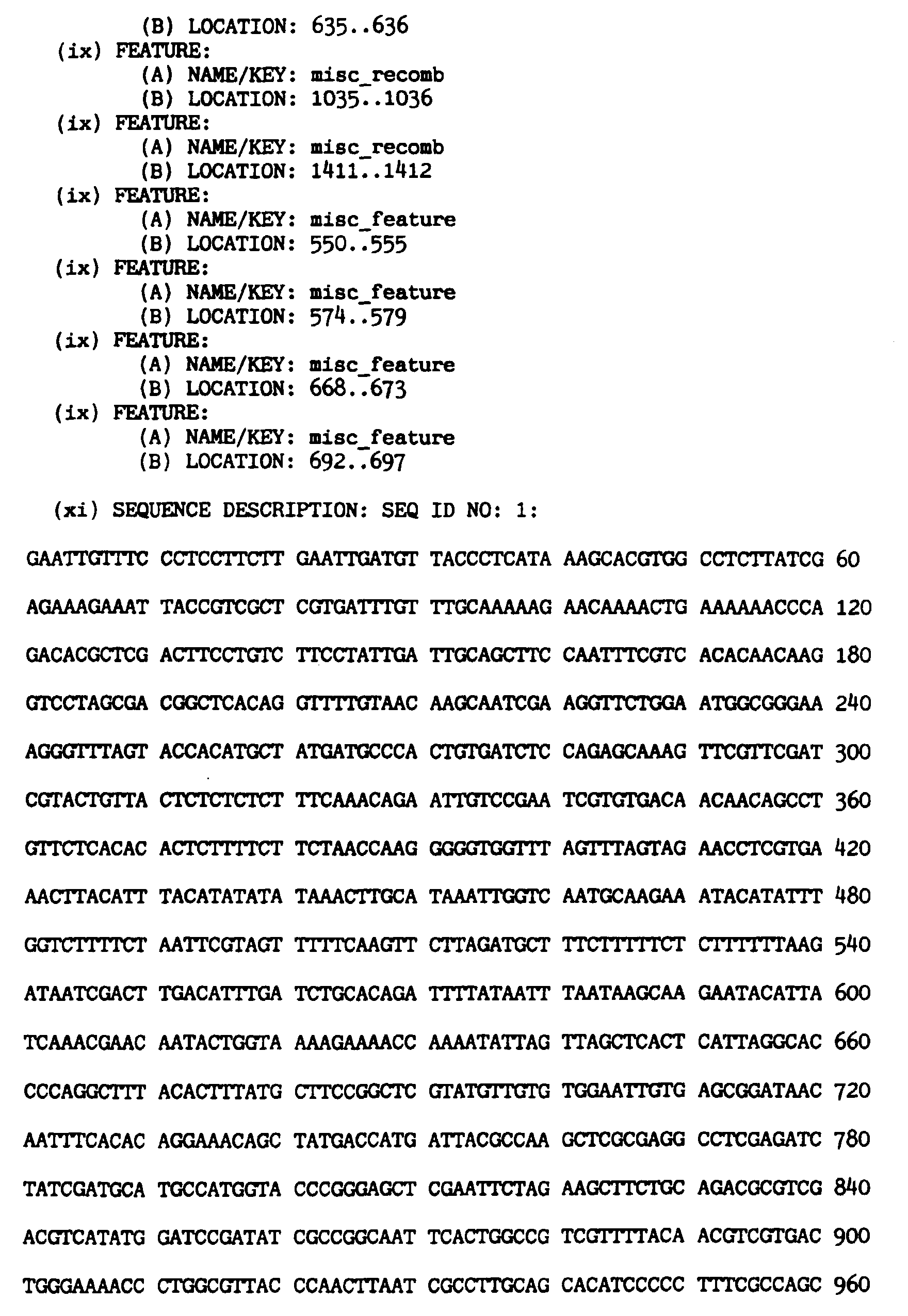
- An example nucleotide composition of the expression cassette containing the essential elements of this invention is designated SEQ ID 1, and was formed by fusing DNA regions from PGK (base 1-546 and base 1036-1411), REP2 (base 547-635), lacZ' (base 636-1035) and ADH1 (base 1412-1619); base numbers are those in SEQ ID No 1 not source DNA.
- SDM site-directed mutagenesis
- the changes were made either to eliminate a restriction enzyme recognition common to the polylinker region within lacZ', or to create a restriction recognition site to facilitate the construction of the cassette.
- SDM site-directed mutagenesis
- a second cassette was constructed, which contained no REP2 derived nucleotides, to act as a control.
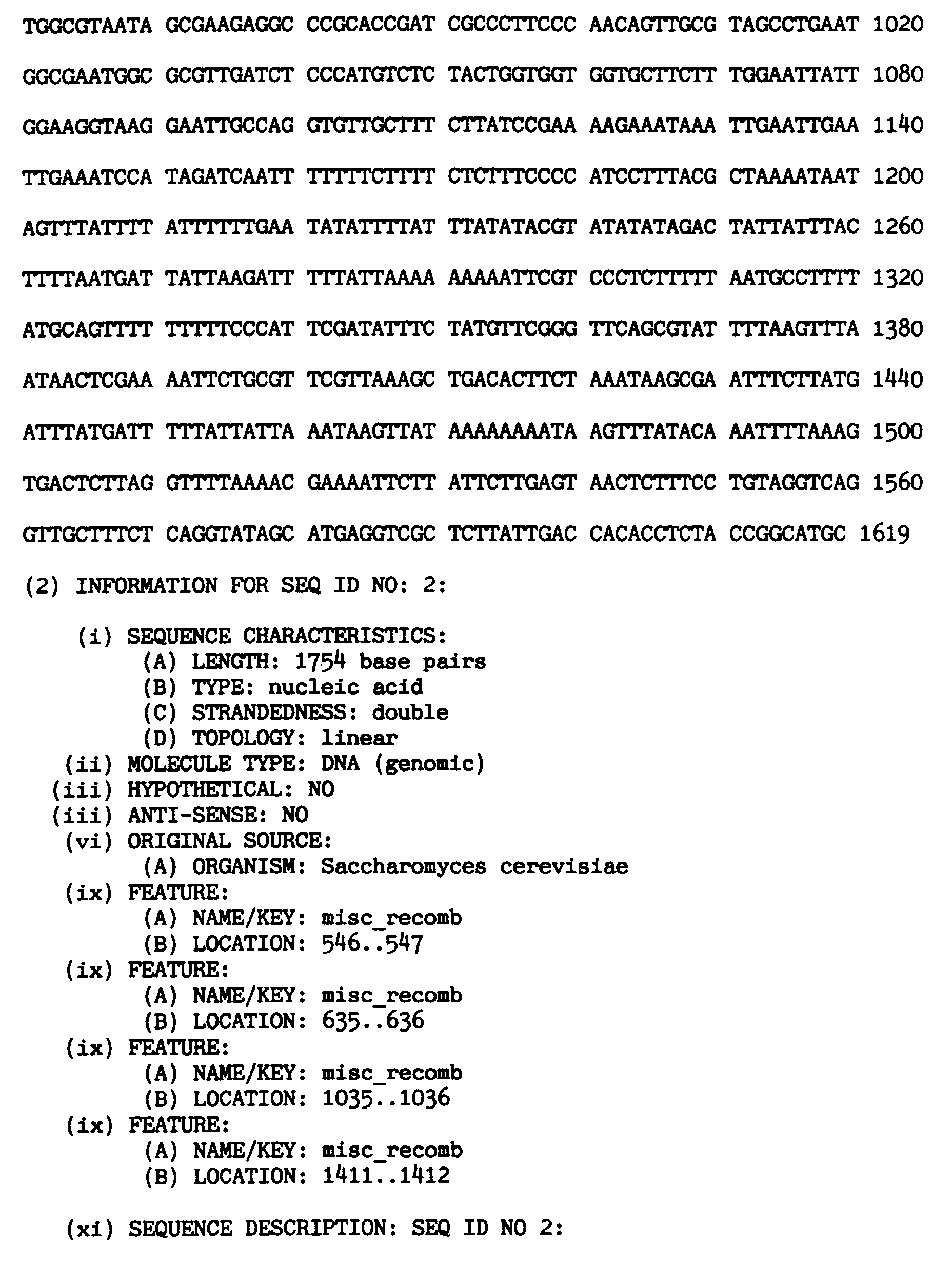
- the sequence composition of this control cassette is shown as SEQ ID No 2.
- the expression cassettes consist of the E. coli lacZ' gene, containing the pMTL23 polylinker cloning sites (Chambers et al., 1988), sandwiched by nucleotide signals for transcriptional initiation and termination.
- the transcriptional initiation signals of the hybrid promoter are provided by a unique combination of sequences derived from the promoters of PGK and REP2.
- the upstream activating sequence (UAS) element and TATA-box are from the PGK promoter and are fused to the 86 nucleotides residing immediately 5' to the 2 ⁇ m plasmid REP2 gene.
- the REP2 promoter is constitutive in nature (Som et al., 1988), and not generally regarded as a "strong" yeast promoter.
- the REP2 region is also responsible for providing the expression cassette with promoter activity in E. coli .
- the region used contains sequence motifs which exactly correspond to those sequences necessary for transcription in procaryotes such as E. coli .
- TTGACA and TATAAT which exactly correspond to the consensus -35 and -10 boxes of E. coli promoters (Harley and Reynolds, 1987), and the spacing between them, 18 bp, is also consistent with a functional E. coli promoter.
- the AUG start codon of REP2 is preceded by the nucleotide motif -AGAA-.
- the transcription initiation and termination signals flank unique restriction enzyme recognition sites into which heterologous genes may be inserted; with the exception of SspI, these sites form part of the lacZ' structural gene. Their location within the lacZ' gene allows the rapid detection of recombinant clones derived from the plasmid.
- the lacZ' gene encodes the alpha-peptide of ⁇ -galactosidase, such that when produced in E. coli hosts carrying the lacZ delta M15 mutation ⁇ -galactosidase leads to return of ability to metabolise the chromogenic substrate X-Gal and the production of blue colonies on agar medium supplemented with X-Gal.
- heterologous DNA into the cloning sites of the expression cassette results in the inactivation of lacZ' and thus cells transformed with recombinant plasmid therefore produce colourless colonies on agar medium supplemented with X-Gal (Vieria and Messing, 1982).
- the cassette is designed such that heterologous genes to be expressed are cloned using the SspI site and one of the recognition sites from within the polylinker.
- the SspI site (see list of sites in SEQ ID No 1 and 2 above) is located some 106 nucleotides 5' to the translational start of lacZ' and displacement of the DNA normally found between SspI and the polylinker within lacZ' results in recombinant plasmids which no longer confer a blue colouration on cells in the presence of X-Gal.
- the ATA of the hexanucleotide sequence AATATT equates to the ATG start of the REP2 structural gene.
- the same triplet corresponds to the ATG start of the PGK structural gene.
- a DNA fragment carrying the gene to be expressed is then modified such that the first nucleotide of its blunt-ended, 5'-end is the "G" of the translational start codon of the structural gene.
- the 3' -end of this fragment may have any cohesive end compatible with those that can be generated by cleavage at the hexanucleotide recognition sites within lacZ'.
- the method of choice used to allow the isolation of the heterologous gene as a blunt-ended fragment lacking the first two nucleotides of the translational start codon involves creating a recognition site for the restriction enzyme PstI at the start of the gene such that the terminal "G" of the created hexanucleotide sequence CTGCAG corresponds to the "G" of the genes translational start.
- the site created in the gene need not be PstI, but any site conforming to the consensus CNNNNG (where "N” is equivalent to, any nucleotide) which is cleaved by a restriction enzyme immediately before the "G" nucleotide to give a DNA terminus with a 3' overhang, ie., 3'-NNNN.
- the recognition site used in the expression cassette need not be solely restricted to that of SspI, but can be any restriction site conforming to the consensus NATTAN (where "N” is equivalent to any nucleotide) which can be cleaved by a restriction enzyme between the two "T" nucleotides to give a blunt-end.
- the heterologous gene contains an internal PstI site.
- Two possible solutions are, firstly that the gene be inserted in a "two-step" cloning strategy utilising another internal site 5' to the problem PstI site.
- an oligonucleotide can be desired such that its 5' end corresponds to the G residue of the ATG translational start point. If this oligonucleotide is used in a PCR catalysed reaction to isolate the gene of interest, then cleavage with PstI is unnecessary.
- the original "PstI” strategy is preferable to this latter strategy, since PCR products have frequently been shown to have slightly heterogeneous termini (Hemsley et al., 1989).
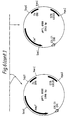
- Example 2 Preparation of Expression Vectors: A new series of vector backbones were constructed (see below) essentially being replication regions from the E. coli plasmid ColE1 and the yeast 2 ⁇ m plasmid. For selection in E. coli they carried either the bacterial cat or bla gene, conferring resistance to chloramphenicol (Cm) and ampicillin (Amp), respectively.
- the markers allowing selection in S. cerevisiae were either the LEU2 or URA3 gene, which convert appropriately deficient host strains to prototrophy. In the latter case, two alleles were constructed. Plasmids are shown in Fig 4.
- every vector contains a unique SspI site between the bacterial selectable marker and the 2 ⁇ m replication origin. It was into this site that the expression cassette and control cassette were inserted. The former was isolated as a 1.6 kb XmnI/SspI fragment, and the latter as a 1.75 kb EcoRI/ SphI fragment. Both DNA fragments were blunt-ended by treatment with T4 DNA polymerase prior to their insertion into the SspI site. The orientation of insertion was such that lacZ' was counter transcribed relative to bla or cat.
- CRM chloramphenicol resistance marker. Gene markers transcribe away from STB but can transcribe toward it.
- the vectors contain a minimum of 19 unique cloning sites in addition to the unique SspI sites. Non-unique sites are given in Table 2.
- the capabilities of the expression system were initially assessed using the neo gene of the transposon Tn903. It encodes aminoglycoside-3'-phosphotransferase type I (APH1), which confers resistance to the antibiotic kanamycin and its analogue G418 (Haas and Dowding, 1975).
- APH1 aminoglycoside-3'-phosphotransferase type I
- the gene was available as a "Genblock (1.5 kb EcoRI fragment) from Pharmacia. This fragment was inserted into the EcoRI site of plasmid pUC8 to give plasmid pGENBLOCK. PCR was used to amplify a 1.11 kb fragment carrying the entire structural gene.
- the design of the oligonucleotide employed as the primer to the 5' end of the gene was such that a PstI recognition site was created. Specifically, the CAG of the created hexanucleotide sequence CTGCAG replaced the neo translational start codon.
- the amplified fragment was digested with PstI and the overhanging 3' ends were removed by utilising the 3' to 5' exonuclease activity of T4 DNA polymerase.
- the fragment was then ligated with the pMTL 8111 and pMTL8113 expression vectors which had previously been digested with SspI and StuI and dephosphorylated.
- Colourless transformants were screened for the presence of the neo insert and the correct orientation by restriction analysis, and the plasmids obtained designated pKAN8111 and pKAN8113, respectively.
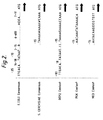
- Primer Extension Analysis of S. cerevisiae mRNA In order to ascertain the site(s) of transcriptional initiation within the two fusion promoters, mRNA was isolated from exponentially growing YEPD cultures of S.cerevisiae AS33 containing pKAN8111 and pKAN8113. A 25 bp oligonucleotide primer was synthesised, complementary to the coding strand at +53 to +77 within the neo coding region, and purified to homogeneity. It was not necessary to consider wild-type chromosomal transcription, since the neo gene does not occur chromosomally. Primer extension was performed and the products compared with end-labelled DNA sequence reactions primed with the same oligo -nucleotide primer.
- tsp mRNA transcriptional start point
- tsp mRNA transcriptional start point of the PGK promoter of pKAN8111 maps to nucleotide at -42. This is one nucleotide further from the AUG than that reported by Van den Heuvel et al. (1989) and 2 nucleotides further than that determined by Mellor et al. (1985).
- Over 90% of transcription from the PGK:REP2 promoter of pKAN8113 appeared to initiate at nt -87 at a G residue.
- REP2 promoter tsp site plays no role in transcription, rather factors within the PGK portion of the promoter direct the position and pattern of RNA initiation.
- a PstI site was introduced over the authentic translational start point of a PAL cDNA clone from Rhodosporidium toruloides (Anson at al., 1986; Anson at al., 1987; Rasmussen and Orum, 1991) using PCR-mediated SDM (Higuchi et al..1988); an XbaI site lying 115 bp downstream from the PAL UAG termination codon.
- the PAL gene was excised as a PstI (blunt)/XbaI fragment and cloned into SspI/XbaI cut pMTL 8131 and pMTL 8133 to generate pPAL 8131 and pPAL 8133 respectively.
- the expression of PAL in S.cerevisiae strain AS33 is shown in Table 3.
- the lower expression levels obtained when cells are grown in rich selective media probably reflect a drop in plasmid copy number (Rose and Broach, 1990), although a decline in promoter activity and/or increase in mRNA turnover cannot be discounted.
- the crude cell-free extracts were analysed by PAGE (Fig 5) and a band corresponding to a protein of approximate MW 75kD, which is present only in the strain carrying pPAL 8133, was detected. This corresponds to the molecular weight of the PAL monomer.
- the gel was scanned with a laser densitometer (Joyce-Loebell) which calculated that this band constitutes approximately 9% of total soluble cell protein. This correlates well with the figure obtained by comparing the specific activity of purified PAL at 30°C with the assay data. This would indicate that the vast majority of the recombinant PAL is produced in an active form.
- PAL expression levels in E.coli TG1 confirmed the finding that the PGK:REP2 promoter is highly active in E.coli , whilst the native PGK promoter is inactive. Deletion of part of the putative "-35" region resulted in partial loss of activity of this promoter in E.coli (data not shown), indicating that it is indeed these signals which are activating transcription in E.coli . Quantitative scanning of polyacrylamide gels indicated PAL expression levels to be of the order of 10% total soluble cell protein.
- MATERIALS AND METHODS A.1 Strains, Plasmids, Transformation and Media.
- the S.cerevisiae strain AS33 (a, his3-11, his3-15, leu2-3, leu2-112, ura3-251, ura3-373, trp1) was used throughout.
- Yeast were transformed by electroporation (Becker and Guarente, 1991) and transformants selected by their ability to complement the appropriate auxotrophic allele.
- E.coli strain TG1 (Carter et al., 1985) was used as host for all DNA manipulations and bacterial expression studies.
- Plasmid pVT100-U (Vernet et al., 1987) was a kind gift from Dr. T.
- Vernet and plasmid pCM4 (Close and Rodriguez, 1982) obtained from Pharmacia. All DNA manipulations were carried out essentially as described in Sambrook et al. (1989). Polymerase chain reaction (PCR) was carried out on a programmable thermal cycler using Taq DNA polymerase (Amplitaq, Perkin-Elmer Cetus). DNA sequencing was based on the modified chain termination procedure described by Tabor and Richardson (1987). Oligos were synthesised using an Applied Biosystems 380A DNA synthesiser.
- SDM Site-directed mutagenesis
- Latter mutagenesis experiments were carried out using a novel coupled-primer method for SDM. Essentially, a PCR product was generated using kinased oligos, one of which contained the mutagenic mis-match, whilst the other was located at a point on the target plasmid such that a restriction site, which was unique in the plasmid, lay between the two primers. This PCR product was mixed with an equimolar amount of target plasmid DNA, which had been passaged through an E. coli dut ung strain, and linearised at the unique restriction site.
- the DNA mixture was denatured at 65°C for 5 min in denaturing buffer (0.2 M NaOH, 0.2 mM EDTA), before neutralisation (2 M NH 4 Ac, pH 4.5) and subsequent ethanol precipitation.
- the DNA was redissolved in annealing buffer (20 mM Tris-HCl, pH 7.4; 2 mM MgCl 2 , 50 mM NaCl) and annealed for 15 min at 37°C.
- Extension reactions were at 37°C for 1 hr in a buffer containing 1x TM buffer, 5 mM DTT, 500 ⁇ M dNTPs, 250 ⁇ M rATP, 2 units T4 DNA ligase and 10 units Sequenase. Aliquots of this reaction were then transformed into E.coli TG1.
- Typical mutagenesis frequencies were in the region of 30%. This technique obviates the need for sub-cloning into specialised vectors or the use of repair-deficient strains.
- Assay for PAL Activity PAL levels in cell-free extracts were assayed by the method of Abell and Shen (1987). The production of cinnamic acid can be monitored spectrophotometrically at 290 nm.
- 0.67 ml distilled water, 0.17 ml 6x assay buffer (500 mM Tris-HCl pH 8.5) and 0.17 ml L-phenylalanine (50 mM in 100 mM Tris-HCl pH 8.5) were combined in a 1 ml cuvette (Hughes and Hughes Ltd., UV range).
- the cuvette and its contents were pre-warmed to 30°C and placed in a Perkin-Elmer Lambda 2 Spectrophotometer. 25 ⁇ l of crude cell extract was added and the absorbance at 290 nm was monitored for 30 seconds at 30°C.
- One unit of enzyme was defined as the mount catalysing formation of 1 ⁇ mol cinnamic acid per minute under the assay conditions used.
- the molar absorption coefficient for cinnimate at 290 nm, 30°C, pH 8.5 (E 290 ) was taken as 9 x 10 3 litre/mol/cm (Abell and Shen, 1987).
- the level of PAL activity can then be calculated as follows:
- Protein concentrations were determined by the method of Bradford (1976).
- a 3.1 kb HindIII fragment carrying the PGK gene of S. cerevisiae strain LL20 was inserted into M13mp8 and SDM employed to create restriction recognition sites for EcoRI and SspI.
- SspI recognition site its position was such that the ATG triplet corresponding to the translational start codon of the PGK structural gene became the ATA of the SspI site, AATATT.
- a 766 bp fragment encompassing the transcriptional signals of PGK was then isolated from the resultant mutagenic M13 clone, M13PGK-J, following cleavage with EcoRI and SspI, and ligated to the 999 bp SspI/ SphI fragment composed of lacZ'::PGK::ADH1, such that the SspI recognition site was retained.
- a 1.8 kb HindIII fragment (nucleotides 4621 to 92 of the sequence of Hartley and Donelson, 1980) carrying the promoter of the 2 ⁇ m plasmid REP2 gene was subcloned into the equivalent site of M13mp8. Recognition sites for the restriction enzymes AccI and SspI were then created in the sequence by SDM. This was achieved by changing the hexanucleotide sequences GTTGTT and AATGGA (respective nucleotide positions 5288 to 5283 and 5199 to 5194; Hartley and Donelson, 1980) to GTCGAC and AATATT, respectively.
- the recombinant plasmid obtained was designated M13REP2-J.
- An additional recognition site for the restriction enzyme ClaI was also created within the PGK derived region of M13PGK-J. The changes made are detailed above in the section on features of SEQ ID No 2, at positions 725 and 727.
- the transcriptional signals of PGK were then isolated as a 540 bp XmnI/ ClaI fragment, and ligated to a 90 bp AccI/ SspI fragment isolated from M13REP2-J, such that fusion occurred between the compatible ClaI and AccI derived DNA sticky ends.
- the resultant 630 bp fragment was then ligated to the 999 kb SspI/ SphI fragment composed of lacZ'::PGK::ADH1, such that the SspI recognition site was retained.
- nucleotide sequence analysis of the various components of the constructed cassettes indicated the presence of nucleotide differences to previously published sequences, presumably a consequence of strain variation. Specifically, several base differences were observed between the transcriptional initiation and termination regions of the PGK gene used here and that determined by Hitzeman et al. (1982). By reference to SEQ ID No 2, the Hitzeman et al. (1982) sequence has 5 "A” nucleotides rather than the 4 beginning at position 760, lacks the "G” at position 729, has an extra “A” between nucleotides 1399 and 1400, and an extra “T” nucleotides between position 1493 and 1494. Similarly, the "A" nucleotide at position 1663 was found to be a "G” in the ADH1 gene determined by Bennetzen and Hall (1985).
- Example 3 Derivation of E. coli/ S. cerevisiae Shuttle Vectors: Provision of E. coli maintenance and replication functions: the first stage in the construction of the new E.coli / S.cerevisiae vectors was to combine the replicative functions of an E. coli plasmid with that of a S. cerevisiae plasmid. Two basic vectors were made, pMTL8000 and pMTL8100.
- both were constructed by isolating a 1.4 kb RsaI, which encompassed the origin of replication and STB locus of the 2 ⁇ m plasmid, from plasmid pVT100-U (Vernet et al., 1987), and inserting it into the unique EcoRV sites of either pMTLJ or pMTLCJ to give pMTL8000 or pMTL8100, respectively.
- Plasmid pMTLJ was derived from pMTL4 (Chambers et al., 1988), by eliminating the recognition site for the restriction enzyme SspI using the plasmid SDM method.
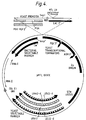
- the steps involved in the derivation of pMTLCJ are shown in Figure 7.
- a 0.8 kb BamHI fragment, encoding cat was excised from plasmid pCM4 (Close and Rodriguez, 1982) and inserted into the BamHI site of M13mp8.
- the ssDNA prepared from the resultant recombinant was then used as a template in successive SDM experiments to eliminate restriction enzyme recognition sites for EcoRI, NcoI and SspI from the cat structural gene.
- DNA of the mutated M13 recombinant was then prepared, the modified cat gene excised as a 0.8 kb BamHI fragment, blunt-ended by treatment with DNA polymerase I Klenow fragment and ligated to a 1.1 kb SspI/DraI fragment encompassing the replication region of plasmid pMTL4 to give pMTLCJ.
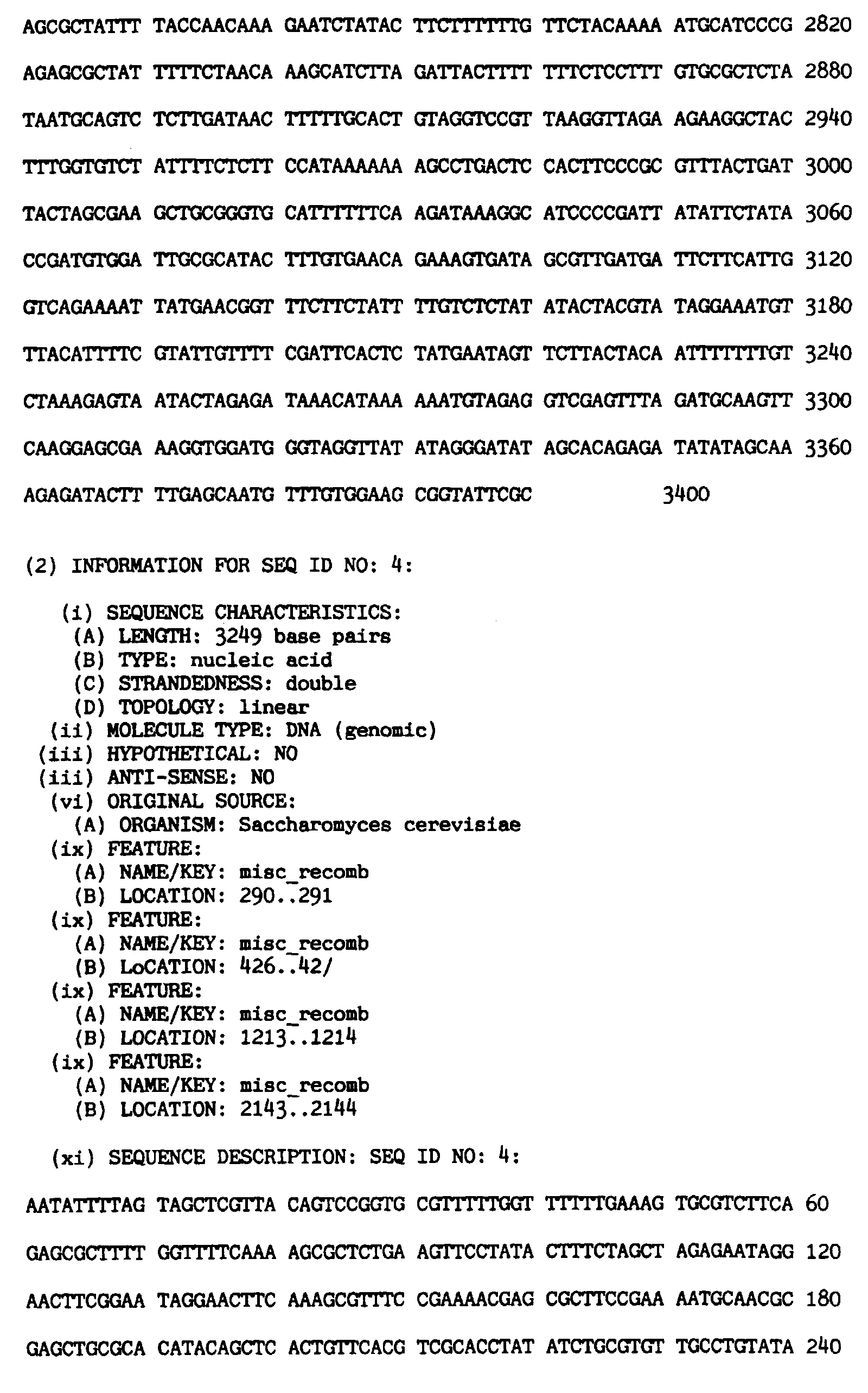
- the nucleotide sequences of pMTL8000 and pMTL8100 are shown as SEQ ID No 3 and 4.
- the 2 ⁇ m replication region resides between nucleotides 3154 to 3376 of pMTL8000 and 3003 to 3225 of pMTL8100.
- the STB locus is between nucleotides 2526 to 2817 of pMTL8000 and between 2375 and 2666 of pMTL8100.
- the bla structural gene begins at nucleotide 444 of pMTL8000 and ends at position 1304.
- the cat structural gene of pMTL8100 begins at nucleotide 461 and ends at position 1117.
- the ColE1 origin of replication lies at nucleotides 2063-2068 and 1912-1917 in pMTL8000 and pMTL8100, respectively.
- ura3-d was also created.
- SDM was employed to create a HpaI site at nt -47 (relative to the AUG start codon) in the URA3-J allele. This equates to changing the "C" nucleotide at position 189 to a "G”. Subsequent excision of the gene by cleaving with HpaI at this point removes all sequences necessary for activation of the URA3 gene (Roy et al., 1990), whilst retaining the major transcriptional start points at nt -38 and -33 (Rose and Botstein, 1983).
- the second selectable marker used was the LEU2 gene. This was sub-cloned as a 1.46 kb SspI fragment from pMA300 (Montiel et al., 1984) into the SmaI site of pUC8. This fragment lacks the sequences mapped as the UAS of LEU2 at -201 to -187 (Tu and Casadaban, 1990), and disrupts the sequence upstream from LEU2 which codes for a putative regulatory peptide (Andreadis et al., 1982). However, it retains the TATA-like AT-rich sequence between bases -118 to -111 that has been proposed as a site for the yeast TATA-binding factor TFIID (Tu and Casadaban, 1990).
- the recombinant, pUC8-derived plasmid carrying LEU2 was used as a template in SDM experiments to remove the recognition sites for the restriction enzymes ClaI and EcoRI.
- SEQ ID No 5 the URA3 structural gene initiates at nucleotide 234 and terminates at nucleotide 1034.
- the amino acid sequence of the encoded protein is shown in the single letter code below the first nucleotide of the corresponding codon.
- each allele was excised from the appropriate plasmid and converted, where necessary, to a blunt-ended DNA fragment.
- plasmid pURA3-J was cleaved with AccI (cleaving at a site within the pUC8 polylinker region) and SmaI (cleaving at a SmaI site residing some 79 nucleotides 3' to the translational stop codon of URA3) and the released c.
- AccI cleaving at a site within the pUC8 polylinker region
- SmaI cleaving at a SmaI site residing some 79 nucleotides 3' to the translational stop codon of URA3
- a c.0.92 kb blunt-ended fragment carrying the ura3-dJ allele was obtained by cleaving plasmid pURA3-dJ with HpaI and SmaI.
- nucleotide sequence of the fragment obtained exactly corresponds to the sequence shown in SEQ ID No 5 between nucleotide 192 and 1115, inclusive.
- Plasmid pLEU2-dJ was cleaved with EcoRI (at the recognition site within the pUC8 polylinker region) and AccI (at a recognition site located 100 nucleotides 3' to the translational stop of URA3.
- EcoRI at the recognition site within the pUC8 polylinker region
- AccI at a recognition site located 100 nucleotides 3' to the translational stop of URA3.
- the exact sequence of the blunt-ended fragment generated is shown in SEQ ID No 6.
- Plasmid segregational stability was estimated using methodology described by Spalding and Tuite (1989). This involved following the loss of a plasmid-encoded phenotypic marker over a number of generations under non-selective conditions. The results are presented in Table 1. All plasmids exhibited a greater degree of segregational stability than that of the well characterised S.cerevisiae cloning vector YEp24 (Botstein et al., 1979).
- PAL presence of PAL gene. Strain and growth phase pMTL 8130 pPAL 8133 pPAL 8131 S.cerevis'AS33 Minimal media Stationary 0 35.5 ⁇ 2 18.1 ⁇ 2 S.cerevis'AS33 YEPD Early exponent' 0 37.8 ⁇ 3 ND S.cerevis'AS33 YEPD Stationary 0 16.5 ⁇ 1 8.5 ⁇ 0.7 E.coliTG1 2xYT Stationary 0 35.2 ⁇ 2 0
Landscapes
- Health & Medical Sciences (AREA)
- Life Sciences & Earth Sciences (AREA)
- Genetics & Genomics (AREA)
- Engineering & Computer Science (AREA)
- Chemical & Material Sciences (AREA)
- Bioinformatics & Cheminformatics (AREA)
- Organic Chemistry (AREA)
- Zoology (AREA)
- Wood Science & Technology (AREA)
- Biotechnology (AREA)
- General Engineering & Computer Science (AREA)
- Biomedical Technology (AREA)
- Molecular Biology (AREA)
- General Health & Medical Sciences (AREA)
- Microbiology (AREA)
- Biochemistry (AREA)
- Biophysics (AREA)
- Plant Pathology (AREA)
- Physics & Mathematics (AREA)
- Mycology (AREA)
- Medicinal Chemistry (AREA)
- Preparation Of Compounds By Using Micro-Organisms (AREA)
- Micro-Organisms Or Cultivation Processes Thereof (AREA)
- Medicines Containing Material From Animals Or Micro-Organisms (AREA)
- Fats And Perfumes (AREA)
- Lighting Device Outwards From Vehicle And Optical Signal (AREA)
- Measuring Pulse, Heart Rate, Blood Pressure Or Blood Flow (AREA)
- Liquid Developers In Electrophotography (AREA)
- Enzymes And Modification Thereof (AREA)
Abstract
Description
- SEQ ID No 1: shows the complete nucleotide sequence of a novel expression cassette (SEQ ID No 1) of the invention including a sequence comprising the PGK::REP2 promoter (bases 1-635; REP2 fragment consists of bases 547-635 of SEQ ID No 1).
- SEQ ID No 2: is the complete nucleotide sequence of a comparative control cassette, containing the PGK promoter.
- SEQ ID No 3: is the nucleotide sequence of plasmid pMTL8000.
- SEQ ID No 4: is the nucleotide sequence of plasmid pMTL8100.
- SEQ ID No 5: is the nucleotide sequence of the URA3-J and ura3-dJ (189 =G) alleles used in the vector construction.
- SEQ ID No 6: is the nucleotide sequence of the leu2-dJ allele used in vector construction.
| Base 548-549 | was TT | now AC | Creates ClaI::AccI |
| Base 557 | was G | now T | |
| Base 580 | was G | now T | |
| Base 636-638 | was GTG | now ATT | |
| Base 1033-1035 | was TAA | now GTT | Creates HpaI::BglII |
| Base 1149 | was G | now C | Removes ClaI |
| Base 1223 | was T | now A | Removes SspI |
| Base 1484 | was G | now T | Removes AccI |
| | was C | now A | Creates EcoRI |
| Base 725-727 | was GAT | now AAG | Removes ClaI |
| Base 768-770 | was GTC | now ATT | Creates SspI |
| Base 1165-1167 | was TAA | now GTT | Creates HpaI |
| Base 1281 | was G | now C | Removes ClaI |
| Base 1356 | was T | now A | Removes SspI |
| Base 1616 | was G | now T | Removes AccI |
| Base 425 | was T | now C | Removes SspI |
| Base 1-10 | SspI |
| Base 1360-1370 | DraI |
| Base 2520-2530 | HpaI |
| Base 676 | was A | now G | Removes EcoRI |
| Base 976 | was C | now A | Removes NcoI |
| Base 985 | was A | now G | Removes SspI |
| Base 1-10 | SspI |
| Base 2370-2380 | HpaI |
| Base 150 | was C | now G | Removes NdeI |
| Base 289 | was G | now C | Removes HpaI |
| Base 440 | was C | now G | Removes NcoI |
| Base 563 | was C | now T | Removes StuI |
| Base 1063 | was G | now C | Removes AccI |
| Base 294 | was T | now C | Removes ClaI |
| Base 780 | was C | now T | Removes EcoRI |
| Base 380-390 | KpnI |
The S.cerevisiae strain AS33 (a, his3-11, his3-15, leu2-3, leu2-112, ura3-251, ura3-373, trp1) was used throughout. Yeast were transformed by electroporation (Becker and Guarente, 1991) and transformants selected by their ability to complement the appropriate auxotrophic allele. E.coli strain TG1 (Carter et al., 1985) was used as host for all DNA manipulations and bacterial expression studies. Plasmid pVT100-U (Vernet et al., 1987) was a kind gift from Dr. T. Vernet and plasmid pCM4 (Close and Rodriguez, 1982) obtained from Pharmacia. All DNA manipulations were carried out essentially as described in Sambrook et al. (1989). Polymerase chain reaction (PCR) was carried out on a programmable thermal cycler using Taq DNA polymerase (Amplitaq, Perkin-Elmer Cetus). DNA sequencing was based on the modified chain termination procedure described by Tabor and Richardson (1987). Oligos were synthesised using an Applied Biosystems 380A DNA synthesiser.

| Segregational stability and copy number analysis of the pMTL 81X0 series of vectors. | |||
| Plasmid | Cells contg. Plasmid (%) | Plasmid loss/ cell div(10-2) | Average copy number/cell |
| pMTL 8110 | 84.5 | 0.842 | 111 |
| pMTL 8120 | 77.5 | 1.174 | 50 |
| | 82.0 | 0.992 | 151 |
| pMTL 8140 | 85.5 | 0.783 | 106 |
| YEp24(URA3) | 76.0 | 1.372 | 48 |
| pMA3a(leu2-d) | ND | ND | 106 |
| Non-unique restriction sites present within the polylinkers of the pMTL 8XXX series of vectors. | |||
| Marker | PGK | No Promoter | PGK:REP2 |
| leu2-d | EcoRV.Kpn1.Sst1 | EcoRV.Kpn1 | EcoRV.Kpn1.Sst1 |
| URA3 | EcoRV | EcoRV | EcoRV |
| ura3-d | EcoRV.Sst1 | EcoRV | EcoRV.Sst1 |
| leu2-d | EcoRV.Kpn1.Sst1 | EcoRV.Kpn1 | EcoRV.Kpn1.Sst1 |
| Expression of PAL in S.cerevisiae AS33 and E.coli TG1. Figures refer to units x10-2/mg soluble protein. At least three separate assays were performed for each sample and the maximum error range is indicated. ND = not determined. PAL = presence of PAL gene. | ||||
| Strain and | pMTL | 8130 | | pPAL 8131 |
| S.cerevis'AS33 Minimal media Stationary | 0 | 35.5 ± 2 | 18.1 ± 2 | |
| S.cerevis'AS33 YEPD Early exponent' | 0 | 37.8 ± 3 | ND | |
| S.cerevis'AS33 YEPD Stationary | 0 | 16.5 ± 1 | 8.5 ± 0.7 | |
| E.coliTG1 2xYT Stationary | 0 | 35.2 ± 2 | 0 |




Claims (17)
- Recombinant DNA comprising a promoter which is a hybrid of sequences suitable for expression in bacterial and yeast cells, wherein the DNA is obtained by replacing the leader sequence of a yeast promoter by the leader sequence of the replication protein 2 (REP2) gene (ORF C) of the yeast 2µm plasmid, wherein a leader sequence is defined as a sequence starting at and extending 5' from the translational start codon and up to and including a transcriptional start point; the resultant recombinant DNA construct comprising yeast upstream activating sequence (UAS), a yeast TATA-box and a REP2 leader sequence, and being suitable for directing expression of a gene in bacterial and yeast cells.
- Recombinant DNA according to Claim 1 wherein the yeast promoter is the phosphoglycerate kinase (PGK) promoter.
- Recombinant DNA according to Claim 2 wherein the PGK promoter consists of bases 1-546 in SEQ ID NO: 1.
- Recombinant DNA according to Claim 1 comprising bases 1-635 of SEQ ID NO: 1.
- Recombinant DNA according to any of Claims 1-4 wherein the yeast promoter comprises a unique SspI restriction site of sequence AATATT which upon cleavage to give AAT provides the first two bases of a translation start codon.
- An expression cassette comprising recombinant DNA according to any of Claims 1-5, wherein the expression cassette further comprises a copy of the lac Z' gene, containing the multiple cloning sites of pMTL 23, preceded by the promoter DNA of any of Claims 1-5, and followed by tandemly arranged, yeast gene-derived, transcriptional terminators.
- An expression cassette according to Claim 6 comprising SEQ ID NO: 1.
- An E.coli or S. cerevisiae shuttle plasmid comprising an expression cassette according to Claim 6 or 7.
- Recombinant DNA, an expression cassette, or a plasmid according to any of Claims 1-8 further comprising a gene coding for phenylalanine ammonia lyase.
- A method for producing recombinant DNA according to Claim 5 wherein the unique SspI restriction site at the translation start codon is provided by altering the ATG codon corresponding to the authentic structural gene translation start codon to the ATA triplet within the SspI recognition site AATATT.
- A method for inserting a heterologous gene at the translation start codon of recombinant DNA according to Claim 5 comprising the steps of:(a) altering the heterologous gene such that its 5' end corresponds to the G nucleotide of its start codon ATG,(b) digesting the recombinant DNA with SspI such that its 3' end corresponds to the AT nucleotides of the translation start codon, and(c) ligating the 3' end of the recombinant DNA to the 5' end of the heterologous gene such as to regenerate a translation start codon ATG.
- A method for inserting a heterologous gene as claimed in Claim 11 wherein the G nucleotide at the 5' end of the heterologous gene is provided by altering the ATG codon triplet corresponding to the heterologous gene translation start codon to CAG and altering the triplet immediately 5' to the codon to CTG in order to provide a PstI restriction site CTGCAG and digesting the altered heterologous gene with PstI restriction endonuclease.
- A method for inserting a heterologous gene according to Claim 12 wherein the PstI restriction site is provided simultaneously to isolating the heterologous gene by use of a mutagenic primer comprising a PstI restriction site in a polymerase chain reaction catalysed gene amplification procedure.
- A method for inserting a heterologous gene according to Claim 11 wherein the G nucleotide at the 5' end of the heterologous gene is provided simultaneously to isolating the heterologous gene by use of a mutagenic primer comprising a 5' G nucleotide in a polymerase chain reaction catalysed gene amplification procedure.
- A method for inserting a heterologous gene according to any of Claims 11-14 wherein the 3' end of the heterologous gene is prepared using one or more of the restriction enzymes whose sites are present within the pMTL 23 polylinker and the heterologous DNA is then ligated into an expression cassette which has been digested previously with SspI and a restriction enzyme compatible with that used to prepare the heterologous gene.
- A method for producing protein in a yeast or bacterial host organism comprising inserting, into recombinant DNA, a heterologous gene according to the method of any of Claims 11-15, wherein the heterologous gene codes for the protein, and inserting into the host organism an expression cassette containing that recombinant DNA.
- A method according to any of Claims 11-16 wherein the heterologous gene codes for phenylalanine ammonia lyase.
Applications Claiming Priority (3)
| Application Number | Priority Date | Filing Date | Title |
|---|---|---|---|
| GB9303988 | 1993-02-26 | ||
| GB939303988A GB9303988D0 (en) | 1993-02-26 | 1993-02-26 | Bi-functional expression systems |
| PCT/GB1994/000373 WO1994019472A2 (en) | 1993-02-26 | 1994-02-25 | Bi-functional expression system |
Publications (2)
| Publication Number | Publication Date |
|---|---|
| EP0687302A1 EP0687302A1 (en) | 1995-12-20 |
| EP0687302B1 true EP0687302B1 (en) | 2000-05-03 |
Family
ID=10731137
Family Applications (1)
| Application Number | Title | Priority Date | Filing Date |
|---|---|---|---|
| EP94906977A Expired - Lifetime EP0687302B1 (en) | 1993-02-26 | 1994-02-25 | Bi-functional expression system |
Country Status (9)
| Country | Link |
|---|---|
| US (1) | US5695961A (en) |
| EP (1) | EP0687302B1 (en) |
| JP (1) | JPH09503122A (en) |
| AT (1) | ATE192497T1 (en) |
| AU (1) | AU678813B2 (en) |
| CA (1) | CA2156260A1 (en) |
| DE (1) | DE69424278D1 (en) |
| GB (2) | GB9303988D0 (en) |
| WO (1) | WO1994019472A2 (en) |
Families Citing this family (5)
| Publication number | Priority date | Publication date | Assignee | Title |
|---|---|---|---|---|
| DE19730502A1 (en) | 1997-07-16 | 1999-01-21 | Max Planck Gesellschaft | Use of a viral DNA as a promoter |
| DE69935313T2 (en) | 1998-01-09 | 2007-11-15 | Phylogica Ltd., Northbridge | PROOF OF PROOF FOR PEPTIDES |
| US20030211495A1 (en) * | 2000-03-08 | 2003-11-13 | Richard Hopkins | Reverse n-hybrid screening method |
| WO2004053111A1 (en) * | 2002-12-12 | 2004-06-24 | Showa Denko K.K. | Method of selecting escherichia coli strain overexpressing foreign gene, escherichia coli mutant thus selected and process for producing enzyme and compound using the same |
| WO2006098040A1 (en) * | 2005-03-17 | 2006-09-21 | Saga University | Method for production of recombinant dna molecule |
Family Cites Families (3)
| Publication number | Priority date | Publication date | Assignee | Title |
|---|---|---|---|---|
| GB8314961D0 (en) * | 1983-05-31 | 1983-07-06 | Kingsman A J | Dna sequence |
| CA1340597C (en) * | 1984-08-27 | 1999-06-22 | Haim Aviv | Expression vectors containing pl promoter, and engineered restriction site for convenient replacement of ribosomal binding site, plasmids containing the vectors, hosts containing the plasmids and related methods |
| JPH03175988A (en) * | 1989-12-04 | 1991-07-31 | Shikishima Boseki Kk | Recombinant dna for producing mouse prolactin, strain and production of mouse prolactin |
-
1993
- 1993-02-26 GB GB939303988A patent/GB9303988D0/en active Pending
-
1994
- 1994-02-25 EP EP94906977A patent/EP0687302B1/en not_active Expired - Lifetime
- 1994-02-25 JP JP6518773A patent/JPH09503122A/en active Pending
- 1994-02-25 DE DE69424278T patent/DE69424278D1/en not_active Expired - Lifetime
- 1994-02-25 US US08/507,455 patent/US5695961A/en not_active Expired - Fee Related
- 1994-02-25 AT AT94906977T patent/ATE192497T1/en not_active IP Right Cessation
- 1994-02-25 WO PCT/GB1994/000373 patent/WO1994019472A2/en not_active Ceased
- 1994-02-25 AU AU60421/94A patent/AU678813B2/en not_active Ceased
- 1994-02-25 GB GB9516364A patent/GB2297327B/en not_active Expired - Fee Related
- 1994-02-25 CA CA002156260A patent/CA2156260A1/en not_active Abandoned
Also Published As
| Publication number | Publication date |
|---|---|
| WO1994019472A2 (en) | 1994-09-01 |
| CA2156260A1 (en) | 1994-09-01 |
| AU678813B2 (en) | 1997-06-12 |
| EP0687302A1 (en) | 1995-12-20 |
| GB2297327A (en) | 1996-07-31 |
| DE69424278D1 (en) | 2000-06-08 |
| AU6042194A (en) | 1994-09-14 |
| GB9303988D0 (en) | 1993-04-14 |
| JPH09503122A (en) | 1997-03-31 |
| ATE192497T1 (en) | 2000-05-15 |
| GB2297327B (en) | 1997-04-16 |
| GB9516364D0 (en) | 1995-10-11 |
| WO1994019472A3 (en) | 1994-11-24 |
| US5695961A (en) | 1997-12-09 |
Similar Documents
| Publication | Publication Date | Title |
|---|---|---|
| Hadfield et al. | An efficient chloramphenicol-resistance marker for Saccharomyces cerevisiae and Escherichia coli | |
| FI95285C (en) | 2 m plasmid vector, method of producing it and its use | |
| Michielse et al. | Agrobacterium-mediated transformation leads to improved gene replacement efficiency in Aspergillus awamori | |
| DK173186B1 (en) | Yeast promoter, vector containing such a promoter, yeast transformed with such vector and method of preparation | |
| Covarrubias et al. | Construction and characterization of new cloning vehicles VI. Plasmid pBR329, a new derivative of pBR328 lacking the 482-base-pair inverted duplication | |
| Chung et al. | Glyoxylate bypass operon of Escherichia coli: cloning and determination of the functional map | |
| Gatignol et al. | Phleomycin resistance encoded by the ble gene from transposon Tn 5 as a dominant selectable marker in Saccharomyces cerevisiae | |
| Hadfield et al. | G418-resistance as a dominant marker and reporter for gene expression in Saccharomyces cerevisiae | |
| Miyamoto et al. | Nucleotide sequence of the CLS4 (CDC24) gene of Saccharomyces cerevisiae | |
| NO172397B (en) | PROCEDURE FOR PREPARING A TRIBLE OF THE DOOR KLUYVEROMYCES AND CLONING SYSTEM FOR USE BY THE PROCEDURE | |
| JP2004081222A (en) | High level expression of protein in yeast | |
| Xuan et al. | Overlapping reading frames at the LYS5 locus in the yeast Yarrowia lipolytica | |
| EP0747484A1 (en) | Upstream activator sequences and recombinant promoter sequences functional in yarrowia and vectors containing them | |
| Spevak et al. | Isolation of the catalase T structural gene of Saccharomyces cerevisiae by functional complementation | |
| US5627046A (en) | Yeast promoter and its use | |
| US5834237A (en) | Combined use of two expression cassettes for the production of a protein of interest | |
| US5695961A (en) | Bi-functional expression system | |
| McINTOSH et al. | Transcriptional regulation of the cell cycle-dependent thymidylate synthase gene of Saccharomyces cerevisiae | |
| Faulkner et al. | High-level expression of the phenylalanine ammonia lyase-encoding gene from Rhodosporidium toruloides in Saccharomyces cerevisiae and Escherichia coli using a bifunctional expression system | |
| US5616474A (en) | K. lactis transaldolase gene promoter and use thereof | |
| DK176000B1 (en) | Process for producing a protein from yeast fungi using an inducible system, as well as vectors and transformed strains for use in the method | |
| US5516679A (en) | Penicillin V amidohydrolase gene from Fusarium oxysporum | |
| AU2002307504B2 (en) | Alcohol oxidase 1 regulatory nucleotide sequences for heterologous gene expression in yeast | |
| CA2622710A1 (en) | Hybrid portable origin of replication plasmids | |
| JP4049364B2 (en) | Multi-copy / genomic insertion vector |
Legal Events
| Date | Code | Title | Description |
|---|---|---|---|
| PUAI | Public reference made under article 153(3) epc to a published international application that has entered the european phase |
Free format text: ORIGINAL CODE: 0009012 |
|
| 17P | Request for examination filed |
Effective date: 19950811 |
|
| AK | Designated contracting states |
Kind code of ref document: A1 Designated state(s): AT BE CH DE DK FR GB IT LI NL SE |
|
| 17Q | First examination report despatched |
Effective date: 19970822 |
|
| GRAG | Despatch of communication of intention to grant |
Free format text: ORIGINAL CODE: EPIDOS AGRA |
|
| GRAG | Despatch of communication of intention to grant |
Free format text: ORIGINAL CODE: EPIDOS AGRA |
|
| GRAH | Despatch of communication of intention to grant a patent |
Free format text: ORIGINAL CODE: EPIDOS IGRA |
|
| GRAH | Despatch of communication of intention to grant a patent |
Free format text: ORIGINAL CODE: EPIDOS IGRA |
|
| GRAA | (expected) grant |
Free format text: ORIGINAL CODE: 0009210 |
|
| AK | Designated contracting states |
Kind code of ref document: B1 Designated state(s): AT BE CH DE DK FR GB IT LI NL SE |
|
| PG25 | Lapsed in a contracting state [announced via postgrant information from national office to epo] |
Ref country code: NL Free format text: LAPSE BECAUSE OF FAILURE TO SUBMIT A TRANSLATION OF THE DESCRIPTION OR TO PAY THE FEE WITHIN THE PRESCRIBED TIME-LIMIT Effective date: 20000503 Ref country code: LI Free format text: LAPSE BECAUSE OF FAILURE TO SUBMIT A TRANSLATION OF THE DESCRIPTION OR TO PAY THE FEE WITHIN THE PRESCRIBED TIME-LIMIT Effective date: 20000503 Ref country code: IT Free format text: LAPSE BECAUSE OF FAILURE TO SUBMIT A TRANSLATION OF THE DESCRIPTION OR TO PAY THE FEE WITHIN THE PRE;WARNING: LAPSES OF ITALIAN PATENTS WITH EFFECTIVE DATE BEFORE 2007 MAY HAVE OCCURRED AT ANY TIME BEFORE 2007. THE CORRECT EFFECTIVE DATE MAY BE DIFFERENT FROM THE ONE RECORDED.SCRIBED TIME-LIMIT Effective date: 20000503 Ref country code: FR Free format text: LAPSE BECAUSE OF FAILURE TO SUBMIT A TRANSLATION OF THE DESCRIPTION OR TO PAY THE FEE WITHIN THE PRESCRIBED TIME-LIMIT Effective date: 20000503 Ref country code: CH Free format text: LAPSE BECAUSE OF FAILURE TO SUBMIT A TRANSLATION OF THE DESCRIPTION OR TO PAY THE FEE WITHIN THE PRESCRIBED TIME-LIMIT Effective date: 20000503 Ref country code: BE Free format text: LAPSE BECAUSE OF FAILURE TO SUBMIT A TRANSLATION OF THE DESCRIPTION OR TO PAY THE FEE WITHIN THE PRESCRIBED TIME-LIMIT Effective date: 20000503 Ref country code: AT Free format text: LAPSE BECAUSE OF FAILURE TO SUBMIT A TRANSLATION OF THE DESCRIPTION OR TO PAY THE FEE WITHIN THE PRESCRIBED TIME-LIMIT Effective date: 20000503 |
|
| REF | Corresponds to: |
Ref document number: 192497 Country of ref document: AT Date of ref document: 20000515 Kind code of ref document: T |
|
| REG | Reference to a national code |
Ref country code: CH Ref legal event code: EP |
|
| REF | Corresponds to: |
Ref document number: 69424278 Country of ref document: DE Date of ref document: 20000608 |
|
| PG25 | Lapsed in a contracting state [announced via postgrant information from national office to epo] |
Ref country code: SE Free format text: LAPSE BECAUSE OF FAILURE TO SUBMIT A TRANSLATION OF THE DESCRIPTION OR TO PAY THE FEE WITHIN THE PRESCRIBED TIME-LIMIT Effective date: 20000803 Ref country code: DK Free format text: LAPSE BECAUSE OF FAILURE TO SUBMIT A TRANSLATION OF THE DESCRIPTION OR TO PAY THE FEE WITHIN THE PRESCRIBED TIME-LIMIT Effective date: 20000803 |
|
| PG25 | Lapsed in a contracting state [announced via postgrant information from national office to epo] |
Ref country code: DE Free format text: LAPSE BECAUSE OF FAILURE TO SUBMIT A TRANSLATION OF THE DESCRIPTION OR TO PAY THE FEE WITHIN THE PRESCRIBED TIME-LIMIT Effective date: 20000804 |
|
| EN | Fr: translation not filed | ||
| NLV1 | Nl: lapsed or annulled due to failure to fulfill the requirements of art. 29p and 29m of the patents act | ||
| REG | Reference to a national code |
Ref country code: CH Ref legal event code: PL |
|
| PG25 | Lapsed in a contracting state [announced via postgrant information from national office to epo] |
Ref country code: GB Free format text: LAPSE BECAUSE OF NON-PAYMENT OF DUE FEES Effective date: 20010225 |
|
| PLBE | No opposition filed within time limit |
Free format text: ORIGINAL CODE: 0009261 |
|
| STAA | Information on the status of an ep patent application or granted ep patent |
Free format text: STATUS: NO OPPOSITION FILED WITHIN TIME LIMIT |
|
| 26N | No opposition filed | ||
| GBPC | Gb: european patent ceased through non-payment of renewal fee |
Effective date: 20010225 |