EP0660113B1 - A reagent for analyzing leucocytes - Google Patents
A reagent for analyzing leucocytes Download PDFInfo
- Publication number
- EP0660113B1 EP0660113B1 EP94610056A EP94610056A EP0660113B1 EP 0660113 B1 EP0660113 B1 EP 0660113B1 EP 94610056 A EP94610056 A EP 94610056A EP 94610056 A EP94610056 A EP 94610056A EP 0660113 B1 EP0660113 B1 EP 0660113B1
- Authority
- EP
- European Patent Office
- Prior art keywords
- reagent
- leucocytes
- reagent according
- scattered light
- surfactant
- Prior art date
- Legal status (The legal status is an assumption and is not a legal conclusion. Google has not performed a legal analysis and makes no representation as to the accuracy of the status listed.)
- Expired - Lifetime
Links
- 239000003153 chemical reaction reagent Substances 0.000 title claims description 93
- 239000002563 ionic surfactant Substances 0.000 claims description 42
- 150000002894 organic compounds Chemical class 0.000 claims description 33
- 239000002736 nonionic surfactant Substances 0.000 claims description 29
- LFQSCWFLJHTTHZ-UHFFFAOYSA-N Ethanol Chemical compound CCO LFQSCWFLJHTTHZ-UHFFFAOYSA-N 0.000 claims description 26
- OKKJLVBELUTLKV-UHFFFAOYSA-N Methanol Chemical compound OC OKKJLVBELUTLKV-UHFFFAOYSA-N 0.000 claims description 24
- 239000007788 liquid Substances 0.000 claims description 23
- 210000004369 blood Anatomy 0.000 claims description 22
- 239000008280 blood Substances 0.000 claims description 22
- 210000003743 erythrocyte Anatomy 0.000 claims description 21
- -1 polyoxyethylene Polymers 0.000 claims description 20
- 239000000126 substance Substances 0.000 claims description 19
- XNGIFLGASWRNHJ-UHFFFAOYSA-N phthalic acid Chemical compound OC(=O)C1=CC=CC=C1C(O)=O XNGIFLGASWRNHJ-UHFFFAOYSA-N 0.000 claims description 16
- 150000003839 salts Chemical class 0.000 claims description 16
- 239000000872 buffer Substances 0.000 claims description 15
- 210000000170 cell membrane Anatomy 0.000 claims description 15
- 229920003171 Poly (ethylene oxide) Polymers 0.000 claims description 14
- FAPWRFPIFSIZLT-UHFFFAOYSA-M Sodium chloride Chemical group [Na+].[Cl-] FAPWRFPIFSIZLT-UHFFFAOYSA-M 0.000 claims description 10
- 239000004094 surface-active agent Substances 0.000 claims description 10
- 125000003342 alkenyl group Chemical group 0.000 claims description 9
- 230000000877 morphologic effect Effects 0.000 claims description 9
- QCDWFXQBSFUVSP-UHFFFAOYSA-N 2-phenoxyethanol Chemical compound OCCOC1=CC=CC=C1 QCDWFXQBSFUVSP-UHFFFAOYSA-N 0.000 claims description 8
- 229960005323 phenoxyethanol Drugs 0.000 claims description 8
- 125000002091 cationic group Chemical group 0.000 claims description 7
- 239000003093 cationic surfactant Substances 0.000 claims description 7
- 230000002934 lysing effect Effects 0.000 claims description 7
- 229920001451 polypropylene glycol Polymers 0.000 claims description 7
- 125000004178 (C1-C4) alkyl group Chemical group 0.000 claims description 6
- LYCAIKOWRPUZTN-UHFFFAOYSA-N Ethylene glycol Chemical compound OCCO LYCAIKOWRPUZTN-UHFFFAOYSA-N 0.000 claims description 6
- 230000002378 acidificating effect Effects 0.000 claims description 5
- 239000000975 dye Substances 0.000 claims description 5
- 239000011780 sodium chloride Substances 0.000 claims description 5
- WCUXLLCKKVVCTQ-UHFFFAOYSA-M Potassium chloride Chemical compound [Cl-].[K+] WCUXLLCKKVVCTQ-UHFFFAOYSA-M 0.000 claims description 4
- 125000000217 alkyl group Chemical group 0.000 claims description 4
- 239000002280 amphoteric surfactant Substances 0.000 claims description 4
- 125000000129 anionic group Chemical group 0.000 claims description 4
- 239000007864 aqueous solution Substances 0.000 claims description 4
- 125000004432 carbon atom Chemical group C* 0.000 claims description 4
- YVJPMMYYRNHJAU-UHFFFAOYSA-N chembl1206021 Chemical compound C1=C(O)C(C(=O)O)=CC(N=NC=2C=CC(=CC=2)[N+]([O-])=O)=C1 YVJPMMYYRNHJAU-UHFFFAOYSA-N 0.000 claims description 4
- KWGKDLIKAYFUFQ-UHFFFAOYSA-M lithium chloride Chemical compound [Li+].[Cl-] KWGKDLIKAYFUFQ-UHFFFAOYSA-M 0.000 claims description 4
- 229910052751 metal Inorganic materials 0.000 claims description 4
- 239000002184 metal Substances 0.000 claims description 4
- XKTMIJODWOEBKO-UHFFFAOYSA-M Guinee green B Chemical compound [Na+].C=1C=C(C(=C2C=CC(C=C2)=[N+](CC)CC=2C=C(C=CC=2)S([O-])(=O)=O)C=2C=CC=CC=2)C=CC=1N(CC)CC1=CC=CC(S([O-])(=O)=O)=C1 XKTMIJODWOEBKO-UHFFFAOYSA-M 0.000 claims description 3
- HLVXFWDLRHCZEI-UHFFFAOYSA-N chromotropic acid Chemical compound OS(=O)(=O)C1=CC(O)=C2C(O)=CC(S(O)(=O)=O)=CC2=C1 HLVXFWDLRHCZEI-UHFFFAOYSA-N 0.000 claims description 3
- 125000001165 hydrophobic group Chemical group 0.000 claims description 3
- WGCNASOHLSPBMP-UHFFFAOYSA-N hydroxyacetaldehyde Natural products OCC=O WGCNASOHLSPBMP-UHFFFAOYSA-N 0.000 claims description 3
- PSZYNBSKGUBXEH-UHFFFAOYSA-N naphthalene-1-sulfonic acid Chemical compound C1=CC=C2C(S(=O)(=O)O)=CC=CC2=C1 PSZYNBSKGUBXEH-UHFFFAOYSA-N 0.000 claims description 3
- FTUYQIPAPWPHNC-UHFFFAOYSA-M sodium;4-[[4-[benzyl(ethyl)amino]phenyl]-[4-[benzyl(ethyl)azaniumylidene]cyclohexa-2,5-dien-1-ylidene]methyl]benzene-1,3-disulfonate Chemical compound [Na+].C=1C=C(C(=C2C=CC(C=C2)=[N+](CC)CC=2C=CC=CC=2)C=2C(=CC(=CC=2)S([O-])(=O)=O)S([O-])(=O)=O)C=CC=1N(CC)CC1=CC=CC=C1 FTUYQIPAPWPHNC-UHFFFAOYSA-M 0.000 claims description 3
- 125000001797 benzyl group Chemical group [H]C1=C([H])C([H])=C(C([H])=C1[H])C([H])([H])* 0.000 claims description 2
- 229920001400 block copolymer Polymers 0.000 claims description 2
- 125000005843 halogen group Chemical group 0.000 claims description 2
- 239000001103 potassium chloride Substances 0.000 claims description 2
- 235000011164 potassium chloride Nutrition 0.000 claims description 2
- PEAGNRWWSMMRPZ-UHFFFAOYSA-L woodstain scarlet Chemical compound [Na+].[Na+].OC1=CC=C2C=C(S([O-])(=O)=O)C=C(S([O-])(=O)=O)C2=C1N=NC(C=C1)=CC=C1N=NC1=CC=CC=C1 PEAGNRWWSMMRPZ-UHFFFAOYSA-L 0.000 claims description 2
- 239000000980 acid dye Substances 0.000 claims 1
- 125000000524 functional group Chemical group 0.000 claims 1
- BDERNNFJNOPAEC-UHFFFAOYSA-N propan-1-ol Chemical compound CCCO BDERNNFJNOPAEC-UHFFFAOYSA-N 0.000 claims 1
- 235000019441 ethanol Nutrition 0.000 description 23
- HEMHJVSKTPXQMS-UHFFFAOYSA-M Sodium hydroxide Chemical compound [OH-].[Na+] HEMHJVSKTPXQMS-UHFFFAOYSA-M 0.000 description 21
- 210000004027 cell Anatomy 0.000 description 16
- PLMFYJJFUUUCRZ-UHFFFAOYSA-M decyltrimethylammonium bromide Chemical compound [Br-].CCCCCCCCCC[N+](C)(C)C PLMFYJJFUUUCRZ-UHFFFAOYSA-M 0.000 description 12
- 239000000203 mixture Substances 0.000 description 12
- 238000000034 method Methods 0.000 description 11
- 230000002949 hemolytic effect Effects 0.000 description 8
- 238000005259 measurement Methods 0.000 description 8
- 239000012153 distilled water Substances 0.000 description 7
- XLYOFNOQVPJJNP-UHFFFAOYSA-N water Chemical compound O XLYOFNOQVPJJNP-UHFFFAOYSA-N 0.000 description 7
- JKMHFZQWWAIEOD-UHFFFAOYSA-N 2-[4-(2-hydroxyethyl)piperazin-1-yl]ethanesulfonic acid Chemical compound OCC[NH+]1CCN(CCS([O-])(=O)=O)CC1 JKMHFZQWWAIEOD-UHFFFAOYSA-N 0.000 description 6
- 239000007995 HEPES buffer Substances 0.000 description 6
- KFZMGEQAYNKOFK-UHFFFAOYSA-N Isopropanol Chemical compound CC(C)O KFZMGEQAYNKOFK-UHFFFAOYSA-N 0.000 description 6
- KRKNYBCHXYNGOX-UHFFFAOYSA-N citric acid Chemical compound OC(=O)CC(O)(C(O)=O)CC(O)=O KRKNYBCHXYNGOX-UHFFFAOYSA-N 0.000 description 6
- 230000000694 effects Effects 0.000 description 6
- CXRFDZFCGOPDTD-UHFFFAOYSA-M Cetrimide Chemical compound [Br-].CCCCCCCCCCCCCC[N+](C)(C)C CXRFDZFCGOPDTD-UHFFFAOYSA-M 0.000 description 5
- 150000001299 aldehydes Chemical class 0.000 description 5
- WOWHHFRSBJGXCM-UHFFFAOYSA-M cetyltrimethylammonium chloride Chemical compound [Cl-].CCCCCCCCCCCCCCCC[N+](C)(C)C WOWHHFRSBJGXCM-UHFFFAOYSA-M 0.000 description 5
- DDXLVDQZPFLQMZ-UHFFFAOYSA-M dodecyl(trimethyl)azanium;chloride Chemical compound [Cl-].CCCCCCCCCCCC[N+](C)(C)C DDXLVDQZPFLQMZ-UHFFFAOYSA-M 0.000 description 5
- 230000003381 solubilizing effect Effects 0.000 description 5
- 150000001298 alcohols Chemical class 0.000 description 4
- 239000004359 castor oil Substances 0.000 description 4
- 235000019438 castor oil Nutrition 0.000 description 4
- 239000003795 chemical substances by application Substances 0.000 description 4
- ZEMPKEQAKRGZGQ-XOQCFJPHSA-N glycerol triricinoleate Natural products CCCCCC[C@@H](O)CC=CCCCCCCCC(=O)OC[C@@H](COC(=O)CCCCCCCC=CC[C@@H](O)CCCCCC)OC(=O)CCCCCCCC=CC[C@H](O)CCCCCC ZEMPKEQAKRGZGQ-XOQCFJPHSA-N 0.000 description 4
- 239000008187 granular material Substances 0.000 description 4
- IRKGXNAZPUOEMW-UHFFFAOYSA-L magnesium;8-anilinonaphthalene-1-sulfonate Chemical compound [Mg+2].C=12C(S(=O)(=O)[O-])=CC=CC2=CC=CC=1NC1=CC=CC=C1.C=12C(S(=O)(=O)[O-])=CC=CC2=CC=CC=1NC1=CC=CC=C1 IRKGXNAZPUOEMW-UHFFFAOYSA-L 0.000 description 4
- 125000001436 propyl group Chemical group [H]C([*])([H])C([H])([H])C([H])([H])[H] 0.000 description 4
- OKTJSMMVPCPJKN-UHFFFAOYSA-N Carbon Chemical compound [C] OKTJSMMVPCPJKN-UHFFFAOYSA-N 0.000 description 3
- KDYFGRWQOYBRFD-UHFFFAOYSA-N Succinic acid Natural products OC(=O)CCC(O)=O KDYFGRWQOYBRFD-UHFFFAOYSA-N 0.000 description 3
- 239000007983 Tris buffer Substances 0.000 description 3
- 229910052783 alkali metal Inorganic materials 0.000 description 3
- 210000003651 basophil Anatomy 0.000 description 3
- 229910052799 carbon Inorganic materials 0.000 description 3
- 230000009089 cytolysis Effects 0.000 description 3
- 210000003979 eosinophil Anatomy 0.000 description 3
- 125000001495 ethyl group Chemical group [H]C([H])([H])C([H])([H])* 0.000 description 3
- 238000002372 labelling Methods 0.000 description 3
- 239000012528 membrane Substances 0.000 description 3
- 125000002496 methyl group Chemical group [H]C([H])([H])* 0.000 description 3
- 210000004940 nucleus Anatomy 0.000 description 3
- XCOHAFVJQZPUKF-UHFFFAOYSA-M octyltrimethylammonium bromide Chemical compound [Br-].CCCCCCCC[N+](C)(C)C XCOHAFVJQZPUKF-UHFFFAOYSA-M 0.000 description 3
- 239000011148 porous material Substances 0.000 description 3
- 239000002244 precipitate Substances 0.000 description 3
- 150000003242 quaternary ammonium salts Chemical class 0.000 description 3
- FDCJDKXCCYFOCV-UHFFFAOYSA-N 1-hexadecoxyhexadecane Chemical compound CCCCCCCCCCCCCCCCOCCCCCCCCCCCCCCCC FDCJDKXCCYFOCV-UHFFFAOYSA-N 0.000 description 2
- GQQNRZHWHWHOLI-UHFFFAOYSA-N 11-(2-decyltetradecoxymethyl)tricosane Chemical compound CCCCCCCCCCCCC(CCCCCCCCCC)COCC(CCCCCCCCCC)CCCCCCCCCCCC GQQNRZHWHWHOLI-UHFFFAOYSA-N 0.000 description 2
- WRMNZCZEMHIOCP-UHFFFAOYSA-N 2-phenylethanol Chemical compound OCCC1=CC=CC=C1 WRMNZCZEMHIOCP-UHFFFAOYSA-N 0.000 description 2
- QGZKDVFQNNGYKY-UHFFFAOYSA-O Ammonium Chemical compound [NH4+] QGZKDVFQNNGYKY-UHFFFAOYSA-O 0.000 description 2
- KWIUHFFTVRNATP-UHFFFAOYSA-N Betaine Natural products C[N+](C)(C)CC([O-])=O KWIUHFFTVRNATP-UHFFFAOYSA-N 0.000 description 2
- SNRUBQQJIBEYMU-UHFFFAOYSA-N Dodecane Natural products CCCCCCCCCCCC SNRUBQQJIBEYMU-UHFFFAOYSA-N 0.000 description 2
- 102000001554 Hemoglobins Human genes 0.000 description 2
- 108010054147 Hemoglobins Proteins 0.000 description 2
- KWIUHFFTVRNATP-UHFFFAOYSA-O N,N,N-trimethylglycinium Chemical compound C[N+](C)(C)CC(O)=O KWIUHFFTVRNATP-UHFFFAOYSA-O 0.000 description 2
- ISWSIDIOOBJBQZ-UHFFFAOYSA-N Phenol Chemical compound OC1=CC=CC=C1 ISWSIDIOOBJBQZ-UHFFFAOYSA-N 0.000 description 2
- JUJWROOIHBZHMG-UHFFFAOYSA-N Pyridine Chemical class C1=CC=NC=C1 JUJWROOIHBZHMG-UHFFFAOYSA-N 0.000 description 2
- DBMJMQXJHONAFJ-UHFFFAOYSA-M Sodium laurylsulphate Chemical compound [Na+].CCCCCCCCCCCCOS([O-])(=O)=O DBMJMQXJHONAFJ-UHFFFAOYSA-M 0.000 description 2
- 229960003237 betaine Drugs 0.000 description 2
- 125000000484 butyl group Chemical group [H]C([*])([H])C([H])([H])C([H])([H])C([H])([H])[H] 0.000 description 2
- 210000003855 cell nucleus Anatomy 0.000 description 2
- 125000002704 decyl group Chemical group [H]C([H])([H])C([H])([H])C([H])([H])C([H])([H])C([H])([H])C([H])([H])C([H])([H])C([H])([H])C([H])([H])C([H])([H])* 0.000 description 2
- 201000010099 disease Diseases 0.000 description 2
- 208000037265 diseases, disorders, signs and symptoms Diseases 0.000 description 2
- FPAYXBWMYIMERV-UHFFFAOYSA-L disodium;5-methyl-2-[[4-(4-methyl-2-sulfonatoanilino)-9,10-dioxoanthracen-1-yl]amino]benzenesulfonate Chemical compound [Na+].[Na+].[O-]S(=O)(=O)C1=CC(C)=CC=C1NC(C=1C(=O)C2=CC=CC=C2C(=O)C=11)=CC=C1NC1=CC=C(C)C=C1S([O-])(=O)=O FPAYXBWMYIMERV-UHFFFAOYSA-L 0.000 description 2
- 125000003438 dodecyl group Chemical group [H]C([H])([H])C([H])([H])C([H])([H])C([H])([H])C([H])([H])C([H])([H])C([H])([H])C([H])([H])C([H])([H])C([H])([H])C([H])([H])C([H])([H])* 0.000 description 2
- 210000004698 lymphocyte Anatomy 0.000 description 2
- WSFSSNUMVMOOMR-NJFSPNSNSA-N methanone Chemical compound O=[14CH2] WSFSSNUMVMOOMR-NJFSPNSNSA-N 0.000 description 2
- 210000001616 monocyte Anatomy 0.000 description 2
- 210000000440 neutrophil Anatomy 0.000 description 2
- 125000002347 octyl group Chemical group [H]C([*])([H])C([H])([H])C([H])([H])C([H])([H])C([H])([H])C([H])([H])C([H])([H])C([H])([H])[H] 0.000 description 2
- 230000003287 optical effect Effects 0.000 description 2
- 239000002245 particle Substances 0.000 description 2
- 230000003389 potentiating effect Effects 0.000 description 2
- 125000004368 propenyl group Chemical group C(=CC)* 0.000 description 2
- 102000004169 proteins and genes Human genes 0.000 description 2
- 108090000623 proteins and genes Proteins 0.000 description 2
- 239000004065 semiconductor Substances 0.000 description 2
- 229940083575 sodium dodecyl sulfate Drugs 0.000 description 2
- 235000019333 sodium laurylsulphate Nutrition 0.000 description 2
- 238000010186 staining Methods 0.000 description 2
- 238000012360 testing method Methods 0.000 description 2
- 125000006273 (C1-C3) alkyl group Chemical group 0.000 description 1
- GKQHIYSTBXDYNQ-UHFFFAOYSA-M 1-dodecylpyridin-1-ium;chloride Chemical compound [Cl-].CCCCCCCCCCCC[N+]1=CC=CC=C1 GKQHIYSTBXDYNQ-UHFFFAOYSA-M 0.000 description 1
- BKUWWVKLLKXDJK-UHFFFAOYSA-N 2-(dimethylamino)icosanoic acid Chemical compound CCCCCCCCCCCCCCCCCCC(N(C)C)C(O)=O BKUWWVKLLKXDJK-UHFFFAOYSA-N 0.000 description 1
- XPALGXXLALUMLE-UHFFFAOYSA-N 2-(dimethylamino)tetradecanoic acid Chemical compound CCCCCCCCCCCCC(N(C)C)C(O)=O XPALGXXLALUMLE-UHFFFAOYSA-N 0.000 description 1
- HBRCDTRQDHMTDA-UHFFFAOYSA-N 2-[[4-(diethylamino)phenyl]diazenyl]benzoic acid Chemical compound C1=CC(N(CC)CC)=CC=C1N=NC1=CC=CC=C1C(O)=O HBRCDTRQDHMTDA-UHFFFAOYSA-N 0.000 description 1
- DGQLVPJVXFOQEV-MPQDNOGBSA-N 3,5,6,8-tetrahydroxy-1-methyl-9,10-dioxo-7-[(2r,4s)-3,4,5-trihydroxy-6-(hydroxymethyl)oxan-2-yl]anthracene-2-carboxylic acid Chemical compound OC1=C2C(=O)C=3C(C)=C(C(O)=O)C(O)=CC=3C(=O)C2=C(O)C(O)=C1[C@H]1OC(CO)C(O)[C@@H](O)C1O DGQLVPJVXFOQEV-MPQDNOGBSA-N 0.000 description 1
- HKJKONMZMPUGHJ-UHFFFAOYSA-N 4-amino-5-hydroxy-3-[(4-nitrophenyl)diazenyl]-6-phenyldiazenylnaphthalene-2,7-disulfonic acid Chemical compound OS(=O)(=O)C1=CC2=CC(S(O)(=O)=O)=C(N=NC=3C=CC=CC=3)C(O)=C2C(N)=C1N=NC1=CC=C([N+]([O-])=O)C=C1 HKJKONMZMPUGHJ-UHFFFAOYSA-N 0.000 description 1
- VTRBOZNMGVDGHY-UHFFFAOYSA-N 6-(4-methylanilino)naphthalene-2-sulfonic acid Chemical compound C1=CC(C)=CC=C1NC1=CC=C(C=C(C=C2)S(O)(=O)=O)C2=C1 VTRBOZNMGVDGHY-UHFFFAOYSA-N 0.000 description 1
- FWEOQOXTVHGIFQ-UHFFFAOYSA-N 8-anilinonaphthalene-1-sulfonic acid Chemical compound C=12C(S(=O)(=O)O)=CC=CC2=CC=CC=1NC1=CC=CC=C1 FWEOQOXTVHGIFQ-UHFFFAOYSA-N 0.000 description 1
- WPYMKLBDIGXBTP-UHFFFAOYSA-N Benzoic acid Natural products OC(=O)C1=CC=CC=C1 WPYMKLBDIGXBTP-UHFFFAOYSA-N 0.000 description 1
- 239000005711 Benzoic acid Substances 0.000 description 1
- LSNNMFCWUKXFEE-UHFFFAOYSA-M Bisulfite Chemical compound OS([O-])=O LSNNMFCWUKXFEE-UHFFFAOYSA-M 0.000 description 1
- 206010016654 Fibrosis Diseases 0.000 description 1
- SXRSQZLOMIGNAQ-UHFFFAOYSA-N Glutaraldehyde Chemical compound O=CCCCC=O SXRSQZLOMIGNAQ-UHFFFAOYSA-N 0.000 description 1
- 239000007987 MES buffer Substances 0.000 description 1
- ATFARZXNCCWOKJ-MGDYUOCISA-N Nc1ccc(\N=N\c2ccc(cc2)-c2ccc(cc2)\N=N\c2c(N)c3c(O)c(\N=N\c4ccccc4)c(cc3cc2S(O)(=O)=O)S(O)(=O)=O)c(N)c1 Chemical compound Nc1ccc(\N=N\c2ccc(cc2)-c2ccc(cc2)\N=N\c2c(N)c3c(O)c(\N=N\c4ccccc4)c(cc3cc2S(O)(=O)=O)S(O)(=O)=O)c(N)c1 ATFARZXNCCWOKJ-MGDYUOCISA-N 0.000 description 1
- 102000003992 Peroxidases Human genes 0.000 description 1
- ISWQCIVKKSOKNN-UHFFFAOYSA-L Tiron Chemical compound [Na+].[Na+].OC1=CC(S([O-])(=O)=O)=CC(S([O-])(=O)=O)=C1O ISWQCIVKKSOKNN-UHFFFAOYSA-L 0.000 description 1
- YVNQAIFQFWTPLQ-UHFFFAOYSA-O [4-[[4-(4-ethoxyanilino)phenyl]-[4-[ethyl-[(3-sulfophenyl)methyl]amino]-2-methylphenyl]methylidene]-3-methylcyclohexa-2,5-dien-1-ylidene]-ethyl-[(3-sulfophenyl)methyl]azanium Chemical compound C1=CC(OCC)=CC=C1NC1=CC=C(C(=C2C(=CC(C=C2)=[N+](CC)CC=2C=C(C=CC=2)S(O)(=O)=O)C)C=2C(=CC(=CC=2)N(CC)CC=2C=C(C=CC=2)S(O)(=O)=O)C)C=C1 YVNQAIFQFWTPLQ-UHFFFAOYSA-O 0.000 description 1
- 238000002835 absorbance Methods 0.000 description 1
- CQPFMGBJSMSXLP-UHFFFAOYSA-M acid orange 7 Chemical compound [Na+].OC1=CC=C2C=CC=CC2=C1N=NC1=CC=C(S([O-])(=O)=O)C=C1 CQPFMGBJSMSXLP-UHFFFAOYSA-M 0.000 description 1
- GXEAXHYQKZAJGB-UHFFFAOYSA-L acid red 29 Chemical compound [Na+].[Na+].OC1=C2C(O)=CC(S([O-])(=O)=O)=CC2=CC(S([O-])(=O)=O)=C1N=NC1=CC=CC=C1 GXEAXHYQKZAJGB-UHFFFAOYSA-L 0.000 description 1
- 150000001340 alkali metals Chemical class 0.000 description 1
- 125000002947 alkylene group Chemical group 0.000 description 1
- 125000003118 aryl group Chemical group 0.000 description 1
- 239000000981 basic dye Substances 0.000 description 1
- 210000003912 basophilic leucocyte Anatomy 0.000 description 1
- WXBLLCUINBKULX-UHFFFAOYSA-N benzoic acid Chemical compound OC(=O)C1=CC=CC=C1.OC(=O)C1=CC=CC=C1 WXBLLCUINBKULX-UHFFFAOYSA-N 0.000 description 1
- 235000010233 benzoic acid Nutrition 0.000 description 1
- KDYFGRWQOYBRFD-NUQCWPJISA-N butanedioic acid Chemical compound O[14C](=O)CC[14C](O)=O KDYFGRWQOYBRFD-NUQCWPJISA-N 0.000 description 1
- 125000003178 carboxy group Chemical group [H]OC(*)=O 0.000 description 1
- 150000001732 carboxylic acid derivatives Chemical class 0.000 description 1
- 229940115457 cetyldimethylethylammonium bromide Drugs 0.000 description 1
- 230000007882 cirrhosis Effects 0.000 description 1
- 208000019425 cirrhosis of liver Diseases 0.000 description 1
- 238000007796 conventional method Methods 0.000 description 1
- NKLPQNGYXWVELD-UHFFFAOYSA-M coomassie brilliant blue Chemical compound [Na+].C1=CC(OCC)=CC=C1NC1=CC=C(C(=C2C=CC(C=C2)=[N+](CC)CC=2C=C(C=CC=2)S([O-])(=O)=O)C=2C=CC(=CC=2)N(CC)CC=2C=C(C=CC=2)S([O-])(=O)=O)C=C1 NKLPQNGYXWVELD-UHFFFAOYSA-M 0.000 description 1
- 230000003247 decreasing effect Effects 0.000 description 1
- 238000003745 diagnosis Methods 0.000 description 1
- 239000003085 diluting agent Substances 0.000 description 1
- OYUZMQYZGSMPII-UHFFFAOYSA-L disodium 4-hydroxy-7-[(5-hydroxy-6-phenyldiazenyl-7-sulfonatonaphthalen-2-yl)amino]-3-phenyldiazenylnaphthalene-2-sulfonate Chemical compound [Na+].[Na+].Oc1c(N=Nc2ccccc2)c(cc2cc(Nc3ccc4c(O)c(N=Nc5ccccc5)c(cc4c3)S([O-])(=O)=O)ccc12)S([O-])(=O)=O OYUZMQYZGSMPII-UHFFFAOYSA-L 0.000 description 1
- FPVGTPBMTFTMRT-UHFFFAOYSA-L disodium;2-amino-5-[(4-sulfonatophenyl)diazenyl]benzenesulfonate Chemical compound [Na+].[Na+].C1=C(S([O-])(=O)=O)C(N)=CC=C1N=NC1=CC=C(S([O-])(=O)=O)C=C1 FPVGTPBMTFTMRT-UHFFFAOYSA-L 0.000 description 1
- YSVBPNGJESBVRM-UHFFFAOYSA-L disodium;4-[(1-oxido-4-sulfonaphthalen-2-yl)diazenyl]naphthalene-1-sulfonate Chemical compound [Na+].[Na+].C1=CC=C2C(N=NC3=C(C4=CC=CC=C4C(=C3)S([O-])(=O)=O)O)=CC=C(S([O-])(=O)=O)C2=C1 YSVBPNGJESBVRM-UHFFFAOYSA-L 0.000 description 1
- BOXAUJCFZBSNKZ-UHFFFAOYSA-L disodium;5-butyl-2-[[4-(4-butyl-2-sulfonatoanilino)-9,10-dioxoanthracen-1-yl]amino]benzenesulfonate Chemical compound [Na+].[Na+].[O-]S(=O)(=O)C1=CC(CCCC)=CC=C1NC(C=1C(=O)C2=CC=CC=C2C(=O)C=11)=CC=C1NC1=CC=C(CCCC)C=C1S([O-])(=O)=O BOXAUJCFZBSNKZ-UHFFFAOYSA-L 0.000 description 1
- FBNCDTLHQPLASV-UHFFFAOYSA-L disodium;5-methyl-2-[[5-(4-methyl-2-sulfonatoanilino)-9,10-dioxoanthracen-1-yl]amino]benzenesulfonate Chemical compound [Na+].[Na+].[O-]S(=O)(=O)C1=CC(C)=CC=C1NC1=CC=CC2=C1C(=O)C1=CC=CC(NC=3C(=CC(C)=CC=3)S([O-])(=O)=O)=C1C2=O FBNCDTLHQPLASV-UHFFFAOYSA-L 0.000 description 1
- 230000002327 eosinophilic effect Effects 0.000 description 1
- VUFOSBDICLTFMS-UHFFFAOYSA-M ethyl-hexadecyl-dimethylazanium;bromide Chemical compound [Br-].CCCCCCCCCCCCCCCC[N+](C)(C)CC VUFOSBDICLTFMS-UHFFFAOYSA-M 0.000 description 1
- 235000019233 fast yellow AB Nutrition 0.000 description 1
- 125000006038 hexenyl group Chemical group 0.000 description 1
- 125000004051 hexyl group Chemical group [H]C([H])([H])C([H])([H])C([H])([H])C([H])([H])C([H])([H])C([H])([H])* 0.000 description 1
- 230000002401 inhibitory effect Effects 0.000 description 1
- 150000002632 lipids Chemical class 0.000 description 1
- HYLDLLCHFLSKAG-UHFFFAOYSA-M lissamine flavine FF Chemical compound [Na+].C1=CC(C)=CC=C1N(C1=O)C(=O)C2=C3C1=CC=CC3=C(N)C(S([O-])(=O)=O)=C2 HYLDLLCHFLSKAG-UHFFFAOYSA-M 0.000 description 1
- 230000028161 membrane depolarization Effects 0.000 description 1
- 125000001421 myristyl group Chemical group [H]C([*])([H])C([H])([H])C([H])([H])C([H])([H])C([H])([H])C([H])([H])C([H])([H])C([H])([H])C([H])([H])C([H])([H])C([H])([H])C([H])([H])C([H])([H])C([H])([H])[H] 0.000 description 1
- 238000006386 neutralization reaction Methods 0.000 description 1
- 125000004365 octenyl group Chemical group C(=CCCCCCC)* 0.000 description 1
- AFAIELJLZYUNPW-UHFFFAOYSA-N pararosaniline free base Chemical compound C1=CC(N)=CC=C1C(C=1C=CC(N)=CC=1)=C1C=CC(=N)C=C1 AFAIELJLZYUNPW-UHFFFAOYSA-N 0.000 description 1
- 230000036961 partial effect Effects 0.000 description 1
- 230000035699 permeability Effects 0.000 description 1
- 108040007629 peroxidase activity proteins Proteins 0.000 description 1
- 229920000136 polysorbate Polymers 0.000 description 1
- 238000002203 pretreatment Methods 0.000 description 1
- 238000011002 quantification Methods 0.000 description 1
- 239000001397 quillaja saponaria molina bark Substances 0.000 description 1
- 230000002829 reductive effect Effects 0.000 description 1
- 229930182490 saponin Natural products 0.000 description 1
- 150000007949 saponins Chemical class 0.000 description 1
- DJDYMAHXZBQZKH-UHFFFAOYSA-M sodium;1-amino-4-(cyclohexylamino)-9,10-dioxoanthracene-2-sulfonate Chemical compound [Na+].C1=2C(=O)C3=CC=CC=C3C(=O)C=2C(N)=C(S([O-])(=O)=O)C=C1NC1CCCCC1 DJDYMAHXZBQZKH-UHFFFAOYSA-M 0.000 description 1
- RRETZLLHOMHNNB-UHFFFAOYSA-M sodium;1-amino-9,10-dioxo-4-(2,4,6-trimethylanilino)anthracene-2-sulfonate Chemical compound [Na+].CC1=CC(C)=CC(C)=C1NC1=CC(S([O-])(=O)=O)=C(N)C2=C1C(=O)C1=CC=CC=C1C2=O RRETZLLHOMHNNB-UHFFFAOYSA-M 0.000 description 1
- 238000005063 solubilization Methods 0.000 description 1
- 230000007928 solubilization Effects 0.000 description 1
- 239000000243 solution Substances 0.000 description 1
- 239000002904 solvent Substances 0.000 description 1
- 239000001384 succinic acid Substances 0.000 description 1
- 150000005846 sugar alcohols Chemical class 0.000 description 1
- 125000000542 sulfonic acid group Chemical group 0.000 description 1
- 150000003866 tertiary ammonium salts Chemical class 0.000 description 1
- 231100000331 toxic Toxicity 0.000 description 1
- 231100000167 toxic agent Toxicity 0.000 description 1
- 230000002588 toxic effect Effects 0.000 description 1
- 239000003440 toxic substance Substances 0.000 description 1
- SZEMGTQCPRNXEG-UHFFFAOYSA-M trimethyl(octadecyl)azanium;bromide Chemical compound [Br-].CCCCCCCCCCCCCCCCCC[N+](C)(C)C SZEMGTQCPRNXEG-UHFFFAOYSA-M 0.000 description 1
- LENZDBCJOHFCAS-UHFFFAOYSA-N tris Chemical compound OCC(N)(CO)CO LENZDBCJOHFCAS-UHFFFAOYSA-N 0.000 description 1
Images





Classifications
-
- G—PHYSICS
- G01—MEASURING; TESTING
- G01N—INVESTIGATING OR ANALYSING MATERIALS BY DETERMINING THEIR CHEMICAL OR PHYSICAL PROPERTIES
- G01N33/00—Investigating or analysing materials by specific methods not covered by groups G01N1/00 - G01N31/00
- G01N33/48—Biological material, e.g. blood, urine; Haemocytometers
- G01N33/50—Chemical analysis of biological material, e.g. blood, urine; Testing involving biospecific ligand binding methods; Immunological testing
-
- G—PHYSICS
- G01—MEASURING; TESTING
- G01N—INVESTIGATING OR ANALYSING MATERIALS BY DETERMINING THEIR CHEMICAL OR PHYSICAL PROPERTIES
- G01N33/00—Investigating or analysing materials by specific methods not covered by groups G01N1/00 - G01N31/00
- G01N33/48—Biological material, e.g. blood, urine; Haemocytometers
- G01N33/50—Chemical analysis of biological material, e.g. blood, urine; Testing involving biospecific ligand binding methods; Immunological testing
- G01N33/5002—Partitioning blood components
-
- G—PHYSICS
- G01—MEASURING; TESTING
- G01N—INVESTIGATING OR ANALYSING MATERIALS BY DETERMINING THEIR CHEMICAL OR PHYSICAL PROPERTIES
- G01N15/00—Investigating characteristics of particles; Investigating permeability, pore-volume or surface-area of porous materials
- G01N15/10—Investigating individual particles
- G01N15/14—Optical investigation techniques, e.g. flow cytometry
- G01N15/1456—Optical investigation techniques, e.g. flow cytometry without spatial resolution of the texture or inner structure of the particle, e.g. processing of pulse signals
- G01N15/1459—Optical investigation techniques, e.g. flow cytometry without spatial resolution of the texture or inner structure of the particle, e.g. processing of pulse signals the analysis being performed on a sample stream
-
- G—PHYSICS
- G01—MEASURING; TESTING
- G01N—INVESTIGATING OR ANALYSING MATERIALS BY DETERMINING THEIR CHEMICAL OR PHYSICAL PROPERTIES
- G01N15/00—Investigating characteristics of particles; Investigating permeability, pore-volume or surface-area of porous materials
- G01N15/10—Investigating individual particles
- G01N2015/1006—Investigating individual particles for cytology
-
- G—PHYSICS
- G01—MEASURING; TESTING
- G01N—INVESTIGATING OR ANALYSING MATERIALS BY DETERMINING THEIR CHEMICAL OR PHYSICAL PROPERTIES
- G01N15/00—Investigating characteristics of particles; Investigating permeability, pore-volume or surface-area of porous materials
- G01N15/10—Investigating individual particles
- G01N15/14—Optical investigation techniques, e.g. flow cytometry
- G01N2015/1402—Data analysis by thresholding or gating operations performed on the acquired signals or stored data
-
- G—PHYSICS
- G01—MEASURING; TESTING
- G01N—INVESTIGATING OR ANALYSING MATERIALS BY DETERMINING THEIR CHEMICAL OR PHYSICAL PROPERTIES
- G01N15/00—Investigating characteristics of particles; Investigating permeability, pore-volume or surface-area of porous materials
- G01N15/10—Investigating individual particles
- G01N15/14—Optical investigation techniques, e.g. flow cytometry
- G01N2015/1477—Multiparameters
-
- G—PHYSICS
- G01—MEASURING; TESTING
- G01N—INVESTIGATING OR ANALYSING MATERIALS BY DETERMINING THEIR CHEMICAL OR PHYSICAL PROPERTIES
- G01N15/00—Investigating characteristics of particles; Investigating permeability, pore-volume or surface-area of porous materials
- G01N15/10—Investigating individual particles
- G01N15/14—Optical investigation techniques, e.g. flow cytometry
- G01N2015/1488—Methods for deciding
-
- G—PHYSICS
- G01—MEASURING; TESTING
- G01N—INVESTIGATING OR ANALYSING MATERIALS BY DETERMINING THEIR CHEMICAL OR PHYSICAL PROPERTIES
- G01N21/00—Investigating or analysing materials by the use of optical means, i.e. using sub-millimetre waves, infrared, visible or ultraviolet light
- G01N21/17—Systems in which incident light is modified in accordance with the properties of the material investigated
- G01N21/47—Scattering, i.e. diffuse reflection
- G01N2021/4704—Angular selective
- G01N2021/4711—Multiangle measurement
- G01N2021/4716—Using a ring of sensors, or a combination of diaphragm and sensors; Annular sensor
-
- Y—GENERAL TAGGING OF NEW TECHNOLOGICAL DEVELOPMENTS; GENERAL TAGGING OF CROSS-SECTIONAL TECHNOLOGIES SPANNING OVER SEVERAL SECTIONS OF THE IPC; TECHNICAL SUBJECTS COVERED BY FORMER USPC CROSS-REFERENCE ART COLLECTIONS [XRACs] AND DIGESTS
- Y10—TECHNICAL SUBJECTS COVERED BY FORMER USPC
- Y10T—TECHNICAL SUBJECTS COVERED BY FORMER US CLASSIFICATION
- Y10T436/00—Chemistry: analytical and immunological testing
- Y10T436/10—Composition for standardization, calibration, simulation, stabilization, preparation or preservation; processes of use in preparation for chemical testing
- Y10T436/107497—Preparation composition [e.g., lysing or precipitation, etc.]
Definitions
- the present invention relates to a reagent for analyzing leucocytes, especially for classifying and counting leucocytes using a classifying apparatus for leucocytes in the field of a clinical test.
- leucocytes are classified into their subgroups (lymphocytes, monocytes, neutrophils, eosinophils and basophils) by the difference of RF signal intensity (changes in electric impedances at high-frequency), DC signal intensity (changes in direct current caused by the difference in the electroconductivity between the suspended particles and the liquid medium in which the particles are suspended), intensity of fluorescence, intensity of scattered light, absorbance, depolarization of scattered light or the like.
- RF signal intensity changes in electric impedances at high-frequency
- DC signal intensity changes in direct current caused by the difference in the electroconductivity between the suspended particles and the liquid medium in which the particles are suspended
- intensity of fluorescence intensity of scattered light
- absorbance depolarization of scattered light or the like.
- leucocytes are shrunk to a suitable size using a lysing agent or specific cells are stained.
- the lysing agent as used in shrinking leucocytes is an organic carboxylic acid, organic sulfonic acid or phenol (WO88/07187), or two kinds of cationic surfactants (WO 84/03771 and WO 84/02777).
- Examples of methods for lysing erythrocytes and staining specific cells are a method in which the blood is treated with a reagent comprising the combination of an erythrocyte lysing agent (saponin and/or sodium dodecylsulfate), a tertiary or quaternary ammonium salt, an alcohol, a polyoxyethylene sorbitan ester, glutaraldehyde or formaldehyde, alkylene glycol, a physiological salt and Chlorazol Black (Japanese Laid-Open Patent Publication Hei-03/266999 (corresponding to: FR8915166)) and a method in which blood is treated with a reagent comprising the combination of sodium dodecylsulfate, formaldehyde, sugar (or sugar alcohol) and a buffer, followed by subjecting to a peroxidase staining (Japanese Laid-Open Patent Publication Sho-62/071857 (corresponding to: U.S
- Methods according to Japanese Laid-Open Patent Publication Sho-62/071857 and Hei-03/266999 can classify leucocytes into four or more subgroups, but require a treatment at a high temperature and an fixation using a toxic aldehyde.
- leucocytes are detected by means of RF signal, DC signal or the intensity of scattered light which however is a drawback that the detectors are complicate, large in size and expensive.
- the pretreatment method described in EP 0 598 663 includes a labelling substance and an aqueous solution of a surfactant, wherein the labelling substances are mainly basic dyes.
- the present invention relates to organic compounds clearly different from the labelling substances of EP 0 598 663.
- the reagent disclosed in EP 0 444 241 contains Tiron as one of the elements of the reagent, which is not included in the organic compound of the present invention.
- Phthalic acid is used in EP 0 442 776 in a reagent allowing measurement of basophilic leucocytes by selective lysis of other cells in blood, leaving the basophils intact for quantification by resistivity (page 2, lines 43-44).
- page 2, lines 43-44 there is no indication that would lead a skilled person to use phthalic acid with the compositions known from the prior art, e.g. EP 0 444 241.
- An object of the present invention is to offer a re-agent which can classify leucocytes at least into four subgroups using an inexpensive and simple apparatus, and without using such toxic agent as aldehydes.
- the present invention provides a reagent for analyzing leucocytes comprising (a) at least one ionic surfactant in an amount sufficient for lysing erythrocytes and causing damage to a part of cell membranes of leucocytes; (b) at least one organic compound selected from the group consisting of 8-anilino-1-naphtalenesulfonic acid or salts thereof, 6-(p-toluidino)-2-naphtalenesulfonic acid or salts thereof, chromotropic acid or salts thereof, phthalic acid or salts thereof, naphtalenesulfonic acid or salts thereof, and acidic dyes; in an amount sufficient for making a morphological difference among leucocytes by combining with a cationic component in leucocytes; (c) a nonionic surfactant; and (d) a buffer for adjusting pH.
- a ionic surfactant in an amount sufficient for lysing erythrocytes and
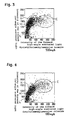
- Fig. 1 is a scattergram showing the intensity of forward low-angle scattered light and the intensity of forward high-angle scattered light measured with the reagent for analyzing leucocytes of the present invention which uses decyltrimethylammonium bromide as an ionic surfactant.
- Fig. 2 is a scattergram showing the intensity of forward low-angle scattered light and the intensity of forward high-angle scattered light measured with the reagent for analyzing leucocytes of the present invention which uses lauryltrimethylammonium chloride as an ionic surfactant.
- Fig. 3 is a scattergram showing the intensity of forward low-angle scattered light and the intensity of forward high-angle scattered light measured with the reagent for analyzing the leucocytes of the present invention which uses myristyltrimethylammonium bromide as an ionic surfactant.
- Fig. 4 is a scattergram showing the intensity of forward low-angle scattered light and the intensity of forward high-angle scattered light measured with the reagent for analyzing the leucocytes of the present invention which uses cetyltrimethylammonium chloride as an ionic surfactant.
- Fig. 5 is a scattergram showing the intensity of forward low-angle scattered light and the intensity of forward high-angle scattered light measured with the reagent for analyzing the leucocytes of the present invention which uses Alizarin Violet 3R as an organic compound.
- Fig. 6 is a scattergram showing the intensity of forward low-angle scattered light and the intensity of forward high-angle scattered light measured with the reagent for analyzing the leucocytes of the present invention which uses Alphazurine A as an organic compound.
- Fig. 7 is a scattergram showing the intensity of forward low-angle scattered light and the intensity of forward high-angle scattered light measured with the reagent for analyzing the leucocytes of the present invention which uses Guinea Green B as an organic compound.
- Fig. 8 is a scattergram showing the intensity of forward low-angle scattered light and the intensity of forward high-angle scattered light measured with the reagent for analyzing the leucocytes of the present invention which uses Alizarin Yellow-R as an organic compound.
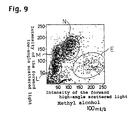
- Fig. 9 is a scattergram showing the intensity of forward low-angle scattered light and the intensity of forward high-angle scattered light measured with the reagent for analyzing the leucocytes of the present invention which uses methyl alcohol as an alcohol.
- Fig. 10 is a scattergram showing the intensity of forward low-angle scattered light and the intensity of forward high-angle scattered light measured with the reagent for analyzing the leucocytes of the present invention which uses ethyl alcohol as an alcohol.
- Fig. 11 is a scattergram showing the intensity of forward low-angle scattered light and the intensity of forward high-angle scattered light measured with the reagent for analyzing the leucocytes of the present invention which uses 2-propanol as an alcohol.
- Fig. 12 is a scattergram showing the intensity of forward low-angle scattered light and the intensity of forward high-angle scattered light measured with the reagent for analyzing the leucocytes of the present invention which uses 2-phenoxyethanol as an alcohol.
- Fig. 13 is a scattergram showing the intensity of forward low-angle scattered light and the intensity of forward high-angle scattered light measured with the reagent for analyzing the leucocytes of the present invention which uses MES as a buffer.
- Fig. 14 is a scattergram showing the intensity of forward low-angle scattered light and the intensity of forward high-angle scattered light measured with the reagent for analyzing the leucocytes of the present invention which uses HEPES as a buffer.
- Fig. 15 is a scattergram showing the intensity of forward low-angle scattered light and the intensity of forward high-angle scattered light measured with the reagent for analyzing the leucocytes of the present invention which uses TRIS as a buffer.
- Fig. 16 is a scattergram showing the intensity of forward low-angle scattered light and the intensity of forward high-angle scattered light measured with the reagent for analyzing the leucocytes of the present invention which uses BC-25TX as a nonionic surfactant.
- Fig. 17 is a scattergram showing the intensity of forward low-angle scattered light and the intensity of forward high-angle scattered light measured with the reagent for analyzing the leucocytes of the present invention which uses BC-25TX and HCO-60 are jointly used as a nonionic surfactant.
- Fig. 18 is a scattergram showing the intensity of forward low-angle scattered light and the intensity of forward high-angle scattered light measured with the reagent for analyzing the leucocytes of the present invention.
- Fig. 19 is a scattergram showing the volume on the principle of measuring electric resistance and the intensity of side scattered light measured with the reagent for analyzing the leucocytes of the present invention.
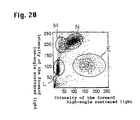
- Fig. 20 is a scattergram showing the intensity of forward low-angle scattered light and the intensity of forward high-angle scattered light measured with the reagent for analyzing the leucocytes of the present invention.
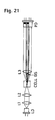
- Fig. 21 is an outline chart of an apparatus for measuring the samples treated with the reagent for analyzing the leucocytes of the present invention.
- the ionic surfactant in the reagent for analyzing leucocytes in accordance with the present invention comprises at least one cationic surfactant or amphoteric surfactant.
- Preferred cationic surfactants are quaternary ammonium salt type or pyridinium salt type.
- the quaternary ammonium salt type and pyridinium salt type surfactants can be represented by the formula; (R 1 is a C 6-18 alkyl or alkenyl group; R 2 and R 3 are a C 1-4 alkyl or alkenyl group; R 4 is a C 1-4 alkyl or alkenyl group, or benzyl group; and X is a halogen atom).
- the total number of carbon atoms in the above formula is preferably in the range of 9-30.
- Examples of the C 6-18 alkyl or alkenyl group for R 1 are hexyl, octyl, decyl, dodecyl or tetradecyl, or hexenyl, heptenyl or octenyl, preferably, a linear alkyl such as octyl, decyl or dodecyl.
- Examples of the C 1-4 alkyl or alkenyl groups for R 2 and R 3 are methyl, ethyl, propyl or butyl, or propenyl, preferably, a C 1-3 alkyl such as methyl ethyl or propyl.
- Examples of the C 1-4 alkyl and alkenyl groups for R 4 are methyl, ethyl, propyl or butyl, or propenyl, preferably, methyl, ethyl or propyl.
- amphoteric surfactant can be represented by the following formula; (R 1 , R 2 and R 3 are the same as defined above).
- the total number of carbon atoms in the above three formula is preferably in the range of 9-30.
- the above-mentioned ionic surfactant is used in a sufficient amount to lyse erythrocytes and cause damage to a part of cell membranes of leucocytes. Specifically, it is suitable to use about 30-5,000 mg/liter to the total volume of the reagent, preferably about 50-3,000 mg/liter or, more preferably about 100-2,000 mg/liter, though it can be suitably modified depending upon the type of surfactant used or the like. Suitable amounts (concentrations) for each of the ionic surfactants in the reagent are given in Table 1. The ionic surfactant may be used singly or in a combination of two or more surfactants.
- Octyltrimethylammonium bromide 1000-5000 Decyltrimethylammonium bromide (DTAB) 200-3000 Lauryltrimethylammonium chloride (LTAC) 150-2000 Myristyltrimethylammonium bromide (MTAB) 100-1500 Cetyltrimethylammonium chloride (CTAC) 50-1000 Stearyltrimethylammonium bromide 50- 500 Cetyldimethylethylammonium bromide 50- 500 Laurylpyridinium chloride 50- 500 Lauryldimethylaminoacetic acid betaine 500-3000 Stearyldimethylaminoacetic acid betaine 500-3000 Stearyldimethylaminoacetic acid betaine 500-3000
- the ionic surfactant is required to possess a hemolytic activity of such an extent that makes pores in cell membrane of leucocytes which can pass an organic compound as discussed later but is not potent to make the cell nuclei naked.
- conventional cationic surfactants e.g., LTAC, MTAB and CTAC
- Ionic surfactants possessing low hemolytic activity also are usable because it is sufficient to pull a part of membrane out.
- the hemolytic activity of the ionic surfactant is in proportion to the carbon numbers of the hydrophobic group and, the more the carbon numbers, the more the hemolytic activity, therefore cationic surfactants having a low hemolytic activity such as DTAB and OTAB or amphoteric surfactant are preferably used.
- the reagent in accordance with the present invention contains an organic compound having an anionic group which makes a morphological difference among leucocytes by combining with a cationic component in leucocytes.
- the organic compounds have a hydrophobic group and an acidic group (anionic group such as carboxyl group, sulfonic acid group, etc.) which has a negative charge in an aqueous solution, contain at least six carbon atoms and can combine with leucocytes, thereby modifying the shape of leucocytes.
- acids are not particularly limited but nearly all kinds of acidic dyes can be used.
- the acidic dyes are Amido Black [Colour Index No. 20470], Alizarin Cyanine Green F [CI No. 61570], Acid Green 27 [CI No. 61580], Acid Blue 62 [CI No. 62045], Direct Red 31 [CI No. 29100], Brilliant Sulphaflavine [CI No. 56205], Alizarin Yellow R [CI No. 14030], Acid Blue 129 [CI No. 62058], Acid Green 25 [CI No. 61570], Chromotrope 2R [CI No. 16570], Coomassie Brilliant Blue R-250 [CI No. 42660], Carmine Acid [CI No.
- the reagent in accordance with the present invention further contains a nonionic surfactant.
- a nonionic surfactant there is no particular limitation for the nonionic surfactant and nearly all kinds of nonionic surfactants usually used as solubilizer may be used. Its examples are nonionic surfactants having polyoxyethylene glycol (POE), polypropylene glycol (POP) or a block copolymer of polyoxyethylene glycol-polyoxypropylene glycol (POE-POP) as a hydrophilic component.
- nonionic surfactant When only one kind of nonionic surfactant is used, it may cause such side effect of lysing leucocytes in addition to the desired lysis of an insoluble substance formed between the ionic surfactant with a cell-constituting component in erythrocytes. In such case, it is preferable to use a combination of two or more nonionic surfactants such as those wherein the additional mole number of the hydrophilic group are different. Alternatively, the combined use of nonionic surfactants wherein the structures of the lipophilic groups are different can inhibit the side effect.
- the amount of the nonionic surfactant which is necessary for dissolving the insoluble substance varies depending upon the type of ionic surfactant used or the like and is generally in the range of about 0.5-10 g/liter to the total volume of the reagent, preferably about 1-8 g/liter.
- the reagent in accordance with the present invention further contains a buffer for adjusting pH.
- a buffer for adjusting pH there is no particular limitation for the buffer so far as it is used for keeping pH constant and any buffer having a pKa of "a desired pH ⁇ 2.0" may be used.
- the examples are MES, TRIS, HEPES, succinic acid, phthalic acid or citric acid buffers.
- An alcohol may be further used in the reagent without particularly limitation.
- Preferable alcohols are those easily available at low cost in an industrial scale, such as alkanols (e.g. methyl alcohol and ethyl alcohol) and alcohols having an aromatic ring (e.g. phenethyl alcohol and 2-phenoxyethanol).
- alkanols e.g. methyl alcohol and ethyl alcohol
- alcohols having an aromatic ring e.g. phenethyl alcohol and 2-phenoxyethanol
- With respect to its amount about 5-20% to the entire amount of the reagent is preferable in the case of methanol and a very rough yardstick is that, when there is an increase of one carbon, the amount is preferably halved.
- 2-phenoxyethanol the preferred amount is 0.05-1%.
- a metal salt may be added in the reagent.
- Preferred examples thereof are alkali metal salts such as sodium chloride, potassium chloride and lithium chloride.
- the alkali metal salt is not necessary to use the alkali metal salt but, in the case of the apparatus wherein the measurement is conducted using a signal of electric resistance as mentioned later, the alkali metal is needed to adjust the electroconductivity of the sample to the value which is suitable for the measurement.
- the preferred amount in such a case is in the extent that the electroconductivity of the solution is about 5-20 mS/cm.
- the reagent for analyzing leucocytes in accordance with present invention may be composed of two liquids comprising a first liquid and a second liquid.
- the first liquid contains at least one organic compound in a sufficient amount to make a morphological difference among leucocytes by combining with a cationic component in leucocytes.
- the second liquid contains at least one ionic surfactant in a sufficient amount to be able to lyse erythrocytes and cause damage to a part of the cell membrane of leucocytes.
- the first and second liquid contain a nonionic surfactant and a buffer for adjusting pH.
- the liquid may contain the alcohol and the metal salt. Concentration of each of the components is made in such an extent that, when the first and the second liquids are mixed, the above-mentioned concentration for each of the components is resulted.
- the reagent composed of the two liquids may be improved on its stability in storage.
- the reagent may be used by mixing with the whole blood.
- the mixing ratio of the reagent to the whole blood is in the range from 1 : 2 to 1 : 100 by volume.
- the blood sample diluted with a suitable diluent is also available.
- the classification and counting of leucocytes can be suitably carried out especially with a small analyzing apparatus using a semiconductor laser. That is, the reagent can be suitably used by means of an apparatus wherein leucocytes can be classified/counted only by receiving the two parameters of forward low-angle and high-angle scattered light.
- the analyzing apparatus There is no particular limitation for the analyzing apparatus and, for example, an apparatus equipped with a simple detecting part as shown in Fig. 21 may be used.
- the apparatus of Fig. 21 is equipped with a device which detects a two-angle forward scattered light. That is, in the apparatus of Fig.
- leucocytes can be conveniently classified/counted using a flow cytometer.
- Ionic surfactants usually hemolyze erythrocytes and dissolve the cell membrane of leucocytes to make its nuclei naked; therefore, the method of classifying leucocytes into three subgroups by determining the volume information of them has already been used widely as a simple and convenient means for classifying leucocytes.
- the hemolytic action is so strong that most of leucocytes are made naked whereby it is not possible to morphologically classify leucocytes into subtypes.
- the reagent of the present invention utilizes fundamentally the same principle of the action of the ionic surfactant as in the above mentioned method, i.e., the ionic surfactant lyses erythrocytes and damages the membrane of leucocytes.
- the hemolytic action required in the reagent of the present invention is to draw out a part of cell membrane (possibly a part of the lipid components), resulting in forming pores in erythrocytes which can pass hemoglobin and small pores in leucocytes which can pass through the organic compound, while the nucleus of leucocytes is not naked.
- hemoglobin is flown out of erythrocytes whereby the erythrocytes hardly scatter the light whereupon they can be discriminated from leucocytes by optical information.
- the partly-damaged leucocytes significantly reduce the scattered light on the cell surface whereby the information in the cells can be obtained in more detail.
- the ionic surfactant increases its solubilizing ability, depending upon the concentration at the concentration higher than the CMC of the surfactant.
- leucocytes are made naked using the above-mentioned solubilizing ability of the surfactant, while, in the present invention, the ionic surfactant is used in a low concentration and, therefore, the solubilizing ability of the ionic surfactant is low whereby, quite unexpectedly, the positive charge in the ionic surfactant neutralizes the negative charge of anionic components (nuclei, granules, RNA, etc.) in the cells to make them insoluble.
- the reagent of the present invention does not give an influence on analytical result by change of treating conditions as period and temperature, differently from the known method for classifying leucocytes into three subgroups by use of the ionic surfactant.
- the sample treated with the reagent of the present invention is stable for a long period.
- the organic compound acts to insolubilize the cationic component in leucocyte cells (e.g. granules [eosinophilic granules], protein, etc.) whereby the similar effect as the fixing with an aldehyde is obtained and, probably, the morphological difference (e.g. a difference in the scattered light) is made among leucocytes depending upon the amount of the cationic component.
- leucocyte cells e.g. granules [eosinophilic granules], protein, etc.
- the morphological difference e.g. a difference in the scattered light
- the nonionic surfactant is used to solubilize the insoluble substance which is produced by a combination of the ionic surfactant with the organic compound.
- the presence of the ionic surfactant in a small amount inhibits an excessive solubilization.
- the alcohol is not always necessary, if added, it is effective in terms of the following respects.
- the alcohol has an action of potentiating the action of an ionic surfactant selectively whereby the ionic surfactant even in a low concentration can cause damage to the cell membrane.
- the alcohol denatures the protein contained in the cell to make it insoluble. Accordingly, when the alcohol is used, it is possible that the damage of the cell such as the loss of the cell membrane and granule is kept minimum and consequently that the desired damage of the cell membrane is caused. Therefore, it has an effect of maintaining the optical difference by the scattered light, etc. Moreover, it exhibits an action of accelerating the lysis of erythrocytes.
- the additional of the alcohol is effective in such a case, in turn, erythrocytes are lysed and the damage of leucocytes is inhibited. It is probable that the alcohol hurts the cell membrane of erythrocytes by a mechanism different from that of the ionic surfactant.
- Preferred reagents of the reagent for analyzing the leucocytes in accordance with the present invention will be given as hereunder.
- Ionic surfactant 100-500 mg Magnesium 8-anilino-1-naphthalenesulfonate (an organic compound) 2 g BC30TX (a nonionic surfactant: polyoxyethylene (30) cetyl ether; Nikko Chemicals) 1 g HEPES 10 mM Methanol 100 ml NaOH sufficient for pH 7.0 Distilled water q. s. to 1000 ml
- the reagent (1 ml) of the above-mentioned composition in which various kinds of surfactants in various concentrations were used as an ionic surfactant was mixed with 30 microliters of blood and, after 30 seconds, the forward low-angle scattered light and the forward high-angle scattered light were measured using a flow cytometer.
- Figs. 1-4 show the results wherein 750 mg/liter of decyltrimethylammonium bromide (DTAB), 500 mg/liter of lauryltrimethylammonium chloride, 500 mg/liter of myristyltrimethylammonium bromide and 100 mg/liter of cetyltrimethylammonium chloride were used as the ionic surfactant, respectively.
- L lymphocyte
- M monocyte
- N neutrophil and basophil
- E eosinophil.
- DTAB a cationic surfactant
- An organic compound 0.3-3 g BC30TX (a nonionic surfactant; Nikko Chemicals) 1 g
- Citric acid 50 mM Methanol 100 ml NaOH sufficient for pH 7.5 Distilled water q. s. to 1000 ml
- the reagent (1 ml) of the above-mentioned composition in which various kinds of organic compounds in various concentrations were used as the organic compound was mixed with 30 microliters of blood and, after 30 seconds, the forward low-angle scattered light and the forward high-angle scattered light were measured using a flow cytometer.
- Figs. 5-8 show the results where 3 g/liter of Alizaline Violet 3R, 0.3 g/liter of Alphazurine A, 0.3 g/liter of Guinea Green B and 3 g/liter of Alizarin Yellow R were used, respectively. In all of the organic compounds used, nearly the same scattergrams were obtained whereby the leucocytes were able to be classified and counted.
- the reagent (1 ml) of the above-mentioned composition in which various kinds of alcohols in various concentrations were used as the alcohol was mixed with 30 microliters of blood and, after 30 seconds, the forward low-angle scattered light and the forward high-angle scattered light were measured using a flow cytometer.
- Figs. 9-12 show the results when 100 ml/liter of methyl alcohol, 50 ml/liter of ethyl alcohol, 25 ml/liter of 2-propanol and 2.5 ml/liter of 2-phenoxyethanol were used as the alcohol, respectively.
- the erythrocytes were well contracted in case any of the alcohols was used whereby the leucocytes were able to be counted giving nearly the same scattergrams. Thus, the leucocytes were able to be classified and counted.
- the reagent (1 ml) of the above-mentioned composition in which various kinds of buffers in various concentration were used for changing pH was mixed with 30 microliters of blood and, after 30 seconds, the forward low-angle scattered light and the forward high-angle scattered light were measured using a flow cytometer.
- Figs. 13-15 show the results where MES (pH: 5.5), HEPES buffer (pH: 7.0) and TRIS buffer (pH: 8.5) were used, respectively. Though there was a tendency that the intensity of the scattered light of the leucocytes decreased as pH of the reagent goes up, it was still possible to classify and count the leucocytes.
- DTAB 1.0 g Magnesium 8-anilino-1-naphthalenesulfonate (an organic compound) 1.5g BC-25TX (a nonionic surfactant; polyoxyethylene (25) cetyl ether; Nikko Chemicals) 4 g HEPES 10 mM Methanol 100 ml NaOH sufficient for pH 7.0 Distilled water q. s. to 1000 ml
- the reagent (1 ml) of the above-mentioned composition was mixed with 30 microliters of blood and, after 30 seconds, the forward low-angle scattered light and the forward high-angle scattered light were measured using a flow cytometer.
- Fig. 16 shows the result where 3.0 g/liter of BC-25TX was added as a nonionic surfactant for solubilizing the precipitate formed by a combination of the components for constituting erythrocytes with the ionic surfactant.
- Fig. 16 not only the effect for solubilizing the precipitate but also the influence on the leucocytes were noted.
- those W which were other than the eosinophils were contracted whereby it was not possible to classify into four groups.
- nonionic surfactant used i.e. BC-25TX
- HCO-60 additional mole number of polyoxyethylene was 60
- Fig. 18 shows the result of the measurement of forward low-angle scattered light for determining the size information and also the result of the measurement of forward high-angle scattered light for determining the morphological information. Furthermore, Fig. 19 shows the results of measuring the lateral scattered light for determining the morphological information and of measuring the volume by a principle of measurement by means of an electric resistance for determining the size information using a flow cytometer whereby the electric resistance signals were able to be measured as disclosed in the Japanese Laid-Open Patent Publication Hei-05/034,251.
- the electro-conductivity of the sample to be measured was adjusted to a suitable value by adding sodium chloride thereto for measurement on the principle of electric resistance.
- the leucocytes were able to be clearly classified and counted by any of the measuring parameters.
- Ammonium 8-amilino-1-nathphalenesulfonate (an organic compound) 3.0 g HCO 50 (a nonionic surfactant; polyoxyethylene (50) hydrogenated castor oil; Nikko Chemicals) 5 g PEN 4630 (a nonionic surfactant; polyoxyethylene (30) polyoxypropylene (6) 2-decyl tetradecyl ether; Nikko Chemicals) 1.3 g Phthalic acid 2.5 g Succinic acid 2Na 6H 2 O 13.5 mg 2-Phenoxyethanol 4.7 ml NaOH sufficient for the pH 5.3 NaCl 2.9 g Distilled water q. s. to 1000 ml
- the second liquid had the same composition and concentration as the first liquid except that DTAB 6.9 g/liter was used in place of ammonium 8-anilino-1-nathphalene-sulfonate.
- Fig. 20 shows the result.
- the reagent consisted of the first and second liquids, a good scattergram was obtained whereby the leucocytes were able to be classified into four groups.
- a reagent composition which substantially comprises one aqueous solution and is capable of classifying and counting leucocytes by a simple procedure of just mixing the reagent of the present invention with a blood sample. Accordingly, classification of leucocytes can be conducted only by measuring the two scattered light signals and an apparatus of a simple structure can be applied.
Landscapes
- Health & Medical Sciences (AREA)
- Life Sciences & Earth Sciences (AREA)
- Chemical & Material Sciences (AREA)
- Engineering & Computer Science (AREA)
- Immunology (AREA)
- Urology & Nephrology (AREA)
- Molecular Biology (AREA)
- Hematology (AREA)
- Biomedical Technology (AREA)
- Analytical Chemistry (AREA)
- Biochemistry (AREA)
- General Physics & Mathematics (AREA)
- General Health & Medical Sciences (AREA)
- Physics & Mathematics (AREA)
- Pathology (AREA)
- Microbiology (AREA)
- Cell Biology (AREA)
- Biotechnology (AREA)
- Food Science & Technology (AREA)
- Medicinal Chemistry (AREA)
- Dispersion Chemistry (AREA)
- Investigating Or Analysing Biological Materials (AREA)
- Measuring Or Testing Involving Enzymes Or Micro-Organisms (AREA)
Description
- The present invention relates to a reagent for analyzing leucocytes, especially for classifying and counting leucocytes using a classifying apparatus for leucocytes in the field of a clinical test.
- In the field of a clinical test, it is important for the diagnosis of various diseases to classify and count leucocytes using the whole blood of patients.
- For such a purpose, many apparatuses and methods have been reported.
- In those apparatuses, leucocytes are classified into their subgroups (lymphocytes, monocytes, neutrophils, eosinophils and basophils) by the difference of RF signal intensity (changes in electric impedances at high-frequency), DC signal intensity (changes in direct current caused by the difference in the electroconductivity between the suspended particles and the liquid medium in which the particles are suspended), intensity of fluorescence, intensity of scattered light, absorbance, depolarization of scattered light or the like. In the classification and counting of leucocytes, it is necessary to pretreat the blood and lyse the erythrocytes so that the difference among each subgroup of the leucocytes according to the above-mentioned parameters can be detected.
- For such a purpose, for example, leucocytes are shrunk to a suitable size using a lysing agent or specific cells are stained. The lysing agent as used in shrinking leucocytes is an organic carboxylic acid, organic sulfonic acid or phenol (WO88/07187), or two kinds of cationic surfactants (WO 84/03771 and WO 84/02777). Examples of methods for lysing erythrocytes and staining specific cells are a method in which the blood is treated with a reagent comprising the combination of an erythrocyte lysing agent (saponin and/or sodium dodecylsulfate), a tertiary or quaternary ammonium salt, an alcohol, a polyoxyethylene sorbitan ester, glutaraldehyde or formaldehyde, alkylene glycol, a physiological salt and Chlorazol Black (Japanese Laid-Open Patent Publication Hei-03/266999 (corresponding to: FR8915166)) and a method in which blood is treated with a reagent comprising the combination of sodium dodecylsulfate, formaldehyde, sugar (or sugar alcohol) and a buffer, followed by subjecting to a peroxidase staining (Japanese Laid-Open Patent Publication Sho-62/071857 (corresponding to: U.S. Patent Nos. 4,801,549 and 4,978,624)).
- In the above-mentioned WO 84/03771 and WO 84/02777, the classification and counting of leucocytes are carried out by means of the difference in the DC signal intensity, which is convenient but shows a disadvantage that leucocytes can be only classified into three subgroups.
- Methods according to Japanese Laid-Open Patent Publication Sho-62/071857 and Hei-03/266999 can classify leucocytes into four or more subgroups, but require a treatment at a high temperature and an fixation using a toxic aldehyde.
- Further, in the method of WO88/07187, leucocytes are detected by means of RF signal, DC signal or the intensity of scattered light which however is a drawback that the detectors are complicate, large in size and expensive.
- The pretreatment method described in
EP 0 598 663 includes a labelling substance and an aqueous solution of a surfactant, wherein the labelling substances are mainly basic dyes. In contrast, the present invention relates to organic compounds clearly different from the labelling substances ofEP 0 598 663. - The reagent disclosed in
EP 0 444 241 contains Tiron as one of the elements of the reagent, which is not included in the organic compound of the present invention. - Phthalic acid is used in
EP 0 442 776 in a reagent allowing measurement of basophilic leucocytes by selective lysis of other cells in blood, leaving the basophils intact for quantification by resistivity (page 2, lines 43-44). However, there is no indication that would lead a skilled person to use phthalic acid with the compositions known from the prior art,e.g. EP 0 444 241. - An object of the present invention is to offer a re-agent which can classify leucocytes at least into four subgroups using an inexpensive and simple apparatus, and without using such toxic agent as aldehydes.
- The present invention provides a reagent for analyzing leucocytes comprising (a) at least one ionic surfactant in an amount sufficient for lysing erythrocytes and causing damage to a part of cell membranes of leucocytes; (b) at least one organic compound selected from the group consisting of 8-anilino-1-naphtalenesulfonic acid or salts thereof, 6-(p-toluidino)-2-naphtalenesulfonic acid or salts thereof, chromotropic acid or salts thereof, phthalic acid or salts thereof, naphtalenesulfonic acid or salts thereof, and acidic dyes; in an amount sufficient for making a morphological difference among leucocytes by combining with a cationic component in leucocytes; (c) a nonionic surfactant; and (d) a buffer for adjusting pH.
- Fig. 1 is a scattergram showing the intensity of forward low-angle scattered light and the intensity of forward high-angle scattered light measured with the reagent for analyzing leucocytes of the present invention which uses decyltrimethylammonium bromide as an ionic surfactant.
- Fig. 2 is a scattergram showing the intensity of forward low-angle scattered light and the intensity of forward high-angle scattered light measured with the reagent for analyzing leucocytes of the present invention which uses lauryltrimethylammonium chloride as an ionic surfactant.
- Fig. 3 is a scattergram showing the intensity of forward low-angle scattered light and the intensity of forward high-angle scattered light measured with the reagent for analyzing the leucocytes of the present invention which uses myristyltrimethylammonium bromide as an ionic surfactant.
- Fig. 4 is a scattergram showing the intensity of forward low-angle scattered light and the intensity of forward high-angle scattered light measured with the reagent for analyzing the leucocytes of the present invention which uses cetyltrimethylammonium chloride as an ionic surfactant.
- Fig. 5 is a scattergram showing the intensity of forward low-angle scattered light and the intensity of forward high-angle scattered light measured with the reagent for analyzing the leucocytes of the present invention which uses Alizarin Violet 3R as an organic compound.
- Fig. 6 is a scattergram showing the intensity of forward low-angle scattered light and the intensity of forward high-angle scattered light measured with the reagent for analyzing the leucocytes of the present invention which uses Alphazurine A as an organic compound.
- Fig. 7 is a scattergram showing the intensity of forward low-angle scattered light and the intensity of forward high-angle scattered light measured with the reagent for analyzing the leucocytes of the present invention which uses Guinea Green B as an organic compound.
- Fig. 8 is a scattergram showing the intensity of forward low-angle scattered light and the intensity of forward high-angle scattered light measured with the reagent for analyzing the leucocytes of the present invention which uses Alizarin Yellow-R as an organic compound.
- Fig. 9 is a scattergram showing the intensity of forward low-angle scattered light and the intensity of forward high-angle scattered light measured with the reagent for analyzing the leucocytes of the present invention which uses methyl alcohol as an alcohol.
- Fig. 10 is a scattergram showing the intensity of forward low-angle scattered light and the intensity of forward high-angle scattered light measured with the reagent for analyzing the leucocytes of the present invention which uses ethyl alcohol as an alcohol.
- Fig. 11 is a scattergram showing the intensity of forward low-angle scattered light and the intensity of forward high-angle scattered light measured with the reagent for analyzing the leucocytes of the present invention which uses 2-propanol as an alcohol.
- Fig. 12 is a scattergram showing the intensity of forward low-angle scattered light and the intensity of forward high-angle scattered light measured with the reagent for analyzing the leucocytes of the present invention which uses 2-phenoxyethanol as an alcohol.
- Fig. 13 is a scattergram showing the intensity of forward low-angle scattered light and the intensity of forward high-angle scattered light measured with the reagent for analyzing the leucocytes of the present invention which uses MES as a buffer.
- Fig. 14 is a scattergram showing the intensity of forward low-angle scattered light and the intensity of forward high-angle scattered light measured with the reagent for analyzing the leucocytes of the present invention which uses HEPES as a buffer.
- Fig. 15 is a scattergram showing the intensity of forward low-angle scattered light and the intensity of forward high-angle scattered light measured with the reagent for analyzing the leucocytes of the present invention which uses TRIS as a buffer.
- Fig. 16 is a scattergram showing the intensity of forward low-angle scattered light and the intensity of forward high-angle scattered light measured with the reagent for analyzing the leucocytes of the present invention which uses BC-25TX as a nonionic surfactant.
- Fig. 17 is a scattergram showing the intensity of forward low-angle scattered light and the intensity of forward high-angle scattered light measured with the reagent for analyzing the leucocytes of the present invention which uses BC-25TX and HCO-60 are jointly used as a nonionic surfactant.
- Fig. 18 is a scattergram showing the intensity of forward low-angle scattered light and the intensity of forward high-angle scattered light measured with the reagent for analyzing the leucocytes of the present invention.
- Fig. 19 is a scattergram showing the volume on the principle of measuring electric resistance and the intensity of side scattered light measured with the reagent for analyzing the leucocytes of the present invention.
- Fig. 20 is a scattergram showing the intensity of forward low-angle scattered light and the intensity of forward high-angle scattered light measured with the reagent for analyzing the leucocytes of the present invention.
- Fig. 21 is an outline chart of an apparatus for measuring the samples treated with the reagent for analyzing the leucocytes of the present invention.
- The ionic surfactant in the reagent for analyzing leucocytes in accordance with the present invention comprises at least one cationic surfactant or amphoteric surfactant.
- Preferred cationic surfactants are quaternary ammonium salt type or pyridinium salt type. The quaternary ammonium salt type and pyridinium salt type surfactants can be represented by the formula;(R1 is a C6-18 alkyl or alkenyl group; R2 and R3 are a C1-4 alkyl or alkenyl group; R4 is a C1-4 alkyl or alkenyl group, or benzyl group; and X is a halogen atom). The total number of carbon atoms in the above formula is preferably in the range of 9-30.

- Examples of the C6-18 alkyl or alkenyl group for R1 are hexyl, octyl, decyl, dodecyl or tetradecyl, or hexenyl, heptenyl or octenyl, preferably, a linear alkyl such as octyl, decyl or dodecyl. Examples of the C1-4 alkyl or alkenyl groups for R2 and R3 are methyl, ethyl, propyl or butyl, or propenyl, preferably, a C1-3 alkyl such as methyl ethyl or propyl. Examples of the C1-4 alkyl and alkenyl groups for R4 are methyl, ethyl, propyl or butyl, or propenyl, preferably, methyl, ethyl or propyl.
- The amphoteric surfactant can be represented by the following formula;(R1, R2 and R3 are the same as defined above).
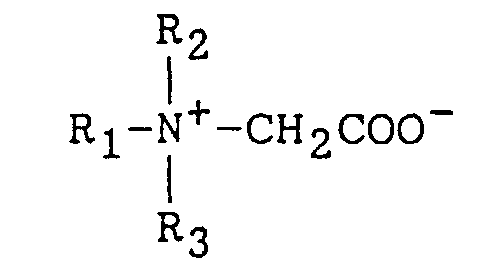
- The total number of carbon atoms in the above three formula is preferably in the range of 9-30.
- The above-mentioned ionic surfactant is used in a sufficient amount to lyse erythrocytes and cause damage to a part of cell membranes of leucocytes. Specifically, it is suitable to use about 30-5,000 mg/liter to the total volume of the reagent, preferably about 50-3,000 mg/liter or, more preferably about 100-2,000 mg/liter, though it can be suitably modified depending upon the type of surfactant used or the like. Suitable amounts (concentrations) for each of the ionic surfactants in the reagent are given in Table 1. The ionic surfactant may be used singly or in a combination of two or more surfactants.
Surfactant Amount (mg/liter) Octyltrimethylammonium bromide (OTAB) 1000-5000 Decyltrimethylammonium bromide (DTAB) 200-3000 Lauryltrimethylammonium chloride (LTAC) 150-2000 Myristyltrimethylammonium bromide (MTAB) 100-1500 Cetyltrimethylammonium chloride (CTAC) 50-1000 Stearyltrimethylammonium bromide 50- 500 Cetyldimethylethylammonium bromide 50- 500 Laurylpyridinium chloride 50- 500 Lauryldimethylaminoacetic acid betaine 500-3000 Stearyldimethylaminoacetic acid betaine 500-3000 - The ionic surfactant is required to possess a hemolytic activity of such an extent that makes pores in cell membrane of leucocytes which can pass an organic compound as discussed later but is not potent to make the cell nuclei naked. As the ionic surfactants, conventional cationic surfactants (e.g., LTAC, MTAB and CTAC) are usable but are used in far smaller amount than an amount for making the cell nuclei naked, so as to inhibiting their own hemolytic activities. Ionic surfactants possessing low hemolytic activity also are usable because it is sufficient to pull a part of membrane out. The hemolytic activity of the ionic surfactant is in proportion to the carbon numbers of the hydrophobic group and, the more the carbon numbers, the more the hemolytic activity, therefore cationic surfactants having a low hemolytic activity such as DTAB and OTAB or amphoteric surfactant are preferably used.
- In addition to the ionic surfactant, the reagent in accordance with the present invention contains an organic compound having an anionic group which makes a morphological difference among leucocytes by combining with a cationic component in leucocytes. Specifically, the organic compounds have a hydrophobic group and an acidic group (anionic group such as carboxyl group, sulfonic acid group, etc.) which has a negative charge in an aqueous solution, contain at least six carbon atoms and can combine with leucocytes, thereby modifying the shape of leucocytes. They are not particularly limited but nearly all kinds of acidic dyes can be used. Further, because there is no necessity of measuring the absorbency and the fluorescence intensity other organic compounds other than dyes are applicable as well. Examples of the acidic dyes are Amido Black [Colour Index No. 20470], Alizarin Cyanine Green F [CI No. 61570], Acid Green 27 [CI No. 61580], Acid Blue 62 [CI No. 62045], Direct Red 31 [CI No. 29100], Brilliant Sulphaflavine [CI No. 56205], Alizarin Yellow R [CI No. 14030], Acid Blue 129 [CI No. 62058], Acid Green 25 [CI No. 61570], Chromotrope 2R [CI No. 16570], Coomassie Brilliant Blue R-250 [CI No. 42660], Carmine Acid [CI No. 75470], Coomassie Brilliant Blue G-250 [CI No. 42655], Carmoisine B [CI No. 14720], Direct Blue 86 [CI No. 74180], Ethyl Red [2-(4-diethylaminophenylazo)benzoic acid], Para Rosaniline [CI No. 42500], Violamine R [CI No. 45190], Acid Yellow 34 [CI No. 18890], Acid Orange 51 8-anilino-1-naphthalenesulfonic acid, 6-(p-toluidino)-2-naphthalenesulfonic acid, chromotropic acid, phthalic acid or naphthalenesulfonic acid, or its corresponding salt. The amount of such organic compound may be suitably chosen, depending upon the type of surfactant used or the like and is, preferably, about 50-5,000 mg/liter to the total volume of the reagent or, more preferably about 100-3,000 mg/liter.
- The reagent in accordance with the present invention further contains a nonionic surfactant. There is no particular limitation for the nonionic surfactant and nearly all kinds of nonionic surfactants usually used as solubilizer may be used. Its examples are nonionic surfactants having polyoxyethylene glycol (POE), polypropylene glycol (POP) or a block copolymer of polyoxyethylene glycol-polyoxypropylene glycol (POE-POP) as a hydrophilic component. When only one kind of nonionic surfactant is used, it may cause such side effect of lysing leucocytes in addition to the desired lysis of an insoluble substance formed between the ionic surfactant with a cell-constituting component in erythrocytes. In such case, it is preferable to use a combination of two or more nonionic surfactants such as those wherein the additional mole number of the hydrophilic group are different. Alternatively, the combined use of nonionic surfactants wherein the structures of the lipophilic groups are different can inhibit the side effect. The amount of the nonionic surfactant which is necessary for dissolving the insoluble substance varies depending upon the type of ionic surfactant used or the like and is generally in the range of about 0.5-10 g/liter to the total volume of the reagent, preferably about 1-8 g/liter.
- The reagent in accordance with the present invention further contains a buffer for adjusting pH. Usually, there is no particular limitation for the buffer so far as it is used for keeping pH constant and any buffer having a pKa of "a desired pH ± 2.0" may be used. The examples are MES, TRIS, HEPES, succinic acid, phthalic acid or citric acid buffers. In the present invention, it is preferable to adjust pH of the reagent to about 5-11 whereby the amount used is around 5-100 mM for the reagent.
- An alcohol may be further used in the reagent without particularly limitation. Preferable alcohols are those easily available at low cost in an industrial scale, such as alkanols (e.g. methyl alcohol and ethyl alcohol) and alcohols having an aromatic ring (e.g. phenethyl alcohol and 2-phenoxyethanol). With respect to its amount, about 5-20% to the entire amount of the reagent is preferable in the case of methanol and a very rough yardstick is that, when there is an increase of one carbon, the amount is preferably halved. In the case of 2-phenoxyethanol, the preferred amount is 0.05-1%.
- A metal salt may be added in the reagent. Preferred examples thereof are alkali metal salts such as sodium chloride, potassium chloride and lithium chloride. Usually, it is not necessary to use the alkali metal salt but, in the case of the apparatus wherein the measurement is conducted using a signal of electric resistance as mentioned later, the alkali metal is needed to adjust the electroconductivity of the sample to the value which is suitable for the measurement. The preferred amount in such a case is in the extent that the electroconductivity of the solution is about 5-20 mS/cm.
- The reagent for analyzing leucocytes in accordance with present invention may be composed of two liquids comprising a first liquid and a second liquid. The first liquid contains at least one organic compound in a sufficient amount to make a morphological difference among leucocytes by combining with a cationic component in leucocytes. The second liquid contains at least one ionic surfactant in a sufficient amount to be able to lyse erythrocytes and cause damage to a part of the cell membrane of leucocytes. The first and second liquid contain a nonionic surfactant and a buffer for adjusting pH. Like a single liquid type, the liquid may contain the alcohol and the metal salt. Concentration of each of the components is made in such an extent that, when the first and the second liquids are mixed, the above-mentioned concentration for each of the components is resulted. The reagent composed of the two liquids may be improved on its stability in storage.
- The reagent may be used by mixing with the whole blood. In that case, the mixing ratio of the reagent to the whole blood is in the range from 1 : 2 to 1 : 100 by volume. Incidentally, the blood sample diluted with a suitable diluent is also available.
- Using the reagent for analyzing leucocytes in accordance with the present invention, the classification and counting of leucocytes can be suitably carried out especially with a small analyzing apparatus using a semiconductor laser. That is, the reagent can be suitably used by means of an apparatus wherein leucocytes can be classified/counted only by receiving the two parameters of forward low-angle and high-angle scattered light. There is no particular limitation for the analyzing apparatus and, for example, an apparatus equipped with a simple detecting part as shown in Fig. 21 may be used. The apparatus of Fig. 21 is equipped with a device which detects a two-angle forward scattered light. That is, in the apparatus of Fig. 21, there is a semiconductor laser LD before the flow cell CELL via a contender lens L2 and a collimater lens L1. Further, there is a photodiode PD after the flow cell CELL via a collector lens L3 equipped with a beam stopper BS. In the apparatus, the intensity of the scattered light of low angles (about 1-5°) and high angles (about 6-20°) among the forward scattered light is measured, and by means of the difference among the intensity of the scattered light, leucocytes can be classified at least into four subgroups and counted.
- By the reagent of the present invention, leucocytes can be conveniently classified/counted using a flow cytometer.
- In accordance with the reagent of the invention:
- (1) the ionic surfactant may lyse erythrocytes in whole blood, damage the cell membrane of leucocytes and accelerate the permeability of the organic compound through the cell membrane;
- (2) the organic compound may adjust the morphological information of the leucocytes in such a manner that is convenient for classifying leucocytes;
- (3) the nonionic surfactant may solubilize the insoluble substance formed by combining of the ionic surfactant with the organic compound; and
- (4) the buffer may keep pH of the reagent to a certain value.
-
- Ionic surfactants usually hemolyze erythrocytes and dissolve the cell membrane of leucocytes to make its nuclei naked; therefore, the method of classifying leucocytes into three subgroups by determining the volume information of them has already been used widely as a simple and convenient means for classifying leucocytes. However, in this method, the hemolytic action is so strong that most of leucocytes are made naked whereby it is not possible to morphologically classify leucocytes into subtypes. On the other hand, the reagent of the present invention utilizes fundamentally the same principle of the action of the ionic surfactant as in the above mentioned method, i.e., the ionic surfactant lyses erythrocytes and damages the membrane of leucocytes. However, the hemolytic action required in the reagent of the present invention is to draw out a part of cell membrane (possibly a part of the lipid components), resulting in forming pores in erythrocytes which can pass hemoglobin and small pores in leucocytes which can pass through the organic compound, while the nucleus of leucocytes is not naked. As a result, hemoglobin is flown out of erythrocytes whereby the erythrocytes hardly scatter the light whereupon they can be discriminated from leucocytes by optical information. As a result of a partial flowing-out of cell membrane and the liquid in the leucocytes, the partly-damaged leucocytes significantly reduce the scattered light on the cell surface whereby the information in the cells can be obtained in more detail.
- It has been well known that the ionic surfactant increases its solubilizing ability, depending upon the concentration at the concentration higher than the CMC of the surfactant. In the conventional method, leucocytes are made naked using the above-mentioned solubilizing ability of the surfactant, while, in the present invention, the ionic surfactant is used in a low concentration and, therefore, the solubilizing ability of the ionic surfactant is low whereby, quite unexpectedly, the positive charge in the ionic surfactant neutralizes the negative charge of anionic components (nuclei, granules, RNA, etc.) in the cells to make them insoluble. As a result, even when leucocytes are treated with the ionic surfactant, the shape of the cells hardly changes whereby the effect of keeping the cell shape which is similar to that achieved by fixing the cell by an aldehyde can be resulted. Consequently, the reagent of the present invention does not give an influence on analytical result by change of treating conditions as period and temperature, differently from the known method for classifying leucocytes into three subgroups by use of the ionic surfactant. The sample treated with the reagent of the present invention is stable for a long period.
- Furthermore, the organic compound acts to insolubilize the cationic component in leucocyte cells (e.g. granules [eosinophilic granules], protein, etc.) whereby the similar effect as the fixing with an aldehyde is obtained and, probably, the morphological difference (e.g. a difference in the scattered light) is made among leucocytes depending upon the amount of the cationic component. In other words, it is likely that, as a result of a neutralization of the positive charge of the cationic component in the cells to make them insoluble, their flowing-out to outside of the cells can be inhibited, the morphological information of leucocytes is maintained and the shape of leucocytes can be changed so as to be convenient for the classification.
- In the present invention, the nonionic surfactant is used to solubilize the insoluble substance which is produced by a combination of the ionic surfactant with the organic compound.
- Furthermore, in the present invention, the presence of the ionic surfactant in a small amount inhibits an excessive solubilization.
- In the present invention, though the alcohol is not always necessary, if added, it is effective in terms of the following respects. The alcohol has an action of potentiating the action of an ionic surfactant selectively whereby the ionic surfactant even in a low concentration can cause damage to the cell membrane. In addition, it is likely that the alcohol denatures the protein contained in the cell to make it insoluble. Accordingly, when the alcohol is used, it is possible that the damage of the cell such as the loss of the cell membrane and granule is kept minimum and consequently that the desired damage of the cell membrane is caused. Therefore, it has an effect of maintaining the optical difference by the scattered light, etc. Moreover, it exhibits an action of accelerating the lysis of erythrocytes. Therefore, even though the membrane of erythrocytes may be hardly lysed in some diseases such as cirrhosis, the additional of the alcohol is effective in such a case, in turn, erythrocytes are lysed and the damage of leucocytes is inhibited. It is probable that the alcohol hurts the cell membrane of erythrocytes by a mechanism different from that of the ionic surfactant.
- Preferred reagents of the reagent for analyzing the leucocytes in accordance with the present invention will be given as hereunder.
-
Ionic surfactant 100-500 mg Magnesium 8-anilino-1-naphthalenesulfonate (an organic compound) 2 g BC30TX (a nonionic surfactant: polyoxyethylene (30) cetyl ether; Nikko Chemicals) 1 g HEPES 10 mM Methanol 100 ml NaOH sufficient for pH 7.0 Distilled water q. s. to 1000 ml - The reagent (1 ml) of the above-mentioned composition in which various kinds of surfactants in various concentrations were used as an ionic surfactant was mixed with 30 microliters of blood and, after 30 seconds, the forward low-angle scattered light and the forward high-angle scattered light were measured using a flow cytometer.
- Figs. 1-4 show the results wherein 750 mg/liter of decyltrimethylammonium bromide (DTAB), 500 mg/liter of lauryltrimethylammonium chloride, 500 mg/liter of myristyltrimethylammonium bromide and 100 mg/liter of cetyltrimethylammonium chloride were used as the ionic surfactant, respectively. In the drawings, L is lymphocyte, M is monocyte, N is neutrophil and basophil and E is eosinophil. In all of the ionic surfactants, nearly the same scattergrams were resulted whereby leucocytes were able to be classified and counted.
-
DTAB (a cationic surfactant) 1.5 g An organic compound 0.3-3 g BC30TX (a nonionic surfactant; Nikko Chemicals) 1 g Citric acid 50 mM Methanol 100 ml NaOH sufficient for pH 7.5 Distilled water q. s. to 1000 ml - The reagent (1 ml) of the above-mentioned composition in which various kinds of organic compounds in various concentrations were used as the organic compound was mixed with 30 microliters of blood and, after 30 seconds, the forward low-angle scattered light and the forward high-angle scattered light were measured using a flow cytometer.
- Figs. 5-8 show the results where 3 g/liter of Alizaline Violet 3R, 0.3 g/liter of Alphazurine A, 0.3 g/liter of Guinea Green B and 3 g/liter of Alizarin Yellow R were used, respectively. In all of the organic compounds used, nearly the same scattergrams were obtained whereby the leucocytes were able to be classified and counted.
-
DTAB 1.5 g Brilliant Crocein M00 (an organic compound) 1 g HEPES 10 mM HCO50 (a nonionic surfactant; polyoxyethylene (50) hydrogenated castor oil; Nikko Chemicals) 4 g Alcohol q.s. NaOH sufficient for pH 7.0 Distilled water q. s. to 1000 ml - The reagent (1 ml) of the above-mentioned composition in which various kinds of alcohols in various concentrations were used as the alcohol was mixed with 30 microliters of blood and, after 30 seconds, the forward low-angle scattered light and the forward high-angle scattered light were measured using a flow cytometer.
- Figs. 9-12 show the results when 100 ml/liter of methyl alcohol, 50 ml/liter of ethyl alcohol, 25 ml/liter of 2-propanol and 2.5 ml/liter of 2-phenoxyethanol were used as the alcohol, respectively. The erythrocytes were well contracted in case any of the alcohols was used whereby the leucocytes were able to be counted giving nearly the same scattergrams. Thus, the leucocytes were able to be classified and counted.
-
DTAB 1.5 g Magnesium 8-anilino-1-naphthalenesulfonate (an organic compound) 2 g HCO50 (a nonionic surfactant; Nikko Chemicals) 4 g Buffer 10 mM 2-Phenoxyethanol 2.5 ml NaOH q.s. Distilled water q. s. to 1000 ml - The reagent (1 ml) of the above-mentioned composition in which various kinds of buffers in various concentration were used for changing pH was mixed with 30 microliters of blood and, after 30 seconds, the forward low-angle scattered light and the forward high-angle scattered light were measured using a flow cytometer.
- Figs. 13-15 show the results where MES (pH: 5.5), HEPES buffer (pH: 7.0) and TRIS buffer (pH: 8.5) were used, respectively. Though there was a tendency that the intensity of the scattered light of the leucocytes decreased as pH of the reagent goes up, it was still possible to classify and count the leucocytes.
-
DTAB 1.0 g Magnesium 8-anilino-1-naphthalenesulfonate (an organic compound) 1.5g BC-25TX (a nonionic surfactant; polyoxyethylene (25) cetyl ether; Nikko Chemicals) 4 g HEPES 10 mM Methanol 100 ml NaOH sufficient for pH 7.0 Distilled water q. s. to 1000 ml - The reagent (1 ml) of the above-mentioned composition was mixed with 30 microliters of blood and, after 30 seconds, the forward low-angle scattered light and the forward high-angle scattered light were measured using a flow cytometer.
- Fig. 16 shows the result where 3.0 g/liter of BC-25TX was added as a nonionic surfactant for solubilizing the precipitate formed by a combination of the components for constituting erythrocytes with the ionic surfactant. In Fig. 16, not only the effect for solubilizing the precipitate but also the influence on the leucocytes were noted. Thus, among the leucocytes, those W which were other than the eosinophils were contracted whereby it was not possible to classify into four groups.
- Now, the nonionic surfactant used (i.e. BC-25TX) was reduced to 2.0 g/liter and 1.0 g/liter of HCO-60 (Nikko Chemicals; additional mole number of polyoxyethylene was 60) which was a type of polyoxyethylene hydrogenated castor oil was added thereto whereby the result was that, as shown in Fig. 17, no precipitate was produced and a good scattergram classifying the leucocytes into four groups was achieved.
-
DTAB 1.5 g Magnesium 8-anilino-1-naphthalenesulfonate (an organic compound) 2 g HCO 50 (a nonionic surfactant; polyoxyethylene (50) hydrogenated castor oil; Nikko Chemicals) 4 g PEN 4630 (a nonionic surfactant; polyoxyethylene (30) polyoxypropylene (6) 2-decyl tetradecyl ether; Nikko Chemicals) 4 g Phthalic acid 50 mM 2-Phenoxyethanol 2.5 ml NaOH sufficient for pH 5.5 NaCl 30 mM Distilled water q. s. to 1000 ml - One ml of the reagent of the above composition and 30 microliters of blood were mixed and, after 30 seconds, a measurement was conducted using a flow cytometer.
- Fig. 18 shows the result of the measurement of forward low-angle scattered light for determining the size information and also the result of the measurement of forward high-angle scattered light for determining the morphological information. Furthermore, Fig. 19 shows the results of measuring the lateral scattered light for determining the morphological information and of measuring the volume by a principle of measurement by means of an electric resistance for determining the size information using a flow cytometer whereby the electric resistance signals were able to be measured as disclosed in the Japanese Laid-Open Patent Publication Hei-05/034,251.
- In the above-mentioned reagent composition the electro-conductivity of the sample to be measured was adjusted to a suitable value by adding sodium chloride thereto for measurement on the principle of electric resistance.
- The leucocytes were able to be clearly classified and counted by any of the measuring parameters.
-
Ammonium 8-amilino-1-nathphalenesulfonate (an organic compound) 3.0 g HCO 50 (a nonionic surfactant; polyoxyethylene (50) hydrogenated castor oil; Nikko Chemicals) 5 g PEN 4630 (a nonionic surfactant; polyoxyethylene (30) polyoxypropylene (6) 2-decyl tetradecyl ether; Nikko Chemicals) 1.3 g Phthalic acid 2.5 g Succinic acid 2Na 6H2O 13.5 mg 2-Phenoxyethanol 4.7 ml NaOH sufficient for the pH 5.3 NaCl 2.9 g Distilled water q. s. to 1000 ml - The second liquid had the same composition and concentration as the first liquid except that DTAB 6.9 g/liter was used in place of ammonium 8-anilino-1-nathphalene-sulfonate.
- One ml of the first liquid of the above composition and 33 µl of blood were mixed, then 0.2 ml of the second liquid was added, and a mixture was reacted for 20 second at 35°C, followed by measuring the forward low-angle scattered light and the forward high-angle scattered light with a flow cytometer.
- Fig. 20 shows the result. When the reagent consisted of the first and second liquids, a good scattergram was obtained whereby the leucocytes were able to be classified into four groups.
- As illustrated hereinabove, it is now possible with the present invention to provide a reagent composition which substantially comprises one aqueous solution and is capable of classifying and counting leucocytes by a simple procedure of just mixing the reagent of the present invention with a blood sample. Accordingly, classification of leucocytes can be conducted only by measuring the two scattered light signals and an apparatus of a simple structure can be applied.
- In addition, there is no need of using dangerous chemicals such as an aldehyde and, therefore, it is now possible to classify and count blood samples safely.
Claims (16)
- A reagent for analyzing leucocytes comprising(a) at least one ionic surfactant in an amount sufficient for lysing erythrocytes and cause damage to a part of cell membranes of leucocytes;(b) at least one organic compound selected from the group consisting of 8-anilino-1-naphtalenesulfonic acid or salts thereof, 6-(p-toluidino)-2-naphtalenesulfonic acid or salts thereof, chromotropic acid or salts thereof, phthalic acid or salts thereof, naphtalenesulfonic acid or salts thereof, and acidic dyes;(c) a nonionic surfactant; and(d) a buffer for adjusting pH.
- A reagent according to claim 1 in which the reagent further contains an alcohol.
- A reagent according to claim 2 in which the alcohol is methanol, ethanol, propanol or 2-phenoxy ethanol.
- A reagent according to claim 1 or 2 in which the reagent further contains a metal salt.
- A reagent according to claim 4 in which the metal salt is sodium chloride, potassium chloride or lithium chloride.
- A reagent according to claim 1 in which the ionic surfactant is at least one cationic surfactant represented by the formula(R1 is a C6-18 alkyl or alkenyl group; R2 and R3 are a C1-4 alkyl or alkenyl group; R4 is a C1-4 alkyl or alkenyl group or benzyl group; and X is a halogen atom).
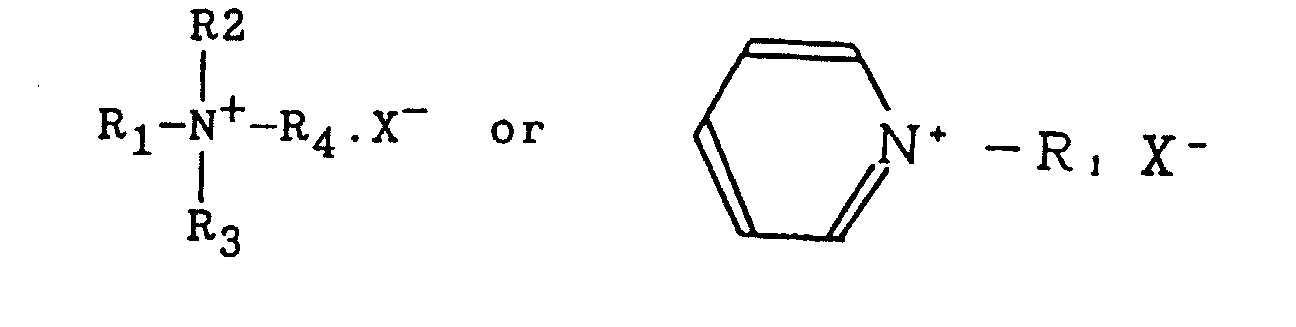
- A reagent according to claim 1 in which the ionic surface active agent is at least one amphoteric surfactant represented by the formula(R1, R2 and R3 are the same as those defined in claim 6).
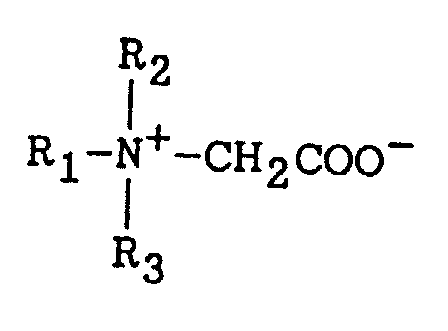
- A reagent according to claim 1 in which the organic compound is a substance which has at least six carbon atoms and has both hydrophobic group and anionic functional group, is charged in negative in an aqueous solution and is able to modify the shape of leucocytes by combining with them.
- A reagent according to claim 1 in which the acid dye is Brilliant Crocein MOO, Alizaline Violet 3R, Alphazurine A, Guinea Green B, Alizarin Yellow R.
- A reagent according to claim 1 in which a hydrophilic group of the nonionic surfactant is selected from the group consisting of polyoxyethylene glycol, polypropylene glycol and polyoxyethylene glycol-polyoxypropylene glycol block copolymer.
- A reagent according to claim 1 in which two or more nonionic surfactants are used.
- A reagent according to claim 1 in which the ionic surfactant is used in about 30-5,000 mg per liter of the total volume of the reagent.
- A reagent according to claim 1 in which the organic compound is used in about 50-5,000 mg per liter of the total volume of the reagent.
- A reagent according to claim 1 in which the reagent is composed of the two liquids comprising a first liquid containing at least one organic compound in an amount sufficient for making a morphological difference among the leucocytes by combining with the cationic charging components in the leucocytes and a second liquid containing at least one ionic surfactant in an amount sufficient for being able to lyse erythrocytes and cause damage to a part of the cell membranes of the leucocytes, the first and the second liquids containing a nonionic surfactant and a buffer for adjusting pH.
- A reagent according to claim 1 in which the reagent is mixed with blood, the mixing ratio of the reagent to the whole blood being in the range from 1 : 2 to 1 : 100 by volume.
- Use of a reagent according to any of the previous claims for analyzing leucocytes wherein the reagent is mixed with whole blood, the mixing ratio of the reagent to the whole blood being in the range from 1 : 2 to 1 : 100 by volume.
Applications Claiming Priority (3)
| Application Number | Priority Date | Filing Date | Title |
|---|---|---|---|
| JP32486093 | 1993-12-22 | ||
| JP324860/93 | 1993-12-22 | ||
| JP32486093A JP3320869B2 (en) | 1993-12-22 | 1993-12-22 | Leukocyte analysis reagent |
Publications (3)
| Publication Number | Publication Date |
|---|---|
| EP0660113A2 EP0660113A2 (en) | 1995-06-28 |
| EP0660113A3 EP0660113A3 (en) | 1995-09-06 |
| EP0660113B1 true EP0660113B1 (en) | 2000-03-15 |
Family
ID=18170461
Family Applications (1)
| Application Number | Title | Priority Date | Filing Date |
|---|---|---|---|
| EP94610056A Expired - Lifetime EP0660113B1 (en) | 1993-12-22 | 1994-12-20 | A reagent for analyzing leucocytes |
Country Status (10)
| Country | Link |
|---|---|
| US (1) | US5618733A (en) |
| EP (1) | EP0660113B1 (en) |
| JP (1) | JP3320869B2 (en) |
| KR (1) | KR100316393B1 (en) |
| CN (1) | CN1084473C (en) |
| AU (1) | AU685875B2 (en) |
| CA (1) | CA2138622C (en) |
| DE (1) | DE69423442T2 (en) |
| SG (1) | SG47950A1 (en) |
| TW (1) | TW332862B (en) |
Families Citing this family (46)
| Publication number | Priority date | Publication date | Assignee | Title |
|---|---|---|---|---|
| US5843608A (en) * | 1995-06-08 | 1998-12-01 | Coulter International Corp. | Reagent and method for differential determination of leukocytes in blood |
| FR2735579B1 (en) * | 1995-06-13 | 1997-09-19 | Hycel Groupe Lisabio | METHOD FOR DISCRIMINATION AND ISOLATION OF SUB-POPULATIONS OF LEUKOCYTES FROM BLOOD SAMPLES BY TREATMENT WITH POLYOXYETHYLENE 9-LAURYL ETHER, AND REAGENT FOR IMPLEMENTATION THEREFOR |
| JP4042925B2 (en) * | 1996-11-20 | 2008-02-06 | シスメックス株式会社 | Classification and counting method for immature leukocytes |
| US5830701A (en) * | 1997-03-28 | 1998-11-03 | Tao Medical Electronics Co., Ltd. | Method of detecting hematopoietic progenitor cells |
| JP3830613B2 (en) * | 1997-04-18 | 2006-10-04 | シスメックス株式会社 | Reagent for measuring leukocyte and hemoglobin concentration in blood |
| JP3783808B2 (en) * | 1997-05-19 | 2006-06-07 | シスメックス株式会社 | Leukocyte classification and counting reagent |
| US6667177B1 (en) * | 1997-11-11 | 2003-12-23 | Kowa Company, Ltd. | Method for counting leukocytes and apparatus for counting leukocytes |
| FR2782166B1 (en) * | 1998-08-04 | 2000-10-06 | Abx Sa | REAGENT FOR MEASURING HEMOGLOBIN AND DETERMINING LEUKOCYTES IN A BLOOD SAMPLE |
| RU2143693C1 (en) * | 1999-04-06 | 1999-12-27 | Коган Александр Харитонович | Method of determining leukocyte phagocytic activity |
| US6225124B1 (en) * | 1999-06-02 | 2001-05-01 | Sysmex Corporation | Diluting reagent and method compelling time-independent consistency in MCV assay |
| US6944493B2 (en) * | 1999-09-10 | 2005-09-13 | Akora, Inc. | Indocyanine green (ICG) compositions and related methods of use |
| US6351663B1 (en) | 1999-09-10 | 2002-02-26 | Akorn, Inc. | Methods for diagnosing and treating conditions associated with abnormal vasculature using fluorescent dye angiography and dye-enhanced photocoagulation |
| US6443976B1 (en) | 1999-11-30 | 2002-09-03 | Akorn, Inc. | Methods for treating conditions and illnesses associated with abnormal vasculature |
| JP4651868B2 (en) * | 2001-03-28 | 2011-03-16 | 株式会社ジーシー | Saliva pretreatment kit and saliva pretreatment method using the same |
| US6573102B2 (en) * | 2001-07-27 | 2003-06-03 | Coulter International Corp. | Lytic reagent composition for determination of nucleated blood cells |
| JP4025153B2 (en) | 2002-09-09 | 2007-12-19 | 株式会社ジーシー | Saliva pretreatment kit and saliva pretreatment method |
| AU2004243881B2 (en) * | 2003-05-27 | 2010-07-15 | Pointcare Technologies, Inc. | Enhanced cellular assay method for use in flow cytometry or similar instruments using optically resonant particles |
| US20060118359A1 (en) * | 2004-11-02 | 2006-06-08 | Purvis Harrison G | Temporary railing for a building including tensioning apparatus and associated methods |
| JP4794334B2 (en) * | 2006-03-22 | 2011-10-19 | シスメックス株式会社 | Urine sample analysis reagent and urine sample analysis method |
| CN101078720B (en) * | 2006-05-22 | 2010-12-01 | 深圳迈瑞生物医疗电子股份有限公司 | An improved reagent and method for classifying white blood cells |
| CN101078721B (en) * | 2006-05-23 | 2010-12-22 | 深圳迈瑞生物医疗电子股份有限公司 | Reagent and method for classifying white blood cells |
| JP4914656B2 (en) | 2006-06-26 | 2012-04-11 | シスメックス株式会社 | Reagent for sample analysis, reagent kit for sample analysis, and sample analysis method |
| CN101349644B (en) * | 2007-07-20 | 2012-06-27 | 深圳迈瑞生物医疗电子股份有限公司 | Leukocytes classification agent and use method thereof |
| MY150548A (en) * | 2007-09-27 | 2014-01-30 | Sysmex Corp | Reagent kit for sample analysis and sample analysis method |
| CN101464454B (en) * | 2007-12-18 | 2016-08-03 | 深圳迈瑞生物医疗电子股份有限公司 | Leucocyte classification reagent and method |
| CN101470108B (en) | 2007-12-24 | 2013-11-27 | 深圳迈瑞生物医疗电子股份有限公司 | Reagent and method for classifying leukocyte |
| CN101475754A (en) * | 2008-01-04 | 2009-07-08 | 深圳迈瑞生物医疗电子股份有限公司 | Asymmetric cyanine fluorescent dye, composition and application in biological sample dyeing |
| CN102016577B (en) * | 2008-05-09 | 2015-06-17 | 希森美康株式会社 | Blood analysis device, blood analysis method and hemolyzing agent |
| CN101602762B (en) | 2008-06-10 | 2013-10-16 | 深圳迈瑞生物医疗电子股份有限公司 | Asymmetric cyanine compound, preparation method and application thereof |
| CN101726579B (en) * | 2008-10-17 | 2014-06-18 | 深圳迈瑞生物医疗电子股份有限公司 | Blood test reagent and method |
| CN101723874B (en) * | 2008-10-31 | 2013-09-11 | 深圳迈瑞生物医疗电子股份有限公司 | Cyanine compound and application thereof in dyeing biological samples |
| CN101750476B (en) * | 2008-12-08 | 2015-06-03 | 深圳迈瑞生物医疗电子股份有限公司 | Blood analysis reagent and use method thereof |
| US8367358B2 (en) * | 2008-12-17 | 2013-02-05 | Shenzhen Mindray Bio-Medical Electronics Co., Ltd. | Reagent, kit and method for differentiating and counting leukocytes |
| CN101988082B (en) * | 2009-07-31 | 2015-04-08 | 深圳迈瑞生物医疗电子股份有限公司 | Leukocyte classified counting reagent, kit and preparation method thereof and method of leukocyte classified counting |
| CN102115456B (en) * | 2009-12-30 | 2014-08-20 | 深圳迈瑞生物医疗电子股份有限公司 | Cyanine compound, composition containing same and application in cell detection thereof |
| CN101975851A (en) * | 2010-09-13 | 2011-02-16 | 南京卡博生物科技有限公司 | Reagent for classifying leukocytes |
| EP3104177B1 (en) * | 2011-12-21 | 2020-11-25 | Beckman Coulter, Inc. | Method for labeling intracellular and extracellular targets of leukocytes |
| CN103698501B (en) * | 2013-12-23 | 2015-07-29 | 深圳开立生物医疗科技股份有限公司 | A kind of Cyanide-free hemolytic agent |
| CN106687810B (en) * | 2014-12-31 | 2019-10-22 | 深圳迈瑞生物医疗电子股份有限公司 | A non-diagnostic nucleated red blood cell alarm method, device and flow cytometer |
| CN104730236B (en) * | 2015-04-16 | 2017-12-12 | 三诺生物传感股份有限公司 | A kind of protein fixating reagent and its application |
| EP3286324B1 (en) * | 2015-04-20 | 2020-05-20 | Qiagen GmbH | Method, lysis solution and kit for selectively depleting animal nucleic acids in a sample |
| CN107402149A (en) * | 2017-07-07 | 2017-11-28 | 江苏康尚生物医疗科技有限公司 | A kind of hemolyzing reagent and the micro-fluidic chip for containing the reagent |
| CN110132899A (en) * | 2018-02-02 | 2019-08-16 | 深圳市帝迈生物技术有限公司 | A kind of hemolytic agent for leukocyte differential count |
| CN109238801B (en) * | 2018-10-19 | 2021-08-13 | 武汉百合龙腾生物科技有限责任公司 | A hemolytic agent for blood cell analysis |
| CN111006990A (en) * | 2019-12-31 | 2020-04-14 | 山东博科生物产业有限公司 | Reagent for analyzing blood cells and use thereof |
| CN114152556A (en) * | 2021-10-22 | 2022-03-08 | 深圳市国赛生物技术有限公司 | Leukocyte hemolytic agent, preparation method and blood cell analyzer |
Family Cites Families (16)
| Publication number | Priority date | Publication date | Assignee | Title |
|---|---|---|---|---|
| JPS5842971A (en) * | 1981-09-07 | 1983-03-12 | Fuji Photo Film Co Ltd | Microcapsule sensitized with antibody and measuring method of cellular immunity thereby |
| AU602129B2 (en) * | 1985-09-06 | 1990-10-04 | Technicon Instruments Corportion | Method for the determination of a differential white blood cell count |
| US5175109A (en) * | 1986-09-10 | 1992-12-29 | Toa Medical Electronics Co., Ltd. | Reagent for classifying leukocytes by flow cytometry |
| US5179026A (en) * | 1986-11-27 | 1993-01-12 | Toa Medical Electronics Co., Ltd. | Method of classifying leukocytes by flow cytometry and reagents used in the method |
| IL85532A (en) * | 1987-03-13 | 1992-03-29 | Coulter Electronics | Method and lytic reagent system for isolation,identification and/or analysis of leukocytes from whole blood samples |
| US5155044A (en) * | 1987-03-13 | 1992-10-13 | Coulter Electronics, Inc. | Lysing reagent system for isolation, identification and/or analysis of leukocytes from whole blood samples |
| JP2778745B2 (en) * | 1989-06-19 | 1998-07-23 | 東亜医用電子株式会社 | Reagent for differential measurement of leukocyte in blood |
| JP2836865B2 (en) * | 1989-10-23 | 1998-12-14 | 東亜医用電子株式会社 | Reagents for measuring leukocytes and hemoglobin in blood |
| FR2654744B1 (en) * | 1989-11-20 | 1992-03-13 | Abx Sa | REAGENT AND METHOD OF USING SAME FOR THE AUTOMATIC DETERMINATION IN FLOW CYTOMETRY OF AT LEAST ONE LEUKOCYTAIC SUB-POPULATION FROM TOTAL BLOOD. |
| FR2658300B1 (en) * | 1990-02-13 | 1992-05-29 | Abx Sa | REAGENT AND METHOD OF USING THE SAME FOR THE AUTOMATIC NUMBERING OF BASOPHILIC BLOOD LEUKOCYTES IN MEASURING DEVICES BY VARIATION OF RESISTIVITY. |
| US5242832A (en) * | 1990-03-01 | 1993-09-07 | Toa Medical Electronics Co., Ltd. | Reagent for measurement of leukocytes and hemoglobin in blood |
| US5250438A (en) * | 1990-05-09 | 1993-10-05 | Streck Laboratories, Inc. | Method for differential determination of white blood cells using diazolidinyl urea to stabilize white blood cells |
| US5227304A (en) * | 1991-01-16 | 1993-07-13 | Sequoia Turner Corporation | Method for counting whole blood diluent and detergent reagent system |
| US5350695A (en) * | 1991-12-05 | 1994-09-27 | Miles Inc. | Methods for the identification and characterization of reticulocytes in whole blood |
| EP0626067A4 (en) * | 1992-02-07 | 1997-06-25 | Abbott Lab | Method for accurately enumerating and sensitively qualifying heterogeneous cell populations in cytolytic processing conditions. |
| EP0598663B1 (en) * | 1992-11-19 | 2000-02-02 | Sysmex Corporation | A pretreatment method for blood analysis |
-
1993
- 1993-12-22 JP JP32486093A patent/JP3320869B2/en not_active Expired - Lifetime
-
1994
- 1994-12-09 TW TW083111457A patent/TW332862B/en not_active IP Right Cessation
- 1994-12-19 KR KR1019940034890A patent/KR100316393B1/en not_active Expired - Fee Related
- 1994-12-20 EP EP94610056A patent/EP0660113B1/en not_active Expired - Lifetime
- 1994-12-20 AU AU81578/94A patent/AU685875B2/en not_active Ceased
- 1994-12-20 SG SG1996005612A patent/SG47950A1/en unknown
- 1994-12-20 CN CN94119539A patent/CN1084473C/en not_active Expired - Fee Related
- 1994-12-20 CA CA002138622A patent/CA2138622C/en not_active Expired - Fee Related
- 1994-12-20 DE DE69423442T patent/DE69423442T2/en not_active Expired - Lifetime
- 1994-12-20 US US08/360,005 patent/US5618733A/en not_active Expired - Lifetime
Also Published As
| Publication number | Publication date |
|---|---|
| CN1127886A (en) | 1996-07-31 |
| US5618733A (en) | 1997-04-08 |
| CA2138622C (en) | 2005-06-14 |
| DE69423442T2 (en) | 2000-08-03 |
| AU685875B2 (en) | 1998-01-29 |
| EP0660113A3 (en) | 1995-09-06 |
| KR950019731A (en) | 1995-07-24 |
| CA2138622A1 (en) | 1995-06-23 |
| AU8157894A (en) | 1995-06-29 |
| CN1084473C (en) | 2002-05-08 |
| TW332862B (en) | 1998-06-01 |
| JP3320869B2 (en) | 2002-09-03 |
| EP0660113A2 (en) | 1995-06-28 |
| DE69423442D1 (en) | 2000-04-20 |
| SG47950A1 (en) | 1998-04-17 |
| JPH07181177A (en) | 1995-07-21 |
| KR100316393B1 (en) | 2002-02-28 |
Similar Documents
| Publication | Publication Date | Title |
|---|---|---|
| US5618733A (en) | Reagent for analyzing leucocytes | |
| KR100354048B1 (en) | Leukocyte Classification Method | |
| EP0874988B1 (en) | Reagent and method for differential determination of leukocytes in blood | |
| EP0598663B1 (en) | A pretreatment method for blood analysis | |
| KR100287583B1 (en) | Glaze Cell Reagent | |
| EP0305491B1 (en) | System for isolating and identifying leukocytes | |
| CA2077788C (en) | Reagent compositions and their use in the identification and characterization of reticulocytes in whole blood | |
| US5538893A (en) | Reagent for analyzing leukocytes and a method for classifying leukocytes | |
| US5155044A (en) | Lysing reagent system for isolation, identification and/or analysis of leukocytes from whole blood samples | |
| US6060322A (en) | Method for identification of reticulated cells | |
| US5686308A (en) | Reagent and method for differential determination of leukocytes in blood | |
| EP2166353B1 (en) | Reagent and reagent kit for analysis of primitive leukocyte | |
| JPH0534251A (en) | Method for preparing sample for classifying and counting leucocyte | |
| JP3345135B2 (en) | Blood analysis method | |
| US5843608A (en) | Reagent and method for differential determination of leukocytes in blood | |
| EP1684075A2 (en) | Method and reagent for classifying leukocytes in animal blood | |
| US6210969B1 (en) | Composition and method for differentiation of basophil and eosinophil subpopulations of leukocytes in blood | |
| US6214625B1 (en) | Composition and method for differentiation of basophils and eosinophils in blood | |
| US7416891B2 (en) | Reagent and method for classifying leucocytes |
Legal Events
| Date | Code | Title | Description |
|---|---|---|---|
| PUAI | Public reference made under article 153(3) epc to a published international application that has entered the european phase |
Free format text: ORIGINAL CODE: 0009012 |
|
| AK | Designated contracting states |
Kind code of ref document: A2 Designated state(s): DE FR GB IT |
|
| PUAL | Search report despatched |
Free format text: ORIGINAL CODE: 0009013 |
|
| AK | Designated contracting states |
Kind code of ref document: A3 Designated state(s): DE FR GB IT |
|
| 17P | Request for examination filed |
Effective date: 19951222 |
|
| 17Q | First examination report despatched |
Effective date: 19980924 |
|
| GRAG | Despatch of communication of intention to grant |
Free format text: ORIGINAL CODE: EPIDOS AGRA |
|
| RAP1 | Party data changed (applicant data changed or rights of an application transferred) |
Owner name: SYSMEX CORPORATION |
|
| GRAG | Despatch of communication of intention to grant |
Free format text: ORIGINAL CODE: EPIDOS AGRA |
|
| GRAG | Despatch of communication of intention to grant |
Free format text: ORIGINAL CODE: EPIDOS AGRA |
|
| GRAH | Despatch of communication of intention to grant a patent |
Free format text: ORIGINAL CODE: EPIDOS IGRA |
|
| GRAH | Despatch of communication of intention to grant a patent |
Free format text: ORIGINAL CODE: EPIDOS IGRA |
|
| GRAA | (expected) grant |
Free format text: ORIGINAL CODE: 0009210 |
|
| AK | Designated contracting states |
Kind code of ref document: B1 Designated state(s): DE FR GB IT |
|
| REF | Corresponds to: |
Ref document number: 69423442 Country of ref document: DE Date of ref document: 20000420 |
|
| ET | Fr: translation filed | ||
| ITF | It: translation for a ep patent filed | ||
| PLBE | No opposition filed within time limit |
Free format text: ORIGINAL CODE: 0009261 |
|
| STAA | Information on the status of an ep patent application or granted ep patent |
Free format text: STATUS: NO OPPOSITION FILED WITHIN TIME LIMIT |
|
| 26N | No opposition filed | ||
| REG | Reference to a national code |
Ref country code: GB Ref legal event code: IF02 |
|
| PGFP | Annual fee paid to national office [announced via postgrant information from national office to epo] |
Ref country code: GB Payment date: 20101215 Year of fee payment: 17 Ref country code: IT Payment date: 20101224 Year of fee payment: 17 |
|
| PGFP | Annual fee paid to national office [announced via postgrant information from national office to epo] |
Ref country code: DE Payment date: 20101215 Year of fee payment: 17 |
|
| PGFP | Annual fee paid to national office [announced via postgrant information from national office to epo] |
Ref country code: FR Payment date: 20111219 Year of fee payment: 18 |
|
| GBPC | Gb: european patent ceased through non-payment of renewal fee |
Effective date: 20121220 |
|
| REG | Reference to a national code |
Ref country code: FR Ref legal event code: ST Effective date: 20130830 |
|
| REG | Reference to a national code |
Ref country code: DE Ref legal event code: R119 Ref document number: 69423442 Country of ref document: DE Effective date: 20130702 |
|
| PG25 | Lapsed in a contracting state [announced via postgrant information from national office to epo] |
Ref country code: DE Free format text: LAPSE BECAUSE OF NON-PAYMENT OF DUE FEES Effective date: 20130702 |
|
| PG25 | Lapsed in a contracting state [announced via postgrant information from national office to epo] |
Ref country code: GB Free format text: LAPSE BECAUSE OF NON-PAYMENT OF DUE FEES Effective date: 20121220 Ref country code: FR Free format text: LAPSE BECAUSE OF NON-PAYMENT OF DUE FEES Effective date: 20130102 |
|
| PG25 | Lapsed in a contracting state [announced via postgrant information from national office to epo] |
Ref country code: IT Free format text: LAPSE BECAUSE OF NON-PAYMENT OF DUE FEES Effective date: 20121220 |