EP0649902B1 - Method for screening of prophylactic and therapeutic agents for IgE-related diseases - Google Patents
Method for screening of prophylactic and therapeutic agents for IgE-related diseases Download PDFInfo
- Publication number
- EP0649902B1 EP0649902B1 EP94116646A EP94116646A EP0649902B1 EP 0649902 B1 EP0649902 B1 EP 0649902B1 EP 94116646 A EP94116646 A EP 94116646A EP 94116646 A EP94116646 A EP 94116646A EP 0649902 B1 EP0649902 B1 EP 0649902B1
- Authority
- EP
- European Patent Office
- Prior art keywords
- ige
- mice
- transplanted
- group
- igela2
- Prior art date
- Legal status (The legal status is an assumption and is not a legal conclusion. Google has not performed a legal analysis and makes no representation as to the accuracy of the status listed.)
- Expired - Lifetime
Links
- 0 CC*C1C2C(**C**C*)C(C)CC12 Chemical compound CC*C1C2C(**C**C*)C(C)CC12 0.000 description 1
Images




Classifications
-
- A—HUMAN NECESSITIES
- A01—AGRICULTURE; FORESTRY; ANIMAL HUSBANDRY; HUNTING; TRAPPING; FISHING
- A01K—ANIMAL HUSBANDRY; AVICULTURE; APICULTURE; PISCICULTURE; FISHING; REARING OR BREEDING ANIMALS, NOT OTHERWISE PROVIDED FOR; NEW BREEDS OF ANIMALS
- A01K67/00—Rearing or breeding animals, not otherwise provided for; New or modified breeds of animals
- A01K67/027—New or modified breeds of vertebrates
- A01K67/0271—Chimeric vertebrates, e.g. comprising exogenous cells
-
- A—HUMAN NECESSITIES
- A61—MEDICAL OR VETERINARY SCIENCE; HYGIENE
- A61K—PREPARATIONS FOR MEDICAL, DENTAL OR TOILETRY PURPOSES
- A61K49/00—Preparations for testing in vivo
- A61K49/0004—Screening or testing of compounds for diagnosis of disorders, assessment of conditions, e.g. renal clearance, gastric emptying, testing for diabetes, allergy, rheuma, pancreas functions
- A61K49/0008—Screening agents using (non-human) animal models or transgenic animal models or chimeric hosts, e.g. Alzheimer disease animal model, transgenic model for heart failure
-
- A—HUMAN NECESSITIES
- A01—AGRICULTURE; FORESTRY; ANIMAL HUSBANDRY; HUNTING; TRAPPING; FISHING
- A01K—ANIMAL HUSBANDRY; AVICULTURE; APICULTURE; PISCICULTURE; FISHING; REARING OR BREEDING ANIMALS, NOT OTHERWISE PROVIDED FOR; NEW BREEDS OF ANIMALS
- A01K2267/00—Animals characterised by purpose
- A01K2267/03—Animal model, e.g. for test or diseases
- A01K2267/035—Animal model for multifactorial diseases
- A01K2267/0381—Animal model for diseases of the hematopoietic system
Definitions
- the present invention relates to a method of screening prophylactic and therapeutic agents for IgE-related diseases using the same.
- One approach to this end comprises inducing an IgE-mediated allergic reaction and checking to see how far this reaction is inhibited.
- Such approach includes a method comprising the use of animals subjected to passive immunization with purified IgE or animals subjected to active immunization with an antigen as model animals. Both methods are useful but not suited for inducing an allergic reaction repeatedly for investigating the inhibitory effect of test substances.
- IgE must be repeatedly administered in order that the allergic reaction may be induced in repetition, with the result that a drug screening cannot be expediently carried out.
- the latter method is also disadvantageous in that even though an allergic reaction can be repeatedly induced, not only the antigen-specific IgE but also other antibodies such as the reaction-interfering antigen-specific IgG etc. are produced in the body so that the inhibitory effect on IgE-mediated allergic reaction cannot be accurately estimated.
- An object of the present invention is to solve the above-described problems and to provide an animal model which enables repeated .observation of IgE-mediated allergic reaction and expedient screening of prophylactic and therapeutic agents for IgE-related diseases and a method of screening prophylactic and therapeutic agents for IgE-related diseases using the same.
- the above-mentioned object can be achieved by a method of screening prophylactic and therapeutic agents for IgE-related diseases using a rodent model which is constructed by transplanting an IgE-producing vegetative cell in a non-rejecting rodent to induce IgE-mediated allergic reaction caused by the transplanted cells.
- Rodents such as mouse, rat, guinea pig, or rabbit are employed in the present invention. Particularly, mouse is preferably used.
- take means successful transplantation, namely, that transplanted cells are not rejected by the recipient animal and remain viable in its body.
- the IgE-producing vegetative cell is selected from the group of hybridomas consisting of IGELa2 (ATCC No. TIB142), IGELb4 (ATCC No. TIB141) and SE-1.3 (ATCC No. HB137) and the myeloma U266B1 (ATCC No. TIB196).
- the means for constructing the animal model is not critical but the following procedures are recommended.
- the method comprising transplanting a suspension of an IgE-producing hybridoma or myeloma in a syngeneic animal may be mentioned.
- IGELa2 hybridoma anti 2,4,6-trinitrophenyl
- IGELb4 hybridoma anti 2,4,6-trinitrophenyl
- SE-1.3 hybridoma anti phenylarsonate
- transplanting an IgE-producing hybridoma or myeloma in a congenitally immunodeficient animal may be mentioned.
- Transplantation into nude mice or SCID mice is a typical example.
- the method comprising transplanting an IgE-producing hybridoma or myeloma in an animal artificially rendered immunodeficient by X-ray or other treatment may be mentioned.
- the method of transplantation is not particularly limited, but generally, the cells to be transplanted are suspended in Hanks' solution, PBS and the like and the resulting suspension is injected at the transplantation site using a syringe.
- the site of transplanting an IgE-producing hybridoma or myeloma is not critical but the cells are preferably inoculated subcutaneously or intraperitoneally.
- the inoculum size of an IgE-producing hybridoma or myeloma is generally 10 3 -10 10 and preferably 10 5 -10 8 cells suspended in 10 to 1,000 ⁇ l of Hanks' solution and the like.
- a remarkable allergy-like symptom can be repeatedly induced by performing an antigen challenge after 6 to 10 days, preferably 7 to 9 days of transplantation of the IgE-producing cells.
- the antigen challenge can be carried out by a known method conventionally employed, for example, using an antigen to IgE produced by the vegetative cells, such as picryl chloride.
- an antigen to IgE produced by the vegetative cells such as picryl chloride.
- Various antigens other than picryl chloride can be used depending on the site of challenge and the transplanted cells as exemplified below.
- Transplanted cells Site of challenge Antigen IGELa2 skin e.g., auricle
- TNP-HSA eye TNP-lysine digestive tract
- TNP-HSA SE-1.3 skin e.g., auricle
- arsanilated HSA U266B1 skin e.g., auricle
- the animal into which the vegetative cells have been transplanted can be fed in the same manner as prior to transplantation.
- Screening of prophylactic and therapeutic agents for IgE-related diseases using the animal according to the present invention is carried out by checking as an index as to whether allergy-like symptom induced by the antigen challenge is inhibited by administration of the candidate prophylactic and therapeutic agents or not.
- the antigen challenge induces ear edema when directed to the ear, conjunctivitis-like symptoms when directed to the eye, or rhinitis-like symptoms when directed to the nasal cavity, thus allowing a screening to be carried out using the inhibition of any of such responses as the index.
- the prophylactic and therapeutic agents for IgE-related diseases to be screened out using the animal according to the present invention include compositions or compounds useful for preventing and treating IgE-related type I allergic diseases such as bronchial asthma, allergic conjunctivitis, allergic rhinitis, pollen allergy, atopic dermatitis, urticaria and allergic gastroenteritis.
- Screening of prophylactic and therapeutic agents for IgE-related diseases can be efficiently and expediently carried out by effecting the antigen challenge repeatedly using the animal model according to the present invention to induce IgE-mediated allergic reaction repeatedly.
- mice Female BALB/c mice (aged 8 weeks or older) were inoculated with 10 6 cells of the anti-TNP•IgE-producing hybridoma IGELa2 (ATCC No. TIB142) subcutaneously at the back.
- the anti-TNP•IgE-producing hybridoma IGELa2 (ATCC No. TIB142) was rinsed with Hanks' solution and suspended in the same solution.
- the resulting suspension (10 6 cells/200 ⁇ l) was transplanted subcutaneously at the back of female BALB/c mice (aged 8 weeks or older) using a syringe. (Transplantation was carried out in the same manner in the following Test Examples.)
- the blood anti-TNP•IgE level of the treated mice was determined by EIA with the passage of time. EIA was carried out using a TNP-HSA-coated plate (10 ⁇ g/ml, 50 ⁇ l/well) as follows.
- test serum was diluted 30- to 3750-fold with 1% BSA/TBS and 50 ⁇ l aliquots were distributed to the plate and incubated at 4°C overnight. The plate was then washed with 0.9% NaCl/0.05% Tween 20 and the bound anti-TNP•IgE was detected using POD-labelled sheep anti-mouse IgE (1:1000, The Binding Site Ltd.) and 1 mg/ml o-phenylenediamine/0.006% H 2 O 2 .
- purified IgE standard the IgE purified from a culture supernatant of anti-TNP•IgE-producing hybridoma IGELb4 (ATCC No. TIB141) was used. As a control, no hybridoma-transplanted mice were tested in the same manner as described above.
- the results are shown in Fig. 1.
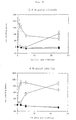
- the blood anti-TNP•IgE level rose with the passage of time in the hybridoma-transplanted mice but was not elevated in the control mice.
- a similar result was obtained in mice inoculated with 10 7 cells of the hybridoma.
- mice were inoculated with 10 6 IGELa2 cells subcutaneously at the back in the same manner as in Test Example 1.
- 10 ⁇ l of 4% picryl chloride in acetone was applied to the left ear of the mice and untreated mice (antigen challenge) and the time course of ear swelling was determined. The difference between the thickness of the ear before the challenge and that after the challenge was used as the index. Determinations were made using dialmeter gauge PEACOCK available from Ozaki Seisakusho.
- ear swelling became maximal in 1-2 hours after antigen challenge in the hybridoma-transplanted mice, no swelling was observed within 1-2 hours after antigen challenge in the unoperated mice. In mice inoculated with 10 7 hybridoma cells, ear swelling also became maximal in 1-2 hours after antigen challenge.
- mice were inoculated with 10 6 IGELa2 hybridoma cells and the first antigen challenge was carried out using 0.4% or 4% picryl chloride (PC) solution on day 8 after inoculation. Control mice were also subjected to antigen challenge.
- PC picryl chloride
- mice not only enables confirmation of the preventive and inhibitory effect of antiallergic agents on primary allergic reaction but also confirmation of the preventive and inhibitory effect on allergic reactions due to the second and subsequent exposures to the antigen.
- the animal model we constructed allows an allergic reaction to be induced more often than once after a single inoculation with hybridoma cells and is very useful for confirming the efficacy of the candidates of a prophylactic and therapeutic agent for IgE-related diseases.
- the first antigen challenge was carried out by applying 10 ⁇ l of 0.4% picryl chloride-acetone to the left ear of mice on day 8 after hybridoma transplantation and the second antigen challenge was carried out in the same manner on day 14.
- sFc ⁇ RI ⁇ JP-A-169776
- PBS was administered to the control group in place of sFc ⁇ RI ⁇ .
- the effect of sFc ⁇ RI ⁇ was evaluated using the index described in Test Example 2.
Landscapes
- Life Sciences & Earth Sciences (AREA)
- Health & Medical Sciences (AREA)
- Environmental Sciences (AREA)
- Animal Behavior & Ethology (AREA)
- Zoology (AREA)
- Gastroenterology & Hepatology (AREA)
- Rheumatology (AREA)
- Animal Husbandry (AREA)
- Engineering & Computer Science (AREA)
- Biomedical Technology (AREA)
- Diabetes (AREA)
- Endocrinology (AREA)
- Cell Biology (AREA)
- Pathology (AREA)
- Biodiversity & Conservation Biology (AREA)
- Toxicology (AREA)
- Urology & Nephrology (AREA)
- Epidemiology (AREA)
- General Health & Medical Sciences (AREA)
- Public Health (AREA)
- Veterinary Medicine (AREA)
- Micro-Organisms Or Cultivation Processes Thereof (AREA)
- Preparation Of Compounds By Using Micro-Organisms (AREA)
- Medicines Containing Material From Animals Or Micro-Organisms (AREA)
Description
- The present invention relates to a method of screening prophylactic and therapeutic agents for IgE-related diseases using the same.
- Recently, as the mechanism of the allergic reaction has been elucidated, attention is given to the role of IgE and development of various antiallergic drugs has been vigorously conducted with targeting for IgE. In the development of the antiallergic drug, a screening of candidate substances is of importance.
- One approach to this end comprises inducing an IgE-mediated allergic reaction and checking to see how far this reaction is inhibited. Such approach includes a method comprising the use of animals subjected to passive immunization with purified IgE or animals subjected to active immunization with an antigen as model animals. Both methods are useful but not suited for inducing an allergic reaction repeatedly for investigating the inhibitory effect of test substances.
- Thus, in the former method, IgE must be repeatedly administered in order that the allergic reaction may be induced in repetition, with the result that a drug screening cannot be expediently carried out.
- The latter method is also disadvantageous in that even though an allergic reaction can be repeatedly induced, not only the antigen-specific IgE but also other antibodies such as the reaction-interfering antigen-specific IgG etc. are produced in the body so that the inhibitory effect on IgE-mediated allergic reaction cannot be accurately estimated.
- E. Kilchherr et al describe the regulation of human IgE response in hu-PBL-SCID mice (Cellular Immunology 151, 241-256(1993)).
- An object of the present invention is to solve the above-described problems and to provide an animal model which enables repeated .observation of IgE-mediated allergic reaction and expedient screening of prophylactic and therapeutic agents for IgE-related diseases and a method of screening prophylactic and therapeutic agents for IgE-related diseases using the same.
- The above-mentioned object can be achieved by a method of screening prophylactic and therapeutic agents for IgE-related diseases using a rodent model which is constructed by transplanting an IgE-producing vegetative cell in a non-rejecting rodent to induce IgE-mediated allergic reaction caused by the transplanted cells.
-
- Fig. 1 graphically shows the time course of anti-trinitrophenyl (TNP)•IgE level in blood collected from each mouse into which anti-TNP•IgE producing hybridoma IGELa2 has been transplanted or not transplanted. In Fig. 1, A shows the results of untransplanted group, B shows the results of 106 IGELa2-transplanted group and C shows the results of 107 IGELa2-transplanted group.
- Fig. 2 shows the results of ear swelling in antigen-challenged mice into which anti-TNP•IgE-producing hybridoma IGELa2 has been transplanted or not transplanted. In Fig. 2, - □ - stands for control group (n=7), - o - for 106 IGELa2-transplanted group (n=7) and - - for 107 IGELa2-transplanted group (n=6 or 7).
- Fig. 3 shows the results of ear swelling in the first antigen-challenged mice into which anti-TNP•IgE-producing hybridoma IGELa2 has been transplanted or not transplanted. In Fig. 3, - o - stands for 0.4% picryl chloride (PC)-challenged untransplanted group (n=12), - - for 4% PC-challenged untransplanted group (n=12), - □ - for 0.4% PC-challenged IGELa2-transplanted group (n=12), - ▪ - for 4% PC-challenged IGELa2-transplanted group (n=11).
- Fig. 4 shows the results of ear swelling in the second antigen-challenged mice into which anti-TNP•IgE-producing hybridoma IGELa2 has been transplanted or not transplanted. The mice used in the experiment of Fig. 3 were challenged again 6 days later. In Fig. 4, - o - stands for IGELa2-transplanted twice challenged group (n=6), - □ - for untransplanted twice challenged group (n=6), - - for IGELa2-transplanted once challenged group, - ▪ - for untransplanted once challenged group.
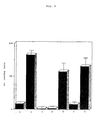
- Fig. 5 shows the results of ear swelling in anti-TNP•IgE-producing hybridoma or non-producing hybridoma-transplanted mice. In Fig. 5, column A stands for untransplanted group (n=12), B for a2-transplanted group (n=12), C for a2.1-transplanted group (n=6), D for a2.3-transplanted group (n=6), E for a2.4-transplanted group (n=6), F for a2.15-transplanted mice (n=6) and G for a2.16-transplanted group (n=6).
- Fig. 6 shows the results of ear swelling in various antigen-challenged anti-TNP•IgE-producing hybridoma IGELa2-transplanted mice. In Fig. 6, column A stands for 0.4% PC-challenged untransplanted group (n=12), column B for 0.4% PC-challenged transplanted group (n=12), column C for OX-challenged transplanted group (n=6) and column D for FITC-challenged transplanted group (n=6).
- Fig. 7 shows the results of ear swelling of control mice and mice to which human sFcεRIα has been administered after 2 hours of first and second antigen challenges. In Fig. 7, - □ - stands for sFcεRIα-treated IGELa2-transplanted group, - o - for sFcεRIα-treated untransplanted group, - ▪ - for untreated IGELa2-transplanted group and - - for untreated untransplanted group.
-
- Rodents, such as mouse, rat, guinea pig, or rabbit are employed in the present invention. Particularly, mouse is preferably used.
- The term "take" means successful transplantation, namely, that transplanted cells are not rejected by the recipient animal and remain viable in its body.
- The IgE-producing vegetative cell is selected from the group of hybridomas consisting of IGELa2 (ATCC No. TIB142), IGELb4 (ATCC No. TIB141) and SE-1.3 (ATCC No. HB137) and the myeloma U266B1 (ATCC No. TIB196).
- The means for constructing the animal model is not critical but the following procedures are recommended.
- First, the method comprising transplanting a suspension of an IgE-producing hybridoma or myeloma in a syngeneic animal may be mentioned. For example, the procedure of transplanting IGELa2 hybridoma (anti 2,4,6-trinitrophenyl) (ATCC No. TIB142) in BALB/c mice, IGELb4 hybridoma (anti 2,4,6-trinitrophenyl) (ATCC No. TIB141) in (C57BL/6 X BALB/c)F1 mice or (BALB/c X C57BL/6)F1 mice, or SE-1.3 hybridoma (anti phenylarsonate) (ATCC No. HB137) in (A/J X BALB/c)F1 mice or (BALB/c X A/J)F1 mice may be mentioned.
- Secondly, the method comprising transplanting an IgE-producing hybridoma or myeloma in a congenitally immunodeficient animal may be mentioned. Transplantation into nude mice or SCID mice is a typical example.
- Thirdly, the method comprising transplanting an IgE-producing hybridoma or myeloma in an animal artificially rendered immunodeficient by X-ray or other treatment may be mentioned.
- The method of transplantation is not particularly limited, but generally, the cells to be transplanted are suspended in Hanks' solution, PBS and the like and the resulting suspension is injected at the transplantation site using a syringe.
- The site of transplanting an IgE-producing hybridoma or myeloma is not critical but the cells are preferably inoculated subcutaneously or intraperitoneally.
- The inoculum size of an IgE-producing hybridoma or myeloma is generally 103-1010 and preferably 105-108 cells suspended in 10 to 1,000 µl of Hanks' solution and the like.
- In the animal model according to the invention, a remarkable allergy-like symptom can be repeatedly induced by performing an antigen challenge after 6 to 10 days, preferably 7 to 9 days of transplantation of the IgE-producing cells.
- The antigen challenge can be carried out by a known method conventionally employed, for example, using an antigen to IgE produced by the vegetative cells, such as picryl chloride. Various antigens other than picryl chloride can be used depending on the site of challenge and the transplanted cells as exemplified below.
Transplanted cells Site of challenge Antigen IGELa2 skin (e.g., auricle) TNP-HSA eye TNP-lysine digestive tract TNP-HSA SE-1.3 skin (e.g., auricle) p-azobenzenarsonate-L-tyrosine-t-Boc-n-succinimide ester digestive tract arsanilated HSA U266B1 skin (e.g., auricle) anti-human IgE antigen - The animal into which the vegetative cells have been transplanted can be fed in the same manner as prior to transplantation.
- Screening of prophylactic and therapeutic agents for IgE-related diseases using the animal according to the present invention is carried out by checking as an index as to whether allergy-like symptom induced by the antigen challenge is inhibited by administration of the candidate prophylactic and therapeutic agents or not. Specifically, the antigen challenge induces ear edema when directed to the ear, conjunctivitis-like symptoms when directed to the eye, or rhinitis-like symptoms when directed to the nasal cavity, thus allowing a screening to be carried out using the inhibition of any of such responses as the index.
- The prophylactic and therapeutic agents for IgE-related diseases to be screened out using the animal according to the present invention include compositions or compounds useful for preventing and treating IgE-related type I allergic diseases such as bronchial asthma, allergic conjunctivitis, allergic rhinitis, pollen allergy, atopic dermatitis, urticaria and allergic gastroenteritis.
- Screening of prophylactic and therapeutic agents for IgE-related diseases can be efficiently and expediently carried out by effecting the antigen challenge repeatedly using the animal model according to the present invention to induce IgE-mediated allergic reaction repeatedly.
- The present invention will be described in more detail with reference to the following Example and Test Examples, but is not to be limited thereto.
- Female BALB/c mice (aged 8 weeks or older) were inoculated with 106 cells of the anti-TNP•IgE-producing hybridoma IGELa2 (ATCC No. TIB142) subcutaneously at the back.
- The anti-TNP•IgE-producing hybridoma IGELa2 (ATCC No. TIB142) was rinsed with Hanks' solution and suspended in the same solution. The resulting suspension (106 cells/200 µl) was transplanted subcutaneously at the back of female BALB/c mice (aged 8 weeks or older) using a syringe. (Transplantation was carried out in the same manner in the following Test Examples.) The blood anti-TNP•IgE level of the treated mice was determined by EIA with the passage of time. EIA was carried out using a TNP-HSA-coated plate (10 µg/ml, 50 µl/well) as follows.
- The test serum was diluted 30- to 3750-fold with 1% BSA/TBS and 50 µl aliquots were distributed to the plate and incubated at 4°C overnight. The plate was then washed with 0.9% NaCl/0.05
% Tween 20 and the bound anti-TNP•IgE was detected using POD-labelled sheep anti-mouse IgE (1:1000, The Binding Site Ltd.) and 1 mg/ml o-phenylenediamine/0.006% H2O2. As the purified IgE standard, the IgE purified from a culture supernatant of anti-TNP•IgE-producing hybridoma IGELb4 (ATCC No. TIB141) was used. As a control, no hybridoma-transplanted mice were tested in the same manner as described above. - The results are shown in Fig. 1. The blood anti-TNP•IgE level rose with the passage of time in the hybridoma-transplanted mice but was not elevated in the control mice. A similar result was obtained in mice inoculated with 107 cells of the hybridoma.
- Mice were inoculated with 106 IGELa2 cells subcutaneously at the back in the same manner as in Test Example 1. On
day 8 after inoculation, 10 µl of 4% picryl chloride in acetone was applied to the left ear of the mice and untreated mice (antigen challenge) and the time course of ear swelling was determined. The difference between the thickness of the ear before the challenge and that after the challenge was used as the index. Determinations were made using dialmeter gauge PEACOCK available from Ozaki Seisakusho. - The results are shown in Fig. 2. Whereas ear swelling became maximal in 1-2 hours after antigen challenge in the hybridoma-transplanted mice, no swelling was observed within 1-2 hours after antigen challenge in the unoperated mice. In mice inoculated with 107 hybridoma cells, ear swelling also became maximal in 1-2 hours after antigen challenge.
- The above finding of the maximal ear swelling occurring 1-2 hours after antigen challenge in hybridoma-transplanted mice indicated that the efficacy of an antiallergic agent can be estimated from the degree of inhibition of ear swelling during this time period.
- As in Test Example 2, mice were inoculated with 106 IGELa2 hybridoma cells and the first antigen challenge was carried out using 0.4% or 4% picryl chloride (PC) solution on
day 8 after inoculation. Control mice were also subjected to antigen challenge. - The results are shown in Fig. 3. It was found that ear swelling became maximal in 2 hours after antigen challenge just as in Test Example 2.
- Then, on
day 6 after the first antigen challenge, the second antigen challenge was performed in the same manner as the first challenge and using the index described in Test Example 2, the time course of ear swelling was investigated. - The results are shown in Fig. 4. In the hybridoma-transplanted mice, ear swelling became maximal in 2 hours just as after the first antigen challenge and the index value was substantially equal to that at 2 hours after the first challenge. In contrast, the control mice showed no swelling of the ear.
- The above results indicate that even if the antigen challenge is performed more than once at the same site in hybridoma-transplanted mice, ear swelling may be repeatedly induced with good reproducibility.
- The results further indicate that the use of such hybridoma-transplanted mice not only enables confirmation of the preventive and inhibitory effect of antiallergic agents on primary allergic reaction but also confirmation of the preventive and inhibitory effect on allergic reactions due to the second and subsequent exposures to the antigen.
-
- (1) As in Test Example 1, mice were inoculated with 106 hybridoma cells subcutaneously at the back. As hybridomas, the above-mentioned IGELa2 and its subclones a2.1, a2.3, a2.4, a2.15 and a2.6 were used. Of these hybridomas, IGELa2, a2.4 and a2.16 were anti-TNP•IgE-producers, but neither IGEL a2.1, a2.3 nor a2.15 secreted anti-TNP•IgE. Antigen challenge was carried out in the same manner as in Test Example 2 and the index value was determined 2 hours after the challenge.The results are shown in Fig. 5. As shown in Fig. 5, ear swelling was observed with the anti-TNP•IgE producers only.
- (2) Antigen challenge in 106 IGELa2-transplanted mice was carried out using, respectively, 1% oxazolone (OX) and 1% fluorescein isothiocyanate (FITC) as well as 0.4% picryl chloride (PC).
-
- The results are shown in Fig. 6. As shown in Fig. 6, ear swelling was observed only in challenges with picryl chloride and not found with the other antigens.
- From the results obtained in (1) and (2), it was found that ear swelling requires anti-TNP•IgE and a specific antigen which is recognized by IgE and ear swelling in this assay is an anti-TNP•IgE-mediated type I allergic reaction.
- The animal model we constructed allows an allergic reaction to be induced more often than once after a single inoculation with hybridoma cells and is very useful for confirming the efficacy of the candidates of a prophylactic and therapeutic agent for IgE-related diseases.
- As in Test Example 3, the first antigen challenge was carried out by applying 10 µl of 0.4% picryl chloride-acetone to the left ear of mice on
day 8 after hybridoma transplantation and the second antigen challenge was carried out in the same manner onday 14. - On the other hand, sFcεRIα (JP-A-169776) was administered intravenously in a dose of 25 µg/mouse on
days 7 and 8 after transplantation and in a dose of 100 µg/mouse on days 9, 11, 13 and 15. PBS was administered to the control group in place of sFcεRIα. The effect of sFcεRIα was evaluated using the index described in Test Example 2. - The results are shown in Fig. 7. At 2 hours after the first antigen challenge, there was no difference between the control group and the human sFcεRIα-treated group. At 2 hours after the second antigen challenge, however, whereas the control mice showed ear swelling in a degree comparable to that after the first antigen challenge, the ear swelling reaction was inhibited in the mice treated with sFcεRIα.
- The above findings show that sFcεRIα completely inhibits allergic reactions due to the second exposure and suggests it will do the same following further exposures to the antigen in patients with allergy and is, therefore, a very satisfactory prophylactic drug.
Claims (2)
- A method of screening prophylactic and therapeutic agents for IgE-related diseases which comprises subjecting a rodent model, which is constructed by transplanting an IgE-producing vegetative cell selected from the group consisting of IGELa2 (ATCC No. TIB142), IGELb4 (ATCC No. TIB141), SE-1.3 (ATCC No. HB137) and U266B1 (ATCC No. TIB196) in a non-rejecting rodent, to antigen challenge, administering a candidate substance to the rodent and determining an antiallergic effect of the substance.
- The method of screening prophylactic and therapeutic agents of Claim 1, wherein said rodent is selected from the group consisting of mouse, rat, guinea pig and rabbit.
Applications Claiming Priority (3)
| Application Number | Priority Date | Filing Date | Title |
|---|---|---|---|
| JP264802/93 | 1993-10-22 | ||
| JP26480293 | 1993-10-22 | ||
| JP26480293 | 1993-10-22 |
Publications (2)
| Publication Number | Publication Date |
|---|---|
| EP0649902A1 EP0649902A1 (en) | 1995-04-26 |
| EP0649902B1 true EP0649902B1 (en) | 2003-01-22 |
Family
ID=17408423
Family Applications (1)
| Application Number | Title | Priority Date | Filing Date |
|---|---|---|---|
| EP94116646A Expired - Lifetime EP0649902B1 (en) | 1993-10-22 | 1994-10-21 | Method for screening of prophylactic and therapeutic agents for IgE-related diseases |
Country Status (5)
| Country | Link |
|---|---|
| EP (1) | EP0649902B1 (en) |
| KR (1) | KR950010908A (en) |
| CA (1) | CA2118457A1 (en) |
| DE (1) | DE69432042T2 (en) |
| ES (1) | ES2187515T3 (en) |
Families Citing this family (3)
| Publication number | Priority date | Publication date | Assignee | Title |
|---|---|---|---|---|
| KR100455310B1 (en) * | 1996-12-31 | 2005-01-13 | 에스케이케미칼주식회사 | Rat model of hepatocellular carcinoma and method for manufacturing the same by using hepatocarcinoma cell line, mca-rh7777 |
| DE69828574T2 (en) * | 1997-11-14 | 2005-10-06 | Sankyo Co., Ltd. | Transgenic animal as a model for allergy and its use |
| CN107913407B (en) * | 2017-12-11 | 2020-12-11 | 中国医学科学院北京协和医院 | A method for constructing a mouse asthma model sensitized to Humulus japonicus pollen |
-
1994
- 1994-10-19 CA CA002118457A patent/CA2118457A1/en not_active Abandoned
- 1994-10-21 DE DE69432042T patent/DE69432042T2/en not_active Expired - Fee Related
- 1994-10-21 EP EP94116646A patent/EP0649902B1/en not_active Expired - Lifetime
- 1994-10-21 KR KR1019940026930A patent/KR950010908A/en not_active Withdrawn
- 1994-10-21 ES ES94116646T patent/ES2187515T3/en not_active Expired - Lifetime
Non-Patent Citations (2)
| Title |
|---|
| PASSMORE R. ET AL: "A COMPANION TO MEDICAL STUDIES", 1970, BLACKWELL SCIENTIFIC PUBLICATIONS, OXFORD, GB * |
| ROITT I.M. ET AL: "IMMUNOLOGY", 1982, GOWER MEDICAL PUBLISHING, LONDON * |
Also Published As
| Publication number | Publication date |
|---|---|
| DE69432042T2 (en) | 2003-07-17 |
| EP0649902A1 (en) | 1995-04-26 |
| ES2187515T3 (en) | 2003-06-16 |
| CA2118457A1 (en) | 1995-04-23 |
| DE69432042D1 (en) | 2003-02-27 |
| KR950010908A (en) | 1995-05-15 |
Similar Documents
| Publication | Publication Date | Title |
|---|---|---|
| AP660A (en) | A method of treatment of parasitic infection using IgE antagonists. | |
| Shields et al. | Inhibition of allergic reactions with antibodies to IgE | |
| Chen et al. | Asymmetric activation of microglia in the hippocampus drives anxiodepressive consequences of trigeminal neuralgia in rodents | |
| Wofsy | Administration of monoclonal anti-T cell antibodies retards murine lupus in BXSB mice. | |
| Uermösi et al. | IgG‐mediated down‐regulation of IgE bound to mast cells: a potential novel mechanism of allergen‐specific desensitization | |
| Bieber et al. | Human antibodies accelerate the rate of remyelination following lysolecithin‐induced demyelination in mice | |
| Li et al. | Antibody independent crescentic glomerulonephritis in μ chain deficient mice | |
| Carteron et al. | Treatment of murine lupus with F (ab') 2 fragments of monoclonal antibody to L3T4. Suppression of autoimmunity does not depend on T helper cell depletion. | |
| DE69721713T2 (en) | ANTI-HUMAN MONOCLONAL ANTIBODY AGAINST HEPATITIS B VIRUS SURFACES (HBVSAG) | |
| IL122733A (en) | Pharmaceutical compositions for use in the treatment of allergic asthma | |
| DE69029134T2 (en) | MONOCLONAL ANTIBODIES FOR INDUCING TOLERANCE | |
| Turner et al. | Reduction of inflammation and preservation of neurological function by anti-CD52 therapy in murine experimental autoimmune encephalomyelitis | |
| CN110124039A (en) | Use methotrexate (MTX) inducing immunological tolerance | |
| EP3615072A1 (en) | Diagnostic method | |
| DE69825473T2 (en) | CD154-BLOCKADETHERAPY FOR THE SYNDROME OF INHIBITION OF THERAPEUTIC PROTEINS | |
| Andreosso et al. | Dose and time dependence of box jellyfish antivenom | |
| US20050069543A1 (en) | Antibodies against T cells as therapeutics | |
| Jang et al. | Oxytocin modulation in the medial prefrontal cortex of pair-exposed rats during fear conditioning | |
| EP0649902A1 (en) | Animal model for use in screening of prophylactic and therapeutic agents for IgE-related diseases | |
| Redfield et al. | Sustained reduction of alloantibody secreting plasma cells and donor specific antibody with proteasome inhibition in mice | |
| AT503297B1 (en) | Use of antibody or its derivative for preparation of medicament for passive immunization of individual for preventing and/or treating allergic reactions in individual caused by exposure to birch pollen allergen | |
| DE60020353T2 (en) | MONOCLONAL ANTIBODIES TARGETED AGAINST HUMAN MCM3 PROTEIN, PROCESS FOR THEIR PREPARATION AND THEIR USE | |
| Kusnecov et al. | Stressor-induced modulation of immune function: a review of acute, chronic effects in animals | |
| Orosz et al. | Role of the endothelial adhesion molecule VCAM in murine cardiac allograft rejection | |
| US20020076404A1 (en) | Treating atopic dermatitis with IgE antagonists |
Legal Events
| Date | Code | Title | Description |
|---|---|---|---|
| PUAI | Public reference made under article 153(3) epc to a published international application that has entered the european phase |
Free format text: ORIGINAL CODE: 0009012 |
|
| AK | Designated contracting states |
Kind code of ref document: A1 Designated state(s): BE CH DE DK ES FR GB IT LI NL SE |
|
| 17P | Request for examination filed |
Effective date: 19950623 |
|
| RAP1 | Party data changed (applicant data changed or rights of an application transferred) |
Owner name: YOSHITOMI PHARMACEUTICAL INDUSTRIES, LTD. Owner name: RA, CHISEI |
|
| 17Q | First examination report despatched |
Effective date: 20001009 |
|
| RAP1 | Party data changed (applicant data changed or rights of an application transferred) |
Owner name: WELFIDE CORPORATION Owner name: RA, CHISEI |
|
| RAP3 | Party data changed (applicant data changed or rights of an application transferred) |
Owner name: WELFIDE CORPORATION Owner name: RA, CHISEI |
|
| RTI1 | Title (correction) |
Free format text: METHOD FOR SCREENING OF PROPHYLACTIC AND THERAPEUTIC AGENTS FOR IGE-RELATED DISEASES |
|
| RTI1 | Title (correction) |
Free format text: METHOD FOR SCREENING OF PROPHYLACTIC AND THERAPEUTIC AGENTS FOR IGE-RELATED DISEASES |
|
| GRAG | Despatch of communication of intention to grant |
Free format text: ORIGINAL CODE: EPIDOS AGRA |
|
| RAP1 | Party data changed (applicant data changed or rights of an application transferred) |
Owner name: MITSUBISHI PHARMA CORPORATION Owner name: RA, CHISEI |
|
| GRAG | Despatch of communication of intention to grant |
Free format text: ORIGINAL CODE: EPIDOS AGRA |
|
| GRAH | Despatch of communication of intention to grant a patent |
Free format text: ORIGINAL CODE: EPIDOS IGRA |
|
| RAP1 | Party data changed (applicant data changed or rights of an application transferred) |
Owner name: RA, CHISEI |
|
| GRAH | Despatch of communication of intention to grant a patent |
Free format text: ORIGINAL CODE: EPIDOS IGRA |
|
| GRAA | (expected) grant |
Free format text: ORIGINAL CODE: 0009210 |
|
| AK | Designated contracting states |
Kind code of ref document: B1 Designated state(s): BE CH DE DK ES FR GB IT LI NL SE |
|
| PG25 | Lapsed in a contracting state [announced via postgrant information from national office to epo] |
Ref country code: NL Free format text: LAPSE BECAUSE OF FAILURE TO SUBMIT A TRANSLATION OF THE DESCRIPTION OR TO PAY THE FEE WITHIN THE PRESCRIBED TIME-LIMIT Effective date: 20030122 Ref country code: BE Free format text: LAPSE BECAUSE OF FAILURE TO SUBMIT A TRANSLATION OF THE DESCRIPTION OR TO PAY THE FEE WITHIN THE PRESCRIBED TIME-LIMIT Effective date: 20030122 |
|
| REG | Reference to a national code |
Ref country code: GB Ref legal event code: FG4D |
|
| REG | Reference to a national code |
Ref country code: CH Ref legal event code: NV Representative=s name: BOVARD AG PATENTANWAELTE Ref country code: CH Ref legal event code: EP |
|
| REF | Corresponds to: |
Ref document number: 69432042 Country of ref document: DE Date of ref document: 20030227 Kind code of ref document: P |
|
| PG25 | Lapsed in a contracting state [announced via postgrant information from national office to epo] |
Ref country code: SE Free format text: LAPSE BECAUSE OF FAILURE TO SUBMIT A TRANSLATION OF THE DESCRIPTION OR TO PAY THE FEE WITHIN THE PRESCRIBED TIME-LIMIT Effective date: 20030422 Ref country code: DK Free format text: LAPSE BECAUSE OF FAILURE TO SUBMIT A TRANSLATION OF THE DESCRIPTION OR TO PAY THE FEE WITHIN THE PRESCRIBED TIME-LIMIT Effective date: 20030422 |
|
| REG | Reference to a national code |
Ref country code: ES Ref legal event code: FG2A Ref document number: 2187515 Country of ref document: ES Kind code of ref document: T3 |
|
| NLV1 | Nl: lapsed or annulled due to failure to fulfill the requirements of art. 29p and 29m of the patents act | ||
| ET | Fr: translation filed | ||
| PGFP | Annual fee paid to national office [announced via postgrant information from national office to epo] |
Ref country code: FR Payment date: 20031003 Year of fee payment: 10 |
|
| PGFP | Annual fee paid to national office [announced via postgrant information from national office to epo] |
Ref country code: GB Payment date: 20031016 Year of fee payment: 10 |
|
| PGFP | Annual fee paid to national office [announced via postgrant information from national office to epo] |
Ref country code: DE Payment date: 20031030 Year of fee payment: 10 Ref country code: CH Payment date: 20031030 Year of fee payment: 10 |
|
| PGFP | Annual fee paid to national office [announced via postgrant information from national office to epo] |
Ref country code: ES Payment date: 20031128 Year of fee payment: 10 |
|
| PLBE | No opposition filed within time limit |
Free format text: ORIGINAL CODE: 0009261 |
|
| STAA | Information on the status of an ep patent application or granted ep patent |
Free format text: STATUS: NO OPPOSITION FILED WITHIN TIME LIMIT |
|
| 26N | No opposition filed |
Effective date: 20031023 |
|
| PG25 | Lapsed in a contracting state [announced via postgrant information from national office to epo] |
Ref country code: GB Free format text: LAPSE BECAUSE OF NON-PAYMENT OF DUE FEES Effective date: 20041021 |
|
| PG25 | Lapsed in a contracting state [announced via postgrant information from national office to epo] |
Ref country code: ES Free format text: LAPSE BECAUSE OF NON-PAYMENT OF DUE FEES Effective date: 20041022 |
|
| PG25 | Lapsed in a contracting state [announced via postgrant information from national office to epo] |
Ref country code: LI Free format text: LAPSE BECAUSE OF NON-PAYMENT OF DUE FEES Effective date: 20041031 Ref country code: CH Free format text: LAPSE BECAUSE OF NON-PAYMENT OF DUE FEES Effective date: 20041031 |
|
| PG25 | Lapsed in a contracting state [announced via postgrant information from national office to epo] |
Ref country code: DE Free format text: LAPSE BECAUSE OF NON-PAYMENT OF DUE FEES Effective date: 20050503 |
|
| GBPC | Gb: european patent ceased through non-payment of renewal fee |
Effective date: 20041021 |
|
| REG | Reference to a national code |
Ref country code: CH Ref legal event code: PL |
|
| PG25 | Lapsed in a contracting state [announced via postgrant information from national office to epo] |
Ref country code: FR Free format text: LAPSE BECAUSE OF NON-PAYMENT OF DUE FEES Effective date: 20050630 |
|
| REG | Reference to a national code |
Ref country code: FR Ref legal event code: ST |
|
| PG25 | Lapsed in a contracting state [announced via postgrant information from national office to epo] |
Ref country code: IT Free format text: LAPSE BECAUSE OF NON-PAYMENT OF DUE FEES Effective date: 20051021 |
|
| REG | Reference to a national code |
Ref country code: ES Ref legal event code: FD2A Effective date: 20041022 |