EP0646008B1 - Minimizing progestin associated breakthrough bleeding - Google Patents
Minimizing progestin associated breakthrough bleeding Download PDFInfo
- Publication number
- EP0646008B1 EP0646008B1 EP93913781A EP93913781A EP0646008B1 EP 0646008 B1 EP0646008 B1 EP 0646008B1 EP 93913781 A EP93913781 A EP 93913781A EP 93913781 A EP93913781 A EP 93913781A EP 0646008 B1 EP0646008 B1 EP 0646008B1
- Authority
- EP
- European Patent Office
- Prior art keywords
- progestin
- use according
- medicament
- org
- days
- Prior art date
- Legal status (The legal status is an assumption and is not a legal conclusion. Google has not performed a legal analysis and makes no representation as to the accuracy of the status listed.)
- Expired - Lifetime
Links
Images

Classifications
-
- A—HUMAN NECESSITIES
- A61—MEDICAL OR VETERINARY SCIENCE; HYGIENE
- A61K—PREPARATIONS FOR MEDICAL, DENTAL OR TOILETRY PURPOSES
- A61K31/00—Medicinal preparations containing organic active ingredients
- A61K31/56—Compounds containing cyclopenta[a]hydrophenanthrene ring systems; Derivatives thereof, e.g. steroids
-
- A—HUMAN NECESSITIES
- A61—MEDICAL OR VETERINARY SCIENCE; HYGIENE
- A61K—PREPARATIONS FOR MEDICAL, DENTAL OR TOILETRY PURPOSES
- A61K31/00—Medicinal preparations containing organic active ingredients
- A61K31/56—Compounds containing cyclopenta[a]hydrophenanthrene ring systems; Derivatives thereof, e.g. steroids
- A61K31/57—Compounds containing cyclopenta[a]hydrophenanthrene ring systems; Derivatives thereof, e.g. steroids substituted in position 17 beta by a chain of two carbon atoms, e.g. pregnane or progesterone
-
- A—HUMAN NECESSITIES
- A61—MEDICAL OR VETERINARY SCIENCE; HYGIENE
- A61K—PREPARATIONS FOR MEDICAL, DENTAL OR TOILETRY PURPOSES
- A61K31/00—Medicinal preparations containing organic active ingredients
- A61K31/56—Compounds containing cyclopenta[a]hydrophenanthrene ring systems; Derivatives thereof, e.g. steroids
- A61K31/565—Compounds containing cyclopenta[a]hydrophenanthrene ring systems; Derivatives thereof, e.g. steroids not substituted in position 17 beta by a carbon atom, e.g. estrane, estradiol
-
- A—HUMAN NECESSITIES
- A61—MEDICAL OR VETERINARY SCIENCE; HYGIENE
- A61K—PREPARATIONS FOR MEDICAL, DENTAL OR TOILETRY PURPOSES
- A61K31/00—Medicinal preparations containing organic active ingredients
- A61K31/56—Compounds containing cyclopenta[a]hydrophenanthrene ring systems; Derivatives thereof, e.g. steroids
- A61K31/58—Compounds containing cyclopenta[a]hydrophenanthrene ring systems; Derivatives thereof, e.g. steroids containing heterocyclic rings, e.g. danazol, stanozolol, pancuronium or digitogenin
-
- A—HUMAN NECESSITIES
- A61—MEDICAL OR VETERINARY SCIENCE; HYGIENE
- A61P—SPECIFIC THERAPEUTIC ACTIVITY OF CHEMICAL COMPOUNDS OR MEDICINAL PREPARATIONS
- A61P15/00—Drugs for genital or sexual disorders; Contraceptives
-
- A—HUMAN NECESSITIES
- A61—MEDICAL OR VETERINARY SCIENCE; HYGIENE
- A61P—SPECIFIC THERAPEUTIC ACTIVITY OF CHEMICAL COMPOUNDS OR MEDICINAL PREPARATIONS
- A61P15/00—Drugs for genital or sexual disorders; Contraceptives
- A61P15/18—Feminine contraceptives
-
- A—HUMAN NECESSITIES
- A61—MEDICAL OR VETERINARY SCIENCE; HYGIENE
- A61P—SPECIFIC THERAPEUTIC ACTIVITY OF CHEMICAL COMPOUNDS OR MEDICINAL PREPARATIONS
- A61P43/00—Drugs for specific purposes, not provided for in groups A61P1/00-A61P41/00
-
- A—HUMAN NECESSITIES
- A61—MEDICAL OR VETERINARY SCIENCE; HYGIENE
- A61P—SPECIFIC THERAPEUTIC ACTIVITY OF CHEMICAL COMPOUNDS OR MEDICINAL PREPARATIONS
- A61P5/00—Drugs for disorders of the endocrine system
- A61P5/24—Drugs for disorders of the endocrine system of the sex hormones
Definitions
- the invention relates to the use of anti-progestin for the manufacture of a medicament for minimizing breakthrough bleeding in users of progestin-only pharmaceutic preparations, such as contraceptives.
- the primate menstrual cycle is characterized by a proliferation and regression of the uterine lining under the control of steroid hormones, primarily estrogen and progesterone. It is believed that the staggered cyclic levels of hormones contribute to the growth and shedding of the upper tissue compartment of the uterus.
- the endometrium on the uterus is characterized by distinct layers, such as the stratum functionalis and stratum basalis. It is the functionalis which represents the transient upper tissue compartment that is shed during menstruation.
- the basalis serves as a source of new cells for the regeneration of the functionalis in succeeding cycles. Wilborn & Flowers, Seminars in Reproductive Endocrinology 2:4, 307, 1984; Padykula et al., Biology of Reproduction 40, 681, 1989. If the basalis does serve as a germinal layer, then the effects of damage to the basalis during a given cycle could be manifest in succeeding cycles.
- endometrial proliferation serves to prepare the uterus for an impending pregnancy
- manipulation of hormones and of the uterine environment can serve as suitable targets for contraception.
- hormones and of the uterine environment can serve as suitable targets for contraception.
- estrogens are known to decrease follicle stimulating hormone secretion by feedback inhibition.
- estrogens can also inhibit luteinizing hormone secretion, once again by negative feedback, although under normal circumstances it is believed that the spike of circulating estrogen found just prior to ovulation induces the surge of gonadotrophin hormones that occurs just prior to and resulting in ovulation. High doses of estrogen also can prevent conception probably due to interference with implantation.
- Progesterone is responsible for the progestational changes of the endometrium and the cyclic changes of cells and tissues in the cervix and the vagina. For example, progesterone makes the cervical mucus thick, tenacious and cellular. It is believed that thickened mucus impedes spermatozoal transport.
- Progesterone has somewhat of an anti-estrogenic effect on the myometrial cells, for example, decreasing the excitability of the smooth muscle cells, and the like. It is known that large doses of progesterone inhibit luteinizing hormone secretion and progesterone injections can prevent ovulation in humans.
- oral contraception is a pill that combines both an estrogen and a progestagen, the so-called combined oral contraceptive preparations. Apparently, the estrogen and progestagen act in concert to block gonadotrophin release.
- oral contraceptive preparations that comprise a progestagen only. Such preparations are indicated particularly for individuals who have experienced side effects or an intolerance to the combined preparations or in lactating women because of the lack of an estrogenic effect on lactation.
- progestagen-only preparations have a more varied spectrum of side effects than do the combined preparations.
- a disadvantage of the progestagen-only preparations is the relatively high incidence of bleeding problems, such as, prevalent or heavier menstrual spotting, amenorrhea and more breakthrough bleeding.
- the combined preparations are the preferred oral contraceptives in use today. Sheth et al., Contraception 25, 243, 1982.
- Some of the very common side effects of the progestagen-only oral contraceptives is the increased incidence of menstrual spotting, break through bleeding, variations in menstrual cycle length and occasionally amenorrhea.
- Anti-progestins include inhibitors of progesterone synthesis, ligands, such as antibodies, to progesterone and progesterone receptor antagonists.
- ligands such as antibodies
- progesterone and progesterone receptor antagonists for example, mifepristone (RU486) is a progesterone receptor antagonist.
- RU486 binds to the progesterone receptor and produces antagonistic effects. Following oral administration, RU486 in the human has a half life of about 20-24 hours. When administered in the luteal phase of the menstrual cycle, RU486 induces luteolysis and vaginal bleeding.
- RU486 may act directly on the endometrium to induce vaginal bleeding. RU486-mediated luteolysis appears to be secondary to changes in gonadotrophin secretion and thus the effects are similar to those following exogenous progesterone administration. Baulieu, Science 245, 1351, 1989.
- Swahn et al. (Human Reproduction 5(4), 402, 1990) relates to administering RU486 early during the luteal phase prior to implantation. Those authors found that a single dose of RU486 administered on the second day after the LH peak causes a retardation of endometrial development without upsetting the menstrual cycle. Those authors speculated that it may be possible that the effect on the endometrium may be sufficient to prevent implantation.
- the invention also relates to the use of biologically effective amounts of a progestin and an anti-progestin for the manufacture of a medicament for achieving birth control.
- the invention also relates to an implant intended for subcutaneous or local administration comprising a pharmaceutically acceptable inert core material which would function as a matrix, a progestin and an anti-progestin.
- the invention further relates to a kit of the "progestin-only" type comprising means for the daily administration of a progestin in a contraceptively effective amount, characterised in that the kit also provides means for the administration of an anti-progestin.
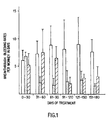
- Figure 1 depicts the breakthrough bleeding rate per monkey over the course of treatment. Individual monkeys were given a progestin-only contraceptive and intermittent dosing of anti-progestin. Breakthrough bleeding was scored on all days except for the seven days following an RU486 dose. The average duration of bleeding following an RU486 dose was 3.2 ⁇ 1.1 days. The incidence of RU486-induced menses was 100% within 72 hours. Open bars indicate monkeys receiving oral contraceptive, levonorgestrel, only. Stippled bars represent monkeys receiving levonorgestrel and RU486 at days 30, 60, 90, 120, 150 and 180. Cross-hatched bars indicate monkeys receiving levonorgestrel and RU486 at days 90 and 180. The daily dose of levonorgestrel was 10 ⁇ g per day orally except on the day when RU486 was given when no progestin was administered. RU486 was administered orally and intermittently at 50 mg per dose.
- Figure 2 depicts serum estradiol and progesterone levels in monkeys of the various treatment groups.
- the lower limit of detection of estradiol was 12 pg/ml.
- the lower limit of detection of progesterone was 0.2 ng/ml.
- the top panel depicts animals receiving progestin only on a daily basis.
- the middle panel depicts animals receiving progestin daily and RU486 on days 30, 60, 90 and 120.
- the bottom panel depicts animals receiving progestin daily and RU486 on day 90 only.
- the progestin was levonorgestrel.
- the instant invention relates to means for reducing irregular bleeding in those users of progestagen-only pharmaceutical preparations, such as contraceptives.
- the invention relates to the use of an anti-progestin in combination with the progestagen-only pharmaceutical preparations, such as a contraceptive.
- progestin and progestagen are considered synonyms.
- Progestagen-only pharmaceutical preparations such as tablets which can be administered orally, vaginal rings, implant systems (biodegradable or not), injectables and transdermal systems, which can be used as contraceptives are known in the art.
- commonly used oral contraceptives contain the synthetic progestins, cingestol, ethynodiol diacetate, lynestrenol, norethindrone, norgestrel, quingestanol acetate, levonorgestrel (active ingredient of NORPLANT), norethisterone, chlormadinone, megestrol, desogestrel, gestodene, norgestimate and the like. Fotherby, Journal of Drug Development 4 (2), 101, 1991. Essentially any progestin suitable for use in a progestagen-only pharmaceutical can be used in the practice of the instant invention.
- the anti-progestin can be an inhibitor of progesterone synthesis, such as epostane, azastene or trilostane (Creange, Contraception 24, 289, 1981; Drugs of the Future 7, 661, 1982; van der Spuy at al., Clin. Endo. 19, 521, 1983; Birgerson at al., Contraception 35, 111, 1987; U.S. Pat. No. 3296255) or a progesterone receptor antagonist, or any such pharmaceutically suitable agent that counteracts the normal biological activity of progesterone, such as antibodies or ligands bindable to progestins or to the progesterone receptor.
- progesterone synthesis such as epostane, azastene or trilostane (Creange, Contraception 24, 289, 1981; Drugs of the Future 7, 661, 1982; van der Spuy at al., Clin. Endo. 19, 521, 1983; Birgerson at al., Contraception 35, 111, 1987; U.
- a suitable anti-progestin is a progesterone receptor antagonist.
- Org 31710 ((6 ⁇ ,11 ⁇ ,17 ⁇ )-11-(4-dimethylaminophenyl)-6-methyl-4',5'-dihyrospiro [estra-4,9-diene-17,2'(3'H)-furan]-3-one)
- Org 33628 ((11 ⁇ ,17 ⁇ )-11-(4-acetylphenyl)-17, 23-epoxy-19, 24-dinorchola-4,9,20-trien-3-one)
- Org 31806 ((7 ⁇ ,11 ⁇ ,17 ⁇ )-11-(4-dimethylaminophenyl)-7-methyl-4',5'-dihydrospiro(estra-4,9-diene-17,2' (3'H)-furan]-3-one) are particularly suitable in the practice of the instant invention.
- U.S. Pat. No. 4386085 are particularly suitable in the practice of the
- the anti-progestin can be administered by way of any art-recognized means practiced in the pharmaceutic arts.
- a suitable anti-progestin may be so formulated so that it can be administered orally, via a skin patch for transdermal absorption, contained within an inert matrix which is implanted within the body and in the implanted state is released slowly, such an implant is taught in U.S. Patent Has. 4957119 and 5088505 and the like.
- pharmaceutic formulations of solid dosage forms include tablets, capsules, cachets, pellets, pills, powders or granules; topical dosage forms include solutions, powders, fluid emulsions, fluid suspensions, semi-solids, ointments, pastes, creams, gels or jellies and foams; and parenteral dosage forms includes solutions, suspensions, emulsions or a dry powder comprising an effective amount of anti-progestin as taught in the instant invention.
- the active ingredient, the anti-progestin can be contained in such formulations in addition to pharmaceutically acceptable diluents, fillers, disintegrates, binders, lubricants, surfactants, hydrophobic vehicles, water soluble vehicles, emulsifiers, buffers, humectants, moisturizers, solubilizers, preservatives and the like.
- the means for administration are known in the art and an artisan can refer to various pharmacologic references for guidance, see, for example, "Modern Pharmaceutics", Banker & Rhodes, Marcel Dekker, Inc. 1979; “Goodman & Gilman's The Pharmaceutical Basis of Therapeutics", 6th Edition, MacMillan Publishing Co., New York 1980.
- kits thereof contain a pill for each day of the month (either 28 days, the lunar month, or 30 days) wherein any one pill may contain one or more of the active ingredients.
- the effective amount of an anti-progestin in the practice of the instant invention can be determined using art-recognized methods, for example, by establishing dose-response curves in suitable animal models and extrapolating therefrom to humans, extrapolating from suitable in vitro systems or by determining effectiveness in clinical trials.
- the determination of an effective dose is a routine exercise in the pharmaceutic arts. The artisan will take into account various physical parameters of the prospective host such as weight, age and the like.
- the dosage regimen of the preparation is determinable using art-recognized methods such as establishing a dose response curve in similar primate models or in a suitable in vitro experimental system or by an empirical determination in clinical trials.
- administration of the anti-progestin can be either on a tonic or continuous basis, such as in parallel with administration of a progestin-only oral contraceptive, or on an episodic basis because of the dynamic relationship of the endometrial cells and the long term effects of anti-progestins.
- the anti-progestin can be administered in combination with the progestin in the form of a pill or as a co-component in an implant or the progestin can be given in one form and the anti-progestin can be given in another form, for example, the progestin may be given in the form of a pill and the anti-progestin can be delivered as a component of an implant.
- the progestin can be administered daily whereas the anti-progestin is to be administered monthly, or at other intermittent intervals.
- a suitable human oral dose will be on the order of 10-250 mg per dose.
- the amount per dose can be lowered or raised based on the number of doses actually given, that is the interval at which the doses of anti-progestin are administered and characteristics of the individual receiving the treatment and the potency of a particular anti-progestin.
- the number of doses can vary from monthly to longer intervals taking into consideration cost, safety and the like.
- a suitable regimen is having the anti-progestin administered every thirty days, every sixty days or every ninety days.
- the anti-progestin can be administered on the twenty-eighth day of each cycle. Variations of dosage based on route of administration may vary and such changes can be determined practicing known techniques as described above.
- Group I 6) received 10 ⁇ g of levonorgestrel daily by oral ingestion for 180 days.
- Group II 6) was given the same dose regimen of levonorgestrel as in Group I, except that 50 mg of RU486 was administered orally and intermittently on treatment days 30, 60, 90, 120, 150 and 180.
- levonorgestrel was withheld only on the days that the anti-progestin was given.
- Breakthrough bleeding was recorded daily based on presence or absence of blood in the vagina upon insertion of a saline-moistened cotton-tipped applicator. Menstrual bleeding that occurred within 7 days after each RU486 treatment was not counted as breakthrough bleeding.
- the bleeding control effect of RU486 was manifest for two to three months.
- the anti-progestin may have imparted certain long-lasting functional characteristics in basal endometrial cells.
- the primate data show the effectiveness of combining progestin with an anti-progestin, without the need for exogenous estrogen, to control endometrial bleeding.
Landscapes
- Health & Medical Sciences (AREA)
- Pharmacology & Pharmacy (AREA)
- Veterinary Medicine (AREA)
- Public Health (AREA)
- General Health & Medical Sciences (AREA)
- Animal Behavior & Ethology (AREA)
- Chemical & Material Sciences (AREA)
- Life Sciences & Earth Sciences (AREA)
- Medicinal Chemistry (AREA)
- Chemical Kinetics & Catalysis (AREA)
- Engineering & Computer Science (AREA)
- Nuclear Medicine, Radiotherapy & Molecular Imaging (AREA)
- General Chemical & Material Sciences (AREA)
- Organic Chemistry (AREA)
- Epidemiology (AREA)
- Bioinformatics & Cheminformatics (AREA)
- Endocrinology (AREA)
- Reproductive Health (AREA)
- Diabetes (AREA)
- Gynecology & Obstetrics (AREA)
- Pharmaceuticals Containing Other Organic And Inorganic Compounds (AREA)
- Steroid Compounds (AREA)
- Medicines That Contain Protein Lipid Enzymes And Other Medicines (AREA)
- Solid-Sorbent Or Filter-Aiding Compositions (AREA)
- Orthopedics, Nursing, And Contraception (AREA)
Abstract
Description
- The invention relates to the use of anti-progestin for the manufacture of a medicament for minimizing breakthrough bleeding in users of progestin-only pharmaceutic preparations, such as contraceptives.
- The primate menstrual cycle is characterized by a proliferation and regression of the uterine lining under the control of steroid hormones, primarily estrogen and progesterone. It is believed that the staggered cyclic levels of hormones contribute to the growth and shedding of the upper tissue compartment of the uterus.
- The endometrium on the uterus is characterized by distinct layers, such as the stratum functionalis and stratum basalis. It is the functionalis which represents the transient upper tissue compartment that is shed during menstruation.
- It is believed that the basalis serves as a source of new cells for the regeneration of the functionalis in succeeding cycles. Wilborn & Flowers, Seminars in Reproductive Endocrinology 2:4, 307, 1984; Padykula et al., Biology of Reproduction 40, 681, 1989. If the basalis does serve as a germinal layer, then the effects of damage to the basalis during a given cycle could be manifest in succeeding cycles.
- Because endometrial proliferation serves to prepare the uterus for an impending pregnancy, manipulation of hormones and of the uterine environment can serve as suitable targets for contraception. For example, estrogens are known to decrease follicle stimulating hormone secretion by feedback inhibition.
- Under certain circumstances, estrogens can also inhibit luteinizing hormone secretion, once again by negative feedback, although under normal circumstances it is believed that the spike of circulating estrogen found just prior to ovulation induces the surge of gonadotrophin hormones that occurs just prior to and resulting in ovulation. High doses of estrogen also can prevent conception probably due to interference with implantation.
- Progesterone is responsible for the progestational changes of the endometrium and the cyclic changes of cells and tissues in the cervix and the vagina. For example, progesterone makes the cervical mucus thick, tenacious and cellular. It is believed that thickened mucus impedes spermatozoal transport.
- Progesterone has somewhat of an anti-estrogenic effect on the myometrial cells, for example, decreasing the excitability of the smooth muscle cells, and the like. It is known that large doses of progesterone inhibit luteinizing hormone secretion and progesterone injections can prevent ovulation in humans.
- The most prevalent form of oral contraception is a pill that combines both an estrogen and a progestagen, the so-called combined oral contraceptive preparations. Apparently, the estrogen and progestagen act in concert to block gonadotrophin release.
- Alternatively, there are oral contraceptive preparations that comprise a progestagen only. Such preparations are indicated particularly for individuals who have experienced side effects or an intolerance to the combined preparations or in lactating women because of the lack of an estrogenic effect on lactation.
- However, the progestagen-only preparations have a more varied spectrum of side effects than do the combined preparations. A disadvantage of the progestagen-only preparations is the relatively high incidence of bleeding problems, such as, prevalent or heavier menstrual spotting, amenorrhea and more breakthrough bleeding. Thus, the combined preparations are the preferred oral contraceptives in use today. Sheth et al.,
Contraception 25, 243, 1982. - Some of the very common side effects of the progestagen-only oral contraceptives is the increased incidence of menstrual spotting, break through bleeding, variations in menstrual cycle length and occasionally amenorrhea.
- Nevertheless, it would be preferable to ha an contraceptive preparation that minimizes the amounts of estrogens and progestagens used. For example, estrogens are known to cause dizziness, nausea, headache and breast tenderness. Thus, a progestagen-only contraceptive would forego such possible problems and be an improvement over the combined preparations if the above-referred to problems of progestagen-only contraceptives also can be remedied. George Washington University Medical Center, Population Reports, Series A, No. 3, September 1975.
- Anti-progestins include inhibitors of progesterone synthesis, ligands, such as antibodies, to progesterone and progesterone receptor antagonists. For example, mifepristone (RU486) is a progesterone receptor antagonist. RU486 binds to the progesterone receptor and produces antagonistic effects. Following oral administration, RU486 in the human has a half life of about 20-24 hours. When administered in the luteal phase of the menstrual cycle, RU486 induces luteolysis and vaginal bleeding.
- RU486 may act directly on the endometrium to induce vaginal bleeding. RU486-mediated luteolysis appears to be secondary to changes in gonadotrophin secretion and thus the effects are similar to those following exogenous progesterone administration. Baulieu, Science 245, 1351, 1989.
- Swahn et al. (Human Reproduction 5(4), 402, 1990) relates to administering RU486 early during the luteal phase prior to implantation. Those authors found that a single dose of RU486 administered on the second day after the LH peak causes a retardation of endometrial development without upsetting the menstrual cycle. Those authors speculated that it may be possible that the effect on the endometrium may be sufficient to prevent implantation.
- It is an object of the instant invention to provide a method and means of enhancing the value progestin-only pharmaceutical preparations, such as contraceptives.
- It is another object of the instant invention to provide a kit and/or program to enhance the every day use of progestin-only pharmaceutical preparations, such as contraceptives.
- Those and other objects have been achieved with the use of a biologically effective amount of an anti-progestin for the manufacture of a medicament. for minimizing uterine bleeding in a female using a progestin-only pharmaceutical preparation.
- The invention also relates to the use of biologically effective amounts of a progestin and an anti-progestin for the manufacture of a medicament for achieving birth control.
- The invention also relates to an implant intended for subcutaneous or local administration comprising a pharmaceutically acceptable inert core material which would function as a matrix, a progestin and an anti-progestin.
- The invention further relates to a kit of the "progestin-only" type comprising means for the daily administration of a progestin in a contraceptively effective amount, characterised in that the kit also provides means for the administration of an anti-progestin.
- Figure 1 depicts the breakthrough bleeding rate per monkey over the course of treatment. Individual monkeys were given a progestin-only contraceptive and intermittent dosing of anti-progestin. Breakthrough bleeding was scored on all days except for the seven days following an RU486 dose. The average duration of bleeding following an RU486 dose was 3.2 ± 1.1 days. The incidence of RU486-induced menses was 100% within 72 hours. Open bars indicate monkeys receiving oral contraceptive, levonorgestrel, only. Stippled bars represent monkeys receiving levonorgestrel and RU486 at
days 30, 60, 90, 120, 150 and 180. Cross-hatched bars indicate monkeys receiving levonorgestrel and RU486 at days 90 and 180. The daily dose of levonorgestrel was 10 µg per day orally except on the day when RU486 was given when no progestin was administered. RU486 was administered orally and intermittently at 50 mg per dose. - Figure 2 depicts serum estradiol and progesterone levels in monkeys of the various treatment groups. The lower limit of detection of estradiol was 12 pg/ml. The lower limit of detection of progesterone was 0.2 ng/ml. The top panel depicts animals receiving progestin only on a daily basis. The middle panel depicts animals receiving progestin daily and RU486 on
days 30, 60, 90 and 120. The bottom panel depicts animals receiving progestin daily and RU486 on day 90 only. The progestin was levonorgestrel. - The instant invention relates to means for reducing irregular bleeding in those users of progestagen-only pharmaceutical preparations, such as contraceptives. The invention relates to the use of an anti-progestin in combination with the progestagen-only pharmaceutical preparations, such as a contraceptive. For the purposes of the instant invention, progestin and progestagen are considered synonyms.
- Progestagen-only pharmaceutical preparations, such as tablets which can be administered orally, vaginal rings, implant systems (biodegradable or not), injectables and transdermal systems, which can be used as contraceptives are known in the art.
- For example, commonly used oral contraceptives contain the synthetic progestins, cingestol, ethynodiol diacetate, lynestrenol, norethindrone, norgestrel, quingestanol acetate, levonorgestrel (active ingredient of NORPLANT), norethisterone, chlormadinone, megestrol, desogestrel, gestodene, norgestimate and the like. Fotherby, Journal of Drug Development 4 (2), 101, 1991. Essentially any progestin suitable for use in a progestagen-only pharmaceutical can be used in the practice of the instant invention.
- The anti-progestin can be an inhibitor of progesterone synthesis, such as epostane, azastene or trilostane (Creange, Contraception 24, 289, 1981; Drugs of the Future 7, 661, 1982; van der Spuy at al., Clin. Endo. 19, 521, 1983; Birgerson at al., Contraception 35, 111, 1987; U.S. Pat. No. 3296255) or a progesterone receptor antagonist, or any such pharmaceutically suitable agent that counteracts the normal biological activity of progesterone, such as antibodies or ligands bindable to progestins or to the progesterone receptor.
- A suitable anti-progestin is a progesterone receptor antagonist. For example, RU486, Onapristone, Org 31710 ((6α,11β,17β)-11-(4-dimethylaminophenyl)-6-methyl-4',5'-dihyrospiro [estra-4,9-diene-17,2'(3'H)-furan]-3-one), Org 33628 ((11β,17α)-11-(4-acetylphenyl)-17, 23-epoxy-19, 24-dinorchola-4,9,20-trien-3-one) and Org 31806 ((7β,11β,17β)-11-(4-dimethylaminophenyl)-7-methyl-4',5'-dihydrospiro(estra-4,9-diene-17,2' (3'H)-furan]-3-one) are particularly suitable in the practice of the instant invention. U.S. Pat. No. 4386085.
- The anti-progestin can be administered by way of any art-recognized means practiced in the pharmaceutic arts. For example, a suitable anti-progestin may be so formulated so that it can be administered orally, via a skin patch for transdermal absorption, contained within an inert matrix which is implanted within the body and in the implanted state is released slowly, such an implant is taught in U.S. Patent Has. 4957119 and 5088505 and the like.
- Thus, pharmaceutic formulations of solid dosage forms include tablets, capsules, cachets, pellets, pills, powders or granules; topical dosage forms include solutions, powders, fluid emulsions, fluid suspensions, semi-solids, ointments, pastes, creams, gels or jellies and foams; and parenteral dosage forms includes solutions, suspensions, emulsions or a dry powder comprising an effective amount of anti-progestin as taught in the instant invention.
- It is known in the art that the active ingredient, the anti-progestin, can be contained in such formulations in addition to pharmaceutically acceptable diluents, fillers, disintegrates, binders, lubricants, surfactants, hydrophobic vehicles, water soluble vehicles, emulsifiers, buffers, humectants, moisturizers, solubilizers, preservatives and the like. The means for administration are known in the art and an artisan can refer to various pharmacologic references for guidance, see, for example, "Modern Pharmaceutics", Banker & Rhodes, Marcel Dekker, Inc. 1979; "Goodman & Gilman's The Pharmaceutical Basis of Therapeutics", 6th Edition, MacMillan Publishing Co., New York 1980.
- In the case of oral contraceptives, it is known that the kits thereof contain a pill for each day of the month (either 28 days, the lunar month, or 30 days) wherein any one pill may contain one or more of the active ingredients.
- The effective amount of an anti-progestin in the practice of the instant invention can be determined using art-recognized methods, for example, by establishing dose-response curves in suitable animal models and extrapolating therefrom to humans, extrapolating from suitable in vitro systems or by determining effectiveness in clinical trials. The determination of an effective dose is a routine exercise in the pharmaceutic arts. The artisan will take into account various physical parameters of the prospective host such as weight, age and the like.
- In like vein, the dosage regimen of the preparation is determinable using art-recognized methods such as establishing a dose response curve in similar primate models or in a suitable in vitro experimental system or by an empirical determination in clinical trials.
- It is contemplated, in view of the dynamic state of the endocrine system in primates, that administration of the anti-progestin can be either on a tonic or continuous basis, such as in parallel with administration of a progestin-only oral contraceptive, or on an episodic basis because of the dynamic relationship of the endometrial cells and the long term effects of anti-progestins. Thus, the anti-progestin can be administered in combination with the progestin in the form of a pill or as a co-component in an implant or the progestin can be given in one form and the anti-progestin can be given in another form, for example, the progestin may be given in the form of a pill and the anti-progestin can be delivered as a component of an implant. Alternatively, the progestin can be administered daily whereas the anti-progestin is to be administered monthly, or at other intermittent intervals.
- In the case of the progesterone receptor antagonists RU486, Org 33628, Org 31806 and Org 31710, it is anticipated that a suitable human oral dose will be on the order of 10-250 mg per dose. The amount per dose can be lowered or raised based on the number of doses actually given, that is the interval at which the doses of anti-progestin are administered and characteristics of the individual receiving the treatment and the potency of a particular anti-progestin.
- The number of doses can vary from monthly to longer intervals taking into consideration cost, safety and the like. Thus, a suitable regimen is having the anti-progestin administered every thirty days, every sixty days or every ninety days. Alternatively, in the case of contraceptives where many of the pill kits are configured based on the lunar month, the anti-progestin can be administered on the twenty-eighth day of each cycle. Variations of dosage based on route of administration may vary and such changes can be determined practicing known techniques as described above.
- The present invention is described further below with respect to specific examples which are tended to illustrate the instant invention without limiting the scope thereof.
- In the present study, laboratory primates (Macaca fasicularis, n = 18), having normal ovulatory menstrual cycles, were assigned at random to one of three groups: Group I (n = 6) received 10 µg of levonorgestrel daily by oral ingestion for 180 days. Group II (n = 6) was given the same dose regimen of levonorgestrel as in Group I, except that 50 mg of RU486 was administered orally and intermittently on
treatment days 30, 60, 90, 120, 150 and 180. Similarly, Group III primates (n = 6) received levonorgestrel daily, but RU486 on treatment days 90 and 180. For Groups II and III, levonorgestrel was withheld only on the days that the anti-progestin was given. - Breakthrough bleeding was recorded daily based on presence or absence of blood in the vagina upon insertion of a saline-moistened cotton-tipped applicator. Menstrual bleeding that occurred within 7 days after each RU486 treatment was not counted as breakthrough bleeding.
- To determine whether the dose of levonorgestrel reliably blocked ovulation, all primates were bled daily from the femoral vein (3.0 ml) from treatment day 91 to 120, so that serum estradiol and progesterone levels could be determined by radioimmunoassay using known materials and techniques.
- Intermittent RU486 treatment in animals receiving a progestin daily markedly reduced irregular menstrual bleeding by 69% on average, whether the interval between treatments of the anti-progestin was 30 or 90 days (p < 0.05). However, there was a trend (p > 0.05) toward rising breakthrough bleeding in the 2nd and especially 3rd month after RU486 treatment (Group III).
- That the daily dose regimen of levonorgestrel effectively blocked ovulation was evident from the absence of overt serum progesterone elevations. The intermittent doses of anti-progestin did suppress transiently mean tonic serum estradiol to below 30 pg/ml for four or five days; otherwise ovarian estrogen secretion was non-episodic (48 ± 11 pg/ml, Group I; 41 ± 6 pg/ml, Group II; and 42 ± 9 pg/ml; Group III).
- More importantly, intermittent administration of RU486 significantly reduced irregular menstrual bleeding whether the every 30 day or every 90 day anti-progestin regimen was employed, albeit the anti-progestin impact appeared to fade with less frequent dosing.
- The bleeding control effect of RU486 was manifest for two to three months. The anti-progestin may have imparted certain long-lasting functional characteristics in basal endometrial cells. The primate data show the effectiveness of combining progestin with an anti-progestin, without the need for exogenous estrogen, to control endometrial bleeding.
- It should be noted that the efficacy of the progestin to block ovulation is not compromised by the intermittent administration of an anti-progestin. See Figure 2.
- While the invention has been described in detail and with reference to certain embodiments thereof, it would be apparent to one skilled in the art that various changes and modifications can be made.
Claims (18)
- The use of a biologically effective amount of an anti-progestin for the manufacture of a medicament for minimizing uterine bleeding in a female using a progestin-only pharmaceutical preparation.
- A use according to claim 1, characterised in that the anti-progestin is a compound that inhibits progesterone synthesis or is a progesterone receptor antagonist.
- A use according to claim 2, characterised in that the antagonist is RU 486, Org 33628, Org 31806, or Org 31710.
- A use according to claim 1, characterised in that the progestin is desogestrel.
- A use according to claim 1, characterised in that the medicament is in the form of a pill or tablet.
- A use according to claim 1, characterised in that the medicament is in the form of an implant.
- A use according to claim 3, characterised in that the medicament contains the antagonist in an amount of 10 mg to 250 mg per dose.
- A use according to claim 3, characterised in that the medicament is to be administered once every 30 days.
- A use according to claim 3, characterised in that the medicament is to be administered once every 60 days.
- A use according to claim 3, characterised in that the medicament is to be administered once every 90 days.
- A use according to claim 3, characterised in that the medicament is to be administered on the 28th day of a cycle.
- The use of a composition comprising biologically effective amounts of a progestin and an antiprogestin for the manufacture of a medicament for achieving birth control by the uninterrupted administration of the progestin.
- A use according to claim 12, characterised in that the progestin is desogestrel
- A use according to claim 12 or 13, characterised in that the anti-progestin is RU 486, Org 33628, Org 31806, or Org 31710.
- A use according to claim 14, characterised in that the progestin is desogestrel and the antiprogestin is Org 33628.
- An implant intended for subcutaneous or local administration comprising a pharmaceutically acceptable core material which would function as a matrix, a progestin, and an anti-progestin.
- A contraceptive kit of the "progestin-only" type comprising means for the daily administration of a progestin in a contraceptively effective amount, characterised in that the kit also provides means for the administration of an anti-progestin
- A contraceptive kit according to claim 17, characterised in that the kit provides means for the administration of the anti-progestin once every 30 days.
Applications Claiming Priority (3)
| Application Number | Priority Date | Filing Date | Title |
|---|---|---|---|
| WOPCT/US92/03574 | 1992-05-06 | ||
| PCT/US1992/003574 WO1993021926A1 (en) | 1992-05-06 | 1992-05-06 | Minimizing progestin associated breakthrough bleeding |
| PCT/US1993/004003 WO1993021927A1 (en) | 1992-05-06 | 1993-05-03 | Minimizing progestin associated breakthrough bleeding |
Publications (3)
| Publication Number | Publication Date |
|---|---|
| EP0646008A1 EP0646008A1 (en) | 1995-04-05 |
| EP0646008A4 EP0646008A4 (en) | 1995-10-11 |
| EP0646008B1 true EP0646008B1 (en) | 1999-12-15 |
Family
ID=22231028
Family Applications (1)
| Application Number | Title | Priority Date | Filing Date |
|---|---|---|---|
| EP93913781A Expired - Lifetime EP0646008B1 (en) | 1992-05-06 | 1993-05-03 | Minimizing progestin associated breakthrough bleeding |
Country Status (17)
| Country | Link |
|---|---|
| EP (1) | EP0646008B1 (en) |
| JP (1) | JP3937240B2 (en) |
| KR (1) | KR950700745A (en) |
| CN (1) | CN1073422C (en) |
| AT (1) | ATE187644T1 (en) |
| AU (2) | AU1918092A (en) |
| CA (1) | CA2131911C (en) |
| DE (1) | DE69327319T2 (en) |
| DK (1) | DK0646008T3 (en) |
| ES (1) | ES2142345T3 (en) |
| FI (1) | FI945207A7 (en) |
| GR (1) | GR3032797T3 (en) |
| NO (1) | NO308581B1 (en) |
| NZ (1) | NZ253405A (en) |
| PT (1) | PT646008E (en) |
| WO (2) | WO1993021926A1 (en) |
| ZA (1) | ZA933153B (en) |
Families Citing this family (23)
| Publication number | Priority date | Publication date | Assignee | Title |
|---|---|---|---|---|
| US7704983B1 (en) | 1992-03-02 | 2010-04-27 | Eastern Virginia Medical School | Antiprogestin method for reducing side effects associated with low dosage HRT and oral contraception |
| MX9301121A (en) | 1992-03-02 | 1993-09-01 | Schering Ag | METHOD AND EQUIPMENT FOR ORAL CONTRACEPTION AND REGULATION OF MENSTRUATION WITH ESTROGEN / PROGESTIN / ANIPROGESTIN. |
| US5439913A (en) | 1992-05-12 | 1995-08-08 | Schering Aktiengesellschaft | Contraception method using competitive progesterone antagonists and novel compounds useful therein |
| DE4344463A1 (en) * | 1993-12-22 | 1995-06-29 | Schering Ag | Combination product for contraception |
| CA2205897A1 (en) * | 1994-11-22 | 1996-05-30 | Malcolm Cecil Pike | Compositions and methods for contraception and for treatment of benign gynecological disorders |
| US5521166A (en) * | 1994-12-19 | 1996-05-28 | Ortho Pharmaceitical Corporation | Antiprogestin cyclophasic hormonal regimen |
| SK282570B6 (en) * | 1995-02-02 | 2002-10-08 | Schering Aktiengesellschaft | Progesterone antagonists for production of medicaments for treati ng dysfunctional uterine bleeding |
| US6506390B2 (en) | 1996-06-25 | 2003-01-14 | Akzo Nobel | Progestogen-anti-progestogen regimens |
| ES2174265T3 (en) * | 1996-06-25 | 2002-11-01 | Akzo Nobel Nv | PROGESTOGEN-ANTI-PROGESTOGEN REGIMES. |
| JP2001523639A (en) * | 1997-11-14 | 2001-11-27 | アクゾ・ノベル・エヌ・ベー | Progestogen-anti-progestogen regimen |
| US6020328A (en) * | 1998-03-06 | 2000-02-01 | Research Triangle Institute | 20-keto-11β-arylsteroids and their derivatives having agonist or antagonist hormonal properties |
| US6262042B1 (en) | 1998-05-29 | 2001-07-17 | Research Triangle Institute | 17β-amino and hydroxylamino-11β-arylsteroids and their derivatives having agonist or antagonist hormonal properties |
| US5962444A (en) * | 1998-05-29 | 1999-10-05 | Research Triangle Institute | 17β-nitro-11β-arylsteroids and their derivatives having agonist or antagonist hormonal properties |
| WO2000066129A2 (en) * | 1999-04-29 | 2000-11-09 | Akzo Nobel N.V. | Use of antiprogestagens in combined therapy |
| US7629334B1 (en) | 1999-08-31 | 2009-12-08 | Bayer Schering Pharma Aktiengesellschaft | Mesoprogrestins (progesterone receptor modulations) as a component of compositions for hormone replacement therapy (HRT) |
| US8193252B1 (en) | 1999-08-31 | 2012-06-05 | Bayer Pharma AG | Mesoprogestins (progesterone receptor modulators) for the treatment and prevention of benign hormone dependent gynecological disorders |
| GB0010683D0 (en) * | 2000-05-03 | 2000-06-28 | Univ Bristol | Cancer therapy |
| DE102007023614A1 (en) | 2007-05-21 | 2008-11-27 | Bayer Schering Pharma Aktiengesellschaft | New amide compounds used for treatment of gynecological diseases e.g. endometriosis, for female fertility control and female hormone replacement therapy, has general formula |
| DE102007049630A1 (en) | 2007-10-11 | 2009-10-29 | Bayer Schering Pharma Aktiengesellschaft | New amide compounds used for therapy and/or prophylaxis of gynecological diseases e.g. endometriosis, for female fertility control and female hormone replacement therapy |
| DE102007032800A1 (en) | 2007-07-10 | 2009-01-15 | Bayer Schering Pharma Aktiengesellschaft | Nonsteroidal progesterone receptor modulators |
| DE102007058747A1 (en) | 2007-12-05 | 2009-06-10 | Bayer Schering Pharma Aktiengesellschaft | Nonsteroidal progesterone receptor modulators |
| EP2070909A1 (en) | 2007-12-15 | 2009-06-17 | Bayer Schering Pharma AG | Non-steroidal progesterone receptor modulators |
| EP2123279A1 (en) * | 2008-05-14 | 2009-11-25 | Bayer Schering Pharma Aktiengesellschaft | Sequential application of 20,20,21,21,21-Pentafluor-17-hydroxy-1 1beta-[4-(hydroxyacetyl) phenyl]-19-nor-17alpha-pregna-4,9-dien-3-on and one or more gestagens for treating gynaecological illnesses |
Family Cites Families (1)
| Publication number | Priority date | Publication date | Assignee | Title |
|---|---|---|---|---|
| ZA935617B (en) * | 1992-08-14 | 1994-03-07 | Akzo Nv | Antiprogestogen containing contraceptives. |
-
1992
- 1992-05-06 AU AU19180/92A patent/AU1918092A/en not_active Abandoned
- 1992-05-06 WO PCT/US1992/003574 patent/WO1993021926A1/en not_active Ceased
-
1993
- 1993-05-03 FI FI945207A patent/FI945207A7/en not_active Application Discontinuation
- 1993-05-03 WO PCT/US1993/004003 patent/WO1993021927A1/en not_active Ceased
- 1993-05-03 DE DE69327319T patent/DE69327319T2/en not_active Expired - Fee Related
- 1993-05-03 NZ NZ253405A patent/NZ253405A/en not_active IP Right Cessation
- 1993-05-03 DK DK93913781T patent/DK0646008T3/en active
- 1993-05-03 JP JP51949093A patent/JP3937240B2/en not_active Expired - Fee Related
- 1993-05-03 ES ES93913781T patent/ES2142345T3/en not_active Expired - Lifetime
- 1993-05-03 AT AT93913781T patent/ATE187644T1/en not_active IP Right Cessation
- 1993-05-03 AU AU43685/93A patent/AU667729B2/en not_active Ceased
- 1993-05-03 CA CA002131911A patent/CA2131911C/en not_active Expired - Fee Related
- 1993-05-03 EP EP93913781A patent/EP0646008B1/en not_active Expired - Lifetime
- 1993-05-03 PT PT93913781T patent/PT646008E/en unknown
- 1993-05-05 ZA ZA933153A patent/ZA933153B/en unknown
- 1993-05-06 CN CN93105281A patent/CN1073422C/en not_active Expired - Fee Related
-
1994
- 1994-09-30 KR KR1019940703439A patent/KR950700745A/en not_active Withdrawn
- 1994-11-04 NO NO944210A patent/NO308581B1/en not_active IP Right Cessation
-
2000
- 2000-02-29 GR GR20000400498T patent/GR3032797T3/en not_active IP Right Cessation
Also Published As
| Publication number | Publication date |
|---|---|
| DK0646008T3 (en) | 2000-05-15 |
| EP0646008A4 (en) | 1995-10-11 |
| JP3937240B2 (en) | 2007-06-27 |
| NO944210D0 (en) | 1994-11-04 |
| GR3032797T3 (en) | 2000-06-30 |
| WO1993021927A1 (en) | 1993-11-11 |
| ES2142345T3 (en) | 2000-04-16 |
| NO944210L (en) | 1994-11-04 |
| CA2131911C (en) | 2005-12-27 |
| CA2131911A1 (en) | 1993-11-11 |
| AU4368593A (en) | 1993-11-29 |
| AU1918092A (en) | 1993-11-29 |
| WO1993021926A1 (en) | 1993-11-11 |
| CN1079651A (en) | 1993-12-22 |
| ATE187644T1 (en) | 2000-01-15 |
| FI945207L (en) | 1994-11-04 |
| FI945207A0 (en) | 1994-11-04 |
| EP0646008A1 (en) | 1995-04-05 |
| FI945207A7 (en) | 1994-11-04 |
| CN1073422C (en) | 2001-10-24 |
| NO308581B1 (en) | 2000-10-02 |
| AU667729B2 (en) | 1996-04-04 |
| KR950700745A (en) | 1995-02-20 |
| DE69327319D1 (en) | 2000-01-20 |
| NZ253405A (en) | 1997-06-24 |
| DE69327319T2 (en) | 2000-07-13 |
| JPH08509456A (en) | 1996-10-08 |
| ZA933153B (en) | 1993-12-06 |
| PT646008E (en) | 2000-04-28 |
Similar Documents
| Publication | Publication Date | Title |
|---|---|---|
| AU667729B2 (en) | Minimizing progestin associated breakthrough bleeding | |
| EP0911029B1 (en) | Ultra low dose oral contraceptives with less menstrual bleeding and sustained efficacy | |
| EP0686037B1 (en) | Hormone replacement therapy | |
| US6225298B1 (en) | Compositions and methods for contraception and for treatment of benign gynecological disorders | |
| US5552394A (en) | Low dose oral contraceptives with less breakthrough bleeding and sustained efficacy | |
| JP2000502108A (en) | Contraceptive methods and kits for mammals using gestogens and estrogens | |
| US4670426A (en) | Interruption of fertility in mammals by post-coital pills | |
| US20030018018A1 (en) | Ultra low dose oral contraceptives with sustained efficacy and induced amenorrhea | |
| US5622943A (en) | Minimizing progestin associated breakthrough bleeding | |
| US6642219B1 (en) | Progestogen-antiprogestogen regimens | |
| EP1159965B1 (en) | Use of a progesterone receptor antagonist for preventing or inhibiting fertilization | |
| JP2003511399A (en) | Mesoprogestin (progesterone receptor modulator) as a component of female contraceptives |
Legal Events
| Date | Code | Title | Description |
|---|---|---|---|
| PUAI | Public reference made under article 153(3) epc to a published international application that has entered the european phase |
Free format text: ORIGINAL CODE: 0009012 |
|
| 17P | Request for examination filed |
Effective date: 19941018 |
|
| AK | Designated contracting states |
Kind code of ref document: A1 Designated state(s): AT BE CH DE DK ES FR GB GR IE IT LI LU MC NL PT SE |
|
| A4 | Supplementary search report drawn up and despatched | ||
| AK | Designated contracting states |
Kind code of ref document: A4 Designated state(s): AT BE CH DE DK ES FR GB GR IE IT LI LU MC NL PT SE |
|
| 17Q | First examination report despatched |
Effective date: 19980204 |
|
| GRAG | Despatch of communication of intention to grant |
Free format text: ORIGINAL CODE: EPIDOS AGRA |
|
| GRAH | Despatch of communication of intention to grant a patent |
Free format text: ORIGINAL CODE: EPIDOS IGRA |
|
| GRAH | Despatch of communication of intention to grant a patent |
Free format text: ORIGINAL CODE: EPIDOS IGRA |
|
| GRAA | (expected) grant |
Free format text: ORIGINAL CODE: 0009210 |
|
| AK | Designated contracting states |
Kind code of ref document: B1 Designated state(s): AT BE CH DE DK ES FR GB GR IE IT LI LU MC NL PT SE |
|
| REF | Corresponds to: |
Ref document number: 187644 Country of ref document: AT Date of ref document: 20000115 Kind code of ref document: T |
|
| REG | Reference to a national code |
Ref country code: CH Ref legal event code: EP |
|
| REG | Reference to a national code |
Ref country code: CH Ref legal event code: NV Representative=s name: ISLER & PEDRAZZINI AG |
|
| REF | Corresponds to: |
Ref document number: 69327319 Country of ref document: DE Date of ref document: 20000120 |
|
| ET | Fr: translation filed | ||
| ITF | It: translation for a ep patent filed | ||
| REG | Reference to a national code |
Ref country code: IE Ref legal event code: FG4D |
|
| REG | Reference to a national code |
Ref country code: ES Ref legal event code: FG2A Ref document number: 2142345 Country of ref document: ES Kind code of ref document: T3 |
|
| REG | Reference to a national code |
Ref country code: PT Ref legal event code: SC4A Free format text: AVAILABILITY OF NATIONAL TRANSLATION Effective date: 20000201 |
|
| REG | Reference to a national code |
Ref country code: DK Ref legal event code: T3 |
|
| PLBE | No opposition filed within time limit |
Free format text: ORIGINAL CODE: 0009261 |
|
| STAA | Information on the status of an ep patent application or granted ep patent |
Free format text: STATUS: NO OPPOSITION FILED WITHIN TIME LIMIT |
|
| 26N | No opposition filed | ||
| REG | Reference to a national code |
Ref country code: GB Ref legal event code: IF02 |
|
| REG | Reference to a national code |
Ref country code: CH Ref legal event code: PCAR Free format text: ISLER & PEDRAZZINI AG;POSTFACH 1772;8027 ZUERICH (CH) |
|
| PGFP | Annual fee paid to national office [announced via postgrant information from national office to epo] |
Ref country code: NL Payment date: 20080527 Year of fee payment: 16 |
|
| PGFP | Annual fee paid to national office [announced via postgrant information from national office to epo] |
Ref country code: MC Payment date: 20090420 Year of fee payment: 17 Ref country code: IE Payment date: 20090527 Year of fee payment: 17 Ref country code: ES Payment date: 20090526 Year of fee payment: 17 Ref country code: DK Payment date: 20090528 Year of fee payment: 17 |
|
| PGFP | Annual fee paid to national office [announced via postgrant information from national office to epo] |
Ref country code: SE Payment date: 20090528 Year of fee payment: 17 Ref country code: PT Payment date: 20090422 Year of fee payment: 17 Ref country code: LU Payment date: 20090602 Year of fee payment: 17 Ref country code: IT Payment date: 20090528 Year of fee payment: 17 Ref country code: FR Payment date: 20090518 Year of fee payment: 17 Ref country code: DE Payment date: 20090528 Year of fee payment: 17 Ref country code: AT Payment date: 20090421 Year of fee payment: 17 |
|
| PGFP | Annual fee paid to national office [announced via postgrant information from national office to epo] |
Ref country code: BE Payment date: 20090624 Year of fee payment: 17 |
|
| PGFP | Annual fee paid to national office [announced via postgrant information from national office to epo] |
Ref country code: CH Payment date: 20090526 Year of fee payment: 17 |
|
| PGFP | Annual fee paid to national office [announced via postgrant information from national office to epo] |
Ref country code: GR Payment date: 20090430 Year of fee payment: 17 Ref country code: GB Payment date: 20090528 Year of fee payment: 17 |
|
| NLV4 | Nl: lapsed or anulled due to non-payment of the annual fee |
Effective date: 20091201 |
|
| PG25 | Lapsed in a contracting state [announced via postgrant information from national office to epo] |
Ref country code: NL Free format text: LAPSE BECAUSE OF NON-PAYMENT OF DUE FEES Effective date: 20091201 |
|
| REG | Reference to a national code |
Ref country code: PT Ref legal event code: MM4A Free format text: LAPSE DUE TO NON-PAYMENT OF FEES Effective date: 20101103 |
|
| BERE | Be: lapsed |
Owner name: *MEDICAL COLLEGE OF HAMPTON ROADS Effective date: 20100531 |
|
| PG25 | Lapsed in a contracting state [announced via postgrant information from national office to epo] |
Ref country code: MC Free format text: LAPSE BECAUSE OF NON-PAYMENT OF DUE FEES Effective date: 20100531 |
|
| REG | Reference to a national code |
Ref country code: CH Ref legal event code: PL |
|
| REG | Reference to a national code |
Ref country code: DK Ref legal event code: EBP |
|
| GBPC | Gb: european patent ceased through non-payment of renewal fee |
Effective date: 20100503 |
|
| PG25 | Lapsed in a contracting state [announced via postgrant information from national office to epo] |
Ref country code: AT Free format text: LAPSE BECAUSE OF NON-PAYMENT OF DUE FEES Effective date: 20100503 |
|
| EUG | Se: european patent has lapsed | ||
| REG | Reference to a national code |
Ref country code: FR Ref legal event code: ST Effective date: 20110131 |
|
| PG25 | Lapsed in a contracting state [announced via postgrant information from national office to epo] |
Ref country code: PT Free format text: LAPSE BECAUSE OF NON-PAYMENT OF DUE FEES Effective date: 20101103 Ref country code: LI Free format text: LAPSE BECAUSE OF NON-PAYMENT OF DUE FEES Effective date: 20100531 Ref country code: CH Free format text: LAPSE BECAUSE OF NON-PAYMENT OF DUE FEES Effective date: 20100531 |
|
| REG | Reference to a national code |
Ref country code: IE Ref legal event code: MM4A |
|
| PG25 | Lapsed in a contracting state [announced via postgrant information from national office to epo] |
Ref country code: IT Free format text: LAPSE BECAUSE OF NON-PAYMENT OF DUE FEES Effective date: 20100503 Ref country code: SE Free format text: LAPSE BECAUSE OF NON-PAYMENT OF DUE FEES Effective date: 20100504 Ref country code: BE Free format text: LAPSE BECAUSE OF NON-PAYMENT OF DUE FEES Effective date: 20100531 Ref country code: GR Free format text: LAPSE BECAUSE OF NON-PAYMENT OF DUE FEES Effective date: 20101202 |
|
| PG25 | Lapsed in a contracting state [announced via postgrant information from national office to epo] |
Ref country code: DE Free format text: LAPSE BECAUSE OF NON-PAYMENT OF DUE FEES Effective date: 20101201 Ref country code: DK Free format text: LAPSE BECAUSE OF NON-PAYMENT OF DUE FEES Effective date: 20100531 Ref country code: IE Free format text: LAPSE BECAUSE OF NON-PAYMENT OF DUE FEES Effective date: 20100503 |
|
| PG25 | Lapsed in a contracting state [announced via postgrant information from national office to epo] |
Ref country code: FR Free format text: LAPSE BECAUSE OF NON-PAYMENT OF DUE FEES Effective date: 20100531 |
|
| REG | Reference to a national code |
Ref country code: ES Ref legal event code: FD2A Effective date: 20110715 |
|
| PG25 | Lapsed in a contracting state [announced via postgrant information from national office to epo] |
Ref country code: GB Free format text: LAPSE BECAUSE OF NON-PAYMENT OF DUE FEES Effective date: 20100503 Ref country code: ES Free format text: LAPSE BECAUSE OF NON-PAYMENT OF DUE FEES Effective date: 20110705 |
|
| PG25 | Lapsed in a contracting state [announced via postgrant information from national office to epo] |
Ref country code: ES Free format text: LAPSE BECAUSE OF NON-PAYMENT OF DUE FEES Effective date: 20100504 |
|
| PG25 | Lapsed in a contracting state [announced via postgrant information from national office to epo] |
Ref country code: LU Free format text: LAPSE BECAUSE OF NON-PAYMENT OF DUE FEES Effective date: 20100503 |