EP0629949A2 - System und Verfahren zur Wiederherstellung nach Prozessfehler in einem Schreibsperrsteuerungssystem - Google Patents
System und Verfahren zur Wiederherstellung nach Prozessfehler in einem Schreibsperrsteuerungssystem Download PDFInfo
- Publication number
- EP0629949A2 EP0629949A2 EP94107943A EP94107943A EP0629949A2 EP 0629949 A2 EP0629949 A2 EP 0629949A2 EP 94107943 A EP94107943 A EP 94107943A EP 94107943 A EP94107943 A EP 94107943A EP 0629949 A2 EP0629949 A2 EP 0629949A2
- Authority
- EP
- European Patent Office
- Prior art keywords
- shadow
- master
- processes
- write lock
- master process
- Prior art date
- Legal status (The legal status is an assumption and is not a legal conclusion. Google has not performed a legal analysis and makes no representation as to the accuracy of the status listed.)
- Withdrawn
Links
Images

Classifications
-
- G—PHYSICS
- G06—COMPUTING OR CALCULATING; COUNTING
- G06F—ELECTRIC DIGITAL DATA PROCESSING
- G06F11/00—Error detection; Error correction; Monitoring
- G06F11/07—Responding to the occurrence of a fault, e.g. fault tolerance
- G06F11/16—Error detection or correction of the data by redundancy in hardware
- G06F11/20—Error detection or correction of the data by redundancy in hardware using active fault-masking, e.g. by switching out faulty elements or by switching in spare elements
- G06F11/202—Error detection or correction of the data by redundancy in hardware using active fault-masking, e.g. by switching out faulty elements or by switching in spare elements where processing functionality is redundant
- G06F11/2035—Error detection or correction of the data by redundancy in hardware using active fault-masking, e.g. by switching out faulty elements or by switching in spare elements where processing functionality is redundant without idle spare hardware
-
- G—PHYSICS
- G06—COMPUTING OR CALCULATING; COUNTING
- G06F—ELECTRIC DIGITAL DATA PROCESSING
- G06F11/00—Error detection; Error correction; Monitoring
- G06F11/07—Responding to the occurrence of a fault, e.g. fault tolerance
- G06F11/16—Error detection or correction of the data by redundancy in hardware
- G06F11/20—Error detection or correction of the data by redundancy in hardware using active fault-masking, e.g. by switching out faulty elements or by switching in spare elements
- G06F11/202—Error detection or correction of the data by redundancy in hardware using active fault-masking, e.g. by switching out faulty elements or by switching in spare elements where processing functionality is redundant
- G06F11/2023—Failover techniques
-
- G—PHYSICS
- G06—COMPUTING OR CALCULATING; COUNTING
- G06F—ELECTRIC DIGITAL DATA PROCESSING
- G06F16/00—Information retrieval; Database structures therefor; File system structures therefor
- G06F16/10—File systems; File servers
- G06F16/17—Details of further file system functions
- G06F16/176—Support for shared access to files; File sharing support
- G06F16/1767—Concurrency control, e.g. optimistic or pessimistic approaches
- G06F16/1774—Locking methods, e.g. locking methods for file systems allowing shared and concurrent access to files
-
- G—PHYSICS
- G06—COMPUTING OR CALCULATING; COUNTING
- G06F—ELECTRIC DIGITAL DATA PROCESSING
- G06F16/00—Information retrieval; Database structures therefor; File system structures therefor
- G06F16/10—File systems; File servers
- G06F16/18—File system types
- G06F16/182—Distributed file systems
- G06F16/184—Distributed file systems implemented as replicated file system
-
- G—PHYSICS
- G06—COMPUTING OR CALCULATING; COUNTING
- G06F—ELECTRIC DIGITAL DATA PROCESSING
- G06F2201/00—Indexing scheme relating to error detection, to error correction, and to monitoring
- G06F2201/825—Indexing scheme relating to error detection, to error correction, and to monitoring the problem or solution involving locking
Definitions
- the present invention relates to the operation of distributed processing computer systems.
- it relates to those systems that have a plurality of processing nodes each one having access to a copy of at least one replicated data object and which require apparatus and methods for managing access to the replicated data object.
- the present invention relates to the management of a write lock that grants permission to one of a number of distributed processes allowing that process to update a data item.
- Distributed computer systems are created by linking a number of computer systems using a communications network. Distributed systems frequently have the ability to share data resident on a single system.
- Replicated data systems implement data sharing by providing a replica copy of a data object to each process using that data object. Replication reduces the access time for each processor by eliminating the need to send messages over the network to retrieve and supply the necessary data.
- a replicated object is a logical unit of data existing in one of the computer systems but physically replicated to multiple distributed computer systems. Replicated copies are typically maintained in the memories of the distributed systems.
- Replicated data objects also speed the update process by allowing immediate local update of a data object. Replication introduces a control problem, however, because many copies of the data object exist. The distributed system must have some means for controlling data update to ensure that all copies of the data remain consistent.
- Prior art systems control data consistency by establishing a master data object copy in one of the distributed systems.
- the master copy is always assumed to be valid.
- Data object update by a system other than that of the master copy requires sending of the update to the master for update and propagation to all replicas. This approach has the disadvantage of slowing local response time as the master data object update and propagation are performed.
- the technical problem addressed by the present invention is providing fault-tolerant features to a distributed processing system using write lock management of replicated data objects. Fault tolerance is required to ensure that no data or updates are lost due to the failure of a master process.
- Prior art systems, including those referenced above, require the master determination and write lock control to be reinitialized. This could result in loss of data if a locally updated data object replica has not been propagated to the master or other replicas.
- the present invention is directed to an improved system and method for managing write locks in distributed processing systems.
- the present invention offers an improved system and method for recovering from master failure in a write lock control system.
- the present invention is directed to a system and method that ensures the designation of a new master, considers data integrity by determining which of the shadow processes has the most current data object and attempting to make that shadow the master.
- the present invention is directed to a method of recovering from process failure in a computer system having at least one computer processor with memory, where each data object of a plurality of data objects is replicated in a plurality of address spaces, wherein one of the processes is designated a master process for the data object and all other processes seeking access designated as shadow processes, and wherein the master process controls sharing of a write lock to permit at most one process to update the replicated data, the method comprising: receiving in at least one of the shadow processors an indicia of failure of the master process; testing to determine whether the one of the shadow processes currently holds the write lock; transferring master process control to the one of the shadow processes if the process currently holds the write lock; testing to determine which of the shadow processes hold the write lock if the receiving one of the shadow processes does not; requesting the shadow process holding the write lock to establish itself as the master process.
- the present invention is practiced in a distributed processing computer environment.
- This environment consists of a number of computer processors linked together by a communications network.
- the present invention could be practiced in a multiprogramming system in which a single computer (e.g. single CPU) supports the execution of multiple processes each having a separate address space.
- the preferred embodiment is practiced with linked computers.
- Each of the computer has the components shown generally for the system 100 in Figure 1. Processing is provided by central processing unit or CPU 102 .
- CPU 102 acts on instruction and data stored in random access memory 104 .
- Long term storage is provided on one or more disks 122 operated by disk controller 120 .
- disk controller 120 A variety of other storage media could be employed including tape, CD-ROM, or WORM drives.
- Removable storage media may also be provided to store data or computer process instructions.
- Operators communicate with the system through I/O devices controlled by I/O controller 112 .
- Display 114 presents data to the operator while keyboard 116 and pointing device 118 allow the operator to direct the computer system.
- Communications adapter 106 controls communications between this processing unit and others on a network to which it is connected by network interface 108 .
- Computer system 100 can be any known computer system including microcomputers, mini-computers and mainframe computers.
- the preferred embodiment envisions the use of computer systems such as the IBM Personal System/2 (PS/2) or IBM RISC System/6000 families of computers.
- IBM, Personal System/2, PS/2 and RISC System/6000 are trademarks of the IBM Corp.
- workstations from other vendors such as Sun or Hewlett Packard may be used, as well as computers from Compaq or Apple.
- a distributed processing system is shown in Figure 2.
- Each of the processing nodes 202 , 204 , 206 , 208 , 210 is connected to a network 200 that enables communications among the processors.
- Additional permanent storage may be associated with the network as shown by disk storage unit 212 .
- persistent storage in one of the processing nodes could be used for network persistent storage.
- Network 200 can be any type of network including LAN, WAN, ATM or other. Physical network protocols such as Ethernet or Token Ring can be used and communications protocols such as TCP/IP or Netbios or Novell Netware can control the network.
- Network file system management can be provided by a program based on the Sun Microsystems NFS technology or CMU AFS technology. Each of these file system programs allows distributed processes to access and manage data residing on remote systems. These systems create a single logical file system for each processor regardless of the physical location of individual files. NFS is described in greater detail in the IBM Corp. publication Communication Concepts and Procedures , Order No. SC23-2203-00.
- the variety of permitted networks means that the processing nodes may be distributed throughout a building, across a campus, or even across national boundaries.
- the preferred embodiment of the present invention is practiced in a distributed network of peer processing nodes.
- Peer nodes each have equal status in the network with none being master or slave nodes.
- Using peer nodes improves network efficiency because there is no single bottleneck through which requests must be funnelled. Instead each node can act independently to perform its functions.
- Another advantage is that failure of any particular node will not cause the entire network to fail as would be the case where a master processor existed.
- the disadvantage of peer networks is that there is no focal point for controlling data integrity of replicated data.
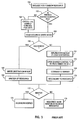
- FIG. 3 illustrates the steps of this process.
- the process starts by generating a request for a common resource 150 .
- the processor requesting the resource tests to determine whether or not a shared control file exists 152 . If not, the process creates a shared control file 154 . In either case, the process attempts to hold exclusive write mode access 156 . If this is successful 158 the process updates the shared control file 160 and becomes master of that resource 162 .
- the process is not the master 164 and must read the name of the master from the shared control file 166 and connect to the master 168 as a shadow 170 . If the requesting process is the master 172 , it can directly access the resource 174 , otherwise, it is a shadow process and must negotiate with the master for access 176 .
- the shared control file of the preferred embodiment is a storage file in the logical file system. As such, it resides on one of the permanent storage devices in the distributed system.
- the present invention is equally applicable, however, to a shared resource control file managed in volatile memory (RAM) that is sharable among the distributed processes.
- RAM volatile memory
- the master process has the responsibility for managing a write lock that permits the holder to update its copy of the replicated data object. Any process desiring to update a data object first requests the write lock from the master process. If the master does not have the lock, it determines which process does and then sends a message to that process to forward the lock to the requesting process.
- a shadow process detects master failure and races to establish itself as a new master, it will create a new write lock. (Because it has no knowledge of the previous write lock.) This could result in the presence of two write locks for the same object. The old one and new one. Two processes could therefore be updating the same object without synchronization.
- the second effect could be the designation as master process of a process that has an old, back level copy of the data object. This could occur where a shadow process has commenced update but has not completed the process of sending the update to the master for propagation or where the master failed before propagating the data. If a process other than the last updating process becomes master, it will assert its copy of the data object as the current value and will lose the update applied by the other process.
- the present invention attempts to have the process with the most recent copy of the data object become master. This is typically the process that currently holds the write lock.
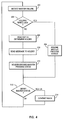
- the process will be described with reference to Figure 4.
- the first, one of the remaining processes must detect master process failure 200 .
- the file system will notify linked processes of a failure of the other process. In other systems detection of failure may not occur until a message is sent to the master without response.
- the process detecting master failure next tests to determine whether it is holding the write lock for the resource controlled by the failed master 202 . If so, the detecting resource assumes the master processor duties by establishing control over the shared control file for that resource 204 . If the detecting process is not the holder of the write lock, it reads the shared control file to determine which process hold the lock 206 . A message is sent by the detecting process to the write lock holding process requesting that it assume master process duties 208 . The process receiving the message and holding the write lock attempts to establish itself as the master process 210 .
- the system next tests 212 to determine whether a new master process has been designated for the resource of the failing process. If so, processing returns to normal state. If a master has not been established 214 , a race is conducted between all shadow process, as is done in the current system.
- the shared control file contains the process identity and communications address of the write lock holder. This information could be contained in a file or storage location separate from the shared control file in alternative designs.
Landscapes
- Engineering & Computer Science (AREA)
- Theoretical Computer Science (AREA)
- Physics & Mathematics (AREA)
- General Engineering & Computer Science (AREA)
- General Physics & Mathematics (AREA)
- Quality & Reliability (AREA)
- Data Mining & Analysis (AREA)
- Databases & Information Systems (AREA)
- Information Retrieval, Db Structures And Fs Structures Therefor (AREA)
- Multi Processors (AREA)
- Computer And Data Communications (AREA)
- Hardware Redundancy (AREA)
Applications Claiming Priority (2)
| Application Number | Priority Date | Filing Date | Title |
|---|---|---|---|
| US7723193A | 1993-06-14 | 1993-06-14 | |
| US77231 | 1993-06-14 |
Publications (2)
| Publication Number | Publication Date |
|---|---|
| EP0629949A2 true EP0629949A2 (de) | 1994-12-21 |
| EP0629949A3 EP0629949A3 (de) | 1997-10-15 |
Family
ID=22136847
Family Applications (1)
| Application Number | Title | Priority Date | Filing Date |
|---|---|---|---|
| EP94107943A Withdrawn EP0629949A3 (de) | 1993-06-14 | 1994-05-24 | System und Verfahren zur Wiederherstellung nach Prozessfehler in einem Schreibsperrsteuerungssystem. |
Country Status (2)
| Country | Link |
|---|---|
| EP (1) | EP0629949A3 (de) |
| JP (1) | JP2726001B2 (de) |
Cited By (3)
| Publication number | Priority date | Publication date | Assignee | Title |
|---|---|---|---|---|
| WO2012168570A1 (fr) * | 2011-06-07 | 2012-12-13 | Cassidian Sas | Procédé et système de gestion de données partagées entre des sites de gestion distincts |
| WO2013133741A1 (en) * | 2012-03-09 | 2013-09-12 | Telefonaktiebolaget L M Ericsson (Publ) | A method and a control node in an overlay network |
| WO2016201620A1 (zh) * | 2015-06-16 | 2016-12-22 | 华为技术有限公司 | 进程接替的方法和装置 |
Family Cites Families (5)
| Publication number | Priority date | Publication date | Assignee | Title |
|---|---|---|---|---|
| IT1141175B (it) * | 1980-02-07 | 1986-10-01 | Honeywell Inf Systems | Procedimento per la liberazione di risorse comuni di memoria in un sistema multiprocessore |
| US5003464A (en) * | 1988-05-23 | 1991-03-26 | Bell Communications Research, Inc. | Methods and apparatus for efficient resource allocation |
| JPH04102139A (ja) * | 1990-08-21 | 1992-04-03 | Fuji Xerox Co Ltd | ネットワークシステム |
| US5339397A (en) * | 1990-10-12 | 1994-08-16 | International Business Machines Corporation | Hardware primary directory lock |
| US5423044A (en) * | 1992-06-16 | 1995-06-06 | International Business Machines Corporation | Shared, distributed lock manager for loosely coupled processing systems |
-
1994
- 1994-05-17 JP JP6102395A patent/JP2726001B2/ja not_active Expired - Fee Related
- 1994-05-24 EP EP94107943A patent/EP0629949A3/de not_active Withdrawn
Cited By (7)
| Publication number | Priority date | Publication date | Assignee | Title |
|---|---|---|---|---|
| WO2012168570A1 (fr) * | 2011-06-07 | 2012-12-13 | Cassidian Sas | Procédé et système de gestion de données partagées entre des sites de gestion distincts |
| FR2976378A1 (fr) * | 2011-06-07 | 2012-12-14 | Cassidian | Procede et systeme de gestion de donnees partagees entre des sites de gestion distincts |
| WO2013133741A1 (en) * | 2012-03-09 | 2013-09-12 | Telefonaktiebolaget L M Ericsson (Publ) | A method and a control node in an overlay network |
| US8849977B2 (en) | 2012-03-09 | 2014-09-30 | Telefonaktiebolaget Lm Ericsson (Publ) | Method and a control node in an overlay network |
| WO2016201620A1 (zh) * | 2015-06-16 | 2016-12-22 | 华为技术有限公司 | 进程接替的方法和装置 |
| CN106462455A (zh) * | 2015-06-16 | 2017-02-22 | 华为技术有限公司 | 进程接替的方法和装置 |
| CN106462455B (zh) * | 2015-06-16 | 2019-11-01 | 华为技术有限公司 | 进程接替的方法和装置 |
Also Published As
| Publication number | Publication date |
|---|---|
| JPH0713839A (ja) | 1995-01-17 |
| JP2726001B2 (ja) | 1998-03-11 |
| EP0629949A3 (de) | 1997-10-15 |
Similar Documents
| Publication | Publication Date | Title |
|---|---|---|
| US5463733A (en) | Failure recovery apparatus and method for distributed processing shared resource control | |
| US5544353A (en) | Distributed processing object shared resource control apparatus and method | |
| US5423044A (en) | Shared, distributed lock manager for loosely coupled processing systems | |
| US10534681B2 (en) | Clustered filesystems for mix of trusted and untrusted nodes | |
| US6269432B1 (en) | Distributed transactional processing system having redundant data | |
| US8495131B2 (en) | Method, system, and program for managing locks enabling access to a shared resource | |
| US5550973A (en) | System and method for failure recovery in a shared resource system having a moving write lock | |
| US5884308A (en) | Updating distributed data files using active token distributed at different times to different sites | |
| US20060277186A1 (en) | Virtual storage device that uses volatile memory | |
| US5787247A (en) | Replica administration without data loss in a store and forward replication enterprise | |
| EP0801746B1 (de) | Verfahren und apparat zur sicheren abschirmung von platten in einem multirechnersystem | |
| JP2948496B2 (ja) | データ処理システム内で複写データ一貫性を維持するためのシステムおよび方法 | |
| US6542974B2 (en) | Method and apparatus for independent and simultaneous access to a common data set | |
| US7047240B2 (en) | File backup method and storage apparatus, computer program therefor and computer-readable medium containing the same | |
| EP0853412B1 (de) | System/Verfahren zur wirkungsvollen Übermittlung von Datenströmen in einem Multimediasystem | |
| KR20040015223A (ko) | 클러스터형 컴퓨터 시스템의 자원 작용 수행 방법,클러스터형 컴퓨터 시스템 및 그의 수행을 위한 컴퓨터프로그램 | |
| US7873613B2 (en) | Providing storage control in a network of storage controllers | |
| US20030028514A1 (en) | Extended attribute caching in clustered filesystem | |
| US6968359B1 (en) | Merge protocol for clustered computer system | |
| JP2002091938A (ja) | フェールオーバを処理するシステムおよび方法 | |
| US5692120A (en) | Failure recovery apparatus and method for distributed processing shared resource control | |
| US7168088B1 (en) | Method and apparatus for reliable disk fencing in a multicomputer system | |
| EP0398495A2 (de) | Dateiverriegelung in einem verteilten Dateisystem | |
| JP2726001B2 (ja) | コンピユータ・システムにおける誤り回復方法 | |
| Mahmoud et al. | Software controlled access to distributed data bases |
Legal Events
| Date | Code | Title | Description |
|---|---|---|---|
| PUAI | Public reference made under article 153(3) epc to a published international application that has entered the european phase |
Free format text: ORIGINAL CODE: 0009012 |
|
| AK | Designated contracting states |
Kind code of ref document: A2 Designated state(s): DE FR GB |
|
| 17P | Request for examination filed |
Effective date: 19950425 |
|
| PUAL | Search report despatched |
Free format text: ORIGINAL CODE: 0009013 |
|
| AK | Designated contracting states |
Kind code of ref document: A3 Designated state(s): DE FR GB |
|
| STAA | Information on the status of an ep patent application or granted ep patent |
Free format text: STATUS: THE APPLICATION HAS BEEN WITHDRAWN |
|
| 18W | Application withdrawn |
Withdrawal date: 19980109 |