EP0620733B1 - Pharmaceutical compositions containing nifedipine and process for the preparation thereof - Google Patents
Pharmaceutical compositions containing nifedipine and process for the preparation thereof Download PDFInfo
- Publication number
- EP0620733B1 EP0620733B1 EP93901850A EP93901850A EP0620733B1 EP 0620733 B1 EP0620733 B1 EP 0620733B1 EP 93901850 A EP93901850 A EP 93901850A EP 93901850 A EP93901850 A EP 93901850A EP 0620733 B1 EP0620733 B1 EP 0620733B1
- Authority
- EP
- European Patent Office
- Prior art keywords
- nifedipine
- polyvinylpyrrolidone
- composition according
- content
- copolymer
- Prior art date
- Legal status (The legal status is an assumption and is not a legal conclusion. Google has not performed a legal analysis and makes no representation as to the accuracy of the status listed.)
- Expired - Lifetime
Links
Images



Classifications
-
- A—HUMAN NECESSITIES
- A61—MEDICAL OR VETERINARY SCIENCE; HYGIENE
- A61K—PREPARATIONS FOR MEDICAL, DENTAL OR TOILETRY PURPOSES
- A61K31/00—Medicinal preparations containing organic active ingredients
- A61K31/33—Heterocyclic compounds
- A61K31/395—Heterocyclic compounds having nitrogen as a ring hetero atom, e.g. guanethidine or rifamycins
- A61K31/435—Heterocyclic compounds having nitrogen as a ring hetero atom, e.g. guanethidine or rifamycins having six-membered rings with one nitrogen as the only ring hetero atom
- A61K31/44—Non condensed pyridines; Hydrogenated derivatives thereof
-
- A—HUMAN NECESSITIES
- A61—MEDICAL OR VETERINARY SCIENCE; HYGIENE
- A61K—PREPARATIONS FOR MEDICAL, DENTAL OR TOILETRY PURPOSES
- A61K9/00—Medicinal preparations characterised by special physical form
- A61K9/14—Particulate form, e.g. powders, Processes for size reducing of pure drugs or the resulting products, Pure drug nanoparticles
- A61K9/141—Intimate drug-carrier mixtures characterised by the carrier, e.g. ordered mixtures, adsorbates, solid solutions, eutectica, co-dried, co-solubilised, co-kneaded, co-milled, co-ground products, co-precipitates, co-evaporates, co-extrudates, co-melts; Drug nanoparticles with adsorbed surface modifiers
- A61K9/146—Intimate drug-carrier mixtures characterised by the carrier, e.g. ordered mixtures, adsorbates, solid solutions, eutectica, co-dried, co-solubilised, co-kneaded, co-milled, co-ground products, co-precipitates, co-evaporates, co-extrudates, co-melts; Drug nanoparticles with adsorbed surface modifiers with organic macromolecular compounds
-
- A—HUMAN NECESSITIES
- A61—MEDICAL OR VETERINARY SCIENCE; HYGIENE
- A61K—PREPARATIONS FOR MEDICAL, DENTAL OR TOILETRY PURPOSES
- A61K9/00—Medicinal preparations characterised by special physical form
- A61K9/14—Particulate form, e.g. powders, Processes for size reducing of pure drugs or the resulting products, Pure drug nanoparticles
- A61K9/16—Agglomerates; Granulates; Microbeadlets ; Microspheres; Pellets; Solid products obtained by spray drying, spray freeze drying, spray congealing,(multiple) emulsion solvent evaporation or extraction
- A61K9/167—Agglomerates; Granulates; Microbeadlets ; Microspheres; Pellets; Solid products obtained by spray drying, spray freeze drying, spray congealing,(multiple) emulsion solvent evaporation or extraction with an outer layer or coating comprising drug; with chemically bound drugs or non-active substances on their surface
- A61K9/1676—Agglomerates; Granulates; Microbeadlets ; Microspheres; Pellets; Solid products obtained by spray drying, spray freeze drying, spray congealing,(multiple) emulsion solvent evaporation or extraction with an outer layer or coating comprising drug; with chemically bound drugs or non-active substances on their surface having a drug-free core with discrete complete coating layer containing drug
-
- A—HUMAN NECESSITIES
- A61—MEDICAL OR VETERINARY SCIENCE; HYGIENE
- A61P—SPECIFIC THERAPEUTIC ACTIVITY OF CHEMICAL COMPOUNDS OR MEDICINAL PREPARATIONS
- A61P9/00—Drugs for disorders of the cardiovascular system
- A61P9/12—Antihypertensives
Definitions
- the present invention relates to pharmaceutical compositions containing nifedipine and to a process for the preparation thereof.
- the present invention relates to a slow release pharmaceutical formulation containing nifedipine which provides for a regular and prolonged release pattern upon administration and, in its most preferred form, may be administered once a day.
- the invention also relates to a process for the preparation thereof.
- the drug nifedipine is currently used in the form of rapid release and comparatively slow release pharmaceutical dosage forms for the treatment, respectively, of acute angina and chronic hypertension. It appears that, for the acute treatment of angina, it is desirable quickly to attain relatively high nifedipine concentrations in plasma and this requirement is currently served by a preparation consisting of a solution of nifedipine in low molecular weight polyethylene glycol contained within soft gelatin capsules. For the treatment of hypertension it appears that it is more desirable to maintain plasma nifedipine concentrations within a much lower concentration range.
- Modified release preparations of the substance are available for this purpose, although they mostly still require multiple daily doses to be taken which is both a clinical disadvantage in that symptomatic control of the condition may not be optimised and a disadvantage from the patient's point of view.
- the inconvenience of taking a dosage more than once per day may affect compliance with the dosage regime, also leading to poor clinical performance.
- nifedipine per se is very poorly soluble in water. Because of this many of the patent specifications on controlled release systems of nifedipine describe means of actually enhancing, rather than suppressing, the solubility of nifedipine.
- nifedipine dissolution is achieved by limiting its specific surface area to 0.1 to 0.42m 2 /g and coating the nifedipine crystals, in admixture with an equal quantity of a filler, onto inert spheroids by means of suitable binders.
- nifedipine is achieved by processing the material to form a solution adsorbed onto a solid base (as in British Patent No. 1,456,618), or to form a solid solution (also known as a co-precipitate) with high molecular weight polyethylene glycol (European Patent Application No. 0220760) or an ester or ether of polyethylene glycol (European Patent Application No. 0249587) or with other selected materials, including polyvinylpyrrolidone (British Patent No. 1,579,818).
- EP 385582 discloses a pharmaceutical composition which comprises particles of a finely divided pharmaceutically acceptable water soluble carrier coated with microparticles of nifedipine, the majority of which have a particle size of 100 micrometres or less, in the presence of polyvinylpyrrolidone, the polyvinylpyrrolidone being present in an amount of from 10 to 90% by weight based on the weight of the nifedipine.
- compositions can provide a slow release of nifedipine over a period of up to about 12 hours, i.e. to provide a potential composition for twice-daily administration of nifedipine.
- Attempts to slow the release of nifedipine from the tablets by increasing the amount of polyvinylpyrrolidone were unsuccessful and the addition of other materials to the system diluted the effect of polyvinylpyrrolidone and thus only succeeded in speeding the release of nifedipine from the compositions.
- Acrylic resins have previously been used in tablet compositions. However, they have been used in much larger relative amounts than in the present invention, and the resulting compositions have short release profiles.
- GB 2229095 describes compositions containing nifedipine in crystalline form, hydrophilising agent and retarding agent.
- Polyvinylpyrrolidone is mentioned as a hydrophilising agent, but no example is given.
- the amount of retarding agent required is in the range 0.2 to 1.5 parts by weight relative to the nifedipine content.
- polyvinyl butyrate is preferred as the retarding agent because a smaller amount is said to be required than if an acrylic polymer is used.
- nifedipine is coated by spraying onto sucrose granules which have first been wetted with polyvinylpyrrolidone. The coated granules are then wetted with Eudragit (an acrylic polymer) in a ratio of 35 parts by weight Eudragit to one part by weight of nifedipine.
- Eudragit an acrylic polymer
- the present invention provides a pharmaceutical composition which comprises particles of a finely divided pharmaceutically acceptable water soluble carrier coated with a mixture of nifedipine with polyvinylpyrrolidone or a copolymer of N-vinyl-pyrrolidone and vinyl acetate, and a pharmaceutically acceptable acrylic based polymer, the weight ratio of the polyvinylpyrrolidone Or copolymer of N-vinylpyrrolidone and vinyl acetate copolymer to the content of nifedipine being in the range of from 1:1 to 1:10 and the weight ratio of the acrylic based polymer to the content of nifedipine being in the range of from 1:4 to 1:20.
- the present invention also includes within its scope a process for the preparation of the pharmaceutical compositions as defined above, which process comprises forming a solution of nifedipine, polyvinylpyrrolidone or a copolymer of N-vinylpyrrolidone and vinyl acetate and a pharmaceutically acceptable acrylic based polymer (which may for example be an acrylic resin) in a suitable solvent, coating particles of a finely divided pharmaceutically acceptable water soluble carrier which is insoluble in the solvent with the solution and evaporating the solvent from the surface of the coated carrier particles.
- N-vinylpyrrolidone copolymer a copolymer of N-vinylpyrrolidone and vinyl acetate
- a suitable example of such a copolymer is Kollidon VA 64 obtainable from BASF.
- the ratio of the acrylic based polymer to the content of nifedipine is in the range 1:5 to 1:12. Most preferably this ratio is in the range 1:6 to 1:10.
- the ratio of the content of polyvinylpyrrolidone or N-vinylpyrrolidone copolymer in the composition to the content of nifedipine is in the range 1:2 to 1:8. Very preferably this ratio is in the range 1:2 to 1:5. A particularly advantageous ratio is 1:4.
- the nifedipine is present in a predominantly amorphous form in the composition.
- the composition is a highly amorphous layer of a solid solution of polyvinylpyrrolidone (or N-vinylpyrrolidone copolymer), nifedipine and acrylic based polymer coated on the carrier, as distinct from the nifedipine being in crystalline form.
- the invention is not be be limited by theoretical considerations and the possibility is not excluded that some of the nifedipine may have some crystalline structure.
- the amount of drug released from a composition according to the invention in an in vitro dissolution test is related to time by a linear relationship better than by a square-root of time relationship.
- dosage units formed from a composition of the invention can provide substantially linear release of nifedipine over 8 hours, or more.
- the pharmaceutically acceptable water soluble carrier may be any carrier which is normally used in the preparation of pharmaceutical compositions, for example lactose, sucrose, mannose, sorbitol, or mixtures thereof.
- the pharmaceutically acceptable water soluble carrier preferably has a particle size of less than 250 micrometres and preferably also has a specific surface area of greater than 0.5 m 2 /gram.
- polyvinylpyrrolidone and N-vinylpyrrolidone copolymer are known as binders for use in the preparation of various pharmaceutical compositions, these materials have, when used in the proportions herein specified and incorporated together with the acrylic based polymer in the manner described, a specific effect in controlling the rate of dissolution and release of nifedipine from the coated carrier particles.
- the pharmaceutically acceptable acrylic based polymer which is incorporated into the pharmaceutical compositions of the present invention may be any suitable pharmaceutically acceptable acrylic based polymer.
- acrylic based polymer we mean a polymer whose monomer units are primarily or entirely acrylic or allylacrylate. Low amounts e.g. up to 10% by weight of co-monomer may be present.
- the acrylic based polymer may be cationic, non-ionic or anionic and may be, for example, a poly-acrylate, a poly-methacrylate or a copolymer of acrylic and methacrylic acid esters. Any of these may have a low content of quaternary ammonium groups.
- Non-ionic acrylic based polymers are highly preferred, as are acrylic resins. Examples of suitable acrylic based polymers are the whole of the range sold under the trade name EUDRAGIT BY Rohm Pharma GmbH.
- the water soluble carrier may be coated with the nifedipine/polyvinylpyrrolidone/acrylic based polymer in a single stage process or in a stepwise manner.
- all of the solution may be coated onto the carrier in one stage or, alternatively and preferably, part of the solution may be coated onto the carrier and the mixture granulated and dried, followed by coating of the dry granulate with the remaining part of the solution and drying and granulating the resulting mixture.
- This stepwise process may be performed in more than two steps.
- the solvent which is used in the process of the invention must be a solvent for nifedipine, the polyvinylpyrrolidone and the acrylic based polymer, but should not dissolve the pharmaceutically acceptable carrier.
- suitable solvents are lower aliphatic alcohols, methylene chloride or chloroform. The most preferred solvent for use is chloroform.
- nifedipine shows amorphous, rather than crystalline, characteristics.
- the pharmaceutical composition of the present invention may be formulated into a solid unit dosage form, such as tablets or capsules, in a conventional manner.
- conventional additives may be used such as lubricants, binders, stabilizers etc.
- compositions of the present invention possess good stability and are easily reproducible. During the preparation of the compositions milling is not required and this avoids the formation of nifedipine dust.
- Nifedipine and polyvinylpyrrolidone (PVP) were dissolved in chloroform (nominal quantity of 0.15 ml chloroform per tablet containing a nominal content of 30 mg nifedipine) and mixed using a propeller mixer.
- Acrylic resin (Eudragit RS 100) was dissolved in the resulting solution and mixed for ten minutes.
- Lactose was placed in a mixer granulator and granulated with half of the nifedipine/acrylic resin solution. Mixing was continued for one minute after the addition of the solution at which time the mixer was stopped, the bowl scraped down, the mixer re-started and the wet granulate mixed for a further four minutes. The resulting wet granulate was fluid bed dried for fifteen minutes at an air inlet temperature of 60°C.
- Dry first-stage granulate was returned to the mixer/granulator and regranulated with the remaining nifedipine/acrylic resin solution and the resulting granulate mixed for one minute.
- the mixer was stopped, the sides of the bowl scraped down, the mixer re-started and the wet granulate mixed for a further four minutes.
- the resulting wet granulate was fluid bed dried for ten minutes at an air inlet temperature of 60°C.
- the resulting dry granulate was screened through a 1 mm aperture stainless steel sieve and fluid bed dried at an air inlet temperature of 60°C.
- the resulting lubricated granulate was compressed into tablets.
- Table 1 presents the dissolution test data of examples 1 to 4 in table form, and shows the dissolution profile over a slightly longer period than does Fig. 1.
- the table also gives the time to 50% release (T 50 ) for each formulation.
- T 50 values of these compositions show that they are useful once-a-day preparations. In particular the formulations of Examples 2 and 3 with T 50 values of around 7 hours are very useful.
- tablets were prepared each having the following composition: Parts by Weight Nifedipine 30.0 Polyvinylpyrrolidone 7.5 Lactose 300.0 Acrylic Polymer (Eudragit RS) 4.0 Hydrogenated Castor Oil 3.5 Purified Talc 7.1
- Example 1 Example 2
- Example 3 Example 4 Dissolution test profile: mean percentage released from 6 replicate tables at time (hour) 1.0 7 4 1.5 16 10 2.0 15 6 3.0 31 18 22 10 4.0 28 14 4.5 48 29 5.0 35 19 6.0 70 42 45 24 7.0 52 32 7.5 84 57 8.0 62 37 9.0 73 10.0 77 10.5 85 12.0 86 16.0 80 17.0 85 T 50 4.6 6.8 6.8 11.4
- Table 2 shows the results of in vitro dissolution tests carried out as in Examples 1-4 on three development scale batches with polyvinylpyrolidone and nifedipine in weight ratios of 1:7.9, 1:4 and 1:2.7.
- the acrylic polymer (Eudragit RS) in each batch formulation was in a weight ratio of 1:6.67 with respect to nifedipine.
- Batch No. 2 was equivalent to the formulation in Example 3.
- compositions according to the present invention closely follows zero-order kinetics. This is in contrast to the prior art products for which the profile is non-linear due to diffusion controlled release of drug.
- the linear release profile has a significant advantage because a steady rate of supply of drug to the body will result in relatively steady blood levels. In the treatment of chronic heart conditions with nifedipine this is especially advantageous. Furthermore, the side-effects associated with the use of nifedipine may be reduced since these are often associated with peaks in the level of nifedipine in the blood.
- Such a p value represents the situation where there is at least 95% probability that the fit of the experimental release results to the linear model is better than that to the square-root of time model.
- the results of the statistical analysis on batch data is tabulated below (Table 3).
- the batches represent a formulation series containing Eudragit (as the acrylic based polymer) over a range. They also represent development-scale (3300 tablets) up to production-scale (113000 tablets) manufacture: in each case, the results indicate that the goodness of fit of the in vitro release data to the zero-order model is better than to the square-root of time relationship.
- the findings show that it is possible to obtain zero-order drug release from the tablets a) over a range of formulations and b) when producing the tablets either in the laboratory (development-scale batches) or on conventional pharmaceutical production-scale processing plant.
- Figure 2 illustrates the levels of intact nifedipine, i.e. the drug that has not undergone any form of metabolism and which is present in the blood circulation in the chemical form in which it has been administered, following single doses of 10 mg of an immediately-releasing formulation (labelled as Imm rel caps), or 30 mg in the form of the tablets of Example 3, or in the form of Procardia XL tablets which is a controlled-release nifedipine product marketed in the USA as an osmotically regulated device (labelled as osmotic tab 30 mg).
- Imm rel caps immediately-releasing formulation
- Procardia XL tablets which is a controlled-release nifedipine product marketed in the USA as an osmotically regulated device (labelled as osmotic tab 30 mg).
- the blood level vs time profile for the product of Example 3 shows the following advantages:
- Example 2 Three sets of granules were manufactured according to (a) Example 2 in a small batch of 3,000 tablets (set 1), (b) Example 2 in a batch of 113,000 tablets (set 2) and (c) Example 3 (except for the drying step) in a batch of 3,300 tablets (set 3).
- the sets were used in a scanning electron microscopic study.
- the granules in set 3 were tray dried instead of being fluid bed dried.
- the granules were mounted and examined using an ISI 100A scanning electron microscope with an accelerating voltage of 10 kv at a working distance of 20mm.
Landscapes
- Health & Medical Sciences (AREA)
- Engineering & Computer Science (AREA)
- Bioinformatics & Cheminformatics (AREA)
- Public Health (AREA)
- Medicinal Chemistry (AREA)
- Pharmacology & Pharmacy (AREA)
- Life Sciences & Earth Sciences (AREA)
- Animal Behavior & Ethology (AREA)
- General Health & Medical Sciences (AREA)
- Chemical & Material Sciences (AREA)
- Veterinary Medicine (AREA)
- Epidemiology (AREA)
- Cardiology (AREA)
- Heart & Thoracic Surgery (AREA)
- Chemical Kinetics & Catalysis (AREA)
- General Chemical & Material Sciences (AREA)
- Nuclear Medicine, Radiotherapy & Molecular Imaging (AREA)
- Organic Chemistry (AREA)
- Pharmaceuticals Containing Other Organic And Inorganic Compounds (AREA)
- Medicinal Preparation (AREA)
- Hydrogenated Pyridines (AREA)
- Saccharide Compounds (AREA)
Abstract
Description
- The present invention relates to pharmaceutical compositions containing nifedipine and to a process for the preparation thereof. In particular the present invention relates to a slow release pharmaceutical formulation containing nifedipine which provides for a regular and prolonged release pattern upon administration and, in its most preferred form, may be administered once a day. The invention also relates to a process for the preparation thereof.
- The drug nifedipine is currently used in the form of rapid release and comparatively slow release pharmaceutical dosage forms for the treatment, respectively, of acute angina and chronic hypertension. It appears that, for the acute treatment of angina, it is desirable quickly to attain relatively high nifedipine concentrations in plasma and this requirement is currently served by a preparation consisting of a solution of nifedipine in low molecular weight polyethylene glycol contained within soft gelatin capsules. For the treatment of hypertension it appears that it is more desirable to maintain plasma nifedipine concentrations within a much lower concentration range. Modified release preparations of the substance are available for this purpose, although they mostly still require multiple daily doses to be taken which is both a clinical disadvantage in that symptomatic control of the condition may not be optimised and a disadvantage from the patient's point of view. The inconvenience of taking a dosage more than once per day may affect compliance with the dosage regime, also leading to poor clinical performance.
- The reason for the two significantly different types of formulation is that nifedipine per se is very poorly soluble in water. Because of this many of the patent specifications on controlled release systems of nifedipine describe means of actually enhancing, rather than suppressing, the solubility of nifedipine.
- Thus, in European Patent No. 0047899 (corresponding to Canadian Patent No. 1180277) control of the dissolution of nifedipine is achieved by processing the material to give it a large specific surface area of 0.5 to 6m2/g. The specification discloses the production of fine nifedipine crystals by grinding and screening but not by any other means.
- Similarly, in WO 86/01717 the control of nifedipine dissolution is achieved by limiting its specific surface area to 0.1 to 0.42m2/g and coating the nifedipine crystals, in admixture with an equal quantity of a filler, onto inert spheroids by means of suitable binders.
- Further enhancement of the dissolution of nifedipine is achieved by processing the material to form a solution adsorbed onto a solid base (as in British Patent No. 1,456,618), or to form a solid solution (also known as a co-precipitate) with high molecular weight polyethylene glycol (European Patent Application No. 0220760) or an ester or ether of polyethylene glycol (European Patent Application No. 0249587) or with other selected materials, including polyvinylpyrrolidone (British Patent No. 1,579,818).
- This ability of polyvinylpyrrolidone to enhance the solubility characteristics of certain materials by forming coprecipitates with them is now fairly well documented. It is also generally accepted that in order to form such coprecipitates the amount of polyvinylpyrrolidone used must be in excess of the amount of active material.
- In our European Patent No. 385582 we describe pharmaceutical compositions in which polyvinylpyrrolidone in an amount less than the amount of nifedipine actually significantly slows the dissolution of nifedipine from the finished solid dosage form. More specifically, EP 385582 discloses a pharmaceutical composition which comprises particles of a finely divided pharmaceutically acceptable water soluble carrier coated with microparticles of nifedipine, the majority of which have a particle size of 100 micrometres or less, in the presence of polyvinylpyrrolidone, the polyvinylpyrrolidone being present in an amount of from 10 to 90% by weight based on the weight of the nifedipine.
- We have found that these compositions can provide a slow release of nifedipine over a period of up to about 12 hours, i.e. to provide a potential composition for twice-daily administration of nifedipine. Attempts to slow the release of nifedipine from the tablets by increasing the amount of polyvinylpyrrolidone were unsuccessful and the addition of other materials to the system diluted the effect of polyvinylpyrrolidone and thus only succeeded in speeding the release of nifedipine from the compositions.
- Acrylic resins have previously been used in tablet compositions. However, they have been used in much larger relative amounts than in the present invention, and the resulting compositions have short release profiles.
- GB 2229095 describes compositions containing nifedipine in crystalline form, hydrophilising agent and retarding agent. Polyvinylpyrrolidone is mentioned as a hydrophilising agent, but no example is given. For sustained release composition, the amount of retarding agent required is in the range 0.2 to 1.5 parts by weight relative to the nifedipine content. In this document, polyvinyl butyrate is preferred as the retarding agent because a smaller amount is said to be required than if an acrylic polymer is used.
- In WO86/01717 nifedipine is coated by spraying onto sucrose granules which have first been wetted with polyvinylpyrrolidone. The coated granules are then wetted with Eudragit (an acrylic polymer) in a ratio of 35 parts by weight Eudragit to one part by weight of nifedipine.
- Sugimoto et al. in Drug Development and Industrial Pharmacy (1980), 6, p137-160 and Chem. Pharm. Bull (1982) 30 (12) p4479-2288 discuss the use of polymeric materials to increase the solubility of PVP in co-precipitates, resulting in nifedipine formulations with rapid release characteristics. Where PVP is mentioned, the amount of PVP used in the co-precipitates of nifedipine with PVP is always in amounts in excess of the nifedipine content.
- There is a need for a potential product for once-daily administration of nifedipine. We have surprisingly discovered that the addition of an acrylic resin to certain pharmaceutical compositions, for example those disclosed in our earlier European Patent No. 385582 results in compositions that can become useful as once a day treatments.
- The present invention provides a pharmaceutical composition which comprises particles of a finely divided pharmaceutically acceptable water soluble carrier coated with a mixture of nifedipine with polyvinylpyrrolidone or a copolymer of N-vinyl-pyrrolidone and vinyl acetate, and a pharmaceutically acceptable acrylic based polymer, the weight ratio of the polyvinylpyrrolidone Or copolymer of N-vinylpyrrolidone and vinyl acetate copolymer to the content of nifedipine being in the range of from 1:1 to 1:10 and the weight ratio of the acrylic based polymer to the content of nifedipine being in the range of from 1:4 to 1:20.
- The present invention also includes within its scope a process for the preparation of the pharmaceutical compositions as defined above, which process comprises forming a solution of nifedipine, polyvinylpyrrolidone or a copolymer of N-vinylpyrrolidone and vinyl acetate and a pharmaceutically acceptable acrylic based polymer (which may for example be an acrylic resin) in a suitable solvent, coating particles of a finely divided pharmaceutically acceptable water soluble carrier which is insoluble in the solvent with the solution and evaporating the solvent from the surface of the coated carrier particles.
- Throughout the present specification the copolymer of N-vinylpyrrolidone and vinyl acetate will be referred to as an "N-vinylpyrrolidone copolymer". A suitable example of such a copolymer is Kollidon VA 64 obtainable from BASF.
- All ratios are by weight. Preferably, the ratio of the acrylic based polymer to the content of nifedipine is in the range 1:5 to 1:12. Most preferably this ratio is in the range 1:6 to 1:10.
- It is further preferable that the ratio of the content of polyvinylpyrrolidone or N-vinylpyrrolidone copolymer in the composition to the content of nifedipine is in the range 1:2 to 1:8. Very preferably this ratio is in the range 1:2 to 1:5. A particularly advantageous ratio is 1:4.
- In a highly preferred form of the invention the nifedipine is present in a predominantly amorphous form in the composition. We believe that the composition is a highly amorphous layer of a solid solution of polyvinylpyrrolidone (or N-vinylpyrrolidone copolymer), nifedipine and acrylic based polymer coated on the carrier, as distinct from the nifedipine being in crystalline form. However, the invention is not be be limited by theoretical considerations and the possibility is not excluded that some of the nifedipine may have some crystalline structure.
- In our own SEM (scanning electron microscope) studies, no crystalline nifedipine was seen.
- Preferably the amount of drug released from a composition according to the invention in an in vitro dissolution test is related to time by a linear relationship better than by a square-root of time relationship.
- Advantageously, dosage units formed from a composition of the invention can provide substantially linear release of nifedipine over 8 hours, or more.
- The pharmaceutically acceptable water soluble carrier may be any carrier which is normally used in the preparation of pharmaceutical compositions, for example lactose, sucrose, mannose, sorbitol, or mixtures thereof. The pharmaceutically acceptable water soluble carrier preferably has a particle size of less than 250 micrometres and preferably also has a specific surface area of greater than 0.5 m2/gram.
- Although polyvinylpyrrolidone and N-vinylpyrrolidone copolymer are known as binders for use in the preparation of various pharmaceutical compositions, these materials have, when used in the proportions herein specified and incorporated together with the acrylic based polymer in the manner described, a specific effect in controlling the rate of dissolution and release of nifedipine from the coated carrier particles.
- The pharmaceutically acceptable acrylic based polymer which is incorporated into the pharmaceutical compositions of the present invention may be any suitable pharmaceutically acceptable acrylic based polymer. By acrylic based polymer we mean a polymer whose monomer units are primarily or entirely acrylic or allylacrylate. Low amounts e.g. up to 10% by weight of co-monomer may be present. The acrylic based polymer may be cationic, non-ionic or anionic and may be, for example, a poly-acrylate, a poly-methacrylate or a copolymer of acrylic and methacrylic acid esters. Any of these may have a low content of quaternary ammonium groups. Non-ionic acrylic based polymers are highly preferred, as are acrylic resins. Examples of suitable acrylic based polymers are the whole of the range sold under the trade name EUDRAGIT BY Rohm Pharma GmbH.
- In carrying out the process of the present invention, the water soluble carrier may be coated with the nifedipine/polyvinylpyrrolidone/acrylic based polymer in a single stage process or in a stepwise manner. For example, all of the solution may be coated onto the carrier in one stage or, alternatively and preferably, part of the solution may be coated onto the carrier and the mixture granulated and dried, followed by coating of the dry granulate with the remaining part of the solution and drying and granulating the resulting mixture. This stepwise process may be performed in more than two steps.
- The solvent which is used in the process of the invention must be a solvent for nifedipine, the polyvinylpyrrolidone and the acrylic based polymer, but should not dissolve the pharmaceutically acceptable carrier. Examples of suitable solvents are lower aliphatic alcohols, methylene chloride or chloroform. The most preferred solvent for use is chloroform.
- The solvent evaporates from the surface of the coated carrier particles thus leaving nifedipine in the presence of the polyvinylpyrrolidone and the acrylic based polymer, coated onto the particles of the finely divided pharmaceutically acceptable water soluble carrier. As mentioned, it is preferred that in this coating the nifedipine shows amorphous, rather than crystalline, characteristics.
- The pharmaceutical composition of the present invention may be formulated into a solid unit dosage form, such as tablets or capsules, in a conventional manner. In the preparation of such formulations conventional additives may be used such as lubricants, binders, stabilizers etc.
- The pharmaceutical compositions of the present invention possess good stability and are easily reproducible. During the preparation of the compositions milling is not required and this avoids the formation of nifedipine dust.
- It will be appreciated that dry milling techniques are tedious and expensive and, furthermore, that the dust from a drug such as nifedipine is potentially hazardous. The process of the present invention thus provides an economic and simple route to the production of a pharmaceutical composition comprising nifedipine.
- The present invention will be further described with reference to the following Examples and the accompanying drawings, in which:-
-
- Figure 1 illustrates the rate of release of nifedipine in in vitro dissolution tests from the tablets of Examples 1 to 4;
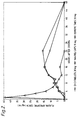
- Figure 2 illustrates mean blood levels of nifedipine attained after administration to human volunteers of one tablet as described in Example 3 in comparison with two other compositions; and
- Figures 3 to 5 are SEM photomicrographs of granules according to the invention.
-
- Nifedipine and polyvinylpyrrolidone (PVP) were dissolved in chloroform (nominal quantity of 0.15 ml chloroform per tablet containing a nominal content of 30 mg nifedipine) and mixed using a propeller mixer. Acrylic resin (Eudragit RS 100) was dissolved in the resulting solution and mixed for ten minutes.
- Lactose was placed in a mixer granulator and granulated with half of the nifedipine/acrylic resin solution. Mixing was continued for one minute after the addition of the solution at which time the mixer was stopped, the bowl scraped down, the mixer re-started and the wet granulate mixed for a further four minutes. The resulting wet granulate was fluid bed dried for fifteen minutes at an air inlet temperature of 60°C.
- Dry first-stage granulate was returned to the mixer/granulator and regranulated with the remaining nifedipine/acrylic resin solution and the resulting granulate mixed for one minute. The mixer was stopped, the sides of the bowl scraped down, the mixer re-started and the wet granulate mixed for a further four minutes. The resulting wet granulate was fluid bed dried for ten minutes at an air inlet temperature of 60°C.
- The resulting dry granulate was screened through a 1 mm aperture stainless steel sieve and fluid bed dried at an air inlet temperature of 60°C.
- Appropriate amounts of hydrogenated castor oil and purified talc to be employed as lubricant were added to the dry granulate and blended in a Y-cone blender for ten minutes.
- The resulting lubricated granulate was compressed into tablets.
- Using the general procedure detailed in A above tablets were prepared each having the following composition:
Parts by Weight Nifedipine 30.0 Polyvinylpyrrolidone 7.5 Lactose 300.0 Acrylic Polymer (Eudragit RS) 2.5 Hydrogenated Castor Oil 3.5 Purified Talc 7.1 - In vitro dissolution tests were carried out using the USP Dissolution Test Apparatus 2, employing a paddle speed of 50 rpm, operated at 37°C with 2.5% w/v aqueous sodium dodecylsulphate solution used as the dissolution test medium.
- The rate of release of nifedipine from these tablets in these dissolution tests is plotted in Figure 1.
- Using the general procedure detailed above in A tablets were prepared each having the following composition:
Parts by Weight Nifedipine 30.0 Polyvinylpyrrolidone 7.5 Lactose 300.0 Acrylic Polymer (Eudragit RS) 3.5 Hydrogenated Castor Oil 3.5 Purified Talc 7.1 - Dissolution tests were carried out according to the procedure of Example 1 and the results are plotted in Figure 1.
- Using the general procedure detailed above in A tablets were prepared each having the following composition:
Parts by Weight Nifedipine 30.0 Polyvinylpyrrolidone 7.5 Lactose 300.0 Acrylic Polymer (Eudragit RS) 4.5 Hydrogenated Castor Oil 3.5 Purified Talc 7.1 - Dissolution tests were carried out according to the procedure of Example 1B and the results are plotted in Figure 1.
- Using the general procedure detailed above in A tablets were prepared each having the following composition:
Parts by Weight Nifedipine 30.0 Polyvinylpyrrolidone 7.5 Lactose 300.0 Acrylic Polymer (Eudragit RS) 6.38 Hydrogenated Castor Oil 3.5 Purified Talc 7.1 - Dissolution tests were carried out according to the procedure of Example 1 and the results are plotted in Figure 1.
- Table 1 presents the dissolution test data of examples 1 to 4 in table form, and shows the dissolution profile over a slightly longer period than does Fig. 1. The table also gives the time to 50% release (T50) for each formulation. The T50 values of these compositions show that they are useful once-a-day preparations. In particular the formulations of Examples 2 and 3 with T50 values of around 7 hours are very useful.
- Using the general procedure detailed above tablets were prepared each having the following composition:
Parts by Weight Nifedipine 30.0 Polyvinylpyrrolidone 7.5 Lactose 300.0 Acrylic Polymer (Eudragit RS) 4.0 Hydrogenated Castor Oil 3.5 Purified Talc 7.1 - Tablets of this Example were used in a test described below.
Time (h) Example 1 Example 2 Example 3 Example 4 Dissolution test profile: mean percentage released from 6 replicate tables at time (hour) 1.0 7 4 1.5 16 10 2.0 15 6 3.0 31 18 22 10 4.0 28 14 4.5 48 29 5.0 35 19 6.0 70 42 45 24 7.0 52 32 7.5 84 57 8.0 62 37 9.0 73 10.0 77 10.5 85 12.0 86 16.0 80 17.0 85 T50 4.6 6.8 6.8 11.4 - The in vitro dissolution procedure used in these tests has been shown to give results that correlate very satisfactorily with in vivo results over a wide range of release rates.
- Table 2 below shows the results of in vitro dissolution tests carried out as in Examples 1-4 on three development scale batches with polyvinylpyrolidone and nifedipine in weight ratios of 1:7.9, 1:4 and 1:2.7. The acrylic polymer (Eudragit RS) in each batch formulation was in a weight ratio of 1:6.67 with respect to nifedipine. Batch No. 2 was equivalent to the formulation in Example 3.
Batch No. 1 2 3 PVP : N ratio 1:7.9 1:4 1:2.7 time (h) % nifedipine released 0.25 2 2 1 0.5 3 4 4 1 8 7 5 2 13 13 11 3 21 21 16 4 30 26 22 5 36 33 26 6 42 40 29 7 49 48 33 8 55 57 39 - We found that the profile of drug release from compositions according to the present invention closely follows zero-order kinetics. This is in contrast to the prior art products for which the profile is non-linear due to diffusion controlled release of drug. The linear release profile has a significant advantage because a steady rate of supply of drug to the body will result in relatively steady blood levels. In the treatment of chronic heart conditions with nifedipine this is especially advantageous. Furthermore, the side-effects associated with the use of nifedipine may be reduced since these are often associated with peaks in the level of nifedipine in the blood.
- Statistical analyses of release data from batches of tablets subjected to the in vitro dissolution test show that the pattern of drug release from tablets according to the present invention follows substantially zero-order release kinetics. In other words, the relationship between the amount of drug released and time is linear. This means that the amount of drug available for absorption is fairly constant over a period of time.
- The release data from individual replicate tablets is modelled according to the equations representing:
- (a) the linear relationship of the amount of drug released (Q) as a function of time (t) in the in vitro dissolution test (Qαt) and
- (b) the relationship between the amount of drug released (Q) and the square root of time (√t) in the in vitro dissolution test (Qα√t) from start up to a level of at least 70% release from the product in each case.
- 1. The relative goodness of fit of the experimental results to each of the models is assessed by Pearson's product moment correlation coefficient (r value) for each individual tablet tested.
- 2. Each r value is transformed to 'Fisher's Z' value by
calculation as follows:
- 3. The replicate values of 'Z' obtained from the individual tablet dissolution results from the linear and square-root of time relationships are then compared using standard parametric statistical procedures, for example, two sample t tests or the one-way analysis of variance (ANOVA) test to determine the statistical significance of the difference of the goodness of fit of the experimental data to each of these relationships.
-
- By a linear relationship we mean a relationship in which either or both of the following conditions is satisfied:
- a) the arithmetic mean value of Z from replicate drug release results fitted to the linear relationship is greater than the arithmetic mean value of Z from the replicate drug release results fitted to the square-root of time relationship and/or
- b) in the t test (or ANOVA) the significance of the difference (one-tailed) is equal to, or less than, a value of p = 0.5.
-
- Such a p value represents the situation where there is at least 95% probability that the fit of the experimental release results to the linear model is better than that to the square-root of time model.
- The results of the statistical analysis on batch data is tabulated below (Table 3). The batches represent a formulation series containing Eudragit (as the acrylic based polymer) over a range. They also represent development-scale (3300 tablets) up to production-scale (113000 tablets) manufacture: in each case, the results indicate that the goodness of fit of the in vitro release data to the zero-order model is better than to the square-root of time relationship.

- The findings show that it is possible to obtain zero-order drug release from the tablets a) over a range of formulations and b) when producing the tablets either in the laboratory (development-scale batches) or on conventional pharmaceutical production-scale processing plant.
- Figure 2 illustrates the levels of intact nifedipine, i.e. the drug that has not undergone any form of metabolism and which is present in the blood circulation in the chemical form in which it has been administered, following single doses of 10 mg of an immediately-releasing formulation (labelled as Imm rel caps), or 30 mg in the form of the tablets of Example 3, or in the form of Procardia XL tablets which is a controlled-release nifedipine product marketed in the USA as an osmotically regulated device (labelled as osmotic tab 30 mg).
- The blood level vs time profile for the product of Example 3 shows the following advantages:
- i) it shows a prolongation of nifedipine release and absorption into the body compared with the immediately releasing product;
- ii) it does not suffer from the initial lag-time shown by the product which is in the form of an osmotically regulated device, and
- iii) it can provide for controlled release of the nifedipine in a manner which suggests the clinical usefulness of the product when administered once daily.
-
- Three sets of granules were manufactured according to (a) Example 2 in a small batch of 3,000 tablets (set 1), (b) Example 2 in a batch of 113,000 tablets (set 2) and (c) Example 3 (except for the drying step) in a batch of 3,300 tablets (set 3). The sets were used in a scanning electron microscopic study. The granules in set 3 were tray dried instead of being fluid bed dried.
- The granules were mounted and examined using an ISI 100A scanning electron microscope with an accelerating voltage of 10 kv at a working distance of 20mm.
- Three fields for each sample were examined at a magnification of x 1250. The results of the magnification in field 1 only are shown in the photomicrographs of Figs. 3 to 5 (Fig. 3 = set 1, Fig. 4 = set 2, Fig. 5 = set 3). The other two fields gave a similar appearance. All three sets gave the appearance of standard tablet granules. No nifedipine crystals were seen in any of the fields of view indicating that nifedipine is present in a amorphous phase.
Claims (17)
- A slow-release pharmaceutical composition which comprises particles of a finely divided pharmaceutically acceptable water soluble carrier coated with a mixture of nifedipine with polyvinylpyrrolidone or a copolymer of N-vinylpyrrolidone and vinyl acetate, and a pharmaceutically acceptable acrylic based polymer, the weight ratio of the polyvinylpyrrolidone or N-vinylpyrrolidone and vinyl acetate copolymer to the content of nifedipine being in the range of from 1:1 to 1:10 and the weight ratio of the acrylic based polymer to the content of nifedipine being in the range of from 1:4 to 1:20.
- A composition according to claim 1 wherein said ratio of the acrylic based polymer to the content of nifedipine is in the range 1:5 to 1:12.
- A composition according to claim 1 or claim 2 wherein said ratio of the acrylic based polymer to the content of nifedipine in the composition is in the range 1:6 to 1:10.
- A composition according to any claim 1 wherein said ratio of the content of polyvinylpyrrolidone or copolymer of N-vinyl-pyrrolidone and vinyl acetate to the content of nifedipine in the composition is in the range 1:2 to 1:8.
- A composition according to claim 4 wherein said ratio of the polyvinylpyrrolidone or copolymer of N-vinyl-pyrrolidone and vinyl acetate is in the range 1:2 to 1:5.
- A composition according to any preceding claim preceding claims wherein the amount of nifedipine released from tablets of the composition in an in vitro dissolution test is related to time by a linear relationship better than by a square-root of time relationship.
- A composition according to any any one of the preceding claims wherein the nifedipine is present in amorphous form.
- A composition according to any one of the preceding claims wherein the pharmaceutically acceptable water soluble carrier has a particle size of less than 250 µm.
- A composition according to any one of the preceding claims wherein the pharmaceutically acceptable water soluble carrier is lactose, sucrose or mannose or a mixture of two or more thereof.
- A composition according to any one of the preceding claims wherein the pharmaceutically acceptable carrier has a surface area of greater than 0.5 m2/g.
- A composition according to any one of the preceding claims which is in the form of a solid unit dosage form.
- A composition according to claim 11 wherein the solid unit dosage form is a tablet or a capsule.
- A process for the preparation of a pharmaceutical composition which contains nifedipine as the active agent, polyvinylpyrrolidone or a copolymer of N-vinyl pyrrolidone and vinyl acetate, and a pharmaceutically acceptable acrylic based polymer, the weight ratio of the polyvinylpyrrolidone or copolymer of N-vinyl-pyrrolidone and vinylacetate to the content of nifedipine being in the range of from 1:1 to 1:10 and the weight ratio of the acrylic based polymer to the content of nifedipine being in the range of from 1:4 to 1:20, which process comprises dissolving nifedipine, polyvinylpyrrolidone or the copolymer of N-vinylpyrrolidone and vinyl acetate, and the pharmaceutically acceptable acrylic based polymer in a suitable solvent to form a solution, coating particles of a finely divided pharmaceutically acceptable water soluble carrier which is insoluble in the solvent with said solution and evaporating the solvent from the coated carrier particles.
- A process according to claim 13 wherein the water soluble carrier is coated with said solution in stepwise fashion.
- A process according to claim 13 or 14 wherein the solvent is a lower aliphatic alcohol, methylene chloride or chloroform.
- A process according to any one of claims 13 to 15 wherein the weight ratio of the polyvinylpyrrolidone or copolymer of N-vinylpyrrolidone and vinyl acetate to the content of nifedipine is from 1:2 to 1:5.
- A process according to any one of claims 13 to 16 wherein the coated particles are formed into a solid unit dosage form.
Applications Claiming Priority (3)
| Application Number | Priority Date | Filing Date | Title |
|---|---|---|---|
| GB9200607 | 1992-01-13 | ||
| GB929200607A GB9200607D0 (en) | 1992-01-13 | 1992-01-13 | Pharmaceutical compositions containing nifedipine and process for the preparation thereof |
| PCT/GB1993/000055 WO1993013773A1 (en) | 1992-01-13 | 1993-01-12 | Pharmaceutical compositions containing nifedipine and process for the preparation thereof |
Publications (2)
| Publication Number | Publication Date |
|---|---|
| EP0620733A1 EP0620733A1 (en) | 1994-10-26 |
| EP0620733B1 true EP0620733B1 (en) | 2000-03-29 |
Family
ID=10708487
Family Applications (1)
| Application Number | Title | Priority Date | Filing Date |
|---|---|---|---|
| EP93901850A Expired - Lifetime EP0620733B1 (en) | 1992-01-13 | 1993-01-12 | Pharmaceutical compositions containing nifedipine and process for the preparation thereof |
Country Status (24)
| Country | Link |
|---|---|
| US (1) | US5594013A (en) |
| EP (1) | EP0620733B1 (en) |
| JP (1) | JPH07503003A (en) |
| AT (1) | ATE191144T1 (en) |
| AU (1) | AU659529B2 (en) |
| CA (1) | CA2126864A1 (en) |
| DE (2) | DE4390075T1 (en) |
| DK (2) | DK0620733T3 (en) |
| ES (1) | ES2146227T3 (en) |
| FI (1) | FI943316L (en) |
| GB (2) | GB9200607D0 (en) |
| HU (2) | HU219338B (en) |
| IS (1) | IS1620B (en) |
| MY (1) | MY110660A (en) |
| NL (1) | NL9320021A (en) |
| NO (1) | NO305223B1 (en) |
| NZ (1) | NZ246374A (en) |
| PH (1) | PH30985A (en) |
| PL (1) | PL170935B1 (en) |
| PT (1) | PT620733E (en) |
| RU (1) | RU2106139C1 (en) |
| SE (1) | SE9402457L (en) |
| WO (1) | WO1993013773A1 (en) |
| ZA (1) | ZA93195B (en) |
Families Citing this family (29)
| Publication number | Priority date | Publication date | Assignee | Title |
|---|---|---|---|---|
| WO1994005262A1 (en) * | 1992-09-10 | 1994-03-17 | F.H. Faulding & Co. Limited | Sustained release matrix composition |
| US5455046A (en) * | 1993-09-09 | 1995-10-03 | Edward Mendell Co., Inc. | Sustained release heterodisperse hydrogel systems for insoluble drugs |
| US5773025A (en) | 1993-09-09 | 1998-06-30 | Edward Mendell Co., Inc. | Sustained release heterodisperse hydrogel systems--amorphous drugs |
| US5871776A (en) * | 1995-01-31 | 1999-02-16 | Mehta; Atul M. | Controlled-release nifedipine |
| EP0952770A4 (en) * | 1995-09-07 | 1999-12-22 | Fuisz Technologies Ltd | System for rendering substantially non-dissoluble bio-affecting agents bio-available |
| CO4771151A1 (en) * | 1996-01-19 | 1999-04-30 | Rachitzky Falicman Pablo Alberto | PROCEDURE FOR THE PREPARATION OF A PHARMACEUTICAL PREPARATION CONTAINING NIFEDIPINE AND THE PHARMACEUTICAL PREPARATION OBTAINED THROUGH THE SAME |
| JP3148256B2 (en) | 1996-07-08 | 2001-03-19 | エドワード メンデル カンパニー.,インコーポレーテッド | Sustained release matrix for high dose poorly soluble drugs |
| IT1284604B1 (en) * | 1996-09-27 | 1998-05-21 | Roberto Valducci | CONTROLLED RELEASE PHARMACEUTICAL COMPOSITIONS FOR ORAL ADMINISTRATION CONTAINING NIFEDIPINE AS THE ACTIVE SUBSTANCE |
| US5922352A (en) * | 1997-01-31 | 1999-07-13 | Andrx Pharmaceuticals, Inc. | Once daily calcium channel blocker tablet having a delayed release core |
| US5837379A (en) * | 1997-01-31 | 1998-11-17 | Andrx Pharmaceuticals, Inc. | Once daily pharmaceutical tablet having a unitary core |
| US6056977A (en) | 1997-10-15 | 2000-05-02 | Edward Mendell Co., Inc. | Once-a-day controlled release sulfonylurea formulation |
| US6485748B1 (en) | 1997-12-12 | 2002-11-26 | Andrx Pharmaceuticals, Inc. | Once daily pharmaceutical tablet having a unitary core |
| US6264872B1 (en) | 1997-12-30 | 2001-07-24 | Kimberly-Clark Worldwide, Inc. | Method of forming thin, embossed, textured barrier films |
| US6969529B2 (en) | 2000-09-21 | 2005-11-29 | Elan Pharma International Ltd. | Nanoparticulate compositions comprising copolymers of vinyl pyrrolidone and vinyl acetate as surface stabilizers |
| US6706283B1 (en) | 1999-02-10 | 2004-03-16 | Pfizer Inc | Controlled release by extrusion of solid amorphous dispersions of drugs |
| US6168806B1 (en) | 1999-03-05 | 2001-01-02 | Fang-Yu Lee | Orally administrable nifedipine pellet and process for the preparation thereof |
| EP1341521B1 (en) * | 2000-11-20 | 2009-01-07 | Elan Pharma International Limited | Nanoparticulate compositions comprising a drug and copolymers of vinyl pyrrolidone and vinyl acetate as surface stabilizers |
| SE0100200D0 (en) * | 2001-01-24 | 2001-01-24 | Astrazeneca Ab | New film coating |
| US20040253312A1 (en) * | 2001-09-28 | 2004-12-16 | Sowden Harry S. | Immediate release dosage form comprising shell having openings therein |
| DK1355633T3 (en) * | 2001-12-19 | 2005-04-04 | Astrazeneca Ab | New film coating containing an ethyl acrylate / methyl methacrylate copolymer and polyvinyl acetate |
| US6620900B2 (en) * | 2002-02-07 | 2003-09-16 | Isp Investments Inc. | Proliferous copolymer of vinyl pyrrolidone and vinyl acetate |
| MY140561A (en) | 2002-02-20 | 2009-12-31 | Nycomed Gmbh | Dosage form containing pde 4 inhibitor as active ingredient |
| RU2220725C1 (en) * | 2002-08-01 | 2004-01-10 | Закрытое акционерное общество "Брынцалов-А" | Antianginal, antihypertensive agent |
| WO2004026361A1 (en) * | 2002-09-18 | 2004-04-01 | Medtronic Vascular, Inc. | Controllable drug releasing gradient coatings for medical devices |
| EP1874274A2 (en) * | 2005-04-06 | 2008-01-09 | Mallinckrodt Inc. | Matrix-based pulse release pharmaceutical formulation |
| WO2007106111A2 (en) * | 2005-07-01 | 2007-09-20 | Elan Pharma International Limited | Nanoparticulate and controlled release compositions comprising nilvadipine |
| JP5351490B2 (en) * | 2007-10-25 | 2013-11-27 | バイエル薬品株式会社 | Nifedipine-containing nucleated tablet and method for producing the same |
| RU2629843C1 (en) * | 2016-05-24 | 2017-09-04 | федеральное государственное автономное образовательное учреждение высшего образования Первый Московский государственный медицинский университет имени И.М. Сеченова Министерства здравоохранения Российской Федерации (Сеченовский университет) | Method for production of nifedipine ointment (versions) |
| CN115844845B (en) * | 2022-08-29 | 2025-03-14 | 迪沙药业集团有限公司 | Nifedipine sustained release preparation and preparation method thereof |
Family Cites Families (25)
| Publication number | Priority date | Publication date | Assignee | Title |
|---|---|---|---|---|
| DE2400819C2 (en) * | 1974-01-09 | 1982-04-22 | Bayer Ag, 5090 Leverkusen | Process for the production of solid preparations of poorly soluble active pharmaceutical ingredients in extremely fine distribution |
| GB1579818A (en) * | 1977-06-07 | 1980-11-26 | Yamanouchi Pharma Co Ltd | Nifedipine-containing solid preparation composition |
| EP0001247A1 (en) * | 1977-09-14 | 1979-04-04 | Kanebo, Ltd. | Pharmaceutical preparation containing nifedipine and a method for producing the same. |
| CA1146866A (en) * | 1979-07-05 | 1983-05-24 | Yamanouchi Pharmaceutical Co. Ltd. | Process for the production of sustained release pharmaceutical composition of solid medical material |
| EP0047894B2 (en) * | 1980-09-05 | 1990-09-05 | Argus Chemical Corporation | Homogeneous storage-stable liquid barium-cadmium-triphosphite stabilizer systems for polyvinyl chloride resins |
| DE3033919A1 (en) * | 1980-09-09 | 1982-04-22 | Bayer Ag, 5090 Leverkusen | SOLID PHARMACEUTICAL PREPARATIONS CONTAINING NIFEDIPINE AND METHOD FOR THE PRODUCTION THEREOF |
| JPS5846019A (en) * | 1981-09-14 | 1983-03-17 | Kanebo Ltd | Nifedipine preparation with prolonged action |
| EP0078430B2 (en) * | 1981-10-29 | 1993-02-10 | Bayer Ag | Process for preparing solid fast-releasing drug formulations of dihydropyridines |
| US4740365A (en) * | 1984-04-09 | 1988-04-26 | Toyo Boseki Kabushiki Kaisha | Sustained-release preparation applicable to mucous membrane in oral cavity |
| DE3424553A1 (en) * | 1984-07-04 | 1986-01-09 | Bayer Ag, 5090 Leverkusen | SOLID DRUG PREPARATIONS WITH DIHYDROPYRIDINE AND METHOD FOR THE PRODUCTION THEREOF |
| IT1178511B (en) * | 1984-09-14 | 1987-09-09 | Pharmatec Spa | PROCEDURE FOR THE PREPARATION OF A SOLID FORM FOR ORAL USE BASED ON NIFEDIPINE WITH RELEASE |
| DE3438830A1 (en) * | 1984-10-23 | 1986-04-30 | Rentschler Arzneimittel | PHARMACEUTICAL FORM CONTAINING NIFEDIPIN AND METHOD FOR THE PRODUCTION THEREOF |
| FR2579510B1 (en) * | 1985-03-29 | 1989-12-15 | Demler Sa Ets | VIBRATING TABLE FOR THE MANUFACTURE OF CONCRETE PRODUCTS |
| FR2585174B1 (en) * | 1985-07-16 | 1987-11-27 | Eurofarad | PROCESS FOR PRODUCING A MULTI-LAYERED CAPACITIVE COMPONENT WITH CERAMIC DIELECTRIC OF THE CORDIERITY TYPE, AND COMPONENT THUS OBTAINED |
| IE63321B1 (en) * | 1986-02-03 | 1995-04-05 | Elan Corp Plc | Drug delivery system |
| SE8601624D0 (en) * | 1986-04-11 | 1986-04-11 | Haessle Ab | NEW PHARMACEUTICAL PREPARATIONS |
| GB8613689D0 (en) * | 1986-06-05 | 1986-07-09 | Euro Celtique Sa | Pharmaceutical composition |
| US4970075A (en) * | 1986-07-18 | 1990-11-13 | Euroceltique, S.A. | Controlled release bases for pharmaceuticals |
| IE59540B1 (en) * | 1987-01-09 | 1994-03-09 | Elan Corp | Sustained release capsule or tablet formulation |
| US4968508A (en) * | 1987-02-27 | 1990-11-06 | Eli Lilly And Company | Sustained release matrix |
| GB8722306D0 (en) * | 1987-09-22 | 1987-10-28 | Aps Research Ltd | Sustained-release formulation |
| GB8903328D0 (en) * | 1989-02-14 | 1989-04-05 | Ethical Pharma Ltd | Nifedipine-containing pharmaceutical compositions and process for the preparation thereof |
| ES2077023T3 (en) * | 1989-03-10 | 1995-11-16 | Yamanouchi Pharma Co Ltd | COATING MATERIAL THAT CONTROLS THE RELEASE OF A MEDICINAL PRODUCT FOR FORMULATIONS OF PROLONGED ACTIVITY. |
| HU203041B (en) * | 1989-03-14 | 1991-05-28 | Egyt Gyogyszervegyeszeti Gyar | Process for producing pharmaceutical compositions of controlled releasing factor containing nifedipin |
| JPH0729926B2 (en) * | 1989-07-25 | 1995-04-05 | 大塚製薬株式会社 | Composition for easily absorbable preparations |
-
1992
- 1992-01-13 GB GB929200607A patent/GB9200607D0/en active Pending
-
1993
- 1993-01-11 IS IS3966A patent/IS1620B/en unknown
- 1993-01-12 AU AU32636/93A patent/AU659529B2/en not_active Ceased
- 1993-01-12 EP EP93901850A patent/EP0620733B1/en not_active Expired - Lifetime
- 1993-01-12 PH PH45554A patent/PH30985A/en unknown
- 1993-01-12 PL PL93300638A patent/PL170935B1/en unknown
- 1993-01-12 WO PCT/GB1993/000055 patent/WO1993013773A1/en not_active Ceased
- 1993-01-12 NZ NZ246374A patent/NZ246374A/en unknown
- 1993-01-12 RU RU94035739A patent/RU2106139C1/en active
- 1993-01-12 ZA ZA93195A patent/ZA93195B/en unknown
- 1993-01-12 CA CA002126864A patent/CA2126864A1/en not_active Abandoned
- 1993-01-12 DE DE4390075T patent/DE4390075T1/en not_active Withdrawn
- 1993-01-12 DE DE69328245T patent/DE69328245T2/en not_active Expired - Fee Related
- 1993-01-12 HU HU9401850A patent/HU219338B/en not_active IP Right Cessation
- 1993-01-12 PT PT93901850T patent/PT620733E/en unknown
- 1993-01-12 FI FI943316A patent/FI943316L/en unknown
- 1993-01-12 ES ES93901850T patent/ES2146227T3/en not_active Expired - Lifetime
- 1993-01-12 AT AT93901850T patent/ATE191144T1/en not_active IP Right Cessation
- 1993-01-12 NL NL9320021A patent/NL9320021A/en not_active Application Discontinuation
- 1993-01-12 JP JP5512264A patent/JPH07503003A/en active Pending
- 1993-01-12 GB GB9413101A patent/GB2277872B/en not_active Expired - Fee Related
- 1993-01-12 US US08/256,398 patent/US5594013A/en not_active Expired - Lifetime
- 1993-01-12 MY MYPI93000048A patent/MY110660A/en unknown
- 1993-01-12 DK DK93901850T patent/DK0620733T3/en active
-
1994
- 1994-07-11 DK DK083794A patent/DK83794A/en not_active Application Discontinuation
- 1994-07-12 SE SE9402457A patent/SE9402457L/en not_active Application Discontinuation
- 1994-07-12 NO NO942622A patent/NO305223B1/en unknown
-
1995
- 1995-01-11 HU HU95P/P00065P patent/HU210539A9/en unknown
Also Published As
Similar Documents
| Publication | Publication Date | Title |
|---|---|---|
| US5594013A (en) | Pharmaceutical compositions containing nifedipine and process for the preparation thereof | |
| JP3267561B2 (en) | Use of tramadol or a pharmaceutically acceptable salt thereof and analgesic | |
| US8506998B2 (en) | Pharmaceutical formulation | |
| CA1304294C (en) | Pharmaceutical preparations with extended release | |
| US5879705A (en) | Sustained release compositions of morphine and a method of preparing pharmaceutical compositions | |
| US5624687A (en) | Quick-dissolution solid preparation | |
| US5051263A (en) | Controlled-release formulations | |
| EP0636370A1 (en) | Sustained release compositions containing morphine | |
| CA2206233C (en) | Combination dosage form comprising cetirizine and pseudoephedrine | |
| EP0375063A1 (en) | Granulates for multiparticulate controlled-release oral compositions | |
| JPH07112974B2 (en) | Pharmaceutical composition containing nifedipine and method for producing the same | |
| Chanp et al. | Effect of cellulose derivatives on alginate micro spheresprepared by emulsification | |
| JP2000510488A (en) | Improved dosing unit | |
| EP0386023A1 (en) | Sustained-release nifedipine formulation | |
| EP0539428A1 (en) | Compositions containing microparticle matrices | |
| JPH05306225A (en) | Prolonged action pharmaceutical preparation | |
| JP2947841B2 (en) | Sustained-release solid preparation | |
| JP2678556B2 (en) | Antiarrhythmic drug and method for producing the same | |
| JPH07316042A (en) | Multiple unit type tablets | |
| Mehta et al. | Effect of Formulation and Process Variables | |
| BG99078A (en) | Preparation having controllable release |
Legal Events
| Date | Code | Title | Description |
|---|---|---|---|
| PUAI | Public reference made under article 153(3) epc to a published international application that has entered the european phase |
Free format text: ORIGINAL CODE: 0009012 |
|
| 17P | Request for examination filed |
Effective date: 19940802 |
|
| AK | Designated contracting states |
Kind code of ref document: A1 Designated state(s): AT BE CH DE DK ES FR IE IT LI NL PT SE |
|
| 17Q | First examination report despatched |
Effective date: 19980220 |
|
| GRAG | Despatch of communication of intention to grant |
Free format text: ORIGINAL CODE: EPIDOS AGRA |
|
| GRAG | Despatch of communication of intention to grant |
Free format text: ORIGINAL CODE: EPIDOS AGRA |
|
| GRAH | Despatch of communication of intention to grant a patent |
Free format text: ORIGINAL CODE: EPIDOS IGRA |
|
| RAP1 | Party data changed (applicant data changed or rights of an application transferred) |
Owner name: ETHICAL PHARMACEUTICALS (U.K.) LIMITED |
|
| GRAH | Despatch of communication of intention to grant a patent |
Free format text: ORIGINAL CODE: EPIDOS IGRA |
|
| RBV | Designated contracting states (corrected) |
Designated state(s): AT BE CH DE DK ES FR IE IT LI NL PT SE |
|
| GRAA | (expected) grant |
Free format text: ORIGINAL CODE: 0009210 |
|
| AK | Designated contracting states |
Kind code of ref document: B1 Designated state(s): AT BE CH DE DK ES FR IE IT LI NL PT SE |
|
| REF | Corresponds to: |
Ref document number: 191144 Country of ref document: AT Date of ref document: 20000415 Kind code of ref document: T |
|
| REG | Reference to a national code |
Ref country code: CH Ref legal event code: EP |
|
| RAP2 | Party data changed (patent owner data changed or rights of a patent transferred) |
Owner name: ETHICAL PHARMACEUTICALS (U.K.) LIMITED |
|
| REG | Reference to a national code |
Ref country code: IE Ref legal event code: FG4D |
|
| REF | Corresponds to: |
Ref document number: 69328245 Country of ref document: DE Date of ref document: 20000504 |
|
| NLT2 | Nl: modifications (of names), taken from the european patent patent bulletin |
Owner name: ETHICAL PHARMACEUTICALS (U.K.) LIMITED |
|
| ITF | It: translation for a ep patent filed | ||
| ET | Fr: translation filed | ||
| REG | Reference to a national code |
Ref country code: DK Ref legal event code: T3 |
|
| REG | Reference to a national code |
Ref country code: ES Ref legal event code: FG2A Ref document number: 2146227 Country of ref document: ES Kind code of ref document: T3 |
|
| REG | Reference to a national code |
Ref country code: PT Ref legal event code: SC4A Free format text: AVAILABILITY OF NATIONAL TRANSLATION Effective date: 20000524 |
|
| PG25 | Lapsed in a contracting state [announced via postgrant information from national office to epo] |
Ref country code: IE Free format text: LAPSE BECAUSE OF NON-PAYMENT OF DUE FEES Effective date: 20010112 Ref country code: DK Free format text: LAPSE BECAUSE OF NON-PAYMENT OF DUE FEES Effective date: 20010112 Ref country code: AT Free format text: LAPSE BECAUSE OF NON-PAYMENT OF DUE FEES Effective date: 20010112 |
|
| PG25 | Lapsed in a contracting state [announced via postgrant information from national office to epo] |
Ref country code: SE Free format text: LAPSE BECAUSE OF NON-PAYMENT OF DUE FEES Effective date: 20010113 Ref country code: ES Free format text: LAPSE BECAUSE OF NON-PAYMENT OF DUE FEES Effective date: 20010113 |
|
| PLBE | No opposition filed within time limit |
Free format text: ORIGINAL CODE: 0009261 |
|
| STAA | Information on the status of an ep patent application or granted ep patent |
Free format text: STATUS: NO OPPOSITION FILED WITHIN TIME LIMIT |
|
| PG25 | Lapsed in a contracting state [announced via postgrant information from national office to epo] |
Ref country code: LI Free format text: LAPSE BECAUSE OF NON-PAYMENT OF DUE FEES Effective date: 20010131 Ref country code: CH Free format text: LAPSE BECAUSE OF NON-PAYMENT OF DUE FEES Effective date: 20010131 Ref country code: BE Free format text: LAPSE BECAUSE OF NON-PAYMENT OF DUE FEES Effective date: 20010131 |
|
| 26N | No opposition filed | ||
| BERE | Be: lapsed |
Owner name: ETHICAL PHARMACEUTICALS (U.K.) LTD Effective date: 20010131 |
|
| PG25 | Lapsed in a contracting state [announced via postgrant information from national office to epo] |
Ref country code: PT Free format text: LAPSE BECAUSE OF NON-PAYMENT OF DUE FEES Effective date: 20010731 |
|
| PG25 | Lapsed in a contracting state [announced via postgrant information from national office to epo] |
Ref country code: NL Free format text: LAPSE BECAUSE OF NON-PAYMENT OF DUE FEES Effective date: 20010801 |
|
| EUG | Se: european patent has lapsed |
Ref document number: 93901850.3 |
|
| REG | Reference to a national code |
Ref country code: CH Ref legal event code: PL |
|
| REG | Reference to a national code |
Ref country code: DK Ref legal event code: EBP |
|
| NLV4 | Nl: lapsed or anulled due to non-payment of the annual fee |
Effective date: 20010801 |
|
| PG25 | Lapsed in a contracting state [announced via postgrant information from national office to epo] |
Ref country code: DE Free format text: LAPSE BECAUSE OF NON-PAYMENT OF DUE FEES Effective date: 20011101 |
|
| REG | Reference to a national code |
Ref country code: IE Ref legal event code: MM4A |
|
| REG | Reference to a national code |
Ref country code: PT Ref legal event code: MM4A Free format text: LAPSE DUE TO NON-PAYMENT OF FEES Effective date: 20010731 |
|
| PG25 | Lapsed in a contracting state [announced via postgrant information from national office to epo] |
Ref country code: FR Free format text: LAPSE BECAUSE OF NON-PAYMENT OF DUE FEES Effective date: 20020329 |
|
| REG | Reference to a national code |
Ref country code: FR Ref legal event code: ST |
|
| REG | Reference to a national code |
Ref country code: ES Ref legal event code: FD2A Effective date: 20021016 |
|
| PG25 | Lapsed in a contracting state [announced via postgrant information from national office to epo] |
Ref country code: IT Free format text: LAPSE BECAUSE OF NON-PAYMENT OF DUE FEES Effective date: 20050112 |
|
| PG25 | Lapsed in a contracting state [announced via postgrant information from national office to epo] |
Ref country code: FR Free format text: LAPSE BECAUSE OF NON-PAYMENT OF DUE FEES Effective date: 20010131 |