EP0609142B1 - Dispositif de sécurisation de transmission de télécopies, et télécopieur sécurisé comportant un tel dispositif - Google Patents
Dispositif de sécurisation de transmission de télécopies, et télécopieur sécurisé comportant un tel dispositif Download PDFInfo
- Publication number
- EP0609142B1 EP0609142B1 EP94400164A EP94400164A EP0609142B1 EP 0609142 B1 EP0609142 B1 EP 0609142B1 EP 94400164 A EP94400164 A EP 94400164A EP 94400164 A EP94400164 A EP 94400164A EP 0609142 B1 EP0609142 B1 EP 0609142B1
- Authority
- EP
- European Patent Office
- Prior art keywords
- document
- card
- page
- recipient
- module
- Prior art date
- Legal status (The legal status is an assumption and is not a legal conclusion. Google has not performed a legal analysis and makes no representation as to the accuracy of the status listed.)
- Expired - Lifetime
Links
- 230000005540 biological transmission Effects 0.000 title claims description 21
- 238000004891 communication Methods 0.000 claims description 11
- 230000007246 mechanism Effects 0.000 claims description 6
- 238000009877 rendering Methods 0.000 claims 1
- 238000012795 verification Methods 0.000 description 6
- 238000003780 insertion Methods 0.000 description 5
- 230000037431 insertion Effects 0.000 description 5
- 238000000034 method Methods 0.000 description 5
- 238000004519 manufacturing process Methods 0.000 description 4
- 238000004364 calculation method Methods 0.000 description 2
- 238000012937 correction Methods 0.000 description 2
- 230000003111 delayed effect Effects 0.000 description 2
- 230000006870 function Effects 0.000 description 2
- 238000003860 storage Methods 0.000 description 2
- 238000012360 testing method Methods 0.000 description 2
- 241001080024 Telles Species 0.000 description 1
- 240000008042 Zea mays Species 0.000 description 1
- 230000004075 alteration Effects 0.000 description 1
- 238000004458 analytical method Methods 0.000 description 1
- 230000000295 complement effect Effects 0.000 description 1
- 230000006835 compression Effects 0.000 description 1
- 238000007906 compression Methods 0.000 description 1
- 238000012790 confirmation Methods 0.000 description 1
- 238000001514 detection method Methods 0.000 description 1
- 230000009365 direct transmission Effects 0.000 description 1
- 238000002360 preparation method Methods 0.000 description 1
- 230000002747 voluntary effect Effects 0.000 description 1
Images

Classifications
-
- H—ELECTRICITY
- H04—ELECTRIC COMMUNICATION TECHNIQUE
- H04L—TRANSMISSION OF DIGITAL INFORMATION, e.g. TELEGRAPHIC COMMUNICATION
- H04L9/00—Cryptographic mechanisms or cryptographic arrangements for secret or secure communications; Network security protocols
- H04L9/32—Cryptographic mechanisms or cryptographic arrangements for secret or secure communications; Network security protocols including means for verifying the identity or authority of a user of the system or for message authentication, e.g. authorization, entity authentication, data integrity or data verification, non-repudiation, key authentication or verification of credentials
- H04L9/3247—Cryptographic mechanisms or cryptographic arrangements for secret or secure communications; Network security protocols including means for verifying the identity or authority of a user of the system or for message authentication, e.g. authorization, entity authentication, data integrity or data verification, non-repudiation, key authentication or verification of credentials involving digital signatures
-
- H—ELECTRICITY
- H04—ELECTRIC COMMUNICATION TECHNIQUE
- H04L—TRANSMISSION OF DIGITAL INFORMATION, e.g. TELEGRAPHIC COMMUNICATION
- H04L9/00—Cryptographic mechanisms or cryptographic arrangements for secret or secure communications; Network security protocols
- H04L9/32—Cryptographic mechanisms or cryptographic arrangements for secret or secure communications; Network security protocols including means for verifying the identity or authority of a user of the system or for message authentication, e.g. authorization, entity authentication, data integrity or data verification, non-repudiation, key authentication or verification of credentials
- H04L9/3234—Cryptographic mechanisms or cryptographic arrangements for secret or secure communications; Network security protocols including means for verifying the identity or authority of a user of the system or for message authentication, e.g. authorization, entity authentication, data integrity or data verification, non-repudiation, key authentication or verification of credentials involving additional secure or trusted devices, e.g. TPM, smartcard, USB or software token
-
- H—ELECTRICITY
- H04—ELECTRIC COMMUNICATION TECHNIQUE
- H04N—PICTORIAL COMMUNICATION, e.g. TELEVISION
- H04N1/00—Scanning, transmission or reproduction of documents or the like, e.g. facsimile transmission; Details thereof
- H04N1/44—Secrecy systems
- H04N1/4406—Restricting access, e.g. according to user identity
- H04N1/4413—Restricting access, e.g. according to user identity involving the use of passwords, ID codes or the like, e.g. PIN
-
- H—ELECTRICITY
- H04—ELECTRIC COMMUNICATION TECHNIQUE
- H04N—PICTORIAL COMMUNICATION, e.g. TELEVISION
- H04N1/00—Scanning, transmission or reproduction of documents or the like, e.g. facsimile transmission; Details thereof
- H04N1/44—Secrecy systems
- H04N1/4406—Restricting access, e.g. according to user identity
- H04N1/4426—Restricting access, e.g. according to user identity involving separate means, e.g. a server, a magnetic card
-
- H—ELECTRICITY
- H04—ELECTRIC COMMUNICATION TECHNIQUE
- H04N—PICTORIAL COMMUNICATION, e.g. TELEVISION
- H04N1/00—Scanning, transmission or reproduction of documents or the like, e.g. facsimile transmission; Details thereof
- H04N1/44—Secrecy systems
- H04N1/448—Rendering the image unintelligible, e.g. scrambling
- H04N1/4486—Rendering the image unintelligible, e.g. scrambling using digital data encryption
Definitions
- the present invention relates to a device and a method for securing transmission of facsimile machines and a facsimile machine incorporating such a device.
- the strengths of the fax service are the simplicity of use, the use of the network public telephone, direct transmission. But there is a weak point: security. This last point excludes conferring legal status on a document faxed.
- Fax security requirements are multiple: confidentiality, authentication, integrity, non-repudiation, replay detection.
- Fax machines currently on the market do not, for example, offer real assurance of integrity, alterations that may be due to incidents transmission, scanning, printing or voluntary acts of falsification.
- Encryption devices have been developed by various manufacturers to remedy this lack of security but they are based only on encryption and do not allow wide use, in an open group of subscribers. They also require a prior exchange of keys.
- the invention aims to give a level Security for Network Fax Service public switched telephone to answer user requirements for security and allow legal recognition for documents transmitted by this service.
- a document of the prior art US-A-5,157,726 describes a system for authenticating an output on a medium paper of an original document which includes, on the side transmitter, a first special copying machine, with use of an identification card to activate this machine, and on the receiver side a second copying machine similar to the first.
- the first copying machine from the original document, generates a signature which is affixed to the copy, thus constituting a copy of the original document digitally signed.
- the invention also relates to a new generation of so-called "secure” fax machines, including such an internal security device.
- FIG. 1 illustrates the connection between two sending and receiving fax machines 10 and 11.
- the first fax machine 10 includes a control device 12 comprising a mass memory and a module communication 13 who can communicate with the module communication 14 of the second fax machine 11.
- the first fax machine 10 (and possibly fax machine 11) further includes a securing device 15.
- This device 15 can be a device standalone to complement a conventional fax machine, or an internal device, part of a fax machine belonging to a new generation of so-called fax machines "secure”.
- the dialogue with the operator is then completed. A message is sent, the operator can then remove his memory card.
- the receiving terminal acknowledges successively each page and calculates the digest of each page received (phase 30).
- the transmitting terminal possibly transmits the so-called "safe" page and awaits an accused of reception (phase 31).
- the transmitting terminal After verification and memorization of the acknowledgment of receipt (phase 36), the transmitting terminal can then be disconnected.
- the object of the invention is therefore that all fax machine can receive faxes with a minimum level of security.
- sending fax machines must belong to a new generation, or use the security device defined above, placed on the telephone line.
- fax machine secure a new generation terminal, or a classic terminal supplemented by the securing the invention generating among other things the error correction mode.
- Secure fax machines have the protocol error correction mode "procedures for facsimile transmission of documents in the public connected telephone network "called” T30 " recommended by the CCITT, the possibility of interpreting pages in character mode. They also have a security module 17.
- the security module 17 is composed of a reader memory cards that can read a memory card, specific to each user. In the case of a terminal single user, or physically protected, the module security is built into the fax machine.
- this security module 17 allows you to sign and, optionally, generate a session key for possible encryption of documents to be issued.
- the encryption itself is done in the fax machine by the encryption module and decryption 18.
- Each user in secure mode must have their own code or identifier, which is passed in the protocol.
- the basic mechanisms chosen in the invention to meet these security needs are therefore digital signature and encryption.
- the encryption is only used in case the sender needs privacy in connection mode. But the use of these mechanisms requires the transmission of security information. These information is advantageously transmitted in the additional "security" page added to document and generated by the sending fax machine.
- Each information transmitted in header of this "safe" page is digitally signed, signatures are on the security page. These information are the identifiers of people transmitter and recipient, the hazard having allowed generate signatures, start date and time document transmission, the number of pages transmitted (the security page not included). The body of the page contains the number followed by the signature of each page of the document transmitted in secure mode (security page not included).
- the "security" page is transmitted either in character mode, either in graphic format (i.e. encoded in one of the appropriate image encoding modes fax) if the recipient's fax machine does not have the necessary skills for interpretation the character mode of the security page.
- the secure recipient fax machine When the security page is received, in character mode, the secure recipient fax machine refresh this page in graphical mode so that the user can keep a "paper" copy.
- the "bitmap" is a file which can be obtained by scanning a document. This file is different for each scan of the same document. For his signature, it is proposed to sign digitally this file encoded in one of the recommended modes for faxing. The recipient will need to verify these signatures upon receipt and put in memory the document for further verification.
- the user wishing to issue a secure fax must insert memory card containing her secret keys so that she can calculate the signatures and generates a session key if necessary.
- memory card of the recipient is inserted at the time of receipt, decryption takes place online; otherwise the document is stored encrypted in the mailbox of it and deciphered at the time of the consultation.
- the receiving fax machine When sending to a fax machine secure, the receiving fax machine checks that the date-time of the document issued is not later than its own date (to within one epsilon), otherwise the receiver disconnects Communication. We call date-time, the date and the signing time of the first page of the document issued. In case of international communication, it is necessary to use G.M.T.
- session key is meant the following of bits which is used to generate the pseudo-random sequence used to encrypt bitmap file coded.
- the pseudo-random sequence must be the same for the sender and the recipient.
- the session key is generated by an identity-based algorithm, which allows without any exchange to calculate a secret held by the two correspondents and only them.
- Each entity (sender A or recipient B) wishing to use the encryption functions / decryption has a secret key "S" generated by an authority, from its identifier "I".
- the sender A and the recipient B therefore have a common key that they are the only ones able to generate since only possessors of one of the secret keys S A or S B.
- the parameters to be transmitted are the hazard and the identity of the issuer.
- the signature of each page must bring into play secret items stored in the memory card of the user, and a hazard (the date-time by example), as well as the page number.
- the map must contain the user ID.
- Offline privacy is provided by a personal "mailbox" mechanism accessible to the user subject to presentation his memory card and confidential code associated.
Landscapes
- Engineering & Computer Science (AREA)
- Signal Processing (AREA)
- Computer Security & Cryptography (AREA)
- Multimedia (AREA)
- Computer Networks & Wireless Communication (AREA)
- Facsimile Transmission Control (AREA)
- Facsimiles In General (AREA)
Description
- un interface utilisateur permettant le dialogue avec l'utilisateur ;
- un module de sécurité permettant la production et la vérification de signatures numériques, qui comporte avantageusement un lecteur de cartes à mémoire propre à chaque utilisateur ;
- éventuellement un module de chiffrement et de déchiffrement qui n'existe que dans le cas où l'émetteur a besoin de confidentialité en mode connexion.
- pour l'utilisateur émetteur :
- recevoir un accusé de réception, pour être certain que le télécopieur destinataire a bien reçu le document,
- éviter une répudiation en réception, pour pouvoir prouver a posteriori qu'il a bien envoyé le document ;
- pour l'utilisateur destinataire :
- permettre une authentification de l'expéditeur, pour être certain de son identité,
- éviter une répudiation en émission, pour pouvoir prouver a posteriori qu'il a bien reçu le document ;
- pour les deux télécopieurs émetteur
et destinataire :
- obtenir la confidentialité : pour s'assurer qu'aucune personne non autorisée ne puisse prendre connaissance des informations transmises,
- obtenir l'intégrité : pour s'assurer que les informations transmises ne sont pas modifiables sans que le destinataire s'en aperçoive,
- éviter tout rejeu : pour qu'il soit impossible de refaire à la place de l'émetteur une communication identique.
- La figure 1 illustre un télécopieur comprenant le dispositif de sécurisation de l'invention ;
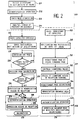
- le figure 2 représente un organigramme du procédé de transmission de télécopies de l'invention.
- un module interface utilisateur 16 qui permet le dialogue avec celui-ci ;
- un module de sécurité 17 qui permet la production et la vérification de signatures numériques et la lutte contre le "rejeu", et qui peut comporter avantageusement un lecteur de carte à mémoire apte à lire une telle carte propre à chaque utilisateur (ou groupe d'utilisateurs).
- un module de chiffrement et de déchiffrement 18 qui n'existe que lorsque les deux télécopieurs 10 et 11 ont besoin de confidentialité en mode émission. Dans ce cas le télécopieur 11 doit également comprendre ce module ainsi que le module de sécurité.
- une étape 50 de préparation du télécopieur émetteur ;
- une étape 51 de transmission ;
- une étape 52 de consultation.
- on saisit l'identifiant du destinataire (phase 21) ou on le consulte sur un annuaire électronique, et on saisit l'heure d'émission qui peut être immédiate ou différée ;
- on authentifie, éventuellement, L'opérateur auprès du module de sécurité par insertion de la carte à mémoire de celui-ci et saisie de son code secret (phase 22) ;
- si cette authentification a été réalisée
correctement, on choisit le mode d'émission (phase
23), c'est-à-dire :
- soit le mode standard qui est le mode de transmission des télécopieurs de l'art connu,
- soit le mode sécurisé qui permet de répondre aux besoins d'intégrité, de non-répudiation et d'authentification tels que définis précédemment,
- soit le mode chiffré qui permet de répondre aux besoins du mode sécurisé ainsi qu'au besoin de confidentialité, en précisant qu'un changement de mode (repli) est autorisé ;
- on analyse (scanner) et code le document, ce qui permet de réduire le volume de celui-ci. On prépare "sécuritairement" le document avec calcul des condensés, calcul et mémorisation des signatures, éventuel chiffrement si celui-ci a été demandé, et génération d'une page sécuritaire (phase 24). Cette génération de page "sécuritaire" peut être remplacée par l'émission d'informations "sécuritaires" sur une ou sur toutes les pages du document considéré.
- on envoie la sous-adresse du télécopieur destinataire, et la date-heure de signature de la première page dans la trame prévue pour le mot de passe (phase 27). Le terminal récepteur peut alors vérifier la non-postériorité de la date-heure (phase 28). S'il y a désaccord, le terminal récepteur est déconnecté ;
- on émet chaque page du document (phase 29), contenant éventuellement des informations sécuritaires.
- il contrôle les signatures reçues à partir des condensés précalculés (phase 32) ;
- il calcule et signe l'accusé de réception "terminal" (phase 33) ;
- il acquitte la page "sécuritaire" ou les informations "sécuritaires" en joignant l'accusé de réception "terminal" (phase 34) ;
- il mémorise le document reçu dans un répertoire protégé (phase 35).
- du côté terminal émetteur (test 37
déconnexion D ?), il y a :
- authentification de l'opérateur auprès du module de sécurité (avec éventuelle insertion de la carte à mémoire et saisie du code secret) (phase 38),
- impression (ou consultation) de l'accusé de réception terminal (phase 39) ;
- du côté terminal destinataire, il y
a :
- authentification de l'opérateur auprès du module de sécurité (avec éventuelle insertion de la carte à mémoire et saisie du code secret) (phase 40),
- impression (ou consultation) du document reçu et des résultats des vérifications sécuritaires (phase 41).
- le premier élément est un code confidentiel, permettant à la carte d'authentifier son légitime propriétaire ;
- le second élément (SA voir plus haut) permet à la carte de l'émetteur de calculer une clé de session commune avec la carte du destinataire. Cette clé de session servira à chiffrer le document ;
- le troisième élément permet à la carte de l'émetteur de calculer une signature numérique, vérifiable par n'importe quelle autre carte appropriée à cette invention.
- l'intégrité repose sur la signature. Elle est effectuée pour chaque page. Toutes les signatures sont transmises sur la page "sécuritaire", en fin de document. La signature d'une page porte sur le contenu de la page, le numéro de page et l'aléa ;
- le rejeu est une fraude consistant à
réémettre, parfois à l'insu du véritable émetteur,
un document vers un même destinataire sans que celui-ci
ne puisse s'en apercevoir. Les télécopieurs sécurisés,
en réception, mémorisent les heures de signature et
les identifiants des émetteurs des communications ayant
eu lieu dans les dernières quarante huit heures. Le
télécopieur récepteur devra mettre en garde le destinataire
:
- si l'écart entre la date-heure de transmission est supérieur à quarante huit heures,
- si la même date-heure pour un même émetteur a déjà été enregistrée durant les dernières quarante huit heures.
- Le destinataire authentifie l'émetteur en vérifiant la signature de l'identifiant de l'émetteur transmise en page "sécuritaire".
- Pour se protéger d'un émetteur malhonnête contestant le contenu d'un document, le destinataire doit conserver, sous forme électronique, le document reçu associé à la signature. Cette fonction impose des capacités de stockage électronique chez le destinataire. La conformité de la signature avec le document présenté et l'identité de l'émetteur permet à un juge d'authentifier le document.
- Pour se protéger d'un destinataire malhonnête contestant le contenu d'un document, l'émetteur est obligé de conserver celui-ci sous forme électronique. Pour différencier les deux documents présentés devant un juge, on vérifie la signature du document émis et celle du document reçu. Le destinataire peut toujours prétendre ne pas avoir reçu le document, mais il est possible de juger de la bonne foi de l'émetteur si le destinataire déclare l'avoir reçu.
- Le terminal destinataire peut confirmer la bonne réception du document en retournant, après vérification des signatures de chaque page du document, un accusé de réception. Cet accusé est constitué de la signature du contenu de la page "sécuritaire" ou des informations "sécuritaires" et d'un octet d'information contenant les éventuels motifs de refus de réception du document. Cette suite d'octets est transmise dans le signal d'acquittement positif "MCF" de la recommandation "T30" du CCITT, dont la présente invention propose l'extension.
Claims (4)
- Dispositif de sécurisation de transmission de télécopies, comprenant :caractérisé en ce qu'il comprend :un interface utilisateur (16) permettant d'établir un dialogue avec celui-ci ;un module de sécurité (17) permettant de détecter tout rejeu, pour éviter une réémission d'un document vers un même destinataire sans que celui-ci ne puisse s'en apercevoir, d'assurer une non-répudiation en émission et en réception, et une vérification d'intégrité de l'ensemble des informations transmises, en utilisant un mécanisme de production et de vérification de signatures numériques ; ce module de sécurité (17) comprenant un lecteur de cartes à mémoire, apte à lire une carte à mémoire propre à l'utilisateur dans laquelle sont stockés :un premier élément secret qui est un code confidentiel, permettant à la carte d'authentifier son légitime propriétaire ;un second élément secret (SA) qui permet à la carte de l'émetteur de calculer une clé de session commune avec la carte à mémoire du destinataire, cette clé de session servant à chiffrer le document ;un troisième élément secret qui permet à la carte à mémoire de l'émetteur de calculer une signature numérique, vérifiable par n'importe quelle autre carte appropriée ;et l'identifiant de l'utilisateur.
- Dispositif de sécurisation selon la revendication 1, caractérisé en ce qu'il comprend un module de chiffrement et de déchiffrement (18).
- Télécopieur sécurisé comprenant :caractérisé en ce qu'il comprend :un organe de contrôle (12) ;un module de communication (13) ;un module interface utilisateur (16) qui permet d'établir un dialogue sécurisé avec celui-ci ;un module de sécurité (17) permettant de détecter tout rejeu, pour éviter une réémission d'un document vers un même destinataire sans que celui-ci ne puisse s'en apercevoir, d'assurer une non-répudiation en émission et en réception, et une vérification d'intégrité de l'ensemble des informations transmises, en utilisant un mécanisme de production et de vérification de signatures numériques ; ce module de sécurité (17) comprenant un lecteur de cartes à mémoire apte à lire une carte à mémoire propre à l'utilisateur dans laquelle sont stockés :un premier élément secret qui est un code confidentiel, permettant à la carte d'authentifier son légitime propriétaire ;un second élément secret (SA) qui permet à la carte de l'émetteur de calculer une clé de session commune avec la carte du destinataire, cette clé de session servant à chiffrer le document ;un troisième élément secret qui permet à la carte de l'émetteur de calculer une signature numérique, vérifiable par n'importe quelle autre carte appropriée ;et l'identifiant de l'utilisateur.
- Télécopieur selon la revendication 3, caractérisé en ce qu'il comprend un module de chiffrement et de déchiffrement (18).
Priority Applications (1)
| Application Number | Priority Date | Filing Date | Title |
|---|---|---|---|
| EP98203239A EP0887997B1 (fr) | 1993-01-28 | 1994-01-26 | Procédé de transmission sécurisé point à point de télécopies |
Applications Claiming Priority (2)
| Application Number | Priority Date | Filing Date | Title |
|---|---|---|---|
| FR9300867 | 1993-01-28 | ||
| FR9300867A FR2700905B1 (fr) | 1993-01-28 | 1993-01-28 | Dispositif et procédé de sécurisation de transmission de télécopies, et télécopieur sécurisé comportant un tel dispositif. |
Related Child Applications (1)
| Application Number | Title | Priority Date | Filing Date |
|---|---|---|---|
| EP98203239A Division EP0887997B1 (fr) | 1993-01-28 | 1994-01-26 | Procédé de transmission sécurisé point à point de télécopies |
Publications (2)
| Publication Number | Publication Date |
|---|---|
| EP0609142A1 EP0609142A1 (fr) | 1994-08-03 |
| EP0609142B1 true EP0609142B1 (fr) | 1999-09-01 |
Family
ID=9443447
Family Applications (2)
| Application Number | Title | Priority Date | Filing Date |
|---|---|---|---|
| EP94400164A Expired - Lifetime EP0609142B1 (fr) | 1993-01-28 | 1994-01-26 | Dispositif de sécurisation de transmission de télécopies, et télécopieur sécurisé comportant un tel dispositif |
| EP98203239A Expired - Lifetime EP0887997B1 (fr) | 1993-01-28 | 1994-01-26 | Procédé de transmission sécurisé point à point de télécopies |
Family Applications After (1)
| Application Number | Title | Priority Date | Filing Date |
|---|---|---|---|
| EP98203239A Expired - Lifetime EP0887997B1 (fr) | 1993-01-28 | 1994-01-26 | Procédé de transmission sécurisé point à point de télécopies |
Country Status (5)
| Country | Link |
|---|---|
| US (1) | US5555307A (fr) |
| EP (2) | EP0609142B1 (fr) |
| JP (1) | JPH0746414A (fr) |
| DE (2) | DE69433021T2 (fr) |
| FR (1) | FR2700905B1 (fr) |
Cited By (1)
| Publication number | Priority date | Publication date | Assignee | Title |
|---|---|---|---|---|
| WO2016172986A1 (fr) * | 2015-04-30 | 2016-11-03 | 深圳市银信网银科技有限公司 | Procédé, dispositif et système d'authentification de données, et support de stockage informatique |
Families Citing this family (28)
| Publication number | Priority date | Publication date | Assignee | Title |
|---|---|---|---|---|
| FR2723795B1 (fr) * | 1994-08-16 | 1996-10-25 | France Telecom | Dispositif et procede de securisation d'un document et code graphique d'authentification. |
| US5634028A (en) * | 1994-12-15 | 1997-05-27 | International Business Machines Corporation | Compact track address translation mapping system and method |
| US7743248B2 (en) | 1995-01-17 | 2010-06-22 | Eoriginal, Inc. | System and method for a remote access service enabling trust and interoperability when retrieving certificate status from multiple certification authority reporting components |
| US6237096B1 (en) | 1995-01-17 | 2001-05-22 | Eoriginal Inc. | System and method for electronic transmission storage and retrieval of authenticated documents |
| US5748738A (en) * | 1995-01-17 | 1998-05-05 | Document Authentication Systems, Inc. | System and method for electronic transmission, storage and retrieval of authenticated documents |
| US7162635B2 (en) * | 1995-01-17 | 2007-01-09 | Eoriginal, Inc. | System and method for electronic transmission, storage, and retrieval of authenticated electronic original documents |
| US5887142A (en) * | 1995-07-13 | 1999-03-23 | Canon Kabushiki Kaisha | System for handling of return receipt confirmations of processing when transferring data between the PSTN and a private network |
| KR970019336A (ko) * | 1995-09-29 | 1997-04-30 | 김광호 | 팩시밀리시스템의 데이타 암호화 장치 및 방법 |
| JP4181667B2 (ja) * | 1998-09-04 | 2008-11-19 | キヤノン株式会社 | 画像処理装置、画像処理方法、及び記録媒体 |
| EP1159799B1 (fr) | 1999-02-26 | 2006-07-26 | Bitwise Designs, Inc. | Systeme et procédé de gestion de fichiers numeriques et d'imagerie incluant le marquage sécurisé de fichiers |
| NZ518162A (en) | 1999-10-07 | 2003-09-26 | Deutsche Post Ag | Method for producing and checking forge-proof documents |
| DE19948319A1 (de) * | 1999-10-07 | 2000-05-11 | Juergen K Lang | Verfahren und System zur Erstellung fälschungssicherer Dokumente |
| DE20010200U1 (de) * | 2000-06-09 | 2001-10-18 | Wittkötter, Erland, Dr., Ermatingen | Vorrichtung zum Entschlüsseln eines verschlüsselten elektronischen Dokuments |
| JP2002010008A (ja) * | 2000-06-19 | 2002-01-11 | Canon Inc | 情報処理装置及びその制御方法ならびにそれらを記憶する記憶媒体 |
| JP3494961B2 (ja) * | 2000-07-21 | 2004-02-09 | パナソニック コミュニケーションズ株式会社 | 暗号化処理装置及び暗号化処理方法 |
| GB2366470B (en) * | 2000-08-25 | 2005-07-20 | Hewlett Packard Co | Improvements relating to document transmission techniques iv |
| GB2366468B (en) * | 2000-08-25 | 2005-03-02 | Hewlett Packard Co | Improvements relating to document transmission techniques I |
| GB2366469B (en) * | 2000-08-25 | 2005-02-23 | Hewlett Packard Co | Improvements relating to document transmission techniques II |
| US8290160B1 (en) | 2001-10-17 | 2012-10-16 | Appalachian Technologies Corporation of Pennsylvania | Method and apparatus for secured facsimile transmission |
| US8732566B2 (en) * | 2006-11-29 | 2014-05-20 | Omtool, Ltd. | Methods and apparatus for digital content handling |
| US8904270B2 (en) * | 2006-11-29 | 2014-12-02 | Omtool Ltd. | Methods and apparatus for enterprise document distribution |
| US7268899B2 (en) * | 2002-01-31 | 2007-09-11 | Hewlett-Packard Development Company, L.P. | Secure system for delivery of a fax to a remote user |
| US20040158733A1 (en) | 2003-02-11 | 2004-08-12 | Thaddeus Bouchard | Method and system for secure facsimile delivery and registration |
| US20050254100A1 (en) * | 2004-05-17 | 2005-11-17 | Venali, Inc. | Ticket exchange for combating fax spam |
| CA2590989C (fr) * | 2007-06-05 | 2014-02-11 | Diversinet Corp. | Protocole et methode d'authentification mutuelle client-serveur faisant appel a des mots de passe a usage unique a base d'evenements |
| JP4704414B2 (ja) * | 2007-12-10 | 2011-06-15 | 株式会社リコー | 画像処理装置,送受信データ処理方法並びに送受信データ処理プログラム |
| US20110292456A1 (en) * | 2010-05-28 | 2011-12-01 | Xerox Corporation | Broken fax document recombining system |
| US20200366476A1 (en) * | 2019-05-17 | 2020-11-19 | Panasonic Avionics Corporation | Transient key negotiation for passenger accessible peripherals |
Citations (1)
| Publication number | Priority date | Publication date | Assignee | Title |
|---|---|---|---|---|
| US5157726A (en) * | 1991-12-19 | 1992-10-20 | Xerox Corporation | Document copy authentication |
Family Cites Families (9)
| Publication number | Priority date | Publication date | Assignee | Title |
|---|---|---|---|---|
| US4064389A (en) * | 1976-06-23 | 1977-12-20 | Rca Corporation | System and method for authenticating an electronically transmitted document |
| GB2217949B (en) * | 1988-03-29 | 1992-08-05 | Aisin Seiki | Data encryption |
| US4926325A (en) * | 1988-08-23 | 1990-05-15 | Moneyfax, Inc. | Apparatus for carrying out financial transactions via a facsimile machine |
| US4926478A (en) * | 1988-12-30 | 1990-05-15 | Gruenberg Elliot | Method and apparatus for continuously acknowledged link encrypting |
| US5163091A (en) * | 1990-01-29 | 1992-11-10 | Graziano James M | Knowledge based system for document authentication (apparatus) |
| US5022080A (en) * | 1990-04-16 | 1991-06-04 | Durst Robert T | Electronic notary |
| SE469461B (sv) * | 1991-11-07 | 1993-07-05 | Nybo Seal System Ab | Anlaeggning foer saeker oeverfoering av meddelanden fraan saendare till mottagare |
| US5337362A (en) * | 1993-04-15 | 1994-08-09 | Ricoh Corporation | Method and apparatus for placing data onto plain paper |
| TW237588B (fr) * | 1993-06-07 | 1995-01-01 | Microsoft Corp |
-
1993
- 1993-01-28 FR FR9300867A patent/FR2700905B1/fr not_active Expired - Fee Related
-
1994
- 1994-01-26 US US08/188,052 patent/US5555307A/en not_active Expired - Fee Related
- 1994-01-26 DE DE69433021T patent/DE69433021T2/de not_active Expired - Fee Related
- 1994-01-26 EP EP94400164A patent/EP0609142B1/fr not_active Expired - Lifetime
- 1994-01-26 DE DE69420292T patent/DE69420292T2/de not_active Expired - Fee Related
- 1994-01-26 EP EP98203239A patent/EP0887997B1/fr not_active Expired - Lifetime
- 1994-01-27 JP JP6007876A patent/JPH0746414A/ja active Pending
Patent Citations (1)
| Publication number | Priority date | Publication date | Assignee | Title |
|---|---|---|---|---|
| US5157726A (en) * | 1991-12-19 | 1992-10-20 | Xerox Corporation | Document copy authentication |
Cited By (1)
| Publication number | Priority date | Publication date | Assignee | Title |
|---|---|---|---|---|
| WO2016172986A1 (fr) * | 2015-04-30 | 2016-11-03 | 深圳市银信网银科技有限公司 | Procédé, dispositif et système d'authentification de données, et support de stockage informatique |
Also Published As
| Publication number | Publication date |
|---|---|
| DE69420292D1 (de) | 1999-10-07 |
| US5555307A (en) | 1996-09-10 |
| EP0887997A3 (fr) | 1999-01-20 |
| DE69420292T2 (de) | 2000-04-06 |
| FR2700905B1 (fr) | 1995-03-10 |
| EP0609142A1 (fr) | 1994-08-03 |
| DE69433021T2 (de) | 2004-06-03 |
| EP0887997B1 (fr) | 2003-08-06 |
| EP0887997A2 (fr) | 1998-12-30 |
| FR2700905A1 (fr) | 1994-07-29 |
| JPH0746414A (ja) | 1995-02-14 |
| DE69433021D1 (de) | 2003-09-11 |
Similar Documents
| Publication | Publication Date | Title |
|---|---|---|
| EP0887997B1 (fr) | Procédé de transmission sécurisé point à point de télécopies | |
| US6188766B1 (en) | Apparatus and method for confirming, timestamping, and archiving printer and telecopier transmissions | |
| US5426700A (en) | Method and apparatus for verification of classes of documents | |
| EP0609143A1 (fr) | Système et procédé de transmission de télécopies sécurisées | |
| Friedman | The trustworthy digital camera: Restoring credibility to the photographic image | |
| EP0077238B1 (fr) | Procédé et dispositif pour authentifier la signature d'un message signé | |
| CA2241052C (fr) | Systeme de securite a niveaux d'application et procede associe | |
| EP0675614B1 (fr) | Dispositif pour l'échange sécurisé de données du genre RSA limité à la signature numérique et la vérification des messages et carte à microcircuit comportant un tel dispositif | |
| US6963971B1 (en) | Method for authenticating electronic documents | |
| JP4097773B2 (ja) | デジタル画像編集システム | |
| EP0763803B1 (fr) | Système de comptabilisation anonyme d'informations à des fins statistiques, notamment pour des opérations de vote électronique ou de relevés périodiques de consommation | |
| EP1549011A1 (fr) | Procédé et système de communication entre un terminal et au moins un équipment communicant | |
| WO2004006073A2 (fr) | Memorisation et authentification de transactions de donnees | |
| WO2002017539A2 (fr) | Systeme et protocole d'informations distribuees destines a apposer des signatures electroniques et a authentifier des documents | |
| CA3128869A1 (fr) | Methode cryptographique de verification des donnees | |
| JPS6256043A (ja) | 電子取引方式 | |
| FR2769446A1 (fr) | Systeme d'identification et d'authentification | |
| FR2647289A1 (fr) | Dispositif pour la teletransmission de documents en particulier du genre telecopie | |
| EP1032158B1 (fr) | Circuit et procédé pour la sécurisation d'un coprocesseur dédié à la cryptographie | |
| FR2869176A1 (fr) | Procede de verification dans un terminal radio de l'authenticite de certificats numeriques et systeme d'authentification | |
| JP3758457B2 (ja) | デジタル証拠カメラシステム | |
| JP2000059354A (ja) | 可搬記録媒体を利用したセッション鍵の生成方法およびデータ配送システム | |
| Reed | Authenticating Electronic Mail Messages-Some Evidential Problems | |
| Reed | Authenticating Electronic Mail Messages-Some Evidential Problems | |
| JP3703141B2 (ja) | 電子申請システムの申請側端末装置、審査側サーバおよびプログラム |
Legal Events
| Date | Code | Title | Description |
|---|---|---|---|
| PUAI | Public reference made under article 153(3) epc to a published international application that has entered the european phase |
Free format text: ORIGINAL CODE: 0009012 |
|
| AK | Designated contracting states |
Kind code of ref document: A1 Designated state(s): DE GB |
|
| 17P | Request for examination filed |
Effective date: 19950118 |
|
| 17Q | First examination report despatched |
Effective date: 19970620 |
|
| GRAG | Despatch of communication of intention to grant |
Free format text: ORIGINAL CODE: EPIDOS AGRA |
|
| GRAG | Despatch of communication of intention to grant |
Free format text: ORIGINAL CODE: EPIDOS AGRA |
|
| GRAH | Despatch of communication of intention to grant a patent |
Free format text: ORIGINAL CODE: EPIDOS IGRA |
|
| GRAH | Despatch of communication of intention to grant a patent |
Free format text: ORIGINAL CODE: EPIDOS IGRA |
|
| GRAA | (expected) grant |
Free format text: ORIGINAL CODE: 0009210 |
|
| AK | Designated contracting states |
Kind code of ref document: B1 Designated state(s): DE GB |
|
| REF | Corresponds to: |
Ref document number: 69420292 Country of ref document: DE Date of ref document: 19991007 |
|
| GBT | Gb: translation of ep patent filed (gb section 77(6)(a)/1977) |
Effective date: 19991104 |
|
| PLBE | No opposition filed within time limit |
Free format text: ORIGINAL CODE: 0009261 |
|
| STAA | Information on the status of an ep patent application or granted ep patent |
Free format text: STATUS: NO OPPOSITION FILED WITHIN TIME LIMIT |
|
| 26N | No opposition filed | ||
| REG | Reference to a national code |
Ref country code: GB Ref legal event code: IF02 |
|
| PGFP | Annual fee paid to national office [announced via postgrant information from national office to epo] |
Ref country code: GB Payment date: 20031231 Year of fee payment: 11 |
|
| PGFP | Annual fee paid to national office [announced via postgrant information from national office to epo] |
Ref country code: DE Payment date: 20040121 Year of fee payment: 11 |
|
| PG25 | Lapsed in a contracting state [announced via postgrant information from national office to epo] |
Ref country code: GB Free format text: LAPSE BECAUSE OF NON-PAYMENT OF DUE FEES Effective date: 20050126 |
|
| PG25 | Lapsed in a contracting state [announced via postgrant information from national office to epo] |
Ref country code: DE Free format text: LAPSE BECAUSE OF NON-PAYMENT OF DUE FEES Effective date: 20050802 |
|
| GBPC | Gb: european patent ceased through non-payment of renewal fee |
Effective date: 20050126 |