EP0604657B1 - Phosphonic diester derivative - Google Patents
Phosphonic diester derivative Download PDFInfo
- Publication number
- EP0604657B1 EP0604657B1 EP93910361A EP93910361A EP0604657B1 EP 0604657 B1 EP0604657 B1 EP 0604657B1 EP 93910361 A EP93910361 A EP 93910361A EP 93910361 A EP93910361 A EP 93910361A EP 0604657 B1 EP0604657 B1 EP 0604657B1
- Authority
- EP
- European Patent Office
- Prior art keywords
- group
- phenyl
- alkoxy group
- compound
- atom
- Prior art date
- Legal status (The legal status is an assumption and is not a legal conclusion. Google has not performed a legal analysis and makes no representation as to the accuracy of the status listed.)
- Expired - Lifetime
Links
Classifications
-
- C—CHEMISTRY; METALLURGY
- C07—ORGANIC CHEMISTRY
- C07F—ACYCLIC, CARBOCYCLIC OR HETEROCYCLIC COMPOUNDS CONTAINING ELEMENTS OTHER THAN CARBON, HYDROGEN, HALOGEN, OXYGEN, NITROGEN, SULFUR, SELENIUM OR TELLURIUM
- C07F9/00—Compounds containing elements of Groups 5 or 15 of the Periodic Table
- C07F9/02—Phosphorus compounds
- C07F9/547—Heterocyclic compounds, e.g. containing phosphorus as a ring hetero atom
- C07F9/6561—Heterocyclic compounds, e.g. containing phosphorus as a ring hetero atom containing systems of two or more relevant hetero rings condensed among themselves or condensed with a common carbocyclic ring or ring system, with or without other non-condensed hetero rings
-
- C—CHEMISTRY; METALLURGY
- C07—ORGANIC CHEMISTRY
- C07F—ACYCLIC, CARBOCYCLIC OR HETEROCYCLIC COMPOUNDS CONTAINING ELEMENTS OTHER THAN CARBON, HYDROGEN, HALOGEN, OXYGEN, NITROGEN, SULFUR, SELENIUM OR TELLURIUM
- C07F9/00—Compounds containing elements of Groups 5 or 15 of the Periodic Table
- C07F9/02—Phosphorus compounds
- C07F9/547—Heterocyclic compounds, e.g. containing phosphorus as a ring hetero atom
- C07F9/645—Heterocyclic compounds, e.g. containing phosphorus as a ring hetero atom having two nitrogen atoms as the only ring hetero atoms
- C07F9/6503—Five-membered rings
- C07F9/6506—Five-membered rings having the nitrogen atoms in positions 1 and 3
- C07F9/65068—Five-membered rings having the nitrogen atoms in positions 1 and 3 condensed with carbocyclic rings or carbocyclic ring systems
-
- C—CHEMISTRY; METALLURGY
- C07—ORGANIC CHEMISTRY
- C07F—ACYCLIC, CARBOCYCLIC OR HETEROCYCLIC COMPOUNDS CONTAINING ELEMENTS OTHER THAN CARBON, HYDROGEN, HALOGEN, OXYGEN, NITROGEN, SULFUR, SELENIUM OR TELLURIUM
- C07F9/00—Compounds containing elements of Groups 5 or 15 of the Periodic Table
- C07F9/02—Phosphorus compounds
- C07F9/547—Heterocyclic compounds, e.g. containing phosphorus as a ring hetero atom
- C07F9/6527—Heterocyclic compounds, e.g. containing phosphorus as a ring hetero atom having nitrogen and oxygen atoms as the only ring hetero atoms
- C07F9/653—Five-membered rings
- C07F9/65324—Five-membered rings condensed with carbocyclic rings or carbocyclic ring systems
-
- C—CHEMISTRY; METALLURGY
- C07—ORGANIC CHEMISTRY
- C07F—ACYCLIC, CARBOCYCLIC OR HETEROCYCLIC COMPOUNDS CONTAINING ELEMENTS OTHER THAN CARBON, HYDROGEN, HALOGEN, OXYGEN, NITROGEN, SULFUR, SELENIUM OR TELLURIUM
- C07F9/00—Compounds containing elements of Groups 5 or 15 of the Periodic Table
- C07F9/02—Phosphorus compounds
- C07F9/547—Heterocyclic compounds, e.g. containing phosphorus as a ring hetero atom
- C07F9/6536—Heterocyclic compounds, e.g. containing phosphorus as a ring hetero atom having nitrogen and sulfur atoms with or without oxygen atoms, as the only ring hetero atoms
- C07F9/6539—Five-membered rings
- C07F9/6541—Five-membered rings condensed with carbocyclic rings or carbocyclic ring systems
Definitions
- the present invention relates to novel phosphonic diester derivatives.
- the phosphonic diester derivatives of the invention are novel compounds not heretofore described in the literature.
- the object of the invention is to provide compounds of value as medicines as will be described hereinafter.
- the present invention provides a phosphonic diester derivative of the following general formula (1): [wherein R 1 , R 2 and R 3 are the same or different and each represents a hydrogen atom, a C 1-6 alkyl group, a phenyl group, group, alkoxy group, a halogen-substituted C 1-6 alkyl group, a halogen-substituted C 1-6 alkoxy group, a C 2-7 alkanoyl group, a benzoyl group,
- Each of the groups relevant to the above general formula (1) includes the following exemplary species.
- the C 1-6 alkyl group includes straight- or branched-chain C 1-6 alkyl groups such as methyl, ethyl, propyl, isopropyl, butyl, isobutyl, tert-butyl, pentyl, hexyl and so on.
- the C 1-6 alkoxy group includes methoxy, ethoxy, propoxy, isopropoxy, butoxy, pentyloxy, hexyloxy and so on.
- the halogen-substituted C 1-6 alkyl group includes trifluoromethyl, pentafluoroethyl, heptafluoropropyl, nonafluorobutyl, undecafluoropentyl, tridecafluorohexyl and so on.
- the halogen-substituted C 1-6 alkoxy group includes trifluoromethoxy, pentafluoroethoxy, heptafluoropropoxy, nonafluorobutoxy, undecafluoropentyloxy, tridecafluorohexyloxy and so on.
- the C 2-7 alkanoyl group includes acetyl, propionyl, butyryl, valeryl, pivaloyl, hexanoyl, heptanoyl and so on.
- the phenyl C 1-6 alkyl group includes benzyl, 2-phenylethyl, 3-phenylpropyl, 4-phenylbutyl, 5-phenylpentyl, 6-phenylhexyl and so on.
- the halogen atom includes fluorine, clorine, bromine and iodine.
- the C 1-6 alkylthio group includes methylthio, ethylthio, propylthio, butylthio, pentylthio, hexylthio and so on.
- the phenyl C 1-6 alkoxy group includes benzyloxy, 2-phenylethoxy, 3-phenylpropoxy, 4-phenylbutoxy, 5-phenylpentyloxy, 6-phenylhexyloxy and so on.
- the C 1-6 alkoxycarbonyl C 1-6 alkoxy group includes methoxycarbonylmethoxy, 2-ethoxycarbonylethoxy, 3-ethoxycarbonylpropoxy, 4-ethoxycarbonylbutoxy, 5-ethoxycarbonylpentyloxy, 6-ethoxycarbonylhexyloxy, 2-butoxycarbonylethoxy, hexyloxycarbonylmethoxy and so on.
- the C 1-6 alkylene group optionally having a C 1-6 alkyl or phenyl C 1-6 alkyl group as a substituent includes methylene, ethylene, trimethylene, tetramethylene, pentamethylene, hexamethylene, ethylidene, propylidene, butylidene, pentylidene, hexylidene, heptylidene, 2-phenylethylidene, 3-phenylpropylidene, 4-phenylbutylidene, 5-phenylpentylidene, 6-phenylhexylidene, 7-phenylheptylidene and so on.
- the phosphonic diester derivative of general formula (1) according to the present invention has excellent hypolipidemic and hypoglycemic activities and is, therefore, useful for the treatment and prevention of various types of hyperlipidemic diseases such as hypercholesterolemia, hypertriglyceridemia, hyperphos pholipidemia, hyper-free fatty acidemia, etc. and diabetes. Moreover, the phosphonic diester derivative of the invention not only produces therapeutic and prophylactic effects on cataract but has hypotensive activity as well and is, therefore, of value as a therapeutic and prophylactic agent for cataract and hypertension.
- the phosphonic diester derivative of general formula (1) according to the invention can be produced by several different processes. Some exemplary processes are schematically shown hereunder. [wherein R 1 , R 2 , R 3 , R 4 , A, B, X, Y and Z are as defined hereinbefore. R 5a and R 6a are the same or different and each represents a lower alkoxy group, a phenyl group, a phenyl(lower)alkoxy group or a phenoxy group]
- the objective compound (1a) of the invention can be obtained by reacting compound (2) with acid chloride derivative (3) in the presence of an acid acceptor in an inert solvent.
- the inert solvent mentioned above includes, among others, aromatic or aliphatic hydrocarbons such as benzene, toluene, xylene, petroleum ether, etc., acylic or cyclic ethers such as diethyl ether, 1,2-dimethoxyethane, tetrahydrofuran (THF), 1,4-dioxane, etc., ketones such as acetone, methyl ethyl ketone, acetophenone, etc., and halogenated hydrocarbons such as dichloromethane, chloroform, carbon tetrachloride, 1,2-dichloroethane and so on.
- the acid acceptor is preferably a tertiary amine such as triethylamine, N,N-diethylaniline, N-methylmorpholine, pyridine, 4-dimethylaminopyridine and so on.
- the relative amount of said compound (2) and acid chloride derivative (3) is not particularly critical but the latter is preferably used in an equimolar to excess proportion with respect to the former.
- the acid acceptor mentioned above is preferably used in an equimolar or excess proportion relative to said acid chloride derivative (3).
- This reaction proceeds under cooling, at room temperature or under heating but it is usually advantageous to conduct the reaction within the temperature range of 0°C to the reflux temperature of the solvent used. Generally the reaction goes to completion in about 0.5 - 10 hours. [wherein R 1 , R 2 , R 3 , R 4 , R 5a , R 6a , A, B, X, Y and Z are as defined hereinbefore]
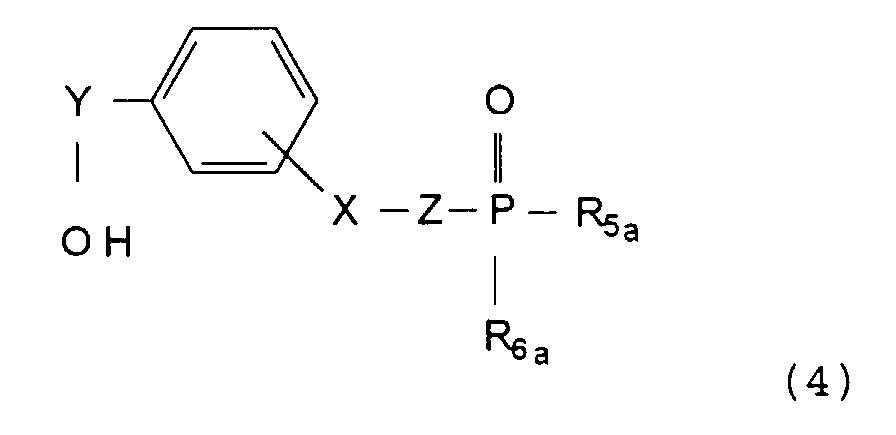
- the objective compound (la) of the invention can be obtained by reacting compound (2) with compound (4) in the presence of a condensing agent in an inert solvent.
- the inert solvent which can be used is any of the known aprotic solvents, although N,N-dimethylformamide (DMF) is particularly useful.
- the condensing agent includes, among others, N,N'-dicyclohexylcarbodiimide (DCC), 1-hydroxybenzotriazole, N-hydroxysuccinimide, diethyl cyanophosphonate, diphenylphosphoryl azide and so on. It is particularly advantageous to employ diethyl cyanophosphonate in combination with triethylamine.
- the relative amount of compounds (2) and (4) in the above reaction is not critical but can be liberally selected from a broad range. However, it is generally recommendable to use the former compound in an equimolar or excess proportion, preferably an approximately equimolar proportion, relative to the latter compound.
- the above condensing agent is used in an equimolar to excess proportion, preferably a small excess, relative to compound (4).
- This reaction is conducted generally under ice-cooling to room temperature for about 0.5 - 2 hours. [wherein R 1 , R 2 , R 3 , R 4 , R 6a A, B, X, Y and Z are as defined above. R 5b represents a lower alkoxy group]
- the partial hydrolysis shown in the above Reaction Schema-3 is carried out by reacting compound (1b) with a lithium halide such as lithium bromide, lithium chloride, lithium iodide, etc. and thereafter treating the reaction product with a mineral acid such as hydrochloric acid, sulfuric acid and so on.
- a lithium halide such as lithium bromide, lithium chloride, lithium iodide, etc.
- a mineral acid such as hydrochloric acid, sulfuric acid and so on.
- the above reaction can be carried out in an inert solvent, such as acetonitrile, DMF, etc., using a stoichiometric excess of the lithium halide at room temperature ⁇ the reflux temperature of the solvent for 5 - 24 hours.
- compounds of the formulas (3') and (4') can be prepared by the processes shown below in Reaction Schema-4.
- R 5c represents a lower alkoxy group, a phenoxy group or a phenyl(lower)alkoxy group
- R 6b is identical to R 5c
- Z' represents a lower alkylene group
- R represents a lower alkyl group
- the reaction between compound (5) and compound (6) is carried out in the presence of an alkali, such as sodium carbonate, potassium carbonate, sodium hydrogen carbonate, sodium hydroxide, etc., in an inert solvent, such as DMF, N,N-dimethylacetamide (DMA), hexamethylphosphoric triamide (HMPA), acetone, methanol, ethanol, methanol-water, ethanol-water and so on.
- an alkali such as sodium carbonate, potassium carbonate, sodium hydrogen carbonate, sodium hydroxide, etc.
- an inert solvent such as DMF, N,N-dimethylacetamide (DMA), hexamethylphosphoric triamide (HMPA), acetone, methanol, ethanol, methanol-water, ethanol-water and so on.
- the resultant compound (7) can be reacted with a phosphorous triester (8) to give compound (9).
- This reaction can be carried out in a solvent such as lower alcohols, aromatic or aliphatic hydrocarbons, DMF, etc. but is preferably conducted in the absence of a solvent in most cases.
- a salt of iodine such as sodium iodide, potassium iodide, etc. can be added to the reaction system and usually the reaction is preferably conducted using said phosphorous triester (8) in excess at a temperature of about 130 - 170°C for about 1 - 20 hours.
- the compound (9) can then be hydrolyzed to compound (4').
- This hydrolysis reaction is carried out in the presence of an aqueous alkali solution, such as aqueous sodium hydroxide solution, aqueous potassium hydroxide solution, etc., in an inert solvent such as methanol, ethanol, 2-propanol, etc. and this reaction goes to completion in about 1 - 15 hours at a temperature somewhere between 0°C and room temperature.
- the compound (4') can be chlorinated at the carboxyl function to give compound (5').
- This chlorination reaction is carried out using dichloromethane, chloroform, DMF or the like either singly or in combination as the solvent and a small excess of thionyl chloride, phosphorus oxychloride, phosphorus pentachloride or the like as the chlorinating agent at room temperature to about 60 °C for about 1 - 8 hours.
- the product compound in each of the above processes can be easily isolated and purified by the conventional separation procedures.
- Such procedures include adsorption chromatography, preparative thin-layer chromatography, solvent extraction, recrystallization and so on.
- the compound in which Z is a lower alkylene group having a lower alkyl or phenyl(lower)alkyl group as a substituent may exist as optical isomers which, of course, are subsumed in the concept of the compound of the invention.
- the above optical isomers can be easily fractionated by the conventional resolution procedures such as optical resolution.
- the compound of the invention is put to use in a variety of pharmaceutical compositions prepared using suitable pharmaceutically acceptable carriers.
- suitable pharmaceutically acceptable carriers include various diluents or excipients such as fillers, volume builders, binders, humectants, disintegrators, surfactants, lubricants, etc. and are selectively employed according to the desired dosage form.
- the above pharmaceutical composition can be provided in a variety of unit dosage forms according to the intended medical treatment. Typical examples are tablets, pills, powders, solutions, suspensions, emulsions, granules, capsules, suppositories, injections (solutions, suspensions, etc.) and eye-drops.
- the molding of tablets can be made using, as said pharmaceutically acceptable carriers, an excipient such as lactose, sucrose, sodium chloride, glucose, urea, starch, calcium carbonate, kaolin, crystalline cellulose, silicic acid, potassium phosphate, etc., a binder such as water, ethanol, propanol, simple syrup, glucose syrup, starch solution, gelatin solution, carboxymethylcellulose, hydroxypropylcellulose, methylcellulose, polyvinylpyrrolidone, etc., a disintegrator such as carboxymethylcellulose sodium, carboxymethylcellulose calcium, low-substituted hydroxypropylcellulose, dry starch, sodium alginate, agar powder, laminaran powder, sodium hydrogen carbonate, calcium carbonate, etc., a surfactant such as polyoxyethylene sorbitan fatty acid ester, sodium lauryl sulfate, stearyl monoglyceride, etc., a disintegration inhibitor such as sucrose, stearin, cacao butter
- various excipients such as glucose, lactose, starch, cacao butter, hydrogenated vegetable oil, kaolin, talc, etc., binders such as gum arabic powder, gum tragacanth powder, gelatin, ethanol, etc. and disintegrators such as laminaran, starch, etc. can be employed.
- the capsules can be manufactured in the conventional manner by blending the compound of the invention with any of the various pharmaceutically acceptable carriers mentioned above and filling the resulting composition into hard gelatin capsule shells, soft gelatin capsule shells or the like.
- the suppositories can be manufactured using polyethylene glycol, cacao butter, higher alcohols or their esters, gelatin, semisynthetic glycerides, etc. as the carrier.
- the preparation is preferably sterilized and rendered isotonic with respect to the blood.
- a diluent for use in such a preparation water, ethyl alcohol, macrogols, propylene glycol, ethoxylated isostearyl alcohol, polyoxy-isostearyl alcohol, polyoxyethylene sorbitan fatty acid esters, etc. can be employed.
- sodium chloride, glucose or glycerin may be added to the composition in a sufficient amount to provide an isotonic solution and the conventional solubilizer, buffer and local anesthetic can also be added.
- the eye-drops can be manufactured in the conventional manner using sterile distilled water as the vehicle, sodium dihydrogen phosphate and/or sodium monohydrogen phosphate, for instance, as the buffer, sodium chloride or the like as the isotonizing agent, and benzalkonium chloride, chlorobutanol or the like as the antimicrobial agent.
- the proper regimen can be determined according to the particular dosage form, patient's age, sex and other characteristics, severity of disease and other conditions.
- said tablets, pills, solutions, suspensions, emulsions, granules and capsules are administered by the oral route.
- the injections are administered either as they are or in admixture with the conventional glucose, amino acid or other infusions by the intravenous route or, if necessary, alone by the intramuscular, intradermal, subcutaneous or intraperitoneal route.
- the suppositories are administered intrarectally and the eye-drops are instilled into the eye.
- the proportion of the compound of the invention in the pharmaceutical composition described above is not much critical and can be liberally selected from a broad range. Generally, however, it is advantageous to insure that the compound accounts for about 1 to 70 weight % of the final composition.
- the dosing amount of the pharmaceutical composition can be selected according to the selected regimen, patient's age, sex and other characteristics, severity of disease and other conditions. Generally, however, the dosage of the compound of the invention as the active ingredient is preferably about 0.5 - 20 mg per kg body weight and this amount can be administered in 1 ⁇ 4 divided doses. In the case of an ophthalmic preparation for topical application, the dosage of the active compound is preferably selected from the range of about 0.3 - 2 ⁇ g.
- Example 1 Various species of the compound of the invention were obtained in the same manner as Example 1. The structures and melting points of these compounds are also shown in Table 1.
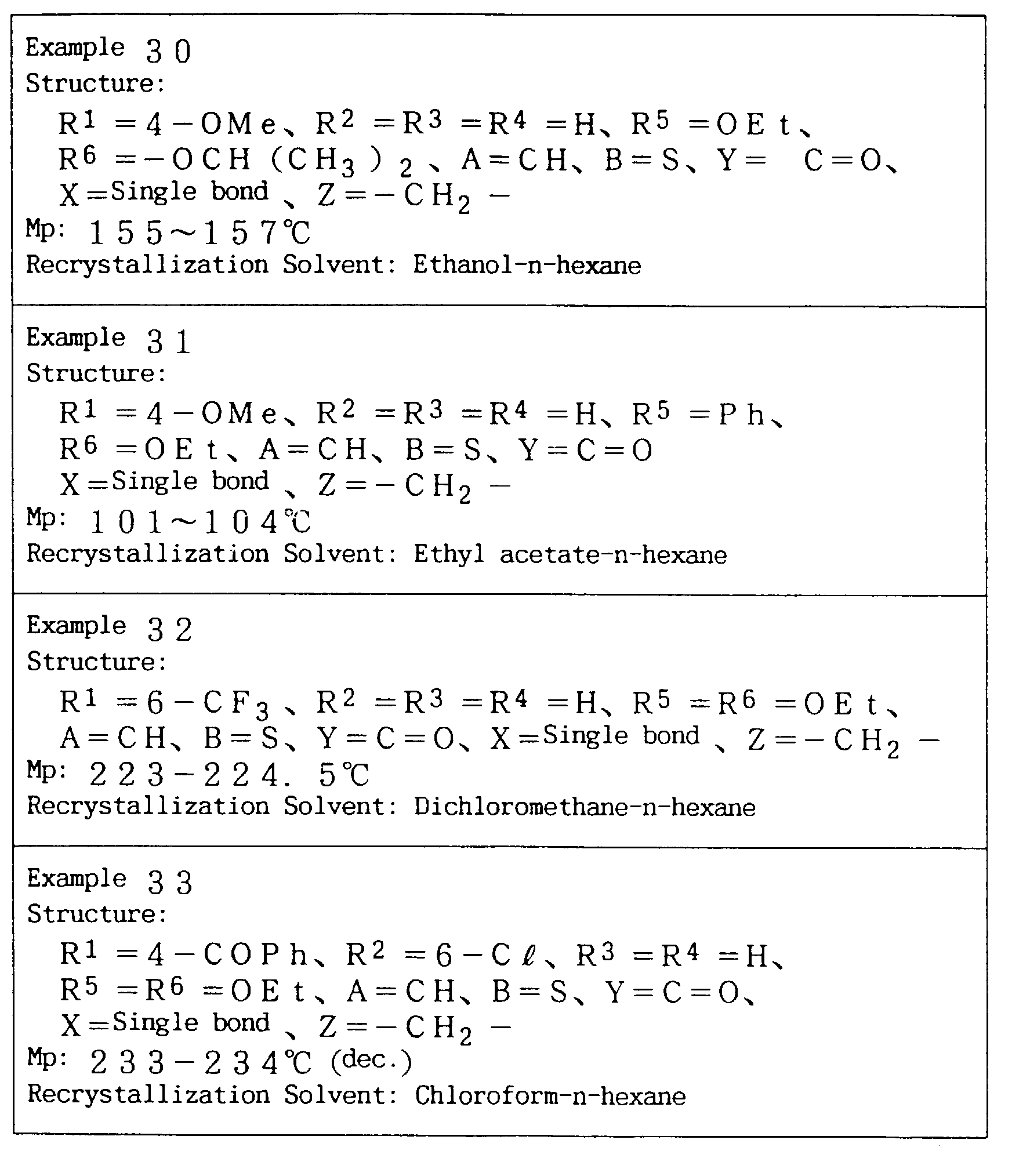
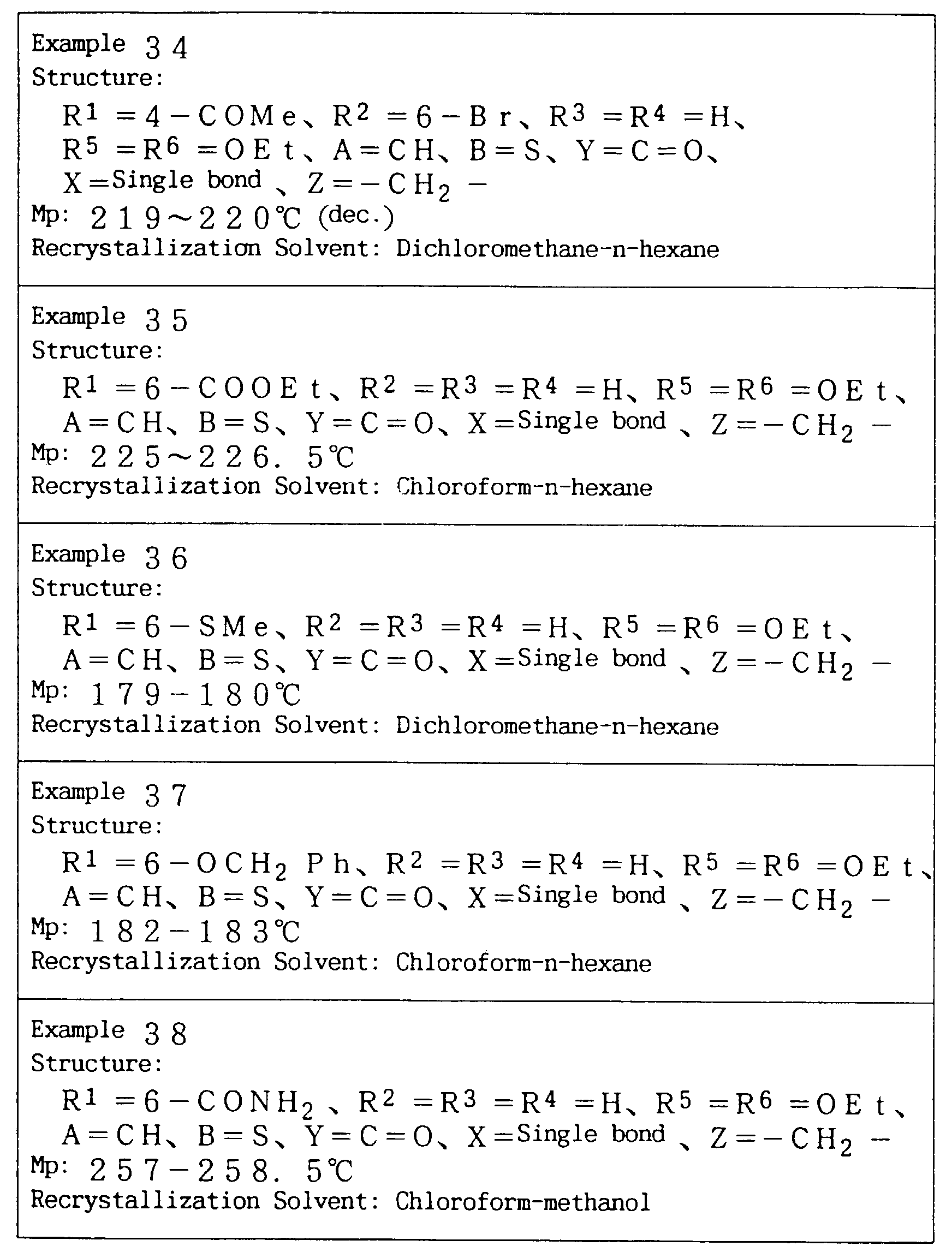
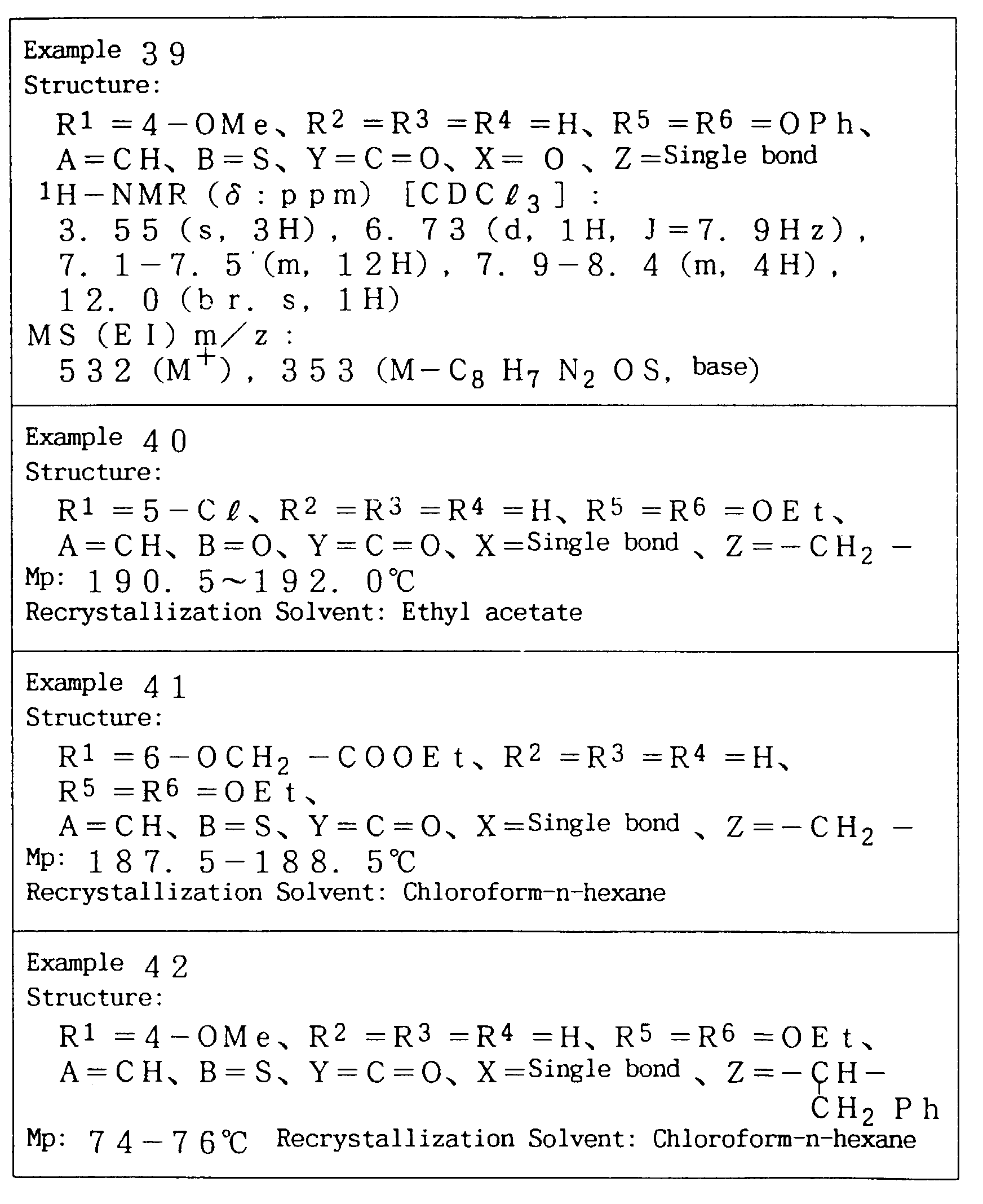
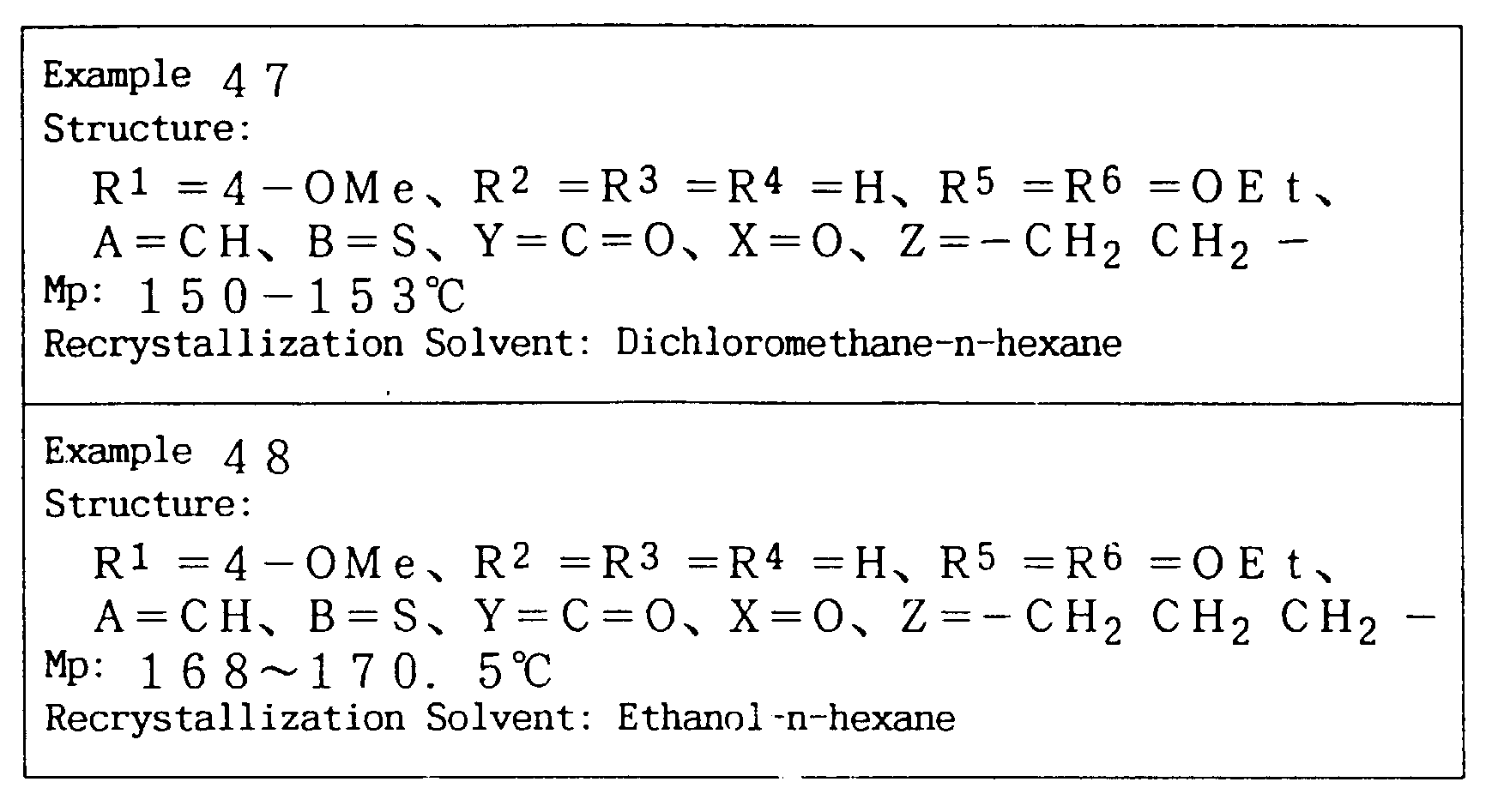
- Example 2 Various species of the compound of the invention were produced in the same manner as Example 1. The structures and melting points of these compounds are shown in Table 2. As to an oily compound, its 1 H-NMR spectrum and mass spectrum (MS) are also shown in the table.
- the crude crystals thus obtained were suspended in 200 ml of hot methanol and the insolubles were collected by filtration and washed with 50 ml of methanol.
- the resultant crystals were further suspended in 200 ml of methanol-chloroform (1:1) and the insolubles were recovered by filtration and washed with 50 ml of methanol and 50 ml of chloroform in the order mentioned to provide 1.8 g of the title compound as colorless crystals.
- the structure and melting point of this compound are shown in Table 2.
- reaction mixture was then allowed to cool to room temperature, after which 50 ml of ethanol was added to the reaction mixture. While this mixture was stirred under ice-cooling, 100 ml of 2 N aqueous sodium hydroxide solution was gradually added portionwise. The mixture was stirred at room temperature for 12 hours, at the end of which time 150 ml of water and 150 ml of chloroform were added. After phase separation, the water layer was separated. This aqueous solution was acidified with 150 ml of 4 N hydrochloric acid and extracted with chloroform. The chloroform layer was washed with 200 ml of water, dried over anhydrous sodium sulfate and concentrated under reduced pressure.
- Example 3 lactose, corn starch and carboxymethyl cellulose calcium were well blended and granulated using an aqueous solution of methyl cellulose.
- the granulation was passed through a 24-mesh sieve and the granules under the sieve were mixed with magnesium stearate and compression-molded.
- hard gelatin capsules 1000 units each containing 250 mg of the active ingredient were manufactured according to the following formula.
- Ingredient Amount (g) Compound of Example 5 250 Crystalline cellulose (JP) 30 Corn starch (JP) 17 Talc (JP) 2 Magnesium stearate (JP) 1 Total 300
- the respective ingredients were finely divided and the powders obtained were blended to give a homogeneous composition.
- This composition was filled into propersized gelatin capsule shells for oral administration to provide the objective capsules.
- Example 13 Using the compound obtained in Example 13 as an active ingredient, granules (1000 g) containing 500 mg of the active ingredient in each gram were manufactured according to the following formula.
- Ingrdient Amount (g) Compound of Example 13 500 Crystalline cellulose (JP) 100 Corn starch (JP) 250 Lactose (JP) 100 Carboxymethylcellulose calcium (JP) 40 Hydroxypropylmethylcellulose (JP) 10 Total 1000
- the compound of Example 13 lactose, corn starch, crystalline cellulose and carboxymethylcellulose calcium were thoroughly blended and kneaded with an aqueous solution of hydroxypropylcellulose.
- the resultant composition was granulated using an extrusion granulator and dried at 50°C for 2 hours to provide the objective granules.
- test groups a solution of 300 mg/kg Triton in physiological saline was administered into the tail vein and, at the same time, 100 mg/kg of the test compound suspended in 5% gum arabic solution was administered orally.
- Rate of decrease (%) (Control group value) - (Test group value) (Control group value) x 100
- test rats were deprived of food before Triton administration through completion of blood sampling but allowed free access to drinking water.
- the rates of decrease in total cholesterol are shown in Table 3 and those in triglyceride are shown in Table 4.
- Test compound (Example No.) Rate of decrease in total cholesterol (%) 1 40 3 56 13 70 26 43 27 42 29 47 30 79 31 69 34 71 42 45 43 45 45 62
- Test compound (Example No.) Rate of decrease in triglyceride (%) 1 62 2 44 3 83 4 47 10 40 11 44 13 94 20 48 25 54 26 63 27 81 29 87 30 95 31 92 32 47 34 97 42 81 43 80 45 91
- the rat model of streptozotocin-induced diabetes was constructed according to Doi's method [Folia Endocrinologica Japonica, 51 (3), 129 (1975)] as below and the hypoglycemic activity of the compound of the invention was assayed in the model by the following procedure.
Landscapes
- Chemical & Material Sciences (AREA)
- Organic Chemistry (AREA)
- Health & Medical Sciences (AREA)
- Life Sciences & Earth Sciences (AREA)
- Biochemistry (AREA)
- General Health & Medical Sciences (AREA)
- Molecular Biology (AREA)
- Pharmaceuticals Containing Other Organic And Inorganic Compounds (AREA)
Abstract
Description
- The present invention relates to novel phosphonic diester derivatives.
- The phosphonic diester derivatives of the invention are novel compounds not heretofore described in the literature.
- The object of the invention is to provide compounds of value as medicines as will be described hereinafter.
- The present invention provides a phosphonic diester derivative of the following general formula (1):[wherein R1, R2 and R3 are the same or different and each represents a hydrogen atom, a C1-6 alkyl group, a phenyl group, group, alkoxy group, a halogen-substituted C1-6 alkyl group, a halogen-substituted C1-6 alkoxy group, a C2-7 alkanoyl group, a benzoyl group,

- a nitro group, a halogen atom, a C1-6 alkylthio group, a phenyl C1-6alkoxy group, a carbamoyl group or a C1-6 alkoxycarbonyl C1-6 alkoxy group; R4 represents a hydrogen atom, a C1-6 alkyl group or a phenyl C1-6 alkyl group; R5 and R6 are the same or different and each represents a C1-6 alkoxy group, a phenyl group, a phenyl C1-6 alkoxy group or a hydroxyl group; A represents a carbon atom or a nitrogen atom; B represents a group of the formula =NR7 (where R7 represents a C1-6 alkyl group or a phenyl C1-6 alkyl group), an oxygen atom or a sulfur atom; Y represents a group of the formula C=O;
- X represents an oxygen atom or a bond; Z represents a C1-7 alkylene group optionally having a C1-6 alkyl or phenyl C1-6 alkyl group as a substituent or a bond; provided, that X and Z do not concurrently represent bonds]
-
- Each of the groups relevant to the above general formula (1) includes the following exemplary species.
- The C1-6 alkyl group includes straight- or branched-chain C1-6 alkyl groups such as methyl, ethyl, propyl, isopropyl, butyl, isobutyl, tert-butyl, pentyl, hexyl and so on.
- The C1-6 alkoxy group includes methoxy, ethoxy, propoxy, isopropoxy, butoxy, pentyloxy, hexyloxy and so on.
- The halogen-substituted C1-6 alkyl group includes trifluoromethyl, pentafluoroethyl, heptafluoropropyl, nonafluorobutyl, undecafluoropentyl, tridecafluorohexyl and so on.
- The halogen-substituted C1-6 alkoxy group includes trifluoromethoxy, pentafluoroethoxy, heptafluoropropoxy, nonafluorobutoxy, undecafluoropentyloxy, tridecafluorohexyloxy and so on.
- The C2-7 alkanoyl group includes acetyl, propionyl, butyryl, valeryl, pivaloyl, hexanoyl, heptanoyl and so on.
- The phenyl C1-6 alkyl group includes benzyl, 2-phenylethyl, 3-phenylpropyl, 4-phenylbutyl, 5-phenylpentyl, 6-phenylhexyl and so on.
- The halogen atom includes fluorine, clorine, bromine and iodine.
- The C1-6 alkylthio group includes methylthio, ethylthio, propylthio, butylthio, pentylthio, hexylthio and so on.
- The phenyl C1-6 alkoxy group includes benzyloxy, 2-phenylethoxy, 3-phenylpropoxy, 4-phenylbutoxy, 5-phenylpentyloxy, 6-phenylhexyloxy and so on.
- The C1-6 alkoxycarbonyl C1-6 alkoxy group includes methoxycarbonylmethoxy, 2-ethoxycarbonylethoxy, 3-ethoxycarbonylpropoxy, 4-ethoxycarbonylbutoxy, 5-ethoxycarbonylpentyloxy, 6-ethoxycarbonylhexyloxy, 2-butoxycarbonylethoxy, hexyloxycarbonylmethoxy and so on.
- The C1-6 alkylene group optionally having a C1-6 alkyl or phenyl C1-6 alkyl group as a substituent includes methylene, ethylene, trimethylene, tetramethylene, pentamethylene, hexamethylene, ethylidene, propylidene, butylidene, pentylidene, hexylidene, heptylidene, 2-phenylethylidene, 3-phenylpropylidene, 4-phenylbutylidene, 5-phenylpentylidene, 6-phenylhexylidene, 7-phenylheptylidene and so on.
- The phosphonic diester derivative of general formula (1) according to the present invention has excellent hypolipidemic and hypoglycemic activities and is, therefore, useful for the treatment and prevention of various types of hyperlipidemic diseases such as hypercholesterolemia, hypertriglyceridemia, hyperphos pholipidemia, hyper-free fatty acidemia, etc. and diabetes. Moreover, the phosphonic diester derivative of the invention not only produces therapeutic and prophylactic effects on cataract but has hypotensive activity as well and is, therefore, of value as a therapeutic and prophylactic agent for cataract and hypertension.
- The phosphonic diester derivative of general formula (1) according to the invention can be produced by several different processes. Some exemplary processes are schematically shown hereunder.[wherein R1, R2, R3, R4, A, B, X, Y and Z are as defined hereinbefore. R5a and R6a are the same or different and each represents a lower alkoxy group, a phenyl group, a phenyl(lower)alkoxy group or a phenoxy group]

- According to the process shown in Reaction Schema-1, the objective compound (1a) of the invention can be obtained by reacting compound (2) with acid chloride derivative (3) in the presence of an acid acceptor in an inert solvent. The inert solvent mentioned above includes, among others, aromatic or aliphatic hydrocarbons such as benzene, toluene, xylene, petroleum ether, etc., acylic or cyclic ethers such as diethyl ether, 1,2-dimethoxyethane, tetrahydrofuran (THF), 1,4-dioxane, etc., ketones such as acetone, methyl ethyl ketone, acetophenone, etc., and halogenated hydrocarbons such as dichloromethane, chloroform, carbon tetrachloride, 1,2-dichloroethane and so on. The acid acceptor is preferably a tertiary amine such as triethylamine, N,N-diethylaniline, N-methylmorpholine, pyridine, 4-dimethylaminopyridine and so on. The relative amount of said compound (2) and acid chloride derivative (3) is not particularly critical but the latter is preferably used in an equimolar to excess proportion with respect to the former. Usually, the acid acceptor mentioned above is preferably used in an equimolar or excess proportion relative to said acid chloride derivative (3). This reaction proceeds under cooling, at room temperature or under heating but it is usually advantageous to conduct the reaction within the temperature range of 0°C to the reflux temperature of the solvent used. Generally the reaction goes to completion in about 0.5 - 10 hours.[wherein R1, R2, R3, R4, R5a, R6a, A, B, X, Y and Z are as defined hereinbefore]

- According to the process shown in Reaction Schema-2, the objective compound (la) of the invention can be obtained by reacting compound (2) with compound (4) in the presence of a condensing agent in an inert solvent. The inert solvent which can be used is any of the known aprotic solvents, although N,N-dimethylformamide (DMF) is particularly useful. The condensing agent includes, among others, N,N'-dicyclohexylcarbodiimide (DCC), 1-hydroxybenzotriazole, N-hydroxysuccinimide, diethyl cyanophosphonate, diphenylphosphoryl azide and so on. It is particularly advantageous to employ diethyl cyanophosphonate in combination with triethylamine. The relative amount of compounds (2) and (4) in the above reaction is not critical but can be liberally selected from a broad range. However, it is generally recommendable to use the former compound in an equimolar or excess proportion, preferably an approximately equimolar proportion, relative to the latter compound. The above condensing agent is used in an equimolar to excess proportion, preferably a small excess, relative to compound (4). This reaction is conducted generally under ice-cooling to room temperature for about 0.5 - 2 hours.[wherein R1, R2, R3, R4, R6a A, B, X, Y and Z are as defined above. R5b represents a lower alkoxy group]
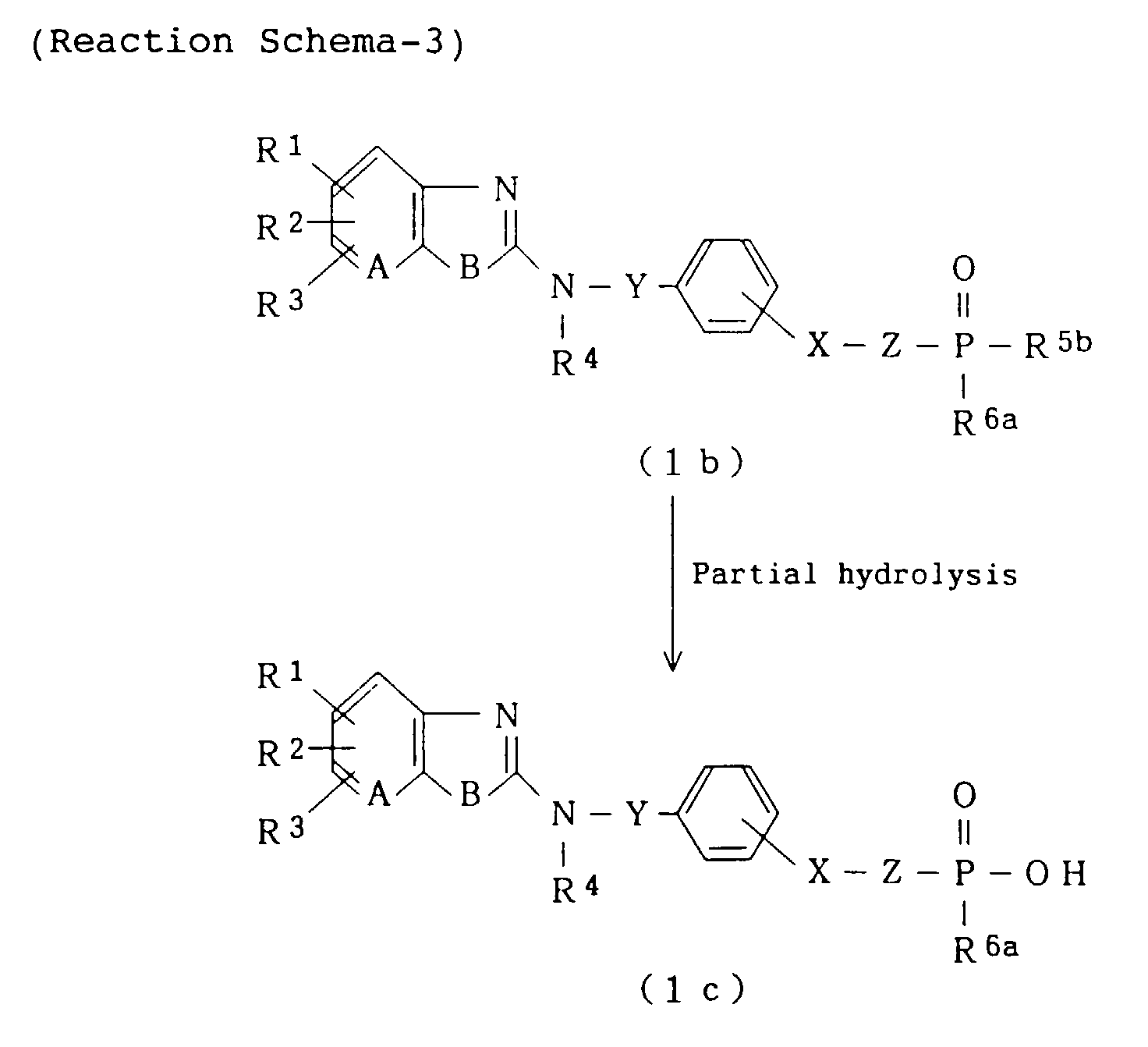
- The partial hydrolysis shown in the above Reaction Schema-3 is carried out by reacting compound (1b) with a lithium halide such as lithium bromide, lithium chloride, lithium iodide, etc. and thereafter treating the reaction product with a mineral acid such as hydrochloric acid, sulfuric acid and so on. The above reaction can be carried out in an inert solvent, such as acetonitrile, DMF, etc., using a stoichiometric excess of the lithium halide at room temperature ~ the reflux temperature of the solvent for 5 - 24 hours.
- Among the starting compounds for the production of the compound of the invention, compounds of the formulas (3') and (4') can be prepared by the processes shown below in Reaction Schema-4.[wherein R5c represents a lower alkoxy group, a phenoxy group or a phenyl(lower)alkoxy group; R6b is identical to R5c; Z' represents a lower alkylene group; R represents a lower alkyl group]

- Referring to the above schema, the reaction between compound (5) and compound (6) is carried out in the presence of an alkali, such as sodium carbonate, potassium carbonate, sodium hydrogen carbonate, sodium hydroxide, etc., in an inert solvent, such as DMF, N,N-dimethylacetamide (DMA), hexamethylphosphoric triamide (HMPA), acetone, methanol, ethanol, methanol-water, ethanol-water and so on. This reaction goes to completion in about 5 - 30 hours at room temperature to the reflux temperature of the solvent.
- The resultant compound (7) can be reacted with a phosphorous triester (8) to give compound (9). This reaction can be carried out in a solvent such as lower alcohols, aromatic or aliphatic hydrocarbons, DMF, etc. but is preferably conducted in the absence of a solvent in most cases. If necessary, a salt of iodine such as sodium iodide, potassium iodide, etc. can be added to the reaction system and usually the reaction is preferably conducted using said phosphorous triester (8) in excess at a temperature of about 130 - 170°C for about 1 - 20 hours.
- The compound (9) can then be hydrolyzed to compound (4'). This hydrolysis reaction is carried out in the presence of an aqueous alkali solution, such as aqueous sodium hydroxide solution, aqueous potassium hydroxide solution, etc., in an inert solvent such as methanol, ethanol, 2-propanol, etc. and this reaction goes to completion in about 1 - 15 hours at a temperature somewhere between 0°C and room temperature.
- The compound (4') can be chlorinated at the carboxyl function to give compound (5'). This chlorination reaction is carried out using dichloromethane, chloroform, DMF or the like either singly or in combination as the solvent and a small excess of thionyl chloride, phosphorus oxychloride, phosphorus pentachloride or the like as the chlorinating agent at room temperature to about 60 °C for about 1 - 8 hours.
- The product compound in each of the above processes can be easily isolated and purified by the conventional separation procedures. Such procedures include adsorption chromatography, preparative thin-layer chromatography, solvent extraction, recrystallization and so on.
- Among the species of compound (I) according to the invention, the compound in which Z is a lower alkylene group having a lower alkyl or phenyl(lower)alkyl group as a substituent may exist as optical isomers which, of course, are subsumed in the concept of the compound of the invention. The above optical isomers can be easily fractionated by the conventional resolution procedures such as optical resolution.
- The compound of the invention is put to use in a variety of pharmaceutical compositions prepared using suitable pharmaceutically acceptable carriers. Such pharmaceutically acceptable carriers include various diluents or excipients such as fillers, volume builders, binders, humectants, disintegrators, surfactants, lubricants, etc. and are selectively employed according to the desired dosage form.
- The above pharmaceutical composition can be provided in a variety of unit dosage forms according to the intended medical treatment. Typical examples are tablets, pills, powders, solutions, suspensions, emulsions, granules, capsules, suppositories, injections (solutions, suspensions, etc.) and eye-drops.
- The molding of tablets can be made using, as said pharmaceutically acceptable carriers, an excipient such as lactose, sucrose, sodium chloride, glucose, urea, starch, calcium carbonate, kaolin, crystalline cellulose, silicic acid, potassium phosphate, etc., a binder such as water, ethanol, propanol, simple syrup, glucose syrup, starch solution, gelatin solution, carboxymethylcellulose, hydroxypropylcellulose, methylcellulose, polyvinylpyrrolidone, etc., a disintegrator such as carboxymethylcellulose sodium, carboxymethylcellulose calcium, low-substituted hydroxypropylcellulose, dry starch, sodium alginate, agar powder, laminaran powder, sodium hydrogen carbonate, calcium carbonate, etc., a surfactant such as polyoxyethylene sorbitan fatty acid ester, sodium lauryl sulfate, stearyl monoglyceride, etc., a disintegration inhibitor such as sucrose, stearin, cacao butter, hydrogenated oil, etc., an absorption promoter such as quaternary ammonium bases, sodium lauryl sulfate, etc., a humectant such as glycerin, starch, etc., an adsorbent such as starch, lactose, kaolin, bentonite, colloidal silica, etc., and a lubricant such as purified talc, salts of stearic acid, boric acid powder, polyethylene glycol and so on. Furthermore, such tablets can be coated, if necessary, to provide sugar-coated tablets, gelatin-coated tablets, enteric tablets, film-coated tablets, etc. or be processed into double-layer or multiple-layer tablets.
- In the manufacture of pills, various excipients such as glucose, lactose, starch, cacao butter, hydrogenated vegetable oil, kaolin, talc, etc., binders such as gum arabic powder, gum tragacanth powder, gelatin, ethanol, etc. and disintegrators such as laminaran, starch, etc. can be employed.
- The capsules can be manufactured in the conventional manner by blending the compound of the invention with any of the various pharmaceutically acceptable carriers mentioned above and filling the resulting composition into hard gelatin capsule shells, soft gelatin capsule shells or the like.
- The suppositories can be manufactured using polyethylene glycol, cacao butter, higher alcohols or their esters, gelatin, semisynthetic glycerides, etc. as the carrier.
- When the compound of the invention is to be provided in an injectable form such as a solution, emulsion or suspension, the preparation is preferably sterilized and rendered isotonic with respect to the blood. As the diluent for use in such a preparation, water, ethyl alcohol, macrogols, propylene glycol, ethoxylated isostearyl alcohol, polyoxy-isostearyl alcohol, polyoxyethylene sorbitan fatty acid esters, etc. can be employed. In this operation, sodium chloride, glucose or glycerin may be added to the composition in a sufficient amount to provide an isotonic solution and the conventional solubilizer, buffer and local anesthetic can also be added.
- The eye-drops can be manufactured in the conventional manner using sterile distilled water as the vehicle, sodium dihydrogen phosphate and/or sodium monohydrogen phosphate, for instance, as the buffer, sodium chloride or the like as the isotonizing agent, and benzalkonium chloride, chlorobutanol or the like as the antimicrobial agent.
- If necessary, various coloring agents, preservatives, perfumes, flavors, sweeteners etc. as well as other pharmacologically active substances can be incorporated in the various dosage forms mentioned above.
- There is no particular limitation on the treatment regimen for the pharmaceutical composition of the invention. Thus, the proper regimen can be determined according to the particular dosage form, patient's age, sex and other characteristics, severity of disease and other conditions. For example, said tablets, pills, solutions, suspensions, emulsions, granules and capsules are administered by the oral route. The injections are administered either as they are or in admixture with the conventional glucose, amino acid or other infusions by the intravenous route or, if necessary, alone by the intramuscular, intradermal, subcutaneous or intraperitoneal route. The suppositories are administered intrarectally and the eye-drops are instilled into the eye.
- The proportion of the compound of the invention in the pharmaceutical composition described above is not much critical and can be liberally selected from a broad range. Generally, however, it is advantageous to insure that the compound accounts for about 1 to 70 weight % of the final composition. The dosing amount of the pharmaceutical composition can be selected according to the selected regimen, patient's age, sex and other characteristics, severity of disease and other conditions. Generally, however, the dosage of the compound of the invention as the active ingredient is preferably about 0.5 - 20 mg per kg body weight and this amount can be administered in 1 ~ 4 divided doses. In the case of an ophthalmic preparation for topical application, the dosage of the active compound is preferably selected from the range of about 0.3 - 2 µg.
- The following production examples for the compound of the invention, formulation examples for pharmaceutical compositions using the compound of the invention and pharmacological test examples are intended to describe the invention in further detail.
- In 30 ml of dry dichloromethane were dissolved 3.0 g of 2-aminobenzothiazole and 10 ml of pyridine and while the resulting solution was stirred under ice-cooling, a solution of 5.8 g 4-[(diethoxyphosphoryl)-methyl]benzoyl chloride in 10 ml dry dichloromethane was slowly added dropwise. The stirring was continued at room temperature for 10 hours, after which the reaction mixture was diluted with 30 ml of 10% aqueous sodium hydrogen carbonate solution and extracted with chloroform. The chloroform layer was washed serially with 30 ml of 10% hydrochloric acid and 30 ml of water and dried over anhydrous sodium sulfate and the solvent was distilled off under reduced pressure. The residue was subjected to silica gel column chromatography (eluent: chloroform-ethyl acetate = 1:1) and the resulting crude crystals were recrystallized from ethanol to provide 6.8 g of the title compound as colorless crystals. The structure and melting point of the compound thus obtained are shown in Table 1.
- Various species of the compound of the invention were obtained in the same manner as Example 1. The structures and melting points of these compounds are also shown in Table 1.
- Various species of the compound of the invention were produced in the same manner as Example 1. The structures and melting points of these compounds are shown in Table 2. As to an oily compound, its 1H-NMR spectrum and mass spectrum (MS) are also shown in the table.
- In 50 ml of dry acetonitrile were suspended 5.2 g (12 mM) of the compound obtained in Example 3 and 5.2 g (60 mM) of lithium bromide and the suspension was refluxed for 20 hours. The reaction mixture was then allowed to cool to room temperature and the resultant precipitate was recovered by filtration and washed with three 60 ml portions of acetonitrile. The crystals thus obtained were dissolved in 400 ml of water and while the solution was stirred at room temperature, 10 ml of concentrated hydrochloric acid was gradually added. The mixture was stirred at room temperature for 30 minutes, at the end of which time the resultant crystals were recovered by filtration and washed with three 300 ml portions of water. The crude crystals thus obtained were suspended in 200 ml of hot methanol and the insolubles were collected by filtration and washed with 50 ml of methanol. The resultant crystals were further suspended in 200 ml of methanol-chloroform (1:1) and the insolubles were recovered by filtration and washed with 50 ml of methanol and 50 ml of chloroform in the order mentioned to provide 1.8 g of the title compound as colorless crystals. The structure and melting point of this compound are shown in Table 2.
- To 300 ml of acetonitrile were added 16.6 g (0.1 mole) of ethyl 4-hydroxybenzoate, 31.6 g (0.22 mole) of l-bromo-2-chloroethane and 60.8 g of anhydrous potassium carbonate and the mixture was refluxed for 20 hours. The reaction mixture was then allowed to cool to room temperature and the solid matter was filtered off. The filtrate was concentrated under reduced pressure. To the resultant oily residue were added 15 g (0.1 mole) of sodium iodide and 50 g (0.3 mole) of triethyl phosphite and the mixture was stirred at 160°C for 18 hours. The reaction mixture was then allowed to cool to room temperature, after which 50 ml of ethanol was added to the reaction mixture. While this mixture was stirred under ice-cooling, 100 ml of 2 N aqueous sodium hydroxide solution was gradually added portionwise. The mixture was stirred at room temperature for 12 hours, at the end of which time 150 ml of water and 150 ml of chloroform were added. After phase separation, the water layer was separated. This aqueous solution was acidified with 150 ml of 4 N hydrochloric acid and extracted with chloroform. The chloroform layer was washed with 200 ml of water, dried over anhydrous sodium sulfate and concentrated under reduced pressure. The residue was purified by silica gel column chromatography (eluent: chloroform-ethyl acetate = 1:1) to provide 3.3 g of 4-[2-(diethoxyphosphoryl)ethoxy]benzoic acid as colorless crystals (m.p. 86-88°C).
- Then, 3.0 q (10 mM) of the above crystals were suspended in 15 ml of dry dichloromethane and while the suspension was stirred at room temperature, 1.25 g (10.5 mM) of thionyl chloride and 0.22 g (3 mM) of DMF were added. The mixture was further stirred at 40°C for 1 hour. The resulting reaction mixture was then directly subjected to a reaction similar to that described in Example 1 to provide the title compound.
- The structure and melting point of this compound are shown in Table 2.
- Using 1-bromo-3-chloropropane, the procedure of Exampel 47 was otherwise repeated to provide the title compound via 4-[3-(diethoxyphosphoryl)propoxy]benzoic acid (m.p. 107 - 110°C).
- The structure and melting point of this compound are shown in Table 2.


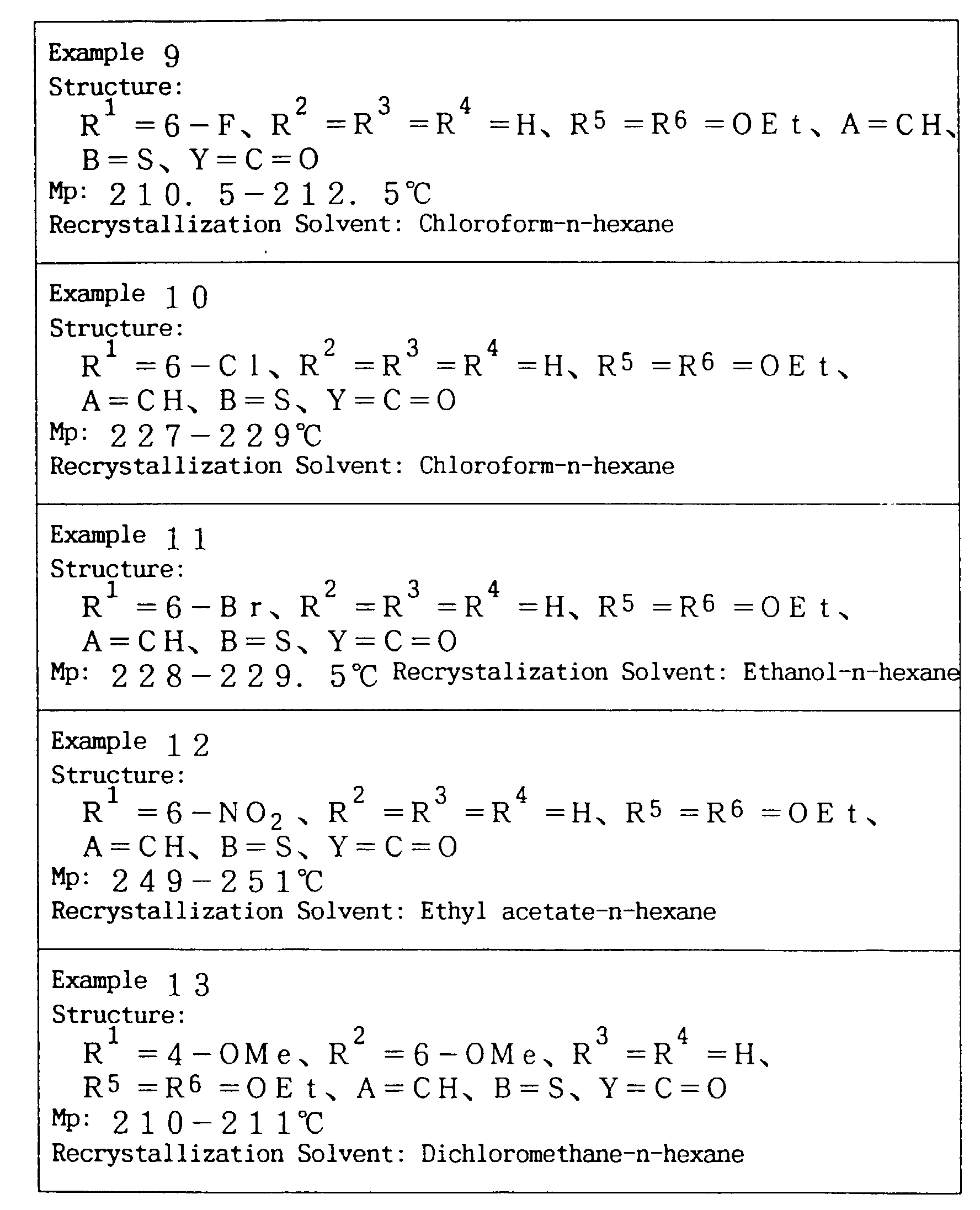
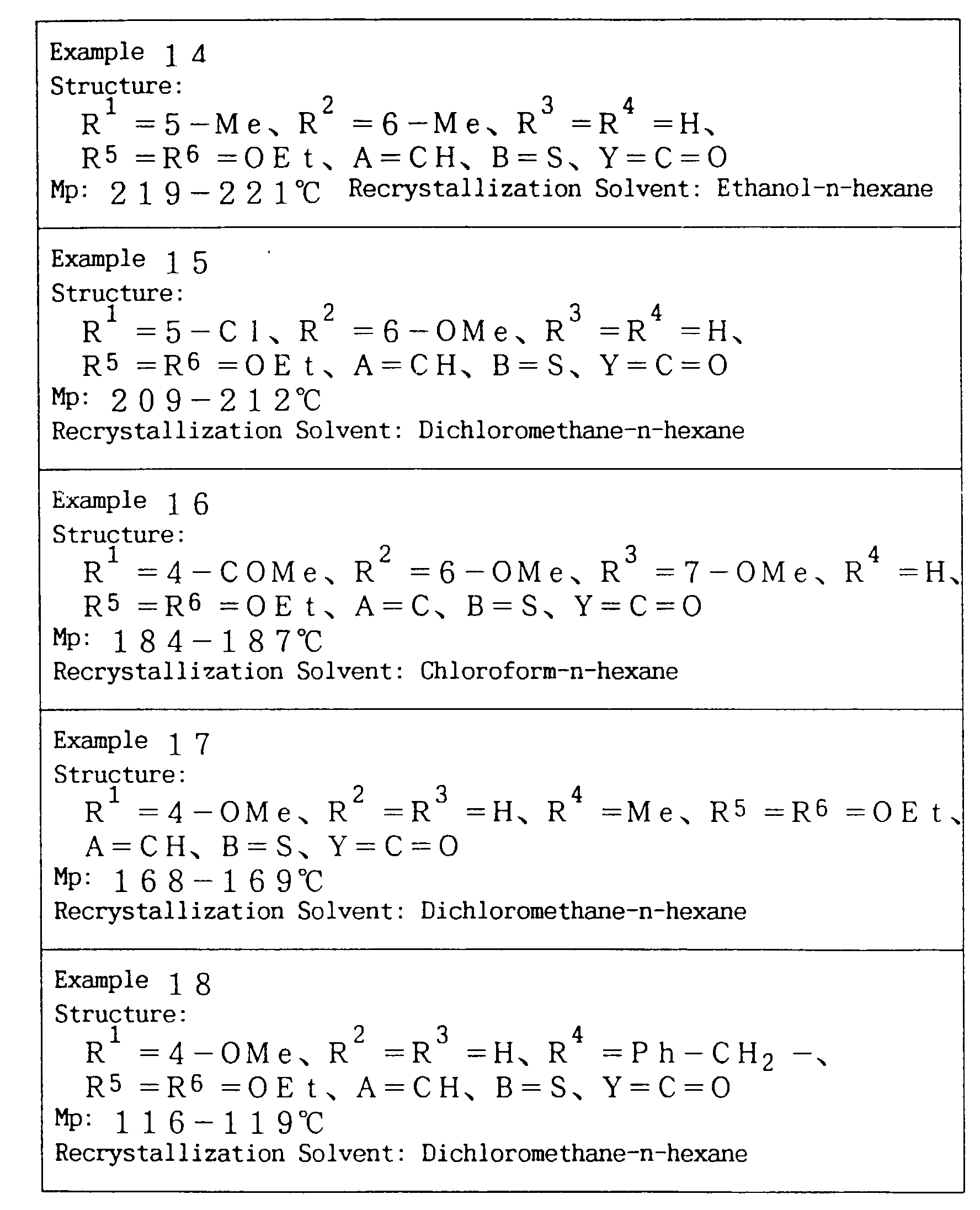
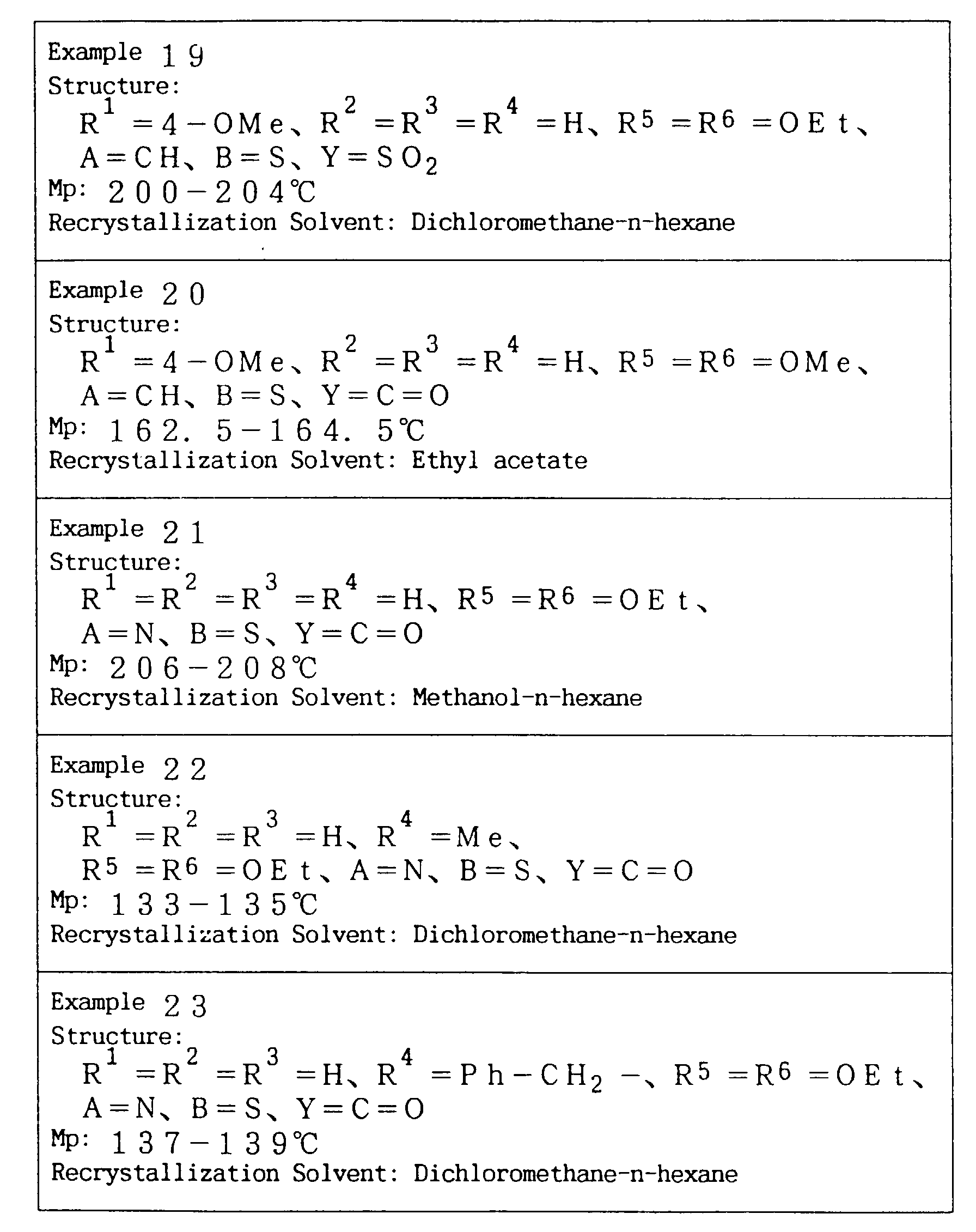



- Manufacture of tablets using the compound obtained in Example 3 as an active ingredient, tablets (1000 tablets) each containing 250 mg of the active ingredient were manufactured according to the following formula.
Ingredient Amount (g) Compound of Example 3 250 Lactose (JP) 33.5 Corn starch (JP) 16.5 Carboxymethylcellulose calcium (JP) 12.5 Methylcellulose (JP) 6.0 Magnesium stearate (JP) 1.5 Total 320.0 - According to the above formula, the compound of Example 3, lactose, corn starch and carboxymethyl cellulose calcium were well blended and granulated using an aqueous solution of methyl cellulose. The granulation was passed through a 24-mesh sieve and the granules under the sieve were mixed with magnesium stearate and compression-molded.
- Using the compound obtained in Example 5 as an active ingredient, hard gelatin capsules (1000 units) each containing 250 mg of the active ingredient were manufactured according to the following formula.
Ingredient Amount (g) Compound of Example 5 250 Crystalline cellulose (JP) 30 Corn starch (JP) 17 Talc (JP) 2 Magnesium stearate (JP) 1 Total 300 - Thus, according to the above formula, the respective ingredients were finely divided and the powders obtained were blended to give a homogeneous composition. This composition was filled into propersized gelatin capsule shells for oral administration to provide the objective capsules.
- Using the compound obtained in Example 13 as an active ingredient, granules (1000 g) containing 500 mg of the active ingredient in each gram were manufactured according to the following formula.
Ingrdient Amount (g) Compound of Example 13 500 Crystalline cellulose (JP) 100 Corn starch (JP) 250 Lactose (JP) 100 Carboxymethylcellulose calcium (JP) 40 Hydroxypropylmethylcellulose (JP) 10 Total 1000 - Thus, according to the above formula, the compound of Example 13, lactose, corn starch, crystalline cellulose and carboxymethylcellulose calcium were thoroughly blended and kneaded with an aqueous solution of hydroxypropylcellulose. The resultant composition was granulated using an extrusion granulator and dried at 50°C for 2 hours to provide the objective granules.
- An experiment for assaying hypolipidemic activity in rats with Triton WR1339-induced hyperlipidemia was performed according to the method of Kuroda et al. [Biochem. Biophys. Acta., 489, 119 (1977)], as follows.
- Thus, using 6 - 7-week-old male Wistar rats in groups of 6 (test groups), a solution of 300 mg/kg Triton in physiological saline was administered into the tail vein and, at the same time, 100 mg/kg of the test compound suspended in 5% gum arabic solution was administered orally.
- As a control group, a group of 6 rats given Triton were orally dosed with 5% gum arabic solution.
- Twenty-four hours after administration of Triton, blood was withdrawn from the abdominal aorta and the plasma total cholesterol and triglyceride were determined using Cholesterol C-Test Wako and Triglyceride G-Test Wako (both available from Wako Pure Chemical Industries, Ltd.), respectively.
- Using the measured values in the control group as references, the rates of decrease (%) in plasma total cholesterol and triglyceride in the test group were calculated by means of the following equation.
- The test rats were deprived of food before Triton administration through completion of blood sampling but allowed free access to drinking water. The rates of decrease in total cholesterol are shown in Table 3 and those in triglyceride are shown in Table 4.
Test compound (Example No.) Rate of decrease in total cholesterol (%) 1 40 3 56 13 70 26 43 27 42 29 47 30 79 31 69 34 71 42 45 43 45 45 62 Test compound (Example No.) Rate of decrease in triglyceride (%) 1 62 2 44 3 83 4 47 10 40 11 44 13 94 20 48 25 54 26 63 27 81 29 87 30 95 31 92 32 47 34 97 42 81 43 80 45 91 - It is apparent from Tables 3 and 4 that all species of the compound of the invention have excellent hypolipidemic activity.
- The rat model of streptozotocin-induced diabetes was constructed according to Doi's method [Folia Endocrinologica Japonica, 51 (3), 129 (1975)] as below and the hypoglycemic activity of the compound of the invention was assayed in the model by the following procedure.
- Thus, using 5-week-old male Wistar rats in groups of 7 (test groups), 100 mg/kg of streptozotocin dissolved in 0.01 M citrate buffer (pH 4.5) was administered into the tail vein and on day 6 after this administration, a suspension of 30 mg/kg of the compound obtained in Example 3 in 5% gum arabic solution was orally administered.
- As a control group, a group of 6 rats given streptozotocin were orally dosed with 5% gum arabic solution.
- Four hours after administration of the test compound or 5% gum arabic solution, blood was withdrawn from the abdominal aorta and the plasma glucose was determined using Glucose C II-Test Wako (Wako Pure Chemical Industries, Ltd.).
- The results in terms of mean ± SD are shown below in Table 5.
Plasma glucose level (mg/dl) Control group 588 ± 69 Test group 495 ± 53 - It is apparent from the above table that the plasma glucose level in the test group was significantly depressed as compared with the control group, indicating that the compound of the invention has excellent hypoglycemic activity.
Claims (12)
- A phosphonic diester derivative of the general formulawherein
 provided that X and Z do not concurrently represent bonds.R1, R2 and R3 are the same or different and each represents a hydrogen atom, a C1-6 alkyl group, a phenyl group, a C1-6 alkoxy group, a halogen-substituted C1-6 alkyl group, a halogen-substituted C1-6 alkoxy group, a C2-7 alkanoyl group, a benzoyl group, a nitro group, a halogen atom, a C1-6 alkylthio group, a phenyl C1-6 alkoxy group, a carbamoyl group or a C1-6 alkoxycarbonyl C1-6 alkoxy group;R4 represents a hydrogen atom, a C1-6 alkyl group or a phenyl C1-6 alkyl group;R5 and R6 are the same or different and each represents a C1-6 alkoxy group, a phenyl group, a phenyl C1-6 alkoxy group or a hydroxyl group;A represents a carbon atom or a nitrogen atom;B represents a group of the formula =NR7 (wherein R7 represents a C1-6 alkyl group or a phenyl C1-6 alkyl group), an oxygen atom or a sulfur atom;Y represents a group of the formula C=O; X represents an oxygen atom or a bond;Z represents a C1-7 alkylene group optionally having a C1-6 alkyl or phenyl C1-6 alkyl group as a substituent or a bond;
 - The phosphonic diester derivative of claim 1 which is represented by the general formulawherein R1, R2 and R3 are the same or different and each represents a hydrogen atom, a C1-6 alkyl group, a phenyl group, a C1-6 alkoxy group, a halogen-substituted C1-6 alkyl group, a halogen-substituted C1-6 alkoxy group, a C2-7 alkanoyl group, a benzoyl group, a nitro group, a halogen atom, a C1-6 alkylthio group, a phenyl C1-6 alkoxy group, a carbamoyl group or a C1-6 alkoxycarbonyl C1-6 alkoxy group; R5' and R6' are the same or different and each represents a C1-6 alkoxy group, a phenyl group or a phenyl C1-6 alkoxy group.
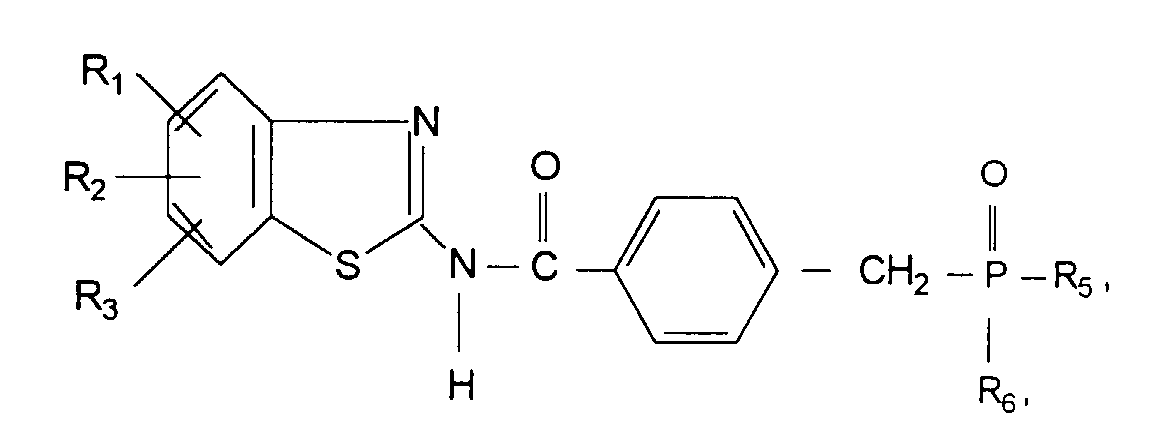
- The phosphonic diester derivative of claim 2 wherein R1, R2 and R3 are groups selected from the class consisting of a hydrogen atom, a C1-6 alkoxy group, a C2-7 alkanoyl group and a halogen atom.
- The phosphonic diseter derivative of claim 3 which may be represented by the general formulawherein R1' represents a C1-6 alkoxy group, R5' and R6' are the same or different and each represents a C1-6 alkoxy group, a phenyl group or a phenyl C1-6 alkoxy group.
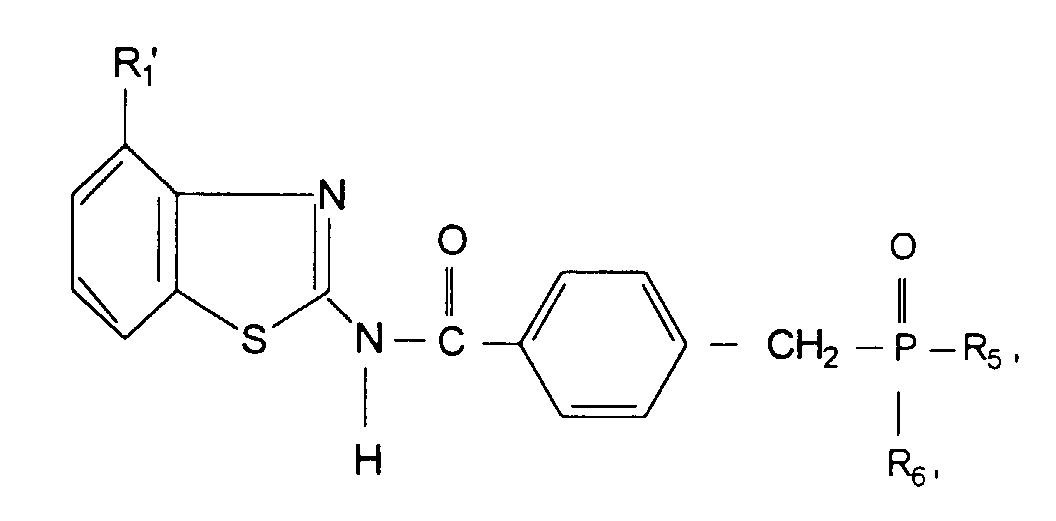
- The phosphonic diester derivative of claim 3 which is a compound selected from the class consisting of(1) Diethyl 4-[(4-methoxybenzothiazol-2-yl)carbamoyl]-benzylphosphonate,(2) Diethyl 4-[[4,6-dimethoxybenzothiazol-2-yl)-carbamoyl]benzylphosphonate,(3) Diethyl 4-[(4-acetyl-6-bromobenzothiazol-2-yl)carbamoyl]benzylphosphonate, and(4) Diethyl 4- [(4-chlorobenzothiazol-2-yl)carbamoyl]benzylphosphonate.
- The phosphonic diester derivative of c laim 5 which is deithyl 4-[(4-methoxybenzothiazol-2-yl)-carbamoyl]benzylphosphonate.
- An antihyperlipidemic composition comprising the phosphonic diester derivative claimed in any of claims 1 through 6 as an active ingredient.
- An antidiabetic composition comprising the phosphonic diester derivative claimed in any of claims 1 through 6 as an active ingredient.
- Use of the phosphonic diester derivative claimed in any of claims 1 through 6 for the manufacture of pharmaceutical composition for the treatment of hyperlipidemia.
- Use of phosphonic diester derivative claimed in any of claims 1 through 6 for the manufacture of a pharmaceutical composition for the treatment of diabetes.
- Process for the production of a phosphonic diester derivative of the general formulawherein
 provided that X and Z do not concurrently represent bonds;R1, R2 and R3 are the same or different and each represents a hydrogen atom, a C1-6 alkyl group, a phenyl group, a C1-6 alkoxy group, a halogen-substituted C1-6 alkyl group, a halogen-substituted C1-6 alkoxy group, a C2-7 alkanoyl group, a benzoyl group, a nitro group, a halogen atom, a C1-6 alkylthio group, a phenyl C1-6 alkoxy group, a carbamoyl group or a C1-6 alkoxycarbonyl C1-6 alkoxy group;R4 represents a hydrogen atom, a C1-6 alkyl group or a phenyl C1-6 alkyl group;R5 and R6 are the same or different and each represents a C1-6 alkoxy group, a phenyl group, a phenyl C1-6 alkoxy group or a hydroxy groupA represents a carbon atom or a nitrogen atom;B represents a group of the formula =NR7 (where R7 represents a C1-6 alkyl group or a phenyl C1-6 alkyl group), an oxygen atom or a sulfur atom;Y represents a group of the formula C=0;X represents an oxygen atom or a bond;Z represents a C1-7 alkylene group optionally having a C1-6 alkyl or phenyl C1-6 alkyl group as a substituent or a bond;
which comprises reacting a compound (2) with a compound (3) in the presence of an acid acceptor, or with a compound (4) in the presence of a condensing agent, in an inert solvent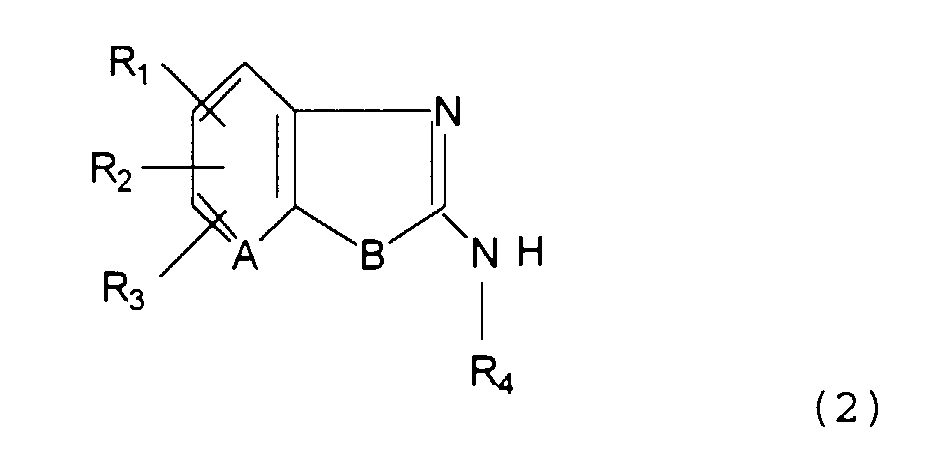
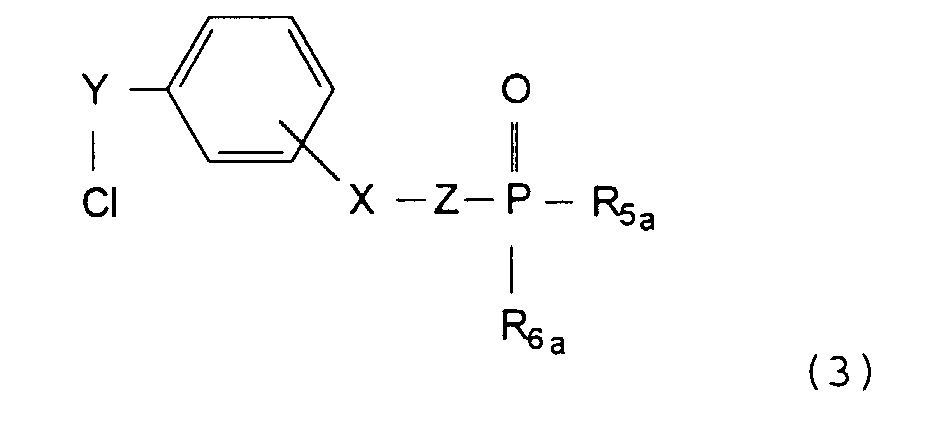 wherein R5a and R6a are the same or different and each represents a C1-6 alkoxy group, a phenyl group, or a phenyl C1-6 alkoxy group, thus obtaining a compound (1a)
 and optionally subjecting a compound (1a), wherein R5a and/or R6a represents a C1-6 alkoxy group, to hydrolysis.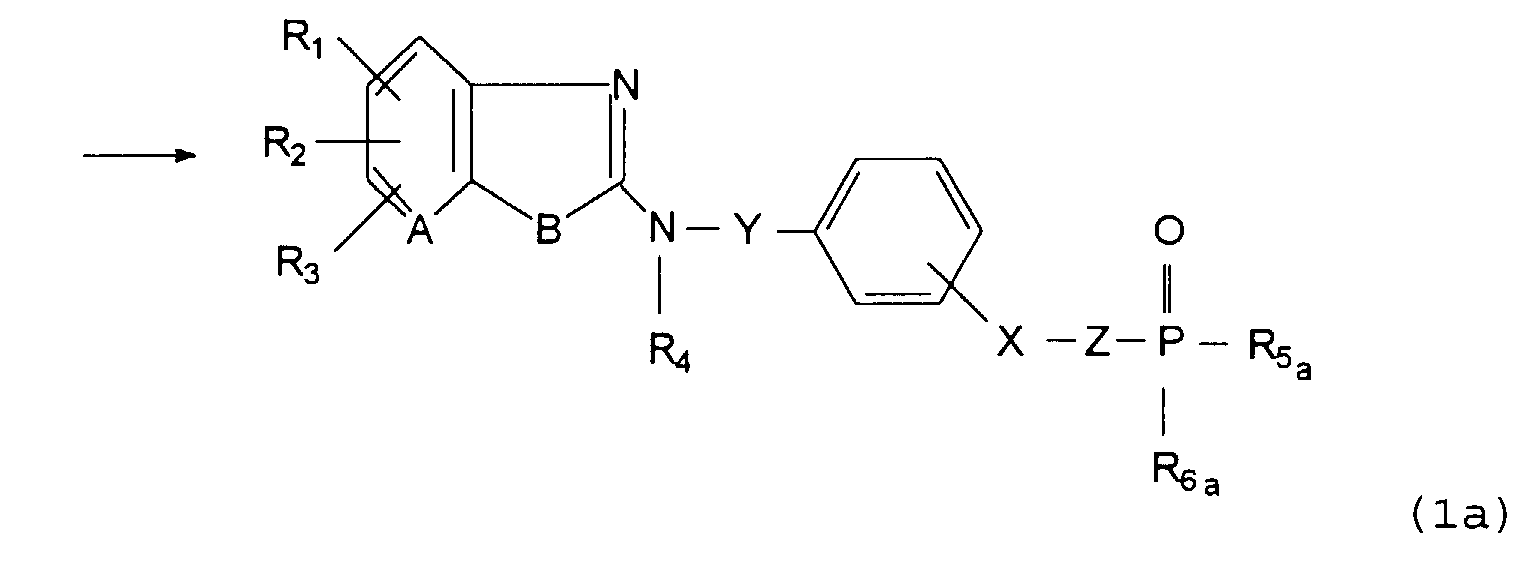
- Process according to claim 11 for the production of a compound as defined in any of the claims 2 to 6.
Applications Claiming Priority (4)
| Application Number | Priority Date | Filing Date | Title |
|---|---|---|---|
| JP128711/92 | 1992-05-21 | ||
| JP12871192 | 1992-05-21 | ||
| JP12871192 | 1992-05-21 | ||
| PCT/JP1993/000660 WO1993023409A1 (en) | 1992-05-21 | 1993-05-20 | Phosphonic diester derivative |
Publications (3)
| Publication Number | Publication Date |
|---|---|
| EP0604657A1 EP0604657A1 (en) | 1994-07-06 |
| EP0604657A4 EP0604657A4 (en) | 1995-03-15 |
| EP0604657B1 true EP0604657B1 (en) | 2000-01-12 |
Family
ID=14991544
Family Applications (1)
| Application Number | Title | Priority Date | Filing Date |
|---|---|---|---|
| EP93910361A Expired - Lifetime EP0604657B1 (en) | 1992-05-21 | 1993-05-20 | Phosphonic diester derivative |
Country Status (13)
| Country | Link |
|---|---|
| US (1) | US5376665A (en) |
| EP (1) | EP0604657B1 (en) |
| JP (1) | JP2759228B2 (en) |
| KR (1) | KR0185225B1 (en) |
| AT (1) | ATE188704T1 (en) |
| AU (1) | AU653681B2 (en) |
| CA (1) | CA2113561C (en) |
| DE (1) | DE69327572T2 (en) |
| DK (1) | DK0604657T3 (en) |
| ES (1) | ES2140456T3 (en) |
| PT (1) | PT604657E (en) |
| TW (1) | TW243451B (en) |
| WO (1) | WO1993023409A1 (en) |
Families Citing this family (31)
| Publication number | Priority date | Publication date | Assignee | Title |
|---|---|---|---|---|
| TW260664B (en) * | 1993-02-15 | 1995-10-21 | Otsuka Pharma Factory Inc | |
| JP3156026B2 (en) | 1993-12-27 | 2001-04-16 | 株式会社大塚製薬工場 | Phosphonic acid diester derivatives |
| JP3533542B2 (en) * | 1994-03-08 | 2004-05-31 | 株式会社大塚製薬工場 | Phosphonic acid diester derivatives |
| US5442118A (en) * | 1994-04-22 | 1995-08-15 | Sepracor, Inc. | Asymmetric synthesis of (R)- and (S)-arylethanolamines from iminoketones |
| US6288100B1 (en) | 1995-06-06 | 2001-09-11 | American Home Products Corporation | Benzimidazole derivatives |
| ES2181928T3 (en) * | 1995-12-27 | 2003-03-01 | Otsuka Pharma Co Ltd | DERIVATIVES OF DIESTER OF PHOSPHONIC ACID. |
| DE69731003D1 (en) * | 1996-07-01 | 2004-11-04 | Lilly Co Eli | Blood-glucose-lowering and lipid-lowering compounds |
| IL121202A (en) | 1996-07-01 | 2001-08-26 | Lilly Co Eli | Hypoglycemic and hypolipidemic compounds, process for their preparation, pharmaceutial compositions comprising same, and uses thereof |
| EP1402895A1 (en) * | 1997-03-07 | 2004-03-31 | Metabasis Therapeutics, Inc. | Benzimidazole inhibitors of fructose 1,6-biphosphatase |
| WO1998039344A1 (en) * | 1997-03-07 | 1998-09-11 | Metabasis Therapeutics, Inc. | Novel purine inhibitors of fructose-1,6-bisphosphatase |
| ZA981936B (en) | 1997-03-07 | 1999-09-06 | Metabasis Therapeutics Inc | Novel benzimidazole inhibitors of fructose 1,6-bisphosphatase. |
| JP2002507996A (en) | 1997-07-03 | 2002-03-12 | デュポン ファーマシューティカルズ カンパニー | Imidazopyrimidines and imidazopyridines for treating neurological disorders |
| US6365589B1 (en) | 1998-07-02 | 2002-04-02 | Bristol-Myers Squibb Pharma Company | Imidazo-pyridines, -pyridazines, and -triazines as corticotropin releasing factor antagonists |
| US6124463A (en) * | 1998-07-02 | 2000-09-26 | Dupont Pharmaceuticals | Benzimidazoles as corticotropin release factor antagonists |
| NZ522928A (en) | 2000-06-21 | 2005-05-27 | F | Benzothiazole derivatives |
| US20040029867A1 (en) * | 2001-05-04 | 2004-02-12 | Scarborough Robert M. | Heterobicyclic sulfonamides and their use as platelet adp receptor inhibitors |
| ES2367422T3 (en) | 2001-10-09 | 2011-11-03 | Amgen Inc. | IMIDAZOL DERIVATIVES AS ANTI-INFLAMMATORY AGENTS. |
| US6624163B2 (en) * | 2001-11-29 | 2003-09-23 | Hoffman-La Roche Inc. | Benzothiazole derivatives |
| US7087761B2 (en) | 2003-01-07 | 2006-08-08 | Hoffmann-La Roche Inc. | Cyclization process for substituted benzothiazole derivatives |
| CA2528785A1 (en) | 2003-06-20 | 2005-01-06 | Matthias Heinrich Nettekoven | 2-amidobenzothiazoles as cb1 receptor inverse agonists |
| WO2005037845A1 (en) * | 2003-10-17 | 2005-04-28 | Rigel Pharmaceuticals, Inc. | Benzothiazole and thiazole[5,5-b] pyridine compositions and their use as ubiquitin ligase inhibitors |
| CN1956983B (en) | 2004-05-24 | 2010-05-26 | 弗·哈夫曼-拉罗切有限公司 | 4-Hydroxy-4-methyl-piperidine-1-carboxylic acid (4-methoxy-7-morpholin-4-yl-benzothiazol-2-yl)-amide |
| CA2586931C (en) | 2004-11-05 | 2013-08-06 | Paul Spurr | Process for preparation of isonicotinic acid derivatives |
| RU2412943C2 (en) | 2005-03-23 | 2011-02-27 | Ф. Хоффманн-Ля Рош Аг | ACETYLENYL-PYRAZOLE-PYRIMIDINE DERIVATIVES AS mGluR2 ANTAGONISTS |
| ES2340321T3 (en) | 2005-09-27 | 2010-06-01 | F.Hoffmann-La Roche Ag | OXADIAZOLILPIRAZOLO-PIRIMIDINAS, AS ANGLGIST OF MGLUR2. |
| DE102007012284A1 (en) | 2007-03-16 | 2008-09-18 | Boehringer Ingelheim Pharma Gmbh & Co. Kg | Novel substituted arylsulfonylglycines, their preparation and their use as pharmaceuticals |
| DE102007035334A1 (en) | 2007-07-27 | 2009-01-29 | Boehringer Ingelheim Pharma Gmbh & Co. Kg | Novel substituted arylsulfonylglycines, their preparation and their use as pharmaceuticals |
| DE102007035333A1 (en) * | 2007-07-27 | 2009-01-29 | Boehringer Ingelheim Pharma Gmbh & Co. Kg | Novel substituted arylsulfonylglycines, their preparation and their use as pharmaceuticals |
| DE102007042154A1 (en) | 2007-09-05 | 2009-03-12 | Boehringer Ingelheim Pharma Gmbh & Co. Kg | Arylsulfonylaminomethyphosphonsäure derivatives, their preparation and their use as medicaments |
| EP2348857B1 (en) * | 2008-10-22 | 2016-02-24 | Merck Sharp & Dohme Corp. | Novel cyclic benzimidazole derivatives useful anti-diabetic agents |
| MX2013001313A (en) | 2010-08-05 | 2013-06-13 | Amgen Inc | Benzimidazole and azabenzimidazole compounds that inhibit anaplastic lymphoma kinase. |
Family Cites Families (2)
| Publication number | Priority date | Publication date | Assignee | Title |
|---|---|---|---|---|
| AU523040B2 (en) * | 1978-05-15 | 1982-07-08 | Kanebo Limited | Calcium -antagonistic composition |
| NZ234564A (en) * | 1986-11-21 | 1991-04-26 | Haessle Ab | 1-substituted benzimidazoles and pharmaceutical compositions |
-
1993
- 1993-05-20 PT PT93910361T patent/PT604657E/en unknown
- 1993-05-20 US US08/182,145 patent/US5376665A/en not_active Expired - Lifetime
- 1993-05-20 ES ES93910361T patent/ES2140456T3/en not_active Expired - Lifetime
- 1993-05-20 JP JP5520067A patent/JP2759228B2/en not_active Expired - Fee Related
- 1993-05-20 DK DK93910361T patent/DK0604657T3/en active
- 1993-05-20 EP EP93910361A patent/EP0604657B1/en not_active Expired - Lifetime
- 1993-05-20 WO PCT/JP1993/000660 patent/WO1993023409A1/en not_active Ceased
- 1993-05-20 CA CA002113561A patent/CA2113561C/en not_active Expired - Fee Related
- 1993-05-20 AU AU40887/93A patent/AU653681B2/en not_active Ceased
- 1993-05-20 KR KR1019940700200A patent/KR0185225B1/en not_active Expired - Fee Related
- 1993-05-20 AT AT93910361T patent/ATE188704T1/en not_active IP Right Cessation
- 1993-05-20 DE DE69327572T patent/DE69327572T2/en not_active Expired - Fee Related
- 1993-05-21 TW TW082104027A patent/TW243451B/zh active
Also Published As
| Publication number | Publication date |
|---|---|
| CA2113561A1 (en) | 1993-11-25 |
| KR0185225B1 (en) | 1999-05-15 |
| WO1993023409A1 (en) | 1993-11-25 |
| EP0604657A1 (en) | 1994-07-06 |
| TW243451B (en) | 1995-03-21 |
| EP0604657A4 (en) | 1995-03-15 |
| DK0604657T3 (en) | 2000-04-17 |
| ES2140456T3 (en) | 2000-03-01 |
| AU653681B2 (en) | 1994-10-06 |
| DE69327572T2 (en) | 2000-06-21 |
| JP2759228B2 (en) | 1998-05-28 |
| DE69327572D1 (en) | 2000-02-17 |
| AU4088793A (en) | 1993-12-13 |
| ATE188704T1 (en) | 2000-01-15 |
| US5376665A (en) | 1994-12-27 |
| CA2113561C (en) | 1999-09-14 |
| PT604657E (en) | 2000-04-28 |
Similar Documents
| Publication | Publication Date | Title |
|---|---|---|
| US5376665A (en) | Phosphonic diester derivatives | |
| EP0638581B1 (en) | Phosphonic diester derivative | |
| JPWO1993023409A1 (en) | Phosphonic acid diester derivatives | |
| EP0749974B1 (en) | Phosphonic diester derivative | |
| CA2241679C (en) | Phosphonic acid diester derivatives | |
| JP3499905B2 (en) | Guanidine alkyl-1,1-bisphosphonic acid derivatives, their preparation and use | |
| JPWO1994018212A1 (en) | Phosphonic acid diester derivatives | |
| EP0655456B1 (en) | Phosphonic diester derivative | |
| EP0666265B1 (en) | Phosphonic diester derivative | |
| EP0402033A1 (en) | Carboxamide derivatives | |
| JPH0617307B2 (en) | Antitumor agent | |
| US6468992B1 (en) | Phosphonic acid diester derivatives | |
| RU2041875C1 (en) | Sulfur-containing heterocyclic compounds or pharmaceutically acceptable salts thereof | |
| EP0185132B1 (en) | Novel ethyl benzylphosphinate derivatives, process for production thereof, and their use as calcium antagonist | |
| JP2926274B2 (en) | Phosphonic acid diester derivatives | |
| JP2002179694A (en) | Phosphate derivative and pharmaceutical composition | |
| JPH0557277B1 (en) |
Legal Events
| Date | Code | Title | Description |
|---|---|---|---|
| PUAI | Public reference made under article 153(3) epc to a published international application that has entered the european phase |
Free format text: ORIGINAL CODE: 0009012 |
|
| 17P | Request for examination filed |
Effective date: 19940121 |
|
| AK | Designated contracting states |
Kind code of ref document: A1 Designated state(s): AT BE CH DE DK ES FR GB GR IE IT LI LU MC NL PT SE |
|
| A4 | Supplementary search report drawn up and despatched | ||
| AK | Designated contracting states |
Kind code of ref document: A4 Designated state(s): AT BE CH DE DK ES FR GB GR IE IT LI LU MC NL PT SE |
|
| 17Q | First examination report despatched |
Effective date: 19970616 |
|
| GRAG | Despatch of communication of intention to grant |
Free format text: ORIGINAL CODE: EPIDOS AGRA |
|
| GRAG | Despatch of communication of intention to grant |
Free format text: ORIGINAL CODE: EPIDOS AGRA |
|
| GRAG | Despatch of communication of intention to grant |
Free format text: ORIGINAL CODE: EPIDOS AGRA |
|
| GRAH | Despatch of communication of intention to grant a patent |
Free format text: ORIGINAL CODE: EPIDOS IGRA |
|
| GRAH | Despatch of communication of intention to grant a patent |
Free format text: ORIGINAL CODE: EPIDOS IGRA |
|
| GRAA | (expected) grant |
Free format text: ORIGINAL CODE: 0009210 |
|
| AK | Designated contracting states |
Kind code of ref document: B1 Designated state(s): AT BE CH DE DK ES FR GB GR IE IT LI LU MC NL PT SE |
|
| PG25 | Lapsed in a contracting state [announced via postgrant information from national office to epo] |
Ref country code: GR Free format text: LAPSE BECAUSE OF NON-PAYMENT OF DUE FEES Effective date: 20000112 |
|
| REF | Corresponds to: |
Ref document number: 188704 Country of ref document: AT Date of ref document: 20000115 Kind code of ref document: T |
|
| REG | Reference to a national code |
Ref country code: CH Ref legal event code: NV Representative=s name: RITSCHER & SEIFERT Ref country code: CH Ref legal event code: EP |
|
| ITF | It: translation for a ep patent filed | ||
| REF | Corresponds to: |
Ref document number: 69327572 Country of ref document: DE Date of ref document: 20000217 |
|
| REG | Reference to a national code |
Ref country code: ES Ref legal event code: FG2A Ref document number: 2140456 Country of ref document: ES Kind code of ref document: T3 |
|
| REG | Reference to a national code |
Ref country code: IE Ref legal event code: FG4D |
|
| ET | Fr: translation filed | ||
| REG | Reference to a national code |
Ref country code: DK Ref legal event code: T3 |
|
| REG | Reference to a national code |
Ref country code: PT Ref legal event code: SC4A Free format text: AVAILABILITY OF NATIONAL TRANSLATION Effective date: 20000114 |
|
| PG25 | Lapsed in a contracting state [announced via postgrant information from national office to epo] |
Ref country code: LU Free format text: LAPSE BECAUSE OF NON-PAYMENT OF DUE FEES Effective date: 20000520 |
|
| PLBE | No opposition filed within time limit |
Free format text: ORIGINAL CODE: 0009261 |
|
| STAA | Information on the status of an ep patent application or granted ep patent |
Free format text: STATUS: NO OPPOSITION FILED WITHIN TIME LIMIT |
|
| PG25 | Lapsed in a contracting state [announced via postgrant information from national office to epo] |
Ref country code: MC Free format text: LAPSE BECAUSE OF NON-PAYMENT OF DUE FEES Effective date: 20001130 |
|
| 26N | No opposition filed | ||
| REG | Reference to a national code |
Ref country code: GB Ref legal event code: IF02 |
|
| REG | Reference to a national code |
Ref country code: CH Ref legal event code: NV Representative=s name: SERVOPATENT GMBH |
|
| PG25 | Lapsed in a contracting state [announced via postgrant information from national office to epo] |
Ref country code: IT Free format text: LAPSE BECAUSE OF NON-PAYMENT OF DUE FEES;WARNING: LAPSES OF ITALIAN PATENTS WITH EFFECTIVE DATE BEFORE 2007 MAY HAVE OCCURRED AT ANY TIME BEFORE 2007. THE CORRECT EFFECTIVE DATE MAY BE DIFFERENT FROM THE ONE RECORDED. Effective date: 20050520 |
|
| PGFP | Annual fee paid to national office [announced via postgrant information from national office to epo] |
Ref country code: SE Payment date: 20070508 Year of fee payment: 15 |
|
| PGFP | Annual fee paid to national office [announced via postgrant information from national office to epo] |
Ref country code: AT Payment date: 20070511 Year of fee payment: 15 |
|
| PGFP | Annual fee paid to national office [announced via postgrant information from national office to epo] |
Ref country code: NL Payment date: 20070515 Year of fee payment: 15 Ref country code: DK Payment date: 20070515 Year of fee payment: 15 |
|
| PGFP | Annual fee paid to national office [announced via postgrant information from national office to epo] |
Ref country code: PT Payment date: 20070516 Year of fee payment: 15 Ref country code: CH Payment date: 20070516 Year of fee payment: 15 |
|
| PGFP | Annual fee paid to national office [announced via postgrant information from national office to epo] |
Ref country code: IE Payment date: 20070518 Year of fee payment: 15 |
|
| PGFP | Annual fee paid to national office [announced via postgrant information from national office to epo] |
Ref country code: ES Payment date: 20070524 Year of fee payment: 15 |
|
| PGFP | Annual fee paid to national office [announced via postgrant information from national office to epo] |
Ref country code: BE Payment date: 20070711 Year of fee payment: 15 |
|
| REG | Reference to a national code |
Ref country code: CH Ref legal event code: PFA Owner name: OTSUKA PHARMACEUTICAL FACTORY, INC. Free format text: OTSUKA PHARMACEUTICAL FACTORY, INC.#115, AZA KUGUHARA TATEIWA, MUYA-CHO#NARUTO-SHI, TOKUSHIMA 772-8601 (JP) -TRANSFER TO- OTSUKA PHARMACEUTICAL FACTORY, INC.#115, AZA KUGUHARA TATEIWA, MUYA-CHO#NARUTO-SHI, TOKUSHIMA 772-8601 (JP) |
|
| PGFP | Annual fee paid to national office [announced via postgrant information from national office to epo] |
Ref country code: IT Payment date: 20070525 Year of fee payment: 15 |
|
| PGRI | Patent reinstated in contracting state [announced from national office to epo] |
Ref country code: IT Effective date: 20080301 |
|
| BERE | Be: lapsed |
Owner name: *OTSUKA PHARMACEUTICAL FACTORY INC. Effective date: 20080531 |
|
| REG | Reference to a national code |
Ref country code: PT Ref legal event code: MM4A Free format text: LAPSE DUE TO NON-PAYMENT OF FEES Effective date: 20081120 |
|
| REG | Reference to a national code |
Ref country code: CH Ref legal event code: PL |
|
| REG | Reference to a national code |
Ref country code: DK Ref legal event code: EBP |
|
| PG25 | Lapsed in a contracting state [announced via postgrant information from national office to epo] |
Ref country code: PT Free format text: LAPSE BECAUSE OF NON-PAYMENT OF DUE FEES Effective date: 20081120 Ref country code: NL Free format text: LAPSE BECAUSE OF NON-PAYMENT OF DUE FEES Effective date: 20081201 Ref country code: LI Free format text: LAPSE BECAUSE OF NON-PAYMENT OF DUE FEES Effective date: 20080531 Ref country code: CH Free format text: LAPSE BECAUSE OF NON-PAYMENT OF DUE FEES Effective date: 20080531 |
|
| REG | Reference to a national code |
Ref country code: IE Ref legal event code: MM4A |
|
| PG25 | Lapsed in a contracting state [announced via postgrant information from national office to epo] |
Ref country code: AT Free format text: LAPSE BECAUSE OF NON-PAYMENT OF DUE FEES Effective date: 20080520 |
|
| PG25 | Lapsed in a contracting state [announced via postgrant information from national office to epo] |
Ref country code: BE Free format text: LAPSE BECAUSE OF NON-PAYMENT OF DUE FEES Effective date: 20080531 |
|
| PG25 | Lapsed in a contracting state [announced via postgrant information from national office to epo] |
Ref country code: IE Free format text: LAPSE BECAUSE OF NON-PAYMENT OF DUE FEES Effective date: 20080520 Ref country code: DK Free format text: LAPSE BECAUSE OF NON-PAYMENT OF DUE FEES Effective date: 20080531 |
|
| REG | Reference to a national code |
Ref country code: ES Ref legal event code: FD2A Effective date: 20080521 |
|
| PG25 | Lapsed in a contracting state [announced via postgrant information from national office to epo] |
Ref country code: IT Free format text: LAPSE BECAUSE OF NON-PAYMENT OF DUE FEES Effective date: 20080520 |
|
| PGFP | Annual fee paid to national office [announced via postgrant information from national office to epo] |
Ref country code: FR Payment date: 20090515 Year of fee payment: 17 Ref country code: DE Payment date: 20090514 Year of fee payment: 17 |
|
| PG25 | Lapsed in a contracting state [announced via postgrant information from national office to epo] |
Ref country code: ES Free format text: LAPSE BECAUSE OF NON-PAYMENT OF DUE FEES Effective date: 20080521 |
|
| PGFP | Annual fee paid to national office [announced via postgrant information from national office to epo] |
Ref country code: GB Payment date: 20090520 Year of fee payment: 17 |
|
| PG25 | Lapsed in a contracting state [announced via postgrant information from national office to epo] |
Ref country code: SE Free format text: LAPSE BECAUSE OF NON-PAYMENT OF DUE FEES Effective date: 20080521 |
|
| GBPC | Gb: european patent ceased through non-payment of renewal fee |
Effective date: 20100520 |
|
| REG | Reference to a national code |
Ref country code: FR Ref legal event code: ST Effective date: 20110131 |
|
| PG25 | Lapsed in a contracting state [announced via postgrant information from national office to epo] |
Ref country code: DE Free format text: LAPSE BECAUSE OF NON-PAYMENT OF DUE FEES Effective date: 20101201 |
|
| PG25 | Lapsed in a contracting state [announced via postgrant information from national office to epo] |
Ref country code: FR Free format text: LAPSE BECAUSE OF NON-PAYMENT OF DUE FEES Effective date: 20100531 |
|
| PG25 | Lapsed in a contracting state [announced via postgrant information from national office to epo] |
Ref country code: GB Free format text: LAPSE BECAUSE OF NON-PAYMENT OF DUE FEES Effective date: 20100520 |