EP0594785B1 - Verfahren und zusammensetzungen klebender stärke granulate zur einkapselung von schädlingsbekämpfungsmitteln - Google Patents
Verfahren und zusammensetzungen klebender stärke granulate zur einkapselung von schädlingsbekämpfungsmitteln Download PDFInfo
- Publication number
- EP0594785B1 EP0594785B1 EP92916551A EP92916551A EP0594785B1 EP 0594785 B1 EP0594785 B1 EP 0594785B1 EP 92916551 A EP92916551 A EP 92916551A EP 92916551 A EP92916551 A EP 92916551A EP 0594785 B1 EP0594785 B1 EP 0594785B1
- Authority
- EP
- European Patent Office
- Prior art keywords
- granules
- starch
- water
- active agent
- biologically active
- Prior art date
- Legal status (The legal status is an assumption and is not a legal conclusion. Google has not performed a legal analysis and makes no representation as to the accuracy of the status listed.)
- Expired - Lifetime
Links
Images

Classifications
-
- A—HUMAN NECESSITIES
- A01—AGRICULTURE; FORESTRY; ANIMAL HUSBANDRY; HUNTING; TRAPPING; FISHING
- A01N—PRESERVATION OF BODIES OF HUMANS OR ANIMALS OR PLANTS OR PARTS THEREOF; BIOCIDES, e.g. AS DISINFECTANTS, AS PESTICIDES OR AS HERBICIDES; PEST REPELLANTS OR ATTRACTANTS; PLANT GROWTH REGULATORS
- A01N25/00—Biocides, pest repellants or attractants, or plant growth regulators, characterised by their forms, or by their non-active ingredients or by their methods of application, e.g. seed treatment or sequential application; Substances for reducing the noxious effect of the active ingredients to organisms other than pests
- A01N25/24—Biocides, pest repellants or attractants, or plant growth regulators, characterised by their forms, or by their non-active ingredients or by their methods of application, e.g. seed treatment or sequential application; Substances for reducing the noxious effect of the active ingredients to organisms other than pests containing ingredients to enhance the sticking of the active ingredients
-
- A—HUMAN NECESSITIES
- A01—AGRICULTURE; FORESTRY; ANIMAL HUSBANDRY; HUNTING; TRAPPING; FISHING
- A01N—PRESERVATION OF BODIES OF HUMANS OR ANIMALS OR PLANTS OR PARTS THEREOF; BIOCIDES, e.g. AS DISINFECTANTS, AS PESTICIDES OR AS HERBICIDES; PEST REPELLANTS OR ATTRACTANTS; PLANT GROWTH REGULATORS
- A01N25/00—Biocides, pest repellants or attractants, or plant growth regulators, characterised by their forms, or by their non-active ingredients or by their methods of application, e.g. seed treatment or sequential application; Substances for reducing the noxious effect of the active ingredients to organisms other than pests
- A01N25/26—Biocides, pest repellants or attractants, or plant growth regulators, characterised by their forms, or by their non-active ingredients or by their methods of application, e.g. seed treatment or sequential application; Substances for reducing the noxious effect of the active ingredients to organisms other than pests in coated particulate form
Definitions
- the present invention pertains generally to methods ad compositions related to control of pests (e.g., insects, weeds, plant pathogens), more specifically insects, and more particularly to control of insects on plant foliar surfaces.
- pests e.g., insects, weeds, plant pathogens
- the invention especially concerns adherent granules made of starch that are carriers for pest control agents, and methods to produce said granules.
- Pesticides, biological or chemical agents that kill pests have been encapsulated in starch which was crosslinked with borate, calcium, or xanthide, thereby producing a matrix that can be processed into granules of desired sizes and densities (Shasha et al., 1984; Trimnell et al., 1982; Wing et al., 1983).
- these methods cannot be used for most living biological pesticides because the reagents and conditions are too harsh for their survival.
- Controlled release by means of starch-based encapsulating materials can also be accomplished without the use of chemical crosslinking reactions.
- U.S. Patent No. 2,876,160 Schoch et al. disclose such a method which employs modified, amylose-free starches at concentrations up to 65% solids for embedding water-soluble materials.
- Flashinski et al. disclose two methods of preparing a starch gel matrix containing an insecticide.
- the insecticide is either coextruded with a dilute, aqueous dispersion of starch, or the starch is first partially cooked in an extruder prior to cold-blending with the insecticide. In either case, the product is recovered and used as an aqueous gel.
- Galuzzi et al. disclose the use of high-shear mixing to incorporate active agents into low-water, high-solid matrices prepared from partially gelatinized unmodified starches. Additives such as modified dextrins, mixtures of mono- and diglycerides, toasted cereal solids, and coloring agents are used to control the release of active agents.
- Jensen et al. disclose a method of using low-fat starchy materials to microencapsulate individual beadlets of sensitive materials such as vitamins and vegetable oils. Starches are prepared for encapsulation by heating at 88° C for 30 min followed by passage through a homogenizer to effect disruption of granules without degradation of molecules.
- Controlled-release systems based on entrapment of insect control agents in natural polymer matrices have some advantages.
- hydrated hydrogel capsules have been used to incorporate insecticidally effective amounts of nematodes (U.S. Pat. No. 4,701,326).
- Capsules in that patent were designed to prevent desiccation.
- Other types of carriers have been granules.
- Insecticides have been formulated on various granule carriers (Synek, 1983; Vander Hooven, 1983). Clay granules have been used to encapsulate entomopathogens (Rosen et al., 1966). These carriers may be classified as baits which the insect must feed upon, or inert particles such as clay or corn cob which carry the active agent to the target site and then depend on environmental factors to release the active agent into the feeding zone. Baits have been used in control efforts against grasshoppers (Shotwell, 1944) and, more recently, against European corn borers (McGuire et al., 1990). Because baits must be ingested, they are much more specific than either liquid sprays, dusts, or inert granule carriers.
- Integrated pest management programs against ground-dwelling insects such as the fire ant and certain grasshopper species that require selective pesticide usage are areas of application for these types of baits.
- currently available baits have limited utility for controlling most leaf-feeding pests because the granules are easily dislodged from the feeding zone, thus rendering them ineffective against the target pest.
- theoretical calculations show that at application rates of 1 lb/A, less than 0.01% of the leaf area is covered, assuming particle sizes of approximately 1-mm diameter (Koestler, 1980).
- volatile attractants may be incorporated into the formulation (e.g., Meinke et al. 1989; Metcalf and Lampmann, 1989; Lance and Sutter 1990).
- the granule carriers for insect control agents have generally been suitable only for control of soil-borne pests. They have not been useful for foliar control of insects on plants because they have difficulties sticking to the foliage, or being consequently susceptible to removal by wind, rain, or other disturbing forces. Granule carriers for foliar insect control have neither been efficient nor economic.
- the starch encapsulation process for preparing a formulation was used to control adult Diabrotica spp. (e.g., Lance and Sutter, 1990; Weissling and Meinke, 1991).
- Ingredients in the formulation included an attractant, a feeding stimulant (cucurbitacin), and a small amount of insecticide.
- a feeding stimulant cucurbitacin
- the formulation would not stay in the feeding zone.
- the development of new, adherent granules is required to aid in this bait approach.
- a significant problem is that traditional baits generally do not stick well to plant foliage and soon disappear from the feeding zone of the target insect, requiring constant and costly replenishment.
- Pesticides were encapsulated by starch xanthate, but methods of production were undesirable due to flammable and toxic components.
- Other starch-based systems are reviewed by Trimnell and Shasha (1988). These required large numbers of steps placing severe limitations on their commercial use.
- a method was developed by Trimnell and Shasha (1988) to form carrier starch granules using relatively small amounts of water.
- Trimnell and Shasha method a pesticide was mixed with the pregelatinized starch or ungelatinized starch containing a gelatinizing agent and sufficient water to form granules.
- the sequence of steps in their method was first to mix a solution of chemical herbicide and an organic solvent, and subsequently to add water.
- granules were formed that encapsulated the pesticide upon contact with the free water.
- these granules required further processing that limited their usefulness.
- the methods and compositions of the present invention solve a significant number of the problems of delivering biologically active agents to a target site by producing granules which can encapsulate such agents and are capable of adhering to plant foliage despite exposure of the plants to environmental forces which dislodge other types of granules.
- the adherent granules are formed by
- the granules produced in accordance with this embodiment upon application to wet surfaces and being allowed to dry, will adhere to those surfaces even in the presence of additional water. Because this invention also provides new and improved methods for mass production of said granules, cost decreases, and efficiency increases.
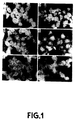
- FIG. 1 is a series of light stereomicrographs of granular products produced from the pregelatinized starch "Miragel”.
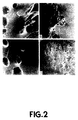
- FIG. 2 is a series of scanning electron micrographs of dry starch granules.
- FIG. 3 is a series of scanning electron micrographs of starch granules after wetting and subsequent drying.
- This invention relates to novel methods of preparing and using starch-based carriers in granular form to deliver insect control agents to plant surfaces, and to the composition and structure of these granules.
- Starch is a readily obtainable natural polymer, composed of amylose and amylopectin, is relatively inexpensive and is capable of forming films.
- Amylose is essentially a linear polymer having a molecular weight in the range of 100,000-500,000, whereas amylopectin is a highly branched polymer having a molecular weight of up to several million.
- the amylose retrogrades to a much greater extent than the amylopectin fraction. Retrogradation is a term applied to the phenomenon whereby starch chains in dispersion associate, become insoluble, and precipitate.
- the rate and extent of retrogradation depends on the properties of the dispersion (pH, temperature, concentration) and on the amount of amylose present in the dispersion.
- Common cornstarch pearl
- High-amylose starches contain up to 75% amylose.
- the starting encapsulating material for use in the invention includes any pregelatinized starch which will form a gel upon rehydration in an aqueous medium, and thereafter be amylase-digestible.
- Pregelatinized starches are commercially available or are prepared by cooking the starch at elevated temperatures ranging from 70° to 120°, preferably about 80°C for a time ranging from 5 sec to 30 min, preferably about 10 min, and precipitating the cooked starch.
- the starch includes modified cornstarch.
- the starch ingredient may be selected from a group comprising "Miragel” starch, gelatinized pearl cornstarch, gelatinized potato amylopectin, gelatinized waxy cornstarch, gelatinized "Amylon 5", gelatinized "Staco M", and the like.
- This invention relates to several solutions to the problem of granule adherence.
- a key element of one of the methods for granule production disclosed herein is the use of water-soluble organic solvents in the granulation process.
- the results of this is a surprising and unexpected discovery, because water-soluble organic solvents are well known to those of skill in the art not to gelatinize starch.
- these solvents were one of the keys to solving the puzzle of how to encapsulate pest control agents in dry granules, and yet have those granules be able to adhere to plant surfaces.
- pregelatinized cornstarch is blended with an azeotropic mixture consisting of water and an organic solvent.
- the azeotrope allows the granules to dry faster than if only water is used. Dry granules subsequently were produced by this simple method, yet tests showed that the granules adhere extremely well to plant surfaces in the presence of moisture when applied to the plants.
- Pests are defined herein to include insects, weeds, plant pathogens, and any other agents deleterious to organisms of interest, particularly plants.
- exemplary agents contemplated for encapsulation in accordance with the invention include without limitation insecticides, herbicides, fungicides, nematicides, nematodes, fertilizers, volatile attractants, or other similar components or combinations thereof.
- the methods of this invention are suitable for either chemical or living pest control agents.
- Contemplated for insect control are chemical pesticides such as thiocarbamates, dinitroanilines, and organophosphates, specifically, malathion, carbaryl, alachlor, and diazinon.
- Embodiments of biological pest control agents comprise bacteria, such as B. thuringiensis; viruses, particularly Baculoviridae, such as Autographa californica nuclear polyhedrosis virus; nematodes; protozoa such as Nosema spp; and fungi such as Beauveria.
- Attractants include, but are not limited to, aqueous, nonsoluble, or hydrophobic substances which are capable of attracting insects to the granule or of stimulating ingestion of the granule.
- attractants include pheromones and p-methoxycinnamaldehyde.
- Feeding stimulants which are suitable include powdered, dried root of the buffalo gourd.
- Additives, for example, sunscreens such as charcoal or Congo-red, and vitamins are other optional ingredients which may be encapsulated in accordance with this invention.
- the ratio of these three components is about 10:7:3, respectively.
- the ratio of water to solvent must be high enough to form at least small granules when mixed with starch but also this ratio must be low enough so that a single mass is not formed.
- a range of 10-50% solvent is preferred.
- a 30% solution of solvent in water is added in about a 1:1 ratio to the starch in a preferred embodiment.
- An illustrative embodiment of a method of use of the granular products of the invention granules comprises choosing at least one active agent, encapsulating an effective amount of that agent in the starch component as disclosed herein, and applying the granules to plant surfaces.
- the active agent of choice will depend on the target species and the nature of the plants to which the encapsulated material is to be applied.
- An effective amount is defined herein to mean that amount which induces the desired response in the target organism.
- a "pesticidally effective amount” is defined to mean those quantities of agent which will result in a significant mortality rate of a test group as compared to an untreated group. The actual amount may vary with the species of pest, stage of larval development, the nature of the substrate, the period of treatment, and other related factors.
- the granules are applied to the plant foliage as a free-flowing particulate.
- the starch gels promote adherence of the granules to the foliage.
- Water for field conditions may be supplied by rainfall, nocturnal condensation, dew, or irrigation. Once adhered to the plants, the granules are resistant to environmental disturbances including wind, rain, and snow.
- Example 3 demonstrate that B. thuringiensis insecticidal activity does not change when the granular products are formulated using 2-propanol.
- the alcohol apparently was not in high enough concentration or did not persist long enough to either kill the spores or denature the parasporal crystals.
- the methods and compositions for producing adherent granules is very versatile and allows for the incorporation of sunscreens or other additives to protect or enhance bacterial activity.
- Some of the advantages of the methods and compositions of the present invention include: (1) avoidance of direct contact of the pest control agent with the foliage, reducing risk of dermal phytotoxicity occurring in treated plants; (2) decreased environmental pollution due to reduced evaporation of the insect control agents and biodegradability of the control composition; (3) more effective control over the release period of the agent; (4) simplicity; and (5) maintenance of the chemical composition of the agent to be delivered to the plants (i.e., the active agents tend not to degrade or volatilize).
- Another advantage is that lower levels of the active agent may be applied to achieve the same level of control as achieved by commercial formulations containing higher levels of active agent. Safety to handlers, is thereby increased.
- insect control agents such as pesticides which are labile under alkaline or acidic conditions may be formulated under neutral conditions using starch-based systems.
- adherent granular bait compositions of the present invention results in a likely decrease in the total amount of pest control agent applied per area because food or sex attractants may be incorporated to bring pests to the bait instead of relying on complete coverage of the area.
- the possibility of a longer residual effect due to adherence allows for earlier application and extends the "window" of application necessary for the economic control of a pest that may enter an area over an extended period of time.
- data disclosed herein shows sustained release over time of agents and other ingredients incorporated into the subject granules.
- the organic solvent-water system facilitates aggregation of starch and the other ingredients of the formulations contemplated herein.
- the adherence of granules varies with different starch types. While pearl cornstarch contains about 25% amylose, waxy cornstarch contains mostly amylopectin, and "Amylon 5" contains about 50% amylose.
- Treatment of pregelatinized starch, especially starch composed of both amylose and amylopectin, with a water-2-propanol solution yields significantly improved products over commercial formulations; namely, enhanced adherence to substrates (Examples 5-8).
- FIG. 1 presents light stereomicrographs of granules made of "Miragel” prepared with water only (A-C) or with a 30% 2-propanol solution (D-F).
- A, D are dry granules before wetting;
- B, E are wetted granules;
- C F are granules alter drying.
- Granules made with 2-propanol were not fully gelled initially, but after wetting adhered both to each other and to the glass surface.
- FIG. 2 Examination of granules with a scanning electron microscope before wetting (FIG. 2), revealed obvious differences between granules made with water only (FIGS. 2A and 2C) and granules made with 2-propanol (FIG. 2B and 2D). Externally (FIGS. 2A and 2B), ungelled starch grains were observed on granules made with 2-propanol, whereas no such grains were observed on granules made with water alone. Additionally, smooth surfaces were observed indicating that some of the grains did gel. Internally, many small pores were observed in granules made with 2-propanol, but no such pores were observed in granules made with water only (photomicrographs taken at 700x).
- FIG. 3 After wetting and subsequent drying, scanning electron micrographs (FIG. 3) show that differences between the two types of granules were not as apparent.
- the granules made with water only did not change in appearance after wetting. (Photomicrographs taken at 250x).
- granular starch-encapsulated agents prepared by the aforementioned processes or by other processes as known in the art can be coated with an additional layer of pregelatinized starch.
- One suitable starch for this purpose is the aforementioned "Miragel”.
- Another suitable pregelatinized starch is substantially free of amylose and is commercially sold under the trade name "Mirasperse" (A. E. Staley Co., Decatur, IL).
- the coating is readily accomplished by first wetting the outside of the granule with water, and then contacting the wetted granule with the pregelatinized starch.
- the advantage of such a coating is that it can serve to tailor the release rate of the active agent.
- the added coating tends to make such granules adherent when subsequently contacted with water.
- An incidental aspect of this invention relates to an assay to screen various formulations made in accordance with the disclosed processes, particularly in regard to ranking the formulations by relative stickiness of the resulting granules.
- This screening assay is useful commercially because it minimises the cost of testing various formulations by substituting laboratory tests on glass slides for field tests on actual plants. Not only is cost reduced, and space and time saved, but there is absence of risk to the plants if the formulations do not work, whereas field tests of ineffective compositions leave the plants vulnerable to pest attack.
- An embodiment of the laboratory adherence assay is to treat pre-weighed, pre-cleaned glass microscope slides, and to sprinkle the granules to be tested on the moistened slide.
- the slides containing the granules on its surface are subjected to a stream of distilled water. An even flow of water is achieved by movement of the slide under the stream.
- the glass slide assay procedure was also used to examine the effect of 2-propanol solution on adherence of granules made with the various starches. As controls, granules were made with water only and tested in parallel with granules made with 2-propanol. Results were analyzed in a 2x2 factorial design with starch type (6 degrees of freedom) and 2-propanol presence or absence (1 degree of freedom) as main effects.
- Plant Leaf Assays Although the glass slide assay provided preliminary information concerning adherence properties of the granules, it was necessary to develop an assay utilizing plant tissue to more aceurately demonstrate these properties. Cotton was selected as the test plant because it grew easily in the greenhouse and provided a flat leaf conducive to application and removal of granules. An area of 33 sq cm was marked on the leaf by tracing around the mouth of a 150-ml beaker with a permanent marker. This area was wetted with distilled water and then 30 mg granules were carefully sprinkled onto the area.
- Granules prepared as described above were subjected to the glass slide assay. As shown in Table I, granules prepared using 2-propanol resisted wash-off from glass slides the most compared to other solvents. Methanol had much less of an adherence effect (83% loss). The other solvents tested were intermediate in effect between 2-propanol and methanol. Generally, a 30% solvent solution in water is preferred, being added subsequently in a 1:1 ratio to starch.
- Assays were initiated by incubating 100 mg granules in 2 ml distilled water containing 2 mg a-amylase at 37° C for 1 hour. The suspension was diluted to 8 ml with water and then homogenized for 10 sec in a "Virtishear” tissue homogenizer (Virtis) at full power. Two milliliters of green food coloring were then added. Sixty neonate corn borers were allowed to feed on droplets of the suspension (Hughes and Wood, 1981) and were then transferred individually to plastic cups containing artificial diet. Percent mortality was obtained 2 days later. This experiment was conducted twice, each with freshly prepared granules.
- Granules made with B. thuringiensis and 2-propanol showed little or no reduction in activity as measured by percent mortality of O. nubilalis (52%, 42% in two tests) when compared to granules made in the same manner but without 2-propanol (Table III).
- Starch granular formulations were tested to determine how well they attracted the Western corn rootworm, Diabrotica virgifera virgifera LeConte. All granules were made with pregelatinized pearl cornstarch, water, 2-propanol, carbaryl (an insecticide), and buffalo gourd root powder, (Curcurbita foetedissima H.B.K., a feeding stimulant); p-methoxycinnamaldehyde (PMCn; Schweizerhall, Inc., South Plainfield, NJ) was used in some formulations as an attractant. Granules were prepared as described in Example 2 using pregelatinized cornstarch, and a 30% solution of 2-propanol.
- Blocks were separated by 10 rows. Traps were sampled 3, 6, 9, and 12 days after placement in the field. Additionally, enough traps were initially established so that half of the vials could receive fresh granules after 6 days. Therefore a total of 14 traps were in each block; three with encapsulated PMCn and not changed after 6 days, three with attractant soaked into the granule and not changed after 6 days, and the same six types of granules but changed after 6 days. Two treatments of control granules without attractant were also placed in the field; one treatment was changed after 6 days, the other was not.
Landscapes
- Life Sciences & Earth Sciences (AREA)
- General Health & Medical Sciences (AREA)
- Health & Medical Sciences (AREA)
- Toxicology (AREA)
- Pest Control & Pesticides (AREA)
- Plant Pathology (AREA)
- Agronomy & Crop Science (AREA)
- Engineering & Computer Science (AREA)
- Dentistry (AREA)
- Wood Science & Technology (AREA)
- Zoology (AREA)
- Environmental Sciences (AREA)
- Agricultural Chemicals And Associated Chemicals (AREA)
Claims (11)
- Verfahren zum Herstellen von klebenden Körnchen, in denen ein biologisch wirksames Mittel eingekapselt ist, wobei das Verfahren umfaßt:(a) Bereitstellen eines Gemisches aus Wasser und einem mit Wasser mischbaren flüchtigen organischen Lösungsmittel;(b) Vereinigen des Gemisches mit vorgelatinierter Stärke, welche bei der Rehydration in einem wäßrigen Medium ein Gel bildet und danach mit Amylase abbaubar ist, wobei das Verhältnis von Wasser, Lösungsmittel und vorgelatinierter Stärke ausreicht, um getrennte Körnchen und nicht eine einzige Masse zu bilden, und wobei das biologisch wirksame Mittel als Bestandteil der Körnchen in einer Menge bereitgestellt wird, welche die gewünschte Antwort in einem Zielorganismus wirksam auslöst; und(c) Einwirkenlassen von Bedingungen auf das Gemisch, welche ausreichen, um die Verdampfung des Lösungsmittels und die Bildung von Körnchen zu gestatten, welche eine wirksame Menge des in der Stärke eingekapselten Mittels umfassen.
- Verfahren nach Anspruch 1, worin in Schritt (a) die vorgelatinierte Stärke zu einem Gemisch zugegeben wird, welches das Wasser, das organische Lösungsmittel und das biologisch wirksame Mittel umfaßt.
- Verfahren nach Anspruch 1 oder Anspruch 2, worin das biologisch wirksame Mittel ausgewählt ist aus der Gruppe bestehend aus lebenden Pathogenen, chemischen Insektiziden, Schädlingslockmitteln, und Gemischen davon.
- Verfahren nach einem der Ansprüche 1 bis 3, worin das biologisch wirksame Mittel ein lebendes Insektenpathogen, ausgewählt aus der Gruppe bestehend aus Bakterien, Pilzen, Viren, Protozoen und Nematoden, umfaßt.
- Verfahren nach einem der Ansprüche 1 bis 4, worin das biologisch wirksame Mittel eine Kombination aus einem Pestizid in einer zur Schädlingsbekämpfung wirksamen Menge und einem Lockmittel ist.
- Verfahren nach einem der Ansprüche 1 bis 5, worin das organische Lösungsmittel 2-Propanol ist.
- Verfahren nach einem der Ansprüche 1 bis 6, worin die Stärke ausgewählt ist aus der Gruppe bestehend aus "Miragel"-Stärke, vorgelatiniertem "Flour 961", vorgelatinierter perlenförmiger Maisstärke, vorgelatinierter wachsartiger Maisstärke, vorgelatiniertem Kartoffel-Amylopectin und Gemischen davon.
- Erzeugnis, hergestellt durch das Verfahren nach Anspruch 1.
- Klebendes beschichtetes Stärkekörnchen, umfassend einen gelatinierten Stärkekern, in dem mindestens ein biologisch wirksames Mittel eingearbeitet ist, welches durch ein Verfahren nach einem der Ansprüche 1 bis 7 hergestellt ist, wobei der Kern von trockenen vorgelatinierten Stärketeilchen umgeben ist, die in den-Gelzustand übergehen können, wenn sie mit Wasser in Berührung kommen.
- Verfahren zum Herstellen von klebenden Körnchen, in denen ein biologisch wirksames Mittel eingekapselt ist, im wesentlichen wie vorstehend mit Bezug auf eine der Abbildungen und/oder Beispiele beschrieben.
- Klebendes, beschichtetes Stärkekörnchen, im wesentlichen wie vorstehend mit Bezug auf eine der Abbildungen und/oder Beispiele beschrieben.
Applications Claiming Priority (3)
| Application Number | Priority Date | Filing Date | Title |
|---|---|---|---|
| US730763 | 1991-07-16 | ||
| US07/730,763 US5837273A (en) | 1991-07-16 | 1991-07-16 | Methods and compositions of adherent starch granules for encapsulating pest control agents |
| PCT/US1992/005869 WO1993001713A1 (en) | 1991-07-16 | 1992-07-14 | Methods and compositions of adherent starch granules for encapsulating pest control agents |
Publications (3)
| Publication Number | Publication Date |
|---|---|
| EP0594785A1 EP0594785A1 (de) | 1994-05-04 |
| EP0594785A4 EP0594785A4 (en) | 1994-07-20 |
| EP0594785B1 true EP0594785B1 (de) | 1998-10-28 |
Family
ID=24936719
Family Applications (1)
| Application Number | Title | Priority Date | Filing Date |
|---|---|---|---|
| EP92916551A Expired - Lifetime EP0594785B1 (de) | 1991-07-16 | 1992-07-14 | Verfahren und zusammensetzungen klebender stärke granulate zur einkapselung von schädlingsbekämpfungsmitteln |
Country Status (7)
| Country | Link |
|---|---|
| US (1) | US5837273A (de) |
| EP (1) | EP0594785B1 (de) |
| AT (1) | ATE172596T1 (de) |
| AU (2) | AU662756B2 (de) |
| CA (1) | CA2113560C (de) |
| DE (1) | DE69227459D1 (de) |
| WO (1) | WO1993001713A1 (de) |
Families Citing this family (15)
| Publication number | Priority date | Publication date | Assignee | Title |
|---|---|---|---|---|
| US5997945A (en) * | 1991-07-16 | 1999-12-07 | The United States Of America, As Represented By The Secretary Of Agriculture | Adherent starch granules |
| ES2231775T5 (es) | 1993-07-30 | 2011-02-02 | Imcor Pharmaceutical Co. | Composición de microburbujas estabilizadas para ecografía. |
| US5968540A (en) * | 1997-06-30 | 1999-10-19 | The United States Of America, As Represented By The Secretary Of Agriculture | Method for controlling a target insect and hydrodynamic insect bait |
| US7037494B2 (en) | 1997-10-14 | 2006-05-02 | The Board Of Regents Of The University Of Texas System | Formulations and methods for insect control |
| US6299907B1 (en) * | 1998-06-12 | 2001-10-09 | Kansas State University Research Foundation | Reversibly swellable starch products |
| US7343710B2 (en) * | 1998-07-03 | 2008-03-18 | I.D.A Limited | Method and apparatus for controlling pests |
| GB9814507D0 (en) * | 1998-07-03 | 1998-09-02 | Univ Southampton | A method and apparatus for controlling pests |
| US6369078B1 (en) | 1999-08-31 | 2002-04-09 | J. Phillip Bowen | Solenopsin derivatives and analogues as fire ant suppressants |
| US6903053B2 (en) | 2000-06-09 | 2005-06-07 | The Procter & Gamble Company | Agricultural items and agricultural methods comprising biodegradable copolymers |
| US20030129210A1 (en) * | 2002-01-09 | 2003-07-10 | Economy Mud Products Company | Uses of flaked cationic potato starch |
| US20070196408A1 (en) * | 2006-02-10 | 2007-08-23 | Jack Carson | Nontoxic starch-based contact pesticide and method of using the same |
| DE102006055477A1 (de) | 2006-11-24 | 2008-05-29 | Bayer Cropscience Ag | Pflanzenschutzgranulate zur Applikation auf die Blattoberfläche |
| EP2861064A4 (de) * | 2012-06-11 | 2015-12-02 | Syngenta Participations Ag | Herstellung von feststoffen und zugehörige mutterlaugen |
| NL2021893B1 (en) | 2018-10-26 | 2020-05-13 | Citeq B V | Biological pest control agent |
| US20230103237A1 (en) * | 2021-09-29 | 2023-03-30 | The United States Of America, As Represented By The Secretary Of Agriculture | Biodegradable particles and biodegradable particles in contact with active ingredients |
Family Cites Families (20)
| Publication number | Priority date | Publication date | Assignee | Title |
|---|---|---|---|---|
| US2876160A (en) * | 1954-07-26 | 1959-03-03 | Corn Prod Refining Co | Starch matrix material containing imbedded material and process for preparing same |
| US3672863A (en) * | 1969-03-28 | 1972-06-27 | Amchem Prod | Dry aminotriazole herbicidal formulation |
| US3666557A (en) * | 1969-11-10 | 1972-05-30 | Cpc International Inc | Novel starch gels and process for making same |
| US3922354A (en) * | 1973-08-20 | 1975-11-25 | Norda Inc | Production of artificial spice particles |
| US4230687A (en) * | 1978-05-30 | 1980-10-28 | Griffith Laboratories U.S.A., Inc. | Encapsulation of active agents as microdispersions in homogeneous natural polymeric matrices |
| US4439488A (en) * | 1982-02-26 | 1984-03-27 | The United States Of America As Represented By The Secretary Of Agriculture | Encapsulation by entrapment within polyhydroxy polymer borates |
| US4605622A (en) * | 1983-11-15 | 1986-08-12 | Kansai Paint Co., Ltd. | Process for producing granular fixed enzymes or microorganisms |
| CA1265044A (en) * | 1984-03-14 | 1990-01-30 | Stan J. Flashinski | Gelatinized starch matrix insect bait |
| JPS60221078A (ja) * | 1984-04-18 | 1985-11-05 | Morinaga Milk Ind Co Ltd | 有用微生物粉末の粒状製品およびその製造法 |
| US4657582A (en) * | 1985-05-30 | 1987-04-14 | Pennwalt Corporation | Polyhydroxy polymer delivery systems |
| US4701326A (en) * | 1985-10-23 | 1987-10-20 | Plant Genetics, Inc. | Membrane-coated hydrogel encapsulated nematodes |
| US4755397A (en) * | 1986-12-24 | 1988-07-05 | National Starch And Chemical Corporation | Starch based particulate encapsulation process |
| US4812445A (en) * | 1987-02-06 | 1989-03-14 | National Starch And Chemical Corporation | Starch based encapsulation process |
| US4859377A (en) * | 1987-07-10 | 1989-08-22 | The United States Of America, As Represented By The Secretary Of Agriculture | Starch encapsulation of entomopathogens |
| US4911952A (en) * | 1987-07-10 | 1990-03-27 | The United States Of America As Represented By The Secretary Of Agriculture | Encapsulation by entrapment within matrix of unmodified starch |
| US5051133A (en) * | 1988-12-12 | 1991-09-24 | Suntory Limited | Gelatinized cereal flours and process for their production |
| US5141744A (en) * | 1989-08-03 | 1992-08-25 | Temple University | Insecticide delivery system and attractant |
| US5061697A (en) * | 1989-08-03 | 1991-10-29 | The United States Of America As Represented By The Secretary Of Agriculture | Adherent, autoencapsulating spray formulations of biocontrol agents |
| US5183690A (en) * | 1990-06-25 | 1993-02-02 | The United States Of America, As Represented By The Secretary Of Agriculture | Starch encapsulation of biologically active agents by a continuous process |
| JP2008047194A (ja) * | 2006-08-11 | 2008-02-28 | Fujitsu Ltd | バランス修正装置 |
-
1991
- 1991-07-16 US US07/730,763 patent/US5837273A/en not_active Expired - Lifetime
-
1992
- 1992-07-14 EP EP92916551A patent/EP0594785B1/de not_active Expired - Lifetime
- 1992-07-14 DE DE69227459T patent/DE69227459D1/de not_active Expired - Lifetime
- 1992-07-14 AT AT92916551T patent/ATE172596T1/de active
- 1992-07-14 AU AU23781/92A patent/AU662756B2/en not_active Ceased
- 1992-07-14 WO PCT/US1992/005869 patent/WO1993001713A1/en not_active Ceased
- 1992-07-14 CA CA002113560A patent/CA2113560C/en not_active Expired - Fee Related
-
1995
- 1995-11-29 AU AU39144/95A patent/AU685013B2/en not_active Ceased
Also Published As
| Publication number | Publication date |
|---|---|
| AU662756B2 (en) | 1995-09-14 |
| CA2113560C (en) | 1999-04-20 |
| AU685013B2 (en) | 1998-01-08 |
| EP0594785A4 (en) | 1994-07-20 |
| EP0594785A1 (de) | 1994-05-04 |
| ATE172596T1 (de) | 1998-11-15 |
| CA2113560A1 (en) | 1993-01-17 |
| US5837273A (en) | 1998-11-17 |
| DE69227459D1 (de) | 1998-12-03 |
| WO1993001713A1 (en) | 1993-02-04 |
| AU3914495A (en) | 1996-02-08 |
| AU2378192A (en) | 1993-02-23 |
Similar Documents
| Publication | Publication Date | Title |
|---|---|---|
| US4859377A (en) | Starch encapsulation of entomopathogens | |
| AU662756B2 (en) | Methods and compositions of adherent starch granules for encapsulating pest control agents | |
| AU626561B2 (en) | Terrestrial delivery compositions | |
| McGUIRE et al. | Adherent starch granules for encapsulation of insect control agents | |
| EP0485447B1 (de) | Anhaftende selbstverkapselnde spritzzusammensetzungen von bioregulatorischen agenzien | |
| US5997945A (en) | Adherent starch granules | |
| US5484600A (en) | Insecticidal composite timed released particle | |
| AU712537B2 (en) | Lignin-based pest control formulations | |
| Hu et al. | Controlled release of sugar and toxicant from a novel device for controlling pest insects | |
| US6090398A (en) | Composition and method for the control of diabroticite insects | |
| CA2174939C (en) | Sprayable gluten-based formulation for pest control | |
| Shasha et al. | Starch matrices for slow release of pesticides | |
| CN115176808B (zh) | 一种环境敏感型氯虫苯甲酰胺缓释剂的制备方法及应用 | |
| AU613069B2 (en) | Starch encapsulation of biocontrol agents | |
| Shasha | REFERENCE: Shasha, BS and McGuire, MR," Starch Matrices for Slow Release of Pesticides," Pesticide Formulations and | |
| Schroder et al. | Composition and method for the control of diabroticite insects | |
| Lee et al. | Schroder et al.[45] Date of Patent: Oct. 19, 1999 |
Legal Events
| Date | Code | Title | Description |
|---|---|---|---|
| PUAI | Public reference made under article 153(3) epc to a published international application that has entered the european phase |
Free format text: ORIGINAL CODE: 0009012 |
|
| 17P | Request for examination filed |
Effective date: 19940216 |
|
| AK | Designated contracting states |
Kind code of ref document: A1 Designated state(s): AT BE CH DE DK ES FR GB GR IT LI LU MC NL SE |
|
| A4 | Supplementary search report drawn up and despatched |
Effective date: 19940601 |
|
| AK | Designated contracting states |
Kind code of ref document: A4 Designated state(s): AT BE CH DE DK ES FR GB GR IT LI LU MC NL SE |
|
| 17Q | First examination report despatched |
Effective date: 19960429 |
|
| GRAG | Despatch of communication of intention to grant |
Free format text: ORIGINAL CODE: EPIDOS AGRA |
|
| GRAG | Despatch of communication of intention to grant |
Free format text: ORIGINAL CODE: EPIDOS AGRA |
|
| GRAH | Despatch of communication of intention to grant a patent |
Free format text: ORIGINAL CODE: EPIDOS IGRA |
|
| GRAH | Despatch of communication of intention to grant a patent |
Free format text: ORIGINAL CODE: EPIDOS IGRA |
|
| GRAA | (expected) grant |
Free format text: ORIGINAL CODE: 0009210 |
|
| AK | Designated contracting states |
Kind code of ref document: B1 Designated state(s): AT BE CH DE DK ES FR GB GR IT LI LU MC NL SE |
|
| PG25 | Lapsed in a contracting state [announced via postgrant information from national office to epo] |
Ref country code: NL Free format text: LAPSE BECAUSE OF FAILURE TO SUBMIT A TRANSLATION OF THE DESCRIPTION OR TO PAY THE FEE WITHIN THE PRESCRIBED TIME-LIMIT Effective date: 19981028 Ref country code: LI Free format text: LAPSE BECAUSE OF FAILURE TO SUBMIT A TRANSLATION OF THE DESCRIPTION OR TO PAY THE FEE WITHIN THE PRESCRIBED TIME-LIMIT Effective date: 19981028 Ref country code: IT Free format text: LAPSE BECAUSE OF FAILURE TO SUBMIT A TRANSLATION OF THE DESCRIPTION OR TO PAY THE FEE WITHIN THE PRE;WARNING: LAPSES OF ITALIAN PATENTS WITH EFFECTIVE DATE BEFORE 2007 MAY HAVE OCCURRED AT ANY TIME BEFORE 2007. THE CORRECT EFFECTIVE DATE MAY BE DIFFERENT FROM THE ONE RECORDED.SCRIBED TIME-LIMIT Effective date: 19981028 Ref country code: GR Free format text: LAPSE BECAUSE OF NON-PAYMENT OF DUE FEES Effective date: 19981028 Ref country code: FR Free format text: LAPSE BECAUSE OF FAILURE TO SUBMIT A TRANSLATION OF THE DESCRIPTION OR TO PAY THE FEE WITHIN THE PRESCRIBED TIME-LIMIT Effective date: 19981028 Ref country code: ES Free format text: THE PATENT HAS BEEN ANNULLED BY A DECISION OF A NATIONAL AUTHORITY Effective date: 19981028 Ref country code: CH Free format text: LAPSE BECAUSE OF FAILURE TO SUBMIT A TRANSLATION OF THE DESCRIPTION OR TO PAY THE FEE WITHIN THE PRESCRIBED TIME-LIMIT Effective date: 19981028 Ref country code: BE Free format text: LAPSE BECAUSE OF FAILURE TO SUBMIT A TRANSLATION OF THE DESCRIPTION OR TO PAY THE FEE WITHIN THE PRESCRIBED TIME-LIMIT Effective date: 19981028 Ref country code: AT Free format text: LAPSE BECAUSE OF FAILURE TO SUBMIT A TRANSLATION OF THE DESCRIPTION OR TO PAY THE FEE WITHIN THE PRESCRIBED TIME-LIMIT Effective date: 19981028 |
|
| REF | Corresponds to: |
Ref document number: 172596 Country of ref document: AT Date of ref document: 19981115 Kind code of ref document: T |
|
| REG | Reference to a national code |
Ref country code: CH Ref legal event code: EP |
|
| REF | Corresponds to: |
Ref document number: 69227459 Country of ref document: DE Date of ref document: 19981203 |
|
| PG25 | Lapsed in a contracting state [announced via postgrant information from national office to epo] |
Ref country code: SE Free format text: LAPSE BECAUSE OF FAILURE TO SUBMIT A TRANSLATION OF THE DESCRIPTION OR TO PAY THE FEE WITHIN THE PRESCRIBED TIME-LIMIT Effective date: 19990128 Ref country code: DK Free format text: LAPSE BECAUSE OF FAILURE TO SUBMIT A TRANSLATION OF THE DESCRIPTION OR TO PAY THE FEE WITHIN THE PRESCRIBED TIME-LIMIT Effective date: 19990128 |
|
| PG25 | Lapsed in a contracting state [announced via postgrant information from national office to epo] |
Ref country code: DE Free format text: LAPSE BECAUSE OF FAILURE TO SUBMIT A TRANSLATION OF THE DESCRIPTION OR TO PAY THE FEE WITHIN THE PRESCRIBED TIME-LIMIT Effective date: 19990129 |
|
| EN | Fr: translation not filed | ||
| NLV1 | Nl: lapsed or annulled due to failure to fulfill the requirements of art. 29p and 29m of the patents act | ||
| REG | Reference to a national code |
Ref country code: CH Ref legal event code: PL |
|
| PG25 | Lapsed in a contracting state [announced via postgrant information from national office to epo] |
Ref country code: LU Free format text: LAPSE BECAUSE OF NON-PAYMENT OF DUE FEES Effective date: 19990714 Ref country code: GB Free format text: LAPSE BECAUSE OF NON-PAYMENT OF DUE FEES Effective date: 19990714 |
|
| PLBE | No opposition filed within time limit |
Free format text: ORIGINAL CODE: 0009261 |
|
| 26N | No opposition filed | ||
| PG25 | Lapsed in a contracting state [announced via postgrant information from national office to epo] |
Ref country code: MC Free format text: LAPSE BECAUSE OF NON-PAYMENT OF DUE FEES Effective date: 20000131 |
|
| GBPC | Gb: european patent ceased through non-payment of renewal fee |
Effective date: 19990714 |