EP0584171B1 - Composition and method of treating depigmentation disorders - Google Patents
Composition and method of treating depigmentation disorders Download PDFInfo
- Publication number
- EP0584171B1 EP0584171B1 EP92910389A EP92910389A EP0584171B1 EP 0584171 B1 EP0584171 B1 EP 0584171B1 EP 92910389 A EP92910389 A EP 92910389A EP 92910389 A EP92910389 A EP 92910389A EP 0584171 B1 EP0584171 B1 EP 0584171B1
- Authority
- EP
- European Patent Office
- Prior art keywords
- pseudocatalase
- bicarbonate
- treatment
- complex
- composition
- Prior art date
- Legal status (The legal status is an assumption and is not a legal conclusion. Google has not performed a legal analysis and makes no representation as to the accuracy of the status listed.)
- Expired - Lifetime
Links
- 230000035614 depigmentation Effects 0.000 title claims abstract description 11
- 239000000203 mixture Substances 0.000 title claims description 12
- 238000000034 method Methods 0.000 title description 6
- 108010036322 pseudocatalase Proteins 0.000 claims abstract description 27
- 230000000699 topical effect Effects 0.000 claims abstract description 14
- 102000003425 Tyrosinase Human genes 0.000 claims abstract description 10
- 108060008724 Tyrosinase Proteins 0.000 claims abstract description 10
- 229910052723 transition metal Inorganic materials 0.000 claims abstract description 3
- 150000003624 transition metals Chemical class 0.000 claims abstract description 3
- SDPBZSAJSUJVAT-UHFFFAOYSA-N carbonic acid;manganese Chemical compound [Mn].OC(O)=O SDPBZSAJSUJVAT-UHFFFAOYSA-N 0.000 claims description 8
- UIIMBOGNXHQVGW-UHFFFAOYSA-M Sodium bicarbonate Chemical compound [Na+].OC([O-])=O UIIMBOGNXHQVGW-UHFFFAOYSA-M 0.000 claims description 6
- BHPQYMZQTOCNFJ-UHFFFAOYSA-N Calcium cation Chemical compound [Ca+2] BHPQYMZQTOCNFJ-UHFFFAOYSA-N 0.000 claims description 5
- 229910001424 calcium ion Inorganic materials 0.000 claims description 5
- VMQMZMRVKUZKQL-UHFFFAOYSA-N Cu+ Chemical compound [Cu+] VMQMZMRVKUZKQL-UHFFFAOYSA-N 0.000 claims description 4
- 229910021380 Manganese Chloride Inorganic materials 0.000 claims description 4
- GLFNIEUTAYBVOC-UHFFFAOYSA-L Manganese chloride Chemical compound Cl[Mn]Cl GLFNIEUTAYBVOC-UHFFFAOYSA-L 0.000 claims description 4
- 239000007864 aqueous solution Substances 0.000 claims description 4
- 239000011565 manganese chloride Substances 0.000 claims description 4
- 235000002867 manganese chloride Nutrition 0.000 claims description 4
- BVKZGUZCCUSVTD-UHFFFAOYSA-M Bicarbonate Chemical group OC([O-])=O BVKZGUZCCUSVTD-UHFFFAOYSA-M 0.000 claims description 3
- CWYNVVGOOAEACU-UHFFFAOYSA-N Fe2+ Chemical compound [Fe+2] CWYNVVGOOAEACU-UHFFFAOYSA-N 0.000 claims description 3
- 239000003446 ligand Substances 0.000 claims description 3
- 238000004519 manufacturing process Methods 0.000 claims description 3
- 235000017557 sodium bicarbonate Nutrition 0.000 claims description 3
- 229910000030 sodium bicarbonate Inorganic materials 0.000 claims description 3
- WAEMQWOKJMHJLA-UHFFFAOYSA-N Manganese(2+) Chemical compound [Mn+2] WAEMQWOKJMHJLA-UHFFFAOYSA-N 0.000 claims description 2
- 239000003814 drug Substances 0.000 claims description 2
- 239000012049 topical pharmaceutical composition Substances 0.000 claims 1
- 206010047642 Vitiligo Diseases 0.000 abstract description 13
- 208000012641 Pigmentation disease Diseases 0.000 abstract description 9
- 230000019612 pigmentation Effects 0.000 abstract description 9
- 208000037265 diseases, disorders, signs and symptoms Diseases 0.000 abstract description 8
- 208000035475 disorder Diseases 0.000 abstract description 8
- 206010015150 Erythema Diseases 0.000 abstract description 5
- 231100000321 erythema Toxicity 0.000 abstract description 5
- WMOSTDJFFWYKNF-UHFFFAOYSA-L hydrogen carbonate;manganese(2+) Chemical compound [Mn+2].OC([O-])=O.OC([O-])=O WMOSTDJFFWYKNF-UHFFFAOYSA-L 0.000 abstract description 2
- MHAJPDPJQMAIIY-UHFFFAOYSA-N Hydrogen peroxide Chemical compound OO MHAJPDPJQMAIIY-UHFFFAOYSA-N 0.000 description 10
- 210000003491 skin Anatomy 0.000 description 8
- 239000006071 cream Substances 0.000 description 6
- 230000015572 biosynthetic process Effects 0.000 description 4
- ZCCUUQDIBDJBTK-UHFFFAOYSA-N psoralen Chemical compound C1=C2OC(=O)C=CC2=CC2=C1OC=C2 ZCCUUQDIBDJBTK-UHFFFAOYSA-N 0.000 description 4
- UXVMQQNJUSDDNG-UHFFFAOYSA-L Calcium chloride Chemical compound [Cl-].[Cl-].[Ca+2] UXVMQQNJUSDDNG-UHFFFAOYSA-L 0.000 description 3
- 108010053835 Catalase Proteins 0.000 description 3
- 102000016938 Catalase Human genes 0.000 description 3
- HEMHJVSKTPXQMS-UHFFFAOYSA-M Sodium hydroxide Chemical compound [OH-].[Na+] HEMHJVSKTPXQMS-UHFFFAOYSA-M 0.000 description 3
- 239000001110 calcium chloride Substances 0.000 description 3
- 229910001628 calcium chloride Inorganic materials 0.000 description 3
- 150000001875 compounds Chemical class 0.000 description 3
- 238000007323 disproportionation reaction Methods 0.000 description 3
- XLYOFNOQVPJJNP-UHFFFAOYSA-M hydroxide Chemical compound [OH-] XLYOFNOQVPJJNP-UHFFFAOYSA-M 0.000 description 3
- VXGRJERITKFWPL-UHFFFAOYSA-N 4',5'-Dihydropsoralen Natural products C1=C2OC(=O)C=CC2=CC2=C1OCC2 VXGRJERITKFWPL-UHFFFAOYSA-N 0.000 description 2
- ZGTMUACCHSMWAC-UHFFFAOYSA-L EDTA disodium salt (anhydrous) Chemical compound [Na+].[Na+].OC(=O)CN(CC([O-])=O)CCN(CC(O)=O)CC([O-])=O ZGTMUACCHSMWAC-UHFFFAOYSA-L 0.000 description 2
- 208000006933 Hermanski-Pudlak Syndrome Diseases 0.000 description 2
- 206010071775 Hermansky-Pudlak syndrome Diseases 0.000 description 2
- QIGBRXMKCJKVMJ-UHFFFAOYSA-N Hydroquinone Chemical compound OC1=CC=C(O)C=C1 QIGBRXMKCJKVMJ-UHFFFAOYSA-N 0.000 description 2
- XUMBMVFBXHLACL-UHFFFAOYSA-N Melanin Chemical compound O=C1C(=O)C(C2=CNC3=C(C(C(=O)C4=C32)=O)C)=C2C4=CNC2=C1C XUMBMVFBXHLACL-UHFFFAOYSA-N 0.000 description 2
- QXKHYNVANLEOEG-UHFFFAOYSA-N Methoxsalen Chemical compound C1=CC(=O)OC2=C1C=C1C=COC1=C2OC QXKHYNVANLEOEG-UHFFFAOYSA-N 0.000 description 2
- 230000002354 daily effect Effects 0.000 description 2
- 230000000694 effects Effects 0.000 description 2
- 239000008309 hydrophilic cream Substances 0.000 description 2
- 210000002752 melanocyte Anatomy 0.000 description 2
- 229910052751 metal Inorganic materials 0.000 description 2
- 239000002184 metal Substances 0.000 description 2
- 229960004469 methoxsalen Drugs 0.000 description 2
- 230000036961 partial effect Effects 0.000 description 2
- 239000000049 pigment Substances 0.000 description 2
- QELSKZZBTMNZEB-UHFFFAOYSA-N propylparaben Chemical compound CCCOC(=O)C1=CC=C(O)C=C1 QELSKZZBTMNZEB-UHFFFAOYSA-N 0.000 description 2
- 230000002829 reductive effect Effects 0.000 description 2
- 230000004044 response Effects 0.000 description 2
- 231100000331 toxic Toxicity 0.000 description 2
- 230000002588 toxic effect Effects 0.000 description 2
- XLYOFNOQVPJJNP-UHFFFAOYSA-N water Chemical compound O XLYOFNOQVPJJNP-UHFFFAOYSA-N 0.000 description 2
- OIALAIQRYISUEV-UHFFFAOYSA-N 2-[2-[2-[2-[2-[2-[2-[2-[2-[2-[2-[2-[2-[2-[2-[2-[2-[2-[2-[2-[2-[2-[2-[2-[2-[2-[2-[2-[2-[2-[2-[2-[2-[2-[2-[2-[2-[2-[2-[2-[2-[2-[2-[2-[2-[2-[2-[2-[2-(2-hydroxyethoxy)ethoxy]ethoxy]ethoxy]ethoxy]ethoxy]ethoxy]ethoxy]ethoxy]ethoxy]ethoxy]ethoxy]ethoxy]ethoxy]e Chemical compound CCCCCCCCCCCCCCCCCC(=O)OCCOCCOCCOCCOCCOCCOCCOCCOCCOCCOCCOCCOCCOCCOCCOCCOCCOCCOCCOCCOCCOCCOCCOCCOCCOCCOCCOCCOCCOCCOCCOCCOCCOCCOCCOCCOCCOCCOCCOCCOCCOCCOCCOCCOCCOCCOCCOCCOCCOCCO OIALAIQRYISUEV-UHFFFAOYSA-N 0.000 description 1
- 229940090248 4-hydroxybenzoic acid Drugs 0.000 description 1
- BUNGCZLFHHXKBX-UHFFFAOYSA-N 8-methoxypsoralen Natural products C1=CC(=O)OC2=C1C=C1CCOC1=C2OC BUNGCZLFHHXKBX-UHFFFAOYSA-N 0.000 description 1
- 208000002782 Acneiform Eruptions Diseases 0.000 description 1
- 241000197194 Bulla Species 0.000 description 1
- OYPRJOBELJOOCE-UHFFFAOYSA-N Calcium Chemical compound [Ca] OYPRJOBELJOOCE-UHFFFAOYSA-N 0.000 description 1
- 208000002177 Cataract Diseases 0.000 description 1
- 206010012432 Dermatitis acneiform Diseases 0.000 description 1
- MYMOFIZGZYHOMD-UHFFFAOYSA-N Dioxygen Chemical compound O=O MYMOFIZGZYHOMD-UHFFFAOYSA-N 0.000 description 1
- 239000003109 Disodium ethylene diamine tetraacetate Substances 0.000 description 1
- 206010019233 Headaches Diseases 0.000 description 1
- 101000606090 Homo sapiens Tyrosinase Proteins 0.000 description 1
- WTDRDQBEARUVNC-LURJTMIESA-N L-DOPA Chemical compound OC(=O)[C@@H](N)CC1=CC=C(O)C(O)=C1 WTDRDQBEARUVNC-LURJTMIESA-N 0.000 description 1
- WTDRDQBEARUVNC-UHFFFAOYSA-N L-Dopa Natural products OC(=O)C(N)CC1=CC=C(O)C(O)=C1 WTDRDQBEARUVNC-UHFFFAOYSA-N 0.000 description 1
- OUYCCCASQSFEME-QMMMGPOBSA-N L-tyrosine Chemical compound OC(=O)[C@@H](N)CC1=CC=C(O)C=C1 OUYCCCASQSFEME-QMMMGPOBSA-N 0.000 description 1
- 206010028813 Nausea Diseases 0.000 description 1
- 206010030113 Oedema Diseases 0.000 description 1
- 208000006187 Onycholysis Diseases 0.000 description 1
- 208000002193 Pain Diseases 0.000 description 1
- 208000000453 Skin Neoplasms Diseases 0.000 description 1
- 206010040829 Skin discolouration Diseases 0.000 description 1
- 229920002125 Sokalan® Polymers 0.000 description 1
- 206010042496 Sunburn Diseases 0.000 description 1
- OUUQCZGPVNCOIJ-UHFFFAOYSA-M Superoxide Chemical compound [O-][O] OUUQCZGPVNCOIJ-UHFFFAOYSA-M 0.000 description 1
- PCWZKQSKUXXDDJ-UHFFFAOYSA-N Xanthotoxin Natural products COCc1c2OC(=O)C=Cc2cc3ccoc13 PCWZKQSKUXXDDJ-UHFFFAOYSA-N 0.000 description 1
- 208000003486 acatalasia Diseases 0.000 description 1
- 230000004075 alteration Effects 0.000 description 1
- 239000007900 aqueous suspension Substances 0.000 description 1
- QVGXLLKOCUKJST-UHFFFAOYSA-N atomic oxygen Chemical compound [O] QVGXLLKOCUKJST-UHFFFAOYSA-N 0.000 description 1
- 230000006472 autoimmune response Effects 0.000 description 1
- 238000003287 bathing Methods 0.000 description 1
- 208000002352 blister Diseases 0.000 description 1
- 229910052791 calcium Inorganic materials 0.000 description 1
- 239000011575 calcium Substances 0.000 description 1
- 210000004027 cell Anatomy 0.000 description 1
- 230000005779 cell damage Effects 0.000 description 1
- 208000037887 cell injury Diseases 0.000 description 1
- 210000000170 cell membrane Anatomy 0.000 description 1
- 230000001684 chronic effect Effects 0.000 description 1
- 239000002537 cosmetic Substances 0.000 description 1
- 230000003247 decreasing effect Effects 0.000 description 1
- 230000007547 defect Effects 0.000 description 1
- 230000002950 deficient Effects 0.000 description 1
- 239000007854 depigmenting agent Substances 0.000 description 1
- 229910001882 dioxygen Inorganic materials 0.000 description 1
- 235000019301 disodium ethylene diamine tetraacetate Nutrition 0.000 description 1
- 208000002173 dizziness Diseases 0.000 description 1
- 239000003974 emollient agent Substances 0.000 description 1
- 210000002615 epidermis Anatomy 0.000 description 1
- 230000003203 everyday effect Effects 0.000 description 1
- 231100000040 eye damage Toxicity 0.000 description 1
- 239000007789 gas Substances 0.000 description 1
- 239000011521 glass Substances 0.000 description 1
- 231100000869 headache Toxicity 0.000 description 1
- 210000000987 immune system Anatomy 0.000 description 1
- 230000006872 improvement Effects 0.000 description 1
- 238000001727 in vivo Methods 0.000 description 1
- 230000001939 inductive effect Effects 0.000 description 1
- 230000000670 limiting effect Effects 0.000 description 1
- 239000007788 liquid Substances 0.000 description 1
- 229940057995 liquid paraffin Drugs 0.000 description 1
- 230000007774 longterm Effects 0.000 description 1
- 239000006210 lotion Substances 0.000 description 1
- 210000004698 lymphocyte Anatomy 0.000 description 1
- 230000007246 mechanism Effects 0.000 description 1
- 230000008099 melanin synthesis Effects 0.000 description 1
- SQBBOVROCFXYBN-UHFFFAOYSA-N methoxypsoralen Natural products C1=C2OC(=O)C(OC)=CC2=CC2=C1OC=C2 SQBBOVROCFXYBN-UHFFFAOYSA-N 0.000 description 1
- 125000002496 methyl group Chemical group [H]C([H])([H])* 0.000 description 1
- 235000010270 methyl p-hydroxybenzoate Nutrition 0.000 description 1
- 239000004292 methyl p-hydroxybenzoate Substances 0.000 description 1
- 229960002216 methylparaben Drugs 0.000 description 1
- 230000008693 nausea Effects 0.000 description 1
- 210000000653 nervous system Anatomy 0.000 description 1
- GLDOVTGHNKAZLK-UHFFFAOYSA-N octadecan-1-ol Chemical compound CCCCCCCCCCCCCCCCCCO GLDOVTGHNKAZLK-UHFFFAOYSA-N 0.000 description 1
- 230000003647 oxidation Effects 0.000 description 1
- 238000007254 oxidation reaction Methods 0.000 description 1
- 239000001301 oxygen Substances 0.000 description 1
- 229910052760 oxygen Inorganic materials 0.000 description 1
- LXCFILQKKLGQFO-UHFFFAOYSA-N p-hydroxybenzoic acid methyl ester Natural products COC(=O)C1=CC=C(O)C=C1 LXCFILQKKLGQFO-UHFFFAOYSA-N 0.000 description 1
- FJKROLUGYXJWQN-UHFFFAOYSA-N papa-hydroxy-benzoic acid Natural products OC(=O)C1=CC=C(O)C=C1 FJKROLUGYXJWQN-UHFFFAOYSA-N 0.000 description 1
- 239000012188 paraffin wax Substances 0.000 description 1
- 239000002304 perfume Substances 0.000 description 1
- 230000002165 photosensitisation Effects 0.000 description 1
- 239000003504 photosensitizing agent Substances 0.000 description 1
- 239000000419 plant extract Substances 0.000 description 1
- 239000004584 polyacrylic acid Substances 0.000 description 1
- 230000002028 premature Effects 0.000 description 1
- 238000002360 preparation method Methods 0.000 description 1
- 230000001737 promoting effect Effects 0.000 description 1
- -1 propyl esters Chemical class 0.000 description 1
- 235000010232 propyl p-hydroxybenzoate Nutrition 0.000 description 1
- 239000004405 propyl p-hydroxybenzoate Substances 0.000 description 1
- 229960003415 propylparaben Drugs 0.000 description 1
- 239000008213 purified water Substances 0.000 description 1
- 230000005855 radiation Effects 0.000 description 1
- 230000002468 redox effect Effects 0.000 description 1
- 230000009467 reduction Effects 0.000 description 1
- 230000000717 retained effect Effects 0.000 description 1
- 238000012216 screening Methods 0.000 description 1
- 230000009759 skin aging Effects 0.000 description 1
- 201000000849 skin cancer Diseases 0.000 description 1
- 239000000243 solution Substances 0.000 description 1
- 239000000758 substrate Substances 0.000 description 1
Images

Classifications
-
- A—HUMAN NECESSITIES
- A61—MEDICAL OR VETERINARY SCIENCE; HYGIENE
- A61K—PREPARATIONS FOR MEDICAL, DENTAL OR TOILETRY PURPOSES
- A61K33/00—Medicinal preparations containing inorganic active ingredients
- A61K33/24—Heavy metals; Compounds thereof
- A61K33/26—Iron; Compounds thereof
-
- A—HUMAN NECESSITIES
- A61—MEDICAL OR VETERINARY SCIENCE; HYGIENE
- A61K—PREPARATIONS FOR MEDICAL, DENTAL OR TOILETRY PURPOSES
- A61K33/00—Medicinal preparations containing inorganic active ingredients
- A61K33/24—Heavy metals; Compounds thereof
- A61K33/32—Manganese; Compounds thereof
-
- A—HUMAN NECESSITIES
- A61—MEDICAL OR VETERINARY SCIENCE; HYGIENE
- A61K—PREPARATIONS FOR MEDICAL, DENTAL OR TOILETRY PURPOSES
- A61K33/00—Medicinal preparations containing inorganic active ingredients
- A61K33/24—Heavy metals; Compounds thereof
- A61K33/34—Copper; Compounds thereof
-
- A—HUMAN NECESSITIES
- A61—MEDICAL OR VETERINARY SCIENCE; HYGIENE
- A61P—SPECIFIC THERAPEUTIC ACTIVITY OF CHEMICAL COMPOUNDS OR MEDICINAL PREPARATIONS
- A61P17/00—Drugs for dermatological disorders
Definitions
- the present invention relates to the treatment of tyrosinase-positive depigmentation disorders and has particular application to the treatment of vitiligo. It provides compositions for said treatment and methods of said treatment.
- Vitiligo is a chronic depigmentation disorder in which the patient has unsightly white patches or spots which are caused by localized loss of pigment and are very liable to sunburn. Although the condition is not debilitating, it is often emotionally stressful to the patient. The cause presently is unknown but it has been speculated that it results from an autoimmune response, involvement of the nervous system or a toxic effect on melanocytes. Usually, the only treatment is the use of skin-colouring cosmetics to disguise the patches or, in the case of Blacks and Indians, of depigmenting agents such as hydroquinone to depigment the remaining pigmented skin. Some limited success in treatment has been reported using the so-called PUVA method.
- methoxsalen ie. 8-methoxy psoralen
- other psoralens is administered orally and the patient subsequently exposed to UVA light.
- Psoralens are plant extracts and have been known since ancient Egyptian times to act as photosensitizers.
- the psoralen is given systemically and hence the photosensitizing effect is not localized and, since this effect is in the UVA range (320-400 nm), the patient must wear special glasses during everyday life in order to prevent eye damage.
- side effects of PUVA include nausea, erythema, oedema, dizziness, headache, vesiculation, bulla formation, onycholysis, acneiform eruption and severe skin pain.
- Long term risks include skin cancer, epidermal dystrophy, premature skin aging, cataract formation, and alterations in the immune system.
- the treatment is believed to be toxic to normal lymphocytes and Langerhens' cells. Accordingly, the treatment usually is limited to elderly patients or to two years duration. It has recently been proposed to mitigate some of the risks of PUVA by bathing the patient in a psoralen bath.
- tyrosinase-positive depigmentation disorders include Hermansky-Pudlak Syndrome.
- pseudocatalase we mean a plasma membrane permeable physiologically acceptable compound which catalyzes the dismutation of H 2 O 2 in vivo in analogous manner to catalase.
- vitiligo and other tyrosinase-positive depigmentation disorders are caused by a deficiency of catalase which permits a higher than normal peroxide ion concentration in melanocytes. Since tyrosinase is inactivated by peroxide ion, the tyrosinase-catalyzed oxidation of l-tyrosine to l-dopa required for melanin biosynthesis is inhibited. Further, since peroxide ion is photochemically reduced to hydroxyl ion, there is a concomitant increase in hydroxyl ion production.
- a pseudocatalase in the manufacture of a topical medicament for the treatment of a tyrosinase-positive depigmentation disorder.
- the invention provides a topical composition comprising a pseudocatalase and a physiologically acceptable topical vehicle therefor.
- the invention has particular application to the treatment of vitiligo but can be applied to the treatment of other tyrosinase-positive depigmentation disorders, for example Hermansky-Pudlak Syndrome.
- the pseudocatalase can be any physiologically acceptable compound which catalyzes the dismutation of hydrogen peroxide.
- Some compounds such as Mn(II) bicarbonate are already known to be pseudocatalases and others can be determined by simple screening tests.
- the presently preferred pseudocatalases are transition metal co-ordination complexes in which the inductive effect of the electron acceptor ligand enhances the redox effect of the metal on hydrogen peroxide dismutation.
- the metal will be Cu(I), Fe(II) or, especially Mn(II) and the ligand will be bicarbonate. It is especially preferred that the pseudocatalase is Mn(II) bicarbonate complex. Said complex readily can be prepared by contacting manganous chloride with excess bicarbonate in aqueous solution.
- the pseudocatalase is formulated in a topical vehicle for use.
- the vehicle comprises a hydrophilic cream to which an aqueous solution or suspension of the pseudocatalase is added to form a cream or lotion.
- the vehicle can be a bath oil although any other compatible topical vehicle can be used to provide a topical composition.
- the composition contains calcium ions, suitably added as calcium chloride, to compensate for a calcium defect which appears to be present in vitiliginous skin.
- calcium ion concentration will be 5 to 20 millimolar
- composition can contain components such as emollients, perfumes etc conventionally used in topical preparations.
- the topical composition is applied twice a day to at least the depigmented areas of skin, usually to the entire skin surface .
- the patient is exposed to UVB light after a short delay, usually about 20 to 60 minutes, to allow for transport of the pseudocatalase into the epidermis.
- the UVB exposure is limited to prevent erythema and is increased over the period of treatment from a few seconds to about 5 minutes as the minimal erythema dose increases with UVB tolerance.
- the course of treatment is continued for several months until there is an acceptable level of pigmentation in the previously depigmented areas. Thereafter, pigmentation is maintained by continuing daily application of the topical composition, possibly with reduced frequency, without UVB exposure. If and when pigment is lost from the affected areas, the exposure to UVB light is recommenced for as long as necessary to restore pigmentation.
- Manganous chloride (380 mg) was added to a solution of sodium bicarbonate (2.3 g) in purified water (3.0 ml) at ambient temperature. The mixture was allowed to stand until the evolution of gas had ceased. The resultant pinkish brown liquid was mixed with a hydrophilic cream (100 g, Neribase) to provide a white cream.
- Neribase is a cream vehicle containing Macrogol stearate 2000; stearic alcohol; liquid paraffin; white soft paraffin; polyacrylic acid; sodium hydroxide; disodium EDTA (i.e. ethylenediaminetetraacetic acid disodium salt); methyl and propyl Paraben (i.e. 4-hydroxybenzoic acid methyl and propyl esters); and water.
- disodium EDTA i.e. ethylenediaminetetraacetic acid disodium salt
- methyl and propyl Paraben i.e. 4-hydroxybenzoic acid methyl and propyl esters
- Example I The white cream of Example I was applied twice daily (morning and either afternoon or evening) to the depigmented areas (vitiligo spots) of several patients suffering from vitiligo. After about 20 minutes following one of said applications, the affected areas were exposed to UVB light for a short period of time to provide a sub-minimal erythema dose. As the patient's tolerance to UVB light increased, the exposure time was increased from a few seconds to a maximum of about 5 minutes. In all cases, the vitiligo spots were significantly pigmented after a course of treatment of between 3 and 6 months.
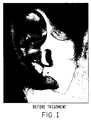
- FIG. I The accompanying Figures I and II show a typical improvement in the vitiligo patients treated. Both figures show the ear of the same patient.
- the patient presented at the clinic she had several large vitiligo spots including one in the region of the right ear (Fig. I).
- pseudocatalase/ UVB treatment as described above, many of the vitiligo spots had decreased substantially in size including the right ear spot (Fig. II).
- Pseudocatalase/UVB treatment of this patient continued for a further three months, by which time there was a further substantial reduction in size of the vitiligo spots.
- the patient was then maintained with pseudocatalase treatment alone.
- Example 1 The procedure of Example 1 was repeated using creams to which calcium chloride had been added to provide 5 millimolar calcium ion content. 18 patients were treated for a mean duration of 4.2 months; 14 of these patients had a partial response and 2 showed a marked, although not complete, pigmentation of vitiliginous skin areas.
- Example 1 The procedure of Example 1 was repeated using creams to which calcium chloride had been added to provide 10 millimolar calcium ion content. 12 patients were treated for a mean duration of 2.25 months; all had a partial response but none showed significant pigmentation of vitiliginous skin areas.
Landscapes
- Health & Medical Sciences (AREA)
- Chemical & Material Sciences (AREA)
- Medicinal Chemistry (AREA)
- Pharmacology & Pharmacy (AREA)
- Life Sciences & Earth Sciences (AREA)
- Animal Behavior & Ethology (AREA)
- General Health & Medical Sciences (AREA)
- Public Health (AREA)
- Veterinary Medicine (AREA)
- Inorganic Chemistry (AREA)
- Epidemiology (AREA)
- Bioinformatics & Cheminformatics (AREA)
- Dermatology (AREA)
- Chemical Kinetics & Catalysis (AREA)
- General Chemical & Material Sciences (AREA)
- Nuclear Medicine, Radiotherapy & Molecular Imaging (AREA)
- Organic Chemistry (AREA)
- Engineering & Computer Science (AREA)
- Pharmaceuticals Containing Other Organic And Inorganic Compounds (AREA)
- Cosmetics (AREA)
- Saccharide Compounds (AREA)
- Medicines That Contain Protein Lipid Enzymes And Other Medicines (AREA)
- Medicines Containing Plant Substances (AREA)
- Acyclic And Carbocyclic Compounds In Medicinal Compositions (AREA)
- Transceivers (AREA)
- Mobile Radio Communication Systems (AREA)
Abstract
Description
- The present invention relates to the treatment of tyrosinase-positive depigmentation disorders and has particular application to the treatment of vitiligo. It provides compositions for said treatment and methods of said treatment.
- Vitiligo is a chronic depigmentation disorder in which the patient has unsightly white patches or spots which are caused by localized loss of pigment and are very liable to sunburn. Although the condition is not debilitating, it is often emotionally stressful to the patient. The cause presently is unknown but it has been speculated that it results from an autoimmune response, involvement of the nervous system or a toxic effect on melanocytes. Usually, the only treatment is the use of skin-colouring cosmetics to disguise the patches or, in the case of Blacks and Indians, of depigmenting agents such as hydroquinone to depigment the remaining pigmented skin. Some limited success in treatment has been reported using the so-called PUVA method.
- In the PUVA method, methoxsalen (ie. 8-methoxy psoralen) or, less usually, other psoralens is administered orally and the patient subsequently exposed to UVA light. Psoralens are plant extracts and have been known since ancient Egyptian times to act as photosensitizers. The psoralen is given systemically and hence the photosensitizing effect is not localized and, since this effect is in the UVA range (320-400 nm), the patient must wear special glasses during everyday life in order to prevent eye damage. Further, side effects of PUVA include nausea, erythema, oedema, dizziness, headache, vesiculation, bulla formation, onycholysis, acneiform eruption and severe skin pain. Long term risks include skin cancer, epidermal dystrophy, premature skin aging, cataract formation, and alterations in the immune system. The treatment is believed to be toxic to normal lymphocytes and Langerhens' cells. Accordingly, the treatment usually is limited to elderly patients or to two years duration. It has recently been proposed to mitigate some of the risks of PUVA by bathing the patient in a psoralen bath.
- Other tyrosinase-positive depigmentation disorders include Hermansky-Pudlak Syndrome.
- It his now surprisingly been found that vitiligo and other tyrosinase-positive depigmentation disorders can be effectively treated by exposing a patient to UVB light (290-320 nm) after topical application of manganese (II) bicarbonate or other pseudocatalase. Further, it has been found that, following pigmentation by said treatment, a level of pigmentation in affected areas can be retained, at least for a period of time, by topical application of the pseudocatalase without UVB exposure.
- We have disclosed in a co-pending Patent Application of the same priority and filing dates and corresponding to UK Patent Application No. 9110651 that pseudocatalase can be used topically to enhance sun tanning.
- By pseudocatalase, we mean a plasma membrane permeable physiologically acceptable compound which catalyzes the dismutation of H2O2 in vivo in analogous manner to catalase.
- Without wishing to be bound to any particular hypothesis, it is believed that vitiligo and other tyrosinase-positive depigmentation disorders are caused by a deficiency of catalase which permits a higher than normal peroxide ion concentration in melanocytes. Since tyrosinase is inactivated by peroxide ion, the tyrosinase-catalyzed oxidation of l-tyrosine to l-dopa required for melanin biosynthesis is inhibited. Further, since peroxide ion is photochemically reduced to hydroxyl ion, there is a concomitant increase in hydroxyl ion production.
- Exposure of the skin to UVB radiation generates superoxide anion radicals which is a preferred substrate for human tyrosinase (40 times better than oxygen) thereby promoting melanin formation. However, the superoxide anion radicals are dismutated into dioxygen and peroxide ion causing an undesirable increase in hydroxyl ion concentration unless catalase or some other competing mechanism removes peroxide ion. Thus, the presence of a pseudocatalase is believed to allow sufficient UVB exposure for superoxide anion radical formation to promote pigmentation in catalase deficient areas without burning or other cell damage.
- According to a first aspect of the present invention, there is provided the use of a pseudocatalase in the manufacture of a topical medicament for the treatment of a tyrosinase-positive depigmentation disorder.
- In a second aspect, the invention provides a topical composition comprising a pseudocatalase and a physiologically acceptable topical vehicle therefor.
- As mentioned previously, the invention has particular application to the treatment of vitiligo but can be applied to the treatment of other tyrosinase-positive depigmentation disorders, for example Hermansky-Pudlak Syndrome.
- The pseudocatalase can be any physiologically acceptable compound which catalyzes the dismutation of hydrogen peroxide. Some compounds such as Mn(II) bicarbonate are already known to be pseudocatalases and others can be determined by simple screening tests.
- The presently preferred pseudocatalases are transition metal co-ordination complexes in which the inductive effect of the electron acceptor ligand enhances the redox effect of the metal on hydrogen peroxide dismutation. Usually, the metal will be Cu(I), Fe(II) or, especially Mn(II) and the ligand will be bicarbonate. It is especially preferred that the pseudocatalase is Mn(II) bicarbonate complex. Said complex readily can be prepared by contacting manganous chloride with excess bicarbonate in aqueous solution.
- The pseudocatalase is formulated in a topical vehicle for use. Conveniently, the vehicle comprises a hydrophilic cream to which an aqueous solution or suspension of the pseudocatalase is added to form a cream or lotion. Alternatively, the vehicle can be a bath oil although any other compatible topical vehicle can be used to provide a topical composition.
- Preferably, the composition contains calcium ions, suitably added as calcium chloride, to compensate for a calcium defect which appears to be present in vitiliginous skin. Usually, the calcium ion concentration will be 5 to 20 millimolar
- The composition can contain components such as emollients, perfumes etc conventionally used in topical preparations.
- Usually, the topical composition is applied twice a day to at least the depigmented areas of skin, usually to the entire skin surface . After at least one of said applications, the patient is exposed to UVB light after a short delay, usually about 20 to 60 minutes, to allow for transport of the pseudocatalase into the epidermis. The UVB exposure is limited to prevent erythema and is increased over the period of treatment from a few seconds to about 5 minutes as the minimal erythema dose increases with UVB tolerance. The course of treatment is continued for several months until there is an acceptable level of pigmentation in the previously depigmented areas. Thereafter, pigmentation is maintained by continuing daily application of the topical composition, possibly with reduced frequency, without UVB exposure. If and when pigment is lost from the affected areas, the exposure to UVB light is recommenced for as long as necessary to restore pigmentation.
- The invention is illustrated in the following non-limiting Examples.
- Manganous chloride (380 mg) was added to a solution of sodium bicarbonate (2.3 g) in purified water (3.0 ml) at ambient temperature. The mixture was allowed to stand until the evolution of gas had ceased. The resultant pinkish brown liquid was mixed with a hydrophilic cream (100 g, Neribase) to provide a white cream.
- Neribase is a cream vehicle containing Macrogol stearate 2000; stearic alcohol; liquid paraffin; white soft paraffin; polyacrylic acid; sodium hydroxide; disodium EDTA (i.e. ethylenediaminetetraacetic acid disodium salt); methyl and propyl Paraben (i.e. 4-hydroxybenzoic acid methyl and propyl esters); and water.
- The white cream of Example I was applied twice daily (morning and either afternoon or evening) to the depigmented areas (vitiligo spots) of several patients suffering from vitiligo. After about 20 minutes following one of said applications, the affected areas were exposed to UVB light for a short period of time to provide a sub-minimal erythema dose. As the patient's tolerance to UVB light increased, the exposure time was increased from a few seconds to a maximum of about 5 minutes. In all cases, the vitiligo spots were significantly pigmented after a course of treatment of between 3 and 6 months.
- The accompanying Figures I and II show a typical improvement in the vitiligo patients treated. Both figures show the ear of the same patient. When the patient presented at the clinic, she had several large vitiligo spots including one in the region of the right ear (Fig. I). After three months pseudocatalase/ UVB treatment as described above, many of the vitiligo spots had decreased substantially in size including the right ear spot (Fig. II). Pseudocatalase/UVB treatment of this patient continued for a further three months, by which time there was a further substantial reduction in size of the vitiligo spots. The patient was then maintained with pseudocatalase treatment alone.
- The procedure of Example 1 was repeated using creams to which calcium chloride had been added to provide 5 millimolar calcium ion content. 18 patients were treated for a mean duration of 4.2 months; 14 of these patients had a partial response and 2 showed a marked, although not complete, pigmentation of vitiliginous skin areas.
- The procedure of Example 1 was repeated using creams to which calcium chloride had been added to provide 10 millimolar calcium ion content. 12 patients were treated for a mean duration of 2.25 months; all had a partial response but none showed significant pigmentation of vitiliginous skin areas.
Claims (11)
- The use of a pseudocatalase in the manufacture of a topical medicament for the treatment of a tyrosinase-positive depigmentation disorder.
- A use as claimed in Claim 1, wherein the pseudocatalase is a transition metal co-ordination complex.
- A use as claimed in Claim 2, wherein the pseudocatalase is a Cu(I), Fe(II) or Mn(II) co-ordination complex.
- A use as claimed in Claim 3, wherein the ligand of said co-ordination complex is bicarbonate.
- A use as claimed in Claim 4, wherein the pseudocatalase is a Mn(II)-bicarbonate complex.
- A use as claimed in Claim 5, wherein the Mn(II)-bicarbonate complex has been obtained by contacting manganous chloride with excess sodium bicarbonate in aqueous solution.
- A topical pharmaceutical composition comprising a pseudocatalase selected from Cu(I), Fe(II) or Mn(II)-bicarbonate co-ordination complexes and a physiologically acceptable topical vehicle therefor.
- A composition as claimed in Claim 7, which contains 5 to 20 millimolar calcium ions.
- A composition as claimed in Claim 7, wherein the pseudocatalase is a Mn(II)-bicarbonate complex.
- A composition as claimed in Claim 9, wherein the Mn(II)-bicarbonate complex has been obtained by contacting manganous chloride with excess sodium bicarbonate in aqueous solution.
- A pseudocatalase selected from Cu(I), Fe (II) or Mn(II)-bicarbonate co-ordination complexes for use in the treatment of a tyrosinase-positive depigmentation disorder.
Applications Claiming Priority (3)
| Application Number | Priority Date | Filing Date | Title |
|---|---|---|---|
| GB9110652 | 1991-05-15 | ||
| GB919110652A GB9110652D0 (en) | 1991-05-15 | 1991-05-15 | Composition and method of treating depigmentation disorders |
| PCT/GB1992/000878 WO1992020354A1 (en) | 1991-05-15 | 1992-05-15 | Composition and method of treating depigmentation disorders |
Publications (2)
| Publication Number | Publication Date |
|---|---|
| EP0584171A1 EP0584171A1 (en) | 1994-03-02 |
| EP0584171B1 true EP0584171B1 (en) | 1999-08-11 |
Family
ID=10695131
Family Applications (1)
| Application Number | Title | Priority Date | Filing Date |
|---|---|---|---|
| EP92910389A Expired - Lifetime EP0584171B1 (en) | 1991-05-15 | 1992-05-15 | Composition and method of treating depigmentation disorders |
Country Status (20)
| Country | Link |
|---|---|
| US (1) | US5433942A (en) |
| EP (1) | EP0584171B1 (en) |
| JP (1) | JPH06510275A (en) |
| KR (1) | KR100190978B1 (en) |
| AT (1) | ATE183097T1 (en) |
| AU (1) | AU649543B2 (en) |
| CA (1) | CA2102514A1 (en) |
| DE (1) | DE69229780T2 (en) |
| ES (1) | ES2137185T3 (en) |
| GB (1) | GB9110652D0 (en) |
| GR (1) | GR3031483T3 (en) |
| IE (1) | IE69854B1 (en) |
| IL (1) | IL101871A (en) |
| MY (1) | MY108848A (en) |
| NZ (1) | NZ242748A (en) |
| PH (1) | PH30792A (en) |
| SG (1) | SG45381A1 (en) |
| TW (1) | TW201695B (en) |
| WO (1) | WO1992020354A1 (en) |
| ZA (1) | ZA923561B (en) |
Cited By (1)
| Publication number | Priority date | Publication date | Assignee | Title |
|---|---|---|---|---|
| DE10043466A1 (en) * | 2000-09-04 | 2002-03-28 | Johannes Wohlrab | Non-irritating topical preparation for treating or preventing skin disorders, e.g. atopic dermatitis, psoriasis or aging symptoms, containing manganese salt to stimulate urea synthesis by keratinocytes |
Families Citing this family (12)
| Publication number | Priority date | Publication date | Assignee | Title |
|---|---|---|---|---|
| EP0801554B1 (en) | 1994-12-21 | 2003-04-16 | Cosmederm Technologies | Formulations and methods for reducing skin irritation |
| AU4606496A (en) * | 1994-12-21 | 1996-07-10 | Cosmederm Technologies | Formulations and methods for reducing skin irritation |
| US7404967B2 (en) * | 1994-12-21 | 2008-07-29 | Cosmederm, Inc. | Topical product formulations containing strontium for reducing skin irritation |
| US6139850A (en) * | 1994-12-21 | 2000-10-31 | Cosmederm Technologies | Formulations and methods for reducing skin irritation |
| GB2307175A (en) * | 1995-11-14 | 1997-05-21 | Steifel Lab Inc | Topical composition comprising a transition metal and bicarbonate ions, particularly for the promotion of pigmentation |
| US6979327B2 (en) * | 2000-02-25 | 2005-12-27 | Mount Sinai School Of Medicine | Treatment of vitiligo |
| FR2814945B1 (en) * | 2000-10-09 | 2003-02-14 | Oreal | CANITIY TREATMENT PROCESS |
| US6630130B1 (en) | 2001-07-16 | 2003-10-07 | Pearl Grimes | Sunless tanning cream |
| FR2839449B1 (en) * | 2002-05-13 | 2006-12-08 | Oreal | USE OF AT LEAST ONE METAL COMPLEX AS DESQUAMANT |
| US20030224028A1 (en) * | 2002-05-13 | 2003-12-04 | Societe L'oreal S.A. | Metal complexes for promoting skin desquamation and/or stimulating epidermal renewal |
| US20040148712A1 (en) | 2002-11-29 | 2004-08-05 | Francis Pruche | Composition for coloring a keratin material, comprising at least two components, and coloring processes |
| JP4687436B2 (en) * | 2005-12-13 | 2011-05-25 | ウシオ電機株式会社 | Excimer light therapy device |
Family Cites Families (8)
| Publication number | Priority date | Publication date | Assignee | Title |
|---|---|---|---|---|
| LU71110A1 (en) * | 1974-10-15 | 1976-11-11 | ||
| ZA786403B (en) * | 1977-12-01 | 1979-10-31 | Ici Australia Ltd | Process |
| AU518946B2 (en) * | 1979-02-23 | 1981-10-29 | Kenneth John Hausler | Trace mineral (s) cream |
| AU544544B2 (en) * | 1980-08-20 | 1985-06-06 | Erwin Gunther Walliczek | Cuprous complex for therapeutic use |
| AU7552981A (en) * | 1980-12-08 | 1982-09-09 | Bio-Systems Research Inc. | Anti-viral, anti-bacterial and/or anti fungal composition containing metal oxyalkylate |
| JPH0196107A (en) * | 1987-10-07 | 1989-04-14 | Kanebo Ltd | Skin cosmetic |
| JPH02108612A (en) * | 1988-10-19 | 1990-04-20 | Shizen:Kk | Divalent and trivalent complex iron salt-compounded cosmetic |
| EP0424033A3 (en) * | 1989-10-19 | 1991-07-31 | Pola Chemical Industries Inc | External skin preparation |
-
1991
- 1991-05-15 GB GB919110652A patent/GB9110652D0/en active Pending
-
1992
- 1992-05-14 MY MYPI92000812A patent/MY108848A/en unknown
- 1992-05-14 IL IL10187192A patent/IL101871A/en not_active IP Right Cessation
- 1992-05-15 CA CA002102514A patent/CA2102514A1/en not_active Abandoned
- 1992-05-15 US US08/150,014 patent/US5433942A/en not_active Expired - Fee Related
- 1992-05-15 ZA ZA923561A patent/ZA923561B/en unknown
- 1992-05-15 SG SG1996005300A patent/SG45381A1/en unknown
- 1992-05-15 PH PH44350A patent/PH30792A/en unknown
- 1992-05-15 ES ES92910389T patent/ES2137185T3/en not_active Expired - Lifetime
- 1992-05-15 JP JP4510487A patent/JPH06510275A/en active Pending
- 1992-05-15 AU AU17854/92A patent/AU649543B2/en not_active Ceased
- 1992-05-15 KR KR1019930703445A patent/KR100190978B1/en not_active Expired - Fee Related
- 1992-05-15 WO PCT/GB1992/000878 patent/WO1992020354A1/en not_active Ceased
- 1992-05-15 NZ NZ242748A patent/NZ242748A/en unknown
- 1992-05-15 AT AT92910389T patent/ATE183097T1/en not_active IP Right Cessation
- 1992-05-15 DE DE69229780T patent/DE69229780T2/en not_active Expired - Fee Related
- 1992-05-15 EP EP92910389A patent/EP0584171B1/en not_active Expired - Lifetime
- 1992-06-04 TW TW081104408A patent/TW201695B/zh active
- 1992-07-01 IE IE921559A patent/IE69854B1/en not_active IP Right Cessation
-
1999
- 1999-10-08 GR GR990402575T patent/GR3031483T3/en unknown
Non-Patent Citations (1)
| Title |
|---|
| Proc. Natl. Acad. Sci. USA, vol. 87, no. 1, 1990, pp. 384-388 * |
Cited By (1)
| Publication number | Priority date | Publication date | Assignee | Title |
|---|---|---|---|---|
| DE10043466A1 (en) * | 2000-09-04 | 2002-03-28 | Johannes Wohlrab | Non-irritating topical preparation for treating or preventing skin disorders, e.g. atopic dermatitis, psoriasis or aging symptoms, containing manganese salt to stimulate urea synthesis by keratinocytes |
Also Published As
| Publication number | Publication date |
|---|---|
| IL101871A (en) | 1997-01-10 |
| GB9110652D0 (en) | 1991-07-03 |
| JPH06510275A (en) | 1994-11-17 |
| SG45381A1 (en) | 1998-01-16 |
| ATE183097T1 (en) | 1999-08-15 |
| WO1992020354A1 (en) | 1992-11-26 |
| DE69229780D1 (en) | 1999-09-16 |
| EP0584171A1 (en) | 1994-03-02 |
| CA2102514A1 (en) | 1992-11-16 |
| NZ242748A (en) | 1995-01-27 |
| US5433942A (en) | 1995-07-18 |
| ES2137185T3 (en) | 1999-12-16 |
| AU1785492A (en) | 1992-12-30 |
| IE921559A1 (en) | 1992-11-18 |
| ZA923561B (en) | 1993-04-28 |
| AU649543B2 (en) | 1994-05-26 |
| PH30792A (en) | 1997-10-17 |
| IL101871A0 (en) | 1992-12-30 |
| KR100190978B1 (en) | 1999-06-15 |
| IE69854B1 (en) | 1996-10-02 |
| GR3031483T3 (en) | 2000-01-31 |
| MY108848A (en) | 1996-11-30 |
| DE69229780T2 (en) | 1999-12-16 |
| TW201695B (en) | 1993-03-11 |
Similar Documents
| Publication | Publication Date | Title |
|---|---|---|
| EP0584178B1 (en) | Composition and method of enhancing sun tanning | |
| US5433942A (en) | Composition and method of treating depigmentation disorders | |
| Farris | Topical vitamin C: a useful agent for treating photoaging and other dermatologic conditions | |
| KR100709148B1 (en) | Ascorbic acid compositions and methods for treating skin aging or damage | |
| US5589179A (en) | Composition containing a non-photocatalytic metal oxide and tocopherol, its use in the cosmetics and/or dermatological field and processes employing it | |
| EP0423929A1 (en) | Skin whitening agent | |
| WO2008045272A2 (en) | Compositions and methods for skin lightening | |
| US20060063718A1 (en) | Topical glutathione compositions | |
| CA2414247C (en) | Cosmetic composition and method comprising a hydroxamate mmpi and a triterpenoid glycoside | |
| FR2712811A1 (en) | Method for controlling adiposity and compositions usable for this purpose. | |
| US7368131B2 (en) | Method and composition for treating hypopigmentation of the hair and skin | |
| JPH05213736A (en) | Skin cosmetic | |
| US7468195B2 (en) | Skin treatment preparation | |
| CN117958441A (en) | Oral composition for whitening and sun protection | |
| US20060165617A1 (en) | Cosmetic Composition and Method | |
| JPH08217659A (en) | Method for decoloring mlanin | |
| Grossweiner | Phototherapy of Skin Disease: Science and Technology | |
| Arakelyan | PHOTOLYTIC-BASED HeNe LASER PHOTOPHORESIS OF COPPER PREPARATIONS IN THE TREATMENT OF VITILIGO: A PRELIMINARY REPORT | |
| JPH07206630A (en) | Melanin-decoloring composition | |
| Harth et al. | A case of basal cell carcinoma treated with photodynamic therapy—changes in histological features and bcl-2 expression | |
| JPH01305026A (en) | Agent for suppressing formation of enzyme | |
| HK1055673A1 (en) | Skin treatment preparation | |
| JPH10182446A (en) | Agent for prevention and treatment of dyspigmentation | |
| Tanveer | Therapeutic Toxicity of Sunshine Vitamin with Zeitgeber Times | |
| JP2001279242A (en) | Antioxidant, cosmetic containing the same, ultraviolet ray inhibitor containing the same, and food containing the same |
Legal Events
| Date | Code | Title | Description |
|---|---|---|---|
| PUAI | Public reference made under article 153(3) epc to a published international application that has entered the european phase |
Free format text: ORIGINAL CODE: 0009012 |
|
| 17P | Request for examination filed |
Effective date: 19931119 |
|
| AK | Designated contracting states |
Kind code of ref document: A1 Designated state(s): BE CH DE ES FR GB IT LI NL SE |
|
| RBV | Designated contracting states (corrected) |
Designated state(s): AT BE CH DE ES FR GB GR IT LI NL SE |
|
| 17Q | First examination report despatched |
Effective date: 19961104 |
|
| GRAG | Despatch of communication of intention to grant |
Free format text: ORIGINAL CODE: EPIDOS AGRA |
|
| GRAG | Despatch of communication of intention to grant |
Free format text: ORIGINAL CODE: EPIDOS AGRA |
|
| GRAH | Despatch of communication of intention to grant a patent |
Free format text: ORIGINAL CODE: EPIDOS IGRA |
|
| GRAH | Despatch of communication of intention to grant a patent |
Free format text: ORIGINAL CODE: EPIDOS IGRA |
|
| GRAA | (expected) grant |
Free format text: ORIGINAL CODE: 0009210 |
|
| AK | Designated contracting states |
Kind code of ref document: B1 Designated state(s): AT BE CH DE ES FR GB GR IT LI NL SE |
|
| REF | Corresponds to: |
Ref document number: 183097 Country of ref document: AT Date of ref document: 19990815 Kind code of ref document: T |
|
| REG | Reference to a national code |
Ref country code: CH Ref legal event code: EP |
|
| REF | Corresponds to: |
Ref document number: 69229780 Country of ref document: DE Date of ref document: 19990916 |
|
| ITF | It: translation for a ep patent filed | ||
| REG | Reference to a national code |
Ref country code: CH Ref legal event code: NV Representative=s name: E. BLUM & CO. PATENTANWAELTE |
|
| ET | Fr: translation filed | ||
| REG | Reference to a national code |
Ref country code: ES Ref legal event code: FG2A Ref document number: 2137185 Country of ref document: ES Kind code of ref document: T3 |
|
| REG | Reference to a national code |
Ref country code: CH Ref legal event code: NV Representative=s name: R. A. EGLI & CO. PATENTANWAELTE |
|
| PLBE | No opposition filed within time limit |
Free format text: ORIGINAL CODE: 0009261 |
|
| STAA | Information on the status of an ep patent application or granted ep patent |
Free format text: STATUS: NO OPPOSITION FILED WITHIN TIME LIMIT |
|
| 26N | No opposition filed | ||
| PGFP | Annual fee paid to national office [announced via postgrant information from national office to epo] |
Ref country code: SE Payment date: 20010514 Year of fee payment: 10 |
|
| PGFP | Annual fee paid to national office [announced via postgrant information from national office to epo] |
Ref country code: GB Payment date: 20010515 Year of fee payment: 10 |
|
| PGFP | Annual fee paid to national office [announced via postgrant information from national office to epo] |
Ref country code: AT Payment date: 20010518 Year of fee payment: 10 |
|
| PGFP | Annual fee paid to national office [announced via postgrant information from national office to epo] |
Ref country code: GR Payment date: 20010522 Year of fee payment: 10 |
|
| PGFP | Annual fee paid to national office [announced via postgrant information from national office to epo] |
Ref country code: BE Payment date: 20010523 Year of fee payment: 10 |
|
| PGFP | Annual fee paid to national office [announced via postgrant information from national office to epo] |
Ref country code: ES Payment date: 20010524 Year of fee payment: 10 |
|
| PGFP | Annual fee paid to national office [announced via postgrant information from national office to epo] |
Ref country code: DE Payment date: 20010529 Year of fee payment: 10 |
|
| PGFP | Annual fee paid to national office [announced via postgrant information from national office to epo] |
Ref country code: FR Payment date: 20010530 Year of fee payment: 10 |
|
| PGFP | Annual fee paid to national office [announced via postgrant information from national office to epo] |
Ref country code: NL Payment date: 20010531 Year of fee payment: 10 |
|
| PGFP | Annual fee paid to national office [announced via postgrant information from national office to epo] |
Ref country code: CH Payment date: 20010829 Year of fee payment: 10 |
|
| REG | Reference to a national code |
Ref country code: GB Ref legal event code: IF02 |
|
| PG25 | Lapsed in a contracting state [announced via postgrant information from national office to epo] |
Ref country code: GB Free format text: LAPSE BECAUSE OF NON-PAYMENT OF DUE FEES Effective date: 20020515 Ref country code: AT Free format text: LAPSE BECAUSE OF NON-PAYMENT OF DUE FEES Effective date: 20020515 |
|
| PG25 | Lapsed in a contracting state [announced via postgrant information from national office to epo] |
Ref country code: SE Free format text: LAPSE BECAUSE OF NON-PAYMENT OF DUE FEES Effective date: 20020516 Ref country code: ES Free format text: LAPSE BECAUSE OF NON-PAYMENT OF DUE FEES Effective date: 20020516 |
|
| PG25 | Lapsed in a contracting state [announced via postgrant information from national office to epo] |
Ref country code: LI Free format text: LAPSE BECAUSE OF NON-PAYMENT OF DUE FEES Effective date: 20020531 Ref country code: CH Free format text: LAPSE BECAUSE OF NON-PAYMENT OF DUE FEES Effective date: 20020531 Ref country code: BE Free format text: LAPSE BECAUSE OF NON-PAYMENT OF DUE FEES Effective date: 20020531 |
|
| PG25 | Lapsed in a contracting state [announced via postgrant information from national office to epo] |
Ref country code: NL Free format text: LAPSE BECAUSE OF NON-PAYMENT OF DUE FEES Effective date: 20021201 |
|
| PG25 | Lapsed in a contracting state [announced via postgrant information from national office to epo] |
Ref country code: DE Free format text: LAPSE BECAUSE OF NON-PAYMENT OF DUE FEES Effective date: 20021203 |
|
| PG25 | Lapsed in a contracting state [announced via postgrant information from national office to epo] |
Ref country code: GR Free format text: LAPSE BECAUSE OF NON-PAYMENT OF DUE FEES Effective date: 20021206 |
|
| EUG | Se: european patent has lapsed | ||
| GBPC | Gb: european patent ceased through non-payment of renewal fee |
Effective date: 20020515 |
|
| REG | Reference to a national code |
Ref country code: CH Ref legal event code: PL |
|
| PG25 | Lapsed in a contracting state [announced via postgrant information from national office to epo] |
Ref country code: FR Free format text: LAPSE BECAUSE OF NON-PAYMENT OF DUE FEES Effective date: 20030131 |
|
| NLV4 | Nl: lapsed or anulled due to non-payment of the annual fee |
Effective date: 20021201 |
|
| REG | Reference to a national code |
Ref country code: FR Ref legal event code: ST |
|
| REG | Reference to a national code |
Ref country code: ES Ref legal event code: FD2A Effective date: 20030611 |
|
| PG25 | Lapsed in a contracting state [announced via postgrant information from national office to epo] |
Ref country code: IT Free format text: LAPSE BECAUSE OF NON-PAYMENT OF DUE FEES;WARNING: LAPSES OF ITALIAN PATENTS WITH EFFECTIVE DATE BEFORE 2007 MAY HAVE OCCURRED AT ANY TIME BEFORE 2007. THE CORRECT EFFECTIVE DATE MAY BE DIFFERENT FROM THE ONE RECORDED. Effective date: 20050515 |