EP0583117A2 - Vorrichtung und Verfahren zur Umwandlung von Computerprogrammiersprachen - Google Patents
Vorrichtung und Verfahren zur Umwandlung von Computerprogrammiersprachen Download PDFInfo
- Publication number
- EP0583117A2 EP0583117A2 EP93306031A EP93306031A EP0583117A2 EP 0583117 A2 EP0583117 A2 EP 0583117A2 EP 93306031 A EP93306031 A EP 93306031A EP 93306031 A EP93306031 A EP 93306031A EP 0583117 A2 EP0583117 A2 EP 0583117A2
- Authority
- EP
- European Patent Office
- Prior art keywords
- conversion
- language
- origin
- program
- word
- Prior art date
- Legal status (The legal status is an assumption and is not a legal conclusion. Google has not performed a legal analysis and makes no representation as to the accuracy of the status listed.)
- Withdrawn
Links
Images






Classifications
-
- G—PHYSICS
- G06—COMPUTING OR CALCULATING; COUNTING
- G06F—ELECTRIC DIGITAL DATA PROCESSING
- G06F8/00—Arrangements for software engineering
- G06F8/40—Transformation of program code
- G06F8/51—Source to source
Definitions
- This invention relates to a device and method for converting computer programming languages, and particularly, to a highly versatile device and method for converting computer programming languages that can be used for converting programs between a number of computer programming languages without being limiting to conversion of programs between two specific programming languages.
- a program that gives a job procedure to a computer is written in computer programming language (programming language).
- programming language There are many computer programming languages. When viewed in terms of language level, there are languages that are directly dependent on the computer, which are called machine languages, and languages that are much closer to human languages, which are called high-level languages.
- FORTRAN which is a scientific computation-oriented language
- COBOL which is a business-oriented language. Some languages are developed for specific computers by specific laboratories or enterprises. In recent years, there have been general-user-oriented languages, called 4th generation languages, that are closer to the applications. In addition, there may be several different dialects because of differences in level, even in the same types of language.
- conversion means to change the program from one language (origin language) into another language (target language).
- a programming language translator for example, such as is disclosed in PUPA No. 2-10434, has been proposed in the past to solve this kind of problem.
- This provides a comparison table of basic syntax (instruction statements) between origin language and target language, for analyzing the unconverted program syntax, and for selecting an appropriate basic syntax for the target language from this table.
- the translator disclosed in PUPA No. 2-10434 making use of a new origin language and the target language only requires storing that new basic syntax in the table.
- the basic syntax in this table stores sections expressing those function, for example, the GO TO section (hereafter called key words), and variable sections, for example, a %1 section (hereafter called word) together.
- the object of this invention is to provide a device and method for converting computer programming languages that have much higher versatility than conventional converters, and which can convert programs between many more computer programming languages.
- conversion rules are generated automatically when an operator inputs a conversion model on the computer input screen that converts from a model statement of an origin language to a model statement of a target language.
- a device and method for converting computer programming languages which have high versatility, which can give instructions to convert key words expressing functions and words expressing variables in the instruction statements according to separate rules are provided.
- This device for converting computer programming languages of the invention has a conversion rule input means, a conversion rule generation means, and a conversion rule drive means.
- the conversion rule input means has an origin language input section that describes and inputs modelled instruction statements in the origin language in which the unconverted program is written according to the syntax of the origin language, a target language input section that describes and inputs modelled instruction statements in the post-conversion target language, which perform the functions of the instruction statements in the origin language, and a word conversion input section that describes and inputs the rules to convert individual variables, that is, words, that form the instruction statements in the origin language into variables of the instruction statements in the target language.
- the conversion rule generation means generates a conversion rule search key by using the input model statements that were inputted in the origin language section, generates a word conversion table or a word conversion program call function by using the rules that were inputted in the word conversion input section, generates a target language generation program by using the output model statements that were inputted in the target language input section, and generates a conversion rule taking these as a set.
- This conversion rule is stored in the conversion rule database.
- the conversion rule drive means analyzes the origin program and fetches conversion rules to convert the instruction statements in the origin language from the conversion rule database by using a conversion rule search key.
- the conversion rule drive means further converts the words of the unconverted instruction statements into the words of the instruction statements of the converted program by using a word conversion table call function that is contained in the fetched conversion rule, and further, generates and outputs instruction statements in the converted target language by using a target language generation program that is also contained in the conversion rule.
- the language conversion of programs can be executed by inputting origin language model statements, target language model statements, and word (variable) section conversion rules using the conversion rule input means, by creating conversion rules by the conversion rule generation means based on this input, and by storing them in the conversion rule database.
- the model statements in the origin language at the origin section can be described by any programmer of the origin language and this can be inputted by the conversion rule input means.
- programmers of the target language can describe it in the model statements of the target language through an understanding of the functions of the model statements, and this can be inputted together with the conversion rules for the word sections by the conversion rule input means. Therefore, conversion rules able to convert the word sections independently and conversion rules for the instruction statements can be generated at the same time.
- conversion is materialized when the conversion rule drive means analyzes a program written in an origin language for each instruction or for each instruction group, collates these instructions or instruction groups with the model statements in the origin language of the conversion rules stored in the conversion rule database, searches for ones that agree, and takes out programs to create model statements in a target language corresponding to those instruction statements or instruction groups.
- the table or program call function to convert the word sections is also taken out similarly from the conversion rule, and words are converted by using the word conversion table.
- the conversion rule input means, conversion rule generation means, and conversion rule drive means do not depend on the types of the origin languages and target languages. Therefore, the versatility of this device of the invention for converting programming languages is very high.
- programming languages can be converted by inputting model statements in an origin language, model statements in a target language, and conversion rules for the word (variable) sections by using a conversion rule input means, by establishing conversion rules by using a conversion rule generation means according to this input, and by storing them in a conversion rule database.
- any programmer of the origin language can describe model statements in the origin language at the origin section and input these by using a conversion rule input means.
- programmers of the target language can describe them in model statements in the target language, and these can be inputted by a conversion rule input means together with the conversion rules for the word sections.
- conversion rules in which the word sections can be converted independently can be generated simultaneously with the conversion rules for the instruction statements.
- a conversion rule input means, a conversion rule generation means, and a conversion rule drive means which are the main sections of a programming language converter of this invention, do not depend on the types of conversion languages involved. Therefore, a programming language converter of high versatility can be materialized. Since the variables of the programming languages can be converted separately from the key words expressing functions according to the device and method for converting programming languages of this invention, its versatility can be increased. Furthermore, since the device and method for converting programming languages of this invention stores part of the conversion rules as independent files for maintenance, it is superior in terms of conversion rule maintenance.
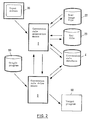
- FIG. 1 is a block diagram illustrating a schematic configuration of general-purpose computer programming language converter 1, which is an embodiment of the present invention.
- Converter 1 has a conversion rule generation means 2.
- This conversion rule generation means 2 is connected to a conversion rule input means 3, and generates conversion rules according to the input from conversion rule input means 3.
- the generated conversion rules are stored in a conversion rule database 4.
- a word conversion table creation means 5 creates a word conversion table 7 according to the input from a word conversion table input means 6.
- An origin language program input means 8 inputs an unconverted origin program 80 and carries out preprocessing before conversion, such as analysis.
- a conversion rule drive means 9 searches conversion rules database 4 for conversion rules corresponding to the input origin program, fetches them, and converts into a target program 90 according to the conversion rules.
- conversion rule drive means 9 calls word conversion table 7 according to the same conversion rules as mentioned above and carries out word conversion between an origin program 80 and the target program 90.
- the converted program is output from a target language program output section 10 and a target program 90 that has been converted into target language is formed.
- the conversion rule generation means 2 is connected to a user interface that provides an input screen 30 for the conversion rule input means 3, a conversion rule text image file 22, a conversion rule search key file 23, and a conversion rule database 4.
- a conversion rule drive means 9 fetches conversion rules by accessing a conversion rule database 4 by using conversion rule search key file 23 when origin program 80 is converted into target program 90. Conversion rules are generated before conversion from the origin program 80 into the target program 90 is carried out, but necessary conversion rule can also be generated during conversion. This is done by calling the conversion rule generation means 2 from the conversion rule drive means 9 at times when there is no appropriate conversion rule during conversion, as explained later.
- the conversion rule text image file 22 is used for maintenance of conversion rules, to be explained later.
- the screen 30 of the conversion rule input means 3 provides an initialization input screen and a conversion rule input screen.
- the initialization input screen specifies an origin language subject to conversion, and a target language. For example, conversion from COBOL for system A into COBOL for system B, or conversion from FORTRAN to COBOL, etc.
- Figure 3 shows the conversion rule input screen 30. Operators can also input, modify, or give directions, such as delete or change, from this computer input screen when a rule is established.
- This computer input screen 30 has, from the top, an origin language input section 31, a word conversion input section 32, and a target language input section 33, and at the lower section of the screen, program function keys 34 that direct the after-input process, such as to create a new conversion rule, or modify existing rule, or add, delete, change, or replace a rule.
- the program accompanying this screen 30 is also provided with a function to edit inputted text.
- a rule inputted on conversion rule input screen 30 is stored in the conversion rule text image file 22 in a form similar to its input form. This is done so that the conversion rule can be easily displayed again on the screen 30 for later maintenance of a conversion rule.
- a conversion rule search key is stored in conversion rule search key file 23. This search key is converted so that the origin language sections of the inputted conversion rules can be easily searched with the programming language used in this embodiment, PROLOG. In this embodiment, this converted origin language section is called the internal form for searching.
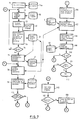
- Figures 4 and 5 are flowcharts showing the conversion rule generation procedures of this embodiment.
- initialization block 41
- the types of language subject to conversion that is, the origin language (FORTRAN) and the target language (COBOL) are specified on the initialization screen.
- origin language FORTRAN
- COBOL target language
- origin language specific delimiters and the like on description are specified as the need arises.
- A stands for a relational expression.
- A, N1, N2, and N3 correspond to variables expressed in different forms respectively, according to the content of the program. In this invention, these variables are called word sections.
- IF corresponds to an instruction word expressing the function of an instruction statement, and has a fixed form in the programs in the same language. Therefore, in this invention, the instruction word IF will be a key word sections of a conversion rule.
- a statement in which an IF statement is modelled that is, IF(*A) *N1, *N2, *N3 is inputted, in conformance with FORTRAN grammar. That is, the IF portion of the instruction word is used as it is as a key word.
- the word sections are expressed by characters or character strings in which an asterisk (*) is given at the head.
- an appropriate conversion rule can be searched for by collating with the conversion rule search key that is generated from this model statement for each conversion unit statement of the origin language program to be converted by using the unification function of PROLOG language.
- the expression of instruction statements in the origin language in a form to be collated by a conversion rule search key is called modelling.
- the statement numbers in FORTRAN are expressed by numerals, but they correspond to labels in COBOL.
- the COBOL label is a character string starting with a character from the alphabet.
- target language input section 33 instruction statements are described in the target language so as to be able to realize a function or an intended function (it might be desired to convert into a different function in some cases) that is the same as an instruction statement inputted in the origin language input section 31.
- *XL1, *XL2, and *XL3 are the modelled forms of element names that are created by converter 1 according to a conversion direction that is inputted in word conversion input section 32, to be explained later, and that can be used in COBOL.
- word conversion input section 32 The following inputting is carried out in word conversion input section 32.
- the language components to be used are different.
- the statement numbers in FORTRAN are expressed by numerals, but they correspond to labels in COBOL.
- the labels in COBOL are normally character strings starting with an alphabetic character.
- the purpose of inputting into the word conversion input section 32 is for generating a PROLOG language predicate for calling the word conversion program or the word conversion table from the inputted information.
- a direction to word conversion input section 32 such as; *N1 Label *XL1 means to convert a statement number in FORTRAN into a label with an alphabetic character in COBOL. This is, for example, transformed into a form called an "item," such as; & table (Label, N1, XL1) in PROLOG language by a conversion rule generation means 2 described later.
- a statement number 100 is given to N1
- a label in which the alphabetic character L is given at the head of 100, such as L100 is generated for XL1. Therefore, the following is inputted to word conversion input section 32.
- the contents inputted into the origin language input section 31, word conversion input section 32, and target language input section 33 on the input screen 30 of the conversion model input means in Figure 3 are processed by the conversion rule generation means 2 to generate a conversion rule.
- the model statements in the origin language that are inputted into the origin language input section 31 are decomposed into variable and key word elements while referring to the delimiter table 47 by language or by instruction statement that is specified on the initialization screen (block 41).
- the elements that have already been decomposed are converted into an internal form for searching so that they can later be used as search keys in the conversion rule drive means 9. That is, the model statements in the origin language are converted into keys that will be used for searching for conversion rules in later conversion of the origin program.
- the key creation method can be changed so that it matches the search method in conversion rule drive means 9. For example, even if the word orders of key words used are different, if it is desired to treat them as the same key, flexible collation can be performed by giving key words that are rearranged in ascending order or in descending order as a sub-key.
- a model statement that is inputted in the origin language input section 31, such as; IF(*A) *N1, *N2, *N3 is converted into an internal form for searching by conversion rule generation means 2, such as; convert (["IF", “(", A, ")", N1, ",", N2, ",”, N3])
- This internal form for searching is placed in the first line of the conversion rule so that it can be used as a conversion rule search key.
- this search key is used for the purpose of collating whether the conversion rule is necessary or not.
- a PROLOG language predicate for calling a word conversion program that performs word conversion or a word conversion table is generated from the inputted information.
- a direction to word conversion input section 32 such as; *N1 Label *XL1 means to convert a statement number in FORTRAN into a label with an alphabetic character in COBOL. This is, for example, transformed into a form called an "item," such as; & table (label, N1, XL1) in PROLOG language.
- statement number 100 is given to N1
- a label in which the alphabetic character L is given at the head of the number 100, such as L100 is generated for XL1.
- the word conversion input section 32 is converted into PROLOG language predicates as a word conversion direction section for calling a word conversion program or a word conversion table, such as the following.
- ⁇ - table label, N1, XL1 & table (label, N2, XL2) & table (label, N3, XL3)
- the model statements that are inputted in the target language input section 33 are analyzed lexically and converted into a form enabling generation of the target language when conversion rules are taken out and processed in the conversion rule drive means 9.
- the variables used in the target language section are defined in the origin language section or in the word conversion section; error checking is also carried out so that improper things are not generated in generating the target language due to variables not yet defined.
- a target language generation program such as the following is generated by the conversion rule generation means 2 and placed next to the word conversion direction section.
- a conversion rule search key created from the input of the origin language input section 31, a word conversion direction section created from the input of word conversion input section 32, and a target language generation program created from the input of the target language input section 33 as a set constitute conversion rule 99, such as shown in Figure 15.
- This conversion rule 99 converts an IF statement in FORTRAN into an instruction statement in COBOL having the same function.
- the operator gives a direction, such as add, change, and replace the conversion rule 99 (block 53).
- a direction for addition is given, it is confirmed that the same conversion rule 99 is not already in the conversion rule search key file 23 (block 54).
- the conversion rule search key, conversion rule search sub-key, pointer to conversion rule text image file 22, and pointer to conversion rule database 4, which are created by the above process, are stored in the conversion rule search key file 23 (block 55).
- a conversion rule (a set consisting of a conversion rule search key, word conversion direction section, and target language generation section) 99 is stored in the conversion rule database 4 (block 56).
- a conversion rule database 4 is constructed.
- the contents of the conversion rule input screen 30 at the time when this conversion rule 99 is established are stored in the conversion rule text image file 22 so that it can be easily displayed again on the screen for later maintenance of the conversion rule 99 (block 57).
- the associated files are created centered on the conversion rule search key that is generated by analyzing the model statements in the origin language. That is, the origin language model statement 31 will be a conversion rule search key.
- the conversion rule database 4, the conversion rule search key file 23, and the conversion rule text image file 22 are constructed centered on this key.
- Figure 8 shows some statements of an unconverted origin program 80.
- Statement 81 in the program is an IF statement in FORTRAN as mentioned above.
- Figure 9 shows some corresponding statements of a converted target program.
- Statements 91 are instruction statements in COBOL, which are equivalent to that in FORTRAN, into which the IF statement 81 in FORTRAN is converted.
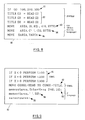
- Figure 10 shows an example of word conversion rules and model statements of the origin language and target language that are inputted on conversion rule input screen 30 by the operator when a conversion rule to convert the origin program 81 in Figure 8 into instruction statements 91 in COBOL having a corresponding function in the target program 90 in Figure 9.
- Figure 15 shows the conversion rule 99 that is generated from the input in Figure 10 by the conversion rule generation means 2 to convert the IF statement 81 in FORTRAN mentioned above into instruction statements 91 in COBOL having the same function.
- the conversion rule 99 consists of a set of a conversion rule search key that is generated from the origin language input section, a word conversion direction section that is generated from the word conversion input section, and a target language generation program that is generated from the target language input section. This conversion rule 99 is stored in the conversion rule database 4.
- operation environment parameters 71a are set up in the initialization process and the types of languages that are involved in conversion are specified (block 71).
- the origin language program 80 for each record is read from the input device specified in the initialization process (block 72). If a conversion unit statement in the origin language program 80 is divided into two records or more, a plurality of records are reconstructed in the conversion unit statement in this origin language program input 8. Comment lines or comments in the origin program 80 are stored separately for later output. Then, the conversion unit statement is transferred to the following processing.
- each conversion unit is decomposed into components by referring to language delimiter table 47 by using the same lexical analysis feature as that in creating a conversion rule explained in Figure 4.
- instruction statement 81 an IF statement in FORTRAN in the origin program 80 shown in Figure 8; IF(X) 100, 200, 300
- these decomposed components are converted into an internal form so that they can be easily collated with the conversion rule search key (Refer to the first line in Figure 15), and are stored in intermediate file 21 or in a storage device.
- the intermediate file 21 has a form shown in line 21a in Figure 21.
- the lexical analysis feature (block 73) and the internal form conversion feature for collation (block 74) repeat the operation mentioned above until the reading of one file of origin program 80 is completed (block 75).
- language conversion can be carried out sequentially from the initial record in many cases, but if the information before and after an instruction statement in the conversion process can be referred to, the conversion efficiency can be increased.
- the origin language program fetch feature (block 78) fetches the origin program 80 that has been converted from the intermediate file 21 into conversion rule collation key form (line 21a in Figure 21). At this time, the conversion unit statements for the numbers given to the characteristic information of conversion rule database 4 are fetched and transferred to the following conversion rule database collation feature (block 79).
- conversion rule database collation feature (block 79), an origin program 80 that is stored in intermediate file 21 is converted into conversion rule collation key form (line 21a in Figure 21), which is basically formed of components.
- conversion rule database 4 is searched for a conversion rule search key having the same key words and arranged in the same order and having the same number of variables as that of the components other than the key words. If the positional relation between the key words and the component other than them is the same, it is considered that an appropriate rule exists and the conversion is started according to that conversion rule.
- the search for this conversion rule search key is carried out by using the search key in the key file 23. And if an appropriate search key is found, the corresponding conversion rule 99 is fetched by using the pointer to a corresponding conversion rule 99 in conversion rule database 4 that is stored in the key file 23 (Refer to Figure 6).
- a conversion rule is searched for, a plurality of conversion unit statements are collated in some cases. The flowchart of this is as shown in Figure 23.
- the conversion rule 99 is fetched from the conversion rule database 4, the word conversion direction section and the target language generation program are incidentally fetched from the conversion rule 99 (Refer to Figure 15) (block 105), and word conversion and target language generation are carried out.
- the execution of target language generation is first carried out from the calling of the word conversion library 7 and conversion of words even though this depends on the specification of conversion rule 99 (block 107).
- the variable section of the target language generation program is replaced with converted words (block 108).
- the target program 90 of the target language is generated by the target language generation program (block 109) and this is outputted to the specified output device, from the target language output section 10. At this time, comment lines or comments that were separated out at the time of input and stored separately are called and outputted when the need arises.
- the word conversion table 7 in Figure 20 stored in the word conversion library 7 is fetched from the word conversion direction section of the conversion rule 99 ( Figure 15) that is fetched in block 105.
- Statement number 100 in FORTRAN is converted to label L100 in COBOL (blocks 107 and 108).
- the target language generation program of conversion rule 99 Figure 15
- the target language generation program of conversion rule 99 Figure 15
- the target language generation program of conversion rule 99 Figure 15
- the word conversion table and word conversion logic 7 shown in Figure 20 are such that they are to be created and registered from the word conversion table input 6 by word conversion table creation means 5 in the origin language to be converted and the target language separately, as the need arises.
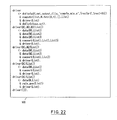
- Figure 22 shows the main part of an example of a conversion rule drive program 100 of the conversion rule drive means 9 for the actual execution of the program language conversion process shown in Figure 7 explained above.
- This conversion rule drive program 100 fetches the internal form 21a of the origin program 81 that is stored in the intermediate file 21 in Figure 21 sequentially with data (M, List) calls an appropriate conversion rule 99 ( Figure 15) with convert (List) and generates a target program 91 shown in Figure 9 as mentioned above.
- this conversion rule drive program 100 has a form that does not depend on either the origin language or the target language of the languages involved in conversion.
- Figure 20 includes word conversion tables that carry out word conversion according to the word conversion direction section of the conversion rule 99 in Figure 16.
- 21b in Figure 21 an example where the origin program 82 in Figure 8 is converted into an intermediate file 21 is shown.
- the other origin programs 83, 84, and 85 shown in Figure 8 are written in event driven language (EDL) that is used for the IBM Series/1 computer.
- EDL event driven language
- Conversion rules 99 are generated as shown in Figures 17, 18, and 19 respectively by the conversion rule generation means 2 according to the inputs into the conversion rule input screens in Figures 12, 13, and 14.
- Figure 20 shows a word conversion table that is used by the word conversion direction section of conversion rule 99 at the time of word conversion.
- the origin programs 83, 84, and 85 shown in Figure 8 are first converted into the forms of the intermediate files 21c, 21d, and 21e shown in Figure 21 respectively, and are then converted into the target programs 93, 94, and 95 shown in Figure 9 respectively by the conversion rules 99 shown in Figures 17, 18, and 19 fetched from the conversion rule drive program 100 shown in Figure 22.
Landscapes
- Engineering & Computer Science (AREA)
- General Engineering & Computer Science (AREA)
- Theoretical Computer Science (AREA)
- Software Systems (AREA)
- Physics & Mathematics (AREA)
- General Physics & Mathematics (AREA)
- Devices For Executing Special Programs (AREA)
- Stored Programmes (AREA)
Applications Claiming Priority (2)
| Application Number | Priority Date | Filing Date | Title |
|---|---|---|---|
| JP4215032A JPH0778742B2 (ja) | 1992-08-12 | 1992-08-12 | コンピユータ・プログラム言語変換装置及びその方法 |
| JP215032/92 | 1992-08-12 |
Publications (1)
| Publication Number | Publication Date |
|---|---|
| EP0583117A2 true EP0583117A2 (de) | 1994-02-16 |
Family
ID=16665626
Family Applications (1)
| Application Number | Title | Priority Date | Filing Date |
|---|---|---|---|
| EP93306031A Withdrawn EP0583117A2 (de) | 1992-08-12 | 1993-07-30 | Vorrichtung und Verfahren zur Umwandlung von Computerprogrammiersprachen |
Country Status (3)
| Country | Link |
|---|---|
| US (1) | US6219831B1 (de) |
| EP (1) | EP0583117A2 (de) |
| JP (1) | JPH0778742B2 (de) |
Cited By (7)
| Publication number | Priority date | Publication date | Assignee | Title |
|---|---|---|---|---|
| EP0789875A4 (de) * | 1994-10-07 | 1997-09-03 | ||
| GB2315343A (en) * | 1996-06-25 | 1998-01-28 | Texas Instruments Inc | Non-model-based application transitioning |
| US5842204A (en) * | 1994-10-07 | 1998-11-24 | Tandem Computers, Inc. | Method and apparatus for translating source code from one high-level computer language to another |
| US6006031A (en) * | 1994-10-07 | 1999-12-21 | Tandem Computers Incorporated | Method and apparatus for reconciling conflicting translations by factoring and parameterizing differences |
| US6425118B1 (en) | 1997-07-18 | 2002-07-23 | Compaq Computer Corporation | System for automatically generating tests to ensure binary compatibility between software components produced by a source-to-source computer language translator |
| DE10105729C1 (de) * | 2001-02-08 | 2002-08-08 | Tenovis Gmbh & Co Kg | Verfahren und System zur funktionsmäßigen Erweiterung einer Telekommunikationsanlage |
| EP1454270A4 (de) * | 2001-11-21 | 2007-07-04 | Enterasys Networks Inc | Übersetzen von konfigurationsdateien zwischen netzwerkeinrichtungen |
Families Citing this family (24)
| Publication number | Priority date | Publication date | Assignee | Title |
|---|---|---|---|---|
| JP3505266B2 (ja) * | 1995-06-15 | 2004-03-08 | 三洋電機株式会社 | プログラム実行装置 |
| US6633837B1 (en) * | 1999-10-14 | 2003-10-14 | Object Reservoir | Method and system for generating software code using a symbolic language translator |
| DE50008829D1 (de) * | 2000-02-15 | 2005-01-05 | Siemens Ag | Verfahren zur Uebermittlung einer Nachricht sowie Gateway |
| US20020144246A1 (en) * | 2001-03-29 | 2002-10-03 | Ibm Corporation | Method and apparatus for lexical analysis |
| US7020721B1 (en) * | 2001-04-02 | 2006-03-28 | Palmsource, Inc. | Extensible transcoder annotation for transcoding proxy servers |
| FI111107B (fi) * | 2001-05-15 | 2003-05-30 | Softageneraattori Oy | Menetelmä translaattorin kehittämiseksi ja vastaava järjestelmä |
| US6964038B2 (en) * | 2001-07-17 | 2005-11-08 | Hewlett-Packard Development Company, L.P. | Constant values in mixed language programming environments |
| US20090106353A1 (en) * | 2001-09-19 | 2009-04-23 | Belovich Steven G | Method and system for providing an event auditing client server software arrangement |
| JP2004038876A (ja) * | 2002-07-08 | 2004-02-05 | Hitachi Ltd | プログラム等のデータ形式変換方法及び装置、並びにそのデータ形式変換装置を用いたコントローラ管理システム |
| JP3494376B1 (ja) * | 2002-12-05 | 2004-02-09 | 株式会社システムズ | プログラム解析装置およびプログラム |
| US20080320054A1 (en) * | 2003-04-09 | 2008-12-25 | Cindy Howard | Database and Software Conversion System and Method |
| US7272821B2 (en) | 2003-08-25 | 2007-09-18 | Tech Mahindra Limited | System and method of universal programming language conversion |
| US6876314B1 (en) | 2004-02-18 | 2005-04-05 | Robocoder Corporation | Self-generating automatic code generator |
| US8620816B2 (en) | 2004-10-14 | 2013-12-31 | Google Inc. | Information vault, data format conversion services system and method |
| KR100825722B1 (ko) * | 2005-12-08 | 2008-04-29 | 한국전자통신연구원 | Bpel4ws 프로세스를 칼라드 페트리넷으로 변환하는방법 및 그 장치 |
| CN101118487B (zh) * | 2006-08-02 | 2011-09-28 | 鸿富锦精密工业(深圳)有限公司 | 量测程序转换系统及方法 |
| US20080127129A1 (en) * | 2006-08-30 | 2008-05-29 | Microsoft Corporation | Compiling logical programs to rewrite systems |
| US20080162109A1 (en) * | 2006-12-28 | 2008-07-03 | Motorola, Inc. | Creating and managing a policy continuum |
| JP4115511B1 (ja) | 2007-05-08 | 2008-07-09 | 株式会社システムズ | プログラムパターン分析装置、パターン出現状況情報生産方法、パターン情報生成装置、およびプログラム |
| US9037613B2 (en) * | 2007-05-23 | 2015-05-19 | Oracle International Corporation | Self-learning data lenses for conversion of information from a source form to a target form |
| US9043367B2 (en) * | 2007-05-23 | 2015-05-26 | Oracle International Corporation | Self-learning data lenses for conversion of information from a first form to a second form |
| US8683451B1 (en) * | 2010-04-30 | 2014-03-25 | The United States Of America As Represented By The Secretary Of The Navy | System and method for translating software code |
| US8607206B2 (en) | 2010-09-24 | 2013-12-10 | Group Business Software Ag | Automatic synchronous-to-asynchronous software application converter |
| CN114265866A (zh) * | 2021-11-24 | 2022-04-01 | 青岛海尔科技有限公司 | 流式数据处理方法、规则插件、流式数据处理模块及系统 |
Family Cites Families (15)
| Publication number | Priority date | Publication date | Assignee | Title |
|---|---|---|---|---|
| US4374408A (en) * | 1971-06-16 | 1983-02-15 | Burroughs Corporation | Multi-pass system and method for source to source code translation |
| SE467229B (sv) * | 1983-08-19 | 1992-06-15 | Kurt Katzeff | Anordning foer bildande av en information och/eller instruktion avsedd att inmatas i en datamaskins programminne |
| JPH0630066B2 (ja) * | 1983-10-24 | 1994-04-20 | 株式会社日立製作所 | テーブル型言語翻訳方法 |
| US4667290A (en) * | 1984-09-10 | 1987-05-19 | 501 Philon, Inc. | Compilers using a universal intermediate language |
| US4864503A (en) * | 1987-02-05 | 1989-09-05 | Toltran, Ltd. | Method of using a created international language as an intermediate pathway in translation between two national languages |
| JPS63280337A (ja) * | 1987-05-13 | 1988-11-17 | Hitachi Ltd | デ−タ変換方式 |
| JPS6431233A (en) * | 1987-07-27 | 1989-02-01 | Hitachi Ltd | Method for device for automatically converting programming language, and computer system |
| JPS6466777A (en) * | 1987-09-08 | 1989-03-13 | Sharp Kk | Mechanical translation device |
| JPH0281230A (ja) * | 1988-09-19 | 1990-03-22 | Hitachi Ltd | 構文解析および言語処理システム |
| DE68926956T2 (de) * | 1988-09-20 | 1997-03-27 | Digital Equipment Corp | Anordnung zur teilung eines generischen kodes für ein digitales datenverarbeitungssystem |
| US4916610A (en) * | 1988-10-05 | 1990-04-10 | Racal Data Communications Inc. | Multilanguage software integration through preprocessing |
| US5230049A (en) * | 1988-11-29 | 1993-07-20 | International Business Machines Corporation | Program source code translator |
| WO1991003791A1 (en) * | 1989-09-01 | 1991-03-21 | Amdahl Corporation | Operating system and data base |
| US5117349A (en) * | 1990-03-27 | 1992-05-26 | Sun Microsystems, Inc. | User extensible, language sensitive database system |
| US5295070A (en) * | 1991-05-31 | 1994-03-15 | Franklin Electronic Publishers Incorporated | Electronic dual language dictionary |
-
1992
- 1992-08-12 JP JP4215032A patent/JPH0778742B2/ja not_active Expired - Lifetime
-
1993
- 1993-07-30 EP EP93306031A patent/EP0583117A2/de not_active Withdrawn
- 1993-08-12 US US08/105,839 patent/US6219831B1/en not_active Expired - Fee Related
Cited By (9)
| Publication number | Priority date | Publication date | Assignee | Title |
|---|---|---|---|---|
| EP0789875A4 (de) * | 1994-10-07 | 1997-09-03 | ||
| US5768564A (en) * | 1994-10-07 | 1998-06-16 | Tandem Computers Incorporated | Method and apparatus for translating source code from one high-level computer language to another |
| US5842204A (en) * | 1994-10-07 | 1998-11-24 | Tandem Computers, Inc. | Method and apparatus for translating source code from one high-level computer language to another |
| US6006031A (en) * | 1994-10-07 | 1999-12-21 | Tandem Computers Incorporated | Method and apparatus for reconciling conflicting translations by factoring and parameterizing differences |
| GB2315343A (en) * | 1996-06-25 | 1998-01-28 | Texas Instruments Inc | Non-model-based application transitioning |
| US5956499A (en) * | 1996-06-25 | 1999-09-21 | Tier Technologies, Inc. | Method and system for non-model based application transitioning |
| US6425118B1 (en) | 1997-07-18 | 2002-07-23 | Compaq Computer Corporation | System for automatically generating tests to ensure binary compatibility between software components produced by a source-to-source computer language translator |
| DE10105729C1 (de) * | 2001-02-08 | 2002-08-08 | Tenovis Gmbh & Co Kg | Verfahren und System zur funktionsmäßigen Erweiterung einer Telekommunikationsanlage |
| EP1454270A4 (de) * | 2001-11-21 | 2007-07-04 | Enterasys Networks Inc | Übersetzen von konfigurationsdateien zwischen netzwerkeinrichtungen |
Also Published As
| Publication number | Publication date |
|---|---|
| US6219831B1 (en) | 2001-04-17 |
| JPH06110701A (ja) | 1994-04-22 |
| JPH0778742B2 (ja) | 1995-08-23 |
Similar Documents
| Publication | Publication Date | Title |
|---|---|---|
| US6219831B1 (en) | Device and method for converting computer programming languages | |
| US6339776B2 (en) | Dynamic semi-structured repository for mining software and software-related information | |
| Chen et al. | The C information abstraction system | |
| Javanbakht et al. | Advanced finite element simulation with MSC Marc | |
| AU2006264207B2 (en) | Code transformation | |
| US5303147A (en) | Computer aided planning method and system | |
| US6374261B1 (en) | Expert system knowledge-deficiency reduction through automated database updates from semi-structured natural language documents | |
| CN117608656A (zh) | 一种基于ast和llm的混合式前端框架迁移方法 | |
| AU2012201466B2 (en) | Code Transformation | |
| Motta et al. | Solving VT in VITAL: a study in model construction and knowledge reuse | |
| CN108874395B (zh) | 一种组件化流处理过程中的硬编译方法及装置 | |
| JP3577400B2 (ja) | システム設計装置及びデータウエアハウス設計システム | |
| Hoppe | Task-oriented parsing-a diagnostic method to be used adaptive systems | |
| Rajlich | Paradigms for design and implementation in Ada | |
| EP0218258A3 (de) | System und Verfahren zur Programmstrukturierung durch Datentabellenübersetzung | |
| JPH1124913A (ja) | Jclプログラム変換装置および記録媒体 | |
| JPH04286029A (ja) | ソースプログラム・コンバータ | |
| CA2284949C (en) | Dynamic semi-structured repository for mining software and software-related information | |
| Powell | A program development environment based on persistence and abstract data types | |
| JP3345522B2 (ja) | データ項目部品を利用するプログラム開発支援装置 | |
| Rafal | Using convert to transform source code | |
| Jackson | CASE tools and development methods | |
| US5241623A (en) | Method and system for delineation of structure and linkages between knowledge base modules | |
| Börstler | IPSEN: An integrated environment to support development for and with reuse | |
| Harada et al. | An automatic programming system SPACE with highly visualized and abstract program specification |
Legal Events
| Date | Code | Title | Description |
|---|---|---|---|
| PUAI | Public reference made under article 153(3) epc to a published international application that has entered the european phase |
Free format text: ORIGINAL CODE: 0009012 |
|
| AK | Designated contracting states |
Kind code of ref document: A2 Designated state(s): DE FR GB |
|
| 17P | Request for examination filed |
Effective date: 19940627 |
|
| STAA | Information on the status of an ep patent application or granted ep patent |
Free format text: STATUS: THE APPLICATION HAS BEEN WITHDRAWN |
|
| 18W | Application withdrawn |
Withdrawal date: 19960528 |