EP0543470B1 - Cyclische Isolongifolanon-Ketale, ihre Herstellung und ihre Verwendung - Google Patents
Cyclische Isolongifolanon-Ketale, ihre Herstellung und ihre Verwendung Download PDFInfo
- Publication number
- EP0543470B1 EP0543470B1 EP92250289A EP92250289A EP0543470B1 EP 0543470 B1 EP0543470 B1 EP 0543470B1 EP 92250289 A EP92250289 A EP 92250289A EP 92250289 A EP92250289 A EP 92250289A EP 0543470 B1 EP0543470 B1 EP 0543470B1
- Authority
- EP
- European Patent Office
- Prior art keywords
- mol
- mixture
- general formula
- water
- compounds
- Prior art date
- Legal status (The legal status is an assumption and is not a legal conclusion. Google has not performed a legal analysis and makes no representation as to the accuracy of the status listed.)
- Expired - Lifetime
Links
- 0 BC12NOC(*)*(B)(O)OCCCC(C)(C)C1(CC1)CC1(C)C2(C)C Chemical compound BC12NOC(*)*(B)(O)OCCCC(C)(C)C1(CC1)CC1(C)C2(C)C 0.000 description 1
Images
Classifications
-
- C—CHEMISTRY; METALLURGY
- C07—ORGANIC CHEMISTRY
- C07D—HETEROCYCLIC COMPOUNDS
- C07D317/00—Heterocyclic compounds containing five-membered rings having two oxygen atoms as the only ring hetero atoms
- C07D317/08—Heterocyclic compounds containing five-membered rings having two oxygen atoms as the only ring hetero atoms having the hetero atoms in positions 1 and 3
- C07D317/72—Heterocyclic compounds containing five-membered rings having two oxygen atoms as the only ring hetero atoms having the hetero atoms in positions 1 and 3 spiro-condensed with carbocyclic rings
-
- C—CHEMISTRY; METALLURGY
- C11—ANIMAL OR VEGETABLE OILS, FATS, FATTY SUBSTANCES OR WAXES; FATTY ACIDS THEREFROM; DETERGENTS; CANDLES
- C11B—PRODUCING, e.g. BY PRESSING RAW MATERIALS OR BY EXTRACTION FROM WASTE MATERIALS, REFINING OR PRESERVING FATS, FATTY SUBSTANCES, e.g. LANOLIN, FATTY OILS OR WAXES; ESSENTIAL OILS; PERFUMES
- C11B9/00—Essential oils; Perfumes
- C11B9/0069—Heterocyclic compounds
- C11B9/0073—Heterocyclic compounds containing only O or S as heteroatoms
- C11B9/0088—Spiro compounds
Definitions
- perfume oils consist largely of synthetic fragrances.
- the traditional use of essential oils or extracts of vegetable and animal origin is still important in the field of alcoholic perfumery.
- the perfuming of detergents, soaps, household cleaners and similar products poses special technical problems with regard to the stability of the fragrances and the adhesive strength.
- Such requirements can only be met by tailor-made fragrances.
- perfume oils for technical consumer goods are composed essentially of synthetic fragrances. Since such perfume oils are required in large quantities, all major perfume houses and fragrance manufacturers have been researching corresponding fragrance substances in recent decades.
- longifolen 1
- Indian turpentine oil 1
- secondary component 1
- numerous other types of turpentine oil and other essential oils 1
- the epoxide ( 3 ) accessible by reaction of isolongifols ( 2 ) with peracids can be converted in a known manner into mixtures of the epimeric ketones 4a / 4b , these ketone mixtures having different isomer distributions and odor effects depending on the production conditions.
- the ketone 4a is preferably formed under kinetic reaction control, while the ketone 4b is the thermodynamically more stable epimer.
- the new cyclic acetals of the formula A are prepared from the ketones 4a , 4b , which were present in pure or enriched form or as equilibrium mixtures, in a manner known per se by reaction with aliphatic 1,2-diols with acid catalysis and water separation.
- the water separation was preferably carried out using inert solvents suitable as entraining agents at boiling temperature (Examples 5-10).
- Ketalgemische 5a / 5b were obtained which, however, / 5b differ from the from the ketone mixture 4a / 4b (86:14, from Example 2) obtained Ketalgemischen 5a with respect to their relative concentrations.
- This reaction behavior can be understood through kinetically controlled reaction processes during the ketalization.
- ketals 5a / 5b In analogy to the ketals 5a / 5b , by reacting 4a / 4b with 1,2-propanediol, the ketals 6a / 6b / 6c / 6d , with 1,2-butanediol, the ketals 7a / 7b / 7c / 7d , with 2, 3-butanediol the ketals 8a / 8b / 8c / 8d each obtained as a mixture.
- the methyl or ethyl groups of the ketal radical can be ⁇ or ⁇ configured.
- Connections 5a, 6a, 6c, 7a, 7c, 8a, 8c are configured as 5 ⁇ -configured and connections 5b, 6b, 6d, 7b, 7d, 8b, 8d as 5 ⁇ -configured. Since the chiral ketals of the general formula A were also obtained starting from (+) - longifolen via the chiral ketones 4a / 4b , these are present as a mixture of epimers ( 5a / 5b ) or diastereomers; 6a / 6b and 7a / 7b are constitutionally isomeric to 6c / 6d and 7c, respectively. Starting from (-) - Longifolen, the enantiomeric compounds 5a, b - 8a-d are accessible.
- the structure assignment of the new compounds 5 - 8 was made on the basis of the spectroscopic measurement results (Examples 5- 10).
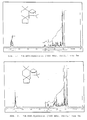
- the 1 H-NMR spectra of the compounds 5a , 5b (Fig. 1, 2) were interpreted in analogy to the assignments given by CW Greengrass and R. Ramage, Tetrahedron 31 , 689 (1975) for the ketones 4a , 4b .
- the new compounds of formula A are very well suited as fragrances due to their olfactory properties and their stability. They can advantageously be incorporated into perfume compositions of any odor type, both as one of the main components and in the trace area. The examples given are therefore not to be understood as restrictive.
- 5a from example 6 very woody with mossy amber character and fresh effect.
- 5b from example 7 woody, light-flowery, with a soft, earthy amber note, somewhat weaker than compound 5a .
- 6a / 6b / 6c / 6d from example 8): very woody, powdery, with a fresh amber effect.
- the perfume base of the specified formula has a balanced floral-woody fragrance character, which is significantly enhanced and harmonized by adding 32 parts 5a / 5b (80:20).
- the perfume base of the specified formula has a fresh, herbaceous fougere fragrance.
- the addition of 7.5 parts 6a / 6b / 6c / 6d results in a rounding off while emphasizing the amber woody note.
- the alternative addition of 7.5 parts 8a / 8b / 8c / 8d also results in a very desired rounding, while emphasizing animal-woody aspects.
- the perfume oil of the specified formula has a harmonious, floral-green fragrance character.
- the addition of 7.5 parts 5a / 5b or alternatively 7a / 7b / 7c / 7d results in a very desired rounding off with a very natural-looking odor.
Landscapes
- Chemical & Material Sciences (AREA)
- Organic Chemistry (AREA)
- Life Sciences & Earth Sciences (AREA)
- Engineering & Computer Science (AREA)
- Chemical Kinetics & Catalysis (AREA)
- Oil, Petroleum & Natural Gas (AREA)
- Wood Science & Technology (AREA)
- Fats And Perfumes (AREA)
- Cosmetics (AREA)
- Heterocyclic Compounds That Contain Two Or More Ring Oxygen Atoms (AREA)
- Organic Low-Molecular-Weight Compounds And Preparation Thereof (AREA)
Description
- Heutzutage bestehen industriell erzeugte Parfümöle zu einem großen Teil aus synthetischen Riechstoffen. Die traditionelle Verwendung von etherischen Ölen oder Extrakten pflanzlichen und tierischen Ursprungs ist immer noch wichtig auf dem Gebiet der alkoholischen Parfümerie. Die Parfümierung von Waschmitteln, Seifen, Haushaltsreinigern und ähnlichen Produkten stellt spezielle technische Probleme bezüglich der Stabilität der Riechstoffe bzw. der Haftfestigkeit. Solche Anforderungen können nur durch maßgeschneiderte Riechstoffe gelöst werden. Dementsprechend werden Parfümöle für technische Verbrauchsgüter im wesentlichen aus synthetischen Riechstoffen komponiert. Da derartige Parfümöle in großen Mengen benötigt werden, haben sich in den letzten Jahrzehnten alle bedeutenden Parfümhäuser bzw. Riechstoffhersteller mit der Erforschung entsprechender Riechstoffe beschäftigt.
- Seit etwa 10 Jahren ist mehr und mehr festzustellen, daß synthetische Riechstoffe, die aufgrund des niedrigen Preises und der hohen Stabilität für die technische Parfümerie geplant waren, und die entsprechend auch zunächst im Markt positioniert waren, inzwischen zunehmend Eingang in die Feinparfümerie gefunden haben. Parfümeure nutzen das parfümistische Know-how, das sie mit synthetischen Riechstoffen in ihren Arbeiten für technische Parfümerierungen gewonnen haben, auch für die Feinparfümerie, wenn entsprechende ästhetische Möglichkeiten vorliegen. Ein erfolgreicher neuer Riechstoff hat heutzutage folgenden Ansprüchen zu genügen: er sei
- 1. von olfaktorisch-ästhetisch hohem Wert und somit universell einsetzbar;
- 2. stabil in den meisten technischen Anwendungen;
- 3. preiswert bezüglich seines Preis-/Leistungsvermögens;
- 4. basierend auf allgemein verfügbaren Rohstoffen, möglichst nachwachsenden Rohstoffen.
- Ein solcher in großen Mengen verfügbarer Rohstoff natürlichen Ursprungs ist Longifolen (1), das als Hauptkomponente im indischen Terpentinöl und als Nebenkomponente in zahlreichen anderen Terpentinöl-Sorten sowie weiteren ätherischen Ölen vorkommt.
- Vor Ca. 20 Jahren sind von Forschungslaboratorien der Riechstoffindustrie eine Reihe von Folgeprodukten des Longifolens (1) hergestellt worden, die über Riechstoffeigenschaften verfügen. Wie G. Ohloff in seinem Buch "Riechstoffe und Geruchssinn" (Springer-Verlag, Berlin, 1990, ISBN-Nr. 3-540-52560-2, Seiten 87-88) zusammenfassend berichtet, stammen vom Longifolen (1) mindestens 4 kommerzielle Riechstoffe ab, während von dem durch Isomerisierungsreaktion aus Longifolen (1) zugänglichen Isolongifolen (2) nachweislich 13 Produkte gehandelt werden.
- Chemie und Geruchseigenschaften von Derivaten des Isolongifolens (2) werden von G. Färber und H. Tan zusammenfassend beschrieben:
"Riechstoffe aus Isolongifolen", G. Färber, Parfümerie & Kosmetik, 68, 18 (1987)
"Der Gebrauch von Riechstoffen aus Isolongifolenen in der Parfümerie", H. Tan, Parfümerie & Kosmetik, 67, 564 (1986)
Die aus Isolongifolen (2) durch Epoxidation, Prins-Reaktion (Umsetzen mit Formaldehyd) oder Allyloxidation zugänglichen Derivate gelten als die im Vergleich zu den Longifolen-Derivaten sensorisch wertvolleren Riechstoffe von warm-holzigem Geruchstyp, z. T. mit etwas Ambra-artigem Effekt (Ohloff loc. cit.). - Das durch Umsetzung von Isolongifolen (2) mit Persäuren zugängliche Epoxyd (3) läßt sich in bekannter Weise in Gemische der epimeren Ketone 4a/4b überführen, wobei diese Ketongemische in Abhängigkeit von den Produktionsbedingungen unterschiedliche Isomerenverteilungen und Geruchseffekte aufweisen. Das Keton 4a entsteht bevorzugt unter kinetischer Reaktionskontrolle, während das Keton 4b das thermodynamisch stabilere Epimere ist.

- Entsprechend dem beschriebenen Stand der Technik gilt dieses Gebiet der Riechstoffchemie als besonders gut untersucht. Neben einigen Longifolen- und Isolongifolen-Derivaten mit Riechstoff-Eigenschaften sind eine größere Zahl von solchen Derivaten ohne bzw. ohne besonderen olfaktorischen Wert bekannt. Es ist daher besonders überraschend, daß auf dem Gebiet der Longifolen-Derivate nunmehr neue, wertvolle Riechstoffe gefunden werden konnten, wie dies die hier beanspruchten neuen cyclischen Acetale der allgemeinen Formel A sind. Die Acetale der allgemeinen Formel A verfügen über ganz eigenständige olfaktorische Eigenschaften, die sich deutlich von den bekannten Riechstoffen aus Isolongifolen (2) abheben und diese auch übertreffen. Die neuen Verbindungen der allgemeinen Formel A besitzen stark holzige Geruchseigenschaften mit blumigfrischen Effekten und samtigem Moos-/Ambra-Charakter (siehe Beispiel 1); sie sind besonders langhaftend und fixierend.
- Zur Herstellung der Verbindungen der allgemeinen Formel A wurde Longifolen (1) in bekannter Weise durch Behandeln mit einem Gemisch aus Essigsäure und Schwefelsäure [U.R. Nayak, S. Dev, Tetrahedron 8, 42-48 (1960)] oder mit Bortrifluorid-Etherat [R.E. Beyler, G. Ourisson, J.Org.Chem. 30, 2838-2839 (1965)] zu Isolongifolen (2) isomerisiert. Das aus Isolongifolen (2) durch Epoxydation erhaltene Epoxid (3) [L.K. Lala, J.B. Hall, J.Org.Chem. 35, 1172, (1970); J.R. Prahlad, R. Ranganathan, W. Ramdas Nayak, T.S. Santhanakrishnan, S. Dev, Tetrahedron Lett. 8, 417 (1964)] wurde in bekannter Weise in das Gemisch der epimeren Ketone 4a/4b umgewandelt [R. Ranganathan, U.R. Nayak, T.S. Santhanakrishnan, S. Dev, Tetrahedron 26, 621 (1970)]. Bei der Epoxyd-Ringöffnung entstand unter den bekannten Reaktionsbedingungen (kinetische Kontrolle) ein an 4a angereichertes Ketongemisch 4a/4b (siehe Beispiel 2: 4a:4b = 96:4). Es ist bekannt, daß 4a unter dem Einfluß basischer Katalysatoren oder durch thermische Belastung in das thermodynamisch stabilere Keton 4b isomerisiert wird. In Abhängigkeit von den Reaktionsbedingungen werden Gleichgewichtsgemische aus 4a/4b erhalten [L.K. Lala, J. Org. Chem. 36, 2560-2561 (1971)].
- In unserem Beispiel 3 zeigen wir eine bisher nicht beschriebene Isomerisierung, die von einem Ketongemisch 4a/4b (96:4) zu einem an 4b besonders hoch angereicherten Gleichgewichtsgemisch 4a/4b (9:91) führte. Die Ketone 4a/4b sind durch destillative bzw. chromatographische Methoden auch in reiner Form isoliert und spektroskopisch charakterisiert worden [C.W. Greengrass, R. Ramage, Tetrahedron 31, 689-694 (1975)].
- Die neuen cyclischen Acetale der Formel A werden aus den Ketonen 4a, 4b, die in reiner bzw. angereicherter Form oder als Gleichgewichtsgemische vorlagen, in an sich bekannter Weise durch Umsetzen mit aliphatischen 1,2-Diolen unter Säurekatalyse und Wasserabscheidung dargestellt. Die Wasserabscheidung wurde bevorzugt unter Verwendung von als Schleppmittel geeigneten inerten Lösungsmitteln bei Siedetemperatur ausgeführt (Beispiele 5 - 10).
- Bei Verwendung verschiedener Lösungsmittel, beispielsweise Toluol, Cyclohexan, Benzin-Fraktionen oder n-Pentan entstehen die epimeren Ketale in unterschiedlichem Verhältnis (Beispiel 5). So wurden aus 4a/4b (86:14, aus Beispiel 2) bei Einwirkung von Ethylenglykol in Toluol die Ketale 5a/5b im Verhältnis 3:2 erhalten. Bei Verwendung von n-Pentan wurde selbst bei deutlich verlängerter Reaktionszeit ein Ketalgemisch 5a/5b im Verhaltnis 99:1 erhalten. Die Ketale der Formel A wurden wahlweise durch Destillation von gegebenenfalls noch vorhandenen Edukt-Keton 4a/4b getrennt.
- Das durch Basen-Katalyse equilibrierte Ketongemisch 4a/4b (9:91, aus Beispiel 3) wurde ebenfalls Ketalisierungsreaktionen unterzogen. Hierbei wurden ebenfalls in Abhängigkeit vom verwendeten Lösungsmittel unterschiedlich zusammengesetzte Ketalgemische 5a/5b erhalten, die sich jedoch von den aus dem Ketongemisch 4a/4b (86:14, aus Beispiel 2) erhaltenen Ketalgemischen 5a/5b bezüglich ihrer relativen Konzentrationen unterscheiden. Dieses Reaktionsverhalten kann durch kinetisch kontrollierte Reaktionsabläufe bei der Ketalisierung verstanden werden.
- In Analogie zu den Ketalen 5a/5b wurden durch Umsetzen von 4a/4b mit 1,2-Propandiol die Ketale 6a/6b/6c/6d, mit 1,2-Butandiol die Ketale 7a/7b/7c/7d, mit 2,3-Butandiol die Ketale 8a/8b/8c/8d jeweils als Gemisch erhalten. Die Methyl- oder Ethylgruppen des Ketalrestes können dabei α- oder β-konfiguriert sein.
- Es werden die Verbindungen 5a, 6a, 6c, 7a, 7c, 8a, 8c als 5β-konfiguriert und die Verbindungen 5b, 6b, 6d, 7b, 7d, 8b, 8d als 5α-konfiguriert festgelegt. Da ausgehend von (+)-Longifolen über die chiralen Ketone 4a/4b die ebenfalls chiralen Ketale der allgemeinen Formel A erhalten wurden, liegen diese als Gemisch von Epimeren (5a/5b), bzw. Diastereomeren vor; 6a/6b und 7a/7b sind konstitutionsisomer zu 6c/6d bzw. 7c,d. Ausgehend von (-)-Longifolen sind jeweils die enantiomeren Verbindungen 5a,b - 8a-d zugänglich.

- Da die Zusammensetzung der Ketalgemische von den Reaktionsbedingungen abhängt (Beispiel 5) und die einzelnen Diastereomeren in reiner Form gewonnen werden können (Beispiele 6, 7), sind beliebige Mischungsverhältnisse einstellbar.
- Die Strukturzuordnung der neuen Verbindungen 5 - 8 wurde aufgrund der spektroskopischen Meßergebnisse getroffen (Beispiele 5- 10). So wurden die ¹H-NMR-Spektren der Verbindungen 5a, 5b (Abb. 1, 2) in Analogie zu den von C.W. Greengrass und R. Ramage, Tetrahedron 31, 689 (1975) für die Ketone 4a, 4b gegebenen Zuordnungen interpretiert.
- Die neuen Verbindungen der Formel A sind aufgrund ihrer Geruchseigenschaften und ihrer Stabilität als Riechstoffe sehr gut geeignet. Sie können in Parfüm-Kompositionen beliebigen Geruchstyps sowohl als eine der Hauptkomponenten als auch im Spurenbereich vorteilhaft eingearbeitet werden. Die gegebenen Beispiele sind daher nicht einschränkend zu verstehen.
- Herstellung von Isolongifolen (2)
- Zu einer auf 60 °C erhitzten Lösung aus 90 g Toluol und 10 g (0,07 mol) BF₃-Etherat wurden innerhalb von 30 min 204 g (0,79 mol) Longifolen (1) (80 % ex Terpentinöl indisch [α]D = + 39,4°) zugetropft, 3 h bei 100 °C nachgerührt, danach auf Raumtemperatur heruntergekühlt und mit Sodalösung und Wasser neutralgewaschen. Nach Trocknung über Na₂SO₄ wurde das Lösungsmittel unter vermindertem Druck abdestilliert. Es verblieben 198 g (70,2 %ig nach GC) Rohprodukt.
Gaschromatogramm (HP 5890, DBWAX-30 N, 30 m, 150 °C - 240 °C, 8 °C/min). - Herstellung von Isolongifolanon-Gemisch 4a/4b (86:14)
- In einem Dreihalskolben mit Rückflußkühler und Tropftrichter wurden 198 g (0,68 mol) Isolongifolen (2) (70,2 %ig nach GC) aus Beispiel 1 80 g Toluol, 68 g (1,48 mol) Ameisensäure vorgelegt und auf 60 - 70 °C erhitzt. Anschließend wurden über einen Zeitraum von 1 Std. 136 g (1,4 mol) H₂O₂ (35 %ig) zugetropft. Nach 3 Std. Rühren bei 80 - 85 °C wurde auf Raumtemperatur heruntergekühlt und aufgearbeitet. Die abgetrennte organische Phase wurde mit Sodalösung und Wasser neutralgewaschen, über Na₂SO₄ getrocknet und das Lösungsmittel unter reduziertem Druck abdestilliert. Es verblieben 199 g Rohprodukt. GC 4a (71 %); 4b (2,5 %) [96 : 4].
- Eine Destillation über eine 15 cm Vigreux-Kolonne ergab 165 g rohes 4a/4b; Kp2mm 120 - 153 °C. GC: 4a (74 %), 4b (3 %).
- Anschließende Feindestillation über eine 50 cm Metallfüllkörperkolonne ergab: 110 g 4a/4b (74,4 % d. Th.) Kp2mm 137 - 141 °C; GC 4a (77 %), 4b (12,8 %) [86 : 14]
D 20/4 = 1,0037
n 20/D = 1,5006
[α] 20/D = - 8,5°
Gaschromatogramm: Bedingungen siehe Beispiel 1
GC/MS: HP 5970 DBWAX-60 N, 60 m 60 - 240 °C, 4°/min
4a Rt = 40,47′ - MS: m/e (%) =
- 220 (100, M⁺ ), 205 (41), 191 (82), 177 (41), 164 (62), 149 (50), 121 (56), 107 (40), 83 (27), 55 (21), 41 (17).
- MS: m/e (%) =
- 220 (69, M⁺ ), 205 (23), 191 (55), 177 (44), 164 (100), 149 (55), 121 (53), 107 (37), 91 (21), 55 (21), 41 (19).
- C-3-Epimerisierung von Isolongifolanon (4a/4b)
- In einem 4 l Dreihalskolben wurden 880 g (4 mol) rohes (undestilliertes) Ketongemisch 4a/4b aus Beispiel 2; (Reinheit nach GC: 4a (63,3 %), 4b (2,48 %) [96 : 4]); 750 g Methanol, 40 g (0,5 mol) NaOH 50 %ig vorgelegt und insgesamt 8 Std. unter Rückfluß gerührt. Nach dieser Zeit wurde mit 30 g (0,5 mol) Eisessig versetzt und auf Raumtemperatur abgekühlt. Nach dem Abdestillieren des Lösungsmittels unter vermindertem Druck wurde der Rückstand in Wasser aufgenommen. Die organische Phase wurde abgetrennt. Die wässerige Phase wurde mit 100 ml Benzin extrahiert. Die vereinigten organischen Phasen wurden mit Sodalösung und danach mit Wasser neutralgewaschen, über Na₂SO₄ getrocknet und vom Lösungsmittel unter vermindertem Druck befreit. Es verblieben 860 g dunkelbraunes Öl.
GC: 4a (6,3 %), 4b (59,3 %) [9 : 91] - C-3-Epimerisierung von reinem Isolongifolanon (4a/4b)
- In einem 2 l Dreihalskolben wurden 440 g (2 mol) feindestilliertes Ketongemisch 4a/4b aus Beispiel 2; (Reinheit nach GC: 4a (77 %), 4b (12,8 %) [86 : 14], 400 ml Methanol, 20 g (0,25 mol) NaOH 50%ig insgesamt 5 Std. unter Rückfluß gerührt. Nach dem Abkühlen auf Raumtemperatur versetzte man mit 15,5 g (0,25 mol) Eisessig und destillierte das Lösungsmittel unter vermindertem Druck ab.
- Der verbliebene Rückstand wurde in Wasser aufgenommen. Die organische Phase wurde abgetrennt und die wässerige Phase einmal mit 100 ml Benzin extrahiert. Die vereinigten organischen Phasen wurden mit Sodalösung und Wasser neutralgewaschen und eingeengt. Es verblieben 430 g braunes Öl.
GC: 4a (9,2 %), 4b (79,5 %) [1 : 9] - Destillation über eine 15 cm Vigreux-Kolonne ergab 411 g 4a/4b (Kp2mm 135 - 157 °C). Anschließende Feindestillation über eine 40 cm Metallfüllkörperkolonne ergab 399 g (90,7 % d.Th.) 4a/4b Kp2mm 139 - 142 °C.
GC: 4a (13,4 %), 4b (80,6 %) [14 : 86]
D 20/4 = 1,0042
n 20/D = 1,5007
[α] 20/D = - 34,7° - Umsetzung von Isolongifolanon 4a/4b mit Ethylenglycol
- In einem 1 l Dreihalskolben mit Wasserabscheider wurden jeweils 220 g (0,6 mol) Ketongemisch 4a/4b aus Beispiel 2, 3 oder 4, 186 g (3 mol) Ethylenglycol, 1 g p-Toluolsulfonsäure sowie 300 ml Lösungsmittel (Toluol, Cyclohexan, Benzin (63-80°C), n-Pentan) vorgelegt und 48 - 78 h bei Siedetemp. und unter Wasserabscheidung gerührt. Im Verlauf der Reaktion wurden jeweils ca. 20 ml Wasser abgeschieden.
- Nach dem Abkühlen auf Raumtemperatur wurde mit Sodalösung und Wasser neutralgewaschen, über Na₂SO₄ getrocknet und vom Lösungsmittel unter vermindertem Druck befreit. Man erzielt jeweils 245 - 265 g Rohprodukt als gelbes bzw. braunes Öl.
- Destillation über eine 15 cm Vigreux-Kolonne ergab jeweils ca. 230 g rohes 4a/4b (Kp2mm 68 - 170 °C). Die anschließende Feindestillation über eine 40 cm Metallfüllkörperkolonne ergab jeweils ca. 140 g (53 % d. Th.) 5a/5b als hellgelbes Öl.
- Die Ergebnisse sind in Tabelle 1 zusammengefaßt.

- Gewinnung von 5-Ethylendioxi-3β-H-isolongifolan (5a)
- 20 g feindestilliertes Ketalgemisch aus Beispiel 5b; (Reinheit nach CC: 5a (84,6 %), 5b (14,3 %) [86:14], wurden an einer 1 m Drehbandkolonne nochmals feindestilliert. Dabei wurden 2,8 g 5a als hellgelbes Öl erhalten, Kp2mm 142 - 143 °C.
GC: 5a (98 %), 5b (0,8 ) [99:1]
D 20/4 = 1,0510
n 20/D = 1,5051
GC/MS: Bedingungen siehe Beispiel 2
5a Rt 42.94′ - MS: m/e (%) =
- 264 (23, M⁺ ), 249 (9), 235 (19), 195 (20), 165 (23), 127 (42), 99 (100), 55 (10).
- ¹³C-NMR (CDCl₃), Varian VXR-300): δ [ppm] = 21.86, 23.39, 26.79, 33.89 (CH₃), 21.06, 25.75, 32.76, 35.89, 37.95, 61.84, 63.71 (CH₂), 48.94, 52.48 (CH), 33.21, 37.67, 56.42, 112.23 (C).
- Isolierung von 5-Ethylendioxi-3α-H-isolongifolan (5b)
- 1 g rohes Ketalgemisch aus Beispiel 5d (Reinheit nach GC: 5a (35,6 %), 5b (35,1 % [1:1]), wurden durch mehrfache (3 x) Flash-Chromatographie gereinigt.
- Chromatographiebedingungen:
150 g Kieselgel 60, Korngröße 0,04 - 0,063 mm, (Fa. Merck, Art.-Nr. 9385).
Laufmittel: Benzin / Essigester = 95 / 5
Einwaage: 1 g
Ausbeute: 78 mg; GC: 5a (3 %), 5b (90 %) [3:97]
GC/MS: Bedingungen siehe Beispiel 2
5b Rt 44,67′ - MS: m/e (%) =
- 264 (9, M⁺ ), 249 (1), 235 (1), 221 (2), 191 (1), 149 (2), 127 (9), 99 (100), 55 (6), 41 (3).
- ¹³C-NMR (CDCl₃), Varian VXR-300): δ [ppm] = 25.51, 26.72, 26.93, 31.09 (CH₃), 26.01, 30.41, 31.65, 36.90, 37.56, 61.38, 63.05 (CH₂), 49.53, 56.89 (CH), 32.46, 40.99, 56.63, 111.78 (C).
- Herstellung von 5-(1′-Methylethylendioxi)-isolongifolan 6a/6b/6c/6d
- In einem 4 l-Dreihalskolben mit Wasserabscheider wurden 440 g (2 mol) feindestilliertes Ketongemisch 4a/4b aus Beispiel 2 (Reinheit nach GC: 4a (77 %), 4b (12,8 %) [86 : 14], 760 g (10 mol) Propylenglycol-1.2, 600 ml Toluol, 2 g p-Toluolsulfonsäure vorgelegt und 30 Std. unter Rückfluß gerührt. Nach dem Abkühlen auf Raumtemperatur wurde mit Sodalösung und Wasser neutralgewaschen, über Na₂SO₄ getrocknet und das Lösungsmittel unter vermindertem Druck abdestilliert. Es verblieben 540 g hellbraunes Rohprodukt.
- Eine Destillation über eine 15 cm Vigreux-Kolonne ergab 298 g (53,6 % d. Th.) 6a/6b/6c/6d; Kp2mm 158 - 162 °C .
GC/MS: Bedingungen siehe Beispiel 2
Rt 41.11′ - MS: m/e (%) =
- 278 (21, M+), 263 (19), 249 (40), 179 (41), 141 (39), 113 (100), 83 (20), 55 (31).
- MS: m/e (%) =
- 278 (29, M⁺ ), 263 (22), 249 (55), 209 (40), 179 (49), 141 (42), 113 (100), 83 (21), 55 (31).
- MS: m/e (%) =
- 278 (23, M⁺ ), 263 (21), 249 (44), 209 (35), 179 (47), 141 (39), 113 (100), 83 (21), 55 (34).
- MS: m/e (%) =
- 278 (29, M⁺ ), 263 (21), 249 (51), 209 (37), 179 (47), 141 (44), 113 (100), 83 (21), 55 (26).
- Herstellung von 5-(1′-Ethyl-ethylendioxi)-isolongifolan 7a/7b/7c/7d
- In einem 1 l Dreihalskolben mit Wasserabscheider wurden 220 g (1 mol) feindestilliertes Ketongemisch 4a/4b aus Beispiel 2 (Reinheit nach GC: 4a (77 %), 4b (12,8 %) [86 : 14]), 270 g (3 mol) 1,2-Butandiol, 300 ml Cyclohexan, 1 g p-Toluolsulfonsäure insgesamt 50 Std. unter Rückfluß gerührt. Nach dem Herunterkühlen auf Raumtemperatur wurde mit Sodalösung und Wasser neutralgewaschen, über Na₂SO₄ getrocknet. Nach Abdestillieren des Lösungsmittels unter vermindertem Druck verblieben 328 g hellbraunes Öl.
- Eine anschließende Destillation an einer 15 cm Vigreux-Kolonne ergab 195 g (66,8 % d. Th.) 7a/7b/7c/7d; Kp2mm 152 - 157 °C als hellgelbes Öl.
GC/MS: Bedingungen siehe Beispiel 2
Rt 42,55′ - MS: m/e (%) =
- 292 (16, M⁺ ), 277 (15), 263 (37), 223 (27), 193 (28),155 (26), 127 (100), 83 (13), 55 (43).
- MS: m/e (%) =
- 292 (32, M⁺ ), 277 (25), 263 (56), 223 (48), 193 (41), 155 (37), 127 (100), 83 (17), 55 (49).
- MS: m/e (%) =
- 292 (19, M⁺ ), 277 (19), 263 (42), 223 (45), 193 (34), 155 (28), 127 (100), 83 (13), 55 (50).
- MS: m/e (%) =
- 292 (32, M⁺ ), 277 (24), 263 (57), 223 (43), 193 (41), 155 (43), 127 (100), 83 (17), 55 (50).
- Herstellung von 5-(1′,2′-Dimethyl-ethylendioxi)-isolongifolan 8a/8b/8c/8d
- In einem 1 l Dreihalskolben mit Wasserabscheider wurden 220 g (1 mol) feindestilliertes Ketongemisch 4a/4b aus Beispiel 2; Reinheit nach GC 4a = 77 %; 4b = 12,8 % (86 : 14); 270 g (3 mol) 2,3-Butandiol, 300 ml Cyclohexan, 1 g p-Toluolsulfonsäure insgesamt 50 Std. unter Rückfluß gerührt. Nach dem Herunterkühlen auf Raumtemperatur wurde mit Sodalösung und Wasser neutralgewaschen, über Na₂SO₄ getrocknet und das Lösungsmittel unter vermindertem Druck abdestilliert. Es verblieben 275 g hellbraunes Rohprodukt.
- Eine Destillation über eine 15 cm Vigreux-Kolonne ergab 211 g (72,2 % d. Th.) 8a/8b/8c/8d Kp2.5mm 158 - 162 °C als hellgelbes Öl.
D 20/4 = 1,0115
n 20/D = 1,4975
GC/MS: Bedingungen siehe Beispiel 2
Rt 39,69′ - MS: m/e (%) =
- 292 (41, M⁺ ), 277 (25), 263 (57), 223 (50), 193 (49), 155 (50), 127 (100), 83 (20), 55 (29).
- MS: m/e (%) =
- 292 (47, M⁺ ), 277 (30), 263 (63), 223 (59), 193 (53), 155 (51), 127 (100), 83 (20), 55 (35).
- MS: m/e (%) =
- 292 (16, M⁺ ), 277 (14), 263 (28), 223 (28), 193 (26), 155 (25), 127 (100), 83 (15), 55 (28).
- MS: m/e (%) =
- 292 (56, M⁺ ), 277 (40), 263 (91), 223 (78), 193 (66), 155 (64), 127 (100), 83 (38), 55 (41).
- Geruchsbeschreibungen der Ketale 5 bis 8
- Die Geruchsbewertung wurde von einem Expertengremium anhand 10 %iger ethanolischer Lösung unter Verwendung von Riechstreifen vorgenommen.
5a/5b [86 : 14] aus Beispiel 5b:
stark, süß-holzig, mit samtigem Ambra-Charakter und blumigen Aspekten.
5a aus Beispiel 6:
stark holzig mit moosigem Ambra-Charakter und frischem Effekt.
5b aus Beispiel 7:
holzig, hell-blumig, mit weich-erdiger Ambra-Note, etwas schwächer als Verbindung 5a.
6a/6b/6c/6d (aus Beispiel 8):
stark holzig, pudrig, mit frischem Ambra-Effekt.
7a/7b/7c/7d (aus Beispiel 9):
trocken, holzig
8a/8b/8c/8d (aus Beispiel 10):
stark holzig, mit moosigen, erdigen sowie süß-animalischen Aspekten. - Alle Verbindungen verfügen über einen starken Nachgeruch, der mehrere Wochen anhält.
- Parfümbase blumig-holzigen Typs

- Die Parfümbase der angegebenen Formel besitzt einen ausgewogenen blumig-holzigen Duftcharakter, der durch Zugabe von 32 Teilen 5a/5b (80:20) deutlich verstärkt und harmonisiert wird.
- Parfümbase vom Fougere-Typ

- Die Parfümbase der angegebenen Formel besitzt einen frisch-krautigen Fougere-Duft. Die Zugabe von 7,5 Teilen 6a/6b/6c/6d ergibt eine Abrundung unter gleichzeitiger Betonung der ambriert holzigen Note. Die alternative Zugabe von 7,5 Teilen 8a/8b/8c/8d ergibt ebenfalls eine sehr gewünschte Abrundung unter gleichzeitiger Betonung von animalisch-holzigen Aspekten.
- Akkord vom grün-blumigen Typ

- Das Parfümöl der angegebenen Formel besitzt einen harmonischen, blumig-grünen Duftcharakter. Durch Zugabe von 7,5 Teilen 5a/5b bzw. alternativ hierzu 7a/7b/7c/7d resultiert in einer sehr gewünschten Abrundung bei gleichzeitig sehr natürlich wirkendem Geruchscharakter.
4b Rt = 41,41′
¹H-NMR: siehe Abb. 1
¹H-NMR: siehe Abb. 2
Rt 42,03′
Rt 42,11′
Rt 42,47′
Rt 43,37′
Rt 43,66′
Rt 44,29′
Rt 40,14′
Rt 42,76′
Rt 43,36′
Claims (3)
- Cyclische Isolongifolanon-Ketale der allgemeinen Formel A, wobei geschlängelte Linien α- und β-Konfiguration, und R,R′ jeweils Wasserstoff-, Methyl- oder Ethylreste bedeuten,

R=R′ =H
R=H, R′=Me/R=Me, R′=H
R=H, R′=Et/R=Et, R′=H
R=R′ =Me(α,β). - Verfahren zur Herstellung der Verbindungen der allgemeinen Formel A, dadurch gekennzeichnet, daß man in an sich bekannter Weise aus Longifolen erhaltenes Isolongifolen zu Isolongifolan-3-on oxidiert und dies mit aliphatischen 1,2-Diolen unter Wasserabscheidung in apolaren Lösungsmitteln umsetzt.
- Verwendung der Verbindungen der allgemeinen Formel A als Riechstoffe oder Bestandteile von Riechstoff-Mischungen bzw. Parfümölen zur Parfümierung von kosmetischen oder technischen Gebrauchsgütern.
Applications Claiming Priority (2)
| Application Number | Priority Date | Filing Date | Title |
|---|---|---|---|
| DE4138732A DE4138732A1 (de) | 1991-11-19 | 1991-11-19 | Cyclische isolongifolanon-ketale, ihre herstellung und ihre verwendung |
| DE4138732 | 1991-11-19 |
Publications (2)
| Publication Number | Publication Date |
|---|---|
| EP0543470A1 EP0543470A1 (de) | 1993-05-26 |
| EP0543470B1 true EP0543470B1 (de) | 1994-08-10 |
Family
ID=6445540
Family Applications (1)
| Application Number | Title | Priority Date | Filing Date |
|---|---|---|---|
| EP92250289A Expired - Lifetime EP0543470B1 (de) | 1991-11-19 | 1992-10-09 | Cyclische Isolongifolanon-Ketale, ihre Herstellung und ihre Verwendung |
Country Status (5)
| Country | Link |
|---|---|
| US (2) | US5260459A (de) |
| EP (1) | EP0543470B1 (de) |
| JP (1) | JP2674446B2 (de) |
| DE (2) | DE4138732A1 (de) |
| ES (1) | ES2057958T3 (de) |
Families Citing this family (7)
| Publication number | Priority date | Publication date | Assignee | Title |
|---|---|---|---|---|
| DE4406467A1 (de) * | 1994-02-23 | 1995-08-24 | Dragoco Gerberding Co Ag | Isolongifolanol-Derivate, ihre Herstellung und ihre Verwendung |
| US6096704A (en) * | 1997-03-21 | 2000-08-01 | Bryant, Jr.; Lonnie Liddell | Pro-fragrance compound |
| US7579016B2 (en) | 2007-07-13 | 2009-08-25 | The United States Of America As Represented By The Secretary Of Agriculture | Methods for repelling arthropods using isolongifolenone analogs |
| GB0812006D0 (en) * | 2008-07-01 | 2008-08-06 | Givaudan Sa | Organic compounds |
| WO2016019074A1 (en) | 2014-07-30 | 2016-02-04 | Georgia-Pacific Consumer Products Lp | Air freshener dispensers, cartridges therefor, systems, and methods |
| FR3030520B1 (fr) | 2014-12-18 | 2016-12-23 | V Mane Fils | Nouveaux acetals de la 1-(3,3-dimethylcyclohex-1-enyl)ethanone, leur procede de preparation ainsi que leur utilisation en parfumerie |
| US10952434B2 (en) * | 2016-12-30 | 2021-03-23 | The United States Of America, As Represented By The Secretary Of Agriculture | Compositions and methods for attracting insects |
Family Cites Families (10)
| Publication number | Priority date | Publication date | Assignee | Title |
|---|---|---|---|---|
| GB1197579A (en) * | 1967-10-30 | 1970-07-08 | Bush Boake Allen Ltd | Perfumery Compositions |
| US3718698A (en) * | 1969-11-24 | 1973-02-27 | Int Flavors & Fragrances Inc | Isolongifolene processes and product |
| GB1434035A (en) * | 1972-07-20 | 1976-04-28 | Naarden International Nv | Process for the preparation of sesquiterpene ketones |
| DE2455761C2 (de) * | 1974-11-26 | 1982-04-22 | Haarmann & Reimer Gmbh, 3450 Holzminden | Verwendung von hydrierten Methyljononen und deren Derivaten als Riechstoffe, Verfahren zu ihrer Herstellung und neue hydrierte Methyljononderivate |
| GB1505821A (en) * | 1975-04-01 | 1978-03-30 | Bush Boake Allen Ltd | Isolongifolene derivatives and their use in perfumery compositions |
| DE3067981D1 (en) * | 1979-12-29 | 1984-06-28 | Nippon Petrochemicals Co Ltd | Substituted norbornanone acetals, process for preparing the same, and perfume compositions containing the same |
| DE3004661A1 (de) * | 1980-02-08 | 1981-08-13 | Henkel KGaA, 4000 Düsseldorf | Verwendung alkylsubstituierter 1,3-dioxolane als riechstoffe, sowie diese enthaltende riechstoffkompositionen |
| EP0266648B1 (de) * | 1986-11-03 | 1993-01-20 | Roure S.A. | Polysubstituierte Norkarane |
| JPS63146838A (ja) * | 1986-12-11 | 1988-06-18 | Japan Tobacco Inc | アルデヒド又はケトンのアセタ−ル化法 |
| EP0379981B1 (de) * | 1989-01-27 | 1993-04-07 | L. GIVAUDAN & CIE Société Anonyme | Acetale von Oxo-tetralinen und von Oxo-indanen |
-
1991
- 1991-11-19 DE DE4138732A patent/DE4138732A1/de not_active Withdrawn
-
1992
- 1992-10-09 DE DE59200365T patent/DE59200365D1/de not_active Expired - Lifetime
- 1992-10-09 EP EP92250289A patent/EP0543470B1/de not_active Expired - Lifetime
- 1992-10-09 ES ES92250289T patent/ES2057958T3/es not_active Expired - Lifetime
- 1992-11-18 JP JP4331235A patent/JP2674446B2/ja not_active Expired - Fee Related
- 1992-11-18 US US07/978,239 patent/US5260459A/en not_active Expired - Lifetime
-
1993
- 1993-09-08 US US08/117,999 patent/US5426095A/en not_active Expired - Lifetime
Also Published As
| Publication number | Publication date |
|---|---|
| ES2057958T3 (es) | 1994-10-16 |
| EP0543470A1 (de) | 1993-05-26 |
| DE4138732A1 (de) | 1993-05-27 |
| JPH05262757A (ja) | 1993-10-12 |
| US5260459A (en) | 1993-11-09 |
| JP2674446B2 (ja) | 1997-11-12 |
| DE59200365D1 (de) | 1994-09-15 |
| US5426095A (en) | 1995-06-20 |
Similar Documents
| Publication | Publication Date | Title |
|---|---|---|
| CH622762A5 (de) | ||
| DE19704484A1 (de) | Cyclische Cedren-Acetale, ihre Herstellung und ihre Verwendung | |
| DE69527045T2 (de) | Tetrahydrofurane und tetrahydropyrane | |
| EP0669308B1 (de) | Isolongifolanol-Derivate, ihre Herstellung und ihre Verwendung | |
| DE4138732A1 (de) | Cyclische isolongifolanon-ketale, ihre herstellung und ihre verwendung | |
| EP0021356B1 (de) | 4(5)-Acetyl-7,7,9(7,9,9)-trimethyl-bicyclo(4.3.0)-non-1-en, dessen Herstellung und Verwendung als Riechstoff, sowie dieses enthaltende Riechstoffkompositionen | |
| EP1178105B1 (de) | Isolongifolenylether, ihre Herstellung und ihre Verwendung | |
| EP0002510B1 (de) | Cyclohexane, Verfahren zu deren Herstellung, deren Verwendung und diese enthaltende Kompositionen | |
| DE2756772C2 (de) | ||
| DE2504618C3 (de) | Spiranderivate, Verfahren zu deren Herstellung, und die Verwendung dieser Verbindungen als Riech- bzw Aromastoffe | |
| DE69812997T2 (de) | Reaktion von alkenen mit epoxiden, die produkte davon und ihre verwendung als riechstoffe | |
| EP0282795B1 (de) | 2-Alkyliden-3,3,5(3,5,5)-trimethylcyclopentanone als Riechstoffe | |
| EP0003515B1 (de) | Neue Megastigman-4,7-oxyde (I) und neue 7-Oxabicyclo(3.3.0)-octane (II), Verfahren zur Herstellung von (I) und (II), Verwendung von (I) und (II) als Riech- und/oder Geschmackstoffe sowie Riech- und/oder Geschmackstoffkompositionen mit einem Gehalt an (I) oder (II) | |
| DE2107413C3 (de) | Substituierte hydrierte 2-Hydroxy- bzw. 2-Oxo-naphthaline, ihre Herstellung u. diese enthaltende Riech- und/oder Geschmackstoffkompositionen | |
| EP0053717B1 (de) | Terpenderivate, deren Herstellung, Verwendung als Riechstoffe sowie diese enthaltende Riechstoffkompositionen | |
| EP0302993A1 (de) | Methylcyclododecatrien-1-ole, Verfahren zu ihrer Herstellung und ihre Verwendung | |
| DE2902140C2 (de) | Cyclohexyl-pentanolide enthaltende Riechstoffe bzw. Riechstoffkompositionen, Verfahren zu deren Herstellung und 4-Cyclohexyl-pentanolid | |
| EP0330995B1 (de) | Bicyclische Aether | |
| EP0120290B1 (de) | Oxaspirododecan-Derivate, deren Herstellung und Verwendung als Riechstoffe sowie diese enthaltende Riechstoffkompositionen | |
| DE2209372C2 (de) | 3 Oxa bicyclo eckige Klammer auf 10 3 0 eckige Klammer zu pentadecen (6) und ein Verfahren zu dessen Her stellung sowie dessen Verwendung als Riechstoff | |
| EP0091033B1 (de) | Trimethylbicyclo(4.3.0)non-1-en-Derivate, deren Herstellung und Verwendung als Riechstoffe, sowie diese enthaltende Riechstoffkompositionen | |
| EP0586442B1 (de) | Verwendung isomerer 1,1,1-trialkyl-2-phenyl-ethan-derivate als riechstoffe, sowie diese enthaltende riechstoffkompositionen | |
| EP1485350B1 (de) | Verwendung von ungesättigten ketone als riechstoffe | |
| DE3815259A1 (de) | Isomere formyl-trimethylbicyclo(2.2.2)oct-7-ene | |
| DE2353148A1 (de) | Neue riechstoffe |
Legal Events
| Date | Code | Title | Description |
|---|---|---|---|
| PUAI | Public reference made under article 153(3) epc to a published international application that has entered the european phase |
Free format text: ORIGINAL CODE: 0009012 |
|
| AK | Designated contracting states |
Kind code of ref document: A1 Designated state(s): CH DE ES FR GB LI NL |
|
| 17P | Request for examination filed |
Effective date: 19930902 |
|
| 17Q | First examination report despatched |
Effective date: 19930104 |
|
| RAP1 | Party data changed (applicant data changed or rights of an application transferred) |
Owner name: DRAGOCO GERBERDING & CO AKTIENGESELLSCHAFT |
|
| GRAA | (expected) grant |
Free format text: ORIGINAL CODE: 0009210 |
|
| AK | Designated contracting states |
Kind code of ref document: B1 Designated state(s): CH DE ES FR GB LI NL |
|
| ET | Fr: translation filed | ||
| REF | Corresponds to: |
Ref document number: 59200365 Country of ref document: DE Date of ref document: 19940915 |
|
| REG | Reference to a national code |
Ref country code: ES Ref legal event code: FG2A Ref document number: 2057958 Country of ref document: ES Kind code of ref document: T3 |
|
| GBT | Gb: translation of ep patent filed (gb section 77(6)(a)/1977) |
Effective date: 19941104 |
|
| PLBE | No opposition filed within time limit |
Free format text: ORIGINAL CODE: 0009261 |
|
| 26N | No opposition filed | ||
| REG | Reference to a national code |
Ref country code: GB Ref legal event code: IF02 |
|
| REG | Reference to a national code |
Ref country code: CH Ref legal event code: PFA Owner name: SYMRISE GMBH & CO. KG Free format text: DRAGOCO GERBERDING & CO. AKTIENGESELLSCHAFT#DRAGOCOSTRASSE 1#D-37603 HOLZMINDEN (DE) -TRANSFER TO- SYMRISE GMBH & CO. KG#MUEHLENFELDSTRASSE 1#37603 HOLZMINDEN (DE) |
|
| PGFP | Annual fee paid to national office [announced via postgrant information from national office to epo] |
Ref country code: NL Payment date: 20031020 Year of fee payment: 12 |
|
| PGFP | Annual fee paid to national office [announced via postgrant information from national office to epo] |
Ref country code: CH Payment date: 20031027 Year of fee payment: 12 |
|
| REG | Reference to a national code |
Ref country code: ES Ref legal event code: PC2A |
|
| REG | Reference to a national code |
Ref country code: FR Ref legal event code: CD Ref country code: FR Ref legal event code: CA |
|
| NLT1 | Nl: modifications of names registered in virtue of documents presented to the patent office pursuant to art. 16 a, paragraph 1 |
Owner name: SYMRISE GMBH & CO. KG |
|
| PG25 | Lapsed in a contracting state [announced via postgrant information from national office to epo] |
Ref country code: LI Free format text: LAPSE BECAUSE OF NON-PAYMENT OF DUE FEES Effective date: 20041031 Ref country code: CH Free format text: LAPSE BECAUSE OF NON-PAYMENT OF DUE FEES Effective date: 20041031 |
|
| PG25 | Lapsed in a contracting state [announced via postgrant information from national office to epo] |
Ref country code: NL Free format text: LAPSE BECAUSE OF NON-PAYMENT OF DUE FEES Effective date: 20050501 |
|
| REG | Reference to a national code |
Ref country code: CH Ref legal event code: PL |
|
| NLV4 | Nl: lapsed or anulled due to non-payment of the annual fee |
Effective date: 20050501 |
|
| PGFP | Annual fee paid to national office [announced via postgrant information from national office to epo] |
Ref country code: ES Payment date: 20071026 Year of fee payment: 16 |
|
| REG | Reference to a national code |
Ref country code: ES Ref legal event code: FD2A Effective date: 20081010 |
|
| PG25 | Lapsed in a contracting state [announced via postgrant information from national office to epo] |
Ref country code: ES Free format text: LAPSE BECAUSE OF NON-PAYMENT OF DUE FEES Effective date: 20081010 |
|
| PGFP | Annual fee paid to national office [announced via postgrant information from national office to epo] |
Ref country code: DE Payment date: 20101105 Year of fee payment: 19 |
|
| PGFP | Annual fee paid to national office [announced via postgrant information from national office to epo] |
Ref country code: GB Payment date: 20101021 Year of fee payment: 19 |
|
| PGFP | Annual fee paid to national office [announced via postgrant information from national office to epo] |
Ref country code: FR Payment date: 20111103 Year of fee payment: 20 |
|
| REG | Reference to a national code |
Ref country code: DE Ref legal event code: R071 Ref document number: 59200365 Country of ref document: DE |
|
| REG | Reference to a national code |
Ref country code: DE Ref legal event code: R071 Ref document number: 59200365 Country of ref document: DE |
|
| REG | Reference to a national code |
Ref country code: GB Ref legal event code: PE20 Expiry date: 20121008 |
|
| PG25 | Lapsed in a contracting state [announced via postgrant information from national office to epo] |
Ref country code: GB Free format text: LAPSE BECAUSE OF EXPIRATION OF PROTECTION Effective date: 20121008 |