EP0530926B1 - Dental filling composition - Google Patents
Dental filling composition Download PDFInfo
- Publication number
- EP0530926B1 EP0530926B1 EP92202688A EP92202688A EP0530926B1 EP 0530926 B1 EP0530926 B1 EP 0530926B1 EP 92202688 A EP92202688 A EP 92202688A EP 92202688 A EP92202688 A EP 92202688A EP 0530926 B1 EP0530926 B1 EP 0530926B1
- Authority
- EP
- European Patent Office
- Prior art keywords
- particles
- particle size
- filling composition
- weight
- composition
- Prior art date
- Legal status (The legal status is an assumption and is not a legal conclusion. Google has not performed a legal analysis and makes no representation as to the accuracy of the status listed.)
- Expired - Lifetime
Links
Classifications
-
- A—HUMAN NECESSITIES
- A61—MEDICAL OR VETERINARY SCIENCE; HYGIENE
- A61K—PREPARATIONS FOR MEDICAL, DENTAL OR TOILETRY PURPOSES
- A61K6/00—Preparations for dentistry
- A61K6/15—Compositions characterised by their physical properties
- A61K6/17—Particle size
-
- A—HUMAN NECESSITIES
- A61—MEDICAL OR VETERINARY SCIENCE; HYGIENE
- A61K—PREPARATIONS FOR MEDICAL, DENTAL OR TOILETRY PURPOSES
- A61K6/00—Preparations for dentistry
- A61K6/80—Preparations for artificial teeth, for filling teeth or for capping teeth
- A61K6/884—Preparations for artificial teeth, for filling teeth or for capping teeth comprising natural or synthetic resins
- A61K6/887—Compounds obtained by reactions only involving carbon-to-carbon unsaturated bonds
Definitions
- the present invention relates to a dental filling composition
- a dental filling composition comprising a polymerizable monomer and an inorganic filler, more specifically a dental filling composition in which a content of an inorganic filler is high and which, upon curing, has excellent surface gloss and smoothness ,and mechanical strength, and transparency comparable to that of natural teeth.
- Dental filling compositions comprising polymerizable monomers and inorganic fillers were used to repair teeth damaged by dental caries, etc. It was also tried to apply such dental filling compositions in inlays and crowns.
- a filling composition proposed in an early period contained an inorganic powdery filler with a particle size of 5 to 100 ⁇ m.
- This composition has a large content of the filler and, upon polymerization curing, excellent mechanical strength.
- smoothness of the cured surface is insufficient due to the large particles present. Even after finish polishing, the polished surface feels rough and seems less bright.
- crushed natural silica in which large particles were removed to adjust the largest particle size below 10 ⁇ m was used, and smoothness of the surface was surely improved, but gloss was still insufficient, a content of the filler was at most 70 to 80 % by weight, and mechanical strength was unsatisfactory yet.
- the ultra-fine silica has an extremely large specific surface area and, therefore, its content is so small as 40 to 50 % by weight, resulting in high water absorption and high heat expansion of a cured product.
- a dental filling composition which contained synthesized spherical silica having a narrow particle size distribution with a particle size range of from 0.1 to 1.0 ⁇ m (Japanese Patent Application Laid-Open Sho-58-41810/1983).
- a filler content is only approximately 75 % by weight, and the cured composition is low in mechanical strength such as bending strength and Knoop hardness number.
- mechanical strength was improved by the use of at least two groups of spherical inorganic oxide particles having different average particle sizes and being, however, in a particle size range of 0.1 to 1.0 ⁇ m (Japanese Patent Application Laid-Open Sho-58-152804/1983).
- the mixture of these small particles has a large specific surface area and, therefore, the cured composition has a bending strength of only 900 kg/cm2 and a filler content of 80 wt. % at most, which are insufficient for a dental filling composition.
- a dental composite composition in which a filler comprised particles of an average size of 1.0 to 100 ⁇ m and particles having a narrow particle size distribution with a particle size range of 0.1 to 1.0 ⁇ m. It is said that the composition has so good flowability as to quickly penetrate into dentinal tubuli to yield a high content of the filler in the tubuli (Japanese Patent Application Laid-Open Sho-61-148109/1986).
- the main purpose of that invention is good flowability to attain a high filler content in tubuli.
- the bending strength is so small as 1,000 kg/cm2 at most. It is believed that its surface smoothness is insufficient just as in the aforesaid hybrid type one, due to the existence of the larger particles, e.g., particles of an average size of 5 to 18 ⁇ m in the Examples.
- a composition comprising synthesized silica and acrylic monomers has many advantages such as stable availability of the raw materials, high mechanical strength after cured and good stability with time of the composition, but a refraction index of the synthesized silica differs much from that of acrylic polymers and, therefore, a cured composition has low transparency. It was difficult to attain transparency comparable to that of natural teeth without ultra-fine silica.
- a dental restorative composition which composition is said to have an improved hydrolytic stability, resistance to debonding at the filler/polymer interface and resistance to the formation and propagation of microfractures in the composite.
- the filler comprises about 23% of inorganic oxide having a particle size of from 1.0 to 5.0 ⁇ m; about 53% of inorganic oxide having a particle size of less than 1.0 ⁇ m and about 24% of inorganic oxide having an average particle size of 0.05 ⁇ m.
- EP-A-0 156 105 provides a dental composition having improved X-ray opacity and an improved polishability.
- the composition comprises a filler comprising 5-20% of inorganic particles having a particle size distribution between 0.5 and 40 ⁇ m; inorganic particles having a particle size distribution between 0.2 and 15 ⁇ m; and a microfiller having a particle size distribution of 0.005-0.15 ⁇ m.
- a dental filling composition has not yet been obtained which, upon curing, has well-balanced properties, that is, mechanical strength, smoothness and gloss of the surface and transparency comparable to that of natural teeth.
- the present invention provides a dental filling composition
- a dental filling composition comprising a polymerizable monomer and an inorganic filler, characterized in that the inorganic filler comprises
- Any polymerizable monomers may be used in the invention as far as they can be used in a dental filling composition.
- Polymerizable vinyl monomers are preferred, such as those having acrylic and/or methacrylic groups. More specifically, these include esters of ⁇ -cyanoacrylic acid, (meth)acrylic acid, urethane (meth)acrylic acid, crotonic acid, cinnamic acid, sorbic acid, maleic acid and itaconic acid with mono- or di- hydric alcohols; (meth)acryl amides such as N-isobutyl acrylamide; vinyl esters of carboxylic acids such as vinyl acetate; vinyl ethers such as butyl vinyl ether; mono-N-vinyl compounds such as N-vinyl pyrrolidone; and styrene and its derivatives. Particularly preferred are monofunctional or polyfunctional (meth)acrylic esters and urethane (meth)acrylic esters as stated below.
- R represents a hydrogen atom or a methyl group, and n is an integer of from 3 to 20, such as di(meth)acrylates of propanediol, butanediol, hexanediol, octanediol, nonanediol, decanediol and eicosanediol; compounds represented by the general formula: wherein R represents a hydrogen atom or a methyl group, and n is an integer of from 1 to 14, such as di(meth)acrylates of ethylene glycol, diethylene glycol, triethylene glycol, tetraethylene glycol, dodecaethylene glycol, tetradecaethylene glycol, propylene glycol, dipropylene glycol and tetradecapropylene glycol; and glycerin di(meth)acrylate, 2,2'-bis[p-( ⁇ -methacryloxy- ⁇ -hydroxypropoxy)phenyl propane
- Trimethylolpropane tri(meth)acrylate and pentaerythritol tetra(meth)acrylate Trimethylolpropane tri(meth)acrylate and pentaerythritol tetra(meth)acrylate.
- Reaction products of two moles of (meth)arylate monomer having a hydroxy group with one mole of diisocyanate, and reaction products of a urethane prepolymer having two NCO end groups with a (meth)acrylate monomer having a hydroxy group such as those represented by the general formula: wherein R1 represents a hydrogen atom or a methyl group, R2 represents an alkylene group and R3 represent an organic radical.
- vinyl monomers may be used alone or as their mixture as needed.
- a polymerization initiator may be contained in the present composition as needed. Any known polymerization initiators may be used. Polymerization may be promoted by camphorquinone and light energy, or a combination of peroxide with a promotor.
- the other essential component in the present dental filling composition is an inorganic filler which comprises
- the particle size is determined by measuring diameters of particles in a unit area on a photograph of a scanning electron microscope.
- the average particle size is a number-averaged diameter.
- a dental filling composition which has a high content of an inorganic filler, excellent gloss, smoothness and mechanical strength as well as transparency comparable to that of natural teeth.
- the spherical inorganic oxide particles may preferably be of inorganic oxides such as silica, zirconia, alumina and titania, or multi-component inorganic oxides comprising at least one metal component selected from the group consisting of Groups I, II, III and IV of the short form periodic table and silicon.
- the inorganic oxide particles may be of one kind of oxide or a mixture of two or more kinds of oxides.
- Particles (A) may be of inorganic oxide different from that of particles (B).
- Silica and multi-component inorganic oxides comprising silicon and a metallic component are preferred because of their properties suitable to a dental filling composition, availability of their raw materials and easiness of the preparation of their spherical particles.
- Spherical particles of amorphous silica may be prepared with most ease. Particularly preferred is spherical silica synthesized by hydrolytic polymerization of alkoxy silane. Such amorphous silica is preferably calcined at 500 °C or higher after drying. Alternatively, multi-component inorganic oxides comprising silicon and a metallic component may be chosen because of easier X ray inspection due to the added component of larger specific gravity.
- Inorganic oxide particles (A) used in the invention have an average particle size of 1.0 to 3.0 ⁇ m. If it exceeds 5.0 ⁇ m, gloss and smoothness of the cured surface are poor. Meanwhile, if it is less than 1.0 ⁇ m, the difference in particle size from particles (B) is too small to attain a high content of the inorganic filler in a dental filling composition, so that the composition after cured will show low mechanical strength and large water absorption, though gloss and smoothness of the cured surface are good. Further, it is advantageous for better gloss and smoothness of the surface and a higher content of the inorganic filler that inorganic oxide particles (A) have uniform particle sizes, that is, a small standard deviation in a particle size distribution.
- the coefficient of standard deviation of particles (A) is preferably 0.5 or less. Difference between the sizes of particles (A) and (B) is preferably large, because it is believed that inorganic oxide particles (B), which have a smaller size, are sufficiently packed in interstices among inorganic oxide particles (A), which have a larger size, so that a high content of the inorganic fillers is attained in the invention.
- the particle size of inorganic oxide particles (B) ranges substantially from 0.05 to 0.5 ⁇ m, in order that particles (B) are sufficiently packed in interstices among particles (A) to yield a high content of the inorganic filler as stated above. If the particle size of particles (B) is less than 0.05 ⁇ m, the specific surface area is larger and, therefore, the content of the inorganic filler is rather smaller, which results in lower mechanical strength despite one of the purposes of the invention. It is also essential in the invention that 20 to 50 % by weight of inorganic oxide particles (B) have a particle size of 0.05 to 0.2 ⁇ m which is less than half the wave length of visible light (about 0.4 to 0.7 ⁇ m).
- particles (B-1) are well packed in interstices among particles (B-2), so that a higher content of the inorganic filler can be attained, as mentioned above about the relation between particles (A) and (B). It is preferred that the average particle size of particles (B-2) is at least twice as large as that of particles (B-1).
- Inorganic oxide particles (A) and (B) of the invention are spherical, which leads to a high content of the inorganic filler and gloss and smoothness of the cured dental filing composition.
- the term "spherical” means really spherical particles as well as substantially spherical particles, such as somewhat oval ones.
- the amount of inorganic oxide particles (A) is 50 to 75 % by weight, based on the total weight of particles (A) and (B). If it is less than 20 % by weight, the content of the inorganic filler is too small. If it exceeds 80 % by weight, the cured composition is unsatisfactory, for instance, in transparency.
- the amount of inorganic oxide particles (B) is 50 to 25 % by weight, based on the total weight of particles (A) and (B). If it exceeds 80 % by weight, the specific surface area of particles (B) is too large, so that the content of the inorganic filler is low and mechanical strength is insufficient. If it is less than 20 % by weight, the cured composition scatters visible light so much that transparency comparable to that of natural teeth is not attained.
- some other inorganic filler such as ultra-fine silica with a particle size of 0.01 to 0.03 ⁇ m or non-spherical inorganic particles may be added, preferably, in an amount of at most 10 % by weight based on the total weight of particles (A) and (B).
- Inorganic oxide particles (A) and (B) of the invention may separately be admixed with the polymerizable monomer to prepare the dental filling composition. However, it is preferred for a higher content of the inorganic filler that inorganic oxide particles (A) and (B) are mixed with each other in advance of mixing with the polymerizable monomer. This advance mixing of the inorganic oxide particles may be conducted in wet mixing or dry mixing or any other manners. Efficient wet mixing methods include mixing in a polar solvent, such as water, alcohols such as methanol, ethanol and isopropanol, glycols such as ethylene glycol and propylene glycol, dimethylformamide or dimethylsulfoxide.
- a polar solvent such as water, alcohols such as methanol, ethanol and isopropanol
- glycols such as ethylene glycol and propylene glycol
- dimethylformamide or dimethylsulfoxide dimethylformamide or dimethylsulfoxide.
- pneumatic mixers In dry mixing methods, conventional pneumatic mixers, fluid mixers, V mixers, ribbon mixers, screw mixers and disc mixers may be used.
- pneumatic mixers in which particles are mixed in an air flow particularly preferred are jet mills, air blenders and jet-o-mizers. It is not completely clear why the advance mixing of the particles gives a higher content of the inorganic filler, but it is believed that the mixed particles have such size distribution that smaller particles are easily packed in interstices among larger particles.
- the inorganic filler of the invention is preferably surface-treated in advance for better dispersion and mixing in the polymerizable monomer.
- preferred surface-treating agents include organic silicon compound surface-treating agents, such as ⁇ -methacryloxypropyl trimethoxysilane, vinyl triethoxysilane, vinyl trichlorosilane, vinyl trimethoxysilane, vinyl triacetoxysilane and vinyl tri(methoxyethoxy)silane. Conventional surface treating methods may be used.
- the inorganic filler is mixed and kneaded with the polymerizable monomer to prepare the dental filling composition in any conventional manner.
- the amount of the inorganic filler is at least 80 % by weight based on the whole filling composition.
- the present composition may contain any other additives such as polymerization inhibitors, colorants and UV absorbers, as needed.
- the silica particles were surface treated as follows. To the silica particles was added 4 % by weight, based on the silica particles, of ⁇ -methacryloxypropyl trimethoxysilane (available from Shin-etsu Chemical Company) dissolved in a water/ethanol solvent, stirred and dried at 80 °C for 2 hours and then at 105 °C for 5 hours in a hot air drier.
- ⁇ -methacryloxypropyl trimethoxysilane available from Shin-etsu Chemical Company
- a monomer mixture was prepared by mixing dimethacryloxyethyl trimethylhexamethylene diurethane (trade mark UDMA, Shin Nakamura Kagaku Company) with triethyleneglycol dimethacrylate (TEGDMA, Shin Nakamura Kagaku Company) in a weight ratio of 7 to 3, to which 0.5 % by weight of camphorquinone (Aldrich) as a photo sensitizer and 0.5 % by weight, based on the monomers, of N,N-dimethylaminoethyl methacrylate (Tokyo Kasei Company) as a reducing agent were then added.
- UDMA dimethacryloxyethyl trimethylhexamethylene diurethane
- TEGDMA triethyleneglycol dimethacrylate
- a filling composition was filled in a hole of 3 mm in inner diameter and 6 mm in height in a stainless steel mold; the upper and lower ends were pressed with glass plates, which were then irradiated by a visible light irradiator, Econolight available from Yoshida Company, for 40 seconds; and the cured composition was released from the mold.
- the test piece thus prepared was immediately immersed in water at 37 °C for 24 hours before used in the subsequent test.
- Compressive strength was measured with an Instron testing machine, Model 4206, at a cross-head speed of 2 mm/min.
- a filling composition was filled in a cavity of 2 mm thickness, 2 mm width and 25 mm length in a stainless steel mold; the upper and lower ends in the direction of thickness were pressed with glass plates, which were then irradiated by a photo polymerizer for dental prosthetics, Light Ace available from Yoshida Company, for 120 seconds; and the cured composition was released from the mold.
- the test piece thus prepared was immediately immersed in water at 37 °C for 24 hours before used in the subsequent test.
- Bending strength was measured with an Instron testing machine, Model 4206, at a cross-head speed of 0.5 mm/min.
- a filling composition was filled in a hole of 20 mm in inner diameter and 2 mm in height in a stainless steel mold; the upper and lower ends were pressed with glass plates, which was then polymerized as in the above 2.
- the surfaces of the test piece which had been pressed with the glass plates were polished with SiC polishing paper of No. 1500 to prepare for measurement.
- the test piece thus prepared was immediately immersed in water at 37 °C for 24 hours before used in the subsequent test.
- Knoop hardness number was determined with a Knoop hardness number meter (MVK-E, Akashi Seisakusho Company) at a load of 50 g and a load retention time of 20 seconds.
- MVK-E Knoop hardness number meter
- a filling composition was filled in a cavity of 3 mm thickness, 15 mm width and 20 mm length in a stainless steel mold, and the upper and lower faces in the direction of thickness were pressed with glass plates, followed by polymerization as in the above 2. Every face of the test piece was polished with SiC polishing paper of No. 240.
- a filling composition was filled in a hole of 20 mm in inner diameter and 1 mm in height in a stainless steel mold, and the upper and lower ends were pressed with glass plates, followed by polymerization as in the above 2.
- the test piece thus prepared was immediately immersed in water at 37 °C for 24 hours before used in the subsequent test.
- a color-difference meter Tokyo Denshoku, Model TC-1, was used to measure lightness of the test piece backed with a standard white board (L w ) and lightness of the test piece backed with a standard black board (L b ). Transparency was calculated in accordance with the following formula: (1-L b /L w ) x 100.
- Values larger than 24 are rated as excellent or E; values of less than 24 up to 20 as good or G; and value less than 20 as bad or B.
- 0.2 g of a filling composition was cured in a plate form with light irradiation of 20 seconds.
- the irradiated surface was polished with a White Point (available from Shofu).
- the polished surface was observed by the naked eye for smoothness and gloss, and then subjected to measurement of surface roughness, R max , in a standard length of 0.25 mm with a surface roughness measuring apparatus, Surfcom 100 A, Tokyo Seimitsu.
- Inorganic oxide particles (A) indicated in Table 1 and inorganic oxide particles (B) indicated in Table 2 were mixed with the aforesaid monomer mixture and kneaded to form a pasty filling composition.
- Particles (C) indicated in Table 4 were used as well as the aforesaid particles (A) and (B). Particles (C-I), (C-II), (C-VI) and C(VII) were surface treated as mentioned above in relation to particles (A) and (B). The particle size ranges of particles (C-III), (C-IV) and (C-V) were determined as mentioned above. The average particle sizes of the other particles (C) were given from the source.
- the cured filling compositions in the Examples showed high compressive strength, high bending strength, and high Knoop hardness number, compared to the cured compositions of the Comparison Examples. They also had low water absorption, good surface gloss and smoothness and excellent transparency though the content of the filler was as high as 80 % by weight or more. Thus, the filling composition of the invention is well-balanced among strength, surface gloss and smoothness and transparency.
- silica particles A-I which had not yet been surface treated and spherical synthesized silica particles B-VI (available from Mitsubishi Kasei) which were in a particle size range of 0.05 to 0.4 ⁇ m and contained 30 % by weight of particles in a particle size range of 0.05 to 0.2 ⁇ m, and whose part falling in the particle size range of 0.05 to 0.2 ⁇ m had an average particle size of 0.12 ⁇ m, and the remaining part falling in the particle size range of 0.2 to 0.4 ⁇ m had 0.35 ⁇ m.
- Particles (A-1) and particles (B-VI) were pre-mixed in a weight ratio of 62 to 38 in a jet mill type pneumatic mixer.
- the pre-mixed particles were surface treated as in the above Examples and used together with the aforesaid monomer mixture to prepare a dental filling composition.
- the content of the filler in the whole composition was 87 % by weight.
- the dental filling composition was tested as in the above Examples to obtain the following results: compressive strength 3,782 kg/cm2, bending strength 1,749 kg/cm2, Knoop hardness number 78, water absorption 0.56 mg/cm2 transparency 25.6, i.e., excellent, and surface gloss and smoothness good Rmax 0.6 ⁇ m.
- the following two types of spherical zirconia-silica particles (zirconia content 12.5 wt. %) were prepared by hydrolytic polymerization of tetraethylsilicate with tetrabutylzirconate: Particles (A-IV), average particle size 2.3 ⁇ m Particles (B-VII), particle size range 0.05 to 0.5 ⁇ m; content of particles falling in a range of 0.05 to 0.2 ⁇ m, 26 wt. %.
- Particles (A-IV) and particles (B-VII) were pre-mixed in a weight ratio of 72 to 28 as in Example 8 and used to prepare a dental filling composition.
- the content of the filler in the whole composition was 86 % by weight.
- the physical properties of the dental filling composition thus obtained were as follows: compressive strength 3,630 kg/cm2, bending strength 1,545 kg/cm2, Knoop hardness number 73, water absorption 0.64 mg/cm2 transparency 31.5, i.e., excellent, and surface gloss and smoothness good R max 0.8 ⁇ m.
- the spherical zirconia-silica particles (A-IV) mentioned in Example 9 and the spherical synthesized silica particles (B-VI) mentioned in Example 8 were pre-mixed in a weight ratio of 68 to 32 as in Example 8 and used to prepare a dental filling composition.
- the content of the filler in the whole composition was 87 % by weight.
- the physical properties of the dental filling composition thus obtained were as follows: compressive strength 3,820 kg/cm2, bending strength 1,688 kg/cm2, Knoop hardness number 76, water absorption 0.59 mg/cm2 transparency 29.4, i.e., excellent, and surface gloss and smoothness good R max 0.7 ⁇ m.
Landscapes
- Health & Medical Sciences (AREA)
- Oral & Maxillofacial Surgery (AREA)
- Epidemiology (AREA)
- Life Sciences & Earth Sciences (AREA)
- Animal Behavior & Ethology (AREA)
- General Health & Medical Sciences (AREA)
- Public Health (AREA)
- Veterinary Medicine (AREA)
- Plastic & Reconstructive Surgery (AREA)
- Dental Preparations (AREA)
Description
- The present invention relates to a dental filling composition comprising a polymerizable monomer and an inorganic filler, more specifically a dental filling composition in which a content of an inorganic filler is high and which, upon curing, has excellent surface gloss and smoothness ,and mechanical strength, and transparency comparable to that of natural teeth.
- Dental filling compositions comprising polymerizable monomers and inorganic fillers were used to repair teeth damaged by dental caries, etc. It was also tried to apply such dental filling compositions in inlays and crowns.
- Various combinations of acrylic monomers with inorganic fillers such as silica or various glass powder were proposed as a dental filling composition. Performance of a dental filling composition depends much upon composition, shape, particle size, particle size distribution and content of the inorganic filler.
- A filling composition proposed in an early period contained an inorganic powdery filler with a particle size of 5 to 100 µm. This composition has a large content of the filler and, upon polymerization curing, excellent mechanical strength. However, smoothness of the cured surface is insufficient due to the large particles present. Even after finish polishing, the polished surface feels rough and seems less bright. Then, crushed natural silica in which large particles were removed to adjust the largest particle size below 10 µm was used, and smoothness of the surface was surely improved, but gloss was still insufficient, a content of the filler was at most 70 to 80 % by weight, and mechanical strength was unsatisfactory yet.
- Accordingly, in order to attain improved smoothness on the cured surface, a method was proposed where synthesized ultra-fine silica with a particle size range of 0.01 to 0.03 µm was used as an inorganic filler. However, the ultra-fine silica has an extremely large specific surface area and, therefore, its content is so small as 40 to 50 % by weight, resulting in high water absorption and high heat expansion of a cured product.
- In order to solve the aforesaid problems, a hybrid type of inorganic filler was proposed which comprised crushed natural silica with a regulated particle size of 10 µm or less and ultra-fine silica together (Japanese Patent Application Laid-Open Sho-63-88110/1900). A high content of a filler and almost sufficient mechanical strength are attained with this filler, but smoothness of the cured surface is poor and its gloss is not sufficient, either.
- A dental filling composition was proposed which contained synthesized spherical silica having a narrow particle size distribution with a particle size range of from 0.1 to 1.0 µm (Japanese Patent Application Laid-Open Sho-58-41810/1983). However, even with the above spherical silica, a filler content is only approximately 75 % by weight, and the cured composition is low in mechanical strength such as bending strength and Knoop hardness number.
It was also proposed that mechanical strength was improved by the use of at least two groups of spherical inorganic oxide particles having different average particle sizes and being, however, in a particle size range of 0.1 to 1.0 µm (Japanese Patent Application Laid-Open Sho-58-152804/1983). Some improvement on mechanical strength is surely seen. However, the mixture of these small particles has a large specific surface area and, therefore, the cured composition has a bending strength of only 900 kg/cm² and a filler content of 80 wt. % at most, which are insufficient for a dental filling composition. - A dental composite composition was proposed, in which a filler comprised particles of an average size of 1.0 to 100 µm and particles having a narrow particle size distribution with a particle size range of 0.1 to 1.0 µm. It is said that the composition has so good flowability as to quickly penetrate into dentinal tubuli to yield a high content of the filler in the tubuli (Japanese Patent Application Laid-Open Sho-61-148109/1986). Thus, the main purpose of that invention is good flowability to attain a high filler content in tubuli. No mention is made on improvement of surface smoothness or mechanical strength. In fact, the bending strength is so small as 1,000 kg/cm² at most. It is believed that its surface smoothness is insufficient just as in the aforesaid hybrid type one, due to the existence of the larger particles, e.g., particles of an average size of 5 to 18 µm in the Examples.
- Besides, a composition comprising synthesized silica and acrylic monomers has many advantages such as stable availability of the raw materials, high mechanical strength after cured and good stability with time of the composition, but a refraction index of the synthesized silica differs much from that of acrylic polymers and, therefore, a cured composition has low transparency. It was difficult to attain transparency comparable to that of natural teeth without ultra-fine silica.
- In EP-A-0 102 199, a dental restorative composition is described, which composition is said to have an improved hydrolytic stability, resistance to debonding at the filler/polymer interface and resistance to the formation and propagation of microfractures in the composite.
In one of the embodiments, i.e. Example 6, a composition is described, wherein the filler comprises about 23% of inorganic oxide having a particle size of from 1.0 to 5.0 µm; about 53% of inorganic oxide having a particle size of less than 1.0 µm and about 24% of inorganic oxide having an average particle size of 0.05 µm. - EP-A-0 156 105 provides a dental composition having improved X-ray opacity and an improved polishability. The composition comprises a filler comprising 5-20% of inorganic particles having a particle size distribution between 0.5 and 40 µm; inorganic particles having a particle size distribution between 0.2 and 15 µm; and a microfiller having a particle size distribution of 0.005-0.15 µm.
- As stated above, a dental filling composition has not yet been obtained which, upon curing, has well-balanced properties, that is, mechanical strength, smoothness and gloss of the surface and transparency comparable to that of natural teeth.
- The present inventors have now found that such a composition as mentioned just above may be attained by the use of a mixture of spherical inorganic oxides having particular particle sizes.
- The present invention provides a dental filling composition comprising a polymerizable monomer and an inorganic filler, characterized in that the inorganic filler comprises
- (A) 50 to 75 % by weight of spherical inorganic oxide particles with an average particle size of from 1.0 to 3.0 µm, and
- (B) 50 to 25 % by weight of spherical inorganic oxide particles which have a particle size range of from 0.05 µm to 0.5 µm and 20 to 50 % by weight of which is in a particle size range of from 0.05 to 0.2 µm.
- Any polymerizable monomers may be used in the invention as far as they can be used in a dental filling composition. Polymerizable vinyl monomers are preferred, such as those having acrylic and/or methacrylic groups. More specifically, these include esters of α-cyanoacrylic acid, (meth)acrylic acid, urethane (meth)acrylic acid, crotonic acid, cinnamic acid, sorbic acid, maleic acid and itaconic acid with mono- or di- hydric alcohols; (meth)acryl amides such as N-isobutyl acrylamide; vinyl esters of carboxylic acids such as vinyl acetate; vinyl ethers such as butyl vinyl ether; mono-N-vinyl compounds such as N-vinyl pyrrolidone; and styrene and its derivatives. Particularly preferred are monofunctional or polyfunctional (meth)acrylic esters and urethane (meth)acrylic esters as stated below.
- Methyl (meth)acrylate, n- or i- propyl (meth)acrylate, n-, i- or tert.- butyl (meth)acrylate, and 2-hydroxyethyl (meth)arylate.
- Compounds represented by the general formula:

wherein R represents a hydrogen atom or a methyl group, and n is an integer of from 3 to 20, such as di(meth)acrylates of propanediol, butanediol, hexanediol, octanediol, nonanediol, decanediol and eicosanediol; compounds represented by the general formula:
wherein R represents a hydrogen atom or a methyl group, and n is an integer of from 1 to 14, such as di(meth)acrylates of ethylene glycol, diethylene glycol, triethylene glycol, tetraethylene glycol, dodecaethylene glycol, tetradecaethylene glycol, propylene glycol, dipropylene glycol and tetradecapropylene glycol; and glycerin di(meth)acrylate, 2,2'-bis[p-(γ-methacryloxy-β-hydroxypropoxy)phenyl propane] or Bis-GMA, bisphenol A dimethacrylate, neopentylglycol di(meth)acrylate, 2,2'-di(4-methacryloxy polyethoxyphenyl)propane having 2 to 10 ethoxy groups per molecule and 1,2-bis(3-methacryloxy-2-hydroxypropoxy)butane. - Trimethylolpropane tri(meth)acrylate and pentaerythritol tetra(meth)acrylate.
- Reaction products of two moles of (meth)arylate monomer having a hydroxy group with one mole of diisocyanate, and reaction products of a urethane prepolymer having two NCO end groups with a (meth)acrylate monomer having a hydroxy group, such as those represented by the general formula:

wherein R₁ represents a hydrogen atom or a methyl group, R₂ represents an alkylene group and R₃ represent an organic radical. - These vinyl monomers may be used alone or as their mixture as needed. A polymerization initiator may be contained in the present composition as needed. Any known polymerization initiators may be used. Polymerization may be promoted by camphorquinone and light energy, or a combination of peroxide with a promotor.
- The other essential component in the present dental filling composition is an inorganic filler which comprises
- (A) 50 to 75 % by weight of spherical inorganic oxide particles with an average particle size of from 1.0 to 3.0 µm, and
- (B) 50 to 25 % by weight of spherical inorganic oxide particles which has a particle size range of from 0.05 µm to 0.5 µm and 20 to 50 % by weight of which has a particle size range of from 0.05 to 0.2 µm.
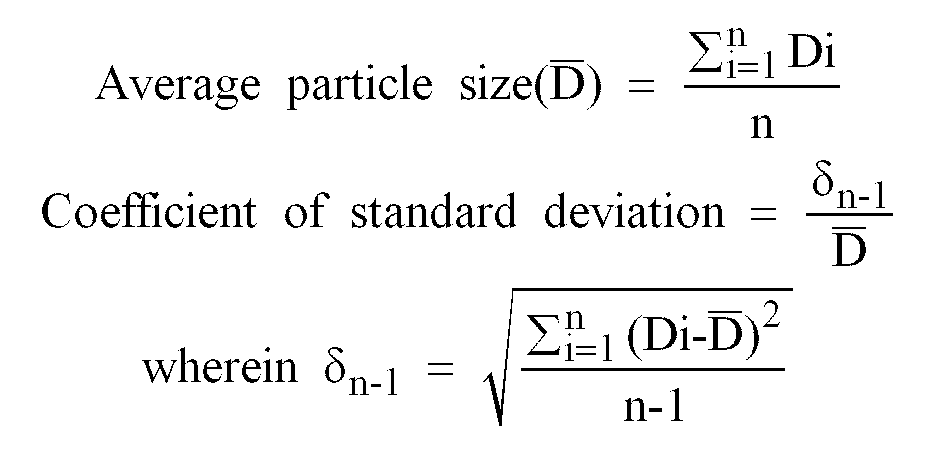
- In the present invention, the particle size is determined by measuring diameters of particles in a unit area on a photograph of a scanning electron microscope. The average particle size is a number-averaged diameter.
- On account of the use of a mixture of those particles, it is possible to attain a dental filling composition which has a high content of an inorganic filler, excellent gloss, smoothness and mechanical strength as well as transparency comparable to that of natural teeth.
- The spherical inorganic oxide particles may preferably be of inorganic oxides such as silica, zirconia, alumina and titania, or multi-component inorganic oxides comprising at least one metal component selected from the group consisting of Groups I, II, III and IV of the short form periodic table and silicon. The inorganic oxide particles may be of one kind of oxide or a mixture of two or more kinds of oxides. Particles (A) may be of inorganic oxide different from that of particles (B). Silica and multi-component inorganic oxides comprising silicon and a metallic component are preferred because of their properties suitable to a dental filling composition, availability of their raw materials and easiness of the preparation of their spherical particles. Spherical particles of amorphous silica may be prepared with most ease. Particularly preferred is spherical silica synthesized by hydrolytic polymerization of alkoxy silane. Such amorphous silica is preferably calcined at 500 °C or higher after drying. Alternatively, multi-component inorganic oxides comprising silicon and a metallic component may be chosen because of easier X ray inspection due to the added component of larger specific gravity.
- Inorganic oxide particles (A) used in the invention have an average particle size of 1.0 to 3.0 µm. If it exceeds 5.0 µm, gloss and smoothness of the cured surface are poor. Meanwhile, if it is less than 1.0 µm, the difference in particle size from particles (B) is too small to attain a high content of the inorganic filler in a dental filling composition, so that the composition after cured will show low mechanical strength and large water absorption, though gloss and smoothness of the cured surface are good. Further, it is advantageous for better gloss and smoothness of the surface and a higher content of the inorganic filler that inorganic oxide particles (A) have uniform particle sizes, that is, a small standard deviation in a particle size distribution. The coefficient of standard deviation of particles (A) is preferably 0.5 or less. Difference between the sizes of particles (A) and (B) is preferably large, because it is believed that inorganic oxide particles (B), which have a smaller size, are sufficiently packed in interstices among inorganic oxide particles (A), which have a larger size, so that a high content of the inorganic fillers is attained in the invention.
- The particle size of inorganic oxide particles (B) ranges substantially from 0.05 to 0.5 µm, in order that particles (B) are sufficiently packed in interstices among particles (A) to yield a high content of the inorganic filler as stated above. If the particle size of particles (B) is less than 0.05 µm, the specific surface area is larger and, therefore, the content of the inorganic filler is rather smaller, which results in lower mechanical strength despite one of the purposes of the invention. It is also essential in the invention that 20 to 50 % by weight of inorganic oxide particles (B) have a particle size of 0.05 to 0.2 µm which is less than half the wave length of visible light (about 0.4 to 0.7 µm). If a too small amount of the inorganic oxide particles (B) have the particle size of 0.05 to 0.2 µm, transmission of visible light through the cured dental filling composition tends to decrease and it is impossible to attain the envisaged transparency comparable to natural teeth. Meanwhile, if a too large amount of the inorganic oxide particles (B) have the particle size of 0.05 to 0.2 µm, a content of the inorganic filler tends to decrease. When a difference between the particle size of the particles which are in a range of from 0.05 to 0.2 µm (B-1) and the particle size of the particles which are larger than 0.2 µm (B-2) is large, particles (B-1) are well packed in interstices among particles (B-2), so that a higher content of the inorganic filler can be attained, as mentioned above about the relation between particles (A) and (B). It is preferred that the average particle size of particles (B-2) is at least twice as large as that of particles (B-1).
- Inorganic oxide particles (A) and (B) of the invention are spherical, which leads to a high content of the inorganic filler and gloss and smoothness of the cured dental filing composition. The term "spherical" means really spherical particles as well as substantially spherical particles, such as somewhat oval ones.
- The amount of inorganic oxide particles (A) is 50 to 75 % by weight, based on the total weight of particles (A) and (B). If it is less than 20 % by weight, the content of the inorganic filler is too small. If it exceeds 80 % by weight, the cured composition is unsatisfactory, for instance, in transparency. The amount of inorganic oxide particles (B) is 50 to 25 % by weight, based on the total weight of particles (A) and (B). If it exceeds 80 % by weight, the specific surface area of particles (B) is too large, so that the content of the inorganic filler is low and mechanical strength is insufficient. If it is less than 20 % by weight, the cured composition scatters visible light so much that transparency comparable to that of natural teeth is not attained.
- As far as the effects of the invention are not retarded, some other inorganic filler such as ultra-fine silica with a particle size of 0.01 to 0.03 µm or non-spherical inorganic particles may be added, preferably, in an amount of at most 10 % by weight based on the total weight of particles (A) and (B).
- Inorganic oxide particles (A) and (B) of the invention may separately be admixed with the polymerizable monomer to prepare the dental filling composition. However, it is preferred for a higher content of the inorganic filler that inorganic oxide particles (A) and (B) are mixed with each other in advance of mixing with the polymerizable monomer. This advance mixing of the inorganic oxide particles may be conducted in wet mixing or dry mixing or any other manners. Efficient wet mixing methods include mixing in a polar solvent, such as water, alcohols such as methanol, ethanol and isopropanol, glycols such as ethylene glycol and propylene glycol, dimethylformamide or dimethylsulfoxide. In dry mixing methods, conventional pneumatic mixers, fluid mixers, V mixers, ribbon mixers, screw mixers and disc mixers may be used. Among pneumatic mixers in which particles are mixed in an air flow, particularly preferred are jet mills, air blenders and jet-o-mizers. It is not completely clear why the advance mixing of the particles gives a higher content of the inorganic filler, but it is believed that the mixed particles have such size distribution that smaller particles are easily packed in interstices among larger particles.
- The inorganic filler of the invention is preferably surface-treated in advance for better dispersion and mixing in the polymerizable monomer. When the inorganic filler is silica, preferred surface-treating agents include organic silicon compound surface-treating agents, such as γ-methacryloxypropyl trimethoxysilane, vinyl triethoxysilane, vinyl trichlorosilane, vinyl trimethoxysilane, vinyl triacetoxysilane and vinyl tri(methoxyethoxy)silane. Conventional surface treating methods may be used.
- The inorganic filler is mixed and kneaded with the polymerizable monomer to prepare the dental filling composition in any conventional manner. For better mechanical strength, the amount of the inorganic filler is at least 80 % by weight based on the whole filling composition.
- The present composition may contain any other additives such as polymerization inhibitors, colorants and UV absorbers, as needed.
- The present invention will be further explained in reference to the following examples.
- In the following Examples and Comparison Examples, various spherical silica particles which were synthesized by hydrolytic polymerization of alkoxysilane and available from Mitsubishi Kasei Corporation, Japan, were used as an inorganic filler.
- The silica particles were surface treated as follows. To the silica particles was added 4 % by weight, based on the silica particles, of γ-methacryloxypropyl trimethoxysilane (available from Shin-etsu Chemical Company) dissolved in a water/ethanol solvent, stirred and dried at 80 °C for 2 hours and then at 105 °C for 5 hours in a hot air drier.
- A monomer mixture was prepared by mixing dimethacryloxyethyl trimethylhexamethylene diurethane (trade mark UDMA, Shin Nakamura Kagaku Company) with triethyleneglycol dimethacrylate (TEGDMA, Shin Nakamura Kagaku Company) in a weight ratio of 7 to 3, to which 0.5 % by weight of camphorquinone (Aldrich) as a photo sensitizer and 0.5 % by weight, based on the monomers, of N,N-dimethylaminoethyl methacrylate (Tokyo Kasei Company) as a reducing agent were then added.
- A filling composition was filled in a hole of 3 mm in inner diameter and 6 mm in height in a stainless steel mold; the upper and lower ends were pressed with glass plates, which were then irradiated by a visible light irradiator, Econolight available from Yoshida Company, for 40 seconds; and the cured composition was released from the mold. The test piece thus prepared was immediately immersed in water at 37 °C for 24 hours before used in the subsequent test.
- Compressive strength was measured with an Instron testing machine, Model 4206, at a cross-head speed of 2 mm/min.
- A filling composition was filled in a cavity of 2 mm thickness, 2 mm width and 25 mm length in a stainless steel mold; the upper and lower ends in the direction of thickness were pressed with glass plates, which were then irradiated by a photo polymerizer for dental prosthetics, Light Ace available from Yoshida Company, for 120 seconds; and the cured composition was released from the mold. The test piece thus prepared was immediately immersed in water at 37 °C for 24 hours before used in the subsequent test.
- Bending strength was measured with an Instron testing machine, Model 4206, at a cross-head speed of 0.5 mm/min.
- A filling composition was filled in a hole of 20 mm in inner diameter and 2 mm in height in a stainless steel mold; the upper and lower ends were pressed with glass plates, which was then polymerized as in the above 2. The surfaces of the test piece which had been pressed with the glass plates were polished with SiC polishing paper of No. 1500 to prepare for measurement. The test piece thus prepared was immediately immersed in water at 37 °C for 24 hours before used in the subsequent test.
- Knoop hardness number was determined with a Knoop hardness number meter (MVK-E, Akashi Seisakusho Company) at a load of 50 g and a load retention time of 20 seconds.
- A filling composition was filled in a cavity of 3 mm thickness, 15 mm width and 20 mm length in a stainless steel mold, and the upper and lower faces in the direction of thickness were pressed with glass plates, followed by polymerization as in the above 2. Every face of the test piece was polished with SiC polishing paper of No. 240.
- The test piece was conditioned in air at 37 °C. After its weight became constant, which is referred to as m1, it was immersed in water at 37 °C. After 24 hours, it was weighed, say m2. Water absorption is defined as follows:

- A filling composition was filled in a hole of 20 mm in inner diameter and 1 mm in height in a stainless steel mold, and the upper and lower ends were pressed with glass plates, followed by polymerization as in the above 2. The test piece thus prepared was immediately immersed in water at 37 °C for 24 hours before used in the subsequent test.
- A color-difference meter, Tokyo Denshoku, Model TC-1, was used to measure lightness of the test piece backed with a standard white board (Lw) and lightness of the test piece backed with a standard black board (Lb). Transparency was calculated in accordance with the following formula:

- The larger the value, the better the transparency. Values larger than 24 are rated as excellent or E; values of less than 24 up to 20 as good or G; and value less than 20 as bad or B.
- 0.2 g of a filling composition was cured in a plate form with light irradiation of 20 seconds. The irradiated surface was polished with a White Point (available from Shofu).
- The polished surface was observed by the naked eye for smoothness and gloss, and then subjected to measurement of surface roughness, Rmax, in a standard length of 0.25 mm with a surface roughness measuring apparatus, Surfcom 100 A, Tokyo Seimitsu.
- Diameters of particles seen in a unit area on photographs of a scanning electron microscope (Di) were measured.
- Inorganic oxide particles (A) indicated in Table 1 and inorganic oxide particles (B) indicated in Table 2 were mixed with the aforesaid monomer mixture and kneaded to form a pasty filling composition.
- The results of the tests are as seen in Table 3.
Table 1 Particles (A) Type Average particle size, µm Coef. of standard deviation A-1 1.4 0.08 A-II 2.4 0.23 A-III (comp.) 3.5 0.12 Table 2 Particles (B) Type Particle size range, µm Content of particles of 0.05 to 0,2µm, wt.% B-1 0.05 - 0.4 9 B-II 0.05 - 0.4 26 B-III 0.05 - 0.3 28 B-IV 0.05 - 0.5 32 B-V 0.05 - 0.5 67 
- Particles (C) indicated in Table 4 were used as well as the aforesaid particles (A) and (B). Particles (C-I), (C-II), (C-VI) and C(VII) were surface treated as mentioned above in relation to particles (A) and (B). The particle size ranges of particles (C-III), (C-IV) and (C-V) were determined as mentioned above. The average particle sizes of the other particles (C) were given from the source.
- Filling compositions were prepared and tested as in Examples 1 to 7. The results are as shown in Table 5.
Table 4 Particles (C) Source and shape Type Particle size, µm Content of particles of 0.05-0.2µm, wt.% Nippon Aerosil, spherical silica C-I average 0.04 unknown C-II average 0.016 0 Mitsubishi Kasei, Spherical silica C-III range 0.26-0.40 0 C-IV range 0.08-0.16 100 C-V range 0.05-0.4 3 Tatsumori, irregular shape silica C-VI average 7.0 trace Fukushima Yogyo, irregular shape quartz C-VII average 3.8 trace 
- As seen from Tables 3 and 5, the cured filling compositions in the Examples showed high compressive strength, high bending strength, and high Knoop hardness number, compared to the cured compositions of the Comparison Examples. They also had low water absorption, good surface gloss and smoothness and excellent transparency though the content of the filler was as high as 80 % by weight or more. Thus, the filling composition of the invention is well-balanced among strength, surface gloss and smoothness and transparency.
- Used were the aforesaid silica particles A-I which had not yet been surface treated and spherical synthesized silica particles B-VI (available from Mitsubishi Kasei) which were in a particle size range of 0.05 to 0.4 µm and contained 30 % by weight of particles in a particle size range of 0.05 to 0.2 µm, and whose part falling in the particle size range of 0.05 to 0.2 µm had an average particle size of 0.12 µm, and the remaining part falling in the particle size range of 0.2 to 0.4 µm had 0.35 µm. Particles (A-1) and particles (B-VI) were pre-mixed in a weight ratio of 62 to 38 in a jet mill type pneumatic mixer. The pre-mixed particles were surface treated as in the above Examples and used together with the aforesaid monomer mixture to prepare a dental filling composition. The content of the filler in the whole composition was 87 % by weight. The dental filling composition was tested as in the above Examples to obtain the following results:
compressive strength 3,782 kg/cm², bending strength 1,749 kg/cm², Knoop hardness number 78, water absorption 0.56 mg/cm² transparency 25.6, i.e., excellent, and surface gloss and smoothness good Rmax 0.6 µm. - The following two types of spherical zirconia-silica particles (zirconia content 12.5 wt. %) were prepared by hydrolytic polymerization of tetraethylsilicate with tetrabutylzirconate:
Particles (A-IV), average particle size 2.3 µm
Particles (B-VII), particle size range 0.05 to 0.5 µm; content of particles falling in a range of 0.05 to 0.2 µm, 26 wt. %. - Particles (A-IV) and particles (B-VII) were pre-mixed in a weight ratio of 72 to 28 as in Example 8 and used to prepare a dental filling composition. The content of the filler in the whole composition was 86 % by weight. The physical properties of the dental filling composition thus obtained were as follows:
compressive strength 3,630 kg/cm², bending strength 1,545 kg/cm², Knoop hardness number 73, water absorption 0.64 mg/cm² transparency 31.5, i.e., excellent, and surface gloss and smoothness good Rmax 0.8 µm. - The spherical zirconia-silica particles (A-IV) mentioned in Example 9 and the spherical synthesized silica particles (B-VI) mentioned in Example 8 were pre-mixed in a weight ratio of 68 to 32 as in Example 8 and used to prepare a dental filling composition. The content of the filler in the whole composition was 87 % by weight. The physical properties of the dental filling composition thus obtained were as follows:
compressive strength 3,820 kg/cm², bending strength 1,688 kg/cm², Knoop hardness number 76, water absorption 0.59 mg/cm² transparency 29.4, i.e., excellent, and surface gloss and smoothness good Rmax 0.7 µm.
Claims (4)
- A dental filling composition comprising a polymerizable monomer and an inorganic filler, characterized in that the inorganic filler comprises(A) 50 to 75 % by weight of spherical inorganic oxide particles with an average particle size of from 1.0 to 3.0 µm, and(B) 50 to 25 % by weight of spherical inorganic oxide particles which have a particle size range of from 0.05 µm to 0.5 µm and 20 to 50 % by weight of which is in a particle size range of from 0.05 to 0.2 µm.
- The dental filling composition as claimed in claim 1, wherein the total content of the inorganic particles (A) and (B) in the whole filling composition is at least 80 % by weight.
- The dental filling composition as claimed in claim 1 or 2, wherein particles (A) have a coefficient of standard deviation of 0.50 or less in particle size distribution.
- The dental filling composition as claimed in claim 1, 2 or 3, wherein the inorganic filler is a pre-mixture of particles (A) and (B) which is to be mixed with the monomer.
Applications Claiming Priority (2)
| Application Number | Priority Date | Filing Date | Title |
|---|---|---|---|
| JP255673/91 | 1991-09-06 | ||
| JP3255673A JP2732968B2 (en) | 1991-09-06 | 1991-09-06 | Dental filling composition |
Publications (2)
| Publication Number | Publication Date |
|---|---|
| EP0530926A1 EP0530926A1 (en) | 1993-03-10 |
| EP0530926B1 true EP0530926B1 (en) | 1996-04-24 |
Family
ID=17282030
Family Applications (1)
| Application Number | Title | Priority Date | Filing Date |
|---|---|---|---|
| EP92202688A Expired - Lifetime EP0530926B1 (en) | 1991-09-06 | 1992-09-04 | Dental filling composition |
Country Status (5)
| Country | Link |
|---|---|
| US (1) | US5350782A (en) |
| EP (1) | EP0530926B1 (en) |
| JP (1) | JP2732968B2 (en) |
| CA (1) | CA2077734C (en) |
| DE (1) | DE69210144T2 (en) |
Cited By (7)
| Publication number | Priority date | Publication date | Assignee | Title |
|---|---|---|---|---|
| US6387981B1 (en) | 1999-10-28 | 2002-05-14 | 3M Innovative Properties Company | Radiopaque dental materials with nano-sized particles |
| US6572693B1 (en) | 1999-10-28 | 2003-06-03 | 3M Innovative Properties Company | Aesthetic dental materials |
| US6730156B1 (en) | 1999-10-28 | 2004-05-04 | 3M Innovative Properties Company | Clustered particle dental fillers |
| US6899948B2 (en) | 1999-10-28 | 2005-05-31 | 3M Innovative Properties Company | Dental materials with nano-sized silica particles |
| US7393882B2 (en) | 2002-01-31 | 2008-07-01 | 3M Innovative Properties Company | Dental pastes, dental articles, and methods |
| US8647426B2 (en) | 2006-12-28 | 2014-02-11 | 3M Innovative Properties Company | Dental filler and methods |
| US8722759B2 (en) | 2008-10-15 | 2014-05-13 | 3M Innovative Properties Company | Fillers and composite materials with zirconia and silica nanoparticles |
Families Citing this family (26)
| Publication number | Priority date | Publication date | Assignee | Title |
|---|---|---|---|---|
| US5547379A (en) * | 1994-10-06 | 1996-08-20 | Hasel; Robert W. | Method of restoring a tooth |
| JP3487395B2 (en) * | 1996-11-01 | 2004-01-19 | 株式会社トクヤマ | Curable composition |
| US6262142B1 (en) | 1997-04-02 | 2001-07-17 | Dentsply Research & Development | Translucent wear resistant dental enamel material and method |
| CA2285252C (en) * | 1997-04-02 | 2009-01-27 | Dentsply International Inc. | Dental composite restorative material and method of restoring a tooth |
| US20040209975A1 (en) * | 1997-04-02 | 2004-10-21 | Subelka John C. | Dental composite restorative material and method of restoring a tooth |
| US6353040B1 (en) * | 1997-04-02 | 2002-03-05 | Dentsply Research & Development Corp. | Dental composite restorative material and method of restoring a tooth |
| KR19990023544A (en) * | 1997-08-19 | 1999-03-25 | 마쯔모또 에이찌 | Aqueous dispersion of inorganic particles and preparation method thereof |
| US6020395A (en) * | 1998-01-06 | 2000-02-01 | Kerr Corporation | Homogeneous microfilled dental composite material and method of preparation |
| US6360562B1 (en) | 1998-02-24 | 2002-03-26 | Superior Micropowders Llc | Methods for producing glass powders |
| DE69926048T2 (en) * | 1998-07-20 | 2006-05-18 | Dentsply International Inc. | Translucent wear-resistant enamel material and method |
| DE19846556A1 (en) | 1998-10-09 | 2000-04-13 | Degussa | Polymerizable dental material, e.g. for fillings, containing monomer-impregnated porous glass ceramic filler to give improved strength and abrasion resistance |
| WO2000061073A1 (en) * | 1999-04-12 | 2000-10-19 | Dentsply International Inc. | Dental composite restorative material and method of restoring a tooth |
| US7001932B2 (en) * | 1999-04-12 | 2006-02-21 | Dentsply Detrey Gmbh | Dental composite restorative material and method of restoring a tooth |
| DE10042050A1 (en) | 2000-08-26 | 2002-03-14 | Degussa | Dental composites comprising hybrid fillers and process for their production |
| AU2002216673A1 (en) * | 2001-11-20 | 2003-06-10 | Bisco, Inc. | Low shrinkage dental composite |
| US6709271B2 (en) | 2001-11-20 | 2004-03-23 | Bisco, Inc. | Low shrinkage dental composite |
| AU2003259019A1 (en) * | 2002-09-10 | 2004-04-30 | Nanyang Technological University | Glass ionomer cements, glass powder therefor, and methods of manufacture |
| JP2005170813A (en) * | 2003-12-09 | 2005-06-30 | Tokuyama Corp | Dental curable composition |
| EP1570831A1 (en) * | 2004-03-02 | 2005-09-07 | Ernst Mühlbauer GmbH & Co.KG | Polymerisable dental material containing a filler |
| US7090722B2 (en) * | 2004-05-17 | 2006-08-15 | 3M Innovative Properties Company | Acid-reactive dental fillers, compositions, and methods |
| US7156911B2 (en) * | 2004-05-17 | 2007-01-02 | 3M Innovative Properties Company | Dental compositions containing nanofillers and related methods |
| US7649029B2 (en) * | 2004-05-17 | 2010-01-19 | 3M Innovative Properties Company | Dental compositions containing nanozirconia fillers |
| US7090721B2 (en) * | 2004-05-17 | 2006-08-15 | 3M Innovative Properties Company | Use of nanoparticles to adjust refractive index of dental compositions |
| EP2072028A1 (en) * | 2007-12-21 | 2009-06-24 | Ernst Mühlbauer GmbH & Co.KG | Stump construction |
| WO2013089078A1 (en) * | 2011-12-15 | 2013-06-20 | 株式会社トクヤマデンタル | Resin composite, dental material, and method for manufacturing resin composite |
| EP3272325B1 (en) * | 2015-03-20 | 2019-10-02 | GC Corporation | Curable composition for dental use and method for manufacturing same |
Family Cites Families (6)
| Publication number | Priority date | Publication date | Assignee | Title |
|---|---|---|---|---|
| US4163004A (en) * | 1977-06-17 | 1979-07-31 | Wallace A. Erickson & Company | Dental filling materials |
| DE3172366D1 (en) * | 1980-12-03 | 1985-10-24 | Ici Plc | Dental compositions |
| NZ204975A (en) * | 1982-08-02 | 1985-10-11 | Johnson & Johnson Dental Prod | Polymerisable dental restorative compositions having improved mechanical properties and hydrolytic stability |
| DE3403040A1 (en) * | 1984-01-30 | 1985-08-08 | Blendax-Werke R. Schneider Gmbh & Co, 6500 Mainz | DENTAL FILLING MATERIAL |
| JPH0667816B2 (en) * | 1988-11-11 | 1994-08-31 | 株式会社クラレ | Dental restorative |
| DE4029230C2 (en) * | 1990-09-14 | 1995-03-23 | Ivoclar Ag | Polymerizable dental material |
-
1991
- 1991-09-06 JP JP3255673A patent/JP2732968B2/en not_active Expired - Lifetime
-
1992
- 1992-09-04 EP EP92202688A patent/EP0530926B1/en not_active Expired - Lifetime
- 1992-09-04 DE DE69210144T patent/DE69210144T2/en not_active Expired - Fee Related
- 1992-09-04 US US07/940,458 patent/US5350782A/en not_active Expired - Fee Related
- 1992-09-08 CA CA002077734A patent/CA2077734C/en not_active Expired - Fee Related
Cited By (7)
| Publication number | Priority date | Publication date | Assignee | Title |
|---|---|---|---|---|
| US6387981B1 (en) | 1999-10-28 | 2002-05-14 | 3M Innovative Properties Company | Radiopaque dental materials with nano-sized particles |
| US6572693B1 (en) | 1999-10-28 | 2003-06-03 | 3M Innovative Properties Company | Aesthetic dental materials |
| US6730156B1 (en) | 1999-10-28 | 2004-05-04 | 3M Innovative Properties Company | Clustered particle dental fillers |
| US6899948B2 (en) | 1999-10-28 | 2005-05-31 | 3M Innovative Properties Company | Dental materials with nano-sized silica particles |
| US7393882B2 (en) | 2002-01-31 | 2008-07-01 | 3M Innovative Properties Company | Dental pastes, dental articles, and methods |
| US8647426B2 (en) | 2006-12-28 | 2014-02-11 | 3M Innovative Properties Company | Dental filler and methods |
| US8722759B2 (en) | 2008-10-15 | 2014-05-13 | 3M Innovative Properties Company | Fillers and composite materials with zirconia and silica nanoparticles |
Also Published As
| Publication number | Publication date |
|---|---|
| JPH0558837A (en) | 1993-03-09 |
| EP0530926A1 (en) | 1993-03-10 |
| CA2077734C (en) | 2001-12-04 |
| DE69210144D1 (en) | 1996-05-30 |
| DE69210144T2 (en) | 1996-11-28 |
| US5350782A (en) | 1994-09-27 |
| JP2732968B2 (en) | 1998-03-30 |
| CA2077734A1 (en) | 1993-03-07 |
Similar Documents
| Publication | Publication Date | Title |
|---|---|---|
| US5350782A (en) | Dental filling composition | |
| EP1236459B1 (en) | Photo-curable reparative material for dental use | |
| EP1226807B1 (en) | Dental curable composition | |
| EP2724706B1 (en) | Dental restorative material | |
| US5883153A (en) | Fluoride ion sustained release preformed glass ionomer filler and dental compositions containing the same | |
| JP3683861B2 (en) | Filler based on particle composite | |
| JPWO2002005752A1 (en) | Light-curing dental restorative material and method for producing same | |
| JP5762405B2 (en) | Dental composite restoration material | |
| EP3536302B1 (en) | Curable composition | |
| EP0839511B1 (en) | Curable composition | |
| EP3613779B1 (en) | Curable composition | |
| EP2902007B1 (en) | Dental filling repairing material | |
| US7091259B2 (en) | Dental fillers, pastes, and compositions prepared therefrom | |
| EP0694298B1 (en) | Preformed glass ionomer filler which can sustainedly release fluoride ion and dental composition containing the same | |
| JP7547042B2 (en) | Light-polymerizable dental composites with fast curing and low shrinkage stress | |
| EP3682862B1 (en) | Curable dental composition | |
| JP3421072B2 (en) | Dental filling composition | |
| JP7422994B2 (en) | Dental curable composition | |
| US20230265220A1 (en) | Photopolymerizable Dental Composites With Rapid Curing And Low Shrinkage Stress | |
| EP4545060A1 (en) | Composition for three-dimensional modeling and method for producing dental modeled object | |
| JPH03258707A (en) | dental filling composition | |
| JPH0665022A (en) | Dental filling composition |
Legal Events
| Date | Code | Title | Description |
|---|---|---|---|
| PUAI | Public reference made under article 153(3) epc to a published international application that has entered the european phase |
Free format text: ORIGINAL CODE: 0009012 |
|
| AK | Designated contracting states |
Kind code of ref document: A1 Designated state(s): DE FR GB NL |
|
| 17P | Request for examination filed |
Effective date: 19930908 |
|
| 17Q | First examination report despatched |
Effective date: 19950111 |
|
| RAP1 | Party data changed (applicant data changed or rights of an application transferred) |
Owner name: MITSUBISHI CHEMICAL CORPORATION Owner name: KANEBO LTD. |
|
| GRAH | Despatch of communication of intention to grant a patent |
Free format text: ORIGINAL CODE: EPIDOS IGRA |
|
| GRAA | (expected) grant |
Free format text: ORIGINAL CODE: 0009210 |
|
| AK | Designated contracting states |
Kind code of ref document: B1 Designated state(s): DE FR GB NL |
|
| REF | Corresponds to: |
Ref document number: 69210144 Country of ref document: DE Date of ref document: 19960530 |
|
| ET | Fr: translation filed | ||
| PLBE | No opposition filed within time limit |
Free format text: ORIGINAL CODE: 0009261 |
|
| 26N | No opposition filed | ||
| REG | Reference to a national code |
Ref country code: GB Ref legal event code: IF02 |
|
| PGFP | Annual fee paid to national office [announced via postgrant information from national office to epo] |
Ref country code: FR Payment date: 20030722 Year of fee payment: 12 |
|
| PGFP | Annual fee paid to national office [announced via postgrant information from national office to epo] |
Ref country code: GB Payment date: 20030903 Year of fee payment: 12 |
|
| PGFP | Annual fee paid to national office [announced via postgrant information from national office to epo] |
Ref country code: NL Payment date: 20030930 Year of fee payment: 12 |
|
| PG25 | Lapsed in a contracting state [announced via postgrant information from national office to epo] |
Ref country code: GB Free format text: LAPSE BECAUSE OF NON-PAYMENT OF DUE FEES Effective date: 20040904 |
|
| PGFP | Annual fee paid to national office [announced via postgrant information from national office to epo] |
Ref country code: DE Payment date: 20040930 Year of fee payment: 13 |
|
| PG25 | Lapsed in a contracting state [announced via postgrant information from national office to epo] |
Ref country code: NL Free format text: LAPSE BECAUSE OF NON-PAYMENT OF DUE FEES Effective date: 20050401 |
|
| GBPC | Gb: european patent ceased through non-payment of renewal fee |
Effective date: 20040904 |
|
| PG25 | Lapsed in a contracting state [announced via postgrant information from national office to epo] |
Ref country code: FR Free format text: LAPSE BECAUSE OF NON-PAYMENT OF DUE FEES Effective date: 20050531 |
|
| NLV4 | Nl: lapsed or anulled due to non-payment of the annual fee |
Effective date: 20050401 |
|
| REG | Reference to a national code |
Ref country code: FR Ref legal event code: ST |
|
| PG25 | Lapsed in a contracting state [announced via postgrant information from national office to epo] |
Ref country code: DE Free format text: LAPSE BECAUSE OF NON-PAYMENT OF DUE FEES Effective date: 20060401 |