EP0528043A1 - Refrigerant composition comprising fluoroalkane refrigerant and fluoroaromatic lubricant having high compatibility with said refrigerant - Google Patents
Refrigerant composition comprising fluoroalkane refrigerant and fluoroaromatic lubricant having high compatibility with said refrigerant Download PDFInfo
- Publication number
- EP0528043A1 EP0528043A1 EP92904418A EP92904418A EP0528043A1 EP 0528043 A1 EP0528043 A1 EP 0528043A1 EP 92904418 A EP92904418 A EP 92904418A EP 92904418 A EP92904418 A EP 92904418A EP 0528043 A1 EP0528043 A1 EP 0528043A1
- Authority
- EP
- European Patent Office
- Prior art keywords
- formula
- group
- represented
- fluorine
- substituted
- Prior art date
- Legal status (The legal status is an assumption and is not a legal conclusion. Google has not performed a legal analysis and makes no representation as to the accuracy of the status listed.)
- Granted
Links
- 0 *Oc1ccc(Cc(cc2)ccc2O)cc1 Chemical compound *Oc1ccc(Cc(cc2)ccc2O)cc1 0.000 description 2
Classifications
-
- C—CHEMISTRY; METALLURGY
- C10—PETROLEUM, GAS OR COKE INDUSTRIES; TECHNICAL GASES CONTAINING CARBON MONOXIDE; FUELS; LUBRICANTS; PEAT
- C10M—LUBRICATING COMPOSITIONS; USE OF CHEMICAL SUBSTANCES EITHER ALONE OR AS LUBRICATING INGREDIENTS IN A LUBRICATING COMPOSITION
- C10M131/00—Lubricating compositions characterised by the additive being an organic non-macromolecular compound containing halogen
- C10M131/08—Lubricating compositions characterised by the additive being an organic non-macromolecular compound containing halogen containing carbon, hydrogen, halogen and oxygen
- C10M131/10—Alcohols; Ethers; Aldehydes; Ketones
-
- C—CHEMISTRY; METALLURGY
- C09—DYES; PAINTS; POLISHES; NATURAL RESINS; ADHESIVES; COMPOSITIONS NOT OTHERWISE PROVIDED FOR; APPLICATIONS OF MATERIALS NOT OTHERWISE PROVIDED FOR
- C09K—MATERIALS FOR MISCELLANEOUS APPLICATIONS, NOT PROVIDED FOR ELSEWHERE
- C09K5/00—Heat-transfer, heat-exchange or heat-storage materials, e.g. refrigerants; Materials for the production of heat or cold by chemical reactions other than by combustion
- C09K5/02—Materials undergoing a change of physical state when used
- C09K5/04—Materials undergoing a change of physical state when used the change of state being from liquid to vapour or vice versa
- C09K5/041—Materials undergoing a change of physical state when used the change of state being from liquid to vapour or vice versa for compression-type refrigeration systems
- C09K5/044—Materials undergoing a change of physical state when used the change of state being from liquid to vapour or vice versa for compression-type refrigeration systems comprising halogenated compounds
- C09K5/045—Materials undergoing a change of physical state when used the change of state being from liquid to vapour or vice versa for compression-type refrigeration systems comprising halogenated compounds containing only fluorine as halogen
-
- C—CHEMISTRY; METALLURGY
- C10—PETROLEUM, GAS OR COKE INDUSTRIES; TECHNICAL GASES CONTAINING CARBON MONOXIDE; FUELS; LUBRICANTS; PEAT
- C10M—LUBRICATING COMPOSITIONS; USE OF CHEMICAL SUBSTANCES EITHER ALONE OR AS LUBRICATING INGREDIENTS IN A LUBRICATING COMPOSITION
- C10M105/00—Lubricating compositions characterised by the base-material being a non-macromolecular organic compound
- C10M105/50—Lubricating compositions characterised by the base-material being a non-macromolecular organic compound containing halogen
- C10M105/54—Lubricating compositions characterised by the base-material being a non-macromolecular organic compound containing halogen containing carbon, hydrogen, halogen and oxygen
-
- C—CHEMISTRY; METALLURGY
- C10—PETROLEUM, GAS OR COKE INDUSTRIES; TECHNICAL GASES CONTAINING CARBON MONOXIDE; FUELS; LUBRICANTS; PEAT
- C10M—LUBRICATING COMPOSITIONS; USE OF CHEMICAL SUBSTANCES EITHER ALONE OR AS LUBRICATING INGREDIENTS IN A LUBRICATING COMPOSITION
- C10M105/00—Lubricating compositions characterised by the base-material being a non-macromolecular organic compound
- C10M105/72—Lubricating compositions characterised by the base-material being a non-macromolecular organic compound containing sulfur, selenium or tellurium
-
- C—CHEMISTRY; METALLURGY
- C10—PETROLEUM, GAS OR COKE INDUSTRIES; TECHNICAL GASES CONTAINING CARBON MONOXIDE; FUELS; LUBRICANTS; PEAT
- C10M—LUBRICATING COMPOSITIONS; USE OF CHEMICAL SUBSTANCES EITHER ALONE OR AS LUBRICATING INGREDIENTS IN A LUBRICATING COMPOSITION
- C10M131/00—Lubricating compositions characterised by the additive being an organic non-macromolecular compound containing halogen
- C10M131/08—Lubricating compositions characterised by the additive being an organic non-macromolecular compound containing halogen containing carbon, hydrogen, halogen and oxygen
- C10M131/12—Acids; Salts or esters thereof
-
- C—CHEMISTRY; METALLURGY
- C10—PETROLEUM, GAS OR COKE INDUSTRIES; TECHNICAL GASES CONTAINING CARBON MONOXIDE; FUELS; LUBRICANTS; PEAT
- C10M—LUBRICATING COMPOSITIONS; USE OF CHEMICAL SUBSTANCES EITHER ALONE OR AS LUBRICATING INGREDIENTS IN A LUBRICATING COMPOSITION
- C10M135/00—Lubricating compositions characterised by the additive being an organic non-macromolecular compound containing sulfur, selenium or tellurium
- C10M135/20—Thiols; Sulfides; Polysulfides
- C10M135/22—Thiols; Sulfides; Polysulfides containing sulfur atoms bound to acyclic or cycloaliphatic carbon atoms
-
- C—CHEMISTRY; METALLURGY
- C10—PETROLEUM, GAS OR COKE INDUSTRIES; TECHNICAL GASES CONTAINING CARBON MONOXIDE; FUELS; LUBRICANTS; PEAT
- C10M—LUBRICATING COMPOSITIONS; USE OF CHEMICAL SUBSTANCES EITHER ALONE OR AS LUBRICATING INGREDIENTS IN A LUBRICATING COMPOSITION
- C10M171/00—Lubricating compositions characterised by purely physical criteria, e.g. containing as base-material, thickener or additive, ingredients which are characterised exclusively by their numerically specified physical properties, i.e. containing ingredients which are physically well-defined but for which the chemical nature is either unspecified or only very vaguely indicated
- C10M171/008—Lubricant compositions compatible with refrigerants
-
- C—CHEMISTRY; METALLURGY
- C09—DYES; PAINTS; POLISHES; NATURAL RESINS; ADHESIVES; COMPOSITIONS NOT OTHERWISE PROVIDED FOR; APPLICATIONS OF MATERIALS NOT OTHERWISE PROVIDED FOR
- C09K—MATERIALS FOR MISCELLANEOUS APPLICATIONS, NOT PROVIDED FOR ELSEWHERE
- C09K2205/00—Aspects relating to compounds used in compression type refrigeration systems
- C09K2205/24—Only one single fluoro component present
-
- C—CHEMISTRY; METALLURGY
- C10—PETROLEUM, GAS OR COKE INDUSTRIES; TECHNICAL GASES CONTAINING CARBON MONOXIDE; FUELS; LUBRICANTS; PEAT
- C10M—LUBRICATING COMPOSITIONS; USE OF CHEMICAL SUBSTANCES EITHER ALONE OR AS LUBRICATING INGREDIENTS IN A LUBRICATING COMPOSITION
- C10M2211/00—Organic non-macromolecular compounds containing halogen as ingredients in lubricant compositions
- C10M2211/02—Organic non-macromolecular compounds containing halogen as ingredients in lubricant compositions containing carbon, hydrogen and halogen only
- C10M2211/022—Organic non-macromolecular compounds containing halogen as ingredients in lubricant compositions containing carbon, hydrogen and halogen only aliphatic
-
- C—CHEMISTRY; METALLURGY
- C10—PETROLEUM, GAS OR COKE INDUSTRIES; TECHNICAL GASES CONTAINING CARBON MONOXIDE; FUELS; LUBRICANTS; PEAT
- C10M—LUBRICATING COMPOSITIONS; USE OF CHEMICAL SUBSTANCES EITHER ALONE OR AS LUBRICATING INGREDIENTS IN A LUBRICATING COMPOSITION
- C10M2211/00—Organic non-macromolecular compounds containing halogen as ingredients in lubricant compositions
- C10M2211/02—Organic non-macromolecular compounds containing halogen as ingredients in lubricant compositions containing carbon, hydrogen and halogen only
- C10M2211/024—Organic non-macromolecular compounds containing halogen as ingredients in lubricant compositions containing carbon, hydrogen and halogen only aromatic
-
- C—CHEMISTRY; METALLURGY
- C10—PETROLEUM, GAS OR COKE INDUSTRIES; TECHNICAL GASES CONTAINING CARBON MONOXIDE; FUELS; LUBRICANTS; PEAT
- C10M—LUBRICATING COMPOSITIONS; USE OF CHEMICAL SUBSTANCES EITHER ALONE OR AS LUBRICATING INGREDIENTS IN A LUBRICATING COMPOSITION
- C10M2211/00—Organic non-macromolecular compounds containing halogen as ingredients in lubricant compositions
- C10M2211/04—Organic non-macromolecular compounds containing halogen as ingredients in lubricant compositions containing carbon, hydrogen, halogen, and oxygen
- C10M2211/042—Alcohols; Ethers; Aldehydes; Ketones
-
- C—CHEMISTRY; METALLURGY
- C10—PETROLEUM, GAS OR COKE INDUSTRIES; TECHNICAL GASES CONTAINING CARBON MONOXIDE; FUELS; LUBRICANTS; PEAT
- C10M—LUBRICATING COMPOSITIONS; USE OF CHEMICAL SUBSTANCES EITHER ALONE OR AS LUBRICATING INGREDIENTS IN A LUBRICATING COMPOSITION
- C10M2211/00—Organic non-macromolecular compounds containing halogen as ingredients in lubricant compositions
- C10M2211/04—Organic non-macromolecular compounds containing halogen as ingredients in lubricant compositions containing carbon, hydrogen, halogen, and oxygen
- C10M2211/044—Acids; Salts or esters thereof
-
- C—CHEMISTRY; METALLURGY
- C10—PETROLEUM, GAS OR COKE INDUSTRIES; TECHNICAL GASES CONTAINING CARBON MONOXIDE; FUELS; LUBRICANTS; PEAT
- C10M—LUBRICATING COMPOSITIONS; USE OF CHEMICAL SUBSTANCES EITHER ALONE OR AS LUBRICATING INGREDIENTS IN A LUBRICATING COMPOSITION
- C10M2211/00—Organic non-macromolecular compounds containing halogen as ingredients in lubricant compositions
- C10M2211/06—Perfluorinated compounds
-
- C—CHEMISTRY; METALLURGY
- C10—PETROLEUM, GAS OR COKE INDUSTRIES; TECHNICAL GASES CONTAINING CARBON MONOXIDE; FUELS; LUBRICANTS; PEAT
- C10M—LUBRICATING COMPOSITIONS; USE OF CHEMICAL SUBSTANCES EITHER ALONE OR AS LUBRICATING INGREDIENTS IN A LUBRICATING COMPOSITION
- C10M2213/00—Organic macromolecular compounds containing halogen as ingredients in lubricant compositions
-
- C—CHEMISTRY; METALLURGY
- C10—PETROLEUM, GAS OR COKE INDUSTRIES; TECHNICAL GASES CONTAINING CARBON MONOXIDE; FUELS; LUBRICANTS; PEAT
- C10M—LUBRICATING COMPOSITIONS; USE OF CHEMICAL SUBSTANCES EITHER ALONE OR AS LUBRICATING INGREDIENTS IN A LUBRICATING COMPOSITION
- C10M2213/00—Organic macromolecular compounds containing halogen as ingredients in lubricant compositions
- C10M2213/04—Organic macromolecular compounds containing halogen as ingredients in lubricant compositions obtained from monomers containing carbon, hydrogen, halogen and oxygen
-
- C—CHEMISTRY; METALLURGY
- C10—PETROLEUM, GAS OR COKE INDUSTRIES; TECHNICAL GASES CONTAINING CARBON MONOXIDE; FUELS; LUBRICANTS; PEAT
- C10M—LUBRICATING COMPOSITIONS; USE OF CHEMICAL SUBSTANCES EITHER ALONE OR AS LUBRICATING INGREDIENTS IN A LUBRICATING COMPOSITION
- C10M2213/00—Organic macromolecular compounds containing halogen as ingredients in lubricant compositions
- C10M2213/06—Perfluoro polymers
-
- C—CHEMISTRY; METALLURGY
- C10—PETROLEUM, GAS OR COKE INDUSTRIES; TECHNICAL GASES CONTAINING CARBON MONOXIDE; FUELS; LUBRICANTS; PEAT
- C10M—LUBRICATING COMPOSITIONS; USE OF CHEMICAL SUBSTANCES EITHER ALONE OR AS LUBRICATING INGREDIENTS IN A LUBRICATING COMPOSITION
- C10M2219/00—Organic non-macromolecular compounds containing sulfur, selenium or tellurium as ingredients in lubricant compositions
- C10M2219/04—Organic non-macromolecular compounds containing sulfur, selenium or tellurium as ingredients in lubricant compositions containing sulfur-to-oxygen bonds, i.e. sulfones, sulfoxides
-
- C—CHEMISTRY; METALLURGY
- C10—PETROLEUM, GAS OR COKE INDUSTRIES; TECHNICAL GASES CONTAINING CARBON MONOXIDE; FUELS; LUBRICANTS; PEAT
- C10M—LUBRICATING COMPOSITIONS; USE OF CHEMICAL SUBSTANCES EITHER ALONE OR AS LUBRICATING INGREDIENTS IN A LUBRICATING COMPOSITION
- C10M2219/00—Organic non-macromolecular compounds containing sulfur, selenium or tellurium as ingredients in lubricant compositions
- C10M2219/08—Thiols; Sulfides; Polysulfides; Mercaptals
- C10M2219/082—Thiols; Sulfides; Polysulfides; Mercaptals containing sulfur atoms bound to acyclic or cycloaliphatic carbon atoms
- C10M2219/086—Thiols; Sulfides; Polysulfides; Mercaptals containing sulfur atoms bound to acyclic or cycloaliphatic carbon atoms containing sulfur atoms bound to carbon atoms of six-membered aromatic rings
-
- C—CHEMISTRY; METALLURGY
- C10—PETROLEUM, GAS OR COKE INDUSTRIES; TECHNICAL GASES CONTAINING CARBON MONOXIDE; FUELS; LUBRICANTS; PEAT
- C10M—LUBRICATING COMPOSITIONS; USE OF CHEMICAL SUBSTANCES EITHER ALONE OR AS LUBRICATING INGREDIENTS IN A LUBRICATING COMPOSITION
- C10M2219/00—Organic non-macromolecular compounds containing sulfur, selenium or tellurium as ingredients in lubricant compositions
- C10M2219/08—Thiols; Sulfides; Polysulfides; Mercaptals
- C10M2219/082—Thiols; Sulfides; Polysulfides; Mercaptals containing sulfur atoms bound to acyclic or cycloaliphatic carbon atoms
- C10M2219/087—Thiols; Sulfides; Polysulfides; Mercaptals containing sulfur atoms bound to acyclic or cycloaliphatic carbon atoms containing hydroxy groups; Derivatives thereof, e.g. sulfurised phenols
-
- C—CHEMISTRY; METALLURGY
- C10—PETROLEUM, GAS OR COKE INDUSTRIES; TECHNICAL GASES CONTAINING CARBON MONOXIDE; FUELS; LUBRICANTS; PEAT
- C10M—LUBRICATING COMPOSITIONS; USE OF CHEMICAL SUBSTANCES EITHER ALONE OR AS LUBRICATING INGREDIENTS IN A LUBRICATING COMPOSITION
- C10M2219/00—Organic non-macromolecular compounds containing sulfur, selenium or tellurium as ingredients in lubricant compositions
- C10M2219/08—Thiols; Sulfides; Polysulfides; Mercaptals
- C10M2219/082—Thiols; Sulfides; Polysulfides; Mercaptals containing sulfur atoms bound to acyclic or cycloaliphatic carbon atoms
- C10M2219/087—Thiols; Sulfides; Polysulfides; Mercaptals containing sulfur atoms bound to acyclic or cycloaliphatic carbon atoms containing hydroxy groups; Derivatives thereof, e.g. sulfurised phenols
- C10M2219/089—Overbased salts
-
- C—CHEMISTRY; METALLURGY
- C10—PETROLEUM, GAS OR COKE INDUSTRIES; TECHNICAL GASES CONTAINING CARBON MONOXIDE; FUELS; LUBRICANTS; PEAT
- C10N—INDEXING SCHEME ASSOCIATED WITH SUBCLASS C10M RELATING TO LUBRICATING COMPOSITIONS
- C10N2040/00—Specified use or application for which the lubricating composition is intended
-
- C—CHEMISTRY; METALLURGY
- C10—PETROLEUM, GAS OR COKE INDUSTRIES; TECHNICAL GASES CONTAINING CARBON MONOXIDE; FUELS; LUBRICANTS; PEAT
- C10N—INDEXING SCHEME ASSOCIATED WITH SUBCLASS C10M RELATING TO LUBRICATING COMPOSITIONS
- C10N2040/00—Specified use or application for which the lubricating composition is intended
- C10N2040/30—Refrigerators lubricants or compressors lubricants
-
- C—CHEMISTRY; METALLURGY
- C10—PETROLEUM, GAS OR COKE INDUSTRIES; TECHNICAL GASES CONTAINING CARBON MONOXIDE; FUELS; LUBRICANTS; PEAT
- C10N—INDEXING SCHEME ASSOCIATED WITH SUBCLASS C10M RELATING TO LUBRICATING COMPOSITIONS
- C10N2040/00—Specified use or application for which the lubricating composition is intended
- C10N2040/32—Wires, ropes or cables lubricants
-
- C—CHEMISTRY; METALLURGY
- C10—PETROLEUM, GAS OR COKE INDUSTRIES; TECHNICAL GASES CONTAINING CARBON MONOXIDE; FUELS; LUBRICANTS; PEAT
- C10N—INDEXING SCHEME ASSOCIATED WITH SUBCLASS C10M RELATING TO LUBRICATING COMPOSITIONS
- C10N2040/00—Specified use or application for which the lubricating composition is intended
- C10N2040/34—Lubricating-sealants
-
- C—CHEMISTRY; METALLURGY
- C10—PETROLEUM, GAS OR COKE INDUSTRIES; TECHNICAL GASES CONTAINING CARBON MONOXIDE; FUELS; LUBRICANTS; PEAT
- C10N—INDEXING SCHEME ASSOCIATED WITH SUBCLASS C10M RELATING TO LUBRICATING COMPOSITIONS
- C10N2040/00—Specified use or application for which the lubricating composition is intended
- C10N2040/36—Release agents or mold release agents
-
- C—CHEMISTRY; METALLURGY
- C10—PETROLEUM, GAS OR COKE INDUSTRIES; TECHNICAL GASES CONTAINING CARBON MONOXIDE; FUELS; LUBRICANTS; PEAT
- C10N—INDEXING SCHEME ASSOCIATED WITH SUBCLASS C10M RELATING TO LUBRICATING COMPOSITIONS
- C10N2040/00—Specified use or application for which the lubricating composition is intended
- C10N2040/38—Conveyors or chain belts
-
- C—CHEMISTRY; METALLURGY
- C10—PETROLEUM, GAS OR COKE INDUSTRIES; TECHNICAL GASES CONTAINING CARBON MONOXIDE; FUELS; LUBRICANTS; PEAT
- C10N—INDEXING SCHEME ASSOCIATED WITH SUBCLASS C10M RELATING TO LUBRICATING COMPOSITIONS
- C10N2040/00—Specified use or application for which the lubricating composition is intended
- C10N2040/40—Generators or electric motors in oil or gas winning field
-
- C—CHEMISTRY; METALLURGY
- C10—PETROLEUM, GAS OR COKE INDUSTRIES; TECHNICAL GASES CONTAINING CARBON MONOXIDE; FUELS; LUBRICANTS; PEAT
- C10N—INDEXING SCHEME ASSOCIATED WITH SUBCLASS C10M RELATING TO LUBRICATING COMPOSITIONS
- C10N2040/00—Specified use or application for which the lubricating composition is intended
- C10N2040/42—Flashing oils or marking oils
-
- C—CHEMISTRY; METALLURGY
- C10—PETROLEUM, GAS OR COKE INDUSTRIES; TECHNICAL GASES CONTAINING CARBON MONOXIDE; FUELS; LUBRICANTS; PEAT
- C10N—INDEXING SCHEME ASSOCIATED WITH SUBCLASS C10M RELATING TO LUBRICATING COMPOSITIONS
- C10N2040/00—Specified use or application for which the lubricating composition is intended
- C10N2040/44—Super vacuum or supercritical use
-
- C—CHEMISTRY; METALLURGY
- C10—PETROLEUM, GAS OR COKE INDUSTRIES; TECHNICAL GASES CONTAINING CARBON MONOXIDE; FUELS; LUBRICANTS; PEAT
- C10N—INDEXING SCHEME ASSOCIATED WITH SUBCLASS C10M RELATING TO LUBRICATING COMPOSITIONS
- C10N2040/00—Specified use or application for which the lubricating composition is intended
- C10N2040/50—Medical uses
Definitions
- Refrigerant composition comprising a fluoroalkane refrigerant and a fluorine-containing aromatic lubricant having a high miscibility therewith
- the present invention relates to a refrigerant composition
- a refrigerant composition comprising a fluoroalkane refrigerant and a lubricant having a high miscibility therewith.
- the present invention is concerned with a refrigerant composition containing a lubricant, the lubricant being highly miscible with a fluoroalkane refrigerant suitable for use in a refrigeration system, preferably a hydrofluoroalkane, such as hydrofluoroethane, more preferably HFC-134a (1,1,1,2-tetrafluoroethane), which fluoroalkane is promising as a substitute for a chlorine containing refrigerant, such as CFC-12 (1,1-dichloro-1,1-difluoromethane) and HCFC-22 (chlorodifluoromethane), in connection with environmental protection.
- a hydrofluoroalkane such as hydrofluoroethane
- HFC-134a 1,
- CFC-12 is now widely used as a refrigerant in refrigeration equipment for car air conditioners and refrigerators
- HCFC-22 is used as a refrigerant in refrigeration equipment for room air conditioners.
- development of a refrigerant which can be used in substitution for chlorine-containing refrigerants, such as CFC-12 and HCFC-22, has been desired from the viewpoint of the protection of the ozone layer.
- a lower fluoroalkane e.g., a fluoroalkane having 5 or less carbon atoms
- a hydrofluoroalkane such as hydrofluoroethane
- HFC-134a is especially promising as a refrigerant because it has properties similar to those of CFC-12 and, thus, it can be used as a substitute for CFC-12 with only minor changes to the equipment.
- fluoroalkanes such as HFC-134 (1,1,2,2-tetrafluoroethane) which is an isomer of HFC-134a, HFC-152a (1,1-difluoroethane), HFC-32 (difluoromethane) which is a candidate substitute for HCFC-22, HFC-125 (pentafluoroethane) and HFC-143a (1,1,1-trifluoroethane).
- CFC-12 In a refrigeration system using CFC-12, a mineral oil is used as a lubricant for its compressor. CFC-12 exhibits high oleophilicity because it contains chlorine atoms, so that it is miscible with a mineral oil over a wide temperature range. Accordingly, even in a refrigeration system where evaporation and condensation of the refrigerant are repeated, phase separation of CFC-12 as the refrigerant from the lubricant does not occur.
- the lubricant for use in refrigeration equipment employing a fluoroalkane, such as HFC-134a, as a refrigerant should be miscible with such a fluoroalkane at least over a temperature range of from 0 °C or below to 50 °C or above, preferably from -20 °C or below to 70 °C or above, more preferably from -40 °C or below to 90 °C or above, and most preferably over a still wider temperature range.
- polyalkylene glycol compounds and polyester compounds have been proposed as a lubricant highly miscible with HFC-134a for use in combination with HFC-134a.
- polyalkylene glycols having at least two hydroxyl groups especially, polyoxypropylene glycol
- polyoxypropylene glycol disclosed in the specification of U.S. Patent No. 4,755,316
- the temperature range over which this lubricant is miscible with HFC-134a is still unsatisfactory, and improvement of the miscibility, especially at high temperatures, is required.
- Polyoxyalkylene glycols have not only unsatisfactory lubrication properties under application conditions, but also high moisture absorption properties, and therefore, various problems are likely to arise, such as freezing of water, corrosion of metals, and lowering of a volume resistivity (such lowering of a volume resistivity causes a problem in the case of a closed type refrigeration equipment, such as a refrigerator). Accordingly, polyoxyalkylene glycols are not excellent lubricants for a refrigeration system from a practical point of view.
- Polyester compounds disclosed in Japanese Patent Application Laid-open Specification Nos. 3-128991 and 3-179091, are generally considered to be also highly miscible with HFC-134a. However, such compounds exhibit high moisture absorption properties due to ester groups contained and, in addition, are likely to undergo decompositions, such as hydrolysis, thereby causing problems in durability.
- fluorine-containing oils are considered to be a lubricant miscible with a fluoroalkane, such as HFC-134a.
- Japanese Patent Application Laid-open Specification No. 1-118598 describes the use of fluorocompounds, such as a perfluoropolyether and a fluorinated silicone, as a lubricant for fluorocarbon refrigerants.
- fluorocompounds such as a perfluoropolyether and a fluorinated silicone
- the present inventors have examined the miscibilities of perfluoropolyethers having the various structures indicated below, inclusive of perfluoropolyethers (trade name: Fomblin Y-06, Y-25 and Y-45, manufactured and sold by Nippon Montedison Co., Ltd., Japan) employed in Examples of Japanese Patent Application Laid-Open Specification Nos. 60-96684 and 1-118598, with a fluoroalkane, such as HFC-134a, HFC-134 and HFC-152a.
- a fluoroalkane such as HFC-134a, HFC-134 and HFC-152a.
- perfluoropolyethers are not suitable as a lubricant for use in refrigeration equipment employing a fluoroalkane, such as HFC-134a, HFC-134 and HFC-152a, as a refrigerant.
- a fluoroalkane such as HFC-134a, HFC-134 and HFC-152a
- each of q1, q2, q3, q4, q5 and q6 is a positive integer.
- the present inventors have made extensive and intensive researches with a view toward developing a fluorine-containing substance not only exhibiting an excellent miscibility with a fluoroalkane, such as HFC-134a, over a wide temperature range, but also having properties, such as good lubrication, low moisture absorption and desirable durability, to be possessed by a lubricant for use in refrigeration equipment.
- a fluorine-containing aromatic compound having a structure represented by formula (I) not only has an excellent miscibility with a fluoroalkane, such as HFC-134a, over a wide range of temperatures from low to high temperatures, but also is excellent in lubrication properties, low moisture absorption properties and durability. Therefore, it has been found that such a fluorine-containing aromatic compound is suitable as a lubricant for use in a refrigeration system employing a refrigerant comprising a fluoroalkane, such as HFC-134a.
- the present invention has been completed, based on these findings.
- the fluorine-containing aromatic compound represented by formula (I) for use in the present invention contains fluorine atoms in a lower ratio than that of perfluoropolyether oils, so that there is an advantage that the production cost of the former is lower than that of the latter.
- the compound represented by formula (I) has such surprising properties that excellent miscibilities are exhibited with various fluoroalkane refrigerants, irrespective of the lower content of fluorine atoms.
- the compound of formula (I) has far more excellent lubrication properties than conventional refrigeration equipment oils as a refrigerant, such as a mineral oil, and candidate refrigeration equipment oils for HFC-134a, such as polyalkylene glycols and polyester oils.
- a refrigerant such as a mineral oil
- candidate refrigeration equipment oils for HFC-134a such as polyalkylene glycols and polyester oils.
- the lubrication properties are properties which are most important for a refrigeration equipment oil, like the miscibilities with refrigerants.
- the compound of formula (I) is excellent in low moisture absorption properties and stability, and therefore, solves all of the problems accompanying the use of conventional candidate refrigeration equipment oils for a fluoroalkane refrigerant, such as HFC-134a.
- a refrigerant composition for use in a refrigeration system comprising:
- the present invention has been made on the basis of the novel finding that a specific type of fluorine-containing aromatic compound, surprisingly, exhibits an extremely excellent miscibility with a fluoroalkane, such as HFC-134a, so that it is valuable as a lubricant for use in a refrigeration system using a fluoroalkane, such as HFC-134a, as a refrigerant.
- a fluoroalkane such as HFC-134a
- R represents an n-valent unsubstituted or substituted aromatic group having from 6 to 60 carbon atoms, preferably from 6 to 40 carbon atoms, more preferably from 6 to 30 carbon atoms. It is most preferred that R have from 6 to 20 carbon atoms because raw materials are easily available and synthesis therefrom is easy.
- the above-mentioned aromatic group comprising at least one aromatic ring may be substituted with a substituent containing no aromatic group and having not more than 50 carbon atoms, preferably not more than 20 carbon atoms, more preferably not more than 10 carbon atoms.
- the aromatic group represented by R in formula (I) may comprise at least two unsubstituted or substituted aromatic rings which are linked through a linkage group containing no aromatic ring and having not more than 50 carbon atoms, preferably not more than 20 carbon atoms, more preferably not more than 10 carbon atoms.
- the ratio of carbon atoms present in at least one aromatic ring of the above-mentioned aromatic group to carbon atoms present in the entire aromatic group is generally at least 0.1, preferably at least 0.2, and more preferably at least 0.5.
- the above-mentioned substituent is a monovalent group, and the above-mentioned linkage group has a valence of at least 2.
- these groups include saturated hydrocarbon residues, such as alkyl groups, hydrocarbon residues each having a valence of from 2 to 4 and alicyclic hydrocarbon residues each having a valence of from 2 to 4, unsaturated hydrocarbon residues, such as an allyl group, halogenated hydrocarbon residues, such as a 2-chloro-ethyl group, halogen atoms, such as a chlorine atom and a fluorine atom, polar groups containing an oxygen atom, a nitrogen atom, a phosphorus atom or a sulfur atom, such as a hydroxyl group, a thiol group, an alkoxy group, a nitrile group, a nitro group, an ether group, a thioether group, an este
- R in formula (I) include the following groups: wherein R and R' each independently represent a lower alkyl group.
- aromatic groups having at least one aromatic ring which can be used as R in formula (I).
- R a group having a structure in which the aromatic ring is directly bonded to the group of formula-XR f is especially preferred because a highly stable compound represented by formula (I) can be easily synthesized.
- X represents an oxygen atom or a sulfur atom.
- X represents an oxygen atom
- n of formula [I] depends on the valence of R. In order to facilitate the synthesis and cause the viscosity to be in an appropriate range, n is generally an integer selected from 1 to 4, preferably selected from 2, 3 and 4, and more preferably 2.
- R f groups may be the same or different.
- R f represents an unsubstituted or partially substituted fluorocarbon residue having from 1 to 25 carbon atoms.
- the above-mentioned unsubstituted fluorocarbon residue represents a substituent having a structure in which the hydrogen atoms of each of various types of hydrocarbon residue are partially or entirely substituted with fluorine atoms.
- fluorocarbon residues include fluoroalkyl groups having a saturated structure, fluoroalkenyl groups having an unsaturated structure, and fluoroaryl and fluoroaralkyl groups having an aromatic ring, in which each of the alkyl, alkenyl and aralkyl groups is partially or entirely substituted with a fluorine atom. Of these groups, fluoroalkyl groups and fluoroalkenyl groups are preferred because their synthesis is easy.
- R f may be a partially substituted fluorocarbon residue.
- the substituted fluorocarbon residue represented is a substituted member selected from the group consisting of a fluoroalkyl, a fluoroalkenyl, a fluoroaryl group and a fluoroaralkyl group in which each of the alkyl, alkenyl and aralkyl groups is partially or entirely substituted with a fluorine atom, the fluorine atoms or hydrogen atoms of the fluorocarbon residue being further partially substituted with various substituents which are stable under application conditions for a refrigeration equipment oil, such as halogen atoms, e.g., a chlorine atom, a bromine atom and an iodine atom, a hydroxyl group, alkoxy groups, an amino group, a nitrile group, and carbonyl-containing groups, e.g., an ester group, amide groups, acyl groups and a carboxyl group.
- the number of substituents, other than fluorine atoms, of the partially substituted fluorocarbon residue is not greater than 150 %, preferably not greater than 100 %, based on the total number of fluorine atoms and hydrogen atoms (if any) of the partially substituted fluorocarbon residue.
- fluorochloroalkyl groups are preferred because excellent lubrication properties are exhibited and because synthesis is easy.
- main chain of the above-mentioned unsubstituted or substituted fluorocarbon residue may have a structure having at least one ether group.
- the ratio of fluorine atom to carbon atom is generally at least 0.6, preferably at least 1, and more preferably at least 1.5.
- the ratio of fluorine atom to carbon atom in R f is too low, unfavorably, the compound of formula (I) is likely to exhibit poor miscibility with fluoroalkanes and poor stability.
- the number of carbon atoms in R f is generally in the range of from 1 to 25, preferably from 1 to 10, and more preferably from 1 to 3.
- the number of carbon atoms in R f is greater than 25, unfavorably, various problems arise such that it is difficult to obtain raw materials and also to synthesize a product therefrom, that synthesis and subsequent purification thereof are time-consuming, and that the viscosity of an obtained product becomes too high.
- the fluorine-containing aromatic compound to be employed in the present invention and represented by formula (I) may be synthesized according to various methods.
- a perfluoroolefin is used as a fluorine-containing olefin:
- Ar' represents a monovalent aromatic group
- X represents an oxygen atom or a sulfur atom
- n' is an integer of from 2 to 20.
- Advance in Fluorine Chemistry, 4 , 50 (1965) indicates examples of reactions similar to those of formulae [2] and [3] in connection with the ionic reactions of the following various types of fluorine-containing olefins with phenols, alcohols or thiophenols.
- Unsaturated bond-containing oligomers derived from various fluorine-containing olefins such as a hexafluoropropene (HFP) oligomer of formula [11] below, a tetrafluoroethylene (TFE) oligomer of formula [12] below and a chlorotrifluoroethylene oligomer, can also be used as a raw material in the synthetic reactions as represented by formulae [2] and (3] above.
- Examples of reactions of such oligomers include the following reactions: Bull. Chem. Soc. Japan, 49 502 (1976) discloses the reaction: wherein Et represents an ethyl group.
- Nippon Kagakukai-shi 1978 , 253 discloses the reaction: "Oligomer” edited by Okawara, Saegusa and Higashimura and published by Kodansha Scientific Ltd. (1976) pages 288 to 291, discloses representive examples of reactions between various TFE pentamers (C10F20) or HFP trimers (C9F18) and phenols, as represented by the following formulae: Journal of Fluorine Chemistry 54 , 162 (1991) discloses addition reactions between a perfluorovinyl ether and a phenol, as represented by formulae [21'] and [21'']: wherein R f represents -C3F7, -CF2CF(CF3)OC3F7 or -CF2CF(CF3)OCF2CF2CO2CH3, and X represents a chlorine atom or a bromine atom.
- reaction schemes are possible in the reaction of phenols or thiophenols with saturated fluorocarbons for producing fluorine-containing aromatic compounds.
- Representive examples of such reaction schemes include the following reactions: Ar'X ⁇ + R f X5 ⁇ Ar'XR f [21] Ar'X6 + R f 'X ⁇ ⁇ Ar'XR f ' [22] wherein X represents an oxygen atom or a sulfur atom, X5 and X6 each independently represent a halogen atom, -OSO2Me, -OCOCF3, -OSO2CF3, -OSO2CCl3 or -OSO2Cl, which are substituents readily liberated in the form of an anion, Ar' represents a monovalent aromatic group, and R f ' has the same meaning as defined for R f of formula [I], which represents a group capable of assuming an anion structure of the formula R F 'X ⁇ .
- fluorine-containing aromatic compounds represented by formula (I) can be synthesized by the use of methods for forming various types of ether linkages and thioether linkages.
- an ether formation reaction comprising reacting a hydroxyl group with an epoxy group as indicated below, can be utilized: wherein Ar' represents a monovalent aromatic group, and R f '' represents a fluorocarbon residue having from 1 to 16 carbon atoms.
- a method in which fluorine atom or atoms are introduced into a precursor of the compound represented by formula (I) by various methods may be available, or a method in which reaction products obtained by the various methods described above are converted into a desired compound represented by formula (I) using various reactions, may be available.
- the fluorine-containing olefin and the fluorine-containing compound, such as a saturated fluorocarbon, each of which is to be used in the above-mentioned reactions, can be synthesized by various known methods.
- such methods include a synthetic method by halogen exchange disclosed in "Advances in Fluorine Chemistry” Butterworth, vol. 3, p181, a method disclosed in "Chemistry of Organic Fluorine Compounds” Halsted press, and methods for producing fluoroolefin oligomers disclosed in Japanese Patent Application Laid-Open Specification No. 50-117705 and Japanese Patent Application publication Specification Nos. 43-11885 and 47-22563.
- the methods set out above are not limiting, and various other methods can be employed.
- the fluorine-containing aromatic compound represented by formula (I) can be synthesized by various methods, and the reactions mentioned hereinbefore are only some examples. Accordingly, the synthetic method of the compound represented by formula (I) is not restricted to those mentioned hereinbefore.
- the refrigeration equipment oil to be used in the present invention is not critical as long as it has the structure represented by formula (I), and there is no limitation with respect to the method for production thereof.
- R f groups of the compound represented by formula (I) for use in the present invention are set out below, which are, however, only some examples of R f groups of compounds of formula (I) synthesized by various methods. These are not critical, and other various R f groups can be employed.
- Z7 represents a fluorine atom, a chlorine atom, an iodine atom or a hydrogen atom
- L1 is an integer of from 1 to 18, and L2 is 0, 1 or 2.
- groups of formula [36] include the following groups: CF3-, CF3CH2-, CF3CH2CH2-, F-(CF2)2-, F-(CF2)3-, F-(CF2)6-, F-(CF2)10-, F-(CF2)2-CH2-, F-(CF2)4-CH2-, F-(CF2)4-CH2CH2-, F-(CF2)8-CH2CH2-, I-(CF2)4-CH2CH2-, ClCF2-, Cl-(CF2)2-, Cl-(CF2)4-, Cl(CF2)3-CH2-, BrCF2CF2-, BrCF2-, I-CF2-, I-(CF2)3-CH2-, H-(CF2)3CH2-, H-(CF2)10-CH2-, HCF2-, HCF2CH2CH2-, HCF2CH2-, I-(CF2)2-CH2CH2- and wherein L2 is an integer of from 1 to 7.
- L2' is an integer of from 1 to 7
- X' represents a hydrogen atom, a chlorine atom or a bromine atom.
- L3 is an integer of from 1 to 11.
- L4 is an integer of from 1 to 7.
- Rf''' has the same meaning as R f '' of formula [33].
- Examples of these groups include the following groups of formulae [44] and [45]: -C 3m F 6m-1 [44] wherein m is as defined for m of formula [11] -C 2m' F 4m' ⁇ 1 [45] wherein m' is as defined for m' of formula [12]. -C n' F 2n' H [46] wherein n' is as defined for n' of formula [3].
- Examples of these groups include the following groups of formulae [47] and [48]: -C 3m F 6m H [47] wherein m is as defined for m of formula [11] -C 2m' F 4m' H [48] wherein m' is as defined for m' of formula [12].
- the following groups can be used.
- the fluorine-containing aromatic compound of formula (I) to be employed in the present invention can be synthesized according to various methods, and can be purified by, for example, distillation, extraction or adsorption.
- a method for imparting lubrication properties to a fluoroalkane refrigerant for refrigeration equipment which comprises adding to the refrigerant a lubricant oil selected from the group consisting of a fluorine-containing aromatic compound (I) and a lubricating composition comprising the compound (I) in an amount of at least 0.1% by weight, based on the weight of the lubricating composition, the compound (I) being represented by the formula: R(XR f ) n (I) wherein X represents an oxygen or a sulfur atom, R represents an n-valent, unsubstituted or substituted aromatic group comprising at least one unsubstituted or substituted aromatic ring and having from 6 to 60 carbon atoms, n is an integer of from 1 to 4, R f represents an unsubstituted or partially substituted fluorocarbon residue having from 1 to 25 carbon atoms in which the ratio of fluorine atom to carbon atom is at least
- the compounds represented by formula (I) can be advantageously used, individually or in the form of a mixture thereof, as a lubricant for use in a refrigeration system, in which use is made of a refrigerant comprising a fluoroalkane.
- the compound of formula (I) can be used in the form of a mixture with another lubricant oil.
- the other lubricant oil usable in combination with the compound represented by formula (I) is generally selected from those miscible with a fluoroalkane refrigerant to a certain degree.
- it is selected from the group consisting of perfluoropolyether oils, perfluoroether oils having a carbonyl-containing group, such as a carboxyl group, a carboxylate group, an amido group, a ketone group and an ester group, or having a polar group, such as a hydroxyl group, an amino group, an imido group, an ether group, a benzoimidazol group, a phosphite group, a phosphine group, a nitrile group, a phosphotriazine group and a triazine group, chlorofluorocarbon oils, polyalkylene glycol oils, ester oils and fluorinated silicone oils.
- Appropriate types of oils are selected from these oils, taking into consideration the miscibility with the
- the amount of the compound of formula (I) is chosen, taking into consideration the miscibility of the lubricating composition obtained with a refrigerant and the viscosity of the lubricating composition.
- the compound of formula (I) is used in an amount of at least 0.1 % by weight, preferably at least 25 % by weight, and more preferably at least 50 % by weight, based on the total weight of the lubricating composition.
- the compound of formula (I) for use in the present invention When individually used as a lubricant oil for refrigeration equipment in which use is made of a refrigerant comprising a fluoroalkane, it generally has a kinetic viscosity at 40 °C of from 2 to 500 centistokes (hereinafter, referred to as "cst"), preferably from 3 to 300 cst, more preferably from 5 to 170 cst, and most preferably from 10 to 150 cst.
- cst centistokes
- the kinetic viscosity of the compound of formula (I) at 100 °C it is generally in the range of from 0.5 to 100 cst, preferably from 1 to 50 cst, and more preferably from 2 to 30 cst.
- the viscosity of the compound of formula (I) per se is not particularly limited, as long as the viscosity of the resultant mixture is within the same range as described above with respect to the individual use of the compound of formula (I).
- the weight ratio of the amount of a refrigerant to the amount of a lubricant oil in a refrigeration system is generally in the range of from 99/1 to 1/99, preferably from 95/5 to 10/90, and more preferably from 90/10 to 20/80.
- the lubricant oil for refrigeration equipment may be used with the addition of various additives (which are conventionally known as additives for lubricant oils) in a conventionally employed amount, such as a rust preventive, an antioxidant, a viscosity index improver, a corrosion preventive, an oleophilicity improver, a fluid point depressant and an extreme pressure additive.
- additives which are conventionally known as additives for lubricant oils
- the compound represented by formula (I) exhibits an excellent miscibility with a fluoroalkane, such as HFC-134a, over a wide temperature range.
- a fluoroalkane such as HFC-134a
- the lower limit temperature at which a perfluoropolyether is miscible with a fluoroalkane, such as HFC-134a is generally about 0 °C or above
- the lower limit temperature at which the compound of formula (I) is miscible with a fluoroalkane, such as HFC-134a can be as low as 0 °C or below, preferably -10 °C or below, more preferably -20 °C or below, still more preferably -30 °C or below, still more preferably -40 °C or below, and most preferably -78 °C or below.
- the upper limit temperature at which the compound of formula (I) is miscible with a fluoroalkane, such as HFC-134a can be as high as 70 °C or above, preferably 80 °C or above, and more preferably 90 °C or above.
- the compound of formula (I) exhibits extremely low moisture absorption, so that it is free from the problems of polyalkylene glycols and ester oils exhibiting a high moisture absorption, such that the electrical properties of the oil are degraded and the decomposition of the fluoroalkane, such as HFC-134a, is accelerated by water.
- the lubrication properties of the fluorine-containing aromatic compounds of formula (I) have been evaluated in the presence or absence of a fluoroalkane. As a result, it has been found that, irrespective of the presence or absence of a fluoroalkane, the compounds of formula (I) exhibit markedly excellent extreme pressure property (load at failure), abrasion resistance and coefficient of abrasion.
- fluorine-containig aromatic compounds represented by formula (I) exhibit much more excellent lubrication properties than conventional refrigeration equipment oils for a refrigerant, such as a mineral oil, and candidate lubricant oils for refrigeration equipment oil for HFC-134a, such as polyalkylene glycols and polyester oils.
- lubrication properties can be measured by means of various testers.
- extreme pressure resistance and abrasion resistance can be measured by Falex tester
- extreme pressure property can be measured by SODA four-ball abrasion tester
- coefficient of abrasion can be measured by SODA pendulum abrasion tester.
- the compound represented by formula (I) or a lubricating composition comprising the compound (I) is useful as a lubricant oil for various types of refrigeration equipment employing as a refrigerant a fluoroalkane which is promising as a substitute for refrigerants, such as R-12 or R-22, for use in refrigerators, freezer, car air conditioners, or the like.
- the above-mentioned fluoroalkane is a lower fluoroalkane (for example, a fluoroalkane having only 1 to 5 carbon atoms) capable of being employed as a refrigerant, preferably a hydrofluoroalkane having from 1 to 4 carbon atoms, more preferably a hydrofluoroethane, and most preferably HFC-134a.
- a lower fluoroalkane for example, a fluoroalkane having only 1 to 5 carbon atoms
- a hydrofluoroalkane having from 1 to 4 carbon atoms more preferably a hydrofluoroethane, and most preferably HFC-134a.
- the compound represented by formula (I) or a lubricating composition comprising the compound (I) exhibits excellent miscibilities with various lower fluoroalkanes, such as fluoromethanes, fluoroethanes, fluoropropanes and fluorobutanes, e.g., HFC-134a (CF3CH2F), HFC-134 (CHF2CHF2), HFC-152a (CH3CHF2), HFC-32 (CH2F2), HFC-125 (CF3CHF2), CF3CH2CHF2, CF3CHFCF3, CHF2CF2CHF2, CF3CF2CF3, CF3CF2CF2CH3, CF3CHFCHFCF3, CF3CF2CH3, CHF2CF2CH2F and CF3CHFCHFCF2CF3.
- HFC-134a CF3CH2F
- HFC-134 CHF2CHF2CHF2
- HFC-152a CH3CHF2
- HFC-32
- the compound represented by formula (I) or a lubricating composition comprising the compound (I) and another lubricant oil, the compound (I) being contained in an amount of at least 0.1 % by weight, based on the total weight of the lubricating composition, exhibits an excellent miscibility with a refrigerant mixture (for example, a mixture of tetrafluoroethane and trifluoroethane or a mixture of HFC-32 and HFC-125) comprising a fluoroalkane.
- a refrigerant mixture for example, a mixture of tetrafluoroethane and trifluoroethane or a mixture of HFC-32 and HFC-125
- a refrigerant mixture for example, a mixture of tetrafluoroethane and trifluoroethane or a mixture of HFC-32 and HFC-125
- the fluorine-containing aromatic compound represented by formula (I) can be produced by various methods, which are not critical in the production thereof.
- impurities having structures similar to that of the desired product are formed as by-products in the manufacturing process.
- the removal of the impurities are difficult, so that the desired product cannot be easily purified.
- any trace amount of impurities contained therein are likely to corrode the metal materials of a refrigeration system, to accelerate the decomposition of a refrigerant and to exert an extremely adverse effect on the required electrical properties (particularly required for a closed type refrigeration equipment, such as a refrigerator), such as volume resistivity, of the oil. Therefore, it is requisite that the refrigeration equipment oil have an extremely high purity.
- bases include alkali metal hydroxides, such as NaOH and KOH, alkali metal bicarbonates, such as NaHCO3 and KHCO3, alkali metal carbonates, such as Na2CO3 and K2CO3, amines, such as triethyl amine and tributyl amine, and alkali metal and alkaline earth metals, such as metalic sodium.
- alkali metal hydroxides such as NaOH and KOH
- alkali metal bicarbonates such as NaHCO3 and KHCO3
- alkali metal carbonates such as Na2CO3 and K2CO3
- amines such as triethyl amine and tributyl amine
- alkali metal and alkaline earth metals such as metalic sodium.
- the fluorine-containing olefins to be used in the method of the present invention are not specifically limited as long as they permit a nucleophilic addition of a phenoxy anion or a thiophenoxy anion.
- various polar solvents can be employed.
- Representative examples thereof include dimethyl sulfoxide, dimethylformamide, sulfolane, N-methylpyrrolidone, acetone, tetrahydrofuran, dioxane, tetraglyme and dimethoxyethane.
- the amount of polar solvent used is not particularly limited. However, generally, the polar solvent is added in an amount of from 10 to 1000 % by weight, based on the weight of the phenol or thiophenol used in the reaction.
- the reaction temperature is generally in the range of from 0 to 150 °C, preferably from 40 to 100 °C, and the reaction pressure is generally in the range of from 0.1 to 20 atm., preferably from 0.1 to 10 atm.
- the basic catalyst is used in a molar ratio of from 0.01 to 1, preferably from 0.05 to 0.3 relative to the amount of a member selected from the phenolic hydroxyl group and the thiophenolic thiol group contained in a phenol and a thiophenol, respectively, and each participating in the addition reaction.
- Water is used in a molar ratio of from 0.2 to 100, preferably from 1 to 50, more preferably from 15 to 50, relative to the amount of the basic catalyst.
- a molar ratio of from 0.2 to 100, preferably from 1 to 50, more preferably from 15 to 50, relative to the amount of the basic catalyst.
- a reaction mixture separates into an oil phase mainly comprised of the oil represented by formula (I), i.e., the desired product, and a catalyst phase mainly comprised of a polar solvent, water and a basic catalyst, to thereby facilitate separation of the desired product from the reaction mixture, so that the separated catalyst phase as such can be recycled for reuse.
- oil phase mainly comprised of the oil represented by formula (I)
- catalyst phase mainly comprised of a polar solvent, water and a basic catalyst
- the fluorine-containing aromatic compound represented by formula (I) As a lubricant oil for use in a refrigeration system, electrical properties are important besides miscibility, lubrication properties and durability.
- the lubricant oil for closed refrigeration equipment e.g., refrigeration equipment for a refrigerator etc.
- the lubricant oil for closed refrigeration equipment must have excellent insulation properties. That is, it must have a volume resistivity of generally at least 1011 ⁇ cm, preferably at least 1012 ⁇ cm, and most preferably at least 1013cm.
- the desired fluorine-containing aromatic compound can be produced in high selectivity by the synthetic methods described above, so that it can be isolated in high purity (for example, 99.9 % by weight or above) by washing with water or distillation technique (for example, simple distillation).
- water or distillation technique for example, simple distillation.
- the electrical properties, such as volume resistivity, of the isolated product is poor due to the presence of a trace amount of impurities.
- a high purity, fluorine-containing aromatic compound improved in electrical properties e.g., having a volume resistivity of 1012 ⁇ or higher, or of 1013 ⁇ or higher can be easily obtained by contacting a fluorine-containing aromatic compound produced according to the method described above with at least one inorganic or organic adsorbent capable of adsorbing various polar substances, selected from the group consisting of silica gel, zeolite, fuller's, activated clay, bauxite, almina, magnesia, charcoal, boneblack, activated carbon, and ion exchangers, such as alumina-silicate gel or zirconium oxide gel, preferably selected from the group consisting of activated carbon, silica gel, activated alumina, silica-almina, activated clay and zeolite, and more preferably from the group consisting
- the purification method may comprise dispersing the above-mentioned absorbent in a fluorine-containing aromatic compound or a solution thereof, or may comprise passing a fluorine-containing aromatic compound or a solution thereof through a column packed with the above-mentioned absorbent.
- a fluorine-containing aromatic compound can be easily obtained, which has an extremely high purity (e.g., 99.9 % or above), so that the obtained compound does not adversely affect metal materials and refrigerants and exhibits excellent electrical properties.
- any fluorine-containing aromatic compounds of formula (I) can be used in the present invention.
- the compound of formula (III) can also be synthesized by reacting a polyvalent phenol with a cheap chlorofluorocarbon, such as HCFC-22 (CF2HCl) and CFC-113 (CF2ClCFCl2).
- a cheap fluorine-containing alcohol produced on a commercial scale, such as CF3CH2OH and CF3CF2CH2OH.
- the compound of formula (III) exhibits extremely excellent lubrication properties, that is, it has been confirmed that the compound exhibits more excellent extreme pressure resistance, abraison resistance and coefficient of abraison than turbine oil (containing additives) which is a representative high performance lubricant oil.
- Examples of compounds represented by formula (III) include the following compounds:
- the kinetic viscosity of the lubricant oil for use in the present invention can be determined by measuring the viscosity by means of various viscometers.
- a capillary viscometer such as a Ubbellohde viscometer, an Ostward viscometer or a Cannon-Fenske viscometer, a rotational viscometer, and a falling ball viscometer.
- an E-type rotational viscometer manufactured by Tokyo Keiki, Japan
- a Cannon-Fenske viscometer were used.
- oil [S1] was analyzed by infrared absorption spectrometry, mass spectrometry [m/e460, 462 (M+) 445, 447 (M+-CH3)] and 19F-NMR spectrometry to thereby confirm that the oil [S1] was a compound having the following structural formula: 19F-NMR spectrum (ppm from CF3COOH): 78(2F), 7.5(4F).
- oil [S2] was analyzed by infrared absorption spectrometry, mass spectrometry [m/e392 (M+), 377 (M+-CH3)] and 19F-NMR spectrometry to thereby confirm that the oil [S2] was a compound having the following structural formula:
- Solvent removal from the resultant R-113 phase was achieved by means of an evaporator, thereby obtaining 12 g of colorless, transparent mixture of the oil [S3] (yield: 55 %).
- the thus obtained mixture was analyzed using gas chromatography to recognize several absorption peaks. Accordingly, the mixture of oil [S3] was subjected to separation treatment using a silica gel column, and a sample obtained from each fraction was analyzed by mass spectrometry, infrared absorption spectrometry and 19F-NMR spectrometry (see Table 1).
- the thus obtained oil was analyzed by gas chromatography to recognize three absorption peaks.
- the oil [S4] was subjected to separation treatment using a silica gel column, and a sample obtained from each fraction was analyzed by mass spectrometry, infrared absorption spectrometry and 19F-NMR spectrometry. The results are shown in Table 2.
- Oil [S8] having high viscosity was obtained by the same procedure as in Referential Example 3, except that bis(4-hydroxyphenyl)sulfone was used in place of bisphenol A (yield: 41 %).
- Substance [S9] in a solid form at 10 °C was obtained by the same procedure as in Referential Example 3, except that bis(3,5-dimethyl-4-hydroxyphenylsulfone) was used in place of bisphenol A (yield: 97 %).
- reaction product remaining unevaporated was transferred into a microcylinder having a capacity of 200 ml, and the reaction product was reacted with hexafluoropropene in the same manner as in Referential Example 3 to thereby obtain 1.6 g of oil [S17] (yield: 7.5 %).
- Substance [S23-1] in a solid form was obtained by the same procedure as in Referential Example 4, except that 1,1-difluoro-1,2,2,2-tetrachloroethane was used in place of R-113 (yield: 55 %).
- oils [S23-1] and [S23-2] were compounds represented by following structural formulae, respectively: [m/e356(M+) 341(M+-CH3)]
- the kinetic viscosities of the oil [S1] at 40 °C and 100 °C were measured, which were 56.8 cSt and 5.34 cSt, respectively.
- the kinetic viscosities of the oil [S2] at 40 °C and 100 °C were 26.2 cSt and 3.40 cSt, respectively.
- Mn ⁇ means the number average molecular weight
- n and m1 through m n each represent a positive integer.
- the oil obtained by the present invention exhibits excellent miscibilities with various fluoroalkanes in a wide temperature range of from low to high temperatures.
- [S26] i.e. a compound indicated in Comparative Example 4, and having a structure similar to that of the oil obtained by the present invention but containing no fluorine atoms, exhibits little miscibility with fluoroalkanes, such as HFC-134a.
- fluoroalkanes such as HFC-134a.
- Oils were prepared by mixing in various weight ratios the oil [S5] obtained in Referential Example 5 and the oil [S2] obtained in Referential Example 2, and the miscibility of each of the oils with HFC-134a was evaluated in substantially the same manner as in Example 1. The results are shown in Table 6 together with data of the kinetic viscosity at 40 °C.
- Oils were prepared by mixing in various weight ratios the substance [S4-D] in a solid form at 10 °C which was obtained in Referential Example 4 and the oil [S2] obtained in Referential Example 2, and the miscibility of each of the oils with HFC-134a was evaluated in substantially the same manner as in Example 1. The results are shown in Table 7 together with data of the kinetic viscosity at 40 °C.
- Oils were prepared by mixing in various weight ratios the oil [S7] obtained in Referential Example 7 and the oil [S3] obtained in Referential Example 3, and the miscibility of each of the oils with HFC-134a was evaluated in substantially the same manner as in Example 1. The results are shown in Table 8 together with data of the kinetic viscosity at 40 °C.
- the miscibility of the thus obtained oil with HFC-134a was evaluated in substantially the same manner as in Example 1. It was found that the lower limit temperature for the oil to be miscible with HFC-134a was -70 °C, and that the upper limit temperature for the oil to be miscible with HFC-134a was 85 °C. Further, the kinetic viscosity of the mixed oil at 40 °C exhibited 77.7 cSt.
- the lower limit temperature and the upper limit temperature for polypropylene glycol to be miscible with HFC-134a are not higher than -78 °C and 62 °C, respectively. It is apparent that the miscibility (upper limit temperature) of polypropylene glycol with HFC-134a has been improved by mixing the polypropylene glycol with the oil [S2].
- Unister® H-407R is a full ester obtained by a reaction of pentaerythritol with a synthetic fatty acid having seven carbon atoms, and the kinetic viscosity thereof is 21.9 cSt at 40 °C. Further, the lower limit temperature and the upper limit temperature for Unister® H407R to be miscible with HFC-134a is -1 °C and 85 °C, respectively. From these results, it is apparent that the miscibility (lower limit temperature) of Unister® H407R has been improved by mixing with the oil [S2].
- a glass tube was charged with 0.6 ml of purified oil [S1], HFC-134a and test pieces of steal copper and aluminum, and the glass tube was then sealed to enclose a refrigerant composition therein.
- the refrigerant composition was heated at 175 °C for 10 days. After the heating, any change of the hue of the refrigerant composition and any change of the surfaces of the metal pieces were examined. It was found that the hue of the refrigerant composition and the surfaces of the metals were both not changed. Furthermore, the viscosity and infrared absorption spectrum of the oil [S1] were not changed at all.
- Abrasion losses were measured in the following method.
- a refrigerant gas HFC-134a
- HFC-134a refrigerant gas
- the tester was driven for 5 minutes while continuing the gas blowing.
- the load was increased to 400 pounds, and the tester was driven for 30 minutes while pressurizing and regulating the load by means of a gear so as to maintain 400 pounds. Thereafter, the load was lowered to 100 pounds, and the difference between the number of gear teeth when a load of 400 pounds was applied and that when initial setting was effected was employed as a measure.
- oils obtained by the present invention are more excellent in all of extreme-pressure properties, abrasion resistance and friction factor than any of mineral oil as a lubricant oil for CFC-12 (SUNISO® 3G5, manufactured by Nippon San Sekiyu, Japan), a polyoxyalkylene glycol and an ester oil as candidate oils for a refrigeration equipment oil for HFC-134a, and high-performance lubricant oil containing various additives (Tellus Oil® 32, manufactured by Showa Shell Sekiyu K.K., Japan). Therefore, various oils of the present invention are useful not only as a refrigeration equipment oil but also as a general purpose lubricant oil.
- oils to be employed in the present invention have lower water absorbing properties so that they are more suitable as a refrigeration equipment lubricant oil, than polyoxyalkylene glycols and ester oils which are conventional candidate oils for refrigeration equipment oils for HFC-134a.
- a reactor (microcylinder having a capacity of 500 ml) were charged 60 g of bisphenol A, 5.65 g of potassium hydroxide, 120 ml of dimethylsulfoxide and 44 ml of water and, then, the resultant mixture was agitated to obtain a solution.
- the inside of the reactor was degassed and then, intert gas N2 was charged to restore atmospheric pressure.
- the reactor was heated to 60 °C by means of an oil bath, followed by introduction of chlorotrifluoroethylene, thereby starting a reaction. While feeding chlorotrifluoroethylene so as to maintain the pressure in the reactor (gauge pressure) at 2 to 3 kg/cm2, reaction was carried out for about 5 hours.
- the reaction mixture was separated into an oil phase mainly comprised of an oil as a desired product and a catalyst phase mainly comprised of dimethylsulfoxide, water and potassium hydroxide.
- the oil phase was sufficiently washed with distilled water, followed by distillation at 180 °C under 0.02 mmHg, thereby obtaining 100 g of desired product [S1].
- dimethylsulfoxide and water were distilled off from the catalyst phase, followed by sufficiently washing with distilled water and then by distillation, thereby obtaining 20 g of the desired product [S1].
- the total amount of the desired product was 120 g (yield: 99 %).
- the oil obtained by the above procedure was analyzed by gas chromatography. As a result, the purity of the desired product was found to be 99.5 %.
- the oil obtained by the above procedure was analyzed by gas chromatography. As a result, the purity of the desired product was found to be 99.9 %.
- volume resistivity of the oil [S1] obtained in Referential Example 1 was measured according to the method of JIS C2101 (insulating oil test). As a result, the volume resistivity of the oil [S1] at 20 °C was found to be 3.0 x 10¹¹ ⁇ cm.
- volume resistivity of the oil [S2] obtained in Referential Example 2 was measured in substantially the same manner as in Example 59. As a result, the volume resistivity of the oil [S2] at 20 °C was found to be 5.7 x 10¹¹ ⁇ cm.
- volume resistivity of the oil [S4] obtained in Referential Example 4 was measured in substantially the same manner as in Example 59. As a result, the volume resistivity of the oil [S4] at 20 °C was found to be 4.0 x 10¹² ⁇ cm.
- volume resistivity of the oil [S5] obtained in Referential Example 5 was measured in substantially the same manner as in Example 59. As a result, the volume resistivity of the oil [S5] at 20 °C was found to be 2.9 x 10¹² ⁇ cm.
- volume resistivity of the oil [S11] obtained in Referential Example 11 was measured in substantially the same manner as in Example 59. As a result, the volume resistivity of the oil [S11] at 20 °C was found to be 1.4 x 10¹² ⁇ cm.
- each of the volume resistivities of the oil at 20 °C before and after purification was measured in substantially the same manner as in Example 59.
- the volume resistivity of the oil before purification which was 1.0 x 10¹¹ ⁇ cm, remarkably improved to 2.2 x 10¹³ ⁇ cm by virtue of the purification treatment.
- the purified oil was subjected to measurement of an insulation breakdown voltage according to the method of JIS C2101, thereby finding that it exhibits a value as high as 50 kV/2.5 cm or above. The above results are shown in Table 13, together with the results of Comparative Examples 17 through 20.
- 120 g of the oil [S2] obtained in Example 58 was dissolved in 120 g of R-113 to obtain a solution, and the solution was treated with a column in which 500 g of silica gel (Wako Gel C-200, manufactured by Wako Pure Chemical Industries, Ltd., Japan) dried at 400 °C for 3 hours was used as a packing material. After the treatment, the R-113 was distilled off from the solution and, then, the oil was subjected to simple distillation, thereby obtaining 108 g of a colorless, transparent oil.
- silica gel Wi-200, manufactured by Wako Pure Chemical Industries, Ltd., Japan
- the oil obtained according to the above purification method was analyzed by gas chromatography. As a result, the purity of the oil was found to have improved from 99.9 % to 99.97 %. Further, the volume resistivity and the insulation breakdown voltage thereof were measured in substantially the same manners as in Examples 59 and 64, respectively. The results are shown in Table 13, together with the results of Comparative Examples 17 through 20.
- volume resistivity and the insulation breakdown voltage of each of polypropylene glycol, a perfluoropolyether and a mineral oil were measured in the same manner as in Examples 59 and 64, respectively.
- the results are shown in Table 13, together with the volume resistivity of ester oil described in Japanese Patent Application Laid-Open specification No. 3-128991.
- the volume resistivity and insulation breakdown voltage of the oil obtained by the present invention are advantageously higher than those of polypropylene glycol, which is a candidate oil for a refrigeration equipment oil for HFC-134a.
- the volume resistivity of the oil according to the present invention is nearly equivalent to that of the ester oil described in Japanese Patent Application Laid-Open Specification No. 3-128991.
- volume resistivity and the insulation breakdown voltage of the oil according to the present invention are compared with those of Krytox® 143 AY and SUNISO® 3G5 (both of which have poor miscibility with fluoroalkanes and, therefore, cannot be used as lubricant oils for refrigeration equipment, however, regarded as oils having the most excellent electrical properties), it is apparent that the volume resistivity of each of the oils [S1] and [S2] shows an intermediate value between those of Krytox® 143 AY and SUNISO® 3GS, and that the insulation breakdown voltage of each of the oils [S1] and [S2] shows a value excellent as compared with those of both of Krytox® 143 AY and SUNISO® 3GS.
- Example 54 Each of the oil [S1] obtained in Example 54 and the oil [S2] obtained in Example 58 was purified in substantially the same manner as in Example 64, except that various adsorbents were used. The results are shown in Table 14.
- the resultant mixed oil had a kinetic viscosity of 77.7 cSt at 40 °C.
- the oil [S2] obtained in Referential Example 2 was completely miscible with ester oil (Unister® H407R, manufactured by Nippon Oil Fats Co., Ltd., Japan) in a mixing ratio (weight ratio of [S2]/ester oil) of 50/50.
- the resultant mixed oil had a kinetic viscosity of 28.7 cSt at 40 °C.
- the oil [S1] obtained in Referential Example 1 was completely miscible with mineral oil (naphthenic mineral oil SUNISO® 3GR, manufactured by Nippon San Sekiyu, Japan) in a mixing ratio (weight ratio of [S1]/mineral oil) of 50/50.
- the resultant mixed oil had a kinetic viscosity of 34.5 cSt at 40 °C.
- the miscibility of the oil [S1] obtained in Referential Example 1 with HFC-32 was evaluated in the same manner as in Example 1.
- the lower limit temperature and the upper limit temperature for the oil [S1] to be miscible with HFC-32 were found to be -56 °C and 90 °C or above, respectively.
- Fomblin® Y-06 The miscibility of Fomblin® Y-06 with HFC-32 was evaluated in the same manner as in Example 1. As a result, it was found that Fomblin® Y-06 was immiscible at all with HFC-32 at a temperature of not higher than 20 °C.
- the fluorine-containing aromatic compound to be employed in the present invention has excellent miscibility with various lower fluoroalkanes which can be used as a refrigerant.
- a fluorine-containing aromatic compound represented by formula (I) When a fluorine-containing aromatic compound represented by formula (I) is used as a lubricant oil for a refrigeration system in accordance with the present invention, the compound exhibits an excellent miscibility with a fluoroalkane refrigerant, such as HFC-134a, in a wide temperature range of from low temperatures to high temperatures. Moreover, this lubricant oil is excellent in properties, such as heat resistance, lubrication properties, low hygroscopicity and electrical insulation properties, so that it can be used as an excellent lubricant oil for a refrigeration system. Furthermore, since the present lubricant oil has excellent lubrication properties as mentioned above, it can be advantageously used as a general purpose lubricant oil, besides the use as a refrigeration equipment oil.
- a fluoroalkane refrigerant such as HFC-134a
Landscapes
- Chemical & Material Sciences (AREA)
- Chemical Kinetics & Catalysis (AREA)
- Organic Chemistry (AREA)
- Oil, Petroleum & Natural Gas (AREA)
- General Chemical & Material Sciences (AREA)
- Engineering & Computer Science (AREA)
- Health & Medical Sciences (AREA)
- Emergency Medicine (AREA)
- Combustion & Propulsion (AREA)
- Thermal Sciences (AREA)
- Materials Engineering (AREA)
- Physics & Mathematics (AREA)
- Lubricants (AREA)
- Organic Low-Molecular-Weight Compounds And Preparation Thereof (AREA)
Abstract
Description
- Refrigerant composition comprising a fluoroalkane refrigerant and a fluorine-containing aromatic lubricant having a high miscibility therewith
- The present invention relates to a refrigerant composition comprising a fluoroalkane refrigerant and a lubricant having a high miscibility therewith. More particularly, the present invention is concerned with a refrigerant composition containing a lubricant, the lubricant being highly miscible with a fluoroalkane refrigerant suitable for use in a refrigeration system, preferably a hydrofluoroalkane, such as hydrofluoroethane, more preferably HFC-134a (1,1,1,2-tetrafluoroethane), which fluoroalkane is promising as a substitute for a chlorine containing refrigerant, such as CFC-12 (1,1-dichloro-1,1-difluoromethane) and HCFC-22 (chlorodifluoromethane), in connection with environmental protection.
- CFC-12 is now widely used as a refrigerant in refrigeration equipment for car air conditioners and refrigerators, while HCFC-22 is used as a refrigerant in refrigeration equipment for room air conditioners. However, development of a refrigerant which can be used in substitution for chlorine-containing refrigerants, such as CFC-12 and HCFC-22, has been desired from the viewpoint of the protection of the ozone layer.
- As a substitute refrigerant, a lower fluoroalkane (e.g., a fluoroalkane having 5 or less carbon atoms), particularly a hydrofluoroalkane, such as hydrofluoroethane, is preferred. Of such substitute refrigerants, HFC-134a is especially promising as a refrigerant because it has properties similar to those of CFC-12 and, thus, it can be used as a substitute for CFC-12 with only minor changes to the equipment. Likewise, use can be made of fluoroalkanes, such as HFC-134 (1,1,2,2-tetrafluoroethane) which is an isomer of HFC-134a, HFC-152a (1,1-difluoroethane), HFC-32 (difluoromethane) which is a candidate substitute for HCFC-22, HFC-125 (pentafluoroethane) and HFC-143a (1,1,1-trifluoroethane).
- In a refrigeration system using CFC-12, a mineral oil is used as a lubricant for its compressor. CFC-12 exhibits high oleophilicity because it contains chlorine atoms, so that it is miscible with a mineral oil over a wide temperature range. Accordingly, even in a refrigeration system where evaporation and condensation of the refrigerant are repeated, phase separation of CFC-12 as the refrigerant from the lubricant does not occur.
- However, various refrigerants of fluoroalkanes, including HFC-134a as a representative example thereof, are not satisfactorily miscible with a mineral oil because they contain no chlorine atom. Therefore, when a mineral oil is used as a lubricant, various serious problems occur. For example, because the lubricant is replaced by the refrigerant in a compressor, the lubrication becomes unsatisfactory. And the lubricant adheres to the inner wall of a heat exchanger, leading to a lowering of the heat exchange efficiency.
- The lubricant for use in refrigeration equipment employing a fluoroalkane, such as HFC-134a, as a refrigerant should be miscible with such a fluoroalkane at least over a temperature range of from 0 °C or below to 50 °C or above, preferably from -20 °C or below to 70 °C or above, more preferably from -40 °C or below to 90 °C or above, and most preferably over a still wider temperature range.
- Various polyalkylene glycol compounds and polyester compounds have been proposed as a lubricant highly miscible with HFC-134a for use in combination with HFC-134a. For example, polyalkylene glycols having at least two hydroxyl groups (especially, polyoxypropylene glycol), disclosed in the specification of U.S. Patent No. 4,755,316, are described as exhibiting a good miscibility with HFC-134a over a wide temperature range. However, the temperature range over which this lubricant is miscible with HFC-134a is still unsatisfactory, and improvement of the miscibility, especially at high temperatures, is required.
- Polyoxyalkylene glycols have not only unsatisfactory lubrication properties under application conditions, but also high moisture absorption properties, and therefore, various problems are likely to arise, such as freezing of water, corrosion of metals, and lowering of a volume resistivity (such lowering of a volume resistivity causes a problem in the case of a closed type refrigeration equipment, such as a refrigerator). Accordingly, polyoxyalkylene glycols are not excellent lubricants for a refrigeration system from a practical point of view.
- Polyester compounds, disclosed in Japanese Patent Application Laid-open Specification Nos. 3-128991 and 3-179091, are generally considered to be also highly miscible with HFC-134a. However, such compounds exhibit high moisture absorption properties due to ester groups contained and, in addition, are likely to undergo decompositions, such as hydrolysis, thereby causing problems in durability.
- In addition to the above-mentioned polyalkylene glycol and polyester oils, fluorine-containing oils are considered to be a lubricant miscible with a fluoroalkane, such as HFC-134a.
- With respect to fluorine-containing oils, the following patent application publications are noted.
- In Japanese Patent Application Laid-Open Specification No. 60-96684, it is taught that when a fluorolubricant oil, such as a fluorinated silicone or a perfluoropolyether, is used in a fluorocarbon working medium for a heat pump or the like, the heat resistance of the fluorocarbon working medium is improved. However, no description is made therein with respect to the miscibility of the lubricant oil with a fluoroalkane to be used as a working medium.
- Japanese Patent Application Laid-open Specification No. 1-118598 describes the use of fluorocompounds, such as a perfluoropolyether and a fluorinated silicone, as a lubricant for fluorocarbon refrigerants. However, no description is made therein with respect to the miscibility of such fluorocompounds with a fluoroalkane at low temperatures below about room temperature. Further, no description is made therein with respect to the miscibility of fluorocompounds other than a perfluoropolyether and a fluorinated silicone with a flouroalkane.
- The present inventors have examined the miscibilities of perfluoropolyethers having the various structures indicated below, inclusive of perfluoropolyethers (trade name: Fomblin Y-06, Y-25 and Y-45, manufactured and sold by Nippon Montedison Co., Ltd., Japan) employed in Examples of Japanese Patent Application Laid-Open Specification Nos. 60-96684 and 1-118598, with a fluoroalkane, such as HFC-134a, HFC-134 and HFC-152a. As a result, it has been found that there are cases where miscibilities are observed at temperatures as high as about room temperature or above but in any case, miscibilities are unsatisfactory at temperatures as low as 0 °C or below. Accordingly, it has been confirmed that such perfluoropolyethers are not suitable as a lubricant for use in refrigeration equipment employing a fluoroalkane, such as HFC-134a, HFC-134 and HFC-152a, as a refrigerant.

wherein each of q₁, q₂, q₃, q₄, q₅ and q₆ is a positive integer. - In this situation, the present inventors have made extensive and intensive researches with a view toward developing a fluorine-containing substance not only exhibiting an excellent miscibility with a fluoroalkane, such as HFC-134a, over a wide temperature range, but also having properties, such as good lubrication, low moisture absorption and desirable durability, to be possessed by a lubricant for use in refrigeration equipment.
- As a result, it has been found that a fluorine-containing aromatic compound having a structure represented by formula (I) not only has an excellent miscibility with a fluoroalkane, such as HFC-134a, over a wide range of temperatures from low to high temperatures, but also is excellent in lubrication properties, low moisture absorption properties and durability. Therefore, it has been found that such a fluorine-containing aromatic compound is suitable as a lubricant for use in a refrigeration system employing a refrigerant comprising a fluoroalkane, such as HFC-134a. The present invention has been completed, based on these findings.
- It is therefore a primary object of the present invention to provide a novel use, as a lubricant for use in a refrigeration system, of a fluorine-containing aromatic compound which exhibits not only an excellent miscibility with a fluoroalkane, such as HFC-134A, being a refrigerant promising as a substitute for a refrigerant containing chlorine atoms, such as CFC-12 and HCFC-22, over a wide temperature range of from low to high temperatures, but also has properties suitable as a lubricant for use in a refrigeration system.
- It is another object of the present invention to provide a method for easily producing in high purity the above-mentioned fluorine-containing aromatic compound suitable for use as a lubricant in a refrigeration system.
- It is a further object of the present invention to provide a refrigerant composition for use in a refrigeration system, which comprises the above-mentioned fluorine-containing aromatic compound as a lubricant and a fluoroalkane refrigerant.
- It is still a further object of the present invention to provide a method for using, as a lubricant, a fluorine-containing aromatic compound or a lubricating composition comprising a fluorine-containing aromatic compound in order to impart lubrication properties to the above-mentioned fluoroalkane refrigerant for use in a refrigeration system.
- The fluorine-containing aromatic compound represented by formula (I) for use in the present invention contains fluorine atoms in a lower ratio than that of perfluoropolyether oils, so that there is an advantage that the production cost of the former is lower than that of the latter.
- Further, the compound represented by formula (I) has such surprising properties that excellent miscibilities are exhibited with various fluoroalkane refrigerants, irrespective of the lower content of fluorine atoms.
- Still further, the compound of formula (I) has far more excellent lubrication properties than conventional refrigeration equipment oils as a refrigerant, such as a mineral oil, and candidate refrigeration equipment oils for HFC-134a, such as polyalkylene glycols and polyester oils. The lubrication properties are properties which are most important for a refrigeration equipment oil, like the miscibilities with refrigerants.
- Still further, the compound of formula (I) is excellent in low moisture absorption properties and stability, and therefore, solves all of the problems accompanying the use of conventional candidate refrigeration equipment oils for a fluoroalkane refrigerant, such as HFC-134a.
- These and other objects, features and advantages of the present invention will become apparent from the following detailed description and appended claims.
- In accordance with the present invention, there is provided a refrigerant composition for use in a refrigeration system, comprising:
- (a) a fluoroalkane refrigerant, and
- (b) a lubricant selected from the group consisting of a fluorine-containing aromatic compound (I) and a lubricating composition comprising the compound (I) in an amount of at least 0.1 % by weight, based on the weight of the lubricating composition,
- As mentioned above, the present invention has been made on the basis of the novel finding that a specific type of fluorine-containing aromatic compound, surprisingly, exhibits an extremely excellent miscibility with a fluoroalkane, such as HFC-134a, so that it is valuable as a lubricant for use in a refrigeration system using a fluoroalkane, such as HFC-134a, as a refrigerant.
- Hereinbelow, the present invention will be described in greater detail.
- In formula (I) used herein, R represents an n-valent unsubstituted or substituted aromatic group having from 6 to 60 carbon atoms, preferably from 6 to 40 carbon atoms, more preferably from 6 to 30 carbon atoms. It is most preferred that R have from 6 to 20 carbon atoms because raw materials are easily available and synthesis therefrom is easy.
- The above-mentioned aromatic group comprising at least one aromatic ring may be substituted with a substituent containing no aromatic group and having not more than 50 carbon atoms, preferably not more than 20 carbon atoms, more preferably not more than 10 carbon atoms.
- Further, the aromatic group represented by R in formula (I) may comprise at least two unsubstituted or substituted aromatic rings which are linked through a linkage group containing no aromatic ring and having not more than 50 carbon atoms, preferably not more than 20 carbon atoms, more preferably not more than 10 carbon atoms. In this connection, the ratio of carbon atoms present in at least one aromatic ring of the above-mentioned aromatic group to carbon atoms present in the entire aromatic group is generally at least 0.1, preferably at least 0.2, and more preferably at least 0.5.
- The above-mentioned substituent is a monovalent group, and the above-mentioned linkage group has a valence of at least 2. Examples of these groups, given with respect to both of the substitutent group and the linkage group, include saturated hydrocarbon residues, such as alkyl groups, hydrocarbon residues each having a valence of from 2 to 4 and alicyclic hydrocarbon residues each having a valence of from 2 to 4, unsaturated hydrocarbon residues, such as an allyl group, halogenated hydrocarbon residues, such as a 2-chloro-ethyl group, halogen atoms, such as a chlorine atom and a fluorine atom, polar groups containing an oxygen atom, a nitrogen atom, a phosphorus atom or a sulfur atom, such as a hydroxyl group, a thiol group, an alkoxy group, a nitrile group, a nitro group, an ether group, a thioether group, an ester group, a carbonyl group, a sulfonyl group, a sulfinyl group, a carboxyl group, a carboxylate group, an amino group, a thiocarbamate group, an amido group, an imido group, a pyridine group, a pyrimidine group, a piperidine group, a triazine group, a phosphine group, a benzoimidazol group, a phosphite ester group and a triazol group, a tetrazol group, a thiazol group and a thiadiazol group.
- Specific examples of R in formula (I) include the following groups:
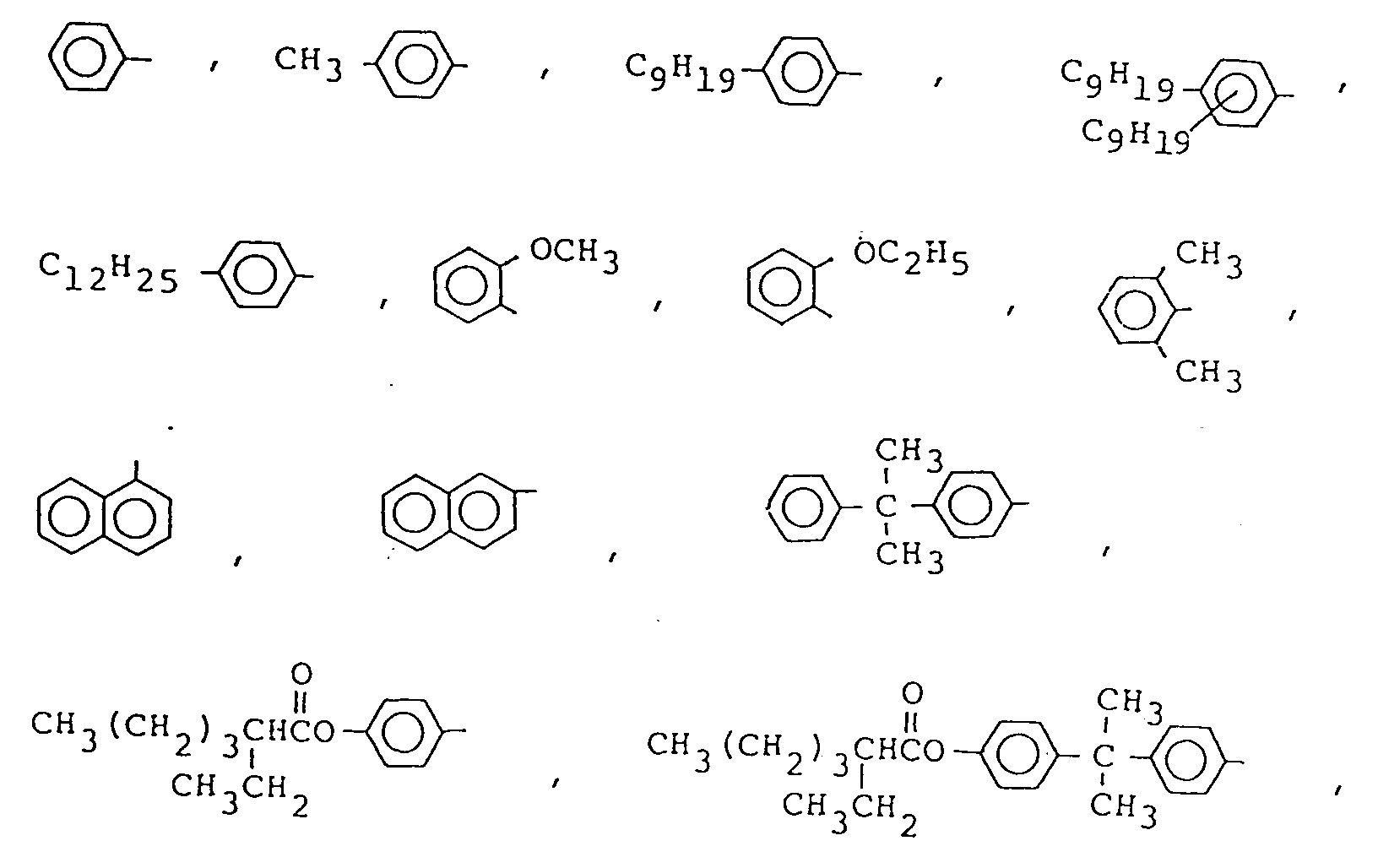
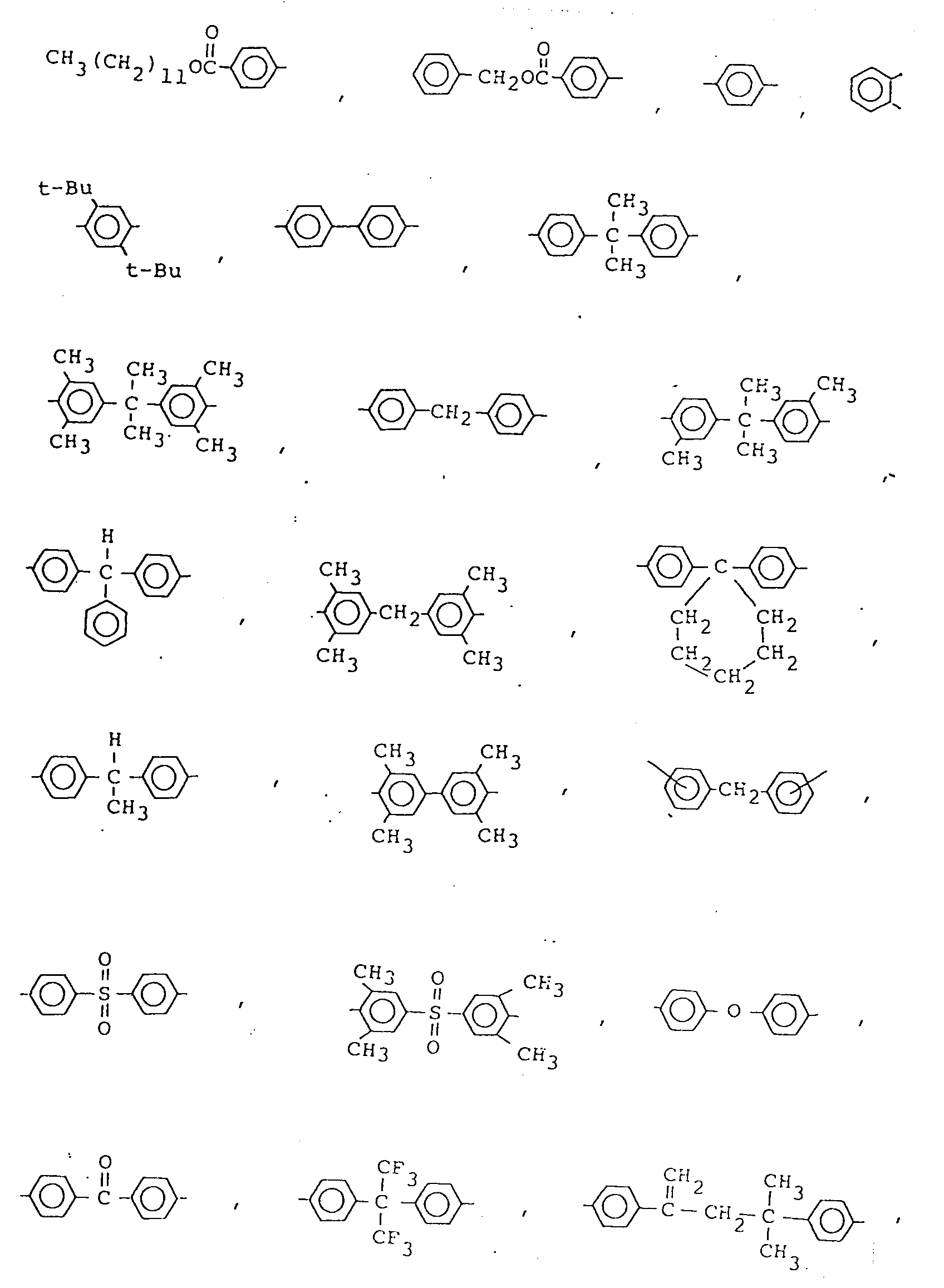


wherein R and R' each independently represent a lower alkyl group. - Shown above are various examples of aromatic groups having at least one aromatic ring, which can be used as R in formula (I). Of these groups, as R, a group having a structure in which the aromatic ring is directly bonded to the group of formula-XRf is especially preferred because a highly stable compound represented by formula (I) can be easily synthesized.
- In formula (I), X represents an oxygen atom or a sulfur atom. When X represents an oxygen atom, the following advantages are brought about:
- 1) fluorine-containing aromatic compounds can be produced at low cost in high yield from cheap raw materials, and
- 2) fluorine-containing aromatic ether compounds exhibit an extremely high stability.
- The value of n of formula [I] depends on the valence of R. In order to facilitate the synthesis and cause the viscosity to be in an appropriate range, n is generally an integer selected from 1 to 4, preferably selected from 2, 3 and 4, and more preferably 2.
- When n of formula (I) is 2 or greater, Rf groups may be the same or different.
- In formula (I), Rf represents an unsubstituted or partially substituted fluorocarbon residue having from 1 to 25 carbon atoms.
- The above-mentioned unsubstituted fluorocarbon residue represents a substituent having a structure in which the hydrogen atoms of each of various types of hydrocarbon residue are partially or entirely substituted with fluorine atoms. Examples of such fluorocarbon residues include fluoroalkyl groups having a saturated structure, fluoroalkenyl groups having an unsaturated structure, and fluoroaryl and fluoroaralkyl groups having an aromatic ring, in which each of the alkyl, alkenyl and aralkyl groups is partially or entirely substituted with a fluorine atom. Of these groups, fluoroalkyl groups and fluoroalkenyl groups are preferred because their synthesis is easy.
- In addition, Rf may be a partially substituted fluorocarbon residue. The substituted fluorocarbon residue represented is a substituted member selected from the group consisting of a fluoroalkyl, a fluoroalkenyl, a fluoroaryl group and a fluoroaralkyl group in which each of the alkyl, alkenyl and aralkyl groups is partially or entirely substituted with a fluorine atom, the fluorine atoms or hydrogen atoms of the fluorocarbon residue being further partially substituted with various substituents which are stable under application conditions for a refrigeration equipment oil, such as halogen atoms, e.g., a chlorine atom, a bromine atom and an iodine atom, a hydroxyl group, alkoxy groups, an amino group, a nitrile group, and carbonyl-containing groups, e.g., an ester group, amide groups, acyl groups and a carboxyl group. The above applies however only when the number of substituents, other than fluorine atoms, of the partially substituted fluorocarbon residue is not greater than 150 %, preferably not greater than 100 %, based on the total number of fluorine atoms and hydrogen atoms (if any) of the partially substituted fluorocarbon residue. Of these partially substituted fluorocarbon residues, fluorochloroalkyl groups are preferred because excellent lubrication properties are exhibited and because synthesis is easy.
- Further, the main chain of the above-mentioned unsubstituted or substituted fluorocarbon residue may have a structure having at least one ether group.
- In Rf, the ratio of fluorine atom to carbon atom is generally at least 0.6, preferably at least 1, and more preferably at least 1.5. When the ratio of fluorine atom to carbon atom in Rf is too low, unfavorably, the compound of formula (I) is likely to exhibit poor miscibility with fluoroalkanes and poor stability.
- The number of carbon atoms in Rf is generally in the range of from 1 to 25, preferably from 1 to 10, and more preferably from 1 to 3. When the number of carbon atoms in Rf is greater than 25, unfavorably, various problems arise such that it is difficult to obtain raw materials and also to synthesize a product therefrom, that synthesis and subsequent purification thereof are time-consuming, and that the viscosity of an obtained product becomes too high.
- The fluorine-containing aromatic compound to be employed in the present invention and represented by formula (I) may be synthesized according to various methods.
- Hereinbelow, an illustrative mode of synthesis is described for a compound represented by formula (I), wherein n is 1. Other compounds of formula (I) wherein n is 2, 3, or 4 may also be synthesized according to a similar procedure:
- A number of methods are known for the synthesis of fluorine-containing aromatic compounds by the reaction of phenols or thiophenols with fluorine-containing olefins.
- Representive examples of methods are illustrated below, wherein a perfluoroolefin is used as a fluorine-containing olefin:

Wherein Ar' represents a monovalent aromatic group, X represents an oxygen atom or a sulfur atom, and n' is an integer of from 2 to 20. - Representative examples of reactions between phenols and fluorine-containing olefins, are indicated below.
- For example, Advance in Fluorine Chemistry, 4, 50 (1965) indicates examples of reactions similar to those of formulae [2] and [3] in connection with the ionic reactions of the following various types of fluorine-containing olefins with phenols, alcohols or thiophenols.
CF₂=CF₂CF₂=CFCl CF₂=CFBrCF₂=CFHCF₂=CHClCF₂=CCl₂CHF=CCl₂CF₃CF=CF₂CClF₂CF=CF₂CF₃CCl=CF₂CF₃CF=CCl₂CF₃CCl=CClFCF₃CH=CH₂CF₃CH=CHClCF₃CCl=CHClCF₃CCl=CCl₂CF₃CF₂CF=CF₂CF₃CF=CFCF₃(CF₃)₂C=CF₂CF₂=CF-CF=CF₂,
wherein R₁ represents an alkyl group.
CF₃CCl=CClCF₃CCl₂FCClFCF=CClF and CF₃-(CF₂)₄-CF=CF₂
Journal of American Chemical Society, 73, 5831 (1951) discloses the reaction:
wherein R₂ represents a hydrogen atom or an alkyl group, and X¹ and X² each independently represent a fluorine atom, a chlorine atom or a hydrogen atom. - 142nd Meeting American Chemical Society, Atlantic City, N.J., Sept. 1962 Abs, P19U discloses the reaction:

Journal of American Chemical Society, 82, 5116 (1960) discloses the reaction:

wherein X³ represents a chlorine atom or a fluorine atom. - Nippon Kagakukai-shi 1975, 311 discloses the reaction:

wherein Y¹ represents a hydrogen atom, -OMe or -NO2, and X⁴ represents a fluorine atom or -CF₃.
PhOH+CF₃CF=CF₂→CF₃CHFCF₂OPh [10]
- Unsaturated bond-containing oligomers derived from various fluorine-containing olefins, such as a hexafluoropropene (HFP) oligomer of formula [11] below, a tetrafluoroethylene (TFE) oligomer of formula [12] below and a chlorotrifluoroethylene oligomer, can also be used as a raw material in the synthetic reactions as represented by formulae [2] and (3] above.
C3mF6m [11]
wherein m is an integer of 2 or greater, preferably from 2 to 6.
C2m'F4m' [12]
wherein m' is an integer of 2 or greater, preferably from 2 to 10. - Examples of reactions of such oligomers include the following reactions:
Bull. Chem. Soc. Japan, 49 502 (1976) discloses the reaction:
wherein Et represents an ethyl group. - Nippon Kagakukai-shi 1978, 253 discloses the reaction:

"Oligomer" edited by Okawara, Saegusa and Higashimura and published by Kodansha Scientific Ltd. (1976) pages 288 to 291, discloses representive examples of reactions between various TFE pentamers (C₁₀F₂₀) or HFP trimers (C₉F₁₈) and phenols, as represented by the following formulae:

Journal of Fluorine Chemistry 54, 162 (1991) discloses addition reactions between a perfluorovinyl ether and a phenol, as represented by formulae [21'] and [21'']:
wherein Rf represents -C₃F₇, -CF₂CF(CF₃)OC₃F₇ or -CF₂CF(CF₃)OCF₂CF₂CO₂CH₃, and
X represents a chlorine atom or a bromine atom. - Izvest. Akad. Nauk S.S.S.R., Otdel. Khim. Nauk 1952, 261-7 discloses addition reactions between a thiophenol and a chlorotrifluoroethylene or a tetrafluoroethylene, as represented by formula [21''']:

wherein X represents a chlorine atom or a fluorine atom. - Bull. Soc. Chim. Fr., 1972, (8), 3202-5 discloses an addition reaction between a thiophenol and a chlorotrifluoroethylene as represented by formula [21''''].
PhSNa + CF₂ = CClF → PhCF = CClF [21'''']
- A number of reaction schemes are possible in the reaction of phenols or thiophenols with saturated fluorocarbons for producing fluorine-containing aromatic compounds. Representive examples of such reaction schemes include the following reactions:
Ar'X⁻ + RfX⁵ → Ar'XRf [21]
Ar'X⁶ + Rf'X⁻ → Ar'XRf' [22]
wherein X represents an oxygen atom or a sulfur atom, X⁵ and X⁶ each independently represent a halogen atom, -OSO₂Me, -OCOCF₃,
-OSO₂CF₃, -OSO₂CCl₃ or -OSO₂Cl, which are substituents readily liberated in the form of an anion, Ar' represents a monovalent aromatic group, and Rf' has the same meaning as defined for Rf of formula [I], which represents a group capable of assuming an anion structure of the formula RF'X⁻. - Actual, Chem., 1987,151 discloses the reactions:


wherein R³ represents a hydrogen atom, 4-CL, 4-Br, 2-MeO₂C, 4-O₂N, 2-O₂N or 4-CF₃, X₇ represents a fluorine atom, a chlorine atom or a bromine atom, and R₄ represents -SO₂Me, -COCF₃, -SO₂CCl₃, -SO₂C₆H₄Me-P or -SO₂Cl. - "Chemistry of Organic Fluorine Compounds" Halsted Press, 2nd Edition, P279 discloses a number of methods for synthesizing a fluorine-containing ether compound and a fluorine-containing thioether compound, in which an alcohol, a phenol or a thiol is alkylated at oxygen atom or sulfur atom portions thereof.
- Journal of Organic Chemistry, 50, 4047 (1985) discloses the reaction:

wherein Z¹ represents a hydrogen atom, a methyl group, a methoxy group or a chlorine atom, and X represents an oxygen atom or a sulfur atom. - Industrial and Engineering Chemistry, 39, 412 (1947) discloses the reactions:

Tetrahedron Letters, 22, 323 (1981) discloses the reaction:
wherein X represents an oxygen atom or a sulfur atom. - Pure and Applied Chemistry, 59, 1015 (1987) discloses a number of reactions of various fluorine-containing halide compounds represented by formula [29] below with phenoxides.
CZ²Z³Z⁴CFZ³Z⁴ [29]
wherein Z² represents a chlorine atom, a bromine atom or an iodine atom, and, Z³ and Z⁴ each represent a fluorine atom, a chlorine atom, a bromine atom, a CF₃ group or a hydrogen atom. - Examples of such reactions include the following reactions:
Phs⁻ + CF₃CCL₃ → PhSCCl₂CF₃ [30]
PhO⁻ + CF₂ClCFCl₂ → PhOCF₂CFCl₂ [31]
Journal of Organic Chemistry, 25, 2009 (1960) discloses the reaction:
wherein Z⁵ and Z⁶ each represent a hydrogen atom, a methyl group, a methoxy group, a nitrile group or a chlorine atom. - In addition, fluorine-containing aromatic compounds represented by formula (I) can be synthesized by the use of methods for forming various types of ether linkages and thioether linkages.
- For example, an ether formation reaction comprising reacting a hydroxyl group with an epoxy group as indicated below, can be utilized:

wherein Ar' represents a monovalent aromatic group, and Rf'' represents a fluorocarbon residue having from 1 to 16 carbon atoms. - Further, a method in which fluorine atom or atoms are introduced into a precursor of the compound represented by formula (I) by various methods, may be available, or a method in which reaction products obtained by the various methods described above are converted into a desired compound represented by formula (I) using various reactions, may be available.
- For example, the following method can be mentioned, as disclosed in Actual. Chem., 1987, 151:

wherein R³ has the same meaning as defined for R3 in formulae [23] and [24]. - The fluorine-containing olefin and the fluorine-containing compound, such as a saturated fluorocarbon, each of which is to be used in the above-mentioned reactions, can be synthesized by various known methods.
- For example, such methods include a synthetic method by halogen exchange disclosed in "Advances in Fluorine Chemistry" Butterworth, vol. 3, p181, a method disclosed in "Chemistry of Organic Fluorine Compounds" Halsted press, and methods for producing fluoroolefin oligomers disclosed in Japanese Patent Application Laid-Open Specification No. 50-117705 and Japanese Patent Application publication Specification Nos. 43-11885 and 47-22563. The methods set out above are not limiting, and various other methods can be employed.
- The fluorine-containing aromatic compound represented by formula (I) can be synthesized by various methods, and the reactions mentioned hereinbefore are only some examples. Accordingly, the synthetic method of the compound represented by formula (I) is not restricted to those mentioned hereinbefore.
- The refrigeration equipment oil to be used in the present invention is not critical as long as it has the structure represented by formula (I), and there is no limitation with respect to the method for production thereof.
- Examples of Rf groups of the compound represented by formula (I) for use in the present invention are set out below, which are, however, only some examples of Rf groups of compounds of formula (I) synthesized by various methods. These are not critical, and other various Rf groups can be employed.

wherein Z⁷ represents a fluorine atom, a chlorine atom, an iodine atom or a hydrogen atom, L₁ is an integer of from 1 to 18, and L₂ is 0, 1 or 2. - Specific examples of groups of formula [36] include the following groups:
CF₃-, CF₃CH₂-, CF₃CH₂CH₂-,
F-(CF₂)₂-, F-(CF₂)₃-, F-(CF₂)₆-,
F-(CF₂)₁₀-, F-(CF₂)₂-CH₂-,
F-(CF₂)₄-CH₂-, F-(CF₂)₄-CH₂CH₂-,
F-(CF₂)₈-CH₂CH₂-,
I-(CF₂)₄-CH₂CH₂-, ClCF₂-,
Cl-(CF₂)₂-, Cl-(CF₂)₄-,
Cl(CF₂)₃-CH₂-, BrCF₂CF₂-, BrCF₂-,
I-CF₂-, I-(CF₂)₃-CH₂-,
H-(CF₂)₃CH₂-, H-(CF₂)₁₀-CH₂-,
HCF₂-, HCF₂CH₂CH₂-, HCF₂CH₂-,
I-(CF₂)₂-CH₂CH₂- and

wherein L₂ is an integer of from 1 to 7.
wherein L₂' is an integer of from 1 to 7, and X' represents a hydrogen atom, a chlorine atom or a bromine atom.
wherein L₃ is an integer of from 1 to 11.
wherein L₄ is an integer of from 1 to 7.
CF₃CHF-, CH₃CF₂-, CH₂FCF₂-,
CF₂HCF₂-, CH₂F-,
CHF₂CH₂-, CF₃CCl₂-, CF₃CHCl-,
CF₃CFCCl-, CFCl₂CF₂-,
CHFClCF₂-, C₆F₅-, CHCl₂CF₂-,
CF₃CHFCF₂-,
CF₃CF₂CHFCF₂-, HOCH₂CF₂CF₂CH₂-,
CH₂ClCF₂-, CF₃CHClCF₂- and
-CZ³Z⁴CFZ³Z⁴ [40]
wherein Z³ and Z⁴ are as defined for Z³ and Z⁴ of formula [29], respectively.
wherein Rf''' has the same meaning as Rf'' of formula [33].
-CF₂CX¹X²H [42]
wherein X¹ and X² are as defined for X¹ and X² of formula [4], respectively,
-Cn'F2n'₋₁ [43]
wherein n' is as defined for n' of formula [2]. - Examples of these groups include the following groups of formulae [44] and [45]:
-C3mF6m-1 [44]
wherein m is as defined for m of formula [11]
-C2m'F4m'₋₁ [45]
wherein m' is as defined for m' of formula [12].
-Cn'F2n'H [46]
wherein n' is as defined for n' of formula [3]. - Examples of these groups include the following groups of formulae [47] and [48]:
-C3mF6mH [47]
wherein m is as defined for m of formula [11]
-C2m'F4m'H [48]
wherein m' is as defined for m' of formula [12]. - Specific examples of groups represented by formulae [43] to [48] include the following groups:
CF₂=CF-, CF₂=CFCF₂-, CF₃CF=CF-, CF₃CF₂CF=CF-, (CF₃)₂C=CF-, C₆F₁₁-, C₉F₁₇-, C₁₅F₂₉-, C₁₀F₁₉-, CF₃CHFCF₂-, C₆F₁₂H-, C₉F₁₈H-, C₄F₈H- and C₁₀F₂₀H-
In addition, the following groups can be used.
CFCl=CF-, CFCl₂CF₂CF=CF-, CF₃CCl=CF-, CCl₂=CF-, CHCl=CF-, (CF₃)₂CH- and CF₃CFClCFCl-
As described above, the fluorine-containing aromatic compound of formula (I) to be employed in the present invention can be synthesized according to various methods, and can be purified by, for example, distillation, extraction or adsorption. - In another aspect of the present invention, there is provided a method for imparting lubrication properties to a fluoroalkane refrigerant for refrigeration equipment, which comprises adding to the refrigerant a lubricant oil selected from the group consisting of a fluorine-containing aromatic compound (I) and a lubricating composition comprising the compound (I) in an amount of at least 0.1% by weight, based on the weight of the lubricating composition,
the compound (I) being represented by the formula:
R(XRf)n (I)
wherein X represents an oxygen or a sulfur atom, R represents an n-valent, unsubstituted or substituted aromatic group comprising at least one unsubstituted or substituted aromatic ring and having from 6 to 60 carbon atoms, n is an integer of from 1 to 4, Rf represents an unsubstituted or partially substituted fluorocarbon residue having from 1 to 25 carbon atoms in which the ratio of fluorine atom to carbon atom is at least 0.6 and the main chain of which has no ether linkage therein or has at least one ether linkage therein, wherein when n is an integer of from 2 to 4, the XRf groups are the same or different. - The compounds represented by formula (I) can be advantageously used, individually or in the form of a mixture thereof, as a lubricant for use in a refrigeration system, in which use is made of a refrigerant comprising a fluoroalkane.
- Moreover, the compound of formula (I) can be used in the form of a mixture with another lubricant oil.
- The other lubricant oil usable in combination with the compound represented by formula (I) is generally selected from those miscible with a fluoroalkane refrigerant to a certain degree. For example, it is selected from the group consisting of perfluoropolyether oils, perfluoroether oils having a carbonyl-containing group, such as a carboxyl group, a carboxylate group, an amido group, a ketone group and an ester group, or having a polar group, such as a hydroxyl group, an amino group, an imido group, an ether group, a benzoimidazol group, a phosphite group, a phosphine group, a nitrile group, a phosphotriazine group and a triazine group, chlorofluorocarbon oils, polyalkylene glycol oils, ester oils and fluorinated silicone oils. Appropriate types of oils are selected from these oils, taking into consideration the miscibility with the compound of formula (I) and the viscosity and lubrication characteristics of the resultant lubricating composition.
- When the compound of formula (I) is used in the form of a mixture with another lubricant oil, the amount of the compound of formula (I) is chosen, taking into consideration the miscibility of the lubricating composition obtained with a refrigerant and the viscosity of the lubricating composition. Generally, the compound of formula (I) is used in an amount of at least 0.1 % by weight, preferably at least 25 % by weight, and more preferably at least 50 % by weight, based on the total weight of the lubricating composition.
- When the compound of formula (I) for use in the present invention is individually used as a lubricant oil for refrigeration equipment in which use is made of a refrigerant comprising a fluoroalkane, it generally has a kinetic viscosity at 40 °C of from 2 to 500 centistokes (hereinafter, referred to as "cst"), preferably from 3 to 300 cst, more preferably from 5 to 170 cst, and most preferably from 10 to 150 cst.
- With respect to the kinetic viscosity of the compound of formula (I) at 100 °C, it is generally in the range of from 0.5 to 100 cst, preferably from 1 to 50 cst, and more preferably from 2 to 30 cst.
- When the viscosity is too low, satisfactory lubrication properties cannot be obtained under compression conditions. On the other hand, when the viscosity is too high, the rotation torque in a compressor is disadvantageously too high.
- When compounds of formula (I) are used in the form of a mixture thereof or when a compound of formula (I) is used in the form of a mixture with another lubricant oil, the viscosity of the compound of formula (I) per se is not particularly limited, as long as the viscosity of the resultant mixture is within the same range as described above with respect to the individual use of the compound of formula (I).
- Further, even if the compound of formula (I) is in a solid form, it is useful as long as the kinetic viscosity of a refrigerant composition comprised of the compound and a fluoroalkane refrigerant is nearly equivalent to those of the above-mentioned various refrigerant compositions comprising the compound of formula (I).
- In the present invention, the weight ratio of the amount of a refrigerant to the amount of a lubricant oil in a refrigeration system is generally in the range of from 99/1 to 1/99, preferably from 95/5 to 10/90, and more preferably from 90/10 to 20/80.
- The lubricant oil for refrigeration equipment may be used with the addition of various additives (which are conventionally known as additives for lubricant oils) in a conventionally employed amount, such as a rust preventive, an antioxidant, a viscosity index improver, a corrosion preventive, an oleophilicity improver, a fluid point depressant and an extreme pressure additive.
- The compound represented by formula (I) exhibits an excellent miscibility with a fluoroalkane, such as HFC-134a, over a wide temperature range. For example, whereas the lower limit temperature at which a perfluoropolyether is miscible with a fluoroalkane, such as HFC-134a, is generally about 0 °C or above, the lower limit temperature at which the compound of formula (I) is miscible with a fluoroalkane, such as HFC-134a, can be as low as 0 °C or below, preferably -10 °C or below, more preferably -20 °C or below, still more preferably -30 °C or below, still more preferably -40 °C or below, and most preferably -78 °C or below.
- The upper limit temperature at which the compound of formula (I) is miscible with a fluoroalkane, such as HFC-134a, can be as high as 70 °C or above, preferably 80 °C or above, and more preferably 90 °C or above.
- By the use of the compound represented by formula (I) or a lubricating composition comprising the compound (I) as a lubricant oil in refrigeration equipment employing a fluoroalkane refrigerant, such as HFC-134a, it is feasible to overcome both of the drawbacks of the prior art, i.e., (1) the lower limit temperature at which the conventional perfluoropolyether lubricant oils are miscible with fluoroalkanes, such as HFC-134a, being unfavorably high and (2) the miscibility at high temperatures of the conventional hydrocarbon polyalkylene glycol lubricant oil with fluoroalkane, such as HFC-134a, being unfavorably low.
- In the testing for stability evaluation (known as sealed tube test) of the compound of formula (I), in which the compound is heated in the presence of a metal, such as copper, brass, aluminium or carbon steel, together with a fluoroalkane, such as HFC-134a, excellent results are obtained such that the compound of formula (I) and the fluoroalkane are stable even at 175 °C, and that the surface of the metal does not show any significant change.
- The compound of formula (I) exhibits extremely low moisture absorption, so that it is free from the problems of polyalkylene glycols and ester oils exhibiting a high moisture absorption, such that the electrical properties of the oil are degraded and the decomposition of the fluoroalkane, such as HFC-134a, is accelerated by water.
- The lubrication properties of the fluorine-containing aromatic compounds of formula (I) have been evaluated in the presence or absence of a fluoroalkane. As a result, it has been found that, irrespective of the presence or absence of a fluoroalkane, the compounds of formula (I) exhibit markedly excellent extreme pressure property (load at failure), abrasion resistance and coefficient of abrasion.
- For example, most of the fluorine-containig aromatic compounds represented by formula (I) exhibit much more excellent lubrication properties than conventional refrigeration equipment oils for a refrigerant, such as a mineral oil, and candidate lubricant oils for refrigeration equipment oil for HFC-134a, such as polyalkylene glycols and polyester oils.
- The above-mentioned lubrication properties can be measured by means of various testers. For example, extreme pressure resistance and abrasion resistance can be measured by Falex tester, extreme pressure property can be measured by SODA four-ball abrasion tester, and coefficient of abrasion can be measured by SODA pendulum abrasion tester.
- Accordingly, the compound represented by formula (I) or a lubricating composition comprising the compound (I) is useful as a lubricant oil for various types of refrigeration equipment employing as a refrigerant a fluoroalkane which is promising as a substitute for refrigerants, such as R-12 or R-22, for use in refrigerators, freezer, car air conditioners, or the like. The above-mentioned fluoroalkane is a lower fluoroalkane (for example, a fluoroalkane having only 1 to 5 carbon atoms) capable of being employed as a refrigerant, preferably a hydrofluoroalkane having from 1 to 4 carbon atoms, more preferably a hydrofluoroethane, and most preferably HFC-134a. The compound represented by formula (I) or a lubricating composition comprising the compound (I) exhibits excellent miscibilities with various lower fluoroalkanes, such as fluoromethanes, fluoroethanes, fluoropropanes and fluorobutanes, e.g., HFC-134a (CF₃CH₂F), HFC-134 (CHF₂CHF₂), HFC-152a (CH₃CHF₂), HFC-32 (CH₂F₂), HFC-125 (CF₃CHF₂), CF₃CH₂CHF₂, CF₃CHFCF₃, CHF₂CF₂CHF₂, CF₃CF₂CF₃, CF₃CF₂CF₂CH₃, CF₃CHFCHFCF₃, CF₃CF₂CH₃, CHF₂CF₂CH₂F and CF₃CHFCHFCF₂CF₃. Accordingly, the above-mentioned compound or composition is useful as a lubricant oil for use in refrigeration equipment employing such fluoroalkane refrigerants.
- The compound represented by formula (I) or a lubricating composition comprising the compound (I) and another lubricant oil, the compound (I) being contained in an amount of at least 0.1 % by weight, based on the total weight of the lubricating composition, exhibits an excellent miscibility with a refrigerant mixture (for example, a mixture of tetrafluoroethane and trifluoroethane or a mixture of HFC-32 and HFC-125) comprising a fluoroalkane. Accordingly, the above-mentioned compound or composition is useful as a lubricant oil for refrigeration equipment employing such a refrigerant mixture.
- In a further aspect of the present invention, there is provided a method for producing a high purity, fluorine-containing aromatic compound represented by the formula:
R(XRf)n (I)
wherein X represents an oxygen or a sulfur atom, R represents an n-valent, unsubstituted or substituted aromatic group comprising at least one unsubstituted or substituted aromatic ring and having from 6 to 60 carbon atoms, n is an integer of from 1 to 4, Rf represents an unsubstituted or partially substituted fluorocarbon residue having from 1 to 25 carbon atoms in which the ratio of fluorine atom to carbon atom is at least 0.6 and the main chain of which has no ether linkage therein or has at least one ether linkage therein, wherein when n is an integer of from 2 to 4, the XRf groups are the same or different,
which comprises subjecting a phenol or thiophenol compound represented by the formula:
R(XH)n (II)
wherein R, X and n are as defined above for formula (I)
and an unsubstituted or substituted fluorine-containing olefin to an addition reaction therebetween in the presence of a basic catalyst and a polar solvent, characterized in that the basic catalyst is used in a molar ratio of from 0.01 to 1 relative to the amount of the phenolic hydroxyl group or thiophenolic thiol group of the compound (II) and the addition reaction is performed in the presence of water in a molar ratio of from 0.2 to 100 relative to the amount of the basic catalyst. - As mentioned hereinbefore, the fluorine-containing aromatic compound represented by formula (I) can be produced by various methods, which are not critical in the production thereof. However, generally, it is frequent that impurities having structures similar to that of the desired product are formed as by-products in the manufacturing process. The removal of the impurities are difficult, so that the desired product cannot be easily purified. With respect to the refrigeration equipment oil according to the present invention, any trace amount of impurities contained therein are likely to corrode the metal materials of a refrigeration system, to accelerate the decomposition of a refrigerant and to exert an extremely adverse effect on the required electrical properties (particularly required for a closed type refrigeration equipment, such as a refrigerator), such as volume resistivity, of the oil. Therefore, it is requisite that the refrigeration equipment oil have an extremely high purity.
- The present inventors have made extensive and intensive studies on various synthetic methods mentioned hereinbefore with a view toward developing a method for easily synthesizing a high purity, fluorine-containing aromatic compound represented by formula (I) in high yield. As a result, it has been found that a high purity, fluorine-containing aromatic compound can be easily synthesized and isolated by a method in which a phenol or thiophenol compound represented by formula (II) and a fluorine-containing olefin are subjected to an addition reaction in the presence of a basic catalyst and a polar solvent according to the reaction scheme represented by formula [3] above, wherein the basic catalyst is employed in a molar ratio of from 0.01 to 1, and preferably from 0.05 to 0.3, relative to the amount of phenolic hydroxyl groups or thiophenolic thiol groups participating in the reaction of the compound of formula (II), and wherein the addition reaction is performed in the presence of water in a molar ratio of from 0.2 to 100, preferably from 1 to 50, and more preferably from 15 to 50, relative to the amount of the basic catalyst.
- As the basic catalyst for use in the above reaction, various bases can be mentioned. Representative examples of bases include alkali metal hydroxides, such as NaOH and KOH, alkali metal bicarbonates, such as NaHCO₃ and KHCO₃, alkali metal carbonates, such as Na₂CO₃ and K₂CO₃, amines, such as triethyl amine and tributyl amine, and alkali metal and alkaline earth metals, such as metalic sodium.
- The fluorine-containing olefins to be used in the method of the present invention are not specifically limited as long as they permit a nucleophilic addition of a phenoxy anion or a thiophenoxy anion. Examples of these olefins include perfluoroolefins or chlorofluoroolefins disclosed in Advance in Fluorine Chemistry, 4, 50(1965), such as CF₂ = CF₂, CF₂ = CFCF₃ and CF2 = CClF, various fluorine-containing olefin oligomers represented by formulae [11] and [12], and perfluorovinyl ethers, such as CF₂ = CFOCF₂CF₂CF₃.
- In the reaction according to the method of the present invention, various polar solvents can be employed. Representative examples thereof include dimethyl sulfoxide, dimethylformamide, sulfolane, N-methylpyrrolidone, acetone, tetrahydrofuran, dioxane, tetraglyme and dimethoxyethane. The amount of polar solvent used is not particularly limited. However, generally, the polar solvent is added in an amount of from 10 to 1000 % by weight, based on the weight of the phenol or thiophenol used in the reaction.
- The reaction temperature is generally in the range of from 0 to 150 °C, preferably from 40 to 100 °C, and the reaction pressure is generally in the range of from 0.1 to 20 atm., preferably from 0.1 to 10 atm.
- The basic catalyst is used in a molar ratio of from 0.01 to 1, preferably from 0.05 to 0.3 relative to the amount of a member selected from the phenolic hydroxyl group and the thiophenolic thiol group contained in a phenol and a thiophenol, respectively, and each participating in the addition reaction.
- Water is used in a molar ratio of from 0.2 to 100, preferably from 1 to 50, more preferably from 15 to 50, relative to the amount of the basic catalyst. When water is used in too low a molar ratio, the selectivity for the desired product is low. On the other hand, when water is used in too high a molar ratio, the reaction rate is too slow to be practical.
- In the method of the present invention, when the reaction is conducted with a sufficient amount of water, there is another advantage in that after completion of the reaction, a reaction mixture separates into an oil phase mainly comprised of the oil represented by formula (I), i.e., the desired product, and a catalyst phase mainly comprised of a polar solvent, water and a basic catalyst, to thereby facilitate separation of the desired product from the reaction mixture, so that the separated catalyst phase as such can be recycled for reuse.
- In the utilization of the fluorine-containing aromatic compound represented by formula (I) as a lubricant oil for use in a refrigeration system, electrical properties are important besides miscibility, lubrication properties and durability. In particular, the lubricant oil for closed refrigeration equipment, e.g., refrigeration equipment for a refrigerator etc., must have excellent insulation properties. That is, it must have a volume resistivity of generally at least 10¹¹ Ωcm, preferably at least 10¹² Ωcm, and most preferably at least 10¹³cm.
- The desired fluorine-containing aromatic compound can be produced in high selectivity by the synthetic methods described above, so that it can be isolated in high purity (for example, 99.9 % by weight or above) by washing with water or distillation technique (for example, simple distillation). However, it often occurs that the electrical properties, such as volume resistivity, of the isolated product is poor due to the presence of a trace amount of impurities.
- The present inventors have made studies on various treatments for improving the electrical properties. As a result, the following effective treatment has been found. That is, it has been found that a high purity, fluorine-containing aromatic compound improved in electrical properties, e.g., having a volume resistivity of 10¹²Ω or higher, or of 10¹³Ω or higher can be easily obtained by contacting a fluorine-containing aromatic compound produced according to the method described above with at least one inorganic or organic adsorbent capable of adsorbing various polar substances, selected from the group consisting of silica gel, zeolite, fuller's, activated clay, bauxite, almina, magnesia, charcoal, boneblack, activated carbon, and ion exchangers, such as alumina-silicate gel or zirconium oxide gel, preferably selected from the group consisting of activated carbon, silica gel, activated alumina, silica-almina, activated clay and zeolite, and more preferably from the group consisting of activated carbon, silica gel and zeolite.
- The purification method may comprise dispersing the above-mentioned absorbent in a fluorine-containing aromatic compound or a solution thereof, or may comprise passing a fluorine-containing aromatic compound or a solution thereof through a column packed with the above-mentioned absorbent.
- By the use of such a method, a fluorine-containing aromatic compound can be easily obtained, which has an extremely high purity (e.g., 99.9 % or above), so that the obtained compound does not adversely affect metal materials and refrigerants and exhibits excellent electrical properties.
- Any fluorine-containing aromatic compounds of formula (I) can be used in the present invention. Of these, however, the fluorine-containing aromatic compounds represented by the following formula (III):
R'(XRf')n' (III)
wherein X represents an oxygen atom or a sulfur atom, R' represents the same aromatic group as defined for R of formula (I) except that R' has from 6 to 30 carbon atoms, n' is an integer of from 2 to 4, and Rf' is as defined for Rf of formula (I) with the proviso that Rf' has from 1 to 3 carbon atoms, the XRf' groups being either the same or different, each of the XRf' groups being directly bonded to an aromatic ring in R' are particularly useful because of various advantages including the following advantages: - 1) such compounds can be synthesized with economic advantage in high yield from cheap raw materials,
- 2) extremely excellent lubrication properties can be exhibited thereby,
- 3) handling is easy because of excellent miscibility with various hydrocarbon solvents, and
- 4) such compounds have excellent miscibility with various non-fluoro type oils (for example, a hydrocarbon oil, a polyalkylene glycol and an ester oil), so that the compounds of formula (I) can be used in the form of a mixture with such non-fluoro type oils.
- With respect to item 1) above, further illustrative description will be made. For example, the compound of formula (III) can be synthesized in high yield by reacting a polyvalent phenol with a cheap fluoroolefin, such as CF₂=CF₂, CF₂=CFCl and CF₂=CFCF₃, produced on a commercial scale. Alternatively, the compound of formula (III) can also be synthesized by reacting a polyvalent phenol with a cheap chlorofluorocarbon, such as HCFC-22 (CF₂HCl) and CFC-113 (CF₂ClCFCl₂). Further, it can be synthesized from a cheap fluorine-containing alcohol produced on a commercial scale, such as CF₃CH₂OH and CF₃CF₂CH₂OH.
- With respect to item 2) above, also, further illustrative description will be made. The compound of formula (III) exhibits extremely excellent lubrication properties, that is, it has been confirmed that the compound exhibits more excellent extreme pressure resistance, abraison resistance and coefficient of abraison than turbine oil (containing additives) which is a representative high performance lubricant oil. Examples of compounds represented by formula (III) include the following compounds:

- The present invention will now be described in detail with reference to the following examples that by no means limit the scope of the invention.
- The kinetic viscosity of the lubricant oil for use in the present invention can be determined by measuring the viscosity by means of various viscometers. As the viscometer to be used for determining the kinetic viscosity, there can be mentioned a capillary viscometer, such as a Ubbellohde viscometer, an Ostward viscometer or a Cannon-Fenske viscometer, a rotational viscometer, and a falling ball viscometer. In the present invention, an E-type rotational viscometer (manufactured by Tokyo Keiki, Japan) and a Cannon-Fenske viscometer were used.
- 6.2 g of potassium hydroxide was dissolved in 200 ml of methanol. To the resultant solution was gradually added 200 ml of a methanol solution containing 12.7 g of 2,2-bis(4-hydroxyphenyl)propane (hereinafter referred to simply as "bisphenol A"), followed by agitation at room temperature for about one hour, to effect a reaction. After the reaction, the methanol was distilled off to thereby obtain 18.9 g of potassium alkoxide of bisphenol A. 18.9 g of the thus obtained potassium alkoxide and 56.0 g of bisphenol A were dissolved in 200 ml of dimethylsulfoxide, and the resultant solution was charged into a microcylinder having a capacity of 500 ml as a reactor. The inside of the reactor was degassed and then, inert gas N₂ was charged to restore atmospheric pressure. The reactor was heated to 60 °C by means of an oil bath, followed by introduction of chlorotrifluoroethylene, thereby starting a reaction. While feeding chlorotrifluoroethylene so as to maintain the pressure in the reactor (gauge pressure) at 2 to 3 kg/cm², reaction was carried out for about 5 hours. The solution obtained as a result of the reaction was charged into a large volume of water to separate a reaction product. 500 ml of 1,1,2-trichloro-1,2,2-trifluoroethane (hereinafter referred to simply as "CFC-113") was added to the separated reaction product. The resultant CFC-113 phase was washed with distilled water twice, followed by drying to thereby achieve solvent removal. Thus, 131 g of a colorless, transparent oil (containing 91.5 % by weight of oil [S1]) was obtained.
- Simple distillation (the boiling point was 180 °C under 0.02 mmHg) and subsequently, separation treatment using a silica gel column were conducted to thereby isolate the oil [S1].
- The thus obtained oil [S1] was analyzed by infrared absorption spectrometry, mass spectrometry [m/e460, 462 (M⁺) 445, 447 (M⁺-CH₃)] and ¹⁹F-NMR spectrometry to thereby confirm that the oil [S1] was a compound having the following structural formula:

¹⁹F-NMR spectrum (ppm from CF₃COOH): 78(2F), 7.5(4F). - The same procedure as in Referential Example 1 was repeated, except that tetrafluoroethylene was used in place of chlorotrifluoroethylene, to thereby obtain 113 g of a colorless, transparent oil (containing 90.1 % by weight of oil [S2]).
- Simple distillation (the boiling point was 160 °C under 0.20 mmHg) and subsequently, separation treatment using a silica gel column were conducted to thereby isolate the oil [S2].
- The thus obtained oil [S2] was analyzed by infrared absorption spectrometry, mass spectrometry [m/e392 (M⁺), 377 (M⁺-CH₃)] and ¹⁹F-NMR spectrometry to thereby confirm that the oil [S2] was a compound having the following structural formula:

- 10 g of bisphenol A was dissolved in 10 ml of tetrahydrofuran to obtain a solution, and 10 g of triethylamine was added to the solution. The resultant mixture was charged into a microcylinder having a capacity of 200 ml. The microcylinder was cooled to -78 °C, followed by evacuation of the inside of the microcylinder. Thereafter, 60 g of hexafluoropropene was introduced thereinto, followed by heating to 60 °C to conduct a reaction for 5 hours. After the reaction, the tetrahydrofuran and any excess triethylamine were removed by means of an evaporator to obtain a reaction mixture. To the thus obtained reaction mixture was added 100 ml of R-113 to obtain a solution, followed by washing with diluted hydrochloric acid once and washing with distilled water twice.
- Solvent removal from the resultant R-113 phase was achieved by means of an evaporator, thereby obtaining 12 g of colorless, transparent mixture of the oil [S3] (yield: 55 %). The thus obtained mixture was analyzed using gas chromatography to recognize several absorption peaks. Accordingly, the mixture of oil [S3] was subjected to separation treatment using a silica gel column, and a sample obtained from each fraction was analyzed by mass spectrometry, infrared absorption spectrometry and ¹⁹F-NMR spectrometry (see Table 1).

- As a result, it was confirmed that the oil [S3] is a mixture of compounds [A], [B] and [C] (molar ratio of A/B/C = 4/4/2) indicated in Table 1, that the compound [A] contains a cis-cis isomer, a cis-trans isomer and a trans-trans isomer which are geometrical isomers of a pentafluoropropenyl group, and that the compound [B] likewise contains a cis isomer and a trans isomer.
- 17 g of potassium alkoxide of bisphenol A which was synthesized by substantially the same procedure as in Referential Example 1, was dissolved in 100 ml of dimethylsulfoxide to obtain a solution, and to the solution was added 28 g of R-113. The resultant mixture was heated to 60 °C and reacted for about 5 hours.
- After the reaction, the resultant solution was charged into a large volume of water to separate a reaction product. To the reaction product was added 100 ml of R-113. Phase separation occurred, and the resultant R-113 phase was washed with distilled water twice, followed by solvent removal, thereby obtaining 13.4 g of colorless, transparent oil [S4] (yield: 28.5 %).
- The thus obtained oil was analyzed by gas chromatography to recognize three absorption peaks. The oil [S4] was subjected to separation treatment using a silica gel column, and a sample obtained from each fraction was analyzed by mass spectrometry, infrared absorption spectrometry and ¹⁹F-NMR spectrometry. The results are shown in Table 2. Thus, the oil [S4] was confirmed to be a mixture of compounds [D], [E] and [F] (molar ratio of D/E/F = 3/5/2).

- The same procedure as in Referential Example 1 was repeated, except that 2,2-bis(4-hydroxy-3-methylphenyl) propane was used in place of bisphenol A and tetrafluoroethylene was used in place of chlorotrifluoroethylene, to thereby obtain oil [S5] (yield: 77 %). The oil [S5] was analyzed by infrared absorption spectrometry and mass spectrometry [m/e456 (M⁺), 441 (M⁺-CH₃)] to thereby confirm that the oil [S5] was a compound having the following structural formula:

- Oil [S6] was obtained by the same procedure as in Referential Example 3, except that p-α-cumylphenol was used in place of bisphenol A (yield: 86 %):

As a result of gas chromatography and mass spectrometry, the oil [S6] was identified as a mixture of compounds [G] and [H] (molar ratio of G/H = 5/5):
- Oil [S7] was obtained by the same procedure as in Referential Example 3, except that 2,2-bis(3,5-dimethyl-4-hydroxyphenyl)propane was used in place of bisphenol A (yield: 46 %). From the results of infrared absorption spectrometry and mass spectrometry, it was confirmed that the oil [S7] was a compound having the following structural formula:

wherein m=0 or 1 and n=0 or 1. - Oil [S8] having high viscosity was obtained by the same procedure as in Referential Example 3, except that bis(4-hydroxyphenyl)sulfone was used in place of bisphenol A (yield: 41 %).
- From the results of infrared absorption spectrometry and mass spectrometry, it was confirmed that the oil [S8] was a compound having the following structural formula:

wherein m=0 or 1 and n=0 or 1. - Substance [S9] in a solid form at 10 °C was obtained by the same procedure as in Referential Example 3, except that bis(3,5-dimethyl-4-hydroxyphenylsulfone) was used in place of bisphenol A (yield: 97 %).
- From the results of infrared absorption spectrometry and mass spectrometry, it was confirmed that the substance [S9] was a compound having the following structural formula:

wherein m=0 or 1 and n=0 or 1. - Oil [S10] was obtained by the same procedure as in Referential Example 3, except that dodecylphenol was used in place of bisphenol A (yield: 80 %).
- From the results of infrared absorption spectrometry and mass spectrometry, it was confirmed that the oil [S10] was a compound having the following structural formula:

wherein n=0 or 1. - Oil [S11] was obtained by the same procedure as in Referential Example 3, except that hexafluoropropene dimer having the following structural formula was used in place of hexafluoropropene (yield: 79 %):


wherein m=0 or 1 and n=0 or 1. - From the results of gas chromatography and mass spectrometry, it was confirmed that the compound [S11] was a mixture of mixtures [I], [J] and [K] (molar ratio of I/J/K = 4.8/4.7/0.5]):
m = 0 n = 0 [S-11-I]
m = 1 n = 0 [S-11-J]
m = 1 n = 1 [S-11-K]. - 10 g of bisphenol A was dissolved in 10 ml of tetrahydrofuran to obtain a solution, and to the solution was added 15 g of triethylamine. The resultant mixture was charged into a four-neck flask provided with a reflux condenser and an agitator. 180 g of hexafluoropropene trimer C₉F₁₈ (manufactured by PCR, U.S.A.) was further charged thereinto, thereby conducting a reaction at 60 °C for 6 hours. After the reaction, the tetrahydrofuran, and any excess hexafluoropropene trimer and triethylamine were removed to there-by obtain a reaction mixture.
- To the obtained reaction mixture was added 50 ml of R-113 to obtain a solution, and the solution was washed with a diluted hydrochloric acid and water. The resultant R-113 phase was purified using a silica gel column, followed by solvent removal by means of an evaporator, to thereby obtain 47 g of oil [S12] (yield: 97 %).
- From the results of infrared absorption spectrometry and mass spectrometry, it was confirmed that the oil [S12] was a compound having the following structural formula:

wherein m=0 or 1 and n=0 or 1. - Oil [S13] was obtained by the same procedure as in Referential Example 12, except that nonylphenol was used in place of bisphenol A (yield: 70 %).
- From the results of infrared absorption spectrometry and mass spectrometry, it was confirmed that the oil [S13] was a compound having the following structural formula:

wherein n=0 or 1. - Oil [S14] was obtained by the same procedure as in Referential Example 9, except that dodecylphenol was used in place of bisphenol A (yield: 69 %).
- From the results of infrared absorption spectrometry and mass spectrometry, it was confirmed that the oil [S14] was a compound having the following structural formula:

wherein n=0 or 1. - Oil [S15] was obtained by the same procedure as in Referential Example 12, except that p-α-cumylphenol was used in place of bisphenol A (yield: 70 %).
- From the results of infrared absorption spectrometry and mass spectrometry, it was identified that the oil [S15] was a compound having the following structural formula:

wherein n=0 or 1. - 7.1 g of sodium hydroxide was dissolved in 20.7 g of water to obtain a solution, and to the solution were added 4.0 g of bisphenol A and 13.8 g of dimethylsulfoxide. The resultant mixture was charged into a microcylinder having a capacity of 100 ml. The microcylinder was cooled to -78 °C, and the inside thereof was evacuated, followed by introduction thereinto of 7.8 g of chlorodifluoromethane (R22) to effect a reaction at 70 °C for 10 hours. After the reaction, the resultant solution was charged into a large volume of water to separate a reaction product. To the reaction product was added 100 ml of R-113.
- The resultant R-113 phase as a sublayer was washed with distilled water twice, followed by purification using a silica gel column, and then the solvent was removed. Thus, 1.1 g of oil [S16] was obtained (yield: 18 %).
- From the results of mass spectrometry [m/e328 (M⁺), 313 (M⁺-CH₃)] and infrared absorption spectrometry, it was confirmed that the oil [S16] has the following structural formula:

- 10 g of bisphenol A was dissolved in 60 ml of tetrahydrofuran to obtain a solution, and to the solution was added 15 g of triethylamine. To the resultant mixture was gradually dropwise added 40 ml of a tetrahydrofuran solution containing 7.2 g of 2-ethylhexyl chloride by means of a dropping funnel. A reaction was effected at room temperature for 10 hours and then, the tetrahydrofuran and any excess triethylamine were removed by an evaporator to thereby obtain a reaction product. The reaction product remaining unevaporated was transferred into a microcylinder having a capacity of 200 ml, and the reaction product was reacted with hexafluoropropene in the same manner as in Referential Example 3 to thereby obtain 1.6 g of oil [S17] (yield: 7.5 %).
- From the results of infrared absorption spectrometry and mass spectrometry, it was confirmed that the thus obtained oil [S17] was a compound having the following structural formula:

wherein n=0 or 1. - 10.8 g of the oil [S3] obtained in Referential Example 3 was charged into a microcylinder having a capacity of 200 ml, and 5.4 g of sulfuryl chloride SO₂Cl₂ was added thereto. A reaction was carried out at 100 °C for 4 days. After the reaction, the resultant solution was charged into a large volume of water to separate a reaction product. To the reaction product was added 100 ml of Freon 113 to dissolve the same and then, a lower phase was separated. The phase was washed with a 10 % aqueous solution of sodium bicarbonate and then with distilled water, followed by purification using a silica gel column. Thus, 9.65 g of an oily substance was obtained. In an infrared absorption spectrum thereof, the absorption at 1759 cm⁻¹ ascribed to the stretching vibration of -CF=CF- of the oil [S3] disappeared, demonstrating the formation of a chlorine adduct like the following substance [S18]:

wherein RfCl represents -CClFCClFCF₃ or -CF₂CHFCF₃. - 7 g of sodium boron hydride NaBH₄ was suspended in 100 ml of dimethylsulfoxide to obtain a suspension, and to the suspension was added 8 g of the mixture [S4] obtained in Referential Example 4. A reaction was carried out at 85 °C for 16 hours. After the reaction, the dimethylsulfoxide was removed by an evaporator to obtain a reaction mixture. To the reaction mixture was added 100 ml of R-113, thereby obtaining a solution. The thus obtained solution was washed with distilled water and then, the resultant R-113 phase was purified using a silica gel column, thereby obtaining 3.5 g of colorless, transparent oil [S19] (yield: 55 %).
- From the results of gas chromatography and mass spectrometry [m/e428 (M⁺), 413 (M⁺-CH₃)], it was confirmed that the obtained oil [S19] was a compound having the following structural formula:

- Oil [S20] was obtained according to the same procedure as in Referential Example 3, except that 2,6-dimethyl-2,4,6-tri(4-hydroxyphenyl)-3-heptene was used in place of bisphenol A (yield: 93 %). From the results of gas chromatography and mass spectrometry, the molar ratio of saturated groups to unsaturated groups was -CF₂CHFCF₃/-CF=CF-CF₃ = 42/58:

wherein Rf₁, Rf₂ and Rf₃ each independently represent -CF₂CHFCF₃ or -CF=CF-CF₃. - Oil [S21] was obtained according to the same procedure as in Referential Example 3, except that compound [G21] was used in place of bisphenol A (yield: 70 %). From the results of gas chromatography and mass spectrometry, the molar ratio of saturated groups to unsaturated groups was -CF₂CHFCF₃/-CF=CF-CF₃ = 46/54:

wherein Rf₁, Rf₂, Rf₃ and Rf₄ each independently represent -CF₂CHFCF₃ or -CF=CF-CF₃. - 10 g of sodium carbonate was dispersed in 25 ml of diglyme to obtain a dispersion, and to the dispersion was added 25 g of acid fluoride of hexafluoropropene oxide oligomer of the formula F[CF(CF₃)CF₂O]5∼8CF(CF₃)COF (manufactured by PCR, U.S.A.). A reaction was carried out at 80 °C for 5 hours.
- After the reaction, the diglyme was distilled off and then, the reaction product was heated at 200 °C under 5 mmHg. The distillate was purified using a silica gel column, thereby obtaining 15.4 g of oil [G22].
- 0.54 g of potassium alkoxide of bisphenol A which was synthesized in substantially the same manner as in Referential Example 1 and 0.50 g of bisphenol A were dissolved in 3 ml of dimethylsulfoxide to obtain a solution, and to the solution was added 10 ml of a 1,3-di(trifluoromethyl)benzene solution in which 11 g of compound [G22] was dissolved. A reaction was carried out at 80 °C for 3 hours. Thereafter, the dimethylsulfoxide was distilled off, followed by purification using a silica gel column, thereby obtaining 9.7 g of oil [S22] (yield: about 80 %).
- From the results of infrared absorption spectrometry and mass spectrometry, it was confirmed that the compound [G22] and the oil [S22] were individually a mixture of substances represented by the following respective formula:


wherein Rf₀₁ represents
and Rf₀₂ represents
- Data of mass spectrometry for the oil [S22] are shown below.
m/e(M⁺) n₁=n₂=5 2088 n₁=5, n₂=6 2254 n₁=5, n₂=7 or n₁=n₂=6 2420 n₁=5, n₂=8 or n₁=6, n₂=7 2586 n₁=6, n₂=8 or n₁=n₂=7 2752 n₁=7, n₂=8 2918 n₁=n₂=8 3084 - Substance [S23-1] in a solid form was obtained by the same procedure as in Referential Example 4, except that 1,1-difluoro-1,2,2,2-tetrachloroethane was used in place of R-113 (yield: 55 %).
- 9 g of lithium aluminum hydride was suspended in 200 ml of tetrahydrofuran to thereby obtain a suspension, and to the suspension was added 11 g of the oil [S23-1]. A reaction was carried out at room temperature for 5 hours, and further at 65 °C for 5 days. After the reaction, the tetrahydrofuran was distilled off and, then, 100 ml of toluene was added thereto to obtain a solution. The thus obtained solution was washed with distilled water, followed by purification of the resultant toluene phase using a silica gel column, thereby obtaining 3.5 g of colorless, transparent oil [S23-2] (yield: 50 %).
- From the results of infrared absorption spectrometry and mass spectrometry, it was confirmed that the oils [S23-1] and [S23-2] were compounds represented by following structural formulae, respectively:

[m/e356(M⁺)341(M⁺-CH₃)] - Oil [S24] was obtained by the same procedure as in Referential Example 22, except that thiophenol was used in place of bisphenol A (yield: about 70 %). From the results of infrared absorption spectrometry, gas chromatography and mass spectrometry, it was confirmed that the oil [S24] was a mixture of substances represented by the following structural formula:

wherein Rf₀ represents
n being an integer of from 5 to 8.
Data of mass spectrometry are shown below:m/e(M+) proportions (% by mole) in mixture n=5 1040 19 =6 1206 50 =7 1372 23 =8 1538 8. - To 60 ml of a dichloromethane solution in which 7.9 g of 2,2-bis[p-(2-hydroxyethoxy)phenyl]propane was dissolved was dropwise added a solution obtained by diluting 13 g of hexafluoropropenediethylamine with dichloromethane at a temperature of from 0 to 5 °C. A reaction was carried out at room temperature for 4 hours. After the reaction, the reaction mixture was charged into a 10 % by weight aqueous potassium carbonate solution and, then, the resultant oil phase was washed with water, followed by drying over sodium sulfate. Thereafter, the oil phase was subjected to fractional distillation, thereby obtaining 1.0 g of a colorless, transparent oily substance [S25].
- From the results of infrared absorption spectrometry and mass spectrometry [m/e32O (M⁺), 305 (M⁺-CH₃)], it was confirmed that the substance [S25) was a compound represented by the following structural formula:
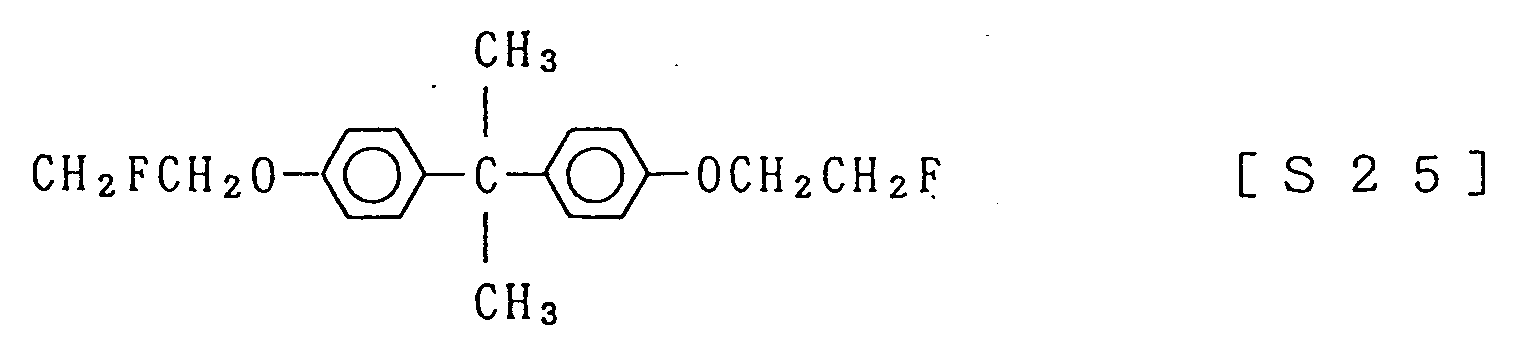
- 13.3 g of alkoxide of bisphenol A synthesized by substantially the same procedure as in Referential Example 1 was reacted with 30.0 g of ethyl p-toluenesulfonate in 200 ml of dimethylsulfoxide as a solvent. After the reaction, the solvent was distilled off, and the reaction product remaining unevaporated was purified using a silica gel column, thereby obtaining 6.0 g of white compound [S26] in a solid form.
- From the results of infrared absorption spectrometry and mass spectrometry [m/e284 (M⁺), 269 (M⁺-CH₃)], it was confirmed that the compound [S26] was a compound represented by the following structural formula:

- The miscibility of the oil [S1] obtained in Referential Example 1 with each of various fluoroalkanes (HFC-134a, HFC-134, and HFC-152a) was evaluated by the following method.
- First, 0.2 g of the oil [S1] was charged into a glass tube and then, the whole was cooled by liquid nitrogen. The interior of the glass tube was evacuated and, about 1.5 g of HFC-134a was introduced into the glass tube. The glass tube was sealed and placed in a temperature-controlled water bath. When the temperature was equilibriated, in the manner in which the miscibility of the oil [S1] with the fluoroalkane was visually evaluated, a miscibility limit was measured in the temperature range of from room temperature to 90 °C. A lower miscibility limit at temperatures lower than room temperature was likewise measured by cooling with a methanol cooling medium. The results are shown in Table 3 together with the results of Comparative Example 1.
- The kinetic viscosities of the oil [S1] at 40 °C and 100 °C were measured, which were 56.8 cSt and 5.34 cSt, respectively.
- The miscibility of the oil [S2] obtained in Referential Example 2 with each of the various fluoroalkanes mentioned above was evaluated in the same manner as in Example 1. The results are shown in Table 3 together with the results of Comparative Example 1.
- The kinetic viscosities of the oil [S2] at 40 °C and 100 °C were 26.2 cSt and 3.40 cSt, respectively.

- The miscibilities of commercially available perfluoropolyether and 2,2-bis(4-ethoxyphenyl)propane with each of the above various fluoroalkane were evaluated, in substantially the same manner as in Example 1. The results are shown in Table 3 together with data of the kinetic viscosity at 40 °C.
- In Tables 3, 4, 10, 11 and 13,

- The miscibilities of commercially available perfluoropolyether and polyoxyalkylene glycol with HFC-134a were evaluated in substantially the same manner as in Example 1. The results are shown in Table 4 together with data of the kinetic viscosity at 40 °C.

- From Tables 3 and 4, the following is found with respect to the miscibility with various fluoroalkanes. That is, the miscibility of the commercially available perfluoropolyether is unsatisfactory with respect to the low temperature range, and on the other hand, the miscibility of the polyoxyalkylene glycol is inferior in the high temperature range.
- By contrast, the oil obtained by the present invention exhibits excellent miscibilities with various fluoroalkanes in a wide temperature range of from low to high temperatures. Further, [S26], i.e. a compound indicated in Comparative Example 4, and having a structure similar to that of the oil obtained by the present invention but containing no fluorine atoms, exhibits little miscibility with fluoroalkanes, such as HFC-134a. As apparent from these facts, for exhibiting miscibility, it is requisite that an alkyl group linked to an aromatic group through an ether linkage contain fluorine atoms.
- The miscibility of each of various oils obtained in Referential Examples 3 through 7 and 10 through 24 with HFC-134a was evaluated in substantially the same manner as in Example 1. The results are shown in Table 5 together with data of the kinetic viscosity at 40 °C.
Table 5 Example Lubricant oil Kinetic viscosity (cSt)40°C Temperature range for being miscible with HFC-134a lower limit temperature (°C) upper limit temperature (°C) 3 [S3] 14 -78 or below 90 or above 4 [S3-C] 28 -78 or below 90 or above 5 [S4] 69 -21 90 or above 6 [S5] 115 -78 or below 90 or above 7 [S6] 8 -78 or below 90 or above 8 [S7] 113 -78 or below 90 or above 9 [S10] 11 -25 90 or above 10 [S11] 553 -78 or below 90 or above 11 [S12] 1225 -78 or below 90 or above 12 [S13] 30 -78 or below 90 or above 13 [S14] 105 -32 90 or above 14 [S15] 83 -78 or below 90 or above 15 [S16] 4 -78 or below 90 or above 16 [S17] 29 -53 90 or above 17 [S18] 32 -78 or below 90 or above 18 [S19] 50 -78 or below 90 or above 19 [S20] 2000 -48 90 or above 20 [S21] 1300 -78 or below 90 or above 21 [S22] 66 -61 90 or above 22 [S23-②] 33 -55 90 or above 23 [S24] 10 -78 or below 90 or above - The miscibility of each of sulfone compounds obtained in Referential Examples 8 and 9 with HFC-134a was evaluated in the same manner as in Example 1.
- The results show that both of lubricants [S8] and [S9] exhibit miscibility with HFC-134a at all temperatures measured in the range of from -78 °C to 90 °C.
- Oils were prepared by mixing in various weight ratios the oil [S5] obtained in Referential Example 5 and the oil [S2] obtained in Referential Example 2, and the miscibility of each of the oils with HFC-134a was evaluated in substantially the same manner as in Example 1. The results are shown in Table 6 together with data of the kinetic viscosity at 40 °C.
- Oils were prepared by mixing in various weight ratios the substance [S4-D] in a solid form at 10 °C which was obtained in Referential Example 4 and the oil [S2] obtained in Referential Example 2, and the miscibility of each of the oils with HFC-134a was evaluated in substantially the same manner as in Example 1. The results are shown in Table 7 together with data of the kinetic viscosity at 40 °C.
-
- Oils were prepared by mixing in various weight ratios the oil [S7] obtained in Referential Example 7 and the oil [S3] obtained in Referential Example 3, and the miscibility of each of the oils with HFC-134a was evaluated in substantially the same manner as in Example 1. The results are shown in Table 8 together with data of the kinetic viscosity at 40 °C.
Table 6 Example Weight ratio of [S5]/[S2] Kinetic viscosity (cSt)40°C Temperature range for being miscible with HFC-134a lower limit temperature (°C) upper limit temperature (°C) 26 25/75 41 -78 or below 90 or above 27 50/50 57 -78 or below 90 or above 28 75/25 83 -78 or below 90 or above Table 7 Example Weight ratio of [S4-D]/[S2] Kinetic viscosity (cSt)40°C Temperature range for being miscible with HFC-134a lower limit temperature (°C) upper limit temperature (°C) 29 25/75 34 -73 90 or above 30 50/50 60 -43 90 or above Table 8 Example Weight ratio of [S7]/[S3] Kinetic viscosity (cSt)40°C Temperature range for being miscible with HFC-134a lower limit temperature (°C) upper limit temperature (°C) 31 20/80 20 -78 or below 90 or above 32 50/50 43 -78 or below 90 or above 33 60/40 55 -78 or below 90 or above 34 70/30 83 -78 or below 90 or above - An oil was prepared by mixing the oil [S11] obtained in Referential Example 11 and the oil [S3] obtained in Referential Example 3 in a weight ratio of [S11]/[S3] = 30/70, and the miscibility of the resultant oil with HFC-134a was evaluated in substantially the same manner as in Example 1. From the results, it was found that the lower limit temperature for the oil to be miscible was not higher than -78 °C and the upper limit temperature for the oil to be miscible was not lower than 90 °C. Further, the kinetic viscosity of the mixed oil was 21 cSt at 40 °C.
- The oil [S2] obtained in Referential Example 2 and polypropylene glycol (the number average molecular weight

- An oil was prepared by mixing the oil [S2] obtained in Referential Example 2 and ester oil (Unister® H407R, manufactured by Nippon Oil Fats Co., Ltd., Japan) in a weight ratio of [S2]/ester oil = 50/50, and the miscibility thereof with HFC-134a was evaluated in substantially the same manner as in Example 1. From the results, it was found that the lower limit temperature and the upper limit temperature for the oil to be miscible with HFC-134a were -28 °C and not lower than 90 °C, respectively. Further, the kinetic viscosity at 40 °C was 28.7 cSt. Unister® H-407R is a full ester obtained by a reaction of pentaerythritol with a synthetic fatty acid having seven carbon atoms, and the kinetic viscosity thereof is 21.9 cSt at 40 °C. Further, the lower limit temperature and the upper limit temperature for Unister® H407R to be miscible with HFC-134a is -1 °C and 85 °C, respectively. From these results, it is apparent that the miscibility (lower limit temperature) of Unister® H407R has been improved by mixing with the oil [S2].
- A glass tube was charged with 0.6 ml of purified oil [S1], HFC-134a and test pieces of steal copper and aluminum, and the glass tube was then sealed to enclose a refrigerant composition therein. The refrigerant composition was heated at 175 °C for 10 days. After the heating, any change of the hue of the refrigerant composition and any change of the surfaces of the metal pieces were examined. It was found that the hue of the refrigerant composition and the surfaces of the metals were both not changed. Furthermore, the viscosity and infrared absorption spectrum of the oil [S1] were not changed at all.
- The heat resistances of various compounds of the present invention were evaluated according to the sealed tube test in the same manner as described above. The results are shown in Table 9. It was found that the compounds of the present invention have a satisfactorily high heat resistance.
Table 9 Example Lubricant oil After sealed tube test hue viscosity IR metal surface 38 [S1] not changed not changed not changed not changed 39 [S2] not changed not changed not changed not changed 40 [S3] not changed not changed not changed not changed 41 [S3-C] not changed not changed not changed not changed 42 [S4] not changed not changed not changed not changed 43 [S5] not changed not changed not changed not changed - Use was made of a Falex tester. Under conditions such that the oil temperature at the start of the testing was 20 °C and a load of 300 pounds was applied, the tester was driven for 3 minutes. While increasing the load, 100 pounds by 100 pounds, the tester was driven for 1 minute under each load until seizing was caused. By this method, the seizing loads of various compounds of the present invention were measured.
- Abrasion losses were measured in the following method. In the same manner as in the measurement of seizing loads, first, a refrigerant gas (HFC-134a) was blown into an oil to be measured at a blow rate of about 10 liter/hour for about 15 minutes. Further, under conditions such that the oil temperature at the start of the testing was 20 °C and a load of 250 pounds was applied, the tester was driven for 5 minutes while continuing the gas blowing. The load was increased to 400 pounds, and the tester was driven for 30 minutes while pressurizing and regulating the load by means of a gear so as to maintain 400 pounds. Thereafter, the load was lowered to 100 pounds, and the difference between the number of gear teeth when a load of 400 pounds was applied and that when initial setting was effected was employed as a measure.
- Use was made of SODA tester using four balls. Under conditions such that the oil temperature at the start of testing was 20 °C, a load oil pressure was increased at a rate of 49.0 kPa (0.5 kgf/cm²) per minute, at 200 rpm until seizing was caused, thereby obtaining an acceptance limit (oil pressure).
- Use was made of SODA tester using pendulum, under conditions such that the oil temperature at the start of testing was 20 °C.
- The measurement results obtained according to the methods described above with respect to the seizing load, the abrasion loss and the friction factor of each of the various oils to be used in the present invention, are shown in Table 10, together with the results of Comparative Examples 9 through 12.
- The seizing load, the abrasion loss and the friction factor of each of commercially available mineral oil, polyoxyalkylene glycol, ester oil and turbine oil, were measured in substantially the same manner as in Examples 44 and 45. The results are shown in Table 10.
- From Table 10, it is seen that all of the oils obtained by the present invention are more excellent in all of extreme-pressure properties, abrasion resistance and friction factor than any of mineral oil as a lubricant oil for CFC-12 (SUNISO® 3G5, manufactured by Nippon San Sekiyu, Japan), a polyoxyalkylene glycol and an ester oil as candidate oils for a refrigeration equipment oil for HFC-134a, and high-performance lubricant oil containing various additives (Tellus Oil® 32, manufactured by Showa Shell Sekiyu K.K., Japan). Therefore, various oils of the present invention are useful not only as a refrigeration equipment oil but also as a general purpose lubricant oil.
- The results of Table 10 indicate that a compound containing chlorine atoms represented by Formula (I) has an especially excellent lubricating performance.

- Various oils to be used in the present invention and polypropylene glycol were allowed to stand in a thermo-hygrostat vessel maintained at a temperature of 40 °C and at a relative humidity of 80 %, and the equilibrium water absorptions thereof were measured. The results are shown in Table 11, together with the water absorptions, as measured after allowing to stand for 24 hours at a temperature of 25 °C and at a relative humidity of 80 %, of ester oils described in Japanese Patent Application Laid-Open Specification No. 3-179091.
- From Table 11, it is apparent that the oils to be employed in the present invention have lower water absorbing properties so that they are more suitable as a refrigeration equipment lubricant oil, than polyoxyalkylene glycols and ester oils which are conventional candidate oils for refrigeration equipment oils for HFC-134a.

- Into a reactor (microcylinder having a capacity of 500 ml) were charged 60 g of bisphenol A, 5.65 g of potassium hydroxide, 120 ml of dimethylsulfoxide and 44 ml of water and, then, the resultant mixture was agitated to obtain a solution. The inside of the reactor was degassed and then, intert gas N₂ was charged to restore atmospheric pressure. The reactor was heated to 60 °C by means of an oil bath, followed by introduction of chlorotrifluoroethylene, thereby starting a reaction. While feeding chlorotrifluoroethylene so as to maintain the pressure in the reactor (gauge pressure) at 2 to 3 kg/cm², reaction was carried out for about 5 hours.
- At completion of the reaction, the reaction mixture was separated into an oil phase mainly comprised of an oil as a desired product and a catalyst phase mainly comprised of dimethylsulfoxide, water and potassium hydroxide. The oil phase was sufficiently washed with distilled water, followed by distillation at 180 °C under 0.02 mmHg, thereby obtaining 100 g of desired product [S1]. On the other hand, dimethylsulfoxide and water were distilled off from the catalyst phase, followed by sufficiently washing with distilled water and then by distillation, thereby obtaining 20 g of the desired product [S1]. The total amount of the desired product was 120 g (yield: 99 %).
- The oil obtained by the above procedure was analyzed by gas chromatography. As a result, the purity of the desired product was found to be 99.5 %.
- Bisphenol A was reacted with chlorotrifluoroethylene in substantially the same manner as in Example 54, except that the amount of water added, the type of catalyst and the type of reaction solvent were varied. The results are shown in Table 12, together with the results of Comparative Example 16.
- The reaction was repeated in the same manner as in Example 54, except that tetrafluoroethylene was used in place of chlorotrifluoroethylene, and that the amount of water added was changed from 44 ml to 5 ml. As a result, 98 g of desired product [S2] was obtained.
- The oil obtained by the above procedure was analyzed by gas chromatography. As a result, the purity of the desired product was found to be 99.9 %.
- The results of Referential Example 1 and the results of gas chromatography of the oil mentioned above are shown in Table 12.
- From Table 12, it is found that the purity of the desired product has been improved by addition of water.

- Volume resistivity of the oil [S1] obtained in Referential Example 1 was measured according to the method of JIS C2101 (insulating oil test). As a result, the volume resistivity of the oil [S1] at 20 °C was found to be 3.0 x 10¹¹ Ωcm.
- Volume resistivity of the oil [S2] obtained in Referential Example 2 was measured in substantially the same manner as in Example 59. As a result, the volume resistivity of the oil [S2] at 20 °C was found to be 5.7 x 10¹¹ Ωcm.
- Volume resistivity of the oil [S4] obtained in Referential Example 4 was measured in substantially the same manner as in Example 59. As a result, the volume resistivity of the oil [S4] at 20 °C was found to be 4.0 x 10¹² Ωcm.
- Volume resistivity of the oil [S5] obtained in Referential Example 5 was measured in substantially the same manner as in Example 59. As a result, the volume resistivity of the oil [S5] at 20 °C was found to be 2.9 x 10¹² Ωcm.
- Volume resistivity of the oil [S11] obtained in Referential Example 11 was measured in substantially the same manner as in Example 59. As a result, the volume resistivity of the oil [S11] at 20 °C was found to be 1.4 x 10¹² Ωcm.
- 100 g of activated carbon (Calgon® CPG, manufactured by Calgon Far East, Japan) dried in vacuum at 150 °C for 3 hours was dispersed in 400 g of R-113 to obtain a suspension, and 200 g of the oil [S1] obtained in Example 54 was added thereto, followed by agitation at room temperature overnight. The activated carbon was removed by filtration and, then, the R-113 was dis tilled off, followed by simple distillation of the oil, thereby obtaining 140 g of a colorless, transparent oil. The oil obtained according to the present purification method was analyzed by gas chromatography. As a result, the purity of the oil was found to have improved from 99.5 to 99.88 %. Further, each of the volume resistivities of the oil at 20 °C before and after purification was measured in substantially the same manner as in Example 59. As a result, it was found that the volume resistivity of the oil before purification, which was 1.0 x 10¹¹ Ωcm, remarkably improved to 2.2 x 10¹³ Ωcm by virtue of the purification treatment. Furthermore, the purified oil was subjected to measurement of an insulation breakdown voltage according to the method of JIS C2101, thereby finding that it exhibits a value as high as 50 kV/2.5 cm or above. The above results are shown in Table 13, together with the results of Comparative Examples 17 through 20.
- 120 g of the oil [S2] obtained in Example 58 was dissolved in 120 g of R-113 to obtain a solution, and the solution was treated with a column in which 500 g of silica gel (Wako Gel C-200, manufactured by Wako Pure Chemical Industries, Ltd., Japan) dried at 400 °C for 3 hours was used as a packing material. After the treatment, the R-113 was distilled off from the solution and, then, the oil was subjected to simple distillation, thereby obtaining 108 g of a colorless, transparent oil.
- The oil obtained according to the above purification method was analyzed by gas chromatography. As a result, the purity of the oil was found to have improved from 99.9 % to 99.97 %. Further, the volume resistivity and the insulation breakdown voltage thereof were measured in substantially the same manners as in Examples 59 and 64, respectively. The results are shown in Table 13, together with the results of Comparative Examples 17 through 20.
- The volume resistivity and the insulation breakdown voltage of each of polypropylene glycol, a perfluoropolyether and a mineral oil were measured in the same manner as in Examples 59 and 64, respectively. The results are shown in Table 13, together with the volume resistivity of ester oil described in Japanese Patent Application Laid-Open specification No. 3-128991. The volume resistivity and insulation breakdown voltage of the oil obtained by the present invention are advantageously higher than those of polypropylene glycol, which is a candidate oil for a refrigeration equipment oil for HFC-134a. On the other hand, the volume resistivity of the oil according to the present invention is nearly equivalent to that of the ester oil described in Japanese Patent Application Laid-Open Specification No. 3-128991.
- When the volume resistivity and the insulation breakdown voltage of the oil according to the present invention are compared with those of Krytox® 143 AY and SUNISO® 3G5 (both of which have poor miscibility with fluoroalkanes and, therefore, cannot be used as lubricant oils for refrigeration equipment, however, regarded as oils having the most excellent electrical properties), it is apparent that the volume resistivity of each of the oils [S1] and [S2] shows an intermediate value between those of Krytox® 143 AY and SUNISO® 3GS, and that the insulation breakdown voltage of each of the oils [S1] and [S2] shows a value excellent as compared with those of both of Krytox® 143 AY and SUNISO® 3GS.

- Each of the oil [S1] obtained in Example 54 and the oil [S2] obtained in Example 58 was purified in substantially the same manner as in Example 64, except that various adsorbents were used. The results are shown in Table 14.
- From the results of Tables 13 and 14, it is apparent that adsorbents selected from activated carbon, silica gel, activated alumina, silica-alumina, activated clay and zeolite are effective for the improvement of electrical properties for oils.
Table 14 Example Lubricant oil Absorbent Volume resistivity (Ωcm) before purification after purification 66 [S1] Neobead MSD-2 *1 1.0 X 10¹¹ 4.3 X 10¹² 67 [S1] Nikkanite G-36 *2 1.0 X 10¹¹ 4.3 X 10¹² 68 [S2] Activated Alumina 200 *3 1.7 X 10¹⁰ 1.0 X 10¹² 69 [S2] Molecular Sieves 4A *4 1.7 X 10¹⁰ 7.7 X 10¹² 70 [S2] Molecular Sieves 13X *4 1.7 X 10¹⁰ 8.8 X 10¹² *1: Silica-alumina, manufactured by Mizusawa Kagaku K.K., Japan *2: Activated clay, manufactured by Nippon Kassei Hakudo K.K., Japan *3: Alumina, manufactured by Nakarai Kagaku K.K., Japan *4: Zeolite, manufactured by Wako Pure Chemical Industries, Ltd., Japan - In order to evaluate the miscibility of the oil [S2] obtained in Referential Example 2 with HFC-134a, a miscibility test was conducted in the same manner as in Example 1, except that the mixing ratio of the oil to HFC-134a was varied. The results are shown in Table 15.
Table 15 Mixing ratio (% by weight) of [S2]/[S2]+HFC-134a Temperature range to be miscible (°C) lower limit temperature upper limit temperature Example 71 5 -78 or below 90 or above Example 72 10 -78 or below 90 or above Example 73 30 -78 or below 90 or above Example 74 50 -78 or below 90 or above Example 75 80 -78 or below 90 or above - From Table 15, it is apparent that the oil [S2] to be employed in the present invention is freely miscible with HFC-134a in a broad temperature range.
- The oil [S2] obtained in Referential Example 2 was completely miscible with polypropylene glycol (number average molecular weight

-
- The oil [S2] obtained in Referential Example 2 was completely miscible with ester oil (Unister® H407R, manufactured by Nippon Oil Fats Co., Ltd., Japan) in a mixing ratio (weight ratio of [S2]/ester oil) of 50/50. The resultant mixed oil had a kinetic viscosity of 28.7 cSt at 40 °C.
- The oil [S1] obtained in Referential Example 1 was completely miscible with mineral oil (naphthenic mineral oil SUNISO® 3GR, manufactured by Nippon San Sekiyu, Japan) in a mixing ratio (weight ratio of [S1]/mineral oil) of 50/50. The resultant mixed oil had a kinetic viscosity of 34.5 cSt at 40 °C.
- The miscibility of the oil [S2] obtained in Referential Example 2 with HFC-125 (CF₃CHF₂) was evaluated in the same manner as in Example 1. As a result, the lower limit temperature and the upper limit temperature for the oil [S2] to be miscible with the HFC-125 were found to be -78 °C or below and 90 °C, respectively.
- The miscibility of the oil [S2] obtained in Referential Example 2 with HFC-227ea (CF₃CHFCF₃) was evaluated in the same manner as in Example 1. As a result, the lower limit temperature and the upper limit temperature for the oil [S2] to be miscible with HFC-227ea were found to be -78 °C or below and 90 °C, respectively.
- The miscibility of the oil [S2] obtained in Referential Example 2 with HFC-32 (CH₂F₂) was evaluated in the same manner as in Example 1. As a result, the lower limit temperature and the upper limit temperature for the oil [S2] to be miscible with HFC-32 were found to be -78 °C or below and 90 °C, respectively.
- The miscibility of the oil [S22] obtained in Referential Example 22 with perfluoropropane was evaluated in the same manner as in Example 1. As a result, the lower limit temperature and the upper limit temperature for the oil [S22] to be miscible with perfluoropropane were found to be -78 °C or below and 90 °C, respectively.
- The miscibility of the oil [S1] obtained in Referential Example 1 with HFC-32 was evaluated in the same manner as in Example 1. As a result, the lower limit temperature and the upper limit temperature for the oil [S1] to be miscible with HFC-32 were found to be -56 °C and 90 °C or above, respectively.
- The miscibility of the oil [S25] obtained in Referential Example 25 with HFC-134a was evaluated in the same manner as in Example 1. As a result, it was found that the oil [S25] was immiscible at all with HFC-134a in the temperature range of from -78 °C to 90 °C.
- The miscibility of Fomblin® Y-06 with HFC-32 was evaluated in the same manner as in Example 1. As a result, it was found that Fomblin® Y-06 was immiscible at all with HFC-32 at a temperature of not higher than 20 °C.
- From the above, it is apparent that the fluorine-containing aromatic compound to be employed in the present invention has excellent miscibility with various lower fluoroalkanes which can be used as a refrigerant.
- When a fluorine-containing aromatic compound represented by formula (I) is used as a lubricant oil for a refrigeration system in accordance with the present invention, the compound exhibits an excellent miscibility with a fluoroalkane refrigerant, such as HFC-134a, in a wide temperature range of from low temperatures to high temperatures. Moreover, this lubricant oil is excellent in properties, such as heat resistance, lubrication properties, low hygroscopicity and electrical insulation properties, so that it can be used as an excellent lubricant oil for a refrigeration system. Furthermore, since the present lubricant oil has excellent lubrication properties as mentioned above, it can be advantageously used as a general purpose lubricant oil, besides the use as a refrigeration equipment oil.
R(XRf)n (I)
wherein X represents an oxygen or a sulfur atom, R represents an n-valent unsubstituted or substituted aromatic group comprising at least one unsubstituted or substituted aromatic ring and having from 6 to 60 carbon atoms, n is an integer of from 1 to 4, Rf represents an unsubstituted or partially substituted fluorocarbon residue having from 1 to 25 carbon atoms in which the ratio of fluorine atom to carbon atom is at least 0.6 and the main chain of which has no ether linkage therein or has at least one ether linkage therein, wherein when n is an integer of from 2 to 4, the XRf groups are the same or different.
Claims (52)
- A refrigerant composition for use in a refrigeration system, comprising:(a) a fluoroalkane refrigerant, and(b) a lubricant selected from the group consisting of a fluorine-containing aromatic compound (I) and a lubricating composition comprising said compound (I) in an amount of at least 0.1 % by weight, based on the weight of said lubricating composition,said compound (I) being represented by the formula:
R(XRf)n (I)
wherein X represents an oxygen or a sulfur atom, R represents an n-valent, unsubstituted or substituted aromatic group comprising at least one unsubstituted or substituted aromatic ring and having from 6 to 60 carbon atoms, n is an integer of from 1 to 4, Rf represents an unsubstituted or partially substituted fluorocarbon residue having from 1 to 25 carbon atoms in which the ratio of fluorine atom to carbon atom is at least 0.6 and the main chain of which has no ether linkage therein or has at least one ether linkage therein, wherein when n is an integer of from 2 to 4, the XRf groups are the same or different. - The refrigerant composition according to claim 1, wherein the n-valent aromatic group represented by R of formula (I) has from 6 to 30 carbon atoms, n is an integer of from 2 to 4, wherein each XRf has from 1 to 3 carbon atoms and is directly bonded to an aromatic ring of R.
- The refrigerant composition according to claim 1 or 2, wherein said lubricant (b) has a kinetic viscosity of from 2 to 500 centistokes at 40 °C.
- The refrigerant composition according to any one of claims 1 to 3, wherein X of formula (I) is an oxygen atom.
- The refrigerant composition according to any one of claims 1 to 4, wherein said aromatic group represented by R of formula (I) is substituted with a substituent containing no aromatic ring and having not more than 50 carbon atoms.
- The refrigerant composition according to claim 5, wherein said substituent is an alkyl group or a monovalent alicyclic hydrocarbon residue.
- The refrigerant composition according to any one of claims 1 to 6, wherein said aromatic group represented by R of formula (I) comprises at least two aromatic rings which are linked through a linkage group containing no aromatic ring and having not more than 50 carbon atoms.
- The refrigerant composition according to claim 7, wherein said linkage group is a hydrocarbon residue having a valence of from 2 to 4, an alicyclic hydrocarbon residue having a valence of from 2 to 4, an ether group or a sulfonyl group.
- The refrigerant composition according to claim 8, wherein said aromatic group represented by R of formula (I) is a bivalent group represented by the formula:

- The refrigerant composition according to any one of claims 1 to 9, wherein said unsubstituted fluorocarbon residue represented by Rf of formula (I) is selected from the group consisting of a fluoroalkyl, a fluoroalkenyl, a fluoroaryl group and a fluoroaralkyl group in which each of the alkyl, alkenyl and aralkyl groups is partially or entirely substituted with a fluorine atom.
- The refrigerant composition according to any one of claims 1 to 9, wherein said substituted fluorocarbon residue represented by Rf of formula (I) is a substituted member selected from the group consisting of a fluoroalkyl, a fluoroalkenyl, a fluoroaryl group and a fluoroaralkyl group in which each of the alkyl, alkenyl and aralkyl groups is partially or entirely substituted with a fluorine atom, and in which said substituted member is further partially substituted with a halogen atom exclusive of a fluorine atom, a hydroxyl group, an alkoxy group, an amino group, a nitrile group or a carbonyl-containing group, with the proviso that the number of substituent or substituents, exclusive of substituent fluorine atom or atoms, of said substituted fluorocarbon residue is not greater than 150%, based on the total number of fluorine and hydrogen atoms of said substituted fluorocarbon residue.
- The refrigerant composition according to claim 10, wherein said unsubstituted fluorocarbon residue represented by Rf of formula (I) is -CF₂CHF₂,-CF₂CHFCF₃ or -CF=CF-CF₃.
- The refrigerant composition according to claim 11, wherein said substituted fluorocarbon residue represented by Rf of formula (I) is -CF₂CHClF or -CF₂CFCl₂.
- The refrigerant composition according to claim 1, wherein said aromatic group represented by R of said formula (I) is a bivalent group represented by the formula:

- The refrigerant composition according to claim 1, wherein said aromatic group represented by R of formula (I) is a bivalent group represented by the formula:
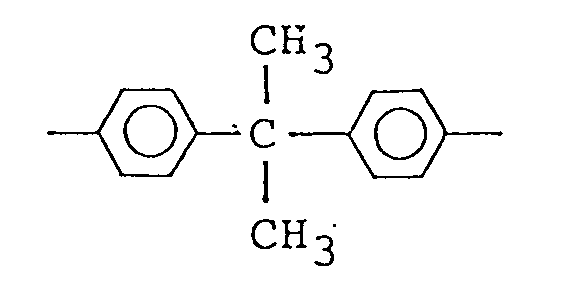
- The refrigerant composition according to any one of claims 1 to 15, wherein said fluoroalkane refrigerant (a) is a hydrofluoroalkane having from 1 to 4 carbon atoms.
- The refrigerant composition according to claim 16, wherein said hydrofluoroalkane is 1,1,1,2-tetrafluoroethane.
- The refrigerant composition according to claim 16, wherein said hydrofluoroalkane is 1,1 -difluoromethane.
- The refrigerant composition according to claim 16, wherein said hydrofluoroalkane is 1,1,1,2,2-pentafluoroethane.
- The refrigerant composition according to any one of claims 1 to 17, wherein the weight ratio of said refrigerant (a) to said lubricant (b) is 99/1 to 1/99.
- A method for imparting lubrication properties to a fluoroalkane refrigerant for refrigeration equipment, which comprises adding to said refrigerant a lubricant oil selected from the group consisting of a fluorine-containing aromatic compound (I) and a lubricating composition comprising said compound (I) in an amount of at least 0.1% by weight, based on the weight of said lubricating composition,
said compound (I) being represented by the formula:
R(XRf)n (I)
wherein X represents an oxygen or a sulfur atom, R represents an n-valent, unsubstituted or substituted aromatic group comprising at least one unsubstituted or substituted aromatic ring and having from 6 to 60 carbon atoms, n is an integer of from 1 to 4, Rf represents an unsubstituted or partially substituted fluorocarbon residue having from 1 to 25 carbon atoms in which the ratio of fluorine atom to carbon atom is at least 0.6 and the main chain of which has no ether linkage therein or has at least one ether linkage therein, wherein when n is an integer of from 2 to 4, the XRf groups are the same or different. - The method according to claim 21, wherein the n-valent aromatic group represented by R of formula (I) has from 6 to 30 carbon atoms, n is an integer of from 2 to 4, wherein each XRf has from 1 to 3 carbon atoms and is directly bonded to the aromatic ring of R.
- The method according to claim 21 or 22, wherein said lubricant (b) has a kinetic viscosity of from 2 to 500 centistokes at 40 °C.
- The method according to any one of claims 21 to 23, wherein X of formula (I) is an oxygen atom.
- The method according to any one of claims 21 to 24, wherein said aromatic group represented by R of formula (I) is substituted with a substituent containing no aromatic ring and having not more than 50 carbon atoms.
- The method according to claim 25, wherein said substituent is an alkyl group or a monovalent alicyclic hydrocarbon residue.
- The method according to any one of claims 21 to 26, wherein said aromatic group represented by R of formula (I) comprises at least two aromatic rings which are linked through a linkage group containing no aromatic ring and having not more than 50 carbon atoms.
- The method according to claim 27, wherein said linkage group is a hydrocarbon residue having a valence of from 2 to 4, an alicyclic hydrocarbon residue having a valence of from 2 to 4, an ether group or a sulfonyl group.
- The method according to claim 28, wherein said aromatic group represented by R of formula (I) is a bivalent group represented by the formula:

- The method according to any one of claims 21 to 29, wherein said unsubstituted fluorocarbon residue represented by Rf of formula (I) is selected from the group consisting of a fluoroalkyl, a fluoroalkenyl, a fluoroaryl group and a fluoroaralkyl group in which each of the alkyl, alkenyl and aralkyl groups is partially or entirely substituted with a fluorine atom.
- The method according to any one of claims 21 to 29, wherein said substituted fluorocarbon residue represented by Rf of formula (I) is a substituted member selected from the group consisting of a fluoroalkyl, a fluoroalkenyl, a fluoroaryl group and a fluoroaralkyl group in which each of the alkyl, alkenyl and aralkyl groups is partially or entirely substituted with a fluorine atom, and which is further partially substituted with a halogen atom exclusive of a fluorine atom, a hydroxyl group, an alkoxy group, an amino group, a nitrile group or a carbonyl-containing group, with the proviso that the number of substituent or substituents, exclusive of substituent fluorine atom or atoms, of said substituted fluorocarbon residue is not greater than 150%, based on the total number of fluorine and hydrogen atoms of said substituted fluorocarbon residue.
- The method according to claim 30, wherein said unsubstituted fluorocarbon residue represented by Rf of formula (I) is -CF₂CHF₂,-CF₂CHFCF₃ or -CF=CF-CF₃.
- The method according to claim 31, wherein said substituted fluorocarbon residue represented by Rf of formula (I) is -CF₂CHClF or -CF₂CFCl₂.
- The method according to claim 21, wherein said aromatic group represented by R of said formula (I) is a bivalent group represented by the formula:

- The method according to claim 21, wherein said aromatic group represented by R of formula (I) is a bivalent group represented by the formula:

- The method according to any one of claims 31 to 35, wherein said fluoroalkane refrigerant (a) is a hydrofluoroalkane having from 1 to 4 carbon atoms.
- The method according to claim 3-6, wherein said hydrofluoroalkane is 1,1,1,2-tetrafluoroethane.
- The method according to claim 36, wherein said hydrofluoroalkane is 1,1 -difluoromethane.
- The method according to claim 36, wherein said hydrofluoroalkane is 1,1,1,2,2,-pentafluoroethane.
- The method according to any one of claims 31 to 39, wherein the weight ratio of said refrigerant (a) to said lubricant (b) is 99/1 to 1/99.
- A method for producing a high purity, fluorine-containing aromatic compound represented by the formula:
R(XRf)n (I)
wherein X represents an oxygen or a sulfur atom, R represents an n-valent, unsubstituted or substituted aromatic group comprising at least one unsubstituted or substituted aromatic ring and having from 6 to 60 carbon atoms, n is an integer of from 1 to 4, Rf represents an unsubstituted or partially substituted fluorocarbon residue having from 1 to 25 carbon atoms in which the ratio of fluorine atom to carbon atom is at least 0.6 and the main chain of which has no ether linkage therein or has at least one ether linkage therein, wherein when n is an integer of from 2 to 4, the XRf groups are the same or different, which comprises subjecting a phenol or thiophenol compound represented by the formula:
R(XH)n (II)
wherein R, X and n are as defined for formula (I)
and an unsubstituted or substituted fluorine-containing olefin to an addition reaction therebetween in the presence of a basic catalyst and a polar solvent, characterized in that said basic catalyst is used in a molar ratio of from 0.01 to 1 relative to the amount of the phenolic hydroxyl group or thiophenolic thiol group of said compound (II) and said addition reaction is performed in the presence of water in a molar ratio of from 0.2 to 100 relative to the amount of said basic catalyst. - The method according to claim 41, wherein said basic catalyst is NaOH or KOH.
- The method according to claim 41, wherein said polar solvent is dimethylsulfoxide.
- The method according to claim 41, wherein X of formula (II) is an oxygen atom.
- The method according to claim 41, wherein said aromatic group represented by R of formula (II) is a bivalent group represented by the formula

- The method according to claim 41, wherein said fluorine-containing olefin is tetrafluoroethylene.
- The method according to claim 41, wherein said fluorine-containing olefin is chlorotrifluoroethylene.
- The method according to claim 41, wherein said fluorine-containing olefin is hexafluoropropene.
- The method according to claim 41, wherein said aromatic group represented by R of formula (II) is a bivalent group represented by the formula:

- The method according to claim 41, wherein said aromatic group represented by R of formula (II) is a bivalent group represented by the formula:

- The method according to claim 41, wherein said aromatic group represented by R of formula (II) is a bivalent group represented by the formula

- A method for producing a fluorine-containing aromatic compound having improved volume specific resistivity, which comprises contacting a fluorine-containing aromatic compound (I) produced by the method of claim 41 with at least one adsorbent selected from the group consisting of activated carbon, silica gel, activated alumina, silica-alumina, activated clay and zeolite.
Priority Applications (1)
| Application Number | Priority Date | Filing Date | Title |
|---|---|---|---|
| EP97201187A EP0790293A1 (en) | 1991-02-06 | 1992-02-06 | Lubricant |
Applications Claiming Priority (2)
| Application Number | Priority Date | Filing Date | Title |
|---|---|---|---|
| JP3507391 | 1991-02-06 | ||
| JP35073/91 | 1991-02-06 |
Related Child Applications (1)
| Application Number | Title | Priority Date | Filing Date |
|---|---|---|---|
| EP97201187.8 Division-Into | 1997-04-24 |
Publications (3)
| Publication Number | Publication Date |
|---|---|
| EP0528043A1 true EP0528043A1 (en) | 1993-02-24 |
| EP0528043A4 EP0528043A4 (en) | 1993-11-03 |
| EP0528043B1 EP0528043B1 (en) | 1997-11-05 |
Family
ID=12431826
Family Applications (2)
| Application Number | Title | Priority Date | Filing Date |
|---|---|---|---|
| EP92904418A Expired - Lifetime EP0528043B1 (en) | 1991-02-06 | 1992-02-06 | Refrigerant composition comprising fluoroalkane refrigerant and fluoroaromatic lubricant having high compatibility with said refrigerant |
| EP97201187A Withdrawn EP0790293A1 (en) | 1991-02-06 | 1992-02-06 | Lubricant |
Family Applications After (1)
| Application Number | Title | Priority Date | Filing Date |
|---|---|---|---|
| EP97201187A Withdrawn EP0790293A1 (en) | 1991-02-06 | 1992-02-06 | Lubricant |
Country Status (6)
| Country | Link |
|---|---|
| EP (2) | EP0528043B1 (en) |
| JP (1) | JPH0586382A (en) |
| KR (1) | KR970001828B1 (en) |
| CA (1) | CA2075956A1 (en) |
| DE (1) | DE69222998T2 (en) |
| WO (1) | WO1992013931A1 (en) |
Cited By (4)
| Publication number | Priority date | Publication date | Assignee | Title |
|---|---|---|---|---|
| EP0638629A3 (en) * | 1993-08-11 | 1995-08-23 | Asahi Chemical Ind | Lubricant oil composition comprising a fluorine-containing aromatic compound and an alkyl- or alkyl derivative- substituted aromatic compound, and a refrigerant composition containing the same. |
| EP1227108A4 (en) * | 1999-09-10 | 2003-04-16 | Idemitsu Kosan Co | PROCESS FOR THE PRODUCTION OF A HIGH PURITY OXYGEN COMPOUND, AND LUBRICATING OIL |
| WO2013120827A2 (en) | 2012-02-17 | 2013-08-22 | Solvay Specialty Polymers Italy S.P.A. | (PER)FLUOROPOLYETHERS WITH bi- OR ter-PHENYL END GROUPS |
| US8758642B2 (en) * | 2003-11-13 | 2014-06-24 | E I Du Pont De Nemours And Company | Compositions and methods for reducing fire hazard of flammable refrigerants |
Families Citing this family (6)
| Publication number | Priority date | Publication date | Assignee | Title |
|---|---|---|---|---|
| JPH08505890A (en) * | 1993-01-15 | 1996-06-25 | イー・アイ・デュポン・ドゥ・ヌムール・アンド・カンパニー | Refrigerant composition containing sulfur compound |
| US7879778B2 (en) * | 2006-06-27 | 2011-02-01 | Exxonmobil Research And Engineering Company | Synthetic phenolic ether lubricant base stocks and lubricating oils comprising such base stocks mixed with co-base stocks and/or additives |
| JP5085954B2 (en) * | 2007-02-23 | 2012-11-28 | スリーエム イノベイティブ プロパティズ カンパニー | Purification method, purification device and cleaning device for fluorine-containing solvent-containing solution |
| US8276383B2 (en) * | 2008-11-25 | 2012-10-02 | Acme Energy, Inc. | Power generator using an organic rankine cycle drive with refrigerant mixtures and low waste heat exhaust as a heat source |
| JP6224965B2 (en) | 2013-09-12 | 2017-11-01 | 出光興産株式会社 | Mixing composition for refrigerator |
| CN119799389B (en) * | 2025-03-12 | 2025-05-16 | 沈阳中大环新制冷技术有限公司 | A refrigerant composition suitable for automobile electric compressor |
Family Cites Families (12)
| Publication number | Priority date | Publication date | Assignee | Title |
|---|---|---|---|---|
| US3265741A (en) * | 1961-02-01 | 1966-08-09 | Du Pont | Fluoroalkoxy containing phenyl ethers |
| GB1366691A (en) * | 1966-01-12 | 1974-09-11 | Ici Ltd | Fluorinated compounds containing functional groups |
| DE2029556A1 (en) * | 1970-06-16 | 1971-12-23 | Farbwerke Hoechst AG, vormals Meister Lucius & Brumng, 6000 Frankfurt | Process for the preparation of aryl 1,1,2,2 tetrafluoroethyl ethers |
| NL7204066A (en) * | 1971-03-31 | 1972-10-03 | ||
| NL7413128A (en) * | 1973-10-10 | 1975-04-14 | Hoechst Ag | PROCEDURE FOR PREPARING PERFLUORCYCLO ETHERS. |
| JPS6023110B2 (en) * | 1976-01-06 | 1985-06-05 | 株式会社ネオス | Method for producing perfluoroalkenyl aryl thioether |
| US4359394A (en) * | 1978-10-30 | 1982-11-16 | Thermo King Corporation | Thermally stable lubricants for refrigerator systems |
| JPH01319589A (en) * | 1988-06-22 | 1989-12-25 | Matsushita Electric Ind Co Ltd | Ice machine oil |
| EP0406433B9 (en) * | 1988-11-11 | 2007-10-10 | Asahi Glass Company Ltd. | Tetrafluoroethane composition for a regrigerator |
| WO1990015122A1 (en) * | 1989-06-05 | 1990-12-13 | Asahi Kasei Kogyo Kabushiki Kaisha | Refrigerant composition |
| GB9010517D0 (en) * | 1990-05-10 | 1990-07-04 | Ici Plc | Lubricants |
| US5104559A (en) * | 1990-11-26 | 1992-04-14 | The Dow Chemical Company | Hydrogen perfluoroalkylaromatic ethers and related compositions and methods |
-
1992
- 1992-02-06 WO PCT/JP1992/000123 patent/WO1992013931A1/en not_active Ceased
- 1992-02-06 CA CA002075956A patent/CA2075956A1/en not_active Abandoned
- 1992-02-06 EP EP92904418A patent/EP0528043B1/en not_active Expired - Lifetime
- 1992-02-06 JP JP4054192A patent/JPH0586382A/en not_active Withdrawn
- 1992-02-06 DE DE69222998T patent/DE69222998T2/en not_active Expired - Fee Related
- 1992-02-06 KR KR1019920701999A patent/KR970001828B1/en not_active Expired - Fee Related
- 1992-02-06 EP EP97201187A patent/EP0790293A1/en not_active Withdrawn
Cited By (8)
| Publication number | Priority date | Publication date | Assignee | Title |
|---|---|---|---|---|
| EP0638629A3 (en) * | 1993-08-11 | 1995-08-23 | Asahi Chemical Ind | Lubricant oil composition comprising a fluorine-containing aromatic compound and an alkyl- or alkyl derivative- substituted aromatic compound, and a refrigerant composition containing the same. |
| US5547593A (en) * | 1993-08-11 | 1996-08-20 | Asahi Kasei Kogyo Kabushiki Kaisha | Lubricant oil composition comprising a fluorine-containing aromatic compound and an alkyl- or alkyl derivative-substituted aromatic compound, and a refrigerant composition containing the same |
| EP0913454A1 (en) * | 1993-08-11 | 1999-05-06 | Asahi Kasei Kogyo Kabushiki Kaisha | Fluorine-containing aromatic compound |
| CN1072640C (en) * | 1993-08-11 | 2001-10-10 | 旭化成株式会社 | Fluorine-contained aromatic compound |
| EP1227108A4 (en) * | 1999-09-10 | 2003-04-16 | Idemitsu Kosan Co | PROCESS FOR THE PRODUCTION OF A HIGH PURITY OXYGEN COMPOUND, AND LUBRICATING OIL |
| US6734151B1 (en) | 1999-09-10 | 2004-05-11 | Idemitsu Kosan Co., Ltd. | Process for producing a high-purity oxygenic compound and lubricating oil |
| US8758642B2 (en) * | 2003-11-13 | 2014-06-24 | E I Du Pont De Nemours And Company | Compositions and methods for reducing fire hazard of flammable refrigerants |
| WO2013120827A2 (en) | 2012-02-17 | 2013-08-22 | Solvay Specialty Polymers Italy S.P.A. | (PER)FLUOROPOLYETHERS WITH bi- OR ter-PHENYL END GROUPS |
Also Published As
| Publication number | Publication date |
|---|---|
| CA2075956A1 (en) | 1992-08-07 |
| EP0528043A4 (en) | 1993-11-03 |
| WO1992013931A1 (en) | 1992-08-20 |
| EP0790293A1 (en) | 1997-08-20 |
| DE69222998T2 (en) | 1998-06-18 |
| EP0528043B1 (en) | 1997-11-05 |
| KR970001828B1 (en) | 1997-02-17 |
| KR920703754A (en) | 1992-12-18 |
| DE69222998D1 (en) | 1997-12-11 |
| JPH0586382A (en) | 1993-04-06 |
Similar Documents
| Publication | Publication Date | Title |
|---|---|---|
| US5547593A (en) | Lubricant oil composition comprising a fluorine-containing aromatic compound and an alkyl- or alkyl derivative-substituted aromatic compound, and a refrigerant composition containing the same | |
| JP6214566B2 (en) | (Per) fluoropolyethers having bi- or ter-phenyl end groups | |
| KR930008206B1 (en) | Refrigerant composition | |
| RU2145592C1 (en) | Fluorinated hydrocarbons, methods of preparation thereof, grease for refrigerating machines, and grease for magnetic recording system | |
| EP0528043B1 (en) | Refrigerant composition comprising fluoroalkane refrigerant and fluoroaromatic lubricant having high compatibility with said refrigerant | |
| JPWO1994017023A1 (en) | Fluorinated hydrocarbon compound, its manufacturing method, and refrigeration oil and lubricant for magnetic recording media | |
| JPH0649473A (en) | Refrigerant composition | |
| JP2011093981A (en) | Perfluoropolyether compound and lubricating agent comprising the same | |
| JPH06313180A (en) | Lubricant composition for refrigerator | |
| JPH07145100A (en) | Lubricant oil composition | |
| JPH0967291A (en) | Fluorine-containing compound and lubricating oil composition | |
| JPH0657275A (en) | Lubricating oil with excellent compatibility with fluoroalkane-based refrigerants | |
| JPH08109372A (en) | Refrigerant composition comprising fluorinated lubricant | |
| EP0421586A1 (en) | Compositions and process of using in refrigeration | |
| JPH08209163A (en) | Hydrocarbon refrigerant composition | |
| JPH0649472A (en) | Fluorine-containing aromatic lubricant | |
| JPH0841475A (en) | New refrigeration medium composition | |
| JPH0657240A (en) | Heating medium oil | |
| JPH10168475A (en) | Lubricating oil composition | |
| JPH06287578A (en) | Fluoroaromatic lubricating oil | |
| JPH08209164A (en) | Ammonia refrigerant composition | |
| JP4067551B2 (en) | Fluorine-containing aromatic compound | |
| JPH0598275A (en) | Lubricating oil for compression refrigerating machine | |
| JPH09301911A (en) | Production of fluoroether compound | |
| JPH04130188A (en) | Lubricating oil for compression refrigerating machine having integral motor |
Legal Events
| Date | Code | Title | Description |
|---|---|---|---|
| PUAI | Public reference made under article 153(3) epc to a published international application that has entered the european phase |
Free format text: ORIGINAL CODE: 0009012 |
|
| 17P | Request for examination filed |
Effective date: 19920807 |
|
| AK | Designated contracting states |
Kind code of ref document: A1 Designated state(s): DE FR GB IT SE |
|
| A4 | Supplementary search report drawn up and despatched |
Effective date: 19930914 |
|
| AK | Designated contracting states |
Kind code of ref document: A4 Designated state(s): DE FR GB IT SE |
|
| 17Q | First examination report despatched |
Effective date: 19950630 |
|
| GRAG | Despatch of communication of intention to grant |
Free format text: ORIGINAL CODE: EPIDOS AGRA |
|
| GRAH | Despatch of communication of intention to grant a patent |
Free format text: ORIGINAL CODE: EPIDOS IGRA |
|
| GRAH | Despatch of communication of intention to grant a patent |
Free format text: ORIGINAL CODE: EPIDOS IGRA |
|
| GRAA | (expected) grant |
Free format text: ORIGINAL CODE: 0009210 |
|
| AK | Designated contracting states |
Kind code of ref document: B1 Designated state(s): DE FR GB IT SE |
|
| DX | Miscellaneous (deleted) | ||
| REF | Corresponds to: |
Ref document number: 69222998 Country of ref document: DE Date of ref document: 19971211 |
|
| ET | Fr: translation filed | ||
| ITF | It: translation for a ep patent filed | ||
| PLBE | No opposition filed within time limit |
Free format text: ORIGINAL CODE: 0009261 |
|
| STAA | Information on the status of an ep patent application or granted ep patent |
Free format text: STATUS: NO OPPOSITION FILED WITHIN TIME LIMIT |
|
| 26N | No opposition filed | ||
| PGFP | Annual fee paid to national office [announced via postgrant information from national office to epo] |
Ref country code: DE Payment date: 19991231 Year of fee payment: 9 |
|
| PGFP | Annual fee paid to national office [announced via postgrant information from national office to epo] |
Ref country code: SE Payment date: 20000207 Year of fee payment: 9 |
|
| PGFP | Annual fee paid to national office [announced via postgrant information from national office to epo] |
Ref country code: FR Payment date: 20000210 Year of fee payment: 9 |
|
| PG25 | Lapsed in a contracting state [announced via postgrant information from national office to epo] |
Ref country code: SE Free format text: LAPSE BECAUSE OF NON-PAYMENT OF DUE FEES Effective date: 20010207 |
|
| EUG | Se: european patent has lapsed |
Ref document number: 92904418.8 |
|
| PG25 | Lapsed in a contracting state [announced via postgrant information from national office to epo] |
Ref country code: FR Free format text: LAPSE BECAUSE OF NON-PAYMENT OF DUE FEES Effective date: 20011031 |
|
| REG | Reference to a national code |
Ref country code: FR Ref legal event code: ST |
|
| PG25 | Lapsed in a contracting state [announced via postgrant information from national office to epo] |
Ref country code: DE Free format text: LAPSE BECAUSE OF NON-PAYMENT OF DUE FEES Effective date: 20011201 |
|
| REG | Reference to a national code |
Ref country code: GB Ref legal event code: IF02 |
|
| PGFP | Annual fee paid to national office [announced via postgrant information from national office to epo] |
Ref country code: GB Payment date: 20040204 Year of fee payment: 13 |
|
| PG25 | Lapsed in a contracting state [announced via postgrant information from national office to epo] |
Ref country code: IT Free format text: LAPSE BECAUSE OF NON-PAYMENT OF DUE FEES;WARNING: LAPSES OF ITALIAN PATENTS WITH EFFECTIVE DATE BEFORE 2007 MAY HAVE OCCURRED AT ANY TIME BEFORE 2007. THE CORRECT EFFECTIVE DATE MAY BE DIFFERENT FROM THE ONE RECORDED. Effective date: 20050206 Ref country code: GB Free format text: LAPSE BECAUSE OF NON-PAYMENT OF DUE FEES Effective date: 20050206 |
|
| GBPC | Gb: european patent ceased through non-payment of renewal fee |
Effective date: 20050205 |