EP0520004B1 - Gen-expressionssystem - Google Patents
Gen-expressionssystem Download PDFInfo
- Publication number
- EP0520004B1 EP0520004B1 EP91906442A EP91906442A EP0520004B1 EP 0520004 B1 EP0520004 B1 EP 0520004B1 EP 91906442 A EP91906442 A EP 91906442A EP 91906442 A EP91906442 A EP 91906442A EP 0520004 B1 EP0520004 B1 EP 0520004B1
- Authority
- EP
- European Patent Office
- Prior art keywords
- gene
- pbsx
- sequence
- dna
- repressor
- Prior art date
- Legal status (The legal status is an assumption and is not a legal conclusion. Google has not performed a legal analysis and makes no representation as to the accuracy of the status listed.)
- Expired - Lifetime
Links
- 230000014509 gene expression Effects 0.000 title claims abstract description 67
- 108090000623 proteins and genes Proteins 0.000 claims abstract description 162
- 230000001580 bacterial effect Effects 0.000 claims abstract description 14
- 108010062877 Bacteriocins Proteins 0.000 claims abstract description 12
- 230000000694 effects Effects 0.000 claims description 23
- 238000000034 method Methods 0.000 claims description 23
- 108091028043 Nucleic acid sequence Proteins 0.000 claims description 22
- 239000002245 particle Substances 0.000 claims description 15
- 101710123333 Positive control factor Proteins 0.000 claims description 13
- 241000193830 Bacillus <bacterium> Species 0.000 claims description 11
- 241000894006 Bacteria Species 0.000 claims description 8
- 208000015181 infectious disease Diseases 0.000 claims description 3
- 230000002458 infectious effect Effects 0.000 claims description 3
- 108700026220 vif Genes Proteins 0.000 claims description 2
- 102000004169 proteins and genes Human genes 0.000 abstract description 63
- 241000192125 Firmicutes Species 0.000 abstract description 3
- 239000012634 fragment Substances 0.000 description 71
- 239000013612 plasmid Substances 0.000 description 64
- 235000014469 Bacillus subtilis Nutrition 0.000 description 60
- 235000018102 proteins Nutrition 0.000 description 60
- 108020004414 DNA Proteins 0.000 description 45
- 230000006698 induction Effects 0.000 description 35
- 101100038645 Streptomyces griseus rppA gene Proteins 0.000 description 29
- 108090000637 alpha-Amylases Proteins 0.000 description 28
- 210000004027 cell Anatomy 0.000 description 28
- 230000010354 integration Effects 0.000 description 26
- 210000000349 chromosome Anatomy 0.000 description 21
- 238000013518 transcription Methods 0.000 description 20
- 230000035897 transcription Effects 0.000 description 20
- 244000063299 Bacillus subtilis Species 0.000 description 19
- 241000588724 Escherichia coli Species 0.000 description 19
- 230000002950 deficient Effects 0.000 description 17
- 241001515965 unidentified phage Species 0.000 description 17
- 108700028369 Alleles Proteins 0.000 description 16
- 238000004519 manufacturing process Methods 0.000 description 16
- 102000004139 alpha-Amylases Human genes 0.000 description 13
- 229940024171 alpha-amylase Drugs 0.000 description 13
- 239000000047 product Substances 0.000 description 13
- 239000002773 nucleotide Substances 0.000 description 12
- 230000027455 binding Effects 0.000 description 11
- 230000001939 inductive effect Effects 0.000 description 11
- 230000035772 mutation Effects 0.000 description 11
- 125000003729 nucleotide group Chemical group 0.000 description 11
- NWIBSHFKIJFRCO-WUDYKRTCSA-N Mytomycin Chemical compound C1N2C(C(C(C)=C(N)C3=O)=O)=C3[C@@H](COC(N)=O)[C@@]2(OC)[C@@H]2[C@H]1N2 NWIBSHFKIJFRCO-WUDYKRTCSA-N 0.000 description 10
- 230000012010 growth Effects 0.000 description 10
- 230000002147 killing effect Effects 0.000 description 10
- 239000013598 vector Substances 0.000 description 9
- 241000276408 Bacillus subtilis subsp. subtilis str. 168 Species 0.000 description 8
- 101100226888 Phomopsis amygdali PaAT-2 gene Proteins 0.000 description 8
- 102000005936 beta-Galactosidase Human genes 0.000 description 8
- 108010005774 beta-Galactosidase Proteins 0.000 description 8
- 230000009089 cytolysis Effects 0.000 description 8
- 230000004927 fusion Effects 0.000 description 8
- 230000002068 genetic effect Effects 0.000 description 8
- 108700010839 phage proteins Proteins 0.000 description 8
- 230000002103 transcriptional effect Effects 0.000 description 8
- 230000004568 DNA-binding Effects 0.000 description 7
- 108700026244 Open Reading Frames Proteins 0.000 description 7
- 238000004458 analytical method Methods 0.000 description 7
- 230000008901 benefit Effects 0.000 description 7
- 230000006037 cell lysis Effects 0.000 description 7
- 230000002759 chromosomal effect Effects 0.000 description 7
- 102000052510 DNA-Binding Proteins Human genes 0.000 description 6
- 150000001413 amino acids Chemical group 0.000 description 6
- 229960005091 chloramphenicol Drugs 0.000 description 6
- WIIZWVCIJKGZOK-RKDXNWHRSA-N chloramphenicol Chemical compound ClC(Cl)C(=O)N[C@H](CO)[C@H](O)C1=CC=C([N+]([O-])=O)C=C1 WIIZWVCIJKGZOK-RKDXNWHRSA-N 0.000 description 6
- 239000013611 chromosomal DNA Substances 0.000 description 6
- 238000002474 experimental method Methods 0.000 description 6
- 239000000499 gel Substances 0.000 description 6
- 238000011160 research Methods 0.000 description 6
- 101710130006 Beta-glucanase Proteins 0.000 description 5
- 101710096438 DNA-binding protein Proteins 0.000 description 5
- 241000831652 Salinivibrio sharmensis Species 0.000 description 5
- 101710172711 Structural protein Proteins 0.000 description 5
- 238000010276 construction Methods 0.000 description 5
- 238000012217 deletion Methods 0.000 description 5
- 230000037430 deletion Effects 0.000 description 5
- 238000013507 mapping Methods 0.000 description 5
- 238000002360 preparation method Methods 0.000 description 5
- 230000009466 transformation Effects 0.000 description 5
- 230000014616 translation Effects 0.000 description 5
- 101150068419 ORF 1 gene Proteins 0.000 description 4
- KZSNJWFQEVHDMF-UHFFFAOYSA-N Valine Natural products CC(C)C(N)C(O)=O KZSNJWFQEVHDMF-UHFFFAOYSA-N 0.000 description 4
- 235000001014 amino acid Nutrition 0.000 description 4
- AIYUHDOJVYHVIT-UHFFFAOYSA-M caesium chloride Chemical compound [Cl-].[Cs+] AIYUHDOJVYHVIT-UHFFFAOYSA-M 0.000 description 4
- 238000002743 insertional mutagenesis Methods 0.000 description 4
- 238000002955 isolation Methods 0.000 description 4
- 239000000463 material Substances 0.000 description 4
- 239000013641 positive control Substances 0.000 description 4
- 230000001105 regulatory effect Effects 0.000 description 4
- 101150116497 sacm1l gene Proteins 0.000 description 4
- 238000012360 testing method Methods 0.000 description 4
- 238000010361 transduction Methods 0.000 description 4
- 239000004474 valine Substances 0.000 description 4
- FFEARJCKVFRZRR-FOEKBKJKSA-N 3654-96-4 Chemical compound C[35S]CC[C@H](N)C(O)=O FFEARJCKVFRZRR-FOEKBKJKSA-N 0.000 description 3
- 102000002260 Alkaline Phosphatase Human genes 0.000 description 3
- 108020004774 Alkaline Phosphatase Proteins 0.000 description 3
- 108010065511 Amylases Proteins 0.000 description 3
- 101000870242 Bacillus phage Nf Tail knob protein gp9 Proteins 0.000 description 3
- 102000004594 DNA Polymerase I Human genes 0.000 description 3
- 108010017826 DNA Polymerase I Proteins 0.000 description 3
- WQZGKKKJIJFFOK-GASJEMHNSA-N Glucose Natural products OC[C@H]1OC(O)[C@H](O)[C@@H](O)[C@@H]1O WQZGKKKJIJFFOK-GASJEMHNSA-N 0.000 description 3
- FFEARJCKVFRZRR-BYPYZUCNSA-N L-methionine Chemical compound CSCC[C@H](N)C(O)=O FFEARJCKVFRZRR-BYPYZUCNSA-N 0.000 description 3
- 108010034634 Repressor Proteins Proteins 0.000 description 3
- 102000009661 Repressor Proteins Human genes 0.000 description 3
- 210000003578 bacterial chromosome Anatomy 0.000 description 3
- 101150055766 cat gene Proteins 0.000 description 3
- 238000010367 cloning Methods 0.000 description 3
- 238000001514 detection method Methods 0.000 description 3
- 239000008103 glucose Substances 0.000 description 3
- 238000009396 hybridization Methods 0.000 description 3
- 239000003550 marker Substances 0.000 description 3
- 230000007246 mechanism Effects 0.000 description 3
- 229960004857 mitomycin Drugs 0.000 description 3
- 230000003505 mutagenic effect Effects 0.000 description 3
- 229920002401 polyacrylamide Polymers 0.000 description 3
- 102000004196 processed proteins & peptides Human genes 0.000 description 3
- 108090000765 processed proteins & peptides Proteins 0.000 description 3
- 230000006798 recombination Effects 0.000 description 3
- 238000005215 recombination Methods 0.000 description 3
- 230000010076 replication Effects 0.000 description 3
- 230000003362 replicative effect Effects 0.000 description 3
- 239000000523 sample Substances 0.000 description 3
- 239000013605 shuttle vector Substances 0.000 description 3
- 239000000126 substance Substances 0.000 description 3
- 238000006467 substitution reaction Methods 0.000 description 3
- 230000026683 transduction Effects 0.000 description 3
- 108020004465 16S ribosomal RNA Proteins 0.000 description 2
- 229920001817 Agar Polymers 0.000 description 2
- 241000194108 Bacillus licheniformis Species 0.000 description 2
- 108020004705 Codon Proteins 0.000 description 2
- 108091035707 Consensus sequence Proteins 0.000 description 2
- 230000004544 DNA amplification Effects 0.000 description 2
- 241001522878 Escherichia coli B Species 0.000 description 2
- DHMQDGOQFOQNFH-UHFFFAOYSA-N Glycine Chemical compound NCC(O)=O DHMQDGOQFOQNFH-UHFFFAOYSA-N 0.000 description 2
- QNAYBMKLOCPYGJ-REOHCLBHSA-N L-alanine Chemical compound C[C@H](N)C(O)=O QNAYBMKLOCPYGJ-REOHCLBHSA-N 0.000 description 2
- KZSNJWFQEVHDMF-BYPYZUCNSA-N L-valine Chemical compound CC(C)[C@H](N)C(O)=O KZSNJWFQEVHDMF-BYPYZUCNSA-N 0.000 description 2
- 102100026123 Pirin Human genes 0.000 description 2
- 238000002105 Southern blotting Methods 0.000 description 2
- 229920002472 Starch Polymers 0.000 description 2
- 239000008272 agar Substances 0.000 description 2
- 239000011543 agarose gel Substances 0.000 description 2
- 235000004279 alanine Nutrition 0.000 description 2
- 239000003242 anti bacterial agent Substances 0.000 description 2
- 229940088710 antibiotic agent Drugs 0.000 description 2
- 238000003556 assay Methods 0.000 description 2
- 238000000376 autoradiography Methods 0.000 description 2
- 230000015572 biosynthetic process Effects 0.000 description 2
- 230000008859 change Effects 0.000 description 2
- 238000012512 characterization method Methods 0.000 description 2
- 230000001276 controlling effect Effects 0.000 description 2
- 235000013305 food Nutrition 0.000 description 2
- 238000001502 gel electrophoresis Methods 0.000 description 2
- 238000012252 genetic analysis Methods 0.000 description 2
- 238000003780 insertion Methods 0.000 description 2
- 230000037431 insertion Effects 0.000 description 2
- 238000002372 labelling Methods 0.000 description 2
- 101150066555 lacZ gene Proteins 0.000 description 2
- 239000006166 lysate Substances 0.000 description 2
- 230000001320 lysogenic effect Effects 0.000 description 2
- 238000012423 maintenance Methods 0.000 description 2
- 239000012528 membrane Substances 0.000 description 2
- 231100000243 mutagenic effect Toxicity 0.000 description 2
- 230000003287 optical effect Effects 0.000 description 2
- 239000008188 pellet Substances 0.000 description 2
- 229920001184 polypeptide Polymers 0.000 description 2
- 230000017854 proteolysis Effects 0.000 description 2
- 230000002829 reductive effect Effects 0.000 description 2
- 230000022532 regulation of transcription, DNA-dependent Effects 0.000 description 2
- 238000012216 screening Methods 0.000 description 2
- 238000002415 sodium dodecyl sulfate polyacrylamide gel electrophoresis Methods 0.000 description 2
- 230000028070 sporulation Effects 0.000 description 2
- 239000008107 starch Substances 0.000 description 2
- 235000019698 starch Nutrition 0.000 description 2
- 239000006228 supernatant Substances 0.000 description 2
- 238000013519 translation Methods 0.000 description 2
- 125000002987 valine group Chemical group [H]N([H])C([H])(C(*)=O)C([H])(C([H])([H])[H])C([H])([H])[H] 0.000 description 2
- 101150090724 3 gene Proteins 0.000 description 1
- ZCYVEMRRCGMTRW-UHFFFAOYSA-N 7553-56-2 Chemical compound [I] ZCYVEMRRCGMTRW-UHFFFAOYSA-N 0.000 description 1
- HRPVXLWXLXDGHG-UHFFFAOYSA-N Acrylamide Chemical compound NC(=O)C=C HRPVXLWXLXDGHG-UHFFFAOYSA-N 0.000 description 1
- 239000004160 Ammonium persulphate Substances 0.000 description 1
- 239000004382 Amylase Substances 0.000 description 1
- 102000013142 Amylases Human genes 0.000 description 1
- 101100523058 Aspergillus niger pyrG gene Proteins 0.000 description 1
- 241000304886 Bacilli Species 0.000 description 1
- 241000193744 Bacillus amyloliquefaciens Species 0.000 description 1
- 108010029675 Bacillus licheniformis alpha-amylase Proteins 0.000 description 1
- 241000701950 Bacillus phage phi105 Species 0.000 description 1
- 241000194103 Bacillus pumilus Species 0.000 description 1
- 101001119763 Bacillus subtilis (strain 168) RNA polymerase sigma-B factor Proteins 0.000 description 1
- 101100076641 Bacillus subtilis (strain 168) metE gene Proteins 0.000 description 1
- 101100085815 Bacillus subtilis (strain 168) pyrE gene Proteins 0.000 description 1
- 101710108331 Bifunctional oligoribonuclease and PAP phosphatase NrnA Proteins 0.000 description 1
- 101100402795 Caenorhabditis elegans mtl-1 gene Proteins 0.000 description 1
- 108010035563 Chloramphenicol O-acetyltransferase Proteins 0.000 description 1
- 108091026890 Coding region Proteins 0.000 description 1
- 102000053602 DNA Human genes 0.000 description 1
- 102000012410 DNA Ligases Human genes 0.000 description 1
- 108010061982 DNA Ligases Proteins 0.000 description 1
- 230000003682 DNA packaging effect Effects 0.000 description 1
- 238000001712 DNA sequencing Methods 0.000 description 1
- 108700020911 DNA-Binding Proteins Proteins 0.000 description 1
- 102000004163 DNA-directed RNA polymerases Human genes 0.000 description 1
- 108090000626 DNA-directed RNA polymerases Proteins 0.000 description 1
- 206010059866 Drug resistance Diseases 0.000 description 1
- 101710175994 Endo-beta-1,3-1,4 glucanase Proteins 0.000 description 1
- 102000004190 Enzymes Human genes 0.000 description 1
- 108090000790 Enzymes Proteins 0.000 description 1
- 241000701959 Escherichia virus Lambda Species 0.000 description 1
- 241000702191 Escherichia virus P1 Species 0.000 description 1
- 241000702192 Escherichia virus P2 Species 0.000 description 1
- 108060002716 Exonuclease Proteins 0.000 description 1
- 101710173308 Gene 4 protein Proteins 0.000 description 1
- 108700007698 Genetic Terminator Regions Proteins 0.000 description 1
- 239000004471 Glycine Substances 0.000 description 1
- 101710189078 Helicase Proteins 0.000 description 1
- 108010025076 Holoenzymes Proteins 0.000 description 1
- 101000993321 Homo sapiens Complement C2 Proteins 0.000 description 1
- 101000599862 Homo sapiens Intercellular adhesion molecule 3 Proteins 0.000 description 1
- 101000740205 Homo sapiens Sal-like protein 1 Proteins 0.000 description 1
- 102100037871 Intercellular adhesion molecule 3 Human genes 0.000 description 1
- ROHFNLRQFUQHCH-YFKPBYRVSA-N L-leucine Chemical compound CC(C)C[C@H](N)C(O)=O ROHFNLRQFUQHCH-YFKPBYRVSA-N 0.000 description 1
- ROHFNLRQFUQHCH-UHFFFAOYSA-N Leucine Natural products CC(C)CC(N)C(O)=O ROHFNLRQFUQHCH-UHFFFAOYSA-N 0.000 description 1
- 239000006142 Luria-Bertani Agar Substances 0.000 description 1
- 239000006137 Luria-Bertani broth Substances 0.000 description 1
- 101710125418 Major capsid protein Proteins 0.000 description 1
- 101100438957 Mus musculus Cd8a gene Proteins 0.000 description 1
- 101100301239 Myxococcus xanthus recA1 gene Proteins 0.000 description 1
- KWYHDKDOAIKMQN-UHFFFAOYSA-N N,N,N',N'-tetramethylethylenediamine Chemical compound CN(C)CCN(C)C KWYHDKDOAIKMQN-UHFFFAOYSA-N 0.000 description 1
- 239000004677 Nylon Substances 0.000 description 1
- 101150009852 ORF2 gene Proteins 0.000 description 1
- 108091034117 Oligonucleotide Proteins 0.000 description 1
- 108091081548 Palindromic sequence Proteins 0.000 description 1
- 102000035195 Peptidases Human genes 0.000 description 1
- 108091005804 Peptidases Proteins 0.000 description 1
- 239000004365 Protease Substances 0.000 description 1
- 241000589517 Pseudomonas aeruginosa Species 0.000 description 1
- 101100193334 Pseudomonas aeruginosa (strain ATCC 15692 / DSM 22644 / CIP 104116 / JCM 14847 / LMG 12228 / 1C / PRS 101 / PAO1) pyrC' gene Proteins 0.000 description 1
- 240000001987 Pyrus communis Species 0.000 description 1
- 240000004808 Saccharomyces cerevisiae Species 0.000 description 1
- 102100037204 Sal-like protein 1 Human genes 0.000 description 1
- 241000701835 Salmonella virus P22 Species 0.000 description 1
- 238000012300 Sequence Analysis Methods 0.000 description 1
- MTCFGRXMJLQNBG-UHFFFAOYSA-N Serine Natural products OCC(N)C(O)=O MTCFGRXMJLQNBG-UHFFFAOYSA-N 0.000 description 1
- DBMJMQXJHONAFJ-UHFFFAOYSA-M Sodium laurylsulphate Chemical compound [Na+].CCCCCCCCCCCCOS([O-])(=O)=O DBMJMQXJHONAFJ-UHFFFAOYSA-M 0.000 description 1
- 108091081024 Start codon Proteins 0.000 description 1
- 229930006000 Sucrose Natural products 0.000 description 1
- CZMRCDWAGMRECN-UGDNZRGBSA-N Sucrose Chemical compound O[C@H]1[C@H](O)[C@@H](CO)O[C@@]1(CO)O[C@@H]1[C@H](O)[C@@H](O)[C@H](O)[C@@H](CO)O1 CZMRCDWAGMRECN-UGDNZRGBSA-N 0.000 description 1
- 101710203596 Virion export protein Proteins 0.000 description 1
- 101710201961 Virion infectivity factor Proteins 0.000 description 1
- 235000010724 Wisteria floribunda Nutrition 0.000 description 1
- JLCPHMBAVCMARE-UHFFFAOYSA-N [3-[[3-[[3-[[3-[[3-[[3-[[3-[[3-[[3-[[3-[[3-[[5-(2-amino-6-oxo-1H-purin-9-yl)-3-[[3-[[3-[[3-[[3-[[3-[[5-(2-amino-6-oxo-1H-purin-9-yl)-3-[[5-(2-amino-6-oxo-1H-purin-9-yl)-3-hydroxyoxolan-2-yl]methoxy-hydroxyphosphoryl]oxyoxolan-2-yl]methoxy-hydroxyphosphoryl]oxy-5-(5-methyl-2,4-dioxopyrimidin-1-yl)oxolan-2-yl]methoxy-hydroxyphosphoryl]oxy-5-(6-aminopurin-9-yl)oxolan-2-yl]methoxy-hydroxyphosphoryl]oxy-5-(6-aminopurin-9-yl)oxolan-2-yl]methoxy-hydroxyphosphoryl]oxy-5-(6-aminopurin-9-yl)oxolan-2-yl]methoxy-hydroxyphosphoryl]oxy-5-(6-aminopurin-9-yl)oxolan-2-yl]methoxy-hydroxyphosphoryl]oxyoxolan-2-yl]methoxy-hydroxyphosphoryl]oxy-5-(5-methyl-2,4-dioxopyrimidin-1-yl)oxolan-2-yl]methoxy-hydroxyphosphoryl]oxy-5-(4-amino-2-oxopyrimidin-1-yl)oxolan-2-yl]methoxy-hydroxyphosphoryl]oxy-5-(5-methyl-2,4-dioxopyrimidin-1-yl)oxolan-2-yl]methoxy-hydroxyphosphoryl]oxy-5-(5-methyl-2,4-dioxopyrimidin-1-yl)oxolan-2-yl]methoxy-hydroxyphosphoryl]oxy-5-(6-aminopurin-9-yl)oxolan-2-yl]methoxy-hydroxyphosphoryl]oxy-5-(6-aminopurin-9-yl)oxolan-2-yl]methoxy-hydroxyphosphoryl]oxy-5-(4-amino-2-oxopyrimidin-1-yl)oxolan-2-yl]methoxy-hydroxyphosphoryl]oxy-5-(4-amino-2-oxopyrimidin-1-yl)oxolan-2-yl]methoxy-hydroxyphosphoryl]oxy-5-(4-amino-2-oxopyrimidin-1-yl)oxolan-2-yl]methoxy-hydroxyphosphoryl]oxy-5-(6-aminopurin-9-yl)oxolan-2-yl]methoxy-hydroxyphosphoryl]oxy-5-(4-amino-2-oxopyrimidin-1-yl)oxolan-2-yl]methyl [5-(6-aminopurin-9-yl)-2-(hydroxymethyl)oxolan-3-yl] hydrogen phosphate Polymers Cc1cn(C2CC(OP(O)(=O)OCC3OC(CC3OP(O)(=O)OCC3OC(CC3O)n3cnc4c3nc(N)[nH]c4=O)n3cnc4c3nc(N)[nH]c4=O)C(COP(O)(=O)OC3CC(OC3COP(O)(=O)OC3CC(OC3COP(O)(=O)OC3CC(OC3COP(O)(=O)OC3CC(OC3COP(O)(=O)OC3CC(OC3COP(O)(=O)OC3CC(OC3COP(O)(=O)OC3CC(OC3COP(O)(=O)OC3CC(OC3COP(O)(=O)OC3CC(OC3COP(O)(=O)OC3CC(OC3COP(O)(=O)OC3CC(OC3COP(O)(=O)OC3CC(OC3COP(O)(=O)OC3CC(OC3COP(O)(=O)OC3CC(OC3COP(O)(=O)OC3CC(OC3COP(O)(=O)OC3CC(OC3COP(O)(=O)OC3CC(OC3CO)n3cnc4c(N)ncnc34)n3ccc(N)nc3=O)n3cnc4c(N)ncnc34)n3ccc(N)nc3=O)n3ccc(N)nc3=O)n3ccc(N)nc3=O)n3cnc4c(N)ncnc34)n3cnc4c(N)ncnc34)n3cc(C)c(=O)[nH]c3=O)n3cc(C)c(=O)[nH]c3=O)n3ccc(N)nc3=O)n3cc(C)c(=O)[nH]c3=O)n3cnc4c3nc(N)[nH]c4=O)n3cnc4c(N)ncnc34)n3cnc4c(N)ncnc34)n3cnc4c(N)ncnc34)n3cnc4c(N)ncnc34)O2)c(=O)[nH]c1=O JLCPHMBAVCMARE-UHFFFAOYSA-N 0.000 description 1
- 101150057540 aar gene Proteins 0.000 description 1
- ROOXNKNUYICQNP-UHFFFAOYSA-N ammonium persulfate Chemical compound [NH4+].[NH4+].[O-]S(=O)(=O)OOS([O-])(=O)=O ROOXNKNUYICQNP-UHFFFAOYSA-N 0.000 description 1
- 235000019395 ammonium persulphate Nutrition 0.000 description 1
- 229960000723 ampicillin Drugs 0.000 description 1
- AVKUERGKIZMTKX-NJBDSQKTSA-N ampicillin Chemical compound C1([C@@H](N)C(=O)N[C@H]2[C@H]3SC([C@@H](N3C2=O)C(O)=O)(C)C)=CC=CC=C1 AVKUERGKIZMTKX-NJBDSQKTSA-N 0.000 description 1
- 230000003321 amplification Effects 0.000 description 1
- 235000019418 amylase Nutrition 0.000 description 1
- 230000019552 anatomical structure morphogenesis Effects 0.000 description 1
- 230000001042 autoregulative effect Effects 0.000 description 1
- 238000012742 biochemical analysis Methods 0.000 description 1
- 230000003115 biocidal effect Effects 0.000 description 1
- 101150014229 carA gene Proteins 0.000 description 1
- 101150070764 carB gene Proteins 0.000 description 1
- 210000002421 cell wall Anatomy 0.000 description 1
- 230000001413 cellular effect Effects 0.000 description 1
- 238000006243 chemical reaction Methods 0.000 description 1
- 230000000295 complement effect Effects 0.000 description 1
- 238000012790 confirmation Methods 0.000 description 1
- RGWHQCVHVJXOKC-SHYZEUOFSA-J dCTP(4-) Chemical compound O=C1N=C(N)C=CN1[C@@H]1O[C@H](COP([O-])(=O)OP([O-])(=O)OP([O-])([O-])=O)[C@@H](O)C1 RGWHQCVHVJXOKC-SHYZEUOFSA-J 0.000 description 1
- 238000000432 density-gradient centrifugation Methods 0.000 description 1
- 239000003599 detergent Substances 0.000 description 1
- 101150064487 dicA gene Proteins 0.000 description 1
- 230000029087 digestion Effects 0.000 description 1
- 238000001962 electrophoresis Methods 0.000 description 1
- 239000003623 enhancer Substances 0.000 description 1
- 229940088598 enzyme Drugs 0.000 description 1
- 102000013165 exonuclease Human genes 0.000 description 1
- 239000013604 expression vector Substances 0.000 description 1
- 238000000855 fermentation Methods 0.000 description 1
- 230000004151 fermentation Effects 0.000 description 1
- 230000037433 frameshift Effects 0.000 description 1
- 235000021474 generally recognized As safe (food) Nutrition 0.000 description 1
- 235000021473 generally recognized as safe (food ingredients) Nutrition 0.000 description 1
- 101150085823 hsdR gene Proteins 0.000 description 1
- 239000003112 inhibitor Substances 0.000 description 1
- 230000000977 initiatory effect Effects 0.000 description 1
- 229910052740 iodine Inorganic materials 0.000 description 1
- 239000011630 iodine Substances 0.000 description 1
- 229960000318 kanamycin Drugs 0.000 description 1
- 229930027917 kanamycin Natural products 0.000 description 1
- SBUJHOSQTJFQJX-NOAMYHISSA-N kanamycin Chemical compound O[C@@H]1[C@@H](O)[C@H](O)[C@@H](CN)O[C@@H]1O[C@H]1[C@H](O)[C@@H](O[C@@H]2[C@@H]([C@@H](N)[C@H](O)[C@@H](CO)O2)O)[C@H](N)C[C@@H]1N SBUJHOSQTJFQJX-NOAMYHISSA-N 0.000 description 1
- 229930182823 kanamycin A Natural products 0.000 description 1
- 238000013493 large scale plasmid preparation Methods 0.000 description 1
- 239000007788 liquid Substances 0.000 description 1
- 238000009630 liquid culture Methods 0.000 description 1
- 230000002101 lytic effect Effects 0.000 description 1
- 230000001404 mediated effect Effects 0.000 description 1
- 101150117293 metC gene Proteins 0.000 description 1
- 229930182817 methionine Natural products 0.000 description 1
- 108091005592 methylated proteins Proteins 0.000 description 1
- 230000000813 microbial effect Effects 0.000 description 1
- 244000005700 microbiome Species 0.000 description 1
- 239000000203 mixture Substances 0.000 description 1
- 238000010369 molecular cloning Methods 0.000 description 1
- 238000012544 monitoring process Methods 0.000 description 1
- 230000000877 morphologic effect Effects 0.000 description 1
- 231100000350 mutagenesis Toxicity 0.000 description 1
- 238000002703 mutagenesis Methods 0.000 description 1
- 231100000219 mutagenic Toxicity 0.000 description 1
- 210000004897 n-terminal region Anatomy 0.000 description 1
- 230000002352 nonmutagenic effect Effects 0.000 description 1
- 238000003199 nucleic acid amplification method Methods 0.000 description 1
- 239000002777 nucleoside Substances 0.000 description 1
- 125000003835 nucleoside group Chemical group 0.000 description 1
- 229920001778 nylon Polymers 0.000 description 1
- 230000036961 partial effect Effects 0.000 description 1
- 238000012510 peptide mapping method Methods 0.000 description 1
- 230000000704 physical effect Effects 0.000 description 1
- 239000013600 plasmid vector Substances 0.000 description 1
- 239000002243 precursor Substances 0.000 description 1
- 230000008569 process Effects 0.000 description 1
- 238000001243 protein synthesis Methods 0.000 description 1
- 238000000746 purification Methods 0.000 description 1
- 230000001698 pyrogenic effect Effects 0.000 description 1
- 238000000163 radioactive labelling Methods 0.000 description 1
- 230000008707 rearrangement Effects 0.000 description 1
- 230000009467 reduction Effects 0.000 description 1
- 108091008146 restriction endonucleases Proteins 0.000 description 1
- 230000000717 retained effect Effects 0.000 description 1
- 230000028327 secretion Effects 0.000 description 1
- 102000023888 sequence-specific DNA binding proteins Human genes 0.000 description 1
- 108091008420 sequence-specific DNA binding proteins Proteins 0.000 description 1
- 238000012163 sequencing technique Methods 0.000 description 1
- 125000003607 serino group Chemical group [H]N([H])[C@]([H])(C(=O)[*])C(O[H])([H])[H] 0.000 description 1
- 101150057107 sigB gene Proteins 0.000 description 1
- 241000894007 species Species 0.000 description 1
- 238000010186 staining Methods 0.000 description 1
- 239000005720 sucrose Substances 0.000 description 1
- 238000003786 synthesis reaction Methods 0.000 description 1
- 230000009897 systematic effect Effects 0.000 description 1
- 239000003053 toxin Substances 0.000 description 1
- 231100000765 toxin Toxicity 0.000 description 1
- 108700012359 toxins Proteins 0.000 description 1
- 230000013715 transcription antitermination Effects 0.000 description 1
- 230000005026 transcription initiation Effects 0.000 description 1
- 230000005030 transcription termination Effects 0.000 description 1
- 101150079396 trpC2 gene Proteins 0.000 description 1
- 238000011144 upstream manufacturing Methods 0.000 description 1
Images





Classifications
-
- C—CHEMISTRY; METALLURGY
- C12—BIOCHEMISTRY; BEER; SPIRITS; WINE; VINEGAR; MICROBIOLOGY; ENZYMOLOGY; MUTATION OR GENETIC ENGINEERING
- C12N—MICROORGANISMS OR ENZYMES; COMPOSITIONS THEREOF; PROPAGATING, PRESERVING, OR MAINTAINING MICROORGANISMS; MUTATION OR GENETIC ENGINEERING; CULTURE MEDIA
- C12N15/00—Mutation or genetic engineering; DNA or RNA concerning genetic engineering, vectors, e.g. plasmids, or their isolation, preparation or purification; Use of hosts therefor
- C12N15/09—Recombinant DNA-technology
- C12N15/63—Introduction of foreign genetic material using vectors; Vectors; Use of hosts therefor; Regulation of expression
- C12N15/74—Vectors or expression systems specially adapted for prokaryotic hosts other than E. coli, e.g. Lactobacillus, Micromonospora
- C12N15/75—Vectors or expression systems specially adapted for prokaryotic hosts other than E. coli, e.g. Lactobacillus, Micromonospora for Bacillus
Definitions
- This invention relates to expression systems which are suitable for use in a Gram positive bacterium, particularly Bacillus species.
- the phage particles do not contain a complete phage genome and hence are unable to infect any known host (2, 19, 33, 34, 45).
- Defective phages of similar morphology and serologically related to PBSX are also produced by all analysed strains of B. amyloliquefaciens and B. pumilis. (23, 44). It has been suggested that the phages may have evolved from a common ancestral prophage, lysogenic in a common bacterial ancestor (46).
- PBSX has been the most extensively studied. Mutations in both regulatory elements, and in genes involved in particle morphogenesis map between met A and met C on the B. subtilis 168 chromosome (4, 15, 16). Upon induction, replication of the phage genome extends into the host chromosome as seen by the 5-10 fold enrichment of genetic markers in the vicinity of the PBSX prophage (2, 16, 49).
- the phage particle which consists of a small head and long contractile tail is composed of at least 26 polypeptides (29). A further 7 PBSX specific proteins have been identified in induced cells, leading to an estimation of the genome size of approximately 54kb. (29). However, the phage packages DNA fragments of only 13kb.
- phage-like particles have generally been referred to as "defective prophages". However, they have lost the ability to act as phages and in some respects are very similar to bacteriocins. They have, therefore, sometimes been referred to as “particulate bacteriocins".
- bacteriocins The distinctions between bacteriocins, defective phages and particulate bacteriocins have not been clearly drawn in the literature and for this reason the present inventors have suggested the use of the term "phage-like bacteriocins” or "phibacins” to denote non-infectious, phage-like particles which otherwise have the properties of bacteriocins.
- phibacin is also used to describe the phibacin genome as appropriate in the text.
- an expression system comprising a phibacin or a mutant thereof, or a gene or a mutant gene of a phibacin having a function in gene expression.
- the phibacin may be a phibacin isolated from Bacillus species, particularly from Bacillus subtilis.
- the phibacin may be selected from the phibacins PBSW, PBSX, PBSY and PBSZ of Bacillus subtilis.
- the invention relates to an expression system comprising the phibacin deposited with the National Collection of Industrial Bacteria, Torry Research Station, Aberdeen, Scotland, on 6th September 1989 under the accession no. NCIMB 40205, isogenic derivatives thereof, and phibacins which are substantially similar thereto, particularly phibacins having at least 50% homology therewith, the said derivatives and similar phibacins having a function in gene expression.
- mutants of the phibacins which do not lyse the host cell on induction.
- Such mutants may be created by insertional mutagenesis.
- the phibacin may carry the xhi1479 mutation.
- the expression system may comprise the mutant phibacin deposited with the National Collection of Industrial Bacteria, Torry Research Station, Aberdeen, Scotland, on 6th September 1989 under the accession no. NCIMB 40206, isogenic derivatives thereof and phibacins which are substantially similar thereto, particularly phibacins having at least 50% homology therewith, the said derivatives and similar phibacins having a function in gene expression and being non-lysogenic on induction.
- the invention thus provides an expression system comprising a repressor gene, a promotor and at least one operator, isolated from a phibacin.
- the repressor gene may be the orf1 gene encoded by the phibacin PBSX.
- the repressor gene may have the DNA sequence shown in Fig. 8, or a sequence which is substantially similar thereto, particularly a sequence having at least 50% homology therewith, and encoding repressor activity.
- the promotor may have the DNA sequence shown in Fig. 8, or a DNA sequence substantially similar thereto, particularly a sequence having at least 50% homology therewith, and encoding promotor activity.
- the operator may have the sequence of any one of the operators 01, 02 and 03 shown in Fig. 8, or a DNA sequence substantially similar thereto, particularly a sequence having at least 50% homology therewith, and encoding operator activity.
- the expression system may further comprise a gene encoding a positive control factor isolated from a phibacin.
- the positive control factor-encoding gene may be the orf 2 gene encoded by the phibacin PBSX.
- the positive control factor-encoding gene may have the sequence shown in Fig. 16, or a sequence which is substantially similar thereto, particularly a sequence having at least 50% homology therewith and encoding positive control factor activity.
- the expression system comprises a gene encoding a temperature-sensitive repressor so that product expression is heat-inducible.
- the gene encoding the temperature sensitive repressor may be the xhi1479 allele of orf1.
- the temperature-sensitive repressor may have the DNA sequence shown in Fig. 9, or a sequence which is substantially similar thereto, particularly a sequence having at least 50% homology therewith, and encoding temperature-sensitive repressor activity.
- a repressor gene isolated from a phibacin, particularly from PBSX, and genes which are substantially similar thereto, particularly genes having at least 50% homology therewith, and encoding repressor activity may be the orf1 gene of PBSX.
- An example of a repressor gene is contained in the phibacin which was deposited with the National Collection of Industrial Bacteria, Torry Research Station, Aberdeen, Scotland on 6th September 1989 under the accession no. NCIMB 40205.
- a temperature-sensitive repressor gene isolated from a phibacin, particularly from PBSX, and genes which are substantially similar thereto, particularly genes having at least 50% homology therewith, and encoding temperature-sensitive repressor activity.
- the temperature-sensitive repressor gene may be the xhi1479 allele of the orf1 gene of PBSX.
- the temperature-sensitive repressor gene may have the sequence shown in fig. 9, or a sequence which is substantially similar thereto, particularly a sequence having at least 50% homology therewith, the said sequence encoding temperature-sensitive repressor activity.
- An example of a temperature-sensitive repressor gene is contained in the mutant phibacin which was deposited with the National Collection of Industrial
- a gene encoding a positive control factor isolated from a phibacin, particularly PBSX, and genes which are substantially similar thereto, particularly genes having at least 50% homology therewith and encoding positive control factor activity is also a gene encoding a positive control factor isolated from a phibacin, particularly PBSX, and genes which are substantially similar thereto, particularly genes having at least 50% homology therewith and encoding positive control factor activity.
- An example of a positive control factor gene is contained in the phibacins which were deposited with the National Collection of Industrial Bacteria, Torry Research Station, Aberdeen, Scotland on 6th September 1989 under the accession nos. NCIMB 40205 and NCIMB 40206.
- the invention also relates to bacterial hosts containing one or more of the expression systems or genes as defined above. Also described is plasmids carrying one or more of the genes defined above.
- the invention therefore provides a method of producing a gene product in which the gene in question is inserted into an expression system as defined above and the expression system is introduced into a bacterial host to express the gene product.
- This method is suitable for producing proteins in Gram positive bacteria.
- expression system includes vehicles or vectors for the expression of a gene in a host cell as well as vehicles or vectors which bring about stable integration of a gene into the host chromosome.
- substantially similar means sequences which have sufficient sequence identity or homology to the deposited phibacins, or genes contained in the deposited phibacin to hybridize therewith and to retain a function in gene expression, or phibacin or gene activity.
- Bacillus is an effective secretor of proteins and using the system it would be possible to substitute Bacillus for E. coli or yeasts in processes for the production of genetically engineered proteins to get an enhanced secretion of the protein in question.
- Bacillus strains are also "Generally Recognised As Safe” or are "GRAS" micro-organisms .
- Bacillus has long been used in the food and drink industry and in the production of antibiotics. It has the advantage that it does not contain pyrogenic substances or produce toxins. There is extensive industrial experience of using Bacillus in fermentations such as in the production of detergent proteases and alpha-amylase. It is also more difficult to use proteins made in E.
- phibacins in the food industry since this organism is not considered to be safe. Further advantages of the expression vehicles disclosed above are that there are strong ribosome binding sites and promoters linked to these phibacins, particularly PBSX, which further enhance protein production. In addition, the phibacins disclosed above have the advantage that they are stably integrated into the bacterial chromosome.
- a further advantage of this system is that simultaneously with heat-induced expression of the product, it is possible to get heat-induced amplification of the expression system thus amplifying the gene(s) encoding the product in question which in turn can substantially increase production of the product.
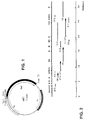
- FIG. 1. Map of the integrating vector, pWD3, constructed as described in Materials and Methods.
- the Cm r gene from pBD64 was subcloned into the multiple cloning site of pUC18. This was followed by insertion of the promoterless alpha-amylase gene, isolated from pSL5 (36).
- the resulting plasmid contains unique restrictions sites for Eco R1, Sac 1, Sma 1 and Bam H1 immediately 5' to the promoterless alpha-amylase gene.
- FIG. 2. Restriction map of the 33kb. cloned region of PBSX. Fragments used to direct integration of pWD3 are indicated below. Where known, the fragment end which is fused to the promoterless alpha-amylase gene is indicated by a symbol: ( ⁇ ), transcription proceeds in direction of arrow; ( ⁇ ), no transcription in this direction (see Fig.3). Restriction sites: B, Bam H1; E, Eco R1; S, Sac 1; A, Sal 1.
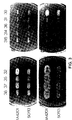
- FIG. 3. Plate tests demonstrating thermoinducible production of alpha-amylase when integrated in one orientation into the chromosome of strain lA4201 at the PBSX locus.
- Plates A and C show strains with the alpha-amylase gene integrated in the direction metA - metC.
- Plates B and D show strains with the alpha-amylase gene integrated in the direction metC - metA (see Fig. 2).
- Colonies were grown on LB agar containing starch, at 30°C for 18 hours (plates A and B), or at 30°C for 12 hours followed by 48°C for 6 hours (plates C and D). Plates were subsequently stained with iodine.
- FIG. 4 Linkage of the Cm r gene to the xhi1479 locus and adjacent chromosomal markers in two integrative strains: 1A4201::pWD316 and lA4201::pWD312. Values are presented as percentage co-transduction using PBS-1. Numbers of transductants tested are given in parenthesis. The arrows point towards the selected marker in each case.
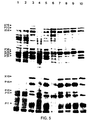
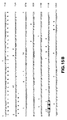
- FIG. 5 One dimensional SDS-polyacrylamide gel (12.5%), of [ 35 S]-methionine labelled proteins from B. subtilis parental (L8508) and integrative strains. PBSX proteins were induced by a shift in growth temperature to 48°C as described in Materials and Methods. The strains and growth temperature at which the labelling was carried out are as follows: lane 1: L8508 (37°C) . 2: L8508 xhi + (48°C). 3: L8508 (48°C). 4: L8508:::pWD316 (48°C). 5: L8508::pWD38 (48°C). 6: L8508::pWD37 (48°C).
- PBSX proteins are labelled according to the nomenclature of Mauel and Karamata (1984), (29), where X denotes a PBSX structural protein and P denotes a protein found only in cells induced for PBSX.
- FIG. 6. One dimensional SDS-polyacrylamide gel (12.5%) of [ 35 S]-methionine labelled proteins from E coli maxicells.
- Lane 1 B. subtilis L8508 (48°C)
- 2 E. coli CSR603, 3: E. coli CSR603/pWD3, 4: CSR603/pWD32 5: CSR603/pWD35
- 6 CSR603/pWD37
- 7 PBSX phage particle proteins. Proteins corresponding in size to PBSX proteins are indicated with arrows. Nomenclature is as in Fig. 5.
- the protein labelled X22 may correspond to protein X22 or X21 described by Mauel and Karamata (29).
- FIG. 7. Diagrammatic representation of the functions of the cloned PBSX DNA as determined in this study.
- the early region is defined by integration of pWD316 which abolishes induction of any detectable PBSX proteins.
- the late operon is so called by analogy with other bacteriophage genomes; it encodes largely phage structural proteins.
- the proteins encoded by each region are indicated below. Parentheses indicate that the position of these genes is tentative, based only on the analysis of integrative strains. The allocation of other genes has been confirmed by analysis in E. coli maxicells.
- H Phage head protein
- T Phage tail protein (29).
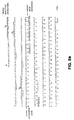
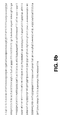
- FIG. 8 Sequence of a segment of PBSX DNA showing the repressor gene orf1 and three putative operators, 01, 02 and 03. The figure also shows putative promoters and ribosome binding site (rbs) . The putative operator recognition sequence is also shown.
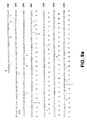
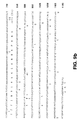
- FIG. 9. Sequence including the region of DNA encoding the xhi1479 allele of orf1 isolated from the heat - inducible strain 1A4201. Where this differs from the wild-type sequence, the wild-type nucleotide has been indicated below.
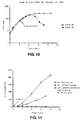
- FIG. 10. The lysis negative phenotype observed upon integration of pWD35 compared to wild type lysis proficient phenotype generated upon integration of pWD38.
- the plasmids carry a promoterless gene for heat stable alpha-amylase (HT alpha-amylase) from Bacillus licheniformis (37,36).
- HT alpha-amylase heat stable alpha-amylase
- FIG. 11. The heat inducible expression of the gene for heat stable Bacillus licheniformis alpha-amylase after heat induction of PBSX in lA420:pWD35 and comparison with a non-inducible strain and a strain harbouring a multicopy recombinant plasmid pSA33 containing the same alpha-amylase gene.
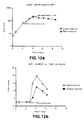
- FIG. 12a - Growth curves of IA4201::pWD35 thermoinduced rapidly or gradually.
- FIG. 12b - Copy number of the CAT gene relative to the -glucanase gene as a function of time, on both rapid and gradual induction showing that an increase in the copy number of genes integrated in the PBSX genome takes place on heat induction.
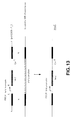
- Fig. 13 Construction of the PBSX late promoter-lacZ transcriptional fusion.
- the 1.3kb Eco R1- Bam H1 fragment which contains the late promoter was ligated to Eco R1- Bam H1 cut pDG268.
- the resulting plasmid was linearised using Xbal before transformation of B . subtilis .
- Alpha-amylase negative transformants were used for subsequent experiments.
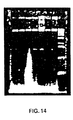
- Fig. 14 Restriction digests of recombinant plasmids which encode the factor required for transcription from the late promoter.
- DNA from the PBSX early region was digested with Hind III and cloned into the Hind III site of pEB112. Plasmids were isolated from four ⁇ - galactosidase producing transformants (plasmids 1-4), and transformed into E. coli. Plasmid DNA from the E. coli transformants was digested with HindIII and restriction fragments separated on an agarose gel. Lanes 1 & 2: plasmid 1; lanes 3 & 4: plasmid 2; lanes 5 & 6: plasmid 3; lane 7: plasmid 4; lane 8: 1kb size ladder.
- Fig. 15. Nucleotide sequence of the 1.2-kb fragment which complements the xhi 1479 mutation. Differences in the nucleotide sequence which occur in the temperature-inducible strain, IA4201, are indicated above the sequence. The amino-acid sequence of Xre is indicated. Start codons for other potential reading frames are boxed. Direct repeats 01, 02, 03 and 04 are indicated in upper-case letters, while inverted repeats are indicated with facing arrows above the nucleotide sequence. -35 and -10 consensus sequences for possible promoters for transcription of xre (1a and 1b), and diverging transcription (2a and 2b), are underlined. The nucleotide sequence was determined by the method of Sanger et al .(44). These nucleotide sequences have been submitted to Gen Bank with accession Nos. M36478 and M36477.
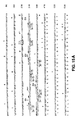
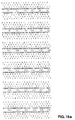
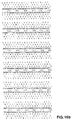
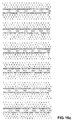
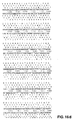
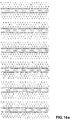
- Fig. 16 Sequence from the left-hand end of the 1.5kb HindIII fragment to the right hand end of fragment 38.
- the putative amino-acid sequences in each of the three possible reading frames is also shown in conventional abbreviation.
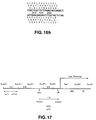
- FIG. 17 Diagrammatic representation of the early region of PBSX, not drawn to scale.
- Table 1 Bacterial strains, plasmids and bacteriophage (BGSC: Bacillus Genetic Stock Center).
- Table 2 Mutagenic properties of the indicated plasmids when integrated into B. subtilis L8508. Presence or absence of killing of induced cells on a lawn of B. subtilis W23. Presence or absence of cell lysis was determined by monitoring optical density.
- Table 3 - Presence or absence of the major PBSX induced proteins in cells containing the indicated integrated plasmids. Data are accumulated from 10% and 13.5% SDS-polyacrylamide gels.
- Table 4 Bacterial strains and plasmids used in assessment of positive control factor.
- Table 5 - ⁇ -galactosidase production in late promoter- lacZ fusion strains in the presence or absence of mitomycin C(MMC).
- Bacterial strains, plasmids and phages are listed in table 1.
- B. subtilis IA4201 was derived by congression, using DNA from strain SO113 to transform IA420. Pur A + colonies were selected and screened for acquisition of the amy -3 mutation. The construction of the integrating vector is shown in figure 1.
- the chloramphenicol acetyl-transferase gene was removed from pBD64 on a 1.1 kb. Hpa II fragment. This was treated with Klenow fragment and ligated to Eco RI and Klenow treated pUC18.
- the promoterless alpha-amylase gene (36, 37) was removed from pSL5 on a Bam HI- Hind III and inserted between the Bam HI- Hind III sites.
- the Eco RI site distal to the alpha-amylase gene in the resulting plasmid was removed by a partial Eco RI digestion, treatment with Klenow fragment, followed by religation.
- the resulting plasmid pWD3 contains unique restriction sites for Eco RI, Sac I, Sma I and Bam HI immediately 5' to the promoterless alpha-amylase gene.
- Chromosomal DNA from B. subtilis SO113 was partially digested with Sau 3A and size fractionated on a sucrose gradient. Fragments of 14-22kb. were pooled and ligated to lambda EMBL3 digested with Bam HI in a vector to insert ratio of 3:1. Recombinant plaques were selected on a lawn of E. coli Nm539. Plaques were lifted onto a Pall Biodyne nylon membrane (Pall Corp., Glen Cove, N.Y.), and hybridised according to the manufacturer's instructions.
- B. subtilis and E. coli were routinely grown on Luria broth or agar.
- media contained chloramphenicol (3 ⁇ g/ml) for selection in B. subtilis or ampicillin (50 ⁇ g/ml) for selection of plasmids in E. coli .
- Alpha-amylase activity was detected by adding starch (0.2%) to the media and subsequently staining the plates with a solution of 0.5% I 2 , 1% KI.
- Transformation of E. coli and B. subtilis was carried out as described (9) .
- PBS-1 transductions were performed as described (35). Transductants were selected either on media containing chloramphenicol, or on agar containing SS+0.4% glucose supplemented with appropriate amino acids (0.005%), and nucleosides (0.01%) and sub-cultured to appropriate media to determine linkage. Alkaline phosphatase was assayed according to the plate test described (39).
- PBSX killing activity was determined by spotting lysates unto a lawn of the sensitive strain B. subtilis W23 as previously described (4). When cell lysis did not occur after PBSX induction, cells were sonicated before spotting supernatants unto the lawn.
- PBSX structural proteins were labelled essentially by the method described (29), except that cells of strain L8508 were grown in SS + 0.05% glucose at 37°C. Phage were induced at a cell density of 4 x 10 7 by shifting to 48°C. At 30 minutes after the temperature shift L-[ 35 S] methionine (15uCi/ml) was added and lysis allowed to continue for 1.5 hours. Phage particles were purified over a CsCl gradient.
- Labelled proteins (10 6 cpm of each sample) were separated on 8%, 10% and 12.5% SDS-PAGs by the method described (26).
- a 14 C methylated protein mixture (14.3kD to 200kD) was co-electrophoresed as molecular weight markers. Gels were treated with En 3 Hance according to the manufacturer's instructions, dried and autoradiographed for 12-48 hours.
- PBSX does not package its own genome (19, 34). Therefore, in order to isolate DNA coding for phage functions, a B. subtilis 168 chromosomal bank, (constructed in lambda EMBL3), was screened with pOK411C, a plasmid which was known to contain DNA from the PBSX prophage (36). By successive cycles of screening, approximately 33kb. of DNA from the PBSX region of the chromosome were isolated in four overlapping lambda clones. A restriction map of the cloned region is presented in Figure 2. Hybridisation of selected fragments to chromosomal DNA digests by Southern blotting (43), indicated that no rearrangements had occurred (data not shown).
- the cloned DNA was used to direct integration of a promoterless alpha-amylase gene into the chromosome.
- a series of fragments were subcloned into the integrating vector pWD3, using unique restriction sites immediately 5' to the promoterless alpha-amylase gene (fig. 2).
- Each plasmid was transformed into B. subtilis lA4201, with selection for the acquisition of chloramphenicol resistance.
- integration appeared to have occurred by a Campbell type mechanism, resulting in the plasmid sequences being flanked by direct repeats of the chromosomal DNA which directed integration (data not shown) (12, 36).
- Expression of the alpha-amylase gene in each of the fusion strains now provided a convenient method to assay transcriptional activity across the cloned DNA.
- the cloned DNA is of PBSX origin.
- PBSX particles can be detected by their bacteriocidal activity on a PBSX sensitive strain B. subtilis W23 (33,45,46).
- the plasmid pOK411C isolated by O'Kane et al. (36), was shown to contain a fragment of PBSX origin by its ability when integrated to abolish this PBSX killing function.
- Each fragment as shown in figure 2 was used to direct integration of pWD3 into B. subtilis L8508, and the resulting strains tested for production of killing activity.
- 9 showed a marked reduction in killing activity when compared to that of the parental strain (table 2). (Residual killing activity in these strains may be due to a low level of transcriptional readthrough from the plasmid sequences, or to excision of the plasmid sequences in a sub population of cells).
- Fragment 316 is derived from the extreme left hand end of the map (Fig.2). Strain L8508::pWD316 fails to show induction of any detectable phage proteins. Integration of plasmid pWD37 prevents the synthesis of a number of phage proteins, including a major head protein and its proposed precursor X35 and P36 (29), several tail proteins, X76 and X19, and non-structural proteins P32 and P31. Proteins P36/X35, X19 and P18 are observed in strains L8508::pWD35, L8508::pWD32 and L8508::pWD312, although these strains lack X76, P32 and P31. Strains L8508::pWD38 and pWD39 produce all detectable PBSX proteins, which is consistent with the non-mutagenic nature of integration directed by these two fragments.
- Plasmid encoded proteins produced in maxi-cells were labelled and separated on 8% and 12.5% SDS-PAGs (Fig. 6). In the strain containing pWD35 proteins were observed which corresponded in size to previously identified phage proteins X58, X19 and P17.
- this fragment encoded a protein which corresponded in size to a newly identified phage protein which we have named X59. It can be seen when phage particle proteins are separated on low percentage gels. Plasmid pWD32 encoded a protein which corresponded in size to a phage tail protein, (X22), while pWD37 gave rise to a protein which corresponded to P14, a protein of unknown function found in induced cells. Proteins X58 and X19 were produced in sufficient amounts to be subjected to limited proteolysis by the method of Cleveland (7). In each case peptides of similar size to those of the phage proteins were produced, thus confirming their identity (data not shown).
- the late operon indicated is thought to be at least 18 kb in length.
- the restriction map suggests that fragments within the region 8 kb to 26 kb direct mutagenic integration, indicating that each is derived from an internal part of an operon. If these fragments are contiguous, as the restriction map suggests, then these fragments must be derived from the one operon.
- genes have been assigned to regions based on the assumption that in each strain transcription will proceed only to the end of the fragment which directs integration in each case, i.e. the 3' end of the operon, downstream from the integrated plasmid sequences in each case will not be transcribed.
- a protein absent in one integrant strain, but present in a strain containing the plasmid integrated further downstream, can be assigned to the intervening region.
- Protein X19 is absent in strain L8508::pWD37, but present in L8508::pWD35 and hence the gene for this protein has been tentatively assigned to fragment 35.
- the xhi1479 allele renders Bacillus subtilis thermoinducible for PBSX.
- a strain which contains this allele grows normally at 37°C, but upon shifting the growth temperature to 48C, PBSX is induced leading to cell lysis.
- This phenotype is presumed to be coded by a gene which encodes a PBSX repressor protein (4).
- Nucleotide sequences from the 1.2kb fragment was determined by the dideoxy chain termination method (42). The 1.2kb Eco Rl fragment was cloned in both orientations into the Eco Rl site of M13mp18. This allowed the determination of the sequence of both ends of the fragment. Further sequencing was carried out by generating a set of deletions using Bal 31 exonuclease. In each case, the nucleotide sequence was determined using an M13 universal primer. Where overlapping sequences were not obtained, oligonucleotides with complementarity to the known sequence were used as primers. The nucleotide sequence was determined for both strands and is shown in Fig. 8, for bases 220-1195.
- both strands of the 1200 bp sequence were searched for open reading frames of greater than 90 nucleotides in length. In total 13 such open reading frames were found of which orf1 is indicated in Fig. 8.
- the sequence was then translated into all six reading frames, ignoring stop codons, and each one was used to search the NBRF/PIR protein database. This method was employed for convenience and also has the advantage that frame shift errors in the sequence will not affect significantly the result of the homology search.
- the translated product of one open reading frame showed weak homology when compared with bacteriophage P22 c2 repressor, the dicA gene product from E. coli, phage P1/P2 C repressor, the phil05 cl repressor, and the phil05 orf 3 gene product.
- the region of homology in each case was found to correspond to the open reading frame ( orf1 ) which has the potential to code for a protein of 113 amino acids (nucleotides 397-736).
- Each of the proteins with homology to orf1 is either known, or postulated to be a DNA-binding protein with a repressor function.
- An alignment of these proteins produced by the method of Higgins and Sharp (22) indicates that homology between these proteins is restricted to the N-terminal regions.
- the homologous region includes the proposed DNA binding domain of each of the previously characterised proteins and strongly suggests that a protein encoded by orf1 is also a DNA-binding protein with an ⁇ -helix, turn, ⁇ - helix motif.
- the putative DNA-binding domain of the orf1 protein is shown in Figure 8.
- the proposed DNA-binding domain received a score of 1911, whereas the scores of the proteins in the master set ranged from 1684 to 2968.
- the sequence was searched for translational and transcriptional signals.
- the region 5' to each of the open reading frames indicated was examined for sequences which resemble ribosome binding sites (rbs) i.e. sequences which show complementarity to the 3' end of the B. subtilis 16S rRNA.
- the rbs 5' to orf1 is underlined in Fig. 8.
- the free energy of binding of this sequence (delta G) with the 3' end of the 16S rRNA was calculated to be -18.2 kcal mol -1 .
- delta G values for ribosome binding sites of gram positive genes range from -11.8 to -22 kcal mol -1 (20).
- sequence was also examined for potential transcriptional termination sequences, which are often characterised by inverted repeats, thought to be capable of forming particular secondary structure. No typical terminator sequences were found.
- phage and cellular repressors are autoregulatory, and as such are preceded by binding sites for the repressor protein.
- the region preceding the gene for the repressor was examined for sequences showing characteristics of protein binding sites. Although showing little sequence homology, protein binding sites have some common features; the sequences are usually around 20 bp in size and they often contain internal dyad symmetry.
- the region immediately 5' to orf1 was found to contain three direct repeats of 19 bp each, which have provisionally been named 01, 02 and 03. 01 and 03 are identical over the 19 bp, and contain an internal palindromic sequence of 6 base pairs.
- Fig. 8 provides good evidence that orf1 encodes a sequence specific DNA binding protein, with a typical helix-turn-helix binding domain.
- the DNA sequence of Fig. 8 also contains sites likely to be involved in the control of expression of orf1. These sites include putative promoters, ribosome binding sites and operators. It is hypothesised that the operator-like sequences are recognised by the product of orf1. A product of the sequence in Fig. 8, probably orf1, complements the xhi1479 allele.
- the homologous 1.2kb fragment from the heat inducible strain B. subtilis IA4201 was also cloned and sequenced. It shows a total of 67 differences when compared to the equivalent sequence from the wild-type strain B. subtilis SO113. These differences include 65 nucleotide substitutions, an insertion of 2 bp at position 222 of the wild-type sequence, and a deletion of 1 bp at position 830. The sequence corresponding to the sequence of Figure 8 is shown in Figure 9.
- Tests for lysis, and for induction and expression of alpha-amylase, in B. subtilis strains, carrying various plasmids integrated in the PBSX genome were performed in the absence of antibiotics. Overnight cultures were inoculated into 200ml of Luria Broth in a side-arm flask and grown in an orbital incubator (Gallenkamp) at 200 rpm. Optical density, as a measure of cell numbers and therefore of growth and lysis, was measured on a Klett-Summerson photoelectric colorimeter with a green filter number 54. For thermoinduction experiments cultures were split in two and one half shifted to 48°C, the other half maintained at 37°C. The time of induction of each culture is shown in appropriate figures (10-12).
- thermoinduction flasks were placed in a shaking waterbath for 8 minutes at 48°C, for gradual induction they were placed directly into an orbital incubator at the same temperature. Aliquots were removed at intervals prior to and post induction and centrifuged at 3,000g for 15 minutes, the pellets were retained for chromosomal DNA preparation and alpha-amylase assays were performed on the supernatants.
- Fig. 10 shows growth curves for lA4201::pWD35 and lA4201::pWD38 and the effect of temperature induction at 2 hours. After heat induction the latter strain lyses, but the former does not.
- certain integrants of which lA4201::35 is an example, are deficient in lysis after induction of PBSX. This is due to mutagenesis caused by integration of derivatives of the non-replicative plasmid pWD3 carrying segments of the PBSX genome, in this case pWD35.
- the strain carrying pWD38 is not defective in lysis.
- Table 2 is a summary of the data for various integrants.
- Fig. 11 shows that on raising the temperature of the culture to 48°C at time zero the strain lA4201::pWD35 which carries the heat inducible PBSX mutation xhi1479 begins to express the HT amylase gene from pWD35, which is integrated in the PBSX genome.
- a control strain not carrying the xhi1479 allele HT alpha-amylase expression was not expressed at a detectable level.
- LA2 which carries the HT amylase gene on a plasmid pSA33 (37) where it is expressed under the control of its own promoter, the level of expression of the HT gene is less and is not heat inducible.
- This experiment establishes that a promoterless heterologous gene can be integrated in the PBSX genome, and that expression of this gene can be induced by heat in an xhi1479 background.
- the objective of these experiments was to measure the copy number of the DNA sequences integrated in the PBSX genome before and after heat induction of a strain carrying the xhi1479 mutation.
- Plasmid pJG14 (Devine et al, J. Bacteriol. 1989., 171, 1166) was used as a 32 P radiolabelled probe. This carries the CAT gene which is also part of all the derivatives of pWD3, and a segment of the chromosomal ⁇ -glucanase gene. It can therefore be used to measure the copy number of the pWD35 sequences integrated in the PBSX genome relative to the copy number of chromosomal sequences not linked to PBSX. Chromosomal DNA preparations from lA4201::pWD35 were made from cells harvested at different times before and after heat induction. Heat induction was carried out under regimes as described above, rapid induction and gradual induction.
- the DNA was digested with Eco Rl and electrophoresed on a 0.8% agarose gel. Southern blot and hybridisation on Biodyne membranes was performed as advised by the manufacturers. Autoradiography was performed on probed filters. Copy number was estimated by comparing the intensity of the signal produced by DNA within the PBSX region to DNA from another part of the chromosome ( ⁇ -glucanase). Signal intensity was measured on a DESAGA Chromatogram Densitometer CD50.
- Fig. 12a shows the growth curves of lA4201::pWD35 thermoinduced rapidly or gradually after 2 hours.
- Item Fig. 12b shows the copy number of the CAT gene relative to the ⁇ -glucanase gene in both cultures as a function of time. It can be seen that the copy number of CAT rises after heat induction to peak values of 5-8 per chromosomal copy of ⁇ -glucanase. It falls later for unknown reasons.
- the promoter for this operon has been localised by insertional mutagenesis to lie within a 1.3kb Eco Rl- Sac l fragment, 38 (Wood et al ., in press). The mechanisms whereby transcription from this promoter is controlled were examined.
- the PBSX late promoter P L was removed from pWD38 on a 1.3kb Eco Rl- Bam Hl fragment and cloned between Eco Rl and Bam Hl sites of pDG268, immediately 5' to a promoterless lac Z gene.
- the resulting plasmid was linearised using Xbal and used to transform B . subtilis strains RB1081 and lA420.
- ⁇ -galactosidase production in each of these strains was examined in the absence and presence of MMC (table 5).
- RB1081[P L - lacZ ] no expression of ⁇ -galactosidase was observed.
- 1A420[P L - lacZ ] expression of ⁇ -galactosidase was observed only after induction of the resident prophage by addition of MMC to the media.
- This fragment may enclose a novel sigma factor such as is found in the B . subtilis lytic phage SP01 (reviewed by Losick and Pero, (53); a factor which is required in addition to the host holoenzyme such as the gene 4 protein of ⁇ 29 (54); or an anti-termination factor, analogous to the Q protein of ⁇ (reviewed in Hendrix et al ., (21).
- a novel sigma factor such as is found in the B . subtilis lytic phage SP01 (reviewed by Losick and Pero, (53); a factor which is required in addition to the host holoenzyme such as the gene 4 protein of ⁇ 29 (54); or an anti-termination factor, analogous to the Q protein of ⁇ (reviewed in Hendrix et al ., (21).
- a molecular genetic analysis of the PBSX prophage has been carried out by examining the effects of integrating plasmid sequences at different sites within the metA - metC region of the B. subtilis 168 chromosome. Insertional mutagenesis has allowed the identification of early and late regions of the prophage. The relative positions of these regions within the cloned region is consistent with proposed genetic map of this region which suggests that mutations within a regulatory region ( xin and xhi ), are located to the metA proximal side of mutations within genes affecting particle proteins (xhd, xtl , xki ). (4, 15, 49) .
- late phage genes are contained within a large operon of between 18 and 30 kb. in length and transcribed in the direction metA - metC.
- Such polycistronic operons are characteristic of other phage genomes eg. lambda (21).
- the coding capacity of this operon may be sufficient to produce all the phage structural and late proteins (29).
- the existence of another late operon cannot be excluded as ambiguity surrounds the location of the genes coding for the proteins P35/X35 and P18.
- thermoinducible expression vehicle By integrating the promoterless alpha-amylase gene at the PBSX locus the potential for using PBSX functions as the basis of a thermoinducible expression vehicle has been demonstrated. Plasmid based thermoinducible expression systems have been described for B. subtilis which exploit the controlling elements of early region of bacteriophage phi105 (10, 38) The system presented here demonstrates that a foreign gene can be integrated on the B. subtilis chromosome under the control of an inducible prophage promotor. Furthermore the foreign gene is located within a structure reported to the capable of undergoing stable gene amplification (24). Indeed stable maintenance of both single and amplified copies of the alpha-amylase gene have been observed when integrated at this locus.
- the repressor gene (orf1) has been cloned and sequenced. Operator and promotor sequences have been identified.
- the xhi1479 allele can be used as the basis of a heat inducible expression system to obtain heat inducible expression of heterologous genes transcribed from promoters which are controlled by operators of the type shown in 01,02 and 03.
- Fig. 17 is not drawn to scale. but reading left to right it shows:
- a current working model of the system is as follows:-
- the gene orf1 (now called xre) encodes the PBSX repressor.
- the repressor binds to the operators between orf l and orf 13.
- the positive control factor causes transcription from the late promoter on fragment 38.
Landscapes
- Genetics & Genomics (AREA)
- Health & Medical Sciences (AREA)
- Life Sciences & Earth Sciences (AREA)
- Engineering & Computer Science (AREA)
- Wood Science & Technology (AREA)
- Organic Chemistry (AREA)
- Biomedical Technology (AREA)
- Biotechnology (AREA)
- General Engineering & Computer Science (AREA)
- Chemical & Material Sciences (AREA)
- Zoology (AREA)
- Bioinformatics & Cheminformatics (AREA)
- Biophysics (AREA)
- Microbiology (AREA)
- Plant Pathology (AREA)
- Molecular Biology (AREA)
- Biochemistry (AREA)
- General Health & Medical Sciences (AREA)
- Physics & Mathematics (AREA)
- Micro-Organisms Or Cultivation Processes Thereof (AREA)
- Preparation Of Compounds By Using Micro-Organisms (AREA)
- Saccharide Compounds (AREA)
- Luminescent Compositions (AREA)
- Organic Low-Molecular-Weight Compounds And Preparation Thereof (AREA)
- Pharmaceuticals Containing Other Organic And Inorganic Compounds (AREA)
Claims (7)
- Expressionssystem, umfassend ein Repressor-Gen, einen Promotor und mindestens einen Operator, isoliert aus einem Phibacin, wobei ein Phibacin nicht-infektiöse, phagenähnliche Partikel bezeichnet, die ansonsten die Eigenschaften von Bakteriozinen haben, wobei das Repressor-Gen die in Fig. 8 dargestellte DNA-Sequenz besitzt oder eine Sequenz, die mindestens 50 % Homologie dazu aufweist und für Repressoraktivität kodiert, wobei der Promotor die in Fig. 8 dargestellte DNA-Sequenz besitzt oder eine Sequenz, die mindestens 50 % Homologie dazu aufweist und für Promotoraktivität kodiert, und der Operator die Sequenz irgendeines der in Fig. 8 dargestellten Operatoren 01, 02, und 03 besitzt oder eine Sequenz, die mindestens 50 % Homologie dazu aufweist und für Operatoraktivität kodiert.
- Expressionssystem nach Anspruch 1, umfassend die DNA-Sequenz des Repressor-Gens oder die DNA-Sequenz des positiven Kontrollfaktors, die in dem Phibacin enthalten sind, welches unter der Hinterlegungsnummer NCIMB 40205 hinterlegt wurde.
- Expressionssystem nach Anspruch 1, worin das Repressor-Gen für einen temperaturempfindlichen Repressor kodiert und die in Fig. 9 dargestellte DNA-Sequenz besitzt oder eine Sequenz, die mindestens 50 % Homologie dazu aufweist und für Aktivität eines temperaturempfindlichen Repressors kodiert.
- Expressionssystem nach Anspruch 3, umfassend die Sequenz des Repressor-Gens, die in dem Phibacin enthalten ist, welches unter der Hinterlegungsnummer NCIMB 40206 hinterlegt wurde.
- Bakterienwirt, enthaltend eines oder mehrere der Expressionssysteme nach irgendeinem der Ansprüche 1 bis 4.
- Verfahren zur Herstellung eines Genprodukts, worin das fragliche Gen in ein Expressionssystem nach irgendeinem der Ansprüche 1 bis 4 inseriert wird und das Expressionssystem in einen Bakterienwirt eingeführt wird, um das Genprodukt zu exprimieren.
- Verfahren nach Anspruch 6, worin der Bakterienwirt ein grampositives Bakterium, insbesondere der Gattung Bacillus, ist.
Applications Claiming Priority (3)
| Application Number | Priority Date | Filing Date | Title |
|---|---|---|---|
| IE289389 | 1990-03-11 | ||
| IE289389A IE892893A1 (en) | 1990-03-11 | 1990-03-11 | Phage-like bacteriocins |
| PCT/DK1991/000074 WO1991013990A1 (en) | 1990-03-11 | 1991-03-11 | A gene expression system |
Publications (2)
| Publication Number | Publication Date |
|---|---|
| EP0520004A1 EP0520004A1 (de) | 1992-12-30 |
| EP0520004B1 true EP0520004B1 (de) | 1999-09-29 |
Family
ID=11036947
Family Applications (1)
| Application Number | Title | Priority Date | Filing Date |
|---|---|---|---|
| EP91906442A Expired - Lifetime EP0520004B1 (de) | 1990-03-11 | 1991-03-11 | Gen-expressionssystem |
Country Status (9)
| Country | Link |
|---|---|
| US (1) | US5843702A (de) |
| EP (1) | EP0520004B1 (de) |
| AT (1) | ATE185165T1 (de) |
| AU (1) | AU651966B2 (de) |
| CA (1) | CA2078009A1 (de) |
| DE (1) | DE69131665T2 (de) |
| FI (1) | FI924045A7 (de) |
| IE (1) | IE892893A1 (de) |
| WO (1) | WO1991013990A1 (de) |
Families Citing this family (5)
| Publication number | Priority date | Publication date | Assignee | Title |
|---|---|---|---|---|
| US5516682A (en) * | 1988-07-05 | 1996-05-14 | University Of Maryland | Subtilin variant of enhanced stability and activity |
| WO1996040947A1 (en) * | 1995-06-07 | 1996-12-19 | Washington University | Recombinant bacterial system with environmentally limited viability |
| US7160711B2 (en) | 2001-08-06 | 2007-01-09 | Degussa Ag | Coryneform bacteria which produce chemical compounds I |
| EP1495128B1 (de) * | 2002-03-29 | 2014-05-07 | Genencor International, Inc. | Verstärkte proteinexpression in bacillus |
| US9200251B1 (en) | 2011-03-31 | 2015-12-01 | David Gordon Bermudes | Bacterial methionine analogue and methionine synthesis inhibitor anticancer, antiinfective and coronary heart disease protective microcins and methods of treatment therewith |
-
1990
- 1990-03-11 IE IE289389A patent/IE892893A1/en not_active Application Discontinuation
-
1991
- 1991-03-11 CA CA002078009A patent/CA2078009A1/en not_active Abandoned
- 1991-03-11 EP EP91906442A patent/EP0520004B1/de not_active Expired - Lifetime
- 1991-03-11 AT AT91906442T patent/ATE185165T1/de not_active IP Right Cessation
- 1991-03-11 FI FI924045A patent/FI924045A7/fi unknown
- 1991-03-11 AU AU75449/91A patent/AU651966B2/en not_active Ceased
- 1991-03-11 DE DE69131665T patent/DE69131665T2/de not_active Expired - Fee Related
- 1991-03-11 WO PCT/DK1991/000074 patent/WO1991013990A1/en not_active Ceased
-
1994
- 1994-05-25 US US08/248,839 patent/US5843702A/en not_active Expired - Fee Related
Also Published As
| Publication number | Publication date |
|---|---|
| DE69131665T2 (de) | 2000-06-08 |
| AU651966B2 (en) | 1994-08-11 |
| FI924045L (fi) | 1992-09-10 |
| CA2078009A1 (en) | 1991-09-12 |
| DE69131665D1 (en) | 1999-11-04 |
| IE892893L (en) | 1989-09-11 |
| EP0520004A1 (de) | 1992-12-30 |
| FI924045A0 (fi) | 1992-09-10 |
| AU7544991A (en) | 1991-10-10 |
| WO1991013990A1 (en) | 1991-09-19 |
| ATE185165T1 (de) | 1999-10-15 |
| US5843702A (en) | 1998-12-01 |
| FI924045A7 (fi) | 1992-09-10 |
| IE892893A1 (en) | 1991-09-25 |
Similar Documents
| Publication | Publication Date | Title |
|---|---|---|
| Nakano et al. | Isolation and characterization of sfp: a gene that functions in the production of the lipopeptide biosurfactant, surfactin, in Bacillus subtilis | |
| Albano et al. | Nucleotide sequence and genetic organization of the Bacillus subtilis comG operon | |
| LeBlanc et al. | Molecular, genetic, and functional analysis of the basic replicon of pVA380-1, a plasmid of oral streptococcal origin | |
| Wood et al. | Characterization of PBSX, a defective prophage of Bacillus subtilis | |
| Stevens et al. | Characterization of a sporulation gene, spoIVA, involved in spore coat morphogenesis in Bacillus subtilis | |
| Yang et al. | Identification of the pleiotropic sacQ gene of Bacillus subtilis | |
| Seki et al. | Cloning and nucleotide sequence of phoP, the regulatory gene for alkaline phosphatase and phosphodiesterase in Bacillus subtilis | |
| JP4571304B2 (ja) | バチルス細胞内でのポリペプチドの製法 | |
| Guzmán et al. | Characterization of the promoter region of the Bacillus subtilis spoIIE operon | |
| Mendez et al. | Cloning of whiG, a gene critical for sporulation of Streptomyces coelicolor A3 (2) | |
| Black et al. | A promoter associated with the neisserial repeat can be used to transcribe the uvrB gene from Neisseria gonorrhoeae | |
| Hammar et al. | Expression of two csg operons is required for production of fibronectin‐and congo red‐binding curli polymers in Escherichia coli K‐12 | |
| Connors et al. | Cloning and nucleotide sequencing of genes for three small, acid-soluble proteins from Bacillus subtilis spores | |
| Daub et al. | Isolation, cloning, and sequencing of the Salmonella typhimurium ddlA gene with purification and characterization of its product, D-alanine: D-alanine ligase (ADP forming) | |
| Vujcic et al. | Molecular analysis of the rolling-circle replicating plasmid pA1 of Lactobacillus plantarum A112 | |
| Aukrust et al. | Transformation of Lactobacillus plantarum with the plasmid pTV1 by electroporation | |
| Bookstein et al. | The Bacillus subtilis 168 alkaline phosphatase III gene: impact of a phoAIII mutation on total alkaline phosphatase synthesis | |
| Hancock et al. | Expression and nucleotide sequence of the Clostridium acetobutylicum beta-galactosidase gene cloned in Escherichia coli | |
| Kooistra et al. | Cloning, sequencing, and expression of Bacillus subtilis genes involved in ATP-dependent nuclease synthesis | |
| Klein et al. | Characterization and sequence analysis of a small cryptic plasmid from Lactobacillus curvatus LTH683 and its use for construction of new Lactobacillus cloning vectors | |
| Walker et al. | Construction of a stable non-mucoid deletion mutant of the Streptococcus equi Pinnacle vaccine strain | |
| Li et al. | A new gene involved in stationary-phase survival located at 59 minutes on the Escherichia coli chromosome | |
| Sanders et al. | A method for genetic transformation of nonprotoplasted Streptococcus lactis | |
| Hackett et al. | Cloning, nucleotide sequencing, and genetic mapping of the gene for small, acid-soluble spore protein gamma of Bacillus subtilis | |
| Oskam et al. | The large Bacillus plasmid pTB19 contains two integrated rolling-circle plasmids carrying mobilization functions |
Legal Events
| Date | Code | Title | Description |
|---|---|---|---|
| PUAI | Public reference made under article 153(3) epc to a published international application that has entered the european phase |
Free format text: ORIGINAL CODE: 0009012 |
|
| 17P | Request for examination filed |
Effective date: 19920814 |
|
| AK | Designated contracting states |
Kind code of ref document: A1 Designated state(s): AT BE CH DE DK ES FR GB GR IT LI LU NL SE |
|
| 17Q | First examination report despatched |
Effective date: 19931021 |
|
| GRAG | Despatch of communication of intention to grant |
Free format text: ORIGINAL CODE: EPIDOS AGRA |
|
| GRAG | Despatch of communication of intention to grant |
Free format text: ORIGINAL CODE: EPIDOS AGRA |
|
| GRAH | Despatch of communication of intention to grant a patent |
Free format text: ORIGINAL CODE: EPIDOS IGRA |
|
| GRAH | Despatch of communication of intention to grant a patent |
Free format text: ORIGINAL CODE: EPIDOS IGRA |
|
| GRAA | (expected) grant |
Free format text: ORIGINAL CODE: 0009210 |
|
| AK | Designated contracting states |
Kind code of ref document: B1 Designated state(s): AT BE CH DE DK ES FR GB GR IT LI LU NL SE |
|
| PG25 | Lapsed in a contracting state [announced via postgrant information from national office to epo] |
Ref country code: IT Free format text: LAPSE BECAUSE OF FAILURE TO SUBMIT A TRANSLATION OF THE DESCRIPTION OR TO PAY THE FEE WITHIN THE PRE;WARNING: LAPSES OF ITALIAN PATENTS WITH EFFECTIVE DATE BEFORE 2007 MAY HAVE OCCURRED AT ANY TIME BEFORE 2007. THE CORRECT EFFECTIVE DATE MAY BE DIFFERENT FROM THE ONE RECORDED.SCRIBED TIME-LIMIT Effective date: 19990929 Ref country code: FR Free format text: LAPSE BECAUSE OF FAILURE TO SUBMIT A TRANSLATION OF THE DESCRIPTION OR TO PAY THE FEE WITHIN THE PRESCRIBED TIME-LIMIT Effective date: 19990929 Ref country code: AT Free format text: LAPSE BECAUSE OF FAILURE TO SUBMIT A TRANSLATION OF THE DESCRIPTION OR TO PAY THE FEE WITHIN THE PRESCRIBED TIME-LIMIT Effective date: 19990929 Ref country code: ES Free format text: THE PATENT HAS BEEN ANNULLED BY A DECISION OF A NATIONAL AUTHORITY Effective date: 19990929 Ref country code: BE Free format text: LAPSE BECAUSE OF FAILURE TO SUBMIT A TRANSLATION OF THE DESCRIPTION OR TO PAY THE FEE WITHIN THE PRESCRIBED TIME-LIMIT Effective date: 19990929 Ref country code: GR Free format text: LAPSE BECAUSE OF NON-PAYMENT OF DUE FEES Effective date: 19990929 Ref country code: SE Free format text: THE PATENT HAS BEEN ANNULLED BY A DECISION OF A NATIONAL AUTHORITY Effective date: 19990929 Ref country code: CH Free format text: LAPSE BECAUSE OF FAILURE TO SUBMIT A TRANSLATION OF THE DESCRIPTION OR TO PAY THE FEE WITHIN THE PRESCRIBED TIME-LIMIT Effective date: 19990929 Ref country code: LI Free format text: LAPSE BECAUSE OF FAILURE TO SUBMIT A TRANSLATION OF THE DESCRIPTION OR TO PAY THE FEE WITHIN THE PRESCRIBED TIME-LIMIT Effective date: 19990929 |
|
| REF | Corresponds to: |
Ref document number: 185165 Country of ref document: AT Date of ref document: 19991015 Kind code of ref document: T |
|
| REG | Reference to a national code |
Ref country code: CH Ref legal event code: EP |
|
| REF | Corresponds to: |
Ref document number: 69131665 Country of ref document: DE Date of ref document: 19991104 |
|
| PG25 | Lapsed in a contracting state [announced via postgrant information from national office to epo] |
Ref country code: DK Free format text: LAPSE BECAUSE OF FAILURE TO SUBMIT A TRANSLATION OF THE DESCRIPTION OR TO PAY THE FEE WITHIN THE PRESCRIBED TIME-LIMIT Effective date: 19991229 |
|
| EN | Fr: translation not filed | ||
| PG25 | Lapsed in a contracting state [announced via postgrant information from national office to epo] |
Ref country code: LU Free format text: LAPSE BECAUSE OF NON-PAYMENT OF DUE FEES Effective date: 20000311 |
|
| REG | Reference to a national code |
Ref country code: CH Ref legal event code: PL |
|
| PLBE | No opposition filed within time limit |
Free format text: ORIGINAL CODE: 0009261 |
|
| STAA | Information on the status of an ep patent application or granted ep patent |
Free format text: STATUS: NO OPPOSITION FILED WITHIN TIME LIMIT |
|
| 26N | No opposition filed | ||
| REG | Reference to a national code |
Ref country code: GB Ref legal event code: 732E |
|
| NLS | Nl: assignments of ep-patents |
Owner name: NOVOZYMES A/S |
|
| REG | Reference to a national code |
Ref country code: GB Ref legal event code: IF02 |
|
| PGFP | Annual fee paid to national office [announced via postgrant information from national office to epo] |
Ref country code: NL Payment date: 20080303 Year of fee payment: 18 Ref country code: GB Payment date: 20080305 Year of fee payment: 18 |
|
| PGFP | Annual fee paid to national office [announced via postgrant information from national office to epo] |
Ref country code: DE Payment date: 20080306 Year of fee payment: 18 |
|
| GBPC | Gb: european patent ceased through non-payment of renewal fee |
Effective date: 20090311 |
|
| NLV4 | Nl: lapsed or anulled due to non-payment of the annual fee |
Effective date: 20091001 |
|
| PG25 | Lapsed in a contracting state [announced via postgrant information from national office to epo] |
Ref country code: DE Free format text: LAPSE BECAUSE OF NON-PAYMENT OF DUE FEES Effective date: 20091001 |
|
| PG25 | Lapsed in a contracting state [announced via postgrant information from national office to epo] |
Ref country code: NL Free format text: LAPSE BECAUSE OF NON-PAYMENT OF DUE FEES Effective date: 20091001 |
|
| PG25 | Lapsed in a contracting state [announced via postgrant information from national office to epo] |
Ref country code: GB Free format text: LAPSE BECAUSE OF NON-PAYMENT OF DUE FEES Effective date: 20090311 |