EP0504485B1 - Sprecherunabhängiges Gerät zur Markierungskodierung - Google Patents
Sprecherunabhängiges Gerät zur Markierungskodierung Download PDFInfo
- Publication number
- EP0504485B1 EP0504485B1 EP91121180A EP91121180A EP0504485B1 EP 0504485 B1 EP0504485 B1 EP 0504485B1 EP 91121180 A EP91121180 A EP 91121180A EP 91121180 A EP91121180 A EP 91121180A EP 0504485 B1 EP0504485 B1 EP 0504485B1
- Authority
- EP
- European Patent Office
- Prior art keywords
- training
- feature
- prototype
- feature vector
- value
- Prior art date
- Legal status (The legal status is an assumption and is not a legal conclusion. Google has not performed a legal analysis and makes no representation as to the accuracy of the status listed.)
- Expired - Lifetime
Links
- 239000013598 vector Substances 0.000 claims description 423
- 238000012549 training Methods 0.000 claims description 120
- 238000000034 method Methods 0.000 claims description 113
- 238000005192 partition Methods 0.000 claims description 72
- 238000005315 distribution function Methods 0.000 claims description 10
- 230000006870 function Effects 0.000 claims description 8
- 238000012935 Averaging Methods 0.000 claims description 4
- 238000004458 analytical method Methods 0.000 claims description 3
- 230000000694 effects Effects 0.000 claims description 3
- 230000001131 transforming effect Effects 0.000 claims 3
- 238000010586 diagram Methods 0.000 description 12
- 230000000875 corresponding effect Effects 0.000 description 11
- 238000007781 pre-processing Methods 0.000 description 7
- 238000010420 art technique Methods 0.000 description 6
- 238000012545 processing Methods 0.000 description 6
- 238000002372 labelling Methods 0.000 description 5
- 230000008569 process Effects 0.000 description 5
- 238000013139 quantization Methods 0.000 description 5
- 230000003595 spectral effect Effects 0.000 description 5
- 230000007423 decrease Effects 0.000 description 4
- 241000282326 Felis catus Species 0.000 description 3
- 230000002596 correlated effect Effects 0.000 description 3
- 238000003064 k means clustering Methods 0.000 description 3
- 230000008859 change Effects 0.000 description 2
- 239000000203 mixture Substances 0.000 description 2
- 238000001228 spectrum Methods 0.000 description 2
- 238000007476 Maximum Likelihood Methods 0.000 description 1
- 238000013459 approach Methods 0.000 description 1
- 230000015556 catabolic process Effects 0.000 description 1
- 238000006731 degradation reaction Methods 0.000 description 1
- 238000013461 design Methods 0.000 description 1
- 238000011161 development Methods 0.000 description 1
- 230000001788 irregular Effects 0.000 description 1
- 238000002955 isolation Methods 0.000 description 1
- 238000012986 modification Methods 0.000 description 1
- 230000004048 modification Effects 0.000 description 1
- 238000003909 pattern recognition Methods 0.000 description 1
- 238000011176 pooling Methods 0.000 description 1
- 238000010183 spectrum analysis Methods 0.000 description 1
Images


Classifications
-
- H—ELECTRICITY
- H03—ELECTRONIC CIRCUITRY
- H03M—CODING; DECODING; CODE CONVERSION IN GENERAL
- H03M7/00—Conversion of a code where information is represented by a given sequence or number of digits to a code where the same, similar or subset of information is represented by a different sequence or number of digits
- H03M7/30—Compression; Expansion; Suppression of unnecessary data, e.g. redundancy reduction
- H03M7/3082—Vector coding
-
- G—PHYSICS
- G10—MUSICAL INSTRUMENTS; ACOUSTICS
- G10L—SPEECH ANALYSIS TECHNIQUES OR SPEECH SYNTHESIS; SPEECH RECOGNITION; SPEECH OR VOICE PROCESSING TECHNIQUES; SPEECH OR AUDIO CODING OR DECODING
- G10L19/00—Speech or audio signals analysis-synthesis techniques for redundancy reduction, e.g. in vocoders; Coding or decoding of speech or audio signals, using source filter models or psychoacoustic analysis
- G10L19/02—Speech or audio signals analysis-synthesis techniques for redundancy reduction, e.g. in vocoders; Coding or decoding of speech or audio signals, using source filter models or psychoacoustic analysis using spectral analysis, e.g. transform vocoders or subband vocoders
- G10L19/032—Quantisation or dequantisation of spectral components
- G10L19/038—Vector quantisation, e.g. TwinVQ audio
Definitions
- the present invention relates to the development of an apparatus for putting into readable format the utterances from speakers, and more particularly to an apparatus and method of statistically computing the probability that a given word or a string of words will produce a particular set of speech feature vectors.
- the goal of a speech recognition apparatus is to produce the word string w and with the highest a posteriori probability of occurring:
- the term P(w) is generally known as the Language Model and is not relevant to the instant invention.
- w) is referred to as the Acoustic Model and relates to the computation of the probability that a given word will produce a string of acoustic features or parameters (,i.e. acoustic or speech feature vectors, or feature vectors).
- the purpose of the Acoustic Model is to assign a probability that given a string of words, that string of words would produce a particular set of feature vectors.
- the present invention is directed to certain aspects of this Acoustic Model.
- Hidden Markov Models One of the most successful techniques for constructing Acoustic Models employs the use of Hidden Markov Models.
- Hidden Markov Models is well known in the art of speech recognition and will not be described here. See, for example, A Maximum Likelihood Approach to Continuous Speech Recognition , Lalit R. Bahl et al., IEEE Transactions On Pattern Analysis and Machine Intelligence, Vol. PAMI-5, No. 2, March 1983.
- Hidden Markov Model technology which involves the replacement of each feature vector by a label drawn from a small number (typically less than 500) of possible labels. This reduces the amount of data that the Hidden Markov Model component must deal with and thus simplifies later computational and modelling stages of the recognizer.
- Assigning a label to a feature vector in the prior art has been achieved by noting that groups of feature vectors in n-dimensional space divide that space into a number of convex regions. The values of the feature vectors in the regions are averaged such that each region is represented by a prototype and each feature vector extracted from speech is identified with the prototype in space to which it is the closest. The feature vector is accordingly labelled with an identifier of that prototype.
- the present invention discloses a new technique, and an apparatus, to locate all the different regions in space having speech feature vectors that correspond to a certain class of sound extracted from a spoken word.
- a given space is divided into a number of regions each containing speech feature vectors that associate with potentially a number of different sounds.
- Each of these regions is represented by a prototype which has associated therewith a vector of means, a vector of variances and a a priori probability.
- a class of sound may be represented by at least one of the prototypes.
- a prototype may also be referred to as a prototype vector, and the means and variances vectors simply means and variances.
- a feature vector which has a number of feature values is extracted from a spoken word
- at least one feature value of that feature vector is compared with the different prototypes to find a closest match. This is done by computing a value for each prototype, this prototype value being a function of the input feature vector and the means, variances and the a priori probability of the prototype.
- Each of the classes of sound is represented by at least two of the prototypes and has an identifier associated with it. And when a closest match is found between a particular prototype (or a number of the prototypes) and the feature vector, the identifier associated with the class represented by that particular prototype is used to label the feature vector.
- the respective values of the different prototypes associated with a particular class of sound are combined, as for example summed, and compared with each other.
- a speech signal 2 from a given string of words, is fed to a signal processor 4.
- Signal processor 4 can include electronic components such as an analog-to-digital converter and a spectral analyzer.
- the purpose of signal processor 4 is to extract from speech signal 2 a series of parameter vectors or speech acoustic feature vectors. For the example system discussed with reference to Fig. 1, it is assumed that 100 feature vectors are being processed by signal processor 4 per second. Thus, if a person were to utter for 10 seconds, 1,000 feature vectors, such as those designated by 6, are produced.
- the acoustic model of the present invention further has as components a vector quantizer 8 and a prototype store 10.
- Speech signal 2 may be representative of a portion of a string of words such as, for example, "The Cat In The Hat".
- signal processor 4 for example the signal processor described in Application Of An Auditory Model To Speech Recognition , Jordan R. Cohen, Jour. Acoust. Soc. Am. 85(6), June 1989
- the spectral analysis comprises measuring the energy of the speech signal as a function of time in a number of different frequency bands, as for example 20.
- the number of frequency bands is chosen to reflect a balance between a minimal and a maximum number of frequencies required to prevent degradation of the signal.
- the energy in each of the 20 frequency bands is measured 100 times each second. Consequently, the output from signal processor 4 is a series of 20-dimensional feature vectors designated 6.
- Each of the feature vectors has a number of components each representing the energy of the signal at one of the frequencies, for example at 200 Hz, 300 Hz, 400 Hz, etc.
- the 20-dimensional feature vectors may be referred to as FV 1 , FV 2 , FV 3 etc.
- vector quantization In a speech recognition system, the feature vectors extracted from the utterance of a speaker are labeled as different classes of sound in a process referred to as vector quantization, described hereinbelow.
- a number of speech feature vectors are represented by dots, designated as 12.
- the different speech feature vectors are separated into different clumps in space and divided into regions known as convex regions.
- the 2-dimensional space is divided up into neighboring convex regions such as, for example, regions 14 and 15. Without going into much detail, this clumping of the different feature vectors into regions is referred to as clustering.
- what clustering does is to calculate a mean value for each of the convex regions by computing the respective mean values of the feature vectors in each of the regions.
- the resulting mean value in each of the regions is referred to as a prototype or a prototype vector.
- prototype vectors 16 and 18 are shown in regions 14 and 15, respectively.
- An identifier for example a given number, is assigned to each of the prototype vectors.
- Each of the prototype vectors may also be referred to as a class of sound.
- the closest prototype vector to the of interest feature vector is found; and the identifier of that prototype vector is used to label that feature vector. This is the process referred to before as “vector quantization” or “labeling each feature vector”.
- vector quantizer 8 is a conventional vector quantizer.
- output 20 of vector quantizer 8 there is produced at output 20 of vector quantizer 8 a string of labels, as for example 100 labels per second if the system is processing 100 feature vectors per second.
- Each of the output labels takes on the value corresponding to the prototype vector to which it is identified with.
- Fig. 3B To design the vector quantizer 8 shown in Fig. 1 according to the present invention, all of the feature vectors in the space associated with the s sound and all feature vectors associated with the f sound are located and grouped into respective regions 24a to 24c and 26a to 26c. For the Fig. 3B example, there are therefore shown 3 regions for the class of sound s and 3 regions for the class of sound f. In other words, there are 3 prototypes representing the f class sound and 3 prototypes representing the s class sound in the Fig. 3B example. Each of the prototypes has a number of associated feature vectors, an identifier and a prototype value, obtained by appropriate computational procedures to be described later.
- the basic premise behind the present invention is to represent each speech sound with a set of two or more prototypes, with each prototype being associated with a convex region in space.
- steps 2 and 3 have to be repeated.
- a set of training feature vectors which correspond to training utterances, has to be obtained and stored, for example in the acoustic feature vector store 64 shown in Fig. 11, which will be described in more detail later. And each training feature vector is identified as corresponding to a speech sound in the training utterances.
- each word is ordinarily represented as a string of speech sounds.
- the word “cat” is represented by the model "k ae t". Since English spelling is irregular, the mere fact that a person knows the pronunciation of the word and how the word is spelled does not necessarily allow him to immediately figure out what speech sounds are represented by the word.
- each word is mapped onto a string of speech sounds or phonemes (or a network of elemental models). Thus, each word is made up of phonemes or phones. It has been known that it takes an inventory of approximately 80 phones to enable a vector quantizer to generate the different sounds that make up the English language. Of course, for a different language, an inventory having a different number of sounds is needed.
- the well known "Viterbi Alignment” technique is used for the being illustrated embodiment of the present invention.
- the Viterbi Alignment technique uses Hidden Markov Model technology, aligns or correlates each phone in a given text to find what label (i.e. the output from the vector quantizer) each phone corresponds to. For illustration, the text string "The Cat In The Hat" and the phones representing the sounds of the string are shown in Fig. 4.
- each phone has been identified with corresponding labels, as for example the phone “dh” for the word “the” corresponds to labels l 1 and l 2 ; while the phone “uhl” corresponds to labels l 3 , l 4 and l 5 .
- the correspondence between the labels and each phone is known, it follows by logic that the feature vectors corresponding to each label of the word of the string of words would also be known. Accordingly, correspondence between feature vectors and speech sounds can be established by the Viterbi alignment technique.
- Fig. 5 shows the output frequency of the word “sat” being plotted against time.
- Fig. 5 shows a lot of energy at a particular frequency for the sound "s" in “sat”.
- the "a” sound in “sat” is represented by concentrations of energy at different frequencies.
- the inventors recognize the above by realizing one of the problems of prior art speech recognition techniques is that although energy is measured as a function of frequency a number of times a second, a label is produced nonetheless for each of the feature vectors.
- the inventors further recognize another prior art technique weakness in which each feature vector is processed without any attention being paid to the feature vectors that came before it and after it. In other words, it is difficult to look at one individual feature vector and decide from that whether it is a "a” as in "say” or a "a” as in "sat".
- splice and rotation To overcome the problems of the prior art technique, a so-called "splice and rotation" technique is used.
- the splicing portion of such technique is known and described in Speaker-Independent Isolated Word Recognition Using Dynamic Features of Speech Spectrum , Sadaoki Furui, IEEE Transactions in Acoustics, Speech and Signal Processing, Vol. ASSP-34, No. 1, February 1986.
- Fig. 6 where a number of feature vectors 28a to 281 are shown, the method of the present invention effects the splicing technique as follows. Assume each of the feature vectors is a 20-dimensional feature vector as was discussed with reference to Fig. 1. Splicing takes place when adjacent m-dimensional feature vectors are concatenated together to form a larger n-dimensional feature vector.
- each of the 20-dimensional feature vectors has appended to it the sum of the squares of its feature values to create a 21-dimensional feature vector.
- 9 adjacent 21-dimensional feature vectors for example feature vectors 28a-28i, are spliced together to produce a single 189-dimensional feature vector 30a.
- the next set of 9 consecutive 21-dimensional feature vectors 28b-28j are spliced together to form the next 189-dimensional feature vector 30b. Splicing continues with the concatenation of the next 9 21-dimensional feature vectors 28c-28k to form 189-dimensional feature vector 30c, etc.
- each of the 189-dimensional feature vectors is comprised of 9 consecutive 21-dimensional feature vectors spliced together, there is plenty of information over time in each of these 189-dimensional feature vectors to provide a good representation of a specific speech sound, which individual 21-dimensional feature vectors cannot do.
- 189-dimensional feature vectors are enormously large vectors, both in terms of the number of dimensions and the amount of data to be dealt with.
- the technique that the inventors have decided on for this embodiment is the known "Generalized Eigenvectors" technique, to be discussed with reference to Figs. 7A and 7B.
- a discussion of the Generalized Eigenvectors technique is given in Introduction To Statistical Pattern Recognition , K. Fukunaga, Chapter 9: 258-281, Academic Press, 1972.
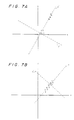
- the Generalized Eigenvectors technique works as follows. Again assume there are only two types of sounds, s and f, existing in the 2-dimensional space illustrated in Fig. 7A. To discriminate a feature vector extracted from speech between s and f, in practice only one dimension of the classes is needed if the axes are rotated as shown by the dashed lines.
- the 2-dimensional space may be reduced into a 1-dimensional space with only minimum amount of lost information.
- Fig. 7B illustrates another scenario whereby the Generalized Eigenvectors technique is used to eliminate one component of a 2-dimensional set of feature vectors.
- all of the feature vectors are aligned along the rotated X' axis.
- the important information for discriminating between the s and f sounds does not reside along the rotated X' axis, since all s feature vectors are above the rotated X' axis and all f feature vectors are below the same. Rather, it is along the rotated Y' axis that the important information for discriminating between the two sounds resides.
- the Generalized Eigenvectors technique is basically a technique of projecting a vector along a particular direction (or set of directions) in order to reduce m-dimensional data to smaller n-dimensional data without losing any important discrimination information. But in order to use the Generalized Eigenvectors technique, the classes to be discriminated between have to known. And that is the reason why an initial speech-sound-feature-vector correspondence step to create a set of initial prototypes that represent the different classes of sound to discriminated between has to be taken for the present invention technique.
- the 189-dimensional feature vectors described above can be reduced into corresponding 50-dimensional feature vectors. This is done of course by pooling all the data extracted from the predetermined number of uttered sentences and projecting the pooled data into the 50-dimensional space. For the rest of this discussion, except otherwise noted, the feature vectors are assumed to be 50-dimensional vectors.
- each prototype can be characterized by a centroid representing the means or arithmetic average of its associated acoustic feature vectors.
- the method of finding a set of centroids that represent a given sound is as follows. From empirical studies it has been found that it takes approximately 50 centroids to adequately represent a sound. To obtain the 50 centroids from the great number of feature vectors in space, a "K-Means Clustering Algorithm" is used.
- the K-Means clustering algorithm does the following.
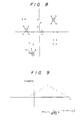
- a given number of speech feature vectors for example 100 of the s feature vectors, are picked at random. Assume these 100 s feature vectors are 100 centroids. Each of these assumed s centroids is assigned a number. And starting with the circled centroids in Fig. 8, the respective surrounding s vectors will be drawn into association with the corresponding circled centroids due to their close distance. In other words, the feature vectors closest to a circled centroids will be grouped with that centroid. Thus, for each of the 100 assumed centroids, there is associated therewith a number of feature vectors. A new centroid may be computed by averaging the associated feature vectors together.
- the number of centroids necessary to give a good representation of a sound is found to be approximately 50.
- a method has to be found to decrease this total number of centroids. This is done by taking the two closest centroids, computing their average, and replacing them with a new centroid having their average value. This process of merging the two closest centroids and averaging them is repeated for a number of iterations until only 50 centroids remain. This process is referred to as "Euclidean Clustering" technique.
- the Euclidean clustering technique is performed for each speech sound of which, as mentioned previously, there are approximately 80 for the present invention embodiment. When all is done, each of the approximately 80 speech sounds is represented by 50 centroids, which represent the mean average associated with the sound.
- Euclidean distance In Euclidean clustering, closeness is defined by the Euclidean distance, which is defined by the following equation:
- Equation 3 is the same as equation 2 but for the fact that P has been replaced by C, which is the centroid where i is the ith component of the centroid.
- Gaussian clustering a similar type of distance as in equation 3 is used. But the Gaussian clustering technique actually finds the centroid with the highest probability as illustrated by the following equation: where
- Equation 4 states that the probability of a particular centroid [P (x)] is defined as the probabilities computed with a Gaussian distribution where the variance of the centroid and its a priori probability are taken into account.
- the a priori probability may be equated with the estimate, without the gaussian distribution, of the relative frequencies of the classes of sound.
- Equation 4 the logarithm of the probability may be used.
- Equation 5 is similar to the Euclidean distance as defined in Equation 3. However, for Equation 5, the squares of the difference between the vector and the mean are summed. Putting it simply, Equation 5 does the same thing as Equation 3 except that each dimension is weighted by the reciprocal of the variances and a bias term, which equals to the sum of the logarithms of the variances and its a priori probability. Each centroid has been modeled as a Gaussian distribution whereby the centroid with the highest probability is found. Thus, when the centroids are recomputed with Equation 5, not only is a new centroid which is equivalent to the average of the feature vectors associated with the centroid found, but the variance in each dimension relating to that centroid is also found. Thus, a prototype for a particular class of sound is found.
- each class with a particular identifier, i.e. a label for identifying the feature vector that has the closest match to it. This is done by a labeling procedure.
- Fig. 9 is equivalent to a 1-dimensional "Gaussian distribution".
- each of the lines, i.e. counts, forming the histogram is a number of variables for demonstrating that the histogram distribution function has some average at its proximate center and trails at either end from the center of the distribution.
- Equation 6 allows computation of the probability of any particular point in x. If Equation 6 is integrated from infinity to minus infinity, it will yield 1.
- Equation 7 A Gaussian distribution that has a dimension greater than l is represented by the following Equation 7.
- Equation 7 may be further condensed into Equation 8.
- P(x) N (m, ⁇ )
- the Gaussian distribution in the n-dimension has the probability that if it were integrated over all n-dimensions, the integral will be 1.
- a sound for example s
- it is analogous to modeling the region of the centroid as having an underlying Gaussian distribution whose mean is the centroid and whose variance is the same in all directions.
- the variance for a centroid is a circle.
- the region, with m equalling 1 means the region has a mean value of 1.
- the a priori probability P(c) may be estimated by computing the relative class frequencies from the training data. For instance, the number of times in the training data each class of sound occurs is counted and normalized, i.e. add up the counts and divide by the total number of counts to get a number between 0 and 1 for that class of sound.
- Equation 10 the probability that a feature vector is produced by the sound s is given by the sum over all centroids with means M Cs given variances ⁇ Cs .
- the variance of the centroid ⁇ C is 1.
- the probability that the feature vector is produced by either s or f can be computed by using equations 9, 10 and 11. Putting it differently, the input feature vector is associated with the sound class represented by either equation 10 or 11, depending on which equation has the higher probability of producing x .
- training prototype vectors are stored in, for example training prototype vector store 68 shown in Fig. 11. These training prototype vectors are used to label the training utterances; and the labels that are produced by the training utterances are correlated with the speech sounds by the Viterbi alignment technique. And each set of acoustic feature vectors that corresponds to a speech sound is used to generate a set of centroids using the Euclidean clustering technique. Next, a new set of centroids is produced using the Gaussian clustering technique, to produce not only the centroids but also a set of variances and a priori probabilities associated with centroids.
- Euclidean clustering is performed on approximately 230 to 250 classes so that the inventory of speech sounds is increased. This provides for a finer type, i.e. level, of speech sound which consists not only the speech sound, but also the beginning, the middle or the end of the speech sound, in relation to an input feature vector.
- each prototype vector is now clustered from 50 centroids to approximately 20. This reduced number of centroids results from the fact that there is now a larger number of sound classes and therefore there no longer is a need to represent each sound with 50 centroids. In other words, it is deemed to be sufficient to represent each of the beginning, middle or end portion of a sound with 20 centroids.
- the initial prototype vectors are discarded and new prototype vectors are stored in the prototype vector store.
- an output from vector quantizer 8 is a label that indicates the speech sound, and whether it is the beginning, the middle or the end portion of the sound. Therefore, if a label of "beginning s" is output from the vector quantizer, this label can clearly be interpreted as the beginning of a s sound.
- a label of "beginning s" is output from the vector quantizer, this label can clearly be interpreted as the beginning of a s sound.
- such label is speaker independent since it relates only the beginning of the s sound irrespective of which speaker is making such sound. In other words, even though different speakers may speak differently, the fact that the particular label is output from the vector quantizer means that this label is equally applicable to speech produced by different speakers.
- a hardware embodiment of the present invention comprises an acoustic transducer 40 for accepting a speech signal such as 2 shown in Fig. 1.
- the analog signal representative of the speech signal is fed from acoustic transducer 40 via line 42 to an analog-to-digital converter 44.
- the analog signal is converted into a digital signal and is fed via line 46 to a spectral analyzer 48.
- the spectral analyzer may be equated with a portion of the signal processor 4 shown in Fig. 1 and is used to analyze the spectra and generate the feature vectors output at line 50.
- the feature vectors are provided to a processor 52 which comprises a partition match score calculator 54 and prototype match score calculator 56.
- Partition match score calculator 54 accepts as an additional input an output from a prototype store 58.
- Prototype match score signals output from prototype match score calculator 56 is fed to a feature vector signal encoder 60 whose function is to identify the feature vector that corresponds to the prototype vector having the best prototype match score.
- the identified feature vector is then labeled with an identifier, i.e. a label, associated with a class of sound.
- each class of sound has a number of subclasses, as for example, the beginning, the middle or the end of the sound. These subclasses may also be referred to as partitions.
- the feature vectors provided by spectral analyzer 48 to processor 54 is first sent to partition match score calculator 54.
- partition match score calculator 54 compares each of the feature vectors with the prototype vectors stored in prototype vector store 58 to arrive at a match score which represents a value of a match between the partitions and at least one of the feature values of the feature vector signal.
- the sum of the partition match scores may be fed from partition match score calculator 54 via line 55 to prototype match score calculator 56.
- Match score calculator 56 then calculates a prototype match score for each class. And since the sum of the partition match scores from the partitions are being fed to the prototype match score calculator 56, each prototype match score is representative of a function of the partition match scores for all partitions in the prototype or class.
- the prototype vector that has the best prototype match score after it is matched to the acoustic feature vector that comes closest to the sum of the partition score values would be designated as the prototype or class to which the feature vector is associated with. Accordingly, the identifier associated with that prototype (or class of sound) is used by feature vector signal encoder 60 to code that feature vector, to thereby output a label associated with that class of sound.
- the partition match score may be calculated by finding where on the Gaussian distribution the acoustic feature vector lies, per the Fig. 9 histogram.
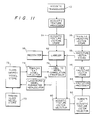
- FIG. 11 A block diagram of an apparatus for performing the different steps discussed with respect to Figs. 4, 6, 7 and 8 is given in Fig. 11. All of the steps of the present invention center around labeler 62, which takes as input a feature vector from acoustic feature vector store 64. Labels output from labeler 62 are fed to a recognizer 66 where further processing of the overall speech recognition system, of which the speech recognition features of the Acoustic Model discussed in this application is but one component, for further processing. To be able to perform labeling, labeler 62 also takes a set of prototypes from acoustic prototype vector store 68 in which prototype vectors representing the different classes of speech sound are stored.
- prototype vectors or prototype vector signals which may be equated with a network of elemental models
- prototype vector store 68 there first needs to be a speech-sound-feature-vector correspondence procedure which involves the path of the block diagram represented by training class model store 70, class model store 72, training text model selector 74, label to model correlator processor 66 and class model parameter recalculator 78.
- a set of training classes (or training text or training elemental model) is provided in training class model store 70. This may be an inventory of 80 class sounds.
- the speech vectors are then associated with the individual models of the sounds. Once all the feature vectors corresponding to a speech sound has been pooled and clustered by the Euclidean clustering technique described earlier, a new set of prototype vectors which include respective means, variances and a priori probabilities is fed by label to model correlator processor 76 to acoustic feature vector selector 80.
- the set of acoustic feature vectors corresponding to a single speech sound is considered as a fundamental set of feature vector signals.
- the fundamental set of acoustic feature vectors can be divided into subsets or subclasses as for example the beginning, the middle and the end portions of the sound in subsets of acoustic feature vector selector 82. From there the subclasses of the prototype vectors, which now are the new prototype vectors, are processed by prototype processor 84 and stored in the new prototype vector store 86. Thus, labeler 62 compares the incoming feature vectors with the different prototype vectors stored in prototype vector store 68. And the centroid computation for the prototype vectors takes place in subsets of acoustic feature vector selector 82, prototype processor 84 and new prototype vector store 86.
- the path comprising class model store 72, training text model selector 74, label to model correlator processor 76 and class model parameter recalculator 78 encompasses the training of the speech sound models required by the system.
- This training requires a set of word models, obtained from training class model store 70 and class model store 72. It also requires a set of labels which is obtained from the correlation performed by the label to model correlator processor 76. These labels are used by class model parameter recalculator 78, using the Viterbi alignment procedure, to generate new word models and to align the feature vectors with the speech sounds. Once a new set of labels is obtained, the system has to be retrained with the new labels before a new speech-sound-feature-vector correspondence procedure is effected.
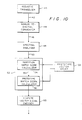
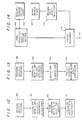
- Figure 12 is a simplified flow chart diagram illustrating how centroids are computed. Basically, feature vectors are obtained in block 90. Then a speech-sound-feature-vector correspondence procedure is performed in block 92. Thereafter, the fundamental class is divided into at least two subsets by the above described Euclidean technique in block 94. In block 96, the prototype vectors are calculated for each of the subsets so as to obtain the respective means, variances and a priori probabilities for each of the subsets.
- Figure 13 is a simplified flow chart diagram illustrating the additional preprocessing procedure discussed earlier. As shown, acoustic features are measured in block 98. Thereafter, a speech-sound-feature-vector correspondence procedure is effected in block 100. By a Generalized Eigenvectors technique, m-dimensional feature vectors are reoriented into n-dimensional feature vectors to get the best discrimination between the different classes. After that, the feature vectors are projected into a n-dimensional space in block 104.
- Figure 14 illustrates in simplified flow chart diagram format the speech-sound-feature-vector correspondence procedure described earlier.
- a set of acoustic feature vectors are taken from block 106 and provided as input to produce a set of labels in block 108.
- the labels are then provided to block 110 in which Viterbi alignment is performed to correlate the model of an utterance with the different acoustic feature vectors.
- the output from block 110 at 112 is provided to blocks 92 and 100 of Figs. 12 and 13, respectively.
- Block 114 and 116 provide the training text of the sentences for which the Viterbi alignment requires.
Landscapes
- Engineering & Computer Science (AREA)
- Physics & Mathematics (AREA)
- Spectroscopy & Molecular Physics (AREA)
- Health & Medical Sciences (AREA)
- Computational Linguistics (AREA)
- Signal Processing (AREA)
- Theoretical Computer Science (AREA)
- Audiology, Speech & Language Pathology (AREA)
- Human Computer Interaction (AREA)
- Acoustics & Sound (AREA)
- Multimedia (AREA)
- Compression, Expansion, Code Conversion, And Decoders (AREA)
- Transmission Systems Not Characterized By The Medium Used For Transmission (AREA)
Claims (43)
- Gerät zur Sprachcodierung, das folgendes umfaßt:Mittel zum Speichern einer Vielzahl von Klassen, wobei jede einen Bezeichner aufweist und durch mindestens zwei einer Vielzahl von Prototypen dargestellt wird, wobei jeder der Vielzahl von Prototypen mindestens einen Prototypwert aufweist;Mittel zum Extrahieren eines Merkmalvektorsignals mit mindestens einem Merkmalwert aus einer Äußerung;Mittel zum Aufbauen einer Zuordnung zwischen dem Merkmalvektorsignal und mindestens einer der Klassen durch Auswählen mindestens eines Prototyps aus der Vielzahl von Prototypen, der einen Prototypwert aufweist, der mit dem Merkmalwert des Merkmalvektorsignals am besten übereinstimmt; undMittel zum Codieren des Merkmalvektorsignals mit dem Bezeichner der Klasse, dargestellt durch den ausgewählten mindestens einen Prototypvektor.
- Gerät zur Sprachcodierung gemäß Anspruch 1, wobei der Prototypwert des mindestens einen Prototyps mindestens aus den Mittelwerten, Varianzen und Aprioriwahrscheinlichkeiten einer Menge akustischer Merkmalvektoren berechnet wird, die dem Prototyp zugeordnet sind.
- Gerät zur Sprachcodierung gemäß Ansprüchen 1 bis 2, wobei der Prototypwert des mindestens einen Prototyps durch Zuordnung der Position des Merkmalwertes des einen Merkmalvektorsignals auf einer Wahrscheinlichkeitsverteilungsfunktion des Prototyps berechnet wird.
- Gerät zur Sprachcodierung gemäß Ansprüchen 1 bis 3, wobei jede Klasse der Vielzahl von Klassen durch eine Vielzahl von Prototypen dargestellt wird, deren jeweilige Prototypwerte als Ganzes gegenüber dem Merkmalwert des Merkmalvektorsignals betrachtet werden, um festzustellen, ob das Merkmalvektorsignal der Klasse entspricht.
- Gerät zur Sprachcodierung gemäß Ansprüchen 1 bis 4, das weiterhin folgendes umfaßt:Mittel zum Speichern einer Vielzahl von Trainingsklassen;Mittel zum Messen und Umwandeln von Trainingsäußerungen in eine Folge von Trainingsmerkmalvektoren, von denen jeder einen Merkmalwert aufweist; undMittel zum Korrelieren jeder der Folgen von Trainingsmerkmalvektoren mit einer der Trainingsklassen, um die Vielzahl gespeicherter Klassen zu erzeugen.
- Gerät zur Sprachcodierung gemäß Anspruch 5, das weiterhin folgendes umfaßt:Mittel, um aus Äußerungen über aufeinanderfolgende vorherbestimmte Zeitperioden entsprechende aufeinanderfolgende Mengen von Merkmalvektoren zu messen und zu extrahieren, wobei jeder Merkmalvektor der aufeinanderfolgenden Mengen von Merkmalvektoren eine Dimension von mindestens einem Merkmalwert aufweist;Mittel zum Mischen der Merkmalvektoren in jeder der aufeinanderfolgenden Mengen von Merkmalvektoren, um eine Vielzahl zusammengefaßter Merkmalvektoren zu bilden, deren jeweilige Dimensionen die Summe der Dimensionen der entsprechenden gemischten Merkmalvektoren sind, wobei die zusammengefaßten Merkmalvektoren besser an die Unterscheidung zwischen den gespeicherten Trainingsklassen anpaßbar sind; undMittel zum räumlichen Neuorientieren der zusammengefaßten Merkmalvektoren, um ihre Dimension zu verringern, um somit ihre einfachere Manipulation zu bewirken.
- Gerät zur Sprachcodierung gemäß Anspruch 6, wobei jede der Trainingsklassen in Trainingsunterklassen geteilt ist, die weiterhin folgendes umfassen:Mittel zum Konfigurieren der Trainingsunterklassen als jeweilige Trainingsverteilungsfunktionen mit entsprechenden Mittelwerten, Varianzen und Aprioriwahrscheinlichkeiten; undMittel zum Speichern der Trainingsverteilungsfunktionen, wobei jede der Trainingsverteilungsfunktionen einen Trainingsprototyp darstellt.
- Gerät zur Sprachcodierung gemäß Anspruch 7, wobei jede der gespeicherten Klassen mindestens eine Unterkomponente aufweist; und
wobei das Korrelierungsmittel die Folge der Merkmalvektoren mit der mindestens einen Unterkomponente korreliert, um eine Vielzahl gespeicherter Komponentenklassen zu erzeugen. - Gerät zur Sprachcodierung gemäß Anspruch 8, wobei das Mittel zur Konfiguration weiterhin die Vielzahl von Komponentenklassen als jeweilige Verteilungsfunktionen konfiguriert, von denen jede entsprechende Mittelwerte, Varianzen und Aprioriwahrscheinlichkeiten aufweist; das weiterhin folgendes umfaßt:
Mittel zum Speichern der Verteilungsfunktionen, welche die Komponentenklassen darstellen, wobei jede der Verteilungsfunktionen der Komponentenklassen einen Prototyp darstellt. - Gerät zur Sprachcodierung gemäß Ansprüchen 1 bis 9, wobei das Codierungsmittel folgendes umfaßt:
ein Quantisierungsmittel zum Ausgeben einer Markierung entsprechend dem codierten Merkmalvektorsignal. - Gerät zur Sprachcodierung gemäß Ansprüchen 1 bis 10, wobei das Aufbaumittel folgendes umfaßt:Mittel zum Gruppieren einer Vielzahl von Sprachmerkmalvektoren in eine vorherbestimmte Anzahl von Prototypen, wobei jeder entsprechende Mittelwerte, Varianzen und Aprioriwahrscheinlichkeiten aufweist; undMittel zum Unterteilen eines jeden aus der vorherbestimmten Anzahl von Prototypen in mindestens zwei Unterprototypen, um das Merkmalvektorsignal besser von anderen Merkmalvektorsignalen zu unterscheiden.
- Gerät zur Sprachcodierung, das folgendes umfaßt:Mittel zum Speichern von zwei oder mehr Prototypsignalen, wobei jedes Prototypvektorsignal einen Prototypvektor darstellt, der einen Bezeichner und mindestens zwei Partitionen aufweist, wobei jede Partition mindestens einen Partitionswert aufweist;Mittel zum Messen des Wertes mindestens eines Merkmals einer Äußerung während eines Zeitintervalls, um ein Merkmalvektorsignal zu erzeugen, das den Wert des mindestens einen Merkmals der Äußerung darstellt;Mittel zum Berechnen eines Zuordnungsgrades für jede Partition, wobei jeder Partitionszuordnungsgrad den Wert einer Zuordnung zwischen dem Partitionswert der Partition und dem Merkmalwert des Merkmalvektorsignals darstellt;Mittel zum Berechnen eines Prototypzuordnungsgrades für jeden Prototypvektor, wobei jeder Prototypzuordnungsgrad eine Funktion der Partitionszuordnungsgrade für alle Partitionen in dem Prototypvektor darstellt; undMittel zum Codieren des Merkmalvektorsignals mit dem Bezeichner des Prototypvektorsignals mit dem besten Prototypzuordnungsgrad.
- Gerät gemäß Anspruch 12, dadurch gekennzeichnet, daß:jeder Partitionszuordnungsgrad proportional der gemeinsamen Wahrscheinlichkeit des Auftretens des Merkmalwertes des Merkmalvektorsignals und des Partitionswertes der Partition ist; undder Prototypzuordnungsgrad die Summe der Partitionszuordnungsgrade für alle Partitionen in dem Prototypvektor darstellt.
- Gerät gemäß Anspruch 13, das weiterhin Mittel zum Generieren von Prototypvektorsignalen umfaßt, wobei das Mittel zum Generieren von Prototypvektorsignalen folgendes umfaßt:Mittel zum Messen des Wertes mindestens eines Merkmals einer Trainingsäußerung während eines jeden einer Folge aufeinanderfolgender erster Zeitintervalle, um eine Folge von Trainingsmerkmalvektorsignalen zu erzeugen, wobei jedes Trainingsmerkmalvektorsignal einem ersten Zeitintervall entspricht, jedes Trainingsmerkmalvektorsignal den Wert mindestens eines Merkmals der Trainingsäußerung während eines zweiten Zeitintervalls darstellt, welches das entsprechende erste Zeitintervall enthält, wobei jedes zweite Zeitintervall größer oder gleich dem entsprechenden ersten Zeitintervall ist;Mittel zum Bereitstellen eines Netzes von Elementmodellen entsprechend der Trainingsäußerung;Mittel zum Korrelieren der Trainingsmerkmalvektorsignale in der Folge von Trainingsmerkmalvektorsignalen mit den Elementmodellen in dem Netz von Elementmodellen entsprechend der Trainingsäußerung, so daß jedes Trainingsmerkmalvektorsignal in der Folge von Trainingsmerkmalvektorsignalen einem Elementmodell in dem Netz von Elementmodellen entsprechend der Trainingsäußerung entspricht;Mittel zum Auswählen einer Fundamentalmenge aller Trainingsmerkmalvektorsignale, die allen Vorkommen eines ersten Elementmodells in dem Netz von Elementmodellen entsprechend der Trainingsäußerung entsprechen;Mittel zum Auswählen mindestens erster und zweiter verschiedener Untermengen der Fundamentalmenge von Trainingsmerkmalvektorsignalen, um eine erste Markierungsmenge von Trainingsmerkmalvektorsignalen zu bilden;Mittel zum Berechnen des Schwerpunkts der Merkmalwerte der Trainingsmerkmalvektorsignale einer jeden der ersten und zweiten Untermenge der Fundamentalmenge; undMittel zum Speichern eines ersten Prototypvektorsignals entsprechend der ersten Markierungsmenge von Trainingsmerkmalvektorsignalen, wobei das erste Prototypvektorsignal einen ersten Prototypvektor darstellt, der mindestens erste und zweite Partitionen aufweist, wobei jede Partition mindestens einen Partitionswert aufweist, wobei die erste Partition einen Partitionswert gleich dem Wert des Schwerpunkts der Merkmalwerte der Trainingsmerkmalvektorsignale in der ersten Untermenge der Fundamentalmenge aufweist, wobei die zweite Partition einen Partitionswert gleich dem Wert des Schwerpunkts der Merkmalwerte der Trainingsmerkmalvektorsignale in der zweiten Untermenge der Fundamentalmenge aufweist.
- Gerät gemäß Anspruch 14, dadurch gekennzeichnet, daß der Schwerpunkt der arithmetische Mittelwert ist.
- Gerät gemäß Anspruch 15, dadurch gekennzeichnet, daß das Netz der Elementmodelle eine Folge von Elementmodellen ist.
- Vorrichtung gemäß Anspruch 16, dadurch gekennzeichnet, daß:die Fundamentalmenge von Trainingsmerkmalvektorsignalen in mindestens erste, zweite und dritte verschiedene Untermengen von Trainingsmerkmalvektorsignalen unterteilt wird;das Berechnungsmittel weiterhin den Schwerpunkt der Merkmalwerte der Trainingsmerkmalvektorsignale in der dritten Fundamentaluntermenge berechnet; unddas Gerät weiterhin Mittel zum Speichern eines zweiten Prototypvektorsignals umfaßt, wobei das zweite Prototypvektorsignal den Wert des Schwerpunkts der Merkmalwerte der Trainingsmerkmalvektorsignale in der dritten Untermenge der Fundamentalmenge darstellt.
- Gerät gemäß Anspruch 17, dadurch gekennzeichnet, daß:die Merkmalwerte der Trainingsmerkmalvektorsignale in jeder Untermenge der Fundamentalmenge eine Merkmalwertvarianz und Aprioriwahrscheinlichkeit aufweisen;das Gerät weiterhin Mittel zum Berechnen der Varianz und Aprioriwahrscheinlichkeit der Merkmalwerte der Trainingsmerkmalvektorsignale in jeder Untermenge der Fundamentalmenge umfaßt;die erste Partition des ersten Prototypvektors einen weiteren Partitionswert gleich dem Wert der Varianz und Aprioriwahrscheinlichkeit der Merkmalwerte der Trainingsmerkmalvektorsignale in der ersten Untermenge der Fundamentalmenge aufweist;die zweite Partition des ersten Prototypvektors einen weiteren Partitionswert gleich dem Wert der Varianz und Aprioriwahrscheinlichkeit der Merkmalwerte der Trainingsmerkmalvektorsignale in der zweiten Untermenge der Fundamentalmenge aufweist; unddas zweite Prototypsignal den Wert der Varianz und Aprioriwahrscheinlichkeit der Merkmalwerte der Trainingsmerkmalvektorsignale in der dritten Untermenge der Fundamentalmenge darstellt.
- Gerät gemäß Anspruch 18, dadurch gekennzeichnet, daß:das Gerät weiterhin Mittel zum Schätzen der bedingten Wahrscheinlichkeit des Auftretens jeder Untermenge der Fundamentalmenge der Trainingsmerkmalvektorsignale bei Auftreten der ersten Markierungsmenge umfaßt;das Gerät weiterhin Mittel zum Schätzen der Wahrscheinlichkeit des Auftretens der ersten Markierungsmenge von Trainingsmerkmalvektorsignalen umfaßt;der erste Prototypvektor weiterhin die geschätzte Wahrscheinlichkeit des Auftretens der ersten Markierungsmenge von Trainingsmerkmalvektorsignalen darstellt;die erste Partition des ersten Prototypvektors einen weiteren Partitionswert gleich der geschätzten bedingten Wahrscheinlichkeit des Auftretens der ersten Untermenge der Fundamentalmenge von Trainingsmerkmalvektorsignalen bei Auftreten der ersten Markierungsmenge umfaßt; unddie zweite Partition des ersten Prototypvektors einen weiteren Partitionswert gleich der geschätzten bedingten Wahrscheinlichkeit des Auftretens der zweiten Untermenge der Fundamentalmenge von Trainingsmerkmalvektorsignalen bei Auftreten der ersten Markierungsmenge aufweist.
- Gerät gemäß Anspruch 19, dadurch gekennzeichnet, daß:jedes zweite Zeitintervall gleich mindestens zwei ersten Zeitintervallen ist; undjedes Merkmalvektorsignal mindestens zwei Merkmalwerte der Äußerung zu zwei verschiedenen Zeiten umfaßt.
- Gerät gemäß Anspruch 20, dadurch gekennzeichnet, daß jedes Merkmalvektorsignal die Werte von m Merkmalen darstellt, wobei m eine ganze Zahl größer oder gleich zwei ist;jede Partition n Partitionswerte aufweist, wobei n kleiner als m ist; unddas Gerät weiterhin Mittel zum Umwandeln der m Werte jedes Merkmalvektorsignals in n Werte vor dem Berechnen der Schwerpunkte, Varianzen und Aprioriwahrscheinlichkeiten der Untermengen umfaßt.
- Gerät gemäß Anspruch 21, dadurch gekennzeichnet, daß:die Elementmodelle elementare Wahrscheinlichkeitsmodelle sind;das Korrelierungsmittel Mittel zum Ausrichten der Merkmalvektorsignale und der elementaren Wahrscheinlichkeitsmodelle umfaßt.
- Verfahren der Sprachcodierung, das die folgenden Schritte umfaßt:(a) in einem Speichermittel Speichern einer Vielzahl von Klassen, wobei jede einen Bezeichner aufweist und durch mindestens zwei einer Vielzahl von Prototypen dargestellt wird, wobei jeder der Vielzahl von Prototypen mindestens einen Prototypwert aufweist;(b) Extrahieren eines Merkmalvektorsignals aus einer Äußerung, wobei das Merkmalvektorsignal mindestens einen Merkmalwert aufweist;(c) Aufbauen einer Korrespondenz zwischen dem Merkmalvektorsignal und mindestens einer Klasse der Vielzahl von Klassen durch Auswählen mindestens eines Prototyps aus der Vielzahl von Prototypen, dessen Prototypwert mit dem Merkmalwert des Merkmalvektorsignals am besten übereinstimmt; und(d) Codieren des Merkmalvektorsignals mit dem Bezeichner der Klasse, die durch den ausgewählten mindestens einen Prototyp dargestellt wird.
- Verfahren gemäß Anspruch 23, wobei vor Schritt (a) das Verfahren weiterhin die folgenden Schritte umfaßt:Aufbauen eines Bestands von Trainingsklassen;Extrahieren von Trainingsmerkmalvektoren aus einer Zeichenkette von Trainingstext; undKorrelieren jedes der Merkmalvektoren mit einer der Trainingsklassen.
- Verfahren gemäß Anspruch 24, das weiterhin die folgenden Schritte umfaßt:aus Äußerungen über aufeinanderfolgende vorherbestimmte Zeitperioden entsprechend aufeinanderfolgende Mengen von Merkmalvektoren messen und extrahieren, wobei jeder Merkmalvektor der aufeinanderfolgenden Mengen von Merkmalvektoren eine Dimension von mindestens einem Merkmalwert aufweist;Mischen der Merkmalvektoren in jeder der aufeinanderfolgenden Mengen von Merkmalvektoren, um eine Vielzahl zusammengefaßter Merkmalvektoren zu bilden, deren jeweilige Dimensionen die Summe der Dimensionen der entsprechenden angehängten Merkmalvektoren ist, wobei die zusammengefaßten Merkmalvektoren besser auf die Unterscheidung zwischen den gespeicherten Trainingsklassen anwendbar sind; undräumliches Neuorientieren der zusammengefaßten Merkmalvektoren, um ihre Dimensionen zu verringern, um somit ihre leichtere Manipulation zu bewirken.
- Verfahren gemäß Anspruch 25, das weiterhin die folgenden Schritte umfaßt:Aufbauen der Anzahl von Prototypen, die erforderlich sind, um eine angemessene Darstellung einer Klasse zu ermöglichen; und wobei für jede der Trainingsklassen das Verfahren weiterhin die folgenden Schritte umfaßt:Auswählen einer Anzahl von Trainingsprototypen;Berechnen jeweiliger neuer Trainingsprototypen durch Bestimmen des Mittelwertes der jeweilige Werte der Merkmalvektoren, die sich am nächsten eines jeden der Trainingsprototypen befinden, bis der durchschnittliche Abstand zwischen den Merkmalvektoren im wesentlichen konstant bleibt; undaufeinanderfolgend die zwei dichtesten neuen Trainingsprototypen durch einen anderen neuen Trainingsprototyp ersetzen, dessen Wert der Mittelwert der Werte der ersetzten Trainingsprototypen ist, bis eine vorherbestimmte Anzahl anderer Trainingsprototypen verbleibt.
- Verfahren gemäß Anspruch 26, das weiterhin die folgenden Schritte umfaßt:Nutzen einer Verteilungsanalyse auf der vorherbestimmten Anzahl von Trainingsprototypen, um eine entsprechende Menge neuer Trainingsprototypen zu berechnen, von denen jeder geschätzte Mittelwerte, Varianzen und Aprioriwahrscheinlichkeiten aufweist; undUnterteilen jedes neuen Trainingsprototyps in entsprechende zusätzliche Trainingsprototypen.
- Verfahren gemäß Ansprüchen 23 bis 27, wobei Schritt (c) weiterhin die folgenden Schritte umfaßt:Aufbauen der Anzahl von Prototypen, die erforderlich sind, um eine angemessene Darstellung für eine Klasse zu ermöglichen; und wobei für jede der Klassen das Verfahren weiterhin die folgenden Schritte umfaßt:Auswählen einer Anzahl von Prototypen;Berechnen jeweiliger neuer Prototypen durch Berechnen der Mittelwerte der jeweiligen Werte der Merkmalvektoren, die sich am nächsten eines jeden der Prototypen befinden, bis die mittlere Entfernung zwischen den Merkmalvektoren im wesentlichen konstant bleibt; undnacheinander die zwei dichtesten neuen Prototypen durch einen anderen neuen Prototyp ersetzen, dessen Wert der Mittelwert der Werte der ersetzten Prototypen ist, bis eine vorherbestimmte Anzahl anderer Prototypen verbleibt.
- Verfahren gemäß Anspruch 28, das weiterhin die folgenden Schritte umfaßt:Nutzen einer Verteilungsanalyse auf der vorherbestimmten Anzahl der anderen Prototypen, um eine entsprechende Menge von Prototypen zu berechnen, von denen jeder geschätzte Mittelwerte, Varianzen und Aprioriwahrscheinlichkeiten aufweist;Unterteilen jedes Prototyps mit den geschätzten Mittelwerten, Varianzen und Aprioriwahrscheinlichkeiten in zusätzliche Prototypen, um eine größere Anzahl von Prototypen zum Vergleich mit dem Merkmalvektorsignal bereitzustellen.
- Verfahren gemäß Ansprüchen 24 bis 29, wobei der Korrelierungsschritt das Ausnutzen einer Viterbiausrichtungstechnik umfaßt.
- Verfahren der Ansprüche 23 bis 30, wobei der Prototypwert des mindestens einen Prototyps aus Mittelwerten, Varianzen und Aprioriwahrscheinlichkeiten einer Menge akustischer Merkmalvektoren berechnet wird, die dem Prototyp zugeordnet sind.
- Verfahren der Ansprüche 23 bis 31, wobei der Prototypwert des mindestens einen Prototyps durch Zuordnung der Position des Merkmalwertes des einen Merkmalvektorsignals auf einer Wahrscheinlichkeitsverteilungsfunktion des Prototyps berechnet wird.
- Sprachcodierungsverfahren, das die folgenden Schritte umfaßt:Speichern von zwei oder mehr Prototypvektorsignalen, wobei jedes Prototypvektorsignal einen Prototypvektor mit einem Bezeichner und mindestens zwei Partitionen darstellt, wobei jede Partition mindestens einen Partitionswert aufweist;Messen des Wertes des mindestens einen Merkmals einer Äußerung während eines Zeitintervalls, um ein Merkmalvektorsignal zu erzeugen, das den Wert des mindestens einen Merkmals der Äußerung darstellt;Berechnen eines Zuordnungsgrades für jede Partition, wobei jeder Partitionszuordnungsgrad den Wert einer Zuordnung zwischen dem Partitionswert der Partition und dem Merkmalwert des Merkmalvektorsignals darstellt;Berechnen eines Prototypzordnungsgrades für jeden Prototypvektor, wobei jeder Prototypzuordnungsgrad eine Funktion der Partitionszuordnungsgrade für alle Partitionen in dem Prototypvektor darstellt; undCodieren des Merkmalvektorsignals mit dem Bezeichner des Prototypvektorsignals mit dem besten Prototypzuordnungsgrad.
- Verfahren gemäß Anspruch 33, dadurch gekennzeichnet, daß:jeder Partitionszuordnungsgrad proportional der gemeinsamen Wahrscheinlichkeit des Auftretens des Merkmalwertes des Merkmalvektorsignals und des Partitionswertes der Partition ist; undder Prototypzuordnungsgrad die Summe der Partitionszuordnungsgrade für alle Partitionen in dem Prototypvektor darstellt.
- Verfahren gemäß Anspruch 34, das weiterhin ein Verfahren des Generierens von Prototypvektorsignalen enthält, wobei das Verfahren zur Generierung des Prototypvektorsignals folgendes umfaßt:Messen des Wertes mindestens eines Merkmals einer Trainingsäußerung während jedes einer Folge aufeinanderfolgender erster Zeitintervalle, um eine Folge von Trainingsmerkmalvektorsignalen zu erzeugen, wobei jedes Trainingsmerkmalvektorsignal einem ersten Zeitintervall entspricht, jedes Trainingsmerkmalvektorsignal den Wert mindestens eines Merkmals der Trainingsäußerung während eines zweiten Zeitintervalls darstellt, welches das entsprechende erste Zeitintervall enthält, wobei jedes zweite Zeitintervall größer oder gleich dem entsprechenden ersten Zeitintervall ist;Bereitstellen eines Netzes von Elementmodellen entsprechend der Trainingsäußerung;Korrelieren der Trainingsmerkmalvektorsignale in der Folge von Trainingsmerkmalvektorsignalen mit den Elementmodellen in dem Netz von Elementmodellen entsprechend der Trainingsäußerung, so daß jedes Trainingsmerkmalvektorsignal in der Folge von Trainingsmerkmalvektorsignalen einem Elementmodell in dem Netz von Elementmodellen entsprechend der Trainingsäußerung entspricht;Auswählen einer Fundamentalmenge aller Trainingsmerkmalvektorsignale, die allen Vorkommen eines ersten Elementmodells in dem Netz von Elementmodellen entsprechend der Trainingsäußerung entspricht;Auswählen mindestens erster und zweiter verschiedener Untermengen der Fundamentalmenge von Trainingsmerkmalvektorsignalen, um eine erste Markierungsmenge von Trainingsmerkmalvektorsignalen zu bilden;Berechnen des Schwerpunkts der Merkmalwerte der Trainingsmerkmalvektorsignale eines jeden der ersten und zweiten Untermenge der Fundamentalmenge; undSpeichern eines ersten Prototypvektorsignals entsprechend der ersten Markierungsmenge von Trainingsmerkmalvektorsignalen, wobei das erste Prototypvektorsignal einen ersten Prototypvektor mit mindestens erster und zweiter Partition darstellt, wobei jede Partition mindestens einen Partitionswert aufweist, wobei die erste Partition einen Partitionswert gleich dem Wert des Schwerpunkts der Merkmalwerte der Trainingsmerkmalvektorsignale in der ersten Untermenge der Fundamentalmenge aufweist, wobei die zweite Partition einen Partitionswert gleich dem Wert des Schwerpunkts der Merkmalwerte der Trainingsmerkmalvektorsignale in der zweiten Untermenge der Fundamentalmenge aufweist.
- Verfahren gemäß Anspruch 35, dadurch gekennzeichnet, daß der Schwerpunkt der arithmetische Mittelwert ist.
- Verfahren gemäß Anspruch 36, dadurch gekennzeichnet, daß das Netz von Elementmodellen eine Folge von Elementmodellen ist.
- Verfahren gemäß Anspruch 37, dadurch gekennzeichnet, daß:die Fundamentalmenge von Trainingsmerkmalvektorsignalen in mindestens erste, zweite und dritte verschiedene Untermengen von Trainingsmerkmalvektorsignalen unterteilt wird;der Berechnungsschritt weiterhin den Schwerpunkt der Merkmalwerte der Trainingsmerkmalvektorsignale in der dritten Fundamentaluntermenge berechnet; unddas Verfahren weiterhin den Schritt des Speicherns eines zweiten Prototypvektorsignals umfaßt, wobei das zweite Prototypvektorsignal den Wert des Schwerpunkts der Merkmalwerte der Trainingsmerkmalvektorsignale in der dritten Untermenge der Fundamentalmenge darstellt.
- Verfahren gemäß Anspruch 38, dadurch gekennzeichnet, daß:die Merkmalwerte der Trainingsmerkmalvektorsignale in jeder Untermenge der Fundamentalmenge eine Merkmalwertvarianz und aprioriwahrscheinlichkeit aufweisen;das Verfahren weiterhin den Schritt des Berechnens der Varianz und Aprioriwahrscheinlichkeit der Merkmalwerte der Trainingsmerkmalvektorsignale in jeder Untermenge der Fundamentalmenge umfaßt;das erste Prototypsignal die Werte der Varianz und Aprioriwahrscheinlichkeit der Merkmalwerte der Trainingsmerkmalvektorsignale in der ersten und zweiten Untermenge der Fundamentalmenge darstellt; unddas zweite Prototypsignal den Wert der Varianz und Aprioriwahrscheinlichkeit der Merkmalwerte der Trainingsmerkmalvektorsignale in der dritten Untermenge der Fundamentalmenge darstellt.
- Verfahren gemäß Anspruch 39, dadurch gekennzeichnet, daß:das Verfahren weiterhin den Schritt des Schätzens der bedingten Wahrscheinlichkeit des Auftretens jeder Untermenge der Fundamentalmenge von Trainingsmerkmalvektorsignalen bei Auftreten der ersten Markierungsmenge umfaßt;das Verfahren weiterhin den Schritt des Schätzens der Wahrscheinlichkeit des Auftretens der ersten Markierungsmenge von Trainingsmerkmalvektorsignalen umfaßt;der erste Prototypvektor weiterhin die geschätzte Wahrscheinlichkeit des Auftretens der ersten Markierungsmenge von Trainingsmerkmalvektorsignalen darstellt;die erste Partition des ersten Prototypvektors einen weiteren Partitionswert gleich der geschätzten bedingten Wahrscheinlichkeit des Auftretens der ersten Untermenge der Fundamentalmenge von Trainingsmerkmalvektorsignalen bei Auftreten der ersten Markierungsmenge aufweist; und die zweite Partition des ersten Prototypvektors einen weiteren Partitionswert gleich der geschätzten bedingten Wahrscheinlichkeit des Auftretens der zweiten Untermenge der Fundamentalmenge von Trainingsmerkmalvektorsignalen bei Auftreten der ersten Markierungsmenge aufweist.
- Verfahren gemäß Anspruch 40, dadurch gekennzeichnet, daß:jedes zweite Zeitintervall gleich mindestens zwei ersten Zeitintervallen ist; undjedes Merkmalvektorsignal mindestens zwei Merkmalwerte der Äußerung zu zwei unterschiedlichen Zeitpunkten umfaßt.
- Verfahren gemäß Anspruch 41, dadurch gekennzeichnet, daß:jedes Merkmalvektorsignal die Werte der m Merkmale darstellt, wobei m eine ganze Zahl größer oder gleich zwei ist;jede Partition n Partitionswerte aufweist, wobei n kleiner als m ist; unddas Verfahren weiterhin den Schritt des Umwandelns der m Werte jedes Merkmalvektorsignals in n Werte vor dem Berechnen der Schwerpunkte und Varianz und Aprioriwahrscheinlichkeit der Untermengen umfaßt.
- Verfahren gemäß Anspruch 42, dadurch gekennzeichnet, daß:die Elementmodelle elementare Wahrscheinlichkeitsmodelle sind;der Korrelierungsschritt den Schritt des Ausrichtens der Merkmalvektorsignale und der elementaren Wahrscheinlichkeitsmodelle umfaßt.
Applications Claiming Priority (2)
| Application Number | Priority Date | Filing Date | Title |
|---|---|---|---|
| US673810 | 1984-11-21 | ||
| US07/673,810 US5182773A (en) | 1991-03-22 | 1991-03-22 | Speaker-independent label coding apparatus |
Publications (3)
| Publication Number | Publication Date |
|---|---|
| EP0504485A2 EP0504485A2 (de) | 1992-09-23 |
| EP0504485A3 EP0504485A3 (en) | 1993-05-26 |
| EP0504485B1 true EP0504485B1 (de) | 1998-03-04 |
Family
ID=24704198
Family Applications (1)
| Application Number | Title | Priority Date | Filing Date |
|---|---|---|---|
| EP91121180A Expired - Lifetime EP0504485B1 (de) | 1991-03-22 | 1991-12-10 | Sprecherunabhängiges Gerät zur Markierungskodierung |
Country Status (5)
| Country | Link |
|---|---|
| US (1) | US5182773A (de) |
| EP (1) | EP0504485B1 (de) |
| JP (1) | JP3337233B2 (de) |
| CA (1) | CA2060591C (de) |
| DE (1) | DE69129015T2 (de) |
Families Citing this family (32)
| Publication number | Priority date | Publication date | Assignee | Title |
|---|---|---|---|---|
| US5276766A (en) * | 1991-07-16 | 1994-01-04 | International Business Machines Corporation | Fast algorithm for deriving acoustic prototypes for automatic speech recognition |
| US5280562A (en) * | 1991-10-03 | 1994-01-18 | International Business Machines Corporation | Speech coding apparatus with single-dimension acoustic prototypes for a speech recognizer |
| US5222146A (en) * | 1991-10-23 | 1993-06-22 | International Business Machines Corporation | Speech recognition apparatus having a speech coder outputting acoustic prototype ranks |
| US5497447A (en) * | 1993-03-08 | 1996-03-05 | International Business Machines Corporation | Speech coding apparatus having acoustic prototype vectors generated by tying to elementary models and clustering around reference vectors |
| CA2115210C (en) * | 1993-04-21 | 1997-09-23 | Joseph C. Andreshak | Interactive computer system recognizing spoken commands |
| US5465317A (en) * | 1993-05-18 | 1995-11-07 | International Business Machines Corporation | Speech recognition system with improved rejection of words and sounds not in the system vocabulary |
| US5544277A (en) * | 1993-07-28 | 1996-08-06 | International Business Machines Corporation | Speech coding apparatus and method for generating acoustic feature vector component values by combining values of the same features for multiple time intervals |
| US5522011A (en) * | 1993-09-27 | 1996-05-28 | International Business Machines Corporation | Speech coding apparatus and method using classification rules |
| US5539861A (en) * | 1993-12-22 | 1996-07-23 | At&T Corp. | Speech recognition using bio-signals |
| US5539860A (en) * | 1993-12-22 | 1996-07-23 | At&T Corp. | Speech recognition using bio-signals |
| JP3321976B2 (ja) * | 1994-04-01 | 2002-09-09 | 富士通株式会社 | 信号処理装置および信号処理方法 |
| DE4417557A1 (de) * | 1994-05-19 | 1995-11-23 | Daimler Benz Aerospace Ag | Verfahren zur Erkennung von Sprachsignalen und Anordnung zum Durchführen des Verfahrens |
| FR2738383B1 (fr) * | 1995-09-05 | 1997-10-03 | Thomson Csf | Procede de quantification vectorielle de vocodeurs bas debit |
| US5963903A (en) * | 1996-06-28 | 1999-10-05 | Microsoft Corporation | Method and system for dynamically adjusted training for speech recognition |
| US6151575A (en) * | 1996-10-28 | 2000-11-21 | Dragon Systems, Inc. | Rapid adaptation of speech models |
| US6224636B1 (en) | 1997-02-28 | 2001-05-01 | Dragon Systems, Inc. | Speech recognition using nonparametric speech models |
| US6023673A (en) * | 1997-06-04 | 2000-02-08 | International Business Machines Corporation | Hierarchical labeler in a speech recognition system |
| US5946653A (en) * | 1997-10-01 | 1999-08-31 | Motorola, Inc. | Speaker independent speech recognition system and method |
| CN1280783C (zh) * | 1998-09-09 | 2006-10-18 | 旭化成株式会社 | 声音识别装置和声音识别方法 |
| US6418409B1 (en) * | 1999-10-26 | 2002-07-09 | Persay Inc. | Error derived scores for detection systems |
| US6978274B1 (en) * | 2001-08-31 | 2005-12-20 | Attenex Corporation | System and method for dynamically evaluating latent concepts in unstructured documents |
| US7016839B2 (en) * | 2002-01-31 | 2006-03-21 | International Business Machines Corporation | MVDR based feature extraction for speech recognition |
| US20040117186A1 (en) * | 2002-12-13 | 2004-06-17 | Bhiksha Ramakrishnan | Multi-channel transcription-based speaker separation |
| US7571097B2 (en) * | 2003-03-13 | 2009-08-04 | Microsoft Corporation | Method for training of subspace coded gaussian models |
| CN1906855B (zh) * | 2004-01-30 | 2014-04-02 | 法国电信 | 空间矢量和可变分辨率量化 |
| US7191175B2 (en) | 2004-02-13 | 2007-03-13 | Attenex Corporation | System and method for arranging concept clusters in thematic neighborhood relationships in a two-dimensional visual display space |
| KR100629997B1 (ko) * | 2004-02-26 | 2006-09-27 | 엘지전자 주식회사 | 오디오 신호의 인코딩 방법 |
| US8572084B2 (en) | 2009-07-28 | 2013-10-29 | Fti Consulting, Inc. | System and method for displaying relationships between electronically stored information to provide classification suggestions via nearest neighbor |
| WO2011028553A1 (en) | 2009-08-24 | 2011-03-10 | Fti Technology Llc | Generating a reference set for use during document review |
| US11068546B2 (en) | 2016-06-02 | 2021-07-20 | Nuix North America Inc. | Computer-implemented system and method for analyzing clusters of coded documents |
| US11341185B1 (en) * | 2018-06-19 | 2022-05-24 | Amazon Technologies, Inc. | Systems and methods for content-based indexing of videos at web-scale |
| WO2023054632A1 (ja) * | 2021-09-29 | 2023-04-06 | Pst株式会社 | 嚥下障害の判定装置および判定方法 |
Family Cites Families (20)
| Publication number | Priority date | Publication date | Assignee | Title |
|---|---|---|---|---|
| US4032711A (en) * | 1975-12-31 | 1977-06-28 | Bell Telephone Laboratories, Incorporated | Speaker recognition arrangement |
| JPS5722295A (en) * | 1980-07-15 | 1982-02-05 | Nippon Electric Co | Speaker recognizing system |
| JPH0792673B2 (ja) * | 1984-10-02 | 1995-10-09 | 株式会社東芝 | 認識用辞書学習方法 |
| US4773093A (en) * | 1984-12-31 | 1988-09-20 | Itt Defense Communications | Text-independent speaker recognition system and method based on acoustic segment matching |
| CA1232686A (en) * | 1985-01-30 | 1988-02-09 | Northern Telecom Limited | Speech recognition |
| US4748670A (en) * | 1985-05-29 | 1988-05-31 | International Business Machines Corporation | Apparatus and method for determining a likely word sequence from labels generated by an acoustic processor |
| US4819271A (en) * | 1985-05-29 | 1989-04-04 | International Business Machines Corporation | Constructing Markov model word baseforms from multiple utterances by concatenating model sequences for word segments |
| US4802224A (en) * | 1985-09-26 | 1989-01-31 | Nippon Telegraph And Telephone Corporation | Reference speech pattern generating method |
| JPH0792737B2 (ja) * | 1986-01-29 | 1995-10-09 | 株式会社ピーエフユー | ビデオ信号表示制御装置 |
| JPS62231993A (ja) * | 1986-03-25 | 1987-10-12 | インタ−ナシヨナル ビジネス マシ−ンズ コ−ポレ−シヨン | 音声認識方法 |
| US4847906A (en) * | 1986-03-28 | 1989-07-11 | American Telephone And Telegraph Company, At&T Bell Laboratories | Linear predictive speech coding arrangement |
| US4837831A (en) * | 1986-10-15 | 1989-06-06 | Dragon Systems, Inc. | Method for creating and using multiple-word sound models in speech recognition |
| US4805219A (en) * | 1987-04-03 | 1989-02-14 | Dragon Systems, Inc. | Method for speech recognition |
| US4926488A (en) * | 1987-07-09 | 1990-05-15 | International Business Machines Corporation | Normalization of speech by adaptive labelling |
| US4817156A (en) * | 1987-08-10 | 1989-03-28 | International Business Machines Corporation | Rapidly training a speech recognizer to a subsequent speaker given training data of a reference speaker |
| CA1337217C (en) * | 1987-08-28 | 1995-10-03 | Daniel Kenneth Freeman | Speech coding |
| JPH0219480A (ja) * | 1988-07-06 | 1990-01-23 | Nippon Yakin Kogyo Co Ltd | メカニカルプレーティング方法 |
| JP2739950B2 (ja) * | 1988-03-31 | 1998-04-15 | 株式会社東芝 | パターン認識装置 |
| JPH0636156B2 (ja) * | 1989-03-13 | 1994-05-11 | インターナショナル・ビジネス・マシーンズ・コーポレーション | 音声認識装置 |
| JPH0332228A (ja) * | 1989-06-29 | 1991-02-12 | Fujitsu Ltd | ゲイン―シェイプ・ベクトル量子化方式 |
-
1991
- 1991-03-22 US US07/673,810 patent/US5182773A/en not_active Expired - Lifetime
- 1991-12-10 DE DE69129015T patent/DE69129015T2/de not_active Expired - Fee Related
- 1991-12-10 EP EP91121180A patent/EP0504485B1/de not_active Expired - Lifetime
-
1992
- 1992-01-10 JP JP00326892A patent/JP3337233B2/ja not_active Expired - Fee Related
- 1992-02-04 CA CA002060591A patent/CA2060591C/en not_active Expired - Fee Related
Also Published As
| Publication number | Publication date |
|---|---|
| CA2060591A1 (en) | 1992-09-23 |
| EP0504485A3 (en) | 1993-05-26 |
| JP3337233B2 (ja) | 2002-10-21 |
| DE69129015T2 (de) | 1998-10-29 |
| EP0504485A2 (de) | 1992-09-23 |
| JPH0535299A (ja) | 1993-02-12 |
| US5182773A (en) | 1993-01-26 |
| CA2060591C (en) | 1996-08-13 |
| DE69129015D1 (de) | 1998-04-09 |
Similar Documents
| Publication | Publication Date | Title |
|---|---|---|
| US5182773A (en) | Speaker-independent label coding apparatus | |
| EP0891618B1 (de) | Sprachverarbeitung | |
| Ajmera et al. | Unknown-multiple speaker clustering using HMM | |
| US5862519A (en) | Blind clustering of data with application to speech processing systems | |
| EP0788649B1 (de) | Verfahren und system zur mustererkennung mittels baumstrukturierten wahrscheinlichkeitsdichten | |
| Kamppari et al. | Word and phone level acoustic confidence scoring | |
| US6542866B1 (en) | Speech recognition method and apparatus utilizing multiple feature streams | |
| EP0533491B1 (de) | Schlüsselwörtererkennung in einem zusammenhängenden Text mittels zweier "Hidden Markov" Modelle | |
| US5822728A (en) | Multistage word recognizer based on reliably detected phoneme similarity regions | |
| EP0771461B1 (de) | Verfahren und vorrichtung zur spracherkennung mittels optimierter partieller buendelung von wahrscheinlichkeitsmischungen | |
| US11837236B2 (en) | Speaker recognition based on signal segments weighted by quality | |
| EP0788090A2 (de) | Umschreibung von Sprachdaten mit Segmenten von akustisch verschiedenen Umgebungen | |
| US6922668B1 (en) | Speaker recognition | |
| US20100161330A1 (en) | Speech models generated using competitive training, asymmetric training, and data boosting | |
| EP1355295A2 (de) | Spracherkennungsvorrichtung, -verfahren und computerlesbares Medium mit entsprechend gespeichertem Programm | |
| US5794190A (en) | Speech pattern recognition using pattern recognizers and classifiers | |
| JPH07110695A (ja) | 音声符号化装置および方法 | |
| US6389392B1 (en) | Method and apparatus for speaker recognition via comparing an unknown input to reference data | |
| EP1688913A1 (de) | Verfahren und Vorrichtung zur Wortgenauigkeitsprognose in automatischen Spracherkennungssystemen | |
| Ozaydin | Design of a text independent speaker recognition system | |
| Keshet et al. | Plosive spotting with margin classifiers | |
| Hossan | Automatic speaker recognition dynamic feature identification and classification using distributed discrete cosine transform based Mel frequency cepstral coefficients and fuzzy vector quantization | |
| EP1189202A1 (de) | Dauerhafte Modelle für Spracherkennung | |
| Manchanda et al. | Hybrid approach of feature extraction and vector quantization in speech recognition | |
| EP0385124B1 (de) | Optimal gestaltetes Verfahren zur Spracherkennung |
Legal Events
| Date | Code | Title | Description |
|---|---|---|---|
| PUAI | Public reference made under article 153(3) epc to a published international application that has entered the european phase |
Free format text: ORIGINAL CODE: 0009012 |
|
| AK | Designated contracting states |
Kind code of ref document: A2 Designated state(s): DE FR GB IT |
|
| 17P | Request for examination filed |
Effective date: 19930120 |
|
| PUAL | Search report despatched |
Free format text: ORIGINAL CODE: 0009013 |
|
| AK | Designated contracting states |
Kind code of ref document: A3 Designated state(s): DE FR GB IT |
|
| GRAG | Despatch of communication of intention to grant |
Free format text: ORIGINAL CODE: EPIDOS AGRA |
|
| 17Q | First examination report despatched |
Effective date: 19970127 |
|
| GRAH | Despatch of communication of intention to grant a patent |
Free format text: ORIGINAL CODE: EPIDOS IGRA |
|
| GRAH | Despatch of communication of intention to grant a patent |
Free format text: ORIGINAL CODE: EPIDOS IGRA |
|
| GRAA | (expected) grant |
Free format text: ORIGINAL CODE: 0009210 |
|
| AK | Designated contracting states |
Kind code of ref document: B1 Designated state(s): DE FR GB IT |
|
| PG25 | Lapsed in a contracting state [announced via postgrant information from national office to epo] |
Ref country code: IT Free format text: LAPSE BECAUSE OF FAILURE TO SUBMIT A TRANSLATION OF THE DESCRIPTION OR TO PAY THE FEE WITHIN THE PRESCRIBED TIME-LIMIT;WARNING: LAPSES OF ITALIAN PATENTS WITH EFFECTIVE DATE BEFORE 2007 MAY HAVE OCCURRED AT ANY TIME BEFORE 2007. THE CORRECT EFFECTIVE DATE MAY BE DIFFERENT FROM THE ONE RECORDED. Effective date: 19980304 |
|
| REF | Corresponds to: |
Ref document number: 69129015 Country of ref document: DE Date of ref document: 19980409 |
|
| ET | Fr: translation filed | ||
| PLBE | No opposition filed within time limit |
Free format text: ORIGINAL CODE: 0009261 |
|
| STAA | Information on the status of an ep patent application or granted ep patent |
Free format text: STATUS: NO OPPOSITION FILED WITHIN TIME LIMIT |
|
| 26N | No opposition filed | ||
| REG | Reference to a national code |
Ref country code: GB Ref legal event code: IF02 |
|
| PGFP | Annual fee paid to national office [announced via postgrant information from national office to epo] |
Ref country code: DE Payment date: 20061218 Year of fee payment: 16 |
|
| REG | Reference to a national code |
Ref country code: GB Ref legal event code: 746 Effective date: 20071113 |
|
| PG25 | Lapsed in a contracting state [announced via postgrant information from national office to epo] |
Ref country code: DE Free format text: LAPSE BECAUSE OF NON-PAYMENT OF DUE FEES Effective date: 20080701 |
|
| REG | Reference to a national code |
Ref country code: FR Ref legal event code: TP |
|
| REG | Reference to a national code |
Ref country code: GB Ref legal event code: 732E Free format text: REGISTERED BETWEEN 20100617 AND 20100623 |
|
| REG | Reference to a national code |
Ref country code: GB Ref legal event code: S47 Free format text: CANCELLATION OF ENTRY; APPLICATION BY FILING PATENTS FORM 15 WITHIN 4 WEEKS FROM THE DATE OF PUBLICATION OF THIS JOURNAL NUANCE COMMUNICATIONS, INC A SPEAKER-INDEPENDENT LABEL CODING APPARATUS |
|
| PGFP | Annual fee paid to national office [announced via postgrant information from national office to epo] |
Ref country code: FR Payment date: 20110107 Year of fee payment: 20 |
|
| REG | Reference to a national code |
Ref country code: GB Ref legal event code: S47 Free format text: ENTRY CANCELLED; NOTICE IS HEREBY GIVEN THAT THE ENTRY ON THE REGISTER 'LICENCES OF RIGHT' UPON THE UNDER MENTIONED PATENT WAS CANCELLED ON 9 FEBRUARY 2011A SPEAKER-INDEPENDENT LABEL CODING APPARATUS |
|
| PGFP | Annual fee paid to national office [announced via postgrant information from national office to epo] |
Ref country code: GB Payment date: 20101229 Year of fee payment: 20 |
|
| REG | Reference to a national code |
Ref country code: GB Ref legal event code: PE20 Expiry date: 20111209 |
|
| PG25 | Lapsed in a contracting state [announced via postgrant information from national office to epo] |
Ref country code: GB Free format text: LAPSE BECAUSE OF EXPIRATION OF PROTECTION Effective date: 20111209 |