EP0459775A2 - Verarbeitungssystem zur Zuweisung einer Programmausführungsumgebung - Google Patents
Verarbeitungssystem zur Zuweisung einer Programmausführungsumgebung Download PDFInfo
- Publication number
- EP0459775A2 EP0459775A2 EP91304833A EP91304833A EP0459775A2 EP 0459775 A2 EP0459775 A2 EP 0459775A2 EP 91304833 A EP91304833 A EP 91304833A EP 91304833 A EP91304833 A EP 91304833A EP 0459775 A2 EP0459775 A2 EP 0459775A2
- Authority
- EP
- European Patent Office
- Prior art keywords
- program executing
- servers
- server
- executing environment
- identification number
- Prior art date
- Legal status (The legal status is an assumption and is not a legal conclusion. Google has not performed a legal analysis and makes no representation as to the accuracy of the status listed.)
- Withdrawn
Links
Images



Classifications
-
- G—PHYSICS
- G06—COMPUTING OR CALCULATING; COUNTING
- G06F—ELECTRIC DIGITAL DATA PROCESSING
- G06F9/00—Arrangements for program control, e.g. control units
- G06F9/06—Arrangements for program control, e.g. control units using stored programs, i.e. using an internal store of processing equipment to receive or retain programs
- G06F9/46—Multiprogramming arrangements
- G06F9/52—Program synchronisation; Mutual exclusion, e.g. by means of semaphores
- G06F9/524—Deadlock detection or avoidance
Definitions
- the present invention relates to a processing system for assigning a program executing environment in a data processing system employing a client/server model construction, and in particular, to a processing system for assigning a program executing environment which can prevent the generation of a deadlock due to competition for utilization of the program executing environments with minimum deterioration of the performance of the system and a small memory capacity.
- a data processing system having a client-server model construction is already known.
- a plurality of servers are provided.
- Each of the servers provides a process function and is provided to correspond to an object which is a subject to be processed.
- Each of the servers is, for example, a block of programs.
- a server which generates a request to another server to execute a process is called a client.
- the client may be a person who sends a process request to a server.
- a message communication is effected between servers to execute the service.
- each server in order to immediately execute a service process after a server receives a request to process a service through a message from another server (client), each server is provided with one or more program executing environments such as stacks, registers, control tables, and so forth necessary for executing programs.
- the program executing environments are resources necessary for executing programs.
- the term "process” may have the same meaning as the term “program executing environment”. Throughout the description, however, the meaning of the term “process” is different from the meaning of the term “program executing environment”.
- all of the program executing environments are prepared at the time of system start up.
- the number of program executing environments is determined by a queue model as necessary and is minimum at the time of system start up.
- a process in one server may inherently include a request to another server even when the request to the one server does not explicitly include the request to the another server, namely, the calling relationship between the servers need not be considered. Therefore, when a program executing environment is scrambled by plural requests, a loop among the servers may be formed so that a deadlock occurs.
- an object of the present invention is to provide a processing system for assigning a program executing environment in a data processing system of a client-server model construction, which can prevent, by minimizing the deterioration of the system performance with a small memory capacity, the occurrence of a deadlock due to competition for utilization of program executing environments.
- a processing system for assigning a program executing environment in a data processing system comprising a plurality of servers each providing a service in response to an external process request or through message communication between two of the servers.
- Each of the servers comprises: at least one already prepared program executing environment prepared at the time of system start up; a new program executing environment preparation unit for dynamically preparing a new program executing environment which is not linked to the already prepared program executing environment prepared at the time of system start up; a judging unit for determining, based on the message communication, whether or not a process request received from another one of the servers forms a loop among the servers; a first process executing unit for executing a process by using the already prepared program executing environment when the judging unit judges that the request from another one of the servers does not form a loop; and a second process executing unit for executing a process by using the new program executing environment dynamically prepared when the judging unit judges that the request from another one of the servers forms a loop.
- a processing system for assigning a program executing environment in a data processing system comprising a plurality of servers each for providing a service, in response to a request, to an object to be processed. Message communication is effected between two of the servers for providing the request from one of the servers to another one of the servers.
- An identification number is assigned in advance to each of the servers in a one to one correspondence.
- Each of the servers comprises at least one program executing environment prepared at the time of system start up, a transmitting unit for transmitting, when a message communication is to be effected, an identification number assigned to its own server, and a judging unit for determining whether or not a new program executing environment should be prepared, by judging whether the identification number transmitted from another one of the servers is larger or smaller than the identification number assigned to its own server.
- Each of the servers dynamically prepares a new program executing environment and executes a process by using the dynamically prepared program executing environment when the judging unit judges that a new program executing environment should be prepared.
- Each of the servers executes a process by using the program executing environment prepared at the time of system start up when the judging unit judges that a new program executing environment should not be prepared.
- the transmitting unit in the requesting server transmits, instead of transmitting the identification number originally assigned to the requesting server, a new identification number different from the originally assigned identification numbers, for preparing a new program executing environment, to the requested server.
- the dynamically prepared program executing environment be deleted when the process using the dynamically prepared program executing environment is finished.
- the identification number assigned to each server is assigned in such a way that the frequency of dynamically preparing program executing environments is reduced.
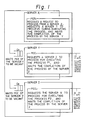
- Fig. 1 is a diagram for explaining the occurrence of a deadlock in a conventional data processing system of a client-server model construction.
- the servers X, Y, and Z respectively include program executing environments PEE X , PEE Y , and PEE Z which have been prepared in advance at the time of system start up.
- the server Y executes the process P1 by using the program executing environment PEE Y in the server Y.
- the "process” itself is different from the "program executing environment”. In the example illustrated in Fig. 1, it is assumed that the execution of the process P1 by using the program executing environment PEE Y inherently includes a process request to the server Z.
- a request is sent from the server Y to the server Z. It is further assumed that the server Z has received another request to execute a process P2 before receiving the request from the server Y for executing the process P1. Accordingly, until the execution of the process P2 is finished, the request from the server Y to the server Z for executing the process P1 must be kept waiting in a queue Q Z . Namely, the program executing environment PEE Z is scrambled by the request from the server Y and from the external world.
- the execution of the process P2 by using the program executing environment PEE X inherently includes a process request to the server Y. Therefore, to complete the process P2, a request is sent from the server X to the server Y.
- the request is sent from the server X to the server Y, if the process P1 is not completed in the server Y, the request from the server X to the server Y must be kept waiting in a queue Q Y .
- the program executing environment PEE Y is also scrambled by the request from the server X and the request from an external source.
- Figure 2 is a block diagram showing a principal construction of a data processing system of the present invention.
- 1-i and 1-j are servers for providing predetermined service processes.
- an identification number is assigned in a one to one correspondence.
- the identification numbers assigned to the respective servers are preferably continuous numbers.
- the identification number assigned to the server 1-h is R h .
- Each server 1-h comprises a service processing unit 10-h, a transmitting unit 11-h, a judging unit 12-h, one or plural program executing environments 13-h prepared at the time of system start up, and a program executing environment 14-h which is dynamically prepared in accordance with necessity.
- the service processing unit 10-h executes a predetermined service process by using either one of the program executing environments 13-h which is prepared in advance at the time of system start up, or the dynamically prepared program executing environment 14-h.
- the transmitting unit 11-h transmits, at the time of the message communication, the identification number R h assigned to its own server.
- the judging unit 12-h judges whether the received identification number R IN transmitted from another server is larger or smaller than the identification number assigned to the own server 1-h to judge whether or not a request to prepare the program executing environment 14-h should be issued.
- the dynamically prepared program executing environment is so formed that the process executed by the dynamically prepared program executing environment is not linked into a process executed by the program executing environment prepared at the time of system start up.
- 20 is a program executing environment managing unit for preparing and managing the program executing environments 13-h and 14-h which are necessary for the server 1-h.
- the program executing environment managing unit 20 prepares the program executing environment 13-h at the time of system start up, and dynamically prepares the program executing environment 14-h in accordance with a preparation request from the judging unit 12-h in each server 1-h.
- the judging unit 12-h when it judges that the received identification number R IN transmitted from another server is larger than the identification number R h assigned to its own server 1-h, instructs the service processing unit 10-h to begin execution of the service process by using the program executing environment 13-h prepared at the time of system start up.
- the judging unit 12-h when it judges that the received identification number R IN from another server is smaller than the identification number R h assigned to its own server 1-h, issues a request to dynamically prepare the program executing environment 14-h, and instructs the service processing unit 10-h to enter into the execution of the service process by using the program executing environment 14-h dynamically prepared in accordance with the preparation request, and further informs the transmitting unit 11-h of the contents of the instruction.
- the service process when the process request between the servers 1-h is executed in a certain direction determined by the larger or smaller identification number R h , the service process is executed by using the program executing environment 13-h prepared at the time of system start up; and once the process request between the servers 1-h is directed in the direction opposite to the above direction, the service process after this is executed by using the dynamically prepared program executing environment 14-h. Since the process using the dynamically prepared program executing environment is not linked into the process using the program executing environment prepared at the time of system start up, a loop as explained with reference to Fig. 1 is not formed, so that the occurrence of a deadlock due to the scrambling of the program executing environments can be prevented.
- the system in a data processing system of the client-server model construction, the system is so constructed that the program executing environment is dynamically prepared to prevent a deadlock only when there is a possibility of forming a loop. Therefore, the occurrence of a deadlock can be prevented with the minimum deterioration of the system performance and with a small memory capacity.
- This effect of the present invention can be further increased by assigning the identification number R h in such a way that, taking into account the aspects of the process requests by the servers 1-h, the frequency of preparing the program executing environments 14-h is reduced.
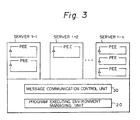
- Fig. 3 is a block diagram showing the construction of a data processing system according to an embodiment of the present invention.
- a program executing environment PEE prepared by a program execution environment managing unit 20 is appropriately assigned at the time of system start up or dynamically when the received identification number is smaller than its own identification number, for example, so that the occurrence of a deadlock due to scrambling of the program execution environments is efficiently prevented.
- an identification number is assigned to each server 1-h in a one to one correspondence, and, when a message communication is to be executed for a process request, the assigned identification number R h is informed to the server 1-k which is the destination of the request.
- the assigned identification number R h is assigned in accordance with various methods. For example, when there is a relation "i ⁇ j" between the server 1-i and the server 1-j, it is possible to assign the identification numbers so that R i ⁇ R j .
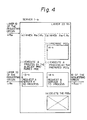
- Fig. 4 is a block diagram showing the construction of a server according to an embodiment of the present invention.
- Fig. 5 is an explanatory diagram of program executing environments prepared at the time of system start up. Referring to Fig. 3 to Fig. 5, the processing contents of the present invention will be described in detail.
- each server 1-h has one or plural program executing environments 13-h which have been prepared in advance at the time of system start up.
- a server 1-h When a server 1-h receives an identification number R IN from another server, the server 1-h judges at first whether the received identification number R IN is larger or smaller than the identification number R h assigned to its own server 1-h. According to this judging process, when it is judged that the received identification number R IN is larger than the identification number R h of its own server 1-h, the program executing environment 13-h prepared at the time of system start up is used, as shown in Fig. 4, (a)(i). During the execution of this service, when a message requesting another server 1-k to execute a process is to be transmitted, the message and the identification number R h of its own server 1-h are transmitted to the server 1-k.
- the server 1-h issues to the program executing environment managing unit 20 a request to prepare a program executing environment 14-h which is different from the already prepared program executing environment 13-h.
- a service process is executed by using the dynamically prepared program executing environment 14-h, as shown in Fig. 4, (b)(ii).
- the service process when a process request between servers 1-h is from one having a larger identification number R h to a smaller one, the service process is executed by using the program executing environment 13-h which is prepared at the time of system start up, and when the process request between the servers 1-h is executed in the opposite direction to the above, a service process is thereafter executed by using the dynamically prepared program executing environment 14-h.
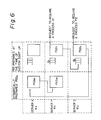
- the loop as explained in the conventional example with reference to Fig. 1 is not formed as shown in Fig. 6 so that a deadlock due to the scrambling of the program executing environments can be prevented.
- Fig. 6 is an explanatory diagram of a process for dynamically preparing new program executing environments according to an embodiment of the present invention.
- three servers X, Y, and Z are shown, and the identification numbers R X , R Y , and R Z of the servers X, Y, and Z are assumed to have a relation R X > R Y > R Z .
- the servers X, Y, and Z respectively include program executing environments PEE X , PEE y , and PEE Z which have been prepared in advance at the time of system start up.
- the server Y executes the process P1 by using the program executing environment PEE Y in the server Y.
- the execution of the process P1 using the program executing environment PEE Y inherently includes a process request to the server Z. Therefore, to complete the process P1, a request accompanied by the identification number R Y is sent from the server Y to the server Z.
- the server Z since the received identification number R Y is larger than the identification number R Z of its own server Z, the server Z executes the process by using the program executing environment PEE Z prepared at the time of system start up.
- the server Z has received another request to execute a process P2 before receiving the request from the server Y to execute the process P1. Accordingly, until the execution of the process P2 is finished, the request from the server Y to the server Z for executing the process P1 must be kept waiting in a queue Q Z .
- a request is sent from the server X to the server Y.
- an identification number R Z -1 is also sent from the server X to the server Y.
- the server Y since the received identification number R Z -1 is smaller than its own identification number R Y , the server Y also prepares a new program executing environment PEE D2 which is not linked to any program executing environment prepared at the time of system start up.
- Fig. 7 is an explanatory diagram of the process for deleting the dynamically prepared program executing environments according to an embodiment of the present invention.
- the server 1-h requests the program executing environment managing unit 20 to delete the dynamically prepared program executing environment PEE D and, in response to the request, the managing unit 20 deletes the PEE D .
- the program executing environment 14-h is prepared dynamically only when there is a possibility of forming a loop, so that the occurrence of a deadlock is prevented.
- the general aspect of the process request between the servers 1-h can be grasped at the system design stage. Therefore, it is preferable that, based on the understandings of the general aspect, the identification numbers R h are assigned in such a way that the frequency of preparing the program executing environments 14-h is small so that the deterioration of the system performance accompanied by the preparation of the program executing environments 14-h is minimized.
- the present invention is not restricted to the above-described embodiment.
- the program executing environment 13-h prepared at the time of system start up is used when the process request between the servers 1-h is effected from the larger identification number to the smaller one, however, it is possible to reverse this.
- a program executing environment is prepared dynamically only when there is a possibility of forming a loop, so that the generation of a deadlock is prevented while the deterioration of the system performance is minimized and the memory capacity is small.
Landscapes
- Engineering & Computer Science (AREA)
- Software Systems (AREA)
- Theoretical Computer Science (AREA)
- Physics & Mathematics (AREA)
- General Engineering & Computer Science (AREA)
- General Physics & Mathematics (AREA)
- Computer And Data Communications (AREA)
Applications Claiming Priority (2)
| Application Number | Priority Date | Filing Date | Title |
|---|---|---|---|
| JP140907/90 | 1990-05-30 | ||
| JP14090790A JPH0433128A (ja) | 1990-05-30 | 1990-05-30 | プログラム実行環境の割付処理方式 |
Publications (2)
| Publication Number | Publication Date |
|---|---|
| EP0459775A2 true EP0459775A2 (de) | 1991-12-04 |
| EP0459775A3 EP0459775A3 (en) | 1993-01-07 |
Family
ID=15279587
Family Applications (1)
| Application Number | Title | Priority Date | Filing Date |
|---|---|---|---|
| EP19910304833 Withdrawn EP0459775A3 (en) | 1990-05-30 | 1991-05-29 | A processing system for assigning a program executing environment |
Country Status (2)
| Country | Link |
|---|---|
| EP (1) | EP0459775A3 (de) |
| JP (1) | JPH0433128A (de) |
Family Cites Families (2)
| Publication number | Priority date | Publication date | Assignee | Title |
|---|---|---|---|---|
| EP0319796B1 (de) * | 1987-11-26 | 1995-08-16 | Hitachi, Ltd. | Jobsteuerung für Online-System |
| US5063500A (en) * | 1988-09-29 | 1991-11-05 | Ibm Corp. | System for executing segments of application program concurrently/serially on different/same virtual machine |
-
1990
- 1990-05-30 JP JP14090790A patent/JPH0433128A/ja active Pending
-
1991
- 1991-05-29 EP EP19910304833 patent/EP0459775A3/en not_active Withdrawn
Also Published As
| Publication number | Publication date |
|---|---|
| EP0459775A3 (en) | 1993-01-07 |
| JPH0433128A (ja) | 1992-02-04 |
Similar Documents
| Publication | Publication Date | Title |
|---|---|---|
| JP3382953B2 (ja) | 有限メモリコンピュータシステム上におけるクライアント管理フロー制御方法及び装置 | |
| US6510478B1 (en) | Method and apparatus for coordination of a shared object in a distributed system | |
| US5987502A (en) | Workload management in an asynchronous client/server computer system | |
| US6314114B1 (en) | Distributed resource management | |
| US6195682B1 (en) | Concurrent server and method of operation having client-server affinity using exchanged client and server keys | |
| EP0362105B1 (de) | Verfahren zur Verarbeitung von Programmteilen eines verteilten Anwendungsprogramms durch einen Hauptrechner und einen intelligenten Arbeitsplatz in einer SNA LU 6.2-Netzwerkumgebung | |
| US6088728A (en) | System using session data stored in session data storage for associating and disassociating user identifiers for switching client sessions in a server | |
| US4274139A (en) | Digital telecommunication network having improved data processing systems | |
| US6192389B1 (en) | Method and apparatus for transferring file descriptors in a multiprocess, multithreaded client/server system | |
| US6085217A (en) | Method and apparatus for controlling the assignment of units of work to a workload enclave in a client/server system | |
| US5319782A (en) | Method for synchronizing the dispatching of tasks among multitasking operating systems | |
| US8683030B2 (en) | Routing of pooled messages via an intermediary | |
| AU748321B2 (en) | Method for allocating tasks, data processing system, client data processing node, and computer-readable storage medium | |
| EP0817023A2 (de) | Anruf- und Dienstmechanismus mit effizientem Kontextumschaltungsverfahren für multiplexierte Nachrichten | |
| EP1971917A1 (de) | Lastausgleichsalgorithmus zur versorgung von client-anforderungen | |
| WO1998003912A1 (en) | Method and apparatus for coordination of a shared object in a distributed system | |
| GB2320112A (en) | High-availability computer server system | |
| JPH10108156A (ja) | ビデオサーバシステム | |
| US20120290639A1 (en) | Queueing messages related by affinity set | |
| EP0459775A2 (de) | Verarbeitungssystem zur Zuweisung einer Programmausführungsumgebung | |
| JPH06301618A (ja) | 遠隔手続き呼び出し方法 | |
| EP1654650A2 (de) | Transparente sitzungs-migration über server hinweg | |
| JPH06266643A (ja) | サーバプログラム管理方法 | |
| JPH076110A (ja) | 分散処理システムの通信オーバヘッド低減方法 | |
| JPH06243077A (ja) | 分散トランザクション処理方式 |
Legal Events
| Date | Code | Title | Description |
|---|---|---|---|
| PUAI | Public reference made under article 153(3) epc to a published international application that has entered the european phase |
Free format text: ORIGINAL CODE: 0009012 |
|
| AK | Designated contracting states |
Kind code of ref document: A2 Designated state(s): DE FR GB |
|
| PUAL | Search report despatched |
Free format text: ORIGINAL CODE: 0009013 |
|
| AK | Designated contracting states |
Kind code of ref document: A3 Designated state(s): DE FR GB |
|
| 17P | Request for examination filed |
Effective date: 19930702 |
|
| STAA | Information on the status of an ep patent application or granted ep patent |
Free format text: STATUS: THE APPLICATION HAS BEEN WITHDRAWN |
|
| 18W | Application withdrawn |
Withdrawal date: 19931208 |