EP0458564B1 - Verfahren und System für eine konsequente Zeitfestlegung in verteilten Rechnerdatenbanken - Google Patents
Verfahren und System für eine konsequente Zeitfestlegung in verteilten Rechnerdatenbanken Download PDFInfo
- Publication number
- EP0458564B1 EP0458564B1 EP91304534A EP91304534A EP0458564B1 EP 0458564 B1 EP0458564 B1 EP 0458564B1 EP 91304534 A EP91304534 A EP 91304534A EP 91304534 A EP91304534 A EP 91304534A EP 0458564 B1 EP0458564 B1 EP 0458564B1
- Authority
- EP
- European Patent Office
- Prior art keywords
- transaction
- time
- distributed
- cohort
- read
- Prior art date
- Legal status (The legal status is an assumption and is not a legal conclusion. Google has not performed a legal analysis and makes no representation as to the accuracy of the status listed.)
- Expired - Lifetime
Links
Images
Classifications
-
- G—PHYSICS
- G06—COMPUTING OR CALCULATING; COUNTING
- G06F—ELECTRIC DIGITAL DATA PROCESSING
- G06F15/00—Digital computers in general; Data processing equipment in general
- G06F15/16—Combinations of two or more digital computers each having at least an arithmetic unit, a program unit and a register, e.g. for a simultaneous processing of several programs
-
- G—PHYSICS
- G06—COMPUTING OR CALCULATING; COUNTING
- G06F—ELECTRIC DIGITAL DATA PROCESSING
- G06F16/00—Information retrieval; Database structures therefor; File system structures therefor
- G06F16/20—Information retrieval; Database structures therefor; File system structures therefor of structured data, e.g. relational data
- G06F16/24—Querying
- G06F16/245—Query processing
- G06F16/2458—Special types of queries, e.g. statistical queries, fuzzy queries or distributed queries
- G06F16/2477—Temporal data queries
-
- G—PHYSICS
- G06—COMPUTING OR CALCULATING; COUNTING
- G06F—ELECTRIC DIGITAL DATA PROCESSING
- G06F16/00—Information retrieval; Database structures therefor; File system structures therefor
- G06F16/20—Information retrieval; Database structures therefor; File system structures therefor of structured data, e.g. relational data
- G06F16/21—Design, administration or maintenance of databases
- G06F16/219—Managing data history or versioning
-
- Y—GENERAL TAGGING OF NEW TECHNOLOGICAL DEVELOPMENTS; GENERAL TAGGING OF CROSS-SECTIONAL TECHNOLOGIES SPANNING OVER SEVERAL SECTIONS OF THE IPC; TECHNICAL SUBJECTS COVERED BY FORMER USPC CROSS-REFERENCE ART COLLECTIONS [XRACs] AND DIGESTS
- Y10—TECHNICAL SUBJECTS COVERED BY FORMER USPC
- Y10S—TECHNICAL SUBJECTS COVERED BY FORMER USPC CROSS-REFERENCE ART COLLECTIONS [XRACs] AND DIGESTS
- Y10S707/00—Data processing: database and file management or data structures
- Y10S707/99951—File or database maintenance
- Y10S707/99952—Coherency, e.g. same view to multiple users
Definitions
- the present invention focuses on transaction time. All updates made by a transaction to a database are stamped with the same time. The timestamp is stored as an attribute of the data. The timestamps of transactions must be ordered correctly so that the order of the timestamps represents a correct serialization of the transactions.
- Transaction time can also be used to organize data.
- the idea is that data that is no longer current can be stored separately from current data.
- the "historical” data is never updated, and hence can be stored on "write-once, read many” (WORM) optical disks.
- WORM write-once, read many
- Data that is current may continue to be updated, and is therefore stored on magnetic disks and in random access memory so that the current data can be readily modified.
- all timestamped data could be stored on magnetic disk or it could all be kept on a WORM disk.
- the present invention is a system and method for ensuring consistent timestamping in a distributed database system and for automatically releasing read locks applied during a transaction, according to claims 1 and 4.
- the system has databases located at a number of distinct nodes, and at least two of the nodes have timestamping databases - that is, multiversion databases in which updated data is stamped with a transaction time, and which can be queried as to the state of the database as of a specified time.
- Distributed transactions are committed or aborted using a two phase commit protocol.
- the prepare interval each cohort to the transaction votes on whether to commit or abort the transaction, and also votes on an earliest time and a latest time at which the transaction is to be committed. If all the cohorts to a transaction vote to commit the transaction and the intersection of the voted time ranges is not empty, then the transaction is committed during the second phase of the protocol. Also a transaction time is selected from the intersection of the voted time ranges, and this selected transaction time is used to timestamp all updated data that is durably stored when the transaction is committed.
- the protocol ensures that a timestamp is selected which is useable by all the cohorts.
- Another aspect of the present invention concerns data locking by distributed transactions.
- each transaction read or write locks data at each node for which it needs read or write access.
- the prepare interval Whenever a transaction enters the first phase of the commit protocol (the prepare interval), read locks for that transaction are converted into a new type of data lock herein called a delay lock.
- a delay lock is similar to a read lock, except that it allows another transaction to obtain a write lock on the data.
- any transaction which obtains a write lock on delay locked data is a "delayed transaction".
- the cohort in the delayed transaction which contains the write lock on delay locked data votes a time range having an "earliest" value which is later than the "latest” value voted by the transactions that own the delay locks.
- the delayed transaction votes a time range which guarantees that it will commit at a time which is later than the time at which the transactions with the delay locks commit or abort.
- This combination of time range voting and a delay lock mechanism ensure that the timestamp order of transactions is consistent throughout the distributed database and is consistent with the true serialization order of the transactions. It also permits optimization of the commit protocol itself, which enhances performance of the system.
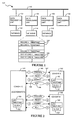
- Figure 1 is a block diagram of a distributed database system.
- Figure 2 depicts the sequence of events in a two phase commit protocol.
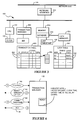
- Figure 3 is a block diagram of one node in a distributed database system.
- Figure 4 depicts a two phase commit protocol incorporating additional time range information in accordance with the present invention.
- a distributed database system 100 Typical examples of distributed databases include airline reservation systems, financial databases maintained by banks and brokerage firms, and a medical record database maintained by a large organization.
- the system includes a large number of individual nodes 102-108, which are data processing units interconnected by a bus, local area network, or wide area network 110.
- the data processing units in a system 100 typically include both work stations and more powerful minicomputers or mainframe computers.
- a plurality of the data processing units store a portion 112-116 of the distributed database in their own memory.
- To "commit" a transaction means that the results of a transaction are installed in a data base.
- the ability to commit implies that the database system must be capable of not installing the results of a transaction if the transaction is aborted.
- a "data lock” is a mechanism for assigning exclusive rights to a datum or record in a data base.
- a first transaction may lock a particular piece of data so as to ensure that no other transaction accesses that data until the first transaction commits or aborts.
- the prior art includes many types of data locking mechanisms, sometimes called data interlocks.
- a transaction means to start the process of determining whether to commit the transaction, which means durably storing all new data values generated by the transaction, or to abort the transaction.
- the "prepare-interval" of a transaction is the time period beginning with preparation of the transaction and ending with when the transaction is either committed or aborted.
- 2PC is the protocol which is most widely used for serializing transactions in distributed systems.
- two-phase commit protocols work as follows.
- a transaction T1 involves at least two data processing units.
- the transaction may involve three of the data processing units in the system, herein called Cohort A 130, Cohort B 132 and Cohort C 134.
- Cohort A 130 the data processing units in the system
- Cohort B 132 the data processing units in the system
- Cohort C 134 the data processing units in the system
- each cohort performs the computations associated with the transaction and temporarily stores any results of the transaction in such a way that the transaction can still be reversed or aborted, thereby leaving the database unchanged.
- there are a number of different methods of doing this and the particular method used for making the transaction reversible is not important to the present invention.
- one of the cohorts here Cohort C, is assigned the role of "coordinator" of the two phase commit protocol.
- the coordinator sends a first message, called a Prepare message 140, which notifies all cohorts to the distributed transaction that the transaction is now to be terminated, and hopefully committed.
- Each cohort to the transaction then attempts to Prepare itself. Essentially, this means that the cohort must make certain that it can guarantee that both the state of the database before the transaction and the state of the database after the transaction are durably stored. The cohort thus checks that either one of these states can be guaranteed to be installed, depending on whether the transaction COMMITs or ABORTs.
- Each cohort then votes on the disposition of the transaction by sending a READY or ABORT message 142 back to the coordinator. If the attempt by a cohort to prepare fails, or any preceding step of the transaction fails, the cohort votes to ABORT. If the attempt to prepare succeeds, then the cohort votes to COMMIT. Any cohort that has voted to COMMIT is said to be prepared.
- the coordinator When the coordinator has received votes from all the cohorts participating in the transaction, it knows the disposition of the transaction.
- the coordinator COMMITs the transaction if all cohorts have voted COMMIT. If any cohort voted ABORT, or a cohort fails to respond to the Prepare message within a predefined amount of time, then the coordinator ABORTs the transaction. In either case the coordinator sends a transaction disposition message 144 (i.e., COMMIT or ABORT) to all cohorts.
- a transaction disposition message 144 i.e., COMMIT or ABORT
- the cohort 134 which acts as coordinator performs the same functions as the other cohorts during the 2PC protocol, except that the coordinator knows at the beginning of the process whether or not that cohort will be able to commit the transaction. Furthermore, this cohort goes through the prepare and commit phases of the transaction. For all intents and purposes, the coordinator can be thought of as a separate entity, even though it runs on the node of the system occupied by one of the cohorts.
- the transaction timestamp to be selected is the time value that will be stored with all data updates caused by a particular transaction.
- the basic mechanism used by the present invention is to extend the 2PC protocol by augmenting the information conveyed on two of its messages.
- the present invention requires that each cohort inform the transaction coordinator of its requirements for transaction time. The coordinator then attempts to find a single time that satisfies all cohort requirements.
- Each data processing unit in the system 100 stores and maintains a monotonically increasing LAST transaction time 150. It does this by comparing the value of LAST with the timestamp of each committed transaction. Whenever one of these timestamps is later than LAST 150, LAST is set to the value of the timestamp.
- Each cohort also has an internal clock 152 which specifies the local current time for that cohort.
- a cohort votes to commit a transaction at message number two of the 2PC protocol, it also conveys two time values: the EARLIEST time at which the transaction can be permitted to commit, and the LATEST time that the transaction can be permitted to commit.
- the EARLIEST time must be later than the time of any other transaction in that database upon which the current transaction depends.
- the cohort/database receives a request to commit from the coordinator, and it is prepared to commit the transaction, it votes an EARLIEST transaction time which is larger than both the LAST timestamp value 150 and its current clock time.
- the LATEST transaction time specified by each node is used to establish bounds on how divergent transaction times can become among the nodes.
- the purpose of the LATEST parameter is not serialization, but rather to limit clock and transaction time divergence.
- the coordinator is required to find a transaction time that is within all the [EARLIEST, LATEST] time ranges voted by the cohorts. If the intersection of these ranges is null, the coordinator ABORTs the transaction.
- a heavily used database may place more stringent requirements, i.e., require smaller time ranges to be specified by each cohort, than a lightly used database. It may need the tight bounds to increase concurrency by reducing the amount of time that the transaction is in doubt.
- a database on a workstation might be willing to accept almost any timestamp that a host database might agree to during a distributed transaction, so long as transaction time order and transaction time serialization agree. Such a database might not vote a LATEST bound.
- each node 102 in the distributed database system includes lock manager 200 and a lock table 202 which are used to keep track of data locks on data that is stored in the database 210 at that node.
- every node has its own lock manager 200 and lock table 202.
- the memory module 214 includes both random access memory and mass storage such as a hard magnetic disk.
- a network interface 216 couples the node to the other cohorts via the communications network 110 (which is typically the bus of a local or wide area network).
- each node 102 has a transaction manager 220 for handling all communications between cohorts to a transaction.
- These components of the node 102 are typically pieces of software which reside in a common memory and are executed concurrently by a multiprocessing CPU 212.
- the lock manager 200 grants a request for a read lock only if the data that is being accessed is either unlocked, or has a read lock granted to another transaction.
- the lock manager grants a request for a write lock only if the data that is being accessed is unlocked.
- Each new lock which is granted is denoted by an entry 240 in the lock table 202.
- a read-only cohort is a cohort that has no updates and usually does not need to receive the COMMIT message in the 2PC protocol - because it has no data to install nor any other activity that it needs to perform. It can merely release its data locks at Prepare time (i.e., upon receiving the PREPARE message from the coordinator).
- the solution is for the read-only cohort to send its READY to commit vote with a closed timestamp range of [EARLIEST, LATEST].
- the read-only cohort now knows that the transaction will terminate at a time which is no later than the time it provided in the LATEST value sent with its COMMIT message. Hence, it can free its read locks at the LATEST time, without ever knowing the precise time that the transaction terminated.
- This methodology ensures that the "prepare intervals" of conflicting transactions are disjoint, even without knowing the actual commit time of the transactions. And this assures that timestamp order (i.e., the order associated with timestamps in the database) agrees with serialization order (i.e., the actual order in which transactions were committed).
- the transaction manager 220 also maintains a transaction table 224 for transactions which have been prepared, but which are not yet completed. For non-timestamping databases, the transaction manager stores in the table 224 a "last commit" value, which is equal to the latest timestamp value for any transaction in which the non-timestamping database was a cohort.
- the present invention provides a mechanism for making read-only data (i.e., data that a transaction needs to be able to read but does not need to be able to update) available to subsequent transactions during its prepare-interval.
- this mechanism delays the committing of any other transaction that subsequently uses this data so that the other transaction does not commit until after the transaction that "released" the data.
- the present invention provides a new data lock mode called a Delay lock.
- a Delay lock is as follows. At prepare time, a transaction transforms all its read locks to Delay locks. At commit time, the Delay locks are released (i.e., erased or eliminated from the lock table).
- a Delay lock does not conflict with any other lock mode. In other words, if a datum is "delay locked", another transaction can obtain either a read or a write lock on that data. However, whenever a transaction write locks data that is delay locked, that transaction is not permitted to commit until after the Delay lock is dropped. This requirement is needed to ensure that the timestamp order of transactions agrees with their serialization order.
- the LATEST time of each Delay lock is determined as follows. Whenever a Write lock is requested for a datum having a Delay lock, the lock manager 220 in the cohort with the Delay lock notes the transaction holding the Delay lock. When the writing transaction commits, its commit timestamp must be later than either the LATEST time voted by the Delay lock holding transaction, if that transaction is still prepared, or the commit time of that transaction, if that transaction has committed.
- This method of setting a lower bound on the EARLIEST time to be voted by cohorts which obtain write locks assures that conflicting transactions continue to have disjoint prepare-intervals, and hence that timestamp order and serialization order agree.
- Delay locks There are two preferred method of implementing Delay locks.
- One is to have the transaction manager 220 explicitly request that the lock manager 200 downgrade the read locks for a transaction to Delay locks whenever that transaction becomes prepared. In other words, the lock type for these locks would be changed from "read” to "delay”.
- the above described steps would be performed to establishes a lower bound on the Earliest time vote for the transaction which requested the write lock.
- a second method of implementing Delay locks avoids explicitly downgrading read locks to delay locks by the lock manager 200 and hence avoids an additional call to the lock manager 200 when a transaction prepares.
- read locks are released only when the transaction (i..e., the transaction which owns the locks) commits.
- the write request is treated as a standard read-write conflict and the requesting transaction is blocked.
- this read lock is implicitly downgraded to a delay lock by the change in the status of the transaction as denoted in the transaction table 222.
- a transaction requesting a Write lock on the now Delay locked data is permitted to proceed. Further, blocked Write request transactions are now permitted to proceed.
- the read lock is treated as a delay lock, and the requested write lock is granted.
- the transaction holding the Delay lock is entered on a Delaying transaction list 250 for the requesting transaction.
- the cohort When the cohort must cast a transaction time vote, it consults this dependency list 250. Committed transactions on the dependency list are ignored, and if all transactions on the list 250 are committed, then all delay lock commit processing is bypassed. Otherwise, the latest value of LATEST of all the Delaying transactions becomes a lower bound on the EARLIEST vote for this cohort.
- each database system i.e., each node or cohort
- This local two phased property together with Delay locks, ensures that locally conflicting transactions have disjoint prepare-intervals. Hence local transactions will have transaction timestamps ordered correctly locally.
- the commit protocol of the present invention ensures that the timestamp order of the transactions correctly orders transactions, because the timestamp order chosen agrees with all local serializations.
- two phase locking is used locally, up to prepare time, to order transactions. Then timestamp order concurrency control is used.
- This offers a high level of concurrency between transactions, with the efficiency of using the commit protocol itself to "quiesce" the transaction cohorts' normal activities, without a separate termination protocol.
- the present invention makes it possible to exploit the 2PC protocol messages to trigger delayed constraint evaluation (i.e., constraints that must be validated at the end of a transaction), while still assuring the serializability of transactions.
- timestamp ranges voted by the cohorts to a transaction are not sufficiently large, the probability that their intersection is empty, forcing the transaction to abort, increases. As more activity is permitted to follow the initiation of the commit protocol, more time must be allowed for cohorts to complete their diverse activities. This must be reflected in timestamp ranges that are voted by the cohorts.
- not all cohorts of a transaction necessarily timestamp their data.
- the commit protocol for such systems must work correctly when transactions involve both timestamping and non-timestamping cohorts. If the non-timestamping cohort does not include a timestamp on its voting message, then a problem arises. Even though transactions are serialized correctly at each database, and a valid global serialization for all databases is assured, the timestamp order cannot be guaranteed to agree with a valid global serialization.
- the present invention provides a transaction manager (TM) 220 in each node of the system.
- the transaction manager assists the local database system on each node to coordinate distributed transactions. It does this by presenting a strictly local interface to each database system through which the two phase commit protocol is exercised.
- the TM 220 performs all communications required by the commit protocol of the present invention. That is, all protocol messages have a source that is a TM at one node, and a destination that is a TM at another node.
- a node's TM interfaces with all databases at the node, whether timestamping or non-timestamping.
- no database is the coordinator of the 2PC protocol. Since there is a TM at every node, any node can coordinate the transaction, whether or not a timestamping database is present at that node. Thus one of the TM's for each transaction is chosen as the coordinator TM for that transaction using any reasonably selection criteria, since the correctness of the protocol is not affected by which TM is selected.
- Each database system notifies its local TM about commit initiation and voting.
- the coordinator TM examines votes. Based on the received votes it decides whether to commit or abort the transaction, and selects the transaction time. It then communicates to other remote participating TMs the transaction disposition and time. These TMs then inform their local participating databases of the transaction disposition and time. It should be noted that the coordinator TM handles the 2PC protocol messages for its local database by directly communicating with the database system at its node.
- the solution to the problem of mixed timestamping and non-timestamping databases in the same transaction is for the TM to provide a timestamp vote should a database not inform the TM of an EARLIEST time.
- the TM maintains a LAST time value for each non-timestamping database system on its node, and votes an EARLIEST time which must be later than the later of LAST for the database involved in the transaction and the local clock time.
- the TM may or may not vote a LATEST time value. If the TM votes a LATEST time value, it does so in accordance with a predefined procedure, the details of which depend on the particular application that the TM is being used with.
- a database system need not know anything about timestamps. And the TM need not know anything about the database.
- the TM executes the timestamp selection protocol in the absence of a transaction time vote.
- TM vote a transaction time range of [EARLIEST, LATEST] for a transaction is straightforward. It permits non-timestamping cohorts to take advantage of both the read-only optimization and the release of read locks, as discussed above. Both of these involve a database releasing read locks before a transaction is known to have terminated, either via a commit or abort.
- TM One way for a TM to accomplish the above ordering is to guarantee that conflicting transactions are not simultaneously prepared. This is what Delay locks do.
- the TM cannot depend on all databases providing the assurance of correct ordering.
- the TM is prevented from knowing the dependencies between transactions.
- the TMs guarantee correct timestamp selection by permitting no more than one transaction from such a database system to be in the prepared state at a time.
- One way to accomplish this is to have the TM require that one transaction commit before the next transaction is prepared.
- TMs of the present invention can cope with database systems that expect to use ordinary 2PC protocols and to release Read locks at prepare time.
Landscapes
- Engineering & Computer Science (AREA)
- Theoretical Computer Science (AREA)
- Physics & Mathematics (AREA)
- Databases & Information Systems (AREA)
- General Engineering & Computer Science (AREA)
- General Physics & Mathematics (AREA)
- Data Mining & Analysis (AREA)
- Software Systems (AREA)
- Fuzzy Systems (AREA)
- Mathematical Physics (AREA)
- Probability & Statistics with Applications (AREA)
- Computational Linguistics (AREA)
- Computer Hardware Design (AREA)
- Information Retrieval, Db Structures And Fs Structures Therefor (AREA)
Claims (7)
- Transaktionsmanagementverfahren zur Verwendung in einem verteilten Datenbanksystem mit einer Vielzahl miteinander verbundener Knoten (102, 104, 106, 108),
wobei die Schritte des Verfahrens folgende sind:gekennzeichnet durch(a) Übertragen einer Vorbereiten-zum-Anfangen-Nachricht (140) zu jedem Knoten in dem System, der eine Kohorte einer verteilten Transaktion ist;(b) wobei jede Kohorte (130, 132, 134) der verteilten Transaktion die Vorbereiten-zum-Anfangen-Nachricht empfängt und dann über eine Disposition der verteilten Transaktion abstimmt, wobei die Disposition aus der Gruppe ausgewählt wird, die aus einem Abbrechen der Transaktion und einem Anfangen der Transaktion besteht;(c) Abbrechen der Transaktion, wann immer irgendeine der Kohorten für ein Abbrechen der Transaktion stimmt;(d) wobei jede Kohorte, die für ein Anfangen der Transaktion stimmt, auch für einen Anfangs-Zeitbereich stimmt, der eine früheste Zeit enthält, die für die Kohorte zum Anfangen der Transaktion annehmbar ist, und eine späteste Zeit, die für die Kohorte zum Anfangen der Transaktion annehmbar ist;(e) wann immer die Kohorten alle für ein Anfangen der Transaktion stimmen und die Zeitbereiche, für die durch die Kohorten gestimmt worden ist, eine nicht leere Schnittmenge haben, Anfangen der Transaktion und Auswählen einer Transaktionszeit für die Transaktion aus der Schnittmenge der Zeitbereiche, für die durch die Kohorten gestimmt worden ist;(f) Abbrechen der Transaktion, wann immer die Zeitbereiche, für die durch die Kohorten gestimmt worden ist, sich nicht schneiden; und(g) Wiederholen der Schritte (a) bis (f) für eine Vielzahl aufeinanderfolgender verteilter Transaktionen;
bei irgendeiner verteilten Transaktion, deren Kohorten eine Nurlese-Kohorte enthalten, die während der verteilten Transaktion keine Datenwerte einem Updaten unterzieht, Einstellen einer Leseverriegelung in der Nurlese-Kohorte für jedes Datum, auf das durch die Nurlese-Kohorte während einer Durchführung der verteilten Transaktion zugegriffen wird, Speichern von Daten (202) in der Nurlese-Kohorte, die anzeigen, daß jede Leseverriegelung durch die erste verteilte Transaktion eingestellt wurde, und automatisches Lösen jeder Leseverriegelung nicht später als zur spätesten Zeit, für die durch die Nurlese-Kohorte für die verteilte Transaktion gestimmt worden ist. - Verfahren nach Anspruch 1, weiterhin gekennzeichnet durch
bei jedem Knoten, der eine Kohorte einer verteilten Transaktion ist:Einstellen einer Leseverriegelung an jedem Datum, zu welchem die verteilte Transaktion einen Lesezugriff erhalten hat;Zulassen, daß jede verteilte Transaktion einen Schreibzugriff zu Daten hat, die durch eine andere verteilte Transaktion leseverriegelt worden sind, wobei der Schreibzugriff vor einem Beenden der anderen verteilten Transaktion zugelassen wird, aber nur nachdem der Knoten dafür gestimmt hat, die andere Transaktion anzufangen;Markieren jeder Transaktion als verzögerte Transaktion, der ein Schreibzugriff zu Daten erlaubt ist, die durch eine andere Transaktion leseverriegelt worden sind; undin bezug auf jede verzögerte Transaktion Speichern von Daten (250), die eine Gruppe von Verzögerungstransaktionen darstellen, die Transaktionen aufweisen, die leseverriegelte Daten haben, zu denen der verzögerten Transaktion ein Schreibzugriff erlaubt worden ist;wobei der Schritt (e) ein derartiges Auswählen des Anfangs-Zeitbereichs enthält, das für jede verzögerte Transaktion die früheste annehmbare Zeit später als (A) die ausgewählte Transaktionszeit jeder jeweiligen Verzögerungstransaktion ist, die angefangen hat, und auch später als (B) die späteste annehmbare Zeit ist, für die die Kohorte für jede Verzögerungstransaktion gestimmt hat, die noch nicht angefangen hat. - Verfahren nach Anspruch 1 oder 2, weiterhin gekennzeichnet durchUnterhalten einer lokalen Taktzeit (152) an jedem Knoten des Systems;wobei die früheste Zeit, für die durch jede Kohorte zu jeder verteilten Transaktion gestimmt worden ist, nicht früher als die lokale Taktzeit der Kohorte ist.
- Verteiltes Datenbanksystem, das folgendes aufweist:dadurch gekennzeichnet, daßeine Vielzahl miteinander verbundener Knoten (102, 104, 106, 108), wobei jeder der Knoten eine Datenbank (112, 114, 116), einen Transaktionsmanager (220), der ein Anfangen verteilter Transaktionen koordiniert, bei denen der Knoten eine Kohorte ist, und einen Verriegelungsmanager (200) enthält, der einen Zugriff zur Datenbank bei dem Knoten steuert;wobei der Transaktionsmanager (220) an jedem Knoten eine Abstimmeinrichtung zum Vorbereiten eines Anfangens verteilter Transaktionen enthält, bei denen der Knoten eine Kohorte ist, und zum Abstimmen über eine Disposition jeder derartigen verteilten Transaktion, wobei die Disposition aus der Gruppe ausgewählt wird, die aus einem Abbrechen jeder verteilten Transaktion und einem Anfangen jeder verteilten Transaktion besteht;wobei jede verteilte Transaktion, für die irgendeine Kohorte für ein Abbrechen der verteilten Transaktion stimmte, abgebrochen wird; undwobei jedes Abstimmen für ein Anfangen einen Zeitbereich enthält, der eine früheste Zeit aufweist, die für die Kohorte zum Anfangen jeder verteilten Transaktion annehmbar ist, und eine späteste Zeit, die für die Kohorte zum Anfangen jeder verteilten Transaktion annehmbar ist;eine Einrichtung zum Auswählen einer Transaktionszeit für jede verteilte Transaktion aus der Schnittmenge der Zeitbereiche, für die durch Knoten gestimmt worden ist, die Kohorten zu jeder verteilten Transaktion sind;eine Einrichtung zum Anfangen jeder verteilten Transaktion zur Transaktionszeit, die für jene verteilte Transaktion ausgewählt worden ist, wenn alle Kohorten jener verteilten Transaktion für ein Anfangen jener verteilten Transaktion stimmen; undAbbrechen jeder verteilten Transaktion, wann immer die Zeitbereiche, für die durch die Kohorten zu jeder verteilten Transaktion gestimmt worden ist, sich nicht schneiden;wobei der Verriegelungsmanager (200) an jedem Knoten einer Einrichtung enthält, uman jedem Datum eine Leseverriegelung einzustellen, das an dem Knoten angeordnet ist, für welchen eine beliebige verteilte Transaktion einen Lesezugriff erhalten hat, und um Daten (202) in dem Knoten zu speichern, was anzeigt, durch welche verteilte Transaktion die Leseverriegelung eingestellt wurde;der Verriegelungsmanager (200) an jedem Knoten weiterhin eine Einrichtung enthält, umdann, wenn der Knoten eine Nurlese-Kohorte einer verteilten Transaktion ist, jede Leseverriegelung in der Nurlese-Kohorte automatisch zu lösen, die durch die verteilte Transaktion eingestellt wurde, und zwar nicht später als zu der spätesten Zeit, für die durch die Nurlese-Kohorte für die verteilte Transaktion gestimmt worden ist.
- Verteiltes Datenbanksystem nach Anspruch 4, weiterhin dadurch gekennzeichnet, daß
der Verriegelungsmanager (200) eine Einrichtung hat zumder Transaktionsmanager (220) eine Einrichtung enthält zum derartigen Auswählen des Zeitbereichs, daß für jede verzögerte Transaktion die früheste annehmbare Zeit später als (A) die ausgewählte Transaktionszeit jeder Verzögerungstransaktion ist, die angefangen hat, und auch später ist als (B) die späteste annehmbare Zeit, für die der Transaktionsmanager für jede Verzögerungstransaktion gestimmt hat, die sich vorbereitet hat aber noch nicht angefangen hat.Zulassen, daß jede verteilte Transaktion einen Schreibzugriff zu Daten hat, die durch eine andere verteilte Transaktion leseverriegelt worden sind, wobei der Schreibzugriff vor einem Beenden der anderen verteilten Transaktion zugelassen wird, aber nur nachdem der Knoten für ein Anfangen der anderen Transaktion gestimmt hat;Markieren jeder Transaktion als verzögerte Transaktion, der ein Schreibzugriff zu Daten erlaubt worden ist, die durch eine andere Transaktion leseverriegelt worden sind; undin bezug auf jede verzögerte Transaktion Speichern von Daten (250), die eine Gruppe von Verzögerungstransaktionen darstellen, die Transaktionen aufweisen, die leseverriegelte Daten haben, zu denen der verzögerten Transaktion ein Schreibzugriff erlaubt worden ist; und - Verteiltes Datenbanksystem nach Anspruch 4 oder 5, gekennzeichnet durch eine Takteinrichtung (152), die mit der Abstimmeinrichtung gekoppelt ist, zum Bezeichnen einer lokalen Taktzeit;
wobei die früheste annehmbare Zeit, für die durch die Abstimmeinrichtung gestimmt worden ist. nicht früher als die lokale Taktzeit ist. - Verteiltes Datenbanksystem nach einem der Ansprüche 4 bis 6, das weiterhin dadurch gekennzeichnet ist, daß der Transaktionsmanager (220) eine Einrichtung (150) für eine späteste Zeit enthält, zum Bezeichnen einer SPÄTESTEN Transaktionszeit, die eine späteste der Transaktionszeiten aufweist, die für Transaktionen ausgewählt sind, die die Kohorte enthalten;
wobei die Transaktionsmanagereinrichtung für eine früheste Zeit stimmt, welche später als die SPÄTESTE Transaktionszeit ist.
Applications Claiming Priority (2)
| Application Number | Priority Date | Filing Date | Title |
|---|---|---|---|
| US527087 | 1990-05-22 | ||
| US07/527,087 US5212788A (en) | 1990-05-22 | 1990-05-22 | System and method for consistent timestamping in distributed computer databases |
Publications (3)
| Publication Number | Publication Date |
|---|---|
| EP0458564A2 EP0458564A2 (de) | 1991-11-27 |
| EP0458564A3 EP0458564A3 (en) | 1993-08-11 |
| EP0458564B1 true EP0458564B1 (de) | 1998-07-01 |
Family
ID=24100039
Family Applications (1)
| Application Number | Title | Priority Date | Filing Date |
|---|---|---|---|
| EP91304534A Expired - Lifetime EP0458564B1 (de) | 1990-05-22 | 1991-05-20 | Verfahren und System für eine konsequente Zeitfestlegung in verteilten Rechnerdatenbanken |
Country Status (5)
| Country | Link |
|---|---|
| US (1) | US5212788A (de) |
| EP (1) | EP0458564B1 (de) |
| JP (1) | JPH07104813B2 (de) |
| KR (1) | KR940005819B1 (de) |
| DE (1) | DE69129678T2 (de) |
Cited By (1)
| Publication number | Priority date | Publication date | Assignee | Title |
|---|---|---|---|---|
| US11226764B2 (en) | 2020-01-16 | 2022-01-18 | International Business Machines Corporation | Consistent reads in a distributed transaction protocol |
Families Citing this family (128)
| Publication number | Priority date | Publication date | Assignee | Title |
|---|---|---|---|---|
| JPH05197604A (ja) * | 1991-05-21 | 1993-08-06 | Digital Equip Corp <Dec> | マルチプロセッサ・コンピュータ及びその動作方法 |
| US5701480A (en) * | 1991-10-17 | 1997-12-23 | Digital Equipment Corporation | Distributed multi-version commitment ordering protocols for guaranteeing serializability during transaction processing |
| JP2781092B2 (ja) * | 1991-11-06 | 1998-07-30 | 富士通株式会社 | システム間排他制御方式 |
| FI101908B (fi) * | 1992-04-01 | 1998-09-15 | Nokia Telecommunications Oy | Vikasietoinen muutostenjakomenetelmä hajautetussa tietokantajärjestelm ässä |
| US5452445A (en) * | 1992-04-30 | 1995-09-19 | Oracle Corporation | Two-pass multi-version read consistency |
| JP2675968B2 (ja) * | 1992-08-20 | 1997-11-12 | インターナショナル・ビジネス・マシーンズ・コーポレイション | 加入者分散2相コミット・プロトコルの拡張機能 |
| US5437006A (en) * | 1993-01-27 | 1995-07-25 | Microsoft Corporation | Spreadsheet command/function capability from a dynamic-link library |
| US5485607A (en) * | 1993-02-05 | 1996-01-16 | Digital Equipment Corporation | Concurrency-control method and apparatus in a database management system utilizing key-valued locking |
| EP0613083B1 (de) * | 1993-02-25 | 2002-01-23 | Sun Microsystems, Inc. | Transaktionsverwaltung in objektorientiertem System |
| JP2557192B2 (ja) * | 1993-03-15 | 1996-11-27 | インターナショナル・ビジネス・マシーンズ・コーポレイション | トランザクション処理の同期方法、トランザクション処理のモニタ方法及びトランザクションのコミット処理方法 |
| JPH06324928A (ja) * | 1993-05-14 | 1994-11-25 | Mitsubishi Electric Corp | ログ生成装置とファイルの異なるバージョンの調停のための装置及び異なる場所にあるコンピュータファイルの異なるバージョンを調停するための装置 |
| GB2281644A (en) * | 1993-09-02 | 1995-03-08 | Ibm | Fault tolerant transaction-oriented data processing. |
| US5678040A (en) * | 1993-10-29 | 1997-10-14 | Motorola, Inc. | Method for managing a hierarchical design transaction |
| JPH0836513A (ja) * | 1993-12-29 | 1996-02-06 | Xerox Corp | データ管理方法及びデータ管理エラー回復方法 |
| US5434919A (en) | 1994-01-11 | 1995-07-18 | Chaum; David | Compact endorsement signature systems |
| JPH0887436A (ja) * | 1994-09-19 | 1996-04-02 | Nec Corp | 分散db処理方式 |
| EP0713183A3 (de) * | 1994-11-18 | 1996-10-02 | Microsoft Corp | Netzwerkunabhängige Schattendateien |
| US5794242A (en) * | 1995-02-07 | 1998-08-11 | Digital Equipment Corporation | Temporally and spatially organized database |
| US5727204A (en) * | 1995-06-07 | 1998-03-10 | Hughes Electronics | Database organization for rapid multi-set membership determination |
| US5682537A (en) * | 1995-08-31 | 1997-10-28 | Unisys Corporation | Object lock management system with improved local lock management and global deadlock detection in a parallel data processing system |
| US5799305A (en) * | 1995-11-02 | 1998-08-25 | Informix Software, Inc. | Method of commitment in a distributed database transaction |
| US5806074A (en) * | 1996-03-19 | 1998-09-08 | Oracle Corporation | Configurable conflict resolution in a computer implemented distributed database |
| US5761500A (en) * | 1996-04-18 | 1998-06-02 | Mci Communications Corp. | Multi-site data communications network database partitioned by network elements |
| US5768538A (en) * | 1996-04-30 | 1998-06-16 | International Business Machines Corporation | Barrier synchronization method wherein members dynamic voting controls the number of synchronization phases of protocols and progression to each new phase |
| US6216150B1 (en) * | 1996-04-30 | 2001-04-10 | International Business Machines Corporation | Program product for an application programming interface unifying multiple mechanisms |
| US6052712A (en) * | 1996-04-30 | 2000-04-18 | International Business Machines Corporation | System for barrier synchronization wherein members dynamic voting controls the number of synchronization phases of protocols and progression to each subsequent phase |
| US6016505A (en) * | 1996-04-30 | 2000-01-18 | International Business Machines Corporation | Program product to effect barrier synchronization in a distributed computing environment |
| US5930794A (en) * | 1996-10-18 | 1999-07-27 | Sagent Technologies, Inc. | Database repository with deferred transactions |
| US6144731A (en) * | 1997-03-12 | 2000-11-07 | Harris Corporation | Distributed telephony management |
| SE521041C2 (sv) * | 1997-05-28 | 2003-09-23 | Ericsson Telefon Ab L M | Metod för optimering av transaktionsprotokoll inom en distribuerad databas |
| US6209090B1 (en) | 1997-05-29 | 2001-03-27 | Sol Aisenberg | Method and apparatus for providing secure time stamps for documents and computer files |
| US5953728A (en) * | 1997-07-25 | 1999-09-14 | Claritech Corporation | System for modifying a database using a transaction log |
| US5953719A (en) * | 1997-09-15 | 1999-09-14 | International Business Machines Corporation | Heterogeneous database system with dynamic commit procedure control |
| US6014669A (en) * | 1997-10-01 | 2000-01-11 | Sun Microsystems, Inc. | Highly-available distributed cluster configuration database |
| US6233585B1 (en) * | 1998-03-12 | 2001-05-15 | Crossworlds Software, Inc. | Isolation levels and compensating transactions in an information system |
| US6243715B1 (en) | 1998-11-09 | 2001-06-05 | Lucent Technologies Inc. | Replicated database synchronization method whereby primary database is selected queries to secondary databases are referred to primary database, primary database is updated, then secondary databases are updated |
| GB2346985B (en) * | 1999-02-19 | 2003-07-09 | Ibm | Client/server transaction data processing system with optimum selection of last agent |
| DE10045437A1 (de) * | 2000-09-14 | 2002-04-04 | Ibm | Ein erweiterter Transaktionsprozessor zur Beendigung von Transaktionen vor deren Abschluss |
| US7587428B2 (en) | 2000-10-13 | 2009-09-08 | Microsoft Corporation | Maintaining a relationship between two different items of data |
| US7689560B2 (en) * | 2000-10-13 | 2010-03-30 | Miosoft Corporation | Persistent data storage techniques |
| US6772154B1 (en) * | 2000-11-16 | 2004-08-03 | Sun Microsystems, Inc. | Implementation of nested databases using flexible locking mechanisms |
| US7600014B2 (en) * | 2000-11-16 | 2009-10-06 | Symantec Corporation | Method and system for monitoring the performance of a distributed application |
| US6934840B2 (en) * | 2000-12-21 | 2005-08-23 | International Business Machines Corporation | Composite keystore facility apparatus and method therefor |
| US6754657B2 (en) * | 2001-08-24 | 2004-06-22 | Microsoft Corporation | Time stamping of database records |
| JP3901484B2 (ja) * | 2001-10-05 | 2007-04-04 | 株式会社ジェイテクト | 電動パワーステアリング装置 |
| US10033700B2 (en) | 2001-12-12 | 2018-07-24 | Intellectual Ventures I Llc | Dynamic evaluation of access rights |
| US8006280B1 (en) | 2001-12-12 | 2011-08-23 | Hildebrand Hal S | Security system for generating keys from access rules in a decentralized manner and methods therefor |
| US7930756B1 (en) | 2001-12-12 | 2011-04-19 | Crocker Steven Toye | Multi-level cryptographic transformations for securing digital assets |
| US7260555B2 (en) | 2001-12-12 | 2007-08-21 | Guardian Data Storage, Llc | Method and architecture for providing pervasive security to digital assets |
| US10360545B2 (en) | 2001-12-12 | 2019-07-23 | Guardian Data Storage, Llc | Method and apparatus for accessing secured electronic data off-line |
| US8065713B1 (en) | 2001-12-12 | 2011-11-22 | Klimenty Vainstein | System and method for providing multi-location access management to secured items |
| US7565683B1 (en) | 2001-12-12 | 2009-07-21 | Weiqing Huang | Method and system for implementing changes to security policies in a distributed security system |
| US7178033B1 (en) | 2001-12-12 | 2007-02-13 | Pss Systems, Inc. | Method and apparatus for securing digital assets |
| US7921288B1 (en) | 2001-12-12 | 2011-04-05 | Hildebrand Hal S | System and method for providing different levels of key security for controlling access to secured items |
| US7921284B1 (en) | 2001-12-12 | 2011-04-05 | Gary Mark Kinghorn | Method and system for protecting electronic data in enterprise environment |
| US7380120B1 (en) | 2001-12-12 | 2008-05-27 | Guardian Data Storage, Llc | Secured data format for access control |
| US7921450B1 (en) | 2001-12-12 | 2011-04-05 | Klimenty Vainstein | Security system using indirect key generation from access rules and methods therefor |
| US7950066B1 (en) | 2001-12-21 | 2011-05-24 | Guardian Data Storage, Llc | Method and system for restricting use of a clipboard application |
| US8176334B2 (en) | 2002-09-30 | 2012-05-08 | Guardian Data Storage, Llc | Document security system that permits external users to gain access to secured files |
| US7231442B2 (en) * | 2002-04-03 | 2007-06-12 | Tonic Software, Inc. | Global network monitoring system |
| US7089253B2 (en) * | 2002-09-13 | 2006-08-08 | Netezza Corporation | Computer method and system for concurrency control using dynamic serialization ordering |
| US20040123246A1 (en) * | 2002-12-23 | 2004-06-24 | Ju Wu | Apparatus and method for creating new reports from discrete reports |
| US7124131B2 (en) * | 2003-04-29 | 2006-10-17 | International Business Machines Corporation | Discipline for lock reassertion in a distributed file system |
| US7152077B2 (en) * | 2003-05-16 | 2006-12-19 | Hewlett-Packard Development Company, L.P. | System for redundant storage of data |
| US20040230862A1 (en) * | 2003-05-16 | 2004-11-18 | Arif Merchant | Redundant data assigment in a data storage system |
| US7761421B2 (en) * | 2003-05-16 | 2010-07-20 | Hewlett-Packard Development Company, L.P. | Read, write, and recovery operations for replicated data |
| US8707034B1 (en) | 2003-05-30 | 2014-04-22 | Intellectual Ventures I Llc | Method and system for using remote headers to secure electronic files |
| US7330858B1 (en) * | 2003-06-30 | 2008-02-12 | Symantec Operating Corporation | Coordinated distributed logging in a multi-host environment |
| US20050010558A1 (en) * | 2003-07-11 | 2005-01-13 | International Business Machines Corporation | Data query system load balancing |
| US7552149B2 (en) * | 2003-09-06 | 2009-06-23 | Oracle International Corporation | Querying past versions of data in a distributed database |
| US7703140B2 (en) | 2003-09-30 | 2010-04-20 | Guardian Data Storage, Llc | Method and system for securing digital assets using process-driven security policies |
| US8127366B2 (en) | 2003-09-30 | 2012-02-28 | Guardian Data Storage, Llc | Method and apparatus for transitioning between states of security policies used to secure electronic documents |
| US7526489B2 (en) * | 2003-11-18 | 2009-04-28 | International Business Machines Corporation | Methods to integrate user-defined operations into a database |
| US7702909B2 (en) * | 2003-12-22 | 2010-04-20 | Klimenty Vainstein | Method and system for validating timestamps |
| US7277876B2 (en) * | 2004-01-23 | 2007-10-02 | Solomon Research Llc | Dynamic adaptive distributed computer system |
| US7953749B2 (en) * | 2004-05-11 | 2011-05-31 | Oracel International Corporation | Providing the timing of the last committed change to a row in a database table |
| US8024572B2 (en) * | 2004-12-22 | 2011-09-20 | Aol Inc. | Data storage and removal |
| US8024355B2 (en) * | 2004-12-29 | 2011-09-20 | Sap Ag | Dynamic capacity demand profile construction with a persisted capacity demand profile and a collision buffer |
| EP1677233A1 (de) * | 2004-12-29 | 2006-07-05 | Sap Ag | Technik zur Massendatenbehandlung in einem Präferenzverarbeitungskontext |
| US8386440B2 (en) * | 2005-05-10 | 2013-02-26 | Microsoft Corporation | Database corruption recovery systems and methods |
| US7443196B2 (en) * | 2005-07-15 | 2008-10-28 | Tabula, Inc. | Configuration network for a configurable IC |
| US20110145689A1 (en) * | 2005-09-09 | 2011-06-16 | Microsoft Corporation | Named object view over multiple files |
| US9047306B1 (en) | 2005-10-17 | 2015-06-02 | Hewlett-Packard Development Company, L.P. | Method of writing data |
| US7827144B1 (en) | 2005-11-17 | 2010-11-02 | Hewlett-Packard Development Company, L.P. | Methods of reading and writing data |
| US7904759B2 (en) * | 2006-01-11 | 2011-03-08 | Amazon Technologies, Inc. | System and method for service availability management |
| US7979439B1 (en) | 2006-03-14 | 2011-07-12 | Amazon Technologies, Inc. | Method and system for collecting and analyzing time-series data |
| US8601112B1 (en) | 2006-03-14 | 2013-12-03 | Amazon Technologies, Inc. | Method and system for collecting and analyzing time-series data |
| US9037698B1 (en) | 2006-03-14 | 2015-05-19 | Amazon Technologies, Inc. | Method and system for collecting and analyzing time-series data |
| US9202184B2 (en) | 2006-09-07 | 2015-12-01 | International Business Machines Corporation | Optimizing the selection, verification, and deployment of expert resources in a time of chaos |
| US20090287503A1 (en) * | 2008-05-16 | 2009-11-19 | International Business Machines Corporation | Analysis of individual and group healthcare data in order to provide real time healthcare recommendations |
| US7970759B2 (en) | 2007-02-26 | 2011-06-28 | International Business Machines Corporation | System and method for deriving a hierarchical event based database optimized for pharmaceutical analysis |
| US7917478B2 (en) * | 2007-02-26 | 2011-03-29 | International Business Machines Corporation | System and method for quality control in healthcare settings to continuously monitor outcomes and undesirable outcomes such as infections, re-operations, excess mortality, and readmissions |
| US7853611B2 (en) * | 2007-02-26 | 2010-12-14 | International Business Machines Corporation | System and method for deriving a hierarchical event based database having action triggers based on inferred probabilities |
| US9830366B2 (en) | 2008-03-22 | 2017-11-28 | Thomson Reuters Global Resources | Online analytic processing cube with time stamping |
| US20100241533A1 (en) * | 2009-03-23 | 2010-09-23 | Li Ho | Tax data validity documentation |
| US8396831B2 (en) * | 2009-12-18 | 2013-03-12 | Microsoft Corporation | Optimistic serializable snapshot isolation |
| US8356007B2 (en) * | 2010-10-20 | 2013-01-15 | Microsoft Corporation | Distributed transaction management for database systems with multiversioning |
| US8654650B1 (en) * | 2010-04-30 | 2014-02-18 | Amazon Technologies, Inc. | System and method for determining node staleness in a distributed system |
| US8694639B1 (en) | 2010-09-21 | 2014-04-08 | Amazon Technologies, Inc. | Determining maximum amount of resource allowed to be allocated to client in distributed system |
| US9747270B2 (en) | 2011-01-07 | 2017-08-29 | Microsoft Technology Licensing, Llc | Natural input for spreadsheet actions |
| US9053083B2 (en) | 2011-11-04 | 2015-06-09 | Microsoft Technology Licensing, Llc | Interaction between web gadgets and spreadsheets |
| US9171099B2 (en) | 2012-01-26 | 2015-10-27 | Microsoft Technology Licensing, Llc | System and method for providing calculation web services for online documents |
| US9110940B2 (en) | 2012-02-29 | 2015-08-18 | Red Hat, Inc. | Supporting transactions in distributed environments using a local copy of remote transaction data and optimistic locking |
| US20130226891A1 (en) * | 2012-02-29 | 2013-08-29 | Red Hat Inc. | Managing versions of transaction data used for multiple transactions in distributed environments |
| US10754710B1 (en) | 2012-06-20 | 2020-08-25 | Amazon Technologies, Inc. | Transactional watch mechanism |
| US10630566B1 (en) | 2012-06-20 | 2020-04-21 | Amazon Technologies, Inc. | Tightly-coupled external cluster monitoring |
| US9578130B1 (en) | 2012-06-20 | 2017-02-21 | Amazon Technologies, Inc. | Asynchronous and idempotent distributed lock interfaces |
| US10191959B1 (en) | 2012-06-20 | 2019-01-29 | Amazon Technologies, Inc. | Versioned read-only snapshots of shared state in distributed computing environments |
| US9003162B2 (en) | 2012-06-20 | 2015-04-07 | Microsoft Technology Licensing, Llc | Structuring storage based on latch-free B-trees |
| JP6820741B2 (ja) * | 2013-05-31 | 2021-01-27 | コーニンクレッカ フィリップス エヌ ヴェKoninklijke Philips N.V. | 睡眠検査データのようなデータを自動的にダウンロードするためのシステム及び方法 |
| US10664652B2 (en) | 2013-06-15 | 2020-05-26 | Microsoft Technology Licensing, Llc | Seamless grid and canvas integration in a spreadsheet application |
| US9519591B2 (en) | 2013-06-22 | 2016-12-13 | Microsoft Technology Licensing, Llc | Latch-free, log-structured storage for multiple access methods |
| US9817703B1 (en) * | 2013-12-04 | 2017-11-14 | Amazon Technologies, Inc. | Distributed lock management using conditional updates to a distributed key value data store |
| US10366070B2 (en) | 2015-02-20 | 2019-07-30 | Scality S.A. | Locking and I/O improvements of systems built with distributed consistent database implementations within an object store |
| US10248682B2 (en) | 2015-02-20 | 2019-04-02 | Scality, S.A. | Object storage system capable of performing snapshots, branches and locking |
| WO2015134679A2 (en) * | 2014-03-05 | 2015-09-11 | Scality, S.A. | Locking and i/o improvements of systems built with distributed consistent database implementations within an object store |
| US9514211B2 (en) | 2014-07-20 | 2016-12-06 | Microsoft Technology Licensing, Llc | High throughput data modifications using blind update operations |
| US9760529B1 (en) | 2014-09-17 | 2017-09-12 | Amazon Technologies, Inc. | Distributed state manager bootstrapping |
| US20160147813A1 (en) * | 2014-11-25 | 2016-05-26 | Juchang Lee | Distributed transaction commit protocol |
| US9852221B1 (en) | 2015-03-26 | 2017-12-26 | Amazon Technologies, Inc. | Distributed state manager jury selection |
| KR102074087B1 (ko) * | 2015-07-10 | 2020-02-05 | 아브 이니티오 테크놀로지 엘엘시 | 분산 데이터베이스 시스템을 갖는 네트워크에서 데이터베이스 접근 제어를 제공하기 위한 방법 및 아키텍처 |
| US10417189B2 (en) | 2015-10-30 | 2019-09-17 | Netapp, Inc. | Hybrid model of fine-grained locking and data partitioning |
| US10452633B2 (en) * | 2015-10-30 | 2019-10-22 | Netapp, Inc. | Auto-expiring locks based on object stamping |
| US10951706B2 (en) | 2016-12-09 | 2021-03-16 | Google Llc | High-throughput algorithm for multiversion concurrency control with globally synchronized time |
| CN111868707A (zh) * | 2018-03-13 | 2020-10-30 | 谷歌有限责任公司 | 在关系数据库的主键中包括事务提交时间戳 |
| CN110795427B (zh) * | 2019-09-27 | 2022-10-11 | 苏宁云计算有限公司 | 数据分离存储方法、装置、计算机设备和存储介质 |
| US12124417B2 (en) | 2021-01-22 | 2024-10-22 | Scality, S.A. | Fast and efficient storage system implemented with multiple cloud services |
| CN113420034B (zh) * | 2021-01-29 | 2025-05-06 | 阿里巴巴集团控股有限公司 | 时钟更新方法、设备、数据库及计算机存储介质 |
Family Cites Families (6)
| Publication number | Priority date | Publication date | Assignee | Title |
|---|---|---|---|---|
| US4627019A (en) * | 1982-07-08 | 1986-12-02 | At&T Bell Laboratories | Database management system for controlling concurrent access to a database |
| JPS60500232A (ja) * | 1983-02-09 | 1985-02-21 | インタ−ナシヨナル・ビジネス・マシ−ンズ・コ−ポレ−シヨン | 障害がない場合に最適化される、複数プロセッサの合意を得る方法 |
| US4725834A (en) * | 1984-02-27 | 1988-02-16 | American Telephone And Telegraph Company, At&T Bell Laboratories | Reliable broadcast protocol for a token passing bus network |
| US4635189A (en) * | 1984-03-01 | 1987-01-06 | Measurex Corporation | Real-time distributed data-base management system |
| US4631673A (en) * | 1985-01-22 | 1986-12-23 | International Business Machines Corporation | Method for refreshing multicolumn tables in a relational data base using minimal information |
| US4714992A (en) * | 1985-11-26 | 1987-12-22 | International Business Machines Corporation | Communication for version management in a distributed information service |
-
1990
- 1990-05-22 US US07/527,087 patent/US5212788A/en not_active Expired - Lifetime
-
1991
- 1991-05-20 EP EP91304534A patent/EP0458564B1/de not_active Expired - Lifetime
- 1991-05-20 DE DE69129678T patent/DE69129678T2/de not_active Expired - Fee Related
- 1991-05-22 JP JP3117658A patent/JPH07104813B2/ja not_active Expired - Lifetime
- 1991-05-22 KR KR1019910008220A patent/KR940005819B1/ko not_active Expired - Fee Related
Cited By (1)
| Publication number | Priority date | Publication date | Assignee | Title |
|---|---|---|---|---|
| US11226764B2 (en) | 2020-01-16 | 2022-01-18 | International Business Machines Corporation | Consistent reads in a distributed transaction protocol |
Also Published As
| Publication number | Publication date |
|---|---|
| EP0458564A2 (de) | 1991-11-27 |
| KR940005819B1 (ko) | 1994-06-23 |
| DE69129678T2 (de) | 1999-02-25 |
| JPH04232545A (ja) | 1992-08-20 |
| EP0458564A3 (en) | 1993-08-11 |
| JPH07104813B2 (ja) | 1995-11-13 |
| DE69129678D1 (de) | 1998-08-06 |
| KR910020569A (ko) | 1991-12-20 |
| US5212788A (en) | 1993-05-18 |
Similar Documents
| Publication | Publication Date | Title |
|---|---|---|
| US5212788A (en) | System and method for consistent timestamping in distributed computer databases | |
| US7146366B2 (en) | Distributed concurrency control using serialization ordering | |
| Ulusoy | Processing real-time transactions in a replicated database system | |
| US7233947B2 (en) | Timestamping in databases | |
| US6012094A (en) | Method of stratified transaction processing | |
| US5455944A (en) | Method for managing logging and locking of page free space information in a transaction processing system | |
| Bestavros et al. | Value-cognizant speculative concurrency control for real-time databases | |
| Son et al. | Hybrid protocols using dynamic adjustment of serialization order for real-time concurrency control | |
| Salem et al. | Altruistic locking: A strategy for coping with long lived transactions | |
| Lam et al. | On using real-time static locking protocols for distributed real-time databases | |
| US5752026A (en) | Early commit locking computer database protocol | |
| Lomet | Using timestamping to optimize two phase commit | |
| Pu et al. | Distributed divergence control for epsilon serializability | |
| Lindström | Real Time Database Systems. | |
| Son | Scheduling real-time transactions | |
| Anastassopoulos et al. | A unified approach to distributed concurrency control | |
| Lomet | Consistent timestamping for transactions in distributed systems | |
| Son et al. | Approaches to design of real-time database systems | |
| Kiviniemi et al. | Transaction processing in the RODAIN real-time database system | |
| Jajodia et al. | Multilevel secure transaction processing | |
| Pavlova et al. | Concurrency control protocol for nested transactions in real-time databases | |
| Kuo et al. | Conservative and optimistic protocols | |
| Chen et al. | Research issues for a real-time nested transaction model | |
| Burger et al. | Branching transactions: A transaction model for parallel database systems | |
| Graefe | The End of Optimistic Concurrency Control: Why good locking will always win |
Legal Events
| Date | Code | Title | Description |
|---|---|---|---|
| PUAI | Public reference made under article 153(3) epc to a published international application that has entered the european phase |
Free format text: ORIGINAL CODE: 0009012 |
|
| 17P | Request for examination filed |
Effective date: 19910606 |
|
| AK | Designated contracting states |
Kind code of ref document: A2 Designated state(s): DE FR GB IT |
|
| PUAL | Search report despatched |
Free format text: ORIGINAL CODE: 0009013 |
|
| AK | Designated contracting states |
Kind code of ref document: A3 Designated state(s): DE FR GB IT |
|
| 17Q | First examination report despatched |
Effective date: 19970225 |
|
| GRAG | Despatch of communication of intention to grant |
Free format text: ORIGINAL CODE: EPIDOS AGRA |
|
| GRAG | Despatch of communication of intention to grant |
Free format text: ORIGINAL CODE: EPIDOS AGRA |
|
| GRAH | Despatch of communication of intention to grant a patent |
Free format text: ORIGINAL CODE: EPIDOS IGRA |
|
| GRAH | Despatch of communication of intention to grant a patent |
Free format text: ORIGINAL CODE: EPIDOS IGRA |
|
| GRAA | (expected) grant |
Free format text: ORIGINAL CODE: 0009210 |
|
| AK | Designated contracting states |
Kind code of ref document: B1 Designated state(s): DE FR GB IT |
|
| REF | Corresponds to: |
Ref document number: 69129678 Country of ref document: DE Date of ref document: 19980806 |
|
| ET | Fr: translation filed | ||
| PLBE | No opposition filed within time limit |
Free format text: ORIGINAL CODE: 0009261 |
|
| STAA | Information on the status of an ep patent application or granted ep patent |
Free format text: STATUS: NO OPPOSITION FILED WITHIN TIME LIMIT |
|
| 26N | No opposition filed | ||
| REG | Reference to a national code |
Ref country code: GB Ref legal event code: 732E |
|
| REG | Reference to a national code |
Ref country code: GB Ref legal event code: IF02 |
|
| PG25 | Lapsed in a contracting state [announced via postgrant information from national office to epo] |
Ref country code: IT Free format text: LAPSE BECAUSE OF NON-PAYMENT OF DUE FEES;WARNING: LAPSES OF ITALIAN PATENTS WITH EFFECTIVE DATE BEFORE 2007 MAY HAVE OCCURRED AT ANY TIME BEFORE 2007. THE CORRECT EFFECTIVE DATE MAY BE DIFFERENT FROM THE ONE RECORDED. Effective date: 20050520 |
|
| REG | Reference to a national code |
Ref country code: GB Ref legal event code: 732E |
|
| PGFP | Annual fee paid to national office [announced via postgrant information from national office to epo] |
Ref country code: DE Payment date: 20070702 Year of fee payment: 17 |
|
| PGFP | Annual fee paid to national office [announced via postgrant information from national office to epo] |
Ref country code: GB Payment date: 20070525 Year of fee payment: 17 |
|
| PGFP | Annual fee paid to national office [announced via postgrant information from national office to epo] |
Ref country code: FR Payment date: 20070517 Year of fee payment: 17 |
|
| GBPC | Gb: european patent ceased through non-payment of renewal fee |
Effective date: 20080520 |
|
| REG | Reference to a national code |
Ref country code: FR Ref legal event code: ST Effective date: 20090119 |
|
| PG25 | Lapsed in a contracting state [announced via postgrant information from national office to epo] |
Ref country code: FR Free format text: LAPSE BECAUSE OF NON-PAYMENT OF DUE FEES Effective date: 20080602 Ref country code: DE Free format text: LAPSE BECAUSE OF NON-PAYMENT OF DUE FEES Effective date: 20081202 |
|
| PG25 | Lapsed in a contracting state [announced via postgrant information from national office to epo] |
Ref country code: GB Free format text: LAPSE BECAUSE OF NON-PAYMENT OF DUE FEES Effective date: 20080520 |